Tag: drinks

  • Julian Sessé, ‘The Belgravia Butler’ (1906 – 1970, murdered by meat cleaver)

    Julian Sessé, ‘The Belgravia Butler’ (1906 – 1970, murdered by meat cleaver)

    • A Belgian born butler to the bastion of business Lord Bernstein – chief of Granada Television – was brutally murdered in a mansion in Wilton Crescent, Belgravia, London just before Christmas in 1970.
    • The closeted victim, Julian Sessé, was savagely slayed with a knife and a meat cleaver by a much younger bisexual gigolo, Mustapha Bassiane.
    • Bassiane subsequently fled to Morocco and then got snared when he audaciously returned to Europe in 1972; he was sentenced to life in prison in 1973 and deported back to his homeland 11 years later.
    • The ‘Scotland Yard Uncensored’ podcast recently covered this little known case, but failed to mention the strange fact that The National Archives have records on the case closed until January 2071; who is actually being protected here and why?

    London’s Belgravia is renowned for its associations with power and privilege and as some might say, where there’s money there’s quite often muck, meddling, murkiness and murder.


    Whilst the infamous 7th November 1974 murder of Sandra Rivett – the nanny to the children of Lord and Lady Lucan – at 46 Lower Belgrave Street, SW1 has gone down in history for all the wrong reasons, a sadistic slaying four years earlier on 19th December 1970 at another ritzy residence nearby is one that has been largely forgotten.


    The victim in the particular case in question, it was noted in a recent Scotland Yard Confidential podcast by John Hopkins, was “a kind and generous man in life,” but one who was “shamed and shunned after his own brutal murder.” In this day and age, such a clear cancellation would quite rightly be called out as an utter outrage and especially at a time when the Metropolitan Police are so deservedly under fire for their appalling levels of misconduct.


    On the tragic Saturday night in question in 1970 and just before London revelled in the arrival of a ‘White Christmas’ just six days later, 64-year-old Belgian butler Julian Louis George Sessé was senselessly beaten and brutally murdered with a kitchen knife and meat cleaver. Here was a crime that involved a butler to the rich and famous, but a crime also that was quite the opposite of those crimes orchestrated by the notorious ‘Killer Butler’ Archibald Hall. For those yet to know of him, Hall – who was also known as the ‘Monster Butler’ – mercilessly robbed and murdered in the same part of Belgravia later in the 1970s. Perhaps there could be something in the water of that part of SW1…


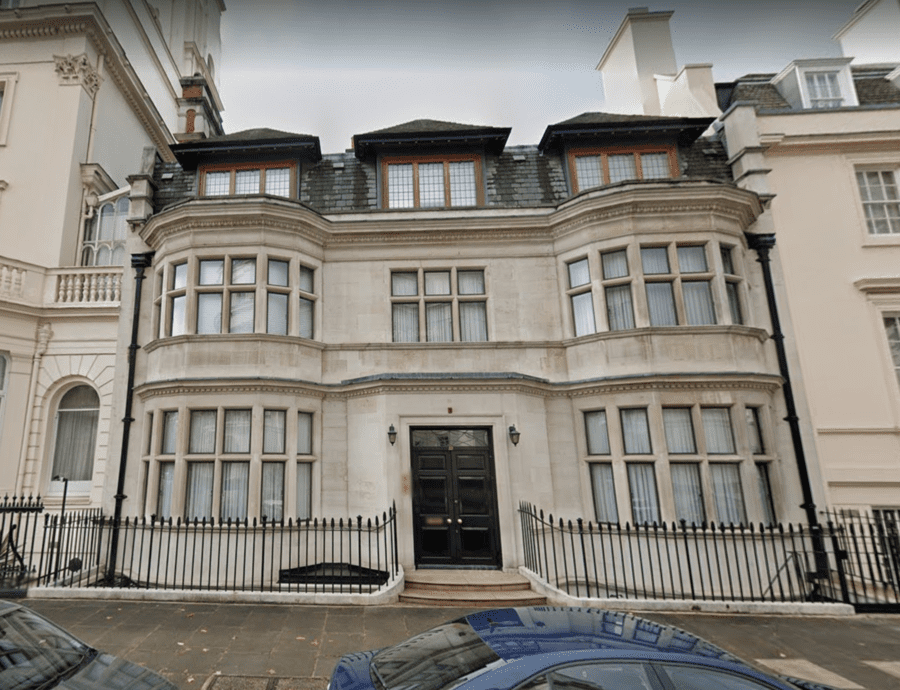
    Unlike self-serving monster Hall, “dedicated” Sessé had worked at a 5-bedroomed mansion at 32 Wilton Crescent, just off Belgrave Square “for decades.” His end was to come that snowy evening when he was mercilessly slaughtered sometime after 11pm in a basement grace and favour flat that he occupied in the home of his very well-known employer Sidney Bernstein, Baron Bernstein – the buccaneering bastion businessman and chairman of the Granada Group and Granada Television.


    Described as “tall and distinguished” and always “neatly dressed in pinstriped trousers and black jackets,” neighbours argued this particular butler to be “the perfect servant.” Grey haired Sessé was lauded by the owner of the nearest ale house to 32 Wilton Crescent, The Grenadier, as “a quiet and respectable customer.” Here, indeed, was an example of someone who would not wanted to have brought any “shame or stigma” upon his master and mistress.


    Alone that night in the vast and imposing 32 Wilton Crescent mansion whilst Lord and Lady Bernstein were away on holiday in the West Indies and with other staff having been given a “leave of absence,” homosexual Sessé most unfortunately decided to take advantage of something akin to “whilst the cat’s away, the butler might play.” He invited a “drifter-like” 26-year-old unemployed Moroccan nurse named Mustapha Bassaine to ‘visit’ his “cosy apartment” and clearly anticipated a night of fun and frollicks. The two clearly closeted – but for very different reasons – men had met prior and money had previously been exchanged for ‘companionship’ and sexual activities, it was later noted.


    That night’s ‘pairing’ represented anything but a ‘relationship’ of equals and was one instead where the elder man expected intimacy with the former whilst the younger believed he could rinse the latter of as much money as possible. Given “pock marked” faced Bassaine was a dastardly deviant and diminutive desperado who’d been out drinking with his girlfriend prior, it was to be a meeting that was never going to end well.


    Sessé was said to have been of the view that “money that exchanged hands be called a ‘gift,’” but was similarly described as not being under any delusions about what he gained from the “clandestine” encounters he had with various young men. He was a man with ‘friends’ with similar attractions, but in the wake of his death, his family and most associates clammed up and denied knowledge of such preferences. As loyal as the butler, relative and friend had been, it seemed that that was sadly never repaid by those he should have been able to have expected to have remained closest to him.


    After a delivery driver and a part-time cleaner failed to find signs of life and several days of out-of-date newspapers on the doorstep of 32 Wilton Crescent on Monday 21st December, the latter called Lord Bernstein’s secretary, a 24-year-old named Miss Hazelwood. She then opened up the property and discovered a scene that Hopkins described as having “shocked her to the core” in the basement. Naturally scared witless, the secretary dialled 999 and the police process began.


    Blood was said to spattered everywhere. It was all over the living room and all over the kitchen, but it was in a bathroom – most bizarrely locked from the outside – that the body of Julian Sessé was discovered draped in an equally bloody bath towel. The poor unfortunate’s throat had been cut and aside from multiple stab wounds to his head and chest, his stomach had been slashed open. A knife and a meat cleaver were bizarrely located by officers in the bowl of a latrine and given the “high profile” of the house owner, the case was “quickly passed to Scotland Yard.” Scandal, after all, would be something that the likes of Lord and Lady Bernstein obviously would rather avoid.


    Detective Superintendent John ‘Ginger’ Hensley – who had previously been involved in the investigation of the vicious 1966 Shepherd’s Bush policemen murders by Harry Roberts – took the case and the next item to be found just happened to be the bloodstained trousers of the man presumed to be the killer in a washing machine. They were clearly not the trousers of the much larger Sessé and with a wardrobe in his bedroom ajar, it was thus determined the murderer likely fled in a pair belonging to his victim.


    Evidence of foul play was everywhere and no attempt had been made to clean up. It was noted by Hopkins that it “all seemed wild and confused” and with no sign of forced entry and letters that indicated Sessé’s ‘activities’ with other gay men including paying for sex, Hensley is said to have immediately surmised it a “crime of passion” rather than a simpler robbery gone wrong.


    Shortly thereafter, a pathologist determined that Sessé had partaken in sexual intercourse not long prior to his demise and found the cause of his death to be shock and loss of blood following a frenzied attack with both the knife and the meat cleaver. His demise would have not been instant and wounds to the body suggested that this was a man whom most definitely courageously fought back.


    As police inquiries proceeded, few friends and associates were willing to divulge information. This, after all, was an era where to be seen to be gay was still the ultimate taboo. Though one local vaguely cited a “foreign looking man” having been seen outside the house at the time of the murder most horrid, all leads had alibis and even Sessé’s very own family made it clear that they knew nothing of his sexuality. The family went as far as to add that that they simply “did not want to know.”


    Given these factors, here was a case that initially seemed headed to join a long list of unsolved murders, but a breakthrough came just days later on Wednesday 23rd December. On that date, police were contacted by an Irish waitress named Jean Fitzgerald from her home in Anson Road, Tufnell Park after she’d “spent days and nights wondering about the case.” The 22-year-old claimed to have met Sessé through her bisexual boyfriend and stated thatmhe had arranged to go to meet the butler at 32 Wilton Crescent after the couple had been for drinks in the West End late on the fateful night in question.


    Allegedly, Bassaine had told his girlfriend that he would “visit Sessé to try and get some money off him.” She admitted to police she was “not a fan of her partner’s activities with other men,” but “understood that he usually got well paid for his ‘services.’” Hopkins went further and surmised that this “somewhat timid woman, but one with fire in her eyes” had an excuse for overlooking the ‘activities.’ That excuse was: “Besides, we always needed money.”


    During questioning, Fitzgerald stated that she had gone home after being in the West End alone late on 19th December as Bassaine had left her to head over to Belgravia at around 11pm. She further shared:


    “We paid the rent on the apartment between the two of us. He got money in another way when he was unemployed. Sometimes he gave me money but I don’t know where he got it from. He said something about going out with ‘faggots,’ having drinks with them, and getting money from them. He showed me a picture of Mr Sessé and told me that the butler often gave him money.”


    Bassiane did not return home that night, but instead called Fitzgerald the next afternoon. He asked her to come to Sessé’s apartment, but she declined. Of why, she subsequently reminisced:


    “I thought it was very strange that he wanted me to go there. He wanted me to go for a drink [at 32 Wilton Crescent] and he got mad when I said no. I was afraid of Mustapha Bassaine because he was very depraved at times and I was afraid that he would beat me like he had done before.”


    After his girlfriend’s refusal to attend, Bassiane himself returned to Anson Road drunk and cried as he told Fitzgerald that he had argued with his ‘friend.’ She noted that he was wearing clothes he had not worn before – including trousers and a jumper that were “too large for him” – and “assumed they belonged to Sessé.” Going further, aside from noting her boyfriend’s shoes were stained with blood and that he had scratches on his hands, she suggested that she was so scared of Bassiane’s mental state that she was fearful to go to bed. Instead, she sat up all night with him, she continued.


    “He arrived with a bag full of drinks and fruit and showed me a watch, a camera and a ring that he told me were Christmas gifts that Julian had given him. On 22nd December, he threw some clothes and some papers in the trash and told me that he had to go to Morocco immediately because his mother was sick. He bought an air ticket and went by plane. He had no difficulty paying for the ticket in cash even though he had no money when he went to Julian’s house over the weekend.”


    Despite being supposedly penniless and potless only a couple of days earlier, Mustapha Bassaine flew to Casablanca on 23rd December after having paid the then not insubstantial sum of £44 in cash for a one-way ticket. He also exchanged a further £50 in cash for Moroccan Dirhams and after giving Jean Fitzgerald his Moroccan familial address, requested she send any newspaper cuttings that mentioned his name there. Allegedly, according to the Irish waitress, he also mentioned having seen newspaper reports about the murder at 32 Wilton Crescent and added “he couldn’t understand how anyone could have done such a thing to a man as nice as Julian.”


    Though police officers questioned whether Fitzgerald could just be another ‘spurned girlfriend,’ some of the details mentioned made Hensley take her more seriously than the many cranks who call in when crime occurs. A search of bins in the neighbourhood followed and resulted in the aforementioned bloodstained shoes and trousers being found.


    Justifiably, Bassiane – who turned out to be the son of a high ranking official in the Moroccan Foreign Office – was either a man too stupid to dispose of the items of his crime or he was someone who had a plan and didn’t think he needed to be bothered about the consequences of the DNA on them. Meanwhile, fingerprints found in the couple’s Anson Road flat matched fingerprints found at 32 Wilton Crescent and thus here was a man who rose straight to number one on the list of suspects.


    Ten days after the murder, police issued an international warrant being for Musapha Bassiane’s arrest, but there was a major problem for Scotland Yard as Britain had no extradition treaty with Morocco. It seemed, given the key suspect had already ‘flown the nest,’ as long as he stayed in his homeland, Bassiane was a safe fugitive from justice. This was a situation similar to that involving the billionaire playboy Farouk Abdulhak in the more recent 2008 ‘Murder in Mayfair’ of Martine Vik Magnussen; getting someone back from a country like Morocco then or Yemen now is, in fact, nigh on impossible.


    In addition, in case Fitzgerald had either got it wrong about where her errant bisexual lover was travelling to, or was instead covering for him, a police watch was put on her Anson Road flat in case he decided to return. Of course, aware that this young Irish girl was of no further use to him, the grubby, grifter never, ever did revisit that address but found himself safely hidden away in his homeland.


    Meanwhile, with their holidays over, Lord and Lady Bernstein returned from their tour of the West Indies – where they had visited either Barbados or Bermuda or perhaps even both (depending on which reports you believe) – shortly after Christmas. Funeral arrangements were made for Julian Sessé, but only a small number of people were said to have attended a service at St Mary’s Catholic church in Cadogan Street, Chelsea. The deceased’s place of burial remains presently unknown, but it is said that his clearly embarrassed family “refused” to attend the service in what can only be perceived as move most spineless.


    Separately, on returning to 32 Wilton Crescent, though Lady Bernstein identified that a sum of £80 was missing from the desk in her bedroom, a search of the house discovered that no further familial property had been stolen. By now, however, it seemed that the aforementioned watch, camera and ring and perhaps further money taken by Bassiane to the Anson Road apartment had actually been stolen instead from his victim.


    In spite of all of this relevant new information, the judicial process was opened and postponed no less than eight times. According to the person in charge of the criminal investigation, a Mr Gavin Ilurston, “the investigations were not finished.” The reasoning for such is definitely something worthy of question still to this day.


    Hensley, however, knew exactly where Bassiane was in Morocco and “through Interpol asked other the police of all European countries in Europe countries to be prepared” in case the suspected killer appeared. Eighteen months later, he got again lucky when he and his colleague Detective Sergeant Bernard Davis were informed that the on-the-run deadbeat was planning a trip to Germany and the Netherlands.


    “Handlebar moustached” dimwit Bassaine was arrested on 28th June 1972 after police in Holland detained him for immigration offences in Rotterdam. Given the fugitive from justice had been on Interpol’s list as wanted for murder, if he’d simply stayed in Morocco, he would not have ever been caught, but here instead was a feckless fool clearly beyond arrogant who thought himself above the law.


    By 10th July 1972, with extradition paperwork complete, Mustapha Bassiane was transferred to the custody of Davis and shackled to him and flown to London. A flight attendant, Hopkins in the conclusions of his podcast shared, requested the shackles be removed for the duration of the journey, but Davis was most definitely not going to allow any opportunity his captive to escape for a second time. The unshackling was rejected and once in London, it was straight off to a remand prison until trial for the man suspected of the murder of Julian Sessé.


    On 8th February 1973, Bassiane’s trial began at London’s ‘Old Bailey’ Central Criminal Court. Akin to form, he pleaded not guilty and though admitting to having spent the evening with Sessé, argued that “the butler was in fine health when he left on the Sunday morning.”


    Turning the cards on his by then ex-lover Fitzgerald, Bassiane told the court that she “flew into a wild jealous rage” and threatened to “harm the old man and hurt the old bastard… She threatened to smash his face.” He added that “the same day Jean Fitzgerald had gone out and he had not seen her until the afternoon. She was shaking and had told him she was sick.” His basic and somewhat bizarre line of defence – given the substantive forensic evidence against his own person – was that it was her and not him that had committed the ‘crime passionnel.’


    Unsurprisingly, the jury did not believe this “fierce tempered” killer and Mustapha Bassiane found himself sentenced to life in prison on 12th February 1973. He also received a concurrent sentence of two years for stealing £80 in cash from Lady Bernstein’s desk – a sum that was about equivalent to a month’s average wages at that time, but most definitely not a sum worth killing for.


    Before sending him down, the judge in the case slammed Bassiane. Judge Forbes is said to have told the court: “This was a brutal murder. The sentence has been the product of evidence in which there is no doubt. Your attempt to place part of the blame on Miss Fitzgerald has received the treatment it deserves.”


    It is unknown what became of this murdering monster after he was deported in 1984. Mustapha Bassiane had served just 11 years of his life sentence in the UK; a term that surely was far from long enough for such a brutal and evil murder and a crime committed in a country where young men who proclaim their innocence like Mark Alexander and Omar Benguit have rotted in prison for 13 years and 18 years respectively in spite of a clear lack of evidence against them.


    Turning to other thoughts post-sentencing, Hopkins shared in his podcast that Hensley believed Bassaine had tried to blackmail the butler and killed him when he didn’t comply. He also suggested that “hapless” Fitzgerald could have been implicated if she had gone to the mansion that night and concluded “her distrust of his motives may have just saved her from a dark fate” at 32 Wilton Crescent. Would her lover have killed her there also or would he have set the place up to pin the blame on her? Thankfully, given she saw sense, no one will ever know.


    If still alive in 2023, Mustapha Bassaine would be 79-years-old; Julian Sessé, on the other hand, would be long dead, but if he hadn’t met his noxious nemesis that night in December 1973, he’d probably have gotten to have enjoyed a long, happy and fulfilled retirement. The ‘Belgravia Butler’ perhaps should have been more careful, but he most definitely didn’t deserve such a sordid end.


    Given also that a National Archive lockdown on documents relating to this case was orchestrated for 97 years on 1st January 1973 with a record opening date of 1st January 2071 and a review date of 2021 that changed nothing, is something still being hidden regarding this case? After all, this murder occurred in the home of Lord Bernstein, a very powerful Chagall collecting business titan with links to Sir Alfred Hitchcock and a man once part of the Ministry of Information. We join John Hopkins of Scotland Yard Confidential and wonder if “the real truth” of what happened to “kindly” Julian Sessé on 19th December 1970 will ever actually be known.


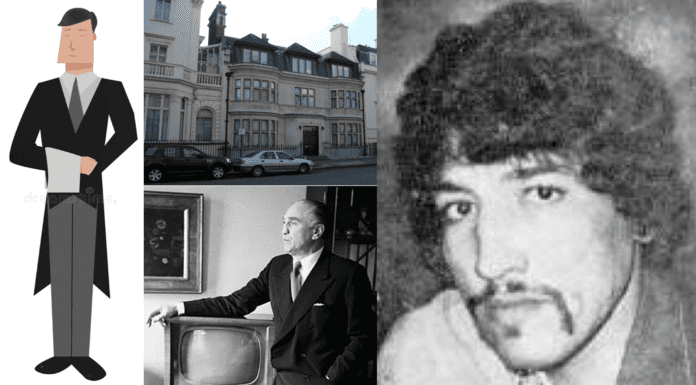
    Pictured top – No image of Julian Sessé can be found on the Internet (left); 32 Wilton Crescent (top centre) and the late Granada head honcho Lord Bernstein (lower centre); killer Mustapha Bassaine in the only known image available of him (right).


    Listen to the ‘Scotland Yard Confidential’ episode about the slaying of ‘The Peer’s Butler’ by clicking here.


    Editor’s note – Unlike as is the case in many publications, this article was NOT sponsored or supported by a third-party. Follow Matthew Steeples on Twitter at @M_Steeples.


    A message from our editorial team – Thank you for reading this article. We’re more reliant on your support than ever as the shift in consumer habits brought about by coronavirus and the cost-of-living crisis impacts our advertisers. If you haven’t already, please consider supporting our trusted, fact-checked journalism by supporting our work via Patreon.

     

    Scotland Yard Confidential butler murder Belgravia Julian Sesse 1970
    The story of the December 1970 slaying at 32 Wilton Crescent features in a 37:02-minute March 2023 episode of the excellent podcast ‘Scotland Yard Confidential’ – which can be listened to as ‘A Spotify Original.’ The description for the episode reads: “In December 1970, Julian Sessé, the long-serving butler to Granada TV Chairman, Lord Bernstein, was found brutally murdered in his basement flat in Belgravia. With little hope for a successful investigation, and two murder cases already on their books, local police quickly handed the case to Scotland Yard. Evidence gathered from the flat revealed that the elegant 65-year-old butler was in the habit of picking up younger men and entertaining them at his home. He was discreet and private in these affairs, and his personal acquaintances were equally secretive. Was his killer a stranger or a friend? And how would detectives trace him if no one was willing to talk? It fell to Detective Chief Superintendent John ‘Ginger’ Hensley to crack the case of the Peer’s Butler. Learn more about your ad choices.”
    Julian Sesse murderer Mustapha Bassaine convicted
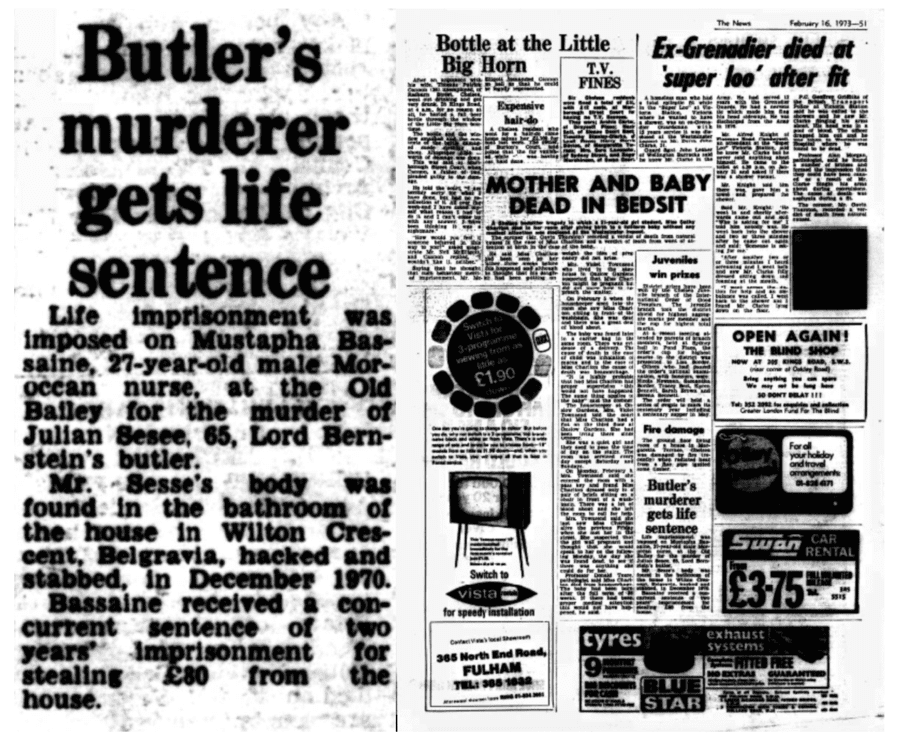
    In an edition of ‘The News’ on 16th February 1973 that reported on Julian Bassaine receiving a life sentence for the slaying of Lord Bernstein’s butler, other articles included one about a Burton’s Court, Chelsea, SW3 resident having had £1,100 fur coat stolen “while she was having her hair done” and another listing TV licence fines awarded to residents of Draycott Place, Sloane Court West, Lyall Streeet, Margeretta Terrace, Sydney Street and Swan Court. A tragic story of a mother and baby found dead in a bedsit in Onslow Gardens, SW7 was referenced on the same page along with an ex-Grenadier Guardsmen being found dead after a fit in a ‘super loo’ at Victoria Station, SW1. A tale of a drunken man being fined after throwing a bottle through a Kings Road boutique, the Little-Big-Horn was one of the day’s more light-hearted pieces of coverage; Thomas Patrick Canon of Redburn Street, SW3 told the judge: “I am terribly sorry for what I have done, but had no recollection of it. All over the weekend I have asked myself what reason I had to do it and I can’t come up with any answer. I have been thinking it was a nightmare. I wouldn’t like it, neither [if that had been done to a shop I owned].”
    32 Wilton Crescent Belgravia London SW1 murder
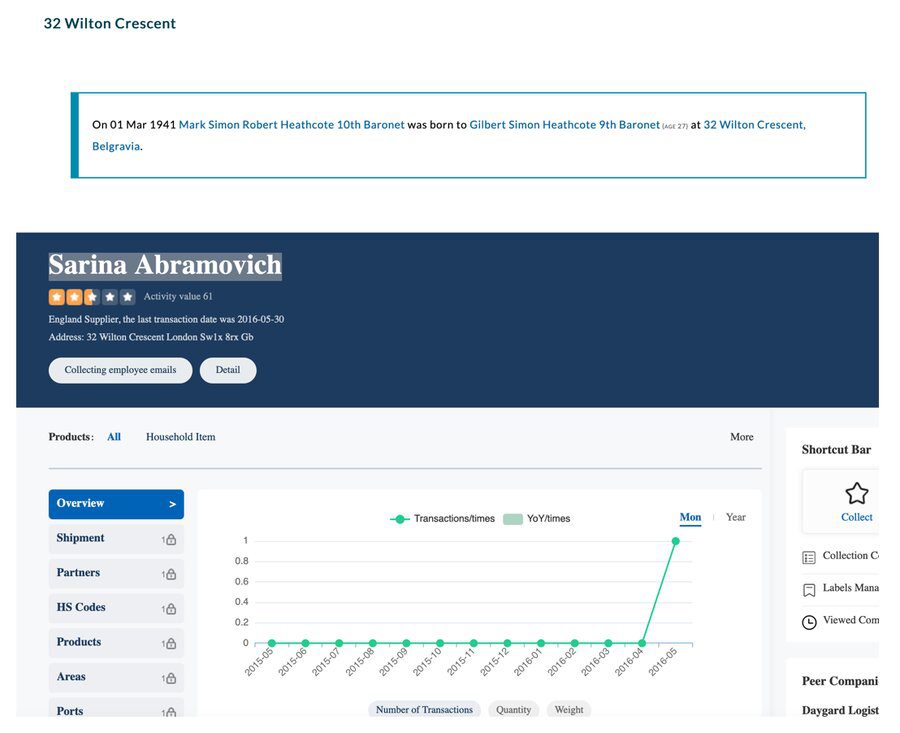
    The scene of a murder most horrid on the 19th December 1970 – 32 Wilton Crescent, Belgravia, London, SW1X 8RX. Beyond the then owner Sidney Bernstein (formally titled The Right Honourable The Lord Bernstein of Leigh in the County of Kent, 1899 – 1993), others who have have variously lived or have connections to the likely now worth upwards of £40 million residence have included Gilbert Heathcote, 9th Baronet (in 1941) and a lady named Sarina Abramovich (circa 2015 to 2016). Ms Abramovich was subsequently (in 2021) 432 Park Avenue, New York based and shares a surname with the former Chelsea Football Club owning, one-time Putin supporting billionaire Roman Abramovich, but it is unknown if they are related. A statue of Sir Robert Grosvenor KG stands just opposite 32 Wilton Crescent and others to have lived on this most tony of streets have included the 1st Earl Mountbatten of Burma, Lord Randolph Churchill, Quentin Crewe, the Grand Duchesss Charlotte of Luxembourgh and Demetri Marchessini.
    Steven Berkoff Granada Television Lord Bernstein
    Essex born and Jewish, Sidney Bernstein, Baron Bernstein was lauded as “the dominant influence on the growth and development of commercial television” by the British Film Institute. Twice married and a father of three, his business interests included amongst other things a circuit of 60 cinemas and theatres, motorway services stations and a hugely profitable television rental business. He was a lifelong friend and partner of Sir Alfred Hitchcock in film production and turned Granada Television into a huge commercial success; he was portrayed by Steven Berkoff in the 2010 BBC one-off drama, ‘The Road to Coronation Street.’
    32 Wilton Crescent Belgravia Mark Heathcote Sarina Abramovich
    Sarina Abramovich is listed as being connected with 32 Wilton Crescent in 2015 and 2016 in documents relating to imports and exports. Whether she has any connection with the property now is unknown and records relating to the building remain shrouded in mystery. The Heathcote family were connected with the house in the 1940s when Mark Heathcote, 10th Baronet was born there in 1941.
  • Modest Madeley (And ‘Mummy’ Finnigan)

    Modest Madeley (And ‘Mummy’ Finnigan)

    Alleged shoplifter and ‘modern day Dorian Gray’ Richard Madeley attempts to convince ‘Mirror’ readers that his relationship with alleged old soak ‘mummy’ Judy Finnigan is “normal”

    Fresh from having shared his totally irrelevant and frankly insane views about coronavirus last October, alleged shoplifter Richard Madeley has sought to get himsef back in the mix in a joint interview in the Mirror this morning with his allegedly constantly pissed-off-her-skull wife, Judy Finnigan.


    In a feature titled “Richard Madeley and Judy Finnigan’s heartbreaks – affair, baby loss and health battles” by ‘showbiz features writer’ Frances Kindon, no mention was made of Madeley’s possible penchant for helping himself in supermarkets, but instead the focus was on how the couple first met.


    Of an epic encounter that led to “the most solid union in showbiz,” Kindon gloriously remarked: “Their paths first crossed in a newsroom back in 1982 when Judy, 72, was asked to mentor a younger Richard, 64, and greeted him with the words, ‘Hello… I’m your Mummy’” before then adding that their own daughter finds “the amount of time they spend together is not normal.”


    Elsewhere in the puff piece, Kindon reveled in ‘Dick and Dude’s’ “natural chemistry” and celebrated their “whole lot of red-hot chemistry” and positions as “the nation’s favourites.” She referenced “hurtful rumours” about them and then even allowed “sexual oversharer” Madeley to give a riposte. In it, he remarked:


    “We’d gone away for a week to Cornwall with our children, and the mobile went in the car.”


    “It was our bosses at Granada saying a terrible rumour was being put around that you’re in a self-help institution for men who batter their wives because you’ve beaten Judy, that Judy’s in a drying-out clinic and that the children are in care. We were in the f**king car.”


    “We tracked it to the source… A particularly poisonous person. He’d leaked these smears and they were never published because we would have cleaned up in a libel case. But the one thing that lingered like a piece of floating sewage is this thing that Judy drinks. And she doesn’t.”


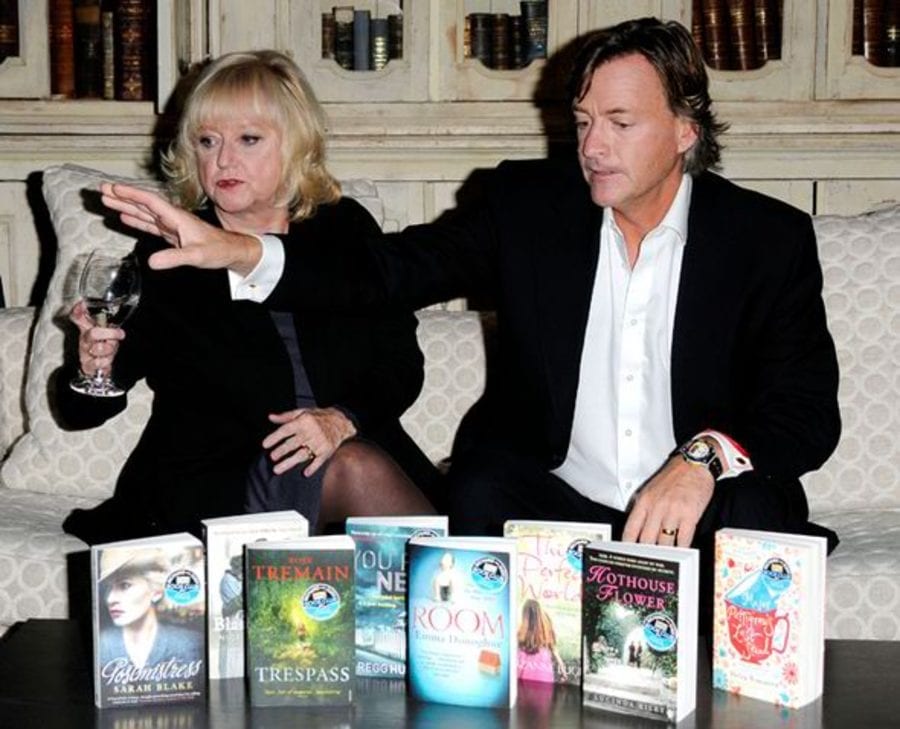
    Hmm… The picture above clearly tells otherwise.


    Richard Madeley’s ‘finest moments

    In conversation with President Clinton

    “I know what it’s like to be wronged by the press. I was once accused of shoplifting. Unlike you though, I knew I was innocent.”


    Of women

    “I’ve never met a single woman who’s happy with the way she looks, except Jordan, although I’ve never met her.”


    On elephants

    “So, are you telling me elephants are not born evil?”


    To a man crying after paramedics saved his life

    “Stop crying! This is supposed to make you happy! Anyway after the break, the biggest dog in the UK. And he really is big. Don’t miss it!”


    Of old women skipping

    “There’s not many better things than seeing an older woman skipping.”


    Of wanting to be black

    “I hope when I’m reincarnated I come back black because you age better.”


    To Keira Knightley

    “Can we get some make up please, get Keira looking like a crack whore, she’d make a good crack whore.”


    Of an autistic teenager

    “The thing with Daniel [Wakeford, a ‘star’ on Channel 4’s Undateables] is, he has autism but is very intelligent and as we can see extremely talented. Has Daniel always been autistic?”


    To a caller

    “I understand you have a little lad of 12. Is it a boy or a girl?”


    Modest Madeley (And ‘Mummy’ Finnigan) – Richard and Judy – Alleged shoplifter and ‘modern day Dorian Gray’ Richard Madeley attempts to convince ‘Mirror’ readers that his relationship with alleged old soak ‘mummy’ Judy Finnigan is “normal.”
    Modest Madeley (And ‘Mummy’ Finnigan) – Judy Finnigan is best known for quaffing, flashing her boobs and falling off sofas. In October 2014, she inexcusably defended footballer turned convicted rapist by saying: “The rape wasn’t violent… He didn’t cause any bodily harm to the person.” Of his victim, she hypocritically then added: “She had far too much to drink.”
    https://www.youtube.com/watch?time_continue=1&v=rcx3FUarNiI&feature=emb_logo
    Modest Madeley (And ‘Mummy’ Finnigan) – Whilst ‘Dorian Gray-esque’ Richard Madeley is best known for helping himself to champagne in supermarkets, his wife Judy Finnigan will be forever remembered for flashing at an awards ceremony in 2000.

  • Heroes of the Hour 2021 – Bill and Cath Mullarkey

    Heroes of the Hour 2021 – Bill and Cath Mullarkey

    Bill and Cath Mullarkey are using their EuroMillions winnings to to feed homeless people in the COVID-19 lockdown

    Most people who win on the lottery splurge on cars and holidays. Some like the £9.7 million winner ‘Lotto Lout’ Michael Carroll blow the lot and end up bankrupt, but a Coventry couple named Bill and Cath Mullarkey have actually used their £1 million EuroMillions loot to help others.


    Having hit the jackpot in 2015, professionally trained chefs Bill and Cath Mullarkey took to cooking up three course Caribbean themed Christmas meals for pensioners. Now, during the latest COVID-19 lockdown, they have gone further and helped to provide Caribbean curries, cutlery, drinks and snacks for over 100 homeless, vulnerable and isolated people.


    Of helping the Langar Aid charity to feed those in genuine need, Mr Mullarkey remarked:


    “I saw the Langar Aid guys on the TV dishing out meals to stranded lorry drivers on the M20 over Christmas. I was inspired and wanted to help them look after homeless people in Coventry.”


    “Ordinarily Cath and I would have gone into the kitchens and cooked everything but working with Jim Eaves of Langar Aid was the best way of still making a difference while minimising contact.


    “As Cath is from St Lucia we went for a Caribbean curry. A vegetable and coconut curry with a side order of rice and peas plus drinks. We also handed over lots of chocolate bars as treats.


    Meanwhile, his wife added:


    “Jim was brilliant. We chatted through meal ideas, the ingredients because everything is vegetarian, even the cutlery.”


    “He and the other volunteers give up their spare time and stand out in all weathers; it’s so cold at the moment, a lot colder than St Lucia and I am in awe of the work they do.


    “That’s why Bill and I wanted to also give something to the volunteers as well to say thank you.”


    Today, we join those saluting Bill and Cath Mullarkey and urge those that can to do the same. As we pointed out in December, one in three families are only one pay cheque away from losing their home; don’t think it couldn’t be you so please be kind and considerate.


    Heroes of the Hour 2021 – Bill and Cath Mullarkey – Bill and Cath Mullarkey are using their EuroMillions winnings to to feed homeless people in the COVID-19 lockdown.
    Heroes of the Hour 2021 – EuroMillions winners Bill and Cath Mullarkey’s efforts for the homeless during the latest COVID-19 lockdown deserves to be lauded.
  • Dry January 2021 CANCELLED

    Dry January 2021 CANCELLED

    At a time of lockup lunacy in early 2021, the last thing we need is the marketing nonsense that is ‘Dry January’ forced upon us; instead, celebrate #DryGinuary

    “Dry January will be Wetter Than Ever!” screamed a WSJ Magazine headline on 30th December and today we join those echoing Iris Apfel and Robert Venturi in stating: “More is More and Less is a Bore.” We suggest our readers that so choose should ignore the hype of ‘Dry January’ and at a time when many are locked up and lonely, respond by suggesting that everybody just enjoys themselves and drinks whatever they bloody well wish (in moderation).


    “I don’t associate guilt with pleasure,” artist and How to Survive the End of the World podcast hostess Autumn Brown told the article’s author Annie Werner and once again today we remind readers of the legendary French chef Alain Ducasse’s words this time last year:


    “I like swimming against the tide. I’ve noted [the Dry January] trend, but I don’t want to see or hear of it, I am opposed to it. [I want to] rid consumers of their inhibitions [with regard to wine drinking].”


    Going further and speaking of the dangers of signing up to a month without booze, consultant in liver medicine at the University Hospital Southampton NHS Foundation Trust Dr Mark Wright told Metro:


    “Giving up alcohol for dry January as some sort of detox is like maxing out your credit cards all year and thinking you can solve your financial problems by living like a hermit for a month… It just isn’t going to make things better if you then go back to your usual habits in February. It’s not a fix-all solution.”


    Faced with Boris Johnson’s lunacy lockdown in 2021 – where you can buy a leather collar for a dog in pet store (“essential” and open) but not a leather belt for a human in a clothes store (“non-essential” and closed) – we say that Brits that wish should follow the French and say ‘NON!’ to the patronising and pointless campaign that is ‘Dry January’ for once and for all.


    Instead, today, we join all those celebrating #DryGinuary this month and raise a glass and an almighty cheers to y’all.


    Three gins we recommend this #DryGinuary:

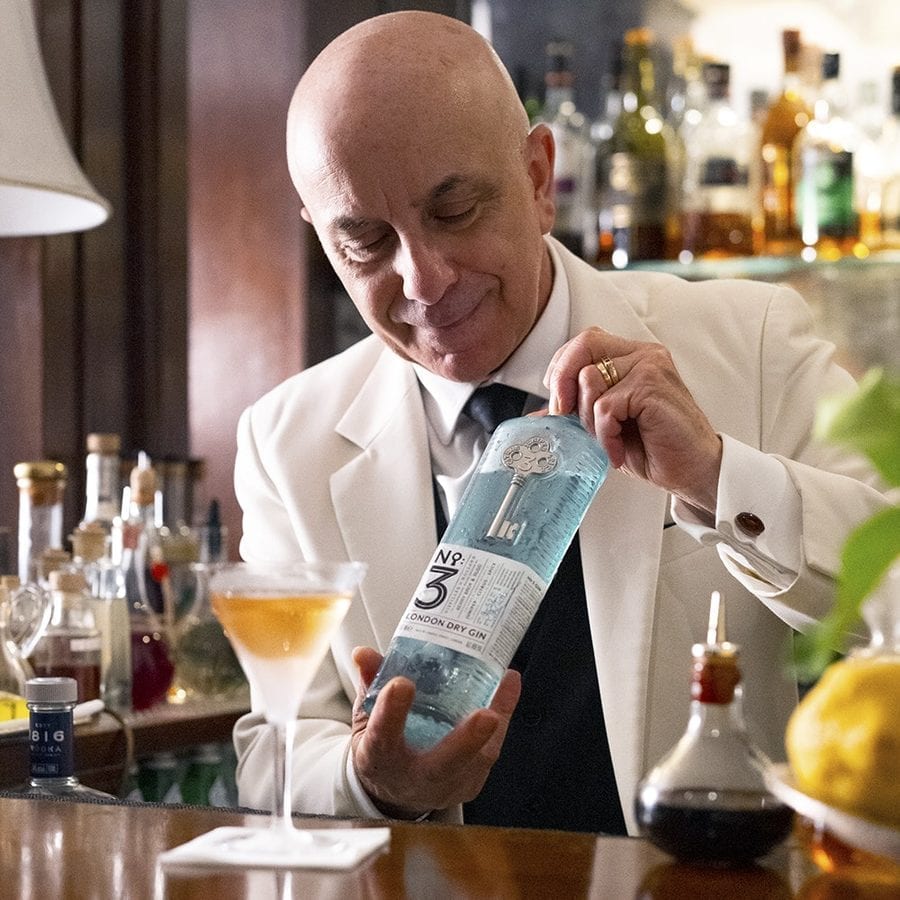
    No. 3 London Dry Gin

    Dry January 2021 CANCELLED – Ignore #DryJanuary, do #DryGinuary – At a time of lockup lunacy in early 2021, the last thing we need is the marketing nonsense that is ‘Dry January’ forced upon us; instead celebrate #DryGinuary with No. 3 Dry London Gin, Fishers Gin and Gilpin’s Westmorland Extra Dry Gin.

    The only gin in the world crafted by someone with a PhD in gin and owned by the world’s finest wine merchants, Berry Bros & Rudd.


    Fishers Gin

    Dry January 2021 CANCELLED – Ignore #DryJanuary, do #DryGinuary – At a time of lockup lunacy in early 2021, the last thing we need is the marketing nonsense that is ‘Dry January’ forced upon us; instead celebrate #DryGinuary with No. 3 Dry London Gin, Fishers Gin and Gilpin’s Westmorland Extra Dry Gin.

    This “authentic [44% ABV] coastal spirit” has notes of samphire and bog myrtle. Hints of salt shine through. It’s a catch and once reeled in, it’ll become a keeper.


    Gilpin’s Westmorland Extra Dry Gin

    Dry January 2021 CANCELLED – Ignore #DryJanuary, do #DryGinuary – At a time of lockup lunacy in early 2021, the last thing we need is the marketing nonsense that is ‘Dry January’ forced upon us; instead celebrate #DryGinuary with No. 3 Dry London Gin, Fishers Gin and Gilpin’s Westmorland Extra Dry Gin.

    47% ABV, from the Lake District and featuring a fresh aroma balanced with a dry yet bitter resinous taste. Not for the faint hearted.


    https://www.youtube.com/watch?v=IphT-rMZcCs
  • Word of the Week – Coronacoaster

    Word of the Week – Coronacoaster

    As we face the next lockup-lockdown, a new word that will come to greater prominence is “coronacoaster” – ride it at your peril and instead try out our gin suggestions

    Shared on Instagram by Emma Farah, our word of the week had to be ‘coronacoaster.’

    Defined as a noun meaning “the ups and downs of the pandemic. One day you’re loving your bubble, doing work outs, baking banana bread and going out for long walks and the next you’re crying, drinking gin for breakfast and missing people you don’t even like.”

    Elsewhere on Medium.com in an article titled ‘Riding the coronacoaster,’ a Houston based therapist named Kirsten Suleman suggested the word to mean: “The ups and downs of a pandemic; the feeling of uncertainty, anxiety, and helplessness surveying news and information concerning humankind’s possible demise from COVID-19” and now as England likely faces lockup-lockdown again courtesy of the bumbling, bungling buffoon ‘Bosie The Clown,’ here is a rollercoaster that nobody is going to welcome.


    Whilst Suleman suggests people take up “journaling” in “spiral notebooks,” we prefer the alternative suggestion of gin so today here are a few of our favourites that you should add to your lockup-lockdown drinks trolley.


    No. 3 Gin London Dry

    Word of the Week – Coronacoaster – Combat it with gin – As we face the next lockup-lockdown, a new word that will come to greater prominence is “coronacoaster” – ride it at your peril and instead try out our gin suggestions. No. 3 London Dry, Fishers Gin, Gilpin’s Westmorland Strength, Martin Miller’s Westbourne Strength, Beefeater.

    The only gin in the world crafted by someone with a PhD in gin and owned by the world’s finest wine merchants, Berry Bros & Rudd.

    Fishers Gin

    Word of the Week – Coronacoaster – Combat it with gin – As we face the next lockup-lockdown, a new word that will come to greater prominence is “coronacoaster” – ride it at your peril and instead try out our gin suggestions. No. 3 London Dry, Fishers Gin, Gilpin’s Westmorland Strength, Martin Miller’s Westbourne Strength, Beefeater.

    This “authentic [44% ABV] coastal spirit” has notes of samphire and bog myrtle. Hints of salt shine through. It’s a catch and once reeled in, it’ll become a keeper.

    Gilpin’s Westmorland Extra Dry

    Word of the Week – Coronacoaster – Combat it with gin – As we face the next lockup-lockdown, a new word that will come to greater prominence is “coronacoaster” – ride it at your peril and instead try out our gin suggestions. No. 3 London Dry, Fishers Gin, Gilpin’s Westmorland Strength, Martin Miller’s Westbourne Strength, Beefeater.

    47% ABV, from the Lake District and featuring a fresh aroma balanced with a dry yet bitter resinous taste. Not for the faint hearted.

    Martin Miller’s Westbourne Strength

    Word of the Week – Coronacoaster – Combat it with gin – As we face the next lockup-lockdown, a new word that will come to greater prominence is “coronacoaster” – ride it at your peril and instead try out our gin suggestions. No. 3 London Dry, Fishers Gin, Gilpin’s Westmorland Strength, Martin Miller’s Westbourne Strength, Beefeater.

    Packs a punch and personifies the marvelous character of the late, great Martin Miller – its truly Dickensianally rakish creator.

    Beefeater

    Word of the Week – Coronacoaster – Combat it with gin – As we face the next lockup-lockdown, a new word that will come to greater prominence is “coronacoaster” – ride it at your peril and instead try out our gin suggestions. No. 3 London Dry, Fishers Gin, Gilpin’s Westmorland Strength, Martin Miller’s Westbourne Strength, Beefeater.

    The perfect ‘everyday gin’ (if you can’t find any of the above).

    Facebook: @TheSteepleTimes

    Instagram: @TheSteepleTimes

    Twitter: @SteepleTimes

  • Ask Charlie – Rhubarb & Ginger Gin

    Ask Charlie – Rhubarb & Ginger Gin

    Charlie Gray of ‘Ask Charlie’ shares her recipe for rhubarb and ginger gin; here is a recipe that everyone will enjoy making

    I am not a big drinker, but lockdown, home schooling and adjusting to this new ‘normal’ has made me turn to the bottle rather more frequently than I would normally do at home.


    With an abundance of rhubarb in the garden and the children sick of the sight of it, I decided to make something that I would get most pleasure out – rhubarb and ginger gin. It is so easy to make and the hardest part is waiting three weeks for it to brew.


    My recipe for Rhubarb & Ginger Gin follows:


    • 500g of chopped rhubarb – the pinker, the better as it gives colour to the liquid.
    • 2-inches of fresh ginger, cut into a couple of chunks.
    • 80g of granulated sugar (caster sugar turns the liquid cloudy).
    • 500ml of gin, I personally used Gordon’s as it is my grandmother’s favourite.


    Pleace the chopped rhubarb and ginger in a large jar and add the sugar. Put on a lid and leave for 48 hours, shaking occasionally.


    Next, open the lid and pour in the gin. Put the lid back on and shake gently once a week for three weeks.


    When the time has passed, place a muslin in a sieve (baby ones are the best as they have a finer weave) over a large bowl and pour out of the content of the jar into the muslin. Leave it to drip, bottle and then enjoy.


    I serve with Mediterranean Fevertree tonic and ice, but for some it’s just perfect on the rocks.


    Sussex based mother of three and lifestyle blogger Charlie Gray shares ‘homegrown skills’ and practical advice on her website Ask Charlie. Watch her videos on YouTube by clicking here.


    Facebook: @TheSteepleTimes

    Instagram: @TheSteepleTimes

    Twitter: @SteepleTimes


  • Observing Ambridge

    Observing Ambridge

    Whilst one ‘Observer’ reader suggests Alan Bennett writes the monologues that have replaced normal episodes of ‘The Archers,’ another demands a return to standard broadcasts about Ambridge life

    Whilst we joined those royally unimpressed when BBC Radio 4 “ran out of episodes” of The Archers due to the coronavirus lockdown back at the start of May, the radio soap’s return recently as a series of monologues has left Observer readers anything but delighted.


    In a letter to the Observer this morning, one Ursula Hutchinson [on-the-ball listeners may remember Ambridge’s resident villain Rob Titchener’s meddling mother was also called Ursula] of Newport on the Covid-19 app friendly Isle of Wight, plainly inspired by his brilliantly straight-to-the-point Talking Heads series, suggested Alan Bennett be brought in. She remarked:


    If ‘The Archers’ monologues are to go on, they need to ask Alan Bennett to write them. We’ve just endured a week of Tony’s haircut. Please!

    Ursula Hutchinson

    Newport, Isle of Wight


    Last Sunday, another ‘Archers Addict,’ Mary Evans of Heathfield, East Sussex got even more het up. In her letter, the “enthusiast” declared the new format “totally dull and frankly not worth giving up 15 minutes of your life for, however much time you have to spare at the moment.” She vented:


    How I agree with Miranda Sawyer regarding the new format of ‘The Archers’ (Radio review): totally dull and frankly not worth giving up 15 minutes of your life for, however much time you have to spare at the moment. I acknowledge the difficulties of broadcasting but the archive episodes were much more worthwhile, even though I took issue with the gloomy choice – Kirsty being stood up at the altar, the Grundys being evicted, the floods.


    My fellow enthusiasts and I will be putting ‘The Archers’ on hold until they drop this boring format. Surely as it’s radio it must be technically possible to cobble together something like the original. I fear they may lose fans who will be disinclined to return.

    Mary Evans

    Heathfield, East Sussex


    We join both Evans and Hutchinson in their lament, but The Archers scriptwriters have thus far provided one lockdown highlight: An episode where the village gossip Susan Carter – high on ‘honey rum,’ as one would be after desperately raiding the dregs of the lockdown drinks cupboard – referenced sexual antics for those in their later years after getting spiced up on homemade chilli.


    Facebook: @TheSteepleTimes

    Instagram: @TheSteepleTimes

    Twitter: @SteepleTimes


    Observing Ambridge – Revived ‘The Archers’ fails to impress – Whilst one ‘Observer’ reader suggests Alan Bennett writes the monologues that have replaced normal episodes of ‘The Archers,’ another demands a return to standard broadcasts about Ambridge life.
    ‘The Archers’ – set in the fictional village of Ambridge – first aired on BBC on 29th May 1950. It is the world’s longest running drama and thus attracts both accolade and criticism in equal measure from its somewhat dedicated audience.
    In this legendary episode, Helen Titchener stabbed her husband Rob after he criticised her tuna bake.
    ‘Country Channel.TV’ went behind the scenes with the cast of ‘The Archers’ in January 2010. One character, Phil Archer, made the ‘Guinness World Records’ for being the longest serving actor in a single soap opera – Norman Painting played him from 1950 until his death on 29th October 2009.
    The second part of the behind the scenes tour of the radio soap inspired by life in a village in rural England. It was originally billed as “an everyday story of country folk,” but is now described (more suitably for the ‘woke’ generation we sadly live in) as “a contemporary drama in a rural setting.”
  • Pun Parties With Police

    Pun Parties With Police

    David Pun arrested at a party in London


    Last night in Mayfair, David Pun was arrested in full view of invited guests. Cuffed and taken to a police station, this renowned party crasher finally was brought to book.


    Having pretended to own Harvey Nichols and Peninsula Hotels on occasions, Pun is the very best known of the liggers of London. He has featured on walls of shame in supermarkets, on television and on the cover of a book even; he has been spotted nabbing canapes at funerals and in places as diverse as Blenheim Palace and Venice. He has even been caught watching porn in the foyer of a hotel in South Kensington.


    David Pun has, now, however, finally met his match. May he now disappear to the bottom of the drinks tray.


    Follow David Pun on Twitter at @wheresthepun


    Facebook: @TheSteepleTimes

    Instagram: @TheSteepleTimes

    Twitter: @SteepleTimes


  • Davide Giardino – What’s on your mantelpiece?

    Davide Giardino – What’s on your mantelpiece?

    A 20-question interview with economist turned real estate investor Davide Giardino


    The Steeple Times shares “wit and wisdom.” What’s your guiding force?

    “The happiness and success of those closest to my heart.”


    “Don’t get even, get medieval” is, in our humble opinion, a great motto. What’s yours?

    “If you keep your destiny in mind, every moment in life becomes an opportunity to move closer to it.”


    Kerry Katona was considered unacceptable in 2007. Who or what is unacceptable in 2018?

    Technocrats – as at least populists are lying most of the time.


    Tony Blair misses being Prime Minister. What do you miss most in your life?

    A simpler life. I miss the routine of going to an office every morning. Am I crazy?


    What might you swap all your wealth for?

    Assets? Well, in all seriousness, good health for me, my family and my friends.


    Donald Trump was once a case of: “If you owe the bank a thousand, they close you down; but if you owe the bank a billion, you own the bank.” What’s your view on the state of the financial system?

    Who is richer and who is poorer from the latest financial crisis? You’ve got my answer…


    What phrase or word do you most loathe?

    “I am saying it for your sake.”


    In the UK, some people consider charity to “begin at home.” What’s your view and what causes do you personally support?

    Charity often substitutes for the lack of adequate government or international policy which is disappointing. I support a variety of causes including helping children born with congenital diseases and homeless children.


    The judge in Law Abiding Citizen states: “I can pretty much do whatever I want” before being blown up whilst answering her mobile phone. What’s your view on the appropriate use of such devices?

    Shut them off at night.


    Real estate investor Davide Giardino – What’s on your mantelpiece? A 20-question interview with Beverly Hills and Greater LA based economist turned real estate investor Davide Giardino.


    If you could fill a carriage on The Orient Express, who would be your fellow passengers?

    My twin brother, a bunch of friends, Isabelle Huppert, Glenn Close and probably Angelina Jolie.


    If you were unfortunate enough to end up on death row, what would be your last meal and where would you eat it?

    Bucatini with lobster (I always liked bucatini more than spaghetti), gâteau de pommes de terre (cooked the Neapolitan way), a large portion of figs and a torta caprese chocolate cake. I woiuld probably eat it at the Villa San Michele in Capri, Hotel Bel Air or Cliveden House – all places close to my heart for different reasons.


    What time is it acceptable to consume the first drink of the day?

    11am, though not every day.


    A Negroni, a martini or a cup of tea?

    A Negroni.


    Whose parties do you enjoy the most and why?

    A dear friend of mine throws the most memorable dinner parties. I love how he always selects a group of diverse people who do not know each other, but will create an incredible energy together by the end of the night. It always helps that I’m always the guest of honour!


    Who is the most positive person you know?

    Maybe me.


    What’s your most guilty pleasure?

    Buying French pâtisserie and flowers for myself many times each week.


    If a tattoo were to sum you up, what would it be of?

    “I want it all.”


    If you were a car, what marque would you be?

    A vintage Fiat 500 with a new engine. They are so cute and practical and I don’t need a Maserati to compensate for a lack of personality or something else.


    Cilla Black presented Surprise, Surprise. Tell us the most surprising thing about you.

    I am still trying to figure myself out.


    What’s currently sitting on your mantelpiece?

    Fresh flowers.


    Davide Giardino is the founder of DGC-Luxury Homes and a licensed realtor at Rodeo Realty – Beverly Hills and Greater LA. He has extensive experience in the real estate advisory and investment business and previously was an economist at several global finance institutions. He describes himself as “a multi-lingual globetrotter” and holds a double degree from Bocconi and USC, an MSc in European political economy from the London School of Economics and a masters in finance from LBS.


    Follow Davide Giardino on Facebook at @dgcluxuryhomes and on Instagram at @dgc_la


    Facebook: @TheSteepleTimes

    Instagram: @TheSteepleTimes

    Twitter: @SteepleTimes


  • Oliver Ouboter – What’s on your mantelpiece?

    Oliver Ouboter – What’s on your mantelpiece?

    A 20-question interview with Oliver Ouboter; the co-founder of the imminently launching innovative Swiss ‘bubble car’ – the Microlino


    The Steeple Times shares “wit and wisdom.” What’s your guiding force?

    Passion.


    “Don’t get even, get medieval” is, in our humble opinion, a great motto. What’s yours?

    Just do it! (Thanks Nike).


    Kerry Katona was considered unacceptable in 2007. Who or what is unacceptable in 2018?

    SUVs.


    Tony Blair misses being Prime Minister. What do you miss most in your life?

    Having the curiosity of a child.


    What might you swap all your wealth for?

    My family’s health.


    Donald Trump was once a case of: “If you owe the bank a thousand, they close you down; but if you owe the bank a billion, you own the bank.” What’s your view on the state of the financial system?

    It’s as fucked up as the Donald himself.


    What phrase or word do you most loathe?

    ‘Trivial’ as in German nobody uses it and most people don’t understand it. I loathe ‘trivial’ for being a ‘non-trivial’ word to describe something ‘trivial.’


    In the UK, some people consider charity to “begin at home.” What’s your view and what causes do you personally support?

    I support mainly environmental causes. It is not that I think that humans deserve it less, I just think sending money to developing countries won’t solve the problem and is just an easy fix for many people to feel good about themselves.


    The judge in Law Abiding Citizen states: “I can pretty much do whatever I want” before being blown up whilst answering her mobile phone. What’s your view on the appropriate use of such devices?

    Try to use it less, fail miserably in doing so and then tell yourself you’re gonna do better next year.


    If you could fill a carriage on The Orient Express, who would be your fellow passengers?

    My family and Barack Obama and Steve Jobs and Nelson Mandela if they were still alive.


    Microlino co-founder Oliver Ouboter – What’s on your mantelpiece? A 20-question interview with Oliver Ouboter; the co-founder of the imminently launching innovative Swiss ‘bubble car’ – the Microlino.
    Oliver Ouboter pictured with a Microlino (as featured in ‘The Steeple Times’ earlier this month) and his brother Merlin and father Wim.


    If you were unfortunate enough to end up on death row, what would be your last meal and where would you eat it?

    A special home-made roast.


    What time is it acceptable to consume the first drink of the day?

    It depends on the situation.


    A Negroni, a martini or a cup of tea?

    A Negroni of course.


    Whose parties do you enjoy the most and why?

    Parties of friends that I don’t spend too much time with. There are always new people to get to know.


    Who is the most positive person you know?

    My dad.


    What’s your most guilty pleasure?

    Chocolate of course. I’m Swiss.


    If a tattoo were to sum you up, what would it be of?

    It would be a Kickscooter, of course.


    If you were a car, what marque would you be?

    What a question: I’d be a Microlino!


    Cilla Black presented Surprise, Surprise. Tell us the most surprising thing about you.

    I cannot operate a washing machine but that’s not surprising though.


    What’s currently sitting on your mantelpiece?

    Big companies and governments. They are slow and inefficient in dealing with global warming.


    Oliver Ouboter is the co-founder of a start-up alongside his father and brother that has developed a small electric city-car named Microlino. He is considered one of the best guinea pigs as his dad invented the world-famous Kickscooter in 1999.


    Follow Microlino on Twitter at @microlinoworld, on Facebook at @Microlino.car and on Instagram at @microlino_official


    Facebook: @TheSteepleTimes

    Instagram: @TheSteepleTimes

    Twitter: @SteepleTimes