Tag: theatre

  • Julian Sessé, ‘The Belgravia Butler’ (1906 – 1970, murdered by meat cleaver)

    Julian Sessé, ‘The Belgravia Butler’ (1906 – 1970, murdered by meat cleaver)

    • A Belgian born butler to the bastion of business Lord Bernstein – chief of Granada Television – was brutally murdered in a mansion in Wilton Crescent, Belgravia, London just before Christmas in 1970.
    • The closeted victim, Julian Sessé, was savagely slayed with a knife and a meat cleaver by a much younger bisexual gigolo, Mustapha Bassiane.
    • Bassiane subsequently fled to Morocco and then got snared when he audaciously returned to Europe in 1972; he was sentenced to life in prison in 1973 and deported back to his homeland 11 years later.
    • The ‘Scotland Yard Uncensored’ podcast recently covered this little known case, but failed to mention the strange fact that The National Archives have records on the case closed until January 2071; who is actually being protected here and why?

    London’s Belgravia is renowned for its associations with power and privilege and as some might say, where there’s money there’s quite often muck, meddling, murkiness and murder.


    Whilst the infamous 7th November 1974 murder of Sandra Rivett – the nanny to the children of Lord and Lady Lucan – at 46 Lower Belgrave Street, SW1 has gone down in history for all the wrong reasons, a sadistic slaying four years earlier on 19th December 1970 at another ritzy residence nearby is one that has been largely forgotten.


    The victim in the particular case in question, it was noted in a recent Scotland Yard Confidential podcast by John Hopkins, was “a kind and generous man in life,” but one who was “shamed and shunned after his own brutal murder.” In this day and age, such a clear cancellation would quite rightly be called out as an utter outrage and especially at a time when the Metropolitan Police are so deservedly under fire for their appalling levels of misconduct.


    On the tragic Saturday night in question in 1970 and just before London revelled in the arrival of a ‘White Christmas’ just six days later, 64-year-old Belgian butler Julian Louis George Sessé was senselessly beaten and brutally murdered with a kitchen knife and meat cleaver. Here was a crime that involved a butler to the rich and famous, but a crime also that was quite the opposite of those crimes orchestrated by the notorious ‘Killer Butler’ Archibald Hall. For those yet to know of him, Hall – who was also known as the ‘Monster Butler’ – mercilessly robbed and murdered in the same part of Belgravia later in the 1970s. Perhaps there could be something in the water of that part of SW1…


    Unlike self-serving monster Hall, “dedicated” Sessé had worked at a 5-bedroomed mansion at 32 Wilton Crescent, just off Belgrave Square “for decades.” His end was to come that snowy evening when he was mercilessly slaughtered sometime after 11pm in a basement grace and favour flat that he occupied in the home of his very well-known employer Sidney Bernstein, Baron Bernstein – the buccaneering bastion businessman and chairman of the Granada Group and Granada Television.


    Described as “tall and distinguished” and always “neatly dressed in pinstriped trousers and black jackets,” neighbours argued this particular butler to be “the perfect servant.” Grey haired Sessé was lauded by the owner of the nearest ale house to 32 Wilton Crescent, The Grenadier, as “a quiet and respectable customer.” Here, indeed, was an example of someone who would not wanted to have brought any “shame or stigma” upon his master and mistress.


    Alone that night in the vast and imposing 32 Wilton Crescent mansion whilst Lord and Lady Bernstein were away on holiday in the West Indies and with other staff having been given a “leave of absence,” homosexual Sessé most unfortunately decided to take advantage of something akin to “whilst the cat’s away, the butler might play.” He invited a “drifter-like” 26-year-old unemployed Moroccan nurse named Mustapha Bassaine to ‘visit’ his “cosy apartment” and clearly anticipated a night of fun and frollicks. The two clearly closeted – but for very different reasons – men had met prior and money had previously been exchanged for ‘companionship’ and sexual activities, it was later noted.


    That night’s ‘pairing’ represented anything but a ‘relationship’ of equals and was one instead where the elder man expected intimacy with the former whilst the younger believed he could rinse the latter of as much money as possible. Given “pock marked” faced Bassaine was a dastardly deviant and diminutive desperado who’d been out drinking with his girlfriend prior, it was to be a meeting that was never going to end well.


    Sessé was said to have been of the view that “money that exchanged hands be called a ‘gift,’” but was similarly described as not being under any delusions about what he gained from the “clandestine” encounters he had with various young men. He was a man with ‘friends’ with similar attractions, but in the wake of his death, his family and most associates clammed up and denied knowledge of such preferences. As loyal as the butler, relative and friend had been, it seemed that that was sadly never repaid by those he should have been able to have expected to have remained closest to him.


    After a delivery driver and a part-time cleaner failed to find signs of life and several days of out-of-date newspapers on the doorstep of 32 Wilton Crescent on Monday 21st December, the latter called Lord Bernstein’s secretary, a 24-year-old named Miss Hazelwood. She then opened up the property and discovered a scene that Hopkins described as having “shocked her to the core” in the basement. Naturally scared witless, the secretary dialled 999 and the police process began.


    Blood was said to spattered everywhere. It was all over the living room and all over the kitchen, but it was in a bathroom – most bizarrely locked from the outside – that the body of Julian Sessé was discovered draped in an equally bloody bath towel. The poor unfortunate’s throat had been cut and aside from multiple stab wounds to his head and chest, his stomach had been slashed open. A knife and a meat cleaver were bizarrely located by officers in the bowl of a latrine and given the “high profile” of the house owner, the case was “quickly passed to Scotland Yard.” Scandal, after all, would be something that the likes of Lord and Lady Bernstein obviously would rather avoid.


    Detective Superintendent John ‘Ginger’ Hensley – who had previously been involved in the investigation of the vicious 1966 Shepherd’s Bush policemen murders by Harry Roberts – took the case and the next item to be found just happened to be the bloodstained trousers of the man presumed to be the killer in a washing machine. They were clearly not the trousers of the much larger Sessé and with a wardrobe in his bedroom ajar, it was thus determined the murderer likely fled in a pair belonging to his victim.


    Evidence of foul play was everywhere and no attempt had been made to clean up. It was noted by Hopkins that it “all seemed wild and confused” and with no sign of forced entry and letters that indicated Sessé’s ‘activities’ with other gay men including paying for sex, Hensley is said to have immediately surmised it a “crime of passion” rather than a simpler robbery gone wrong.


    Shortly thereafter, a pathologist determined that Sessé had partaken in sexual intercourse not long prior to his demise and found the cause of his death to be shock and loss of blood following a frenzied attack with both the knife and the meat cleaver. His demise would have not been instant and wounds to the body suggested that this was a man whom most definitely courageously fought back.


    As police inquiries proceeded, few friends and associates were willing to divulge information. This, after all, was an era where to be seen to be gay was still the ultimate taboo. Though one local vaguely cited a “foreign looking man” having been seen outside the house at the time of the murder most horrid, all leads had alibis and even Sessé’s very own family made it clear that they knew nothing of his sexuality. The family went as far as to add that that they simply “did not want to know.”


    Given these factors, here was a case that initially seemed headed to join a long list of unsolved murders, but a breakthrough came just days later on Wednesday 23rd December. On that date, police were contacted by an Irish waitress named Jean Fitzgerald from her home in Anson Road, Tufnell Park after she’d “spent days and nights wondering about the case.” The 22-year-old claimed to have met Sessé through her bisexual boyfriend and stated thatmhe had arranged to go to meet the butler at 32 Wilton Crescent after the couple had been for drinks in the West End late on the fateful night in question.


    Allegedly, Bassaine had told his girlfriend that he would “visit Sessé to try and get some money off him.” She admitted to police she was “not a fan of her partner’s activities with other men,” but “understood that he usually got well paid for his ‘services.’” Hopkins went further and surmised that this “somewhat timid woman, but one with fire in her eyes” had an excuse for overlooking the ‘activities.’ That excuse was: “Besides, we always needed money.”


    During questioning, Fitzgerald stated that she had gone home after being in the West End alone late on 19th December as Bassaine had left her to head over to Belgravia at around 11pm. She further shared:


    “We paid the rent on the apartment between the two of us. He got money in another way when he was unemployed. Sometimes he gave me money but I don’t know where he got it from. He said something about going out with ‘faggots,’ having drinks with them, and getting money from them. He showed me a picture of Mr Sessé and told me that the butler often gave him money.”


    Bassiane did not return home that night, but instead called Fitzgerald the next afternoon. He asked her to come to Sessé’s apartment, but she declined. Of why, she subsequently reminisced:


    “I thought it was very strange that he wanted me to go there. He wanted me to go for a drink [at 32 Wilton Crescent] and he got mad when I said no. I was afraid of Mustapha Bassaine because he was very depraved at times and I was afraid that he would beat me like he had done before.”


    After his girlfriend’s refusal to attend, Bassiane himself returned to Anson Road drunk and cried as he told Fitzgerald that he had argued with his ‘friend.’ She noted that he was wearing clothes he had not worn before – including trousers and a jumper that were “too large for him” – and “assumed they belonged to Sessé.” Going further, aside from noting her boyfriend’s shoes were stained with blood and that he had scratches on his hands, she suggested that she was so scared of Bassiane’s mental state that she was fearful to go to bed. Instead, she sat up all night with him, she continued.


    “He arrived with a bag full of drinks and fruit and showed me a watch, a camera and a ring that he told me were Christmas gifts that Julian had given him. On 22nd December, he threw some clothes and some papers in the trash and told me that he had to go to Morocco immediately because his mother was sick. He bought an air ticket and went by plane. He had no difficulty paying for the ticket in cash even though he had no money when he went to Julian’s house over the weekend.”


    Despite being supposedly penniless and potless only a couple of days earlier, Mustapha Bassaine flew to Casablanca on 23rd December after having paid the then not insubstantial sum of £44 in cash for a one-way ticket. He also exchanged a further £50 in cash for Moroccan Dirhams and after giving Jean Fitzgerald his Moroccan familial address, requested she send any newspaper cuttings that mentioned his name there. Allegedly, according to the Irish waitress, he also mentioned having seen newspaper reports about the murder at 32 Wilton Crescent and added “he couldn’t understand how anyone could have done such a thing to a man as nice as Julian.”


    Though police officers questioned whether Fitzgerald could just be another ‘spurned girlfriend,’ some of the details mentioned made Hensley take her more seriously than the many cranks who call in when crime occurs. A search of bins in the neighbourhood followed and resulted in the aforementioned bloodstained shoes and trousers being found.


    Justifiably, Bassiane – who turned out to be the son of a high ranking official in the Moroccan Foreign Office – was either a man too stupid to dispose of the items of his crime or he was someone who had a plan and didn’t think he needed to be bothered about the consequences of the DNA on them. Meanwhile, fingerprints found in the couple’s Anson Road flat matched fingerprints found at 32 Wilton Crescent and thus here was a man who rose straight to number one on the list of suspects.


    Ten days after the murder, police issued an international warrant being for Musapha Bassiane’s arrest, but there was a major problem for Scotland Yard as Britain had no extradition treaty with Morocco. It seemed, given the key suspect had already ‘flown the nest,’ as long as he stayed in his homeland, Bassiane was a safe fugitive from justice. This was a situation similar to that involving the billionaire playboy Farouk Abdulhak in the more recent 2008 ‘Murder in Mayfair’ of Martine Vik Magnussen; getting someone back from a country like Morocco then or Yemen now is, in fact, nigh on impossible.


    In addition, in case Fitzgerald had either got it wrong about where her errant bisexual lover was travelling to, or was instead covering for him, a police watch was put on her Anson Road flat in case he decided to return. Of course, aware that this young Irish girl was of no further use to him, the grubby, grifter never, ever did revisit that address but found himself safely hidden away in his homeland.


    Meanwhile, with their holidays over, Lord and Lady Bernstein returned from their tour of the West Indies – where they had visited either Barbados or Bermuda or perhaps even both (depending on which reports you believe) – shortly after Christmas. Funeral arrangements were made for Julian Sessé, but only a small number of people were said to have attended a service at St Mary’s Catholic church in Cadogan Street, Chelsea. The deceased’s place of burial remains presently unknown, but it is said that his clearly embarrassed family “refused” to attend the service in what can only be perceived as move most spineless.


    Separately, on returning to 32 Wilton Crescent, though Lady Bernstein identified that a sum of £80 was missing from the desk in her bedroom, a search of the house discovered that no further familial property had been stolen. By now, however, it seemed that the aforementioned watch, camera and ring and perhaps further money taken by Bassiane to the Anson Road apartment had actually been stolen instead from his victim.


    In spite of all of this relevant new information, the judicial process was opened and postponed no less than eight times. According to the person in charge of the criminal investigation, a Mr Gavin Ilurston, “the investigations were not finished.” The reasoning for such is definitely something worthy of question still to this day.


    Hensley, however, knew exactly where Bassiane was in Morocco and “through Interpol asked other the police of all European countries in Europe countries to be prepared” in case the suspected killer appeared. Eighteen months later, he got again lucky when he and his colleague Detective Sergeant Bernard Davis were informed that the on-the-run deadbeat was planning a trip to Germany and the Netherlands.


    “Handlebar moustached” dimwit Bassaine was arrested on 28th June 1972 after police in Holland detained him for immigration offences in Rotterdam. Given the fugitive from justice had been on Interpol’s list as wanted for murder, if he’d simply stayed in Morocco, he would not have ever been caught, but here instead was a feckless fool clearly beyond arrogant who thought himself above the law.


    By 10th July 1972, with extradition paperwork complete, Mustapha Bassiane was transferred to the custody of Davis and shackled to him and flown to London. A flight attendant, Hopkins in the conclusions of his podcast shared, requested the shackles be removed for the duration of the journey, but Davis was most definitely not going to allow any opportunity his captive to escape for a second time. The unshackling was rejected and once in London, it was straight off to a remand prison until trial for the man suspected of the murder of Julian Sessé.


    On 8th February 1973, Bassiane’s trial began at London’s ‘Old Bailey’ Central Criminal Court. Akin to form, he pleaded not guilty and though admitting to having spent the evening with Sessé, argued that “the butler was in fine health when he left on the Sunday morning.”


    Turning the cards on his by then ex-lover Fitzgerald, Bassiane told the court that she “flew into a wild jealous rage” and threatened to “harm the old man and hurt the old bastard… She threatened to smash his face.” He added that “the same day Jean Fitzgerald had gone out and he had not seen her until the afternoon. She was shaking and had told him she was sick.” His basic and somewhat bizarre line of defence – given the substantive forensic evidence against his own person – was that it was her and not him that had committed the ‘crime passionnel.’


    Unsurprisingly, the jury did not believe this “fierce tempered” killer and Mustapha Bassiane found himself sentenced to life in prison on 12th February 1973. He also received a concurrent sentence of two years for stealing £80 in cash from Lady Bernstein’s desk – a sum that was about equivalent to a month’s average wages at that time, but most definitely not a sum worth killing for.


    Before sending him down, the judge in the case slammed Bassiane. Judge Forbes is said to have told the court: “This was a brutal murder. The sentence has been the product of evidence in which there is no doubt. Your attempt to place part of the blame on Miss Fitzgerald has received the treatment it deserves.”


    It is unknown what became of this murdering monster after he was deported in 1984. Mustapha Bassiane had served just 11 years of his life sentence in the UK; a term that surely was far from long enough for such a brutal and evil murder and a crime committed in a country where young men who proclaim their innocence like Mark Alexander and Omar Benguit have rotted in prison for 13 years and 18 years respectively in spite of a clear lack of evidence against them.


    Turning to other thoughts post-sentencing, Hopkins shared in his podcast that Hensley believed Bassaine had tried to blackmail the butler and killed him when he didn’t comply. He also suggested that “hapless” Fitzgerald could have been implicated if she had gone to the mansion that night and concluded “her distrust of his motives may have just saved her from a dark fate” at 32 Wilton Crescent. Would her lover have killed her there also or would he have set the place up to pin the blame on her? Thankfully, given she saw sense, no one will ever know.


    If still alive in 2023, Mustapha Bassaine would be 79-years-old; Julian Sessé, on the other hand, would be long dead, but if he hadn’t met his noxious nemesis that night in December 1973, he’d probably have gotten to have enjoyed a long, happy and fulfilled retirement. The ‘Belgravia Butler’ perhaps should have been more careful, but he most definitely didn’t deserve such a sordid end.


    Given also that a National Archive lockdown on documents relating to this case was orchestrated for 97 years on 1st January 1973 with a record opening date of 1st January 2071 and a review date of 2021 that changed nothing, is something still being hidden regarding this case? After all, this murder occurred in the home of Lord Bernstein, a very powerful Chagall collecting business titan with links to Sir Alfred Hitchcock and a man once part of the Ministry of Information. We join John Hopkins of Scotland Yard Confidential and wonder if “the real truth” of what happened to “kindly” Julian Sessé on 19th December 1970 will ever actually be known.


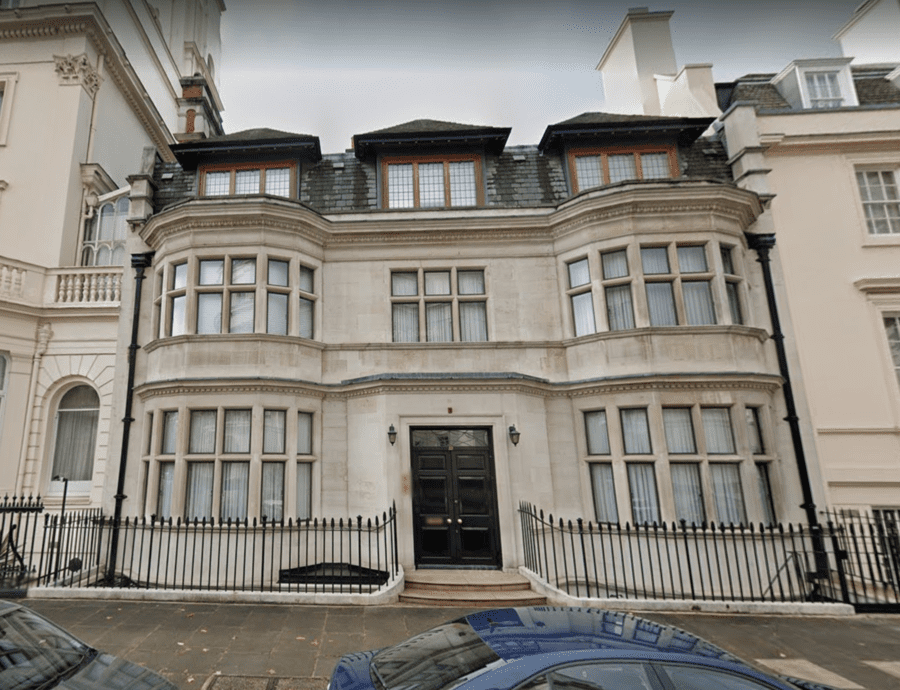
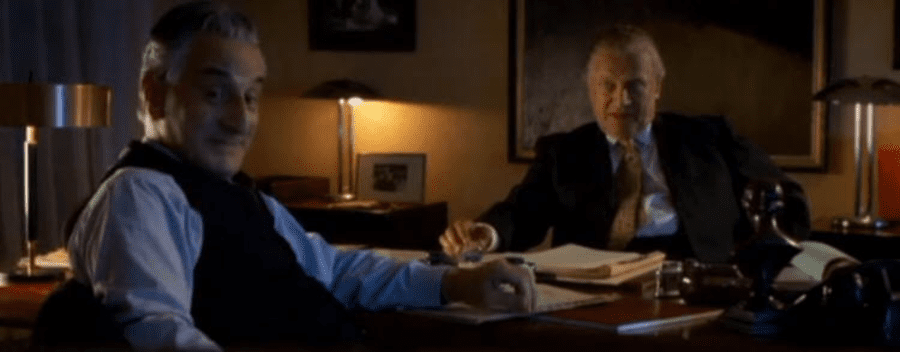
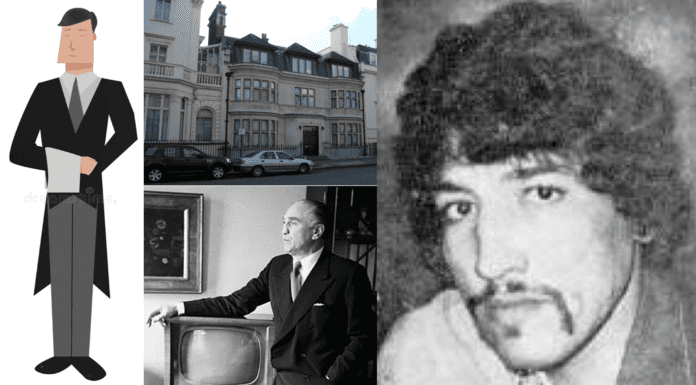
    Pictured top – No image of Julian Sessé can be found on the Internet (left); 32 Wilton Crescent (top centre) and the late Granada head honcho Lord Bernstein (lower centre); killer Mustapha Bassaine in the only known image available of him (right).


    Listen to the ‘Scotland Yard Confidential’ episode about the slaying of ‘The Peer’s Butler’ by clicking here.


    Editor’s note – Unlike as is the case in many publications, this article was NOT sponsored or supported by a third-party. Follow Matthew Steeples on Twitter at @M_Steeples.


    A message from our editorial team – Thank you for reading this article. We’re more reliant on your support than ever as the shift in consumer habits brought about by coronavirus and the cost-of-living crisis impacts our advertisers. If you haven’t already, please consider supporting our trusted, fact-checked journalism by supporting our work via Patreon.

     

    Scotland Yard Confidential butler murder Belgravia Julian Sesse 1970
    The story of the December 1970 slaying at 32 Wilton Crescent features in a 37:02-minute March 2023 episode of the excellent podcast ‘Scotland Yard Confidential’ – which can be listened to as ‘A Spotify Original.’ The description for the episode reads: “In December 1970, Julian Sessé, the long-serving butler to Granada TV Chairman, Lord Bernstein, was found brutally murdered in his basement flat in Belgravia. With little hope for a successful investigation, and two murder cases already on their books, local police quickly handed the case to Scotland Yard. Evidence gathered from the flat revealed that the elegant 65-year-old butler was in the habit of picking up younger men and entertaining them at his home. He was discreet and private in these affairs, and his personal acquaintances were equally secretive. Was his killer a stranger or a friend? And how would detectives trace him if no one was willing to talk? It fell to Detective Chief Superintendent John ‘Ginger’ Hensley to crack the case of the Peer’s Butler. Learn more about your ad choices.”
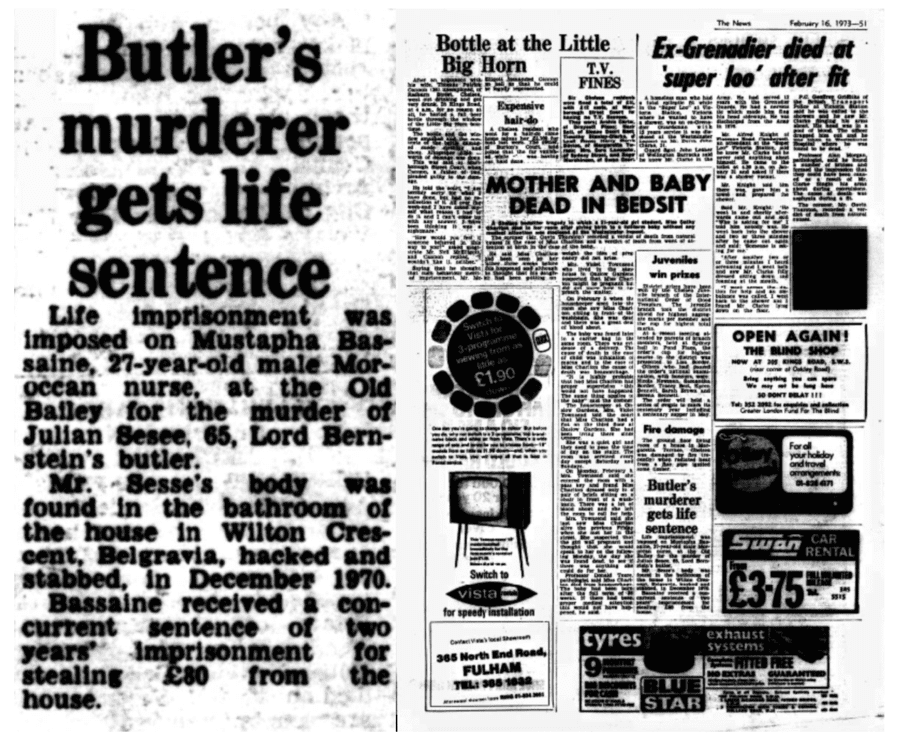
    Julian Sesse murderer Mustapha Bassaine convicted
    In an edition of ‘The News’ on 16th February 1973 that reported on Julian Bassaine receiving a life sentence for the slaying of Lord Bernstein’s butler, other articles included one about a Burton’s Court, Chelsea, SW3 resident having had £1,100 fur coat stolen “while she was having her hair done” and another listing TV licence fines awarded to residents of Draycott Place, Sloane Court West, Lyall Streeet, Margeretta Terrace, Sydney Street and Swan Court. A tragic story of a mother and baby found dead in a bedsit in Onslow Gardens, SW7 was referenced on the same page along with an ex-Grenadier Guardsmen being found dead after a fit in a ‘super loo’ at Victoria Station, SW1. A tale of a drunken man being fined after throwing a bottle through a Kings Road boutique, the Little-Big-Horn was one of the day’s more light-hearted pieces of coverage; Thomas Patrick Canon of Redburn Street, SW3 told the judge: “I am terribly sorry for what I have done, but had no recollection of it. All over the weekend I have asked myself what reason I had to do it and I can’t come up with any answer. I have been thinking it was a nightmare. I wouldn’t like it, neither [if that had been done to a shop I owned].”
    32 Wilton Crescent Belgravia London SW1 murder
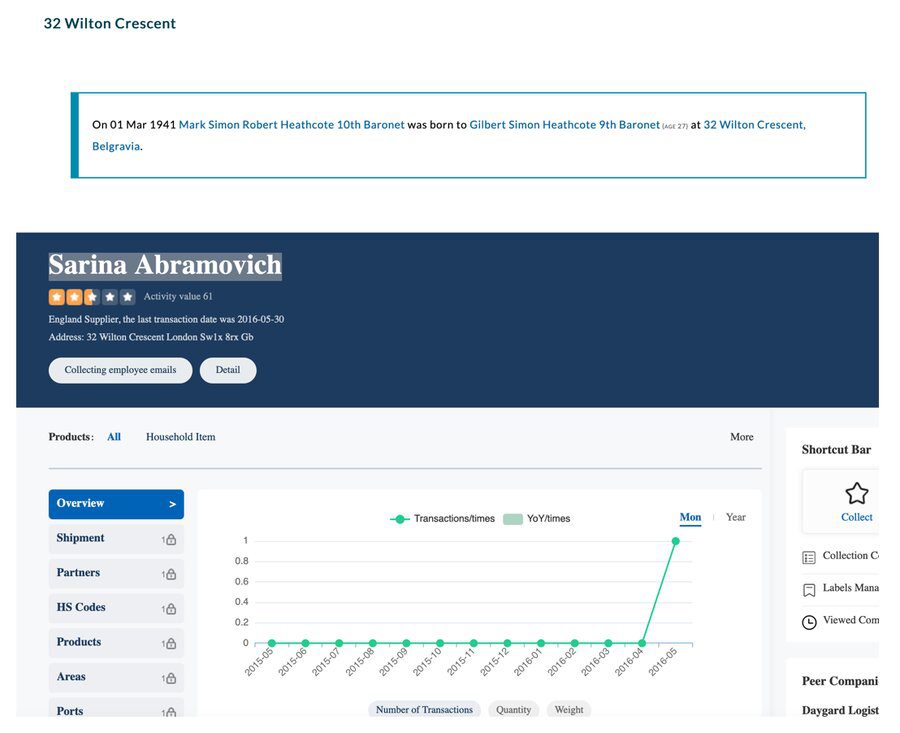
    The scene of a murder most horrid on the 19th December 1970 – 32 Wilton Crescent, Belgravia, London, SW1X 8RX. Beyond the then owner Sidney Bernstein (formally titled The Right Honourable The Lord Bernstein of Leigh in the County of Kent, 1899 – 1993), others who have have variously lived or have connections to the likely now worth upwards of £40 million residence have included Gilbert Heathcote, 9th Baronet (in 1941) and a lady named Sarina Abramovich (circa 2015 to 2016). Ms Abramovich was subsequently (in 2021) 432 Park Avenue, New York based and shares a surname with the former Chelsea Football Club owning, one-time Putin supporting billionaire Roman Abramovich, but it is unknown if they are related. A statue of Sir Robert Grosvenor KG stands just opposite 32 Wilton Crescent and others to have lived on this most tony of streets have included the 1st Earl Mountbatten of Burma, Lord Randolph Churchill, Quentin Crewe, the Grand Duchesss Charlotte of Luxembourgh and Demetri Marchessini.
    Steven Berkoff Granada Television Lord Bernstein
    Essex born and Jewish, Sidney Bernstein, Baron Bernstein was lauded as “the dominant influence on the growth and development of commercial television” by the British Film Institute. Twice married and a father of three, his business interests included amongst other things a circuit of 60 cinemas and theatres, motorway services stations and a hugely profitable television rental business. He was a lifelong friend and partner of Sir Alfred Hitchcock in film production and turned Granada Television into a huge commercial success; he was portrayed by Steven Berkoff in the 2010 BBC one-off drama, ‘The Road to Coronation Street.’
    32 Wilton Crescent Belgravia Mark Heathcote Sarina Abramovich
    Sarina Abramovich is listed as being connected with 32 Wilton Crescent in 2015 and 2016 in documents relating to imports and exports. Whether she has any connection with the property now is unknown and records relating to the building remain shrouded in mystery. The Heathcote family were connected with the house in the 1940s when Mark Heathcote, 10th Baronet was born there in 1941.
  • Extravagance Knows No Bounds – £36m Mansion Previously Owned By Disgraced Tycoons Alan Bond And Conrad Black Again For Sale

    Extravagance Knows No Bounds – £36m Mansion Previously Owned By Disgraced Tycoons Alan Bond And Conrad Black Again For Sale

    Matthew Steeples takes a look at a £36 million Kensington mansion formerly owned by disgraced business tycoons Alan Bond and Lord Black; its former chatelaine was known for stating “I have an extravagance that know no bounds”

    Sir Winston Churchill’s daughter Mary Soames once described the buccaneering businessman and media tycoon Lord Black of Crossharbour as “London’s biggest bore unhung” whilst his wife, Lady Black – better known as the author and journalist Barbara Amiel – was suggested to be just a “rich bitch” by Sarah Sands in a “case for the defence” article in the Independent in October 2006.


    “Poster boy for the 80s” turned fraudster and jailbird Alan Bond (1938 – 2015) was an English-Australian businessman equally Marmite-like in being liked or loathed and now a Kensington mansion owned for a time by both subsequently disgraced businessmen is once again for sale.


    14 Cottesmore Gardens, formerly known as 12 – 14 Cottesmore Gardens, was purchased by Alan Bond’s Satellite Group for £7 million in the 1980s and sold by administrators of that business to Conrad Black and his wife for the knockdown sum of just £3.5 million in 1992.


    Plain old Mr and Mrs Black (as they then were) lavished further millions – some of which came from the company Hollinger International, Inc., which ultimately resulted in their downfall – on the double fronted 19th century mansion and used it for entertaining on a lavish scale. Guests, including the likes of Prince and Princess Michael of Kent, Joan Collins, Margaret Thatcher, Henry Kissinger, Jimmy Goldsmith, James Hanson, Arnold Weinstock, Jacob Rothschild, Peter Mandelson and Tony Blair, were said to flock to the parties they gave there, but in 2005 these gatherings of upto 400 people at a time came to an almighty end.


    Forced to sell at a bargain basement price of just £13.1 million on an ask of £17.5 million as the Canadian born billionaire faced jail time in America, Lord and Lady Black’s tenure was over and the residence saw its “arriviste torch” passed to Juan and Adriana Villalonga, a couple described as “a Mexican telecom czar and his beauty-queen wife.” Of what came next, The Globe And Mail’s Paul Waldie pointedly penned in February 2007: “[They] quickly erased many of the features that the Blacks prized.”


    Once again for sale as of April 2023, the value of 14 Cottesmore Gardens has again been deemed to have substantially risen. Knight Frank offer the 12,310 square foot, five-storey residence at a punchy price of £36 million and laud it as “imposing” and “presented in good order throughout.” They add that a “pre-planning consultation” has found that further accommodation could be added that would take the internal space to more than 15,000 square feet; business barons with deep pockets only need apply.


    Editor’s Note – Unlike as is the case in many publications, this article was NOT sponsored or supported by a third-party. Follow Matthew Steeples on Twitter at @M_Steeples.


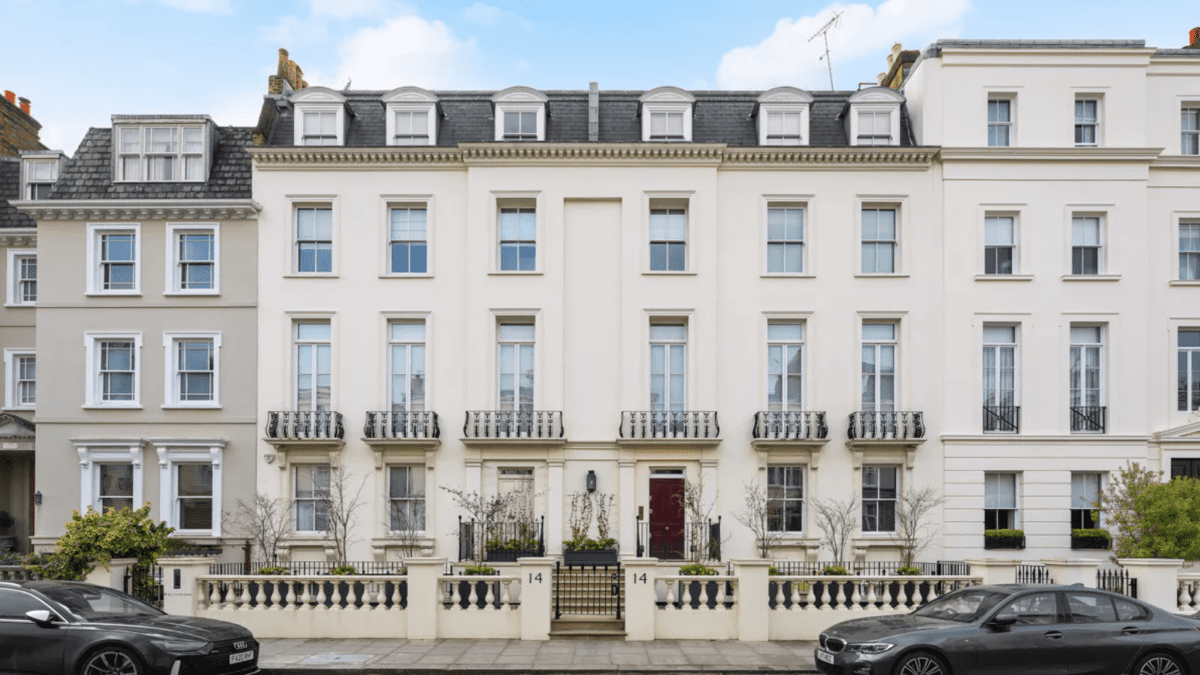
    Pictured Top – 54-foot wide 14 Cottesmore Gardens is described by selling agents Knight Frank as “offering lateral living so often requested but so hard to find in central London.” They neglect to mention that with its hedges cut back to the minimum, the place actually looks extremely forlorn.


    Lord and Lady Black Tom Bower Cardinal Richelieu Marie Antoinette
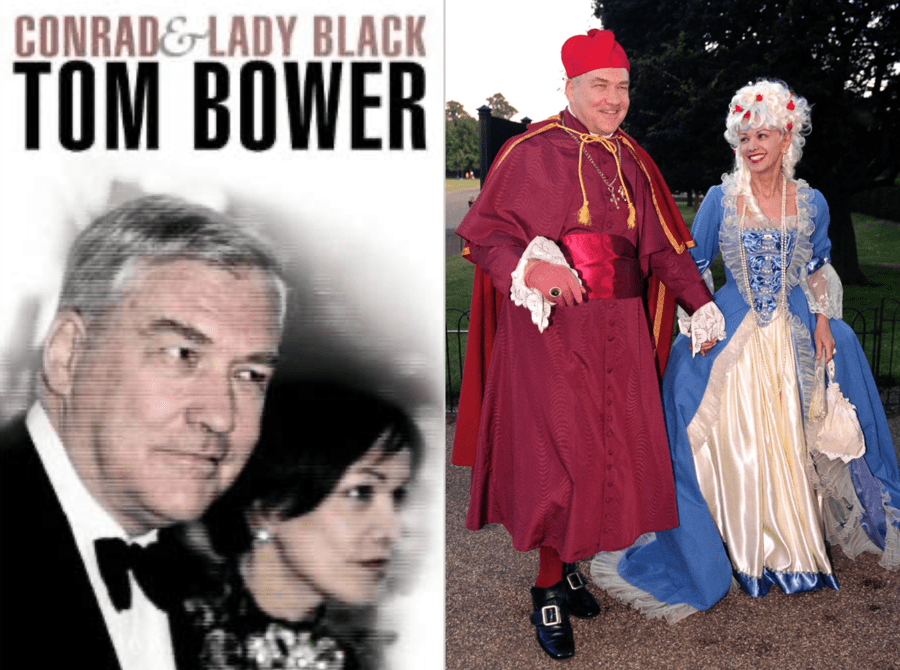
    Flamboyant Lord and Lady Black dressed as Cardinal Richelieu and Marie Antoinette for a party at Kensington Palace in 2000. For a time, the couple employed 17 butlers (if Tom Bower is to be believed) and had two private jets and homes – aside from the 19th Cottesmore Gardens mansion – in New York, Palm Beach and Toronto. “Guests packed into their parties at Cottesmore Gardens,” Bower remarked in his 2006 book the couple, adding: “Amiel was a big spender… Under the control of senior butler Andrew Lightwood, second butler Peter Wilson and a succession of third butlers, Amiel’s life in Kensington had become what her constantly changing staff called ‘bizarre.’ Each recruit was taken by Lightwood on an introductory tour of the house, ending on the roof. ‘Make sure the landing lights are on at all times,’ instructed Lightwood solemnly, ‘because Madame takes off from here on her broomstick looking for cats. She needs the lights to guide her return.’ His face would crack into a smile. ‘Most important, take care that she never sees you. She hates seeing any of us.’ Amiel’s eccentricity demanded that her staff hid whenever she approached, diving into cupboards if necessary, and never entered her quarters when she was present. Every day, all the bed linen was changed and subjected to ‘the penny test.’ A coin was dropped onto the sheets. If it failed to bounce they were not drawn sufficiently tight. Every cushion was arranged to a precise pre-ordained position, and each towel placed exactly as Amiel had predetermined. ‘Andrew!’ she screamed down the telephone on one memorable occasion, ‘the towels are in the wrong place!’ Lightwood, as Amiel knew, was in New York, but he was expected to telephone the staff in the house in London to rectify the error. ‘You f**king pillock!’ she yelled at another member of staff for reading her ‘Daily Mail’ before it was delivered to her.”
    Barrbara Amiel drawing room 14 Cottesmore Gardens
    Barbara Amiel Black (or ‘Lady Black’ as she prefers to be known) in her drawing room at Cottesmore Gardens (pictured). Of her, Sarah Sands on Lord and Lady Black in the ‘Independent’ in October 2006 opined: “Conrad and Barbara in their monstrous, glamorous way, knew how to throw parties. The talk was of geo-politics and hemlines. Nowadays, we scorn their extravagance and doubt the source of their wealth with prune-faced hindsight. Meanwhile, everyone is sucking up to Russians…. Barbara would disingenuously begin her midnight calls to me by saying in her low, breathy voice: ‘I hope I am not disturbing you.’ She would then offer little glimpses of her own home life. I remember her mentioning that Conrad Black was upstairs playing with his fleet of toy gun ships in the bath… I remember her examining an exhibition of doll’s houses at the Chelsea Flower Show and sighing how restful it would be to live in this cosy little home. How she envied people in small houses. The burden of wealth was one of her more dangerous fantasies. At one of her Gatsby-style parties in Kensington, she flinched at the elaborate canapés on offer: ‘Really, all I want is a sausage,’ she said, piteously. Then, she ran a hand down her inconceivably expensive dress and whispered: ‘I hate these parties, I am so shy.’ Later, I was invited to her boudoir, where she lay on cushion surrounded by her women friends. She was Kensington’s Cleopatra, surrounded by maidens such as the designer and Forte daughter Olga Polizzi, the political thinker Tessa Keswick and the writer Miriam Gross.”
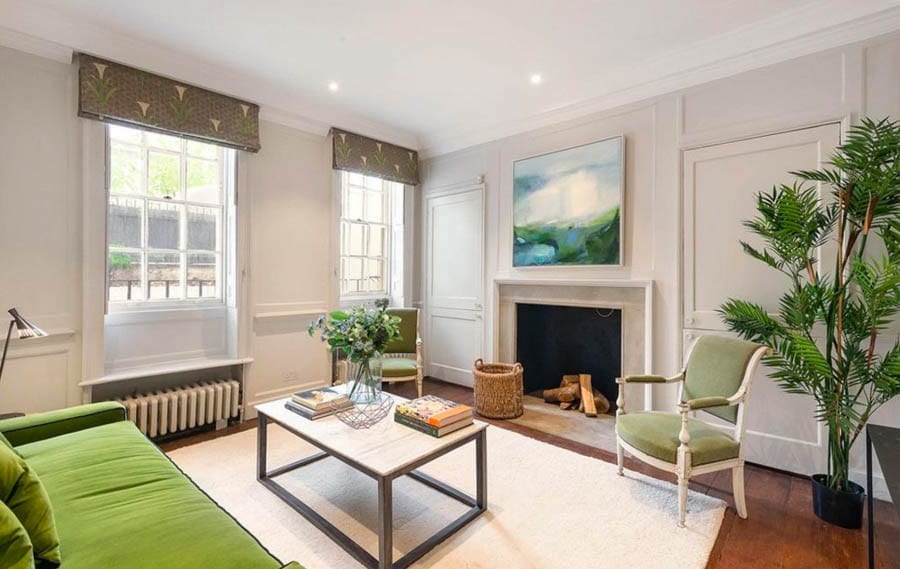
    Drawing room 14 Cottesmore Gardens today
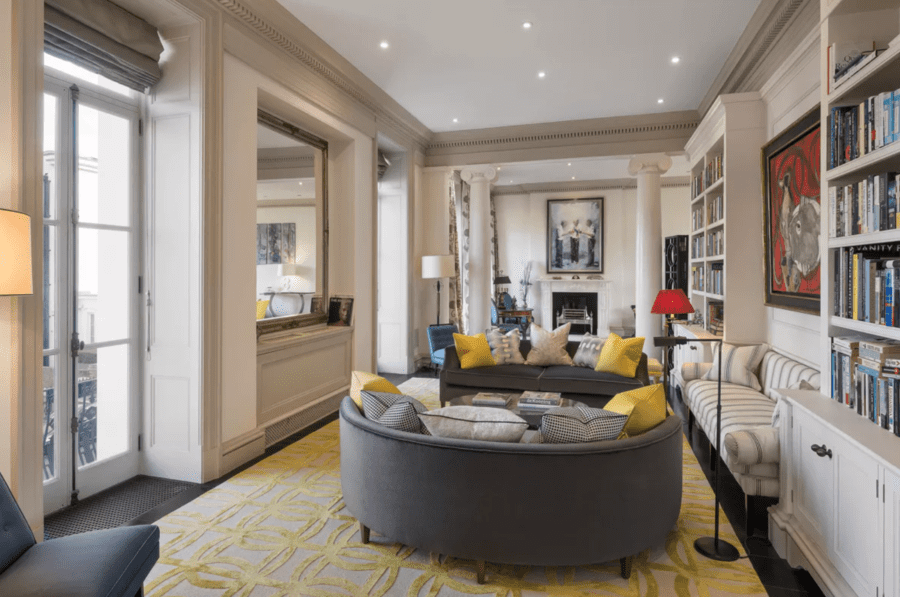
    The very same drawing room at 14 Cottesmore Gardens today. The décor is now somewhat more modern and less ‘classical country house-ified.’ It’s certainly more Soho Farmhouse than Alberto Pinto in style; it is currently a space that the former Meghan Markle would feel more at home than say, perhaps, the likes of Lord and Lady Black’s chum Ghislaine Maxwell and her fellow noxious nonce Ponzi scheming paedophile boyfriend Jeffrey Epstein. Mr Pinto was responsible, it should be noted, for the designs of most of Epstein’s residences.
    12 - 14 Cottesmore Gardens Conrad Black
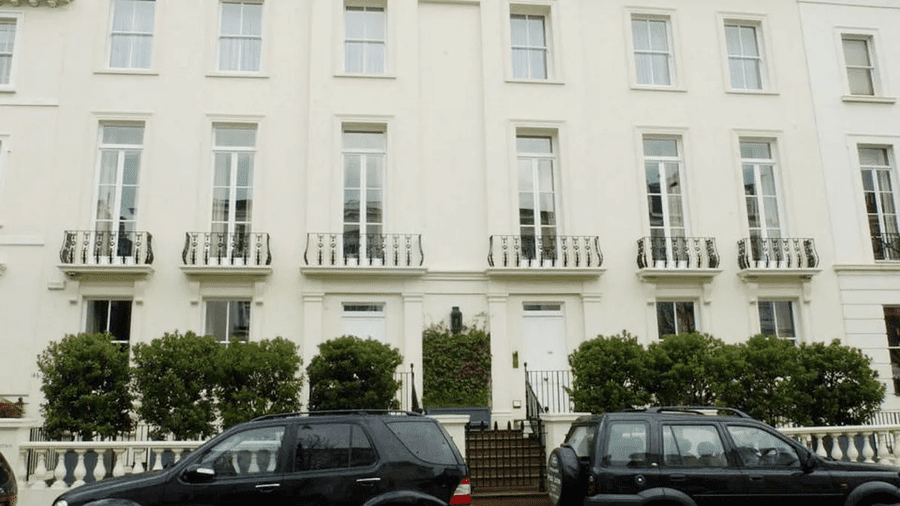
    The front elevation of 12 – 14 Cottesmore Gardens during the era it was owned by Lord and Lady Black.
    Conrad Black Barbara Amiel Ghislaine Maxwell Jeffrey Epstein Little Black Book
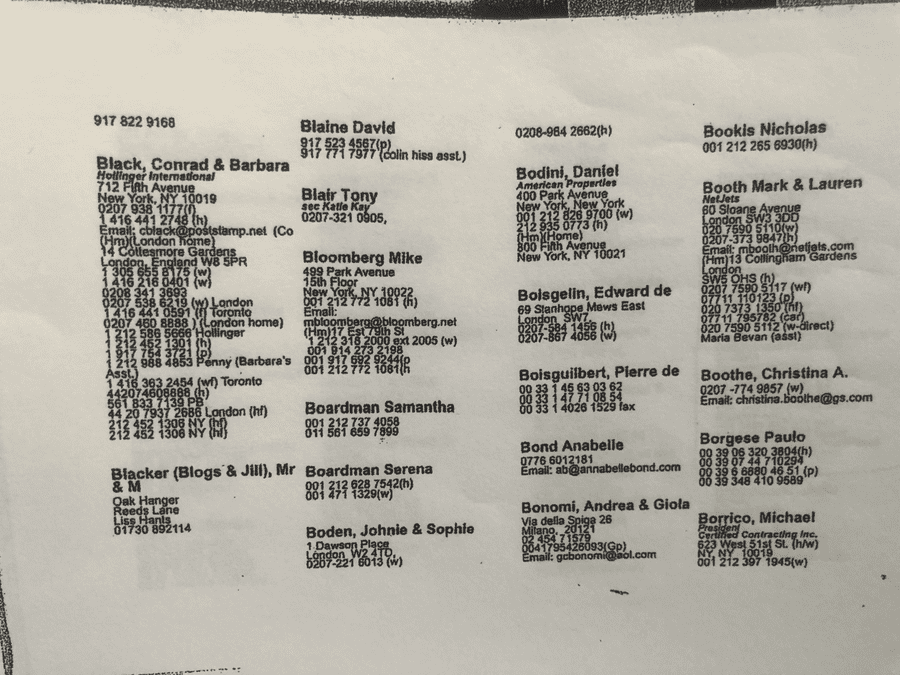
    Multiple entries for Lord and Lady Black during the time they owned 14 Cottesmore Gardens appeared in the ‘Little Black Book’ address book often attributed as being that of the friends and associates of Jeffrey Epstein, but that featured more of the contacts of Ghislaine Maxwell in fact. In October 2020, Barbara Amiel took revenge on the pension pot plunderer’s padeophile sex trafficker daughter by featuring her in her “score-settling” memoir ‘Friends & Enemies: A Life in Vogue, Prison, & Park Avenue.” Maxwell had “dumped” Lady Black when Lord Black was being investigated for fraud. She wrote of their last meeting: “We were friends – so putting on my ‘So good to see you’ face, I headed for her. She bolted. Turned that sharp tight little turn when you really want to get away. And that was it.”
    Barbara Amiel
    Of the clear lover of plastic surgery Lady Black, in October 2020, Sarah Sands remarked in ‘The Mail on Sunday’: “She had a bohemian, almost masculine, view of opportunistic sex. She describes, for instance, accompanying an early love in his white Triumph sports car ‘in which once or twice I had performed fellatio to the fascination of passing truck drivers, all for fun.’”
    Conrad Black Barbara Amiel 2012
    After getting out of the clink in 2012, Lord and Lady Black decided to go back on the ‘razzle-dazzle’ and posed for photographers before heading back to London to party with friends. In May 2019, the rambunctious peer arrogantly announced he’d be returning to the House of Lords after President Donald Trump pardoned and praised him. Commenting, of this pardon, Lord Black declared: “I’m not bitter… Officially in the United States, I’ve never been charged and I won in the end. It was a war and there are casualties in wars. I lost the time, I lost a lot of money, but as you can see my standards of living isn’t bad… The truth is, these, last 15 years, I haven’t been as interested in British politics as I was before – in the Thatcher years. It could be quite interesting again, in fact it is as of right now – it’s very interesting… It’s my good fortune that at a time when it is feasible, it happens – by happy coincidence – that it is a time of great fermentation in British public affairs.” Surprisingly, he doesn’t seem to have turned up on occasions since.
    Alan Bond
    The previous owner of 14 Cottesmore Gardens, Alan Bond (1938 – 2015), will forever be remembered as “Australia’s most notorious corporate criminal.” Born in Hammersmith, London, Bond’s first crime occurred when he was charged with theft aged 14 in Fremantle in Australia and whilst he is remembered for bankrolling the successful challenge for the 1983 America’s Cup, it is for causing the then biggest corporate collapse in Australian history that he will be go down in history.
    Adriana Abascal López-Cisneros Villalonga with Emmanuel Schreder
    Former Miss Mexico Adriana Abascal López-Cisneros (at the time Adriana Villalonga) bought the house in 2005. She divorced the Spanish businessman Juan Villalonga in 2009 and married the French businessman Emmanuel Schreder in Ibiza in June 2013. In August 2014, the magazine ‘Quién’ featured the model and television presenter on its cover and at that time she described her new husband as “the love of my life.”
    Telefónica Juan Villalonga and wife Adriana Abascal
    Madrid born Juan Villalonga became the joint owner of 14 Cottesmore Gardens with his then wife Adriana Abascal – the couple were married between 2000 and 2009 – in 2005. He is listed on Companies House as being a director of the now dissolved Medikidz Foundation at the address between August 2009 and November 2013. Married since 2011 to a photographer named Vanessa Von Zitewitz, Mr Villalonga was a partner at McKinsey & Company in the 1980s, CEO for Credit Suisse First Boston and Bankers Trust in Spain in the early 1990s and CEO of Telefónica from 1996 to 2000. He was named as one of the best performing chief executive officers in the world by ‘Harvard Business Review’ in 2010 and is also linked to addresses in Monaco.

    The Names & Numbers – 14 Cottesmore Gardens (formerly known as ’12 – 14 Cottesmore Gardens’), Kensington, London, W8 5PR, United Kingdom

    April 2023 – Offered for sale for £36 million ($44.4 million, €40.9 million or درهم163.2 million) through Knight Frank. Valued on Homipi at an upper sum of £28.558 million ($35.250 million, €32.440 million or درهم129.456 million).


    2009 – Mr and Mrs Villalonga divorce and subsequently Adriana Abascal married Emmanuel Schreder, a French businessman, in Ibiza in June 2013.


    2005 – Sold by Lord and Lady Black for £13.1 million ($16.2 million, €14.9 million or درهم59.4 million) to Spanish businessman Juan Villalonga Navarro and Mexican model, Miss Mexico winner and television presenter Adriana Abascal López-Cisneros Villalonga.


    October 2004 – Placed for sale for £17.5 million ($21.6 million, €19.9 million or درهم79.3 million) according to NZ Herald.


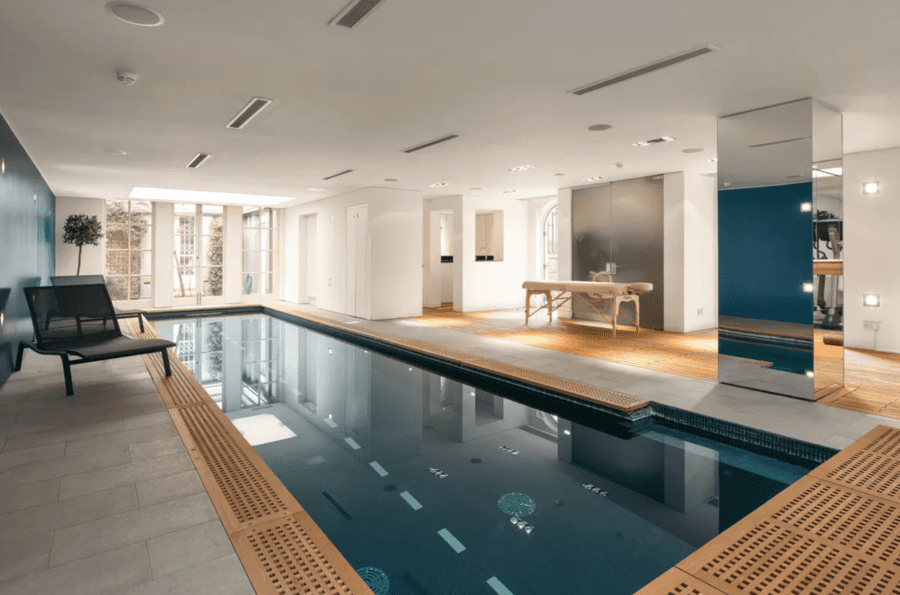
    January 2004 – Valued at £14 million ($17.3 million, €15.9 million or درهم63.5 million) according to The Globe And Mail. At the time, the “mansion” in “the upscale Kensington neighbourhood” was described as having “10 bedrooms, 6 bathrooms and a swimming pool.”


    Featured also in The Guardian in an article by Chris Tryhorn. Quoting Lord Black, he shared: “At a certain price, anything is for sale. [It has] been shown to people in the not-too-distant-past.”


    Going further, Tryhorn added: “Artwork from the 18th and 19th centuries lines the walls, and there is plenty of storage space for the extensive wardrobe and shoe collection of Lord Black’s wife, Barbara Amiel, who famously declared once that her ‘extravagence knows no bounds.’ … It was originally two homes and one of the two original front doors is now a ‘deliveries’ entrance. He has used it in the past to host dinners with butler and maid service that was part-paid by Hollinger.”


    Also in 2004, in a profile in The Spectator, Peter Oborne wrote:


    “Every year the Blacks threw two parties, one at Christmas and one summer event, at their double-fronted 11-bedroom mansion in Cottesmore Gardens. Everybody who mattered at the time went: Margaret Thatcher, Henry Kissinger, Jimmy Goldsmith, James Hanson, Arnold Weinstock, Jacob Rothschild, royalty, the playwright Tom Stoppard.”


    “Some of these, injudiciously as it turned out, agreed to join the main Hollinger board. The luckier ones – Peter Carrington, Robert Salisbury – got away with being made directors of The Telegraph. As the Tories faded out, Labour ministers started to arrive, the indefatigable Peter Mandelson, David Blunkett and other ministers eager to ingratiate themselves with the Tory press. Prince and Princess Michael of Kent were assiduous in attendance. In London, the Nineties belonged to the Blacks. They were London’s most glamorous power couple.”


    “There had been a time when both Blacks had kept their feet on the ground. This ceased to be the case. One evening Barbara Black rang Charles Moore panic-stricken from her Kensington home. There had been a last-minute drop-out from one of the famous Black dinner parties. ‘I’m short of a woman,’ she told Moore. Moore surveyed the newsroom. His gaze alighted on the journalist Eleanor Mills, by chance the stepdaughter of the Cabinet minister Tessa Jowell.”


    “An hour later, hastily groomed, made-up and brushed, Mills was sipping pre-dinner drinks in Cottesmore Gardens. Then disaster struck. A male guest, Max Fisher, dropped out. Mills was approached by Conrad Black. ‘Finish your drink and skedaddle,’ he told her. Barbara Black then told her to go to the kitchen and out through the servants’ door, where the driver would pick her up and take her home.”


    2001 – Conrad Black is elevated to a life peerage in the United Kingdom at the suggestion of Tony Blair. He sat on the Conservative benches in the House of Lords until 2007 as The Right Honourable The Lord Black of Crossharbour KCSG, but took a “leave of absence” between 2012 and 2019.


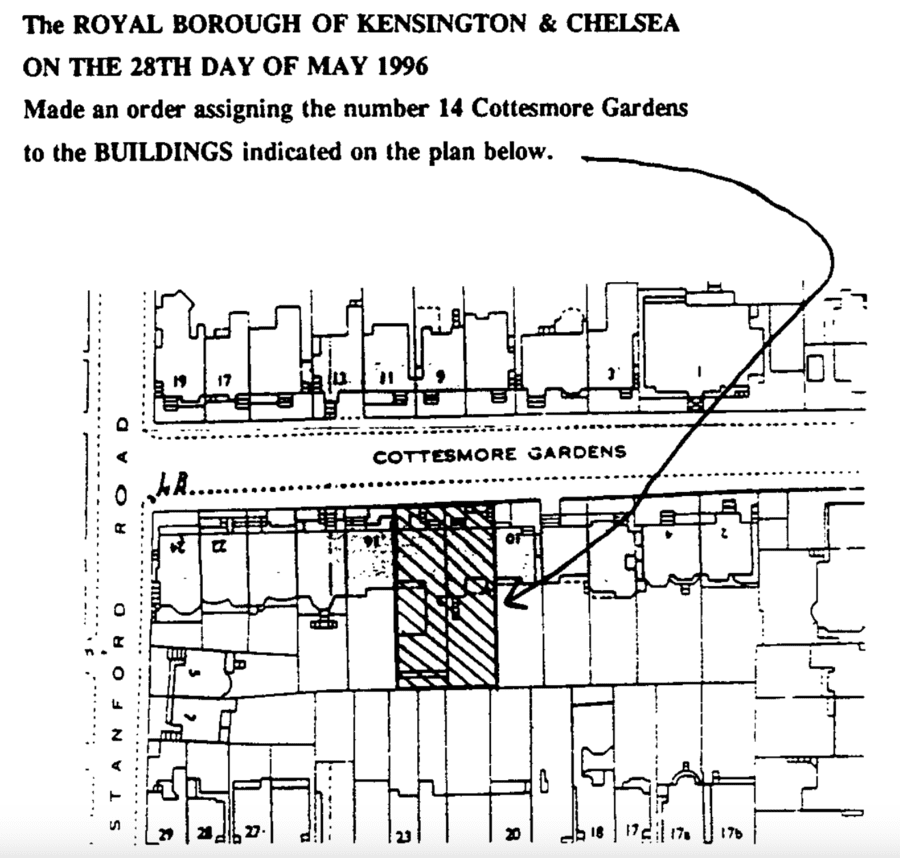
    28th May 1996 – The Royal Borough of Kensington And Chelsea ordered that 12 – 14 Cottesmore Gardens “shall be known and described” simply instead as 14 Cottesmore Gardens.


    Mid 1990s – The Blacks set about renovating 12 and 14 Cottesmore Gardens with the help of J. E. Evans Associates. Of the work in October 2006, The Sunday Times shared a segment of Tom Bower’s 2006 hatchet job Conrad and Lady Black that read: “Amiel vowed to create a palace that would attract celebrity worshipers of a power couple. Part of the first floor was to be removed to create a huge ground floor reception area.”


    1992 – 12 and 14 Cottesmore Gardens sold by the administrators of the affairs of Alan Bond through estate agents Savills to media tycoon Conrad Black and his Watford born journalist wife Barbara Amiel Black for “well under the asking price” for a sum of £3.5 million ($4.3 million, €4 million or درهم15.9 million).


    Mr Bond had been granted mortgages valued at £16.2 million ($20 million, €18.4 million or درهم73.5 million) on the property by Bell Satellite Services on the property along with two others at 4 and 16 Belgrave Mews in London, SW1 previously according to a report published by Financial Review in March 1990.


    1991 – Rented to an American businessman for £6,000 per week ($7,400, €6,800 or درهم27,200 per week).


    1990 – Placed in the hands of administrators of Mr Bond’s and placed for sale through Savills for a bargain basement sum of £3.8 million ($4.7 million, €4.3 million or درهم17.2 million) according to Financial Review.


    1980s – Sold to Alan Bond’s Bell Satellite Group for £7 million ($8.6 million, €8 million or درهم31.7 million).


    Circa 1905 – Walter Tapper is said to have “designed a library with handsome Arts and Crafts plasterwork (now removed) at the rear of the building.”


    1903 – 14 Cottesmore Gardens registered as the home of a Mrs Benson according to the Muster Roll of Angus: South African War, 1899 – 1902.


    1869 – In their current marketing blurb, Knight Frank suggest: “There has been a house on the site of 12 – 14 Cottesmore Gardens since at least 1869. The current house has been altered, extended and most notably joined over the subsequent century and a half. With the local planning department strongly opposed to further amalgamation of homes, opportunities to acquire a house of this width will be rarer still in the future.”


    1850s to 1860s – Built “under the direction of David Howell, of Serjeants Inn, Fleet Street.” Mr Howell was described in 1853 as an “articled clerk to a solicitor, lately carrying on business as a solicitor.” The architecture was lauded as: “Designed in a bold classical manner, with rather fleshy consoles and modillions… and bands of Vitruvian scroll between the bases of the ground-floor windows.”


    More photographs of the £36 million mansion…

    Image 1 - 14 Cottesmore Gardens(1)
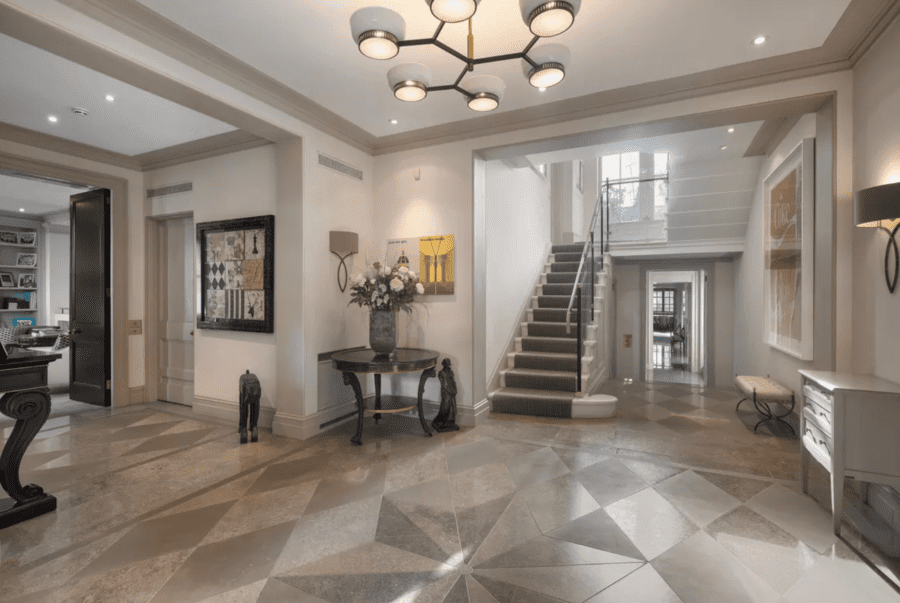
    An entrance hall where power and privilege have most certainly mingled previously.
    Image 2 - 14 Cottesmore Gardens(1)
    The 54-foot wide drawing is lauded by selling realtors Knight Frank as “arguably the best room in the house” and “double aspect.” They add: “[It has] six windows overlooking the street and additional views over the private garden to the rear.”
    Image 3 - 14 Cottesmore Gardens(1)
    The columns where Barbara Amiel Black once posed for photographs remain, but the subsequent owners eliminated much of the 1990s ‘brash’ that had been installed by a Watford born woman whose excess clearly offended so many.
    Image 4 - 14 Cottesmore Gardens(1)
    This dining room, where Conrad Black hosted presidents and prime ministers, is now somewhat diminished. The table for eight looks completely out of place and a future owner would do well to install something a little grander.
    Image 5 - 14 Cottesmore Gardens(1)
    A double height entertaining space was installed at the insistence of the loftier-than-lofty Lady Black in the 1990s and it remains today. However, it is now currently being used for more casual affairs such as Netflix viewing rather than being the scene of something that you’d more likely find in the ‘House of Cards’ in fact.
    Image 6 - 14 Cottesmore Gardens(1)
    A new owner might reinstate the grandeur of the past; sadly, however, this seems unlikely and the purchaser is more likely to be a footballer or Internet tycoon than a super-connected business tycoon.

    Image 7 - 14 Cottesmore Gardens(1)
    This currently very dark and very depressing study would most certainly not appeal to the very clearly very, very bright yet very, very pompous The Right Honourable The Lord Black of Crossharbour KCSG – a man who is said to count Julius Caesar and Napoleon Bonaparte as “his military heroes.” Of him in July 1997, Mark Honigsbaum in the ‘Independent’ remarked: “Although Black’s grandfather had briefly been a business partner of Harold Harmsworth, the original Viscount Rothermere, it was from his father, George Montegu Black Jr, that Black learned the art of corporate warfare, the importance of historical perspective and that gambling provides a disappointing rate of return compared to the Dow Jones index… The young Conrad was precocious. At the age of eight he sank his life savings of $60 into a single share of General Motors. He also became obsessed with Napoleon, and would astound his father’s friends by reeling off details of campaigns. Another story has him washing dollar bills and hanging them out to dry on a line outside his father’s home in Toronto. The last is apocryphal – Black says he slipped in the mud and was cleaning his change – but the image of the young capitalist, wise beyond his years, is accurate. His childhood tutor, the historian Laurier LaPierre, once asked Black why he always seemed to have the air of someone waiting for something to happen… A few years ago, for instance, the rumour went round Fleet Street that Black had bought Napoleon’s preserved penis at an auction. Black denied it, but many remain convinced that Bonaparte’s body part sits in Black’s collection of military curios… Black is no philanderer and is devoted to his second wife, the former ‘Sunday Times’ columnist Barbara Amiel. They are said to be intellectual soul mates and the parties at their four-storey mansion in Kensington are famous for bringing together a cross-section of the great and good.”

    Image 8 - 14 Cottesmore Gardens(1)
    One could not imagine the likes of the late great Baroness Thatcher, for example, liking the idea of sitting in this extremely depressing and dark waiting area. A new owner would do well to obliterate a décor scheme that could have only been favoured by a completely colour blind banker.
    Image 9 - 14 Cottesmore Gardens(1)
    A room currently described as a ‘cinema room’ measures 28’6” by 21’6” and is situated at the rear of the house. One can imagine Conrad Black having sat here for hour upon hour watching historical dramas about Napoleon with the likes of chums such as the acclaimed historian Andrew Roberts, the gambling tycoon John Aspinall and the politician and diarist Alan Clark, but a new owner will be more likely next showing episodes of ‘Succession’ – based on ‘The Telegraph’ tycoon’s rival Rupert Murdoch – than viewing historical works one most definitely suspects.
    Image 10 - 14 Cottesmore Gardens(1)
    Dining whilst the staff cook would NEVER have been on the agenda in the era that pomposity reigned whilst Lady Black was chatelaine of 14 Cottesmore Gardens.
    Image 11 - 14 Cottesmore Gardens(1)
    A 2,000 square foot entire floor fit for a tycoon… The master bedroom suite of the house takes up the entirety of the second floor of the building. It incorporates not only the principal bedroom, but also a “his” dressing room and a “her” dressing room as well as a sitting area, a bathroom, a shower room and storage rooms. It has direct lift access and is bigger than the average Brit’s entire house.
    Dressing room 14 Cottesmore Gardens Barbara Amiel
    A dressing room in the house where Barbara Black opened up to ‘Vogue’ and displayed “closets overflowing with dazzling evening gowns, designer handbags and 100 pairs of Manolo Blahnik shoes. ‘I have an extravagance that knows no bounds,’ she famously declared. Unfortunately for Lady Black, the article was closely perused at investment company Tweedy, Browne, a Hollinger International shareholder.”
    Image 12 - 14 Cottesmore Gardens(1)
    This playroom certainly did not exist in the era that Lord and Lady Black owned the property. It would be more likely crammed with books or stuffed with Manolo Blahnik shoes than toys from Toys ‘R Us. A new owner may likely reinstate it as an additional bedroom or office or games room perhaps.
    Image 13 - 14 Cottesmore Gardens(1)
    The pool room measures 43’9” by 26’9” and is no doubt where Lady Black spent many an hour relaxing.
    Image 14 - 14 Cottesmore Gardens(1)
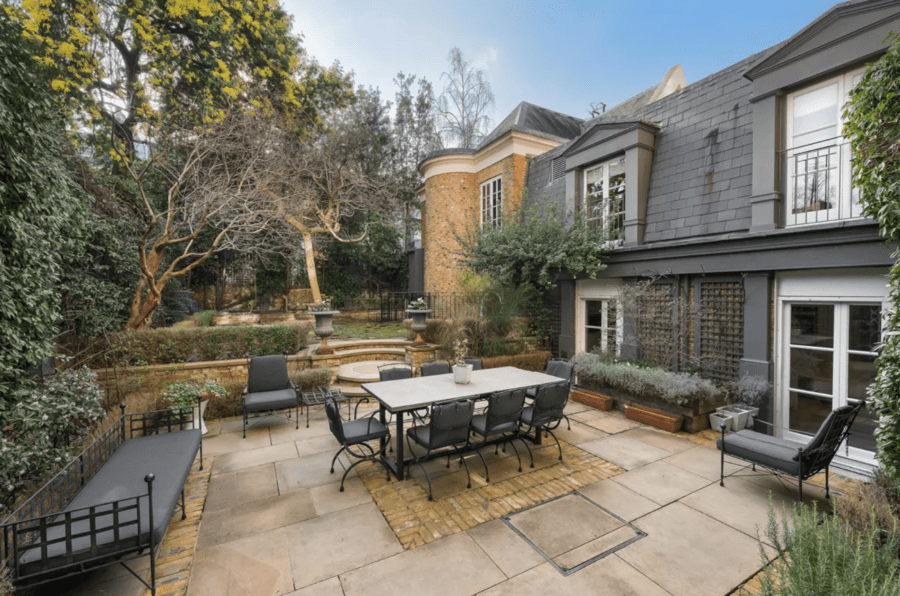
    The garden to the rear was where Lord and Lady Black hosted their annual summer party (with guests “spilling” into their drawing room also). In surprisingly Tardis-like fashion, the duo were able to supposedly squeeze in upto 400 guests at such occasions. Amongst those said to have enjoyed hospitality there were Joan Collins and of such, magazine publisher Nicholas Coleridge wrote: “If you get a kick out of milling about with present and former prime ministers, cabinet ministers, minor royals, dukes, editors, vastly rich Americans, distinguished historians, gossip columnists, playboys and lots of pretty ‘it’ girls, then this was the place to be.”
    Image 15 - 14 Cottesmore Gardens(1)
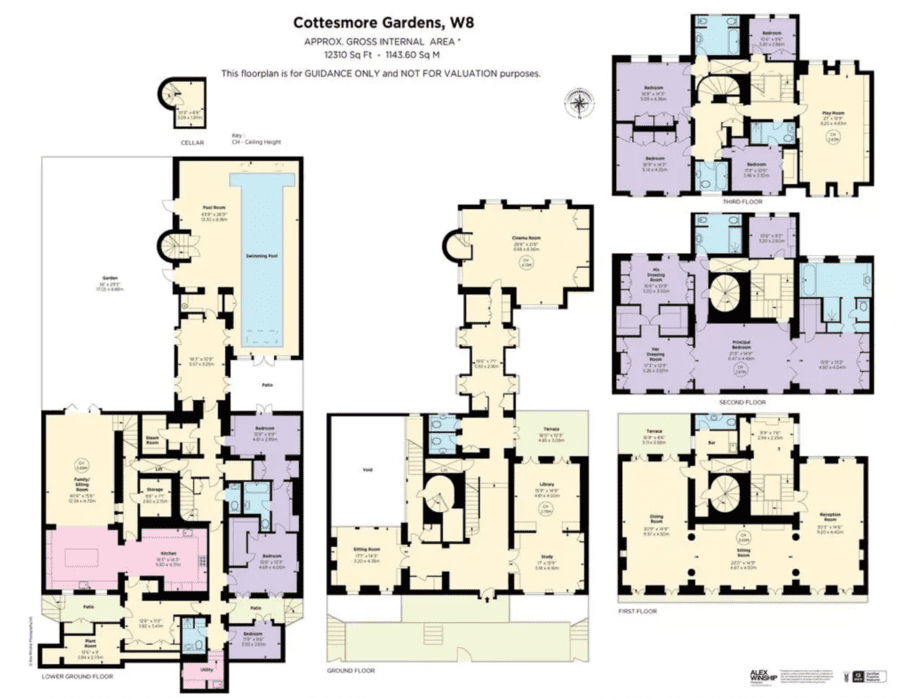
    The existing floor plan of the property illustrates the vast scale of the building offered. A buyer, Knight Frank observe, has additional options and “a pre-planning consultation has been carried out with RBKC by leading architects Studio Indigo.” They add: “[It] would completely reconfigure the house adding an additional basement floor and taking the internal space to more than 15,000 square foot. The resulting house would have a 40-foot by 41-foot south-facing rear garden.”
    Site plan 14 Cottesmore Gardens
    A plan of the site as presented in 1996 when 12 and 14 became known just as 14 Cottesmore Gardens.
  • Five Famous British Poker Players – The Stories Of Poker Hand Success

    Five Famous British Poker Players – The Stories Of Poker Hand Success

    David Lennox shares the stories of five famous British poker players and what makes them good at their game

    Many of our readers enjoy gaming both in casinos and online on sites such as SlotsLV, but most would struggle to name individuals famous for other activities who also happen to be very, very good at games such as poker.


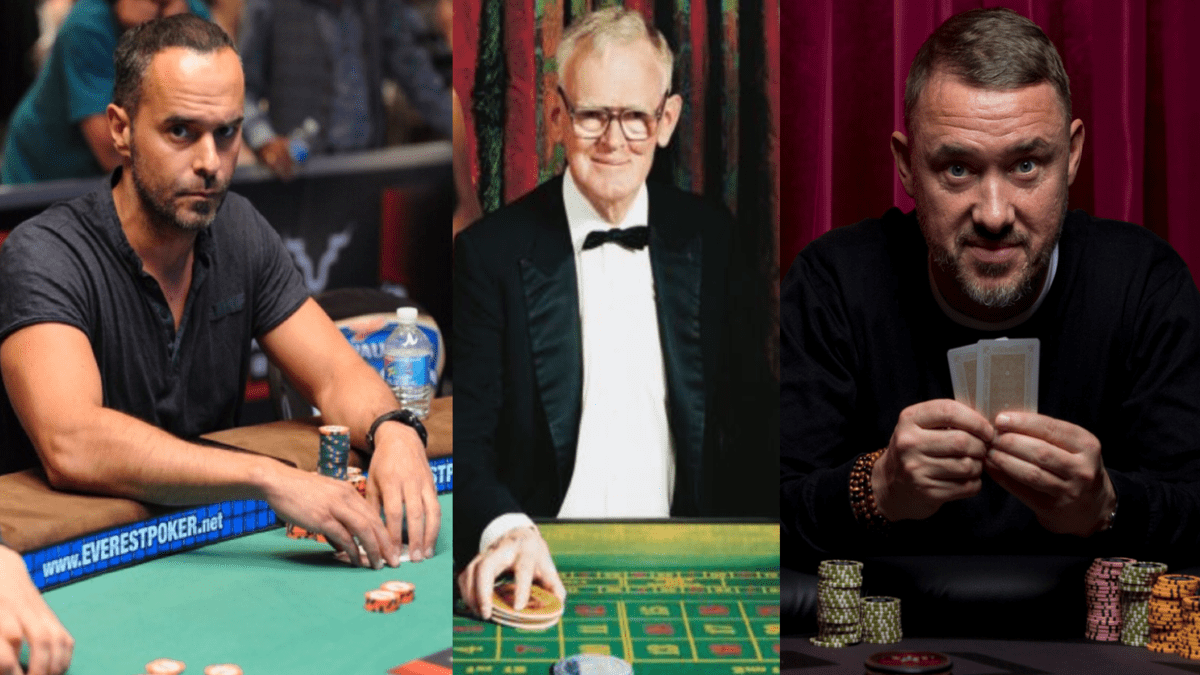
    Whilst well-known individuals such as the footballer Michael Owen has also found success on the horseracing circuit and the England manager Terry Venables is now also known for co-creating the detective series Hazell, the following five ‘famous faces’ are the British kings of ‘poker hand’ activity:


    Derren Brown

    Derren Brown

    Mentalist, illusionist, painter and author are just a few of the occupations Derren Brown has practicised. A former evangelical Christian turned atheist, this award-winning “master of mind control” is a winner of two Laurence Olivier Awards and in 2014 appeared as himself in the Sherlock episode ‘The Empty Hearse.’


    Active since 1992, Croydon born Brown claims not possess any supernatural powers and often begins his shows by stating that what he does is achieved through “magic, suggestion, psychology, misdirection and showmanship.” He took inspiration from the hypnotist Martin S. Taylor and worked as a conjuror whilst studying at the University of Bristol.


    Considered a controversial entertainer by some, Brown – who claims to be a “big fan” of parrots and who is a patron of the Parrot Zoo Trust in Friskney, Lincolnshire – is said to have “prowess” also at blackjack and poker. He is considered so good that he has supposedly been banned from several casinos in the United Kingdom.


    Stephen Chidwick (Aliases ‘stevie444’ and ‘TylersDad64’)

    Stephen Chidwick

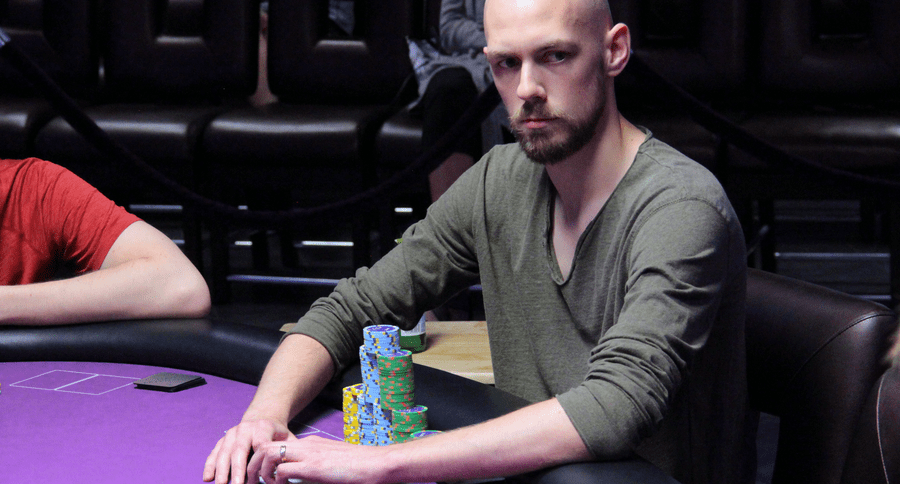
    Aside from being a lookalike of the Marmite-like social media manipulator Andrew Tate, Playa del Carmen based Stephen Chidwick is listed as being the number one on the England all-time money list for poker tournament winnings.


    Born in 1989 in Deal, Kent and “popular with the fans,” Chidwick had raked in a grand total of £26.1 million ($32.3 million, €29.7 million or درهم118.6 million) by November 2019 and likely now has well exceeded that figure. At that time, he was eighth all-time and he currently stands at the biggest-earning British tournament poker player in history.


    Michael Greco

    Michael Greco

    Best known for having played Beppe di Marco in EastEnders for four years, Michael Greco was born in Sutton, Greater London in November 1970. He has also appeared in Casualty, Celebrity Love Island and Soapstar Superstar, but card games are his true passion.


    Wikipedia list Greco’s total live tournament poker winnings at in excess of £890,000 ($1.1 million, €1 million or درهم4 million), but given they only provide dated entries to contests including the Showbiz Poker between 2005 and 2009, his actual total is likely far higher.


    In 2022, the actor announced he would be starring in a new Netflix series and also appeared in Aladdin at Wolverhampton’s Grand Theatre. Of this, he observed: “They’re the best parts to play, the villains. It’s the role people remember. I played the boy-next-door characters growing up. As I’ve got a bit older, gruffer and hairier – oh, and greyer – it’s the baddies now.”


    Stephen Hendry MBE (AKA ‘The Golden Boy’, ‘The Ice Man’ and ‘The King of the Crucible’)

    Stephen Hendry

    Aside from having appeared a poor ninth in The Masked Singer as ‘Rubbish’ in 2023, this Scottish snooker player is lauded as “one of the most successful snooker players in history.”


    Hendry turned professional in 1985 at the tender age of 16 and went on to become the sport’s youngest world champion when he won his first World Snooker Championship in 1990 aged just 21. He won seven world titles between 1990 and 1999 and retired in 2012, but returned to the professional circuit in 2021.


    A father of two, Hendry supports Hearts and Chelsea F.C. and also “enjoys poker.” He has appeared in several televised tournaments and especially “loves” high-stakes games.


    Stuart Wheeler (1935 – 2020)

    Stuart Wheeler Chilham Castle

    Eton and Oxford educated Stuart Wheeler was once “told to stop playing blackjack for being too successful at Caesar’s Palace Casino in Las Vegas.” He played cards with Lord Lucan two nights before his disappearance, invented spread-betting on shares and gave William Hague’s Conservative Party the biggest donation in British history – a sum of £5 million ($6.2 million, €5.7million or درهم22.7 million).


    A regular competitor in the World Series of Poker championships and known for playing bridge with Omar Sharif also, Wheeler lived in the £15 million ($18.6 million, €17 million or درهم68.2 million) Chilham Castle in Kent and counted ‘Model of the Millennium’ Jacquetta Wheeler amongst his trio of delightful daughters.


    In September 2019, Quiller published Wheeler’s memoir Winning Against The Odds: My Life in Gambling and Politics and launched it with a glitzy party hosted by Dominic Cummings at Carlton House Terrace. He sadly died of stomach cancer just months later and generously left his Jacobean castle to charity.


    David Lennox is a restaurant critic and occasional enthusiast for the ‘Sports of Kings.’ He enjoys the ‘Beautiful Game’ and the odd game of poker as well as backgammon and the roulette wheel also.


  • Who Is Gatsby Randolph?

    Who Is Gatsby Randolph?

    Matthew Steeples previews ‘Who Is Gatsby Randolph?’ and finds it not only refreshingly raucous, but also proof that anyone can achieve their dream

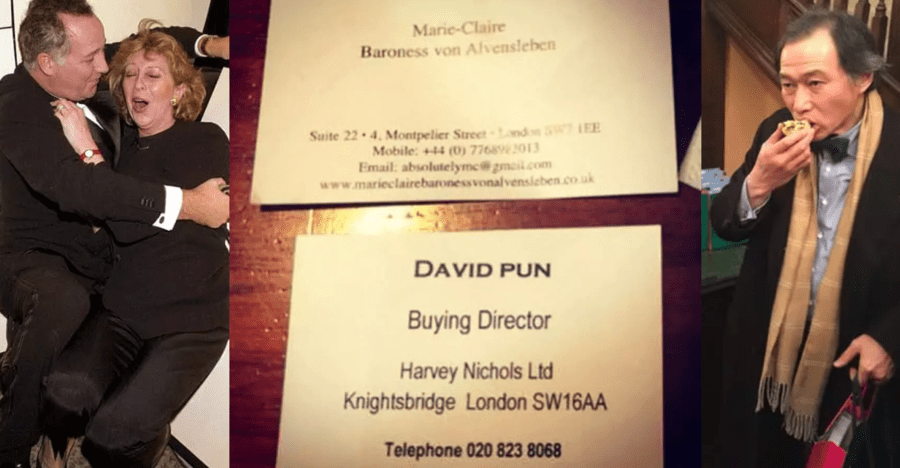
    In England, we have party crashers like David Pun – a bow tie wearing blaggart who pretends to own Harvey Nichols, but actually lives in a bus shelter in Hammersmith. Freakish toerags like him and the bigoted berk Marie-Claire, Baroness von Alvensleben pollute events, hoovering up canapés and nabbing gift bags with audacity and awfulness, but in Hollywood there’s a marvelous man who has got the art of getting into the Vanity Fair Oscars after-party down to a fine art.


    David Pun and Marie-Claire, Baroness von Alvensleben
    London’s leading liggers, amongst them bow tie wearing David Pun (right) and convicted racist Marie-Claire, ‘Baroness’ von Alvensleben (left, with disgraced ‘entertainer’ Michael Barrymore), flash business cards lacking class, style and elegance, but still somehow get their wicked way into society bashes. How they get away with it remains a mystery and though there have been proposals to make documentaries about their antics, these have yet to reach the viewing public.
    Alexa Jago
    English actress turned award winning producer Alexa Jago, however, has managed to bring the remarkable yet totally true story of a humble boy from Memphis, Tennessee who sought out and achieved his dream of getting to the top in Tinseltown to the big screen.
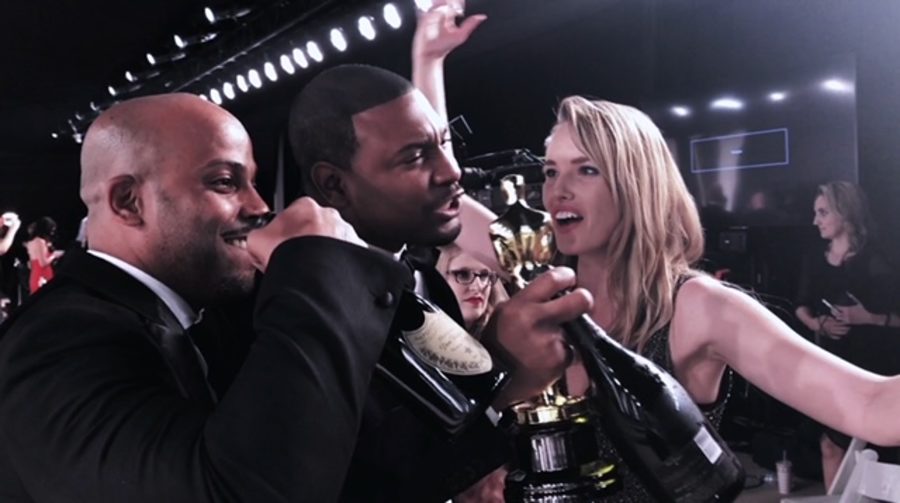
    Oscar and Dom Perignon
    With a (borrowed but real) Oscar and a bottle of Dom Perignon (or five), this bio-documentary of an aspiring music producer turned tastemaker illustrates the power of Instagram. In it, the star claims “social media is archival footage” and through weaving his posts into a cohesive story, Gatsby Randolph becomes a genuine and welcomed personality.
    https://vimeo.com/423678137

    A ‘mockumentary’ in style and deservedly lauded as “Borat meets Entourage,” Who Is Gatsby Randolph? tells the story of Memphis, Tennessee born Kobie Randolph’s transition as he seeks out fame and fortune in Tinseltown. Rather like in F. Scott Fitzgerald’s novel from which he takes his adopted moniker, “people were not invited – they went there” is the premise of our suave, cigar chomping protagonist.


    Produced by talented English theatre and film actress turned award winning producer Alexa Jago – best known for having worked alongside amongst others Kevin Costner and for having been part of the team behind the 2015 hit Kajaki (AKA Kilo Two Bravo) – and due for theatrical release in the coming months, here is a film about a young man’s rise from poverty to the pinnacle of power and privilege living in a mansion in the Hollywood Hills.


    With 101,000 followers on Instagram currently, but ironically without 101 Dalmatians, in what has been described as “a poignant wild ride through red carpets with unlimited access to all the glitz and glamour,” this bio-documentary examines not only success, but also struggle.


    Reinvention is key to Kobie Randolph’s transition into his alter-ego ‘Gatsby’ and of his journey, the star recently told FilmInk: “As a filmmaker, I recognised that my own story of rags to riches was, in fact, a movie in the making.” He most certainly has achieved that and Who Is Gatsby Randolph? most definitely looks set to be one of the hits of 2022.


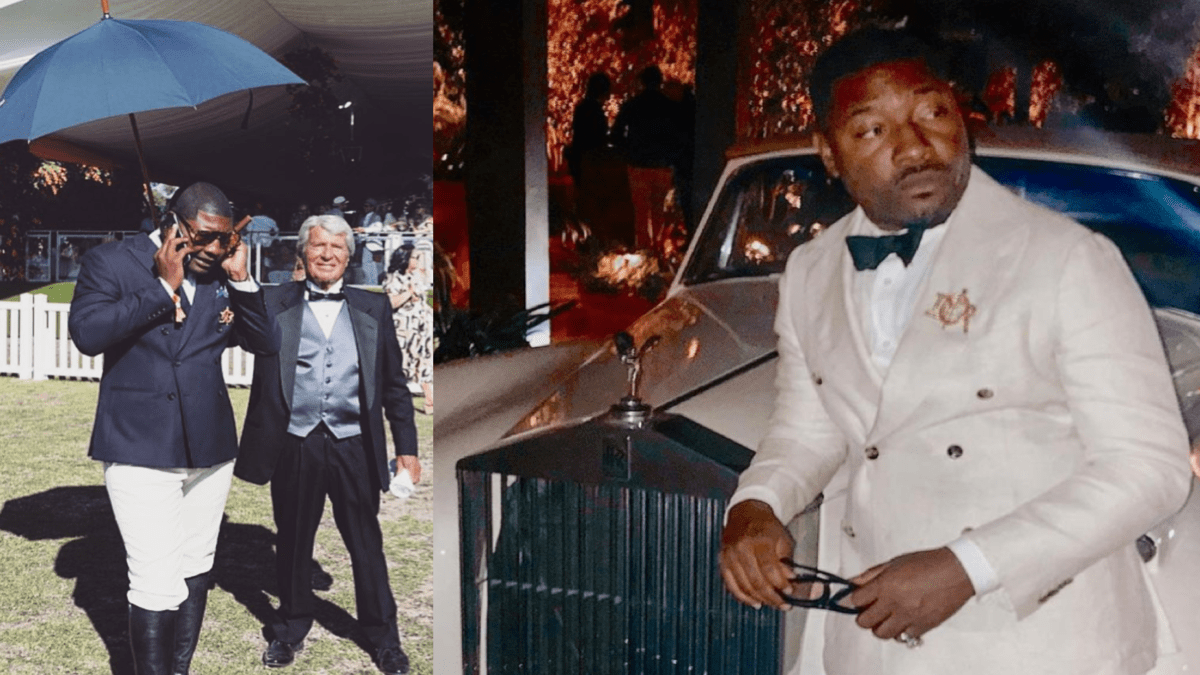
    Pictured top – Kobie Randolph, a man described by British actor Hainsley Lloyd Bennett as making him “feel like I could take over Hollywood.” Of him, the ‘Pennyworth’ star recently remarked: “His electric spirit jumps through the screen… He projected that he was somebody, so everyone treated him like he was and that was irrespective of his race, his age and his looks.”


    Anna Wintour
    Here (pictured with Anna Wintour) is a hustler who threw convention to the wind and got himself in front of Steven Spielberg even.
    Glenn Close and Emily Blunt
    This is an amusing and lighthearted tale that echoes F. Scott Fitzgerald’s character’s intrepid pursuit of the American dream. Its protagonist (pictured here with screen sirens Glenn Close and Emily Blunt) really did get into ‘Vanity Fair’s’ Oscar after-party not only once but four times.
    Angelina Jolie
    On his journey, Gatsby Randolph met everyone from Angelina Jolie (pictured) to Reese Witherspoon.
  • Website of the Week – Yankee Wally

    Website of the Week – Yankee Wally

    Sadie Quinlan’s ‘Yankee Wally’ YouTube channel where she “plays by the rules” whilst exposing what she views to be the nefarious activities of the Duchess of Sussex is a must watch

    Piers Morgan is undoubtedly her best known ‘hater’ and whilst the likes of the knicker-free-flasher who’ll do-anything-for-the-limelight Lizzie Cundy repeatedly bangs on about having been “ghosted” by her (for a dime), there’s a one-woman band who actually brilliantly tears down the wicked wastrel formerly known as Meghan Markle and that’s Sadie Quinlan and her ‘Yankee Wally’ YouTube channel.


    Complete with a drawl from the Welsh Valleys or thereabouts, “strong Brexit, strong Trump supporter” Quinlan always begins with an announcement: “All my content is found on the public domain, it’s just my opinions and I play by the rules” (whatever they may be) and she well and truly tells it like it is. Here, indeed, is someone with a passion for taking down the Sussexes and of them she declares: “I thoroughly enjoy exposing the lies of Meghan Markle, and her husband is just as bad. I’m here till they lose titles and funding.”


    Aside from uploading videos analysing what she views as the nefarious activities of the ‘Modern Day Mrs Simpson’ for her 34,500 subscribers, Quinlan it seems keeps herself busy elsewhere and announces on her blog DirtyGiftedWelsh: “The bigger picture matters. Think. Ahead. #meghanmarkle #charlatanduchess #MEGXIT #notmyduchessever.”


    Curiously, in July 2005, the South Wales Echo reported on a Cardiff “brothel madam [named Sadie Quinlan pulling] a gun on a man during a row over a car parking space.” After the then 49-year-old was jailed for this incident of road rage, at sentencing her solicitor remarked: “She accepts that she overreacted.”


    Whether this is the same Sadie Quinlan is unknown, but elsewhere the YouTuber of that name declares on the National Theatre Wales community website that, aside from her interest in rogue renegade royals, she is currently working on “projects” including “justice, the sex industry, tax is theft, government transparency, despises hypocrites, changing the bankruptcy laws in [the] UK.”


    Yankee Wally is a must watch. Pour yourself a strong G&T and be prepared to be amused as you get ‘De-Markled.’ You won’t regret it.


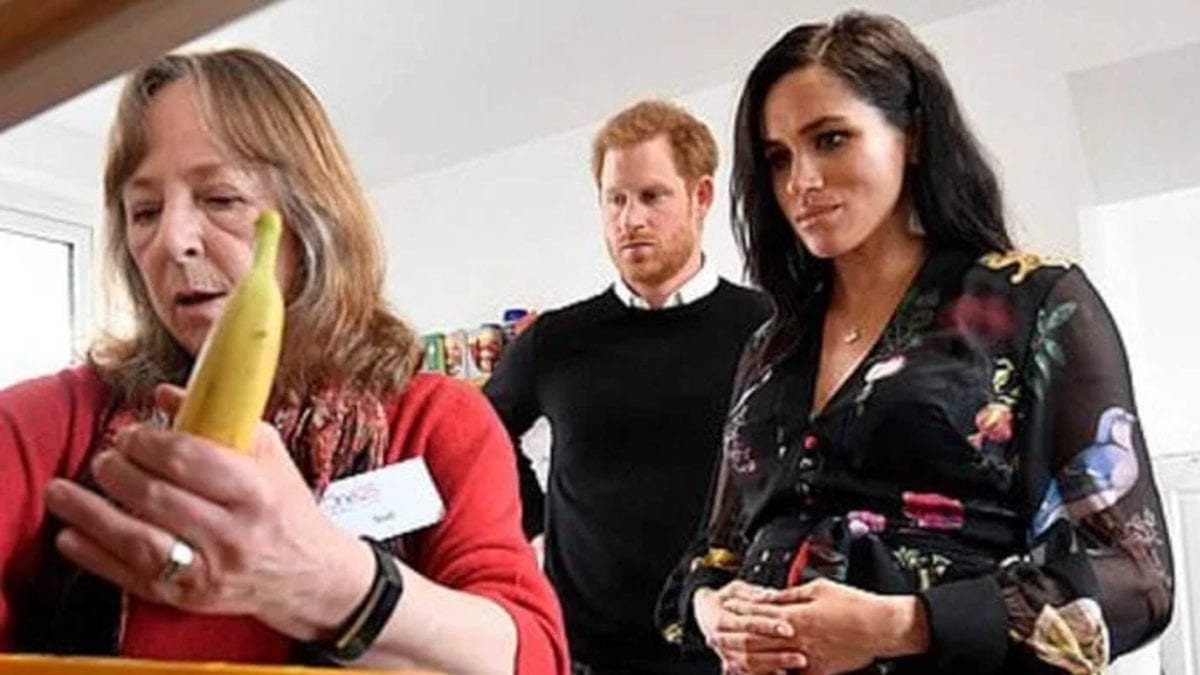
    Pictured top: The woman formerly known as Meghan Markle was once snapped playing with bananas whilst her drip of a husband looked on; Sadie Quinlan, meanwhile, is definitely a cheerleader for her to slip on one.


    https://www.youtube.com/watch?v=JEKricEm2SU
  • A Marvellous Party with Mrs Bucket

    A Marvellous Party with Mrs Bucket

    Dame Patricia Routledge’s rendition of ‘I’ve Been To A Marvellous Party’ for theatrical charities will most certainly lift your spirits

    Joining amongst others Kate Burton, Sir Derek Jacobi and Dame Emma Thompson in a fundraiser to celebrate the legacy of Noël Coward, Dame Patricia Routledge – best known for brilliantly playing the redoubtable Hyacinth Bucket in Keeping Up Appearances from 1990 until 1995 – recently performed ‘I’ve Been To A Marvellous Party.’


    https://twitter.com/stefanroberts/status/1313754568061267973

    Reaction to rendition was universally positive and on Twitter comments included: “Suddenly 2020 isn’t so bad after all” and “I think I need to watch Patricia Routledge performing ‘I’ve Been To A Marvellous Party’ as an uplifting tonic on a daily basis.”


    Going further politician turned broadcaster Gyles Brandreth added: “I first heard Patricia Routledge do this in 1972 at the Mermaid Theatre in London… She’s incredible now. She was incredible then. Listen to this if you can. It’s just a joy.”


    Of the fundraiser, Alan Brodie of the Noël Coward Foundation remarked:


    “Noël Coward, a man of the theatre and one of the first transatlantic theatre celebrities, used his celebrity status to assist others. He galvanised his famous friends into raising considerable sums for charitable causes on both sides of the Atlantic and was also a Founder Member of The Combined Theatrical Charities, the predecessor organisation to Acting For Others.”


    “Noël would have been very distressed by the shutdowns of the West End, Broadway and theatres across the world resulting in hardship for so many. It is therefore imperative, on Noël’s behalf, to help those in need by collaborating with Acting For Others in the UK and the Actors Fund in the US demonstrating just how much his influence and legacy lives on 100 years from that first play.”


    “The performers have given their services for free and we are most grateful to them for offering their time and their talent to this important cause.”


    To support the ‘A Marvellous Party’ fundraiser, click here.


    Facebook: @TheSteepleTimes

    Instagram: @TheSteepleTimes

    Twitter: @SteepleTimes


  • Mocking The Dockers

    Mocking The Dockers

    Welsh ‘mock castle’ once occupied by notorious spendaholic Lady Docker for sale for £2.85m; the Dockers were turfed out in 1956 after it was discovered they’d lavished the equivalent of £1.3m today of company money on the place without permission

    • Alleged inspiration for ‘The Pink Panther’ film, Norah Docker (AKA ‘Naughty Norah’ and ‘Lady Muck’) described herself as “an artificial blonde, among thousands of artificial blondes searching for stardom.”
    • Of her second husband, Sir William Collins, chairman of Fortnum & Mason, she announced: “He was 69, I married him for his money.”
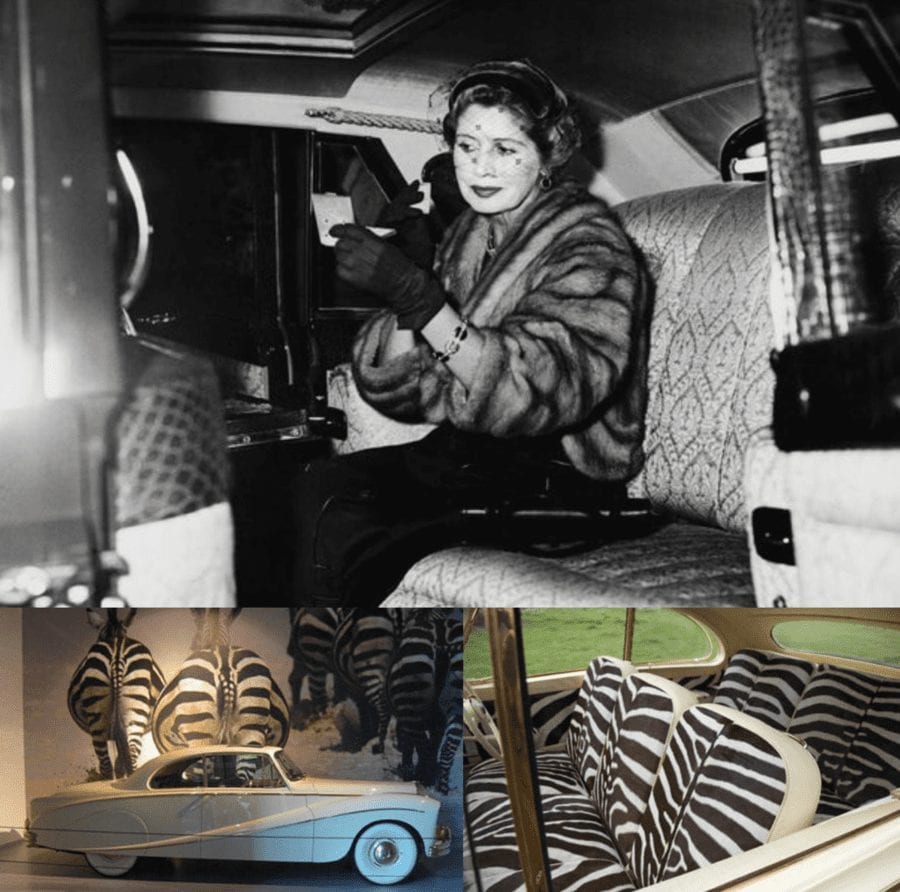
    • Lady Docker used her third husband Sir Bernard Docker’s company money to create Daimler cars upholstered in zebra hide – “because mink is too hot to sit on.”
    • The couple also plundered the company to buy Glandyfi Castle in Wales and spent an equivalent of £1.3 million of today’s money on it.
    • The Grade II listed, early 19th century ‘mock castle’ became a small hotel and is currently for sale for £2.85 million.

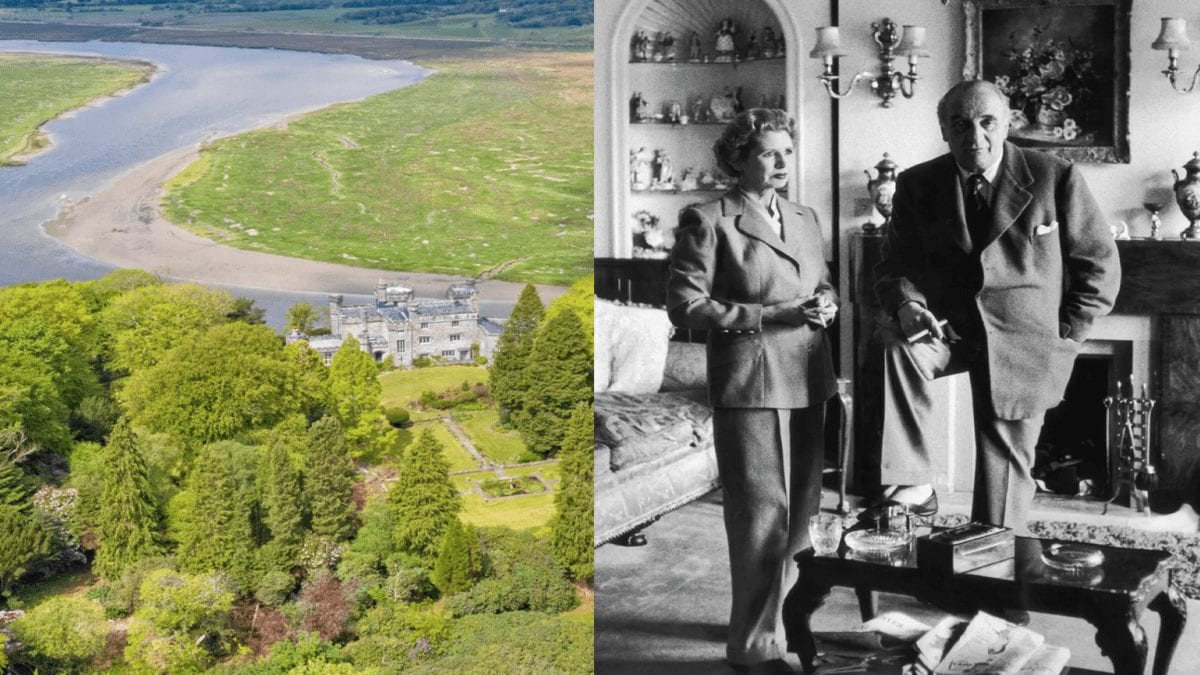
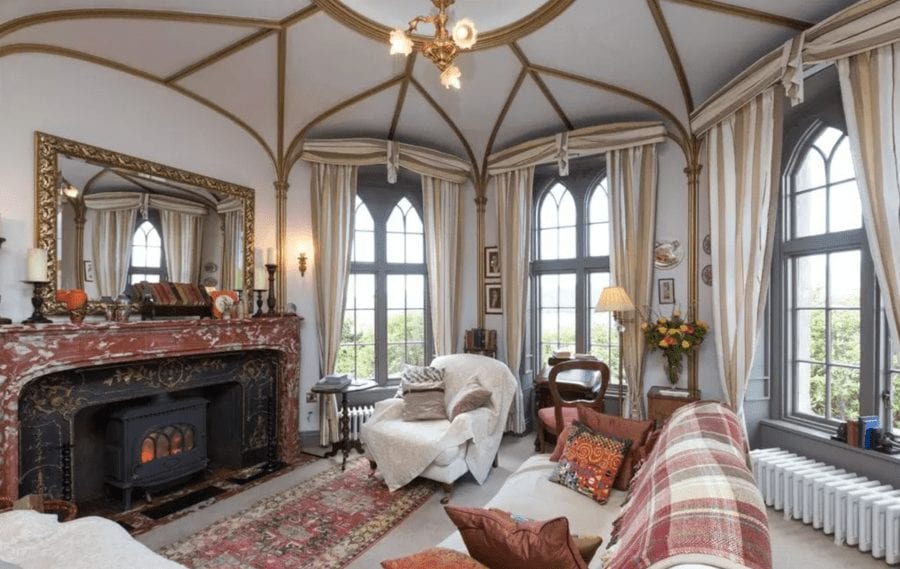
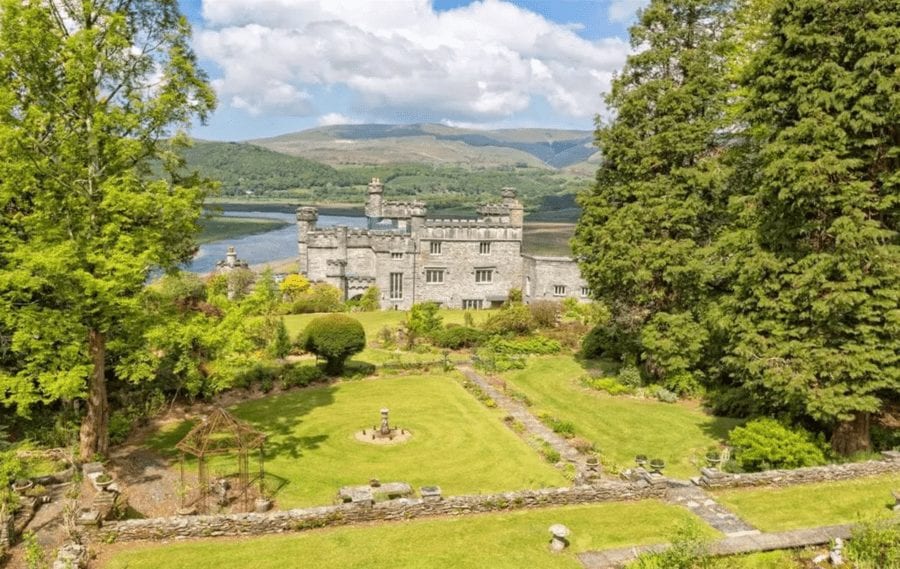
    The best known ‘occupants’ of Glandyfi Castle, an early 19th century ‘mock castle’ eleven miles from Aberystwyth in Mid Wales, were Birmingham Small Arms Company (BSA) managing director and Daimler chairman Sir Bernard Docker and his notoriously decadent wife, ‘Naughty Norah.’


    The Dockers, a “spendaholic” pair said to be the inspiration for the 1963  film The Pink Panther, lavished the equivalent of £1.3 million of today’s money buying and altering the castle in 1949 – the very same year they were robbed of £1.9 million of diamonds in today’s money at their Mayfair home also.


    Sir Bernard and Lady Docker lived at Glandyfi until 1956 when it was discovered that they’d plundered the company through the presentation of vast expenses. Aside from the castle, Lady Docker had lavishly created five show ‘Docker Daimler’ show cars covered in gold and upholstered with amongst other things zebra hide. When asked why she had done such, she coyly responded: “Because mink is too hot to sit on,” but subsequently after these and the castle had to be returned, the couple bought a Bentley Continental as revenge.


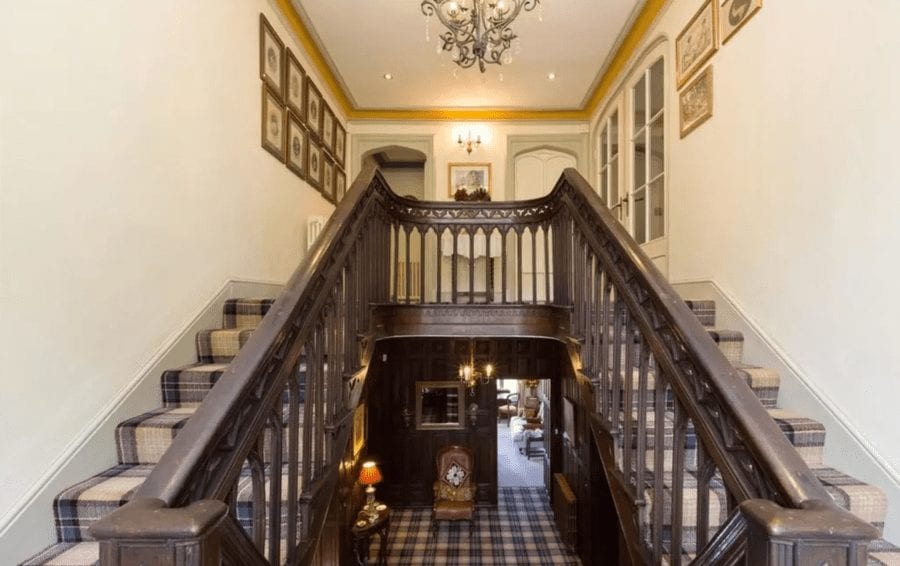
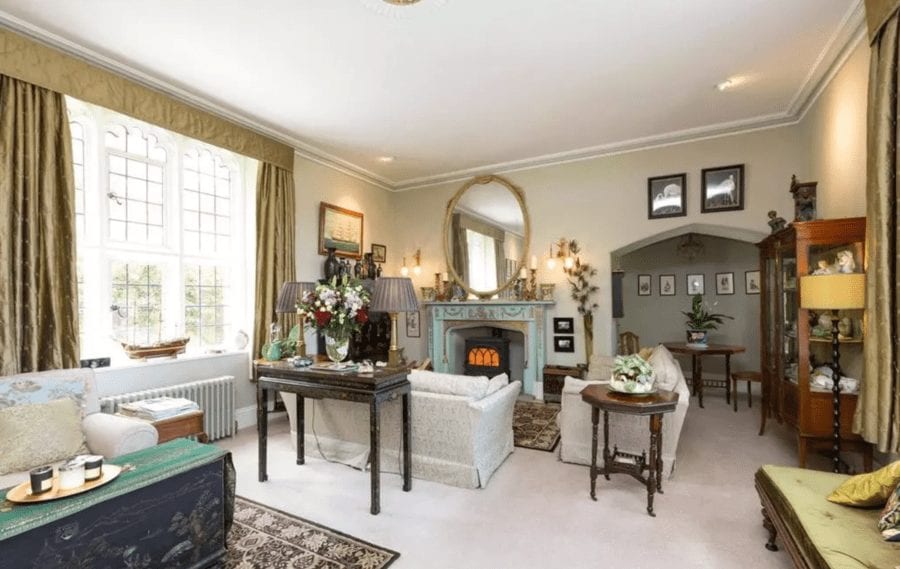
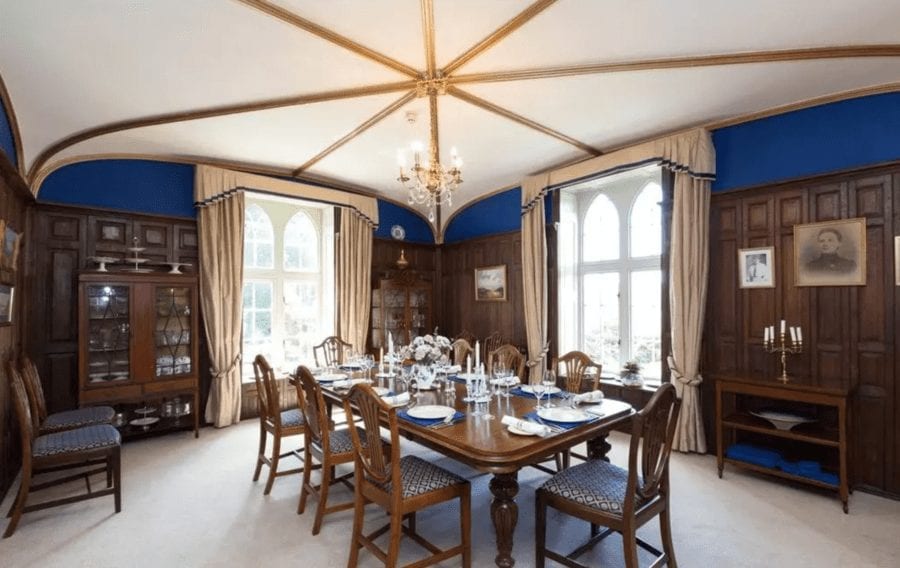
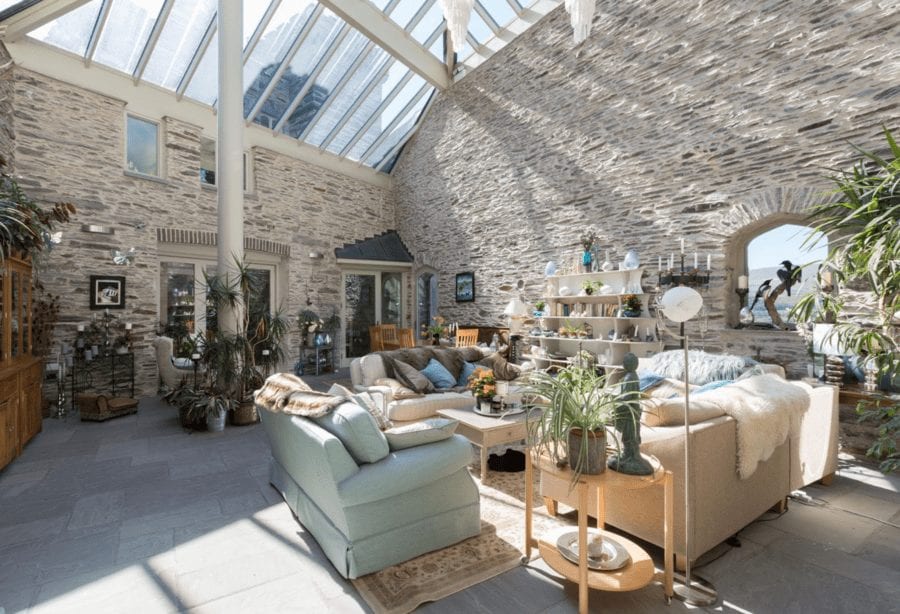
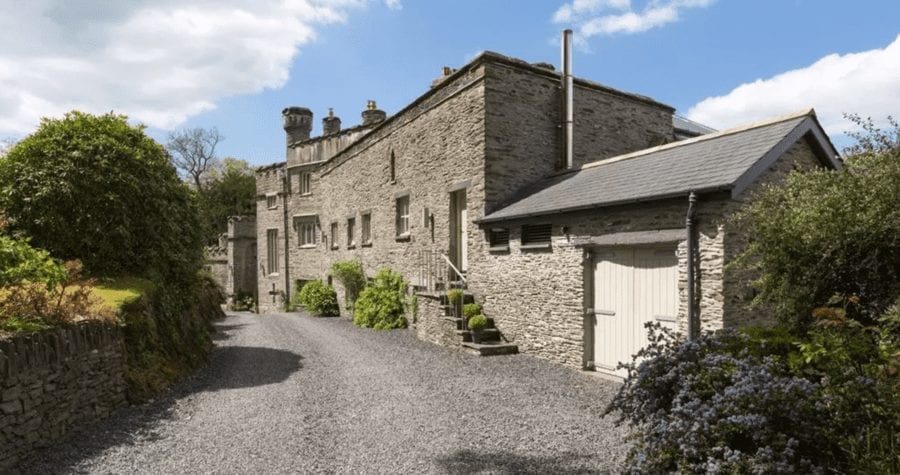
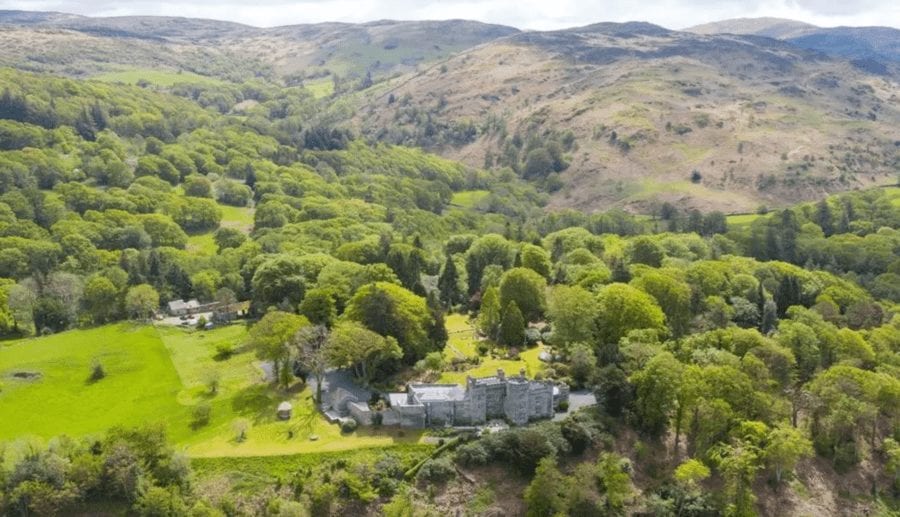
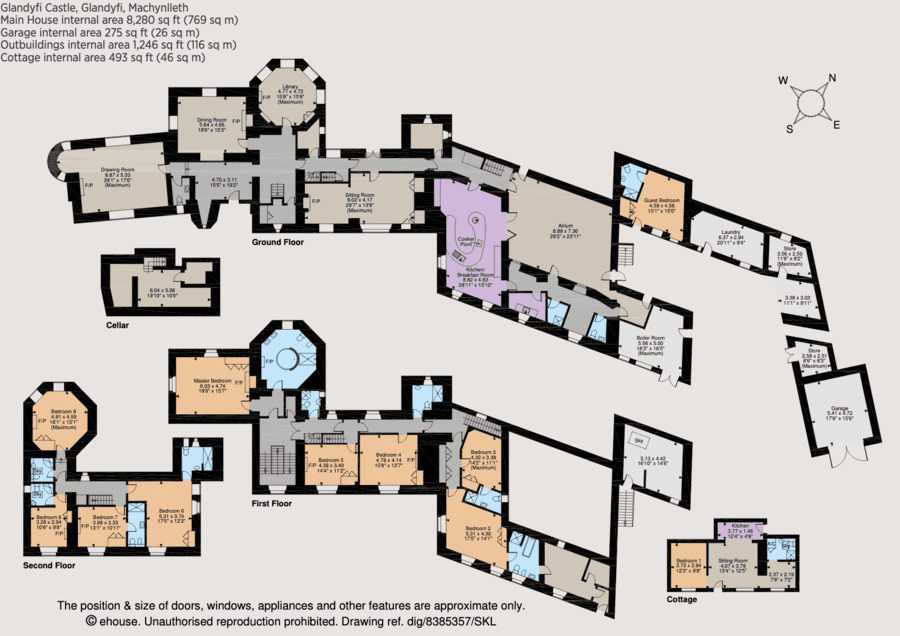
    Now, today, Grade II listed Glandyfi (pronounced ‘Glandovey’) is for sale for what seems like a comparatively reasonable sum of £2.85 million, but it now comes minus the “glitzy” additions made by the Dockers. The Regency Gothic style stone and slate main building extends to 8,280 square feet over four floors and provides 5 reception rooms, 10 double bedrooms and 10 bathrooms and in addition comes with a courtyard with guest accommodation, a 1 bedroom lodge and a range of disused barns.


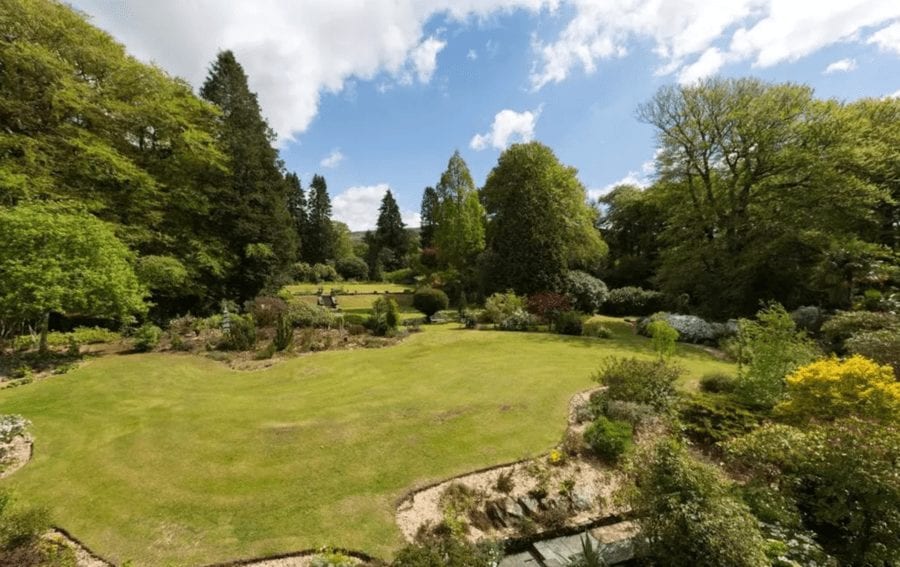
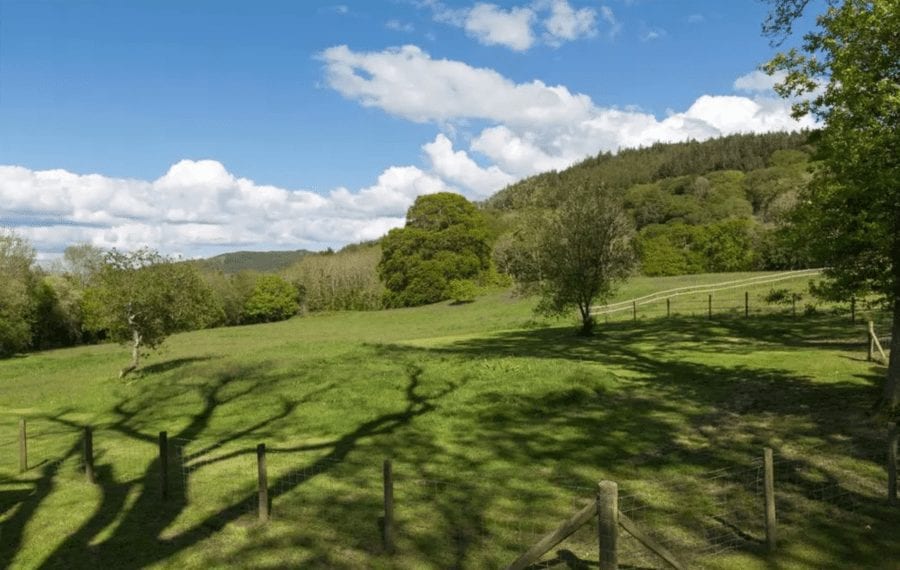
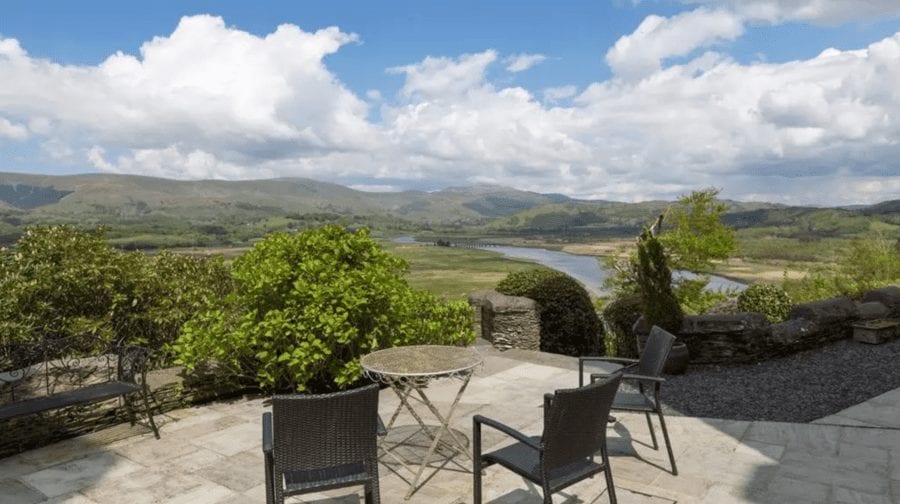
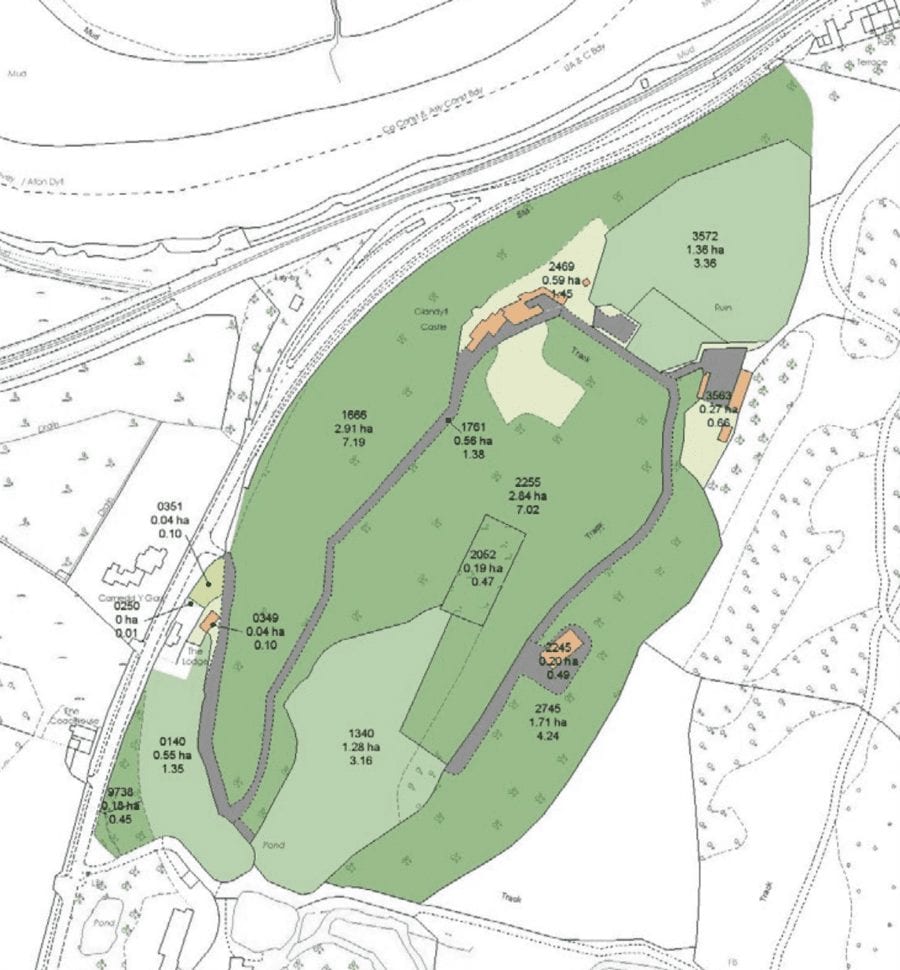
    Externally, aside from a mature landscaped garden, the 31.43 acre plot includes a walled former kitchen garden, grazing land and woodland, but what is most impressive is the setting of what James Delingpole termed “not so much an austere, toff’s castle as a theme-park recreation of one” with “undoubtedly the most magnificent view from any house I know in Britain.”


    Speaking to Anne Ashworth of The Times last time the allegedly haunted castle was placed for sale in July 2019, current selling agent Belinda Hutchinson-Smith of Strutt & Parker – whom also was involved in marketing the property to the current owners, the Holmes family, back in 2007 when she worked at Savills – stated:


    “It was surreal [in 2007]. We were in a time warp. Almost nothing had changed since the Dockers moved out in the 1950s. There were 1950s newspapers strewn across the dining tables and in the bedrooms, books were left open on bedside tables. But, at the same time, the house had a magical feeling.”


    In comments to the BBC in September 2014, when the former Docker one-of-one 1954 Daimler ‘Stardust’ was sold at auction for £110,000, Glandyfi’s current owner Maureen Holmes remarked:


    “[Sir Bernard and Lady Docker] were clearly living the dream. From the red and white marble fireplaces to a path through the woods made entirely of upturned gin bottles, the castle oozed excess.”


    “The older people around here who remember them say they were unbelievable, almost mythical figures. At a time when everyone else was still on rationing, the Dockers were thundering through the lanes in limousines made out of gold and silver.”


    “The irony is, that whilst the locals felt the Dockers’ perceived wealth meant that they were utterly removed from the community, in actual fact they probably had no more money than anyone else in the area.”


    Mocking The Dockers – Former home of Sir Bernard and Lady Docker – Glandyfi Castle, Glandyfi, near Machynlleth, Ceredigion, Powys, Mid Wales, SY20 8SS, United Kingdom for sale through Strutt & Parker – Welsh ‘mock castle’ once occupied by notorious spendaholic Lady Docker for sale for £2.85 million; the Dockers were turfed out in 1956 after it was discovered they’d lavished the equivalent of £1.3 million today of company money on the place without permission.
    Lady Docker pictured in one of the opulent ‘Docker Daimler’ show cars she commissioned her husband’s company to create; the most famous of the examples was known as the ‘Golden Zebra’ – this 1955 Daimler two-door coupé based on the DK400 chassis featured metal trim pieces plated in gold instead of chrome, an ivory dashboard and zebra-skin upholstery.
    Mocking The Dockers – Former home of Sir Bernard and Lady Docker – Glandyfi Castle, Glandyfi, near Machynlleth, Ceredigion, Powys, Mid Wales, SY20 8SS, United Kingdom for sale through Strutt & Parker – Welsh ‘mock castle’ once occupied by notorious spendaholic Lady Docker for sale for £2.85 million; the Dockers were turfed out in 1956 after it was discovered they’d lavished the equivalent of £1.3 million today of company money on the place without permission.
    Thrice married Lady Docker (1906 – 1983), born Norah Turner and also variously Norah Callingham and Lady Collins, was born in Derby and began her career as a hostess at the Café de Paris in London. In Lancashire, her name is still used as a derogatory substitute for ‘Lady Muck’ and in spite of her once extravagant lifestyle, she died in poverty at the not so chi-chi Great Western Royal Hotel in Praed Street, Paddington, London.
    Mocking The Dockers – Former home of Sir Bernard and Lady Docker – Glandyfi Castle, Glandyfi, near Machynlleth, Ceredigion, Powys, Mid Wales, SY20 8SS, United Kingdom for sale through Strutt & Parker – Welsh ‘mock castle’ once occupied by notorious spendaholic Lady Docker for sale for £2.85 million; the Dockers were turfed out in 1956 after it was discovered they’d lavished the equivalent of £1.3 million today of company money on the place without permission.
    In one of her last interviews, Lady Docker remarked: “I have always had the persistence to march on. I will continue to do that, until the day I die.” In spite of her reduced circumstances, she is said to have “retained a remarkable joie-de-vivre, downing glasses of pink champagne to the last.”
    Mocking The Dockers – Former home of Sir Bernard and Lady Docker – Glandyfi Castle, Glandyfi, near Machynlleth, Ceredigion, Powys, Mid Wales, SY20 8SS, United Kingdom for sale through Strutt & Parker – Welsh ‘mock castle’ once occupied by notorious spendaholic Lady Docker for sale for £2.85 million; the Dockers were turfed out in 1956 after it was discovered they’d lavished the equivalent of £1.3 million today of company money on the place without permission.
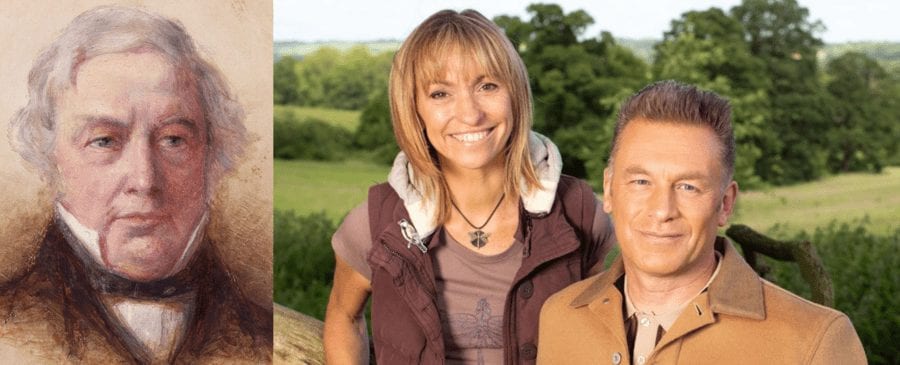
    English poet Thomas Love Peacock got married at Glandyfi Castle in 1820; Chris Packham and Michaela Strachan stayed at the property whilst filming ‘Springwatch’ in 2012.

    The Names & Numbers – Glandyfi Castle, Glandyfi, near Machynlleth, Ceredigion, Powys, Mid Wales, SY20 8SS, United Kingdom


    October 2020 – Relaunched for sale for £2.85 million ($3.69 million, €3.15 million or درهم15.54 million) through Strutt & Parker.


    June 2019 – Listed for sale for £2.85 million ($3.69 million, €3.15 million or درهم15.54 million) through Strutt & Parker with 31.43 acres of land.


    2012 – Whilst filming the BBC’s Springwatch, presenters Chris Packham and Michaela Strachan stayed at the castle. Strachan wrote in the guest book: “I couldn’t imagine a nicer, more comfortable place to stay… I felt like a princess in my amazing room.” Packham added: “Staying at the castle has been a total treat. Hospitality, fine food, wonderful environment, views to die for and history.”


    Late 2000s to September 2019 – Operated as an 8 bedroom “informal and relaxed [hotel and wedding venue] without any stuffiness or restrictions” by a theatre designer named Maureen Holmes and her family.


    May 2007 – Offered for sale for £1.25 million ($1.62 million, €1.38 million or درهم5.94 million) through Savills with 43 acres of land on behalf of the late owner, one Mrs Betty Piper (1914 – 2006).


    January 1964 – The building is given a Grade II listing, reference 9874, and is described as “the only example [of a] Georgian country house in picturesque castellated style in the county.”


    1956 – Following discovery of the Dockers’ “profligacy” and their removal from BSA, the castle is sold.


    1949 – Purchased by Birmingham Small Arms Company Limited for the use of Sir Bernard and Lady Docker for the sum of £12,000 or the equivalent of £427,000 ($552,000, €471,000 or درهم2 million) today. The company then lavished £25,000 or the equivalent of £890,000 ($1.2 million, €983,000 or درهم4.2 million) today on “opulent renovations of the home.”


    1906 – Following the death of Charles Jeffreys, the castle and its lands pass out of the hands of that family after 114 years.


    1820 – English poet Thomas Love Peacock (1785 – 1866) married Jane Griffith (also known as Jane Gryffydh) at the castle. His fellow poet and friend Percy Bysshe Shelley (1792 – 1822) referenced Peacock’s wife “the milk-white Snowdonian Antelope.”


    Early 19th century – Built to the designs of an unknown architect for George Jeffreys, High Sheriff of Cardiganshire in 1819 on an estate acquired by his great uncle, Edward, in 1792.


    Some of Lady Docker’s Notable Remarks


    Of herself, as she moved to London to seek fame and fortune:

    “An artificial blonde, among thousands of artificial blondes searching for stardom.”


    Of her vision in life:

    “[To] bring some happiness back to a world left hollow by the horror of two world wars… We bring glamour and happiness into drab lives. The working class loves everything I do.”


    Of her father:

    “A self-made man.”


    Of her male “targets” and those she viewed to be husband material:

    “Through my life, I set both my sights and my price high.”


    Of her chairman of Fortnum & Mason second husband, Sir William Collins:

    “He was 69, I married him for his money.”


    Of her third husband, Sir Bernard Docker:

    “I deliberately trapped him.”


    When asked to justify why she covered the seats of a 1955 Daimler in zebra skin:

    “Zebra, because mink is too hot to sit on.”


    On the loss of the ‘Docker Daimlers’ when they were taken away from her and her husband:

    “It’s not the loss of the gold cars that makes me feel like this… And weren’t they fun? They were like my children… No, it’s that lovely party I was planning for 25,000 of the company’s workers for my 50th birthday. A tiptop affair – and now it’s all off. How could they do this to [Sir Bernard] after 17 years? Why, he’s such a hard worker that he even had a direct line to the firm from our yacht.”


    Of Prince Rainier of Monaco after her son was banned from his son’s christening and she decided to burn the Monacan flag:

    “I’m at war with Rainier.”


    To the captain of the liner the Queen Elizabeth:

    “This ship is being run by a bloody Communist! Don’t you dare touch me, you bloody Communist!”


    Of some miners she invited on her yacht:

    “The dear boys, I just loved them! It proved conclusively to me that the social barrier only exists in the mind.”


    Of a Monaco casino employee she had allegedly assaulted:

    “It was a good sock I gave that man, and he deserved it.”


    Of the people of Jersey:

    “They are the most frightfully boring, dreadful people that have ever been born.”


    PICTURED TOP: Glandyfi Castle and the estuary beyond; Sir Bernard and Lady Docker at the castle.


    Facebook: @TheSteepleTimes

    Instagram: @TheSteepleTimes

    Twitter: @SteepleTimes


    Mocking The Dockers – Former home of Sir Bernard and Lady Docker – Glandyfi Castle, Glandyfi, near Machynlleth, Ceredigion, Powys, Mid Wales, SY20 8SS, United Kingdom for sale through Strutt & Parker – Welsh ‘mock castle’ once occupied by notorious spendaholic Lady Docker for sale for £2.85 million; the Dockers were turfed out in 1956 after it was discovered they’d lavished the equivalent of £1.3 million today of company money on the place without permission.
    Mocking The Dockers – Former home of Sir Bernard and Lady Docker – Glandyfi Castle, Glandyfi, near Machynlleth, Ceredigion, Powys, Mid Wales, SY20 8SS, United Kingdom for sale through Strutt & Parker – Welsh ‘mock castle’ once occupied by notorious spendaholic Lady Docker for sale for £2.85 million; the Dockers were turfed out in 1956 after it was discovered they’d lavished the equivalent of £1.3 million today of company money on the place without permission.
    Mocking The Dockers – Former home of Sir Bernard and Lady Docker – Glandyfi Castle, Glandyfi, near Machynlleth, Ceredigion, Powys, Mid Wales, SY20 8SS, United Kingdom for sale through Strutt & Parker – Welsh ‘mock castle’ once occupied by notorious spendaholic Lady Docker for sale for £2.85 million; the Dockers were turfed out in 1956 after it was discovered they’d lavished the equivalent of £1.3 million today of company money on the place without permission.
    Mocking The Dockers – Former home of Sir Bernard and Lady Docker – Glandyfi Castle, Glandyfi, near Machynlleth, Ceredigion, Powys, Mid Wales, SY20 8SS, United Kingdom for sale through Strutt & Parker – Welsh ‘mock castle’ once occupied by notorious spendaholic Lady Docker for sale for £2.85 million; the Dockers were turfed out in 1956 after it was discovered they’d lavished the equivalent of £1.3 million today of company money on the place without permission.
    Mocking The Dockers – Former home of Sir Bernard and Lady Docker – Glandyfi Castle, Glandyfi, near Machynlleth, Ceredigion, Powys, Mid Wales, SY20 8SS, United Kingdom for sale through Strutt & Parker – Welsh ‘mock castle’ once occupied by notorious spendaholic Lady Docker for sale for £2.85 million; the Dockers were turfed out in 1956 after it was discovered they’d lavished the equivalent of £1.3 million today of company money on the place without permission.
    Mocking The Dockers – Former home of Sir Bernard and Lady Docker – Glandyfi Castle, Glandyfi, near Machynlleth, Ceredigion, Powys, Mid Wales, SY20 8SS, United Kingdom for sale through Strutt & Parker – Welsh ‘mock castle’ once occupied by notorious spendaholic Lady Docker for sale for £2.85 million; the Dockers were turfed out in 1956 after it was discovered they’d lavished the equivalent of £1.3 million today of company money on the place without permission.
    Mocking The Dockers – Former home of Sir Bernard and Lady Docker – Glandyfi Castle, Glandyfi, near Machynlleth, Ceredigion, Powys, Mid Wales, SY20 8SS, United Kingdom for sale through Strutt & Parker – Welsh ‘mock castle’ once occupied by notorious spendaholic Lady Docker for sale for £2.85 million; the Dockers were turfed out in 1956 after it was discovered they’d lavished the equivalent of £1.3 million today of company money on the place without permission.
    Mocking The Dockers – Former home of Sir Bernard and Lady Docker – Glandyfi Castle, Glandyfi, near Machynlleth, Ceredigion, Powys, Mid Wales, SY20 8SS, United Kingdom for sale through Strutt & Parker – Welsh ‘mock castle’ once occupied by notorious spendaholic Lady Docker for sale for £2.85 million; the Dockers were turfed out in 1956 after it was discovered they’d lavished the equivalent of £1.3 million today of company money on the place without permission.
    Mocking The Dockers – Former home of Sir Bernard and Lady Docker – Glandyfi Castle, Glandyfi, near Machynlleth, Ceredigion, Powys, Mid Wales, SY20 8SS, United Kingdom for sale through Strutt & Parker – Welsh ‘mock castle’ once occupied by notorious spendaholic Lady Docker for sale for £2.85 million; the Dockers were turfed out in 1956 after it was discovered they’d lavished the equivalent of £1.3 million today of company money on the place without permission.
    Mocking The Dockers – Former home of Sir Bernard and Lady Docker – Glandyfi Castle, Glandyfi, near Machynlleth, Ceredigion, Powys, Mid Wales, SY20 8SS, United Kingdom for sale through Strutt & Parker – Welsh ‘mock castle’ once occupied by notorious spendaholic Lady Docker for sale for £2.85 million; the Dockers were turfed out in 1956 after it was discovered they’d lavished the equivalent of £1.3 million today of company money on the place without permission.
    Mocking The Dockers – Former home of Sir Bernard and Lady Docker – Glandyfi Castle, Glandyfi, near Machynlleth, Ceredigion, Powys, Mid Wales, SY20 8SS, United Kingdom for sale through Strutt & Parker – Welsh ‘mock castle’ once occupied by notorious spendaholic Lady Docker for sale for £2.85 million; the Dockers were turfed out in 1956 after it was discovered they’d lavished the equivalent of £1.3 million today of company money on the place without permission.
    Mocking The Dockers – Former home of Sir Bernard and Lady Docker – Glandyfi Castle, Glandyfi, near Machynlleth, Ceredigion, Powys, Mid Wales, SY20 8SS, United Kingdom for sale through Strutt & Parker – Welsh ‘mock castle’ once occupied by notorious spendaholic Lady Docker for sale for £2.85 million; the Dockers were turfed out in 1956 after it was discovered they’d lavished the equivalent of £1.3 million today of company money on the place without permission.
    Mocking The Dockers – Former home of Sir Bernard and Lady Docker – Glandyfi Castle, Glandyfi, near Machynlleth, Ceredigion, Powys, Mid Wales, SY20 8SS, United Kingdom for sale through Strutt & Parker – Welsh ‘mock castle’ once occupied by notorious spendaholic Lady Docker for sale for £2.85 million; the Dockers were turfed out in 1956 after it was discovered they’d lavished the equivalent of £1.3 million today of company money on the place without permission.
    Mocking The Dockers – Former home of Sir Bernard and Lady Docker – Glandyfi Castle, Glandyfi, near Machynlleth, Ceredigion, Powys, Mid Wales, SY20 8SS, United Kingdom for sale through Strutt & Parker – Welsh ‘mock castle’ once occupied by notorious spendaholic Lady Docker for sale for £2.85 million; the Dockers were turfed out in 1956 after it was discovered they’d lavished the equivalent of £1.3 million today of company money on the place without permission.
    Mocking The Dockers – Former home of Sir Bernard and Lady Docker – Glandyfi Castle, Glandyfi, near Machynlleth, Ceredigion, Powys, Mid Wales, SY20 8SS, United Kingdom for sale through Strutt & Parker – Welsh ‘mock castle’ once occupied by notorious spendaholic Lady Docker for sale for £2.85 million; the Dockers were turfed out in 1956 after it was discovered they’d lavished the equivalent of £1.3 million today of company money on the place without permission.
    Mocking The Dockers – Former home of Sir Bernard and Lady Docker – Glandyfi Castle, Glandyfi, near Machynlleth, Ceredigion, Powys, Mid Wales, SY20 8SS, United Kingdom for sale through Strutt & Parker – Welsh ‘mock castle’ once occupied by notorious spendaholic Lady Docker for sale for £2.85 million; the Dockers were turfed out in 1956 after it was discovered they’d lavished the equivalent of £1.3 million today of company money on the place without permission.
    Mocking The Dockers – Former home of Sir Bernard and Lady Docker – Glandyfi Castle, Glandyfi, near Machynlleth, Ceredigion, Powys, Mid Wales, SY20 8SS, United Kingdom for sale through Strutt & Parker – Welsh ‘mock castle’ once occupied by notorious spendaholic Lady Docker for sale for £2.85 million; the Dockers were turfed out in 1956 after it was discovered they’d lavished the equivalent of £1.3 million today of company money on the place without permission.
    Mocking The Dockers – Former home of Sir Bernard and Lady Docker – Glandyfi Castle, Glandyfi, near Machynlleth, Ceredigion, Powys, Mid Wales, SY20 8SS, United Kingdom for sale through Strutt & Parker – Welsh ‘mock castle’ once occupied by notorious spendaholic Lady Docker for sale for £2.85 million; the Dockers were turfed out in 1956 after it was discovered they’d lavished the equivalent of £1.3 million today of company money on the place without permission.
  • Lavish Living and Little Owls at Lilford Hall

    Lavish Living and Little Owls at Lilford Hall

    Crumbling Northamptonshire estate Lilford Hall – where the little owl was introduced to Britain – for sale for £10 million, a sum £35 million lower than in 2014

    • Grade I listed Jacobean mansion with 13 chimney stacks for sale for £10 million; it was for sale last for £44.9 million in 2014 in spite of being listed on English Heritage’s ‘At Risk Register.’
    • Lilford Hall – parts of which have not been occupied since 1947 – is currently owned by a businessman who tried to sell burial plots in the grounds for £1,250 a pop and shares in a yacht loosely associated with Frank Sinatra for £23 each.
    • The 321-acre estate includes not only overgrown parkland, but also a zoo with cages that formerly housed bears and a lake for flamingos.
    • From 1711 until 1990, Lilford House was the seat of the Powys family – the 4th baron is credited with introducing the little owl to the UK.
    • More recently, in 1969, the “sexual mystic” artist Penny Slinger used the at-the-time derelict mansion in one of her best-known works.

    A 32,406 square foot Grade I listed Jacobean mansion 82 miles from Central London has gone on sale for £10 million – or the equivalent of just £308 per square foot.


    On this basis, Lilford Hall – set in 321 acres near Oundle – seems a comparative bargain when considered against the £4,786 per square foot sought for a Lennox Gardens, Knightsbridge triplex flat The Steeple Times featured in May, but buyers need to remember this – parts of this crumbling building, most notably the major state rooms, have not been used since 1947.


    Marketed last in 2014 for the even more punchy sum of £45 million, the “exceptional residential and amenity estate located on the River Nene,” is now offered by agents Savills. The “wonderfully proportioned” U-shaped mansion itself  is constructed of grey limestone and includes over 100 rooms and amongst them are 7 “impressive” reception rooms, a ballroom, a ‘great chamber’ and 9 bedrooms. In addition, there are two Georgian pavilions that were formerly coach houses and stabling, three cottages, a former zoo, the oldest private softball court in the world, a former flamingo enclosure and a deer park.


    “Impressiveness in the chief attribute of Lilford Hall as a specimen of architecture” claimed County Life in 1990 and as the seat of the Powys family from 1711 until 1990, it became not only a Downton Abbey-esque entertaining pad, but also housed nurses in the Second World War. Here, indeed, is an English country house that has seen lavishness and decline and thankfully here is an example that thankfully escaped the wrecking ball wrought so disgracefully on such houses in the 1950s and 1960s.


    Fascinatingly in the 1880s, Thomas Powys, 4th Baron Lilford filled his aviaries on the estate with rheas, kiwis, pink-headed ducks, free-flying lammergeiers and it was from here that he also introduced the little owl into the UK. There are said to be around 5,700 breeding pairs today, but sadly, according to the RSPB, their numbers are now in decline.


    More recently, in 1969, “sexually erotic” performance artist Penny Slinger took over the by then “derelict” mansion in conjunction with the filmmaker Peter Whitehead. Their resulting work, titled An Exorcism, was exhibited internationally and in 2004, after the current owners, Charles and Aziza Micklewright, acquired the house, they did something equally avant-garde; they attempted to sell burial plots in the grounds to Americans by citing the estate’s connections to the founder of the Brownists, Robert Browne – a man better known as ‘The Father of the Pilgrims’ and ‘The Grandfather of the Nation’ (of the United States of America).


    Whilst Mr and Mrs Micklewright were lauded for their considerable efforts towards the “huge task” of restoring Lilford Hall, they came to the attention of Historic England in May 2019 when the building was listed on the At Risk Register. At that time, the Oundle Chronicle reported: “The roof covering is in poor condition leading to water ingress and distress to the upper storeys. The front bays require structural attention. A schedule of urgent repairs has been identified but not implemented, and no long-term solution has been agreed.”


    Now, someone with very, very deep pockets is required to restore this gem. It would be helpful if they liked erotic art, bears, squash and owls also.


    https://www.youtube.com/watch?v=cii3VlgfVy0
    Lavish Living and Little Owls at Lilford Hall, Northants – £10 million ($12.5 million, €11.1 million or درهم46 million) for The Lilford Hall Estate, Lilford, Oundle, Peterborough, Northamptonshire, PE8 5SG, United Kingdom through estate agents Savills – Crumbling Northamptonshire estate Lilford Hall – where the little owl was introduced to Britain – for sale for £10 million, a sum £35 million lower than in 2014.
    The artwork created by Penny Slinger and Peter Whitehead at the house has been exhibited internationally.

    The Names & Numbers – The Lilford Hall Estate, Lilford, Oundle, Peterborough, Northamptonshire, PE8 5SG, United Kingdom


    June 2020 – The estate is listed sale for £10 million ($12.5 million, €11.1 million or درهم46 million) through Savills. It includes 321.31 acres, of which 148.17 acres are pasture land whilst 157.48 acres are woodland. The majority of the estate is held on a freehold title, whilst the remaining 127.6 acres – known as ‘The Linches’ and ‘Lilford Woods’ – are held on a lease with 91 years remaining.


    2015 – Promoted as ‘The National Memorial Gardens,’ burial plots in the gardens of the hall were offered “available to any UK resident or national for an outstanding price of only £1,250 ($1,568, €1,393 or درهم5,758)” by Mark Bailey of Harley Investments. Around the same time, a website dedicated to Lilford Hall marketed “a piece of the formal gardens” for sale for £299 ($375, €333 or درهم1,377) to include “an officially certified ‘Squire of Lilford’ [title] … with this little piece of history.”


    March 2014 – The Irish Times reported that the asking price for the estate had been increased to £44.9 million ($56.3 million, €50 million or 206.8درهم million). They claimed the agents Coldwell Banker blamed “confusion over currency conversion rates and new instructions from the owner.”


    April 2014 – The Lilford Hall Estate is listed for sale through Coldwell Banker on MyHome.ie for £33.7 million ($44.2 million, €37.5 million or درهم155 million) on behalf of “an English gentleman.”


    2004 – The estate is acquired by the Micklewright family. Little information is available online about the Old Framlingham Charles Micklewright (born July 1958), but he is described as a “patent attorney” on Companies Houses pages. The businessman is mentioned also as a publisher and trustee of the Marsh Christian Trust elsewhere, whilst his Singaporean born wife, Aziza (born 1964), was a director of Lilford Properties Limited from 2013 to 2018.


    A website operated by Sign of the Times Limited, a Hong Kong company of Lilford Hall, Lilford, Oundle, Northamptonshire, PE8 5SG, currently offers shares in a yacht named ‘Sinatra the Voice’ for £23.91 ($29.99, €26.64 or درهم110.14) per share. The boat was built in 1956 and is tenuously linked to Frank Sinatra by the fact that a one-time owner, Beale Poste, loaned it occasionally to the crooner between 1968 and 1974 in West Palm Beach, Florida.


    1990 – The estate is closed to the public.


    1980s – The house is used as a location in the BBC English Civil War inspired historical drama series By the Sword Divided.


    1970s – Aviaries on the estate restocked by George Powys, 7th Baron Lilford (1931 – 2005). He “opened [the estate] to the public as a leisure park” and housed more than 350 birds of 110 species there. It remained thus for around 20 years and included a restaurant and shop. The aviaries and the 1,896 square foot restaurant building remain present still today.


    1969 – 1970 – American British “sexual mystic” artist Penny Slinger (born 1947) and Liverpudlian filmmaker Peter Whitehead used the “derelict mansion” as the setting for their works An Exorcism and Lilford Hall. They are lauded as a “photo romance” and exhibited at the Blum and Poe Gallery in Los Angeles in 2014, at the Haywood Gallery in London in 2015 and at the Fortnight Institute in New York in 2019.


    1949 – Stephen Powys, 6th Baron Lilford (1869 – 1949) died without having married or having had children. His properties aside from Lilford – a house in Mayfair, Bank Hall in Lancashire and the Bewsey Estate in Cheshire – passed to his second cousin twice removed.


    1947 – The estate is sold to a company named Merchant Ventures by the Powys family (though they remain present on the estate until 1990).


    1939 – 1945 – During the Second World War, the parkland of the estate was used as a military hospital for nearby airfields. From 1949 to 1954, some of the buildings constructed during this period were then used as a Polish school.


    1923 – First-class Northamptonshire cricketer Major John Powys, 5th Baron Lilford (1863 – 1945) built the first private softball court in the world in the grounds of the hall. It is now in disrepair and the roof has fallen into the inner court.


    1909 – 1910 – The hall was extended in the Edwardian manner including the provision of a new master bedroom with dressing room and bathroom by William Dunn and Robert Watson of Dunn & Watson.


    1901 – The estate surrounding the hall reaches its largest size and totals a vast 8,000 acres of land. Around this time, Queen Mary, wife of King George V, is said to have visited the gardens.


    1880s – Ornithologist and expert on the fauna of the Balearics Thomas Littleton Powys, 4th Baron Lilford (1833 – 1896) introduces the little owl into England on the estate. His aviaries were said to “feature exotic birds from all around the world” and a species of European lizard, the Lilford’s wall lizard (Podarcis lilfordi), is named in his honour. The 4th baron is repeatedly mentioned in the works of Charles Darwin for his contribution to the study of the science of evolution.


    1840s – Further changes to the building are orchestrated by the architect William Gilbee Habershon (circa 1818 – 1891). The Campaign to Protect Rural England described these Victorian extensions as “sensitive” in 2006 – a rare accolade given most additions to English country houses during this period were simply brash and vulgar.


    1740s – The Palladian architect Henry Flitcroft (1697 – 1769) adds “outstanding” Georgian interiors whilst “respecting the hall’s Jacobean exterior.” He “softened and brightened” the building as a result and also “constructed the Georgian pavilions and additional storeys to the east end of the two wings.” Other works by Flitcroft can be seen at Bower House in Essex, Wentworth Woodhouse in Yorkshire and Woburn Abbey in Bedfordshire.


    1711 – Lilford Hall is sold to the judge and Tory politician Sir Thomas Powys (1649 – 1719), Attorney General to King James II. Powys is best remembered for conducting the prosecution of the Seven Bishops in 1699. He is buried at Lilford.


    1630s – Construction of the main exterior of what to this day remains Lilford Hall as a “Jacobean-style gentry house” by William Elmes (the younger).


    1473 – The land that forms the estate is acquired by William Browne (1410 – 1489), a wealthy wool merchant and landowner from Stamford, from the estate of Baron Welles (who was beheaded by King Edward IV for treason). In 1495, “in a Tudor style,” he built a hall on the site and it passed to Robert Browne (1550 – 1633), the founder of the Brownists, ‘The Father of the Pilgrims’ and ‘The Grandfather of the Nation’ (of the United States of America).


    Facebook: @TheSteepleTimes

    Instagram: @TheSteepleTimes

    Twitter: @SteepleTimes


  • Sheen Shines

    Sheen Shines

    The ‘Guardian’s’ Rebecca Nicholson’s fascinating interview with the actor Michael Sheen is exactly the kind of reading needed during coronavirus lockdown; he reveals previously unknown details about bizarre encounters with Tony Blair, Rupert Murdoch and Wendi Deng Murdoch

    It’s hard to find stories to read right now in newspapers that don’t relate to coronavirus and it’s even harder to find compelling interviews that don’t feature bleeding hearts banging on about what good they’re doing (when they’re just actually craving a return to their glory days gaining acres of Alexa Chung-type press acreage).


    Gone are the days of the great, the good and the not-so-good actually revealing something we didn’t already know and instead, it seems, COVID-19 has reduced The Telegraph, for example, to unimaginatively asking the chef Jason Atherton: “Powder or piste?” (His 50/50 chance answer: The latter – for those of you actually interested in this kind of inane drivel).


    Today, however, the Guardian’s Rebecca Nicholson pulled a blinder with what one reader described as a “marvellous portrait” of the actor best known for repeatedly playing Tony Blair, Michael Sheen. Though ‘Two Tony’s’ – according to an individual who left a comment online afterwards – “sounds thoroughly uncomfortable,” Nicholson coaxed her subject into revealing amongst other things that Wendi Deng Murdoch once asked him to “dress like [Blair]” and “make [his] hair look like him” so she could “bring [him] out and surprise [Blair].” Please don’t throw up whilst considering that rather scary image. Thankfully there’s no mention as to whether Sheen enquired about the alleged extra-marital relations that went on between the ‘real’ Tony and the now ex-Mrs Murdoch, as there would be a detail that’d certainly be nearly as off-putting as what allegedly went on between the wife of one of the most loathed premier’s in history and Carole Caplin (what on earth became of her?) in a shower in Downing Street.


    Sheen, a man “fascinated by Blair’s legacy,” but someone who didn’t meet the “wary of [him]” ex-PM until after he’d already played him twice, also shares snippets of an encounter with Rupert Murdoch. Of it, the ex of Kate Beckinsale recalls: “There was a very peculiar moment with Murdoch. I remember standing looking out at the view, and then I realised that Murdoch was standing next to me. It was quite a hot day. I just remember seeing a little bead of black dye, running down his face. I thought, oh, Ozymandias [two sonnets by Percy Shelley about the decline of rulers with their pretensions to greatness].”


    Moving on to how he is “astonished” by our current Prime Minister, Sheen observes: “It’s very hard to trust someone who can go so easily in different ways.” Nicholson then concludes the interview with a suggestion: “Part of me hopes [Michael Sheen] might one day take the idea of Michael Sheen MP seriously, after all.” Superb.


    Facebook: @TheSteepleTimes

    Instagram: @TheSteepleTimes

    Twitter: @SteepleTimes


  • Rule, Britannia!

    Rule, Britannia!

    “Famously haunted” Chelsea townhouse once home to ‘Rule, Britannia!’ and ‘A-Hunting We Will Go’ composer Thomas Arne and later Shakespearean actress Dame Ellen Terry for sale


    A Grade II* listed Georgian house on Kings Road in Chelsea, London that has gone on sale comes with links to not only the composer Thomas Arne (1710 – 1778) but also the Shakespearean actress Dame Ellen Terry, GBE (1847 – 1928).


    Spread over five floors and extending to 3,179 square foot, the renovated Georgian property provides 3 reception rooms, a vast dining kitchen created out of a former artists’ studio space, 5 bedrooms and 4 bathrooms. It has a garden to the front and a courtyard also.


    Rule, Britannia! £6.45 million for 215 Kings Road, Chelsea, London, SW3 5EH, United Kingdom – For sale with Knight Frank and once home to ‘Rule, Britannia!’ and ‘A-Hunting We Will Go’ composer Thomas Arne and later Shakespearean actress Dame Ellen Terry.
    Dame Ellen Terry and Thomas Arne


    Though only briefly home to Thomas Arne – a Roman Catholic and Freemason best known for both Rule, Britannia! and A-Hunting We Will Go – in 1771, actress Dame Ellen Terry lived in 215 Kings Road from 1904 to 1920. It is reported that her possessions there were sold off in 1921 as part of “an attempt to fend off bankruptcy” and of it, a newspaper article titled ‘The Ghosts of Ellen Terry’ reported:


    “Surely civilisation was never responsible for the invention of the auction sale. It is such a heartless proceeding. Even a barbarian chief, waving a fierce spear, could not look more relentless than the auctioneer with the dull thud of his cruel little hammer. And surely no barbaric women with palm-leaves and fuzzed hair ever wore harder expressions than the crowd of modern sisters gathered yesterday in Ellen Terry’s old home in Chelsea, as they watched the exquisite china and other mementos of a great artist whisked off by sharp bidders for ridiculously small sums.”


    Knight Frank seek £6.45 million ($8.30 million, €7.15 million or درهم30.47 million) for the now “famously haunted” freehold house.


    Facebook: @TheSteepleTimes

    Instagram: @TheSteepleTimes

    Twitter: @SteepleTimes

     Rule, Britannia! £6.45 million for 215 Kings Road, Chelsea, London, SW3 5EH, United Kingdom – For sale with Knight Frank and once home to ‘Rule, Britannia!’ and ‘A-Hunting We Will Go’ composer Thomas Arne and later Shakespearean actress Dame Ellen Terry. Rule, Britannia! £6.45 million for 215 Kings Road, Chelsea, London, SW3 5EH, United Kingdom – For sale with Knight Frank and once home to ‘Rule, Britannia!’ and ‘A-Hunting We Will Go’ composer Thomas Arne and later Shakespearean actress Dame Ellen Terry. Rule, Britannia! £6.45 million for 215 Kings Road, Chelsea, London, SW3 5EH, United Kingdom – For sale with Knight Frank and once home to ‘Rule, Britannia!’ and ‘A-Hunting We Will Go’ composer Thomas Arne and later Shakespearean actress Dame Ellen Terry.Rule, Britannia! £6.45 million for 215 Kings Road, Chelsea, London, SW3 5EH, United Kingdom – For sale with Knight Frank and once home to ‘Rule, Britannia!’ and ‘A-Hunting We Will Go’ composer Thomas Arne and later Shakespearean actress Dame Ellen Terry.Rule, Britannia! £6.45 million for 215 Kings Road, Chelsea, London, SW3 5EH, United Kingdom – For sale with Knight Frank and once home to ‘Rule, Britannia!’ and ‘A-Hunting We Will Go’ composer Thomas Arne and later Shakespearean actress Dame Ellen Terry.Rule, Britannia! £6.45 million for 215 Kings Road, Chelsea, London, SW3 5EH, United Kingdom – For sale with Knight Frank and once home to ‘Rule, Britannia!’ and ‘A-Hunting We Will Go’ composer Thomas Arne and later Shakespearean actress Dame Ellen Terry. Rule, Britannia! £6.45 million for 215 Kings Road, Chelsea, London, SW3 5EH, United Kingdom – For sale with Knight Frank and once home to ‘Rule, Britannia!’ and ‘A-Hunting We Will Go’ composer Thomas Arne and later Shakespearean actress Dame Ellen Terry.