In cultivating a new variety of snowdrop Joe Sharman – known to many as ‘Mr Snowdrop’ – has brought joy to ‘galanthophiles’ everywhere and made himself £1,850 from just one bulb also; amusingly there’s even a variety named ‘John’s Y-Fronts’
It’s always great to improve one’s grasp of etymology and this morning I learnt about a word that describes a charmingly endearing collection of people. That word? Galanthophile.
A noun of 19th century origin that takes the snowdropgalanthus’s taxonomic name from the Greek gala, galkt ‘milk’ and antho- ‘flower,’ those that so enthusiastically collect these “magical and really special” bell-shaped flowers are known as galanthophiles.
The official flower for January birthdays and brought to Britain by the Romans, the “milk flower of the snow” – as it is sometimes described – is said to symbolise hope, purity, innocence and sympathy. It is the first flower to bloom at the end of winter and though Victorians associated it with death and bad luck, on Saturday, The Guardian’s Steven Morris charmingly reported on “hordes of galanthophiles” descending on Buckland Monachorum on the edge of Dartmoor in Devon this week to “take in the sight of a beloved flower that this time of year provides a vivid reminder than warmer, cheerier seasons are ahead.”
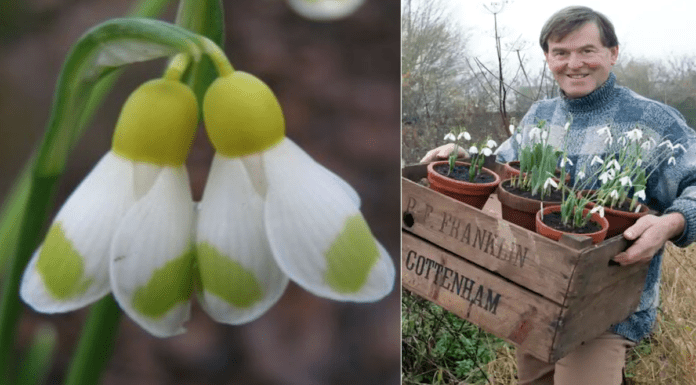
Grown by Cottenham, Cambridgeshire plantsman Joe Sharman (AKA ‘Mr Snowdrop’) of the Monksilver Nursery, ‘Golden Tears’ received 55 bids and finally hammered down to a buyer “unidentified.” It was listed as:
“A narrow-flowered yellow pterugiform with a very large mark and bright yellow ovary. Very beautiful and distinct. Quite different from Golden Fleece. Exceptionally vigorous. 25cm. The result of a deliberate cross by me using the same parents that created Golden Fleece. First time sold by us on eBay only named 2 weeks ago. Only one for the season.”
In 2015, in an interview with The Guardian – clearly the paper with the most enthusiasm for snowdrops on the planet – Joe Sharman concluded:
“They come up early in the year when nothing else is growing, so if you have the kind of brain that needs lots of things to think about, you focus in.”
“They seem to be almost infinitely variable. You collect the 10 you recognise, then you realise that you can recognise 20 and it just goes from there. I don’t think there is another group of plants quite like it.”
Pictured top – Joe Sharman (right) and the now famous £1,850 flower he has spent years cultivating.
https://www.youtube.com/watch?v=XQv7kHDHb5E
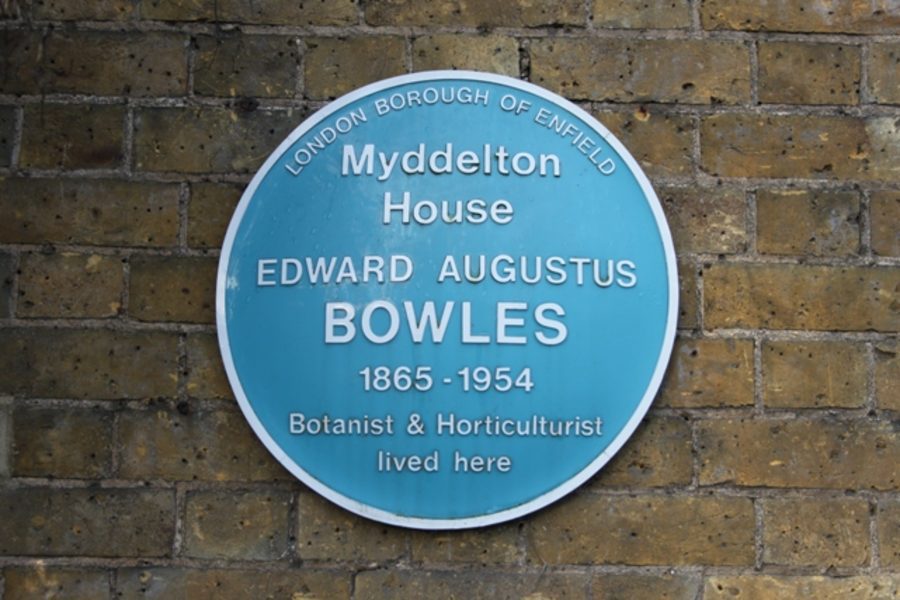
Britain’s leading botanist by far Dr Shirley Sherwood OBE – the widow of the late buccaneering businessman and one-time owner of hotels including the Cipriani in Venice and the Venice-Simplon Orient Express train service also James Sherwood – is a noted enthusiast on the subject of snowdrops. In December 2021, this delightful lady took to YouTube to discuss a painting of the flowers by Susan Ogilvy and commented: “I love snowdrops. I have lots in my garden and we have a very particularly version of the snowdrop. Whole groups of people, clubs of people who like snowdrops and grow every single kind they can think of. I think there are many, many varieties and of course there are wild snowdrops too.” Of her painting, she endearingly declared: “This is a lovely painting and it justifiably is one of the favourite ones in my collection.”Speaking to the ‘Daily Mail’ yesterday, gardening writer Val Bourne remarked of the bulb sold of eBay: “[It’ll] go under the knife. They’ll cut it into 20 pieces and start selling individual plants. They’ll get their money back in three or four years. It’s a mad hobby.” Going further previously, Mr Sharman commented: “Security is a big problem. I know people who have opened their gardens and had everything stolen. I don’t open my garden or nursery. But stealing snowdrops is like stealing a Van Gogh. If it’s rare, all the galanthophiles will know who propagated it and where it was stolen from.” In 2019, two men were arrested for stealing 13,000 bulbs from the Walsingham Estate in Norfolk and amongst famous collectors are Lord and Lady Heseltine. The former Deputy Prime Minister under John Major has accumulated over 700 varieties at Thenford House in Northamptoshire in his “garden of major importance.” Whether they have the variety named ‘John’s Y-Fronts’ is unknown.Anyone who picks an endemic variety of the plant in the national park will be fined £5,954 ($8,070, €7,113 or درهم29,600, 110,000 Turkish Lira) according to a report published in the ‘Hurriyet Daily News’ in February 2022. The fine has risen from £4,330 ($5,870, €5,174 or درهم21,600, 110,000 Turkish Lira) last year and of why, Halil Ernalçacı, the head of Mount Spil Nature Park, told the paper: “Our visitors should be cautious when they walk in the park. They should look for where they take their steps.”Artist, botanist and horticulturist Edward Augustus Bowles (1865 – 1954) of Myddleton House, Enfield, London was a well known “snowdrop enthusiast.” In January 2013, the blog ‘Plant Heritage’ delved into his connections to the flower after visiting a snowdrop sale at his former home.
Types of Snowdrops
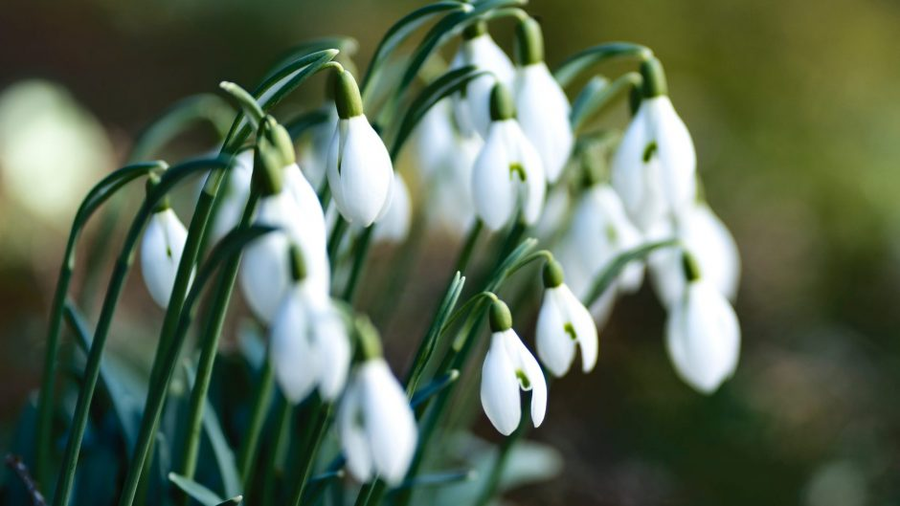
Snowdrops bloom from September through to March and peak in January and February. Amongst the many types – there are in excess of 1,700 in the collection of Joe Sharman alone – are:
Galanthus ‘Dionysus’
Named after the god of the grape harvest, winemaking, orchards and fruit.
Galanthus ‘Elwesii”
Named after H. J. Elwes, an English plant collector who found the original plants in Turkey. Its leaves “neatly fold inside the other” and its “flowers have two green spots on the inner petals, which sometimes fuse together.”
Galanthus ‘Fly Fishing’
Features a “long, slender pedicel (stalk) that looks like a fishing rod.”
Galanthus ‘Golden Fleece’
Joe Sharman spent 18 years developing this and sold a bulb of this variety for £1,390 ($1,884, €1,661 or درهم6,920).
Galanthus ‘Golden Tears’
A new variety and record breaker in terms of the £1,850 ($2,508, €2,210 or درهم9,210) price Joe Sharman sold it for, this variety features a “narrow-flowered yellow pterugiform with a very large mark and bright yellow ovary” and is noted as “very beautiful and distinct” and “exceptionally vigorous.”
Galanthus ‘Ivy Cottage Corporal’
“Features two green Vs resembling a corporal’s stripes.”
Galanthusnivalis ‘Norfolk Blonde’
Rather like a blonde bimbo, this snowdrop features “pale leaves and pale yellow flowers” and has a “long ovary” also.
Galanthus ‘Ophelia’
Named after Shakespeare’s tragic young noblewoman of Denmark who ends up in a state of madness that ultimately leads to her drowning.
Galanthus ‘Nothing Special’
Modestly named though lauded by Joe Sharman as “one of the best forms I have selected,” this “very clean white and wonderfully scented” snowdrop is supposedly “vigorous” also.
Galanthus ‘Primrose Warburg’
Described as a “dainty snowdrop with yellowish leaves” and named after the “legendary galanthophile Primrose Warburg.”
Galanthus ‘Trumps’
Described as having “an elegant flaring pagoda shape” and thankfully has nothing to do with the 45th POTUS of the same name.
Galanthus ‘Wendy’s Gold’
Described as “far more vigorous than [other] yellows.”
Galanthus ‘John’s Y-Fronts’
This variant is described as “small, late, neat, single with a very clearly Y-shaped mark on inner.” It has grey leaves. Could it’s name have been inspired by the former British Prime Minister John Major’s “underpant episode” with Edwina Currie where he allegedly tucked his shirt into his allegedly grey Y-fronts?
Tardis-like Grade II listed lodge house currently for sale could be Britain’s smallest detached house; it measures 10-foot by 8-foot and today also we feature some other examples of the nation’s smallest character packed homes
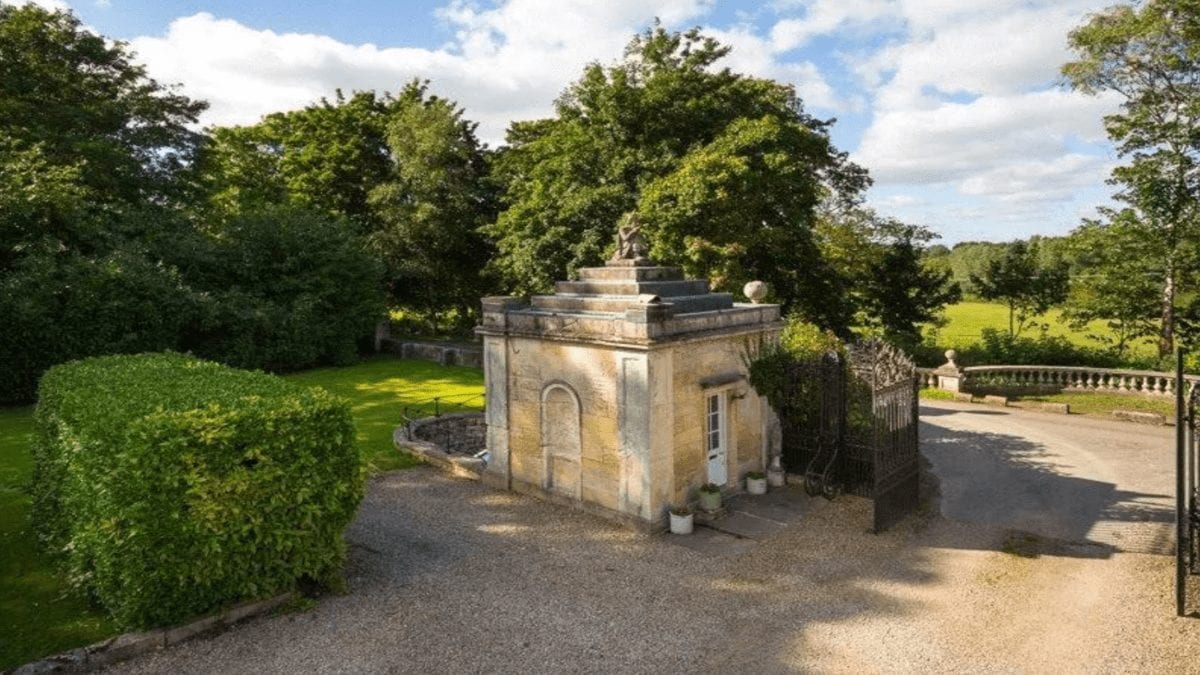
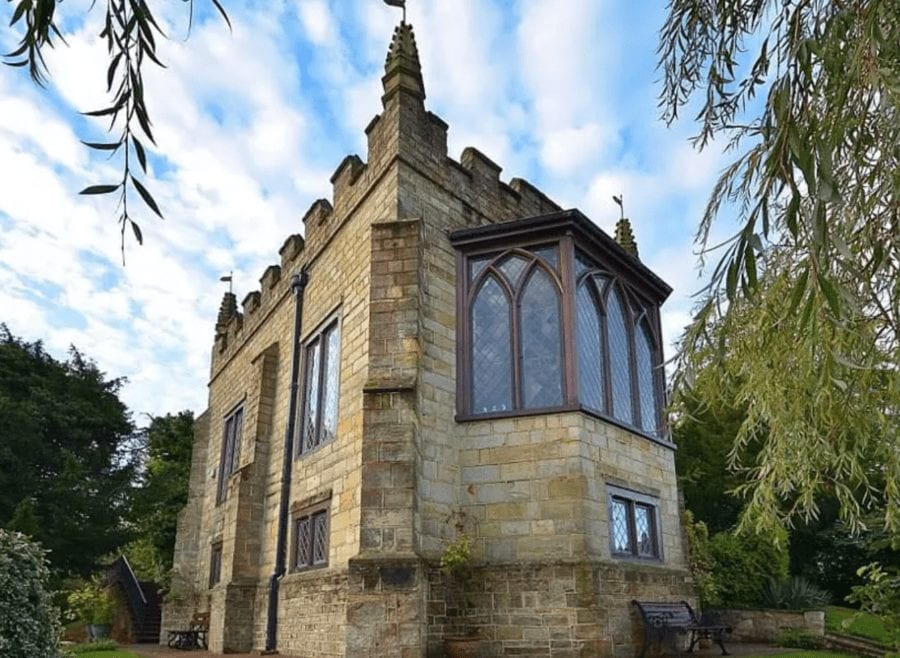
Whilst the Mirror wrote of what they called “Britain’s smallest detached house” in April – measuring 12-foot by 26-foot and priced at £140,000 – we can go one better and today feature a Grade II listed detached house in North Yorkshire measuring just 10-foot by 8-foot.
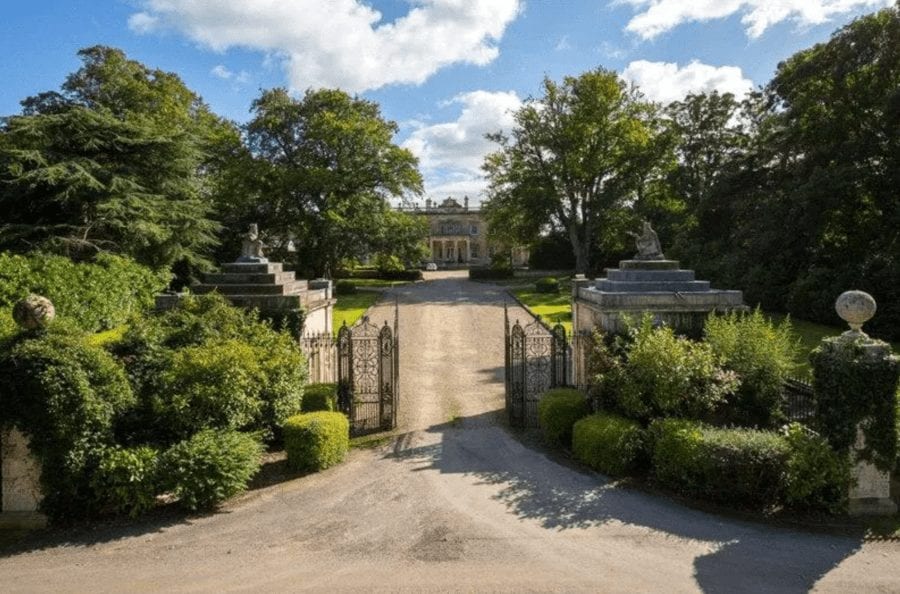
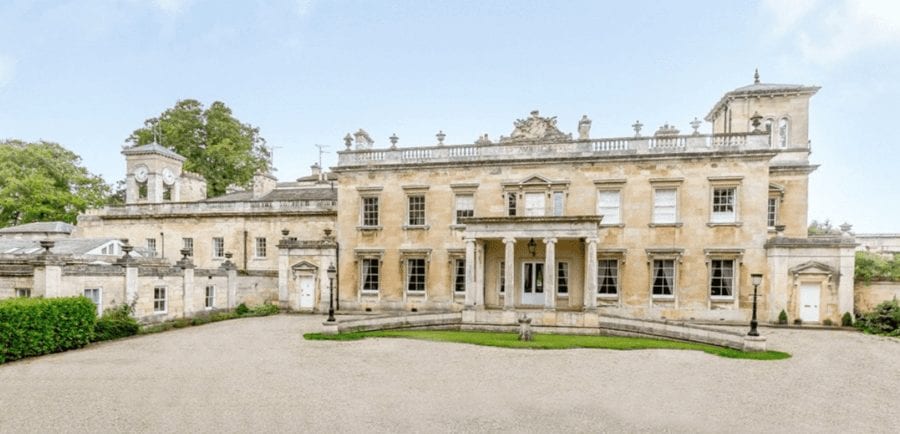
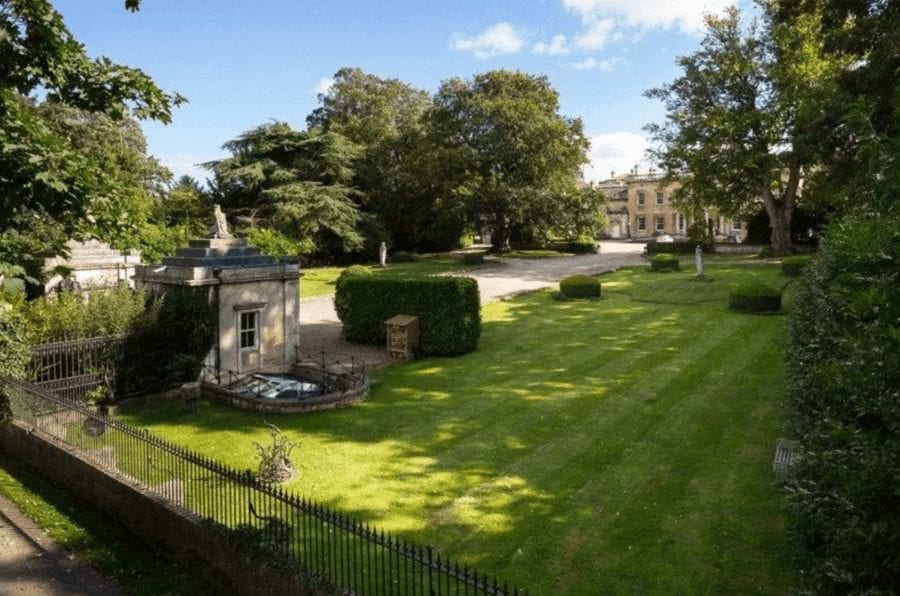
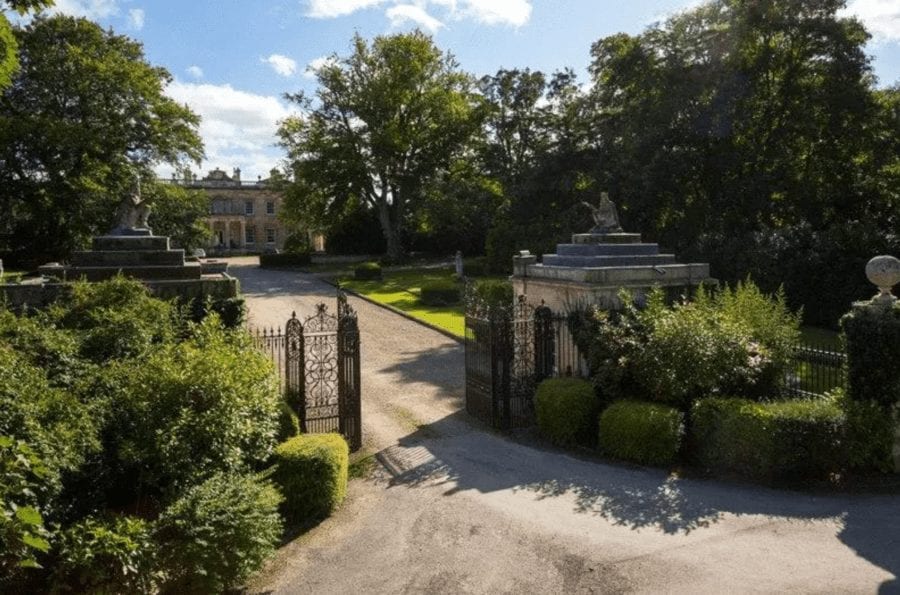
More practical than the £810,000 2.5-foot by 65-foot Knightsbridge “corridor” mews houseThe Steeple Times included in March 2017, 481 square foot Sunset Lodge forms one of a pair of symmetrical lodges standing either side of decorative wrought iron gates to Grimston Park, near Tadcaster – a Grade II* listed Georgian mansion of the Italianate style that has now been converted into thirteen individual residences.
Sunset Lodge forms one of a pair of symmetrical gate lodges at the entrance to Grimston Park in North Yorkshire.Grimston Park has been occupied as a grand country residence, was used by the RAF in the Second World War and subsequently became an events venue. It was converted into 13 residences more recently.
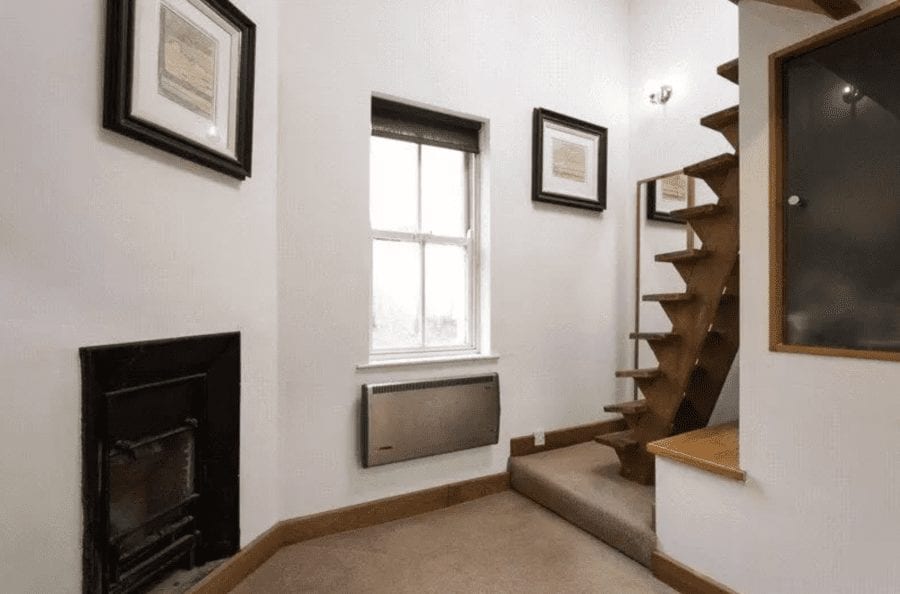
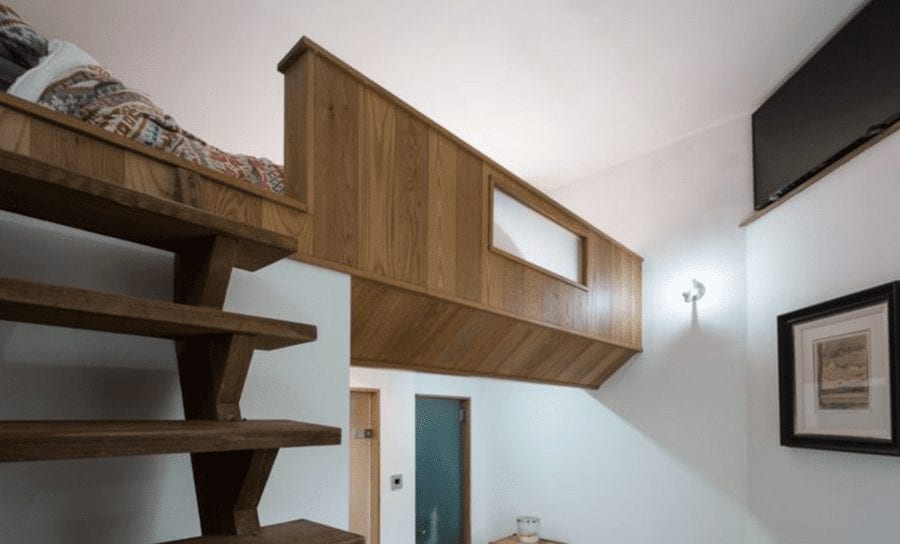
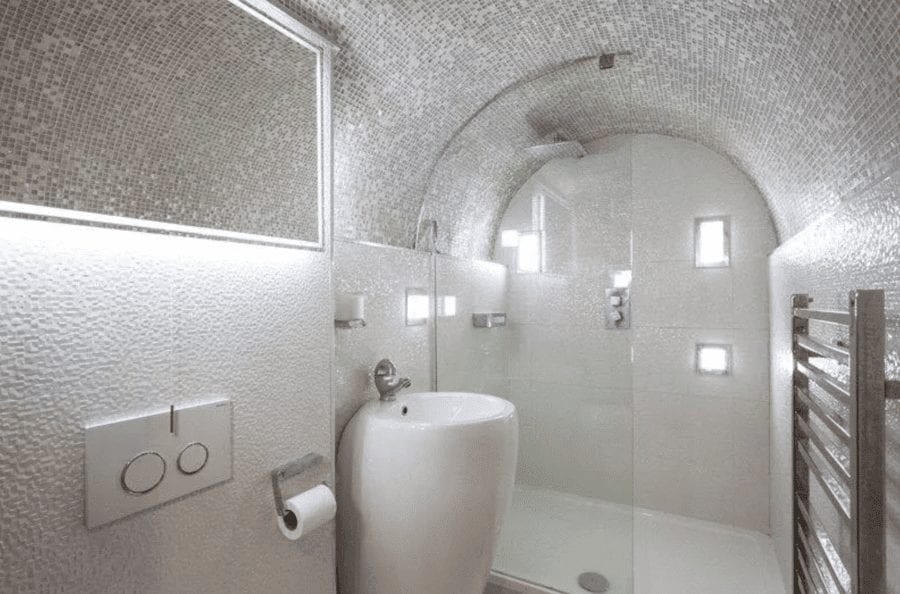
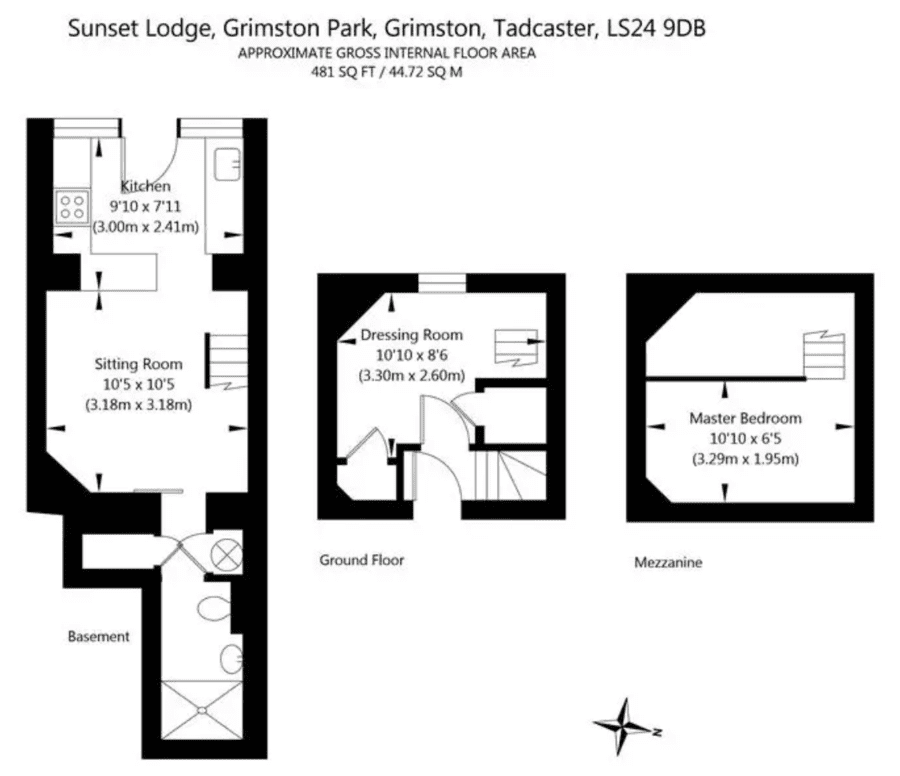
Tardis-like internally in that it actually extends over 2 floors with a mezzanine sleeping platform also, the majority of the living space is actually underground. Featuring a kitchen with an “orangery style roof” with a sunken patio beyond, there is also a living area, a “barrel ceilinged” shower room and a dressing room also.
Parking is provided outside for two vehicles and lawned gardens extend beyond. The estate beyond includes a stud-livery, parkland and buildings occupied on both a residential and a commercial basis.
Agents Carter Jonas initially marketed the property at £299,950 in March 2020, but have since reduced that sum to £250,000. The present owners, Tom and Rebecca Hallisey, paid just £85,000 for the building 15 years ago and thus stand to return an increase of +194% if they sell at asking price.
Speaking of the property to the Yorkshire Post in March 2020, Rebecca Hallisey remarked: “It was in a poor state of repair but [when we first saw it, but] we fell in love with it and we could see it had potential.”
She continued: “We moved a lot before we came here but we have stayed because we love the building and it is such a beautiful, peaceful place to live. We wish we could stay forever and we are only moving for health reasons as we need a single-storey home.”
The Numbers – Sunset Lodge, Grimston Park, Grimston, Tadcaster, North Yorkshire, LS24 9DB, United Kingdom
May 2021 – Reduced in price to £250,000 ($355,000, €291,000 or درهم1.3 million) or £520 per square foot ($738, €605 or درهم2,700 per square foot) with Carter Jonas.
March 2020 – Placed for sale for £299,950 ($425,700, €349,100 or درهم1.6 million) with Carter Jonas.
June 2006 – Sold for £85,000 ($121,000, €99,000 or درهم443,000).
Some Other Examples of Britain’s Smallest Homes
Starborough Castle, Dormsland, Lingfield, Surrey
Featured in The Steeple Times in April 2017, this Grade II* listed scheduled ancient monument stands in 10 acres and has a 44 million gallon moat. It features a mini great hall and was offered for sale for £1.75 million.
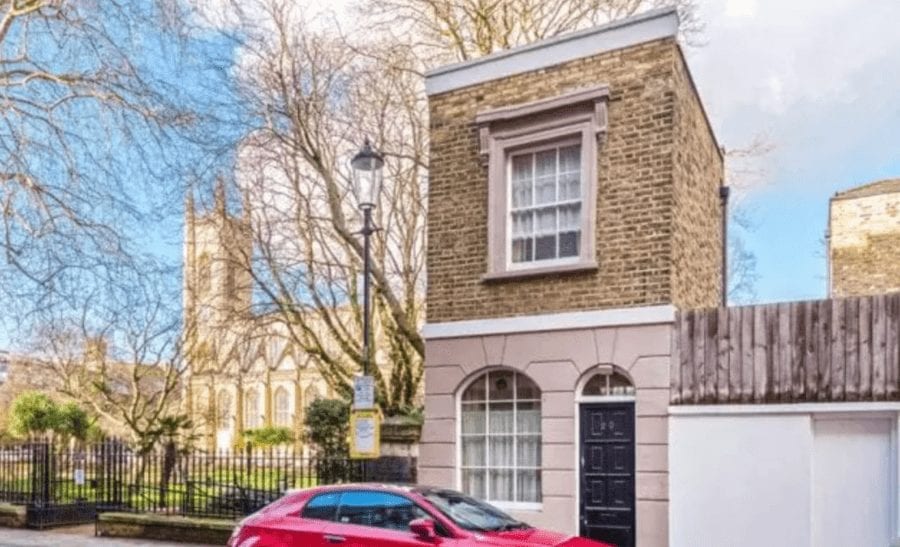
20 Britten Street, London, SW3
Also featured in The Steeple Times when for sale in 2017 for £600,000, this 290 square foot detached house measured 8.5-foot by 14-foot. Estate agents estimated it could be worth £1 million when renovated, but as of May 2021, it remains in unloved condition.
The Round House, Stanton Drew, Somerset
In December 2016, we wrote about this Grade II listed former toll house that extends to just 146 square foot. The 18th century, detached, thatched property was priced at just £110,000 at the time.
24a The Boltons, London, SW10
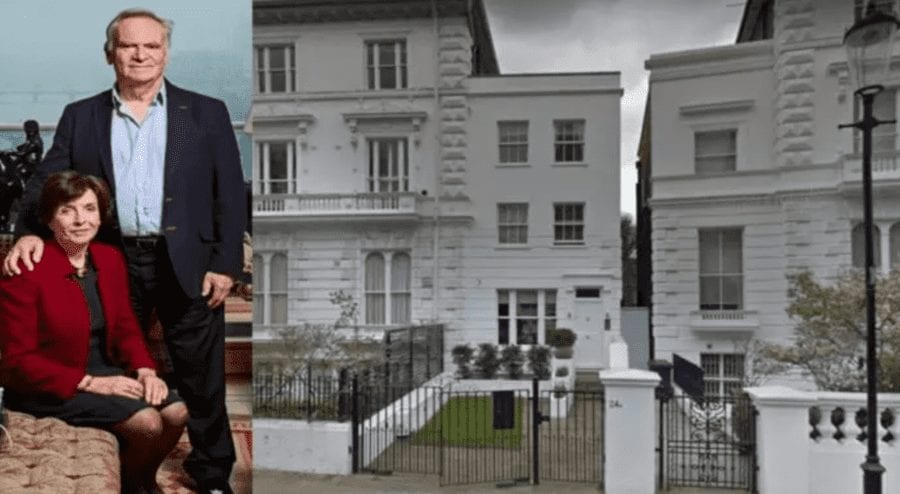
At the other end of the price scale, but still the cheapest, smallest house on one of London’s smartest streets, The Boltons in London, this £6.5 million terraced residence was home to novelist Jeffrey Archer from 1972 to 1976. Surprisingly due to it widening as it goes back, it actually provides 3,123 square foot of accommodation over 4 floors – so is not as quite as small as it initially seems.
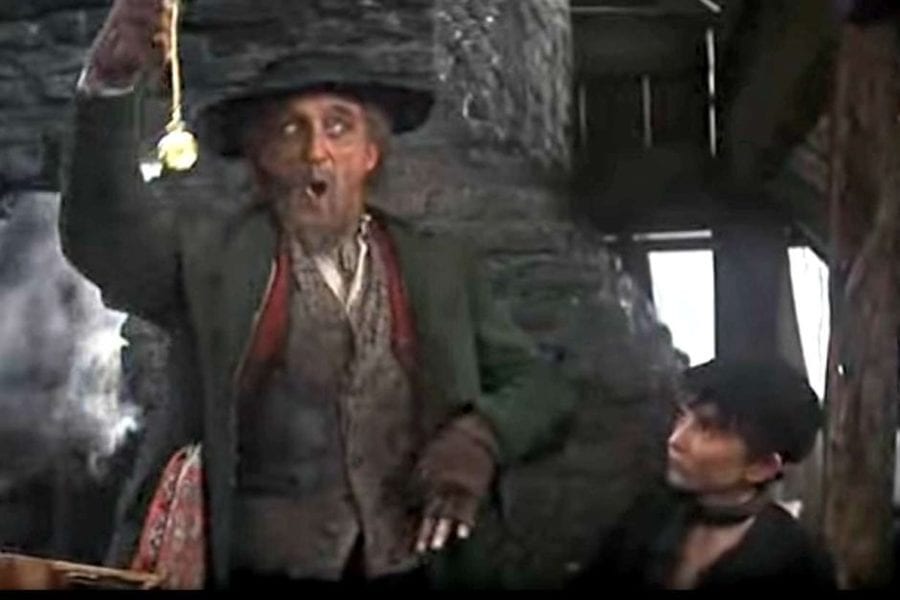
1961 Bentley S2 Continental drophead coupé owned by Golden Globe award winning actor Ron Moody – best known as ‘Fagin’ in ‘Oliver!’ – for sale for 329% more than it sold for in 2014 after restoration
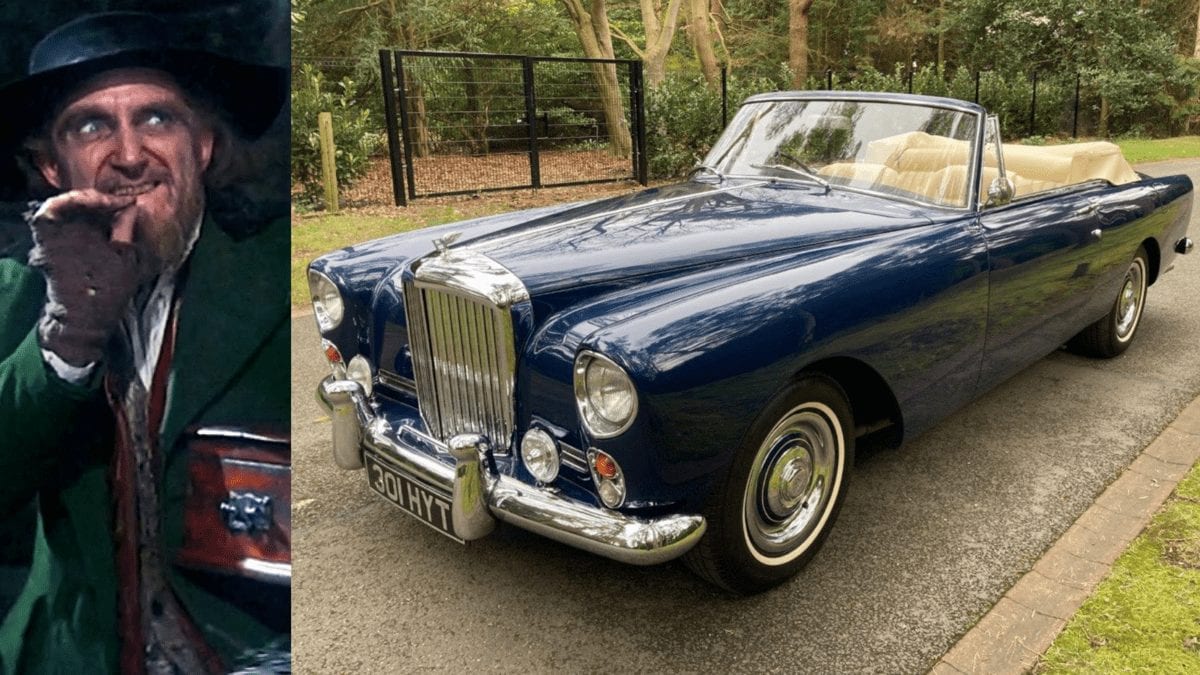
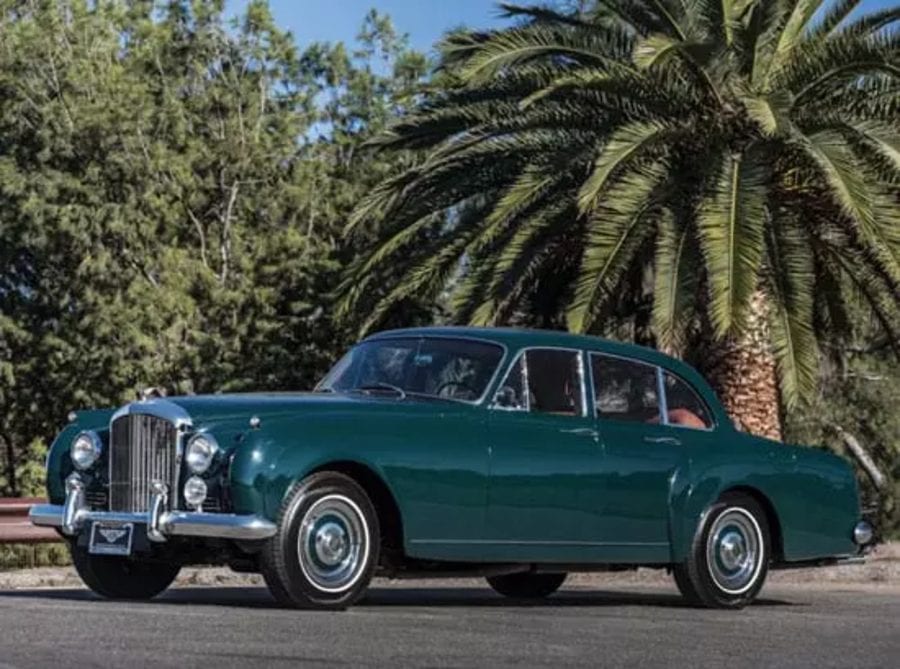
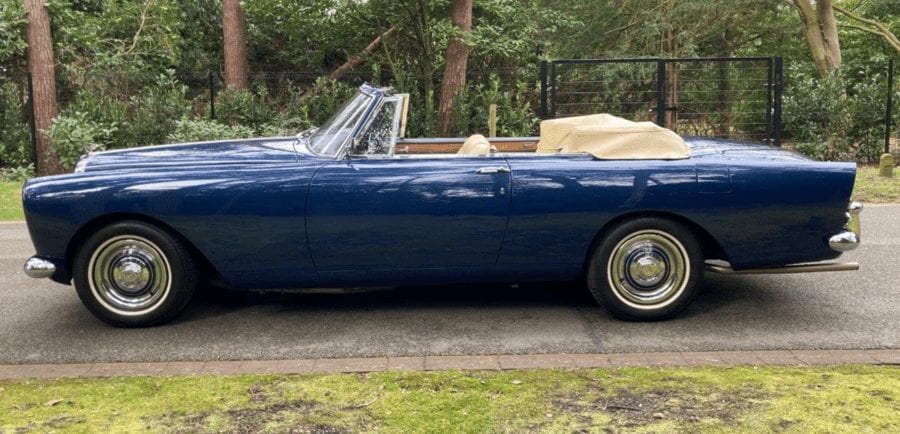
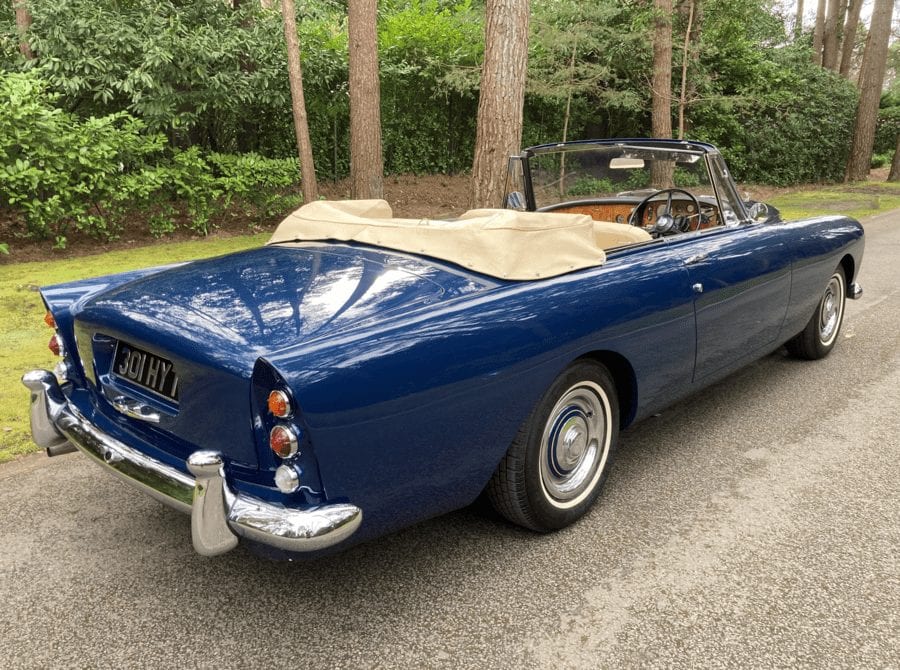
Described on their Instagram page with the quip: “After some time behind the wheel of this beautiful Bentley, you may well find yourself saying: ‘Please, sir, I want some more,’” by acclaimed Bentley and Rolls-Royce dealership Frank Dale & Stepsons, a 1961 Bentley S2 Continental drophead coupé by Park Ward owned by the late actor Ron Moody from 1968 until 2014 is currently for sale for £295,000.
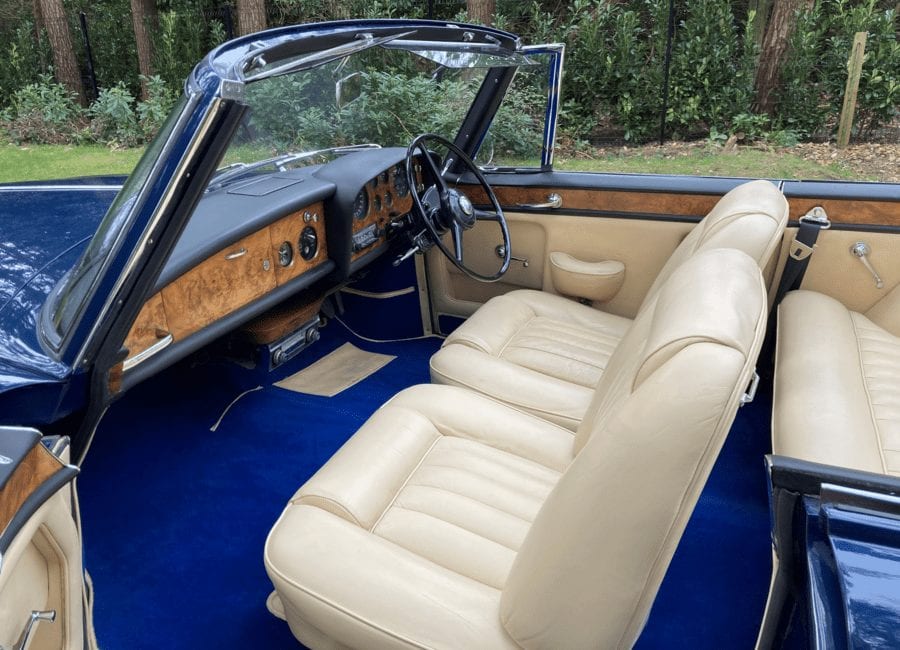
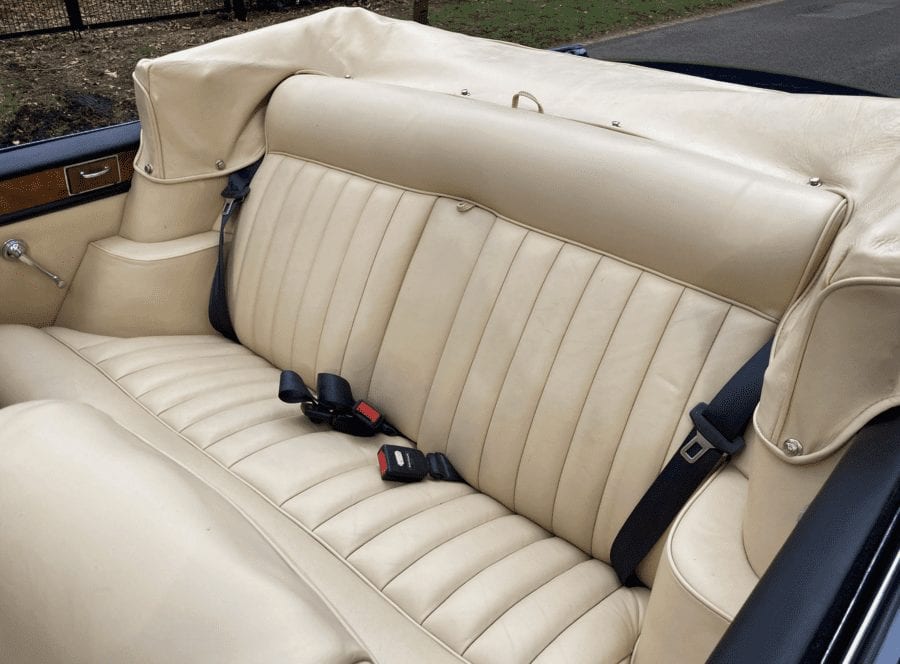
Restored two years ago after having been sold at Bonhams for £68,700 in June 2014, Moody – born Ronald Moodnick (1924 – 2015) – the stunning car offered is one of sixty cars built in right hand drive. Finished in ‘Valentine’s Blue’ with an off-white leather interior and blue everflex hood, the car was clearly much loved by the Oscar nominated actor given he kept it for 46 years.
Of it, Frank Dale & Stepsons comment:
“The current owner began improving the car in 2014 following several years of limited use by Mr Moody.”
“The mechanical works in recent years include but are not limited to the brakes being rebuilt, overhauling the fuel system including the carburettors, a new exhaust system, overhauling the power steering, a new propshaft, restoration of the radiator and overhauling the heating system, restored rear springs as well as general servicing and maintenance.”
“The cosmetics have also been hugely improved with the car benefitting from coachwork structural repairs and a bare metal re-paint in the cars original colour as well as restoration to the chrome. The power hood was also recently retrimmed in blue everflex as per the original specification from 1961.”
“The finished car presents and drives beautifully following these works and is complete with two large binders covering the history, one dedicated to the cars life up until 2014 and one covering the significant improvements over the past few years with invoices and photographs documenting the process. Chassis No BC6CZ comes complete with its original handbook and a wonderful back story having been owned and cherished by Mr Fagin himself for so many years.”
Ron Moody is best remembered as Fagin in Lionel Bart’s stage and film musical ‘Oliver!’ – based on Charles Dickens’ ‘Oliver Twist’ – and of it commented: My proudest moment was the number ‘Reviewing the Situation.’ I suspect that, because I gave my all to the role, and because I was working with such a fine team of people, it inhibited my future career. I turned down quite a few offers afterwards because I thought the people didn’t come close to those I’d worked with on ‘Oliver!’ –which in retrospect was a mistake.”Fagin’s Bentley – In January 2014, ‘The Steeple Times featured the sale of another acclaimed actor’s Bentley S2 – this came in the form of a Continental Flying Spur, also produced in 1961, that had been owned by Gregory Peck. At the time it was guided at a price of between £137,000 and £182,000.
The Numbers
May 2021 – Offered for sale by Frank Dale & Stepsons for £295,000 ($413,000, €339,000 or درهم1.5 million).
27th June 2014 – Sold at auction by Bonhams for £68,700 ($96,000, €79,000 or درهم353,000).
Grand Grade I listed Shropshire mansion Kinlet Hall for sale after coronavirus forced the closure of its wedding venue and summer school
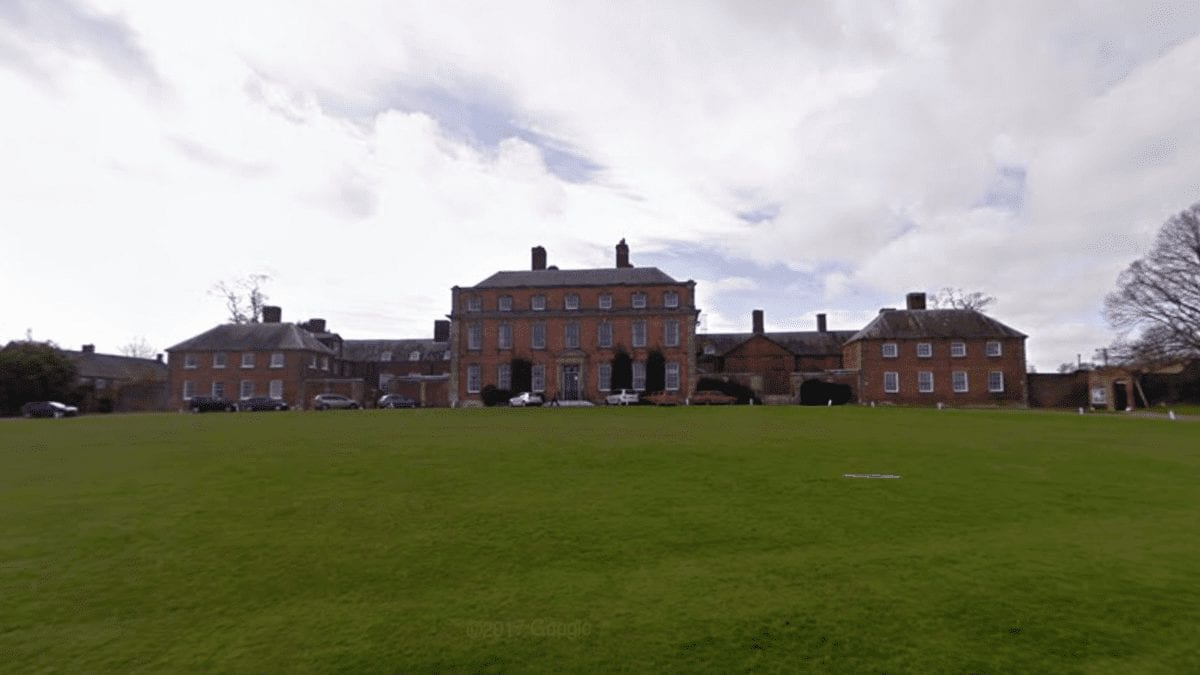
Striking Grade I listed Palladian mansion in Shropshire for sale.
Kinlet Hall is priced at £3.5 million or just £104 per square foot.
The house has until recently been a school and wedding venue, but this usage has been stopped because of the coronavirus lockdown.
A cricket ground included with the property was lauded as one of “Britain’s most scenic” by ‘The Telegraph’ whilst HRH Princess Anne has competed in horse trials in the parkland.
Coinciding with the partial relaxation of the coronavirus lockdown, the ‘trophy country house’ market seems to be revving up with the commencement of marketing of several historically significant residences.
Significantly cheaper at £3.5 million or £104 per square foot and in far better condition than 33,406 square foot Lilford Hall, the 33,609 square foot Grade I listed Kinlet Hall comes with less land – 102 acres as opposed to 321 acres. It is further from London, which may limit its appeal to wealthy city sorts, but given it has been used as both a school and wedding venue until lockdown, it is in actual “working condition” as opposed to the perilously falling down state that Lilford is sadly currently in. That is, indeed, a major plus.
Featuring a seven-bayed central block of three storeys plus cellars, the hall is flanked by two two-storey wings. Presently configured to provide 5 reception rooms and 15 bedrooms, there are classrooms, gyms and flats also. Surprisingly, unlike with many residential to school conversions of mansions in the 1940s where ugly modern extensions were distastefully tacked on, damage to the integrity of the original structure has been minimal.
In addition, to a 5-bedroom detached house named ‘The Old House’ and a range of farm buildings within the grounds, there is a cricket pavilion and a cricket pitch. The Telegraph named its runner-up for “Britain’s most scenic cricket ground” in 2008 and interestingly amongst the many established plant and tree species in the grounds is a Wellingtonia that allegedly came as a seed in a matchbox from the Americas.
Of Kinlet Hall, Tony Morris-Eyton of Savills comments: “[This is] an exquisitely beautiful Palladian country house, formerly a prep school, awaiting its next chapter with enormous potential as either a private home or [for] other uses.”
The village of Kinlet is situated on the northern edge of the Wyre Forest about 18 miles from Telford and 23 miles from Birmingham.
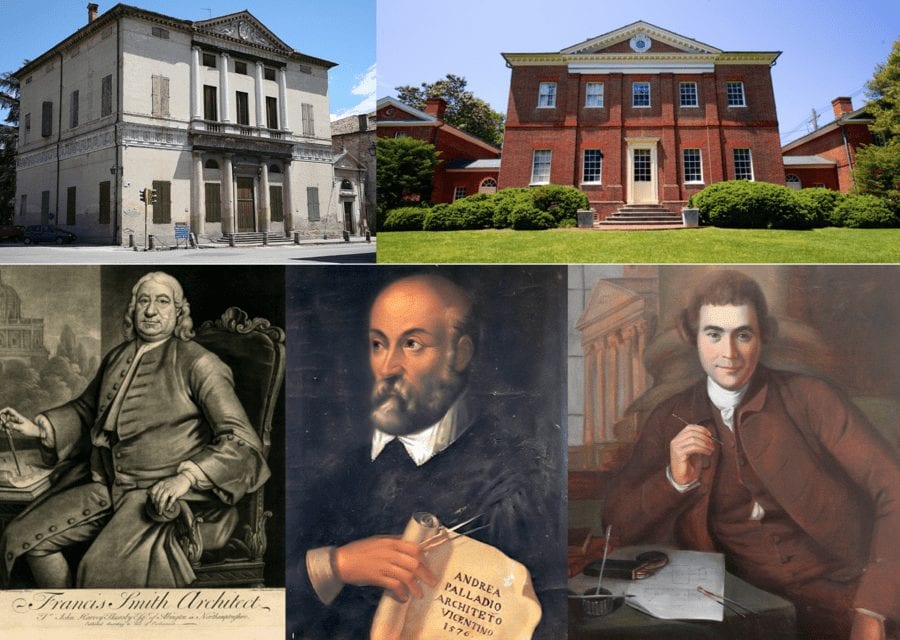
Design Maestros – Villa Pisani, Montagnana (top left) by Andrea Palladio (lower centre) inspired both Francis Smith of Warwick (lower left) in his designs for Kinlet Hall and William Buckland (lower right) in his creation of the Hammond-Harwood House (top right).
The Names & Numbers – Kinlet Hall, Kinlet, Bewdley, Shropshire, DY12 3AY, United Kingdom
June 2020 – Put up for sale for £3.5 million ($4.4 million, €3.9 million or درهم16.3 million) through agents Savills. Orchard Lodge, a 4-bedroom cottage with an acre of paddock, is available by separate negotiation.
July 2017 – Moffats School closes for the final time citing financial pressures. Of the decision, school chairman Julian Engleheart told the Shropshire Star: “We have always been a small school by choice, maintaining the family ethos of our founders. However, the current financial climate is putting enormous pressure on small schools and we have decided that it would be unwise to commit to a new year this September. However, we will continue to run educational activities in our lovely house and grounds, which provide such a wonderful environment for learning.”
1946 – Moffats School (founded in 1934 by the children’s writer Natalie Engleheart in a Hertfordshire house called Moffats) is relocated to Kinlet Hall.
1939 – 1945 – The house was temporarily home to a school for the blind; the parkland became a camp for the US army as part of their preparations for the Normandy Landings.
1827 – Ballroom added to the designs of Sir Jeffrey Wyattville (1766 – 1840) trained architect Edward Haycock (1790 – 1870) for William Baldwyn Childe. He died three years before it was completed and “this is the only significant part of the house not dating from 1729.”
1727 – 1729 – Kinlet Hall is “built in a classic early Georgian style with the symmetry and grand elevations synonymous with [the English master-builder and architect] Francis Smith of Warwick (1672 – 1738)” for Tory politician William Lacon Childe (1700 – 1757) close to the site of an older Tudor manor house.
Other notable works by Smith and his family include Calke Abbey, Fawsley Hall, Kirtlington House, Ombersley Court and Stoneleigh Abbey. His design was said to be inspired by Andrea Palladio’s (1508 – 1580) Villa Pisani at Montagnana – which also reportedly was the influence for the ‘Anglo-Palladian’ Hammond-Harwood House by the English architect William Buckland (1734 – 1774) in Annapolois, Maryland, USA.
During construction, the old village was removed to “improve” the setting. Only the original church, St. John the Baptist, which contains monuments dating to the 1580s, was left as a “remnant.” It was restored subsequently in 1892.
“Bitch of the first order” Larysa Switlyk takes to Instagram during the coronavirus lockdown to brag about her latest massacres; this moronic monster previously paid to shoot sheep in England
Blood thirsty bimbo and all-round abhorrent American Larysa Switlyk charmlessly announced: “I feel classy and preppy in [European] clothing” on Instagram at the height of the coronavirus lockdown whilst posing in a forest with a rifle. “Who does this stupid slapper think she is? Rambo?” was one quite spot on observation, yet beneath it all one has to remember this is a foolish freak who goes after endangered species and then brags about wiping them out.
Aside also from dimwittedly being asked by one of her followers, a [plainly not very switched on] “success coach… guess that’s it for now” named Dante Cornella: “Are the firearms restrictions a challenge there?” another suggestively stated: “OK Larysa, then come to Kosovo for the hunt? Kosovo is in Europa [sic], I’m waiting for it eagerly, because there are hunters’ wives here!” There’s something sexual about Switlyk – a bestie of Donald Trump’s elephant slaying sons – massacring goats to these sub-humans, but remember this: Here we have the very same piece of excrement who thought it amusing to shove a sex toy up the arse of a dead sheep she’d paid to stick a round of bullets into in a field in Norfolk, England.
Yesterday, posing with a fellow slayer of anything that crosses its priggish path, Switlyk shared an image of herself and a chum with a dead hog and a dog with blood all around its lips. As ever, beaming like the cat that got the cream and then came back for seconds, this moronic weasel-like wench proudly captioned it with such hashtags as #iamsportsman, #shehunts and #groceryshopping2020 and attracted likes from over 1,500 other mind fucked morons.
“Creating new hunters, one hog at a time” continued Switlyk as her ‘fans’ quivered “I’m jelly!” and “supperr [sic] beautiful hunter.” Here, in their quagmire of cretinism, these people delight in meaningless massacre. For them, it’s not about shooting to provide sustenance, instead it’s about shooting for selfies and shooting for ‘stardom’ (as if anyone sane would want to become famous for such abhorrent activities). These pillocks deserve to be called out for what they truly are and Larysa Switlyk deserves to be put in the stocks and pelted with rotten tomatoes. Meet our Moron of the Moment – Most definitely one of the most vile specimens currently polluting our planet.
Pictured top: Gloating garbage Larysa Switlyk on an estate in Norfolk after she paid to shoot a sheep and shove a sex toy up its bum; Larysa Switlyk during the coronavirus lockdown trying to look like a Von Trapp with a rifle.
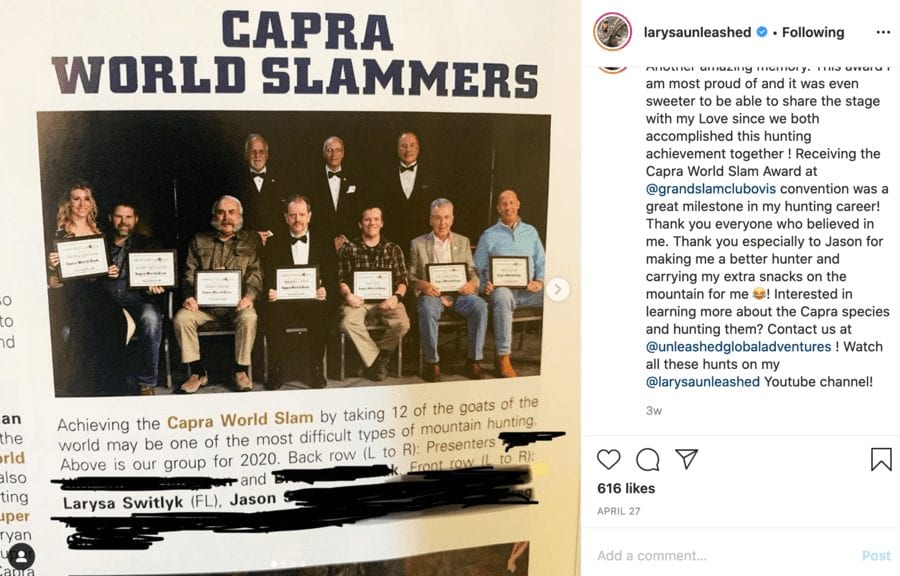
Bloody brainless – Switlyk posing after “creating new hunters, one hog at a time” with a brain-dead bint with a spear. She did not mention whether she shoved the spear pictured up anything’s ass.As you don’t – Larysa Switlyk boasted in April about killing 12 goats. She got a photo opportunity as a result with nine other monsters.Mental case par excellence – Sick-in-the-head Larysa Switlyk has previously slain peacocks and bears.
Replica “homage to Jean Bugatti’s Type 57SC Atlantic coupé” to be auctioned for a sum 99.9% lower than the most famous of the four originals is said to be worth
If ever rediscovered, a car termed “the most beautiful ever created” – the second of four Bugatti Type 57S Atlantic coupés – would supposedly be worth £93 million ($113 million, €104 million or درهم415 million).
Handcrafted as part of a limited production with sales only to the British banker Victor, 3rd Baron Rothschild, an English tennis player named Richard B. Pope and a Frenchman named Jacques Holzschuh between 1936 and 1938, the second coupé made was used for promotion and then given to its creator, Gianoberto ‘Jean’ Bugatti (1909 – 1939). After he was killed whilst testing a Type 57 tank-bodied racer, his car passed into the hands of various racing drivers. It was then hidden away with the outset of the Second World War, but sadly never resurfaced.
Named in honour of Mr. Bugatti’s aviator friend Jean Mermoz (1901 – 1936), whom never returned from a journey across the South Atlantic in 1936 in a Latécoère 300 Croix-du-Sud plane, the 12-foot long 57SC is lauded as the ultimate automotive design icon. Bugatti themselves term the “world’s most valuable vehicle” to be “extraordinary” and reference the coupé “unique in its time and still unique today.”
As a result of their desirability, the car – which Motor Authority terms “delightfully swoopy… [the] crown jewels of Bugatti production cars” – has unsurprisingly inspired a number of automotive designers to create homages to it. One example, created by “hot rodder” Terry Cook, is being auctioned this month – but one thing’s for sure, whatever it sells for, its hammer price will nowhere near that of a ‘real’ example.
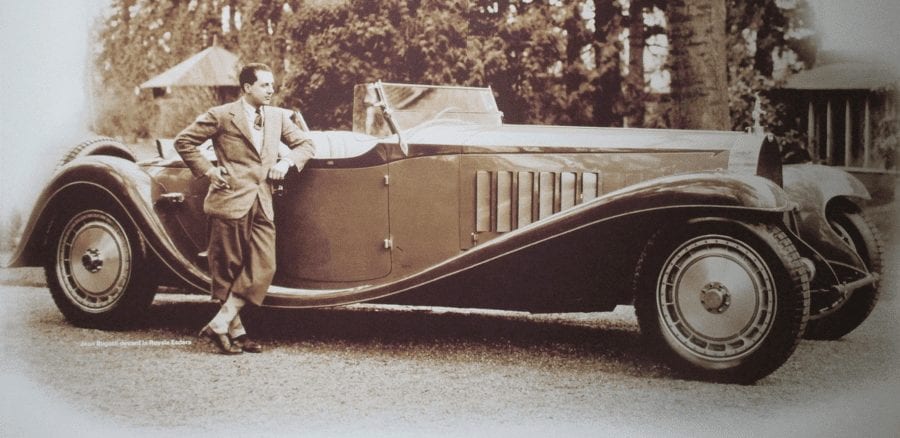
In March 2017, the “homage to Jean Bugatti’s Type 57SC Atlantic coupé,” the Delahaye USA Pacific was auctioned at the Mostalgia Amelia Island sale in Florida. It sold for £182,000 ($220,000, €204,000 or درهم808,000). The same car is headed to auction again this month.Jean Bugatti pictured next to the ‘Royale Esders Roadster’ prototype he designed in 1932.The four Bugatti 57SC Atlantic cars.
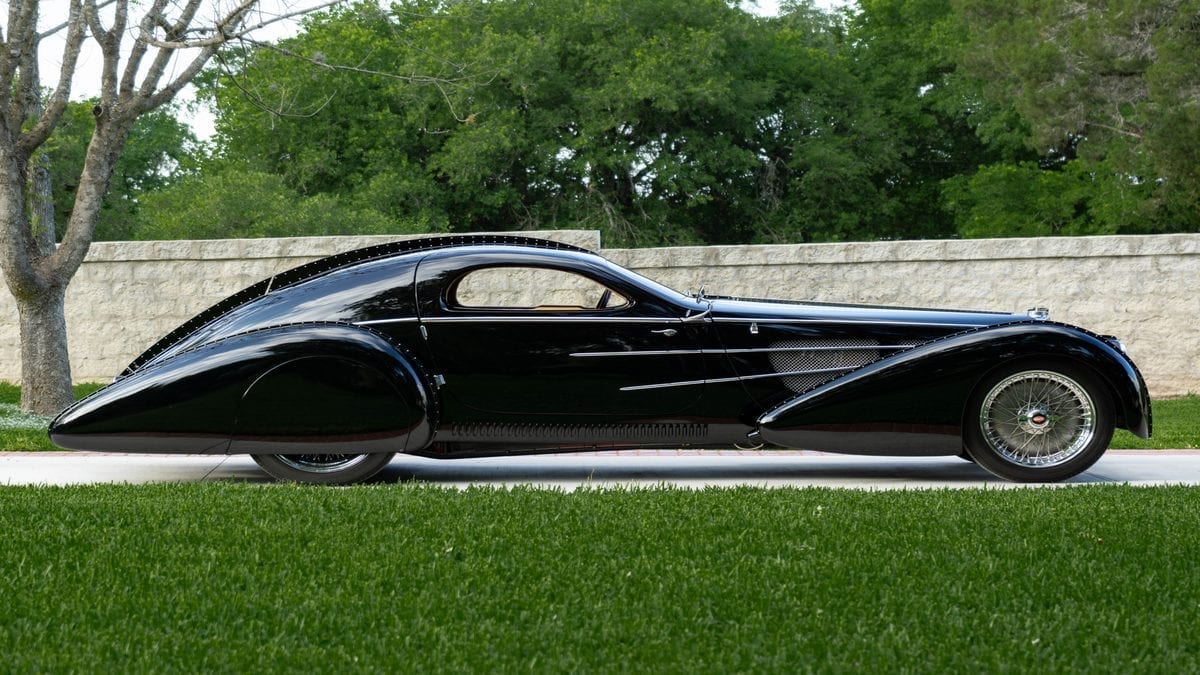
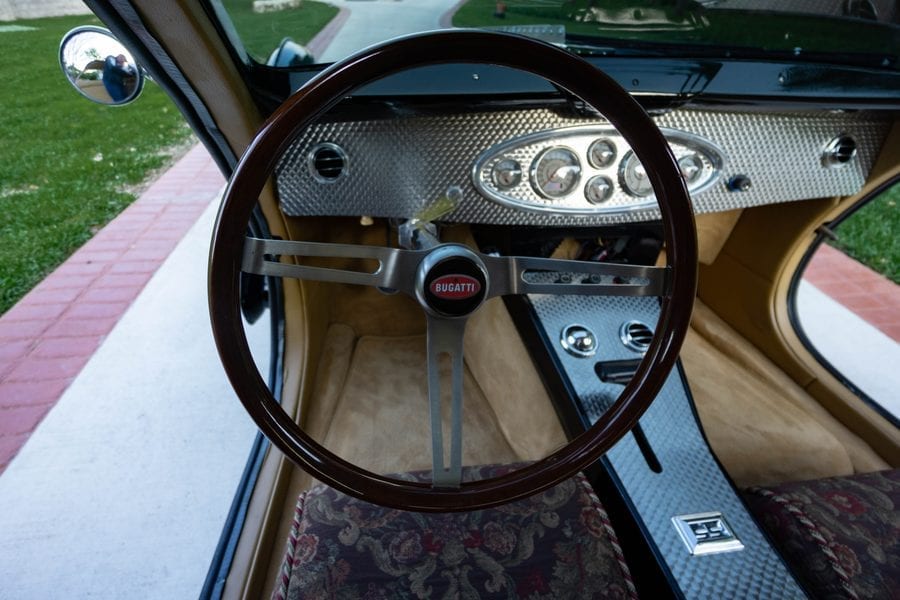
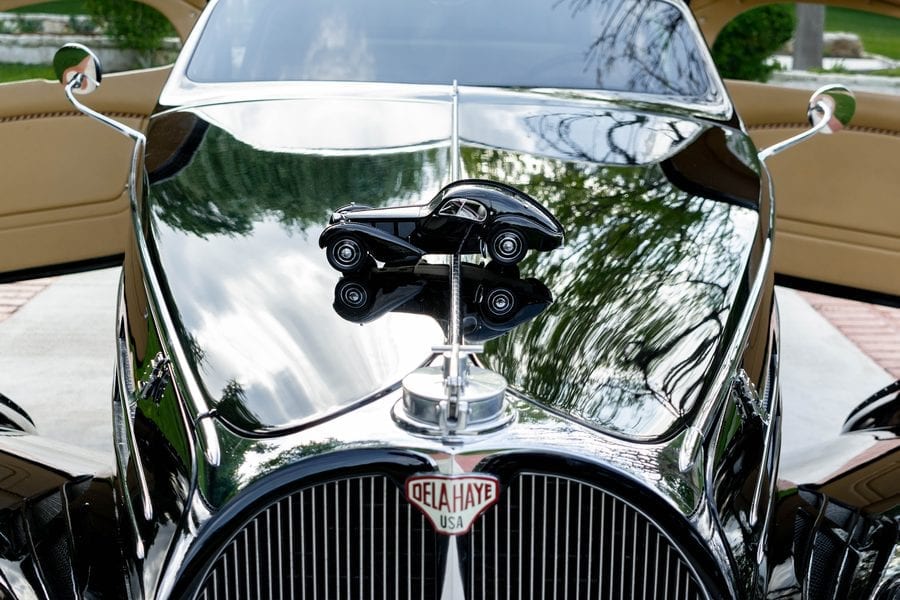
The “reimagined Atlantic” concerned was made by Cook’s firm, Delahaye USA, in 2016 and is described as “noticeably longer than the original, 10 inches to be exact.” It has a 127-inch wheelbase and features a BMW fuel-injected 12-cylinder engine and automatic transmission and unlike its forerunners comes equipped with air conditioning, heating and power windows. The stainless steel tubular seat frames are exact copies of those from the 57SC now owned by Ralph Lauren and the fabric is described as “richly decorative.”
RM Sotheby’s will sell the 1939 Delahaye USA Pacific – which actually is titled a 2016 ‘Assembled Vehicle’ – as part of their ‘Drive Into Summer’ online sale from 21st to 29th May. They have set an estimate of £124,000 to £165,000 ($150,000 to $200,000, €139,000 to €185,000 or درهم551,000 to درهم735,000) for this “wonderful modern homage.” Of it, they add: “The Delahaye USA Pacific is sure to turn heads no matter where it may travel, be it on any side of either ocean.”
Those on an even more limited budget could still live the ‘Atlantic dream’ – Ralph Lauren is currently marketing a 1:18 scale, die-cast, hand-painted replica of Mr. Lauren’s 57SC for ‘just’ £1,595 ($1,930, €1,784 or درهم7,090).
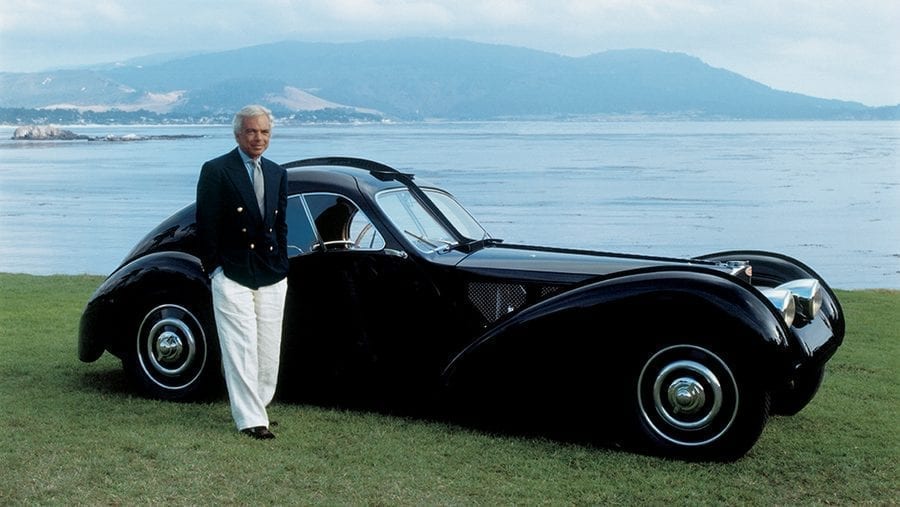
The metallic gray-blue 1936 Bugatti Type 57S – chassis number 57374 – was originally owned by Victor Rothschild, 3rd Baron Rothschild and thus known as the ‘Rothschild Atlantic.’ It was sold for in excess of £24.8 million ($30 million, €27.7 million or درهم110.2 million) in 2010 to the collector Peter Mullin. The car is now displayed at the Mullin Automotive Museum in Oxnard, California.The missing 1936 57SC – chassis 57453 – was presented in black and known as ‘La Voiture Noire’ or ‘The Black Car.’ It was the second Atlantic manufactured, disappeared from France in February 1941 and has never been seen since. Jean Bugatti considered this particular example his “most innovative and most valuable creation.”The 1936 Bugatti 57SC – chassis number 57473, ‘the Holzschuh Atlantic’ – was first owned by Jacques Holzschuch and his wife, Yvonne, and presented in black. After they were killed in the Second World War, the car’s subsequent owner, René Chatard, was hit by a train whilst in it 1955. He and his companion died and the remains of the vehicle were sold on. The restored car – considered a replica by experts – is displayed at the Torrota private collection in Spain.Clothier Ralph Lauren with his 1938 Bugatti Type 57SC – chassis 57591, the ‘Pope Atlantic.’ It was originally owned by Richard B. Pope and presented in sapphire blue, but painted black after being sold to Ralph Lauren in 1988.At the 2019 Geneva Motor Show, commemorating the 110th anniversary of Jean Bugatti’s birth, Bugatti sold a one-off model named ‘La Voiture Noire’ in homage to the missing 57SC for circa £15.7 million ($19 million, €17.6 million or درهم70 million). They declared it: “The most expensive new car ever sold.”The model available from Ralph Lauren.The steering wheel of the 2016 ‘Assembled Vehicle’ 1939 Delahaye USA Pacific.The seats are an artwork in themselves.Another view of the interior.With the doors open, from the front.The spare wheel.From the front.From the rear (complete with twelve exhaust pipes).The bonnet of the vehicle with a model of the car that inspired it on it.
1978 Piaggio Ape ‘limousine’ used by the controversial Countess Agusta – a woman who either fell or was pushed to her death from her home above Portofino in 2001 – to be auctioned
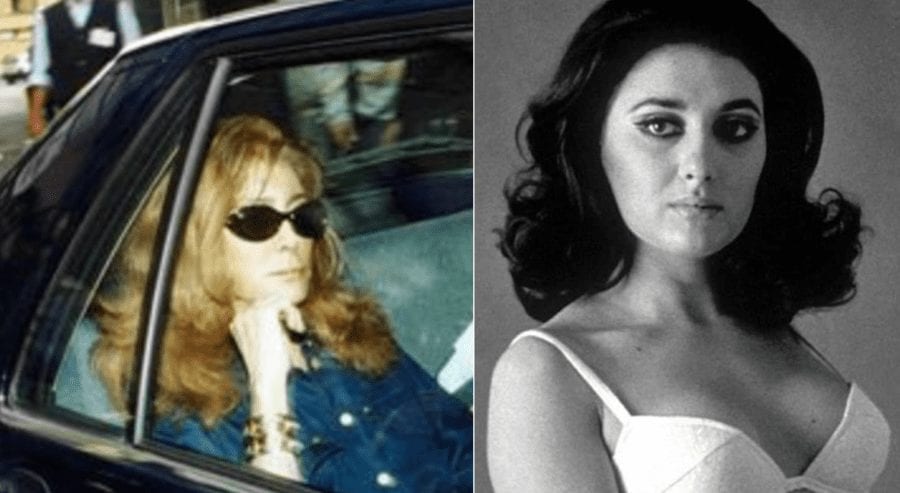
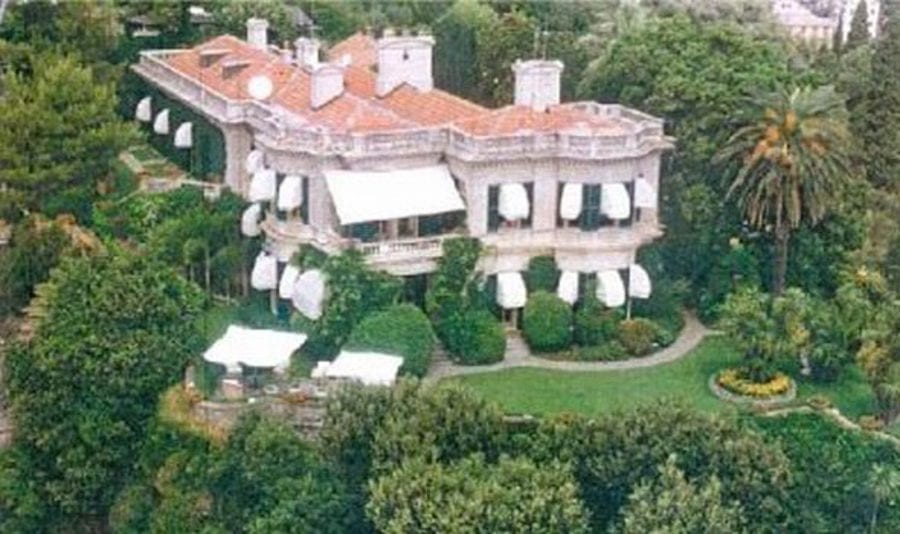
On 8th January 2001, “shop assistant turned model turned multi-millionairess many times over turned fugitive” (via a stretch in what American’s so pleasantly term ‘pokey’) Countess Francesca Vacca Agusta “disappeared” from the terrace of her Ligurian seaside home. The series of events that preceded and followed could have featured in an Agatha Christie novel or a Sherlock Holmes story.
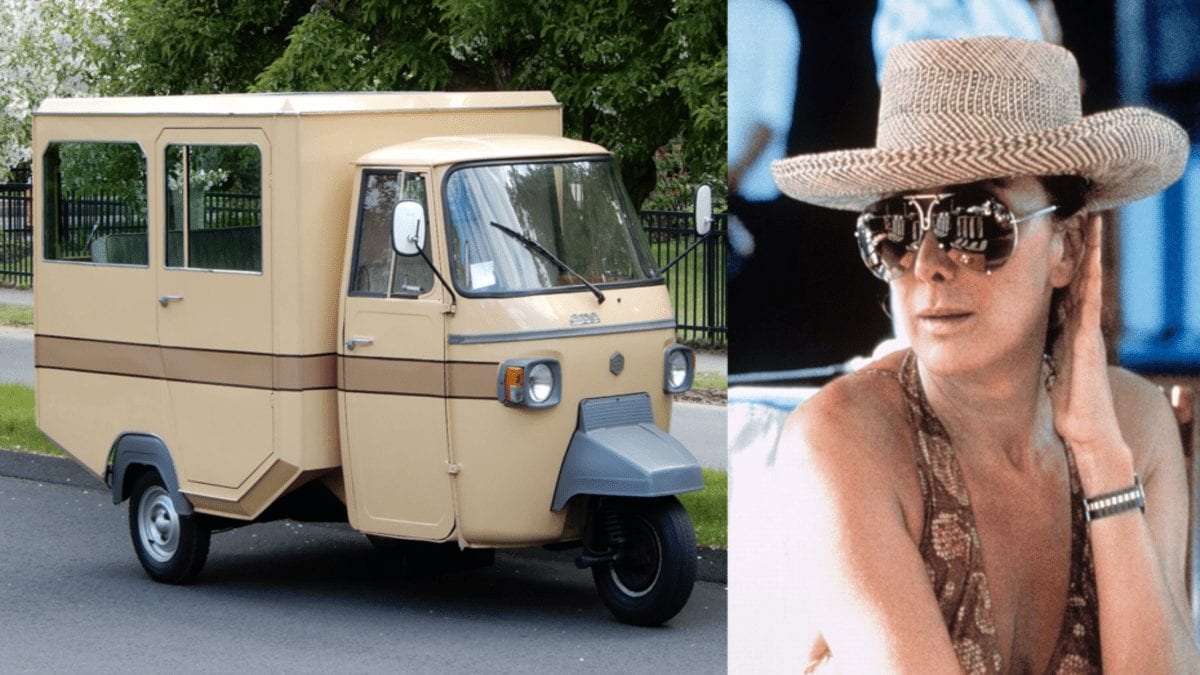
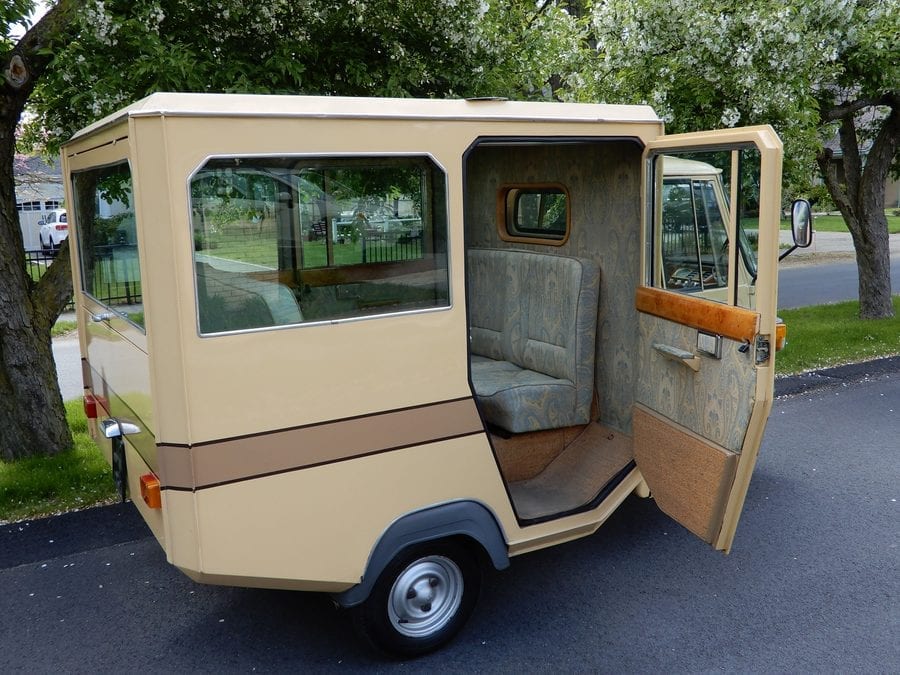
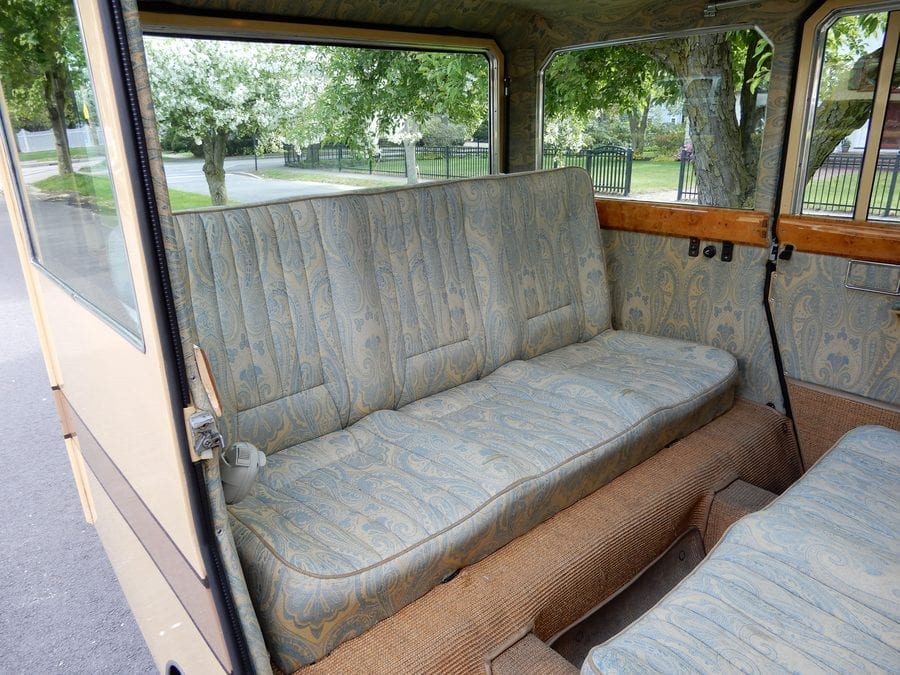
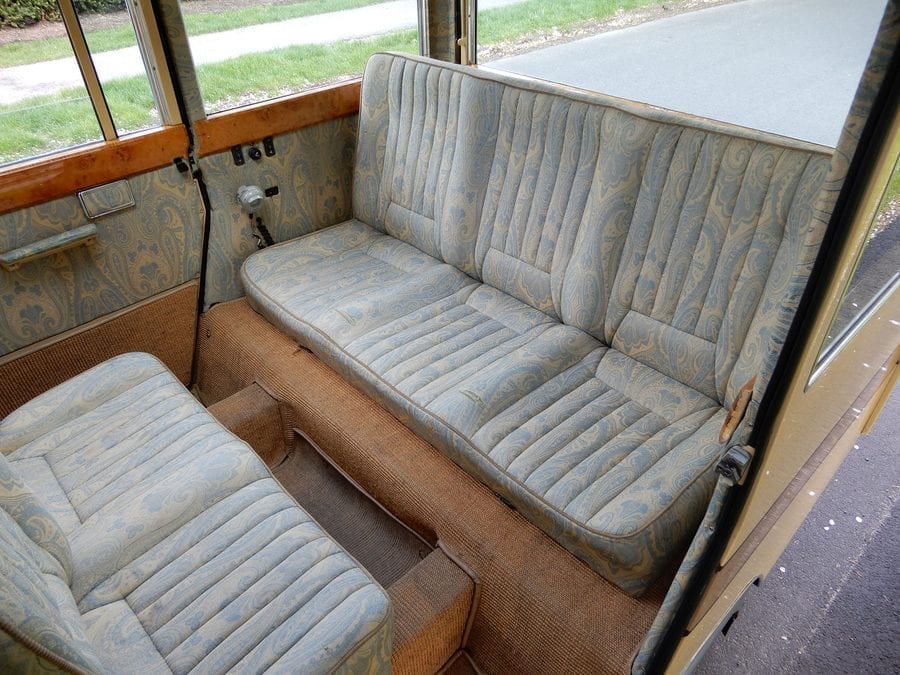
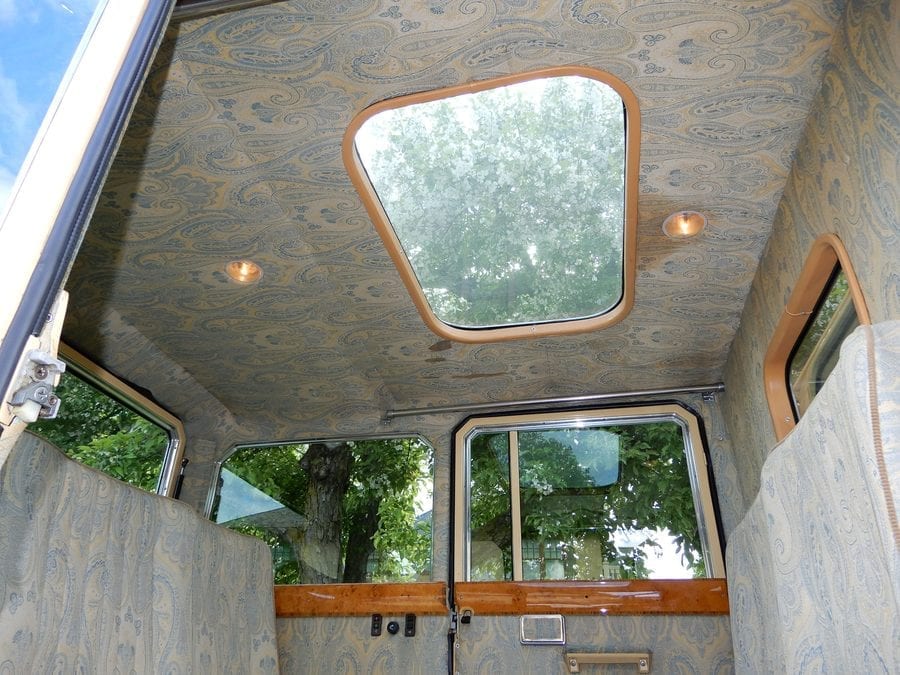
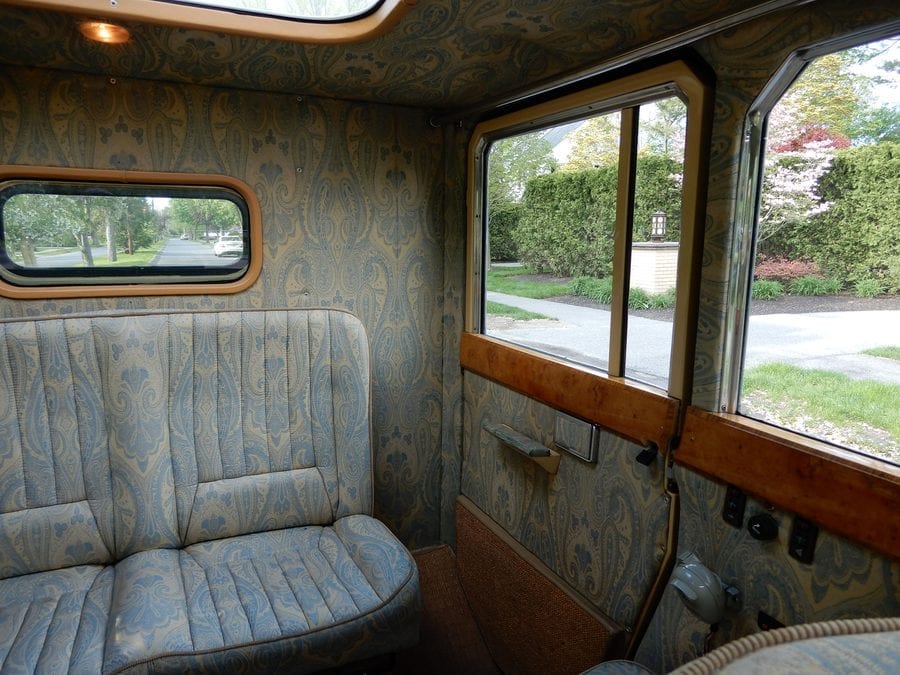
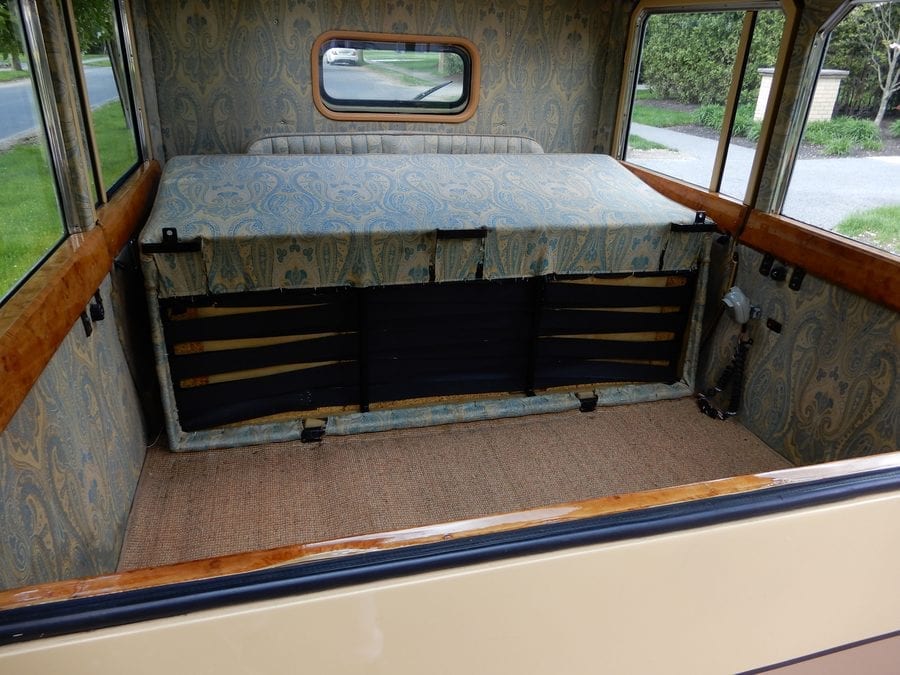
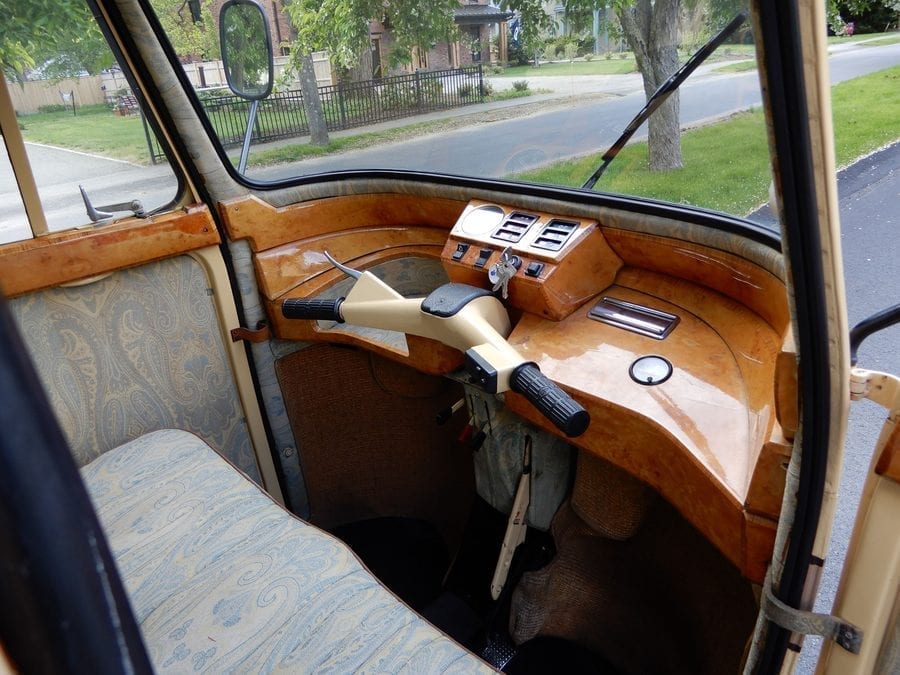
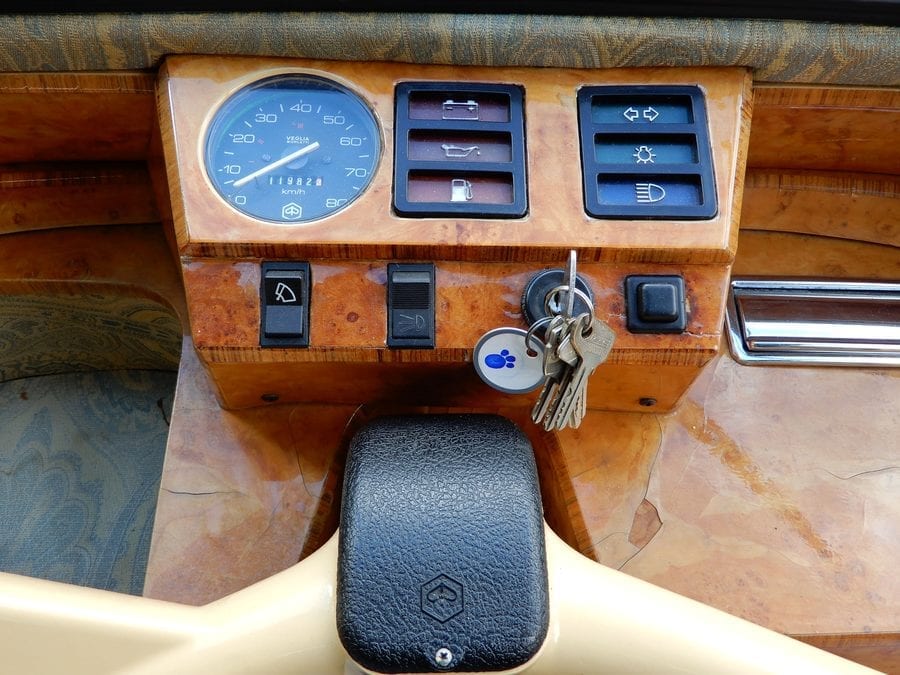
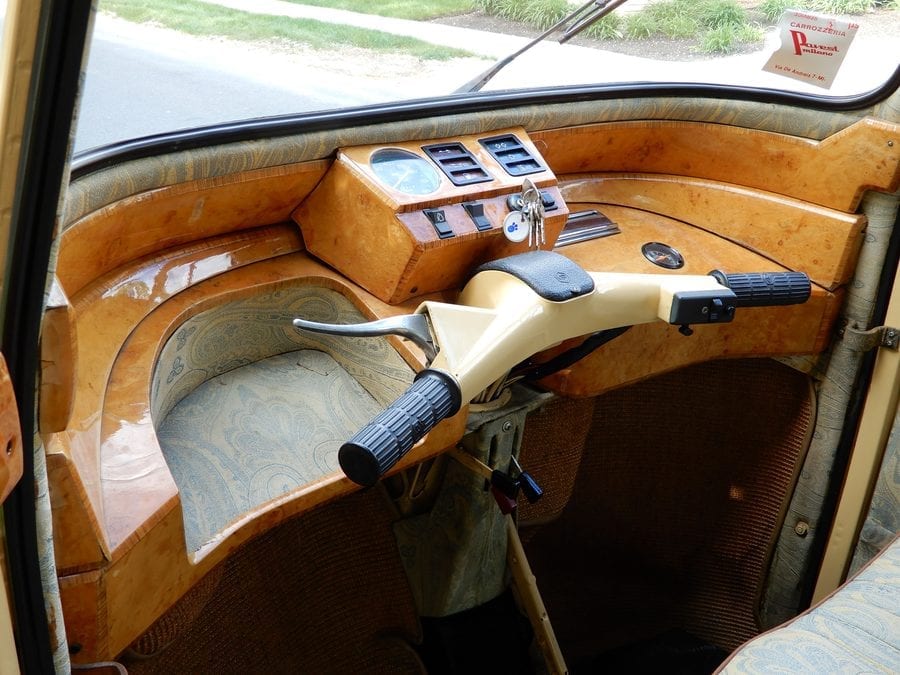
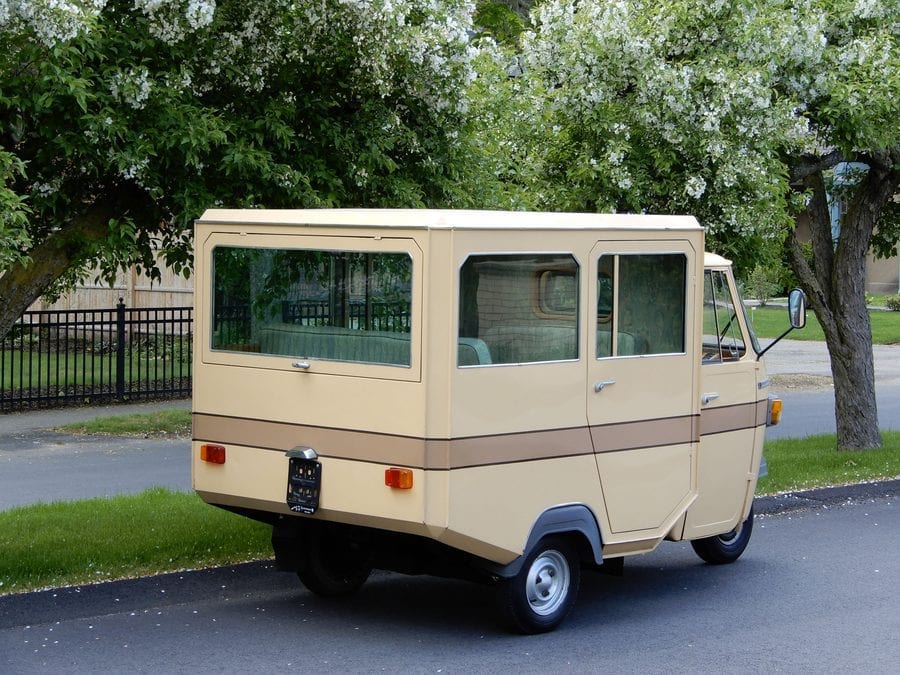
Graffagni saw off the business tycoon’s first wife, Pupetta Maresca, after a torrid affair and following their marriage in 1974, amongst other things, became chatelaine of a 40-room property complete with a helipad. It had been built in 1870 by George Herbert, 4th Earl of Carnarvon – whose death was attributed by amongst others Sir Arthur Conan Doyle to the “curse of King Tut” – as his holiday home and during the 1970s and 1980s guests to “jet-set parties” given at the house by the socialite Countess were ferried back and forth from their dock in Portofino harbour in a custom built 1978 Piaggio Ape coachbuilt ‘limousine.’ This vehicle, described as a “perfect yacht tender” with its opulently patterned interior and passenger-driver intercom, is now for sale.
Countess Francesca Agusta (née Francesca Vacca Graffagni, 29th October 1942 – 8th January 2001). It is most surprising that the late Dominick Dunne did not make a television programme about her life and demise.Villa Altachiara (alternatively known as ‘Villa Alta Chiara’ or ‘Villa Carnarvon’) was one of Countess Agusta’s homes from the 1960s until her death in 2001; it was originally built as a holiday home for Lord Carnarvon (26th June 1866 – 5th April 1923) – the financier of Howard Carter’s explorations of Egypt’s Valley of the Kings that led to the discovery of Tutankhamen’s tomb. The Carnarvon family hosted many guests during their ownership, amongst them Brooke Astor and Evelyn Waugh.
Count Agusta died in 1989 without divorcing his second wife in spite of separating from her in 1985. At that time, in addition to Villa Altachiara, he had given her four apartments in Milan, an estate in Cuernavaca, Mexico, family jewellery and an undisclosed cash sum. With his demise, she came into yet further fortune.
This by-then “very wealthy woman” hit the headlines again in 1994 when she and her new lover, a “former Portofino playboy politician [named] Maurizio Raggio,” were discovered to have been part of a corruption scandal involving Bettino Craxi, the Prime Minister of Italy from 1983 to 1987. Before police could apprehend them to charge them with amongst other things money laundering, the pair fled to Mexico and lived on her estate until 1997 as fugitives. During this period, the Countess reportedly attempted suicide at least once.
Upon her return to Italy, the Countess plea-bargained and spent just three months in Milan’s Opera prison for her crimes in spite of receiving a two-year jail sentence. After “some further time under house arrest” in the Villa Altachiara, the “retired” gadabout then took up with a Mexican, Tirso ‘Tito’ Chazaro (also known as ‘Tirso Di Ricardo’ and ‘Rafael Tirso Roncado Gonzales’), and lived in the style of Miss Havisham. She was rarely seen in public and having become dependent on drink and drugs, was known for her erratic behaviour and temper.
“Considerably the worse for wear and muttering she would not be coming back” on the night of 8th January 2001, the Countess supposedly told her lover and two others present that she was going for a swim, but either slipped on wet leaves or was pushed off a veranda into the sea. A search followed, but after the only traces found were the Countess’s dressing gown on the seabed close to the Villa Altachiara and her slippers on nearby rocks, press reports suggested she had either committed suicide or, given her past form, staged an “elaborate disappearing act.”
Countess Agusta’s badly decomposed body washed up three weeks later on a beach at Toulon on the French Riviera. Her feet had been gnawed off by fish, her skull was smashed and her face was disfigured. She could only be identified by two rings she was wearing and her exact cause of death could thus not be determined.
As an autopsy found no trace of water in her lungs, she plainly did not die by drowning, but in in 2004 the Countess’s brother, Domenico Vacca Graffagni, was quoted in the Independent as stating: “The [original] inquiry was closed in a hasty fashion because of absence of proof, relying too readily on ‘reasonable doubt’ … It was manslaughter. He [Chazaro] was always beating her. He didn’t mean to kill her. But that evening things didn’t go the way the Carabinieri said, my sister was not drunk and she did not slip on wet leaves on the veranda.”
Adding further to speculation, much earlier, the Countess’s step-son, racing driver and team owner Rocky Agusta (1950 – 2018), told Corriere della Sera in 2001: “Francesca was a beautiful woman, simpatica, very rich… People have written that she inherited 500bn lire, but if it had been only 50 or 25, who commits suicide with 25bn lire set aside? … The people who were around her certainly did not help her… It’s not up to me to formulate accusations, but Francesca was not alone that night. She was very upset. She should have been put to bed. Instead, they let her go out into a dark, wet, cold night, not even dressed.”
In due course, the last of many wills left by Countess Agusta revealed Tirso Chazaro to be her sole beneficiary, but after this was challenged in court by her former lover, Maurizio Raggio, the pair split the legacy – reported to be worth as much as £165 million ($201 million, €186 million or درهم738 million) according to the Guardian in 2001 – sixty-forty between them.
In 2009, the Villa Altachiara was offered for sale initially for £44 million ($54 million, €50 million or درهم198 million) and then for £30 million ($37 million, €34 million or درهم135 million) in 2014. It supposedly eventually sold for less than half that sum to a Russian billionaire a number of years later in spite of an estate agent remarking: “Some say the spirit of Countess Francesca Vacca Agusta still walks the estate looking for her husband and you can hear her shouting for him on the wind.”
An estimate of £37,000 to £49,000 ($45,000 to $60,000, €42,000 to €55,000 or درهم165,000 to درهم220,000) for the Countess’s Piaggio Ape. Described as “sweet” and “[anything but] an Italian tuk-tuk” by RideApart, the one-off private taxi will be auctioned as part of the forthcoming RM Sotheby’s ‘Driving Into Summer’ 21st to 29th May 2020 online sale. One can only hope it finds a happier home than it encountered at that of its former mistress.
Unmodernised ‘set’ in “rule-ridden” Albany, Piccadilly that was the London home of eccentric antiques dealer and ‘King of Chelsea’ Christopher Gibbs for sale; tour the home of the man who got Princess Margaret high on hash
Expelled from Eton “for being generally totally impossible,” antiques dealer Christopher Gibbs (1938 – 2018) was not a man one would have imagined would have liked the idea of living in a place with archaic rules. This “peacock pied piper to society in the Swinging Sixties” whose “drug consumption awed even Keith Richards,” however, surprisingly chose as his London base Albany in Mayfair and now his former residence is for sale.
“A hermitage; quiet as a lagoon, secluded from the roar of Piccadilly” according to the author Sheila, Countess of Birkenhead in her 1958 tome Peace in Piccadilly, Albany – which is only ever referred to as ‘The Albany’ by the extremely ill-advised – quintessential dandy Gibbs lived in the building for “more than half [his] life.” Whilst also owning properties including Davington Priory in Kent – which he later sold to Bob Geldoff – and a “mystic hangover” home in Tangier, it was here that this ‘King’ of “distressed bohemian” style found a place that offered him: “Perfection for a singleton, an oasis of serenity in the frenetic heart of West London.”
This curious “cloistered world” has numbered Sir Isaiah Berlin, Alan Clark, Lord Byron, William Gladstone, J. B. Priestley, W. Somerset Maugham and Terence Stamp amongst those who have passed its vetting committee of trustees and Gibbs – a man who legendarily got Princess Margaret so high on marijuana that she had to go to hospital – even embraced its “no pets, no children, no whistling, no noise and absolutely no publicity” policy.
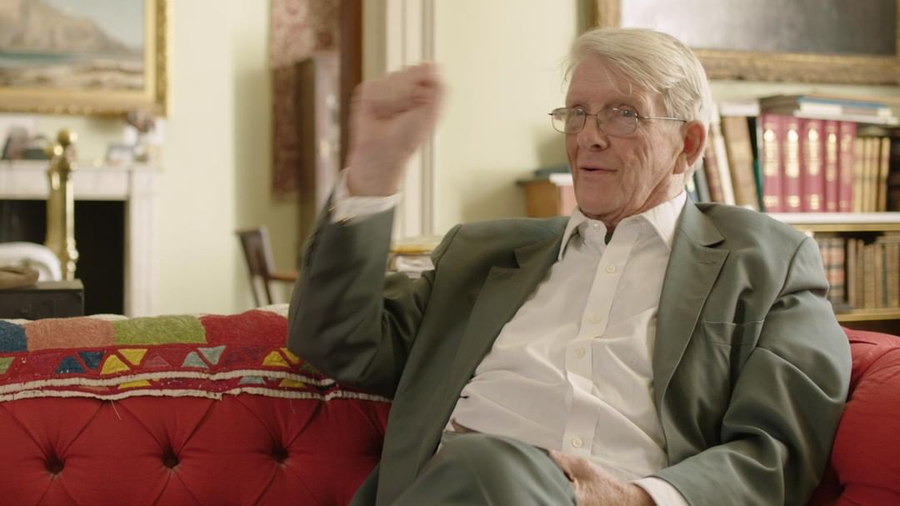
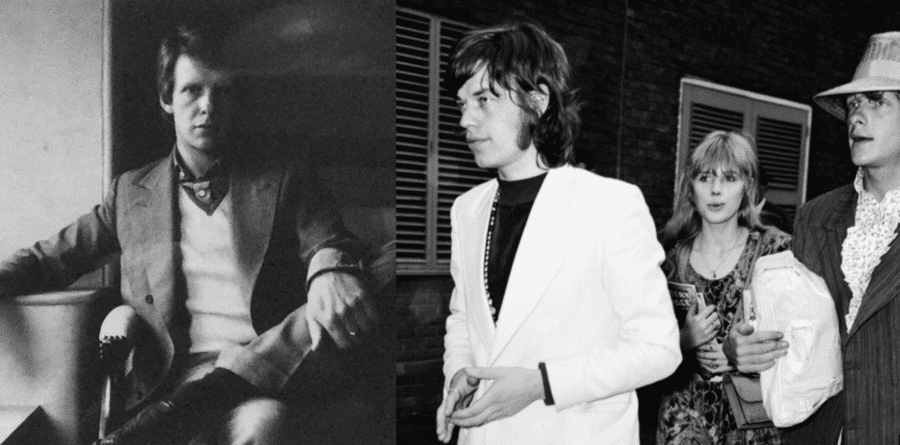
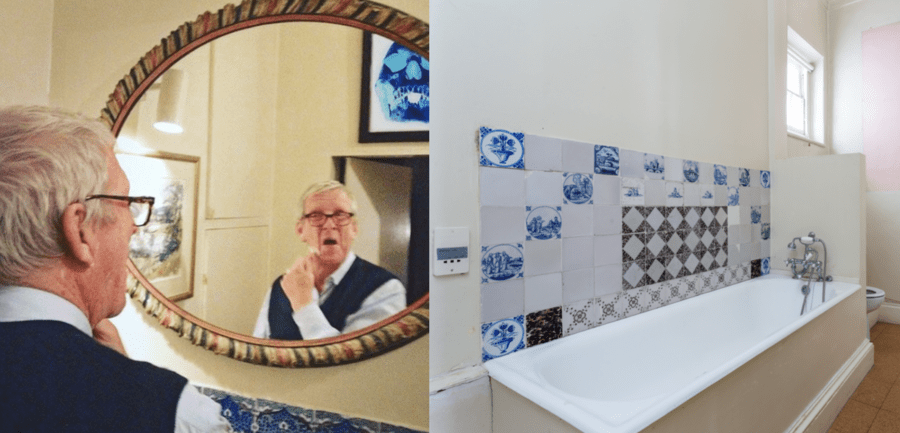
Antiques dealer Christopher Henry Gibbs, (29th July 1938 to 28th July 2018), son of The Hon. Sir Geoffrey Gibbs KCMG and Lady (Helen) Gibbs CBE, was called the ‘King of Chelsea’ due to his ability as the ultimate connector. He put the Rolling Stones together with Prince Rupert Loewenstein (whom became their business manager) and he persuaded his friend John Paul Getty, Jr. to donate £50 million to the British National Gallery in 1985.Christopher Gibbs by Robert Mapplethorpe and with Mick Jagger and Marianne Faithfull.Christopher Gibbs pictured in his bathroom at L6 Albany, Albany Courtyard, Piccadilly, Mayfair, London, W1J 0AZ; the bathroom as it is today is in need of “some updating” according to agents GreenHunt.‘Set L6’ circa 2013, as furnished then by Christopher Gibbs.
Photographed there by the curmudgeonly Victor Watts on a daybed that allegedly belonged to Lord Tennyson, described the home he created in an article for The New York Times’ ‘Style Magazine’ in April 2013:
“I had the place to myself and proceeded to make it my own in the accustomed style: sober mahogany, Oriental rugs, family pictures. I’ve continually reordered these rooms, distilling, paring, pruning, as chaste as my voluptuous nature allows.”
“So enraptured with my Albany life did I become that, reason deserting me (not for the first or last time) I gave up a spacious Bond Street gallery where I had my antiques shop and took one at the back of Albany, a small if elegant space with an entrance into the building, another onto the street and best of all a door into the underground passage – a quiet, invisible stroll home.”
“I love returning from Morocco, where I now spend much of my time, seeing the friendly porters at the door, hearing the clip-clop of feet on the Rope Walk, seeing the old-timers sitting in the little ivy-lined garden, sunning themselves by the little bronze statue of Antinous and the fountain, regularly invaded by the ducks from St. James’s Park – and enjoying sudden glimpses into other people’s lives through uncurtained windows, the hours marked only by the clock chimes of St. James’s Church, accompanied by the more uptempo tinkling of the clock at Fortnum & Mason, our local grocers.”
“At this point, when I am in London, I can’t imagine staying anywhere but Albany – all the more reason, perhaps, to clam up, maintain the longstanding omertà (or I should say discretion) that has held sway for centuries now, and count my blessings.”
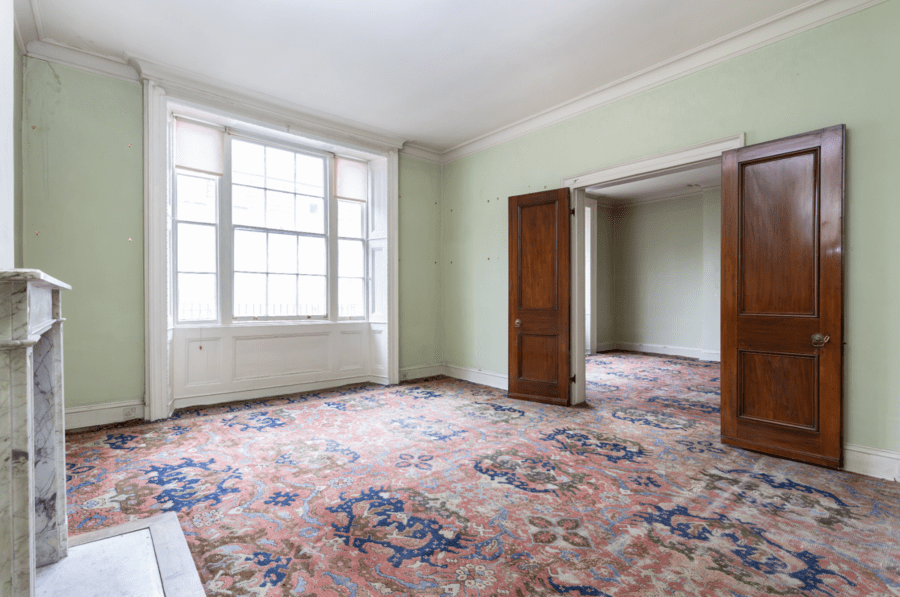
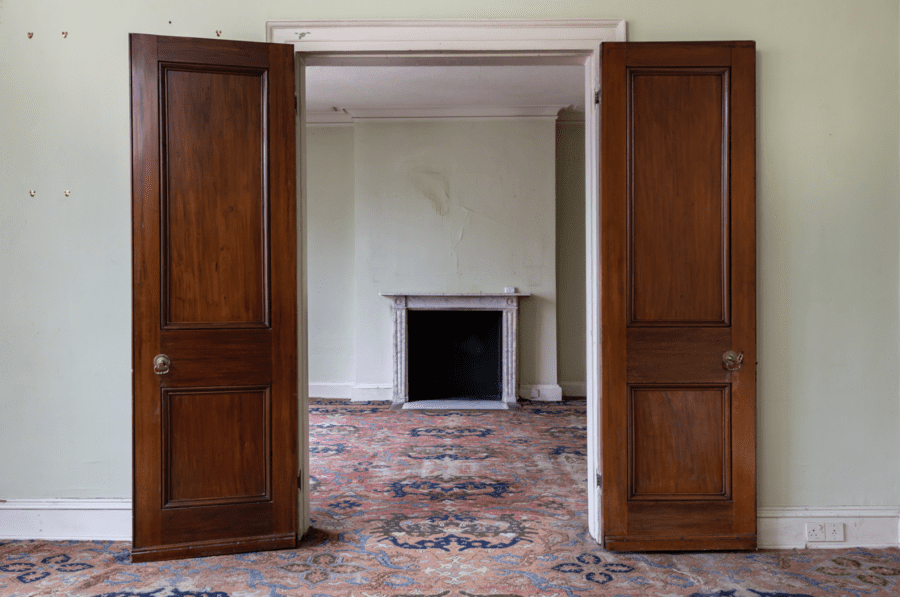
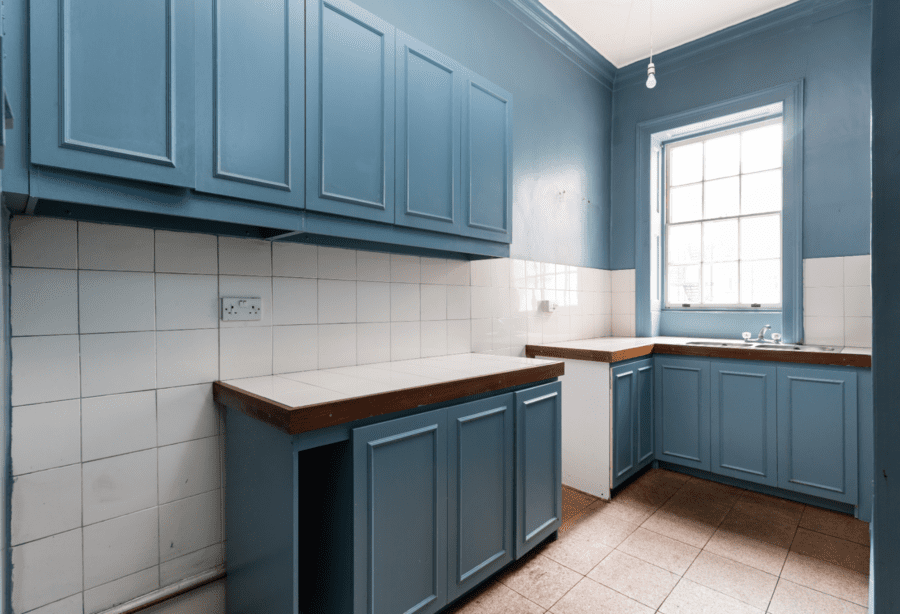
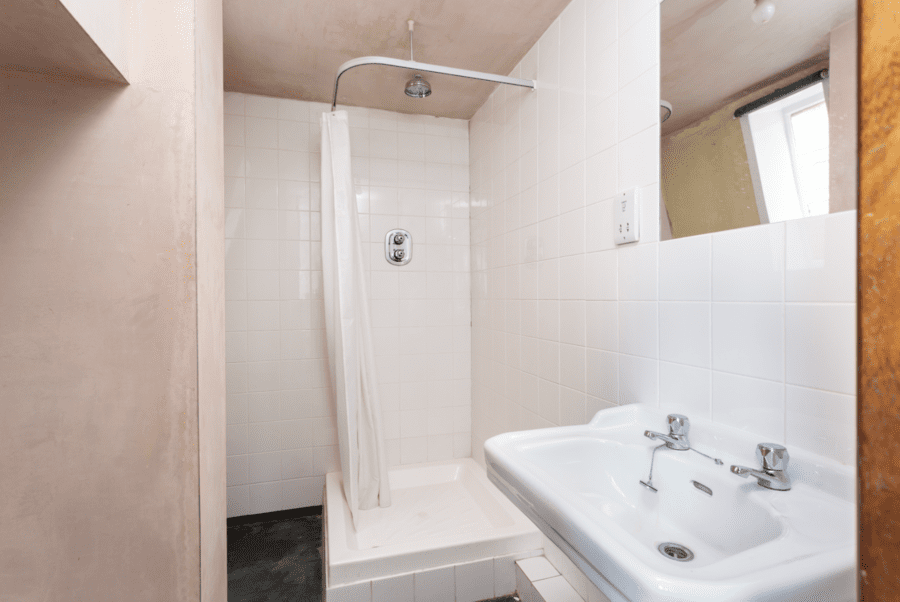
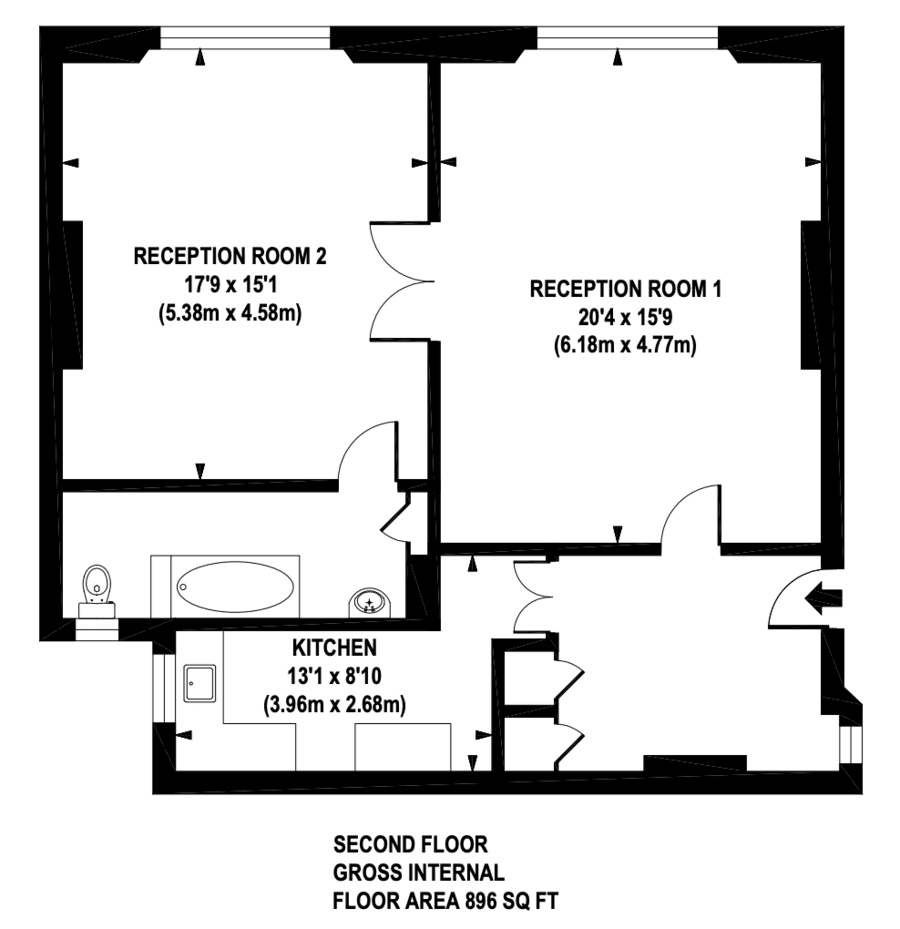
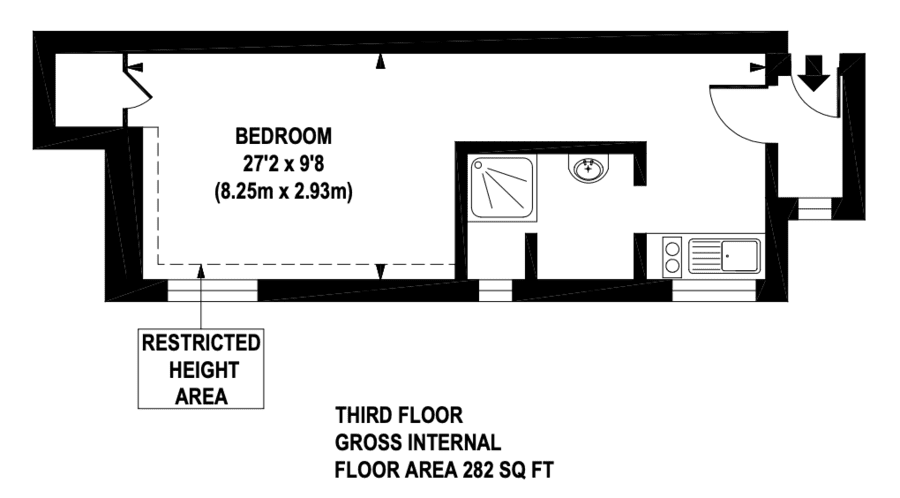
Gibbs’ former home, ‘Set L6,’ is situated on the second floor in Albany’s Courtyard. It extends to some 1,178 square foot and includes a hall, reception room, kitchen, bedroom and bathroom. On the third floor, a separately accessed studio space has a shower room and kitchenette and of the property, the selling agents remark: “Whilst capable of immediate occupation, [it] does require the bathrooms being upgraded.”
Sold for just £60,000 ($75,000, €69,000 or درهم275,000) leasehold in March 2019 (presumably the term must have been very much towards its end), agents GreenHunt listed ‘Set L6 Albany’ on Zoopla first in May that year. Now, in April 2020, it remains for sale, but is instead listed on Primelocation. They seek £925,000 ($1.2 million, €1.1 million or درهم4.2 million) and offer it on a new 20-year leasehold with an upfront premium and a peppercorn ground rent.
Living in the building is not just the preserve of those with deep pockets. Peviously, in 2014, we featured ‘Set A5 Attic Albany’ – which was just £395 per week ($494, €454 or درهم1,800 per week) – whilst for those looking for something grander currently, a second and third floor freehold set is currently available through Sotheby’s International Realty for £4.95 million ($6.19 million, €5.69 million or درهم22.73 million). It extends to 1,890 square feet, is described as “meticulously refurbished” and includes an especially impressive drawing room.
Christopher Gibbs quoted:
“[I’ve always attracted] the grand and the raffish and the fast and the chic.”
“[I am] monumentally narcissistic.”
“I am a bit snooty… I do make exceptions, but very few.”
“We are here to learn, and my goodness I have a lot to learn.”
“[I was expelled from Eton for] Rabelaisian antics – illicit drinking, pantry raids of other boys’ rooms – that sort of thing.”
“Taste is something you catch – like measles or religion.”
“I like things in their natural state – people especially. As life goes by, that’s what I admire: objects and people that are unmonkeyed with, that are themselves, not trying to be something else.”
“I’m not interested in creating a dazzling impression of richness. We can make do with surprisingly little in life. It is best to have a few things which are really nice. I don’t approve of the mean look, but I do approve of the spare look, where every little bit is telling.”
“Being a shopkeeper, I used to sell things, sometimes.”
“I definitely suffer from the blown-mind syndrome… The only thing I’ll say in my favour, is that I was practically the only person I knew who actually went to work at nine o’clock in the morning, whether I’d been up to eight o’clock or not, because I had a job, my own business, and I realised that, if I didn’t, I wouldn’t have any of those things.”
“[I] help people make nice cosy homes where they are going to live happy, beautiful lives.”
“[I] encourage friends to dig into their heirlooms, to wear old clothes, to turn their backs on ugliness and conformism.”
“Collectors today want a good car, a good sound system, and a huge pink heart painted by Damien Hirst with dying butterflies on it which costs £400,000. Yet for much less you could buy something completely fascinating made 300 years ago.”
Quotes about Christopher Gibbs:
“Taste is difficult to define, but his is absolute perfection” – Min Hogg, founding editor of World of Interiors.
“[He was] like an 18th century English parson who knew more about Etruscan vases than anyone at the British Museum” – Sir John Richardson, July 2018.
“I’m here to learn how to be a gentleman” – Mick Jagger of his then neighbour Christopher Gibbs whilst at a dinner party at his house.
“He was very flash… Sometimes he just wore tight jeans or fancy dress, like the others; but mostly his tastes were elaborate; suits with double-breasted waistcoats and cloth-covered buttons, and velvet ties, and striped Turkish shirts with stiff white collars, and cravats. Above all, he had a passion for carnations and was forever buying new strains, pink-and-yellow, or green-ink, or purple with red flecks” – Nik Cohn, author of Today There Are No Gentlemen, January 1971.
“Part Montesquieu, part Beau Brummel, and part Baudelaire… [Christopher Gibbs was a] well-born Renaissance man with an unmatched eye for aesthetics and a talent for friendship and the mot juste” – Hamish Bowles, international editor at large for Vogue, July 2018.
“Christopher was almost single-handedly responsible for making English antiques, and English heritage, look ‘cool’ again” – James Reginato of Vanity Fair, July 2018.
“A connoisseur of the weird and the wonderful” – Christopher Mason of The New York Times, September 2000.
“[He was an] acid-tripping ex-roué once known as the King of Chelsea” – Bitter words from the ex-Daily Mail ‘journalist’ and poison pen James Delingpole, executive editor of Breitbart.
“[The] avatar of Swinging London” – A more kind description from Sam Roberts of The New York Times.
“Christopher Gibbs: the man who brokered £50 million Getty grant to the National Gallery – and fed Princess Margaret hash brownies” – Huon Mallalieu of The Art Newspaper, July 2018.
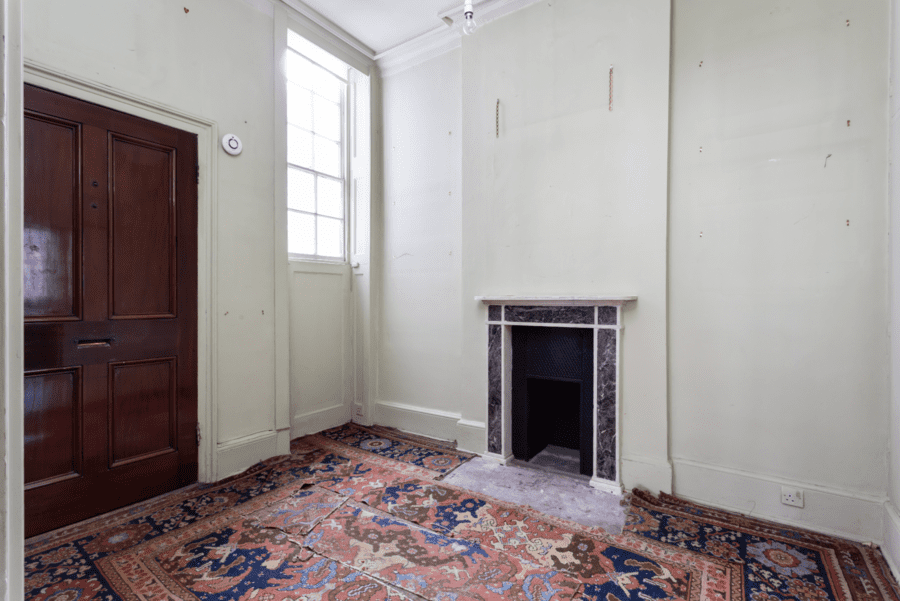
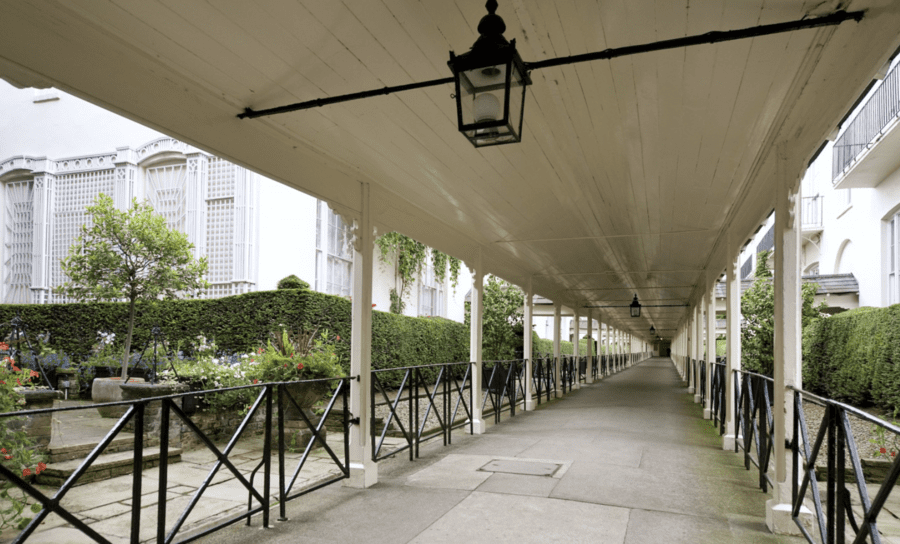
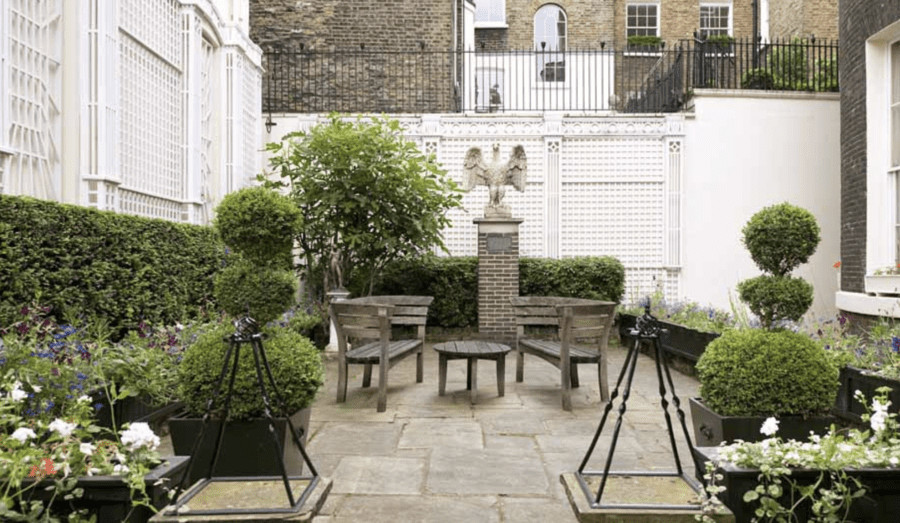
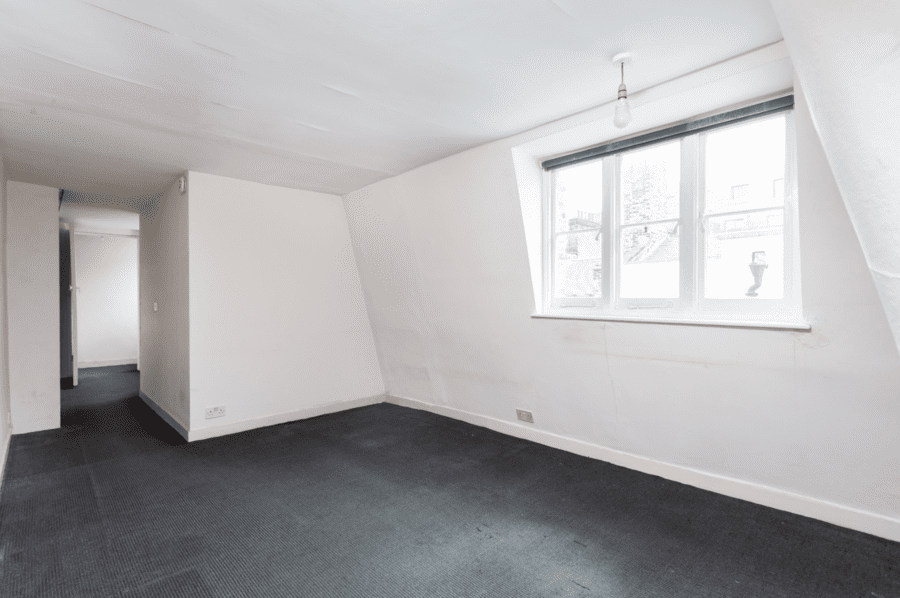
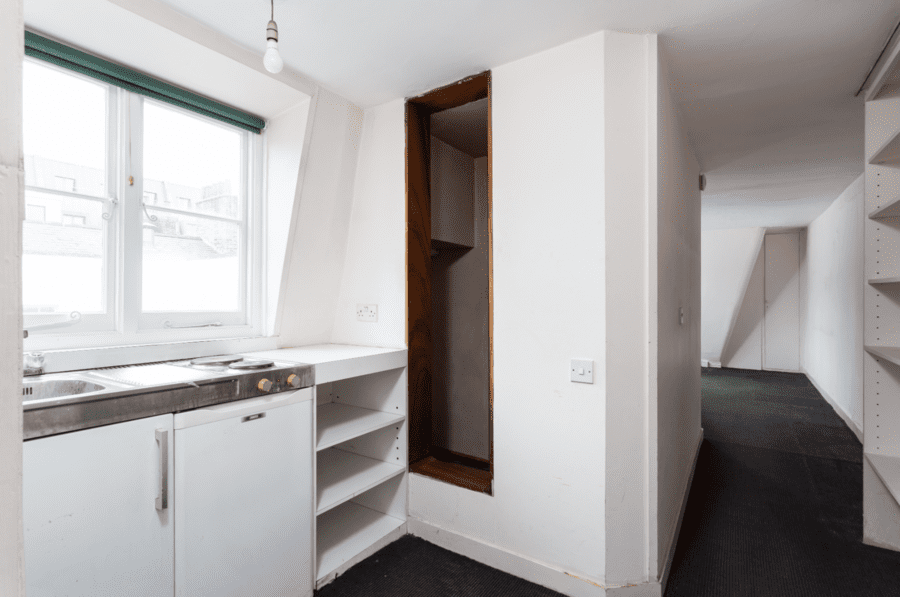
The entrance hallway of ‘Set L6’ has a fireplace.The master bedroom of ‘Looking into the reception room.The somewhat basic kitchen is definitely in need of an upgrade.The view from the set.Albany’s famous ‘Rope Walk’ – Of it, Gibbs commented: “So ingrained is the sense of decorum that even to utter a friendly hello to a neighbor as we pass on the stone stairs or the covered outdoor canopy, known as the Rope Walk, might be violating a taboo, as if a few words of small talk could break the spell of privacy we Albanians prize so deeply. (A nod suffices, a hat raised to a lady.)”Residents have access to the most peaceful outside spaces.The third floor space included in the sale is arranged as a long, thin studio room.It has a small kitchenette.And a somewhat dated shower room.A plan indicating how ‘Set L6’ is currently arranged.A plan of the third floor studio space.
Vast “fairytale” château in France’s Loire Valley for sale for ‘just’ £28 million in spite of having had £80 million spent already on its renovation; it was most famously owned by Madame de Pompadour
In 2017, a Lebanese-born, Monaco-based property developer named Edmond Baysari placed what selling agents Sotheby’s International Realty describes as the “most beautiful and majestic castle in [the] Loire Valley” on the market. It’s so big and so costly to maintain that it remains for sale still today.
Harvard educated Mr Baysari purchased the 102,257 square foot château for about £4.3 million in 1983 from the Parisian glassmakers Saint-Gorbain. It had been used as their company retreat from 1939 and had earlier belonged to Jeanne Antoinette Poisson – the official chief mistress of Louis XV from 1745 to 1751 and a woman better known as ‘Madame de Pompadour’ – in the years prior to her premature death from tuberculosis in 1764 aged just 42.
Providing “regally appointed” accommodation so vast that it is not even described in detail that includes around 50 bedrooms and a wine cellar capable of housing 30,000 bottles amongst other things, Château de Menars – or the ‘Palace Pompadour’ as some have nicknamed it – costs around £800,000 per year to run. In total, some £80 million has been spent renovating it “using the same methods” that the king’s mistress originally employed.
Of why he is selling, the heirless businessman’s lawyer, Jack Anderson, told Reuters in 2017: “[Mr Baysari] realises destiny is going to take him… His goal is to know that it’s in the hands of someone who’s going to continue the beauty of the chateau and maintain it.”
The 104 acres of grounds that surround the château includes vineyards yielding pinot noir grapes, “elegant” geometric grassed lawns and more than a mile of frontage to the River Loire. Classical sculptures and gazebos abound and there is, according to Reuters, “a cobbled courtyard large enough to land a helicopter” also.
During Baysari’s ownership guests at Château de Menars have supposedly numbered Prince Charles, Mikhail Gorbachev, Mick Jagger and President Ronald Reagan. Now, Sotheby’s International Realty point out: “We think this could be perfect for the creation of a luxury hotel complex… Or for the acquisition of an extraordinary and very large private property.”
His “English spoken” [sic] agent, Jean-Pierre Piganiol, seeks £27.6 million and according to Forbes, “several nine-figure offers from Russian and Middle Eastern billionaires looking for a trophy home” have already been turned down.
The Names & Numbers – Château de Menars, Loire Valley, Blois, 41000, France
1983 to 2017 – The sum said to have been spent on restoration of the Château de Menars is said to have been £80.1 million ($100 million, €91.4 million or درهم367.3 million). Annual upkeep costs are said to be £801,000 million ($1 million, €914,000 million or درهم3.7 million).
1983 – Sold to Edmond Baysari for 5 million francs or the equivalent of £4.3 million ($5.4 million, €4.9 million or درهم19.7 million).
1949 – Declared an Historic Monument of France.
1939 – Sold after his death by Mr Allard’s daughters, Blanche Lasserre, Yvonne Arnodin and Jeanne Goirand, to Saint-Gobain, the Parisian glassmakers, for use as their company retreat.
April 1912 – Acquired for 700,050 francs (about £27,400 at that time) by Félix Allard, a “contractor for public works.” He modernised the château and added mains water, hot air heating, gas lighting and electricity and features including a large gallery area.
1760 – Purchased by Madame de Pompadour (1721 – 1764) for 1 million livres (about £75,000 at that time). She “sold some pearl bracelets to meet the first payment” and commissioned the architect Ange-Jacques Gabriel to build two new wings on either side of the two existing pavilions on the property. Sadly for her, she never saw it completed as she died from tuberculosis in 1764.
1728 to 1732 – Stanislas Leszcynski (1677 – 1766), the King of Poland, stayed at Château de Menars whilst in exile as a guest of the Charon family.
1669 – Jean-Jacques Charon (1643 – 1718), son of Jacques Charon, “added two unequal wings to the chateau and considerably enlarged the estate.”
1646 – Commencement of the construction of a castle on the site by one Jacques Charon. It “composed of a main building and two symmetrical pavilions.”
“Hard head – healing hands” Welsh businessman looks to sell his £18 million Irish estate complete with a James Wyatt mansion and 1,120 acres; Sir David Davies became an Irish citizen after Brexit and has no time for Boris Johnson
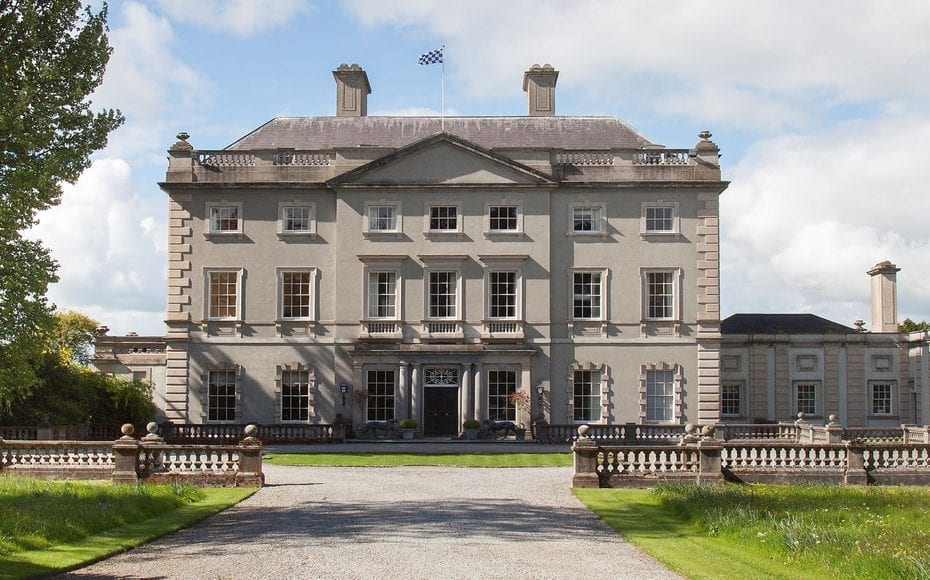
Designed by Robert Adam’s rival James Wyatt in 1773 and “clothed in the Italiante manner” in 1859 to 1860, “grand and beautifully executed” Abbey Leix in County Laois is considered “one of Ireland’s most important country houses.”
Placed for sale last June for £17.8 million ($22 million, €20 million or درهم81 million), the main house on the 1,120-acre estate, Abbey Leix House – also known as ‘Abbeyleix House’ and’ Abbeyleix Castle’) – is vast and includes 26,910 square foot of accommodation. Aside from 9 bedrooms and 10 bathrooms, the classical building has amongst other things 3 major rooms on the park front, a deep hall, a music room with original Wyatt plasterwork, a library and a conservatory.
Sir David Davies (born in Wales in 1940) at Abbey Leix.
Renovated and remodeled since being sold to the Welsh born, twice divorced, father of five Sir David Davies in 1995 by its previous owners of the 250 years, the de Vesci family, Abbey Leix is described by agents Sotheby’s International Realty as a “21st century family home with an appropriate balance between comfort and informality on the one hand and grandeur for entertaining and the display of art on the other.”
As well as Ireland’s oldest oak tree being within the grounds, the property also includes some of the “last surviving remnants of Ireland’s ancient woodland” and frontage to the River Nore. There is also a stud farm with 24 loose boxes, a separate farmyard with many outbuildings and 10 lodges and cottages on the estate. The present owner’s private airstrip was created because he wanted to be able to “fly from wherever in the UK straight into the estate.”
Of why he is selling Abbey Leix, “superstar banker and businessman” Sir David – who has variously held senior posts at Chase Manhattan Bank, Hill Samuel, MEPC, Hardine Matheson, Hong Kong Land, Johnson Matthey and EFG Private Bank – told the Business Post:
“I’m organising my whole estate for the benefit of my children… Although the children all love this place very much, none of them wanted to take it on… The typical refrain is ‘Dad, this is your project,’ and I’m lucky enough to have Killoughter House, the home of my childhood, to return to.”
Though born in Wales, Sir David – whom was knighted “for his work as chairman of the Advisory Committee on Business and the Environment” in 1999 – has maintained a home in Ireland throughout his adulthood. He “proudly” became an Irish citizen after Brexit and described “inept” Theresa May as “going from one catastrophe to that leads to the next catastrophe.” Of her successor, the opera loving son of a South Wales steel mill owner went further and recently remarked: “I have no time for Boris Johnson: he doesn’t do his homework, and can’t be trusted.”