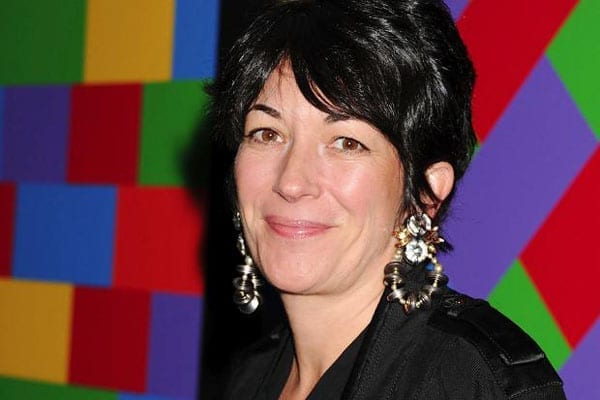
 The favourite child of the crooked newspaper tycoon ‘Bouncing Bob’ Maxwell, New York based Ghislaine Maxwell has been described as “smart, funny, beaut[iful], kind and sarcastic” (more…)
Tag: beautiful
-
Ghislaine Maxwell
-

Picture of the Week: The only car in Venice
A wooden Ferrari is the only car allowed in Venice
Weighing 2,000 pounds, a wooden model of a Ferrari F50 is the only “car” allowed in Venice. (more…)
-
Valuing Chardonnay
Fred Sculthorp tests Tesco’s Everyday Value Chardonnay
Growing older, one is almost always inclined to question what legacy one will leave. This is a particular dilemma for someone who has journeyed through life being fortunate enough to have tasted some of the finest wines on offer. As one who critiques rather than makes, what flaming torch am I to pass on to those who follow me? This thought burdens me daily as I browse the wine shelves of my local supermarket. (more…)
-
The tables are turned
Matthew Steeples answers food writer Jamie Cotter-Craig’s questions
I’m used to asking questions. So far, I’ve done over a hundred “What’s on your mantelpiece?” interviews with people ranging from champion jockey Frankie Dettori to hedge fund titan Alan Miller via glamour model Leah Newman and author Kathy Lette. (more…)
-

Omar Borkan Al Gala
 This Dubai born poet, actor and photographer was expelled from Saudi Arabia in April 2013 by the Commission for the Promotion of Virtue and Prevention of Vices for being “too sexy”. He has over 175,000 fans on his Facebook page and of women he states: “The beauty of a woman must be seen from in her eyes, because that is the doorway to her heart, the place where love resides”. As Derek Zoolander once said: “There must be more to life than being really, really ridiculously good-looking”.
-
The death of the typewriter, the death of an era
Gina Miller reports on the death of the typewriter
I noted that Britain’s last ever typewriter rolled off the assembly line at Brother’s factory in Wales last week, the Brother CM1000 electronic typewriter. This was one of 5.8 million typewriters made at the factory since 1985 and it has been donated to the Science Museum in London.
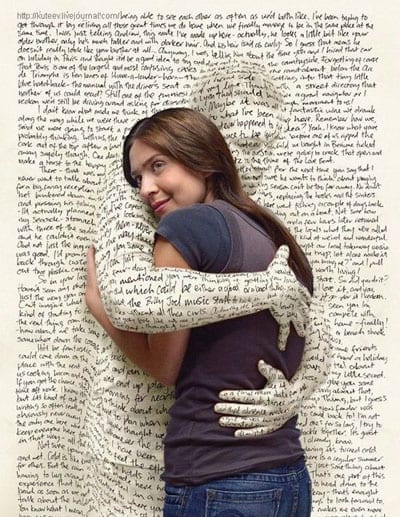
The power of words Over the weekend, whilst perusing the Sunday newspapers, I shuddered at the disgraceful dumbing down of language. Then, last night, whilst watching the evening news, I was appalled by the grammar being used by newsreaders as my radar is now fully focused on honing in on grammatical sabotage.
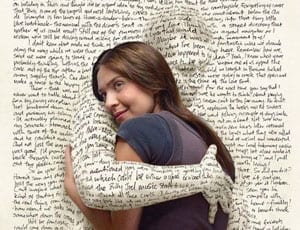
It has struck me that with the death of the typewriter we are also experiencing the death of an era. An era in which the art and craft of writing, grammar, attention to detail, concentration and a love of words was celebrated has passed. Gone is a time where cutting and pasting required dexterity and glue. A time when mistakes, typos and bad grammar all had consequences; and when people enjoyed a romance with words has indeed moved on. Words that could be simple yet sophisticated have been sadly forgotten. I love the power of words. They are an amazing form of self-expression that can convey such beauty and such emotion. They have the power to make or break a person. They can lift or depress the spirit, they can make us rejoice or cry.
As a young girl I would sneak into the back of a courtroom and marvel as my father, a noted criminal barrister, defended a client. Years later reading the John Mortimer play, A Voyage Round My Father, I found the exact words to express my childhood wonderment. ‘He sent words into the darkness as if they were soldiers into battle,’ Mortimer wrote.
In the work environment we now use computers, which often means people are less productive and lack concentration as they are distracted by the Internet and auto spell checks which dull the intellect. Typewriters used to be chained to desks so they were not stolen or thrown out of windows. But now staff can steal time by using office hours to communicate with friends on Facebook or Twitter, shop online and book leisure activities and holidays.
Outside of work, letter writing is dying; people text to say thank you, to make up – even to break up. Communication lacks emotion, style, considered phrases and politeness. Written communications have been reduced to rough, short, sharp, harsh expressions of functionality.
I love how words taste just before you say them, how some of them have to roll around your mouth for a while before they can be uttered and how others explode off the pad of your tongue, excited to be leaving your thoughts and heading out into the world. Words like ‘strident’, ‘garrulous’, ‘mosquito’, ‘svelte’, ‘sanguine’, ‘parlour’. The word ‘rat’ that you can’t say and be tearful at the same time – it’s a great word to repeat several times when you can’t control your emotions. I love coming across words that I’ve never heard before – sometimes just hearing them is enough to satisfy my appetite but more often than not I need to get the full effect of them by thinking of how to use them. This I explore with my children where we have rhyming games, opposite games; if a word was a colour, what colour might it be?
There are some words that you can’t help but ‘feel’ as you say them – say the word ‘whisper’ and the very air around you changes as you say it. Words are beautiful to say and hear but they really come into their own when they are written down.
I’m certainly not as clever with the use of words and language as I would like to be and I probably use each and every forbidden type of style and grammar error known to man. But I firmly believe that in these fast-paced, hectic times we should all encourage a wider expansion and usage of vocabulary so that generations to come can enjoy the pleasure of words and language.
Like the health message of ‘eat 5 a day’ in terms of fruit and vegetables, I would encourage parents to ensure their children to ‘use 5 a day’ – at least 5 adjectives a day to ensure the beauty of language is kept alive.
Gina Miller is an entrepreneur, philanthropist and lover of words.
For more information about Miller Philanthropy, go to: http://www.millerphilanthropy.com
-
Ecstasy and Babycham
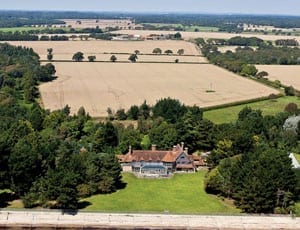
A marine residence with a history tied to the Rolls-Royce Spirit of Ecstasy, the Special Operations Executive and Babycham
The House on the Shore on Thorns Beach at Beaulieu in Hampshire is a home that wouldn’t look out of place in the Hamptons or Rhode Island. Dramatically situated next to the Solent waters to the north of the Isle of Wight, this suitably named building wouldn’t have been out of place in the 1980s BBC series Howards’ Way. It could. Indeed, have been an ideal home for Gerald and Polly Urquhart. (more…)
-
Patricia Kluge (née Rose)
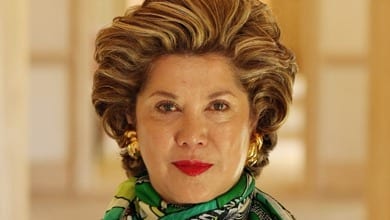 The rise and fall of the “wealthiest divorcee in history” has been extraordinary. A former nude model for her first husband’s Knave magazine and star of adult films such as “The Nine Acres of Nakedness,” Patricia Kluge is the daughter of an Englishman and a Scots-Iraqi. She married her second husband, the late John Kluge, chairman of Metromedia and once the richest man in America, in 1981 after belly dancing for him at a dinner party in New York. As part of her plan to dovetail herself into the top drawer of American society, the couple built a 24,000 square foot mock 18th century English-style mansion, Albermarle, in Virginia and stuffed it full of Chippendale furniture. She got this as part of her $100 million divorce settlement in 1990 and wisely invested part of the payoff in a highly successful business trading football cards but then vanity struck. The Kluge Estate Winery project that she started with her third husband, William Moses, bankrupted the pair in June 2011 and the Bank of America foreclosed on her properties. A lifeline came from “longtime friend” Donald Trump who purchased the vineyard and employed her, but even he’s now uttered the words: “You’re fired!” and sent her packing. Of her newfound predicament Kluge commented: “What did we lose? Material things, nothing too important. When something like this happens you really see who your friends are, those you can rely on, and we have many friends.” Here is a lady with fortitude that can only be described as admirable. It’s probably best, however, to keep her away from the cash register.
-

Oliver Estreich: “What’s on your mantelpiece?”
The Steeple Times asks contemporary artist and founder of theNativeSociety Oliver Estreich: “What’s on your mantelpiece?”
The Steeple Times shares “wit and wisdom.” Oliver Estreich, what’s your guiding force?
Creativity and sex.
“Don’t get even, get medieval” is, in our humble opinion, a great motto. What’s yours?
“Think rich, look poor” and “Nothing exceeds like excess.”
Kerry Katona was considered unacceptable in 2007. Who or what is unacceptable in 2012?
Who is Kerry Katona? … For me, it has to be the amount of hype over Facebook and other social media ventures.
Tony Blair misses being Prime Minister. What do you miss most in your life?
I live in the moment so I have no regrets but I think about my Snoopy stuffed animal I had when I was a kid… He spurred my imagination.
What might you swap all your wealth for?
One night in Bangkok… Wait, I’ve already done that. My definition of “wealth” is: “One who is rich in friends, family and passion. “
Donald Trump was once a case of: “If you owe the bank a thousand, they close you down; but if you owe the bank a billion, you own the bank.” What’s your view on the banking crisis?
Trump caused it.
What phrase or word do you most loathe?
“Same shit, different day.” You might as well be a zombie or in a grave if you say or believe that.
In the UK, some people consider charity to “begin at home.” What’s your view and what causes do you personally support?
Charity is vital to society – if you actually get your hands dirty. Simply donating to a cause to look like a “charitable” person is hogwash. I am a huge advocate of Humane Society and Special Olympics.
The judge in “Law Abiding Citizen” states: “I can pretty do whatever I want” before being blown up whilst answering her mobile phone. What’s your view on the appropriate use of such devices?
Can’t live with it, can’t live without it.
If you could fill a carriage on The Orient Express, who would be your fellow passengers?
Ernest Hemingway, Sir Richard Branson, Hugh Hefner and Andy Warhol.

Oliver Estreich If you were unfortunate enough to end up on death row, what would be your last meal and where would you eat it?
Hudut caught with friends and cooked off the coast of Caye Caulker, Belize. It would be served with Marie Sharp’s Hot Sauce and a refreshing Belikin beer.
What time is it acceptable to consume the first drink of the day?
It’s always 12 pm somewhere in the world.
A Negroni, a martini or a cup of tea?
A martini straight up with two blue cheese olives and a French blond model on the side.
Whose parties do you enjoy the most and why?
Saturday parties at Le Bilboquet in New York’s Upper East Side. It has a great atmosphere and great staff. It’s like home.
Who is the most positive person you know?
Everyone I surround myself with is positive. Attitude is contagious.
What’s your most guilty pleasure?
Too many to count.
If a tattoo were to sum you up, what would it be of?
I have one – Asian symbol for love and pleasure.
If you were a car, what marque would you be?
A Ferrari Testarossa.
Cilla Black presented “Surprise, Surprise.” Tell us the most surprising thing about you.
I sleep naked.
Finally, Oliver Estreich: What’s currently sitting on your mantelpiece?
A picture of my family next to a hundred other random items that serve some purpose.
Oliver Estreich is the founder of theNativeSociety and a contemporary artist specialising in pop art. Follow Oliver Estreich on Twitter at @OliverEstreich.
-
The land of Tarka and Salar
The North Devon countryside that inspired Henry Williamson, R. D. Blackmore and Charles Kingsley
Much of my childhood was spent reading the works of superb authors and amongst the best of them were Arthur Ransome (1884 – 1967), Denys Watkins-Pitchford (1905 – 1990), who wrote many of his works under the pseudonym “B.B.”, and Henry Williamson (1895 – 1977). As a youngster, I was lucky enough to be read to by Ransome’s nephew, a most captivating professional storyteller, and was given first editions of many of the works of all three of these early to mid twentieth century authors.
I had my first sailing lessons on Windermere, where Ransome set many of his works, and went shooting in the Forest of Bowland, a place dear to B.B. Though I also fished in many wonderful locations, until now I’d never been to the land of Henry Williamson and his most famous creation, Tarka the Otter. I currently find myself here enjoying a break from London and yesterday I randomly discovered, I am staying next to the setting of one of Williamson’s lesser known stories, Salar the Salmon, on the River Bray close to Exmoor.

“Salar the Salmon” by Henry Williamson (1935) 
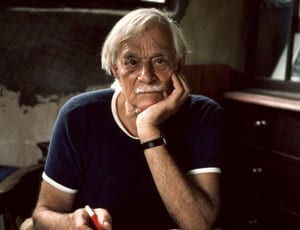
Henry Williamson (1895 – 1977) photographed by Mark Gerson, cibachrome print from original transparency, August 1970 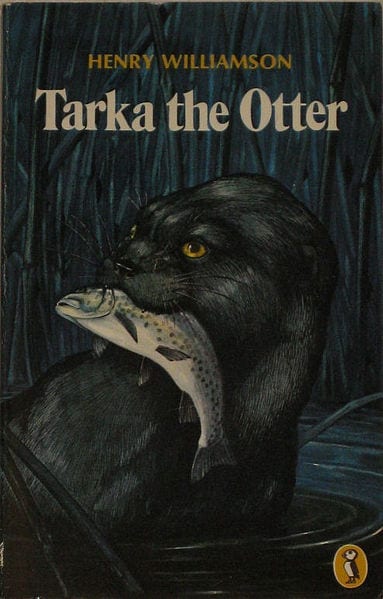
“Tarka the Otter” by Henry Williamson (1927) Originally published in 1935, Salar the Salmon combines Henry Williamson’s great talent as a writer with his insight as a naturalist. The story tells the tale of a five-year old salmon named Salar, whose name means the “leaper,” and his return to the stream of his birth. Salar’s migration through the riverways of Devon involve him surviving porpoises, seals, nets, fishermen, otters, poachers and weirs and Williamson’s account truly gives the reader an insight into one of nature’s great journeys.
Henry Williamson wrote both Salar the Salmon and The Children of Shallowford (1939) whilst living beside the River Bray in a hamlet named Shallowford, near Lynton in Devon. The river plainly inspired him and whilst he lived there on the Fortescue Estate he also sired four children, joined Oswald Moseley’s British Union of Fascists, was briefly imprisoned for his views and conducted several extra-marital affairs.
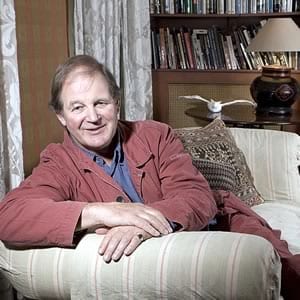
“War Horse” author Michael Morpurgo OBE Salar the Salmon is a story I am not alone in recommending. Another Devon based author and poet, Michael Morpurgo OBE, best known for his acclaimed work, War Horse, speaks very fondly of Williamson and the novel in a dedication he prepared for a recent reprint of it:
“It is a rare gift indeed for a storyteller to be poet as much as a storyteller, to tell a tale so deeply engaging that the reader wants to know what will happen and never want it to end, and yet at the same time tells it in such a way as to leave a reader wide-eyed with amazement at the sheer intensity of feeling that can be induced by the word-magic of a poet. Henry Williamson is just such a story-maker poet.”
Where I am staying, I have a view of the very river on which Salar made his journey and here also a detached barn conversion is currently available to rent at a price of £1,150 per month. Malle’s Barn is a 2-bedroom stone-built property that includes a 25ft by 12ft open plan sitting room with a fully fitted kitchen and a dining area, as well as a study and shower room.
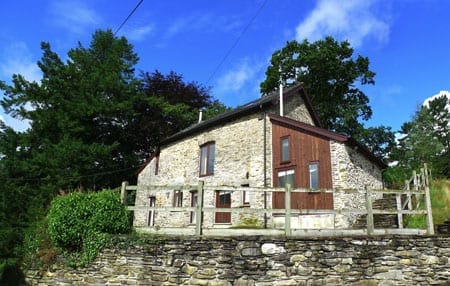
The exterior of Malle’s Barn, Brayford, Near Barnstaple, Devon, EX32 7QB 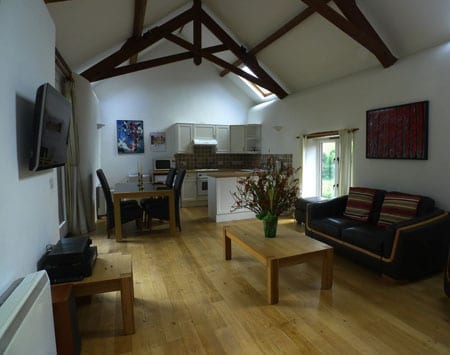
A large open plan reception room includes sitting, dining and kitchen areas 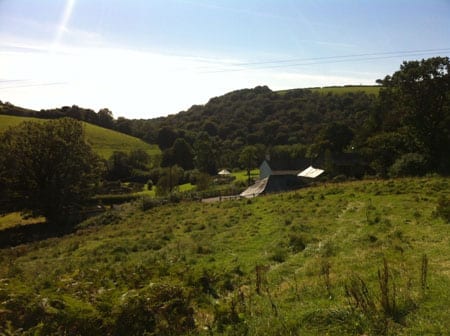
The setting of Malle’s Barn overlooking the valley of the River Bray Tenants of the house will have access to the owner’s 60-acre estate which includes a mile of salmon and brown trout fishing on both the Rivers Bray and Holewater, ancient woodland and a lake in addition to a private garden and adequate parking for several vehicles.
Malle’s Barn would make a perfect retreat for any author or artist and is just 10 minutes from South Molton, Barnstaple is 9 miles away and Exeter 40 miles. The location is 30 minutes from J27 of the M5 and Tiverton Parkway Station, which provides mainline links to London Paddington within 2 hours.
Close to Malle’s Barn are the prettiest sections of a footpath named the Tarka Trail. Consisting of over 180 miles of footpaths and cycle tracks that take in the Dartmoor and Exmoor National Parks and the North Devon Coast Area of Outstanding Natural Beauty. The trail takes in many of the locations described in Williamson’s most famous novel but this area of North Devon also galvanized the pens of a number of other authors.
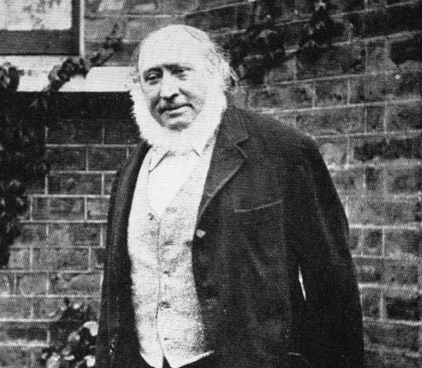
Richard Doddridge Blackmore (1825 – 1900) 
Professor Charles Kingsley (1819 – 1875) Richard Doddridge Blackmore (1825 – 1900) set Lorna Doone: A Romance on Exmoor in the locality in 1869 and Professor Charles Kingsley (1819 – 1875) put pen to paper here when he wrote Westward Ho! in 1855. A village of the same name was subsequently established near Bideford in the 1860s by entrepreneurs, led by Lord Portsmouth, who saw an opportunity to capitalise on the novel’s success. Westward Ho! is the only place in the United Kingdom with an exclamation mark in its name. The only other place in the world that shares such is Saint-Louis-du-Ha! Ha! in Quebec, Canada.
Aside from literary connections, the locality is famous for its excellent fieldsports. The Earl and Countess of Arran’s Castle Hill and the Molland shoot are considered amongst two of England’s finest high bird pheasant shoots and both the Devon and Somerset Staghounds and Devon and Somerset Foxhounds hunt on Exmoor.
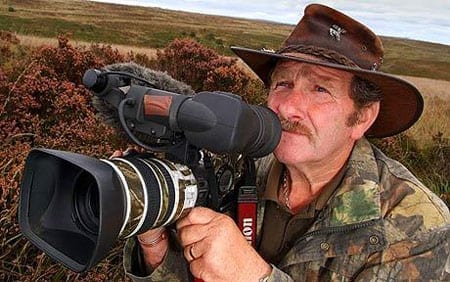
Johnny Kingdom Johnny Kingdom, who describes himself as having been “a farmer, quarryman, forestry worker, gravedigger and, if truth be told, a poacher” in his youth, also lives in the locality and is well known as a wildlife photographer, filmmaker and television presenter. He sets many of his series on Exmoor because of the vast array of wildlife he comes across here and is, like Williamson before him, often to be found exploring the valley of the River Bray.
In a 1965 BBC interview Henry Williamson was asked: “What influence has this [the Devon] countryside had on you?”:
“Everything, I should say. I came down here as a youth, aged just 18 in 1914, spent a fortnight’s holiday here in the beginning of May, beginning of June. I walked 20 to 25 miles every day. Everything I saw was radiant and beautiful.”
This idyllic part of Devon that Williamson loved so much remains unspoilt to this day. If you haven’t visited yet, it really should be added to your bucketlist.
For more information about Henry Williamson, go to The Henry Williamson Society’s webpage: http://www.henrywilliamson.co.uk
Watch the 1965 BBC interview with Williamson at: http://news.bbc.co.uk/local/devon/hi/people_and_places/history/newsid_8475000/8475989.stm
For details and a map of the Tarka Trail, go to: http://www.devon.gov.uk/tarkatrail and http://www.devon.gov.uk/tarka-trail-circular-routes.pdf
For information on the Molland shoot, go to: http://www.bettwshall.com/molland.htm
For more information about the Devon and Somerset Staghounds, go to: http://www.devonandsomersetstaghounds.net
For more information on the Devon and Somerset Foxhounds, go to: http://www.exmoorfoxhounds.co.uk
View the official website of the author and poet Michael Morpurgo at: http://www.michaelmorpurgo.com
View the official website of Johnny Kingdom at: http://www.johnnykingdom.co.uk/
For more information about Malle’s Barn, contact Charles Mitford Cust at: [email protected]