Tag: profit

  • Acting & Alternators – Which ‘Famous Faces’ Have Profited Most From Their Motors?

    Acting & Alternators – Which ‘Famous Faces’ Have Profited Most From Their Motors?

    Vintage dealer David Lennox on ‘famous faces’ who’ve made significant profits in the world of classic cars; he also gives some advice about a key feature in a classic car – its alternator

    Whilst actor Rowan Atkinson’s most expensive car – www.slashgear.com was a 1997 McLaren F1 that he managed to crash twice still sold for a staggering £8.9 million ($11.1 million) sum higher than the £697,000 ($880,000) he originally bought it for new, other big and small screen stars and musicians have also profited from the motors they’ve bought.


    In a world where your standard punter’s automotive purchase loses value as soon as it is driven off the forecourt and declines on average by 40% in value during its first year, many are dubious about ‘investing’ in cars. Those that dare to take a punt on a ‘classic car’ – interestingly defined in the UK by Her Majesty’s Revenue & Customs (HMRC) as one aged over 15 years old – can, however, actually make significant returns.


    Amongst five other examples of other classic cars connected to the world of film and television that have made megabucks are:


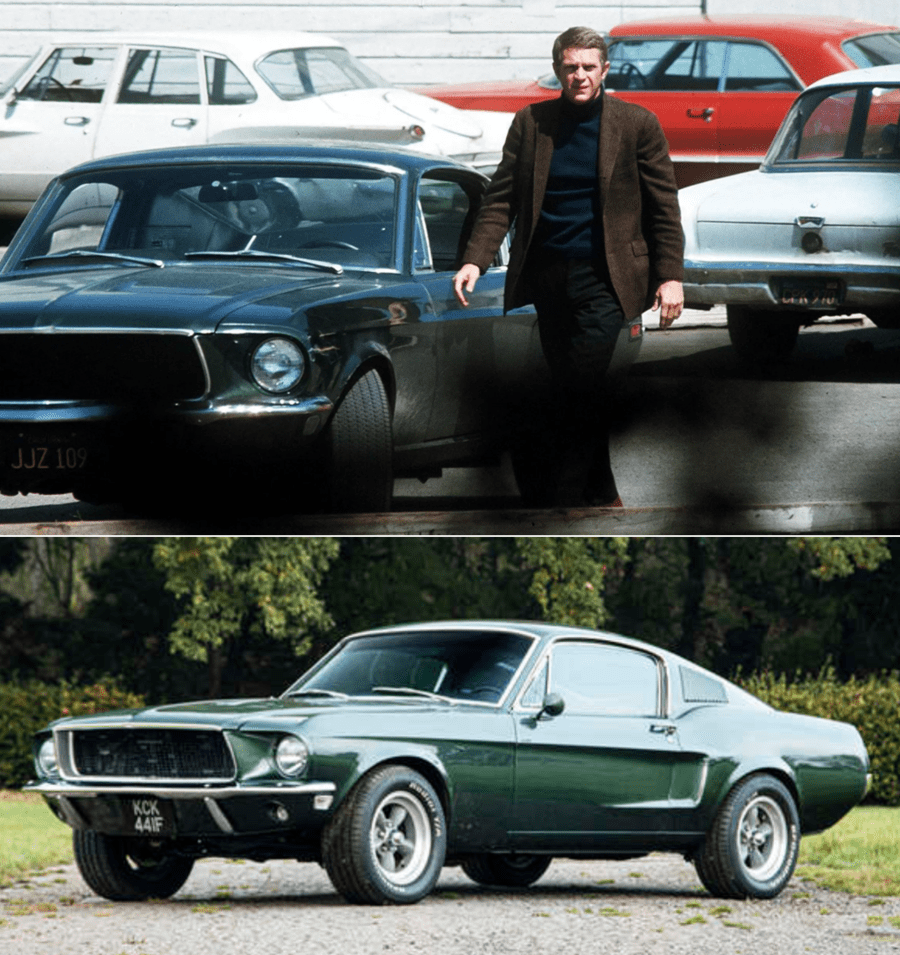
    1 – The 1968 Ford Mustang GT that Steve McQueen drove in the cop thriller Bullitt was discarded after filming and sold for just £2,800 ($3,500) to Bob Kierman in the 1970s. It sold on for £2.7 million ($3.4 million) at a car show in Detroit – a sum 40 times as much as a ‘normal’ example. In 2020, what was termed a “respectful Bullitt homage,” a 1968 Ford Mustang in Highland green, sold at a Silverstone Auctions sale for £73,000 ($93,000); of it they added: “It should be mandatory to drive this car only in a pair of Persol 714 sunglasses.”


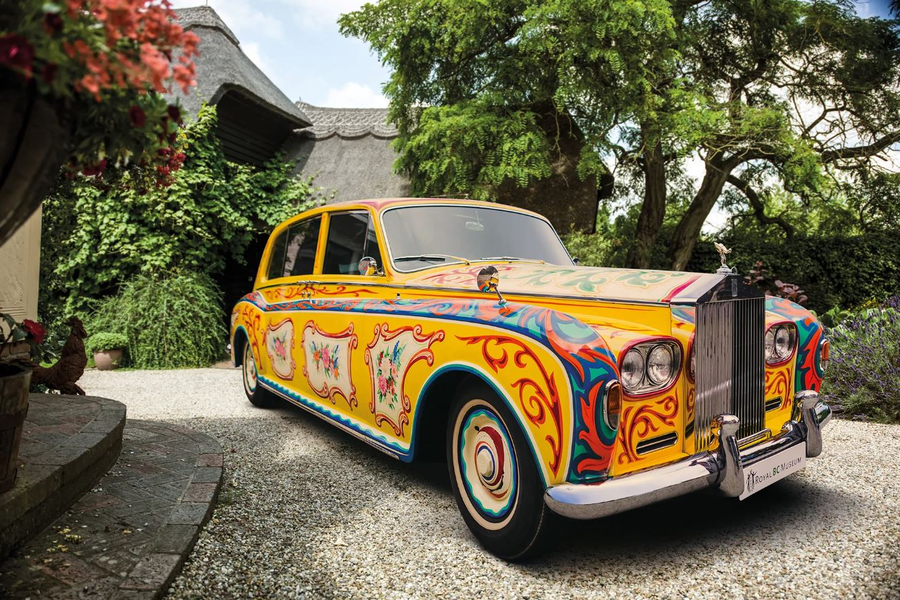
    2 – John Lennon’s ‘psychedelic gypsy caravan’ styled 1964 Rolls-Royce Phantom V limousine cost him £6,600 ($8,300) new. He and it were attacked by a woman with an umbrella who yelled: “You swine! How can you do that to a Rolls-Royce?” but was later to sold to a Canadian billionaire named Jim Pattison for £2.4 million ($3 million) in 1985. A more ‘ordinary’ example lacking a ‘famous face’ connection sold for just £90,000 ($114,000) in 2018.


    3 – A 1966 Lotus Elan S2 originally owned by actor and comedian Peter Sellers CBE sold at auction for just over £50,000 in 2015 at the NEC Classic Motor Show sale after being featured in The Steeple Times. A similar 1966 example with no connections to a ‘famous face’ is currently on offer for just £17,800 ($22,500).


    4 – Another racy run-about, not only also owned by Peter Sellers, but also by Princess Margaret’s husband, Anthony Armstrong-Jones, 1st Earl of Snowdon and more recently by TV presenter Chris Evans is another example of a ‘star priced car.’


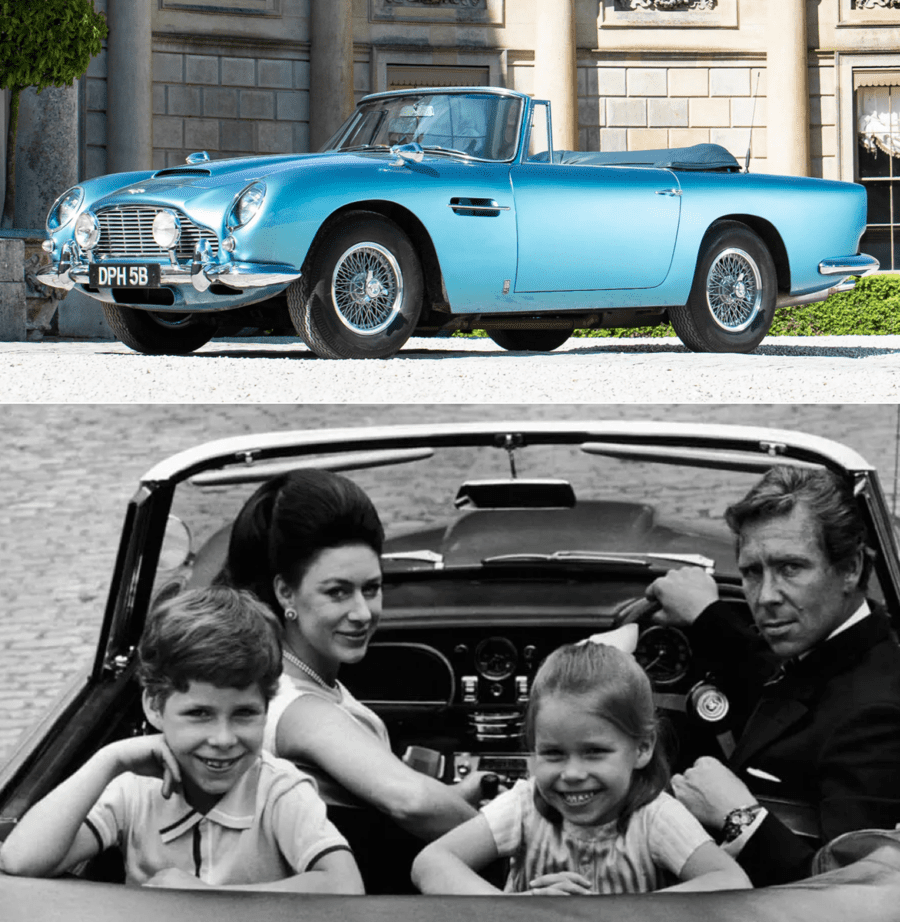
    Featured in The Steeple Times in June 2021 prior to being auctioned the following month by Bonhams at their Festival of Speed Sale at Goodwood, the 1964 Aston Martin DB5 was offered with an estimate of £1.3 million to £1.7 million ($1.8 million to $2.4 million). It had cost Peter Sellers just £4,490 new ($3,550); the actor and comedian sold it “at a loss” to the then Viscount Linley in 1965 – whose own son sold it in 2002 to pay towards the death duties incurred by his late mother’s estate.


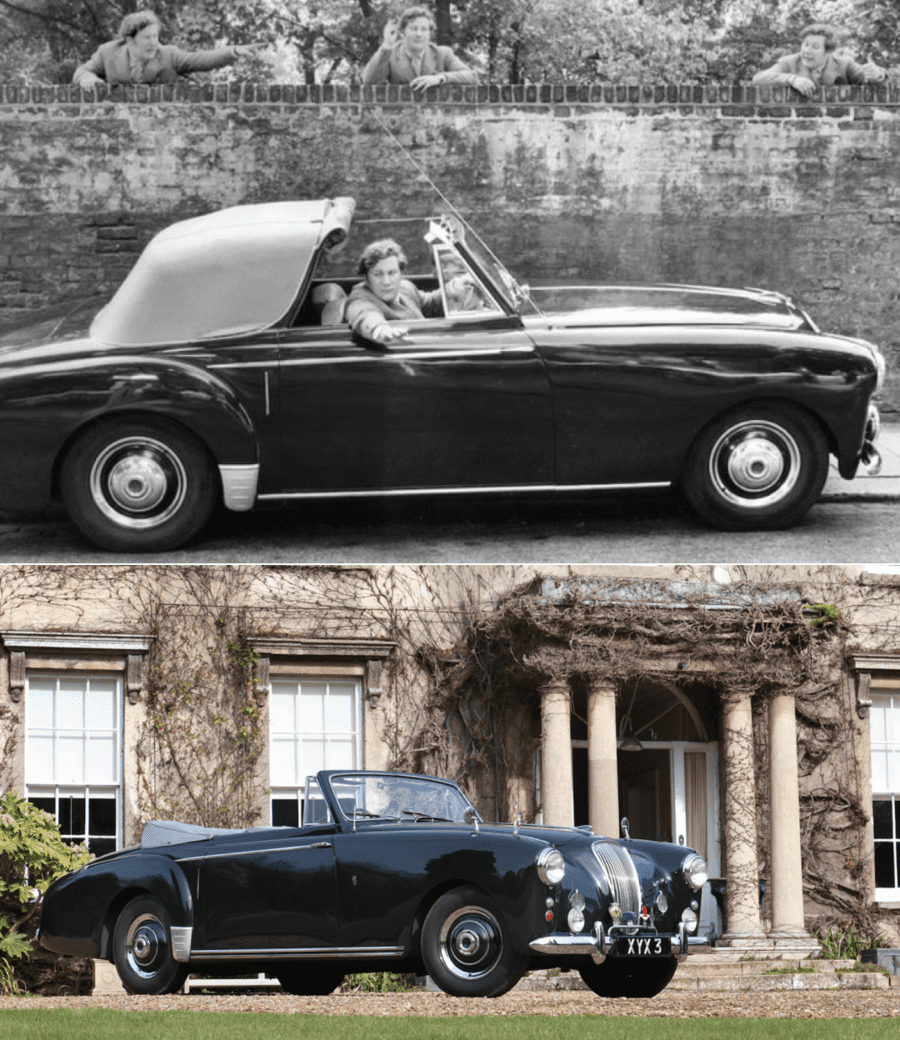
    5 – Though a 1953 Lagonda DB drophead coupé originally owned by Sir Peter Ustinov, CBE FRSA failed to sell with an estimate of £90,000 ($114,000) in July 2017, auctioneers H&H Classics hammered down another ‘grander’ example, one owned by Prince Philip, for £340,000 ($432,000) the previous year. At the time, they remarked: “We sold Prince Philip’s Lagonda for a world record price… so the bar was set high.”


    Advice on alternators

    When it comes to classic cars, the alternator is a critical component that keeps the battery charged and the electrical system running smoothly.


    Unlike modern vehicles, which might have more sophisticated diagnostic tools and electrical systems, classic cars require a more hands-on and attentive approach to identify and resolve issues with their alternators.


    This section will guide you through the process of identifying and resolving problems with alternators in classic cars, ensuring that your vintage beauty runs as smoothly as it did in its heyday.


    Understanding the alternator

    The alternator is the heart of a car’s electrical system, responsible for charging the battery and powering the electrical system when the engine is running. It converts mechanical energy into electrical energy as alternating current (AC), which is then rectified to direct current (DC) suitable for the car’s electrical system and to charge the battery.


    A malfunctioning alternator can lead to a dead battery, dimming lights, and ultimately, the car failing to start.


    Symptoms of a faulty alternator

    Identifying alternator problems early can save you from unexpected breakdowns. Here are common signs of a failing alternator:


    – Dimming or overly bright lights: This can indicate that the alternator is not providing a consistent voltage.

    – Dead battery: While batteries can fail on their own, a dead battery might also suggest that the alternator is not charging it properly.

    – Warning lights on the dashboard: Many cars have a battery or alternator warning light that indicates when there’s an issue.

    – Strange noises: A failing alternator can produce odd noises due to worn bearings or belts.

    – Electrical issues: Malfunctioning accessories, such as power windows or radio, could point towards alternator problems.


    Preventative maintenance

    Preventative maintenance can extend the life of your classic car’s alternator and prevent many of the issues mentioned:


    – Regular inspections: Routinely check the alternator belt for wear and ensure it is properly tightened.

    – Clean terminals: Regularly clean the battery terminals and alternator connections to prevent corrosion.

    – Battery maintenance: Keep the battery in good condition, as a failing battery can put extra strain on the alternator.


    Conclusion

    Maintaining the alternator in a classic car requires a blend of observation, basic electrical knowledge, and sometimes, a bit of detective work. By understanding how to identify and address issues with your alternator, you can ensure that your classic car remains reliable and ready for the road.


    Remember, the key to troubleshooting and maintenance is regular inspection and early detection of potential problems. With these tips and a proactive approach, you can keep your classic car’s electrical system in top condition, preserving its legacy and performance for years to come.


    Additional information

    How to know if the alternator needs to be replaced – buycarparts.co.uk
     

    Steve McQueen Bullitt 1968 Ford Mustang GT
    The 1968 Ford Mustang GT used by Steve McQueen in the classic film ‘Bullitt’ (top) and an example made as a homage to it (below).
    John Lennon 1964 Rolls-Royce Phantom V limousine
    John Lennon’s ‘psychedelic gypsy caravan’ styled 1964 Rolls-Royce Phantom V limousine. It certainly set a record price when sold in 1985.
    Peter Sellers 1966 Lotus Elan S2
    The 1966 Lotus Elan S2 originally owned by actor and comedian Peter Sellers CBE (top and centre) and a similar car without any ‘famous face’ connection (below).
    The 1964 Aston Martin DB5 that was owned by Peter Sellers CBE, the 1st Earl of Snowdon and later Chris Evans.
    The 1964 Aston Martin DB5 that was owned by Peter Sellers CBE, the 1st Earl of Snowdon and later Chris Evans.
    Sir Peter Ustinov 1953 Lagonda DB drophead coupe Prince Philip
    The 1953 Lagonda DB drophead coupé originally owned by Sir Peter Ustinov, CBE FRSA and another example – which sold for a lot more – that was owned by the late Prince Philip.
  • A Call To Clegg

    A Call To Clegg

    Matthew Steeples calls on Sir Nick Clegg to listen to the 36,500 people who’ve signed our Change.org petition seeking giraffe slayer Merelize van der Merwe being banned from Facebook

    Former leader of the Liberal Democrats turned head global PR man for Facebook The Right Honourable Sir Nicholas Clegg has been getting a lot of stick of late.


    Once considered a “great communicator” but a bit of a poodle to his coalition government partner, David Cameron, Clegg was meant to turnaround Facebook’s reputation in the wake of the Cambridge Analytica scandal, but instead last week was branded: “Clegg, the pampered prince of PR” by The Times and “the Prince Harry of politics” by the Daily Mail.


    Now, today, I have an idea for Sir Nick Clegg that could help reverse his bad fortune of late and that is to listen to the 36,500 people who’ve signed our Change.org petition seeking to ban Merelize van der Merwe, a wicked woman whose husband bought her the ‘opportunity’ to massacre a giraffe as a Valentine’s Day present, from posting her gruesome content on the pages of the social media organisation he works for.


    That van der Merwe was even able to share graphic images and a video even of this ‘kill’ on Facebook is frankly outrageous and today I ask Sir Nick:


    • Is publishing barbaric actions of this nature something that you think is acceptable on a site used by millions across the globe?


    • Don’t you think it is time to ban this wicked wench and those like her from using Mark Zuckerberg’s medium for their personal pleasure and profit also?


    Elsewhere on Change.org, 19,100 people have signed our petition seeking to ban the bear slaying barbarian Larysa Switlyk from Instagram, a company bought by Facebook in 2012 for £760 million ($1 billion). Perhaps Sir Nick, couldn’t you have a word there too?


    Sign our Change.org petition seeking Facebook ban Merelize van der Merwe by clicking here.


    Sign our Change.org petition seeking Instagram ban Larysa Switlyk by clicking here.


    Follow Matthew Steeples on Twitter at @M_Steeples.


    A Call To Nick Clegg 2021 – Ban giraffe slayer Merelize van der Merwe from Facebook – Matthew Steeples calls on Nick Clegg to listen to the 36,500 people who’ve signed our Change.org petition seeking giraffe slayer Merelize van der Merwe being banned from Facebook and bear slaying barbarian Larysa Switlyk from Instagram
    A Call To Clegg – Sir Nick Clegg pictured with Facebook founder and Instagram owner Mark Zuckerberg.
    A Call To Nick Clegg 2021 – Ban giraffe slayer Merelize van der Merwe from Facebook – Matthew Steeples calls on Nick Clegg to listen to the 36,500 people who’ve signed our Change.org petition seeking giraffe slayer Merelize van der Merwe being banned from Facebook and bear slaying barbarian Larysa Switlyk from Instagram
    A Call To Clegg – Sir Nick Clegg once posed next to the logo of a charity called Millie’s Trust. It featured a giraffe and though he plainly wanted to show support for that, now he should show support for living giraffes and support the 36,500 people demanding giraffe slayer Merelize van der Merwe be banned from the pages of the social media company he is currently paid £2.7 million per year to work for.
    A Call To Nick Clegg 2021 – Ban giraffe slayer Merelize van der Merwe from Facebook – Matthew Steeples calls on Nick Clegg to listen to the 36,500 people who’ve signed our Change.org petition seeking giraffe slayer Merelize van der Merwe being banned from Facebook and bear slaying barbarian Larysa Switlyk from Instagram
    A Call To Clegg – Merelize van der Merwe has 99,000 followers on her “public figure” Facebook page. On it, she shares images of herself massacring amongst other animals elephants, hippos, lions and leopards. How is it acceptable that she is allowed to post such on a social media website, Sir Nick?
    A Call To Nick Clegg 2021 – Ban giraffe slayer Merelize van der Merwe from Facebook – Matthew Steeples calls on Nick Clegg to listen to the 36,500 people who’ve signed our Change.org petition seeking giraffe slayer Merelize van der Merwe being banned from Facebook and bear slaying barbarian Larysa Switlyk from Instagram
    A Call To Clegg – Larysa Switlyk has 99,000 followers on her Instagram page. On it, she shares imagery of herself massacring amongst other animals alligators, bears, goats, hippos and peacocks. She even once posed in a field in the UK with a blood covered sex toy and the body of a sheep she’d shot. How is it acceptable that she is allowed to post such on a social media website, Sir Nick?
    https://www.youtube.com/watch?v=5EhqeZ0vYJ4&feature=emb_logo
    A Call To Clegg – Viewer caution advised: Merelize van der Merwe posted this video of herself slaughtering a giraffe in Limpopo, South Africa on 24th February. It has been viewed by over 3,000 people and unsurprisingly resulted in international outrage. It is now time that Facebook put a stop to this deranged deviant profiting from her sickening activities and it would do the social media giant utterly no harm to send her to social media Siberia.
  • Word of the Week 2021 – ‘Meghan Markled’

    Word of the Week 2021 – ‘Meghan Markled’

    The tedious twerp formerly known as Meghan Markle has had her maiden name turned into both a verb and a noun – go get ‘Meghan Markled’

    Last week, both the Guardian and The Sun revealed a note of amusement in the context of the otherwise tedious familial feud between the devious Duchess of Sussex and her fobbed-off father in sharing that the walk-away royal has had her maiden name turned into a verb.


    Whilst The Sun predictably mocked this trivial story at a time of a lack of news other than coronavirus, the Guardian’s “social justice” focused columnist Poppy Noor unsurprisingly lauded “to Meghan Markle” – or as she somewhat soppily put it, “to get the hell out [when] love is not returned.”


    Noor went further and, in a decidedly ‘woke’ fashion, added of the Duchess of Sussex’s decision to head off to the land of profit in LA: “You could understand why Meghan Markle, who opted out of royalty this month after a year of being hounded and vilified by a racist, rightwing press could be referred to in some circles as the patron saint of good mental health” and shared a definition  


    “Meghan Markle, a verb, past tense – Meghan Markled: to value yourself and your mental health enough to up and leave a room/ situation/ environment in which your authentic self is not welcomed or wanted.”


    Elsewhere previously, in January 2018, the Urban Dictionary took another view on what being ‘Meghan Markle’ and being ‘Meghan Markled’ means. They suggested it to be a “noun for coming up nicely despite your family’s socio-economic status.”


    Putting it in context, they gave an example:


    “A: I wonder how Lisa is doing. I haven’t spoken to her since her family drama situation. Poor thing.”

    “B: Girl, she’s engaged to a Russian billionaire now. She Meghan Markle’d her way to the top!”


    We’ll leave it to you, good readers, to decide which you prefer, but one thing’s for sure the saga of the attention obsessed ‘Modern Day Mrs Simpson’ and her row with the media: It isn’t going to end any time soon.


    Word of the Week 2021 – ‘Meghan Markled’ – The tedious twerp formerly known as Meghan Markle has had her maiden name turned into both a verb and a noun – go get ‘Meghan Markled’
    Word of the Week 2021 – ‘Meghan Markled’ – The Duchess of Sussex has most definitely ‘Meghan Markled’ her way to the top and, along with her drip of a husband, is cashing in with huge payments from projects with Apple, Disney, Netflix and Spotify amongst other things.
  • The Point of a Pub

    The Point of a Pub

    Matthew Steeples joins those saying: “I wish I was in the pub” and lauds the ‘Guardian’ for suggesting: “Pubs are part of Britain’s fabric. Why are they not being properly helped?”

    In the 2000s, greedy property developers snapped up pub sites to redevelop as housing. Breweries realised their prime location real estate assets to be cash-in-able and then, with supermarkets selling alcohol dirt cheap and a stricter enforcement of drink driving legislation, the population decided to drink more at home.


    The onset of coronavirus last year only further added to the woes of the sector and in November 2020 it was revealed that “in spite of research finding that 82% of pubgoers believed “that hospitality venues offered a Covid-secure environment,” 7 out of 10 pubs will never reopen post un-lockdown.


    In a further twist, Pete Brown, chair of the British Guild of Beer Writers, penned an opinion piece on the subject for the Guardian this morning. In it, he began by whimsically musing: “I wish I was in the pub. I wish I was writing this at a wonky table, imprinting it with sticky rings each time I take a sip of my pint, a muddy dog curled at my feet.”


    Moving on, he added of this locked up sector:


    “The worry is that, the longer the pandemic drags on, the more likely this particular loss may be permanent.”


    “Christmas, which can account for a quarter of annual profits, didn’t happen. May is now the likely reopening date for any pubs that survive until then. The government’s promised grant of £1,000 for every pub doesn’t go far when a closed pub costs its owners an average £800 a week.”


    “Lack of help is hard enough to deal with. Being unfairly scapegoated for the spread of Covid is even worse.”


    “Back in March, in the first lockdown, [hospitality sector venues] were forced to close before any other businesses. When they reopened in July, many commentators across the media predicted a wave of drunks creating nationwide super-spreader events. This never materialised.”


    “And yet, pubs were subjected to stricter controls than any other business. At the same time as we were being told that it was our national duty to shop at chains such as Pret a Manger and Costa, [hospitality sector venues] required you to sign in or register with the test-and-trace app before you could enter. Social distancing and mask-wearing were enforced far more rigorously in many pubs than in shops or on public transport.”


    “With the extra costs and diminished income from being limited to table service and 10pm curfews, by the time pubs were finally closed again in November, a third had already shut their doors because they couldn’t operate profitably.”


    “Pubs proved an easy target then. In a nation that’s hung-up about its work ethic, time spent in the pub is seen as not worthwhile, even by many who frequent them. Many accept restrictions more easily on things we feel we probably shouldn’t be doing anyway.”


    In further depressing news elsewhere for the hospitality sector in general yesterday, Big Hospitality claimed that 79% of operators believed they “will not be able to survive a lockdown until May without further government support. Their polling also revealed that “just 3% of operators are ‘very confident’ in the future of their businesses.”


    Whilst Pete Brown concluded by summing up pubs as “part of Britain’s fabric,” the third wife of Ernest Hemmingway and war correspondent Martha Gellhorn’s analysis of their necessary role in society is definitely applicable now. “In the end, in England, when you want to find out how people are feeling, you always go to the pubs,” she once remarked. This government should remember that and it should do more to help the hospitality sector now before we lose the best of it for good.


    Follow Matthew Steeples on Twitter at @M_Steeples.


    The Point of a Pub – Government should do more to help pubs – Matthew Steeples joins those saying: “I wish I was in the pub” and lauds the ‘Guardian’ for suggesting: “Pubs are part of Britain’s fabric. Why are they not being properly helped?”
    ‘Big Hospitality’ also revealed that 9,930 licensed premises closed in 2020, with only 3,955 opening for the first time – a net decline of 5,975 sites – this week.
    The Point of a Pub – Government should do more to help pubs – Matthew Steeples joins those saying: “I wish I was in the pub” and lauds the ‘Guardian’ for suggesting: “Pubs are part of Britain’s fabric. Why are they not being properly helped?”
    Shame on Bosie The Clown – Boris Johnson’s government has done little to nothing to help the beleaguered hospitality sector in spite of his own penchant for opportunistically posing with a pint at any given opportunity.
  • Stand Up Against Snitch O’Flock

    Stand Up Against Snitch O’Flock

    Matthew Steeples condemns the government’s ludicrous new 10pm bar, pub and restaurant curfew and slams the snitch culture of the next likely lockdown

    Like sheep we’re being herded towards another lockdown. Our Prime Minister doesn’t dare force us into the pen in one fell swoop, so like the true coward that this miserable cretin is, Bosie The Clown is beginning by slamming closed the doors of bars, pubs and restaurants from 10pm tonight.


    Of this strange move (and remember it is not 10pm last orders, but 10pm lights out), one London restaurant owner – who quite rightly wished to remain anonymous given the snitch culture that he expects to start tonight from busybody neighbours and over zealous police officers – told The Steeple Times that though he will abide by the rules, he could not understand the reasoning for them. He commented:


    “Why 10pm? Why are bars, pubs and restaurants lumped together? A restaurant with social distancing should be allowed to trade normal hours. Restaurants are primarily about dining rather than drinking and eating involves sitting at tables and not moving. Since seating can be managed and guests can be controlled, what difference does getting rid of them before 10pm or 12 midnight make to the virus? Not much, but what difference does it make to the business… The answer: The fine line between profit and loss.”


    Another, the owner of a busy bar and dining spot, added:


    “This is another blow to an already damaged sector. We effectively will now have to take last orders for food at around 8.30pm and as 20% of our custom for dinks comes post 10pm, our business just won’t work. That this is going to be in place over our busiest period, Christmas, and for 6 months minimum is a killer. Will we last? I don’t know, but if we close completely, I will have to let 34 people go.”


    Just as with the ludicrous rule of seven children not being allowed to gather to feed a duck, whilst thirty men can assemble to shoot it, here is a new draconian imposition that will inevitably not actually achieve anything except damage to the already crippled hospitality sector.


    Coronavirus is spreading not because people are dining and drinking in carefully arranged spaces, but more so in care homes and student housing. The numbers suggest that it is the old and the young that are the primary ‘superspreaders’ and not in fact middle aged restaurant goers.


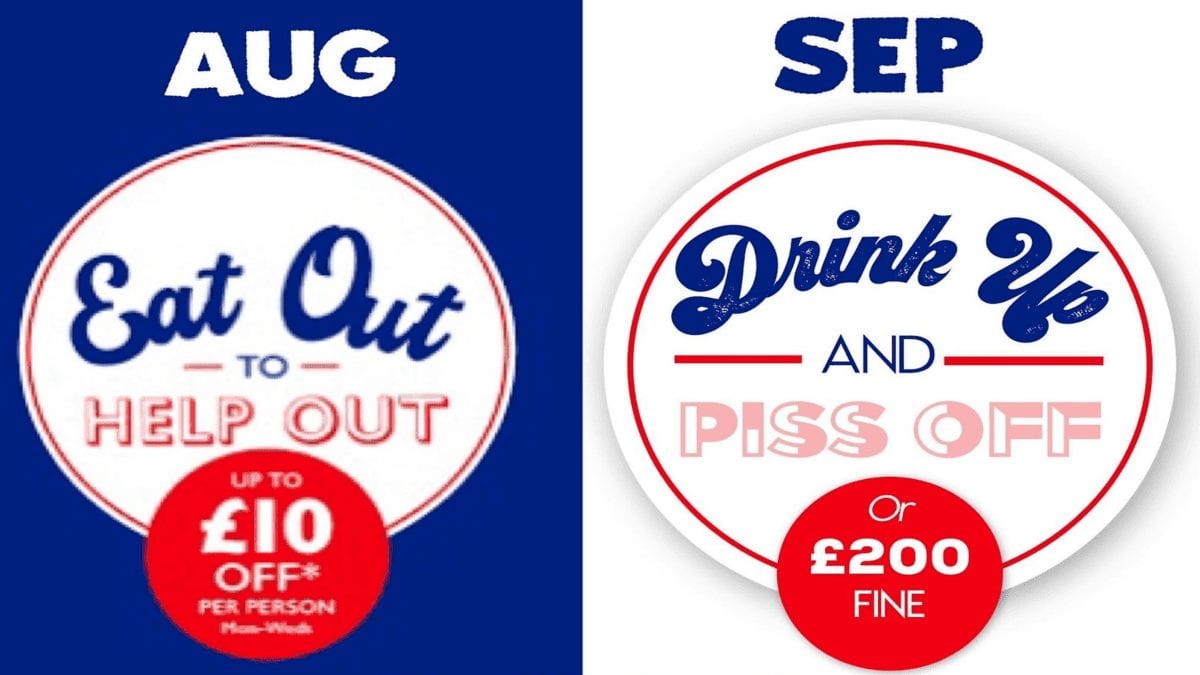
    Moving from ‘Eat Out to Help Out’ to ‘Drink Up and Piss Off’ is, in my view, simply stage one of further restrictions on our freedom and a death knell for a significant contributing sector of the economy. We must call out this rudderless government’s totalitarian tactic for what it is and rise up and resist it. Now is the time to support your local venues – but remember: Go early, go often and watch out for the snitches in your midst.


    Facebook: @TheSteepleTimes

    Instagram: @TheSteepleTimes

    Twitter: @SteepleTimes and @M_Steeples


    Stand Up Against Snitch O’Flock – Slamming the 10pm curfew – Matthew Steeples condemns the government’s ludicrous new 10pm bar, pub and restaurant curfew and slams the snitch culture of the next likely lockdown.
    “More Killjoy Cromwell than Churchill” – The words of a Knightsbridge restaurant owner when asked about his views on Boris Johnson and his government’s 10pm curfew and new desire for a snitch culture.
  • A Box Office Balls-up

    A Box Office Balls-up

    Royal Borough of Kensington & Chelsea council’s decision to approve replacement for Kensington Odeon with a 63% smaller cinema is deservedly condemned as a “box office balls-up”

    The much-loved Odeon Kensington cinema closed its box office on the 11th September 2015 in spite of a campaign to save it backed by amongst others Richard Curtis, John Hurt and Prince Michael of Kent.


    Bar its original neo-classical façade, built in 1926, the unlisted building was subsequently demolished and with its destruction went a cinema premises that originally had a seating capacity of 2,370 in stalls and circle levels according to the Cinema Treasures website.


    Now, five years later, after round after round of battle between developers keen to construct housing there and activists keen to reinstate the cinema, the Royal Borough of Kensington & Chelsea planning committee have finally approved a new set of revised plans for the site.


    The new approved £400 million scheme (replacing a previous consent granted in 2016) gives Lodha Properties permission to build a six-screen cinema with just 887 seats as well as 67,000 square foot of commercial space. In addition, the scheme will include 71 private residences and 35 ‘affordable’ homes whilst the developer is also expected to contribute £1.4 million towards affordable homes off-site.


    Whilst the new Tory MP for Kensington Felicity Buchan predictably took to Twitter to claim this Conservative led council decision “very good news for Kensington High Street,” others were less pleased with the outcome. Referencing the decision as “undermining the character of our community,” the crusading From The Hornets Nest blog condemned the development as adding “yet more empty luxury flats to an already overcrowded Kensington market place.”


    Illustrative of the council’s “unhealthy developer alliances and disastrous decisions” according to one commentator, the new scheme unsurprisingly contains fewer social housing units and a cinema reduced in size by 1,483 seats. This, indeed, is not a community success but what another termed “a tragedy.”


    Of the decision Matthew Steeples, editor-in-chief of The Steeple Times added: “Here, yet again, is illustration of the Royal Borough of Kensington and Chelsea council putting profit before people and cash before culture. The cinema component of this scheme is purely a token sop to attempt to attempt to silence critics of this out-of-touch council’s latest box office balls-up.”


    Facebook: @TheSteepleTimes

    Instagram: @TheSteepleTimes

    Twitter: @SteepleTimes


    A Box Office Balls-up – Kensington Odeon cinema scheme gets go-ahead – Royal Borough of Kensington & Chelsea council’s decision to approve replacement for Kensington Odeon with a 63% smaller cinema is deservedly condemned as a “box office balls-up.”
    A box office balls-up by The Royal Borough of Kensington and Chelsea council – ‘From The Hornets Nest’ also highlighted that certain RBKC councillors including Daniel Moylan had accepted hospitality from those associated with previous developers involved in the Kensington Odeon redevelopment scheme. Such behaviour made Councillor Robert Davis of Westminster’s antics – highlighted in ‘The Steeple Times’ in February 2018 – look amateurish and frankly it is time for the final curtain call on such behaviour.
  • Lawrence Stroll (born Lawrence Strulovitch)

    Lawrence Stroll (born Lawrence Strulovitch)

    Montreal born “archetypal billionaire,” “fashion mogul” and “Ferrari fanatic” Lawrence Stroll arranged £536 million of funding to save Aston Martin, much of which came from his own very, very deep coffers, in early 2020. Without him, the firm that has manufactured James Bond’s favourite motorcar since 1913 would likely have gone bust for the eighth time after a disastrous flotation “that left the city shaken, not stirred” in 2019. According to Bloomberg, he’s famous for “[taking] over a brand that’s either niche, or in trouble, or both, and beef it up for half a dozen years. Then exit with a tidy profit,” but given his personal interest in both vintage and F1 cars (he led the consortium that bought the Force India F1 team in 2018) this “petrolhead” may allow passion to rule profit for once. Father of two Stroll is based in Geneva and has homes in London, New York, Quebec and on Mustique. He counts Michael Douglas and Sarah, Duchess of York amongst his friends and once remarked of people complaining about his cars and helicopters: “I can appreciate that some people are opposed to noise. And I can understand their desire for tranquillity, in which case they should not move in next to racetracks, airports or ski hills.”

  • Save The Free Press

    Save The Free Press

    As #SaveTheSunNewspaper trends on Twitter, an analysis of the sorry state of the British press should act as a wake-up call to our nation suggests Matthew Steeples

    Yesterday, ‘Save The Sun Newspaper’ was all over Twitter. Those clicking the hashtag were not taken to a page bemoaning the fact that the Rupert Murdoch owned paper has lost £68 million in the last year alone, but to a Go Fund Me campaign that has raised over £16,500 that will be donated to the Essex Coronavirus Action Urgent Food Bank Appeal.


    Set up by an Essex based food bank campaigner named Simon Harris, #SaveTheSunNewspaper garnered support because of the intense dislike for a newspaper that some claim is “not fit to wipe their arse with” whilst others (especially the people of Liverpool, a city where it is mostly banned due to their crass reporting of the 1989 Hillsborough disaster) condemn it for its “lies” and “bigoted” reporting.


    Whilst the ‘fake’ hashtag was about helping foodbanks, on Sunday night, the Guardian’s Roy Greenslade highlighted a genuine problem for the British press. In an article titled: “Why our newspapers might not survive the contagion of coronavirus,” the media commentator observed: “It is the bleakest of ironies: the biggest news story in a lifetime is killing off the very industry that exists to report it. Coronavirus is destroying newsprint newspapers across Britain, delivering the coup de grace to businesses that were already in the process of dying.”


    Whilst it has been for long known that traditional media has struggled to cope and find a way to exist and maintain revenue streams in a period where online and social media have battered it, coronavirus, it appears, will be the death knell for many a print newspaper.


    Just like, for example, the restaurant sector, which will likely see many establishments fail to reopen once this pandemic is over due to them not having the resources to get their staff back and pay their rent and suppliers, many print newspapers – most especially local titles – will not weather the storm. As Greenslade points out, “it seems inconceivable that publishers, already struggling to fund journalism, will return to the previous status quo.” Going further, he remarks: “That’s because the status quo was, itself, one of perpetual fragility in which publishers were engaged in the delicate task of managing newsprint decline while, in parallel, seeking to create a digital journalism business model.”


    Here comes an epoch of change and with newsrooms across Britain currently completely empty, publishers will indeed start to rationalise when so-called “normality” returns (in whatever form that takes). Expensive city centre offices will be shut and like cancer, profitless titles will most likely be permanently closed down. This will not be a loss that should be glorified and it will not be something that should celebrated; without good journalism, we’ll all be the poorer. Those thinking we can rely on the Twitterati for news are in for an era of the emperor’s new clothes and they’re in for a future where fake news will quite wrongly reign.


    Facebook: @TheSteepleTimes

    Instagram: @TheSteepleTimes

    Twitter: @SteepleTimes and @M_Steeples


  • Profit from Focus

    Profit from Focus

    Six year old Ford to be sold for nearly double its price in 2011; it has just 18 miles on the clock


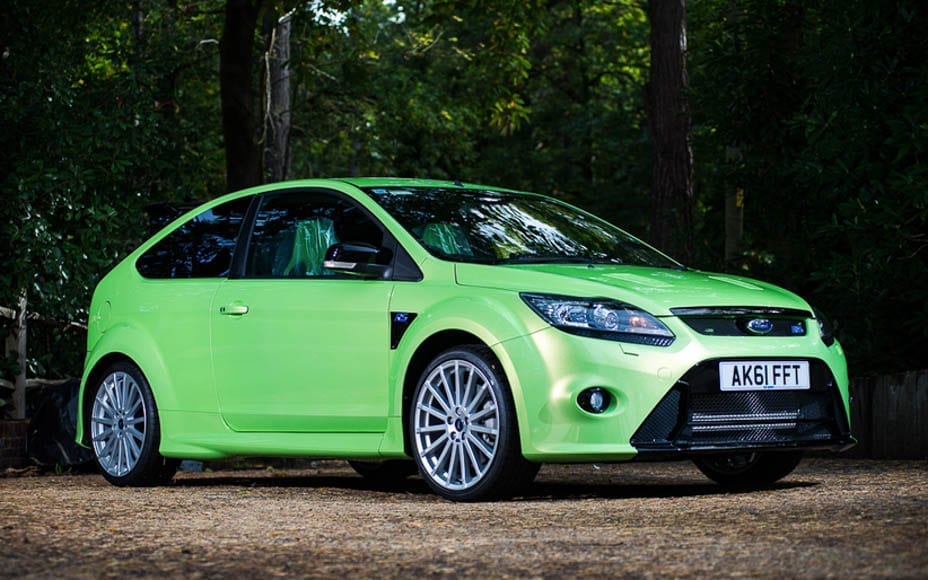
    A zippy 2011 Ford Focus RS with just 18 miles on the clock is to be sold at auction next month for nearly double what it cost new.


    The ‘Ultimate Green’ with a green sports fabric interior vehicle – which certainly would even stand out in a Tesco car park – comes with a 2.5-litre, 5-cylinder engine and is capable of 0-60 miles per hour in just 4.7 seconds. It features a front-wheel drivetrain, 19-inch wheels and what are described as “a wing that would embarrass a Porsche Turbo.”


    Surprisingly serviced four times despite its low mileage, the Focus is presented in “unwrapped” condition: The radio aerial has never been fitted, the wheel centres have never been put on and the seats still have their delivery plastic covers in place.


    Silverstone Auctions have set an estimate of £38,000 to £44,000 ($50,000 to $58,000, €43,000 to €49,000 or درهم186,000 to درهم215,000) and will sell what they call a “remarkable little car” at their NEC Classic Motor Show Sale on 11th and 12th November.


    Profit from Focus – Six year old Ford Focus RS to be sold for nearly double its price in 2011; it has just 18 miles on the clock – Offered by Silverstone Auctions at their NEC Classic Motor Show Sale on 11th and 12th November 2017.Profit from Focus – Six year old Ford Focus RS to be sold for nearly double its price in 2011; it has just 18 miles on the clock – Offered by Silverstone Auctions at their NEC Classic Motor Show Sale on 11th and 12th November 2017. Profit from Focus – Six year old Ford Focus RS to be sold for nearly double its price in 2011; it has just 18 miles on the clock – Offered by Silverstone Auctions at their NEC Classic Motor Show Sale on 11th and 12th November 2017. Profit from Focus – Six year old Ford Focus RS to be sold for nearly double its price in 2011; it has just 18 miles on the clock – Offered by Silverstone Auctions at their NEC Classic Motor Show Sale on 11th and 12th November 2017.Profit from Focus – Six year old Ford Focus RS to be sold for nearly double its price in 2011; it has just 18 miles on the clock – Offered by Silverstone Auctions at their NEC Classic Motor Show Sale on 11th and 12th November 2017.

  • Trump to Profit from Presidency

    Trump to Profit from Presidency

    Donald Trump claimed he would not profit from being President; it seems that was just another of his lies


    Braggart and President-elect Donald Trump was very keen to announce he wouldn’t take the £456,000 ($569,000, €537,000 or درهم‎‎2.1 million) salary and expenses that goes with his new job, but now it looks as if he’ll make a hell of a lot more if what the New York Post is suggesting comes true.


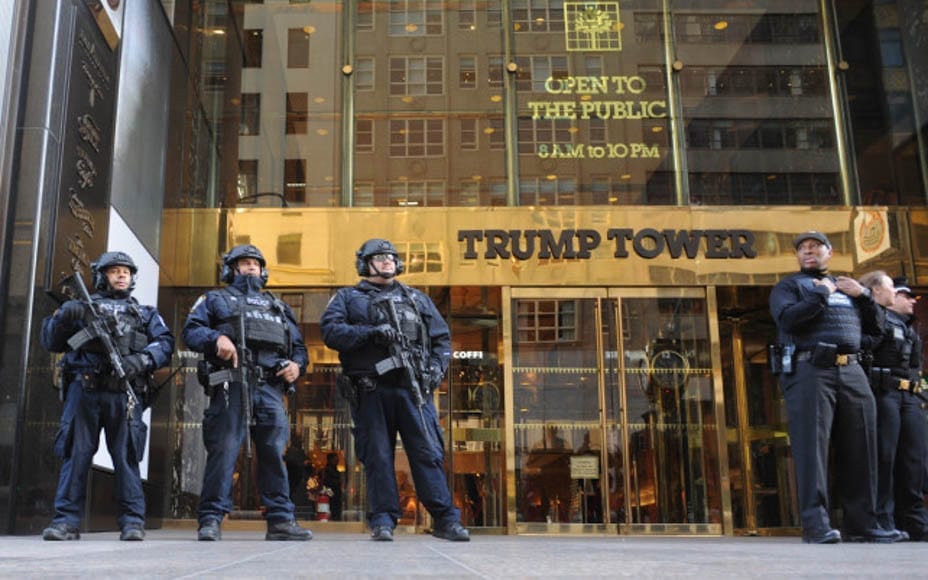
    According to the paper, it is expected that Trump – whose daily security bill is already topping £801,000 ($569,000, €944,000 or درهم‎‎3.7 million) – will lease two floors of vacant space within Trump Tower to the Secret Service to house upto 250 agents and cops.


    Given the prevailing rental rates in the building, Mr Trump looks set to rake in £2.4 million ($3 million, €2.8 million or درهم‎‎11 million) in rent; so much for not profiting.