Tag: leadership

  • Deranged Dom & Bashful BoJo’s Rotten Regime

    Deranged Dom & Bashful BoJo’s Rotten Regime

    Nikolay Kalinin concludes that both Dominic Cummings and Boris Johnson’s rotten regime come out of this week disgraced

    Dominic Cummings’ questioning at the COVID select committee has undoubtedly provoked a tsunami of responses. Cummings branded the PM he once advised as “unfit for job” and condemned Matt Hancock by saying that he “should have been fired for at least 15, 20 things, including lying to everybody on multiple occasions.”


    Cummings claimed during questioning that Hancock lied about people getting treatment during the summer and stated: “We were told explicitly people did not get the treatment they deserved, many people were left to die in horrific circumstances.”


    Not only that, but Cummings also stated that Johnson did indeed say that he would rather “let the bodies pile high in their thousands” that enforce another lockdown. If true, this demonstrates that the Prime Minister is absolutely not fit to rule a country whose people he has put in peril as a result of his continued incompetence.


    There is no denying that the response of government officials to Cummings’ accusations has been plainly childish, including the response of Liz Truss, who stated that she “hasn’t had time to look at it yet” but also then stated: “I’m not going to engage with the false claims that are being made today.”


    Meanwhile, Peter Kyle, Labour MP for Hove has decided to try to kill two birds with one stone by releasing a PMQ video from 25th March 2020 where he told the PM about the lack of COVID tests available in his constituency and how long it took to deliver them, captioning it with the words “They knew. THEY KNEW!”


    Not only has Cummings’ dropped a bomb on the government but on ‘Costly Carrie’ too. In stating that his resignation from the role of Chief Adviser was linked “to the fact that the prime minister’s girlfriend was trying to change a whole bunch of different appointments at Number 10 and appoint her friends to particular jobs” – which sounds like a totally legitimate claim, especially considering how desperate ‘BoJo’ was to defend Carrie’s friend Henry Newman who got exposed as the man who leaked info about a second lockdown.


    A YouGov poll conducted after the questioning concluded that although 55% of people do not trust Boris Johnson and how he has painted the government’s handling of the pandemic, a whopping 75% do not trust Cummings’ claims. This is not surprising considering the fact that he was responsible for the deceptive propaganda of Vote Leave and its “£350 million for NHS” claim.


    Another poll conducted by Survation has concluded that even after Cummings’ revelations, the Conservatives extended their lead over Labour by 11 points, which is extremely concerning, because this shows that more people would rather trust the words of a man who throughout this pandemic has demonstrated barely any decent leadership and whose utter idiocy has destroyed the lives of many.


    Not only that, but this poll shows that the people of Britain seem more likely to support a man whose fiancé wants to undermine the democratic process on which this country stands on and replace it with a rotten regime and controlled cronyism.


    It truly feels as if most of Britain’s population are in the ‘Cult of BoJo’ and cannot stop ignoring all the terrible things he and his lackeys have done. If this is the kind of country that we are destined to live in for the next few years, then I’d argue that we are truly doomed.


    Deranged Dom & Bashful BoJo’s Rotten Regime 2021 – Nikolay Kalinin concludes that both Dominic Cummings and Boris Johnson’s rotten regime come out of this week disgraced.
    Dominic Cummings’ grilling this week told the public what they already knew about Boris Johnson’s rotten regime.
    Deranged Dom & Bashful BoJo’s Rotten Regime 2021 – Nikolay Kalinin concludes that both Dominic Cummings and Boris Johnson’s rotten regime come out of this week disgraced.
    Boris Johnson comes out of this sorry saga looking more and more like a puppet and one formerly controlled by Cummings and now most definitely in the clutches of his latest ‘baby mama,’ Carrie Symonds.
    Deranged Dom & Bashful BoJo’s Rotten Regime 2021 – Nikolay Kalinin concludes that both Dominic Cummings and Boris Johnson’s rotten regime come out of this week disgraced.
    The court of Carrie Symonds (pictured with her “chatty rat” bestie Henry Newman) holds more sway than anything else currently in the ear of our laughable, not laudable Prime Minister.
  • Who REALLY is Henry Newman?

    Who REALLY is Henry Newman?

    Whilst only a few newspapers have delved into his political past, we today ask: “Who REALLY is the bestie of Carrie Symonds and alleged ‘Chatty Rat’ Henry Newman?”

    In 2019, ‘Carrie Symonds’ bestie’ and supposed clatterfart Henry Newman described Dominic Cummings as “one of only a few political advisers who understands the importance of, and is truly committed to, reforming the Whitehall machine.” In April 2020, Cummings responded by branding Newman a leaker.


    Now, as the media delve into the scandal of Boris Johnson’s hole riddled ship and he seeks to dissipate the disgrace of his decorating debacle, with Cummings’ intervention on Friday, elements of the media have begun to examine exactly who Henry Newman is.


    Whilst widely referenced for dancing to ABBA with his longstanding chum Symonds and for being the go-to mouthpiece in support of Brexit during Theresa May’s “Brexit means Brexit” era, Newman should also go down in history for banging on about a need for fortnightly bin collections in Hampstead and Kilburn and for his somewhat bizarre Facebook ramblings.


    On his wall on the social media site, former special adviser (SPAD) to Francis Maude and Michael Gove, Newman – a graduate of ritzy institutions including the University of Oxford, Harvard University and the London School of Economics – has shared posts about being drunk. He has remarked that he was once “discreetly charmed by the bourgeoisie” and bragged that he even listened “to the Stones as the economy [collapsed].”


    Tellingly also, this one-time “rising star” and “Goveite” also declared he was “drowning in honey, stingless” and, most appropriately, providing illustration of why Daylesford addict ‘Costly Carrie’ counts him as “one of her four favourite people,” once announced: “[I’m] opening an organic box.”


    ‘Henry The Bin Boy’ Newman’s words of wisdom on Facebook…

    “Is drunk.”


    “Is opening an organic box.”


    “Is discreetly charmed by the bourgeoisie.”


    “Is drowning in honey, stingless.”


    “Once you kill a cow you gotta make a burger.”


    “Wondering if he is really a top concern for US immigration.”


    “Waiting for Jacqui Smith to resign.”


    “Is dancing, dancing, dancing… Is listening to rumba in W. Hartford… Is dancing in the dark… Is missing dancing.”


    “Is listening to the Stones while the economy collapses.”


    “Is watching his tan fall off.”


    “Hates people who don’t know how to use a rowing machine.”


    “Is thinking what this country needs is a new taskforce.”


    Who REALLY is Henry Newman? Alleged ‘Chatty Rat’ with a liking for organic boxes – Whilst a few newspapers have delved into his political past, we ask: “Who REALLY is the bestie of Carrie Symonds and alleged ‘Chatty Rat’ Henry Newman?” Boris Johnson, Michael Gove, Dominic Cummings, Francis Maude, Conservative, Tory, Vote Leave.
    Who is Henry Newman? Facebook posts by him give a clue to his personality.

    Descriptions of Henry Newman by…

    Boris Johnson:

    “One of my three musketeers.”


    Carrie Symonds:

    “One of my four favourite people.”


    Toby Young:

    “He is new role model… If you were a [politics show] booker who had to find someone… Newman was the only name on your Rolodex.”


    “As the oxygen went out of Theresa May’s premiership, and her withdrawal agreement began to breathe its last, the great balloon of his career became more and more inflated.”


    Dominic Cummings:

    “All the evidence [regarding the second lockdown leak] definitely leads to Henry Newman… I’m just trying to get the communications data to prove it.”


    An unnamed “senior government source”:

    “The allegations against Henry Newman are entirely false. He wouldn’t be working in Downing Street if he was suspected of leaking information.”


    Follow Henry Newman on his now somewhat secretive social media (if he lets you) at @henryjohnnewman on Facebook, @henryjohnnewman on Instagram and @HenryNewman on Twitter.


    Who REALLY is Henry Newman? Alleged ‘Chatty Rat’ with a liking for organic boxes – Whilst a few newspapers have delved into his political past, we ask: “Who REALLY is the bestie of Carrie Symonds and alleged ‘Chatty Rat’ Henry Newman?” Boris Johnson, Michael Gove, Dominic Cummings, Francis Maude, Conservative, Tory, Vote Leave.
    Who is Henry Newman? A fan of wearing beanie hats that declare: “Let’s get Brexit done,” here is a young man who taught politics at the School of Oriental and African Studies (SOAS), after studying at the University of Oxford, Harvard University and the London School of Economics. He reportedly then “cut his teeth” working in the Cabinet Office during the coalition government years and then joined Michael Gove’s entourage in the Ministry of Justice after he was appointed as the Lord Chancellor in 2015.
    Who REALLY is Henry Newman? Alleged ‘Chatty Rat’ with a liking for organic boxes – Whilst a few newspapers have delved into his political past, we ask: “Who REALLY is the bestie of Carrie Symonds and alleged ‘Chatty Rat’ Henry Newman?” Boris Johnson, Michael Gove, Dominic Cummings, Francis Maude, Conservative, Tory, Vote Leave.
    Who is Henry Newman? Aside from having travelled to Russia in his youth, Newman joined the Vote Leave campaign during the 2016 referendum campaign and, according to ‘The Telegraph’ “was among a close circle of Mr Gove’s friends who were said to have helped to convince him to ‘knife’ Mr Johnson and torpedo his bid for the Tory leadership by deciding to run himself.” Later, a director of the pro-Brexit Open Europe think-tank, Newman was then rewarded for being “loyal” to Carrie Symonds when Boris Johnson came to power.
    Who REALLY is Henry Newman? Alleged ‘Chatty Rat’ with a liking for organic boxes – Whilst a few newspapers have delved into his political past, we ask: “Who REALLY is the bestie of Carrie Symonds and alleged ‘Chatty Rat’ Henry Newman?” Boris Johnson, Michael Gove, Dominic Cummings, Francis Maude, Conservative, Tory, Vote Leave.
    Who is Henry Newman? Let’s not forget that this young man’s best friend Carrie Symonds was previously dating a man, Oliver Haiste (sometimes spelt ‘Haste’), exposed by the BBC in October 2016 for a Russian fake news scandal and for his friendship with Henry Hopwood-Phillips, an individual involved in the far-right, racist Traditional Britain Group. Miss Symonds must be noted also for her having been employed by Oceana, an oceanic charity that Ghislaine Maxwell – the now incarcerated alleged mucky madam to Jeffrey Epstein – was also a tin banger for.
    https://twitter.com/JoshBerryComedy/status/1386235119002955776
  • Disciplining BoJo

    Disciplining BoJo

    Actor Tony Discipline amusingly tears up Boris Johnson’s utterly confusing ‘Stay Alert’ coronavirus lockdown revision statement

    Tony Discipline – best known for having played Tyler Moon in the BBC soap opera EastEnders – took to social media to explain Boris Johnson’s revised lockdown policies on Monday.


    Illustrating the contradictory nature of the Prime Minister’s new directives by quoting him directly, the actor accurately summed up the confusion that has followed in a brilliant little skit.


    With nothing to do but #StayAlert according to our befuddled leader, we suggest readers do something simpler: Adopt the DISCIPLINE of Tony and pour yourself another gin.


    Facebook: @TheSteepleTimes

    Instagram: @TheSteepleTimes

    Twitter: @SteepleTimes


  • Canary Claims Corbyn Still Hasn’t Croaked

    Canary Claims Corbyn Still Hasn’t Croaked

    That ‘The Canary’ is still lauding Jeremy Corbyn as “the best Prime Minister we never had” about sums up that sorry shower of a rag’s grasp on the current state of British politics

    Whilst The Steeple Times is anything but a fan of Boris Johnson and his government, we most certainly would never have welcomed Jeremy Corbyn as Prime Minister.


    On Saturday, however, The Canary – a far-left, arse-licking online rag that claims to have a “wider reach online than The Times” – saluted Diane Abbott’s former “bedfellow” (in all senses of that word) as “someone who stands for the many, not the few” and “the best Prime Minister we never had.” They went further and concluded: “On VE Day… Corbyn reminded us of the kind of leadership we so badly need at this time of crisis.”


    Known for having produced many “questionable pieces” in times past, the nauseating bird that should long ago have croaked that is The Canary has hopefully finally now realised that it is now as alive as Jeremy Corbyn’s prospects of entering Downing Street. It ended its so-called “article” with a pathetic begging note that stated:


    “We have been fighting against an establishment that is trying to shut us down. And like most independent media, we don’t have the deep pockets of investors to call on to bail us out. Can you help by chipping in a few pounds each month?”


    Next!


    Facebook: @TheSteepleTimes

    Instagram: @TheSteepleTimes

    Twitter: @SteepleTimes


  • Trashbag Theresa

    Trashbag Theresa

    Theresa May will likely win today, but, argues Matthew Steeples, the country will be ever poorer as a result


    Theresa May is rather like a binbag: Something you want to throw out, but something that once you run out of, you wish you’d crammed in a little more. Equally, like the Duracell Bunny, she’s somebody who just keeps on going: Tell her a meteorite has landed in her garden and she’d deny it, tell her that her that wandering in wheatfields isn’t a wise idea and she’d argue to the contrary.


    With odds of 4/6 at Coral of her retaining a mandate of leadership of the Conservative Party this evening, it’s all but certain she’ll win, but that will almost certainly lead to something else: Labour, the Liberal Democrats, the SNP, the DUP and others uniting in an effort to overthrow her by other means.


    Mrs May may find solace in the fact that there doesn’t appear to be any other person in her party in a position to take her job, but she should remember this ultimately: All political careers end in failure.

    #BringHerDown #GetHerGone #MakeDecemberTheEndOfMay


    Facebook: @TheSteepleTimes

    Instagram: @TheSteepleTimes

    Twitter: @SteepleTimes and @M_Steeples


  • The Tossers vs. The 48%

    The Tossers vs. The 48%

    The 48% must make themselves heard at the 2017 General Election; they must vote tactically and do all they can to prevent the landslide ‘Queen Bee’ Theresa May is headed for


    With UKIP’s first MP on trial for 14 counts of electoral fraud, 30 individuals connected to the Conservative Party facing potential prosecution in connection to the ‘2015 Battlebus’ scheme and the Electoral Commission investigating Leave.EU’s dodgy finances, one could question the reasoning for Theresa May’s enthusiasm for a General Election.


    Right now, British politics stinks and with a hopeless and hapless Labour Party that had to rely on a Coronation Street ‘star’ with an obsession with the word “toss” to get their campaign going yesterday, Mrs May’s home run is now sadly virtually in the bag. Her timing – brilliantly executed and Lady Macbeth-like in fashion, even her critics will admit – ensures she can “bury bad news” Jo Moore-style and ensures she’ll be able to make her woes go away. The vicar’s daughter and the kowtowing garden gnome she calls husband will likely get the landslide they want and with the Queen Bee and her party campaigning in previously deemed ‘unwinnables’, Theresa May is truly going for the jugular.


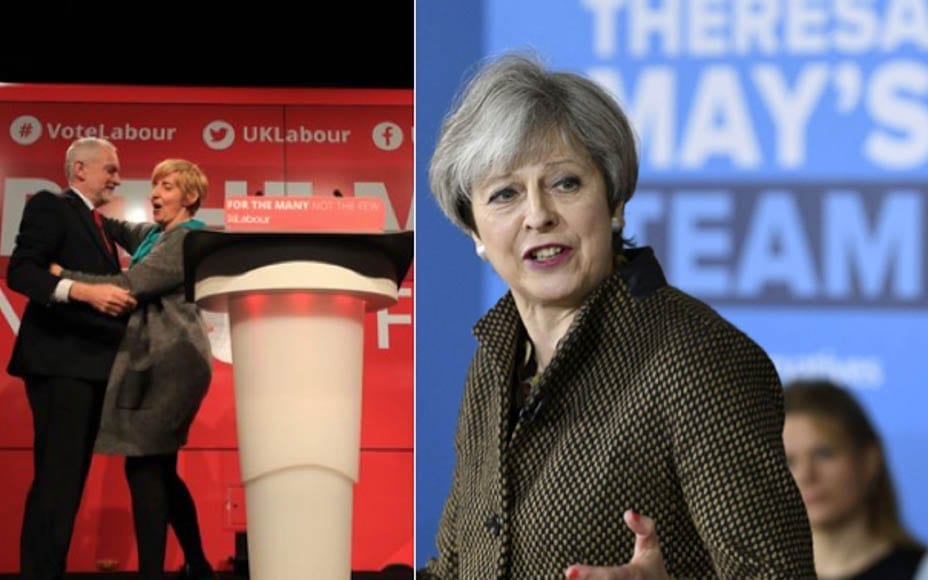
    All right-minded people want to do right now is sit in horror with their heads in their hands, but actually, in fact, there is something we can all do. We must use our votes wisely and must use them tactically. This is not an election about “the many, not the few” and its not one about the “strong and stable” leadership of “Theresa’s May’s team”; it’s about Brexit and we must all use our votes to ensure Mrs May doesn’t forget that the 48% still deserve a voice.


    #MakeJuneEndOfMay


  • Charlot Malin (1969 – 2017)

    Charlot Malin (1969 – 2017)

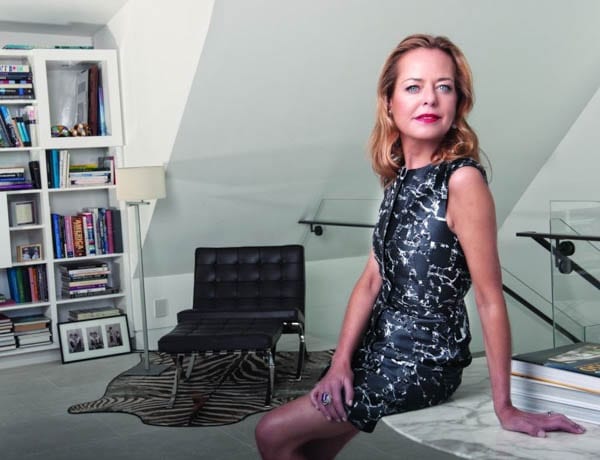
    Oslo born, San Francisco based interior designer and philanthropist Charlot D. Malin had a day named in her honour by The City and County of San Francisco in November 2016. A mother of twins and the co-founder of Troon Pacific Inc. with her husband Gregory, “forward-thinking” Malin worked on properties for George Lucas and Robert Redford and supported everything from the San Francisco Opera Guild to the Voss Foundation. She considered “health the ultimate luxury” and loathed microwave ovens.

  • The Business of Blair

    The Business of Blair

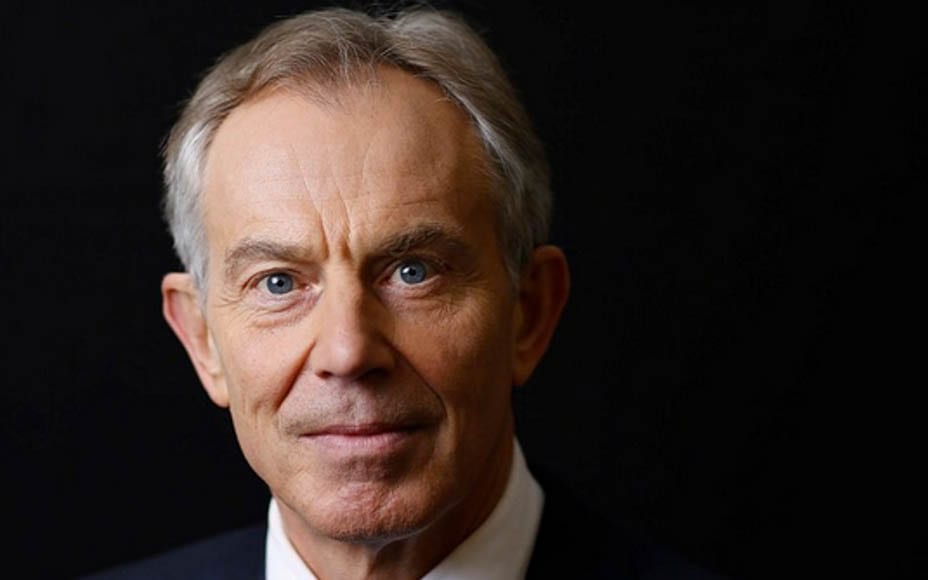
    Tony Blair ditches business and also denies a return to public office


    For weeks, the mainstream media have claimed Tony Blair is preparing to return to public office to save Britain from the nightmare of Brexit. They have claimed he’s ready to seize the support of the 48% and that him and Nick Clegg are colluding to create a new ‘centre left’. He did little to deny it at first but late last week, he shared a post on Facebook that frankly puts a stop to this kind of nonsense.


    Blair, a plainly toxic force in politics due to his highly unpopular backing of George W. over the War on Iraq (and because of his refusal to confine his equally disliked weirdo wife to social Siberia), will never make a comeback and now he’s finally acknowledged that in a very public way.


    In our view, Mr Blair is actually wrong. He’s not nearly as bad as #DarthVader Theresa May and he’s not nearly as ghastly as either the worst Prime Minister’s-in-living-history John Major and Gordon Brown and though we share with you his justifications for not getting involved again, we weirdly find ourselves actually lauding Mr Blair for saying the right thing (for once in his sorry lifetime).


    Mr Blair’s comment, in full, follows:


    Over the past nine years we have built a family of organisations which together employ nearly 200 people; have worked in over 30 countries; and have produced some real and lasting achievements. I am very proud of the commitment and impact of the people I have had the privilege to work with.


    The Africa Governance Initiative has become a respected partner and leader in effective governance where we have worked in 10 different African countries.


    The work we are doing in Africa has been right at the centre of government covering everything from boosting electricity, to improving child and maternal mortality rates to helping on the ground during the Ebola crisis in West Africa, a contribution praised for its impact by both the Presidents of the countries concerned and the international community.


    Outside of Africa in the work done by the commercial governance arm, we again made successful interventions in over 12 countries with 30 different projects promoting reform and change programmes with governments.


    The Tony Blair Faith Foundation has done ground-breaking work in interfaith relations, education and leadership, and most recently in the research and policy work on religiously based extremism through the Centre on Religion and Geopolitics which has been widely recognised as authoritative. 


    In the first years of the Quartet role in the Middle East, we hit double digit growth on the West Bank, drew up ambitious plans for Gaza’s infrastructure and changed the rules around entry of materials into Gaza. In 2011, we played a significant part in the attempt to agree terms of reference for a renewal of the peace process.


    Progress became much more difficult once the peace process stalled. We were partners in the later fresh attempts by the USA to revive the peace process, particularly around plans for the economy to support a future Palestinian state. Unfortunately these attempts also failed.


    Nonetheless, after stepping down from the Quartet position, our new Initiative for the Middle East has re-vitalised our work and means this stays a large part of what we do. I have made over 35 visits to the region this year alone.


    During the time since leaving office, I have learnt a huge amount about the world and frankly what I can do and can’t do to affect it positively.


    We built up a successful business side, though attracted a large measure of criticism for it, much of it inaccurate. It was entirely necessary to build the business to help with the funding to grow the organisations; but it was open to misrepresentation and to criticism either that we were conflating private and public roles or that we were working in countries which aroused controversy.


    Having said that, I also learnt a lot about the way the global economy functions from that experience and pay tribute to the great team I worked with who made much of the development of our work across the organisations possible.


    We are now at the stage and have built the financial infrastructure where it is time to enter a new phase. First we can take the work we have done in Africa, in governance, on extremism and in the Middle East to a new and more effective level; and secondly, in the past six months we have seen political earthquakes in the UK with Brexit and in the American election, as well as an explosion in populist movements all over the European continent. This impacts profoundly all the work we do and the future of globalisation.


    So I want us to bring all the different organisations together under one roof and to re-orient our mission.


    We have deliberately focused, up to now, on some of the greatest and most difficult challenges faced in the era of globalisation: how to give nations the governing capacity to overcome the problems of development and lift their people out of poverty; how to combat the religiously based extremism which threatens global security; how to resolve the most intractable peace process in the world.


    In each case, we have presented a new approach, with the aim of providing new ideas and thinking.


    In governance, especially in Africa, our analysis is that, today, building the capacity to govern effectively – making the way government works efficient as well as transparent – is as important for developing nations as aid.


    Look around the world, and see countries living next to each other – same size population, same resources, same natural potential – one succeeding, one failing. The reason for the difference is found in the quality of governance. Take the following examples: Venezuela and Colombia; Poland and Ukraine; Rwanda and Burundi. And the greatest example in contrasting, contiguous systems of governance the world has seen in modern political history – the Korean Peninsula, North and South Korea. The nation which is succeeding is applying the best rules and lessons of governance; the failing nation is ignoring or defying them.


    On religious extremism, we believe it is essential to widen the struggle, to tackle the ideology behind the violence and not simply the violence itself. So we can defeat ISIS militarily but unless we defeat the ideas behind Islamism – the belief that a particular view of religion should dominate society, politics and the economy, something incompatible with a modern world in which pluralism is the essence – we will never win this battle.


    On the Middle East peace process, we are convinced that a traditional peace process between Israelis and Palestinians with US guidance alone is inadequate; that what is required is a new approach which involves the wider region and the Arab nations and which resolves not just the final status issues like borders but which also resolves the underlying issues of cultural acceptance and regional stability. So we are now working on Arab-Israeli relations, and not simply Israeli-Palestinian relations.


    But it has become clear that there is much overlap between these different areas of work. Extremism is also today a barrier to development. The Middle East conflict impacts extremism. Changing and reforming government applies to Middle East nations as well.


    And since all of these approaches basically represent the open-minded response to global problems, the salience of these new approaches depends on us having an answer to the new populism of left and right which exploits the anger and drives the world apart.


    This new populism may differ in some respects between left and right – the left anti-business, the right anti-immigrant – but in others what is remarkable is the convergence between them, especially around isolationism and protectionism, in what is an essentially closed-minded approach to globalisation and its benefits and to international engagement.


    So we want to add a fourth pillar to what we do. I emphasise this is not in place of our other work but in addition to it.


    This is the creation of a platform designed to build a new policy agenda for the centre ground together with the networks which link people up, and allow a reasonable and evidence based discussion of the future which avoids the plague of social media-led exchanges of abuse. 


    This platform will have a policy unit which will draw on the best ideas and practical solutions, building partnerships with other organisations, in the public policy and private spheres, so that those in the frontline of politics have a bigger and better policy agenda to reflect upon; and a networking capability to join like-minded people up. 


    This is not a think tank. There are enough of those, many doing excellent work we would want to utilise. It is a platform for engagement to inform and support the practising politician.


    It is what I know I would want were I still in the frontline of politics.


    Part of its focus will plainly be around the European debate; but this will not be its exclusive domain. It has to go far wider than that since in many ways the Europe debate is a lightning rod for the whole of politics.


    We’re now planning to bring all of these four parts together in one new Not For Profit Institute. 


    The business side has been shut down and the assets, running into many millions of pounds, gifted to the Institute. In the New Year, we plan to merge the activities of the different organisations into the Institute, with any charitable funds used exclusively for the purposes for which they were originally given.


    This will allow us to work more coherently across the board; use the obvious synergies between the different elements of the work; and to be far stronger on the global policy side than we have been up to now. The focus previously was mainly on programmes. These will remain but the organisation will also be far more about thought leadership.


    This is not about my returning to the front line of politics. I have made it abundantly clear that this is not possible.


    However, I care about my country and the world my children and grandchildren will grow up in; and want to play at least a small part in contributing to the debate about the future of both.  
     

    The Africa Governance Initiative has become a respected partner and leader in effective governance where we have worked in 10 different African countries.


    The work we are doing in Africa has been right at the centre of government covering everything from boosting electricity, to improving child and maternal mortality rates to helping on the ground during the Ebola crisis in West Africa, a contribution praised for its impact by both the Presidents of the countries concerned and the international community.


    Outside of Africa in the work done by the commercial governance arm, we again made successful interventions in over 12 countries with 30 different projects promoting reform and change programmes with governments.


    The Tony Blair Faith Foundation has done ground-breaking work in interfaith relations, education and leadership, and most recently in the research and policy work on religiously based extremism through the Centre on Religion and Geopolitics which has been widely recognised as authoritative. 


    In the first years of the Quartet role in the Middle East, we hit double digit growth on the West Bank, drew up ambitious plans for Gaza’s infrastructure and changed the rules around entry of materials into Gaza. In 2011, we played a significant part in the attempt to agree terms of reference for a renewal of the peace process.


    Progress became much more difficult once the peace process stalled. We were partners in the later fresh attempts by the USA to revive the peace process, particularly around plans for the economy to support a future Palestinian state. Unfortunately these attempts also failed.


    Nonetheless, after stepping down from the Quartet position, our new Initiative for the Middle East has re-vitalised our work and means this stays a large part of what we do. I have made over 35 visits to the region this year alone.


    During the time since leaving office, I have learnt a huge amount about the world and frankly what I can do and can’t do to affect it positively.


    We built up a successful business side, though attracted a large measure of criticism for it, much of it inaccurate. It was entirely necessary to build the business to help with the funding to grow the organisations; but it was open to misrepresentation and to criticism either that we were conflating private and public roles or that we were working in countries which aroused controversy.


    Having said that, I also learnt a lot about the way the global economy functions from that experience and pay tribute to the great team I worked with who made much of the development of our work across the organisations possible.


    We are now at the stage and have built the financial infrastructure where it is time to enter a new phase. First we can take the work we have done in Africa, in governance, on extremism and in the Middle East to a new and more effective level; and secondly, in the past six months we have seen political earthquakes in the UK with Brexit and in the American election, as well as an explosion in populist movements all over the European continent. This impacts profoundly all the work we do and the future of globalisation.


    So I want us to bring all the different organisations together under one roof and to re-orient our mission.


    We have deliberately focused, up to now, on some of the greatest and most difficult challenges faced in the era of globalisation: how to give nations the governing capacity to overcome the problems of development and lift their people out of poverty; how to combat the religiously based extremism which threatens global security; how to resolve the most intractable peace process in the world.


    In each case, we have presented a new approach, with the aim of providing new ideas and thinking.


    In governance, especially in Africa, our analysis is that, today, building the capacity to govern effectively – making the way government works efficient as well as transparent – is as important for developing nations as aid.


    Look around the world, and see countries living next to each other – same size population, same resources, same natural potential – one succeeding, one failing. The reason for the difference is found in the quality of governance. Take the following examples: Venezuela and Colombia; Poland and Ukraine; Rwanda and Burundi. And the greatest example in contrasting, contiguous systems of governance the world has seen in modern political history – the Korean Peninsula, North and South Korea. The nation which is succeeding is applying the best rules and lessons of governance; the failing nation is ignoring or defying them.


    On religious extremism, we believe it is essential to widen the struggle, to tackle the ideology behind the violence and not simply the violence itself. So we can defeat ISIS militarily but unless we defeat the ideas behind Islamism – the belief that a particular view of religion should dominate society, politics and the economy, something incompatible with a modern world in which pluralism is the essence – we will never win this battle.


    On the Middle East peace process, we are convinced that a traditional peace process between Israelis and Palestinians with US guidance alone is inadequate; that what is required is a new approach which involves the wider region and the Arab nations and which resolves not just the final status issues like borders but which also resolves the underlying issues of cultural acceptance and regional stability. So we are now working on Arab-Israeli relations, and not simply Israeli-Palestinian relations.


    But it has become clear that there is much overlap between these different areas of work. Extremism is also today a barrier to development. The Middle East conflict impacts extremism. Changing and reforming government applies to Middle East nations as well.


    And since all of these approaches basically represent the open-minded response to global problems, the salience of these new approaches depends on us having an answer to the new populism of left and right which exploits the anger and drives the world apart.


    This new populism may differ in some respects between left and right – the left anti-business, the right anti-immigrant – but in others what is remarkable is the convergence between them, especially around isolationism and protectionism, in what is an essentially closed-minded approach to globalisation and its benefits and to international engagement.


    So we want to add a fourth pillar to what we do. I emphasise this is not in place of our other work but in addition to it.


    This is the creation of a platform designed to build a new policy agenda for the centre ground together with the networks which link people up, and allow a reasonable and evidence based discussion of the future which avoids the plague of social media-led exchanges of abuse.


    This platform will have a policy unit which will draw on the best ideas and practical solutions, building partnerships with other organisations, in the public policy and private spheres, so that those in the frontline of politics have a bigger and better policy agenda to reflect upon; and a networking capability to join like-minded people up. 


    This is not a think tank. There are enough of those, many doing excellent work we would want to utilise. It is a platform for engagement to inform and support the practising politician.


    It is what I know I would want were I still in the frontline of politics.


    Part of its focus will plainly be around the European debate; but this will not be its exclusive domain. It has to go far wider than that since in many ways the Europe debate is a lightning rod for the whole of politics.


    We’re now planning to bring all of these four parts together in one new Not For Profit Institute. 


    The business side has been shut down and the assets, running into many millions of pounds, gifted to the Institute. In the New Year, we plan to merge the activities of the different organisations into the Institute, with any charitable funds used exclusively for the purposes for which they were originally given.


    This will allow us to work more coherently across the board; use the obvious synergies between the different elements of the work; and to be far stronger on the global policy side than we have been up to now. The focus previously was mainly on programmes. These will remain but the organisation will also be far more about thought leadership.


    This is not about my returning to the front line of politics. I have made it abundantly clear that this is not possible.


    However, I care about my country and the world my children and grandchildren will grow up in; and want to play at least a small part in contributing to the debate about the future of both.  


  • MAYbe a SHOEin

    MAYbe a SHOEin

    Theresa May’s appointment as Prime Minister leaves a lot to be desired suggests Matthew Steeples – but we can thank God for small mercies also


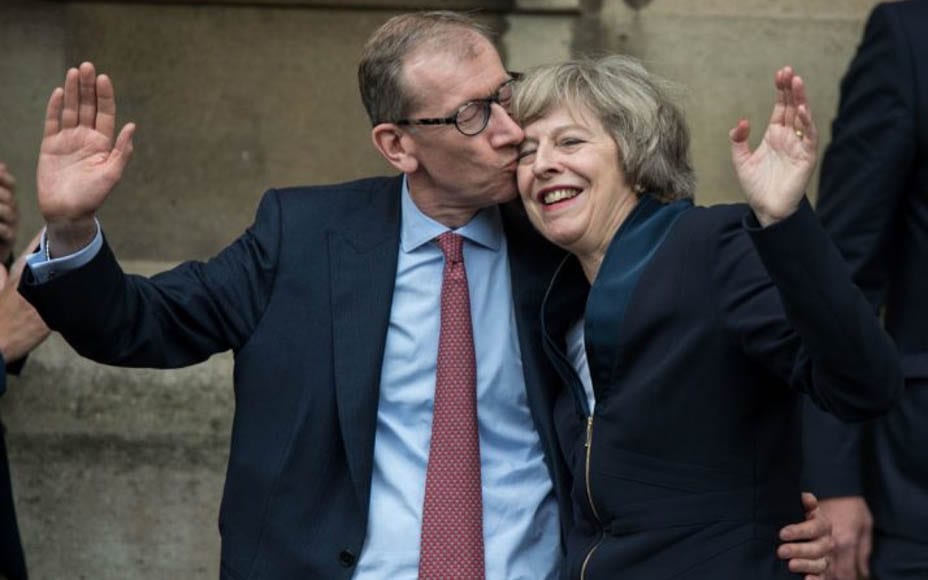
    Theresa May as Prime Minister: As much as I disliked the idea, it was never a MAYbe and was always going to be a SHOEin. Goodness knows what’s next, but with she-who-cannot-make-up-her-mind in charge, nothing will ever be predictable.


    With Angela Leadsom’s cowardice exposed – she should not, in fact, ever have stood in the first place if she knew she wasn’t good enough – the inevitable occurred and now the real loser in all of this, David Cameron, will be swiftly sent on his way. Perhaps it was all planned but most likely it was simply a farce.


    The country needs strong leadership right now and the worst Home Secretary in history and a woman who consistently has failed to deliver anything other than chaos is not, in my humble opinion, going to do that. At least, and though I very much doubt she’ll ever become PM herself, with Angela Eagle challenging Jeremy Corbyn we’ll end up with a decent opposition. Thank God for small mercies but even she couldn’t raise anyone to ask her a question at her campaign launch on Monday. The Eagle well and truly has yet to land but Darth Vader’s sister is sadly very much in control of the House. This is a sad day for democracy.


    Matthew Steeples is editor-in-chief and co-founder of The Steeple Times.


    Subscribe to our free once daily email newsletter here:[contact-form-7 id=”225″ title=”Contact form 1″]


  • Where is David Cameron?

    Where is David Cameron?

    Matthew Steeples suggests that David Cameron needs to show his hand


    Yesterday, David Cameron attended the wedding of his wife’s half-brother, Jake Astor. Unlike others, we have no problem with that but at a time when Isis have beheaded a British hostage and when the Union teeters on a knife-edge, many have called for him to reassess his priorities. (more…)