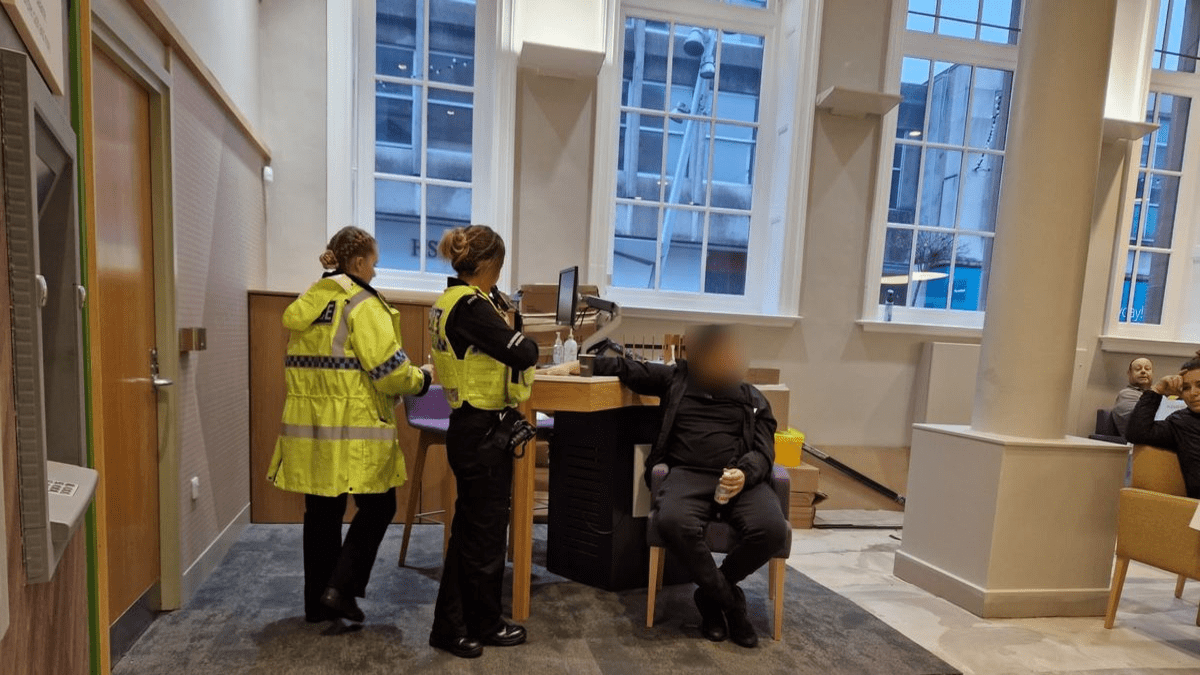
As the story of a man who glued himself to a desk in a NatWest in Grimsby is declared “breaking news,” we delve into some other odd things that have gone on in this decidedly grim fishing port; they include it being the birthplace of the ‘Neighbours’ actress who played the bumptious busybody Mrs Mangel and home to the scissor stabber who used to be dresser to Sarah, Duchess of York
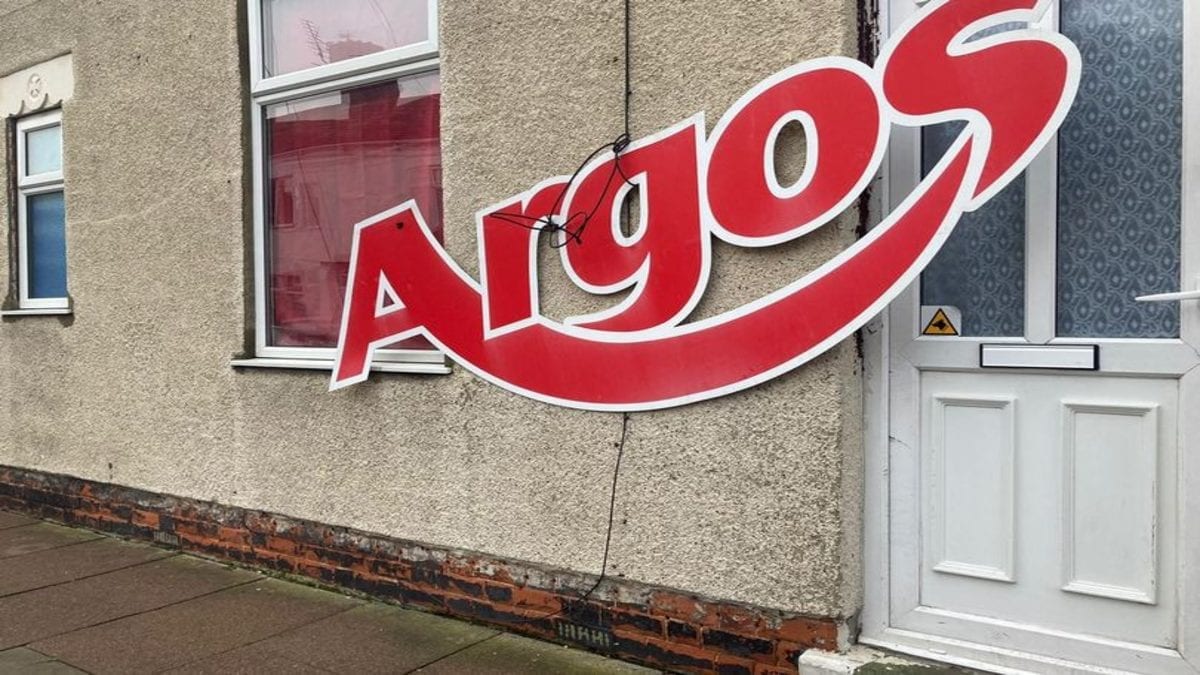
‘Grimbarians’ – the decidedly dopey denziens of Grimsby – have a habit of doing curious things. Aside from being the place where the crackpot crazy dresser to Sarah, Duchess of York turned stabber Jane Andrews grew up and supposedly again has resided since leaving the clink (and is hopefully kept well clear of scissors, cricket bats and kitchen knives), it’s a place, as The Steeple Times reported in January 2021, where a resident named Andy found an Argos sign attached to his house on New Year’s Day that year.
Reported on at the time by the clearly on-the-ball, always-got-a-breaking-news-story-on-the-boil GrimsbyLive, Andy told the rag: “I’m keeping it up though I think, it is a bit funny isn’t it? I might just treat it as a bit of a late Christmas present.” He amusingly concluded: “I’ll have to set up my own click and collect.”
Noted as being home to a legendary P.E. teacher named Amy Monkhouse, who the BBC describe as having “won numerous titles in the world of bowls,” Grimsby was also where the actors John Hurt and Vivean Gray – better known as ‘Mrs Mangel’ in Neighbours – were born. Now, this once thriving fishing port – which was home at one time to Maxine Carr, the sidekick of the Soham murderer Ian Huntley – is once again on the map and this time its notoriety is set to stick because of a bit of glue.
Written by not one but two journalists, Luke Green and James J. Turner, this clearly vitally important piece of reporting emphasised the seriousness of what had occured and continued:
“At around 3pm this afternoon (Thursday, November 17th), a man reportedly glued his arm to a table in the bank on Victoria Street. Officers from Humberside Police are already on the scene dealing with the matter.”
“It’s not yet known why the man has done this although it is believed to be linked to some sort of dispute with the bank. Witnesses say his unimpressed wife has been watching on from the side.”
Going further and clearly realising the vital need for updates on this ‘serious situation,’ Green and Turner audaciously added:
“One man said: ‘I was very surprised to see him glued there, it’s not what I thought.’ Another customer said: ‘I didn’t realise that’s what had happened, that’s not what I expected.’”
“GrimsbyLive has contacted Humberside Police and NatWest to find out more.”
“This is a live blog. Follow the latest updates in the blog below…”
Hold the front page; there’s someone glued to it.
Editor’s Note – Unlike as is the case in many publications, this article was NOT sponsored or supported by a third-party (and nor was any glue was used in its creation).
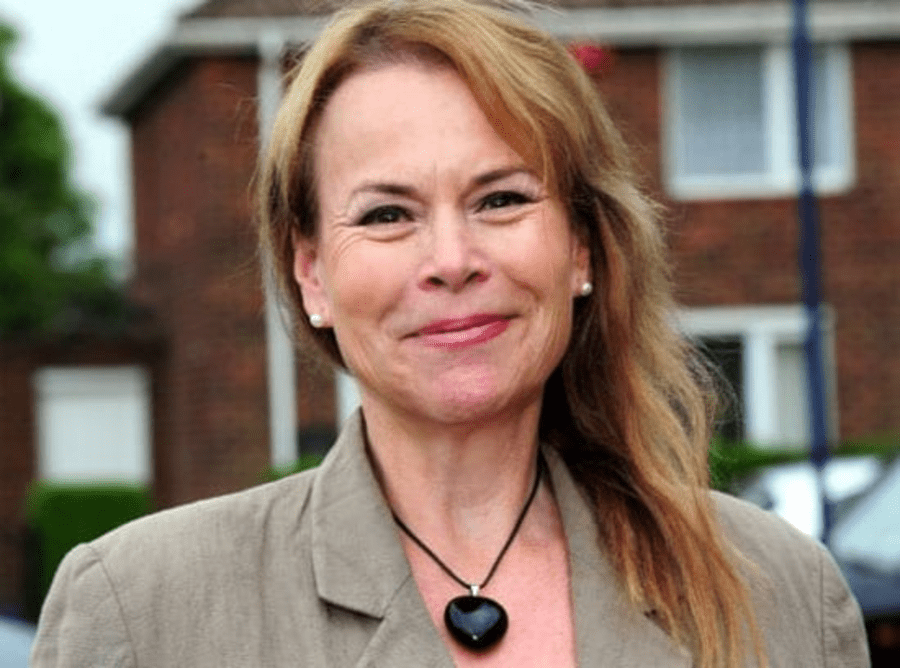
Clear ‘journalist’ in-line for Pulitzer Prize James J. Turner later returned to his groundbreaking feature to add an update. It read: “One woman that came into use the bank said: ‘What an idiot.’” Prophetic.Evil murderer Jane Andrews (pictured left running with Sarah, Duchess of York in attire not exactly suited to such and pictured right in more recent times looking like what one social media user described as “a right old slapper”) is one of the better-known people to have resided in a town that took its name from a Danish fisherman. After battering her poor partner, Tommy Cressman, to death with his cricket bat and a kitchen knife, she went on the run before residing in London with the self-declared friend of the pompous “red socked fop” tw*t Sir Christopher Meyer, Basia Briggs, during her trial in 2001. Later, after being thrown in the clink for life after her conviction for murder, this wicked woman escaped from East Sutton Park Prison in Kent but did not even get charged with absconding.
Whilst Elton John waxed lyrical about Grimsby in his song – with lines including “there’s nothing to compare with my Grimsby,” “Grimsby, oh, a thousand delights” and “I miss your magic charm” – one visitor remarked of it: “The place just stinks of fish.”
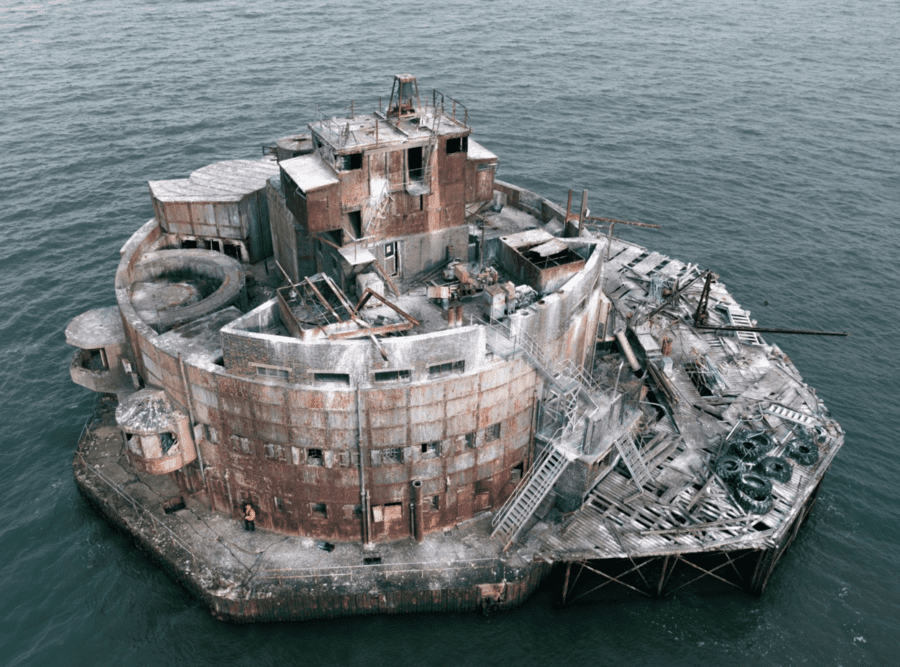
“He who sang in the bathtub as the economy collapsed,” former Chancellor of the Exchequer Norman Lamont, was brought up in the port town whilst “Brexit means Brexit, my deal means a deal” Theresa May visited in March 2019 to declare: “I need the support of those who, like me, voted remain… Leaving with a good deal is much than leaving with no deal… The British people have already moved on… So, let’s get it done.” Unsurprisingly, her tenure as Prime Minister ended just a couple of months later.Vivean Gray (1924 – 2016) – better known as the actress to have played the gossiping busybody Nell Mangel in ‘Neighbours’ between 1986 and 1988 – was the daughter of a Grimsby fish and chip shop owner. She never married or had any children, lived in Australia for some years from the 1950s onwards and then returned to England to Shoreham-by-Sea, West Sussex where she is said to have “lived a quiet and private life.”In February 2015, a UKIP politician named Victoria Ayling from the port town responded to a comment from a Green Party member by asking: “What happens when renewable energy runs out?” This clearly dimwitted dunce had previous been slammed after film a video with her husband in which she raged: “We must basically [re]patriate those that shouldn’t be here. That’s not quite policy yet. Maybe I should soften it a bit … OK, send them back… OK, I just want to send the lot back, but I can’t say that.”Clearly though some people do love this town on the Humber Estuary. In July this year, a derelict Second World War sea fort that had been intended for conversion to an ‘Island of Hope’ for detoxing druggies, sold for 880% above its £50,000 guide price and hammered down for £490,000 at a Savills auction.
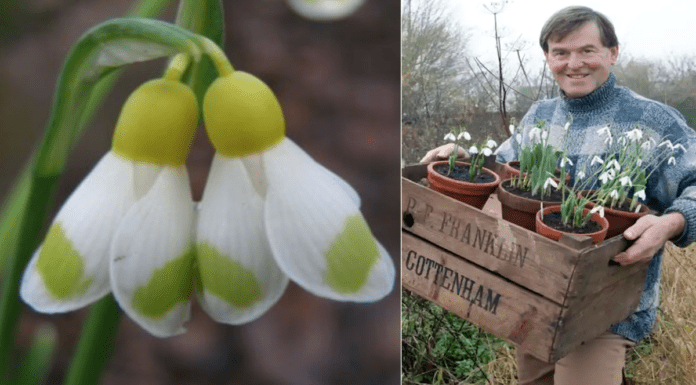
In cultivating a new variety of snowdrop Joe Sharman – known to many as ‘Mr Snowdrop’ – has brought joy to ‘galanthophiles’ everywhere and made himself £1,850 from just one bulb also; amusingly there’s even a variety named ‘John’s Y-Fronts’
It’s always great to improve one’s grasp of etymology and this morning I learnt about a word that describes a charmingly endearing collection of people. That word? Galanthophile.
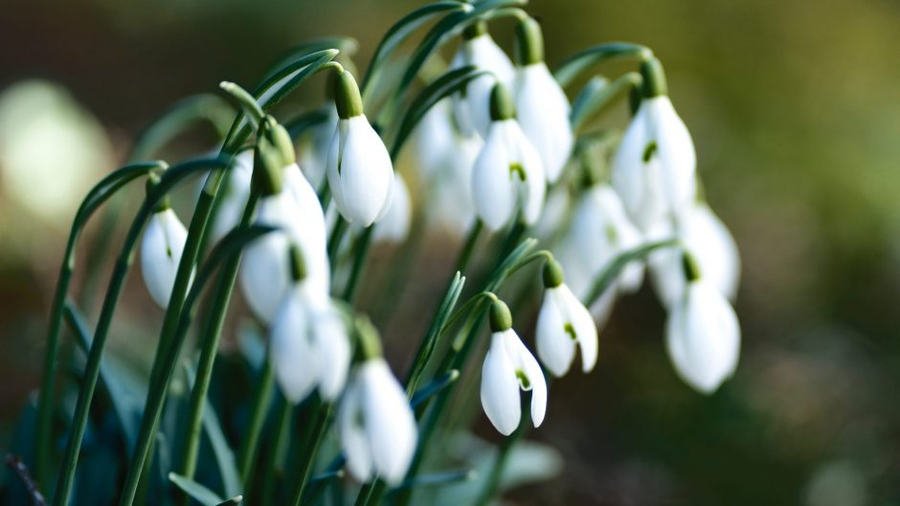
A noun of 19th century origin that takes the snowdropgalanthus’s taxonomic name from the Greek gala, galkt ‘milk’ and antho- ‘flower,’ those that so enthusiastically collect these “magical and really special” bell-shaped flowers are known as galanthophiles.
The official flower for January birthdays and brought to Britain by the Romans, the “milk flower of the snow” – as it is sometimes described – is said to symbolise hope, purity, innocence and sympathy. It is the first flower to bloom at the end of winter and though Victorians associated it with death and bad luck, on Saturday, The Guardian’s Steven Morris charmingly reported on “hordes of galanthophiles” descending on Buckland Monachorum on the edge of Dartmoor in Devon this week to “take in the sight of a beloved flower that this time of year provides a vivid reminder than warmer, cheerier seasons are ahead.”
Grown by Cottenham, Cambridgeshire plantsman Joe Sharman (AKA ‘Mr Snowdrop’) of the Monksilver Nursery, ‘Golden Tears’ received 55 bids and finally hammered down to a buyer “unidentified.” It was listed as:
“A narrow-flowered yellow pterugiform with a very large mark and bright yellow ovary. Very beautiful and distinct. Quite different from Golden Fleece. Exceptionally vigorous. 25cm. The result of a deliberate cross by me using the same parents that created Golden Fleece. First time sold by us on eBay only named 2 weeks ago. Only one for the season.”
In 2015, in an interview with The Guardian – clearly the paper with the most enthusiasm for snowdrops on the planet – Joe Sharman concluded:
“They come up early in the year when nothing else is growing, so if you have the kind of brain that needs lots of things to think about, you focus in.”
“They seem to be almost infinitely variable. You collect the 10 you recognise, then you realise that you can recognise 20 and it just goes from there. I don’t think there is another group of plants quite like it.”
Pictured top – Joe Sharman (right) and the now famous £1,850 flower he has spent years cultivating.
https://www.youtube.com/watch?v=XQv7kHDHb5E
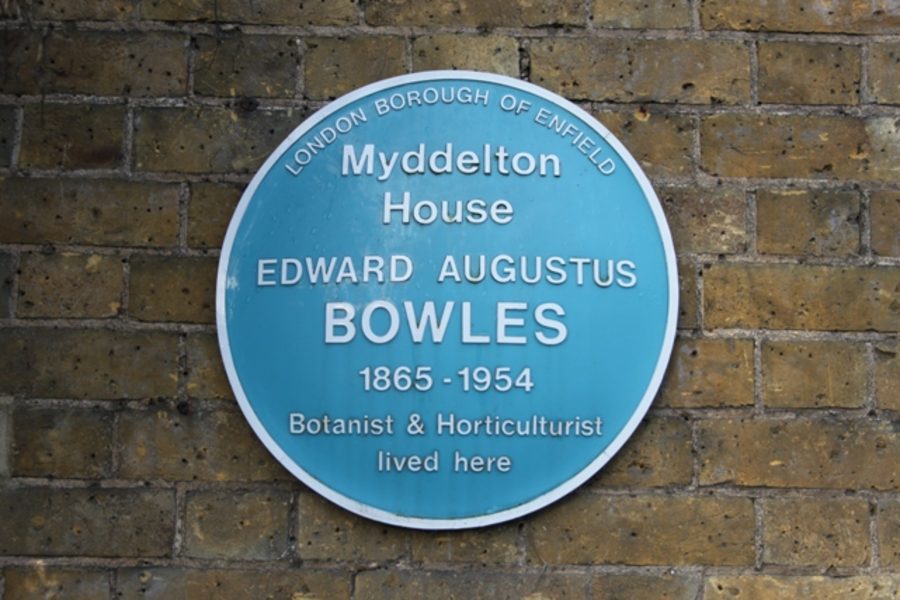
Britain’s leading botanist by far Dr Shirley Sherwood OBE – the widow of the late buccaneering businessman and one-time owner of hotels including the Cipriani in Venice and the Venice-Simplon Orient Express train service also James Sherwood – is a noted enthusiast on the subject of snowdrops. In December 2021, this delightful lady took to YouTube to discuss a painting of the flowers by Susan Ogilvy and commented: “I love snowdrops. I have lots in my garden and we have a very particularly version of the snowdrop. Whole groups of people, clubs of people who like snowdrops and grow every single kind they can think of. I think there are many, many varieties and of course there are wild snowdrops too.” Of her painting, she endearingly declared: “This is a lovely painting and it justifiably is one of the favourite ones in my collection.”Speaking to the ‘Daily Mail’ yesterday, gardening writer Val Bourne remarked of the bulb sold of eBay: “[It’ll] go under the knife. They’ll cut it into 20 pieces and start selling individual plants. They’ll get their money back in three or four years. It’s a mad hobby.” Going further previously, Mr Sharman commented: “Security is a big problem. I know people who have opened their gardens and had everything stolen. I don’t open my garden or nursery. But stealing snowdrops is like stealing a Van Gogh. If it’s rare, all the galanthophiles will know who propagated it and where it was stolen from.” In 2019, two men were arrested for stealing 13,000 bulbs from the Walsingham Estate in Norfolk and amongst famous collectors are Lord and Lady Heseltine. The former Deputy Prime Minister under John Major has accumulated over 700 varieties at Thenford House in Northamptoshire in his “garden of major importance.” Whether they have the variety named ‘John’s Y-Fronts’ is unknown.Anyone who picks an endemic variety of the plant in the national park will be fined £5,954 ($8,070, €7,113 or درهم29,600, 110,000 Turkish Lira) according to a report published in the ‘Hurriyet Daily News’ in February 2022. The fine has risen from £4,330 ($5,870, €5,174 or درهم21,600, 110,000 Turkish Lira) last year and of why, Halil Ernalçacı, the head of Mount Spil Nature Park, told the paper: “Our visitors should be cautious when they walk in the park. They should look for where they take their steps.”Artist, botanist and horticulturist Edward Augustus Bowles (1865 – 1954) of Myddleton House, Enfield, London was a well known “snowdrop enthusiast.” In January 2013, the blog ‘Plant Heritage’ delved into his connections to the flower after visiting a snowdrop sale at his former home.
Types of Snowdrops
Snowdrops bloom from September through to March and peak in January and February. Amongst the many types – there are in excess of 1,700 in the collection of Joe Sharman alone – are:
Galanthus ‘Dionysus’
Named after the god of the grape harvest, winemaking, orchards and fruit.
Galanthus ‘Elwesii”
Named after H. J. Elwes, an English plant collector who found the original plants in Turkey. Its leaves “neatly fold inside the other” and its “flowers have two green spots on the inner petals, which sometimes fuse together.”
Galanthus ‘Fly Fishing’
Features a “long, slender pedicel (stalk) that looks like a fishing rod.”
Galanthus ‘Golden Fleece’
Joe Sharman spent 18 years developing this and sold a bulb of this variety for £1,390 ($1,884, €1,661 or درهم6,920).
Galanthus ‘Golden Tears’
A new variety and record breaker in terms of the £1,850 ($2,508, €2,210 or درهم9,210) price Joe Sharman sold it for, this variety features a “narrow-flowered yellow pterugiform with a very large mark and bright yellow ovary” and is noted as “very beautiful and distinct” and “exceptionally vigorous.”
Galanthus ‘Ivy Cottage Corporal’
“Features two green Vs resembling a corporal’s stripes.”
Galanthusnivalis ‘Norfolk Blonde’
Rather like a blonde bimbo, this snowdrop features “pale leaves and pale yellow flowers” and has a “long ovary” also.
Galanthus ‘Ophelia’
Named after Shakespeare’s tragic young noblewoman of Denmark who ends up in a state of madness that ultimately leads to her drowning.
Galanthus ‘Nothing Special’
Modestly named though lauded by Joe Sharman as “one of the best forms I have selected,” this “very clean white and wonderfully scented” snowdrop is supposedly “vigorous” also.
Galanthus ‘Primrose Warburg’
Described as a “dainty snowdrop with yellowish leaves” and named after the “legendary galanthophile Primrose Warburg.”
Galanthus ‘Trumps’
Described as having “an elegant flaring pagoda shape” and thankfully has nothing to do with the 45th POTUS of the same name.
Galanthus ‘Wendy’s Gold’
Described as “far more vigorous than [other] yellows.”
Galanthus ‘John’s Y-Fronts’
This variant is described as “small, late, neat, single with a very clearly Y-shaped mark on inner.” It has grey leaves. Could it’s name have been inspired by the former British Prime Minister John Major’s “underpant episode” with Edwina Currie where he allegedly tucked his shirt into his allegedly grey Y-fronts?
Whilst the Miss Havisham-esque eccentric Huguette Clark (1906 – 2011) spent 81 years of her life on her lonesome in spite of being worth £294 million ($400 million, €353 million or درهم1.5 billion), Ken Smith is a recluse of much more modest means.
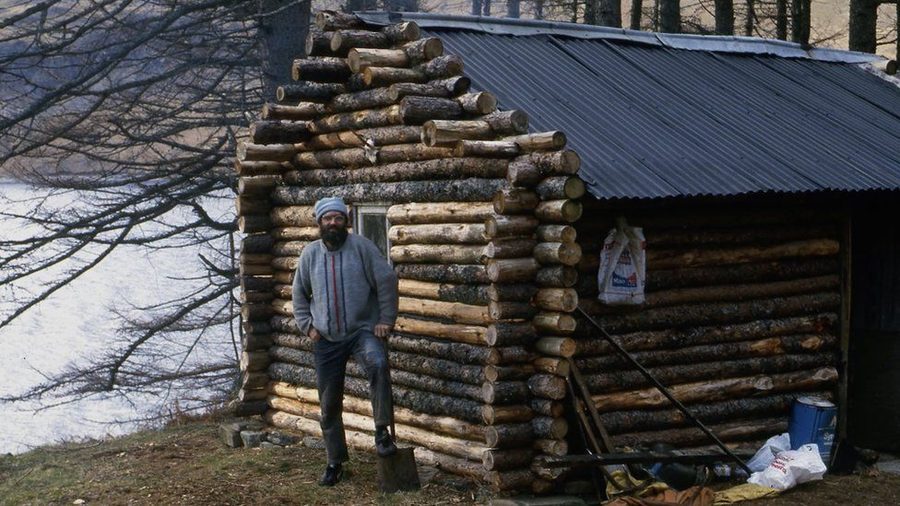
Unlike the doll doting American who lived out her days in palatial splendour with just staff for company and spoilt heiresses like over-Botoxed birdbrains such as Tamara Ecclestone, 72-year-old Derbyshire born Smith is someone who has been content to have spent around 46 years alone with nature in the Scottish Highlands.
Beaten to a pulp and left with a brain haemorrhage and unconscious for 23 days after a vicious assault by a gang of thugs, this former fire station builder decided that he “would never live on anyone’s terms but my own.” He headed to Yukon – the Canadian territory bordering Alaska – and walked a staggering 22,000 miles before returning home.
Sadly, in his absence, his parents had both died and feeling “nothing,” Ken Smith found solace in walking the length of Britain. In a November 2021 BBC Scotland documentary, he remarked: “I cried all the way while walking… I thought where is the most isolated place in Britain? I went around and followed every bay and every Ben where there wasn’t a house built. Hundreds and hundreds of miles of nothingness. I looked across the loch and saw this woodland.” He has remained there ever since.
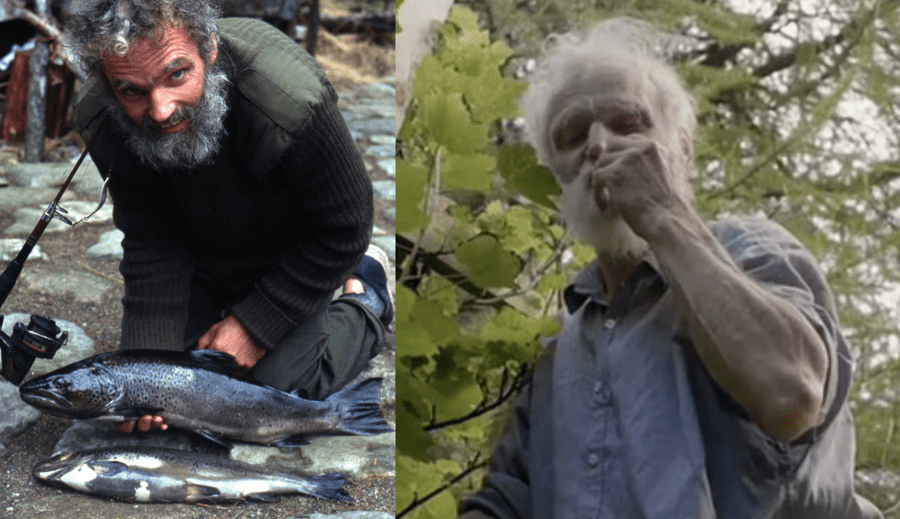
To this day, Britain’s ultimate hermit has lived in a log cabin he built himself that includes a log fire, but lacks electricity, gas, running water and any form of communications techologies. He lives off foraged berries, vegetables he grows and fish he catches from Loch Treig – known as “the lonely loch” – and also makes his own wine. At the time of the filming, he had over 70 gallons of hooch on the go.
Speaking of his modest lifestyle, this simple but satisfied sort – who has to complete a 54-mile round trip just to post a letter – added:
“I think if you love the land, it sort of loves you back. It loves you back in all the things it produces for you… Do you think I could live in a house? No, I’d spend most of the time in the pub… They wanted me to move into ‘civilisation’… Well I wasn’t going to have any of that.”
“When I die, instead of everyone moaning and being sad, I want everybody to be merry, getting pissed up on all on my wine… Anybody can come that I know and they’ll know me, so they’ll come.
“I have had lots of incidents and I seem to have survived them all and I know one thing, for sure, no matter what, I am bound to go ill again sometime. Something will happen to me that will take me away one day as it does for everybody else, but I’m hoping that I’ll get to 102.”
https://www.youtube.com/watch?v=BwUockt4D28
https://www.youtube.com/watch?v=muYP8S-YO6k
Modest to his core Ken Smith is content with living a solitary life in the cabin he built with his own hands in spite of having suffered a stroke and been injured by a pile of logs falling on him. In spite of being offered alternative accommodation in Fort William, he prefers to continue as he has done for four decades thus far. Though, he entertains himself by listening to a radio and keeps a small library of books, he does not have and does not want a mobile telephone device.The resourceful Derbyshire born hermit lives mainly off foraged food and fish he catches, but gets up once a month at 4am to hike for three hours to the nearest railway station. He then makes an hour long journey to Fort William to fill his 70-litre rucksack with provisions and medical supplies that last him for the following weeks. He draws sap to make his ‘hooch’ and has also invented a compostable waste system that he calls “the bottomless pit.”
Former church hall on the Isle of Lewis to be sold for just £34,000 in spite of the fact that it could earn the buyer £300 per night
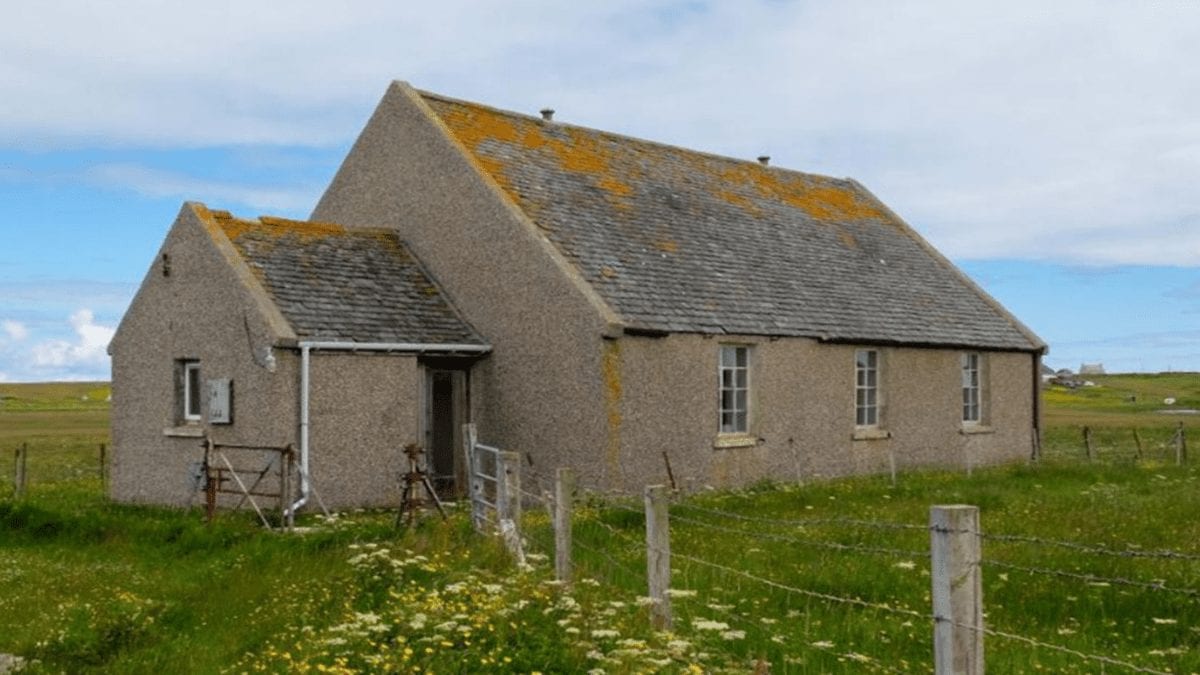
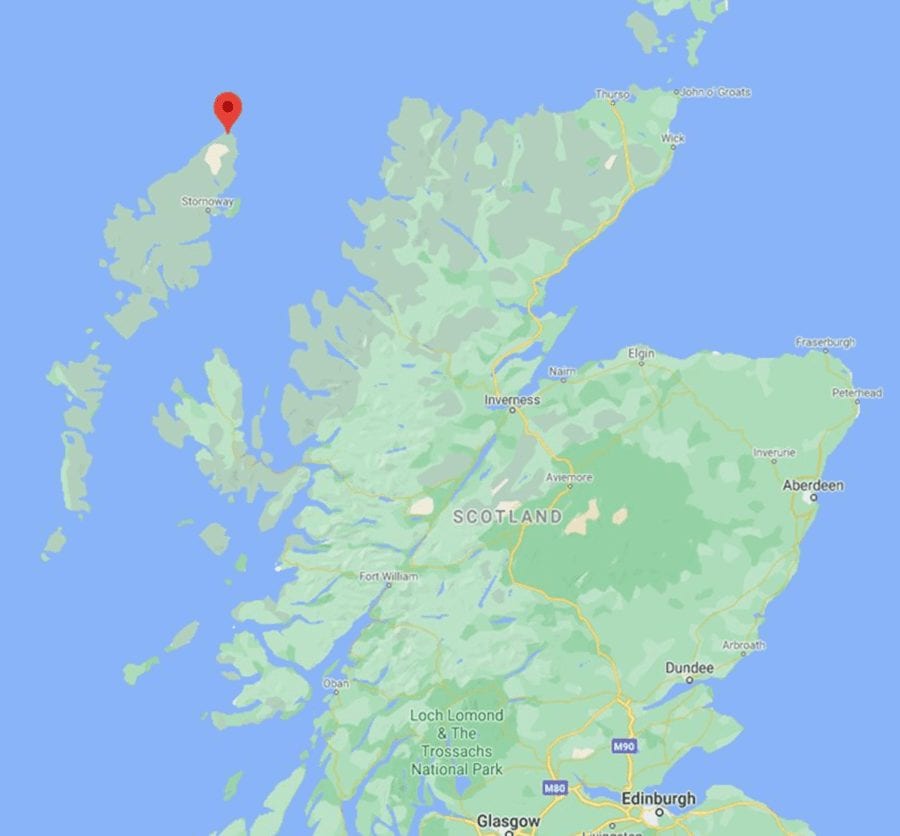
Lionel (Gaelic: ‘Lìonal’) forms part of the Barvas (‘Barabhas’) civil parish on the Isle of Lewis, the largest island of the Outer Hebrides archipelago in Scotland. Like the castle we featured last month, it is extremely isolated but unlike that white elephant, it is situated on an island that has a population of some 20,000 and where the main industries are crofting, fishing, peat cutting and weaving.
Accessed by a daily ferry from Ullapool on the Scottish mainland that takes 2 hours and 30 minutes and served by an airport also, Lewis remains an extremely religious island and though the Sabbath is still observed mostly, the sale of a church hall is indicative that change is perhaps on the way.
Offered by Future Property Auctions this week, the non-listed former church hall at Lionel is described as a “super investment opportunity” with “development potential” as an Airbnb that could rent for “upto £300 per night ($417, €347 or درهم1,500 per night) at peak times.”
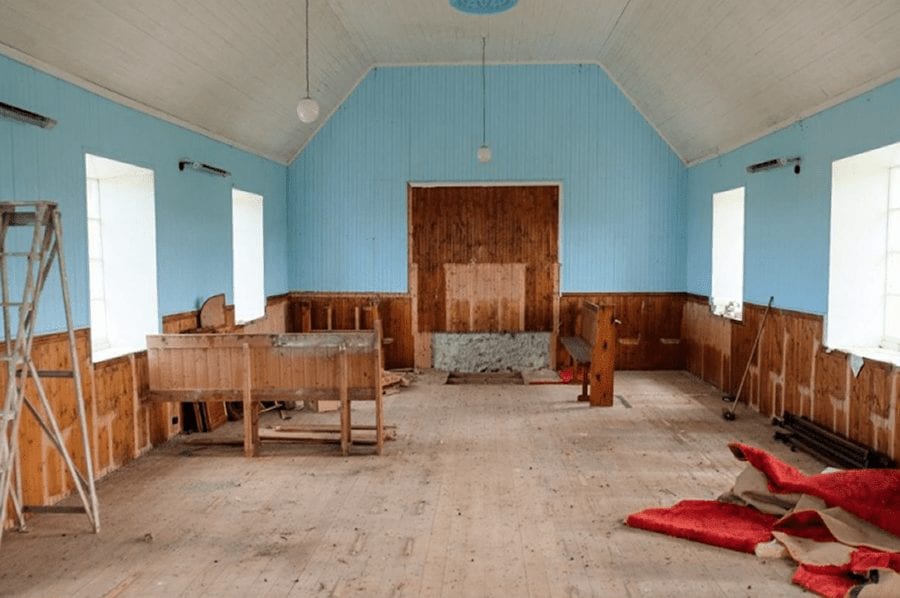
Extending to 820 square foot in total currently with a large, double height single room and entrance vestibule, the detached building has been listed with a remarkably low guide price of just £34,000 ($47,300, €39,400 or درهم173,600) and is described as potentially also being capable for use as a permanent home, creche, museum or public library with “super income earning potential.”
Bidding online for the church hall opens at 10am on the 7th May 2021 and closes at 4pm on the same day on the Future Property Auctions website.
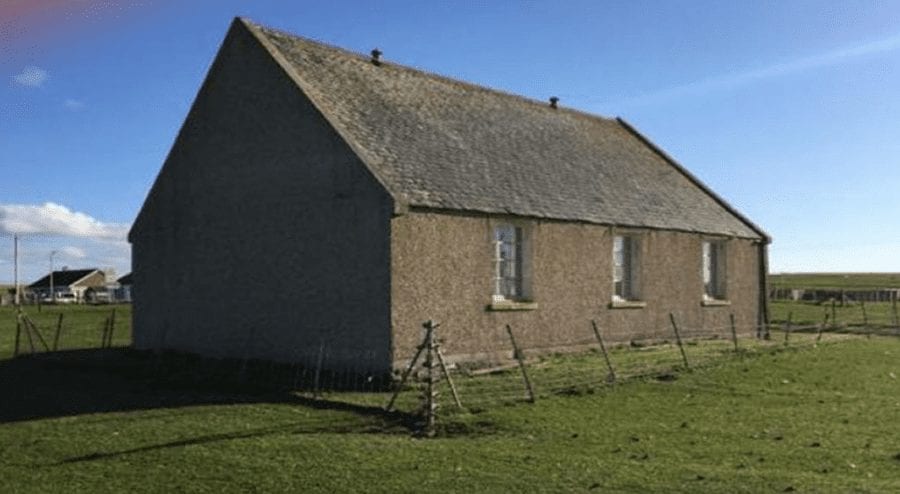
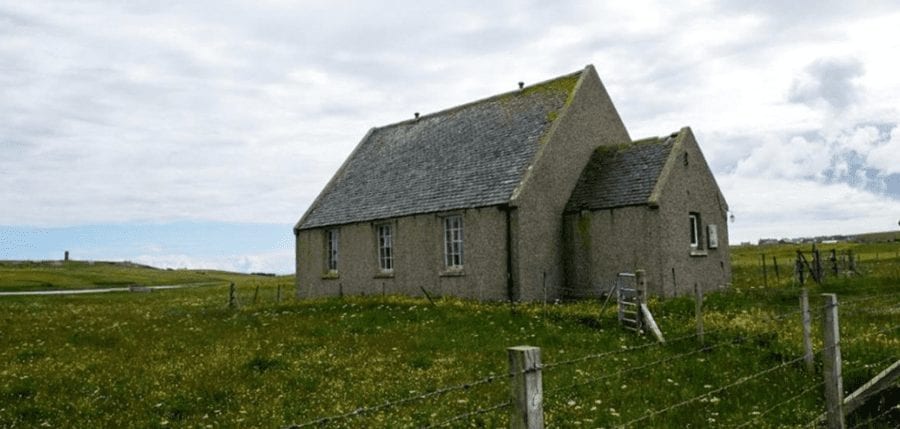
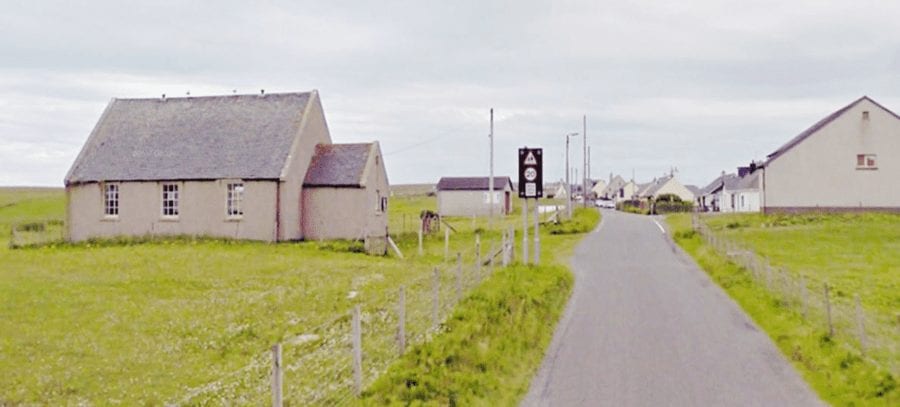
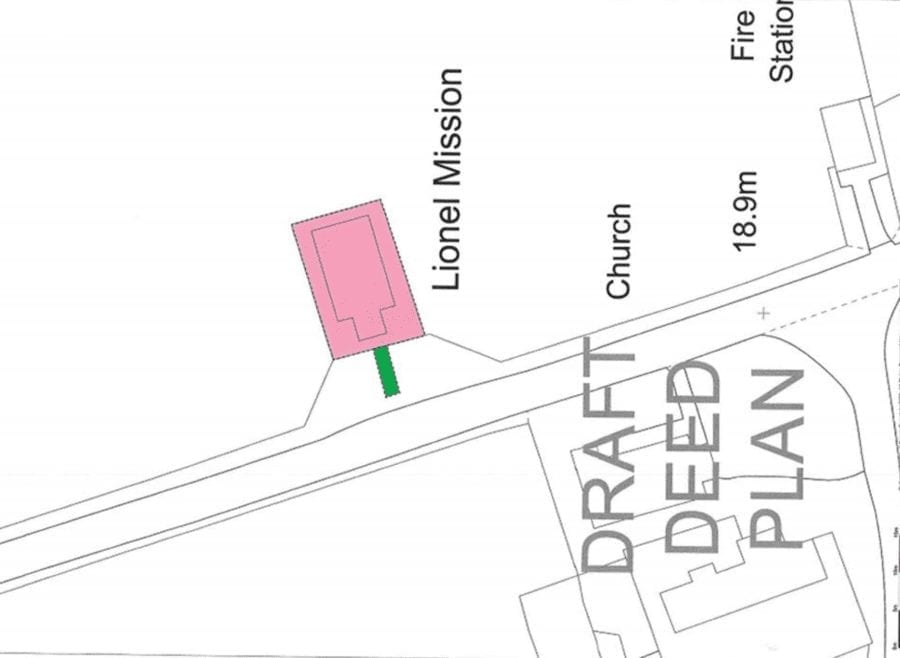
The interior of the building is watertight but in need of renovation. Sadly, character features including pews have been removed, but there is clearly potential to create a two-storey single dwelling house with earning options as a holiday home within the space.Viewed from the rear and side, the plot on which the former Lionel Mission Hall is clearly not large, but it is surrounded by farmland.For someone seeking peace and quiet, the location would be ideal. Equally, given tourism is a source of local income, the earning potential of the building once renovated as a holiday let is clear.A view of the former church hall from the road.A site plan shows the limited land that surrounds the building.Clearly, as shown by this map, the property is certainly remote.
Grimsby resident takes with good humour someone attaching an Argos sign to his house on New Year’s Day whilst journalist reporting story of it goes all Miss Marple
“I think if people were all a bit more like Andy, there would be no wars” remarked one Nick Kay on the Facebook group ‘Angry People in Local Newspapers’ of a story about an Argos sign “taking a tour of Grimsby before ending up attached” to the house of someone named Andy.
According to the paper’s Gregory Ford, a journalist with plainly a hell of a lot of other subject matter to sift through as he moves into 2021, “[the sign] first took a stop at the town hall a few yards away” and appeared the next day “at an address in West Marsh where it appeared to have been attached to the side of a house.”
Ford – a man who makes Miss Marple looks like an amateur – continued:
“GrimsbyLive finally caught up with the wandering logo at around 1pm where it was found still attached to the side of a property on Haycroft Street near the junction with Lord Street.”
Speaking to the “resident at the property,” a man whose surname he neglected to include named ‘Andy’ subsequently, Ford gained the following surprisingly witty comment:
“I think someone has put it here as a bit of a joke, we have some banter with the neighbours, one of my friends sent me a video of someone attaching it to the house last night.”
“I’ve got no idea how they got it down or if they were even the ones that took it off the wall in the first place to be honest.”
“I’m keeping it up though I think, it is a bit funny isn’t it? I might just treat it as a bit of a late Christmas present, I’ll have to set up my own click and collect.”
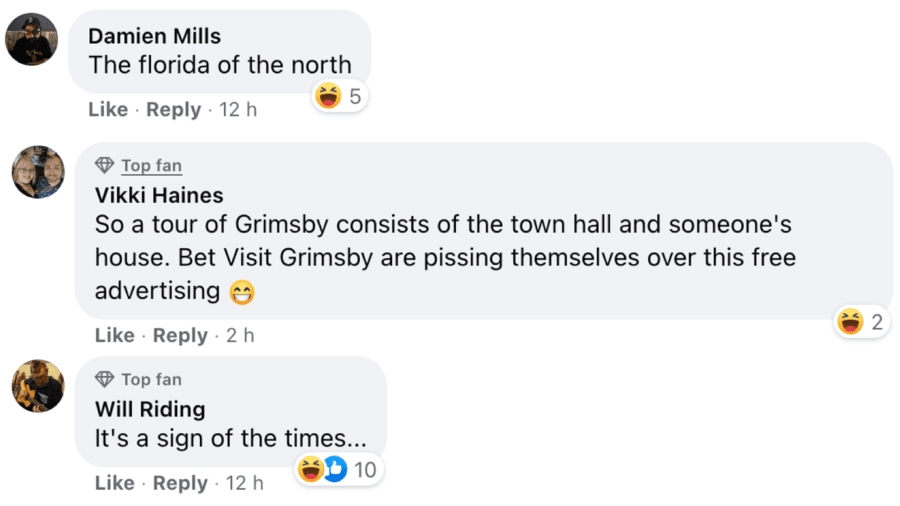
Predictably members of the Facebook ‘Angry People in Local Newspapers’ had fun with the story with one declaring: “Bet Visit Grimsby are pissing themselves over this free advertising.”Another added: “They’ll put a pick-up point anywhere these days” whilst another mocked: “I saw Argos tour in the 80s, before they sold out.”Andy from Argos’ sign is about its only highlight – Grimsby (a grim town whose residents are nicknamed ‘Grimbarians’) is the place Theresa May chose to give her final speech prior to the final vote on her ultimately rejected Brexit deal in 2019 in a hangar for housing life vests (rather appropriately); ditch loving murderess Jane Andrews (pictured with her former boss Sarah Ferguson) grew up in Grimsby and as of November was a Morrisons shelf-stacker in the town; chancellor “best known for singing in the bathtub as the economy collapsed” Norman Lamont was brought up there too and in 1974, Sir Elton even decided to sing about the accursed place. Now, in 2021, it doesn’t even have an Argos.
Whilst Elton John waxed lyrical about Grimsby in his song – with lines including “there’s nothing to compare with my Grimsby,” “Grimsby, oh, a thousand delights” and “I miss your magic charm” – one visitor remarked of it: “The place just stinks of fish.”
In August 2020, Argos announced it would no longer be printing paper copies of its catalogue. ITV1’s ‘This Morning’ responded by interviewing a retail studies expert named Professor Leigh Sparks who’d collected every single copy since 1973. He remarked: “It was a book of dreams in many ways. What a record of consumer tastes they were” whilst Eamonn Holmes intelligently chirped: “They can show you every stage of your life.”
“It’s So Easy” was Argos’ strapline in advertising campaigns in the 1980s. No doubt, ‘Andy’ won’t share such sentiments when he’s bashed his head against the sign after a night out on the razzle dazzle.
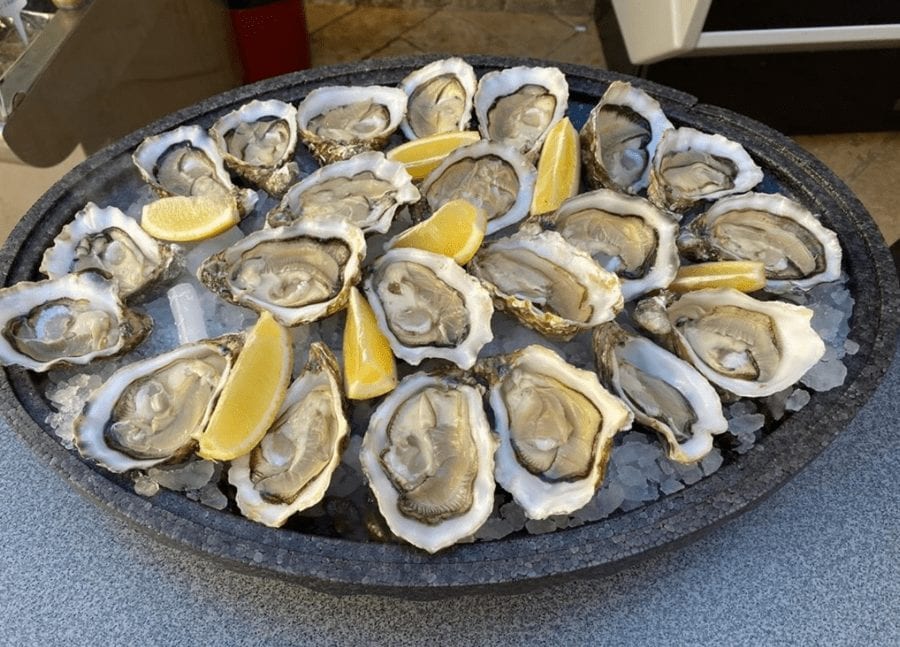
Native oysters bizarrely reappear in Belfast Lough after 100 years of absence without any human intervention
In March, as the world locked down due to coronavirus, one note of positivity came in the form of reports of Venetians reporting that their canals were clearer and cleaner.
Now, this morning, the Guardian, followed up with similarly good news from Northern Ireland in sharing that “native oysters have unexpectedly returned to the shores of Belfast Lough after more than 100 years” absent.
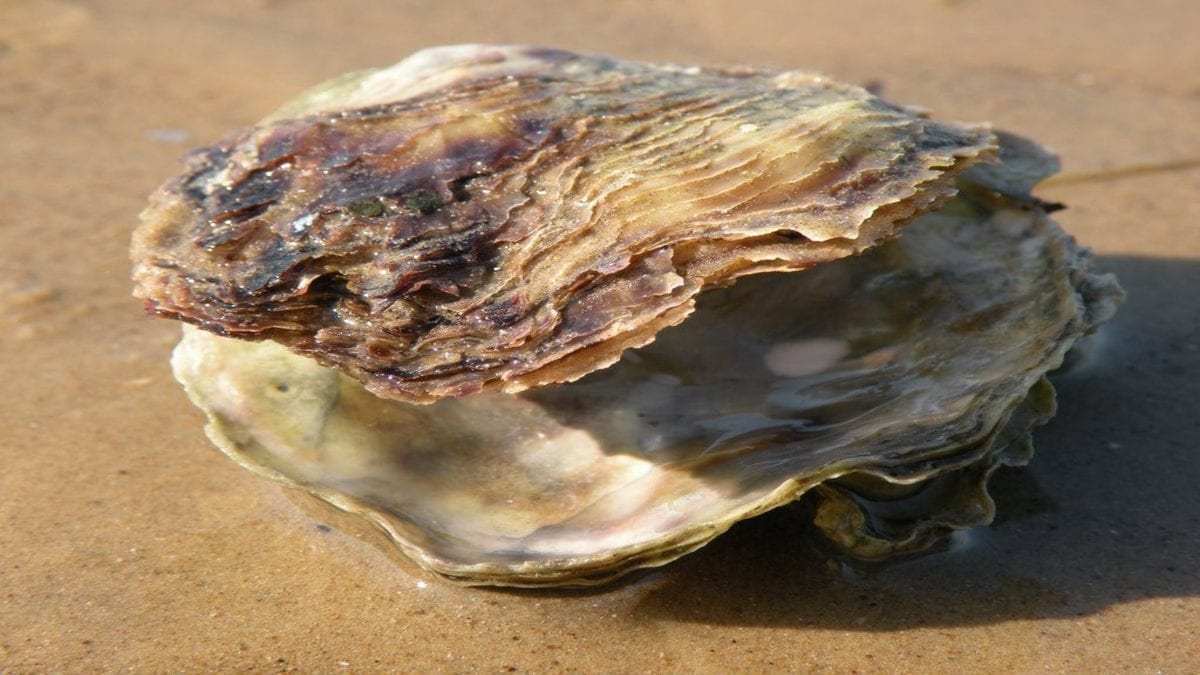
“Fished to oblivion” from the 1800s, a systematic survey in May and June found 41 live ostrea edulis European flats along the coast and of the news, Joanne Preston of the University of Portsmouth told the paper: “I think it’s really interesting. The take-home message is, if you create the environmental conditions… then the species will be able to establish again.”
Obviously a “boost to biodiversity in the lough, since [they] filter seawater and their shells provide a habitat for many other sea creatures including tiny worms, snails, algae and anemones,” David Smyth of Bangor University in Wales commented: “The big question is, how did they get there?”
Citing that “the lough could one day be home to a future oyster fishery right near Northern Ireland’s capital,” here indeed could be one light of hope for the fishing industry as we career into Brexit Britain 2021.
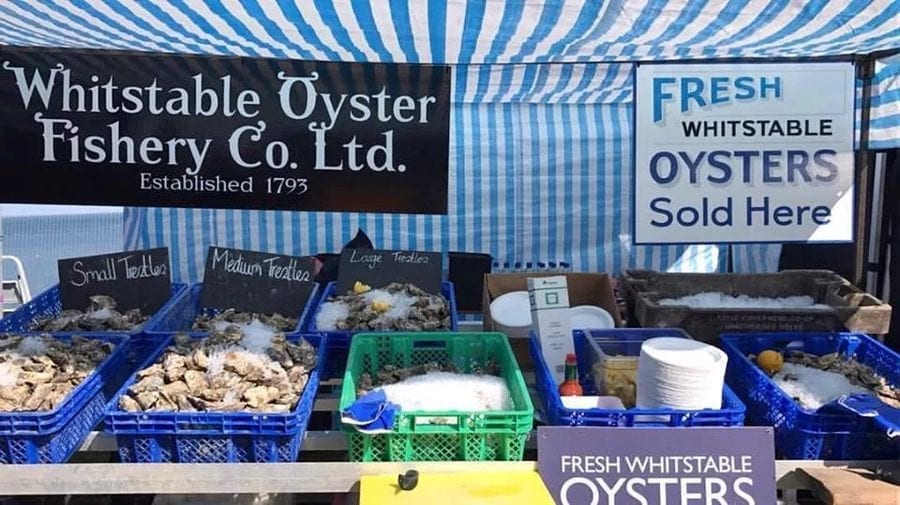
When Covid-19 restrictions allow, we urge readers to head to Britain’s oyster capital, Whitstable, and visit the restaurant we reviewed in March 2016, the Whitstable Oyster Fishery Company (first established as a cooperative in 1793). Here, we suggest, you’ll find the finest seafood that will utterly delight you.
Credited with reviving interest in oysters, the current owners of the Whitstable Oyster Fishery Company, the Green family, have very much led the transformation of Kent’s answer to Burnham Market in Norfolk or Salcombe in Devon into a fashionable destination for foodies and art lovers. Could the same eventually happen in Northern Ireland at Belfast Lough?
As our petition to ban bear slaying barbarian Larysa Switlyk from Instagram soars past 10,000 signatures, it is time the social media outlet paid attention
Not only have Instagram done nothing about stopping this evil woman – whom also has shoved sex toys up the bums of sheep and shot endangered animals and alligators and peacocks even – in the time since, but they have also continued to allow her to have verification in the form of their supposedly sought after ‘blue tick.’
Reprehensible Switlyk, however, has now been proven to be one of the most deservedly detested people on the planet. Today, with over 10,000 signatures to our petition, we again demand that Instagram do the decent thing and ban Donald Trump Jr.’s bestie from their site.
If you haven’t already, please sign the Change.org petition to get Larysa Switlyk sent to social media Siberia by clicking here.
Ban The Bear Slayer – Larysa Switlyk has continued to post images in which she promotes items she is plainly paid to hawk and others in which she shares imagery of slaughtered endangered species in the months since our Change.org petition against her commenced. Today, we again say: Shame on Instagram for not banning this wicked wench.
‘The Steeple Times’ discovers five properties that will appeal to serious sports fanatics with a desire to indulge their passions at home that are currently for sale
Whilst most would simply go to a racecourse to watch the horses or to a football ground to cheer on their heroes on the pitch, five homes follow where sports lovers can partake in their very own confines follow:
A vast 18,000 square foot house on 13.21 acres in Connecticut that is currently for sale cannot be described as a “looker,” but it comes with its own private, professional indoor hockey and skating rink (pictured top). There’s a Zamboni ice resurfacer “for perfect ice” and even heated team benches, a lighted scoreboard, home and visiting team locker rooms and a viewing ‘lounge.’ In addition, there are two guest houses and an outdoor swimming pool.
St. Clements Hall, Terrington St. Clement, Norfolk, UK
£240,000 ($316,000, €267,000 or درهم444,000) through Attik.
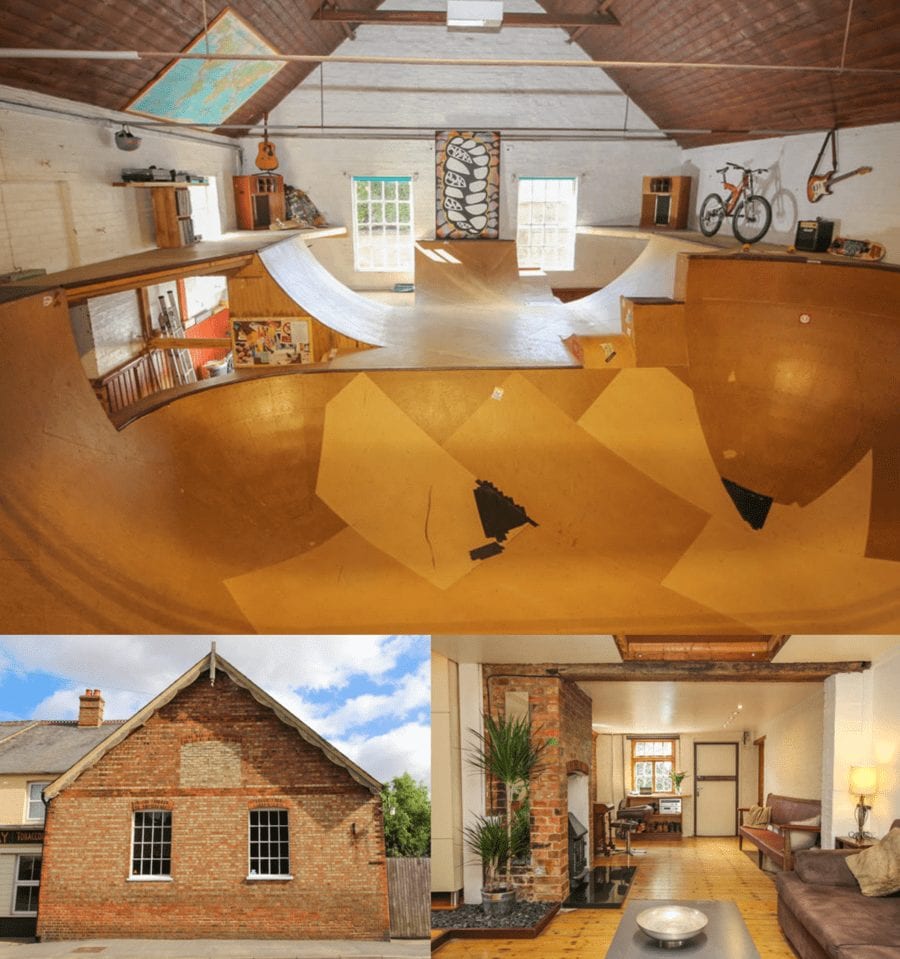
Most people looking for a “3-bedroom semi-detached house” are likely to be couples with 2.4 children, but for those in a somewhat different position, a 19th century, 1,873 square foot former youth hall might appeal. Primarily reconfigured to provide a 27-foot by 39-foot ‘skate bowl’ with 13-foot vertical wall, mini skate park and three 4-foot quarter pipes, the house also more conventionally has an open plan living space, 3 bedrooms and a shower room. Even the snobby girl in Avril Lavigne’s Sk8er Boi song might be impressed; the house has featured in The Sun, on the BBC and in Netflix’s Amazing Interiors.
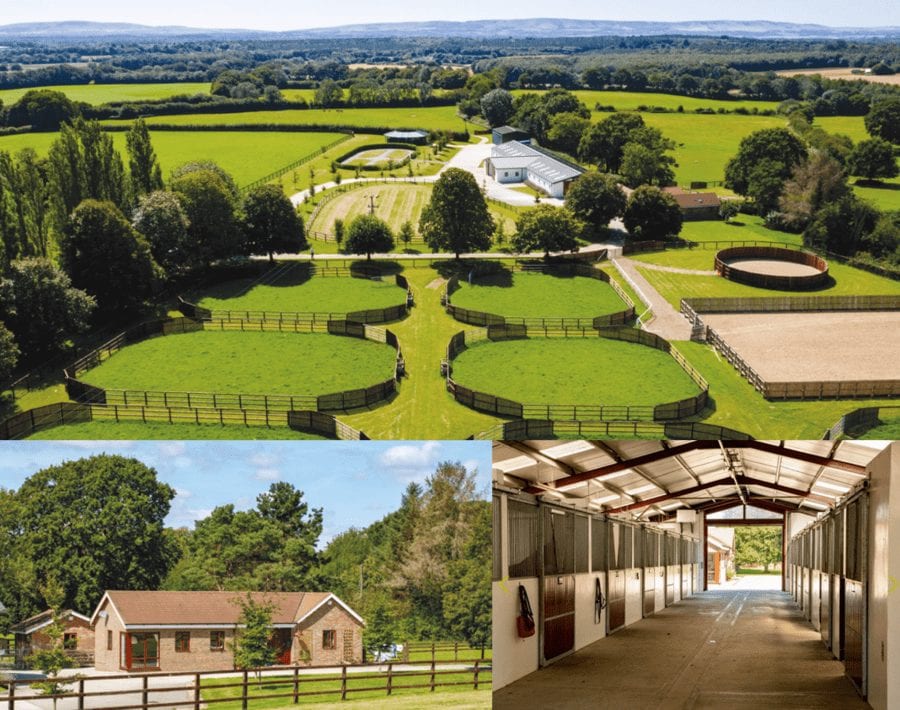
Owned by the Kazakhstani phosphorus tycoon Nurlan Bizakov since 2010, Tourles Farm Stud has been part of Hesmonds Stud. Described in TDN Europe as “one of the best presented farms we have offered in recent years” by William Harford of Windsor Clive, the 113.78 acre property “has [only] become available due to the owner’s successful investment in France [at Monfort et Preaux in Normandy]” and comes with a 3-bedroom cottage, a stable barn with 26 boxes and a 4 furlong all-weather gallop.
On and off the market since 2018, this “one-of-a-kind” 41,000 square foot Bel Air house on 1.35 acres includes 8 bedrooms and an astounding 21 bathrooms. There are also 20 garage spaces in an “auto-gallery,” 8 bars, a 36-person screening room and not one, but two 75-foot swimming pools. The pièce de résistance for sports fanatics? A full-sized NBA basketball court.
Kinlochdamph Estate, Torridon, Scottish Highlands, UK
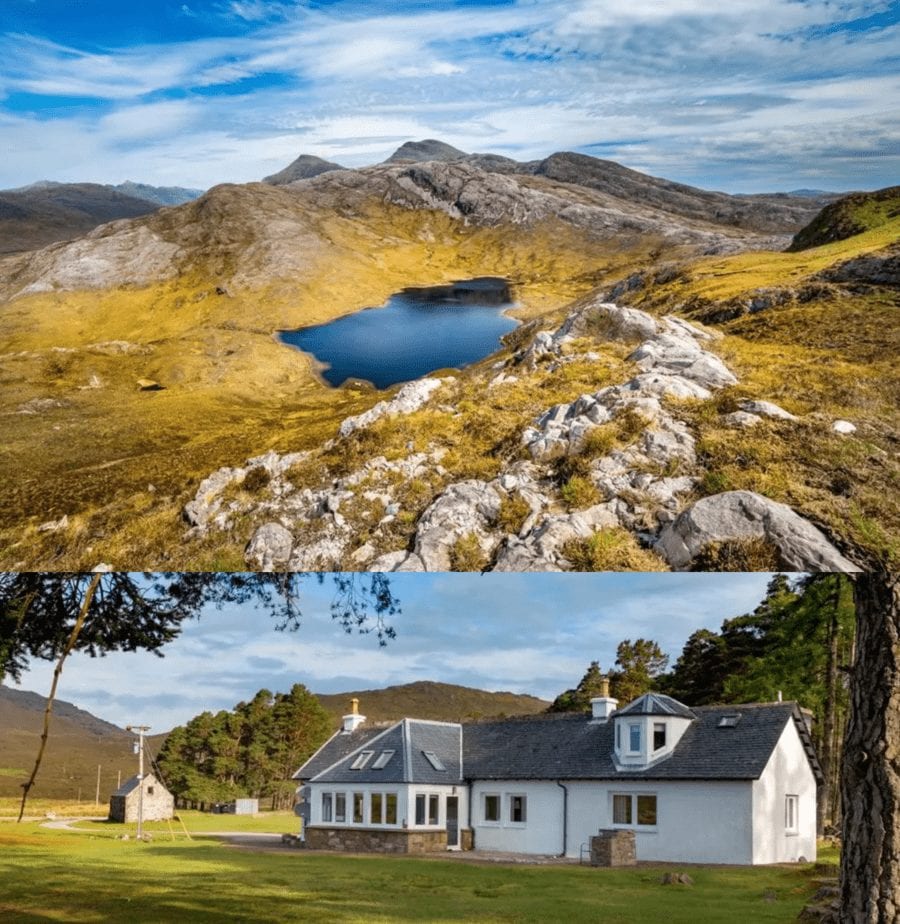
Extending to 4,085 acres, the Kinlochdamph Estate is perfect for those wishing to achieve a Macnab (and bag a salmon, a stag and a brace of grouse within one day). It has a recently refurbished 4-bedroom lodge, red deer stalking, trout fishing on its hill lochs and a small population of grouse, ptarmigan, woodcock and snipe. Income is provided by forestry and a hydro scheme, but any wannabe John Buchan will purely be buying this place for its sporting rights.
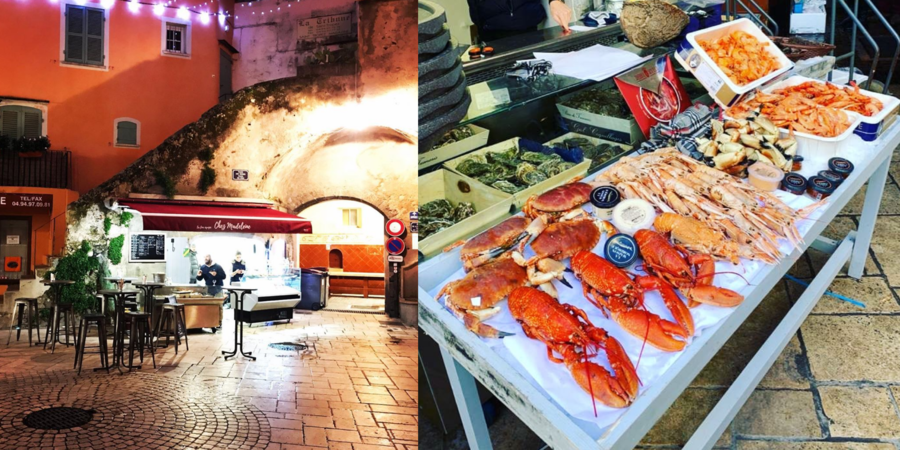
Matthew Steeples suggests the utterly charming Chez Madeleine as the best place for seafood in Saint Tropez, France
To those that aspire to be Mary Berry, Saint Tropez is famous for its Tarte Tropézienne – created in a bakery in the main square in the 1950s by Alexandre Micka, a young Polish baker, and made famous by Brigitte Bardot’s obsession with it subsequently in the 1960s – and to the flash with wads of cash, this is a summer spot that is all about hedonism and high fashion.
If you want Celine, Dior, Hermès, Loro Piana or Louis Vuitton, in Saint Tropez you will find yourself in your idea of heaven and in terms of dining, the coastal town is primarily divided between restaurants that cater to tacky tourists and dining destinations that pander to the cravings of the super, super ultra rich. However, for those desiring something a little more authentic there’s a wonderful little oyster bar hidden behind a small fish market named Chez Madeleine that you simply just couldn’t fail to fall in love with.
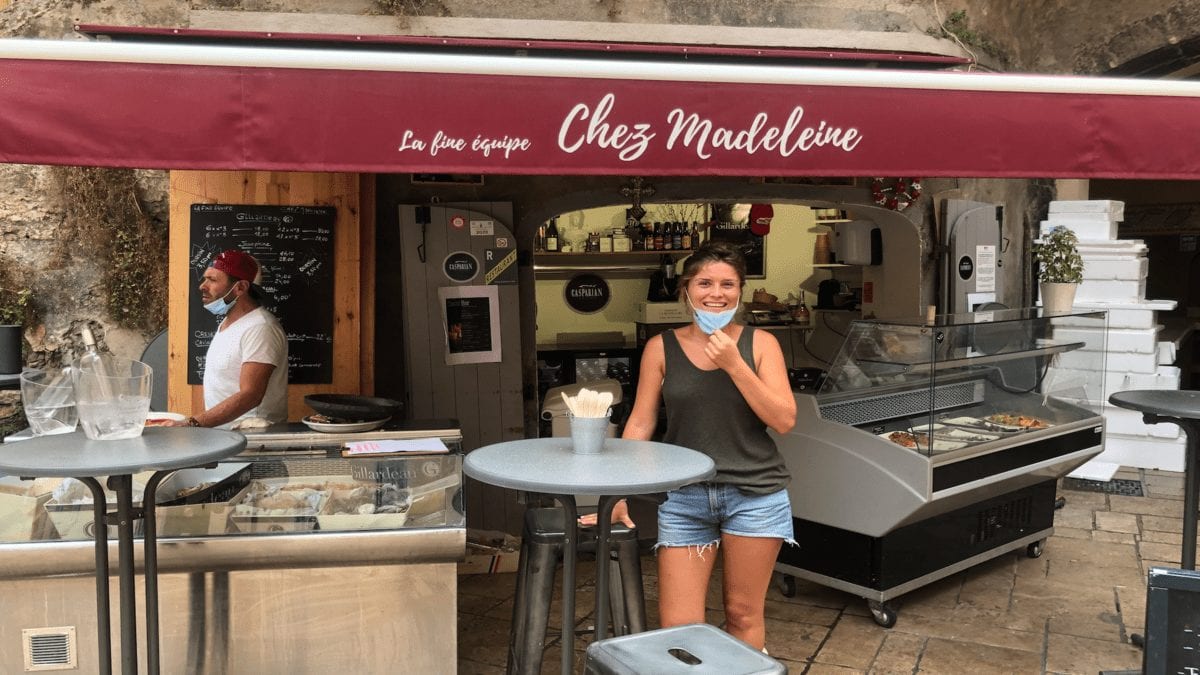
Owned and operated by a delightful lady named Garance Fonquerne and her family since December 2019, Chez Madeleine is certainly petite. With just a few bar stools, it’s a quick pitstop for some but, if you linger, you’ll soon discover the charm of this dining destination is based upon its atmosphere and jolly staff.
Garance is thoroughly French, but her father runs a hair salon in London’s Gloucester Road. She was educated partly in South Kensington and as such has an ability to click with her international clientele. Here, indeed, is a hostess exceptionnelle and someone whose dining spot is deservedly buzzy.
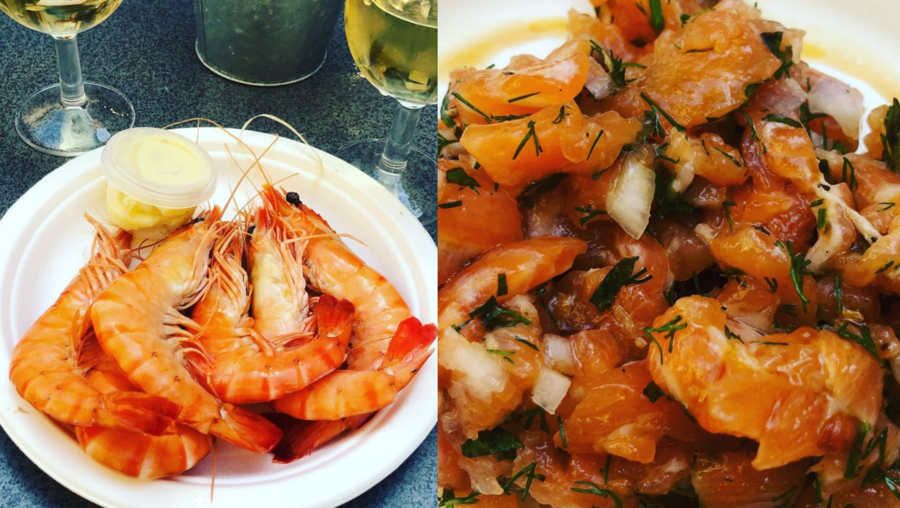
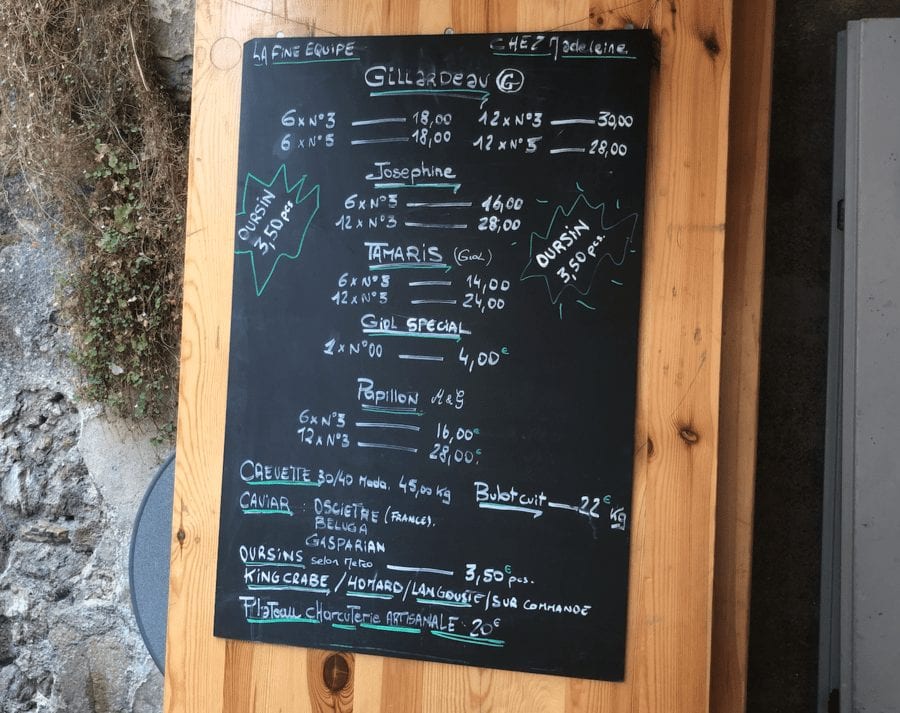
Featuring primarily a menu of oysters including the Josephine and the Gillardeau – both famously farmed by the family of the latter name since the 19th century. As you sit observing these delights being shucked, you’ll soon realise the truth of Andrew Carnegie’s quote on this most delectable of shellfish: “The first man gets the oyster, the second man gets the shell” as you then witness the suave staff of the ‘have yachts’ arrive to collect stunningly presented takeaway baskets of such for their masters to consume on their nearby gin palaces.
Offered here also is king crab, prawns, salmon and caviar and washed down in the sunshine with a bottle of rose, you’ll also realise you’ve found the best thing in life in Chez Madeleine: A simple, yet utterly glorious culinary paradise.
Chez Madeleine, 14 Place aux Herbes, 83 990, Saint Tropez, France. Telephone: +33 (0) 9 52 04 39 47. Instagram: @la.fine.equipe.chez.madeleine
Pictured top: Garance Fonquerne outside Chez Madeleine.
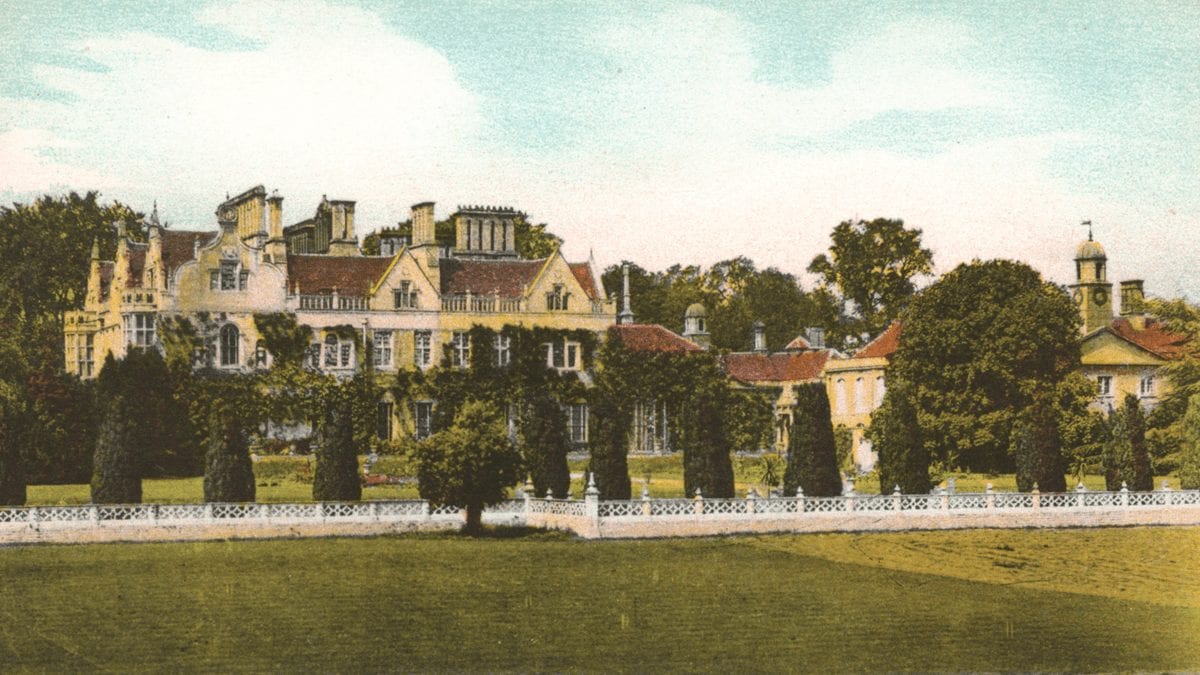
Crumbling Northamptonshire estate Lilford Hall – where the little owl was introduced to Britain – for sale for £10 million, a sum £35 million lower than in 2014
Grade I listed Jacobean mansion with 13 chimney stacks for sale for £10 million; it was for sale last for £44.9 million in 2014 in spite of being listed on English Heritage’s ‘At Risk Register.’
Lilford Hall – parts of which have not been occupied since 1947 –is currently owned by a businessman who tried to sell burial plots in the grounds for £1,250 a pop and shares in a yacht loosely associated with Frank Sinatra for £23 each.
The 321-acre estate includes not only overgrown parkland, but also a zoo with cages that formerly housed bears and a lake for flamingos.
From 1711 until 1990, Lilford House was the seat of the Powys family – the 4th baron is credited with introducing the little owl to the UK.
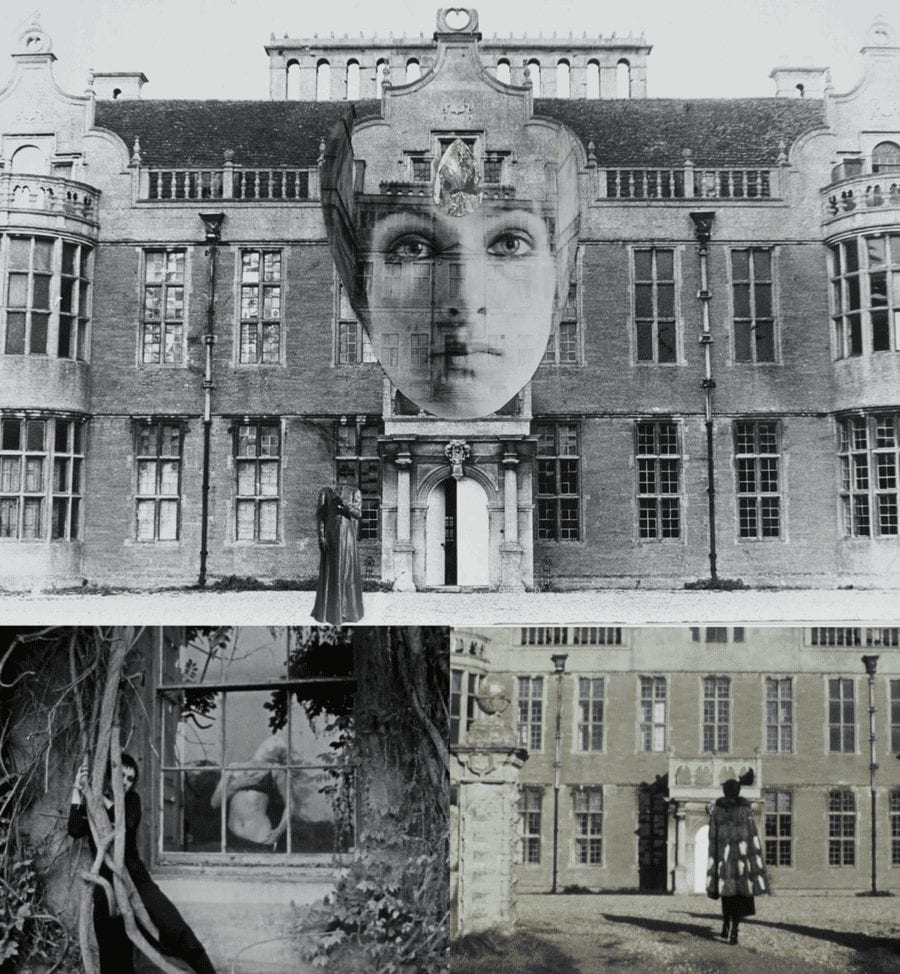
More recently, in 1969, the “sexual mystic” artist Penny Slinger used the at-the-time derelict mansion in one of her best-known works.
A 32,406 square foot Grade I listed Jacobean mansion 82 miles from Central London has gone on sale for £10 million – or the equivalent of just £308 per square foot.
On this basis, Lilford Hall – set in 321 acres near Oundle – seems a comparative bargain when considered against the £4,786 per square foot sought for a Lennox Gardens, Knightsbridge triplex flatThe Steeple Times featured in May, but buyers need to remember this – parts of this crumbling building, most notably the major state rooms, have not been used since 1947.
Marketed last in 2014 for the even more punchy sum of £45 million, the “exceptional residential and amenity estate located on the River Nene,” is now offered by agents Savills. The “wonderfully proportioned” U-shaped mansion itself is constructed of grey limestone and includes over 100 rooms and amongst them are 7 “impressive” reception rooms, a ballroom, a ‘great chamber’ and 9 bedrooms. In addition, there are two Georgian pavilions that were formerly coach houses and stabling, three cottages, a former zoo, the oldest private softball court in the world, a former flamingo enclosure and a deer park.
“Impressiveness in the chief attribute of Lilford Hall as a specimen of architecture” claimed County Life in 1990 and as the seat of the Powys family from 1711 until 1990, it became not only a Downton Abbey-esque entertaining pad, but also housed nurses in the Second World War. Here, indeed, is an English country house that has seen lavishness and decline and thankfully here is an example that thankfully escaped the wrecking ball wrought so disgracefully on such houses in the 1950s and 1960s.
Fascinatingly in the 1880s, Thomas Powys, 4th Baron Lilford filled his aviaries on the estate with rheas, kiwis, pink-headed ducks, free-flying lammergeiers and it was from here that he also introduced the little owl into the UK. There are said to be around 5,700 breeding pairs today, but sadly, according to the RSPB, their numbers are now in decline.
More recently, in 1969, “sexually erotic” performance artist Penny Slinger took over the by then “derelict” mansion in conjunction with the filmmaker Peter Whitehead. Their resulting work, titled An Exorcism, was exhibited internationally and in 2004, after the current owners, Charles and Aziza Micklewright, acquired the house, they did something equally avant-garde; they attempted to sell burial plots in the grounds to Americans by citing the estate’s connections to the founder of the Brownists, Robert Browne – a man better known as ‘The Father of the Pilgrims’ and ‘The Grandfather of the Nation’ (of the United States of America).
Whilst Mr and Mrs Micklewright were lauded for their considerable efforts towards the “huge task” of restoring Lilford Hall, they came to the attention of Historic England in May 2019 when the building was listed on the At Risk Register. At that time, the Oundle Chronicle reported: “The roof covering is in poor condition leading to water ingress and distress to the upper storeys. The front bays require structural attention. A schedule of urgent repairs has been identified but not implemented, and no long-term solution has been agreed.”
Now, someone with very, very deep pockets is required to restore this gem. It would be helpful if they liked erotic art, bears, squash and owls also.
The Names & Numbers – The Lilford Hall Estate, Lilford, Oundle, Peterborough, Northamptonshire, PE8 5SG, United Kingdom
June 2020 – The estate is listed sale for £10 million ($12.5 million, €11.1 million or درهم46 million) through Savills. It includes 321.31 acres, of which 148.17 acres are pasture land whilst 157.48 acres are woodland. The majority of the estate is held on a freehold title, whilst the remaining 127.6 acres – known as ‘The Linches’ and ‘Lilford Woods’ – are held on a lease with 91 years remaining.
2015 – Promoted as ‘The National Memorial Gardens,’ burial plots in the gardens of the hall were offered “available to any UK resident or national for an outstanding price of only £1,250 ($1,568, €1,393 or درهم5,758)” by Mark Bailey of Harley Investments. Around the same time, a website dedicated to Lilford Hall marketed “a piece of the formal gardens” for sale for £299 ($375, €333 or درهم1,377) to include “an officially certified ‘Squire of Lilford’ [title] … with this little piece of history.”
March 2014 – The Irish Times reported that the asking price for the estate had been increased to £44.9 million ($56.3 million, €50 million or 206.8درهم million). They claimed the agents Coldwell Banker blamed “confusion over currency conversion rates and new instructions from the owner.”
April 2014 – The Lilford Hall Estate is listed for sale through Coldwell Banker on MyHome.ie for £33.7 million ($44.2 million, €37.5 million or درهم155 million) on behalf of “an English gentleman.”
2004 – The estate is acquired by the Micklewright family. Little information is available online about the Old Framlingham Charles Micklewright (born July 1958), but he is described as a “patent attorney” on Companies Houses pages. The businessman is mentioned also as a publisher and trustee of the Marsh Christian Trust elsewhere, whilst his Singaporean born wife, Aziza (born 1964), was a director of Lilford Properties Limited from 2013 to 2018.
A website operated by Sign of the Times Limited, a Hong Kong company of Lilford Hall, Lilford, Oundle, Northamptonshire, PE8 5SG, currently offers shares in a yacht named ‘Sinatra the Voice’ for £23.91 ($29.99, €26.64 or درهم110.14) per share. The boat was built in 1956 and is tenuously linked to Frank Sinatra by the fact that a one-time owner, Beale Poste, loaned it occasionally to the crooner between 1968 and 1974 in West Palm Beach, Florida.
1990 – The estate is closed to the public.
1980s – The house is used as a location in the BBC English Civil War inspired historical drama series By the Sword Divided.
1970s – Aviaries on the estate restocked by George Powys, 7th Baron Lilford (1931 – 2005). He “opened [the estate] to the public as a leisure park” and housed more than 350 birds of 110 species there. It remained thus for around 20 years and included a restaurant and shop. The aviaries and the 1,896 square foot restaurant building remain present still today.
1969 – 1970 – American British “sexual mystic” artist Penny Slinger (born 1947) and Liverpudlian filmmaker Peter Whitehead used the “derelict mansion” as the setting for their works An Exorcism and Lilford Hall. They are lauded as a “photo romance” and exhibited at the Blum and Poe Gallery in Los Angeles in 2014, at the Haywood Gallery in London in 2015 and at the Fortnight Institute in New York in 2019.
1949 – Stephen Powys, 6th Baron Lilford (1869 – 1949) died without having married or having had children. His properties aside from Lilford – a house in Mayfair, Bank Hall in Lancashire and the Bewsey Estate in Cheshire – passed to his second cousin twice removed.
1947 – The estate is sold to a company named Merchant Ventures by the Powys family (though they remain present on the estate until 1990).
1939 – 1945 – During the Second World War, the parkland of the estate was used as a military hospital for nearby airfields. From 1949 to 1954, some of the buildings constructed during this period were then used as a Polish school.
1923 – First-class Northamptonshire cricketer Major John Powys, 5th Baron Lilford (1863 – 1945) built the first private softball court in the world in the grounds of the hall. It is now in disrepair and the roof has fallen into the inner court.
1909 – 1910 – The hall was extended in the Edwardian manner including the provision of a new master bedroom with dressing room and bathroom by William Dunn and Robert Watson of Dunn & Watson.
1901 – The estate surrounding the hall reaches its largest size and totals a vast 8,000 acres of land. Around this time, Queen Mary, wife of King George V, is said to have visited the gardens.
1880s – Ornithologist and expert on the fauna of the Balearics Thomas Littleton Powys, 4th Baron Lilford (1833 – 1896) introduces the little owl into England on the estate. His aviaries were said to “feature exotic birds from all around the world” and a species of European lizard, the Lilford’s wall lizard (Podarcis lilfordi), is named in his honour. The 4th baron is repeatedly mentioned in the works of Charles Darwin for his contribution to the study of the science of evolution.
1840s – Further changes to the building are orchestrated by the architect William Gilbee Habershon (circa 1818 – 1891). The Campaign to Protect Rural England described these Victorian extensions as “sensitive” in 2006 – a rare accolade given most additions to English country houses during this period were simply brash and vulgar.
1740s – The Palladian architect Henry Flitcroft (1697 – 1769) adds “outstanding” Georgian interiors whilst “respecting the hall’s Jacobean exterior.” He “softened and brightened” the building as a result and also “constructed the Georgian pavilions and additional storeys to the east end of the two wings.” Other works by Flitcroft can be seen at Bower House in Essex, Wentworth Woodhouse in Yorkshire and Woburn Abbey in Bedfordshire.
1711 – Lilford Hall is sold to the judge and Tory politician Sir Thomas Powys (1649 – 1719), Attorney General to King James II. Powys is best remembered for conducting the prosecution of the Seven Bishops in 1699. He is buried at Lilford.
1630s – Construction of the main exterior of what to this day remains Lilford Hall as a “Jacobean-style gentry house” by William Elmes (the younger).
1473 – The land that forms the estate is acquired by William Browne (1410 – 1489), a wealthy wool merchant and landowner from Stamford, from the estate of Baron Welles (who was beheaded by King Edward IV for treason). In 1495, “in a Tudor style,” he built a hall on the site and it passed to Robert Browne (1550 – 1633), the founder of the Brownists, ‘The Father of the Pilgrims’ and ‘The Grandfather of the Nation’ (of the United States of America).