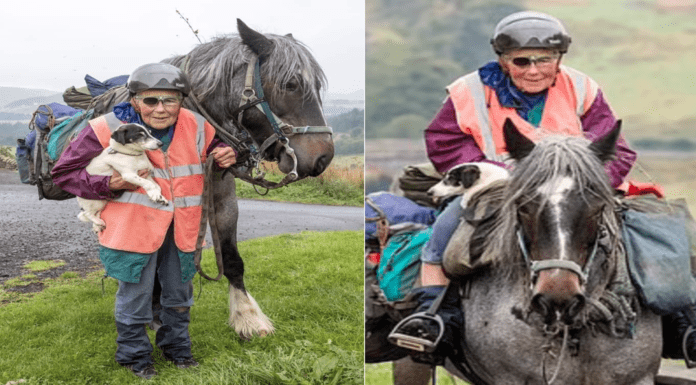
Amazing octogenarian Jane Dotchin travels 600 miles on the back of a pack pony annually.
“Epic” octogenarian Jane Dotchin is best known for completing a 600-mile round ride from Hexham, Northumberland to Inverness and back on her Irish cob mare pack pony, Diamond, annually in seven weeks or thereabouts. She began traversing the country in 1972 and after finding the traffic in England “so bad,” decided to head northwards into Scotland in the 1990s instead.
Accompanied by her Jack Russell, Dinky, this off-grid smallholding owner is said to travel between 15 to 20 miles per day and “loves camping and loves the countryside.” She is said to sustain herself on “porridge, oatcakes and cheese and doesn’t need much electricity as she has an old mobile phone with a battery that lasts six weeks.”
Speaking to the Daily Mail’s Laura Sharman in November 2023, then aged 82, eyepatch wearer Dotchin charmingly shared:
“The more I’ve done it, the more nice people I’ve got to know en-route who I want go back and see again.”
“I know the route so well, I don’t need to read maps. I can manage if I keep to the routes I know. If I were ever in trouble, I know somebody would be there, not far away to help.”
“I refuse to go slogging on through pouring wet rain. I don’t want to go over hilltops in foul weather, but I work it out on the way.”
“There is always something interesting happening and there is never a dull moment.”
A lady appalled by the “shameful amount of litter” and particularly single-use barbecues, which she finds “left lying all over the place,” Dotchin has written three books about the “hardships and joys” of her experiences. One has a foreword by Queen Camilla (then Her Royal Highness The Duchess of Cornwall) and loves to get to know “kind, lovely people.” In 2021, of the countless many she’s encountered, this genuine delight observed: “There are more lovely people than nasty people; the one’s that cause the trouble end up in the headlines.”
To buy Jane Dotchin’s books whilst supporting local bookshops, visit our Bookshop.org shop or click the following visual advert:
Jane Dotchin – a winner of a British Horse Society ‘Exceptional Achievement Award’ – has written three books. The first is ‘Journeys Through England with a Pack Pony’ (Wagtail Press, 2020). The second is ‘Journeys Through Britain with a Pack Pony 1985 – 1987’ (Wagtail Press, 2021); it features a foreword by HRH The Duchess of Cornwall. The third is ‘More Journeys with a Pack Pony 1988 – 1994’ (Wagtail Press, 2022); it features a foreword by Helene Mauchlen, BHS development officer for Scotland.Famed for her epic annual 600-mile trek with her pony and disabled dog, Dinky, Jane Dotchin is an inspiration and a treasure. She carries only a saddlebag for her dog, Dinky, and a tent and an old mobile phone that is rarely turned on. Her “mainstay” is “nothing but porridge, oatcakes and cheese – all of which she shares with Dinky.” If only more people were like her.On Twitter of Jane Dotchin in May 2024, author of ‘The Vanishing Ice’ Iain Cameron remarked: “I met this remarkable lady a few years ago near Glen Lyon in Perthshire. Eighty-year-old Jane Dotchin travels on horseback from near Hexham in Northumberland to Inverness every year (she’s been doing it since 1972, I think). Covering about 20 miles a day on the horse, she camps where she can, cooking food on a stove. The 600-odd mile trip normally takes just over a month. When I met her, she was boiling a cup of tea on the stove and having a break. I only found out afterwards what she was doing, because she only said: ‘I’m out for a long ride’ when [I] spoke to her. The master of understatement.”A cheery wave and this octogenarian – who has qualities akin to two other The Steeple Times roll call mentions, nonagenarian campaigner Lotti Henley and bagpipe playing traveler Ross O’Connell Jennings – is yet again on her merry way.
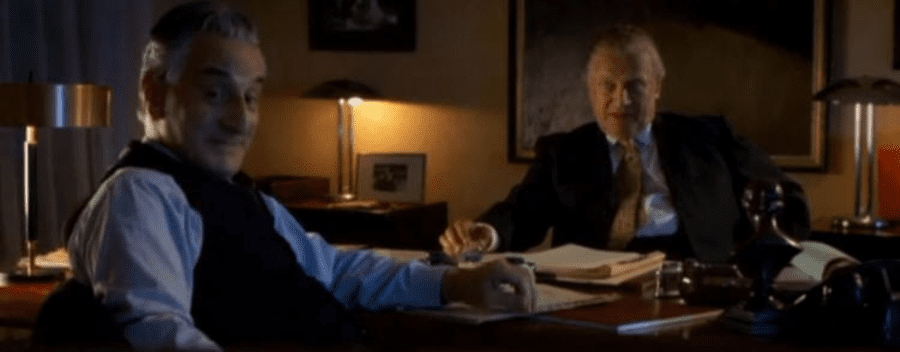
A Belgian born butler to the bastion of business Lord Bernstein – chief of Granada Television – was brutally murdered in a mansion in Wilton Crescent, Belgravia, London just before Christmas in 1970.
The closeted victim, Julian Sessé, was savagely slayed with a knife and a meat cleaver by a much younger bisexual gigolo, Mustapha Bassiane.
Bassiane subsequently fled to Morocco and then got snared when he audaciously returned to Europe in 1972; he was sentenced to life in prison in 1973 and deported back to his homeland 11 years later.
The ‘Scotland Yard Uncensored’ podcast recently covered this little known case, but failed to mention the strange fact that The National Archives have records on the case closed until January 2071; who is actually being protected here and why?
London’s Belgravia is renowned for its associations with power and privilege and as some might say, where there’s money there’s quite often muck, meddling, murkiness and murder.
Whilst the infamous 7th November 1974 murder of Sandra Rivett – the nanny to the children of Lord and Lady Lucan – at 46 Lower Belgrave Street, SW1 has gone down in history for all the wrong reasons, a sadistic slaying four years earlier on 19th December 1970 at another ritzy residence nearby is one that has been largely forgotten.
The victim in the particular case in question, it was noted in a recent Scotland Yard Confidential podcast by John Hopkins, was “a kind and generous man in life,” but one who was “shamed and shunned after his own brutal murder.” In this day and age, such a clear cancellation would quite rightly be called out as an utter outrage and especially at a time when the Metropolitan Police are so deservedly under fire for their appalling levels of misconduct.
On the tragic Saturday night in question in 1970 and just before London revelled in the arrival of a ‘White Christmas’ just six days later, 64-year-old Belgian butler Julian Louis George Sessé was senselessly beaten and brutally murdered with a kitchen knife and meat cleaver. Here was a crime that involved a butler to the rich and famous, but a crime also that was quite the opposite of those crimes orchestrated by the notorious ‘Killer Butler’ Archibald Hall. For those yet to know of him, Hall – who was also known as the ‘Monster Butler’ – mercilessly robbed and murdered in the same part of Belgravia later in the 1970s. Perhaps there could be something in the water of that part of SW1…
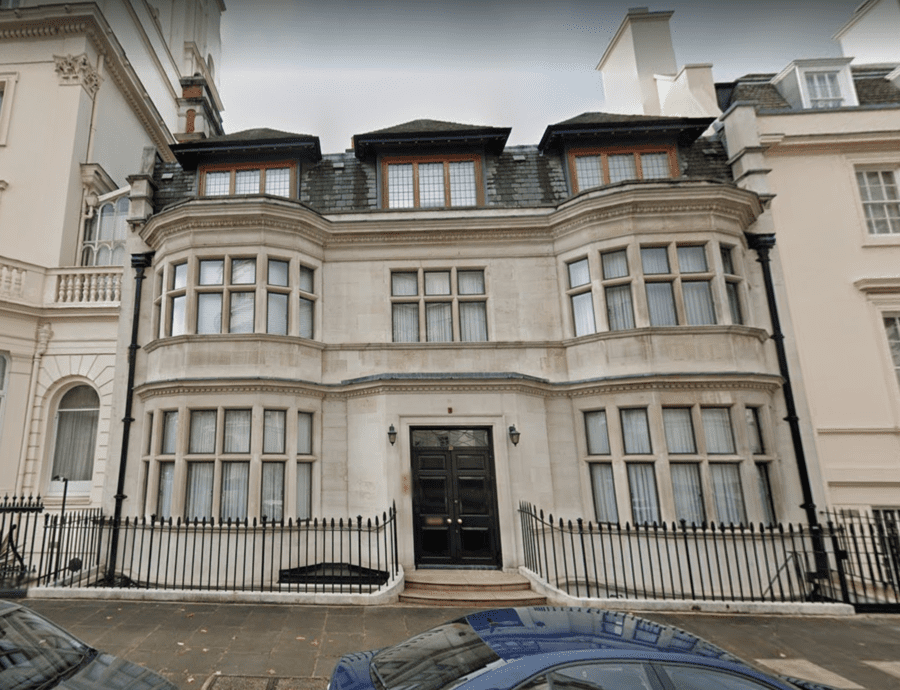
Unlike self-serving monster Hall, “dedicated” Sessé had worked at a 5-bedroomed mansion at 32 Wilton Crescent, just off Belgrave Square “for decades.” His end was to come that snowy evening when he was mercilessly slaughtered sometime after 11pm in a basement grace and favour flat that he occupied in the home of his very well-known employer Sidney Bernstein, Baron Bernstein – the buccaneering bastion businessman and chairman of the Granada Group and Granada Television.
Described as “tall and distinguished” and always “neatly dressed in pinstriped trousers and black jackets,” neighbours argued this particular butler to be “the perfect servant.” Grey haired Sessé was lauded by the owner of the nearest ale house to 32 Wilton Crescent, The Grenadier, as “a quiet and respectable customer.” Here, indeed, was an example of someone who would not wanted to have brought any “shame or stigma” upon his master and mistress.
Alone that night in the vast and imposing 32 Wilton Crescent mansion whilst Lord and Lady Bernstein were away on holiday in the West Indies and with other staff having been given a “leave of absence,” homosexual Sessé most unfortunately decided to take advantage of something akin to “whilst the cat’s away, the butler might play.” He invited a “drifter-like” 26-year-old unemployed Moroccan nurse named Mustapha Bassaine to ‘visit’ his “cosy apartment” and clearly anticipated a night of fun and frollicks. The two clearly closeted – but for very different reasons – men had met prior and money had previously been exchanged for ‘companionship’ and sexual activities, it was later noted.
That night’s ‘pairing’ represented anything but a ‘relationship’ of equals and was one instead where the elder man expected intimacy with the former whilst the younger believed he could rinse the latter of as much money as possible. Given “pock marked” faced Bassaine was a dastardly deviant and diminutive desperado who’d been out drinking with his girlfriend prior, it was to be a meeting that was never going to end well.
Sessé was said to have been of the view that “money that exchanged hands be called a ‘gift,’” but was similarly described as not being under any delusions about what he gained from the “clandestine” encounters he had with various young men. He was a man with ‘friends’ with similar attractions, but in the wake of his death, his family and most associates clammed up and denied knowledge of such preferences. As loyal as the butler, relative and friend had been, it seemed that that was sadly never repaid by those he should have been able to have expected to have remained closest to him.
After a delivery driver and a part-time cleaner failed to find signs of life and several days of out-of-date newspapers on the doorstep of 32 Wilton Crescent on Monday 21st December, the latter called Lord Bernstein’s secretary, a 24-year-old named Miss Hazelwood. She then opened up the property and discovered a scene that Hopkins described as having “shocked her to the core” in the basement. Naturally scared witless, the secretary dialled 999 and the police process began.
Blood was said to spattered everywhere. It was all over the living room and all over the kitchen, but it was in a bathroom – most bizarrely locked from the outside – that the body of Julian Sessé was discovered draped in an equally bloody bath towel. The poor unfortunate’s throat had been cut and aside from multiple stab wounds to his head and chest, his stomach had been slashed open. A knife and a meat cleaver were bizarrely located by officers in the bowl of a latrine and given the “high profile” of the house owner, the case was “quickly passed to Scotland Yard.” Scandal, after all, would be something that the likes of Lord and Lady Bernstein obviously would rather avoid.
Detective Superintendent John ‘Ginger’ Hensley – who had previously been involved in the investigation of the vicious 1966 Shepherd’s Bush policemen murders by Harry Roberts – took the case and the next item to be found just happened to be the bloodstained trousers of the man presumed to be the killer in a washing machine. They were clearly not the trousers of the much larger Sessé and with a wardrobe in his bedroom ajar, it was thus determined the murderer likely fled in a pair belonging to his victim.
Evidence of foul play was everywhere and no attempt had been made to clean up. It was noted by Hopkins that it “all seemed wild and confused” and with no sign of forced entry and letters that indicated Sessé’s ‘activities’ with other gay men including paying for sex, Hensley is said to have immediately surmised it a “crime of passion” rather than a simpler robbery gone wrong.
Shortly thereafter, a pathologist determined that Sessé had partaken in sexual intercourse not long prior to his demise and found the cause of his death to be shock and loss of blood following a frenzied attack with both the knife and the meat cleaver. His demise would have not been instant and wounds to the body suggested that this was a man whom most definitely courageously fought back.
As police inquiries proceeded, few friends and associates were willing to divulge information. This, after all, was an era where to be seen to be gay was still the ultimate taboo. Though one local vaguely cited a “foreign looking man” having been seen outside the house at the time of the murder most horrid, all leads had alibis and even Sessé’s very own family made it clear that they knew nothing of his sexuality. The family went as far as to add that that they simply “did not want to know.”
Given these factors, here was a case that initially seemed headed to join a long list of unsolved murders, but a breakthrough came just days later on Wednesday 23rd December. On that date, police were contacted by an Irish waitress named Jean Fitzgerald from her home in Anson Road, Tufnell Park after she’d “spent days and nights wondering about the case.” The 22-year-old claimed to have met Sessé through her bisexual boyfriend and stated thatmhe had arranged to go to meet the butler at 32 Wilton Crescent after the couple had been for drinks in the West End late on the fateful night in question.
Allegedly, Bassaine had told his girlfriend that he would “visit Sessé to try and get some money off him.” She admitted to police she was “not a fan of her partner’s activities with other men,” but “understood that he usually got well paid for his ‘services.’” Hopkins went further and surmised that this “somewhat timid woman, but one with fire in her eyes” had an excuse for overlooking the ‘activities.’ That excuse was: “Besides, we always needed money.”
During questioning, Fitzgerald stated that she had gone home after being in the West End alone late on 19th December as Bassaine had left her to head over to Belgravia at around 11pm. She further shared:
“We paid the rent on the apartment between the two of us. He got money in another way when he was unemployed. Sometimes he gave me money but I don’t know where he got it from. He said something about going out with ‘faggots,’ having drinks with them, and getting money from them. He showed me a picture of Mr Sessé and told me that the butler often gave him money.”
Bassiane did not return home that night, but instead called Fitzgerald the next afternoon. He asked her to come to Sessé’s apartment, but she declined. Of why, she subsequently reminisced:
“I thought it was very strange that he wanted me to go there. He wanted me to go for a drink [at 32 Wilton Crescent] and he got mad when I said no. I was afraid of Mustapha Bassaine because he was very depraved at times and I was afraid that he would beat me like he had done before.”
After his girlfriend’s refusal to attend, Bassiane himself returned to Anson Road drunk and cried as he told Fitzgerald that he had argued with his ‘friend.’ She noted that he was wearing clothes he had not worn before – including trousers and a jumper that were “too large for him” – and “assumed they belonged to Sessé.” Going further, aside from noting her boyfriend’s shoes were stained with blood and that he had scratches on his hands, she suggested that she was so scared of Bassiane’s mental state that she was fearful to go to bed. Instead, she sat up all night with him, she continued.
“He arrived with a bag full of drinks and fruit and showed me a watch, a camera and a ring that he told me were Christmas gifts that Julian had given him. On 22nd December, he threw some clothes and some papers in the trash and told me that he had to go to Morocco immediately because his mother was sick. He bought an air ticket and went by plane. He had no difficulty paying for the ticket in cash even though he had no money when he went to Julian’s house over the weekend.”
Despite being supposedly penniless and potless only a couple of days earlier, Mustapha Bassaine flew to Casablanca on 23rd December after having paid the then not insubstantial sum of £44 in cash for a one-way ticket. He also exchanged a further £50 in cash for Moroccan Dirhams and after giving Jean Fitzgerald his Moroccan familial address, requested she send any newspaper cuttings that mentioned his name there. Allegedly, according to the Irish waitress, he also mentioned having seen newspaper reports about the murder at 32 Wilton Crescent and added “he couldn’t understand how anyone could have done such a thing to a man as nice as Julian.”
Though police officers questioned whether Fitzgerald could just be another ‘spurned girlfriend,’ some of the details mentioned made Hensley take her more seriously than the many cranks who call in when crime occurs. A search of bins in the neighbourhood followed and resulted in the aforementioned bloodstained shoes and trousers being found.
Justifiably, Bassiane – who turned out to be the son of a high ranking official in the Moroccan Foreign Office – was either a man too stupid to dispose of the items of his crime or he was someone who had a plan and didn’t think he needed to be bothered about the consequences of the DNA on them. Meanwhile, fingerprints found in the couple’s Anson Road flat matched fingerprints found at 32 Wilton Crescent and thus here was a man who rose straight to number one on the list of suspects.
Ten days after the murder, police issued an international warrant being for Musapha Bassiane’s arrest, but there was a major problem for Scotland Yard as Britain had no extradition treaty with Morocco. It seemed, given the key suspect had already ‘flown the nest,’ as long as he stayed in his homeland, Bassiane was a safe fugitive from justice. This was a situation similar to that involving the billionaire playboy Farouk Abdulhak in the more recent 2008 ‘Murder in Mayfair’ of Martine Vik Magnussen; getting someone back from a country like Morocco then or Yemen now is, in fact, nigh on impossible.
In addition, in case Fitzgerald had either got it wrong about where her errant bisexual lover was travelling to, or was instead covering for him, a police watch was put on her Anson Road flat in case he decided to return. Of course, aware that this young Irish girl was of no further use to him, the grubby, grifter never, ever did revisit that address but found himself safely hidden away in his homeland.
Meanwhile, with their holidays over, Lord and Lady Bernstein returned from their tour of the West Indies – where they had visited either Barbados or Bermuda or perhaps even both (depending on which reports you believe) – shortly after Christmas. Funeral arrangements were made for Julian Sessé, but only a small number of people were said to have attended a service at St Mary’s Catholic church in Cadogan Street, Chelsea. The deceased’s place of burial remains presently unknown, but it is said that his clearly embarrassed family “refused” to attend the service in what can only be perceived as move most spineless.
Separately, on returning to 32 Wilton Crescent, though Lady Bernstein identified that a sum of £80 was missing from the desk in her bedroom, a search of the house discovered that no further familial property had been stolen. By now, however, it seemed that the aforementioned watch, camera and ring and perhaps further money taken by Bassiane to the Anson Road apartment had actually been stolen instead from his victim.
In spite of all of this relevant new information, the judicial process was opened and postponed no less than eight times. According to the person in charge of the criminal investigation, a Mr Gavin Ilurston, “the investigations were not finished.” The reasoning for such is definitely something worthy of question still to this day.
Hensley, however, knew exactly where Bassiane was in Morocco and “through Interpol asked other the police of all European countries in Europe countries to be prepared” in case the suspected killer appeared. Eighteen months later, he got again lucky when he and his colleague Detective Sergeant Bernard Davis were informed that the on-the-run deadbeat was planning a trip to Germany and the Netherlands.
“Handlebar moustached” dimwit Bassaine was arrested on 28th June 1972 after police in Holland detained him for immigration offences in Rotterdam. Given the fugitive from justice had been on Interpol’s list as wanted for murder, if he’d simply stayed in Morocco, he would not have ever been caught, but here instead was a feckless fool clearly beyond arrogant who thought himself above the law.
By 10th July 1972, with extradition paperwork complete, Mustapha Bassiane was transferred to the custody of Davis and shackled to him and flown to London. A flight attendant, Hopkins in the conclusions of his podcast shared, requested the shackles be removed for the duration of the journey, but Davis was most definitely not going to allow any opportunity his captive to escape for a second time. The unshackling was rejected and once in London, it was straight off to a remand prison until trial for the man suspected of the murder of Julian Sessé.
On 8th February 1973, Bassiane’s trial began at London’s ‘Old Bailey’ Central Criminal Court. Akin to form, he pleaded not guilty and though admitting to having spent the evening with Sessé, argued that “the butler was in fine health when he left on the Sunday morning.”
Turning the cards on his by then ex-lover Fitzgerald, Bassiane told the court that she “flew into a wild jealous rage” and threatened to “harm the old man and hurt the old bastard… She threatened to smash his face.” He added that “the same day Jean Fitzgerald had gone out and he had not seen her until the afternoon. She was shaking and had told him she was sick.” His basic and somewhat bizarre line of defence – given the substantive forensic evidence against his own person – was that it was her and not him that had committed the ‘crime passionnel.’
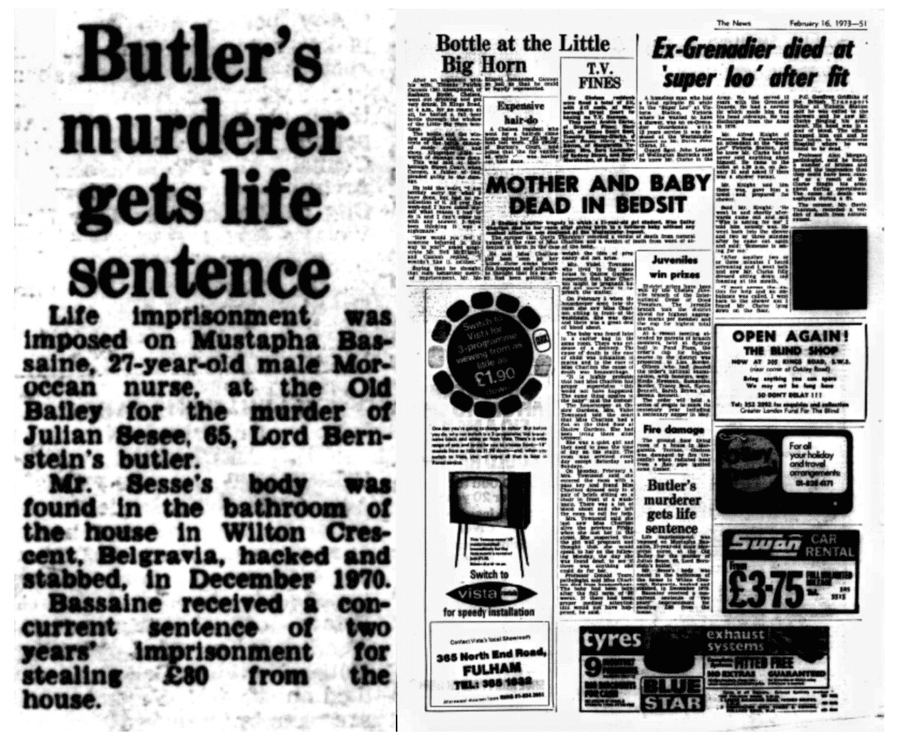
Unsurprisingly, the jury did not believe this “fierce tempered” killer and Mustapha Bassiane found himself sentenced to life in prison on 12th February 1973. He also received a concurrent sentence of two years for stealing £80 in cash from Lady Bernstein’s desk – a sum that was about equivalent to a month’s average wages at that time, but most definitely not a sum worth killing for.
Before sending him down, the judge in the case slammed Bassiane. Judge Forbes is said to have told the court: “This was a brutal murder. The sentence has been the product of evidence in which there is no doubt. Your attempt to place part of the blame on Miss Fitzgerald has received the treatment it deserves.”
It is unknown what became of this murdering monster after he was deported in 1984. Mustapha Bassiane had served just 11 years of his life sentence in the UK; a term that surely was far from long enough for such a brutal and evil murder and a crime committed in a country where young men who proclaim their innocence like Mark Alexander and Omar Benguit have rotted in prison for 13 years and 18 years respectively in spite of a clear lack of evidence against them.
Turning to other thoughts post-sentencing, Hopkins shared in his podcast that Hensley believed Bassaine had tried to blackmail the butler and killed him when he didn’t comply. He also suggested that “hapless” Fitzgerald could have been implicated if she had gone to the mansion that night and concluded “her distrust of his motives may have just saved her from a dark fate” at 32 Wilton Crescent. Would her lover have killed her there also or would he have set the place up to pin the blame on her? Thankfully, given she saw sense, no one will ever know.
If still alive in 2023, Mustapha Bassaine would be 79-years-old; Julian Sessé, on the other hand, would be long dead, but if he hadn’t met his noxious nemesis that night in December 1973, he’d probably have gotten to have enjoyed a long, happy and fulfilled retirement. The ‘Belgravia Butler’ perhaps should have been more careful, but he most definitely didn’t deserve such a sordid end.
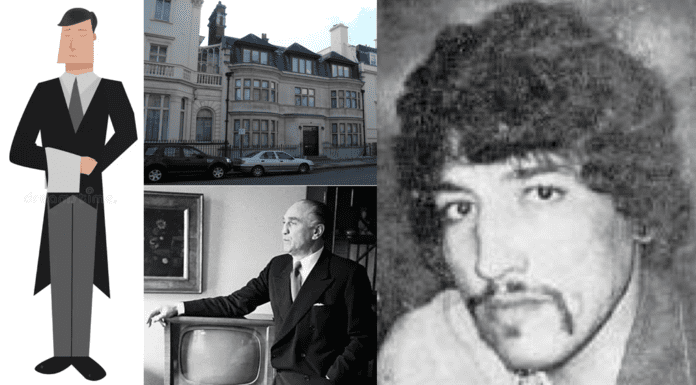
Pictured top – No image of Julian Sessé can be found on the Internet (left); 32 Wilton Crescent (top centre) and the late Granada head honcho Lord Bernstein (lower centre); killer Mustapha Bassaine in the only known image available of him (right).
Listen to the ‘Scotland Yard Confidential’ episode about the slaying of ‘The Peer’s Butler’ by clicking here.
Editor’s note – Unlike as is the case in many publications, this article was NOT sponsored or supported by a third-party. Follow Matthew Steeples on Twitter at @M_Steeples.
A message from our editorial team – Thank you for reading this article. We’re more reliant on your support than ever as the shift in consumer habits brought about by coronavirus and the cost-of-living crisis impacts our advertisers. If you haven’t already, please consider supporting our trusted, fact-checked journalism by supporting our work via Patreon.
The story of the December 1970 slaying at 32 Wilton Crescent features in a 37:02-minute March 2023 episode of the excellent podcast ‘Scotland Yard Confidential’ – which can be listened to as ‘A Spotify Original.’ The description for the episode reads: “In December 1970, Julian Sessé, the long-serving butler to Granada TV Chairman, Lord Bernstein, was found brutally murdered in his basement flat in Belgravia. With little hope for a successful investigation, and two murder cases already on their books, local police quickly handed the case to Scotland Yard. Evidence gathered from the flat revealed that the elegant 65-year-old butler was in the habit of picking up younger men and entertaining them at his home. He was discreet and private in these affairs, and his personal acquaintances were equally secretive. Was his killer a stranger or a friend? And how would detectives trace him if no one was willing to talk? It fell to Detective Chief Superintendent John ‘Ginger’ Hensley to crack the case of the Peer’s Butler. Learn more about your ad choices.”In an edition of ‘The News’ on 16th February 1973 that reported on Julian Bassaine receiving a life sentence for the slaying of Lord Bernstein’s butler, other articles included one about a Burton’s Court, Chelsea, SW3 resident having had £1,100 fur coat stolen “while she was having her hair done” and another listing TV licence fines awarded to residents of Draycott Place, Sloane Court West, Lyall Streeet, Margeretta Terrace, Sydney Street and Swan Court. A tragic story of a mother and baby found dead in a bedsit in Onslow Gardens, SW7 was referenced on the same page along with an ex-Grenadier Guardsmen being found dead after a fit in a ‘super loo’ at Victoria Station, SW1. A tale of a drunken man being fined after throwing a bottle through a Kings Road boutique, the Little-Big-Horn was one of the day’s more light-hearted pieces of coverage; Thomas Patrick Canon of Redburn Street, SW3 told the judge: “I am terribly sorry for what I have done, but had no recollection of it. All over the weekend I have asked myself what reason I had to do it and I can’t come up with any answer. I have been thinking it was a nightmare. I wouldn’t like it, neither [if that had been done to a shop I owned].”The scene of a murder most horrid on the 19th December 1970 – 32 Wilton Crescent, Belgravia, London, SW1X 8RX. Beyond the then owner Sidney Bernstein (formally titled The Right Honourable The Lord Bernstein of Leigh in the County of Kent, 1899 – 1993), others who have have variously lived or have connections to the likely now worth upwards of £40 million residence have included Gilbert Heathcote, 9th Baronet (in 1941) and a lady named Sarina Abramovich (circa 2015 to 2016). Ms Abramovich was subsequently (in 2021) 432 Park Avenue, New York based and shares a surname with the former Chelsea Football Club owning, one-time Putin supporting billionaire Roman Abramovich, but it is unknown if they are related. A statue of Sir Robert Grosvenor KG stands just opposite 32 Wilton Crescent and others to have lived on this most tony of streets have included the 1st Earl Mountbatten of Burma, Lord Randolph Churchill, Quentin Crewe, the Grand Duchesss Charlotte of Luxembourgh and Demetri Marchessini.Essex born and Jewish, Sidney Bernstein, Baron Bernstein was lauded as “the dominant influence on the growth and development of commercial television” by the British Film Institute. Twice married and a father of three, his business interests included amongst other things a circuit of 60 cinemas and theatres, motorway services stations and a hugely profitable television rental business. He was a lifelong friend and partner of Sir Alfred Hitchcock in film production and turned Granada Television into a huge commercial success; he was portrayed by Steven Berkoff in the 2010 BBC one-off drama, ‘The Road to Coronation Street.’Sarina Abramovich is listed as being connected with 32 Wilton Crescent in 2015 and 2016 in documents relating to imports and exports. Whether she has any connection with the property now is unknown and records relating to the building remain shrouded in mystery. The Heathcote family were connected with the house in the 1940s when Mark Heathcote, 10th Baronet was born there in 1941.
Whilst the Miss Havisham-esque eccentric Huguette Clark (1906 – 2011) spent 81 years of her life on her lonesome in spite of being worth £294 million ($400 million, €353 million or درهم1.5 billion), Ken Smith is a recluse of much more modest means.
Unlike the doll doting American who lived out her days in palatial splendour with just staff for company and spoilt heiresses like over-Botoxed birdbrains such as Tamara Ecclestone, 72-year-old Derbyshire born Smith is someone who has been content to have spent around 46 years alone with nature in the Scottish Highlands.
Beaten to a pulp and left with a brain haemorrhage and unconscious for 23 days after a vicious assault by a gang of thugs, this former fire station builder decided that he “would never live on anyone’s terms but my own.” He headed to Yukon – the Canadian territory bordering Alaska – and walked a staggering 22,000 miles before returning home.
Sadly, in his absence, his parents had both died and feeling “nothing,” Ken Smith found solace in walking the length of Britain. In a November 2021 BBC Scotland documentary, he remarked: “I cried all the way while walking… I thought where is the most isolated place in Britain? I went around and followed every bay and every Ben where there wasn’t a house built. Hundreds and hundreds of miles of nothingness. I looked across the loch and saw this woodland.” He has remained there ever since.
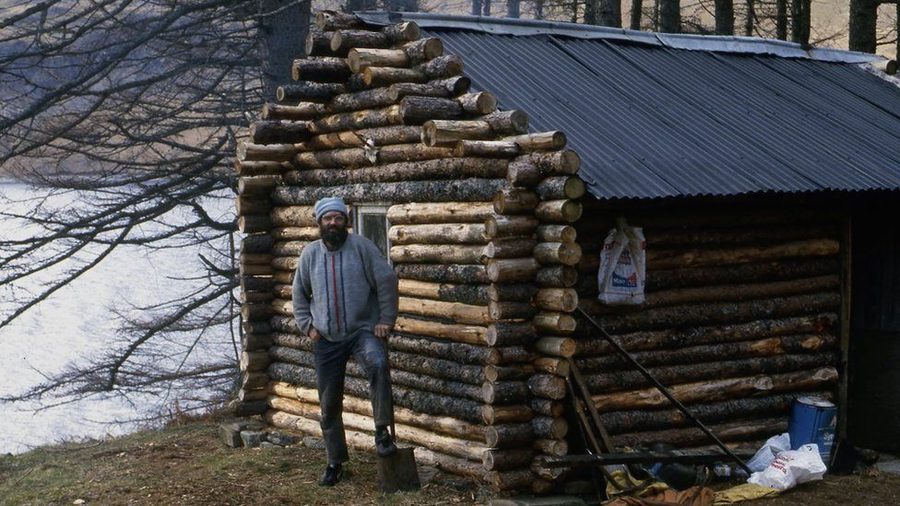
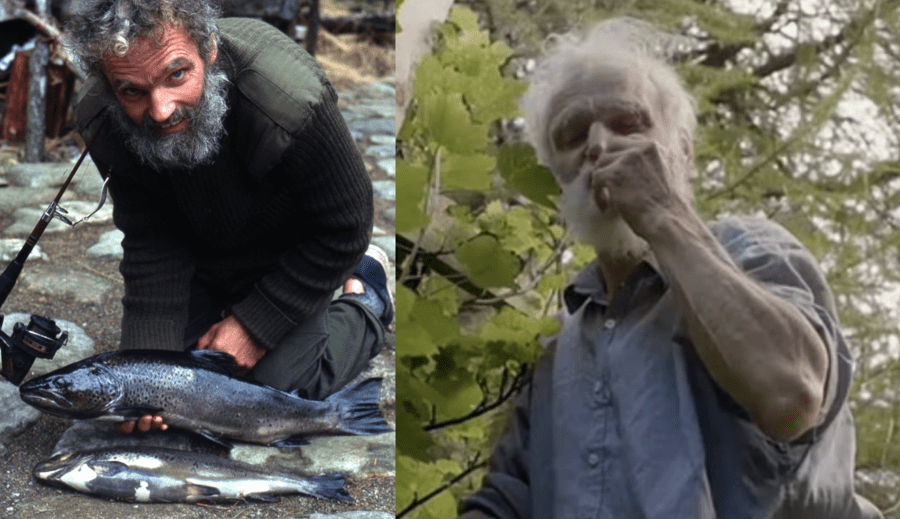
To this day, Britain’s ultimate hermit has lived in a log cabin he built himself that includes a log fire, but lacks electricity, gas, running water and any form of communications techologies. He lives off foraged berries, vegetables he grows and fish he catches from Loch Treig – known as “the lonely loch” – and also makes his own wine. At the time of the filming, he had over 70 gallons of hooch on the go.
Speaking of his modest lifestyle, this simple but satisfied sort – who has to complete a 54-mile round trip just to post a letter – added:
“I think if you love the land, it sort of loves you back. It loves you back in all the things it produces for you… Do you think I could live in a house? No, I’d spend most of the time in the pub… They wanted me to move into ‘civilisation’… Well I wasn’t going to have any of that.”
“When I die, instead of everyone moaning and being sad, I want everybody to be merry, getting pissed up on all on my wine… Anybody can come that I know and they’ll know me, so they’ll come.
“I have had lots of incidents and I seem to have survived them all and I know one thing, for sure, no matter what, I am bound to go ill again sometime. Something will happen to me that will take me away one day as it does for everybody else, but I’m hoping that I’ll get to 102.”
https://www.youtube.com/watch?v=BwUockt4D28
https://www.youtube.com/watch?v=muYP8S-YO6k
Modest to his core Ken Smith is content with living a solitary life in the cabin he built with his own hands in spite of having suffered a stroke and been injured by a pile of logs falling on him. In spite of being offered alternative accommodation in Fort William, he prefers to continue as he has done for four decades thus far. Though, he entertains himself by listening to a radio and keeps a small library of books, he does not have and does not want a mobile telephone device.The resourceful Derbyshire born hermit lives mainly off foraged food and fish he catches, but gets up once a month at 4am to hike for three hours to the nearest railway station. He then makes an hour long journey to Fort William to fill his 70-litre rucksack with provisions and medical supplies that last him for the following weeks. He draws sap to make his ‘hooch’ and has also invented a compostable waste system that he calls “the bottomless pit.”
Whilst we previously reported that over 300 of Transport for London’s staff were shockingly on salaries of over £100,000 each per annum and one was on over £650,000 per annum, a “good news” story about the capital’s transport network comes in the form of Dr Margaret McCollum.
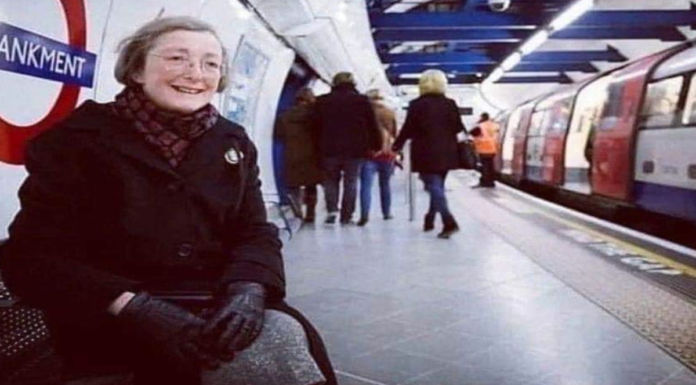
Keeping the memory of her late husband alive, Dr McCollum visits Embankment tube station every day just to hear her late husband’s voice. Oswald Laurence, a RADA graduate and actor who was recorded for the northbound Northern Line announcement in the 1950s, was the man who declared: “Mind the gap.”
The couple met in 1992 while Mr Laurence was working for a tour and cruise company and lived together in North London until his death in 2007 and of her husband, the doctor endearingly declared that every day “since he died I would sit and wait for the next train until I heard his voice.”
In November 2012, however, “suddenly Oswald wasn’t there” and had been replaced by a female voice, but a “stunned Margaret” subsequently persuaded Transport for London staff to restore her late husband’s voice “three times for every train before we make our additional announcements.” They added: “It’s wonderful hearing his voice there and wonderful to know it makes such a difference to her.”
In 2014, this remarkable story of dedication and a message heard by millions since it was recorded featured in a short 7:15-minute film by writer and director Luke Flanagan. It was, of course, simply named Mind The Gap.
“Roy’s the boy” raged commentator Simon Holt as this legendary French born co-holder of the most number of wins at Brighton romped home after achieving nine 1st places along with two 2nd and six 3rd places at the course also.
With 1,300 followers on Twitter, grey gelding Roy Rocket was universally loved and to support him an octogenarian named Iris would “as he went to post… produce from one of her many voluminous handbags a flask of gin and tonic and insist that trainer John Berry took a swig for luck. It sometimes worked.”
In May 2018, racing history was made when transgender jockey Victoria Smith – formerly known as Vince – rode Roy Rocket in a one-mile charity race as a woman at Warwick and became the first person to have competed in both male and female categories.
Of Roy Rocket, in July 2018, John Berry told the Racing Post: “He’s the most incredible horse… If I took him to a place he wasn’t used to going, we probably wouldn’t get there… He’d hate going somewhere different to where he normally goes and he hates not having a whole horse box to himself… He knows the yard so well, you could open up the French windows and bring him in the house… You can give him so much freedom without him being a danger… He loves carrots, his whole life’s a treat. The way the whole yard is run is pretty much around suiting him.”
A winner of the ROA Award for Flat Special Achievements also, Roy Rocket is eulogised by John Berry Racing as having “[given] some of the best days of racing of our lives.” This great favourite of punters everywhere will be forever missed.
Luke Durbin from Hollesley, near Woodbridge went missing aged just 19 after a night out with friends in Ipswich. After after being unable to afford to pay for a taxi home at about 4am, this grocery store worker was last seen on CCTV wandering around the town centre in the early hours of the 12th May 2006.
Durbin had left his new motorbike and personal belongings, including his mobile telephone, at his friend’s house and no trace of him has ever been found since. A silver or white Volvo 440 – possibly registration M206 LYE (which was “either registered to a false name and address or on false plates” according to the ‘Missing The Missing’ YouTube channel) – seen also on camera in the close vicinity of Durbin’s last location at the time of his last sighting has never been eliminated from enquiries. Suffolk Police have stated that they “sadly believe Luke was unlawfully killed,” and though a £20,000 reward was offered and multiple arrests made, no progress has been made in solving this disappearance.
In subsequent years, Luke Durbin’s mother, Nicki Durbin, has tirelessly continued her efforts to find her son and taken a job working on the Missing People helpline to help others in similar situations. She also operates a Twitter account and an email address [email protected] highlighting the case and keeps alive the hope of one day solving what the Ipswich Star terms: “One of Suffolk’s most enduring mysteries.”
Alongside a cat (yes, a cat) named ‘(Frederick Albert) Hitler’ as his barman, the landlord of the “maddest pub in Britain” Steve Cotten is not known for being the most involved of hosts. On TripAdvisor, whilst one grumbler pointed out that his attitude to diners is: “If you want to eat, bring your own food… Or use the kitchen yourself,” Devon Live noted in February 2020 that Prince Harry and Damien Hirst are “fans” of the “off-grid,” Fawlty Towers-esque The Poltimore Arms in South Molton, Devon. The pub has no website, no television, no Wi-Fi, no fruit machines and no telephones and is powered by solar panels, but for lovers of craft ales and locally produced spirits, a woman going by the name ‘The Real Ale Girl’ operates a “secret weapon… emporium” selling such in a back room.
Summing up his refreshingly no-nonsense approach to running his business, Steve Cotten once commented: “I just make it up as I go along. I might not know how to run a pub but I know what’s wrong with every pub I’ve ever been in. There’s no landlord anywhere, nobody talks to each other. I involve the whole community – everyone knows it’s not my pub, it’s everybody’s pub… We are a dark and cold and miserable boozer – and that’s what people like about it… They all know you can do what you want here, use it for what you want, come here on your own at any time of the day or night and help yourself to a tea or coffee. Everybody will talk to everybody… You can discuss any topic under the sun here, nothing is taboo… Everyone has a go serving behind the bar, we all have a laugh and everyone joins in… No one else talks to them like crap like I do.”
Frankly, one is simply left asking: “Why aren’t there more places like this?” Cheers to Steve Cotten.
Interviewed by Sky News’ Sophy Ridge on 6th October 2019 in Boris Johnson’s Uxbridge constituency, this purple coated pensioner didn’t mince her words. When Ridge approached her to ask about the Prime Minister, the response was clear: “Don’t you mention that name in front of me, that filthy piece of toerag.” She has since been immortalised by ‘The Artist Taxi Driver’ Mark McGowan in a one-of-one A3 signed original watercolour on newspaper remarkably priced at just £35 and will most definitely be remembered as the ‘Brenda From Bristol’ meets Gillian Duffy of 2019.
https://www.youtube.com/watch?v=9xmnLGrnzrQ
An artwork by Mark McGowan @ChunkyMark @TheAngryTaxiDriver about the incident.Twitter users loved Mrs Filthy Piece of Toerag’s outburst also.And she even made it into ‘The Independent’ newspaper.
Found on the Ministry of Defence owned Foulness Island in Essex, a place where access to non-residents is subject to stringent restrictions, the skeletal remains of Angela Millington were discovered along with a “gaffer tape mask” on 21st June 2014 by a group of ramblers. Of this bizarre unsolved case little has been revealed other than that two unnamed men were questioned but subsequently released without charge.
In May 2016, Essex Police’s DCI Simon Werrett (now a senior minister at the Eastwood Evangelical Church) commented: “Angela lived a chaotic lifestyle. Sometimes she lived with her partner in Southend, other times she moved back to live on the streets, mainly on Southend High Street. We know from people we have spoken to she was last seen around the end of January and beginning of February at night by the street pastors.… Someone out there knows what happened to Angela.”
Crimestoppers continue to offer a reward of £10,000 for anyone who gives information leading to the arrest and conviction of the person responsible for Angela Millington’s death and in 2018 Vice covered the case citing it as an example of “just one of the many under-reported murders of homeless people.” Sadly, little else has been written of the matter.
The gaffer tape mask that was found with Angela Millington’s remains.A reconstruction of the mask.Another image of the late Angela Millington.Angela Millington’s body was found on Foulness Island in the location pictured. It is the fourth largest island off the English coast, is described as a “dark” windswept place and is 12 miles from Southend. Due to the Ministry of Defence’s activities there, access is very much restricted but circa 150 people live there.In 2002, according to Vice, a Ministry of Defence scientist named Terry Jupp “died on [Foulness Island] after a joint Anglo-American project to learn more about al-Qaeda’s bomb-making capabilities went wrong.” Horrifically: “Jupp was engulfed in flames and suffered 80 percent burns. He died six days later. Due to the secretive nature of the operation, the inquest didn’t take place until 2011. Unable to reveal his true occupation until his death, his family thought Terry Jupp ‘worked in plastics.’” The accident was later described as “avoidable” by Jupp’s colleague Bill Warren.