Whilst one ‘Observer’ reader suggests Alan Bennett writes the monologues that have replaced normal episodes of ‘The Archers,’ another demands a return to standard broadcasts about Ambridge life
In a letter to the Observer this morning, one Ursula Hutchinson [on-the-ball listeners may remember Ambridge’s resident villain Rob Titchener’s meddling mother was also called Ursula] of Newport on the Covid-19 app friendly Isle of Wight, plainly inspired by his brilliantly straight-to-the-point Talking Heads series, suggested Alan Bennett be brought in. She remarked:
If ‘The Archers’ monologues are to go on, they need to ask Alan Bennett to write them. We’ve just endured a week of Tony’s haircut. Please!
Ursula Hutchinson
Newport, Isle of Wight
Last Sunday, another ‘Archers Addict,’ Mary Evans of Heathfield, East Sussex got even more het up. In her letter, the “enthusiast” declared the new format “totally dull and frankly not worth giving up 15 minutes of your life for, however much time you have to spare at the moment.” She vented:
How I agree with Miranda Sawyer regarding the new format of ‘The Archers’ (Radio review): totally dull and frankly not worth giving up 15 minutes of your life for, however much time you have to spare at the moment. I acknowledge the difficulties of broadcasting but the archive episodes were much more worthwhile, even though I took issue with the gloomy choice – Kirsty being stood up at the altar, the Grundys being evicted, the floods.
My fellow enthusiasts and I will be putting ‘The Archers’ on hold until they drop this boring format. Surely as it’s radio it must be technically possible to cobble together something like the original. I fear they may lose fans who will be disinclined to return.
Mary Evans
Heathfield, East Sussex
We join both Evans and Hutchinson in their lament, but The Archers scriptwriters have thus far provided one lockdown highlight: An episode where the village gossip Susan Carter – high on ‘honey rum,’ as one would be after desperately raiding the dregs of the lockdown drinks cupboard – referenced sexual antics for those in their later years after getting spiced up on homemade chilli.
‘The Archers’ – set in the fictional village of Ambridge – first aired on BBC on 29th May 1950. It is the world’s longest running drama and thus attracts both accolade and criticism in equal measure from its somewhat dedicated audience.
In this legendary episode, Helen Titchener stabbed her husband Rob after he criticised her tuna bake.
‘Country Channel.TV’ went behind the scenes with the cast of ‘The Archers’ in January 2010. One character, Phil Archer, made the ‘Guinness World Records’ for being the longest serving actor in a single soap opera – Norman Painting played him from 1950 until his death on 29th October 2009.
The second part of the behind the scenes tour of the radio soap inspired by life in a village in rural England. It was originally billed as “an everyday story of country folk,” but is now described (more suitably for the ‘woke’ generation we sadly live in) as “a contemporary drama in a rural setting.”
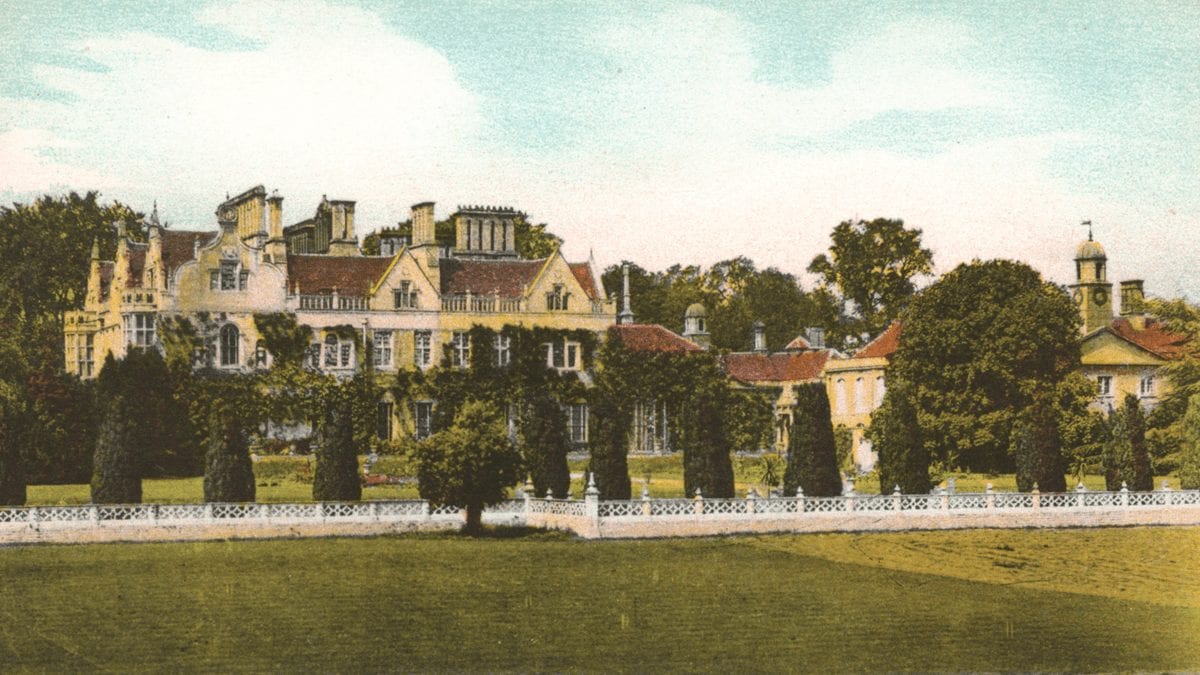
Crumbling Northamptonshire estate Lilford Hall – where the little owl was introduced to Britain – for sale for £10 million, a sum £35 million lower than in 2014
Grade I listed Jacobean mansion with 13 chimney stacks for sale for £10 million; it was for sale last for £44.9 million in 2014 in spite of being listed on English Heritage’s ‘At Risk Register.’
Lilford Hall – parts of which have not been occupied since 1947 –is currently owned by a businessman who tried to sell burial plots in the grounds for £1,250 a pop and shares in a yacht loosely associated with Frank Sinatra for £23 each.
The 321-acre estate includes not only overgrown parkland, but also a zoo with cages that formerly housed bears and a lake for flamingos.
From 1711 until 1990, Lilford House was the seat of the Powys family – the 4th baron is credited with introducing the little owl to the UK.
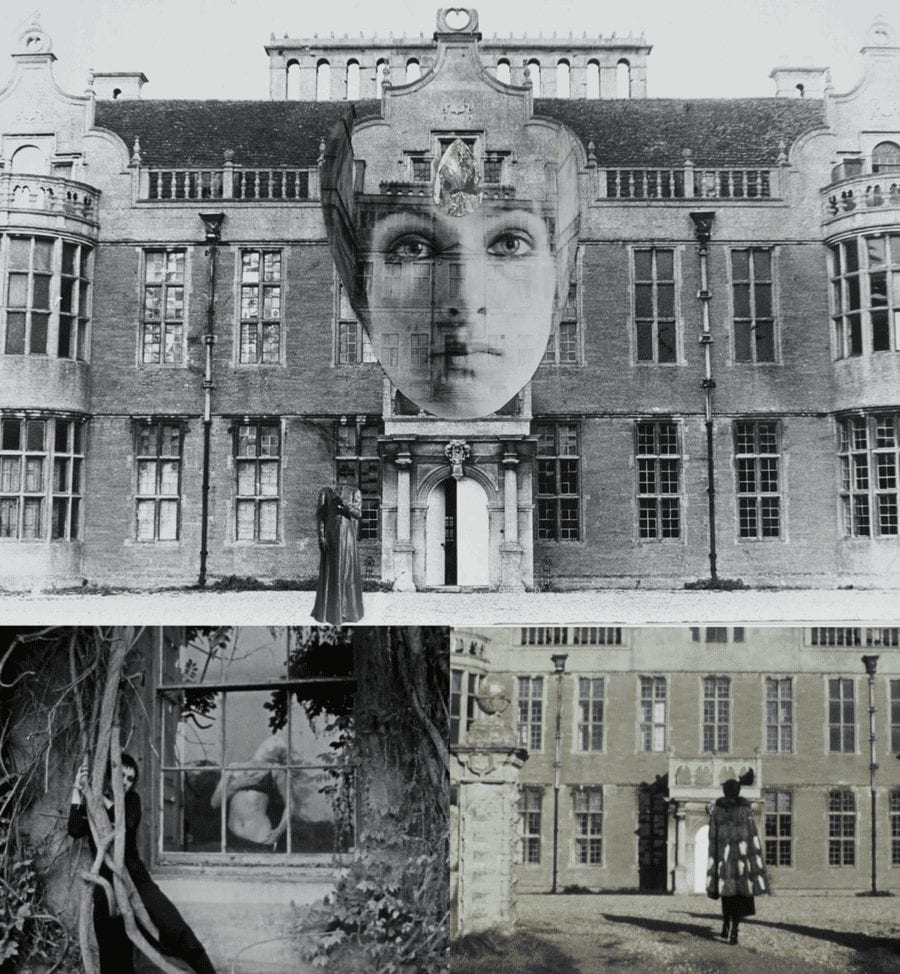
More recently, in 1969, the “sexual mystic” artist Penny Slinger used the at-the-time derelict mansion in one of her best-known works.
A 32,406 square foot Grade I listed Jacobean mansion 82 miles from Central London has gone on sale for £10 million – or the equivalent of just £308 per square foot.
On this basis, Lilford Hall – set in 321 acres near Oundle – seems a comparative bargain when considered against the £4,786 per square foot sought for a Lennox Gardens, Knightsbridge triplex flatThe Steeple Times featured in May, but buyers need to remember this – parts of this crumbling building, most notably the major state rooms, have not been used since 1947.
Marketed last in 2014 for the even more punchy sum of £45 million, the “exceptional residential and amenity estate located on the River Nene,” is now offered by agents Savills. The “wonderfully proportioned” U-shaped mansion itself is constructed of grey limestone and includes over 100 rooms and amongst them are 7 “impressive” reception rooms, a ballroom, a ‘great chamber’ and 9 bedrooms. In addition, there are two Georgian pavilions that were formerly coach houses and stabling, three cottages, a former zoo, the oldest private softball court in the world, a former flamingo enclosure and a deer park.
“Impressiveness in the chief attribute of Lilford Hall as a specimen of architecture” claimed County Life in 1990 and as the seat of the Powys family from 1711 until 1990, it became not only a Downton Abbey-esque entertaining pad, but also housed nurses in the Second World War. Here, indeed, is an English country house that has seen lavishness and decline and thankfully here is an example that thankfully escaped the wrecking ball wrought so disgracefully on such houses in the 1950s and 1960s.
Fascinatingly in the 1880s, Thomas Powys, 4th Baron Lilford filled his aviaries on the estate with rheas, kiwis, pink-headed ducks, free-flying lammergeiers and it was from here that he also introduced the little owl into the UK. There are said to be around 5,700 breeding pairs today, but sadly, according to the RSPB, their numbers are now in decline.
More recently, in 1969, “sexually erotic” performance artist Penny Slinger took over the by then “derelict” mansion in conjunction with the filmmaker Peter Whitehead. Their resulting work, titled An Exorcism, was exhibited internationally and in 2004, after the current owners, Charles and Aziza Micklewright, acquired the house, they did something equally avant-garde; they attempted to sell burial plots in the grounds to Americans by citing the estate’s connections to the founder of the Brownists, Robert Browne – a man better known as ‘The Father of the Pilgrims’ and ‘The Grandfather of the Nation’ (of the United States of America).
Whilst Mr and Mrs Micklewright were lauded for their considerable efforts towards the “huge task” of restoring Lilford Hall, they came to the attention of Historic England in May 2019 when the building was listed on the At Risk Register. At that time, the Oundle Chronicle reported: “The roof covering is in poor condition leading to water ingress and distress to the upper storeys. The front bays require structural attention. A schedule of urgent repairs has been identified but not implemented, and no long-term solution has been agreed.”
Now, someone with very, very deep pockets is required to restore this gem. It would be helpful if they liked erotic art, bears, squash and owls also.
The Names & Numbers – The Lilford Hall Estate, Lilford, Oundle, Peterborough, Northamptonshire, PE8 5SG, United Kingdom
June 2020 – The estate is listed sale for £10 million ($12.5 million, €11.1 million or درهم46 million) through Savills. It includes 321.31 acres, of which 148.17 acres are pasture land whilst 157.48 acres are woodland. The majority of the estate is held on a freehold title, whilst the remaining 127.6 acres – known as ‘The Linches’ and ‘Lilford Woods’ – are held on a lease with 91 years remaining.
2015 – Promoted as ‘The National Memorial Gardens,’ burial plots in the gardens of the hall were offered “available to any UK resident or national for an outstanding price of only £1,250 ($1,568, €1,393 or درهم5,758)” by Mark Bailey of Harley Investments. Around the same time, a website dedicated to Lilford Hall marketed “a piece of the formal gardens” for sale for £299 ($375, €333 or درهم1,377) to include “an officially certified ‘Squire of Lilford’ [title] … with this little piece of history.”
March 2014 – The Irish Times reported that the asking price for the estate had been increased to £44.9 million ($56.3 million, €50 million or 206.8درهم million). They claimed the agents Coldwell Banker blamed “confusion over currency conversion rates and new instructions from the owner.”
April 2014 – The Lilford Hall Estate is listed for sale through Coldwell Banker on MyHome.ie for £33.7 million ($44.2 million, €37.5 million or درهم155 million) on behalf of “an English gentleman.”
2004 – The estate is acquired by the Micklewright family. Little information is available online about the Old Framlingham Charles Micklewright (born July 1958), but he is described as a “patent attorney” on Companies Houses pages. The businessman is mentioned also as a publisher and trustee of the Marsh Christian Trust elsewhere, whilst his Singaporean born wife, Aziza (born 1964), was a director of Lilford Properties Limited from 2013 to 2018.
A website operated by Sign of the Times Limited, a Hong Kong company of Lilford Hall, Lilford, Oundle, Northamptonshire, PE8 5SG, currently offers shares in a yacht named ‘Sinatra the Voice’ for £23.91 ($29.99, €26.64 or درهم110.14) per share. The boat was built in 1956 and is tenuously linked to Frank Sinatra by the fact that a one-time owner, Beale Poste, loaned it occasionally to the crooner between 1968 and 1974 in West Palm Beach, Florida.
1990 – The estate is closed to the public.
1980s – The house is used as a location in the BBC English Civil War inspired historical drama series By the Sword Divided.
1970s – Aviaries on the estate restocked by George Powys, 7th Baron Lilford (1931 – 2005). He “opened [the estate] to the public as a leisure park” and housed more than 350 birds of 110 species there. It remained thus for around 20 years and included a restaurant and shop. The aviaries and the 1,896 square foot restaurant building remain present still today.
1969 – 1970 – American British “sexual mystic” artist Penny Slinger (born 1947) and Liverpudlian filmmaker Peter Whitehead used the “derelict mansion” as the setting for their works An Exorcism and Lilford Hall. They are lauded as a “photo romance” and exhibited at the Blum and Poe Gallery in Los Angeles in 2014, at the Haywood Gallery in London in 2015 and at the Fortnight Institute in New York in 2019.
1949 – Stephen Powys, 6th Baron Lilford (1869 – 1949) died without having married or having had children. His properties aside from Lilford – a house in Mayfair, Bank Hall in Lancashire and the Bewsey Estate in Cheshire – passed to his second cousin twice removed.
1947 – The estate is sold to a company named Merchant Ventures by the Powys family (though they remain present on the estate until 1990).
1939 – 1945 – During the Second World War, the parkland of the estate was used as a military hospital for nearby airfields. From 1949 to 1954, some of the buildings constructed during this period were then used as a Polish school.
1923 – First-class Northamptonshire cricketer Major John Powys, 5th Baron Lilford (1863 – 1945) built the first private softball court in the world in the grounds of the hall. It is now in disrepair and the roof has fallen into the inner court.
1909 – 1910 – The hall was extended in the Edwardian manner including the provision of a new master bedroom with dressing room and bathroom by William Dunn and Robert Watson of Dunn & Watson.
1901 – The estate surrounding the hall reaches its largest size and totals a vast 8,000 acres of land. Around this time, Queen Mary, wife of King George V, is said to have visited the gardens.
1880s – Ornithologist and expert on the fauna of the Balearics Thomas Littleton Powys, 4th Baron Lilford (1833 – 1896) introduces the little owl into England on the estate. His aviaries were said to “feature exotic birds from all around the world” and a species of European lizard, the Lilford’s wall lizard (Podarcis lilfordi), is named in his honour. The 4th baron is repeatedly mentioned in the works of Charles Darwin for his contribution to the study of the science of evolution.
1840s – Further changes to the building are orchestrated by the architect William Gilbee Habershon (circa 1818 – 1891). The Campaign to Protect Rural England described these Victorian extensions as “sensitive” in 2006 – a rare accolade given most additions to English country houses during this period were simply brash and vulgar.
1740s – The Palladian architect Henry Flitcroft (1697 – 1769) adds “outstanding” Georgian interiors whilst “respecting the hall’s Jacobean exterior.” He “softened and brightened” the building as a result and also “constructed the Georgian pavilions and additional storeys to the east end of the two wings.” Other works by Flitcroft can be seen at Bower House in Essex, Wentworth Woodhouse in Yorkshire and Woburn Abbey in Bedfordshire.
1711 – Lilford Hall is sold to the judge and Tory politician Sir Thomas Powys (1649 – 1719), Attorney General to King James II. Powys is best remembered for conducting the prosecution of the Seven Bishops in 1699. He is buried at Lilford.
1630s – Construction of the main exterior of what to this day remains Lilford Hall as a “Jacobean-style gentry house” by William Elmes (the younger).
1473 – The land that forms the estate is acquired by William Browne (1410 – 1489), a wealthy wool merchant and landowner from Stamford, from the estate of Baron Welles (who was beheaded by King Edward IV for treason). In 1495, “in a Tudor style,” he built a hall on the site and it passed to Robert Browne (1550 – 1633), the founder of the Brownists, ‘The Father of the Pilgrims’ and ‘The Grandfather of the Nation’ (of the United States of America).
Matthew Steeples highlights how the ‘Mandelson Media Method’ is very much in play in both the case of the Prince Andrew-Jeffrey Epstein connection and the renewed interest in the Madeleine McCann disappearance
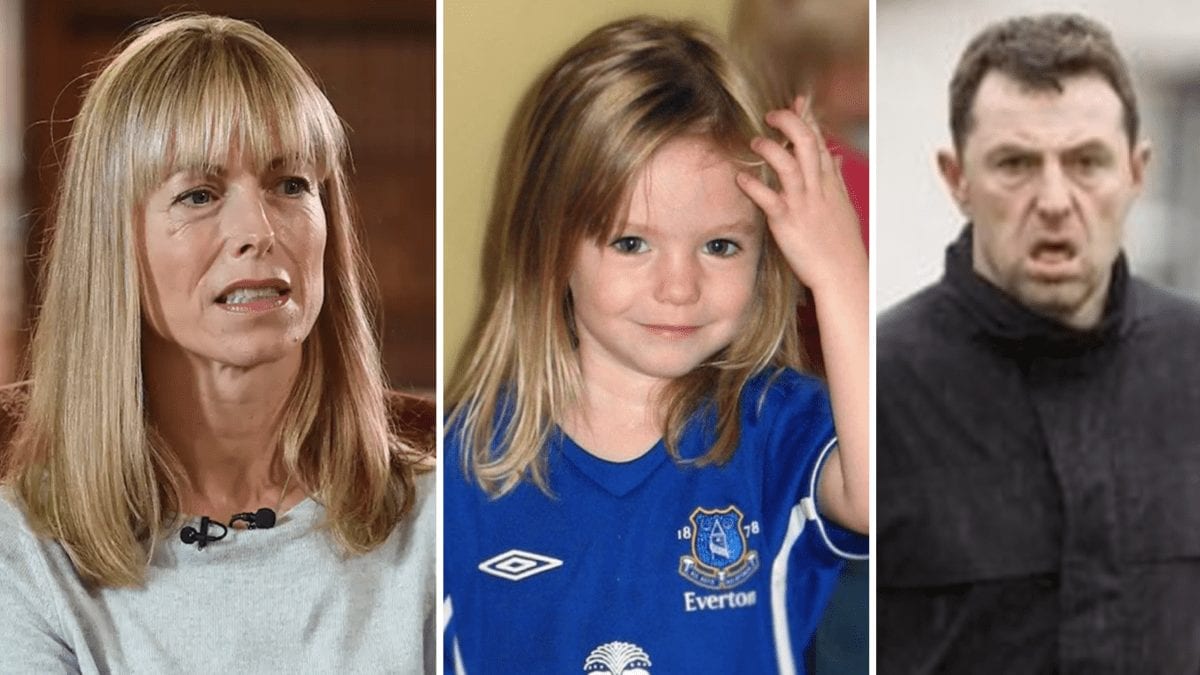
As Andrew Marr pointed out in his History of Modern Britain – screened on BBC Four last night – in his example, highlighting the case of the senseless murder of the innocent toddler Jamie Bulger by two truly evil teenagers during John Major’s premiership – Madeleine McCann’s disappearance occurred just a month before Blair left office and Gordon Brown took over. News of it dominated the media during the transition period.
Defining the Brown years – during which Peter Mandelson was a government minister from October 2008 until May 2010 – in terms of the vast acres of pages devoted to the case and garnering disproportionate attention from government thus, as Murray pointed out: “British diplomatic staff were under direct instruction to support the McCanns far beyond the usual.”
Mandelson had his finger on the pulse with the McCann story then and today the proof of its usefulness is still in the pudding by way of the fact that it wiped other ‘bad news’ stories off the front pages in the last week. Equally, as has been the case with the renewal of interest in Prince Andrew’s “has he or hasn’t he” cooperated with the investigations into Jeffrey Epstein in the last 24 hours, here are matters that show that the Mandelson style of media management haven’t moved on.
One rather conveniently unavailable person who links the ‘players’ in these matters is still apparently missing in action. Again, this morning, we again join those asking: “Why doesn’t Ghislaine Maxwell finally come forward?”
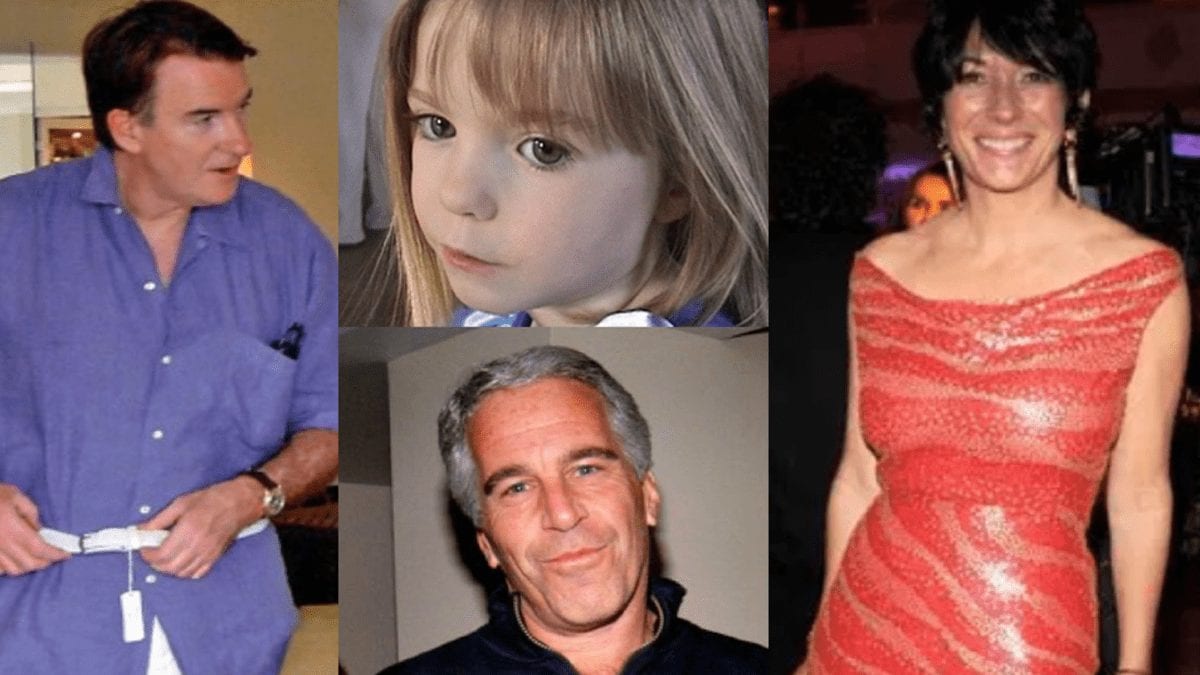
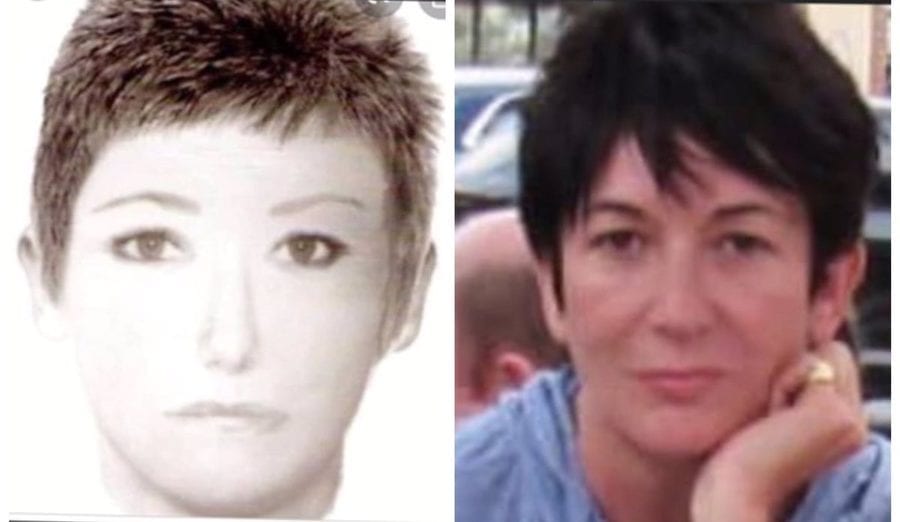
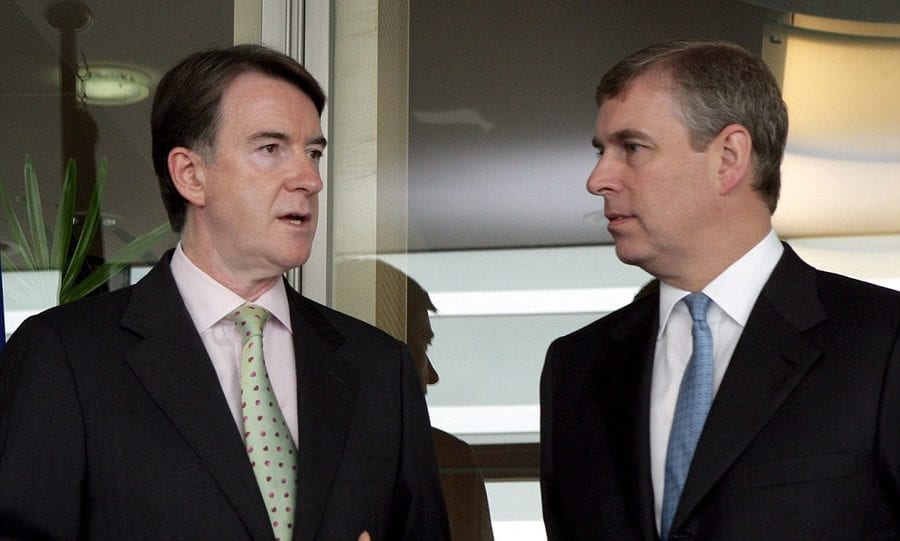
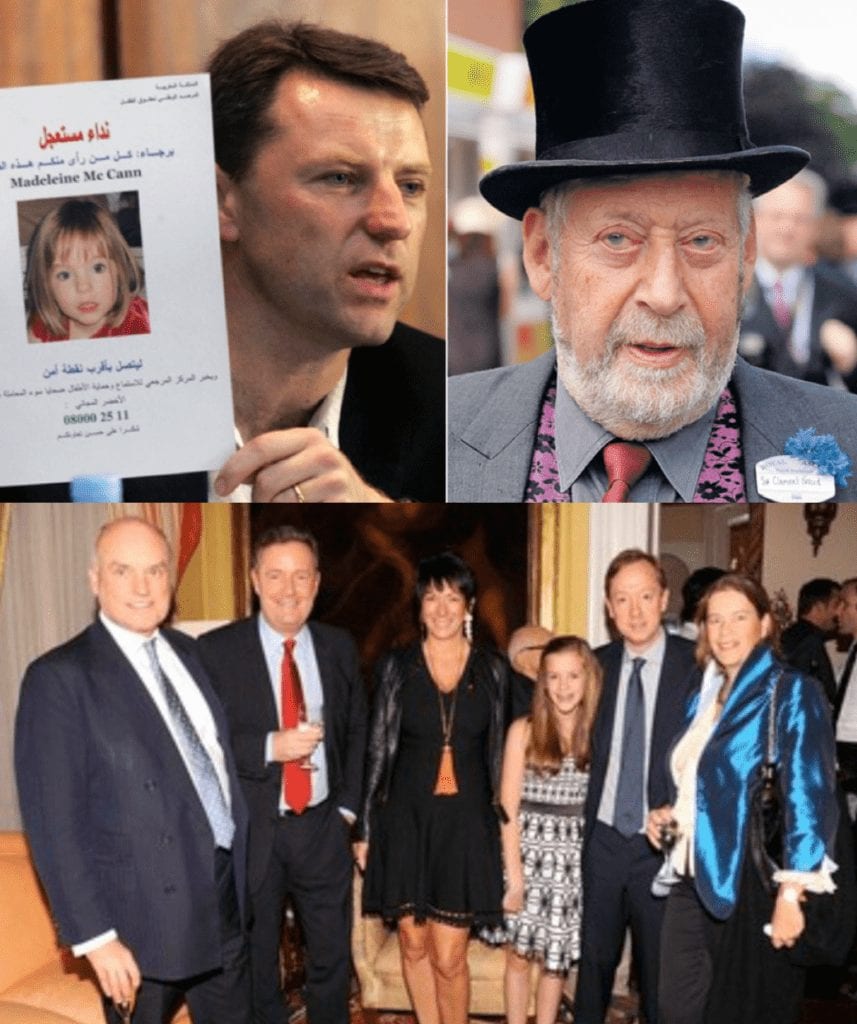
Peter Mandelson pictured trying on a belt whilst Jeffrey Epstein looks on in St Barts in 2005. They are said to have been introduced by their mutual friend Ghislaine Maxwell and there is no suggestion that Lord Mandelson knew anything of Epstein’s criminal activities.In 2009, private investigators for Gerry and Kate McCann issued an E-FIT to the media of a woman they believed could be “potentially significant” to their investigation. She has never been found, but, speculation online (entirely unproven as accurate thus far) has regularly included: “She looks remarkably like Ghislaine Maxwell.” There is no suggestion that this is one and the same woman, but it would be ever so helpful if Miss Maxwell came forward and cleared this up for once and for all.The no-longer so “grand old Duke of York” Prince Andrew poses for a picture with the “master of spin” and king of media relations Lord Mandelson.Peter Mandelson worked with PR spinner Matthew Freud, the late Sir Clement Freud’s son, on the Millennium Dome. The pair have partied together on many occasions – including at Freud’s then marital home, Burford Priory, and most famously with George Osborne, Oleg Deripaska and Nat Rothschild in Corfu.Pictured top: Paedophile Sir Clement Freud (right) lunched with Gerry (left) and Kate McCann in Praia da Luz in Portugal in July 2007, two months after their daughter’s disappearance. Mrs McCann later praised the risotto as “the best she’d ever tasted.” Pictured below: Ghislaine Maxwell pictured at the launch of a book about Sir Clement’s brother, Lucian, titled ‘Breakfast With Lucian’ in 2013 by Geordie Greig. Also in the image are Nicholas Coleridge, Piers Morgan, an unknown child, Geordie Greig and Ariadne Calvo-Platero.
As coronavirus threatens to kill off print papers, a salaried opportunity for a journalist has arisen with a church in Rainham, Kent
In April, The Guardian’s Roy Greenslade highlighted the ongoing decline of newspapers in the UK and suggested the coronavirus pandemic would only accelerate this. Going further we argued that this “epoch of change” would make us all the poorer, but, now, we can share a positive piece of news about the press.
Highlighted this morning in the Guardian with the headline: “The good news: Kent church posts vacancy for journalist,” Harriet Sherwood reported that the St Margaret’s parish church in Rainham, Kent is “hiring a full-time journalist to help ‘build community life’ after a survey of parishioners found a demand for local news and communication.”
In their advert for the £20,000 per year salaried post, the church announced:
“For thousands of years, it is story telling which has kept communities together. Now, more than ever before we need someone like you to tell our stories so that we might stay together even when physically we are apart.”
“Whether it’s telling the story of the local fish shop, how the restaurant owners are coping whilst shut or the history behind ‘The Oast’ House and what it’s doing now – we want a multi skilled, qualified journalist to join our staff team as soon as possible.”
“Half of the stories you produce will focus on the local community – its people and groups, schools and new housing. The other half will focus on telling the story of the church, its people, purpose and history. You’ll also take a lead on all of our digital content including overseeing the live streaming of our services. We believe this is an exciting opportunity to make a real difference in a local community through serious journalism.”
The successful candidate will be expected to “originate and produce a wide variety of news and current affairs content for relevant output across the church’s digital platforms and to oversee St Margaret’s digital presence/profile” and will report to the vicar and church wardens.
Of why they had decided to make such an appointment, the bishop of Tonbridge Simon Burton Jones, told the Guardian:
“The shrinkage in local journalism as advertising gravitates online is already having really important consequences at community level. As local papers disappear … their long-standing and important links with their communities can be lost. Online alternatives like clickbait, lists, gossip and the like are no substitute for real journalism.”
A closing date of 22nd June has been set for applications.
The vicar of St Margaret’s, Rainham Reverend Nathan Ward made headlines in April 2018 when it was revealed he was a member of the Magic Circle and performs illusions as part of his church services. ‘Kent Online’ remarked: “The new vicar of Rainham has a few tricks up his sleeves which could have his congregation crying hallelujah,” whilst Ward himself added: “I have been using magic and illusions within the church for many years now. I think it’s a great way of engaging people and also telling some of the stories you can find in the bible. It also allows me to remind people that church should be fun.”
Former lead investigator in Madeleine McCann case predicted latest development involving German paedophile in April 2019; he suggested the man would be made a “scapegoat” by Scotland Yard
Amongst all the hubbub of the last 24 hours surrounding the “identification of a German sex offender as the key suspect” in the disappearance of Madeleine McCann, it has been conveniently forgotten that the former lead detective in the case, Goncalo Amaral, predicted such a development back in April 2019.
With nearly £12 million of public money spent on this case thus far, an ending – happy or otherwise – would bring closure for all involved. Yet, with British cops again recently grubbing around for yet more funding, this actually not so new ‘development’ actually could instead be primarily about helping that endeavour.
In April last year, Amaral – who had focused his inquiries onto a German paedophile without success in 2008 – told Australia’s News 9 (through an interpreter):
“Scotland Yard are preparing the end of the case. They are going to a use a German paedophile who is in jail in Germany at this time. He is going to be the scapegoat for it. I don’t how they will start it, but that will be the big ending. This will be the conclusion of the case.”
Significantly, Scotland Yard and the mainstream media seem to have now forgotten all about this.
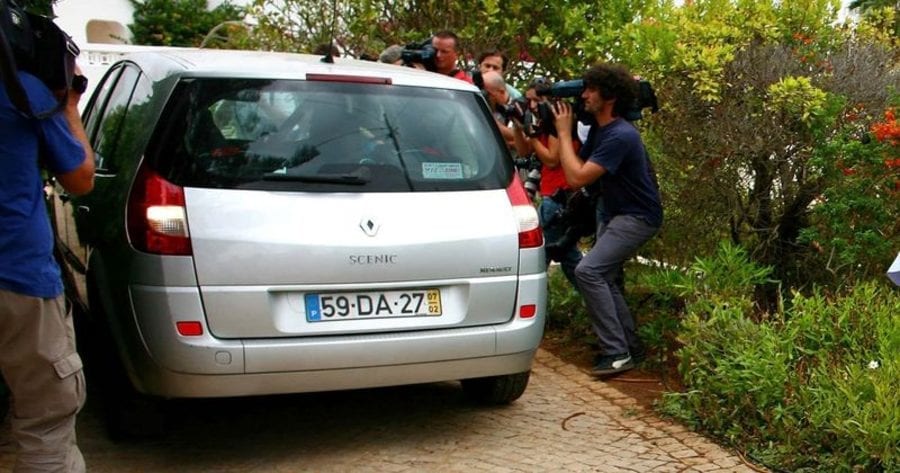
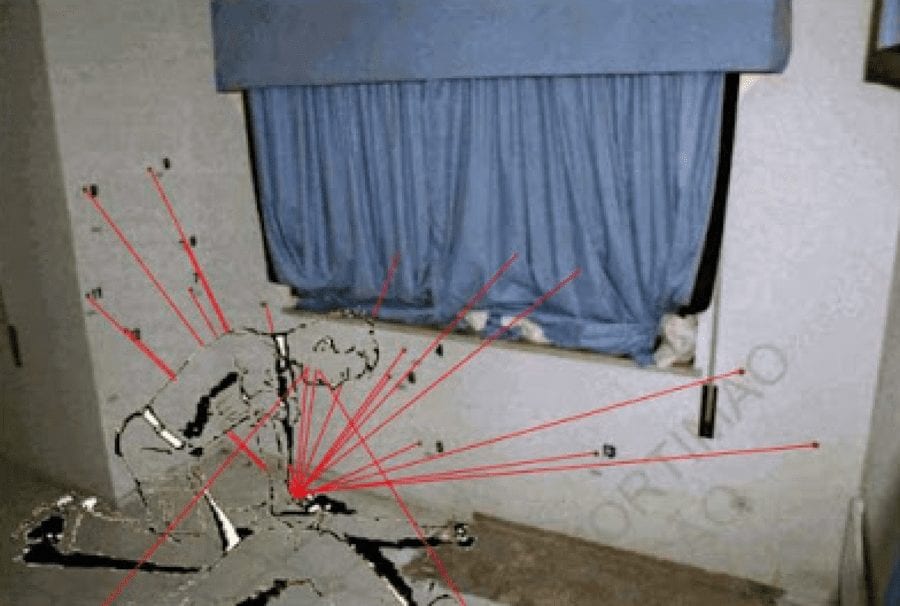
The police have yet to explain the actual significance of photographs of a 1980s Volkswagen T3 Westfalia campervan and a 1993 Jaguar XJR6.The car hired by the McCanns also remains a bit of a mystery. In 2008, it was revealed that “one of them had later removed the carpet from the boot compartment in order to scrub it clean.” The boot had been “left open for several days” also.More significantly, shared on ‘The Complete Mystery of Madeleine McCann’ Facebook page last month is this photograph illustrating the distribution of blood spots in the sitting room of the holiday apartment where the McCann family were staying in Praia da Luz, Portugal in May 2007. Elsewhere, analysis of the setting highlights that tiles in the room were later removed by persons unknown.
Many questions about what happened on the evening of the disappearance of Madeleine McCann remain. Some that have been highlighted by the press and discussed online include:
Why did Kate McCann refuse to answer 48 questions put to her by the Portuguese police?
Why were certain records of phone calls on the evening of the disappearance “whoosh-clunked”from the memories of the phones of Mr and Mrs McCann and the ‘Tapas 9’?
Why did a British sniffer dog sense the smell of a corpse in a cupboard in the apartment from which Madeleine McCann disappeared?
Why did a sniffer dog also supposedly sense the smell of a corpse in a vehicle hired by the couple a month after the disappearance of their daughter?
Why did Mr and Mrs McCann go jogging and play tennis in the days after their daughter’s disappearance?
Was it acceptable for Mr and Mrs McCann’s mortgage to be paid by the fund established to search for their missing daughter?
Ex-Daily Express owner Richard Desmond’s plans for a 1,500 apartment complex kicked out as Tory housing minister Robert Jenrick MP is shown to have “unlawfully approved” the proposed scheme
Given the green light just 24 hours before a new levy that “would have cost [Desmond] over £40 million” kicked in, the minister has now accepted the application must be “redetermined.”
With this controversial planning decision now frozen after Tower Hamlets council took legal action against the minister because of their apparent “bias towards the former owner of the Star, Daily Express and Sunday Express,” further questions about Jenrick’s judgment will follow.
Local councilor Andrew Wood, whom resigned from the Conservative Party “over the issue,” has now “put in a freedom of information request for all the correspondence between officials and the minister relating to the Westferry Road printworks development.”
He told the Guardian: “It should be investigated. The key question is: why did [Robert Jenrick] make the decision when he did so against the inspector’s advice?”
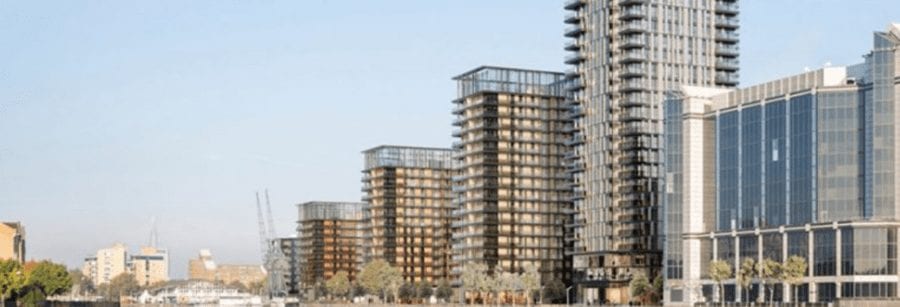
Robert Jenrick approved Richard Desmond’s £1 billion Westferry Printworks, Isle of Dogs, E14 scheme in January. 1,524 properties were due to be built there on the site of the former presses of the ‘Daily Express,’ ‘Sunday Express’ and ‘Daily Star.’ Originals plans, approved by then mayor Boris Johnson in 2016, for the site were for just 722 units.
BBC presenter Adrian Chiles’s delight in the simple pleasures of a pint in a park during lockdown reflects how so many feel
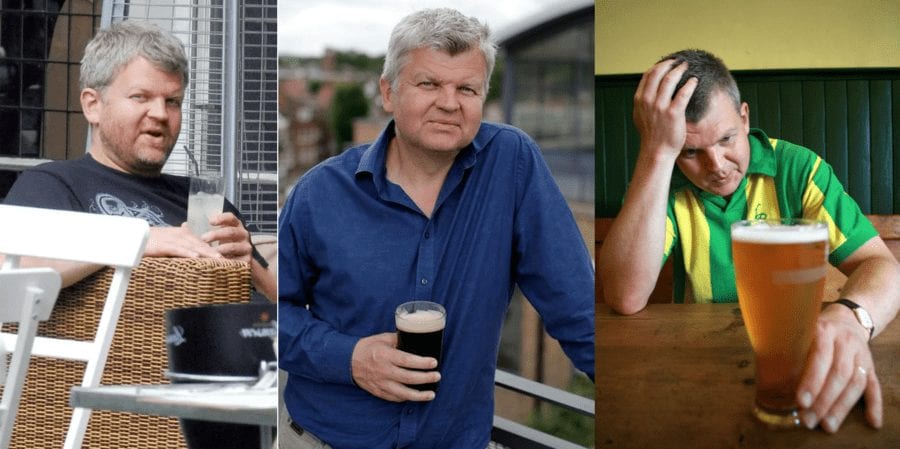
Television and radio presenter Adrian Chiles’s relationship with alcohol has been very publicly documented. In August 2018, he presented a BBC Two documentary entitled Drinkers Like Me and “investigated why alcohol had become such a big part of his life.”
At the time Chiles surmised that alcohol was “the only drug you do not have to apologise for taking” and declared he “associated drinking with friendship and good times, as most of us do” according to the Guardian’s Emine Saner. Concluding, the BBC stalwart added: “The advice to ‘drink responsibly’ is the world’s most boring phrase.”
This morning in an opinion piece for the Guardian, Chiles announced: “I am trying to drink less but know a simple pleasure when I see one.” In it, he recounts how his “accidentally on purpose” visit to a pub during the coronavirus lockdown to get a takeaway beer with a friend to drink during a break from the book he is “endeavouring to write… working title: How to Drink Less.”
After consuming a stout on a “rickety bench beneath a low-hanging tree” with “slow reverence,” he “gave thanks for this simple pleasure” and concluded: “I am all for taking alcohol off the pedestal on which it stands for many of us, but this was something special. We talked as we sipped, and then we went home, exemplars of mindful, moderate drinking.” Spot on and cheers!
Letter penning ‘Guardian’ readers return to their favourite subject – marmalade
We thought Guardian readers had given up discussing marmalade, but this morning they’re back on track.
Having chronicled their previous discussions about amongst other things marmalade and longevity and whether marmalade can beat COVID-19, we didn’t imagine there would be any more topics to touch upon – but it seems there indeed are.
This morning’s missive comes from one Zoe Gleisner of Beckley, East Sussex. It reads:
SIR – I’m not sure if you can strain marmalade through tights (Letters, 14 May). However, they are perfect for holding the pips in the pan to release their pectin while cooking.
1978 Piaggio Ape ‘limousine’ used by the controversial Countess Agusta – a woman who either fell or was pushed to her death from her home above Portofino in 2001 – to be auctioned
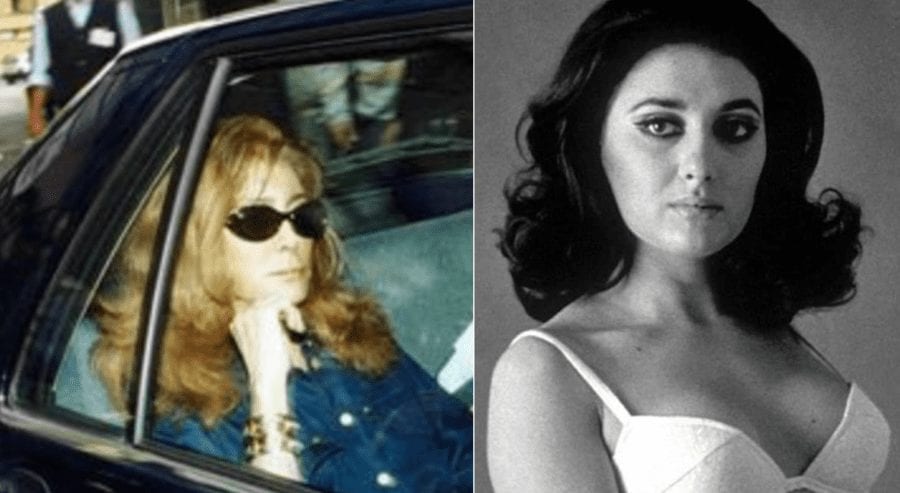
On 8th January 2001, “shop assistant turned model turned multi-millionairess many times over turned fugitive” (via a stretch in what American’s so pleasantly term ‘pokey’) Countess Francesca Vacca Agusta “disappeared” from the terrace of her Ligurian seaside home. The series of events that preceded and followed could have featured in an Agatha Christie novel or a Sherlock Holmes story.
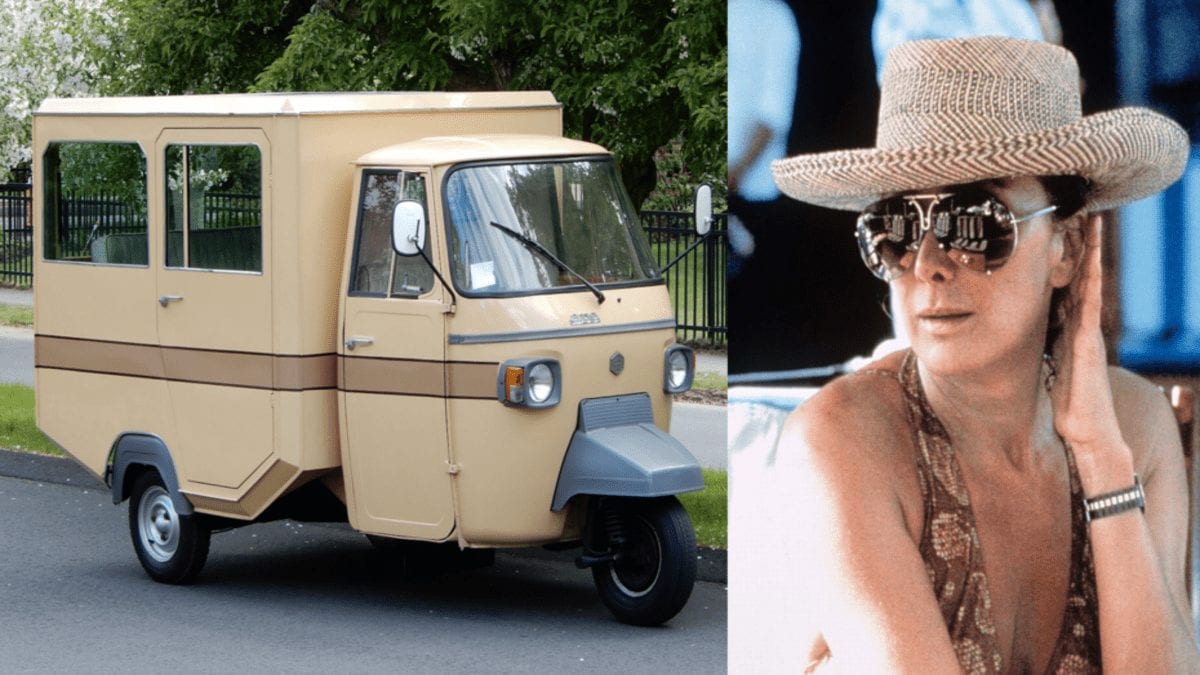
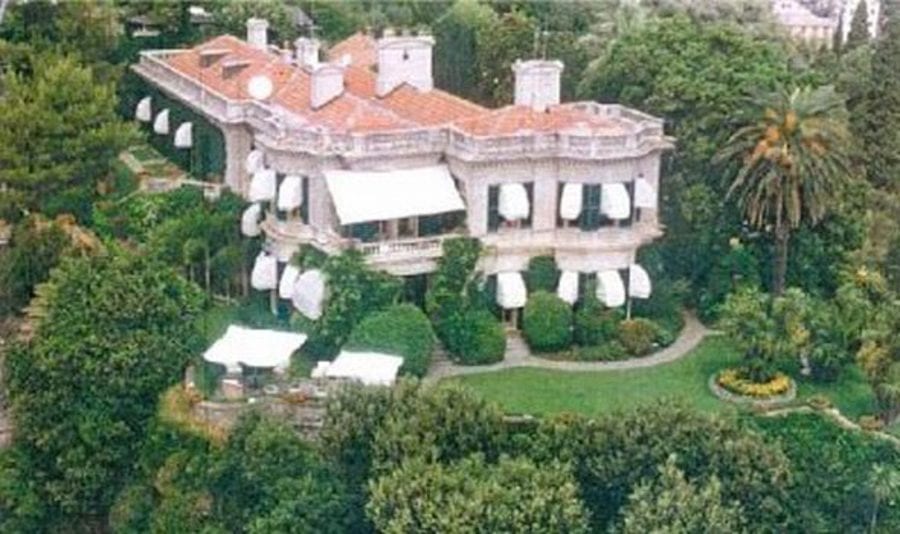
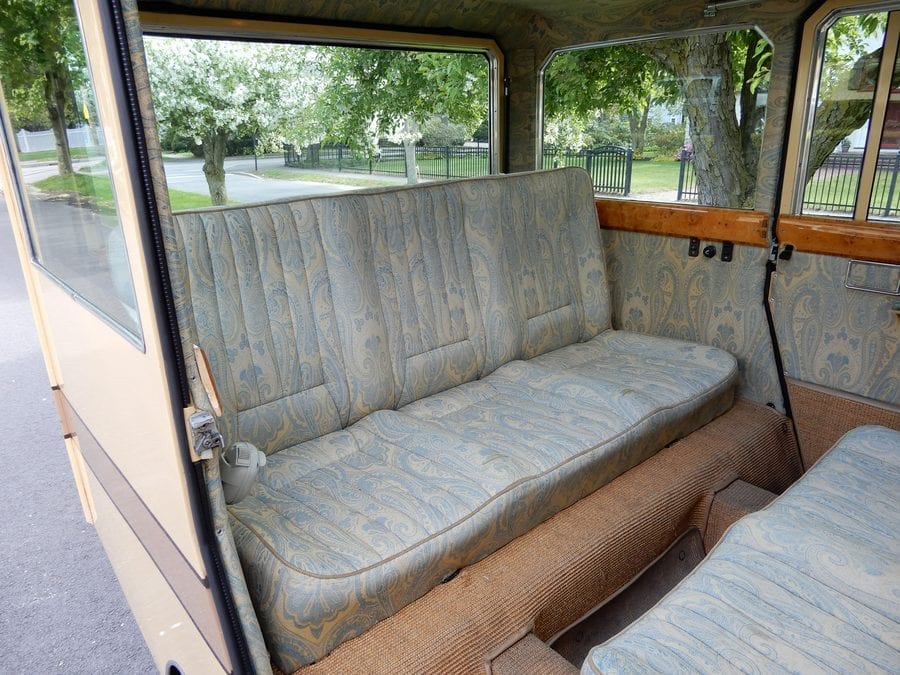
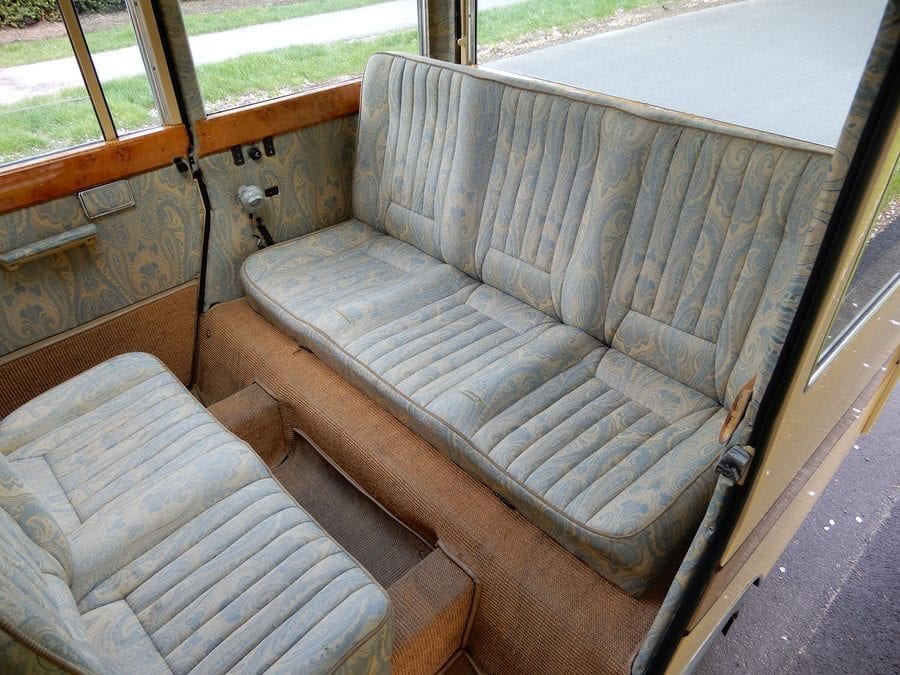
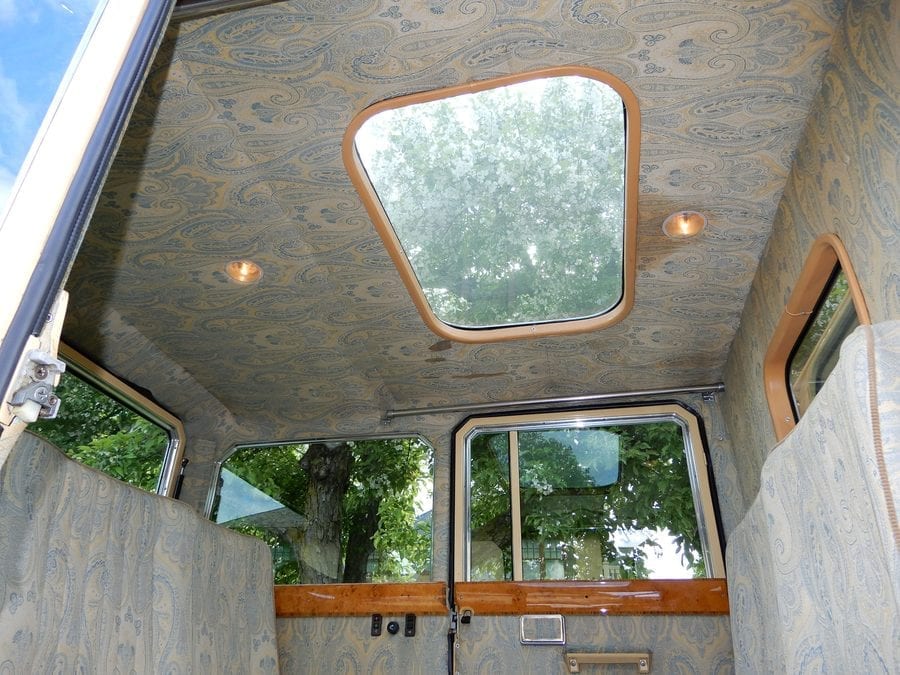
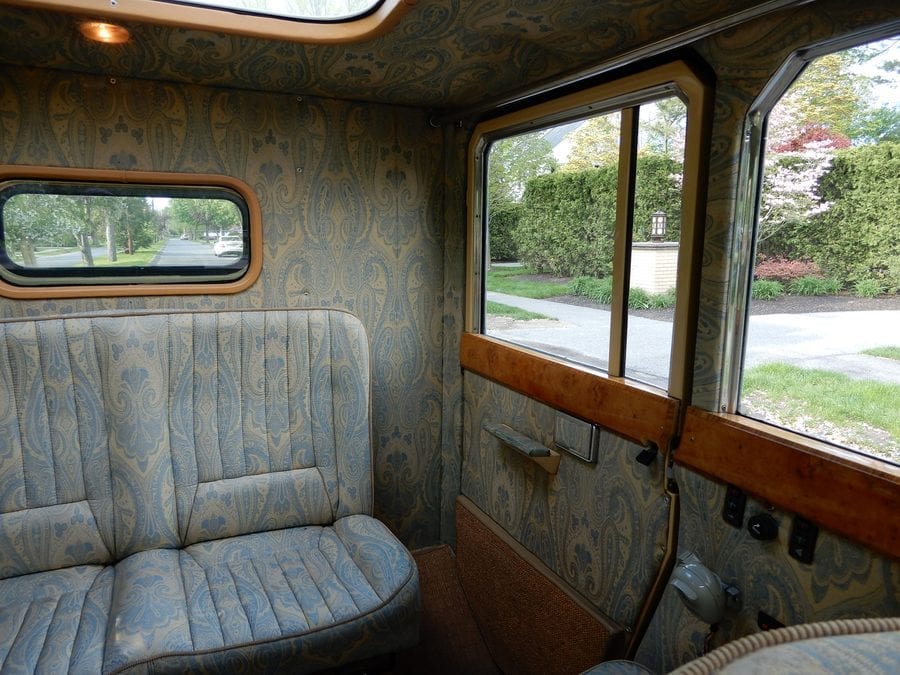
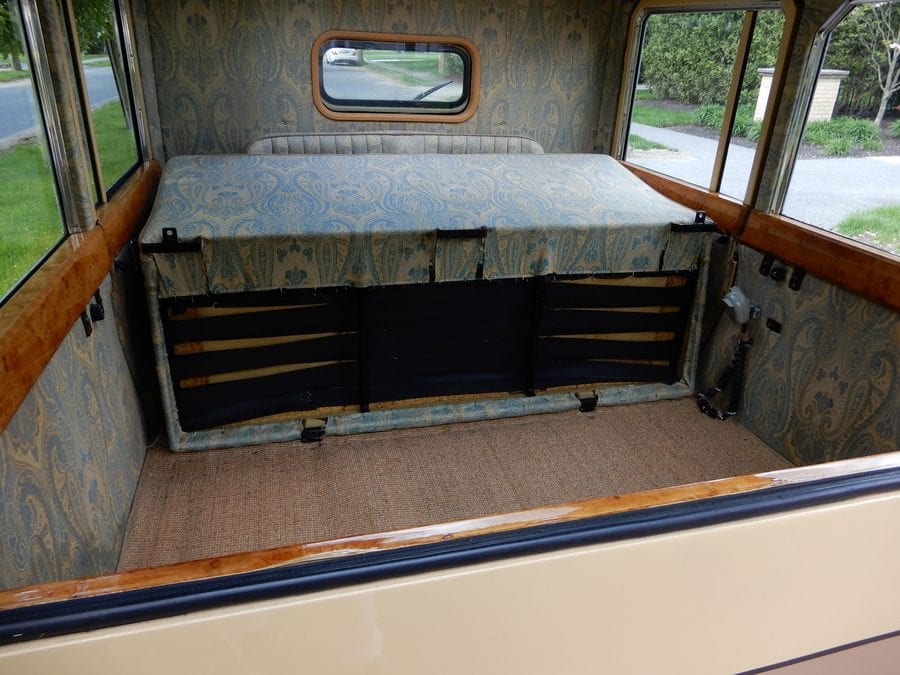
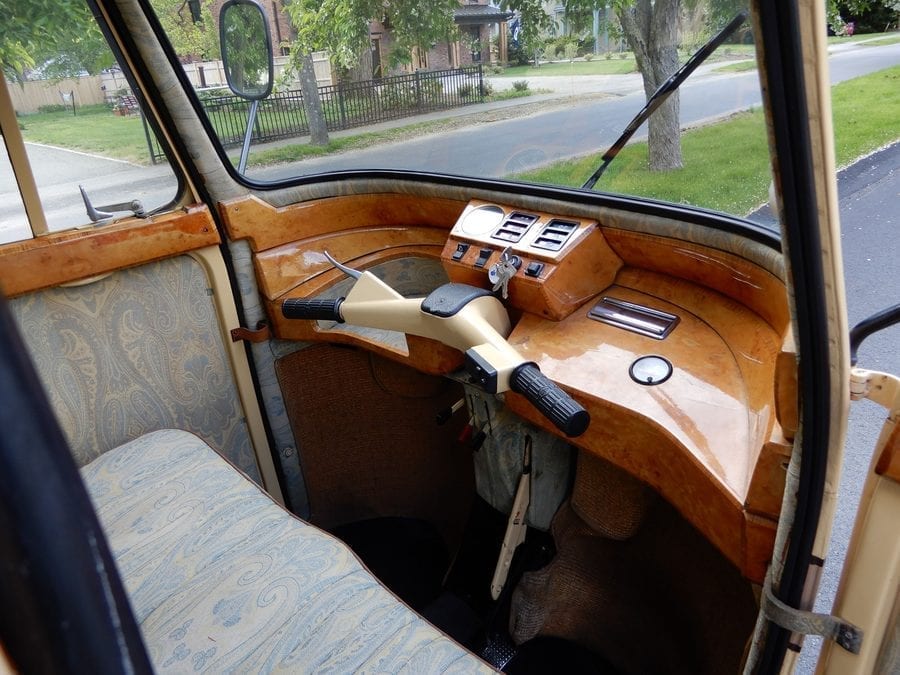
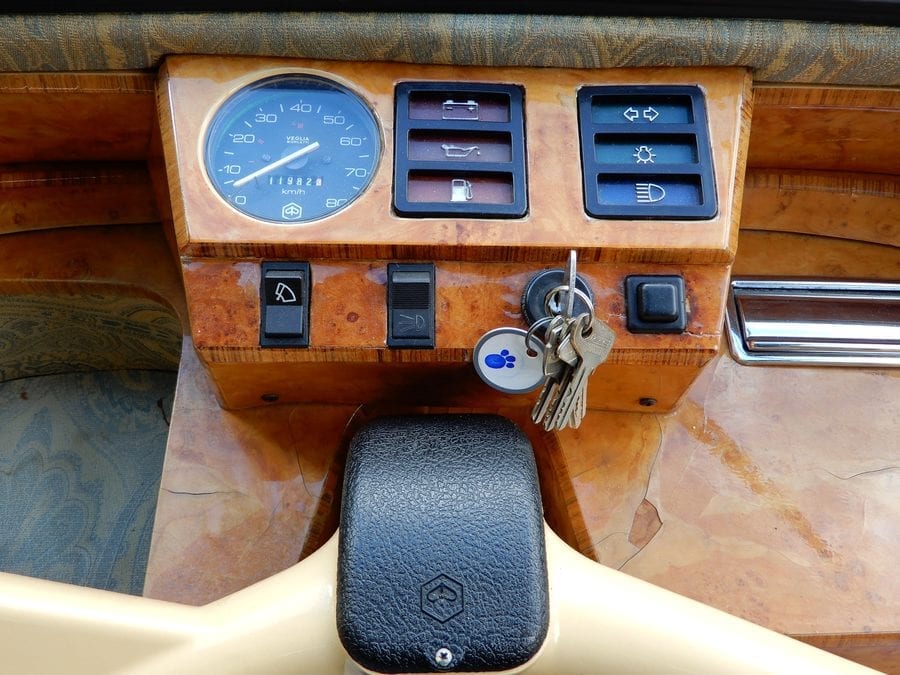
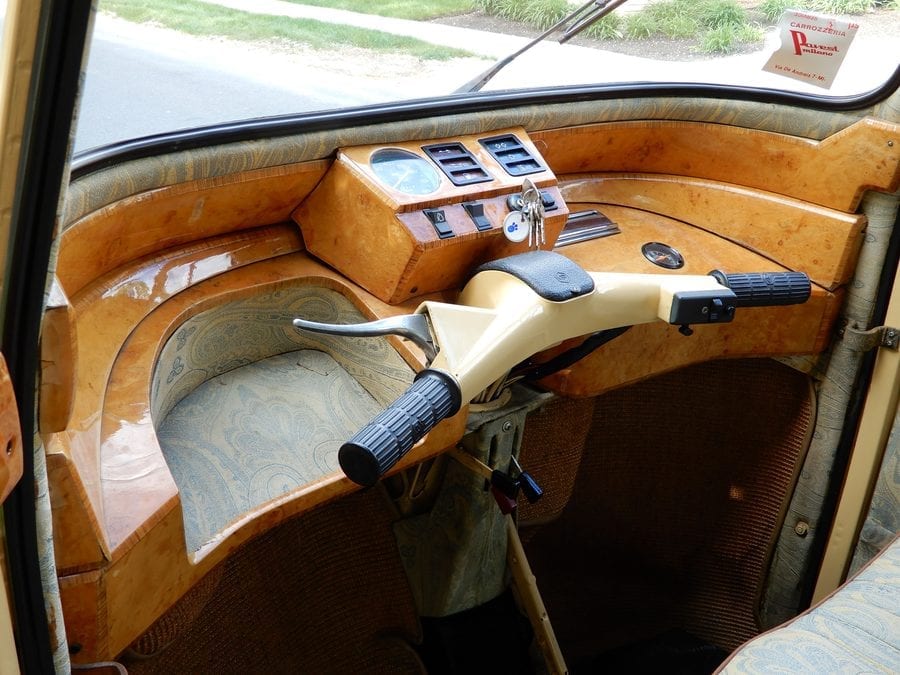
Graffagni saw off the business tycoon’s first wife, Pupetta Maresca, after a torrid affair and following their marriage in 1974, amongst other things, became chatelaine of a 40-room property complete with a helipad. It had been built in 1870 by George Herbert, 4th Earl of Carnarvon – whose death was attributed by amongst others Sir Arthur Conan Doyle to the “curse of King Tut” – as his holiday home and during the 1970s and 1980s guests to “jet-set parties” given at the house by the socialite Countess were ferried back and forth from their dock in Portofino harbour in a custom built 1978 Piaggio Ape coachbuilt ‘limousine.’ This vehicle, described as a “perfect yacht tender” with its opulently patterned interior and passenger-driver intercom, is now for sale.
Countess Francesca Agusta (née Francesca Vacca Graffagni, 29th October 1942 – 8th January 2001). It is most surprising that the late Dominick Dunne did not make a television programme about her life and demise.Villa Altachiara (alternatively known as ‘Villa Alta Chiara’ or ‘Villa Carnarvon’) was one of Countess Agusta’s homes from the 1960s until her death in 2001; it was originally built as a holiday home for Lord Carnarvon (26th June 1866 – 5th April 1923) – the financier of Howard Carter’s explorations of Egypt’s Valley of the Kings that led to the discovery of Tutankhamen’s tomb. The Carnarvon family hosted many guests during their ownership, amongst them Brooke Astor and Evelyn Waugh.
Count Agusta died in 1989 without divorcing his second wife in spite of separating from her in 1985. At that time, in addition to Villa Altachiara, he had given her four apartments in Milan, an estate in Cuernavaca, Mexico, family jewellery and an undisclosed cash sum. With his demise, she came into yet further fortune.
This by-then “very wealthy woman” hit the headlines again in 1994 when she and her new lover, a “former Portofino playboy politician [named] Maurizio Raggio,” were discovered to have been part of a corruption scandal involving Bettino Craxi, the Prime Minister of Italy from 1983 to 1987. Before police could apprehend them to charge them with amongst other things money laundering, the pair fled to Mexico and lived on her estate until 1997 as fugitives. During this period, the Countess reportedly attempted suicide at least once.
Upon her return to Italy, the Countess plea-bargained and spent just three months in Milan’s Opera prison for her crimes in spite of receiving a two-year jail sentence. After “some further time under house arrest” in the Villa Altachiara, the “retired” gadabout then took up with a Mexican, Tirso ‘Tito’ Chazaro (also known as ‘Tirso Di Ricardo’ and ‘Rafael Tirso Roncado Gonzales’), and lived in the style of Miss Havisham. She was rarely seen in public and having become dependent on drink and drugs, was known for her erratic behaviour and temper.
“Considerably the worse for wear and muttering she would not be coming back” on the night of 8th January 2001, the Countess supposedly told her lover and two others present that she was going for a swim, but either slipped on wet leaves or was pushed off a veranda into the sea. A search followed, but after the only traces found were the Countess’s dressing gown on the seabed close to the Villa Altachiara and her slippers on nearby rocks, press reports suggested she had either committed suicide or, given her past form, staged an “elaborate disappearing act.”
Countess Agusta’s badly decomposed body washed up three weeks later on a beach at Toulon on the French Riviera. Her feet had been gnawed off by fish, her skull was smashed and her face was disfigured. She could only be identified by two rings she was wearing and her exact cause of death could thus not be determined.
As an autopsy found no trace of water in her lungs, she plainly did not die by drowning, but in in 2004 the Countess’s brother, Domenico Vacca Graffagni, was quoted in the Independent as stating: “The [original] inquiry was closed in a hasty fashion because of absence of proof, relying too readily on ‘reasonable doubt’ … It was manslaughter. He [Chazaro] was always beating her. He didn’t mean to kill her. But that evening things didn’t go the way the Carabinieri said, my sister was not drunk and she did not slip on wet leaves on the veranda.”
Adding further to speculation, much earlier, the Countess’s step-son, racing driver and team owner Rocky Agusta (1950 – 2018), told Corriere della Sera in 2001: “Francesca was a beautiful woman, simpatica, very rich… People have written that she inherited 500bn lire, but if it had been only 50 or 25, who commits suicide with 25bn lire set aside? … The people who were around her certainly did not help her… It’s not up to me to formulate accusations, but Francesca was not alone that night. She was very upset. She should have been put to bed. Instead, they let her go out into a dark, wet, cold night, not even dressed.”
In due course, the last of many wills left by Countess Agusta revealed Tirso Chazaro to be her sole beneficiary, but after this was challenged in court by her former lover, Maurizio Raggio, the pair split the legacy – reported to be worth as much as £165 million ($201 million, €186 million or درهم738 million) according to the Guardian in 2001 – sixty-forty between them.
In 2009, the Villa Altachiara was offered for sale initially for £44 million ($54 million, €50 million or درهم198 million) and then for £30 million ($37 million, €34 million or درهم135 million) in 2014. It supposedly eventually sold for less than half that sum to a Russian billionaire a number of years later in spite of an estate agent remarking: “Some say the spirit of Countess Francesca Vacca Agusta still walks the estate looking for her husband and you can hear her shouting for him on the wind.”
An estimate of £37,000 to £49,000 ($45,000 to $60,000, €42,000 to €55,000 or درهم165,000 to درهم220,000) for the Countess’s Piaggio Ape. Described as “sweet” and “[anything but] an Italian tuk-tuk” by RideApart, the one-off private taxi will be auctioned as part of the forthcoming RM Sotheby’s ‘Driving Into Summer’ 21st to 29th May 2020 online sale. One can only hope it finds a happier home than it encountered at that of its former mistress.
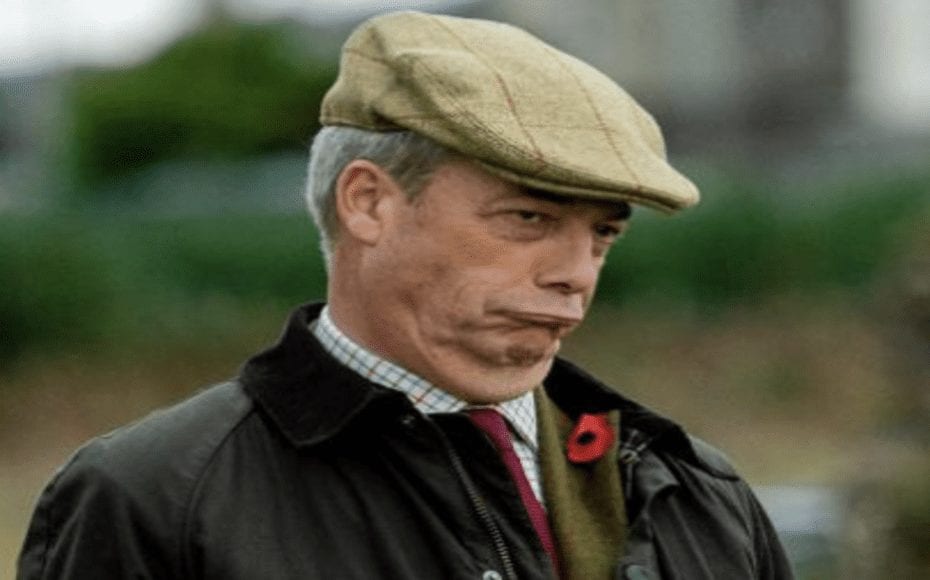
As Nigel Farage ludicrously suggests Britain is “a country of doubtful democratic legitimacy” (in spite of it giving him the Brexit he so desired this very year), we join those suggesting that this furious Firestarter is still very welcome to leave
“This incident has confirmed my worst fears about the country Britain is becoming” wrote Nostradamus-like Nigel Farage in The Telegraph on Tuesday evening. The same Farage, that is, that was celebrating Boris Johnson and Brexit on 31st January in Parliament Square; the same Farage who finally had the Darling Buds of May mixed with Last of the Summer Wine pastiche version of Britain he has for so long dreamt of.
Farage, at that moment, was “optimistic” and “celebrating the free world” and whilst braying about his dream having finally come true, boldly went as far as to state: “This is the greatest moment ever in the history of our great nation.”
Now, it’s all gone so horribly wrong. After having a visit from the police as a result of breaching lockdown restrictions that ordinary people have willingly obeyed, Farage angrily proclaimed of the police: “I was astonished and, although I remained polite, incredulous. I replied: ‘I’m not going to take that.’”
Continuing his diatribe about what he calls the “new police state” run for the “sneerocracy,” hypocritical Farage – whose two children have German passports (which allows them continued free movement in Europe) – concluded: “I don’t know if I will be stopped and fined if I attempt to do my job again. However, I will look at the shipping forecast. Without question, on the next calm day they will come again, and I will be there to cover this scandal.”
Perhaps, instead, of meddling at a time of pandemic lockdown when his interventions are most definitely not required, this berk could just adapt the advice of Norman Tebbitt and get in a boat. Nigel Farage could sail away to somewhere he’s actually wanted – that being his very own mecca, Trumpland. There, in the manner of Dick Whittington, this fervent Firestarter might even find the streets paved with currency to replace that that he used to take in very, very generous EU expenses.