Category: Technology

Current Technology thanks to The Steeple Times

  • Is AI Technology Making It Easier To Make Small Claims In The UK’s Courts?

    Is AI Technology Making It Easier To Make Small Claims In The UK’s Courts?

    Rosie Marple looks into how AI tools are changing processes in the small claims court system in the UK and explores how it can provide those involved in legal disputes with clear guidance, organised workflows and efficient ways to prepare affordably

    The small claims process in the UK was designed to be straightforward, but many people still find it challenging to navigate legal terminology, document requirements and strict procedural deadlines. Now, as more aspects of the justice system begin to move online, artificial intelligence is emerging as a useful tool and making these steps more accessible to the general public.

    AI-based solutions can help individuals prepare claims and defences with greater accuracy, offering guided workflows and provide clarity that reduce the risk of avoidable errors. This evolution reflects a broader trend toward digital transformation in legal services, aimed at improving access and confidence for self-represented parties.

    Why AI is playing a growing role in small claims

    The shift toward digital justice services has created a need for tools that support users who may not have legal experience. Many people prefer to handle small disputes themselves, but appreciate some form of structured assistance. AI tools fill this gap by providing:

    • Clear explanations of each procedural stage.
    • Intelligent prompts to ensure key information is included.
    • Templates that follow court expectations.
    • Automated checks for inconsistencies or missing details.
    • More organised workflows for preparing evidence.

    These improvements help individuals present their case more clearly, be they a claimant or a defendant.

    An example of such can be found in the increasingly used AI small claims platform UK with CaseCraft, which provides structured digital support without replacing the role of legal professionals.


    How AI tools can assist claimants and defendants

    AI-driven platforms are especially useful for breaking down complex tasks into straightforward steps. This makes a significant difference for users who may not be comfortable with legal writing or technical requirements.

    For claimants, AI tools help with:

    • Preparing a clear narrative of the dispute.
    • Identifying relevant facts and evidence.
    • Ensuring the correct defendant is named.
    • Formatting documents for court submission.

    For defendants, these platforms support:

    • Understanding each point made in the claim.
    • Drafting a structured response.
    • Addressing allegations in a logical order.
    • Organising supporting evidence.

    By guiding users through the process, AI reduces confusion and increases the likelihood of well-prepared submissions.

    Automation and smart guidance: Key features

    Modern AI-driven platforms often incorporate automation that improves both quality and efficiency. Typical features include:

    • Error detection: Flagging missing or inconsistent information.
    • Smart suggestions: Indicating where more detail may be needed.
    • Document generation: Producing court-ready forms and statements.
    • Deadline tracking: Helping users avoid missed dates.

    These tools do not provide legal advice but create a more predictable and manageable experience for individuals who choose to represent themselves.

    When professional input may still be necessary

    AI support is beneficial for most routine small claims under £10,000, particularly those involving unpaid invoices, service disputes, or straightforward contract issues. However, some cases still require professional legal guidance, such as:

    • Disputes involving technical or expert evidence.
    • Complex contractual disagreements.
    • Multi-party claims or counterclaims.
    • Cases close to the small claims financial limit.

    In these situations, a solicitor can provide insights that go beyond procedural support. Even then, AI tools remain useful for document preparation and evidence organisation.

    The future of AI in the UK small claims system

    As technology continues to develop, AI is likely to play an even more significant role in making the small claims process more accessible. The trend is moving toward clearer procedures, fewer administrative obstacles, and greater confidence for individuals managing their disputes independently.

    While AI cannot replicate the depth of human legal advice, it offers practical, user-friendly guidance that helps people navigate small claims with less stress and more certainty.

    Frequently asked questions about AI in small claims

    1. Is it legal to use AI to assist with small claims?

    Yes, AI can help users structure information, understand procedures, and prepare documents. It cannot provide legal advice in the same way as a qualified legal professional, but it can offer general guidance and organisational support.

    1. How accurate are AI tools for small claims preparation?

    They are typically very accurate in identifying missing information, inconsistencies, and procedural gaps. Accuracy depends on user input, so the more complete the information, the more effective the tool.

    1. Do I still need a solicitor if I use an AI platform?

    Not always. For standard disputes involving invoices, deposits, services, or property damage, AI support is often sufficient. For complex cases, professional advice may still be necessary.

    1. Can AI help with both filing and defending a small claim?

    Yes. AI tools are designed to guide both claimants and defendants, adapting questions and structure depending on the user’s role in the dispute.

    1. Is my personal information secure when using AI tools?

    Reputable platforms use encryption and comply with data protection laws (including UK GDPR). Users should always check a platform’s privacy policy before uploading documents.

    1. Can AI help me decide whether I have a strong case?

    AI tools do not give legal opinions or predictions. They can highlight missing details or unclear statements, but assessing legal merit requires human judgment.

    1. What documents can AI help me prepare?

    Typical outputs include claim forms, defence statements, witness statements, evidence bundles, and timelines of events — all formatted for court use.

    1. Does AI work for all types of small claims?

    AI is most effective for straightforward disputes involving money claims, services, goods, contracts, or property damage. Highly technical or specialist claims may require additional human input.

    1. Will the courts accept documents generated by AI?

    Yes, provided they meet procedural requirements. AI-generated documents follow standard formatting and structure, but the user remains responsible for accuracy.

    1. What happens if my case becomes too complex for an AI tool?

    Users can export their documents and share them with a solicitor. AI tools can significantly reduce the time a professional needs to review or prepare the case.

    Rosie Marple studied law at the London School of Economics and aside from her interest in technology, given her surname, enjoys sleuthing and problem solving Agatha Christie-style in her spare time. Follow her on X at @RosieMarple.


  • A Tepid Twitter Storm – If You Don’t Like Twitter, You Have The Right To Leave

    A Tepid Twitter Storm – If You Don’t Like Twitter, You Have The Right To Leave

    Matthew Steeples suggests those getting overexcited about Twitter should just get over their ever-so-sanctimonious selves; at a time of strife and strikes, the tepid Twitterati do need to remember that they do have the right to leave

    Some will hate me for being so dastardly to dare to say it, but I’m going to say it anyway: Twitter is something I find useful and it is something I do actually like. This is not some kind of monster that somehow controls you, it is a webspace where you can come and go as you please. Nobody forces you to arrive and nobody forces you to go – unless, of course, you go completely overboard.


    Twitter is a social medium where I discover all sorts of information (some of it admittedly nuanced, some of it most definitely nonsensical), it is somewhere that has introduced me to new contacts and friends even (some of whom I’ve still yet to meet in reality; how bizarre is that?) and, most of all, it’s a completely wacky melting pot of everything from the mundane and moronic to the utterly marvelous.


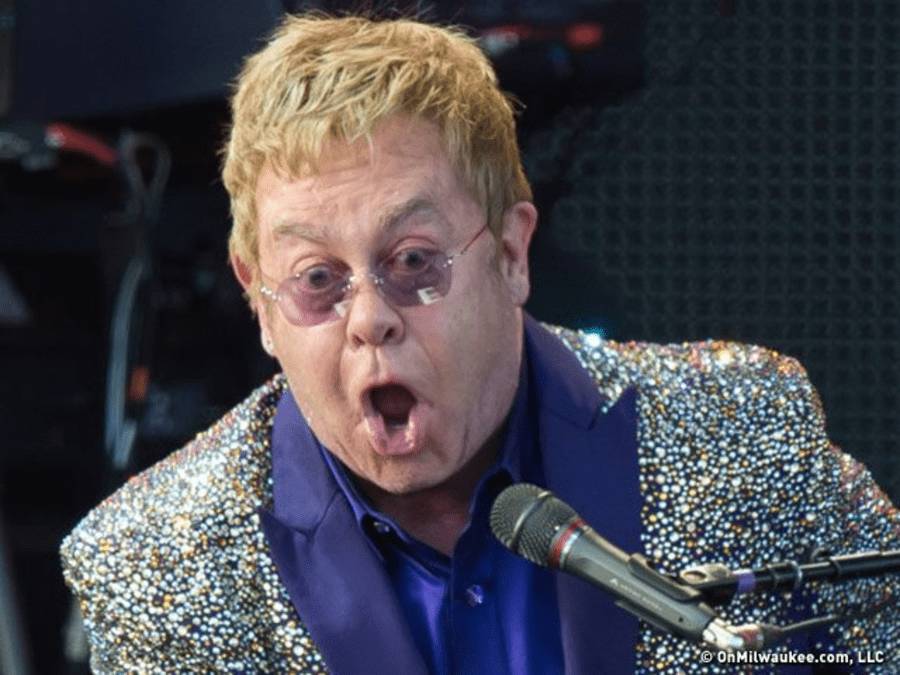
    Prince Harry’s temper tantrum prone supplier of private jets and a crooner anything but loved by the late Duke of Edinburgh, Sir Elton John, may have decided to silence his twittering spam last week. Boo hoo, diddums, does anyone care? Equally, a man I had personally wanted to like, but found to be the ultimate dinner party bore, Stephen Fry, has gone also. Nobody’s loss, I’d argue; a great actor, but sadly a crashing snob who talks only about his ever-so-pompous self. Next!


    Facetious Fry cited something or other about Piers Morgan (how predictable, yawn, next) being part of his reasoning and this morning The Guardian predictably got into a hissy fit about the platform too. Aside from banging on about the clearly disgusting death threats faced by the likes of like-him-or-loathe-him Dr Anthony Fauci and the shocking abuse of the heroic rescuer of a boys soccer team who’d been trapped in a cave in Thailand on Twitter, an unnamed writer for the paper focused on what has ‘happened’ to the social media channel’s now former “top safety official,” someone-you’ve-likely-never-heard-of named Yoel Roth.


    Roth presided over Twitter in the days that it went ‘woke’ and he is now paying the price given its change of ownership. After having initially, somewhat surprisingly, retained the support of Elon Musk after his purchase of the medium, the 34-year old has been ‘cancelled’ and supposedly forced to flee his “Bay Area mansion” after it was revealed that parts of his “thesis suggested letting children access [the] gay hook-up app Grindr.”


    In his most recent tweet, this self-declared “human” with a “PhD from Penn” piously pontificated: “You can armchair quarterback specific choices and mistakes all day, but the real work is figuring out how to make principled decisions when all you have are bad options,” but what he forgets is that under the regime where he censored and cancelled others, he became a very, very rich young man and now the worm that filled his pockets has turned.


    Called out as “gleeful” over his “huge sway” in deciding which posts and people could be removed and which could stay during his tenure at Twitter, I join those in saying good riddance to the antithesis of free speech that is Yoel Roth. It’s time, for now, to celebrate the new era of whatever comes next at Twitter and, quite frankly, if you don’t like it, you must remember that no one is forcing you to stay. You do have the right to leave; now, let the birds fly.


    Editor’s Note – Unlike as is the case in many publications, this article was NOT sponsored or supported by a third-party. Follow Matthew Steeples on Twitter at @M_Steeples.


    Yoel Roth and Nicholas Madsen
    Yoel Roth and his boyfriend Nicholas Madsen lived ‘the good life’ courtesy of the salary the former garnered from Twitter; they’re now moaning about being forced to “flee” their multi-million dollar home after the medium finally ‘woke-up’ and cancelled ‘wokery.’
    Stephen Fry and Elliott Spencer
    Stephen Fry (pictured with his much younger husband Elliott Spencer) might have quit Twitter, but does that anyone actually care? Does his quitting relieve those worried about whether or not they can turn on the heating or feed their kids of their problems? Most certainly not. Mr Fry and ‘The Club’ that he forms a key part of are finally getting their ‘Marie Antoinette Moment’ and boy do they deserve it.
    Elton John
    Bitter-old-bastard Sir Elton John’s ‘departure’ (on a private jet no doubt and nothing less) is hardly something that will worry the world either… Next!
  • Ronaldo’s New Clothes

    Ronaldo’s New Clothes

    Online equivalent of ‘The Emperor’s New Clothes’ set to occur at Bonhams today with auction of £900,000 NFT of Cristiano Ronaldo

    In October 2020, when we featured the story of auctioneers Christie’s selling five waste bins for the frankly beyond bonkers sum of £33,900 ($45,400, €39,600 or درهم166,800), we thought we’d found the ultimate in ridiculous rubbish. It turns out we hadn’t and today go one further.


    An online auction finishing this afternoon of ‘something and nothing’ at Bonhams will conclude and frankly it is an auction that is akin to the story of the vain emperor featured in Hans Christian Anderson’s literary folktale The Emperor’s New Clothes. It is an auction featuring a single lot and that lot is a non-fungible token (NFT) of Cristiano Ronaldo.


    Describing what they are trying to sell, Bonhams remark:


    “Now, a one-of-a-kind Cristiano Ronaldo NFT trading card, minted by Sorare, a digital fantasy football game, is coming to Bonhams for an exclusive online sale, Cristiano Ronaldo: One of a Kind, between 1st and 11th November. It is estimated to sell for £597,000 to £896,000 ($800,000 to $1.2 million, €697,000 to €1 million or درهم2.9 million to درهم4.4 million). Crypto currency Ethereum will be accepted.”


    “The present NFT is the only unique card of Ronaldo minted for the 2020/2021 season and is officially licenced by the player and his team. It shows him in the black and white kit of Juventus but remains usable in the game despite Ronaldo’s transfer to Manchester United.”


    “Sorare is a fantasy game of football, where players buy, sell, trade, and manage a virtual team with digital playing cards. The game uses blockchain technology based on Ethereum and was developed in 2018 by Nicolas Julia and Adrien Montford. As with traditional fantasy football, the teams are ranked based on the performance of their players on the real-world football pitch.”


    “The supply of cards is limited and use of the blockchain means that digital cards have provable scarcity. They come in three formats: unique (1 of 1), super rare (1 of 10) and rare (1 of 100). The Ronaldo card on offer is unique and, as one the greatest players of the modern era, arguably the most desirable card in the game.”


    The item offered today featured in something called a “bundled auction” on the sports-fantasy exchange Sorare in February this year at a price of £71,800 ($96,200, €83,000 or درهم353,200). It was linked to someone going by the name of ‘VictorNettoyeur’ and, if it achieves its upper estimate of £896,000 ($1.2 million, €1 million or درهم4.4 million) this afternoon, will be hammered down at a sum 1,148% higher than in February.


    In a description of the ‘item’ shared online, head of digital art at Bonhams, Nima Sagharchi, commented:


    “Sports trading cards have been valued and collected for over a century, and 2021 is very much the year of the sports card with physical cards representing Lebron James, Luka Doncic and Tom Brady each already having sold for millions of dollars.”


    “Sorare presents us with the natural evolution of this format, a fantasy trading card game in digital form with cards that accrue rewards. Bonhams has always aimed to push boundaries in our sales and to be the first auction house to offer an NFT of this kind is a very exciting prospect, particularly as this NFT is of the great Cristiano Ronaldo.”


    “The excitement felt up and down the nation when he returned to the Premier League in September was palpable – we felt an equal excitement learning that he would be coming to Bonhams.”


    This ‘Emperor’s New Clothes’ of auctions ends at 3pm GMT today and the current bid is unsurprisingly nowhere near that pitch victory sum, but unbelievably still a crackpot crazy £239,000 ($320,000, €279,000 or درهم1.2 million).


    Cristiano Ronaldo shirtless
    Cristiano Ronaldo is considered a bit of a God on the pitch and a bit of a sex symbol off it. Now, he might make it into the realms of digital art history if an NFT of him sells for £896,000 ($1.2 million, €1 million or درهم4.4 million).
    Beeple Everydays The First 5000 Days
    In March this year, Christie’s achieved the utterly unbelievable after hammering down a non-fungible token by the artist Beeple (born 1981) for the completely crazy sum of £51.5 million ($69.3 million, €60.2 million or درهم253.4 million). At the time, of the lot, Noah Davis, a specialist in post-war and contemporary art at the auction house, remarked: “He showed us this collage, and that was my eureka moment when I knew this was going to be extremely important. It was just so monumental and so indicative of what NFTs can do.”
    Christie's expensive waste paper bins
    Christie’s also achieved the “monumental” in selling five waste bins for £33,900 ($45,400, €39,600 or درهم166,800) in October 2020. They had been ffered with an estimate of just £230 to £390 ($300 to $500, €260 to €430 or درهم1,100 to درهم1,800) to reflect that they had been supplied by the late French interior designer Henri Samuel – a man “hailed by Architectural Digest as a ‘supreme master of progressive historicism.’” The 20th century faux wood grain and cream painted bins were supplied with Italian marbelised paper linings and had been owned by the late American socialite and philanthropist Jayne Wrightsman.
    https://www.youtube.com/watch?v=0ZYriUosOx0
  • E-Scooter Explodes; Ban Them Now!

    E-Scooter Explodes; Ban Them Now!

    After an e-scooter explodes at Parsons Green underground station, it is time for these dangerous deathtrap devices to be banned in Britain

    Yet more proof of the dangers of e-scooters was provided last week when one exploded on the District Line at Parsons Green underground station.


    First reported on in the Evening Standard, the incident occurred last Monday at around 8pm and follows another similar incident at Stanmore on 26th October.


    Of what occurred, the paper stated:


    “In shocking footage, sent to The Standard, clouds of smoke billow down the District Line tube as the flaming scooter is dragged on to the platform at 8pm on Monday night.”


    “Passengers flee and can be heard coughing and spluttering from smoke inhalation after the lithium battery of the device exploded at the front of the carriage.”


    “A frantic train driver barks an instruction for the passengers to evacuate the train immediately.”


    Speaking to the Evening Standard, Lorraine Ward, organising director of Transport Salaried Staffs’ Association (TSSA), remarked:


    “Without doubt the incident at Parsons Green raises very serious concerns. It’s becoming all too clear that e-scooters pose a significant threat to the travelling public, our members and all workers at TfL.”


    “There should be an immediate halt to transporting them on all TfL services until more research into these batteries has been carried out.”


    “I’m therefore urging TfL to fully enforce the already existing ban on the use of e-scooters. Indeed, a further ban across the wider travel network should be considered by the Secretary of State for Transport.”


    “What happened at Parsons Green and recently at Stanmore must be properly investigated as soon as possible. Safety on our transport network will always be our union’s number one priority, there can be no compromises on that.”


    In July, ‘The Steeple Times’ reported on the London cabbie feed @TaxiLeaks sharing a video of an e-scooter exploding in a park. They accompanied it with the caption: “This is the death trap device that Sadiq Khan, Heidi Alexander, Will Norman and TfL are promoting. This is what happens when the battery becomes faulty (apparently a common problem). I’m sure Heidi can explain being deputy Mayor for transport.”
    Emily Hartridge
    Vlogger Emily Hartridge died after being hit by a truck whilst using an e-scooter on a roundabout in Battersea in July 2019. Of the tragic accident, YouTuber, Noel Forrest, remarked: “Emily [Hartridge] was one of my best friends, we grew up together. She was a very expressive, kind and caring person. It’s just so very sad. This is a tragedy but some good should come from it. Clearly e-scooters are not safe. Why allow the sale of something that is not safe? The existing ban should be enforced and extended to cover their sale.” Rightly, at the time, Colin Wingrave of the Metropolitan Police concluded: “Electric scooters should not be on the pavement or the road.”

    Going further, a first responder stated: “How dangerous is that? The chemicals? It’s a f***ing scooter man the battery [caught on fire]” whilst a Transport for London spokesperson added:


    “We completely understand how worrying it was for our” customers and staff when an e-scooter caught alight on a train.


    “Emergency services attended Parsons Green station and the e-scooter was removed at the first opportunity.”


    “While incidents like this are very rare, we take safety on the network extremely seriously and are undertaking a full review, which includes liaising with the London Fire Brigade.”


    “It is forbidden to ride e-scooters at stations or on trains, and failure to comply with this by-law is a criminal offence. E-scooters may currently be carried but must be folded for the entirety of the journey.”


    As reported previously in The Steeple Times on multiple occasions, e-Scooters are a danger in many other senses to both those using them and those that get in their way on both pavements and roads. It is time to finally ban these blessed, dangerous nuisances. E-scooters belong nowhere except in scrapyards.


    Pictured top: The aftermath of the e-scooter explosion at Parsons Green on 1st November 2021.


  • Ban The E-Scooter in Britain

    Ban The E-Scooter in Britain

    Video of e-scooter turning into fireball illustrates why these dangerous death traps should be completely banned in Britain

    Shared by London cabbie feed @TaxiLeaks on Twitter with their 11,000 followers on Saturday, a video of an e-scooter’s battery smoking and then exploding provides proof yet again that these unregulated nuisance machines must not be allowed on Britain’s roads and pavements.


    In their 0:45-second video – accompanied by the caption: “This is the death trap device that Sadiq Khan, Heidi Alexander, Will Norman and TfL are promoting. This is what happens when the battery becomes faulty (apparently a common problem). I’m sure Heidi can explain being deputy Mayor for transport” – illustration was clearly provided of the dangers of these uninsured ‘mobile weapons.’


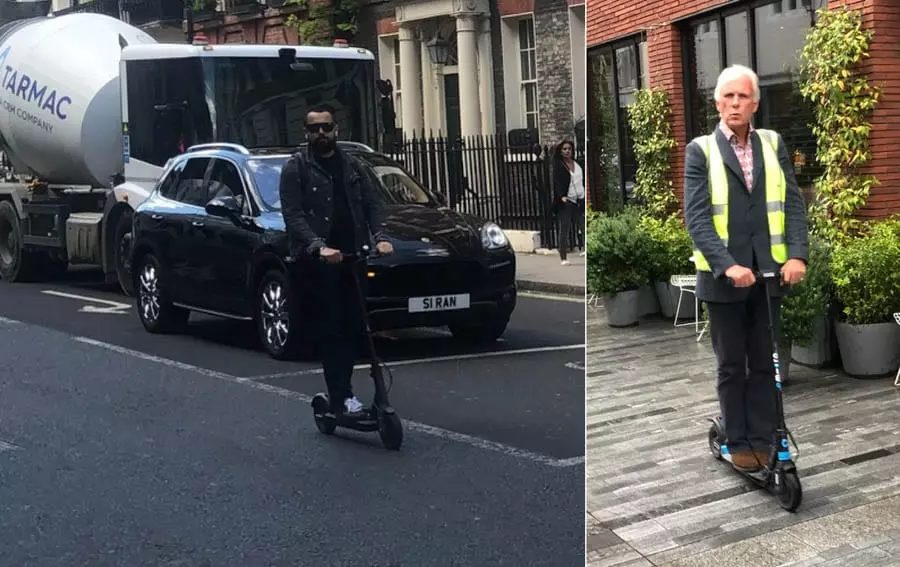
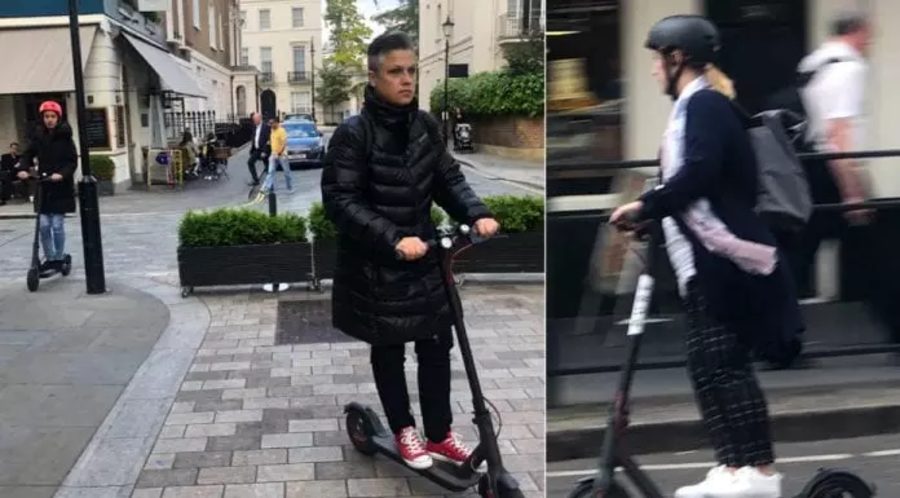
    Elsewhere on our pages previously, The Steeple Times have highlighted other examples of death and destruction caused by these still for the moment mostly illegally used devices. In July 2019, we reported on the case of Ambar Zohra, a foul-mouthed cretin who hit a pedestrian in London’s Walton Street on a pavement on her scooter, just days after another user was killed on such a device on a roundabout in Battersea.


    Whilst later, in July 2020, we commented on the government’s decision to trial rentable e-scooters after no doubt being bunged by operations such as the £1.6 billion valued American provider Bird, @TaxiLeaks’ video today again shows whilst it time the UK did to the contrary: It is time to make e-scooters illegal and to banish them from Britain.


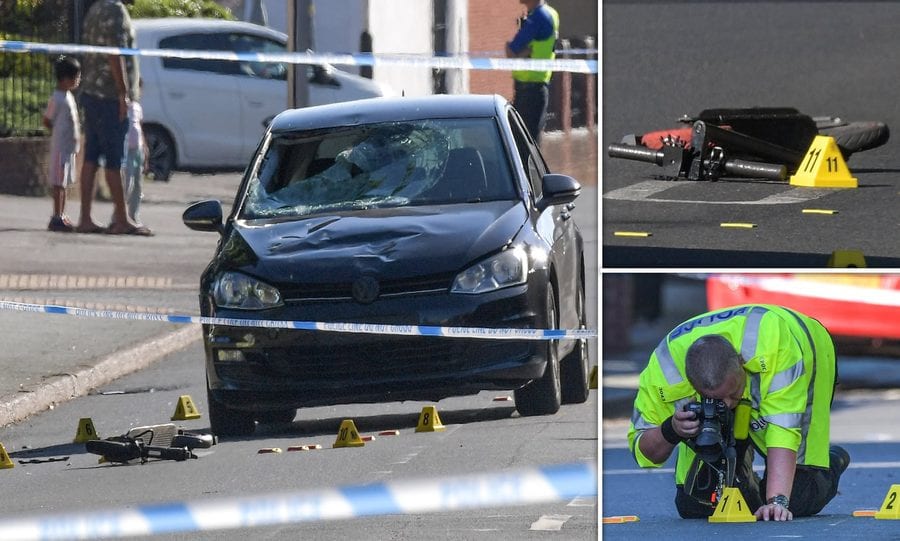
    E-scooter accident
    Only last month, a man and woman suffered “serious injuries” after riding an e-scooter they were both on hit a VW Golf in Wolverhampton. At the time, the ‘Daily Mail’ remarked: “Evidence is mounting over their safety record, with critics suggesting they make it easier for criminals to whip people’s phones from their hands on the street and make a fast getaway. And in July 2019, TV presenter and YouTube influencer Emily Hartridge was killed while riding her e-scooter in Battersea, London. Hartridge, who was thrown from the scooter on a roundabout, is believed to be the first person to die in the UK in an accident involving an e-scooter. She was later ruled to have been riding too fast with an under-inflated tyre when she was tragically killed in a crash with a lorry. In the UK, two other people are now known to have died using them, while in the United States the number of e-scooter accidents that leave people needing hospital treatment has risen by more than 222 per cent in four years.”
    E-scooter accident
    Yesterday, in the ‘Daily Mail,’ Peter Hitchens wrote of his “near-miss with an idiot on an e-scooter.” He observed: “The point being that if e-scooters become legal, you can expect to see a lot of them careering along a pavement near you. There’s a strong chance that they will crash into you from behind, breaking one or more of your bones. This happened to a three-year-old child in Feltham a few weeks ago, and as far as I know the culprit has not been found. And, while that will itself still be against the law, nobody will do anything about it. For the same reason, they are the perfect tool for those drug couriers who are already swapping their pushbikes for them. Legal businesses such as fast-food delivery, which seem to employ some of the most ruthless people in the world, will also no doubt take advantage. We don’t actually need to find all this out. Cities all over Europe are licking their wounds after legalising e-scooters, especially Paris. Singapore last year more or less banned them after several injuries and fatal accidents, as well as fires in public housing blocks caused by faulty batteries… But Grant Shapps, the Transport Secretary, and the House of Commons Transport Select Committee both seem to have been beguiled by the e-scooter lobby, which appears to mesmerise its victims in much the way that a cobra is said to do.”
  • Phone Home Snowdon & Sellers

    Phone Home Snowdon & Sellers

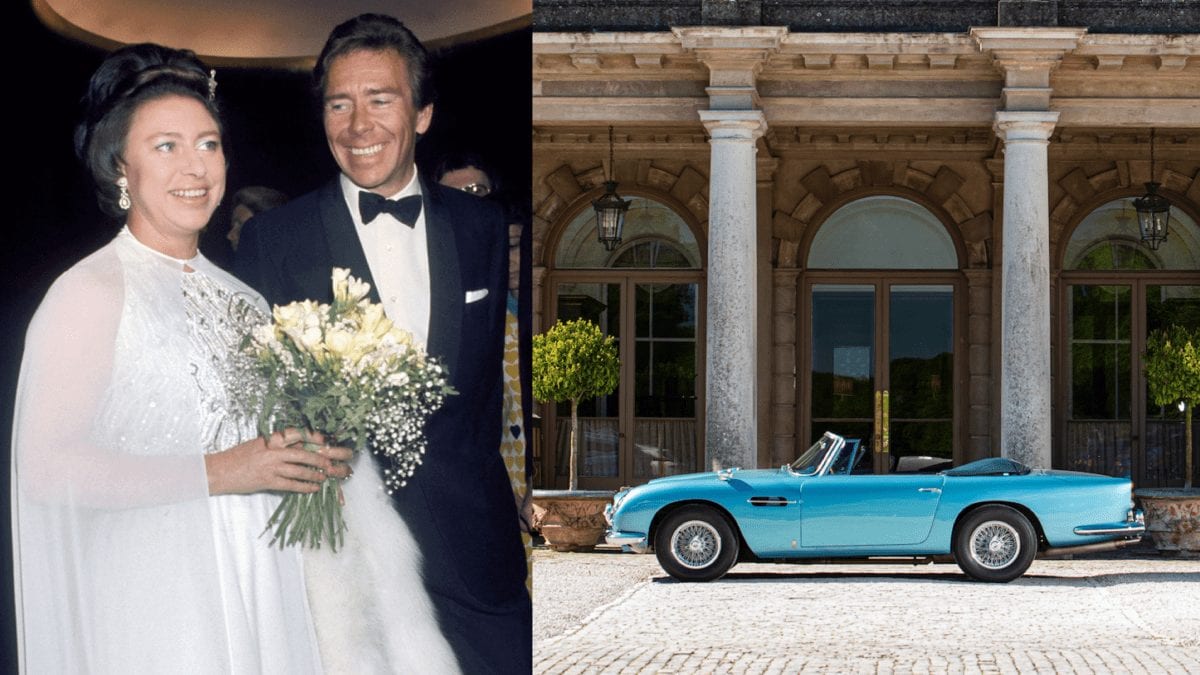
    1964 Aston Martin DB5 convertible – complete with very first car phone in Britain – owned originally by Peter Sellers and subsequently by Princess Margaret’s husband to be auctioned

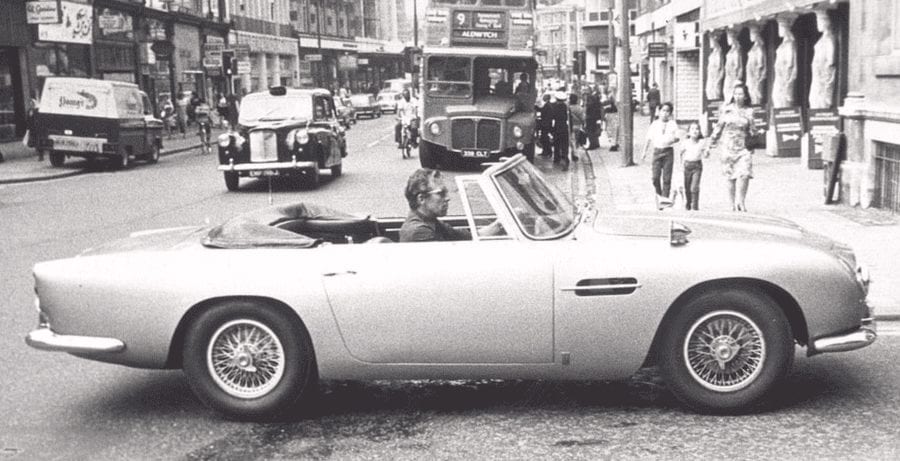
    A “regal runaround” – a 1964 Aston Martin DB5 convertible owned first by the actor, comedian and avid car collector Peter Sellers CBE and then by both the 1st and 2nd Earls of Snowdon – is to be sold at auction next month.


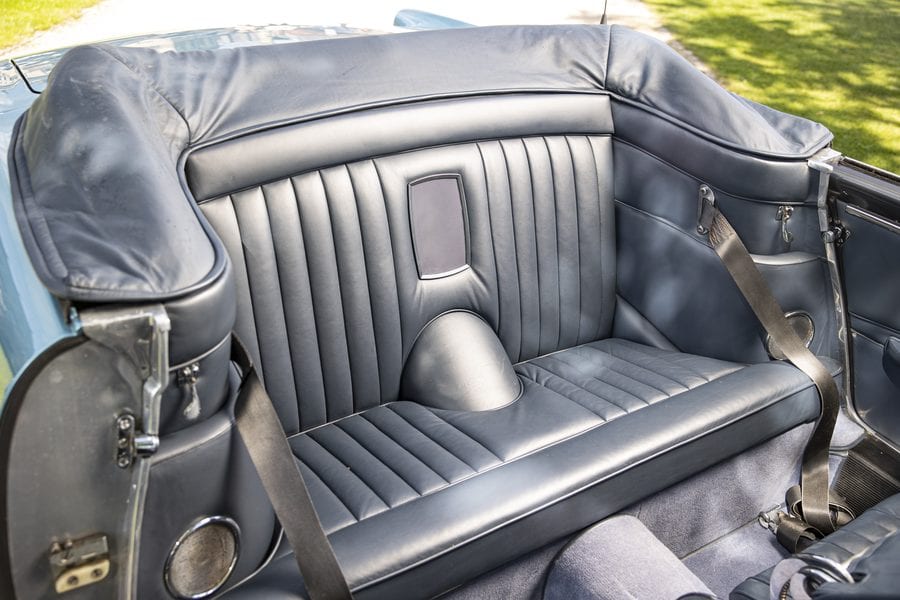
    Ordered new complete with the very first wireless Motorola car phone in Britain – which the then Viscount Linley later described as working “a bit like a walkie-talkie; you clicked a button twice and got through to the exchange” – the Caribbean pearl blue, Carrozzeria Touring Superleggera designed car was one of only 123 soft-top variants produced.


    Featuring a 282 bhp 4-litre straight-six engine, “mated to a state-of-the-art five-speed ZF manual gearbox,” according to auctioneers Bonhams, the vehicle is “capable of a 145 mph top speed.” It came with extras numbering fog lamps, a cigar lighter, a dark blue hood and cover and non-standard chrome roadwheels also.


    In the possession of Sellers, it is believed, for just a year, the vehicle passed to his friend, the then husband of Princess Margaret, the former Anthony Armstrong-Jones, circa 1965 and was used for “family journeys” in Chelsea, Mayfair and Soho and even also for roadtrips to places as far away as Prague.


    Tellingly, the 1st Earl supposedly “smuggled Lady Jacqueline Rufus Isaacs, daughter of the Marquis and Marchioness of Reading, away from his country house when the Princess returned home unexpectedly one evening” in the boot of the car, whilst Bonhams add, the 2nd Earl recalled: “We always had the windows down so my mother could smoke her cigarettes.”


    Kept subsequently at the National Motoring Museum at Beaulieu, the 1st Earl gave his son the car to mark his 25th birthday in 1986 and during the next period, it was altered, rebuilt and maintained by Aston Martin Service Works.


    Speaking of the convertible to Aston Martin magazine and driving it to Italy even, the 2nd Earl of Snowdon – known professionally as ‘David Linley’ – mused:


    “[When my father gave me the car], it had already spent a few years at the motoring museum at Beaulieu and my father advised me that it might be quite a good idea to leave it there… But I was 25, for God’s sake, and living in London – the car didn’t stay in the museum!”


    “I loved that it had this patina that reminded me of my father. Everywhere I went in Italy it was: ‘Che bella macchina!’ [what a beautiful machine].”


    Sold on in 2002 after “the pain and pleasure of owning a classic vehicle mounted up” for Viscount Linley, the car is believed to have been in the ownership of the radio and television presenter Chris Evans since circa 2011.


    The Aston Martin has most recently been offered for sale by Joe Macari – whom declared of it on their website: “[It] was given to Lord Snowden’s son, Viscount Linley, who sold it in an auction in order to raise money to pay the Death Duty on his inheritance. While only £3 million was required to pay the duty, over £13 million was raised leading to Lord Snowden accusing his son of selling anything that wasn’t laid down… The chance to own such a stunning car with such interesting provenance is a rare one!”


    The vehicle will be now be auctioned on Friday 9th July at the Bonhams Festival of Speed Sale at Goodwood, near Chichester. The firm have set an estimate of £1.4 million to £1.7 million and commenting, director of Bonhams Motoring Cars UK, Sholto Gilbertson, commented:


    “If ever a car defined an era, this DB5 is surely on the shortlist. Not only was it one of the most desirable and thoroughbred sportscars of its day but it has an extraordinary provenance being owned by the crème de la crème of the 1960s.”


    Going further and speaking about letting it go, the now 2nd Earl of Snowdon added:


    “I sold it and everybody said it was a great price. Obviously, I had no idea that the market was about to go completely crazy.”


    “The thing is, if you are always going back on what you did and regretting things, you just start beating yourself up. You do what you think is right at the time, right?”


    “Should I have sold it? No. Do I regret it? Yes. Can I put back the clock? No. Could I pay five million pounds to buy it back? Definitely not! But it [the sale] helped get Serena [his then wife] and I on a steady keel. I got the Linley business working. Got a job here at Christie’s. Got myself in a better place.”


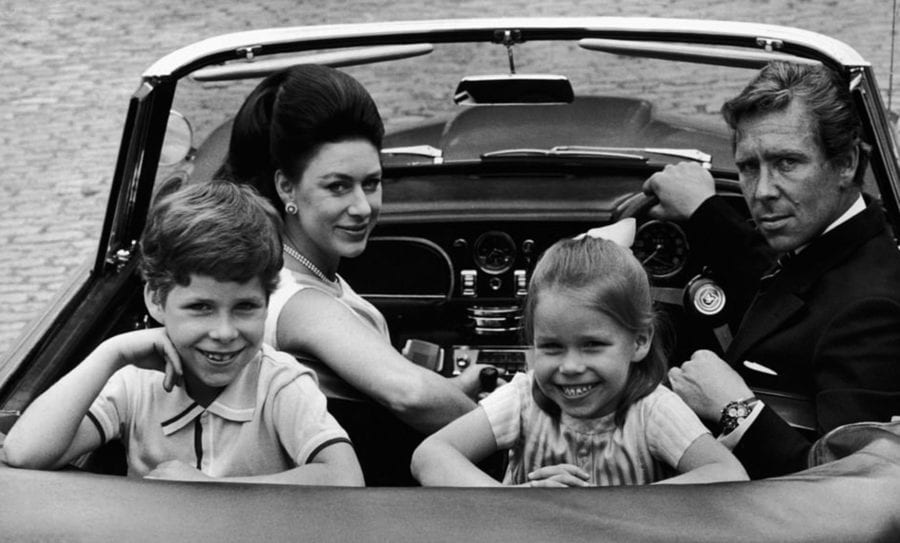
    Phone Home - Anthony Armstrong-Jones, 1st Earl of Snowdon in the car seat with his then wife, Princess Margaret, and children David Armstrong-Jones, Viscount Linley and Lady Sarah Armstrong-Jones (later Lady Sarah Chatto).
    Anthony Armstrong-Jones, 1st Earl of Snowdon in the car seat with his then wife, Princess Margaret, and children David Armstrong-Jones, Viscount Linley and Lady Sarah Armstrong-Jones (later Lady Sarah Chatto).
    1964 Aston Martin DB5 – 1964 Aston Martin DB5 convertible – complete with very first car phone in Britain – owned originally by Peter Sellers and subsequently by Princess Margaret’s husband to be auctioned. Bonhams will offer the 1964 Aston Martin DB5 convertible with an estimate of £1.3 million to £1.7 million ($1.8 million to $2.4 million, €1.5 million to €2 million or درهم6.8 million to درهم8.9 million) at their Bonhams Festival of Speed Sale on Friday 9th July 2021.
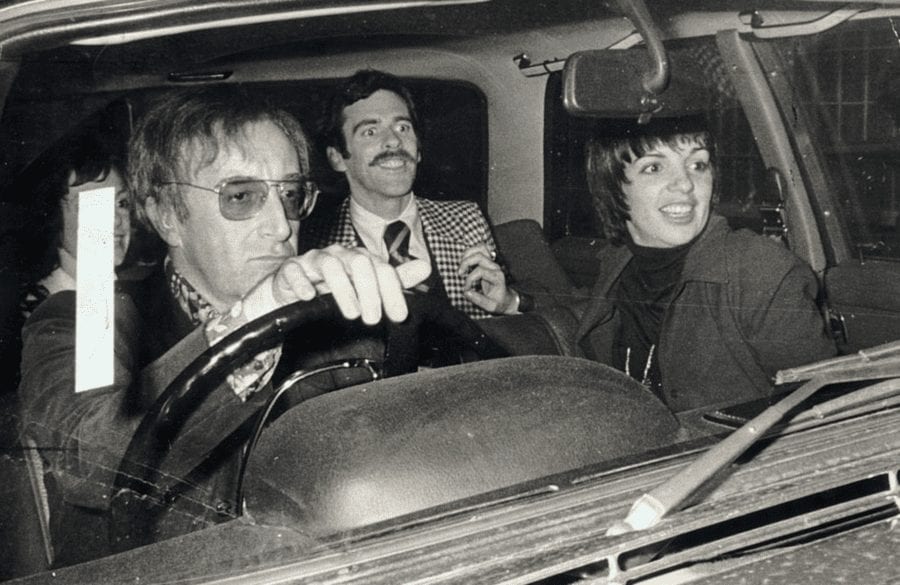
    Peter Sellers driving another of his cars, a Mercedes-Benz, with Liza Minnelli and another friend.
    1964 Aston Martin DB5 – 1964 Aston Martin DB5 convertible – complete with very first car phone in Britain – owned originally by Peter Sellers and subsequently by Princess Margaret’s husband to be auctioned. Bonhams will offer the 1964 Aston Martin DB5 convertible with an estimate of £1.3 million to £1.7 million ($1.8 million to $2.4 million, €1.5 million to €2 million or درهم6.8 million to درهم8.9 million) at their Bonhams Festival of Speed Sale on Friday 9th July 2021.
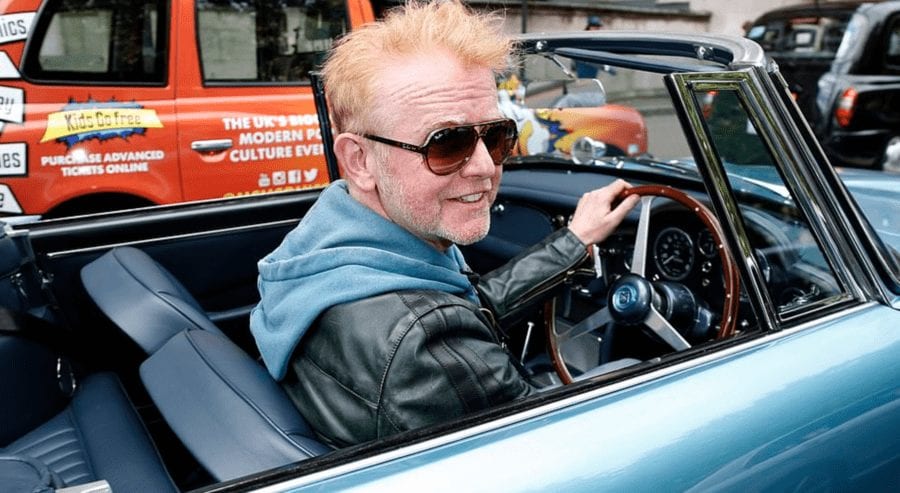
    Chris Evans in the Aston Martin in 2015.

    The Names & Numbers

    Friday 9th July 2021 – Bonhams will offer the 1964 Aston Martin DB5 convertible with an estimate of £1.3 million to £1.7 million ($1.8 million to $2.4 million, €1.5 million to €2 million or درهم6.8 million to درهم8.9 million) at their Bonhams Festival of Speed Sale on Friday 9th July 2021.

    2015 – Chris Evans is pictured in the car just as he is announced as the replacement presenter of the hit show Top Gear in a multi-million pound deal that made him the BBC’s highest paid presenter at that time.

    Circa 2011 – Believed to have been sold to television and radio presenter Chris Evans around this time.

    2002 – Sold by the subsequent 2nd Earl of Snowdon, the now former Viscount Linley, in order to pay towards the death duties incurred by his late mother’s estate.

    1986 – Valued at £30,000 or the equivalent of £90,000 today ($128,000, €104,000 or درهم469,000 today), according to Aston Martin Magazine and given by the 1st Earl of Snowdon to his son, then Viscount Linley, to mark the latter’s 25th birthday.

    Dates unknown in this period – Kept at the National Motor Museum at Beaulieu, Hampshire.

    Circa 1965 – Sold “at a loss” to Lord Snowdon, the former Anthony Armstrong-Jones, according to GQ magazine.

    July 1964 – First registered in the name of Peter Sellars. The cost of the convertible new at the time was £4,490 or the equivalent of £93,000 today ($132,000, €108,000 or درهم484,000 today). This was “well above the average house price of the time, assuring that only a privileged few were able to afford one. The epitome of British elegance and class, celebrities snapped them up – Peter Sellers, Beryl Reid, and even HRH Princess Margaret could be spotted in a DB5 convertible,” according to RM Sotheby’s whom sold a 1965 left-hand drive example for £1.9 million ($2.7 million, €2.2 million or درهم9.9 million) in December 2017.


    1964 Aston Martin DB5 – 1964 Aston Martin DB5 convertible – complete with very first car phone in Britain – owned originally by Peter Sellers and subsequently by Princess Margaret’s husband to be auctioned. Bonhams will offer the 1964 Aston Martin DB5 convertible with an estimate of £1.3 million to £1.7 million ($1.8 million to $2.4 million, €1.5 million to €2 million or درهم6.8 million to درهم8.9 million) at their Bonhams Festival of Speed Sale on Friday 9th July 2021.
    1964 Aston Martin DB5 – 1964 Aston Martin DB5 convertible – complete with very first car phone in Britain – owned originally by Peter Sellers and subsequently by Princess Margaret’s husband to be auctioned. Bonhams will offer the 1964 Aston Martin DB5 convertible with an estimate of £1.3 million to £1.7 million ($1.8 million to $2.4 million, €1.5 million to €2 million or درهم6.8 million to درهم8.9 million) at their Bonhams Festival of Speed Sale on Friday 9th July 2021.
    1964 Aston Martin DB5 – 1964 Aston Martin DB5 convertible – complete with very first car phone in Britain – owned originally by Peter Sellers and subsequently by Princess Margaret’s husband to be auctioned. Bonhams will offer the 1964 Aston Martin DB5 convertible with an estimate of £1.3 million to £1.7 million ($1.8 million to $2.4 million, €1.5 million to €2 million or درهم6.8 million to درهم8.9 million) at their Bonhams Festival of Speed Sale on Friday 9th July 2021.
    1964 Aston Martin DB5 – 1964 Aston Martin DB5 convertible – complete with very first car phone in Britain – owned originally by Peter Sellers and subsequently by Princess Margaret’s husband to be auctioned. Bonhams will offer the 1964 Aston Martin DB5 convertible with an estimate of £1.3 million to £1.7 million ($1.8 million to $2.4 million, €1.5 million to €2 million or درهم6.8 million to درهم8.9 million) at their Bonhams Festival of Speed Sale on Friday 9th July 2021.
  • A Blizzard Busting Bombardier

    A Blizzard Busting Bombardier

    Bonhams to auction an early B-7 snowmobile created by Joseph-Armand Bombardier after he lost his son in a blizzard for just under £30,000 reports Nikolay Kalinin

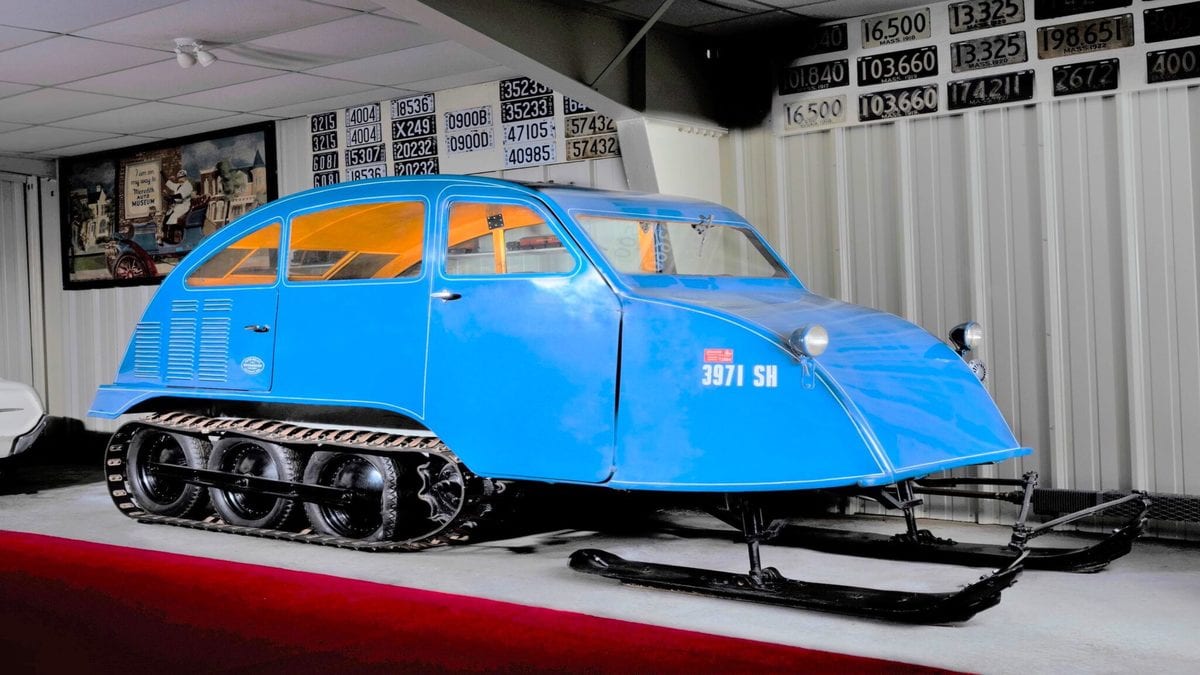
    With a design reminiscent of a Citroën 2CV, but with wheels replaced by tracks and skis, a 1940s snowmobile made by Bombardier is headed to auction later this month in America. It represents an interesting piece of motoring history and though it may look amusing, it was actually tragically born out of loss.

    The B-7 snowmobile was the personal project of Joseph-Armand Bombardier (1907 – 1964) – the man credited with having brought snowmobiles into the mainstream after he lost his 2-year old son to complications of an appendicitis, having been unable to get him to hospital due to blizzard conditions. Quebec born Bombardier developed the snowmobile as a vehicle that could “float over the snow,” and it brought him great fame and recognition within the motoring industry.

    A Blizzard Busting Bombardier – B-7 snowmobile to be auctioned – Bonhams to auction an early B-7 snowmobile created by Joseph-Armand Bombardier after he lost his son in a blizzard for just under £30,000 reports Nikolay Kalinin – Circa 1940 Bombardier B-7 snowmobile to be sold by Bonhams at their Amelia Island Auction on 20th May 2021 at Fernandina Beach Golf Club, Florida with an estimate of £21,700 to £29,000 ($30,000 to $40,000, €25,000 to €33,300 or درهم110,200 to درهم146,900).
    A Blizzard Busting Bombardier – Joseph-Armand Bombardier pictured with an early B-7 Bombardier snowmobile.
    A Blizzard Busting Bombardier – B-7 snowmobile to be auctioned – Bonhams to auction an early B-7 snowmobile created by Joseph-Armand Bombardier after he lost his son in a blizzard for just under £30,000 reports Nikolay Kalinin – Circa 1940 Bombardier B-7 snowmobile to be sold by Bonhams at their Amelia Island Auction on 20th May 2021 at Fernandina Beach Golf Club, Florida with an estimate of £21,700 to £29,000 ($30,000 to $40,000, €25,000 to €33,300 or درهم110,200 to درهم146,900).
    A Blizzard Busting Bombardier – In February 2017, ‘The Steeple Times’ featured another example of a car designed for transporting large numbers of people in snowy locations that Bonhams auctioned at their Amelia Island auction. This 1959 Cadillac BROADMOOR Skyview was used to transport guests at The Broadmoor Hotel of Colorado Springs, Colorado, “one of America’s finest historic establishments” and a place that supposedly turned President George W. Bush teetotal in the summer of 1986 after he woke up with a hangover. It failed to sell, but had been guided at £140,000 to £200,000 ($175,000 to $250,000 or €165,000 to €235,000 or درهم640,000 to درهم915,000).

    The Bombardier B-7 offered has seven seats and is powered by a Ford Flathead V8 engine that has approximately 90 bhp. This model is from 1940, three years after Bombardier had begun building snowmobiles, and a year after orders for his vehicles reached 100.


    The example to be sold has been immaculately restored to the point that it looks just like it came out of the factory, with a perfectly functional engine, restored wood and refurbished seats. Of it, auctioneers Bonhams comment: “The vehicle is an exceptionally pleasing and fascinating static exhibit, and an example of a model which is perhaps unknown to most.”


    The snowmobile – which until recently formed part of the collection of the late Glenn C. Gould Jr. – will be auctioned at Bonhams’ Amelia Island Auction in Florida on 20th May 2021 with an estimate of £21,700 to £29,000 ($30,000 to $40,000, €25,000 to €33,300 or درهم110,200 to درهم146,900). This price seems relatively cheap in comparison to other lots in that auction – some of which are likely to be hammered down ultimately for millions of pounds.


    A Blizzard Busting Bombardier – B-7 snowmobile to be auctioned – Bonhams to auction an early B-7 snowmobile created by Joseph-Armand Bombardier after he lost his son in a blizzard for just under £30,000 reports Nikolay Kalinin – Circa 1940 Bombardier B-7 snowmobile to be sold by Bonhams at their Amelia Island Auction on 20th May 2021 at Fernandina Beach Golf Club, Florida with an estimate of £21,700 to £29,000 ($30,000 to $40,000, €25,000 to €33,300 or درهم110,200 to درهم146,900).
    A Blizzard Busting Bombardier – B-7 snowmobile to be auctioned – Bonhams to auction an early B-7 snowmobile created by Joseph-Armand Bombardier after he lost his son in a blizzard for just under £30,000 reports Nikolay Kalinin – Circa 1940 Bombardier B-7 snowmobile to be sold by Bonhams at their Amelia Island Auction on 20th May 2021 at Fernandina Beach Golf Club, Florida with an estimate of £21,700 to £29,000 ($30,000 to $40,000, €25,000 to €33,300 or درهم110,200 to درهم146,900).
    A Blizzard Busting Bombardier – B-7 snowmobile to be auctioned – Bonhams to auction an early B-7 snowmobile created by Joseph-Armand Bombardier after he lost his son in a blizzard for just under £30,000 reports Nikolay Kalinin – Circa 1940 Bombardier B-7 snowmobile to be sold by Bonhams at their Amelia Island Auction on 20th May 2021 at Fernandina Beach Golf Club, Florida with an estimate of £21,700 to £29,000 ($30,000 to $40,000, €25,000 to €33,300 or درهم110,200 to درهم146,900).
    A Blizzard Busting Bombardier – B-7 snowmobile to be auctioned – Bonhams to auction an early B-7 snowmobile created by Joseph-Armand Bombardier after he lost his son in a blizzard for just under £30,000 reports Nikolay Kalinin – Circa 1940 Bombardier B-7 snowmobile to be sold by Bonhams at their Amelia Island Auction on 20th May 2021 at Fernandina Beach Golf Club, Florida with an estimate of £21,700 to £29,000 ($30,000 to $40,000, €25,000 to €33,300 or درهم110,200 to درهم146,900).