Irrational ‘Disgusted of Tunbridge Wells’ type correspondence is on the increase in national newspapers during the coronavirus lockdown; ‘Horrified of Haddenham’ cash-coronavirus conspiracist Garry May is a fine case in point
The coronavirus lockdown has no doubt resulted in a dramatic increase in the number of ‘Disgusted of Tunbridge Wells’ (and even paradoxically ‘Delighted of Tunbridge Wells’) types corresponding with both national and local newspapers. There are, after all, now many more people moping around at home with little else to do other than to ponder with a pen (or clatter on a keyboard).
Whilst in November 2019, The Telegraph stated that its letters editor received and read 600 missives per day from readers (and subsequently published 18 of them in their next edition) and in June that year, the Guardian referenced a by comparison meagre sum of 82 per day (citing 30,000 communications annually), one can only assume that both publications have seen huge spikes in their mailbags in the last few weeks – the content of which of course now mostly arrives by email rather than with the help of the Royal Mail.
Editors such as Christopher Howse – who has worked on The Telegraph’s letters pages for over twenty years – however, is plainly still favouring letters from his reliable riled-up regulars and yesterday was no exception. In publishing a totally irrational observation from one Garry May of Haddenham, Buckinghamshire linking cash to coronavirus (a totally nonsensical view very clearly empirically denied by the World Health Organisation in March), the paper fulfilled its ability to share views to spread yet more Eamonn Holmes-esque claptrap. This kind of 5G type twaddle will no doubt appeal to its stereotypical conspiracy theory believing old buffer audience, but it is without factual base.
SIR – I hope this pandemic cements the use of debit cards for all transactions, and thereby the end of cash.
Bank notes and coins spread diseases. Ruling out ready money could also put an end to most drug deals on our streets.
Garry May
Haddenham, Buckinghamshire
On a date exact unknown circa 2011, in a letter to The Telegraph, that was subsequently republished in the compilation book The Lunatics Have Taken Over The Asylum: Political Letters to The Daily Telegraph, Mr May previously shared his views on phone hacking. He presented yet another pastiche of days gone by and read:
SIR – The hacking scandal left my family debating who we can still rely on. Our shortlist of trustworthies came down to the Gurkhas, other ranks in our Armed Forces, postmen and Simon the pieman, who works in the butcher’s shop.
Garry May
Haddenham, Buckinghamshire
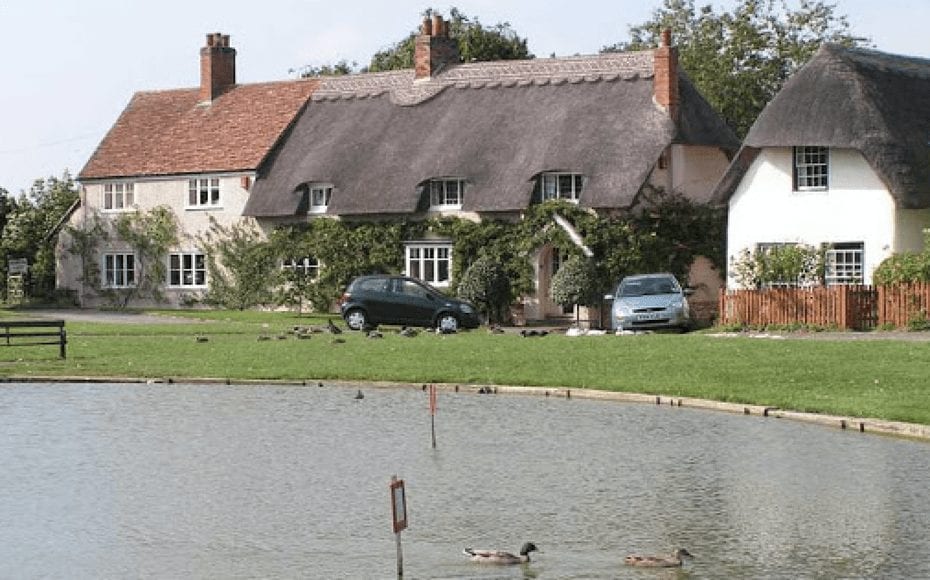
Mr May’s archaic idealism might resonate as charming and worthy, but what should be noted is that this prolific man of letters belonging in the 1950s lives in Haddenham, a quintessential English village that most definitely has Midsomer Murders-esque qualities (it was used as a location in eight episodes of the television drama even). One of only three ‘wychert’ settlements in the country and a place peppered with thatched cottages and a duck pond famed for breeding Aylesbury ducks, one can imagine the era of “old maids bicycling to holy communion through the morning mist” John Major-style still reigns in this parish.
Indeed, at this time, as countless rural residents turn to growing their own vegetables and even start going to their local ‘community shop’ in order to avoid queuing for hours whilst safe distancing at Tesco, many will join in eulogising a love of postmen and piemen and – quite rightly – a loathing for evil drug dealers also.
Sadly, however, getting rid of cash will not wipe out that particularly vile scourge on society and it will not stop the spread of coronavirus. Instead, maybe it’s time for ‘Horrified of Haddenham’ to find another topic to get het up about: Perhaps, indeed, Mr May could turn his pen to the squealing sickness of snitching ‘quarantine shaming’ or maybe he could just calm down and pour himself a large G&T.
An early example of ‘Disgusted of Tunbridge Wells’ correspondence:
SIR – Being present at the unveiling of the plaque on Thursday last week on the Pantiles, I was surprised when the National Anthem was played to see that in a place like Tunbridge Wells, which is noted for its loyalty and calls itself ‘Royal,’ there should be people who refused to remove their hats. Are such people Communists? If they are, Tunbridge Wells should be no place for such as they. We can do without them.
Letters to the Editor, ‘Tunbridge Wells Advertiser’ – 14th June 1929.
Pictured top: Haddenham, Buckinghamshire – a quintessentially quaint English village with a duck pond and thatched cottages from whence nosy parkers peer from behind net curtains.
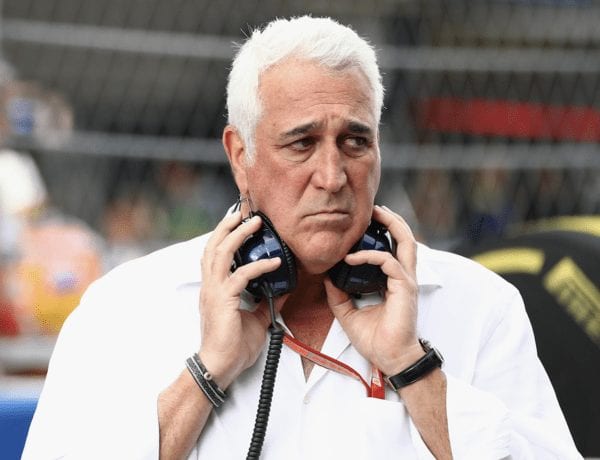
Montreal born “archetypal billionaire,” “fashion mogul” and “Ferrari fanatic” Lawrence Stroll arranged £536 million of funding to save Aston Martin, much of which came from his own very, very deep coffers, in early 2020. Without him, the firm that has manufactured James Bond’s favourite motorcar since 1913 would likely have gone bust for the eighth time after a disastrous flotation “that left the city shaken, not stirred” in 2019. According to Bloomberg, he’s famous for “[taking] over a brand that’s either niche, or in trouble, or both, and beef it up for half a dozen years. Then exit with a tidy profit,” but given his personal interest in both vintage and F1 cars (he led the consortium that bought the Force India F1 team in 2018) this “petrolhead” may allow passion to rule profit for once. Father of two Stroll is based in Geneva and has homes in London, New York, Quebec and on Mustique. He counts Michael Douglas and Sarah, Duchess of York amongst his friends and once remarked of people complaining about his cars and helicopters: “I can appreciate that some people are opposed to noise. And I can understand their desire for tranquillity, in which case they should not move in next to racetracks, airports or ski hills.”
Unmodernised ‘set’ in “rule-ridden” Albany, Piccadilly that was the London home of eccentric antiques dealer and ‘King of Chelsea’ Christopher Gibbs for sale; tour the home of the man who got Princess Margaret high on hash
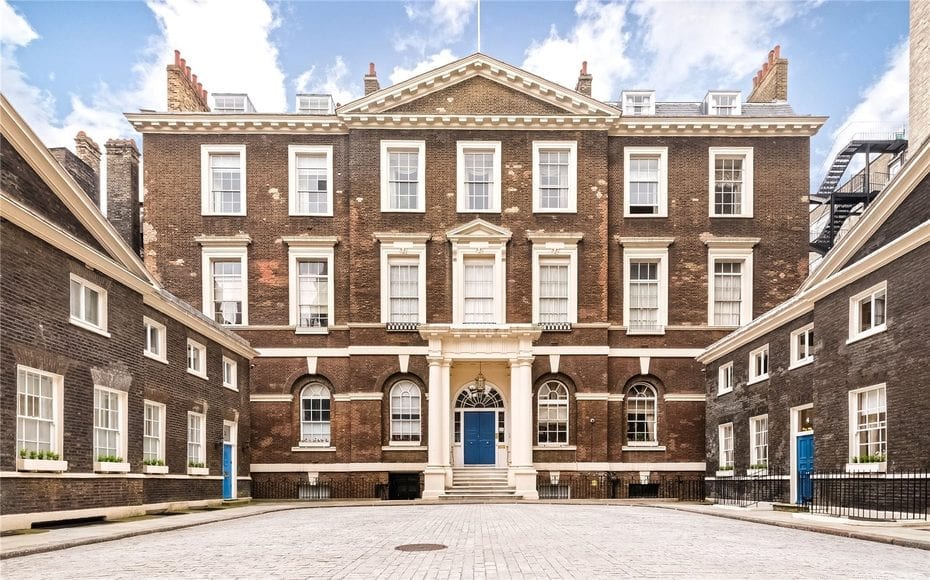
Expelled from Eton “for being generally totally impossible,” antiques dealer Christopher Gibbs (1938 – 2018) was not a man one would have imagined would have liked the idea of living in a place with archaic rules. This “peacock pied piper to society in the Swinging Sixties” whose “drug consumption awed even Keith Richards,” however, surprisingly chose as his London base Albany in Mayfair and now his former residence is for sale.
“A hermitage; quiet as a lagoon, secluded from the roar of Piccadilly” according to the author Sheila, Countess of Birkenhead in her 1958 tome Peace in Piccadilly, Albany – which is only ever referred to as ‘The Albany’ by the extremely ill-advised – quintessential dandy Gibbs lived in the building for “more than half [his] life.” Whilst also owning properties including Davington Priory in Kent – which he later sold to Bob Geldoff – and a “mystic hangover” home in Tangier, it was here that this ‘King’ of “distressed bohemian” style found a place that offered him: “Perfection for a singleton, an oasis of serenity in the frenetic heart of West London.”
This curious “cloistered world” has numbered Sir Isaiah Berlin, Alan Clark, Lord Byron, William Gladstone, J. B. Priestley, W. Somerset Maugham and Terence Stamp amongst those who have passed its vetting committee of trustees and Gibbs – a man who legendarily got Princess Margaret so high on marijuana that she had to go to hospital – even embraced its “no pets, no children, no whistling, no noise and absolutely no publicity” policy.
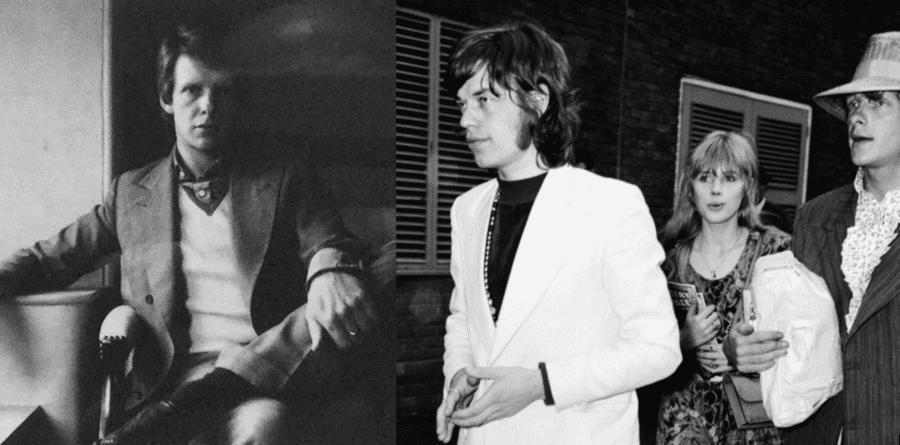
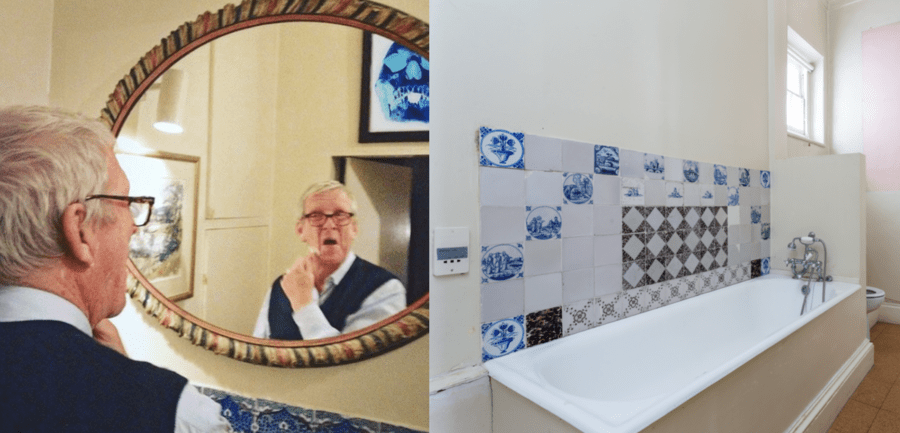
Antiques dealer Christopher Henry Gibbs, (29th July 1938 to 28th July 2018), son of The Hon. Sir Geoffrey Gibbs KCMG and Lady (Helen) Gibbs CBE, was called the ‘King of Chelsea’ due to his ability as the ultimate connector. He put the Rolling Stones together with Prince Rupert Loewenstein (whom became their business manager) and he persuaded his friend John Paul Getty, Jr. to donate £50 million to the British National Gallery in 1985.Christopher Gibbs by Robert Mapplethorpe and with Mick Jagger and Marianne Faithfull.Christopher Gibbs pictured in his bathroom at L6 Albany, Albany Courtyard, Piccadilly, Mayfair, London, W1J 0AZ; the bathroom as it is today is in need of “some updating” according to agents GreenHunt.‘Set L6’ circa 2013, as furnished then by Christopher Gibbs.
Photographed there by the curmudgeonly Victor Watts on a daybed that allegedly belonged to Lord Tennyson, described the home he created in an article for The New York Times’ ‘Style Magazine’ in April 2013:
“I had the place to myself and proceeded to make it my own in the accustomed style: sober mahogany, Oriental rugs, family pictures. I’ve continually reordered these rooms, distilling, paring, pruning, as chaste as my voluptuous nature allows.”
“So enraptured with my Albany life did I become that, reason deserting me (not for the first or last time) I gave up a spacious Bond Street gallery where I had my antiques shop and took one at the back of Albany, a small if elegant space with an entrance into the building, another onto the street and best of all a door into the underground passage – a quiet, invisible stroll home.”
“I love returning from Morocco, where I now spend much of my time, seeing the friendly porters at the door, hearing the clip-clop of feet on the Rope Walk, seeing the old-timers sitting in the little ivy-lined garden, sunning themselves by the little bronze statue of Antinous and the fountain, regularly invaded by the ducks from St. James’s Park – and enjoying sudden glimpses into other people’s lives through uncurtained windows, the hours marked only by the clock chimes of St. James’s Church, accompanied by the more uptempo tinkling of the clock at Fortnum & Mason, our local grocers.”
“At this point, when I am in London, I can’t imagine staying anywhere but Albany – all the more reason, perhaps, to clam up, maintain the longstanding omertà (or I should say discretion) that has held sway for centuries now, and count my blessings.”
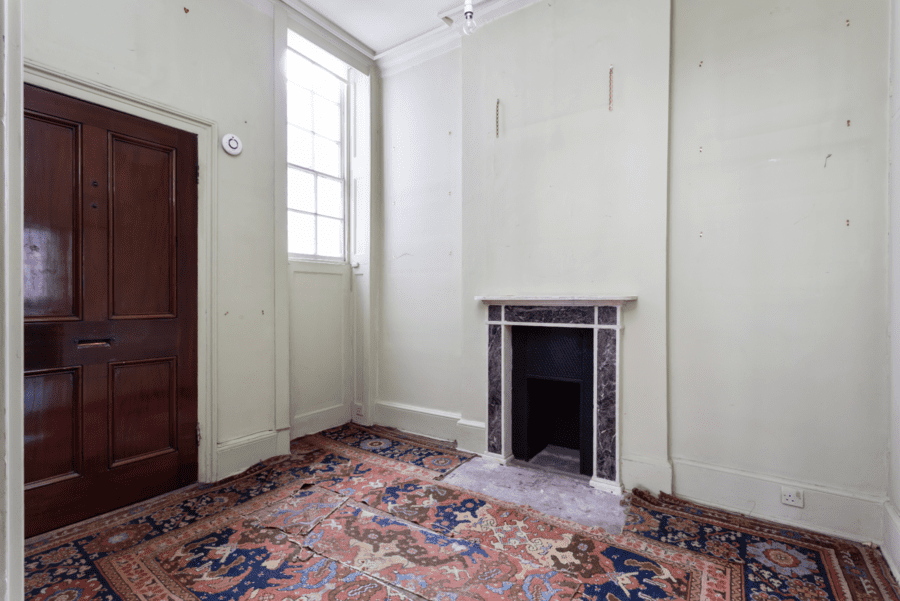
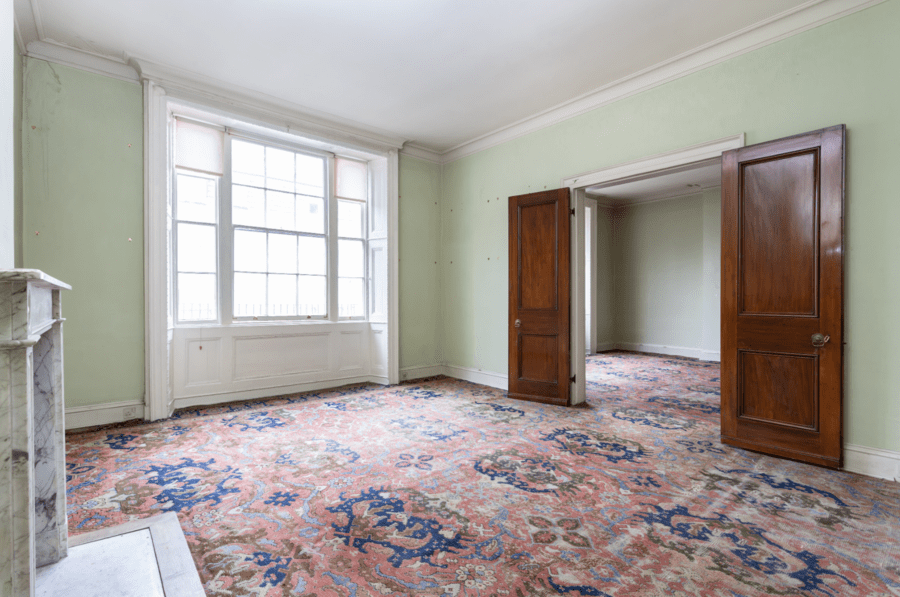
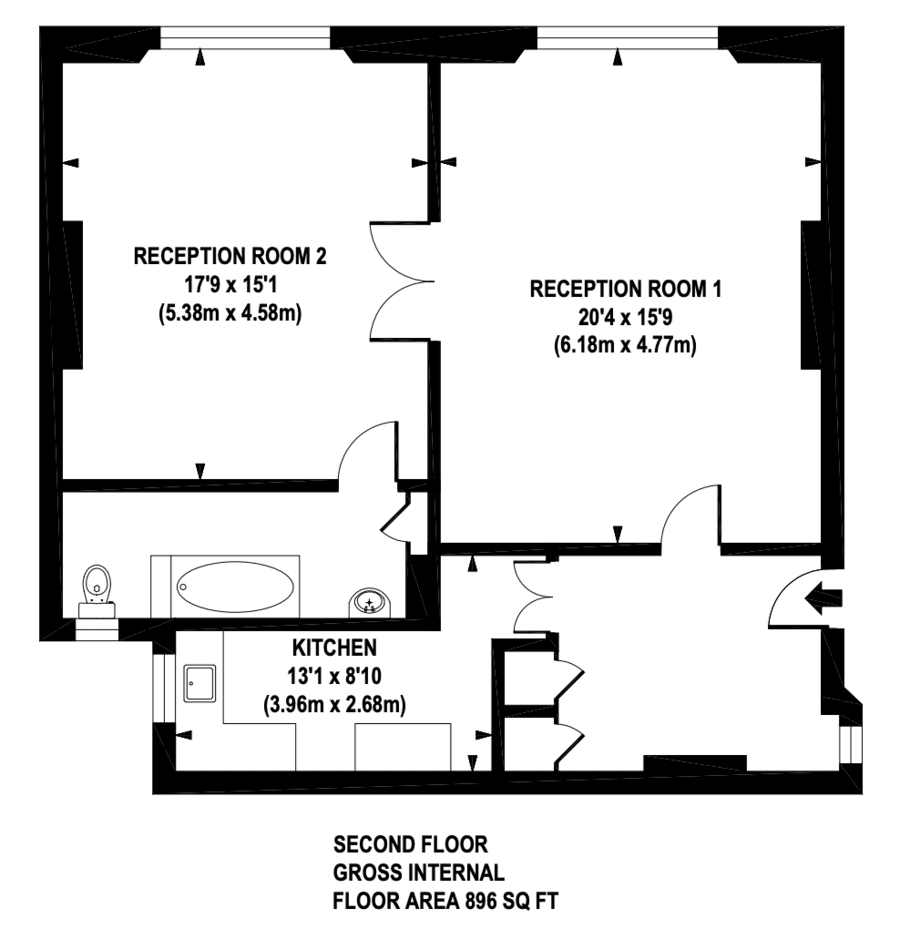
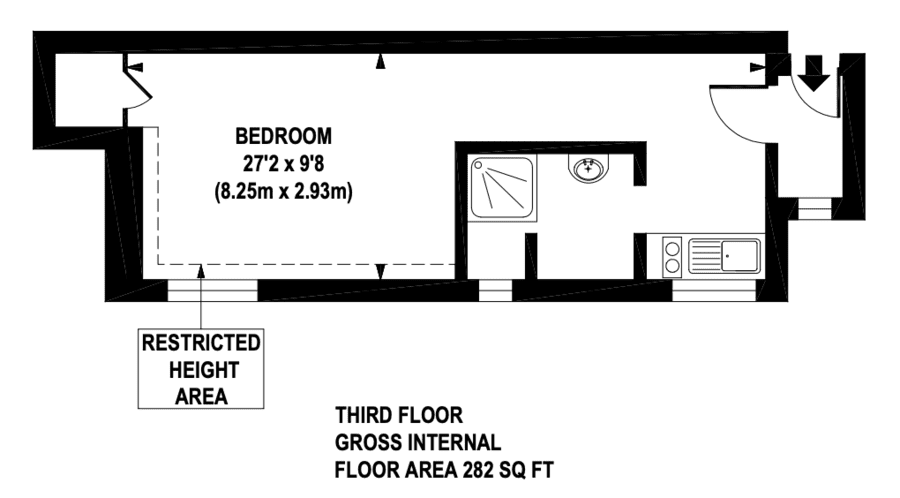
Gibbs’ former home, ‘Set L6,’ is situated on the second floor in Albany’s Courtyard. It extends to some 1,178 square foot and includes a hall, reception room, kitchen, bedroom and bathroom. On the third floor, a separately accessed studio space has a shower room and kitchenette and of the property, the selling agents remark: “Whilst capable of immediate occupation, [it] does require the bathrooms being upgraded.”
Sold for just £60,000 ($75,000, €69,000 or درهم275,000) leasehold in March 2019 (presumably the term must have been very much towards its end), agents GreenHunt listed ‘Set L6 Albany’ on Zoopla first in May that year. Now, in April 2020, it remains for sale, but is instead listed on Primelocation. They seek £925,000 ($1.2 million, €1.1 million or درهم4.2 million) and offer it on a new 20-year leasehold with an upfront premium and a peppercorn ground rent.
Living in the building is not just the preserve of those with deep pockets. Peviously, in 2014, we featured ‘Set A5 Attic Albany’ – which was just £395 per week ($494, €454 or درهم1,800 per week) – whilst for those looking for something grander currently, a second and third floor freehold set is currently available through Sotheby’s International Realty for £4.95 million ($6.19 million, €5.69 million or درهم22.73 million). It extends to 1,890 square feet, is described as “meticulously refurbished” and includes an especially impressive drawing room.
Christopher Gibbs quoted:
“[I’ve always attracted] the grand and the raffish and the fast and the chic.”
“[I am] monumentally narcissistic.”
“I am a bit snooty… I do make exceptions, but very few.”
“We are here to learn, and my goodness I have a lot to learn.”
“[I was expelled from Eton for] Rabelaisian antics – illicit drinking, pantry raids of other boys’ rooms – that sort of thing.”
“Taste is something you catch – like measles or religion.”
“I like things in their natural state – people especially. As life goes by, that’s what I admire: objects and people that are unmonkeyed with, that are themselves, not trying to be something else.”
“I’m not interested in creating a dazzling impression of richness. We can make do with surprisingly little in life. It is best to have a few things which are really nice. I don’t approve of the mean look, but I do approve of the spare look, where every little bit is telling.”
“Being a shopkeeper, I used to sell things, sometimes.”
“I definitely suffer from the blown-mind syndrome… The only thing I’ll say in my favour, is that I was practically the only person I knew who actually went to work at nine o’clock in the morning, whether I’d been up to eight o’clock or not, because I had a job, my own business, and I realised that, if I didn’t, I wouldn’t have any of those things.”
“[I] help people make nice cosy homes where they are going to live happy, beautiful lives.”
“[I] encourage friends to dig into their heirlooms, to wear old clothes, to turn their backs on ugliness and conformism.”
“Collectors today want a good car, a good sound system, and a huge pink heart painted by Damien Hirst with dying butterflies on it which costs £400,000. Yet for much less you could buy something completely fascinating made 300 years ago.”
Quotes about Christopher Gibbs:
“Taste is difficult to define, but his is absolute perfection” – Min Hogg, founding editor of World of Interiors.
“[He was] like an 18th century English parson who knew more about Etruscan vases than anyone at the British Museum” – Sir John Richardson, July 2018.
“I’m here to learn how to be a gentleman” – Mick Jagger of his then neighbour Christopher Gibbs whilst at a dinner party at his house.
“He was very flash… Sometimes he just wore tight jeans or fancy dress, like the others; but mostly his tastes were elaborate; suits with double-breasted waistcoats and cloth-covered buttons, and velvet ties, and striped Turkish shirts with stiff white collars, and cravats. Above all, he had a passion for carnations and was forever buying new strains, pink-and-yellow, or green-ink, or purple with red flecks” – Nik Cohn, author of Today There Are No Gentlemen, January 1971.
“Part Montesquieu, part Beau Brummel, and part Baudelaire… [Christopher Gibbs was a] well-born Renaissance man with an unmatched eye for aesthetics and a talent for friendship and the mot juste” – Hamish Bowles, international editor at large for Vogue, July 2018.
“Christopher was almost single-handedly responsible for making English antiques, and English heritage, look ‘cool’ again” – James Reginato of Vanity Fair, July 2018.
“A connoisseur of the weird and the wonderful” – Christopher Mason of The New York Times, September 2000.
“[He was an] acid-tripping ex-roué once known as the King of Chelsea” – Bitter words from the ex-Daily Mail ‘journalist’ and poison pen James Delingpole, executive editor of Breitbart.
“[The] avatar of Swinging London” – A more kind description from Sam Roberts of The New York Times.
“Christopher Gibbs: the man who brokered £50 million Getty grant to the National Gallery – and fed Princess Margaret hash brownies” – Huon Mallalieu of The Art Newspaper, July 2018.
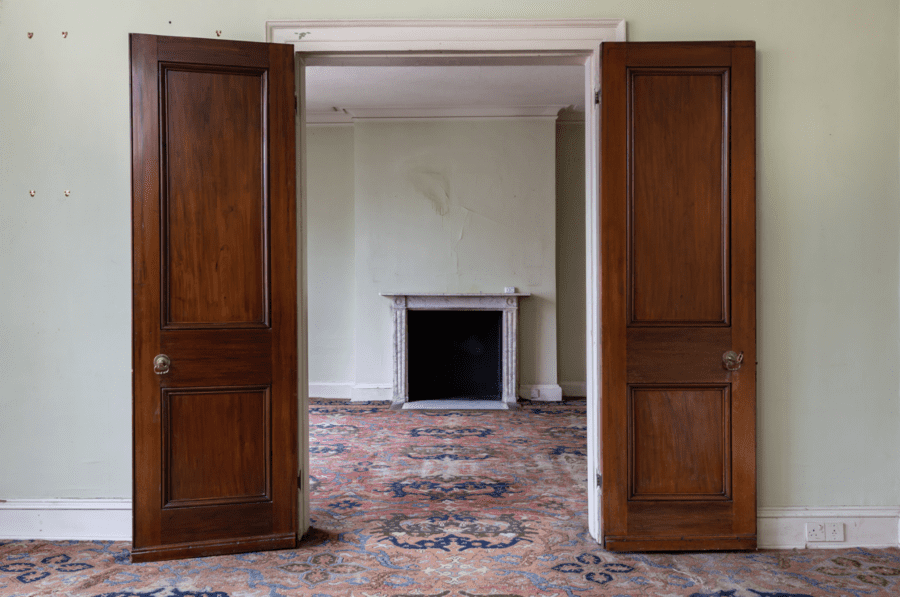
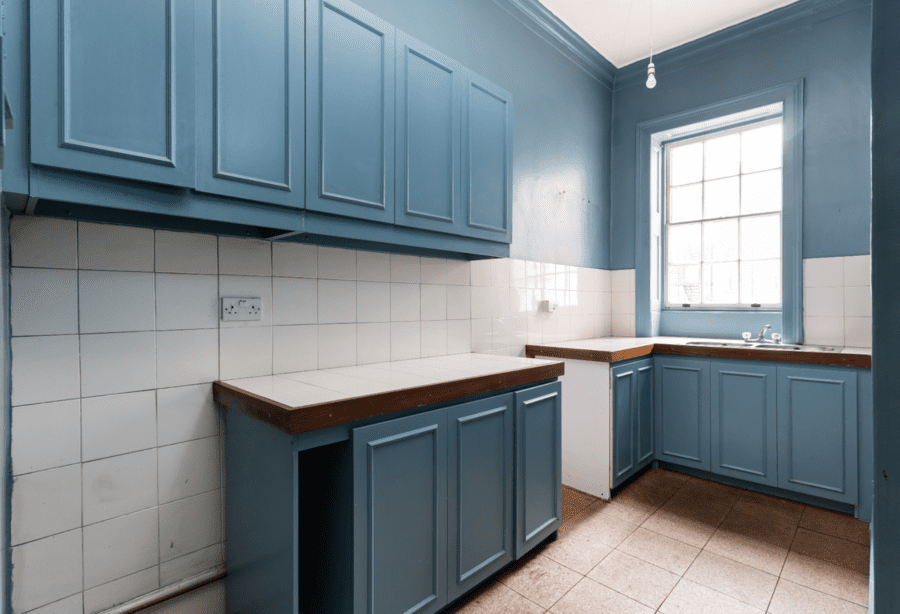
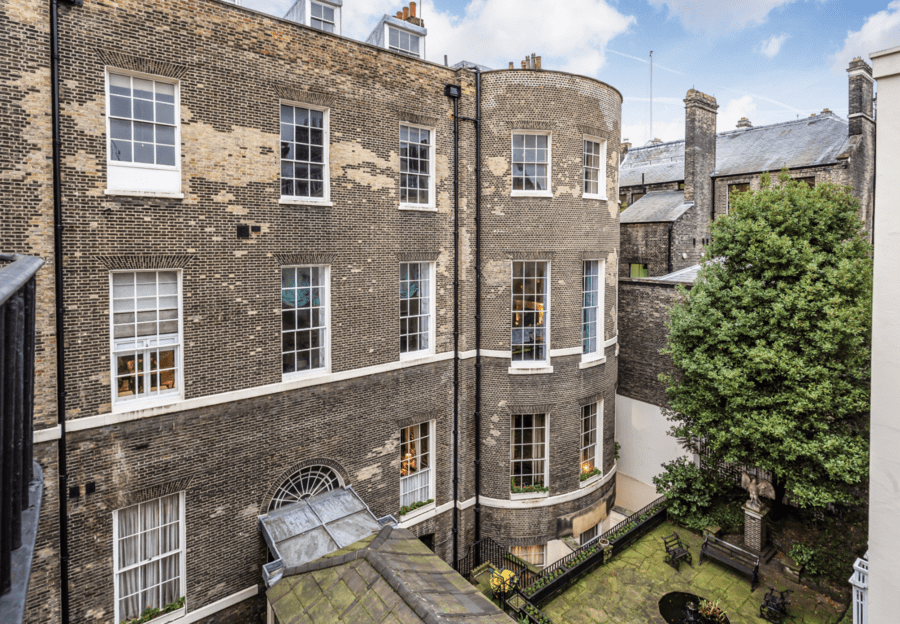
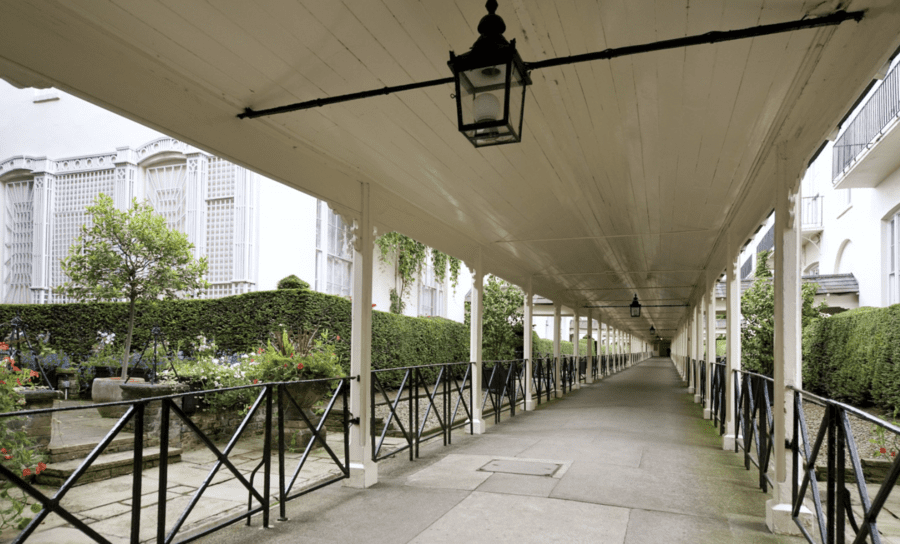
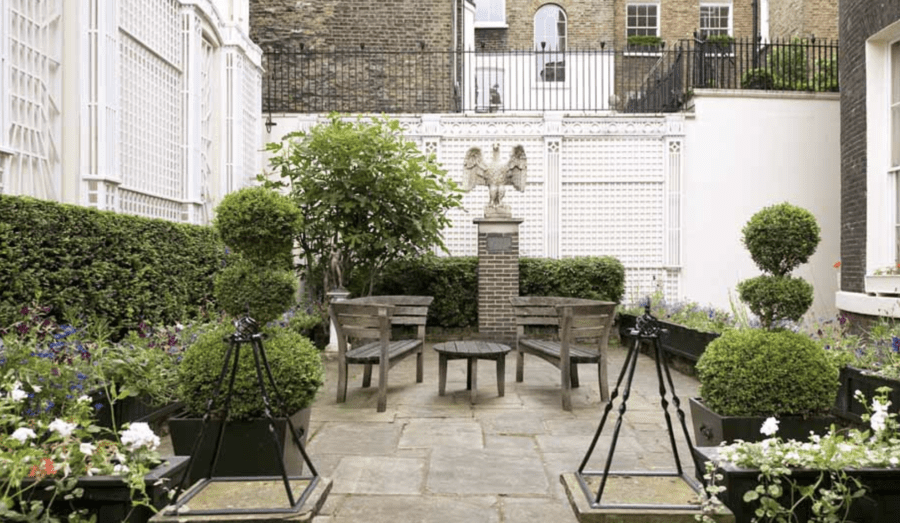
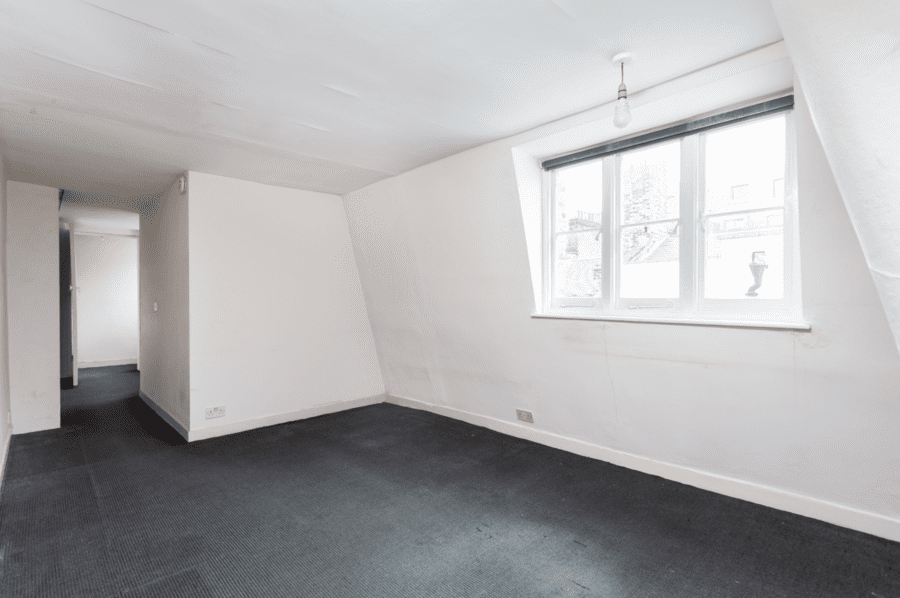
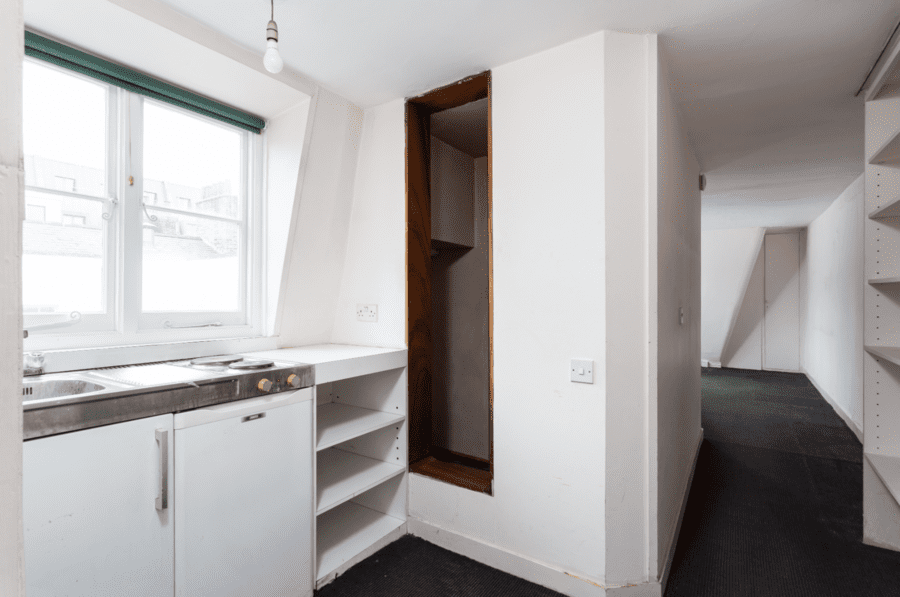
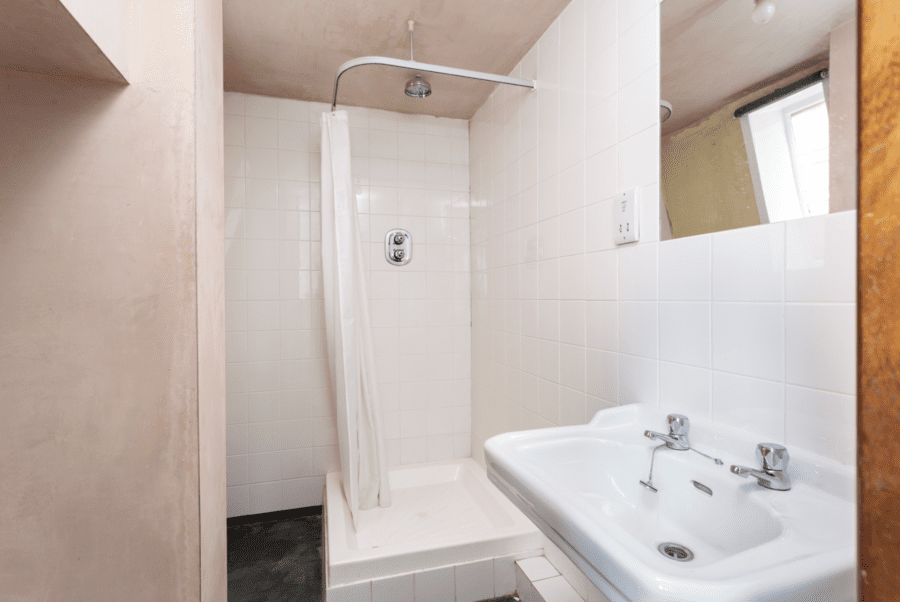
The entrance hallway of ‘Set L6’ has a fireplace.The master bedroom of ‘Looking into the reception room.The somewhat basic kitchen is definitely in need of an upgrade.The view from the set.Albany’s famous ‘Rope Walk’ – Of it, Gibbs commented: “So ingrained is the sense of decorum that even to utter a friendly hello to a neighbor as we pass on the stone stairs or the covered outdoor canopy, known as the Rope Walk, might be violating a taboo, as if a few words of small talk could break the spell of privacy we Albanians prize so deeply. (A nod suffices, a hat raised to a lady.)”Residents have access to the most peaceful outside spaces.The third floor space included in the sale is arranged as a long, thin studio room.It has a small kitchenette.And a somewhat dated shower room.A plan indicating how ‘Set L6’ is currently arranged.A plan of the third floor studio space.
A Shackleton Award winning campaigner who “fights miscarriages of justice and demands reform,” practicing solicitor Emily Bolton is married to Reprieve founder and one of “Britain’s most powerful civil rights lawyers,” Clive Stafford Smith. This Dorset born stonemason’s daughter, herself, founded the Centre for Criminal Appeals in the UK in 2011 after previously representing wrongfully convicted prisoners in the United States through the George Soros funded Innocence Project in New Orleans. She is a graduate of the University of Melbourne and Tulane University and her work trying to highlight the flaws in the 2011 convictions of the ‘Freshwater Five’ fisherman is clearly illustrative of her tenacity and dedication. Bolton’s sterling efforts in this regard were quite correctly highlighted in an April 2020 in-depth analysis of this most likely bungled case in the Guardian and in 2017, she tellingly commented: “Human beings make mistakes, and no system has more human parts than the criminal justice system. If it can’t identify and rectify its mistakes, it is doomed to repeat them.”
Vast Knightsbridge penthouse for sale for 27% less than in 2012 but extraordinarily 6,900% more than in 1999
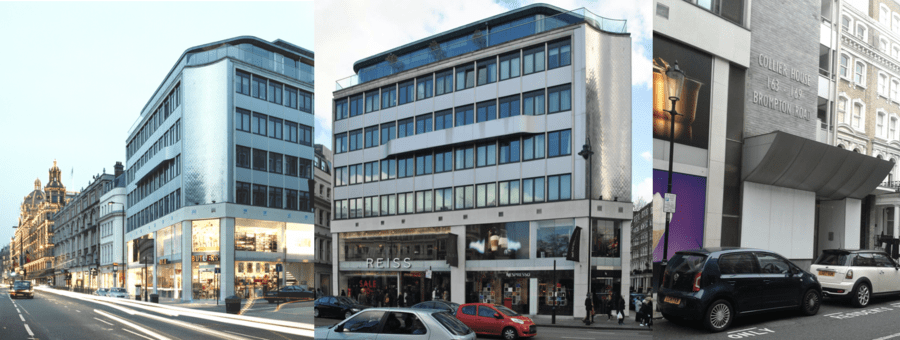
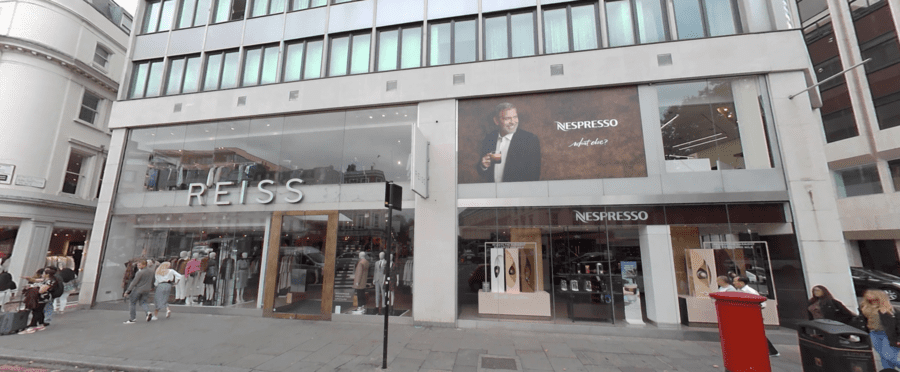
Constructed between 1961 and 1962 by builders Gilbert Ash, Collier House is not the most attractive structure in Knightsbridge externally. Whilst retailers Reiss and Nespresso – lucky residents get George Clooney’s ugly ‘mug’ stuck on the façade as a bonus (excuse the pun) – occupy the ground floor, the top floor ‘space’ was sold for the creation of a two-storey penthouse in 1999 for £230,000.
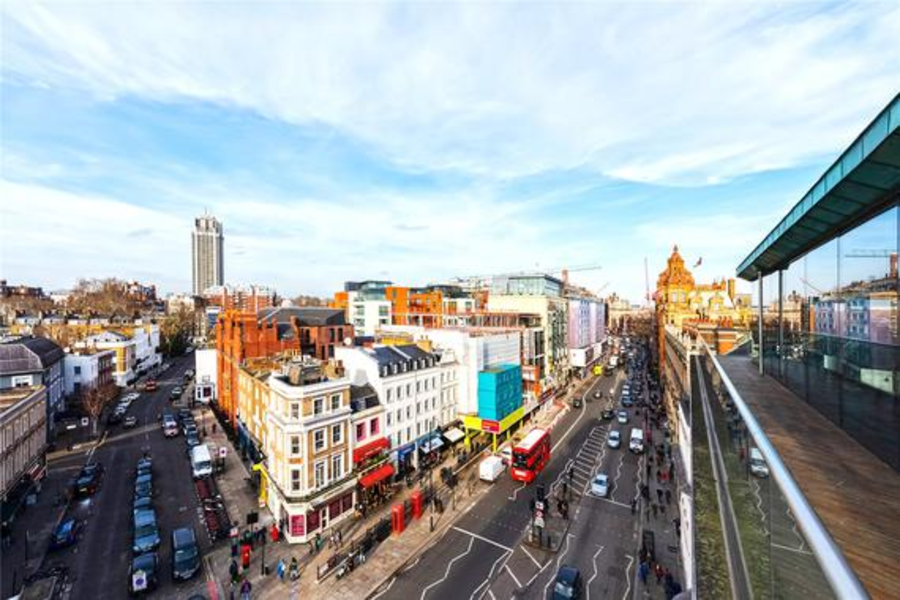
The exterior of the building in which the sixth and seventh floor penthouse is situated – Collier House, 163 – 169 Brompton Road, Knightsbridge, London, SW3 1PY.The ground floor of the building is occupied by Reiss and Nespresso. A large image of actor George Clooney dominates the frontage of the latter.
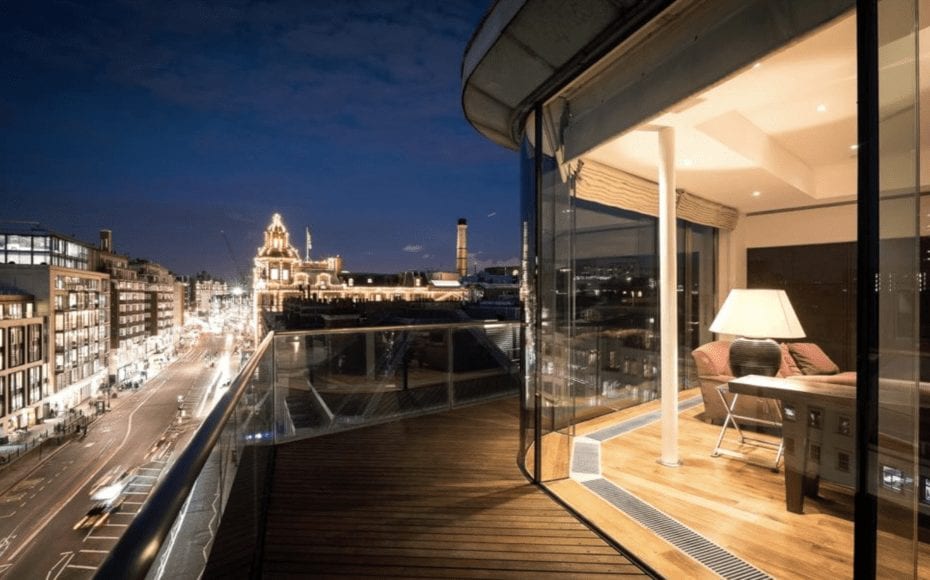
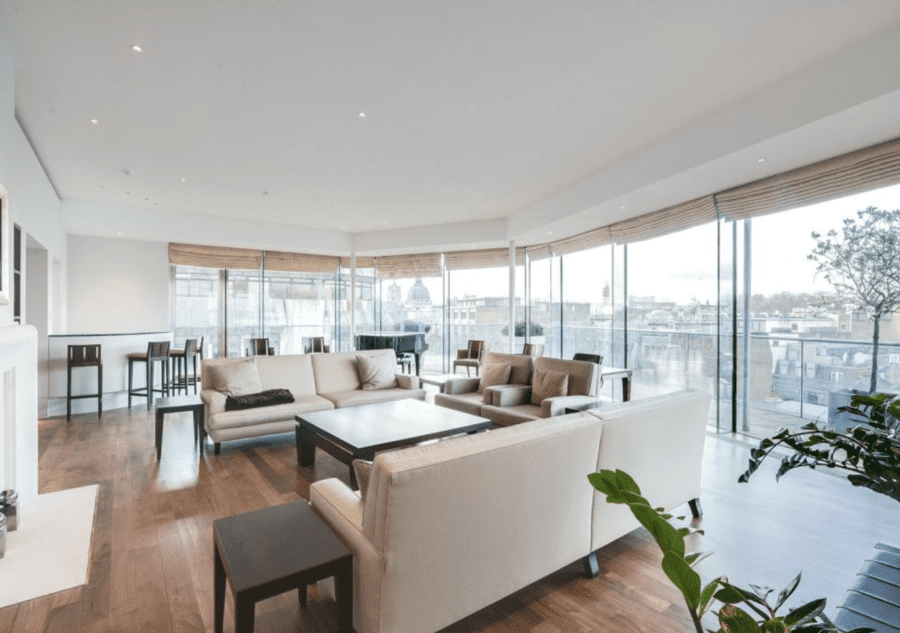
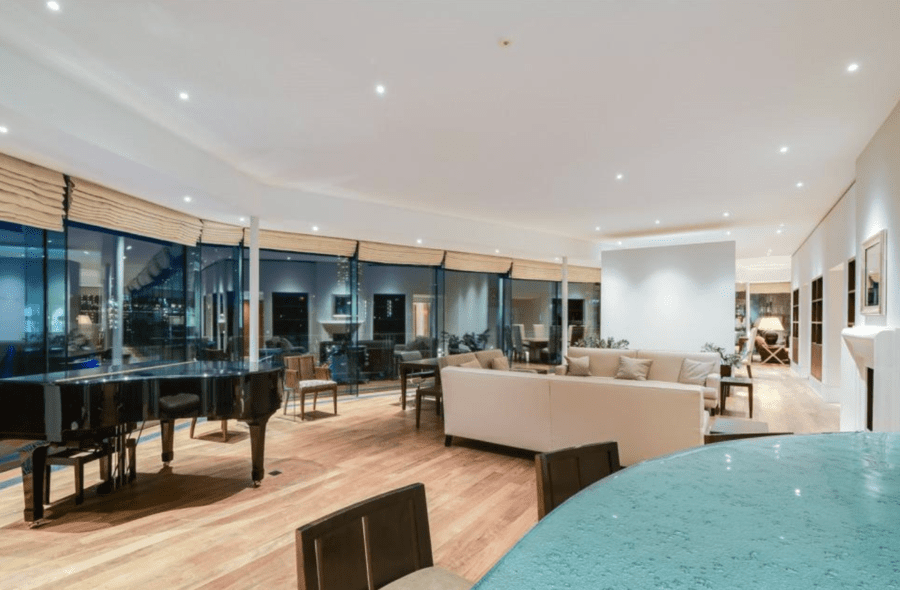
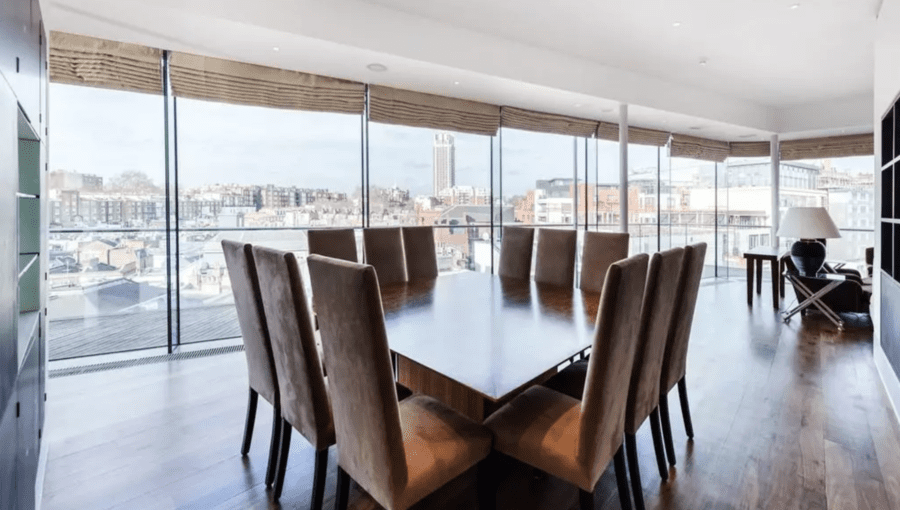
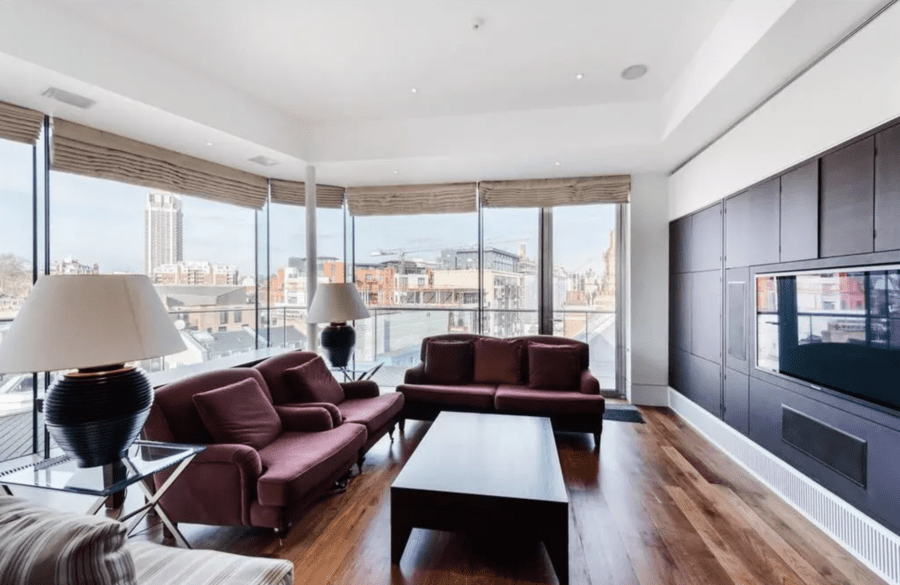
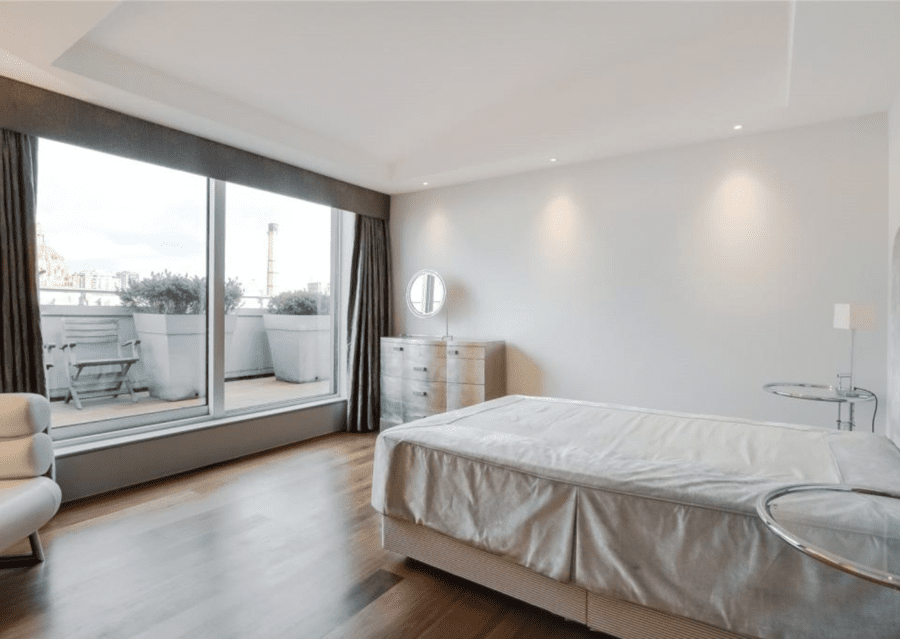
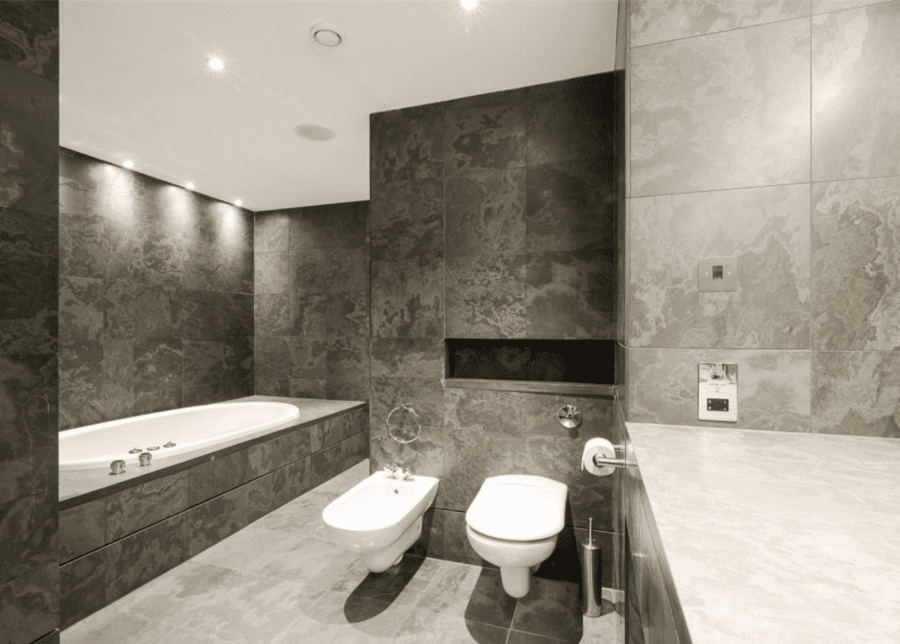
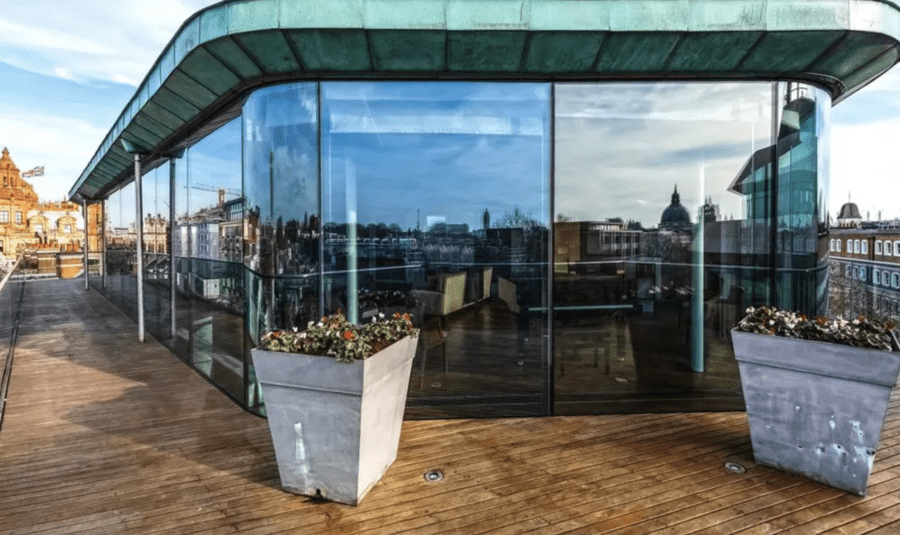
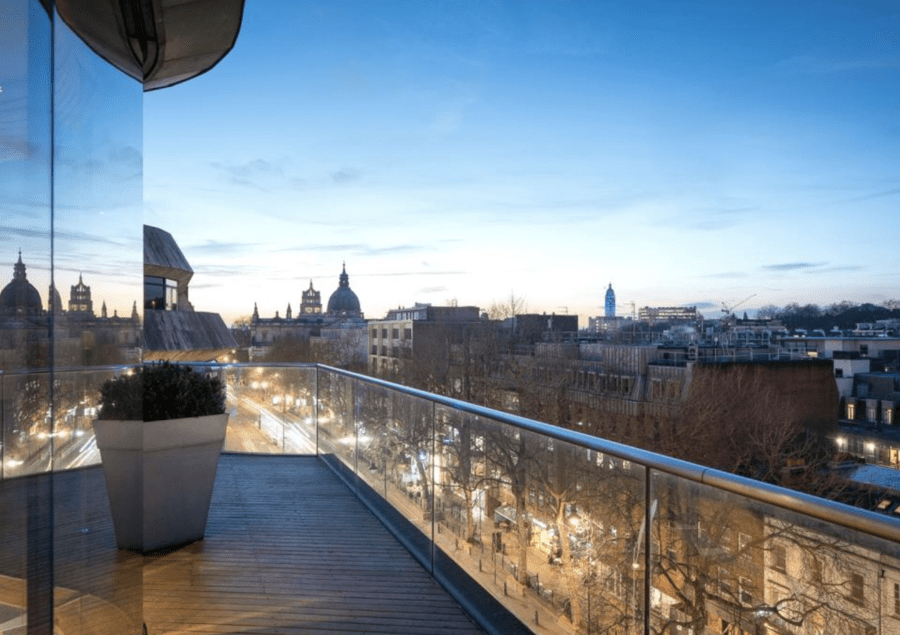
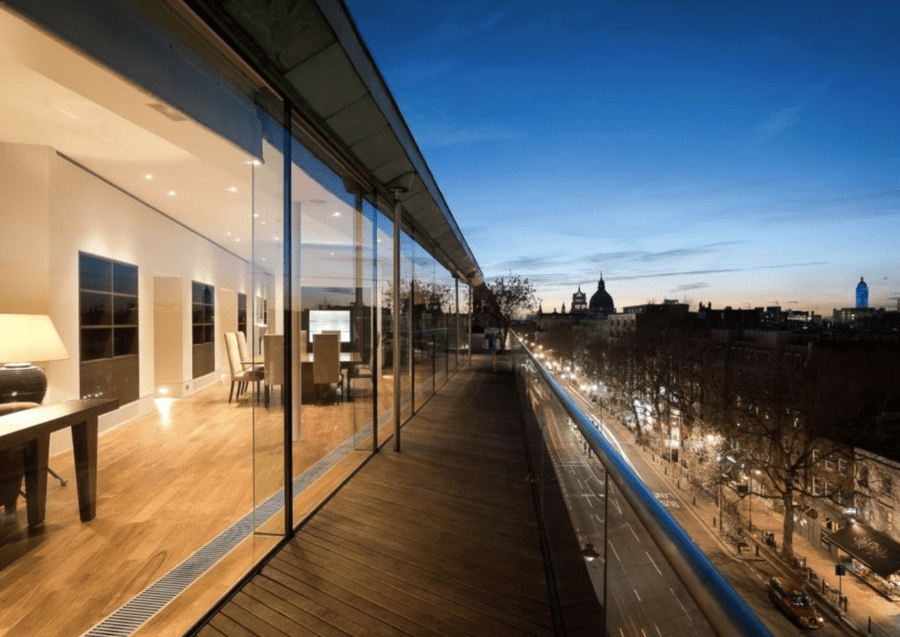
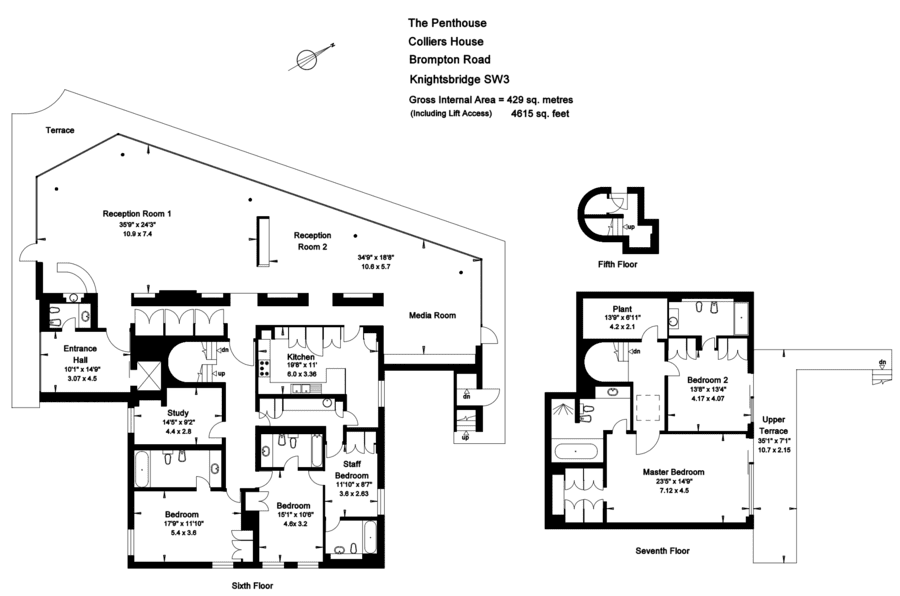
Developed to provide a 4,615 square foot duplex over two floors, the apartment is currently on the market for the considerably higher figure of £16 million through agents Merchants Row. It includes 2 reception rooms that are some 70-foot in length in total, a bar area, a media room, 5 bedrooms and 5 bathrooms and comes with wrap-around terraces with skyline views towards Harrods and the Brompton Oratory.
From October 2014 to July 2019, the penthouse was the registered office of Elaph Publishing Limited. Founded in 2001 by Othman Al Omeir – a man “considered close to King Salman of Saudi Arabia” – Elaph is described as “the first daily Arabic independent online newspaper.” It has at various times been banned in both Saudi Arabia and Yemen and its former managing director was the EMMY award winning producer Nicholas Claxton.
The long leasehold penthouse, which was offered for the even more outrageous sum of £22 million in November 2012, has direct lift access to the sixth floor and comes with secure underground parking. It is subject to a service charge of £10,800 per year, has been offered to rent for £10,000 per week previously and what the agents neglect to mention is that it is situated directly above one of London’s most polluted stretches of road.
The Numbers – Collier House, 163 – 169 Brompton Road, Knightsbridge, London, SW3 1PY, United Kingdom
April 2020 – For sale for £16 million ($20 million, €18.4 million or درهم73.4 million) through agents Merchants Row.
November 2012 – For sale for £22 million ($27.5 million, €25.3 million or درهم101 million) through agents Wilfords.
July 1999 – “As then was” space for penthouse sold for £230,000 ($287,000, €264,000 or درهم1.1 million) according to Land Registry records.
Coronavirus has proved a double blow to restaurateur Keith McNally: First he got the virus himself and now his original restaurant has closed permanently due to it
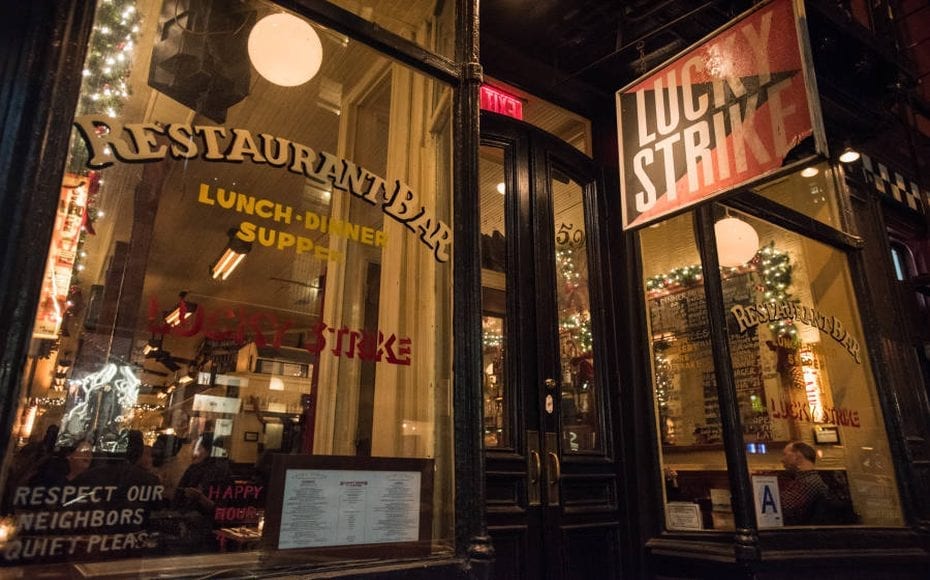
Currently recovering from coronavirus himself, restaurateur Keith McNally sadly will not be able to fulfill a wish he made in November 2019 of having his last meal at his oldest restaurant, Lucky Strike. He’s just shut it for the final time and blamed the global pandemic for the French-American bistro’s demise.
Of why the “Soho staple” at 59 Grand Street, near West Broadway in New York – which opened in 1989 – has closed permanently, McNally told Eater:
“Due to the COVID-19 crisis, I was unable to find a way to make Lucky Strike work financially. This decision was particularly difficult since many of Lucky Strike’s wonderful staff have worked for me for over 20 years, and some of the customers have been coming since the day we opened: 31 years ago.”
In the same interview last year where he talked about having one last “steak au poivre medium rare” before going to meet his Maker, McNally waxed lyrical about Lucky Strike more generally and in conversation with Food & Wine’s Regina Schrambling commented:
“When I opened Lucky Strike, it was far easier to build a restaurant than nowadays. There weren’t these absurdly strict health rules that are designed as much to rake in money for the city as to make eating in restaurants safer.”
In spite of McNally openly sharing knowledge that Lucky Strike didn’t make a profit as long ago as 2016, he was honest about why he kept it open. “I like the staff…I am fond of all of them,” he stated, but now, sadly, for these pour souls, they’ve only got left GoFundMe left as a means of survival. Meanwhile, on Instagram, of why Lucky Meal had served its last meal, the “Restaurateur Who Invented Downtown’ concluded: “Greedy landlord during lockdown syndrome.”
Criticism of the 29-year-old Duke of Westminster for quietly giving £12.5 million to the UK’s coronavirus response is most unfair; any anger should instead be directed at bailout demanding billionaires like Sir Richard Branson and Sir Philip Green
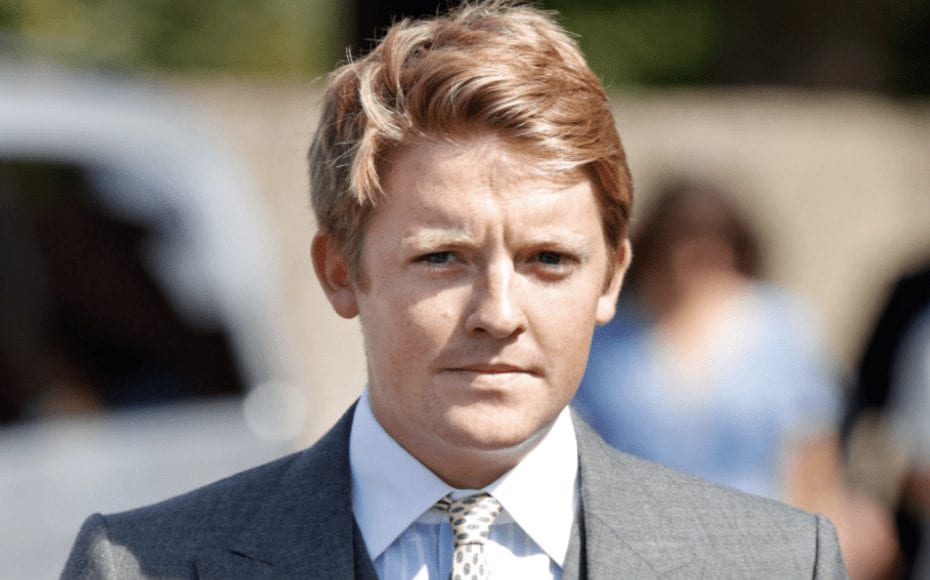
The richest under thirty in the world, 29-year-old landowner, Hugh Grosvenor, Duke of Westminster has shown generosity in giving £12.5 million to “provide support to NHS staff, key workers and their children and families.”
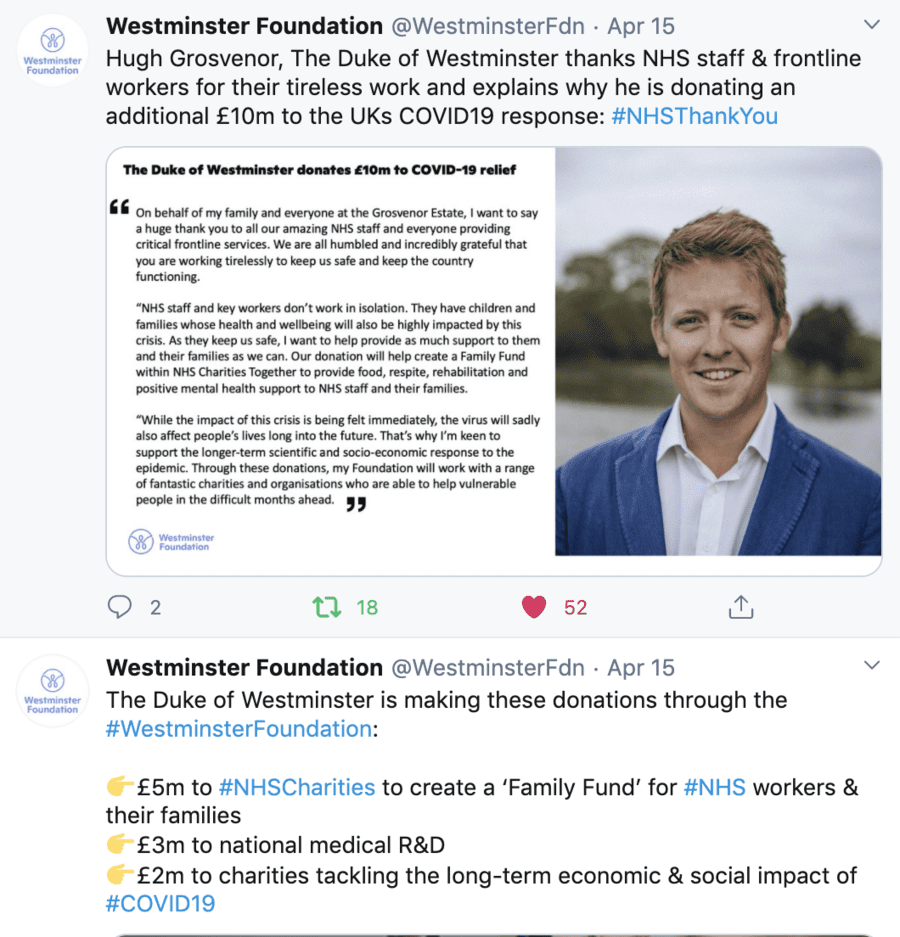
Quietly announcing his move without seeking any fanfare through his Westminster Foundation on Twitter, the seventh Duke – known to his friends as ‘Hughie’ and like his prison reform campaigner sister, Lady Edwina, credited for being both “low key” and “down to earth” – commented:
“On behalf of my family and everyone at the Grosvenor Estate, I want to say a huge thank you to all our amazing NHS staff and everyone providing critical frontline services. We are all humbled and incredibly grateful that you are working tirelessly to keep us safe and keep the country functioning.”
“NHS staff and key workers don’t work in isolation. They have children and families whose health and wellbeing will also be highly impacted by this crisis. As they keep us safe, I want to help provide as much support to them and their families as we can. Our donation will help create a Family Fund within NHS Charities Together to provide food, respite, rehabilitation and positive mental health support to NHS staff and their families.”
“While the impact of this crisis is being felt immediately, the virus will sadly also affect people’s lives long into the future. That’s why I’m keen to support the longer-term scientific and socio-economic response to the epidemic. Through these donations, my Foundation will work with a range of fantastic charities and organisations who are able to help vulnerable people in the difficult months ahead.”
We join those saluting the Duke of Westminster for his laudable donations and suggest others with similarly large bank balances follow suit. It is now time for the likes of the greedy pigs Sir Richard Branson and Sir Philip Green to take heed of this generous young man’s actions and put a stop to their nefarious demands for government bailouts; instead, they too ought to dip their hands into their very deep pockets and finally put their money where their almightily large mouths are.
Famous ‘Seven Sisters’ cottage in Montauk for sale for 30% less than in 2016; the ‘Gilded Age cottage’ was designed by Stanford White, an architect whose murder famously led to the ‘Trial of the Century’ from 1907 onwards
Montauk has variously been associated with part-time residents such as the playwright Edward Albee, the world’s largest Ponzi scheme operator Bernie Madoff and the artist Andy Warhol. It was a place that the Algonquian speaking Montaukett Native American tribe called home until one Arthur W. Benson (circa 1798 – 1889), the president of the Brooklyn Gas Light company, came along in 1879 and purchased 10,000 acres there for just $151,000 from the American government.
“Land baron” Benson soon after sold half his acreage to the Long Island Rail Road for $600,000 and then set about turfing out the natives and creating a “playground for the rich.” As part of his plan, he ordered the construction of seven “shingle-style” homes that came to form a 100-acre compound for use as a “private hunting and fishing retreat for him and his friends.” They became known as the ‘Seven Sisters’ and one of them is currently for sale through Sotheby’s International Realty.
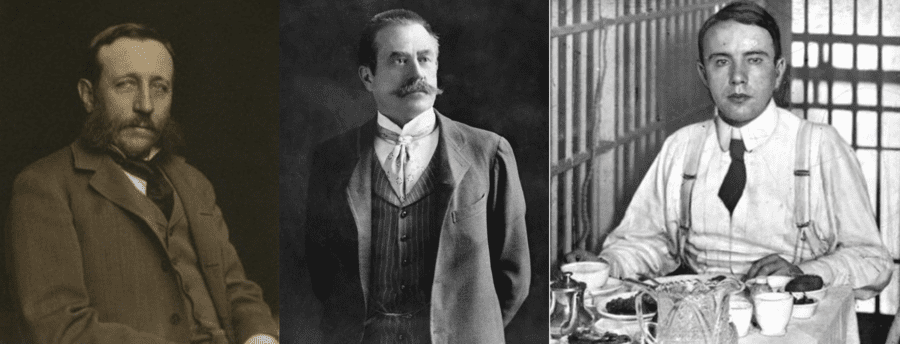
Designed by Stanford White (1853 – 1906) – a “lauded architect” whom became more famous for being shot and killed by the deranged railroad heir Harry Thaw (1871 – 1947) – the property offered is said to be known as ‘Andrews House.’ It is more commonly listed, however, as 153 Deforest Road and its date of construction has been put at as early as 1879 and as late as 1888. The ‘cottage’ reportedly first belonged to Benson’s friend, a writer and one of the founders of both the bibliographic Grolier Club in Manhattan and the Society of Iconophiles, William Loring Andrews (1837 – 1920).
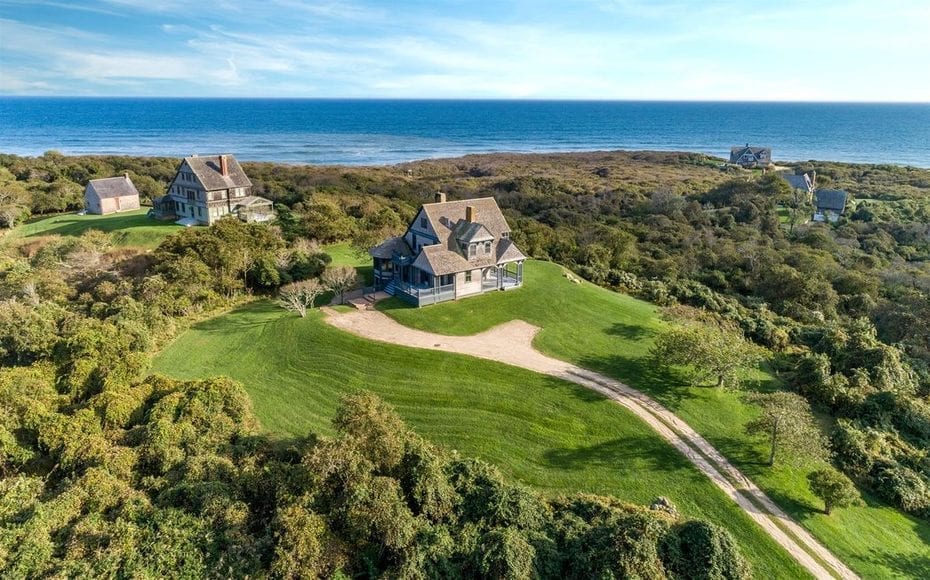
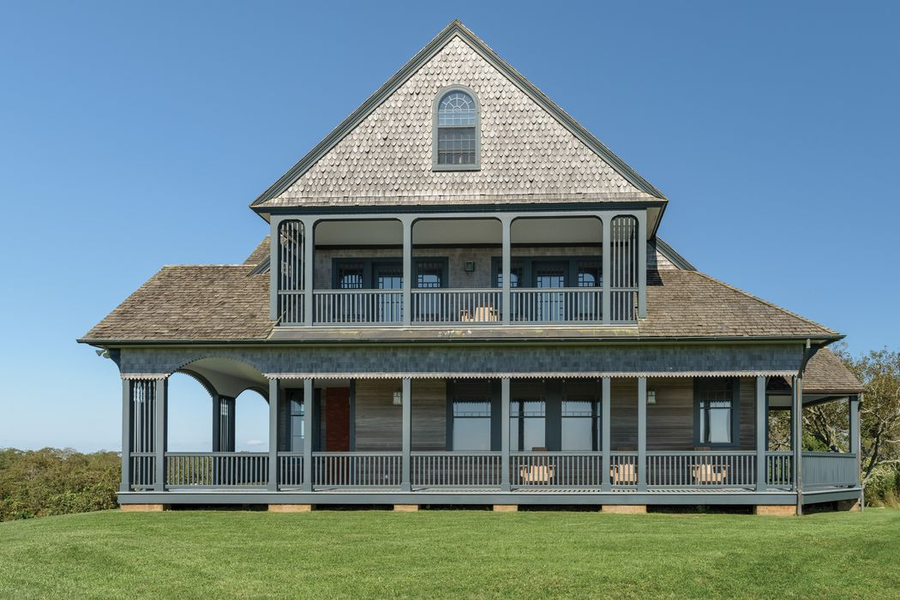
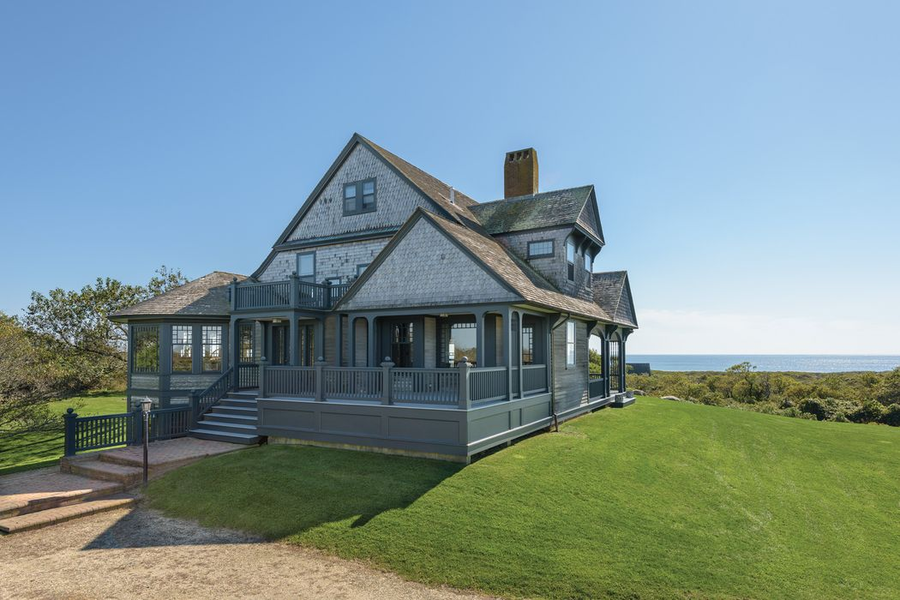
William Loring Andrews, architect and murder victim Stanford White and Harry Thaw in a ‘gilded’ jail cell.The Andrews House, 153 Deforest Road, Montauk, New York, NY 11954, United States of America – a ‘Seven Sisters’ cottage that has seen its asking price reduced from £14.8 million in 2016 to £10.4 million in 2020.
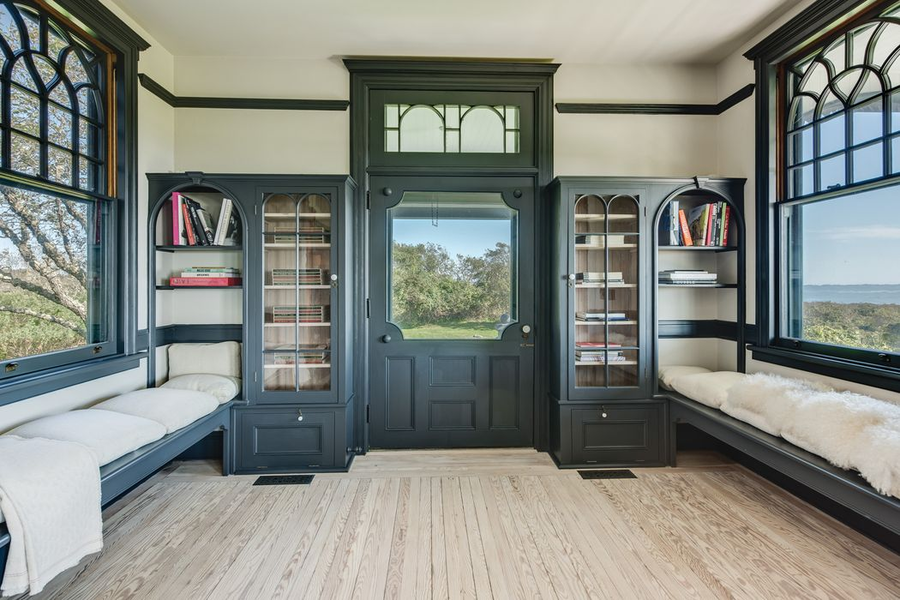
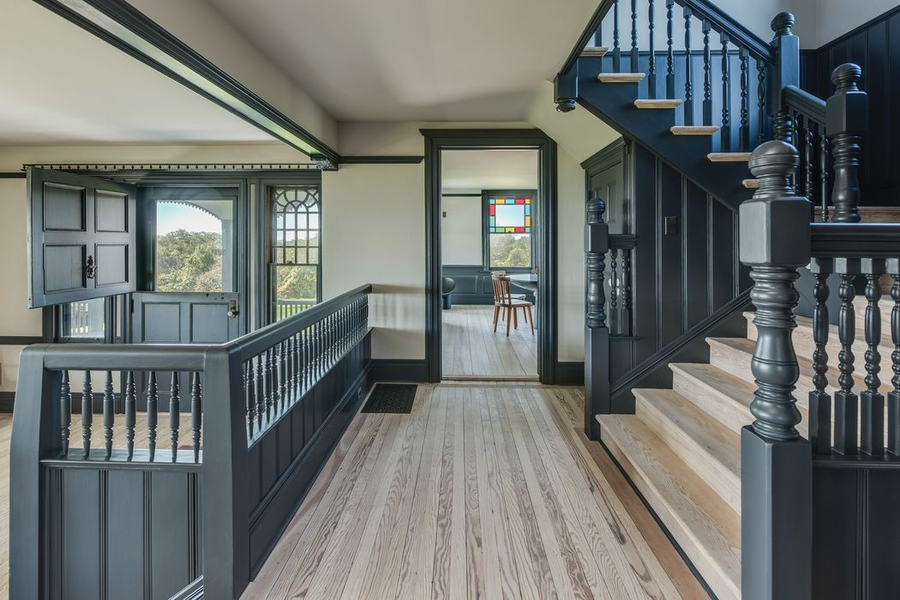
Remodeled and expanded in 1992 by the well-known Hamptons architect Francis Fleetwood (1946 – 2015) and updated yet again in the 2010s, 153 Deforest Road today extends to some 3,800 square foot in total. The house stands on a plot of 2.3 acres and accommodation includes a sunken living room, dining room, library, 4 bedrooms, 3.5 bathrooms and a second floor veranda “with mesmerising views that always inspire.”
In 2016, when priced at £14.8 million, Mansion Global remarked: “The property comes with plans for a future expansion by [the renowned classical] architect Allan Greenberg,” but plainly such has made little difference to attracting interest. Four years later, 153 Deforest Road’s asking price has been slashed to ‘just’ £10.4 million and rather strangely its interior colour scheme is entirely in a depressing shade of grey.
The artist and filmmaker Julian Schnabel, comedian and talk show host Dick Cavett are amongst others to have lived in ‘Seven Sisters’ houses. One, Tick Hall, was destroyed by a fire in 1997 and then completely rebuilt; what happens to the ‘Andrews House’ remains to be seen.
The Names & Numbers – The Andrews House, 153 Deforest Road, Montauk, New York, NY 11954
July 2019 – It is further reduced to £10.4 million ($12.995 million, €11.9 million or درهمX47.7 million) through Sotheby’s International Realty.
June 2018 – It is reduced to £12 million ($14.995 million, €13.7 million or درهم55.1 million) through Sotheby’s International Realty.
February 2018 – It is relisted for £13 million ($16.25 million, €14.9 million or درهم60 million) with Sotheby’s International Realty.
August 2016 – The house is listed for sale for £14.8 million ($18.5 million, €17 million or درهم67.9 million) with Douglas Elliman.
2012 – 153 Deforest Road is sold to a limited liability company for £5.6 million ($6.995 million, €6.4 million or درهم25.7 million).
1992 – 153 Deforest Road is renovated and remodeled by the Chilean born architect Francis Fleetwood (1946 – 2015) – a man described as a “popular East Hampton, New York–based architect [of] romantic country houses” by Architectural Digest in April 2015. Fleetwood’s well-known clients numbered Lauren Bacall, Calvin Klein and Paul McCartney and of them, he once told The New York Times: “They’d all love to be born into a grand old house that had been handed down through the generations… [And, he added, surely with a grin]… So would I.”
Between 1879 and 1888 – 153 Deforest Road was built as a home for the writer and librarian William L. Andrews (1837 – 1920). It formed part of a group of houses known as the ‘Seven Sisters’ and was known as ‘Andrews House.’
1879 – Arthur W. Benson (circa 1798 – 1889) successfully bids $151,000 or the equivalent of £3.2 million today ($4 million, €3.7 million or درهم14.7 million today) for 11,000 acres of land around Montauk in an auction. He then cleverly sold half the land for $600,000 or the equivalent of £12.8 million today ($16 million, €14.7 million or درهم58.8 million today) to the Long Island Rail Road and kept the remainder as his “private playground.” The legitimacy of the ownership of Benson and others of Montauk remains the subject of legal actions by the Montaukett Native Americans to this date.
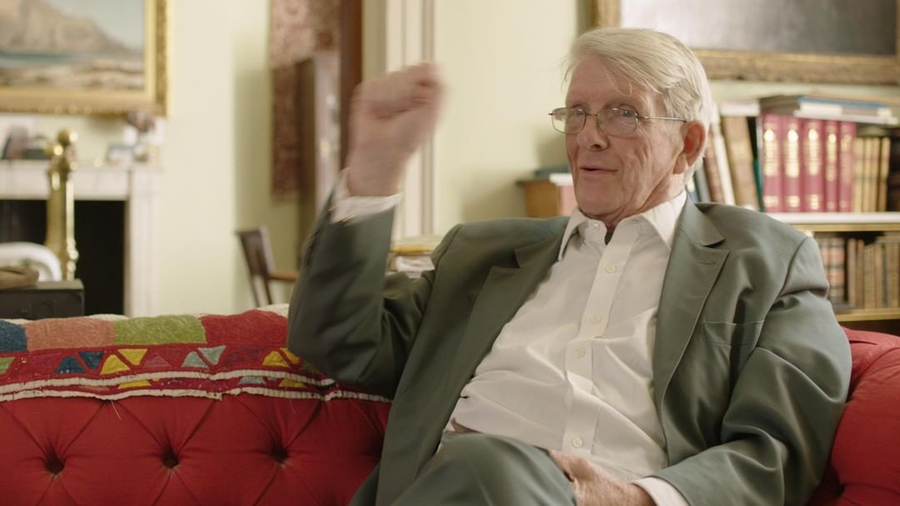
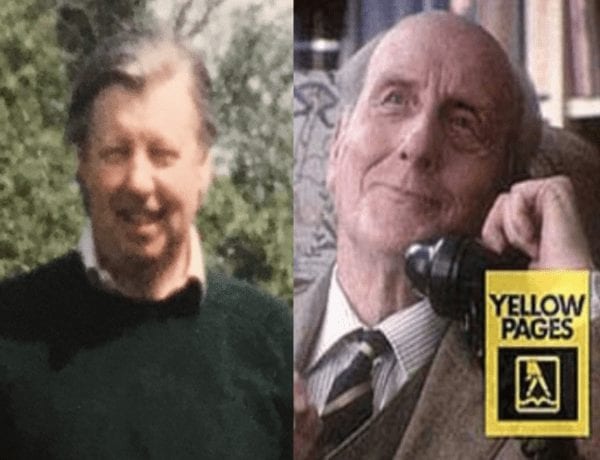
Described in The Telegraph’sobituary of him as a “publisher, wit and author,” Michael Russell is best known for writing the spoof memoirs of J. R. Hartley – the charming mythical old man of Yellow Pages advert fame in the 1980s. Bournemouth born, Oxford educated and a father of three, Russell loved horse racing and fishing and was known for his “extremely shrewd judgement as to which books would sell in shops.” His one-man company produced over 500 books by the time of his death and amongst titles that were hits were Richard Spitzy’s How We Squandered the Reich – a book that described Hitler as being “like a cross between a head waiter and a chimney sweep.”
Blow to British racing as Sheikh Fahad places his Longholes operation in Newmarket, Suffolk up for sale for £6 million to spend more time in California
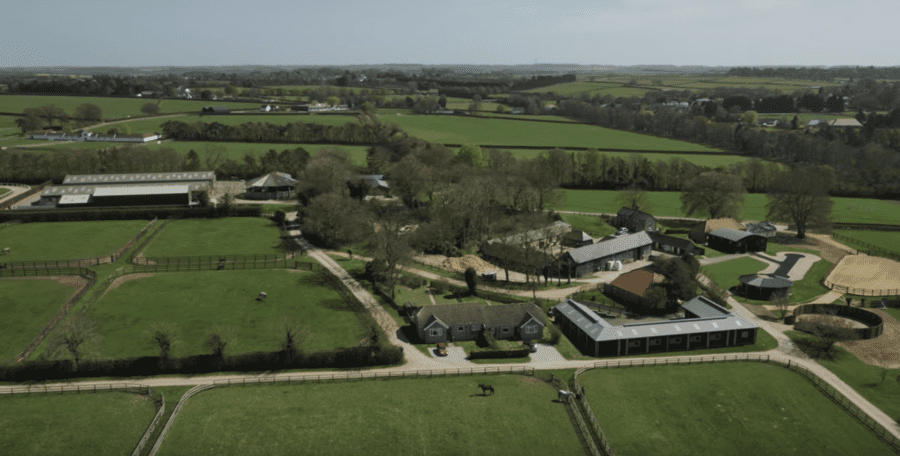
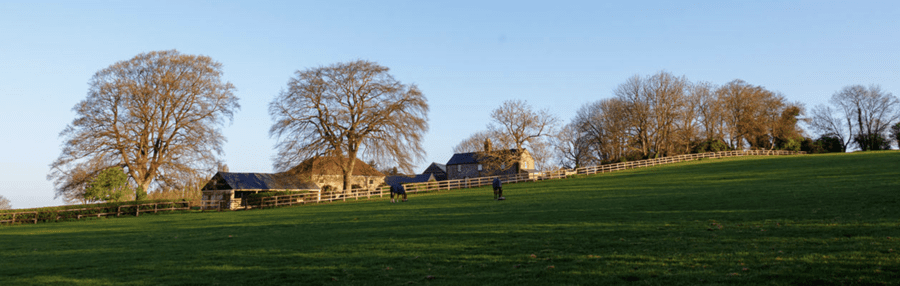
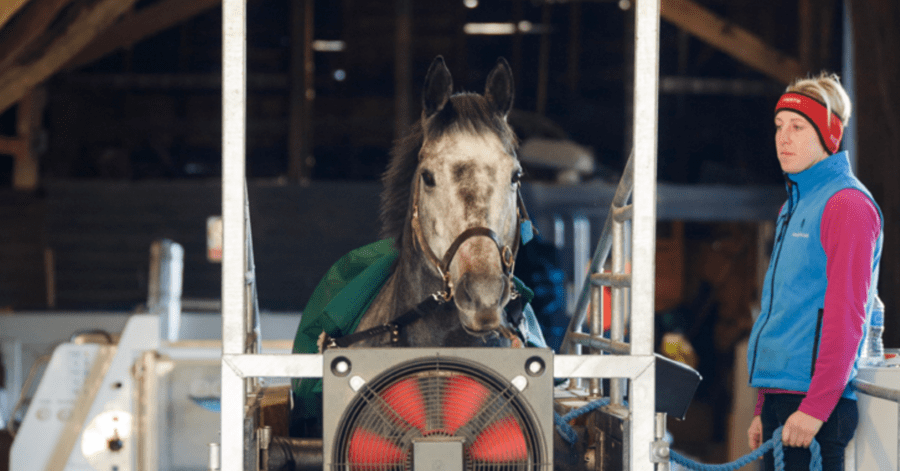
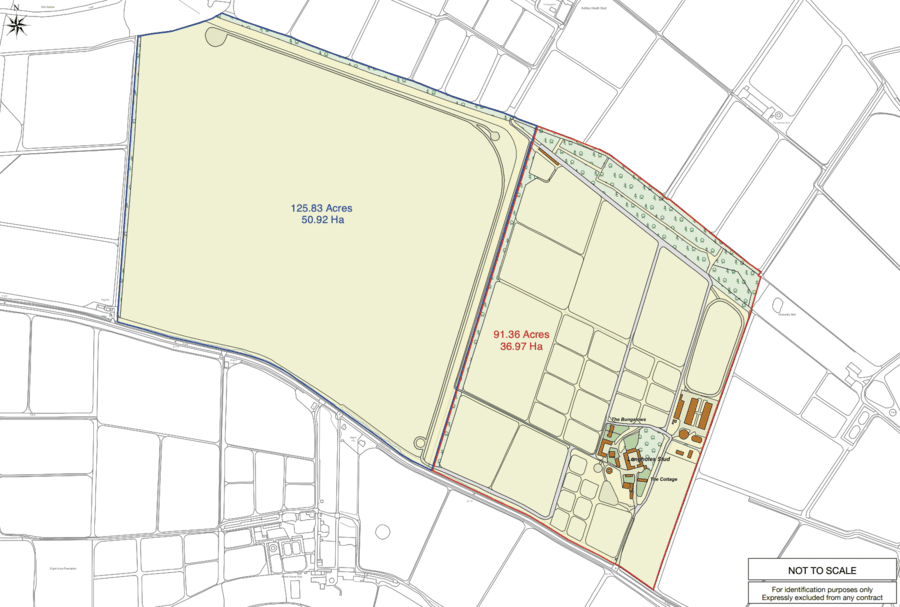
Billed as a place for “preparing champions” and run by a “dedicated team” focused on pre-training and rehabilitation, Longholes was founded by the Accrington born “playboy” textile heir and racehorse breeder Sir George Bullough (1870 – 1939) in the 1920s and bought by Sheikh Fahad in 2013.
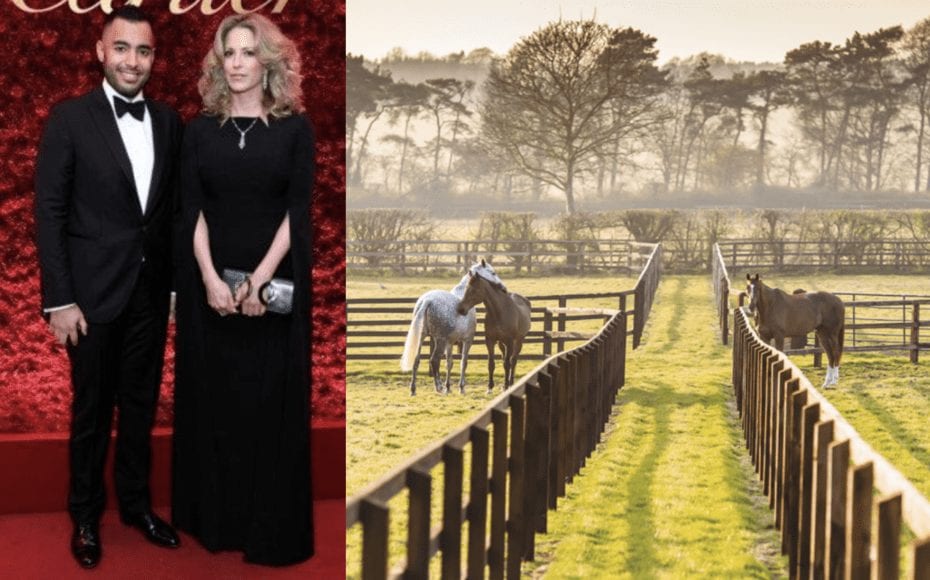
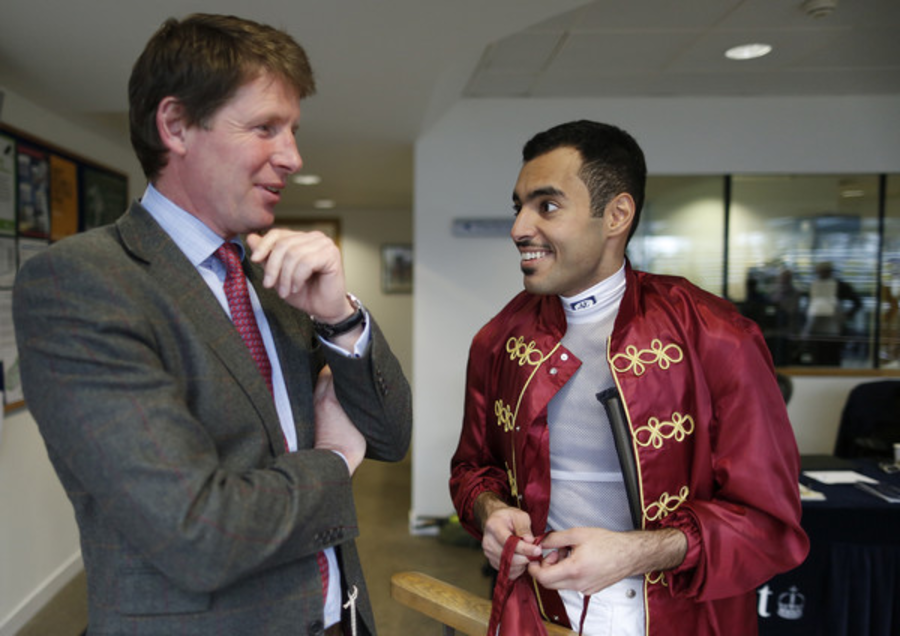
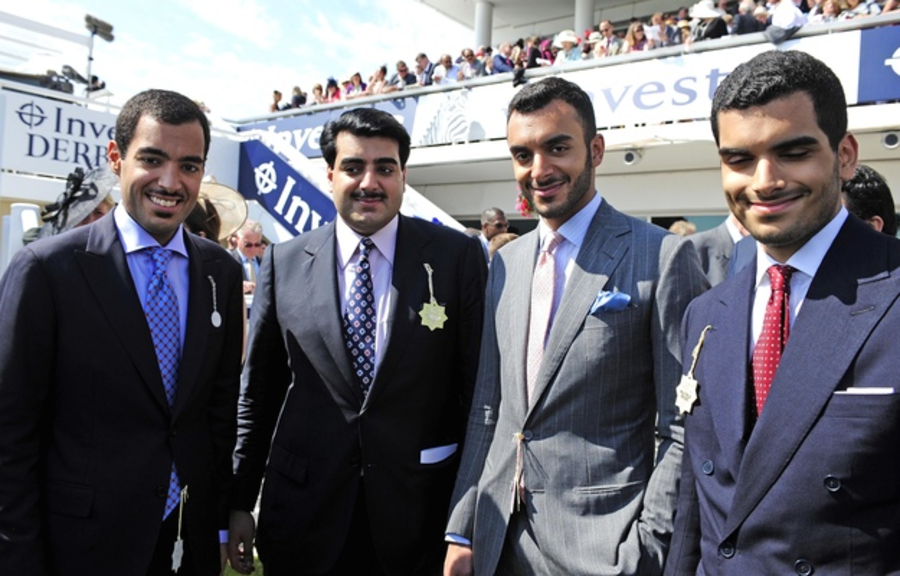
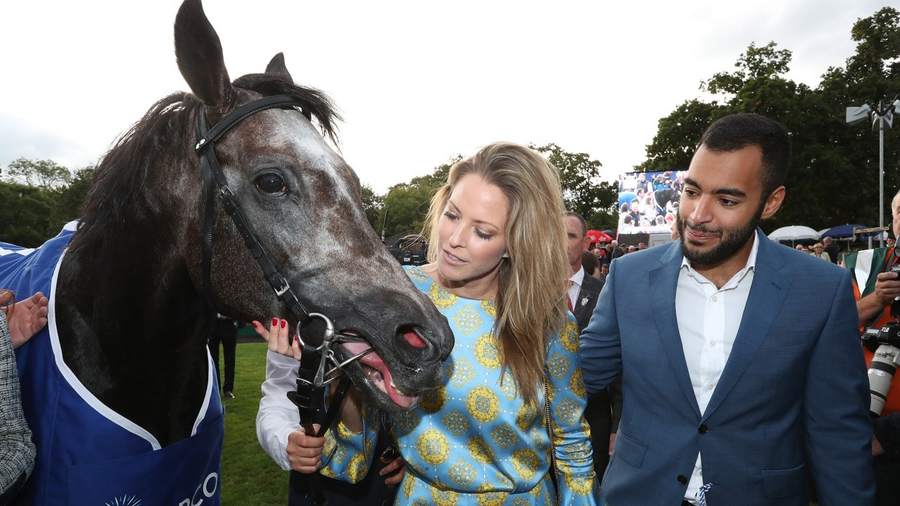
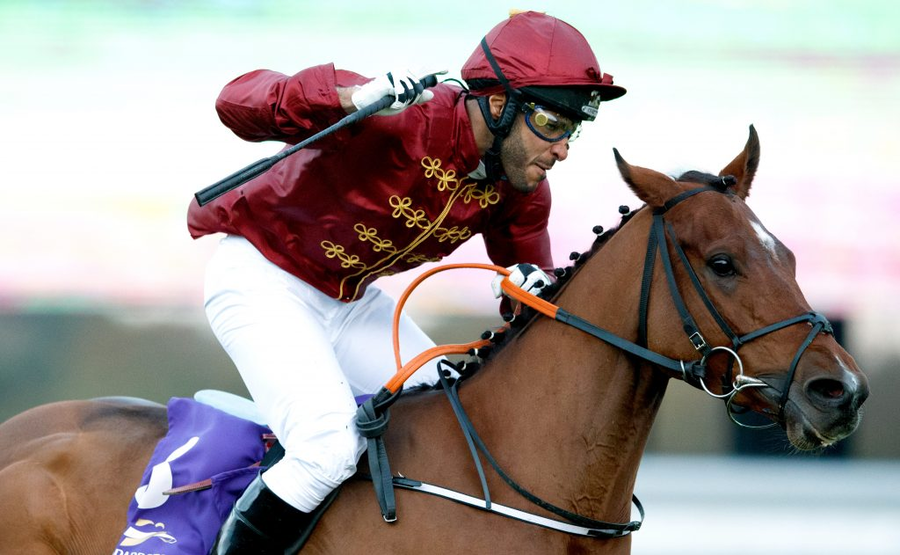
Sheikh Fahad Bin Abdullah Al Thani chats with David Redvers in 2016.Sheikh Fahad wiht his brothers Sheikh Hamad, Sheikh Suhiam and Sheikh Khalifa.Sheikh Fahad and his wife Sheikha Melissa with the late Roaring Lion.Sheikh Fahad won the Corinthian Challege at Leopardstown on the Gordon Elliott trained Brutal in October 2017.
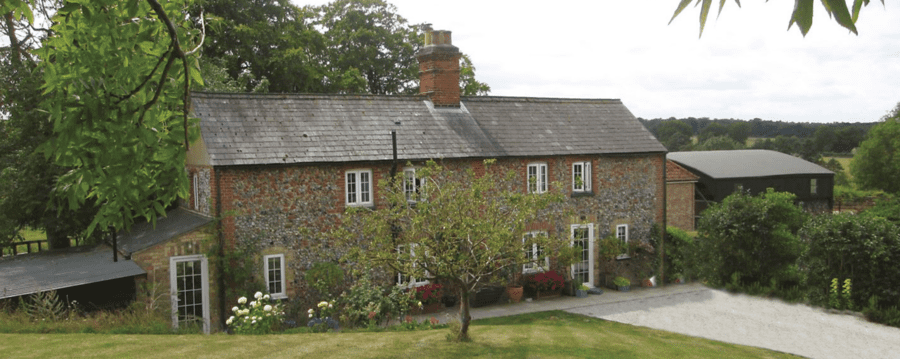
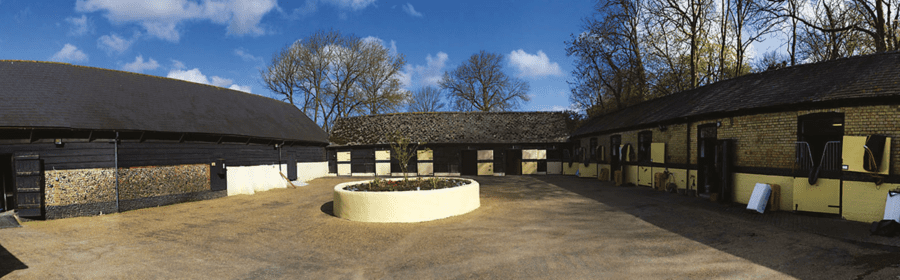
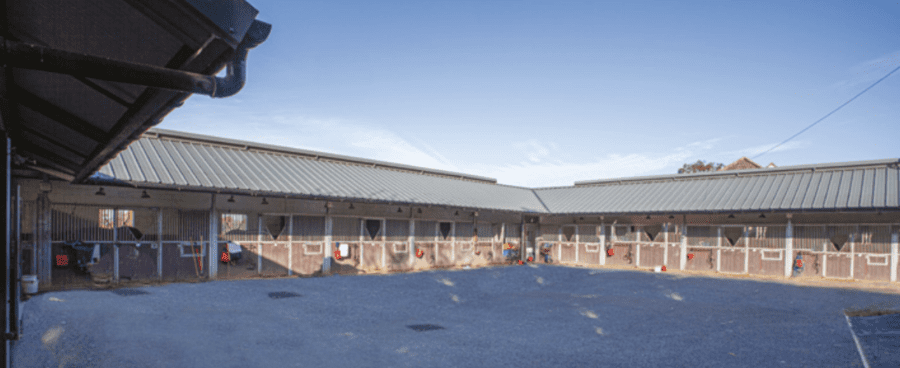
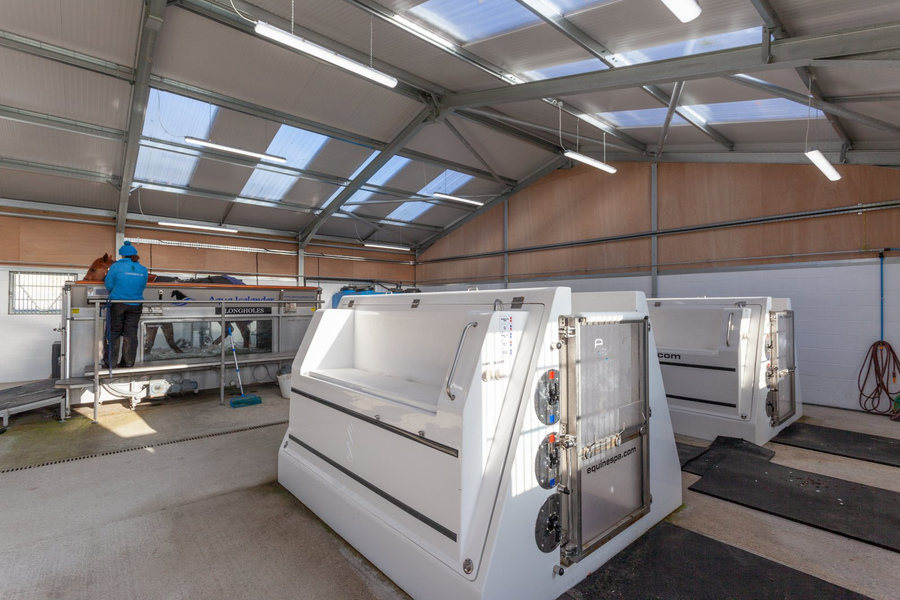
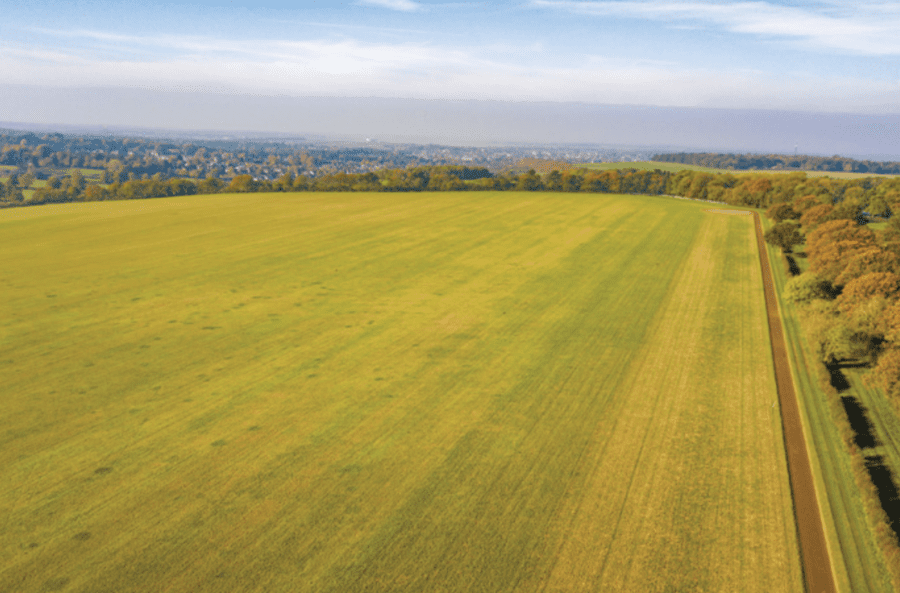
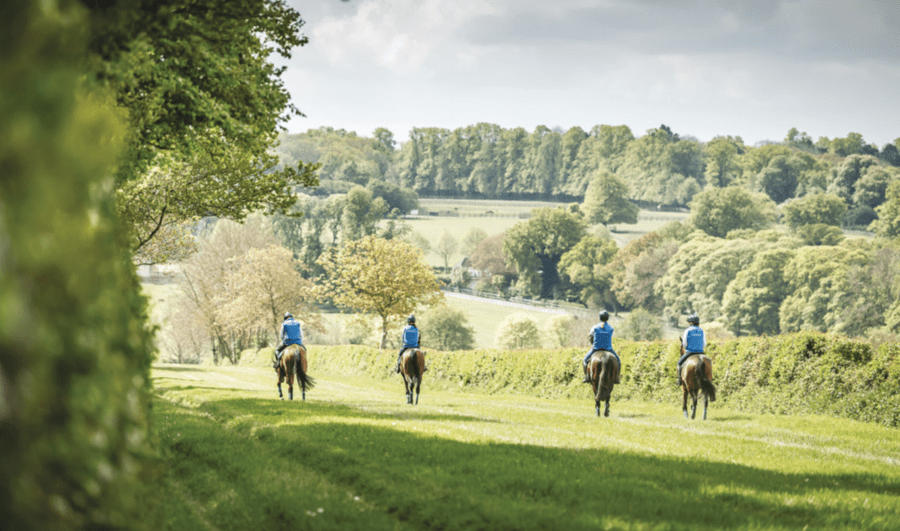
Comprising of 217 acres of paddocks, schooling grounds and a 6-furlong gallop, the “renowned Newmarket stud farm” – which is 16 miles from Cambridge and 70 miles from London – includes not only 88 boxes, but also what has been described as a state-of-the-art “feel good factor” spa with hydro and water treadmill facilities amongst other things. There is a stud manager’s house, a guest cottage, a pair of staff bungalows and a pair of workers’ log cabins also.
“Sheikh Fahad purchased Longholes in 2013 with a view to turning the attractive and historic stud farm into a state-of-the-art pre-training and rehabilitation establishment servicing the requirements of his own Qatar Racing and also the wider training centre of Newmarket. Seven years later and Longholes boasts an incredible array of modern facilities, an outstanding team of committed and highly trained professional staff and a client list that boasts many of the most recognised names in horse racing, eventing and show jumping.”
“Sheikh Fahad is proud of what has been achieved at Longholes but a change in his own personal circumstances means that the farm’s exciting future now needs to be in another’s hands.”
Speaking to Nick Luck of Racing TV in April 2019, Sheikh Fahad remarked:
“We love horses, we’ve grown up with horses, me and my brothers. The idea was always to build something for the future, hopefully the long-term future, for generations to come. I’d like to see my kids grow up into a dynasty of breeding operations, of racing operations that they can take on from there.”
“I watched I think, my early memories… I watched Channel 4 Racing, I think the Cheltenham Festival. It was very different to racing back home. We only had one racetrack and it was flat racing and they go round in the circle. My dad was the leading Arab racehorse owner in the country, so he won everything. It seemed like it was that easy to do and I started watching racing here and I saw all the different racecourses and National Hunt. And we don’t have National Hunt back home, so I was very curious about the whole industry. I wanted to learn as much as possible from every angle of it.”
“I think the quality of racing, as you watch racing around the world, the biggest quality of racing is in England and Ireland in terms of top-class racing… It is good for the breed, it shows the best horses to breed onwards. The classics in Britain always prove to be the best source of that.”
Of the flaws of British racing in general and perhaps hinting at a move to spending more time participating in American racing, the Sheikh continued:
“It needs to up its game. It needs to find ways to attract more people into the sport. At the moment we are very grateful for the Sheikh Mohammeds in the business… Without Sheikh Mohammed [Bin Rashid Al Maktoum], this year would have been a disaster for a lot of people. The thing is that British racing needs to find more ways to attract quality. I think quality is very important.”
“If you look at, for instance, Japanese racing, they have got a two-tier system. They have the JRA and the NRA. The JRA is the elite class of racehorses and horse racing and I think if you don’t break your maiden as a three year-old, then I think, that horse is not allowed to run in the JRA anymore. They have to go down to the NRA. Why can’t that some way be explored in British racing? We can’t be racing, I think you’re asking people to race for two grand or three grand… whilst in Australia they have Saturday races with a minimum of a hundred grand a race. And in America, maidens are worth a hundred grand. And in California, I’ve got horses, and it seems ridiculous that, if you are taking a business point of view of racing and you open your books, that it would be ridiculous to have horses [in Britain] in comparison to there. The only reason we’re racing here is for the quality and prestige that we have at the moment, but you can’t rest on that. You have to change.”
Later, in September 2019, the Sheikh’s Californian trainer, Simon Callaghan, told TheRacing Post:
“Sheikh Fahad is upping his interest in racing in America. He’s spending more time in California, so he wants to go after some of these high-end colts and go down the road of the Derby, we hope… I think his Californian wife has something to do with it.”
Agents Windsor Clive seek £6 million ($7.5 million, €6.8 million or درهم27.4 million) for Longholes and offer it as a whole or in two lots. For the firm, George Windsor Clive remarked: “We’re still bringing Longholes to the market in these strange times [in the middle of the coronavirus pandemic] so that buyers can react quickly once restrictions are lifted.”
For now, the other European racing operations of the Sheikh and his brothers and their Qatar Racing Ltd. company – which includes a presence at the David Redvers owned Tweenhills Farm in Gloucestershire and their own Spring Lodge stud farm in County Limerick – remain unaffected.