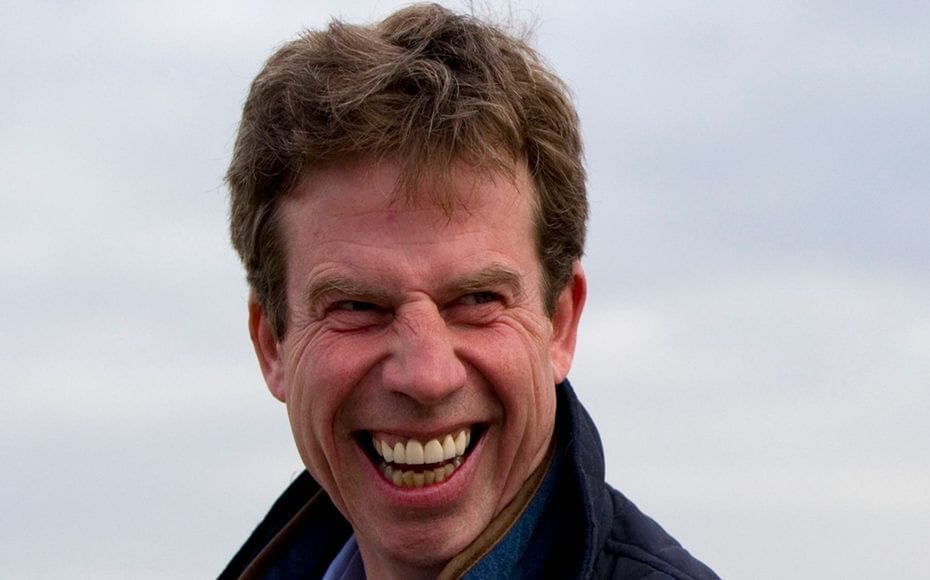
Queen Mother’s favourite champion jockey turned trainer turns the ‘Valley of the Racehorse’ that is Lambourn alive with the sound of music and viral videos during COVID-19
Racehorse trainer Jamie Osborne’s website includes the amusing disclaimer: “Jamie is always keen to hear from new clients but please do not contact us if you are a bad loser, slow payer or looking for gambling information.” Now, in the midst of the coronavirus pandemic, he’s taken his humour online and it has gone viral.
When he came to realise that “part of [his] job isn’t there” because of the lockdown, Lambourn Valley, Berkshire based Osborne – whom describes himself as an “overrated jockey, underrated trainer [and] Spielberg wannabe” to his nigh on 40,000 followers on Twitter – began filming amusing skits with his staff and posting them to his social media accounts.
Amongst the “daft and unorthodox things” Osborne and his staff have filmed thus far are Riverdance style Irish dancing in the yard and jockeys singing Clean Bandit’s Rather Be and Randy Newman’s You’ve Got a Friend in Me to the horses and of this morale boosting exercise, speaking to The Telegraphon Saturday, he remarked:
“It’s been a good exercise in keeping up yard spirit. Even if we didn’t put them out on Twitter and just shared them around among ourselves. They see it, a few more wanted to be in them, and now everyone enjoys making them.”
“I have 30 staff turn up every day and the rewards that they normally get are not there, so the making of films… has created a lot of fun and also shows what great riders they are.”
We urge our readers to join the ranks of the 50,000 people viewing these uplifting videos each day. As Osborne himself previously told Horse Racing Planet: “[They’re perfect for people who] want to have a laugh… I am sure none of us expected to live through a scenario like this. Everybody has their own set of worries but if we can lighten the load in a small way then it’s kind of worthwhile.”
‘Horrified of Haddenham’ Garry May gets taken to the cleaners – and then quite literally put through the launderette’s washing machine
Earlier this week, we featured one of those “archaic idealists” who likes to hark back to the (supposed) glory days of the 1950s. Prolific man of letters Garry May of Haddenham, Buckinghamshire’s endearing support of piemen and postmen was clear, but his disdain with cash didn’t meet with the approval of all of The Telegraph’s fuddy-duddy followers.
In a missive, published Friday, one Ann Dashper remarked:
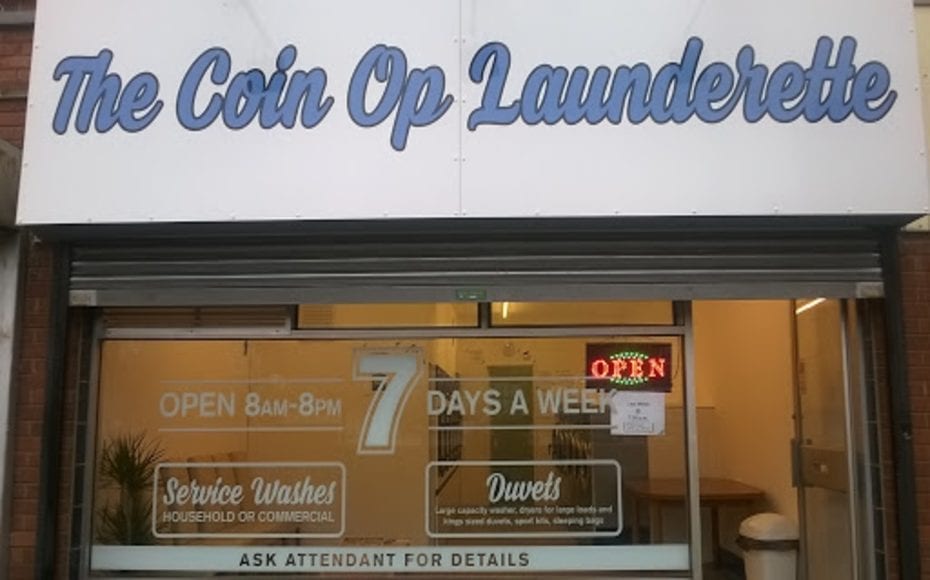
SIR – Garry May, who hopes to see the end of cash, has clearly never had to use a launderette.
The machines and dryers only take cash. He would not get far with a card.
Ann Dashper
Tuxford, Nottinghamshire
Just as with marmalade at the Guardian earlier this year, we suspect ‘cash correspondence’ might go the same way. Like a run on the bank, let’s watch as this runs and runs during the continuing lockdown.
Irrational ‘Disgusted of Tunbridge Wells’ type correspondence is on the increase in national newspapers during the coronavirus lockdown; ‘Horrified of Haddenham’ cash-coronavirus conspiracist Garry May is a fine case in point
The coronavirus lockdown has no doubt resulted in a dramatic increase in the number of ‘Disgusted of Tunbridge Wells’ (and even paradoxically ‘Delighted of Tunbridge Wells’) types corresponding with both national and local newspapers. There are, after all, now many more people moping around at home with little else to do other than to ponder with a pen (or clatter on a keyboard).
Whilst in November 2019, The Telegraph stated that its letters editor received and read 600 missives per day from readers (and subsequently published 18 of them in their next edition) and in June that year, the Guardian referenced a by comparison meagre sum of 82 per day (citing 30,000 communications annually), one can only assume that both publications have seen huge spikes in their mailbags in the last few weeks – the content of which of course now mostly arrives by email rather than with the help of the Royal Mail.
Editors such as Christopher Howse – who has worked on The Telegraph’s letters pages for over twenty years – however, is plainly still favouring letters from his reliable riled-up regulars and yesterday was no exception. In publishing a totally irrational observation from one Garry May of Haddenham, Buckinghamshire linking cash to coronavirus (a totally nonsensical view very clearly empirically denied by the World Health Organisation in March), the paper fulfilled its ability to share views to spread yet more Eamonn Holmes-esque claptrap. This kind of 5G type twaddle will no doubt appeal to its stereotypical conspiracy theory believing old buffer audience, but it is without factual base.
SIR – I hope this pandemic cements the use of debit cards for all transactions, and thereby the end of cash.
Bank notes and coins spread diseases. Ruling out ready money could also put an end to most drug deals on our streets.
Garry May
Haddenham, Buckinghamshire
On a date exact unknown circa 2011, in a letter to The Telegraph, that was subsequently republished in the compilation book The Lunatics Have Taken Over The Asylum: Political Letters to The Daily Telegraph, Mr May previously shared his views on phone hacking. He presented yet another pastiche of days gone by and read:
SIR – The hacking scandal left my family debating who we can still rely on. Our shortlist of trustworthies came down to the Gurkhas, other ranks in our Armed Forces, postmen and Simon the pieman, who works in the butcher’s shop.
Garry May
Haddenham, Buckinghamshire
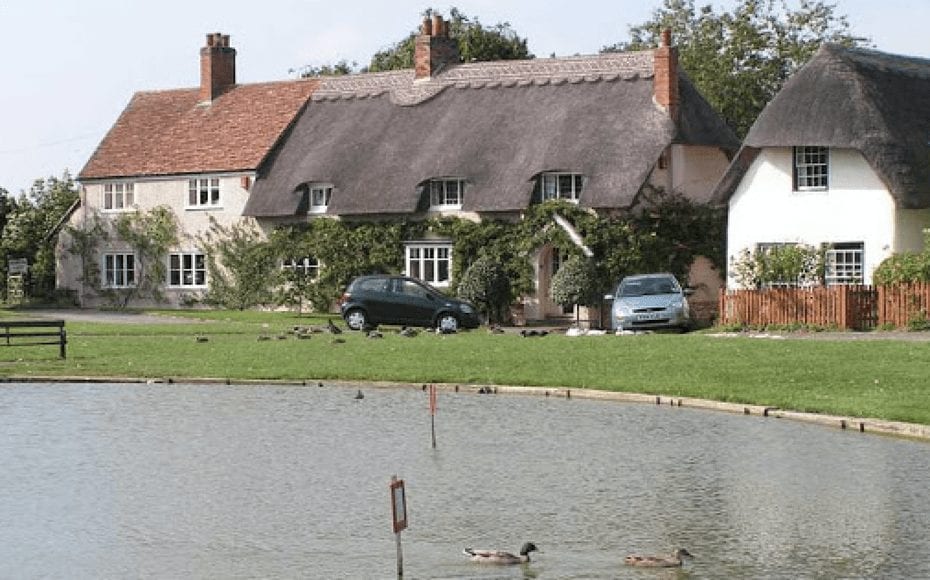
Mr May’s archaic idealism might resonate as charming and worthy, but what should be noted is that this prolific man of letters belonging in the 1950s lives in Haddenham, a quintessential English village that most definitely has Midsomer Murders-esque qualities (it was used as a location in eight episodes of the television drama even). One of only three ‘wychert’ settlements in the country and a place peppered with thatched cottages and a duck pond famed for breeding Aylesbury ducks, one can imagine the era of “old maids bicycling to holy communion through the morning mist” John Major-style still reigns in this parish.
Indeed, at this time, as countless rural residents turn to growing their own vegetables and even start going to their local ‘community shop’ in order to avoid queuing for hours whilst safe distancing at Tesco, many will join in eulogising a love of postmen and piemen and – quite rightly – a loathing for evil drug dealers also.
Sadly, however, getting rid of cash will not wipe out that particularly vile scourge on society and it will not stop the spread of coronavirus. Instead, maybe it’s time for ‘Horrified of Haddenham’ to find another topic to get het up about: Perhaps, indeed, Mr May could turn his pen to the squealing sickness of snitching ‘quarantine shaming’ or maybe he could just calm down and pour himself a large G&T.
An early example of ‘Disgusted of Tunbridge Wells’ correspondence:
SIR – Being present at the unveiling of the plaque on Thursday last week on the Pantiles, I was surprised when the National Anthem was played to see that in a place like Tunbridge Wells, which is noted for its loyalty and calls itself ‘Royal,’ there should be people who refused to remove their hats. Are such people Communists? If they are, Tunbridge Wells should be no place for such as they. We can do without them.
Letters to the Editor, ‘Tunbridge Wells Advertiser’ – 14th June 1929.
Pictured top: Haddenham, Buckinghamshire – a quintessentially quaint English village with a duck pond and thatched cottages from whence nosy parkers peer from behind net curtains.
Unmodernised ‘set’ in “rule-ridden” Albany, Piccadilly that was the London home of eccentric antiques dealer and ‘King of Chelsea’ Christopher Gibbs for sale; tour the home of the man who got Princess Margaret high on hash
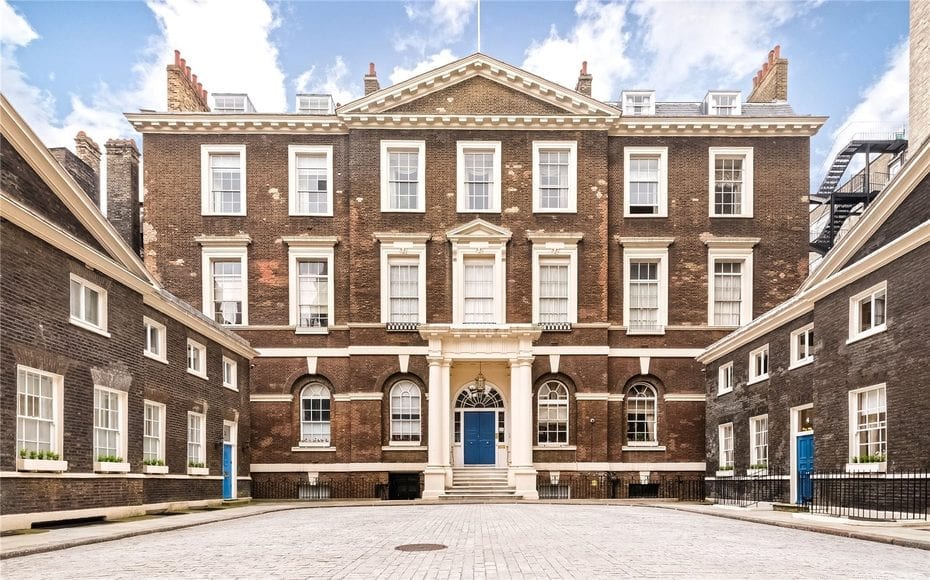
Expelled from Eton “for being generally totally impossible,” antiques dealer Christopher Gibbs (1938 – 2018) was not a man one would have imagined would have liked the idea of living in a place with archaic rules. This “peacock pied piper to society in the Swinging Sixties” whose “drug consumption awed even Keith Richards,” however, surprisingly chose as his London base Albany in Mayfair and now his former residence is for sale.
“A hermitage; quiet as a lagoon, secluded from the roar of Piccadilly” according to the author Sheila, Countess of Birkenhead in her 1958 tome Peace in Piccadilly, Albany – which is only ever referred to as ‘The Albany’ by the extremely ill-advised – quintessential dandy Gibbs lived in the building for “more than half [his] life.” Whilst also owning properties including Davington Priory in Kent – which he later sold to Bob Geldoff – and a “mystic hangover” home in Tangier, it was here that this ‘King’ of “distressed bohemian” style found a place that offered him: “Perfection for a singleton, an oasis of serenity in the frenetic heart of West London.”
This curious “cloistered world” has numbered Sir Isaiah Berlin, Alan Clark, Lord Byron, William Gladstone, J. B. Priestley, W. Somerset Maugham and Terence Stamp amongst those who have passed its vetting committee of trustees and Gibbs – a man who legendarily got Princess Margaret so high on marijuana that she had to go to hospital – even embraced its “no pets, no children, no whistling, no noise and absolutely no publicity” policy.
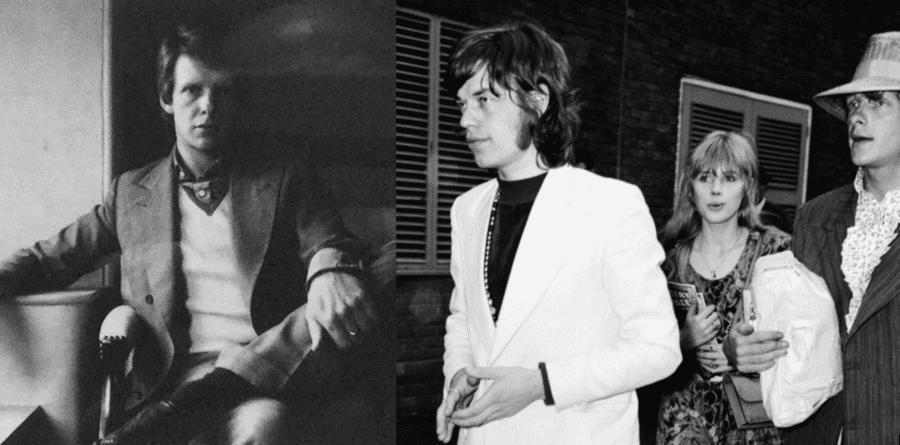
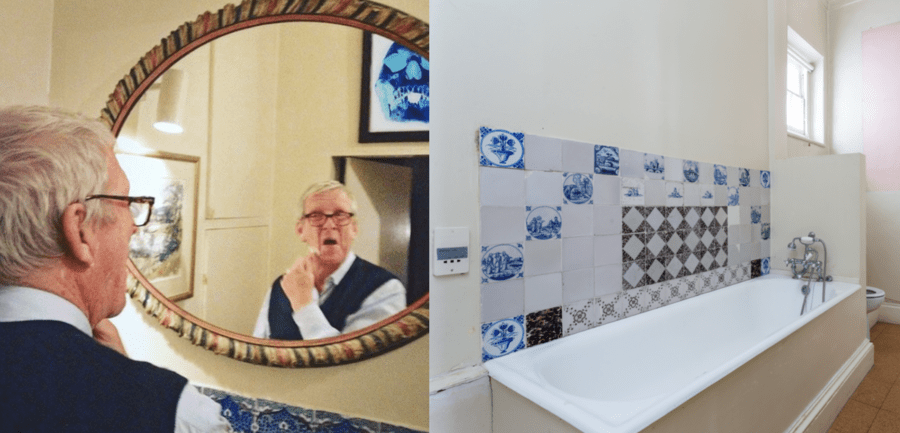
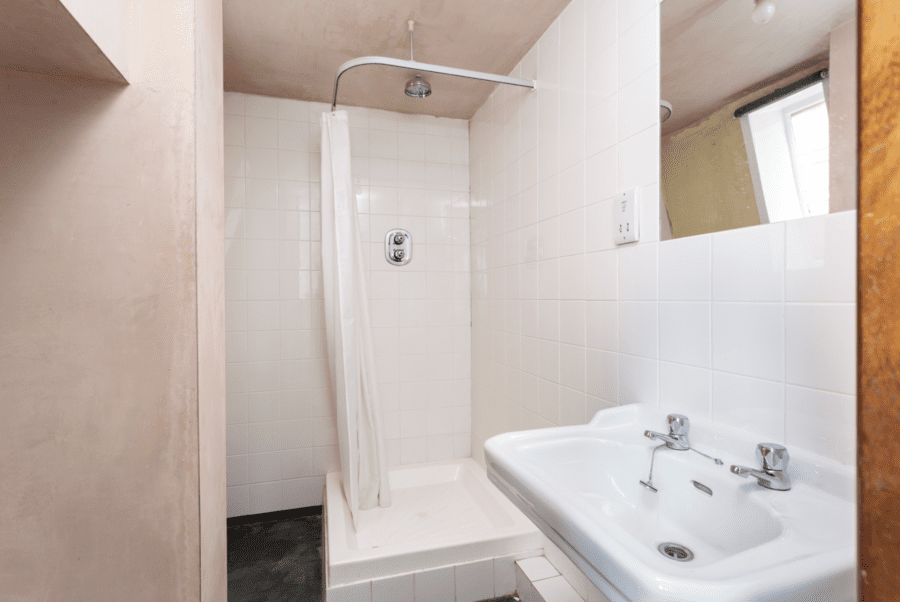
Antiques dealer Christopher Henry Gibbs, (29th July 1938 to 28th July 2018), son of The Hon. Sir Geoffrey Gibbs KCMG and Lady (Helen) Gibbs CBE, was called the ‘King of Chelsea’ due to his ability as the ultimate connector. He put the Rolling Stones together with Prince Rupert Loewenstein (whom became their business manager) and he persuaded his friend John Paul Getty, Jr. to donate £50 million to the British National Gallery in 1985.Christopher Gibbs by Robert Mapplethorpe and with Mick Jagger and Marianne Faithfull.Christopher Gibbs pictured in his bathroom at L6 Albany, Albany Courtyard, Piccadilly, Mayfair, London, W1J 0AZ; the bathroom as it is today is in need of “some updating” according to agents GreenHunt.‘Set L6’ circa 2013, as furnished then by Christopher Gibbs.
Photographed there by the curmudgeonly Victor Watts on a daybed that allegedly belonged to Lord Tennyson, described the home he created in an article for The New York Times’ ‘Style Magazine’ in April 2013:
“I had the place to myself and proceeded to make it my own in the accustomed style: sober mahogany, Oriental rugs, family pictures. I’ve continually reordered these rooms, distilling, paring, pruning, as chaste as my voluptuous nature allows.”
“So enraptured with my Albany life did I become that, reason deserting me (not for the first or last time) I gave up a spacious Bond Street gallery where I had my antiques shop and took one at the back of Albany, a small if elegant space with an entrance into the building, another onto the street and best of all a door into the underground passage – a quiet, invisible stroll home.”
“I love returning from Morocco, where I now spend much of my time, seeing the friendly porters at the door, hearing the clip-clop of feet on the Rope Walk, seeing the old-timers sitting in the little ivy-lined garden, sunning themselves by the little bronze statue of Antinous and the fountain, regularly invaded by the ducks from St. James’s Park – and enjoying sudden glimpses into other people’s lives through uncurtained windows, the hours marked only by the clock chimes of St. James’s Church, accompanied by the more uptempo tinkling of the clock at Fortnum & Mason, our local grocers.”
“At this point, when I am in London, I can’t imagine staying anywhere but Albany – all the more reason, perhaps, to clam up, maintain the longstanding omertà (or I should say discretion) that has held sway for centuries now, and count my blessings.”
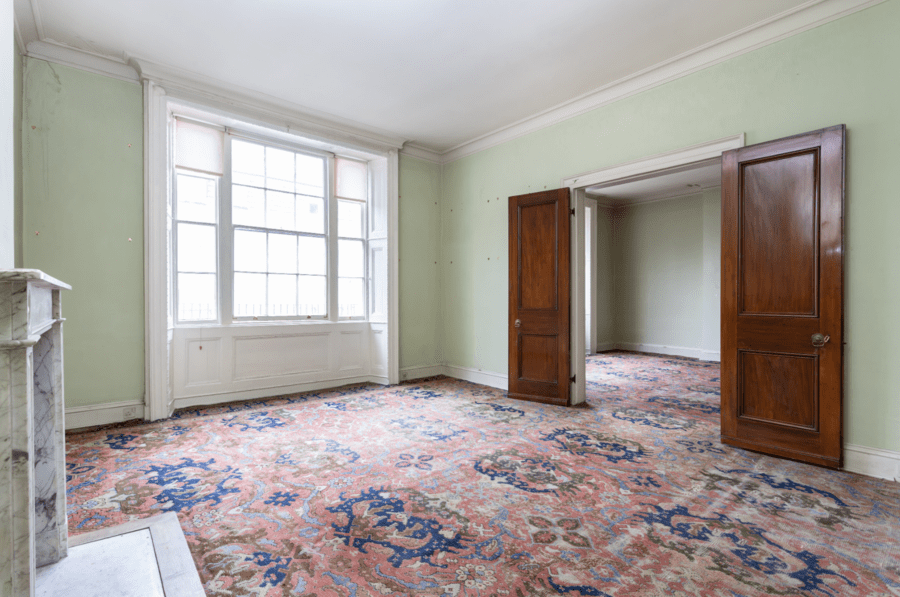
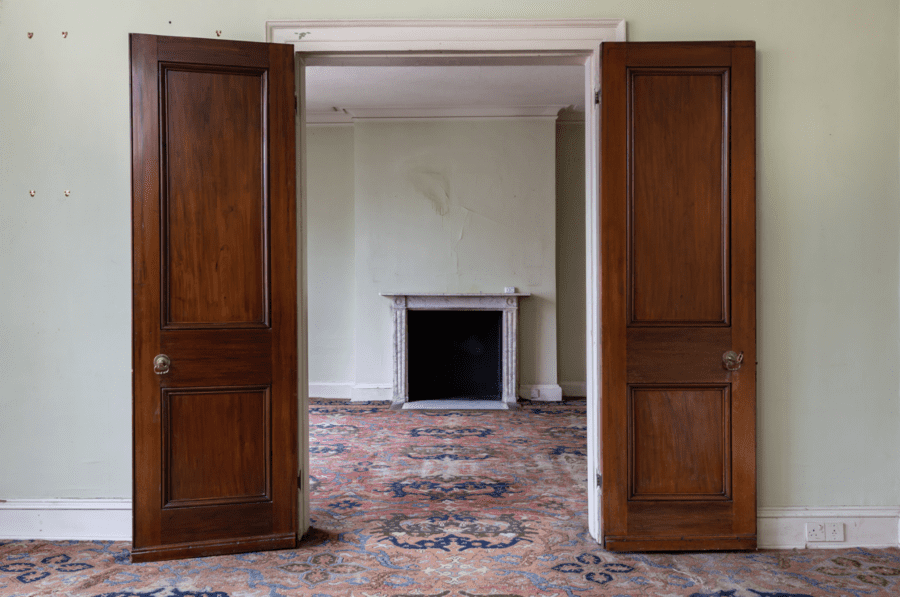
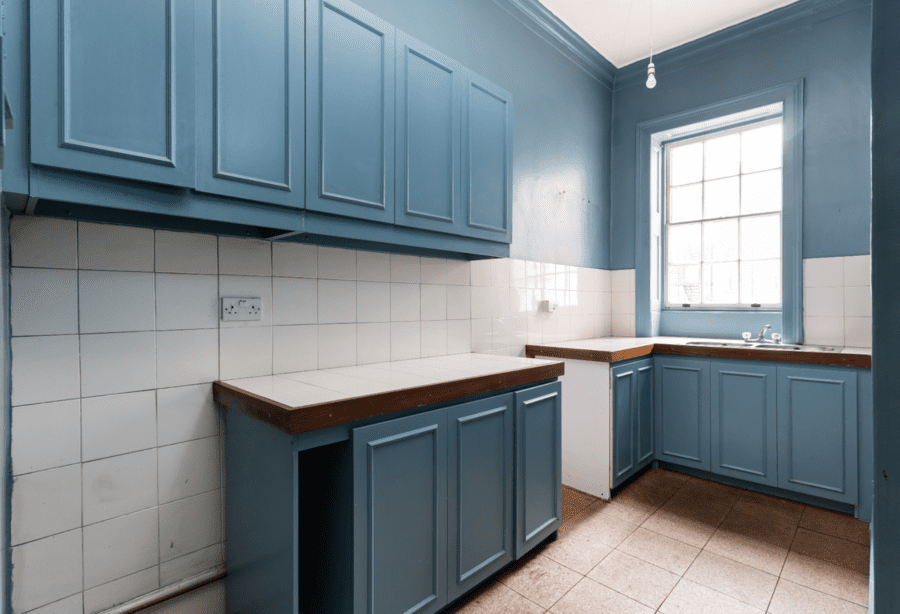
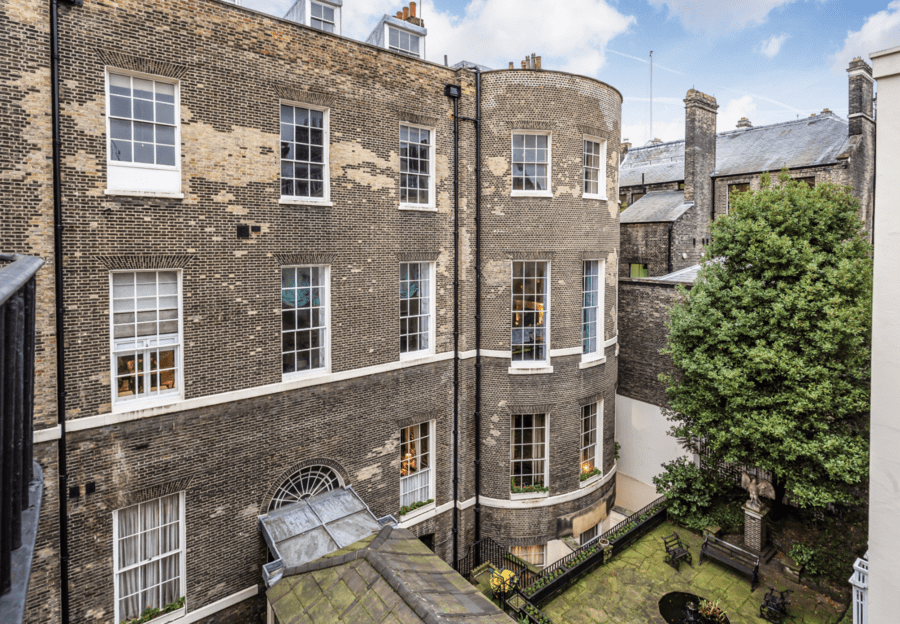
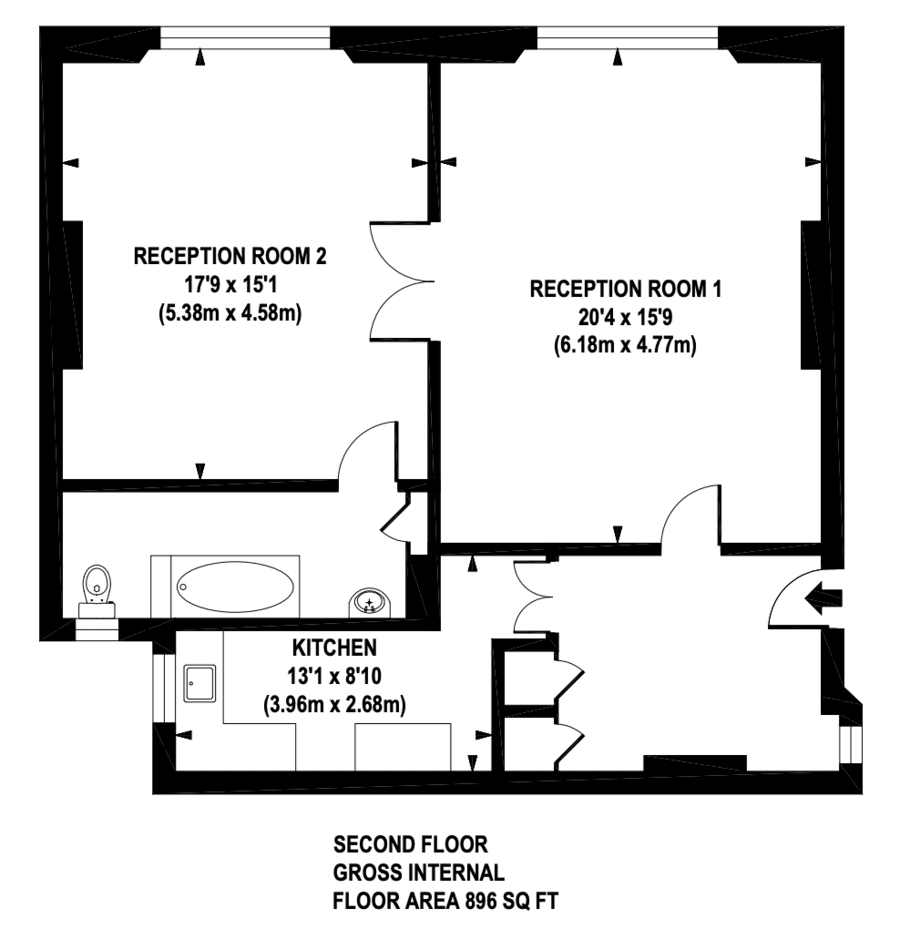
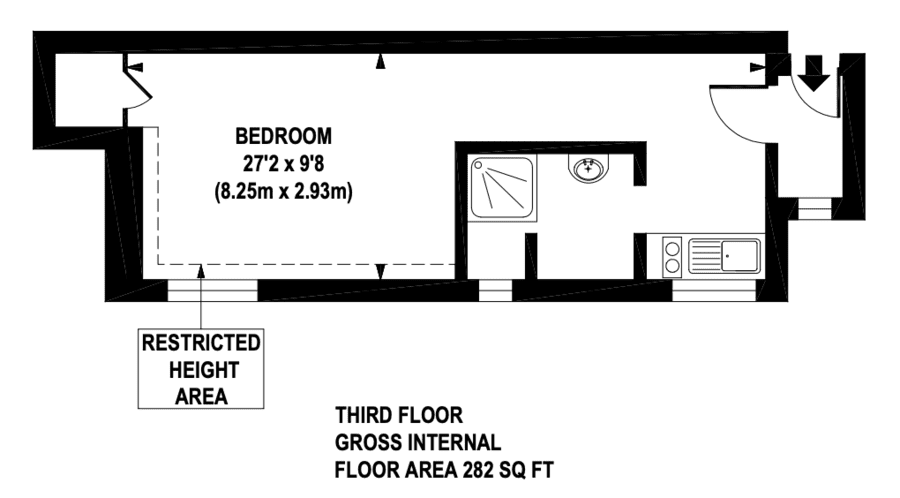
Gibbs’ former home, ‘Set L6,’ is situated on the second floor in Albany’s Courtyard. It extends to some 1,178 square foot and includes a hall, reception room, kitchen, bedroom and bathroom. On the third floor, a separately accessed studio space has a shower room and kitchenette and of the property, the selling agents remark: “Whilst capable of immediate occupation, [it] does require the bathrooms being upgraded.”
Sold for just £60,000 ($75,000, €69,000 or درهم275,000) leasehold in March 2019 (presumably the term must have been very much towards its end), agents GreenHunt listed ‘Set L6 Albany’ on Zoopla first in May that year. Now, in April 2020, it remains for sale, but is instead listed on Primelocation. They seek £925,000 ($1.2 million, €1.1 million or درهم4.2 million) and offer it on a new 20-year leasehold with an upfront premium and a peppercorn ground rent.
Living in the building is not just the preserve of those with deep pockets. Peviously, in 2014, we featured ‘Set A5 Attic Albany’ – which was just £395 per week ($494, €454 or درهم1,800 per week) – whilst for those looking for something grander currently, a second and third floor freehold set is currently available through Sotheby’s International Realty for £4.95 million ($6.19 million, €5.69 million or درهم22.73 million). It extends to 1,890 square feet, is described as “meticulously refurbished” and includes an especially impressive drawing room.
Christopher Gibbs quoted:
“[I’ve always attracted] the grand and the raffish and the fast and the chic.”
“[I am] monumentally narcissistic.”
“I am a bit snooty… I do make exceptions, but very few.”
“We are here to learn, and my goodness I have a lot to learn.”
“[I was expelled from Eton for] Rabelaisian antics – illicit drinking, pantry raids of other boys’ rooms – that sort of thing.”
“Taste is something you catch – like measles or religion.”
“I like things in their natural state – people especially. As life goes by, that’s what I admire: objects and people that are unmonkeyed with, that are themselves, not trying to be something else.”
“I’m not interested in creating a dazzling impression of richness. We can make do with surprisingly little in life. It is best to have a few things which are really nice. I don’t approve of the mean look, but I do approve of the spare look, where every little bit is telling.”
“Being a shopkeeper, I used to sell things, sometimes.”
“I definitely suffer from the blown-mind syndrome… The only thing I’ll say in my favour, is that I was practically the only person I knew who actually went to work at nine o’clock in the morning, whether I’d been up to eight o’clock or not, because I had a job, my own business, and I realised that, if I didn’t, I wouldn’t have any of those things.”
“[I] help people make nice cosy homes where they are going to live happy, beautiful lives.”
“[I] encourage friends to dig into their heirlooms, to wear old clothes, to turn their backs on ugliness and conformism.”
“Collectors today want a good car, a good sound system, and a huge pink heart painted by Damien Hirst with dying butterflies on it which costs £400,000. Yet for much less you could buy something completely fascinating made 300 years ago.”
Quotes about Christopher Gibbs:
“Taste is difficult to define, but his is absolute perfection” – Min Hogg, founding editor of World of Interiors.
“[He was] like an 18th century English parson who knew more about Etruscan vases than anyone at the British Museum” – Sir John Richardson, July 2018.
“I’m here to learn how to be a gentleman” – Mick Jagger of his then neighbour Christopher Gibbs whilst at a dinner party at his house.
“He was very flash… Sometimes he just wore tight jeans or fancy dress, like the others; but mostly his tastes were elaborate; suits with double-breasted waistcoats and cloth-covered buttons, and velvet ties, and striped Turkish shirts with stiff white collars, and cravats. Above all, he had a passion for carnations and was forever buying new strains, pink-and-yellow, or green-ink, or purple with red flecks” – Nik Cohn, author of Today There Are No Gentlemen, January 1971.
“Part Montesquieu, part Beau Brummel, and part Baudelaire… [Christopher Gibbs was a] well-born Renaissance man with an unmatched eye for aesthetics and a talent for friendship and the mot juste” – Hamish Bowles, international editor at large for Vogue, July 2018.
“Christopher was almost single-handedly responsible for making English antiques, and English heritage, look ‘cool’ again” – James Reginato of Vanity Fair, July 2018.
“A connoisseur of the weird and the wonderful” – Christopher Mason of The New York Times, September 2000.
“[He was an] acid-tripping ex-roué once known as the King of Chelsea” – Bitter words from the ex-Daily Mail ‘journalist’ and poison pen James Delingpole, executive editor of Breitbart.
“[The] avatar of Swinging London” – A more kind description from Sam Roberts of The New York Times.
“Christopher Gibbs: the man who brokered £50 million Getty grant to the National Gallery – and fed Princess Margaret hash brownies” – Huon Mallalieu of The Art Newspaper, July 2018.
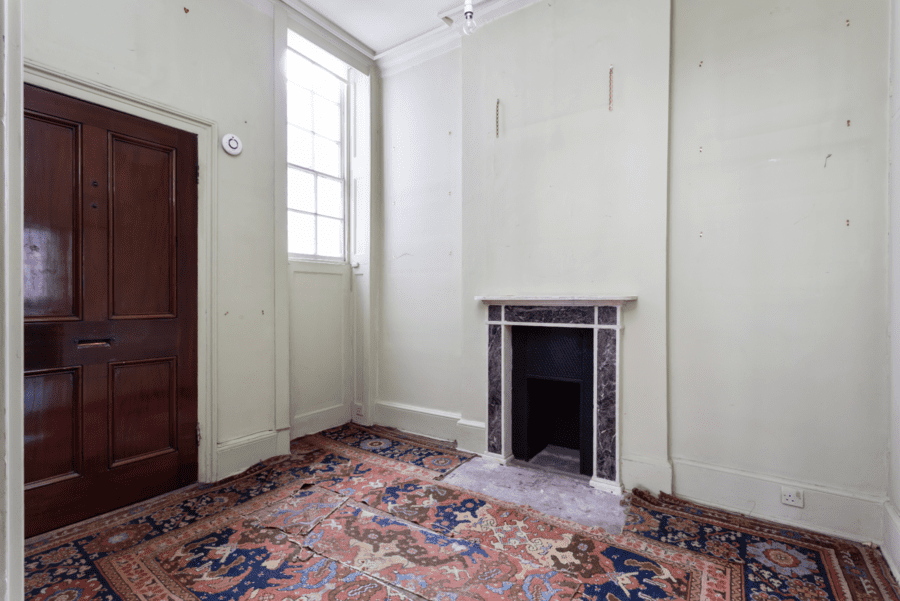
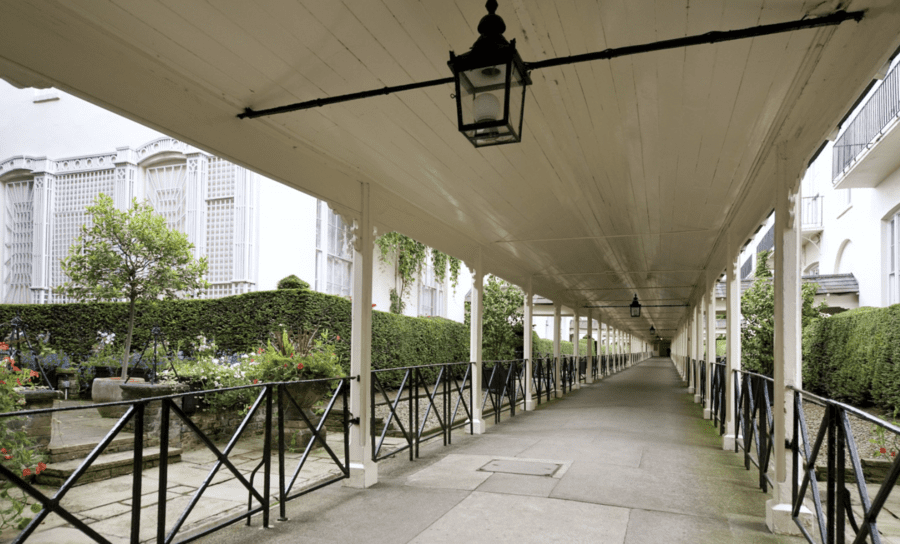
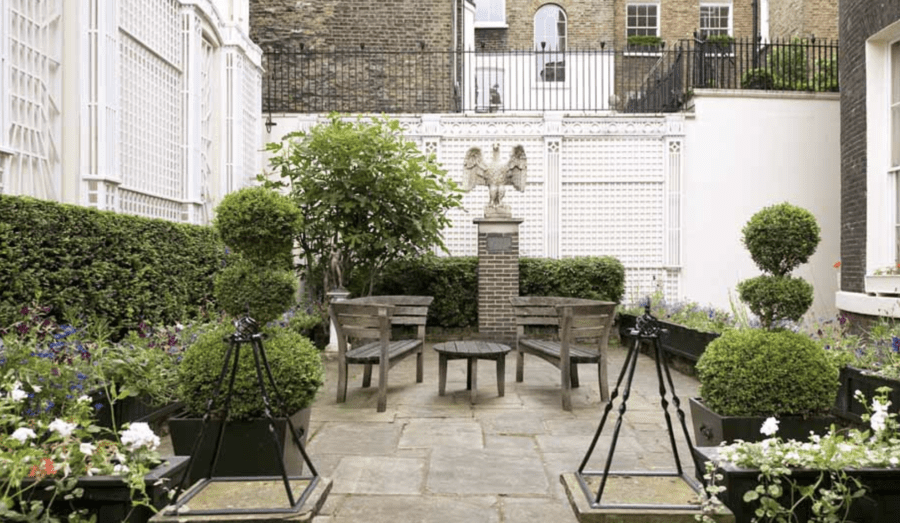
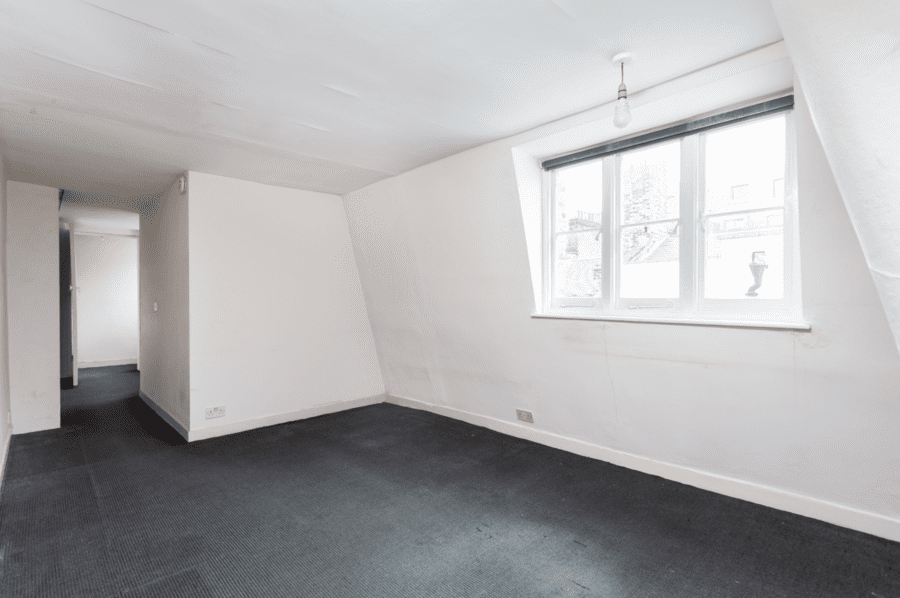
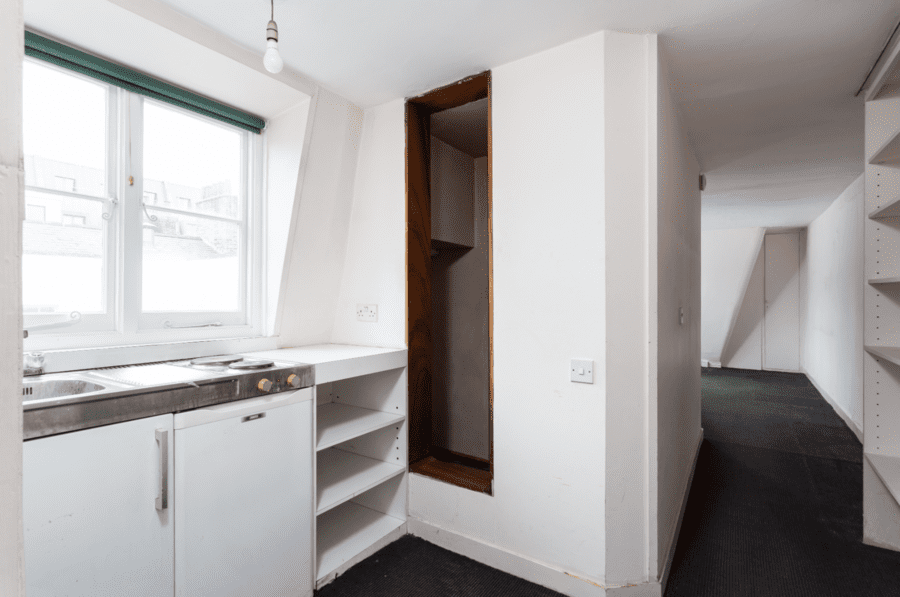
The entrance hallway of ‘Set L6’ has a fireplace.The master bedroom of ‘Looking into the reception room.The somewhat basic kitchen is definitely in need of an upgrade.The view from the set.Albany’s famous ‘Rope Walk’ – Of it, Gibbs commented: “So ingrained is the sense of decorum that even to utter a friendly hello to a neighbor as we pass on the stone stairs or the covered outdoor canopy, known as the Rope Walk, might be violating a taboo, as if a few words of small talk could break the spell of privacy we Albanians prize so deeply. (A nod suffices, a hat raised to a lady.)”Residents have access to the most peaceful outside spaces.The third floor space included in the sale is arranged as a long, thin studio room.It has a small kitchenette.And a somewhat dated shower room.A plan indicating how ‘Set L6’ is currently arranged.A plan of the third floor studio space.
ITV’s ‘Quiz’ has definitely left the public questioning the conviction of the ‘Who Wants to Be a Millionaire?’ £1 million cheat Major Charles Ingram in 2003, but what the programme did not reveal is actually more fascinating
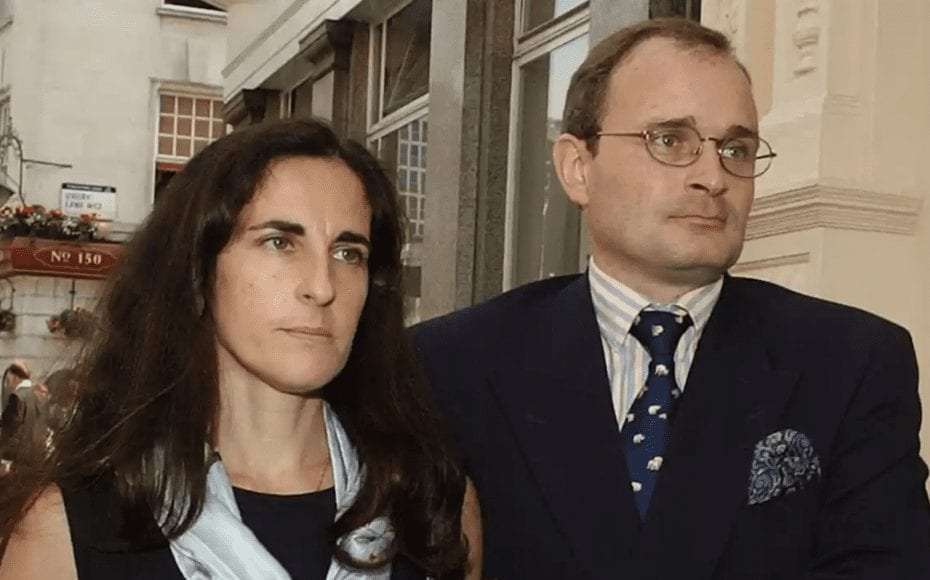
“After all that, can we be sure the Ingrams were guilty?” asked The Telegraph’s Chris Bennion in his review of the final episode of the three-part hit, Quiz, and indeed the ending has achieved the inevitable and will likely reignite interest in a story that dates back to 2001.
For the few that may not remember what occurred, a Major Charles Ingram won the maximum prize of £1 million on Who Wants to Be a Millionaire? on the 10th September 2001, the day before the 9/11 attacks on America. Ingram’s wife and her brother, Adrian Pollock, had previously each won £32,000.
Immediately after the jackpot was scooped, the programme’s production company, Celador, suspecting Ingram had cheated suspended payment of the winnings. The police were called in and ultimately, after a four week trial in March and April 2003 at Southwark Crown Court, the Ingrams and another contestant, a lecturer and their alleged accomplice, Tecwen Whittock, were convicted of “procuring the execution of a valuable security by deception.” All three were given prison sentences suspended for two years, fined £15,000 each and ordered to pay £10,000 towards prosecution costs. These sums were later reduced on appeal.
Whilst many will know that Ingram was then forced to resign his commission as a major after 17 years and that he and his wife appeared on countless television shows including The Weakest Link, sadly Quiz did not delve into other bizarre twists in this “eccentric” pair’s life in the time since their “fifteen minutes of coughing fame/shame.”
Aside from being bankrupted four times in the intervening years (most recently in 2019), the former army officer chopped three of his toes off in a freak lawnmower accident in September 2010. Ironically, the “cheat” and then resident of Easterton, Wiltshire did the injury when he “slipped on a rotten apple.” Of the incident, Ingram recalled “lying on the grass” and thinking: “Oh dear… I certainly won’t be mowing any lawns again soon.”
Earlier, yet not long after his Who Wants to Be a Millionaire? conviction in November 2003, Ingram was convicted of an entirely unrelated insurance fraud. Found guilty of obtaining pecuniary advantage by deception and of deception by trying to claim on that policy after an alleged burglary, the already disgraced son of a retired RAF wing commander added a two-year conditional discharge to his burgeoning rap sheet.
The Ingrams, now, but not revealed in the show either, are based in Maiden Bradley, Warminster and run a non-registered for UK VAT company that trades as ‘Diana Ingram.’ It sells Murano glass jewellery for prices ranging from £15 to £75 and of her wares, Mrs Ingram states: “Most products listed can be altered for shape, colour, length, etc., though prices may vary. I ship worldwide and nothing is too much trouble – I regularly offer personalised wrapping and buy and write birthday cards too!” No mention is made as to whether any kind of cheat sheets can be enclosed if requested sadly.
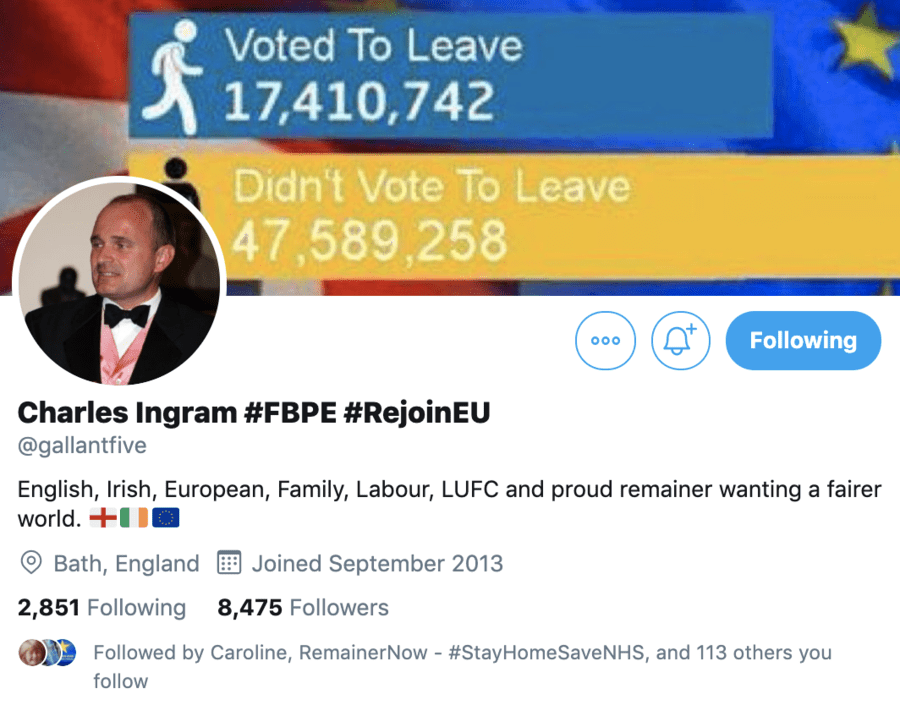
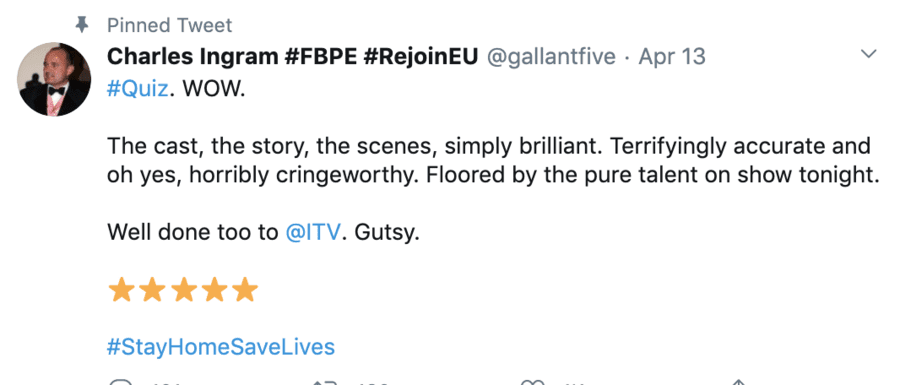
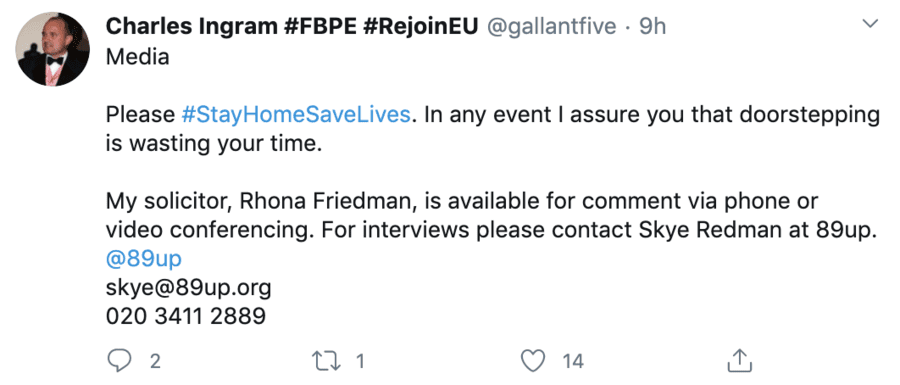
Charles Ingram, meanwhile, has kept himself busy on Twitter since September 2013 using the handle @gallantfive. He describes himself as: “English, Irish, European, Family, Labour, LUFC and proud remainer wanting a fairer world” and has over 7,100 followers. Whilst describing Quiz as “simply brilliant” and “terrifyingly accurate,” his family have plainly had a few visits from the media as a result of the show. Now represented by one Skye Redman at 89up, a firm that somewhat immodestly has self-appointed itself as “Europe’s biggest communications agency for great causes,” the ex-major this week tweeted:
“Media: Please #StayHomeSaveLives. In any event I assure you that doorstepping is wasting your time. My solicitor, Rhona Friedman, is available for comment via phone or video conferencing. For interviews please contact Skye Redman at 89up.”
After the conclusion of Quiz, Friedman told the Guardian: “I just know that they did not do it… I just feel very sorry for them.” She intends to file paperwork associated with the case in the summer “with hopes for a hearing at the end of the year,” and given the reaction of the public after the ending of this week’s dramatisation, one thing’s for sure: We’ve not seen the last of ‘The Coughing Major’ and his ever-so-earnest wife just yet.
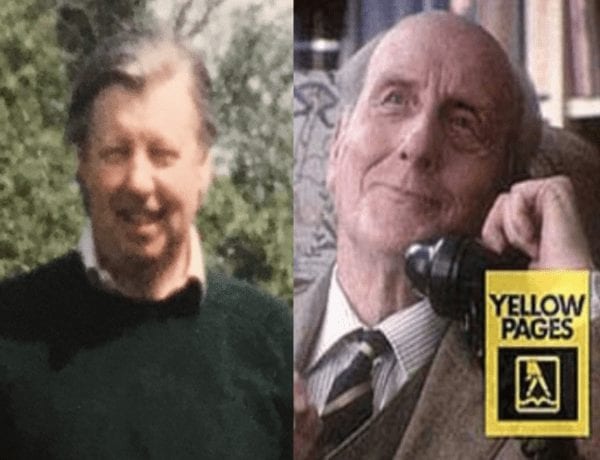
Described in The Telegraph’sobituary of him as a “publisher, wit and author,” Michael Russell is best known for writing the spoof memoirs of J. R. Hartley – the charming mythical old man of Yellow Pages advert fame in the 1980s. Bournemouth born, Oxford educated and a father of three, Russell loved horse racing and fishing and was known for his “extremely shrewd judgement as to which books would sell in shops.” His one-man company produced over 500 books by the time of his death and amongst titles that were hits were Richard Spitzy’s How We Squandered the Reich – a book that described Hitler as being “like a cross between a head waiter and a chimney sweep.”
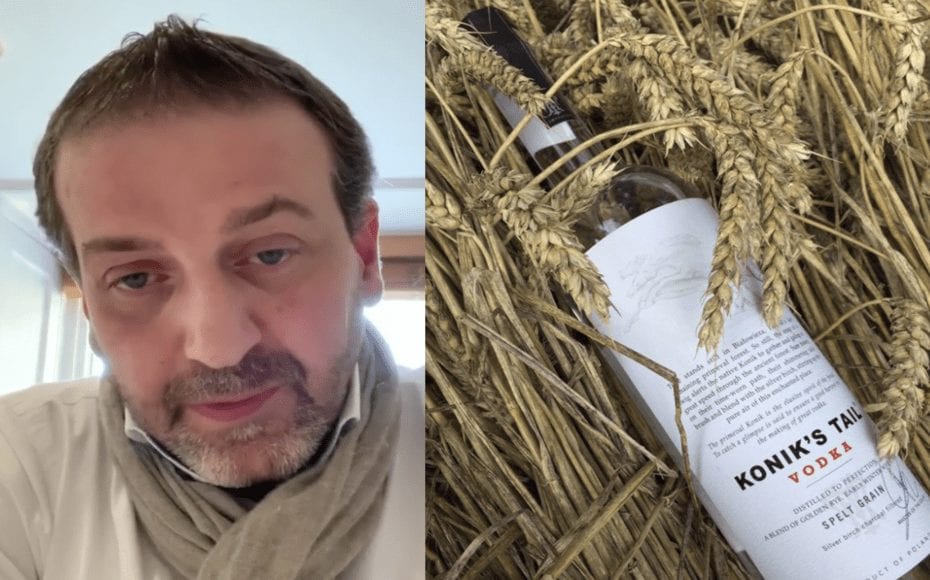
Refugee turned “one-man vodka band” Pleurat Shabani shares a message of positivity (and a reminder that we’ll all be having a martini or three together again soon)
Having escaped the civil war in Croatia, Kosovo born Pleurat Shabani headed to London in 1994. He, unlike Dick Whittington, did not find streets paved with gold but ended up working as a lavatory cleaner and kitchen porter.
Later, forced onto the streets after losing his job at Soho House, Shabani “hit rock bottom” but did not give up. He found a job as a glass washer at Oliver Peyton’s Atlantic Bar & Grill – which ironically was later ‘sunk’ by Marco Pierre White’s Titanic restaurant – and after being promoted to a role as a bartender, began a journey that ultimately resulted in the creation of his own vodka, Konik’s Tail.
Shabini, without the big money backing most spirits brands garnered in the early-to-mid 2000s, is a surprising success story. We reported on it back in 2014 and in spite of his shoestring budget – and the fact he literally had to glue his own footwear together (he considers them “ part of his journey”) – Konik’s Tail is now stocked in everywhere from Dukes Hotel to Waitrose.
Now, at this time of lockdown, the notoriously shy luddite Shabani has taken to social media and on Instagram, a place he’s only posted once before, shared a message of positivity that we should all heed. It follows in full below:
“First of all, I hope this finds you well in these increasingly challenging times of disruption and enormous changes to the daily lives of all of us. Together, we have learnt that passion, optimism and community will help us all come out stronger.”
“The pride of who we are as a community is not part of our past, it defines our present and our future. You have inspired me. Your presence has inspired me. Your friendship has inspired me. And, your stories have inspired me.”
“Together we will succeed and that success will belong to everyone of us. Better days will return. Stools behind the bar might be empty, no late nights, no last calls, but this – you are not forgotten. Our hearts are full of love until we are reunited again. I know we will be with our friends again, with our families again and I know we will share a Konik’s Tail martini again.”
“Spread the love and positive energy, help a friend, even a stranger. Until we meet again, be well, be safe and love each other. My warmest wishes to you all and thank you from the bottom of my heart.”
Konik’s Tail Vodka is available from Waitrose for £38 for a 70cl bottle. Thankfully they can still deliver it – so have your chilled martini glasses at the ready.
Born in Alabama in 1982, Jessica Jackson Sloan has morphed from a high-school dropout with a baby and a drug addict, jailbird husband in 2004 to, most bizarrely, one half of a “criminal justice reform dream team” with Kim Kardashian in 2020. “Steely-eyed blonde,” divorced and the co-founder of #Cut50 – a bipartisan effort aimed at reducing America’s incarceration rate – this Santa Clara University of Law graduate became Mayor of Mill Valley City Council in Marin County, California in 2015 and got herself involved with her “famous reality star legal apprentice” thanks to Donald Trump’s son-in-law, Jared Kushner. Jackson Sloan claims to want to “craft better policies that help, not hurt,” yet the choice of the somewhat shady company she keeps will continue to leave many questioning this plainly fame and power hungry woman’s true motivations.
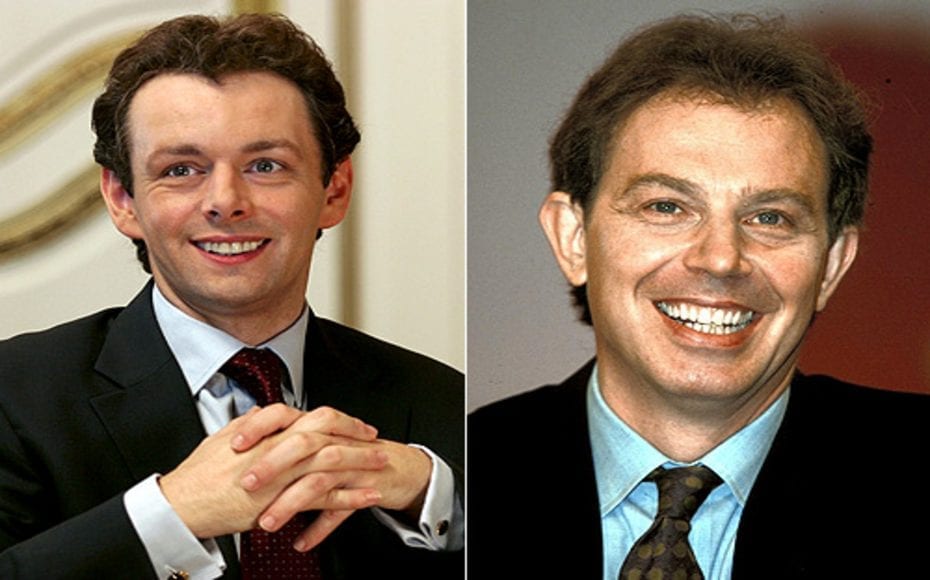
The ‘Guardian’s’ Rebecca Nicholson’s fascinating interview with the actor Michael Sheen is exactly the kind of reading needed during coronavirus lockdown; he reveals previously unknown details about bizarre encounters with Tony Blair, Rupert Murdoch and Wendi Deng Murdoch
It’s hard to find stories to read right now in newspapers that don’t relate to coronavirus and it’s even harder to find compelling interviews that don’t feature bleeding hearts banging on about what good they’re doing (when they’re just actually craving a return to their glory days gaining acres of Alexa Chung-type press acreage).
Gone are the days of the great, the good and the not-so-good actually revealing something we didn’t already know and instead, it seems, COVID-19 has reduced The Telegraph, for example, to unimaginatively asking the chef Jason Atherton: “Powder or piste?” (His 50/50 chance answer: The latter – for those of you actually interested in this kind of inane drivel).
Today, however, the Guardian’s Rebecca Nicholson pulled a blinder with what one reader described as a “marvellous portrait” of the actor best known for repeatedly playing Tony Blair, Michael Sheen. Though ‘Two Tony’s’ – according to an individual who left a comment online afterwards – “sounds thoroughly uncomfortable,” Nicholson coaxed her subject into revealing amongst other things that Wendi Deng Murdoch once asked him to “dress like [Blair]” and “make [his] hair look like him” so she could “bring [him] out and surprise [Blair].” Please don’t throw up whilst considering that rather scary image. Thankfully there’s no mention as to whether Sheen enquired about the alleged extra-marital relations that went on between the ‘real’ Tony and the now ex-Mrs Murdoch, as there would be a detail that’d certainly be nearly as off-putting as what allegedly went on between the wife of one of the most loathed premier’s in history and Carole Caplin (what on earth became of her?) in a shower in Downing Street.
Sheen, a man “fascinated by Blair’s legacy,” but someone who didn’t meet the “wary of [him]” ex-PM until after he’d already played him twice, also shares snippets of an encounter with Rupert Murdoch. Of it, the ex of Kate Beckinsale recalls: “There was a very peculiar moment with Murdoch. I remember standing looking out at the view, and then I realised that Murdoch was standing next to me. It was quite a hot day. I just remember seeing a little bead of black dye, running down his face. I thought, oh, Ozymandias [two sonnets by Percy Shelley about the decline of rulers with their pretensions to greatness].”
Moving on to how he is “astonished” by our current Prime Minister, Sheen observes: “It’s very hard to trust someone who can go so easily in different ways.” Nicholson then concludes the interview with a suggestion: “Part of me hopes [Michael Sheen] might one day take the idea of Michael Sheen MP seriously, after all.” Superb.
Matthew Steeples calls out Daniel Hannan for ludicrously not wanting to encourage British people to consume locally produced food
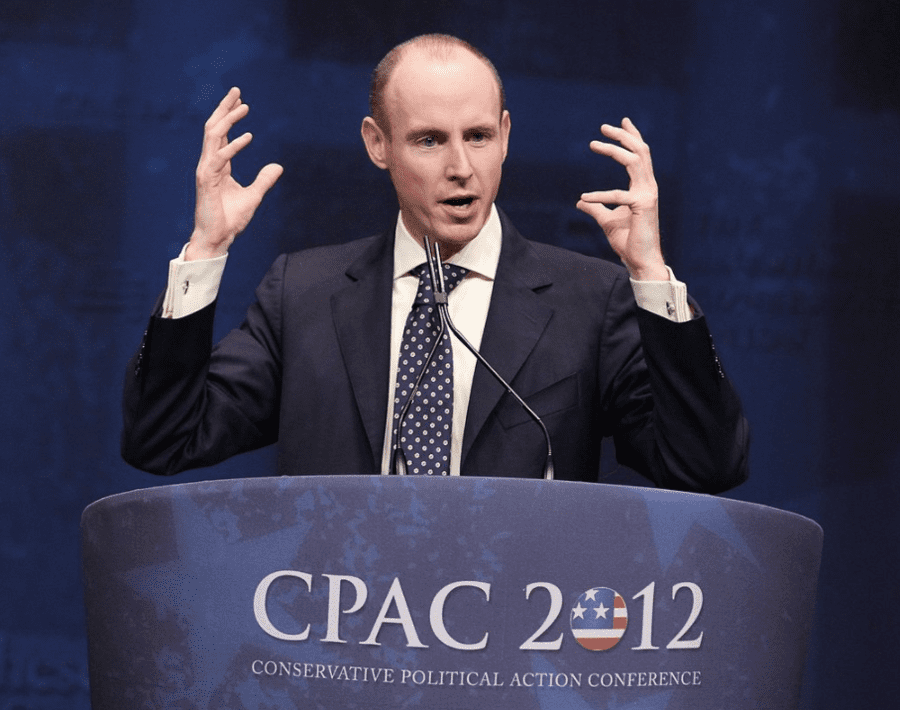
Daniel Hannan claims to support localism. He wants to end Value Added Tax and replace it with a local sales tax, set by local councils. The ex-MEP is also obsessed with national sovereignty and whilst often bizarrely banging on about trading with Ethiopia also, today basically said he wishes to discourage British farmers to produce more on their own land.
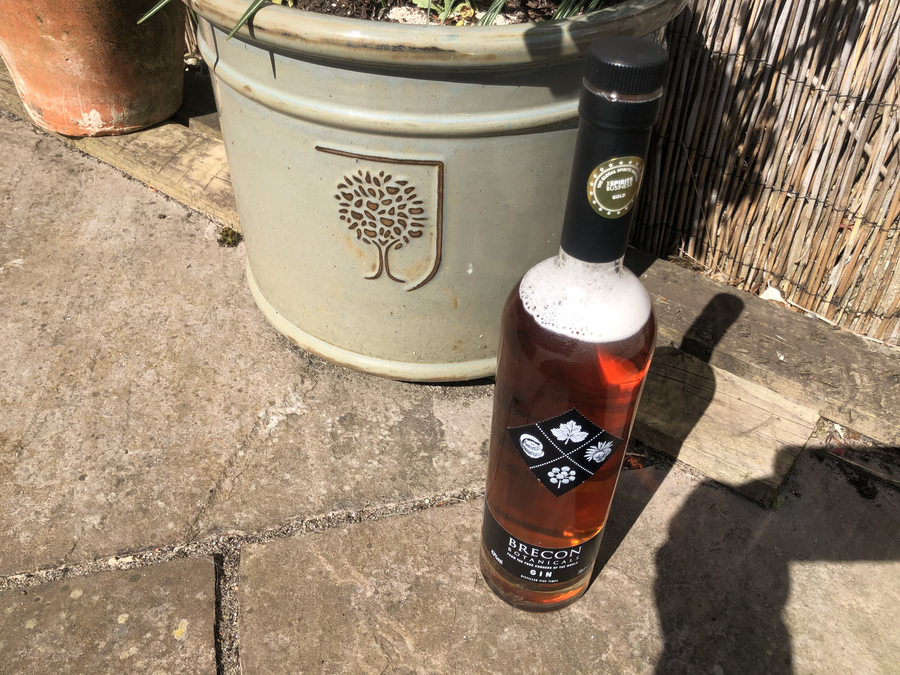
Arch-Brexiteer Daniel Hannan has been mocked recently for his ludicrous analysis of how coronavirus will change our lives. In a column for ‘The Telegraph’ he bizarrely announced: “If coronavirus has one silver lining it should be the return of the bow and curtsy”. He elaborated: “A handshake can be an awkward thing – a clumsy, clammy grapple. But a woman breathes something of herself into her curtsy. She can make the gesture demure or haughty, coy or brazen… She can swish her skirts alluringly or bob coldly. The same is true, mutatis mutandis, for men. A bow allows you to convey precisely the degree of respect or affection you consider appropriate.”Yesterday, at a local pub, I was able to fill this empty 750ml gin bottle with locally produced beer for just £2. Daniel Hannan: “What’s wrong with that?”
In an article for The Telegraph, this fan of Enoch Powell claimed “COVID-19 is pushing us to protectionism” and added that: “The idea that growing your own food makes you more secure sounds plausible, but turns out to be nonsense… If you think about it, national food self-sufficiency makes no more sense than village food self-sufficiency.”
Whilst rightly Hannan admits “we have one of the most innovative agri-food sectors on the planet,” wrongly he doesn’t want to encourage it. Here, in my self-imposed isolation in East Anglia, I’ve seen exactly to the contrary. Walking in the local countryside, I pass farms with roadside stalls. They sell locally produced eggs, locally produced fruit and veg and even offer locally grown flowers as well. The village pub – turned into a community shop due to it being unable to sell booze in its normal manner – now sells locally produced pies and locally made ale even (at a most reasonable just £2 to fill a bring-your-own bottle) to takeaway and frankly, it’s all for the good. People are eating more healthily here now and surprisingly these goods are being sold at a lower cost than they’re retailed for by the greedy middlemen – AKA the supermarkets – in normal times.
Growing local is good for the local economy and buying local is even better. Supporting your local food and drink producers is a jolly good thing and Daniel Hannan is dumb to say otherwise.