Tag: shop

  • Lavish Living and Little Owls at Lilford Hall

    Lavish Living and Little Owls at Lilford Hall

    Crumbling Northamptonshire estate Lilford Hall – where the little owl was introduced to Britain – for sale for £10 million, a sum £35 million lower than in 2014

    • Grade I listed Jacobean mansion with 13 chimney stacks for sale for £10 million; it was for sale last for £44.9 million in 2014 in spite of being listed on English Heritage’s ‘At Risk Register.’
    • Lilford Hall – parts of which have not been occupied since 1947 – is currently owned by a businessman who tried to sell burial plots in the grounds for £1,250 a pop and shares in a yacht loosely associated with Frank Sinatra for £23 each.
    • The 321-acre estate includes not only overgrown parkland, but also a zoo with cages that formerly housed bears and a lake for flamingos.
    • From 1711 until 1990, Lilford House was the seat of the Powys family – the 4th baron is credited with introducing the little owl to the UK.
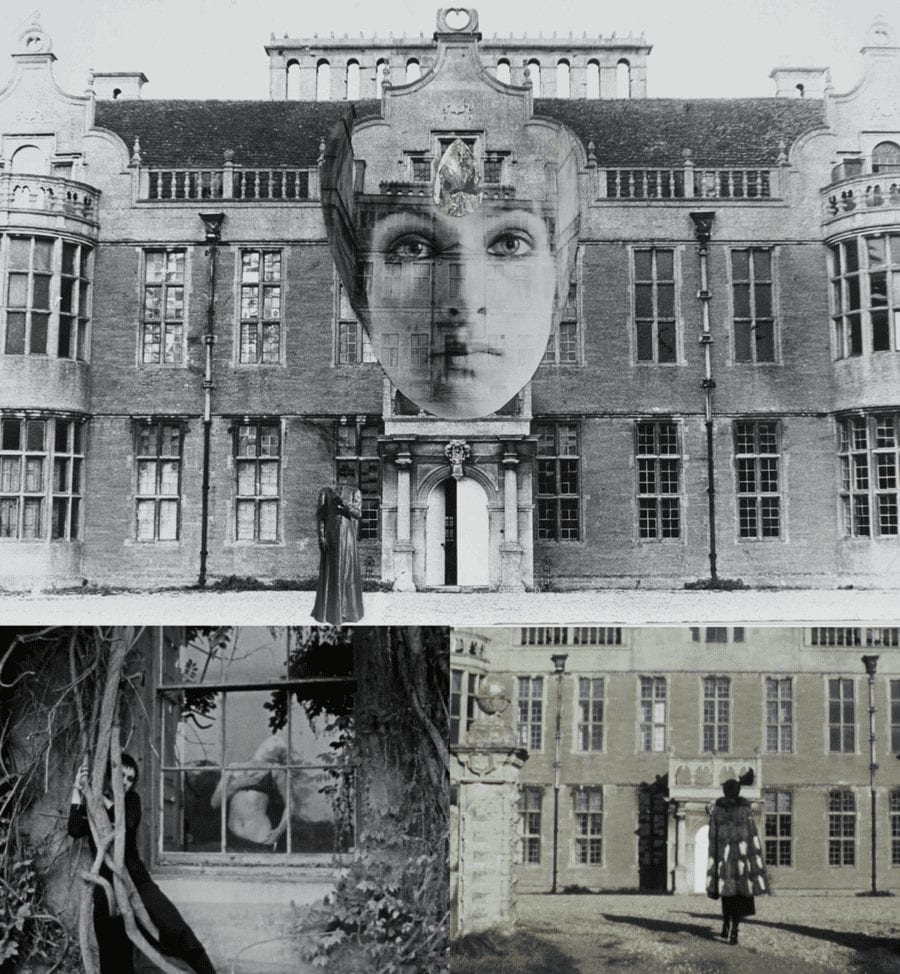
    • More recently, in 1969, the “sexual mystic” artist Penny Slinger used the at-the-time derelict mansion in one of her best-known works.

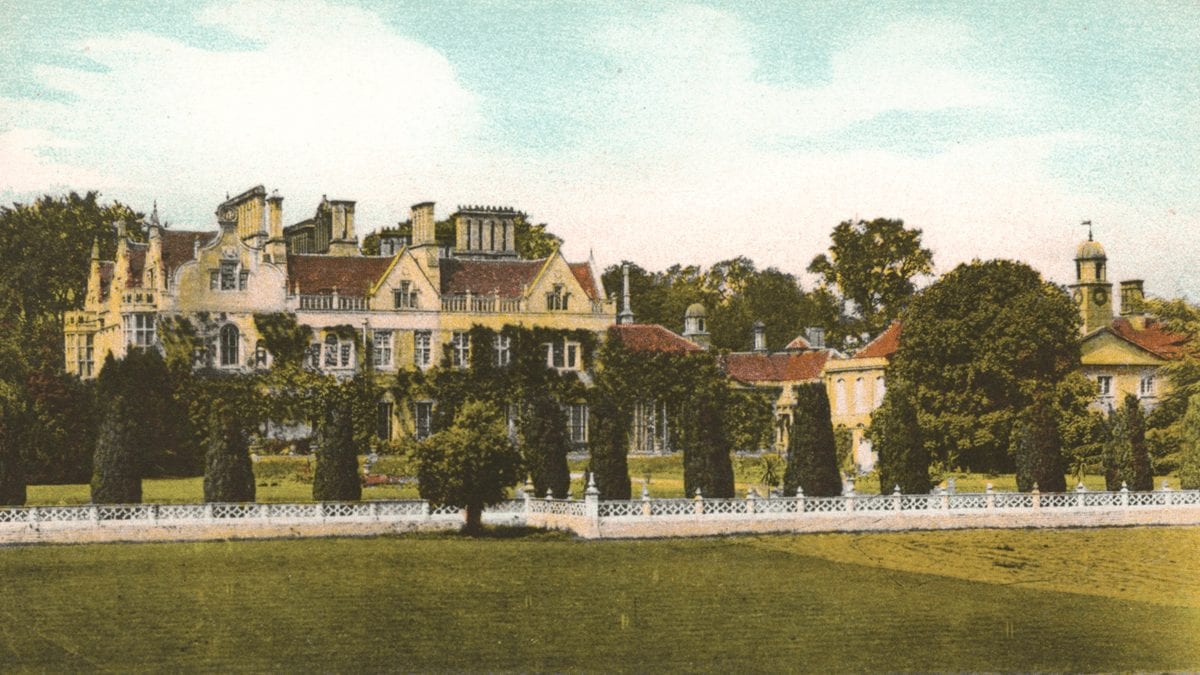
    A 32,406 square foot Grade I listed Jacobean mansion 82 miles from Central London has gone on sale for £10 million – or the equivalent of just £308 per square foot.


    On this basis, Lilford Hall – set in 321 acres near Oundle – seems a comparative bargain when considered against the £4,786 per square foot sought for a Lennox Gardens, Knightsbridge triplex flat The Steeple Times featured in May, but buyers need to remember this – parts of this crumbling building, most notably the major state rooms, have not been used since 1947.


    Marketed last in 2014 for the even more punchy sum of £45 million, the “exceptional residential and amenity estate located on the River Nene,” is now offered by agents Savills. The “wonderfully proportioned” U-shaped mansion itself  is constructed of grey limestone and includes over 100 rooms and amongst them are 7 “impressive” reception rooms, a ballroom, a ‘great chamber’ and 9 bedrooms. In addition, there are two Georgian pavilions that were formerly coach houses and stabling, three cottages, a former zoo, the oldest private softball court in the world, a former flamingo enclosure and a deer park.


    “Impressiveness in the chief attribute of Lilford Hall as a specimen of architecture” claimed County Life in 1990 and as the seat of the Powys family from 1711 until 1990, it became not only a Downton Abbey-esque entertaining pad, but also housed nurses in the Second World War. Here, indeed, is an English country house that has seen lavishness and decline and thankfully here is an example that thankfully escaped the wrecking ball wrought so disgracefully on such houses in the 1950s and 1960s.


    Fascinatingly in the 1880s, Thomas Powys, 4th Baron Lilford filled his aviaries on the estate with rheas, kiwis, pink-headed ducks, free-flying lammergeiers and it was from here that he also introduced the little owl into the UK. There are said to be around 5,700 breeding pairs today, but sadly, according to the RSPB, their numbers are now in decline.


    More recently, in 1969, “sexually erotic” performance artist Penny Slinger took over the by then “derelict” mansion in conjunction with the filmmaker Peter Whitehead. Their resulting work, titled An Exorcism, was exhibited internationally and in 2004, after the current owners, Charles and Aziza Micklewright, acquired the house, they did something equally avant-garde; they attempted to sell burial plots in the grounds to Americans by citing the estate’s connections to the founder of the Brownists, Robert Browne – a man better known as ‘The Father of the Pilgrims’ and ‘The Grandfather of the Nation’ (of the United States of America).


    Whilst Mr and Mrs Micklewright were lauded for their considerable efforts towards the “huge task” of restoring Lilford Hall, they came to the attention of Historic England in May 2019 when the building was listed on the At Risk Register. At that time, the Oundle Chronicle reported: “The roof covering is in poor condition leading to water ingress and distress to the upper storeys. The front bays require structural attention. A schedule of urgent repairs has been identified but not implemented, and no long-term solution has been agreed.”


    Now, someone with very, very deep pockets is required to restore this gem. It would be helpful if they liked erotic art, bears, squash and owls also.
     

    https://www.youtube.com/watch?v=cii3VlgfVy0
    Lavish Living and Little Owls at Lilford Hall, Northants – £10 million ($12.5 million, €11.1 million or درهم46 million) for The Lilford Hall Estate, Lilford, Oundle, Peterborough, Northamptonshire, PE8 5SG, United Kingdom through estate agents Savills – Crumbling Northamptonshire estate Lilford Hall – where the little owl was introduced to Britain – for sale for £10 million, a sum £35 million lower than in 2014.
    The artwork created by Penny Slinger and Peter Whitehead at the house has been exhibited internationally.

    The Names & Numbers – The Lilford Hall Estate, Lilford, Oundle, Peterborough, Northamptonshire, PE8 5SG, United Kingdom


    June 2020 – The estate is listed sale for £10 million ($12.5 million, €11.1 million or درهم46 million) through Savills. It includes 321.31 acres, of which 148.17 acres are pasture land whilst 157.48 acres are woodland. The majority of the estate is held on a freehold title, whilst the remaining 127.6 acres – known as ‘The Linches’ and ‘Lilford Woods’ – are held on a lease with 91 years remaining.


    2015 – Promoted as ‘The National Memorial Gardens,’ burial plots in the gardens of the hall were offered “available to any UK resident or national for an outstanding price of only £1,250 ($1,568, €1,393 or درهم5,758)” by Mark Bailey of Harley Investments. Around the same time, a website dedicated to Lilford Hall marketed “a piece of the formal gardens” for sale for £299 ($375, €333 or درهم1,377) to include “an officially certified ‘Squire of Lilford’ [title] … with this little piece of history.”


    March 2014 – The Irish Times reported that the asking price for the estate had been increased to £44.9 million ($56.3 million, €50 million or 206.8درهم million). They claimed the agents Coldwell Banker blamed “confusion over currency conversion rates and new instructions from the owner.”


    April 2014 – The Lilford Hall Estate is listed for sale through Coldwell Banker on MyHome.ie for £33.7 million ($44.2 million, €37.5 million or درهم155 million) on behalf of “an English gentleman.”


    2004 – The estate is acquired by the Micklewright family. Little information is available online about the Old Framlingham Charles Micklewright (born July 1958), but he is described as a “patent attorney” on Companies Houses pages. The businessman is mentioned also as a publisher and trustee of the Marsh Christian Trust elsewhere, whilst his Singaporean born wife, Aziza (born 1964), was a director of Lilford Properties Limited from 2013 to 2018.


    A website operated by Sign of the Times Limited, a Hong Kong company of Lilford Hall, Lilford, Oundle, Northamptonshire, PE8 5SG, currently offers shares in a yacht named ‘Sinatra the Voice’ for £23.91 ($29.99, €26.64 or درهم110.14) per share. The boat was built in 1956 and is tenuously linked to Frank Sinatra by the fact that a one-time owner, Beale Poste, loaned it occasionally to the crooner between 1968 and 1974 in West Palm Beach, Florida.


    1990 – The estate is closed to the public.


    1980s – The house is used as a location in the BBC English Civil War inspired historical drama series By the Sword Divided.


    1970s – Aviaries on the estate restocked by George Powys, 7th Baron Lilford (1931 – 2005). He “opened [the estate] to the public as a leisure park” and housed more than 350 birds of 110 species there. It remained thus for around 20 years and included a restaurant and shop. The aviaries and the 1,896 square foot restaurant building remain present still today.


    1969 – 1970 – American British “sexual mystic” artist Penny Slinger (born 1947) and Liverpudlian filmmaker Peter Whitehead used the “derelict mansion” as the setting for their works An Exorcism and Lilford Hall. They are lauded as a “photo romance” and exhibited at the Blum and Poe Gallery in Los Angeles in 2014, at the Haywood Gallery in London in 2015 and at the Fortnight Institute in New York in 2019.


    1949 – Stephen Powys, 6th Baron Lilford (1869 – 1949) died without having married or having had children. His properties aside from Lilford – a house in Mayfair, Bank Hall in Lancashire and the Bewsey Estate in Cheshire – passed to his second cousin twice removed.


    1947 – The estate is sold to a company named Merchant Ventures by the Powys family (though they remain present on the estate until 1990).


    1939 – 1945 – During the Second World War, the parkland of the estate was used as a military hospital for nearby airfields. From 1949 to 1954, some of the buildings constructed during this period were then used as a Polish school.


    1923 – First-class Northamptonshire cricketer Major John Powys, 5th Baron Lilford (1863 – 1945) built the first private softball court in the world in the grounds of the hall. It is now in disrepair and the roof has fallen into the inner court.


    1909 – 1910 – The hall was extended in the Edwardian manner including the provision of a new master bedroom with dressing room and bathroom by William Dunn and Robert Watson of Dunn & Watson.


    1901 – The estate surrounding the hall reaches its largest size and totals a vast 8,000 acres of land. Around this time, Queen Mary, wife of King George V, is said to have visited the gardens.


    1880s – Ornithologist and expert on the fauna of the Balearics Thomas Littleton Powys, 4th Baron Lilford (1833 – 1896) introduces the little owl into England on the estate. His aviaries were said to “feature exotic birds from all around the world” and a species of European lizard, the Lilford’s wall lizard (Podarcis lilfordi), is named in his honour. The 4th baron is repeatedly mentioned in the works of Charles Darwin for his contribution to the study of the science of evolution.


    1840s – Further changes to the building are orchestrated by the architect William Gilbee Habershon (circa 1818 – 1891). The Campaign to Protect Rural England described these Victorian extensions as “sensitive” in 2006 – a rare accolade given most additions to English country houses during this period were simply brash and vulgar.


    1740s – The Palladian architect Henry Flitcroft (1697 – 1769) adds “outstanding” Georgian interiors whilst “respecting the hall’s Jacobean exterior.” He “softened and brightened” the building as a result and also “constructed the Georgian pavilions and additional storeys to the east end of the two wings.” Other works by Flitcroft can be seen at Bower House in Essex, Wentworth Woodhouse in Yorkshire and Woburn Abbey in Bedfordshire.


    1711 – Lilford Hall is sold to the judge and Tory politician Sir Thomas Powys (1649 – 1719), Attorney General to King James II. Powys is best remembered for conducting the prosecution of the Seven Bishops in 1699. He is buried at Lilford.


    1630s – Construction of the main exterior of what to this day remains Lilford Hall as a “Jacobean-style gentry house” by William Elmes (the younger).


    1473 – The land that forms the estate is acquired by William Browne (1410 – 1489), a wealthy wool merchant and landowner from Stamford, from the estate of Baron Welles (who was beheaded by King Edward IV for treason). In 1495, “in a Tudor style,” he built a hall on the site and it passed to Robert Browne (1550 – 1633), the founder of the Brownists, ‘The Father of the Pilgrims’ and ‘The Grandfather of the Nation’ (of the United States of America).


    Facebook: @TheSteepleTimes

    Instagram: @TheSteepleTimes

    Twitter: @SteepleTimes


  • Who is Chelsea’s ‘Window Twerky’?

    Who is Chelsea’s ‘Window Twerky’?

    ‘The Steeple Times’ asks readers to name the brilliantly batshit bonkers bird spotted gyrating in front of Chelsea shop windows during the coronavirus lockdown

    Spotted on both the Fulham Road and Kings in Chelsea in recent days, a sometimes lycra-clad lady has been spotted by beady eyed readers gyrating in the glistening windows of empty shops. In days of old, we had ‘Widow Twanky’ and in days of coronavirus lockdown, we’ve got ‘Window Twerky.’


    Presumably using said elevations as the mirror in which she can celebrate her very own maniac moves, little else is known about this non-conformist. Today, therefore, we ask anyone in the know to send in this wonderfully wacky woman’s name. We would like to contact her and push her forward to Simon Cowell for an audition as he will undoubtedly join in giving an almighty ‘YES!’


    The Steeple Times joins those suggesting that this wacky wonder deserves wider public accolade and also a thank you for bringing joy to all who’ve witnessed her Fifty Shades of Crazy antics during this Strictly insane time. Bring on yet more batshit bonkers as, after all, that’s what the Kings Road was always meant to be all about.


    Rock on ‘Window Twerky’ – Your nation needs you!


    With thanks to Claire Rubinstein and Tom Griffiths for first sharing ‘Window Twerky’ at-work on their Instagram stories.


    Facebook: @TheSteepleTimes

    Instagram: @TheSteepleTimes

    Twitter: @SteepleTimes


  • Alan Holmes (1943 – 1996)

    Alan Holmes (1943 – 1996)

    Attacked for just £1,000 in his own home in Parkway, Camden, NW1 on Christmas Day 1995, Derry born police mechanic Alan Holmes was left “tightly tied” to his bed, face down and fully clothed for ten days in a building where he was the last remaining tenant. Discovered only after he failed to show up for work on the 4th January 2006, he survived for one night more and was able to explain the appalling crime perpetrated upon him before dying as a result of “horrendous injuries,” blood clotting and dehydration at University College Hospital, Bloomsbury. In spite of a £20,000 reward and (sadly too grainy to be of much use) CCTV images of individuals using his bank cards being made public, Mr Holmes’ “cold and ruthless” murderers have never been apprehended. Of this generous “quiet soul” and multiple sclerosis sufferer, his sister, Mavis Yule, later remarked: “He was a friendly, gentle person. He loved poetry and should have been a writer. He was very kind and would have given you the shirt off his back. Living in London, he saw people begging and sleeping in doorways. He felt very sorry for these people. He may have given them money for soup or given them a blanket – but he would never have let anybody he did not know into his flat.” In 2016, Richard Osley, the deputy editor of the Camden New Journal, rightly asked: “Who killed Alan Holmes? We have to keep asking… As clichéd and contrived as it may sound, Alan Holmes, the police mechanic who was starved in his own home, is the ghost of NW1’s Christmas past… An appeal might seem like a token gesture, a shot in the dark, but it’d be something.”


    Watch ‘Crimewatch’s’ report on the case (aired Thursday 29th February 1996 at 10pm on BBC1), go to 5:20 minutes to start:


    Alan Holmes (1943 – 1996) – Tied up and left to die in his Camden home in 1995 – Attacked for just £1,000 in his own home in Camden, NW1 on Christmas Day 1995, police mechanic Alan Holmes was left tied up in the most cruel fashion. Discovered on 4th January 1996, he died 24 hours later as a result of the injuries caused by his thieving killers. His murderers have never been caught.
    The last known photograph of Alan Holmes, enjoying the company of friends on 25th December 1995 (as seen on the BBC’s ‘Crimewatch’).
  • The New ‘Knights’ of Knightsbridge

    The New ‘Knights’ of Knightsbridge

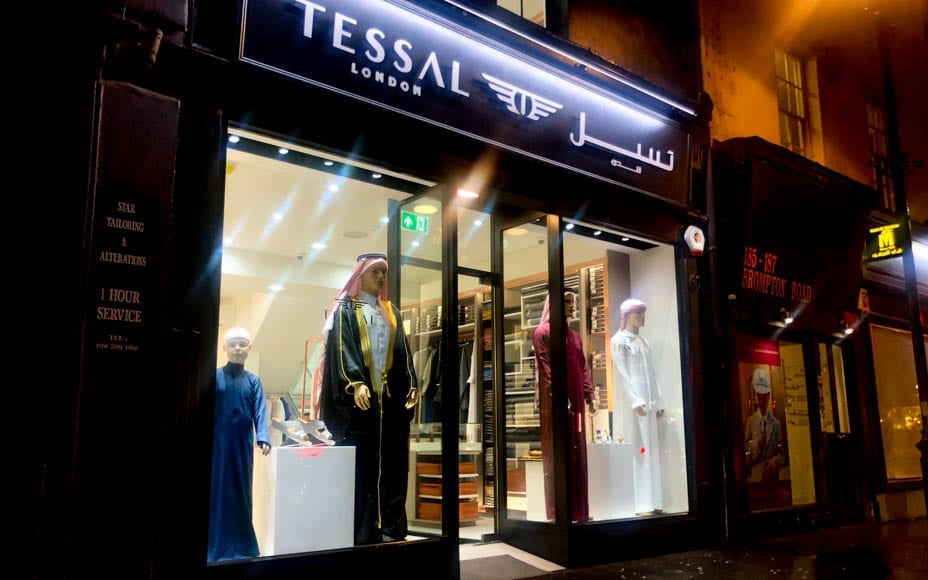
    As a shop selling “bringing back the royalty of [Arabia] home” opens in Knightsbridge, we ask: “Whatever next?”

    Beauchamp Place, Knightsbridge used to be the street where you’d find Bill Bentley’s and a pub owned by some Rolls-Royce driving gangsters who (probably falsely) claimed they owned Marble Arch. Both are long gone, but now, this month, there is a new addition to this once tony street: A shop named ‘Tessal London.’


    Selling “fashion from Arabic tradition and modern wear into the streets of London,” this self-proclaimed “royal culture of elegance” retailer has taken over a space once occupied by a traditional tailor and is now, frankly, hawking overpriced tat.


    On its website, the arrogant proprietors pompously talk of how they have a specialist department for “superior customers.” We respond: “Who do you bloody think you are? Hyacinth Bucket?” The pinnacle of vulgarity has landed in Knightsbridge. May it very soon flop as this is one shop no genuine local will either ever enter or miss.


    Facebook: @TheSteepleTimes

    Instagram: @TheSteepleTimes

    Twitter: @SteepleTimes


    The New ‘Knights’ of Knightsbridge – Tessal London, Beauchamp Place – As a shop selling “bringing back the royalty of [Arabia] home” opens in Knightsbridge, we ask: “Whatever next?”
  • Wallies of the Week – Linda and Tony Gilkes

    Wallies of the Week – Linda and Tony Gilkes

    Middlesborough couple go to the press after Morrisons refuse to sell them meat pies before 9am


    There are conspiracy theorists and then there’s a pie loving duo named Linda and Tony Gilkes from Teeside.


    Featured in a local newspaper named GazetteLive, these pensioners “were left piping hot with fury” after the Berwick Hills, Middlesborough branch of Morrisons refused to sell them eight large sausage rolls and two steak bakes at 8.45am last Wednesday.


    In the most bizarre set of comments imaginable, 62-year old Mrs Gilkes remarked:


    “I could see bags and bags of pies, all wrapped up on cages behind the counter. The trolley was ready to be pushed out. But when I asked for the pies, I was told: ‘We can’t sell the pies until 9am’. I could have had a fruit pie, but not a meat pie.”


    “If they hadn’t been cooked, that would make sense. But the fact that they were baked, well – it’s ridiculous. If I could’ve reached over, I would have grabbed them myself.”


    “I wasn’t waiting 20 minutes so I went to Cooplands [another local shop]. I was disappointed to say the least. They are dictating to me when I can buy pies and when I can shop.”


    Her angry husband, a man curiously described as someone capable of “[eating] fish and chips three days a week and rarely [touching] pastry,” added:


    “When you’re faced with that situation at the counter, you start thinking: ‘Is it Candid Camera? Is it April Fool’s Day?”


    “There’s more to this. Morrisons have got their own agenda. They don’t want people to know about it, They have given too many ridiculous stories about why. They contradicted themselves over and over.”


    “Who do they think us customers are? We are the people paying their wages.”


    Theresa May might be busy with Syria but she ought to get her priorities in order and head to Middlesborough and get herself behind Morrisons’ pie counter: Mr and Mrs Gilkes need her.


    Follow The Steeple Times on Twitter at @SteepleTimes.


  • McMoneya

    McMoneya

    London has simply become a money park for dodgy money and though ‘McMafia’ reflected elements of that, the truth is far more depressing


    Since the 1st January, the nation was engrossed (though many were also totally bored) by the BBC’s eight-part drama series McMafia.


    Based on a fictional – though plainly inspired by the likes of the late Boris Berezovsky – Russian mafia family relocated to London, the TV adaptation of this thriller was filmed primarily in Knightsbridge, Mayfair and South Kensington. It showcased what many might consider the extreme wealth of Central London, but, in fact, was presented a little bit amateurishly.


    Of the show, Carol Midgley in The Times summed it up well. She remarked: “If this is how miserably the super-rich live, I’d take a semi in Swindon any day” and equally now, if you wander the streets of SW1, SW3, SW7 and W1, you’d not disagree with her.


    Recent news that the Fine Art Society is closing in Bond Street after 140 years due to “soaring rents” and “an influx of wealthy international fashion houses” illustrates the effect of the arrival of uncultivated new wealth in that sector, but equally sad is the demise of local restaurants and shops that actually provide things that genuine, full-time residents actually need.


    Boarded up in Belgravia this month, after 44 years in operation, the Ebury Wine Bar closed supposedly due to the retirement of its owner, Nigel Windridge. Also gone – aside from the key loss of the much loved La Brasserie in Brompton Cross – are restaurants like Itsu in Walton Street and Racine in Brompton Road. Replaced by shisha bars and other businesses aimed at wealthy Gulfies and oligarchs, the streets of Westminster and Kensington & Chelsea are increasingly becoming utterly devoid of character.


    Follow The Steeple Times on Twitter at @SteepleTimes.


  • The monotony of Michelle

    The monotony of Michelle

    Michelle Young’s ‘Evening Standard’ interview proves that she is nothing but egocentric and fame obsessed (more…)

  • Lynn Wyatt (née Lynn Sakowitz)

    Lynn Wyatt (née Lynn Sakowitz)

    Texan socialite Lynn Wyatt - A Black Belt First Degree in TaeKwonDo and generous “old school socialite” philanthropist, Lynn Wyatt describes her personal style as: “Class with a bit of dash and never trash” The Houston home of the “ageless wife” of the once jailed Texan oil baron Oscar Wyatt became known as the “Wyatt Hyatt” after becoming a “home away from home” for everyone from Mick Jagger to Princess Margaret (more…)

  • Overheard: 11th March

    Overheard: 11th March

    Classic clangers from the last week (more…)

  • Popping out

    Popping out

    The overuse of the word “pop-up”


    On Radio 4 this morning, a presenter commented: “I refuse to call it a ‘pop-up’. If we have any more of them, I’ll pop”. At a lunch yesterday I debated the description with a number of others and was surprised to find that the majority felt that it hadn’t quite reached the realms of “gastropub”. (more…)