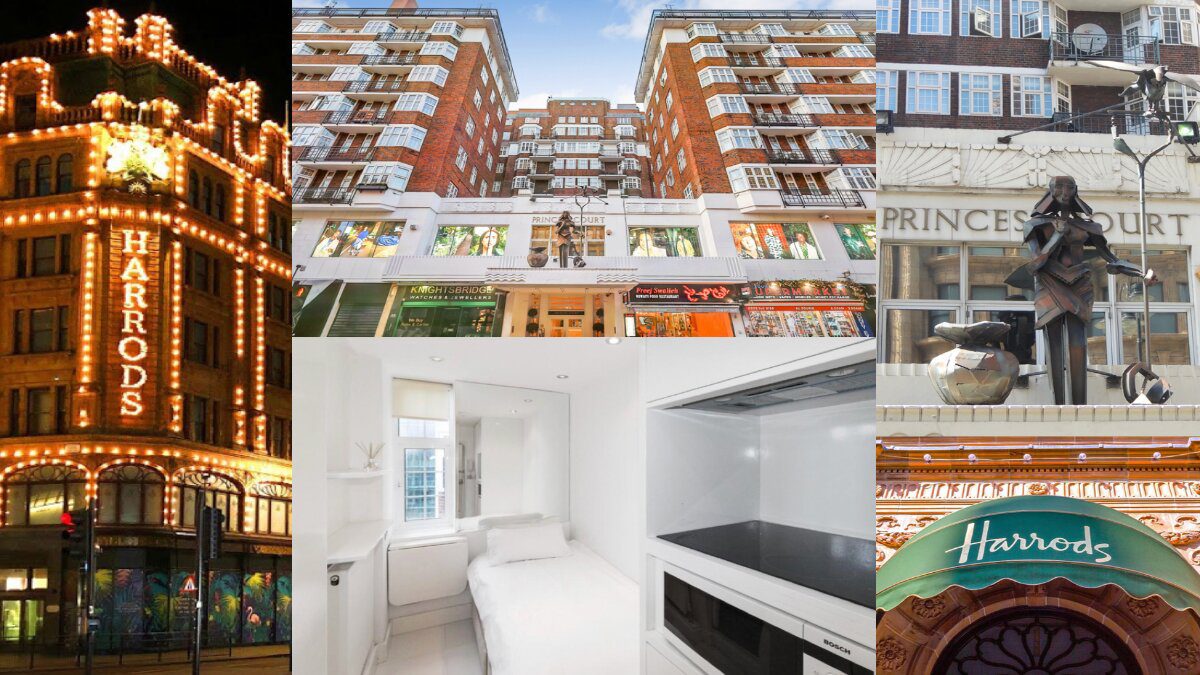
Tiny, overpriced studio ‘flatlet’ lacking room to even swing a cat in somewhat ‘shady’ building opposite Harrods in Knightsbridge unsurprisingly remains on sale for the not so tiny sum of £250,000 after 3 years on the market reports Matthew Steeples
Prison cell-like 109 square foot ‘flatlet’ in Brompton Road, Knightsbridge for sale for staggering £250,000; national minimum allowable size for a flat since 2011 is 398 square foot.
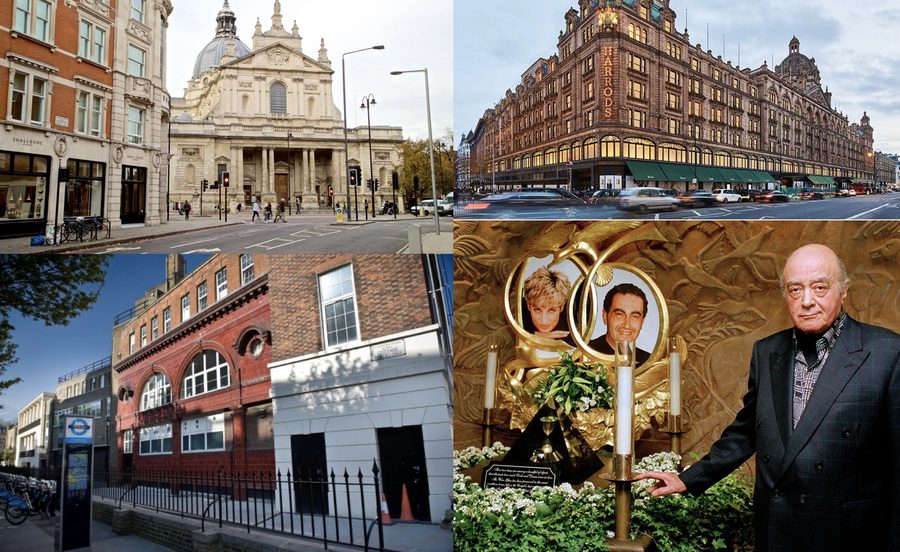
Brompton Road is one of London’s most polluted roads; the Brompton Oratory, one of the highway’s main landmarks, was used as a ‘dead letter drop box’ by Soviet spies during the Cold War.
Nearby now defunct Brompton Road London Underground station became the control centre for the 26th(London) Anti-Aircraft Brigade during the Second World War.
Ritzy department store Harrods, directly opposite, stands on a 5 acre site and was sold to the Qatar Investment Authority for £1.5 billion by alleged abuser of 200 women Mohamed Al-Fayed in 2010.
Listed initially at £275,000 in December 2022 but now slashed to a still stupendous £250,000 after failing to get flogged, Grow Portfolio estate agents are hawking a minute and clearly overpriced 109 square foot studio flat in Brompton Road, Knightsbridge as a “fantastic base” and “excellent opportunity”. If the ask price were to be achieved, the vendor would earn themselves a very punchy return of £2,294 per square foot; the median average price for this part of London, SW3 has been a significantly lower £1,610 per square foot during 2025.
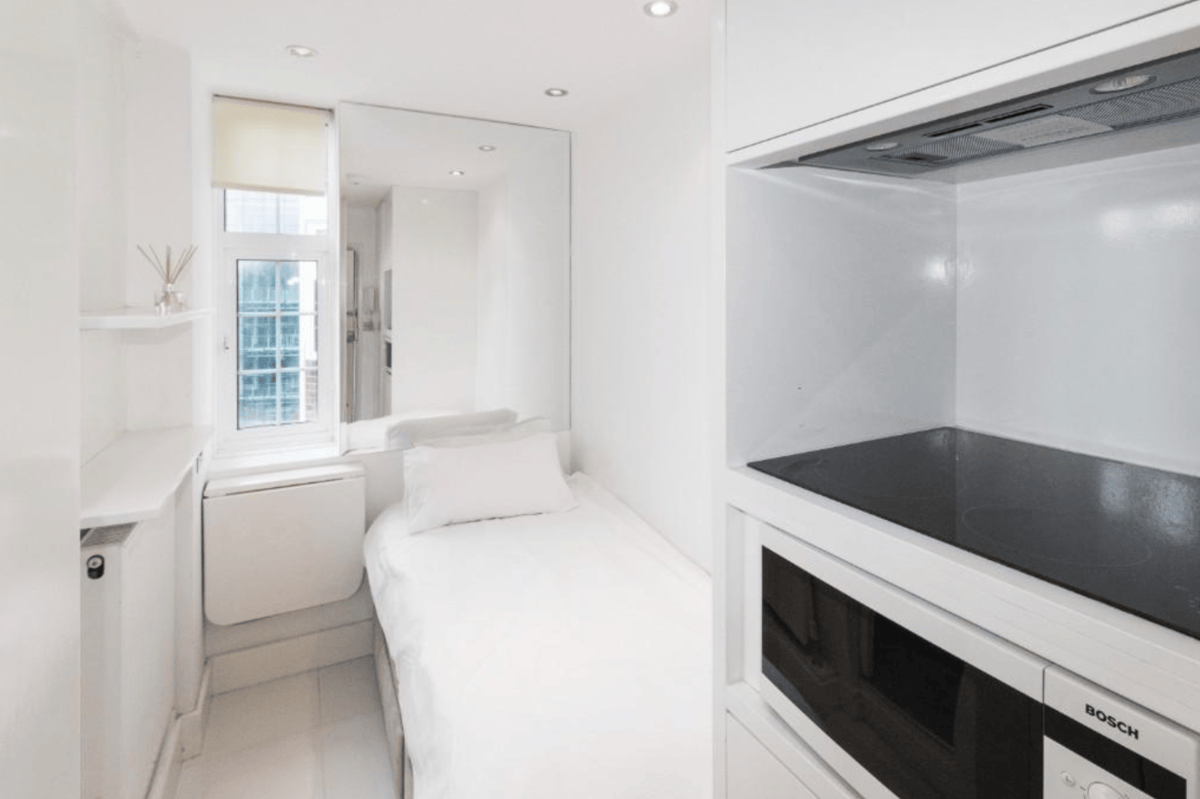
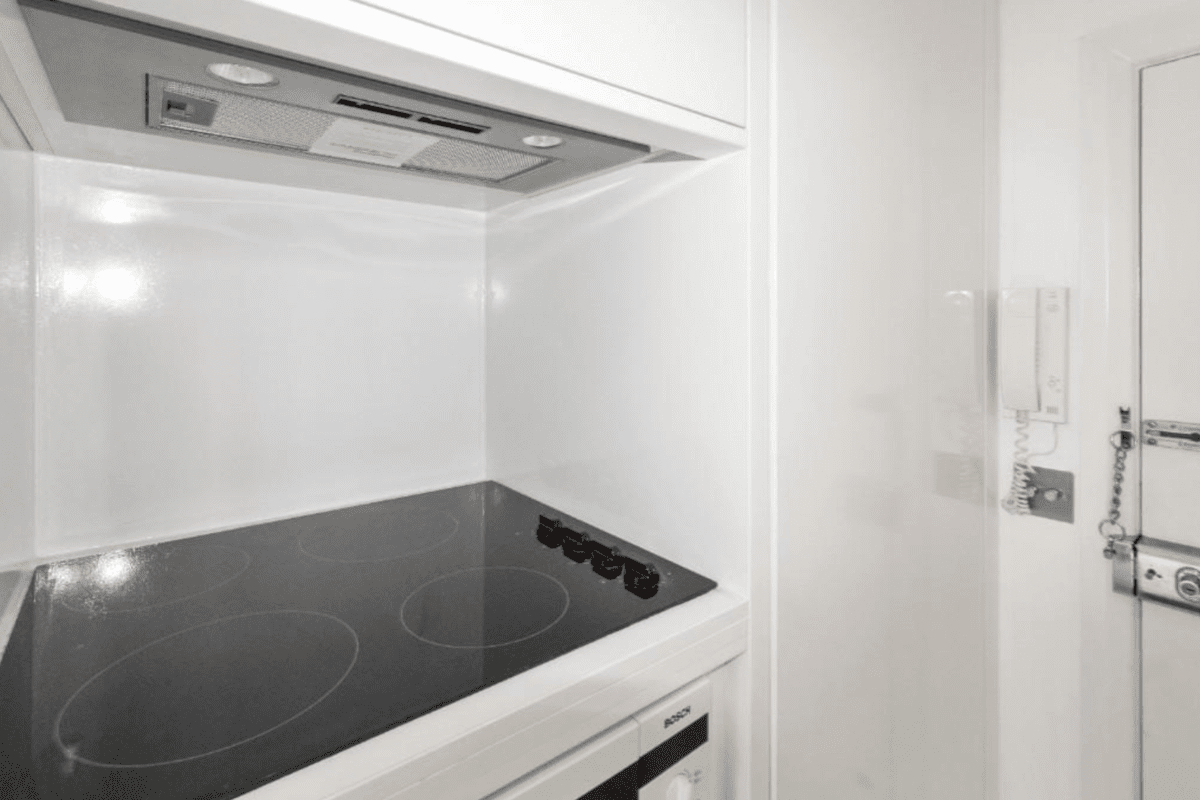
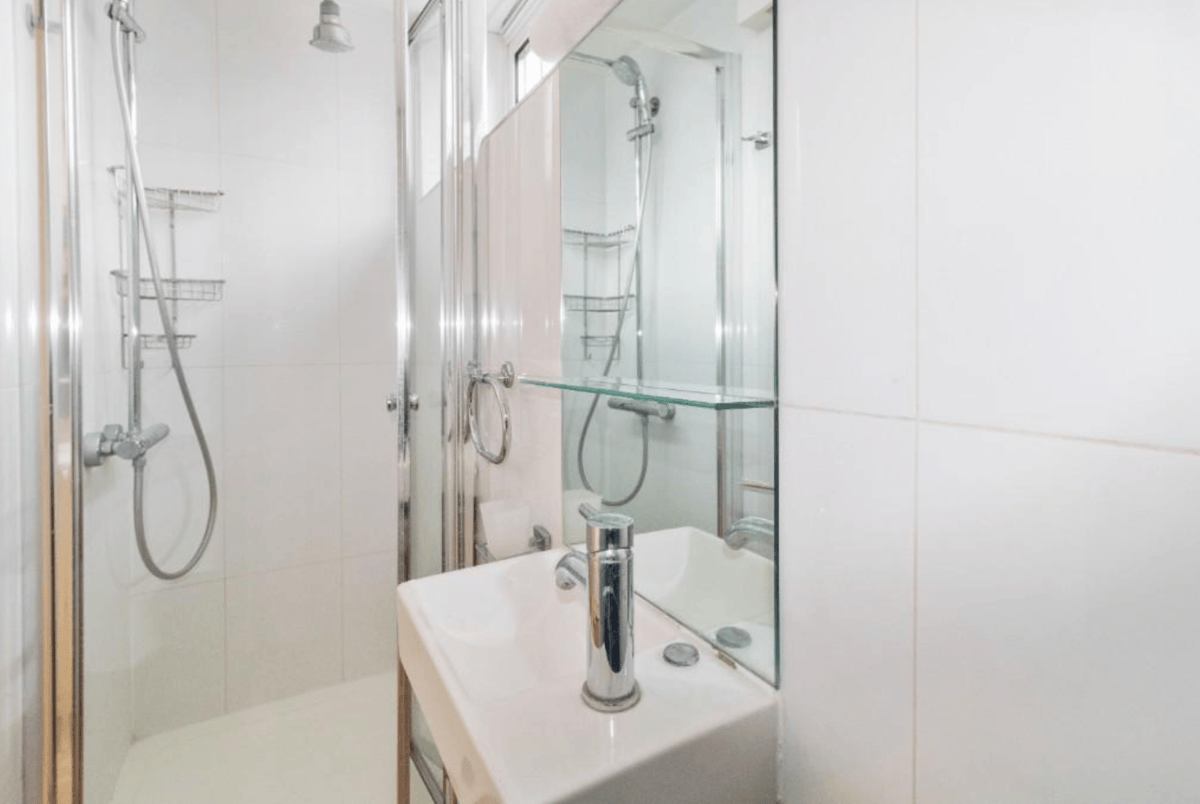
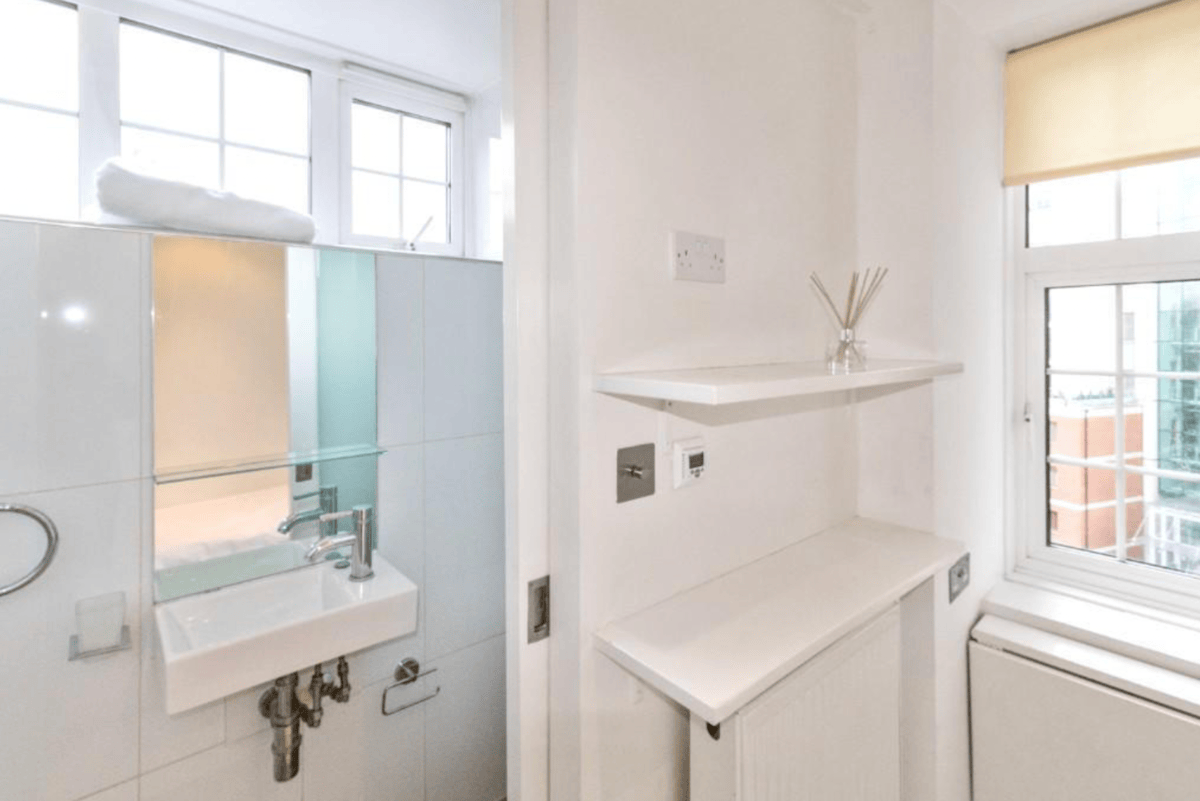
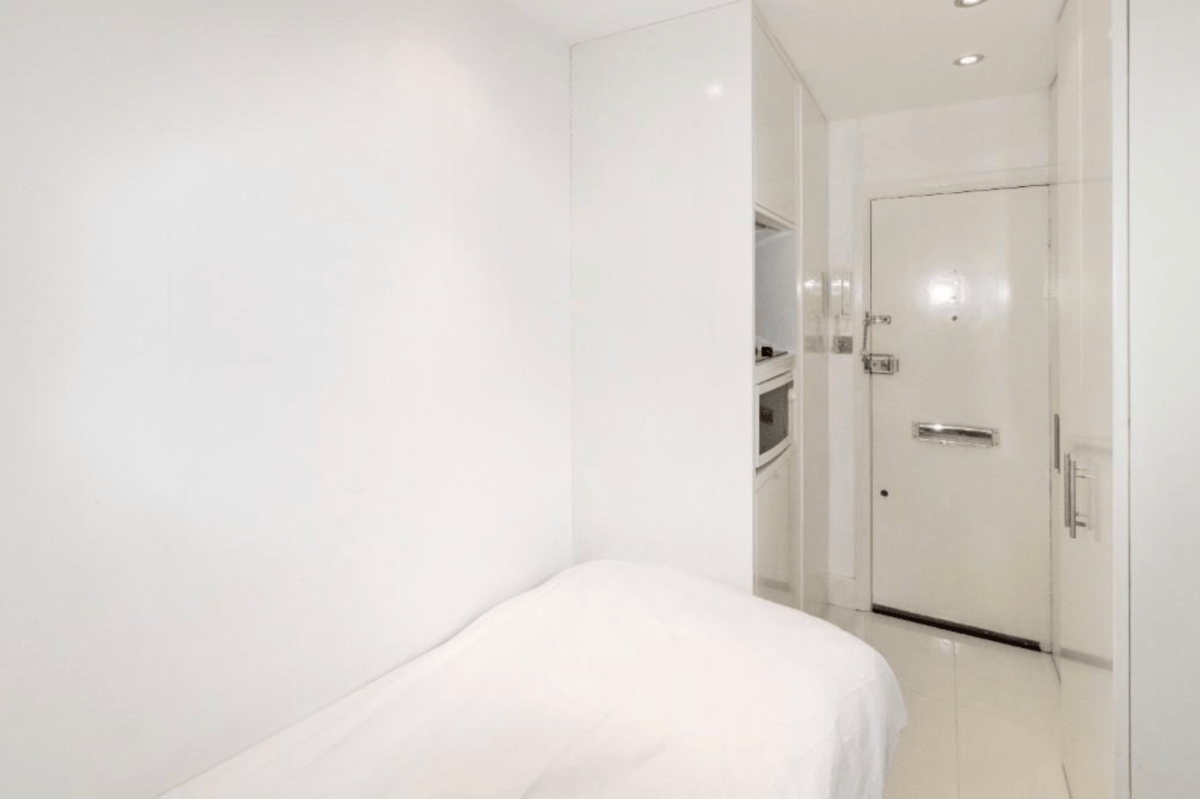
Offered on a lease of approximately 169 years and having a service charge of “approximately’ £1,000 per annum to include the assistance of a 24-hour concierge, a buyer will garner themselves a single room measuring 6 feet by 11’9” feet with a small adjoining shower room also. The 70 square foot room itself has tiled flooring, a window, a cupboard housing a microwave and cooking hob and a minute fold-down table also. There’s frankly nowt much else to say about it further than in November, the Evening Standard lauded its décor for being a “clinical white” achromatic scheme.
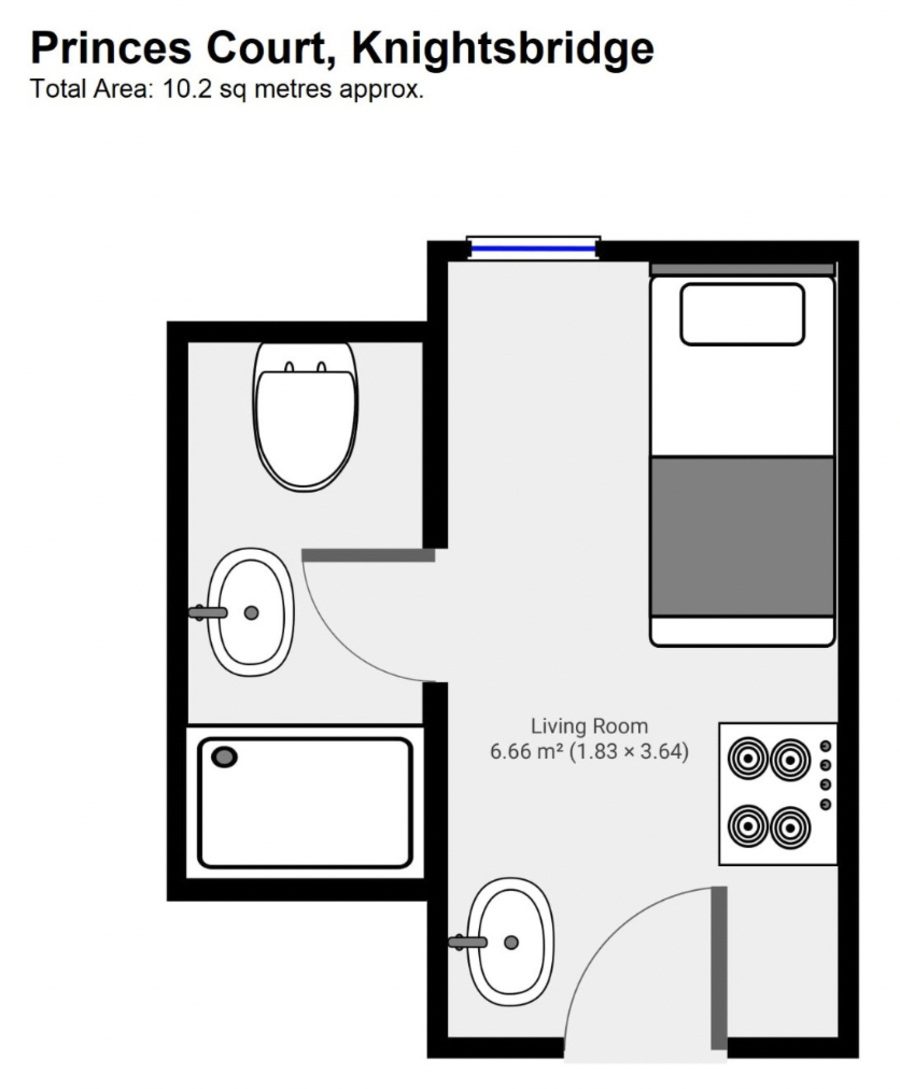
A floor plan shows the very limited scope of the accommodation offered. Tax dodging tennis legend Boris Becker produced a son after a ‘bonk’ in a broom cupboard at the Metropolitan Hotel; given his size now, he might struggle with such activity in this space today.It’s rare that a property can be entirely shown with just a single photo; in this case, it most definitely can.In this watercolour by Cyril Farey (1888 – 1954), which Manning Fine Art describe as “capturing Princes Court at its prime”, the golden era of a building is shown. The art dealers observe: “[This] is not merely an architectural drawing it is expressing a lifestyle that only an apartment in Princes Court can provide. As such the fashionable and modern apartment block is surrounded by a Mediterranean blue sky and Hyde Park peaks out from the sides as an Eden of lush green. The smart street is punctuated by smart, friendly, yellow awnings whilst classic, stylish cars and iconic London buses pass by.” The same cannot sadly be said of the setting today given this part of Brompton Road has become better known for housing hookers, Rolex robberies and chronic pollution.
Designed to “resemble an ocean liner” by architect George Valentine Myer (1883 – 1959) between 1934 and 1935, the building in which the studio flat is to be found, Princes Court at 88 Brompton Road, SW3 1ES, was originally named Knight’s Court. This large steel-framed block of 94 flats with 9 retail premises on the ground and first floors directly opposite Harrods began life as “a popular and exclusive place to live”, but in recent years has become more commonly used for Airbnbs and by ‘ladies (and gents) of a certain profession of the night’.
Of the apartment complex, a past resident complained to The Steeple Times: “I did not live there long as I could not even open the windows in the summer due to the pollution and traffic noise from supercars revving in the summer on the Brompton Road. The ‘bedroom banging activity’ from my clearly-a-hooker neighbour did not help me sleep at night either.”
No-longer-so-ritzy Princes Court previously hit the headlines in 2012 when an 84 square foot studio flat went on sale for £89,950, in 2021 when a 128 square foot offering sold for £325,000 and in 2022 when an 88 square foot studio – in spite of lacking even a lavatory and without any kind kitchen – was auctioned with a guide price of £175,000. A two bedroomed flat extending to 877 square feet on the ninth floor of the building is currently being touted by Harrods Estates at a guide price of £1.3 million.
Given the spoof website supporting the homeless charity Shelter that is the National Institute of Feline Orbital Studies (NIFOS) calculates that 78.54 square foot is required to swing an ‘average’ cat and that it would cost £158,180 to “buy enough space to swing a cat in SW3”, the 109 square foot flat offered by Grow Portfolio has not only not enough room to swing a cat, but would not even adhere to the government’s technical housing standards if it were a new build property. The minimum today required to meet regulations is 398 square foot, meaning that this poxy pad falls 72% short of that sum; these regulations do not apply to buildings constructed prior to 2011.
Fair warning to whoever purchases this ‘flatlet’ suitable only for someone seriously slim: In February 1988, an actual broom cupboard measuring 5’6” feet by 11 feet “with not even a cooker” in Princes Court sold for £36,500 (the equivalent of £102,500 today) during what Pete May termed an “obscene property boom” in his 2012 book Rent Boy. The self-professed “punk-turned-journalist who spent 20 years falling off the property ladder’ added: “Even I wouldn’t live in that. Yet it was recommended as a purchase for ‘those who like eating out’.”
Within months of the cupboard sale, the economy tanked and studio flats, given their limited appeal, were the very first properties to see their values plummet. In 2025, with Rachel Reeves ‘Queen of Thieves’ having her grubby mitts on the nation’s tiller, this is probably not the time to be shelling out £250,000 for what the “honest estate agent” and Brothel in Pimlico author Roy Brooks would have likely marketed as a ‘broom cupboard in a brothel building in Knightsbridge’. At this time, perhaps, ‘buyer best beware’ would better be borrowed.
Curious facts about Brompton Road
The area of ‘Brompton’ dates to the 15th century and originates from the name ‘Brokendon’ – meaning “a place near a brook”.
The road itself starts at Knightsbridge Underground station and ends at the crossroad intersection known as ‘Brompton Cross’ where Fulham Road begins. It is thought to have ‘officially’ first been designated as ‘Brompton Road’ in 1863 on land originally owned by the Moreaus, a wealthy French Huguenot family.
Brompton Road is one of London’s most polluted highways due to heavy traffic, especially from diesel vehicles. In 2013, the London Assembly claimed pedestrians were being “showered in dangerous airborne particles” on this road identified as having NO2 levels massively exceeding World Health Organization guidelines.
Between 1906 and 1934, passengers on the Piccadilly London Underground line were able to alight at Brompton Road tube station. It was closed due to being surprisingly little used, but served as the command centre of the 26th (London) Anti-Aircraft Brigade during the Second World War. During this period, the tunnels, subways and lift-shafts were adapted to provide bomb-proof accommodation and in 2014, the site was sold to Dmytro Firtash, a billionaire Ukrainian businessman for £53 million. His plans to convert the 28,000 square foot site into residential accommodation have still not come to fruition.
The best-known retail landmark on Brompton Road is Harrods department store. It stands on a site that covers an astounding 5 acres in total and includes 1.1 million square feet of retailing space.
Famous customers of the store, which first opened in its present form in 1894, have included Agatha Christie, Beatrix Potter, Oscar Wilde and Asma al-Assad, the wife of the former President of Syria. She used an alias to shop there in order to get around European Union sanctions that froze the assets of her and her husband.
In 1898, Harrods debuted Britain’s first ‘moving staircase’ (or what we now term an ‘escalator’). At the top, “nervous” customers were offered brandy to revive them from the “ordeal” of their ride, The Drapers’ Record reported at the time.
Harrods was bombed by the IRA in 1983 and 1993. The first attack killed 6 people and the second injured 4.
The store was bought by the now late alleged serial sex offender Mohamed Al-Fayed in 1985. The ‘Phony Pharaoh’, as the Egyptian was nicknamed, is said to have abused at least 200 women on the premises during his ownership. He sold the business to the Qatar Investment Authority for an astounding £1.5 billion in 2010 and died in 2023 without ever having been brought to justice.
In 2022, Apple opened a store on the road in what was once the Brompton Arcade. It is staffed by over 200 employees, or as the tech giant prefers to call them – team members.
Another major landmark, and a building like Harrods complete with a dome, is the Church of the Immaculate Heart of Mary. This Catholic parish church is better known as the Brompton Oratory and also referenced as the London Oratory.
Consecrated in 1884, the church was where ‘Master of Suspense’ Sir Alfred Hitchcock married Alma Reville in 1933 and it is said to have inspired Nick Cave to write the song Brompton Oratory in 1997.
During the Cold War, this ornately decorated church was used as a ‘dead letter drop’ (or ‘DLD’ to those in the know) by Soviet agents in Britain. Spies would visit the church and place documents and microfilm behind one of the pillars for later collection by their compatriots; the location suited given the building’s proximity to the Russian embassy and as Harrods was a suitable rabbit warren for losing a tail if they thought they were being followed.
Standing behind the Brompton Oratory and accessed from Brompton Road is Holy Trinity Church, Brompton. ‘HTB Brompton’, as it is now generally referenced, stands on a site of 3.5 acres and is now one of the primary sites for the teaching of the Alpha course programme that focuses on “the evangelization of the nations, the revitalization of the church and the transformation of society.’
Further photographs of the £250,000 Princes Court flatlet
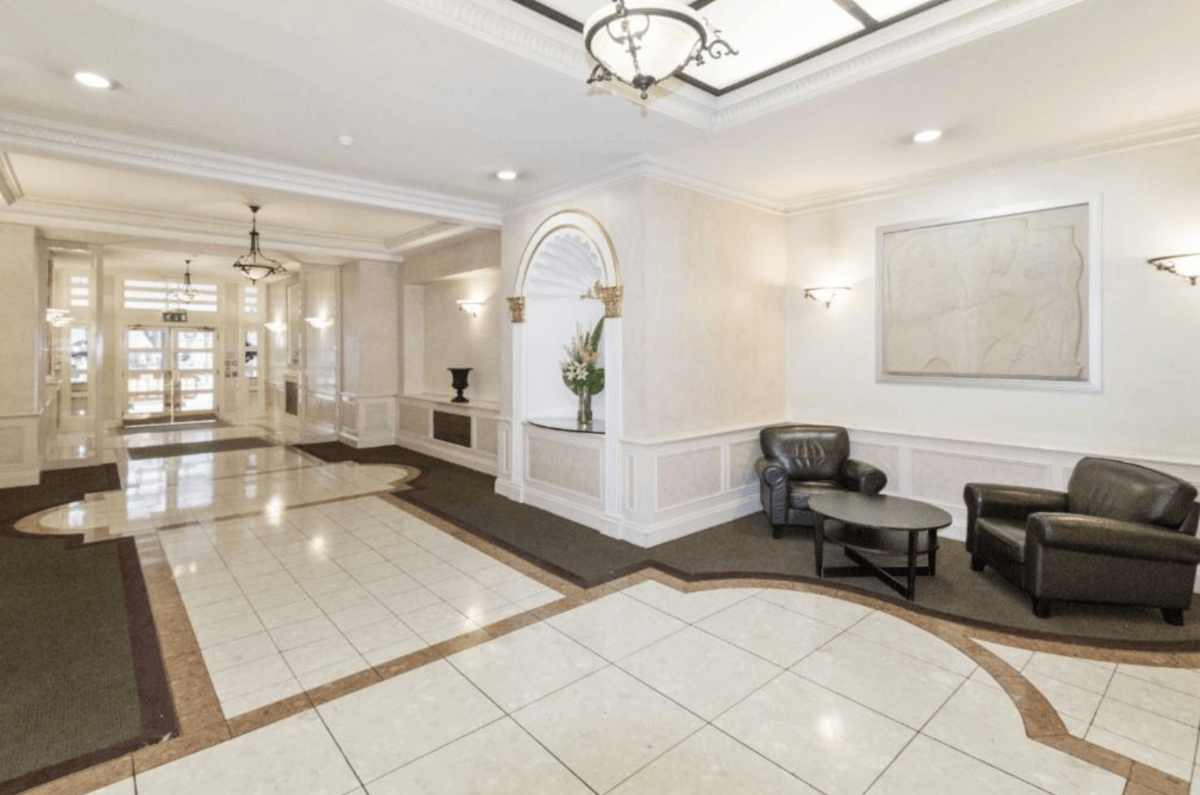
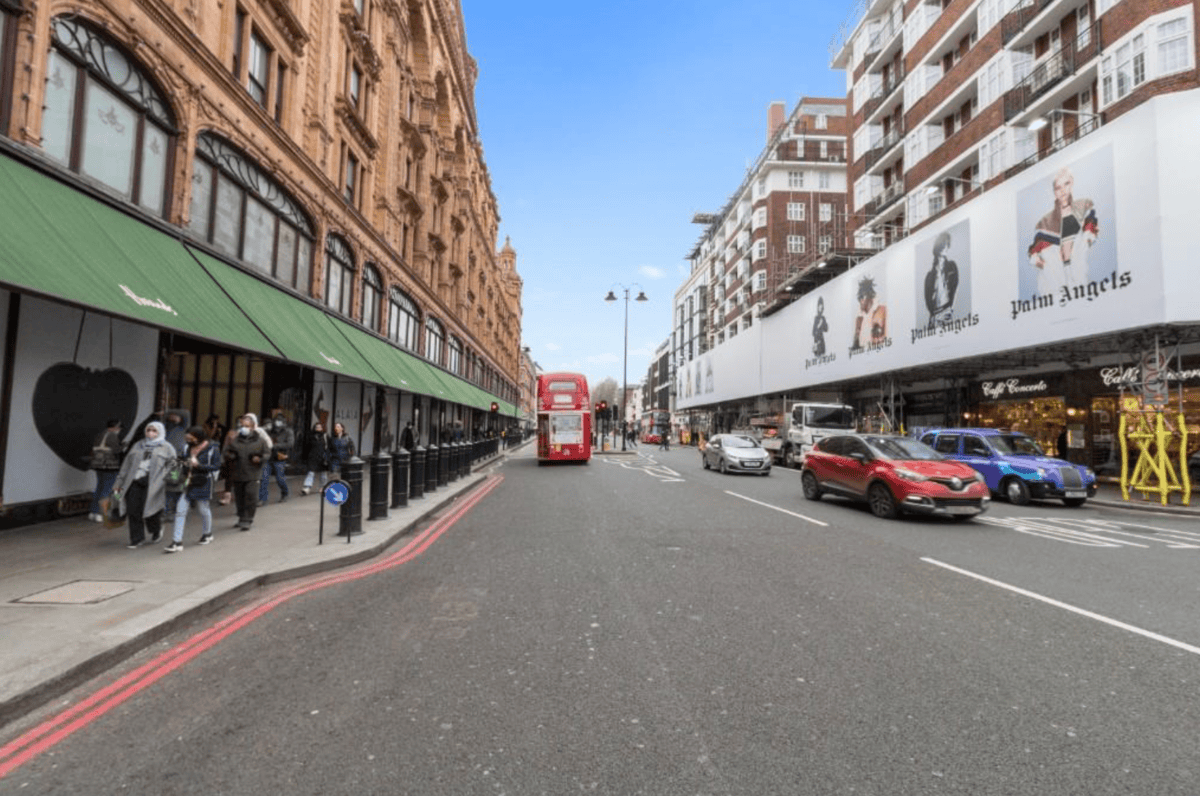
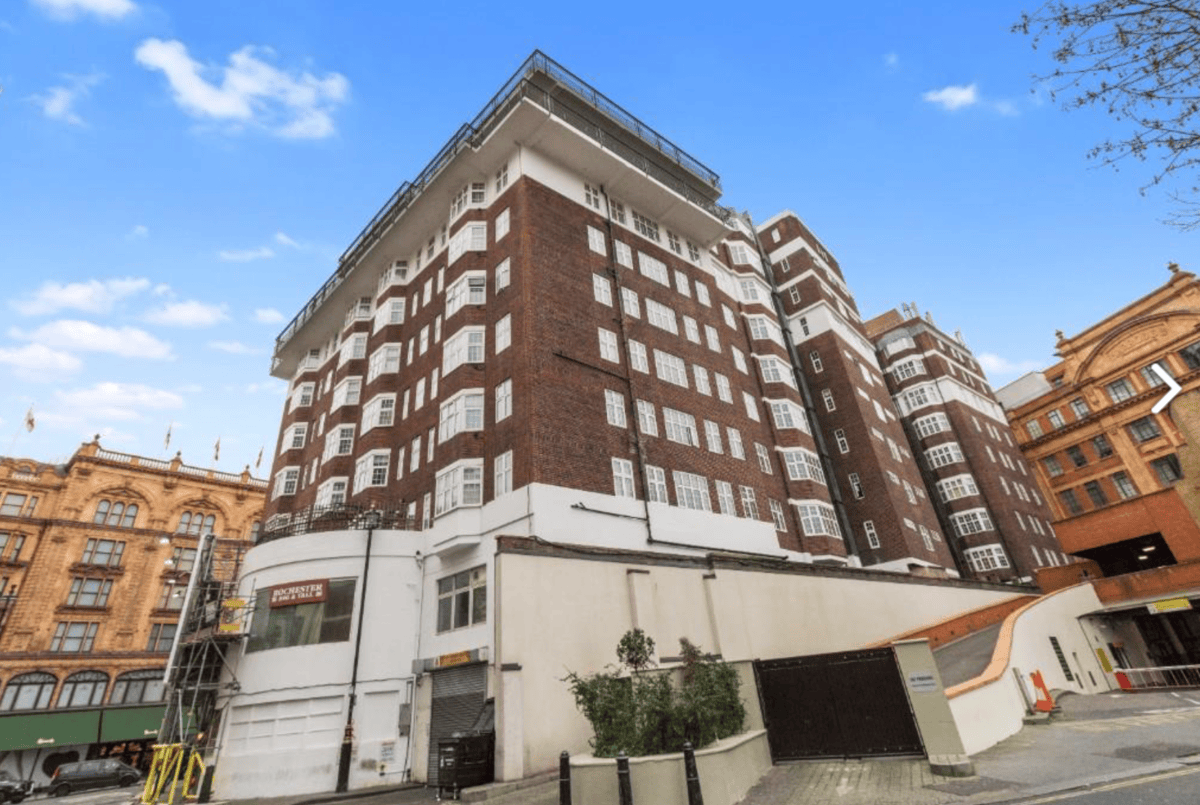
The kitchen facilities would not exactly excite Gordon Ramsay.The shower room is modern and clean; there’s not much further to say further than that.Both the shower room and ‘studio’ room have windows; a ‘Brucie bonus’ for sure.A view of the ‘studio’ towards the door; most prison cells are bigger than the space offered here.If you bought the studio offered and needed to host a visitor, you could do so in the lobby of Princes Court. It’s got seating and space aplenty in comparison to the ‘flatlet’ itself.Princes Court (here partly shrouded in scaffolding) is literally opposite Harrods, undoubtedly one of the most famous department stores in the world.The rear of Princes Court with Harrods department store behind and the store’s former depository, now apartments also, to the right.
A Belgian born butler to the bastion of business Lord Bernstein – chief of Granada Television – was brutally murdered in a mansion in Wilton Crescent, Belgravia, London just before Christmas in 1970.
The closeted victim, Julian Sessé, was savagely slayed with a knife and a meat cleaver by a much younger bisexual gigolo, Mustapha Bassiane.
Bassiane subsequently fled to Morocco and then got snared when he audaciously returned to Europe in 1972; he was sentenced to life in prison in 1973 and deported back to his homeland 11 years later.
The ‘Scotland Yard Uncensored’ podcast recently covered this little known case, but failed to mention the strange fact that The National Archives have records on the case closed until January 2071; who is actually being protected here and why?
London’s Belgravia is renowned for its associations with power and privilege and as some might say, where there’s money there’s quite often muck, meddling, murkiness and murder.
Whilst the infamous 7th November 1974 murder of Sandra Rivett – the nanny to the children of Lord and Lady Lucan – at 46 Lower Belgrave Street, SW1 has gone down in history for all the wrong reasons, a sadistic slaying four years earlier on 19th December 1970 at another ritzy residence nearby is one that has been largely forgotten.
The victim in the particular case in question, it was noted in a recent Scotland Yard Confidential podcast by John Hopkins, was “a kind and generous man in life,” but one who was “shamed and shunned after his own brutal murder.” In this day and age, such a clear cancellation would quite rightly be called out as an utter outrage and especially at a time when the Metropolitan Police are so deservedly under fire for their appalling levels of misconduct.
On the tragic Saturday night in question in 1970 and just before London revelled in the arrival of a ‘White Christmas’ just six days later, 64-year-old Belgian butler Julian Louis George Sessé was senselessly beaten and brutally murdered with a kitchen knife and meat cleaver. Here was a crime that involved a butler to the rich and famous, but a crime also that was quite the opposite of those crimes orchestrated by the notorious ‘Killer Butler’ Archibald Hall. For those yet to know of him, Hall – who was also known as the ‘Monster Butler’ – mercilessly robbed and murdered in the same part of Belgravia later in the 1970s. Perhaps there could be something in the water of that part of SW1…
Unlike self-serving monster Hall, “dedicated” Sessé had worked at a 5-bedroomed mansion at 32 Wilton Crescent, just off Belgrave Square “for decades.” His end was to come that snowy evening when he was mercilessly slaughtered sometime after 11pm in a basement grace and favour flat that he occupied in the home of his very well-known employer Sidney Bernstein, Baron Bernstein – the buccaneering bastion businessman and chairman of the Granada Group and Granada Television.
Described as “tall and distinguished” and always “neatly dressed in pinstriped trousers and black jackets,” neighbours argued this particular butler to be “the perfect servant.” Grey haired Sessé was lauded by the owner of the nearest ale house to 32 Wilton Crescent, The Grenadier, as “a quiet and respectable customer.” Here, indeed, was an example of someone who would not wanted to have brought any “shame or stigma” upon his master and mistress.
Alone that night in the vast and imposing 32 Wilton Crescent mansion whilst Lord and Lady Bernstein were away on holiday in the West Indies and with other staff having been given a “leave of absence,” homosexual Sessé most unfortunately decided to take advantage of something akin to “whilst the cat’s away, the butler might play.” He invited a “drifter-like” 26-year-old unemployed Moroccan nurse named Mustapha Bassaine to ‘visit’ his “cosy apartment” and clearly anticipated a night of fun and frollicks. The two clearly closeted – but for very different reasons – men had met prior and money had previously been exchanged for ‘companionship’ and sexual activities, it was later noted.
That night’s ‘pairing’ represented anything but a ‘relationship’ of equals and was one instead where the elder man expected intimacy with the former whilst the younger believed he could rinse the latter of as much money as possible. Given “pock marked” faced Bassaine was a dastardly deviant and diminutive desperado who’d been out drinking with his girlfriend prior, it was to be a meeting that was never going to end well.
Sessé was said to have been of the view that “money that exchanged hands be called a ‘gift,’” but was similarly described as not being under any delusions about what he gained from the “clandestine” encounters he had with various young men. He was a man with ‘friends’ with similar attractions, but in the wake of his death, his family and most associates clammed up and denied knowledge of such preferences. As loyal as the butler, relative and friend had been, it seemed that that was sadly never repaid by those he should have been able to have expected to have remained closest to him.
After a delivery driver and a part-time cleaner failed to find signs of life and several days of out-of-date newspapers on the doorstep of 32 Wilton Crescent on Monday 21st December, the latter called Lord Bernstein’s secretary, a 24-year-old named Miss Hazelwood. She then opened up the property and discovered a scene that Hopkins described as having “shocked her to the core” in the basement. Naturally scared witless, the secretary dialled 999 and the police process began.
Blood was said to spattered everywhere. It was all over the living room and all over the kitchen, but it was in a bathroom – most bizarrely locked from the outside – that the body of Julian Sessé was discovered draped in an equally bloody bath towel. The poor unfortunate’s throat had been cut and aside from multiple stab wounds to his head and chest, his stomach had been slashed open. A knife and a meat cleaver were bizarrely located by officers in the bowl of a latrine and given the “high profile” of the house owner, the case was “quickly passed to Scotland Yard.” Scandal, after all, would be something that the likes of Lord and Lady Bernstein obviously would rather avoid.
Detective Superintendent John ‘Ginger’ Hensley – who had previously been involved in the investigation of the vicious 1966 Shepherd’s Bush policemen murders by Harry Roberts – took the case and the next item to be found just happened to be the bloodstained trousers of the man presumed to be the killer in a washing machine. They were clearly not the trousers of the much larger Sessé and with a wardrobe in his bedroom ajar, it was thus determined the murderer likely fled in a pair belonging to his victim.
Evidence of foul play was everywhere and no attempt had been made to clean up. It was noted by Hopkins that it “all seemed wild and confused” and with no sign of forced entry and letters that indicated Sessé’s ‘activities’ with other gay men including paying for sex, Hensley is said to have immediately surmised it a “crime of passion” rather than a simpler robbery gone wrong.
Shortly thereafter, a pathologist determined that Sessé had partaken in sexual intercourse not long prior to his demise and found the cause of his death to be shock and loss of blood following a frenzied attack with both the knife and the meat cleaver. His demise would have not been instant and wounds to the body suggested that this was a man whom most definitely courageously fought back.
As police inquiries proceeded, few friends and associates were willing to divulge information. This, after all, was an era where to be seen to be gay was still the ultimate taboo. Though one local vaguely cited a “foreign looking man” having been seen outside the house at the time of the murder most horrid, all leads had alibis and even Sessé’s very own family made it clear that they knew nothing of his sexuality. The family went as far as to add that that they simply “did not want to know.”
Given these factors, here was a case that initially seemed headed to join a long list of unsolved murders, but a breakthrough came just days later on Wednesday 23rd December. On that date, police were contacted by an Irish waitress named Jean Fitzgerald from her home in Anson Road, Tufnell Park after she’d “spent days and nights wondering about the case.” The 22-year-old claimed to have met Sessé through her bisexual boyfriend and stated thatmhe had arranged to go to meet the butler at 32 Wilton Crescent after the couple had been for drinks in the West End late on the fateful night in question.
Allegedly, Bassaine had told his girlfriend that he would “visit Sessé to try and get some money off him.” She admitted to police she was “not a fan of her partner’s activities with other men,” but “understood that he usually got well paid for his ‘services.’” Hopkins went further and surmised that this “somewhat timid woman, but one with fire in her eyes” had an excuse for overlooking the ‘activities.’ That excuse was: “Besides, we always needed money.”
During questioning, Fitzgerald stated that she had gone home after being in the West End alone late on 19th December as Bassaine had left her to head over to Belgravia at around 11pm. She further shared:
“We paid the rent on the apartment between the two of us. He got money in another way when he was unemployed. Sometimes he gave me money but I don’t know where he got it from. He said something about going out with ‘faggots,’ having drinks with them, and getting money from them. He showed me a picture of Mr Sessé and told me that the butler often gave him money.”
Bassiane did not return home that night, but instead called Fitzgerald the next afternoon. He asked her to come to Sessé’s apartment, but she declined. Of why, she subsequently reminisced:
“I thought it was very strange that he wanted me to go there. He wanted me to go for a drink [at 32 Wilton Crescent] and he got mad when I said no. I was afraid of Mustapha Bassaine because he was very depraved at times and I was afraid that he would beat me like he had done before.”
After his girlfriend’s refusal to attend, Bassiane himself returned to Anson Road drunk and cried as he told Fitzgerald that he had argued with his ‘friend.’ She noted that he was wearing clothes he had not worn before – including trousers and a jumper that were “too large for him” – and “assumed they belonged to Sessé.” Going further, aside from noting her boyfriend’s shoes were stained with blood and that he had scratches on his hands, she suggested that she was so scared of Bassiane’s mental state that she was fearful to go to bed. Instead, she sat up all night with him, she continued.
“He arrived with a bag full of drinks and fruit and showed me a watch, a camera and a ring that he told me were Christmas gifts that Julian had given him. On 22nd December, he threw some clothes and some papers in the trash and told me that he had to go to Morocco immediately because his mother was sick. He bought an air ticket and went by plane. He had no difficulty paying for the ticket in cash even though he had no money when he went to Julian’s house over the weekend.”
Despite being supposedly penniless and potless only a couple of days earlier, Mustapha Bassaine flew to Casablanca on 23rd December after having paid the then not insubstantial sum of £44 in cash for a one-way ticket. He also exchanged a further £50 in cash for Moroccan Dirhams and after giving Jean Fitzgerald his Moroccan familial address, requested she send any newspaper cuttings that mentioned his name there. Allegedly, according to the Irish waitress, he also mentioned having seen newspaper reports about the murder at 32 Wilton Crescent and added “he couldn’t understand how anyone could have done such a thing to a man as nice as Julian.”
Though police officers questioned whether Fitzgerald could just be another ‘spurned girlfriend,’ some of the details mentioned made Hensley take her more seriously than the many cranks who call in when crime occurs. A search of bins in the neighbourhood followed and resulted in the aforementioned bloodstained shoes and trousers being found.
Justifiably, Bassiane – who turned out to be the son of a high ranking official in the Moroccan Foreign Office – was either a man too stupid to dispose of the items of his crime or he was someone who had a plan and didn’t think he needed to be bothered about the consequences of the DNA on them. Meanwhile, fingerprints found in the couple’s Anson Road flat matched fingerprints found at 32 Wilton Crescent and thus here was a man who rose straight to number one on the list of suspects.
Ten days after the murder, police issued an international warrant being for Musapha Bassiane’s arrest, but there was a major problem for Scotland Yard as Britain had no extradition treaty with Morocco. It seemed, given the key suspect had already ‘flown the nest,’ as long as he stayed in his homeland, Bassiane was a safe fugitive from justice. This was a situation similar to that involving the billionaire playboy Farouk Abdulhak in the more recent 2008 ‘Murder in Mayfair’ of Martine Vik Magnussen; getting someone back from a country like Morocco then or Yemen now is, in fact, nigh on impossible.
In addition, in case Fitzgerald had either got it wrong about where her errant bisexual lover was travelling to, or was instead covering for him, a police watch was put on her Anson Road flat in case he decided to return. Of course, aware that this young Irish girl was of no further use to him, the grubby, grifter never, ever did revisit that address but found himself safely hidden away in his homeland.
Meanwhile, with their holidays over, Lord and Lady Bernstein returned from their tour of the West Indies – where they had visited either Barbados or Bermuda or perhaps even both (depending on which reports you believe) – shortly after Christmas. Funeral arrangements were made for Julian Sessé, but only a small number of people were said to have attended a service at St Mary’s Catholic church in Cadogan Street, Chelsea. The deceased’s place of burial remains presently unknown, but it is said that his clearly embarrassed family “refused” to attend the service in what can only be perceived as move most spineless.
Separately, on returning to 32 Wilton Crescent, though Lady Bernstein identified that a sum of £80 was missing from the desk in her bedroom, a search of the house discovered that no further familial property had been stolen. By now, however, it seemed that the aforementioned watch, camera and ring and perhaps further money taken by Bassiane to the Anson Road apartment had actually been stolen instead from his victim.
In spite of all of this relevant new information, the judicial process was opened and postponed no less than eight times. According to the person in charge of the criminal investigation, a Mr Gavin Ilurston, “the investigations were not finished.” The reasoning for such is definitely something worthy of question still to this day.
Hensley, however, knew exactly where Bassiane was in Morocco and “through Interpol asked other the police of all European countries in Europe countries to be prepared” in case the suspected killer appeared. Eighteen months later, he got again lucky when he and his colleague Detective Sergeant Bernard Davis were informed that the on-the-run deadbeat was planning a trip to Germany and the Netherlands.
“Handlebar moustached” dimwit Bassaine was arrested on 28th June 1972 after police in Holland detained him for immigration offences in Rotterdam. Given the fugitive from justice had been on Interpol’s list as wanted for murder, if he’d simply stayed in Morocco, he would not have ever been caught, but here instead was a feckless fool clearly beyond arrogant who thought himself above the law.
By 10th July 1972, with extradition paperwork complete, Mustapha Bassiane was transferred to the custody of Davis and shackled to him and flown to London. A flight attendant, Hopkins in the conclusions of his podcast shared, requested the shackles be removed for the duration of the journey, but Davis was most definitely not going to allow any opportunity his captive to escape for a second time. The unshackling was rejected and once in London, it was straight off to a remand prison until trial for the man suspected of the murder of Julian Sessé.
On 8th February 1973, Bassiane’s trial began at London’s ‘Old Bailey’ Central Criminal Court. Akin to form, he pleaded not guilty and though admitting to having spent the evening with Sessé, argued that “the butler was in fine health when he left on the Sunday morning.”
Turning the cards on his by then ex-lover Fitzgerald, Bassiane told the court that she “flew into a wild jealous rage” and threatened to “harm the old man and hurt the old bastard… She threatened to smash his face.” He added that “the same day Jean Fitzgerald had gone out and he had not seen her until the afternoon. She was shaking and had told him she was sick.” His basic and somewhat bizarre line of defence – given the substantive forensic evidence against his own person – was that it was her and not him that had committed the ‘crime passionnel.’
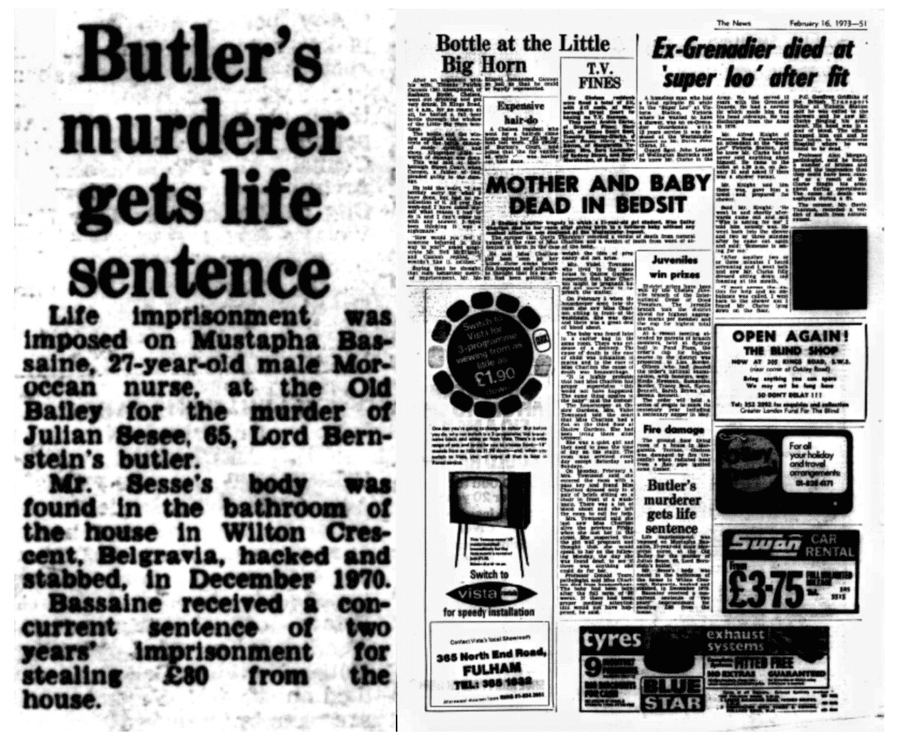
Unsurprisingly, the jury did not believe this “fierce tempered” killer and Mustapha Bassiane found himself sentenced to life in prison on 12th February 1973. He also received a concurrent sentence of two years for stealing £80 in cash from Lady Bernstein’s desk – a sum that was about equivalent to a month’s average wages at that time, but most definitely not a sum worth killing for.
Before sending him down, the judge in the case slammed Bassiane. Judge Forbes is said to have told the court: “This was a brutal murder. The sentence has been the product of evidence in which there is no doubt. Your attempt to place part of the blame on Miss Fitzgerald has received the treatment it deserves.”
It is unknown what became of this murdering monster after he was deported in 1984. Mustapha Bassiane had served just 11 years of his life sentence in the UK; a term that surely was far from long enough for such a brutal and evil murder and a crime committed in a country where young men who proclaim their innocence like Mark Alexander and Omar Benguit have rotted in prison for 13 years and 18 years respectively in spite of a clear lack of evidence against them.
Turning to other thoughts post-sentencing, Hopkins shared in his podcast that Hensley believed Bassaine had tried to blackmail the butler and killed him when he didn’t comply. He also suggested that “hapless” Fitzgerald could have been implicated if she had gone to the mansion that night and concluded “her distrust of his motives may have just saved her from a dark fate” at 32 Wilton Crescent. Would her lover have killed her there also or would he have set the place up to pin the blame on her? Thankfully, given she saw sense, no one will ever know.
If still alive in 2023, Mustapha Bassaine would be 79-years-old; Julian Sessé, on the other hand, would be long dead, but if he hadn’t met his noxious nemesis that night in December 1973, he’d probably have gotten to have enjoyed a long, happy and fulfilled retirement. The ‘Belgravia Butler’ perhaps should have been more careful, but he most definitely didn’t deserve such a sordid end.
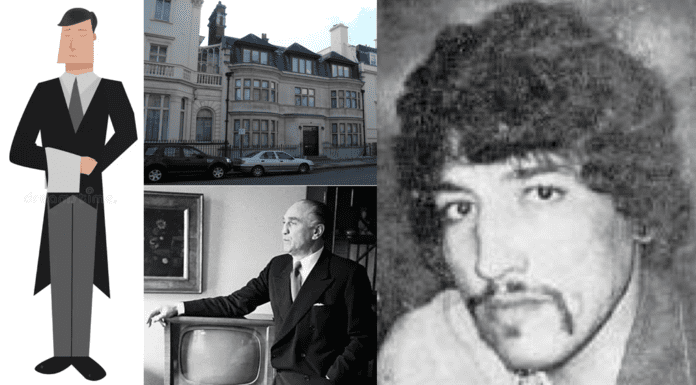
Pictured top – No image of Julian Sessé can be found on the Internet (left); 32 Wilton Crescent (top centre) and the late Granada head honcho Lord Bernstein (lower centre); killer Mustapha Bassaine in the only known image available of him (right).
Listen to the ‘Scotland Yard Confidential’ episode about the slaying of ‘The Peer’s Butler’ by clicking here.
Editor’s note – Unlike as is the case in many publications, this article was NOT sponsored or supported by a third-party. Follow Matthew Steeples on Twitter at @M_Steeples.
A message from our editorial team – Thank you for reading this article. We’re more reliant on your support than ever as the shift in consumer habits brought about by coronavirus and the cost-of-living crisis impacts our advertisers. If you haven’t already, please consider supporting our trusted, fact-checked journalism by supporting our work via Patreon.
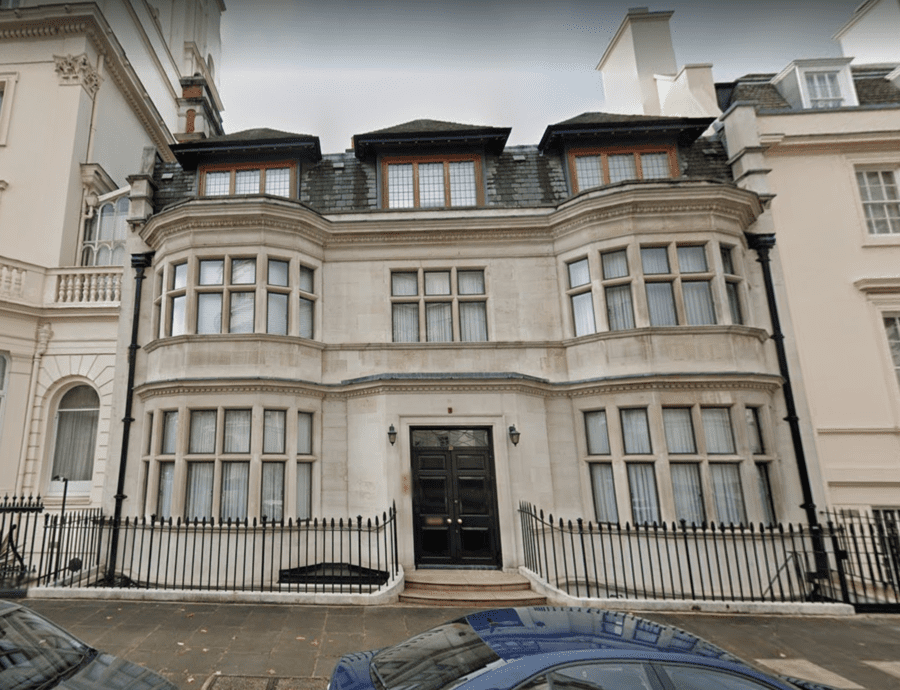
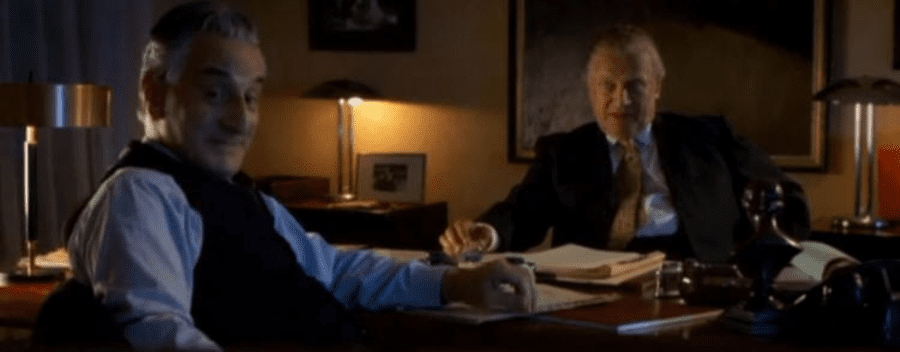
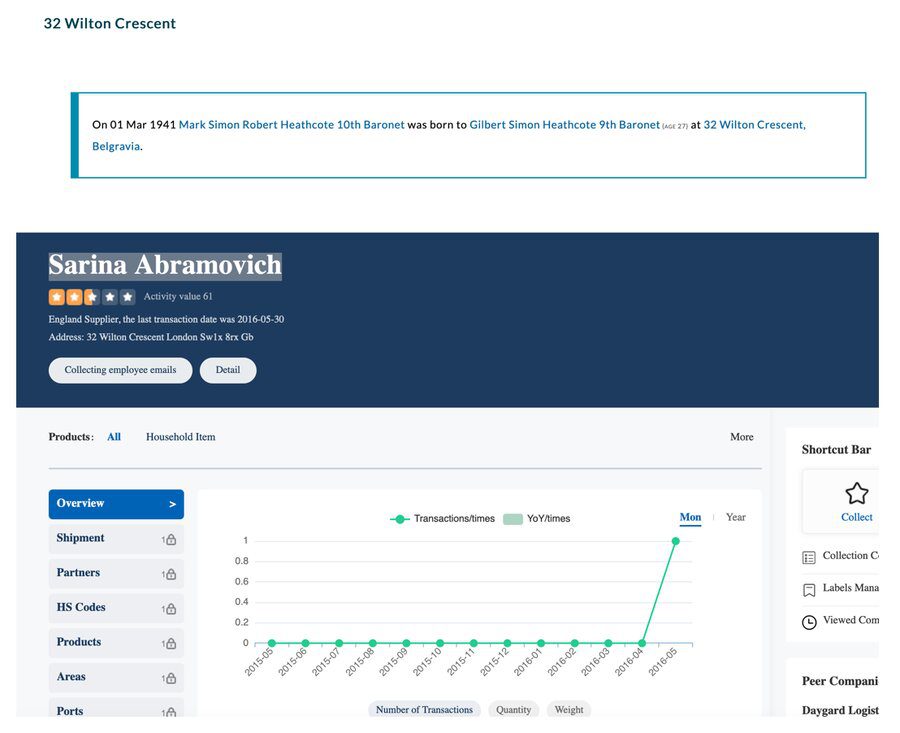
The story of the December 1970 slaying at 32 Wilton Crescent features in a 37:02-minute March 2023 episode of the excellent podcast ‘Scotland Yard Confidential’ – which can be listened to as ‘A Spotify Original.’ The description for the episode reads: “In December 1970, Julian Sessé, the long-serving butler to Granada TV Chairman, Lord Bernstein, was found brutally murdered in his basement flat in Belgravia. With little hope for a successful investigation, and two murder cases already on their books, local police quickly handed the case to Scotland Yard. Evidence gathered from the flat revealed that the elegant 65-year-old butler was in the habit of picking up younger men and entertaining them at his home. He was discreet and private in these affairs, and his personal acquaintances were equally secretive. Was his killer a stranger or a friend? And how would detectives trace him if no one was willing to talk? It fell to Detective Chief Superintendent John ‘Ginger’ Hensley to crack the case of the Peer’s Butler. Learn more about your ad choices.”In an edition of ‘The News’ on 16th February 1973 that reported on Julian Bassaine receiving a life sentence for the slaying of Lord Bernstein’s butler, other articles included one about a Burton’s Court, Chelsea, SW3 resident having had £1,100 fur coat stolen “while she was having her hair done” and another listing TV licence fines awarded to residents of Draycott Place, Sloane Court West, Lyall Streeet, Margeretta Terrace, Sydney Street and Swan Court. A tragic story of a mother and baby found dead in a bedsit in Onslow Gardens, SW7 was referenced on the same page along with an ex-Grenadier Guardsmen being found dead after a fit in a ‘super loo’ at Victoria Station, SW1. A tale of a drunken man being fined after throwing a bottle through a Kings Road boutique, the Little-Big-Horn was one of the day’s more light-hearted pieces of coverage; Thomas Patrick Canon of Redburn Street, SW3 told the judge: “I am terribly sorry for what I have done, but had no recollection of it. All over the weekend I have asked myself what reason I had to do it and I can’t come up with any answer. I have been thinking it was a nightmare. I wouldn’t like it, neither [if that had been done to a shop I owned].”The scene of a murder most horrid on the 19th December 1970 – 32 Wilton Crescent, Belgravia, London, SW1X 8RX. Beyond the then owner Sidney Bernstein (formally titled The Right Honourable The Lord Bernstein of Leigh in the County of Kent, 1899 – 1993), others who have have variously lived or have connections to the likely now worth upwards of £40 million residence have included Gilbert Heathcote, 9th Baronet (in 1941) and a lady named Sarina Abramovich (circa 2015 to 2016). Ms Abramovich was subsequently (in 2021) 432 Park Avenue, New York based and shares a surname with the former Chelsea Football Club owning, one-time Putin supporting billionaire Roman Abramovich, but it is unknown if they are related. A statue of Sir Robert Grosvenor KG stands just opposite 32 Wilton Crescent and others to have lived on this most tony of streets have included the 1st Earl Mountbatten of Burma, Lord Randolph Churchill, Quentin Crewe, the Grand Duchesss Charlotte of Luxembourgh and Demetri Marchessini.Essex born and Jewish, Sidney Bernstein, Baron Bernstein was lauded as “the dominant influence on the growth and development of commercial television” by the British Film Institute. Twice married and a father of three, his business interests included amongst other things a circuit of 60 cinemas and theatres, motorway services stations and a hugely profitable television rental business. He was a lifelong friend and partner of Sir Alfred Hitchcock in film production and turned Granada Television into a huge commercial success; he was portrayed by Steven Berkoff in the 2010 BBC one-off drama, ‘The Road to Coronation Street.’Sarina Abramovich is listed as being connected with 32 Wilton Crescent in 2015 and 2016 in documents relating to imports and exports. Whether she has any connection with the property now is unknown and records relating to the building remain shrouded in mystery. The Heathcote family were connected with the house in the 1940s when Mark Heathcote, 10th Baronet was born there in 1941.
Tea leaf Theresa May lookalike goes on the rampage in Hereford and robs a purse; at least she didn’t grab ‘The Donald’s’ hand this time round (or have to share a curry with rotten paedo Rolf Harris)
Featured in the Mirror this morning, it transpires it’s actually not the real Theresa May who has been on the rob in Whitecross Road, Hereford, but in fact just a body double of the ‘Boys Jobs and Girls Jobs’ loving ex-Prime Minister.
According to the paper, “cops are searching for a grey-haired ‘Theresa May lookalike’ after a woman’s purse was taken from a shop” on 11th December 2020. Going further, they added:
“The force released a CCTV image of a middle aged-looking woman wearing a red jacket similar to the one regularly donned by the ex-Prime Minister.”
“Web users were quick to point out the ‘striking resemblance’ to the current Tory MP for Maidenhead after police began circulating the photo.”
Elsewhere, LADbible reported the story had gone viral on social media with one user commenting:
“Looks like Theresa May fell on tough times after the Brexit fallout.”
Another added:
“Oh Theresa, surely times aren’t that hard. I’m sure Boris and his chums would lend you a fiver.”
Theresa The Tea Leaf – This purse stealer was widely described as a “Theresa May lookalike” after West Mercia Police released a CCTV image of her following a theft inside a Hereford store at around 10.30am on 11th December 2020. Of the theft a spokesperson for the force stated: “It is believed another woman put a newspaper on top of the wallet and then took both the paper and wallet. She then left the shop.”Theresa The Leaf – Lady May MP, herself, is often to be found dining with her ‘Garden Gnome-like’ hubby Sir Philip in Malik’s Tandoori House in Cookham, Berkshire. Here, the owner, is pictured serving her and also posing with another regular, her constituent and convicted paedophile Rolf Harris and his wicked wife Alwyn Hughes.
Welsh ‘mock castle’ once occupied by notorious spendaholic Lady Docker for sale for £2.85m; the Dockers were turfed out in 1956 after it was discovered they’d lavished the equivalent of £1.3m today of company money on the place without permission
Alleged inspiration for ‘The Pink Panther’ film, Norah Docker (AKA ‘Naughty Norah’ and ‘Lady Muck’) described herself as “an artificial blonde, among thousands of artificial blondes searching for stardom.”
Of her second husband, Sir William Collins, chairman of Fortnum & Mason, she announced: “He was 69, I married him for his money.”
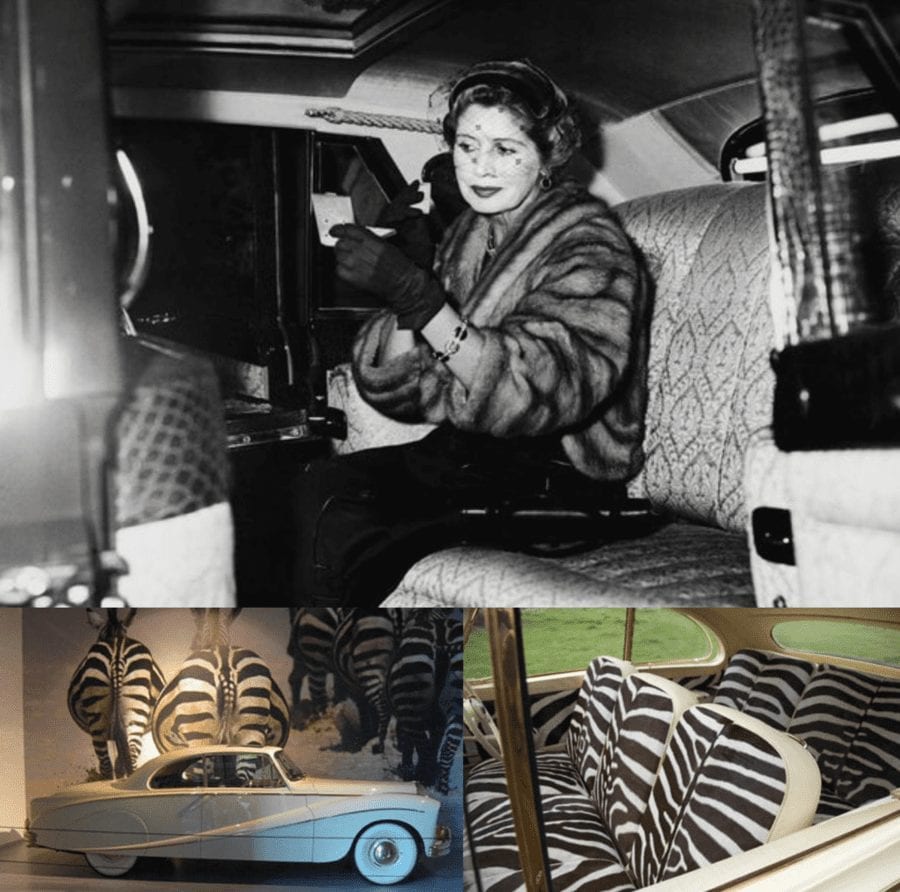
Lady Docker used her third husband Sir Bernard Docker’s company money to create Daimler cars upholstered in zebra hide – “because mink is too hot to sit on.”
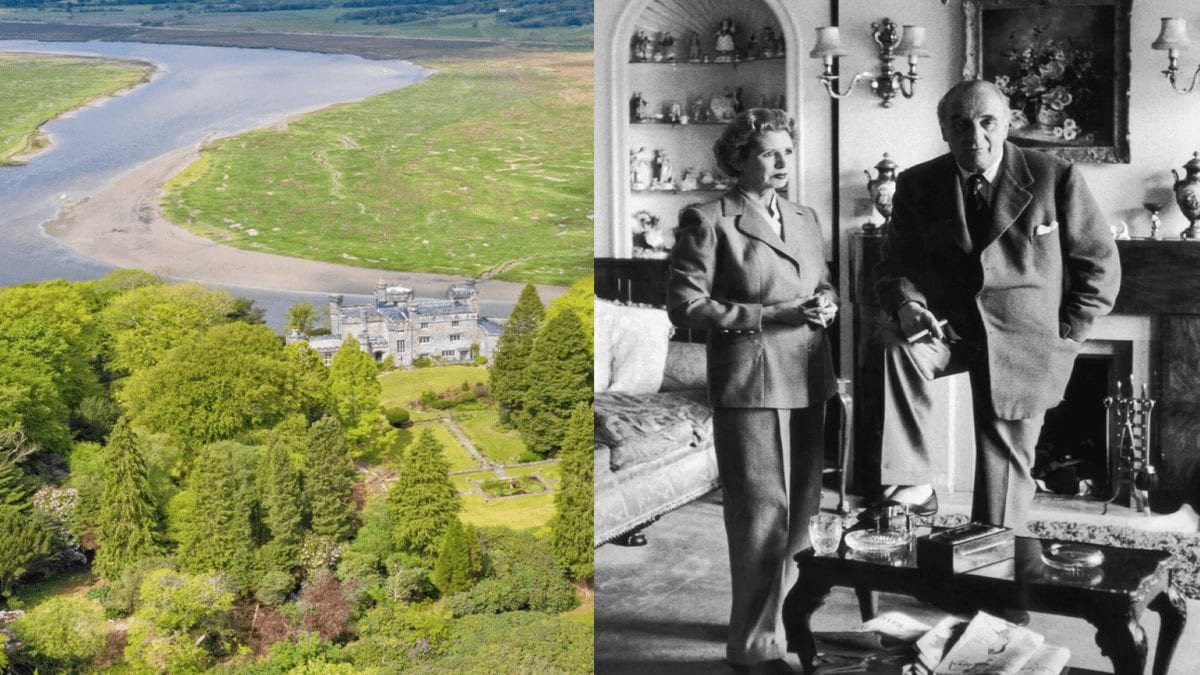
The couple also plundered the company to buy Glandyfi Castle in Wales and spent an equivalent of £1.3 million of today’s money on it.
The Grade II listed, early 19th century ‘mock castle’ became a small hotel and is currently for sale for £2.85 million.
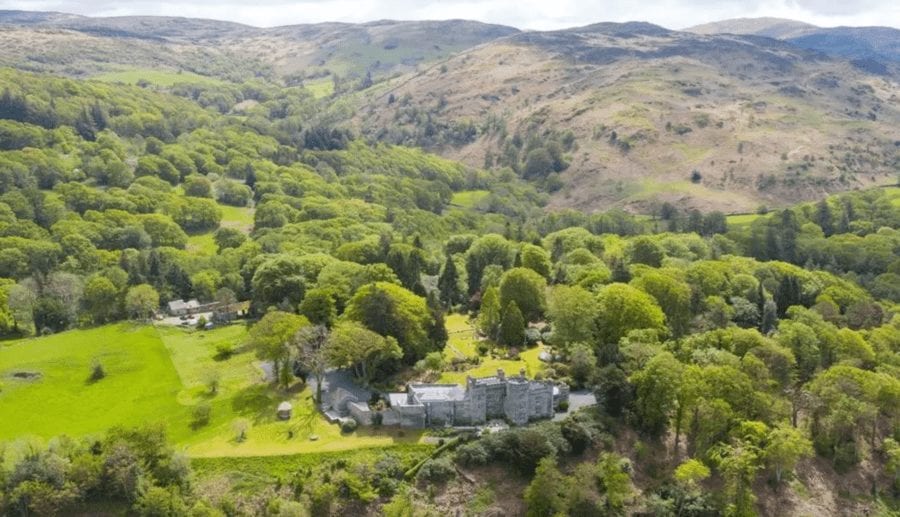
The best known ‘occupants’ of Glandyfi Castle, an early 19th century ‘mock castle’ eleven miles from Aberystwyth in Mid Wales, were Birmingham Small Arms Company (BSA) managing director and Daimler chairman Sir Bernard Docker and his notoriously decadent wife, ‘Naughty Norah.’
The Dockers, a “spendaholic” pair said to be the inspiration for the 1963 film The Pink Panther, lavished the equivalent of £1.3 million of today’s money buying and altering the castle in 1949 – the very same year they were robbed of £1.9 million of diamonds in today’s money at their Mayfair home also.
Sir Bernard and Lady Docker lived at Glandyfi until 1956 when it was discovered that they’d plundered the company through the presentation of vast expenses. Aside from the castle, Lady Docker had lavishly created five show ‘Docker Daimler’ show cars covered in gold and upholstered with amongst other things zebra hide. When asked why she had done such, she coyly responded: “Because mink is too hot to sit on,” but subsequently after these and the castle had to be returned, the couple bought a Bentley Continental as revenge.
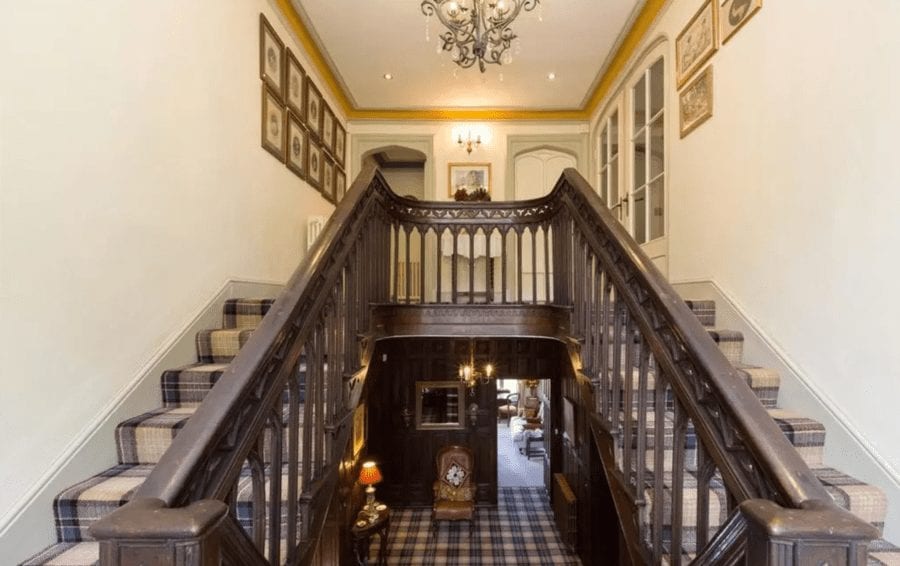
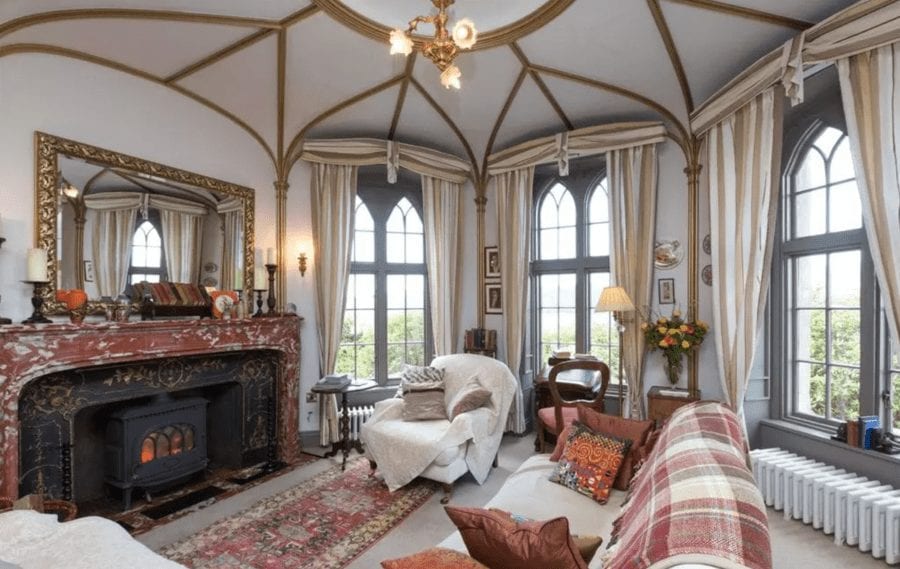
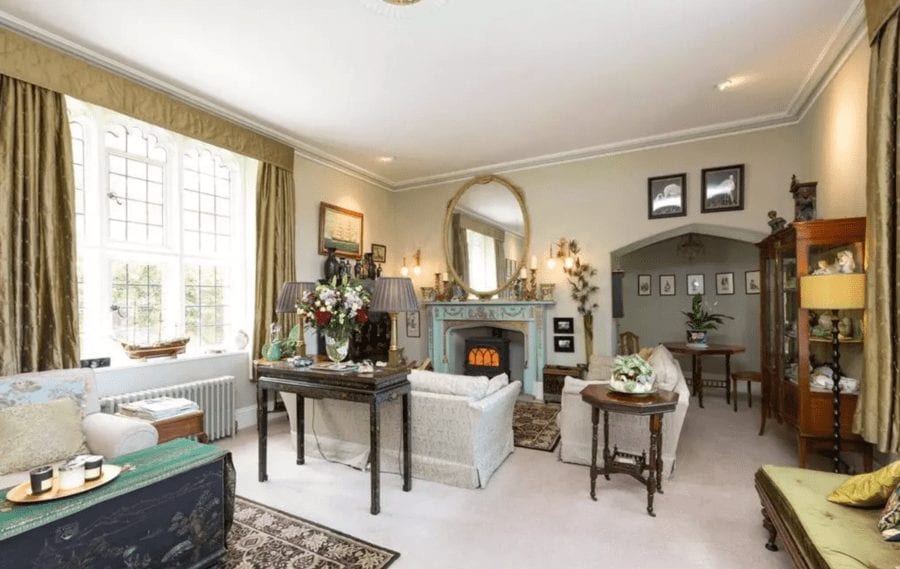
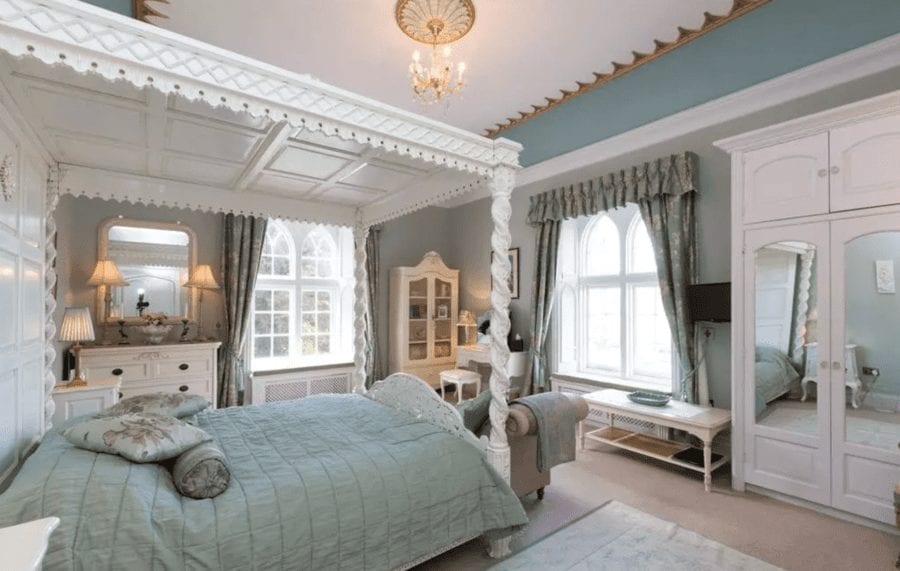
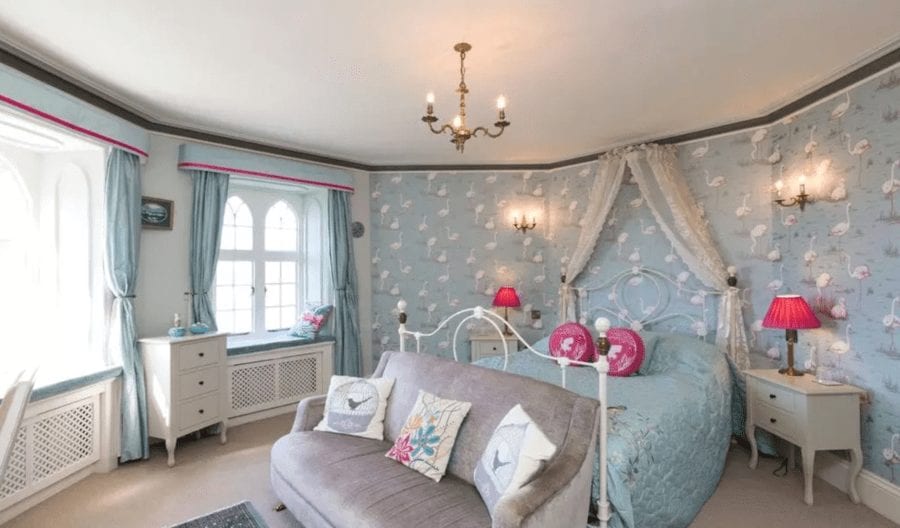
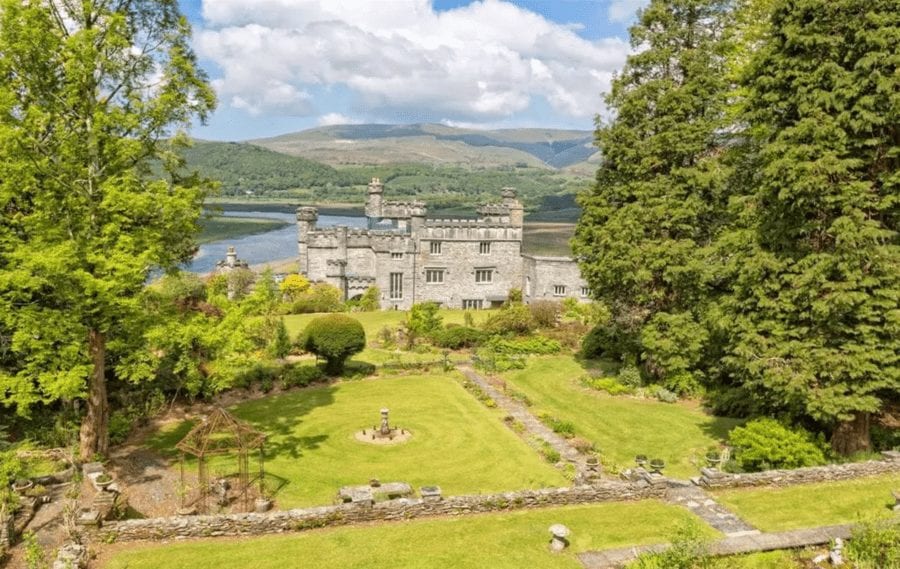
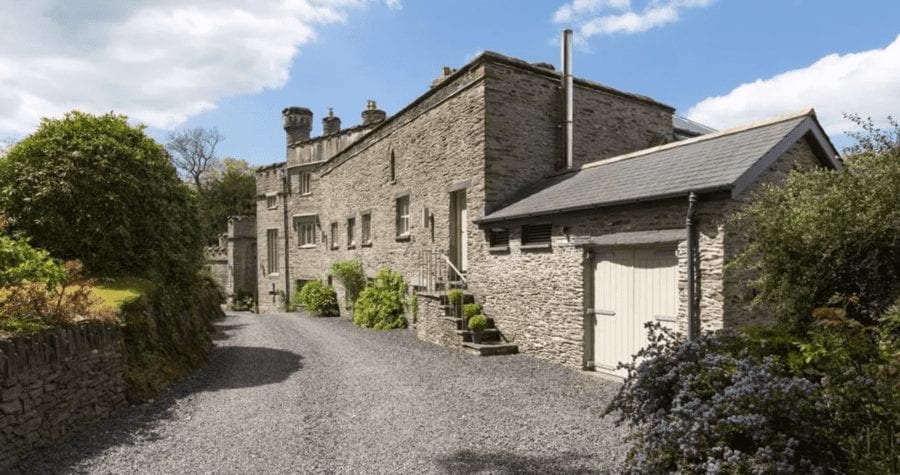
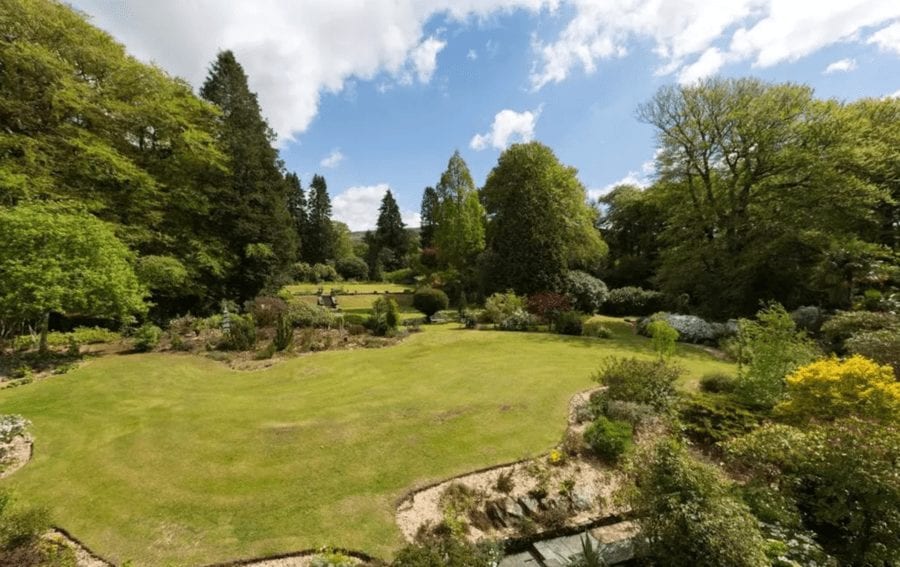
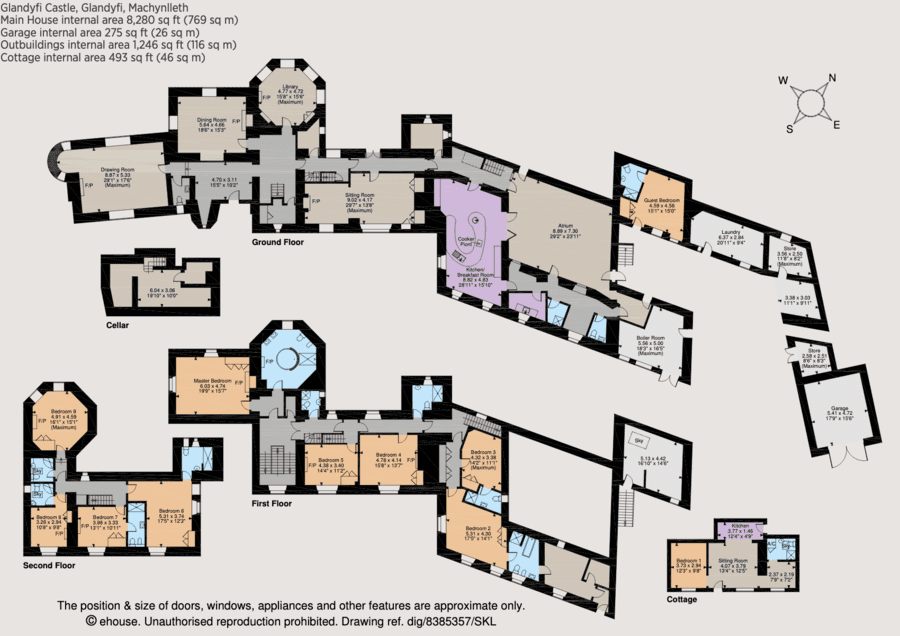
Now, today, Grade II listed Glandyfi (pronounced ‘Glandovey’) is for sale for what seems like a comparatively reasonable sum of £2.85 million, but it now comes minus the “glitzy” additions made by the Dockers. The Regency Gothic style stone and slate main building extends to 8,280 square feet over four floors and provides 5 reception rooms, 10 double bedrooms and 10 bathrooms and in addition comes with a courtyard with guest accommodation, a 1 bedroom lodge and a range of disused barns.
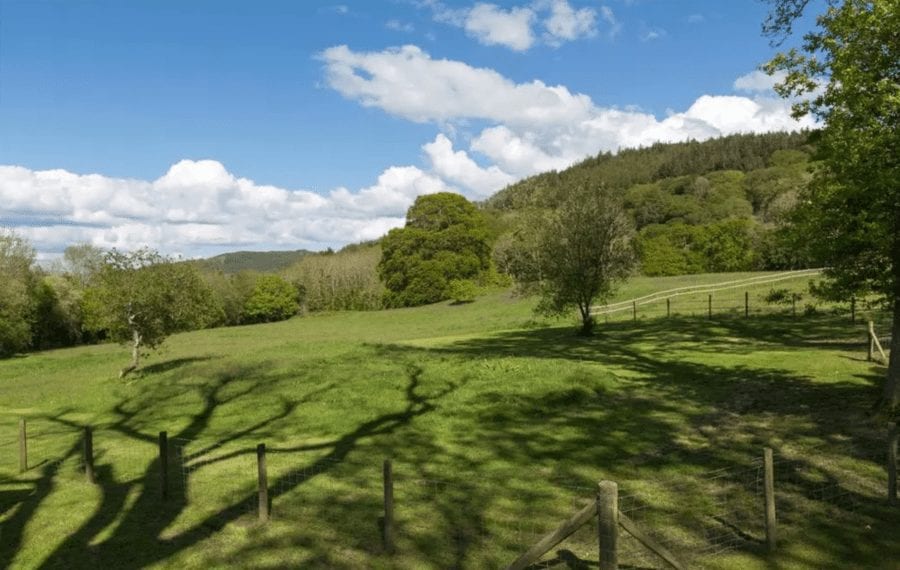
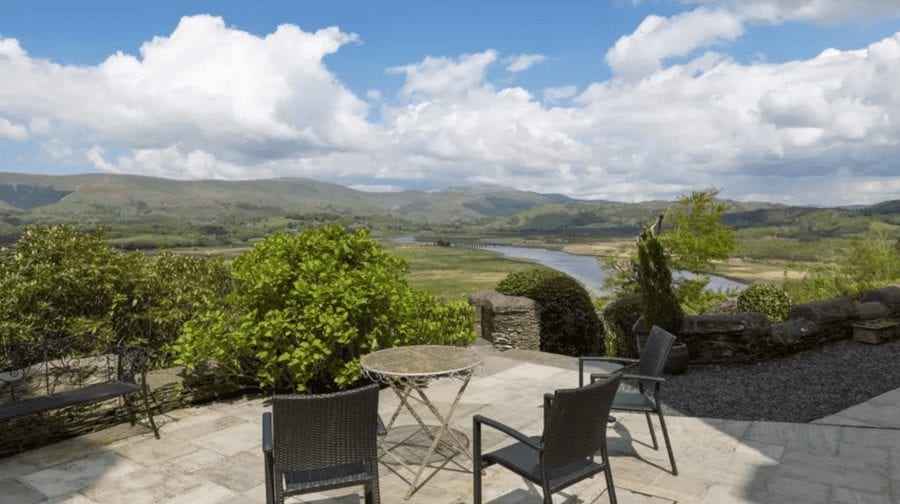
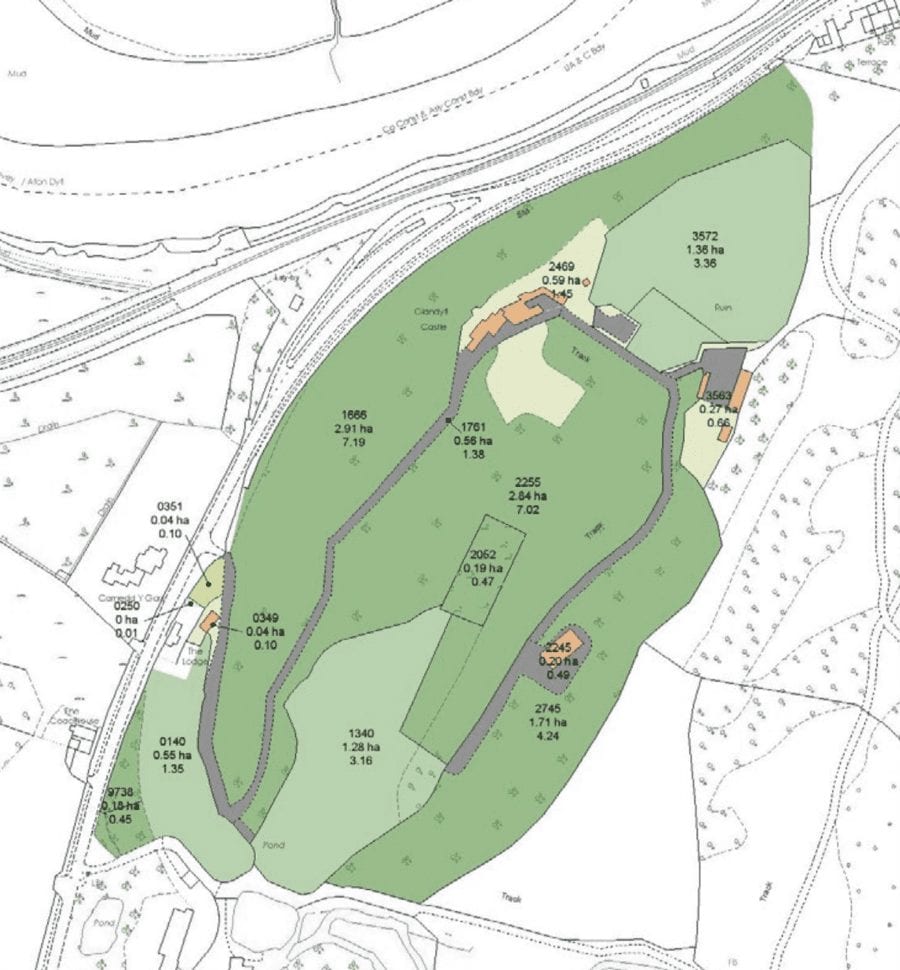
Externally, aside from a mature landscaped garden, the 31.43 acre plot includes a walled former kitchen garden, grazing land and woodland, but what is most impressive is the setting of what James Delingpole termed “not so much an austere, toff’s castle as a theme-park recreation of one” with “undoubtedly the most magnificent view from any house I know in Britain.”
Speaking to Anne Ashworth of The Times last time the allegedly haunted castle was placed for sale in July 2019, current selling agent Belinda Hutchinson-Smith of Strutt & Parker – whom also was involved in marketing the property to the current owners, the Holmes family, back in 2007 when she worked at Savills – stated:
“It was surreal [in 2007]. We were in a time warp. Almost nothing had changed since the Dockers moved out in the 1950s. There were 1950s newspapers strewn across the dining tables and in the bedrooms, books were left open on bedside tables. But, at the same time, the house had a magical feeling.”
In comments to the BBC in September 2014, when the former Docker one-of-one 1954 Daimler ‘Stardust’ was sold at auction for £110,000, Glandyfi’s current owner Maureen Holmes remarked:
“[Sir Bernard and Lady Docker] were clearly living the dream. From the red and white marble fireplaces to a path through the woods made entirely of upturned gin bottles, the castle oozed excess.”
“The older people around here who remember them say they were unbelievable, almost mythical figures. At a time when everyone else was still on rationing, the Dockers were thundering through the lanes in limousines made out of gold and silver.”
“The irony is, that whilst the locals felt the Dockers’ perceived wealth meant that they were utterly removed from the community, in actual fact they probably had no more money than anyone else in the area.”
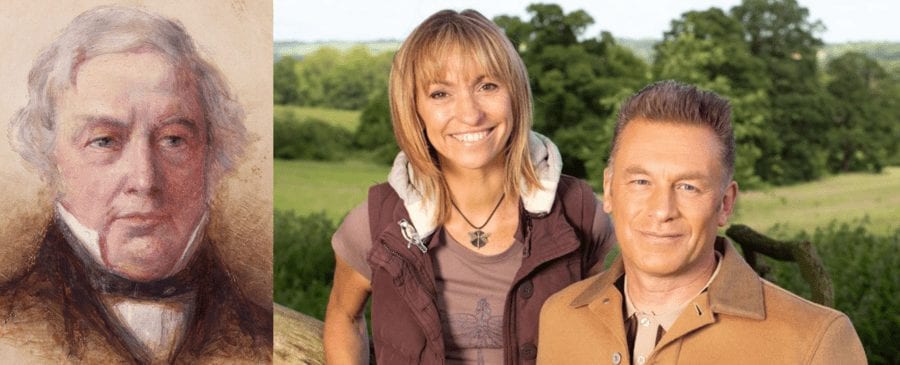
Lady Docker pictured in one of the opulent ‘Docker Daimler’ show cars she commissioned her husband’s company to create; the most famous of the examples was known as the ‘Golden Zebra’ – this 1955 Daimler two-door coupé based on the DK400 chassis featured metal trim pieces plated in gold instead of chrome, an ivory dashboard and zebra-skin upholstery.Thrice married Lady Docker (1906 – 1983), born Norah Turner and also variously Norah Callingham and Lady Collins, was born in Derby and began her career as a hostess at the Café de Paris in London. In Lancashire, her name is still used as a derogatory substitute for ‘Lady Muck’ and in spite of her once extravagant lifestyle, she died in poverty at the not so chi-chi Great Western Royal Hotel in Praed Street, Paddington, London. In one of her last interviews, Lady Docker remarked: “I have always had the persistence to march on. I will continue to do that, until the day I die.” In spite of her reduced circumstances, she is said to have “retained a remarkable joie-de-vivre, downing glasses of pink champagne to the last.”English poet Thomas Love Peacock got married at Glandyfi Castle in 1820; Chris Packham and Michaela Strachan stayed at the property whilst filming ‘Springwatch’ in 2012.
The Names & Numbers – Glandyfi Castle, Glandyfi, near Machynlleth, Ceredigion, Powys, Mid Wales, SY20 8SS, United Kingdom
October 2020 – Relaunched for sale for £2.85 million ($3.69 million, €3.15 million or درهم15.54 million) through Strutt & Parker.
June 2019 – Listed for sale for £2.85 million ($3.69 million, €3.15 million or درهم15.54 million) through Strutt & Parker with 31.43 acres of land.
2012 – Whilst filming the BBC’s Springwatch, presenters Chris Packham and Michaela Strachan stayed at the castle. Strachan wrote in the guest book: “I couldn’t imagine a nicer, more comfortable place to stay… I felt like a princess in my amazing room.” Packham added: “Staying at the castle has been a total treat. Hospitality, fine food, wonderful environment, views to die for and history.”
May 2007 – Offered for sale for £1.25 million ($1.62 million, €1.38 million or درهم5.94 million) through Savills with 43 acres of land on behalf of the late owner, one Mrs Betty Piper (1914 – 2006).
January 1964 – The building is given a Grade II listing, reference 9874, and is described as “the only example [of a] Georgian country house in picturesque castellated style in the county.”
1956 – Following discovery of the Dockers’ “profligacy” and their removal from BSA, the castle is sold.
1949 – Purchased by Birmingham Small Arms Company Limited for the use of Sir Bernard and Lady Docker for the sum of £12,000 or the equivalent of £427,000 ($552,000, €471,000 or درهم2 million) today. The company then lavished £25,000 or the equivalent of £890,000 ($1.2 million, €983,000 or درهم4.2 million) today on “opulent renovations of the home.”
1906 – Following the death of Charles Jeffreys, the castle and its lands pass out of the hands of that family after 114 years.
1820 – English poet Thomas Love Peacock (1785 – 1866) married Jane Griffith (also known as Jane Gryffydh) at the castle. His fellow poet and friend Percy Bysshe Shelley (1792 – 1822) referenced Peacock’s wife “the milk-white Snowdonian Antelope.”
Early 19th century – Built to the designs of an unknown architect for George Jeffreys, High Sheriff of Cardiganshire in 1819 on an estate acquired by his great uncle, Edward, in 1792.
Some of Lady Docker’s Notable Remarks
Of herself, as she moved to London to seek fame and fortune:
“An artificial blonde, among thousands of artificial blondes searching for stardom.”
Of her vision in life:
“[To] bring some happiness back to a world left hollow by the horror of two world wars… We bring glamour and happiness into drab lives. The working class loves everything I do.”
Of her father:
“A self-made man.”
Of her male “targets” and those she viewed to be husband material:
“Through my life, I set both my sights and my price high.”
Of her chairman of Fortnum & Mason second husband, Sir William Collins:
“He was 69, I married him for his money.”
Of her third husband, Sir Bernard Docker:
“I deliberately trapped him.”
When asked to justify why she covered the seats of a 1955 Daimler in zebra skin:
“Zebra, because mink is too hot to sit on.”
On the loss of the ‘Docker Daimlers’ when they were taken away from her and her husband:
“It’s not the loss of the gold cars that makes me feel like this… And weren’t they fun? They were like my children… No, it’s that lovely party I was planning for 25,000 of the company’s workers for my 50th birthday. A tiptop affair – and now it’s all off. How could they do this to [Sir Bernard] after 17 years? Why, he’s such a hard worker that he even had a direct line to the firm from our yacht.”
Of Prince Rainier of Monaco after her son was banned from his son’s christening and she decided to burn the Monacan flag:
“I’m at war with Rainier.”
To the captain of the liner the Queen Elizabeth:
“This ship is being run by a bloody Communist! Don’t you dare touch me, you bloody Communist!”
Of some miners she invited on her yacht:
“The dear boys, I just loved them! It proved conclusively to me that the social barrier only exists in the mind.”
Of a Monaco casino employee she had allegedly assaulted:
“It was a good sock I gave that man, and he deserved it.”
Of the people of Jersey:
“They are the most frightfully boring, dreadful people that have ever been born.”
PICTURED TOP: Glandyfi Castle and the estuary beyond; Sir Bernard and Lady Docker at the castle.
‘The Steeple Times’ reports on anything but a ‘Super Saturday’ at The Botanist on Sloane Square; we share here imagery and a video of a thieving woman whom must be caught
It was sadly anything but a ‘Super Saturday’ for one loyal reader of The Steeple Times yesterday after her designer handbag was stolen in plain sight at The Botanist on Sloane Square.
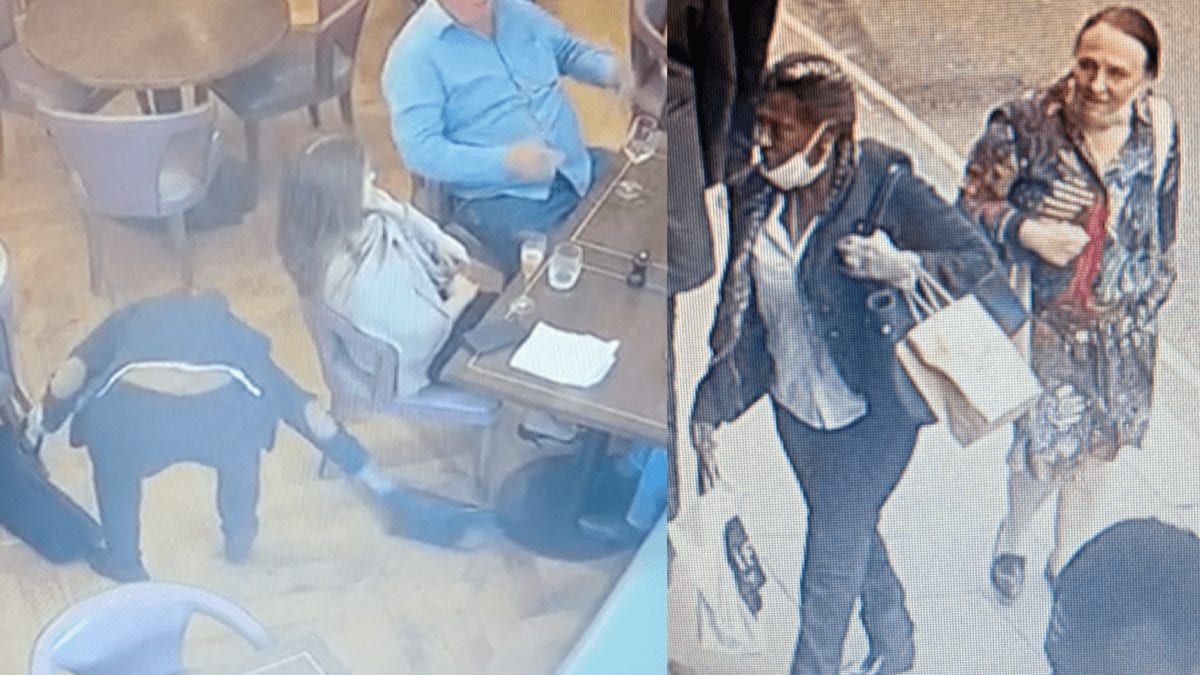
Captured on camera with security guards on the premises also, the brazen thief – a black woman with black hair with a white stripe accompanied by a white woman with black hair and a colourful coat – helped herself to what she was not entitled at around 3.45pm.
A video of the event, later shared on Twitter by Matthew Steeples of ‘The Steeple Times’ attracted comments including: “Absolute scum” and “Lock her up!” of the perpertrator.Another added: “Those braids are very distinctive.”
Disappointingly for the victim, aside from the theft of an item worth several thousand pounds, the attitude of the management of The Botanist was not especially sympathetic.
Lamenting how she was treated after the crime had been identified, the victim told The Steeple Times: “I didn’t expect much, but they had a security guard and he didn’t even notice what was going on. They may as well have a Pug guarding their door. One of them would have been far more effective than the short-sighted beefcake they had there yesterday!”
Do you know this woman? If so, please report her to the Metropolitan Police or send her name to us at [email protected] and we will be sure to pass it on.
The sequence of events of the theft in the order it was caught on camera (left to right, from top left) at The Botanist at 7 Sloane Square, London, SW1W 8EE on 4th July 2020 at around 3.45pm.
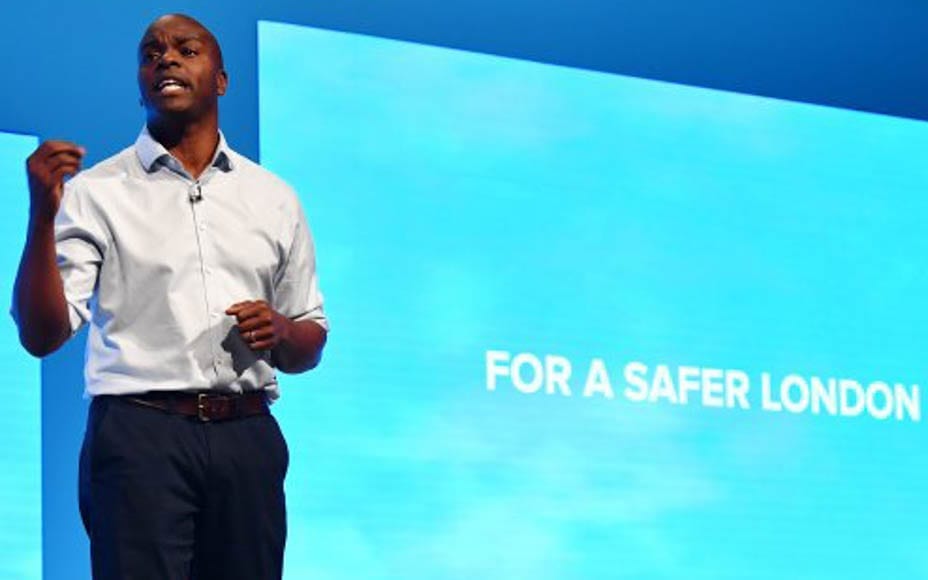
Mayor of London candidate Shaun Bailey’s policy of giving out burglar alarm to 300,000 homes is utterly ludicrous
Burglar and car alarms are certainly amongst the most pointless inventions in history. Generally ignored, they annoy those in their vicinity and never seem to work when they’re actually required.
Now, first reported in the blog From The Hornets Nest, “man of gimmicks” Shaun Bailey – the Conservative candidate for Mayor of London – has decided to “give” burglar alarms to every Londoner aged over 65.
In a video shared on Twitter, Bailey announced his policy but did not cite any evidence as to why it would actually be effective. He remarked:
“What I am suggesting I will do is to give free burglar alarms to people aged over 65. They are the most vulnerable people in our communities and they need this protection and there’s the other end of this conversation as well. It makes burglary harder and what that does is reduce the amount of people who become career burglars.”
Patronisingly, this foolish man with pockets plainly as large as China then added:
“Of course if you really have one or you feel that you can buy your own one, please do go ahead. But you are talking about 200,000 to 300,000 Londoners who really need that support.”
As From The Hornets Nest rightly points out, “the millions he proposes to spend [would be] better deployed on replacing ‘on the streets’ police removed whilst he was ‘advising’ [David] Cameron on crime.”
Grade II* listed Cumbrian mansion built by opium dealer and once marketed for £1.5 million for sale for just £460,000; it was also the scene of the UK’s biggest ever cannabis raid in 2012
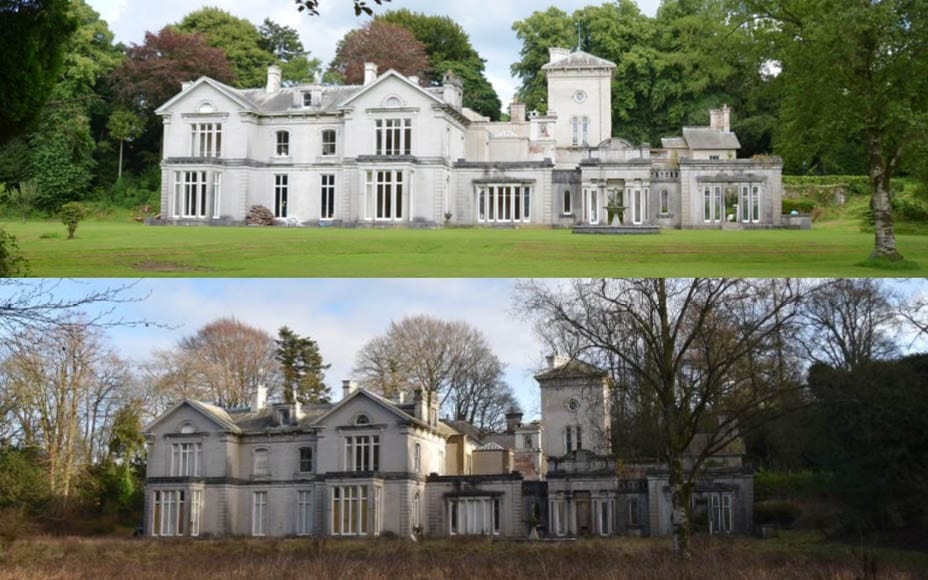
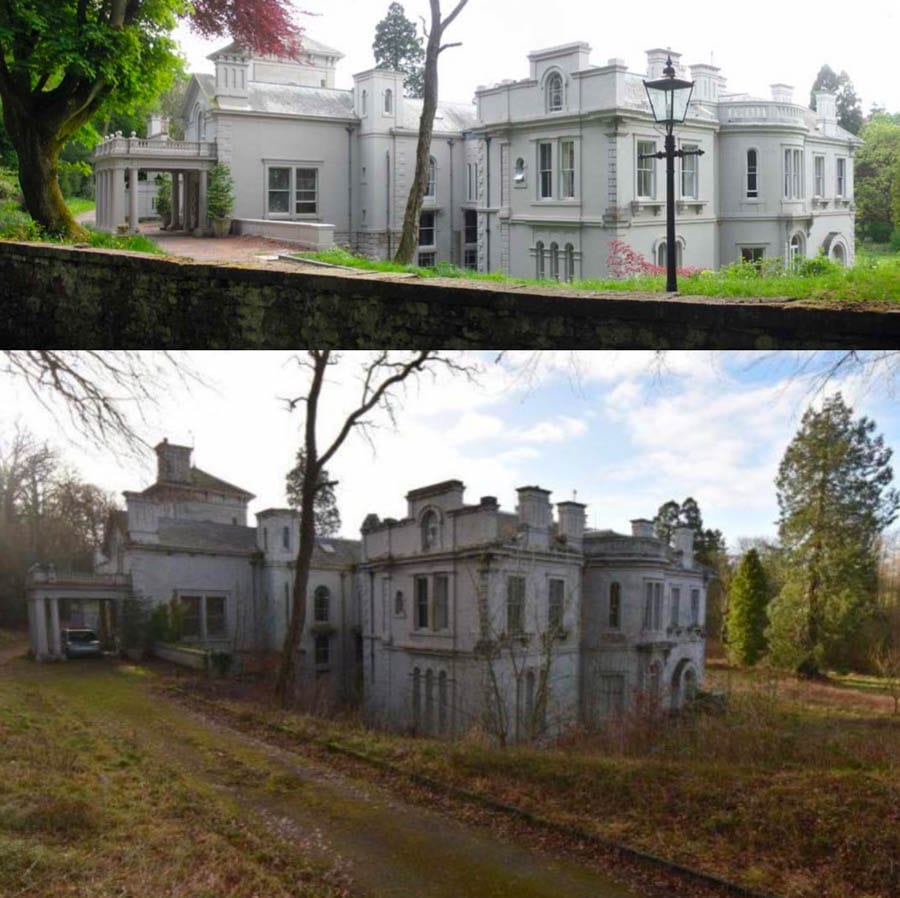
A 23,000 square foot, 52 room, mid-19th century Palladian mansion in the Westmorland Dales National Park is to be sold at auction – by order of the mortgagees not in possession – for £1 million less than it was marketed for in 2014. It is sadly now described as being in an utterly wrecked, vandalised condition.
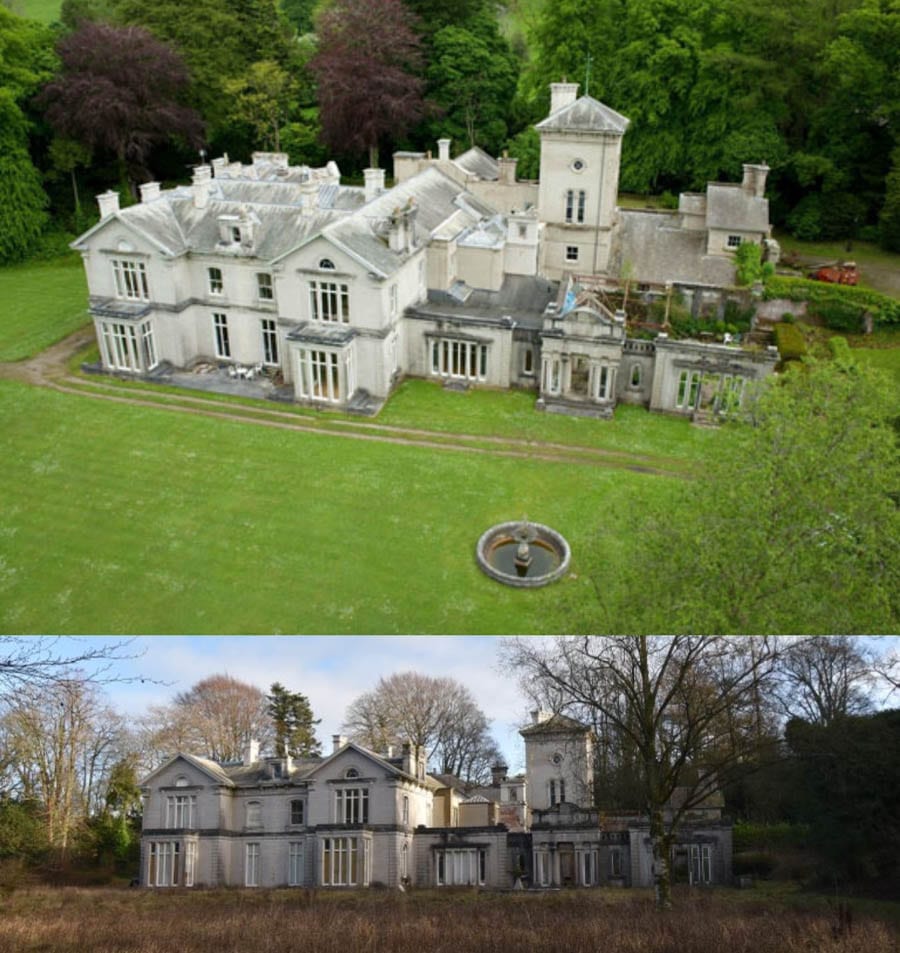
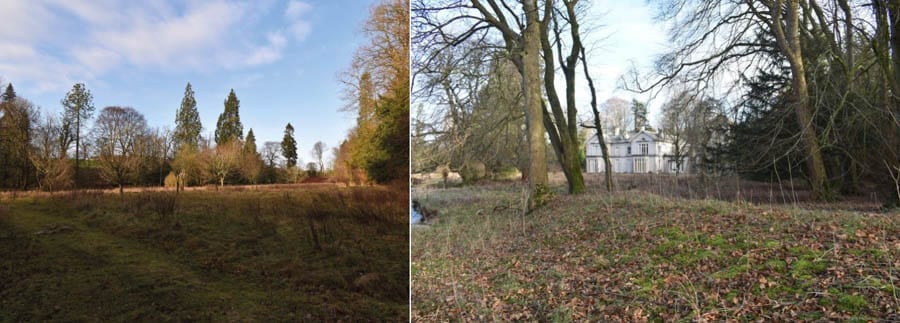
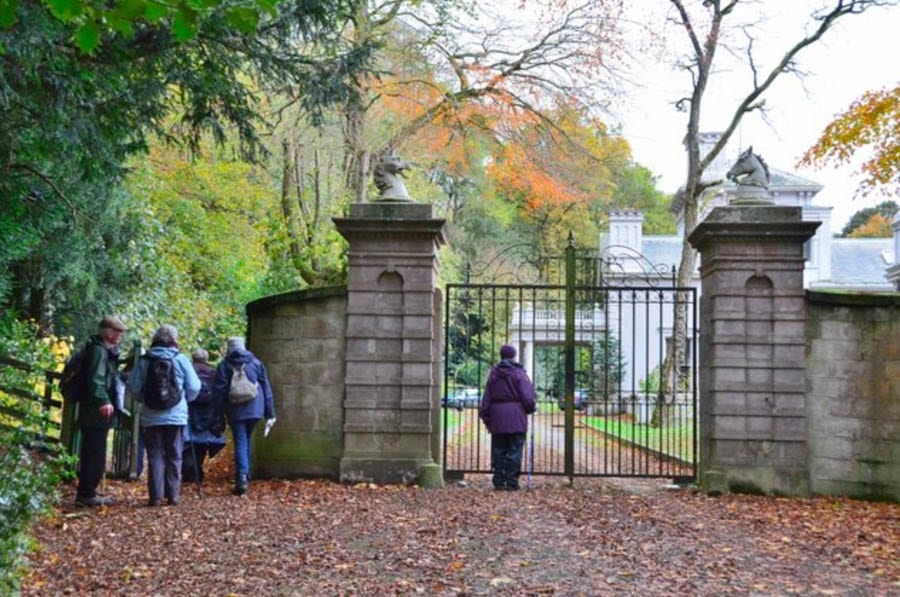
The entrance elevation of the mansion then and now
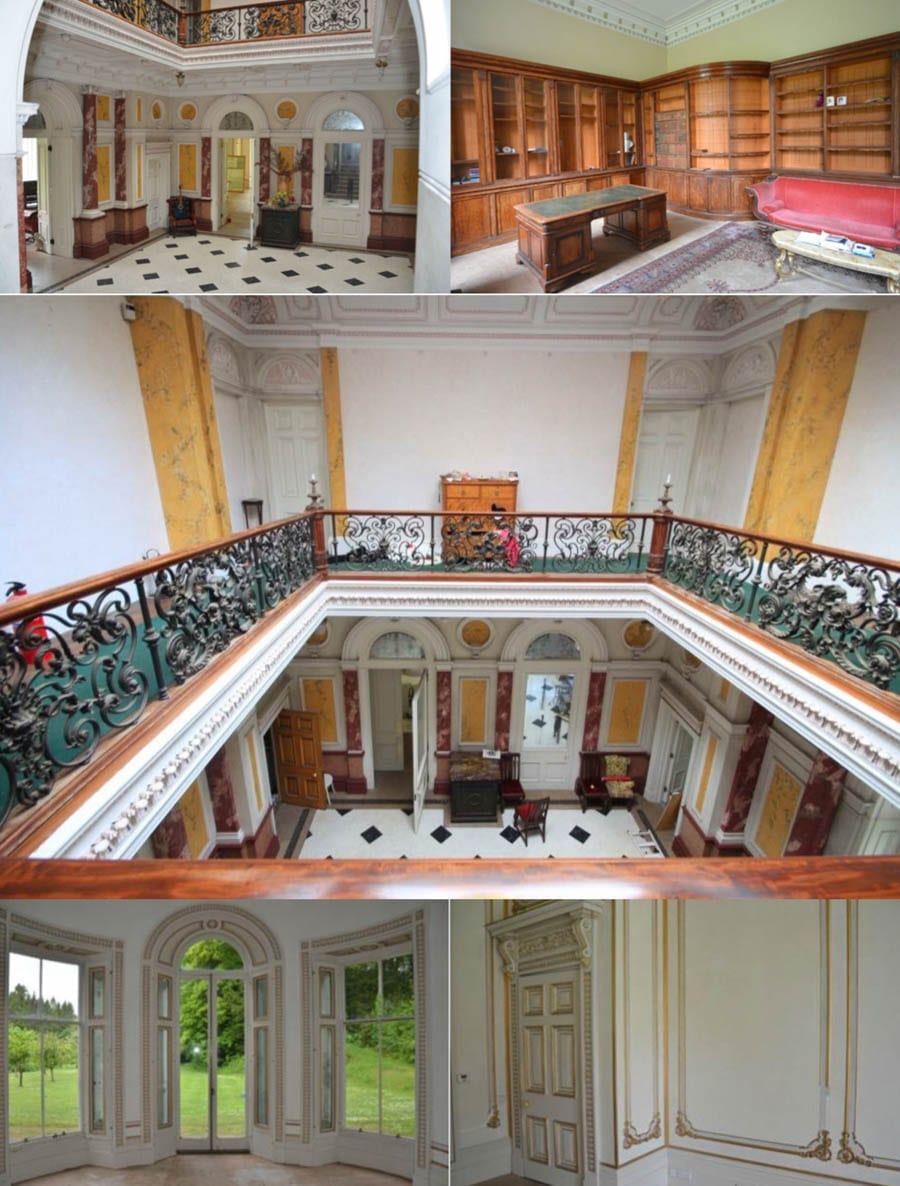
The strikingly grand interiors of Flass (prior to visits from the ‘Urban Explorers’)
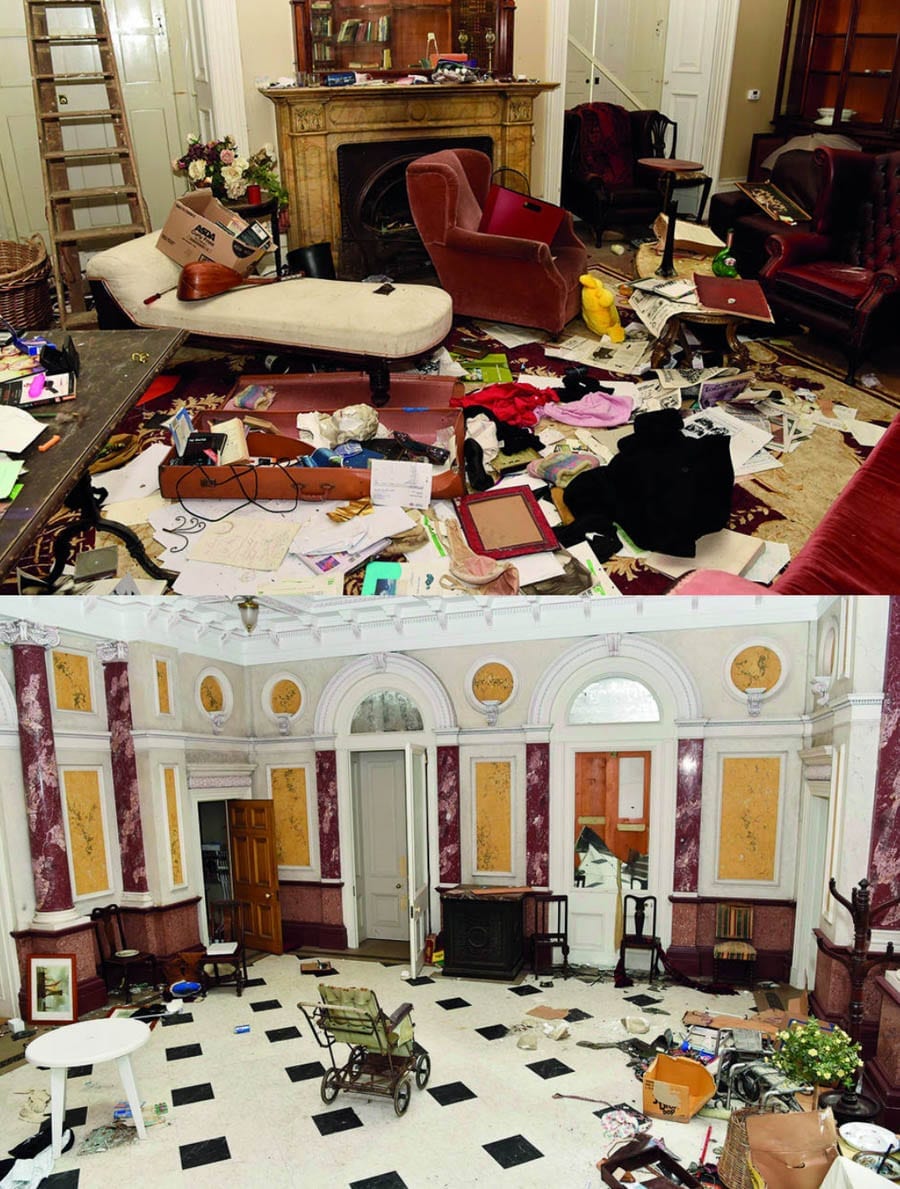
The completely trashed interiors of the mansion (after visits from the ‘Urban Explorers’)
Built in 1851 for wealthy merchant brothers and tea and opium magnets Lancelot and Wilkinson Dent, 8-bedroomed Flass at Maulds Meaburn, near Penrith in Cumbria was designed by architects Grey and Mair and includes furnishings by the renowned firm Gillows of Lancaster and London.
Opulent to its core and said to have featured marble fireplaces, ivory door handles and friezes with pearls, Flass remained in the Dent family until 1973. Just prior to being sold for £17,000 (the equivalent of £202,000 today) that year to a historian named Frank Walsh, the then owner Sir Robert Dent opened up an attic of the house and discovered items from the Mughal Empire that he then auctioned for the astounding sum of £220,000 (the equivalent of £2.6 million today).
Subsequently this vast stucco finished, limestone built house – complete with a Doric porte-cochère and a three-storey tower – became a care home and was then after sold in 2000 to a singer-songwriter best known for co-writing the creepy Christian crooner Sir Cliff Richard’s Devil Woman named Christine Holmes (also known as Kristine Sparkle) and her husband Paul Davies. The pair turned the property into a performing arts school.
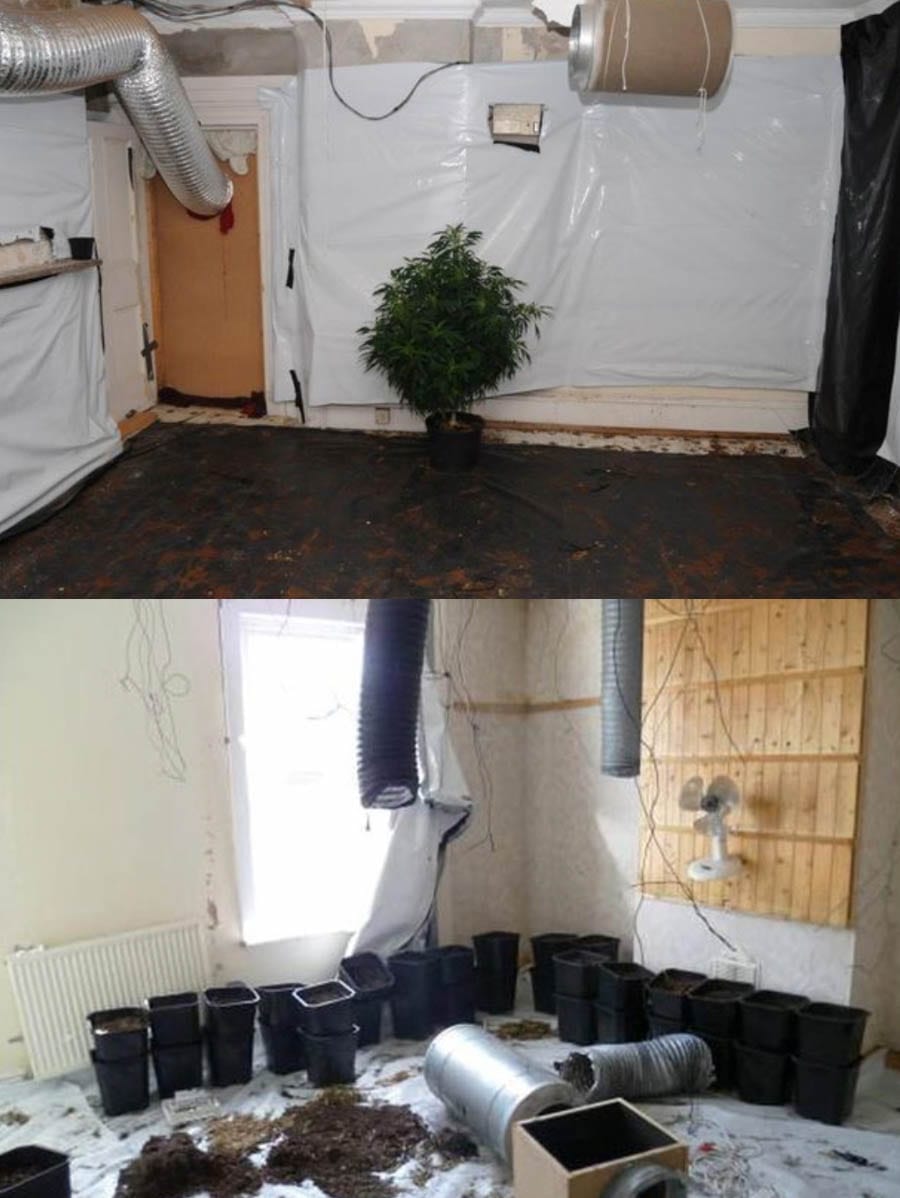
After the couple divorced, Davies took control of the mansion but due to spiraling maintenance costs, he eventually got himself involved with a gang of drug dealers in 2011. Due to what rental agents at the time described as the house being “totally private and hidden away, with an unmatched seclusion and charm,” Davies and his five cohorts were able to grow cannabis with a street value of £5.26 million undetected until a neighbour became suspicious. He was jailed for his role in the crime for three years and eight months in September 2015.
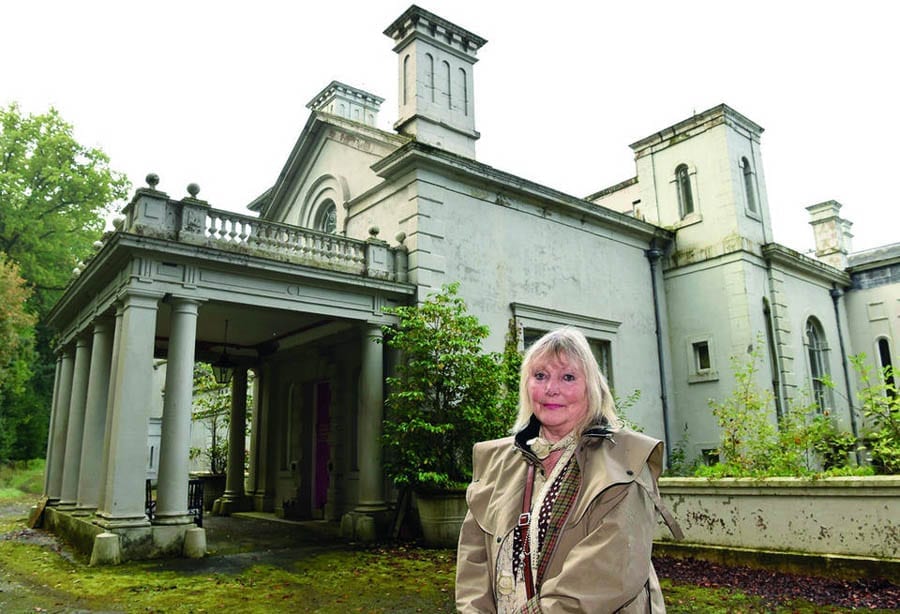
Singer-songwriter Christine Holmes outside Flass in September 2017 (after visits from the ‘Urban Explorers’ and their having trashed her home)
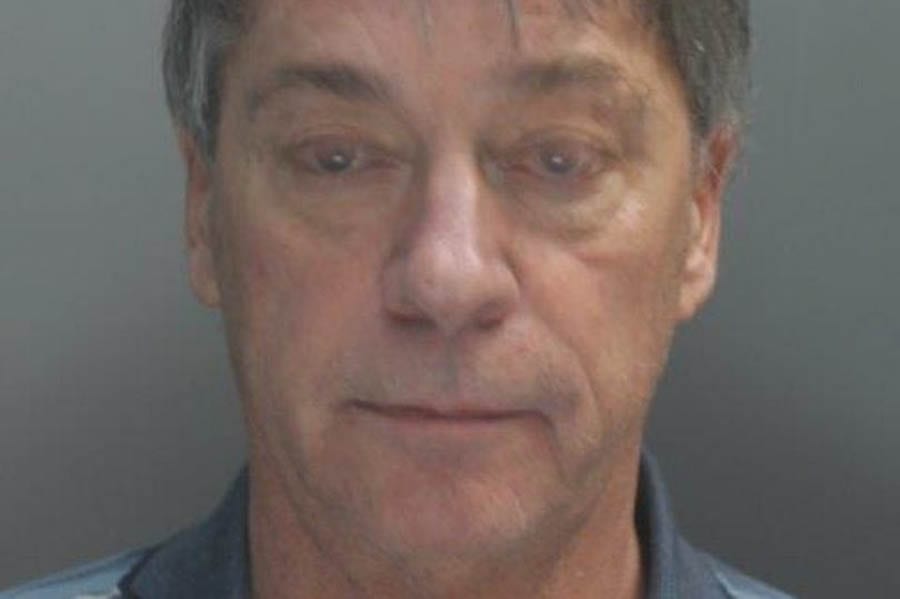
Paul Davies turned Flass into Britain’s biggest cannabis farm (and got himself three years and eight months in jail for his efforts; on his conviction his representative said: “He blames nobody but himself for getting involved in this criminal business”)
The “massive scale” £5 million cannabis farm operated at Flass was described in court as “a professional setup” and having the “real hallmarks of organised crime”
Christine Holmes subsequently took back control of Flass and after trying and failing to sell the house for £1.5 million spent £200,000 on renovations to put right the damage done by the drug operation. Her bad luck, however, was not to end there. In September 2017, the Cumberland & Westmorland Herald reported that a gang of ‘Urban Explorers’ had raided the somewhat derelict building and filmed their exploits. In the weeks that followed, trespassers returned at least twelve further times and “ransacked and trashed” the once glorious residence. She told the paper:
“I was absolutely horrified when I saw [videos of the house] online. I couldn’t believe how anyone could come into my home and believe it was an abandoned building.”
“I think since then people have been staying in the building and have even been there hiding while I’ve been there. I’m petrified. These are evil people who are breaking into my home. I think it’s becoming a game to them. They are breaking in every day.”
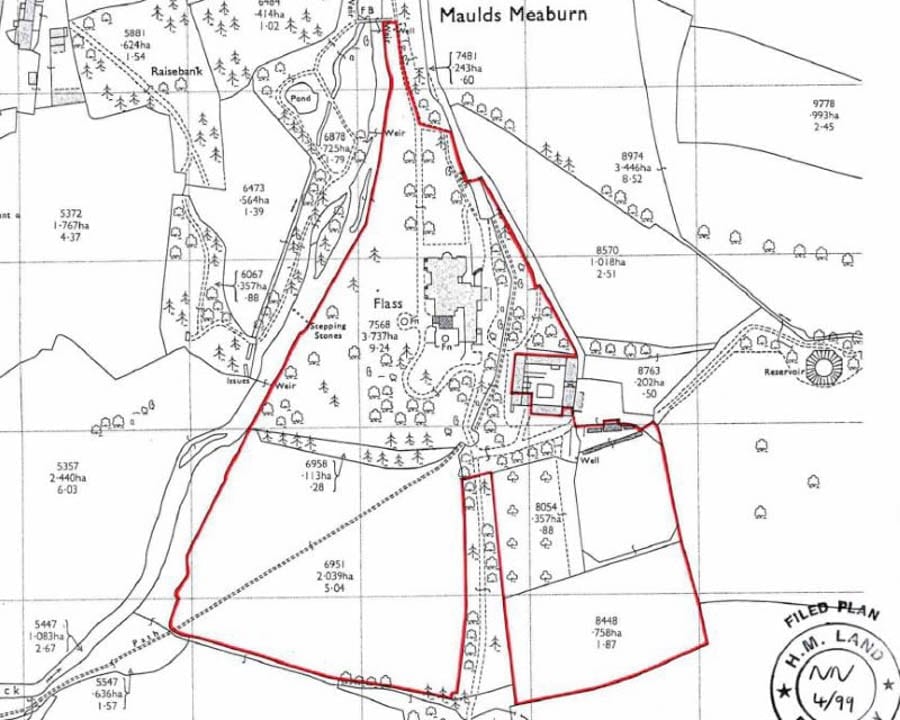
Auctioneers Harman Healy will now offer Grade II* listed Flass along with 17.5 acres of overgrown grounds with a guide price of just £460,000+ on 30th January. Christine Holmes no doubt will be glad if she finally gets shot of what she likely ended up considering to be the worst kind of white elephant.
Flass – The Numbers
January 2019 – To be offered at auction with a guide price of just £460,000 ($596,000, €525,000 or درهم2.2 million).
July 2014 – Offered for sale for £1.5 million ($1.9 million, €1.7 million or درهم7.1 million).
2000 – Sold for £490,000 ($635,000, €559,000 or درهم2.3 million) to the currently jailed drug dealer Paul Davies and his then wife songwriter Christine Holmes.
1998 – Reduced to £650,000 ($842,000, €741,000 or درهم3.1 million).
1997 – For sale for £750,000 ($972,000, €855,000 or درهم3.6 million).
1982 – Sold for £115,000 ($149,000, €131,000 or درهم547,000) to a retired solicitor named Malcolm Whiteside. He turned Flass into a care home which he ran with his wife Mary.
1973 – Sold by Sir Robert Dent, a descendant of the family who built the house, for £17,000 ($22,000, €19,000 or درهم81,000) to a historian named Frank Welsh.
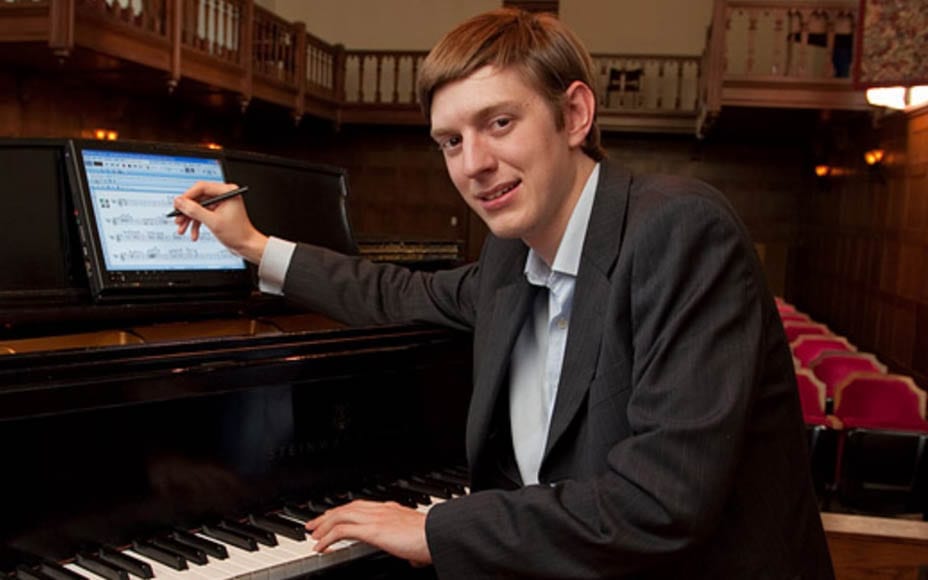
Bizarrely largely overlooked by the mainstream media, the son of the ousted ex-MP for Kensington Lady ‘Call Me Victoria’ Borwick is an extremely well connected man who keeps himself under the radar on social media. The 31-year old has just 500 followers on Twitter – a surprisingly low number given he has been described as a “computer specialist” – and was put in a position of huge power as Vote Leave’s chief technology officer from August 2015 to July 2016.
Educated at the University of Richmond, Virginia from 2006 to 2010, with a period studying law courses at Cambridge briefly during 2008, Borwick subsequently worked in IT for the financial services company Killik & Co in 2012 and simultaneously “developed music technology for interactive lessons.”
More interestingly, this youngster’s move into political data profiling came also in 2012 when he founded a company named Kanto Systems with an aim of “bring[ing] UK Campaigning into the 21st century.” Here, Borwick developed a “mobile canvassing app” and came into contact with Cambridge Analytica in order to provide them with “digital services,” according to The Huffington Post. In turn, he sold an app to Cambridge Analytica’s parent company, SCL, and now, in March this year, his firm was brought in by Ireland’s Save The 8th anti-abortion campaign group as part of their efforts “to persuade Irish voters to keep the country’s strict anti-abortion laws.”
“Hiring Thomas Borwick to create and manage a website is like employing the SAS to run security at a school hop or bringing in Einstein to tot up your shopping bill,” comments journalist Fintan O’Toole in The Irish Times, and in further revelations in the Evening Standard late March, Borwick himself admitted to also having worked with the equally controversial Canadian data firm Aggregate IQ – an operation that earned £3.5 million working for Vote Leave during the 2016 referendum campaign.
The public and press need to wake up and smell the coffee. The manipulation of politics in America, Britain, Ireland and elsewhere runs far deeper than even the most avid viewer of the Daily Politics could imagine. Figures like Thomas Borwick may well operate in the backrooms but it is increasingly becoming apparent that with doorstep canvassing all but irrelevant, such people are worryingly our new political powerhouses.
Follow The Steeple Times on Twitter at @SteepleTimes.
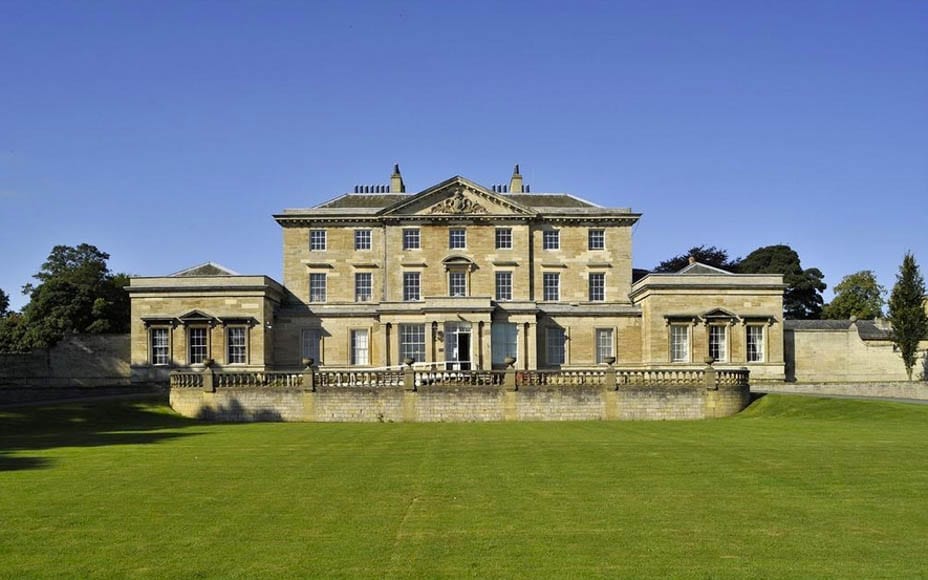
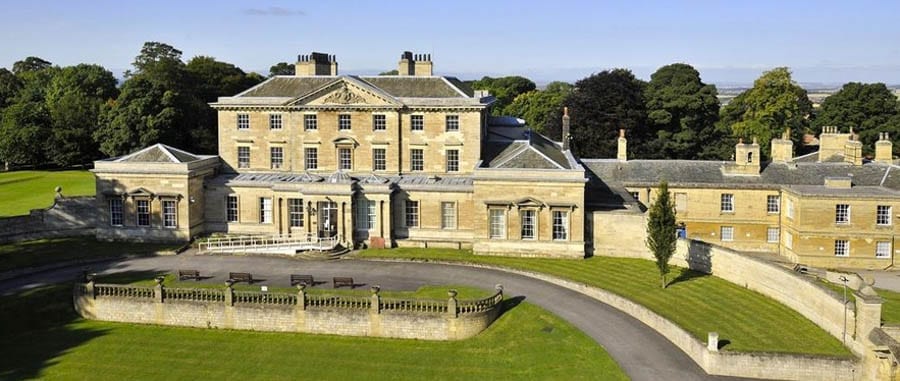
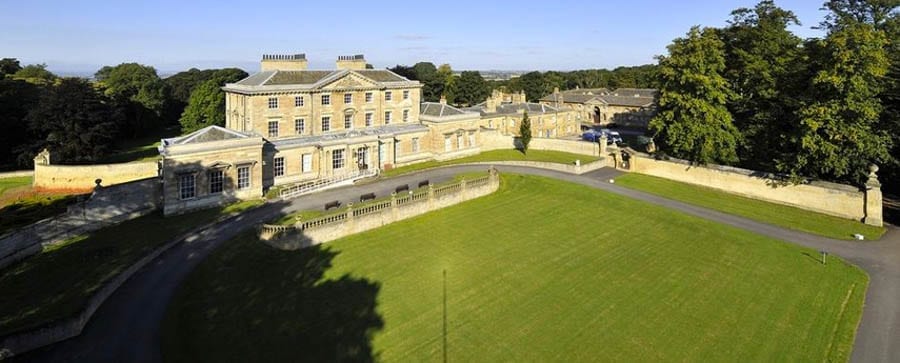
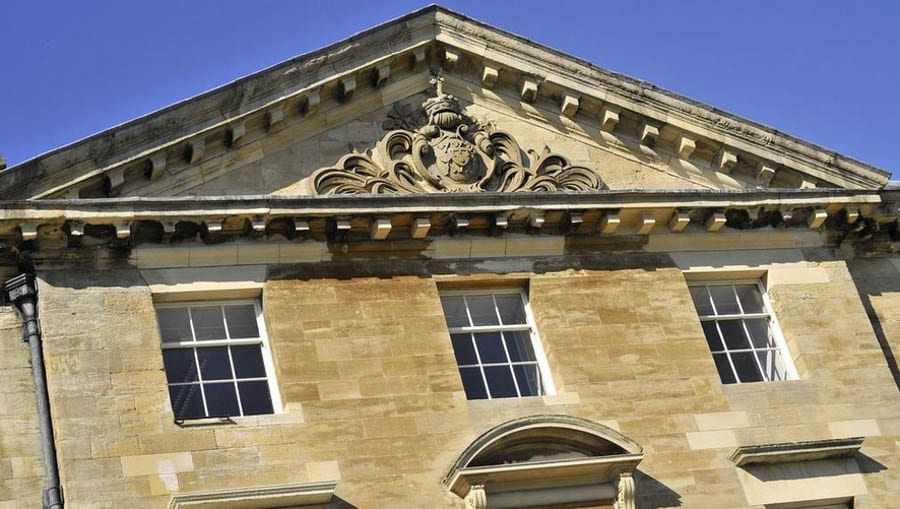
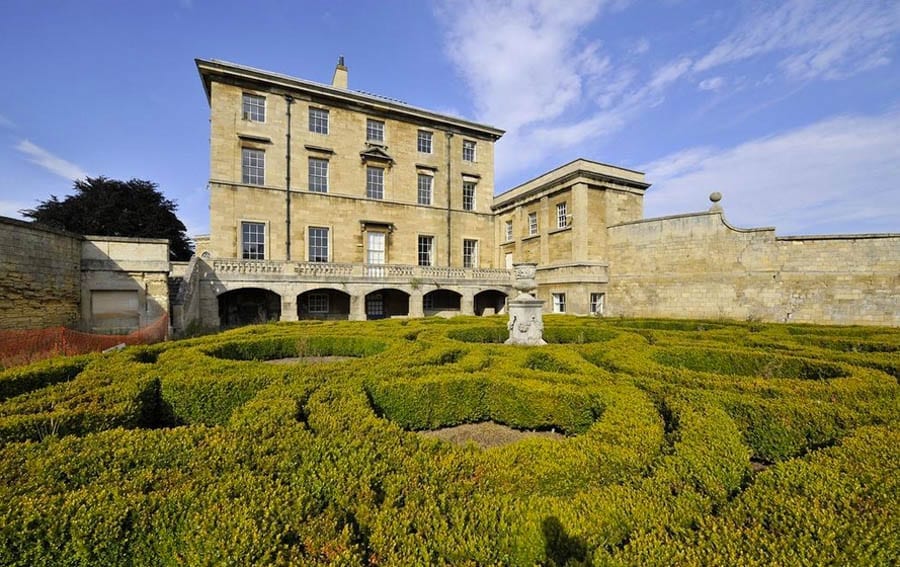
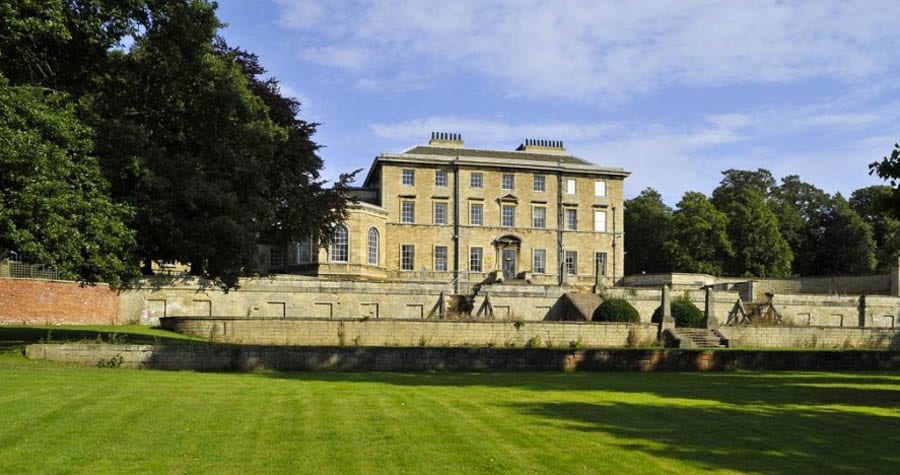
Dilapidated Grade II* listed South Yorkshire Georgian mansion Hickleton Hall for sale for a sum 25% lower than it was marketed for in 2014 but 185% more than it was valued at in 2016
Empty country houses become liabilities and in the case of Hickleton Hall in South Yorkshire, the result of years of neglect will likely be either further decline or conversion into flats.
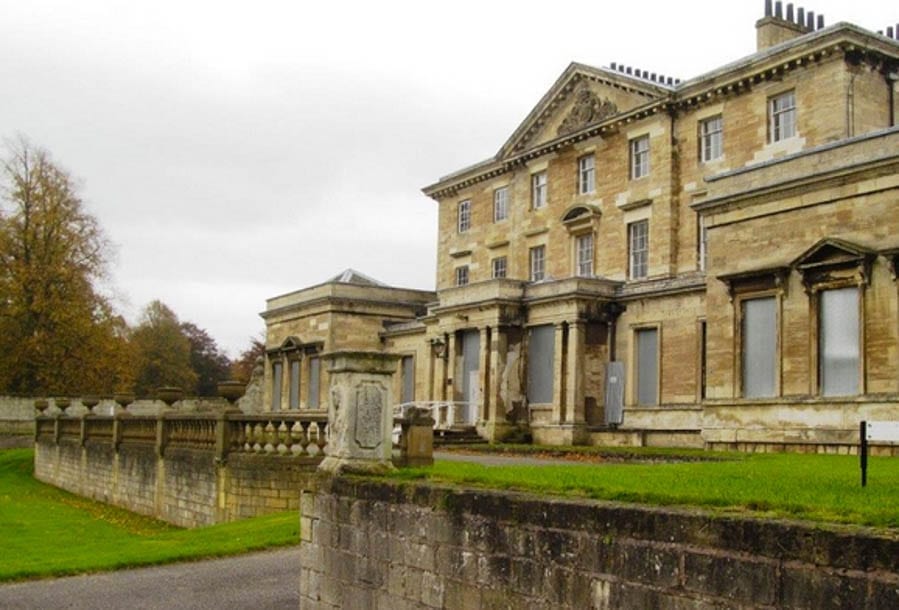
A neglected and boarded-up Hickleton Hall, Hickleton, Doncaster, South Yorkshire, DN5 7BB in 2016
Offered for sale in 2015 for £2 million (at that time complete with its since separated stable block), this Grade II* listed Georgian stately home was built between 1745 and 1748 of limestone ashlar for a banker named Godfrey Wentworth. It was subsequently home to the Whig politician and Chancellor of the Exchequer Charles Wood, 1st Viscount Halifax from 1846 to 1885 and then used by the army during the Second World War.
Converted first to a girls’ school in the 1940s, Hickleton Hall became a Sue Ryder Home in the 1960s. That closed in 2012 and in the years since fate has been anything but kind to the building. Described on a dedicated website as “eye-catching” but affected by subsidence and fissures caused by coal mining, the “asbestos riddled” structure has been targeted by vandals and thieves.
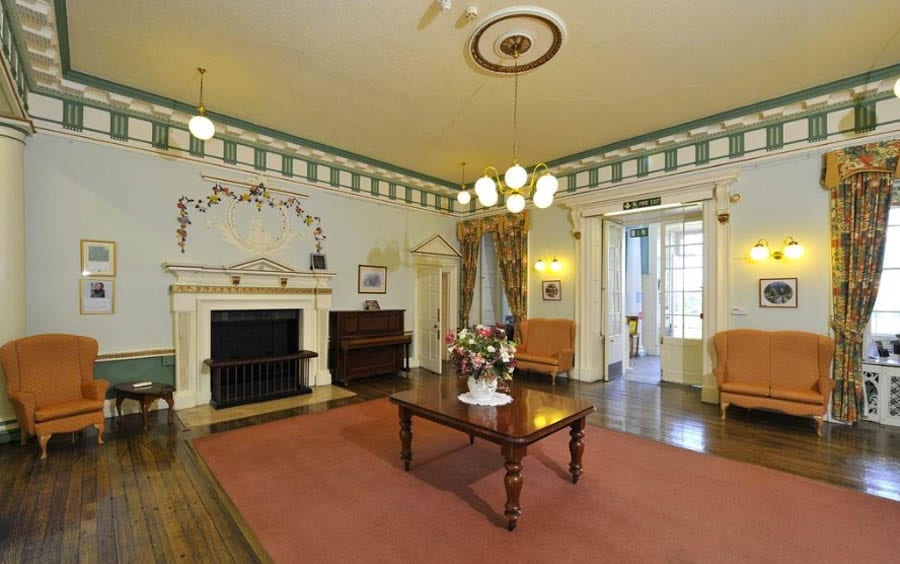
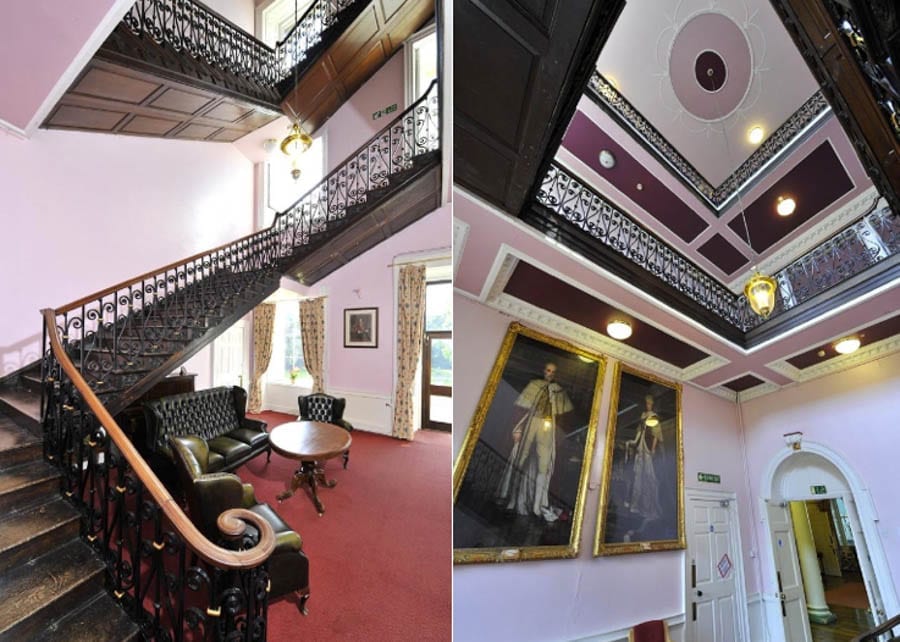
The 34,000 square foot building was valued at a sum of between £525,000 and £825,000 in 2016 but is now for sale for £1.5 million through agents Fisher German. Their marketing brochure – which uses images of the mansion in better times – lists it as now coming with just 14.72 acres of land and planning permission for conversion into 20 apartments.
Hickleton Hall – The Numbers
October 2017 – For sale for £1.5 million ($2 million, €1.7 million or درهم7.3 million) through Fisher German.
February 2016 – Valued at £525,000 to £825,000 ($693,000 to $1.1 million, €589,000 to €926,000 or درهم2.5 million to درهم4 million) by Christie & Co. Remedial work to restore the hall estimated at least £1.75 million ($2.3 million, €2 million or درهم8.5 million).
April 2014 – For sale for £2 million ($2.6 million, €2.2 million or درهم9.7 million) through Hamptons.
Son of Kensington MP Lady Borwick’s curious connections to the people who ensured both Brexit and the election of Donald Trump revealed
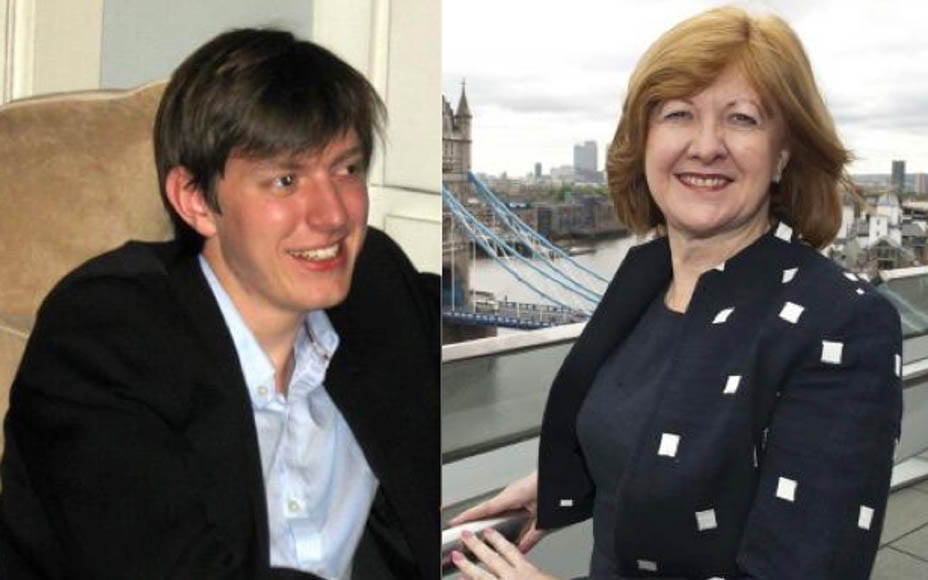
On Sunday, Carole Cadwalladr of The Observer published a lengthy and well researched article that, amongst other things, examined the connections between The Hon. Thomas Borwick – the son of the Conservative hereditary peer The Rt. Hon. The Lord Borwick and Kensington’s Member of Parliament Lady ‘Call me Victoria’ Borwick – and the controversial US hedge fund titan and backer of Donald Trump, Robert Mercer.
A director of a multitude of companies, in spite of being just 29 years old, “new media expert” Thomas Borwick – whose mother was forced to apologise “after using City Hall resources to promote her husband’s [now defunct] electric vehicle business” in 2009 – it now transpires, was not only Vote Leave’s chief technology officer but previously worked with SCL/Cambridge Analytica and AggregateIQ. Borwick currently touts himself to his 202 followers on Twitter as the founder of a political canvasing consultancy named Kan.to, an organisation that he boldy claims “will out-organise, out-plan, out-leaflet, out-twitter, out-work and out-vote all of its opponents”.
Mercer, one of the owners of the far-right Breitbart News Network as well as being a major shareholder in Cambridge Analytica, is a man whose “sinister” connections to both Trump and Nigel Farage have rightly been widely criticised. On that basis, that the son of fervent Brexiteer Lady Borwick – a woman whose constituents voted 69% to ‘Remain’ and whose domain was home to a greater proportion of EU nationals than any other London borough in 2016 – has links to this billionaire and his activities should only encourage the voters of Kensington to ditch her and her out-of-touch party.
We urge Kensington based readers to support Annabel Mullin of the Liberal Democrats on 8th June. This principled lady is the only person who can realistically unseat Lady Borwick and she is the only candidate who will support the beliefs the majority in this constituency continue to hold dear.