New York born, Yale educated Jack Schlossberg is the only grandson of JFK. The son of designer and artist Ed Schlossberg and former Ambassador to Japan Caroline Kennedy, Schlossberg co-founded ReLight New York, a non-profit organsiation that installed fluorescent lights in low-income housing developments, whilst at school and has expressed a desire to pursue a career in politics. In May 2017, he was interviewed on NBC Today and commented: “I’m inspired by my family’s legacy of public service. It’s something that I’m very proud of, but I’m still trying to make my own way, figure things out, so stay tuned”.
As black tie bonanzas deservedly take a bashing, we ask: “What’s next for Britain and America’s party paraders?”
Last May, the acerbic Spectator columnist Taki wrote a brilliant opinion piece bemoaning the ghastly affair he believed New York’s Metropolitan Museum Gala had become. It perfectly summed up the vulgarity of an age where Kardashians have replaced Vanderbilt Sloanes and where Anna Wintour and her condescending ‘club’ have seized the mantle. This week, Primates of Park Avenue author Wednesday Martin took the debate one stage further and asked: “Is it time to say bye-bye to the black tie charity ball?” in an article for Town & Country magazine.
Whilst Martin quoted a “titan of finance” as saying: “No one really wants to attend a gala”, she also suggested that “showing up feels somehow retro, tangible, genuine”. Society is still forced into the routine of putting on black tie and parading out in both America and Britain yet in reality, everyone would most likely rather be down their local spit-and-sawdust.
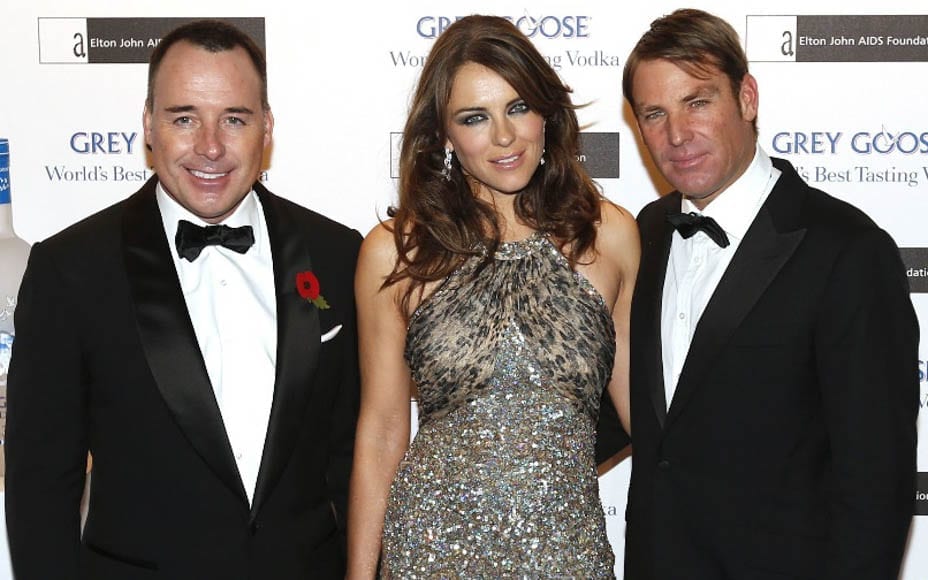
Aside from the rubber chicken (and vomit inducing wine), the likelihood of being stuck with nine crushing bores and the inevitable raffle of rubbish, such affairs are now mostly the preserve of a club of Z-listers and desperados. At such gatherings, you’ll find trolleyed trailer trash like Dawn Ward of The Real Housewives of Cheshire clucking with titleless tosspot twits like David Furnish and each and every Friday’s ES Magazine bears testimony to this fact. The black tie bash deserves to come to its natural end, but what on earth will replace it?
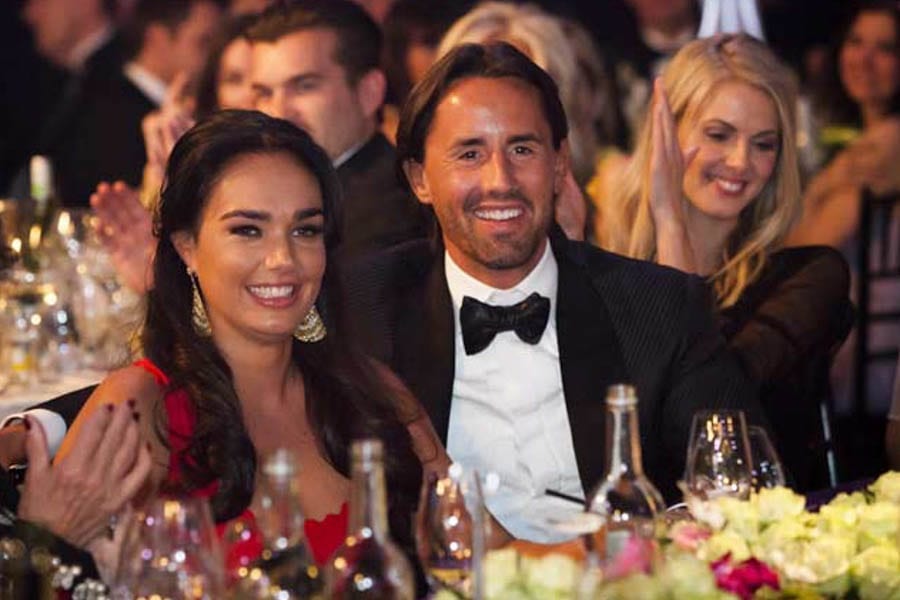
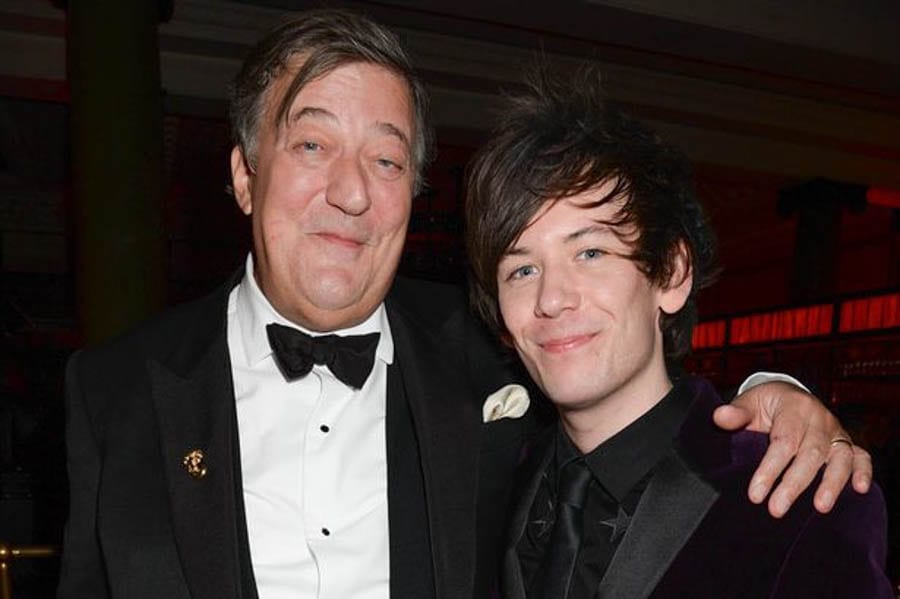
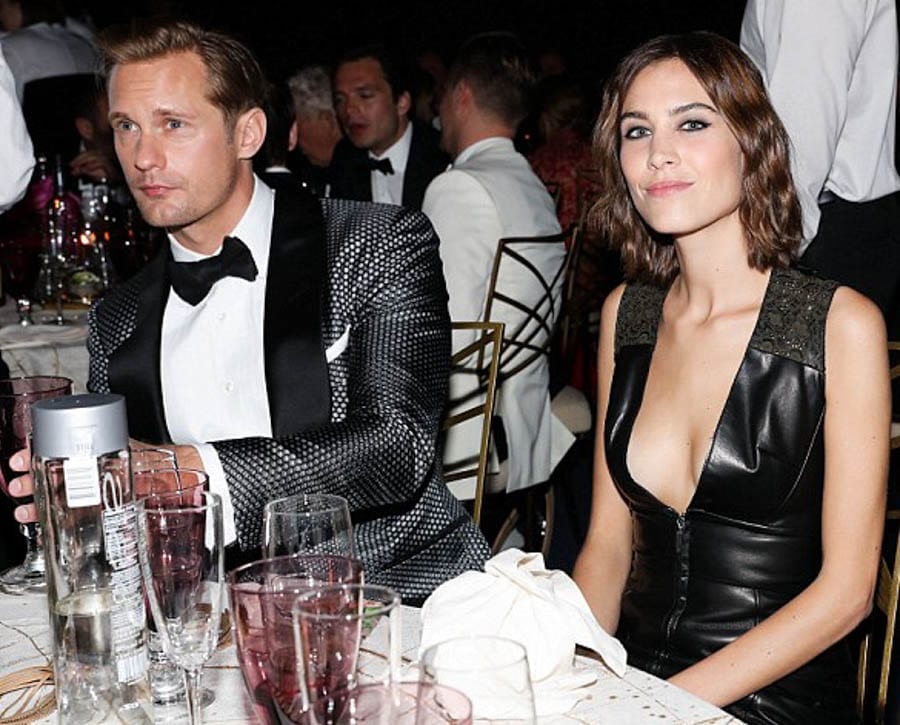
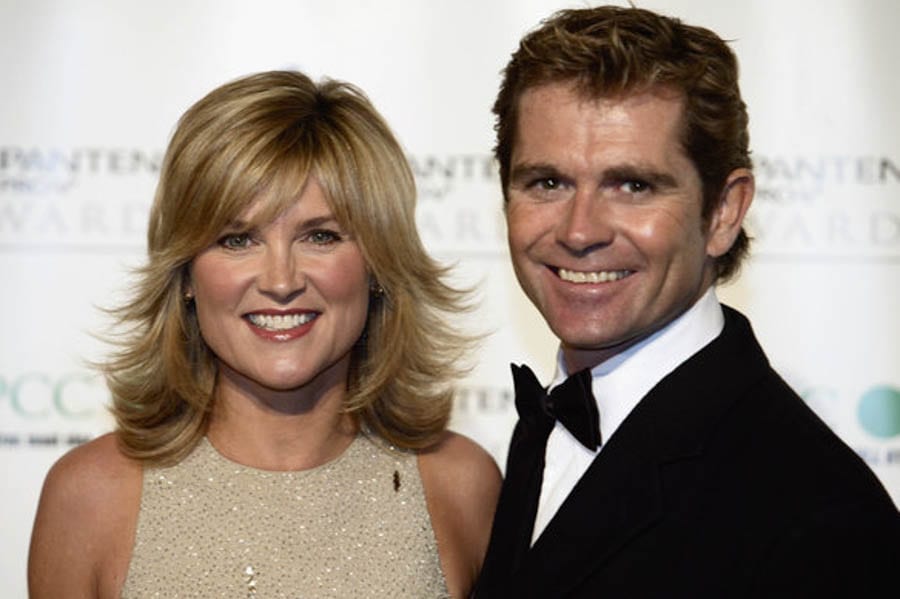
The inevitable rent-a-crowd that now dominates at black tie gatherings in Britain these days is focused on daytime TV presenters and obscure reality wannabesTamara Ecclestone and husband Jay Rutland (pictured with Donna Air behind them) might be moneyed, but where’s the class?Stephen Fry and husband Elliott Spencer are a duo willing to turn up to the opening of an envelopeIf you really want to lower the tone, invite champagne swiller Dawn Ward and her ex-footballer husbandAlexa Chung is the ultimate guest if you want to make it to the ‘ES Magazine’s’ party pages (in spite of the fact she’s actually pretty pointless)No party is complete without legendary crasher and shopping aficionado David Pun; last night he was spotted lingering outside the entrance to the opening night of the 2017 London Motor Show and given his antics he even has a Twitter account named in his honourAnthea Turner and Grant Bovey used to host an annual ball in their garden; their marriage is now toast and the ball, for them at least, is most definitely over
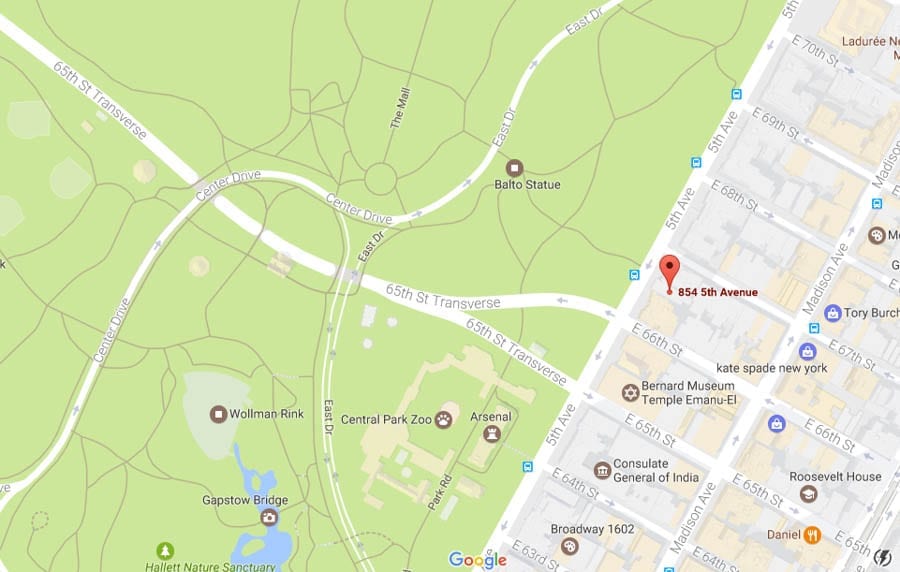
854 Fifth Avenue, Upper East Side, New York, NY 10065, United States of America
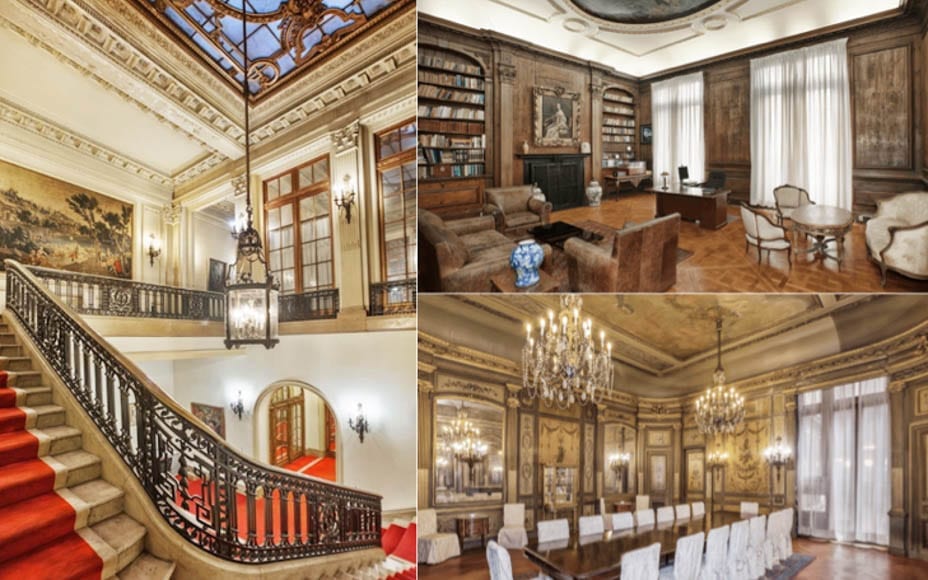
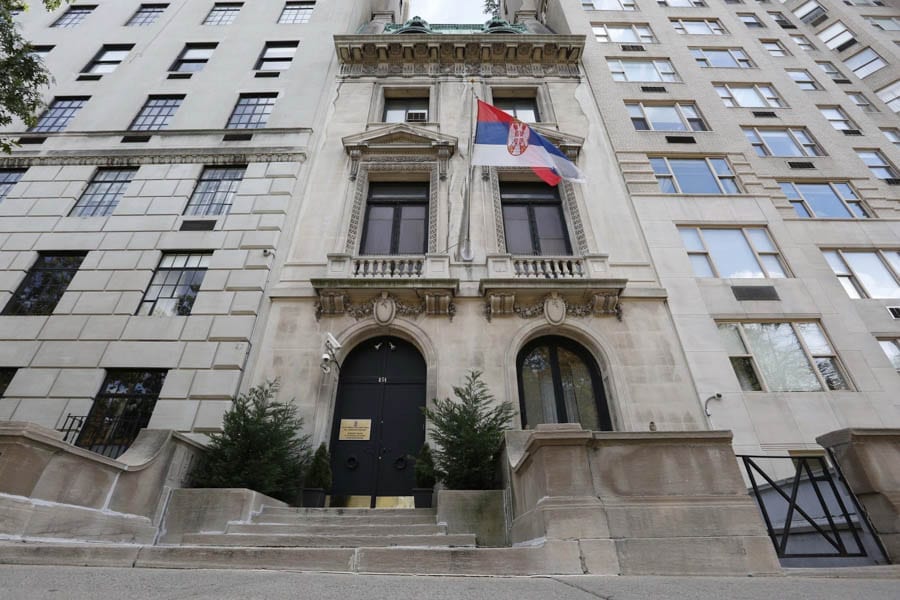
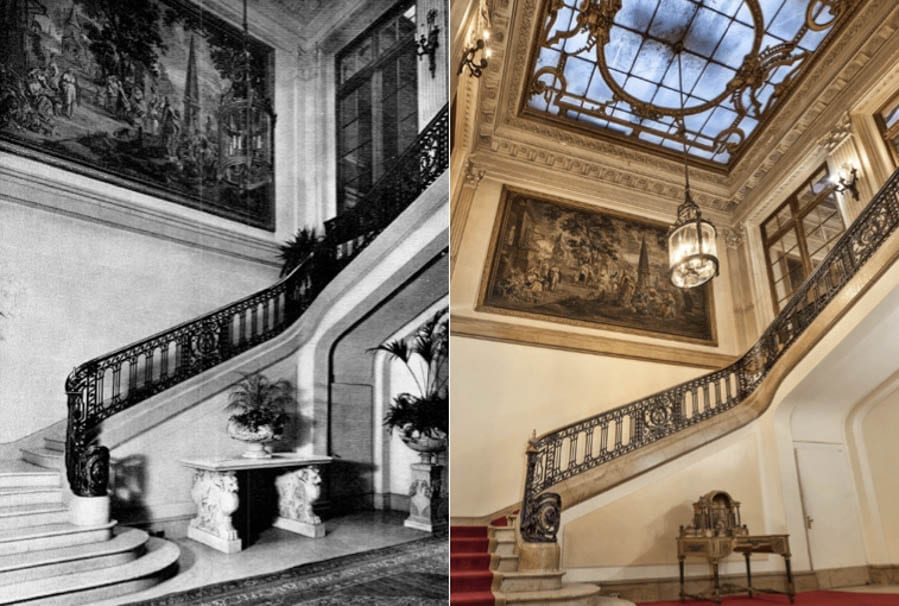
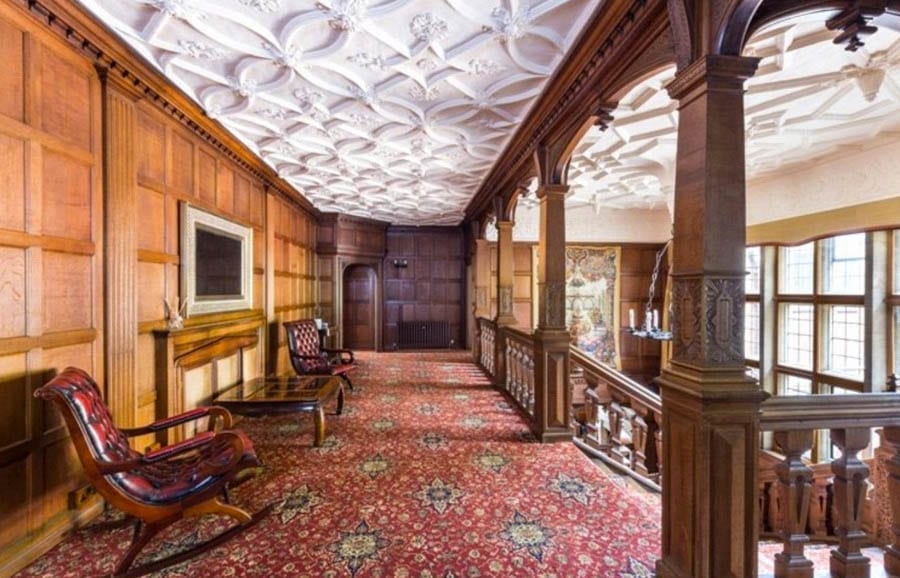
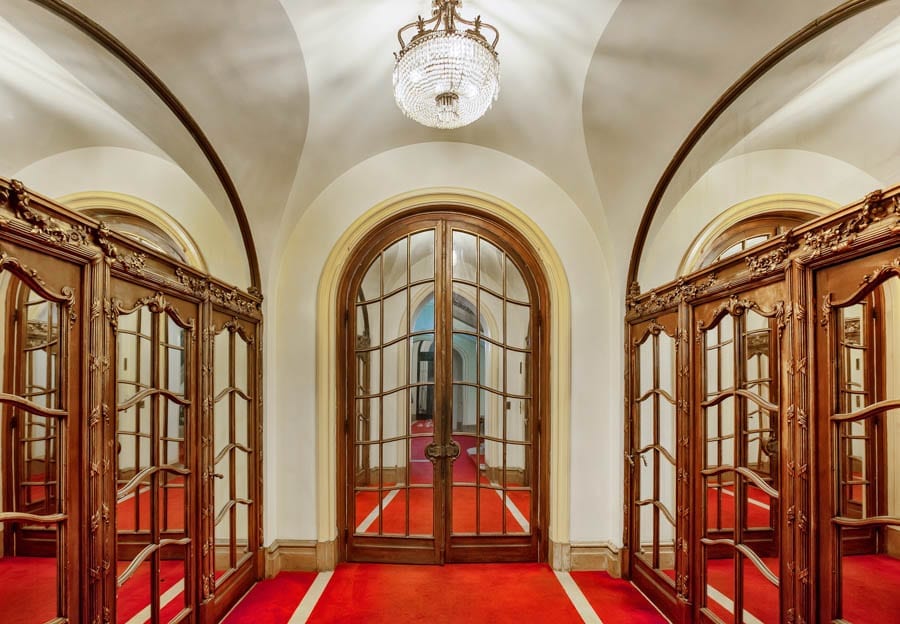
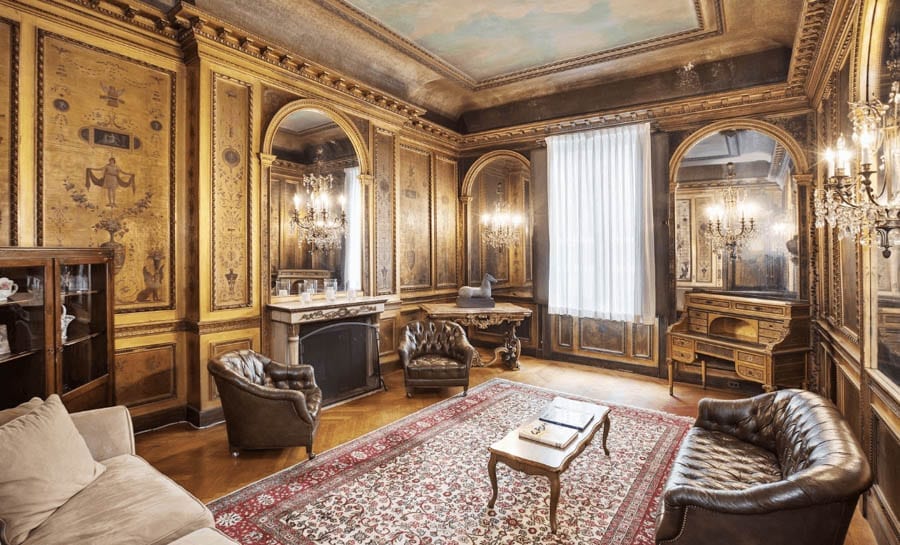
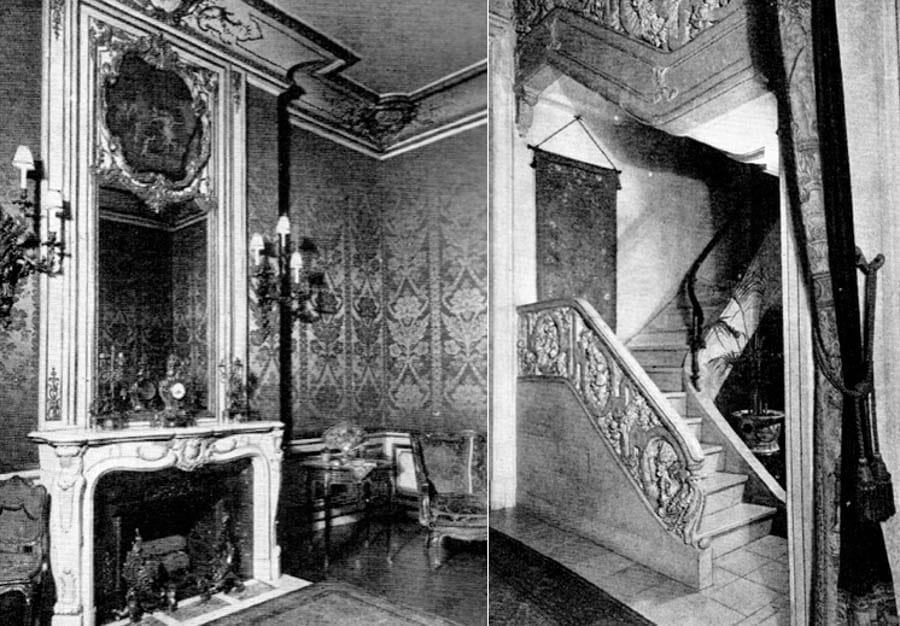
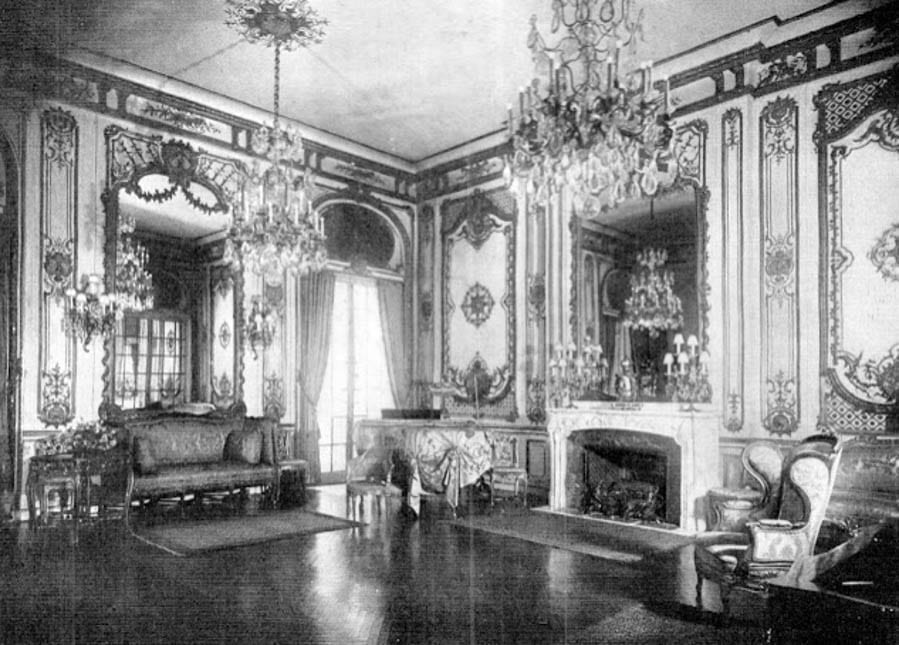
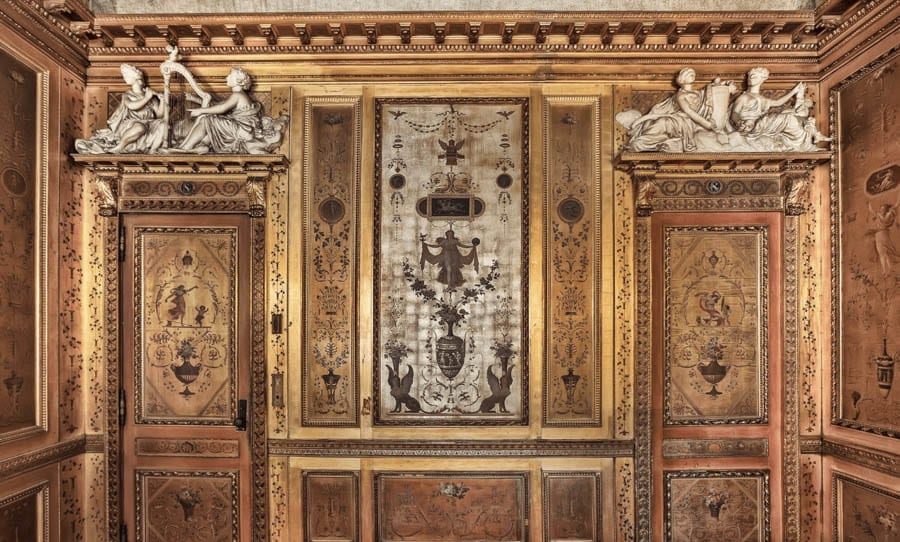
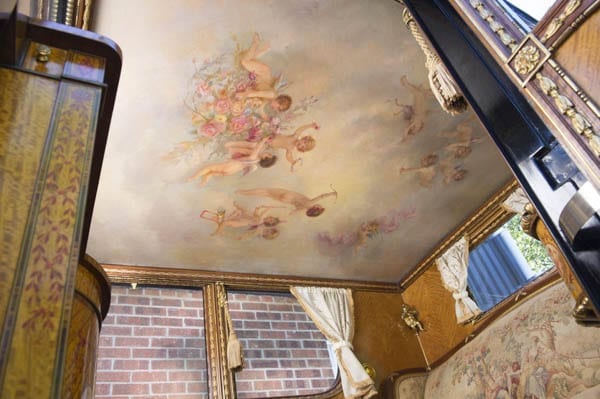
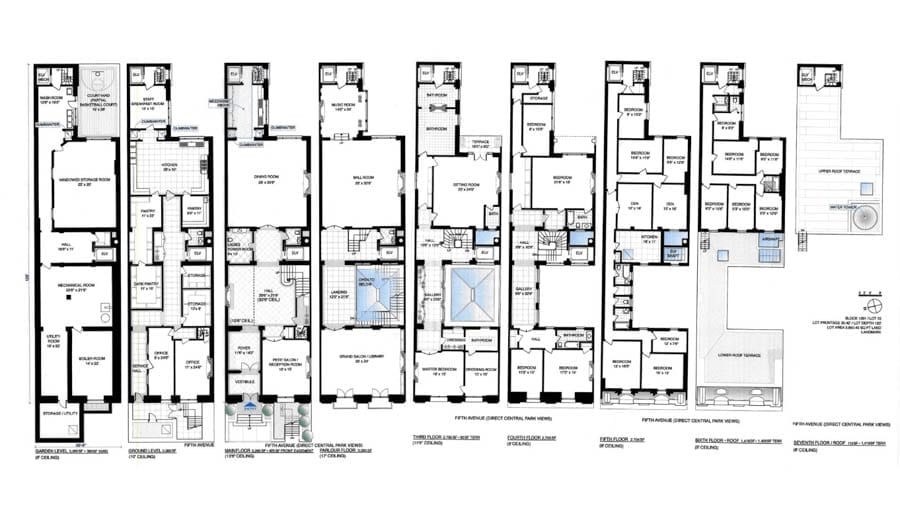
Offering 20,000 square foot of accommodation over nine floors, 854 Fifth Avenue stands opposite Central Park and between 66th and 67th Streets. It was built in 1905 for a stockbroker named Robert Livingston Beeckman and constructed by architects Warren & Wetmore at a cost of $60,000 (the equivalent of $1.6 million, £1.2 million, €1.5 million or درهم5.9 million today). The residence was landmarked by the New York City Landmarks Preservation Commission as a “superb example of the French classic style of Louis XV” in 1966 and to this day, the 32-room property retains original features including hand-carved balustrades of white marble, ceiling frescoes of angels and clouds, an original working stove and two of the city’s first private elevators.
Robert Livingston Beeckman (1866 – 1935), Emily Thorn Vanderbilt Sloane White (1852 – 1946) and Henry White (1850 – 1927)
Sold next to George Grant in 1912 after Beeckman – later 52nd Governor of Rhode Island – abandoned New York to spend more time at his Newport estate, Lands End, for a then record sum of $725,000 (the equivalent of $18.3 million, £14.1 million, €16.8 million or درهم67.2 million today), 854 Fifth Avenue was then offloaded to Henry White and his heiress wife Emily Thorn Vanderbilt Sloane White for the much lower sum of $450,000 in 1925 (the equivalent of $6.3 million, £4.9 million, €5.8 million or درهم23.1 million today).
Twice married financier of New York’s Sloane Hospital for Women Thorn Vanderbilt Sloane White and her ambassador husband are said to have “added their own touches” to the mansion and after she died, 854 Fifth Avenue was sold to the then nation of Yugoslavia. It has served as a government building since and was most recently used as the Permanent Mission of Serbia and Mission of Serbia to the UN.
Bombed on 11th July 1968 but thankfully subject to little damage in that attack, the mansion still to this day features a ‘Faraday Cage’ – a secret metal-padded room where officials could meet without the fear of being wiretapped – as well as bulletproof windows to its Central Park elevation.
Last week, of the property, Tristan Harper of Douglas Elliman told The Real Deal:
“Everything is virtually intact. Whoever buys it will own a piece of New York history. [The six individuals who have already expressed interest in purchasing 854 Fifth Avenue are] all extremely high-net-worth individuals of different backgrounds”.
Once bordered by houses of a similar scale, 854 Fifth Avenue is now adjoined by two behemoth-like apartment complexes. It stands sturdy and represents a little reminder of the glorious era of Carnegies, Rockefellers, Vanderbilts and Whitneys.
New Jersey mansion, complete with 58 rooms, for sale for equivalent sum to what it cost to build in 1909; the £37 million house’s original owner was a man whose extravagance knew absolutely no bounds
George Crocker (1856 – 1909) makes F. Scott Fitzgerald’s Jay Gatsby seem like an amateur. Born in Sacramento and the son of a railway magnate worth some $30 million on his death (the equivalent of £634 million or $812 million today), Crocker was willed a significant $6 million (the equivalent of £127 million or $163 million today) on the condition that “after the space of five years continuously he shall abstain from the use of spirituous, vinous, and malt liquors to the extent that he shall not during this period have been intoxicated”.
Crocker decided to ignore the terms of his father’s behest and from 1888 to 1891 lived in San Francisco as “one of the most reckless young men about town when reckless young men thereabouts were common” but then admitted himself to a sanatorium, put himself on the straight and narrow and finally collected the sum of $6 million in 1898.
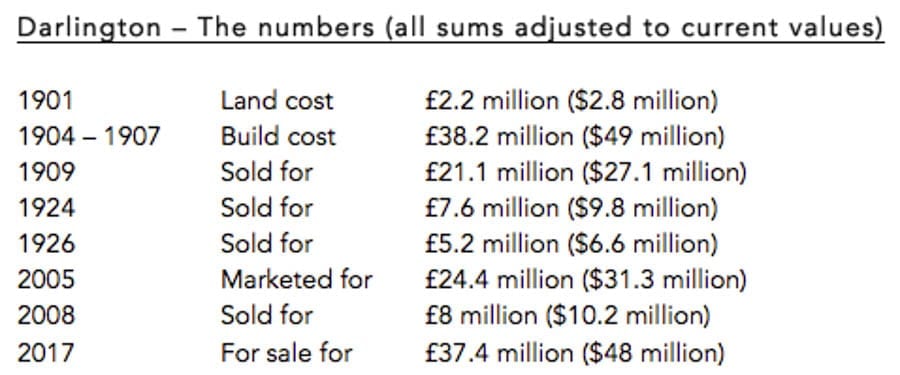
With wealth and a glamorous wife, Emma Rutherford, a widow from California, Crocker set himself up as the toast of New York society. Though he owned a townhouse at 1 East 64th Street and a villa in Newport, it was on paying $96,500 (the equivalent of £2.2 million or $2.8 million today) for the 1,100 acre Darling estate in Bergen County, Mahwah, New Jersey in 1901 that he truly became someone noticeable.
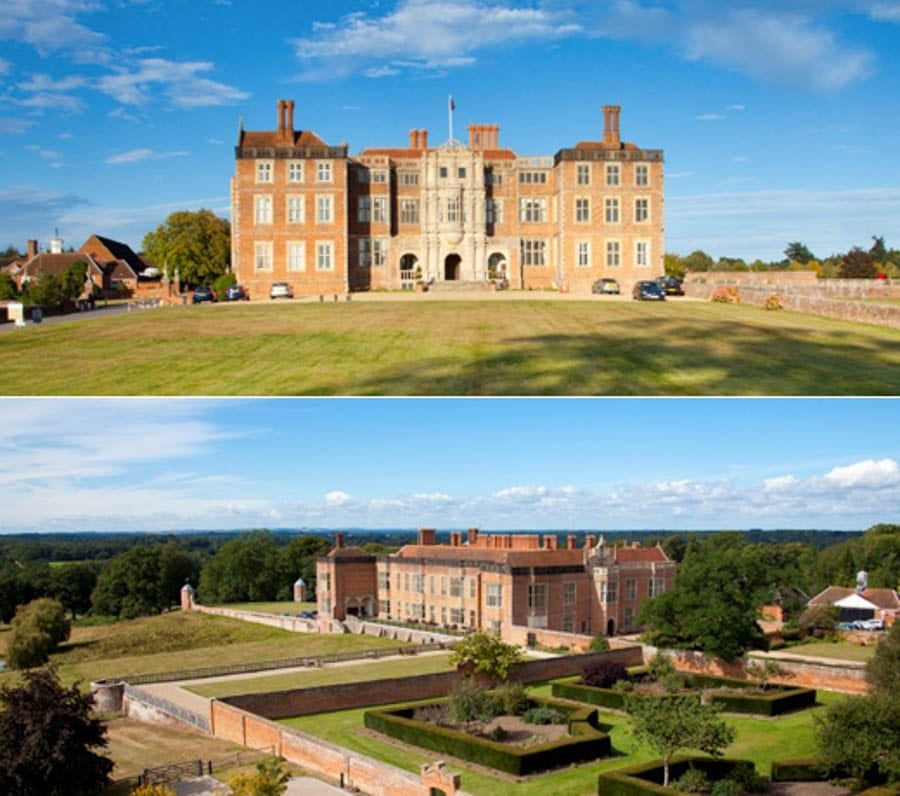
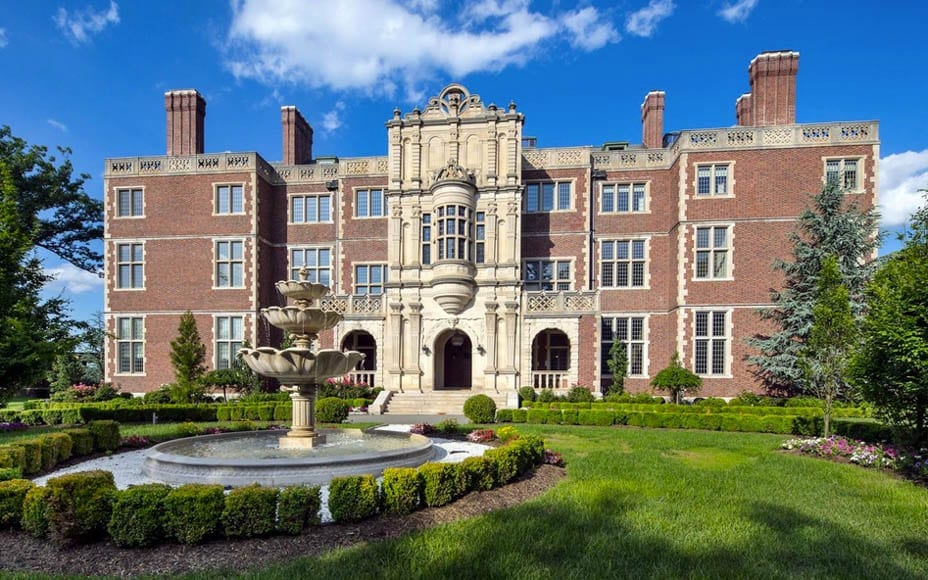
Choosing what he called “the finest site for a residence in the country”, Crocker commissioned an architect named James Brite (died 1942) to build him a mansion “sparing no expense”. Modeled on a Jacobean prodigy house, Bramshill House in Hampshire, England and built from Indiana limestone and Harvard brick, the “Crocker Mansion” or “Darlington” – as it is more widely known – cost $2 million to build (the equivalent of £38.2 million or $49 million today) and included 75 rooms and around 50,000 square foot of accommodation. Its features included steam heating, elevators, ice cream freezers, integrated vacuum systems and a switchboard and in its grounds a racetrack and 16 greenhouses were constructed whilst a pond was stocked with 4,000 trout.
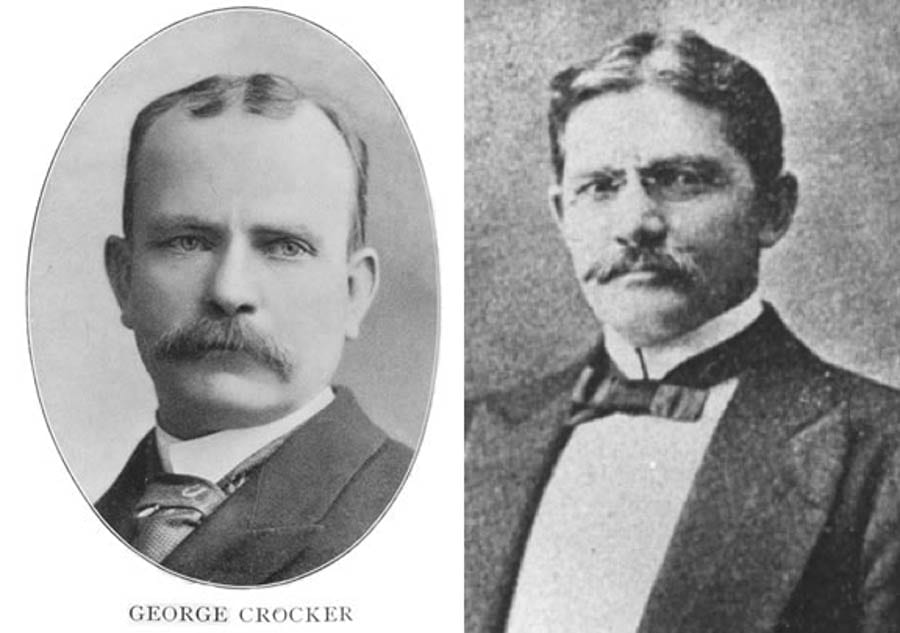
George Crocker and Emerson McMillin
The design of Darlington was based on “one of the most haunted houses in England”, Bramshill in Hampshire; that building itself was also eventually separated from much of its estate and after being used as the European Police College was sold to developers City & Country for £25 million ($19.5 million) in 2014
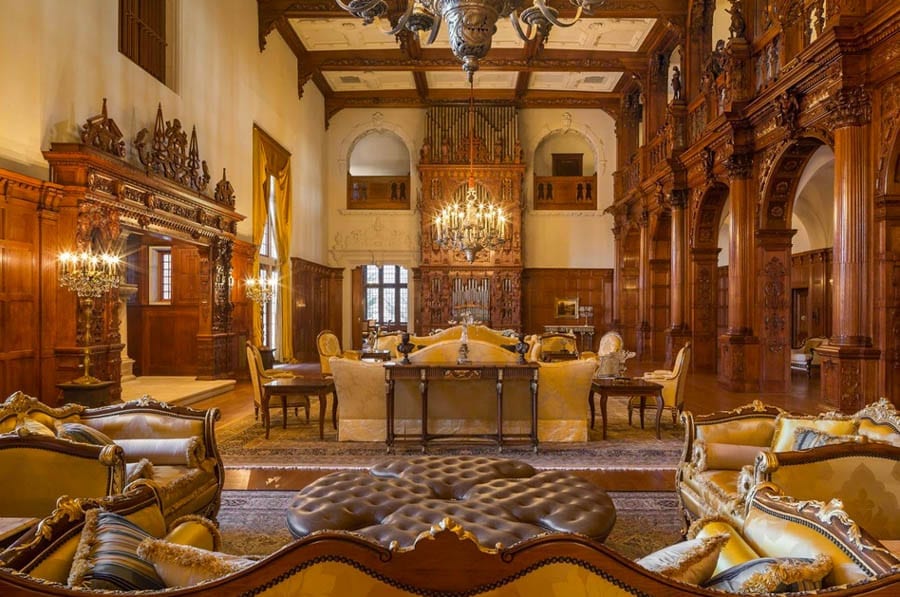
Commentators wowed at the resulting creation and noted details such as a library painted after the style of the Italian Renaissance by Tiffany Studios, elaborate wood carving by Italian craftsmen and Tiffany silver chandeliers and a 1906 Aeolian player pipe organ in the building’s 30-foot high Great Hall. In 1912, Architectural Record, chose even to swoon over the basement. They remarked:
“Where Bramshill’s cellar housed for centuries lanterns, tallow dips, forest faggots, wooden vessels for the distribution of light, heat and water through personal service of human slaveys, its American reincarnation is a storehouse of miracle workers in the comfort and luxury of modern domestic life”.
Unfortunately, Mr and Mrs Crocker did not truly get to enjoy the fruits of their extravagant spending. Emma Crocker died in 1904 of cancer and George Crocker also succumbed to the disease in 1909. His estate was valued at $20 million (the equivalent of £422 million or $541 million today) and amongst items found at his mansion were 60,000 personally monogrammed, custom-made cigars valued at $30,000 (the equivalent of £635,000 or $813,000 today).
Sold subsequently to a “self-made” banker, industrialist and astronomy enthusiast named Emerson McMillin (1844 – 1922) in 1909 for $1 million (the equivalent of £21.1 million or $27.1 million), Darlington was next used to display a fine collection of Chinese and Japanese porcelain whilst a herd of Jerseys were kept in the grounds.
After McMillin’s death, his widow sold the estate in 1924 for $685,000 (the equivalent of £7.6 million or $9.8 million) to the Darlington Development Company, which in turn made it available to the Darling Golf and Country Club. They converted the building to a hotel and club that “promised to offer a new dimension to life in Mahwah” but “the development corporation and the club were soon in financial difficulties” and the McMillin estate foreclosed and regained possession.
A new buyer came forward in the form of the Roman Catholic Diocese of Newark. They paid $478,000 for the property in 1926 (the equivalent of £5.2 million or $6.6 million today) and used Darlington as a theological seminary. The surrounding land was gradually sold off and in 1986, the Immaculate Conception Seminary also departed.
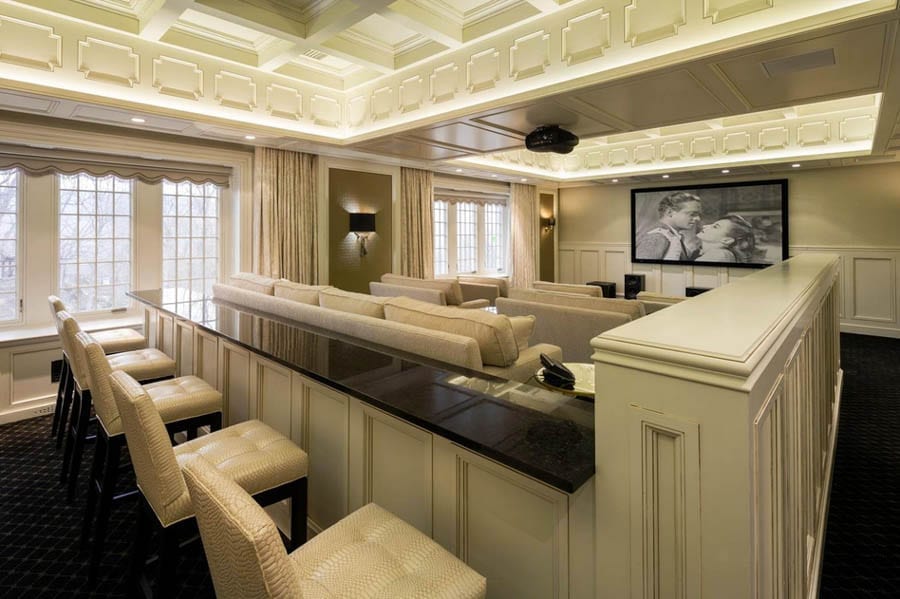
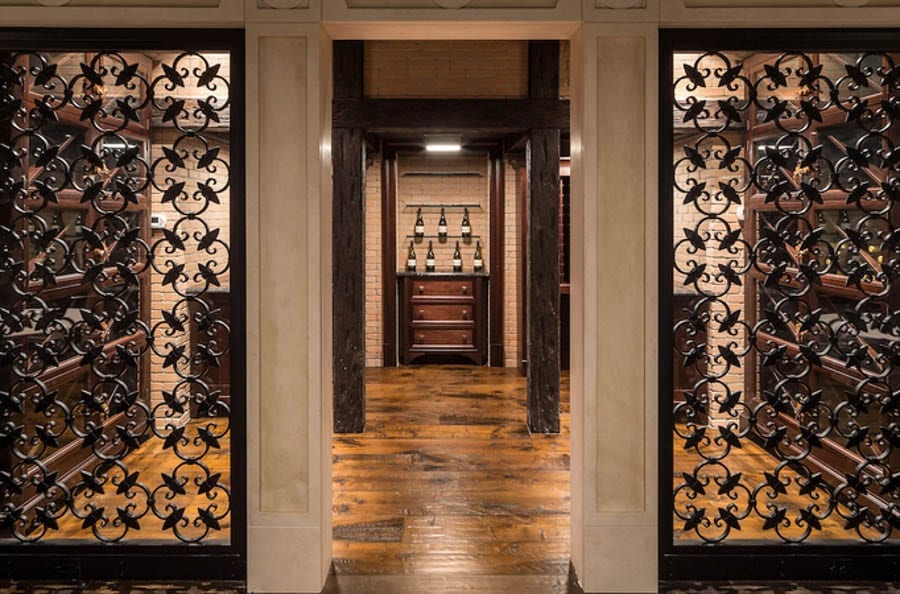
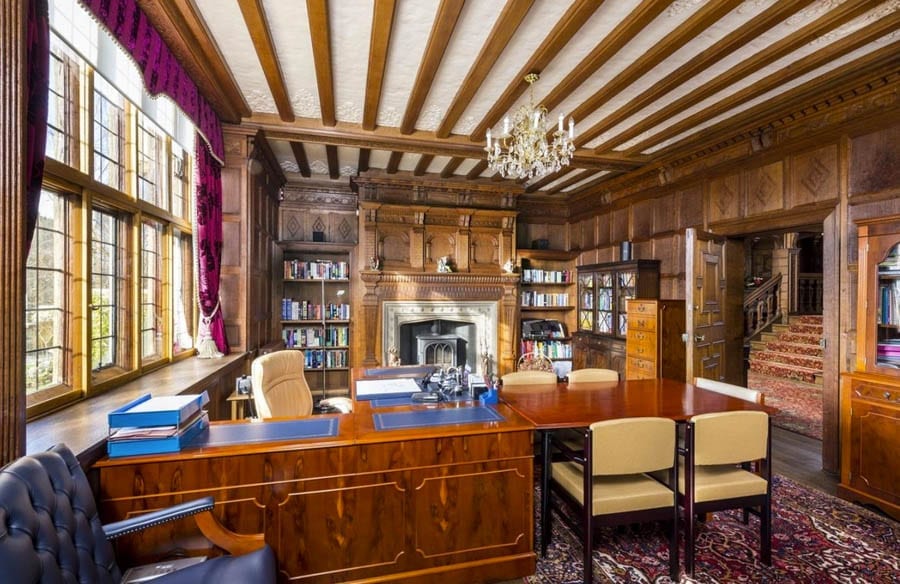
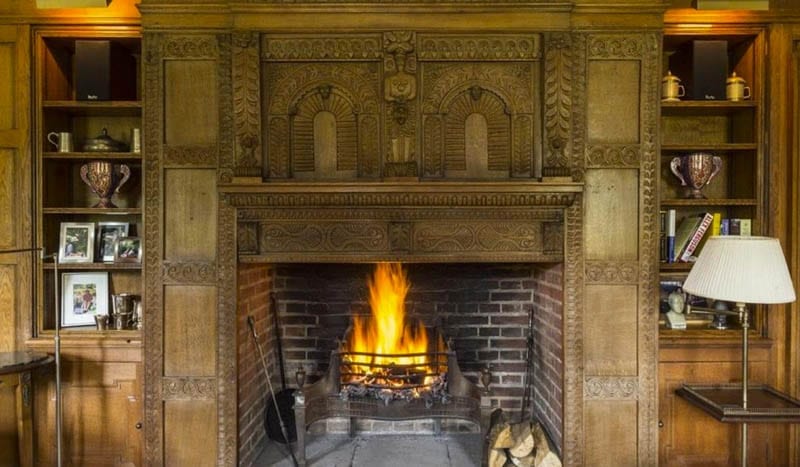
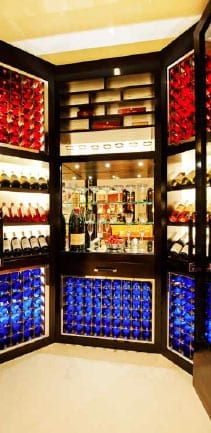
Darlington today – The 30-foot high Great Hall is still dominated by a 1906 Aeolian player pipe organDarlington today – Ilija Pavlovic expanded the mansion by some 12,000 square foot and amongst other things added a large home cinemaDarlington today – Another addition comes in the form of a vast wine cellar; George Crocker’s father would not have approved
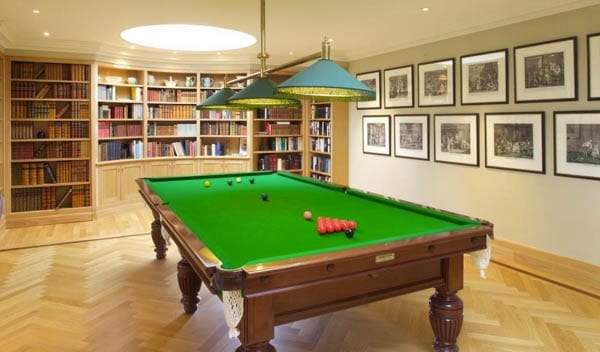
Subsequently restored and modernised with, according to Forbes, plumbing, heating, air conditioning and communications systems being installed, Darlington was placed on the market with just 12.1 acres in 2005 by Darlington Associates, a firm who’d built “multiple residential communities surrounding the mansion”. An ambitious figure of $25 million (the equivalent of £24.4 million or $31.3 million today) was sought for the now classified historic site but it was not until 2008 that a buyer came forth in the form of a local businessman named Ilija Pavlovic. He paid just $8.875 million (the equivalent of £8 million or $10.2 million today) and then embarked on the “challenge” of “both preserving the historic home while also restoring it to meet 21st-century standards”. The resulting creation spans four floors and includes amongst many other things a tea room, 3 libraries, 2 game rooms, 2 kitchens, a “his and her master bedroom wing”, 12 further guest bedrooms and 5 staff bedrooms.
The biggest issue with the house, it transpired, was that its 476 leaded windows needed to be replaced. This reportedly cost $2 million alone (the equivalent of £1.8 million or $2.3 million today) and in addition, Pavlovic renewed all the mechanical systems, redid all 19 bathrooms, replaced the slate roof and added amongst other things a spa with an indoor lap pool, a gym, a massage room, a beauty salon and a home cinema. There is also a gatehouse, a professional kitchen that can serve 250 meals at a time, a wine cellar, a poker room, a cigar room, a billiards room, an 8-car garage, a tennis court and an outdoor swimming pool.
Property blog 6sqft – which claimed Friday that the current owners do not live at Darlington full-time and simply use it to host events – reported that this still massive mansion minus its formerly equally gigantic estate is now for sale now for £37.4 million ($48 million, €44.7 million or درهم176.3 million) through a firm Mr Pavlovic chairs, Special Properties Real Estate Services – an affiliate of Christie’s International Real Estate. Any buyer will undoubtedly be a vastly wealthy figure, but one can guarantee one thing: They’ll never live as lavishly as the barmy boozer George Crocker.
New Jersey mansion Darlington, complete with 58 rooms, for sale for equivalent sum to what it cost to build in 1909; the £37 million house’s original owner was a man whose extravagance knew absolutely no bounds
George Crocker (1856 – 1909) makes F. Scott Fitzgerald’s Jay Gatsby seem like an amateur. Born in Sacramento and the son of a railway magnate worth some $30 million on his death (the equivalent of £634 million or $812 million today), Crocker was willed a significant $6 million (the equivalent of £127 million or $163 million today) on the condition that “after the space of five years continuously he shall abstain from the use of spirituous, vinous, and malt liquors to the extent that he shall not during this period have been intoxicated”.
Crocker decided to ignore the terms of his father’s behest and from 1888 to 1891 lived in San Francisco as “one of the most reckless young men about town when reckless young men thereabouts were common” but then admitted himself to a sanatorium, put himself on the straight and narrow and finally collected the sum of $6 million in 1898.
With wealth and a glamorous wife, Emma Rutherford, a widow from California, Crocker set himself up as the toast of New York society. Though he owned a townhouse at 1 East 64th Street and a villa in Newport, it was on paying $96,500 (the equivalent of £2.2 million or $2.8 million today) for the 1,100 acre Darling estate in Bergen County, Mahwah, New Jersey in 1901 that he truly became someone noticeable.
Choosing what he called “the finest site for a residence in the country”, Crocker commissioned an architect named James Brite (died 1942) to build him a mansion “sparing no expense”. Modeled on a Jacobean prodigy house, Bramshill House in Hampshire, England and built from Indiana limestone and Harvard brick, the “Crocker Mansion” or “Darlington” – as it is more widely known – cost $2 million to build (the equivalent of £38.2 million or $49 million today) and included 75 rooms and around 50,000 square foot of accommodation. Its features included steam heating, elevators, ice cream freezers, integrated vacuum systems and a switchboard and in its grounds a racetrack and 16 greenhouses were constructed whilst a pond was stocked with 4,000 trout.
George Crocker and Emerson McMillin
The design of Darlington was based on “one of the most haunted houses in England”, Bramshill in Hampshire; that building itself was also eventually separated from much of its estate and after being used as the European Police College was sold to developers City & Country for £25 million ($19.5 million) in 2014
Commentators wowed at the resulting creation and noted details such as a library painted after the style of the Italian Renaissance by Tiffany Studios, elaborate wood carving by Italian craftsmen and Tiffany silver chandeliers and a 1906 Aeolian player pipe organ in the building’s 30-foot high Great Hall. In 1912, Architectural Record, chose even to swoon over the basement. They remarked:
“Where Bramshill’s cellar housed for centuries lanterns, tallow dips, forest faggots, wooden vessels for the distribution of light, heat and water through personal service of human slaveys, its American reincarnation is a storehouse of miracle workers in the comfort and luxury of modern domestic life”.
Unfortunately, Mr and Mrs Crocker did not truly get to enjoy the fruits of their extravagant spending. Emma Crocker died in 1904 of cancer and George Crocker also succumbed to the disease in 1909. His estate was valued at $20 million (the equivalent of £422 million or $541 million today) and amongst items found at his mansion were 60,000 personally monogrammed, custom-made cigars valued at $30,000 (the equivalent of £635,000 or $813,000 today).
Sold subsequently to a “self-made” banker, industrialist and astronomy enthusiast named Emerson McMillin (1844 – 1922) in 1909 for $1 million (the equivalent of £21.1 million or $27.1 million), Darlington was next used to display a fine collection of Chinese and Japanese porcelain whilst a herd of Jerseys were kept in the grounds.
After McMillin’s death, his widow sold the estate in 1924 for $685,000 (the equivalent of £7.6 million or $9.8 million) to the Darlington Development Company, which in turn made it available to the Darling Golf and Country Club. They converted the building to a hotel and club that “promised to offer a new dimension to life in Mahwah” but “the development corporation and the club were soon in financial difficulties” and the McMillin estate foreclosed and regained possession.
A new buyer came forward in the form of the Roman Catholic Diocese of Newark. They paid $478,000 for the property in 1926 (the equivalent of £5.2 million or $6.6 million today) and used Darlington as a theological seminary. The surrounding land was gradually sold off and in 1986, the Immaculate Conception Seminary also departed.
Darlington today – The 30-foot high Great Hall is still dominated by a 1906 Aeolian player pipe organ
Darlington today – Ilija Pavlovic expanded the mansion by some 12,000 square foot and amongst other things added a large home cinema
Darlington today – Another addition comes in the form of a vast wine cellar; George Crocker’s father would not have approved
Subsequently restored and modernised with, according to Forbes, plumbing, heating, air conditioning and communications systems being installed, Darlington was placed on the market with just 12.1 acres in 2005 by Darlington Associates, a firm who’d built “multiple residential communities surrounding the mansion”.
An ambitious figure of $25 million (the equivalent of £24.4 million or $31.3 million today) was sought for the now classified historic site but it was not until 2008 that a buyer came forth in the form of a local businessman named Ilija Pavlovic. He paid just $8.875 million (the equivalent of £8 million or $10.2 million today) and then embarked on the “challenge” of “both preserving the historic home while also restoring it to meet 21st-century standards”. The resulting creation spans four floors and includes amongst many other things a tea room, 3 libraries, 2 game rooms, 2 kitchens, a “his and her master bedroom wing”, 12 further guest bedrooms and 5 staff bedrooms.
The biggest issue with the house, it transpired, was that its 476 leaded windows needed to be replaced. This reportedly cost $2 million alone (the equivalent of £1.8 million or $2.3 million today) and in addition, Pavlovic renewed all the mechanical systems, redid all 19 bathrooms, replaced the slate roof and added amongst other things a spa with an indoor lap pool, a gym, a massage room, a beauty salon and a home cinema. There is also a gatehouse, a professional kitchen that can serve 250 meals at a time, a wine cellar, a poker room, a cigar room, a billiards room, an 8-car garage, a tennis court and an outdoor swimming pool.
Property blog 6sqft – which claimed Friday that the current owners do not live at Darlington full-time and simply use it to host events – reported that this still massive mansion minus its formerly equally gigantic estate is now for sale now for £37.4 million ($48 million, €44.7 million or درهم176.3 million) through a firm Mr Pavlovic chairs, Special Properties Real Estate Services – an affiliate of Christie’s International Real Estate. Any buyer will undoubtedly be a vastly wealthy figure, but one can guarantee one thing: They’ll never live as lavishly as the barmy boozer George Crocker.
Purpose-built Upper East Side, NYC Beaux Arts garage reduced in price by 41%; it will still cost around £40 million to buy and turn into a vast single family residence
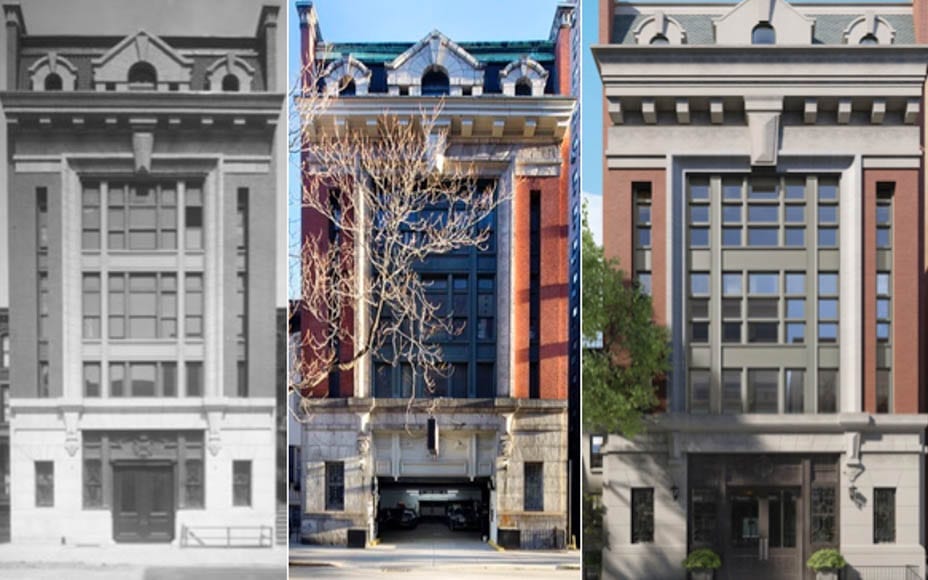
Purpose built in 1906 to house the cars of wealthy (but not quite so wealthy enough to have their own carriage houses) Upper Eastsiders, 177 – 179 East 73rd Street in New York is a five-storey Beaux Arts structure that is described as “unusually sophisticated”.
Reduced from a completely unrealistic £39.8 million ($50 million, €47 million or درهم183.6 million) when first marketed in 2015 to £23.5 million ($29.5 million, €27.7 million or درهم108.4 million) today, estimates put the cost of converting the building to a single townhouse at upto £15.9 million ($20 million, €18.8 million or درهم73.5 million).
Featuring a granite and limestone façade, 177 – 179 East 73rd Street has ceiling heights that range from 12’7” to 17’, is 40’ wide and provides 17,232 square foot of internal space. Though plans have been drawn up to turn it into a vast 8-beroom residence complete with a 8-car garage, basketball court and home cinema, rival agent Jed Garfield of Leslie J. Garfield, told The Real Deal: “I think it’s still overpriced. The only surprising thing is that they’re now willing to sell it at [closer to] market price” late last week.
The building – which remains in use as a UES garage – is listed by Carrie Chiang of Corcoran and is described as “just waiting to undergo a metamorphosis in the hands of a discerning buyer”.
Image shows 177 – 179 East 73rd Street in 1906, 2017 and a rendering as a single family residence (left to right).
Federal-style New York townhouse for sale for £3.982 million; the West Village was previously the Home of the Sons and Daughters of Israel
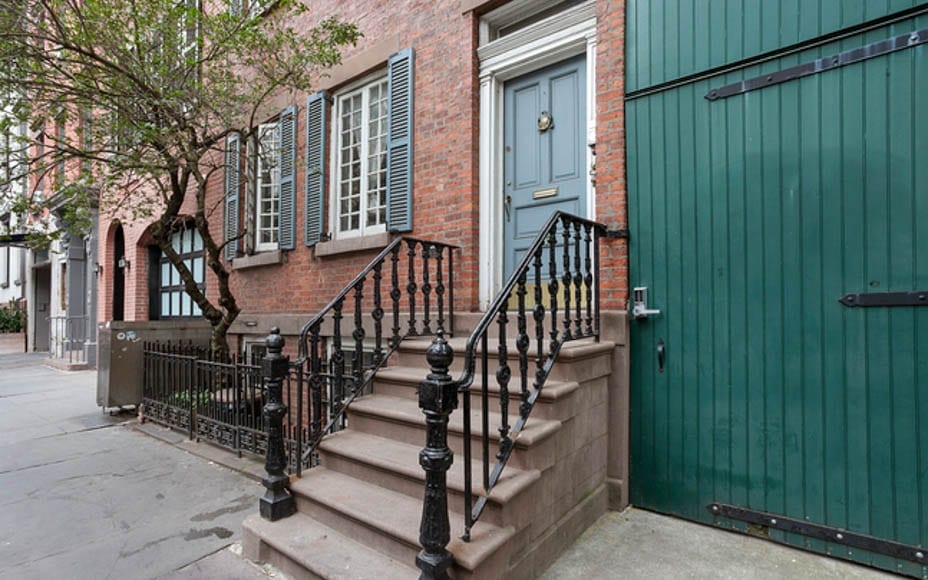
A 2,212 square foot townhouse dating to 1833 on sale in New York comes with quite a history. Built in the Federal-style by a cartman named John C. Blauvelt, the property subsequently became the Home of the Sons and Daughters of Israel – a “home for aged male and female Hebrews” – in 1913 and was then converted to two residences in 1951.
232 West 10th Street, West Village, Manhattan, New York, NY 10014, United States of America
Reduced in price from £4.772 million ($5.975 million, €5.630 million or درهم21.946 million) to £3.982 million ($4.986 million, €4.698 million or درهم18.313 million), 232 West 10th Street in West Village, Manhattan currently remains as two units and comprises of 3 reception rooms, 2 kitchens, 2 offices, 2 bedrooms and 3 bathrooms. It could, however, easily be reconfigured back into a family home and comes with both a terrace and garden.
The house is offered by the Farah team at Compass Realty and is described as “a renovator’s dream”.
New York’s “most impressive” Dutch colonial house for sale for £2.59 million in spite of needing updating
Built in 1735 and listed as a designated New York landmark in 1966, 126 West Drive in Douglaston, Queens is considered to be New York’s “most impressive architectural remnant of the early Dutch Culture”. It has just been listed for sale for £2.59 million ($3.25 million, €3.05 million or درهم11.94 million) through Daniel Gale Sotheby’s International Realty.
Overlooking Little Neck Bay, this “picturesque Dutch colonial house” features a salt-box roof, wooden shingles and oak beams and was built by Cornelius Van Wyck, a third generation settler on a plot of 125 acres. It was subsequently expanded in the 1770s and 1930s but despite now standing on a plot of just 0.65 acres is “one of the largest true waterfront properties in Queens”.
Extending to 3,876 square foot and including 4 bedrooms and 4 bathrooms, the Cornelius Van Wyck House has direct access to a sandy beach and is just 28 minutes from Manhattan.
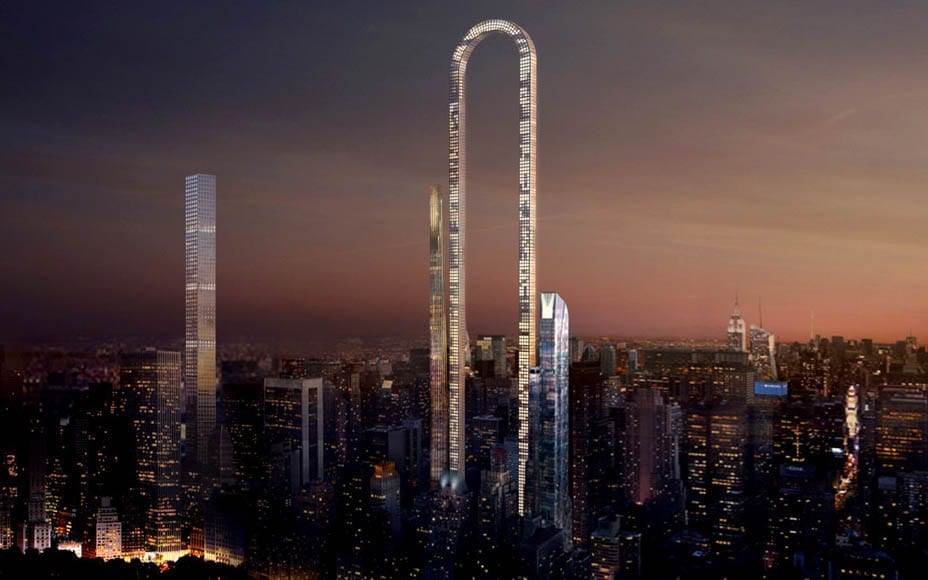
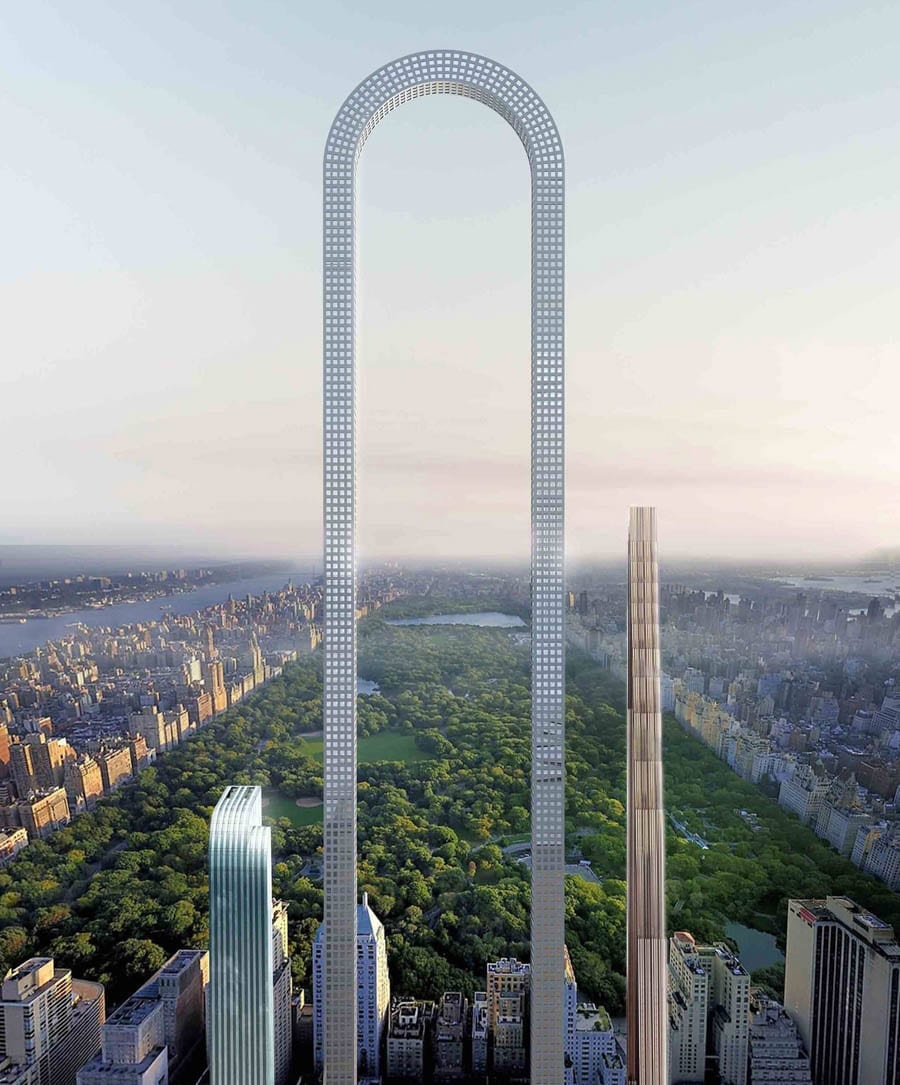
Billionaire living in New York might take a U-turn if a proposed skyscraper named the ‘Big Bend’ becomes reality
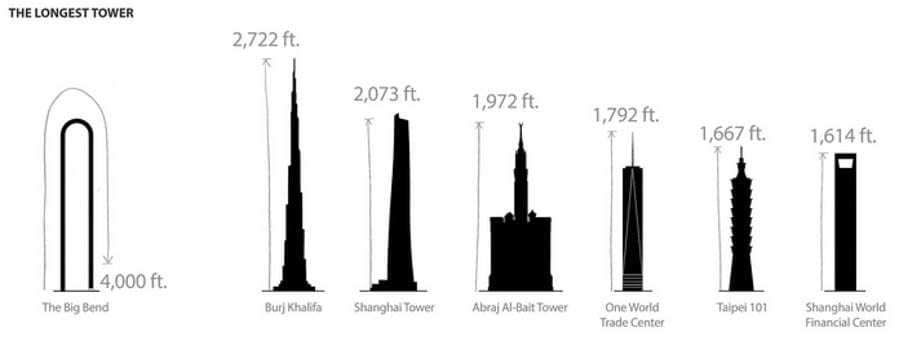
A 4,000 foot end-to-end conceptual skyscraper has been proposed in Manhattan in order to “potentially provide a solution to the height limitations imposed by city zoning laws” according to the anthropological New York website 6sqft.
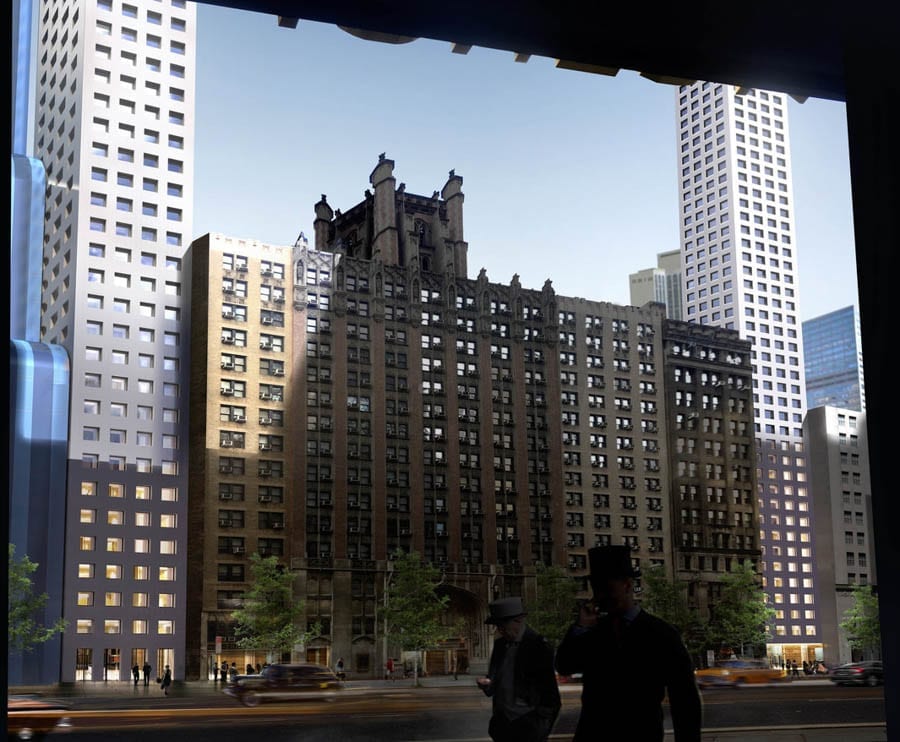
Designed by the New York and Athens based studio Oiio, the “Big Bend” – as it has been endearingly named – would fit onto two narrow plots at its base and would provide luxury apartments aimed at high net worth individuals.
Of the proposed structure, on their website, Oiio state:
“If we manage to bend our structure instead of bending the zoning rules of New York we would be able to create of the most prestigious buildings in Manhattan. We can now provide our structures with the measurements that will make them stand out without worrying about the limits of the sky”.
Real estate developer turned 45th POTUS Donald Trump’s views on the design are unknown but his favoured adjective “beautiful” is something that comes to mind.
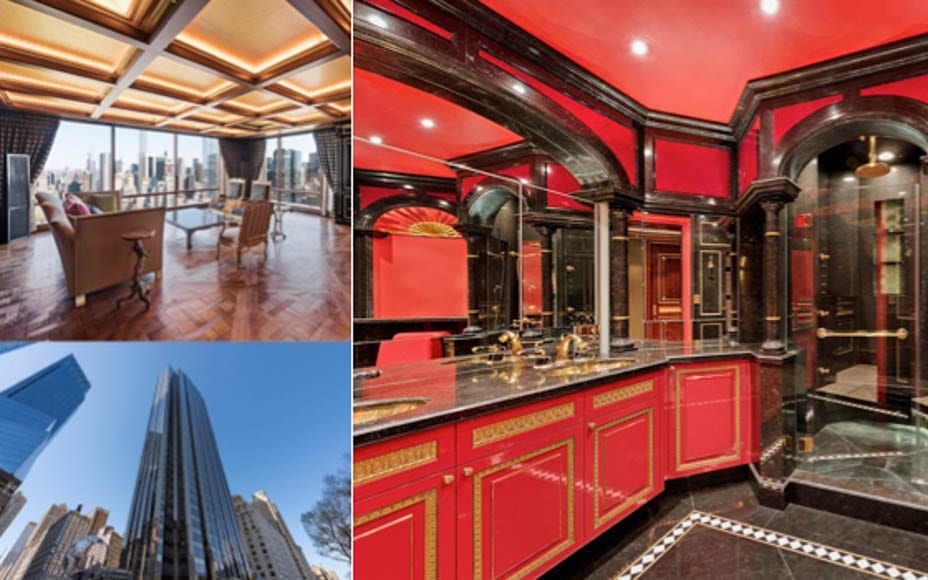
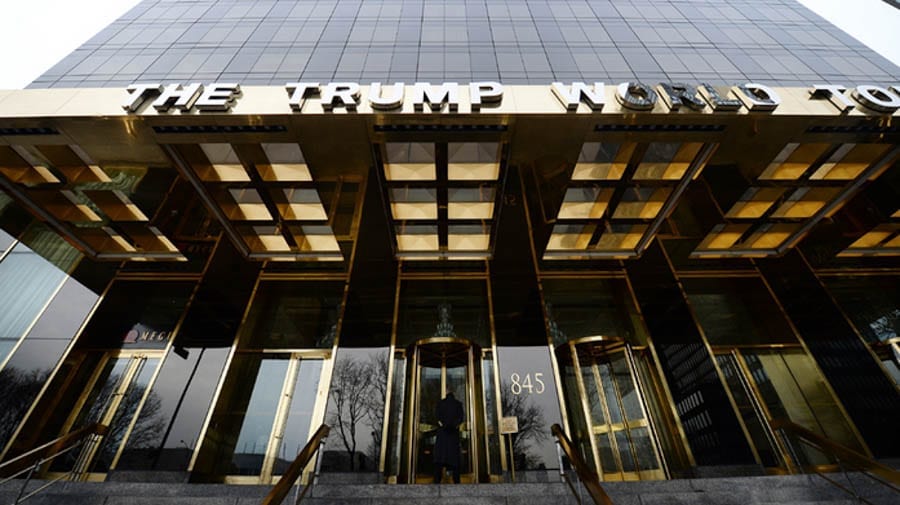
Horrific £27.6 million apartment in Trump International Tower is struggling to sell; in this case its not the links to the POTUS that is the cause, it’s simply revoltingly decorated
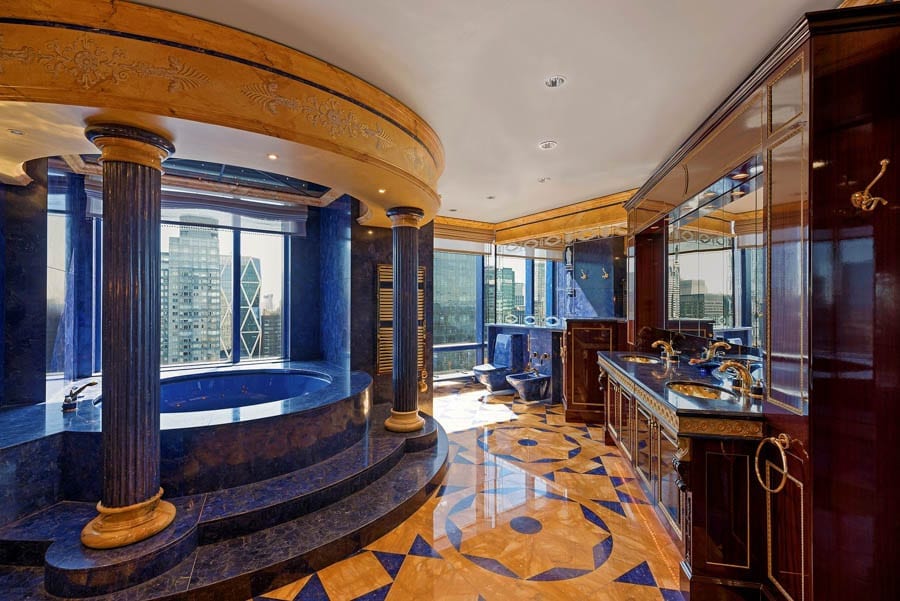
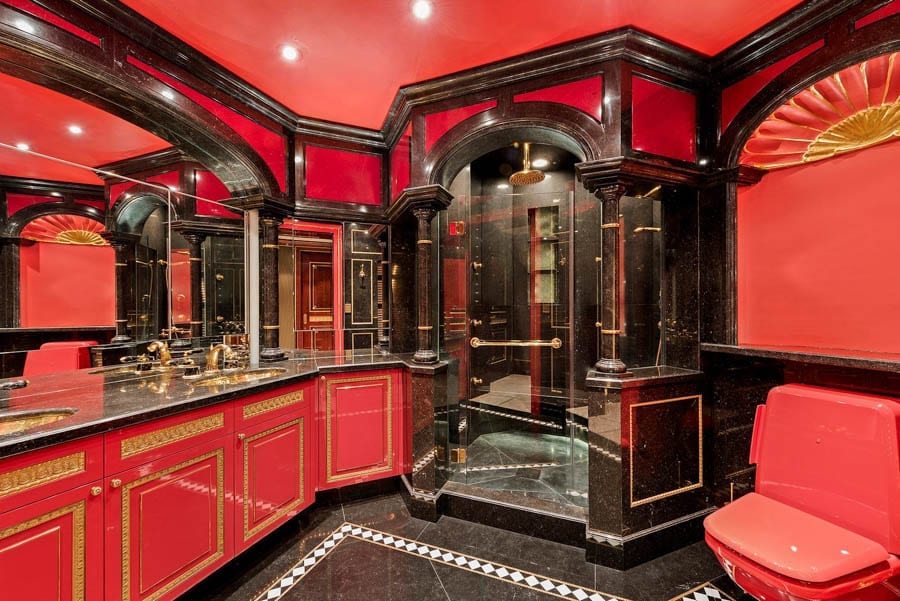
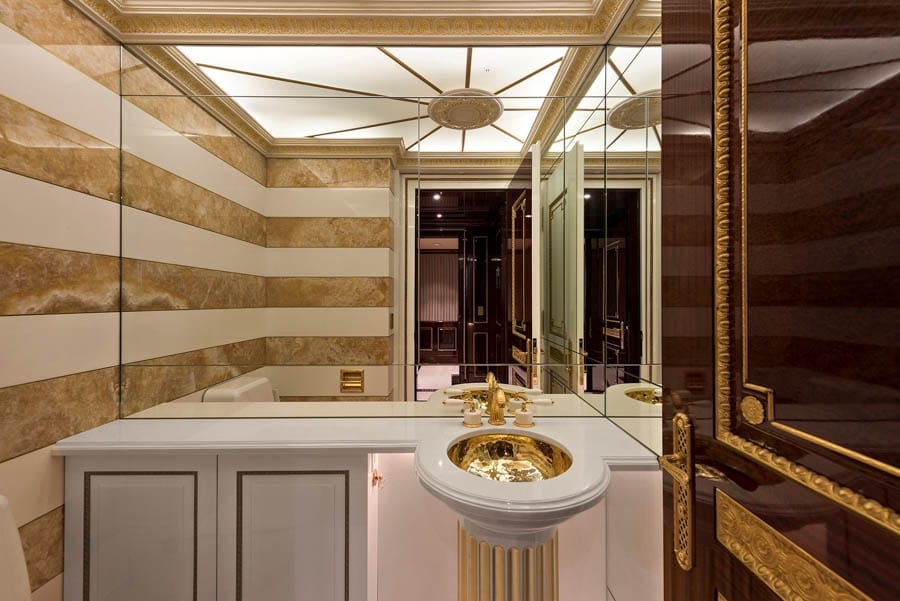
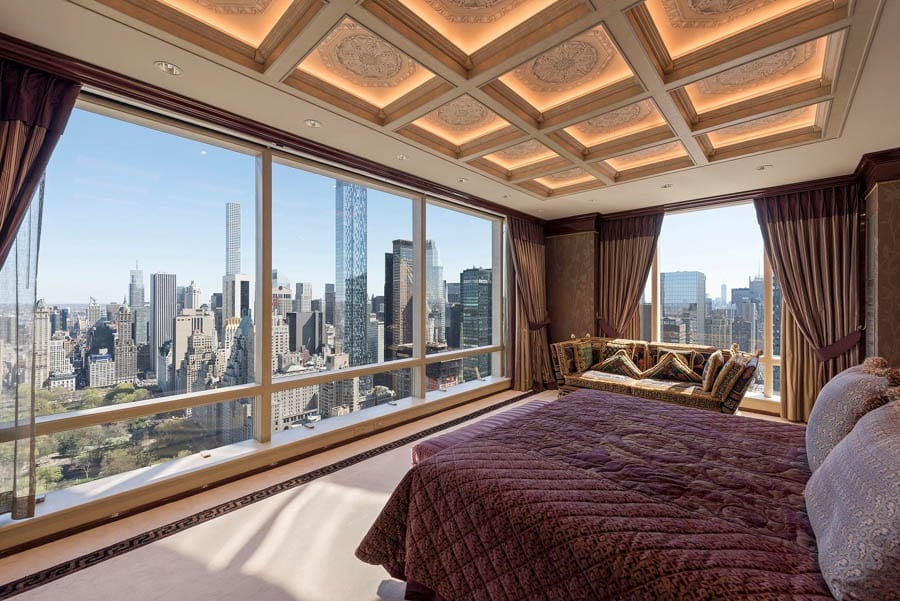
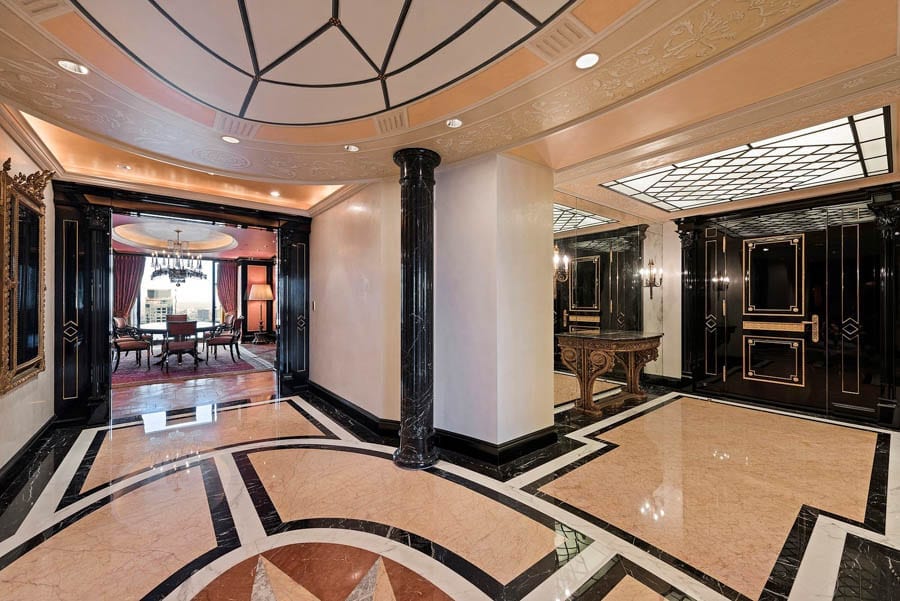
“Don’t let the opulence distract you”, suggest the many agents marketing what could be quite possibly the gaudiest apartment at One Central Park West – AKA ‘Trump International Hotel and Tower’ – in New York. If they’d been honest, they’d have said something completely different and that would be: “This place is truly horrific”.
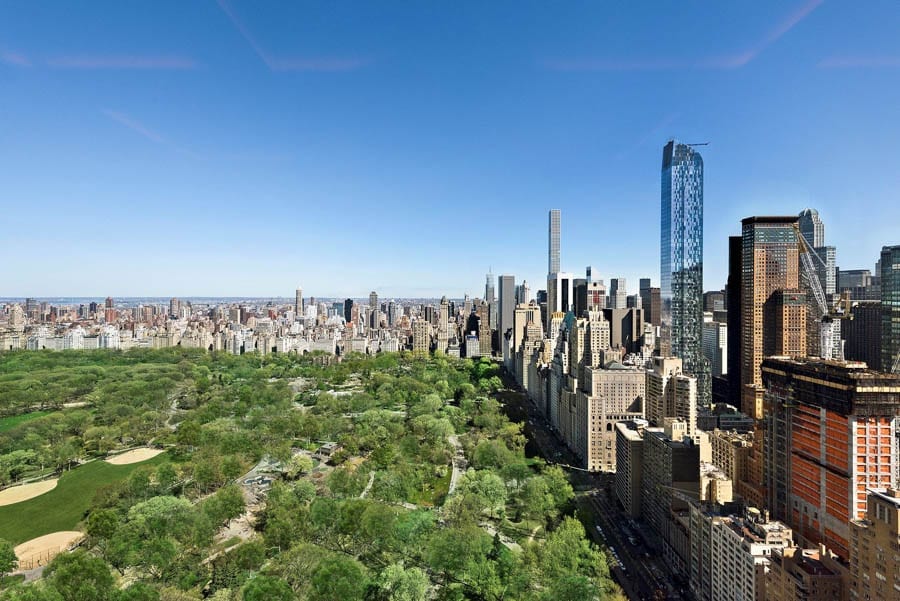
Originally priced at £32 million ($40 million, €37.6 million or درهم146.9 million) when first placed on the market in May 2016, apartment #47BC within the 44-floor tower has recently been reduced to £27.6 million ($34.5 million, €32.4 million or درهم126.7 million). The 6,360 square foot, 6 bedroom gold-leafed, marble-floored monstrosity admittedly enjoys “extraordinary views” of Central Park but comes with bathrooms so over-the-top that even Liberace would have blushed.
Trump International Tower itself was originally built between 1968 and 1970 and converted to a mix of hotel and residential space by Donald Trump between 1995 and 1997. The 583-foot tall, Thomas E. Stanley designed building featured in the 2011 comedy crime film Tower Heist and has a 30-foot wide silver globe to the front of it.
Knight Frank and Douglas Elliman are amongst the tribe of agents attempting to sell what they describe as a “Central Park West sprawling gem”. It was last sold in 2008 to an anonymous entity named Daisho Development USA, Inc. They paid $26 million (the equivalent of £23.4 million, $29.3 million, €27.5 million or درهم107.6 million today) for the vast 14-room space.