Vast Edwardian mansion with basketball court in the roof in Illinois for sale at half price it listed for in 2016; it’s on for just £20 per square foot
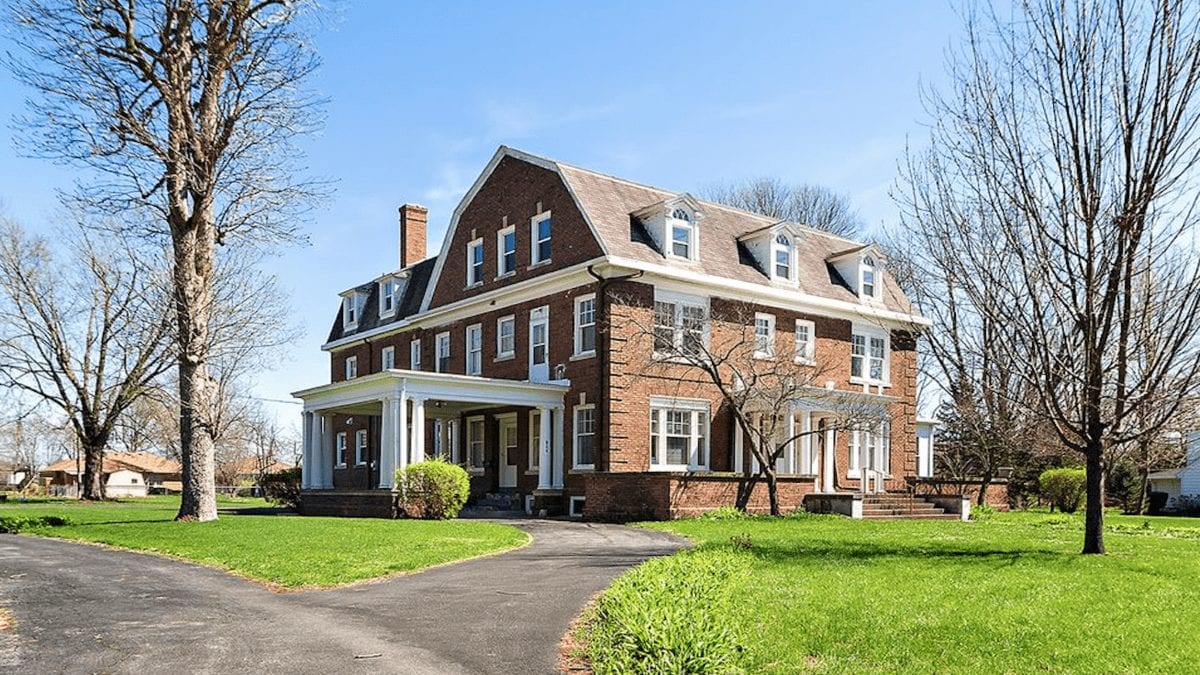
A 7,072 square foot Dutch colonial mansion set on a plot of 1.38 acres in Watseka, Illinois that appears to be in surprisingly good condition has had its priced halved from £281,000 to £141,000.
Built in 1912, this Edwardian “turn of the century” four-storey house has 3 reception rooms, an “enormous” kitchen, 5 bedrooms and 4 bathrooms, but what sets it apart is a huge former ballroom on the top floor that is currently used as a basketball court.
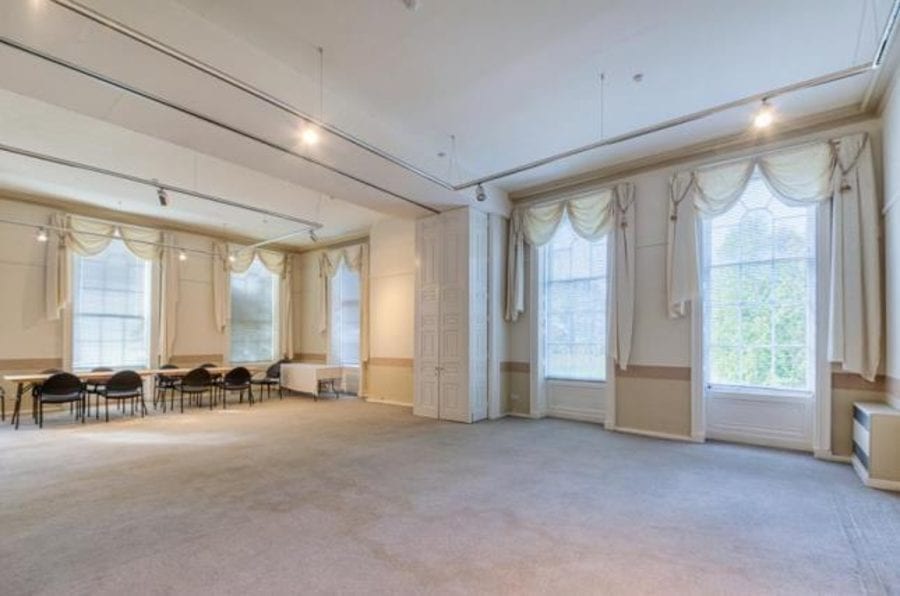
A half price mansion with a full size basketball court – 514 South 5th Street, Watseka, Illinois may be on sale for half price and offered as “sold as is,” but it does include some vast spaces including this former ballroom turned basketball court.
With garaging for 4 cars also, the property is located in a city that is 15 miles west of the Illinois-Indiana state line and that has a population of around 5,255 according to the 2010 census. “Notable people” from there, according to Wikipedia, number the Beauty and The Beast voice actor Rex Everheart (1920 – 2000) and John Allhands, the current mayor and a man credited with “pushing out drug activities and adding a marijuana dispenser and factory.”
The Numbers – 514 South 5th Street, Watseka, Illinois, IL 60970, United States of America
July 2020 – Price reduced to £141,000 ($175,000, €156,000 or درهم643,000) through agents Berkshire Hathaway, a 49.8% reduction on the sum in March 2016.
April 2020 – Relisted for £161,000 ($200,000, €178,000 or درهم735,000) through agents Coldwell Banker Residential.
December 2018 – Relisted for £213,000 ($265,000, €236,000 or درهم973,000) through agents McColly Rosenboom.
March 2016 – Listed for sale for £281,100 ($349,900, €312,000 or درهم1.3 million) through agents Rosenboom Realty.
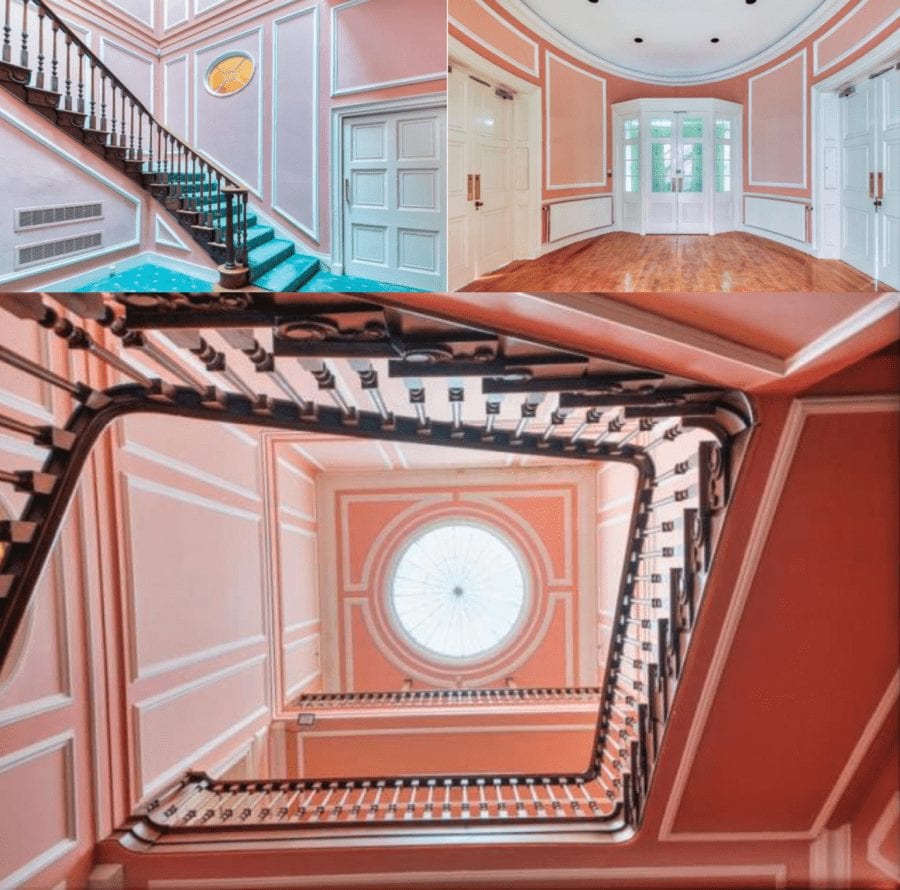
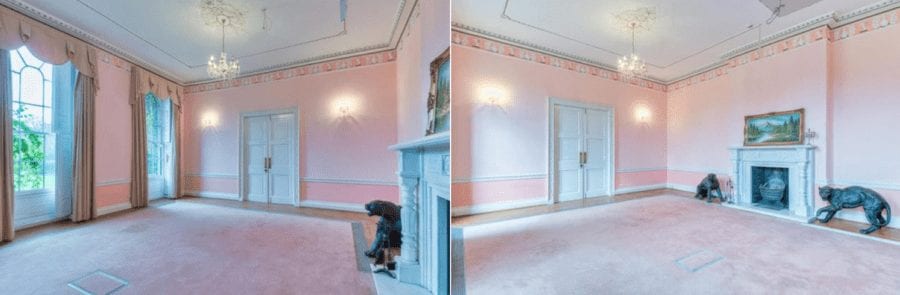
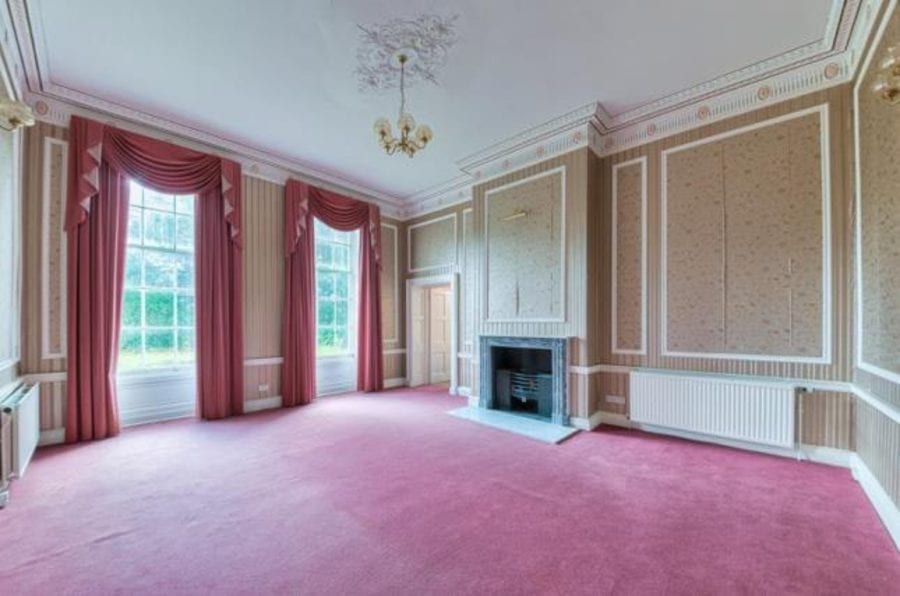
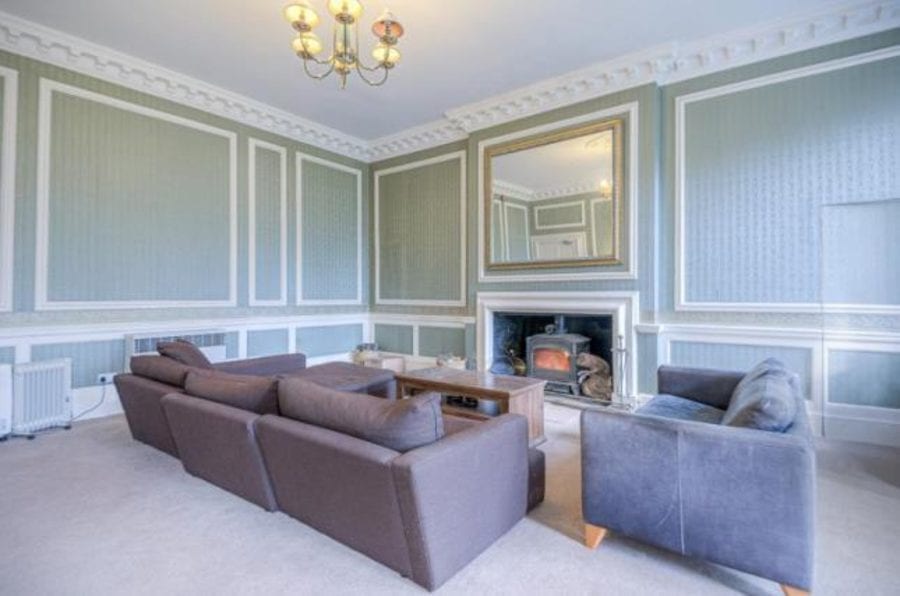
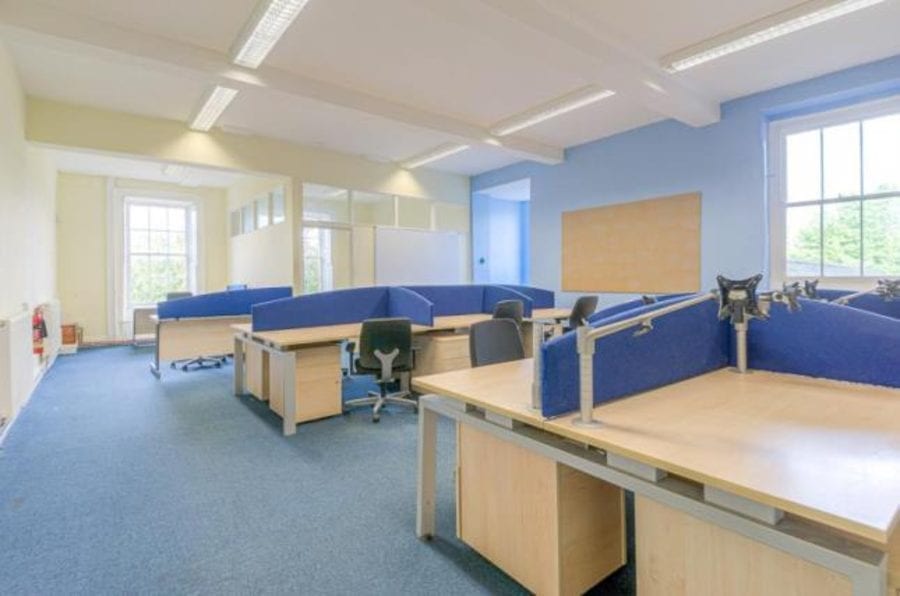
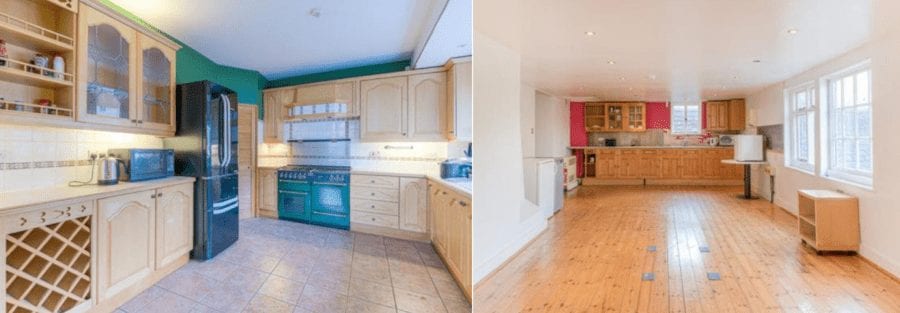
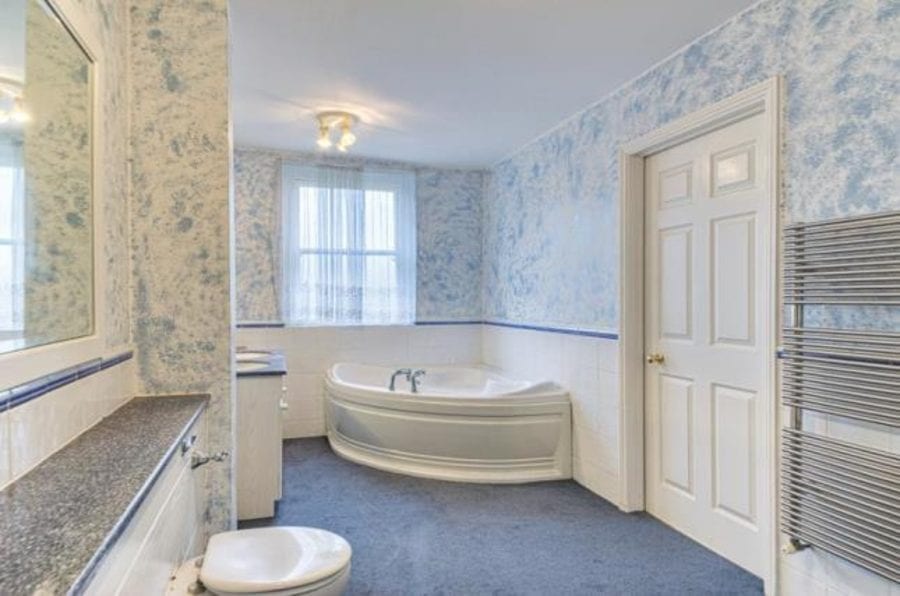
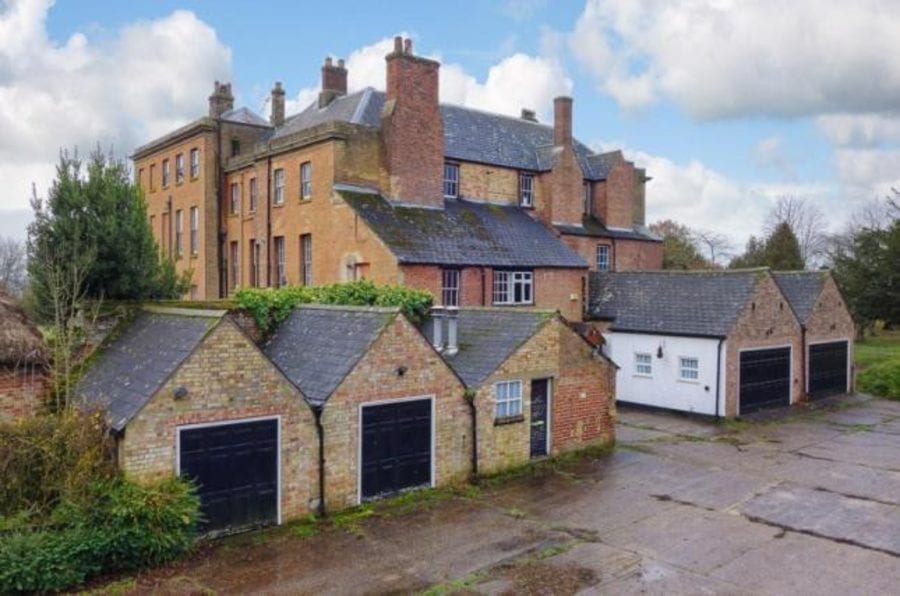
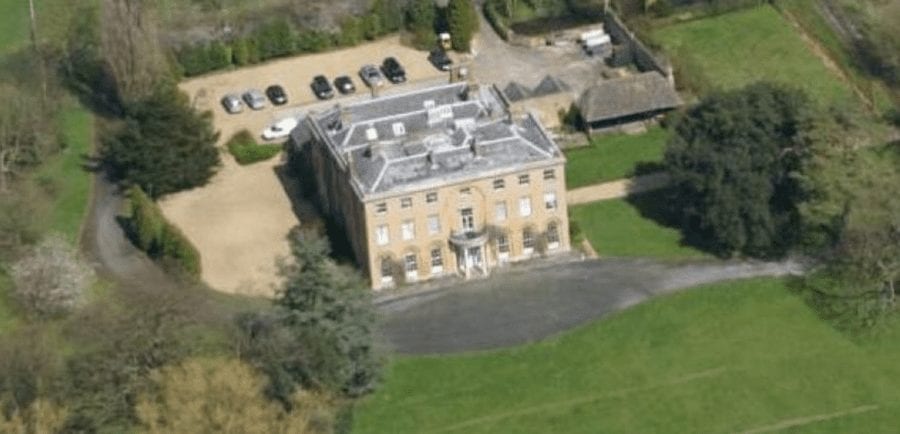
An aerial image showing the house on its 1.38-acre plot and its proximity to neighbours. It is described by agents Berkshire Hathaway Home Services Chicago as “feeling like a country estate, but right in town.” Notably, they point out, it is not on a flood plain.The entrance hall is described as “impressive” whilst in addition there is a second service staircase elsewhere in the building.This reception room is currently used as an office. Plainly, the owner is not exactly inspired when it comes to furnishing choices, but the built-in bookcases are original.The drawing room is currently dominated by a rather unappealing leather ‘couch’ and a coffee table featuring two rather strange images.The room also includes an original fireplace.The large dining room is paneled and has a beamed ceiling.The kitchen is lauded as “enormous” and has new fittings. It is adjoined by a butler’s pantry.There are five bedrooms in total. The agent remarks that they are “nice” and points out that the master suite includes a private bathroom and a dressing room that could be used as a “lounge.”Another bedroom, this time currently dominated by a rather large bed.A space described as a “bonus room.”There are various cellar rooms beneath the house.The front elevation of 514 South 5th Street, Watseka, Illinois, IL 60970, United States of America gives indication of the Edwardian “grandeur” of the building. The agents suggest the house offers: “Tonnes of opportunities.”An aerial shot of the rear showing the large garage and the in-and-out driveway.The half price mansion is located in Watseka, Illinois. The small ‘city’ is situated south of Chicago and north of Indianapolis.
Cambridgeshire mansion used by Special Operations Executives in the Second World War and as a borstal subsequently for sale; Gaynes Hall is next to the prison that housed Max Clifford and was briefly a cannabis farm in 2019
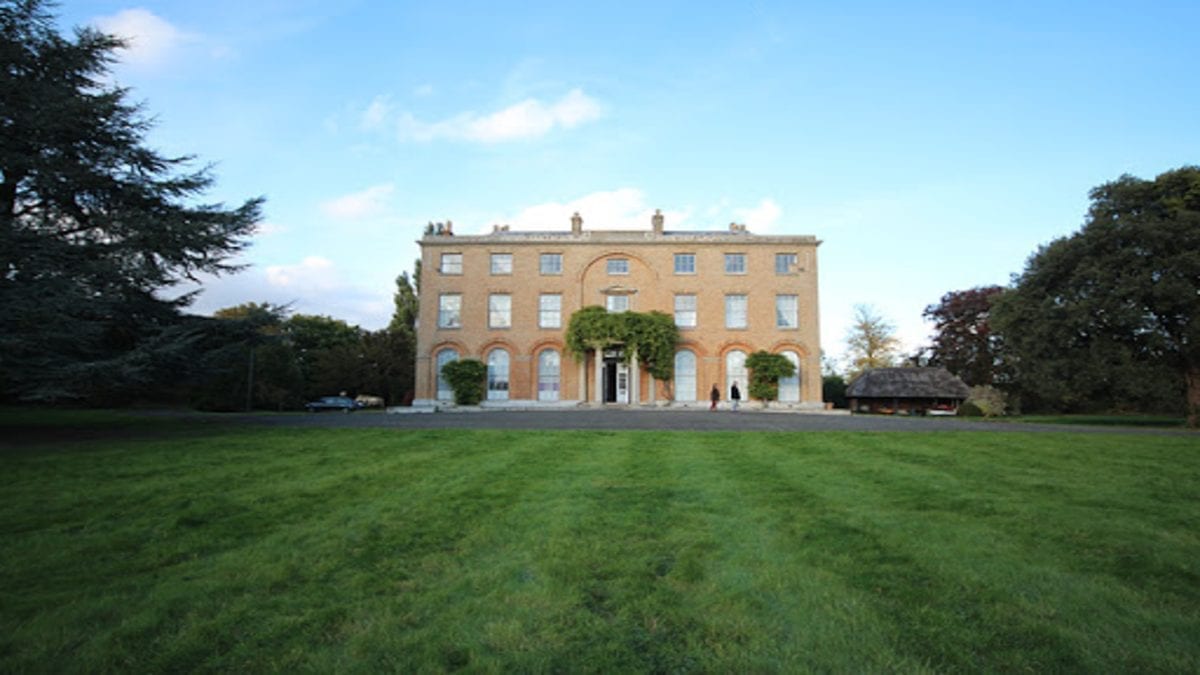
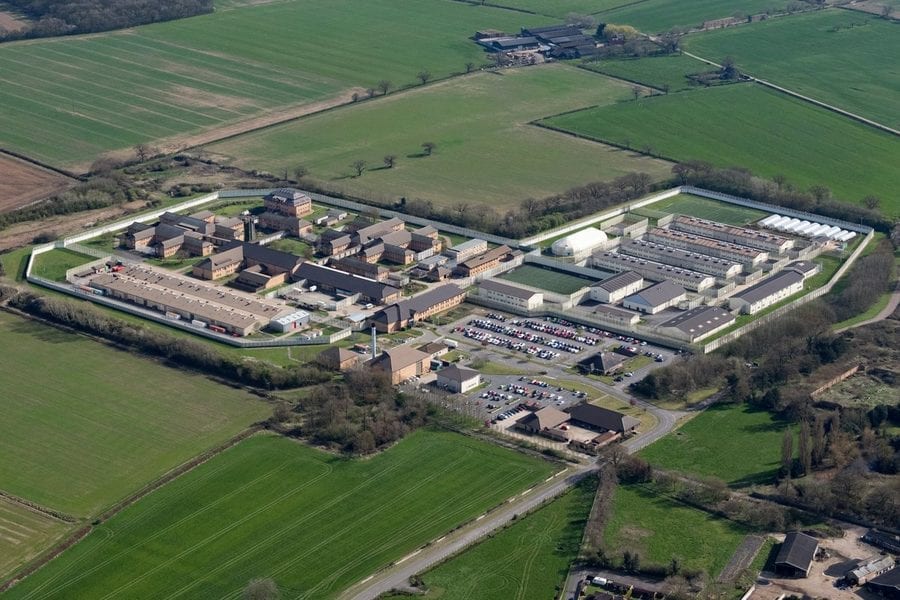
Grade II* listed Georgian mansion in Cambridgeshire for sale for £2.65 million in spite of being in far from perfect condition and next door to a prison housing 1,220 convicted sex offenders.
The estate was owned by the aristocratic Duberly family from 1798 until 1940. An earlier house on the house had been home to Oliver Cromwell’s namesake and uncle.
It was requisitioned in the Second World War by the Special Operations Executive. Hitler was so annoyed by the operations at Gaynes Hall that he supposedly nicknamed the place “the hornet’s nest.”
After the war, the hall became a borstal and after that closed, part of the estate became HM Prison Littlehey – famous for housing PR ‘guru’ Max Clifford, victim of a miscarriage of justiceStephen Downing and Australian cricketer Alex Hepburn.
More recently, the estate came to public attention after being discovered to be the centre of operations for drug lords. £250,000 of cannabis were seized there in 2019.
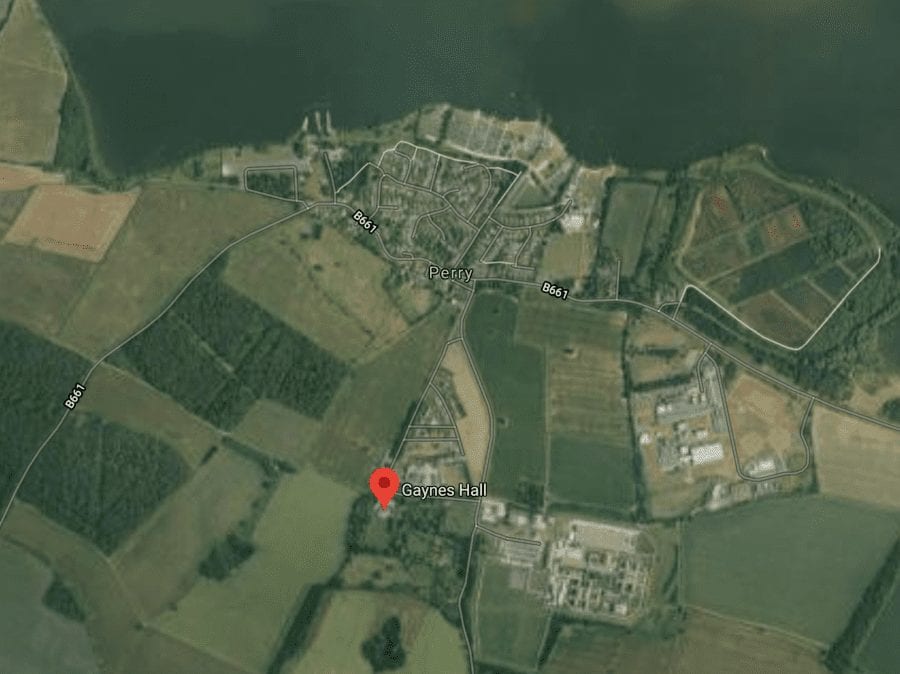
In June 2019, once ritzy Gaynes Hall at Perry, near Huntingdon in Cambridgeshire came to public attention when a drugs baron who’d turned part of the building into a cannabis farm was jailed. For his troubles, Nebir Tahiraj was relieved of £250,000 of drugs and ‘gained’ a sentence of 13 months.
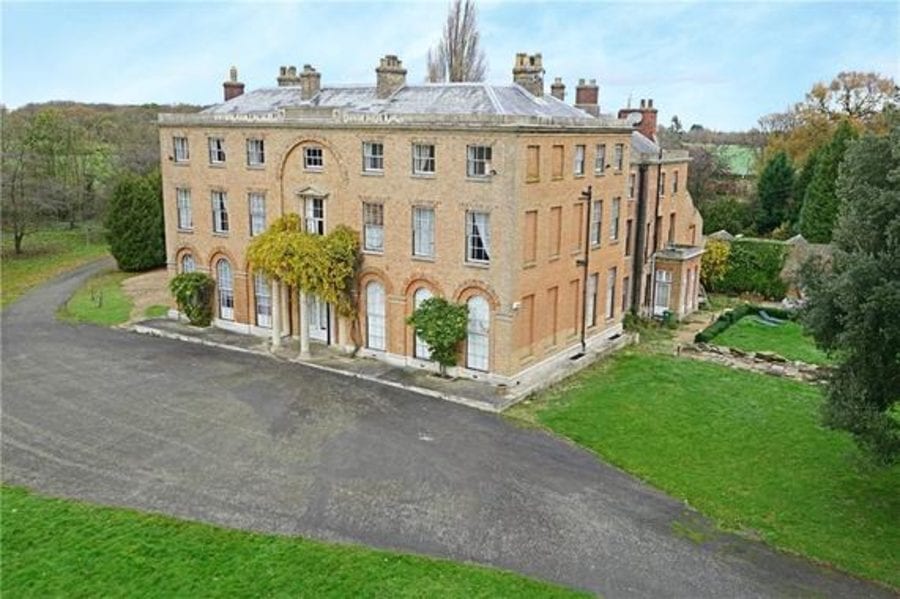
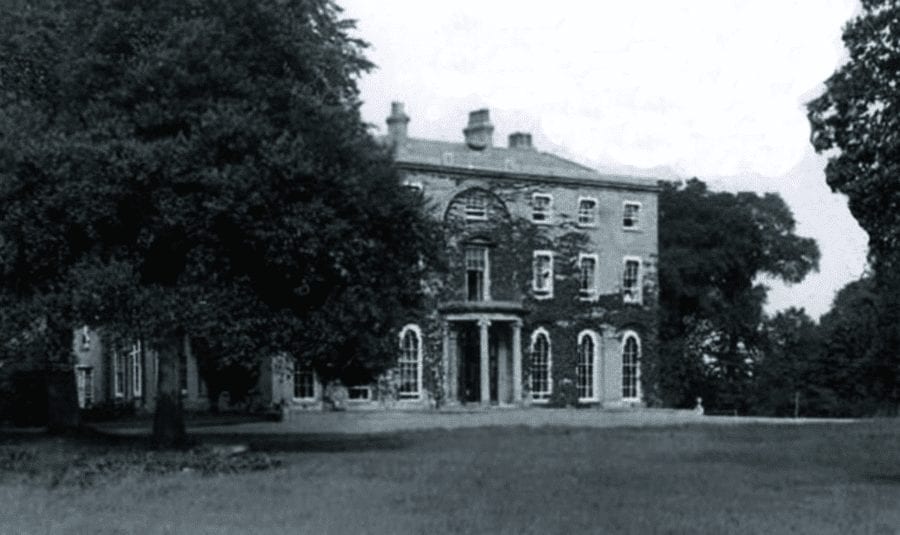
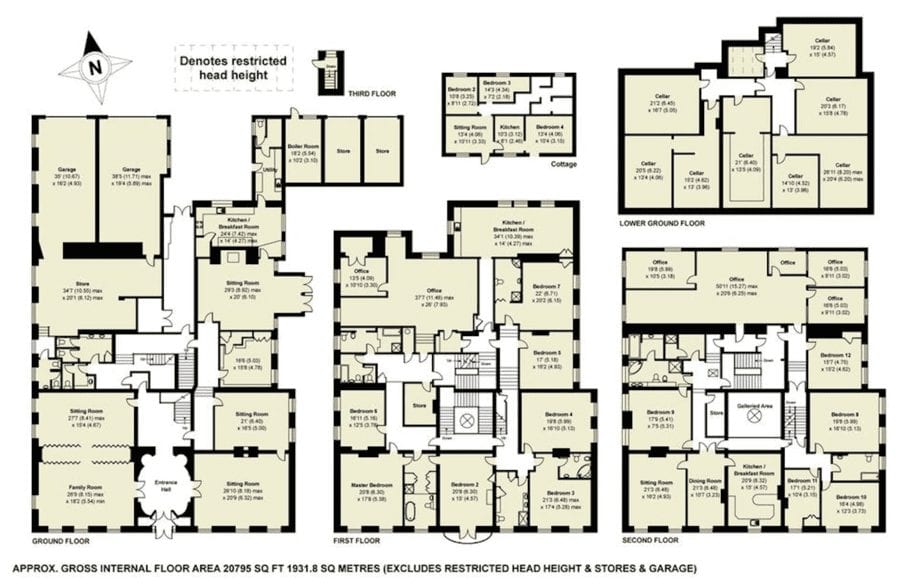
Grade II* listed and built circa 1800 for Sir James Duberly (1758 – 1832), the gault brick house was originally plaster rendered. Of three storeys plus cellars and seven bays, the 20,795 square foot building is currently being marketed by agents Wilson Peacock for £2.65 million – up from £2.2 million back in 2019.
Gaynes Hall (also known as ‘Gaines Hall’ occasionally) stands in 16 acres of grounds including lakes and a moat and comes with a three bedroom cottage “requiring full modernisation and refurbishment.” It was home to the Duberly family until 1940 when it was requisitioned by Special Operations Executives (SOE) on the instructions of Winston Churchill.
Supposedly, according to the local Parish Council’s website, Hitler was so exasperated by the activities at Gaynes Park that he referenced the house “the hornet’s nest.” It was known locally during this period as a “spy school” and its master, Wing Commander Thomas Odett, was nicknamed ‘The White Rabbit’ on the basis that “he was always popping up in unexpected places.”
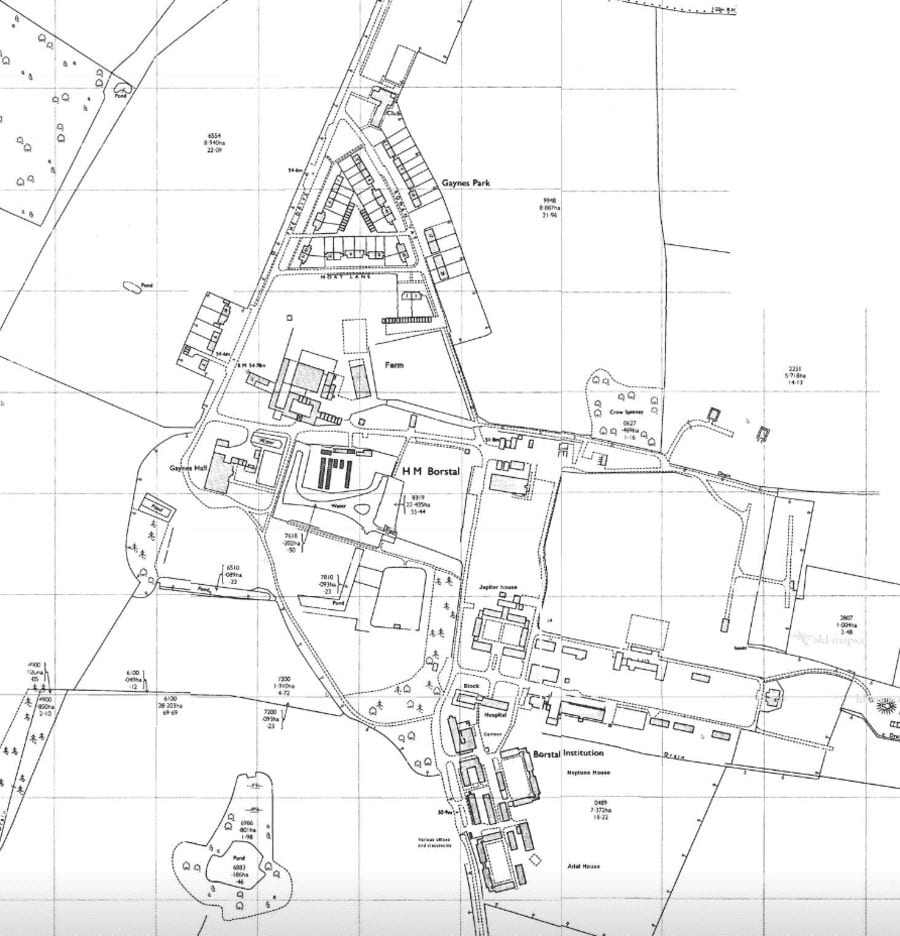
After the war, the mansion became the governor’s residence and administrative offices of the newly created Her Majesty’s Borstal Gaynes Hall and remained in that use until 1983 when the borstal closed. Her Majesty’s Prison Littlehey, which is best known as the place of death of the public relations ‘guru’ paedophile Max Clifford, was subsequently opened next door and residents of Perry get to hear its sirens periodically if a prisoner escapes or there is a disturbance.
In 1985, AIM Cambridge (later AIM Technology) leased the hall and from the Ministry of Defence and converted it into offices. When their business failed, the building became empty and in 1990, Gaynes Hall was sold again. In the years since, it has been in mixed use.
In need of some attention – Gaynes Hall has variously been used as a grand residence by aristocracy, requisitioned for use by Special Services Executives (SOE), served as an administrative office and governor’s house for a borstal and been converted to offices. It is currently configured in ‘mixed-use’ format and includes 20,975 square foot of accommodation.An aristocratic drug farm – Nebir Tahiraj was imprisoned in 2019 after having turned part of Gaynes Hall into a cannabis farm. He was caught with over £250,000 of drugs on the premises after neighbours complained about the noxious smell.Proximity to a prison – An aerial view of Her Majesty’s Prison Littlehey. Gaynes Hall is situated just to the west.Rapists next door – Convicted rapist and ex-cricketer cricketer Alex Hepburn, Stephen Downing (whose conviction for murder was overturned in 2002 after he had served 27 years in prison) and paedophile Max Clifford (who died in the prison) are connected by having been imprisoned at the Category C male prison HM Prison Littlehey. It has a capacity for 1,200 male prisoners – who all have been convicted of sexual offences.A once grand gentleman’s residence – Gaynes Hall in an image taken circa 1913. An earlier house on the site was leased for 21 years by Sir Oliver Cromwell (1566 – 1655), the uncle and namesake of the lord protector, from 1599.
The Names & Numbers – Gaynes Hall, Perry, Great Staughton, Huntingdon, Cambridgeshire, PE28 0ST, United Kingdom
December 2019 – Listed for sale by Wilson Peacock Country Homes at the increased price of £2.65 million ($3.35 million, €2.96 million or درهم12.32 million).
14th June 2019 – 35-yeard old Nebir Tahiraj found guilty at Cambridge Crown Court of “being concerned in the production of cannabis” in his flat at Gaynes Hall and jailed for 13 months. When police raided the property, they “found more than 200 plants at varying stages of growth, growing equipment and two large bags of cannabis ready to be sold” worth circa £250,000 ($316,000, €279,000 or درهم1.2 million). He attempted to claim “he was being exploited and kept at the flat against his will,” but the National Crime Agency (NCA) discovered he had been willingly involved.
Mid 2019 – For Sale for £2.2 million ($2.8 million, €2.5 million or درهم10.2 million) through Michael Graham.
March 2019 – Fleet Assist announce they will be moving their business from Gaynes Hall to Ermine Business Park in Huntingdon.
2002 – Purchased by the Malik family (according to Wikipedia).
1994 – 2002 – Owned by the McCallion family (according to Wikipedia).
1985 – Converted to offices and used by firms including AIM Cambridge (AIM Technology) and Fleet Assist in the years subsequently. Part-let as apartments and by the room also for residential use.
1945 – 1983 – Used as the governor’s residence and administrative officers of the Her Majesty’s Borstal Gaynes Hall. ‘Boys’ who were detained there have recounted their experiences on this fascinating Facebook page; it plainly was not an especially pleasant place.
1940 – Requisitioned for use by Special Operations Executive (SOE). Gaynes Hall – under the codename ‘Station 61’ – became the headquarters for Air Liason Officers and used as a ‘hotel’ for them prior to their being dropped into occupied Europe.
1798 – 1940 – Owned by the Duberly family. The present house was constructed for them circa 1800 to the designs of architect George Byfield (circa 1756 – 1813).
Twerp of Twitter, ‘Shady Steph’ – a washed-up wastrel who’ll not be giving Albert Einstein a run for his money any day soon – posted the comment: “Shoot the looters” on Monday, but deleted the remark after being quite correctly reminded she’d been arrested for stealing £1,033 ($1,300) of clothing from Neiman Marcus in May 2006. Whilst in custody this rotten ratbag was also found to be in the possession of drugs.
Reported to Twitter for “inciting violence” and called out a “worthless good for nothing tw*t,” pointless pillock Pratt did not stop there. Further examples of this dumb blonde’s recent social media ‘activity’ follows.
Poor lamb – Pratt highlighted her first world problems in May. She couldn’t find an airline willing to take her and her pooch.Shopped out – In April, this alleged-no-longer-a-junkie tried to claim she’d found a new addiction: Amazon. Anyone got a polygraph machine handy?Music’s not her forte – In March, madam shared news of someone we’ve never heard of writing a song about “the horrible coronavirus.” Her sentiments made sense to just about no one.We’re sure the Queen was touched – In January, Pratt claimed to be “in complete denial” about Prince Harry and his wife quitting royal duties. The reality car wreck most likely hankers after the dastardly duo becoming her new ‘besties.’Cleaned out – In November last year, ‘Shady Steph’ shared news that she cleans her house before her cleaner arrives. Anyone surprised? Anyone guessing she might have a lot of white stuff to hoover up?
Triplex apartment in Knightsbridge building once home to Marianne Faithfull for sale for the astounding sum of £25 million
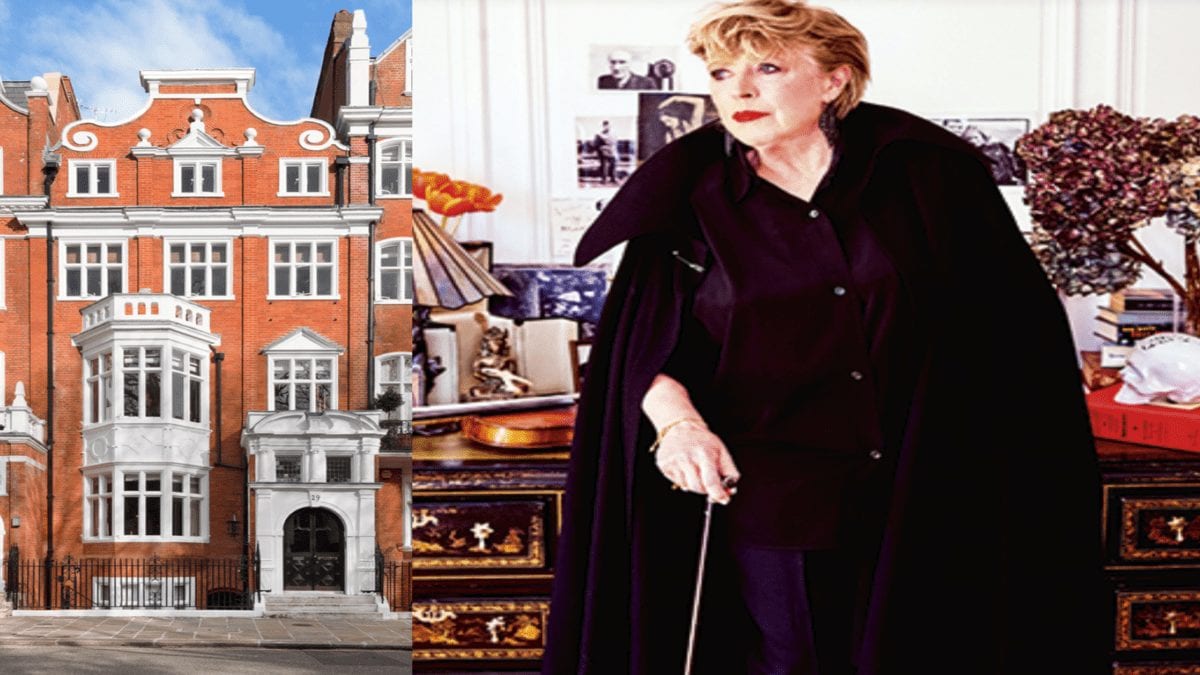
Marianne Faithfull has been recuperating in London after being treated for coronavirus in April, but even with her wealth the singer-songwriter is unlikely to be able to afford to return to where she lived at 29 Lennox Gardens in Knightsbridge for several years from 1967. An apartment that forms the majority part of that Grade II listed building is now for sale for the staggering sum of £24.75 million ($30 million, €27.7 million or درهم110 million).
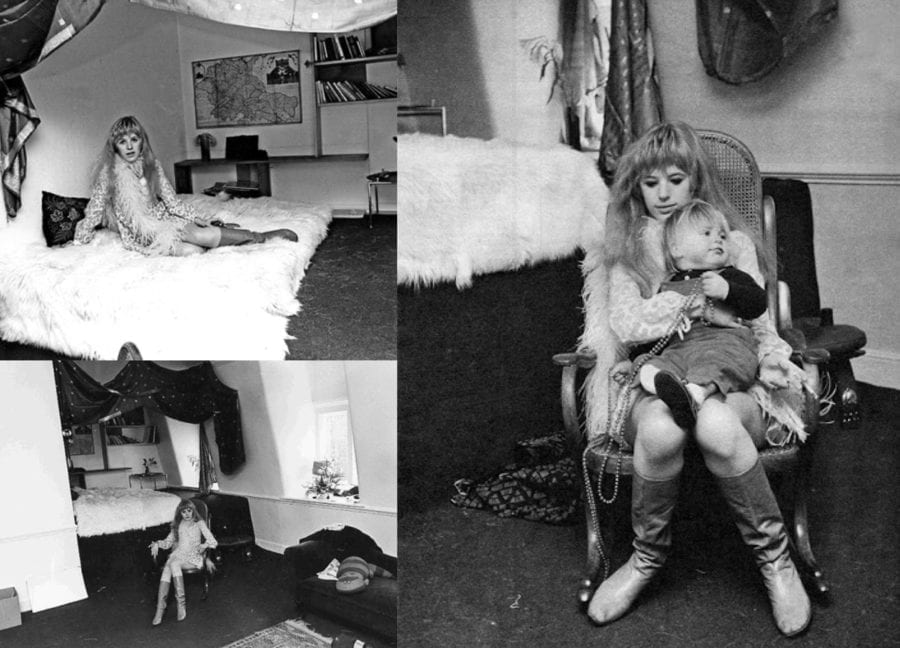
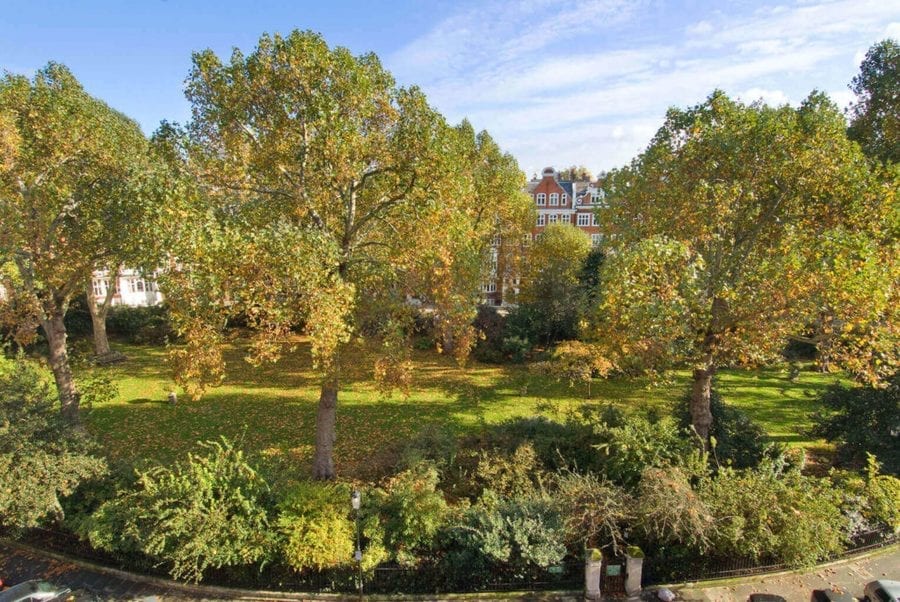
Marianne Faithfull pictured in her apartment in the building in 1967. She lived there with her then husband John Dunbar and their son, Nicholas, but left to live with Mick Jagger. At the time, she told ‘New Musical Express’: “My first move was to get a Rolling Stone as a boyfriend, I slept with three and decided the lead singer was best.”Residents of Lennox Gardens have access to its private communal gardens. They were laid out on the site of the Prince’s Cricket Ground – the location of the famed Gentlemen of England vs. Australians and Players vs. Australians game in 1878. In 2017, we featured another £35 million flat overlooking this garden square also.
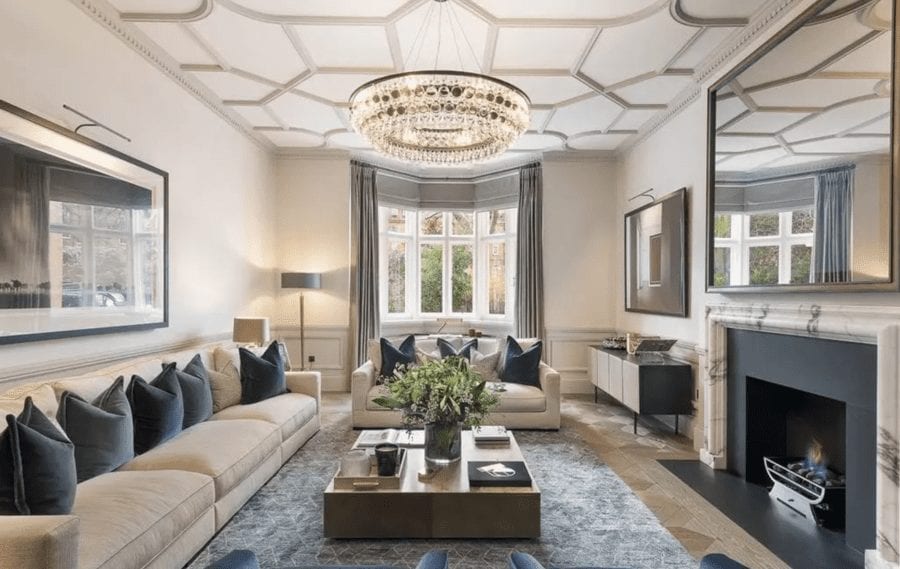
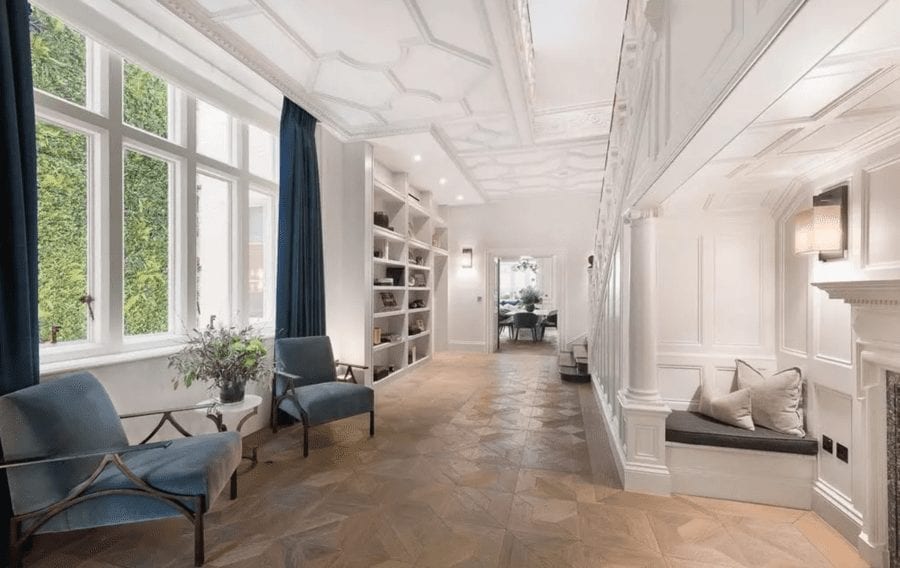
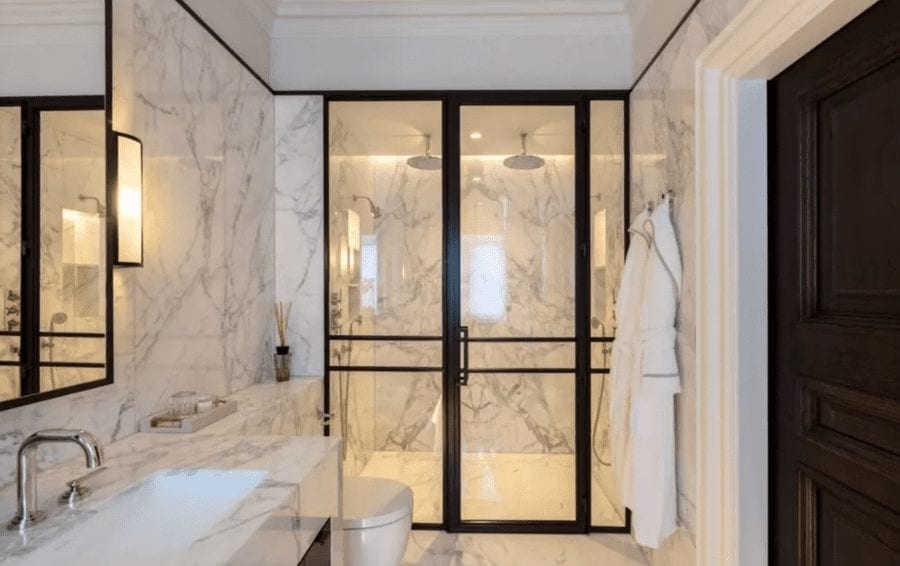
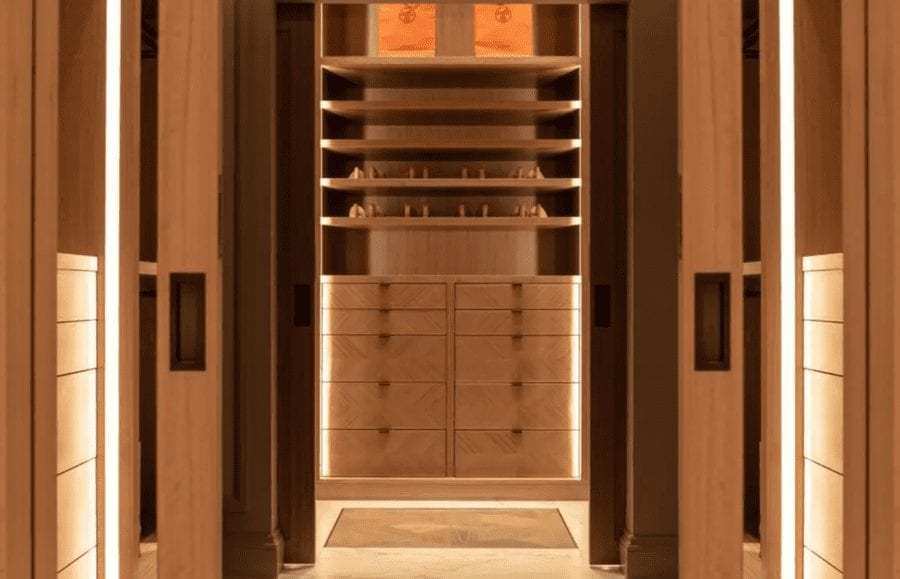
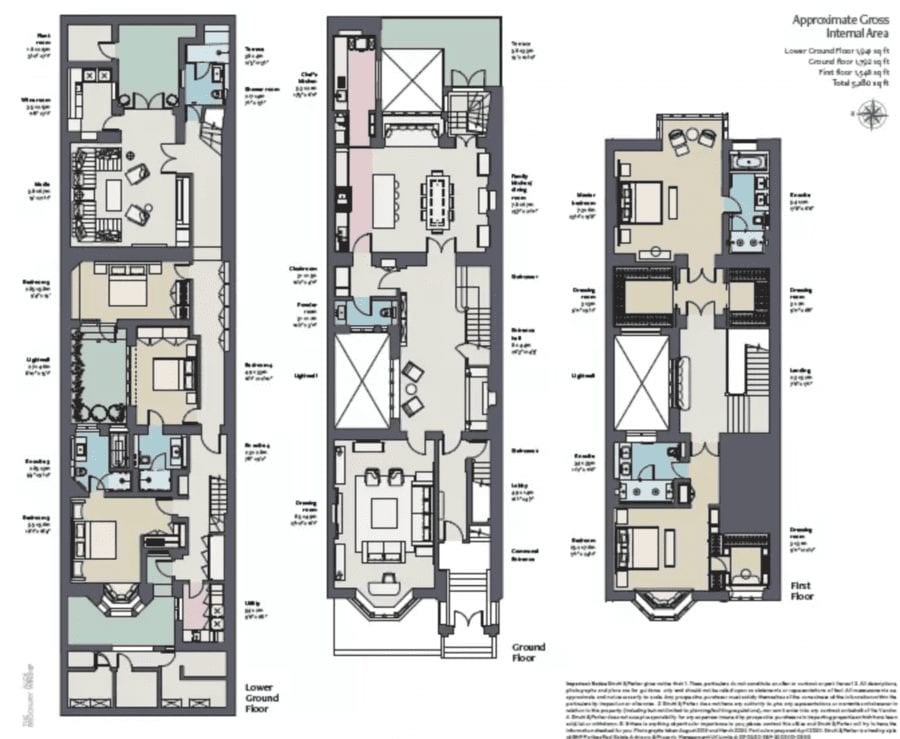
Spread over three floors and extending to 5,280 square foot, the triplex is a complete contrast to the ordinary “white suburban bedroom” Faithfull imagined in her song The Ballad of Lucy Jordan. A far-cry from the drug riddled existence she subsequently slipped into, the ground floor, basement and first floor apartment includes a large formal drawing room, a family dining kitchen and a separate chef’s kitchen, a media and wine room, five bedroom suites and two courtyard gardens.
The leasehold with share of freehold property – redeveloped by London Land Asset Management and designers 1508 London “on behalf of a private investor” – is offered by agents Strutt & Parker. The building was in recent years primarily home to the socialite-philanthropist Pia Hahn Marocco and its top floors offered to rent at a sum of £15,167 per month ($18,357, €16,966 or درهم67,416 per month).
1978 Piaggio Ape ‘limousine’ used by the controversial Countess Agusta – a woman who either fell or was pushed to her death from her home above Portofino in 2001 – to be auctioned
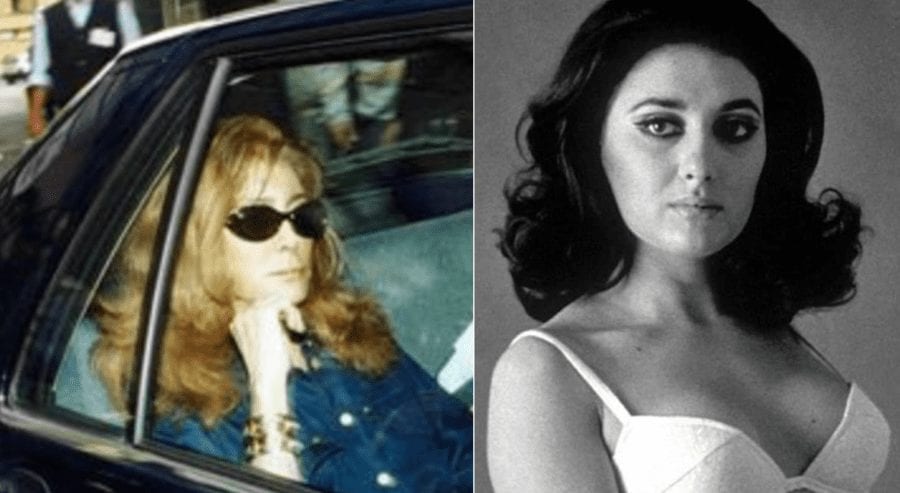
On 8th January 2001, “shop assistant turned model turned multi-millionairess many times over turned fugitive” (via a stretch in what American’s so pleasantly term ‘pokey’) Countess Francesca Vacca Agusta “disappeared” from the terrace of her Ligurian seaside home. The series of events that preceded and followed could have featured in an Agatha Christie novel or a Sherlock Holmes story.
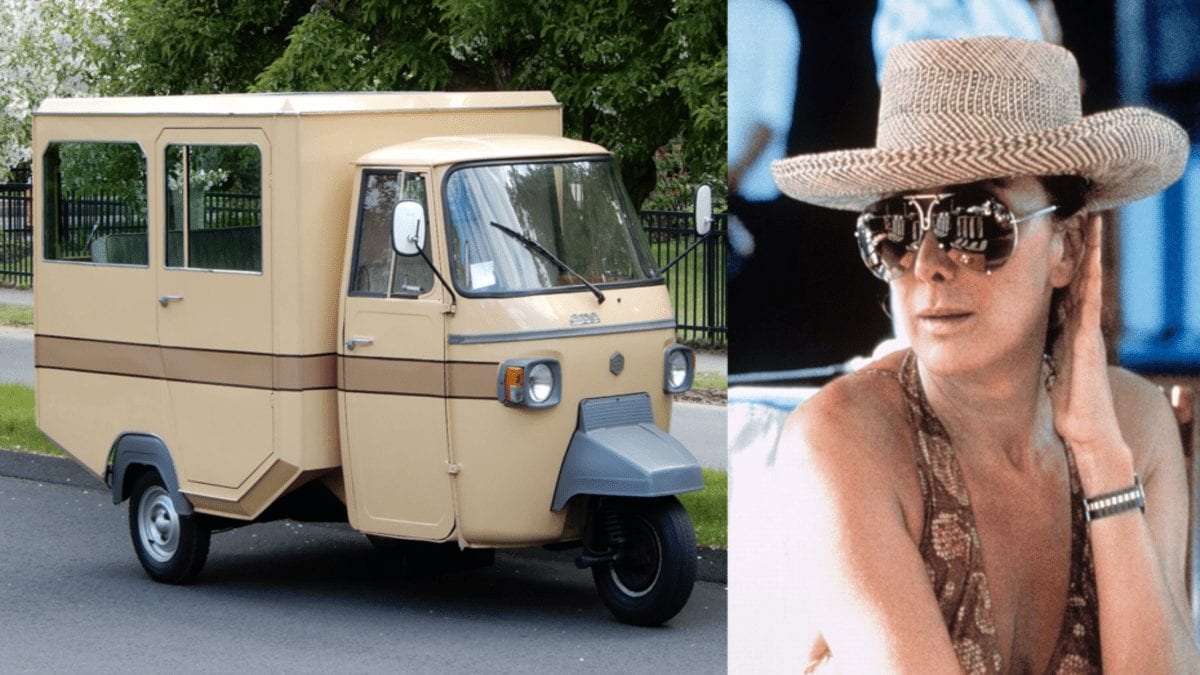
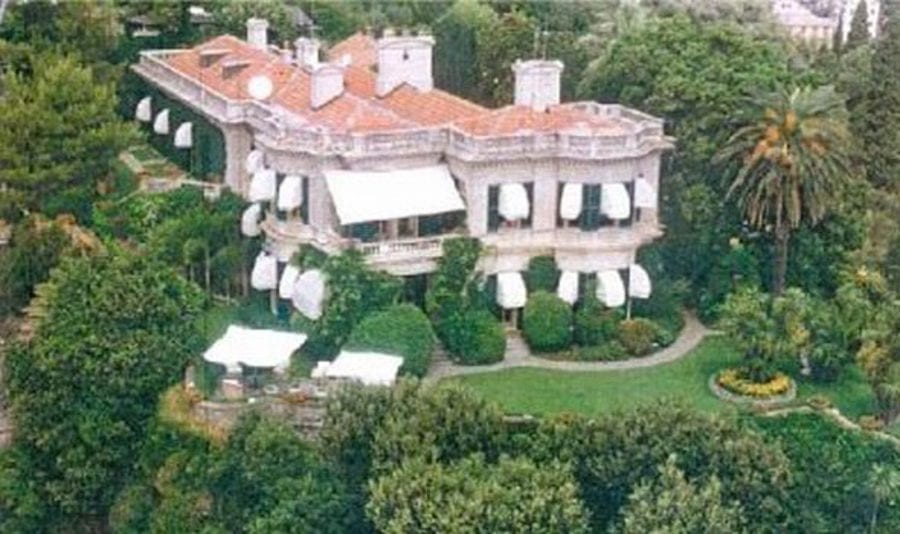
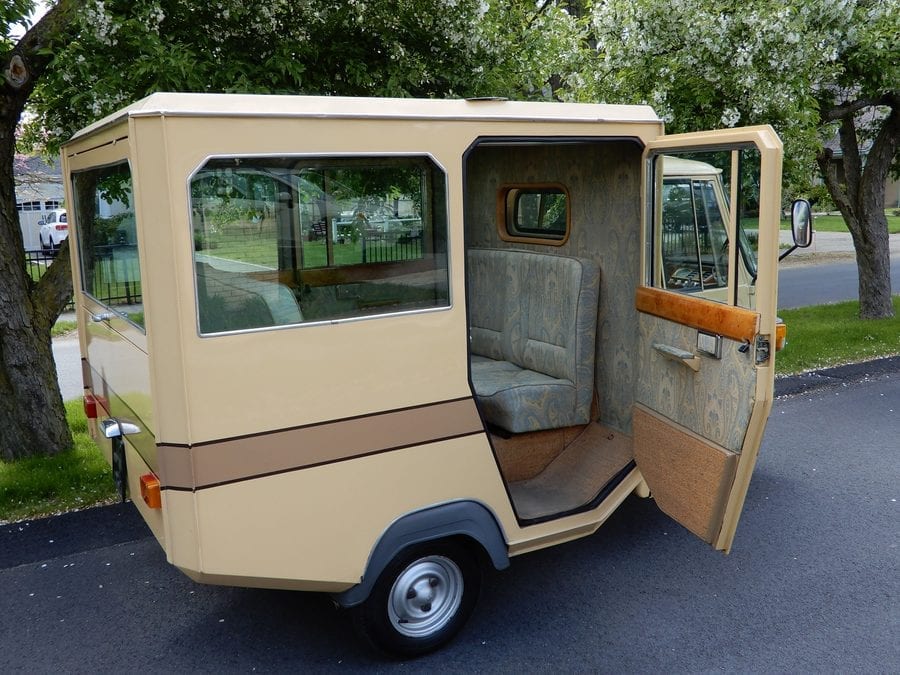
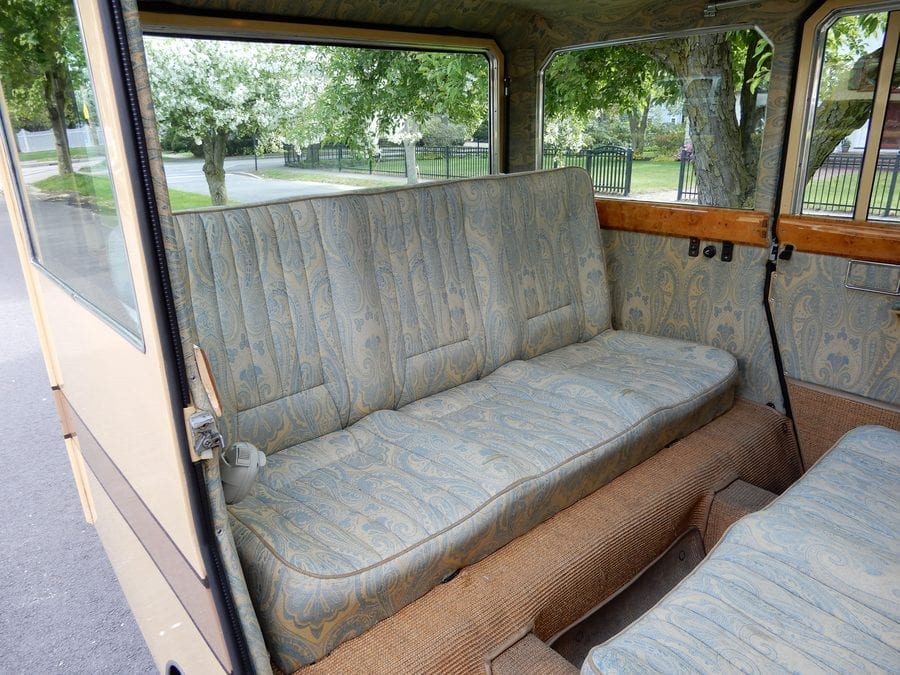
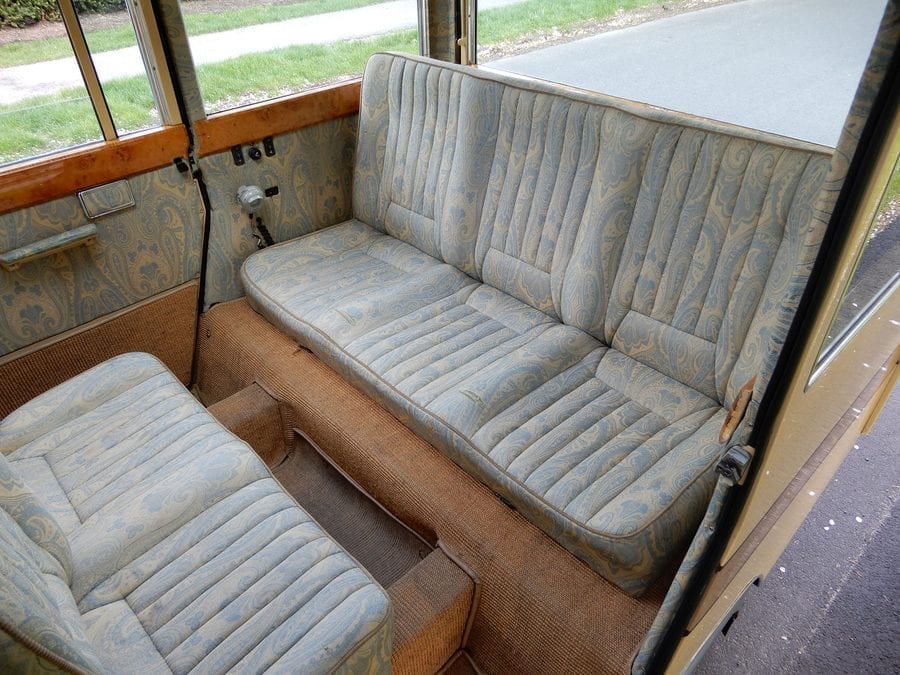
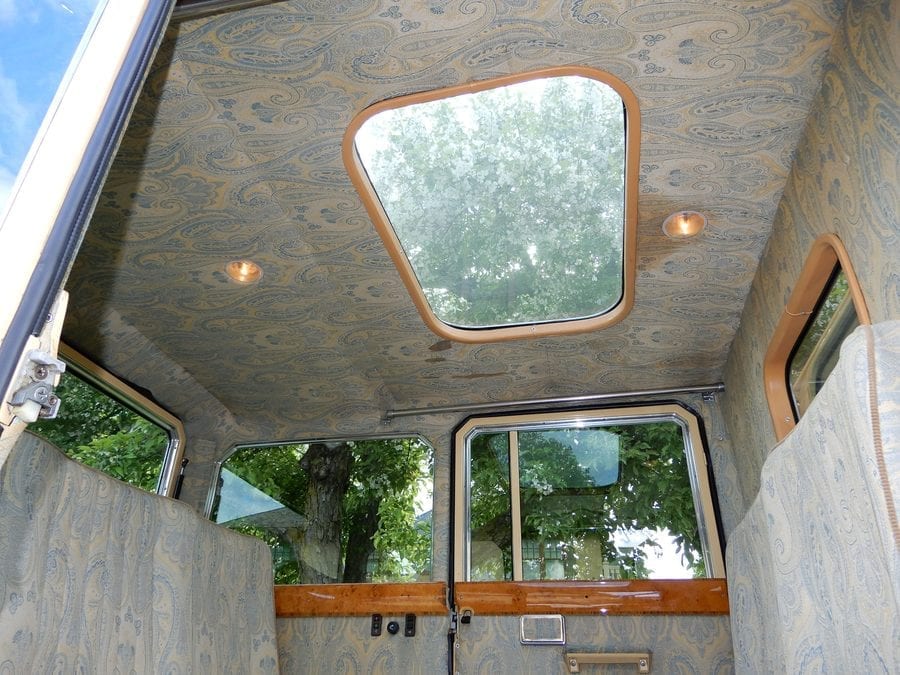
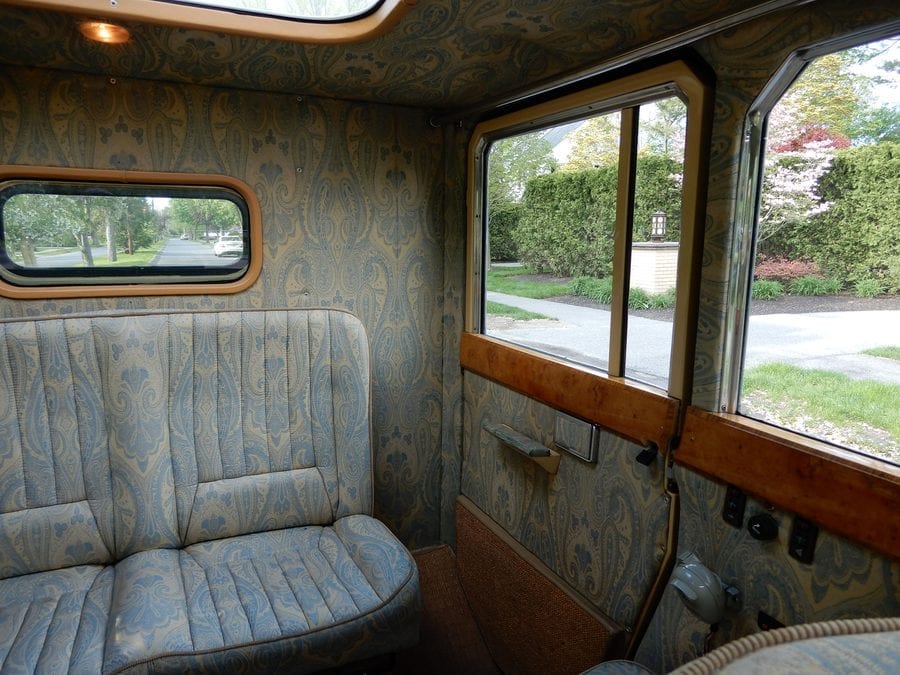
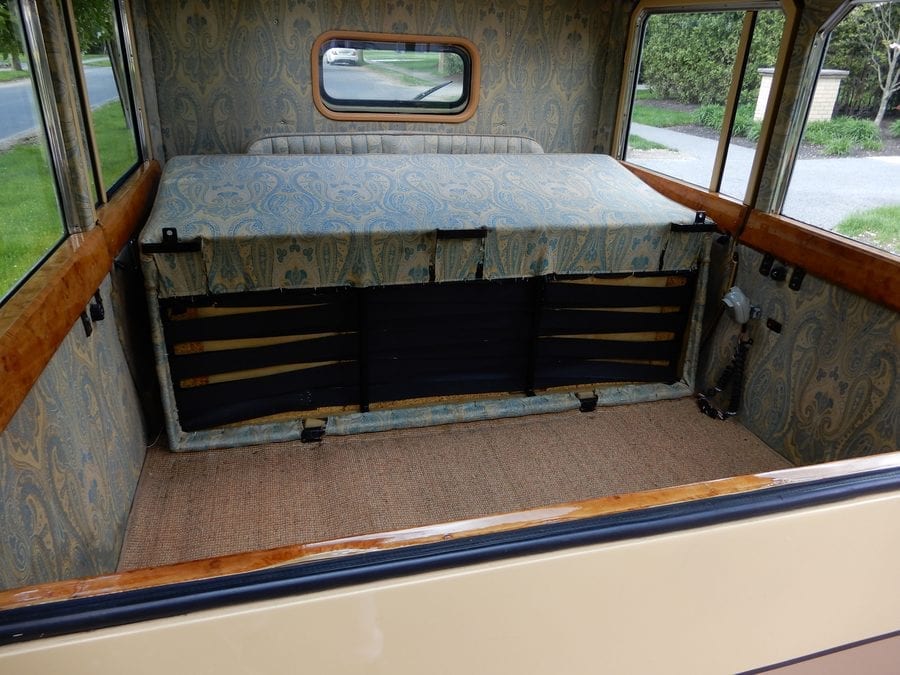
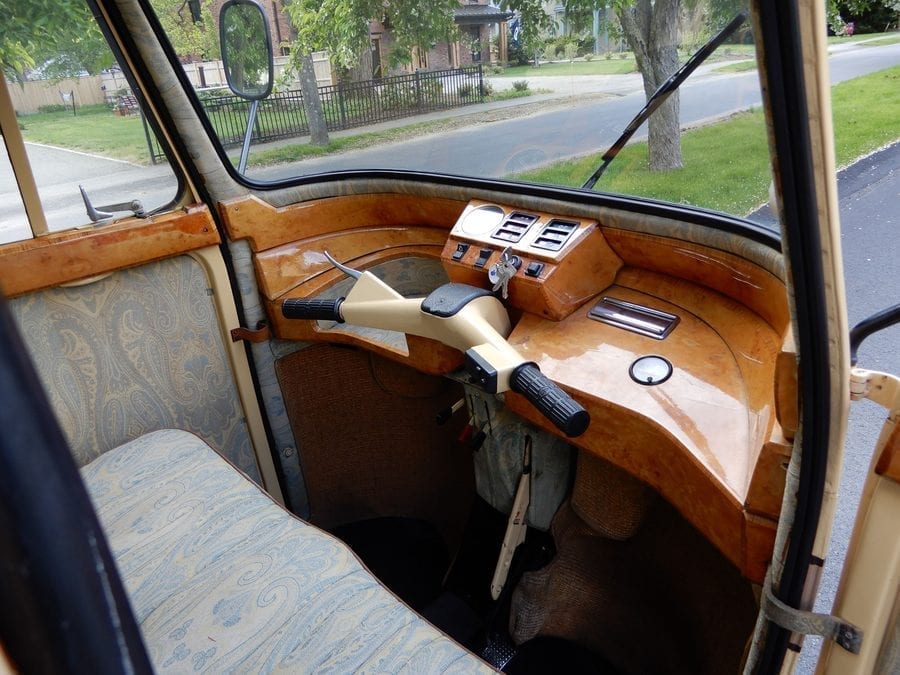
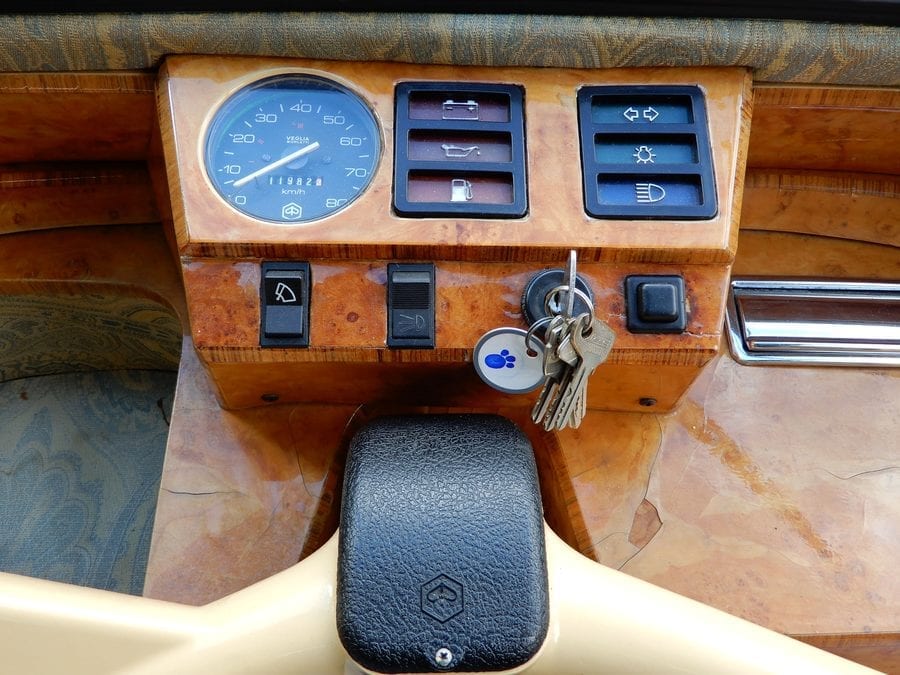
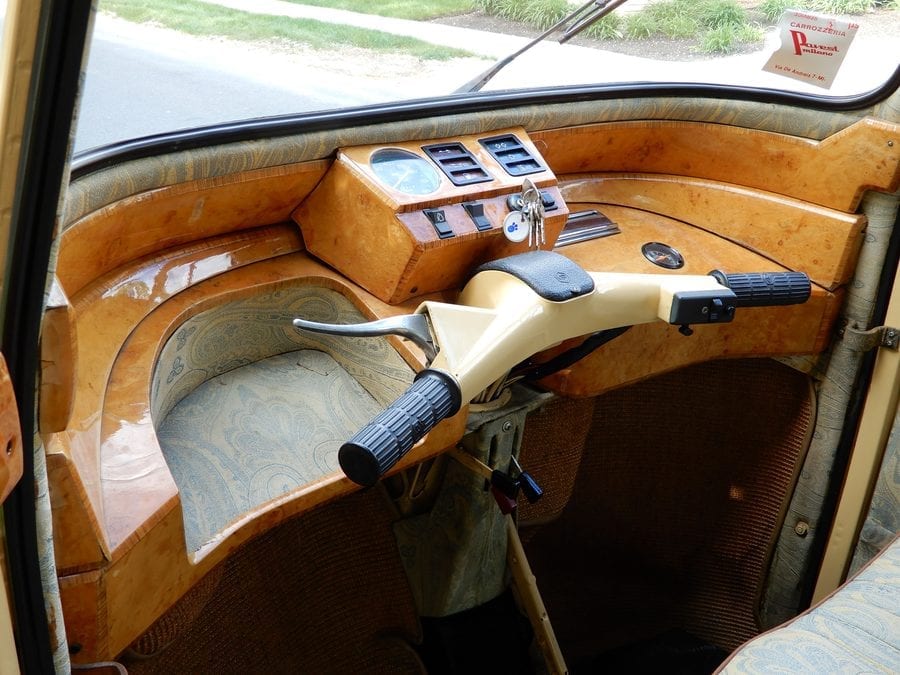
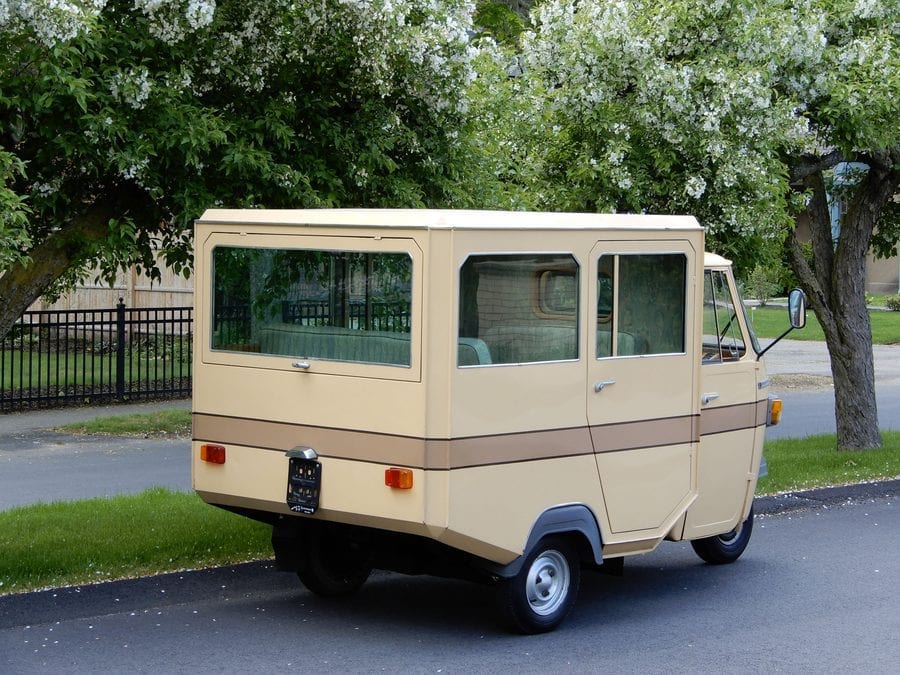
Graffagni saw off the business tycoon’s first wife, Pupetta Maresca, after a torrid affair and following their marriage in 1974, amongst other things, became chatelaine of a 40-room property complete with a helipad. It had been built in 1870 by George Herbert, 4th Earl of Carnarvon – whose death was attributed by amongst others Sir Arthur Conan Doyle to the “curse of King Tut” – as his holiday home and during the 1970s and 1980s guests to “jet-set parties” given at the house by the socialite Countess were ferried back and forth from their dock in Portofino harbour in a custom built 1978 Piaggio Ape coachbuilt ‘limousine.’ This vehicle, described as a “perfect yacht tender” with its opulently patterned interior and passenger-driver intercom, is now for sale.
Countess Francesca Agusta (née Francesca Vacca Graffagni, 29th October 1942 – 8th January 2001). It is most surprising that the late Dominick Dunne did not make a television programme about her life and demise.Villa Altachiara (alternatively known as ‘Villa Alta Chiara’ or ‘Villa Carnarvon’) was one of Countess Agusta’s homes from the 1960s until her death in 2001; it was originally built as a holiday home for Lord Carnarvon (26th June 1866 – 5th April 1923) – the financier of Howard Carter’s explorations of Egypt’s Valley of the Kings that led to the discovery of Tutankhamen’s tomb. The Carnarvon family hosted many guests during their ownership, amongst them Brooke Astor and Evelyn Waugh.
Count Agusta died in 1989 without divorcing his second wife in spite of separating from her in 1985. At that time, in addition to Villa Altachiara, he had given her four apartments in Milan, an estate in Cuernavaca, Mexico, family jewellery and an undisclosed cash sum. With his demise, she came into yet further fortune.
This by-then “very wealthy woman” hit the headlines again in 1994 when she and her new lover, a “former Portofino playboy politician [named] Maurizio Raggio,” were discovered to have been part of a corruption scandal involving Bettino Craxi, the Prime Minister of Italy from 1983 to 1987. Before police could apprehend them to charge them with amongst other things money laundering, the pair fled to Mexico and lived on her estate until 1997 as fugitives. During this period, the Countess reportedly attempted suicide at least once.
Upon her return to Italy, the Countess plea-bargained and spent just three months in Milan’s Opera prison for her crimes in spite of receiving a two-year jail sentence. After “some further time under house arrest” in the Villa Altachiara, the “retired” gadabout then took up with a Mexican, Tirso ‘Tito’ Chazaro (also known as ‘Tirso Di Ricardo’ and ‘Rafael Tirso Roncado Gonzales’), and lived in the style of Miss Havisham. She was rarely seen in public and having become dependent on drink and drugs, was known for her erratic behaviour and temper.
“Considerably the worse for wear and muttering she would not be coming back” on the night of 8th January 2001, the Countess supposedly told her lover and two others present that she was going for a swim, but either slipped on wet leaves or was pushed off a veranda into the sea. A search followed, but after the only traces found were the Countess’s dressing gown on the seabed close to the Villa Altachiara and her slippers on nearby rocks, press reports suggested she had either committed suicide or, given her past form, staged an “elaborate disappearing act.”
Countess Agusta’s badly decomposed body washed up three weeks later on a beach at Toulon on the French Riviera. Her feet had been gnawed off by fish, her skull was smashed and her face was disfigured. She could only be identified by two rings she was wearing and her exact cause of death could thus not be determined.
As an autopsy found no trace of water in her lungs, she plainly did not die by drowning, but in in 2004 the Countess’s brother, Domenico Vacca Graffagni, was quoted in the Independent as stating: “The [original] inquiry was closed in a hasty fashion because of absence of proof, relying too readily on ‘reasonable doubt’ … It was manslaughter. He [Chazaro] was always beating her. He didn’t mean to kill her. But that evening things didn’t go the way the Carabinieri said, my sister was not drunk and she did not slip on wet leaves on the veranda.”
Adding further to speculation, much earlier, the Countess’s step-son, racing driver and team owner Rocky Agusta (1950 – 2018), told Corriere della Sera in 2001: “Francesca was a beautiful woman, simpatica, very rich… People have written that she inherited 500bn lire, but if it had been only 50 or 25, who commits suicide with 25bn lire set aside? … The people who were around her certainly did not help her… It’s not up to me to formulate accusations, but Francesca was not alone that night. She was very upset. She should have been put to bed. Instead, they let her go out into a dark, wet, cold night, not even dressed.”
In due course, the last of many wills left by Countess Agusta revealed Tirso Chazaro to be her sole beneficiary, but after this was challenged in court by her former lover, Maurizio Raggio, the pair split the legacy – reported to be worth as much as £165 million ($201 million, €186 million or درهم738 million) according to the Guardian in 2001 – sixty-forty between them.
In 2009, the Villa Altachiara was offered for sale initially for £44 million ($54 million, €50 million or درهم198 million) and then for £30 million ($37 million, €34 million or درهم135 million) in 2014. It supposedly eventually sold for less than half that sum to a Russian billionaire a number of years later in spite of an estate agent remarking: “Some say the spirit of Countess Francesca Vacca Agusta still walks the estate looking for her husband and you can hear her shouting for him on the wind.”
An estimate of £37,000 to £49,000 ($45,000 to $60,000, €42,000 to €55,000 or درهم165,000 to درهم220,000) for the Countess’s Piaggio Ape. Described as “sweet” and “[anything but] an Italian tuk-tuk” by RideApart, the one-off private taxi will be auctioned as part of the forthcoming RM Sotheby’s ‘Driving Into Summer’ 21st to 29th May 2020 online sale. One can only hope it finds a happier home than it encountered at that of its former mistress.
Irrational ‘Disgusted of Tunbridge Wells’ type correspondence is on the increase in national newspapers during the coronavirus lockdown; ‘Horrified of Haddenham’ cash-coronavirus conspiracist Garry May is a fine case in point
The coronavirus lockdown has no doubt resulted in a dramatic increase in the number of ‘Disgusted of Tunbridge Wells’ (and even paradoxically ‘Delighted of Tunbridge Wells’) types corresponding with both national and local newspapers. There are, after all, now many more people moping around at home with little else to do other than to ponder with a pen (or clatter on a keyboard).
Whilst in November 2019, The Telegraph stated that its letters editor received and read 600 missives per day from readers (and subsequently published 18 of them in their next edition) and in June that year, the Guardian referenced a by comparison meagre sum of 82 per day (citing 30,000 communications annually), one can only assume that both publications have seen huge spikes in their mailbags in the last few weeks – the content of which of course now mostly arrives by email rather than with the help of the Royal Mail.
Editors such as Christopher Howse – who has worked on The Telegraph’s letters pages for over twenty years – however, is plainly still favouring letters from his reliable riled-up regulars and yesterday was no exception. In publishing a totally irrational observation from one Garry May of Haddenham, Buckinghamshire linking cash to coronavirus (a totally nonsensical view very clearly empirically denied by the World Health Organisation in March), the paper fulfilled its ability to share views to spread yet more Eamonn Holmes-esque claptrap. This kind of 5G type twaddle will no doubt appeal to its stereotypical conspiracy theory believing old buffer audience, but it is without factual base.
SIR – I hope this pandemic cements the use of debit cards for all transactions, and thereby the end of cash.
Bank notes and coins spread diseases. Ruling out ready money could also put an end to most drug deals on our streets.
Garry May
Haddenham, Buckinghamshire
On a date exact unknown circa 2011, in a letter to The Telegraph, that was subsequently republished in the compilation book The Lunatics Have Taken Over The Asylum: Political Letters to The Daily Telegraph, Mr May previously shared his views on phone hacking. He presented yet another pastiche of days gone by and read:
SIR – The hacking scandal left my family debating who we can still rely on. Our shortlist of trustworthies came down to the Gurkhas, other ranks in our Armed Forces, postmen and Simon the pieman, who works in the butcher’s shop.
Garry May
Haddenham, Buckinghamshire
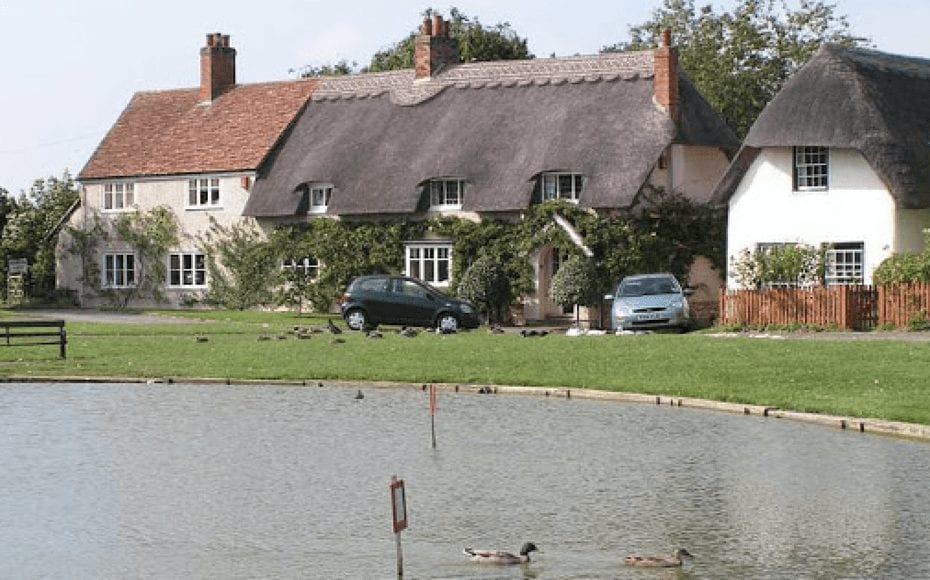
Mr May’s archaic idealism might resonate as charming and worthy, but what should be noted is that this prolific man of letters belonging in the 1950s lives in Haddenham, a quintessential English village that most definitely has Midsomer Murders-esque qualities (it was used as a location in eight episodes of the television drama even). One of only three ‘wychert’ settlements in the country and a place peppered with thatched cottages and a duck pond famed for breeding Aylesbury ducks, one can imagine the era of “old maids bicycling to holy communion through the morning mist” John Major-style still reigns in this parish.
Indeed, at this time, as countless rural residents turn to growing their own vegetables and even start going to their local ‘community shop’ in order to avoid queuing for hours whilst safe distancing at Tesco, many will join in eulogising a love of postmen and piemen and – quite rightly – a loathing for evil drug dealers also.
Sadly, however, getting rid of cash will not wipe out that particularly vile scourge on society and it will not stop the spread of coronavirus. Instead, maybe it’s time for ‘Horrified of Haddenham’ to find another topic to get het up about: Perhaps, indeed, Mr May could turn his pen to the squealing sickness of snitching ‘quarantine shaming’ or maybe he could just calm down and pour himself a large G&T.
An early example of ‘Disgusted of Tunbridge Wells’ correspondence:
SIR – Being present at the unveiling of the plaque on Thursday last week on the Pantiles, I was surprised when the National Anthem was played to see that in a place like Tunbridge Wells, which is noted for its loyalty and calls itself ‘Royal,’ there should be people who refused to remove their hats. Are such people Communists? If they are, Tunbridge Wells should be no place for such as they. We can do without them.
Letters to the Editor, ‘Tunbridge Wells Advertiser’ – 14th June 1929.
Pictured top: Haddenham, Buckinghamshire – a quintessentially quaint English village with a duck pond and thatched cottages from whence nosy parkers peer from behind net curtains.
Unmodernised ‘set’ in “rule-ridden” Albany, Piccadilly that was the London home of eccentric antiques dealer and ‘King of Chelsea’ Christopher Gibbs for sale; tour the home of the man who got Princess Margaret high on hash
Expelled from Eton “for being generally totally impossible,” antiques dealer Christopher Gibbs (1938 – 2018) was not a man one would have imagined would have liked the idea of living in a place with archaic rules. This “peacock pied piper to society in the Swinging Sixties” whose “drug consumption awed even Keith Richards,” however, surprisingly chose as his London base Albany in Mayfair and now his former residence is for sale.
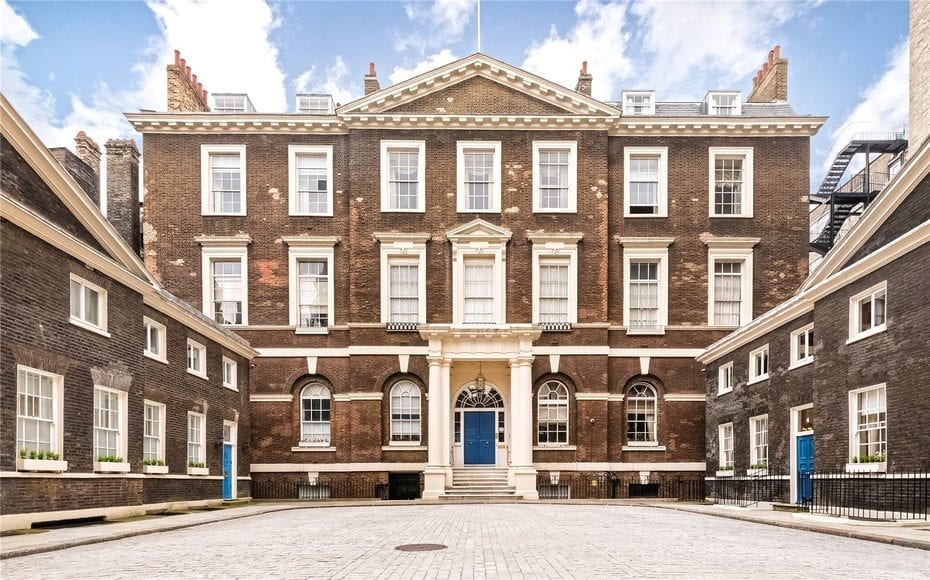
“A hermitage; quiet as a lagoon, secluded from the roar of Piccadilly” according to the author Sheila, Countess of Birkenhead in her 1958 tome Peace in Piccadilly, Albany – which is only ever referred to as ‘The Albany’ by the extremely ill-advised – quintessential dandy Gibbs lived in the building for “more than half [his] life.” Whilst also owning properties including Davington Priory in Kent – which he later sold to Bob Geldoff – and a “mystic hangover” home in Tangier, it was here that this ‘King’ of “distressed bohemian” style found a place that offered him: “Perfection for a singleton, an oasis of serenity in the frenetic heart of West London.”
This curious “cloistered world” has numbered Sir Isaiah Berlin, Alan Clark, Lord Byron, William Gladstone, J. B. Priestley, W. Somerset Maugham and Terence Stamp amongst those who have passed its vetting committee of trustees and Gibbs – a man who legendarily got Princess Margaret so high on marijuana that she had to go to hospital – even embraced its “no pets, no children, no whistling, no noise and absolutely no publicity” policy.
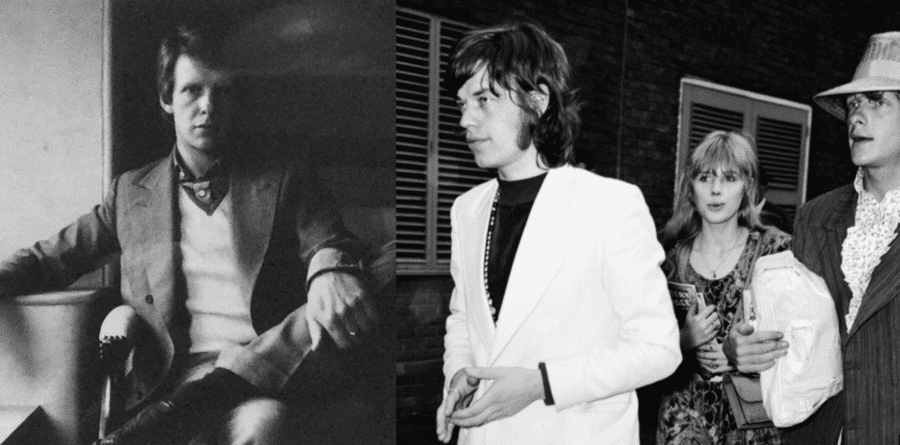
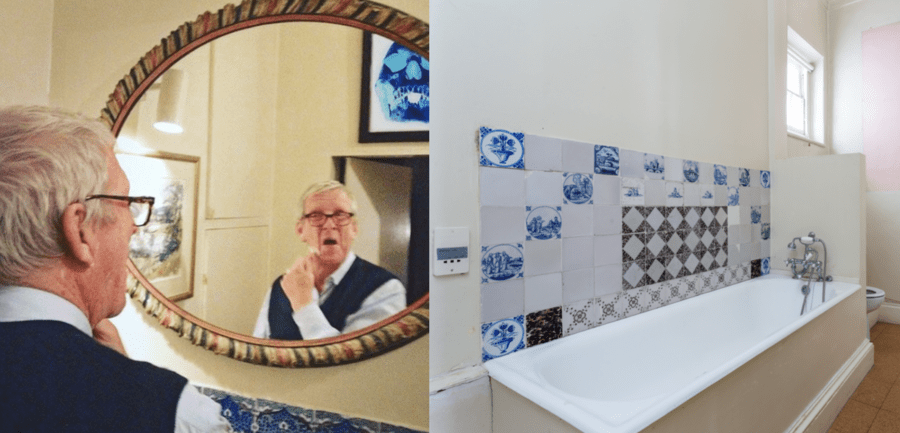
Antiques dealer Christopher Henry Gibbs, (29th July 1938 to 28th July 2018), son of The Hon. Sir Geoffrey Gibbs KCMG and Lady (Helen) Gibbs CBE, was called the ‘King of Chelsea’ due to his ability as the ultimate connector. He put the Rolling Stones together with Prince Rupert Loewenstein (whom became their business manager) and he persuaded his friend John Paul Getty, Jr. to donate £50 million to the British National Gallery in 1985.Christopher Gibbs by Robert Mapplethorpe and with Mick Jagger and Marianne Faithfull.Christopher Gibbs pictured in his bathroom at L6 Albany, Albany Courtyard, Piccadilly, Mayfair, London, W1J 0AZ; the bathroom as it is today is in need of “some updating” according to agents GreenHunt.‘Set L6’ circa 2013, as furnished then by Christopher Gibbs.
Photographed there by the curmudgeonly Victor Watts on a daybed that allegedly belonged to Lord Tennyson, described the home he created in an article for The New York Times’ ‘Style Magazine’ in April 2013:
“I had the place to myself and proceeded to make it my own in the accustomed style: sober mahogany, Oriental rugs, family pictures. I’ve continually reordered these rooms, distilling, paring, pruning, as chaste as my voluptuous nature allows.”
“So enraptured with my Albany life did I become that, reason deserting me (not for the first or last time) I gave up a spacious Bond Street gallery where I had my antiques shop and took one at the back of Albany, a small if elegant space with an entrance into the building, another onto the street and best of all a door into the underground passage – a quiet, invisible stroll home.”
“I love returning from Morocco, where I now spend much of my time, seeing the friendly porters at the door, hearing the clip-clop of feet on the Rope Walk, seeing the old-timers sitting in the little ivy-lined garden, sunning themselves by the little bronze statue of Antinous and the fountain, regularly invaded by the ducks from St. James’s Park – and enjoying sudden glimpses into other people’s lives through uncurtained windows, the hours marked only by the clock chimes of St. James’s Church, accompanied by the more uptempo tinkling of the clock at Fortnum & Mason, our local grocers.”
“At this point, when I am in London, I can’t imagine staying anywhere but Albany – all the more reason, perhaps, to clam up, maintain the longstanding omertà (or I should say discretion) that has held sway for centuries now, and count my blessings.”
Gibbs’ former home, ‘Set L6,’ is situated on the second floor in Albany’s Courtyard. It extends to some 1,178 square foot and includes a hall, reception room, kitchen, bedroom and bathroom. On the third floor, a separately accessed studio space has a shower room and kitchenette and of the property, the selling agents remark: “Whilst capable of immediate occupation, [it] does require the bathrooms being upgraded.”
Sold for just £60,000 ($75,000, €69,000 or درهم275,000) leasehold in March 2019 (presumably the term must have been very much towards its end), agents GreenHunt listed ‘Set L6 Albany’ on Zoopla first in May that year. Now, in April 2020, it remains for sale, but is instead listed on Primelocation. They seek £925,000 ($1.2 million, €1.1 million or درهم4.2 million) and offer it on a new 20-year leasehold with an upfront premium and a peppercorn ground rent.
Living in the building is not just the preserve of those with deep pockets. Peviously, in 2014, we featured ‘Set A5 Attic Albany’ – which was just £395 per week ($494, €454 or درهم1,800 per week) – whilst for those looking for something grander currently, a second and third floor freehold set is currently available through Sotheby’s International Realty for £4.95 million ($6.19 million, €5.69 million or درهم22.73 million). It extends to 1,890 square feet, is described as “meticulously refurbished” and includes an especially impressive drawing room.
Christopher Gibbs quoted:
“[I’ve always attracted] the grand and the raffish and the fast and the chic.”
“[I am] monumentally narcissistic.”
“I am a bit snooty… I do make exceptions, but very few.”
“We are here to learn, and my goodness I have a lot to learn.”
“[I was expelled from Eton for] Rabelaisian antics – illicit drinking, pantry raids of other boys’ rooms – that sort of thing.”
“Taste is something you catch – like measles or religion.”
“I like things in their natural state – people especially. As life goes by, that’s what I admire: objects and people that are unmonkeyed with, that are themselves, not trying to be something else.”
“I’m not interested in creating a dazzling impression of richness. We can make do with surprisingly little in life. It is best to have a few things which are really nice. I don’t approve of the mean look, but I do approve of the spare look, where every little bit is telling.”
“Being a shopkeeper, I used to sell things, sometimes.”
“I definitely suffer from the blown-mind syndrome… The only thing I’ll say in my favour, is that I was practically the only person I knew who actually went to work at nine o’clock in the morning, whether I’d been up to eight o’clock or not, because I had a job, my own business, and I realised that, if I didn’t, I wouldn’t have any of those things.”
“[I] help people make nice cosy homes where they are going to live happy, beautiful lives.”
“[I] encourage friends to dig into their heirlooms, to wear old clothes, to turn their backs on ugliness and conformism.”
“Collectors today want a good car, a good sound system, and a huge pink heart painted by Damien Hirst with dying butterflies on it which costs £400,000. Yet for much less you could buy something completely fascinating made 300 years ago.”
Quotes about Christopher Gibbs:
“Taste is difficult to define, but his is absolute perfection” – Min Hogg, founding editor of World of Interiors.
“[He was] like an 18th century English parson who knew more about Etruscan vases than anyone at the British Museum” – Sir John Richardson, July 2018.
“I’m here to learn how to be a gentleman” – Mick Jagger of his then neighbour Christopher Gibbs whilst at a dinner party at his house.
“He was very flash… Sometimes he just wore tight jeans or fancy dress, like the others; but mostly his tastes were elaborate; suits with double-breasted waistcoats and cloth-covered buttons, and velvet ties, and striped Turkish shirts with stiff white collars, and cravats. Above all, he had a passion for carnations and was forever buying new strains, pink-and-yellow, or green-ink, or purple with red flecks” – Nik Cohn, author of Today There Are No Gentlemen, January 1971.
“Part Montesquieu, part Beau Brummel, and part Baudelaire… [Christopher Gibbs was a] well-born Renaissance man with an unmatched eye for aesthetics and a talent for friendship and the mot juste” – Hamish Bowles, international editor at large for Vogue, July 2018.
“Christopher was almost single-handedly responsible for making English antiques, and English heritage, look ‘cool’ again” – James Reginato of Vanity Fair, July 2018.
“A connoisseur of the weird and the wonderful” – Christopher Mason of The New York Times, September 2000.
“[He was an] acid-tripping ex-roué once known as the King of Chelsea” – Bitter words from the ex-Daily Mail ‘journalist’ and poison pen James Delingpole, executive editor of Breitbart.
“[The] avatar of Swinging London” – A more kind description from Sam Roberts of The New York Times.
“Christopher Gibbs: the man who brokered £50 million Getty grant to the National Gallery – and fed Princess Margaret hash brownies” – Huon Mallalieu of The Art Newspaper, July 2018.
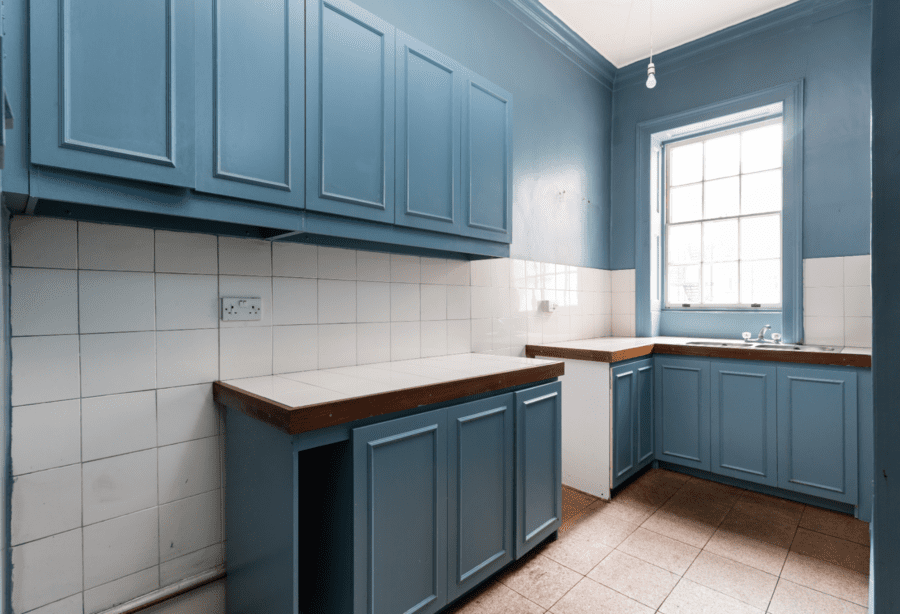
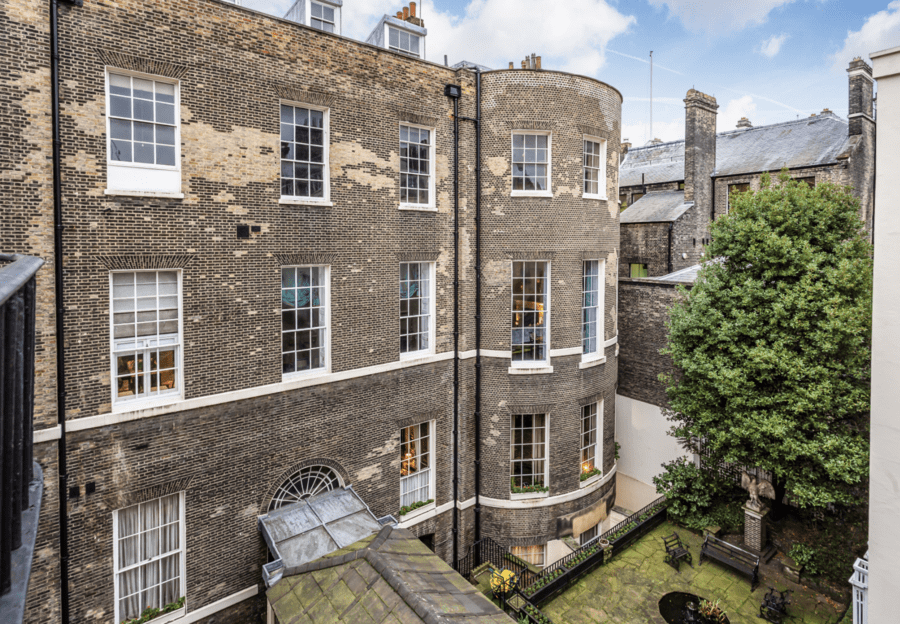
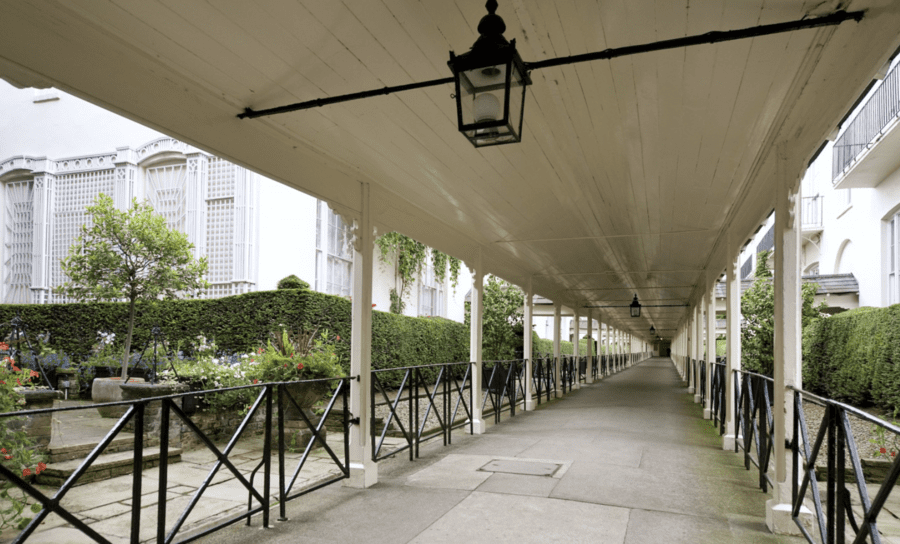
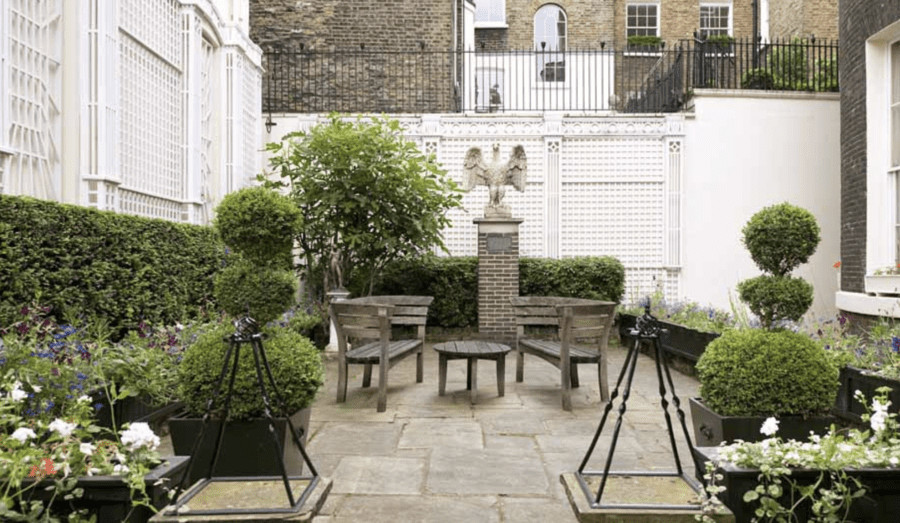
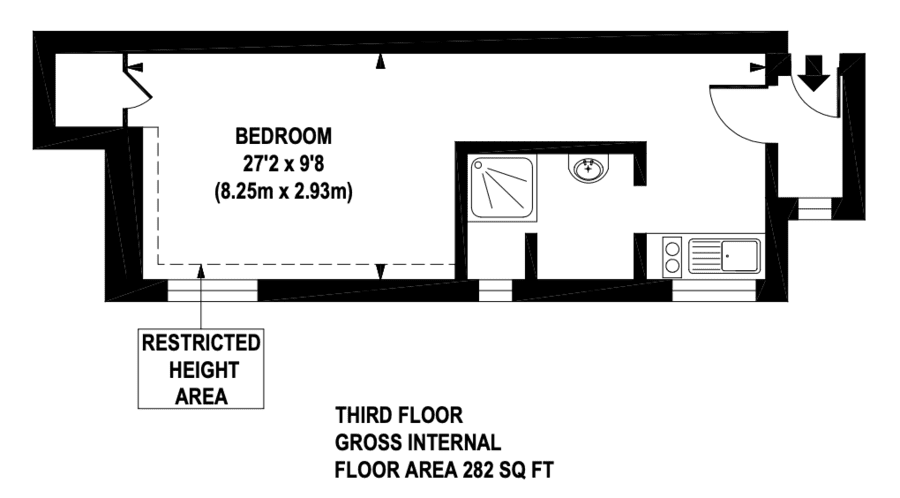
The entrance hallway of ‘Set L6’ has a fireplace.The master bedroom of ‘Looking into the reception room.The somewhat basic kitchen is definitely in need of an upgrade.The view from the set.Albany’s famous ‘Rope Walk’ – Of it, Gibbs commented: “So ingrained is the sense of decorum that even to utter a friendly hello to a neighbor as we pass on the stone stairs or the covered outdoor canopy, known as the Rope Walk, might be violating a taboo, as if a few words of small talk could break the spell of privacy we Albanians prize so deeply. (A nod suffices, a hat raised to a lady.)”Residents have access to the most peaceful outside spaces.The third floor space included in the sale is arranged as a long, thin studio room.It has a small kitchenette.And a somewhat dated shower room.A plan indicating how ‘Set L6’ is currently arranged.A plan of the third floor studio space.
A Shackleton Award winning campaigner who “fights miscarriages of justice and demands reform,” practicing solicitor Emily Bolton is married to Reprieve founder and one of “Britain’s most powerful civil rights lawyers,” Clive Stafford Smith. This Dorset born stonemason’s daughter, herself, founded the Centre for Criminal Appeals in the UK in 2011 after previously representing wrongfully convicted prisoners in the United States through the George Soros funded Innocence Project in New Orleans. She is a graduate of the University of Melbourne and Tulane University and her work trying to highlight the flaws in the 2011 convictions of the ‘Freshwater Five’ fisherman is clearly illustrative of her tenacity and dedication. Bolton’s sterling efforts in this regard were quite correctly highlighted in an April 2020 in-depth analysis of this most likely bungled case in the Guardian and in 2017, she tellingly commented: “Human beings make mistakes, and no system has more human parts than the criminal justice system. If it can’t identify and rectify its mistakes, it is doomed to repeat them.”
As he plays ‘Strike It Lucky’ on Instagram during the coronavirus lockdown, we ask: “Is there nothing that Michael Barrymore won’t do to seek a return to fame?”
Michael Barrymore is a coward and a scumbag. That is a fact. He has failed to face Terry Lubbock – the father of an innocent young man murdered in 2001 in his swimming pool by one of seven other people present that fateful night – on television, yet he happily took £60,000 to lackadaisically chit-chat to Piers Morgan about this most serious matter in a totally disgraceful fashion.
Self-absorbed Barrymore, who recently took to Instagram to claim Channel 4 were “parasites” for daring to air Barrymore: The Body in the Pool – a carefully researched documentary about the case of the death of Stuart Lubbock – yesterday again illustrated his vanity by returning to the medium to attempt to revive his deservedly failed career.
In two posts and a live feed, the disgraced former entertainer – best known for rolling around on the floor smashed off his skull with the convicted bigot Marie-Claire, Baroness von Alvensleben – played ‘Strike It Lucky’ with his 19,500 followers. He used the hashtag #stayathome and shamelessly posed smiling as if nothing at all was wrong.
We once again say: A pox on your house Michael Barrymore for not coming clean about what you know about the events at 4 Beaumont Park Drive in Roydon, Harlow on 31st March 2001. Now, Mr Barrymore, finally do the decent thing: Stop playing silly games and start telling the truth.
To watch ‘Barrymore: The Body in the Pool,’ click here.
A list of people present on the 31st March 2001 who are still alive – It’s time the lot of them told the truth
Michael Barrymore (born Michael Parker).
Kelly Campbell.
James Futters (sometimes incorrectly spelt ‘Futers’).
Claire Jones.
Jonathan Kenney.
Justin Merritt.
Kylie Merritt.
Simon Shaw.
Some of Michael Barrymore’s ludicrously telling remarks about the murder that occurred at his home
Admitting he partook in ‘sex orgies’ on other occasions – “There was no orgy I was aware of… Some of the papers wrote ‘sex orgy’ … There was no sex orgy. I don’t know what to say. There was no sex orgy that night.”
The word ‘another’ is most important – “I just hope they [the public] understand it was another night that went terribly wrong.”
Excusing himself – “It isn’t what happens in life, it’s how you deal with it.”
Just another day in the life of the not so often speechless Michael Barrymore – “I looked down at effectively the deep end and Stuart was there… It was like some really bad film, some unhappy ending. It was my house, my party, I don’t know what to say.”
Michael Barrymore rolling around on the floor drunk as a skunk with the equally pissed convicted racist Marie-Claire, von Alvensleben in April 2000 – just under a year prior to the death of Stuart Lubbock at a drunken, drug fuelled orgy at his home (left). The scene of the murder of Stuart Lubbock – Michael Barrymore’s then home: 4 Beaumont Park Drive, Roydon, Harlow, Essex, CM19 4HB.Essex Police recently launched a new appeal with the hashtag #justice4stuart. The eight people still alive who were present at 4 Beaumont Park Drive on the 31st March 2001 should now jolly well respond to this.
Self-entitled drug flogging billionaires Mortimer and Jacqueline Sackler were rightly roasted by ‘Guest of a Guest’ for their (latest) bleating email
Mortimer D. A. Sackler is a spoilt berk from a family who have galleries named after them. This drip and his ghastly oik of a wife, Jacqueline, hang out with royalty and are part of one of America’s richest dynasties, but there’s something utterly grating about them: They constantly moan.
In July, Jacqueline wrote to her lawyers. In her pathetic missive, this tedious tepid woman whined about the £9.98 billion ($13 billion, €11.99 billion or درهم47.74 billion) the family had gained from flogging dodgy pharmaceuticals including OxyCotin as having destroyed “our work, our friendships, our reputation and our ability to function in society.” She bleated: “And worse, it dooms my children. How is my son supposed to apply to high school in September?”
Now, according to Guest of a Guest, Jackie and her hubby have “been increasingly blacklisted by the upper crust” in New York. “Aren’t they just the worst?” they asked in an email to subscribers. With even the Met museum refusing to take any further donations from them, this vacuous pair have flogged their “ritzy Upper East Side townhouse” and fled to “winter term” it (their words, they wouldn’t come from anyone else, after all) in Gstad, Switzerland.
According to the site, the duo emailed friends and told them: “We would love to see you either in Gstaad, if you are here or nearby, or elsewhere in Europe (taking advantage of the ease of travel here vs ours in NYC).”
A spokesman for this pair of pillocks then followed up to announce that anyone suggesting they were siphoning off funds to Switzerland might be telling untruths and announced: “They fully intend to return to the US in the near future.” Guest of a Guest quite correctly responded: “Here’s hoping they don’t!”