Grand Grade I listed Shropshire mansion Kinlet Hall for sale after coronavirus forced the closure of its wedding venue and summer school
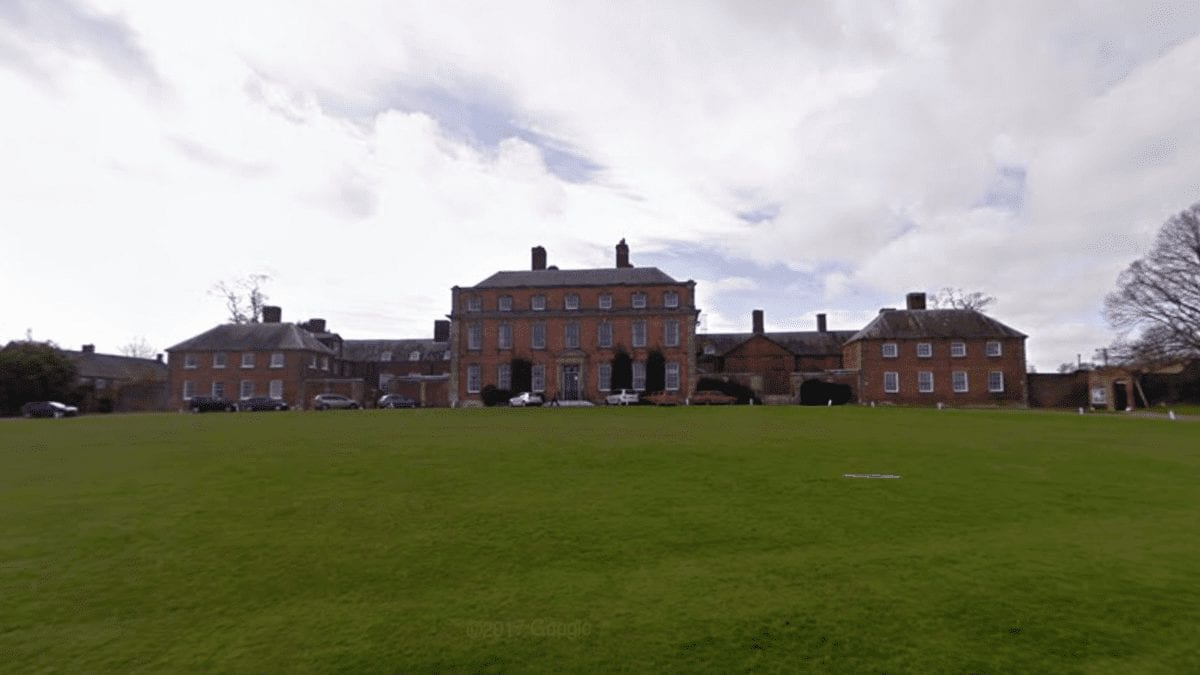
Striking Grade I listed Palladian mansion in Shropshire for sale.
Kinlet Hall is priced at £3.5 million or just £104 per square foot.
The house has until recently been a school and wedding venue, but this usage has been stopped because of the coronavirus lockdown.
A cricket ground included with the property was lauded as one of “Britain’s most scenic” by ‘The Telegraph’ whilst HRH Princess Anne has competed in horse trials in the parkland.
Coinciding with the partial relaxation of the coronavirus lockdown, the ‘trophy country house’ market seems to be revving up with the commencement of marketing of several historically significant residences.
Significantly cheaper at £3.5 million or £104 per square foot and in far better condition than 33,406 square foot Lilford Hall, the 33,609 square foot Grade I listed Kinlet Hall comes with less land – 102 acres as opposed to 321 acres. It is further from London, which may limit its appeal to wealthy city sorts, but given it has been used as both a school and wedding venue until lockdown, it is in actual “working condition” as opposed to the perilously falling down state that Lilford is sadly currently in. That is, indeed, a major plus.
Featuring a seven-bayed central block of three storeys plus cellars, the hall is flanked by two two-storey wings. Presently configured to provide 5 reception rooms and 15 bedrooms, there are classrooms, gyms and flats also. Surprisingly, unlike with many residential to school conversions of mansions in the 1940s where ugly modern extensions were distastefully tacked on, damage to the integrity of the original structure has been minimal.
In addition, to a 5-bedroom detached house named ‘The Old House’ and a range of farm buildings within the grounds, there is a cricket pavilion and a cricket pitch. The Telegraph named its runner-up for “Britain’s most scenic cricket ground” in 2008 and interestingly amongst the many established plant and tree species in the grounds is a Wellingtonia that allegedly came as a seed in a matchbox from the Americas.
Of Kinlet Hall, Tony Morris-Eyton of Savills comments: “[This is] an exquisitely beautiful Palladian country house, formerly a prep school, awaiting its next chapter with enormous potential as either a private home or [for] other uses.”
The village of Kinlet is situated on the northern edge of the Wyre Forest about 18 miles from Telford and 23 miles from Birmingham.
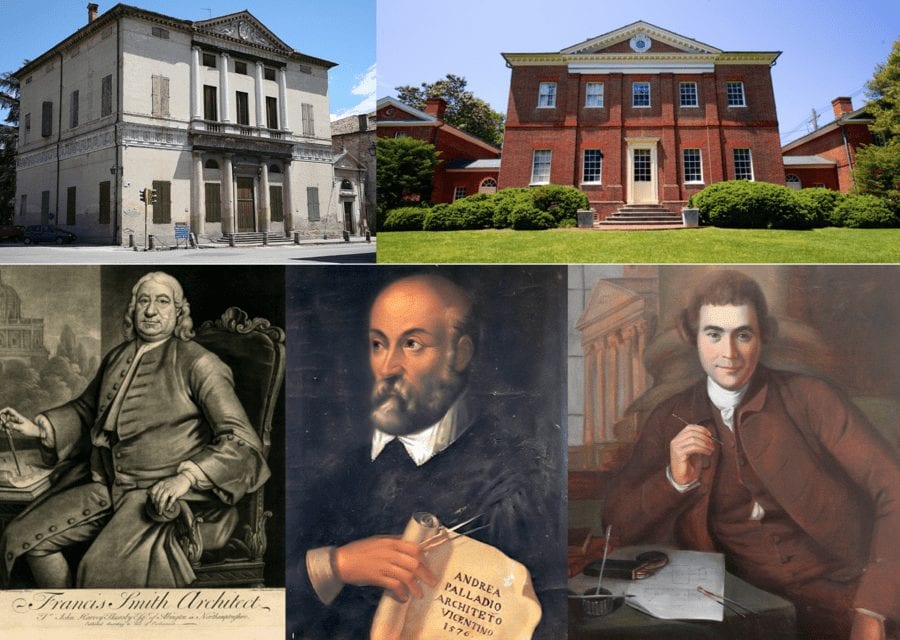
Design Maestros – Villa Pisani, Montagnana (top left) by Andrea Palladio (lower centre) inspired both Francis Smith of Warwick (lower left) in his designs for Kinlet Hall and William Buckland (lower right) in his creation of the Hammond-Harwood House (top right).
The Names & Numbers – Kinlet Hall, Kinlet, Bewdley, Shropshire, DY12 3AY, United Kingdom
June 2020 – Put up for sale for £3.5 million ($4.4 million, €3.9 million or درهم16.3 million) through agents Savills. Orchard Lodge, a 4-bedroom cottage with an acre of paddock, is available by separate negotiation.
July 2017 – Moffats School closes for the final time citing financial pressures. Of the decision, school chairman Julian Engleheart told the Shropshire Star: “We have always been a small school by choice, maintaining the family ethos of our founders. However, the current financial climate is putting enormous pressure on small schools and we have decided that it would be unwise to commit to a new year this September. However, we will continue to run educational activities in our lovely house and grounds, which provide such a wonderful environment for learning.”
1946 – Moffats School (founded in 1934 by the children’s writer Natalie Engleheart in a Hertfordshire house called Moffats) is relocated to Kinlet Hall.
1939 – 1945 – The house was temporarily home to a school for the blind; the parkland became a camp for the US army as part of their preparations for the Normandy Landings.
1827 – Ballroom added to the designs of Sir Jeffrey Wyattville (1766 – 1840) trained architect Edward Haycock (1790 – 1870) for William Baldwyn Childe. He died three years before it was completed and “this is the only significant part of the house not dating from 1729.”
1727 – 1729 – Kinlet Hall is “built in a classic early Georgian style with the symmetry and grand elevations synonymous with [the English master-builder and architect] Francis Smith of Warwick (1672 – 1738)” for Tory politician William Lacon Childe (1700 – 1757) close to the site of an older Tudor manor house.
Other notable works by Smith and his family include Calke Abbey, Fawsley Hall, Kirtlington House, Ombersley Court and Stoneleigh Abbey. His design was said to be inspired by Andrea Palladio’s (1508 – 1580) Villa Pisani at Montagnana – which also reportedly was the influence for the ‘Anglo-Palladian’ Hammond-Harwood House by the English architect William Buckland (1734 – 1774) in Annapolois, Maryland, USA.
During construction, the old village was removed to “improve” the setting. Only the original church, St. John the Baptist, which contains monuments dating to the 1580s, was left as a “remnant.” It was restored subsequently in 1892.
Crumbling Northamptonshire estate Lilford Hall – where the little owl was introduced to Britain – for sale for £10 million, a sum £35 million lower than in 2014
Grade I listed Jacobean mansion with 13 chimney stacks for sale for £10 million; it was for sale last for £44.9 million in 2014 in spite of being listed on English Heritage’s ‘At Risk Register.’
Lilford Hall – parts of which have not been occupied since 1947 –is currently owned by a businessman who tried to sell burial plots in the grounds for £1,250 a pop and shares in a yacht loosely associated with Frank Sinatra for £23 each.
The 321-acre estate includes not only overgrown parkland, but also a zoo with cages that formerly housed bears and a lake for flamingos.
From 1711 until 1990, Lilford House was the seat of the Powys family – the 4th baron is credited with introducing the little owl to the UK.
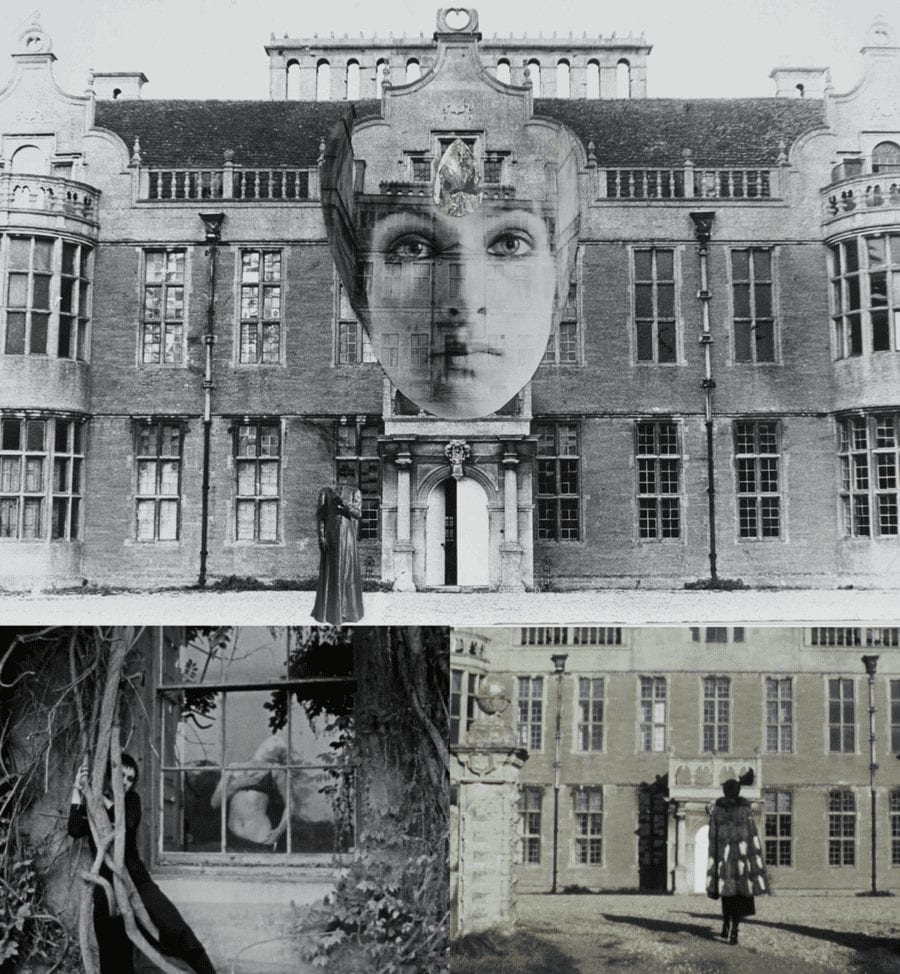
More recently, in 1969, the “sexual mystic” artist Penny Slinger used the at-the-time derelict mansion in one of her best-known works.
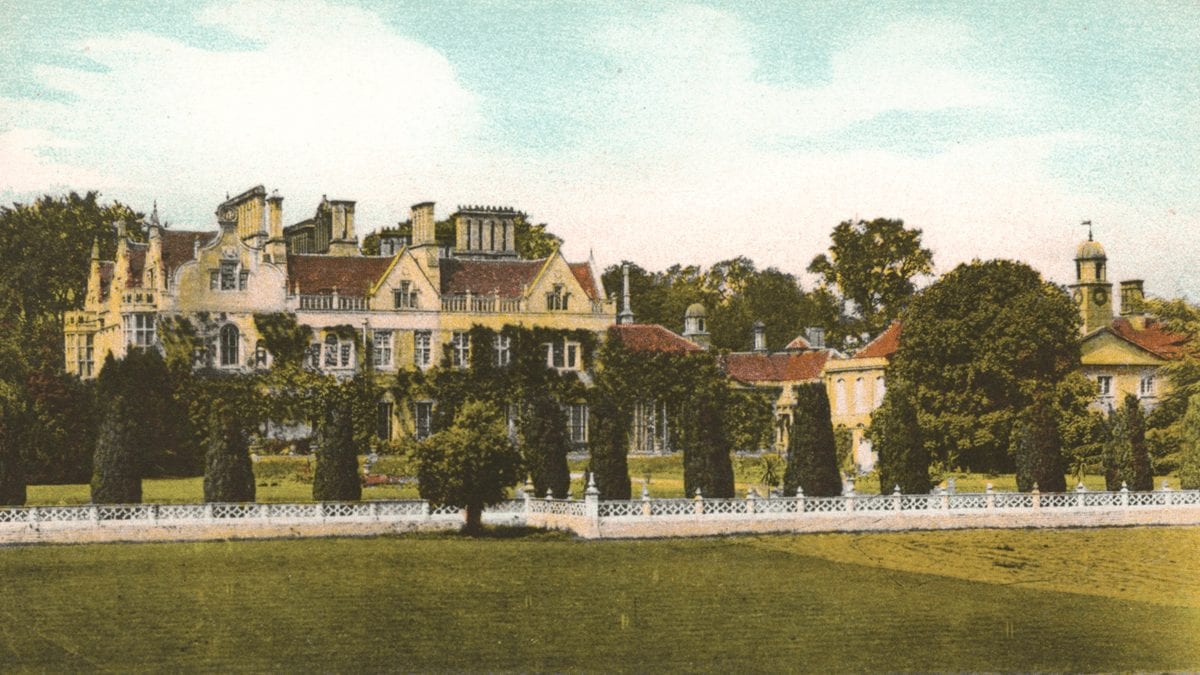
A 32,406 square foot Grade I listed Jacobean mansion 82 miles from Central London has gone on sale for £10 million – or the equivalent of just £308 per square foot.
On this basis, Lilford Hall – set in 321 acres near Oundle – seems a comparative bargain when considered against the £4,786 per square foot sought for a Lennox Gardens, Knightsbridge triplex flatThe Steeple Times featured in May, but buyers need to remember this – parts of this crumbling building, most notably the major state rooms, have not been used since 1947.
Marketed last in 2014 for the even more punchy sum of £45 million, the “exceptional residential and amenity estate located on the River Nene,” is now offered by agents Savills. The “wonderfully proportioned” U-shaped mansion itself is constructed of grey limestone and includes over 100 rooms and amongst them are 7 “impressive” reception rooms, a ballroom, a ‘great chamber’ and 9 bedrooms. In addition, there are two Georgian pavilions that were formerly coach houses and stabling, three cottages, a former zoo, the oldest private softball court in the world, a former flamingo enclosure and a deer park.
“Impressiveness in the chief attribute of Lilford Hall as a specimen of architecture” claimed County Life in 1990 and as the seat of the Powys family from 1711 until 1990, it became not only a Downton Abbey-esque entertaining pad, but also housed nurses in the Second World War. Here, indeed, is an English country house that has seen lavishness and decline and thankfully here is an example that thankfully escaped the wrecking ball wrought so disgracefully on such houses in the 1950s and 1960s.
Fascinatingly in the 1880s, Thomas Powys, 4th Baron Lilford filled his aviaries on the estate with rheas, kiwis, pink-headed ducks, free-flying lammergeiers and it was from here that he also introduced the little owl into the UK. There are said to be around 5,700 breeding pairs today, but sadly, according to the RSPB, their numbers are now in decline.
More recently, in 1969, “sexually erotic” performance artist Penny Slinger took over the by then “derelict” mansion in conjunction with the filmmaker Peter Whitehead. Their resulting work, titled An Exorcism, was exhibited internationally and in 2004, after the current owners, Charles and Aziza Micklewright, acquired the house, they did something equally avant-garde; they attempted to sell burial plots in the grounds to Americans by citing the estate’s connections to the founder of the Brownists, Robert Browne – a man better known as ‘The Father of the Pilgrims’ and ‘The Grandfather of the Nation’ (of the United States of America).
Whilst Mr and Mrs Micklewright were lauded for their considerable efforts towards the “huge task” of restoring Lilford Hall, they came to the attention of Historic England in May 2019 when the building was listed on the At Risk Register. At that time, the Oundle Chronicle reported: “The roof covering is in poor condition leading to water ingress and distress to the upper storeys. The front bays require structural attention. A schedule of urgent repairs has been identified but not implemented, and no long-term solution has been agreed.”
Now, someone with very, very deep pockets is required to restore this gem. It would be helpful if they liked erotic art, bears, squash and owls also.
The Names & Numbers – The Lilford Hall Estate, Lilford, Oundle, Peterborough, Northamptonshire, PE8 5SG, United Kingdom
June 2020 – The estate is listed sale for £10 million ($12.5 million, €11.1 million or درهم46 million) through Savills. It includes 321.31 acres, of which 148.17 acres are pasture land whilst 157.48 acres are woodland. The majority of the estate is held on a freehold title, whilst the remaining 127.6 acres – known as ‘The Linches’ and ‘Lilford Woods’ – are held on a lease with 91 years remaining.
2015 – Promoted as ‘The National Memorial Gardens,’ burial plots in the gardens of the hall were offered “available to any UK resident or national for an outstanding price of only £1,250 ($1,568, €1,393 or درهم5,758)” by Mark Bailey of Harley Investments. Around the same time, a website dedicated to Lilford Hall marketed “a piece of the formal gardens” for sale for £299 ($375, €333 or درهم1,377) to include “an officially certified ‘Squire of Lilford’ [title] … with this little piece of history.”
March 2014 – The Irish Times reported that the asking price for the estate had been increased to £44.9 million ($56.3 million, €50 million or 206.8درهم million). They claimed the agents Coldwell Banker blamed “confusion over currency conversion rates and new instructions from the owner.”
April 2014 – The Lilford Hall Estate is listed for sale through Coldwell Banker on MyHome.ie for £33.7 million ($44.2 million, €37.5 million or درهم155 million) on behalf of “an English gentleman.”
2004 – The estate is acquired by the Micklewright family. Little information is available online about the Old Framlingham Charles Micklewright (born July 1958), but he is described as a “patent attorney” on Companies Houses pages. The businessman is mentioned also as a publisher and trustee of the Marsh Christian Trust elsewhere, whilst his Singaporean born wife, Aziza (born 1964), was a director of Lilford Properties Limited from 2013 to 2018.
A website operated by Sign of the Times Limited, a Hong Kong company of Lilford Hall, Lilford, Oundle, Northamptonshire, PE8 5SG, currently offers shares in a yacht named ‘Sinatra the Voice’ for £23.91 ($29.99, €26.64 or درهم110.14) per share. The boat was built in 1956 and is tenuously linked to Frank Sinatra by the fact that a one-time owner, Beale Poste, loaned it occasionally to the crooner between 1968 and 1974 in West Palm Beach, Florida.
1990 – The estate is closed to the public.
1980s – The house is used as a location in the BBC English Civil War inspired historical drama series By the Sword Divided.
1970s – Aviaries on the estate restocked by George Powys, 7th Baron Lilford (1931 – 2005). He “opened [the estate] to the public as a leisure park” and housed more than 350 birds of 110 species there. It remained thus for around 20 years and included a restaurant and shop. The aviaries and the 1,896 square foot restaurant building remain present still today.
1969 – 1970 – American British “sexual mystic” artist Penny Slinger (born 1947) and Liverpudlian filmmaker Peter Whitehead used the “derelict mansion” as the setting for their works An Exorcism and Lilford Hall. They are lauded as a “photo romance” and exhibited at the Blum and Poe Gallery in Los Angeles in 2014, at the Haywood Gallery in London in 2015 and at the Fortnight Institute in New York in 2019.
1949 – Stephen Powys, 6th Baron Lilford (1869 – 1949) died without having married or having had children. His properties aside from Lilford – a house in Mayfair, Bank Hall in Lancashire and the Bewsey Estate in Cheshire – passed to his second cousin twice removed.
1947 – The estate is sold to a company named Merchant Ventures by the Powys family (though they remain present on the estate until 1990).
1939 – 1945 – During the Second World War, the parkland of the estate was used as a military hospital for nearby airfields. From 1949 to 1954, some of the buildings constructed during this period were then used as a Polish school.
1923 – First-class Northamptonshire cricketer Major John Powys, 5th Baron Lilford (1863 – 1945) built the first private softball court in the world in the grounds of the hall. It is now in disrepair and the roof has fallen into the inner court.
1909 – 1910 – The hall was extended in the Edwardian manner including the provision of a new master bedroom with dressing room and bathroom by William Dunn and Robert Watson of Dunn & Watson.
1901 – The estate surrounding the hall reaches its largest size and totals a vast 8,000 acres of land. Around this time, Queen Mary, wife of King George V, is said to have visited the gardens.
1880s – Ornithologist and expert on the fauna of the Balearics Thomas Littleton Powys, 4th Baron Lilford (1833 – 1896) introduces the little owl into England on the estate. His aviaries were said to “feature exotic birds from all around the world” and a species of European lizard, the Lilford’s wall lizard (Podarcis lilfordi), is named in his honour. The 4th baron is repeatedly mentioned in the works of Charles Darwin for his contribution to the study of the science of evolution.
1840s – Further changes to the building are orchestrated by the architect William Gilbee Habershon (circa 1818 – 1891). The Campaign to Protect Rural England described these Victorian extensions as “sensitive” in 2006 – a rare accolade given most additions to English country houses during this period were simply brash and vulgar.
1740s – The Palladian architect Henry Flitcroft (1697 – 1769) adds “outstanding” Georgian interiors whilst “respecting the hall’s Jacobean exterior.” He “softened and brightened” the building as a result and also “constructed the Georgian pavilions and additional storeys to the east end of the two wings.” Other works by Flitcroft can be seen at Bower House in Essex, Wentworth Woodhouse in Yorkshire and Woburn Abbey in Bedfordshire.
1711 – Lilford Hall is sold to the judge and Tory politician Sir Thomas Powys (1649 – 1719), Attorney General to King James II. Powys is best remembered for conducting the prosecution of the Seven Bishops in 1699. He is buried at Lilford.
1630s – Construction of the main exterior of what to this day remains Lilford Hall as a “Jacobean-style gentry house” by William Elmes (the younger).
1473 – The land that forms the estate is acquired by William Browne (1410 – 1489), a wealthy wool merchant and landowner from Stamford, from the estate of Baron Welles (who was beheaded by King Edward IV for treason). In 1495, “in a Tudor style,” he built a hall on the site and it passed to Robert Browne (1550 – 1633), the founder of the Brownists, ‘The Father of the Pilgrims’ and ‘The Grandfather of the Nation’ (of the United States of America).
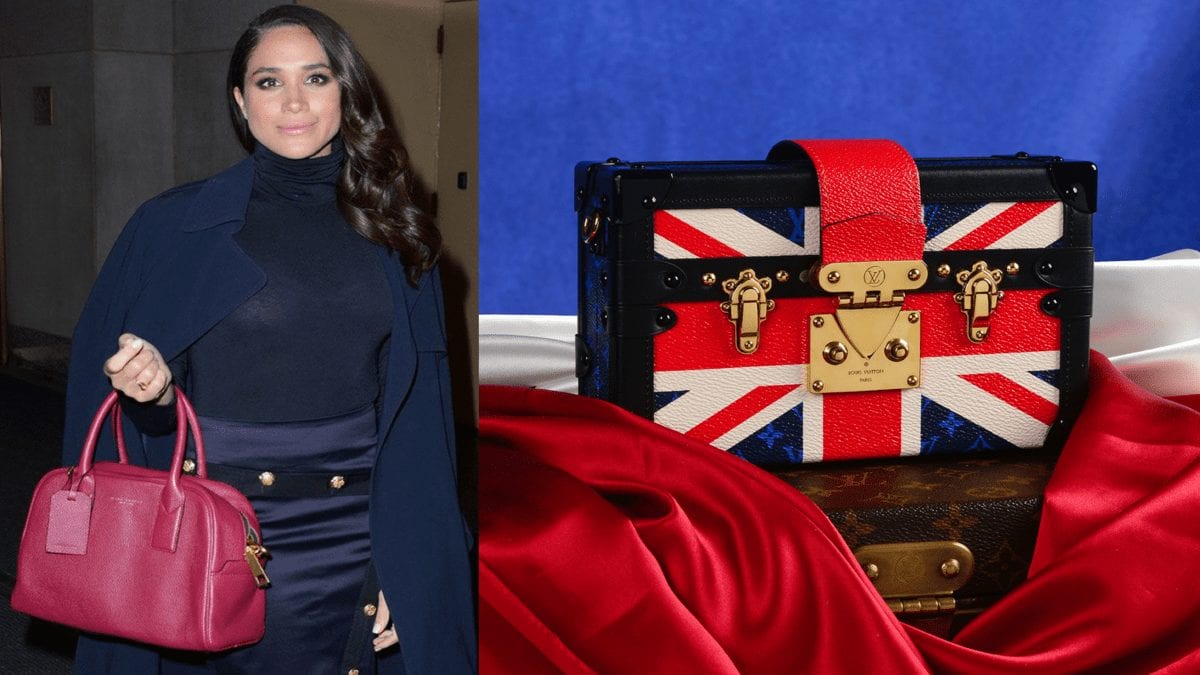
Handbag created by Louis Vuitton to “celebrate” the marriage of Meghan Markle to Prince Harry to be auctioned for a crazy sum
Handbags with connections to famous women often sell for crazy sums and in December 2015, The Steeple Times featured one used by Margaret Thatcher on her last visit to Downing Street. It sold for a staggering £47,500 ($60,000, €53,200 or درهم220,000) against a low estimate of just £1,000 ($1,260, €1,121 or درهم4,629) at Christie’s and now another made to “celebrate” the wedding of the then Meghan Markle to the then Prince Harry is being auctioned.
Offered with an estimate of £12,000 to £18,000 ($15,100 to $22,700, €13,500 to €20,200 or درهم55,500 to درهم83,300) in spite of not even being in perfect condition, the 2018 Louis Vuitton ‘Petite Malle’ handbag is number 13 of 21 made. It features a Union Jack flag, has a blue and black leather lined interior and comes with a dust bag and box.
Of the item, Sophie Higgs, designer collection specialist at Fellows Auctioneers, remarked: “We are delighted to announce the auction of this extremely rare handbag… In keeping with the wedding itself, the handbag has been shaped by the wealth of history that feeds all Louis Vuitton trunks, yet it flies a path of its own.”
Given the supposed frostiness with her sister-in-law, one thing’s for sure: The Duchess of Cambridge most certainly won’t be putting in a bid. ‘MeGain’ fans (if there are any left), fastest fingers at the ready – The online sale is open and closes on Monday 8th June.
The bag is described as being “in a very good condition, like new, with only one minor scuff to the top left and lower corners.”It comes with a strap and its original box.
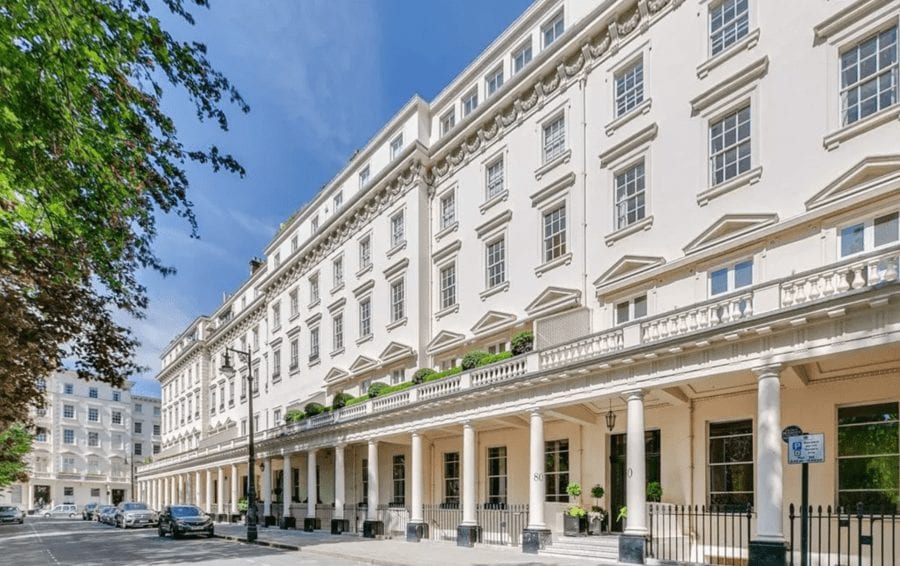
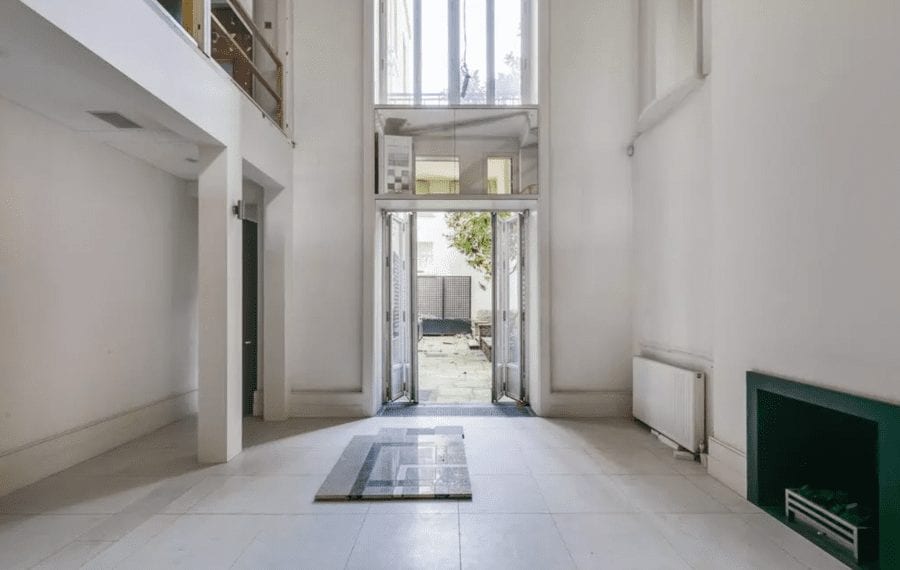
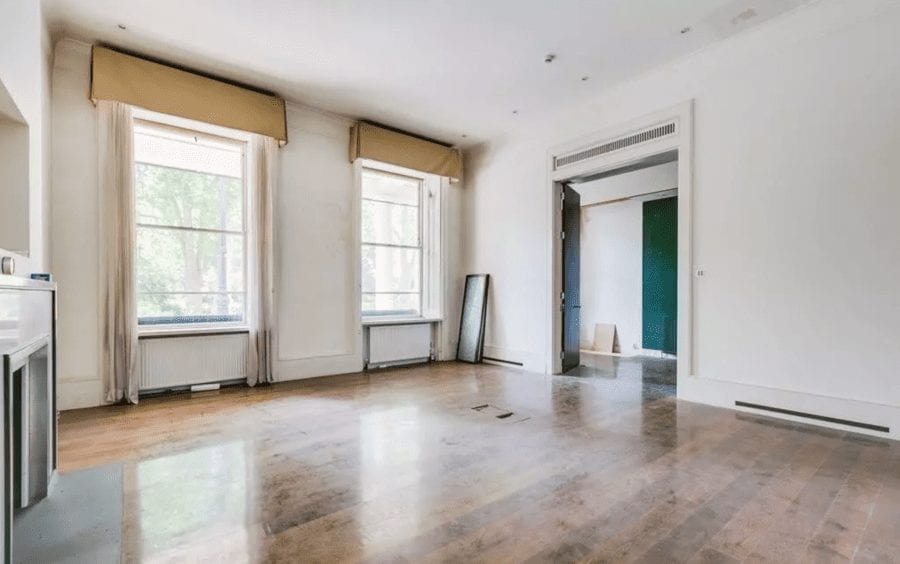
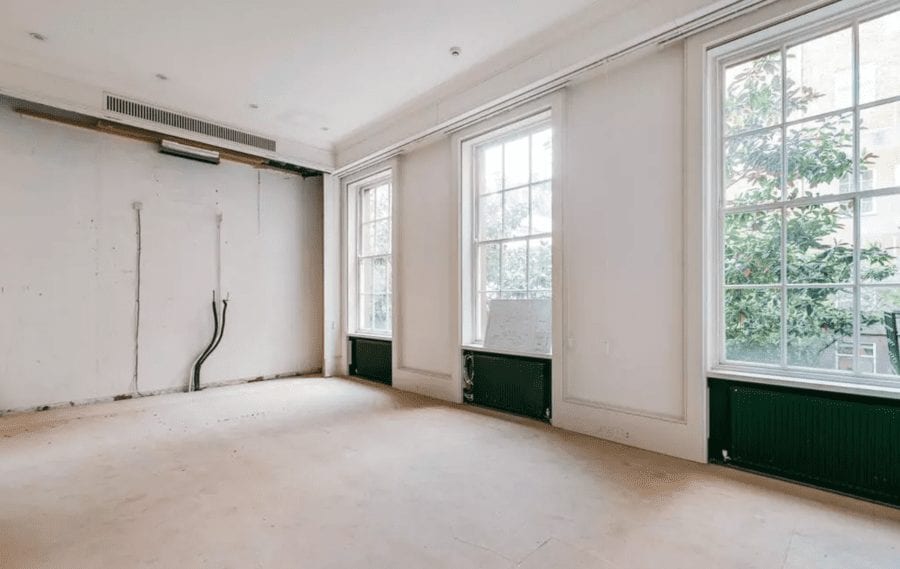
Eaton Square apartment for sale for £22.5 million in spite of needing complete renovation; it is listed at a price 25% cheaper than it was five years earlier in identical condition
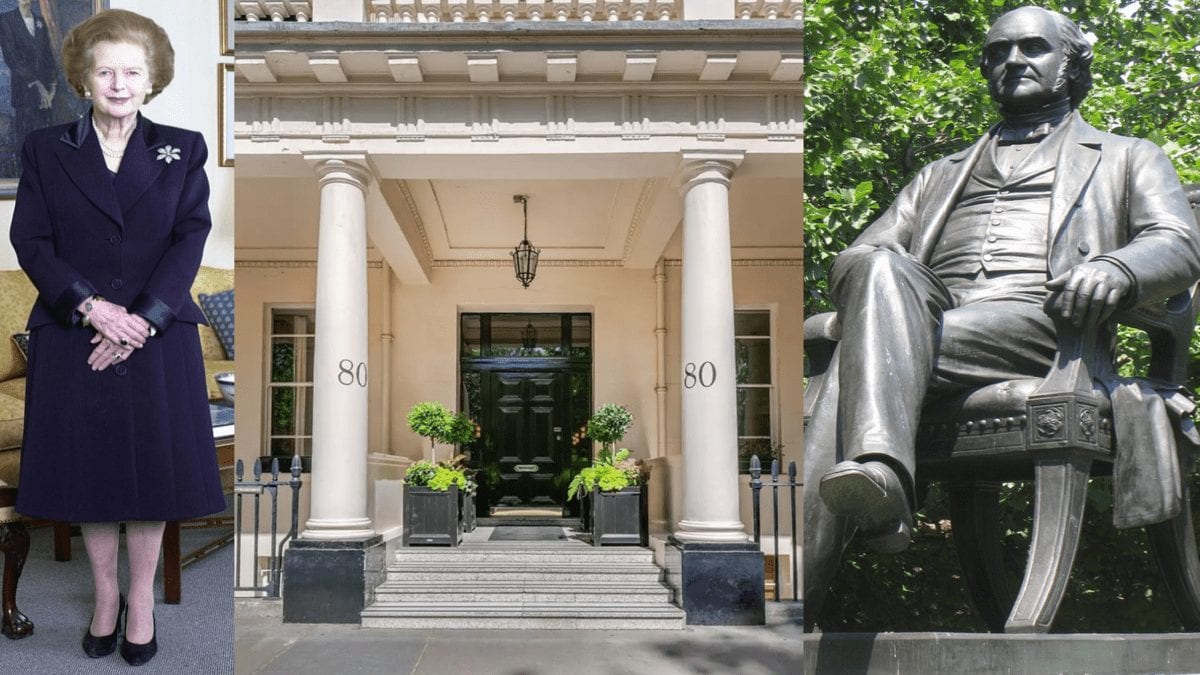
80 Eaton Square in Belgravia is an address where two well-known names have both lived (albeit it very briefly). Ex-Prime Minister Margaret Thatcher (1925 – 2013) “temporarily” resided in a “Greek shipowner’s flat” there after leaving office whilst the American financier and philanthropist George Peabody (1795 – 1869) stayed and died in the home of the Anglo-American fur merchant Sir Curtis Lampson (1806 – 1885).
Grade II* listed and featuring a Greater London Council blue plaque commemorating Peabody, the stucco fronted building on the square’s northern terrace featured in The Steeple Times in September 2015. At that time, part of its ground and basement floors were placed for sale for the not too shabby sum of £30 million ($37 million, €33.4 million or درهم135.9 million) in spite of being a “complete wreck.”
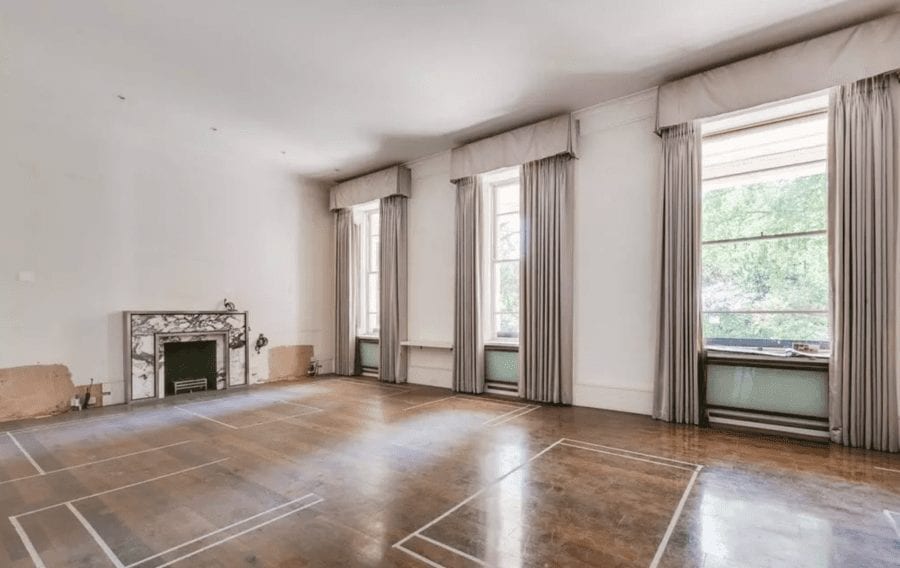
Now, five years later and most surprisingly in no better condition, the very same apartment has been relisted for just £22.5 million ($27.8 million, €25 million or درهم102 million) through agents Chestertons.
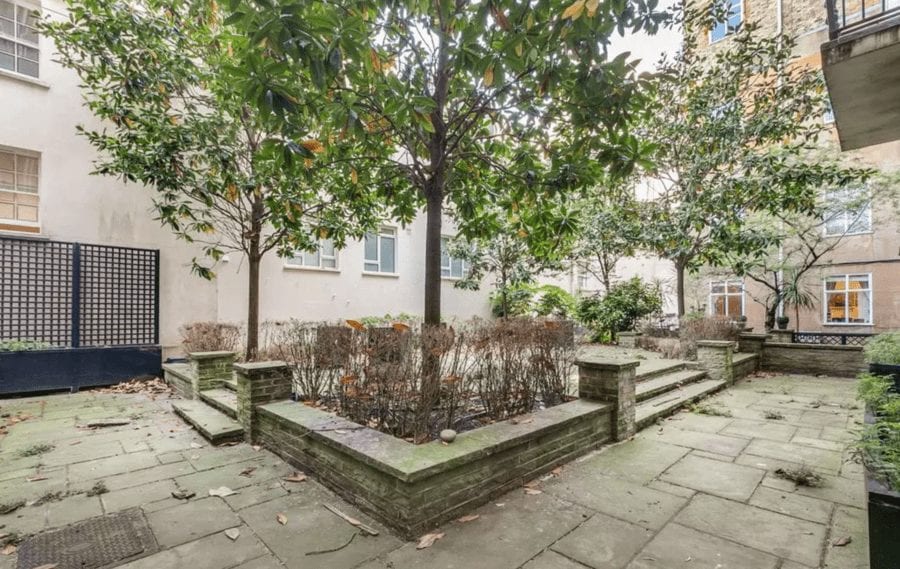
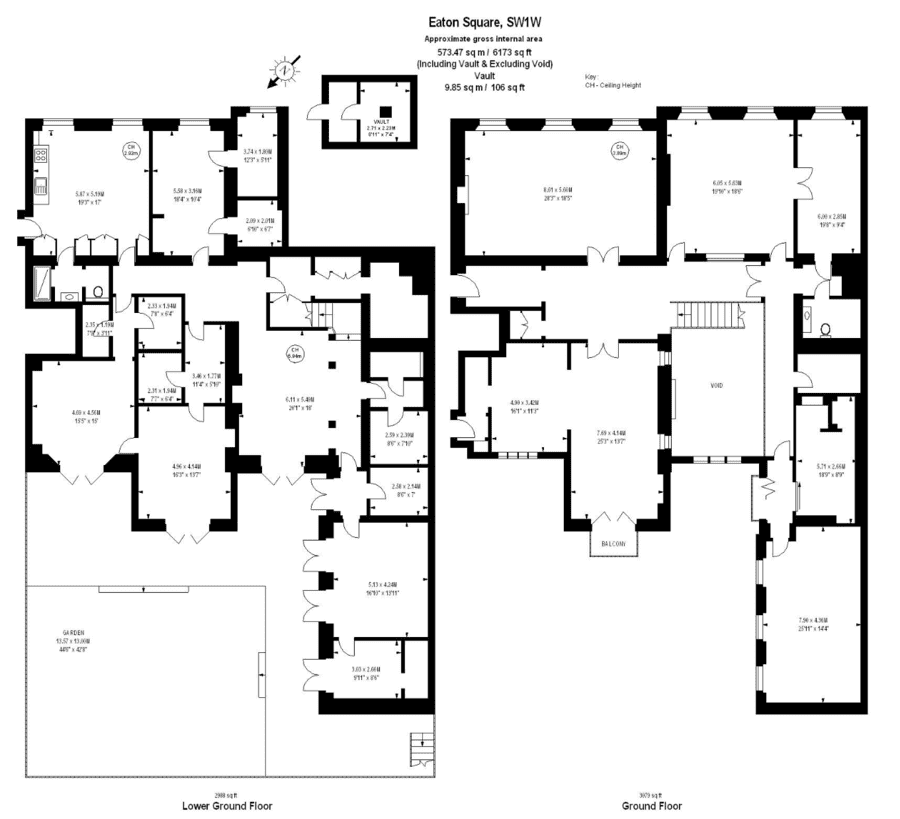
Extending in total to 6,173 square foot, the duplex was previously promoted with a fancy design scheme by David Collins Studio but now is simply listed as a “5 bedroom maisonette” with “potential to create one of the finest homes in Eaton Square.” It comes with a private garden to the rear and access to the communal spaces of the square also.
Pictured top: Baroness Thatcher, the entrance to 80 Eaton Square and a statue of George Peabody.
Eaton Square’s ‘Famous Faces’
Considered one of the best addresses in London and built for and still mostly owned by the Grosvenor family, Eaton Square features six adjoining, tree-planted gardens dissected by a four lane highway between Victoria and Sloane Square.
Amongst the well-known people who have variously lived in the square are:
Replica “homage to Jean Bugatti’s Type 57SC Atlantic coupé” to be auctioned for a sum 99.9% lower than the most famous of the four originals is said to be worth
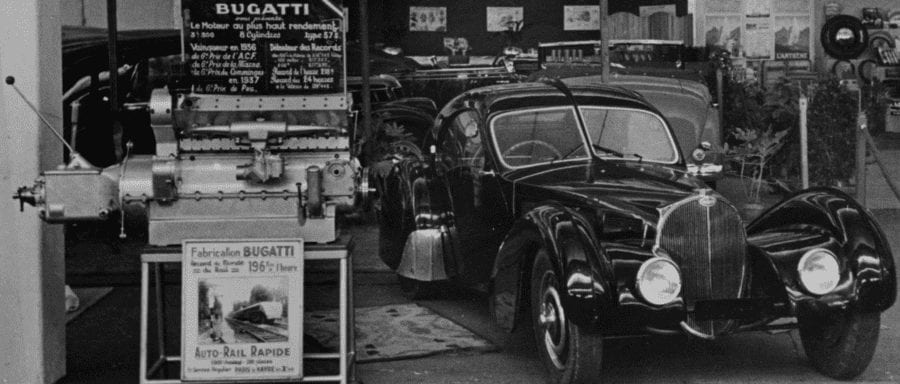
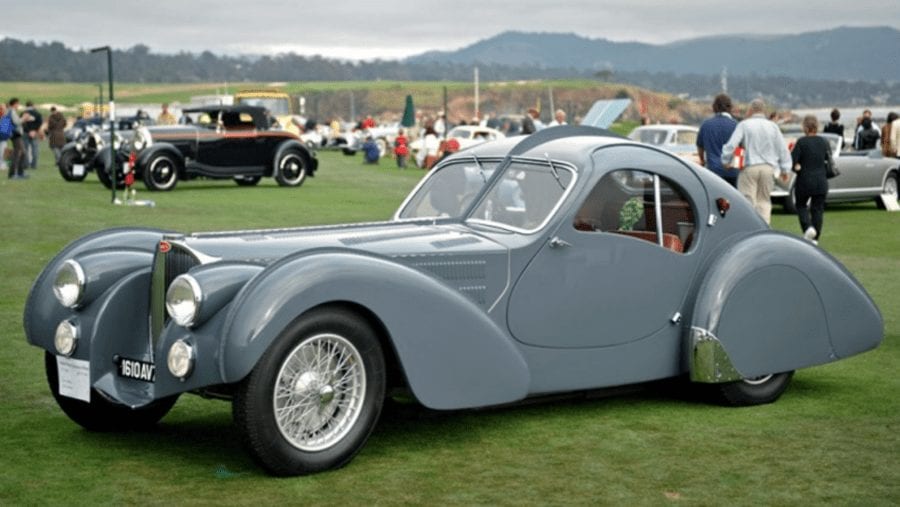
If ever rediscovered, a car termed “the most beautiful ever created” – the second of four Bugatti Type 57S Atlantic coupés – would supposedly be worth £93 million ($113 million, €104 million or درهم415 million).
Handcrafted as part of a limited production with sales only to the British banker Victor, 3rd Baron Rothschild, an English tennis player named Richard B. Pope and a Frenchman named Jacques Holzschuh between 1936 and 1938, the second coupé made was used for promotion and then given to its creator, Gianoberto ‘Jean’ Bugatti (1909 – 1939). After he was killed whilst testing a Type 57 tank-bodied racer, his car passed into the hands of various racing drivers. It was then hidden away with the outset of the Second World War, but sadly never resurfaced.
Named in honour of Mr. Bugatti’s aviator friend Jean Mermoz (1901 – 1936), whom never returned from a journey across the South Atlantic in 1936 in a Latécoère 300 Croix-du-Sud plane, the 12-foot long 57SC is lauded as the ultimate automotive design icon. Bugatti themselves term the “world’s most valuable vehicle” to be “extraordinary” and reference the coupé “unique in its time and still unique today.”
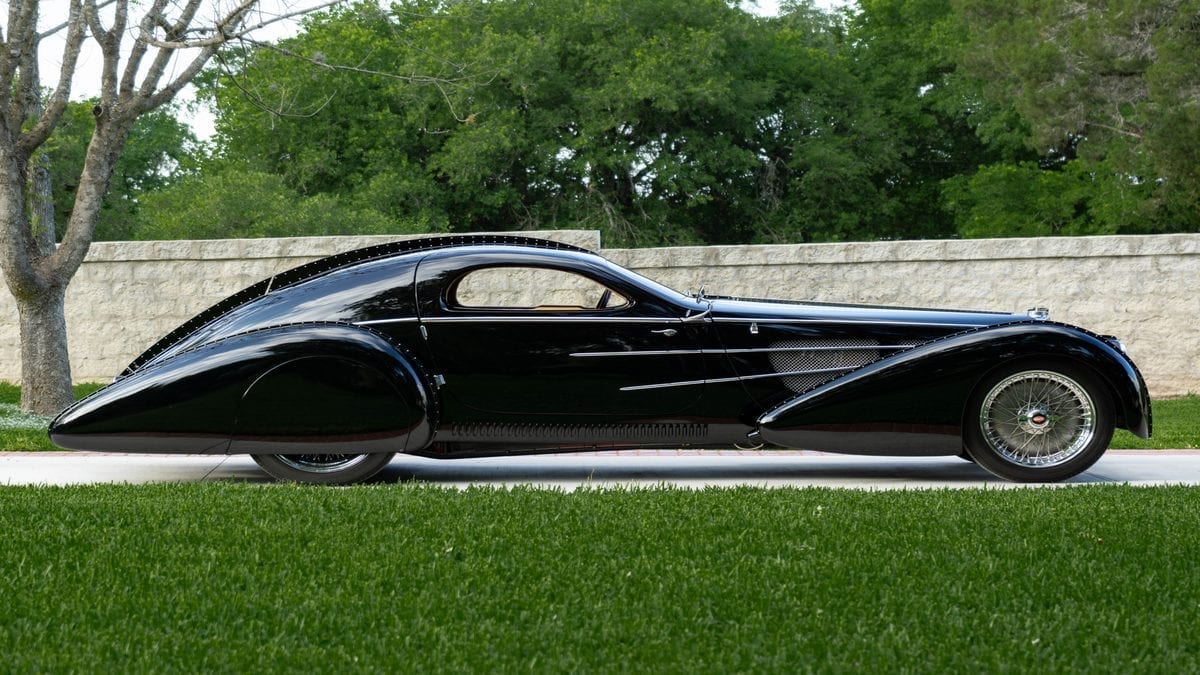
As a result of their desirability, the car – which Motor Authority terms “delightfully swoopy… [the] crown jewels of Bugatti production cars” – has unsurprisingly inspired a number of automotive designers to create homages to it. One example, created by “hot rodder” Terry Cook, is being auctioned this month – but one thing’s for sure, whatever it sells for, its hammer price will nowhere near that of a ‘real’ example.
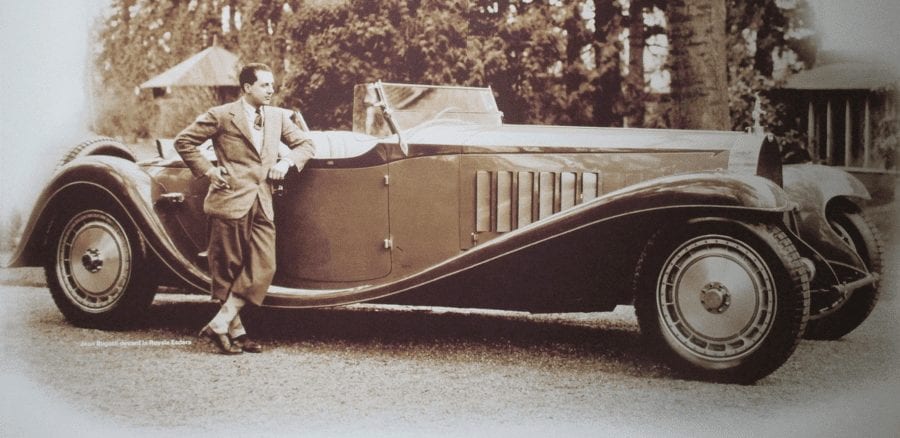
In March 2017, the “homage to Jean Bugatti’s Type 57SC Atlantic coupé,” the Delahaye USA Pacific was auctioned at the Mostalgia Amelia Island sale in Florida. It sold for £182,000 ($220,000, €204,000 or درهم808,000). The same car is headed to auction again this month.Jean Bugatti pictured next to the ‘Royale Esders Roadster’ prototype he designed in 1932.The four Bugatti 57SC Atlantic cars.
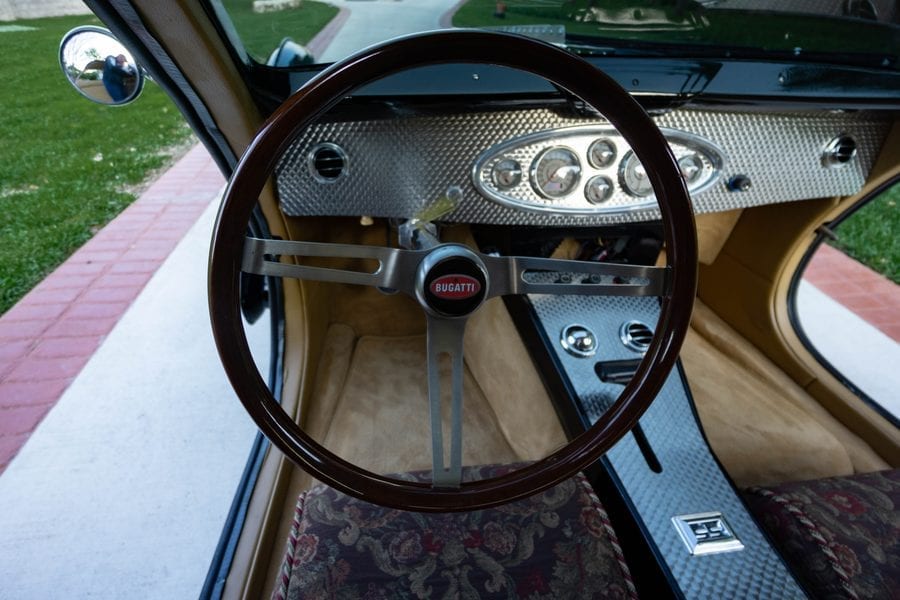
The “reimagined Atlantic” concerned was made by Cook’s firm, Delahaye USA, in 2016 and is described as “noticeably longer than the original, 10 inches to be exact.” It has a 127-inch wheelbase and features a BMW fuel-injected 12-cylinder engine and automatic transmission and unlike its forerunners comes equipped with air conditioning, heating and power windows. The stainless steel tubular seat frames are exact copies of those from the 57SC now owned by Ralph Lauren and the fabric is described as “richly decorative.”
RM Sotheby’s will sell the 1939 Delahaye USA Pacific – which actually is titled a 2016 ‘Assembled Vehicle’ – as part of their ‘Drive Into Summer’ online sale from 21st to 29th May. They have set an estimate of £124,000 to £165,000 ($150,000 to $200,000, €139,000 to €185,000 or درهم551,000 to درهم735,000) for this “wonderful modern homage.” Of it, they add: “The Delahaye USA Pacific is sure to turn heads no matter where it may travel, be it on any side of either ocean.”
Those on an even more limited budget could still live the ‘Atlantic dream’ – Ralph Lauren is currently marketing a 1:18 scale, die-cast, hand-painted replica of Mr. Lauren’s 57SC for ‘just’ £1,595 ($1,930, €1,784 or درهم7,090).
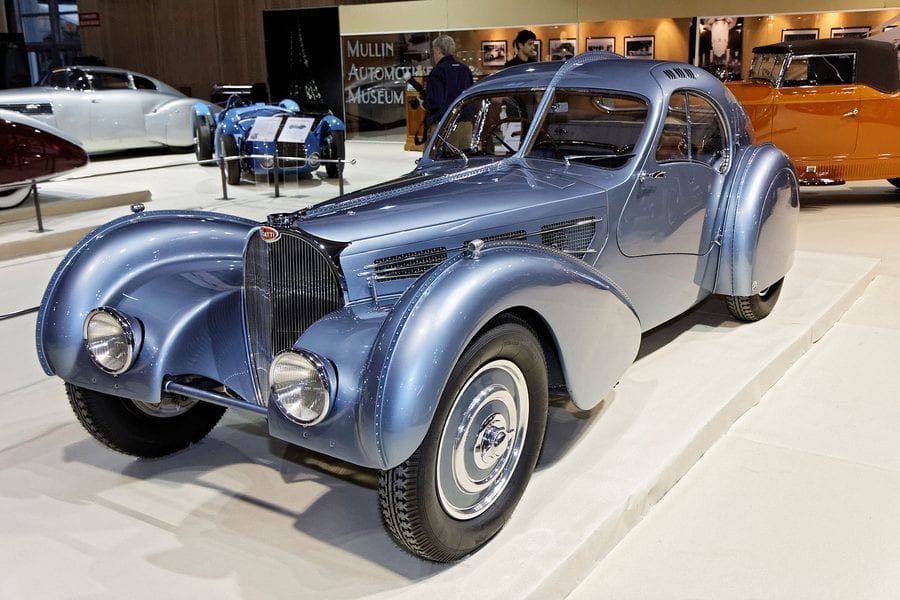
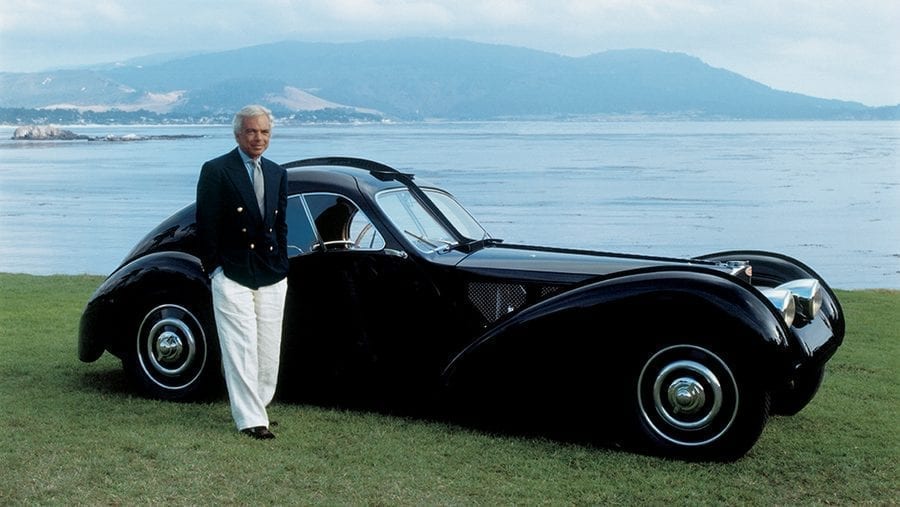
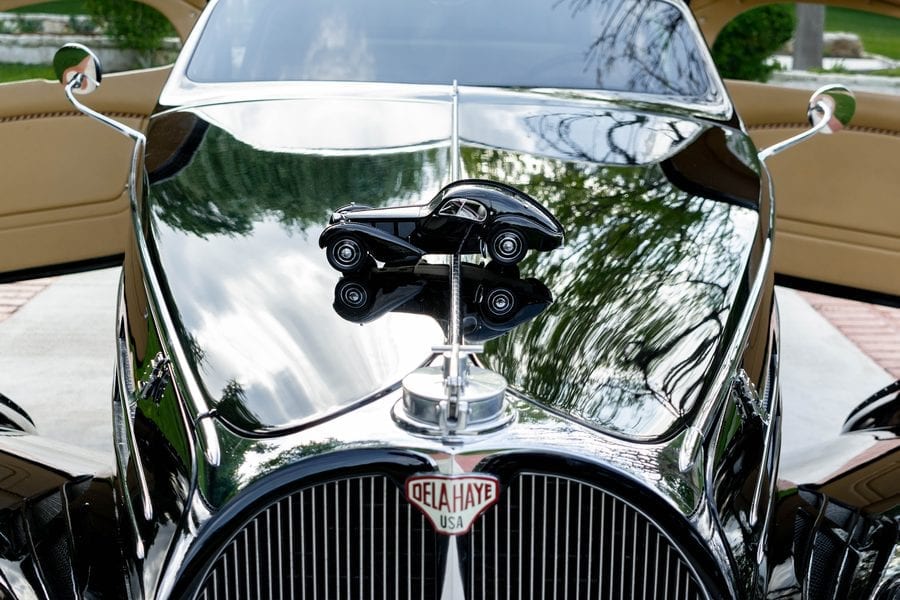
The metallic gray-blue 1936 Bugatti Type 57S – chassis number 57374 – was originally owned by Victor Rothschild, 3rd Baron Rothschild and thus known as the ‘Rothschild Atlantic.’ It was sold for in excess of £24.8 million ($30 million, €27.7 million or درهم110.2 million) in 2010 to the collector Peter Mullin. The car is now displayed at the Mullin Automotive Museum in Oxnard, California.The missing 1936 57SC – chassis 57453 – was presented in black and known as ‘La Voiture Noire’ or ‘The Black Car.’ It was the second Atlantic manufactured, disappeared from France in February 1941 and has never been seen since. Jean Bugatti considered this particular example his “most innovative and most valuable creation.”The 1936 Bugatti 57SC – chassis number 57473, ‘the Holzschuh Atlantic’ – was first owned by Jacques Holzschuch and his wife, Yvonne, and presented in black. After they were killed in the Second World War, the car’s subsequent owner, René Chatard, was hit by a train whilst in it 1955. He and his companion died and the remains of the vehicle were sold on. The restored car – considered a replica by experts – is displayed at the Torrota private collection in Spain.Clothier Ralph Lauren with his 1938 Bugatti Type 57SC – chassis 57591, the ‘Pope Atlantic.’ It was originally owned by Richard B. Pope and presented in sapphire blue, but painted black after being sold to Ralph Lauren in 1988.At the 2019 Geneva Motor Show, commemorating the 110th anniversary of Jean Bugatti’s birth, Bugatti sold a one-off model named ‘La Voiture Noire’ in homage to the missing 57SC for circa £15.7 million ($19 million, €17.6 million or درهم70 million). They declared it: “The most expensive new car ever sold.”The model available from Ralph Lauren.The steering wheel of the 2016 ‘Assembled Vehicle’ 1939 Delahaye USA Pacific.The seats are an artwork in themselves.Another view of the interior.With the doors open, from the front.The spare wheel.From the front.From the rear (complete with twelve exhaust pipes).The bonnet of the vehicle with a model of the car that inspired it on it.
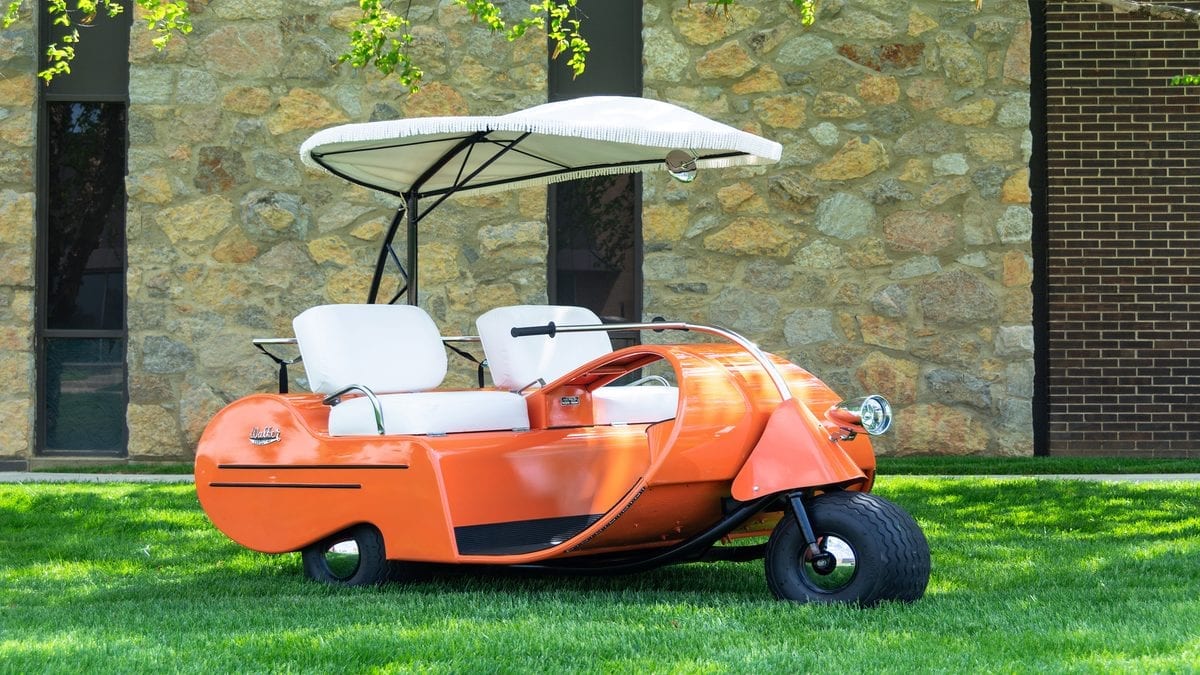
Rare example of first ever production petrol powered golf cart to be auctioned; the 1957 Jato Walker Executive, however, does not come cheap
Whilst British golfers will be celebrating that they have been allowed to get back to the game that someone (but not Mark Twain) once said is “a good walk spoiled” by the government this week, their American cousins more likely will be found touring their courses on electric golf carts when they are again allowed out.
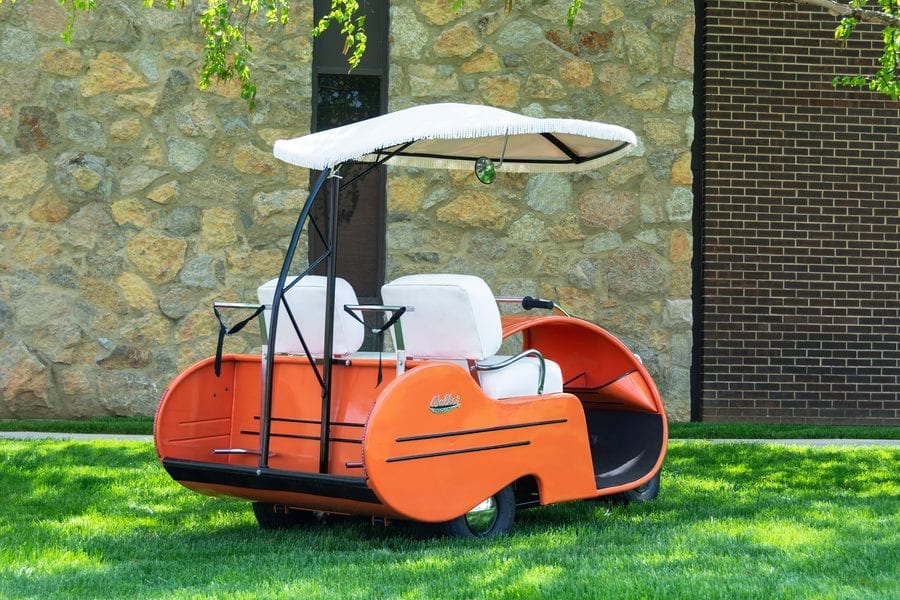
The three-wheeled vehicle was designed by a Kansas farmer and inventor named Max Walker after he became frustrated by the fact that electric carts with batteries often failed to last an entire round of play. His project, however, was short-lived as with improvements to battery technology, electric alternatives took hold and he sold the rights to Jato Manufacturing.
Of it, RM Sotheby’s remark: “The Jato Walker Executive is a charming bit of mid-century modern design… It runs well and is a delight to drive, motoring along with ease from either seat.”
The auctioneers have set an estimate of £8,200 to £12,300 ($10,000 to $15,000, €9,300 to €13,900 or درهم37,000 to درهم55,000) for this “finely restored example” and will sell it as part of their 21st to 29th May 2020 ‘Driving Into Summer’ sale.
Self-absorbed Alexa Chung isn’t worrying about people dying from coronavirus; she’s too busy moaning about people not focusing on the real her
“The human” Alexa Chung can be relied upon to make utterly everything about herself.
Earlier this month, the “fashion genius” and “belle of the ball” revealed that she begged David and Victoria Beckham to talk to her at a party. Of the encounter, this strange woman bizarrely told the Mail on Sunday’s ‘Talk of the Town’ column: “I said: ‘I know you have a lot of money, but I’ll pay you anything to talk to me right now.’ And they were really nice.” The trick plainly worked – as Miss Chung got the column inches she plainly so desperately so craves.
Now with no one in their right mind wanting to talk to the very wealthy Beckhams – who’ve quite deservedly joined the ranks of the pariahs of the coronavirus pandemic due to their shameless attempts to get the state to bailout their failing businesses – Chung yesterday moved on to share her latest woe in order to garner a few more words in print.
“The only thing people want to know about her is what it’s like having the same name as Amazon’s [Alexa]” stated ‘Talk of the Town,’ before concluding: “Unsurprisingly, she’s getting a bit fed up.” Chung – whom (as you do) loves “people-watching” in airports and “Googling pictures of Jane Birkin” at breakfast – herself added: “This is the most frequently asked question in my life.” Ah, diddums!
Coachbuilt 2018 Range Rover ‘Adventum Coupé’ for sale for an eye-watering sum; it comes with two umbrellas with handles made of the same leather as the interior
Niels van Roij is a Dutchman who has set about reviving the craft of the coachbuilders of the early 20th century. Aside from having the work of his award-winning eponymous automative studio exhibited at the London Transport Museum and the Victoria & Albert Museum, this autodidact car adapter has developed shooting brakes based on the Tesla Model S and the Range Rover.
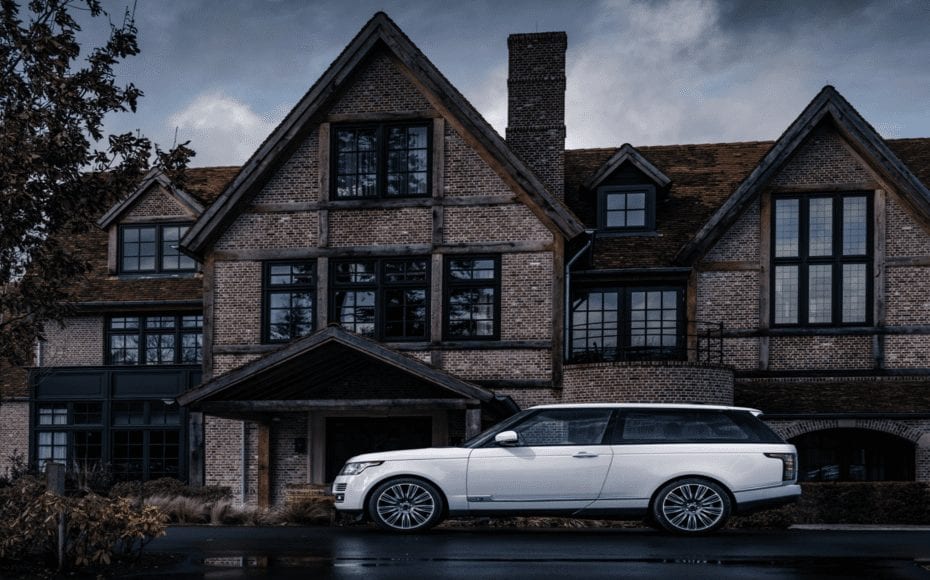
Now, the very first example of this talented designer’s Land Rover adaptations – named the Adventum Coupé – has become available for sale. The vehicle in question, converted from a 2018 5.0-litre supercharged V8 Range Rover to a “two door model based on the world’s best SUV,” is priced at £256,300 ($318,000, €290,400 or درهم1.2 million) including VAT and available through the Classic Youngtimers Consultancy based in Uden in Noord-Brabant, Netherlands. It has covered about 8,000 miles.
Presented with its hand-beaten aluminum body panels in Arctic white with a Nappa red leather interior and black piano lacquer dashboard, the car features flooring of handmade teak from the front seats to the trunk. Two hand-stitched black and red umbrellas can be found in the boot complete with handles made of the same leather as the interior.
Speaking generally of the Adventum Coupé range he intends to craft – the build run of which will be limited to 100 vehicles only – van Roji commented:
“The bespoke Adventum Coupé is a real design statement with a distinctive, custom-made aluminum bodywork, built by coachbuilder Bas van Roomen. Unique personal ideas can also be added to the hand-produced exterior, such as subtle ventilation openings in the fender and the bonnet. The interior can be equipped with the finest materials. In a co-design process with the future owner, we shape exterior and interior. We process the finest materials, such as tweed, teak and lambswool. We make it so personal that even the favourite pinstripe from the owner’s suit can be incorporated into the interior.”
“If desired, each Adventum Coupé can have striking materials and colour schemes for both interior and exterior: Everything is possible: from unique fuel filler caps, duotone exterior paints, highly polished wood on the dashboard, personalised tread plates to colour-matched leather in chic patterns. Even refined embroidery is a possibility.”
“Because: form follows function. This new look visually extends the car. The shutlines of the door actively contribute to a more elegant side view. The interior has also been largely redesigned due to the major changes to the exterior.”
Whilst we’d never urge anyone to buy a Range Rover in white (unless you were planning to use it in a country such as Kuwait), here is a future classic and a car that’ll most certainly stand out from the many other Rangies parked outside the pubs of the Cotswolds on a Sunday afternoon.
For those looking to self-isolate in luxury in London, taking a ‘residence’ at The Milestone Hotel in Kensington could be the perfect option (if you’ve got £7,700 per week to spare)
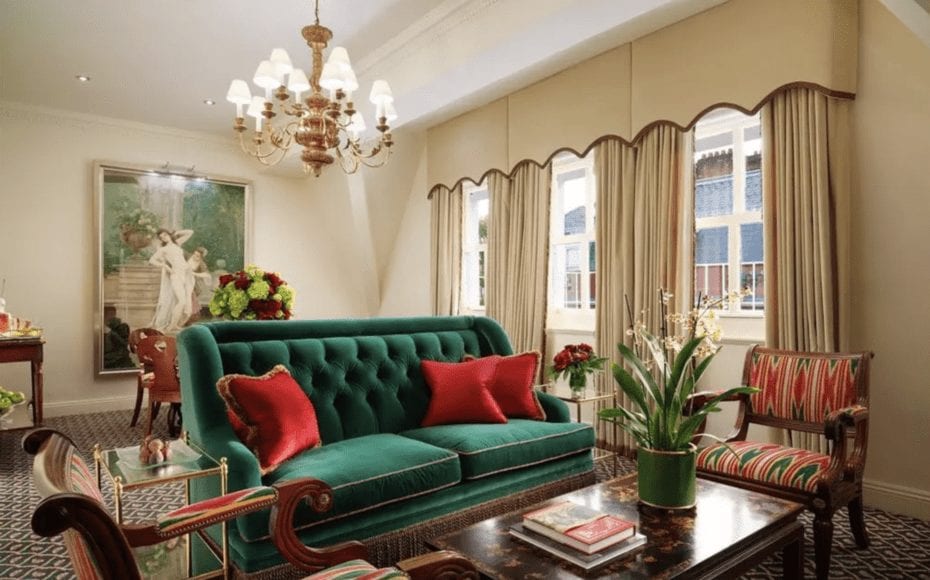
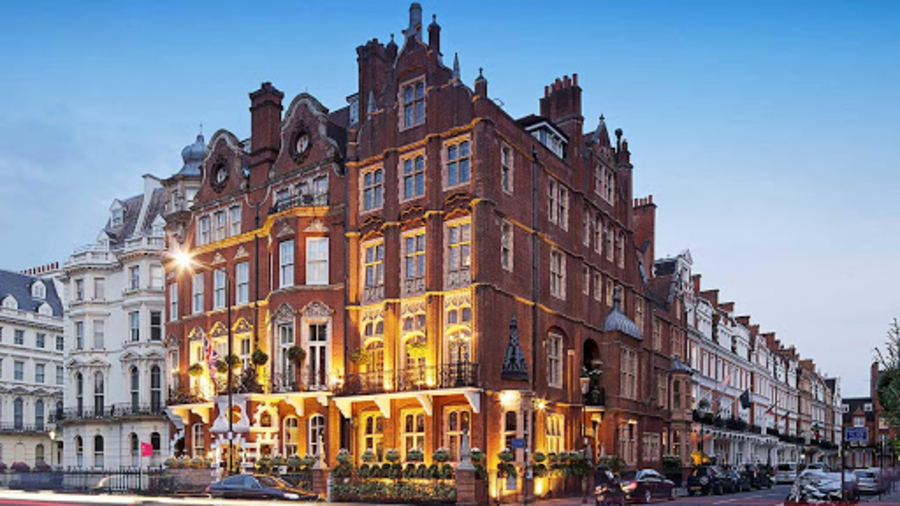
If you’re rich, want to self-isolate during the coronavirus outbreak in London and don’t even want to go out to do shopping, you could do worse than move into a ‘residence’ within The Milestone Hotel overlooking Kensington Gardens and Kensington Palace in W8.
Though the Red Carnation Collection hotel, on its own website, is described as “temporarily closed due to current travel restrictions,” serviced apartments within the property are still being advertised online as available.
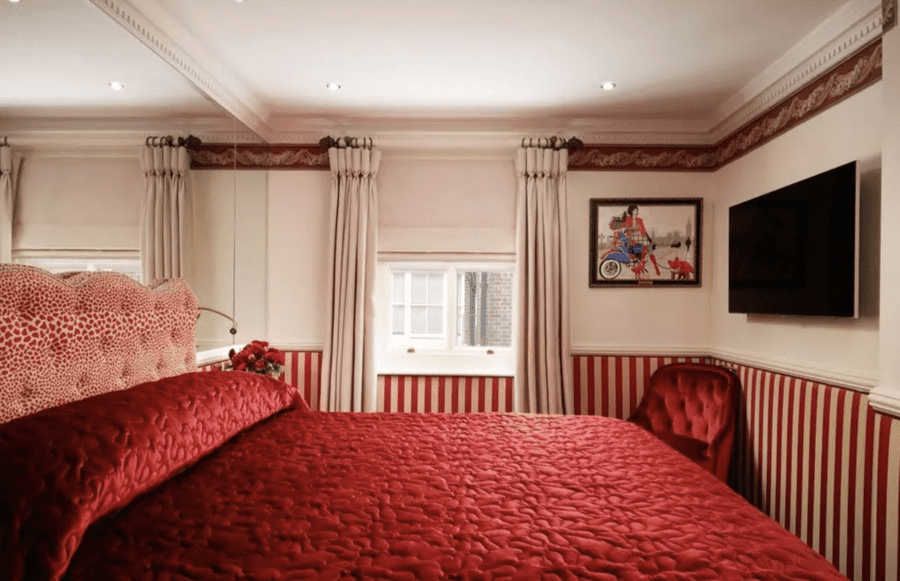
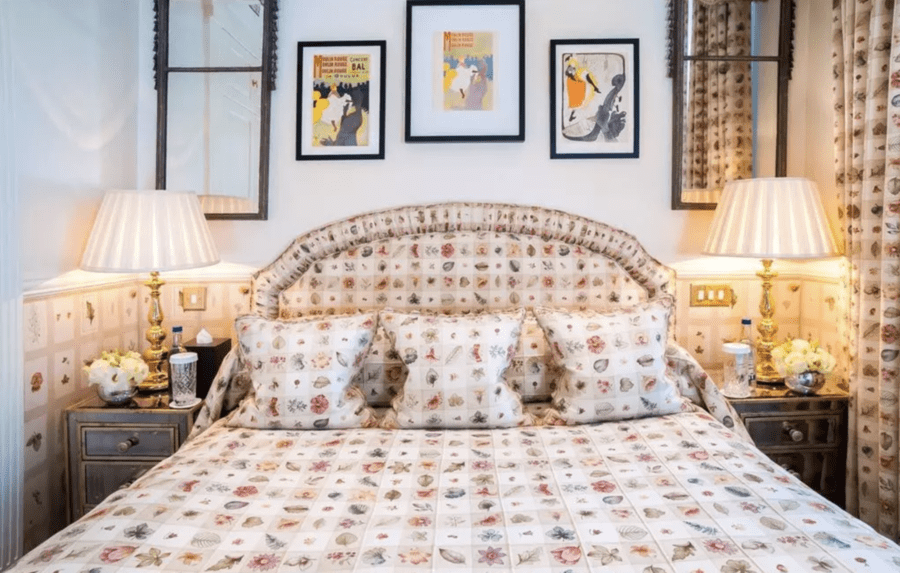
Listed on OnTheMarket.com for £7,700 per week ($9,600, €8,600 or درهم35,200 per week) or the equivalent of £550 per room per night ($685, €615 or درهم2,515 per room per night), a 743 square foot single-level, third floor apartment includes a reception room, two bedroom suites and a kitchen.
It is described by Harrods Estates as “beautiful” and “sumptuous” and having the “warm sense of being in your own private home.” Featuring a “vibrant and sophisticated” decoration scheme designed by Bea Tollman, the hotel’s founder, the agents laud the “contemporary polish that so cleverly blends with balancing the traditional features.”
‘Characteristics’ available to those taking the space include full 24-hour hotel service, access to the hotel’s health club, daily housekeeping services, 24-hour butler and room service and a full grocery shopping service.
The neo-Gothic former private home in which this ‘residence’ is situated became a hotel in 1922 and has been known as The Milestone since 1986. It has 43 guest bedrooms, 13 suites and 6 long-stay apartments and in 2019 unveiled a leopard print carpeted suite in honour of the Duchess of Sussex named the ‘Meghan Suite.’ A blessing or a bonus, depending on your view of the wayward on-off royal, is that the likelihood of the former Miss Markle popping in for tea at this time of lockdown is as likely as the Queen riding by on Shergar the racehorse.
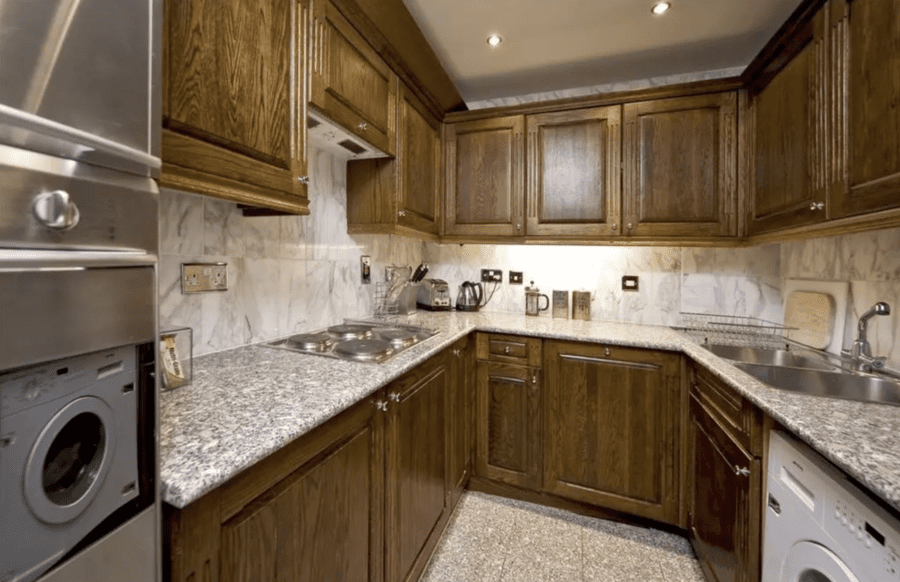
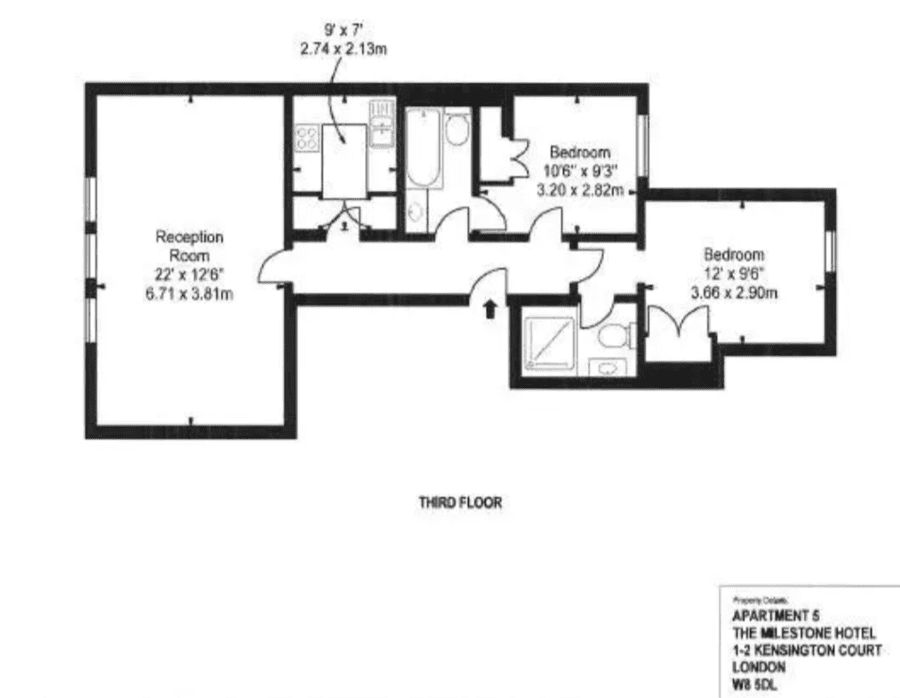
The exterior of The Milestone Hotel, 1 Kensington Court, Kensington, London, W8 5DL, United Kingdom.The main bedroom.The second of the bedrooms.The kitchen of the apartment has a look of something from the 1990s, but is perfectly functional.A floor plan of Apartment 6, the ‘residence’ offered.
Second apartment in South Kensington’s famous ‘Thin House’ comes to the market after another has languished for sale for four years; the two could potentially be merged to make a truly spectacular artist’s studio in the sky
In May 2016, The Steeple Times featured a 603 square foot third floor artist’s studio flat in a building known as ‘The Thin House’ (or ‘The Skinny House’) in Thurloe Square, South Kensington. Priced then at £895,000 ($1.1 million, €1 million or درهم4.1 million), this apartment is surprisingly still for sale for the same sum and complete with the same furniture four years later. Now, however, it is no longer offered by the defunct agents W. A. Ellis and is instead available through agents Rokstone.
The third floor space for sale through Rokstone for £895,000 has been on the market since 2016, yet has never been reduced in price.
A reason this flat may not have ‘moved’ in the period is not only that the building in which it is situated is not only of an “architecturally weird shape,” but also because it directly backs onto the District and Circle line. With trains running from around 5.30am to 12.30am each day, it is undoubtedly noise affected.
Constructed on the remaining land of five neo-classical houses demolished to make way for the underground in the 1860s, red brick 5 Thurloe Square – just six foot wide at its narrowest point – was the brainchild of a local builder named William Douglas. Fitting into a “meagre” triangle, he designed and built seven artists’ studios between 1885 and 1887 and some of them are still in use by creatives to this day.
As well as the aforementioned share of freehold third floor property, a studio on the second floor of the building is also on the market. Offered by Winkworth for £875,000 ($1.1 million, €980,000 or درهم4 million), the 676 square foot space features a 21-foot by 16-foot studio with a small kitchen and bathroom off and a 13-foot by 7-foot mezzanine bedroom over. The agents describe the property as offering “exceptional space” and “the most magnificent view over the treetops of Thurloe Square towards the Victoria and Albert Museum.”
Subject to planning, imagination and deep pockets, an inspired individual could perhaps purchase and merge both apartments into one. The resulting 1,279 square foot creation would not only be thin, it could potentially be spectacular.
Images and floor plans of the third floor artist’s studio follow.