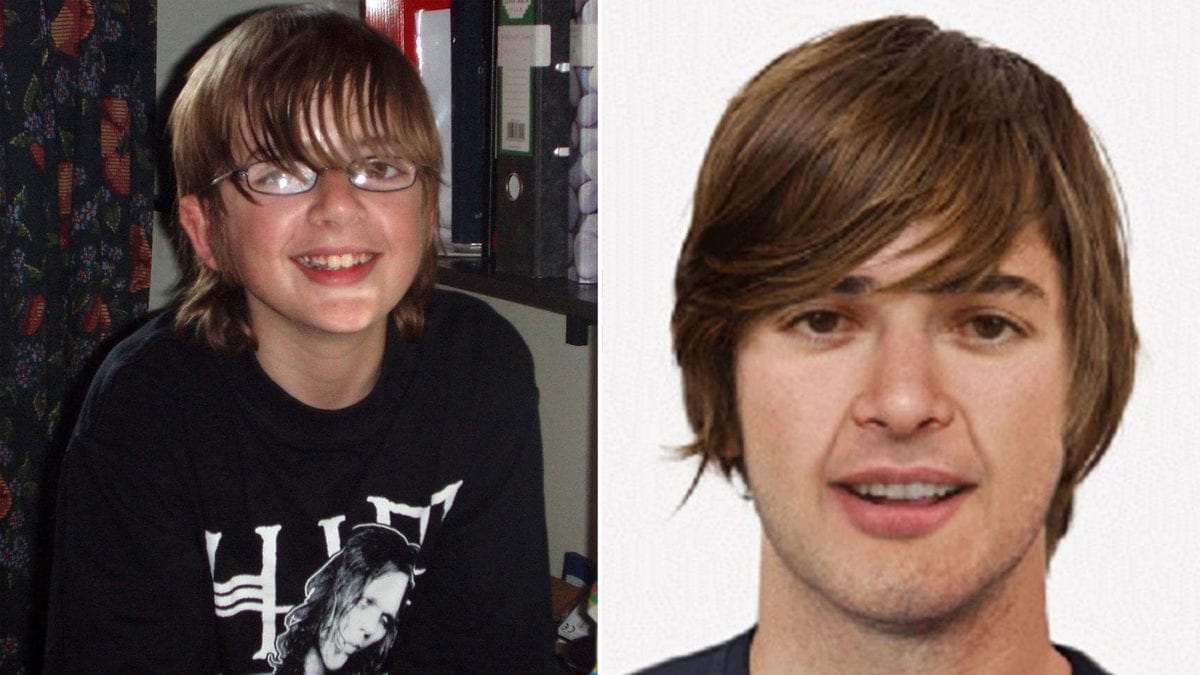
Elizabeth Bond highlights the case of the mysterious disappearance of Andrew Gosden; last seen in London in 2007 aged just 14
Yesterday marked the 28th birthday of Andrew Gosden. He did not, however, celebrate the day with his immediate family as he vanished in September 2007.
It’s a case that has received relatively little media coverage – at least in comparison to that of Madeleine McCann, who went missing the same year – but now it’s an appropriate time to rectify this and appeal for anyone with information to come forward.
What makes this story so baffling is that there has been no explanation for what happened. At the time of his disappearance, Andrew Gosden was a promising 14-year-old student from a happy, loving home in Doncaster. He had a 100% attendance record at school and was expected to score straight A grades in his exams. There is no evidence that he was being bullied or suffering from depression of any kind.
Yet on the morning of 14th September 2007, Andrew did not catch the bus to school as usual. Instead, he waited in a nearby park until his parents had gone to work. He then returned home, changed out of his school uniform, and put on a black Slipknot T-shirt and a pair of jeans. He left the house, taking only a black canvas bag and a portable games console with him, and went to a local cashpoint where he withdrew £200.
At around 9:30 am, Andrew made his way to Doncaster Station and bought a one-way ticket to London. He refused the offer of a return ticket, despite it costing less than a pound more. He then boarded a train, and two hours later was pictured on CCTV leaving King’s Cross Station and heading out onto the streets of London. This was the last confirmed sighting of him, and there has been no trace of him since. His bank account has also remained untouched since that day.
Unfortunately, due to errors on the part of the school, the Gosden family did not realise that Andrew had gone missing until later that evening. In addition, it took a few days for the lady who sold Andrew the ticket for London to come forward, and several weeks before police identified Andrew on camera at King’s Cross. All these delays meant that other potential CCTV street footage of Andrew was wiped.
The Gosden family has searched tirelessly for Andrew and tried to ascertain the reasons for his disappearance. It has been suggested that Andrew may have met someone online who persuaded him to come to London. However, there is nothing to support this theory. Andrew did not have a mobile phone or an e-mail address, and his family has said that he did not even seem particularly interested in the Internet.
To date, nothing has come from appeals or supposed sightings of Andrew. Nevertheless, the Gosden family has not given up hope of ever hearing from him one day. An age-progressed image of Andrew was released in 2019. The family has also set up a website which includes a personal message for Andrew, as well as contact details. If Andrew should read this, they say that they do not care about the past or any decisions he may have made. They simply love and miss him, and hope to hear from him, so they can support him in any way.
If anyone else believes they have information about Andrew, they can contact South Yorkshire Police on 0114-220 2020 or Missing People on 116 000.
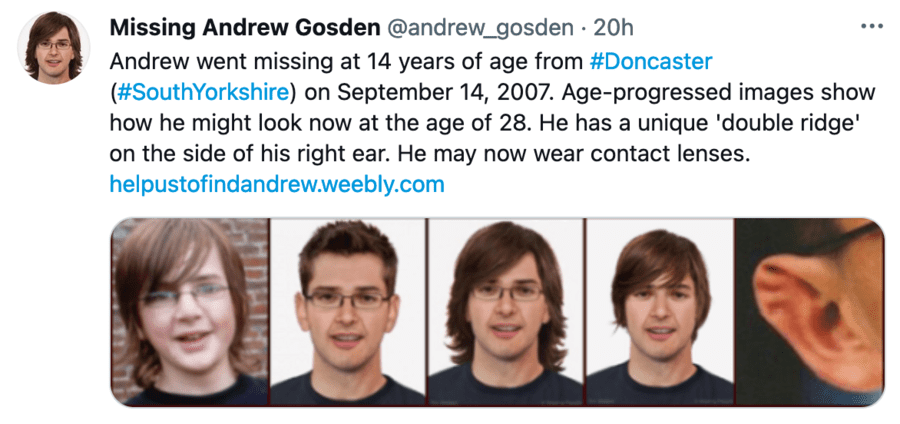
Follow the efforts to find Andrew Gosden on Twitter by clicking here.
Pictured top: Andrew Gosden (left) and an age-progressed image of how he might now look that was released in 2019.
The last sighting of Andrew Gosden was at King’s Cross railway sation on the 14th September 2007.A tweet shared about this missing person case yesterday.
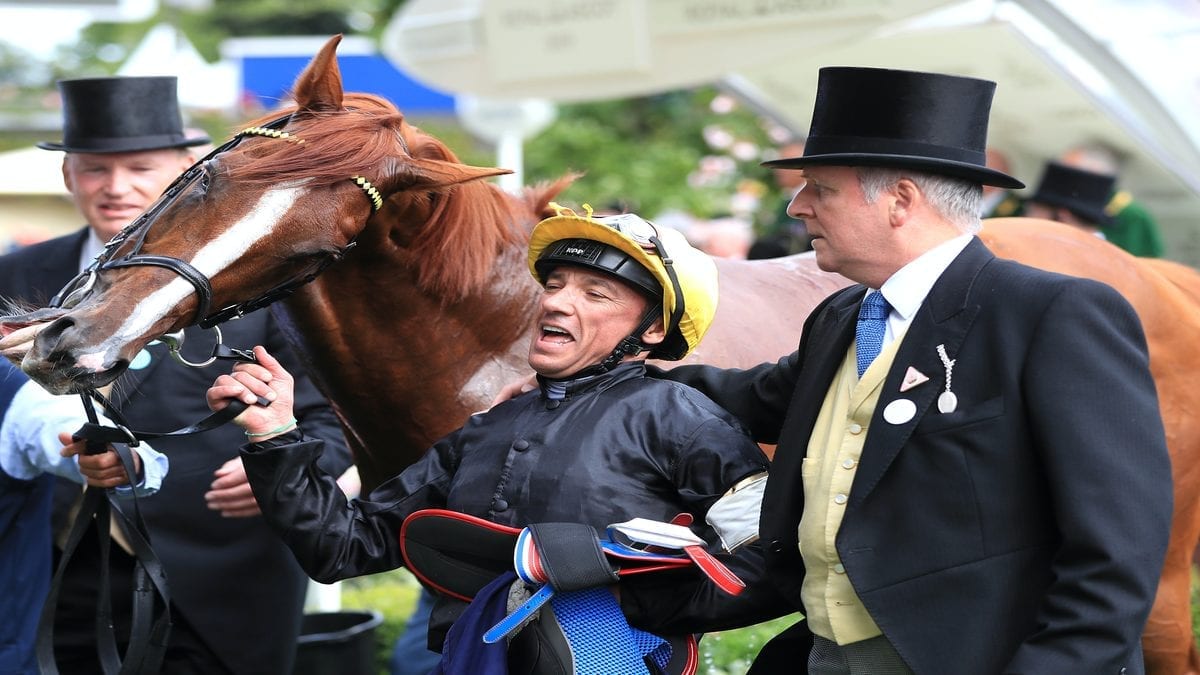
‘The Steeple Times’ analyses the selections for a somewhat damp Gold Cup Day at ‘Royal Ascot At Home’ – very much a day to stay indoors and watch Stradavarius, Frankie Dettori and Sir John Gosden
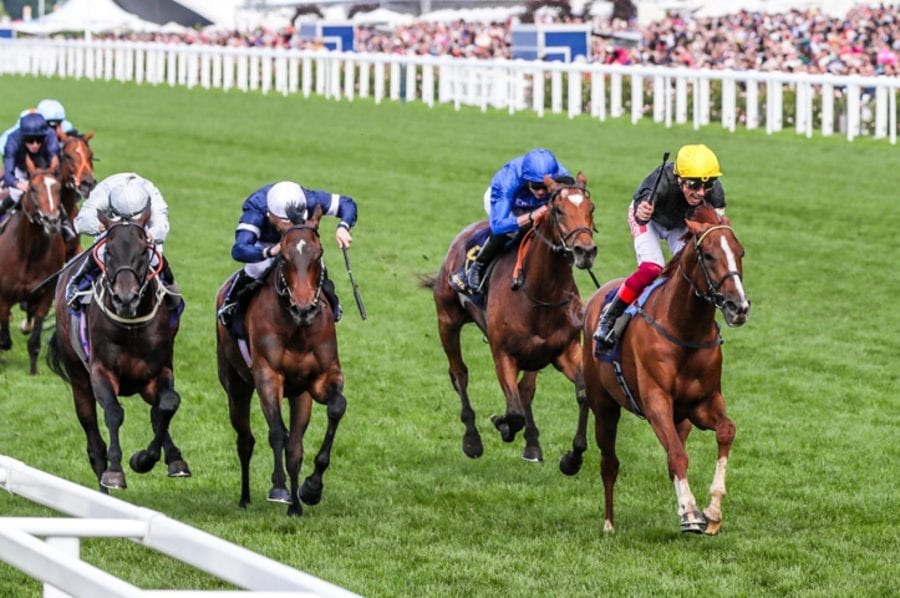
Rain could shake everything up today at ‘Royal Ascot At Home’ – as this year’s closed doors meeting has been branded – and though Stradivarius will not especially love any significant downpours, he is the horse that will surely be the highlight of Gold Cup day.
Trained by the Sir John Gosden, ridden by Frankie Dettori and owned by Bjorn Nielson, here is a horse seeking to secure a Royal Ascot hat-trick. Speaking to the Daily Mail’s Marcus Townend, Sir John commented: “He is in good form” whilst GG.co.uk concluded: “Stradivarius, and Frankie Dettori of course, are the undoubted top bill on day three of Royal Ascot 2020.”
Obvious Options
1.50pm – Wolferton Stakes (15 runners) – Ryan Moore and A. P. O’Brien’s Sir Dragonet at 12/5 has been branded as “among Thursday’s worthy support acts” (GG.co.uk).
Racing Post not especially enthusiastic: “Shade disappointing since close fifth in last year’s Derby but still has time on his side.”
3.35pm – Gold Cup (8 runners) – The horse of the day is Stradivarius at 8/11 (The Telegraph, The Sun TREBLE).
Racing Post concludes: “Top-class stayer, including winning this race for the last two years; hard to beat.”
4.40pm – Sandringham Stakes – Sir John Gosden’s African Dream at 13/8 (The Telegraph, Guardian). As Simon Rowlands of At The Races sensibly concludes: “The very short price makes him unplayable to me.” Watch and enjoy.
Chris Cook of the Guardian comments: “It is hard to resist the claims of African Dream, who ran way above her rating when second at Newbury last week. Whether she can reproduce that effort in these very different circumstances is a fair question but her connections give her every chance.”
Darker Horses
1.15pm – Golden Gates Handicap (16 runners) – Sticking with the combo of the Dettori-Gosden dream team, Hypothetical is an appealing each way at 9/2 from 4/1 earlier (Radio 4).
Racing Post says: “Opening mark is reasonable and profile points to strong potential for improvement” with their verdict being: “Despite the big field Acquitted makes a good bit of appeal. Hypothetical may be next best, ahead of Maori Knight.”
‘Templegate’ for The Sun adds: “Hypothetical comes from John Gosden and Frankie Dettori and is dropping in class after a solid fourth in the Group 3 Classic Trial at Sandown on comeback. He went well until the lack of a recent run appeared to take its toll. It would be a surprise if he doesn’t take a step forward from that.”
3.35pm – Gold Cup (8 runners) – An each way on the James Doyle-Charlie Appleby combo Cross Counter could be a more appealing each way at 11/1 (The Sun ‘Next Best’).
Racing Post says: “Held behind Stradivarius when in the frame in this (4th) & at Goodwood (3rd); could be 2nd.”
4.10pm – Britannia Stakes (24 runners) – An each way on Ralph Beckett’s Great Ambassador at 12/1 (Guardian NAP, At The Races) could be worthwhile.
Chris Cook of The Guardian says: “His final outing as a juvenile suggested Great Ambassador was in line for a big three-year-old season. From a hot yard and drawn on the favoured side, he is on a handy rating in view of some of his form, which includes a close second in Pyledriver’s maiden.”
Hugh Taylor for At The Races says: “Great Ambassador had five runs as a 2yo and might look too exposed for a race like this, but those runs really do stand up to close inspection… I think he’s capable of proving much better than his current mark when everything drops right, and although he lacks a recent run, he looks well worth chancing on his reappearance, especially from a potentially handy draw… He carries a 5lb penalty here, but goes up 12lb from Saturday, and given he’s a keen-going type who promises to be well suited by the demands of a big-field handicap, he has clear claims here.”
Racing Post adds: “Hacked up on final 2yo start; should stay 1m; enters calculations.”
Also in the 4.10pm – Britannia Stakes (24 runners) – Our wildcard is Richard Hannon trained Ziggle Pops at 22/1 from 20/1 earlier (Radio 4).
Racing Post says: “Came home strongly to beat a few of these in 7f AW handicap; up 5lb; should stay 1m.”
With no Ladies Day fashion parade due to lockdown, today is one to stay indoors, pour yourself a glass of something special and enjoy a happy afternoon’s racing. Cheers to y’all!
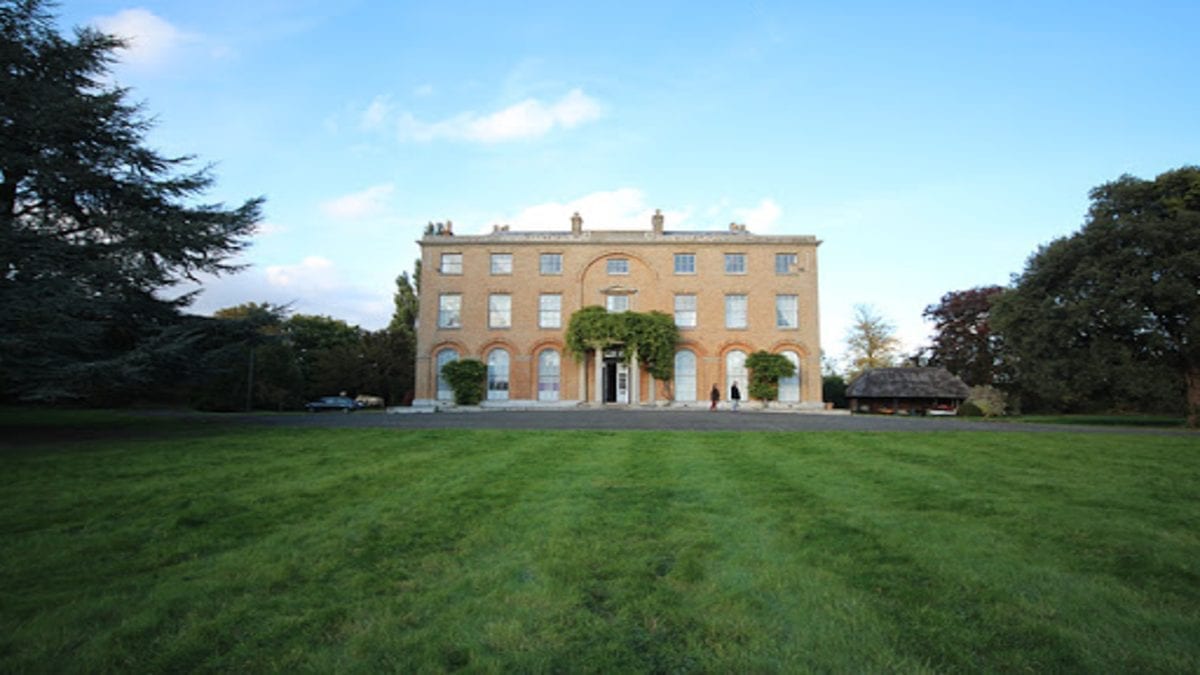
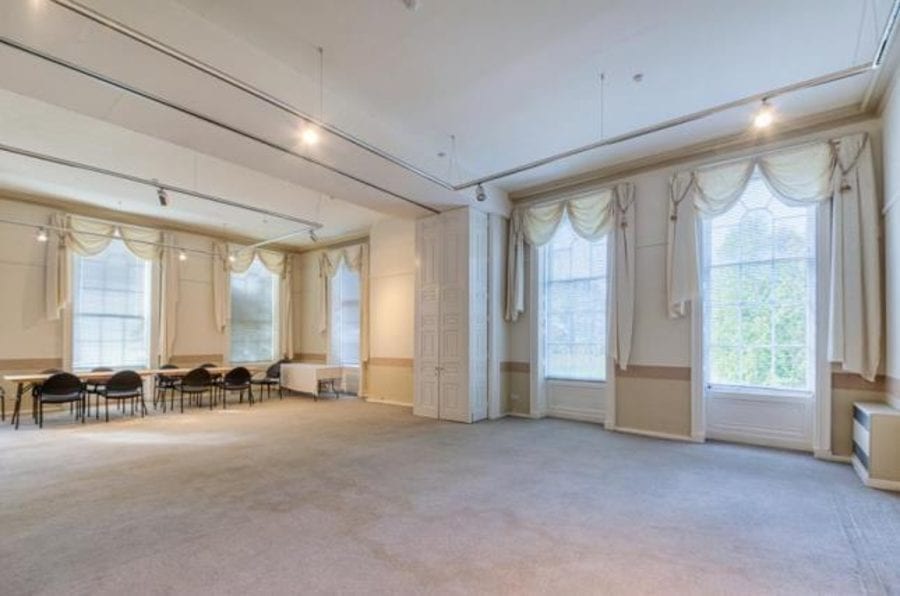
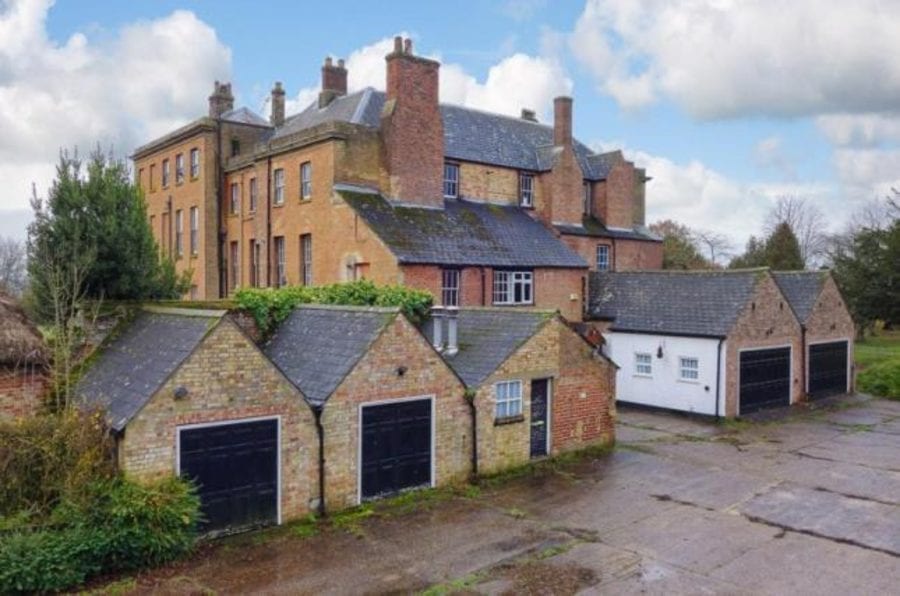
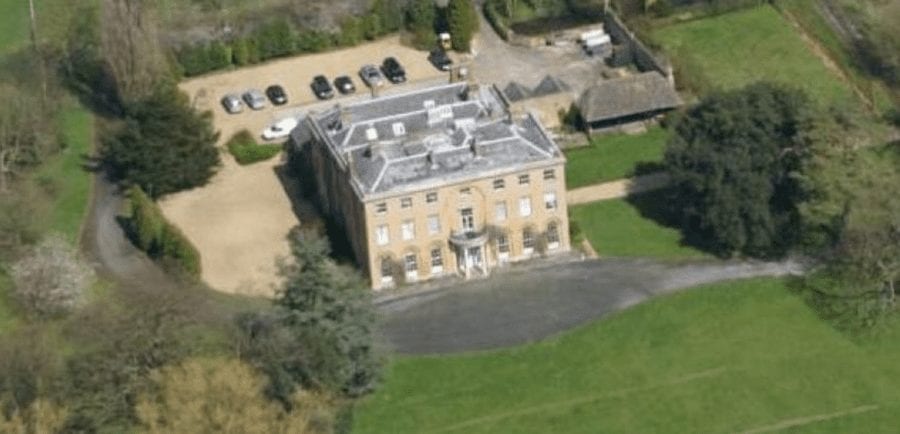
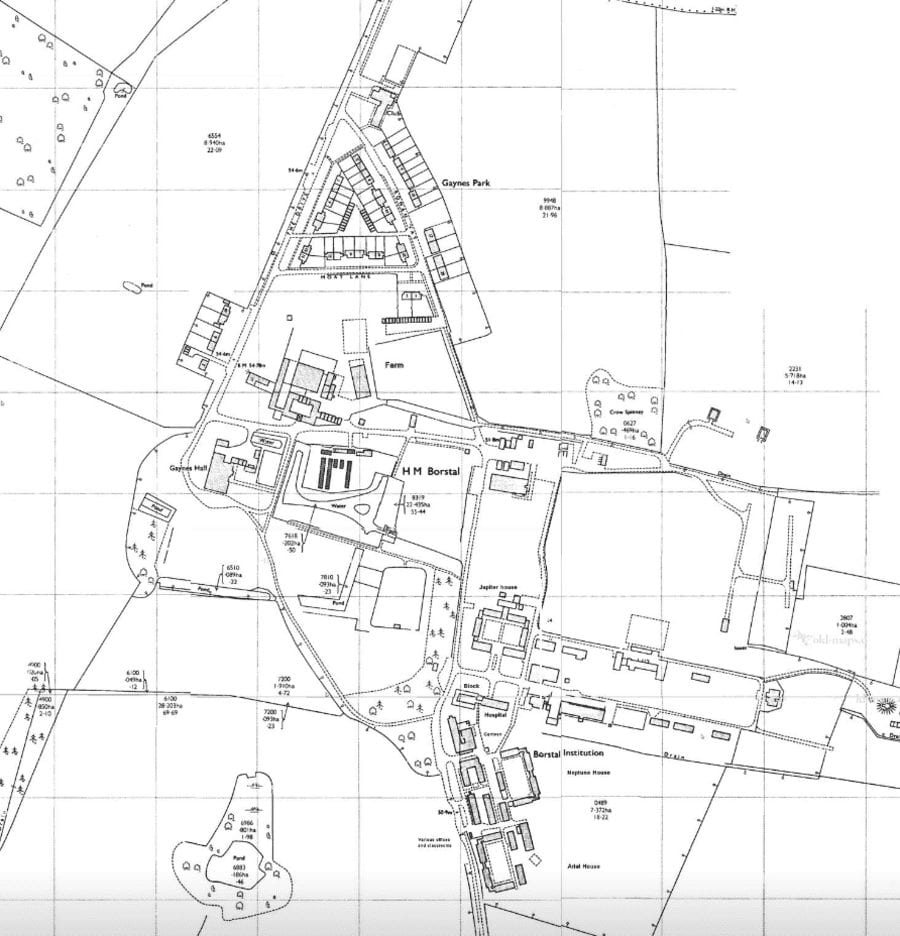
Cambridgeshire mansion used by Special Operations Executives in the Second World War and as a borstal subsequently for sale; Gaynes Hall is next to the prison that housed Max Clifford and was briefly a cannabis farm in 2019
Grade II* listed Georgian mansion in Cambridgeshire for sale for £2.65 million in spite of being in far from perfect condition and next door to a prison housing 1,220 convicted sex offenders.
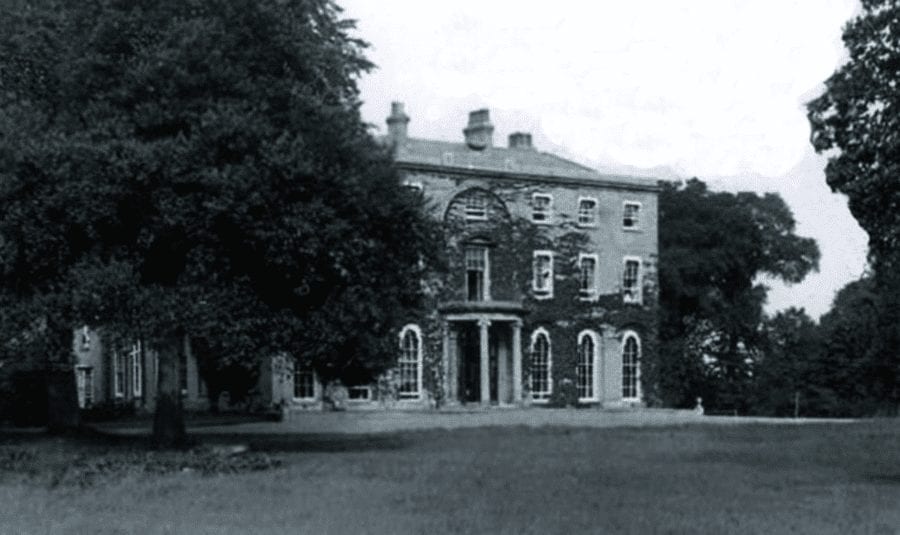
The estate was owned by the aristocratic Duberly family from 1798 until 1940. An earlier house on the house had been home to Oliver Cromwell’s namesake and uncle.
It was requisitioned in the Second World War by the Special Operations Executive. Hitler was so annoyed by the operations at Gaynes Hall that he supposedly nicknamed the place “the hornet’s nest.”
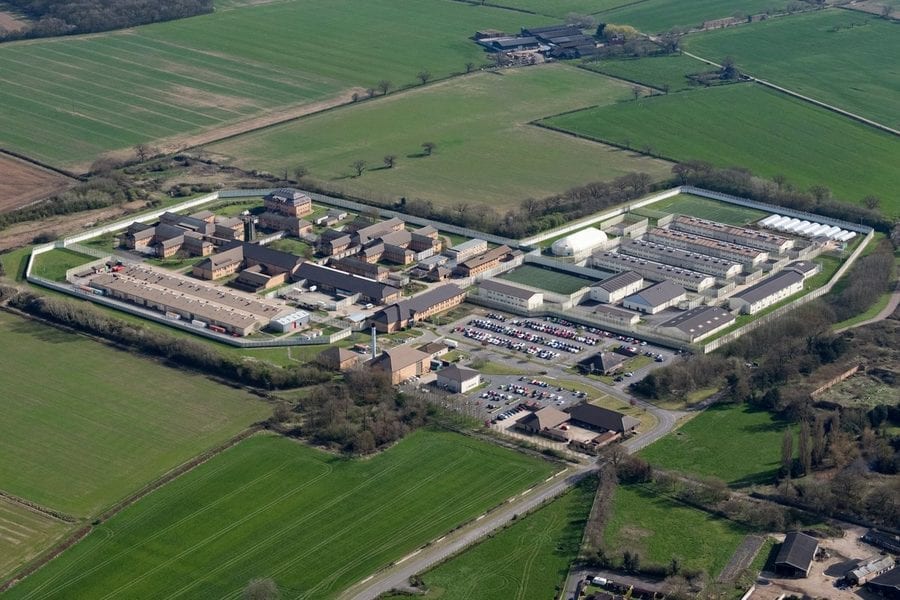
After the war, the hall became a borstal and after that closed, part of the estate became HM Prison Littlehey – famous for housing PR ‘guru’ Max Clifford, victim of a miscarriage of justiceStephen Downing and Australian cricketer Alex Hepburn.
More recently, the estate came to public attention after being discovered to be the centre of operations for drug lords. £250,000 of cannabis were seized there in 2019.
In June 2019, once ritzy Gaynes Hall at Perry, near Huntingdon in Cambridgeshire came to public attention when a drugs baron who’d turned part of the building into a cannabis farm was jailed. For his troubles, Nebir Tahiraj was relieved of £250,000 of drugs and ‘gained’ a sentence of 13 months.
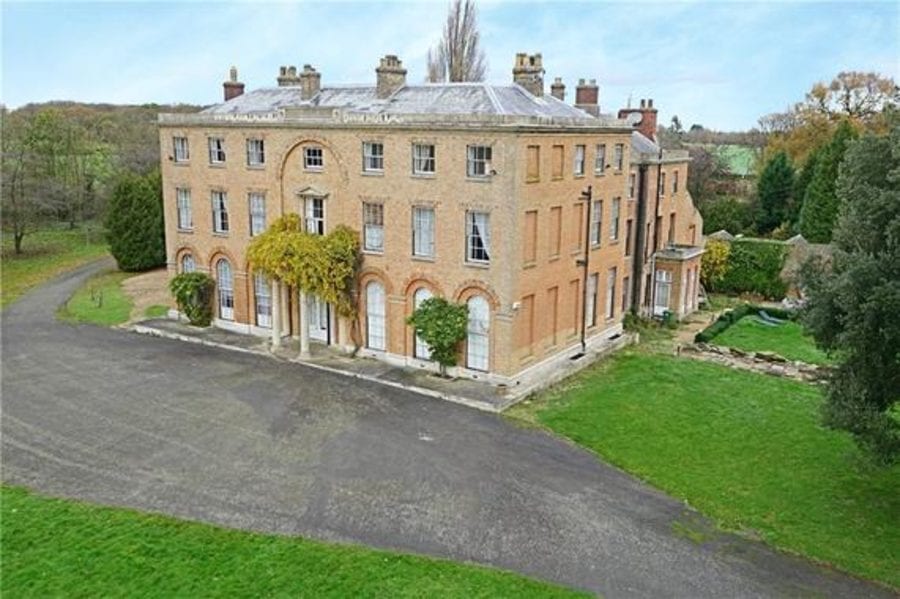
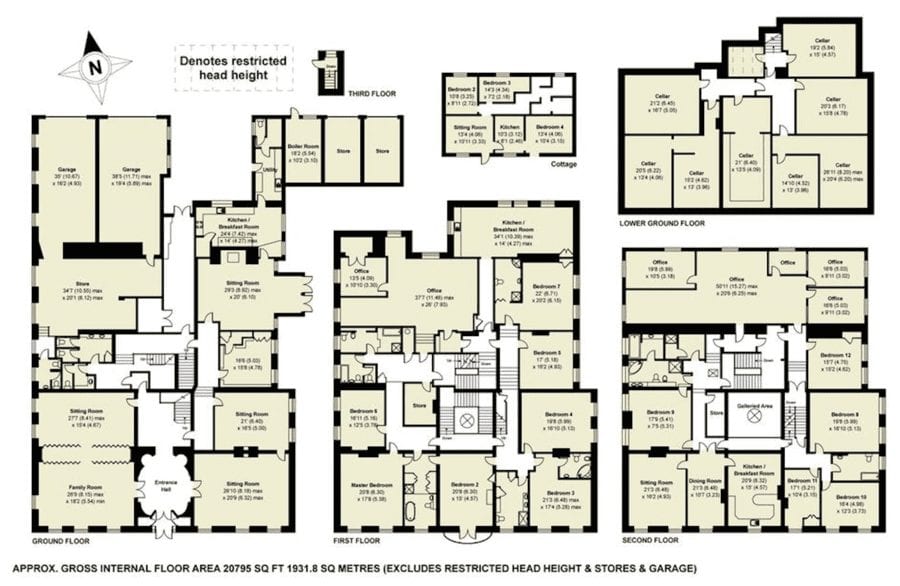
Grade II* listed and built circa 1800 for Sir James Duberly (1758 – 1832), the gault brick house was originally plaster rendered. Of three storeys plus cellars and seven bays, the 20,795 square foot building is currently being marketed by agents Wilson Peacock for £2.65 million – up from £2.2 million back in 2019.
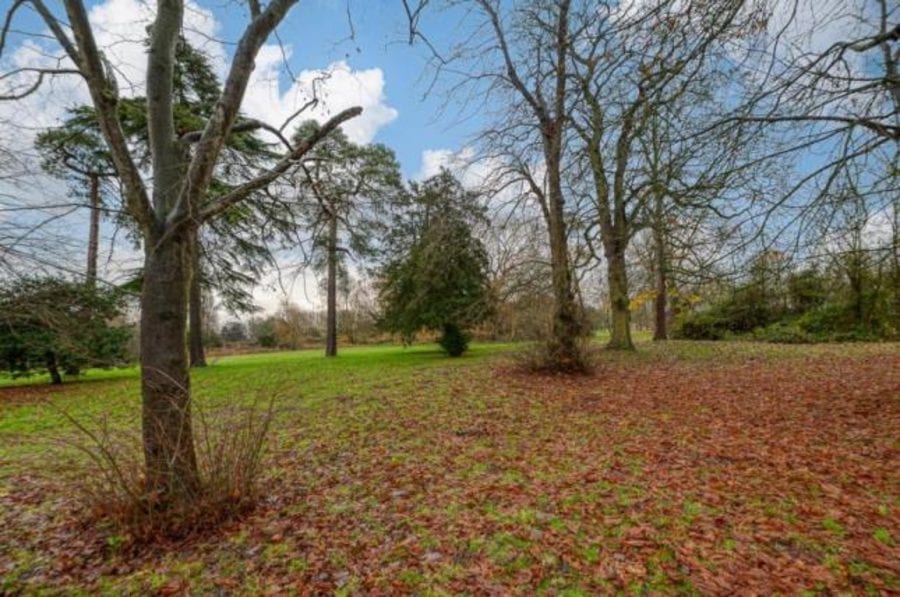
Gaynes Hall (also known as ‘Gaines Hall’ occasionally) stands in 16 acres of grounds including lakes and a moat and comes with a three bedroom cottage “requiring full modernisation and refurbishment.” It was home to the Duberly family until 1940 when it was requisitioned by Special Operations Executives (SOE) on the instructions of Winston Churchill.
Supposedly, according to the local Parish Council’s website, Hitler was so exasperated by the activities at Gaynes Park that he referenced the house “the hornet’s nest.” It was known locally during this period as a “spy school” and its master, Wing Commander Thomas Odett, was nicknamed ‘The White Rabbit’ on the basis that “he was always popping up in unexpected places.”
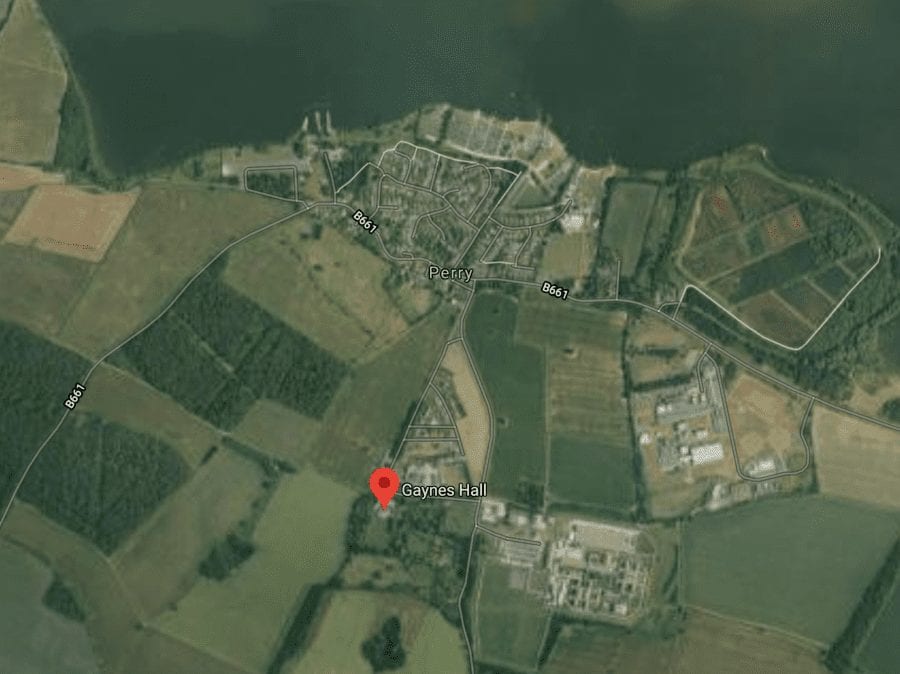
After the war, the mansion became the governor’s residence and administrative offices of the newly created Her Majesty’s Borstal Gaynes Hall and remained in that use until 1983 when the borstal closed. Her Majesty’s Prison Littlehey, which is best known as the place of death of the public relations ‘guru’ paedophile Max Clifford, was subsequently opened next door and residents of Perry get to hear its sirens periodically if a prisoner escapes or there is a disturbance.
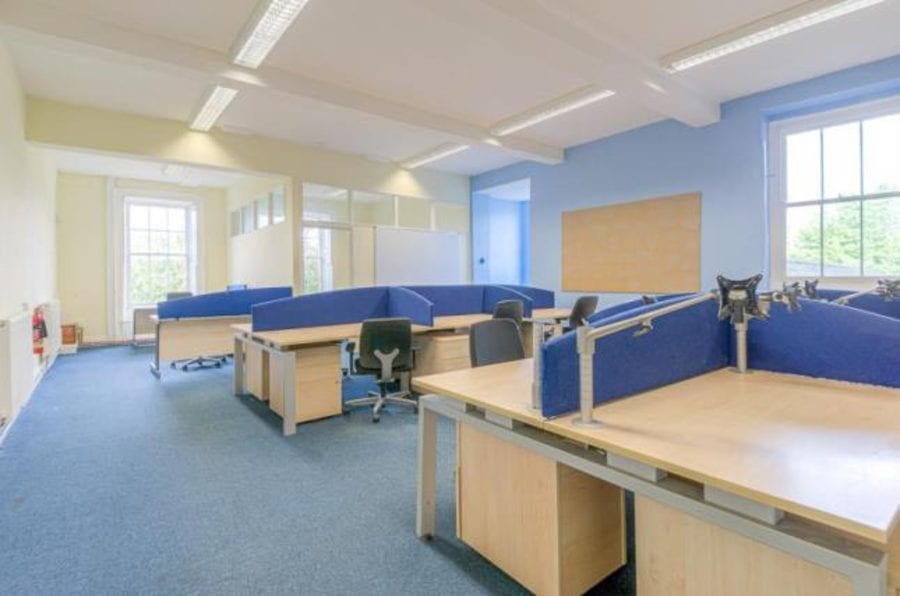
In 1985, AIM Cambridge (later AIM Technology) leased the hall and from the Ministry of Defence and converted it into offices. When their business failed, the building became empty and in 1990, Gaynes Hall was sold again. In the years since, it has been in mixed use.
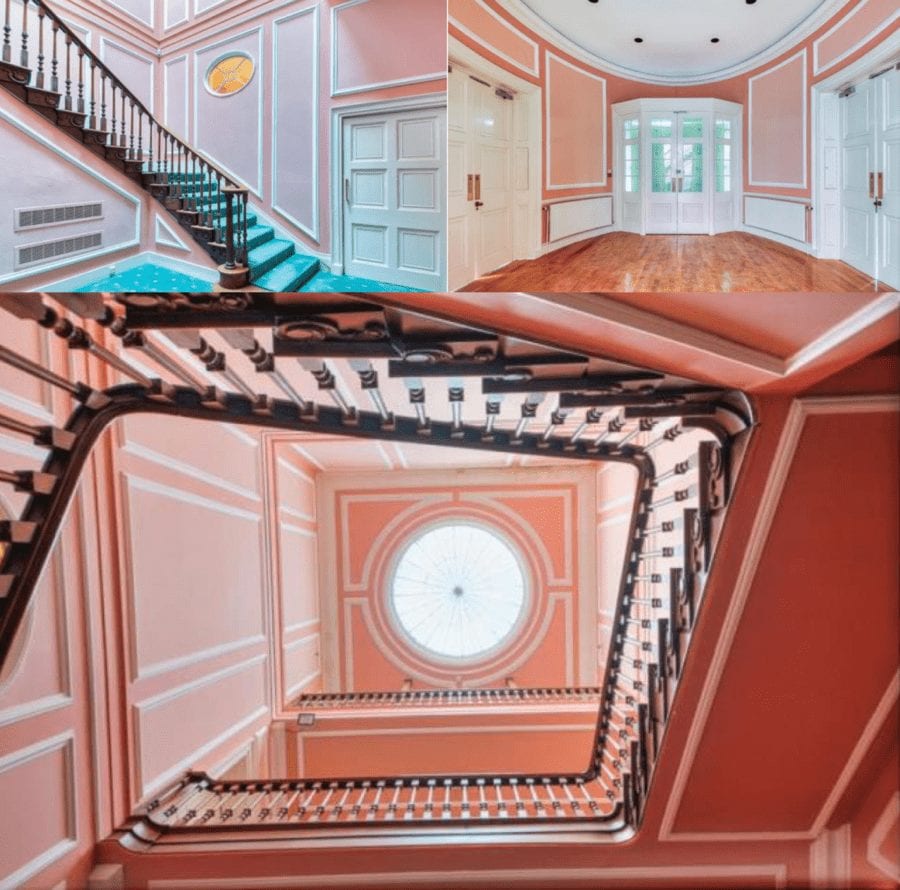
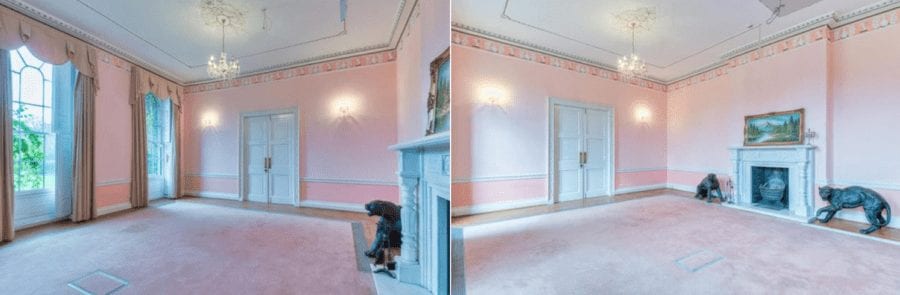
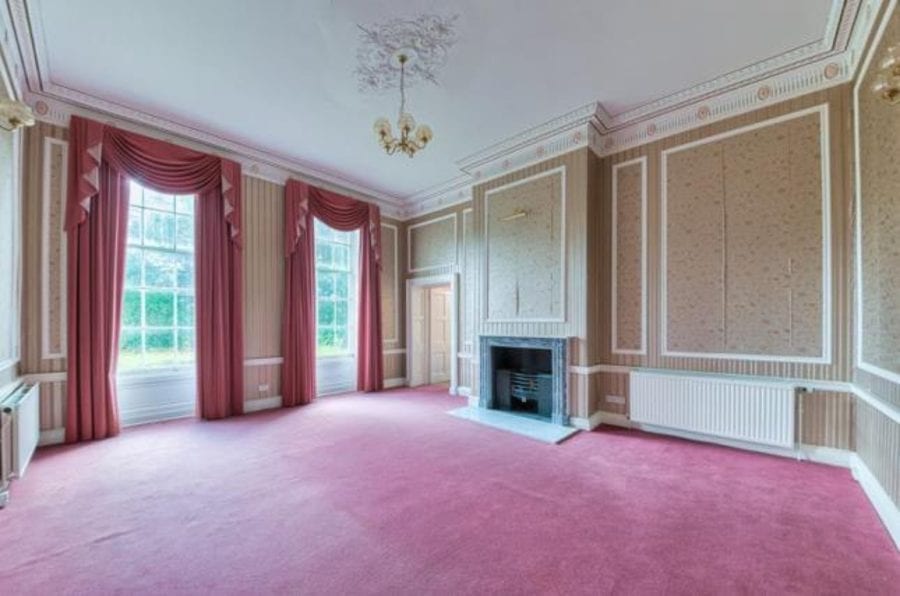
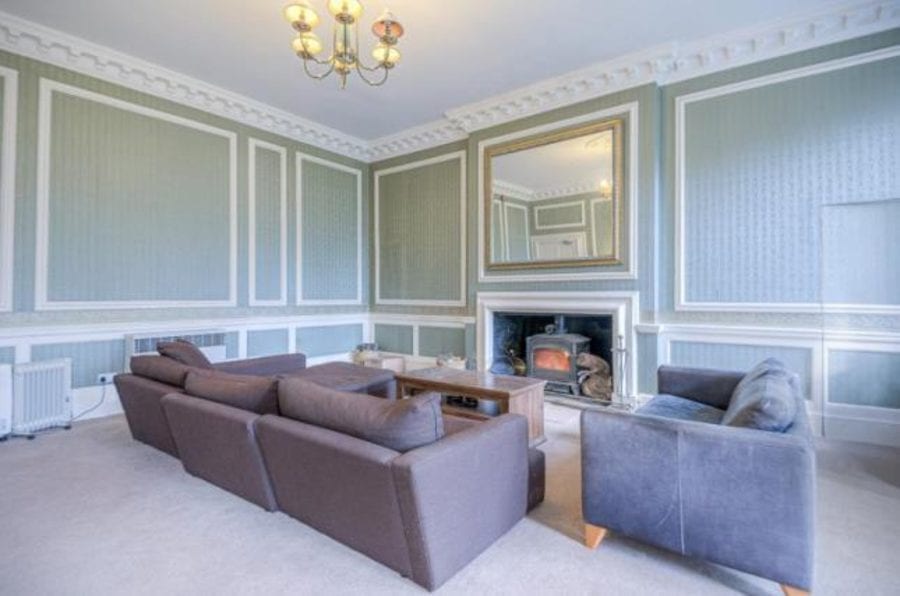
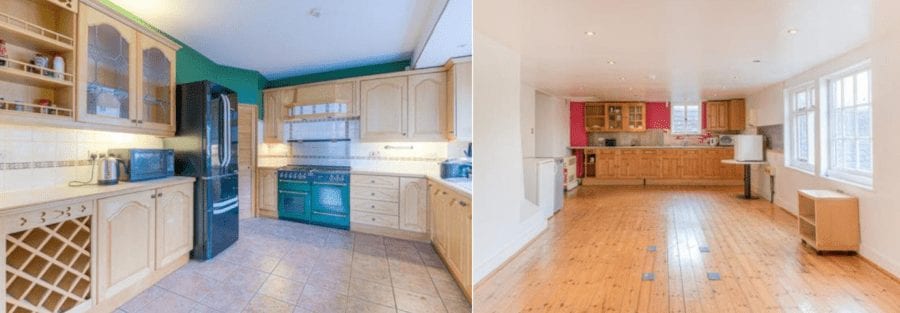
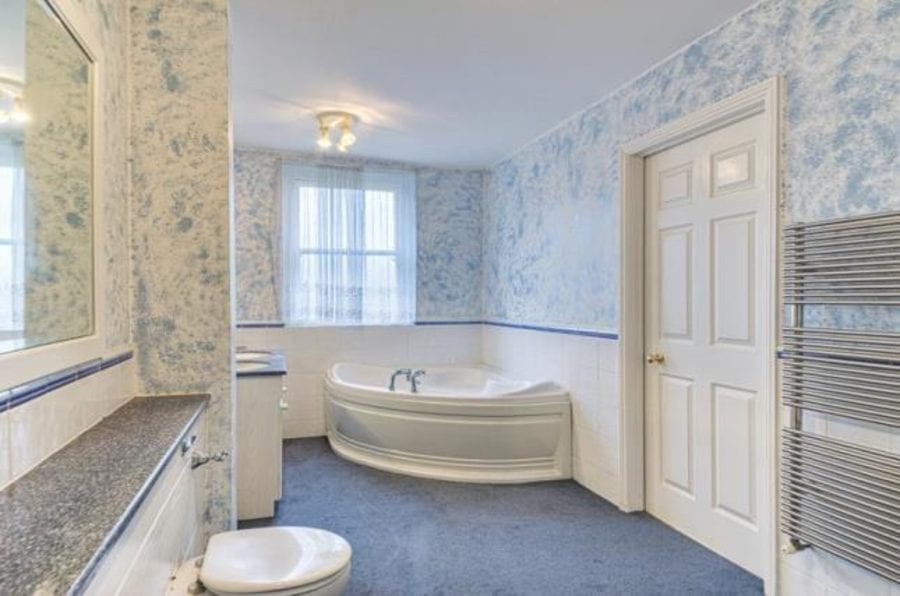
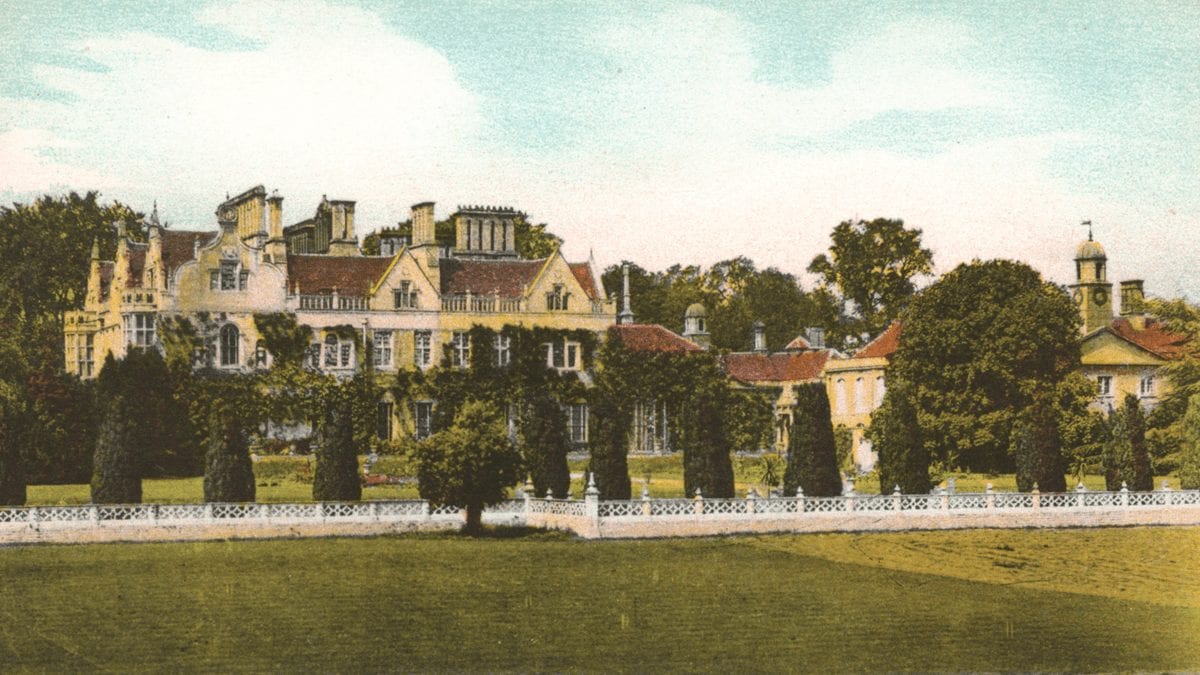
In need of some attention – Gaynes Hall has variously been used as a grand residence by aristocracy, requisitioned for use by Special Services Executives (SOE), served as an administrative office and governor’s house for a borstal and been converted to offices. It is currently configured in ‘mixed-use’ format and includes 20,975 square foot of accommodation.An aristocratic drug farm – Nebir Tahiraj was imprisoned in 2019 after having turned part of Gaynes Hall into a cannabis farm. He was caught with over £250,000 of drugs on the premises after neighbours complained about the noxious smell.Proximity to a prison – An aerial view of Her Majesty’s Prison Littlehey. Gaynes Hall is situated just to the west.Rapists next door – Convicted rapist and ex-cricketer cricketer Alex Hepburn, Stephen Downing (whose conviction for murder was overturned in 2002 after he had served 27 years in prison) and paedophile Max Clifford (who died in the prison) are connected by having been imprisoned at the Category C male prison HM Prison Littlehey. It has a capacity for 1,200 male prisoners – who all have been convicted of sexual offences.A once grand gentleman’s residence – Gaynes Hall in an image taken circa 1913. An earlier house on the site was leased for 21 years by Sir Oliver Cromwell (1566 – 1655), the uncle and namesake of the lord protector, from 1599.
The Names & Numbers – Gaynes Hall, Perry, Great Staughton, Huntingdon, Cambridgeshire, PE28 0ST, United Kingdom
December 2019 – Listed for sale by Wilson Peacock Country Homes at the increased price of £2.65 million ($3.35 million, €2.96 million or درهم12.32 million).
14th June 2019 – 35-yeard old Nebir Tahiraj found guilty at Cambridge Crown Court of “being concerned in the production of cannabis” in his flat at Gaynes Hall and jailed for 13 months. When police raided the property, they “found more than 200 plants at varying stages of growth, growing equipment and two large bags of cannabis ready to be sold” worth circa £250,000 ($316,000, €279,000 or درهم1.2 million). He attempted to claim “he was being exploited and kept at the flat against his will,” but the National Crime Agency (NCA) discovered he had been willingly involved.
Mid 2019 – For Sale for £2.2 million ($2.8 million, €2.5 million or درهم10.2 million) through Michael Graham.
March 2019 – Fleet Assist announce they will be moving their business from Gaynes Hall to Ermine Business Park in Huntingdon.
2002 – Purchased by the Malik family (according to Wikipedia).
1994 – 2002 – Owned by the McCallion family (according to Wikipedia).
1985 – Converted to offices and used by firms including AIM Cambridge (AIM Technology) and Fleet Assist in the years subsequently. Part-let as apartments and by the room also for residential use.
1945 – 1983 – Used as the governor’s residence and administrative officers of the Her Majesty’s Borstal Gaynes Hall. ‘Boys’ who were detained there have recounted their experiences on this fascinating Facebook page; it plainly was not an especially pleasant place.
1940 – Requisitioned for use by Special Operations Executive (SOE). Gaynes Hall – under the codename ‘Station 61’ – became the headquarters for Air Liason Officers and used as a ‘hotel’ for them prior to their being dropped into occupied Europe.
1798 – 1940 – Owned by the Duberly family. The present house was constructed for them circa 1800 to the designs of architect George Byfield (circa 1756 – 1813).
Crumbling Northamptonshire estate Lilford Hall – where the little owl was introduced to Britain – for sale for £10 million, a sum £35 million lower than in 2014
Grade I listed Jacobean mansion with 13 chimney stacks for sale for £10 million; it was for sale last for £44.9 million in 2014 in spite of being listed on English Heritage’s ‘At Risk Register.’
Lilford Hall – parts of which have not been occupied since 1947 –is currently owned by a businessman who tried to sell burial plots in the grounds for £1,250 a pop and shares in a yacht loosely associated with Frank Sinatra for £23 each.
The 321-acre estate includes not only overgrown parkland, but also a zoo with cages that formerly housed bears and a lake for flamingos.
From 1711 until 1990, Lilford House was the seat of the Powys family – the 4th baron is credited with introducing the little owl to the UK.
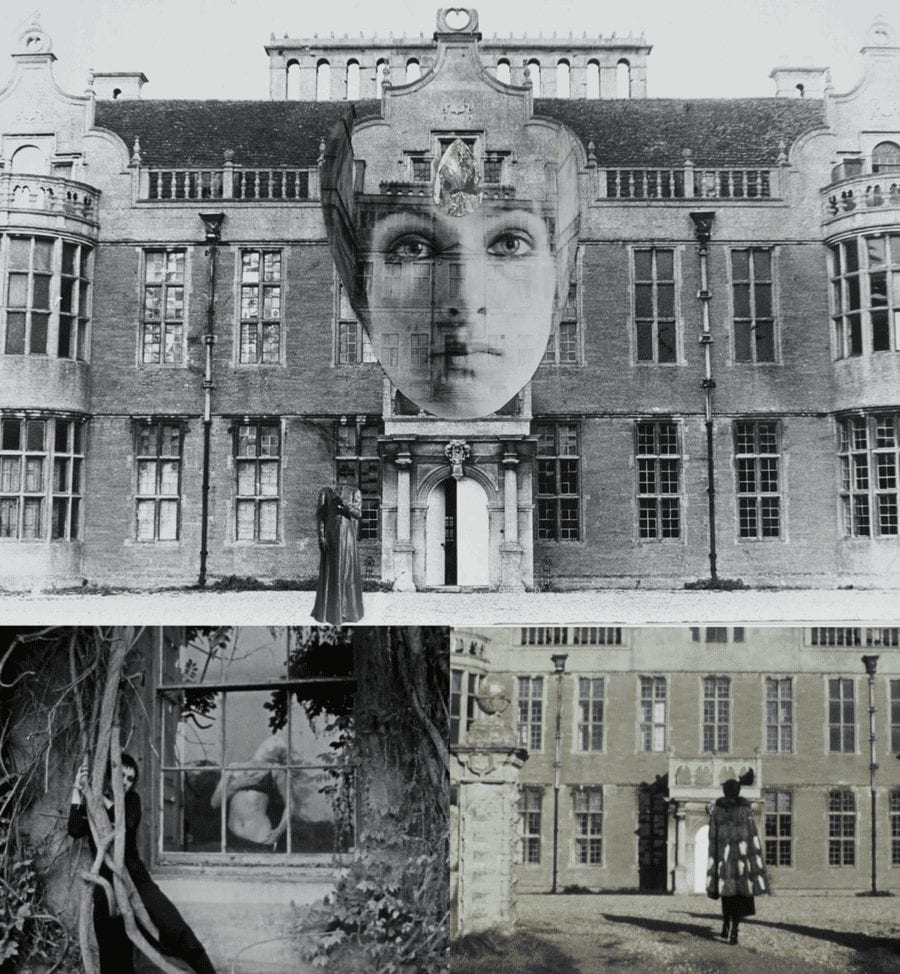
More recently, in 1969, the “sexual mystic” artist Penny Slinger used the at-the-time derelict mansion in one of her best-known works.
A 32,406 square foot Grade I listed Jacobean mansion 82 miles from Central London has gone on sale for £10 million – or the equivalent of just £308 per square foot.
On this basis, Lilford Hall – set in 321 acres near Oundle – seems a comparative bargain when considered against the £4,786 per square foot sought for a Lennox Gardens, Knightsbridge triplex flatThe Steeple Times featured in May, but buyers need to remember this – parts of this crumbling building, most notably the major state rooms, have not been used since 1947.
Marketed last in 2014 for the even more punchy sum of £45 million, the “exceptional residential and amenity estate located on the River Nene,” is now offered by agents Savills. The “wonderfully proportioned” U-shaped mansion itself is constructed of grey limestone and includes over 100 rooms and amongst them are 7 “impressive” reception rooms, a ballroom, a ‘great chamber’ and 9 bedrooms. In addition, there are two Georgian pavilions that were formerly coach houses and stabling, three cottages, a former zoo, the oldest private softball court in the world, a former flamingo enclosure and a deer park.
“Impressiveness in the chief attribute of Lilford Hall as a specimen of architecture” claimed County Life in 1990 and as the seat of the Powys family from 1711 until 1990, it became not only a Downton Abbey-esque entertaining pad, but also housed nurses in the Second World War. Here, indeed, is an English country house that has seen lavishness and decline and thankfully here is an example that thankfully escaped the wrecking ball wrought so disgracefully on such houses in the 1950s and 1960s.
Fascinatingly in the 1880s, Thomas Powys, 4th Baron Lilford filled his aviaries on the estate with rheas, kiwis, pink-headed ducks, free-flying lammergeiers and it was from here that he also introduced the little owl into the UK. There are said to be around 5,700 breeding pairs today, but sadly, according to the RSPB, their numbers are now in decline.
More recently, in 1969, “sexually erotic” performance artist Penny Slinger took over the by then “derelict” mansion in conjunction with the filmmaker Peter Whitehead. Their resulting work, titled An Exorcism, was exhibited internationally and in 2004, after the current owners, Charles and Aziza Micklewright, acquired the house, they did something equally avant-garde; they attempted to sell burial plots in the grounds to Americans by citing the estate’s connections to the founder of the Brownists, Robert Browne – a man better known as ‘The Father of the Pilgrims’ and ‘The Grandfather of the Nation’ (of the United States of America).
Whilst Mr and Mrs Micklewright were lauded for their considerable efforts towards the “huge task” of restoring Lilford Hall, they came to the attention of Historic England in May 2019 when the building was listed on the At Risk Register. At that time, the Oundle Chronicle reported: “The roof covering is in poor condition leading to water ingress and distress to the upper storeys. The front bays require structural attention. A schedule of urgent repairs has been identified but not implemented, and no long-term solution has been agreed.”
Now, someone with very, very deep pockets is required to restore this gem. It would be helpful if they liked erotic art, bears, squash and owls also.
The Names & Numbers – The Lilford Hall Estate, Lilford, Oundle, Peterborough, Northamptonshire, PE8 5SG, United Kingdom
June 2020 – The estate is listed sale for £10 million ($12.5 million, €11.1 million or درهم46 million) through Savills. It includes 321.31 acres, of which 148.17 acres are pasture land whilst 157.48 acres are woodland. The majority of the estate is held on a freehold title, whilst the remaining 127.6 acres – known as ‘The Linches’ and ‘Lilford Woods’ – are held on a lease with 91 years remaining.
2015 – Promoted as ‘The National Memorial Gardens,’ burial plots in the gardens of the hall were offered “available to any UK resident or national for an outstanding price of only £1,250 ($1,568, €1,393 or درهم5,758)” by Mark Bailey of Harley Investments. Around the same time, a website dedicated to Lilford Hall marketed “a piece of the formal gardens” for sale for £299 ($375, €333 or درهم1,377) to include “an officially certified ‘Squire of Lilford’ [title] … with this little piece of history.”
March 2014 – The Irish Times reported that the asking price for the estate had been increased to £44.9 million ($56.3 million, €50 million or 206.8درهم million). They claimed the agents Coldwell Banker blamed “confusion over currency conversion rates and new instructions from the owner.”
April 2014 – The Lilford Hall Estate is listed for sale through Coldwell Banker on MyHome.ie for £33.7 million ($44.2 million, €37.5 million or درهم155 million) on behalf of “an English gentleman.”
2004 – The estate is acquired by the Micklewright family. Little information is available online about the Old Framlingham Charles Micklewright (born July 1958), but he is described as a “patent attorney” on Companies Houses pages. The businessman is mentioned also as a publisher and trustee of the Marsh Christian Trust elsewhere, whilst his Singaporean born wife, Aziza (born 1964), was a director of Lilford Properties Limited from 2013 to 2018.
A website operated by Sign of the Times Limited, a Hong Kong company of Lilford Hall, Lilford, Oundle, Northamptonshire, PE8 5SG, currently offers shares in a yacht named ‘Sinatra the Voice’ for £23.91 ($29.99, €26.64 or درهم110.14) per share. The boat was built in 1956 and is tenuously linked to Frank Sinatra by the fact that a one-time owner, Beale Poste, loaned it occasionally to the crooner between 1968 and 1974 in West Palm Beach, Florida.
1990 – The estate is closed to the public.
1980s – The house is used as a location in the BBC English Civil War inspired historical drama series By the Sword Divided.
1970s – Aviaries on the estate restocked by George Powys, 7th Baron Lilford (1931 – 2005). He “opened [the estate] to the public as a leisure park” and housed more than 350 birds of 110 species there. It remained thus for around 20 years and included a restaurant and shop. The aviaries and the 1,896 square foot restaurant building remain present still today.
1969 – 1970 – American British “sexual mystic” artist Penny Slinger (born 1947) and Liverpudlian filmmaker Peter Whitehead used the “derelict mansion” as the setting for their works An Exorcism and Lilford Hall. They are lauded as a “photo romance” and exhibited at the Blum and Poe Gallery in Los Angeles in 2014, at the Haywood Gallery in London in 2015 and at the Fortnight Institute in New York in 2019.
1949 – Stephen Powys, 6th Baron Lilford (1869 – 1949) died without having married or having had children. His properties aside from Lilford – a house in Mayfair, Bank Hall in Lancashire and the Bewsey Estate in Cheshire – passed to his second cousin twice removed.
1947 – The estate is sold to a company named Merchant Ventures by the Powys family (though they remain present on the estate until 1990).
1939 – 1945 – During the Second World War, the parkland of the estate was used as a military hospital for nearby airfields. From 1949 to 1954, some of the buildings constructed during this period were then used as a Polish school.
1923 – First-class Northamptonshire cricketer Major John Powys, 5th Baron Lilford (1863 – 1945) built the first private softball court in the world in the grounds of the hall. It is now in disrepair and the roof has fallen into the inner court.
1909 – 1910 – The hall was extended in the Edwardian manner including the provision of a new master bedroom with dressing room and bathroom by William Dunn and Robert Watson of Dunn & Watson.
1901 – The estate surrounding the hall reaches its largest size and totals a vast 8,000 acres of land. Around this time, Queen Mary, wife of King George V, is said to have visited the gardens.
1880s – Ornithologist and expert on the fauna of the Balearics Thomas Littleton Powys, 4th Baron Lilford (1833 – 1896) introduces the little owl into England on the estate. His aviaries were said to “feature exotic birds from all around the world” and a species of European lizard, the Lilford’s wall lizard (Podarcis lilfordi), is named in his honour. The 4th baron is repeatedly mentioned in the works of Charles Darwin for his contribution to the study of the science of evolution.
1840s – Further changes to the building are orchestrated by the architect William Gilbee Habershon (circa 1818 – 1891). The Campaign to Protect Rural England described these Victorian extensions as “sensitive” in 2006 – a rare accolade given most additions to English country houses during this period were simply brash and vulgar.
1740s – The Palladian architect Henry Flitcroft (1697 – 1769) adds “outstanding” Georgian interiors whilst “respecting the hall’s Jacobean exterior.” He “softened and brightened” the building as a result and also “constructed the Georgian pavilions and additional storeys to the east end of the two wings.” Other works by Flitcroft can be seen at Bower House in Essex, Wentworth Woodhouse in Yorkshire and Woburn Abbey in Bedfordshire.
1711 – Lilford Hall is sold to the judge and Tory politician Sir Thomas Powys (1649 – 1719), Attorney General to King James II. Powys is best remembered for conducting the prosecution of the Seven Bishops in 1699. He is buried at Lilford.
1630s – Construction of the main exterior of what to this day remains Lilford Hall as a “Jacobean-style gentry house” by William Elmes (the younger).
1473 – The land that forms the estate is acquired by William Browne (1410 – 1489), a wealthy wool merchant and landowner from Stamford, from the estate of Baron Welles (who was beheaded by King Edward IV for treason). In 1495, “in a Tudor style,” he built a hall on the site and it passed to Robert Browne (1550 – 1633), the founder of the Brownists, ‘The Father of the Pilgrims’ and ‘The Grandfather of the Nation’ (of the United States of America).
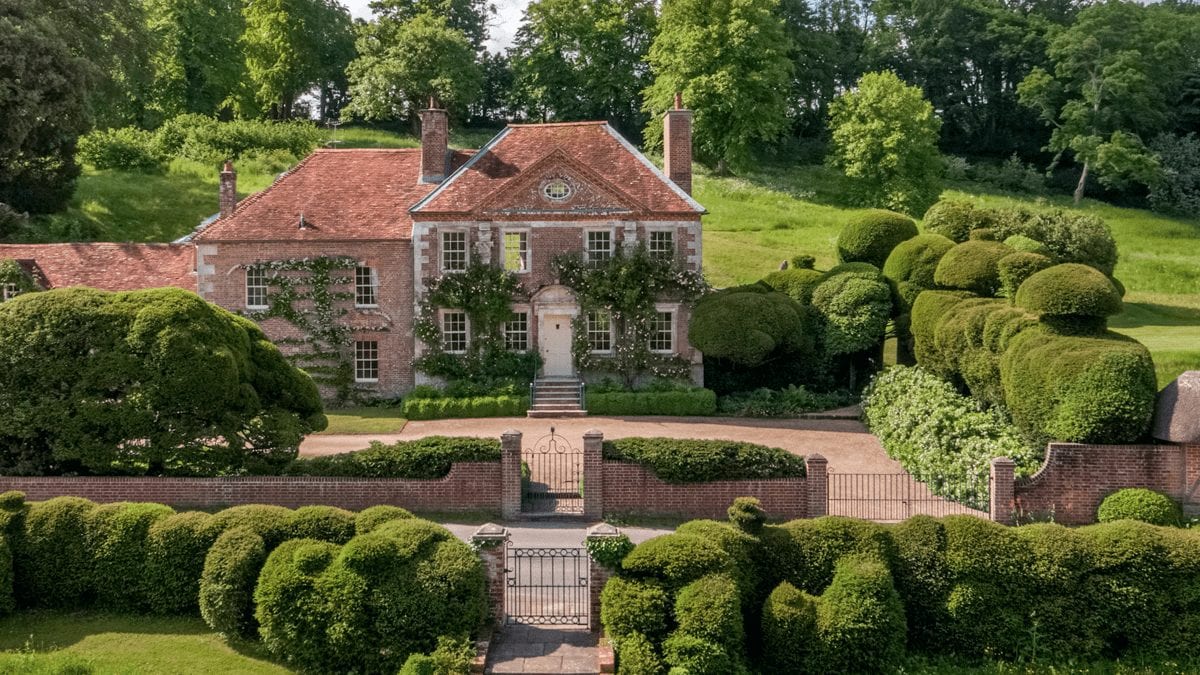
Moving on homes owned by the newsworthy – including properties owned by society snapper Sir Cecil Beaton, novelist Jackie Collins and film producer-director Peter Minns.
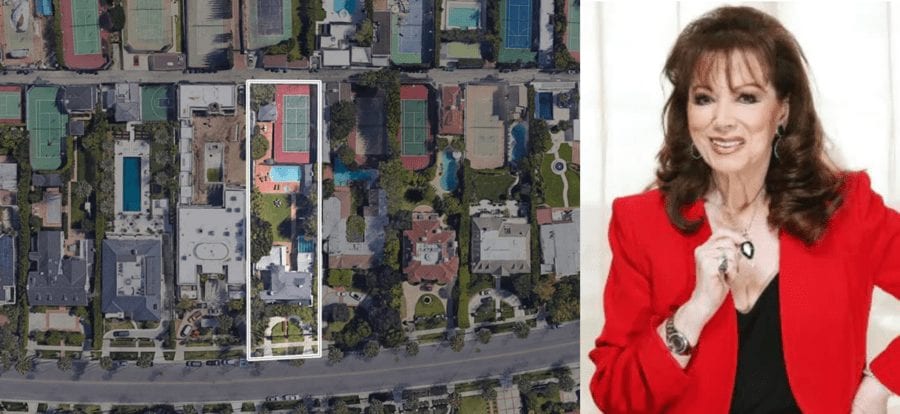
A Tennis Court Teardown
Paris Hilton’s dad Rick’s realty firm Hilton & Hyland has just launched to the market the former Beverly Hills home of the late Jackie Collins OBE (1937 – 2015) for £13.4 million ($16.95 million). They don’t say much about the bonkbuster author’s residence of some 25 years other than: “Secluded behind gates and foliage lies a great opportunity to purchase a tennis court… Home could use a remodel or rebuild.” Miss Collins and her second husband art gallery owner Oscar Lerman paid £2.4 million ($3 million) for 5,269 square foot 614 N Beverly Drive in 1991.
Limited Living in the ‘Hampshire Highlands’
https://vimeo.com/358107497/b6629a2217
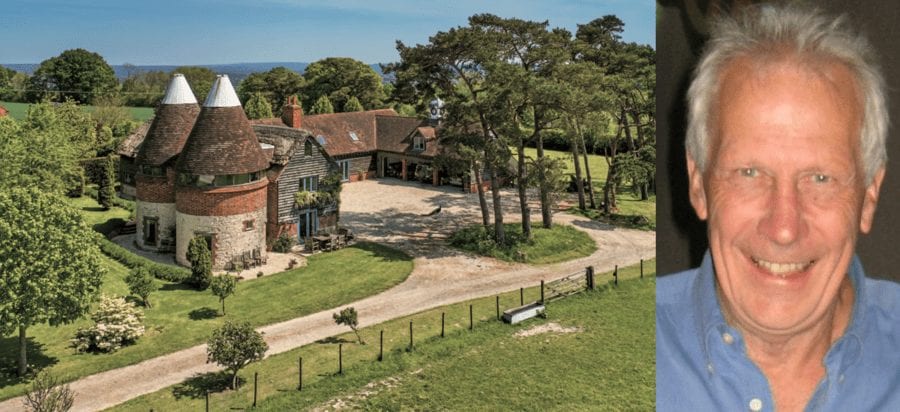
Reduced in price from £4 million ($5.1 million) in September 2019 to £3.73 million ($4.72 million) now through agents BCM, The Oast House at Hartley Mauditt in the South Downs National Park in Hampshire was converted by film producer-director Peter Minns in the 1990s.
This delightful ‘mini estate’ looks like something that could have been in of The Darling Buds of May and comes with 76.28 acres of land suitable for ‘stick and ball’ polo, but the problem is this – a planning stipulation dictates that the majority of the main house is only allowed to be on a “short-term” basis whilst two cottages are for “holiday or seasonal worker use” and a bungalow is limited to “anyone fully employed in agriculture.”
Minns is best known for having produced programmes including Mad Cows & Englishmen for the BBC, A Question of Sleaze – The Neil Hamilton Story for Channel 4 and Citizen 2000 – which followed the lives of twenty children who became 18 in the year 2000.
Moving on Sir Cecil’s Seat
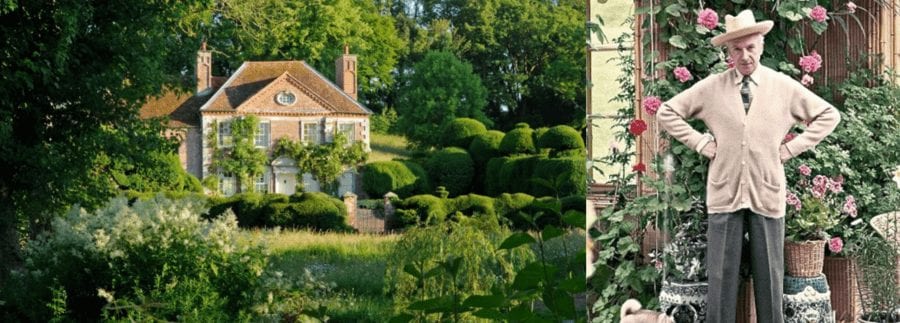
£4 million ($5.1 million) is sought for Queen Anne Reddish House in the Chalke Valley in Wiltshire by agents Savills. Society snapper Sir Cecil Beaton CBE, owner from 1947 until his death in 1980, described it as: “My dream home” and an “exquisite country seat” and between 1987 and 1999, it was home to the I Want to Be Free singer Toyah Wilcox. Aside from 6 acres of glorious gardens, the Grade II* listed house comes with two cottages, a range of follies and a water meadow. Locked-down Instagrammers have been moving all over its marketing brochure and sharing photos online, with one even gushing: “It’s the prettiest house I’ve seen EVER… EVER.”
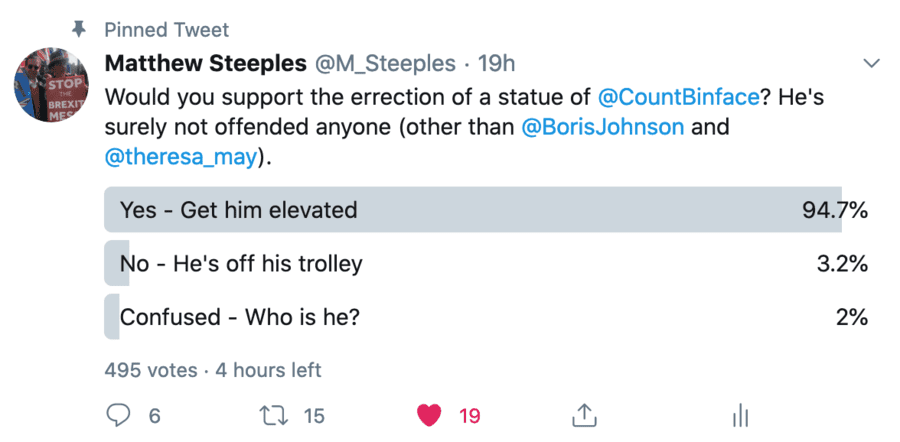
He post-fixed: “He’s surely not offended anyone (other than Boris Johnson and Theresa May).”
The response, thus far, has been phenomenal and at a time when people have been attacking statues of Christopher Columbus, Sir Winston Churchill and Queen Victoria, we perhaps need to ignore Janet Street-Porter’s miserable demand to “junk the lot” and get something erected that celebrates a bit of fun.
Of the 495 votes cast (with 4 hours still to go) in the completely unscientific poll, 94.7% of respondents are currently supporting “Yes – Get him elevated” whilst only 3.2% are of the view “No – He’s off his trolley.” Just 2% haven’t got a clue who Count Binface actually is.
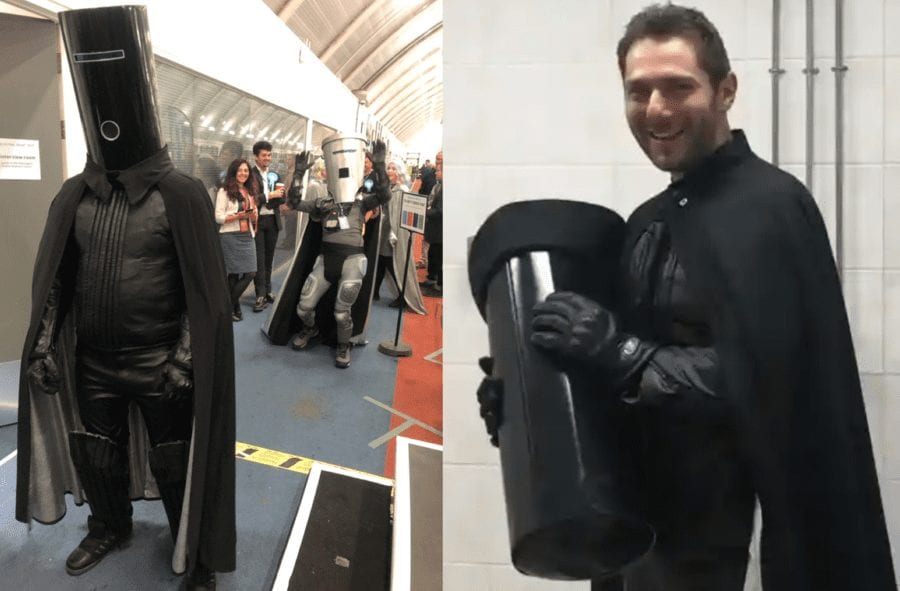
Whilst a legal dispute with the plainly joyless Gremloids creator Todd Durham resulted in the “displacement” of Lord Buckethead – who had stood in four British general elections from 1987 onwards – the political satirist Jon Harvey announced his replacement, Count Binface, to the world on 12th December 2018. He describes the character on Twitter as an “Intergalactic politician and ex-Lord Buckethead,” has a following of 17,600 and was standing in the London mayoral elections until the coronavirus pandemic kicked in.
The Count is good; let’s get him elevated.
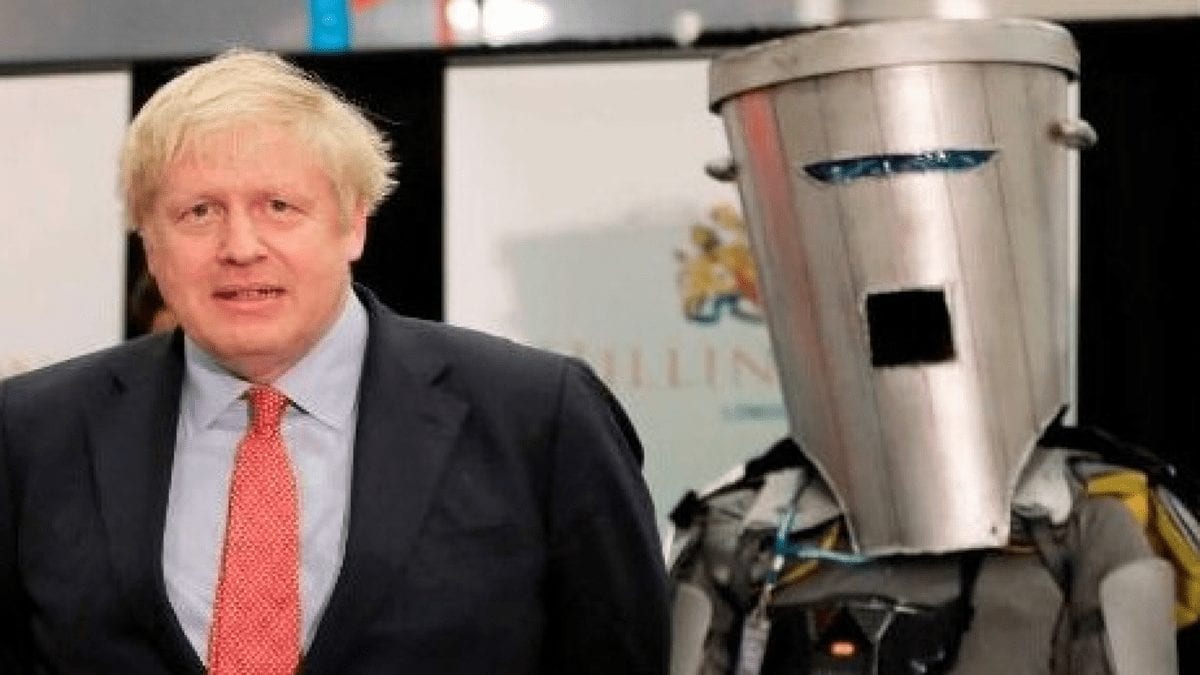
Pictured top: Count Binface with a slightly perplexed Boris Johnson.
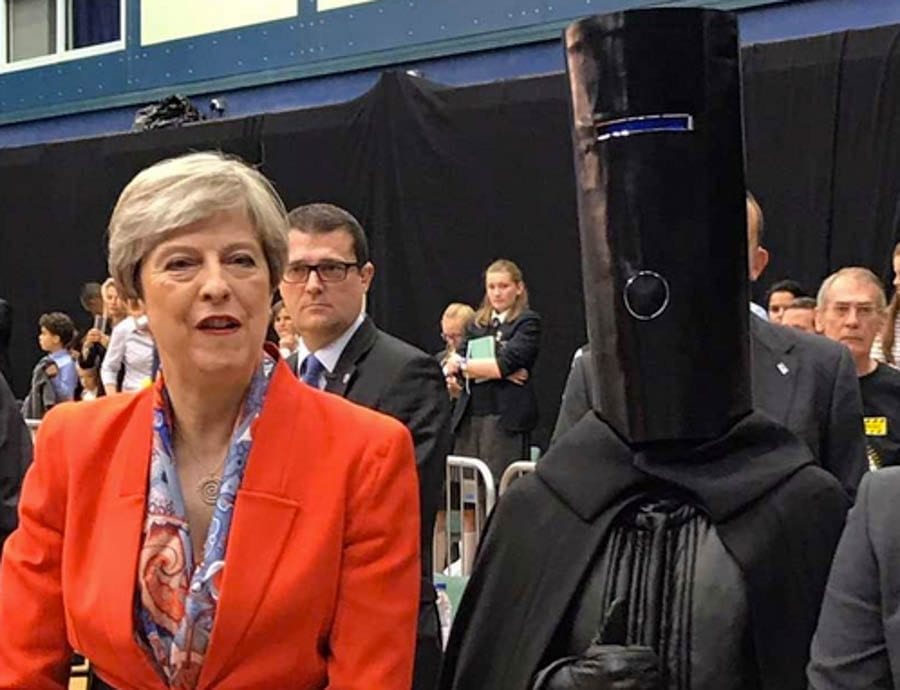
The “replacement” Lord Buckethead (played by David Hughes) with Count Binface behind him during the 2019 general election campaign; Jon Harvey as Lord Buckethead on the night of the 2017 General Election at Maidenhead.The Twitter poll had attracted nearly 500 votes as of 10am GMT on Thursday 11th June 2020.Lord Buckethead (comedian Jon Harvey) on John Oliver’s HBO talk show Last Week with John Oliver in May 2017. He also appeared at the Glastonbury Festival in June that year and even made a video with the all-round oddity Ben Fogle at one point too.Lord Buckethead with Theresa May in May 2017. He registered 249 votes and that Christmas made a charming YouTube video sharing a message of peace and goodwill. Sadly, that subsequently had to be deleted due to Todd Durham’s legal actions.
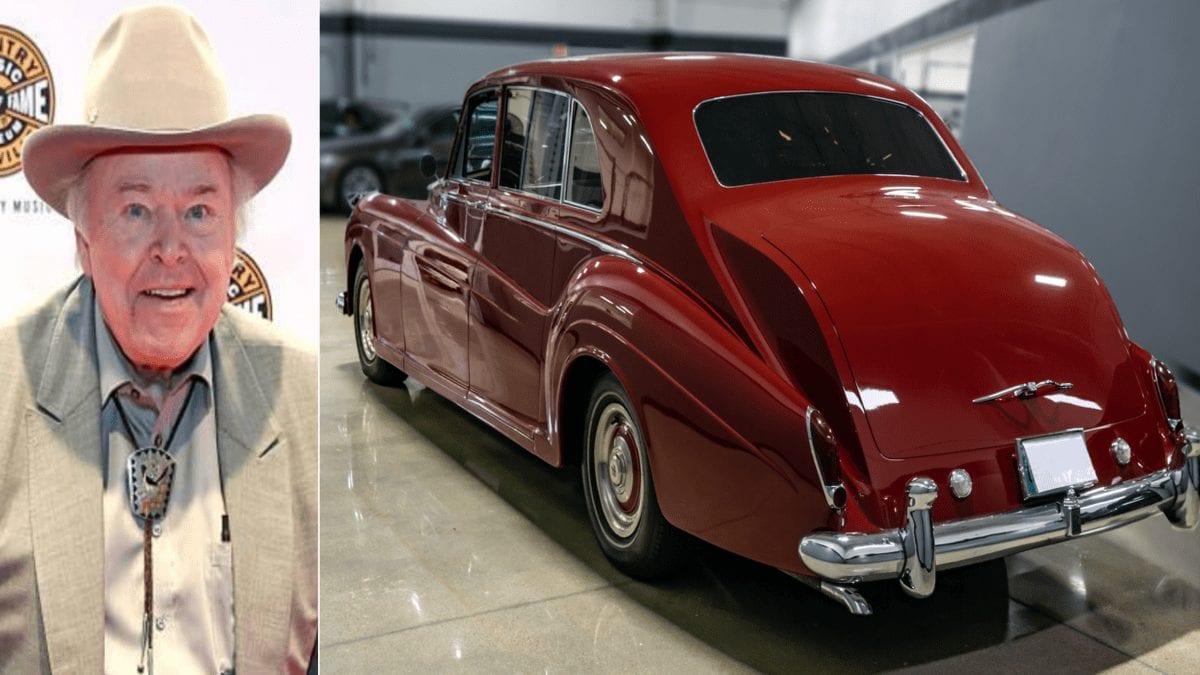
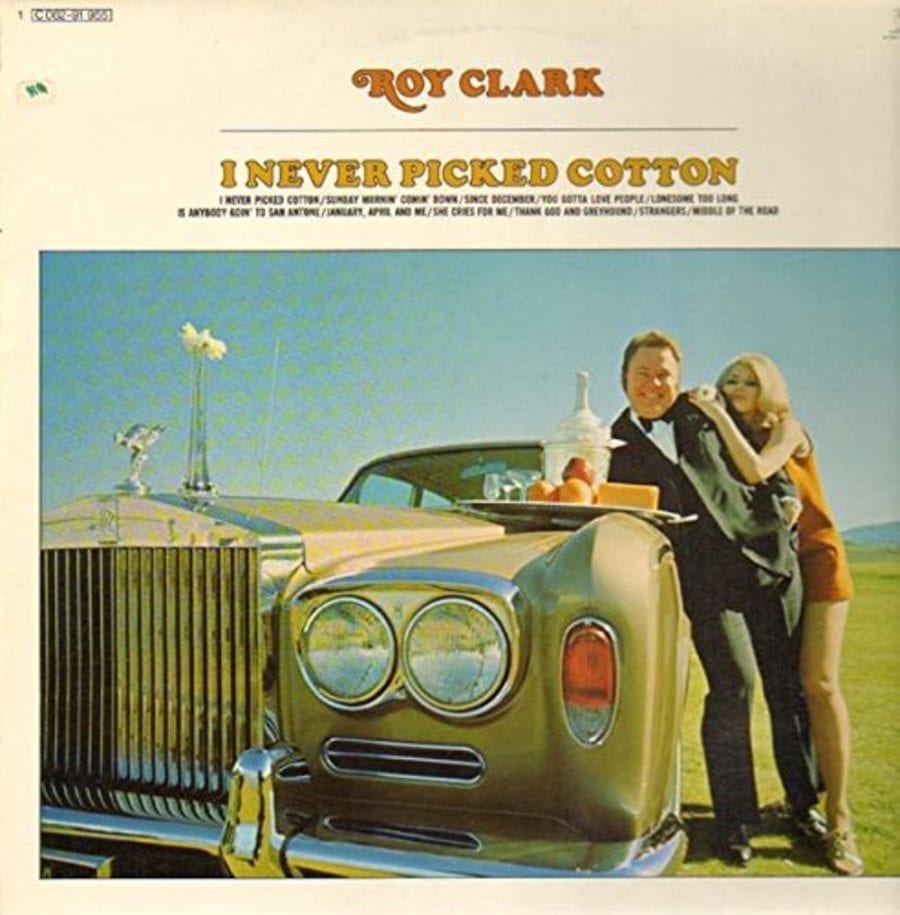
‘I Never Picked Cotton’ singer Roy Clark’s Rolls-Royce heads to auction complete with suicide doors and emblazoned with his initials in gold leaf
American Hee Haw host and country singer Roy Clark (1933 – 2018) was best known for songs such as Yesterday, When I Was Young and Thank God and Greyhound. Now, enthusiasts of this tobacco farmer’s son have the opportunity to buy a piece of his memorabilia in the form of a Rolls-Royce that he owned for some forty years.
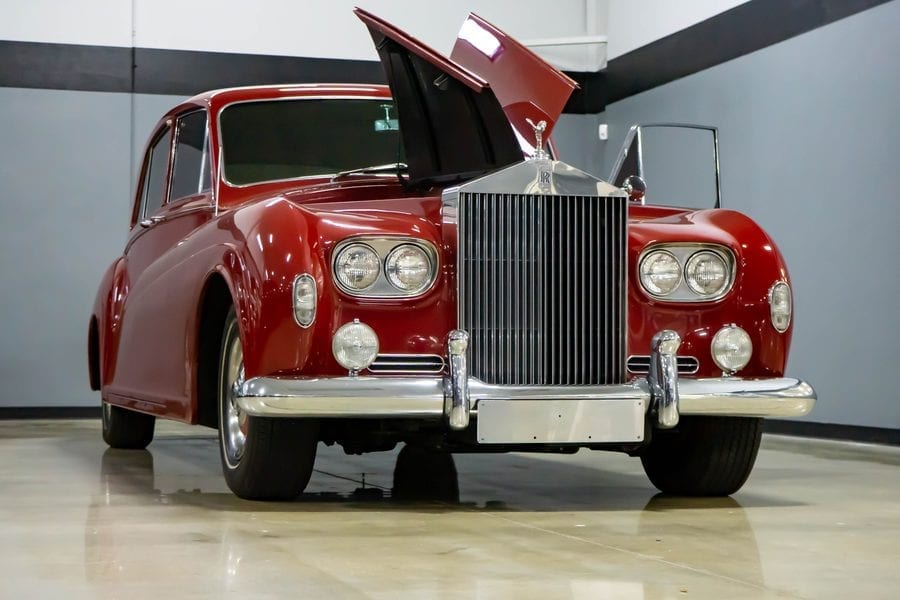
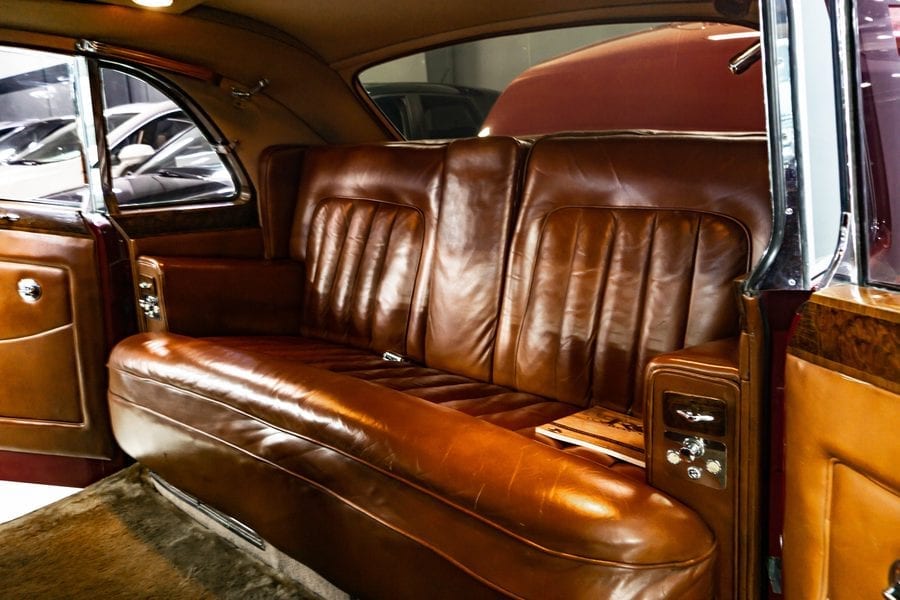
Last offered without reserve at the Leake Auction Company sale in Tulsa in June 2019, the dark red 1964 Phantom V touring limousine by James Young was owned by the star from 1977 until his death. Clark paid $19,500 (the equivalent of £70,000, $86,000, €79,000 or درهم316,000 today) when he purchased it and after it was subsequently sold to a “noted private collection in Texas,” they lavished £24,000 ($30,000, €27,000 or درهم110,000) on servicing it in 2019 and 2020.
This month, RM Sotheby’s will sell the Rolls-Royce – which is currently located in Austin, Texas – as part of their 21st to 29th May ‘Driving Into Summer’ online sale. They have set an estimate of £49,000 to £57,000 ($60,000 to $70,000, €55,000 to €64,000 or درهم220,000 to درهم257,000). Of the car, they remark:
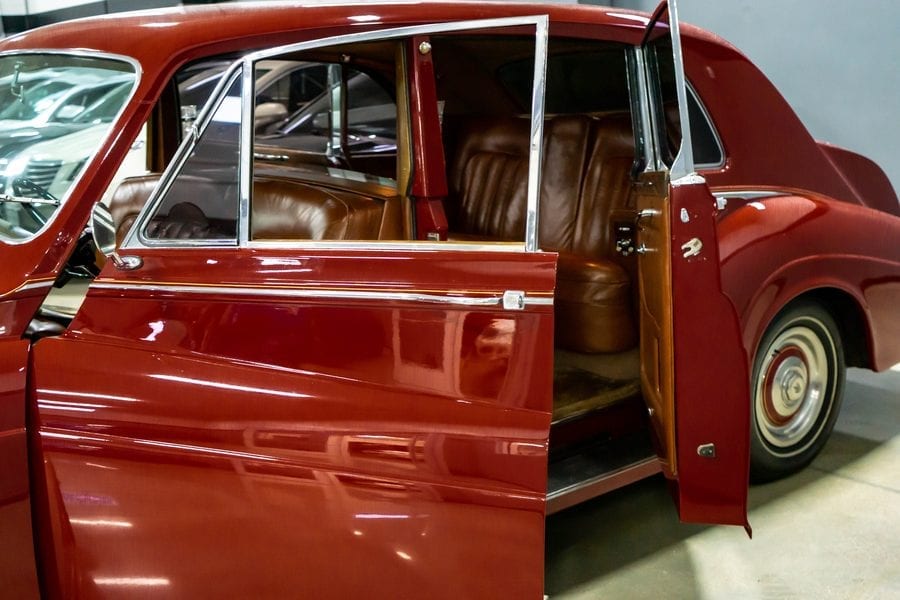
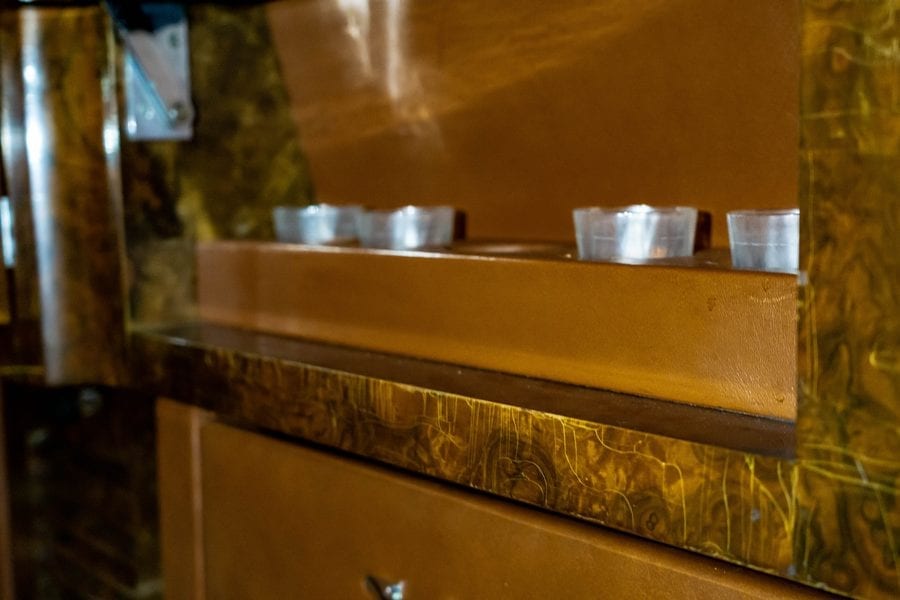
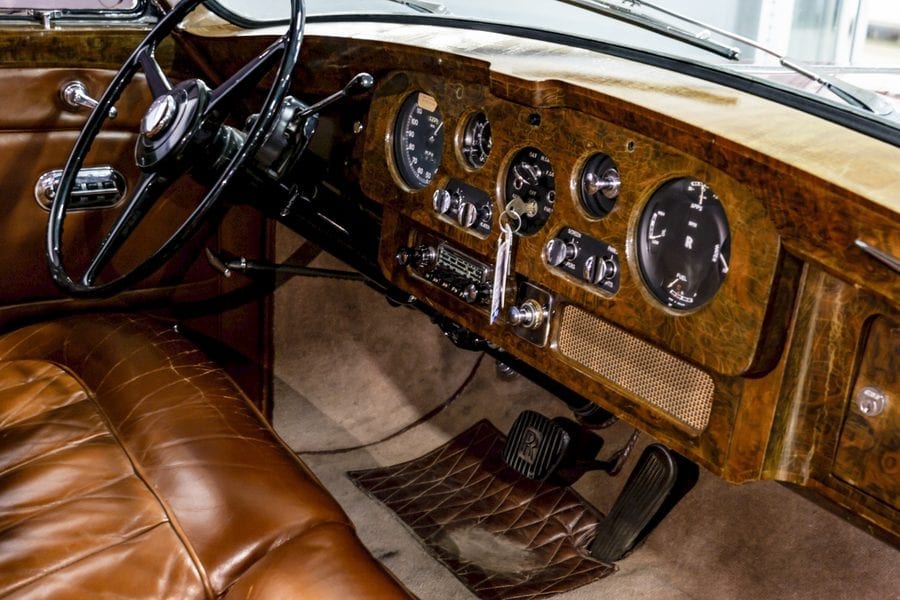
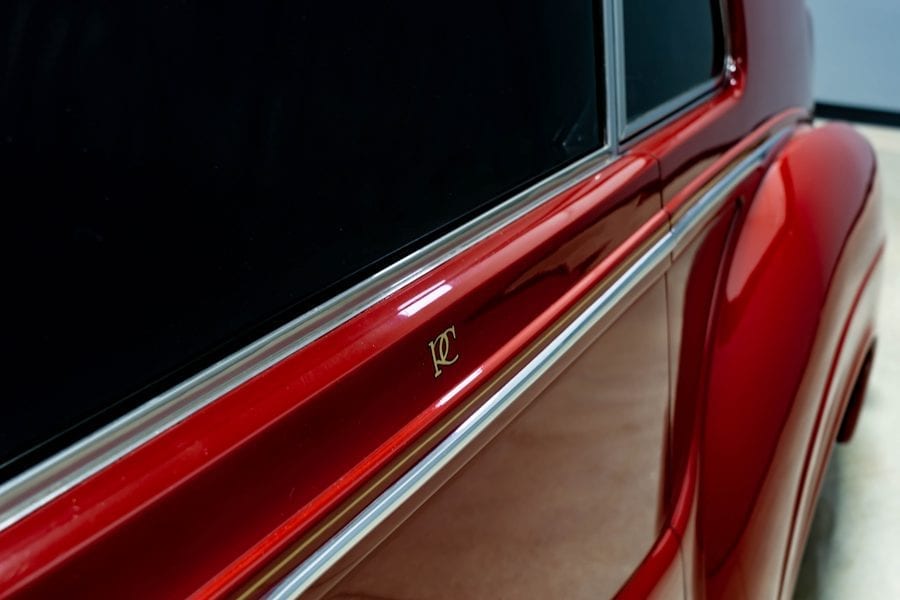
“The limousine is finished in a lovely shade of dark red and accented by a gold pinstripe running the length of the car. The initials “RC” are prominently featured on the driver’s side passenger door. The interior is trimmed in tan leather and is accented by beautiful woodwork throughout. The driver compartment features Smiths instrumentation, an AM/FM radio, and an altimeter in the passenger glove box door. Furthermore, the car is equipped with electric windows and air conditioning which is vented into both the driver and passenger compartments. A division window separates the driver from the passengers. The rear compartment is the epitome of 1960s luxury and features dual footrests, fold-out jump seats, pillar-mounted flower vases, reading lights, and a Smiths clock while fold-out picnic tables flank a small cocktail bar with crystal decanters and glassware.”
Replica “homage to Jean Bugatti’s Type 57SC Atlantic coupé” to be auctioned for a sum 99.9% lower than the most famous of the four originals is said to be worth
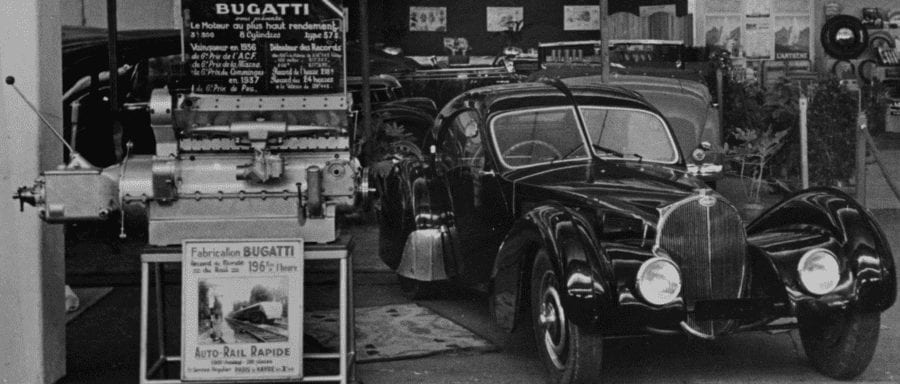
If ever rediscovered, a car termed “the most beautiful ever created” – the second of four Bugatti Type 57S Atlantic coupés – would supposedly be worth £93 million ($113 million, €104 million or درهم415 million).
Handcrafted as part of a limited production with sales only to the British banker Victor, 3rd Baron Rothschild, an English tennis player named Richard B. Pope and a Frenchman named Jacques Holzschuh between 1936 and 1938, the second coupé made was used for promotion and then given to its creator, Gianoberto ‘Jean’ Bugatti (1909 – 1939). After he was killed whilst testing a Type 57 tank-bodied racer, his car passed into the hands of various racing drivers. It was then hidden away with the outset of the Second World War, but sadly never resurfaced.
Named in honour of Mr. Bugatti’s aviator friend Jean Mermoz (1901 – 1936), whom never returned from a journey across the South Atlantic in 1936 in a Latécoère 300 Croix-du-Sud plane, the 12-foot long 57SC is lauded as the ultimate automotive design icon. Bugatti themselves term the “world’s most valuable vehicle” to be “extraordinary” and reference the coupé “unique in its time and still unique today.”
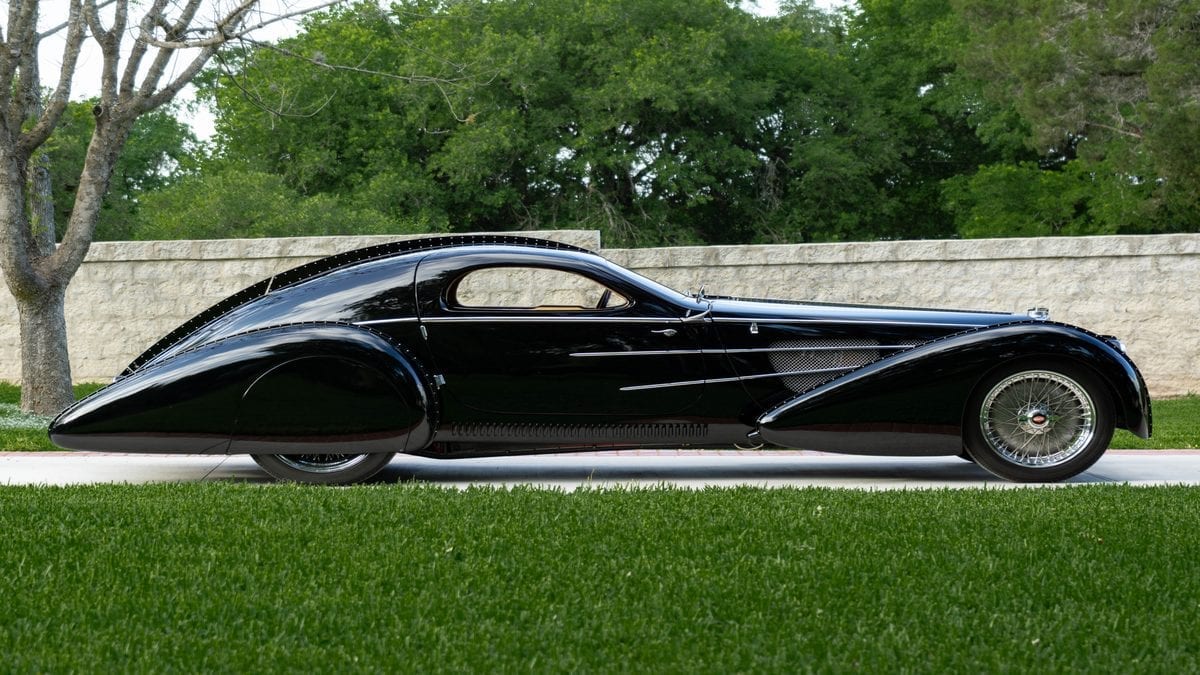
As a result of their desirability, the car – which Motor Authority terms “delightfully swoopy… [the] crown jewels of Bugatti production cars” – has unsurprisingly inspired a number of automotive designers to create homages to it. One example, created by “hot rodder” Terry Cook, is being auctioned this month – but one thing’s for sure, whatever it sells for, its hammer price will nowhere near that of a ‘real’ example.
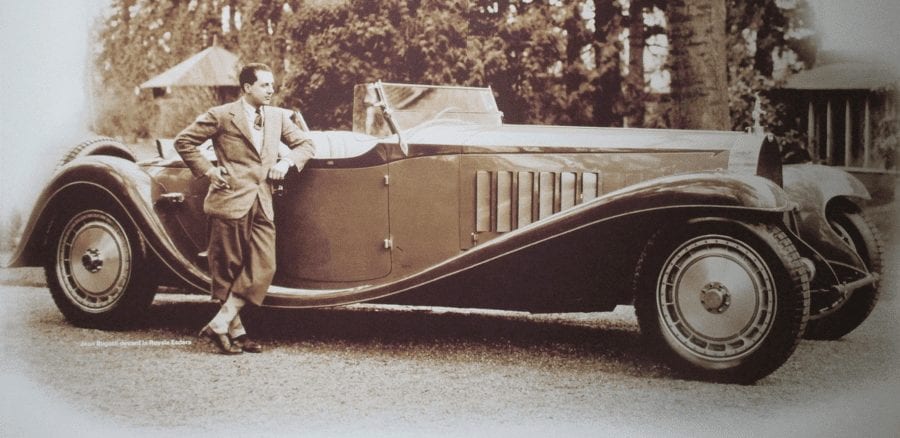
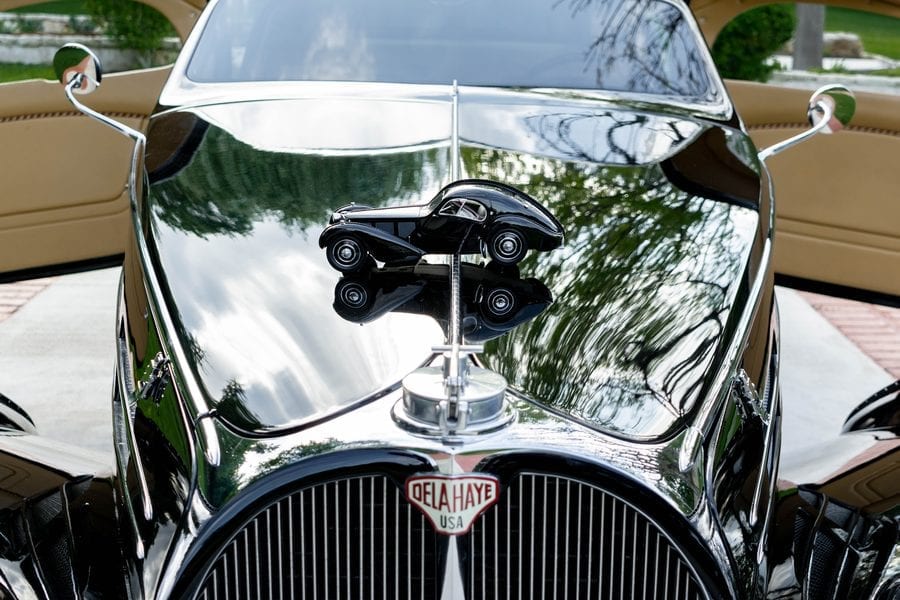
In March 2017, the “homage to Jean Bugatti’s Type 57SC Atlantic coupé,” the Delahaye USA Pacific was auctioned at the Mostalgia Amelia Island sale in Florida. It sold for £182,000 ($220,000, €204,000 or درهم808,000). The same car is headed to auction again this month.Jean Bugatti pictured next to the ‘Royale Esders Roadster’ prototype he designed in 1932.The four Bugatti 57SC Atlantic cars.
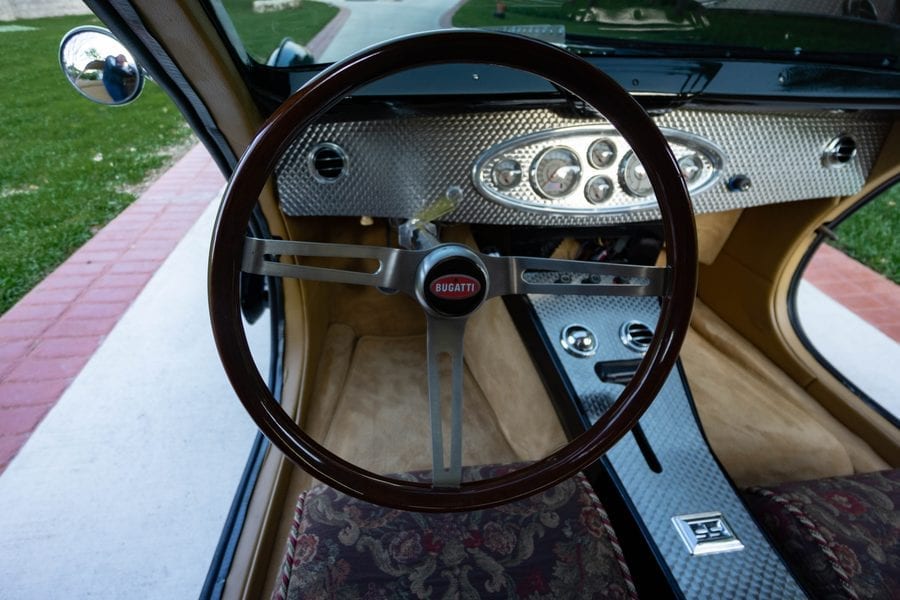
The “reimagined Atlantic” concerned was made by Cook’s firm, Delahaye USA, in 2016 and is described as “noticeably longer than the original, 10 inches to be exact.” It has a 127-inch wheelbase and features a BMW fuel-injected 12-cylinder engine and automatic transmission and unlike its forerunners comes equipped with air conditioning, heating and power windows. The stainless steel tubular seat frames are exact copies of those from the 57SC now owned by Ralph Lauren and the fabric is described as “richly decorative.”
RM Sotheby’s will sell the 1939 Delahaye USA Pacific – which actually is titled a 2016 ‘Assembled Vehicle’ – as part of their ‘Drive Into Summer’ online sale from 21st to 29th May. They have set an estimate of £124,000 to £165,000 ($150,000 to $200,000, €139,000 to €185,000 or درهم551,000 to درهم735,000) for this “wonderful modern homage.” Of it, they add: “The Delahaye USA Pacific is sure to turn heads no matter where it may travel, be it on any side of either ocean.”
Those on an even more limited budget could still live the ‘Atlantic dream’ – Ralph Lauren is currently marketing a 1:18 scale, die-cast, hand-painted replica of Mr. Lauren’s 57SC for ‘just’ £1,595 ($1,930, €1,784 or درهم7,090).
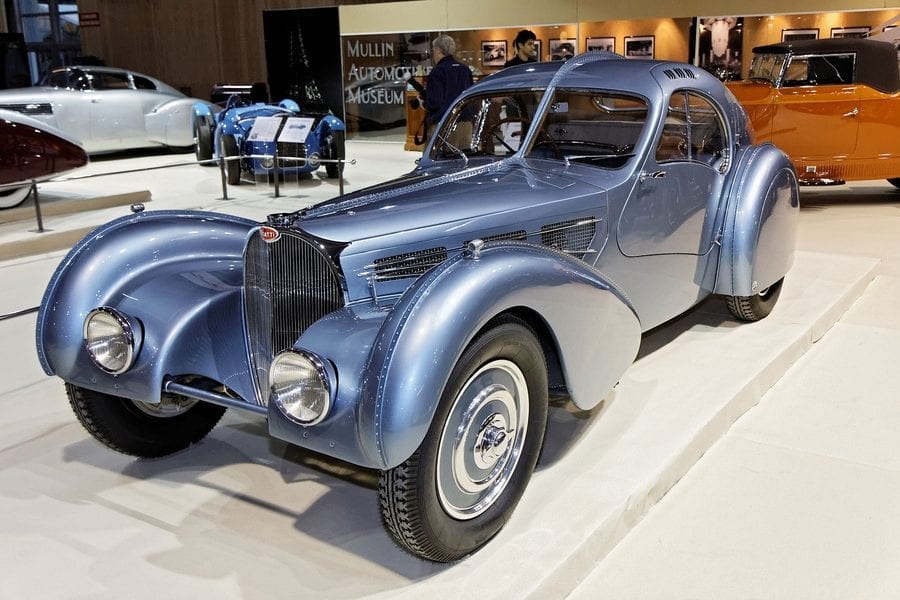
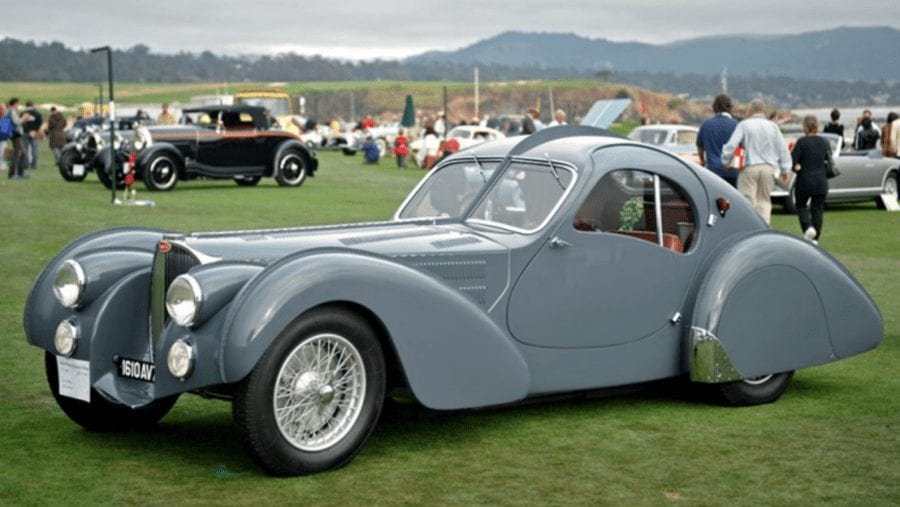
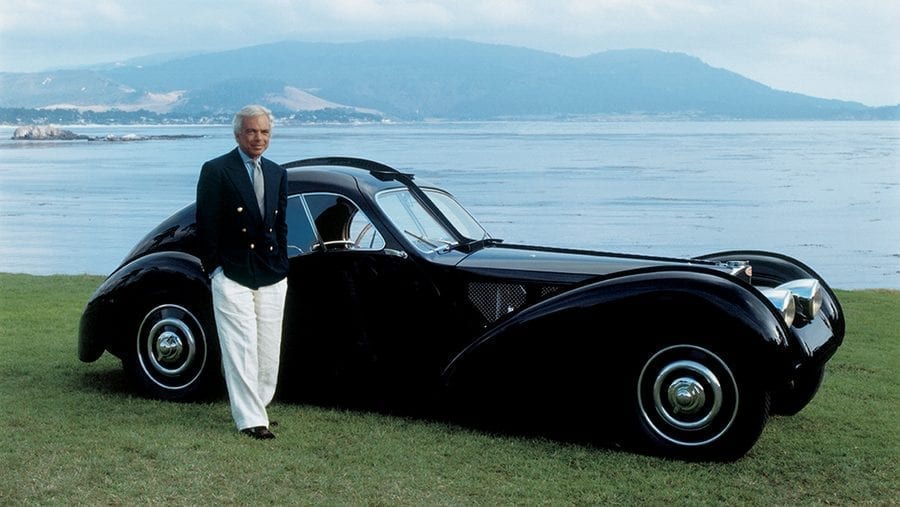
The metallic gray-blue 1936 Bugatti Type 57S – chassis number 57374 – was originally owned by Victor Rothschild, 3rd Baron Rothschild and thus known as the ‘Rothschild Atlantic.’ It was sold for in excess of £24.8 million ($30 million, €27.7 million or درهم110.2 million) in 2010 to the collector Peter Mullin. The car is now displayed at the Mullin Automotive Museum in Oxnard, California.The missing 1936 57SC – chassis 57453 – was presented in black and known as ‘La Voiture Noire’ or ‘The Black Car.’ It was the second Atlantic manufactured, disappeared from France in February 1941 and has never been seen since. Jean Bugatti considered this particular example his “most innovative and most valuable creation.”The 1936 Bugatti 57SC – chassis number 57473, ‘the Holzschuh Atlantic’ – was first owned by Jacques Holzschuch and his wife, Yvonne, and presented in black. After they were killed in the Second World War, the car’s subsequent owner, René Chatard, was hit by a train whilst in it 1955. He and his companion died and the remains of the vehicle were sold on. The restored car – considered a replica by experts – is displayed at the Torrota private collection in Spain.Clothier Ralph Lauren with his 1938 Bugatti Type 57SC – chassis 57591, the ‘Pope Atlantic.’ It was originally owned by Richard B. Pope and presented in sapphire blue, but painted black after being sold to Ralph Lauren in 1988.At the 2019 Geneva Motor Show, commemorating the 110th anniversary of Jean Bugatti’s birth, Bugatti sold a one-off model named ‘La Voiture Noire’ in homage to the missing 57SC for circa £15.7 million ($19 million, €17.6 million or درهم70 million). They declared it: “The most expensive new car ever sold.”The model available from Ralph Lauren.The steering wheel of the 2016 ‘Assembled Vehicle’ 1939 Delahaye USA Pacific.The seats are an artwork in themselves.Another view of the interior.With the doors open, from the front.The spare wheel.From the front.From the rear (complete with twelve exhaust pipes).The bonnet of the vehicle with a model of the car that inspired it on it.
Sunday evening acid-throwing Arthur Collins’ ex-partner Ferne McCann attempts to flog used knickers and bras online whilst posing with their brat, a girl named Sunday
Brentwood born Ferne McCann’s “baby daddy” Arthur Collins caused life-changing injuries to 22 innocent people after arriving at the Mangle E8 nightclub in Dalston, London during a night out on Sunday 16th April 2017. Stoked up and out of control, this “verminous cretin” hurled acid at clubbers at around 1.45am and then went on the run. This sub-human specimen, whose previous convictions numbered assault and possession of cocaine, deservedly got 20 years in jail, yet many continue to argue that that sentence was far too lenient.
Meanwhile, in the months that followed, McCann proceeded – without a moment’s consideration for Collins’ victims – to name their child, you’d never believe it, ‘Sunday.’ She supposedly spoke with her incarcerated ex-scaffolder lover via a phone illegally delivered to his prison cell and liked photographs on Instagram calling for this turd-like criminal’s release even.
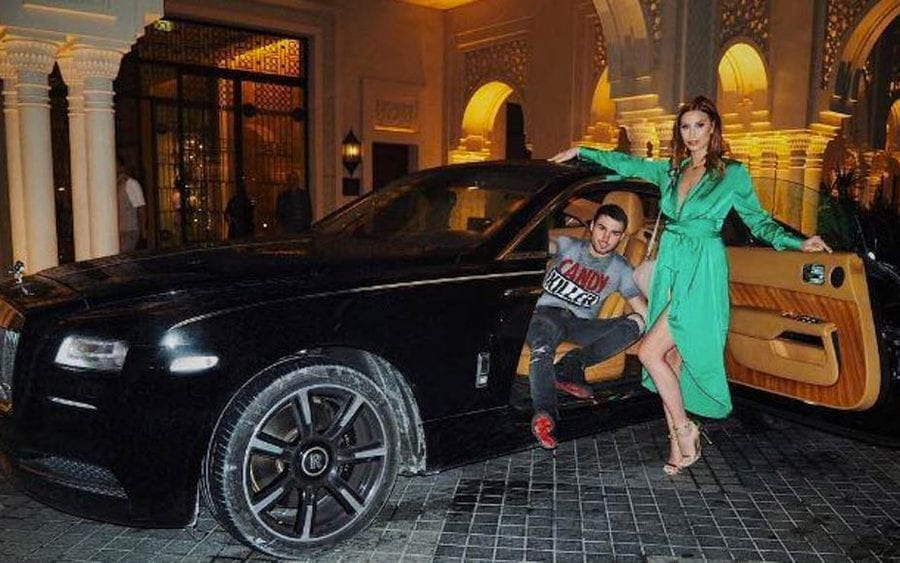
Ferne McCann posing with her since convicted criminal lover Arthur Collins in Dubai.
Offered at prices as low as £8 for a black bikini top with “a few crystals missing,” McCann plainly is a woman who’ll attempt to sell not only her soiled goods: This self-declared “very well-known celebrity” lost an application relating to a “range of toilet preparations” in June 2019. She was ordered to pay £2,400 in costs to a firm named CP Management and now we’re left wondering: “What’ll she get thong next?”
Pictured top: Ferne McCann and her child, Sunday. On Depop.com this money grabbing wench sold the blue dress pictured for £40. She’s unsurprisingly not had as much luck in attempting to hawk her second-hand undergarments.
A classic ‘rags to riches’ tale is that of Penny Streeter. Born in what was then Rhodesia, this police superintendent’s daughter came to England when she was 12 and worked on Margaret Thatcher’s Youth Training Scheme and in Pizzaland at the age of 16. She went into business with her mother at 22, went bust and after ending up living in a homeless refuge with her children, worked her way back and launched what has become A24 Group, a healthcare recruitment agency in 1995. By 2002, this hard-working woman’s company was the “fastest-growing company in the UK” and in 2019, she was listed as being worth £208 million in The Sunday Times ‘Rich List.’ Streeter and her husband now own a vineyard in South Africa and a winery in Horsham, West Sussex. We say: Cheers to her!