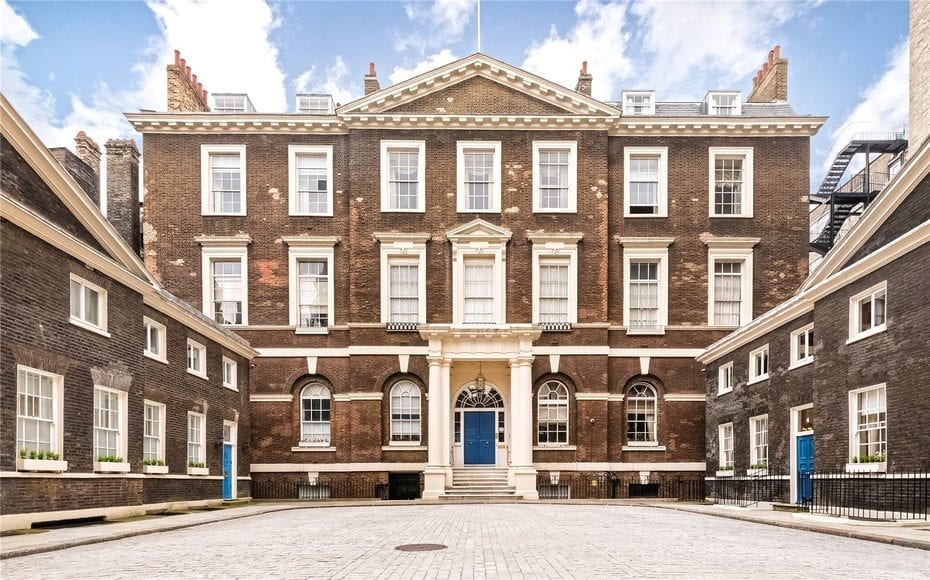
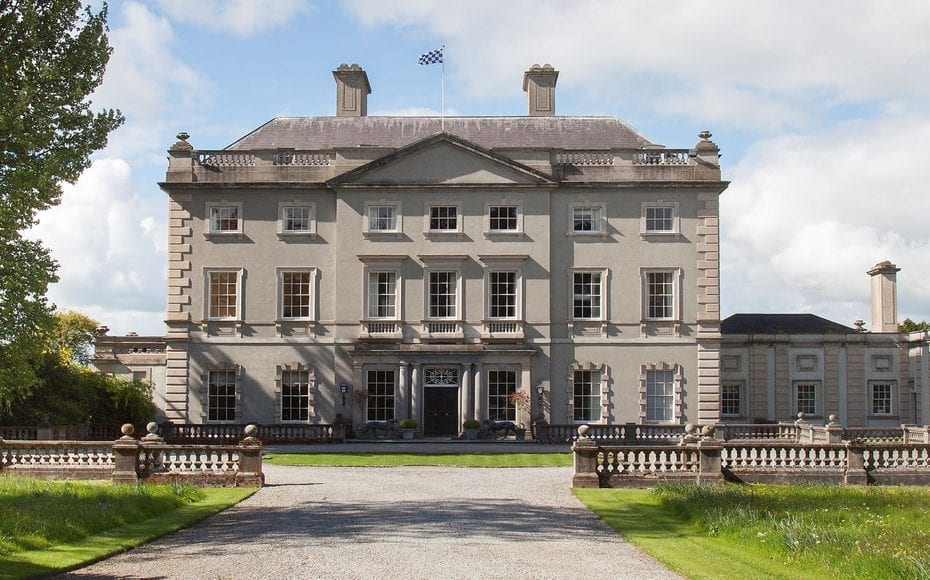
Eaton Square apartment in a Grade II* listed building that has been home to both Bond star Sir Roger Moore and aristocrat-who-went-missing Lord Lucan for sale for staggering sum given it is on a lease of just 15 years
Best known for playing the British secret agent James Bond in seven feature films from 1973 to 1985, Sir Roger Moore KBE (1927 – 2017) once remarked: “I enjoy being a highly paid actor.” He added: “It’s easy to sit in relative luxury and peace and pontificate on the subject of the Third World debts,” though in his various homes in such places as London, Monaco and Switzerland, he certainly illustrated that he took the bit about opulence seriously indeed.
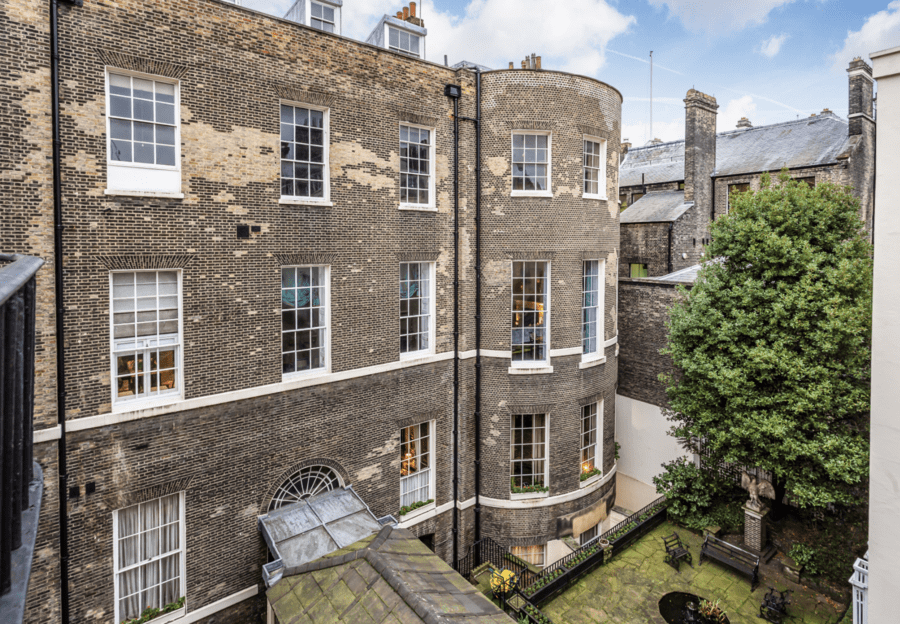
Now, someone with aspirations to live like “the definitive Bond” has the opportunity to purchase an apartment in an Eaton Square building where not only he resided, but one that was also a childhood home of the most famous aristocrat to go missing ever, the 7th Earl of Lucan (born 1934, last seen alive in 1974, declared dead in 2016).
John Bingham, better known as ‘Lucky’ or Lord Lucan, is said to have returned to London from wartime exile in New York in February 1945 with his siblings to find: “As they walked past their home at Cheyne Walk, they realised the whole building had been bombed. Their other family home at 22 Eaton Square had no windows due to the blow of a bomb and rationing was in full swing.”
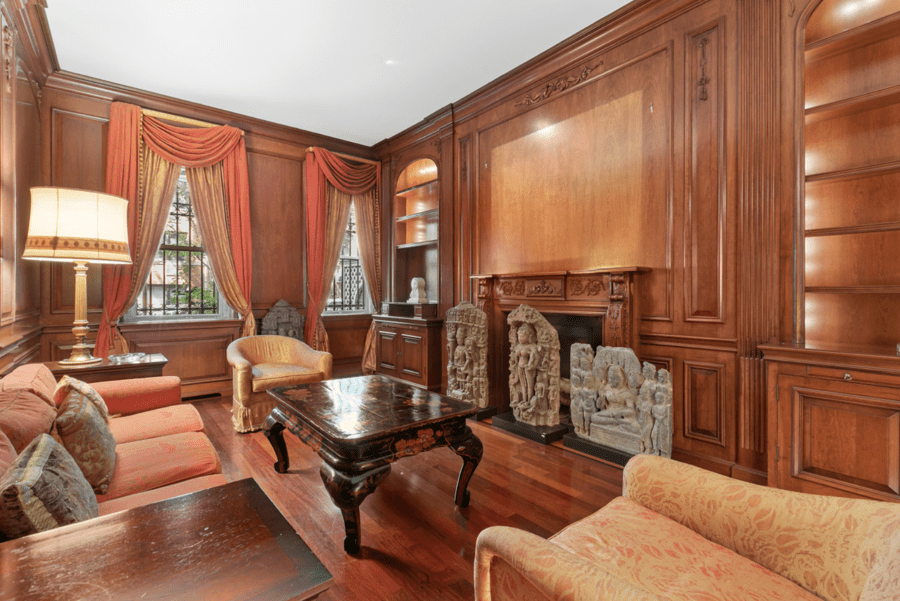
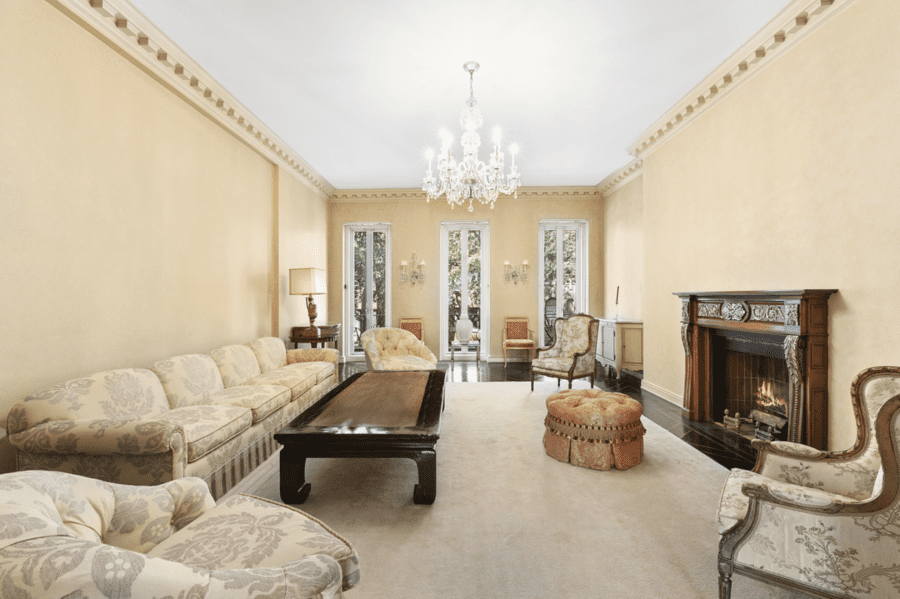
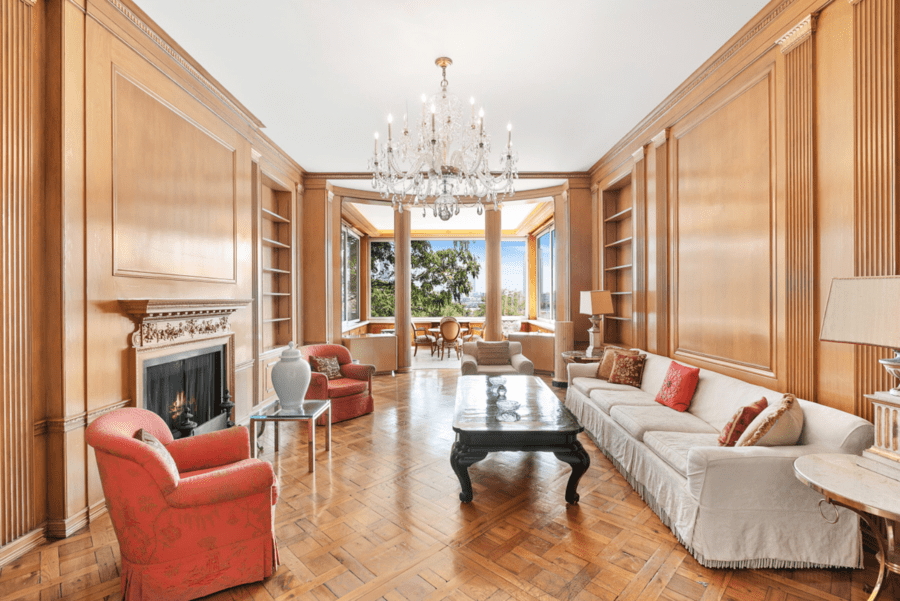
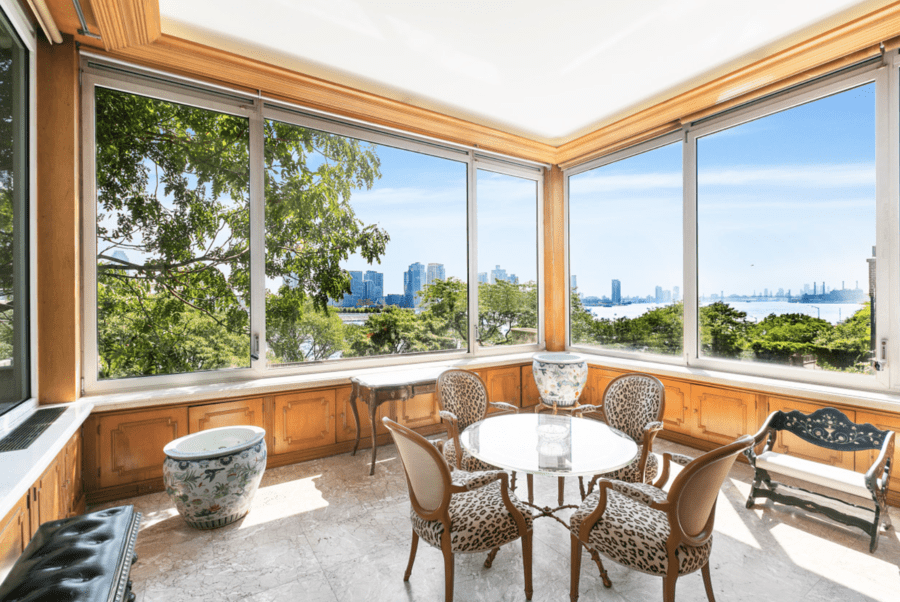
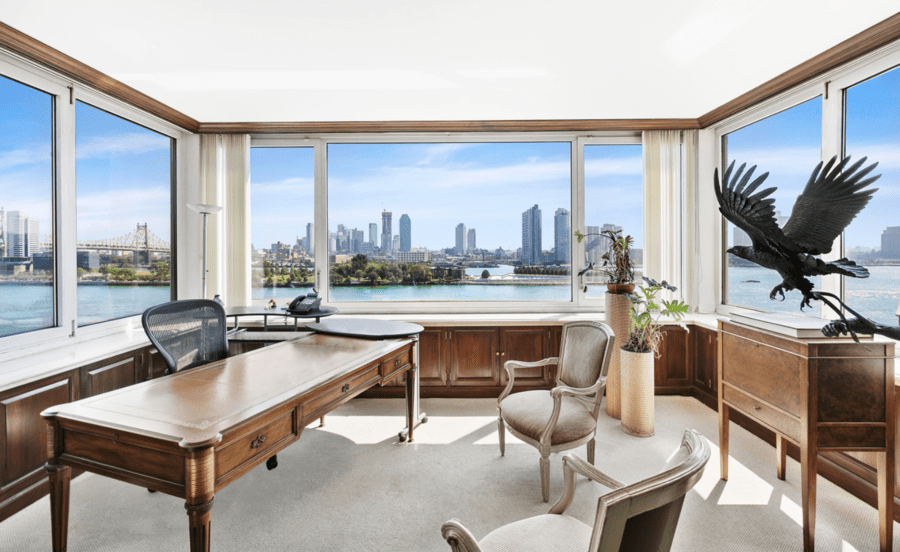
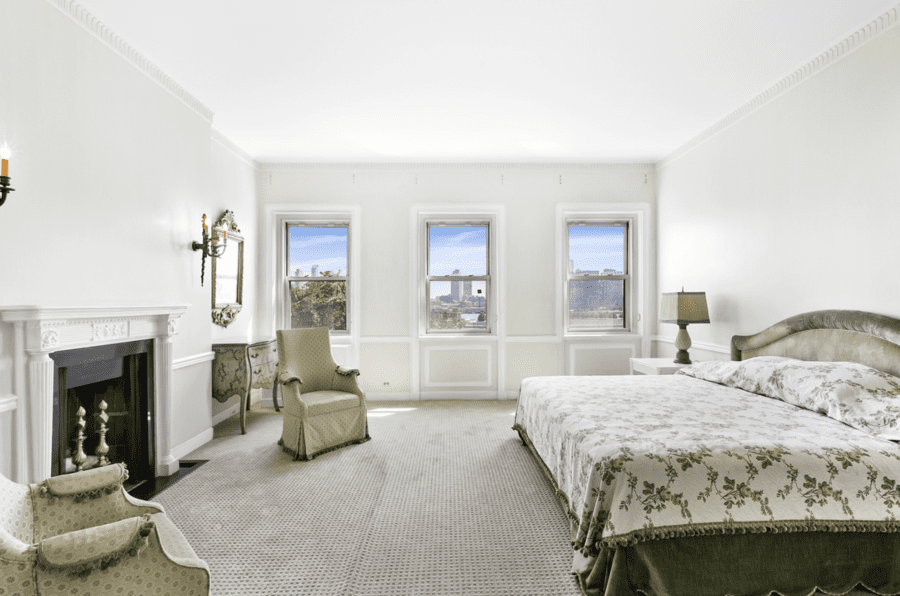
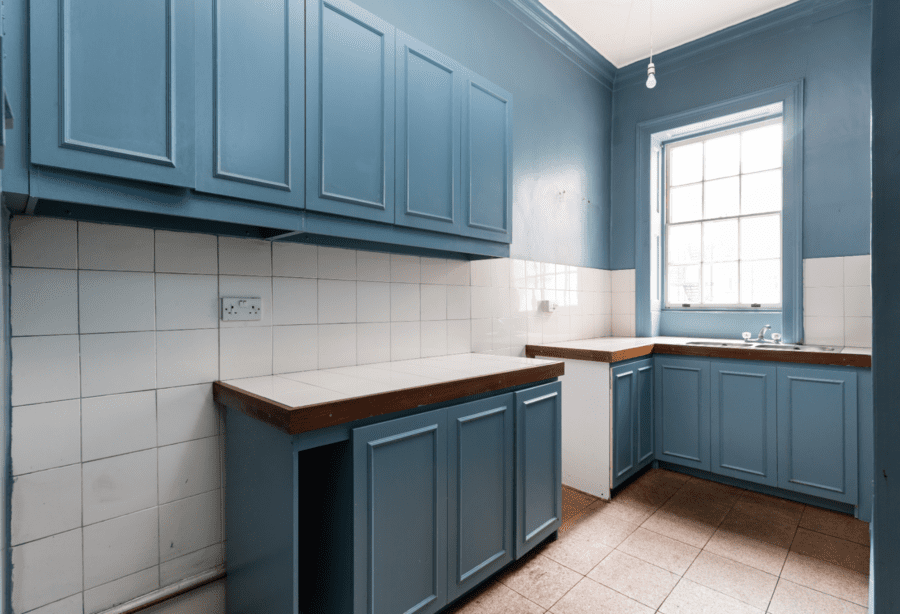
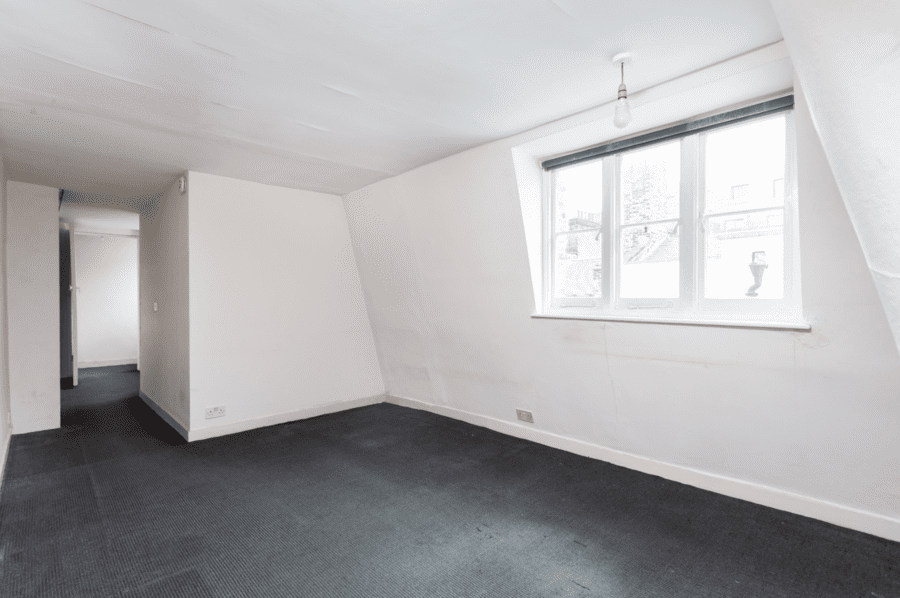
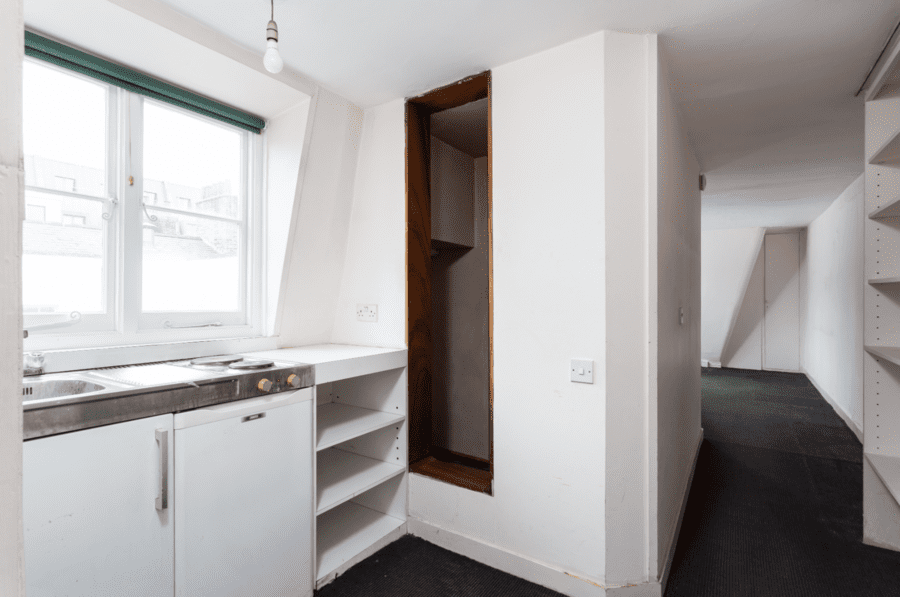
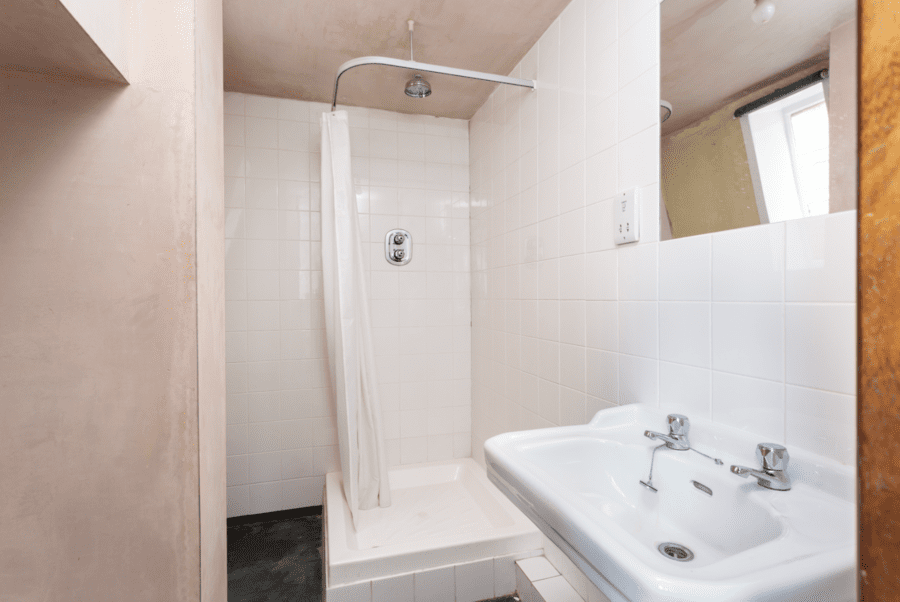
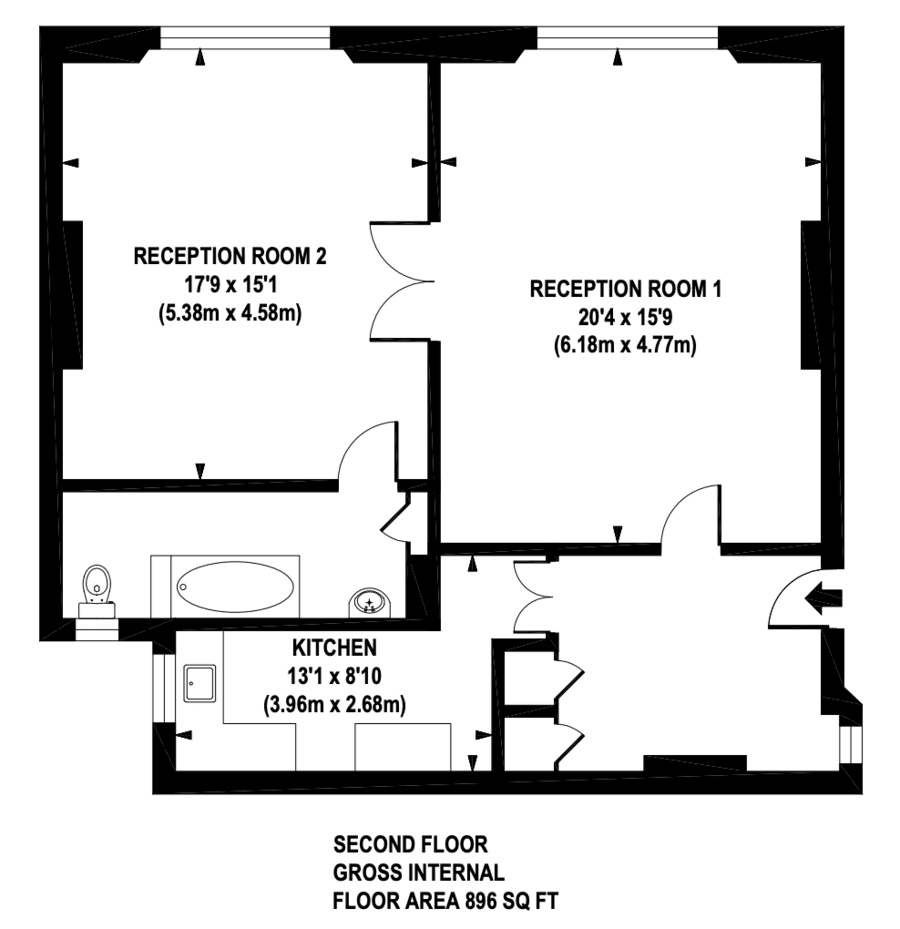
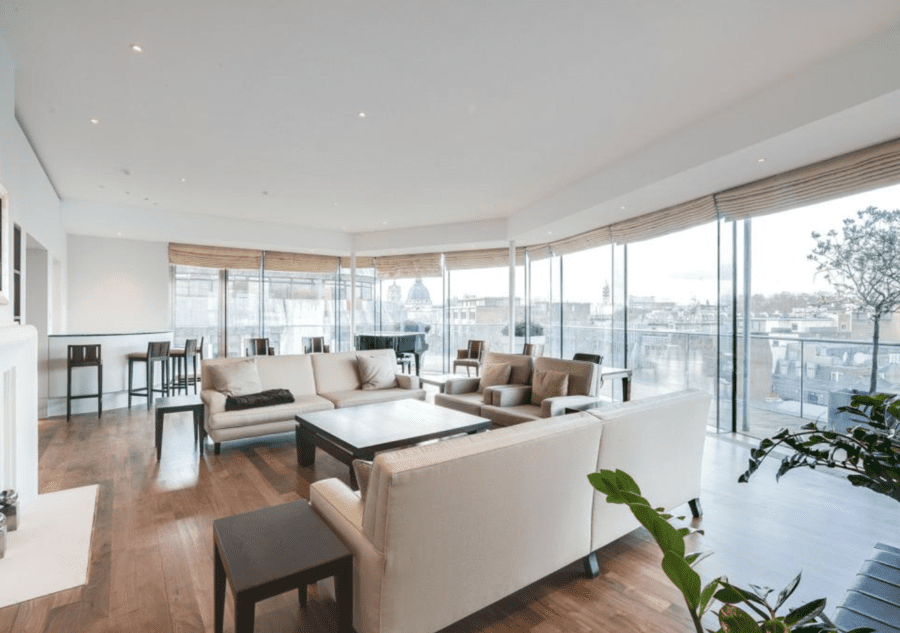
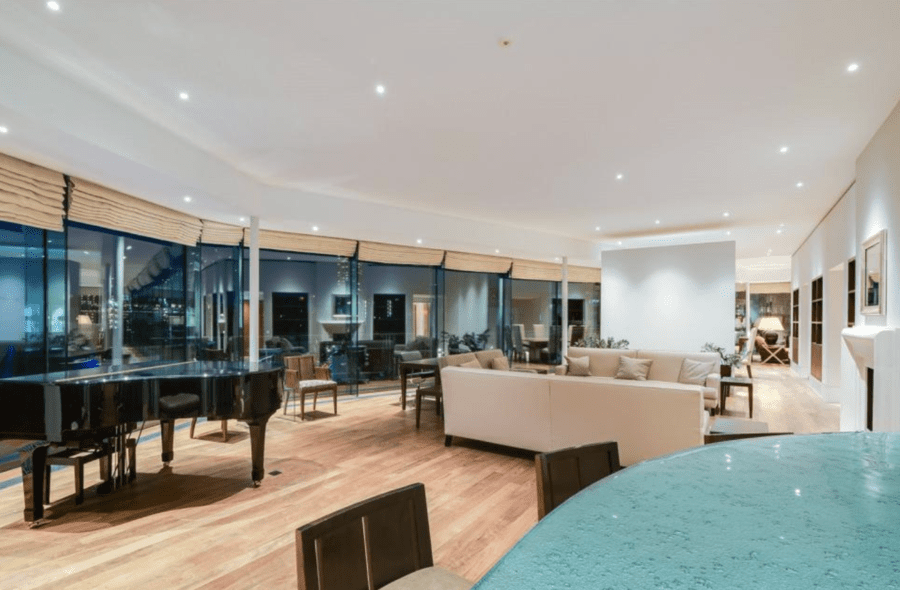
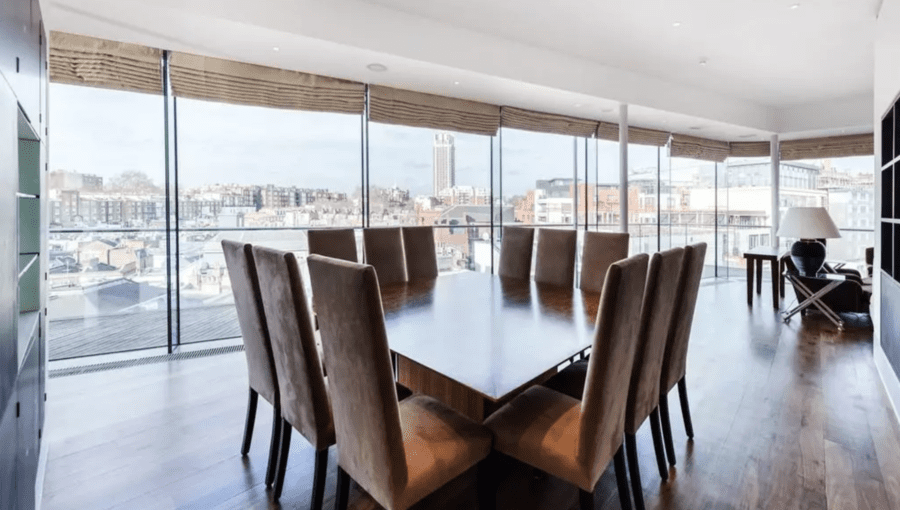
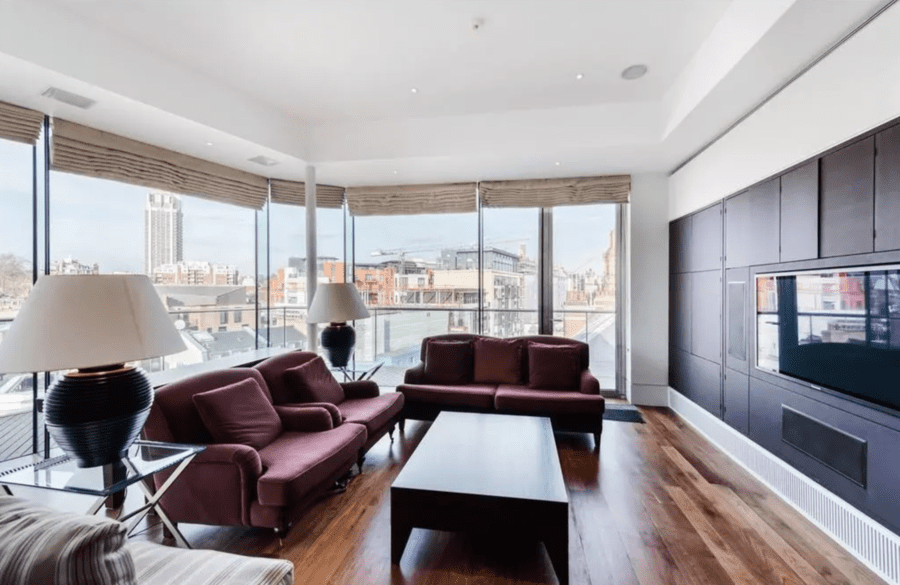
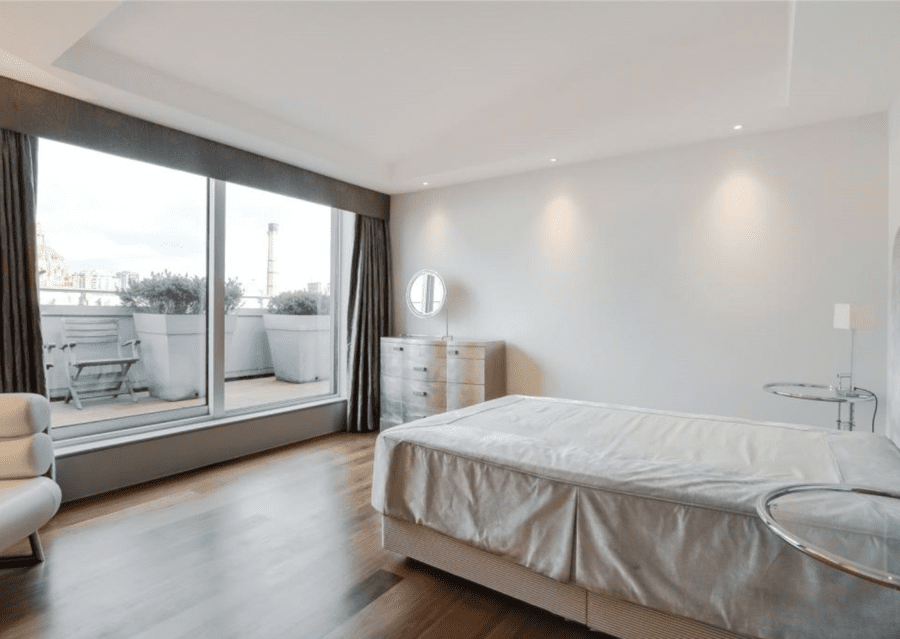
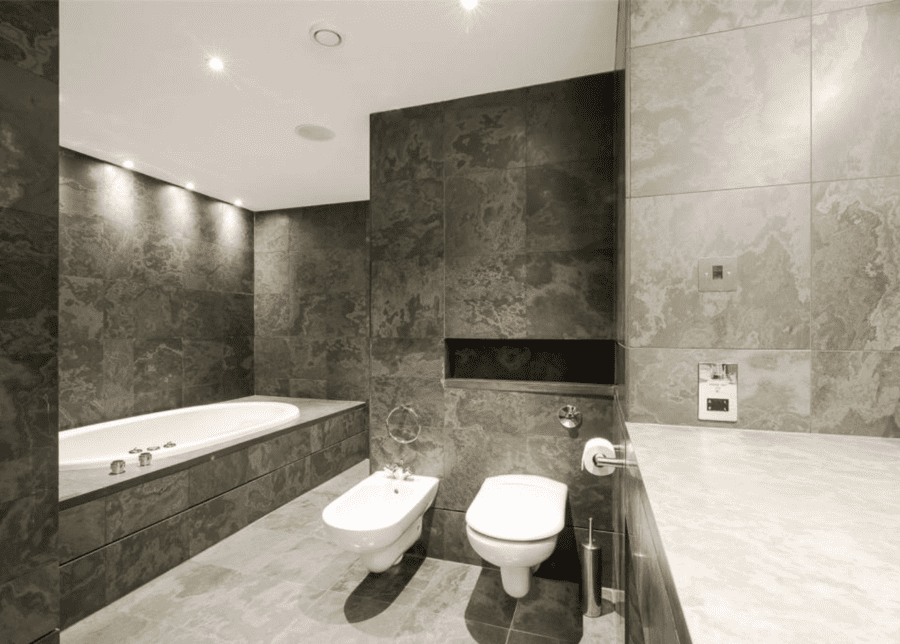
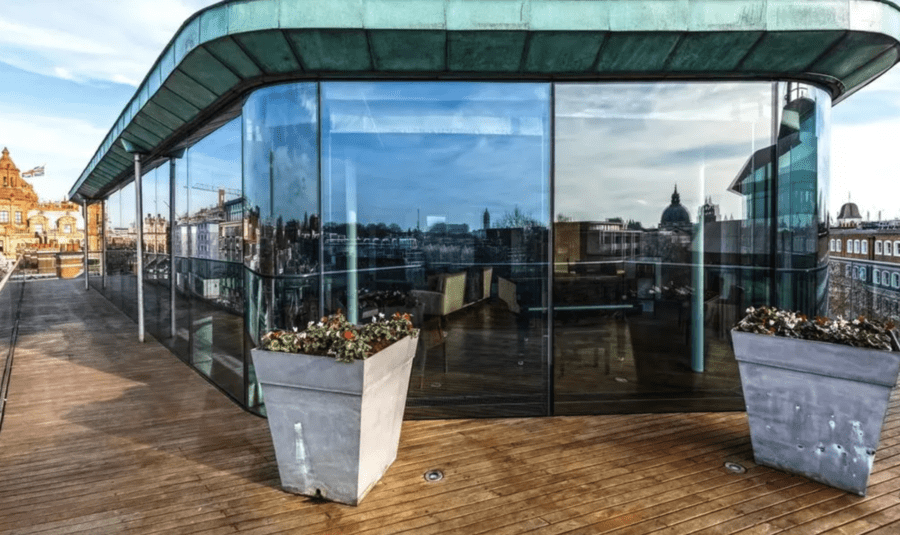
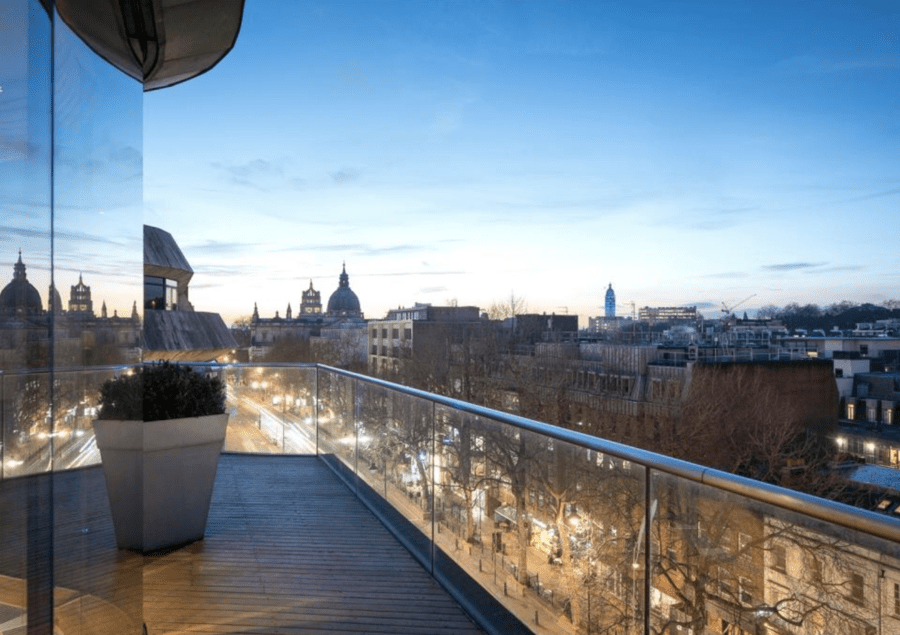
The apartment available now has windows complete with actual glass in-situ and is situated in what was once a single-family residence. It extends to 927 square foot and consists of a reception room with open plan kitchen, two bedrooms, one bathroom and one shower room. There are wooden floors throughout and the space has air conditioning also.
The fourth floor flat at 22 Eaton Square is offered by estate agents Ayrton Wylie at a price of £795,000 ($1 million, €914,000 or درهم3.7 million) or the equivalent of £53,000 per year ($66,700, €60,900 or درهم244,800 per year). Its lease expires on the 23rd February 2035 and an annual service charge of £6,779 per year ($8,526, €7,791 or درهم31,313 per year) is payable also.
Manhattan mansion listed for 77% less than in 2014 as part of a “bankruptcy sale;” it is situated on a street featured in Billy Joel’s ‘Close to the Borderline’ that was once termed: “Bloody, Bloody Beekman Place: Where the Wealthy Wind Up Dead”
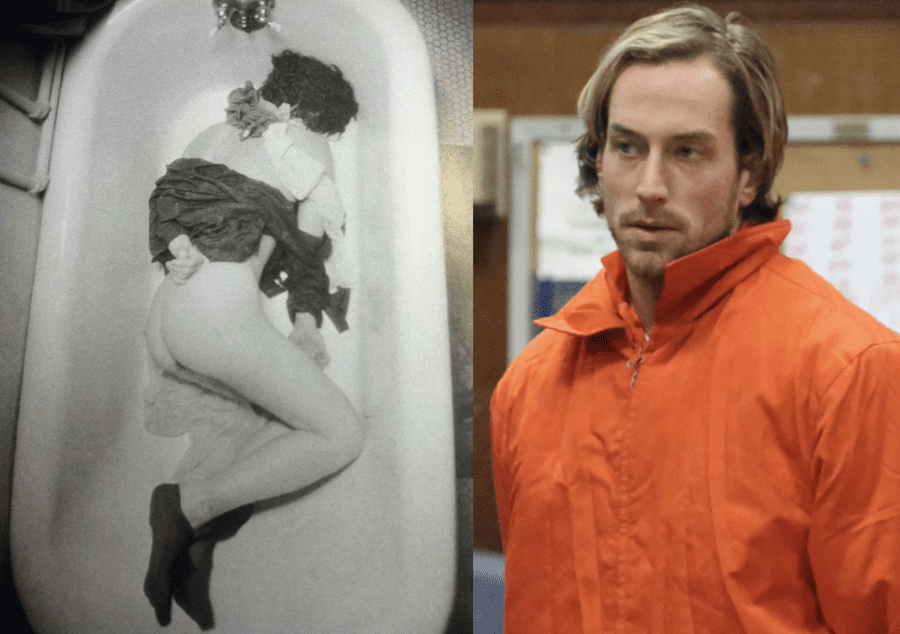
On 10th April 1936, Good Friday, a writer named Nancy Titterton was found dead in her bathtub at the home she shared with her husband at 22 Beekman Place in Manhattan. She had been raped and strangled by an upholsterer’s assistant, John Fiorenza, who had ironically repaired a loveseat for the couple. The case of the ‘Beauty in the Bathtub’ ended with Fiorenza’s conviction and execution at Sing Sing on 22nd January 1937, but for Beekman Place this was not the first nor last murder.
Aside from the killing of Dr Fritz Gebhardt, an industrialist and associate of Hermann Göring, by his lover Vera Stretz in a hotel in the street on 12th November 1935, on 4th January 2015, a Princeton graduate named Tommy Gilbert, Jr. shot his financier father in the head at his apartment at 20 Beekman Place. Prior to committing the murder, after a row about his monthly allowance, the 30-year old had sent his mother out to buy him a can of Coca Cola and a sandwich. As a result of these series of slayings, in January 2015, the Daily Beast ran an article about the street with the headline: “Bloody, Bloody Beekman Place: Where the Wealthy Wind Up Dead.”
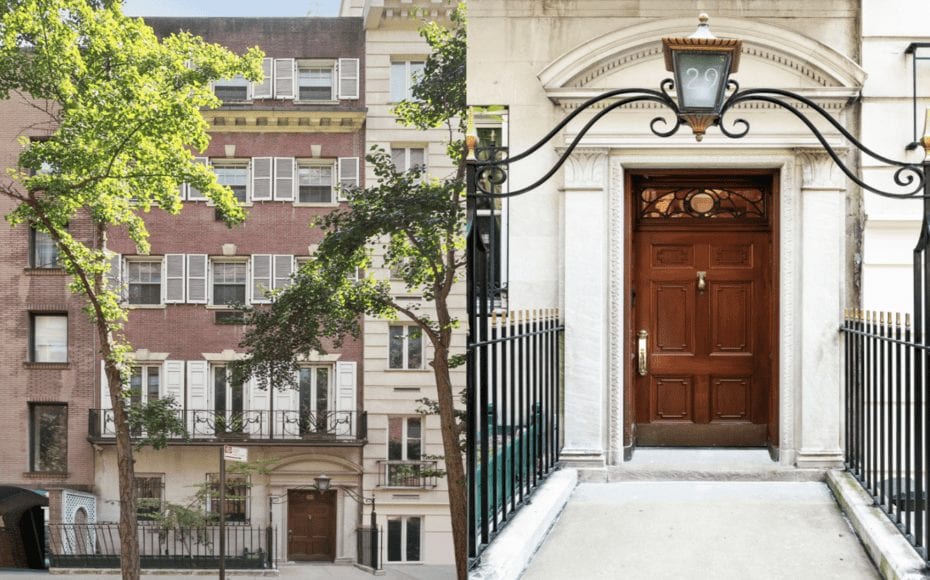
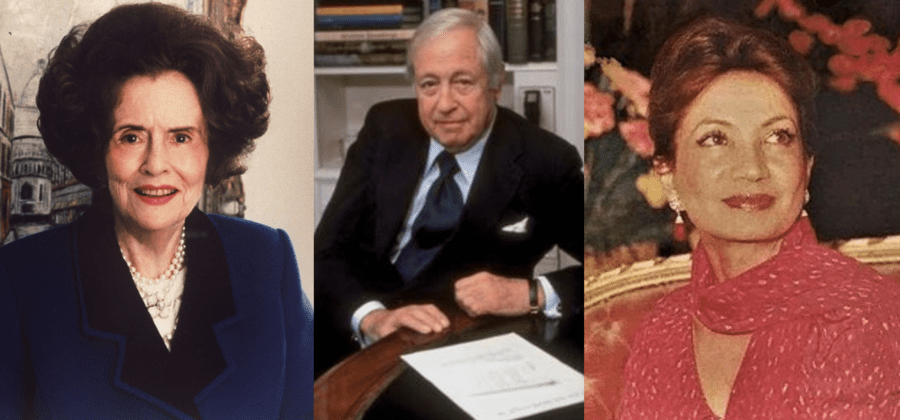
The naked body of 33-year-old Nancy Titterton was discovered in her bathtub at 22 Beekman Place on 10th April 1936; “Pampered Ivy-leaguer” Tommy Gilbert, Jr. was sentenced to 30 years to life in jail in September 2019 for murdering his father, Thomas Gilbert, Sr. in his apartment at 20 Beekman Place in January 2015.Owners of 29 Beekman Place – Mary Lasker, William S. Paley and Princess Ashraf Pahlavi.
Now, for altogether different reasons, the street – whose more ‘happy’ residents have included variously not just the Second Lady of the United States, Happy Rockefeller, but also Prince Aly Khan and A&P supermarket heir Huntington Hartford – Beekman Place is making headlines once again.
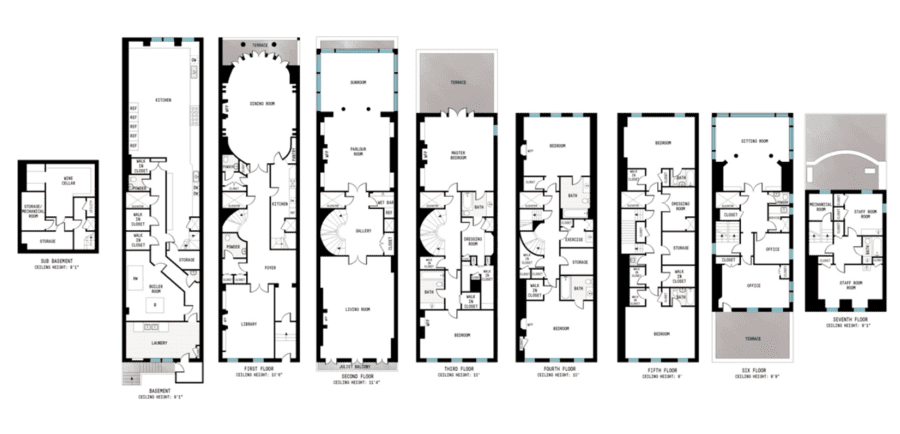
Whilst the asking prices of properties are often reduced, the case of 22 Beekman Place is an extreme one. Built in 1934 for William S. Paley, the man who “turned CBS from a small radio network into the foremost radio and television network in the United States,” and owned subsequently by a philanthropist and then the twin sister of the Shah of Iran, the house was placed for sale for the plainly extremely over-ambitious sum of £40.2 million in February 2014.
In the period since, the nine floor, 12,260 square foot “trophy mansion| has yo-yoed on and off the market and now after being listed as a “BANKRUPTCY SALE!! Excellent Value – Price Reduced to Sell!!” has just reappeared for ‘just’ £9.2 million.
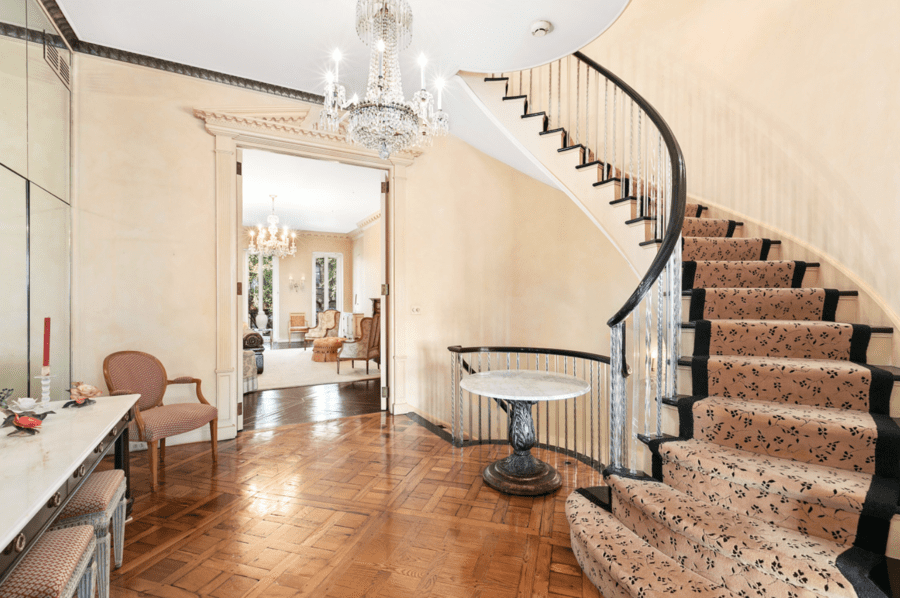
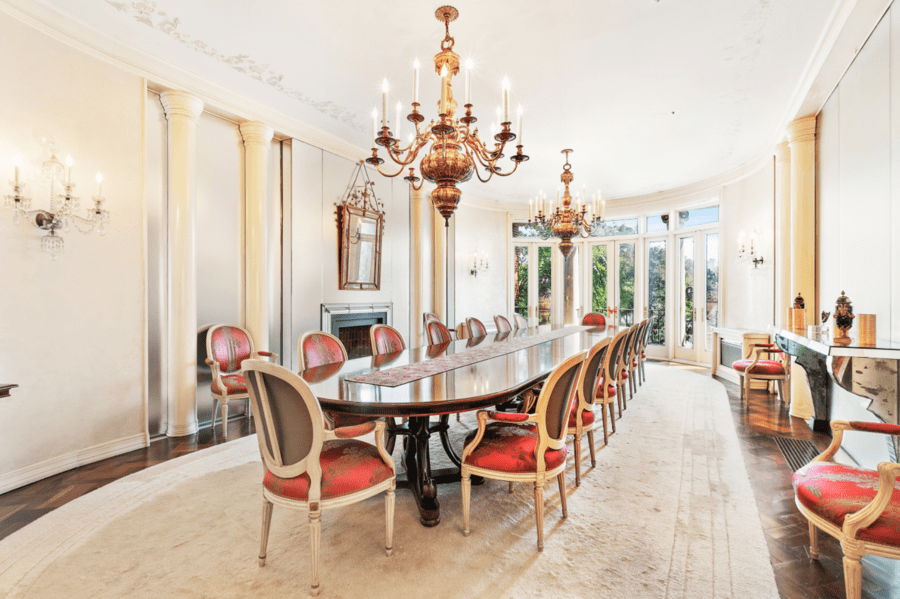
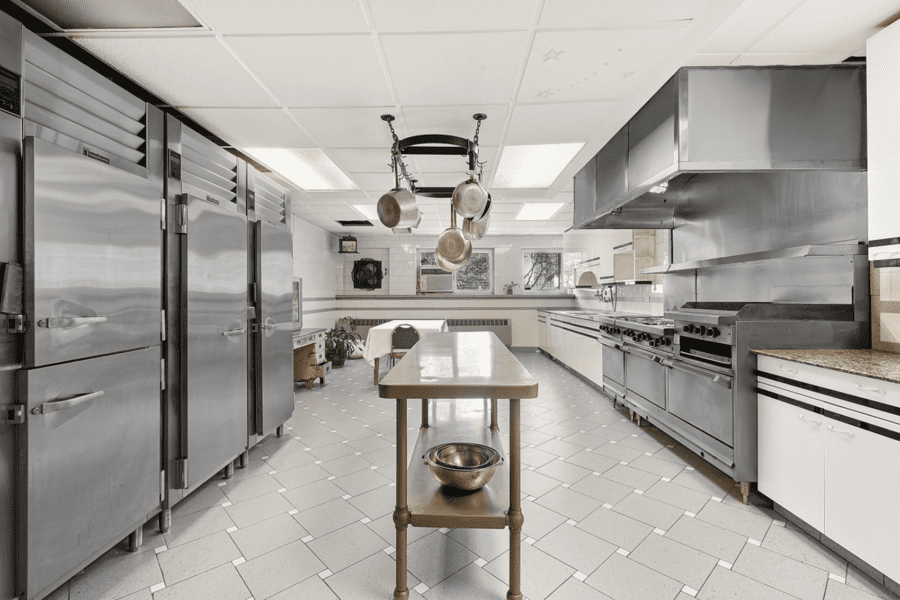
Described by Curbed New York as having “truly lovely architectural details” and an oval-shaped dining room that has been frequented by “heads of states and foreign dignitaries from all over the world,” the red brick and limestone property has 10 bedrooms and 9 bathrooms. Additionally, it includes 1,500 square foot of outdoor space in the form of two private terraces, a chef’s kitchen, a wine cellar, a lift and a banquet hall.
Agents Compass laud 29 Beekman Place as being “designed with grand scale entertaining in mind” and suggest it “appropriate for a private mansion, live/work, a foundation, or an ideal consulate or diplomat residence.” They add: “Do not miss this opportunity to purchase a piece of New York history,” (but unsurprisingly don’t mention any of the infamous murders in the neighbouring buildings).
The Names & Numbers – 29 Beekman Place, Midtown East, Manhattan, New York, NY 10022, United States of America
April 2020 – Relisted for £9.22 million ($11.45 million, €10.58 million or درهم42.05 million) through Compass as a “bankruptcy sale.”
September 2019 – Relisted for £11.7 million ($14.5 million, €13.4 million or درهم53.3 million) through Compass.
October 2017 – Relisted for £22.5 million ($28 million, €25.9 million or درهم102.8 million) through Sotheby’s International Realty.
January 2016 – Relisted for £27.4 million ($34 million, €31.4 million or درهم124.9 million).
May 2015 – Relisted for £30.2 million ($37.5 million, €34.7 million or درهم137.7 million) through Douglas Elliman.
February 2014 – Listed for £40.2 million ($49.9 million, €46.2 million or درهم183.3 million) through Brown Harris Stevens.
Mid 1970s – Sold to Princess Ashraf Pahlavi (1919 – 2016), the twin sister of the Shah of Iran.
1940s – After Mr and Mrs Paley divorced, the house was first rented to and then bought by the philanthropist Mary Woodward Lasker (1900 – 1994). She lived there with her second husband, advertising executive Albert Lasker (1940 – 1952), and remained there after his death until circa 1975.
1934 – Built for the “notorious womaniser” and first CEO of Columbia Broadcasting System (CBS), William S. Paley (1901 – 1990) and his first wife Dorothy Hart Hearst (ex-wife of John Randolph Hearst).
Ruined Moroccan fortress fit for the most lavish of bashes for sale for £5.3 million; it may be “spectacular” but it most certainly doesn’t have Wi-Fi
Billionaires like Morocco. The late Malcolm Forbes (1919 – 1990) lavished the equivalent of £4.1 million today ($5.1 million, €4.7 million or درهم18.7 million today) holding his 70th birthday at his property, Palais Mendoub, there in 1989. Guests – many of whom arrived by Concorde even – numbered Gianni Agnelli, Mario Buatta, Betsy Bloomingdale, King Constantine of Greece, Walter Cronkite, Diane von Furstenberg, Sir James Goldsmith, Calvin Klein, Dr Henry Kissinger, John and Patricia Kluge, Robert and Dr Betty Maxwell, Lucky Roosevelt, Elizabeth Taylor and Barbara Walters and boy did the food and drink flow. Of the fat bash, the New York Social Diary gushed: “It was a party festooning in ballyhoo, in glitter and glamour and illusion, comparable to Truman Capote’s Black and White Ball twenty-three years before in New York.”
Gone are the days of lavish bashes on the scale given by Malcolm Forbes (and gone are all those pictured) – Malcolm Forbes with his ‘date’ Elizabeth Taylor and the since exposed for what he truly was ‘media monster’ (and father of the equally repugnant paedophile procurer Ghislaine Maxwell), ‘Bouncing Bob’ Robert Maxwell and his long-suffering wife Dr Betty Maxwell.The Concorde used to transport guests to Tangier has also passed on – a technological step backwards if ever there was.
Now, someone looking to throw an equivalently extravagant party once lockdown is over (and once they’ve lavished a small fortune renovating it) in Morocco, could acquire a 32,292 square foot space in what agents Kensington Properties call a “high up… striking position overlooking the River Nfis.”
Going further of the £5.3 million ($6.5 million, €6 million or درهم23.8 million) fortress, they add of Kasbah Tagountaft: “[It] is considered one of the most memorable sites of historical significance in Morocco” and was “once the home of the powerful Caid of the Goundafa tribe who vied for control of the Atlas Mountains at the end of the 19th century.”
Whilst little else is described in the marketing material for this “absolutely stunning property, full of potential,” one thing’s for sure: Anyone with a requirement for working Wi-Fi when they arrive on site, need not apply.
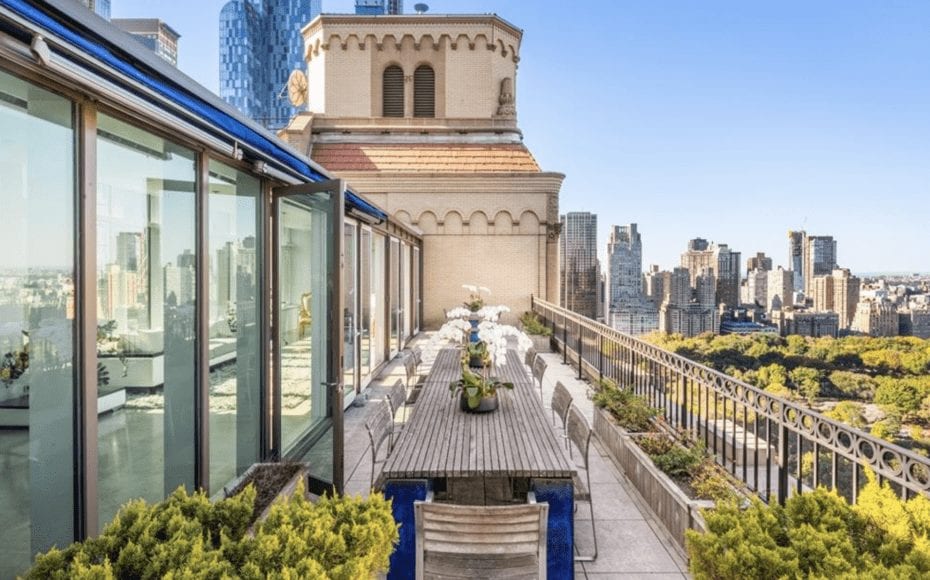
Duplex penthouse in The Ritz-Carlton New York Central Park for sale for £39.7 million or a sum 48% lower than in 2012; it’s currently home to an Argentine tango dancer whom moonlights as a financier and has a ‘ballroom’ in a colour scheme that would make Katie Price blush
Built in 1930 to 1931 to the designs of the Hungarian-Jewish architect Emery Roth (1871 – 1948), 50 Central Park South – a building formerly known as the St. Moritz Hotel – has been variously owned by Harry Helmsley, Donald Trump, Alan Bond and Ian Schrager. In 2002, as part of a remodelling, the building reopened as The Ritz Carlton New York, Central Park and now one of the ten apartments that subsequently were created in the upper part of the building is again for sale.
Occupying the 34th and 35th floors, a “horseshoe-shaped” unit described as ‘Penthouse 34/35’ totals 6,405 square foot including roof terraces. It was first configured as a 4 bedroom and 4.5-bathroom unit, but was reconfigured after being purchased by the Harvard educated founder of Gamechange Solar and CEO of Barron Group Holdings, Andrew Barron Worden, in 2006 into a 3 bedroom, 3.5 bathroom property with a 40-foot long ‘great room’ that has been used for “very, very frequent entertaining” and a 49-foot ‘solarium’ above.
Andrew Barron Worden and the exterior of The Ritz-Carlton New York Central Park, 50 Central Park South at the south-east corner of Sixth Avenue, Midtown West, New York, NY 10019.The main reception room of Mr. Worden’s apartment is lauded as a “grand ballroom” and measures 42” in length and 24’7” in width. If it were a person it’d be a “cross between Katie Price and Laurence Llewelyn-Bowen” and is adjoined by a library.Guests at parties in the space are said to have included Russell Simmons – the businessman and music executive now in exile in Bali (after being accused of multiple sexual assaults).
Worden, described as “a ballroom dancer – Argentine tango, to be precise” in an article in The New York Times in August 2012, supposedly spent £5.7 million transforming the space and then tried to sell it for the very ambitious sum of £77 million that year. He did not succeed and again placed it on the market for £39.7 million last August.
Other owners of the ‘residences’ at 50 Central Park South have variously included the hedge fund tycoon Scott Bommer, the financier Howard Marks and the casino mogul Steve Wynn.
Agents Christie’s International Real Estate are currently marketing the “fully soundproofed” penthouse and describe it as an “heirloom unit” that could be “easily converted back as per the approved architectural plans.”
The Numbers – Penthouse 34/35, The Ritz-Carlton Residences, 50 Central Park South, New York, NY 10019, United States of America
August 2012 – Listed for sale for £77 million ($95 million, €88.1 million or درهم349 million) by Dianne Weston of Halstead Property. At the time, she claimed the owner “understands the metrics of the market.”
“Late 2000s” – Supposedly underwent a “renovation” costing £5.7 million ($7 million, €6.5 million or درهم25.7 million). Of this, The New York Times remarked: “[The apartment was subject to a] complete renovation, designed by the architectural firm Gustavson/Dundes, which gave the space a very contemporary look, including a sleek steel and glass staircase with treads that can be lighted from below.”
2006 – Sold to Andrew Barron Worden for £16.2 million ($19.95 million, €18.5 million or درهم73.4 million).
The dining room is said to have “magnificent views.”There is a chef’s kitchen also.The 35th floor ‘solarium’ leads onto a vast 700-square-foot terrace beyond.A view of the ‘residences’ at 50 Central Park South from Central Park.The floor plan “as is.”The floor plan of the 34th floor “as could be.”
Unmodernised ‘set’ in “rule-ridden” Albany, Piccadilly that was the London home of eccentric antiques dealer and ‘King of Chelsea’ Christopher Gibbs for sale; tour the home of the man who got Princess Margaret high on hash
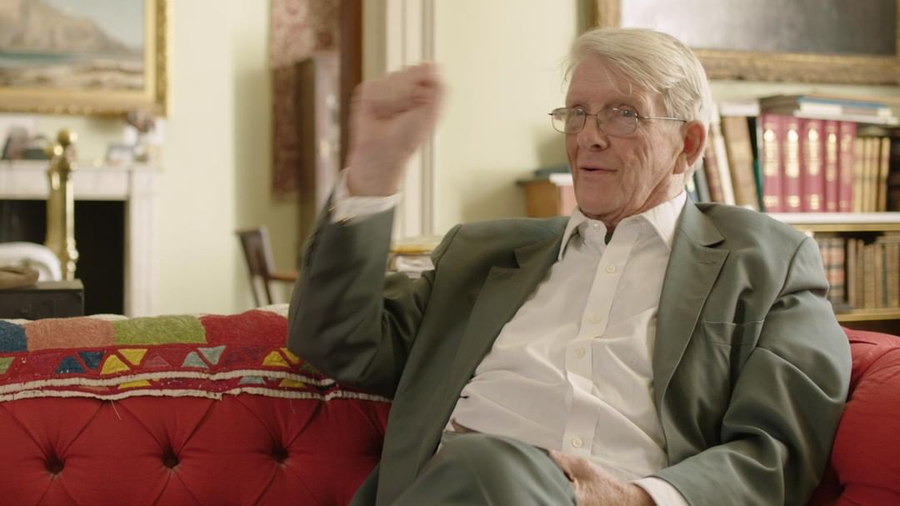
Expelled from Eton “for being generally totally impossible,” antiques dealer Christopher Gibbs (1938 – 2018) was not a man one would have imagined would have liked the idea of living in a place with archaic rules. This “peacock pied piper to society in the Swinging Sixties” whose “drug consumption awed even Keith Richards,” however, surprisingly chose as his London base Albany in Mayfair and now his former residence is for sale.
“A hermitage; quiet as a lagoon, secluded from the roar of Piccadilly” according to the author Sheila, Countess of Birkenhead in her 1958 tome Peace in Piccadilly, Albany – which is only ever referred to as ‘The Albany’ by the extremely ill-advised – quintessential dandy Gibbs lived in the building for “more than half [his] life.” Whilst also owning properties including Davington Priory in Kent – which he later sold to Bob Geldoff – and a “mystic hangover” home in Tangier, it was here that this ‘King’ of “distressed bohemian” style found a place that offered him: “Perfection for a singleton, an oasis of serenity in the frenetic heart of West London.”
This curious “cloistered world” has numbered Sir Isaiah Berlin, Alan Clark, Lord Byron, William Gladstone, J. B. Priestley, W. Somerset Maugham and Terence Stamp amongst those who have passed its vetting committee of trustees and Gibbs – a man who legendarily got Princess Margaret so high on marijuana that she had to go to hospital – even embraced its “no pets, no children, no whistling, no noise and absolutely no publicity” policy.
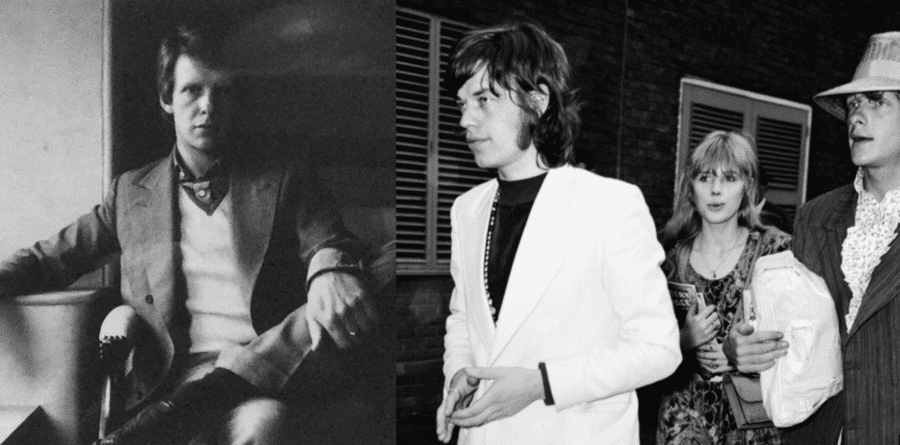
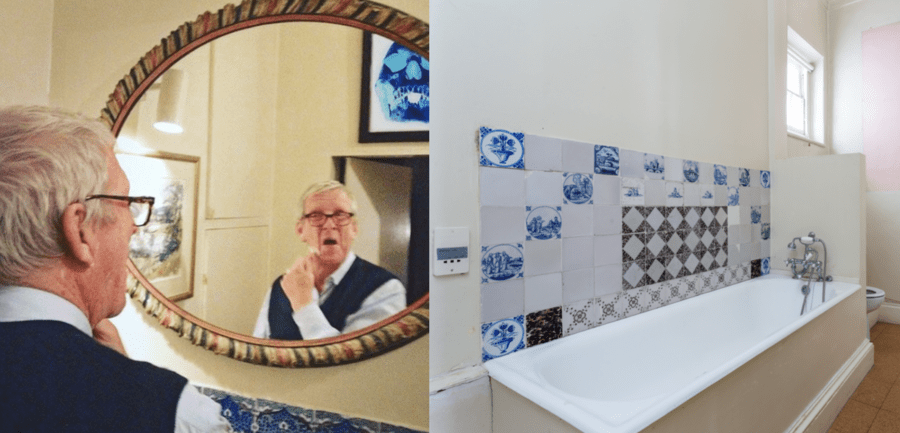
Antiques dealer Christopher Henry Gibbs, (29th July 1938 to 28th July 2018), son of The Hon. Sir Geoffrey Gibbs KCMG and Lady (Helen) Gibbs CBE, was called the ‘King of Chelsea’ due to his ability as the ultimate connector. He put the Rolling Stones together with Prince Rupert Loewenstein (whom became their business manager) and he persuaded his friend John Paul Getty, Jr. to donate £50 million to the British National Gallery in 1985.Christopher Gibbs by Robert Mapplethorpe and with Mick Jagger and Marianne Faithfull.Christopher Gibbs pictured in his bathroom at L6 Albany, Albany Courtyard, Piccadilly, Mayfair, London, W1J 0AZ; the bathroom as it is today is in need of “some updating” according to agents GreenHunt.‘Set L6’ circa 2013, as furnished then by Christopher Gibbs.
Photographed there by the curmudgeonly Victor Watts on a daybed that allegedly belonged to Lord Tennyson, described the home he created in an article for The New York Times’ ‘Style Magazine’ in April 2013:
“I had the place to myself and proceeded to make it my own in the accustomed style: sober mahogany, Oriental rugs, family pictures. I’ve continually reordered these rooms, distilling, paring, pruning, as chaste as my voluptuous nature allows.”
“So enraptured with my Albany life did I become that, reason deserting me (not for the first or last time) I gave up a spacious Bond Street gallery where I had my antiques shop and took one at the back of Albany, a small if elegant space with an entrance into the building, another onto the street and best of all a door into the underground passage – a quiet, invisible stroll home.”
“I love returning from Morocco, where I now spend much of my time, seeing the friendly porters at the door, hearing the clip-clop of feet on the Rope Walk, seeing the old-timers sitting in the little ivy-lined garden, sunning themselves by the little bronze statue of Antinous and the fountain, regularly invaded by the ducks from St. James’s Park – and enjoying sudden glimpses into other people’s lives through uncurtained windows, the hours marked only by the clock chimes of St. James’s Church, accompanied by the more uptempo tinkling of the clock at Fortnum & Mason, our local grocers.”
“At this point, when I am in London, I can’t imagine staying anywhere but Albany – all the more reason, perhaps, to clam up, maintain the longstanding omertà (or I should say discretion) that has held sway for centuries now, and count my blessings.”
Gibbs’ former home, ‘Set L6,’ is situated on the second floor in Albany’s Courtyard. It extends to some 1,178 square foot and includes a hall, reception room, kitchen, bedroom and bathroom. On the third floor, a separately accessed studio space has a shower room and kitchenette and of the property, the selling agents remark: “Whilst capable of immediate occupation, [it] does require the bathrooms being upgraded.”
Sold for just £60,000 ($75,000, €69,000 or درهم275,000) leasehold in March 2019 (presumably the term must have been very much towards its end), agents GreenHunt listed ‘Set L6 Albany’ on Zoopla first in May that year. Now, in April 2020, it remains for sale, but is instead listed on Primelocation. They seek £925,000 ($1.2 million, €1.1 million or درهم4.2 million) and offer it on a new 20-year leasehold with an upfront premium and a peppercorn ground rent.
Living in the building is not just the preserve of those with deep pockets. Peviously, in 2014, we featured ‘Set A5 Attic Albany’ – which was just £395 per week ($494, €454 or درهم1,800 per week) – whilst for those looking for something grander currently, a second and third floor freehold set is currently available through Sotheby’s International Realty for £4.95 million ($6.19 million, €5.69 million or درهم22.73 million). It extends to 1,890 square feet, is described as “meticulously refurbished” and includes an especially impressive drawing room.
Christopher Gibbs quoted:
“[I’ve always attracted] the grand and the raffish and the fast and the chic.”
“[I am] monumentally narcissistic.”
“I am a bit snooty… I do make exceptions, but very few.”
“We are here to learn, and my goodness I have a lot to learn.”
“[I was expelled from Eton for] Rabelaisian antics – illicit drinking, pantry raids of other boys’ rooms – that sort of thing.”
“Taste is something you catch – like measles or religion.”
“I like things in their natural state – people especially. As life goes by, that’s what I admire: objects and people that are unmonkeyed with, that are themselves, not trying to be something else.”
“I’m not interested in creating a dazzling impression of richness. We can make do with surprisingly little in life. It is best to have a few things which are really nice. I don’t approve of the mean look, but I do approve of the spare look, where every little bit is telling.”
“Being a shopkeeper, I used to sell things, sometimes.”
“I definitely suffer from the blown-mind syndrome… The only thing I’ll say in my favour, is that I was practically the only person I knew who actually went to work at nine o’clock in the morning, whether I’d been up to eight o’clock or not, because I had a job, my own business, and I realised that, if I didn’t, I wouldn’t have any of those things.”
“[I] help people make nice cosy homes where they are going to live happy, beautiful lives.”
“[I] encourage friends to dig into their heirlooms, to wear old clothes, to turn their backs on ugliness and conformism.”
“Collectors today want a good car, a good sound system, and a huge pink heart painted by Damien Hirst with dying butterflies on it which costs £400,000. Yet for much less you could buy something completely fascinating made 300 years ago.”
Quotes about Christopher Gibbs:
“Taste is difficult to define, but his is absolute perfection” – Min Hogg, founding editor of World of Interiors.
“[He was] like an 18th century English parson who knew more about Etruscan vases than anyone at the British Museum” – Sir John Richardson, July 2018.
“I’m here to learn how to be a gentleman” – Mick Jagger of his then neighbour Christopher Gibbs whilst at a dinner party at his house.
“He was very flash… Sometimes he just wore tight jeans or fancy dress, like the others; but mostly his tastes were elaborate; suits with double-breasted waistcoats and cloth-covered buttons, and velvet ties, and striped Turkish shirts with stiff white collars, and cravats. Above all, he had a passion for carnations and was forever buying new strains, pink-and-yellow, or green-ink, or purple with red flecks” – Nik Cohn, author of Today There Are No Gentlemen, January 1971.
“Part Montesquieu, part Beau Brummel, and part Baudelaire… [Christopher Gibbs was a] well-born Renaissance man with an unmatched eye for aesthetics and a talent for friendship and the mot juste” – Hamish Bowles, international editor at large for Vogue, July 2018.
“Christopher was almost single-handedly responsible for making English antiques, and English heritage, look ‘cool’ again” – James Reginato of Vanity Fair, July 2018.
“A connoisseur of the weird and the wonderful” – Christopher Mason of The New York Times, September 2000.
“[He was an] acid-tripping ex-roué once known as the King of Chelsea” – Bitter words from the ex-Daily Mail ‘journalist’ and poison pen James Delingpole, executive editor of Breitbart.
“[The] avatar of Swinging London” – A more kind description from Sam Roberts of The New York Times.
“Christopher Gibbs: the man who brokered £50 million Getty grant to the National Gallery – and fed Princess Margaret hash brownies” – Huon Mallalieu of The Art Newspaper, July 2018.
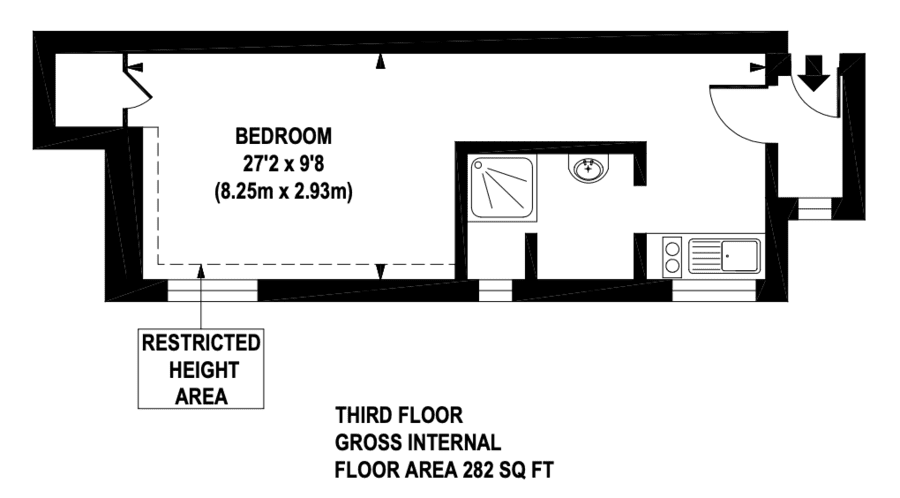
The entrance hallway of ‘Set L6’ has a fireplace.The master bedroom of ‘Looking into the reception room.The somewhat basic kitchen is definitely in need of an upgrade.The view from the set.Albany’s famous ‘Rope Walk’ – Of it, Gibbs commented: “So ingrained is the sense of decorum that even to utter a friendly hello to a neighbor as we pass on the stone stairs or the covered outdoor canopy, known as the Rope Walk, might be violating a taboo, as if a few words of small talk could break the spell of privacy we Albanians prize so deeply. (A nod suffices, a hat raised to a lady.)”Residents have access to the most peaceful outside spaces.The third floor space included in the sale is arranged as a long, thin studio room.It has a small kitchenette.And a somewhat dated shower room.A plan indicating how ‘Set L6’ is currently arranged.A plan of the third floor studio space.
Vast Knightsbridge penthouse for sale for 27% less than in 2012 but extraordinarily 6,900% more than in 1999
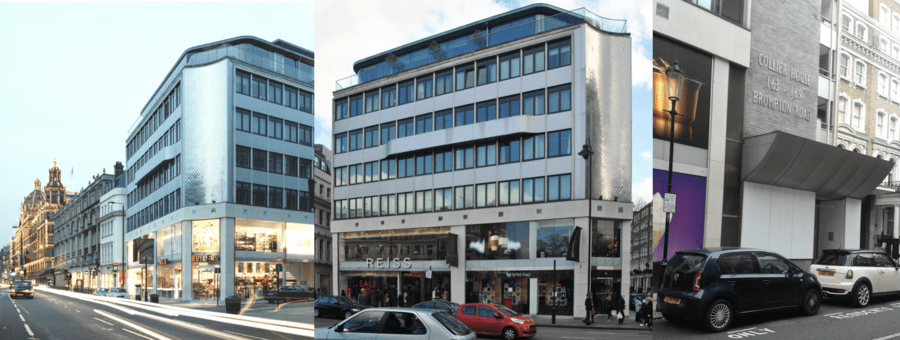
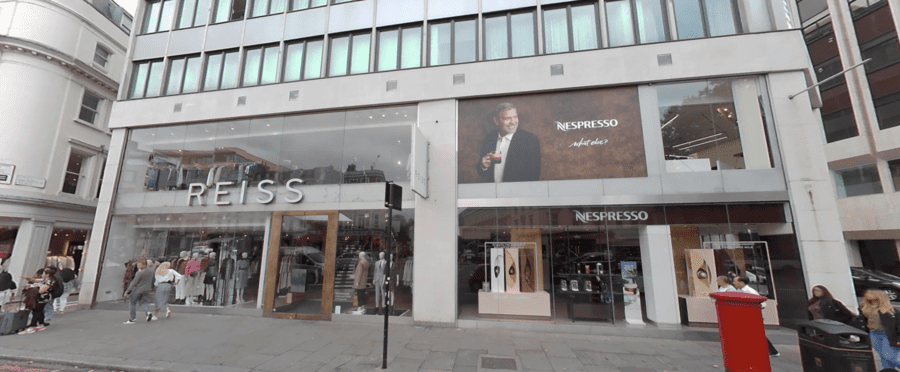
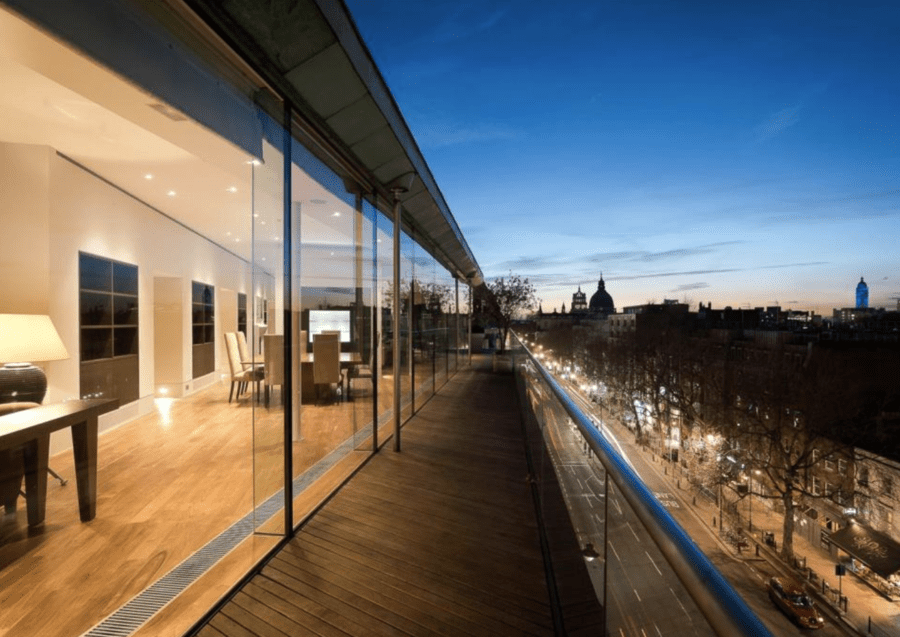
Constructed between 1961 and 1962 by builders Gilbert Ash, Collier House is not the most attractive structure in Knightsbridge externally. Whilst retailers Reiss and Nespresso – lucky residents get George Clooney’s ugly ‘mug’ stuck on the façade as a bonus (excuse the pun) – occupy the ground floor, the top floor ‘space’ was sold for the creation of a two-storey penthouse in 1999 for £230,000.
The exterior of the building in which the sixth and seventh floor penthouse is situated – Collier House, 163 – 169 Brompton Road, Knightsbridge, London, SW3 1PY.The ground floor of the building is occupied by Reiss and Nespresso. A large image of actor George Clooney dominates the frontage of the latter.
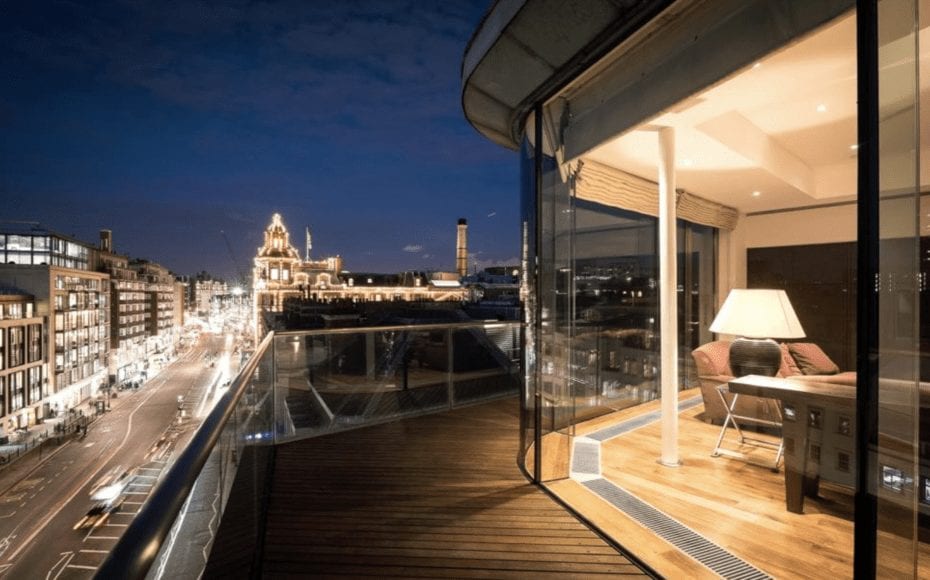
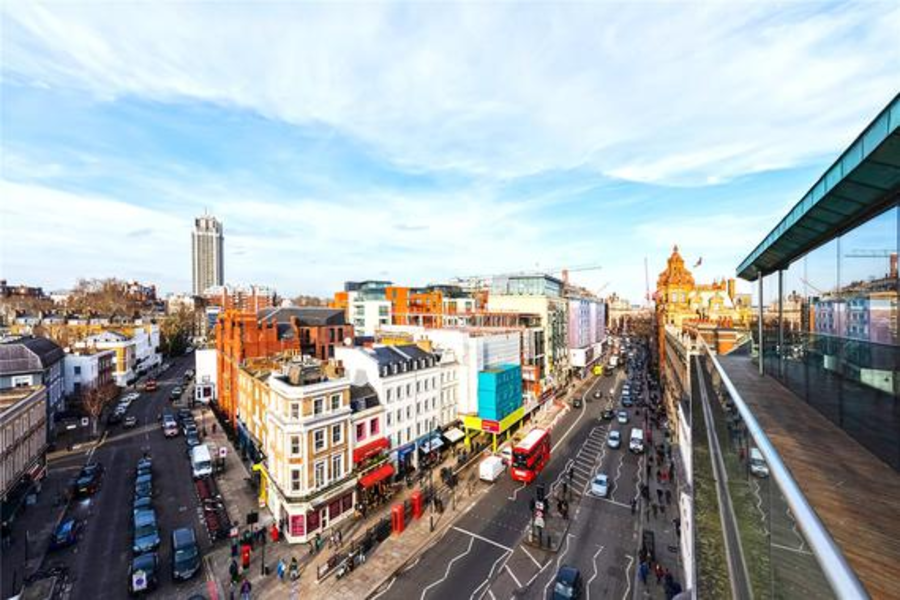
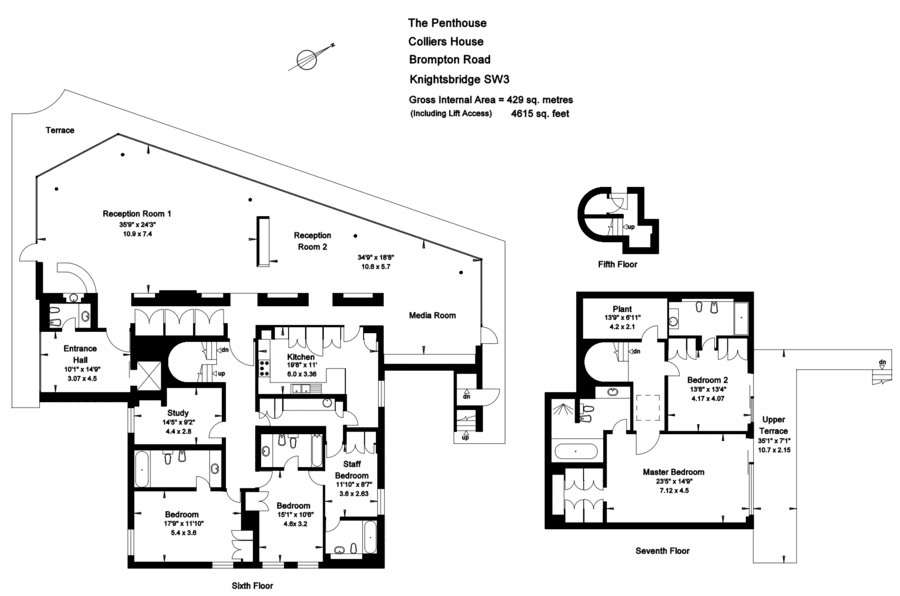
Developed to provide a 4,615 square foot duplex over two floors, the apartment is currently on the market for the considerably higher figure of £16 million through agents Merchants Row. It includes 2 reception rooms that are some 70-foot in length in total, a bar area, a media room, 5 bedrooms and 5 bathrooms and comes with wrap-around terraces with skyline views towards Harrods and the Brompton Oratory.
From October 2014 to July 2019, the penthouse was the registered office of Elaph Publishing Limited. Founded in 2001 by Othman Al Omeir – a man “considered close to King Salman of Saudi Arabia” – Elaph is described as “the first daily Arabic independent online newspaper.” It has at various times been banned in both Saudi Arabia and Yemen and its former managing director was the EMMY award winning producer Nicholas Claxton.
The long leasehold penthouse, which was offered for the even more outrageous sum of £22 million in November 2012, has direct lift access to the sixth floor and comes with secure underground parking. It is subject to a service charge of £10,800 per year, has been offered to rent for £10,000 per week previously and what the agents neglect to mention is that it is situated directly above one of London’s most polluted stretches of road.
The Numbers – Collier House, 163 – 169 Brompton Road, Knightsbridge, London, SW3 1PY, United Kingdom
April 2020 – For sale for £16 million ($20 million, €18.4 million or درهم73.4 million) through agents Merchants Row.
November 2012 – For sale for £22 million ($27.5 million, €25.3 million or درهم101 million) through agents Wilfords.
July 1999 – “As then was” space for penthouse sold for £230,000 ($287,000, €264,000 or درهم1.1 million) according to Land Registry records.
Famous ‘Seven Sisters’ cottage in Montauk for sale for 30% less than in 2016; the ‘Gilded Age cottage’ was designed by Stanford White, an architect whose murder famously led to the ‘Trial of the Century’ from 1907 onwards
Montauk has variously been associated with part-time residents such as the playwright Edward Albee, the world’s largest Ponzi scheme operator Bernie Madoff and the artist Andy Warhol. It was a place that the Algonquian speaking Montaukett Native American tribe called home until one Arthur W. Benson (circa 1798 – 1889), the president of the Brooklyn Gas Light company, came along in 1879 and purchased 10,000 acres there for just $151,000 from the American government.
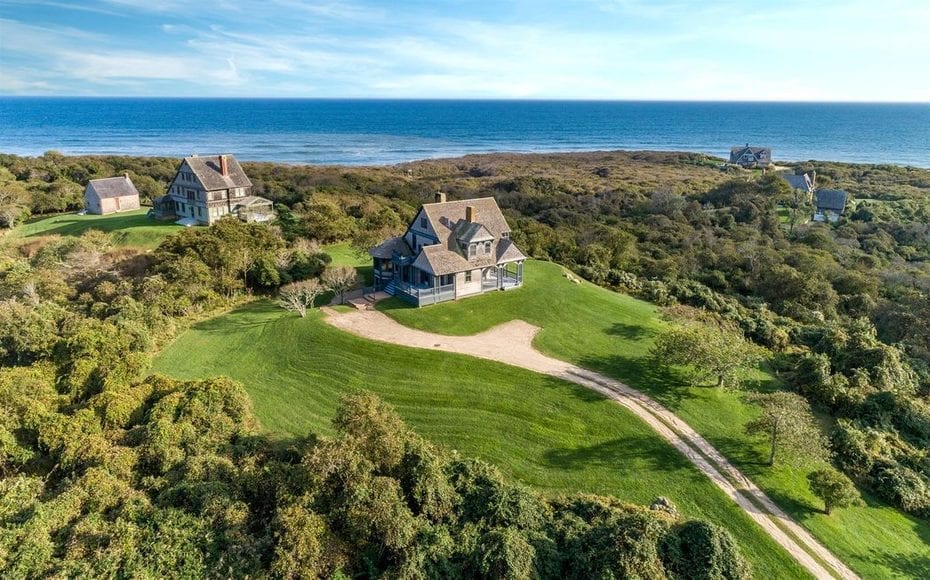
“Land baron” Benson soon after sold half his acreage to the Long Island Rail Road for $600,000 and then set about turfing out the natives and creating a “playground for the rich.” As part of his plan, he ordered the construction of seven “shingle-style” homes that came to form a 100-acre compound for use as a “private hunting and fishing retreat for him and his friends.” They became known as the ‘Seven Sisters’ and one of them is currently for sale through Sotheby’s International Realty.
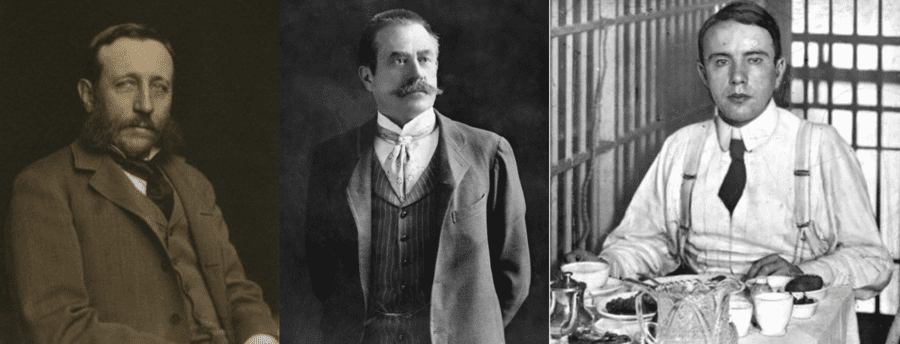
Designed by Stanford White (1853 – 1906) – a “lauded architect” whom became more famous for being shot and killed by the deranged railroad heir Harry Thaw (1871 – 1947) – the property offered is said to be known as ‘Andrews House.’ It is more commonly listed, however, as 153 Deforest Road and its date of construction has been put at as early as 1879 and as late as 1888. The ‘cottage’ reportedly first belonged to Benson’s friend, a writer and one of the founders of both the bibliographic Grolier Club in Manhattan and the Society of Iconophiles, William Loring Andrews (1837 – 1920).
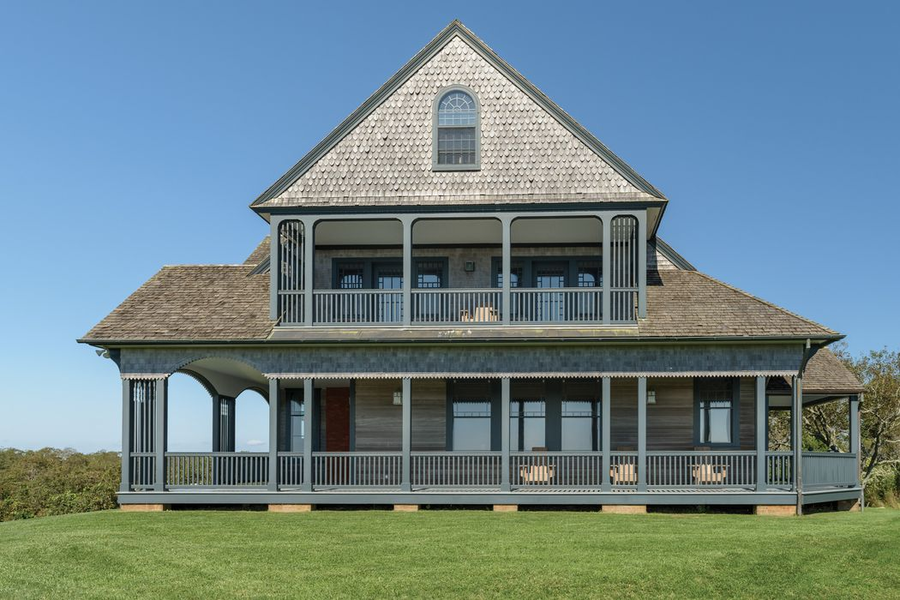
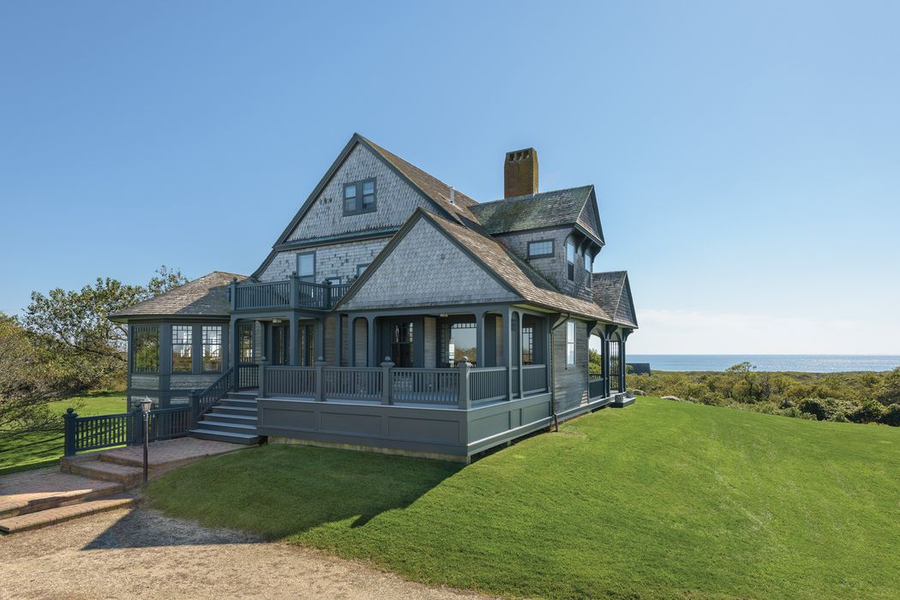
William Loring Andrews, architect and murder victim Stanford White and Harry Thaw in a ‘gilded’ jail cell.The Andrews House, 153 Deforest Road, Montauk, New York, NY 11954, United States of America – a ‘Seven Sisters’ cottage that has seen its asking price reduced from £14.8 million in 2016 to £10.4 million in 2020.
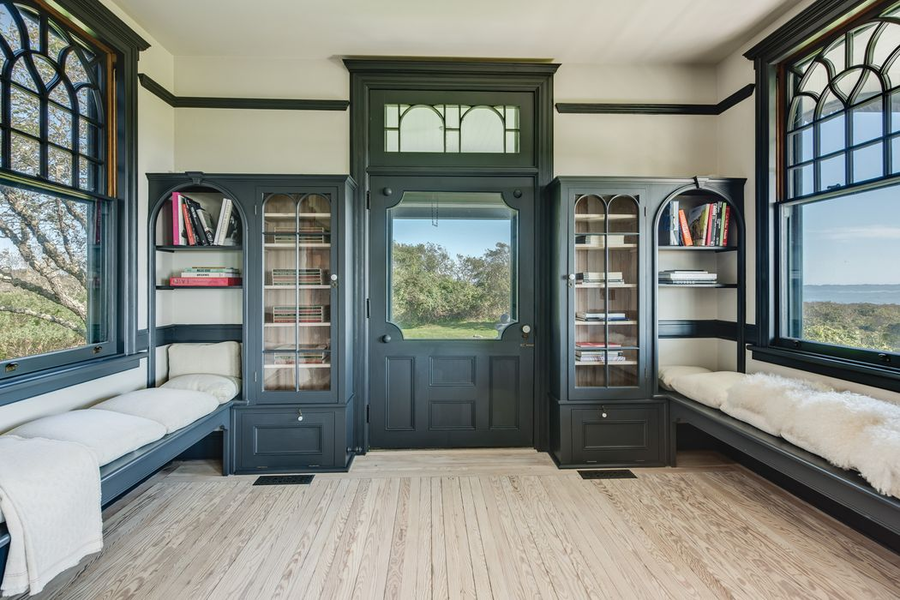
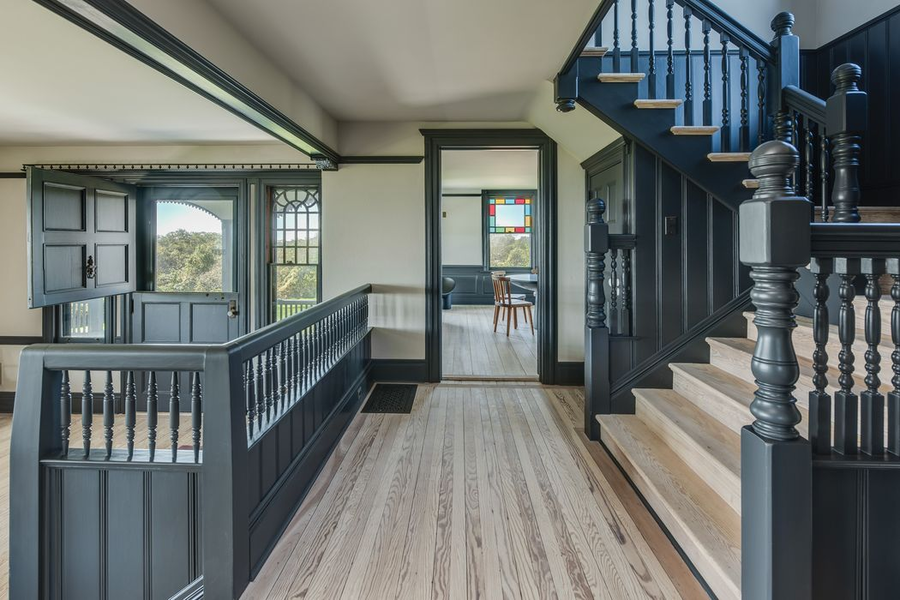
Remodeled and expanded in 1992 by the well-known Hamptons architect Francis Fleetwood (1946 – 2015) and updated yet again in the 2010s, 153 Deforest Road today extends to some 3,800 square foot in total. The house stands on a plot of 2.3 acres and accommodation includes a sunken living room, dining room, library, 4 bedrooms, 3.5 bathrooms and a second floor veranda “with mesmerising views that always inspire.”
In 2016, when priced at £14.8 million, Mansion Global remarked: “The property comes with plans for a future expansion by [the renowned classical] architect Allan Greenberg,” but plainly such has made little difference to attracting interest. Four years later, 153 Deforest Road’s asking price has been slashed to ‘just’ £10.4 million and rather strangely its interior colour scheme is entirely in a depressing shade of grey.
The artist and filmmaker Julian Schnabel, comedian and talk show host Dick Cavett are amongst others to have lived in ‘Seven Sisters’ houses. One, Tick Hall, was destroyed by a fire in 1997 and then completely rebuilt; what happens to the ‘Andrews House’ remains to be seen.
The Names & Numbers – The Andrews House, 153 Deforest Road, Montauk, New York, NY 11954
July 2019 – It is further reduced to £10.4 million ($12.995 million, €11.9 million or درهمX47.7 million) through Sotheby’s International Realty.
June 2018 – It is reduced to £12 million ($14.995 million, €13.7 million or درهم55.1 million) through Sotheby’s International Realty.
February 2018 – It is relisted for £13 million ($16.25 million, €14.9 million or درهم60 million) with Sotheby’s International Realty.
August 2016 – The house is listed for sale for £14.8 million ($18.5 million, €17 million or درهم67.9 million) with Douglas Elliman.
2012 – 153 Deforest Road is sold to a limited liability company for £5.6 million ($6.995 million, €6.4 million or درهم25.7 million).
1992 – 153 Deforest Road is renovated and remodeled by the Chilean born architect Francis Fleetwood (1946 – 2015) – a man described as a “popular East Hampton, New York–based architect [of] romantic country houses” by Architectural Digest in April 2015. Fleetwood’s well-known clients numbered Lauren Bacall, Calvin Klein and Paul McCartney and of them, he once told The New York Times: “They’d all love to be born into a grand old house that had been handed down through the generations… [And, he added, surely with a grin]… So would I.”
Between 1879 and 1888 – 153 Deforest Road was built as a home for the writer and librarian William L. Andrews (1837 – 1920). It formed part of a group of houses known as the ‘Seven Sisters’ and was known as ‘Andrews House.’
1879 – Arthur W. Benson (circa 1798 – 1889) successfully bids $151,000 or the equivalent of £3.2 million today ($4 million, €3.7 million or درهم14.7 million today) for 11,000 acres of land around Montauk in an auction. He then cleverly sold half the land for $600,000 or the equivalent of £12.8 million today ($16 million, €14.7 million or درهم58.8 million today) to the Long Island Rail Road and kept the remainder as his “private playground.” The legitimacy of the ownership of Benson and others of Montauk remains the subject of legal actions by the Montaukett Native Americans to this date.
Vast “fairytale” château in France’s Loire Valley for sale for ‘just’ £28 million in spite of having had £80 million spent already on its renovation; it was most famously owned by Madame de Pompadour
In 2017, a Lebanese-born, Monaco-based property developer named Edmond Baysari placed what selling agents Sotheby’s International Realty describes as the “most beautiful and majestic castle in [the] Loire Valley” on the market. It’s so big and so costly to maintain that it remains for sale still today.
Harvard educated Mr Baysari purchased the 102,257 square foot château for about £4.3 million in 1983 from the Parisian glassmakers Saint-Gorbain. It had been used as their company retreat from 1939 and had earlier belonged to Jeanne Antoinette Poisson – the official chief mistress of Louis XV from 1745 to 1751 and a woman better known as ‘Madame de Pompadour’ – in the years prior to her premature death from tuberculosis in 1764 aged just 42.
Providing “regally appointed” accommodation so vast that it is not even described in detail that includes around 50 bedrooms and a wine cellar capable of housing 30,000 bottles amongst other things, Château de Menars – or the ‘Palace Pompadour’ as some have nicknamed it – costs around £800,000 per year to run. In total, some £80 million has been spent renovating it “using the same methods” that the king’s mistress originally employed.
Of why he is selling, the heirless businessman’s lawyer, Jack Anderson, told Reuters in 2017: “[Mr Baysari] realises destiny is going to take him… His goal is to know that it’s in the hands of someone who’s going to continue the beauty of the chateau and maintain it.”
The 104 acres of grounds that surround the château includes vineyards yielding pinot noir grapes, “elegant” geometric grassed lawns and more than a mile of frontage to the River Loire. Classical sculptures and gazebos abound and there is, according to Reuters, “a cobbled courtyard large enough to land a helicopter” also.
During Baysari’s ownership guests at Château de Menars have supposedly numbered Prince Charles, Mikhail Gorbachev, Mick Jagger and President Ronald Reagan. Now, Sotheby’s International Realty point out: “We think this could be perfect for the creation of a luxury hotel complex… Or for the acquisition of an extraordinary and very large private property.”
His “English spoken” [sic] agent, Jean-Pierre Piganiol, seeks £27.6 million and according to Forbes, “several nine-figure offers from Russian and Middle Eastern billionaires looking for a trophy home” have already been turned down.
The Names & Numbers – Château de Menars, Loire Valley, Blois, 41000, France
1983 to 2017 – The sum said to have been spent on restoration of the Château de Menars is said to have been £80.1 million ($100 million, €91.4 million or درهم367.3 million). Annual upkeep costs are said to be £801,000 million ($1 million, €914,000 million or درهم3.7 million).
1983 – Sold to Edmond Baysari for 5 million francs or the equivalent of £4.3 million ($5.4 million, €4.9 million or درهم19.7 million).
1949 – Declared an Historic Monument of France.
1939 – Sold after his death by Mr Allard’s daughters, Blanche Lasserre, Yvonne Arnodin and Jeanne Goirand, to Saint-Gobain, the Parisian glassmakers, for use as their company retreat.
April 1912 – Acquired for 700,050 francs (about £27,400 at that time) by Félix Allard, a “contractor for public works.” He modernised the château and added mains water, hot air heating, gas lighting and electricity and features including a large gallery area.
1760 – Purchased by Madame de Pompadour (1721 – 1764) for 1 million livres (about £75,000 at that time). She “sold some pearl bracelets to meet the first payment” and commissioned the architect Ange-Jacques Gabriel to build two new wings on either side of the two existing pavilions on the property. Sadly for her, she never saw it completed as she died from tuberculosis in 1764.
1728 to 1732 – Stanislas Leszcynski (1677 – 1766), the King of Poland, stayed at Château de Menars whilst in exile as a guest of the Charon family.
1669 – Jean-Jacques Charon (1643 – 1718), son of Jacques Charon, “added two unequal wings to the chateau and considerably enlarged the estate.”
1646 – Commencement of the construction of a castle on the site by one Jacques Charon. It “composed of a main building and two symmetrical pavilions.”
One-of-one 2008 Rolls-Royce ‘Hyperion’ Phantom drophead coupé by Pininfarina for sale for sum 51% lower than in 2009; it even has a compartment to hold rifles in front of its windscreen
An “opulent” Rolls Royce that was the last car creation supervised by Andrea Pininfarina (before he tragically died aged just 51 in a scooter accident) has been marketed for sums as high as £3.9 million in 2009 and as low as £1.27 million in 2015. It is now once again for sale for just under £2 million.
Created for a “collector” named Roland Hall, a man of whom very little else is known other than that in 2009 Motor Authority suggested he “no longer [had] interest in it,” the one-of-one vehicle – named the ‘Hyperion’ or ‘The High One’ in honour of one of the twelve Titan children of Gaia – was supposedly “designed to evoke memories of cars from the 1930s with its long majestic bonnet, short rear overhang and low rooflines.”
The 6.75-litre V12 drophead two-seater coupé by Pininfarina also has a specially designed Girard-Perregaux watch attached to its dashboard and features a longer trunk than that its donor Phantom.
The “cabin is largely unchanged” and similar to a standard Phantom, but features an “abundance of wood.”Another view of the two-seat interior.The fabric soft-top folds under a solid wood cover.A compartment to house rifles is to be found under the front windscreen. It also features a solid wood cover.The car comes with a one-of-one Girard-Perregaux wristwatch housed in its dashboard; it is badged with both Rolls-Royce and Pininfarina logos.Roof-up.And roof-down.From the front.And finally from the rear.
“Hard head – healing hands” Welsh businessman looks to sell his £18 million Irish estate complete with a James Wyatt mansion and 1,120 acres; Sir David Davies became an Irish citizen after Brexit and has no time for Boris Johnson
Designed by Robert Adam’s rival James Wyatt in 1773 and “clothed in the Italiante manner” in 1859 to 1860, “grand and beautifully executed” Abbey Leix in County Laois is considered “one of Ireland’s most important country houses.”
Placed for sale last June for £17.8 million ($22 million, €20 million or درهم81 million), the main house on the 1,120-acre estate, Abbey Leix House – also known as ‘Abbeyleix House’ and’ Abbeyleix Castle’) – is vast and includes 26,910 square foot of accommodation. Aside from 9 bedrooms and 10 bathrooms, the classical building has amongst other things 3 major rooms on the park front, a deep hall, a music room with original Wyatt plasterwork, a library and a conservatory.
Sir David Davies (born in Wales in 1940) at Abbey Leix.
Renovated and remodeled since being sold to the Welsh born, twice divorced, father of five Sir David Davies in 1995 by its previous owners of the 250 years, the de Vesci family, Abbey Leix is described by agents Sotheby’s International Realty as a “21st century family home with an appropriate balance between comfort and informality on the one hand and grandeur for entertaining and the display of art on the other.”
As well as Ireland’s oldest oak tree being within the grounds, the property also includes some of the “last surviving remnants of Ireland’s ancient woodland” and frontage to the River Nore. There is also a stud farm with 24 loose boxes, a separate farmyard with many outbuildings and 10 lodges and cottages on the estate. The present owner’s private airstrip was created because he wanted to be able to “fly from wherever in the UK straight into the estate.”
Of why he is selling Abbey Leix, “superstar banker and businessman” Sir David – who has variously held senior posts at Chase Manhattan Bank, Hill Samuel, MEPC, Hardine Matheson, Hong Kong Land, Johnson Matthey and EFG Private Bank – told the Business Post:
“I’m organising my whole estate for the benefit of my children… Although the children all love this place very much, none of them wanted to take it on… The typical refrain is ‘Dad, this is your project,’ and I’m lucky enough to have Killoughter House, the home of my childhood, to return to.”
Though born in Wales, Sir David – whom was knighted “for his work as chairman of the Advisory Committee on Business and the Environment” in 1999 – has maintained a home in Ireland throughout his adulthood. He “proudly” became an Irish citizen after Brexit and described “inept” Theresa May as “going from one catastrophe to that leads to the next catastrophe.” Of her successor, the opera loving son of a South Wales steel mill owner went further and recently remarked: “I have no time for Boris Johnson: he doesn’t do his homework, and can’t be trusted.”