Category: EDITORIAL

Editorial comment from Matthew Steeples.

Our editor tells it like it is and he rarely minces his words

  • Save The Free Press

    Save The Free Press

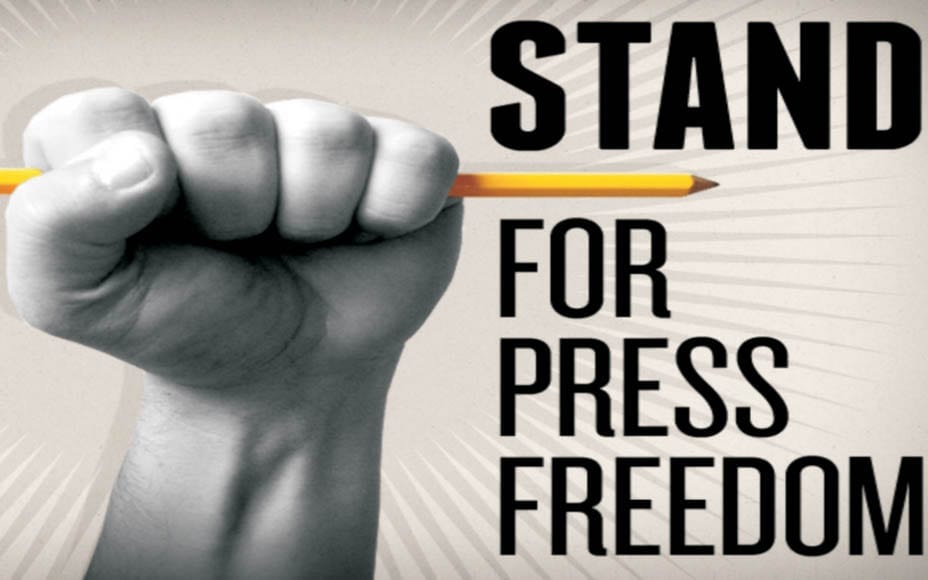
    As #SaveTheSunNewspaper trends on Twitter, an analysis of the sorry state of the British press should act as a wake-up call to our nation suggests Matthew Steeples

    Yesterday, ‘Save The Sun Newspaper’ was all over Twitter. Those clicking the hashtag were not taken to a page bemoaning the fact that the Rupert Murdoch owned paper has lost £68 million in the last year alone, but to a Go Fund Me campaign that has raised over £16,500 that will be donated to the Essex Coronavirus Action Urgent Food Bank Appeal.


    Set up by an Essex based food bank campaigner named Simon Harris, #SaveTheSunNewspaper garnered support because of the intense dislike for a newspaper that some claim is “not fit to wipe their arse with” whilst others (especially the people of Liverpool, a city where it is mostly banned due to their crass reporting of the 1989 Hillsborough disaster) condemn it for its “lies” and “bigoted” reporting.


    Whilst the ‘fake’ hashtag was about helping foodbanks, on Sunday night, the Guardian’s Roy Greenslade highlighted a genuine problem for the British press. In an article titled: “Why our newspapers might not survive the contagion of coronavirus,” the media commentator observed: “It is the bleakest of ironies: the biggest news story in a lifetime is killing off the very industry that exists to report it. Coronavirus is destroying newsprint newspapers across Britain, delivering the coup de grace to businesses that were already in the process of dying.”


    Whilst it has been for long known that traditional media has struggled to cope and find a way to exist and maintain revenue streams in a period where online and social media have battered it, coronavirus, it appears, will be the death knell for many a print newspaper.


    Just like, for example, the restaurant sector, which will likely see many establishments fail to reopen once this pandemic is over due to them not having the resources to get their staff back and pay their rent and suppliers, many print newspapers – most especially local titles – will not weather the storm. As Greenslade points out, “it seems inconceivable that publishers, already struggling to fund journalism, will return to the previous status quo.” Going further, he remarks: “That’s because the status quo was, itself, one of perpetual fragility in which publishers were engaged in the delicate task of managing newsprint decline while, in parallel, seeking to create a digital journalism business model.”


    Here comes an epoch of change and with newsrooms across Britain currently completely empty, publishers will indeed start to rationalise when so-called “normality” returns (in whatever form that takes). Expensive city centre offices will be shut and like cancer, profitless titles will most likely be permanently closed down. This will not be a loss that should be glorified and it will not be something that should celebrated; without good journalism, we’ll all be the poorer. Those thinking we can rely on the Twitterati for news are in for an era of the emperor’s new clothes and they’re in for a future where fake news will quite wrongly reign.


    Facebook: @TheSteepleTimes

    Instagram: @TheSteepleTimes

    Twitter: @SteepleTimes and @M_Steeples


  • A Curate’s Egg of an Ambassador

    A Curate’s Egg of an Ambassador

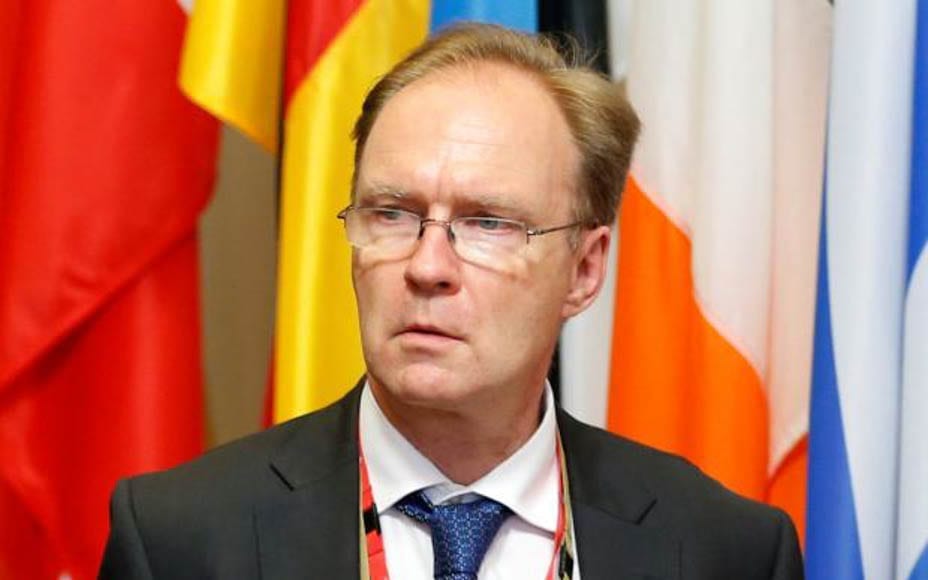
    EU ambassador Sir Ivan Rogers’ resignation is rather like a curate’s egg; he shouldn’t have handled his departure as he did but the result might actually be rather for the positive


    British Permanent Representive to the EU Sir Ivan Rogers did exactly what a diplomat should not do in the wake of resigning. He stood down, entirely rightly, out of principle but, in allowing the note justifying his reasoning to be leaked, he simply put himself in the same boat as the likes of Britain’s former man in Washington, Sir Christopher Meyer – whom published a disgraceful tittle-tattle tale of his days in Washington in 2005.


    Ambassadors are meant to be pillars of discretion, they’re meant to be the deliverers of the wishes of their political bosses and they’re meant to keep themselves under the radar. Sir Ivan has proved himself to be anything but in handling his departure as he did, but beneath the fallout of this unexpected move comes a ray of hope.


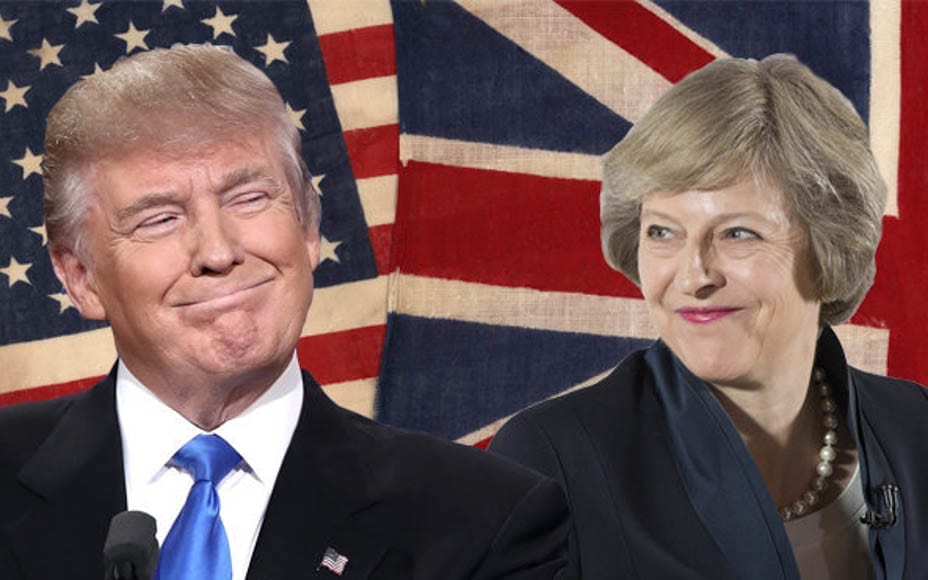
    That someone so close to Britain’s negotiations to leave the EU has described Theresa May’s strategy as “ill-founded arguments” and “muddled thinking” speaks volumes and it highlights her ridiculous “Brexit means Brexit” baloney for what it truly is. It is now time that others in positions of power spoke out and it is time that voices of sanity on this step into the unknown are heard.


    #BetterTogether


    Sir Ivan Rogers’ letter in full:


    Dear All,


    Happy New Year! I hope that you have all had/are still having, a great break, and that you will come back refreshed and ready for an exciting year ahead.


    I am writing to you all on the first day back to tell you that I am today resigning as Permanent Representative.


    As most of you will know, I started here in November 2013. My four-year tour is therefore due to end in October – although in practice if we had been doing the Presidency my time here would have been extended by a few months.


    As we look ahead to the likely timetable for the next few years, and with the invocation of Article 50 coming up shortly, it is obvious that it will be best if the top team in situ at the time that Article 50 is invoked remains there till the end of the process and can also see through the negotiations for any new deal between the UK and the EU27.


    It would obviously make no sense for my role to change hands later this year.


    I have therefore decided to step down now, having done everything that I could in the last six months to contribute my experience, expertise and address book to get the new team at political and official level under way.


    This will permit a new appointee to be in place by the time Article 50 is invoked.


    Importantly, it will also enable that person to play a role in the appointment of Shan’s replacement as DPR. [Shan Morgan his deputy] I know from experience – both my own hugely positive experience of working in partnership with Shan, and from seeing past, less happy, examples – how imperative it is that the PR and DPR operate as a team, if UKREP is to function as well as I believe it has done over the last few years.


    I want to put on record how grateful I am to Shan for the great working relationship we have had.


    She will be hugely missed in UKREP, and by many others here in Brussels, but she will be a tremendous asset to the Welsh government.


    From my soundings before Christmas, I am optimistic that there will be a very good field of candidates for the DPR role.


    But it is right that these two roles now get considered and filled alongside each other, and for my successor to play the leading role in making the DPR appointment.


    I shall therefore stand aside from the process at this point.


    I know that this news will add, temporarily, to the uncertainty that I know, from our many discussions in the autumn, you are all feeling about the role of UKREP in the coming months and years of negotiations over “Brexit”.


    I am sorry about that, but I hope that it will help produce earlier and greater clarity on the role that UKREP should play.


    My own view remains as it has always been. We do not yet know what the government will set as negotiating objectives for the UK’s relationship with the EU after exit.


    There is much we will not know until later this year about the political shape of the EU itself, and who the political protagonists in any negotiation with the UK will be.


    But in any negotiation which addresses the new relationship, the technical expertise, the detailed knowledge of positions on the other side of the table – and the reasons for them, and the divisions amongst them – and the negotiating experience and savvy that the people in this building bring, make it essential for all parts of UKREP to be centrally involved in the negotiations if the UK is to achieve the best possible outcomes.


    Serious multilateral negotiating experience is in short supply in Whitehall, and that is not the case in the Commission or in the Council.


    The government will only achieve the best for the country if it harnesses the best experience we have – a large proportion of which is concentrated in UKREP – and negotiates resolutely.


    Senior ministers, who will decide on our positions, issue by issue, also need from you detailed, unvarnished – even where this is uncomfortable – and nuanced understanding of the views, interests and incentives of the other 27.


    The structure of the UK’s negotiating team and the allocation of roles and responsibilities to support that team, needs rapid resolution.


    The working methods which enable the team in London and Brussels to function seamlessly need also to be strengthened.


    The great strength of the UK system – at least as it has been perceived by all others in the EU – has always been its unique combination of policy depth, expertise and coherence, message co-ordination and discipline, and the ability to negotiate with skill and determination.


    UKREP has always been key to all of that. We shall need it more than ever in the years ahead.


    As I have argued consistently at every level since June, many opportunities for the UK in the future will derive from the mere fact of having left and being free to take a different path.


    But others will depend entirely on the precise shape of deals we can negotiate in the years ahead.


    Contrary to the beliefs of some, free trade does not just happen when it is not thwarted by authorities: increasing market access to other markets and consumer choice in our own, depends on the deals, multilateral, plurilateral and bilateral that we strike, and the terms that we agree.


    I shall advise my successor to continue to make these points.


    Meanwhile, I would urge you all to stick with it, to keep on working at intensifying your links with opposite numbers in DEXEU [Department for Exiting the EU] and line ministries and to keep on contributing your expertise to the policy-making process as negotiating objectives get drawn up.


    The famed UKREP combination of immense creativity with realism ground in negotiating experience, is needed more than ever right now.


    On a personal level, leaving UKREP will be a tremendous wrench. I have had the great good fortune, and the immense privilege, in my civil service career, to have held some really interesting and challenging roles: to have served four successive UK prime ministers very closely; to have been EU, G20 and G8 Sherpa; to have chaired a G8 Presidency and to have taken part in some of the most fraught, and fascinating, EU negotiations of the last 25 years – in areas from tax, to the MFF to the renegotiation.


    Of all of these posts, I have enjoyed being the Permanent Representative more than any other I have ever held.


    That is, overwhelmingly, because of all of you and what you all make UKREP: a supremely professional place, with a fantastic co-operative culture, which brings together talented people whether locally employed or UK-based and uniquely brings together people from the home civil service with those from the Foreign Office.


    UKREP sets itself demanding standards, but people also take the time to support each other which also helps make it an amazingly fun and stimulating place to work.


    I am grateful for everything you have all done over the last few years to make this such a fantastic operation.


    For my part, I hope that in my day-to-day dealings with you I have demonstrated the values which I have always espoused as a public servant.


    I hope you will continue to challenge ill-founded arguments and muddled thinking and that you will never be afraid to speak the truth to those in power.


    I hope that you will support each other in those difficult moments where you have to deliver messages that are disagreeable to those who need to hear them.


    I hope that you will continue to be interested in the views of others, even where you disagree with them, and in understanding why others act and think in the way that they do.


    I hope that you will always provide the best advice and counsel you can to the politicians that our people have elected, and be proud of the essential role we play in the service of a great democracy.


    Ivan
     

  • Happy New Year 2017

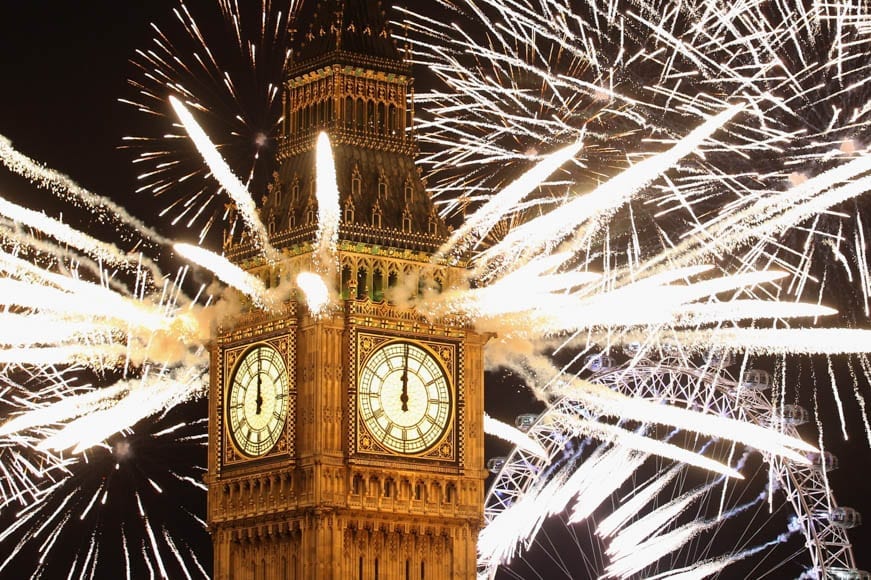
    Happy New Year 2017

    Wishing all readers a Happy New Year and prosperity and cheer in 2017 and a New Year missive from Donald Trump


    We thank all our readers for supporting us in 2016 – a year of great turbulence – and are pleased to have shared a huge array of moments and happenings with you.


    May we wish you the very best for the New Year and may 2017 be a great year for us all.


    Donald Trump’s wishes to his “many enemies”

    Elsewhere, ‘The Donald’ took to Twitter to share his thoughts also. He tweeted:


    “Happy New Year to all, including to my many enemies and those who have fought me and lost so badly they just don’t know what to do. Love!”


    You quite simply couldn’t make it up.


  • 2017 – A Step Into The Unknown

    2017 – A Step Into The Unknown

    Matthew Steeples shares predictions for 2017


    2016 has been a year when sense was turned on its head. Donald Trump being elected President of the United States of America and Brexit in Britain were not expected and the only beneficiaries thus far have been those who bet on both.

    In the coming year, one can only hope that rationality intervenes. Theresa May’s “Brexit means Brexit” will hopefully get another dose of Gina Miller at the end of January and by the 20th, maybe, just maybe, Mr Trump might have had a lobotomy.

    Elections in France and Germany in May and September provide some cause for concern but most commentators expect Marine Le Pen to be trounced and Angela Merkel to win. That, at least, provides a ray of hope.

    A close relationship between Donald Trump and Vladimir Putin is what, though, poses a true threat to world peace. It certainly feels as if we’re headed into an era akin to the 1930s and with the madman pledging to govern by Twitter and rallies, this is a time to sit tight and pray for a miracle.


  • The Rise of The Angry Man

    The Rise of The Angry Man

    2016 has given the ‘angry man’ a voice suggests Matthew Steeples


    Last night, in a bar in Chelsea, a middle-aged man came up to me and told me I’d “misunderstood” him. This individual, Richard Neagle, can be credited for trying to apologise but given he’d previously termed me “mentally unbalanced”, I felt justified in simply responding simply: “Please go away”.


    Over recent months, I’ve encountered many of his type and Bill Clinton supposedly tells a similar tale. He is said to have remarked that Donald Trump was elected by “white, angry men” to someone in a bookshop recently and to me, Brexit has given the British equivalent the very same voice and one that they don’t deserve.


    These men – other examples of whom I’ll name as Rupert James and Huw Shakeshaft – previously behaved themselves (to an extent) but with Trump headed to The White House and Nigel Farage his sidekick stooge, they think they can say whatever they want.


    Racism and bigotry have risen to the fore and the hatefulness towards decent people like “the bitch former model”, as one especially bitter crone referenced Gina Miller, is deemed acceptable by these characters. Jo Cox MP got murdered by an extreme version of such a person this year and Anna Soubry MP was forced to report another to the police after they suggested she should “be hanged”. Gary Lineker, equally, suffered for simply standing up for immigrants and in the previously mentioned bar, a female version of the aforementioned proved it’s not just the men who are at it when she told the foreign man serving her drinks: “It’s your sort that have cost me my job”.


    The rule of “if you’ve nothing decent to say, say nothing at all” has been thrown out of the window in 2016 and now mob rule prevails. It’s unacceptable and it has to stop.


  • The Price of Doing Nothing

    The Price of Doing Nothing

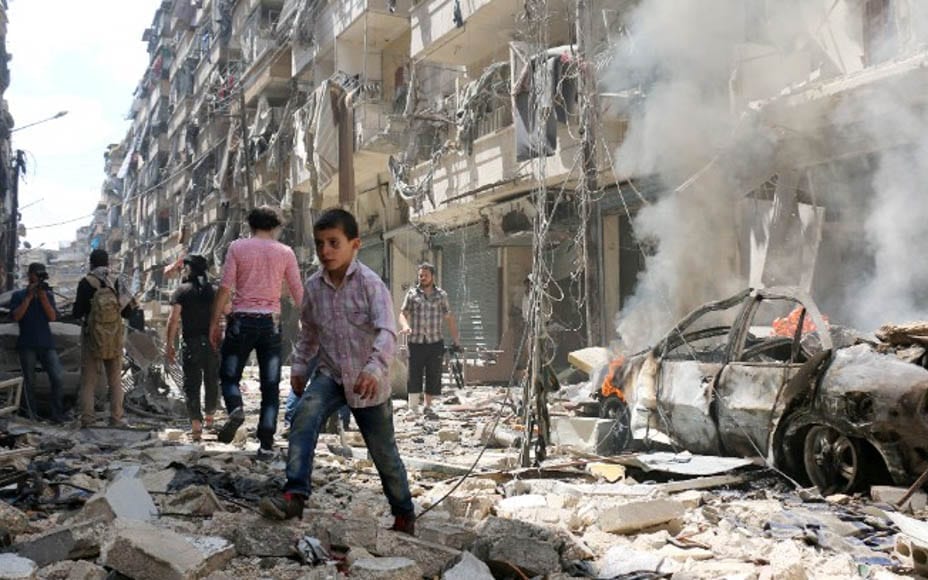
    Matthew Steeples suggests George Osborne was entirely right to criticise the West’s failure to act over Aleppo


    Yesterday, George Osborne rightly blamed the West for the horror of what is happening in Aleppo. He condemned MPs refusal to intervene there in 2013 and suggested Parliament’s failure to defend Syrian civilians has resulted in a “terrible tragedy”.


    Speaking from the backbenches for the first time since he was there in the debate over the Iraq war, the former Chancellor commented:


    “We have come to a point where it is impossible to intervene anywhere, that we lack the political will as the West to intervene”.


    “I have some hope out of this terrible tragedy in Syria: We are beginning to learn the price of not intervening”.


    “We did not intervene in Syria. Tens of thousands of people have been killed as a result. Millions of refugees have been sent from their homes”.


    “We have allowed a terrorist state to emerge in the form of ISIS. Russia, for the first time since Henry Kissinger kicked them out of the Middle East in the 1970s, is back as the decisive player in that region. That is the price of not intervening”.


    In his words, George Osborne was sadly spot on. We live in worrying times and we must now act on the words of Edmund Burke. He once reminded us that: “The only thing necessary for the triumph of evil is for good men to do nothing”. It is time we intervened.


  • Free Raif Badawi

    Free Raif Badawi

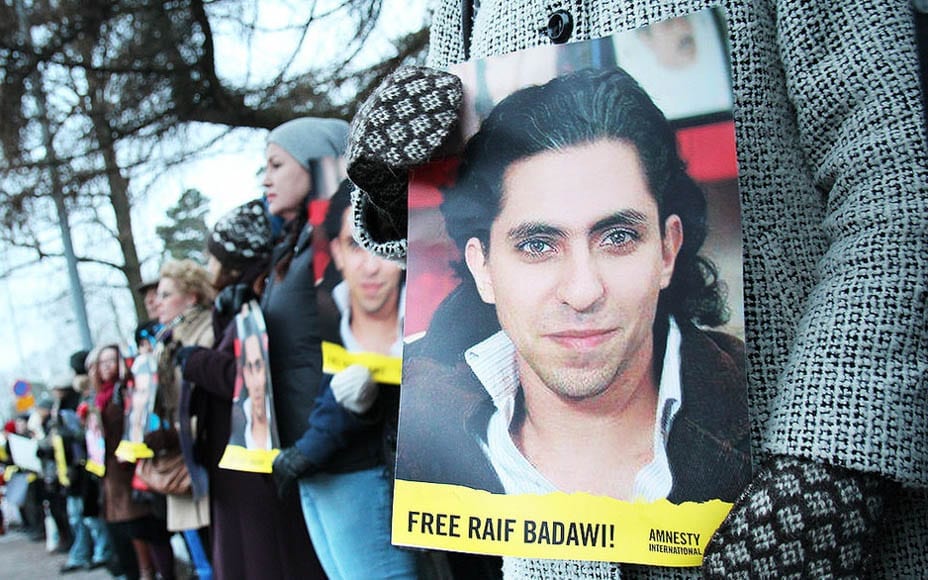
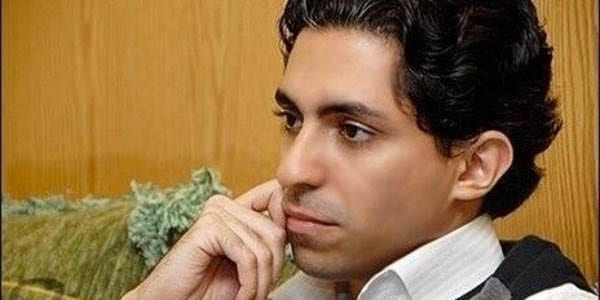
    Saudi Arabia should free Raif Badawi; we urge readers to support a message calling for his release


    With rights come responsibilities and with freedom of speech and freedom of expression comes a responsibility to avoid making hateful and false comments. The blogger Raif Badawi is a man who understood that but shockingly in Saudi Arabia, simply for blogging about human rights he was sentenced to 10 years in jail and 1,000 lashes in 2014.


    The only “crime” committed by Badawi, in reality, was to enable social debate online. In any other domain, this would be regarded as something to be lauded and though Saudi Arabia has rejected international condemnation of criticism of its treatment of this 32-year old as “interference in its internal affairs”, we join those speaking out against this unnecessarily harsh sentence.


    Today, at 12 noon EST, a one-time message will be released on social media calling on Saudi Arabia to “do the right thing” and “release the imprisoned blogger Raif Badawi to his family in Canada”.


    We urge all our readers to support this campaign by clicking here.


    #BackLash #FreeRaif #JeSusisRaif


    Free Raif Badawi – Saudi Arabia should free blogger Raif Badawi; we urge readers to support a message calling for his release – #BackLash #FreeRaif #JeSusisRaif

  • Bitter Bailey

    Bitter Bailey

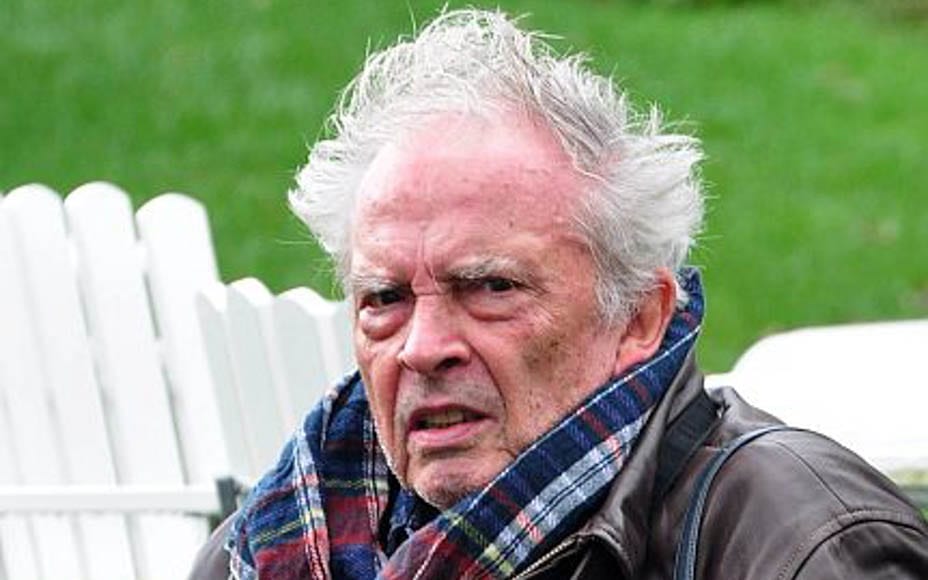
    The Evening Standard’s interview with leading member of “The Club” photographer David Bailey is surprise, surprise nothing but a suck-up to a talented yet pompous prick of a man suggests Matthew Steeples


    On Monday, the Evening Standard published an interview with a man they termed “the original bad boy photographer”, David Bailey.


    Given the paper is owned by Evgeny Lebedev – a man whose oligarch father stated: “I do not treat newspapers as business. I treat them as my responsibility” on buying The Independent (he later closed it down) and a man who is either in the company of a pet wolfdog named Boris or toady individuals like titleless David Furnish and talentless Elizabeth Hurley – one sadly could only expect something that would end up being a suck-up to a plainly extremely brilliant, yet truly repugnantly rude man.


    I admit I am biased: I was introduced to David Bailey by a PR at a party for a property development, for which he’d been handsomely paid to provide photographs for each and every apartment, some years ago. I politely said: “Hello, Mr Bailey, a pleasure to meet you”. He stood there grimacing and grunted. The perplexed PR interjected the silence: “David, please could you sign a catalogue [about the development] for this man? I’d like him to have a signed version”. Bailey answered: “What does he want me to sign? My fucking cock?” I walked off into the night with a copy of said tome and gave it to a beggar.


    When I recounted this tale to two other legendary photographers, they shared with me similar tales of how Bailey is notorious for his arrogance and sheer disdain of others. They claimed he is regarded unabashedly angry by both subjects and contemporaries, but in conversation with the Standard’s Charlotte Edwards, he actually just came across as a bitter old bore.


    Aside from bizarrely lauding Donald Trump’s “power”, Bailey predictably referenced his closeness to the Krays and the Murdochs (he photographed the weddings of both). He commented “if you’re an artist you’ve got to have an ego” and claimed “now is my heyday”. He termed Mario Testino “[without] talent” and remarked that he views selfies to be “a form of masturbation” (he’s not wrong there). That he considers Lucian Freud as a “superficial” being who should have “put his effort into something else” is yet further proof that fame has gone to his head but that he supposedly once compared himself to Picasso (he disputes this) shows true delusion.


    At one point Bailey refers to how he was a “fucking pain in the arse” when he was younger. Plainly, this chippy, yet talented man still is.


  • The Times They are a-Changin’ (and All it Takes is a Tweet)

    The Times They are a-Changin’ (and All it Takes is a Tweet)

    Matthew Steeples highlights the workings and truths behind the changed political landscape of 2016


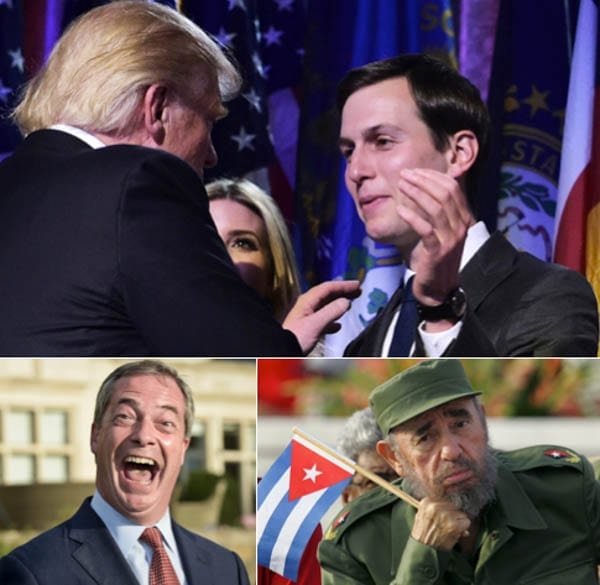
    2016 will be remembered as the year when the world flipped convention on its head. With the brutal monster Fidel Castro finally gone, Donald Trump headed for The White House and Brexit in Britain, comes a new era but it is not one that is actually as clear-cut as many make out.


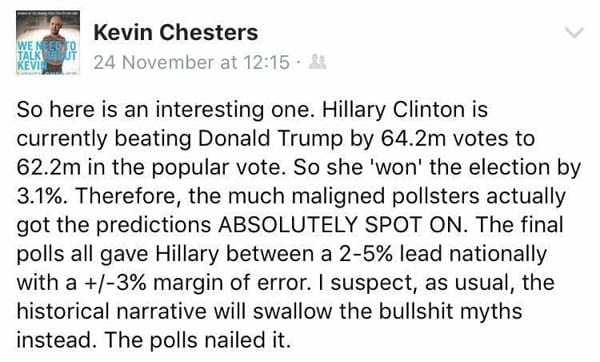
    Unlike in previous eras, social media undoubtedly has had more influence than the traditional media and pollsters have taken a bashing. In spite, for example, of the fact that “Hillary Clinton [is] currently beating Donald Trump by 64.2 million votes to 62.2 million in the popular vote” and thus “winning the election by 3.1%”, according to Kevin Chesters, chief strategy officer at Ogilvy & Mather Group UK, “as usual the historical narrative will swallow the bulls**t myths instead”. He rightly points out “the polls nailed it” as they predicted “all gave Hillary between a 2-5% lead nationally with a +/- 3% margin of error” but the likes of Breitbart, unsurprisingly instead, spread a myth that ‘The Donald’s’ victory was epic. It was just that, in the sense that he achieved a win in spite of being mocked as an extremist joker who’d fail at the beginning, but the true margin of support for him is indicated by the fact that nationwide turnout fell from 61.6% in 2008 to 57.9% in 2016.


    The Times They are a-Changin’ (and All it Takes is a Tweet) – Matthew Steeples highlights the workings and truths behind the changed political landscape of 2016 – Donald Trump, Nigel Farage, Jared Kushner, Eric Schmidt, Peter Thiel, Dan Hodges, Kevin Chesters, Nicola Sturgeon, Hillary Clinton, Katy Perry, Fidel Castro, Brexit, Trump in The White HouseThe Times They are a-Changin’ (and All it Takes is a Tweet) – Matthew Steeples highlights the workings and truths behind the changed political landscape of 2016 – Donald Trump, Nigel Farage, Jared Kushner, Eric Schmidt, Peter Thiel, Dan Hodges, Kevin Chesters, Nicola Sturgeon, Hillary Clinton, Katy Perry, Fidel Castro, Brexit, Trump in The White HouseThe Times They are a-Changin’ (and All it Takes is a Tweet) – Matthew Steeples highlights the workings and truths behind the changed political landscape of 2016 – Donald Trump, Nigel Farage, Jared Kushner, Eric Schmidt, Peter Thiel, Dan Hodges, Kevin Chesters, Nicola Sturgeon, Hillary Clinton, Katy Perry, Fidel Castro, Brexit, Trump in The White House


    In Britain, equally, the Brexit vote was “won” by just 2.2% and thus both results can be described as being far less significant than the right-wing media make out. Nigel Farage is lauded as a “hero”, yet, despite standing seven times, has never won a seat in the House of Commons; Nicola Sturgeon’s SNP failed to get independence for Scotland yet she dominates our screens daily.


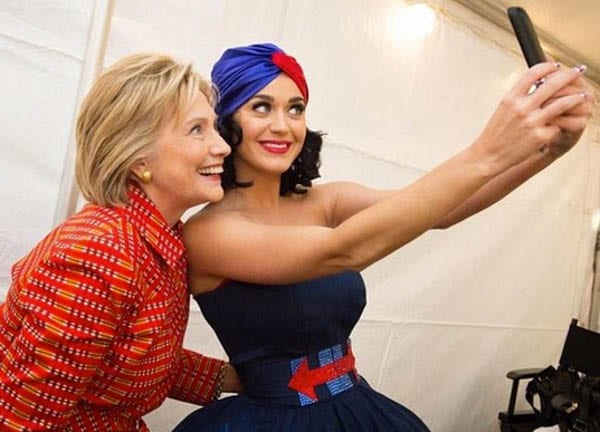
    Trump and Farage have clearly both been clever in their respective strategies and just as Castro opted to ignore convention and ruled Cuba with a rod of iron, these two ditched the politics we know and played an entirely different game. Hillary Clinton’s decision to stand with self-serving billionaires and loudmouth celebrities truly backfired and instead, in Jared Kushner, his 35-year old businessman son-in-law, and the tech tycoon Peter Thiel, Trump was led to a strategy that trounced traditional political convention.


    A truly revealing analysis of Kushner’s genius appeared in Forbes this week when he was interviewed by for the first time since Trump’s victory. In the feature article, Eric Schmidt, the former CEO of Google and designer of the Clinton campaign’s technology system, stated:


    “Best I can tell, [Kushner] actually ran the campaign and did it with essentially no resources… Jared understood the online world in a way the traditional media folks didn’t. He managed to assemble a presidential campaign on a shoestring using new technology and won. That’s a big deal”.


    Kushner himself added:


    “I helped facilitate a lot of relationships that wouldn’t have happened otherwise… People were being told in Washington that if they did any work for the Trump campaign, they would never be able to work in Republican politics again. I hired a great tax-policy expert who joined under two conditions: We couldn’t tell anybody he worked for the campaign, and he was going to charge us double”.


    “People really saw hope in [Donald Trump’s] message. They wanted the things that wouldn’t have been obvious to a lot of people I would meet in the New York media world, the Upper East Side or at Robin Hood [Foundation] dinners”.


    “I called some of my friends from Silicon Valley, some of the best digital marketers in the world, and asked how you scale this stuff. They gave me their subcontractors… Our best people were mostly the ones who volunteered for me pro bono. People from the business world, people from non-traditional backgrounds”.


    “We weren’t afraid to make changes. We weren’t afraid to fail. We tried to do things very cheaply, very quickly. And if it wasn’t working, we would kill it quickly… It meant making quick decisions, fixing things that were broken and scaling things that worked”.


    As Dan Hodges concluded in an editorial in today’s Mail Online:


    “Once, we used to send a gunboat. In the post-Brexit era, all it takes is a tweet”.


  • Forget The Emails

    Forget The Emails

    As the opinion website Vox.com exposes why Hillary Clinton’s email scandal doesn’t actually matter that much; we suggest it’s time American voters moved on and it’s time they dumped The Trump


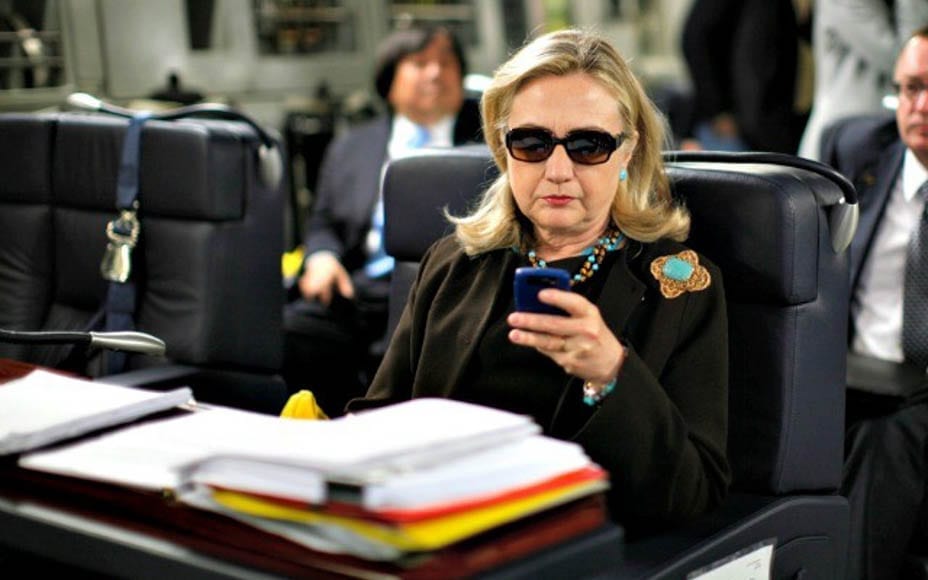
    Hillary Clinton undoubtedly messed up over the way she used email and servers but on Friday, an “opinion website” named Vox.com provided the best analysis we’ve seen yet as to why the “Clinton email scandal” that has dominated the 2016 election campaign is actually nothing but a load of” bullshit”.


    The crux of Clinton’s problems, Vox suggests, is that she did not show remorse early enough when the “Clinton email scandal” first broke and as a result public perceptions of her became “overwhelmingly negative”. We would add that Donald Trump cleverly seized upon this and thus “Crooked Hillary” was born. It is a phrase that has stuck in voters minds and each time it’s been uttered, the image of both Hillary Clinton and her husband as “dodgy” and “devious” has been reinforced.


    With an FBI “in favour of its apparently preferred candidate [Donald Trump] in a dangerous way” and the likes of fugitive from justice Julian Assange and the rabidly angry journalist John Pilger also, elsewhere in RT, claiming Clinton is a “cog for Goldman Sachs and the Saudis”, Clinton’s emails have become something far more important than they truly are. This storm-in-a-teacup is exactly that and the result is that the real issues facing America have been utterly forgotten in the 2016 presidential race.


    Vox’s Matthew Yglesias’ concluding remarks are key to understanding why the “Clinton email scandal” isn’t really a scandal. We share them in full and urge readers to read the entire article by clicking here:


    Network newscasts have, remarkably, dedicated more airtime to coverage of Clinton’s emails than to all policy issues combined.


    Cable news has been, if anything, worse, and many prestige outlets have joined the pileup. One malign result of obsessive email coverage is that the public is left totally unaware of the policy stakes in the election. Another is that the constant vague recitations of the phrase ‘‘Clinton email scandal’’ have firmly implanted the notion that there is something scandalous about anything involving Hillary Clinton and email, including her campaign manager getting hacked or the revelation that one of her aides sometimes checked mail on her husband’s computer.


    But none of this is true. Clinton broke no laws according to the FBI itself. Her setup gave her no power to evade federal transparency laws beyond what anyone who has a personal email account of any kind has. Her stated explanation for her conduct is entirely believable, fits the facts perfectly, and is entirely plausible to anyone who doesn’t simply start with the assumption that she’s guilty of something.


    Given Powell’s conduct, Clinton wasn’t even breaking with an informal precedent. The very worst you can say is that, faced with an annoying government IT policy, she used her stature to find a personal workaround rather than a systemic fix that would work for everyone. To spend so much time on such a trivial matter would be absurd in a city council race, much less a presidential election. To do so in circumstances when it advances the electoral prospects of a rival who has shattered all precedents in terms of lacking transparency or basic honesty is infinitely more scandalous than anything related to the server itself.


    Trump supporters will criticise Vox’s analysis as being designed to appeal to the young and liberal and thus ignorant of the mass of America, but this website, it must be noted, has gained a following of over 54.1 million unique visitors per month since it was co-founded by a much respected blogger and “modern day David Frost” named Ezra Klein in 2014. The article’s author and fellow co-founder of Vox, Harvard educated Matthew Yglesias, himself, has over 205,000 followers on Twitter and is anything but a natural ally of Clinton: He previously voted for Mitt Romney and has been a “strong supporter of invading Iraq, Iran and North Korea”.


    We never thought we’d find ourselves saying this but The Steeple Times must now join those endorsing Hillary Clinton. If America is to retain its place as a respected world-leading nation, Donald Trump cannot be its front man. He is a disgrace, an embarrassment and a lunatic and whilst Hillary Clinton is far from perfect, she offers something that her opponent will never grasp or possess: Sense, experience and stability.


    We join with Vox and make the following suggestion to all Americans with an opportunity to vote this week: “If you agree with [Clinton] on policy, vote with a clear conscience about the server”.


    #DumpTheTrump