Tag: United Kingdom

  • Boujis in the basement?

    Boujis in the basement?

    Matthew Steeples explores the story of an empty Kensington mansion


    A multi-million pound 8-bedroomed house in Kensington isn’t anything unusual. In fact, rather, they’re ten a penny. In this, one of the wealthiest boroughs in the land, large, expensive homes are just the norm.


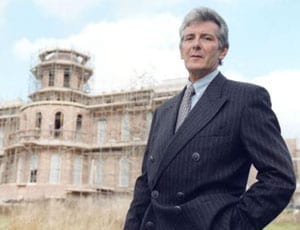
    An image of the existing exterior of No. 1 Campden Hill, London, W8 7AD
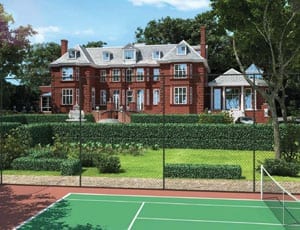
    A rendered image of how the exterior of the renovated property might look
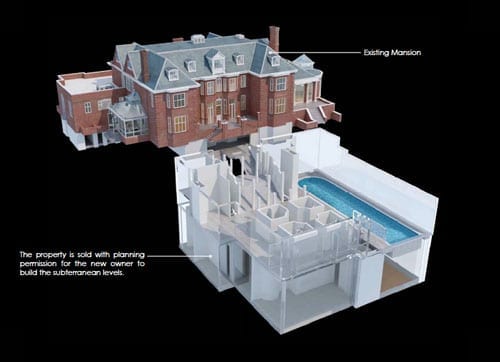
    The plans show a vast subterranean development that will vastly increase the size of No. 1 Campden Hill

    No. 1 Campden Hill, which is being marketed for an undisclosed eight-figure sum, is in a quite different league. Here is a detached Edwardian house in an acre of grounds just to the north of Kensington High Street. It’s an unrenovated property but it attracted much press attention in October 2011 because it was place on the market in October 2011 at a price of £75,000,000. Yes, you heard it right: £75 million for a fixer-upper. Last week, Radio 4 made a hell of a fuss about a derelict semi-detached house in Newcastle selling for just £14,000 so this truly must be something special.


    Architect Edward P. Warren (1856 – 1937), far right, in the offices of Bodley & Garner, 14 South Square, Gray’s Inn, London

    The architect of the house Edward Prioleau Warren (1856 – 1937), a Bristol born architect and archaeologist, was best known for “Oxford colleges and minor country houses” but also designed the War Cemetery at Basra. He was a friend and adviser to the American novelist Henry James and in addition to building No. 1 Campden Hill in 1915, he also designed a house at 5 Palace Green in 1906 and another, Estcort House in Kensington Palace Gardens, in 1904. Warren’s guiding style is described as having been to recreate an “understated revival of English late 17th century” architecture and at No. 1 Campden Hill he created just that.


    Colonel Edmond Grove-Hills (1864 – 1922), born Edmond Hills, and his wife, Juliet Spencer-Bell, were the architect’s clients. A plaque on the building bares their names and the following dedication:


    This House I built for Me & Mine

    May it be of Peace A Shrine

    And no Enmity or Sin

    Ever find its way therein

    AD 1915


    Sadly for the Grove-Hills, the following year, their son, Second Lieutenant Charles Herbert-Hills (1895 – 1916) was killed on the Somme aged just 21. His father, meanwhile, was awarded a CBE in 1918 after having served as the Assistant Chief Engineer of Eastern Command during the war.


    Aside from his military exploits, Edmond Grove-Hills is best known for his role as president of the Royal Astronomical Society. He took part in observations of eclipse of the sun in Japan in 1896, India in 1898 and Russia in 1914 and contributed papers analysing both this and the causes of the irregular movements of the earth’s axis of rotation.


    In 1951, No. 1 Campden Hill was purchased by the government of Uruguay and it became the residence of their ambassador to the United Kingdom. For the next fifty years the building was barely altered but when the lease from the Phillimore Kensington Estate came to an end, there were legal problems as the 1951 transfer had never been stamped. Of this, Sharon Mulroney of Forsters, the legal representatives of Phillimore, commented:


    “It is highly unusual to be faced with complications of this kind when dealing with a registered London title, but this made the transaction all the more fascinating. Even the decision to allow ambassadorial staff to return to the property for security purposes after completion was fraught with potential problems about security of tenure, employment and tax.”
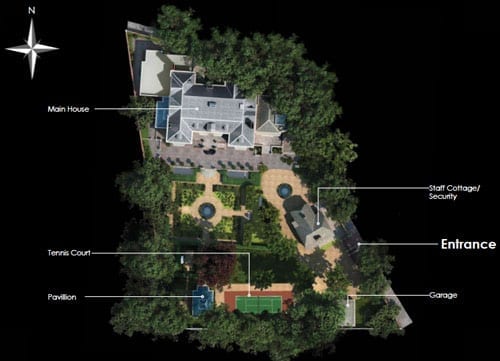
     

    The proposed site plan shows the addition of a garden pavilion, staff/security cottage and a tennis court

    Eventually, without issue, the Phillimore Estate sold on the house in 2001 for a price of approximately £17,000,000. In the years since, the property was effectively mothballed as all the purchasers have done is to have obtained planning permission to redevelop the building into a mammoth mansion of epic proportions.
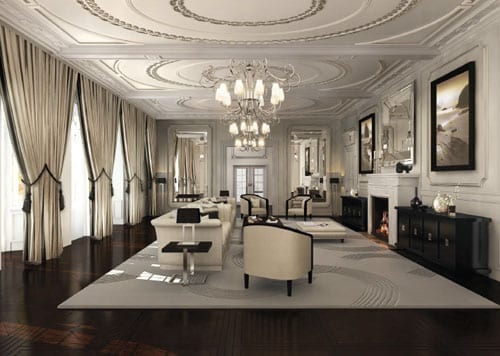
     

    A computer rendered image of how the drawing room might look
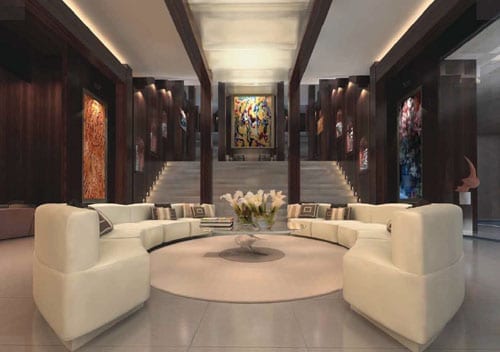
    The “leisure area” is reminiscent of the entrance to The Mandarin Oriental Hyde Park Hotel
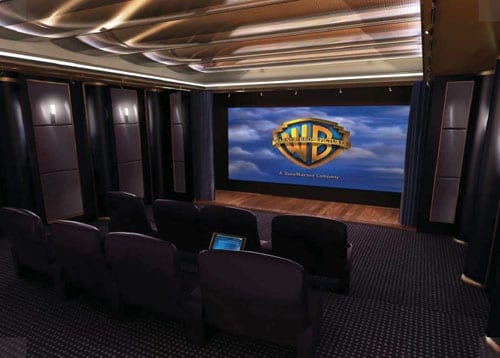
    The private home cinema would be the envy of any movie buff
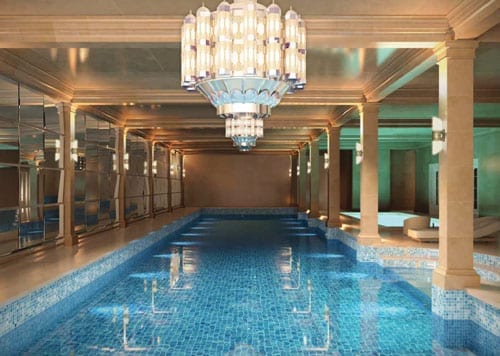
    The swimming pool
    The wine cellar is rather like a contemporary take on Berry Bros. & Rudd’s flagship store in St. James’s Street
    And to complete it all… The plans include your own version of Boujis in the basement

    The approved plans show designs for something quite remarkable. Warren’s “understated” residence will be replaced with 8 vast bedroom suites, grand entertaining spaces, a lift and even bedrooms for 5 staff. In addition to a full-scale renovation of the original freehold house, there is scope to provide a total of 30,000 square feet of accommodation by adding a huge subterranean complex that will include a 25-metre swimming pool, court, squash court, gym, sauna, steam room, function room, entertainment room, home cinema, wine tasting room and even a nightclub to rival any of Kensington’s trendiest haunts.


    On that basis alone, No. 1 Campden Hill is surely the ideal residence for Prince Harry: “Who needs Boujis?” we hear him cry.


    No. 1 Campden Hill, London, W8 7AD is for sale through Knight Frank. For more details contact Roddy Craggs on +44 (0) 20 7938 4311 or go to: http://search.knightfrank.com/ken100161 to download a brochure.


    For more information about The Phillimore Estate, go to: http://www.phillimore-kensington-estate.co.uk
  • Antony Costa

    Antony Costa

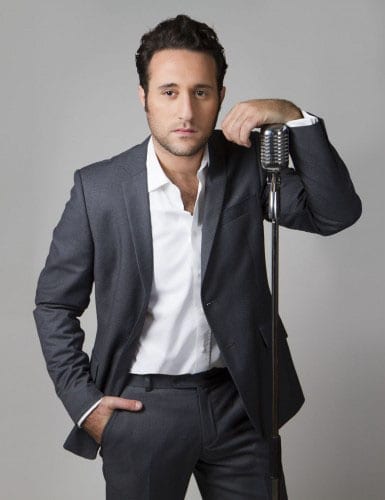
    Edgware born Costa is best known as a member of the boy band Blue but he actually started out as an actor in the BBC’s Grange Hill. He’s sung with Stevie Wonder and Elton John and thinks that groups created via shows such as The X-Factor achieve fame “the wrong way.” We’d say he has a point.

  • Laura Carmichael

    Laura Carmichael

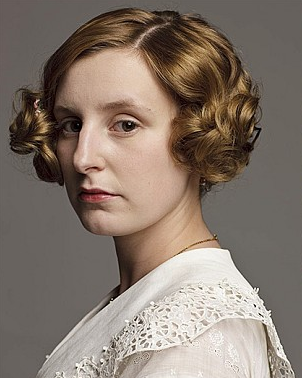
    A Southampton born graduate of the Bristol Old Vic Theatre School, Laura Carmichael came to public prominence in ITV1’s Downton Abbey. Her October 2012 West End debut, opposite Anna Friel in Uncle Vanya, was briefly interrupted by Sir Peter Hall heckling. He’s since apologised and all’s well once again. With some 20,000 followers on Twitter, this rising star declares her true love to be Twiglets.


  • Adele Adkins

    Adele Adkins

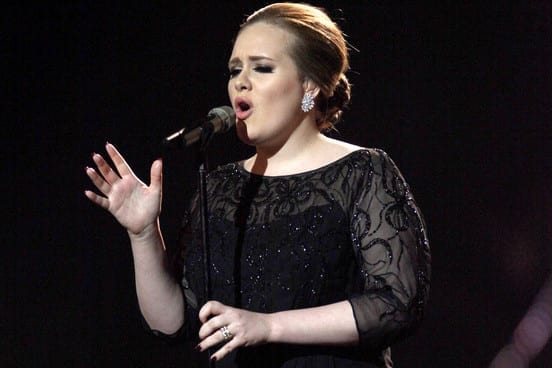
    “I don’t know what’s going to happen if my music career goes wrong,” states this Tottenham born singer. Having been named “one of the most influential people in the world” by TIME Magazine and broken the record for the longest number-1 album by a woman in Billboard history, she really need not worry. Adele’s still “Someone Like You,” except she’s now worth in excess of £23 million and is guaranteed a place amongst the music greats. Gordon Brown wrote to this Labour supporter to tell her that she’s a “light end of the tunnel” but we prefer the view of former Guns N’ Roses guitarist Slash. Of her, he proclaims: “She’s great. She’s a shot in the arm for this industry.”

  • Beverley Craven

    Beverley Craven

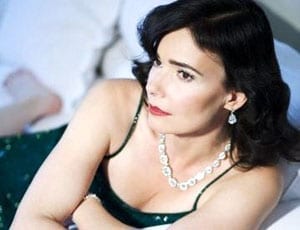
    This British singer-songwriter was born in Colombo, Sir Lanka whilst her father was there working for Kodak. Influenced by Elton John and Kate Bush, she began her career touring with Bobby Womack but it was her 1991 single, “Promise Me,” that catapulted Craven into the big time. After a period raising a family, she’s now back in the business and even appeared with her daughter, Mollie, on ITV’s Take Me Out in February 2012.

  • Windows on the WAGs

    Windows on the WAGs

    A £15 million mansion fit for a self-made tycoon or an upwardly mobile WAG


    While the youth of the Kings Road and Loughton have featured in the reality shows Made in Chelsea and The Only Way is Essex, their counterparts in Cheshire have yet to undergo the same social experiment. Having come across a fair few of their number though, I can only imagine their antics would result in television of comparable car crash proportions.


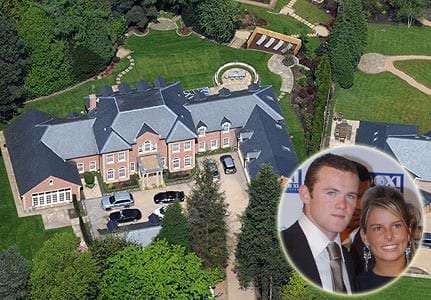
    Wayne and Coleen Rooney and their home on Collar House Drive in Prestbury, East Cheshire
    Warrington born Kerry Katona isn’t considered one of the “Cheshire set’s” finest exports


    Cheshire itself is a county of contrasts: there’s the farming and hunting set and then there’s the new money. From the 1950s onwards an invasion of nouveau riche footballers and self-made business people came to Alderley Edge and Wilmslow and it is said that there are more Rolls-Royces per square mile here than anywhere else in the UK.


    Though today’s Coronation Street actresses and Man United players generally favour brand new homes in Prestbury, the new wealth have not just consigned themselves to such. The likes of Take That’s Gary Barlow, for a time, owned Delamere Manor at Cuddington but sold it in 2005 due to his ever-growing commitments elsewhere. Equally, Neil Hamilton, whilst MP for Tatton, lived at The Old Rectory at Nether Alderley with his formidable wife Christine but when their days in politics came to an end, they too moved on. For a time, David and Victoria Beckham were the undoubted glitterati of this manor, but of those footballers still resident Wayne and Coleen Rooney are definitely now the best known.


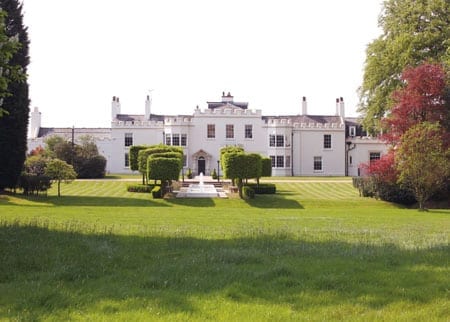
    Swettenham Hall, Swettenham, Congleton, Cheshire, CW12 2JZ
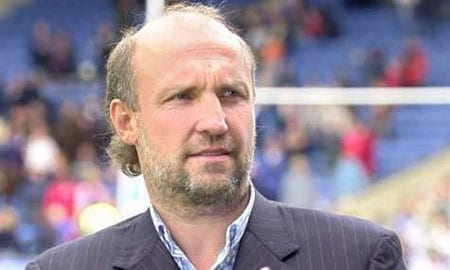
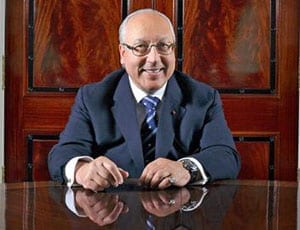
    Double glazing tycoon Brian Kennedy


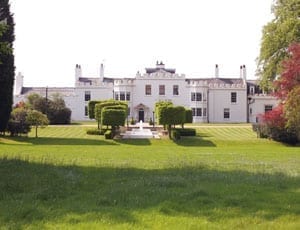
    In a “grey area between old and new” sits Swettenham Hall at Swettenham near Congleton. This 12,590 square foot Georgian mansion dates to 1795 but since it was acquired by Brian Kennedy, a double glazing, home improvements and mobile telephone entrepreneur, the house has been given a total makeover. The colourful style he’s given the house can best be described as being akin to: “Laurence Llewelyn-Bowen meets Austin Powers.”


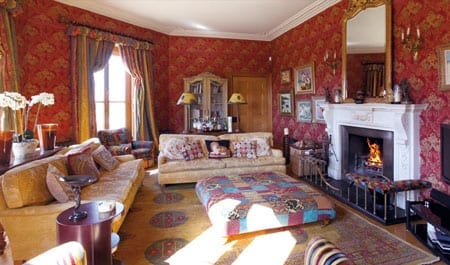
    Swettenham Hall’s drawing room is decorated and furnished in a cacophony of colours
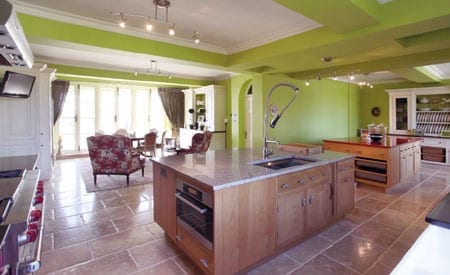
    The kitchen is painted in an equally vivid shade of lime green
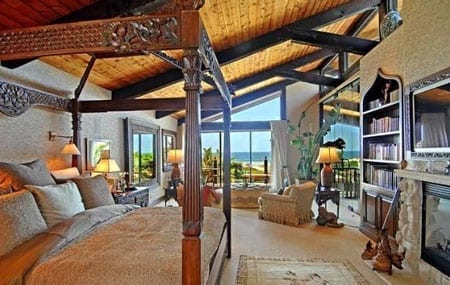
    A bedroom boasts a carpet that would make Austin Powers shout: “Yeah, baby, yeah!”
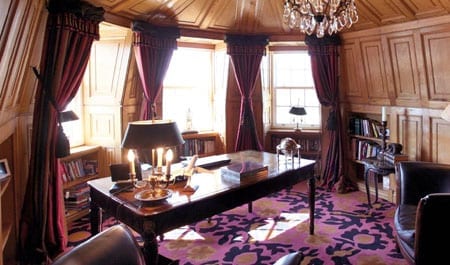
    The same carpeting continues into the wood paneled “gentleman’s study”
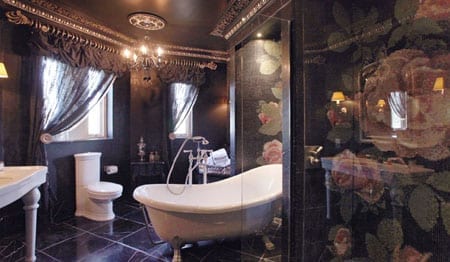
    At Swettenham Hall, bathrooms, equally, are far from neutral in their styling
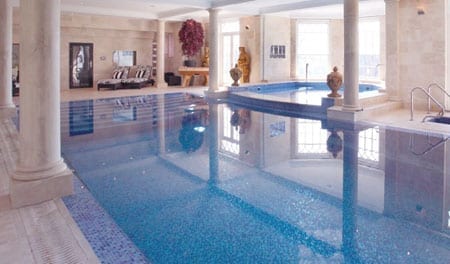
    Mr Kennedy and his wife Christine employed Julian Bicknell Associates to design an impressive leisure wing in 2004


    Swettenham Hall is most definitely a party palace and along with the addition of a leisure wing consisting of a swimming pool, Jacuzzi®, plunge pool, steam room and gymnasium in 2004, Kennedy has also constructed a 47ft by 44ft helicopter hangar complete with a retractable helicopter pad.


    Standing in 100 acres of grounds, the house does seem a tad expensive at £15 million especially since that the adjoining former farm buildings were sold off and converted into eight homes in 1999. The driveway is partly shared with these homes and for those seeking the ultimate in privacy, this could indeed be an issue. It is perhaps why Swettenham Hall has yet to sell.


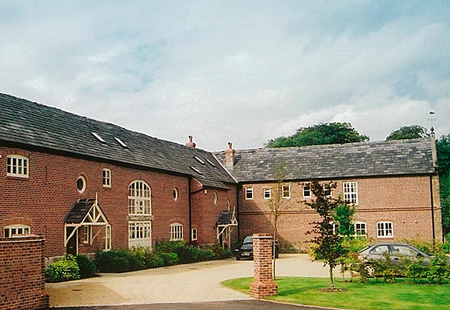
    The former farm buildings next to Swettenham Hall were sold off and converted into eight homes by Egerton Estates and Watts Developments in 1999
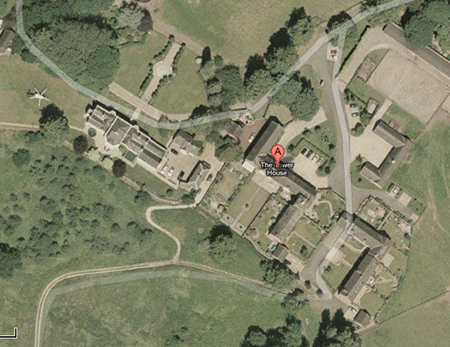
    The proximity of Swettenham Hall to the neighbouring barn conversions is illustrated in this Google Earth map

    Brian Kennedy is someone I hadn’t heard of until I came across Swettenham Hall but here is a fascinating man whose meteoric rise is frankly very clearly linked to windows. The son of a window cleaner from Edinburgh, this self-made tycoon started his career as a trainee manager at the Royal Bank of Scotland. He subsequently briefly worked as a trainee accountant but left when offered the chance to become youngest branch manager of Moben Kitchens at the age of 20.


    At around this time, Kennedy acquired a stake in Farouche Kitchens and with a Rochdale born property entrepreneur named David Russell, he was transformed from a door-to-door salesman to a pioneer in direct sales. In 1988, when Farouche was sold, Kennedy netted circa £1 million. From here, this entrepreneur returned to his family’s roots by venturing into double glazing with Weatherseal Windows and then home improvements with Space Kitchens & Bedrooms.


    In 1999, with the help of funds raised by private equity investors 3i, Kennedy paid £42 million for the well known brand Everest but sold part of his stake to the management for £63 million in 2003. In due course he added to his shareholding and then sold 21.5% of the company to Hutton Collins in a deal which valued the company at £150 million in 2007.


    Ever the empire builder, Kennedy paid £29 million for a conservatory manufacturer named Ultrafame in 2006 and then also added another double glazing brand, Zenith Staybrite, to his portfolio in 2008. Many other business ventures followed but not being afraid to diversify, Kennedy formed Patrick Properties, whose portfolio is now valued in excess of £100 million, in 2002 and Kennedy Renewables, which specialises in wind energy, in 2009.


    In the technology sector, a chance conversation in a Knutsford wine bar in 1995 led to him venturing into the mobile telephone market with a company named Genesis Communications. The business was sold to Dixons in 2002 for £31 million.


    In January 2012, Kennedy merged his main Latium Holdings business with Jim Rawson’s Epwin Group to form Epwin Holdings. The merger resulted in a company with more than 2,500 employees and brands numbering Spectus, Swish, CET and Kestrel.


    Of his success, Kennedy states:


    “Business is common sense [and] dealing with people is common sense. I don’t think I have any particular flair. I think it is about common sense, taking the opportunity when it comes and hard work.”


    Brian Kennedy’s wealth has allowed him to indulge many of his passions. A period of semi-retirement “drove [him] and [his] kids nuts,” but this Scotsman’s love of rugby resulted in him acquiring the Sale Sharks Rugby Club in 1999. He is said to have set the “club on a sound financial footing” and turned it into “one of the leading rugby clubs in Britain.”


    Philanthropy is something that Kennedy, a Jehovah’s Witness, has also dedicated his wealth to. Through his Brian Kennedy Trust, he has supported a number of charities and organisations but it is for his role as the main backer of Find Madeleine Fund that he has come to public attention. Of his reasoning for backing the missing child’s parents financially, he stated:


    “In light of the quite literally incredible accusations against Gerry and Kate McCann, which are clearly exacerbating their emotional torture, I felt compelled to offer, along with other like-minded businessmen, financial support and the full logistical support of the Latium team. That support is principally our in-house lawyer Ed Smethurst and [official spokesman] Clarence Mitchell.”


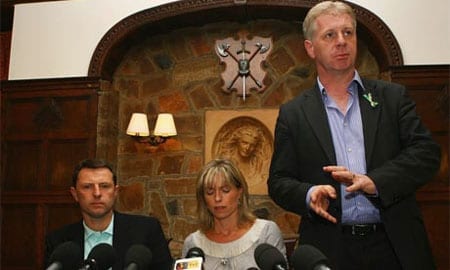
    Brian Kennedy was involved in the funding of a team that included Clarence Mitchell for the Find Madeleine Fund until 2009. Here Mitchell (standing) is pictured with Gerry and Kate McCann.
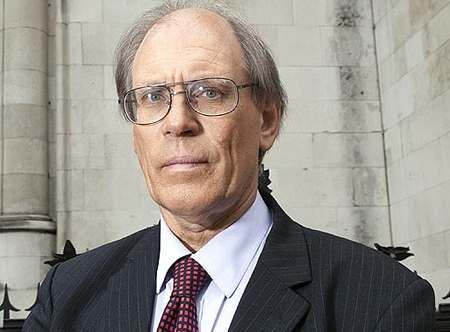
    An ex-lawyer and campaigner Anthony “Tony” Bennett is the former secretary of The Madeleine Foundation who has been involved in various legal disputes with Brian Kennedy and Gerry and Kate McCann


    Kennedy’s donation attracted much press attention in 2007 in the weeks following Madeleine McCann’s disappearance and he continues to support them to this day. A very public spat involving him, Gerry and Kate McCann and a campaigner named Tony Bennett, who also was involved in The Madeleine Foundation, has been the subject of various legal actions. In October 2011, Mr Bennett was forced to publicly apologise to Mr Kennedy and separately an August 2009 Evening Standard article by Mark Hollingsworth “investigat[ing] the investigators,” was pulled because for “legal and editorial reasons.” In it, “someone who worked closely with [Kennedy]” was quoted as saying:


    “He was appalled by the Portuguese police, but he also had visions of flying in by helicopter to rescue Madeleine.”


    Angelina Jolie, another avid aviator, once commented: “Wherever I am I find myself looking out of the window wishing I was somewhere else.” We do not know why Brian Kennedy is selling Swettenham Hall, but Jolie is indeed one of the few with the resources to take these particular windows off his hands.

     
    For more information about Swettenham Hall, Swettenham, Congleton, Cheshire, CW12 2JZ, contact Edward Welton of Knight Frank on +44 (0) 20 7861 1114.


    For more details about Brian Kennedy, go to: http://www.brian-kennedy.co.uk


    For more details about the Find Madeleine Fund go to: http://www.findmadeleine.com and for information on The Madeleine Foundation: http://www.madeleinefoundation.org.uk/

  • Urs Schwarzenbach

    Urs Schwarzenbach

    This Swiss born son of a printer has spent over £85 million buying up properties in the Henley-on-Thames area of Oxfordshire. Schwarzenbach also owns 123,000 acres in Australia, 26,000 acres in Scotland and has his own polo team, the Black Bears. This financier’s foreign exchange dealership, Interexchange, is the biggest in Switzerland and betting against the dollar has brought much success. He supposedly even named his Gulfstream G650 “George” as “ultimately it was Bush who paid for it.” Whilst Schwarzenbach’s Grand Hotel Dolder in Zurich wins plaudits galore. an investment in Mayfair’s Café Grand Prix was less successful. It is, however, for philanthropy and discretion that Schwarzenbach and his wife, a former Miss Australia, are known best.

  • Andrey Borodin

    Andrey Borodin

    This billionaire former president of the Bank of Moscow lives in exile in London and is on the Interpol Red Notices wanted list as a suspect in a £136 million (13 billion rouble) fraud. (more…)

  • Hugh Bonneville

    Hugh Bonneville

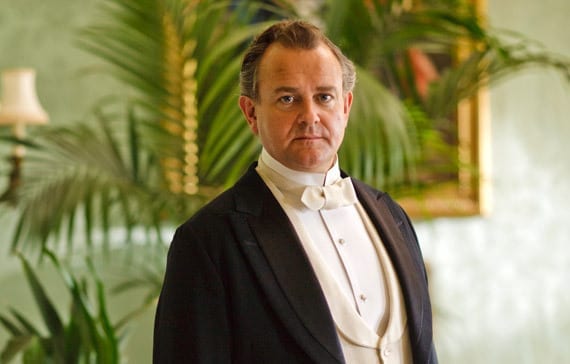
    In his role as Downton Abbey’s Lord Grantham, this actor warned that “scandals” always have a habit of coming out. He graduated in Theology at Cambridge but, according to Adam Helliker of the Daily Express, Bonneville wasn’t especially keen to show Christian compassion towards Lord Archer at a party at The Cadogan Hotel when it was requested that the pair be photographed together.

  • Cows don't wear Rolexes

    Cows don't wear Rolexes

    Charles Mitford Cust asks: “Do the clocks really need to go back?”


    Yesterday, once again, the clocks went back and now we are officially in winter. As is always the case on this sad annual occasion, I am left asking myself why we have do something so apparently illogical and what are the origins of this extraordinary ritual.


    These “hairy beasties” definitely govern the clock rather than being governed by it


    I used to think it all started in World War Two but, in fact, having done some research, it transpires that we very sensibly did the exact opposite during the war years. Between 1940 and 1945 and also in 1947, we actually switched to “British Double Summer Time” (BDST). Why? We did so to save precious fuel as it was in limited supply. That should strike a chord today, don’t you think?


    You bet it should. Supporters of BDST point out that 500,000 tonnes of CO2 would be saved this year if instead of putting the clocks back yesterday, we’d left them alone and then put them forward one further hour in the spring, thereby achieving British Double Summer Time (BDST). Half a million tonnes of CO2… Wow! That is the equivalent of permanently removing 185,000 cars from the road. Hang on, aren’t we meant to be concerned about the environment these days or am I missing something?


    Where are the eco-warriors? Surely they should be screaming from the rooftops about CO2 savings like this. This makes all their bleating about wind turbines and solar panels seem stupid. Unlike these alternative energy sources, which we all know are only viable thanks to taxpayer subsidies, putting the clocks forward is free, and you can’t get anything greener than a free CO2 reduction. Yet strangely there is barely a whisper from the normally most vocal section of the green orchestra. Now, I am no conspiracy theorist, but I cannot help but feel that this is highly odd if not darn right suspicious.


    There have always been myths concerning BDST, including strong if vague references to the requirements of farming being the reason for us being plunged into darkness earlier than necessary. This is something that, as a countryman, I have always found puzzling.


    Farmers do not rely on the time indicated on their watches to go about their business. They do what their ancestors have done for thousands of years: they operate from first light to last light. The time that happens to be recorded on a watch face is all but irrelevant to them because unlike 90 per cent of the population, they do not have to catch trains or commute to work. What’s more, cows don’t wear watches, they just know when they want to be milked and they don’t care what Mr Rolex has to say about it.


    Interestingly though, even this well used excuse seems to have been run off the road. In March 2010, in a survey of their membership, the National Farmers Union found that most respondent farmers were neutral about BDST and actually the only strong representation was from members supporting longer daylight in winter.


    Another long-term excuse is that children in the north of Britain would be in more danger walking to school in the mornings if it were dark. “Walking to school?” When was the last time a kid walked to school in this country? 1951? Seriously though, with traffic density as it is today, no responsible parent would let their child walk to school even if they could do so. As Lord Archer has pointed out, this is outdated nonsense and therefore not a viable excuse for rejecting BDST.


    The Royal Society for the Prevention of Accidents (RoSPA), the RAC and the AA have campaigned for years to reintroduce BDST as they argue that police accident records clearly indicate that more accidents occur in the dark evenings during rush hour when tired commuters are returning from work than when they are fresh in the mornings. According to their research, they estimate 600 lives per year could be saved. 600 lives: that’s the equivalent of a bloody massacre. The government moved heaven and earth to ban competitive handgun target shooting when 30 people were killed but have routinely ignored 600 lives per year for decades? What are these politicians doing?


    A Conservative Member of Parliament, Rebecca Harris, put forward the Daylight Saving Bill 2010-12. It was debated in November 2011 and January 2012, but despite being supported by “Call Me Dave” himself, it was filibustered out of Parliament by largely Scottish based members who argued it would disadvantage Scotland.


    These politicians used this argument despite a 2010 survey of 3,000 Scots indicating that they were actually in favour of BDST. I guess Scots like to save money on their heating bills too: oh, there’s a surprise. Anyway, the efforts of these objectors were enough to ensure that the bill’s time was used up and it will now proceed no further.


    What? That’s it? 500,000 tonnes of CO2 and 600 lives a year swept under the carpet because a couple of whingeing Scottish MPs are out of touch with their the views of their own constituents? Does that sound right to you? Even if they didn’t vote for BDST, which with fuel prices the way they are, being canny Scots, they almost certainly would, why can’t Scotland have it’s own time zone? Many of them want independence, so here’s a good start. As an aside, evidence also shows that if Scots did adopt BDST, their suicide rate would drop dramatically as the statistics show this is clearly linked to long dark winter nights.


    Either way, we have reached a point where political correctness simply has to be outweighed by common sense. You cannot let 85 per cent of the UK population suffer for the sake of the other 15 per cent. What of the adverse affect this is having on GNP at a time when the economy is struggling so much?


    The thing about this clock moving business is that the more you search for answers, the more questions you are left asking. One is forced to conclude that it is either a deeply sinister conspiracy involving multi-billion pound energy companies who would rather we carried on paying for an extra half a million tonnes of unnecessary smog, or simply an old fashioned British farce of monstrous proportions.


    All in all, I’m left rather perplexed. What’s your view? Isn’t it time that something changed?