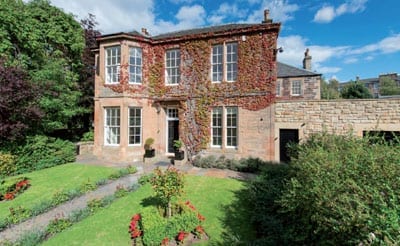
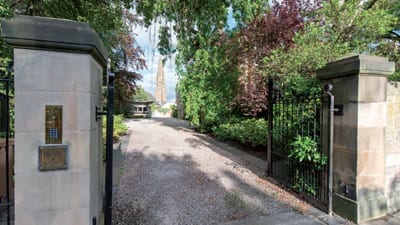
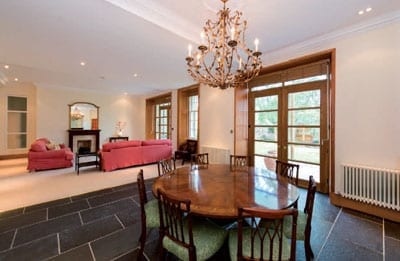
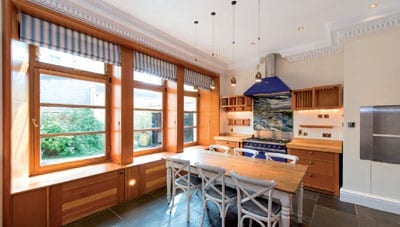
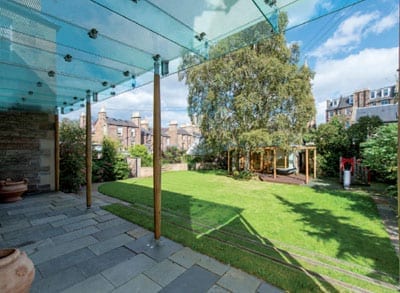
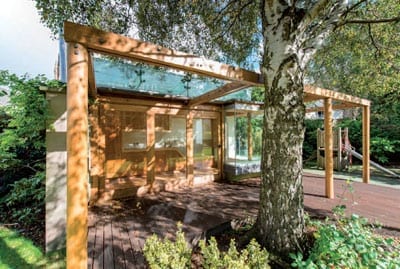
This talented author was born in South Africa but educated at Eton and New College, Oxford. The Drowning People, his first novel, gained him a “vast” advance and was published during his first year at university. It’s been translated into 22 languages and has sold over 3 million copies. Richard Mason funds a foundation in memory of his sister that pays for gifted South African children from poor backgrounds to attend the country’s top private schools and with a writing style that’s been compared to “Henry James on Viagra”, he’s definitely got many more pages to pen. An early critic, who told him he “should have killed [himself] rather than publish”, is now writing reviews of home décor shows.
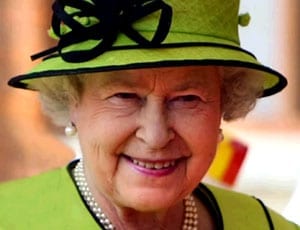
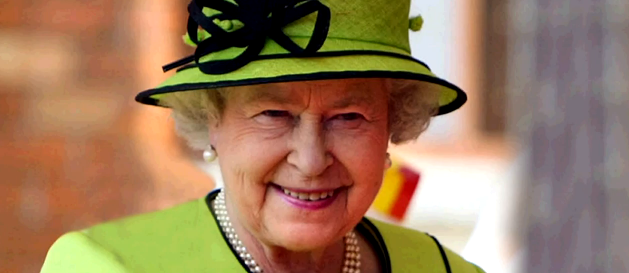
This week we must thank Dan Large for having alerted us to an amazing YouTube video showing Her Majesty The Queen’s life in 3 minutes and 24 seconds.
Elizabeth II
Created by “an old retired guy who likes to play with computers” named “HerBunk” and using the technological wizardy of FantaMorph, the video has attracted nearly 6,000 likes and 300 dislikes. We look forward to hearing what readers of The Steeple Times make of it.
Watch the video at: http://www.youtube.com/watch?v=E8nJhG1xE5o&feature=share
A £26 million residence with connections to rock, royalty and rectors
Built in the early 1500s, The Old Rectory is Wimbledon’s oldest house. Standing in grounds of 2.5 acres, this 16,200 square foot property was once described by a biographer of Sir Henry Cecil as being “not luxurious, but adequate” but now once again it finds itself in an entirely different league.
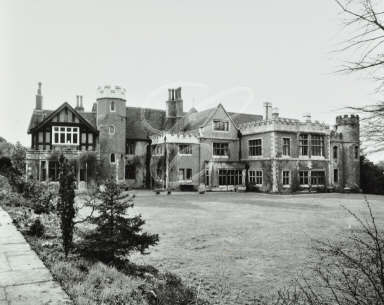
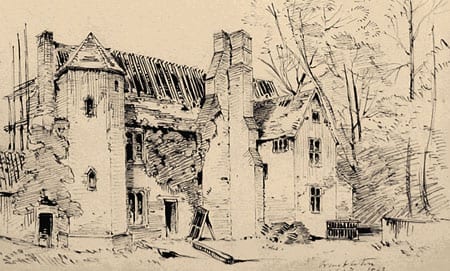
An image of The Old Rectory, 82 Church Road, Wimbledon, London, SW19 5AA in 1978. Present day imagery has been removed at the request of agents acting for the current owners.
Priced at £26,000,000, it is almost certainly one of the most expensive homes to ever come to the market in Wimbledon and whoever moves there next will undoubtedly be either an oligarch, an A-list personality or a top achieving business person.
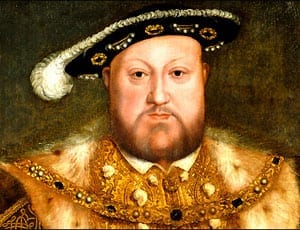
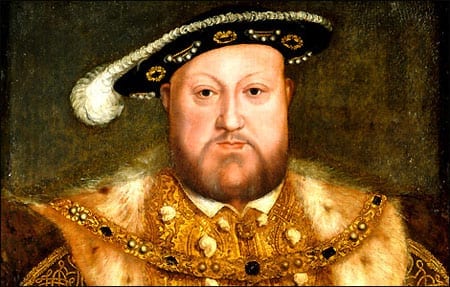
The purchaser will follow in the footsteps of a fascinating array of historically important residents, the first of whom was Henry VIII (1491 – 1547). The King took up residence in 1547 in the months prior to his death and is said, as he was so bloated, to have been unable to climb the stairs to his sleeping chambers. His bed was relocated to the great hall of the house and here he slept next to the fire. Historical research recounts that, with a brewhouse, beer and wine cellars, a coal cellar, meat room, buttery and two dairy rooms, this was a “house fit for a king.”
Henry VIII (1491 – 1547)Catherine Parr (1512 – 1548)
Henry VIII gave The Old Rectory, which was originally called The Parsonage House, to his sixth and final wife, Catherine Parr (1512 – 1548). Preferring a residence in Chelsea, Parr left and the Dean and Chapter of Worcester Cathedral took possession. A lease was sold to Sir William Cecil (1520 – 1598), later Lord Burgley, and the manor then passed to his son Thomas Cecil (1542 – 1623), the 1st Earl of Exeter.
In 1639, Charles I (1600 – 1649) bought the entire manor and gave it to Queen Henrietta Maria (1609 – 1669) but with the era of Comwell, The Old Rectory found itself occupied by General John Lambert (1619 – 1684). Shortly after, when a grander house was built next door, the property became first a laundry house and then servant accommodation and gradually fell into decline.
The Old Rectory passed next to Sir Theodore Janssen (1658 – 1748) in 1720. This French-born English financier, who was said to be worth the staggering sum of £250,000 at the time of his purchase of the house, was a founder member of the Bank of English but later disgraced for his part in the South Sea Bubble. He was expelled from the House of Commons and with his ruination, The Old Rectory saw yet another chapter of abandonment.
The garden front of The Old Rectory by Charles Henry Money Mileham (1837 – 1917)
By 1802, the house was described as an “uninhabited” ruin. A speculator credited with developing “modern Wimbledon” named John Augustus Beaumont bought it and restored and extended it but when it was sold to a Samuel Wilson in 1882 for £6,000, an era of truly comprehensive upgrades was to begin. Wilson added a pebble-dashed two-storey drawing room wing, carved oak doors and installed English, Flemish and Italian chimneypieces.
The next owner was a marine engineer named Matthias Jacobs who had been responsible for the construction of tunnels in Paris and New York. After having purchased The Old Rectory in 1909, he commissioned his brother to add a new single storey billiards room, a service wing and a study extension to mask the medieval chapel of the house. Jacobs sold up in 1923 to a Thomas Lethaby, who fitted oak paneling from Chantry House in Newark and a plaster ceiling based on the one at Knole House, Kent.
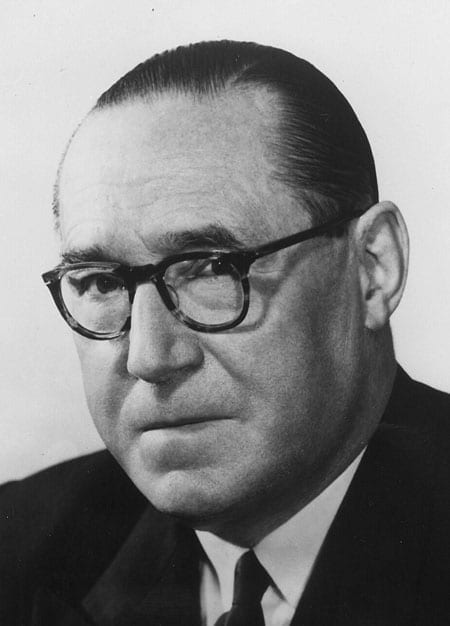
Lord Brock FRCS, FRCP (1903 – 1980)
In 1953, the eminent London surgeon and cardiologist, Lord Brock FRCS, FRCP (1903 – 1980), took possession of The Old Rectory after having paid £13,750 for it. Brock is credited as on of the pioneers of modern open heart surgery and also founded the Lord Brock Memorial Trust that to this day funds the museum he founded, The Old Operating Theatre Museum and Herb Garret in Southwark, SE1.
Following the death of his first wife Germaine Louise Ladavèze, Brock sold to an Iraqi entrepreneur and philanthropist named Basil Faidhi in 1978. Faidhi had fled Iraq for Britain and though he spent vast sums restoring the house with assistance from English Heritage, he also created a basement discotheque for his daughter, Nina, and a bar. Aside from bringing the house into the “yuppie era,” Faidhi also commissioned a historian named Richard Milward MA to write a history of the building in 1992 entitled: The Rectory – Wimbledon’s Oldest House.
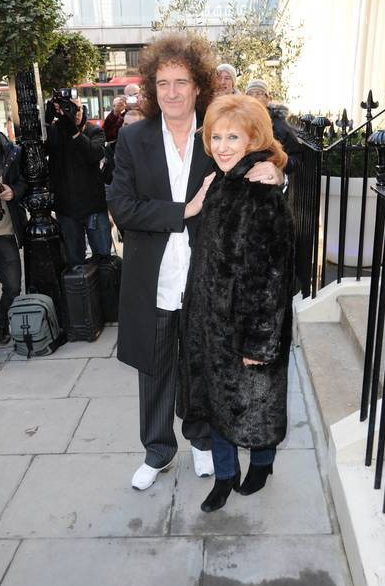
The Queen lead vocalist and anti-badger cull campaigner Brian May CBE purchased The Old Rectory in 1994 for £4,000,000 with the intention of living there with the Eastenders actress Anita Dobson.
Brian May CBE with his second wife Anita Dobson
Dobson, who didn’t marry May until 2008, had other ideas and refused to move in. It was suggested that she preferred a smaller house the pair occupied in Kensington and, at the time, a friend commented:
“[May] begged her to move into the new house so they can make a fresh start. Nobody can believe that Anita doesn’t want to be the lady of this fabulous house. But Brian says he can’t get through to her.”
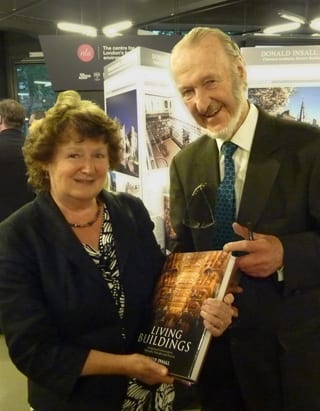
Sir Donald Insall CBE
As a result, May never properly moved into The Old Rectory and eventually decided to sell. In 2006, it achieved a record price of £16,000,000 and in the ensuing years, an Italian architect-owner named Antonella Carminati and her husband have lavished time and money on further restorations with the help of Sir Donald Insall CBE’s Insall Associates firm of architects.
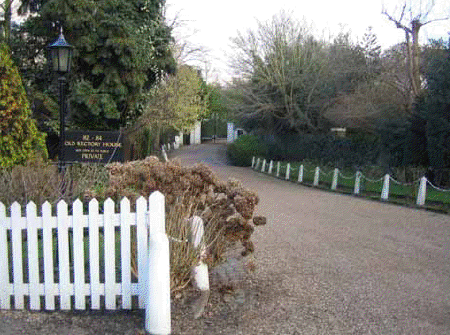
The driveway that leads to The Old Rectory from Church Road gives plenty of privacy
New fittings have been installed throughout and substantial extensions to the house have included a new kitchen and breakfast room with garaging beneath. The couple have demolished an early 20th century porch and an “unsightly” oak conservatory, remodeled the billiards room as a drawing room and removed a “bilious” blue swimming pool from the east lawn.
Now featuring 12,882 square foot of accommodation in the main house and 3,320 square foot of additional accommodation, The Old Rectory has been planned to include 8 reception rooms; a vast kitchen with La Cornue appliances and an adjoining breakfast room; master bedroom suite with two dressing rooms, his and her bathrooms and a sitting room and 7 further bedrooms.
Outside, the gardens feature an original medieval fig tree trail, shaded paths, lawns and a large pond as well as garaging for six cars. Planning permission for an indoor swimming pool complex has also been granted and ample staff accommodation is provided above one of the garages and in the gate lodge.
Given the now limited financial resources of the traditional religious houses of Britain, will it be rock, royalty or new money that next takes possession of The Old Rectory? The historians of Wimbledon will undoubtedly be watching.
The Old Rectory, 82 Church Road, Wimbledon, London, SW19 5AA is for sale through the Wimbledon office of Knight Frank. For more information call: +44 (0) 20 8946 0026.
Christian Huhnt recounts an evening at the launch of La Suite West
I have a personal connection to Inverness Terrace as twice in my life I’ve had to crash at my friend’s place there. It’s less than a minute from the new Anouska Hempel-designed hotel, La Suite West, and runs parallel to Queensway.
Bursting with cheap Chinese, Arabic and Mediterranean restaurants, this is an area that has great transport links to Oxford Street and the city centre that is also a very short walk from Hyde Park. As a result it’s full of tourists. Here, they arrive and depart every day, wandering around with heavy luggage trying to find their way. Most of them look like they’re hopelessly lost and in need of a good scrub. The tourist density here is almost equal to that of Victoria Station’s Gatwick Express exit or the Piazza San Marco in Venice.
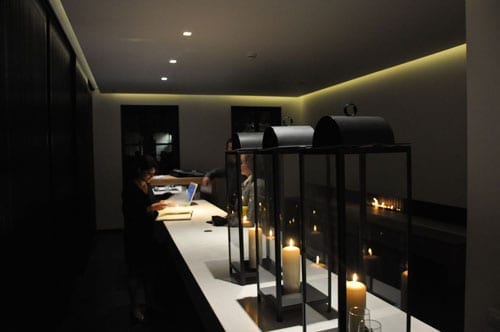
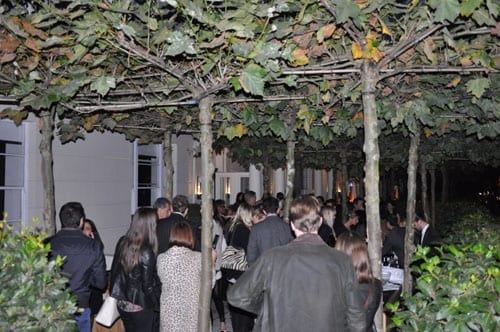
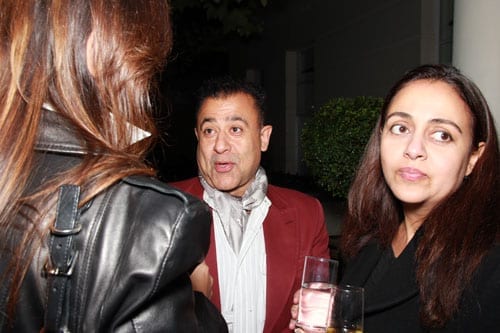
The lobby of La Suite West, 41 – 51 Inverness Terrace, London, W2 3JNParty guests at the launch of La Suite West
Please don’t get me wrong though. I have always felt that this place, the heart of Bayswater, has been totally underestimated. It is charming with lots of London Plane trees and a very cosmopolitan feel. Lady Weinberg, better known as the visionary designer and sometime actress Anouska Hempel, plainly agreed as she integrated all that was good about this atmosphere into the hotel that she has cleverly designed.
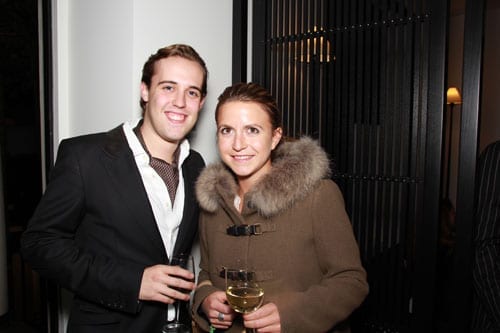
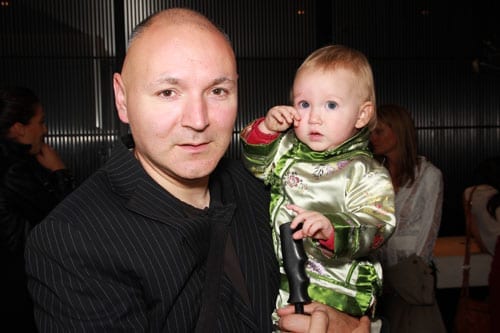
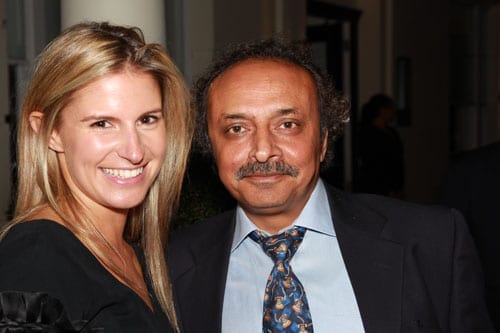
“Let’s celebrate with a little champagne”Guests at the party included the British supermodel and VogueTV presenter Jade Parfitt and Duncan McDonald of Propeller CommunicationsOur party correspondent Christian Huhnt and Inga Buschke enjoying the launch of La Suite WestAngelo Valentino also represented “The Steeple Times” with his daughterGuests at the launch of La Suite WestSusan Ansary, a regular on the party circuit, even put in an appearance
Arriving at the hotel entrance, you get a feel of how important it was for Hempel to grasp this outside space and use it as a communal environment for the guests. I was invited to visit on the evening of the hotel’s launch and this was the area where guests congregated. Here, along with the champagne, they served molecular bites including Nutella ice cream that had been shock frozen using liquid nitrogen. This, they told me, had been done to avoid ice crystals appearing and the result was a very smooth and creamy texture. I’d put money on this having left the menu now though as just days later I read news reports of a girl in Lancaster losing her stomach after drinking a cocktail made in a similar manner. With hindsight, I must say that my stomach is very glad that they got the measure just right.
When you enter the hotel, which first opened to guests three months ago, you feel as if you are visiting a Scientology church or traversing the ramp of a Star Wars space shuttle. Coming “onboard,” you enter a reception hall, in which a friendly concierge welcomes you. The whole interior is very minimalistic and has been reduced to hues of only black and white. A long fireplace leads you deeper into this shuttle, onto a main corridor, past the dining rooms and connects into to labyrinthian walkways that transport guests to their appointed suites.
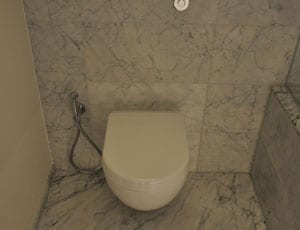
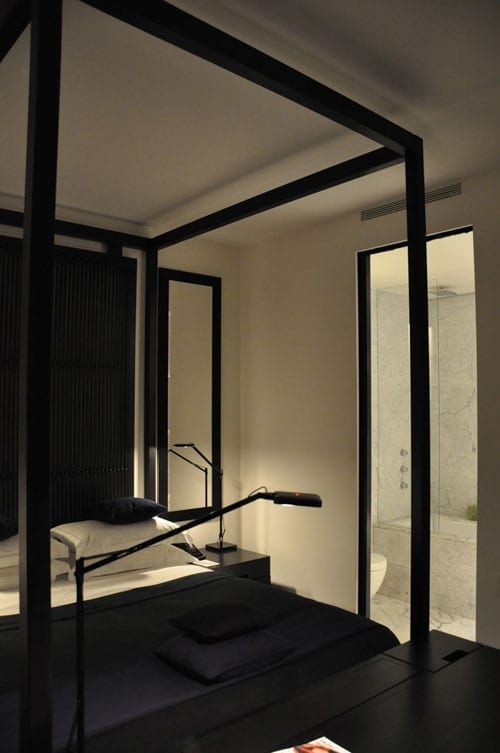
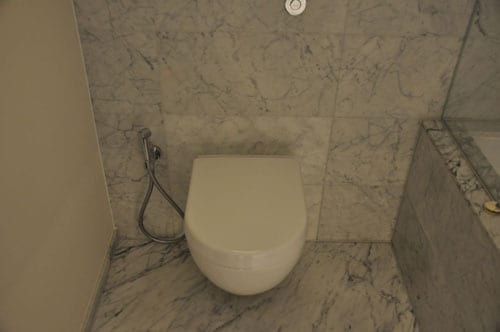
I was told that the hotel rooms are all decorated in the same style and have similar layouts. They differ only slightly in size. On the evening of the launch, the largest could be admired and all of them had a very independent feel as they benefited from their own access to the street. Essentially, the rooms are quite small but all offer the contemporary luxury that any jetsetter would expect. The bathrooms have a particularly sophisticated feel and are clad in marble throughout. The extendable televisions hidden in the bed frames perfectly fitted with the minimalist design, but where this became bizarrely rigorous was the flexible water hose in the bathrooms that dispensed with the need for good old European toilet paper.
One of the hotel’s bedroomsA toilet at La Suite West – complete with hose attachment but minus loo roll
La Suite West is a great step forward. In fact, it is a very audacious move towards upgrading a whole area that clearly has potential for more and which, at the time of writing, does not offer anything better than shabby hostels and seedy bed and breakfasts. The hotel is a well-arranged concept and evidently Hempel put a lot of thought into the execution of it. The design is well composed, but being German I did notice some of the carpets and minor details could have been a little better.
One last piece of advice: the management might want to ship in some bog roll. Some ageing Brit might decide to show up and I’m sure nobody would want a scene from Fawlty Towers to be played out in that rather smart lobby.
La Suite West, 41 – 51 Inverness Terrace, London, W2 3JN. Telephone: +44 (0) 20 3642 3928. Website:http://lasuitewest-px.rtrk.co.uk
Images by Andreas Kirchberger and Christian Huhnt.
An event to support the unsung heroes in our community
On the 8th November, The Steeple Times will be the media partner for a fundraising event jointly hosted by Gina and Alan Miller and The Rt. Hon Iain Duncan Smith MP at The Hurlingham Club in London, SW6. 100% of the funds raised by the “Celebrating Champions in the Community” evening will aid charities supported by Miller Philanthropy and The Centre for Social Justice.
Gina Miller of Miller Philanthropy comments:
“We increasingly hear and read in the media examples of how our society is breaking down. Yet there are unsung heroes battling every day, on all our behalves, trying to reverse these trends. We invite you to celebrate and support these individuals so please join us for an evening of entertainment, celebration and inspiration. 100% of your attendance donation will be going to these community heroes.”
Gina Miller
The Rt. Hon Iain Duncan Smith MP
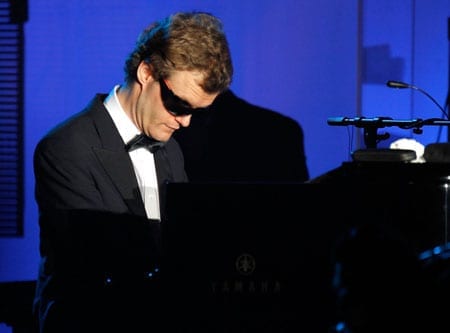
This black tie event, whose principal sponsor is the luxury couture house Ralph & Russo, will include a drinks reception, dinner and auction as well as entertainment from the BRIT-Award winning singer Beverley Craven; Antony Costa, a former member of the pop boy band sensation Blue; the Magpie Dance company and Derek Paravicini, one of the great musical entertainers of his generation.
Beverley CravenAntony CostaMagpie Dance
Derek Paravicini
A donation of £150 per person comes as the condition of attending, 100% of which goes to charities being supported.
Miller Philanthropy
Miller Philanthropy is a family foundation founded on passion and integrity with 100% transparency and 100% of funds raised going to charities and causes.
The foundation focuses on small community charities – the unsung heroes who undertake vital work at the coal face of the negative trends in our society; primarily, but not exclusively in the UK. Miller Philanthropy’s premise is based upon a strong belief that charity begins at home.
The foundation acts as a philanthropic incubator for chosen charities and projects who undertake transformational work but face a growing number of challenges and lack of resources. We mentor and partner these extraordinary individuals and organisations until they become sustainable.
Beneficiary Charities
The AMBER Trust
Best Beginnings
Chernobyl Children’s Project
Crossway Pregnancy Crisis Centre
Hebridean Whale & Dolphin Trust
HELP Counselling Centre
Magpie Dance
Pond Conservation
Street Kids International
Target Ovarian Cancer
The Centre for Social Justice
The Centre for Social Justice is an independent think-tank, established to put social justice at the heart of British politics. Moved by shocking levels of disadvantage across the nation, it studies the root causes of Britain’s acute social problems in partnership with its Alliance of over 350 grassroots charities and people whose lives have been affected by poverty.
This enables the CSJ to find and promote evidence-based, experience-led solutions to change lives and transform communities.
The CSJ believes that the surest way to reverse social breakdown – and the poverty it creates – is to build resilience within individuals, families and the innovative organisations able to help them.
Breakthrough Britain
In 2007, the CSJ published its landmark report Breakthrough Britain. This publication has had a significant impact on the previous and present government and has led to the current welfare reforms being implemented across the UK. In Autumn 2012, the CSJ is set to produce Breakthrough Britain II which will update its policy recommendations, with the aim of creating a cross-party consensus on some of the most important policy issues facing Britain today.
To book tickets to the Celebrating Champions in the Community event, contact Rachael Dove of Miller Philanthropy on +44 (0) 20 7838 8650 or email [email protected]
Matthew Steeples discovers the truth about the origins of the Gressingham duck
I grew up in North Lancashire and spent much time in the Lune Valley. Here, I was regularly told, in the 12th century village of Gressingham, a staple of the menus many English restaurants and the most common farmed duck had originated: the Gressingham duck.
Recently, whilst chatting to a restaurateur, the subject of Gressingham duck came up for some bizarre reason. When I told him of the bird’s Lancastrian origins, he firmly disputed this and told me that they were actually of East Anglian extraction.
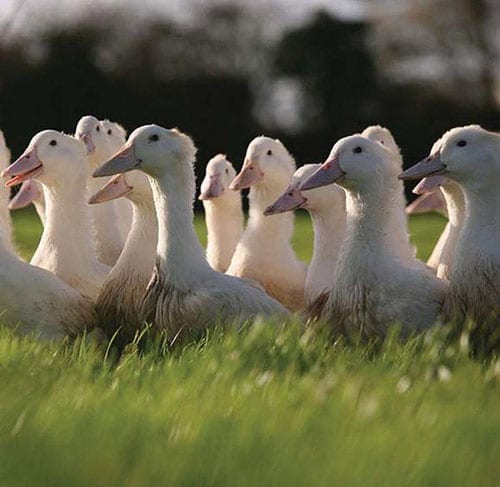
Gressingham ducksThe Loyn Bridge crosses the River Lune close to Gressingham, near LancasterGressingham duck features on many restaurant menus
Having chatted with several other foodies, they, equally, were of his opinion. After then having spotted it on yet another restaurant menu last week, I decided I simply had to establish the true origin of this bird before I went, excuse the pun, quackers.
A Google search didn’t come up with a great deal but it did produce the required evidence. As I believed, he Gressingham duck was first bred in Gressingham, Lancashire in 1980 by crossing a Pekin duck with a wild mallard.
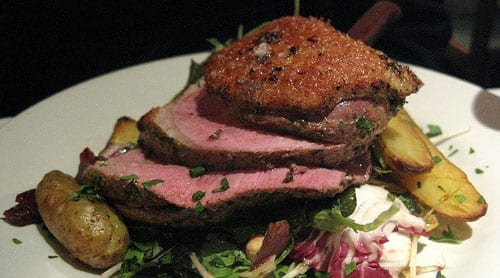
The result was a succulent, tender bird with a high breast meat yield and a gamey flavour. Of it Delia Smith comments: “It’s the very best type of duck available… Because of it’s smaller frame, [it gives] more meat.”
A Suffolk based couple named Maurice and Miriam Buchanan began rearing and processing Gressingham ducks in 1989 and then bought the exclusive rights to breed them in 1996. Their company, Green Label Foods, now Gressingham Foods, are now the only firm licensed to produce the “Gressingham Duck®” and now employ over 500 people on their farms in East Anglia.
Gressingham Hall, Gressingham, Lancaster, LA2 8LPA view of Gressingham Hall from the road
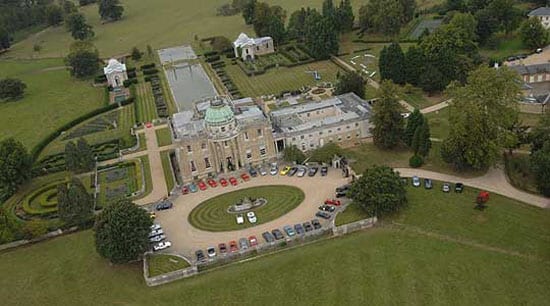
Separately in my Google search I also discovered that the main house in the village of Gressingham has recently come to the market through agents Fine & Country. 7-bedroomed Gressingham Hall, a Grade II* listed 17th century former farmhouse comes complete with 3 reception rooms, a Jacobean staircase and 10 acres of grounds.
A price of £1,350,000 is sought for Gressingham Hall whilst a separate cottage across the drive, Garden Cottage, has a guide price of £350,000. Whoever purchases it had better had get a Gressingham Duck® in the oven for their first night in residence.
The Steeple Times asks Stuart Graber, chairman of The Alternative Board London and former managing director of Time Warner International: “What’s on your mantelpiece?”
The Steeple Times shares “wit and wisdom.” What’s your guiding force?
Superior mind, superior attitude.
“Don’t get even, get medieval” is, in our humble opinion, a great motto. What’s yours?
A quote from Calvin Coolidge: “Nothing in this world can take the place of persistence. Talent will not; nothing is more common than unsuccessful people with talent. Genius will jot; unrewarded genius is almost a proverb. Education will not; the world is full of educated derelicts. Persistence and determination alone are omnipotent. The slogan ‘press on’ has solved and always will solve the problems of the human race.”
Kerry Katona was considered unacceptable in 2007. Who or what is unacceptable in 2012?
Piers Morgan.
Tony Blair misses being Prime Minister. What do you miss most in your life?
Good friends who have gone over to the other side.
What might you swap all your wealth for?
Continued good health.
Donald Trump was once a case of: “If you owe the bank a thousand, they close you down; but if you owe the bank a billion, you own the bank.” What’s your view on the banking crisis?
History has taught us time and time again that when there is money to be made certain individuals will do “anything” they possibly can to benefit and that includes breaking the established rules and regulations.
What phrase or word do you most loathe?
“What will be, will be.”
In the UK, some people consider charity to “begin at home.” What’s your view and what causes do you personally support?
My family and I believe that children and animals are most deserving of our charitable giving.
The judge in “Law Abiding Citizen” states: “I can pretty do whatever I want” before being blown up whilst answering her mobile phone. What’s your view on the appropriate use of such devices?
These highly lethal modern technological marvels form a new arsenal of weaponry. I would imagine that the use of these devices requires a good deal of professional training and skill. If they are “used appropriately” by the military and law enforcement then they should be utilised to save lives.
If you could fill a carriage on The Orient Express, who would be your fellow passengers?
A mixture of family, friends and acquaintances whose company I enjoy.
Stuart Graber
If you were unfortunate enough to end up on death row, what would be your last meal and where would you eat it?
A Chinese ten-course dinner with the leader or person who could commute my death sentence. It would preferably be consumed on a private jet that can take off when I tell it to.
What time is it acceptable to consume the first drink of the day?
It depends on which country and what age you happen to be however if pressed I would say about 2-3 hours before you eat dinner.
A Negroni, a martini or a cup of tea?
Martini.
Whose parties do you enjoy the most and why?
LA based entertainment industry parties. They are much more experienced and better equipped to create the most amazing environments for a party.
Who is the most positive person you know?
My wife, Susan.
What’s your most guilty pleasure?
Smoking Cuban cigars.
If a tattoo were to sum you up, what would it be of?
A British bulldog, not because they are tough or mean looking but because they are the embodiment of loyalty and love.
If you were a car, what marque would you be?
A Grabercar. For those who don’t know, they are lightweight sports cars.
Cilla Black presented “Surprise, Surprise.” Tell us the most surprising thing about you.
I am an expert marksman and knife thrower.
What’s currently sitting on your mantelpiece?
Statues of my bulldogs, The Manoush and Cupcake.
A graduate of Harvard Business School, Stuart Graber is the chairman of the Alternative Board London. He lives in North London and was previously managing director of both Time Warner International and Music Choice Europe. He was also involved in developing, licensing and distributing culturally and linguistically adapted versions of Sesame Street and obtained the first commercial network radio license in the United Kingdom for Classic-FM.
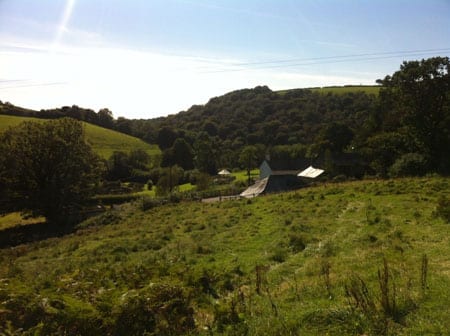
The North Devon countryside that inspired Henry Williamson, R. D. Blackmore and Charles Kingsley
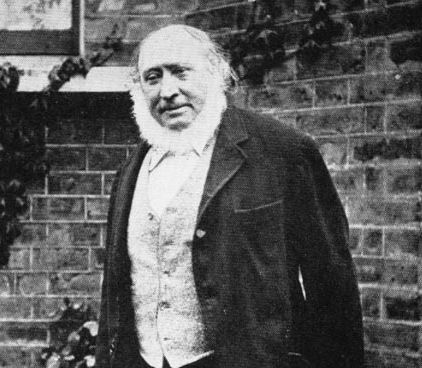
Much of my childhood was spent reading the works of superb authors and amongst the best of them were Arthur Ransome (1884 – 1967), Denys Watkins-Pitchford (1905 – 1990), who wrote many of his works under the pseudonym “B.B.”, and Henry Williamson (1895 – 1977). As a youngster, I was lucky enough to be read to by Ransome’s nephew, a most captivating professional storyteller, and was given first editions of many of the works of all three of these early to mid twentieth century authors.
I had my first sailing lessons on Windermere, where Ransome set many of his works, and went shooting in the Forest of Bowland, a place dear to B.B. Though I also fished in many wonderful locations, until now I’d never been to the land of Henry Williamson and his most famous creation, Tarka the Otter. I currently find myself here enjoying a break from London and yesterday I randomly discovered, I am staying next to the setting of one of Williamson’s lesser known stories, Salar the Salmon, on the River Bray close to Exmoor.
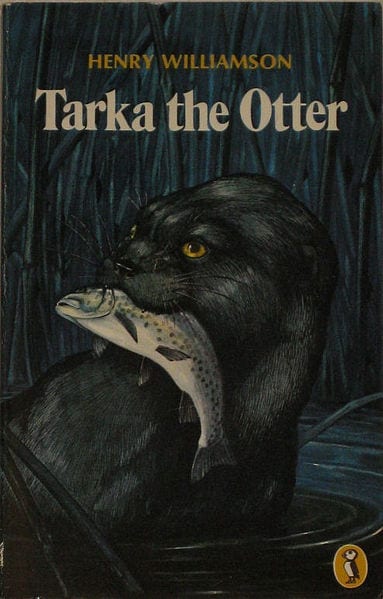
“Salar the Salmon” by Henry Williamson (1935)Henry Williamson (1895 – 1977) photographed by Mark Gerson, cibachrome print from original transparency, August 1970“Tarka the Otter” by Henry Williamson (1927)
Originally published in 1935, Salar the Salmon combines Henry Williamson’s great talent as a writer with his insight as a naturalist. The story tells the tale of a five-year old salmon named Salar, whose name means the “leaper,” and his return to the stream of his birth. Salar’s migration through the riverways of Devon involve him surviving porpoises, seals, nets, fishermen, otters, poachers and weirs and Williamson’s account truly gives the reader an insight into one of nature’s great journeys.
Henry Williamson wrote both Salar the Salmon and The Children of Shallowford (1939) whilst living beside the River Bray in a hamlet named Shallowford, near Lynton in Devon. The river plainly inspired him and whilst he lived there on the Fortescue Estate he also sired four children, joined Oswald Moseley’s British Union of Fascists, was briefly imprisoned for his views and conducted several extra-marital affairs.
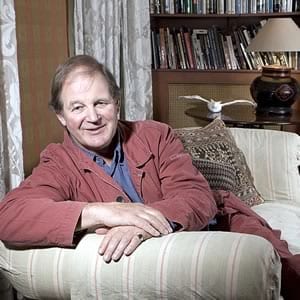
“War Horse” author Michael Morpurgo OBE
Salar the Salmon is a story I am not alone in recommending. Another Devon based author and poet, Michael Morpurgo OBE, best known for his acclaimed work, War Horse, speaks very fondly of Williamson and the novel in a dedication he prepared for a recent reprint of it:
“It is a rare gift indeed for a storyteller to be poet as much as a storyteller, to tell a tale so deeply engaging that the reader wants to know what will happen and never want it to end, and yet at the same time tells it in such a way as to leave a reader wide-eyed with amazement at the sheer intensity of feeling that can be induced by the word-magic of a poet. Henry Williamson is just such a story-maker poet.”
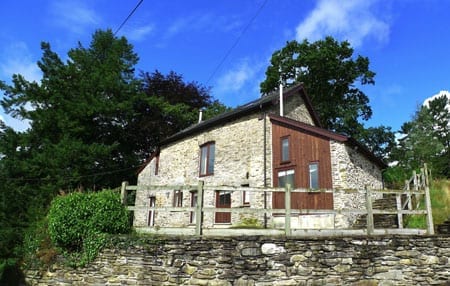
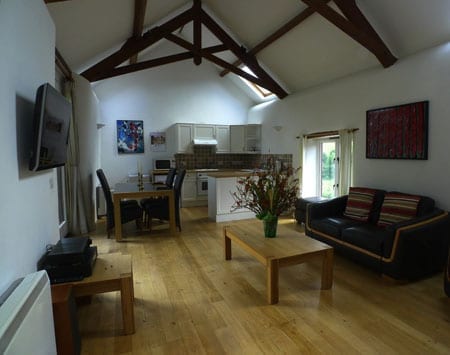
Where I am staying, I have a view of the very river on which Salar made his journey and here also a detached barn conversion is currently available to rent at a price of £1,150 per month. Malle’s Barn is a 2-bedroom stone-built property that includes a 25ft by 12ft open plan sitting room with a fully fitted kitchen and a dining area, as well as a study and shower room.
The exterior of Malle’s Barn, Brayford, Near Barnstaple, Devon, EX32 7QBA large open plan reception room includes sitting, dining and kitchen areasThe setting of Malle’s Barn overlooking the valley of the River Bray
Tenants of the house will have access to the owner’s 60-acre estate which includes a mile of salmon and brown trout fishing on both the Rivers Bray and Holewater, ancient woodland and a lake in addition to a private garden and adequate parking for several vehicles.
Malle’s Barn would make a perfect retreat for any author or artist and is just 10 minutes from South Molton, Barnstaple is 9 miles away and Exeter 40 miles. The location is 30 minutes from J27 of the M5 and Tiverton Parkway Station, which provides mainline links to London Paddington within 2 hours.
Close to Malle’s Barn are the prettiest sections of a footpath named the Tarka Trail. Consisting of over 180 miles of footpaths and cycle tracks that take in the Dartmoor and Exmoor National Parks and the North Devon Coast Area of Outstanding Natural Beauty. The trail takes in many of the locations described in Williamson’s most famous novel but this area of North Devon also galvanized the pens of a number of other authors.
Richard Doddridge Blackmore (1825 – 1900)Professor Charles Kingsley (1819 – 1875)
Richard Doddridge Blackmore (1825 – 1900) set Lorna Doone: A Romance on Exmoor in the locality in 1869 and Professor Charles Kingsley (1819 – 1875) put pen to paper here when he wrote Westward Ho! in 1855. A village of the same name was subsequently established near Bideford in the 1860s by entrepreneurs, led by Lord Portsmouth, who saw an opportunity to capitalise on the novel’s success. Westward Ho! is the only place in the United Kingdom with an exclamation mark in its name. The only other place in the world that shares such is Saint-Louis-du-Ha! Ha! in Quebec, Canada.
Aside from literary connections, the locality is famous for its excellent fieldsports. The Earl and Countess of Arran’s Castle Hill and the Molland shoot are considered amongst two of England’s finest high bird pheasant shoots and both the Devon and Somerset Staghounds and Devon and Somerset Foxhounds hunt on Exmoor.
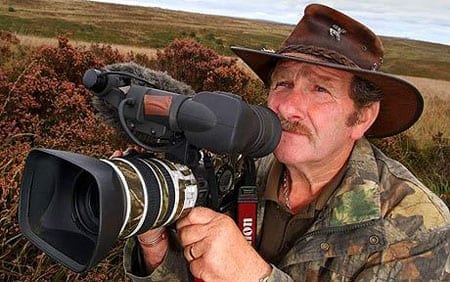
Johnny Kingdom
Johnny Kingdom, who describes himself as having been “a farmer, quarryman, forestry worker, gravedigger and, if truth be told, a poacher” in his youth, also lives in the locality and is well known as a wildlife photographer, filmmaker and television presenter. He sets many of his series on Exmoor because of the vast array of wildlife he comes across here and is, like Williamson before him, often to be found exploring the valley of the River Bray.
In a 1965 BBC interview Henry Williamson was asked: “What influence has this [the Devon] countryside had on you?”:
“Everything, I should say. I came down here as a youth, aged just 18 in 1914, spent a fortnight’s holiday here in the beginning of May, beginning of June. I walked 20 to 25 miles every day. Everything I saw was radiant and beautiful.”
This idyllic part of Devon that Williamson loved so much remains unspoilt to this day. If you haven’t visited yet, it really should be added to your bucketlist.
The sale of a $25 million mansion modeled on Marie Antoinette’s favourite retreat that has connections to Levi Strauss & Co., Yehudi Menuhin, the Zodiac Killer and a controversial dot-com tycoon
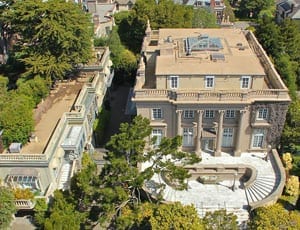
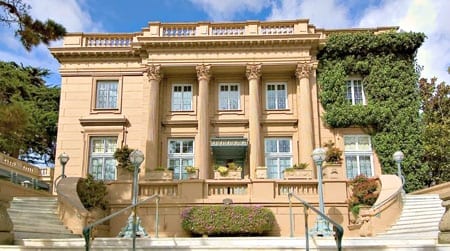
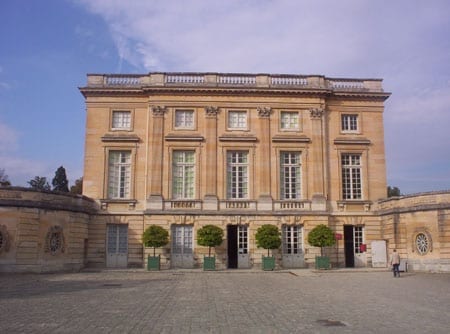
Modeled on the Petit Trianon, a small château in the grounds of Versailles that was favoured by Louis XVI’s wife Marie Antoinette, the Koshland Mansion at 3800 Washington Street in Presidio Heights, San Francisco, California was built between 1902 and 1904 for a pioneer wool, hide and fur merchant named Marcus S. Koshland and his wife, Corrine.
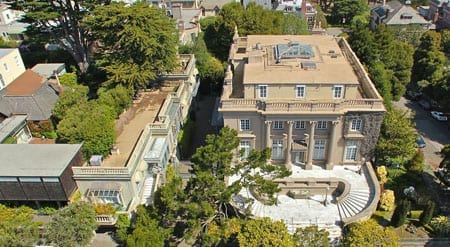
The Washington Street elevation of the former Koshland Mansion at 3800 Washington Street, San Francisco, California, CA 94118An aerial view of the 18,000 square foot property and the 2,600 square foot guest accommodationThe inspiration for the Koshland Mansion: The Petit Trianon, Château de Versailles, Place d’Armes – 78000 Versailles, France
The Koshlands, whose son Daniel (1920 – 2007) was to become a president of Levi Strauss & Co., commissioned an architect named Frank S. Van Tree to design a replica of the Petit Trianon after having admired it whilst on holiday in France. The front of the building, facing onto Washington Street, is considered such a faithful representation of the neoclassical building the Koshlands copied and as a result the house is now designated a San Francisco Designated Landmark.
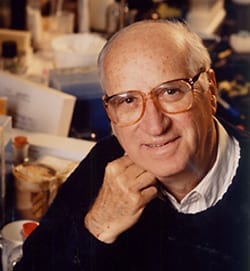
Daniel E. Koshland, Jr.
Some 20,000 square foot in size and set on a 2/3rd acre plot, the completion of this sandstone faced “single family residence” was celebrated by the Koshland family with a Marie Antoinette themed ball in 1904. The invitations to this legendary event were purchased and printed in Paris and hand delivered to the guests.
The Koshland Mansion survived San Francisco’s 1906 earthquake with only a little damage to the front elevation
The 1906 San Francisco earthquake, just two years after they’d completed the building, somewhat interrupted the Koshlands hectic party schedule at 3800 Washington Street. Though the disaster caused the front columns and roof balustrade to collapse, the couple generously opened the otherwise undamaged property to some 60 to 80 displaced family and friends. With no mains water, the guests had to fetch water from Fort Mason but they were no doubt happy to have had somewhere to take refuge.
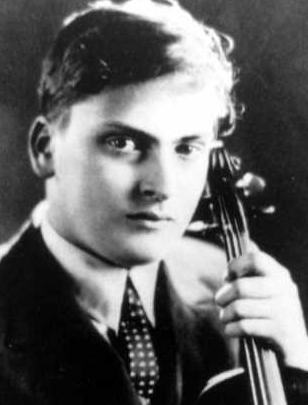
During subsequent renovations, as well as restoring the façade, a 5-car garage was added in 1909 and a greenhouse and extension in 1912. In the ensuing years, until her death in 1953, Corrine Koshland, better known as Cora, opened up 3800 Washington Street as a venue for concerts. A founder of the San Francisco Symphony Association and one of the first directors of the San Francisco Opera Company, Koshland invited music critics to review the performances and gave both Yehudi Menuhin and Isaac Stern their musical debuts at the house as child prodigies. Amongst the other big names to play in the masnion were Igor Stravinsky, Jascha Heifitz and Leonard Bernstein.
Sir Yehudi Menuhin KBE (1916 – 1999) pictured in his youth
In 1953, the Koshland Mansion was sold for $100,000 by the estate of Cora Koshland. The purchaser was Walter E. Buck (1884 – 1966), president of the American Distilling Company. Buck and his wife Emily, who were well known for “Gatsby-esque parties” at their 1,300 acre estate, Woodside, redecorated 3800 Washington Street by “painting the mahogany library white, removing the dark green, gold-tooled leather from the dining room and developing small card rooms in the basement.” It seems likely that the era of parties at 3800 Washington Street continued during their occupancy.
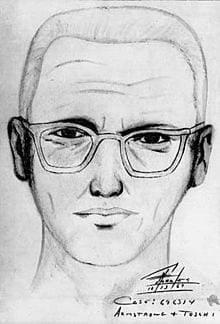
On 11th October 1969, a murder occurred on the block where 3800 Washington Street stands when the Zodiac Killer, a to this day unidentified serial killer who operated in Northern California in the 1960s and 1970s, shot and killed a cab driver named Paul Stine. Stine had collected his passenger one block west of Union Square and had, as requested, driven him to the intersection of Washington and Maple Streets in Presidio Heights. Once there, the cab driver was shot once in the head with a 9mm before the killer, observed by three teenagers across the street, took his wallet and car keys. The Zodiac Killer tore off a section of Stine’s bloodstained shirt, wiped the cab clean and walked off into the night before the police could arrive.
A sketch of the Zodiac Killer
Subsequently, on the 14th October 1969, the San Francisco Chronicle were mailed a swatch of Stine’s shirt to prove he was the killer and then on 9th November 1969, a 7-page letter followed. Excerpts from it were published from it in the newspaper on 12th November which revealed that a police officer, Don Fouke, who had responded to the teenager’s call, had actually encountered the killer for 5 to 10 seconds on a stairway of a house close to the murder scene. Fouke had been told to look for a black suspect and on seeing a white man going into the yard of a house, had discounted the individual and drove on. The Zodiac Killer, in his letter, detailed the encounter but claimed that two policemen had actually spoken with him 3-minutes after he’d shot Stine.
In 1975, a neighbour, Paul Renne purchased 3800 Washington Street for $675,000, supposedly to prevent it being acquired by property developers, but having been used as the 1982 San Francisco Decorator Showcase house, it was placed on the market and sold to a gallery owner named Heidi Betz and her business partner, an art collector named Charles Pankow. They paid $1.5 million for the house but failed in their bid to turn it into an art gallery due to objections from neighbouring residents.
Halsey Minor
In the two decades that followed 3800 Washington Street was sold several more times but finally it’s glory days looked set to return in 2007 when it was purchased by an “internet titan” named Halsey Minor and his second wife, Shannon. Having paid approximately $22 million for what essentially was going to be a very expensive renovation project, Minor supposedly assigned a further $15 million towards renovations and hired Michelle Obama’s favourite designer, Michael S. Smith, to oversee the project.
Minor founded CNET, a tech media website that published news, articles, blogs and podcasts on technology and consumer electronics, in 1992 after leaving Merrill Lynch and built it into one of the first internet companies to achieve profitability. CNET was sold for $1.8 billion in 2008 and is now CBS Interactive. Another of the companies he co-founded in 2000, salesforce.com, was “one of the most successful companies of the decade” and achieved a market capitalisation of in excess of $15 billion.
Having made a small fortune from his dot-com success, Minor diversified into investments that brought with them a lifestyle that would later be described as “a multi-millionaire who lived life as a billionaire.” In 2007, he began construction of a hotel in his hometown of Charlottesville, Virginia and announced this would be part of a series he’d open as part of the Minor Family Hotel group he planned. The hotel has never been completed.
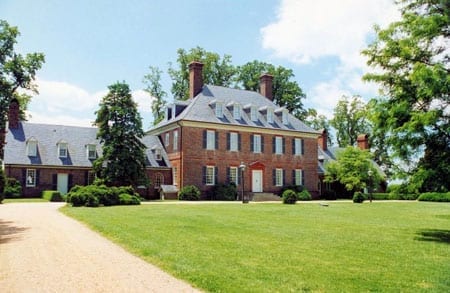
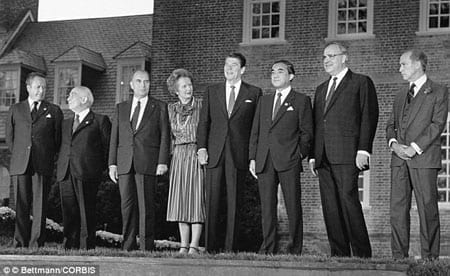
Carter’s Grove, 8797 Pocahontas Trail, Colonial Williamsburg, Virginia, VA 23187: considered to be one of America’s finest and most historic residences. It was bought by Halsey Minor in 2007 and has fallen into significant decline in the years since.The 1983 Group of Seven (G7) meeting at Carter’s Grove. Pictured outside the house are: Pierre Trudeau, Prime Minister, Canada; François Mitterrand, President, France; Helmut Kohl, Chancellor, West Germany; Amintore Fanfani, Prime Minister, Italy; Yasuhiro Nakasone, Prime Minister, Japan; Margaret Thatcher, Prime Minister, United Kingdom; Ronald Reagan, President, United States of America and Gaston Thorn, President, European Commission
In the same year, he also bought the Koshland Mansion and purchased 400 acres of land and a residence on the James River, the Carter’s Grove Plantation, for $15.3 million. Here, he planned a centre for thoroughbred horse breeding and at around the same time he attempted to buy both the Hialeah Park Race Track in Hialeah, Florida and the Pimlico Track in Baltimore. Both bids failed.
Minor’s investments were not just limited to property and the equine sector. In 2006, he placed a $3 million deposit on a $59 million Gulfstream G650 and at Sotheby’s in 2008, he was the winning bidder on a painting by Edward Hicks, The Peaceable Kingdom, at a hammer price of $9.6 million and also bought paintings by Andy Warhol and Childe Hassam.
Around this point, however, this dot-com tycoon’s fortune began to unravel when Merrill Lynch called in a $25 million loan and various legal suits connected to his art collection, investments and properties commenced. Several of his homes were repossessed and at a court hearing in August 2011, he claimed to have just $112,643 in cash and owned no publicly traded securities. Minor claimed to be majorly broke but the declaration did not cover illiquid assets such as art, real estate and shares in non-public companies. To this day, Minor remains listed in first place on the State of California’s Franchise Tax Board’s top 500 delinquent taxpayers owing some $10,455,580.69.
In response to his supposed progression from riches to rags, Minor wrote an article for The Huffington Post in July 2012 entitled “Why I Fight”:
“I often wonder what Thomas Jefferson would think of today’s America, a nation that is rapidly but silently abandoning the individual in favour of faceless corporations, rapacious banks and a collusive, unresponsive government… The simple answer is that someone must [fight] or we will emerge from this recession with wealth and power concentrated in a few tiny financial institutions representing a new ruling elite, not unlike the one that inspired Thomas Jefferson’s generation to revolution.”
Somehow, in spite of his changed circumstances, Minor has managed to hold on to 3800 Washington Street. Though, during his tenure, the house has fallen into decline and is now half covered in ivy, it is still one of San Francisco’s finest properties and it is still situated in one of the city’s best neighbourhoods. It is still an asset of considerable value and Minor’s decision to sell may well help him rake back some of what he has lost.
The hallway at 3800 Washington StreetA drawing room at 3800 Washington StreetOne of the property’s dining roomsThe opulent ballroom at 3800 Washington Street
Steven Mavromihalis of Pacific Union International launched 3800 Washington Street onto the market in May 2012 for $25,000,000. This move came just after two Abandoned Building Notices had been issued on the property by the City and County of San Francisco Department of Building Inspection. On offer is the 18,000 square foot main house at 3800 Washington Street, a 2,600 square foot 3-bedroom house at 3810 Washington Street and a vacant lot at 125 Maple Street. Though the agents don’t give much more in the way of details, they do refer to the house having a double marble Palladian staircase, 22 rooms, a “spectacular ballroom,” 8 bedrooms, 7 bathrooms, 9 fireplaces, 3 kitchens, an elevator and three original stained glass windows by the San Francisco poet, writer sculptor and artist Bruce Porter (1865 – 1964).
According to the agents, 3800 Washington Street is second only to Danielle Steele’s 55-room residence, The Spreckels Mansion, at 2080 Washington Street in the rankings of the largest homes in San Francisco. This is most certainly a mansion with a fair few tales to tell but whoever buys it will need both Steele’s wealth and imagination to get it back into good order. Dot-com tycoons and serial killers need not apply.
All enquiries about 3800 Washington Street, Presidio Heights, San Francisco, California, CA 94118 should be directed to Steven Mavromihalis of Pacific Union International on +1 (415) 345 3030 or email him at: [email protected].
More details are available at: http://www.pacunion.com/homes/CA/San_Francisco/94118/3800__Washington_St/AGT-107397278-685992/ whilst a video tour of the property can be viewed at: http://vimeo.com/42775765
J.K. Rowling sells the home where she first moved after the initial success of her “Harry Potter” series
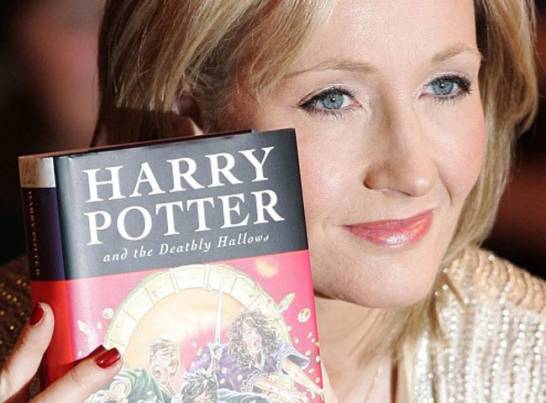
Harry Potter author J.K. Rowling is a lady said to be worth some $1 billion. Her path from “rags to riches” is well documented but the announcement of the sale of the Edinburgh home she first bought after the initial success of the books gives an insight into how she is also financially shrewd when it comes to property investment.
Joanne “Jo” Rowling OBE, FRSL, pen name J.K. Rowling
Having paid £425,000 for a first floor flat in a 2-storey Victorian house at 1 Abbotsford Park in Edinburgh’s Merchiston neighbourhood, 2 miles from the city in 1999, Rowling bought the other half of the building in 2003 for £375,000. In turn, the property was converted back into an 8 bedroomed single family residence and became one of several residences the author lived in with her second husband, Dr. Neil Murray, and their children.
The front elevation of 1 Abbotsford ParkSecurity at the house was ramped up as Harry Potter sales soared due to the volume of fans appearing outside the property
As well as extensively refurbishing and extending the property, in a submission to Edinburgh Council in December 2003, in the names of Mr. and Mrs Murray, the couple sought permission to install five CCTV cameras inside mock lamps at 1 Abbotsford Park. Though a neighbor objected on the grounds of invasion of privacy, the application was approved.
The house’s 35ft sitting-dining roomJ.K. Rowling’s kitchen features free standing units, a Lacanche range cooker and a mural of tiles that, from a distance, could even be a scene from a Harry Potter novelThe garden of 1 Abbotsford Park
J.K. Rowling also built a detached 656 square foot office complex in the grounds of the 3,240 square foot house during her occupation. Additionally, as well as a library, she fitted out a study where she wrote many of the series of books that have now sold more than 400 million copies.
An external shot of the garden office said to have been used by Rowling’s staffAn internal shot of the office building
Though Rowling permanently moved into another Edinburgh home she purchased for £2 million in December 2009 last year, whoever purchases 1 Abbotsford Park will have other authors to call neighbours. Ian Rankin and Alexander McCall Smith both live locally.
Rettie and Co. seek £2,250,000 on behalf of Dr. Murray and J.K. Rowling. Even allowing for their extensive renovations, the author’s initial £800,000 investment appears to have certainly paid off if this price is achieved.
For more information on 1 Abbotsford Park, Edinburgh, Scotland, EH10 5DX, contact James Whitson of Rettie & Co. at 11 Wemyss Place, Edinburgh, EH3 6DH or telephone: +44 (0) 131 624 9068. View full details including a PDF brochure at: http://www.rettie.co.uk/sales/EDI121294
J.K. Rowling’s official website can be viewed at: http://www.jkrowling.com. Her first adult book, The Casual Vacancy, is published by Little Brown on 27th September 2012.
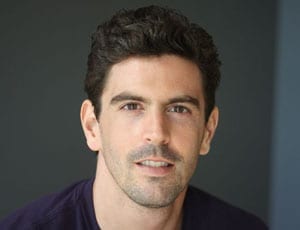
 This talented author was born in South Africa but educated at Eton and New College, Oxford. The Drowning People, his first novel, gained him a “vast” advance and was published during his first year at university. It’s been translated into 22 languages and has sold over 3 million copies. Richard Mason funds a foundation in memory of his sister that pays for gifted South African children from poor backgrounds to attend the country’s top private schools and with a writing style that’s been compared to “Henry James on Viagra”, he’s definitely got many more pages to pen. An early critic, who told him he “should have killed [himself] rather than publish”, is now writing reviews of home décor shows.