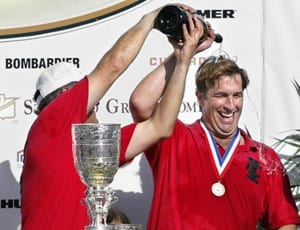
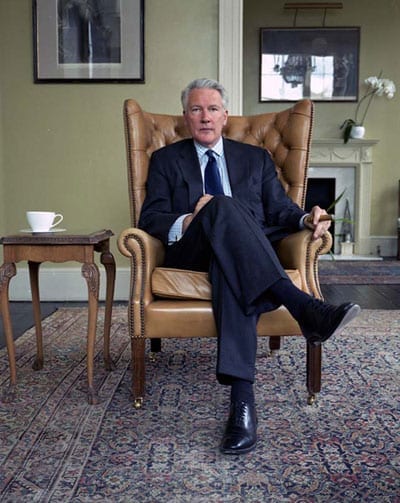
Tagged billionaire John Goodman allowed to fly to Texas to visit his mother
The case of John Goodman is what the media would term “a gift that keeps on giving”. The “polo king” billionaire, whose reckless driving resulted in a student’s death in 2010, is in the news again this week and this time it’s for getting permission to fly by private jet to visit his ailing mother who is dying of cancer. (more…)
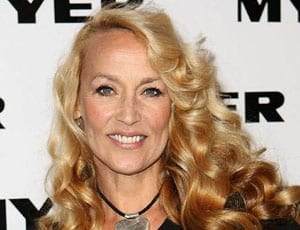
Like a fine vintage, this Texan model and actress gets better with age. Mick Jagger’s former common-law wife was once engaged to Bryan Ferry and has dabbled with Kabbalah and other religions. A mother of four, Hall once stated: “I’m a very bad citizen. I’ve never even voted… I have zero interest in politics”.
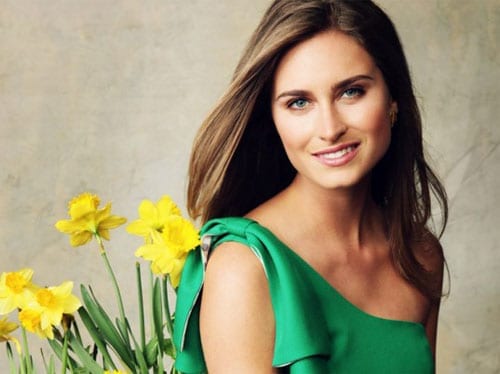
President George H. W. Bush’s model and designer turned philanthropist granddaughter became “Lauren Lauren” when she married David Lauren, son of Ralph Lauren, in 2011. The union was described as the merger of two families who are “public but private” and of why she named her own fashion label “Lauren Pierce”, Princeton educated Bush Lauren commented: “Obviously my last name is associated with politics. But Pierce is my grandmother’s maiden name and my younger brother’s name. It’s not about downplaying my last name as much as it is about loving Pierce. And my brother is very flattered”. It’s most definitely all in the name.
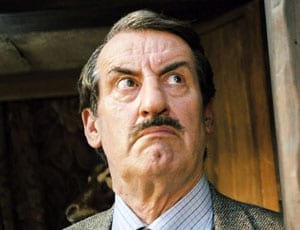
The Steeple Times asks actor John Challis, best known for playing Boycie in “Only Fools and Horses”: “What’s on your mantelpiece?”
The Steeple Times shares “wit and wisdom”. What’s your guiding force?
Marlene is my guiding force at all times. Listen to your wife. She knows best.
“Don’t get even, get medieval” is, in our humble opinion, a great motto. What’s yours?
“Never lose that bitterness”.
Kerry Katona was considered unacceptable in 2007. Who or what is unacceptable in 2013?
Wind turbines.
Tony Blair misses being Prime Minister. What do you miss most in your life?
The energy of my youth.
What might you swap all your wealth for?
Life in a warm climate.
Donald Trump was once a case of: “If you owe the bank a thousand, they close you down; but if you owe the bank a billion, you own the bank”. What’s your view on the banking crisis?
Bloody capitalists!
What phrase or word do you most loathe?
“Gobsmacked”.
In the UK, some people consider charity to “begin at home”. What’s your view and what causes do you personally support?
I support animal charities especially Tusk Trust. They are fighting to save rhinos and elephants from extinction as a result of poaching. Ronnie Wood and I are the oldest and longest serving patrons of Tusk.
The judge in Law Abiding Citizen states: “I can pretty much do whatever I want” before being blown up whilst answering her mobile phone. What’s your view on the appropriate use of such devices?
Mobile phones are a bloody nuisance, especially on public transport. I have got into fights in the silent carriages of trains. Can’t live with them, can’t live without them. I resisted a mobile for years.
John Challis and friends
If you could fill a carriage on The Orient Express, who would be your fellow passengers?
Marlon Brando, James Stewart, Kim Novak, Prince Rupert of the Rhine, Tom Graveney, the Duke and Duchess of Cornwall, Jacques Tati, Marg Helgenberger and Paul Guilfoyle.
If you were unfortunate enough to end up on death row, what would be your last meal and where would you eat it?
Gorgonzola cheese with fresh figs and a glass of vintage port on the terrace of the Hotel Splendido in Portofino, Italy.
What time is it acceptable to consume the first drink of the day?
6pm unless out to lunch.
A Negroni, a martini or a cup of tea?
A martini, stirred not shaken, with a twist of lemon and an olive for my heartburn.
Whose parties do you enjoy the most and why?
I don’t do parties anymore. My 60th finished me off.
Who is the most positive person you know?
My brother-in-law, Johnny Palmer.
What’s your most guilty pleasure?
ABBA.
If a tattoo were to sum you up, what would it be of?
A man with a cricket bat striking a cover drive.
If you were a car, what marque would you be?
An Aston Martin DB4.
Cilla Black presented Surprise, Surprise. Tell us the most surprising thing about you.
I wear Converse trainers.
What’s currently sitting on your mantelpiece?
Abby Bobblehead (NCIS), a miniature Trotter yellow van and a packet of lupin seeds sent to me from a Twitter follower in Texas.
John Challis is an English actor best known for his role as Terrance Aubrey “Boycie” Boyce in the long running BBC television comedy series Only Fools and Horses and its spin-off, The Green Green Grass.
To order signed copies of John Challis’ autobiography, Being Boycie and Boycie & Beyond, and to view the list of venues for his show on tour, go to: http://www.wigmorebooks.com
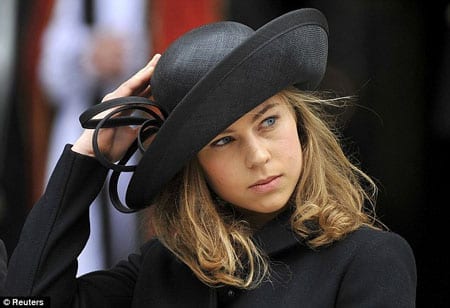
At the funeral of her grandmother, Baroness Thatcher, this young lady from Texas showed herself to be a “chip off the old block”. Her reading was composed and faultless and impressed the nation. She’s also said to be a talented sportswoman and there’s a most definite possibility she’ll take up the Iron Lady’s mantle in due course.
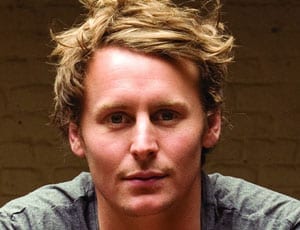
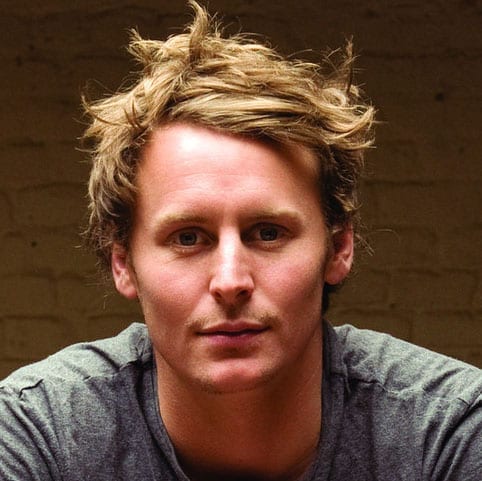
This singer-songwriter grew up in rural Devon but has become a “word-of-mouth” star and a “one-man One Direction”. This whisky loving Englishman cites his influences as Van Morison, Bob Dylan and Simon & Garfunkel and won both BRIT Awards he was nominated for in 2013. He states that he “doesn’t really believe in fame” and nor is he into fashion either: “If I tried to be fashionable I’d look like a twat”. We like his style.
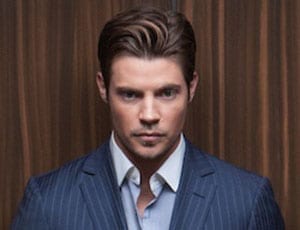
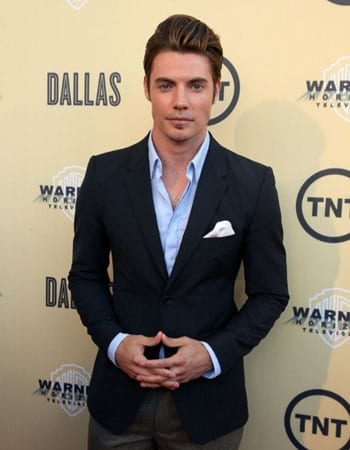
This Texan actor and singer is a rising star who first found fame in Desperate Housewives before taking a lead role in the TNT revival of Dallas. Henderson is heterochromatic and has one green eye and one blue eye. He lists his style icons as James Franco and Ryan Gosling and of them states: “I take a lot of my fashion tips from those two. In my opinion, they’re the ones getting it right”.
The story of a 1929 bi-plane with a truly fascinating pedigree
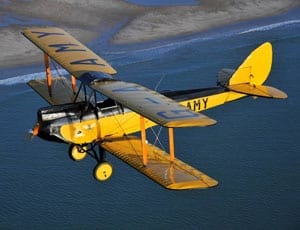
Britain’s best-known wartime Prime Minister piloted a Gipsy Moth aeroplane that will be sold by auctioneers Bonhams in February 2013 at a guide of £120,000. The same craft was also featured in an iconic 1980s film and was also supposedly flown by a member of the Fiennes family who mysteriously disappeared in 1998.
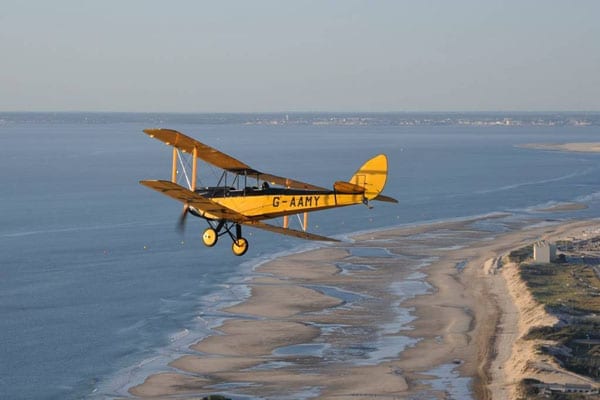
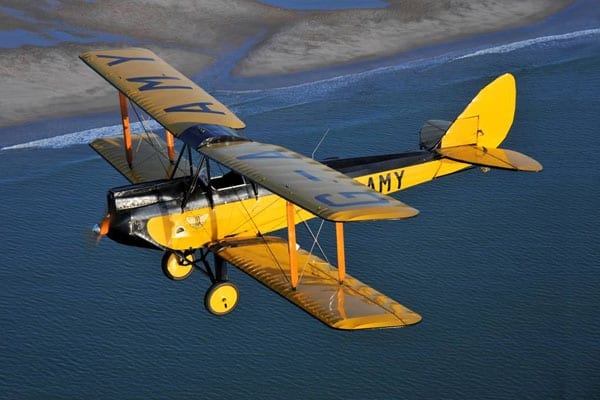
The 1929 De Havilland DH 60 GMW Gipsy Moth bi-plane G-AAMY that will be sold by Bonhams at the Grand Palais in Paris in February 2013Sir Winston Churchill (1874 – 1965)
Piloted several times by Sir Winston Churchill (1874 – 1965) and used in the Oscar award winning Out of Africa, this 1929 De Havilland Gipsy Moth bi-plane is 24-foot long and has a 30-foot wingspan. It is capable of a maximum speed of 105mph and “wears” a yellow and black livery. It’s registration is G-AAMY in homage to the pioneering English aviatrix Amy Johnson (1903 – 1941).
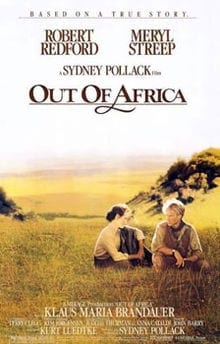
In the film, the plane was flown by Robert Redford but though the life of the big game hunter Denys Finch Hatton he played is intriguing; the exploits of Redford’s aviator double are just as fascinating a story.
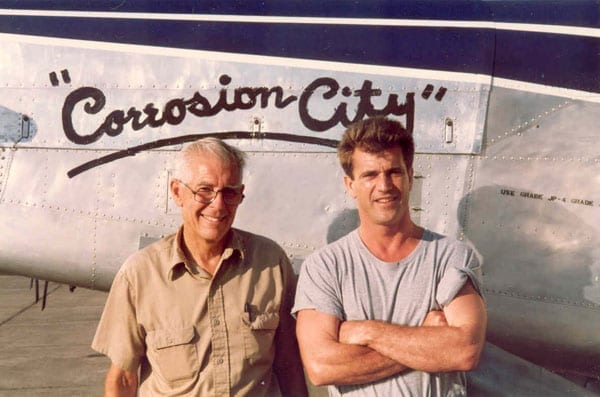
Sydney Pollack’s “Out of Africa” (1985) starred Robert Redford and Meryl StreepTom Danaher pictured whilst filming with Mel Gibson
Few outside of the aviation world will have heard of Tom Danaher (1929 – ) but aside from Out of Africa, he’s pretty much done it all. After graduating from a high school in Dallas in 1941, he became a Marine Corps fighter pilot. Stationed on Okiwana in August 1945, he shot down the last Japanese bomber on the final night of the Second World War and also made history, aged 21, for downing three other Japanese “Betty” bombers in the eight nights before the ceasefire.
Recalled to active service in 1951, Danaher flew one of the earliest jets, the F3D Skynight, with the Marines in Korea on night combat patrols and then was part of the last combat mission on a high altitude bombing strike over Pyongyang, North Korea in July 1953.
Danaher’s passion for flying continued after the war and in 1954 he flew his own plane, a 1948 Bonanza, to England to visit friends he’d made from the RAF whilst in Korea. To make the journey, he built a 109-gallon auxiliary fuel tank so that he could fly straight across the Atlantic. On the way home he called in for an audience with Pope Pius XII in Rome.
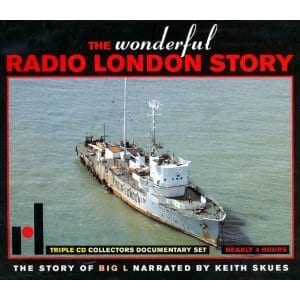
The surplus Second World War minesweeper from which Wonderful Radio London operated in the 1960s
Danaher’s visits to England led to him becoming involved in a pirate radio station in from 1944 to 1967 named Wonderful Radio London. Like many others, Danaher was not impressed by the BBC’s monopolistic attitude to radio programming and so helped build a 17,000-watt station on a surplus Second World War minesweeper. It was anchored three and a half miles off the English coast and outside of Britain’s territorial limit. Of the experience, Danaher told Airport Journals:
“We had someone in Dallas who would record KLIF, a top 40 station, and we put it right on the air… The Englishmen over there just ate it up… The station programmed news and top 40 music and was very successful. It had the largest listening audience of any of any commercial broadcast station at the time.”
Back in America, Danaher owned three car dealerships in Wichita Falls, Texas but sold them in 1972 to open his own airport, the Tom Danaher Airport. Lake Wichita Airport (7TXO), as it was also known, kept the aviator busy but he has also piloted in films numbering Empire of the Sun, Sky Bandits, Air America, Bad Medicine, The Pleasure of Love, White Hunter Black Heart, Cliffhanger and Goldeneye.
In 1985, Danaher was recruited to fly Gipsy Moth G-AAMY by Sydney Pollack (1934 – 2008), the American director of Out of Africa. He recounted his six week experience on set in Masai Mara, Kenya in an interview for his local Texan newspaper, the TimesRecordNews, in 2008. Here, he highlighted the problems of trying to film with a vintage plane that “has no brakes and is difficult to steer”:
“Robert Redford couldn’t make the thing turn. It took considerable finesse to turn it on the ground… The third time, he gave it full throttle… The left wing contacted a thick thorn bush and it tore some of the fabric off the lower left wing of the plane. We couldn’t fly it the rest of the day.”
Other dramas arose with G-AAMY in terms of Meryl Streep’s body double refusing to fly in it and the craft struggling to reach the high altitudes necessary to film a sweeping shot of the plane flying past a waterfall. Danaher took charge stating: “If I can get a piece of string and a ruler, I can fix this.” He found just such, cleverly installed them and Pollack: “got every single shot he wanted.”
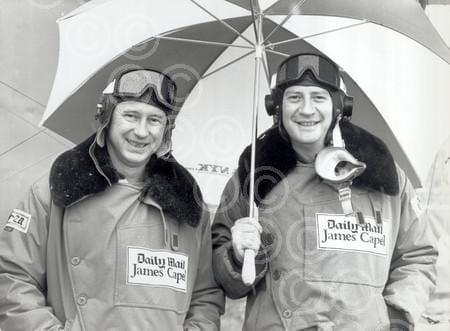
Pilot Roger Fiennes (1944 – 1998) pictured with Alexy Zaitov during the 1989 Glasmoth project expedition to Moscow and back
Another person to have piloted the Gipsy Moth G-AAMY, according to a comment left in the PPRuNe Professional Pilots Rumour Network forum, was a man named Roger Fiennes. Whether this “rumour” is true or not, the cousin of the actor Ralph Fiennes and the explorer Sir Ranulph Fiennes, is another character with a flying history as fascinating as his true family name – which turns out to be “Twisleton-Wykeham-Fiennes” when presented in full. Of why he did not use this lengthy and historic surname, Fiennes is said to have once commented:
“You try writing that signature on a 6 foot long cheque book.”
Fiennes flew many hours in a variety of planes and one of the best documented was an expedition supported by the Daily Mail from White Waltham Airfield in Berkshire to Sheremetyevo Airport in the Soviet Union in April 1989 and back. He flew one of three Tiger Moth bi-planes with a Russian navigator named Alexy Zaitov. The journey took three weeks to complete, involved 33 perilous stops and covered 5,000 miles.
On 19th April 1998, Fiennes was piloting a 1941 DH82A Tiger Moth, G-BALX, from Dieppe to Headcorn Aerodrome in Kent but he failed to reach his destination. The Air Accidents Investigation Branch (AAIB) report into the disappearance concluded:
“Although the pilot contacted Paris Information by radio, in the absence of a specific request, the flight plan was not activated. Lashenden was therefore unaware of the flight’s departure and ETA. When the aircraft was reported missing overdue action, and the subsequent Search and Rescue operation, which was activated on the morning of 21 April 1998. Since then there has been no sign of the aircraft or pilot.”
Articles at the time and forums since are sparse in detail but several forum posters and articles suggest that Mr Fiennes had “mounting debts and a string of business collapses.” Whilst some go as far as to suggest a “Lord Lucan” style disappearance and make references to “paddling canoes” and “check[ing] the Panamanian register,” others remember a “nice guy, sadly missed.” Whatever really happened that fateful day, though, will probably never be solved.
Another image of Gipsy Moth G-AAMY
G-AAMY, which was marked G-AAMT for the filming of Out of Africa, is a plane with a remarkable past. We suspect there’ll be a few more dramas for this craft yet.
The 1929 De Havilland DH 60 GMW Gipsy Moth bi-plane G-AAMY will be sold by Bonhams at the Grand Palais in Paris, France sale during Rétromobile week (6th to 7th February 2013). For more information telephone +33 1 42 61 10 11 or go to: http://www.bonhams.com
Matthew Steeples delves into the history of Albany, Piccadilly and discovers an affordable way of living there
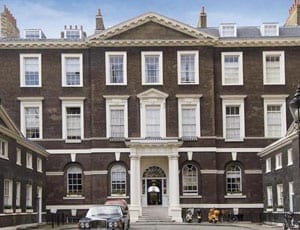
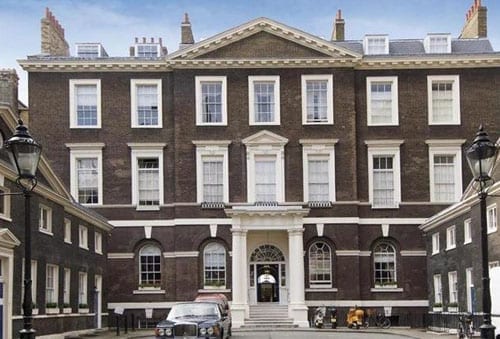
Albany, off Piccadilly in Mayfair, was most probably London’s first apartment block and it’s certainly the city’s most exclusive. It may be next to the Royal Academy and opposite Fortnum & Mason but surprisingly few have even heard of it.
Considering its location, Albany, which some make the mistake of referring to as “The Albany,” is an amazingly quiet oasis of peace and tranquility but, equally, it is a place of intrigue and drama. Residents, or “proprietors,” as they prefer to be known, of the 69 “sets” are particular about the “the” part of the name as they’d rather their residence not be confused with a public house and they are even more protective of their privacy. A porters’ lodge guards the entrance to the building and it is staffed mostly by ex-servicemen, who, until the early 2000s, had to wear top hats and tailcoats. Those allowed to pass enter a rarefied world frequented by what the Irish novelist Marmion Savage (1803 – 1872) identified as “incurable oddities” and “superannuated fops” in The Bachelor of Albany.
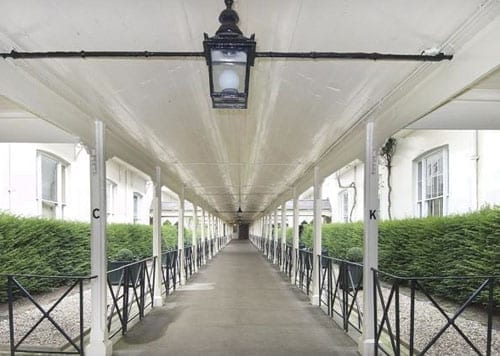
The front courtyard and façade of Albany, Piccadilly, Mayfair, London, W1J 0ALThe rope-walk connecting the various sets of Albany has been traversed by some of the greatest names in history
Built by Sir William Chambers (1723 – 1796), who also designed Somerset House and the pagoda at Kew, between 1770 and 1774 for 1st Viscount Melbourne (1745 – 1828), Albany was originally known as Melbourne House and conceived as a three-storey mansion, seven bays wide with a pair of service wings flanking a front courtyard. From 1791 to 1802, the property was occupied by George III’s son, Prince Frederick, Duke of York and Albany (1763 – 1827), but after he left, the renowned architect Henry Holland (1745 – 1806) sub-divided the existing house and added two parallel sets of buildings running the length of the garden to create 69 “bachelor apartments” which he named “sets.”
The “roll call” of residents since could easily fill our very own pages thrice over. They number royalty, politicians, artists, playwrights, academics and philosophers and here is a brief selection:
– Anthony Armstong-Jones, later 1st Earl of Snowdon
– Sir Thomas Beecham
– Sir Isaiah Berlin
– Lord Byron
– George Canning
– Sir Kenneth Clark
– Baroness Pauline de Rothschild
– William Ewart Gladstone
– Sir Edward Heath
– David Hicks
– Aldous Huxley
– Sir Simon Jenkins
– Rupert Lycett Green
– Malcolm Muggeridge
– Sir Harold Nicholson
– J. B. Priestley
– Sir Terence Rattigan
– Roger Scruton
– Baroness Sharples
– W. Somerset Maugham
– Terence Stamp
– Sir Denis and Lady Thatcher
– Sir Herbert Beerbohm Tree
Each had to pass the vetting of a committee of trustees of this Grade I listed building. That committee forbids children under 14, pets, musical instruments and commercial activities and each approved resident has undoubtedly added to the history of this den dominated by a central walkway named the “rope-walk.” Incidentally, an example of a curious quirk at Albany is that no resident is allowed to speak to another on this walkway. If they do, a fine is incurred. Albany, indeed, is rather like a college in its systems of rules, regulations, order and hierarchy.
For several centuries, women were not even allowed to cross the threshold and one legendary tale tells of Lady Caroline Lamb (1785 – 1828), disguised as a page boy, stealing into Lord Byron’s (1788 – 1824) set in 1815 to leave a note: “Remember me, Byron.” He replied with a simple verse:
Remember thee, aye, doubt it not:
Thy husband too shall think of thee.
By neither shalt thou be forgot —
Thou false to him, thou fiend to me.
The strict and formal structure that controls Albany and ensured its maintenance has succeeded in the main because 34 of the 69 sets are owned by Peterhouse College, Cambridge. They and the other owners are highly particular in whom they lease to and on one occasion on hearing of an “unsuitable tenant,” the secretary of the trustees is reported to have shouted:
“He’s a foreigner. Don’t like him. Don’t trust him.”
Needless to say, that application didn’t progress and nor did one from a physiotherapist who planned to operate from the building. Bone bashing in Albany just wouldn’t do.
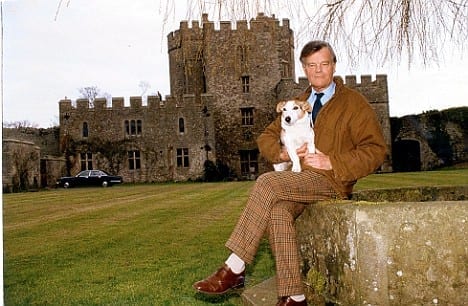
The Rt. Hon. Alan Clark MP (1928 – 1999) in the grounds of his main home, Saltwood Castle, near Hythe in Kent in 1993
A horsewhip, however, nearly crossed the threshold of set B5 in 1994, as it was here that the late Alan Clark MP (1928 – 1999) lived. The affable philanderer seduced the wife and both daughters of a certain South African named Judge Harkess and the wronged man stated he would “have horse-whipped Clark if he had known how comprehensively he had violated his honour.” B5, itself, was described as having the feel of “the straitened quarter of an Edwardian bachelor on his uppers” and the dotty, English attitude of the residents is best summed up by the reaction of Clark’s neighbour when he accidentally flooded their basement. When asked what he could do to make amends, their answer was quite simple: “Go and lie down in Piccadilly and wait for a double-decker bus.”
The dandy and journalist John Morgan (1959 – 2000) typified social change at Albany in the 20th century just as much as he himself redefined etiquette and manners at Debrett’s and The Times. Of “humble origins,” Morgan was brought up in a “modest” bungalow in St Madoes, Perth, Scotland but is credited with persuading William Hague to remove his baseball cap whilst Conservative leader and offering advice ranging from “how to eat a banana” to “how best to tell friends that the partner you would like to bring to their wedding will be of the same sex as you.”
Dandy and etiquette expert John Morgan (1959 – 2000)
For the bachelor and GQ style director, living in Albany was symbolic of his own personal social elevation but he did not disown his past. This modern day Beau Brummell was a man of social contradictions who cashed his cheques at Claridge’s but was a member of the National Union of Journalists. He was a Tory but still regularly attended chapel meetings as he had done in his youth. Here was a man of paradoxes who seemed unable to come to terms with the fact that he was a homosexual.
Morgan, an asthma sufferer, fell to his death from a fourth floor window on 9th July 2000. He was found in just a white shirt in a basement below a window whose sill was strangely undisturbed. The coroner left an open verdict with a suspicion of suicide and it was widely reported that police found 60 made-to-measure Savile row suits, 300 monogrammed shirts and 90 pairs of shoes in the etiquette expert’s small set. Mystery shrouds the story of his tragic demise to this day but Johnny Morgan will forever be remembered as an arbiter of both good taste and behaviour.
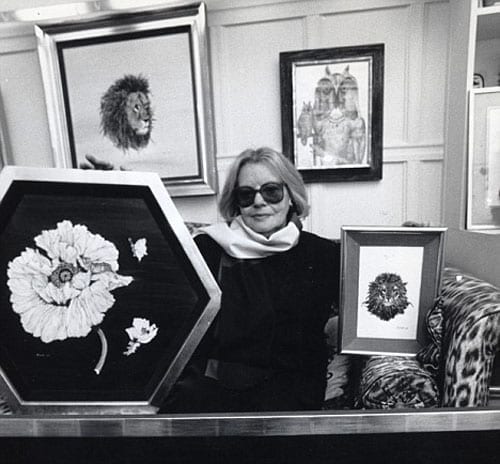
Whilst Morgan represented continuation of the trend of bachelors living in Albany, change also came in the 20th century when the building’s committee removed the restriction that allowed only bachelors to be resident. With that females were allowed in and amongst them Fleur Fenton Cowles (1908 – 2009) was one of the most fascinating.
Fleur Fenton Cowles (1908 – 2009) in her set at Albany with some of her paintings and one by Salvador Dali
This writer and artist occupied five sets knocked into one with her fourth husband, timber merchant Tom Montague Meyer, and according to the Daily Mail’s Geoffrey Levy, hosted “elite soirees of the powerful and famous.” Levy recounts them at length but here is a flavour:
“On a Wednesday evening, a typical dinner party… would include Foreign Secretary Selwyn Lloyd, Labour leader Hugh Gaitskell, entertainer Danny Kaye and film star Douglas Fairbanks Jr. The Queen Mother regularly came to tea and was once joined by Pavarotti who sang Happy Birthday for the royal guest. ‘I don’t want her to die,’ said Fleur. ‘I couldn’t bear to think she doesn’t live just down the street.’ ”
Fenton Cowles, founder of the ill-fated Flair magazine and a “woman who knew everyone,” loved Albany and an exact replica of her “windowless, milk-yellow” study there has even been recreated at the University of Texas.
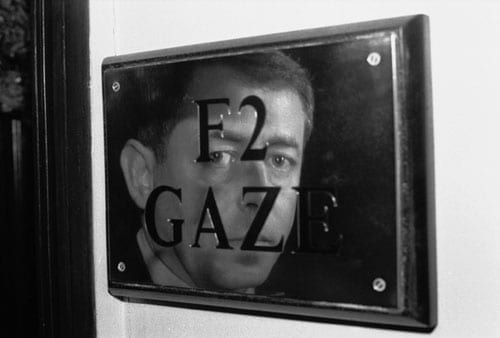
Another known for hosting extravagant bashes in Albany was my late friend, the Russian icon dealer John Gaze (1947 – 2011). Gaze had, as a boy, asked his father about the building when he passed it as a child and immediately declared he would live there one day. He took F2, the former set of Edward Heath that overlooked Savile Row to the rear, in the mid 1990s as he craved the safety that the building offered after having been kidnapped at gunpoint by an Oxford graduate conman named Sacheverell de Houghton in April 1991 from his then home in Fournier Street, E1. He made the most of his tenancy.
Russian icon dealer John Gaze (1947 – 2011) reflected in the brass plaque outside his Albany set, F2. It was formerly occupied by Sir Edward Heath.
Gaze’s parties included a fundraiser for people with AIDS hosted by a drag queen. This sparked fury with certain other residents and coverage in the Daily Telegraph and another incident there involved him encountering Alan Clark on the ropewalk carrying a portrait of Lenin. “Where the fuck are you taking that?” Clark supposedly bellowed but was “reassured” when he was told it was “destined for a less salubrious address in Whitechapel.” John Gaze remained at Albany for several years but, like a number of others I know, was forced out by ever rising rents and moved first to Chelsea and then Ennismore Gardens, Knightsbridge. He always remembered his time at Albany fondly and as a bon vivant, he truly belonged there.
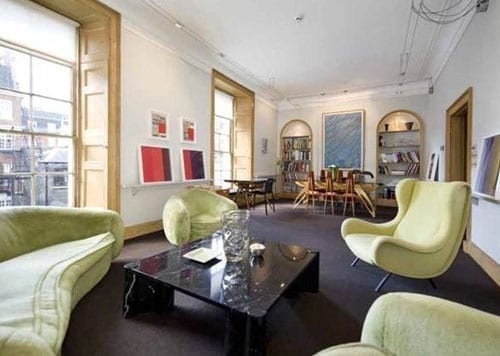
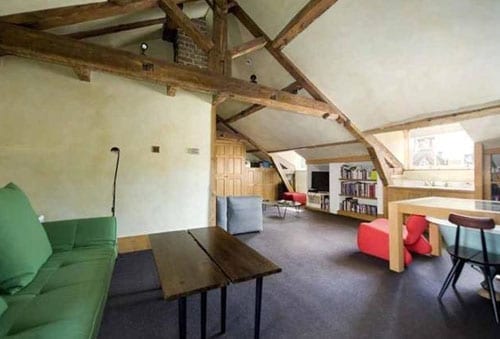
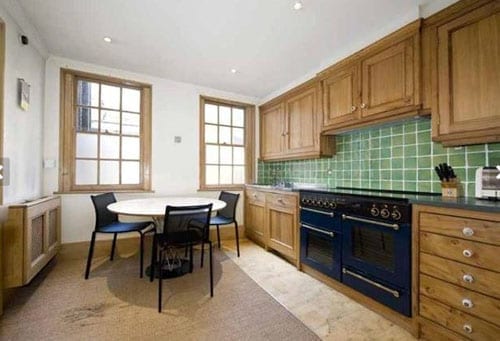
The main reception room in a £1,400 a week set currently available in AlbanyAn attic room in the set that could be used as a second reception room or second bedroomThe kitchen is lacking in character but offers ample space for informal dining
Contrary to what you’d expect, living in Albany is not quite as expensive as one might think. A 2-bedroomed 1,970 square foot set is currently available through Knight Frank for £1,400 a week: a figure that seems quite reasonable given the location, history and size of this property. Available on a minimum 8-year rental term, it includes a formal reception room, a dining kitchen, 2 bedrooms and 2 bathrooms.
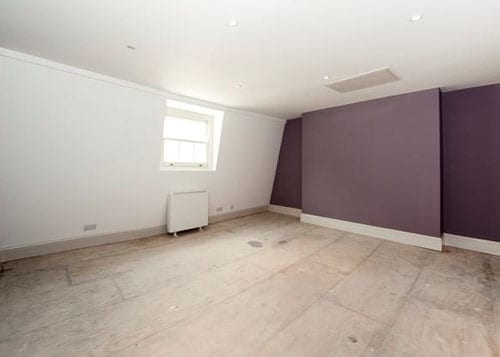
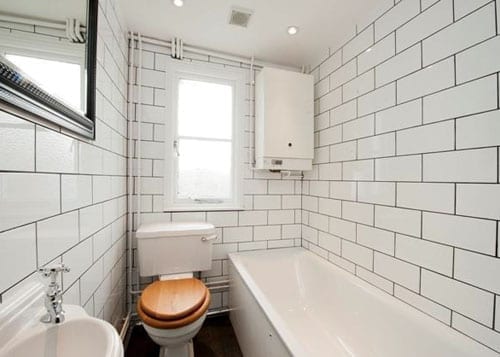
This £300 per week set, D2, consists of just one roomThe communal bathroom D2 shares with other sets is basic but clean
For those looking for something cheaper, Savills offer D2 Albany at £300 per week. This set consists of a 221 square foot third floor attic room with access to a communal bathroom and the agents suggest that it: “would make an ideal reading or writing room or an occasional bedroom for a pied-a-terre.” It’s effectively a posh form of tenement but what a way to impress your peers and subordinates.
Damon and Sandra de László in their “duplex” in Albany
Those renting either of these sets would find the likes of the industrialist Damon de László, a descendant of the Hungarian painter Philip Alexius de László (1869 – 1937), as their neighbour. The couple occupy Lord Byron’s former set, A2, and have, on occasions, opened it for a charity dinner with Matthew Parris at £1,000 a ticket as well and for members of The Portrait Institute to view their collection of de László’s works.
Professor Philip C. Bobbitt in his grand freehold set
Another present day resident is a man Henry Kissinger calls “the outstanding philosopher of our times,” Professor Philip C. Bobbitt. This Texan lawyer is a nephew of Lyndon B. Johnson and the author of Terror and Consent, which Tony Blair describes as “required reading for political leaders.” Bobbitt owns an impressive flying freehold set that is described as having a masculine style of décor and a “kitchen he has designed to look like a bar.” In an interview for TheIndependent he states that he finds Albany: “a propitious place to work.”
Though governments and bankers come and go, behind this quintessentially English façade, order and disorder have always been maintained. The wildcards of this hidden haven have a knack for living by the doctrine “to live at Albany is to live in history” and indeed they make the most of that. Those who are lucky enough to be let in, do, indeed, truly find themselves in the “Paradise of Piccadilly.”