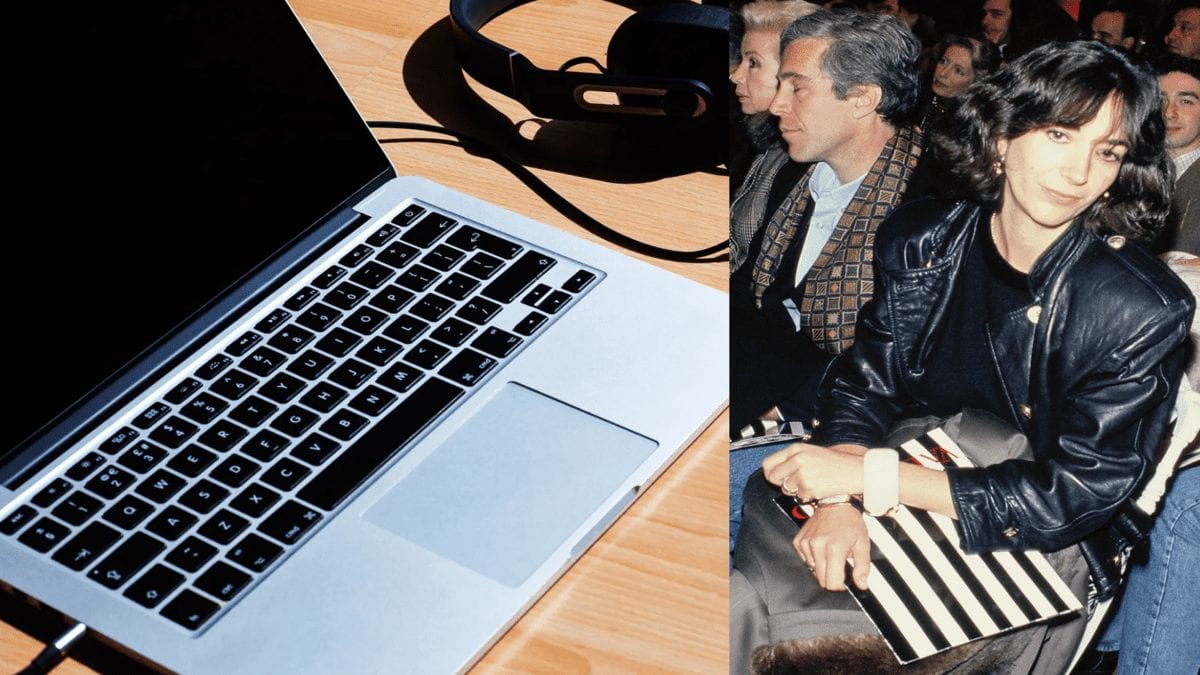
Mucky madam Ghislaine Maxwell’s lawyers demand she gets access to a laptop seven days per week; one can assume she’ll expect a ritzy MacBook Pro
“What Ghislaine Maxwell wants, Ghislaine Maxwell gets” would be a fair summary of the past life of the now incarcerated and thankfully not bailed mucky madam.
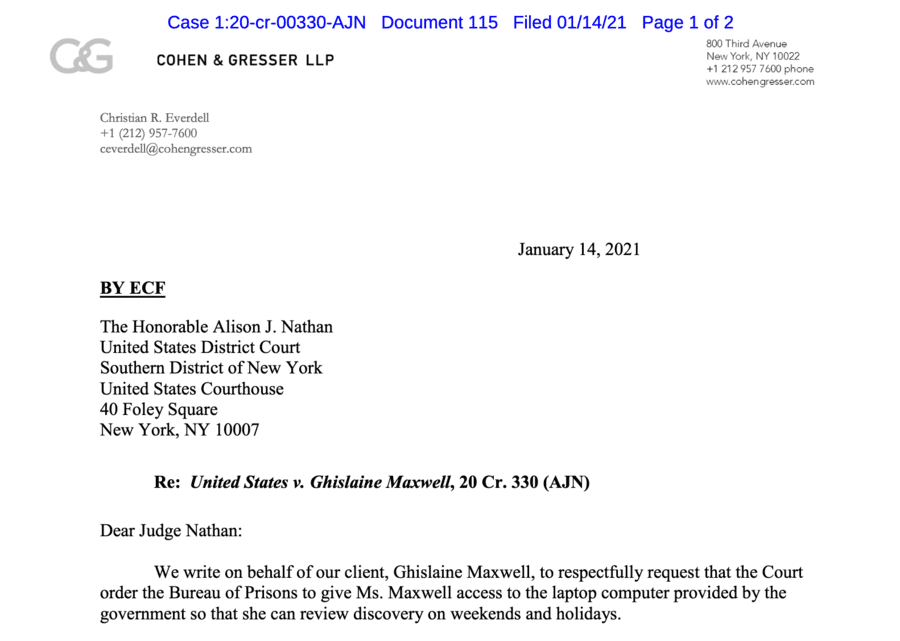
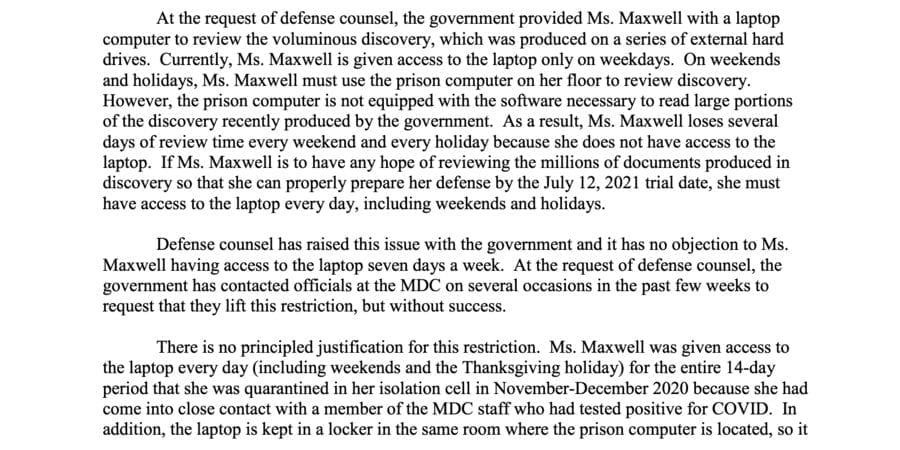
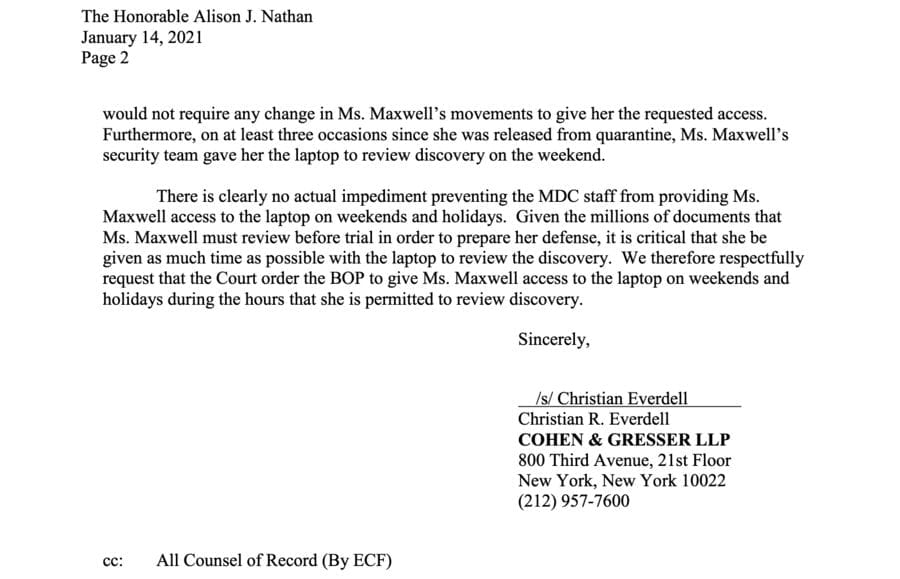
Yesterday, having previously moaned about her not having a desk, writing surface or email access in August 2020, her lawyer, Christian R. Everdell of Cohen & Gresser LLP, wrote to The Honourable Alison J. Nathan to demand “the Bureau of Prisons give Ms. Maxwell access to the laptop computer [which has more than generously already been made available to her 5 days per week] provided by the government so that she can review discovery on weekends and holidays.”
In spite of her trial commencing in 178 days on 12th July, mucky madam Maxwell’s lawyers argue she is losing “several days of review time every weekend and every holiday because she does not have access to the laptop.”
Going further, they remarked that they have tried to “lift this restriction, but without success” previously and added:
“If Ms. Maxwell is to have any hope of reviewing the millions of documents produced in discovery so that she can properly prepare her defense by the July 12th, 2021 trial date, she must have access to the laptop every day, including weekends and holidays.”
“There is no principled justification for this restriction… The laptop is kept in a locker in the same room where the prison computer is located, so it would not require any change in Ms. Maxwell’s movements to give her the requested access.”
“… Given the millions of documents that Ms. Maxwell must review before trial in order to prepare her defense, it is critical that she be given as much time as possible with the laptop to review the discovery.”
Whatever next? Aside from Maxwell – who also repeatedly complained about her vegan eating habits not being properly catered for in the pokey – no doubt wanting an upgrade to a ritzy MacBook Pro, she’ll almost certainly be demanding Krug on tap next also. What else? Maybe even more inappropriately given what she grubbily used to arrange for the filthy fiend Jeffrey Epstein, a weekly visit from a masseuse as well and a Rolls-Royce to court also?
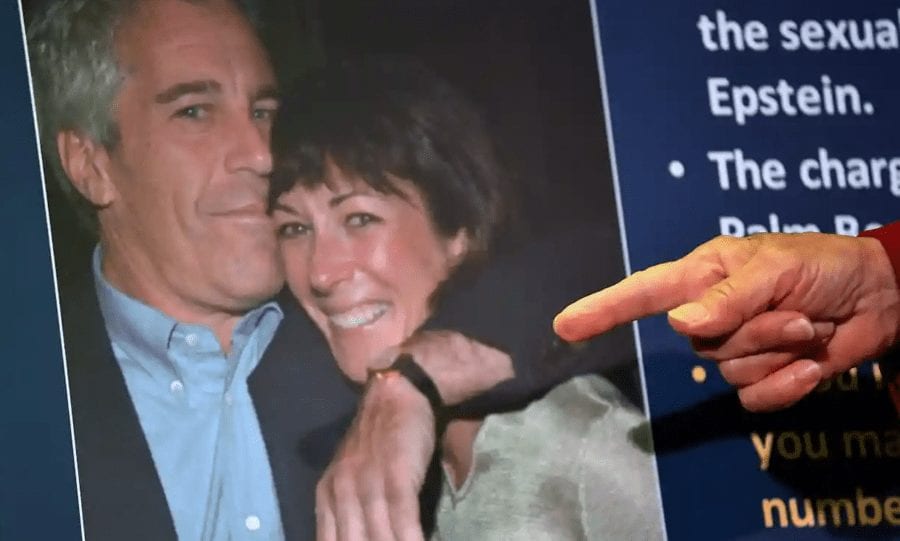
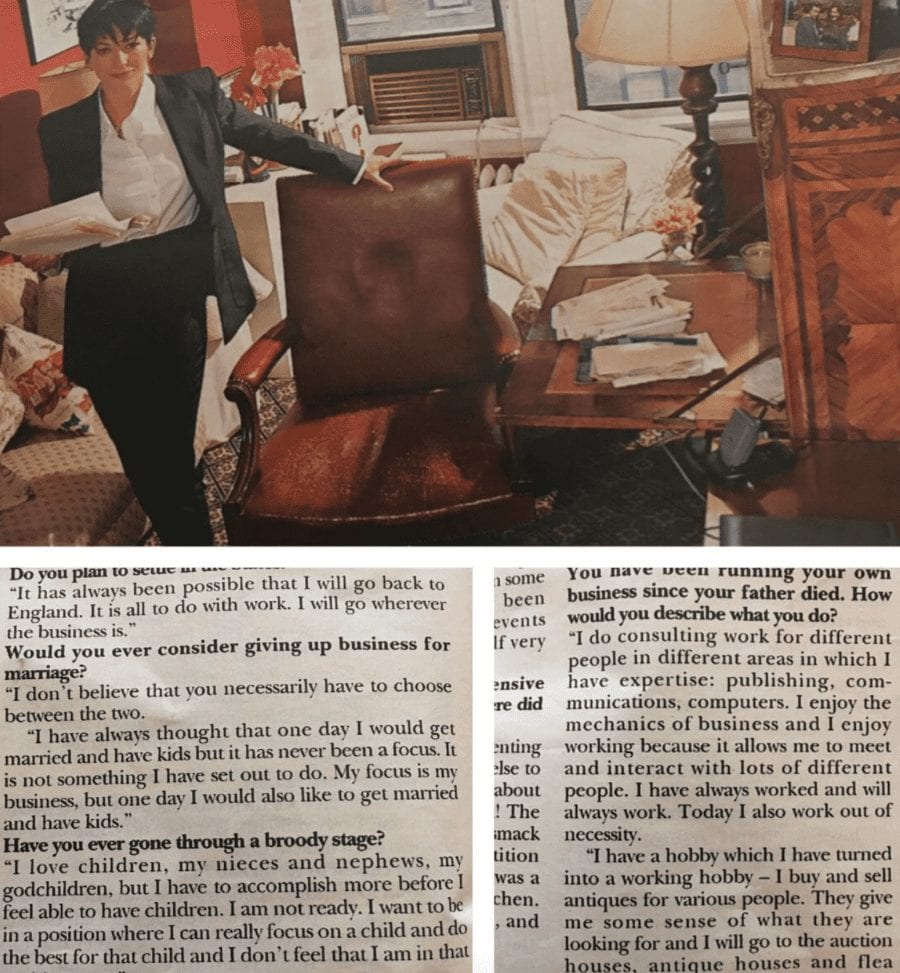
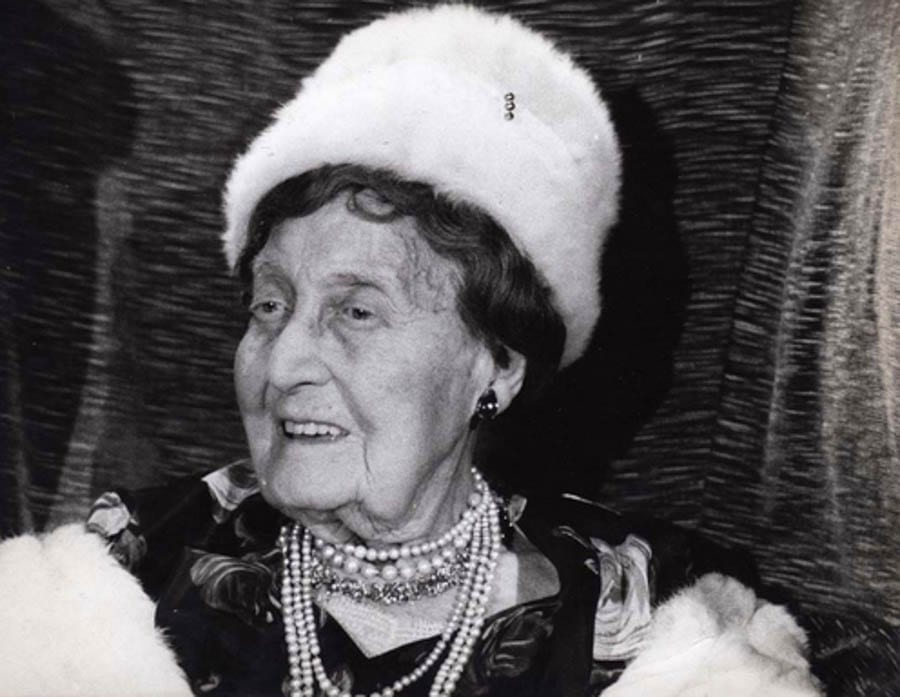
MacBook Maxwell – Ghislaine Maxwell, a woman used to having things her way is pictured here in her youth tapping away at an early computer, but that wouldn’t be good enough for her today. No doubt her devoted lapdog-like PR peddler Brian Basham will soon be claiming “it’s not fair” that she doesn’t have a MacBook Pro.MacBook Maxwell – On Tuesday, the ‘Guardian’ reported: “Ghislaine Maxwell is appealing against a judge’s order that she remain jailed in New York while awaiting trial on charges she recruited girls for Jeffrey Epstein to sexually abuse.” Prosecutors unsurprisingly opposed bail and countered: “Maxwell remained a threat to flee in part because she had access to considerable wealth and connections abroad.”MacBook Maxwell –Part of an old ‘HELLO!’ magazine interview with Ghislaine Maxwell from 1997 was shared on Reddit yesterday also. It features a picture of ‘Bouncing Bob’s’ bombastic daughter standing in a cluttered office space and includes quotes such as: “I will go wherever the business is” and remarks including: “I love children… I have always thought that one day I would get married and kids but it has never been a focus. It is not something I have set out to do. My focus is on business, but one day I would also like to get married and have kids.” Going further, the laptop lover added: “I do consulting work for different people in different areas in which I have expertise: publishing, communications, computers.” Get this wicked wench a MacBook Pro now, OR ELSE…
Crumbling Northamptonshire estate Lilford Hall – where the little owl was introduced to Britain – for sale for £10 million, a sum £35 million lower than in 2014
Grade I listed Jacobean mansion with 13 chimney stacks for sale for £10 million; it was for sale last for £44.9 million in 2014 in spite of being listed on English Heritage’s ‘At Risk Register.’
Lilford Hall – parts of which have not been occupied since 1947 –is currently owned by a businessman who tried to sell burial plots in the grounds for £1,250 a pop and shares in a yacht loosely associated with Frank Sinatra for £23 each.
The 321-acre estate includes not only overgrown parkland, but also a zoo with cages that formerly housed bears and a lake for flamingos.
From 1711 until 1990, Lilford House was the seat of the Powys family – the 4th baron is credited with introducing the little owl to the UK.
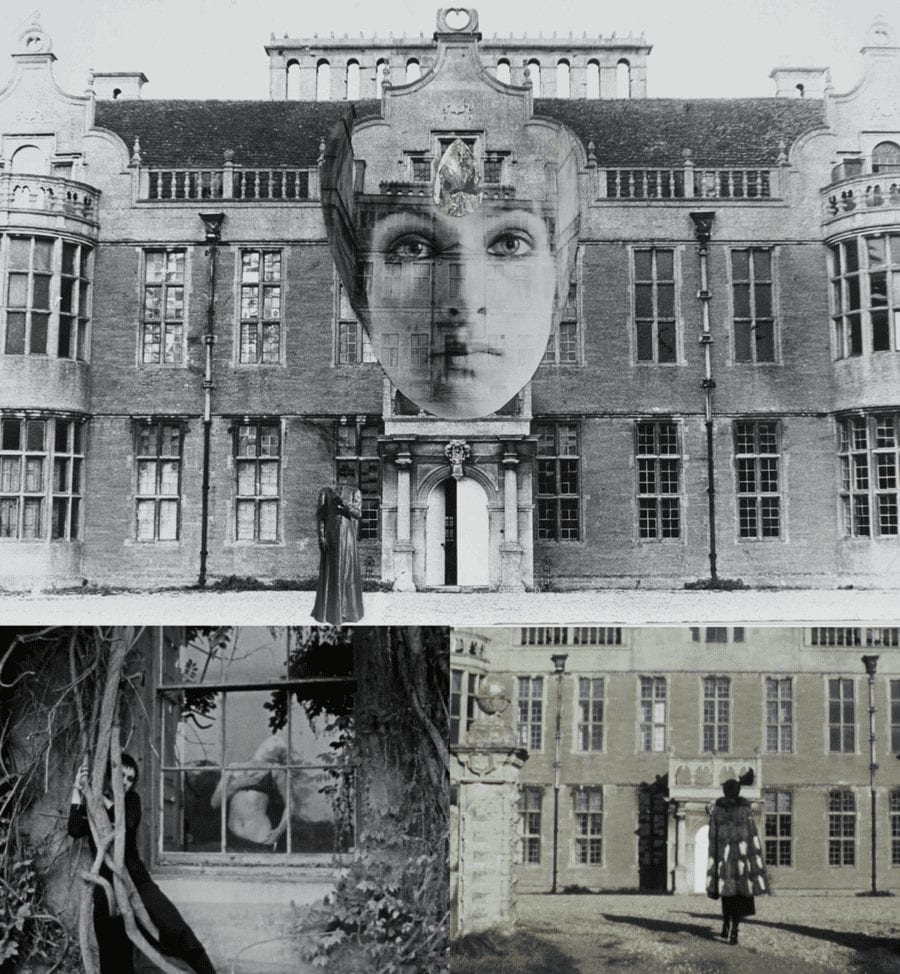
More recently, in 1969, the “sexual mystic” artist Penny Slinger used the at-the-time derelict mansion in one of her best-known works.
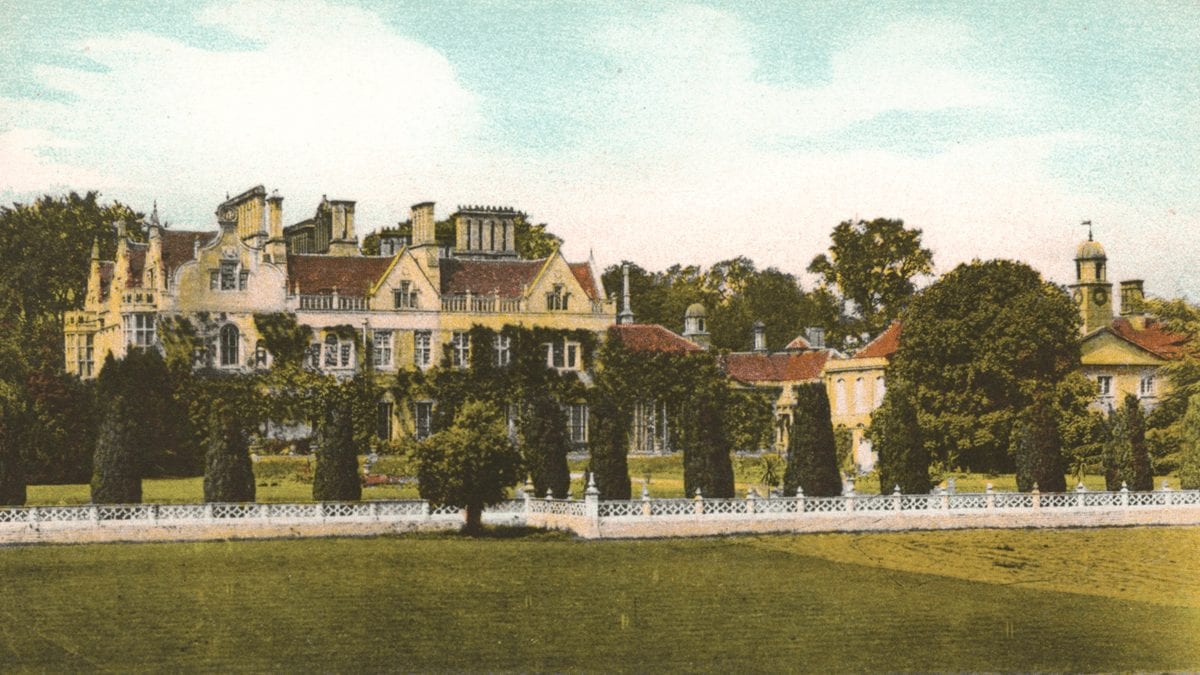
A 32,406 square foot Grade I listed Jacobean mansion 82 miles from Central London has gone on sale for £10 million – or the equivalent of just £308 per square foot.
On this basis, Lilford Hall – set in 321 acres near Oundle – seems a comparative bargain when considered against the £4,786 per square foot sought for a Lennox Gardens, Knightsbridge triplex flatThe Steeple Times featured in May, but buyers need to remember this – parts of this crumbling building, most notably the major state rooms, have not been used since 1947.
Marketed last in 2014 for the even more punchy sum of £45 million, the “exceptional residential and amenity estate located on the River Nene,” is now offered by agents Savills. The “wonderfully proportioned” U-shaped mansion itself is constructed of grey limestone and includes over 100 rooms and amongst them are 7 “impressive” reception rooms, a ballroom, a ‘great chamber’ and 9 bedrooms. In addition, there are two Georgian pavilions that were formerly coach houses and stabling, three cottages, a former zoo, the oldest private softball court in the world, a former flamingo enclosure and a deer park.
“Impressiveness in the chief attribute of Lilford Hall as a specimen of architecture” claimed County Life in 1990 and as the seat of the Powys family from 1711 until 1990, it became not only a Downton Abbey-esque entertaining pad, but also housed nurses in the Second World War. Here, indeed, is an English country house that has seen lavishness and decline and thankfully here is an example that thankfully escaped the wrecking ball wrought so disgracefully on such houses in the 1950s and 1960s.
Fascinatingly in the 1880s, Thomas Powys, 4th Baron Lilford filled his aviaries on the estate with rheas, kiwis, pink-headed ducks, free-flying lammergeiers and it was from here that he also introduced the little owl into the UK. There are said to be around 5,700 breeding pairs today, but sadly, according to the RSPB, their numbers are now in decline.
More recently, in 1969, “sexually erotic” performance artist Penny Slinger took over the by then “derelict” mansion in conjunction with the filmmaker Peter Whitehead. Their resulting work, titled An Exorcism, was exhibited internationally and in 2004, after the current owners, Charles and Aziza Micklewright, acquired the house, they did something equally avant-garde; they attempted to sell burial plots in the grounds to Americans by citing the estate’s connections to the founder of the Brownists, Robert Browne – a man better known as ‘The Father of the Pilgrims’ and ‘The Grandfather of the Nation’ (of the United States of America).
Whilst Mr and Mrs Micklewright were lauded for their considerable efforts towards the “huge task” of restoring Lilford Hall, they came to the attention of Historic England in May 2019 when the building was listed on the At Risk Register. At that time, the Oundle Chronicle reported: “The roof covering is in poor condition leading to water ingress and distress to the upper storeys. The front bays require structural attention. A schedule of urgent repairs has been identified but not implemented, and no long-term solution has been agreed.”
Now, someone with very, very deep pockets is required to restore this gem. It would be helpful if they liked erotic art, bears, squash and owls also.
The Names & Numbers – The Lilford Hall Estate, Lilford, Oundle, Peterborough, Northamptonshire, PE8 5SG, United Kingdom
June 2020 – The estate is listed sale for £10 million ($12.5 million, €11.1 million or درهم46 million) through Savills. It includes 321.31 acres, of which 148.17 acres are pasture land whilst 157.48 acres are woodland. The majority of the estate is held on a freehold title, whilst the remaining 127.6 acres – known as ‘The Linches’ and ‘Lilford Woods’ – are held on a lease with 91 years remaining.
2015 – Promoted as ‘The National Memorial Gardens,’ burial plots in the gardens of the hall were offered “available to any UK resident or national for an outstanding price of only £1,250 ($1,568, €1,393 or درهم5,758)” by Mark Bailey of Harley Investments. Around the same time, a website dedicated to Lilford Hall marketed “a piece of the formal gardens” for sale for £299 ($375, €333 or درهم1,377) to include “an officially certified ‘Squire of Lilford’ [title] … with this little piece of history.”
March 2014 – The Irish Times reported that the asking price for the estate had been increased to £44.9 million ($56.3 million, €50 million or 206.8درهم million). They claimed the agents Coldwell Banker blamed “confusion over currency conversion rates and new instructions from the owner.”
April 2014 – The Lilford Hall Estate is listed for sale through Coldwell Banker on MyHome.ie for £33.7 million ($44.2 million, €37.5 million or درهم155 million) on behalf of “an English gentleman.”
2004 – The estate is acquired by the Micklewright family. Little information is available online about the Old Framlingham Charles Micklewright (born July 1958), but he is described as a “patent attorney” on Companies Houses pages. The businessman is mentioned also as a publisher and trustee of the Marsh Christian Trust elsewhere, whilst his Singaporean born wife, Aziza (born 1964), was a director of Lilford Properties Limited from 2013 to 2018.
A website operated by Sign of the Times Limited, a Hong Kong company of Lilford Hall, Lilford, Oundle, Northamptonshire, PE8 5SG, currently offers shares in a yacht named ‘Sinatra the Voice’ for £23.91 ($29.99, €26.64 or درهم110.14) per share. The boat was built in 1956 and is tenuously linked to Frank Sinatra by the fact that a one-time owner, Beale Poste, loaned it occasionally to the crooner between 1968 and 1974 in West Palm Beach, Florida.
1990 – The estate is closed to the public.
1980s – The house is used as a location in the BBC English Civil War inspired historical drama series By the Sword Divided.
1970s – Aviaries on the estate restocked by George Powys, 7th Baron Lilford (1931 – 2005). He “opened [the estate] to the public as a leisure park” and housed more than 350 birds of 110 species there. It remained thus for around 20 years and included a restaurant and shop. The aviaries and the 1,896 square foot restaurant building remain present still today.
1969 – 1970 – American British “sexual mystic” artist Penny Slinger (born 1947) and Liverpudlian filmmaker Peter Whitehead used the “derelict mansion” as the setting for their works An Exorcism and Lilford Hall. They are lauded as a “photo romance” and exhibited at the Blum and Poe Gallery in Los Angeles in 2014, at the Haywood Gallery in London in 2015 and at the Fortnight Institute in New York in 2019.
1949 – Stephen Powys, 6th Baron Lilford (1869 – 1949) died without having married or having had children. His properties aside from Lilford – a house in Mayfair, Bank Hall in Lancashire and the Bewsey Estate in Cheshire – passed to his second cousin twice removed.
1947 – The estate is sold to a company named Merchant Ventures by the Powys family (though they remain present on the estate until 1990).
1939 – 1945 – During the Second World War, the parkland of the estate was used as a military hospital for nearby airfields. From 1949 to 1954, some of the buildings constructed during this period were then used as a Polish school.
1923 – First-class Northamptonshire cricketer Major John Powys, 5th Baron Lilford (1863 – 1945) built the first private softball court in the world in the grounds of the hall. It is now in disrepair and the roof has fallen into the inner court.
1909 – 1910 – The hall was extended in the Edwardian manner including the provision of a new master bedroom with dressing room and bathroom by William Dunn and Robert Watson of Dunn & Watson.
1901 – The estate surrounding the hall reaches its largest size and totals a vast 8,000 acres of land. Around this time, Queen Mary, wife of King George V, is said to have visited the gardens.
1880s – Ornithologist and expert on the fauna of the Balearics Thomas Littleton Powys, 4th Baron Lilford (1833 – 1896) introduces the little owl into England on the estate. His aviaries were said to “feature exotic birds from all around the world” and a species of European lizard, the Lilford’s wall lizard (Podarcis lilfordi), is named in his honour. The 4th baron is repeatedly mentioned in the works of Charles Darwin for his contribution to the study of the science of evolution.
1840s – Further changes to the building are orchestrated by the architect William Gilbee Habershon (circa 1818 – 1891). The Campaign to Protect Rural England described these Victorian extensions as “sensitive” in 2006 – a rare accolade given most additions to English country houses during this period were simply brash and vulgar.
1740s – The Palladian architect Henry Flitcroft (1697 – 1769) adds “outstanding” Georgian interiors whilst “respecting the hall’s Jacobean exterior.” He “softened and brightened” the building as a result and also “constructed the Georgian pavilions and additional storeys to the east end of the two wings.” Other works by Flitcroft can be seen at Bower House in Essex, Wentworth Woodhouse in Yorkshire and Woburn Abbey in Bedfordshire.
1711 – Lilford Hall is sold to the judge and Tory politician Sir Thomas Powys (1649 – 1719), Attorney General to King James II. Powys is best remembered for conducting the prosecution of the Seven Bishops in 1699. He is buried at Lilford.
1630s – Construction of the main exterior of what to this day remains Lilford Hall as a “Jacobean-style gentry house” by William Elmes (the younger).
1473 – The land that forms the estate is acquired by William Browne (1410 – 1489), a wealthy wool merchant and landowner from Stamford, from the estate of Baron Welles (who was beheaded by King Edward IV for treason). In 1495, “in a Tudor style,” he built a hall on the site and it passed to Robert Browne (1550 – 1633), the founder of the Brownists, ‘The Father of the Pilgrims’ and ‘The Grandfather of the Nation’ (of the United States of America).
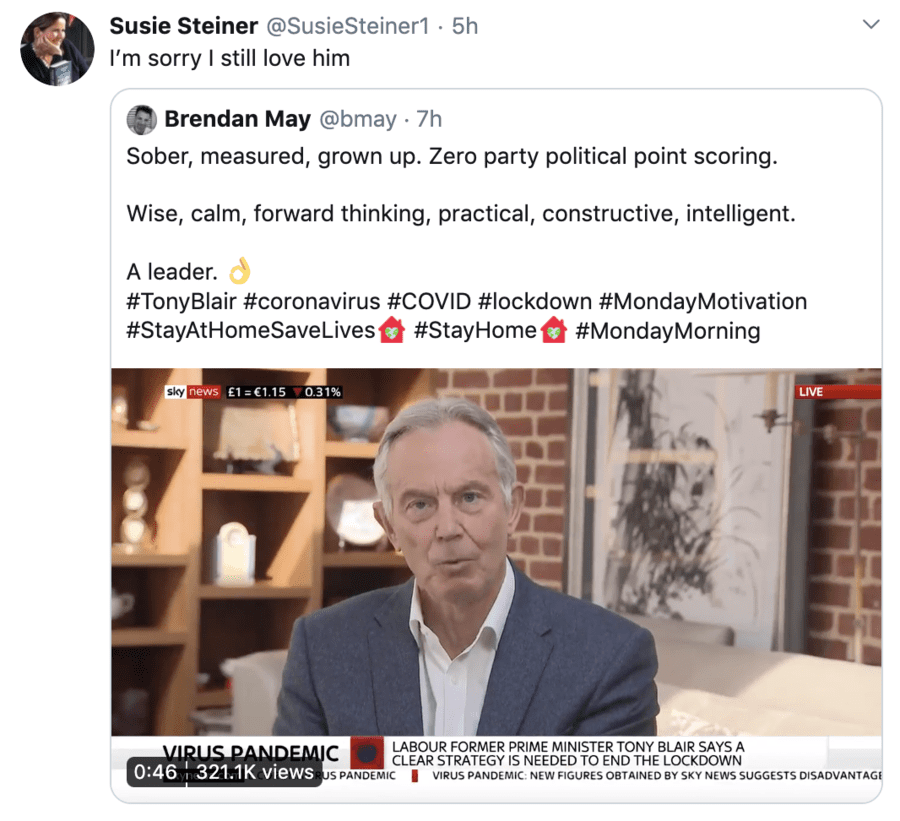
“I’m sorry I still love him” unabashedly declared author, journalist and “stationary addict” Susie Steiner of Tony Blair on Twitter during the coronavirus lockdown whilst amusingly adding of Boris Johnson: “If only I could retreat to Chequers.” Registered fully blind and a mother of two, this former Guardian commissioning editor did a “little one-page feature, showing the ‘Keep Calm’ poster as one of her favourite things” in 2005. “After that, all hell broke loose,” according to Stuart Manley, co-owner of Barter Books of Alnwick, and what Steiner terms a “message of stoicism and patience” went viral. She thinks “it’s had its day now” and after publishing her first novel, Homecoming, in 2013, this West Hampstead based Londoner signed “significant six-figure” deals for her subsequent works. “Susie is a joy to publish” remarked Suzie Dooré of Borough Press, whilst she herself gave away the secret to her much deserved success in a 2016 interview with TheHampstead & Highgate Express: “I’m very disciplined about my work… The daily-ness is what matters; it’s being in contact with it all the time that keeps the work alive in your mind. Your mind is doing it even when your trogging up the hill from school or waiting in the hairdressers. It fingers it like a pebble in your pocket.”
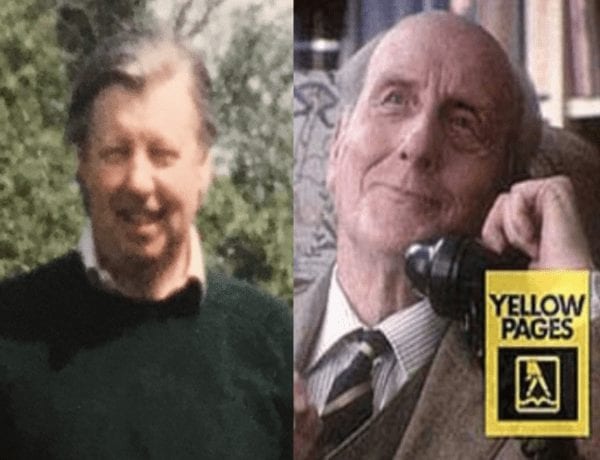
Described in The Telegraph’sobituary of him as a “publisher, wit and author,” Michael Russell is best known for writing the spoof memoirs of J. R. Hartley – the charming mythical old man of Yellow Pages advert fame in the 1980s. Bournemouth born, Oxford educated and a father of three, Russell loved horse racing and fishing and was known for his “extremely shrewd judgement as to which books would sell in shops.” His one-man company produced over 500 books by the time of his death and amongst titles that were hits were Richard Spitzy’s How We Squandered the Reich – a book that described Hitler as being “like a cross between a head waiter and a chimney sweep.”
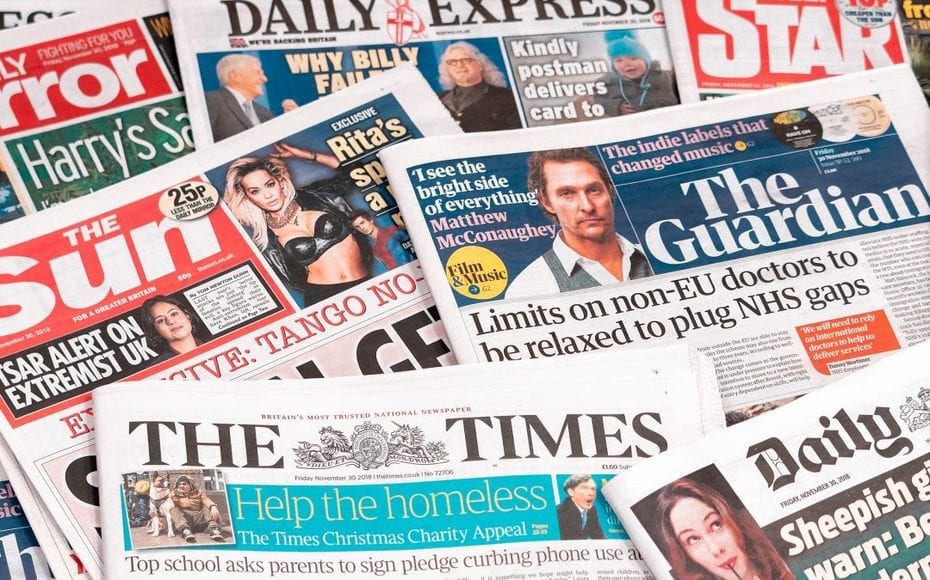
As #SaveTheSunNewspaper trends on Twitter, an analysis of the sorry state of the British press should act as a wake-up call to our nation suggests Matthew Steeples
Yesterday, ‘Save The Sun Newspaper’ was all over Twitter. Those clicking the hashtag were not taken to a page bemoaning the fact that the Rupert Murdoch owned paper has lost £68 million in the last year alone, but to a Go Fund Me campaign that has raised over £16,500 that will be donated to the Essex Coronavirus Action Urgent Food Bank Appeal.
Set up by an Essex based food bank campaigner named Simon Harris, #SaveTheSunNewspaper garnered support because of the intense dislike for a newspaper that some claim is “not fit to wipe their arse with” whilst others (especially the people of Liverpool, a city where it is mostly banned due to their crass reporting of the 1989 Hillsborough disaster) condemn it for its “lies” and “bigoted” reporting.
Whilst the ‘fake’ hashtag was about helping foodbanks, on Sunday night, the Guardian’s Roy Greenslade highlighted a genuine problem for the British press. In an article titled: “Why our newspapers might not survive the contagion of coronavirus,” the media commentator observed: “It is the bleakest of ironies: the biggest news story in a lifetime is killing off the very industry that exists to report it. Coronavirus is destroying newsprint newspapers across Britain, delivering the coup de grace to businesses that were already in the process of dying.”
Whilst it has been for long known that traditional media has struggled to cope and find a way to exist and maintain revenue streams in a period where online and social media have battered it, coronavirus, it appears, will be the death knell for many a print newspaper.
Just like, for example, the restaurant sector, which will likely see many establishments fail to reopen once this pandemic is over due to them not having the resources to get their staff back and pay their rent and suppliers, many print newspapers – most especially local titles – will not weather the storm. As Greenslade points out, “it seems inconceivable that publishers, already struggling to fund journalism, will return to the previous status quo.” Going further, he remarks: “That’s because the status quo was, itself, one of perpetual fragility in which publishers were engaged in the delicate task of managing newsprint decline while, in parallel, seeking to create a digital journalism business model.”
Here comes an epoch of change and with newsrooms across Britain currently completely empty, publishers will indeed start to rationalise when so-called “normality” returns (in whatever form that takes). Expensive city centre offices will be shut and like cancer, profitless titles will most likely be permanently closed down. This will not be a loss that should be glorified and it will not be something that should celebrated; without good journalism, we’ll all be the poorer. Those thinking we can rely on the Twitterati for news are in for an era of the emperor’s new clothes and they’re in for a future where fake news will quite wrongly reign.
Mail Online focuses on the story of the year – that Spencer Matthews and his wife went on “date night” at the British Takeaway Awards; you couldn’t make it up
You can rely on the Mail Online to publish relevant stories. Aside from the fact we’re in the midst of Brexit chaos and California is burning, they decided to publish what could perhaps be called: “The story of the year.”
In an article charmingly titled: “Vogue Williams nestles into husband Spencer Matthews as they steal a night away from parenting duties to lead the stars at the British Takeaway Awards” by a woman named Katie Storey, the paper shared details of how the reality television “stars” managed to “enjoy a date night” at the Just Eat British Takeaway Awards.”
That this duo – a pair definitely likely to attend the opening of an envelope – would “date night” at an event is bad enough, but that it made news is quite preposterous. What did they do whilst there? Ring out for a pizza? How terribly romantic.
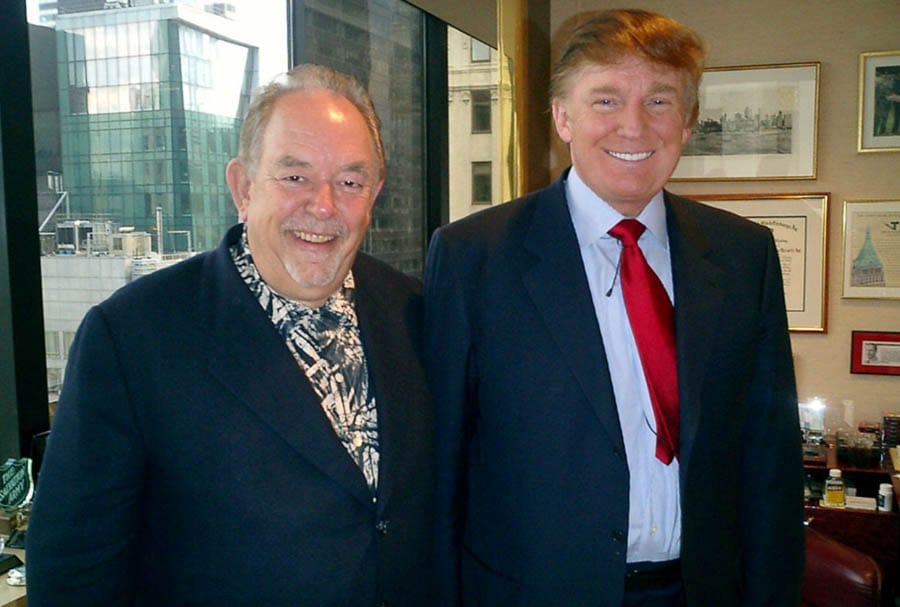
“With champagne wishes and caviar dreams” was the famous signoff of London born Lifestyles of the Rich and Famous host Robin Leach. Harrow High School educated, this one-time Daily Mail reporter moved to the US in 1963 with $145 in his pocket and after briefly becoming a shoe salesman founded a music publication named Go Magazine.
After selling up “at considerable profit,” Leach worked for The National Star and CNN before coming up with Lifestyles in 1984. He attributed the show’s popularity to Jimmy Carter exiting the White House and boasted: “[It was] because the Reagans brought in an aura of wealth. Jimmy Carter was too ordinary. So, when Reagan came in, it was time for a show about wealth and success… Hear this: In the course of an hour, I deliver twice as much audio information and visual images as any other show on television. I’m fast and loud on purpose. I cram 10 pounds of caviar into an eight-pound pack.”
“Sensational, not scandalous” in his approach, twice married, father of three Leach’s subjects numbered everyone from Celine Dion to Madonna and Adnan Khashoggi and Donald Trump. As a result this celebrant of wealth and capitalism became a millionaire and pretty famous himself and in 2007, in the Fergie song Glamorous featuring Ludacris, the latter rapped: “Lifestyles so rich and famous, Robin Leach’ll get jealous.” With his passing, most certainly, this much parodied “life of the party” has most definitely moved to the skies.
The Steeple Times returns after a prolonged hiatus
After not having published in quite some time, today The Steeple Times returns after a hiatus resulting from issues caused by technological nuisances connected to an old crooner terrified about what went on in a paddling pool full of olive oil.
Aside from having been busy researching stories about the forthcoming council elections and corruption in the Royal Borough of Kensington & Chelsea, our team will be reporting on news linked to Cambridge Analytica that even the mainstream media seem to be ignoring and most importantly introducing our new restaurant critic – a man unafraid to mince his words going by the name of David G. Lennox.
We thank you for your continued support and welcome your input and feedback at [email protected]
Historic Battersea mansion for sale for the same sum it was marketed for in 2011; it has been mostly empty throughout the intervening period and was renovated by the late billionaire Malcolm Forbes
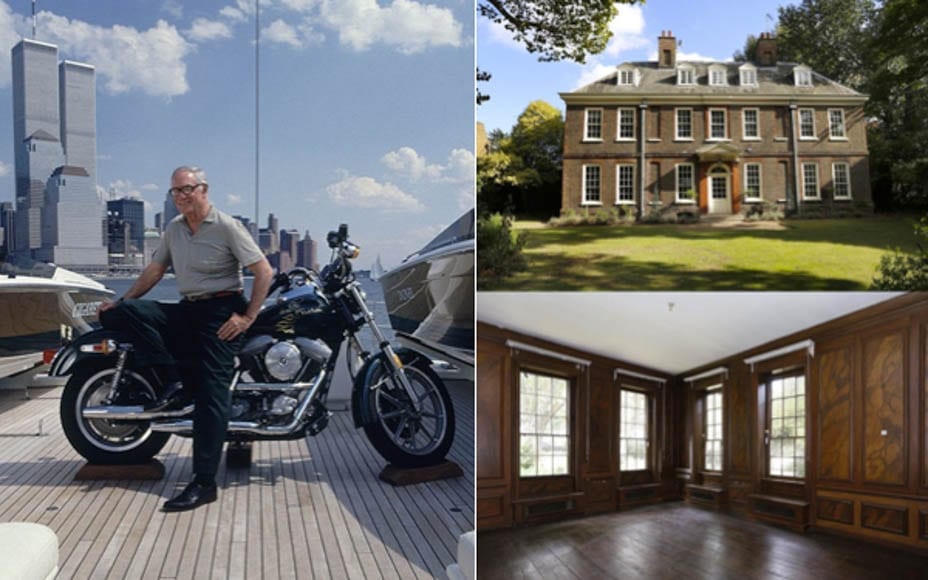
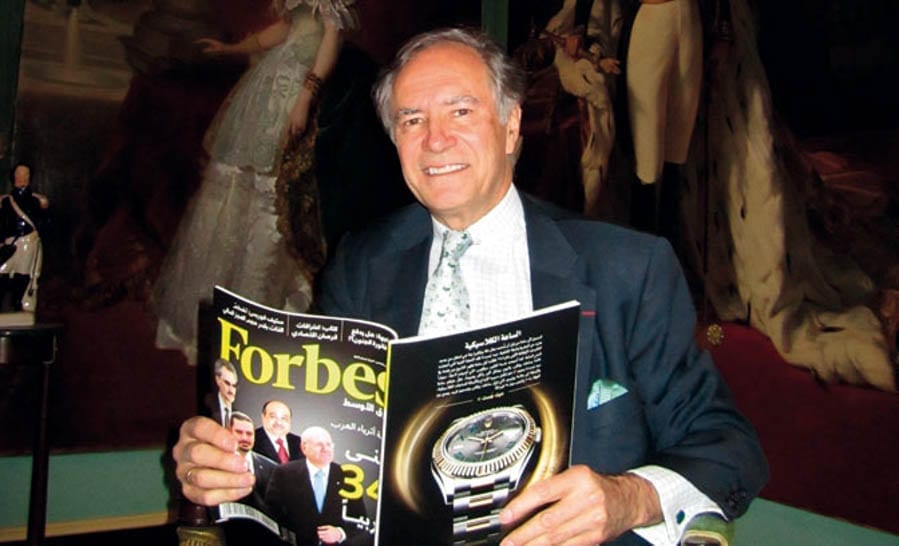
Billionaire publisher Malcolm Forbes was a man who liked to live large. He had a huge yacht named The Highlander, threw lavish parties across the globe and counted Gianni Agnelli, Gordon Getty, Calvin Klein, Robert Maxwell, Rupert Murdoch, Henry Kissinger, Ronald Reagan and Donald Trump as friends. This “mysterious collector” also owned numerous residences and one of these, Old Battersea House in London, is for sale for the same sum as it was marketed for in 2011.
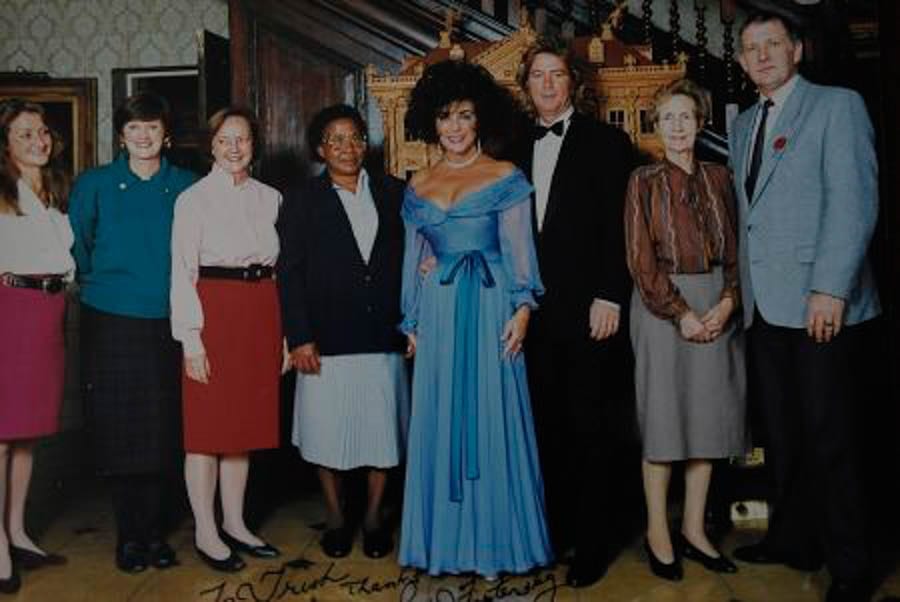
Often seen with Elizabeth Taylor at his side and described as “living life in the fabulous”, Forbes purchased Old Battersea House in 1971. It had previously been home to and saved from demolition by Battersea Council by the eccentric author and ghost hunter Wilhemina Stirling. She took up a lifetime tenancy on the building in 1931 and used it to house artworks by her sister, Evelyn de Morgan (1855 – 1919).
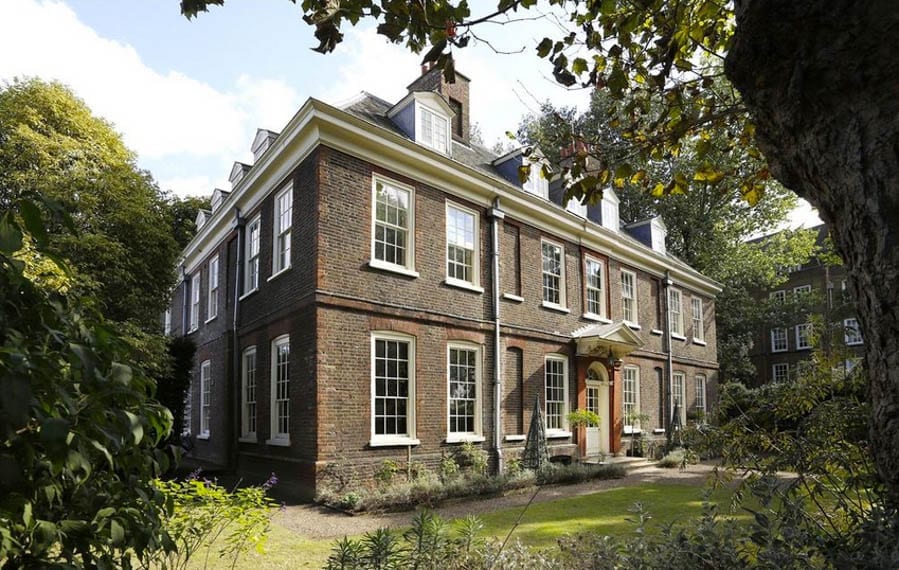
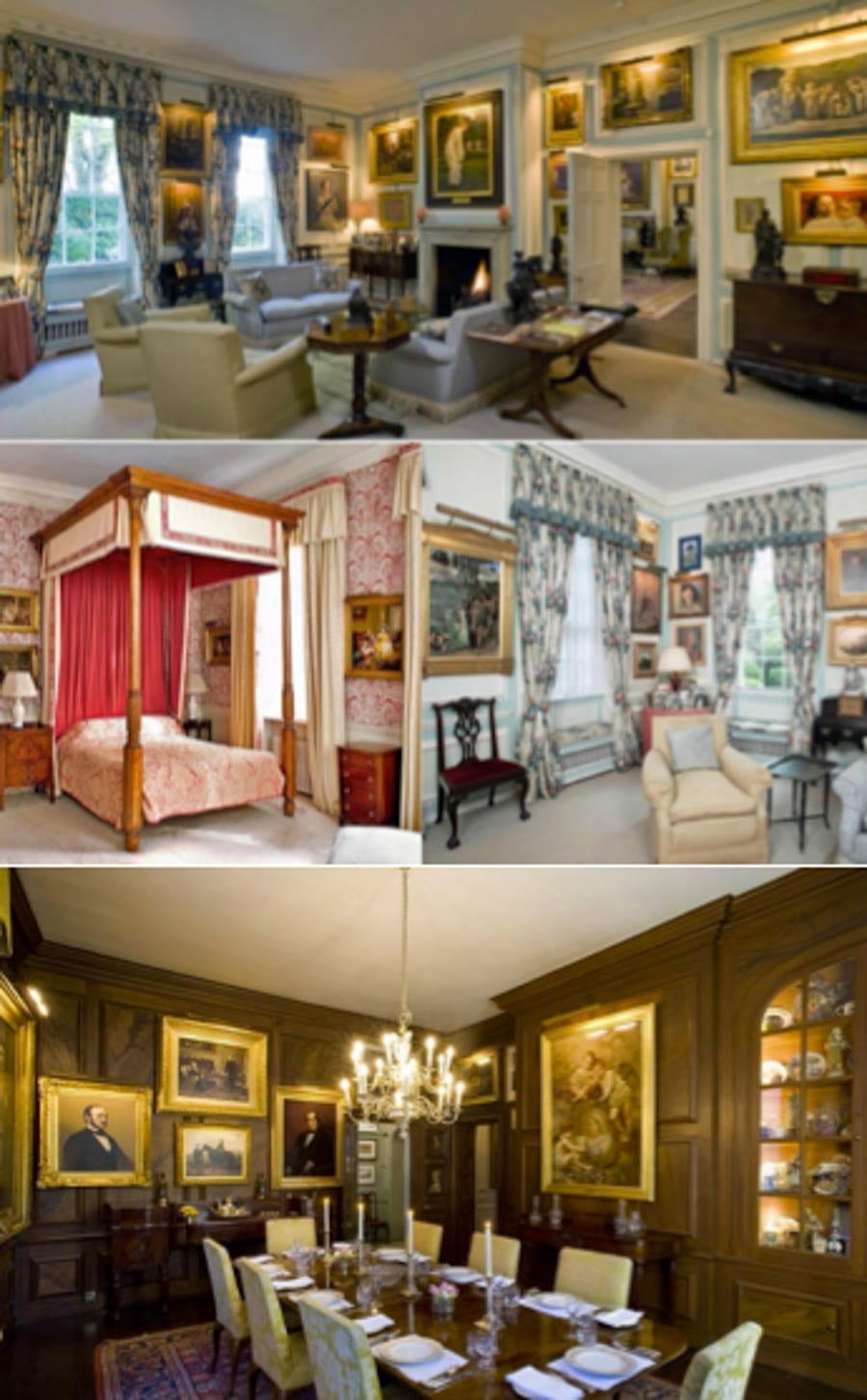
Grade II* listed since 1954 and adapted during Forbes and subsequently his son Kip’s ownership to showcase a vast collection of Victorian art and antiques, Old Battersea House was built on Tudor foundations in 1699 and was at first known as ‘Terrace House’. It originally had gardens extending down to the River Thames and is rumoured to have been designed by Sir Christopher Wren (1632 – 1723).
Featuring “handsome classical proportions throughout” and standing within a 110-foot wide walled garden, the 10,100 square foot house includes 4 reception rooms, 10 double bedrooms and 7 bathrooms. It has off-street parking and a garden store but it is sadly overlooked by the adjoining housing estate that was built in its grounds in the 1930s.
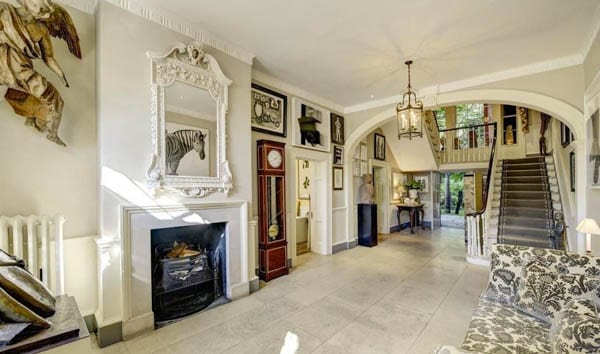
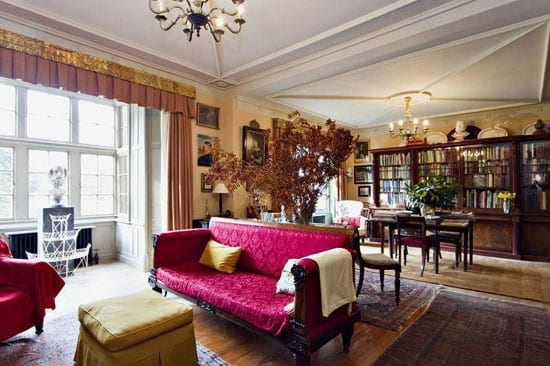
The impressive hallway of Old Battersea HouseAnother entertaining spaceElizabeth Taylor and her then husband Larry Fortensky at Old Battersea House in 1992Images of the house as it was furnished during the ownership of the Forbes family