Oliver Estreich’s New York real estate power brokers
In the second in a series, Oliver Estreich profiles New York’s top realtors. He continues with Eva Penson, Leighton Candler and Dana Power.

Oliver Estreich’s New York real estate power brokers
In the second in a series, Oliver Estreich profiles New York’s top realtors. He continues with Eva Penson, Leighton Candler and Dana Power.
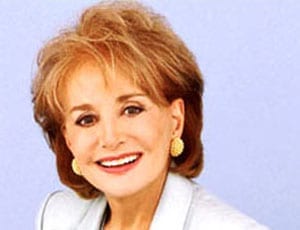
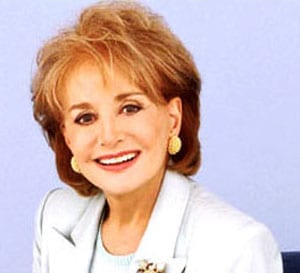 This dynamic American television personality and author was one of the first women to work in “hard news” and is best known for having hosted the Today show, the ABC Evening News, The View and 20/20. She grew up “in awe” of the famous people her father, a Broadway producer and nightclub owner, introduced her to, has been married four times to three different men and got chicken pox after ‘kissing’ actor Frank Langella at a New Year’s Eve party in Miami in 2012. Walters has interviewed everyone from Fidel Castro to Michael Jackson, but her March 1999 feature on Monica Lewinsky, watched by a record 74 million viewers, is indeed one for the history books. When she asked her subject: “What will you tell your children when you have them?”, Lewinsky replied: “Mommy made a big mistake”. At that point, Walters ended the show by stating: “And that is the understatement of the year”.
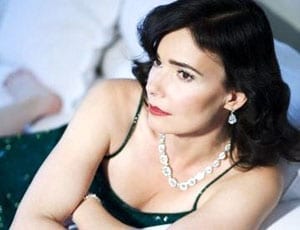
 This British singer-songwriter was born in Colombo, Sir Lanka whilst her father was there working for Kodak. Influenced by Elton John and Kate Bush, she began her career touring with Bobby Womack but it was her 1991 single, “Promise Me,” that catapulted Craven into the big time. After a period raising a family, she’s now back in the business and even appeared with her daughter, Mollie, on ITV’s Take Me Out in February 2012.
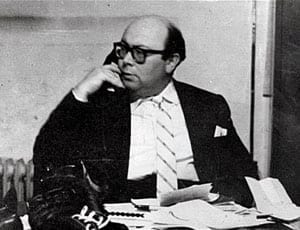
A different side to Peter Rachman is revealed
Whenever the name Rachman is mentioned, the first things that come to mind are greed, extortion and intimidation. The word is so engrained in such that “Rachmanism” now features in the dictionary, defined as:
“The exploitation of tenants of slum properties by unscrupulous landlords.”
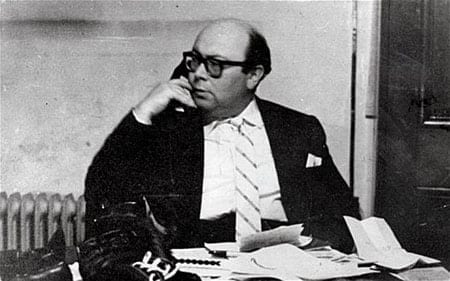
Perec “Peter” Rachman (1920 – 1962) was born in Poland and the son of a Jewish dentist. He is best known for having built up a property empire of over 100 mansion blocks in London’s Westbourne Grove and Notting Hill areas in the 1950s where he evicted longstanding sitting tenants and replaced them with prostitutes and immigrants from the West Indies. Due to the relaxation of rent controls by the Conservative government in 1957 and as no other landlord was prepared to take them, he was able to charge these unfortunates whatever he wished.
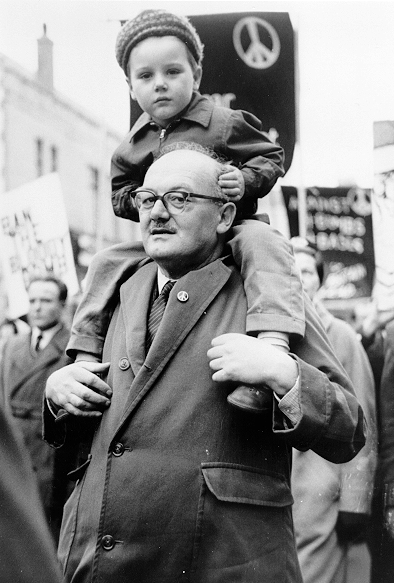
Rachman came to public attention after the Labour MP for Paddington North, Ben Parkin (1906 – 1969), became vocal about the poor housing conditions of his tenants. Parkin coined the phrase “Rachnamism” in his quest to put a stop to the activities of “rent racketeers” and highlighted him as someone who used violence to maintain control of “his manor.” The MP even went as far as to suggest that Peter Rachman’s death was merely a ploy to distract from his activities and the result was to leave the public engrained with a belief that this landlord was a “manipulative, grasping Jew” who symbolised the moral decay of Great Britain.
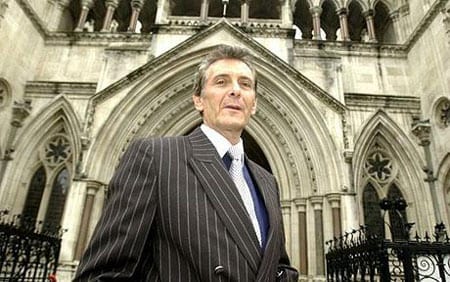
A Radio 4 programme this week, however, highlighted an entirely different side to Rachman. In The Real Rachman – Lord of the Slums, a “barrister turned investigative reporter” named Joshua Levine suggested that those who believe Peter Rachman just to be a sordid intimidator fail to see the true persona of the man.
Levine’s witnesses, who number former tenants and Rachman’s biographer Shirley Green, do describe him as a “chancer” who was prepared to use the system to make money, but they also portray another side of this supposed “figure of evil’s” character.
One immigrant tenant stated: “He was the only one who ever did anything for us” whilst others added that Rachman was “well-liked” and “too soft to be a landlord.” He was a “benefactor” and “jolly” commented others who’d rented from him and a truly notorious modern-day landlord, Nicholas van Hoogstraten, failed to see the opportunist in Rachman at all: “It’s laughable. He had no wealth. It’s an invented moral [mission].” Rachman, equally, was defined as a man “affected” by his imprisonment in a Soviet labour camp in the Second World War by his former lover Mandy Rice-Davis and as someone who suffered true sorrow over the deaths of his family there.
Levine’s examination recounts how Rachman, who drove a navy blue Rolls-Royce with a white interior, was built into a symbol of corruption and moral decay. Rachman, like so many other mythical scapegoats, it turns out only died with only one conviction: parking without lights. The truth, indeed, is often stranger than fiction.
Listen to BBC Radio 4’s The Real Rachman – Lord of the Slums at: http://www.bbc.co.uk/programmes/b01ng4h3
Follow Joshua Levine on Twitter at: http://www.twitter.com/Joshua_Levine
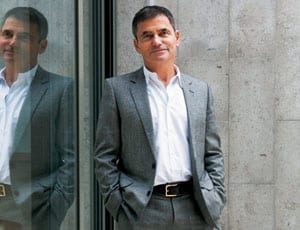
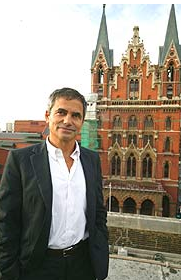 This German-born property developer is best known as the pioneer who brought “loft living” to London in the early 1990s with his Manhattan Loft Corporation. His redevelopment of the Grade I listed St Pancras railway station has resulted in accolades galore and his personal fortune has allowed him to build up a collection featuring works by Andy Warhol, Anish Kapoor, Gerald Laing, Sarah Lucas and Gerhard Richter. Handelsman’s view on money is simple: “[It’s] cynical, sometimes you have it and sometimes you don’t. You can’t take anything for granted.”
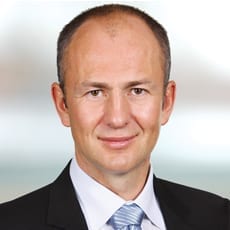
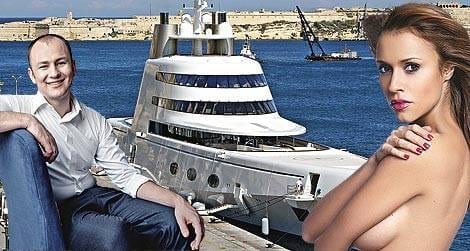 This billionaire co-founded one of Russia’s largest private banks, MDM Bank, in 1993, and has interests in companies producing mineral fertilisers and extracting coal. His £300 million yacht, “A,” named after his Serbian model wife Aleksandra, is 400ft long and designed by Philippe Starck. With 42 staff to look after the whims of just 14 guests, it is no wonder that Melnichenko decided to sail on it to Norway to collect three paintings by Claude Monet that he’d purchased. By collecting them there he also cleverly avoided the EU’s import taxes.
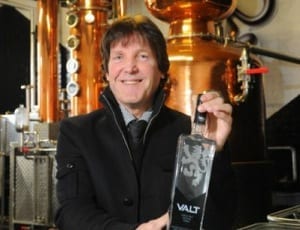
A review of Valt Single Malt Scottish Vodka
When thinking of places where vodka is made, Poland and Russia are probably the first places that come to mind.
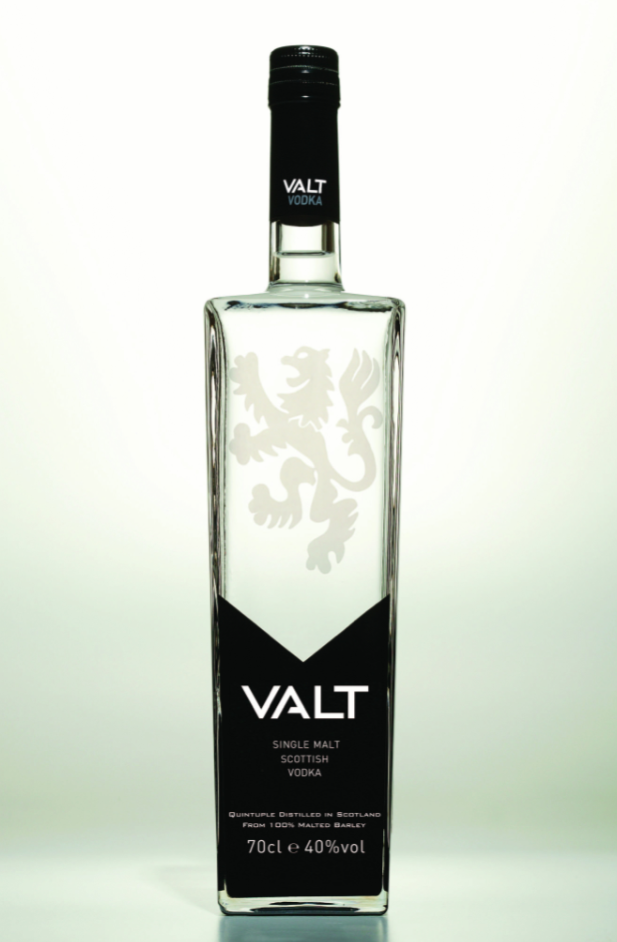
Valt Single Malt Scottish Vodka, however, is unique in being the only single malt vodka from Scotland and Ricky Christie, it’s founder, claims to be on a mission to “change your perspective.”
Christie describes his vodka, which currently sells around 3,000 cases a year, as having a “barley sugar and cream nose, [a] sweet vanilla ice cream taste [and a] warm melting butter finish.” I personally found it very distinctive and much more punchy than the standard “colourless, odourless and tasteless” description that is applied to most vodkas. Valt is not a vodka for a traditional Stoli fan but more one for someone willing to be a little more adventurous in what they consume.
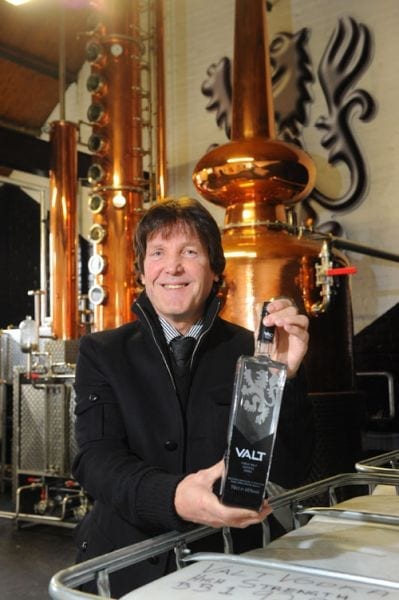
The spirit is made with water from the famous salmon fishing river, the 107-mile long Spey, and Scottish malted barley. Using a traditional copper still, Valt is a vodka that undergoes a charcoal and chill filtration and one that is quintuple distilled. The result is a pure and mellow taste.
Christie first launched Valt in the UK but it is now also available in Germany, Italy, Austria, Spain, Malta, Ukraine, Kazakhstan, Latvia and Poland. It can also be found in Thailand, Taiwan, Singapore and Jakarta but the brand has yet to conquer the biggest and toughest spirits market, the United States of America.
Nonetheless, Valt’s progress since launch in 2006 is somewhat impressive and case sales of some 10,000 a year are now within reach. Rabbie Burns would be proud.
For more information about Valt Single Malt Scottish Vodka, go to: http://www.valtvodka.com
Follow Valt Single Malt Scottish Vodka on Twitter at: http://www.twitter.com/valtvodka
To purchase Valt Single Malt Scottish Vodka for £24.95 a bottle, go to Master of Malt: http://www.masterofmalt.com/vodka/valt-single-malt-vodka/?agegate=true&gclid=CKu2nZTiz64CFcImtAod9XXhlw