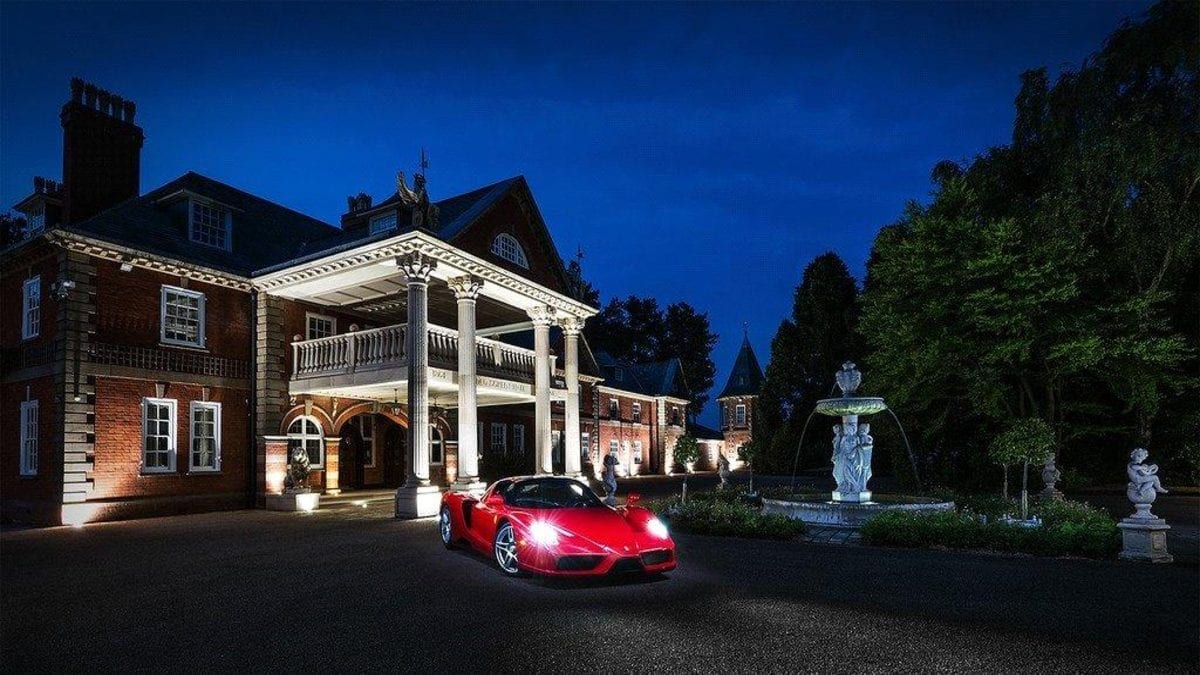
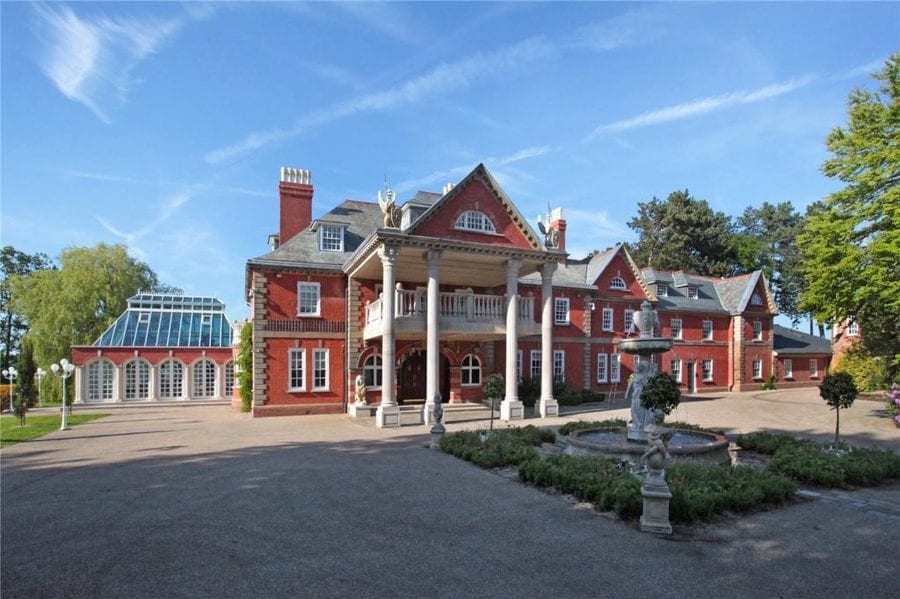
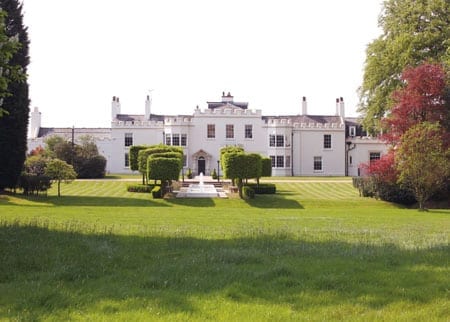
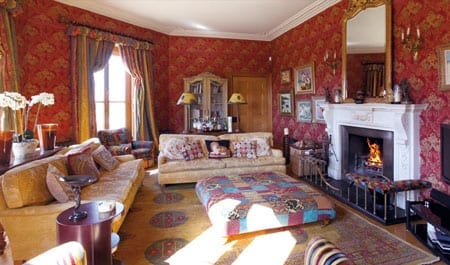
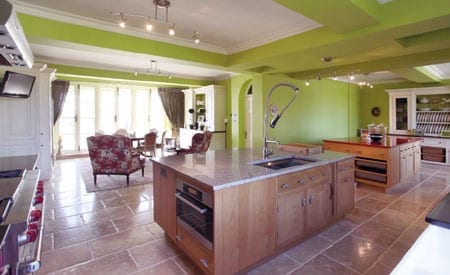
Described as “architecturally unsurpassed and with a lavish interior” and an “ambassadorial style Smallbone kitchen” by selling agents Jackson-Stops, this vast English attempt at a ‘McMansion’ is quite frankly one of the most ludicrously laughable houses we’ve ever featured.
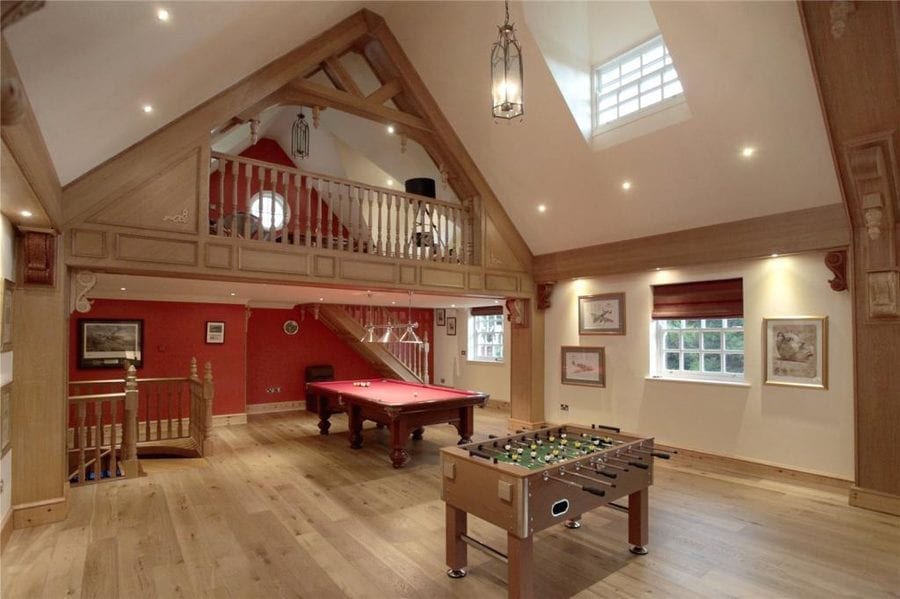
Standing on a plot of just under 11 acres where a probably perfectly charming yet subsequently bastardised residence was constructed in 1864, the ‘hall’ itself extends to about 20,000 square foot. It includes 5 reception rooms, a cinema room, a games room, a music room, an orangery and 8 en-suite bedrooms.
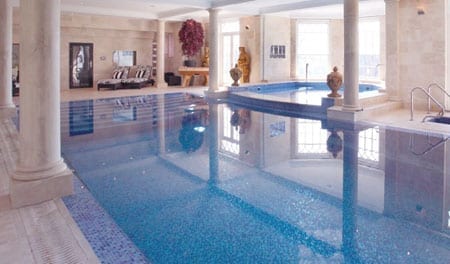
In addition, there is a ‘leisure suite’ with an indoor swimming pool and gym, a staff flat, a 3-bedroom lodge, a 620 square foot ‘entertaining pavilion,’ garaging for 28 cars, a helicopter hangar, kenneling and stabling.
Plainly desperate to offload this gargantuan white elephant, Jackson-Stops declare: “Our clients are looking to downsize and would consider part exchange with either another residential property or commercial property, or possibly another asset class (for instance, prestige and collectible cars, art, etc.).”
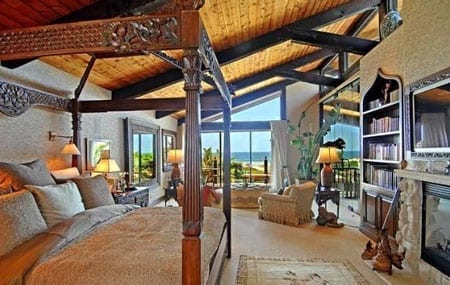
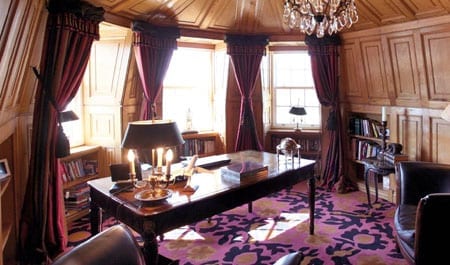
An English McMansion Monstrosity – Amateur golf champion, BBC Wales Sports Personality of the Year 1980 and tax fraudster Duncan Evans owned Deansgreen Hall from 2002 to 2003.The entrance hall to Deansgreen Hall harks back to the past and currently features coats of armour and a model of an old sailing ship.The dining room of the McMansion is equally “historic” in its inspiration, yet the white gloss paint scheme simply just doesn’t work.Plainly aimed at a sale to a footballer, the cinema room – complete with its naff sparkling light ceiling and purple panels – could have been designed by the “prosecco gagging” disaster that is Dawn Ward.
The Names & Numbers – Deansgreen Hall, Crouchley Lane, Lymm, Cheshire, WA13 0TL, United Kingdom
March 2021 – For sale for £6 million ($8.4 million, €7 million or درهم8 million) with Jackson-Stops. Listed first with the firm circa December 2019.
June 2018 – A former policeman named Roderick Bond, whose current correspondence address for his active company Ravenstone UK Ltd., was jailed for 2 years and 8 months as a result of his involvement in a “Formula 1 film tax scam” in June 2018.
2006 – Purchased by the current owner and “remodeled and presented in its current condition.”
2002 – Sold to BBC Wales Sports Personality of the Year 1980 Duncan Evans for £1.2 million ($1.7 million, €1.4 million or درهم2 million) having reverted to private ownership in the 1990s.
1970s – Used as “commercial offices” by Fairclough Homes.
1864 – Original house built on the site. What remains of that, God only knows.
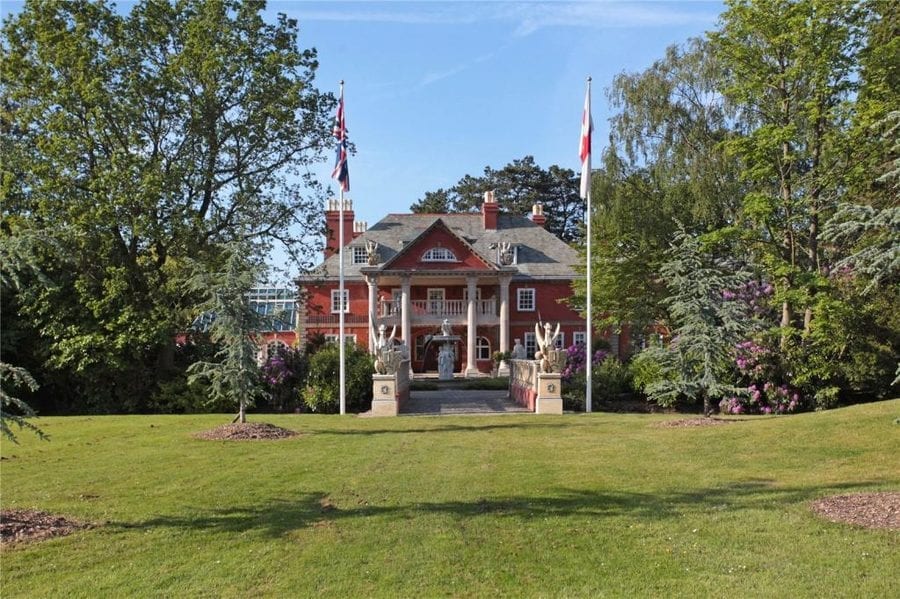
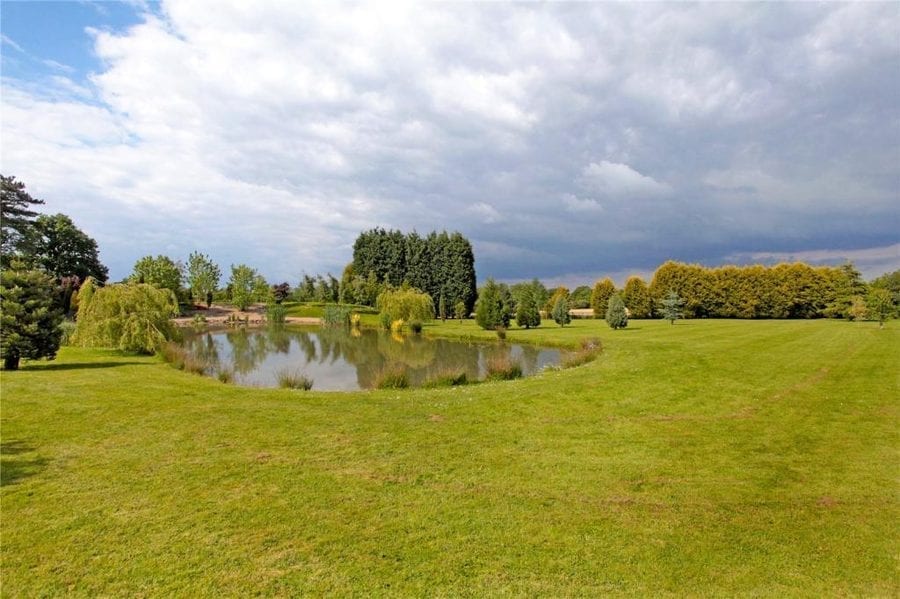
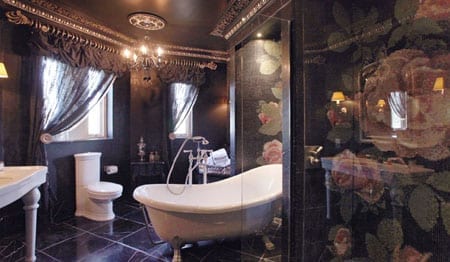
In November 2020, we featured what we termed “the world’s worst McMansion,” a £1.65 million horror in New Jersey. In Deansgreen Hall, we’ve definitely found something that could actually come a very close second.The insipid white theme continues in this vaulted sitting room of the English McMansion.A spokesperson for selling agents Jackson-Stops remarked of the McMansion’s kitchen: “The centre of the house has an ambassadorial-sized Smallbone fitted kitchen/breakfast room with large central island (with seating for 10) with sofas at one end.” Any serious chef would respond: “What a bloody impractical layout.” The McMansion’s indoor swimming pool, surprisingly, seems relatively tame in its decorative styling.A games room in “regal red.”It’s back to the medieval mixed up with nautical heritage theme on the McMansion’s landing – complete with a chess board that looks like it came from Dungeons & Dragons.The ‘master bedroom’ has an especially ghastly fireplace surround and it’s got some shagpile carpets that Jimmy Savile would have loved to have rolled around on.The nautical touch continues in this bathroom area where also included is a tub where Prince Andrew might feel at home.The rear elevation of the McMansion is frankly nothing but a hotchpotch and a design disaster. How many styles did the architect wish to combine?A set of flags stands patriotically at the front of the building along with a very necessary pair of dragon statues.Looking outwards, there’s a hint of classicism to enjoy.The garage block and ‘lodge house’ of the McMansion resemble something found on a Barratt housing estate.Yet more patriotism on display at England’s naffest McMansion. Nigel Farage and Ann Widdecombe would go potty. There are two lakes that are supposedly “stuffed” with carp. Watch out, Eddie Grundy of BBC Radio 4’s ‘The Archers’ will be round to do a bit of poaching.The entrance gates to the McMansion complete with a set of cobbles that wouldn’t look out of place on ITV1’s ‘Coronation Street.’
Grand Grade I listed Shropshire mansion Kinlet Hall for sale after coronavirus forced the closure of its wedding venue and summer school
Striking Grade I listed Palladian mansion in Shropshire for sale.
Kinlet Hall is priced at £3.5 million or just £104 per square foot.
The house has until recently been a school and wedding venue, but this usage has been stopped because of the coronavirus lockdown.
A cricket ground included with the property was lauded as one of “Britain’s most scenic” by ‘The Telegraph’ whilst HRH Princess Anne has competed in horse trials in the parkland.
Coinciding with the partial relaxation of the coronavirus lockdown, the ‘trophy country house’ market seems to be revving up with the commencement of marketing of several historically significant residences.
Significantly cheaper at £3.5 million or £104 per square foot and in far better condition than 33,406 square foot Lilford Hall, the 33,609 square foot Grade I listed Kinlet Hall comes with less land – 102 acres as opposed to 321 acres. It is further from London, which may limit its appeal to wealthy city sorts, but given it has been used as both a school and wedding venue until lockdown, it is in actual “working condition” as opposed to the perilously falling down state that Lilford is sadly currently in. That is, indeed, a major plus.
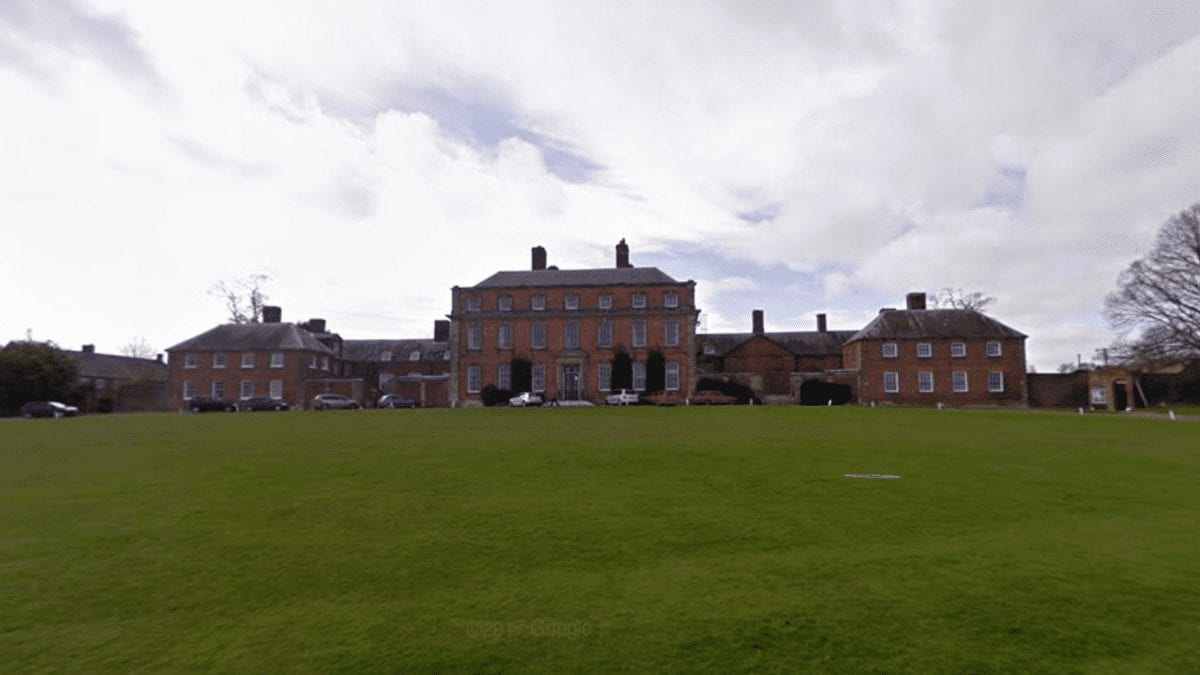
Featuring a seven-bayed central block of three storeys plus cellars, the hall is flanked by two two-storey wings. Presently configured to provide 5 reception rooms and 15 bedrooms, there are classrooms, gyms and flats also. Surprisingly, unlike with many residential to school conversions of mansions in the 1940s where ugly modern extensions were distastefully tacked on, damage to the integrity of the original structure has been minimal.
In addition, to a 5-bedroom detached house named ‘The Old House’ and a range of farm buildings within the grounds, there is a cricket pavilion and a cricket pitch. The Telegraph named its runner-up for “Britain’s most scenic cricket ground” in 2008 and interestingly amongst the many established plant and tree species in the grounds is a Wellingtonia that allegedly came as a seed in a matchbox from the Americas.
Of Kinlet Hall, Tony Morris-Eyton of Savills comments: “[This is] an exquisitely beautiful Palladian country house, formerly a prep school, awaiting its next chapter with enormous potential as either a private home or [for] other uses.”
The village of Kinlet is situated on the northern edge of the Wyre Forest about 18 miles from Telford and 23 miles from Birmingham.
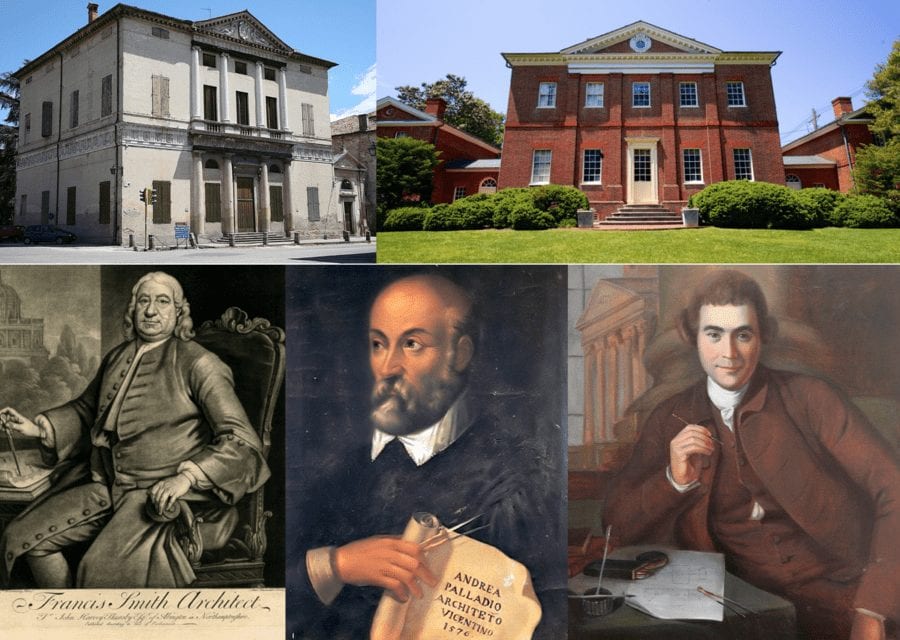
Design Maestros – Villa Pisani, Montagnana (top left) by Andrea Palladio (lower centre) inspired both Francis Smith of Warwick (lower left) in his designs for Kinlet Hall and William Buckland (lower right) in his creation of the Hammond-Harwood House (top right).
The Names & Numbers – Kinlet Hall, Kinlet, Bewdley, Shropshire, DY12 3AY, United Kingdom
June 2020 – Put up for sale for £3.5 million ($4.4 million, €3.9 million or درهم16.3 million) through agents Savills. Orchard Lodge, a 4-bedroom cottage with an acre of paddock, is available by separate negotiation.
July 2017 – Moffats School closes for the final time citing financial pressures. Of the decision, school chairman Julian Engleheart told the Shropshire Star: “We have always been a small school by choice, maintaining the family ethos of our founders. However, the current financial climate is putting enormous pressure on small schools and we have decided that it would be unwise to commit to a new year this September. However, we will continue to run educational activities in our lovely house and grounds, which provide such a wonderful environment for learning.”
1946 – Moffats School (founded in 1934 by the children’s writer Natalie Engleheart in a Hertfordshire house called Moffats) is relocated to Kinlet Hall.
1939 – 1945 – The house was temporarily home to a school for the blind; the parkland became a camp for the US army as part of their preparations for the Normandy Landings.
1827 – Ballroom added to the designs of Sir Jeffrey Wyattville (1766 – 1840) trained architect Edward Haycock (1790 – 1870) for William Baldwyn Childe. He died three years before it was completed and “this is the only significant part of the house not dating from 1729.”
1727 – 1729 – Kinlet Hall is “built in a classic early Georgian style with the symmetry and grand elevations synonymous with [the English master-builder and architect] Francis Smith of Warwick (1672 – 1738)” for Tory politician William Lacon Childe (1700 – 1757) close to the site of an older Tudor manor house.
Other notable works by Smith and his family include Calke Abbey, Fawsley Hall, Kirtlington House, Ombersley Court and Stoneleigh Abbey. His design was said to be inspired by Andrea Palladio’s (1508 – 1580) Villa Pisani at Montagnana – which also reportedly was the influence for the ‘Anglo-Palladian’ Hammond-Harwood House by the English architect William Buckland (1734 – 1774) in Annapolois, Maryland, USA.
During construction, the old village was removed to “improve” the setting. Only the original church, St. John the Baptist, which contains monuments dating to the 1580s, was left as a “remnant.” It was restored subsequently in 1892.
Crumbling Northamptonshire estate Lilford Hall – where the little owl was introduced to Britain – for sale for £10 million, a sum £35 million lower than in 2014
Grade I listed Jacobean mansion with 13 chimney stacks for sale for £10 million; it was for sale last for £44.9 million in 2014 in spite of being listed on English Heritage’s ‘At Risk Register.’
Lilford Hall – parts of which have not been occupied since 1947 –is currently owned by a businessman who tried to sell burial plots in the grounds for £1,250 a pop and shares in a yacht loosely associated with Frank Sinatra for £23 each.
The 321-acre estate includes not only overgrown parkland, but also a zoo with cages that formerly housed bears and a lake for flamingos.
From 1711 until 1990, Lilford House was the seat of the Powys family – the 4th baron is credited with introducing the little owl to the UK.
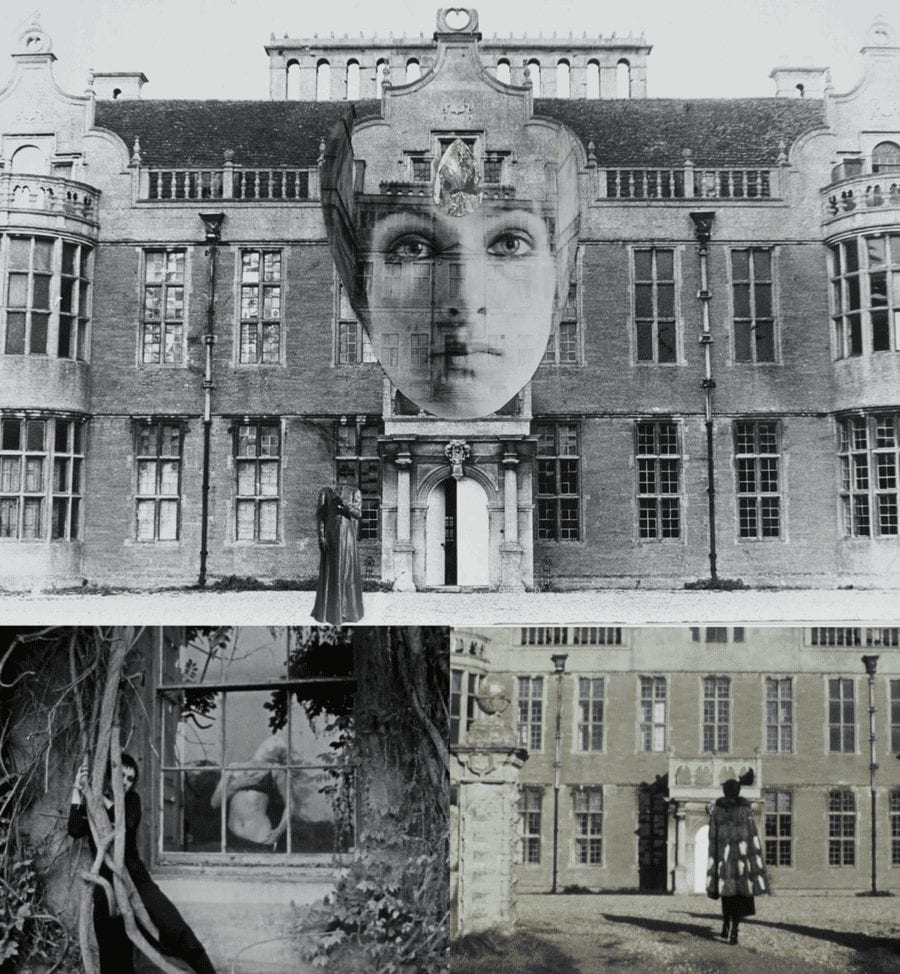
More recently, in 1969, the “sexual mystic” artist Penny Slinger used the at-the-time derelict mansion in one of her best-known works.
A 32,406 square foot Grade I listed Jacobean mansion 82 miles from Central London has gone on sale for £10 million – or the equivalent of just £308 per square foot.
On this basis, Lilford Hall – set in 321 acres near Oundle – seems a comparative bargain when considered against the £4,786 per square foot sought for a Lennox Gardens, Knightsbridge triplex flatThe Steeple Times featured in May, but buyers need to remember this – parts of this crumbling building, most notably the major state rooms, have not been used since 1947.
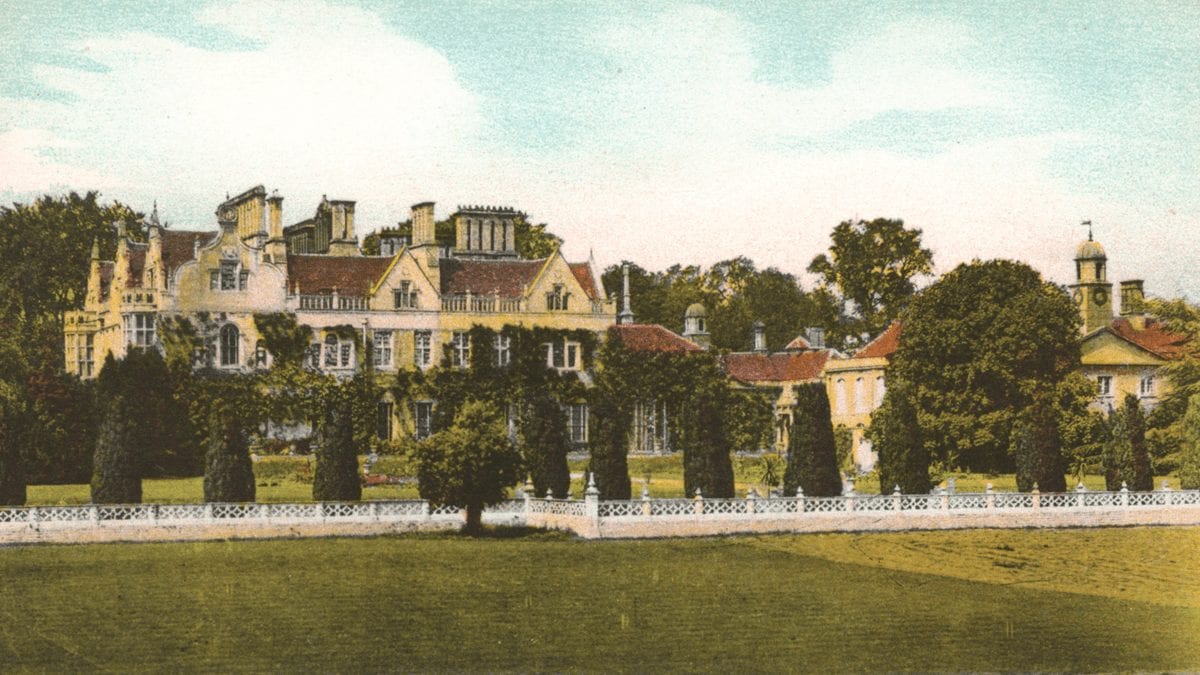
Marketed last in 2014 for the even more punchy sum of £45 million, the “exceptional residential and amenity estate located on the River Nene,” is now offered by agents Savills. The “wonderfully proportioned” U-shaped mansion itself is constructed of grey limestone and includes over 100 rooms and amongst them are 7 “impressive” reception rooms, a ballroom, a ‘great chamber’ and 9 bedrooms. In addition, there are two Georgian pavilions that were formerly coach houses and stabling, three cottages, a former zoo, the oldest private softball court in the world, a former flamingo enclosure and a deer park.
“Impressiveness in the chief attribute of Lilford Hall as a specimen of architecture” claimed County Life in 1990 and as the seat of the Powys family from 1711 until 1990, it became not only a Downton Abbey-esque entertaining pad, but also housed nurses in the Second World War. Here, indeed, is an English country house that has seen lavishness and decline and thankfully here is an example that thankfully escaped the wrecking ball wrought so disgracefully on such houses in the 1950s and 1960s.
Fascinatingly in the 1880s, Thomas Powys, 4th Baron Lilford filled his aviaries on the estate with rheas, kiwis, pink-headed ducks, free-flying lammergeiers and it was from here that he also introduced the little owl into the UK. There are said to be around 5,700 breeding pairs today, but sadly, according to the RSPB, their numbers are now in decline.
More recently, in 1969, “sexually erotic” performance artist Penny Slinger took over the by then “derelict” mansion in conjunction with the filmmaker Peter Whitehead. Their resulting work, titled An Exorcism, was exhibited internationally and in 2004, after the current owners, Charles and Aziza Micklewright, acquired the house, they did something equally avant-garde; they attempted to sell burial plots in the grounds to Americans by citing the estate’s connections to the founder of the Brownists, Robert Browne – a man better known as ‘The Father of the Pilgrims’ and ‘The Grandfather of the Nation’ (of the United States of America).
Whilst Mr and Mrs Micklewright were lauded for their considerable efforts towards the “huge task” of restoring Lilford Hall, they came to the attention of Historic England in May 2019 when the building was listed on the At Risk Register. At that time, the Oundle Chronicle reported: “The roof covering is in poor condition leading to water ingress and distress to the upper storeys. The front bays require structural attention. A schedule of urgent repairs has been identified but not implemented, and no long-term solution has been agreed.”
Now, someone with very, very deep pockets is required to restore this gem. It would be helpful if they liked erotic art, bears, squash and owls also.
The Names & Numbers – The Lilford Hall Estate, Lilford, Oundle, Peterborough, Northamptonshire, PE8 5SG, United Kingdom
June 2020 – The estate is listed sale for £10 million ($12.5 million, €11.1 million or درهم46 million) through Savills. It includes 321.31 acres, of which 148.17 acres are pasture land whilst 157.48 acres are woodland. The majority of the estate is held on a freehold title, whilst the remaining 127.6 acres – known as ‘The Linches’ and ‘Lilford Woods’ – are held on a lease with 91 years remaining.
2015 – Promoted as ‘The National Memorial Gardens,’ burial plots in the gardens of the hall were offered “available to any UK resident or national for an outstanding price of only £1,250 ($1,568, €1,393 or درهم5,758)” by Mark Bailey of Harley Investments. Around the same time, a website dedicated to Lilford Hall marketed “a piece of the formal gardens” for sale for £299 ($375, €333 or درهم1,377) to include “an officially certified ‘Squire of Lilford’ [title] … with this little piece of history.”
March 2014 – The Irish Times reported that the asking price for the estate had been increased to £44.9 million ($56.3 million, €50 million or 206.8درهم million). They claimed the agents Coldwell Banker blamed “confusion over currency conversion rates and new instructions from the owner.”
April 2014 – The Lilford Hall Estate is listed for sale through Coldwell Banker on MyHome.ie for £33.7 million ($44.2 million, €37.5 million or درهم155 million) on behalf of “an English gentleman.”
2004 – The estate is acquired by the Micklewright family. Little information is available online about the Old Framlingham Charles Micklewright (born July 1958), but he is described as a “patent attorney” on Companies Houses pages. The businessman is mentioned also as a publisher and trustee of the Marsh Christian Trust elsewhere, whilst his Singaporean born wife, Aziza (born 1964), was a director of Lilford Properties Limited from 2013 to 2018.
A website operated by Sign of the Times Limited, a Hong Kong company of Lilford Hall, Lilford, Oundle, Northamptonshire, PE8 5SG, currently offers shares in a yacht named ‘Sinatra the Voice’ for £23.91 ($29.99, €26.64 or درهم110.14) per share. The boat was built in 1956 and is tenuously linked to Frank Sinatra by the fact that a one-time owner, Beale Poste, loaned it occasionally to the crooner between 1968 and 1974 in West Palm Beach, Florida.
1990 – The estate is closed to the public.
1980s – The house is used as a location in the BBC English Civil War inspired historical drama series By the Sword Divided.
1970s – Aviaries on the estate restocked by George Powys, 7th Baron Lilford (1931 – 2005). He “opened [the estate] to the public as a leisure park” and housed more than 350 birds of 110 species there. It remained thus for around 20 years and included a restaurant and shop. The aviaries and the 1,896 square foot restaurant building remain present still today.
1969 – 1970 – American British “sexual mystic” artist Penny Slinger (born 1947) and Liverpudlian filmmaker Peter Whitehead used the “derelict mansion” as the setting for their works An Exorcism and Lilford Hall. They are lauded as a “photo romance” and exhibited at the Blum and Poe Gallery in Los Angeles in 2014, at the Haywood Gallery in London in 2015 and at the Fortnight Institute in New York in 2019.
1949 – Stephen Powys, 6th Baron Lilford (1869 – 1949) died without having married or having had children. His properties aside from Lilford – a house in Mayfair, Bank Hall in Lancashire and the Bewsey Estate in Cheshire – passed to his second cousin twice removed.
1947 – The estate is sold to a company named Merchant Ventures by the Powys family (though they remain present on the estate until 1990).
1939 – 1945 – During the Second World War, the parkland of the estate was used as a military hospital for nearby airfields. From 1949 to 1954, some of the buildings constructed during this period were then used as a Polish school.
1923 – First-class Northamptonshire cricketer Major John Powys, 5th Baron Lilford (1863 – 1945) built the first private softball court in the world in the grounds of the hall. It is now in disrepair and the roof has fallen into the inner court.
1909 – 1910 – The hall was extended in the Edwardian manner including the provision of a new master bedroom with dressing room and bathroom by William Dunn and Robert Watson of Dunn & Watson.
1901 – The estate surrounding the hall reaches its largest size and totals a vast 8,000 acres of land. Around this time, Queen Mary, wife of King George V, is said to have visited the gardens.
1880s – Ornithologist and expert on the fauna of the Balearics Thomas Littleton Powys, 4th Baron Lilford (1833 – 1896) introduces the little owl into England on the estate. His aviaries were said to “feature exotic birds from all around the world” and a species of European lizard, the Lilford’s wall lizard (Podarcis lilfordi), is named in his honour. The 4th baron is repeatedly mentioned in the works of Charles Darwin for his contribution to the study of the science of evolution.
1840s – Further changes to the building are orchestrated by the architect William Gilbee Habershon (circa 1818 – 1891). The Campaign to Protect Rural England described these Victorian extensions as “sensitive” in 2006 – a rare accolade given most additions to English country houses during this period were simply brash and vulgar.
1740s – The Palladian architect Henry Flitcroft (1697 – 1769) adds “outstanding” Georgian interiors whilst “respecting the hall’s Jacobean exterior.” He “softened and brightened” the building as a result and also “constructed the Georgian pavilions and additional storeys to the east end of the two wings.” Other works by Flitcroft can be seen at Bower House in Essex, Wentworth Woodhouse in Yorkshire and Woburn Abbey in Bedfordshire.
1711 – Lilford Hall is sold to the judge and Tory politician Sir Thomas Powys (1649 – 1719), Attorney General to King James II. Powys is best remembered for conducting the prosecution of the Seven Bishops in 1699. He is buried at Lilford.
1630s – Construction of the main exterior of what to this day remains Lilford Hall as a “Jacobean-style gentry house” by William Elmes (the younger).
1473 – The land that forms the estate is acquired by William Browne (1410 – 1489), a wealthy wool merchant and landowner from Stamford, from the estate of Baron Welles (who was beheaded by King Edward IV for treason). In 1495, “in a Tudor style,” he built a hall on the site and it passed to Robert Browne (1550 – 1633), the founder of the Brownists, ‘The Father of the Pilgrims’ and ‘The Grandfather of the Nation’ (of the United States of America).
An English country house that sold for a £1 and a Scottish mansion with an asking price of just £1
Downton Abbey addicts take note: For the same price as a double cheeseburger on McDonald’s saver menu you could live like the Earl and Countess Grantham if you bought a Georgian mansion in Chirnside in Berwickshire (more…)
One of Britain’s finest Queen Anne residences comes to the market
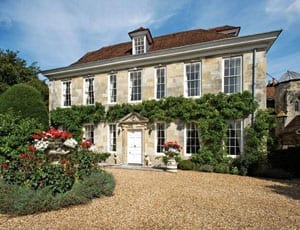
On the market for the first time in 600 years, Grade I listed Malmesbury House in Salisbury, Wiltshire has rightly been described as a “jewel box” of a house. (more…)
‘Cotswold style’ mansion dramatically reduced in price after 14 years on the market
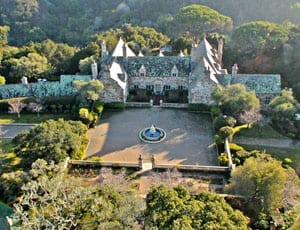
Americans love all things British and they especially love to replicate our architecture. In the Northern Californian town of Hillsborough, a fine example is a 35,000 square foot mansion named The Tobin Clark Estate. (more…)
This echolaliac prodigy has absolute pitch and has been described as “the human iPod.” His abilities as a musician are amazing given that he’s both blind and autistic. The cousin of The Duchess of Cornwall’s children, Tom Parker Bowles and Laura Lopes, Paravicini unexpectedly played Big Spender to the then Chancellor of the Exchequer, Alistair Darling, in 2009 and made legal history when The Court of Protection was opened for the first time in 2010 to discuss his future care. He captivates audiences throughout the land.
A £15 million mansion fit for a self-made tycoon or an upwardly mobile WAG
While the youth of the Kings Road and Loughton have featured in the reality shows Made in Chelsea and The Only Way is Essex, their counterparts in Cheshire have yet to undergo the same social experiment. Having come across a fair few of their number though, I can only imagine their antics would result in television of comparable car crash proportions.
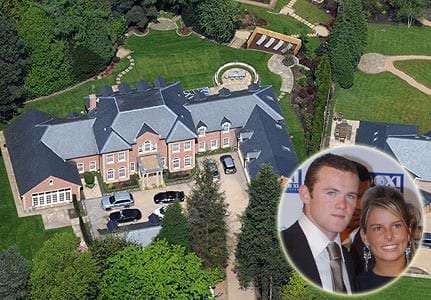
Wayne and Coleen Rooney and their home on Collar House Drive in Prestbury, East Cheshire
Warrington born Kerry Katona isn’t considered one of the “Cheshire set’s” finest exports
Cheshire itself is a county of contrasts: there’s the farming and hunting set and then there’s the new money. From the 1950s onwards an invasion of nouveau riche footballers and self-made business people came to Alderley Edge and Wilmslow and it is said that there are more Rolls-Royces per square mile here than anywhere else in the UK.
Though today’s Coronation Street actresses and Man United players generally favour brand new homes in Prestbury, the new wealth have not just consigned themselves to such. The likes of Take That’s Gary Barlow, for a time, owned Delamere Manor at Cuddington but sold it in 2005 due to his ever-growing commitments elsewhere. Equally, Neil Hamilton, whilst MP for Tatton, lived at The Old Rectory at Nether Alderley with his formidable wife Christine but when their days in politics came to an end, they too moved on. For a time, David and Victoria Beckham were the undoubted glitterati of this manor, but of those footballers still resident Wayne and Coleen Rooney are definitely now the best known.
In a “grey area between old and new” sits Swettenham Hall at Swettenham near Congleton. This 12,590 square foot Georgian mansion dates to 1795 but since it was acquired by Brian Kennedy, a double glazing, home improvements and mobile telephone entrepreneur, the house has been given a total makeover. The colourful style he’s given the house can best be described as being akin to: “Laurence Llewelyn-Bowen meets Austin Powers.”
Swettenham Hall’s drawing room is decorated and furnished in a cacophony of colours
The kitchen is painted in an equally vivid shade of lime green
A bedroom boasts a carpet that would make Austin Powers shout: “Yeah, baby, yeah!”
The same carpeting continues into the wood paneled “gentleman’s study”
At Swettenham Hall, bathrooms, equally, are far from neutral in their styling
Mr Kennedy and his wife Christine employed Julian Bicknell Associates to design an impressive leisure wing in 2004
Swettenham Hall is most definitely a party palace and along with the addition of a leisure wing consisting of a swimming pool, Jacuzzi®, plunge pool, steam room and gymnasium in 2004, Kennedy has also constructed a 47ft by 44ft helicopter hangar complete with a retractable helicopter pad.
Standing in 100 acres of grounds, the house does seem a tad expensive at £15 million especially since that the adjoining former farm buildings were sold off and converted into eight homes in 1999. The driveway is partly shared with these homes and for those seeking the ultimate in privacy, this could indeed be an issue. It is perhaps why Swettenham Hall has yet to sell.
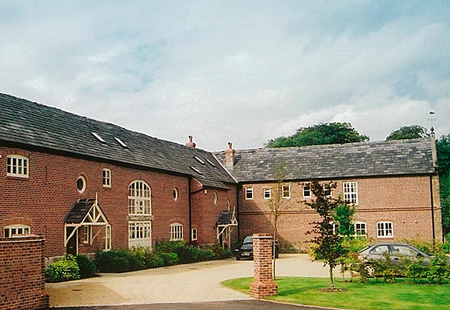
The former farm buildings next to Swettenham Hall were sold off and converted into eight homes by Egerton Estates and Watts Developments in 1999
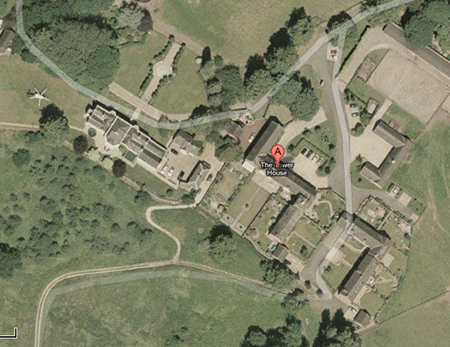
The proximity of Swettenham Hall to the neighbouring barn conversions is illustrated in this Google Earth map
Brian Kennedy is someone I hadn’t heard of until I came across Swettenham Hall but here is a fascinating man whose meteoric rise is frankly very clearly linked to windows. The son of a window cleaner from Edinburgh, this self-made tycoon started his career as a trainee manager at the Royal Bank of Scotland. He subsequently briefly worked as a trainee accountant but left when offered the chance to become youngest branch manager of Moben Kitchens at the age of 20.
At around this time, Kennedy acquired a stake in Farouche Kitchens and with a Rochdale born property entrepreneur named David Russell, he was transformed from a door-to-door salesman to a pioneer in direct sales. In 1988, when Farouche was sold, Kennedy netted circa £1 million. From here, this entrepreneur returned to his family’s roots by venturing into double glazing with Weatherseal Windows and then home improvements with Space Kitchens & Bedrooms.
In 1999, with the help of funds raised by private equity investors 3i, Kennedy paid £42 million for the well known brand Everest but sold part of his stake to the management for £63 million in 2003. In due course he added to his shareholding and then sold 21.5% of the company to Hutton Collins in a deal which valued the company at £150 million in 2007.
Ever the empire builder, Kennedy paid £29 million for a conservatory manufacturer named Ultrafame in 2006 and then also added another double glazing brand, Zenith Staybrite, to his portfolio in 2008. Many other business ventures followed but not being afraid to diversify, Kennedy formed Patrick Properties, whose portfolio is now valued in excess of £100 million, in 2002 and Kennedy Renewables, which specialises in wind energy, in 2009.
In the technology sector, a chance conversation in a Knutsford wine bar in 1995 led to him venturing into the mobile telephone market with a company named Genesis Communications. The business was sold to Dixons in 2002 for £31 million.
In January 2012, Kennedy merged his main Latium Holdings business with Jim Rawson’s Epwin Group to form Epwin Holdings. The merger resulted in a company with more than 2,500 employees and brands numbering Spectus, Swish, CET and Kestrel.
Of his success, Kennedy states:
“Business is common sense [and] dealing with people is common sense. I don’t think I have any particular flair. I think it is about common sense, taking the opportunity when it comes and hard work.”
Brian Kennedy’s wealth has allowed him to indulge many of his passions. A period of semi-retirement “drove [him] and [his] kids nuts,” but this Scotsman’s love of rugby resulted in him acquiring the Sale Sharks Rugby Club in 1999. He is said to have set the “club on a sound financial footing” and turned it into “one of the leading rugby clubs in Britain.”
Philanthropy is something that Kennedy, a Jehovah’s Witness, has also dedicated his wealth to. Through his Brian Kennedy Trust, he has supported a number of charities and organisations but it is for his role as the main backer of Find Madeleine Fund that he has come to public attention. Of his reasoning for backing the missing child’s parents financially, he stated:
“In light of the quite literally incredible accusations against Gerry and Kate McCann, which are clearly exacerbating their emotional torture, I felt compelled to offer, along with other like-minded businessmen, financial support and the full logistical support of the Latium team. That support is principally our in-house lawyer Ed Smethurst and [official spokesman] Clarence Mitchell.”
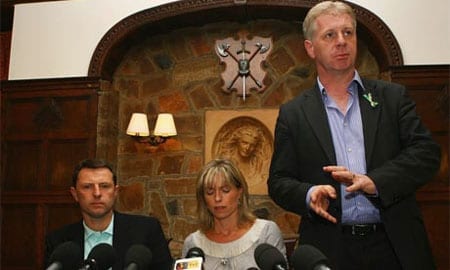
Brian Kennedy was involved in the funding of a team that included Clarence Mitchell for the Find Madeleine Fund until 2009. Here Mitchell (standing) is pictured with Gerry and Kate McCann.
An ex-lawyer and campaigner Anthony “Tony” Bennett is the former secretary of The Madeleine Foundation who has been involved in various legal disputes with Brian Kennedy and Gerry and Kate McCann
Kennedy’s donation attracted much press attention in 2007 in the weeks following Madeleine McCann’s disappearance and he continues to support them to this day. A very public spat involving him, Gerry and Kate McCann and a campaigner named Tony Bennett, who also was involved in The Madeleine Foundation, has been the subject of various legal actions. In October 2011, Mr Bennett was forced to publicly apologise to Mr Kennedy and separately an August 2009 Evening Standard article by Mark Hollingsworth “investigat[ing] the investigators,” was pulled because for “legal and editorial reasons.” In it, “someone who worked closely with [Kennedy]” was quoted as saying:
“He was appalled by the Portuguese police, but he also had visions of flying in by helicopter to rescue Madeleine.”
Angelina Jolie, another avid aviator, once commented: “Wherever I am I find myself looking out of the window wishing I was somewhere else.” We do not know why Brian Kennedy is selling Swettenham Hall, but Jolie is indeed one of the few with the resources to take these particular windows off his hands.
For more information about Swettenham Hall, Swettenham, Congleton, Cheshire, CW12 2JZ, contact Edward Welton of Knight Frank on +44 (0) 20 7861 1114.
For more details about Brian Kennedy, go to: http://www.brian-kennedy.co.uk
For more details about the Find Madeleine Fund go to: http://www.findmadeleine.com and for information on The Madeleine Foundation: http://www.madeleinefoundation.org.uk/