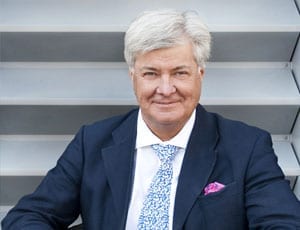
The Steeple Times asks hotelier and chairman of Bespoke Hotels Robin Sheppard: “What’s on your mantelpiece?”
The Steeple Times shares “wit and wisdom.” What’s your guiding force?
Hunger.
“Don’t get even, get medieval” is, in our humble opinion, a great motto. What’s yours?
“While I breath, I hope.”
Kerry Katona was considered unacceptable in 2007. Who or what is unacceptable in 2012?
Piers Morgan.
Tony Blair misses being Prime Minister. What do you miss most in your life?
The ability to fit into non-elasticated trousers.
What might you swap all your wealth for?
I might swap it for anything. However, I would swap it for nothing.
Donald Trump was once a case of: “If you owe the bank a thousand, they close you down; but if you owe the bank a billion, you own the bank.” What’s your view on the banking crisis?
I think it’s a great shame that people no longer consider their bank manager to be a friend. We’ve lost the trust. It’s very different now to how it once was.
What phrase or word do you most loathe?
“At this moment in time”: What a waste of words.
In the UK, some people consider charity to “begin at home.” What’s your view and what causes do you personally support?
I am affiliated with the Guillan-Barre Syndrome Support Group.
The judge in “Law Abiding Citizen” states: “I can pretty do whatever I want” before being blown up whilst answering her mobile phone. What’s your view on the appropriate use of such devices?
Turn them off when you’re on the loo. Or at least try not to use them.
If you could fill a carriage on The Orient Express, who would be your fellow passengers?
Are we murdering or sightseeing? Either way, the answer’s probably family.
Hotelier Robin Sheppard
If you were unfortunate enough to end up on death row, what would be your last meal and where would you eat it?
Presumably I’d have to eat it in the prison I doubt they’d let me go on a picnic. I think I’d have spaghetti bolognaise with a robust Chianti.
What time is it acceptable to consume the first drink of the day?
Immediately after you finish work. Whichever time that may be.
A Negroni, a martini or a cup of tea?
Cup of tea.
Whose parties do you enjoy the most and why?
If I remembered them, they can’t have been that much fun, can they?
Who is the most positive person you know?
My golf instructor. He’s always laughing whenever I take a shot.
What’s your most guilty pleasure?
Pork scratchings.
If a tattoo were to sum you up, what would it be of?
That festival in Edinburgh.
If you were a car, what marque would you be?
A monster truck.
Cilla Black presented “Surprise, Surprise.” Tell us the most surprising thing about you.
I’m an only child.
What’s currently sitting on your mantelpiece?
A handful of birthday cards.
Robin Sheppard is a classically trained hotelier and chairman of Bespoke Hotels. He is also managing director of Alfresco, designed the iconic bottle for Ty-Nant mineral water and is the author of A Solitary Confinement (2007).
Christian Huhnt takes his first foray into the world of supper clubs
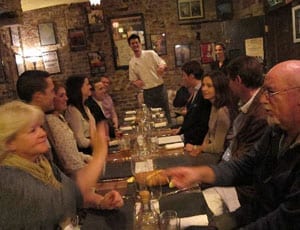
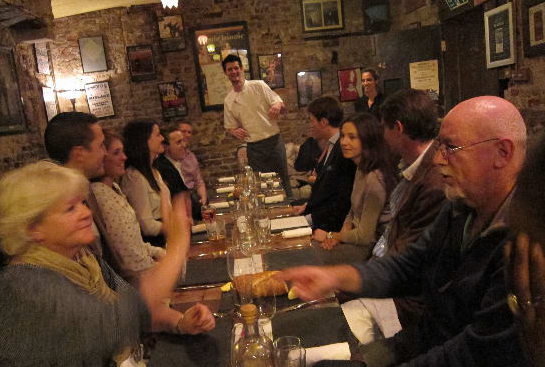
I don’t usually find myself in the east of London. It’s not because I don’t like it but simply because it’s just an awful journey to get there from where I live. Eventually, though, a “secret” was able to convince me to make this long journey. This “secret,” I was told, could only be revealed to me if I “attended” it. Of what, you may ask, am I am rambling on about? I am talking of something called: “The Secret Supper Club.”
Next, you’ll be asking: “What the heck is a ‘supper club’?” Well, in essence, a “supper club” is essentially a dinner in the company of a bunch of total randoms. It is a bit like blind dating, although you get to speak to many more people than just the one opposite you. As I had heard and read so much about supper clubs, I became very curious about attending one. Normally these gatherings happen in someone’s own home without any professional help, but the one to which I was invited was quite something else.
Lime&Tonic’s Secret Supper Club
This particular supper club is on another level. It is run by Lime&Tonic, an international firm of event planners and costs just £35 per head. Lime&Tonic made their philosophy to: “Save the world from boredom” according to its co-founder Stefan Cordiner and in the London supper club they operate I certainly found plenty that fascinated.
The major idea of Lime&Tonic’s take on the supper club is to make new contacts. In this case it was as far reaching as it could get. We were 14 in total. None of us knew each other beforehand, but almost everyone came as a couple or with a friend. What, I realised, made it particularly special was how wide an array of people came: Where else would a pharmaceutical product developer from Birmingham have dinner with an F-15 pilot from the US?
The “un-restaurant,” as it is also referred to by Lime&Tonic, happens every month at a “secret venue,” but never a private residence. The location is revealed to the attendees one day before the event. It’s usually held in a venue with a “unique feel” but wherever it may be, the focus is on somewhere with “authentic charm.”
Suspense and surprise is the order of the day here as the “secret menu” is not revealed until guests sit down at the table either. On arrival we were told that our chef for the night was Paul Hannagen, a good-humoured young Irish professional who established his own catering operation, Cuisson, in August 2011. His passion for his craft was infectious.
The one element of “surprise” that I found hard to deal with was the “bring your own” wine policy. Without knowing what would be served, how could I know what alcohol my wine buff companion ought to choose?
The food itself, though, was delightful. We started with some small ‘lollipops’ stuffed with chicken liver and chunks of apple as an amuse-bouche. This was followed by a ham that had been cooked for 36 hours and served in a “British farmer’s style” with mini-cauliflower, sliced carrots, a rocket salad and a truly wonderful chutney. For a main we were served salmon, cooked “hot and cold” on one side only at 44.5°C in basil oil served with marinated prawns, mashed potatoes and broccoli. It was a great dish but perhaps a little more salt could have made it perfect. The final course, equally, was a delight: chocolate fudge with Baileys ice cream and salted caramel. I was in heaven.
In general, Hannagen’s approach to slow cooking and his use of local produce reminded me very much of that of Jason Atherton at Pollen Street Social. I was therefore not surprised when he later told me that Atherton was his mentor. He did a great job and my companion and I agreed that he deserves huge success.
The meal over, we ended up downing Patrón XO Cafe shots together while happily exchanging numbers. Though I may have been sceptical in the beginning, this concept is brilliant. I am very much looking forward to attend the next Secret Supper Club soon.
Matthew Steeples compares two comparable examples of motoring excess: the “Golden Zebra” and the Fulda Maybach Exelero
In recent weeks I’ve received a number of messages about an $8,000,000 car named a Fulda Maybach Exelero. One of them referred to it as “one of the most over the top cars on the planet” and so it piqued my interest.
The 2005 Fulda Maybach Exelero concept car was inspired by the design of the 1939 Maybach SW38 StromlinieThe front of the car is dominated by an aggressively styled grilleWhilst the rear would most definitely appeal to BatmanA view from the side illustrates just how long this 5890mm vehicle truly is
In these straightened times, such a figure seems quite a lot for a car but what, you may ask, makes it so special? Well, for a start it was a one off and commissioned in 2005 by the tyre company Fulda to showcase their Carat Exelero range. Designed for them by a 24-year old student named Fredrik Burchhardt of the Pforzheim Polytechnic Department of Transport Design and built on the chassis of a Maybach 57 limousine, this 2-seater coupé is 5890mm long and 2140mm wide. The vehicle, which weighs a not so insubstantial 2.6 tonnes, has a 5.9 litre V12 twin turbo engine and in testing achieved a top speed of 218mph at southern Italy’s Motodrom Nardo.
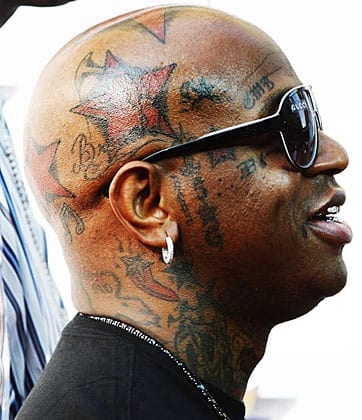
In due course the Exelero was sold to André Action Diakité Jackson, a diamond industrialist, for €5,000,000. Jackson allowed Jay-Z to use the car in his Lost One music video before selling it to a “European entrepreneur” named Arnaud Massartic. Subsequently, various reports state that Massartic sold the vehicle on to the rapper Bryan “Birdman” Williams for $8,000,000 in April 2011 but other articles suggest that he failed to pay for the vehicle. Who knows where it is now.
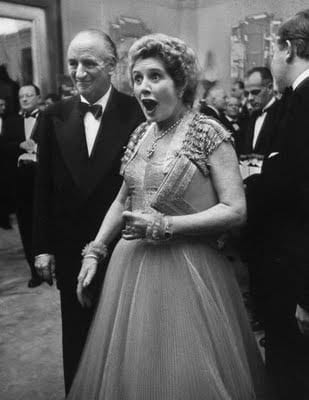
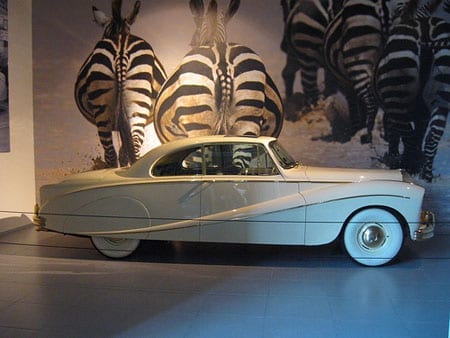
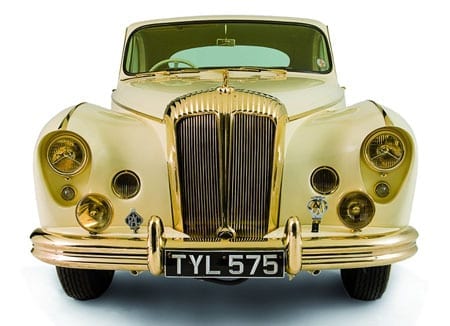
Rapper Bryan Williams (AKA “Birdman”) is best known as one half of the Big Tymers and is also the co-founder of Cash Money Records (http://birdmanstunna.com)Birdman in another of his cars, a Maybach 62s LandauletSir Bernard and Lady DockerThe ex-London Motor Show 1955 Daimler DK400 “Golden Zebra” coupé with coachwork by Hooper & Company. Registration number: TYL 575, chassis number: 92705 and engine number: 48771.The front of the “Golden Zebra”
Whether or not this piece of “automotive art” is indeed in the ownership of a “bling-king,” there are countless other examples of individually designed vehicular excess but amongst the most extravagant has to be an example commissioned by Lady Docker in 1955.
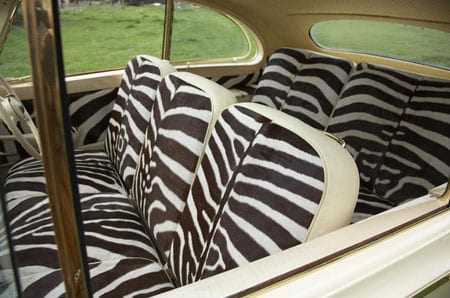
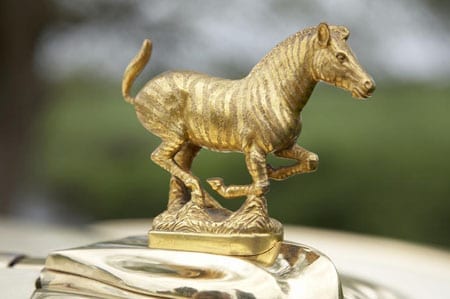
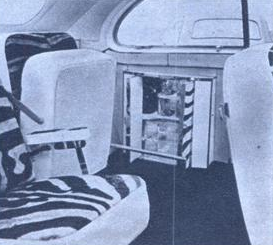
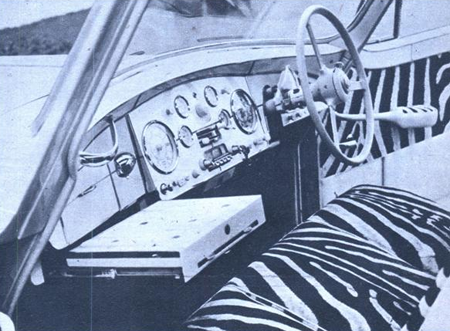
Norah Docker (1905 – 1983), whose third husband was Sir Bernard Docker, chairman of Birmingham Small Arms and its subsidiary the Daimler Motor Company, spent £12,000 in 1955 creating the “Golden Zebra” coupé on the chassis of a DK400 limousine. She replaced anything on the car that would have normally been made in chrome with gold and upholstered it in real zebra hide. Black, white and gold-trimmed accessories completed the look and amongst them were picnic stools, folding rear seats complete with a cocktail bar and an elephant ivory dashboard makeup table with a mirror, compact, comb, brush, cigarette case and cream jars.
Commenting as to why she chose to use zebra for the car’s upholstery, Lady Docker’s justification, in a quote that Barbara Amiel could only dream of having come up with, was simple:
“Because mink is too hot to sit on.”
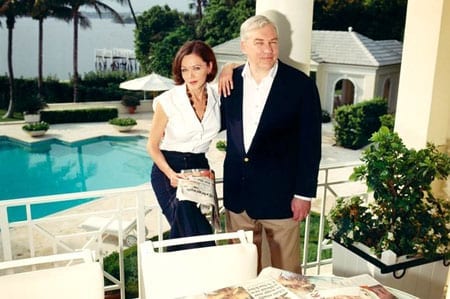
The zebra hide upholstered interior of “The Golden Zebra”The car even features a golden zebra as a mascotLady Docker, considered a visionary in her design skills by some and as vulgar and brash by others, even thought to include a drinks cabinet within the folding rear seats.In the front, an elephant ivory dashboard makeup table with a mirror, compact, comb, brush, cigarette case and cream jars show how much thought she put into the vehicle’s creation.Conrad Black and his wife Barbara Amiel have been much discussed in the press in recent days for their “extravagance.” They had nothing on Sir Bernard and Lady Docker.
The 4.6 litre “Golden Zebra” was to be last of the cars created to Lady Docker’s designs as shortly afterwards, in May 1956, Sir Bernard Docker was sacked from BSA’s board for squandering the company’s cash. In addition to the extravagance of the “Docker Daimlers,” he’d used shareholder money, in a manner that could indeed be compared to Lord and Lady Black’s days at Hollinger, to buy his wife a castle in Wales and maintain a 212ft motor yacht named Shemara.
Daimler forced the Dockers to return the Daimler vehicles Lady Docker had so diligently designed and in revenge she bought a Bentley Continental from the firm’s rival, Rolls-Royce. The “Golden Zebra” and the other “Docker Daimlers” were stripped of their expensive trimmings and sold. In 1966, the car was offered for sale by Daimler distributors Henlys of Chester for just £1,400 and after passing through the hands of several other owners ended up in California.
In 1988, the “Golden Zebra” was purchased by a Daimler collector named John Wentworth. He restored the vehicle to its original glory with the help of experienced craftsmen and even managed to locate Kenyan zebra hides at a tannery in South Africa. Wentworth died prior to the completion of the car’s restoration and in 2006, it achieved £177,500 at Bonhams. The “Golden Zebra” came up for sale again in 2011 for £175,000 in Florida. It is now on display in the Louwman Museum in The Hague, Netherlands.
“The Golden Zebra” was certainly a car that reflected the excesses of the 1950s and the Exelero was without doubt the equivalent for the 2000s. What on earth could usurp these two moving monuments of extravagence next? We are on the lookout.
Matthew Steeples discovers a map of London with a difference
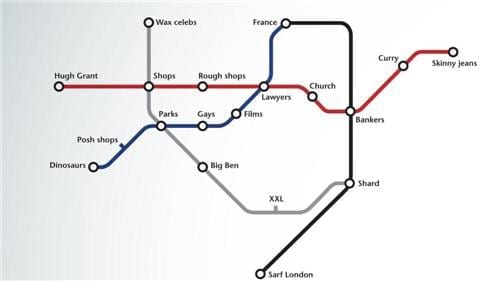
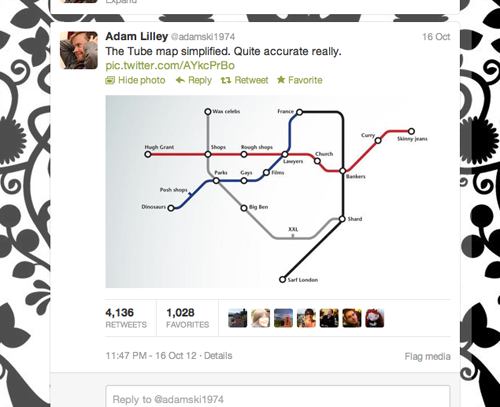
On the 16th October, an actor named Adam Lilley Tweeted an image based on a simplified version of a map of the London Underground. The creator had adapted it so that the names of the stations supposedly are indicative of what they believe the area around each station is best summed up by. Plainly it amused as over 4,000 Retweeted it.
A revised version of the London Underground mapAdam Lilley’s revised London Underground Map has been Retweeted 4,136 times
Knightsbridge is replaced by “posh shops” and South Kensington is all about “dinosaurs.” Westminster becomes “Big Ben” and Notting Hill Gate is simply “Hugh Grant.” Bethnal Green is replaced with “curry” and Leicester Square, “films.” Somewhere south of the river is simply “XXL” and out in Essex, another station is renamed “skinny jeans.” Irony is the order of the day.
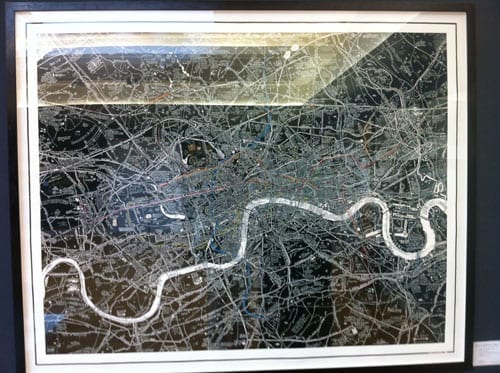
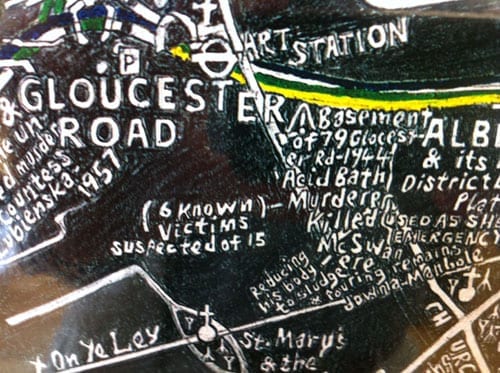
Stephen Walter’s “London Subterranea”The section of the map detailing the exploits of “the acid bath murderer”And the section all Sloane Rangers should examine more closely
Altering maps in this manner is nothing new and an especially brilliant one I saw at Christie’s in Old Brompton Road in their 3rd September sale depicted the location of events and discoveries I’d never heard of. In Stephen Walter’s London Subterranea, for example:
– The basement of 79 Gloucester Road was the location of the discovery of an “acid bath murderer” who killed at least 6 and is suspected of 15 murders. According to the depiction, he killed someone named “McSwan ‘ere and poured the remains down a manhole, reducing his body to sludge.”
– Harvey Nichols is shown as a plague pit.
– Brompton Oratory is described as aa “MI6 agent meeting place and dead letter office.”
Such maps provide a little light relief and for that reason we make Lilley’s image The Steeple Times picture of the week. We invite readers to submit their very own versions. We shall publish the best.
Matthew Steeples reacts to the BBC quietly dropping the “Sir”
This morning when I turned on Radio 4’s Today programme, as has become customary in the last weeks, the first item on the news was about a man who will forever be associated with abuse and paedophilia, Jimmy Savile.
In recent days, as more and more allegations have surfaced against the Jim’ll Fix It presenter, politicians like David Cameron have looked to make hay by calling for Savile to posthumously lose his knighthood. They talk twaddle as such a title cannot be taken from you once you are dead as that very title actually dies with you. To actually “remove” the title would involve a costly change in the law and frankly, as disgusting as this pervert now appears to have plainly been, is it really worth the expense and parliamentary time during these times of austerity?
Plain old Jimmy Savile
When Jeffrey Archer was jailed, calls were made to strip him of his seat in the Lords. In, my humble opinion, rightly, nothing was done. Since leaving prison, Lord Archer has righted his wrongs by doing much good. Archer’s situation and crimes, I admit, were different to those of Savile but his and that of Lord Lucan should be a guide.
If Jimmy Savile were to lose his title now, should the hereditary title of Lord Lucan also be removed? Should his son lose a title because, even though never convicted, his presumed deceased father stands accused of the murder of his children’s nanny? This area of law could indeed become very complex and frankly the exploration of it is pointless.
The Today programme, however, have found a far simpler and cheaper solution. This morning, they did what we should all do. They now simply refer to this revolting individual as plain old “Jimmy Savile.” Let’s all follow this lead, drop the “Sir” and leave it at that.
Matthew Steeples discovers a penthouse that even the most ambitious estate agent may struggle to flog
Estate agents are a tough breed and there are very few properties that they might admit could verge on being impossible to sell. We believe, however, that we might have found one that could be in the same league as, perhaps, the homes of Myra Hindley, Harold Shipman or John Christie. In fact, this Leeds penthouse could be even more difficult to sell given how many photographs the last owner had taken there during his lifetime.
The exterior of Lake View Court, Roundhay, Leeds, West Yorkshire, LS8 2TX gives little a way other than the resemblance to a Soviet apartment blockThe penthouse enjoys superb views across Roundhay Park and the Waterloo LakeThe split-level 33ft reception offers a vast entertaining space and comes complete with a shagpile carpet that Austin Powers would be proud ofIn view of their tiling advertisement, perhaps the owner did a deal with Callerton Kitchens (http://www.callerton.co.uk)A bedroom gives further indication that this place hasn’t had much done to it since the 1970s
On first inspection, this 3-bedroomed £325,000 top floor flat in Lake View Court at Roundhay in Leeds sounds like it could be a bargain. It includes a 33ft by 13ft split-level living room, a large balcony, a fitted kitchen (that bizarrely features tiling prominently displaying the name of the kitchen’s manufacturer, Callerton Kitchens), 2 bathrooms, a single garage and a double parking space in an underground garage.
Though the agents, Alan Cooke, give a hint that it needs a complete makeover when they state that the apartment is “now ripe for improvement,” it has a “security entry phone system, an automatic lift giving private access, gas central heating system and double glazing.” They also add that it features a “magnificent outlook” across Roundhay Park and the Waterloo Lake and is on a lease of 125 years from 1971. The ground rent is just £60 per annum and a maintenance charge of £2,000 per annum doesn’t seem to be too bad either.
“And here, for our home and studio audience, here’s who house it was…” Jimmy SavileThis image of Savile in a state of undress might indeed have put off a few buyersSavile pictured in the reception room of the penthouse
Now what could be wrong with this pad and why has it languished on the market since the summer? Well, it turns out that this is the former main home of the late Jimmy Savile. Though his possessions were removed and auctioned some months ago, the disgraced television presenter’s tawdry style of décor remains as a legacy of his occupation of the flat. One simply would not want to think of what the Jim’ll Fix It presenter got upto in this place and frankly, who’d want to move into this poisoned chalice?
Equally, we don’t think Loyd Grossman will be calling round at any point in the near future to ask: “Now, who’d want to live in a house like this?”
For more information on The Penthouse, Lake View Court, Roundhay, Leeds, West Yorkshire, LS8 2TX, contact agents Alan Cooke Moortown, Moortown, Leeds, LS17 6PY on +44 (0) 113 288 8666.
The Steeple Times asks Stuart Graber, chairman of The Alternative Board London and former managing director of Time Warner International: “What’s on your mantelpiece?”
The Steeple Times shares “wit and wisdom.” What’s your guiding force?
Superior mind, superior attitude.
“Don’t get even, get medieval” is, in our humble opinion, a great motto. What’s yours?
A quote from Calvin Coolidge: “Nothing in this world can take the place of persistence. Talent will not; nothing is more common than unsuccessful people with talent. Genius will jot; unrewarded genius is almost a proverb. Education will not; the world is full of educated derelicts. Persistence and determination alone are omnipotent. The slogan ‘press on’ has solved and always will solve the problems of the human race.”
Kerry Katona was considered unacceptable in 2007. Who or what is unacceptable in 2012?
Piers Morgan.
Tony Blair misses being Prime Minister. What do you miss most in your life?
Good friends who have gone over to the other side.
What might you swap all your wealth for?
Continued good health.
Donald Trump was once a case of: “If you owe the bank a thousand, they close you down; but if you owe the bank a billion, you own the bank.” What’s your view on the banking crisis?
History has taught us time and time again that when there is money to be made certain individuals will do “anything” they possibly can to benefit and that includes breaking the established rules and regulations.
What phrase or word do you most loathe?
“What will be, will be.”
In the UK, some people consider charity to “begin at home.” What’s your view and what causes do you personally support?
My family and I believe that children and animals are most deserving of our charitable giving.
The judge in “Law Abiding Citizen” states: “I can pretty do whatever I want” before being blown up whilst answering her mobile phone. What’s your view on the appropriate use of such devices?
These highly lethal modern technological marvels form a new arsenal of weaponry. I would imagine that the use of these devices requires a good deal of professional training and skill. If they are “used appropriately” by the military and law enforcement then they should be utilised to save lives.
If you could fill a carriage on The Orient Express, who would be your fellow passengers?
A mixture of family, friends and acquaintances whose company I enjoy.
Stuart Graber
If you were unfortunate enough to end up on death row, what would be your last meal and where would you eat it?
A Chinese ten-course dinner with the leader or person who could commute my death sentence. It would preferably be consumed on a private jet that can take off when I tell it to.
What time is it acceptable to consume the first drink of the day?
It depends on which country and what age you happen to be however if pressed I would say about 2-3 hours before you eat dinner.
A Negroni, a martini or a cup of tea?
Martini.
Whose parties do you enjoy the most and why?
LA based entertainment industry parties. They are much more experienced and better equipped to create the most amazing environments for a party.
Who is the most positive person you know?
My wife, Susan.
What’s your most guilty pleasure?
Smoking Cuban cigars.
If a tattoo were to sum you up, what would it be of?
A British bulldog, not because they are tough or mean looking but because they are the embodiment of loyalty and love.
If you were a car, what marque would you be?
A Grabercar. For those who don’t know, they are lightweight sports cars.
Cilla Black presented “Surprise, Surprise.” Tell us the most surprising thing about you.
I am an expert marksman and knife thrower.
What’s currently sitting on your mantelpiece?
Statues of my bulldogs, The Manoush and Cupcake.
A graduate of Harvard Business School, Stuart Graber is the chairman of the Alternative Board London. He lives in North London and was previously managing director of both Time Warner International and Music Choice Europe. He was also involved in developing, licensing and distributing culturally and linguistically adapted versions of Sesame Street and obtained the first commercial network radio license in the United Kingdom for Classic-FM.
The North Devon countryside that inspired Henry Williamson, R. D. Blackmore and Charles Kingsley
Much of my childhood was spent reading the works of superb authors and amongst the best of them were Arthur Ransome (1884 – 1967), Denys Watkins-Pitchford (1905 – 1990), who wrote many of his works under the pseudonym “B.B.”, and Henry Williamson (1895 – 1977). As a youngster, I was lucky enough to be read to by Ransome’s nephew, a most captivating professional storyteller, and was given first editions of many of the works of all three of these early to mid twentieth century authors.
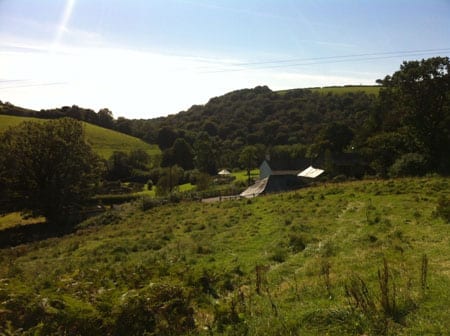
I had my first sailing lessons on Windermere, where Ransome set many of his works, and went shooting in the Forest of Bowland, a place dear to B.B. Though I also fished in many wonderful locations, until now I’d never been to the land of Henry Williamson and his most famous creation, Tarka the Otter. I currently find myself here enjoying a break from London and yesterday I randomly discovered, I am staying next to the setting of one of Williamson’s lesser known stories, Salar the Salmon, on the River Bray close to Exmoor.
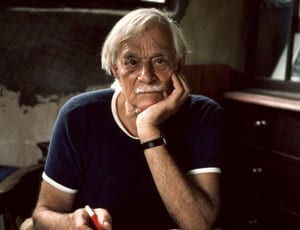
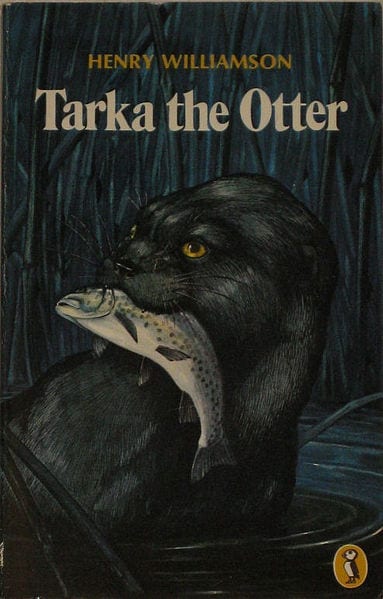
“Salar the Salmon” by Henry Williamson (1935)Henry Williamson (1895 – 1977) photographed by Mark Gerson, cibachrome print from original transparency, August 1970“Tarka the Otter” by Henry Williamson (1927)
Originally published in 1935, Salar the Salmon combines Henry Williamson’s great talent as a writer with his insight as a naturalist. The story tells the tale of a five-year old salmon named Salar, whose name means the “leaper,” and his return to the stream of his birth. Salar’s migration through the riverways of Devon involve him surviving porpoises, seals, nets, fishermen, otters, poachers and weirs and Williamson’s account truly gives the reader an insight into one of nature’s great journeys.
Henry Williamson wrote both Salar the Salmon and The Children of Shallowford (1939) whilst living beside the River Bray in a hamlet named Shallowford, near Lynton in Devon. The river plainly inspired him and whilst he lived there on the Fortescue Estate he also sired four children, joined Oswald Moseley’s British Union of Fascists, was briefly imprisoned for his views and conducted several extra-marital affairs.
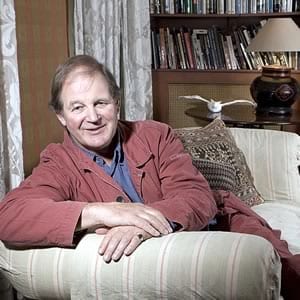
“War Horse” author Michael Morpurgo OBE
Salar the Salmon is a story I am not alone in recommending. Another Devon based author and poet, Michael Morpurgo OBE, best known for his acclaimed work, War Horse, speaks very fondly of Williamson and the novel in a dedication he prepared for a recent reprint of it:
“It is a rare gift indeed for a storyteller to be poet as much as a storyteller, to tell a tale so deeply engaging that the reader wants to know what will happen and never want it to end, and yet at the same time tells it in such a way as to leave a reader wide-eyed with amazement at the sheer intensity of feeling that can be induced by the word-magic of a poet. Henry Williamson is just such a story-maker poet.”
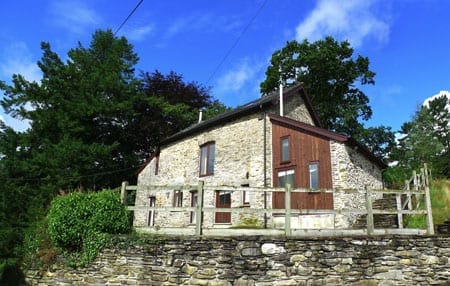
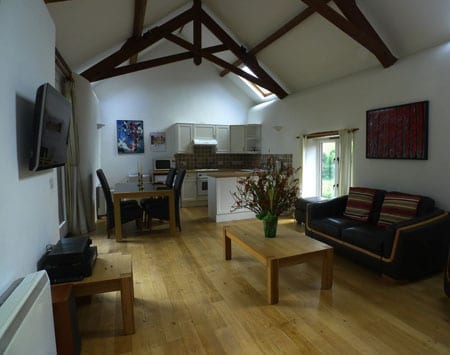
Where I am staying, I have a view of the very river on which Salar made his journey and here also a detached barn conversion is currently available to rent at a price of £1,150 per month. Malle’s Barn is a 2-bedroom stone-built property that includes a 25ft by 12ft open plan sitting room with a fully fitted kitchen and a dining area, as well as a study and shower room.
The exterior of Malle’s Barn, Brayford, Near Barnstaple, Devon, EX32 7QBA large open plan reception room includes sitting, dining and kitchen areasThe setting of Malle’s Barn overlooking the valley of the River Bray
Tenants of the house will have access to the owner’s 60-acre estate which includes a mile of salmon and brown trout fishing on both the Rivers Bray and Holewater, ancient woodland and a lake in addition to a private garden and adequate parking for several vehicles.
Malle’s Barn would make a perfect retreat for any author or artist and is just 10 minutes from South Molton, Barnstaple is 9 miles away and Exeter 40 miles. The location is 30 minutes from J27 of the M5 and Tiverton Parkway Station, which provides mainline links to London Paddington within 2 hours.
Close to Malle’s Barn are the prettiest sections of a footpath named the Tarka Trail. Consisting of over 180 miles of footpaths and cycle tracks that take in the Dartmoor and Exmoor National Parks and the North Devon Coast Area of Outstanding Natural Beauty. The trail takes in many of the locations described in Williamson’s most famous novel but this area of North Devon also galvanized the pens of a number of other authors.
Richard Doddridge Blackmore (1825 – 1900)Professor Charles Kingsley (1819 – 1875)
Richard Doddridge Blackmore (1825 – 1900) set Lorna Doone: A Romance on Exmoor in the locality in 1869 and Professor Charles Kingsley (1819 – 1875) put pen to paper here when he wrote Westward Ho! in 1855. A village of the same name was subsequently established near Bideford in the 1860s by entrepreneurs, led by Lord Portsmouth, who saw an opportunity to capitalise on the novel’s success. Westward Ho! is the only place in the United Kingdom with an exclamation mark in its name. The only other place in the world that shares such is Saint-Louis-du-Ha! Ha! in Quebec, Canada.
Aside from literary connections, the locality is famous for its excellent fieldsports. The Earl and Countess of Arran’s Castle Hill and the Molland shoot are considered amongst two of England’s finest high bird pheasant shoots and both the Devon and Somerset Staghounds and Devon and Somerset Foxhounds hunt on Exmoor.
Johnny Kingdom
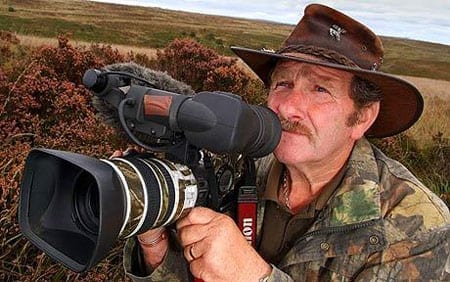
Johnny Kingdom, who describes himself as having been “a farmer, quarryman, forestry worker, gravedigger and, if truth be told, a poacher” in his youth, also lives in the locality and is well known as a wildlife photographer, filmmaker and television presenter. He sets many of his series on Exmoor because of the vast array of wildlife he comes across here and is, like Williamson before him, often to be found exploring the valley of the River Bray.
In a 1965 BBC interview Henry Williamson was asked: “What influence has this [the Devon] countryside had on you?”:
“Everything, I should say. I came down here as a youth, aged just 18 in 1914, spent a fortnight’s holiday here in the beginning of May, beginning of June. I walked 20 to 25 miles every day. Everything I saw was radiant and beautiful.”
This idyllic part of Devon that Williamson loved so much remains unspoilt to this day. If you haven’t visited yet, it really should be added to your bucketlist.
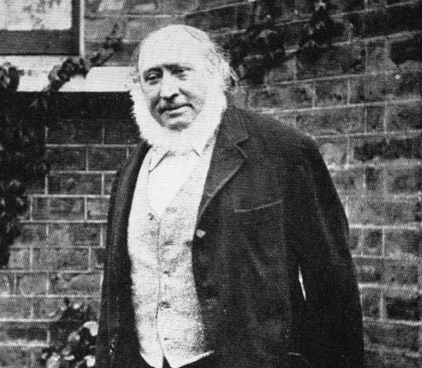
This father of six and his gang were amongst the most notorious and sadistic criminals in South London in the 1960s. Using scrap metal and slot machine businesses as fronts, they ran fraud, protection rackets and received stolen goods. They were best known for nailing those who displeased them to floor and then made them mop up their own blood. This process was known as “taking a shirt from Charlie,” since afterwards a clean shirt was provided for the victim to return home in. Richardson, however, maintained the torture stories were a myth. In his twilight years, Beckenham based Richardson mellowed and spent his time campaigning on behalf of young offenders.
This morning, as I walked through the streets of Chelsea, I heard a lady blabbering into her mobile telephone about how she’d had a “chit-chat” with her friend. I cringed. I don’t know why, but I do truly hate this phrase.
To “chit-chat” or “not to chit-chat”: that is the question
My first encounter with “chit-chat” was in the early 2000s when I knew a certain rival of the especially lowbrow glamour model Jordan (AKA Katie Price). This individual, since married off to an equally esteemed chap from Essex, used to call me and say: “ ‘Allo, I’m just giving ya a tinkle-tankle for a bit of a chit-chat.” Her words stuck in my mind and now every time I hear those words, I sadly think of her.
A Google search on the origins of “chit-chat” produces two separate citations from 1710. The first comes in Samuel Palmer’s Moral essays on some of the most curious English, Scotch, and foreign proverbs:
“ ‘Tis the custom of foolish people … in their chit chat to be always biting people’s reputation behind their back.”
A second mention comes in a piece by Sir Richard Steele in edition 197 of The Tatler:
“If Ralph had Learning added to the common Chit-Chat of the Town.”
Is this a phrase to embrace or one that should be consigned to the dustbin of history? I think you know my view.