Matthew Steeples takes a look at the farcical results of the PCC elections
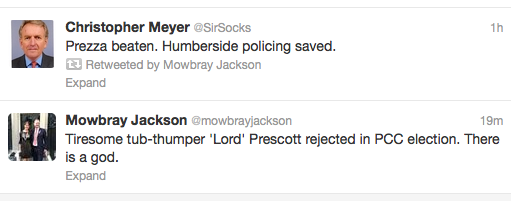
A former ambassador to the US undiplomatically Tweeted the following an hour or two ago: “Prezza beaten. Humberside policing saved.” His dovetailed stooge, one Mowbray Jackson, added: “Tiresome tub thumper ‘Lord’ Prescott rejected in PCC election. There is a god.”
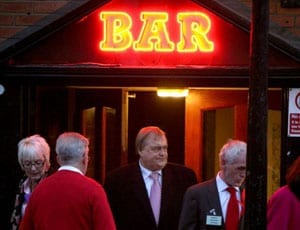
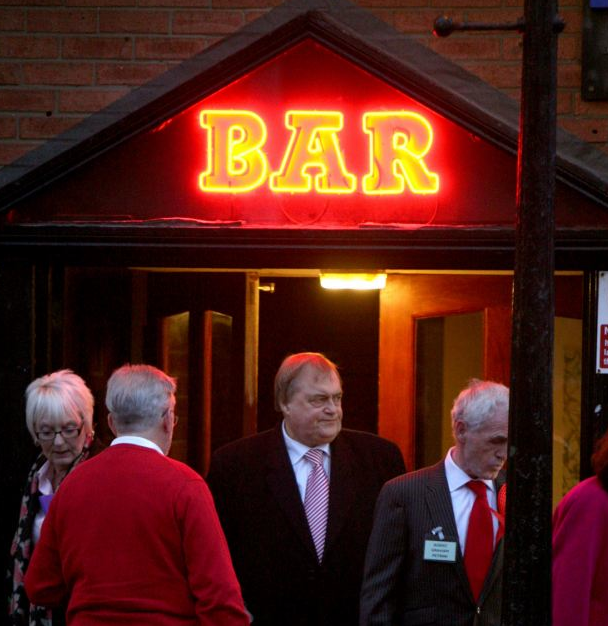
Lord Prescott faces defeat in the PCC elections like all great men: He proudly holds his head up and heads straight to the bar.Sir Christopher Meyer and his sidekick Mowbray Jackson share their somewhat predictable views about Lord Prescott’s defeat.
The first of this pair of social elevators loves a good old Ralph Lauren sofa and the second is often to be found lizard-like with a carafe swilling partner at the bars of London’s Hollywood Road. One stood accused by Prescott of doing “nothing” over phone-hacking whilst chair of the PCC, which probably explains his bitterness, but the other has little connections to the former Deputy Prime Minister other than a picture of himself posing outside 10 Downing Street on his Twitter handle. This image was taken at an event that a certain Lady Meyer hosted with “she so enthusiastic for PCC’s,” our “esteemed” Home Secretary, Theresa May. Dogs, fleas and all that.
From the start, I was very vocal in my view that the PCC elections were a waste of time. I personally couldn’t see the point of them but the one person I thought deserved to win was John Prescott. The right-wing columnist Peter Oborne agreed and summed up my views perfectly in a Daily Telegraph column on Wednesday:
“Most members of the Labour Cabinet [Prescott] served in are now off doing rather grubby jobs in the private sector and feathering their nest, whereas John Prescott, well into his 70s, is still filled with the desire to serve. Good luck to him tomorrow. It would be a magnificent thing for British politics if he wins.”
A Conservative government, though, should not have advocated this additional layer of bureaucracy and all the Police and Crime Commissioners will be is just such. Conservatives are meant to be about “less” rather than “more” government and that one polling station in Wales had a ballot box that, when opened, contained zero papers speaks volumes. It’s been a dismal day for democracy and frankly the government should “sock” the lot of these bureauprats before they have chance to do an iota of damage.
Matthew Steeples delves into the history of Albany, Piccadilly and discovers an affordable way of living there
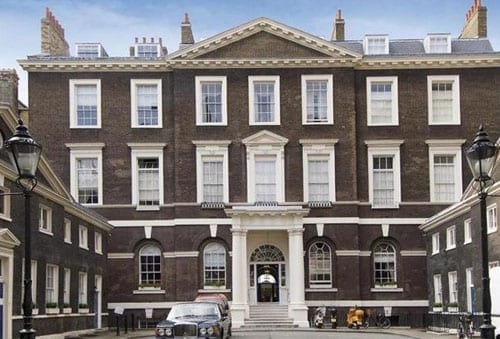
Albany, off Piccadilly in Mayfair, was most probably London’s first apartment block and it’s certainly the city’s most exclusive. It may be next to the Royal Academy and opposite Fortnum & Mason but surprisingly few have even heard of it.
Considering its location, Albany, which some make the mistake of referring to as “The Albany,” is an amazingly quiet oasis of peace and tranquility but, equally, it is a place of intrigue and drama. Residents, or “proprietors,” as they prefer to be known, of the 69 “sets” are particular about the “the” part of the name as they’d rather their residence not be confused with a public house and they are even more protective of their privacy. A porters’ lodge guards the entrance to the building and it is staffed mostly by ex-servicemen, who, until the early 2000s, had to wear top hats and tailcoats. Those allowed to pass enter a rarefied world frequented by what the Irish novelist Marmion Savage (1803 – 1872) identified as “incurable oddities” and “superannuated fops” in The Bachelor of Albany.
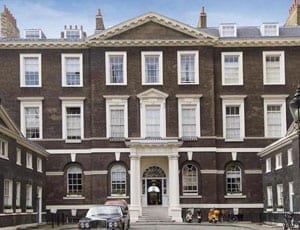
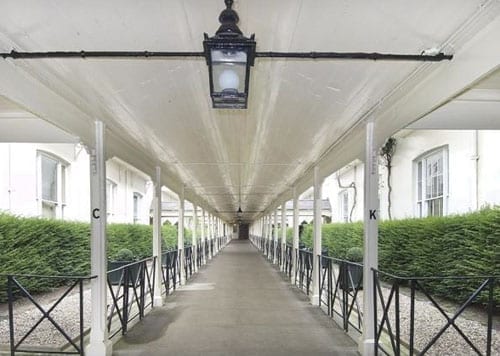
The front courtyard and façade of Albany, Piccadilly, Mayfair, London, W1J 0ALThe rope-walk connecting the various sets of Albany has been traversed by some of the greatest names in history
Built by Sir William Chambers (1723 – 1796), who also designed Somerset House and the pagoda at Kew, between 1770 and 1774 for 1st Viscount Melbourne (1745 – 1828), Albany was originally known as Melbourne House and conceived as a three-storey mansion, seven bays wide with a pair of service wings flanking a front courtyard. From 1791 to 1802, the property was occupied by George III’s son, Prince Frederick, Duke of York and Albany (1763 – 1827), but after he left, the renowned architect Henry Holland (1745 – 1806) sub-divided the existing house and added two parallel sets of buildings running the length of the garden to create 69 “bachelor apartments” which he named “sets.”
The “roll call” of residents since could easily fill our very own pages thrice over. They number royalty, politicians, artists, playwrights, academics and philosophers and here is a brief selection:
– Anthony Armstong-Jones, later 1st Earl of Snowdon
– Sir Thomas Beecham
– Sir Isaiah Berlin
– Lord Byron
– George Canning
– Sir Kenneth Clark
– Baroness Pauline de Rothschild
– William Ewart Gladstone
– Sir Edward Heath
– David Hicks
– Aldous Huxley
– Sir Simon Jenkins
– Rupert Lycett Green
– Malcolm Muggeridge
– Sir Harold Nicholson
– J. B. Priestley
– Sir Terence Rattigan
– Roger Scruton
– Baroness Sharples
– W. Somerset Maugham
– Terence Stamp
– Sir Denis and Lady Thatcher
– Sir Herbert Beerbohm Tree
Each had to pass the vetting of a committee of trustees of this Grade I listed building. That committee forbids children under 14, pets, musical instruments and commercial activities and each approved resident has undoubtedly added to the history of this den dominated by a central walkway named the “rope-walk.” Incidentally, an example of a curious quirk at Albany is that no resident is allowed to speak to another on this walkway. If they do, a fine is incurred. Albany, indeed, is rather like a college in its systems of rules, regulations, order and hierarchy.
For several centuries, women were not even allowed to cross the threshold and one legendary tale tells of Lady Caroline Lamb (1785 – 1828), disguised as a page boy, stealing into Lord Byron’s (1788 – 1824) set in 1815 to leave a note: “Remember me, Byron.” He replied with a simple verse:
Remember thee, aye, doubt it not:
Thy husband too shall think of thee.
By neither shalt thou be forgot —
Thou false to him, thou fiend to me.
The strict and formal structure that controls Albany and ensured its maintenance has succeeded in the main because 34 of the 69 sets are owned by Peterhouse College, Cambridge. They and the other owners are highly particular in whom they lease to and on one occasion on hearing of an “unsuitable tenant,” the secretary of the trustees is reported to have shouted:
“He’s a foreigner. Don’t like him. Don’t trust him.”
Needless to say, that application didn’t progress and nor did one from a physiotherapist who planned to operate from the building. Bone bashing in Albany just wouldn’t do.
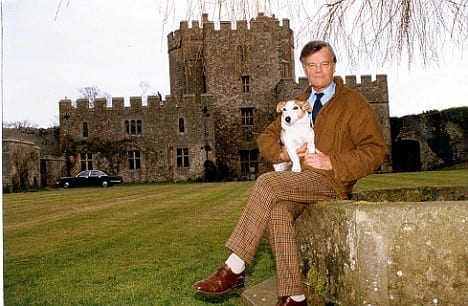
The Rt. Hon. Alan Clark MP (1928 – 1999) in the grounds of his main home, Saltwood Castle, near Hythe in Kent in 1993
A horsewhip, however, nearly crossed the threshold of set B5 in 1994, as it was here that the late Alan Clark MP (1928 – 1999) lived. The affable philanderer seduced the wife and both daughters of a certain South African named Judge Harkess and the wronged man stated he would “have horse-whipped Clark if he had known how comprehensively he had violated his honour.” B5, itself, was described as having the feel of “the straitened quarter of an Edwardian bachelor on his uppers” and the dotty, English attitude of the residents is best summed up by the reaction of Clark’s neighbour when he accidentally flooded their basement. When asked what he could do to make amends, their answer was quite simple: “Go and lie down in Piccadilly and wait for a double-decker bus.”
The dandy and journalist John Morgan (1959 – 2000) typified social change at Albany in the 20th century just as much as he himself redefined etiquette and manners at Debrett’s and The Times. Of “humble origins,” Morgan was brought up in a “modest” bungalow in St Madoes, Perth, Scotland but is credited with persuading William Hague to remove his baseball cap whilst Conservative leader and offering advice ranging from “how to eat a banana” to “how best to tell friends that the partner you would like to bring to their wedding will be of the same sex as you.”
Dandy and etiquette expert John Morgan (1959 – 2000)
For the bachelor and GQ style director, living in Albany was symbolic of his own personal social elevation but he did not disown his past. This modern day Beau Brummell was a man of social contradictions who cashed his cheques at Claridge’s but was a member of the National Union of Journalists. He was a Tory but still regularly attended chapel meetings as he had done in his youth. Here was a man of paradoxes who seemed unable to come to terms with the fact that he was a homosexual.
Morgan, an asthma sufferer, fell to his death from a fourth floor window on 9th July 2000. He was found in just a white shirt in a basement below a window whose sill was strangely undisturbed. The coroner left an open verdict with a suspicion of suicide and it was widely reported that police found 60 made-to-measure Savile row suits, 300 monogrammed shirts and 90 pairs of shoes in the etiquette expert’s small set. Mystery shrouds the story of his tragic demise to this day but Johnny Morgan will forever be remembered as an arbiter of both good taste and behaviour.
Whilst Morgan represented continuation of the trend of bachelors living in Albany, change also came in the 20th century when the building’s committee removed the restriction that allowed only bachelors to be resident. With that females were allowed in and amongst them Fleur Fenton Cowles (1908 – 2009) was one of the most fascinating.
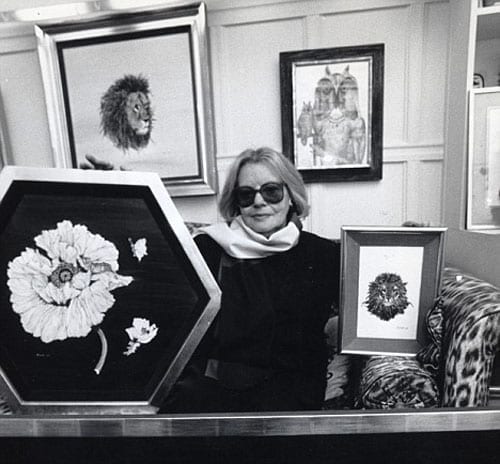
Fleur Fenton Cowles (1908 – 2009) in her set at Albany with some of her paintings and one by Salvador Dali
This writer and artist occupied five sets knocked into one with her fourth husband, timber merchant Tom Montague Meyer, and according to the Daily Mail’s Geoffrey Levy, hosted “elite soirees of the powerful and famous.” Levy recounts them at length but here is a flavour:
“On a Wednesday evening, a typical dinner party… would include Foreign Secretary Selwyn Lloyd, Labour leader Hugh Gaitskell, entertainer Danny Kaye and film star Douglas Fairbanks Jr. The Queen Mother regularly came to tea and was once joined by Pavarotti who sang Happy Birthday for the royal guest. ‘I don’t want her to die,’ said Fleur. ‘I couldn’t bear to think she doesn’t live just down the street.’ ”
Fenton Cowles, founder of the ill-fated Flair magazine and a “woman who knew everyone,” loved Albany and an exact replica of her “windowless, milk-yellow” study there has even been recreated at the University of Texas.
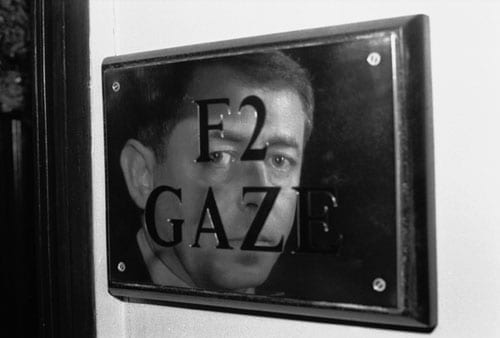
Another known for hosting extravagant bashes in Albany was my late friend, the Russian icon dealer John Gaze (1947 – 2011). Gaze had, as a boy, asked his father about the building when he passed it as a child and immediately declared he would live there one day. He took F2, the former set of Edward Heath that overlooked Savile Row to the rear, in the mid 1990s as he craved the safety that the building offered after having been kidnapped at gunpoint by an Oxford graduate conman named Sacheverell de Houghton in April 1991 from his then home in Fournier Street, E1. He made the most of his tenancy.
Russian icon dealer John Gaze (1947 – 2011) reflected in the brass plaque outside his Albany set, F2. It was formerly occupied by Sir Edward Heath.
Gaze’s parties included a fundraiser for people with AIDS hosted by a drag queen. This sparked fury with certain other residents and coverage in the Daily Telegraph and another incident there involved him encountering Alan Clark on the ropewalk carrying a portrait of Lenin. “Where the fuck are you taking that?” Clark supposedly bellowed but was “reassured” when he was told it was “destined for a less salubrious address in Whitechapel.” John Gaze remained at Albany for several years but, like a number of others I know, was forced out by ever rising rents and moved first to Chelsea and then Ennismore Gardens, Knightsbridge. He always remembered his time at Albany fondly and as a bon vivant, he truly belonged there.
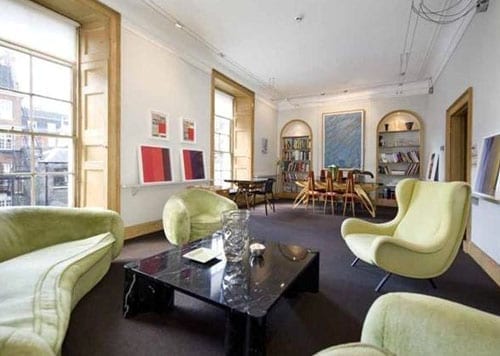
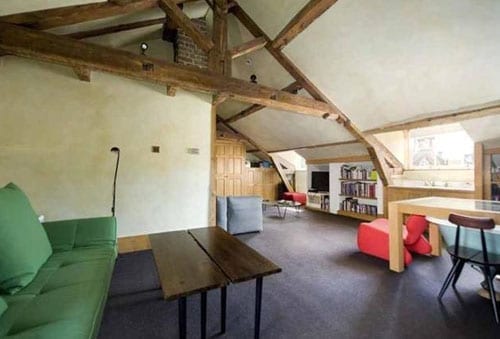
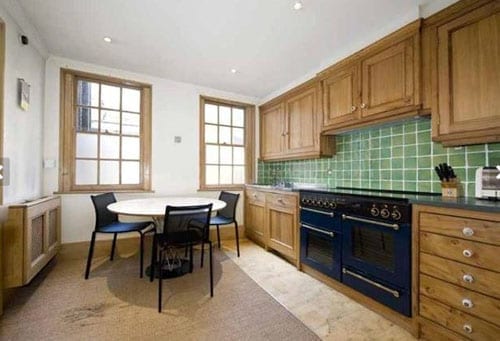
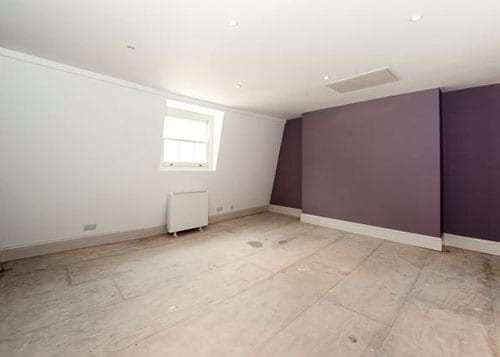
The main reception room in a £1,400 a week set currently available in AlbanyAn attic room in the set that could be used as a second reception room or second bedroomThe kitchen is lacking in character but offers ample space for informal dining
Contrary to what you’d expect, living in Albany is not quite as expensive as one might think. A 2-bedroomed 1,970 square foot set is currently available through Knight Frank for £1,400 a week: a figure that seems quite reasonable given the location, history and size of this property. Available on a minimum 8-year rental term, it includes a formal reception room, a dining kitchen, 2 bedrooms and 2 bathrooms.
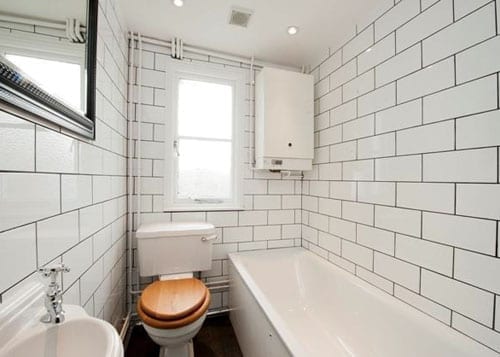
This £300 per week set, D2, consists of just one roomThe communal bathroom D2 shares with other sets is basic but clean
For those looking for something cheaper, Savills offer D2 Albany at £300 per week. This set consists of a 221 square foot third floor attic room with access to a communal bathroom and the agents suggest that it: “would make an ideal reading or writing room or an occasional bedroom for a pied-a-terre.” It’s effectively a posh form of tenement but what a way to impress your peers and subordinates.
Damon and Sandra de László in their “duplex” in Albany
Those renting either of these sets would find the likes of the industrialist Damon de László, a descendant of the Hungarian painter Philip Alexius de László (1869 – 1937), as their neighbour. The couple occupy Lord Byron’s former set, A2, and have, on occasions, opened it for a charity dinner with Matthew Parris at £1,000 a ticket as well and for members of The Portrait Institute to view their collection of de László’s works.
Professor Philip C. Bobbitt in his grand freehold set
Another present day resident is a man Henry Kissinger calls “the outstanding philosopher of our times,” Professor Philip C. Bobbitt. This Texan lawyer is a nephew of Lyndon B. Johnson and the author of Terror and Consent, which Tony Blair describes as “required reading for political leaders.” Bobbitt owns an impressive flying freehold set that is described as having a masculine style of décor and a “kitchen he has designed to look like a bar.” In an interview for TheIndependent he states that he finds Albany: “a propitious place to work.”
Though governments and bankers come and go, behind this quintessentially English façade, order and disorder have always been maintained. The wildcards of this hidden haven have a knack for living by the doctrine “to live at Albany is to live in history” and indeed they make the most of that. Those who are lucky enough to be let in, do, indeed, truly find themselves in the “Paradise of Piccadilly.”
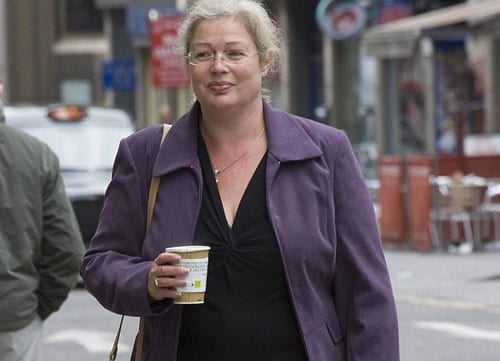
This mouthpiece was born in Rettendon, Essex in 1958 and vents bile on all manner of subjects. Articles such as: “Why don’t more women moan like me?” and “Liz Jones’ baby craving drove her to steal husband’s sperm in ultimate deception” are frankly illustrative of why she’s so unpopular. After she got banned from the majority of fashion shows and her husband left her, she quit London for Somerset in 2007 to feed organic muesli to the rats in the barns of a 47-acre farm she purchased as her “rural idyll.” That misadventure came to a sticky end in November 2012 after she’d alienated the whole county by calling them, amongst other things, “smelly” and “faintly Amish.” Goodness knows whom she’ll choose to offend next. Phillip Schofield sums her up best: “She is inconsistent, bitter, nasty and unhinged.” Our advice: Just steer well clear of this acid tongued poison pen.
Matthew Steeples examines the truth behind Liz Jones giving up on her “rural idyll”
The Mail’s Liz Jones is a waspish woman who knows the price of everything and the value of nothing. Those who’ve paid even a moment’s attention to her bleating, will be familiar with lines such as: “Last week, my brand new £1,300 MacBook Pro broke” and “Phil Spencer wanted his £46,000 and he wanted it now!” She never stops talking about money and the size of what she both owns and owes.
Liz Jones
In today’s Femail, Jones bores on about about how she feels “like a cross-dresser” trying out the Kardashian Kollection of clothing in a pointed attack on Kim Kardashian, but it was for her diatribe yesterday that she truly got the goat of the nation in “[bidding] a ferocious farewell” to life in the country in an article entitled “Goodbye… and good riddance!” 2,151 people have commented so far and most of them have been far from sympathetic.
When Upcott Farm at Brushford, near Dulverton in Somerset came up for sale in 2007 at a price of £1.6 million, it featured in an article by The Telegraph’s Caroline McGhie. The 5-bedroomed farmhouse came with a 2-bedroom annexe, a courtyard of barns and stables and 47 acres of land. McGhie waxed lyrical about the merits of moving to this location: “People come here for the peace and quiet, the night skies, the dramatic coastline, and they work from home,” she stated before adding: “You can find everything here, including butchers, bakers, afternoon tea and cake, fish and chips, an art gallery and a shop selling fishing tackle.” Of Upcott Farm itself, she concluded:
“This would suit a member of the new wave of buyers dubbed Droppies (Disillusioned Relatively Ordinary Professionals Preferring Independent Employment Situations).”
McGhie got it half right: Upcott Farm sold to someone who considers herself far from “relatively ordinary” and someone who is far from “professional.” The purchaser, however, was certainly someone who’d become “disillusioned” with what she’d bought and someone whose desire to be “independent” and create a “situation” just alienated all she encountered. The buyer, you’ve guessed it, was none other than Elizabeth Ann Jones.
Jones was born in Brentwood, Essex in 1958 and studied journalism at the London College of Printing. She became editor of Marie Claire in 1999 but was sacked, she herself suggests, for “listing in the magazine the freebies she had been offered in the previous month.” Here, it seems, began Jones’s obsession with all things material and here she also met an Indian BBC radio journalist named Nirpal Dhaliwal in 2000.
Jones married Dhaliwal but the union was to prove an “utter disaster” as he had affairs with women she terms “younger, dimmer [and] slimmer.” “I’m no racist” Jones was divorced in 2007 and said goodbye to her “3,000 square foot of Islington real estate” and “easy, if super-busy, London life” in favour of the green, green grass of Somerset.
Whoever’s side you see it from, five years of hell followed. Jones baited the locals and they grew to loathe her. She wrote columns and a book, The Exmoor Files, where she attacked them as “faintly Amish… feral, old and smelly” and another hack and neighbour, Jane Alexander of The Telegraph, responded: “Dulverton [was] positively fizzing with fury” after each and every publication.
Of the local restaurants, Jones stated:
“I have given up trying to eat out in restaurants here on Exmoor… It is still stuck in the Seventies, with only things in baskets and rum babas on the menu… If you tell the waiter you are vegetarian, you are stared at, incredulously, as if you are black.”
She whinged about her inability to find love:
”I will never, ever meet a man here in the middle of a moor, where even to be in possession of your own teeth is a bonus.”
And whined about fieldsports:
“I didn’t increase my popularity by being unable to pass a party of men and often children with guns, shooting rabbits and deer, without getting out of my BMW and saying: ‘Do you really have nothing better to do with your Saturday morning?’ The look of shock on their faces that I had the cheek to challenge them was priceless. I would stop, too, and shout at huntsmen on horses, galloping on tarmaced roads, one hand on the reins, the other clamping a mobile phone to their heads. ‘You will ruin your horses’ tendons!’ I would wail.”
Whilst Jones found little to like in her new community, they found nothing positive in her arrival either. Her dog was blamed for worrying lambs, and Jones’s inability to control it, locals say, was an indicator of the chasm between her life and theirs. In 2009, one neighbour went as far as to tell Danny Brierley of The Independent:
“We have got nothing in common with her, really. I think she may find it difficult to make any kind of life here now. She is not a very friendly person and we are all sick to death of talking about Liz Jones. A hatred has been building up for months. She is actually having a go at people and they are not going to tolerate that. She has feelings like all people, of course she has. But everyone wants her to leave and leave now. No one can make her, but we think she will go. I don’t see how you can live in such a small community with people who think that way about you.”
Matters came to a head when Jones’s precious black BMW convertible, “bought in 2005 for £26,000,” was pelted with eggs and teenagers fired shots at her letterbox with an air rifle. A local councilor even dressed up as her in the local carnival and yesterday Jones took revenge on those she blames for her “five-year prison sentence” and deprivation from Space NK, Cath Kidston and Illy coffee.
Instead, the article just shows the true reality of this bombastic harpy. The lines Jones penned speak for themselves. Country people don’t welcome someone who planned to “hack for miles across the open moorland in my Prada jodhpurs” anymore than the folk of Knightsbridge welcome Arabs treating their roads like racetracks. The gardener who had to endure Jones yelling “walk faster!” at him didn’t deserve such anymore than a bus driver in SW11 deserves abuse from his passengers. Jones concludes:
“I’m now a different person. I became so lonely. I would often get in my car, not just for the warmth, but for the kind voice of the satnav lady. I’ve learned that an amazing view and a pair of nesting grey herons are not enough to make me happy.”
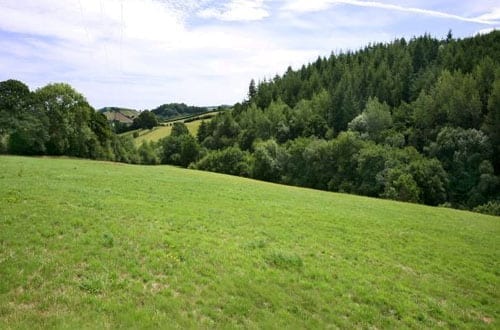
27 acres of land including paddocks and a fishing lake remain on the market through Savills and Strutt & Parker at a price of £200,000 at Upcott Farm
Miss Jones bleats that she’s taken a £500,000 loss on Upcott Farm, which languished on the market at first at £1,900,000 and then £1,750,000 for three years. The “unexpected” sale of the property has given her the ability to “flee back to the city” but the locals and even the “Droopies” should be warned: there’s still 27 acres of the farm unsold and on the market at a price of £200,000. Halloween may have passed but the battleaxe in the Beemer could still call again.
The latest James Bond film Skyfall is the talk of the town and it’s received many a rave review. The fictional James Bond allegedly lived in Royal Avenue, off the Kings Road in SW3, but if he were looking for a house today, we think 9 Hillgate Street would be the perfect pad.
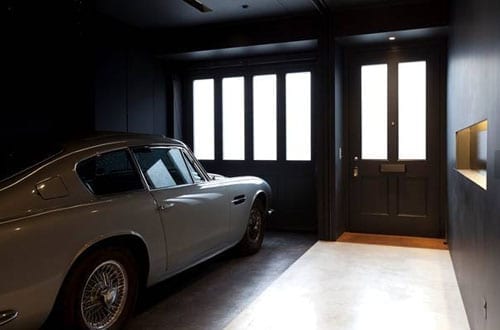
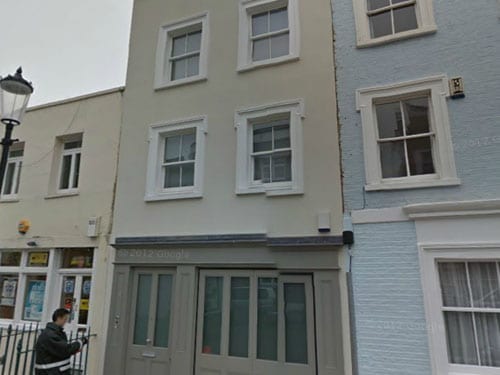
The entrance and garage at 9 Hillgate Street, London, W8 7SP. Sadly the Aston Martin isn’t included in the £7,950,000 asking price.Daniel Craig in a promotional shot for “Skyfall”The unasuming exterior of 9 Hillgate Street gives little away about what lies behind it
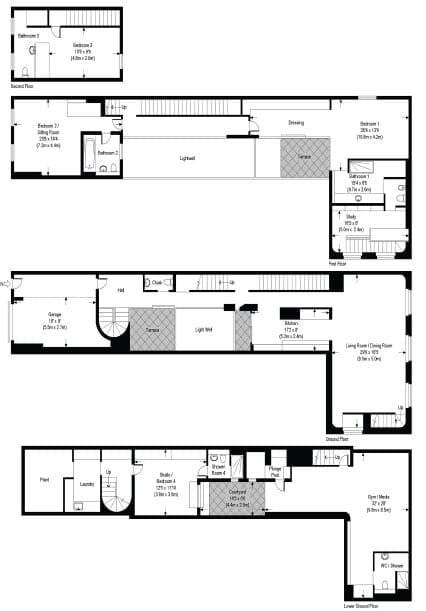
Utterly unassuming from the street, what lies behind the exterior of this four-storey building is deceptively a new build house constructed in 2010. Designed by Seth Stein Architects, the property is only 18ft wide but an amazing 85ft in length.
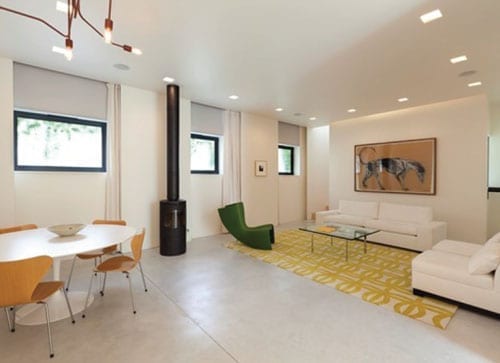
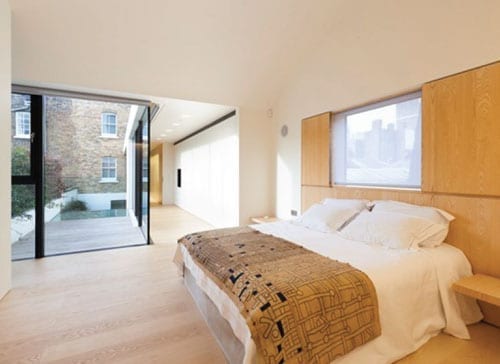
An internal lightwell and four terraces are amongst the features of the houseA reception room in the houseA bright walkway allows light to flood into the buildingThe master bedroom suite includes a bedroom, study, dressing area and bathroomSeth Stein Architects have developed a vast residence out of the tiniest of spaces
Bond would greatly appreciate the lower ground media room and gym with plunge pool and with a staff suite, there’s room to house someone to mix his martinis. A vast 29ft by 16ft living room is open plan to the kitchen and perfect for entertaining but it is most certainly the master bedroom suite that would make the perfect spot for his extra curricular activities. Four terraces arranged around a courtyard provide ample outdoor space and with all manner of techonological gadgets, 9 Hillgate Street most certainly would make an ideal bachelor pad.
What truly would suit Bond perfectly, though, in this 4,286 square foot £7,950,000 house is the garage. Cleverly disguised and decorated as a normal room, there’s even an Aston sat waiting parked there. Daniel Craig should put in a bid.
Matthew Steeples reports on the sentencing of Maria Michaela
Today, Maria Michaela was sentenced to 9 years in jail at Harrow crown court for her role as the lynchpin in a fraud of epic proportions.
Maria Michaela attempts to look remorseful as sobs in her mugshotConvicted fraudster Mary-Jane Rathie
Termed as “Britain’s biggest female fraudster” by the Evening Standard, Michaela is someone I came across in Lennox Gardens, London. In the building where I lived, she was often spotted with an associate collecting money from a tenant, Stephen Hunter-Scott, also known as Stephen Short, who was jailed alongside her.
In due course this Knightsbridge apartment was repossessed by an Irish bank but the aforementioned associate returned a year later and forcibly took possession. The apartment concerned was eventually taken back and sold on a short lease for just £200,000 recently.
Meanwhile Michaela disappeared but it was not until she appeared on the BBC’s Crimewatch wanted list that she again came to my attention. On the show, it was reported that this woman, who operated under countless aliases that numbered “Joanne Sarah Pier,” “Anjali Sharma,” “Mia Cul” and “Nadia Ali,” had, with the help of a corrupt chartered surveyor named Mary-Jane Rathie, obtained loans of £10.5 million from HBOS and £2.5 million from the Royal Bank of Scotland in 2007 and 2008.
Michaela, who may well in reality be called Bruna Louise, had posed as a wealthy South African heiress to secure the funds she supposedly required to fund the purchase of properties in Chelsea, Belgravia, Pimlico, Greenwich, Clapham, Stoke Newington and the Docklands. In reality, Rathie, who was bribed with £910,000 in cash, a £49,000 Range Rover Sport and a £143,000 Bentley Continental, vastly overvalued each allowing Michaela to pocket, for example, £6 million for a Cheyne Walk house that was in reality worth just £3.5 million.
Whilst Rathie, a former employee of Ashdown Lyons, was jailed for 6 years in July 2011, the fraudster Michaela managed to evade capture for three years. She was eventually caught this January in Bexleyheath working as a mortgage broker. In various preliminary hearings, her pleas of insanity did not help her cause and nor did her unwillingness to provide evidence of her true identity. This morning, she got just what she deserved.
Of her conviction, Detective Inspector Andy Fife of City of London Police commented:
“Maria Michaela created a web of deception that duped banks into handing over vast sums of money and then perpetuated her crimes by assuming a new alias to try and secure more loans. False identities and a corrupt property surveyor were the tools she used to make millions, turning herself into one of the, if not the, most prolific female fraudster the UK has ever seen.”
The lesson of Michaela and her cohorts, I’d argue, is simple. Greed may well be good in the eyes of Gordon Gekko, but the greedy generally get caught in the end and generally it is down to their own vanity. As she rots in her cell, perhaps she ought to consider this folly.
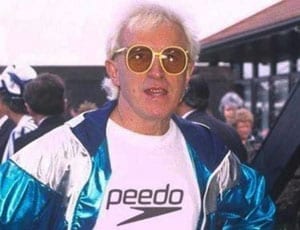
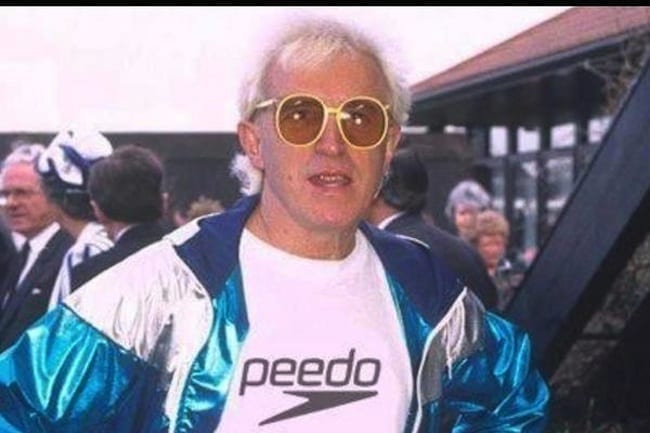
We’re all Saviled out. It’s been more than eight weeks since revelations about Jimmy, formerly Sir Jimmy, Savile came to public attention. Yes, the horrors of his “activities” have appalled us all but frankly why do the media really keep this story running as a main news item?
It does what it says on the tin
We’ve been as much a part of this monstrous escapade as anyone else: our editor went on the BBC to talk about the scandal and we’ve even received messages of support from Savile’s twisted “friends.” We beat the Daily Mail in being the first to report on the sale of the paedophile’s flat in Leeds and spotted Sir George Young removing a photo of him and Savile from his website before any other. We admit it: our readers plainly are as intrigued by this story as much as we were curious enough to report on it.
It suited our Prime Minister very nicely to wheel out Theresa May yesterday to announce an inquiry into the activities of another supposed child molester who just happened to be a member of Margaret Thatcher’s government. “Why so?” we hear you justifiably ask. Well, just like the spinner Jo Moore “burying bad news” on 9/11, the US elections were the perfect opportunity to dispense of the activities of a certain magnate beneath the Tarmac®. Somehow, though, and as much as she tried to smooth things over, we don’t think May’s attempts at concreting over this particular highway will set satisfactorily.
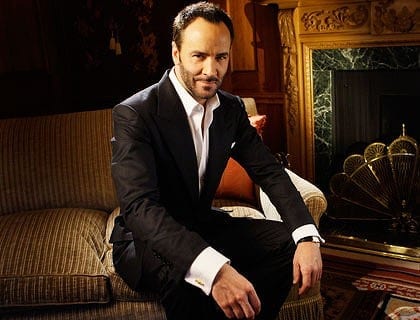
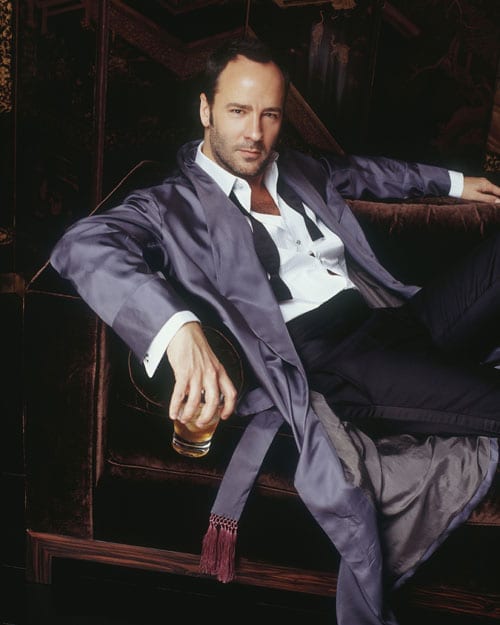
This Texan born designer and film director turned around the fortunes of Gucci and YSL and had a huge success with A Single Man. A fixture at New York’s Studio 54, his designs are hugely influenced by the club’s disco-era glamour and his love of all things black and square. Ford met his journalist partner, Richard Buckley, at a fashion show in 1986. They share a love for smooth fox terriers and announced the birth of their son, Alexander Buckley Ford, in September 2012. Of being “gay,” he comments: “I hate that word” but declares that he’ll marry when same-sex marriage is legalised in California. Of Ford, his partner, Buckley, adds: “There’s only one Tom for me.”
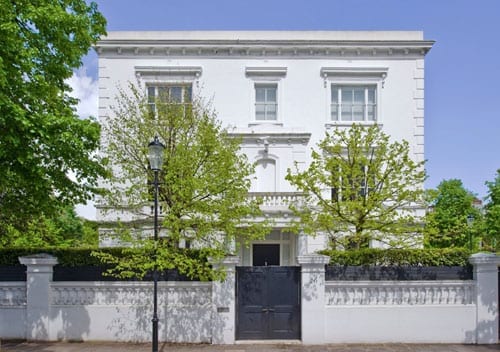
The flexible £12.75 million former home of Tom Ford
Number 26 Gilston Road in London’s SW10 is a property that has been on and off the market repeatedly in recent years. On each and every occasion it has been promoted as the “former home of the fashion icon Tom Ford” and though he hasn’t lived there in years, it is still just as he left it.
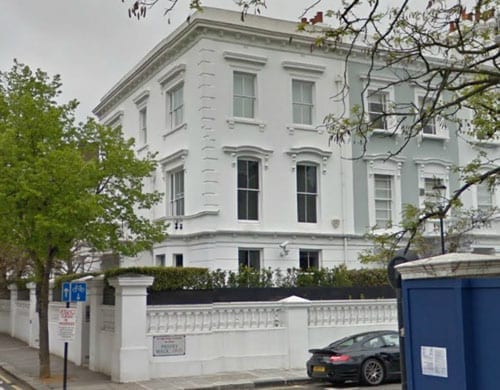
Designer and film producer Tom Ford“The former home of design icon Tom Ford”: 26 Gilston Road, London, SW10 9SS
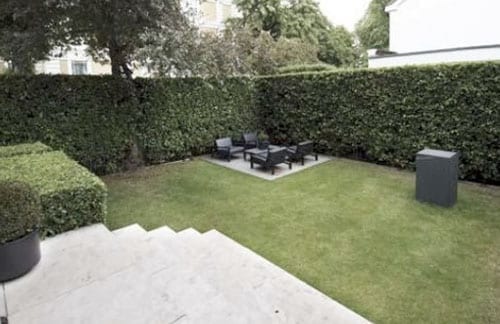
Situated at the end of a terrace on the corner of Priory Walk, one can see why the house appealed to the Texan born designer credited with turning around the fortunes of Gucci and Yves Saint Laurent. Hidden behind a high wall and hedging, 26 Gilston Road is private yet minutes from the restaurants of Old Brompton and Fulham Roads.
This 4-storey townhouse was sold in June 1997 for £2,250,000 and again marketed in 2009 for £8,500,000 through Aylesford. In the time since, it has been available to let at prices ranging from £5,500 to £7,500 per week, but is now back for sale at the extraordinary figure of £12,750,00 through Russell Simpson.
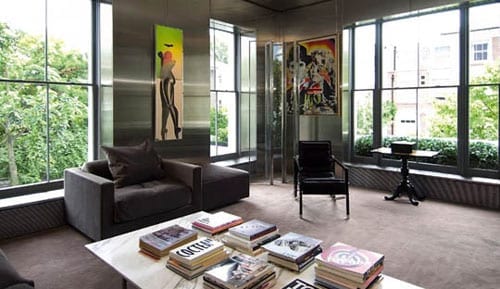
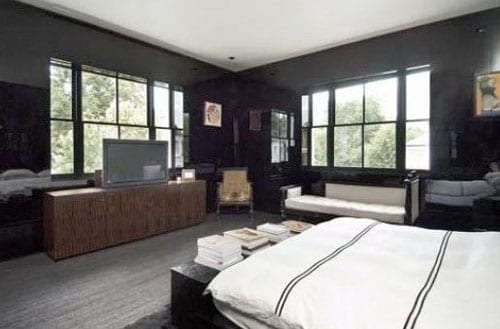
One of the reception rooms, just as Tom Ford left itAnother of the Tom Ford styled roomsA Tom Ford designed bedroomThe garden of the property is extremely private
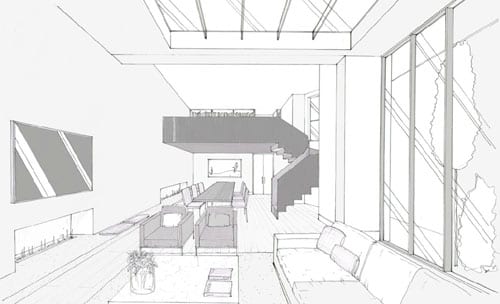
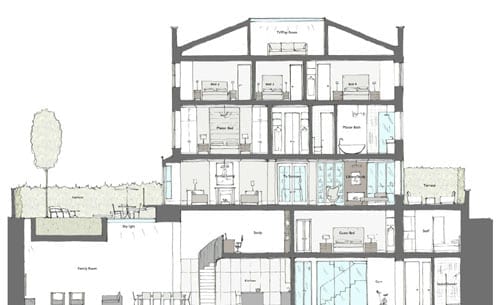
What explains such a rise during a period of economic downturn? Well, it’s because developers Equilibrium have gained permission to “de-Ford” the house. As is now the trend in London, they have planned a total redesign. Their illustrations incorporate a new sub-basement and as a result the gross internal area will increase from just over 3,700 square feet to just under 5,300 square feet.
Equilibrium’s plans include a vast living-dining-kitchen with a study in the void over. The space is lit by a skylight.A cutaway shows the extent of the redevelopment plannedA view of 26 Gilston Road from the corner of Priory Walk
Whilst the layout Tom Ford, himself a graduate in architecture from Parsons The New School of Design, created at 26 Gilston Road was ideal for A Single Man; the new floor plan with 4 bedrooms is much better suited to a family. Ford and his partner, Richard Buckley, announced the birth of their son, Alexander, in September. Perhaps they should put in a bid.
Hugo Istay discovers Jimmy Savile’s most unlikely advocates: The Daily Mail
Here are some quotes from that bastion of the country’s morals, The Daily Mail. Apparently Jimmy Savile had been collecting ones like these for years to aid his defence should the proverbial hit the fan.
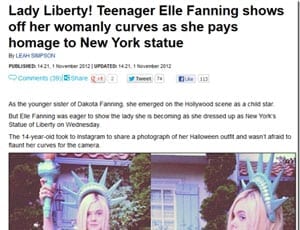
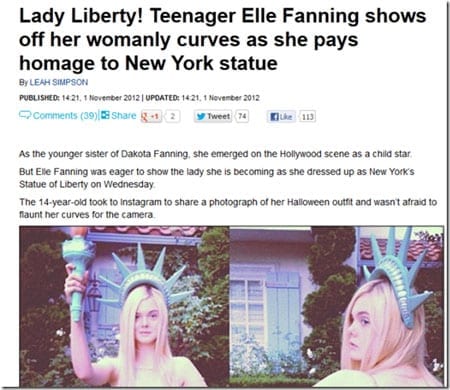
A screenshot of the somewhat “sexed-up” first version of the MailOnline article
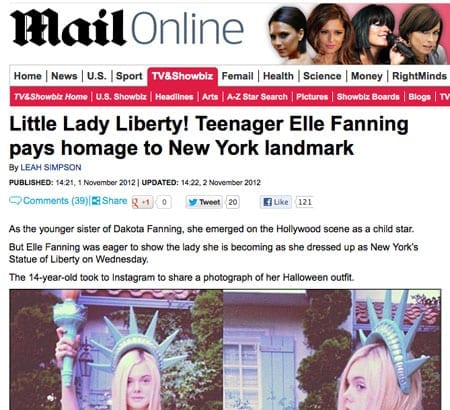
A screenshot of the somewhat “toned-down” second version of the MailOnline article
He was going to kick off his case with:
“Elle Fanning looks all grown up at 14.”
And then follow up with:
“She may be only 14, but rising star Elle Fanning isn’t counting on her good genes or youth to keep her slim. Wearing black cropped spandex jazz dance pants and orange Nike trainers, the little sister of Dakota had obviously been letting loose in the dance studio as her usually silky hair was hanging down in a sweaty tangle.”
No sexual innuendo there, then.
Next, he’d add:
”Dressed in a satin babydoll-style top, black skinny jeans and patent peep-toe wedges, Elle looked mature beyond her 14 years.”
Or this:
“She has a maturity that belies her years, so sometimes it’s difficult to remember that Elle Fanning is only fourteen years old.”
And, if all else failed:
“The 14-year-old took to Instagram to share a photograph of her Halloween outfit and wasn’t afraid to flaunt her curves for the camera.”
He then planned to sum up with:
“So it wasn’t my fault M’Lud, I was misled and egged on by the Daily Mail.”
Maybe there should be a crime of journalistic paedophilia.