The $95 million apartment of the world’s richest travel agent remains for sale after six months of marketing
The Sherry-Netherland is one of New York’s finest skyscraper apartment-hotels and one of the city’s best known landmarks. The world’s richest travel agent and co-founder of Liberty Travel, Gilbert Haroche, who occupies the entire 18th floor with his wife Charlene, put his apartment there on the market for $95,000,000 in September 2012 but six months later it remains for sale.
The Steeple Times asks emerging market investor David Reuben Jr: “What’s on your mantelpiece?”
The Steeple Times shares “wit and wisdom”. What’s your guiding force?
I try to follow the “Golden Rule”. Treat others the way you would prefer that they treat you. Be careful how you are with people on your way up, you just might meet them on the way down.
“Don’t get even, get medieval” is, in our humble opinion, a great motto. What’s yours?
If at first you don’t succeed, skydiving is probably not for you.
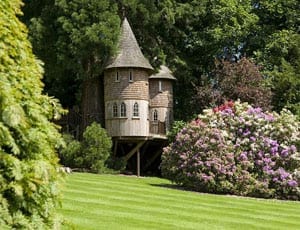
When one thinks of treehouses, one generally imagines pretty rudimentary creations built out of old boards and bits of rope. Now, though, treehouses are becoming more and more extravagant. As individuals such as J. K. Rowling and the Duchess of Northumberland construct vast palaces in the trees in their gardens, The Steeple Times examines five of the best:
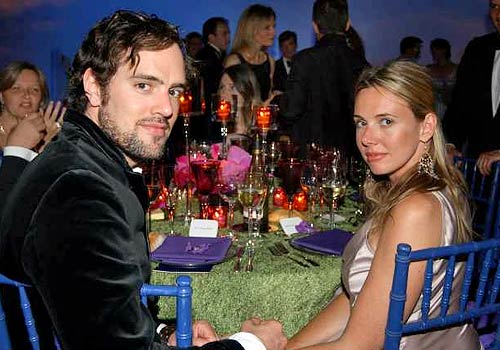
Their story is a modern day equivalent of that of Romeo and Juliet and Vanity Fair chronicled their deaths as The Golden Suicides. “Handsome” Blake, a digital artist and painter who worked with Malcolm McLaren and Fox Searchlight, and “sexy” Duncan, a writer, game designer and filmmaker best known for the “girl-centric” game Chop Suey, were the toast of New York but became obsessed with those they felt threatened them and their works. Personally wounded by a rejection from the post-modern rocker Beck to work with her on making a film out of one of her scripts, Duncan blamed his church, the Church of Scientology, and stated: “They are furious because he valued our way of life far more than Celebrity Center sex trash”. As more rejections came, this talented pair who “supported one another totally” became more and more irrational and in July 2007, a week apart, both committed suicide.
An opportunity to buy 110 books that previously belonged to Bernard and Ruth Madoff
An ebay seller with a 99.1% rating is selling a collection of books and stationery that they claim was previously owned by the Ponzi schemer Bernard L. Madoff and his wife, Ruth. A price of $1,250 is sought including shipping.
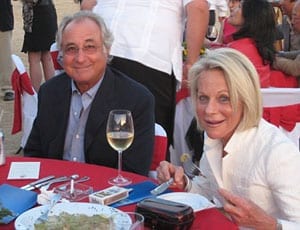
Books formerly owned by Bernard and Ruth MadoffBernie and Ruth Madoff in happier timesA closer view of Mr Madoff’s stationery
Previously auctioned in the US marshal’s seizure sale of the possessions of the couple, the titles of the 110 books give a unique insight into the psyche of this monstrous pair. Amongst them are:
The World Must Know by Michael Berenbaum
The Final Days by Barbara Olson
Complete Guide to Executive Manners by Letitia Baldridge
The Lost Father by Marina Warner
Riding The Rap by Elmore Leonard
Women’s Ways of Knowing by Mary Feld Belenky, Blythe Mcvicker Clinchy, Nancy Rule Goldberger and Jill Mattuck Tarule
Writing a Woman’s Life by Carolyn G. Heilbrun and Katha Pollitt
No Ordinary Time by Doris Kearns Goodwin
Rules of Prey by John Sandford
Wizard at Large by Terry Brook
If only someone had studied Bernie’s bookshelf when his activities were first questioned in the 1990s. Perhaps then he would have been brought to book a little more speedily.
Whilst this sale concludes on 30th January 2013, other books are also available as single lots at prices starting at $50. Even more bizarrely, other listings include the Madoff’s hand initialed bathroom scales ($50), two carbon monoxide detectors owned by the couple ($50) and their Sony DVD player ($175).
The truth, as they say, is often stranger than fiction.
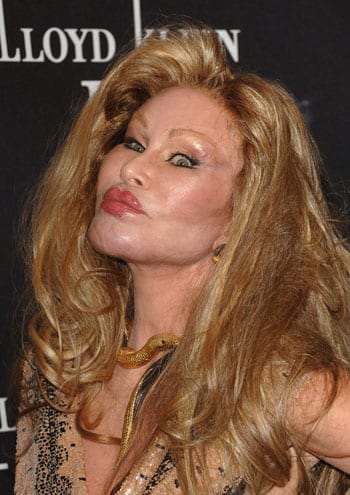
If one spent $2,000,000 on cosmetic surgery, one would expect to end up looking fantastic. It didn’t quite work out in the case of the billionairess “Bride of Wildenstein,” though, as instead she discovered the husband she thought she’d please in bed with a 19-year old Russian. Feline like in appearance, the purr of this New York socialite is said to be just as bad as her bite. She’s known to be a skilled hunter and pilot and once boasted her telephone bills were at least $60,000 a year. Surprisingly far from camera shy, what on earth will she look like at ninety?
Thomas James on the playground of the rich and famous that is The Hamptons
A typical beach scene in the Hamptons
One of the most popular guest features on the blog that preceded The Steeple Times was this article by Thomas James. The summer may well have passed along with Sandy and her might but as the article continues to attract vast numbers of hits, we thought we’d share it with you again this autumn day.
The Hamptons is a beautiful coastal retreat with sandy beaches and vineyards, is home to premier pieces of real estate, and is known as the playground of the rich and famous.
Generally speaking, it is an area of concentrated Manhattan wealth, as many New Yorkers have second and third homes there that are most commonly occupied during the summer months. The differing hamlets that create this wondrous land of lush gardens and luxury real estate possess a distinct atmosphere and attract different types of individuals.
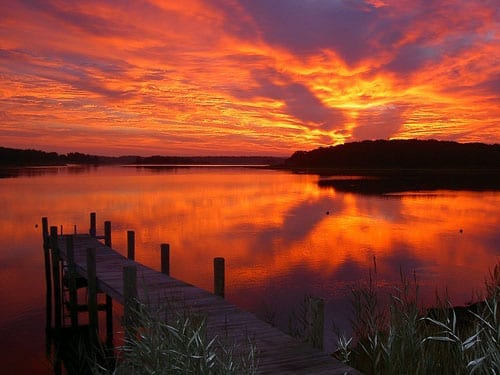
Sunset in the Hamptons
East Hampton is the most coveted hamlet as it is dotted with world-class restaurants, well-known art galleries, and boutiques such as Blue and Cream. It is also home to the Hamptons International Film Festival.
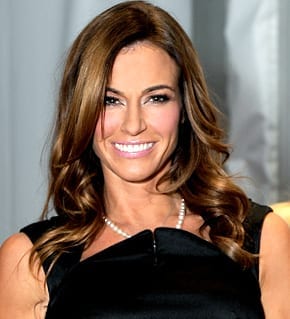
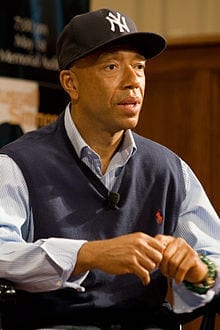
The residents of East Hampton are a culmination of celebrities, fashionable, and chic individuals such as Kelly Bensimon and Russell Simmons as well as those who are more traditional or preppy in nature – who tend to belong to the Maidstone Club. Models, celebrities, and socialites from Linday Lohan to Lauren Conrad flock to Lily Pond, a trendy nightclub in East Hampton featuring French crystal chandeliers and it becomes a massive VIP lounge for today’s youth to celebrate.
Kelly Killoren Bensimon: a lady who terms herself an “author, jewelry designer, model, former editor of Elle Accessories and star of The Real Housewives of New York City”
Art For Life is an annual benefit held at the home of Russell Simmons. The proceeds of Art For Life support art programs for New York City students. This soiree is a grand event as Russell Simmons has no limitations to his imagination and often amazing performance artists entertain guests. The event attracts celebrities, philanthropists and lovers of art.
Hip-hop star Russell Simmons: co-founder of Def Jam and creator of Phat Farm, Argyleculture and American Classics
As one strolls down Main Street after enjoying a memorable cup of coffee at Sant Ambroeus, one may bump into Ina Garten purchasing fresh vegetables at Citarella or a socialite shopping at Hermes.
Southampton is similar to that of East Hampton as it is home to many chic restaurants and boutiques such as Stubbs and Wootton. Southampton has many social events throughout the year and is very Waspy in nature.
The hamlet of Bridgehampton is known for the Hampton Classic, which is a highly anticipated equestrian riding event held annually. One may find solace venturing through Bridgehampton’s world-renowned vineyards in the early morning and later soaking up the fruity wines of Bridgehampton’s famed wineries.
Hamptonites often flock to Pierre’s with friends in Bridgehampton for ideal French cuisine. “The atmosphere is cozy and intimate, elegant but relaxed, a place to see and to be seen.”
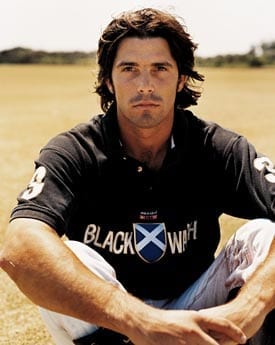
Polo in the HamptonsNacho Figueras: this top polo player is the face of Ralph Lauren’s Black line and often described as the “David Beckham of polo.” He’s a regular on the Hamptons social scene and married to photographer Deflina Blaquier.
Many artists, writers, and actors are drawn to the hamlet of Watermill. Watermill has many riding stables, golf courses, and a polo team. The Watermill Center is a haven for artists who are free to explore, experiment, and express their ideas. The glamorous Watermill Gala is an end of summer fundraiser where eccentric performance artists are on display as partygoers are sipping their champagne.
If one truly desires to step into the untouched beauty of the Hampton’s one usually ventures to Montauk. This hamlet is the farthest hamlet on the east end. The estates of prominent individuals line the shores of the Atlantic.
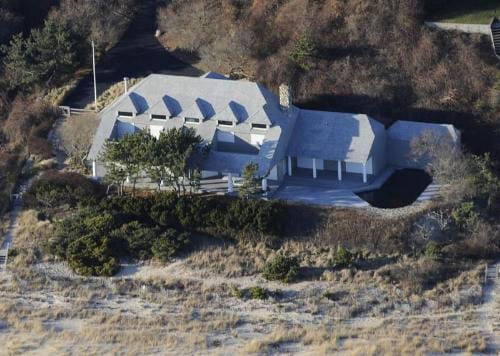
Bernie and Ruth Madoff’s former holiday home in Montauk: 216 Old Montauk Highway, Montauk, NY 11954
In 2009, Bernard and Ruth Madoff’s Montauk beach house was sold to an unidentified buyer. He and his former home penetrate one’s mind with an image of vulgar decadence. Surprisingly, the 4 bedroom, 3,014 square foot house, which sits on 1.2 acres, is a mere cottage amongst the typical mansions and estates. This classic beach house sits closer to the ocean than the neighboring homes of Ralph Lauren and Robert DeNiro, which was it’s major selling point as well as the unsurpassed views of Montauk’s untouched beauty. Bernie Madoff purchased the land and then built the home in 1979 for approximately $3 million but due to the exposure of his scam, the house was taken by the government in July 2009. Proceeds of the sale benefited victims of Bernie Madoff’s Ponzi scheme. It is now estimated to now be worth around $8 million.
From Alec Baldwin, preserving the raw beauty found here, to local artists trying to capture the indescribable beauty of the east end, the Hamptons is a truly special place where lavish individuals harmonise beautifully with the lush nature found there.
Matthew Steeples delves into the history of Albany, Piccadilly and discovers an affordable way of living there
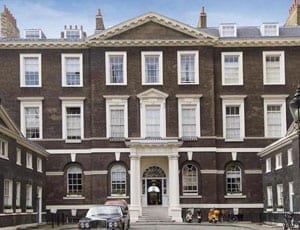
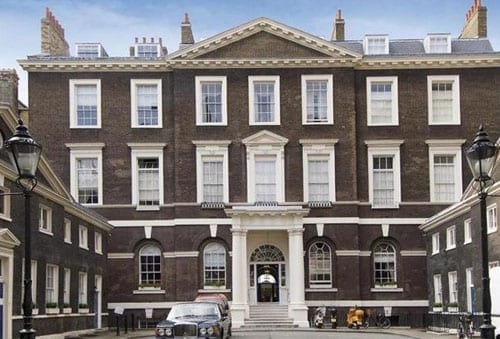
Albany, off Piccadilly in Mayfair, was most probably London’s first apartment block and it’s certainly the city’s most exclusive. It may be next to the Royal Academy and opposite Fortnum & Mason but surprisingly few have even heard of it.
Considering its location, Albany, which some make the mistake of referring to as “The Albany,” is an amazingly quiet oasis of peace and tranquility but, equally, it is a place of intrigue and drama. Residents, or “proprietors,” as they prefer to be known, of the 69 “sets” are particular about the “the” part of the name as they’d rather their residence not be confused with a public house and they are even more protective of their privacy. A porters’ lodge guards the entrance to the building and it is staffed mostly by ex-servicemen, who, until the early 2000s, had to wear top hats and tailcoats. Those allowed to pass enter a rarefied world frequented by what the Irish novelist Marmion Savage (1803 – 1872) identified as “incurable oddities” and “superannuated fops” in The Bachelor of Albany.
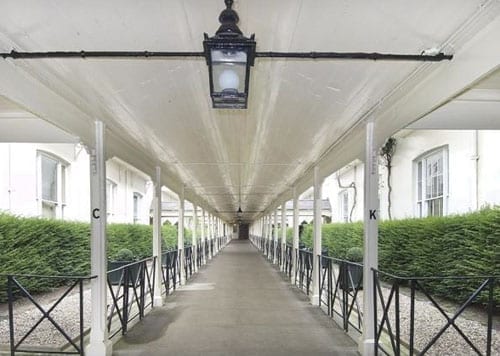
The front courtyard and façade of Albany, Piccadilly, Mayfair, London, W1J 0ALThe rope-walk connecting the various sets of Albany has been traversed by some of the greatest names in history
Built by Sir William Chambers (1723 – 1796), who also designed Somerset House and the pagoda at Kew, between 1770 and 1774 for 1st Viscount Melbourne (1745 – 1828), Albany was originally known as Melbourne House and conceived as a three-storey mansion, seven bays wide with a pair of service wings flanking a front courtyard. From 1791 to 1802, the property was occupied by George III’s son, Prince Frederick, Duke of York and Albany (1763 – 1827), but after he left, the renowned architect Henry Holland (1745 – 1806) sub-divided the existing house and added two parallel sets of buildings running the length of the garden to create 69 “bachelor apartments” which he named “sets.”
The “roll call” of residents since could easily fill our very own pages thrice over. They number royalty, politicians, artists, playwrights, academics and philosophers and here is a brief selection:
– Anthony Armstong-Jones, later 1st Earl of Snowdon
– Sir Thomas Beecham
– Sir Isaiah Berlin
– Lord Byron
– George Canning
– Sir Kenneth Clark
– Baroness Pauline de Rothschild
– William Ewart Gladstone
– Sir Edward Heath
– David Hicks
– Aldous Huxley
– Sir Simon Jenkins
– Rupert Lycett Green
– Malcolm Muggeridge
– Sir Harold Nicholson
– J. B. Priestley
– Sir Terence Rattigan
– Roger Scruton
– Baroness Sharples
– W. Somerset Maugham
– Terence Stamp
– Sir Denis and Lady Thatcher
– Sir Herbert Beerbohm Tree
Each had to pass the vetting of a committee of trustees of this Grade I listed building. That committee forbids children under 14, pets, musical instruments and commercial activities and each approved resident has undoubtedly added to the history of this den dominated by a central walkway named the “rope-walk.” Incidentally, an example of a curious quirk at Albany is that no resident is allowed to speak to another on this walkway. If they do, a fine is incurred. Albany, indeed, is rather like a college in its systems of rules, regulations, order and hierarchy.
For several centuries, women were not even allowed to cross the threshold and one legendary tale tells of Lady Caroline Lamb (1785 – 1828), disguised as a page boy, stealing into Lord Byron’s (1788 – 1824) set in 1815 to leave a note: “Remember me, Byron.” He replied with a simple verse:
Remember thee, aye, doubt it not:
Thy husband too shall think of thee.
By neither shalt thou be forgot —
Thou false to him, thou fiend to me.
The strict and formal structure that controls Albany and ensured its maintenance has succeeded in the main because 34 of the 69 sets are owned by Peterhouse College, Cambridge. They and the other owners are highly particular in whom they lease to and on one occasion on hearing of an “unsuitable tenant,” the secretary of the trustees is reported to have shouted:
“He’s a foreigner. Don’t like him. Don’t trust him.”
Needless to say, that application didn’t progress and nor did one from a physiotherapist who planned to operate from the building. Bone bashing in Albany just wouldn’t do.
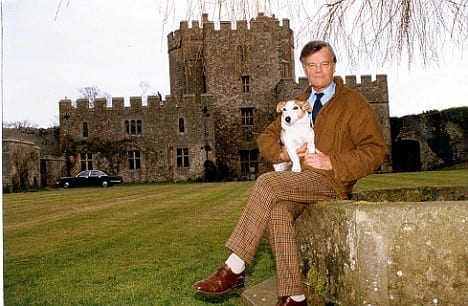
The Rt. Hon. Alan Clark MP (1928 – 1999) in the grounds of his main home, Saltwood Castle, near Hythe in Kent in 1993
A horsewhip, however, nearly crossed the threshold of set B5 in 1994, as it was here that the late Alan Clark MP (1928 – 1999) lived. The affable philanderer seduced the wife and both daughters of a certain South African named Judge Harkess and the wronged man stated he would “have horse-whipped Clark if he had known how comprehensively he had violated his honour.” B5, itself, was described as having the feel of “the straitened quarter of an Edwardian bachelor on his uppers” and the dotty, English attitude of the residents is best summed up by the reaction of Clark’s neighbour when he accidentally flooded their basement. When asked what he could do to make amends, their answer was quite simple: “Go and lie down in Piccadilly and wait for a double-decker bus.”
The dandy and journalist John Morgan (1959 – 2000) typified social change at Albany in the 20th century just as much as he himself redefined etiquette and manners at Debrett’s and The Times. Of “humble origins,” Morgan was brought up in a “modest” bungalow in St Madoes, Perth, Scotland but is credited with persuading William Hague to remove his baseball cap whilst Conservative leader and offering advice ranging from “how to eat a banana” to “how best to tell friends that the partner you would like to bring to their wedding will be of the same sex as you.”
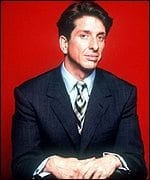
Dandy and etiquette expert John Morgan (1959 – 2000)
For the bachelor and GQ style director, living in Albany was symbolic of his own personal social elevation but he did not disown his past. This modern day Beau Brummell was a man of social contradictions who cashed his cheques at Claridge’s but was a member of the National Union of Journalists. He was a Tory but still regularly attended chapel meetings as he had done in his youth. Here was a man of paradoxes who seemed unable to come to terms with the fact that he was a homosexual.
Morgan, an asthma sufferer, fell to his death from a fourth floor window on 9th July 2000. He was found in just a white shirt in a basement below a window whose sill was strangely undisturbed. The coroner left an open verdict with a suspicion of suicide and it was widely reported that police found 60 made-to-measure Savile row suits, 300 monogrammed shirts and 90 pairs of shoes in the etiquette expert’s small set. Mystery shrouds the story of his tragic demise to this day but Johnny Morgan will forever be remembered as an arbiter of both good taste and behaviour.
Whilst Morgan represented continuation of the trend of bachelors living in Albany, change also came in the 20th century when the building’s committee removed the restriction that allowed only bachelors to be resident. With that females were allowed in and amongst them Fleur Fenton Cowles (1908 – 2009) was one of the most fascinating.
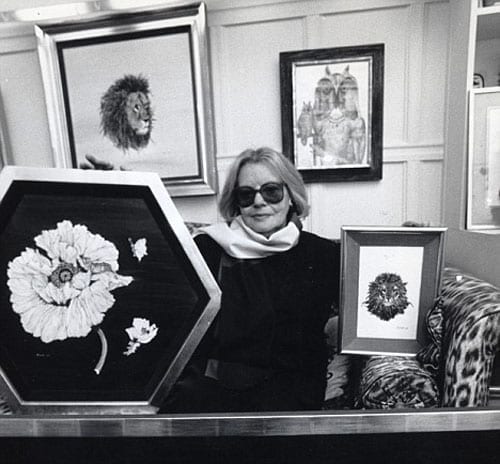
Fleur Fenton Cowles (1908 – 2009) in her set at Albany with some of her paintings and one by Salvador Dali
This writer and artist occupied five sets knocked into one with her fourth husband, timber merchant Tom Montague Meyer, and according to the Daily Mail’s Geoffrey Levy, hosted “elite soirees of the powerful and famous.” Levy recounts them at length but here is a flavour:
“On a Wednesday evening, a typical dinner party… would include Foreign Secretary Selwyn Lloyd, Labour leader Hugh Gaitskell, entertainer Danny Kaye and film star Douglas Fairbanks Jr. The Queen Mother regularly came to tea and was once joined by Pavarotti who sang Happy Birthday for the royal guest. ‘I don’t want her to die,’ said Fleur. ‘I couldn’t bear to think she doesn’t live just down the street.’ ”
Fenton Cowles, founder of the ill-fated Flair magazine and a “woman who knew everyone,” loved Albany and an exact replica of her “windowless, milk-yellow” study there has even been recreated at the University of Texas.
Another known for hosting extravagant bashes in Albany was my late friend, the Russian icon dealer John Gaze (1947 – 2011). Gaze had, as a boy, asked his father about the building when he passed it as a child and immediately declared he would live there one day. He took F2, the former set of Edward Heath that overlooked Savile Row to the rear, in the mid 1990s as he craved the safety that the building offered after having been kidnapped at gunpoint by an Oxford graduate conman named Sacheverell de Houghton in April 1991 from his then home in Fournier Street, E1. He made the most of his tenancy.
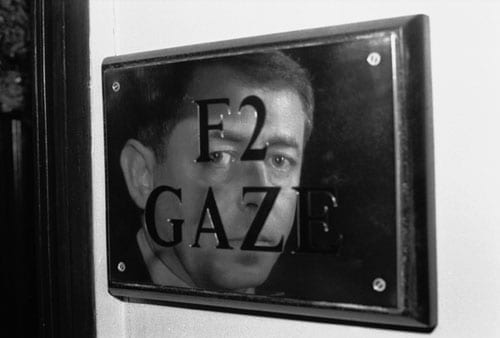
Russian icon dealer John Gaze (1947 – 2011) reflected in the brass plaque outside his Albany set, F2. It was formerly occupied by Sir Edward Heath.
Gaze’s parties included a fundraiser for people with AIDS hosted by a drag queen. This sparked fury with certain other residents and coverage in the Daily Telegraph and another incident there involved him encountering Alan Clark on the ropewalk carrying a portrait of Lenin. “Where the fuck are you taking that?” Clark supposedly bellowed but was “reassured” when he was told it was “destined for a less salubrious address in Whitechapel.” John Gaze remained at Albany for several years but, like a number of others I know, was forced out by ever rising rents and moved first to Chelsea and then Ennismore Gardens, Knightsbridge. He always remembered his time at Albany fondly and as a bon vivant, he truly belonged there.
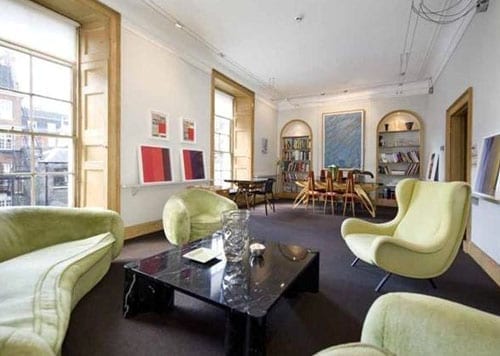
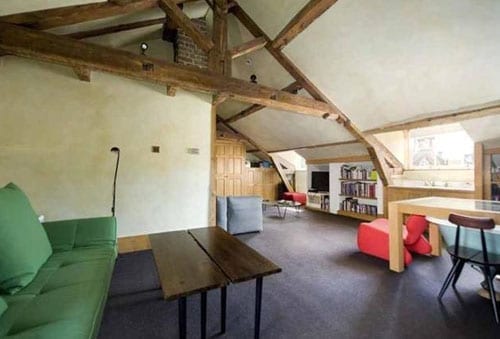
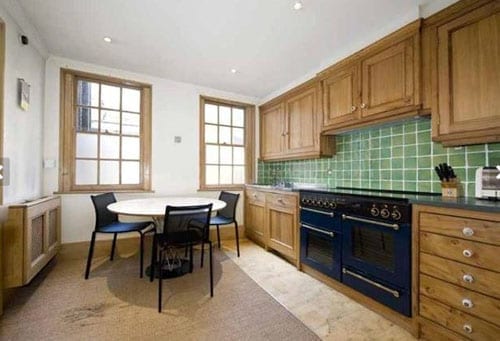
The main reception room in a £1,400 a week set currently available in AlbanyAn attic room in the set that could be used as a second reception room or second bedroomThe kitchen is lacking in character but offers ample space for informal dining
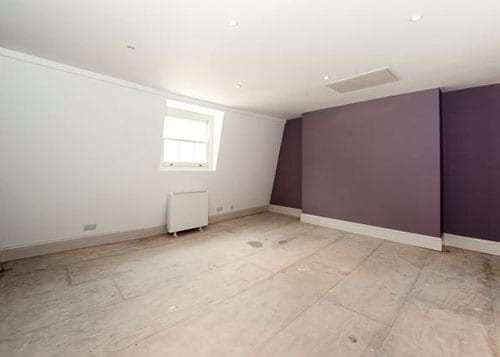
Contrary to what you’d expect, living in Albany is not quite as expensive as one might think. A 2-bedroomed 1,970 square foot set is currently available through Knight Frank for £1,400 a week: a figure that seems quite reasonable given the location, history and size of this property. Available on a minimum 8-year rental term, it includes a formal reception room, a dining kitchen, 2 bedrooms and 2 bathrooms.
This £300 per week set, D2, consists of just one roomThe communal bathroom D2 shares with other sets is basic but clean
For those looking for something cheaper, Savills offer D2 Albany at £300 per week. This set consists of a 221 square foot third floor attic room with access to a communal bathroom and the agents suggest that it: “would make an ideal reading or writing room or an occasional bedroom for a pied-a-terre.” It’s effectively a posh form of tenement but what a way to impress your peers and subordinates.
Damon and Sandra de László in their “duplex” in Albany
Those renting either of these sets would find the likes of the industrialist Damon de László, a descendant of the Hungarian painter Philip Alexius de László (1869 – 1937), as their neighbour. The couple occupy Lord Byron’s former set, A2, and have, on occasions, opened it for a charity dinner with Matthew Parris at £1,000 a ticket as well and for members of The Portrait Institute to view their collection of de László’s works.
Professor Philip C. Bobbitt in his grand freehold set
Another present day resident is a man Henry Kissinger calls “the outstanding philosopher of our times,” Professor Philip C. Bobbitt. This Texan lawyer is a nephew of Lyndon B. Johnson and the author of Terror and Consent, which Tony Blair describes as “required reading for political leaders.” Bobbitt owns an impressive flying freehold set that is described as having a masculine style of décor and a “kitchen he has designed to look like a bar.” In an interview for TheIndependent he states that he finds Albany: “a propitious place to work.”
Though governments and bankers come and go, behind this quintessentially English façade, order and disorder have always been maintained. The wildcards of this hidden haven have a knack for living by the doctrine “to live at Albany is to live in history” and indeed they make the most of that. Those who are lucky enough to be let in, do, indeed, truly find themselves in the “Paradise of Piccadilly.”
The rise and fall of the “wealthiest divorcee in history” has been extraordinary. A former nude model for her first husband’s Knave magazine and star of adult films such as “The Nine Acres of Nakedness,” Patricia Kluge is the daughter of an Englishman and a Scots-Iraqi. She married her second husband, the late John Kluge, chairman of Metromedia and once the richest man in America, in 1981 after belly dancing for him at a dinner party in New York. As part of her plan to dovetail herself into the top drawer of American society, the couple built a 24,000 square foot mock 18th century English-style mansion, Albermarle, in Virginia and stuffed it full of Chippendale furniture. She got this as part of her $100 million divorce settlement in 1990 and wisely invested part of the payoff in a highly successful business trading football cards but then vanity struck. The Kluge Estate Winery project that she started with her third husband, William Moses, bankrupted the pair in June 2011 and the Bank of America foreclosed on her properties. A lifeline came from “longtime friend” Donald Trump who purchased the vineyard and employed her, but even he’s now uttered the words: “You’re fired!” and sent her packing. Of her newfound predicament Kluge commented: “What did we lose? Material things, nothing too important. When something like this happens you really see who your friends are, those you can rely on, and we have many friends.” Here is a lady with fortitude that can only be described as admirable. It’s probably best, however, to keep her away from the cash register.