Tag: entrepreneur

  • Rocking with royalty

    Rocking with royalty

    A £26 million residence with connections to rock, royalty and rectors


    Built in the early 1500s, The Old Rectory is Wimbledon’s oldest house. Standing in grounds of 2.5 acres, this 16,200 square foot property was once described by a biographer of Sir Henry Cecil as being “not luxurious, but adequate” but now once again it finds itself in an entirely different league.
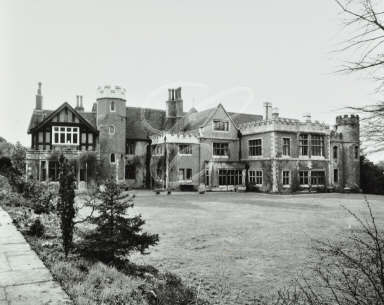
    An image of The Old Rectory, 82 Church Road, Wimbledon, London, SW19 5AA in 1978. Present day imagery has been removed at the request of agents acting for the current owners.

    Priced at £26,000,000, it is almost certainly one of the most expensive homes to ever come to the market in Wimbledon and whoever moves there next will undoubtedly be either an oligarch, an A-list personality or a top achieving business person.


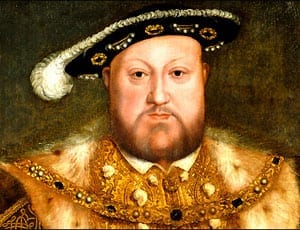
    The purchaser will follow in the footsteps of a fascinating array of historically important residents, the first of whom was Henry VIII (1491 – 1547). The King took up residence in 1547 in the months prior to his death and is said, as he was so bloated, to have been unable to climb the stairs to his sleeping chambers. His bed was relocated to the great hall of the house and here he slept next to the fire. Historical research recounts that, with a brewhouse, beer and wine cellars, a coal cellar, meat room, buttery and two dairy rooms, this was a “house fit for a king.”
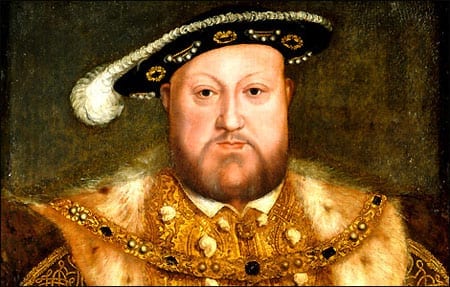
     

    Henry VIII (1491 – 1547)
    Catherine Parr (1512 – 1548)

    Henry VIII gave The Old Rectory, which was originally called The Parsonage House, to his sixth and final wife, Catherine Parr (1512 – 1548). Preferring a residence in Chelsea, Parr left and the Dean and Chapter of Worcester Cathedral took possession. A lease was sold to Sir William Cecil (1520 – 1598), later Lord Burgley, and the manor then passed to his son Thomas Cecil (1542 – 1623), the 1st Earl of Exeter.


    In 1639, Charles I (1600 – 1649) bought the entire manor and gave it to Queen Henrietta Maria (1609 – 1669) but with the era of Comwell, The Old Rectory found itself occupied by General John Lambert (1619 – 1684). Shortly after, when a grander house was built next door, the property became first a laundry house and then servant accommodation and gradually fell into decline.


    The Old Rectory passed next to Sir Theodore Janssen (1658 – 1748) in 1720. This French-born English financier, who was said to be worth the staggering sum of £250,000 at the time of his purchase of the house, was a founder member of the Bank of English but later disgraced for his part in the South Sea Bubble. He was expelled from the House of Commons and with his ruination, The Old Rectory saw yet another chapter of abandonment.
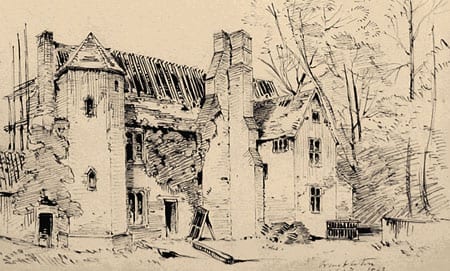
     

    The garden front of The Old Rectory by Charles Henry Money Mileham (1837 – 1917)

    By 1802, the house was described as an “uninhabited” ruin. A speculator credited with developing “modern Wimbledon” named John Augustus Beaumont bought it and restored and extended it but when it was sold to a Samuel Wilson in 1882 for £6,000, an era of truly comprehensive upgrades was to begin. Wilson added a pebble-dashed two-storey drawing room wing, carved oak doors and installed English, Flemish and Italian chimneypieces.


    The next owner was a marine engineer named Matthias Jacobs who had been responsible for the construction of tunnels in Paris and New York. After having purchased The Old Rectory in 1909, he commissioned his brother to add a new single storey billiards room, a service wing and a study extension to mask the medieval chapel of the house. Jacobs sold up in 1923 to a Thomas Lethaby, who fitted oak paneling from Chantry House in Newark and a plaster ceiling based on the one at Knole House, Kent.
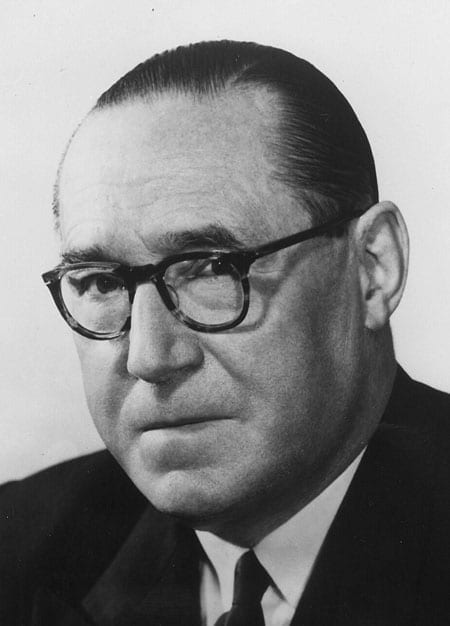
     

    Lord Brock FRCS, FRCP (1903 – 1980)

    In 1953, the eminent London surgeon and cardiologist, Lord Brock FRCS, FRCP (1903 – 1980), took possession of The Old Rectory after having paid £13,750 for it.  Brock is credited as on of the pioneers of modern open heart surgery and also founded the Lord Brock Memorial Trust that to this day funds the museum he founded, The Old Operating Theatre Museum and Herb Garret in Southwark, SE1.


    Following the death of his first wife Germaine Louise Ladavèze, Brock sold to an Iraqi entrepreneur and philanthropist named Basil Faidhi in 1978. Faidhi had fled Iraq for Britain and though he spent vast sums restoring the house with assistance from English Heritage, he also created a basement discotheque for his daughter, Nina, and a bar. Aside from bringing the house into the “yuppie era,” Faidhi also commissioned a historian named Richard Milward MA to write a history of the building in 1992 entitled: The Rectory – Wimbledon’s Oldest House.


    The Queen lead vocalist and anti-badger cull campaigner Brian May CBE purchased The Old Rectory in 1994 for £4,000,000 with the intention of living there with the Eastenders actress Anita Dobson.
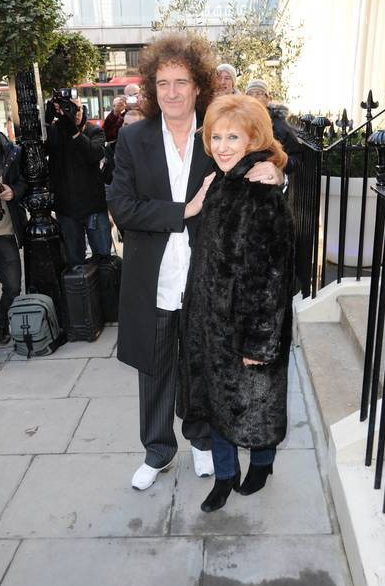
     

    Brian May CBE with his second wife Anita Dobson

    Dobson, who didn’t marry May until 2008, had other ideas and refused to move in. It was suggested that she preferred a smaller house the pair occupied in Kensington and, at the time, a friend commented:


    “[May] begged her to move into the new house so they can make a fresh start. Nobody can believe that Anita doesn’t want to be the lady of this fabulous house. But Brian says he can’t get through to her.”
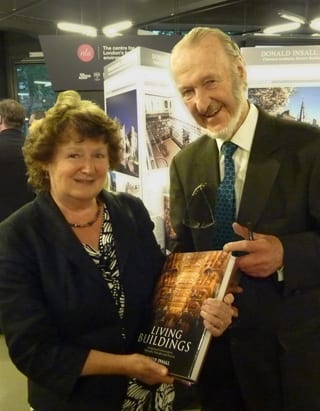
     

    Sir Donald Insall CBE

    As a result, May never properly moved into The Old Rectory and eventually decided to sell. In 2006, it achieved a record price of £16,000,000 and in the ensuing years, an Italian architect-owner named Antonella Carminati and her husband have lavished time and money on further restorations with the help of Sir Donald Insall CBE’s Insall Associates firm of architects.
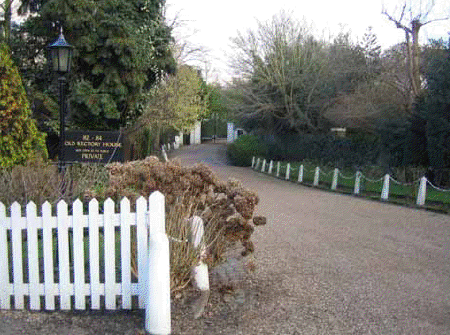
    The driveway that leads to The Old Rectory from Church Road gives plenty of privacy

    New fittings have been installed throughout and substantial extensions to the house have included a new kitchen and breakfast room with garaging beneath. The couple have demolished an early 20th century porch and an “unsightly” oak conservatory, remodeled the billiards room as a drawing room and removed a “bilious” blue swimming pool from the east lawn.


    Now featuring 12,882 square foot of accommodation in the main house and 3,320 square foot of additional accommodation, The Old Rectory has been planned to include 8 reception rooms; a vast kitchen with La Cornue appliances and an adjoining breakfast room; master bedroom suite with two dressing rooms, his and her bathrooms and a sitting room and 7 further bedrooms.


    Outside, the gardens feature an original medieval fig tree trail, shaded paths, lawns and a large pond as well as garaging for six cars. Planning permission for an indoor swimming pool complex has also been granted and ample staff accommodation is provided above one of the garages and in the gate lodge.


    Given the now limited financial resources of the traditional religious houses of Britain, will it be rock, royalty or new money that next takes possession of The Old Rectory? The historians of Wimbledon will undoubtedly be watching.


    The Old Rectory, 82 Church Road, Wimbledon, London, SW19 5AA is for sale through the Wimbledon office of Knight Frank. For more information call: +44 (0) 20 8946 0026.
  • The land of Tarka and Salar

    The land of Tarka and Salar

    The North Devon countryside that inspired Henry Williamson, R. D. Blackmore and Charles Kingsley
     

    Much of my childhood was spent reading the works of superb authors and amongst the best of them were Arthur Ransome (1884 – 1967), Denys Watkins-Pitchford (1905 – 1990), who wrote many of his works under the pseudonym “B.B.”, and Henry Williamson (1895 – 1977). As a youngster, I was lucky enough to be read to by Ransome’s nephew, a most captivating professional storyteller, and was given first editions of many of the works of all three of these early to mid twentieth century authors.


    I had my first sailing lessons on Windermere, where Ransome set many of his works, and went shooting in the Forest of Bowland, a place dear to B.B. Though I also fished in many wonderful locations, until now I’d never been to the land of Henry Williamson and his most famous creation, Tarka the Otter. I currently find myself here enjoying a break from London and yesterday I randomly discovered, I am staying next to the setting of one of Williamson’s lesser known stories, Salar the Salmon, on the River Bray close to Exmoor.


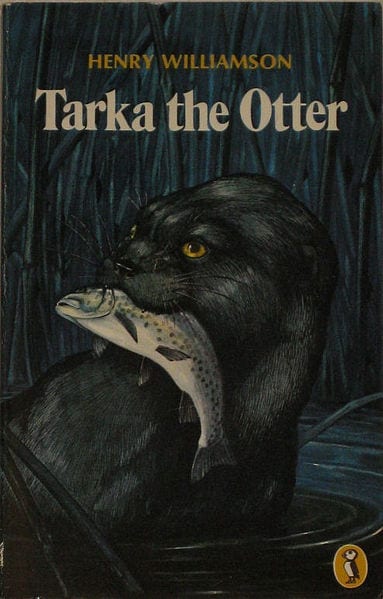
    “Salar the Salmon” by Henry Williamson (1935)
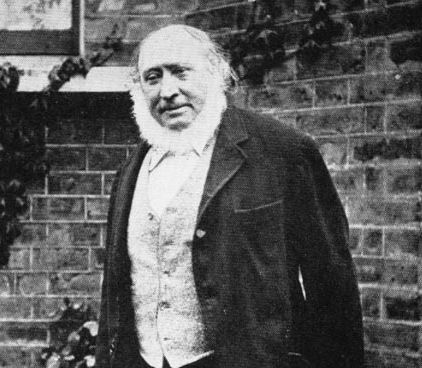
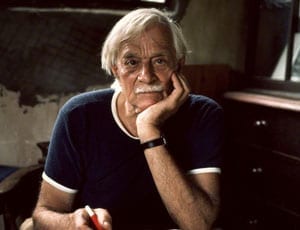
    Henry Williamson (1895 – 1977) photographed by Mark Gerson, cibachrome print from original transparency, August 1970
    “Tarka the Otter” by Henry Williamson (1927)

    Originally published in 1935, Salar the Salmon combines Henry Williamson’s great talent as a writer with his insight as a naturalist. The story tells the tale of a five-year old salmon named Salar, whose name means the “leaper,” and his return to the stream of his birth. Salar’s migration through the riverways of Devon involve him surviving porpoises, seals, nets, fishermen, otters, poachers and weirs and Williamson’s account truly gives the reader an insight into one of nature’s great journeys.


    Henry Williamson wrote both Salar the Salmon and The Children of Shallowford (1939) whilst living beside the River Bray in a hamlet named Shallowford, near Lynton in Devon. The river plainly inspired him and whilst he lived there on the Fortescue Estate he also sired four children, joined Oswald Moseley’s British Union of Fascists, was briefly imprisoned for his views and conducted several extra-marital affairs.


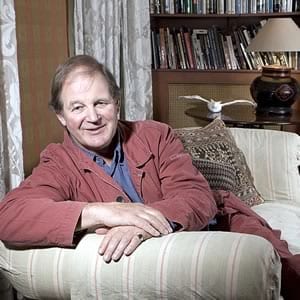
    “War Horse” author Michael Morpurgo OBE

    Salar the Salmon is a story I am not alone in recommending. Another Devon based author and poet, Michael Morpurgo OBE, best known for his acclaimed work, War Horse, speaks very fondly of Williamson and the novel in a dedication he prepared for a recent reprint of it:


    “It is a rare gift indeed for a storyteller to be poet as much as a storyteller, to tell a tale so deeply engaging that the reader wants to know what will happen and never want it to end, and yet at the same time tells it in such a way as to leave a reader wide-eyed with amazement at the sheer intensity of feeling that can be induced by the word-magic of a poet. Henry Williamson is just such a story-maker poet.”


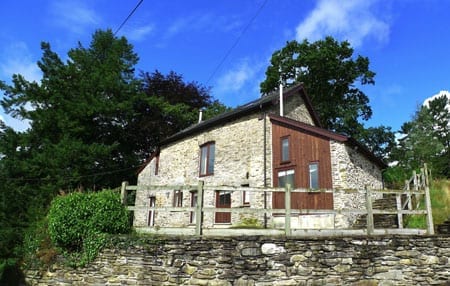
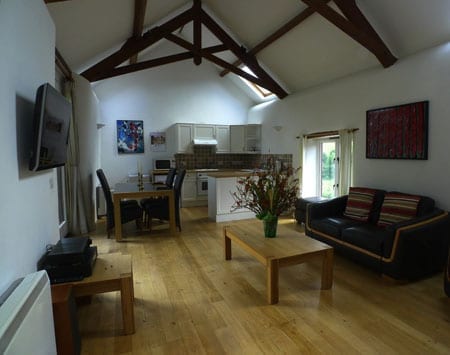
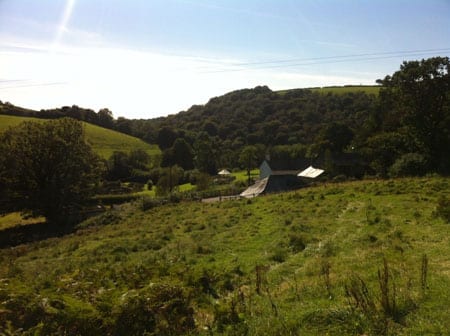
    Where I am staying, I have a view of the very river on which Salar made his journey and here also a detached barn conversion is currently available to rent at a price of £1,150 per month. Malle’s Barn is a 2-bedroom stone-built property that includes a 25ft by 12ft open plan sitting room with a fully fitted kitchen and a dining area, as well as a study and shower room.


    The exterior of Malle’s Barn, Brayford, Near Barnstaple, Devon, EX32 7QB
    A large open plan reception room includes sitting, dining and kitchen areas
    The setting of Malle’s Barn overlooking the valley of the River Bray


    Tenants of the house will have access to the owner’s 60-acre estate which includes a mile of salmon and brown trout fishing on both the Rivers Bray and Holewater, ancient woodland and a lake in addition to a private garden and adequate parking for several vehicles.


    Malle’s Barn would make a perfect retreat for any author or artist and is just 10 minutes from South Molton, Barnstaple is 9 miles away and Exeter 40 miles. The location is 30 minutes from J27 of the M5 and Tiverton Parkway Station, which provides mainline links to London Paddington within 2 hours.


    Close to Malle’s Barn are the prettiest sections of a footpath named the Tarka Trail. Consisting of over 180 miles of footpaths and cycle tracks that take in the Dartmoor and Exmoor National Parks and the North Devon Coast Area of Outstanding Natural Beauty. The trail takes in many of the locations described in Williamson’s most famous novel but this area of North Devon also galvanized the pens of a number of other authors.


    Richard Doddridge Blackmore (1825 – 1900)
    Professor Charles Kingsley (1819 – 1875)

    Richard Doddridge Blackmore (1825 – 1900) set Lorna Doone: A Romance on Exmoor in the locality in 1869 and Professor Charles Kingsley (1819 – 1875) put pen to paper here when he wrote Westward Ho! in 1855. A village of the same name was subsequently established near Bideford in the 1860s by entrepreneurs, led by Lord Portsmouth, who saw an opportunity to capitalise on the novel’s success. Westward Ho! is the only place in the United Kingdom with an exclamation mark in its name. The only other place in the world that shares such is Saint-Louis-du-Ha! Ha! in Quebec, Canada.


    Aside from literary connections, the locality is famous for its excellent fieldsports. The Earl and Countess of Arran’s Castle Hill and the Molland shoot are considered amongst two of England’s finest high bird pheasant shoots and both the Devon and Somerset Staghounds and Devon and Somerset Foxhounds hunt on Exmoor.


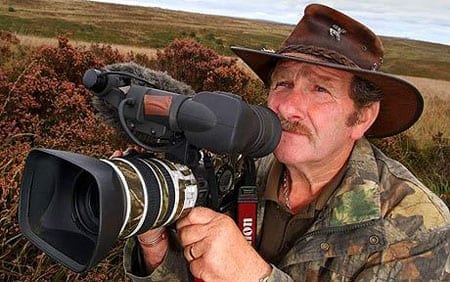
    Johnny Kingdom


    Johnny Kingdom, who describes himself as having been “a farmer, quarryman, forestry worker, gravedigger and, if truth be told, a poacher” in his youth, also lives in the locality and is well known as a wildlife photographer, filmmaker and television presenter. He sets many of his series on Exmoor because of the vast array of wildlife he comes across here and is, like Williamson before him, often to be found exploring the valley of the River Bray.


    In a 1965 BBC interview Henry Williamson was asked: “What influence has this [the Devon] countryside had on you?”:


    “Everything, I should say. I came down here as a youth, aged just 18 in 1914, spent a fortnight’s holiday here in the beginning of May, beginning of June. I walked 20 to 25 miles every day. Everything I saw was radiant and beautiful.”


    This idyllic part of Devon that Williamson loved so much remains unspoilt to this day. If you haven’t visited yet, it really should be added to your bucketlist.


    For more information about Henry Williamson, go to The Henry Williamson Society’s webpage: http://www.henrywilliamson.co.uk


    Watch the 1965 BBC interview with Williamson at: http://news.bbc.co.uk/local/devon/hi/people_and_places/history/newsid_8475000/8475989.stm


    For details and a map of the Tarka Trail, go to: http://www.devon.gov.uk/tarkatrail and http://www.devon.gov.uk/tarka-trail-circular-routes.pdf


    For information on the Molland shoot, go to: http://www.bettwshall.com/molland.htm


    For more information about the Devon and Somerset Staghounds, go to: http://www.devonandsomersetstaghounds.net


    For more information on the Devon and Somerset Foxhounds, go to: http://www.exmoorfoxhounds.co.uk


    View the official website of the author and poet Michael Morpurgo at: http://www.michaelmorpurgo.com


    View the official website of Johnny Kingdom at: http://www.johnnykingdom.co.uk/

    For more information about Malle’s Barn, contact Charles Mitford Cust at: [email protected]

  • How the mac ’n’ cheese met the truffle oil

    How the mac ’n’ cheese met the truffle oil

    Christian Huhnt recounts an evening of rock ‘n’ roll at the opening party for Hollywood Road’s latest venue, Honky Tonk


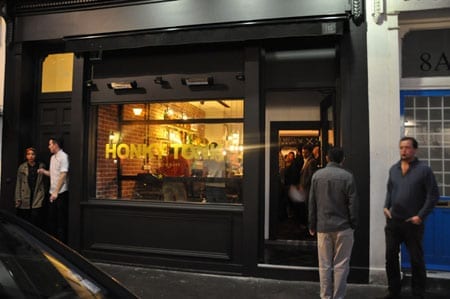
    When you hear about the opening of a London-based “underground NYC inspired rock ‘n’ roll restaurant,” the last thing you expect is to find it in the very heart of an area that estate agents now call “Little Chelsea.”


    Honky Tonk, 6 Hollywood Road, London, SW10 9HY

    So, my companion Steffen and I headed off to determine what this mystery may be, and to learn what the owner, who is supposedly involved in The Supper Club, was willing to reveal that night. As soon as I arrived, I found myself sipping a chilled drink, while listening to some Screamin’ Jay Hawkins vibes. “The Gringo,” a mix of tequila, juice and wheat beer is described as “a delectable intertwining of Mexican and British” on Honky Tonk’s drinks menu and it is just such.


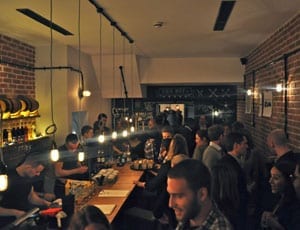
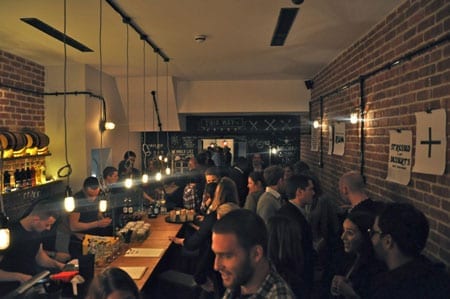
    As I was pushed deeper into the venue, away from the bar at the entrance, I felt I had been left alone in the middle of Shoreditch, with a 60s-inspired retro-American “highway diner” flair interior of unrendered walls, raw lightbulbs, Formica tables, and pierced and tattooed modern-hippy looking 20-somethings; only the pretty waitresses reminded me, that I was in fact not in a greasy US-diner, but at an opening in Chelsea, West London.

    Guests enjoying Honky Tonk’s opening bash
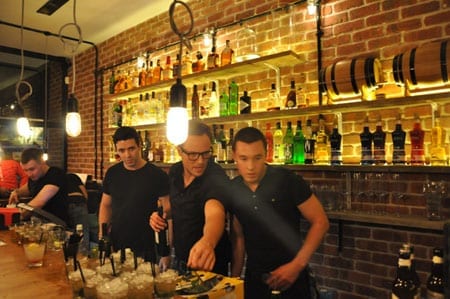
    Honky Tonk’s bar staff creating cocktails
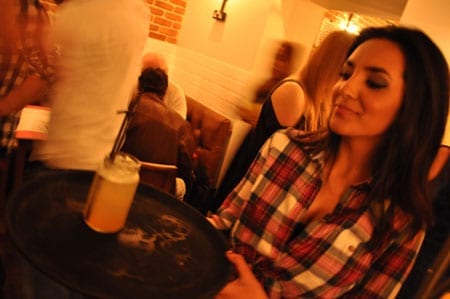
    One of Honky Tonk’s waitresses serving cocktails

    When it came to the food, served as canapés, it again became clear, that I was in SW10. The “not” fried chicken, as the waitress educated me, is only coated with a “special recipe” and then oven-baked. It has as much crispy pleasure as it would have had fried, but it is far healthier and plainly designed so as not to dispossess the figure conscious guests of this elite neighborhood.


    Almost finished with this delight, I tasted the next dish on the menu: New England crab cakes in a chili-mayo sauce, followed by little potato skins loaded with chilli con carne and sour cream. As I wasn’t sure anymore if this food could be solely called “good old-fashioned American bites,” the next dish was most definitely the tip of the iceberg: the macaroni cheese, apparently the “Baked Beans of America,” the synonym of cheap grub, the epitome of total culinary absence. Here at Honky Tonk, though, they controversially served this with a porcini béchamel and truffle oil sauce, along with roasted wild mushrooms. Believe it or not, it worked and it was bloody good.


    While getting in the mood with another fancy drink, one of my favorites by the way, I tried a rum and ginger beer concoction topped with a slice of lime and listened to Elvis Presley’s Mystery Train playing in the background. Whilst enjoying this, I realise that the Chelsea boys and girls have arrived and are mingling with the hip East London crowd. I have seen this lot at many other openings and can’t assume they were shipped in, but nonetheless the spot is suddenly buzzing and a great evening follows.


    Examples of the humour of Honky Tonk’s management adorn the venue’s walls

    Honky Tonk promises to deliver the New York vibe, bringing cool Blues, Jazz and Rockabilly tones with regular live music to the heart of posh Chelsea. Well done so far.


    Rock on!


    Honky Tonk, 6 Hollywood Road, London, SW10 9HY. Telephone: +44 (0) 207 351 1588. Website: http://www.honkytonkchelsea.com.

  • Prince Lorenzo Borghese: “What’s on your mantelpiece?”

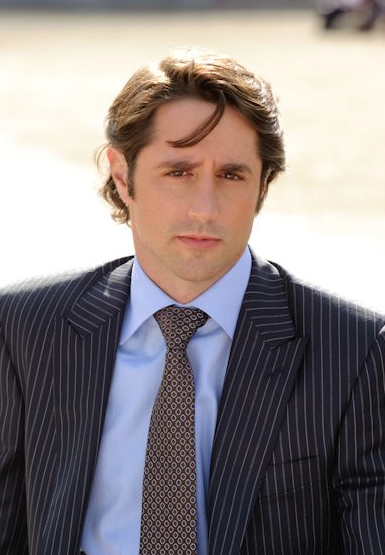
    Prince Lorenzo Borghese: “What’s on your mantelpiece?”

    The Steeple Times asks the businessman, philanthropist and reality television star Lorenzo Borghese: “What’s on your mantelpiece?”


    The Steeple Times shares “wit and wisdom.” What’s your guiding force?

    Beer and bacon. I need both to function.


    “Don’t get even, get medieval” is, in our humble opinion, a great motto. What’s yours?

    “No one sues a homeless man.”


    Kerry Katona was considered unacceptable in 2007. Who or what is unacceptable in 2012?

    Kerry Katona: Who is she anyway?


    Tony Blair misses being Prime Minister. What do you miss most in your life?

    My black Labrador, Belle, who died of cancer in 2005.


    What might you swap all your wealth for?

    Someone else’s wealth, someone who has more wealth than I have.


    Donald Trump was once a case of: “If you owe the bank a thousand, they close you down; but if you owe the bank a billion, you own the bank.” What’s your view on the banking crisis?

    Plant more trees.


    What phrase or word do you most loathe?

    LOL.


    In the UK, some people consider charity to “begin at home.” What’s your view and what causes do you personally support?

    Charity begins with a problem that needs a solution. Helping others is our responsibility as the dominant beings on this planet. My favorite charity is Animal Aid USA not just because I co-founded it, but because all of it’s members are volunteers and love animals.


    The judge in “Law Abiding Citizen” states: “I can pretty do whatever I want” before being blown up whilst answering her mobile phone. What’s your view on the appropriate use of such devices?

    They say: “Whatever doesn’t kill you makes you stronger.” Being blown up kills you, so that’s where I draw the line.


    If you could fill a carriage on The Orient Express, who would be your fellow passengers?

    My family, close friends and a little band called The Rolling Stones – there’s never a good party without good music.


    Prince Lorenzo Borghese

    If you were unfortunate enough to end up on death row, what would be your last meal and where would you eat it?

    Three bacon cheeseburgers in the middle of the Amazon jungle.  I think they would provide me with enough energy to sneak away and get lost forever.


    What time is it acceptable to consume the first drink of the day?

    That all depends what one is drinking.


    A Negroni, a martini or a cup of tea?

    Why do I have to choose? I’ll take all three.


    Whose parties do you enjoy the most and why?

    The one’s I have because I tend to know more people at those.


    Who is the most positive person you know?

    Mickey Mouse: That guy is always waving and dancing.


    What’s your most guilty pleasure?

    I don’t have one. What pleases me doesn’t make me feel guilty.


    If a tattoo were to sum you up, what would it be of?

    A tiny freckle: I’m not a fan of tattoos, so the smaller the better.


    If you were a car, what marque would you be?

    Any electrical car as long as it’s yellow, has four wheels and a great sound system.


    Cilla Black presented “Surprise, Surprise.” Tell us the most surprising thing about you.

    I don’t wear underwear – I never understood the purpose.


    What’s currently sitting on your mantelpiece?

    Several pictures of my family, a lighter and an empty pack of matches.


    Prince Lorenzo Borghese is the founder and president of Royal Treatment, a high-end bath, body and skin care line for pets. He is also the founder and president of Animal Aid USA, a not-for-profit focusing on saving animals and changing laws to stop animal cruelty. In 2006, he starred in ABC’s reality show, The Bachelor, and in summer 2012, he was one of the housemates in Channel 5’s Celebrity Big Brother in the UK.


    For more information on Royal Treatment, go to: http://www.getroyaltreatment.com


    For more information on Animal Aid USA, go to: http://animalaidusa.org


  • Luca Del Bono

    Luca Del Bono

    This stylish Anglo-Italian entrepreneur was one of the founders of Quintessentially. Charm personified, Del Bono now assists wealthy foreigners invest in London’s finest homes and businesses. His most talked about venture is a £100 million project that will turn 50 St James’s Street into a member’s club, spa and hotel. In the residential sector, he represented a Ukranian who purchased Hanover Lodge in Regent’s Park for £120 million: Britain’s most expensive single family residence. His is a Rolodex that is second to none.

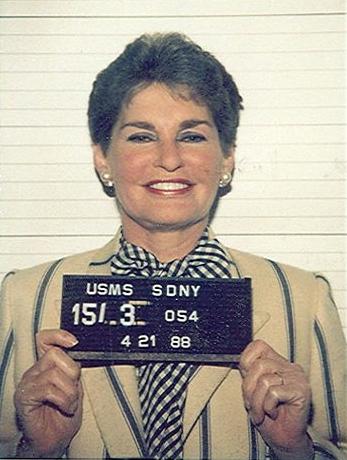
  • Leona Helmsley (1920 – 2007)

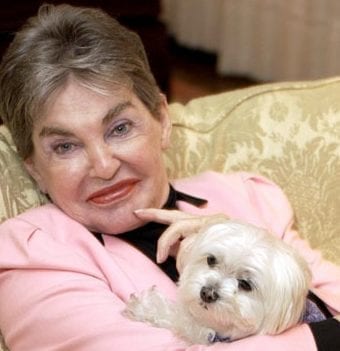
    Leona Helmsley (1920 – 2007)

    “The Queen of Mean” was a chain-smoking hotelier and real estate tycoon with a reputation for tyrannical behaviour. She took the view that “only the little people pay taxes” but was investigated and convicted of federal income tax evasion in 1989. Sentenced to 16 years, she served just 19 months in prison and 2 months under house arrest. Worth some $8 billion, Helmsley left her Maltese dog, Trouble, $12 million in trust.

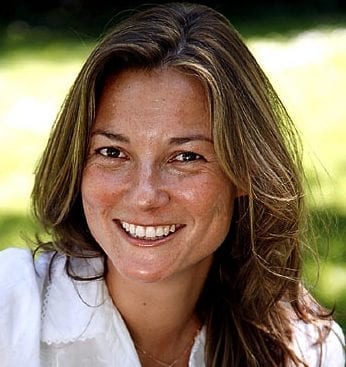
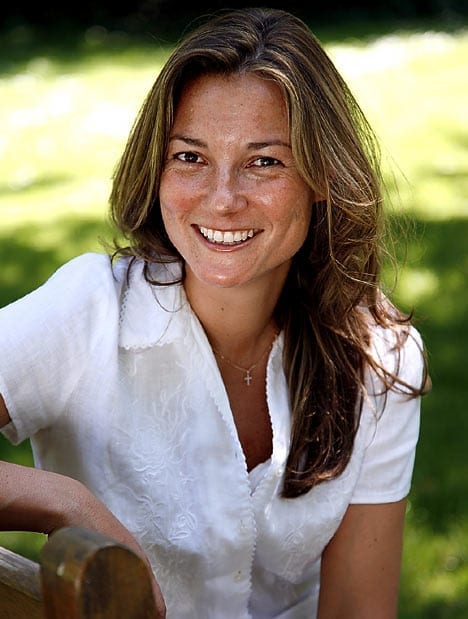
  • Sara Murray OBE

    Sara Murray OBE

    This Lancashire born entrepreneur founded the price comparison site Confused.com and is now a member of the government’s Technology Strategy Board. Murray has deservedly won countless accolades for her achievements and is also known for her love of helicopters.

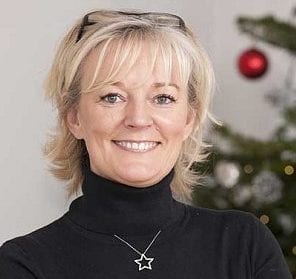
  • Jo Malone MBE

    Jo Malone MBE

    This dynamo opened her first store at 154 Walton Street in Chelsea in 1994 and admits she had no money and made every error in the book whilst starting out. It all paid off as the Jo Malone brand that was created in her kitchen was sold to Estée Lauder in a multi-million pound “deal of a lifetime” in 1999. Malone grew up in a council flat in Bexleyheath and readily admits she’s a “merchant at heart.” She’s now moved into television presenting and also launched a new fragrance brand, Jo Loves, in March 2011.

  • Elliott waves

    Elliott waves

    A review of Blummyz, Hollywood Road, SW10


    Blummyz is certainly a restaurant that has nothing in common with Brinkley’s, its better-known neighbour and home to ageing lotharios and single women of a certain age. The only similarity, apart from their being on the same street, is that neither fall into the grey area when it comes to the opinions people have about them.


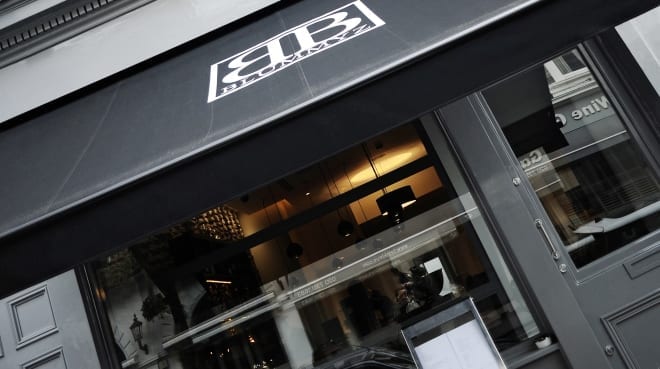
    The Hollywood Road frontage of Blummyz, 6 Hollywood Road, London, SW10 9HY

    For me, the Hollywood Road is best remembered for my encounters with a gentleman named Richard Bond. Always seen in the same blazer and supposedly resident in a green Jeep Cherokee stuffed to the rafters with old newspapers, here was a character who, like the restaurants I describe, was polarising in the minds of those he introduced himself to.


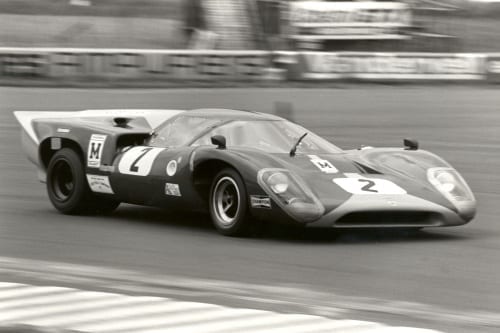
    On our first meeting Mr Bond, who was a successful racing driver in the 1960s and 70s, simply asked: “Eton or Harrow?” When I replied: “Neither,” he launched into a diatribe about the relative merits of half of the public schools of England. In these comments he came across as an utter bore but on the occasions he regaled all concerned with such stories as how he drove a Ford GT40 in the World Sportscar Championship Series, he came across as a far more interesting man. Better known as “Bondino” or “Bondini,” Bond passed away in July 2011 but I am sure that he would have approved of the Bugatti inspired logo that graces 6 Hollywood Road, now known as Blummyz.


    Richard Bond driving a Ford GT40 in 1980

    Blummyz is the brainchild of Elliott “Blummy” Blum, a young Swiss born entrepreneur, and his friend Richard Renaud, who comes to the restaurant as general manager after having worked at La Place in Toulon and Las Bastide du Cours in Aix en Provence. The duo met in their youth and in teaming up have created a restaurant that is far more elegant than most of its somewhat clapped out neighbours.


    Blummyz owner Elliott Blum pictured with Yasemin Yelkenci at the launch party for Blummyz

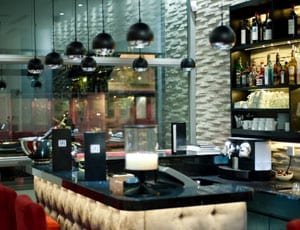
    Blum has invested heavily in creating a stylish high-end European feel in his restaurant. The focus is an open kitchen with a wood fired oven and the décor features velvets and starched linens. It quite a world apart from the artisan look of Friends, owned by Chelsea footballer Roberto Di Matteo, which formerly occupied the site. A bar area, complete with a black granite bar, seats 20 whilst the restaurant itself has space for a further 40 diners.


    Blummyz originally launched in February 2012 with Stefano Stecca, who advised Arkady Novikov prior to the opening of the £8 million Novikov in Mayfair, as chef. Mr Stecca departed to work for Frankie Dettori and Pete Burrell’s at their Sydney Street restaurant, Sette, after having described Blummyz’s menu as “too expensive” in an interview for BigHospitality magazine.


    Now, with a new chef named Dionisio Randazzo, Blummyz has had a slight change in direction and officially launched on the 12th April 2012 with an event organised by the ever popular PRs Meritaten Mance and Brave Benson. Such characters as E4’s Made in Chelsea’s Jamie Laing and Oliver Proudlock, son of Foxtrot Oscar co-founder Michael Proudlock, were in attendance.


    The majority of the other guests at the party were youngsters in tight fitting Dolce & Gabanna jeans and ladies replete with Hermès Birkin bags that wouldn’t have looked out of place at the restaurant formerly known as Cipriani. If the gathering were reflective of the restaurant’s typical clientele, this is a place that will appeal primarily to the likes of Tamara Ecclestone and Holly Valance rather than to Chelsea’s old-school aristocratic set.


    On my first visit in March, I was joined by a trader best known to my friends as “The Spy.” My companion, most suitably given the name of the restaurant’s owner, is a specialist in a phenomenon known as the Elliott Wave Principle and was pleased to be able to continue monitor the markets from his smartphone throughout our lunch thanks to Blummyz having Wi-Fi. We opted to allow the charming and personable staff to bring us a selection of signature dishes from a menu where starters were priced between £10 and £19 and mains were mainly between £21 and £28.


    The bar area at Blummyz

    The bread was freshly baked and the flat bread was especially good. A tapas style dish of baby meatballs (£5) featured a delicious tomato sauce but the meat was perhaps a little tough. Mussels and clams served with the same sauce and broccoli, however, were truly excellent.


    For mains, the traditionally served sea bass (£22) was of the finest of quality whilst a beef fillet with a green peppercorn sauce (£26) was tender and perfectly cooked. The Spy and I were truly impressed with both dishes but somehow managed to leave space to share a final course in the form of a well executed chocolate fondant with pistachio ice cream (£8). All of this was washed down with first a well chilled Chablis (£9.50 a glass) and then a Chianti Classico (£10 a glass). We left feeling heartily satisfied.


    On my return for the launch event, I was introduced to a new menu that takes onboard much of what Blum, Randazzo and Renaud had learnt during their “soft launch.” It includes a “small eats” section (all at £5) featuring such dishes as deep-fried prawns, a raw artichoke salad with Pecorino cheese and pear and zucchini fritti. Other new additions include superb pizzas priced very reasonably between £9 and £15 and burgers at £9 to £10 each.


    Blummyz is a restaurant that has great potential and one that most definitely deserves to make waves. For perfectly executed French-Italian and Mediterranean inspired cuisine in a sophisticated setting, be sure to make a beeline for Blummyz. Ladies: Be sure, though, not to forget to arrive without your Birkin.


    Blummyz, 6 Hollywood Road, London, SW10 9HY. Telephone: +44 (0) 20 7351 1588. Website: http://www.blummyz.com


    Follow Blummyz on Twitter at: http://www.twitter.com/BlummyzLondon

  • Mccreedy's blues

    Mccreedy's blues

    Thomas “T.J.” James peruses the works of artist Conor Mccreedy


    Conor Mccreedy is an internationally known artist, art collector and entrepreneur who lives between New York City, South Africa and Paris.


    Conor Mccreedy wearing his synonymous “Mcreedy Blue”

    Originally from Johannesburg, Mccreedy was intrinsically drawn to painting in his youth. He attended St. David’s Marist Inanda where he excelled at soccer and went on to represent South Africa in the Gothia Cup junior world soccer tournament in Sweden.


    Next came a stint at Hilton College. Here Mccreedy was awarded the Kennith Beghin memorial prize for art and also a first prize in the annual university arts competition. At the time, Mccreedy’s art professor stated in a letter of recommendation:


    “Conor is one of the most outstanding pupils to come through the department of art in the last decade. He is undoubtedly one of the most naturally talented individuals I have ever seen in my lifetime.”


    Obtaining an IEB Matric pass with Distinction in Art gave Mccreedy admission to the University of South Africa but instead he attended university in North Carolina on a golf scholarship. Later, he decided to change paths again and transferred to the Pratt Institute in New York.


    By happenstance he met the American comedian Chris Rock’s uncle and through him gained an introduction to the president of the National Arts Club. This brought a significant break and Mccreedy became the youngest artist to be invited to hold a solo exhibition entitled, Outliers, at the National Arts Club in Gramercy Park, New York in 2010.


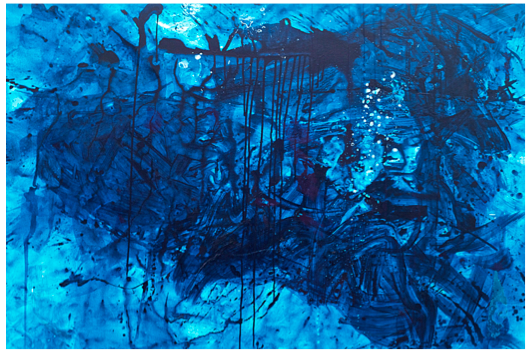
    “Where to Begin” by Conor Mccreedy
    “Portrait of Mentor” by Conor Mccreedy, 2009

    Mccreedy’s artistic style has developed significantly over the years. His masterful strokes of the brush and lines are now considered unsurpassed. Mccreedy’s paintings are dabbled with ambiguity, which causes one to develop a new understanding and outlook. His paintings truly evoke truth and the sublime. In them also, he uses his figures as a tool to question modern views of sexual, racial and social identity.


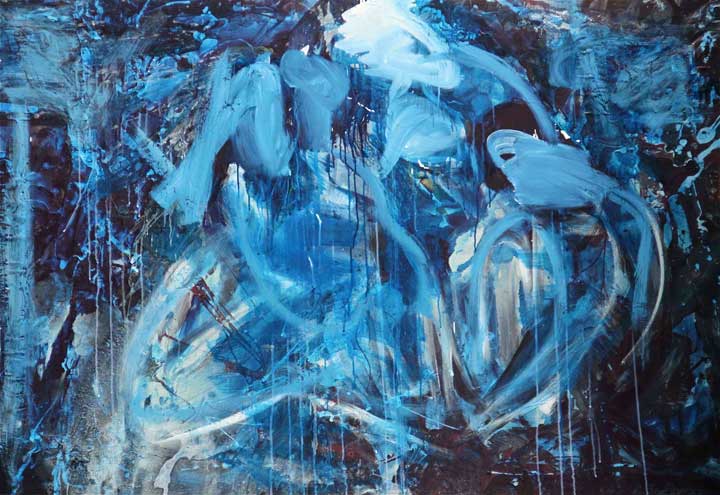
    As an example of his style, Mccreedy’s Indigo Blue Series provide the viewer with a lugubrious surface but, as the eye becomes entranced by his work, the somber veil is lifted and an array of expressions and emotions are revealed.


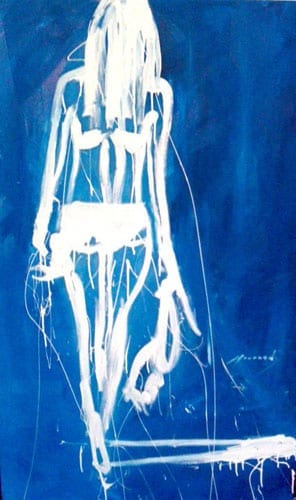
    “Her Stride” by Conor Mccreedy, 2010
    “Five Female Nudes” by Conor Mccreedy, 2011

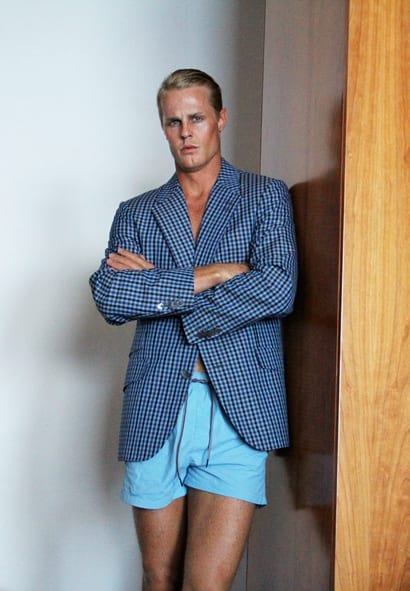
    Mccreedy uses a specific type of blue for his paintings. He named it “Mccreedy Blue” and it now transcends from his art into his unique style. The implementation of this colour in both his dress and art create a unifying theme of distinction and also are representative of the brand that he has become. Resultingly, GQ Magazine listed Conor Mccreedy as South Africa’s best dressed man for 2012 which is surprising given that he detests shopping.


    Mccreedy is also heavily involved in social media also and highly influential in this domain. He is the most followed South African on twitter with just under 300,000 followers and tweets to them regularly. He uses his fame for good as well and chooses to support the Faces of Hope Foundation that provides funding to support children and adults with leukemia and lymphoma.


    When home in South Africa Mccreedy becomes inspired by the euphoric scents of the African bush. He has a love for animals, especially lions, and is intrinsically connected to the raw nature and beauty of Africa.


    Conor Mccreedy

    Mccreedy will be spending this summer in The Hamptons and Manhattan this year. Here he’ll continue to create and be inspired by the world around him.


    View more examples of Conor Mccreedy’s works at: http://www.conormccreedy.com


    Follow Conor Mccreedy on Twitter at: http://www.twitter.com/CONORMCCREEDY


    Follow Thomas James on Twitter at: http://www.twitter.com/thomasjames124