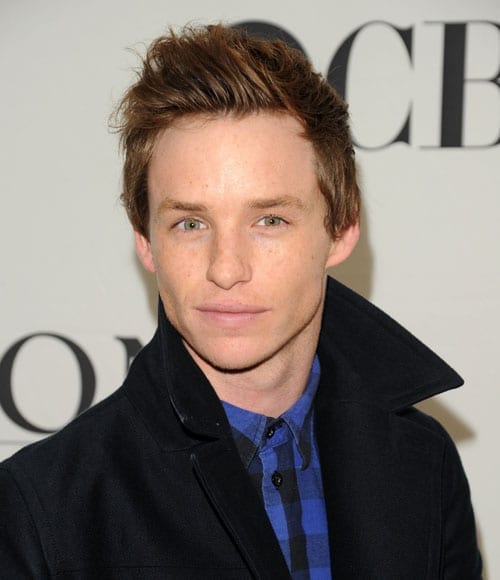
 An Old Etonian and graduate of Trinity College, Cambridge, Redmayne has performed alongside Cate Blanchett, Dame Judi Dench and Julianne Moore. He’s noted for his manners but admits he “didn’t have a clue” when he did work experience in banking prior to embarking on a career as an actor. He’s modeled with Cara Delevingne for Burberry and has a whole cast of “Redmayniacs” as his fan club. Already honoured with a Tony and an Olivier, there’s undoubtedly many more awards to come.
Tag: businessman
-
Eddie Redmayne
-
Andrey Borodin
 This billionaire former president of the Bank of Moscow lives in exile in London and is on the Interpol Red Notices wanted list as a suspect in a £136 million (13 billion rouble) fraud. (more…)
 -
A manageable mansion
The sale of the £20 million Bletchingdon Park, Oxfordshire
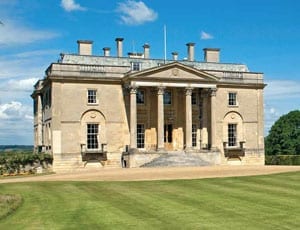
Bletchingdon Park House in Oxfordshire is one of those classic Palladian villas that would make the perfect setting for a period drama. Unlike vast Jacobean mansions like Highclere Castle, better known as Julian Fellowes’ Downton Abbey, however, Bletchingdon is of a far more manageable size.

The facade of Bletchingdon Park, Bletchingdon, Kidlington, Oxfordshire, OX5 3DW 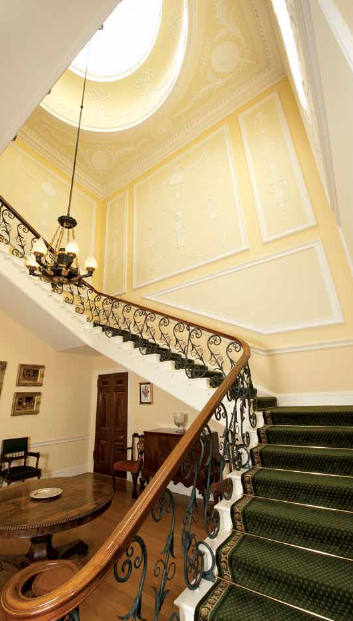
The staircase hall 
A formal reception room 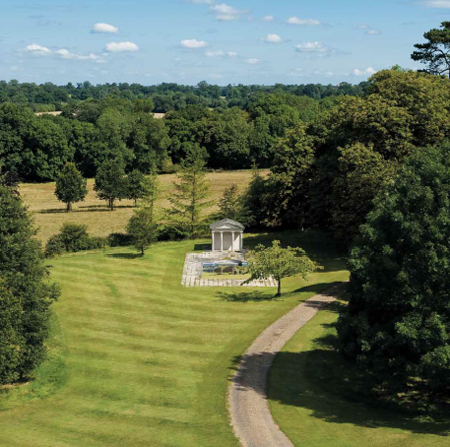
The grounds of Bletchingdon Park This Grade II* listed Georgian house, built for Lord Valentina in 1782, may be some 24,600 square foot in size, but it has a layout that makes it both practical for living and suitable for entertaining on a grand scale. The accommodation, which has been renovated by the renowned building company Symm, includes 9 bedrooms and suites, well-proportioned formal reception rooms and a garden floor with further reception rooms, a billiards room and a fitness room with spa.
Whilst the original stable block has been sold off and converted to residential accommodation, Bletchingdon Park includes 2 staff flats, a 2-bedroomed lodge cottage and a further 3-bedroomed cottage. With parkland and grounds extending to 127 acres, maintaining Bletchingdon’s plot is large, but easily maintained.
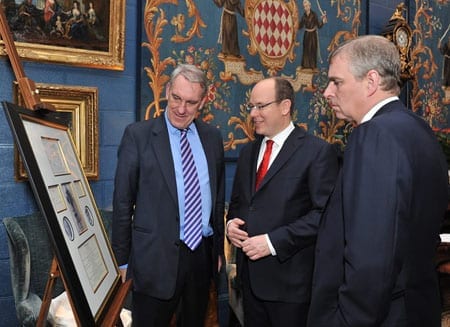
Dr Michael Peagram with Albert II, Prince of Monaco and Prince Andrew, The Duke of York 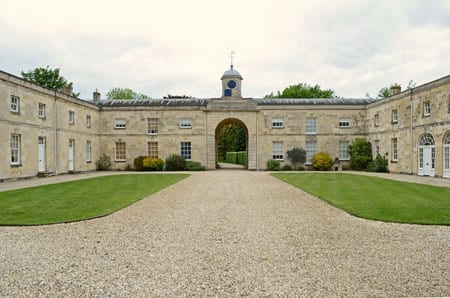
The former stables of Bletchingdon Park were sold off some years ago and have been converted into a number of homes In the 20th century Bletchingdon was owned by Lord Astor and then Lord Rotherwick. The current owner, Dr Michael Peagram, purchased the estate in 1993. Peagram made his fortune in the chemicals industry after having led a management buyout of Huddersfield based Holliday Chemicals Holdings (HCH) in 1987. He revitalised the business, expanded into new markets and floated the company in 1993. The business was ultimately sold to Yule Catto for £225 million in 1997 and in 2001 Peagram sold another company for a reported £44 million.
At this point, this scientist turned tycoon moved to Monaco and saved himself, according to a 2009 Daily Mail article by Piers Morgan, some £13 million in capital gains tax. A wise businessman and a supporter of David Cameron, Peagram’s modus operandi is:
“Winning with honour and playing by the rules… And not cheating.”
In an interview with Monaco’s NeXt Generation Entrepreneur Forum, he states that he “did lots of work” to achieve his success but admits to “being a romantic at heart.” He has used much of his fortune to fund the philanthropic activities of Outward Bound Monaco with Prince Andrew, The Duke of York and Albert II, Prince of Moanco.
Peagram placed Bletchingdon Park on the market in May 2012 at a price of £20 million. Of why it hasn’t sold, one blogger commented that a footpath runs close to the house and that there is a lack of leisure facilities and outbuildings. Somehow neither seem insurmountable and whoever purchases this fine residence will be a very lucky man. If I were Dr Peagram, though, I’d keep it.
Bletchingdon Park, Bletchingdon, Kidlington, Oxfordshire, OX5 3DW is for sale through Knight Frank. For further details contact Damian Gray on +44 (0) 20 7629 8171 and to download a brochure go to: http://search.knightfrank.com/cho090098
-
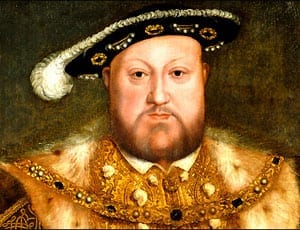
Rocking with royalty
A £26 million residence with connections to rock, royalty and rectors
Built in the early 1500s, The Old Rectory is Wimbledon’s oldest house. Standing in grounds of 2.5 acres, this 16,200 square foot property was once described by a biographer of Sir Henry Cecil as being “not luxurious, but adequate” but now once again it finds itself in an entirely different league.
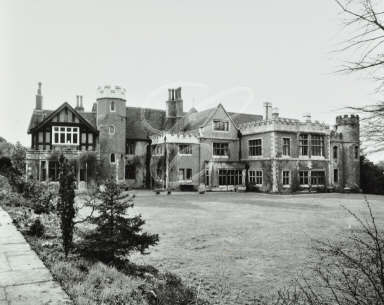
An image of The Old Rectory, 82 Church Road, Wimbledon, London, SW19 5AA in 1978. Present day imagery has been removed at the request of agents acting for the current owners. Priced at £26,000,000, it is almost certainly one of the most expensive homes to ever come to the market in Wimbledon and whoever moves there next will undoubtedly be either an oligarch, an A-list personality or a top achieving business person.
The purchaser will follow in the footsteps of a fascinating array of historically important residents, the first of whom was Henry VIII (1491 – 1547). The King took up residence in 1547 in the months prior to his death and is said, as he was so bloated, to have been unable to climb the stairs to his sleeping chambers. His bed was relocated to the great hall of the house and here he slept next to the fire. Historical research recounts that, with a brewhouse, beer and wine cellars, a coal cellar, meat room, buttery and two dairy rooms, this was a “house fit for a king.”
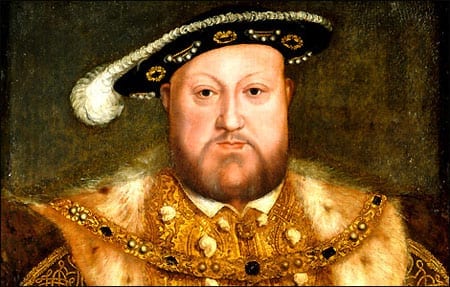
Henry VIII (1491 – 1547) 
Catherine Parr (1512 – 1548) Henry VIII gave The Old Rectory, which was originally called The Parsonage House, to his sixth and final wife, Catherine Parr (1512 – 1548). Preferring a residence in Chelsea, Parr left and the Dean and Chapter of Worcester Cathedral took possession. A lease was sold to Sir William Cecil (1520 – 1598), later Lord Burgley, and the manor then passed to his son Thomas Cecil (1542 – 1623), the 1st Earl of Exeter.
In 1639, Charles I (1600 – 1649) bought the entire manor and gave it to Queen Henrietta Maria (1609 – 1669) but with the era of Comwell, The Old Rectory found itself occupied by General John Lambert (1619 – 1684). Shortly after, when a grander house was built next door, the property became first a laundry house and then servant accommodation and gradually fell into decline.
The Old Rectory passed next to Sir Theodore Janssen (1658 – 1748) in 1720. This French-born English financier, who was said to be worth the staggering sum of £250,000 at the time of his purchase of the house, was a founder member of the Bank of English but later disgraced for his part in the South Sea Bubble. He was expelled from the House of Commons and with his ruination, The Old Rectory saw yet another chapter of abandonment.
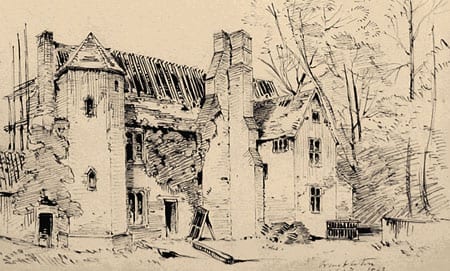
The garden front of The Old Rectory by Charles Henry Money Mileham (1837 – 1917) By 1802, the house was described as an “uninhabited” ruin. A speculator credited with developing “modern Wimbledon” named John Augustus Beaumont bought it and restored and extended it but when it was sold to a Samuel Wilson in 1882 for £6,000, an era of truly comprehensive upgrades was to begin. Wilson added a pebble-dashed two-storey drawing room wing, carved oak doors and installed English, Flemish and Italian chimneypieces.
The next owner was a marine engineer named Matthias Jacobs who had been responsible for the construction of tunnels in Paris and New York. After having purchased The Old Rectory in 1909, he commissioned his brother to add a new single storey billiards room, a service wing and a study extension to mask the medieval chapel of the house. Jacobs sold up in 1923 to a Thomas Lethaby, who fitted oak paneling from Chantry House in Newark and a plaster ceiling based on the one at Knole House, Kent.
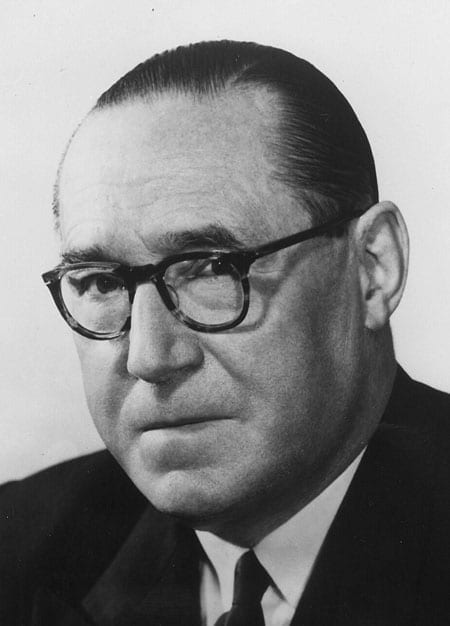
Lord Brock FRCS, FRCP (1903 – 1980) In 1953, the eminent London surgeon and cardiologist, Lord Brock FRCS, FRCP (1903 – 1980), took possession of The Old Rectory after having paid £13,750 for it. Brock is credited as on of the pioneers of modern open heart surgery and also founded the Lord Brock Memorial Trust that to this day funds the museum he founded, The Old Operating Theatre Museum and Herb Garret in Southwark, SE1.
Following the death of his first wife Germaine Louise Ladavèze, Brock sold to an Iraqi entrepreneur and philanthropist named Basil Faidhi in 1978. Faidhi had fled Iraq for Britain and though he spent vast sums restoring the house with assistance from English Heritage, he also created a basement discotheque for his daughter, Nina, and a bar. Aside from bringing the house into the “yuppie era,” Faidhi also commissioned a historian named Richard Milward MA to write a history of the building in 1992 entitled: The Rectory – Wimbledon’s Oldest House.
The Queen lead vocalist and anti-badger cull campaigner Brian May CBE purchased The Old Rectory in 1994 for £4,000,000 with the intention of living there with the Eastenders actress Anita Dobson.
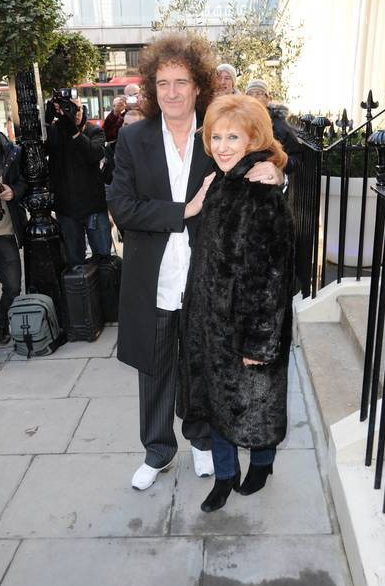
Brian May CBE with his second wife Anita Dobson Dobson, who didn’t marry May until 2008, had other ideas and refused to move in. It was suggested that she preferred a smaller house the pair occupied in Kensington and, at the time, a friend commented:
“[May] begged her to move into the new house so they can make a fresh start. Nobody can believe that Anita doesn’t want to be the lady of this fabulous house. But Brian says he can’t get through to her.”
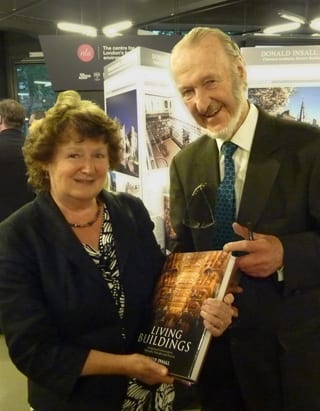
Sir Donald Insall CBE As a result, May never properly moved into The Old Rectory and eventually decided to sell. In 2006, it achieved a record price of £16,000,000 and in the ensuing years, an Italian architect-owner named Antonella Carminati and her husband have lavished time and money on further restorations with the help of Sir Donald Insall CBE’s Insall Associates firm of architects.
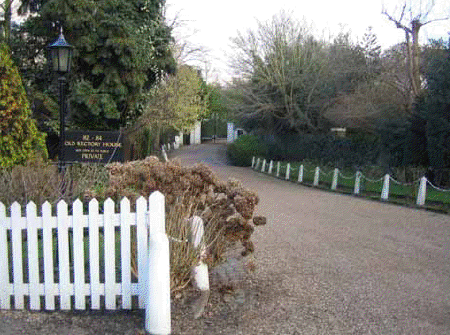
The driveway that leads to The Old Rectory from Church Road gives plenty of privacy New fittings have been installed throughout and substantial extensions to the house have included a new kitchen and breakfast room with garaging beneath. The couple have demolished an early 20th century porch and an “unsightly” oak conservatory, remodeled the billiards room as a drawing room and removed a “bilious” blue swimming pool from the east lawn.
Now featuring 12,882 square foot of accommodation in the main house and 3,320 square foot of additional accommodation, The Old Rectory has been planned to include 8 reception rooms; a vast kitchen with La Cornue appliances and an adjoining breakfast room; master bedroom suite with two dressing rooms, his and her bathrooms and a sitting room and 7 further bedrooms.
Outside, the gardens feature an original medieval fig tree trail, shaded paths, lawns and a large pond as well as garaging for six cars. Planning permission for an indoor swimming pool complex has also been granted and ample staff accommodation is provided above one of the garages and in the gate lodge.
Given the now limited financial resources of the traditional religious houses of Britain, will it be rock, royalty or new money that next takes possession of The Old Rectory? The historians of Wimbledon will undoubtedly be watching.
The Old Rectory, 82 Church Road, Wimbledon, London, SW19 5AA is for sale through the Wimbledon office of Knight Frank. For more information call: +44 (0) 20 8946 0026.
-
Stuart Graber: “What’s on your mantelpiece?”
The Steeple Times asks Stuart Graber, chairman of The Alternative Board London and former managing director of Time Warner International: “What’s on your mantelpiece?”
The Steeple Times shares “wit and wisdom.” What’s your guiding force?
Superior mind, superior attitude.
“Don’t get even, get medieval” is, in our humble opinion, a great motto. What’s yours?
A quote from Calvin Coolidge: “Nothing in this world can take the place of persistence. Talent will not; nothing is more common than unsuccessful people with talent. Genius will jot; unrewarded genius is almost a proverb. Education will not; the world is full of educated derelicts. Persistence and determination alone are omnipotent. The slogan ‘press on’ has solved and always will solve the problems of the human race.”
Kerry Katona was considered unacceptable in 2007. Who or what is unacceptable in 2012?
Piers Morgan.
Tony Blair misses being Prime Minister. What do you miss most in your life?
Good friends who have gone over to the other side.
What might you swap all your wealth for?
Continued good health.
Donald Trump was once a case of: “If you owe the bank a thousand, they close you down; but if you owe the bank a billion, you own the bank.” What’s your view on the banking crisis?
History has taught us time and time again that when there is money to be made certain individuals will do “anything” they possibly can to benefit and that includes breaking the established rules and regulations.
What phrase or word do you most loathe?
“What will be, will be.”
In the UK, some people consider charity to “begin at home.” What’s your view and what causes do you personally support?
My family and I believe that children and animals are most deserving of our charitable giving.
The judge in “Law Abiding Citizen” states: “I can pretty do whatever I want” before being blown up whilst answering her mobile phone. What’s your view on the appropriate use of such devices?
These highly lethal modern technological marvels form a new arsenal of weaponry. I would imagine that the use of these devices requires a good deal of professional training and skill. If they are “used appropriately” by the military and law enforcement then they should be utilised to save lives.
If you could fill a carriage on The Orient Express, who would be your fellow passengers?
A mixture of family, friends and acquaintances whose company I enjoy.
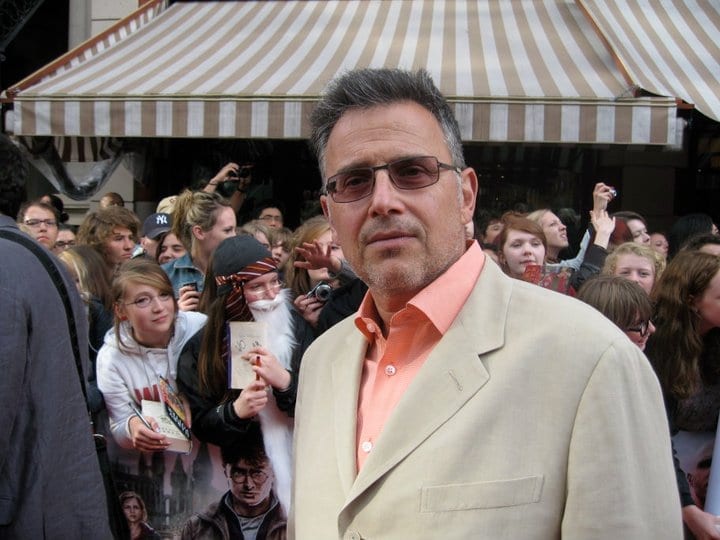
Stuart Graber If you were unfortunate enough to end up on death row, what would be your last meal and where would you eat it?
A Chinese ten-course dinner with the leader or person who could commute my death sentence. It would preferably be consumed on a private jet that can take off when I tell it to.
What time is it acceptable to consume the first drink of the day?
It depends on which country and what age you happen to be however if pressed I would say about 2-3 hours before you eat dinner.
A Negroni, a martini or a cup of tea?
Martini.
Whose parties do you enjoy the most and why?
LA based entertainment industry parties. They are much more experienced and better equipped to create the most amazing environments for a party.
Who is the most positive person you know?
My wife, Susan.
What’s your most guilty pleasure?
Smoking Cuban cigars.
If a tattoo were to sum you up, what would it be of?
A British bulldog, not because they are tough or mean looking but because they are the embodiment of loyalty and love.
If you were a car, what marque would you be?
A Grabercar. For those who don’t know, they are lightweight sports cars.
Cilla Black presented “Surprise, Surprise.” Tell us the most surprising thing about you.
I am an expert marksman and knife thrower.
What’s currently sitting on your mantelpiece?
Statues of my bulldogs, The Manoush and Cupcake.
A graduate of Harvard Business School, Stuart Graber is the chairman of the Alternative Board London. He lives in North London and was previously managing director of both Time Warner International and Music Choice Europe. He was also involved in developing, licensing and distributing culturally and linguistically adapted versions of Sesame Street and obtained the first commercial network radio license in the United Kingdom for Classic-FM.
-
No man is an island
The joys and pitfalls of island life
Living on a private island would, to many, seem like a dream. The prospect of being able to do what you want, when you want and without having to pander to rules and regulations indeed does sound appealing. Swapping the rat race and daily commute for white sandy beaches, crystal-clear waters and peace and tranquility would undoubtedly tempt huge numbers of us. Taking up the mantle of Robinson Crusoe certainly has it’s merits, but what are the perils of owning an island and what is currently available?
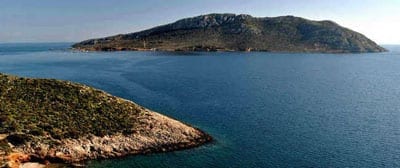
The Greek island of Patroklos On the leading website for the sale of islands, Private Islands Online, the most expensive undeveloped island on offer is the island of Patroklos in Greece. This relatively flat 643-acre undeveloped island boasts a “mild and pleasant” climate and 275-acres of cultivable land. It has about 150 goats and 5,050 olive trees and the agent suggests now is the perfect opportunity to exploit and develop tourism there. A price of £120 million is sought. So much for Greek austerity as whoever buys it will still have to shell out further to construct at least one residence.
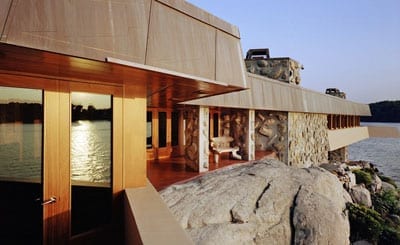
The Frank Lloyd Wright inspired Massaro House on Petra Island An especially spectacular option, also available through Private Islands Online, is Petra Island, just 15 minutes by helicopter from New York City on Lake Mahopac. The island itself, which is said to have been for sale for a number of years, is 11 acres in size and is currently owned by Joseph Massaro, a sheet metal tycoon. The highlight here is a 1,200 square foot cottage designed by Frank Lloyd Wright and a 5,000 square foot residence, Massaro House, built to the same architect’s designs in 2008. Though the Frank Lloyd Wright Foundation state of the latter: ““It’s not a Frank Lloyd Wright house, because it hasn’t been certified by the foundation,” this is a home that would certainly suit any James Bond villain. The agent declines to share the asking price, but it certainly at the higher end of the scale.
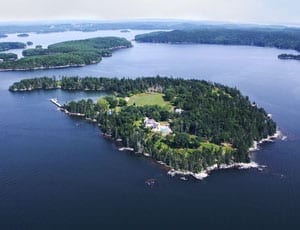
At a more modest price is Nautilus Island, off Brooksville in Maine. This 37-acre island was in the ownership of the same family for 130 years until 2004 and is named after the British war sloop “Nautilus,” that engaged the American vessel “Hazard” in battle in it’s waters during the American Revolutionary War.
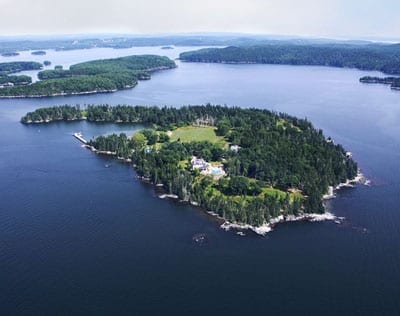
An aerial view of the island of Nautilus 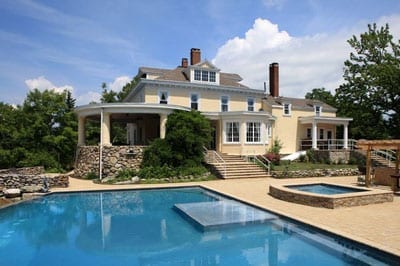
The main residence on Nautilus Island 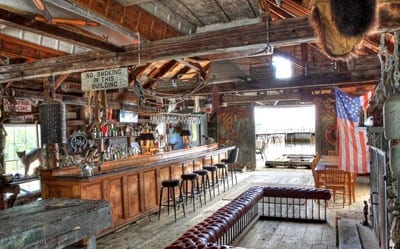
The island of Nautilus’s boathouse now serves as a stylish private bar The island includes a renovated 6-bedroomed main house, a farmhouse and a guest cottage. It also boasts open fields, perennial and kitchen gardens and a seaside vineyard for wine production. There is a protected harbour with a pier and moorings and over one mile of rocky coastline with gravel and shell beaches. A price of approximately £4.9 million is sought prior to auction on the 18th October through John Saint-Amour of LandVest.
Returning to Europe, Knight Frank offer a 65-acre island off Ireland’s west coast named Inishturk Beg at a price of £2.85 million. Sitting in Clew Bay, County Mayo alongside 364 other islands, receivers of an Egyptian-Irish businessman named Nadim Sadek are trying to find a buyer for a property that includes a main 7-bedroom house, 4 smaller properties, various outbuildings and an AstroTurf sports pitch.
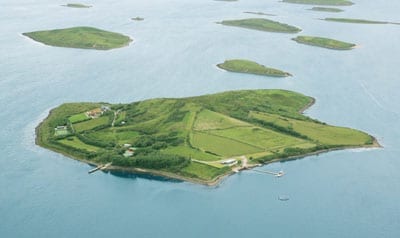
An aerial view of Inishturk Beg Island 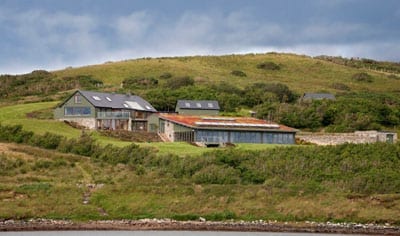
The main residence on Inishturk Beg, The Island House, comes complete with extensive leisure facilities Singing the praises of Insishturk Beg, Harriet Grant of Knight Frank comments:
“It is an easily accessible island and although it’s in the Atlantic it is very sheltered. And the island itself has plenty of natural shelter. It is an extraordinary development in which no expense has been spared. The electricity and water come straight from the mainland and it also has broadband access.”
British TV presenter Ben Fogle, who starred in the BBC reality show Castaway 2000, set on the Scottish island of Taransay, warned of the dangers of island ownership in an article in The Times recently when he commented: “A lot of people get seduced by the island dream without thinking of the realities.” Taransay came up for sale in 2011 and though Fogle put together a consortium that raised £1.5 million, he was beaten off by a landowner from the neighbouring island of Harris.
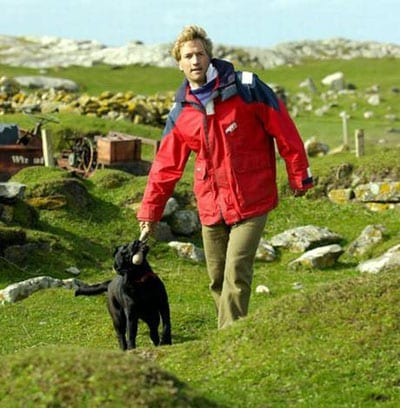
Television presenter Ben Fogle pictured on Taransay during the filming of the BBC’s “Castaway 2000” reality show The Barclay brothers, owners of amongst other things The Ritz and The Telegraph Group, have had their fair share of trouble since purchasing the sister island of Sark, Brecqhou, in 1993. They have rowed with Sark’s government over everything from inheritance law to property taxes and whether they should or should not be allowed to use motor vehicles. Their case illustrates the perils of upsetting the locals.
Issues such as electricity provision, sanitation, the delivery of food supplies and how one would cope with an emergency may seem more mundane but also must be considered by those purchasing an island. Sir Richard Branson found this to his cost when the 8-bedroomed Great House on his £60 million Necker Island in the Caribbean burnt to the ground in August 2011. If he’d been on the mainland, his residence would most probably have been saved.
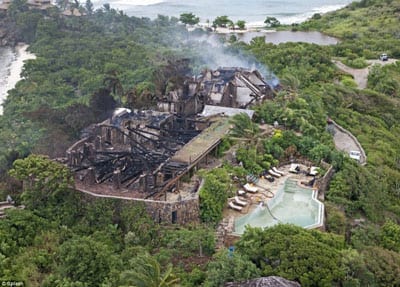
The remains of The Great House on Sir Richard Branson’s Necker Island On this morning’s Desert Island Discs, Hollywood actress Goldie Hawn requested that the luxury she would like to take would be lip-gloss. Presenter Kirsty Young said she could have two tonnes of the stuff. Frankly, in reality though, anyone buying into island life would have to have a lot more practical things higher up their lists.
For more information on Inishturk Beg Island, Westport, County Mayo, Ireland, go to: http://search.knightfrank.com/gwr120043
For more information on the islands of Patroklos, Greece and Petra, New York, go to: http://www.privateislandsonline.com
For more information on Nautilus Island, Brooksville, Maine, go to: http://nautilusisland.landvest.com
-
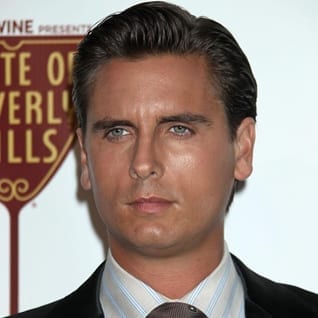
Scott Disick

This reality television star commented of himself: “I may be a douche to some people, but I actually do run companies. I make a lot of money, and I’m more than capable of supporting myself.” The father of a child by Kourtney Kardashian, Disick owns a restaurant in New York’s Meatpacking District, generally sports Tod’s and boasts an extensive car collection. Sadly one is chrome wrapped.
-

Dmitry Rybolovlev
 This billionaire businessman started out in medicine but soon moved into commerce realising that enterprise would better provide for his family. He was imprisoned on falsified charges of contract murder for 11 months in 1996. Subsequently cleared, Rybolovlev then went on to make his fortune in potassium and banking. This divorced father of two has used his fortune to fund the restoration of many of Russia’s churches and also bought Donald Trump’s former residence, The Masion de L’Amitie in Palm Beach, Florida, for $95 million in 2008. This risk taker also parted with another $88 million in December 2011 to purchase New York’s most expensive apartment for his 22-year old daughter. Rybololev’s passions are surfing and 19th and 20th century art.
 -
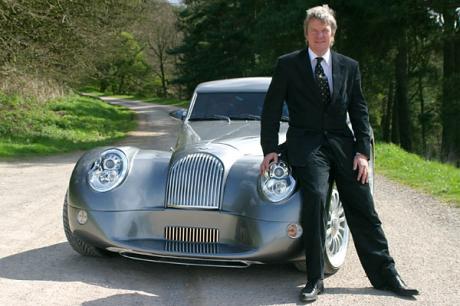
Charles Morgan
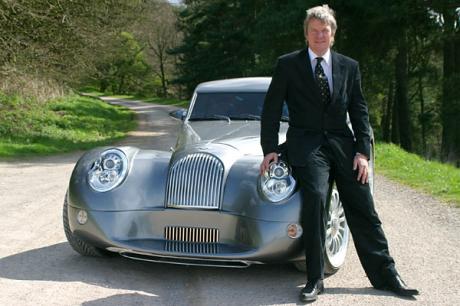 He’s a member of the family who created and still own the legendary Morgan Motor Company. He’s also worked in television news as a cameraman for ITN and is a motivational speaker specialising in change management. Morgan lists his quirk to be: “Looking English in spite of buying Italian jackets.”
 -
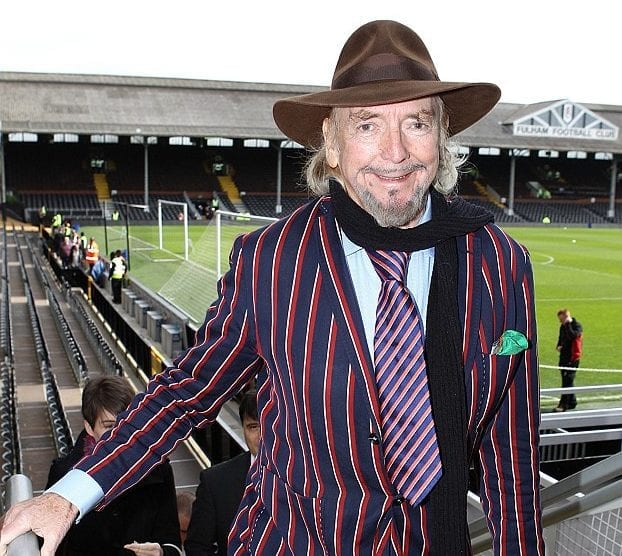
Owen Oyston
 This flamboyant fedora wearing tycoon made his fortune selling an estate agency empire just before the 1987 stock market crash. He’s now worth in excess of £100 million. Married twice to a former Miss Blackpool, his 13th century Lancashire home, Claughton Hall, was moved from the bottom of a hill to the top. He served three years in prison for raping a woman who strangely couldn’t remember in which year the crime occurred. Oyston continues to protest his innocence but with his majority stake in the prospering Blackpool F.C. and other interests, he’s got plenty else to keep himself busy.