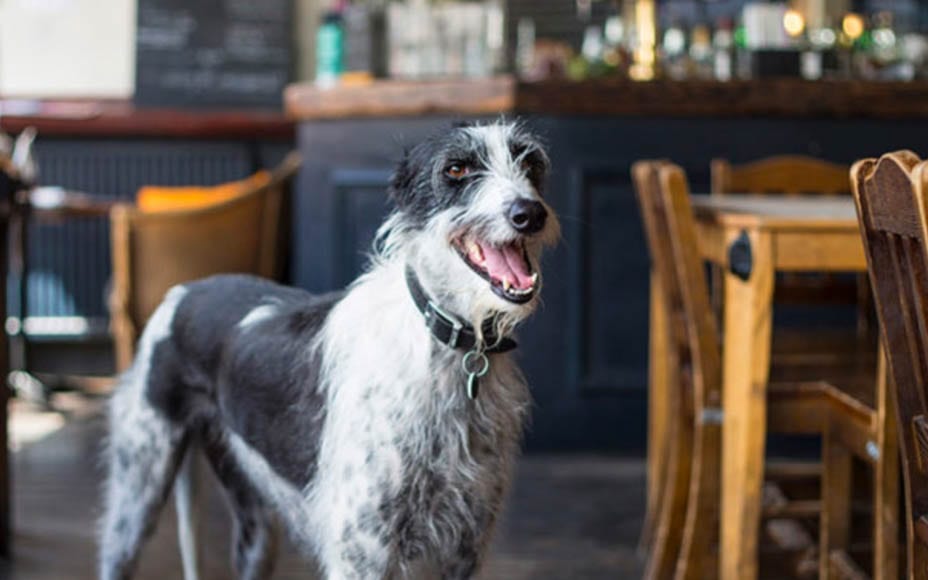
Whackjob Wetherspoons owner Tim Martin has followed up on banning foreign booze including Moët & Chandon and now banned dogs from his entire chain of pubs
Pro-Brexit publican Tim Martin has landed himself quite literally in dogshit.
According to a report in Friday’s Mirror, Martin’s pub chain, Wetherspoon, will ban dogs from both the inside and outside areas of his 880 pubs from Monday 10th September 2018. The reason? “The group’s hard-working staff had grown tired of picking up poop.”
Back in June, this king of ‘making a dog’s dinner of it’ scored another own goal when he banned European alcohol such as Moët & Chandon champagne from his premises also. At the time, this multi-millionaire commented: “The EU’s customs union is a protectionist system which is widely misunderstood. The products we are now introducing are at lower prices than the EU products they are replacing.”
In April, plainly showing how much he likes to ban things, Martin ordered his staff to delete all the firm’s social media profiles. Whatever next? Will he ban his very own customers?
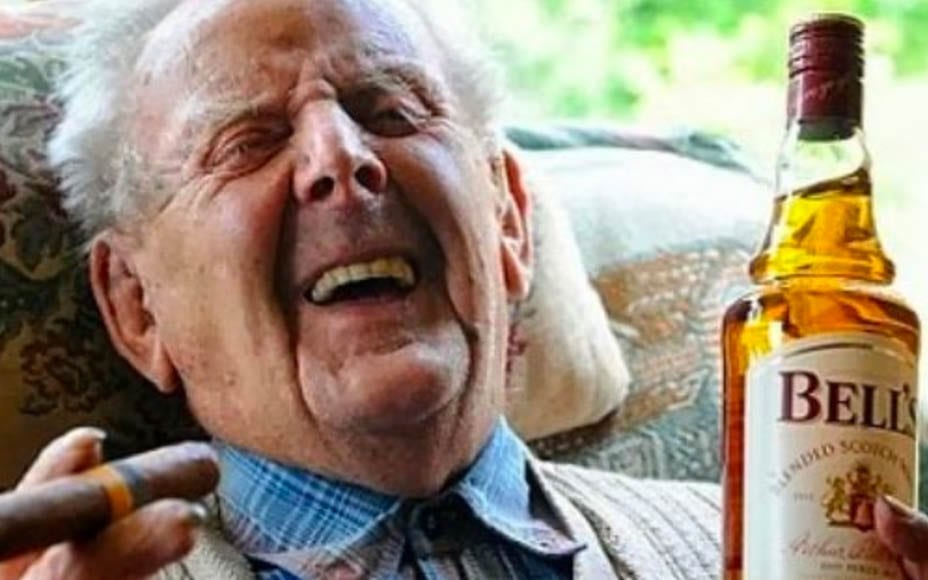
Study reveals old aged folk who get fat and enjoy a tipple or two tend to live longer
On Wednesday in society magazine Town & Country, Sam Dangremond revealed that “drinking alcohol could be the key to living past 90.”
Quoting The 90+ Study, “one of the largest studies of the oldest-old in the world” and something that encompasses some 1,600 people aged over 90 years old, Dangremond remarked: “It turns out an extra beer or glass of wine might actually help you live a longer life.”
In summary, the study found that nonagenarians consuming “two glasses of beer or wine a day improved their odds of living longer than those who did not, by about 18%.” Interestingly also, overweight (but not obese people) in their 70s live longer than normal or underweight people, the study also found.
Of the results, Dr Claudia Kawas, a neurology specialist at the University of California, commented:
“I have no explanation for it, but I do firmly believe that modest drinking improves longevity.”
“It’s not bad to be skinny when you’re young, but it’s very bad to be skinny when you’re old.”
We say: “A most definite hearty cheers to that.”
#HappyDrinking
Follow The Steeple Times on Twitter at @SteepleTimes.
As Public Health Wales claims drinking spirits is bad for you, we rebut their frankly stupid study
On Tuesday, The Telegraph reported that a completely unscientific study by an organisation named Public Health Wales had found that spirits are more likely to “trigger bouts of depression and unexpected weeping.”
Said also to cause an increase in negative feelings and levels of aggression, spirits also are said to boost confidence and energy levels and make people “feel sexier.”
Whilst The Telegraph’s article about the study focused on the spirits category in general, today The Guardian moved the focus to gin specifically. In a feature titled: ‘Spirits down: proof that gin makes you sad,’ the paper mocked the survey and rightly pointed out: “Other things that make you sad include literally everything that has ever happened in the world over the past decade.”
They are right, but we’d go one stage further and suggest this: “Drink whatever makes you happy and if you can’t have one at eleven, have eleven at one.”
Cheers!
Follow The Steeple Times on Twitter at @SteepleTimes.
‘Sir Shifty’ filmed in debauched incident in Mykonos; he would do better to sip rather than spray his beverages
Sir Philip Green will forever be remembered as a man whose former company, BHS, collapsed with the loss of 11,000 jobs. At that time, in The Steeple Times, the actor and producer Steven Berkoff compared him to both Shylock and Al Capone, but now ‘Badly Behaved Boozy Brit Abroad’ can add be added to this slug-like individual’s roster after he was spotted dousing fellow diners with champagne in Greece.
Filmed by someone named Sarah Nazari and shared on her Instagram page, the minute long clip shows Sir Philip at a beach bar-restaurant named Nammos Mykonos. Alongside other revelers, the business tycoon was pictured hosing other guests down with £109 ($141, €120 or درهم517) per bottle “spraying champagne.” He didn’t look like he had a care in the world and perhaps, just maybe, his daughter’s new jailbird boyfriend, Jeremy Meeks, had provided him with inspiration to behave like a reprobate.
Of antics more befitting of a 20-year old than a 65-year old, an unnamed source told The Times: “You couldn’t be in this club if you aren’t rich, so he wasn’t impressing anyone. He just looked like a sad old man trying to play with the pretty people.” Spot on: ‘Sir Shifty’, at his age, would do well to sip rather than spray.
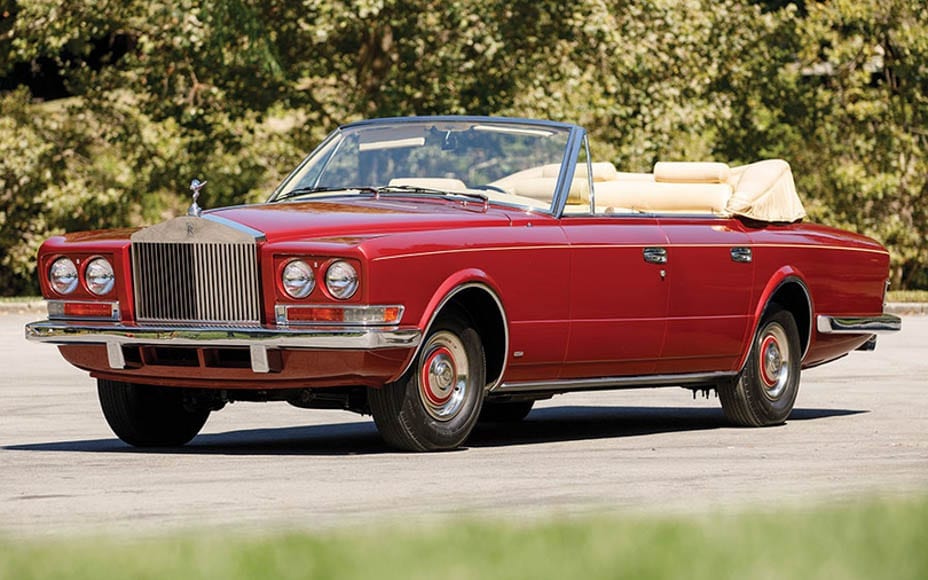
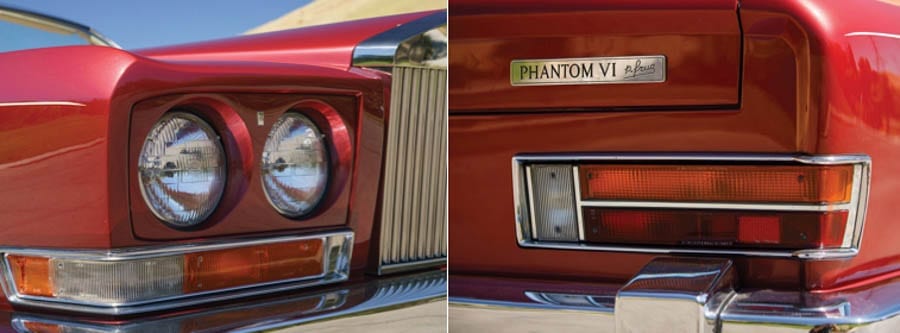
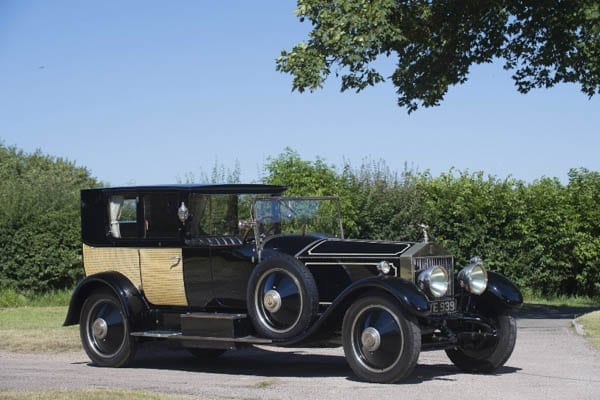
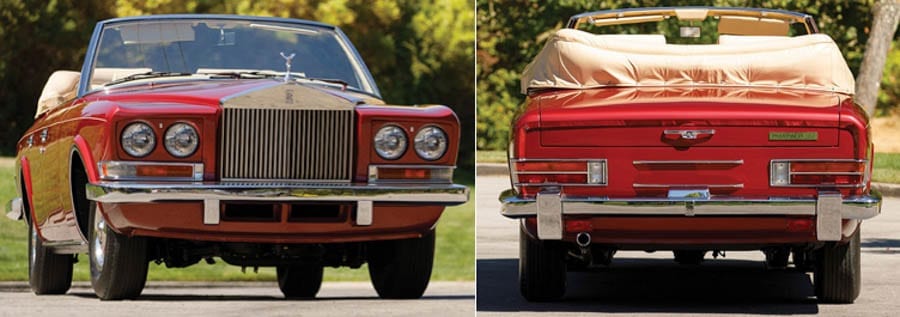
One-off 1971 Rolls-Royce Phantom VI cabriolet to be auctioned; originally commissioned by a British playboy turned jailbird with connections to Princess Margaret but only actually completed in 1993
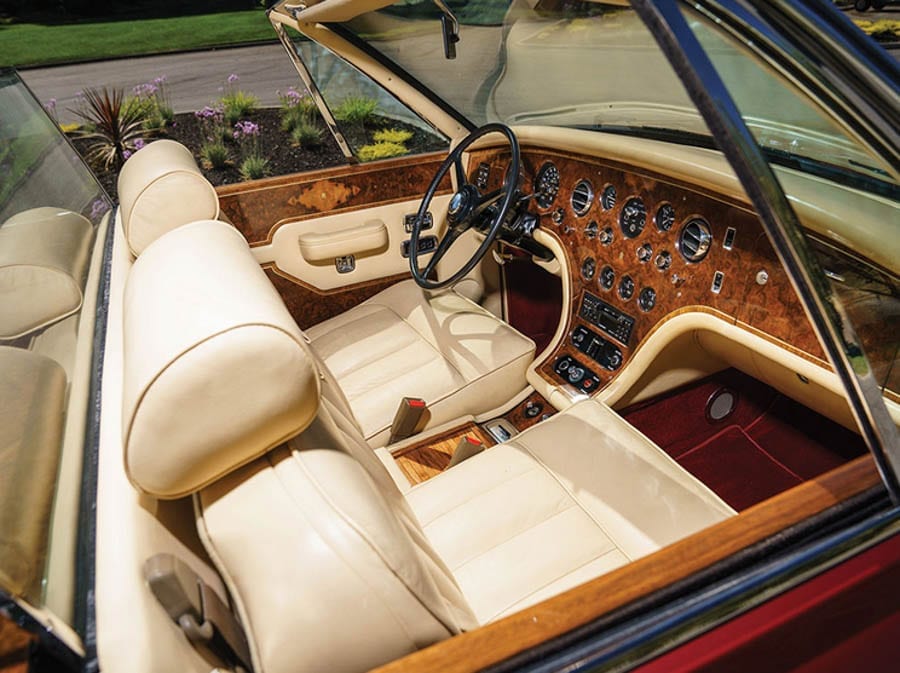
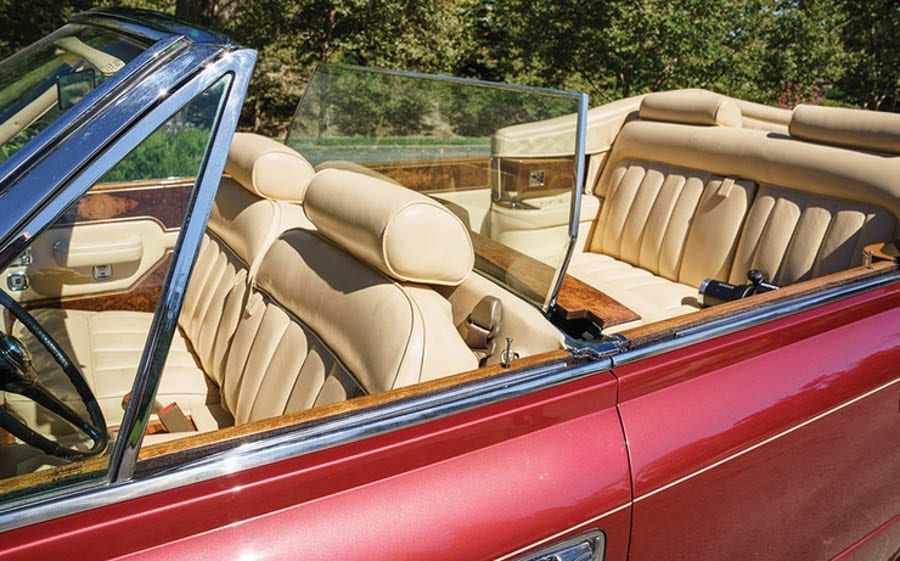
Offered with an estimate of £308,000 to £462,000 ($400,000 to $600,000, €340,000 to €511,000 or درهم1.5 million to درهم2.2 million), this truly unique, one-of-one design was amazingly the final Rolls-Royce Phantom VI completed in spite of the model remaining in production until 1991. This mammoth beast of a car, surprisingly, however, has just 72 miles on its clock and is thus described as “as brand new.”
The car’s first owner, Robert ‘Bobby’ Buchanan-Michaelson, was a bit of a playboy but sadly he never got to actually drive or be driven in it. A “member of Princess Margaret’s inner circle of friends,” this Cambridge graduate was a member of the “Mayfair mammas’ lists of the season’s most eligible bachelors” until “exchanging his Edwardian hacking jacket for prison grey” in 1954 after being jailed for 12 months for an import/export fraud according to a report in Sydney’s World’s News in August that year.
Some years after being freed, ex-con Buchanan-Michaelson took part in the 10,000 mile 1968 London to Sydney Marathon in a Mercedes-Benz 280SE. In a book about the adventure he was described as both a “successful and wealthy businessman, employing a cook, a butler, a maid and a chauffeur” and as an “accomplished sportsman.” Also listed as a lavish spender, Buchannan-Michaelson was later bankrupted in November 1977 – though at the time he lived in grandeur at both at Churchbury Manor at Fairford, Gloucestershire and 26 The Vale, in Chelsea, London, SW3.
In 1970, in the period between the international car race and his bankruptcy, Buchanan-Michaelson commissioned Rolls-Royce to build him a Phantom VI. After delivery to Jack Barclay Ltd. In June 1971, the vehicle’s chassis was sent to Frua of Torino, Italy to have bodywork fitted but for some reason work stopped and it was not until 1977 – and by now with a new American owner, James Leake, and new drawings of its eventual form – that the project continued.
With Pietro Frua (1913 – 1983) retiring soon thereafter and Mr Leake’s death in 1983, the chassis passed to new ownership and it was only eventually completed as a finished motor vehicle in 1993.
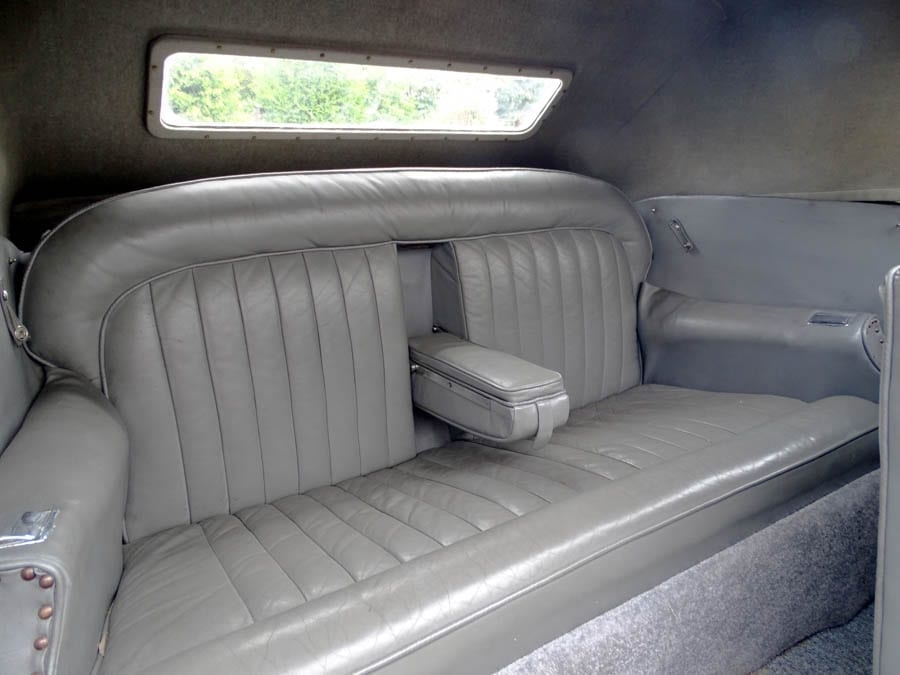
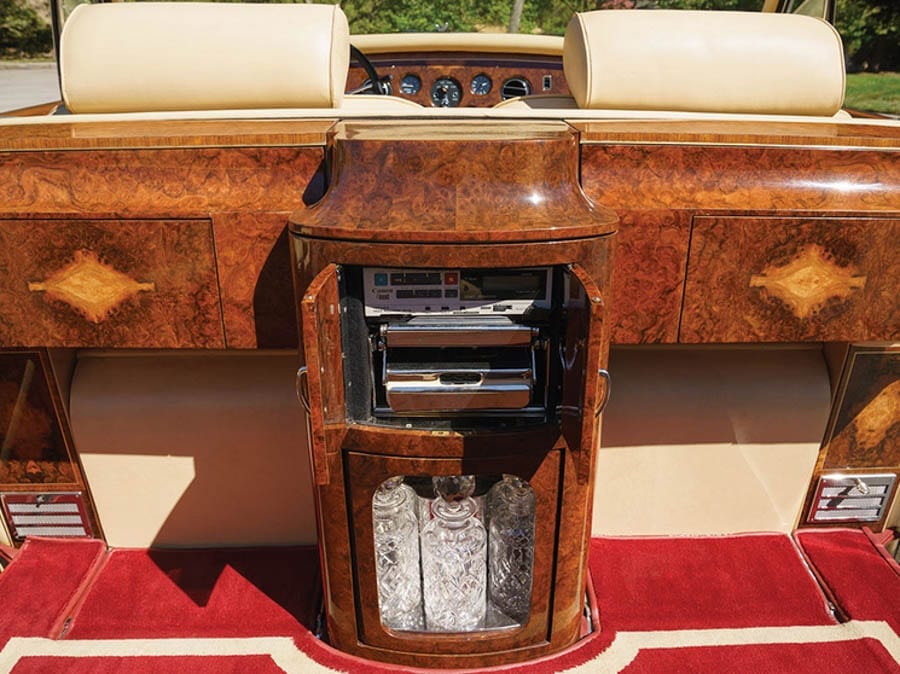
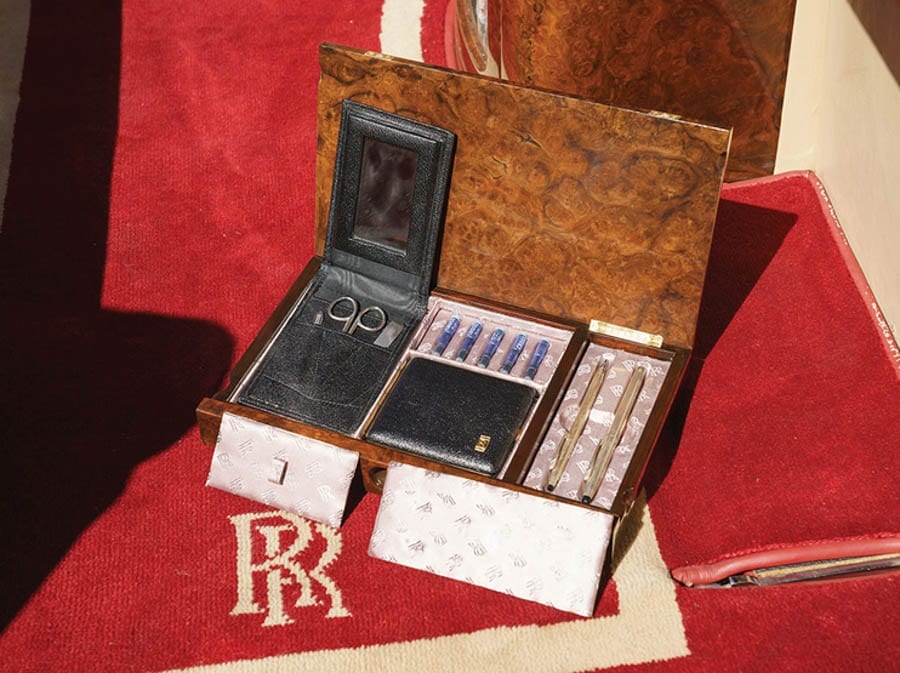
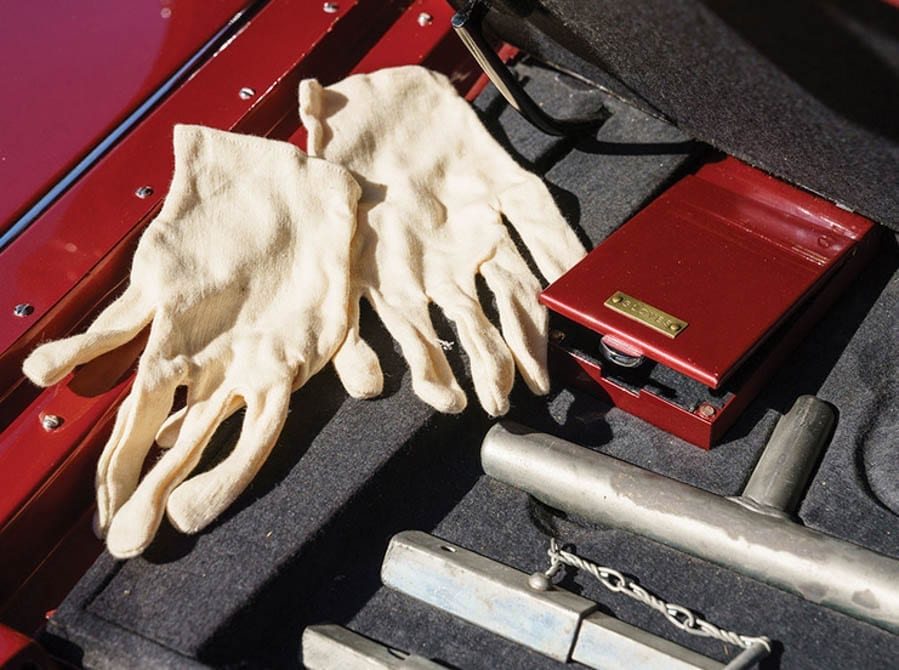
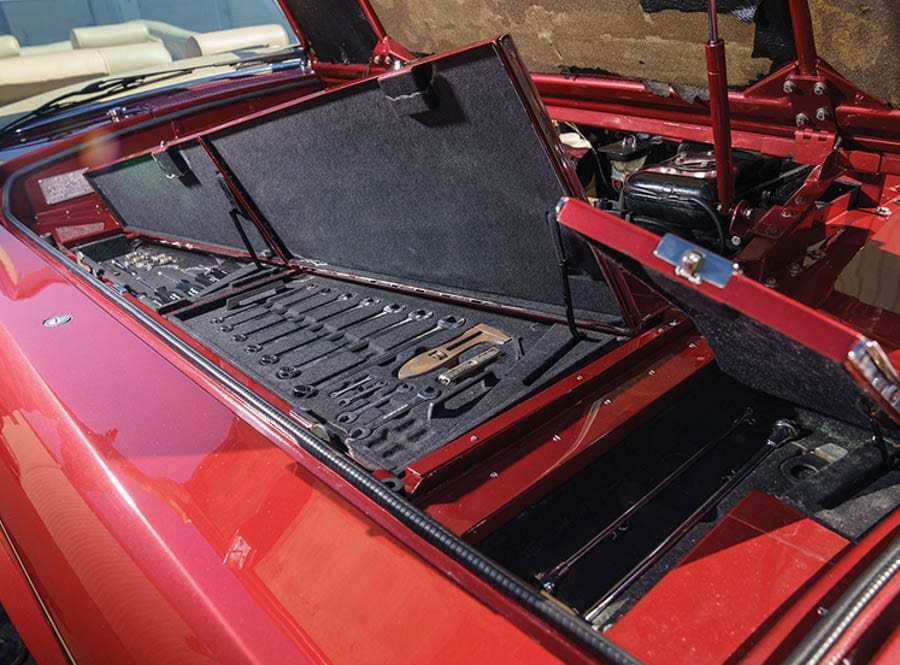
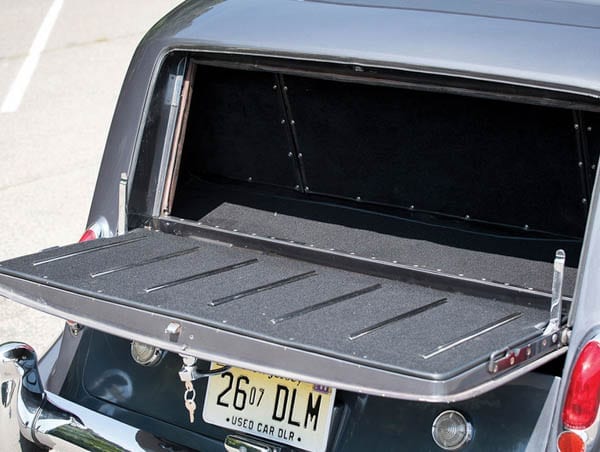
That year, the four-door ‘state cabriolet’ was displayed at the Geneva Motor Show and its boxy look must have surely either have wowed or horrified visitors. It is described as having “an elaborate multi-position convertible top allows the car to be configured as a sedanca de ville, landaulet or fully open convertible.” The interior is trimmed in burled walnut with sterling silver inlays and amongst other luxuries are front and rear heating, air-conditioning, fresh-air ventilation systems, a television, a video player, a radio and a cocktail cabinet. Underneath the seats is a portable Davidoff cigar humidor and even a matching silk-lined ladies’ vanity case. What more could anyone ever need?
RM Sotheby’s will sell the Frua Phantom VI at their Monterey sale in California on 19th August and term it: “The last word in modern opulence.”
George Freeman MP denies he wants to create a Tory version of Glastonbury; imagining Theresa May boozing with Liam Gallagher definitely would be hard
Theresa May, Dizzee Rascal and Liam Gallagher would certainly make for unlikely bedfellows but now a Conservative MP, George Freeman, wishes to replicate Jeremy Corbyn’s success in such company at Glastonbury and in September will host his own festival in Norfolk.
Former biotechnology entrepreneur Mr Freeman, chairman of Mrs May’s policy board, asked: “Why is it just the left who have all the fun in politics?” and has received support for what he calls a “friends and family event” and a “cross between Hay-on-Wye and the Latitude festival” from a number of sponsors and venues.
Expected to be called the “Conservative Ideas Festival,” the event was remarked on by one unnamed fellow MP as: “Very trendy” but needing “a lot of expensive booze” for him to attend. One might argue seeing Mrs May drunk in one of her beloved wheat fields might amuse many, but in reality this idea sounds nearly as bad as when the party put William Hague in a baseball cap at a theme park in 1997. Theresa, a word of advice: Don’t do it.
A dream job for wine lovers; get paid to drink and drive your way across America
An Oregon winery is seeking a ‘Canbassador’ to join them on a roadtrip across America to hawk their range of wines – including their ‘pinot in a can’.
The Union Wine Company, founded by Ryan Harms in 2001 with the aim to create good wines at affordable prices, are looking for an individual to join them in their 1972 Citroën mobile wine bar as it tours US music festivals, store openings and outdoor events. The position encompasses 30-40 hours per week in terms of time commitment, 4-6 months per year and as Guest of a Guest reported last week, here is a chance to “drink and drive the legal way”.
Applicants must be over 21, be able to drive large, manual transmission vehicles with trailers and have good navigation skills. Naturally, they must also have “an appreciation for wine”. A salary is not specified on the company’s website but it will be “commensurate with experience”.
New Jersey mansion, complete with 58 rooms, for sale for equivalent sum to what it cost to build in 1909; the £37 million house’s original owner was a man whose extravagance knew absolutely no bounds
George Crocker (1856 – 1909) makes F. Scott Fitzgerald’s Jay Gatsby seem like an amateur. Born in Sacramento and the son of a railway magnate worth some $30 million on his death (the equivalent of £634 million or $812 million today), Crocker was willed a significant $6 million (the equivalent of £127 million or $163 million today) on the condition that “after the space of five years continuously he shall abstain from the use of spirituous, vinous, and malt liquors to the extent that he shall not during this period have been intoxicated”.
Crocker decided to ignore the terms of his father’s behest and from 1888 to 1891 lived in San Francisco as “one of the most reckless young men about town when reckless young men thereabouts were common” but then admitted himself to a sanatorium, put himself on the straight and narrow and finally collected the sum of $6 million in 1898.
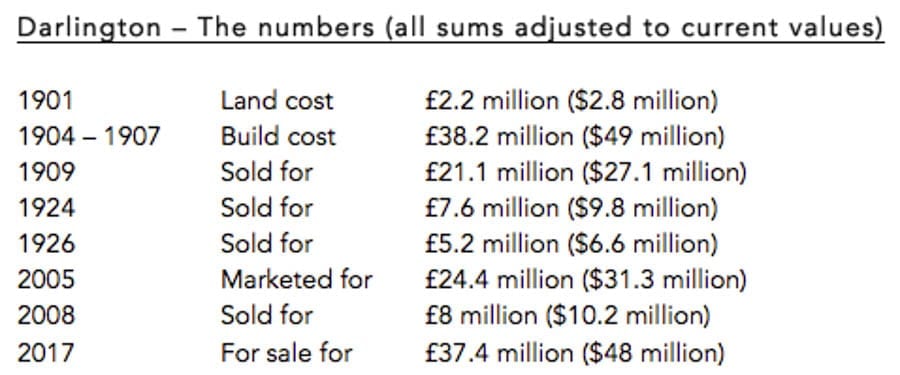
With wealth and a glamorous wife, Emma Rutherford, a widow from California, Crocker set himself up as the toast of New York society. Though he owned a townhouse at 1 East 64th Street and a villa in Newport, it was on paying $96,500 (the equivalent of £2.2 million or $2.8 million today) for the 1,100 acre Darling estate in Bergen County, Mahwah, New Jersey in 1901 that he truly became someone noticeable.
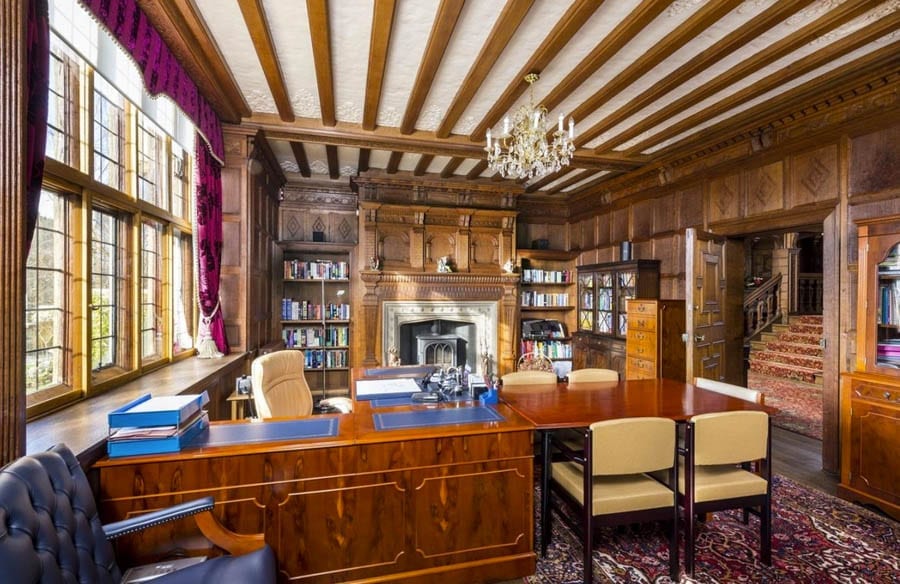
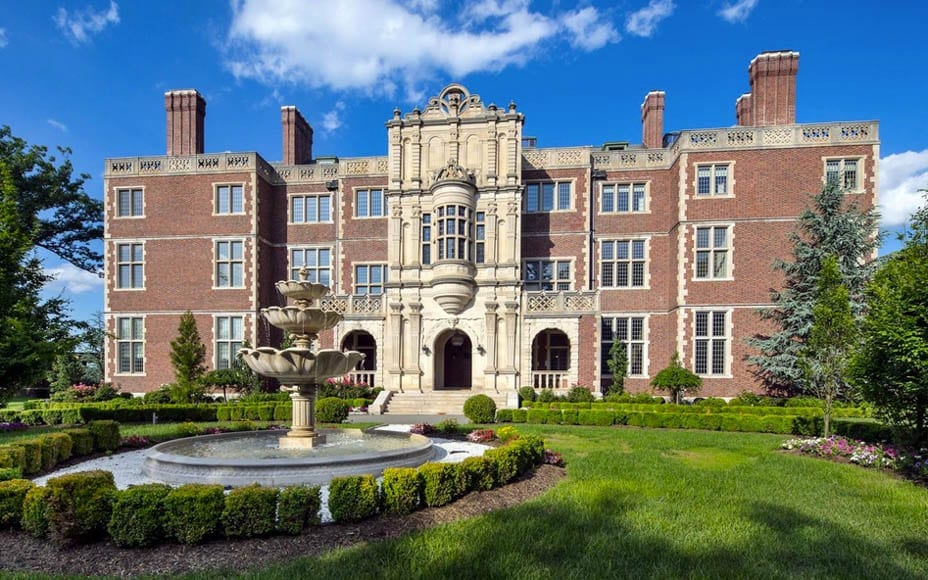
Choosing what he called “the finest site for a residence in the country”, Crocker commissioned an architect named James Brite (died 1942) to build him a mansion “sparing no expense”. Modeled on a Jacobean prodigy house, Bramshill House in Hampshire, England and built from Indiana limestone and Harvard brick, the “Crocker Mansion” or “Darlington” – as it is more widely known – cost $2 million to build (the equivalent of £38.2 million or $49 million today) and included 75 rooms and around 50,000 square foot of accommodation. Its features included steam heating, elevators, ice cream freezers, integrated vacuum systems and a switchboard and in its grounds a racetrack and 16 greenhouses were constructed whilst a pond was stocked with 4,000 trout.
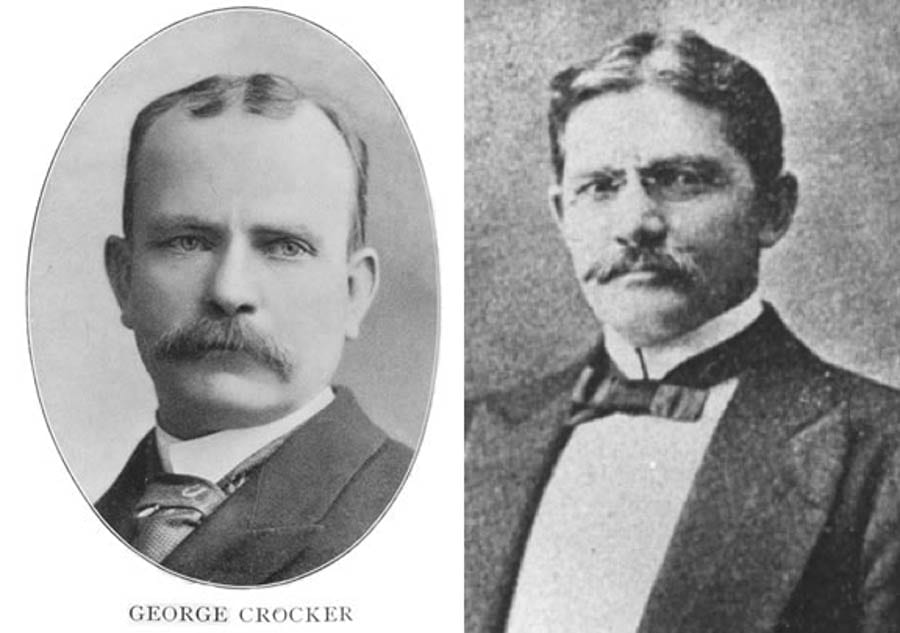
George Crocker and Emerson McMillin
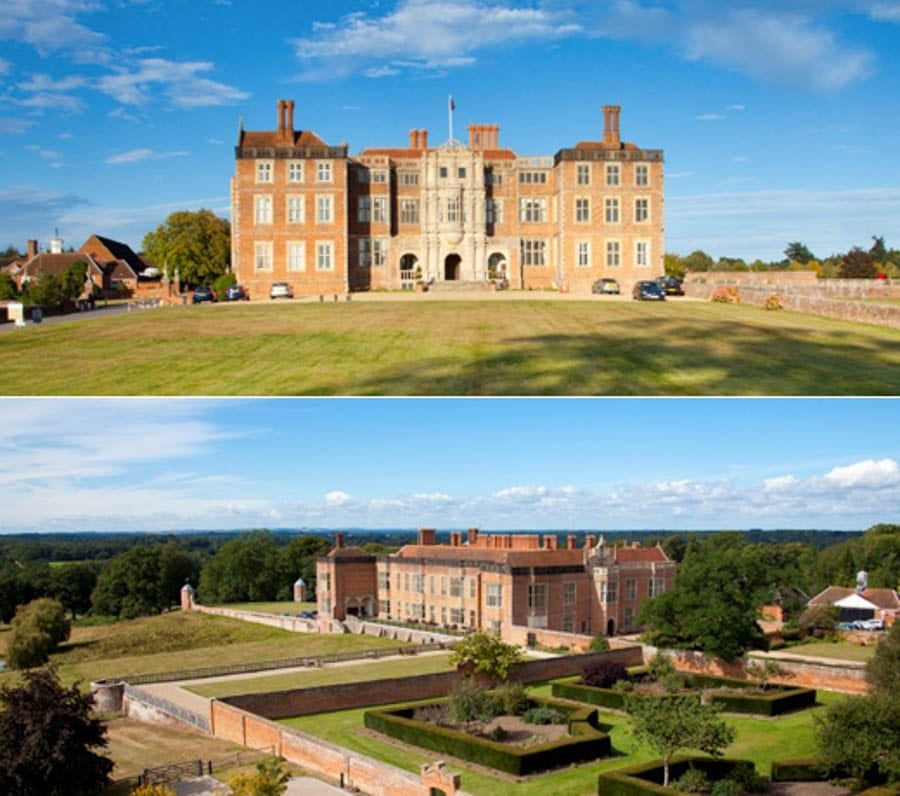
The design of Darlington was based on “one of the most haunted houses in England”, Bramshill in Hampshire; that building itself was also eventually separated from much of its estate and after being used as the European Police College was sold to developers City & Country for £25 million ($19.5 million) in 2014
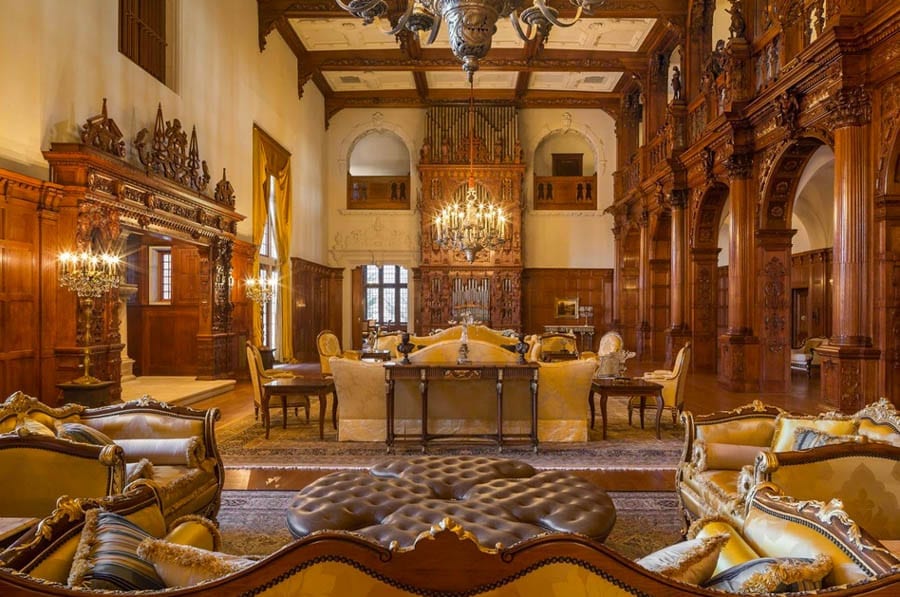
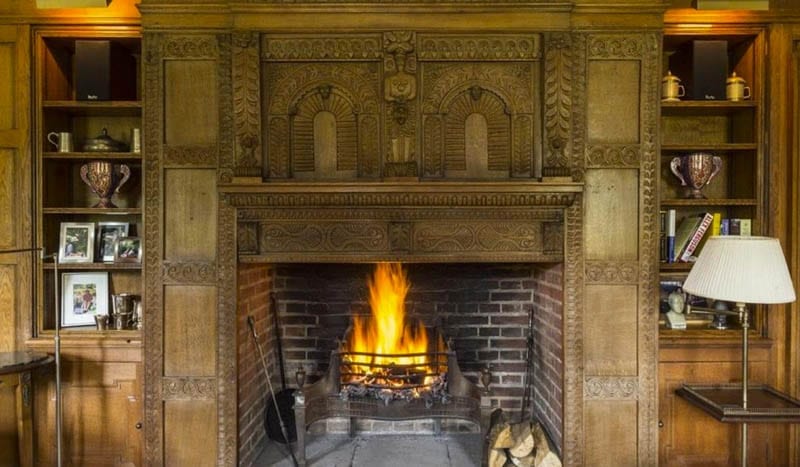
Commentators wowed at the resulting creation and noted details such as a library painted after the style of the Italian Renaissance by Tiffany Studios, elaborate wood carving by Italian craftsmen and Tiffany silver chandeliers and a 1906 Aeolian player pipe organ in the building’s 30-foot high Great Hall. In 1912, Architectural Record, chose even to swoon over the basement. They remarked:
“Where Bramshill’s cellar housed for centuries lanterns, tallow dips, forest faggots, wooden vessels for the distribution of light, heat and water through personal service of human slaveys, its American reincarnation is a storehouse of miracle workers in the comfort and luxury of modern domestic life”.
Unfortunately, Mr and Mrs Crocker did not truly get to enjoy the fruits of their extravagant spending. Emma Crocker died in 1904 of cancer and George Crocker also succumbed to the disease in 1909. His estate was valued at $20 million (the equivalent of £422 million or $541 million today) and amongst items found at his mansion were 60,000 personally monogrammed, custom-made cigars valued at $30,000 (the equivalent of £635,000 or $813,000 today).
Sold subsequently to a “self-made” banker, industrialist and astronomy enthusiast named Emerson McMillin (1844 – 1922) in 1909 for $1 million (the equivalent of £21.1 million or $27.1 million), Darlington was next used to display a fine collection of Chinese and Japanese porcelain whilst a herd of Jerseys were kept in the grounds.
After McMillin’s death, his widow sold the estate in 1924 for $685,000 (the equivalent of £7.6 million or $9.8 million) to the Darlington Development Company, which in turn made it available to the Darling Golf and Country Club. They converted the building to a hotel and club that “promised to offer a new dimension to life in Mahwah” but “the development corporation and the club were soon in financial difficulties” and the McMillin estate foreclosed and regained possession.
A new buyer came forward in the form of the Roman Catholic Diocese of Newark. They paid $478,000 for the property in 1926 (the equivalent of £5.2 million or $6.6 million today) and used Darlington as a theological seminary. The surrounding land was gradually sold off and in 1986, the Immaculate Conception Seminary also departed.
Darlington today – The 30-foot high Great Hall is still dominated by a 1906 Aeolian player pipe organ
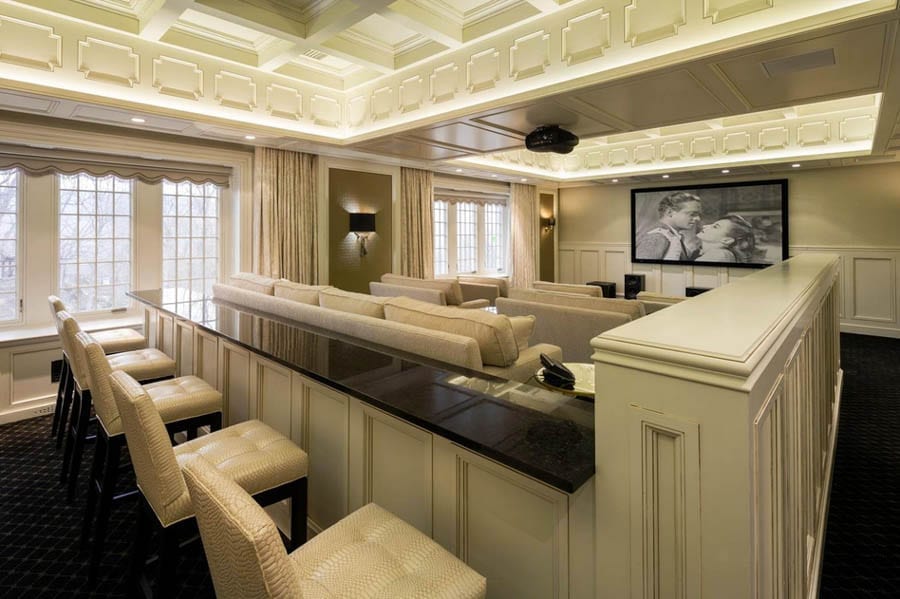
Darlington today – Ilija Pavlovic expanded the mansion by some 12,000 square foot and amongst other things added a large home cinema
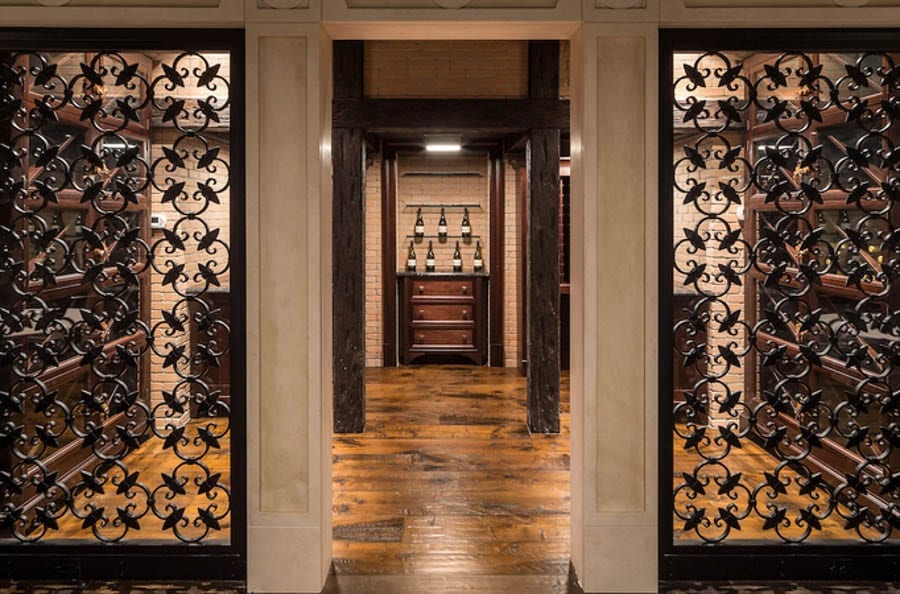
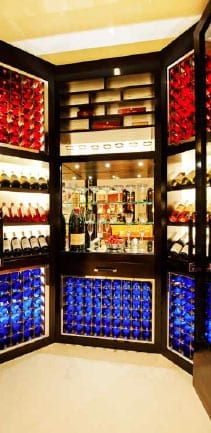
Darlington today – Another addition comes in the form of a vast wine cellar; George Crocker’s father would not have approved
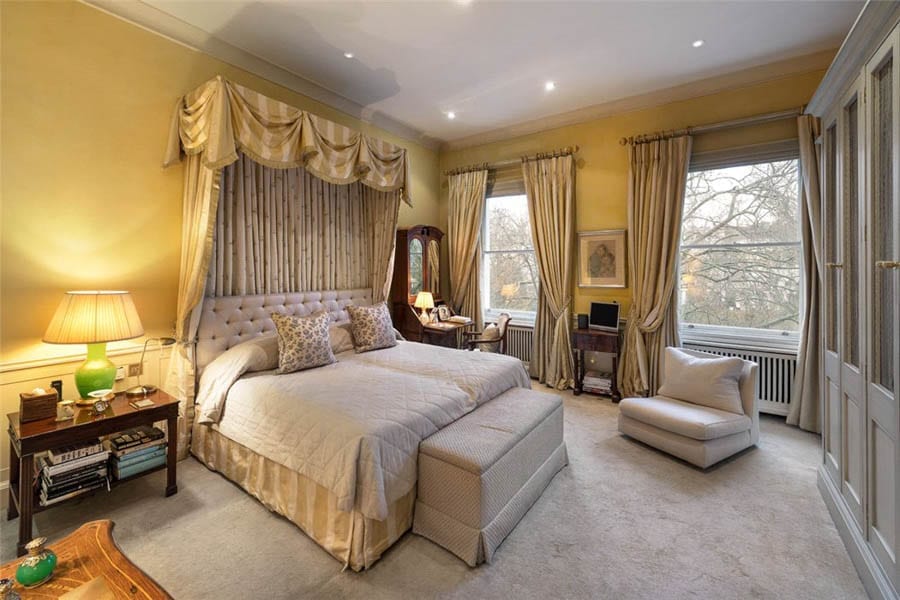
Subsequently restored and modernised with, according to Forbes, plumbing, heating, air conditioning and communications systems being installed, Darlington was placed on the market with just 12.1 acres in 2005 by Darlington Associates, a firm who’d built “multiple residential communities surrounding the mansion”. An ambitious figure of $25 million (the equivalent of £24.4 million or $31.3 million today) was sought for the now classified historic site but it was not until 2008 that a buyer came forth in the form of a local businessman named Ilija Pavlovic. He paid just $8.875 million (the equivalent of £8 million or $10.2 million today) and then embarked on the “challenge” of “both preserving the historic home while also restoring it to meet 21st-century standards”. The resulting creation spans four floors and includes amongst many other things a tea room, 3 libraries, 2 game rooms, 2 kitchens, a “his and her master bedroom wing”, 12 further guest bedrooms and 5 staff bedrooms.
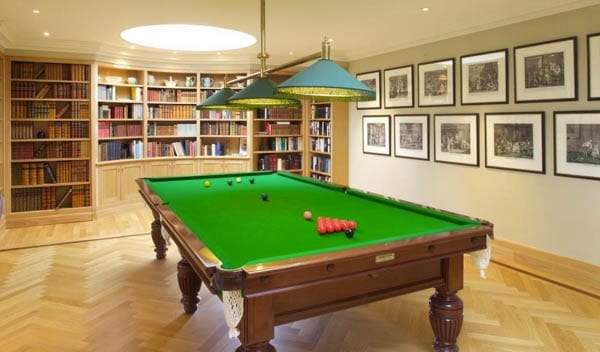
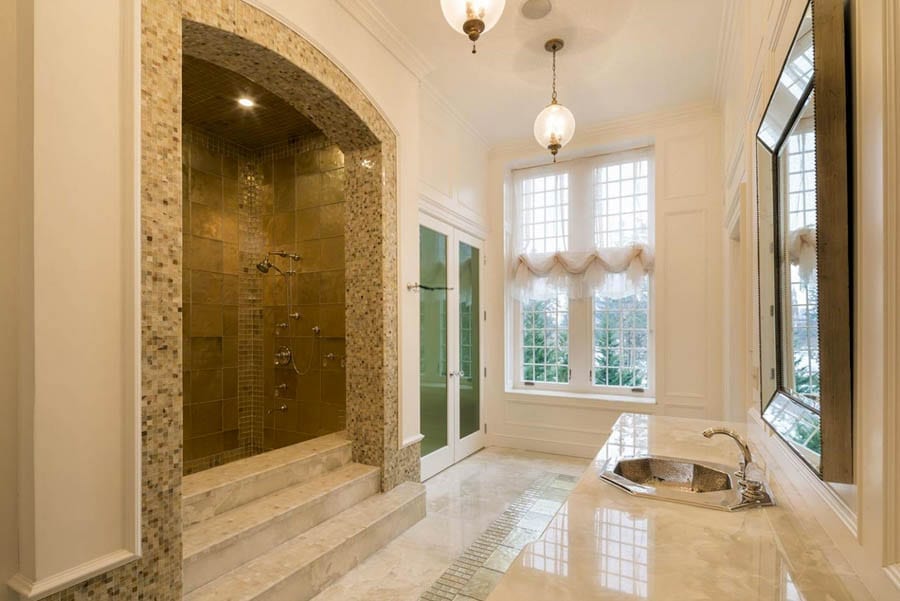
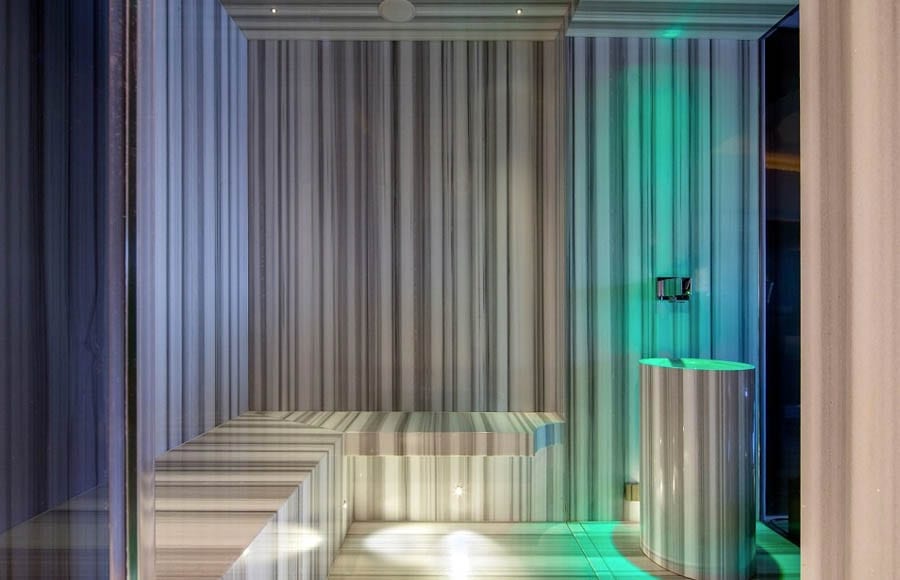
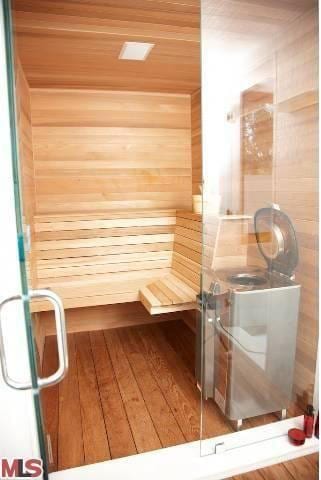
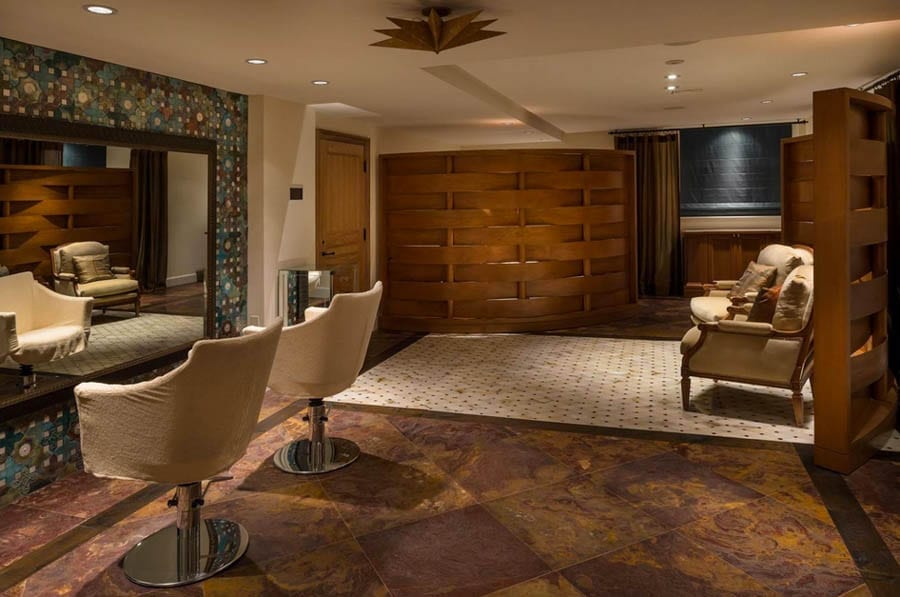
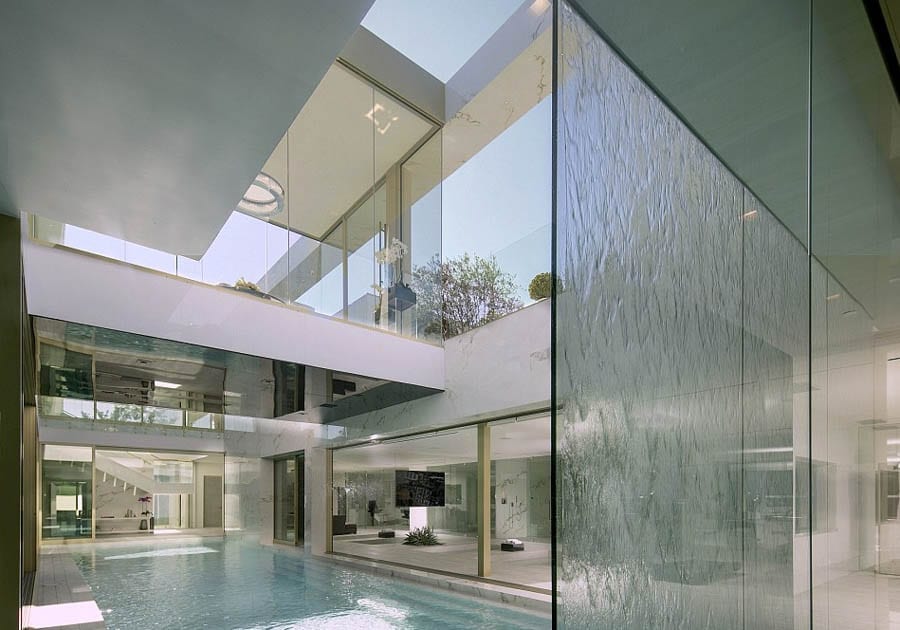
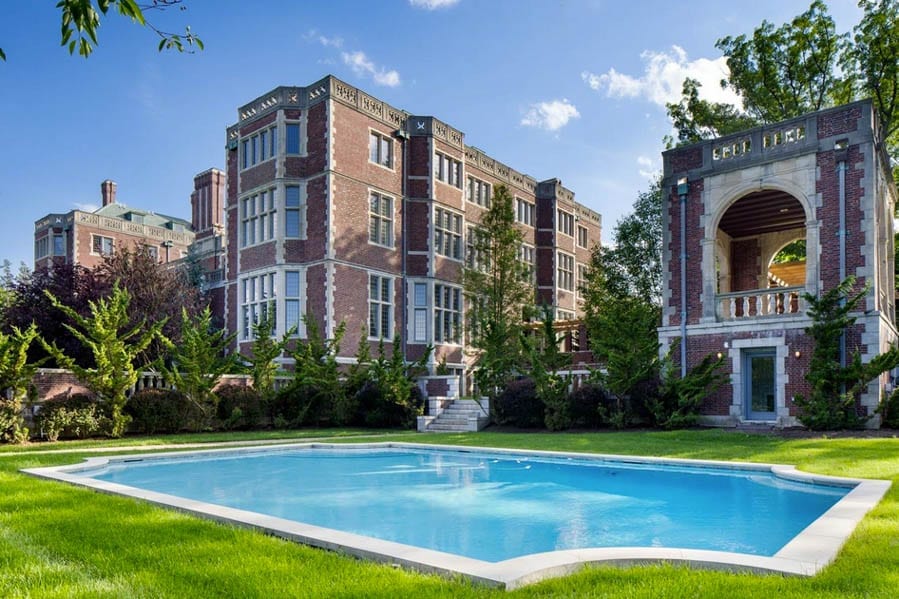
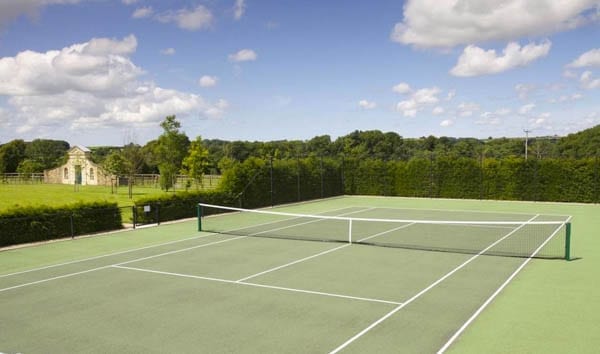
The biggest issue with the house, it transpired, was that its 476 leaded windows needed to be replaced. This reportedly cost $2 million alone (the equivalent of £1.8 million or $2.3 million today) and in addition, Pavlovic renewed all the mechanical systems, redid all 19 bathrooms, replaced the slate roof and added amongst other things a spa with an indoor lap pool, a gym, a massage room, a beauty salon and a home cinema. There is also a gatehouse, a professional kitchen that can serve 250 meals at a time, a wine cellar, a poker room, a cigar room, a billiards room, an 8-car garage, a tennis court and an outdoor swimming pool.
Property blog 6sqft – which claimed Friday that the current owners do not live at Darlington full-time and simply use it to host events – reported that this still massive mansion minus its formerly equally gigantic estate is now for sale now for £37.4 million ($48 million, €44.7 million or درهم176.3 million) through a firm Mr Pavlovic chairs, Special Properties Real Estate Services – an affiliate of Christie’s International Real Estate. Any buyer will undoubtedly be a vastly wealthy figure, but one can guarantee one thing: They’ll never live as lavishly as the barmy boozer George Crocker.
New Jersey mansion Darlington, complete with 58 rooms, for sale for equivalent sum to what it cost to build in 1909; the £37 million house’s original owner was a man whose extravagance knew absolutely no bounds
George Crocker (1856 – 1909) makes F. Scott Fitzgerald’s Jay Gatsby seem like an amateur. Born in Sacramento and the son of a railway magnate worth some $30 million on his death (the equivalent of £634 million or $812 million today), Crocker was willed a significant $6 million (the equivalent of £127 million or $163 million today) on the condition that “after the space of five years continuously he shall abstain from the use of spirituous, vinous, and malt liquors to the extent that he shall not during this period have been intoxicated”.
Crocker decided to ignore the terms of his father’s behest and from 1888 to 1891 lived in San Francisco as “one of the most reckless young men about town when reckless young men thereabouts were common” but then admitted himself to a sanatorium, put himself on the straight and narrow and finally collected the sum of $6 million in 1898.
With wealth and a glamorous wife, Emma Rutherford, a widow from California, Crocker set himself up as the toast of New York society. Though he owned a townhouse at 1 East 64th Street and a villa in Newport, it was on paying $96,500 (the equivalent of £2.2 million or $2.8 million today) for the 1,100 acre Darling estate in Bergen County, Mahwah, New Jersey in 1901 that he truly became someone noticeable.
Choosing what he called “the finest site for a residence in the country”, Crocker commissioned an architect named James Brite (died 1942) to build him a mansion “sparing no expense”. Modeled on a Jacobean prodigy house, Bramshill House in Hampshire, England and built from Indiana limestone and Harvard brick, the “Crocker Mansion” or “Darlington” – as it is more widely known – cost $2 million to build (the equivalent of £38.2 million or $49 million today) and included 75 rooms and around 50,000 square foot of accommodation. Its features included steam heating, elevators, ice cream freezers, integrated vacuum systems and a switchboard and in its grounds a racetrack and 16 greenhouses were constructed whilst a pond was stocked with 4,000 trout.
George Crocker and Emerson McMillin
The design of Darlington was based on “one of the most haunted houses in England”, Bramshill in Hampshire; that building itself was also eventually separated from much of its estate and after being used as the European Police College was sold to developers City & Country for £25 million ($19.5 million) in 2014
Commentators wowed at the resulting creation and noted details such as a library painted after the style of the Italian Renaissance by Tiffany Studios, elaborate wood carving by Italian craftsmen and Tiffany silver chandeliers and a 1906 Aeolian player pipe organ in the building’s 30-foot high Great Hall. In 1912, Architectural Record, chose even to swoon over the basement. They remarked:
“Where Bramshill’s cellar housed for centuries lanterns, tallow dips, forest faggots, wooden vessels for the distribution of light, heat and water through personal service of human slaveys, its American reincarnation is a storehouse of miracle workers in the comfort and luxury of modern domestic life”.
Unfortunately, Mr and Mrs Crocker did not truly get to enjoy the fruits of their extravagant spending. Emma Crocker died in 1904 of cancer and George Crocker also succumbed to the disease in 1909. His estate was valued at $20 million (the equivalent of £422 million or $541 million today) and amongst items found at his mansion were 60,000 personally monogrammed, custom-made cigars valued at $30,000 (the equivalent of £635,000 or $813,000 today).
Sold subsequently to a “self-made” banker, industrialist and astronomy enthusiast named Emerson McMillin (1844 – 1922) in 1909 for $1 million (the equivalent of £21.1 million or $27.1 million), Darlington was next used to display a fine collection of Chinese and Japanese porcelain whilst a herd of Jerseys were kept in the grounds.
After McMillin’s death, his widow sold the estate in 1924 for $685,000 (the equivalent of £7.6 million or $9.8 million) to the Darlington Development Company, which in turn made it available to the Darling Golf and Country Club. They converted the building to a hotel and club that “promised to offer a new dimension to life in Mahwah” but “the development corporation and the club were soon in financial difficulties” and the McMillin estate foreclosed and regained possession.
A new buyer came forward in the form of the Roman Catholic Diocese of Newark. They paid $478,000 for the property in 1926 (the equivalent of £5.2 million or $6.6 million today) and used Darlington as a theological seminary. The surrounding land was gradually sold off and in 1986, the Immaculate Conception Seminary also departed.
Darlington today – The 30-foot high Great Hall is still dominated by a 1906 Aeolian player pipe organ
Darlington today – Ilija Pavlovic expanded the mansion by some 12,000 square foot and amongst other things added a large home cinema
Darlington today – Another addition comes in the form of a vast wine cellar; George Crocker’s father would not have approved
Subsequently restored and modernised with, according to Forbes, plumbing, heating, air conditioning and communications systems being installed, Darlington was placed on the market with just 12.1 acres in 2005 by Darlington Associates, a firm who’d built “multiple residential communities surrounding the mansion”.
An ambitious figure of $25 million (the equivalent of £24.4 million or $31.3 million today) was sought for the now classified historic site but it was not until 2008 that a buyer came forth in the form of a local businessman named Ilija Pavlovic. He paid just $8.875 million (the equivalent of £8 million or $10.2 million today) and then embarked on the “challenge” of “both preserving the historic home while also restoring it to meet 21st-century standards”. The resulting creation spans four floors and includes amongst many other things a tea room, 3 libraries, 2 game rooms, 2 kitchens, a “his and her master bedroom wing”, 12 further guest bedrooms and 5 staff bedrooms.
The biggest issue with the house, it transpired, was that its 476 leaded windows needed to be replaced. This reportedly cost $2 million alone (the equivalent of £1.8 million or $2.3 million today) and in addition, Pavlovic renewed all the mechanical systems, redid all 19 bathrooms, replaced the slate roof and added amongst other things a spa with an indoor lap pool, a gym, a massage room, a beauty salon and a home cinema. There is also a gatehouse, a professional kitchen that can serve 250 meals at a time, a wine cellar, a poker room, a cigar room, a billiards room, an 8-car garage, a tennis court and an outdoor swimming pool.
Property blog 6sqft – which claimed Friday that the current owners do not live at Darlington full-time and simply use it to host events – reported that this still massive mansion minus its formerly equally gigantic estate is now for sale now for £37.4 million ($48 million, €44.7 million or درهم176.3 million) through a firm Mr Pavlovic chairs, Special Properties Real Estate Services – an affiliate of Christie’s International Real Estate. Any buyer will undoubtedly be a vastly wealthy figure, but one can guarantee one thing: They’ll never live as lavishly as the barmy boozer George Crocker.
Northumbria revealed to be the county with the highest number of fines for women being drunk and disorderly for second year in a row
On Sunday, the Daily Star revealed “Northumbria has the highest number of women getting police penalties for their out-of-control behaviour”.
In an article by the paper’s Matthew Davis, it was reported that 359 misbehaviour £80 fines were handed to women in the area for being drunk and disorderly in 2015 and 27 of these went to teenage women.
In response, a police officer pointed to women being “just as bad” as men and remarked:
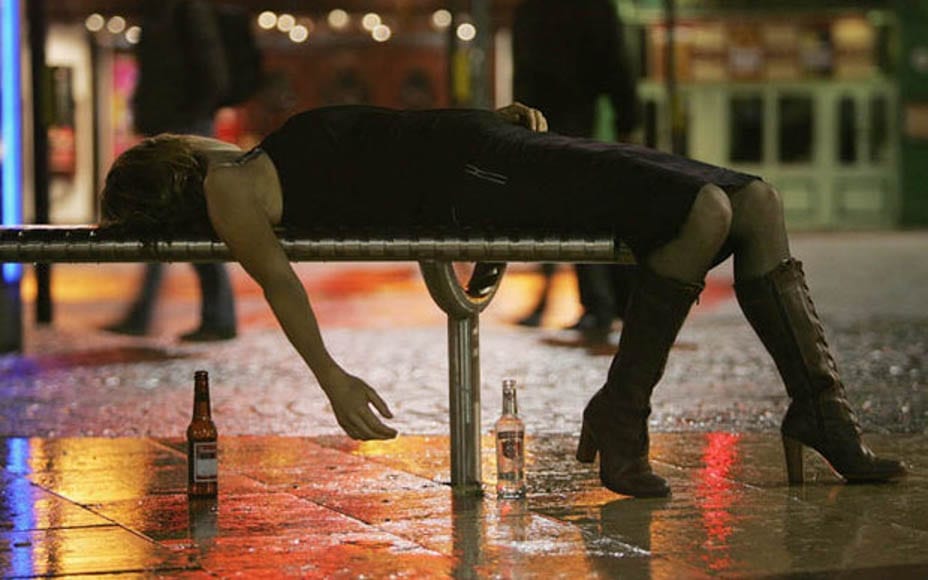
“Women can be just as bad if not worse than blokes now when it comes to their late-night drunken behaviour. People might laugh at the pictures of women half-naked, lying across the pavement, paralytic from booze. But it isn’t funny and can end up having serious consequences for the person concerned”.