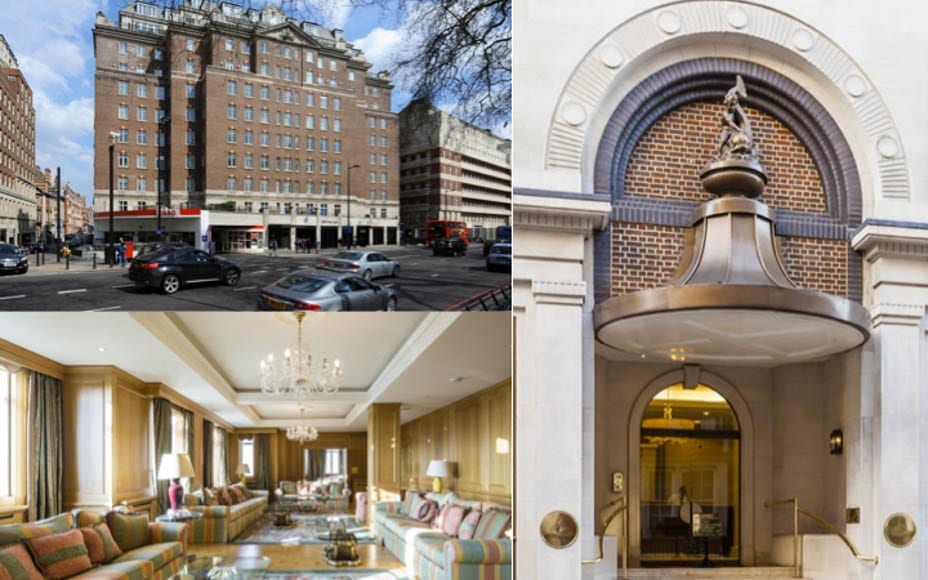
Gargantuan Mayfair aprtment goes on sale for £30 million; it has eighteen windows facing Hyde Park and is in a building designed by the architect of Broadcasting House
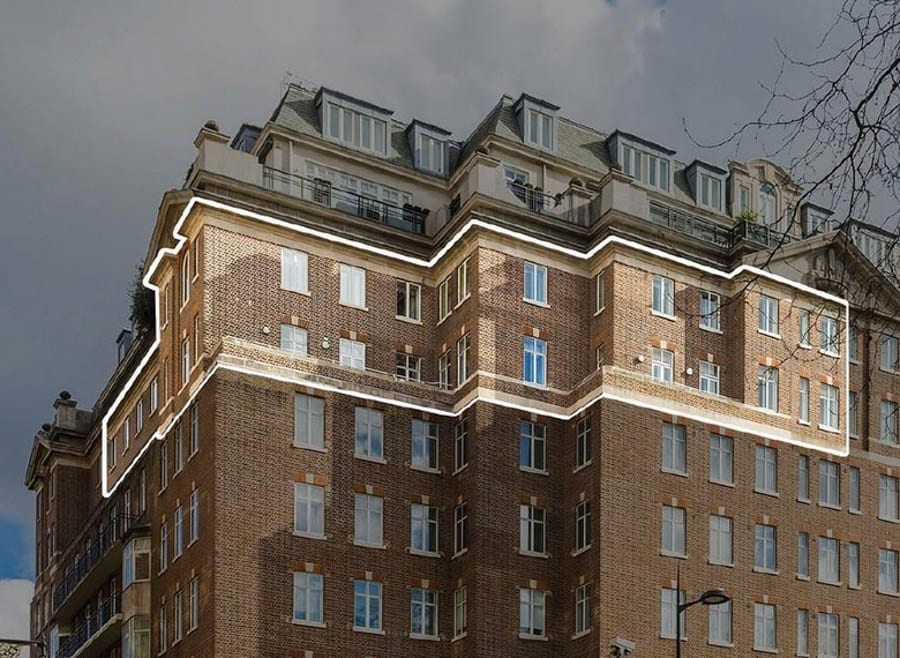
A vast maisonette, described as a “villa in the sky”, on London’s Park Lane has gone on sale for £30 million ($38.8 million, €34.6 million or درهم142.6 million) in spite of being in need of complete redecoration.
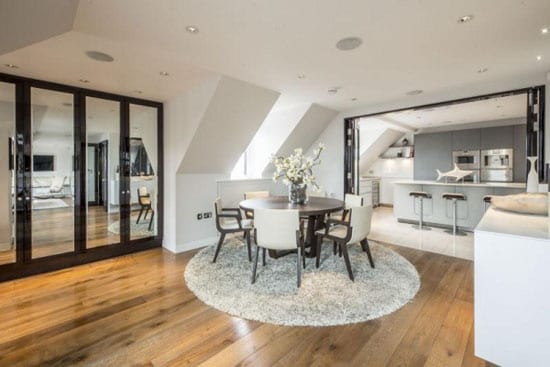
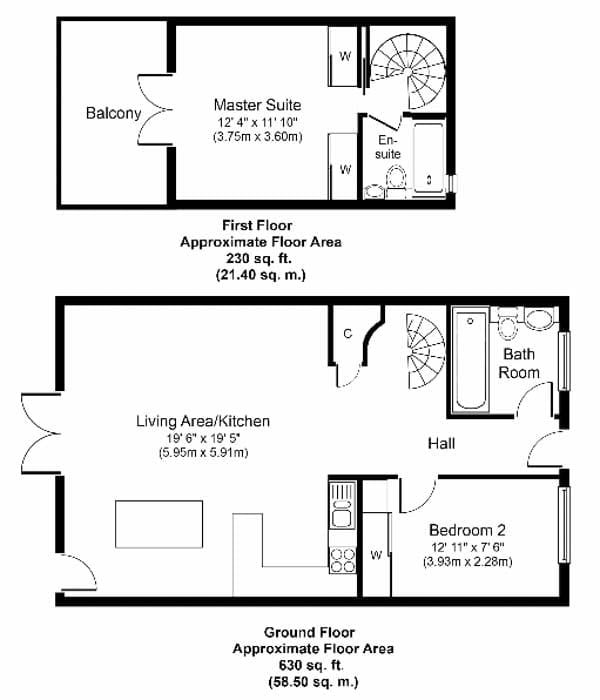
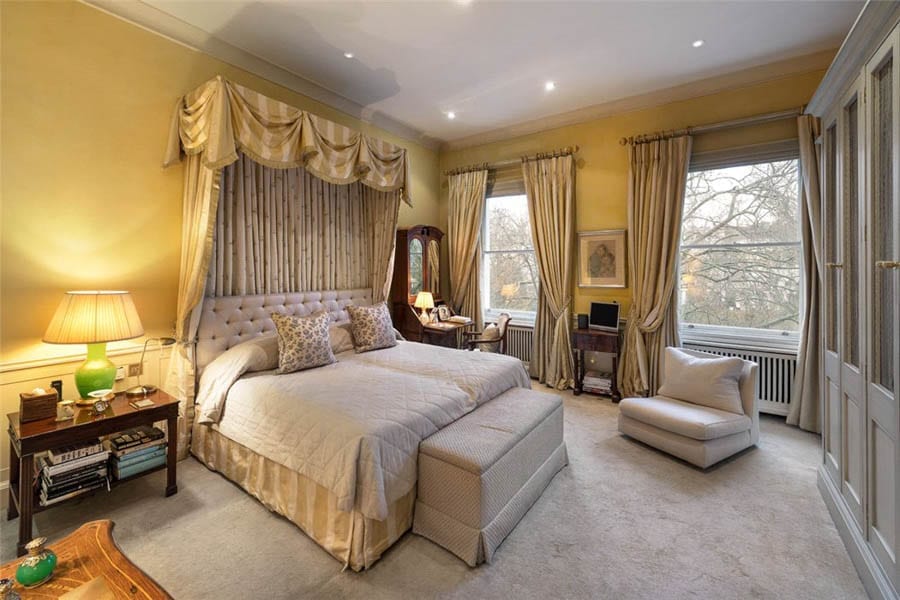
Split over the seventh and eighth floor of a portered building named Fountain House, the apartment offered extends to 6,897 square foot and includes 4 reception rooms, 2 kitchens, 10 double bedrooms, 2 staff bedrooms and 10 bathrooms. Its principle reception room is 38-foot long and its dining room is described as “easily sitting 22 guests”.
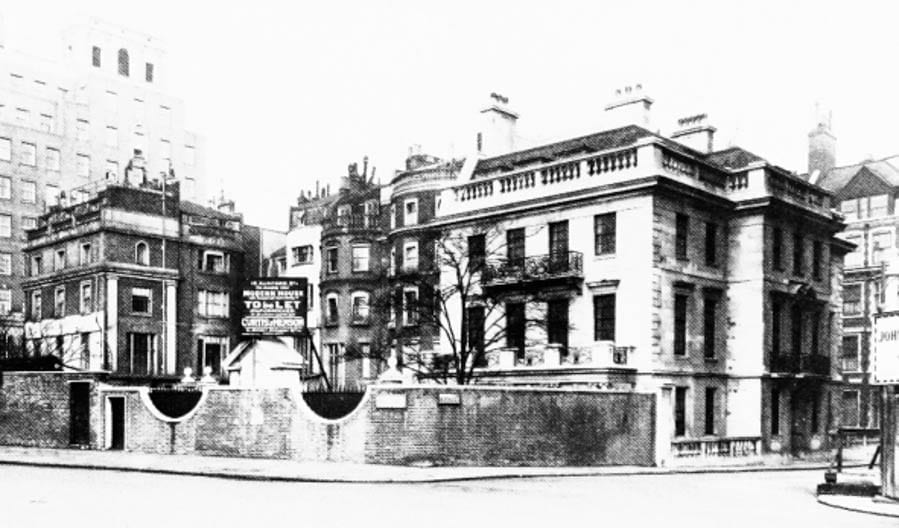
Houses on the site of Fountain House on 30th December 1930 (prior to their demolition)
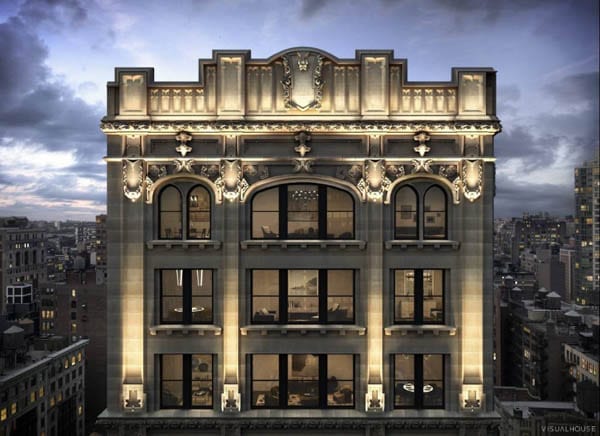
Designed by George Val Myer (1883 – 1959), an architect best known for the BBC’s Broadcasting House, in conjunction with F. J. Watson-Hart and built by Sir Robert McAlpine & Sons between 1935 and 1938 on the site of demolished mansions, Fountain House includes around 60 residential units, offices, a fuel station and a car showroom.
On the market through Wetherell on a lease of 84 years, the service charge for the flat is £81,538 per annum ($105,584, €94,135 or درهم387,836 per annum).
Former Algerian Embassy in Holland Park for sale for £30 million; the detached stucco house needs complete renovation and counts David and Victoria Beckham as neighbours
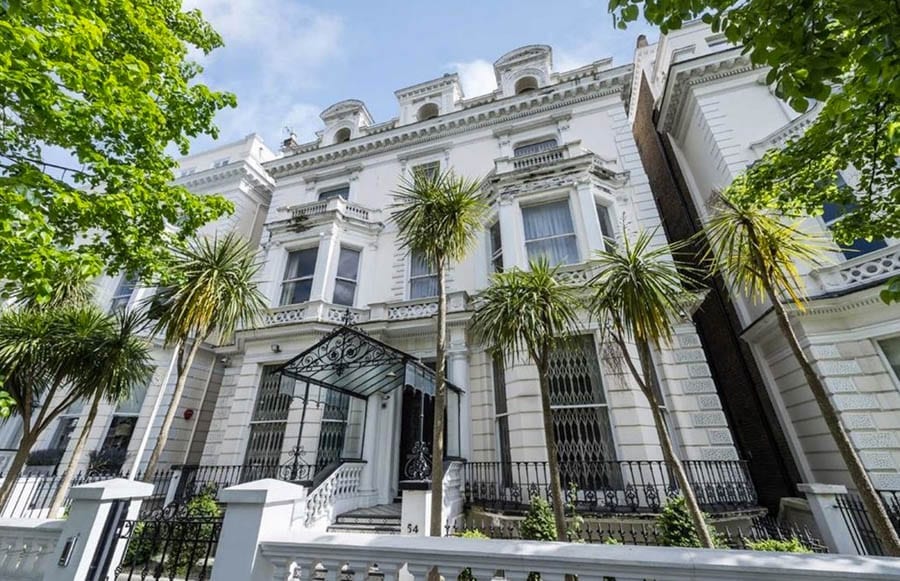
The former Embassy of the People’s Democratic Republic of Algeria in Holland Park, W11 has just been placed for sale for the sum of £30 million ($39.1 million, €34.9 million or درهم143.7 million).
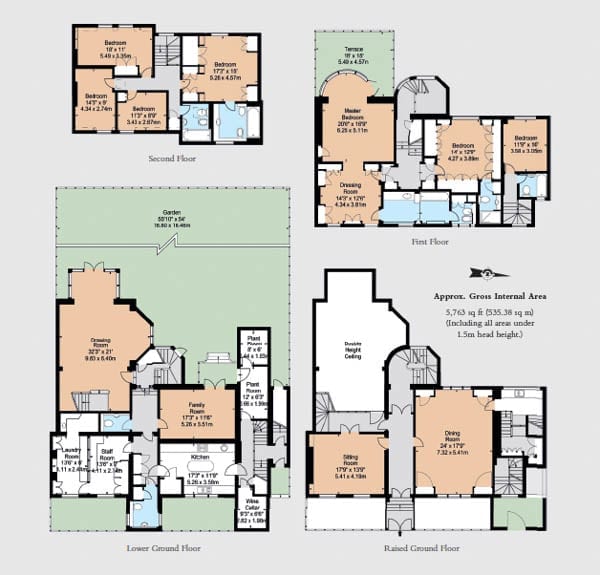
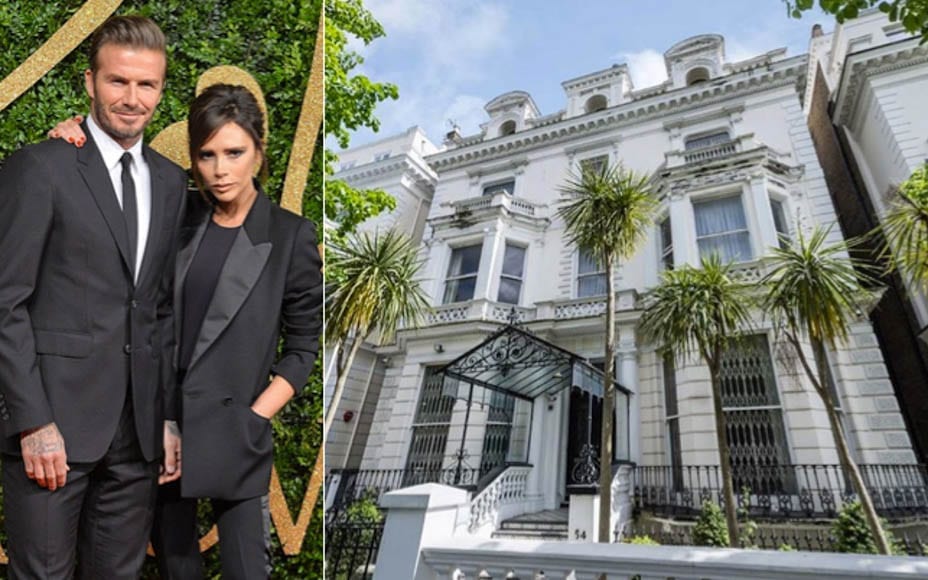
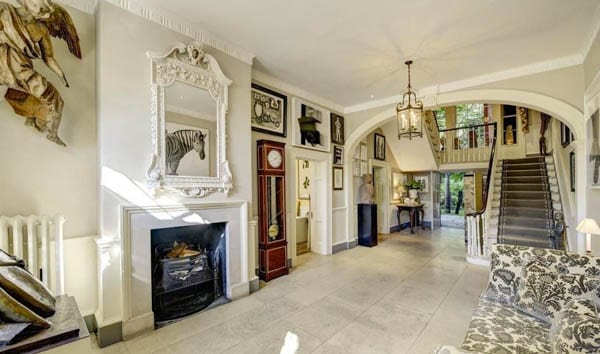
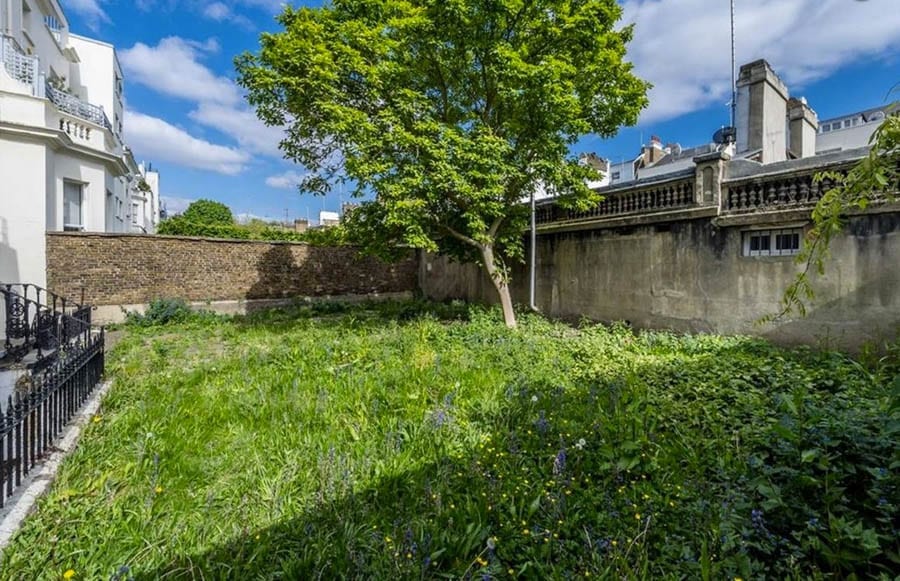
Offered by estate agent Anthony Sharp, the 9,490 square foot, Grade II listed detached stucco house includes accommodation over five floors and was built in 1862. One of remaining Italianate villas designed by brothers Francis and William Radford, 54 Holland Park is described as being “in need of full modernisation” and as having “scope to create a magnificent family home”.
The buyer will count David and Victoria Beckham as near neighbours. They paid £31.5 million ($41.1 million, €36.6 million or درهم150.9 million) for 23 Holland Park in 2013 and finally took up residence there in July 2016 after completing an £8 million ($10.4 million, €9.3 million or درهم38.3 million) renovation that included, amongst other things, a vast subterranean redevelopment.
Trophy house with a “dictator interior” in The Boltons has nearly £10 million sliced off its asking price; iceberg home behind reduced by £5 million
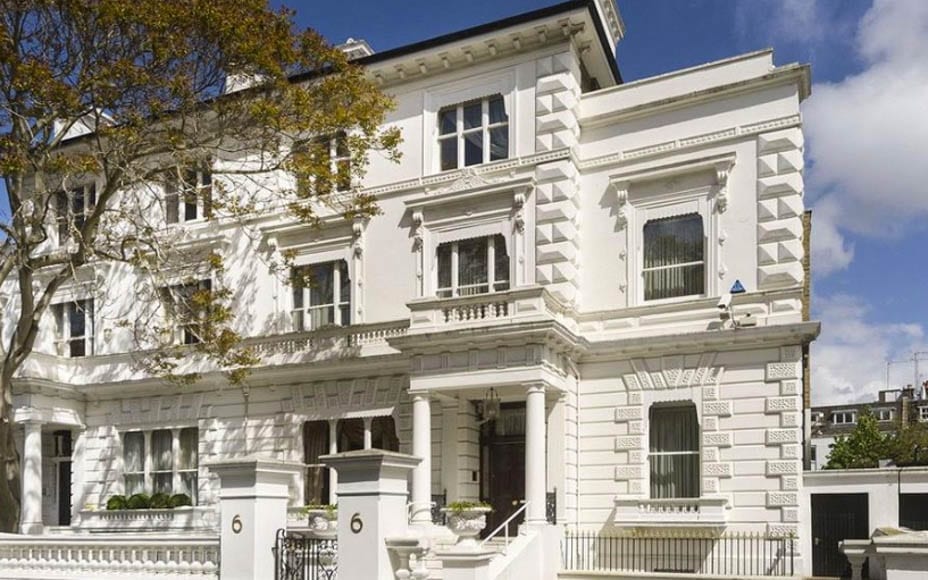
A house in London’s second most expensive street has returned to the market at the much reduced price of £30 million ($38.8 million, €35.5 million or درهم142.6 million) in spite of having an interior that would only appeal to the likes of Bashar al-Assad, Muammar Gaddafi or Saddam Hussein.
Previously marketed at £39.5 million ($47.1 million, €47.1 million or درهم188.3 million) in 2015 through Russell Simpson and now offered by Knight Frank, semi-detached 6 The Boltons extends to 9,781 square foot and comes with a 2,469 square foot mews house to the rear in Creswell Place.
Both buildings are described as “requiring modernisation throughout” and in total provide 5 reception rooms, 16 bedrooms and 11 bathrooms. The main house has a lift to all floors, air conditioning and as well as parking for 5 cars, there is an internal garage and an interconnecting garden.
For those with another £32.5 million ($42.1 million, €38.5 million or درهم154.5 million) to spare, Knight Frank also offer another house adjoining the Cresswell Place mews house. Featured in The Steeple Times last May, that house, Cresswell House, has also had a rather punchy £5 million ($6.5 million, €6 million or درهم23.8 million) sliced off its asking price. A super-compound anyone?
New Jersey mansion, complete with 58 rooms, for sale for equivalent sum to what it cost to build in 1909; the £37 million house’s original owner was a man whose extravagance knew absolutely no bounds
George Crocker (1856 – 1909) makes F. Scott Fitzgerald’s Jay Gatsby seem like an amateur. Born in Sacramento and the son of a railway magnate worth some $30 million on his death (the equivalent of £634 million or $812 million today), Crocker was willed a significant $6 million (the equivalent of £127 million or $163 million today) on the condition that “after the space of five years continuously he shall abstain from the use of spirituous, vinous, and malt liquors to the extent that he shall not during this period have been intoxicated”.
Crocker decided to ignore the terms of his father’s behest and from 1888 to 1891 lived in San Francisco as “one of the most reckless young men about town when reckless young men thereabouts were common” but then admitted himself to a sanatorium, put himself on the straight and narrow and finally collected the sum of $6 million in 1898.
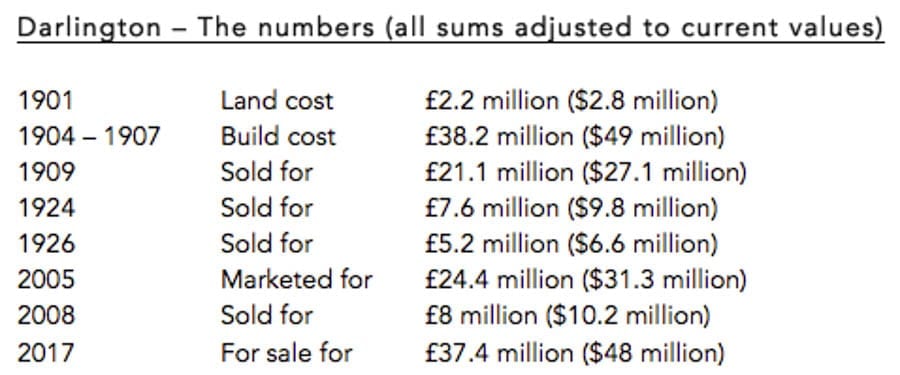
With wealth and a glamorous wife, Emma Rutherford, a widow from California, Crocker set himself up as the toast of New York society. Though he owned a townhouse at 1 East 64th Street and a villa in Newport, it was on paying $96,500 (the equivalent of £2.2 million or $2.8 million today) for the 1,100 acre Darling estate in Bergen County, Mahwah, New Jersey in 1901 that he truly became someone noticeable.
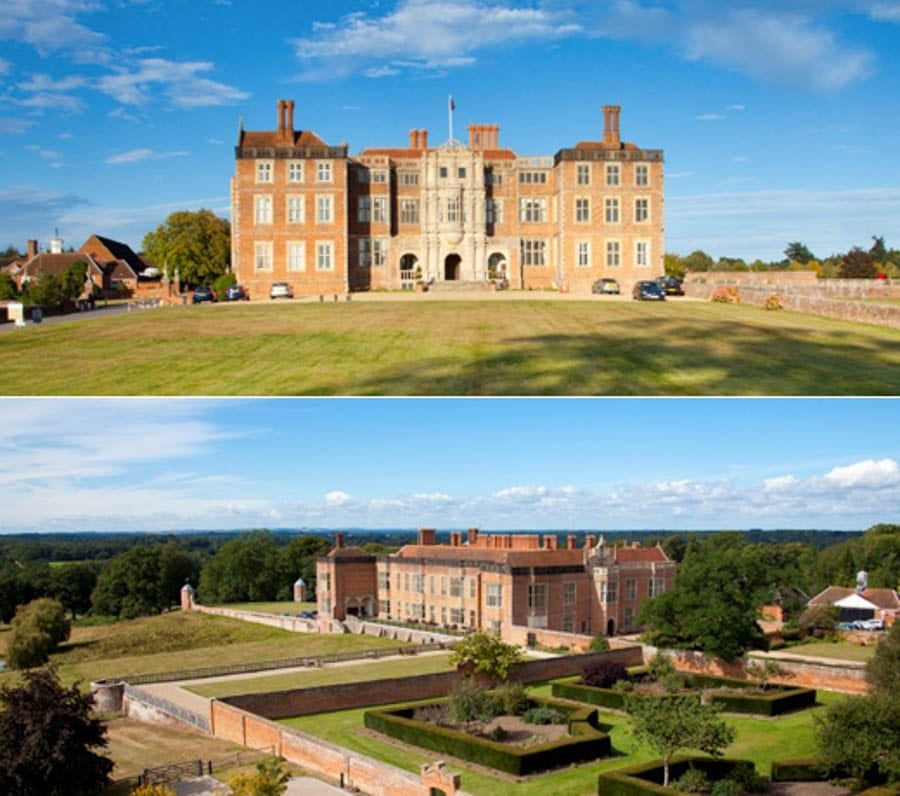
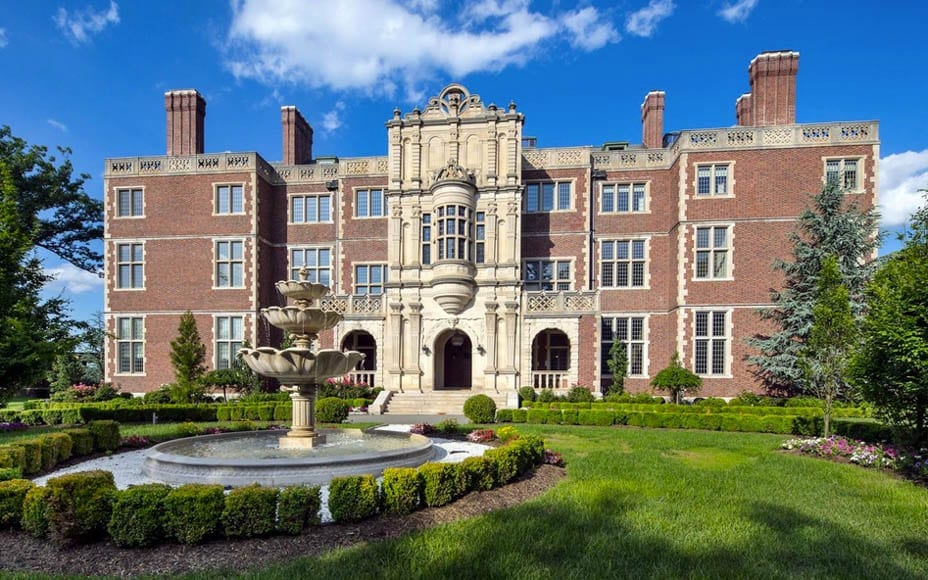
Choosing what he called “the finest site for a residence in the country”, Crocker commissioned an architect named James Brite (died 1942) to build him a mansion “sparing no expense”. Modeled on a Jacobean prodigy house, Bramshill House in Hampshire, England and built from Indiana limestone and Harvard brick, the “Crocker Mansion” or “Darlington” – as it is more widely known – cost $2 million to build (the equivalent of £38.2 million or $49 million today) and included 75 rooms and around 50,000 square foot of accommodation. Its features included steam heating, elevators, ice cream freezers, integrated vacuum systems and a switchboard and in its grounds a racetrack and 16 greenhouses were constructed whilst a pond was stocked with 4,000 trout.
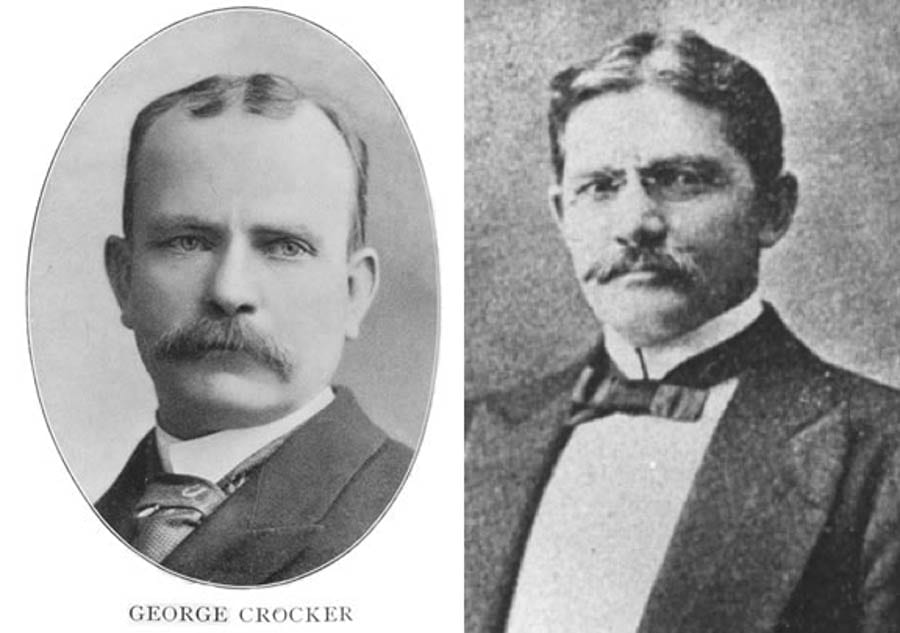
George Crocker and Emerson McMillin
The design of Darlington was based on “one of the most haunted houses in England”, Bramshill in Hampshire; that building itself was also eventually separated from much of its estate and after being used as the European Police College was sold to developers City & Country for £25 million ($19.5 million) in 2014
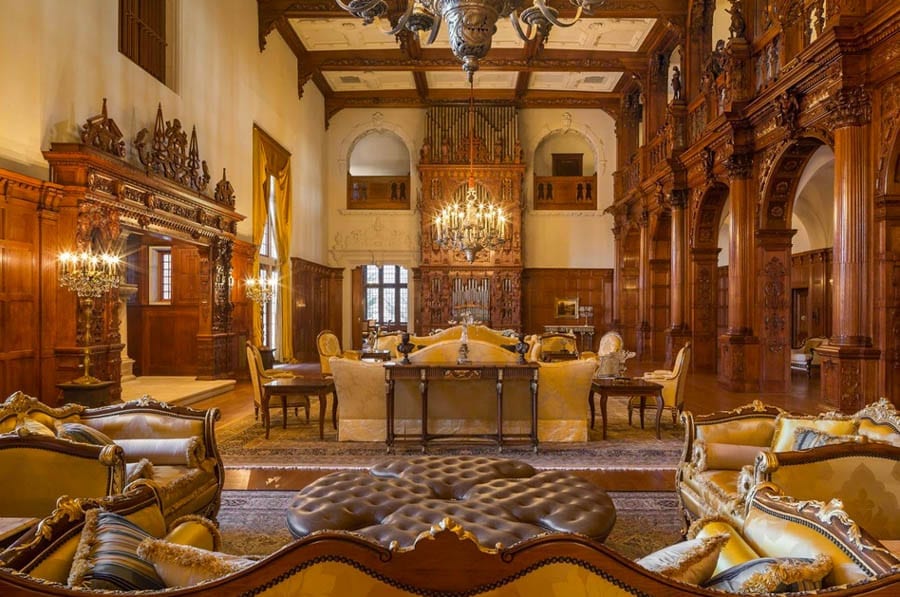
Commentators wowed at the resulting creation and noted details such as a library painted after the style of the Italian Renaissance by Tiffany Studios, elaborate wood carving by Italian craftsmen and Tiffany silver chandeliers and a 1906 Aeolian player pipe organ in the building’s 30-foot high Great Hall. In 1912, Architectural Record, chose even to swoon over the basement. They remarked:
“Where Bramshill’s cellar housed for centuries lanterns, tallow dips, forest faggots, wooden vessels for the distribution of light, heat and water through personal service of human slaveys, its American reincarnation is a storehouse of miracle workers in the comfort and luxury of modern domestic life”.
Unfortunately, Mr and Mrs Crocker did not truly get to enjoy the fruits of their extravagant spending. Emma Crocker died in 1904 of cancer and George Crocker also succumbed to the disease in 1909. His estate was valued at $20 million (the equivalent of £422 million or $541 million today) and amongst items found at his mansion were 60,000 personally monogrammed, custom-made cigars valued at $30,000 (the equivalent of £635,000 or $813,000 today).
Sold subsequently to a “self-made” banker, industrialist and astronomy enthusiast named Emerson McMillin (1844 – 1922) in 1909 for $1 million (the equivalent of £21.1 million or $27.1 million), Darlington was next used to display a fine collection of Chinese and Japanese porcelain whilst a herd of Jerseys were kept in the grounds.
After McMillin’s death, his widow sold the estate in 1924 for $685,000 (the equivalent of £7.6 million or $9.8 million) to the Darlington Development Company, which in turn made it available to the Darling Golf and Country Club. They converted the building to a hotel and club that “promised to offer a new dimension to life in Mahwah” but “the development corporation and the club were soon in financial difficulties” and the McMillin estate foreclosed and regained possession.
A new buyer came forward in the form of the Roman Catholic Diocese of Newark. They paid $478,000 for the property in 1926 (the equivalent of £5.2 million or $6.6 million today) and used Darlington as a theological seminary. The surrounding land was gradually sold off and in 1986, the Immaculate Conception Seminary also departed.
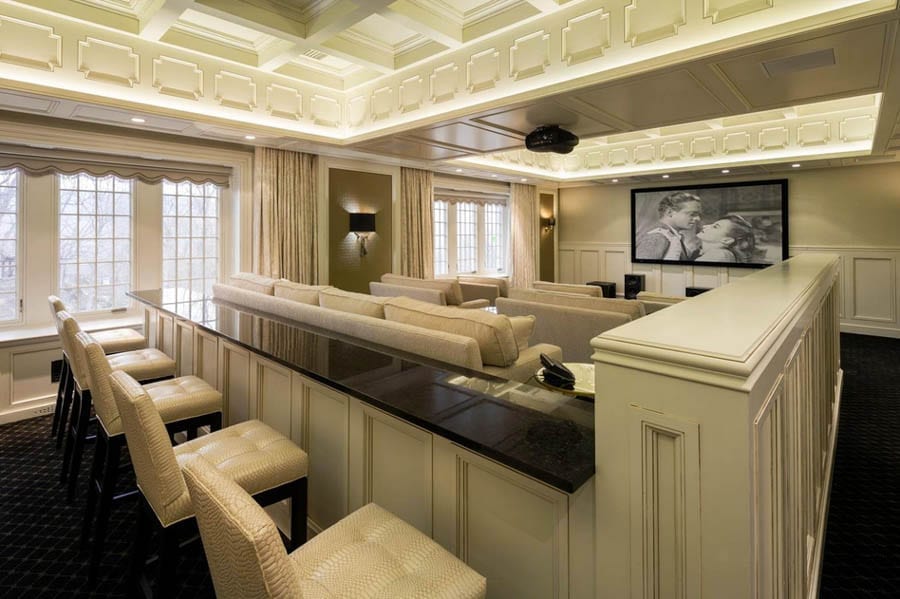
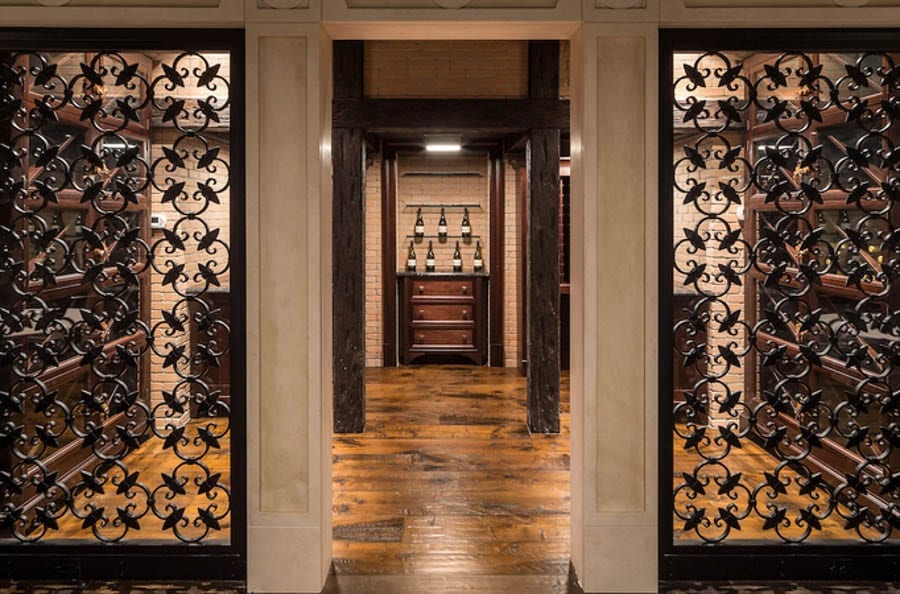
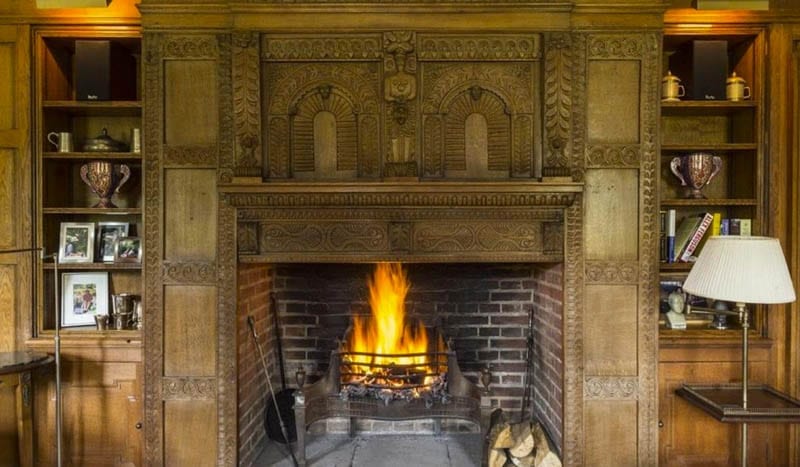
Darlington today – The 30-foot high Great Hall is still dominated by a 1906 Aeolian player pipe organDarlington today – Ilija Pavlovic expanded the mansion by some 12,000 square foot and amongst other things added a large home cinemaDarlington today – Another addition comes in the form of a vast wine cellar; George Crocker’s father would not have approved
Subsequently restored and modernised with, according to Forbes, plumbing, heating, air conditioning and communications systems being installed, Darlington was placed on the market with just 12.1 acres in 2005 by Darlington Associates, a firm who’d built “multiple residential communities surrounding the mansion”. An ambitious figure of $25 million (the equivalent of £24.4 million or $31.3 million today) was sought for the now classified historic site but it was not until 2008 that a buyer came forth in the form of a local businessman named Ilija Pavlovic. He paid just $8.875 million (the equivalent of £8 million or $10.2 million today) and then embarked on the “challenge” of “both preserving the historic home while also restoring it to meet 21st-century standards”. The resulting creation spans four floors and includes amongst many other things a tea room, 3 libraries, 2 game rooms, 2 kitchens, a “his and her master bedroom wing”, 12 further guest bedrooms and 5 staff bedrooms.
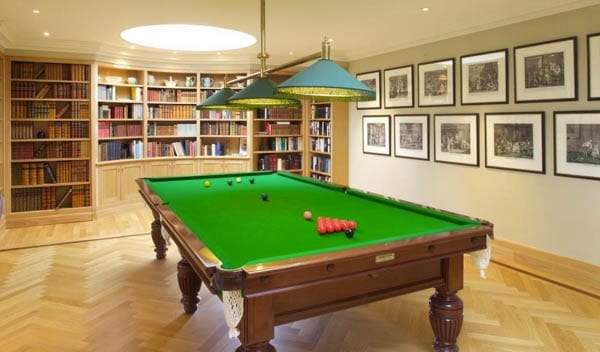
The biggest issue with the house, it transpired, was that its 476 leaded windows needed to be replaced. This reportedly cost $2 million alone (the equivalent of £1.8 million or $2.3 million today) and in addition, Pavlovic renewed all the mechanical systems, redid all 19 bathrooms, replaced the slate roof and added amongst other things a spa with an indoor lap pool, a gym, a massage room, a beauty salon and a home cinema. There is also a gatehouse, a professional kitchen that can serve 250 meals at a time, a wine cellar, a poker room, a cigar room, a billiards room, an 8-car garage, a tennis court and an outdoor swimming pool.
Property blog 6sqft – which claimed Friday that the current owners do not live at Darlington full-time and simply use it to host events – reported that this still massive mansion minus its formerly equally gigantic estate is now for sale now for £37.4 million ($48 million, €44.7 million or درهم176.3 million) through a firm Mr Pavlovic chairs, Special Properties Real Estate Services – an affiliate of Christie’s International Real Estate. Any buyer will undoubtedly be a vastly wealthy figure, but one can guarantee one thing: They’ll never live as lavishly as the barmy boozer George Crocker.
New Jersey mansion Darlington, complete with 58 rooms, for sale for equivalent sum to what it cost to build in 1909; the £37 million house’s original owner was a man whose extravagance knew absolutely no bounds
George Crocker (1856 – 1909) makes F. Scott Fitzgerald’s Jay Gatsby seem like an amateur. Born in Sacramento and the son of a railway magnate worth some $30 million on his death (the equivalent of £634 million or $812 million today), Crocker was willed a significant $6 million (the equivalent of £127 million or $163 million today) on the condition that “after the space of five years continuously he shall abstain from the use of spirituous, vinous, and malt liquors to the extent that he shall not during this period have been intoxicated”.
Crocker decided to ignore the terms of his father’s behest and from 1888 to 1891 lived in San Francisco as “one of the most reckless young men about town when reckless young men thereabouts were common” but then admitted himself to a sanatorium, put himself on the straight and narrow and finally collected the sum of $6 million in 1898.
With wealth and a glamorous wife, Emma Rutherford, a widow from California, Crocker set himself up as the toast of New York society. Though he owned a townhouse at 1 East 64th Street and a villa in Newport, it was on paying $96,500 (the equivalent of £2.2 million or $2.8 million today) for the 1,100 acre Darling estate in Bergen County, Mahwah, New Jersey in 1901 that he truly became someone noticeable.
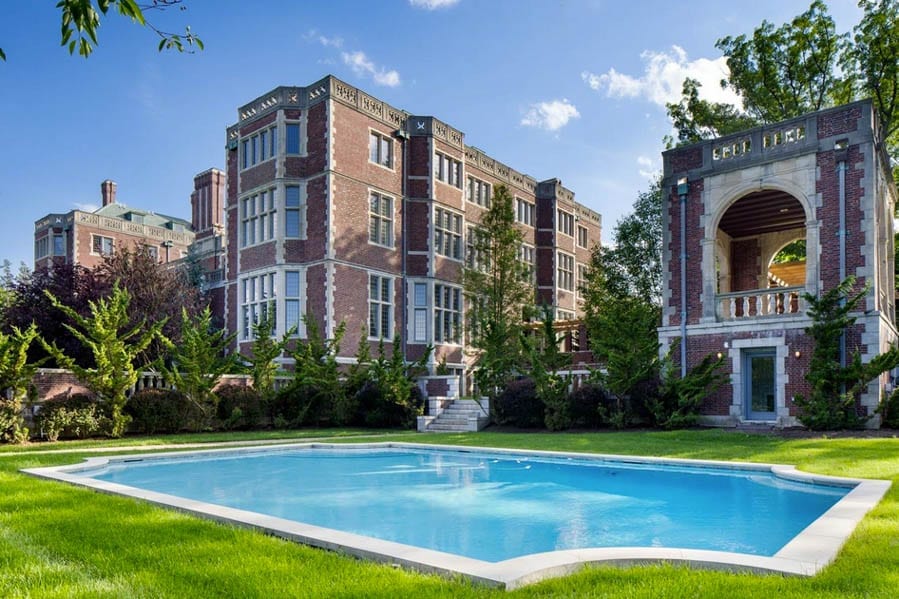
Choosing what he called “the finest site for a residence in the country”, Crocker commissioned an architect named James Brite (died 1942) to build him a mansion “sparing no expense”. Modeled on a Jacobean prodigy house, Bramshill House in Hampshire, England and built from Indiana limestone and Harvard brick, the “Crocker Mansion” or “Darlington” – as it is more widely known – cost $2 million to build (the equivalent of £38.2 million or $49 million today) and included 75 rooms and around 50,000 square foot of accommodation. Its features included steam heating, elevators, ice cream freezers, integrated vacuum systems and a switchboard and in its grounds a racetrack and 16 greenhouses were constructed whilst a pond was stocked with 4,000 trout.
George Crocker and Emerson McMillin
The design of Darlington was based on “one of the most haunted houses in England”, Bramshill in Hampshire; that building itself was also eventually separated from much of its estate and after being used as the European Police College was sold to developers City & Country for £25 million ($19.5 million) in 2014
Commentators wowed at the resulting creation and noted details such as a library painted after the style of the Italian Renaissance by Tiffany Studios, elaborate wood carving by Italian craftsmen and Tiffany silver chandeliers and a 1906 Aeolian player pipe organ in the building’s 30-foot high Great Hall. In 1912, Architectural Record, chose even to swoon over the basement. They remarked:
“Where Bramshill’s cellar housed for centuries lanterns, tallow dips, forest faggots, wooden vessels for the distribution of light, heat and water through personal service of human slaveys, its American reincarnation is a storehouse of miracle workers in the comfort and luxury of modern domestic life”.
Unfortunately, Mr and Mrs Crocker did not truly get to enjoy the fruits of their extravagant spending. Emma Crocker died in 1904 of cancer and George Crocker also succumbed to the disease in 1909. His estate was valued at $20 million (the equivalent of £422 million or $541 million today) and amongst items found at his mansion were 60,000 personally monogrammed, custom-made cigars valued at $30,000 (the equivalent of £635,000 or $813,000 today).
Sold subsequently to a “self-made” banker, industrialist and astronomy enthusiast named Emerson McMillin (1844 – 1922) in 1909 for $1 million (the equivalent of £21.1 million or $27.1 million), Darlington was next used to display a fine collection of Chinese and Japanese porcelain whilst a herd of Jerseys were kept in the grounds.
After McMillin’s death, his widow sold the estate in 1924 for $685,000 (the equivalent of £7.6 million or $9.8 million) to the Darlington Development Company, which in turn made it available to the Darling Golf and Country Club. They converted the building to a hotel and club that “promised to offer a new dimension to life in Mahwah” but “the development corporation and the club were soon in financial difficulties” and the McMillin estate foreclosed and regained possession.
A new buyer came forward in the form of the Roman Catholic Diocese of Newark. They paid $478,000 for the property in 1926 (the equivalent of £5.2 million or $6.6 million today) and used Darlington as a theological seminary. The surrounding land was gradually sold off and in 1986, the Immaculate Conception Seminary also departed.
Darlington today – The 30-foot high Great Hall is still dominated by a 1906 Aeolian player pipe organ
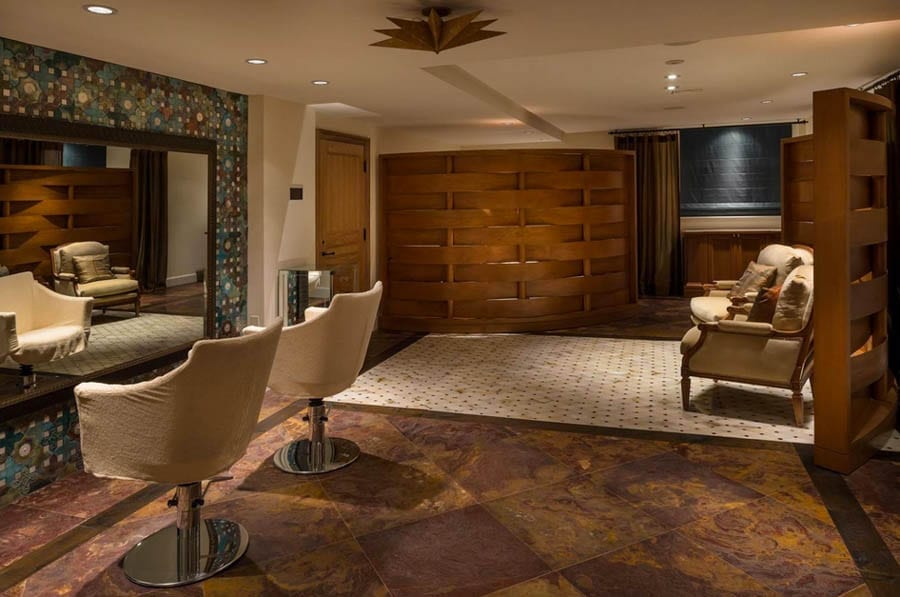
Darlington today – Ilija Pavlovic expanded the mansion by some 12,000 square foot and amongst other things added a large home cinema
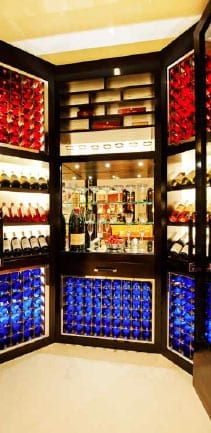
Darlington today – Another addition comes in the form of a vast wine cellar; George Crocker’s father would not have approved
Subsequently restored and modernised with, according to Forbes, plumbing, heating, air conditioning and communications systems being installed, Darlington was placed on the market with just 12.1 acres in 2005 by Darlington Associates, a firm who’d built “multiple residential communities surrounding the mansion”.
An ambitious figure of $25 million (the equivalent of £24.4 million or $31.3 million today) was sought for the now classified historic site but it was not until 2008 that a buyer came forth in the form of a local businessman named Ilija Pavlovic. He paid just $8.875 million (the equivalent of £8 million or $10.2 million today) and then embarked on the “challenge” of “both preserving the historic home while also restoring it to meet 21st-century standards”. The resulting creation spans four floors and includes amongst many other things a tea room, 3 libraries, 2 game rooms, 2 kitchens, a “his and her master bedroom wing”, 12 further guest bedrooms and 5 staff bedrooms.
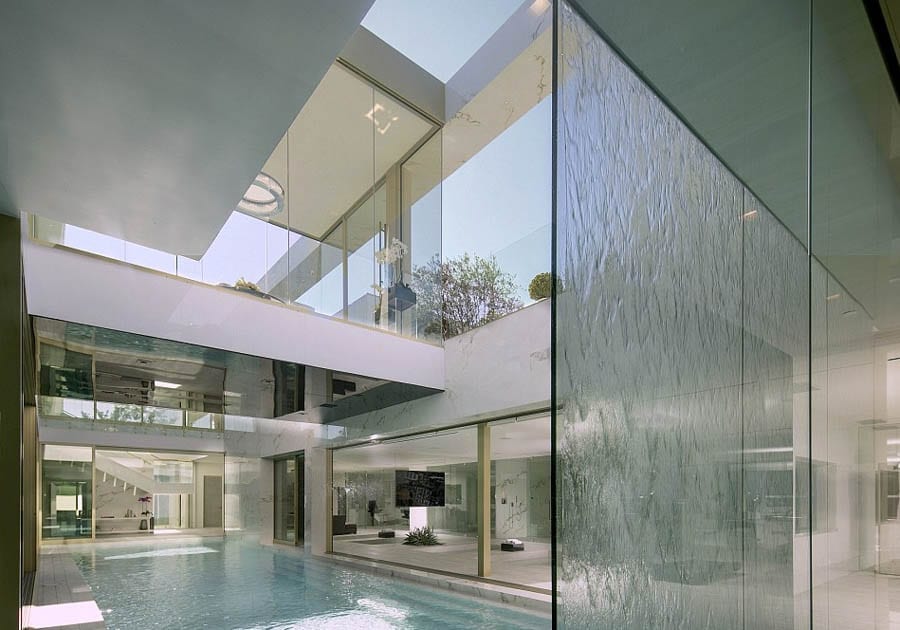
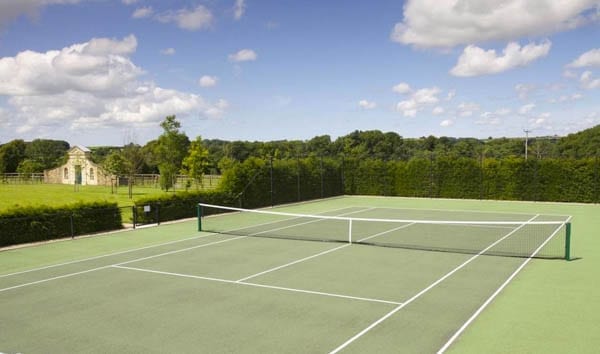
The biggest issue with the house, it transpired, was that its 476 leaded windows needed to be replaced. This reportedly cost $2 million alone (the equivalent of £1.8 million or $2.3 million today) and in addition, Pavlovic renewed all the mechanical systems, redid all 19 bathrooms, replaced the slate roof and added amongst other things a spa with an indoor lap pool, a gym, a massage room, a beauty salon and a home cinema. There is also a gatehouse, a professional kitchen that can serve 250 meals at a time, a wine cellar, a poker room, a cigar room, a billiards room, an 8-car garage, a tennis court and an outdoor swimming pool.
Property blog 6sqft – which claimed Friday that the current owners do not live at Darlington full-time and simply use it to host events – reported that this still massive mansion minus its formerly equally gigantic estate is now for sale now for £37.4 million ($48 million, €44.7 million or درهم176.3 million) through a firm Mr Pavlovic chairs, Special Properties Real Estate Services – an affiliate of Christie’s International Real Estate. Any buyer will undoubtedly be a vastly wealthy figure, but one can guarantee one thing: They’ll never live as lavishly as the barmy boozer George Crocker.
One of America’s naffest houses returns to the market at a much reduced price of £11.9 million (down from £17.6 million) and with the neighbouring £5.6 million house thrown in as an extra(more…)
Michael Bloomberg offers £2 million above the £15 million asking price to see off three other bidders and buys George Eliot’s house by the River Thames(more…)
Knight Frank take an unusual tack to promote a property
Knight Frank is known as the estate agent to the rich and famous. Like other realty firms, of course, they pepper their brochures with superlatives such as “exemplary”, “spacious” and “glorious” but in the marketing of 33 Portland Place, they truly take the biscuit. (more…)