Tag: 2015

  • Extravagance Knows No Bounds – £36m Mansion Previously Owned By Disgraced Tycoons Alan Bond And Conrad Black Again For Sale

    Extravagance Knows No Bounds – £36m Mansion Previously Owned By Disgraced Tycoons Alan Bond And Conrad Black Again For Sale

    Matthew Steeples takes a look at a £36 million Kensington mansion formerly owned by disgraced business tycoons Alan Bond and Lord Black; its former chatelaine was known for stating “I have an extravagance that know no bounds”

    Sir Winston Churchill’s daughter Mary Soames once described the buccaneering businessman and media tycoon Lord Black of Crossharbour as “London’s biggest bore unhung” whilst his wife, Lady Black – better known as the author and journalist Barbara Amiel – was suggested to be just a “rich bitch” by Sarah Sands in a “case for the defence” article in the Independent in October 2006.


    “Poster boy for the 80s” turned fraudster and jailbird Alan Bond (1938 – 2015) was an English-Australian businessman equally Marmite-like in being liked or loathed and now a Kensington mansion owned for a time by both subsequently disgraced businessmen is once again for sale.


    14 Cottesmore Gardens, formerly known as 12 – 14 Cottesmore Gardens, was purchased by Alan Bond’s Satellite Group for £7 million in the 1980s and sold by administrators of that business to Conrad Black and his wife for the knockdown sum of just £3.5 million in 1992.


    Plain old Mr and Mrs Black (as they then were) lavished further millions – some of which came from the company Hollinger International, Inc., which ultimately resulted in their downfall – on the double fronted 19th century mansion and used it for entertaining on a lavish scale. Guests, including the likes of Prince and Princess Michael of Kent, Joan Collins, Margaret Thatcher, Henry Kissinger, Jimmy Goldsmith, James Hanson, Arnold Weinstock, Jacob Rothschild, Peter Mandelson and Tony Blair, were said to flock to the parties they gave there, but in 2005 these gatherings of upto 400 people at a time came to an almighty end.


    Forced to sell at a bargain basement price of just £13.1 million on an ask of £17.5 million as the Canadian born billionaire faced jail time in America, Lord and Lady Black’s tenure was over and the residence saw its “arriviste torch” passed to Juan and Adriana Villalonga, a couple described as “a Mexican telecom czar and his beauty-queen wife.” Of what came next, The Globe And Mail’s Paul Waldie pointedly penned in February 2007: “[They] quickly erased many of the features that the Blacks prized.”


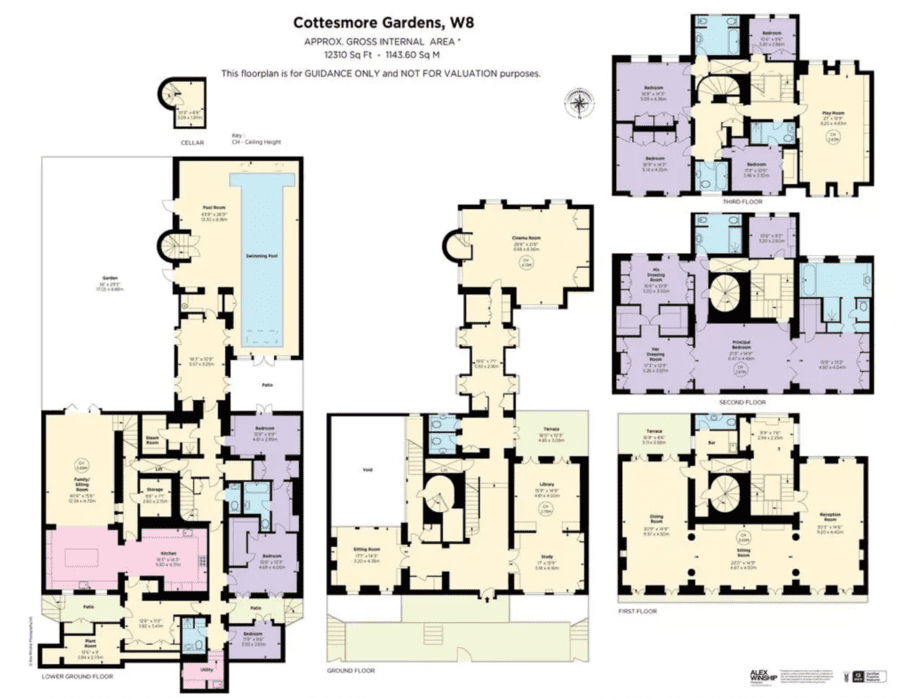
    Once again for sale as of April 2023, the value of 14 Cottesmore Gardens has again been deemed to have substantially risen. Knight Frank offer the 12,310 square foot, five-storey residence at a punchy price of £36 million and laud it as “imposing” and “presented in good order throughout.” They add that a “pre-planning consultation” has found that further accommodation could be added that would take the internal space to more than 15,000 square feet; business barons with deep pockets only need apply.


    Editor’s Note – Unlike as is the case in many publications, this article was NOT sponsored or supported by a third-party. Follow Matthew Steeples on Twitter at @M_Steeples.


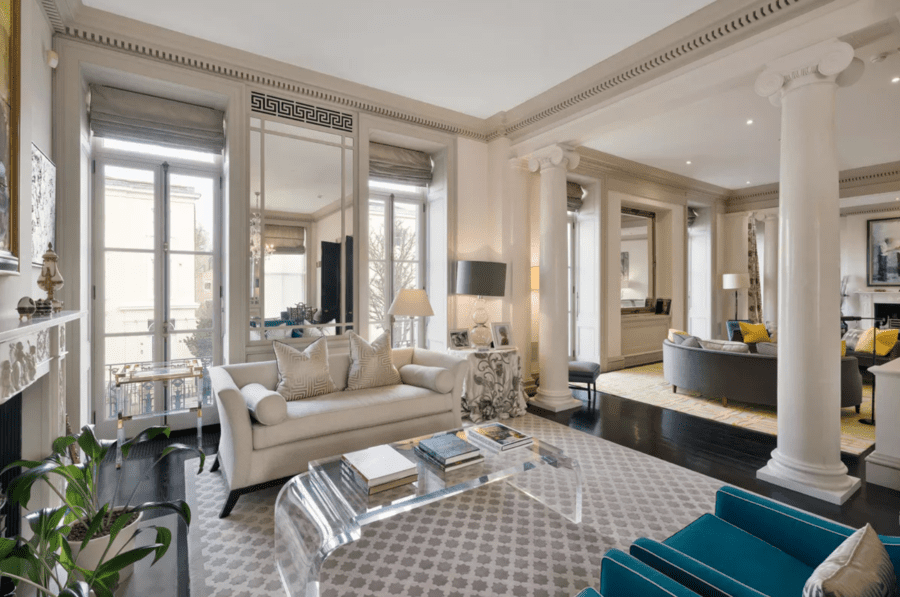
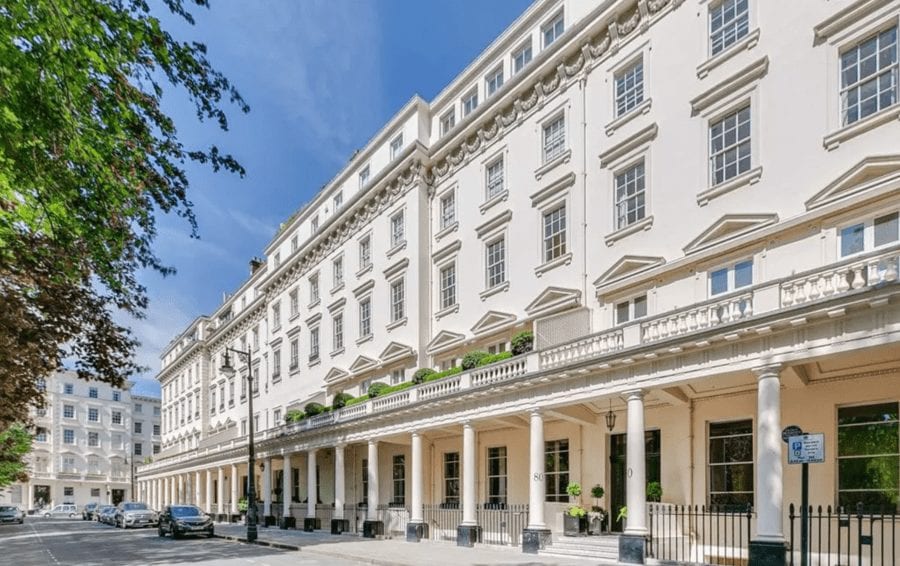
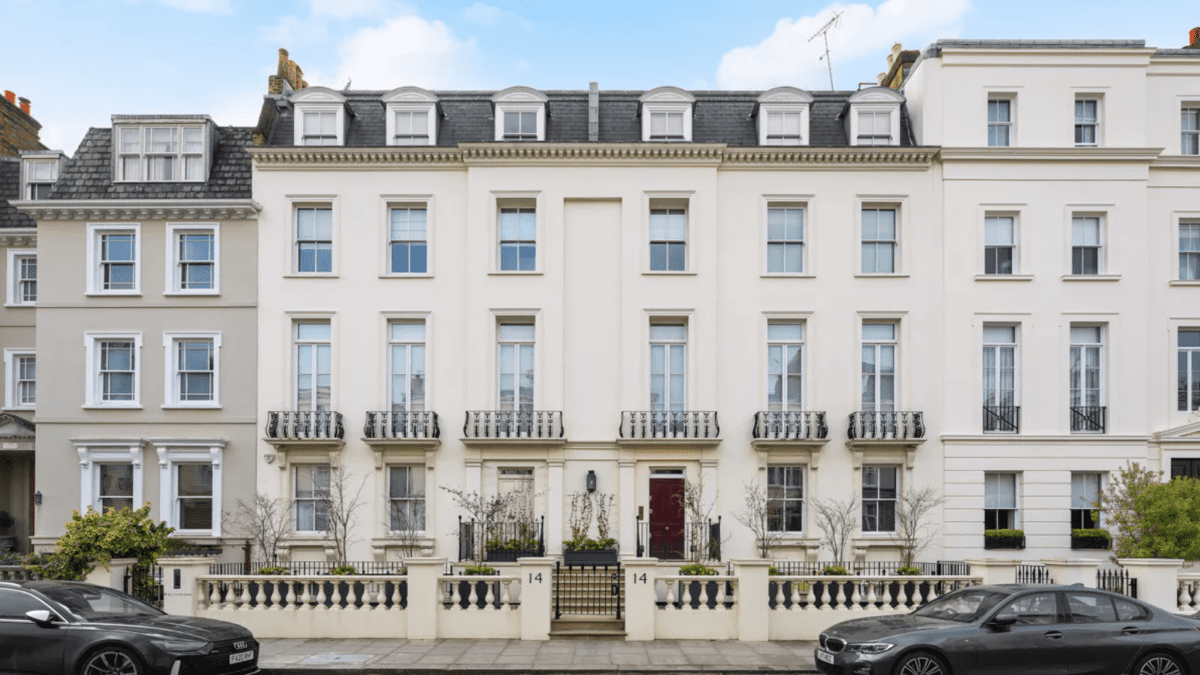
    Pictured Top – 54-foot wide 14 Cottesmore Gardens is described by selling agents Knight Frank as “offering lateral living so often requested but so hard to find in central London.” They neglect to mention that with its hedges cut back to the minimum, the place actually looks extremely forlorn.
     

    Lord and Lady Black Tom Bower Cardinal Richelieu Marie Antoinette
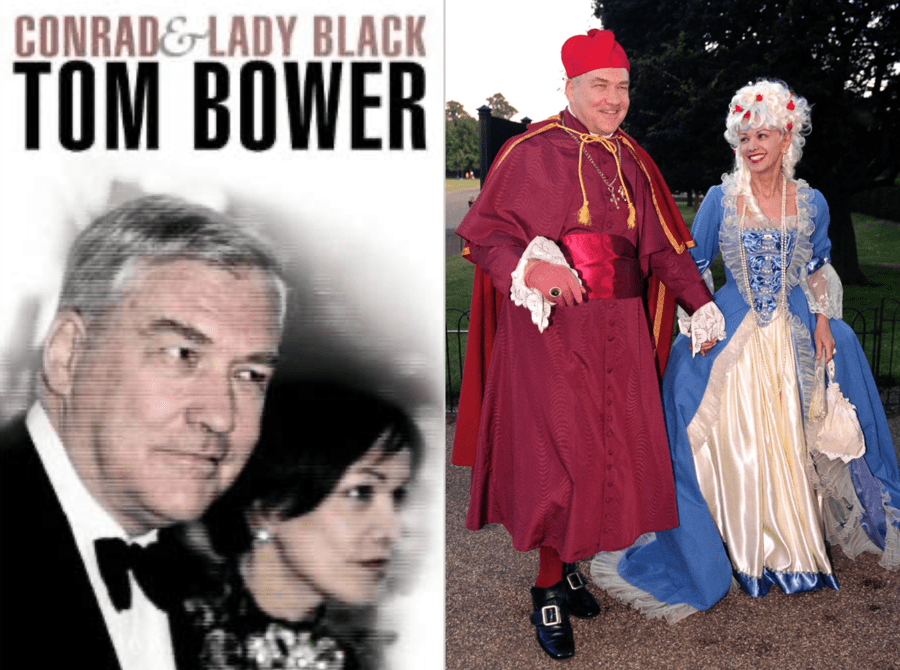
    Flamboyant Lord and Lady Black dressed as Cardinal Richelieu and Marie Antoinette for a party at Kensington Palace in 2000. For a time, the couple employed 17 butlers (if Tom Bower is to be believed) and had two private jets and homes – aside from the 19th Cottesmore Gardens mansion – in New York, Palm Beach and Toronto. “Guests packed into their parties at Cottesmore Gardens,” Bower remarked in his 2006 book the couple, adding: “Amiel was a big spender… Under the control of senior butler Andrew Lightwood, second butler Peter Wilson and a succession of third butlers, Amiel’s life in Kensington had become what her constantly changing staff called ‘bizarre.’ Each recruit was taken by Lightwood on an introductory tour of the house, ending on the roof. ‘Make sure the landing lights are on at all times,’ instructed Lightwood solemnly, ‘because Madame takes off from here on her broomstick looking for cats. She needs the lights to guide her return.’ His face would crack into a smile. ‘Most important, take care that she never sees you. She hates seeing any of us.’ Amiel’s eccentricity demanded that her staff hid whenever she approached, diving into cupboards if necessary, and never entered her quarters when she was present. Every day, all the bed linen was changed and subjected to ‘the penny test.’ A coin was dropped onto the sheets. If it failed to bounce they were not drawn sufficiently tight. Every cushion was arranged to a precise pre-ordained position, and each towel placed exactly as Amiel had predetermined. ‘Andrew!’ she screamed down the telephone on one memorable occasion, ‘the towels are in the wrong place!’ Lightwood, as Amiel knew, was in New York, but he was expected to telephone the staff in the house in London to rectify the error. ‘You f**king pillock!’ she yelled at another member of staff for reading her ‘Daily Mail’ before it was delivered to her.”
    Barrbara Amiel drawing room 14 Cottesmore Gardens
    Barbara Amiel Black (or ‘Lady Black’ as she prefers to be known) in her drawing room at Cottesmore Gardens (pictured). Of her, Sarah Sands on Lord and Lady Black in the ‘Independent’ in October 2006 opined: “Conrad and Barbara in their monstrous, glamorous way, knew how to throw parties. The talk was of geo-politics and hemlines. Nowadays, we scorn their extravagance and doubt the source of their wealth with prune-faced hindsight. Meanwhile, everyone is sucking up to Russians…. Barbara would disingenuously begin her midnight calls to me by saying in her low, breathy voice: ‘I hope I am not disturbing you.’ She would then offer little glimpses of her own home life. I remember her mentioning that Conrad Black was upstairs playing with his fleet of toy gun ships in the bath… I remember her examining an exhibition of doll’s houses at the Chelsea Flower Show and sighing how restful it would be to live in this cosy little home. How she envied people in small houses. The burden of wealth was one of her more dangerous fantasies. At one of her Gatsby-style parties in Kensington, she flinched at the elaborate canapés on offer: ‘Really, all I want is a sausage,’ she said, piteously. Then, she ran a hand down her inconceivably expensive dress and whispered: ‘I hate these parties, I am so shy.’ Later, I was invited to her boudoir, where she lay on cushion surrounded by her women friends. She was Kensington’s Cleopatra, surrounded by maidens such as the designer and Forte daughter Olga Polizzi, the political thinker Tessa Keswick and the writer Miriam Gross.”
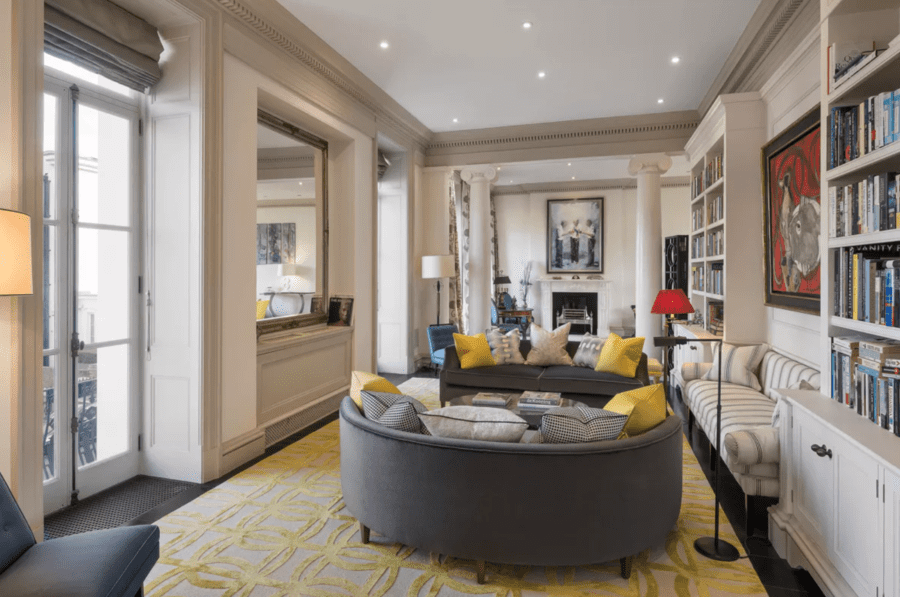
    Drawing room 14 Cottesmore Gardens today
    The very same drawing room at 14 Cottesmore Gardens today. The décor is now somewhat more modern and less ‘classical country house-ified.’ It’s certainly more Soho Farmhouse than Alberto Pinto in style; it is currently a space that the former Meghan Markle would feel more at home than say, perhaps, the likes of Lord and Lady Black’s chum Ghislaine Maxwell and her fellow noxious nonce Ponzi scheming paedophile boyfriend Jeffrey Epstein. Mr Pinto was responsible, it should be noted, for the designs of most of Epstein’s residences.
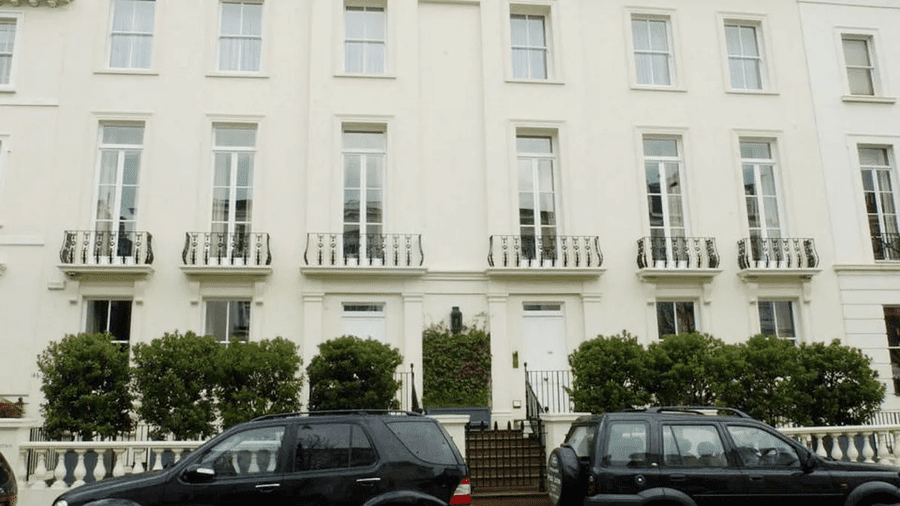
    12 - 14 Cottesmore Gardens Conrad Black
    The front elevation of 12 – 14 Cottesmore Gardens during the era it was owned by Lord and Lady Black.
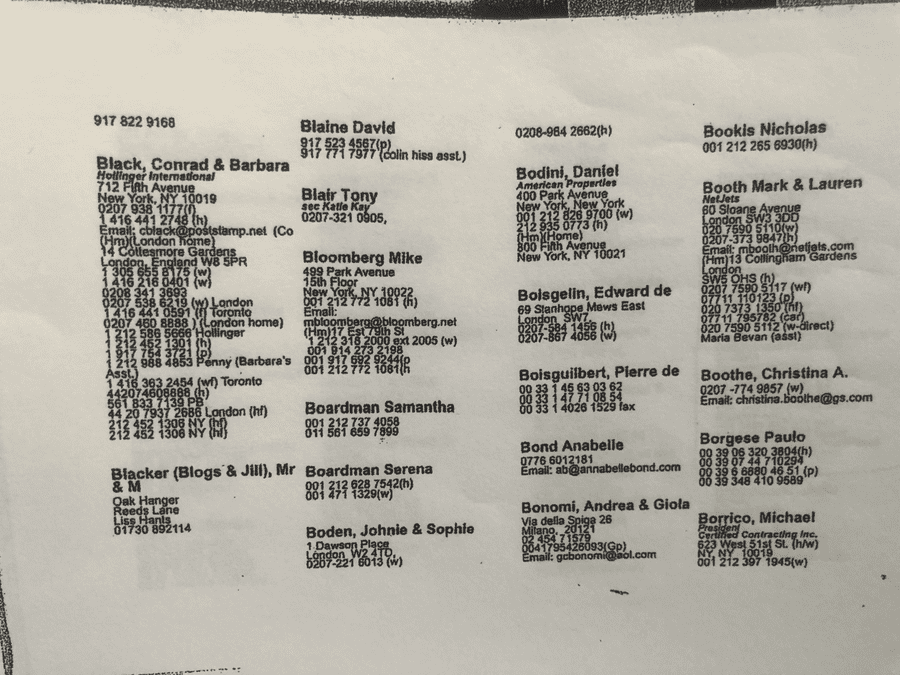
    Conrad Black Barbara Amiel Ghislaine Maxwell Jeffrey Epstein Little Black Book
    Multiple entries for Lord and Lady Black during the time they owned 14 Cottesmore Gardens appeared in the ‘Little Black Book’ address book often attributed as being that of the friends and associates of Jeffrey Epstein, but that featured more of the contacts of Ghislaine Maxwell in fact. In October 2020, Barbara Amiel took revenge on the pension pot plunderer’s padeophile sex trafficker daughter by featuring her in her “score-settling” memoir ‘Friends & Enemies: A Life in Vogue, Prison, & Park Avenue.” Maxwell had “dumped” Lady Black when Lord Black was being investigated for fraud. She wrote of their last meeting: “We were friends – so putting on my ‘So good to see you’ face, I headed for her. She bolted. Turned that sharp tight little turn when you really want to get away. And that was it.”
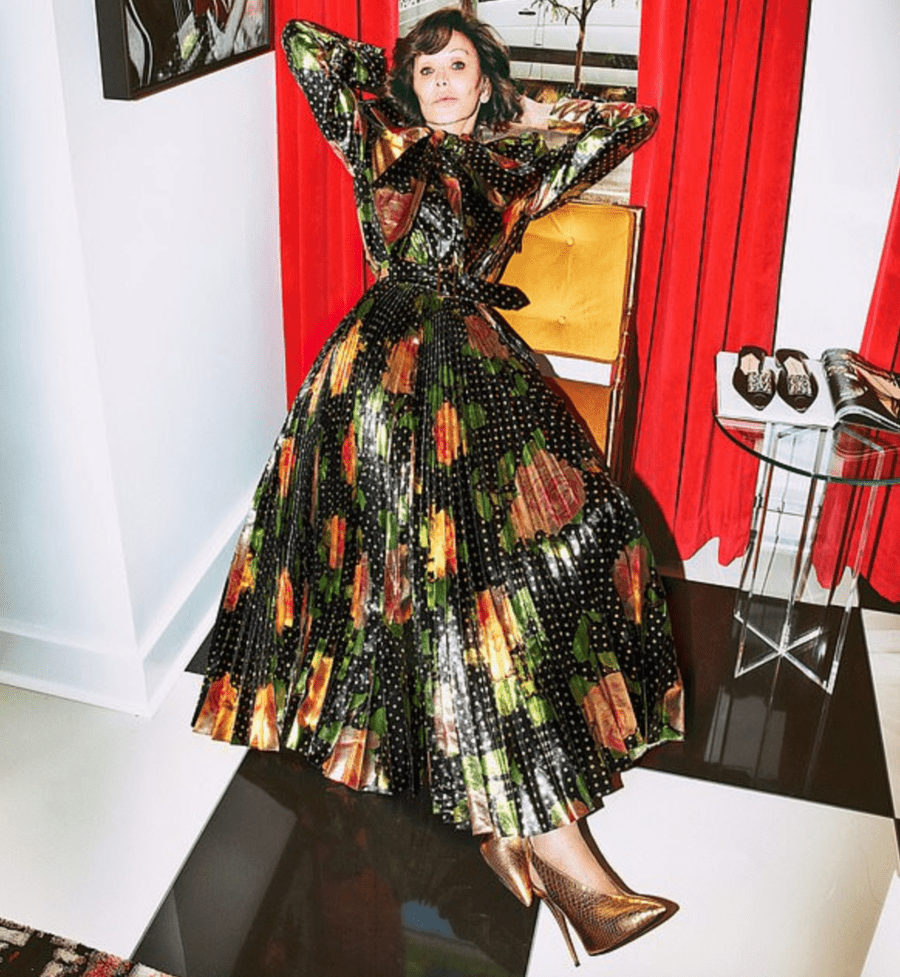
    Barbara Amiel
    Of the clear lover of plastic surgery Lady Black, in October 2020, Sarah Sands remarked in ‘The Mail on Sunday’: “She had a bohemian, almost masculine, view of opportunistic sex. She describes, for instance, accompanying an early love in his white Triumph sports car ‘in which once or twice I had performed fellatio to the fascination of passing truck drivers, all for fun.’”
    Conrad Black Barbara Amiel 2012
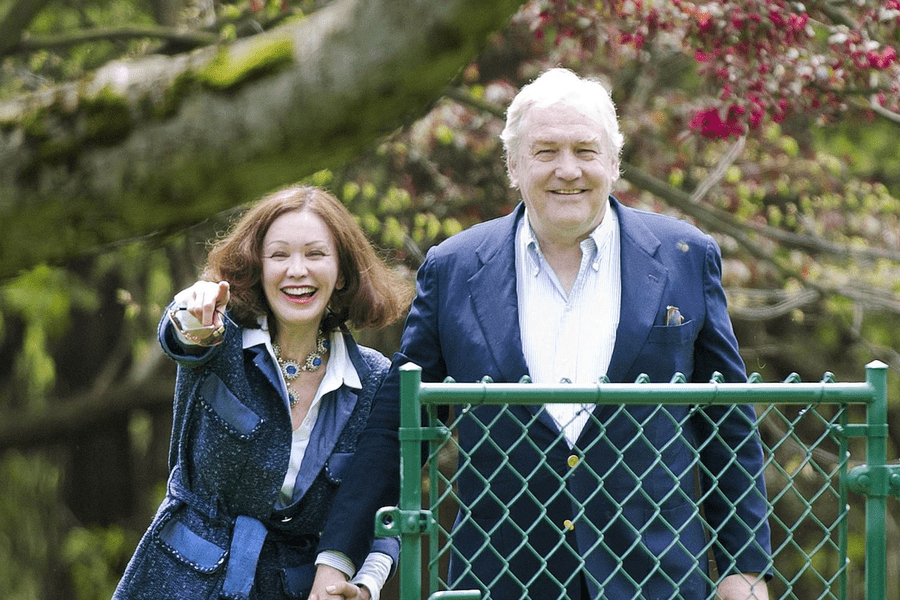
    After getting out of the clink in 2012, Lord and Lady Black decided to go back on the ‘razzle-dazzle’ and posed for photographers before heading back to London to party with friends. In May 2019, the rambunctious peer arrogantly announced he’d be returning to the House of Lords after President Donald Trump pardoned and praised him. Commenting, of this pardon, Lord Black declared: “I’m not bitter… Officially in the United States, I’ve never been charged and I won in the end. It was a war and there are casualties in wars. I lost the time, I lost a lot of money, but as you can see my standards of living isn’t bad… The truth is, these, last 15 years, I haven’t been as interested in British politics as I was before – in the Thatcher years. It could be quite interesting again, in fact it is as of right now – it’s very interesting… It’s my good fortune that at a time when it is feasible, it happens – by happy coincidence – that it is a time of great fermentation in British public affairs.” Surprisingly, he doesn’t seem to have turned up on occasions since.
    Alan Bond
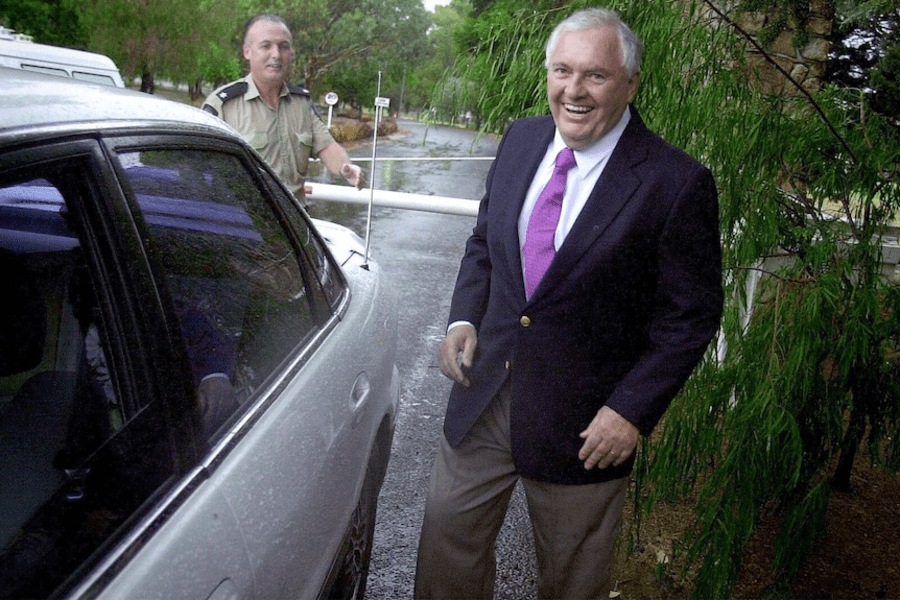
    The previous owner of 14 Cottesmore Gardens, Alan Bond (1938 – 2015), will forever be remembered as “Australia’s most notorious corporate criminal.” Born in Hammersmith, London, Bond’s first crime occurred when he was charged with theft aged 14 in Fremantle in Australia and whilst he is remembered for bankrolling the successful challenge for the 1983 America’s Cup, it is for causing the then biggest corporate collapse in Australian history that he will be go down in history.
    Adriana Abascal López-Cisneros Villalonga with Emmanuel Schreder
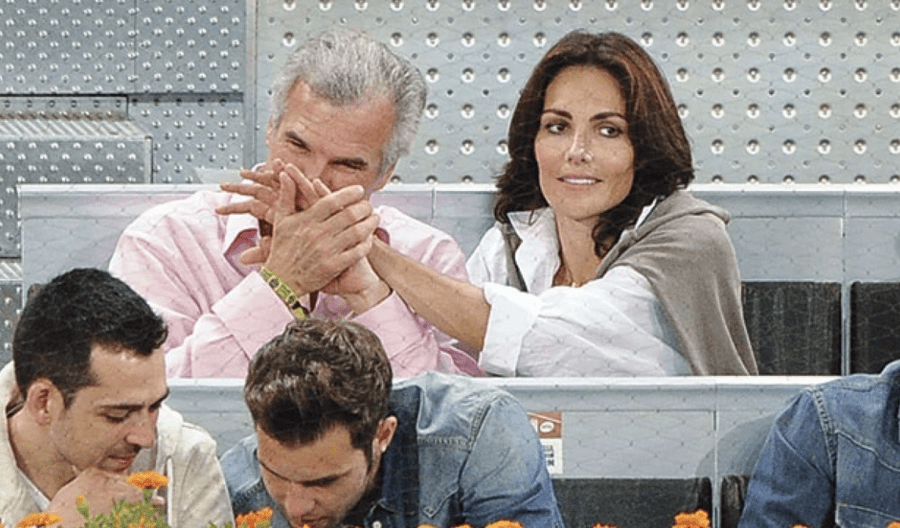
    Former Miss Mexico Adriana Abascal López-Cisneros (at the time Adriana Villalonga) bought the house in 2005. She divorced the Spanish businessman Juan Villalonga in 2009 and married the French businessman Emmanuel Schreder in Ibiza in June 2013. In August 2014, the magazine ‘Quién’ featured the model and television presenter on its cover and at that time she described her new husband as “the love of my life.”
    Telefónica Juan Villalonga and wife Adriana Abascal
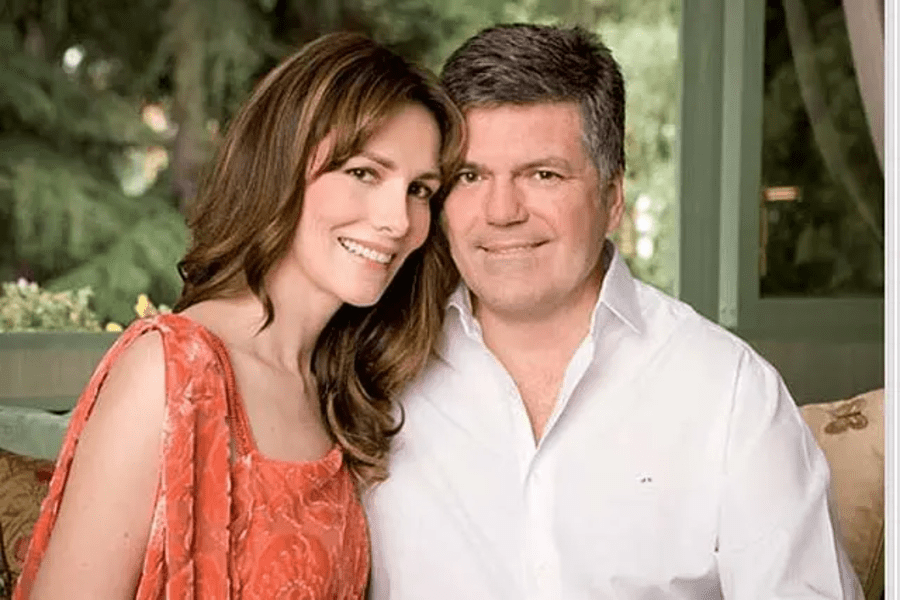
    Madrid born Juan Villalonga became the joint owner of 14 Cottesmore Gardens with his then wife Adriana Abascal – the couple were married between 2000 and 2009 – in 2005. He is listed on Companies House as being a director of the now dissolved Medikidz Foundation at the address between August 2009 and November 2013. Married since 2011 to a photographer named Vanessa Von Zitewitz, Mr Villalonga was a partner at McKinsey & Company in the 1980s, CEO for Credit Suisse First Boston and Bankers Trust in Spain in the early 1990s and CEO of Telefónica from 1996 to 2000. He was named as one of the best performing chief executive officers in the world by ‘Harvard Business Review’ in 2010 and is also linked to addresses in Monaco.

    The Names & Numbers – 14 Cottesmore Gardens (formerly known as ’12 – 14 Cottesmore Gardens’), Kensington, London, W8 5PR, United Kingdom

    April 2023 – Offered for sale for £36 million ($44.4 million, €40.9 million or درهم163.2 million) through Knight Frank. Valued on Homipi at an upper sum of £28.558 million ($35.250 million, €32.440 million or درهم129.456 million).


    2009 – Mr and Mrs Villalonga divorce and subsequently Adriana Abascal married Emmanuel Schreder, a French businessman, in Ibiza in June 2013.


    2005 – Sold by Lord and Lady Black for £13.1 million ($16.2 million, €14.9 million or درهم59.4 million) to Spanish businessman Juan Villalonga Navarro and Mexican model, Miss Mexico winner and television presenter Adriana Abascal López-Cisneros Villalonga.


    October 2004 – Placed for sale for £17.5 million ($21.6 million, €19.9 million or درهم79.3 million) according to NZ Herald.


    January 2004 – Valued at £14 million ($17.3 million, €15.9 million or درهم63.5 million) according to The Globe And Mail. At the time, the “mansion” in “the upscale Kensington neighbourhood” was described as having “10 bedrooms, 6 bathrooms and a swimming pool.”


    Featured also in The Guardian in an article by Chris Tryhorn. Quoting Lord Black, he shared: “At a certain price, anything is for sale. [It has] been shown to people in the not-too-distant-past.”


    Going further, Tryhorn added: “Artwork from the 18th and 19th centuries lines the walls, and there is plenty of storage space for the extensive wardrobe and shoe collection of Lord Black’s wife, Barbara Amiel, who famously declared once that her ‘extravagence knows no bounds.’ … It was originally two homes and one of the two original front doors is now a ‘deliveries’ entrance. He has used it in the past to host dinners with butler and maid service that was part-paid by Hollinger.”


    Also in 2004, in a profile in The Spectator, Peter Oborne wrote:


    “Every year the Blacks threw two parties, one at Christmas and one summer event, at their double-fronted 11-bedroom mansion in Cottesmore Gardens. Everybody who mattered at the time went: Margaret Thatcher, Henry Kissinger, Jimmy Goldsmith, James Hanson, Arnold Weinstock, Jacob Rothschild, royalty, the playwright Tom Stoppard.”


    “Some of these, injudiciously as it turned out, agreed to join the main Hollinger board. The luckier ones – Peter Carrington, Robert Salisbury – got away with being made directors of The Telegraph. As the Tories faded out, Labour ministers started to arrive, the indefatigable Peter Mandelson, David Blunkett and other ministers eager to ingratiate themselves with the Tory press. Prince and Princess Michael of Kent were assiduous in attendance. In London, the Nineties belonged to the Blacks. They were London’s most glamorous power couple.”


    “There had been a time when both Blacks had kept their feet on the ground. This ceased to be the case. One evening Barbara Black rang Charles Moore panic-stricken from her Kensington home. There had been a last-minute drop-out from one of the famous Black dinner parties. ‘I’m short of a woman,’ she told Moore. Moore surveyed the newsroom. His gaze alighted on the journalist Eleanor Mills, by chance the stepdaughter of the Cabinet minister Tessa Jowell.”


    “An hour later, hastily groomed, made-up and brushed, Mills was sipping pre-dinner drinks in Cottesmore Gardens. Then disaster struck. A male guest, Max Fisher, dropped out. Mills was approached by Conrad Black. ‘Finish your drink and skedaddle,’ he told her. Barbara Black then told her to go to the kitchen and out through the servants’ door, where the driver would pick her up and take her home.”


    2001 – Conrad Black is elevated to a life peerage in the United Kingdom at the suggestion of Tony Blair. He sat on the Conservative benches in the House of Lords until 2007 as The Right Honourable The Lord Black of Crossharbour KCSG, but took a “leave of absence” between 2012 and 2019.


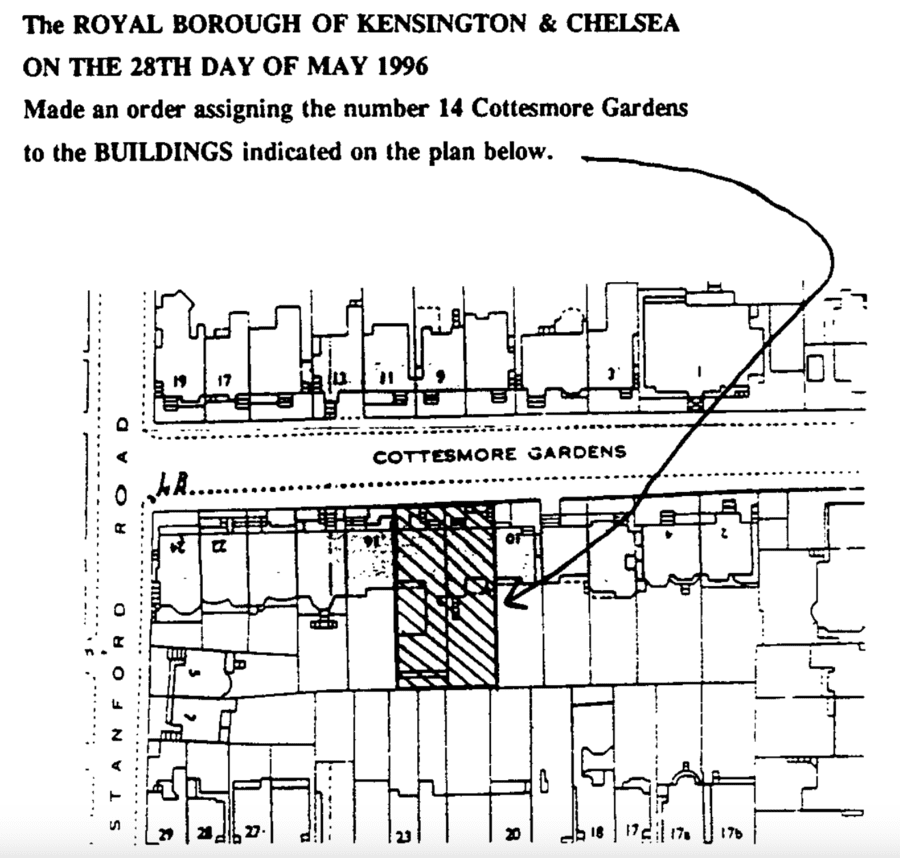
    28th May 1996 – The Royal Borough of Kensington And Chelsea ordered that 12 – 14 Cottesmore Gardens “shall be known and described” simply instead as 14 Cottesmore Gardens.


    Mid 1990s – The Blacks set about renovating 12 and 14 Cottesmore Gardens with the help of J. E. Evans Associates. Of the work in October 2006, The Sunday Times shared a segment of Tom Bower’s 2006 hatchet job Conrad and Lady Black that read: “Amiel vowed to create a palace that would attract celebrity worshipers of a power couple. Part of the first floor was to be removed to create a huge ground floor reception area.”


    1992 – 12 and 14 Cottesmore Gardens sold by the administrators of the affairs of Alan Bond through estate agents Savills to media tycoon Conrad Black and his Watford born journalist wife Barbara Amiel Black for “well under the asking price” for a sum of £3.5 million ($4.3 million, €4 million or درهم15.9 million).


    Mr Bond had been granted mortgages valued at £16.2 million ($20 million, €18.4 million or درهم73.5 million) on the property by Bell Satellite Services on the property along with two others at 4 and 16 Belgrave Mews in London, SW1 previously according to a report published by Financial Review in March 1990.


    1991 – Rented to an American businessman for £6,000 per week ($7,400, €6,800 or درهم27,200 per week).


    1990 – Placed in the hands of administrators of Mr Bond’s and placed for sale through Savills for a bargain basement sum of £3.8 million ($4.7 million, €4.3 million or درهم17.2 million) according to Financial Review.


    1980s – Sold to Alan Bond’s Bell Satellite Group for £7 million ($8.6 million, €8 million or درهم31.7 million).


    Circa 1905 – Walter Tapper is said to have “designed a library with handsome Arts and Crafts plasterwork (now removed) at the rear of the building.”


    1903 – 14 Cottesmore Gardens registered as the home of a Mrs Benson according to the Muster Roll of Angus: South African War, 1899 – 1902.


    1869 – In their current marketing blurb, Knight Frank suggest: “There has been a house on the site of 12 – 14 Cottesmore Gardens since at least 1869. The current house has been altered, extended and most notably joined over the subsequent century and a half. With the local planning department strongly opposed to further amalgamation of homes, opportunities to acquire a house of this width will be rarer still in the future.”


    1850s to 1860s – Built “under the direction of David Howell, of Serjeants Inn, Fleet Street.” Mr Howell was described in 1853 as an “articled clerk to a solicitor, lately carrying on business as a solicitor.” The architecture was lauded as: “Designed in a bold classical manner, with rather fleshy consoles and modillions… and bands of Vitruvian scroll between the bases of the ground-floor windows.”


    More photographs of the £36 million mansion…
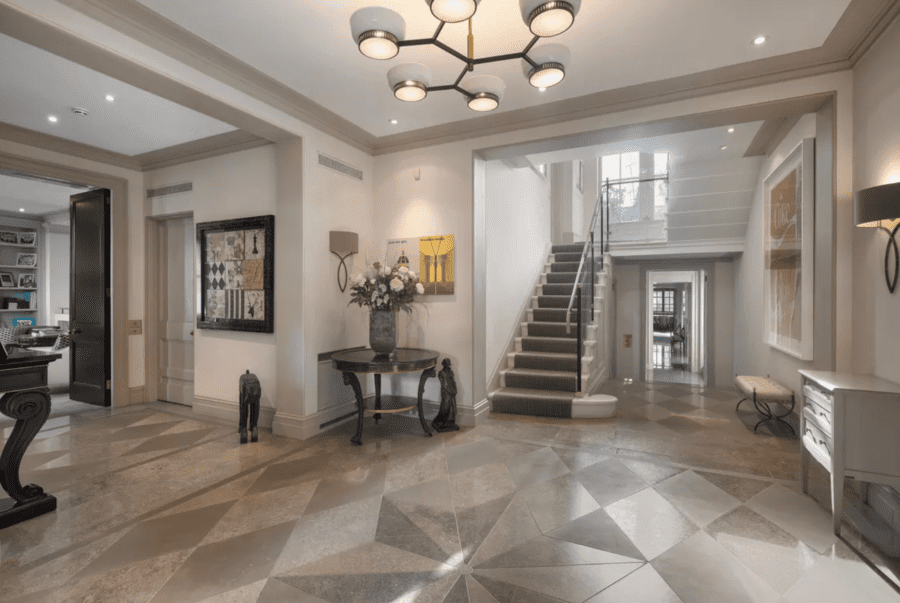
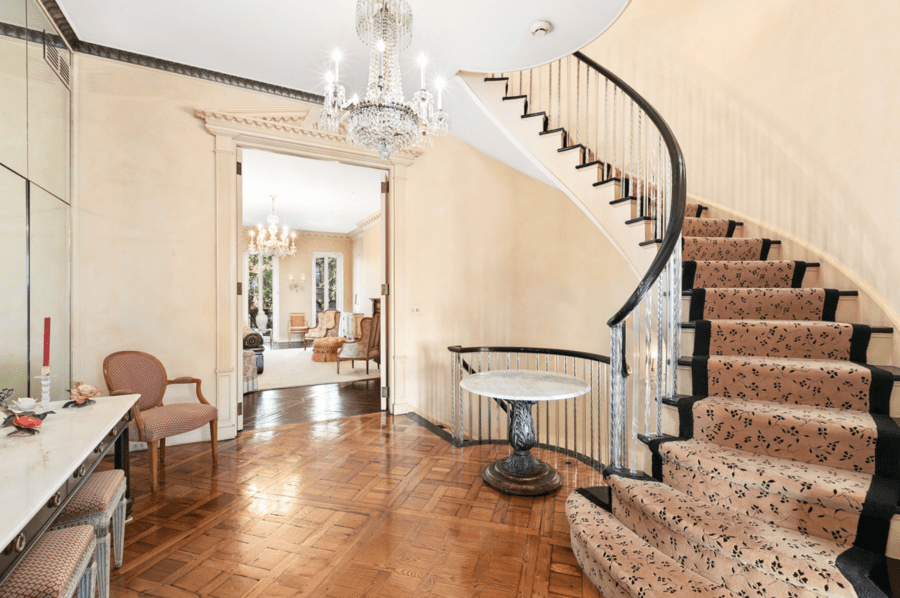
    Image 1 - 14 Cottesmore Gardens(1)
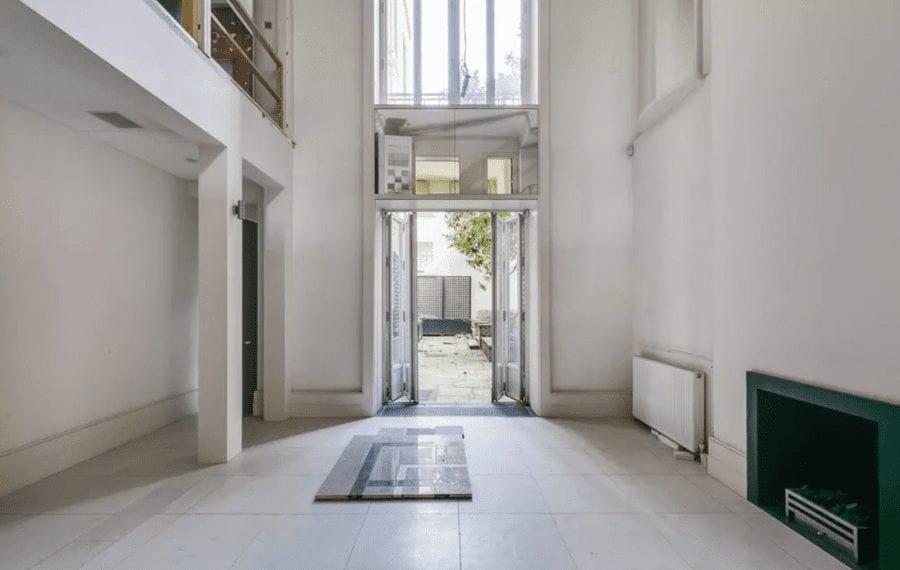
    An entrance hall where power and privilege have most certainly mingled previously.
    Image 2 - 14 Cottesmore Gardens(1)
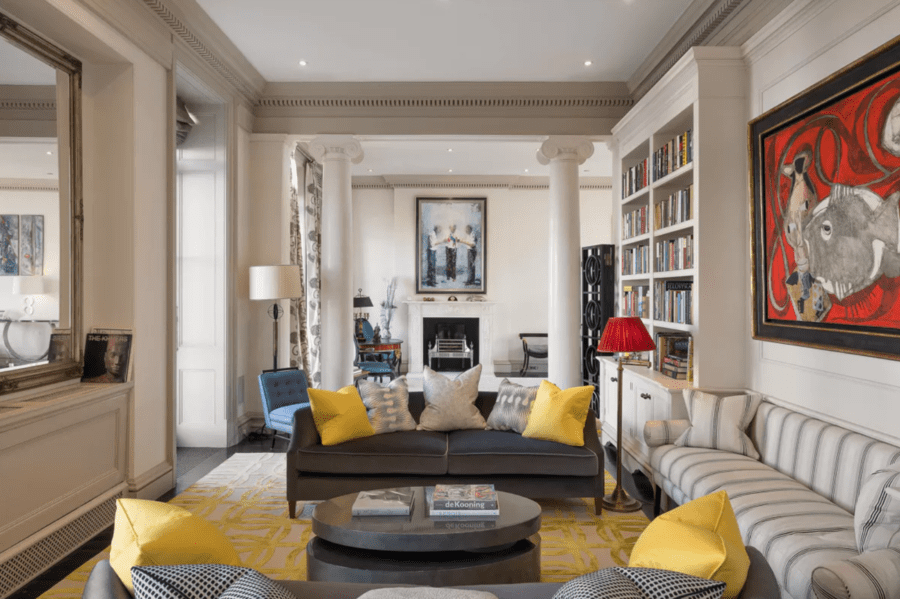
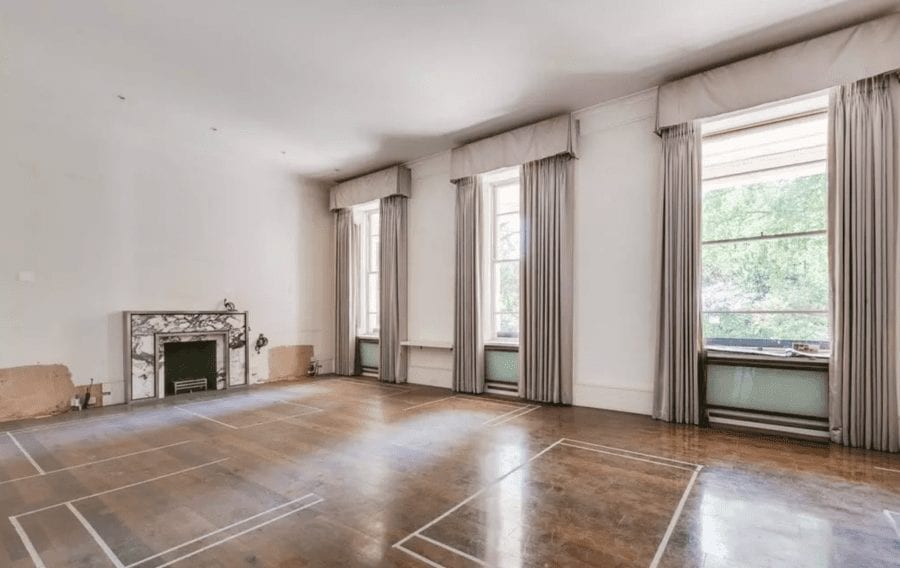
    The 54-foot wide drawing is lauded by selling realtors Knight Frank as “arguably the best room in the house” and “double aspect.” They add: “[It has] six windows overlooking the street and additional views over the private garden to the rear.”
    Image 3 - 14 Cottesmore Gardens(1)
    The columns where Barbara Amiel Black once posed for photographs remain, but the subsequent owners eliminated much of the 1990s ‘brash’ that had been installed by a Watford born woman whose excess clearly offended so many.
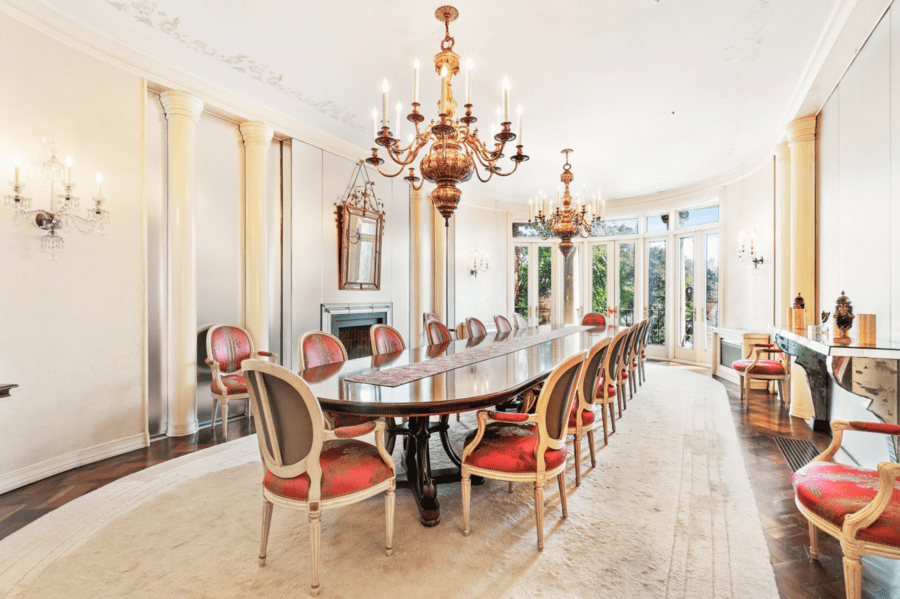
    Image 4 - 14 Cottesmore Gardens(1)
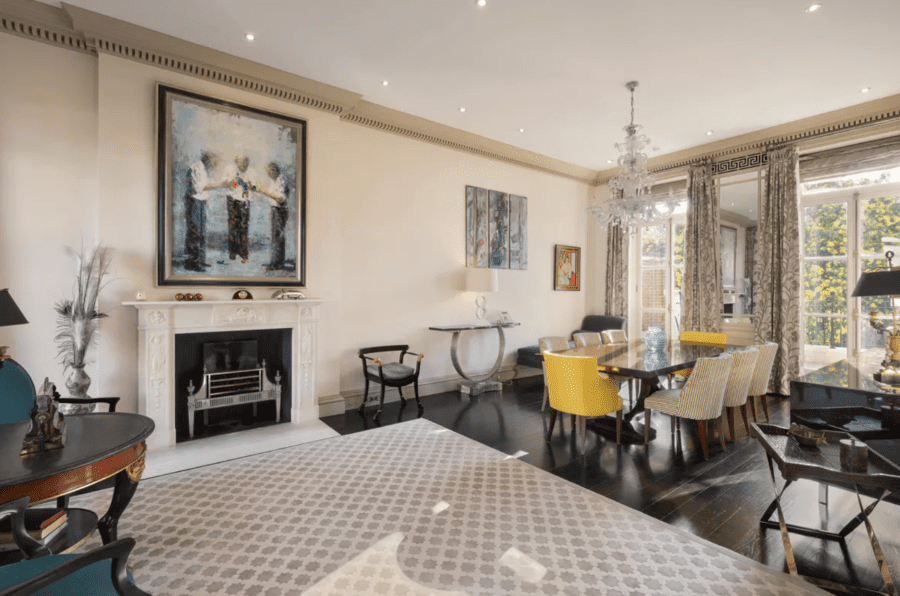
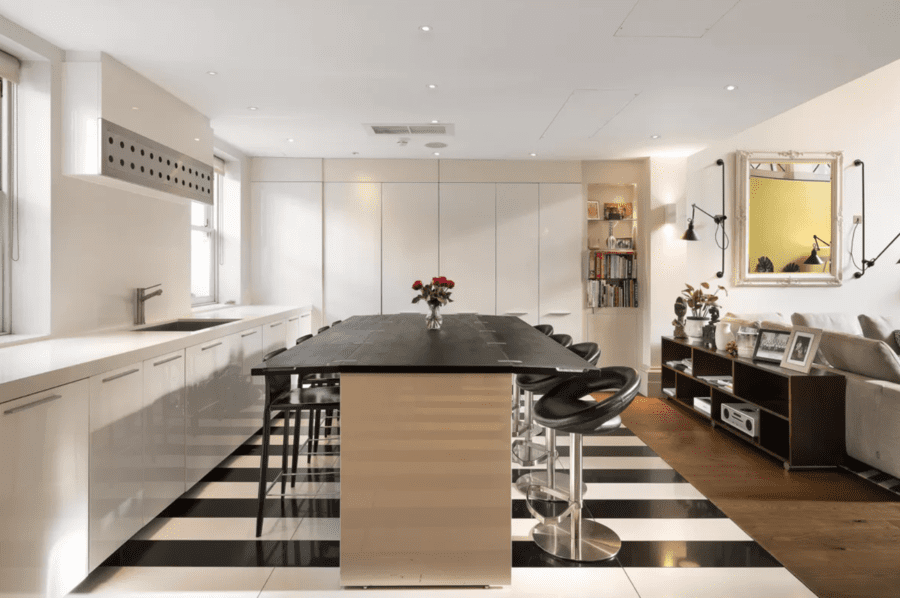
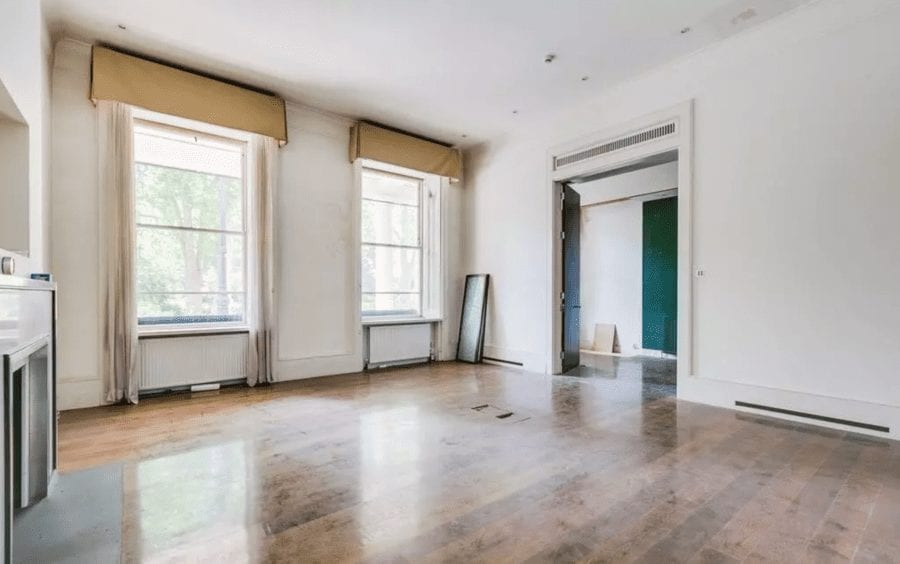
    This dining room, where Conrad Black hosted presidents and prime ministers, is now somewhat diminished. The table for eight looks completely out of place and a future owner would do well to install something a little grander.
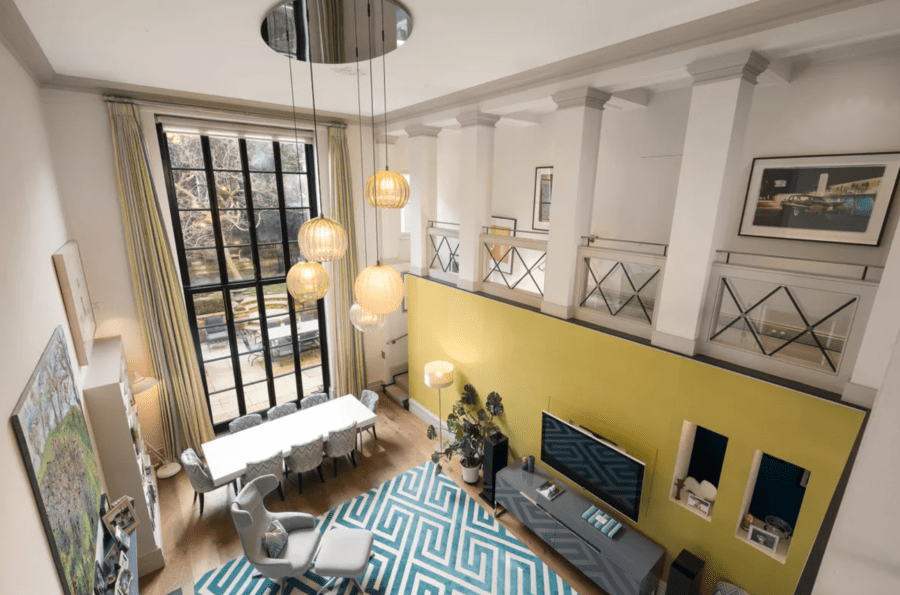
    Image 5 - 14 Cottesmore Gardens(1)
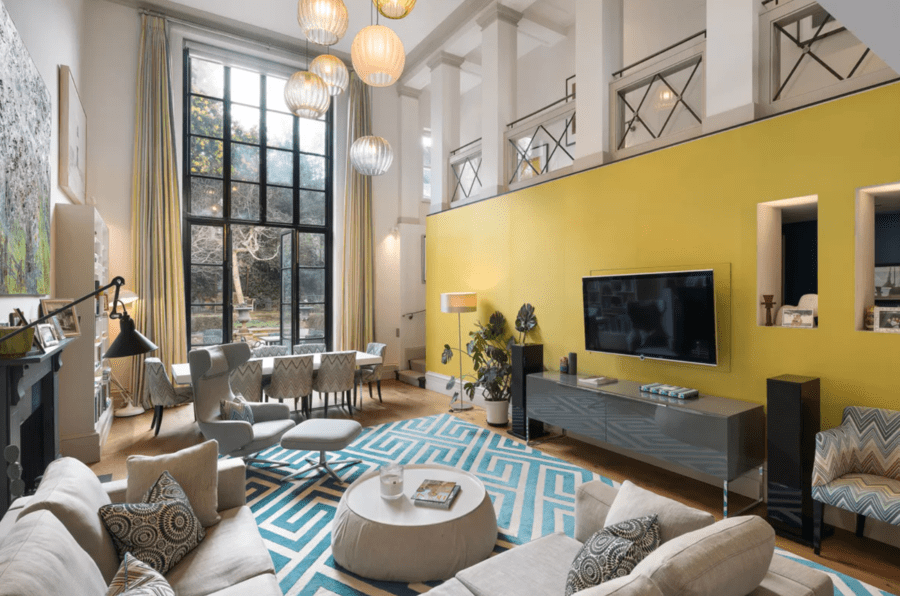
    A double height entertaining space was installed at the insistence of the loftier-than-lofty Lady Black in the 1990s and it remains today. However, it is now currently being used for more casual affairs such as Netflix viewing rather than being the scene of something that you’d more likely find in the ‘House of Cards’ in fact.
    Image 6 - 14 Cottesmore Gardens(1)
    A new owner might reinstate the grandeur of the past; sadly, however, this seems unlikely and the purchaser is more likely to be a footballer or Internet tycoon than a super-connected business tycoon.
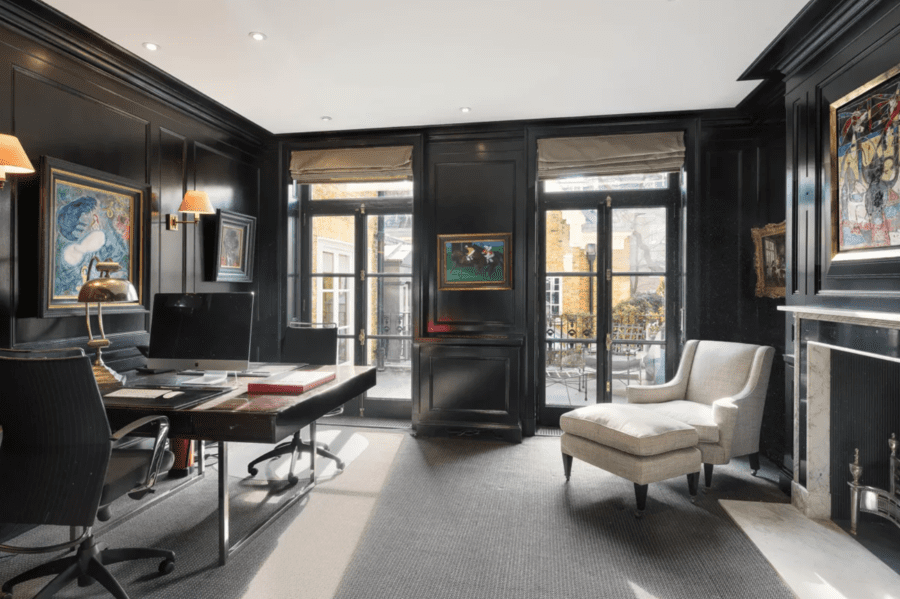
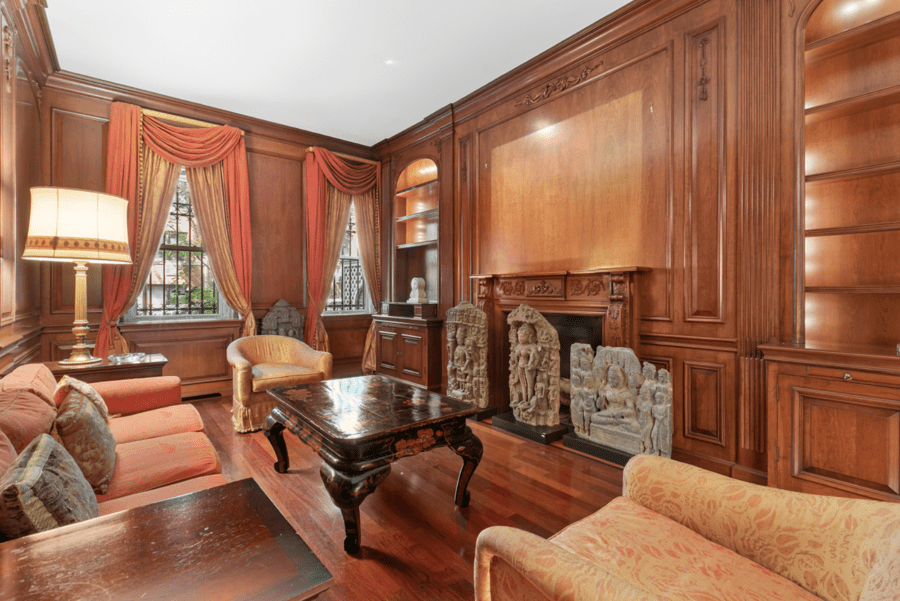
    Image 7 - 14 Cottesmore Gardens(1)
    This currently very dark and very depressing study would most certainly not appeal to the very clearly very, very bright yet very, very pompous The Right Honourable The Lord Black of Crossharbour KCSG – a man who is said to count Julius Caesar and Napoleon Bonaparte as “his military heroes.” Of him in July 1997, Mark Honigsbaum in the ‘Independent’ remarked: “Although Black’s grandfather had briefly been a business partner of Harold Harmsworth, the original Viscount Rothermere, it was from his father, George Montegu Black Jr, that Black learned the art of corporate warfare, the importance of historical perspective and that gambling provides a disappointing rate of return compared to the Dow Jones index… The young Conrad was precocious. At the age of eight he sank his life savings of $60 into a single share of General Motors. He also became obsessed with Napoleon, and would astound his father’s friends by reeling off details of campaigns. Another story has him washing dollar bills and hanging them out to dry on a line outside his father’s home in Toronto. The last is apocryphal – Black says he slipped in the mud and was cleaning his change – but the image of the young capitalist, wise beyond his years, is accurate. His childhood tutor, the historian Laurier LaPierre, once asked Black why he always seemed to have the air of someone waiting for something to happen… A few years ago, for instance, the rumour went round Fleet Street that Black had bought Napoleon’s preserved penis at an auction. Black denied it, but many remain convinced that Bonaparte’s body part sits in Black’s collection of military curios… Black is no philanderer and is devoted to his second wife, the former ‘Sunday Times’ columnist Barbara Amiel. They are said to be intellectual soul mates and the parties at their four-storey mansion in Kensington are famous for bringing together a cross-section of the great and good.”
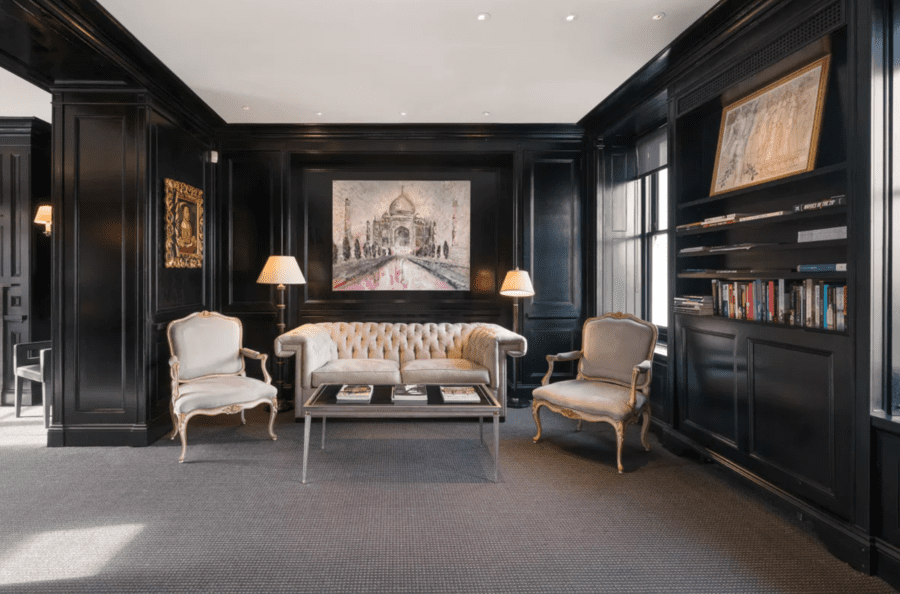
    Image 8 - 14 Cottesmore Gardens(1)
    One could not imagine the likes of the late great Baroness Thatcher, for example, liking the idea of sitting in this extremely depressing and dark waiting area. A new owner would do well to obliterate a décor scheme that could have only been favoured by a completely colour blind banker.
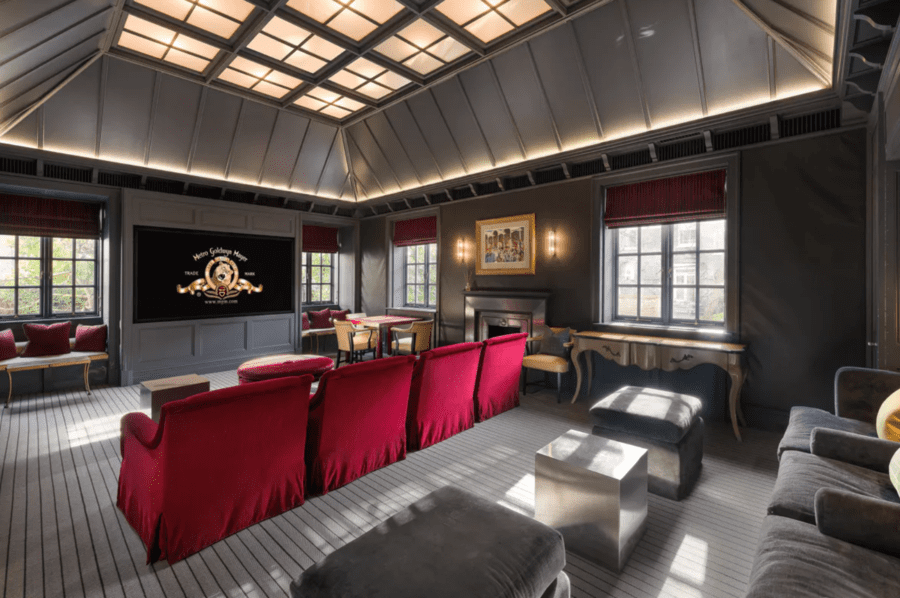
    Image 9 - 14 Cottesmore Gardens(1)
    A room currently described as a ‘cinema room’ measures 28’6” by 21’6” and is situated at the rear of the house. One can imagine Conrad Black having sat here for hour upon hour watching historical dramas about Napoleon with the likes of chums such as the acclaimed historian Andrew Roberts, the gambling tycoon John Aspinall and the politician and diarist Alan Clark, but a new owner will be more likely next showing episodes of ‘Succession’ – based on ‘The Telegraph’ tycoon’s rival Rupert Murdoch – than viewing historical works one most definitely suspects.
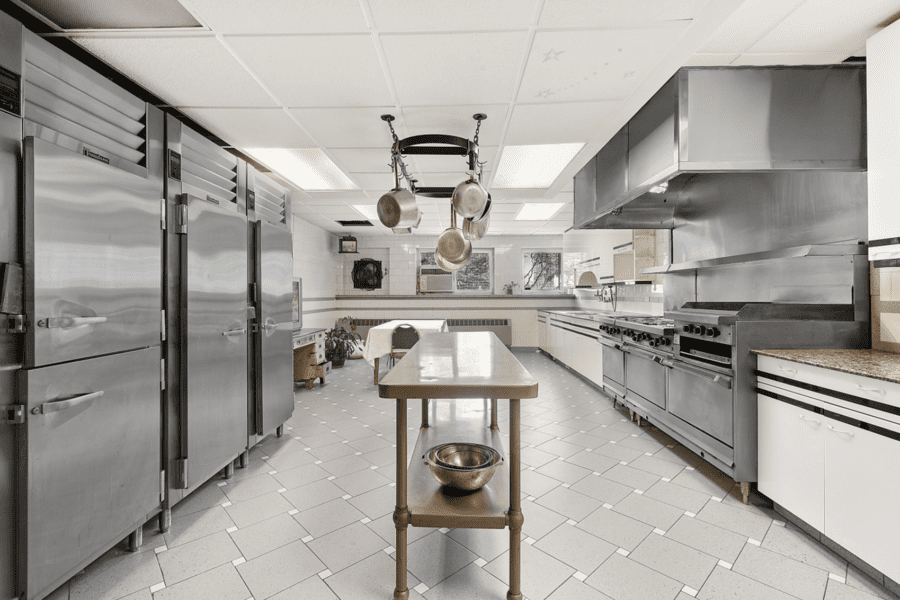
    Image 10 - 14 Cottesmore Gardens(1)
    Dining whilst the staff cook would NEVER have been on the agenda in the era that pomposity reigned whilst Lady Black was chatelaine of 14 Cottesmore Gardens.
    Image 11 - 14 Cottesmore Gardens(1)
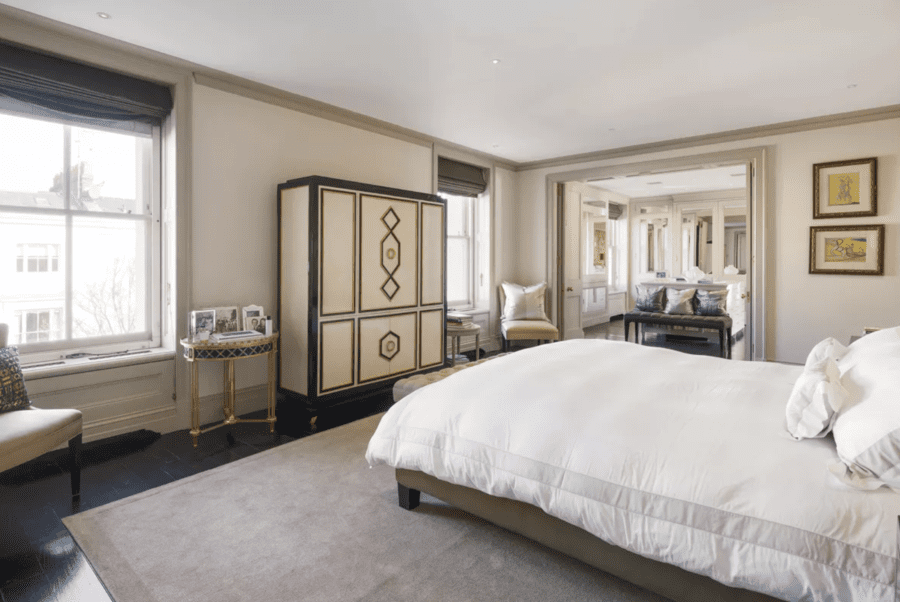
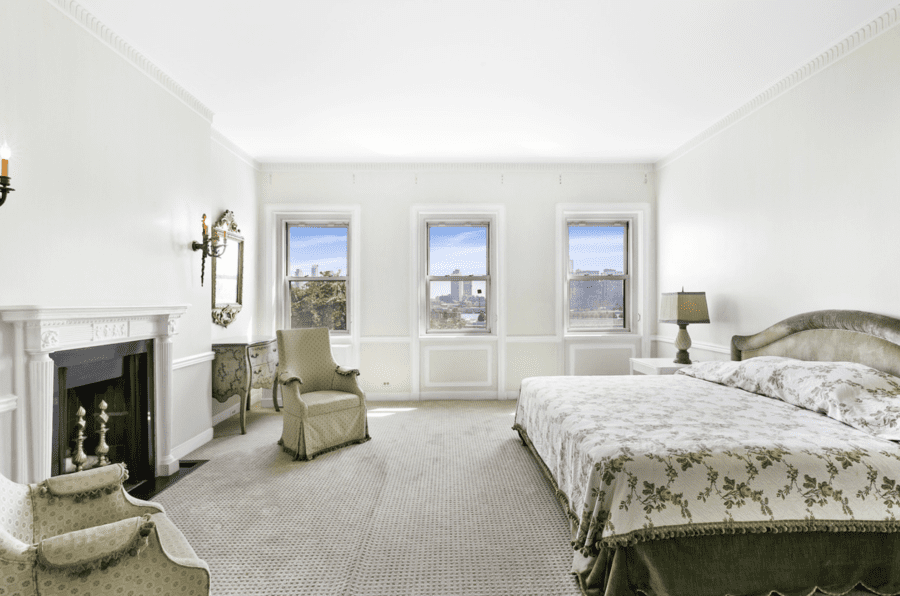
    A 2,000 square foot entire floor fit for a tycoon… The master bedroom suite of the house takes up the entirety of the second floor of the building. It incorporates not only the principal bedroom, but also a “his” dressing room and a “her” dressing room as well as a sitting area, a bathroom, a shower room and storage rooms. It has direct lift access and is bigger than the average Brit’s entire house.
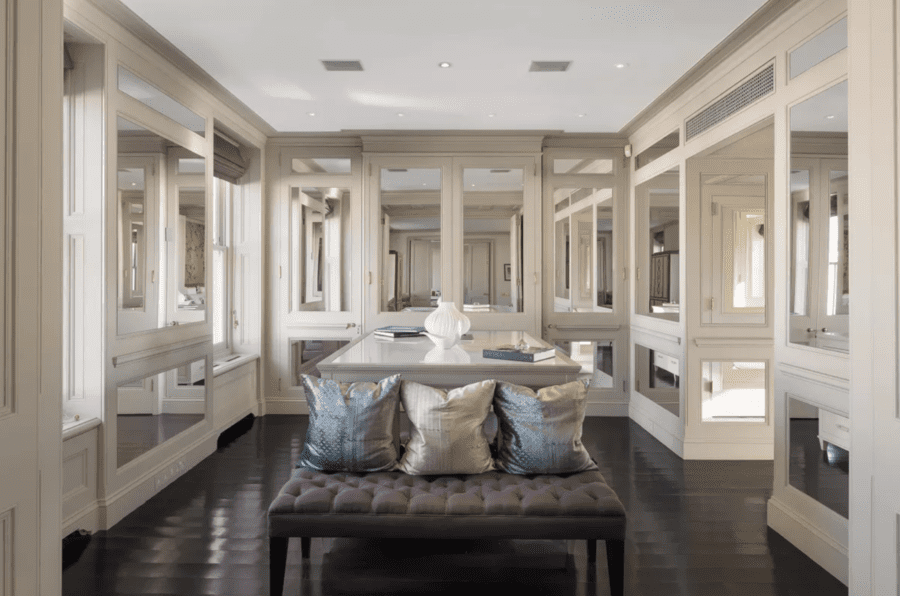
    Dressing room 14 Cottesmore Gardens Barbara Amiel
    A dressing room in the house where Barbara Black opened up to ‘Vogue’ and displayed “closets overflowing with dazzling evening gowns, designer handbags and 100 pairs of Manolo Blahnik shoes. ‘I have an extravagance that knows no bounds,’ she famously declared. Unfortunately for Lady Black, the article was closely perused at investment company Tweedy, Browne, a Hollinger International shareholder.”
    Image 12 - 14 Cottesmore Gardens(1)
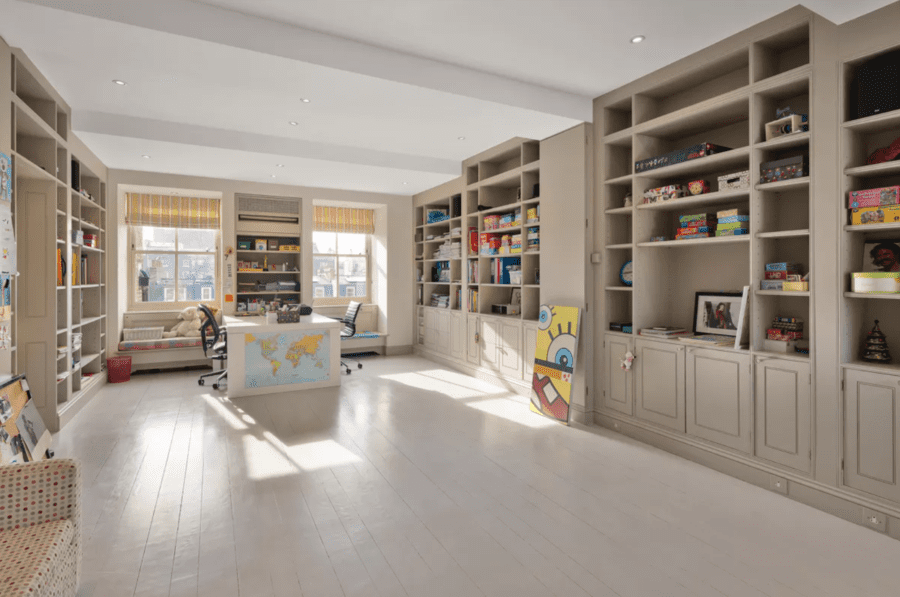
    This playroom certainly did not exist in the era that Lord and Lady Black owned the property. It would be more likely crammed with books or stuffed with Manolo Blahnik shoes than toys from Toys ‘R Us. A new owner may likely reinstate it as an additional bedroom or office or games room perhaps.
    Image 13 - 14 Cottesmore Gardens(1)
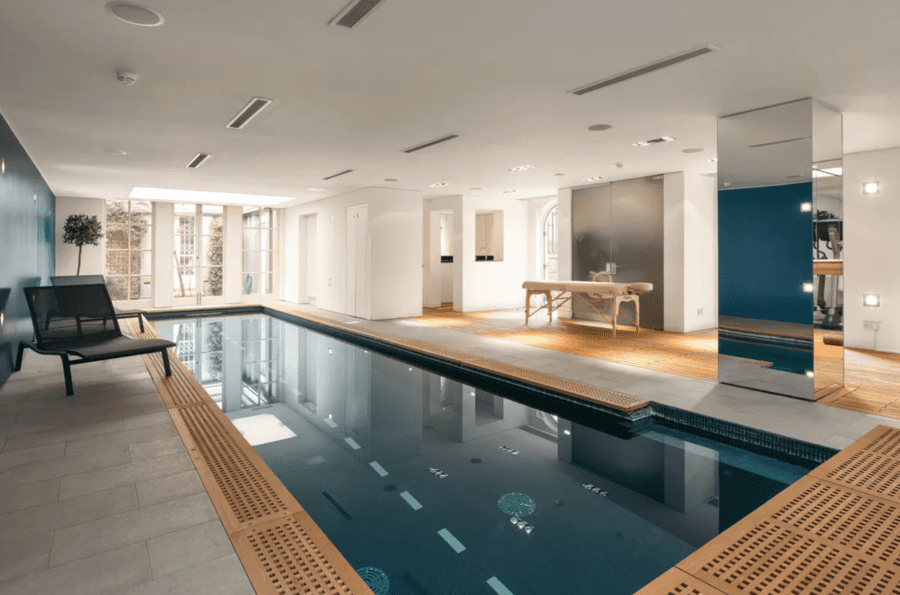
    The pool room measures 43’9” by 26’9” and is no doubt where Lady Black spent many an hour relaxing.
    Image 14 - 14 Cottesmore Gardens(1)
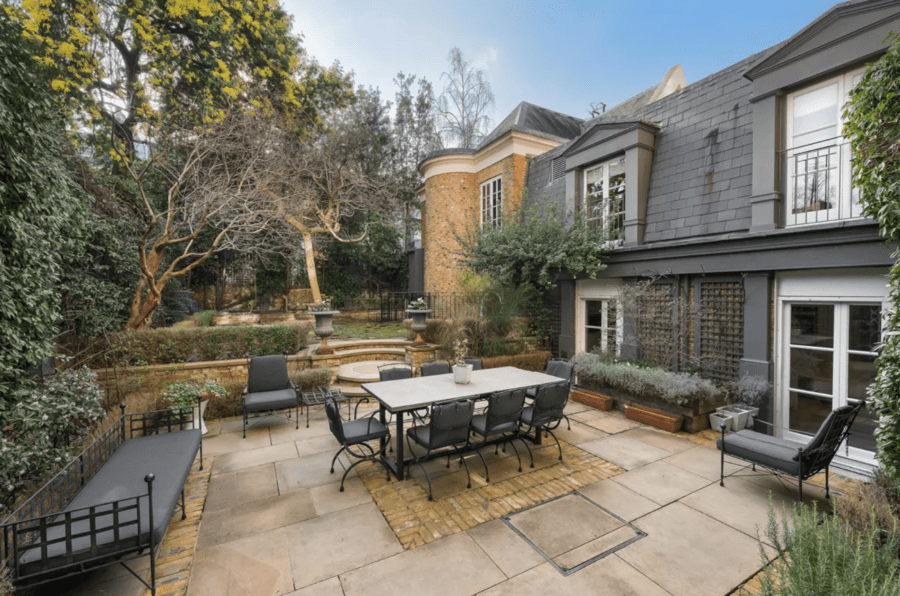
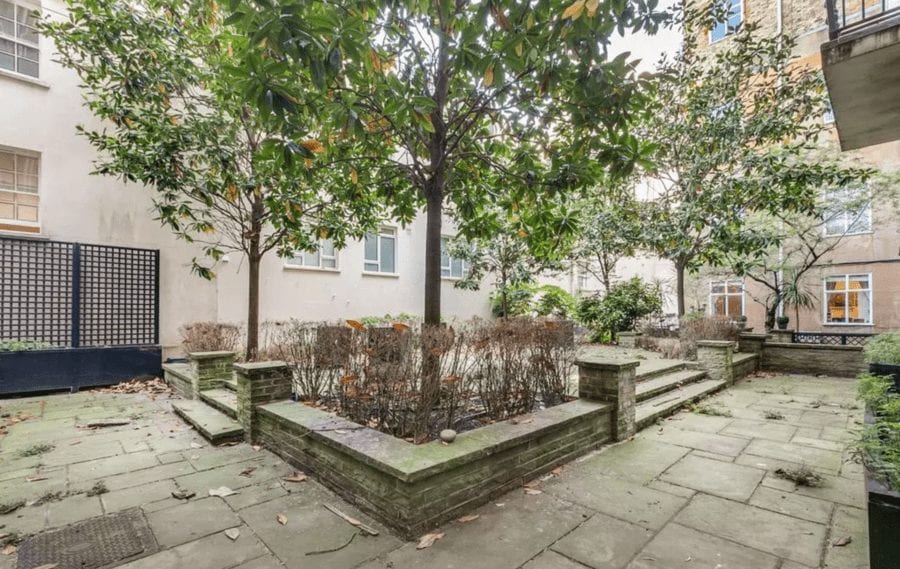
    The garden to the rear was where Lord and Lady Black hosted their annual summer party (with guests “spilling” into their drawing room also). In surprisingly Tardis-like fashion, the duo were able to supposedly squeeze in upto 400 guests at such occasions. Amongst those said to have enjoyed hospitality there were Joan Collins and of such, magazine publisher Nicholas Coleridge wrote: “If you get a kick out of milling about with present and former prime ministers, cabinet ministers, minor royals, dukes, editors, vastly rich Americans, distinguished historians, gossip columnists, playboys and lots of pretty ‘it’ girls, then this was the place to be.”
    Image 15 - 14 Cottesmore Gardens(1)
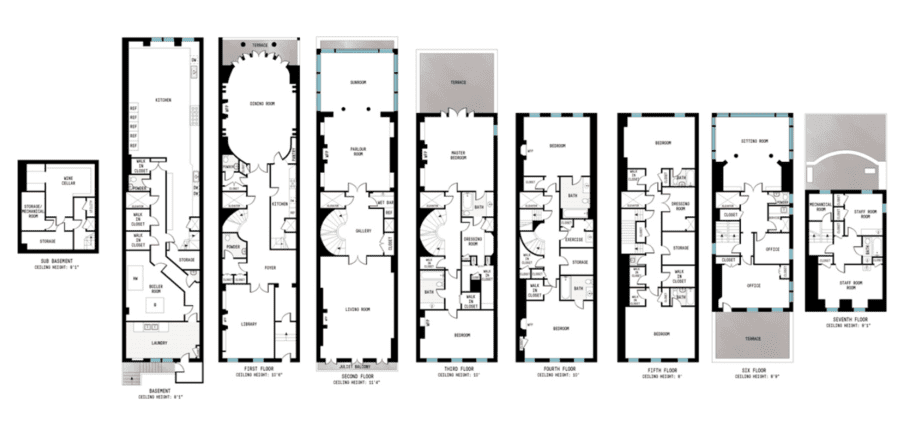
    The existing floor plan of the property illustrates the vast scale of the building offered. A buyer, Knight Frank observe, has additional options and “a pre-planning consultation has been carried out with RBKC by leading architects Studio Indigo.” They add: “[It] would completely reconfigure the house adding an additional basement floor and taking the internal space to more than 15,000 square foot. The resulting house would have a 40-foot by 41-foot south-facing rear garden.”
    Site plan 14 Cottesmore Gardens
    A plan of the site as presented in 1996 when 12 and 14 became known just as 14 Cottesmore Gardens.
  • Lavish Living and Little Owls at Lilford Hall

    Lavish Living and Little Owls at Lilford Hall

    Crumbling Northamptonshire estate Lilford Hall – where the little owl was introduced to Britain – for sale for £10 million, a sum £35 million lower than in 2014

    • Grade I listed Jacobean mansion with 13 chimney stacks for sale for £10 million; it was for sale last for £44.9 million in 2014 in spite of being listed on English Heritage’s ‘At Risk Register.’
    • Lilford Hall – parts of which have not been occupied since 1947 – is currently owned by a businessman who tried to sell burial plots in the grounds for £1,250 a pop and shares in a yacht loosely associated with Frank Sinatra for £23 each.
    • The 321-acre estate includes not only overgrown parkland, but also a zoo with cages that formerly housed bears and a lake for flamingos.
    • From 1711 until 1990, Lilford House was the seat of the Powys family – the 4th baron is credited with introducing the little owl to the UK.
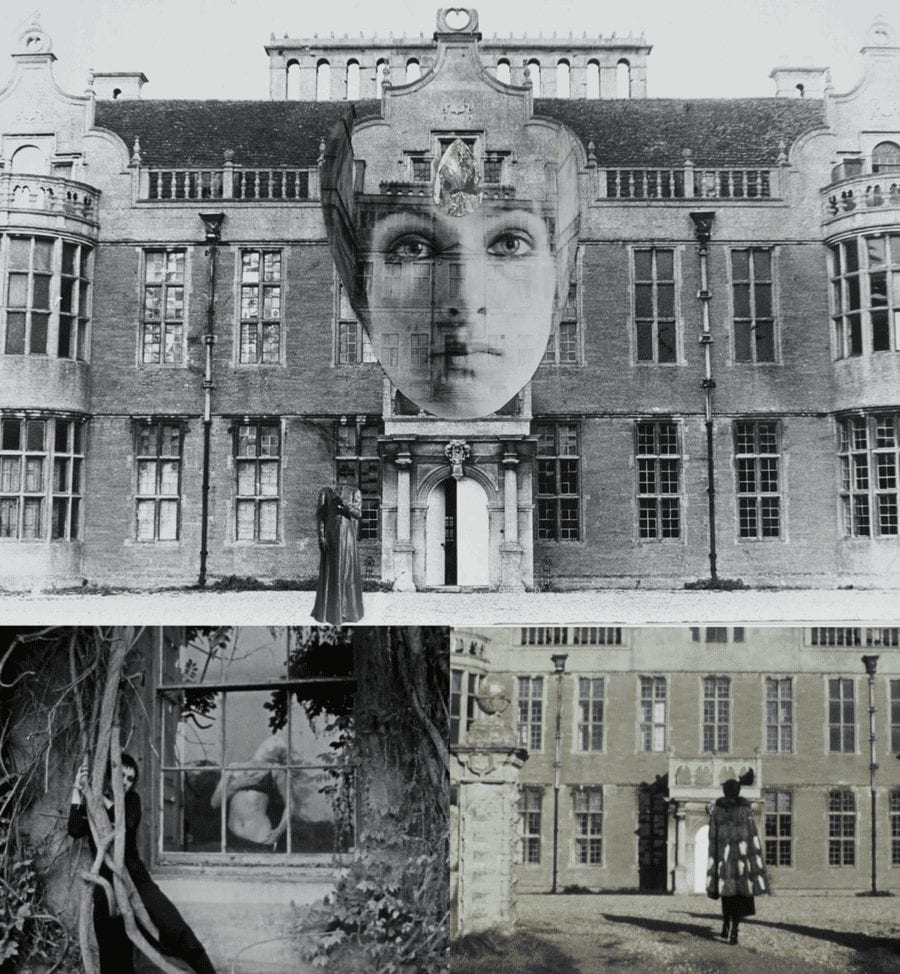
    • More recently, in 1969, the “sexual mystic” artist Penny Slinger used the at-the-time derelict mansion in one of her best-known works.

    A 32,406 square foot Grade I listed Jacobean mansion 82 miles from Central London has gone on sale for £10 million – or the equivalent of just £308 per square foot.


    On this basis, Lilford Hall – set in 321 acres near Oundle – seems a comparative bargain when considered against the £4,786 per square foot sought for a Lennox Gardens, Knightsbridge triplex flat The Steeple Times featured in May, but buyers need to remember this – parts of this crumbling building, most notably the major state rooms, have not been used since 1947.


    Marketed last in 2014 for the even more punchy sum of £45 million, the “exceptional residential and amenity estate located on the River Nene,” is now offered by agents Savills. The “wonderfully proportioned” U-shaped mansion itself  is constructed of grey limestone and includes over 100 rooms and amongst them are 7 “impressive” reception rooms, a ballroom, a ‘great chamber’ and 9 bedrooms. In addition, there are two Georgian pavilions that were formerly coach houses and stabling, three cottages, a former zoo, the oldest private softball court in the world, a former flamingo enclosure and a deer park.


    “Impressiveness in the chief attribute of Lilford Hall as a specimen of architecture” claimed County Life in 1990 and as the seat of the Powys family from 1711 until 1990, it became not only a Downton Abbey-esque entertaining pad, but also housed nurses in the Second World War. Here, indeed, is an English country house that has seen lavishness and decline and thankfully here is an example that thankfully escaped the wrecking ball wrought so disgracefully on such houses in the 1950s and 1960s.


    Fascinatingly in the 1880s, Thomas Powys, 4th Baron Lilford filled his aviaries on the estate with rheas, kiwis, pink-headed ducks, free-flying lammergeiers and it was from here that he also introduced the little owl into the UK. There are said to be around 5,700 breeding pairs today, but sadly, according to the RSPB, their numbers are now in decline.


    More recently, in 1969, “sexually erotic” performance artist Penny Slinger took over the by then “derelict” mansion in conjunction with the filmmaker Peter Whitehead. Their resulting work, titled An Exorcism, was exhibited internationally and in 2004, after the current owners, Charles and Aziza Micklewright, acquired the house, they did something equally avant-garde; they attempted to sell burial plots in the grounds to Americans by citing the estate’s connections to the founder of the Brownists, Robert Browne – a man better known as ‘The Father of the Pilgrims’ and ‘The Grandfather of the Nation’ (of the United States of America).


    Whilst Mr and Mrs Micklewright were lauded for their considerable efforts towards the “huge task” of restoring Lilford Hall, they came to the attention of Historic England in May 2019 when the building was listed on the At Risk Register. At that time, the Oundle Chronicle reported: “The roof covering is in poor condition leading to water ingress and distress to the upper storeys. The front bays require structural attention. A schedule of urgent repairs has been identified but not implemented, and no long-term solution has been agreed.”


    Now, someone with very, very deep pockets is required to restore this gem. It would be helpful if they liked erotic art, bears, squash and owls also.


    https://www.youtube.com/watch?v=cii3VlgfVy0
    Lavish Living and Little Owls at Lilford Hall, Northants – £10 million ($12.5 million, €11.1 million or درهم46 million) for The Lilford Hall Estate, Lilford, Oundle, Peterborough, Northamptonshire, PE8 5SG, United Kingdom through estate agents Savills – Crumbling Northamptonshire estate Lilford Hall – where the little owl was introduced to Britain – for sale for £10 million, a sum £35 million lower than in 2014.
    The artwork created by Penny Slinger and Peter Whitehead at the house has been exhibited internationally.

    The Names & Numbers – The Lilford Hall Estate, Lilford, Oundle, Peterborough, Northamptonshire, PE8 5SG, United Kingdom


    June 2020 – The estate is listed sale for £10 million ($12.5 million, €11.1 million or درهم46 million) through Savills. It includes 321.31 acres, of which 148.17 acres are pasture land whilst 157.48 acres are woodland. The majority of the estate is held on a freehold title, whilst the remaining 127.6 acres – known as ‘The Linches’ and ‘Lilford Woods’ – are held on a lease with 91 years remaining.


    2015 – Promoted as ‘The National Memorial Gardens,’ burial plots in the gardens of the hall were offered “available to any UK resident or national for an outstanding price of only £1,250 ($1,568, €1,393 or درهم5,758)” by Mark Bailey of Harley Investments. Around the same time, a website dedicated to Lilford Hall marketed “a piece of the formal gardens” for sale for £299 ($375, €333 or درهم1,377) to include “an officially certified ‘Squire of Lilford’ [title] … with this little piece of history.”
     

    March 2014 – The Irish Times reported that the asking price for the estate had been increased to £44.9 million ($56.3 million, €50 million or 206.8درهم million). They claimed the agents Coldwell Banker blamed “confusion over currency conversion rates and new instructions from the owner.”


    April 2014 – The Lilford Hall Estate is listed for sale through Coldwell Banker on MyHome.ie for £33.7 million ($44.2 million, €37.5 million or درهم155 million) on behalf of “an English gentleman.”


    2004 – The estate is acquired by the Micklewright family. Little information is available online about the Old Framlingham Charles Micklewright (born July 1958), but he is described as a “patent attorney” on Companies Houses pages. The businessman is mentioned also as a publisher and trustee of the Marsh Christian Trust elsewhere, whilst his Singaporean born wife, Aziza (born 1964), was a director of Lilford Properties Limited from 2013 to 2018.


    A website operated by Sign of the Times Limited, a Hong Kong company of Lilford Hall, Lilford, Oundle, Northamptonshire, PE8 5SG, currently offers shares in a yacht named ‘Sinatra the Voice’ for £23.91 ($29.99, €26.64 or درهم110.14) per share. The boat was built in 1956 and is tenuously linked to Frank Sinatra by the fact that a one-time owner, Beale Poste, loaned it occasionally to the crooner between 1968 and 1974 in West Palm Beach, Florida.


    1990 – The estate is closed to the public.


    1980s – The house is used as a location in the BBC English Civil War inspired historical drama series By the Sword Divided.


    1970s – Aviaries on the estate restocked by George Powys, 7th Baron Lilford (1931 – 2005). He “opened [the estate] to the public as a leisure park” and housed more than 350 birds of 110 species there. It remained thus for around 20 years and included a restaurant and shop. The aviaries and the 1,896 square foot restaurant building remain present still today.


    1969 – 1970 – American British “sexual mystic” artist Penny Slinger (born 1947) and Liverpudlian filmmaker Peter Whitehead used the “derelict mansion” as the setting for their works An Exorcism and Lilford Hall. They are lauded as a “photo romance” and exhibited at the Blum and Poe Gallery in Los Angeles in 2014, at the Haywood Gallery in London in 2015 and at the Fortnight Institute in New York in 2019.


    1949 – Stephen Powys, 6th Baron Lilford (1869 – 1949) died without having married or having had children. His properties aside from Lilford – a house in Mayfair, Bank Hall in Lancashire and the Bewsey Estate in Cheshire – passed to his second cousin twice removed.


    1947 – The estate is sold to a company named Merchant Ventures by the Powys family (though they remain present on the estate until 1990).


    1939 – 1945 – During the Second World War, the parkland of the estate was used as a military hospital for nearby airfields. From 1949 to 1954, some of the buildings constructed during this period were then used as a Polish school.


    1923 – First-class Northamptonshire cricketer Major John Powys, 5th Baron Lilford (1863 – 1945) built the first private softball court in the world in the grounds of the hall. It is now in disrepair and the roof has fallen into the inner court.


    1909 – 1910 – The hall was extended in the Edwardian manner including the provision of a new master bedroom with dressing room and bathroom by William Dunn and Robert Watson of Dunn & Watson.


    1901 – The estate surrounding the hall reaches its largest size and totals a vast 8,000 acres of land. Around this time, Queen Mary, wife of King George V, is said to have visited the gardens.


    1880s – Ornithologist and expert on the fauna of the Balearics Thomas Littleton Powys, 4th Baron Lilford (1833 – 1896) introduces the little owl into England on the estate. His aviaries were said to “feature exotic birds from all around the world” and a species of European lizard, the Lilford’s wall lizard (Podarcis lilfordi), is named in his honour. The 4th baron is repeatedly mentioned in the works of Charles Darwin for his contribution to the study of the science of evolution.


    1840s – Further changes to the building are orchestrated by the architect William Gilbee Habershon (circa 1818 – 1891). The Campaign to Protect Rural England described these Victorian extensions as “sensitive” in 2006 – a rare accolade given most additions to English country houses during this period were simply brash and vulgar.


    1740s – The Palladian architect Henry Flitcroft (1697 – 1769) adds “outstanding” Georgian interiors whilst “respecting the hall’s Jacobean exterior.” He “softened and brightened” the building as a result and also “constructed the Georgian pavilions and additional storeys to the east end of the two wings.” Other works by Flitcroft can be seen at Bower House in Essex, Wentworth Woodhouse in Yorkshire and Woburn Abbey in Bedfordshire.


    1711 – Lilford Hall is sold to the judge and Tory politician Sir Thomas Powys (1649 – 1719), Attorney General to King James II. Powys is best remembered for conducting the prosecution of the Seven Bishops in 1699. He is buried at Lilford.


    1630s – Construction of the main exterior of what to this day remains Lilford Hall as a “Jacobean-style gentry house” by William Elmes (the younger).


    1473 – The land that forms the estate is acquired by William Browne (1410 – 1489), a wealthy wool merchant and landowner from Stamford, from the estate of Baron Welles (who was beheaded by King Edward IV for treason). In 1495, “in a Tudor style,” he built a hall on the site and it passed to Robert Browne (1550 – 1633), the founder of the Brownists, ‘The Father of the Pilgrims’ and ‘The Grandfather of the Nation’ (of the United States of America).


    Facebook: @TheSteepleTimes

    Instagram: @TheSteepleTimes

    Twitter: @SteepleTimes


  • Rolls-Royce isn’t Rolls-Royce but it is Rolls-Royce

    Rolls-Royce isn’t Rolls-Royce but it is Rolls-Royce

    Rolls-Royce issues a press release to try and stop the media mistakenly saying they are Rolls-Royce; they want to highlight the difference between PLC and Cars

    When you think of Rolls-Royce, you may think of handcrafted limousines made with the most exquisite materials. You might think of the royalty, heads of state and stars who’ve owned such vehicles, but one thing’s for sure, Rolls-Royce Motor Cars, a “wholly-owned subsidiary of BMW Group (Munich) now want to make very clear: They have nothing to do with the aircraft, ship and submarine manufacturers Rolls-Royce PLC.


    In a press release issued on Thursday, Andrew Ball for Goodwood, West Sussex based Rolls-Royce Motor Cars pointedly remarked:


    “Rolls-Royce Motor Cars has issued a statement in response to continuing media confusion and misreporting concerning its assumed or implied connection to Rolls-Royce PLC.”


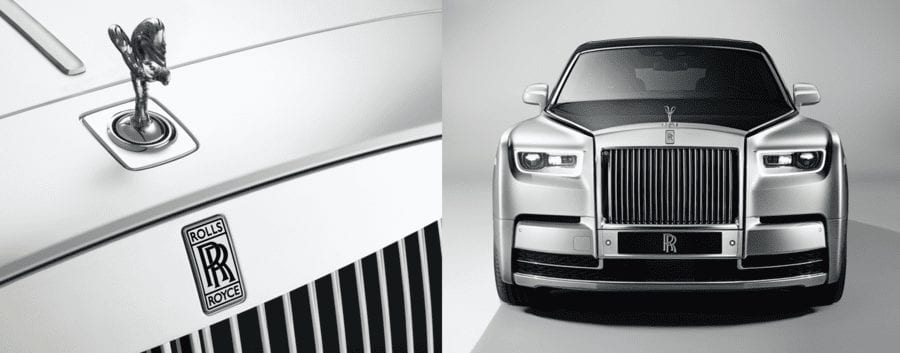
    “Media are kindly asked to note that images of Rolls-Royce motor cars, the black and silver ‘Double R’ logo, the ‘Spirit of Ecstasy’ (‘Flying Lady’) mascot, the Rolls-Royce Pantheon Grille and other related content are all signifiers of Rolls-Royce Motor Cars and its Brand.”


    “The use of these images to illustrate stories relating to Rolls-Royce plc together with copy that unnecessarily confuses or conflates the two companies, is incorrect and leads to public confusion.”


    Given “recent announcements” have led to the “media confusing and misreporting” the two, one thing’s for sure: A Rolls-Royce car is a Rolls-Royce car when it’s a Rolls-Royce Motor Car; when it’s not, it’s just not. “Now Jeeves, be a darling, go fetch the Toyota.”


    Some quotes about Rolls-Royces


    “Greatness takes time: It takes 13 hours to build a Toyota, but it takes 6 months to build a Rolls-Royce.”

    Unknown.


    “Wall Street is the only place that people ride to in a Rolls-Royce to get advice from those who take the subway.”

    ‘Most successful investor in the world’ Warren Buffett.


    “At 60 miles per hour, the loudest noise in this Rolls-Royce comes from the electric clock.”

    ‘Father of Advertising’ David Ogilvy CBE.


    “When you are a rich man, you are proud to own a Rolls-Royce and when you are a poor man, you are proud to own a Renault.”

    Charismatic footballer Eric Cantona.


    “If a working-class Englishman saw a bloke drive past in a Rolls-Royce, he’d say to himself: ‘Come the social revolution and we’ll take that away from you, mate.’ Whereas, if his American counterpart saw a bloke drive past in a Cadillac, he’d say: ‘One day, I’m going to own one of those.’ To my way of thinking, the first attitude is wrong. The latter is right.”

    Media tycoon Kerry Packer.


    Pictured top: A selection of models currently available in Rolls-Royce Motor Cars’ current line-up.


    Facebook: @TheSteepleTimes

    Instagram: @TheSteepleTimes

    Twitter: @SteepleTimes


    Rolls-Royce isn’t Rolls-Royce but it is Rolls-Royce – Rolls-Royce issues a press release to try and stop the media mistakenly saying they are Rolls-Royce; they want to highlight the difference between PLC and Cars.
    Rolls-Royce Motor Cars want to remind the world that they produce motor cars. They most certainly don’t want people thinking they produce flying hairdryers.
    Rolls-Royce isn’t Rolls-Royce but it is Rolls-Royce – Rolls-Royce issues a press release to try and stop the media mistakenly saying they are Rolls-Royce; they want to highlight the difference between PLC and Cars.
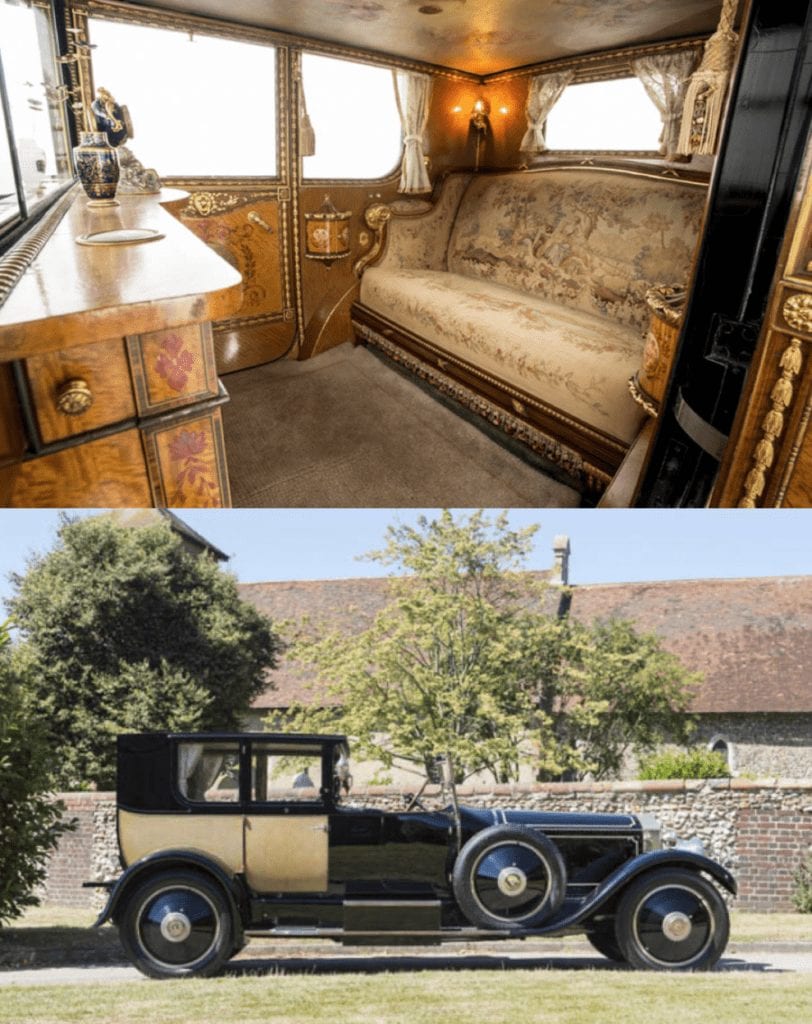
    In October 2016, ‘The Steeple Times’ featured this 1926 Rolls-Royce Phantom I by Brougham De Ville. It has an interior inspired by Versailles and the interior was described as “like stepping inside a very fine Georgian manor house.”
    Rolls-Royce isn’t Rolls-Royce but it is Rolls-Royce – Rolls-Royce issues a press release to try and stop the media mistakenly saying they are Rolls-Royce; they want to highlight the difference between PLC and Cars.
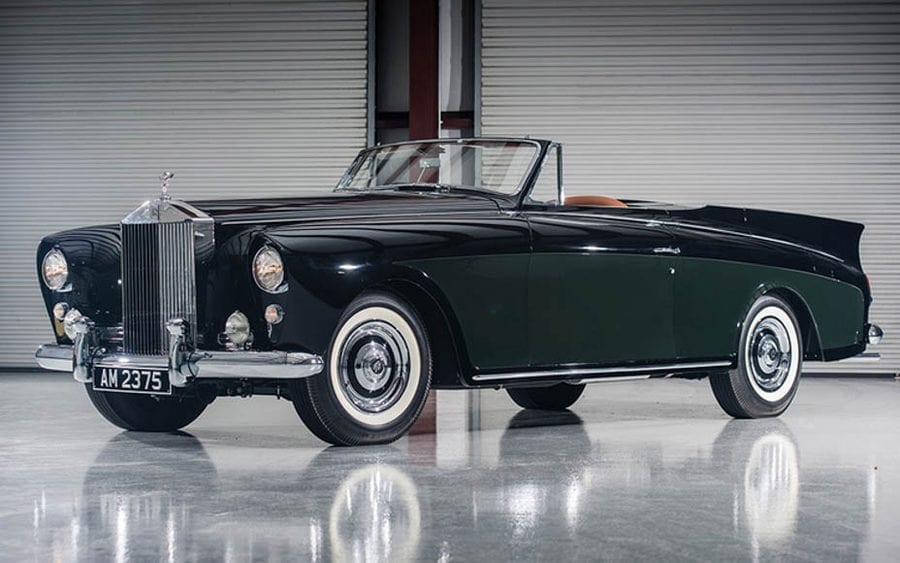
    In March 2017, ‘The Steeple Times’ featured this 1958 Rolls-Royce Silver Cloud I drophead coupé. It was nicknamed ‘The Honeymoon Express’ given it seats just two and has an oversized boot capable of carrying a week’s luggage.
    Rolls-Royce isn’t Rolls-Royce but it is Rolls-Royce – Rolls-Royce issues a press release to try and stop the media mistakenly saying they are Rolls-Royce; they want to highlight the difference between PLC and Cars.
    In August 2015, ‘The Steeple Times’ featured this 1973 Rolls-Royce Phantom VI by Pietro Frua. It was described as “the largest convertible ever built,” measured over 22-foot in length and took two years to build. The giant motor was originally owned by His Excellency Consul Simon van Kempen of Switzerland and Monaco sold for £442,546 including premium as part of The Frederiksen Auction in Denmark.
    Rolls-Royce isn’t Rolls-Royce but it is Rolls-Royce – Rolls-Royce issues a press release to try and stop the media mistakenly saying they are Rolls-Royce; they want to highlight the difference between PLC and Cars.
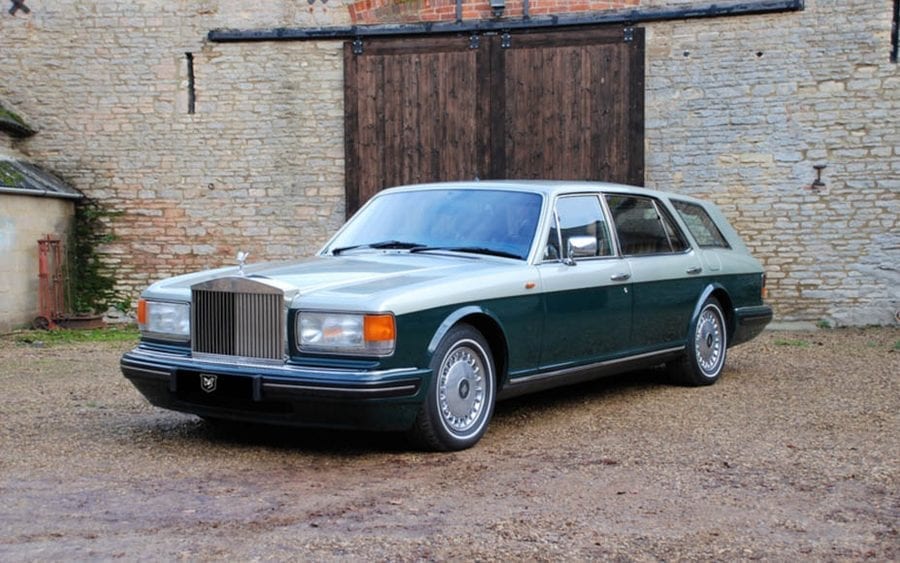
    In February 2018, ‘The Steeple Times’ featured this special edition 1995 Rolls-Royce Flying Spur converted to an estate car from a Silver Spur III.
    Rolls-Royce isn’t Rolls-Royce but it is Rolls-Royce – Rolls-Royce issues a press release to try and stop the media mistakenly saying they are Rolls-Royce; they want to highlight the difference between PLC and Cars.
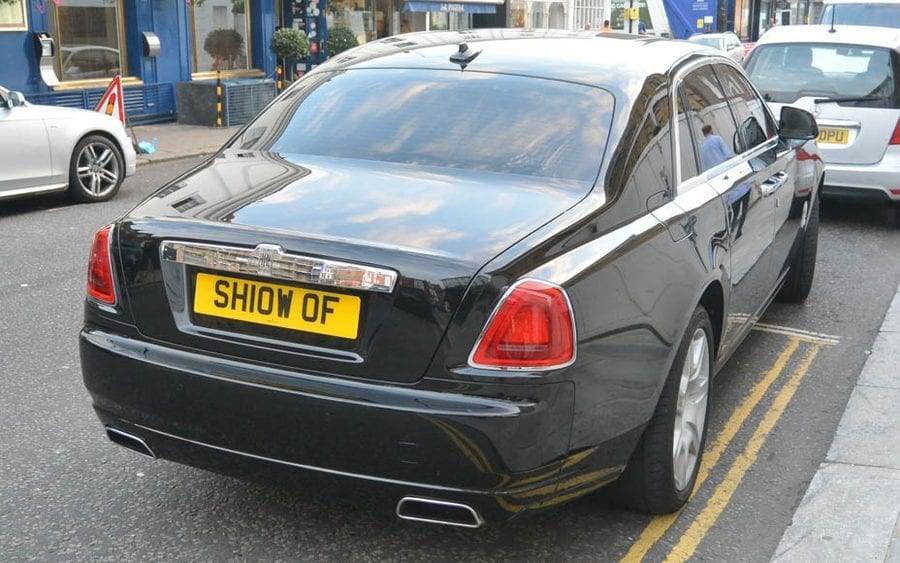
    In September 2016, ‘The Steeple Times’ joined those describing the owner of this Rolls-Royce as having “the most vulgar numberplate in Britain.” The owner of ‘SH10W OF’ plainly is a person without an ounce of modesty in their entire being.
    https://www.youtube.com/watch?v=pndoAjymnMM
  • Moving On – June 2020

    Moving On – June 2020

    Moving on homes owned by the newsworthy – including properties owned by society snapper Sir Cecil Beaton, novelist Jackie Collins and film producer-director Peter Minns.

    A Tennis Court Teardown

    Moving On – June 2020 – Moves of the Noteworthy – A chronicle of the moves of the newsworthy – including homes owned by society snapper Sir Cecil Beaton, novelist Jackie Collins and film producer-director Peter Minns.

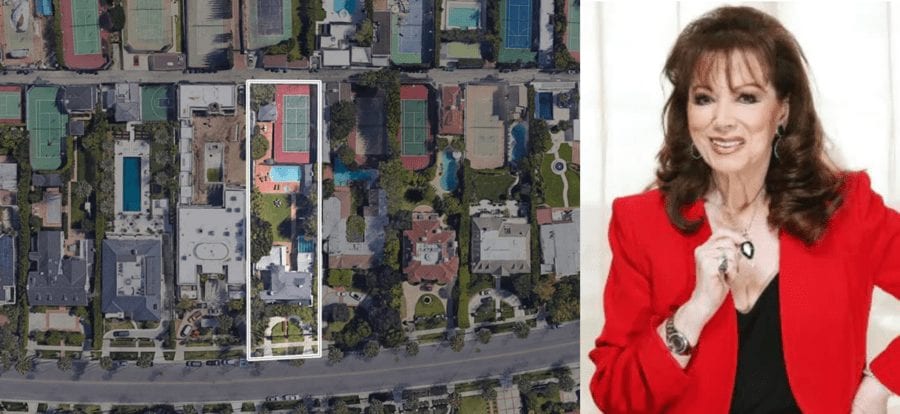
    Paris Hilton’s dad Rick’s realty firm Hilton & Hyland has just launched to the market the former Beverly Hills home of the late Jackie Collins OBE (1937 – 2015) for £13.4 million ($16.95 million). They don’t say much about the bonkbuster author’s residence of some 25 years other than: “Secluded behind gates and foliage lies a great opportunity to purchase a tennis court… Home could use a remodel or rebuild.” Miss Collins and her second husband art gallery owner Oscar Lerman paid £2.4 million ($3 million) for 5,269 square foot 614 N Beverly Drive in 1991.

    Limited Living in the ‘Hampshire Highlands’

    Moving On – June 2020 – Moves of the Noteworthy – A chronicle of the moves of the newsworthy – including homes owned by society snapper Sir Cecil Beaton, novelist Jackie Collins and film producer-director Peter Minns.
    https://vimeo.com/358107497/b6629a2217

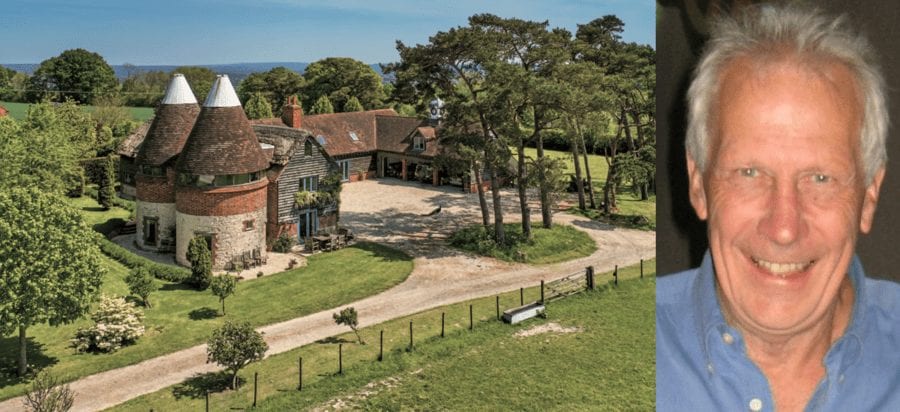
    Reduced in price from £4 million ($5.1 million) in September 2019 to £3.73 million ($4.72 million) now through agents BCM, The Oast House at Hartley Mauditt in the South Downs National Park in Hampshire was converted by film producer-director Peter Minns in the 1990s.


    This delightful ‘mini estate’ looks like something that could have been in of The Darling Buds of May and comes with 76.28 acres of land suitable for ‘stick and ball’ polo, but the problem is this – a planning stipulation dictates that the majority of the main house is only allowed to be on a “short-term” basis whilst two cottages are for “holiday or seasonal worker use” and a bungalow is limited to “anyone fully employed in agriculture.”


    Minns is best known for having produced programmes including Mad Cows & Englishmen for the BBC, A Question of Sleaze – The Neil Hamilton Story for Channel 4 and Citizen 2000 – which followed the lives of twenty children who became 18 in the year 2000.


    Moving on Sir Cecil’s Seat

    Moving On – June 2020 – Moves of the Noteworthy – A chronicle of the moves of the newsworthy – including homes owned by society snapper Sir Cecil Beaton, novelist Jackie Collins and film producer-director Peter Minns.

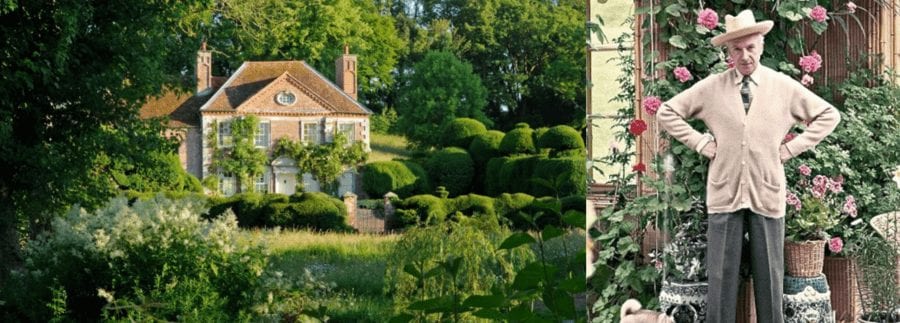
    £4 million ($5.1 million) is sought for Queen Anne Reddish House in the Chalke Valley in Wiltshire by agents Savills. Society snapper Sir Cecil Beaton CBE, owner from 1947 until his death in 1980, described it as: “My dream home” and an “exquisite country seat” and between 1987 and 1999, it was home to the I Want to Be Free singer Toyah Wilcox. Aside from 6 acres of glorious gardens, the Grade II* listed house comes with two cottages, a range of follies and a water meadow. Locked-down Instagrammers have been moving all over its marketing brochure and sharing photos online, with one even gushing: “It’s the prettiest house I’ve seen EVER… EVER.”

    Facebook: @TheSteepleTimes

    Instagram: @TheSteepleTimes

    Twitter: @SteepleTimes

  • An Eaton Mess

    An Eaton Mess

    Eaton Square apartment for sale for £22.5 million in spite of needing complete renovation; it is listed at a price 25% cheaper than it was five years earlier in identical condition

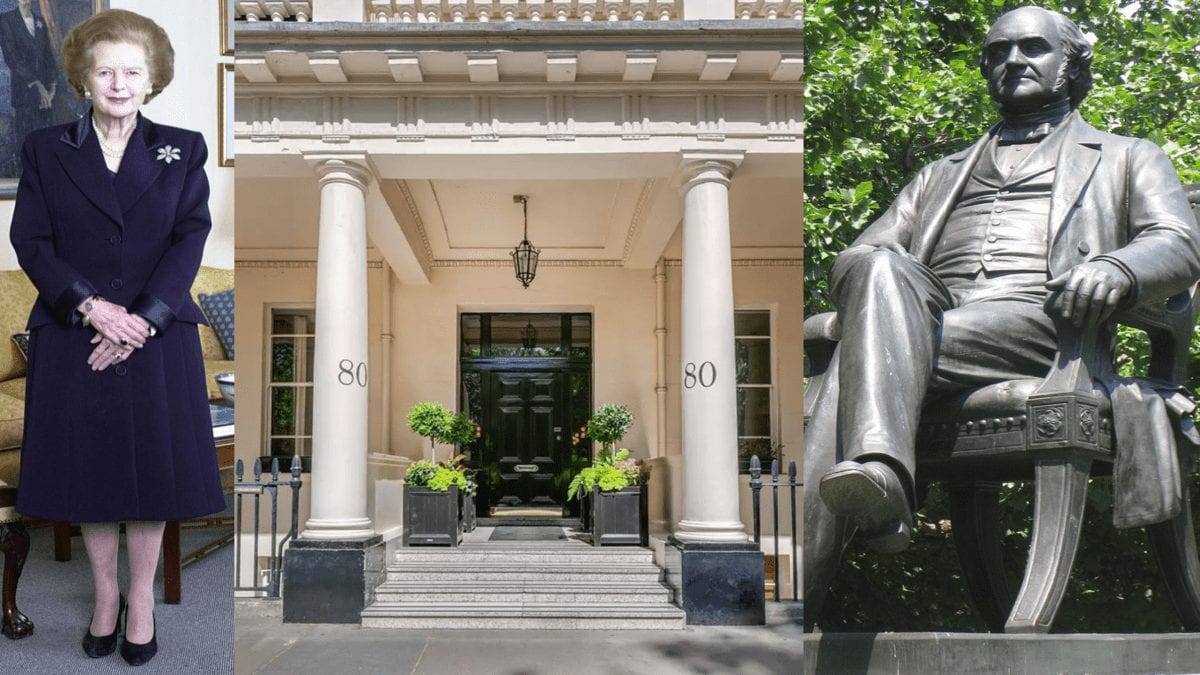
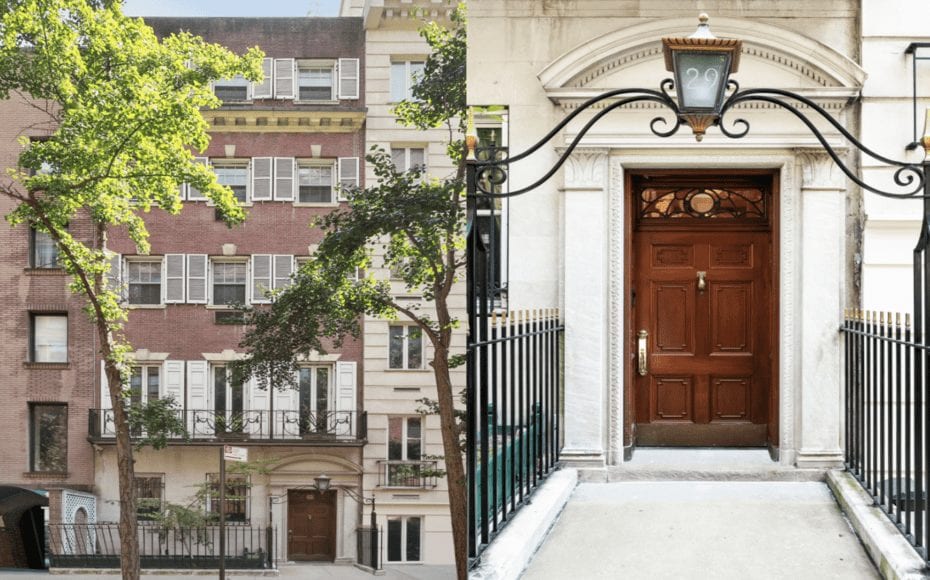
    80 Eaton Square in Belgravia is an address where two well-known names have both lived (albeit it very briefly). Ex-Prime Minister Margaret Thatcher (1925 – 2013) “temporarily” resided in a “Greek shipowner’s flat” there after leaving office whilst the American financier and philanthropist George Peabody (1795 – 1869) stayed and died in the home of the Anglo-American fur merchant Sir Curtis Lampson (1806 – 1885).


    Grade II* listed and featuring a Greater London Council blue plaque commemorating Peabody, the stucco fronted building on the square’s northern terrace featured in The Steeple Times in September 2015. At that time, part of its ground and basement floors were placed for sale for the not too shabby sum of £30 million ($37 million, €33.4 million or درهم135.9 million) in spite of being a “complete wreck.”


    Now, five years later and most surprisingly in no better condition, the very same apartment has been relisted for just £22.5 million ($27.8 million, €25 million or درهم102 million) through agents Chestertons.


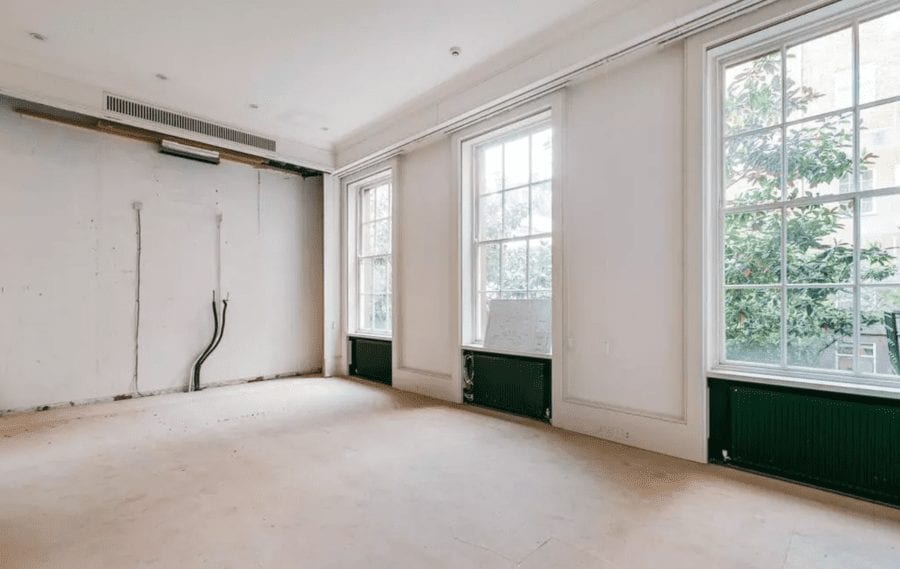
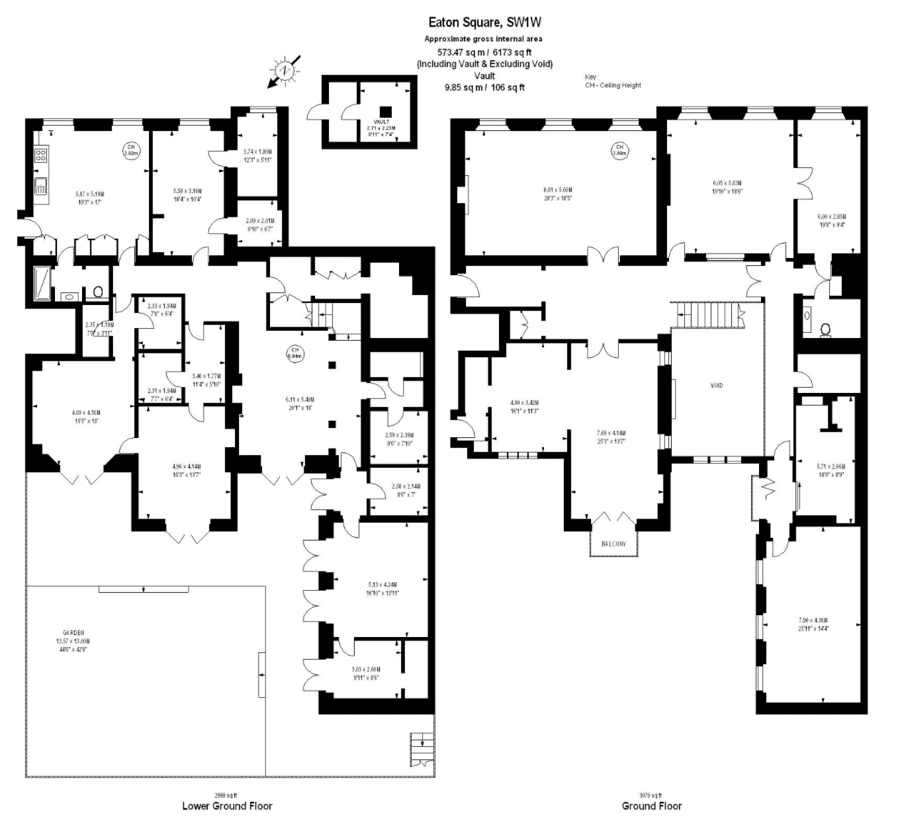
    Extending in total to 6,173 square foot, the duplex was previously promoted with a fancy design scheme by David Collins Studio but now is simply listed as a “5 bedroom maisonette” with “potential to create one of the finest homes in Eaton Square.” It comes with a private garden to the rear and access to the communal spaces of the square also.


    Pictured top: Baroness Thatcher, the entrance to 80 Eaton Square and a statue of George Peabody.


    Eaton Square’s ‘Famous Faces’

    Considered one of the best addresses in London and built for and still mostly owned by the Grosvenor family, Eaton Square features six adjoining, tree-planted gardens dissected by a four lane highway between Victoria and Sloane Square.


    Amongst the well-known people who have variously lived in the square are:


    No. 1 – Lord Boothby, paedophile and politician.

    No. 7 – Sir Sean Connery, actor.

    No. 7a – Lily Safra, philanthropist.

    No. 11 – Lord Lloyd-Webber, composer, and separately Dame Joan Collins, actress.

    No. 12 – Sir Osbert Lancaster, cartoonist.

    No. 22 – Lord Lucan, aristocrat who disappeared, and later Sir Roger Moore, actor.

    No. 29 – Sir Terence Rattigan, playwright.

    No. 37 – Neville Chamberlain, Prime Minister and prior to him Joachim von Ribbentrop, Nazi politician.

    No. 54 – Vivien Leigh, actress and Laurence Olivier, actor.

    No. 65a – Scene of the arrest of John Daly, train robber.

    No. 68 – Sir Barry Gibb, musician.

    No. 75 – Sir Rex Harrison, actor.

    No. 76 – The Aga Khan, royal.

    No. 82 – Queen Wilhelmina of the Netherlands.

    No. 90 – Sir William Gilbert, one half of Gilbert & Sullivan.

    No. 93 – Stanley Baldwin, Prime Minister.


    Facebook: @TheSteepleTimes

    Instagram: @TheSteepleTimes

    Twitter: @SteepleTimes


    An Eaton Mess – £22.5m for unrenovated 80 Eaton Square, SW1 – Eaton Square apartment for sale for £22.5 million through Chestertons in spite of needing complete renovation; Flats A & C, 80 Eaton Square, Belgravia, London, SW1W 9AP, United Kingdom are listed at a price 25% cheaper than it was five years earlier when it was priced at £30 million through Savills.
    An Eaton Mess – £22.5m for unrenovated 80 Eaton Square, SW1 – Eaton Square apartment for sale for £22.5 million through Chestertons in spite of needing complete renovation; Flats A & C, 80 Eaton Square, Belgravia, London, SW1W 9AP, United Kingdom are listed at a price 25% cheaper than it was five years earlier when it was priced at £30 million through Savills.
    An Eaton Mess – £22.5m for unrenovated 80 Eaton Square, SW1 – Eaton Square apartment for sale for £22.5 million through Chestertons in spite of needing complete renovation; Flats A & C, 80 Eaton Square, Belgravia, London, SW1W 9AP, United Kingdom are listed at a price 25% cheaper than it was five years earlier when it was priced at £30 million through Savills.
    An Eaton Mess – £22.5m for unrenovated 80 Eaton Square, SW1 – Eaton Square apartment for sale for £22.5 million through Chestertons in spite of needing complete renovation; Flats A & C, 80 Eaton Square, Belgravia, London, SW1W 9AP, United Kingdom are listed at a price 25% cheaper than it was five years earlier when it was priced at £30 million through Savills.
    An Eaton Mess – £22.5m for unrenovated 80 Eaton Square, SW1 – Eaton Square apartment for sale for £22.5 million through Chestertons in spite of needing complete renovation; Flats A & C, 80 Eaton Square, Belgravia, London, SW1W 9AP, United Kingdom are listed at a price 25% cheaper than it was five years earlier when it was priced at £30 million through Savills.
    An Eaton Mess – £22.5m for unrenovated 80 Eaton Square, SW1 – Eaton Square apartment for sale for £22.5 million through Chestertons in spite of needing complete renovation; Flats A & C, 80 Eaton Square, Belgravia, London, SW1W 9AP, United Kingdom are listed at a price 25% cheaper than it was five years earlier when it was priced at £30 million through Savills.
    An Eaton Mess – £22.5m for unrenovated 80 Eaton Square, SW1 – Eaton Square apartment for sale for £22.5 million through Chestertons in spite of needing complete renovation; Flats A & C, 80 Eaton Square, Belgravia, London, SW1W 9AP, United Kingdom are listed at a price 25% cheaper than it was five years earlier when it was priced at £30 million through Savills.
  • A Borderline Bonfire Bargain

    A Borderline Bonfire Bargain

    Manhattan mansion listed for 77% less than in 2014 as part of a “bankruptcy sale;” it is situated on a street featured in Billy Joel’s ‘Close to the Borderline’ that was once termed: “Bloody, Bloody Beekman Place: Where the Wealthy Wind Up Dead”

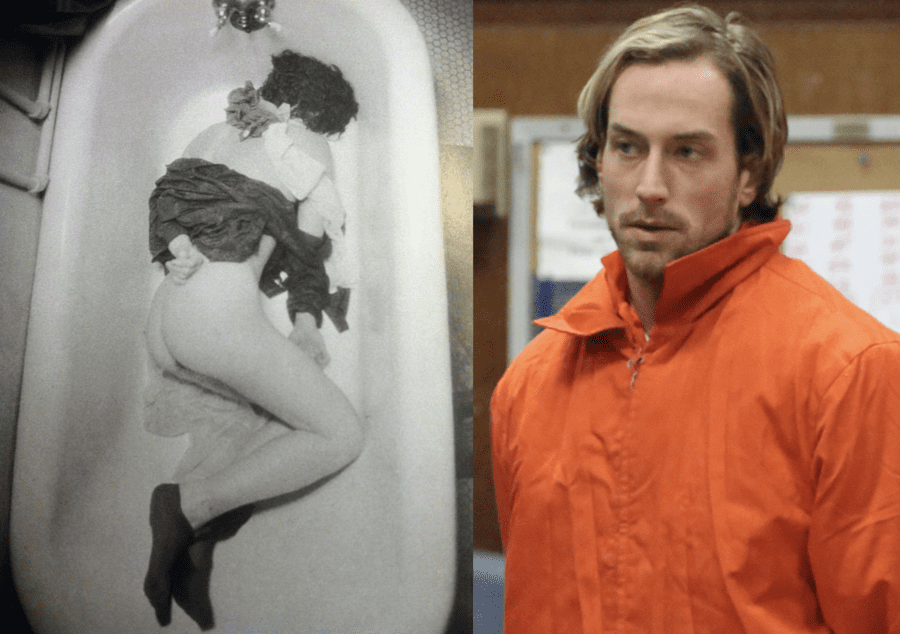
    On 10th April 1936, Good Friday, a writer named Nancy Titterton was found dead in her bathtub at the home she shared with her husband at 22 Beekman Place in Manhattan. She had been raped and strangled by an upholsterer’s assistant, John Fiorenza, who had ironically repaired a loveseat for the couple. The case of the ‘Beauty in the Bathtub’ ended with Fiorenza’s conviction and execution at Sing Sing on 22nd January 1937, but for Beekman Place this was not the first nor last murder.


    Aside from the killing of Dr Fritz Gebhardt, an industrialist and associate of Hermann Göring, by his lover Vera Stretz in a hotel in the street on 12th November 1935, on 4th January 2015, a Princeton graduate named Tommy Gilbert, Jr. shot his financier father in the head at his apartment at 20 Beekman Place. Prior to committing the murder, after a row about his monthly allowance, the 30-year old had sent his mother out to buy him a can of Coca Cola and a sandwich. As a result of these series of slayings, in January 2015, the Daily Beast ran an article about the street with the headline: “Bloody, Bloody Beekman Place: Where the Wealthy Wind Up Dead.”


    A Borderline Bonfire Bargain – 77% off 29 Beekman Place, NYC – Manhattan mansion listed for 77% less than in 2014 in “bankruptcy sale;” £9.22 million ($11.45 million) for 29 Beekman Place, Midtown East, Manhattan, New York, NY 10022, United States of America through Compass in 2020 down from £40.2 million ($49.9 million) in 2014. Built in 1934 for CBS chief executive William S. Paley. Home to Albert and Mary Lasker and Princess Ashraf Pahlavi. Murders of Nancy Titterton, Dr Fritz Gebhardt and Thomas Gilbert, Sr.
    The naked body of 33-year-old Nancy Titterton was discovered in her bathtub at 22 Beekman Place on 10th April 1936; “Pampered Ivy-leaguer” Tommy Gilbert, Jr. was sentenced to 30 years to life in jail in September 2019 for murdering his father, Thomas Gilbert, Sr. in his apartment at 20 Beekman Place in January 2015.
    A Borderline Bonfire Bargain – 77% off 29 Beekman Place, NYC – Manhattan mansion listed for 77% less than in 2014 in “bankruptcy sale;” £9.22 million ($11.45 million) for 29 Beekman Place, Midtown East, Manhattan, New York, NY 10022, United States of America through Compass in 2020 down from £40.2 million ($49.9 million) in 2014. Built in 1934 for CBS chief executive William S. Paley. Home to Albert and Mary Lasker and Princess Ashraf Pahlavi. Murders of Nancy Titterton, Dr Fritz Gebhardt and Thomas Gilbert, Sr.
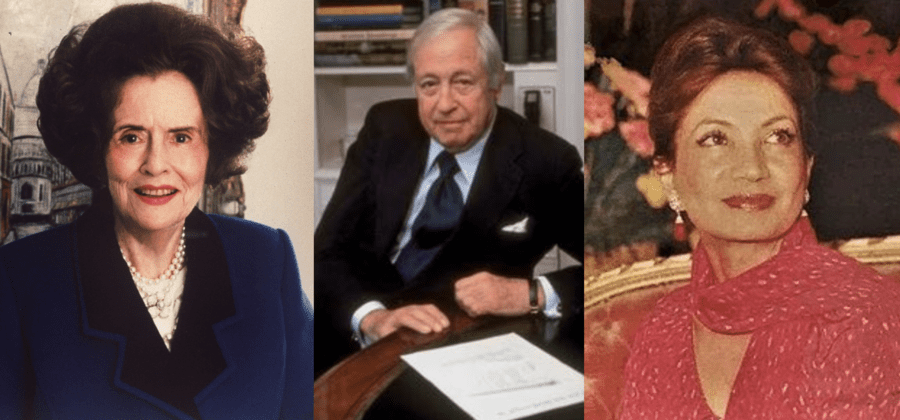
    Owners of 29 Beekman Place – Mary Lasker, William S. Paley and Princess Ashraf Pahlavi.

    Now, for altogether different reasons, the street – whose more ‘happy’ residents have included variously not just the Second Lady of the United States, Happy Rockefeller, but also Prince Aly Khan and A&P supermarket heir Huntington HartfordBeekman Place is making headlines once again.


    Whilst the asking prices of properties are often reduced, the case of 22 Beekman Place is an extreme one. Built in 1934 for William S. Paley, the man who “turned CBS from a small radio network into the foremost radio and television network in the United States,” and owned subsequently by a philanthropist and then the twin sister of the Shah of Iran, the house was placed for sale for the plainly extremely over-ambitious sum of £40.2 million in February 2014.


    In the period since, the nine floor, 12,260 square foot “trophy mansion| has yo-yoed on and off the market and now after being listed as a “BANKRUPTCY SALE!! Excellent Value – Price Reduced to Sell!!” has just reappeared for ‘just’ £9.2 million.


    Described by Curbed New York as having “truly lovely architectural details” and an oval-shaped dining room that has been frequented by “heads of states and foreign dignitaries from all over the world,” the red brick and limestone property has 10 bedrooms and 9 bathrooms. Additionally, it includes 1,500 square foot of outdoor space in the form of two private terraces, a chef’s kitchen, a wine cellar, a lift and a banquet hall.


    Agents Compass laud 29 Beekman Place as being “designed with grand scale entertaining in mind” and suggest it “appropriate for a private mansion, live/work, a foundation, or an ideal consulate or diplomat residence.” They add: “Do not miss this opportunity to purchase a piece of New York history,” (but unsurprisingly don’t mention any of the infamous murders in the neighbouring buildings).


    The Names & Numbers – 29 Beekman Place, Midtown East, Manhattan, New York, NY 10022, United States of America


    April 2020 – Relisted for £9.22 million ($11.45 million, €10.58 million or درهم42.05 million) through Compass as a “bankruptcy sale.”


    September 2019 – Relisted for £11.7 million ($14.5 million, €13.4 million or درهم53.3 million) through Compass.


    October 2017 – Relisted for £22.5 million ($28 million, €25.9 million or درهم102.8 million) through Sotheby’s International Realty.


    January 2016 – Relisted for £27.4 million ($34 million, €31.4 million or درهم124.9 million).


    May 2015 – Relisted for £30.2 million ($37.5 million, €34.7 million or درهم137.7 million) through Douglas Elliman.


    February 2014 – Listed for £40.2 million ($49.9 million, €46.2 million or درهم183.3 million) through Brown Harris Stevens.


    Mid 1970s – Sold to Princess Ashraf Pahlavi (1919 – 2016), the twin sister of the Shah of Iran.


    1940s – After Mr and Mrs Paley divorced, the house was first rented to and then bought by the philanthropist Mary Woodward Lasker (1900 – 1994). She lived there with her second husband, advertising executive Albert Lasker (1940 – 1952), and remained there after his death until circa 1975.


    1934 – Built for the “notorious womaniser” and first CEO of Columbia Broadcasting System (CBS), William S. Paley (1901 – 1990) and his first wife Dorothy Hart Hearst (ex-wife of John Randolph Hearst).


    Facebook: @TheSteepleTimes

    Instagram: @TheSteepleTimes

    Twitter: @SteepleTimes


    A Borderline Bonfire Bargain – 77% off 29 Beekman Place, NYC – Manhattan mansion listed for 77% less than in 2014 in “bankruptcy sale;” £9.22 million ($11.45 million) for 29 Beekman Place, Midtown East, Manhattan, New York, NY 10022, United States of America through Compass in 2020 down from £40.2 million ($49.9 million) in 2014. Built in 1934 for CBS chief executive William S. Paley. Home to Albert and Mary Lasker and Princess Ashraf Pahlavi. Murders of Nancy Titterton, Dr Fritz Gebhardt and Thomas Gilbert, Sr.
    A Borderline Bonfire Bargain – 77% off 29 Beekman Place, NYC – Manhattan mansion listed for 77% less than in 2014 in “bankruptcy sale;” £9.22 million ($11.45 million) for 29 Beekman Place, Midtown East, Manhattan, New York, NY 10022, United States of America through Compass in 2020 down from £40.2 million ($49.9 million) in 2014. Built in 1934 for CBS chief executive William S. Paley. Home to Albert and Mary Lasker and Princess Ashraf Pahlavi. Murders of Nancy Titterton, Dr Fritz Gebhardt and Thomas Gilbert, Sr.
    A Borderline Bonfire Bargain – 77% off 29 Beekman Place, NYC – Manhattan mansion listed for 77% less than in 2014 in “bankruptcy sale;” £9.22 million ($11.45 million) for 29 Beekman Place, Midtown East, Manhattan, New York, NY 10022, United States of America through Compass in 2020 down from £40.2 million ($49.9 million) in 2014. Built in 1934 for CBS chief executive William S. Paley. Home to Albert and Mary Lasker and Princess Ashraf Pahlavi. Murders of Nancy Titterton, Dr Fritz Gebhardt and Thomas Gilbert, Sr.
    A Borderline Bonfire Bargain – 77% off 29 Beekman Place, NYC – Manhattan mansion listed for 77% less than in 2014 in “bankruptcy sale;” £9.22 million ($11.45 million) for 29 Beekman Place, Midtown East, Manhattan, New York, NY 10022, United States of America through Compass in 2020 down from £40.2 million ($49.9 million) in 2014. Built in 1934 for CBS chief executive William S. Paley. Home to Albert and Mary Lasker and Princess Ashraf Pahlavi. Murders of Nancy Titterton, Dr Fritz Gebhardt and Thomas Gilbert, Sr.
    A Borderline Bonfire Bargain – 77% off 29 Beekman Place, NYC – Manhattan mansion listed for 77% less than in 2014 in “bankruptcy sale;” £9.22 million ($11.45 million) for 29 Beekman Place, Midtown East, Manhattan, New York, NY 10022, United States of America through Compass in 2020 down from £40.2 million ($49.9 million) in 2014. Built in 1934 for CBS chief executive William S. Paley. Home to Albert and Mary Lasker and Princess Ashraf Pahlavi. Murders of Nancy Titterton, Dr Fritz Gebhardt and Thomas Gilbert, Sr.
    A Borderline Bonfire Bargain – 77% off 29 Beekman Place, NYC – Manhattan mansion listed for 77% less than in 2014 in “bankruptcy sale;” £9.22 million ($11.45 million) for 29 Beekman Place, Midtown East, Manhattan, New York, NY 10022, United States of America through Compass in 2020 down from £40.2 million ($49.9 million) in 2014. Built in 1934 for CBS chief executive William S. Paley. Home to Albert and Mary Lasker and Princess Ashraf Pahlavi. Murders of Nancy Titterton, Dr Fritz Gebhardt and Thomas Gilbert, Sr.
    A Borderline Bonfire Bargain – 77% off 29 Beekman Place, NYC – Manhattan mansion listed for 77% less than in 2014 in “bankruptcy sale;” £9.22 million ($11.45 million) for 29 Beekman Place, Midtown East, Manhattan, New York, NY 10022, United States of America through Compass in 2020 down from £40.2 million ($49.9 million) in 2014. Built in 1934 for CBS chief executive William S. Paley. Home to Albert and Mary Lasker and Princess Ashraf Pahlavi. Murders of Nancy Titterton, Dr Fritz Gebhardt and Thomas Gilbert, Sr.
    A Borderline Bonfire Bargain – 77% off 29 Beekman Place, NYC – Manhattan mansion listed for 77% less than in 2014 in “bankruptcy sale;” £9.22 million ($11.45 million) for 29 Beekman Place, Midtown East, Manhattan, New York, NY 10022, United States of America through Compass in 2020 down from £40.2 million ($49.9 million) in 2014. Built in 1934 for CBS chief executive William S. Paley. Home to Albert and Mary Lasker and Princess Ashraf Pahlavi. Murders of Nancy Titterton, Dr Fritz Gebhardt and Thomas Gilbert, Sr.
    A Borderline Bonfire Bargain – 77% off 29 Beekman Place, NYC – Manhattan mansion listed for 77% less than in 2014 in “bankruptcy sale;” £9.22 million ($11.45 million) for 29 Beekman Place, Midtown East, Manhattan, New York, NY 10022, United States of America through Compass in 2020 down from £40.2 million ($49.9 million) in 2014. Built in 1934 for CBS chief executive William S. Paley. Home to Albert and Mary Lasker and Princess Ashraf Pahlavi. Murders of Nancy Titterton, Dr Fritz Gebhardt and Thomas Gilbert, Sr.
    A Borderline Bonfire Bargain – 77% off 29 Beekman Place, NYC – Manhattan mansion listed for 77% less than in 2014 in “bankruptcy sale;” £9.22 million ($11.45 million) for 29 Beekman Place, Midtown East, Manhattan, New York, NY 10022, United States of America through Compass in 2020 down from £40.2 million ($49.9 million) in 2014. Built in 1934 for CBS chief executive William S. Paley. Home to Albert and Mary Lasker and Princess Ashraf Pahlavi. Murders of Nancy Titterton, Dr Fritz Gebhardt and Thomas Gilbert, Sr.
    A Borderline Bonfire Bargain – 77% off 29 Beekman Place, NYC – Manhattan mansion listed for 77% less than in 2014 in “bankruptcy sale;” £9.22 million ($11.45 million) for 29 Beekman Place, Midtown East, Manhattan, New York, NY 10022, United States of America through Compass in 2020 down from £40.2 million ($49.9 million) in 2014. Built in 1934 for CBS chief executive William S. Paley. Home to Albert and Mary Lasker and Princess Ashraf Pahlavi. Murders of Nancy Titterton, Dr Fritz Gebhardt and Thomas Gilbert, Sr.
    A Borderline Bonfire Bargain – 77% off 29 Beekman Place, NYC – Manhattan mansion listed for 77% less than in 2014 in “bankruptcy sale;” £9.22 million ($11.45 million) for 29 Beekman Place, Midtown East, Manhattan, New York, NY 10022, United States of America through Compass in 2020 down from £40.2 million ($49.9 million) in 2014. Built in 1934 for CBS chief executive William S. Paley. Home to Albert and Mary Lasker and Princess Ashraf Pahlavi. Murders of Nancy Titterton, Dr Fritz Gebhardt and Thomas Gilbert, Sr.
    A Borderline Bonfire Bargain – 77% off 29 Beekman Place, NYC – Manhattan mansion listed for 77% less than in 2014 in “bankruptcy sale;” £9.22 million ($11.45 million) for 29 Beekman Place, Midtown East, Manhattan, New York, NY 10022, United States of America through Compass in 2020 down from £40.2 million ($49.9 million) in 2014. Built in 1934 for CBS chief executive William S. Paley. Home to Albert and Mary Lasker and Princess Ashraf Pahlavi. Murders of Nancy Titterton, Dr Fritz Gebhardt and Thomas Gilbert, Sr.
  • Slashed Seven Sisters

    Slashed Seven Sisters

    Famous  ‘Seven Sisters’ cottage in Montauk for sale for 30% less than in 2016; the ‘Gilded Age cottage’ was designed by Stanford White, an architect whose murder famously led to the ‘Trial of the Century’ from 1907 onwards

    Montauk has variously been associated with part-time residents such as the playwright Edward Albee, the world’s largest Ponzi scheme operator Bernie Madoff and the artist Andy Warhol. It was a place that the Algonquian speaking Montaukett Native American tribe called home until one Arthur W. Benson (circa 1798 – 1889), the president of the Brooklyn Gas Light company, came along in 1879 and purchased 10,000 acres there for just $151,000 from the American government.


    “Land baron” Benson soon after sold half his acreage to the Long Island Rail Road for $600,000 and then set about turfing out the natives and creating a “playground for the rich.” As part of his plan, he ordered the construction of seven “shingle-style” homes that came to form a 100-acre compound for use as a “private hunting and fishing retreat for him and his friends.” They became known as the ‘Seven Sisters’ and one of them is currently for sale through Sotheby’s International Realty.


    Designed by Stanford White (1853 – 1906) – a “lauded architect” whom became more famous for being shot and killed by the deranged railroad heir Harry Thaw (1871 – 1947) – the property offered is said to be known as ‘Andrews House.’ It is more commonly listed, however, as 153 Deforest Road and its date of construction has been put at as early as 1879 and as late as 1888. The ‘cottage’ reportedly first belonged to Benson’s friend, a writer and one of the founders of both the bibliographic Grolier Club in Manhattan and the Society of Iconophiles, William Loring Andrews (1837 – 1920).


    Slashed Seven Sisters – £10.4 million or $12.995 million for Andrews House, 153 Deforest Road, Montauk, New York, NY 11954, United States of America through Sotheby’s International Realty, down from £14.8 million or $18.5 million in 2016 – Famous ‘Seven Sisters’ cottage in Montauk for sale for 30% less than in 2016; the ‘Gilded Age cottage’ was designed by Stanford White, an architect whose murder famously led to the ‘Trial of the Century’ from 1907 onwards. William Loring Andrews, architect and murder victim Stanford White and Harry Thaw in a ‘gilded’ jail cell.
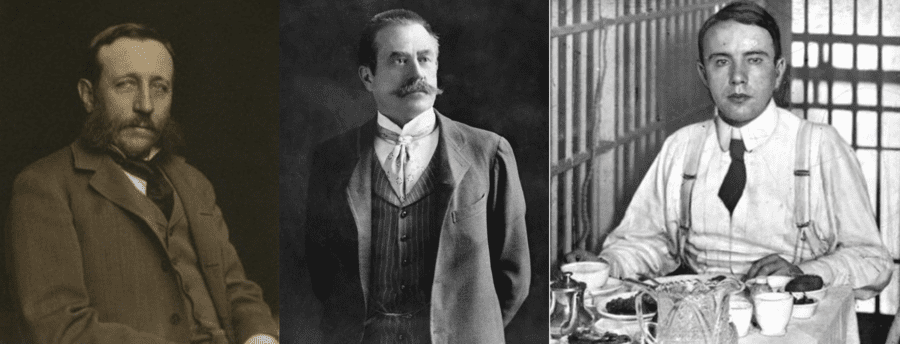
    William Loring Andrews, architect and murder victim Stanford White and Harry Thaw in a ‘gilded’ jail cell.
    Slashed Seven Sisters – £10.4 million or $12.995 million for Andrews House, 153 Deforest Road, Montauk, New York, NY 11954, United States of America through Sotheby’s International Realty, down from £14.8 million or $18.5 million in 2016 – Famous ‘Seven Sisters’ cottage in Montauk for sale for 30% less than in 2016; the ‘Gilded Age cottage’ was designed by Stanford White, an architect whose murder famously led to the ‘Trial of the Century’ from 1907 onwards.
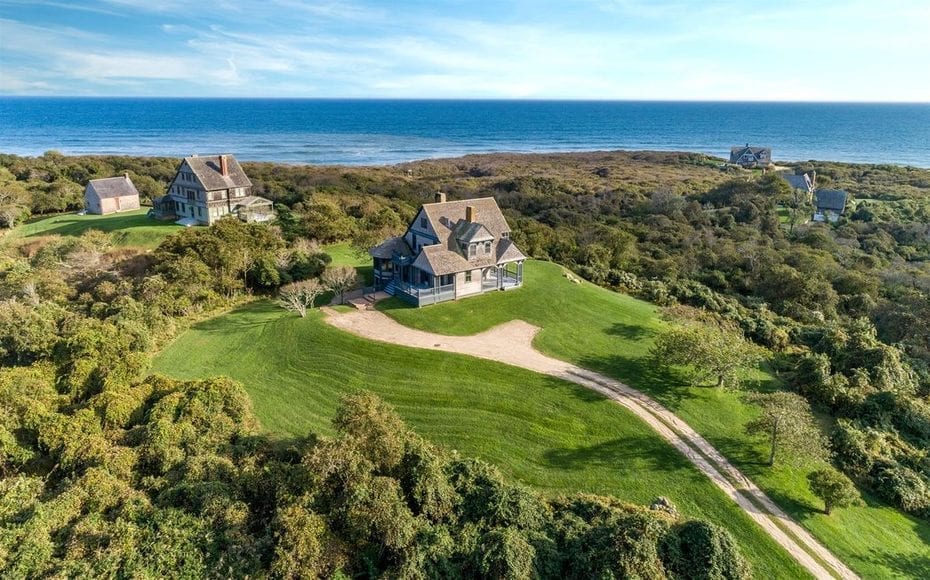
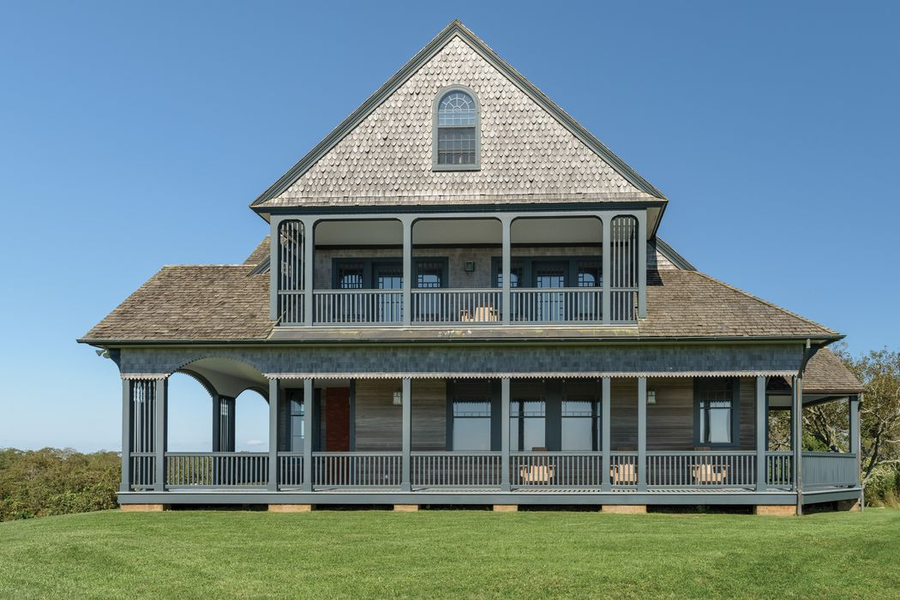
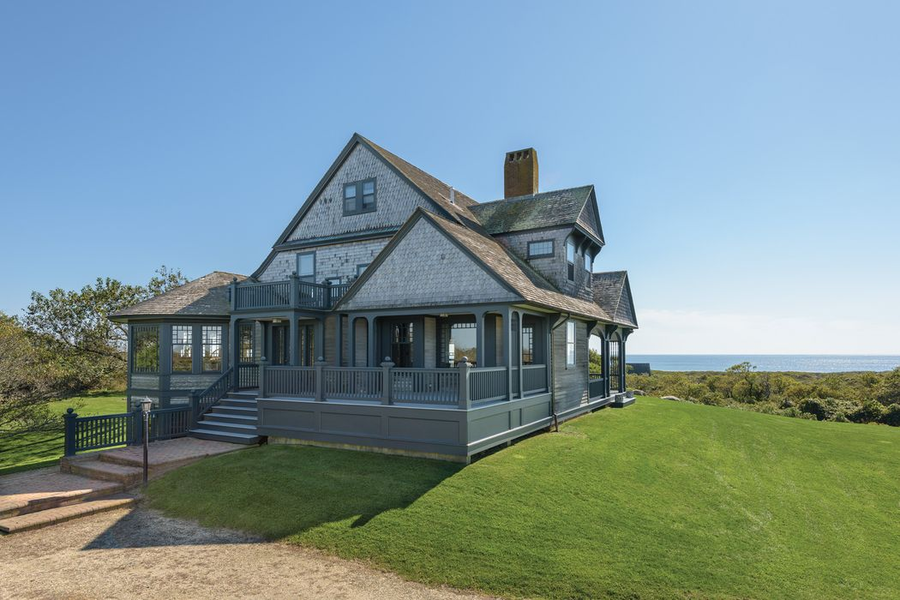
    The Andrews House, 153 Deforest Road, Montauk, New York, NY 11954, United States of America – a ‘Seven Sisters’ cottage that has seen its asking price reduced from £14.8 million in 2016 to £10.4 million in 2020.

    Remodeled and expanded in 1992 by the well-known Hamptons architect Francis Fleetwood (1946 – 2015) and updated yet again in the 2010s, 153 Deforest Road today extends to some 3,800 square foot in total. The house stands on a plot of 2.3 acres and accommodation includes a sunken living room, dining room, library, 4 bedrooms, 3.5 bathrooms and a second floor veranda “with mesmerising views that always inspire.”


    In 2016, when priced at £14.8 million, Mansion Global remarked: “The property comes with plans for a future expansion by [the renowned classical] architect Allan Greenberg,” but plainly such has made little difference to attracting interest. Four years later, 153 Deforest Road’s asking price has been slashed to ‘just’ £10.4 million and rather strangely its interior colour scheme is entirely in a depressing shade of grey.


    The artist and filmmaker Julian Schnabel, comedian and talk show host Dick Cavett are amongst others to have lived in ‘Seven Sisters’ houses. One, Tick Hall, was destroyed by a fire in 1997 and then completely rebuilt; what happens to the ‘Andrews House’ remains to be seen.


    The Names & Numbers – The Andrews House, 153 Deforest Road, Montauk, New York, NY 11954


    July 2019 – It is further reduced to £10.4 million ($12.995 million, €11.9 million or درهمX47.7 million) through Sotheby’s International Realty.


    June 2018 – It is reduced to £12 million ($14.995 million, €13.7 million or درهم55.1 million) through Sotheby’s International Realty.


    February 2018 – It is relisted for £13 million ($16.25 million, €14.9 million or درهم60 million) with Sotheby’s International Realty.


    August 2016 – The house is listed for sale for £14.8 million ($18.5 million, €17 million or درهم67.9 million) with Douglas Elliman.


    2012 – 153 Deforest Road is sold to a limited liability company for £5.6 million ($6.995 million, €6.4 million or درهم25.7 million).


    1992 – 153 Deforest Road is renovated and remodeled by the Chilean born architect Francis Fleetwood (1946 – 2015) – a man described as a “popular East Hampton, New York–based architect [of] romantic country houses” by Architectural Digest in April 2015. Fleetwood’s well-known clients numbered Lauren Bacall, Calvin Klein and Paul McCartney and of them, he once told The New York Times: “They’d all love to be born into a grand old house that had been handed down through the generations… [And, he added, surely with a grin]… So would I.”


    1976 – The ‘Seven Sisters’ – including 153 Deforest Road – and two other neighbouring properties are listed on the National Register of Historic Places.


    Between 1879 and 1888 – 153 Deforest Road was built as a home for the writer and librarian William L. Andrews (1837 – 1920). It formed part of a group of houses known as the ‘Seven Sisters’ and was known as ‘Andrews House.’


    1879 – Arthur W. Benson (circa 1798 – 1889) successfully bids $151,000 or the equivalent of £3.2 million today ($4 million, €3.7 million or درهم14.7 million today) for 11,000 acres of land around Montauk in an auction. He then cleverly sold half the land for $600,000 or the equivalent of £12.8 million today ($16 million, €14.7 million or درهم58.8 million today) to the Long Island Rail Road and kept the remainder as his “private playground.” The legitimacy of the ownership of Benson and others of Montauk remains the subject of legal actions by the Montaukett Native Americans to this date.


    Facebook: @TheSteepleTimes

    Instagram: @TheSteepleTimes

    Twitter: @SteepleTimes


    Slashed Seven Sisters – £10.4 million or $12.995 million for Andrews House, 153 Deforest Road, Montauk, New York, NY 11954, United States of America through Sotheby’s International Realty, down from £14.8 million or $18.5 million in 2016 – Famous ‘Seven Sisters’ cottage in Montauk for sale for 30% less than in 2016; the ‘Gilded Age cottage’ was designed by Stanford White, an architect whose murder famously led to the ‘Trial of the Century’ from 1907 onwards.
    Slashed Seven Sisters – £10.4 million or $12.995 million for Andrews House, 153 Deforest Road, Montauk, New York, NY 11954, United States of America through Sotheby’s International Realty, down from £14.8 million or $18.5 million in 2016 – Famous ‘Seven Sisters’ cottage in Montauk for sale for 30% less than in 2016; the ‘Gilded Age cottage’ was designed by Stanford White, an architect whose murder famously led to the ‘Trial of the Century’ from 1907 onwards.
    Slashed Seven Sisters – £10.4 million or $12.995 million for Andrews House, 153 Deforest Road, Montauk, New York, NY 11954, United States of America through Sotheby’s International Realty, down from £14.8 million or $18.5 million in 2016 – Famous ‘Seven Sisters’ cottage in Montauk for sale for 30% less than in 2016; the ‘Gilded Age cottage’ was designed by Stanford White, an architect whose murder famously led to the ‘Trial of the Century’ from 1907 onwards.
    Slashed Seven Sisters – £10.4 million or $12.995 million for Andrews House, 153 Deforest Road, Montauk, New York, NY 11954, United States of America through Sotheby’s International Realty, down from £14.8 million or $18.5 million in 2016 – Famous ‘Seven Sisters’ cottage in Montauk for sale for 30% less than in 2016; the ‘Gilded Age cottage’ was designed by Stanford White, an architect whose murder famously led to the ‘Trial of the Century’ from 1907 onwards.
    Slashed Seven Sisters – £10.4 million or $12.995 million for Andrews House, 153 Deforest Road, Montauk, New York, NY 11954, United States of America through Sotheby’s International Realty, down from £14.8 million or $18.5 million in 2016 – Famous ‘Seven Sisters’ cottage in Montauk for sale for 30% less than in 2016; the ‘Gilded Age cottage’ was designed by Stanford White, an architect whose murder famously led to the ‘Trial of the Century’ from 1907 onwards.
    Slashed Seven Sisters – £10.4 million or $12.995 million for Andrews House, 153 Deforest Road, Montauk, New York, NY 11954, United States of America through Sotheby’s International Realty, down from £14.8 million or $18.5 million in 2016 – Famous ‘Seven Sisters’ cottage in Montauk for sale for 30% less than in 2016; the ‘Gilded Age cottage’ was designed by Stanford White, an architect whose murder famously led to the ‘Trial of the Century’ from 1907 onwards.
    Slashed Seven Sisters – £10.4 million or $12.995 million for Andrews House, 153 Deforest Road, Montauk, New York, NY 11954, United States of America through Sotheby’s International Realty, down from £14.8 million or $18.5 million in 2016 – Famous ‘Seven Sisters’ cottage in Montauk for sale for 30% less than in 2016; the ‘Gilded Age cottage’ was designed by Stanford White, an architect whose murder famously led to the ‘Trial of the Century’ from 1907 onwards.
    Slashed Seven Sisters – £10.4 million or $12.995 million for Andrews House, 153 Deforest Road, Montauk, New York, NY 11954, United States of America through Sotheby’s International Realty, down from £14.8 million or $18.5 million in 2016 – Famous ‘Seven Sisters’ cottage in Montauk for sale for 30% less than in 2016; the ‘Gilded Age cottage’ was designed by Stanford White, an architect whose murder famously led to the ‘Trial of the Century’ from 1907 onwards.
    Slashed Seven Sisters – £10.4 million or $12.995 million for Andrews House, 153 Deforest Road, Montauk, New York, NY 11954, United States of America through Sotheby’s International Realty, down from £14.8 million or $18.5 million in 2016 – Famous ‘Seven Sisters’ cottage in Montauk for sale for 30% less than in 2016; the ‘Gilded Age cottage’ was designed by Stanford White, an architect whose murder famously led to the ‘Trial of the Century’ from 1907 onwards.
    Slashed Seven Sisters – £10.4 million or $12.995 million for Andrews House, 153 Deforest Road, Montauk, New York, NY 11954, United States of America through Sotheby’s International Realty, down from £14.8 million or $18.5 million in 2016 – Famous ‘Seven Sisters’ cottage in Montauk for sale for 30% less than in 2016; the ‘Gilded Age cottage’ was designed by Stanford White, an architect whose murder famously led to the ‘Trial of the Century’ from 1907 onwards.
    https://www.youtube.com/watch?v=OofTAtdlGzw
  • Evelyn McHale (1923 – 1947)

    Evelyn McHale (1923 – 1947)

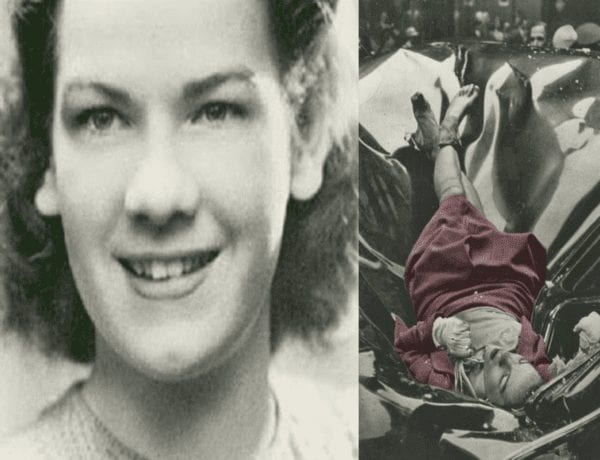
    Little is known about what drove Evelyn McHale to jump from the Empire State Building and be captured in the “most beautiful suicide [photograph] ever” on 1st May 1947.


    Berkeley, California born bookkeeper McHale was one of nine children of a divorced bank examiner. The 23-year-old worked at the Kitab Engraving Company in Pearl Street, Manhattan and was engaged to a college student discharged from the United States Army Air Force named Barry Rhodes. She seemed to have had it all, but chose to end her life from atop one of the most famous buildings in the world.


    “Elegantly attired and wearing a silk scarf, white gloves and a pearl necklace… [she is said to have] carefully removed her coat and neatly folded it, next she placed her black pocketbook on top of her coat [along with her makeup compact filled with family pictures and a handbag]. At 10:40am: Patrolman John Morrisey of Traffic C, directing traffic at 34th and 35th Avenue, reported seeing a white scarf floating lazily down from the heavens. Moments later this peaceful, dreamy scene was brutally interrupted by a heart rendering boom” as McHale had jumped 1,050-feet to her death and a crowd had converged.


    Photography student Robert Wiles is said to have run over and captured a “poignant and surreal photo.” It was the only image of his ever published and Life Magazine captioned it: “At the bottom of the Empire State Building the body of Evelyn McHale reposes in grotesque bier, her falling body punched into the top of a [United Nations Assembly Cadillac limousine].” The driver was “in a nearby drug store, thereby escaping death or serious injury” other reports added.


    A note found in her pocketbook announced: “I don’t want anyone in or out of my family to see any part of me. Could you destroy my body by cremation? I beg of you and my family – don’t have any service for me or remembrance for me.” She had crossed out the following: “My fiancé asked me to marry him in June. I don’t think I would make a good wife for anybody. He is much better off without me” and then ended: “Tell my father, I have too many of my mother’s tendencies.”


    Of the image, one commentator later remarked: “Evelyn’s gloved hand appears to be serenely touching her pearl necklace, and her legs crossed as if taking a nap,” whilst another added: “Evelyn McHale will go down in history as something akin to a fallen angel, as poignant and iconic as Marilyn Monroe.”


    She was cremated with no service, grave or memorial and her fiancé reportedly said of her: “When I kissed her goodbye, she was happy and as normal as any girl about to be married.” He remained single for the rest of his life and died in Melbourne, Florida in 2007.


    Many ‘sightings’ of Evelyn McHale wearing bright red lipstick and “looking distressed” on the 86th floor observation deck have been reported and in the years since her death, she has been recalled in the works of Andy Warhol, David Bowie, Pearl Jam and Taylor Swift amongst others.


    Evelyn McHale (1923 – 1947) – Little is known about what drove Evelyn McHale to jump from the Empire State Building and be captured in the “most beautiful suicide [photograph] ever” on 1st May 1947.
    The United Nations Assembly Cadillac limousine that the body of Evelyn McHale landed upon after falling 86 floors from the observatory deck of the Empire State Building in New York City and the original image (unedited) taken by Robert Wiles. It has been has been compared to the photograph by Malcolm Wilde Browne of the self-immolation of Vietnamese Buddhist monk Thích Quảng Đức who burned himself alive at a busy Saigon road intersection on 11th June 1963.
    Evelyn McHale (1923 – 1947) – Little is known about what drove Evelyn McHale to jump from the Empire State Building and be captured in the “most beautiful suicide [photograph] ever” on 1st May 1947.
    An image clearly showing the damage to the car from above.
    Evelyn McHale (1923 – 1947) – Little is known about what drove Evelyn McHale to jump from the Empire State Building and be captured in the “most beautiful suicide [photograph] ever” on 1st May 1947.
    Joséphine Wister Faure created a ‘mixed media sculpture’ of the car that the body of Evelyn McHale hit on 1st May 1947. Her sculpture is described as: “An interpretation of the photo, revisiting the impact of the image and the trace this woman left, both literally and physically. Also being true to her last wishes in which she specifically asked not to be seen. Inside the car the radio is playing 1947 NYC broadcast.” It was exhibited at the Boite Noire Gallery in the Pacific Design Center in Los Angeles in 2015.
    https://www.youtube.com/watch?v=hXhxfOzkq5w
    https://www.youtube.com/watch?v=fQyHyJa2tSs


  • A Cut Cost Château

    A Cut Cost Château

    Vast “fairytale” château in France’s Loire Valley for sale for ‘just’ £28 million in spite of having had £80 million spent already on its renovation; it was most famously owned by Madame de Pompadour

    In 2017, a Lebanese-born, Monaco-based property developer named Edmond Baysari placed what selling agents Sotheby’s International Realty describes as the “most beautiful and majestic castle in [the] Loire Valley” on the market. It’s so big and so costly to maintain that it remains for sale still today.


    Harvard educated Mr Baysari purchased the 102,257 square foot château for about £4.3 million in 1983 from the Parisian glassmakers Saint-Gorbain. It had been used as their company retreat from 1939 and had earlier belonged to Jeanne Antoinette Poisson – the official chief mistress of Louis XV from 1745 to 1751 and a woman better known as ‘Madame de Pompadour’ – in the years prior to her premature death from tuberculosis in 1764 aged just 42.


    Providing “regally appointed” accommodation so vast that it is not even described in detail that includes around 50 bedrooms and a wine cellar capable of housing 30,000 bottles amongst other things, Château de Menars – or the ‘Palace Pompadour’ as some have nicknamed it – costs around £800,000 per year to run. In total, some £80 million has been spent renovating it “using the same methods” that the king’s mistress originally employed.


    Of why he is selling, the heirless businessman’s lawyer, Jack Anderson, told Reuters in 2017: “[Mr Baysari] realises destiny is going to take him… His goal is to know that it’s in the hands of someone who’s going to continue the beauty of the chateau and maintain it.”


    The 104 acres of grounds that surround the château includes vineyards yielding pinot noir grapes, “elegant” geometric grassed lawns and more than a mile of frontage to the River Loire. Classical sculptures and gazebos abound and there is, according to Reuters, “a cobbled courtyard large enough to land a helicopter” also.


    During Baysari’s ownership guests at Château de Menars have supposedly numbered Prince Charles, Mikhail Gorbachev, Mick Jagger and President Ronald Reagan. Now, Sotheby’s International Realty point out: “We think this could be perfect for the creation of a luxury hotel complex… Or for the acquisition of an extraordinary and very large private property.”


    His “English spoken” [sic] agent, Jean-Pierre Piganiol, seeks £27.6 million and according to Forbes, “several nine-figure offers from Russian and Middle Eastern billionaires looking for a trophy home” have already been turned down.


    The Names & Numbers – Château de Menars, Loire Valley, Blois, 41000, France


    2015 to date – For sale through Sotheby’s International Realty for sale for £27.6 million ($34.5 million, €31.5 million or درهم126.6 million).


    2000 – Declared a UNESCO World Heritage Site.


    1983 to 2017 – The sum said to have been spent on restoration of the Château de Menars is said to have been £80.1 million ($100 million, €91.4 million or درهم367.3 million). Annual upkeep costs are said to be £801,000 million ($1 million, €914,000 million or درهم3.7 million).


    1983 – Sold to Edmond Baysari for 5 million francs or the equivalent of £4.3 million ($5.4 million, €4.9 million or درهم19.7 million).


    1949 – Declared an Historic Monument of France.


    1939 – Sold after his death by Mr Allard’s daughters, Blanche Lasserre, Yvonne Arnodin and Jeanne Goirand, to Saint-Gobain, the Parisian glassmakers, for use as their company retreat.


    April 1912 – Acquired for 700,050 francs (about £27,400 at that time) by Félix Allard, a “contractor for public works.” He modernised the château and added mains water, hot air heating, gas lighting and electricity and features including a large gallery area.


    1760 – Purchased by Madame de Pompadour (1721 – 1764) for 1 million livres (about £75,000 at that time). She “sold some pearl bracelets to meet the first payment” and commissioned the architect Ange-Jacques Gabriel to build two new wings on either side of the two existing pavilions on the property. Sadly for her, she never saw it completed as she died from tuberculosis in 1764.


    1728 to 1732 – Stanislas Leszcynski (1677 – 1766), the King of Poland, stayed at Château de Menars whilst in exile as a guest of the Charon family.


    1669 – Jean-Jacques Charon (1643 – 1718), son of Jacques Charon, “added two unequal wings to the chateau and considerably enlarged the estate.”


    1646 – Commencement of the construction of a castle on the site by one Jacques Charon. It “composed of a main building and two symmetrical pavilions.”


    Facebook: @TheSteepleTimes

    Instagram: @TheSteepleTimes

    Twitter: @SteepleTimes


    A Cut Cost Château – £27.6m for Château de Menars, 15 Le Château, Loire Valley, Blois, 4100 Menars, France through Sotheby’s International Realty – Vast French château in the Loire Valley for sale for ‘just’ £27.6 million in spite of having had £80.1 million spent already on its renovation; it was most famously owned by Jeanne Antoinette Poisson, Madame de Pompadour (1721 – 1764).
    A Cut Cost Château – £27.6m for Château de Menars, 15 Le Château, Loire Valley, Blois, 4100 Menars, France through Sotheby’s International Realty – Vast French château in the Loire Valley for sale for ‘just’ £27.6 million in spite of having had £80.1 million spent already on its renovation; it was most famously owned by Jeanne Antoinette Poisson, Madame de Pompadour (1721 – 1764).
    A Cut Cost Château – £27.6m for Château de Menars, 15 Le Château, Loire Valley, Blois, 4100 Menars, France through Sotheby’s International Realty – Vast French château in the Loire Valley for sale for ‘just’ £27.6 million in spite of having had £80.1 million spent already on its renovation; it was most famously owned by Jeanne Antoinette Poisson, Madame de Pompadour (1721 – 1764).
    A Cut Cost Château – £27.6m for Château de Menars, 15 Le Château, Loire Valley, Blois, 4100 Menars, France through Sotheby’s International Realty – Vast French château in the Loire Valley for sale for ‘just’ £27.6 million in spite of having had £80.1 million spent already on its renovation; it was most famously owned by Jeanne Antoinette Poisson, Madame de Pompadour (1721 – 1764).
    A Cut Cost Château – £27.6m for Château de Menars, 15 Le Château, Loire Valley, Blois, 4100 Menars, France through Sotheby’s International Realty – Vast French château in the Loire Valley for sale for ‘just’ £27.6 million in spite of having had £80.1 million spent already on its renovation; it was most famously owned by Jeanne Antoinette Poisson, Madame de Pompadour (1721 – 1764).
    A Cut Cost Château – £27.6m for Château de Menars, 15 Le Château, Loire Valley, Blois, 4100 Menars, France through Sotheby’s International Realty – Vast French château in the Loire Valley for sale for ‘just’ £27.6 million in spite of having had £80.1 million spent already on its renovation; it was most famously owned by Jeanne Antoinette Poisson, Madame de Pompadour (1721 – 1764).
    A Cut Cost Château – £27.6m for Château de Menars, 15 Le Château, Loire Valley, Blois, 4100 Menars, France through Sotheby’s International Realty – Vast French château in the Loire Valley for sale for ‘just’ £27.6 million in spite of having had £80.1 million spent already on its renovation; it was most famously owned by Jeanne Antoinette Poisson, Madame de Pompadour (1721 – 1764).
    A Cut Cost Château – £27.6m for Château de Menars, 15 Le Château, Loire Valley, Blois, 4100 Menars, France through Sotheby’s International Realty – Vast French château in the Loire Valley for sale for ‘just’ £27.6 million in spite of having had £80.1 million spent already on its renovation; it was most famously owned by Jeanne Antoinette Poisson, Madame de Pompadour (1721 – 1764).
    A Cut Cost Château – £27.6m for Château de Menars, 15 Le Château, Loire Valley, Blois, 4100 Menars, France through Sotheby’s International Realty – Vast French château in the Loire Valley for sale for ‘just’ £27.6 million in spite of having had £80.1 million spent already on its renovation; it was most famously owned by Jeanne Antoinette Poisson, Madame de Pompadour (1721 – 1764).
    A Cut Cost Château – £27.6m for Château de Menars, 15 Le Château, Loire Valley, Blois, 4100 Menars, France through Sotheby’s International Realty – Vast French château in the Loire Valley for sale for ‘just’ £27.6 million in spite of having had £80.1 million spent already on its renovation; it was most famously owned by Jeanne Antoinette Poisson, Madame de Pompadour (1721 – 1764).
    A Cut Cost Château – £27.6m for Château de Menars, 15 Le Château, Loire Valley, Blois, 4100 Menars, France through Sotheby’s International Realty – Vast French château in the Loire Valley for sale for ‘just’ £27.6 million in spite of having had £80.1 million spent already on its renovation; it was most famously owned by Jeanne Antoinette Poisson, Madame de Pompadour (1721 – 1764).
    A Cut Cost Château – £27.6m for Château de Menars, 15 Le Château, Loire Valley, Blois, 4100 Menars, France through Sotheby’s International Realty – Vast French château in the Loire Valley for sale for ‘just’ £27.6 million in spite of having had £80.1 million spent already on its renovation; it was most famously owned by Jeanne Antoinette Poisson, Madame de Pompadour (1721 – 1764).
    A Cut Cost Château – £27.6m for Château de Menars, 15 Le Château, Loire Valley, Blois, 4100 Menars, France through Sotheby’s International Realty – Vast French château in the Loire Valley for sale for ‘just’ £27.6 million in spite of having had £80.1 million spent already on its renovation; it was most famously owned by Jeanne Antoinette Poisson, Madame de Pompadour (1721 – 1764).
    A Cut Cost Château – £27.6m for Château de Menars, 15 Le Château, Loire Valley, Blois, 4100 Menars, France through Sotheby’s International Realty – Vast French château in the Loire Valley for sale for ‘just’ £27.6 million in spite of having had £80.1 million spent already on its renovation; it was most famously owned by Jeanne Antoinette Poisson, Madame de Pompadour (1721 – 1764).
    A Cut Cost Château – £27.6m for Château de Menars, 15 Le Château, Loire Valley, Blois, 4100 Menars, France through Sotheby’s International Realty – Vast French château in the Loire Valley for sale for ‘just’ £27.6 million in spite of having had £80.1 million spent already on its renovation; it was most famously owned by Jeanne Antoinette Poisson, Madame de Pompadour (1721 – 1764).
    A Cut Cost Château – £27.6m for Château de Menars, 15 Le Château, Loire Valley, Blois, 4100 Menars, France through Sotheby’s International Realty – Vast French château in the Loire Valley for sale for ‘just’ £27.6 million in spite of having had £80.1 million spent already on its renovation; it was most famously owned by Jeanne Antoinette Poisson, Madame de Pompadour (1721 – 1764).
  • Jessica Jackson Sloan (born Jessica Hurst)

    Jessica Jackson Sloan (born Jessica Hurst)

    Born in Alabama in 1982, Jessica Jackson Sloan has morphed from a high-school dropout with a baby and a drug addict, jailbird husband in 2004 to, most bizarrely, one half of a “criminal justice reform dream team” with Kim Kardashian in 2020. “Steely-eyed blonde,” divorced and the co-founder of #Cut50 – a bipartisan effort aimed at reducing America’s incarceration rate – this Santa Clara University of Law graduate became Mayor of Mill Valley City Council in Marin County, California in 2015 and got herself involved with her “famous reality star legal apprentice” thanks to Donald Trump’s son-in-law, Jared Kushner. Jackson Sloan claims to want to “craft better policies that help, not hurt,” yet the choice of the somewhat shady company she keeps will continue to leave many questioning this plainly fame and power hungry woman’s true motivations.