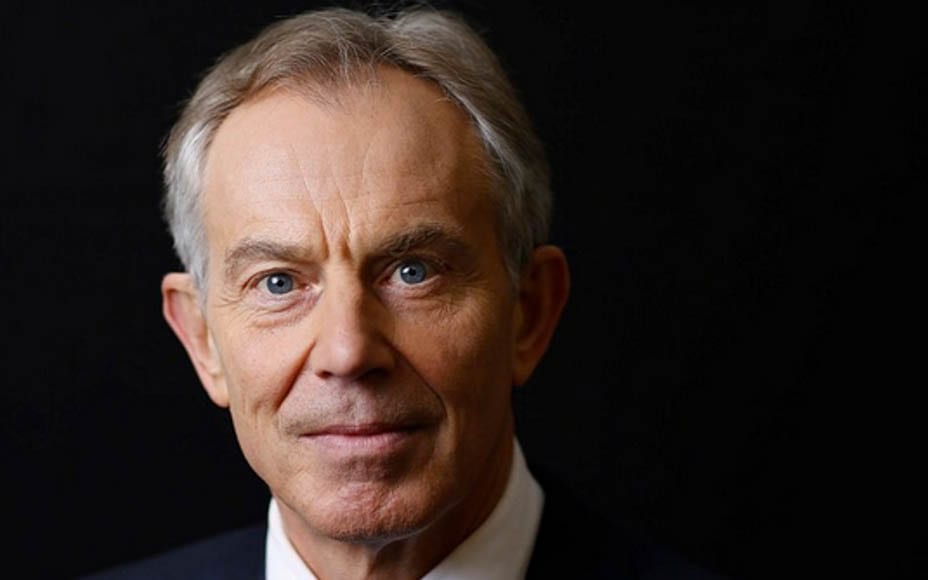
Tony Blair ditches business and also denies a return to public office
For weeks, the mainstream media have claimed Tony Blair is preparing to return to public office to save Britain from the nightmare of Brexit. They have claimed he’s ready to seize the support of the 48% and that him and Nick Clegg are colluding to create a new ‘centre left’. He did little to deny it at first but late last week, he shared a post on Facebook that frankly puts a stop to this kind of nonsense.
Blair, a plainly toxic force in politics due to his highly unpopular backing of George W. over the War on Iraq (and because of his refusal to confine his equally disliked weirdo wife to social Siberia), will never make a comeback and now he’s finally acknowledged that in a very public way.
In our view, Mr Blair is actually wrong. He’s not nearly as bad as #DarthVader Theresa May and he’s not nearly as ghastly as either the worst Prime Minister’s-in-living-history John Major and Gordon Brown and though we share with you his justifications for not getting involved again, we weirdly find ourselves actually lauding Mr Blair for saying the right thing (for once in his sorry lifetime).
Mr Blair’s comment, in full, follows:
Over the past nine years we have built a family of organisations which together employ nearly 200 people; have worked in over 30 countries; and have produced some real and lasting achievements. I am very proud of the commitment and impact of the people I have had the privilege to work with.
The Africa Governance Initiative has become a respected partner and leader in effective governance where we have worked in 10 different African countries.
The work we are doing in Africa has been right at the centre of government covering everything from boosting electricity, to improving child and maternal mortality rates to helping on the ground during the Ebola crisis in West Africa, a contribution praised for its impact by both the Presidents of the countries concerned and the international community.
Outside of Africa in the work done by the commercial governance arm, we again made successful interventions in over 12 countries with 30 different projects promoting reform and change programmes with governments.
The Tony Blair Faith Foundation has done ground-breaking work in interfaith relations, education and leadership, and most recently in the research and policy work on religiously based extremism through the Centre on Religion and Geopolitics which has been widely recognised as authoritative.
In the first years of the Quartet role in the Middle East, we hit double digit growth on the West Bank, drew up ambitious plans for Gaza’s infrastructure and changed the rules around entry of materials into Gaza. In 2011, we played a significant part in the attempt to agree terms of reference for a renewal of the peace process.
Progress became much more difficult once the peace process stalled. We were partners in the later fresh attempts by the USA to revive the peace process, particularly around plans for the economy to support a future Palestinian state. Unfortunately these attempts also failed.
Nonetheless, after stepping down from the Quartet position, our new Initiative for the Middle East has re-vitalised our work and means this stays a large part of what we do. I have made over 35 visits to the region this year alone.
During the time since leaving office, I have learnt a huge amount about the world and frankly what I can do and can’t do to affect it positively.
We built up a successful business side, though attracted a large measure of criticism for it, much of it inaccurate. It was entirely necessary to build the business to help with the funding to grow the organisations; but it was open to misrepresentation and to criticism either that we were conflating private and public roles or that we were working in countries which aroused controversy.
Having said that, I also learnt a lot about the way the global economy functions from that experience and pay tribute to the great team I worked with who made much of the development of our work across the organisations possible.
We are now at the stage and have built the financial infrastructure where it is time to enter a new phase. First we can take the work we have done in Africa, in governance, on extremism and in the Middle East to a new and more effective level; and secondly, in the past six months we have seen political earthquakes in the UK with Brexit and in the American election, as well as an explosion in populist movements all over the European continent. This impacts profoundly all the work we do and the future of globalisation.
So I want us to bring all the different organisations together under one roof and to re-orient our mission.
We have deliberately focused, up to now, on some of the greatest and most difficult challenges faced in the era of globalisation: how to give nations the governing capacity to overcome the problems of development and lift their people out of poverty; how to combat the religiously based extremism which threatens global security; how to resolve the most intractable peace process in the world.
In each case, we have presented a new approach, with the aim of providing new ideas and thinking.
In governance, especially in Africa, our analysis is that, today, building the capacity to govern effectively – making the way government works efficient as well as transparent – is as important for developing nations as aid.
Look around the world, and see countries living next to each other – same size population, same resources, same natural potential – one succeeding, one failing. The reason for the difference is found in the quality of governance. Take the following examples: Venezuela and Colombia; Poland and Ukraine; Rwanda and Burundi. And the greatest example in contrasting, contiguous systems of governance the world has seen in modern political history – the Korean Peninsula, North and South Korea. The nation which is succeeding is applying the best rules and lessons of governance; the failing nation is ignoring or defying them.
On religious extremism, we believe it is essential to widen the struggle, to tackle the ideology behind the violence and not simply the violence itself. So we can defeat ISIS militarily but unless we defeat the ideas behind Islamism – the belief that a particular view of religion should dominate society, politics and the economy, something incompatible with a modern world in which pluralism is the essence – we will never win this battle.
On the Middle East peace process, we are convinced that a traditional peace process between Israelis and Palestinians with US guidance alone is inadequate; that what is required is a new approach which involves the wider region and the Arab nations and which resolves not just the final status issues like borders but which also resolves the underlying issues of cultural acceptance and regional stability. So we are now working on Arab-Israeli relations, and not simply Israeli-Palestinian relations.
But it has become clear that there is much overlap between these different areas of work. Extremism is also today a barrier to development. The Middle East conflict impacts extremism. Changing and reforming government applies to Middle East nations as well.
And since all of these approaches basically represent the open-minded response to global problems, the salience of these new approaches depends on us having an answer to the new populism of left and right which exploits the anger and drives the world apart.
This new populism may differ in some respects between left and right – the left anti-business, the right anti-immigrant – but in others what is remarkable is the convergence between them, especially around isolationism and protectionism, in what is an essentially closed-minded approach to globalisation and its benefits and to international engagement.
So we want to add a fourth pillar to what we do. I emphasise this is not in place of our other work but in addition to it.
This is the creation of a platform designed to build a new policy agenda for the centre ground together with the networks which link people up, and allow a reasonable and evidence based discussion of the future which avoids the plague of social media-led exchanges of abuse.
This platform will have a policy unit which will draw on the best ideas and practical solutions, building partnerships with other organisations, in the public policy and private spheres, so that those in the frontline of politics have a bigger and better policy agenda to reflect upon; and a networking capability to join like-minded people up.
This is not a think tank. There are enough of those, many doing excellent work we would want to utilise. It is a platform for engagement to inform and support the practising politician.
It is what I know I would want were I still in the frontline of politics.
Part of its focus will plainly be around the European debate; but this will not be its exclusive domain. It has to go far wider than that since in many ways the Europe debate is a lightning rod for the whole of politics.
We’re now planning to bring all of these four parts together in one new Not For Profit Institute.
The business side has been shut down and the assets, running into many millions of pounds, gifted to the Institute. In the New Year, we plan to merge the activities of the different organisations into the Institute, with any charitable funds used exclusively for the purposes for which they were originally given.
This will allow us to work more coherently across the board; use the obvious synergies between the different elements of the work; and to be far stronger on the global policy side than we have been up to now. The focus previously was mainly on programmes. These will remain but the organisation will also be far more about thought leadership.
This is not about my returning to the front line of politics. I have made it abundantly clear that this is not possible.
However, I care about my country and the world my children and grandchildren will grow up in; and want to play at least a small part in contributing to the debate about the future of both.