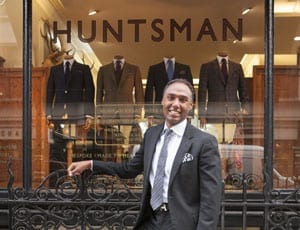
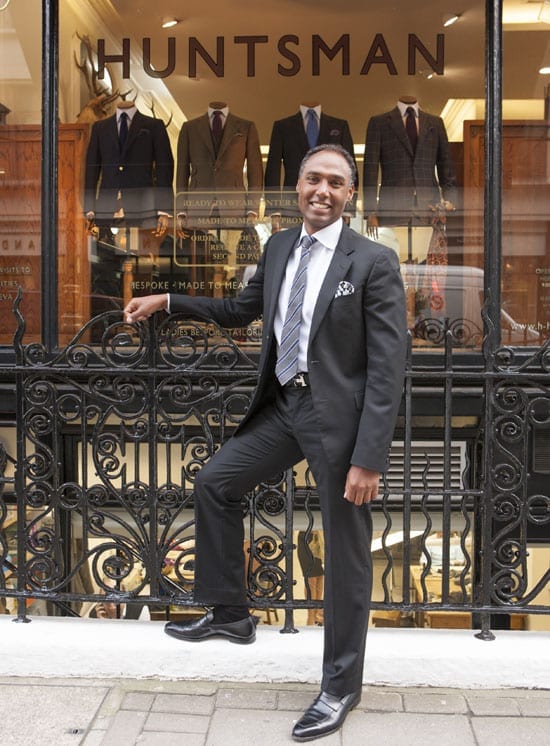
The Steeple Times asks the Bond Street couturier and Huntsman co-owner Roubi L’Roubi: “What’s on your mantelpiece?”
The Steeple Timesshares “wit and wisdom.” What’s your guiding force?
“Achieve the ideal”, striving for perfection in my craft. Indeed, I am reminded of this every day, because I am lucky enough to work with the team at Huntsman who really are the finest tailors and cutters in the world.
“Don’t get even, get medieval” is, in our humble opinion, a great motto. What’s yours?
Misericordie et beneficentie sunt omnes (Compassion and kindness are all).
Kerry Katona was considered unacceptable in 2007. Who or what is unacceptable in 2013?
Abuse of human rights.
Tony Blair misses being Prime Minister. What do you miss most in your life?
Not having time for my horses.
What might you swap all your wealth for?
The health and well-being of my partner and my family.
Donald Trump was once a case of: “If you owe the bank a thousand, they close you down; but if you owe the bank a billion, you own the bank.” What’s your view on the banking crisis?
It’s time to do things differently. In Africa there is a microfinance scheme called Sundouk. A small number of people (usually women) get together and pay in a set amount, regularly, say once a month. Each time a member is given the total paid in on that day to invest in their business or do whatever they need to do. The next month, someone else receives the full amount. It works.
What phrase or word do you most loathe?
“I” and “want”.
In the UK, some people consider charity to “begin at home.” What’s your view and what causes do you personally support?
I think we have to think in terms of a global home. Children hold our future in their hands so I support the NSPCC and Childline.
The judge in “Law Abiding Citizen” states: “I can pretty do whatever I want” before being blown up whilst answering her mobile phone. What’s your view on the appropriate use of such devices?
Couldn’t live without it, I text my mother all the time – it’s a miracle to connect with someone 5,761 miles away, instantly. But I always put it away when I’m with anyone and get in a rage when that someone doesn’t follow suit.
If you could fill a carriage on The Orient Express, who would be your fellow passengers?
My partner and then a selection of our friends who are always rushing. The Orient Express is very slow, it would do them so much good.
Roubi L’Roubi
If you were unfortunate enough to end up on death row, what would be your last meal and where would you eat it?
Fruit, particularly berries, and a pot of PG Tips tea.
What time is it acceptable to consume the first drink of the day?
Lunch, with food.
ANegroni, a martini or a cup of tea?
Tea, so long as it’s PG .
Whose parties do you enjoy the most and why?
Our own – because we’ve chosen the guests. It’s great to mix people and see how they mix together and enjoy each other.
Who is the most positive person you know?
Joanna our seamstress.
What’s your most guilty pleasure?
Movies. I love watching movies with friends. Nothing beats a film, popcorn and Diet Coke enjoyed in good company.
If a tattoo were to sum you up, what would it be of?
Tattoos don’t work for me.
If you were a car, what marque would you be?
My favourite car is a Porsche Boxster so I’d like to think we are similar.
CillaBlack presented “Surprise, Surprise.” Tell us the most surprising thing about you.
I have a degree from Imperial College, London in mechanical engineering.
What’s currently sitting on your mantelpiece?
The most beautiful blue-grey crystal and silver flask containing perfume created by my mother. It’s a rich, deep mix of sandalwood and musk. It brings back beautiful memories.
Roubi L’Roubi is the founder of the Bond Street couturier Roubi L’Roubi and the co-owner and creative director of iconic Savile Row tailor Hunstman.
Of Italian-Jewish descent, Caring is of the “supermarket-sweep” school of empire building. This billionaire started out in the rag trade but now controls the majority of the top restaurants and clubs in Central London. He survived the 2004 Indian Ocean tsunami and viewed that to be a wakeup call. Since then he’s donated millions to charity and focused on his two passions: golf and shooting. This buccaneering businessman generally passes on breakfast and lunch and lives between a converted stable block set in 500 acres near Dulverton and a mansion on The Bishops Avenue. What will he buy next?
If one spent $2,000,000 on cosmetic surgery, one would expect to end up looking fantastic. It didn’t quite work out in the case of the billionairess “Bride of Wildenstein,” though, as instead she discovered the husband she thought she’d please in bed with a 19-year old Russian. Feline like in appearance, the purr of this New York socialite is said to be just as bad as her bite. She’s known to be a skilled hunter and pilot and once boasted her telephone bills were at least $60,000 a year. Surprisingly far from camera shy, what on earth will she look like at ninety?
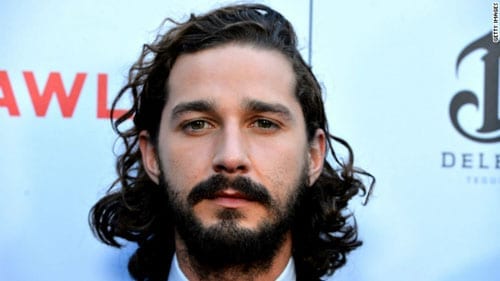
This Californian became a child star to help solve the financial woes of his family. He excelled in Wall Street: Money Never Sleeps and received a $15 million cheque for Transformers: Dark of the Moon. Aside from acting, he’s been in relationships with Carey Mulligan, Isabel Lucas and Megan Fox but it is bar brawls that seem to form a staple of his existence. LaBeouf was questioned by the Los Angeles Police Department after one at the Mad Bull’s Tavern in February 2011, thrown out of another called the Cinema Public House in Vancouver in October 2011 and lost his hat during another at the Hobgoblin in London, SE14 in November 2012. We somehow doubt this wild child will be transforming into a reformed citizen any time soon but we’re also betting his career will rocket.
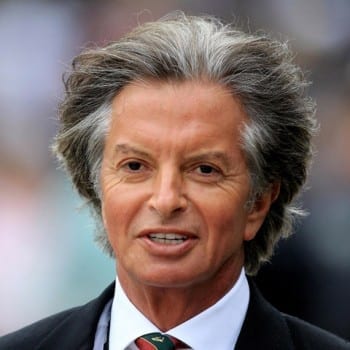
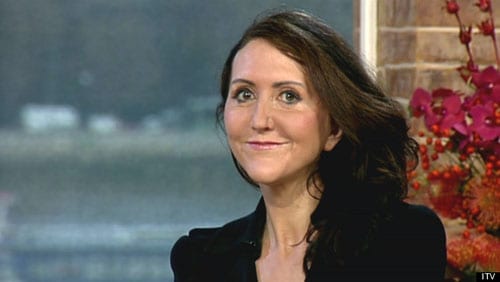
This mouthpiece was born in Rettendon, Essex in 1958 and vents bile on all manner of subjects. Articles such as: “Why don’t more women moan like me?” and “Liz Jones’ baby craving drove her to steal husband’s sperm in ultimate deception” are frankly illustrative of why she’s so unpopular. After she got banned from the majority of fashion shows and her husband left her, she quit London for Somerset in 2007 to feed organic muesli to the rats in the barns of a 47-acre farm she purchased as her “rural idyll.” That misadventure came to a sticky end in November 2012 after she’d alienated the whole county by calling them, amongst other things, “smelly” and “faintly Amish.” Goodness knows whom she’ll choose to offend next. Phillip Schofield sums her up best: “She is inconsistent, bitter, nasty and unhinged.” Our advice: Just steer well clear of this acid tongued poison pen.
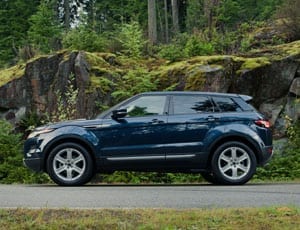
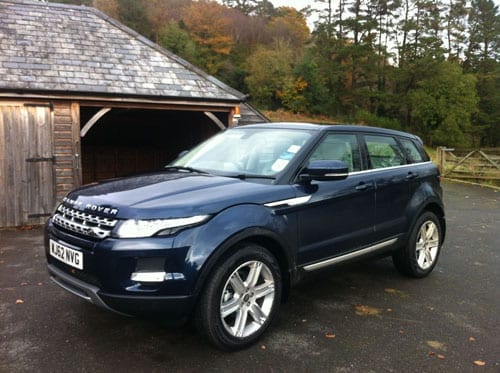
Charles Mitford Cust test drives the Range Rover Evoque
When I saw my first Range Rover Evoque coupé in the flesh I decided right then that it was time to emigrate. The actual remark I made is too rude to put in print, but the jist is that it’s ‘slammed’ rear styling reminded me of a baboon whose derriere had just suffered the unwanted amorous attentions of a short-sighted elephant.
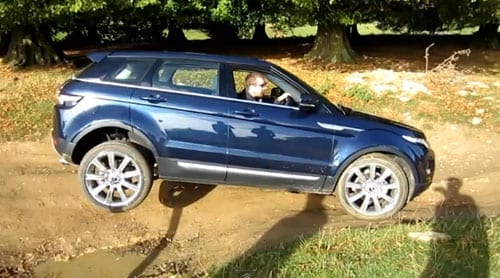
The Evoque has a lot more off-road capability than you might expect
It was my indignation that such a macho and traditional brand as Land Rover had built the thing at all, which led to me to cast unwarranted aspersions about the kind of car designers now working at the Land Rover HQ and the much-published fact that Victoria Beckham had designed the interior only added to my incandescent rage. As far I was concerned this was the ultimate example of design over function, and the last word in brand exploitation and betrayal, and to me this proved Land Rover as a British institution was dead.
You see, my family has owned every model of Land Rover since the Series One was launched in the 1948. My father even took delivery of the second privately owned Range Rover sold, just a few days after Her Majesty had taken delivery of hers. I have Land Rover in my DNA, so to me the fact that they had built something like the Evoque coupe was like Purdey deciding to give up building guns in order to make designer curtains.
Then one day, about a month ago, out shooting, I came across an example of the 2011 5-door version of the Evoque, the roofline of which has subtly been raised some 2-inches to accommodate the rear doors without compromising the original radical design. It was finished in dark Aintree green rather than the normal footballer pearlescent white, and standing there covered in mud on the top of a rain swept hill, it looked quite at home in it’s surroundings. I looked inside fully expecting to see the usual multi coloured blinged up interior, but instead I saw a muddy Labrador panting contentedly on plain black leather seats, which were strewn with cartridge boxes and general shooting detritus.
I stepped back a couple of paces and looked at the vehicle in a new light, not as in the context of a Rangy, Disco or any full size 4×4, but as a compact SUV, or shooting break in old parlance, which is what the Evoque actually is, and do you know what? I reluctantly began to appreciate that I was looking at a work of genius, in fact quite simply the best looking SUV vehicle ever designed… in the entire world.
It was with some considerable trepidation therefore that I decided to check out the performance reviews of the machine that was now causing me some consternation. I felt sure that my brief change of heart would be proved totally unjustified by reports of laughably pathetic off-road capability and a reinforcement of my original scepticism.
Well I was to be disappointed; every test I read praised the quite unexpected off-road capability. Oh, obviously, with it’s sexy aerodynamic curves it was never destined to be a Defender, but it was more than holding it’s own against the best Jerry could build, and for that reason alone, it is a bit of a hero. Especially as whilst the efforts of BMW, Mercedes and Porsche were all incredibly ugly, in comparison, our homegrown SUV was as handsome as James Bond standing in a room full of bald, fat Blofeld clones.
My research led me to a great YouTube clip of Top Gear’s James May driving an Evoque across the Mojave Desert. I noted that he was able to talk quite normally as he traversed the rock strewn desert floor at 70 mph, praising the amazing ride. Now I have considerable respect for deserts, I have nearly died in three: in the Nullabor from sun stroke, in the Nevada from hyperthermia and in the Sahara from riding a Paris Dakar bike at 60 mph into a dry river bed hidden from view by a the dust of riders ahead of me. So, I know only too well to my cost that deserts are places without mercy but May’s Evoque was making one of the toughest of the lot look like the M4 on a sunny midweek afternoon.
It was not the high-speed desert floor performance, impressive although it was, that convinced me to look more closely at the Evoque. No, rather it was watching May climb up a horrific 40-degree rock strewn dry watercourse like the one that nearly accounted for the last of the Mitford Custs that caught my attention. I have been up these nightmares many times and take it from me, although ultimately the Evoque’s low profile road orientated tyres finally failed it about 90% of the way up, the fact it even made it that far was enough to make me pick up the phone to my local Land Rover dealer and request an immediate test drive.
I really hadn’t bothered to bone up on the different specs in which the car is built before going there but it really came down to the fact I would be testing two versions: A 2-litre 240 bhp petrol Dynamic spec model with the optional Adaptive Dynamics suspension fitted, and a 2.2-litre 190 bhp diesel version in the Prestige configuration with standard suspension.
So let’s see, one will go well and will corner like a sports car and the other will cough along like a drunk camel on roller skates. Pretty obvious which the Ferrari and Ducati loving Charlie boy is going to like best eh?
Well that’s exactly what I thought, but once again, I could not have been more wrong.
More handsome than it’s German rivals, but also tougher in the rough stuff, the Evoque is the James Bond of the SUV world
Handling and ride
What I am about to say is so extraordinary that it is essential that I establish my credibility first. As a teenager, I cut my teeth thrashing the wheel nuts off hairy arsed rear wheel drive rally cars like the 1800 BDA Mexico and RS 2000’s that only knew one way to corner, and that was completely sideways leaving a streak of molten rubber. By dealing in cars like this as a student I earned enough money to buy my first Ferrari, a black 308 GTS just in time for my 25th birthday.
That is when my real driving career started. There have been many occasions during the next two decades and a quarter of a million Ferrari miles in which I have found it necessary to prove to some upstart in a Evo or Imprezza that contrary to what he obviously read in a car magazine, his slant eyed rice burner was not in fact able to overtake Italy’s finest on a tight twisting back-road. You get the picture.
So if I say a car’s handling is crap please trust me, it truly is. If on the other hand I say that it’s cornering capability is utterly, and quite unexpectedly astonishing, well, you can take my word for it. I really do know what I am talking about.
Such was the case when I picked up the “Prestige Pack” Evoque, the cooking pot version which drinks the fuel of the Devil, I fully expected it to roll about hopelessly on the tight switchback North Devon back-roads like most top heavy tractor-fuel guzzling four wheel drives do. I was so glad when they said that I could drive this model first, because this would make driving the petrol version so much more fun afterwards. Oh boy, was I was in for a shock.
Once I turned off the main North Devon Link Road in the SD4 and on to one of the finest drivers ‘B’ roads in Devon, I found myself at the wheel of a car with truly astonishing poise. I simply could not find fault with it. The electrically powered steering was perfectly balanced, weighted and geared. It ‘turned in’ with absolute precision, no oversteer, no understeer, just right. The body control was astonishing for a vehicle of this type with no almost no roll or weave in mid corner. There was no discernable lateral pitch either under hard breaking. Believe me, I tried very hard to upset it by deliberately chucking it into corners using the wrong line or by making clumsy mid corner steering inputs, but it always kept its cool, very impressive indeed.
In fact I can honestly say that much to my absolute amazement, the Evoque SD4 prestige proved to have one of the best combinations of ride and handling of any 5-door car I have ever driven, let alone an SUV with a relatively high centre of gravity.
That said, here comes the next surprise: The petrol version, even this one which was fitted with the Adaptive Dynamics option with MagneRide dampers (which supposedly react to the road inputs 1000 times per second by employing magnetically reactive damper fluid and clever electronics), was a total disappointment. In ‘normal’ or ‘comfort’ setting it rolled around in all directions horribly, pitching and weaving like a tramp steamer in a rough sea. Unlike the SD4, the turn-in was woolly and the wheel twitched nervously whilst under-steering horribly, totally lacking the precision of the diesel.
Bizarrely, engaging ’Adaptive Dynamics’ mode did very little to cure any of this, it just seemed to make the ride harder whilst still doing the same thing. It was horrible. I simply cannot understand how two versions of the same vehicle could be so different, one utterly brilliant, the other totally crap. Clearly as even the Adaptive Dynamics option did little to improve matters the problem has to be fundamental.
All I can assume is that Land Rover must have spent the whole suspension budget perfecting the spring and damper rates for the most common model, the turbo diesel, and then just didn’t have any time resources or cash left over for the lighter engined petrol version.
Performance and economy
Other differences in the driving experience between the two models would seem to support this hypothesis. Both cars have the excellent steering wheel mounted flapper changes allowing manual override of the 6-speed auto boxes. However, whilst on the diesel the operation was seamlessly faultless, the petrol’s was jerky and rough. Presumably they haven’t bothered to re-tune the torque convertor for the higher revving petrol engine.
I would say that the diesel lacked a bit of mid-range grunt, but at least its torque was usually in the right place. The same could not be said of the petrol’s, which was simply hard work to row along if you were trying to make ‘good progress’ as my ex-Police Class 1 driving instructors, whose services I have engaged over the years would say. Again, another first for me was that whilst the diesel was quiet and refined, the petrol engine was actually intrusively noisy. Not in a good or exciting way as it is in a Ferrari, just annoyingly so.
The only good thing I can think to say about the petrol was that in a straight line, you could certainly feel the benefit of the extra 50 bhp in terms of overtaking acceleration. However, in real terms all the other drawbacks would outweigh this. On the average B-road, the diesel would win hands down with a real driver at the wheel. Plus a diesel is easy to re-programme these days. With the right engine management remap, you can claw that 50 bhp back in a few minutes.
Economy was surprisingly similar between the two models. Zeroing the average mpg on the trip computer before the back road thrash, the diesel achieved 21 mpg and the petrol 19.6 mpg. Zeroing it again just as I rejoined the North Devon Link Road and then driving very sedately at a steady 60 mph average for 25 miles, achieved almost identical mpg of 30.5 for the diesel and 30.2 for the petrol. However, undoubtedly the diesel would prove more economical around town and also would creep up nearer to mid or late 30’s mpg over a longer distance on a motorway. Although I would bet my socks that cruising at motorway speeds it would not crack 40 mpg, no matter what Land Rover claims.
An interesting insight as to why the diesel returned such poor economy could be identified when I followed up the test of these two Evoques with a test of the Discovery 4 by way of comparison. Doing exactly the same back road thrash and sedate run on the main road returned an average of 3 mpg better despite the fact that the Disco weighs nearly a tonne more than a Evoque. This can only be down to a better engine/weight ratio. This is why the 2011 Range Rover is even more economical again than the Disco. The combination of its larger 4.4 V8 engine and lighter alloy body win the day. You cannot escape the fact that big heavy cars need an appropriate engine capacity.
It seems Land Rover has missed a trick here. Had they installed the Disco’s larger 3-litre diesel engine in the Evoque it would have had a world class winner. Not only would this drop the already respectable if not exactly tarmac melting 0-60 from 8 seconds to around 6.5 seconds by my guess, whilst adding mind blowing mid range grunt to boot, but it would also achieve at least 10 mpg better economy, probably 15 mpg.
This is all down to the crazy way the green brigade force car manufacturers to create vehicles which produce fewer emissions at the exhaust pipe, whilst ignoring the reality of the fact that putting too small an engine in a vehicle will actually cause it to use far more fuel and therefore produce far more emissions over its lifetime. Just like catalytic convertors, yes they cut emissions, but fitting them causes all vehicles to use 5-10% more fuel, so the net result is far more global emissions, duh.
The only advantage of the 2.2-litre diesel is the fact that it saves you £185 per year road tax, which is only a saving if you are not doing large mileages. If you were, then this would soon be negated by the extra economy from an Evoque fitted with the larger Disco engine.
Off-road performance
I had only a limited opportunity to try the SD4 off-road, but the little I did looked promising. A muddy field can sometimes stop even the most seriously modified off-roader in it’s tracks but despite it’s low profile road tyres the SD4 had no trouble pulling itself up a 25 degree slope of muddy wet grass. When I tried to get it to break traction by flooring the accelerator it’s traction control cut in smoothly and it refused to even step out of line.
Next, I then tried it on a short stretch of green lane, which is used not only by serious offroading enthusiasts, but also several motor clubs for trials. Known locally as ‘Hell Hill’ its broken surface consists of mud covered slick rock. Very few contestants, either car drivers or dirt bikers clear the section in one attempt in a trial. The SD4 made light work of both going down and up the short section I attempted and surprisingly the road-orientated suspension did not cause it to bang or crash over the rough ground. It just absorbed it all smoothly and without drama. That’s all you could ask for on a compromise SUV like this, it does not pretend to be a Defender. I doubt any of the German competitors would have performed anywhere near as competently.
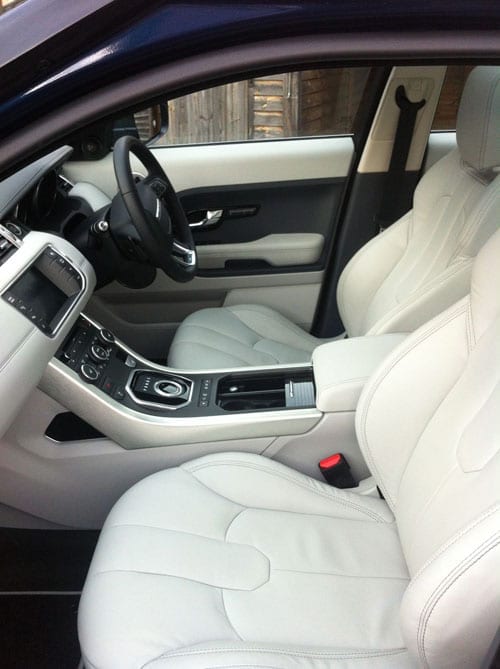
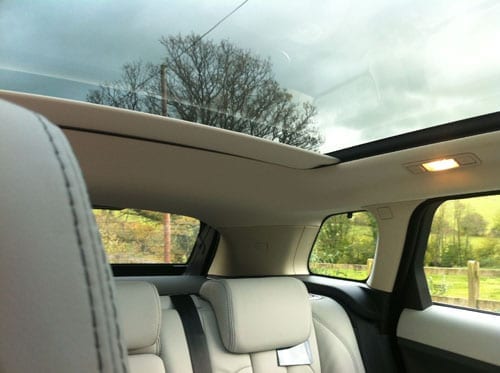
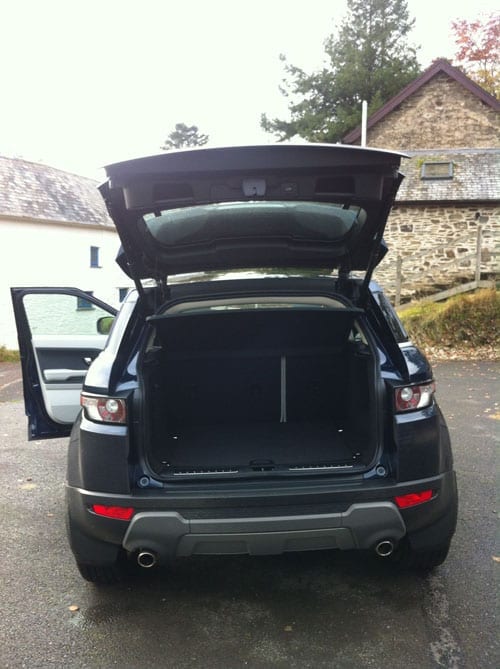
The interior of the Evoque (I’d personally ditch the WAG look and get it in black)The Evoque’s glass ceilingAmple room for a Labrador and a pair of Purdeys
Build quality and interior
The Evoque has a high quality feel about it both inside and out. Fit and finish is excellent and both examples were rattle free. I have to confess I really struggle to believe Posh had much input in the interior’s design as it appears to me to be an identical clone of the Rangy and Disco’s but more compact. Even the instruments and switchgear are identical. Sounds like PR BS to me, and you know what that stands for.
Frankly the seats could have been more comfortable, a little more front thigh support would have done wonders for long journey comfort. The sports seats in the ‘Dynamic’ package are worse than the ‘Prestige’. Why can’t car manufacturers get this simple aspect of seat design right? They only have to consult the top motor sport seat manufacturers.
I loved the full-length transparent tinted roof, which gave the interior an airy feel it might have otherwise lacked, plus more headroom. The surround camera system was a nice gimmick, which could come in handy off-road sometimes although they would need to be frequently cleaned in muddy environments. The sat nav was clear and even works off-road. The upgrade 825w sound system with 16 speakers was first class and frankly I found it like sitting in my own Albert Hall.
In conclusion
The 5-door Evoque is actually a really brilliant SUV, which in its unique way is a credit to the Land Rover brand. I started off hating it but now I am a bit in love with it. If you are going to get one, take my advice and buy the diesel Prestige in a decent colour like dark green or the very nice dark blue like the SD4 tested. Avoid the petrol version like the plague. If you want to get the Adaptive Dynamics option make sure you test it back to back with the standard suspension first. There wasn’t a diesel available with this option for me to compare. Stick to black leather and everyone will applaud your good taste. The tinted transparent roof is a must and don’t, whatever you do, dare mess up the ride and handling by fitting the optional 20-inch wheels.
What else? Oh yes, but you did not hear this from me right? Get the diesel re-programmed on the quiet to give it about 240 bhp, tons more torque and better economy. Make sure it is done by a reputable firm whose work cannot be detected so it doesn’t invalidate the warranty. Believe me, the chassis will easily handle the extra performance and it will be a lot cheaper to run. Then, I can assure you, the Evoque SD4 will become the best all round 5-door country car you ever owned.
Matthew Steeples examines the truth behind Liz Jones giving up on her “rural idyll”
The Mail’s Liz Jones is a waspish woman who knows the price of everything and the value of nothing. Those who’ve paid even a moment’s attention to her bleating, will be familiar with lines such as: “Last week, my brand new £1,300 MacBook Pro broke” and “Phil Spencer wanted his £46,000 and he wanted it now!” She never stops talking about money and the size of what she both owns and owes.
Liz Jones
In today’s Femail, Jones bores on about about how she feels “like a cross-dresser” trying out the Kardashian Kollection of clothing in a pointed attack on Kim Kardashian, but it was for her diatribe yesterday that she truly got the goat of the nation in “[bidding] a ferocious farewell” to life in the country in an article entitled “Goodbye… and good riddance!” 2,151 people have commented so far and most of them have been far from sympathetic.
When Upcott Farm at Brushford, near Dulverton in Somerset came up for sale in 2007 at a price of £1.6 million, it featured in an article by The Telegraph’s Caroline McGhie. The 5-bedroomed farmhouse came with a 2-bedroom annexe, a courtyard of barns and stables and 47 acres of land. McGhie waxed lyrical about the merits of moving to this location: “People come here for the peace and quiet, the night skies, the dramatic coastline, and they work from home,” she stated before adding: “You can find everything here, including butchers, bakers, afternoon tea and cake, fish and chips, an art gallery and a shop selling fishing tackle.” Of Upcott Farm itself, she concluded:
“This would suit a member of the new wave of buyers dubbed Droppies (Disillusioned Relatively Ordinary Professionals Preferring Independent Employment Situations).”
McGhie got it half right: Upcott Farm sold to someone who considers herself far from “relatively ordinary” and someone who is far from “professional.” The purchaser, however, was certainly someone who’d become “disillusioned” with what she’d bought and someone whose desire to be “independent” and create a “situation” just alienated all she encountered. The buyer, you’ve guessed it, was none other than Elizabeth Ann Jones.
Jones was born in Brentwood, Essex in 1958 and studied journalism at the London College of Printing. She became editor of Marie Claire in 1999 but was sacked, she herself suggests, for “listing in the magazine the freebies she had been offered in the previous month.” Here, it seems, began Jones’s obsession with all things material and here she also met an Indian BBC radio journalist named Nirpal Dhaliwal in 2000.
Jones married Dhaliwal but the union was to prove an “utter disaster” as he had affairs with women she terms “younger, dimmer [and] slimmer.” “I’m no racist” Jones was divorced in 2007 and said goodbye to her “3,000 square foot of Islington real estate” and “easy, if super-busy, London life” in favour of the green, green grass of Somerset.
Whoever’s side you see it from, five years of hell followed. Jones baited the locals and they grew to loathe her. She wrote columns and a book, The Exmoor Files, where she attacked them as “faintly Amish… feral, old and smelly” and another hack and neighbour, Jane Alexander of The Telegraph, responded: “Dulverton [was] positively fizzing with fury” after each and every publication.
Of the local restaurants, Jones stated:
“I have given up trying to eat out in restaurants here on Exmoor… It is still stuck in the Seventies, with only things in baskets and rum babas on the menu… If you tell the waiter you are vegetarian, you are stared at, incredulously, as if you are black.”
She whinged about her inability to find love:
”I will never, ever meet a man here in the middle of a moor, where even to be in possession of your own teeth is a bonus.”
And whined about fieldsports:
“I didn’t increase my popularity by being unable to pass a party of men and often children with guns, shooting rabbits and deer, without getting out of my BMW and saying: ‘Do you really have nothing better to do with your Saturday morning?’ The look of shock on their faces that I had the cheek to challenge them was priceless. I would stop, too, and shout at huntsmen on horses, galloping on tarmaced roads, one hand on the reins, the other clamping a mobile phone to their heads. ‘You will ruin your horses’ tendons!’ I would wail.”
Whilst Jones found little to like in her new community, they found nothing positive in her arrival either. Her dog was blamed for worrying lambs, and Jones’s inability to control it, locals say, was an indicator of the chasm between her life and theirs. In 2009, one neighbour went as far as to tell Danny Brierley of The Independent:
“We have got nothing in common with her, really. I think she may find it difficult to make any kind of life here now. She is not a very friendly person and we are all sick to death of talking about Liz Jones. A hatred has been building up for months. She is actually having a go at people and they are not going to tolerate that. She has feelings like all people, of course she has. But everyone wants her to leave and leave now. No one can make her, but we think she will go. I don’t see how you can live in such a small community with people who think that way about you.”
Matters came to a head when Jones’s precious black BMW convertible, “bought in 2005 for £26,000,” was pelted with eggs and teenagers fired shots at her letterbox with an air rifle. A local councilor even dressed up as her in the local carnival and yesterday Jones took revenge on those she blames for her “five-year prison sentence” and deprivation from Space NK, Cath Kidston and Illy coffee.
Instead, the article just shows the true reality of this bombastic harpy. The lines Jones penned speak for themselves. Country people don’t welcome someone who planned to “hack for miles across the open moorland in my Prada jodhpurs” anymore than the folk of Knightsbridge welcome Arabs treating their roads like racetracks. The gardener who had to endure Jones yelling “walk faster!” at him didn’t deserve such anymore than a bus driver in SW11 deserves abuse from his passengers. Jones concludes:
“I’m now a different person. I became so lonely. I would often get in my car, not just for the warmth, but for the kind voice of the satnav lady. I’ve learned that an amazing view and a pair of nesting grey herons are not enough to make me happy.”
27 acres of land including paddocks and a fishing lake remain on the market through Savills and Strutt & Parker at a price of £200,000 at Upcott Farm
Miss Jones bleats that she’s taken a £500,000 loss on Upcott Farm, which languished on the market at first at £1,900,000 and then £1,750,000 for three years. The “unexpected” sale of the property has given her the ability to “flee back to the city” but the locals and even the “Droopies” should be warned: there’s still 27 acres of the farm unsold and on the market at a price of £200,000. Halloween may have passed but the battleaxe in the Beemer could still call again.
This Swiss born son of a printer has spent over £85 million buying up properties in the Henley-on-Thames area of Oxfordshire. Schwarzenbach also owns 123,000 acres in Australia, 26,000 acres in Scotland and has his own polo team, the Black Bears. This financier’s foreign exchange dealership, Interexchange, is the biggest in Switzerland and betting against the dollar has brought much success. He supposedly even named his Gulfstream G650 “George” as “ultimately it was Bush who paid for it.” Whilst Schwarzenbach’s Grand Hotel Dolder in Zurich wins plaudits galore. an investment in Mayfair’s Café Grand Prix was less successful. It is, however, for philanthropy and discretion that Schwarzenbach and his wife, a former Miss Australia, are known best.
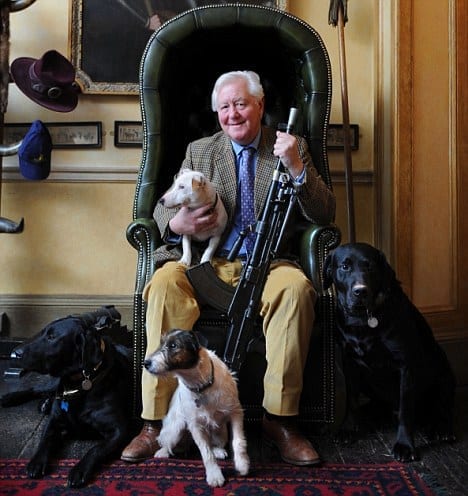
The Steeple Times asks the right-wing businessman and owner of Maunsel House and Woodlands Castle, Sir Benjamin Slade: “What’s on your mantelpiece?”
The Steeple Times shares “wit and wisdom.” What’s your guiding force?
Money, power, sex, success, land, trees, books and fine wine.
“Don’t get even, get medieval” is, in our humble opinion, a great motto. What’s yours?
“If it f**ks, floats or flies: Rent it, don’t buy it and don’t marry it!”
Kerry Katona was considered unacceptable in 2007. Who or what is unacceptable in 2012?
David Cameron and Sir Mervyn King.
Tony Blair misses being Prime Minister. What do you miss most in your life?
Being in London full-time.
What might you swap all your wealth for?
Good health and two healthy sons.
Donald Trump was once a case of: “If you owe the bank a thousand, they close you down; but if you owe the bank a billion, you own the bank.” What’s your view on the banking crisis?
It’s like putting bartenders on commission and allowing them to give credit to alcoholics who die and go bankrupt.
In the UK, some people consider charity to “begin at home.” What’s your view and what causes do you personally support?
UKIP and Help for Heroes.
The judge in “Law Abiding Citizen” states: “I can pretty do whatever I want” before being blown up whilst answering her mobile phone. What’s your view on the appropriate use of such devices?
They are useful for ringing up if late, doing deals and arranging dinners with girls.
If you could fill a carriage on The Orient Express, who would be your fellow passengers?
Warren Buffett, Bobby Faber, Philip Gibbs, Bettany Hughes, Brian Kingham, Lady Kitchener-Fellowes, Francis Fulford, Robert Lyle, Sir John Madejski, David Ord, General Sir Michael Rose, Roger Seelig, Alexander Stockton, Jonathan Sumption PC, Norman Tebbit, Lord Westbury, the Duke of Westminster and Mrs William Worsley. Adrian de Ferranti can sit in the luggage car and serve wine.
Sir Benjamin Slade Bt.
If you were unfortunate enough to end up on death row, what would be your last meal and where would you eat it?
It’d have to be at La Tour d’Argent in Paris.
What time is it acceptable to consume the first drink of the day?
1pm and 6pm.
A Negroni, a martini or a cup of tea?
Green tea.
Whose parties do you enjoy the most and why?
Sotheby’s and Christie’s and those hosted by Liz Floyd and Philip Gibbs.
Who is the most positive person you know?
My friend Bobby Faber.
What’s your most guilty pleasure?
Drinking claret at £100 per bottle.
If a tattoo were to sum you up, what would it be of?
A big castle with lots of walnut trees, good books and bottles of wine. And girls’ hips.
If you were a car, what marque would you be?
A Ford Fiesta.
Cilla Black presented “Surprise, Surprise.” Tell us the most surprising thing about you.
I’m self-made, have a great knowledge of history and am a seriously good doctor with over 120 patients. And, you’ll be surprised to learn that I was a spy in the Middle East for Britain.
What’s currently sitting on your mantelpiece?
Tankards, invites, various Mouser and Walther pistols, cows horns, Roman artifacts, decanters, pewter cups, silver, an 18th century bottle of port and a Russian machine gun.
Maunsel House, North Newton, Near Taunton, Somerset, TA7 0BU. Telephone: +44 (0) 1278 661076. Website:http://www.maunselhouse.co.uk
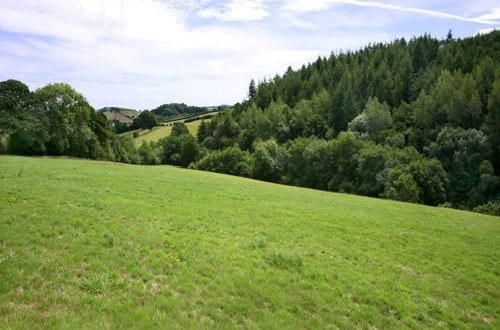
The North Devon countryside that inspired Henry Williamson, R. D. Blackmore and Charles Kingsley
Much of my childhood was spent reading the works of superb authors and amongst the best of them were Arthur Ransome (1884 – 1967), Denys Watkins-Pitchford (1905 – 1990), who wrote many of his works under the pseudonym “B.B.”, and Henry Williamson (1895 – 1977). As a youngster, I was lucky enough to be read to by Ransome’s nephew, a most captivating professional storyteller, and was given first editions of many of the works of all three of these early to mid twentieth century authors.
I had my first sailing lessons on Windermere, where Ransome set many of his works, and went shooting in the Forest of Bowland, a place dear to B.B. Though I also fished in many wonderful locations, until now I’d never been to the land of Henry Williamson and his most famous creation, Tarka the Otter. I currently find myself here enjoying a break from London and yesterday I randomly discovered, I am staying next to the setting of one of Williamson’s lesser known stories, Salar the Salmon, on the River Bray close to Exmoor.
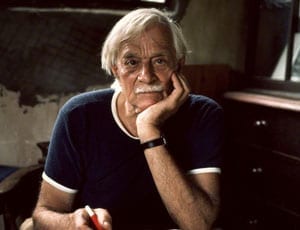
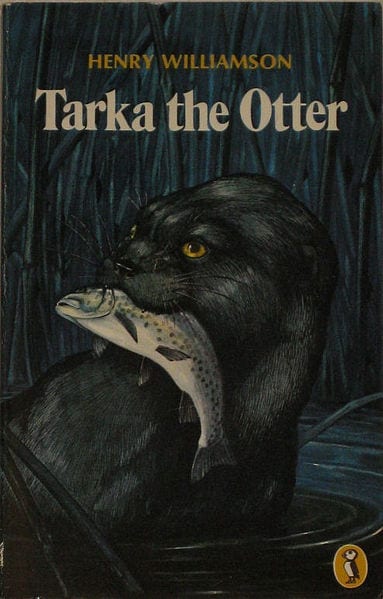
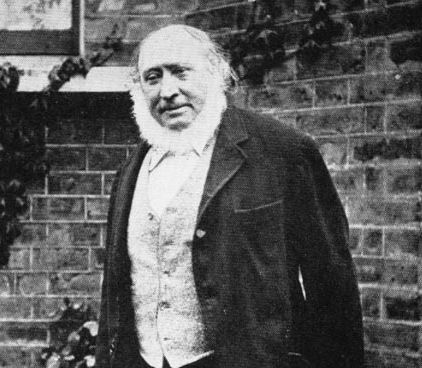
“Salar the Salmon” by Henry Williamson (1935)Henry Williamson (1895 – 1977) photographed by Mark Gerson, cibachrome print from original transparency, August 1970“Tarka the Otter” by Henry Williamson (1927)
Originally published in 1935, Salar the Salmon combines Henry Williamson’s great talent as a writer with his insight as a naturalist. The story tells the tale of a five-year old salmon named Salar, whose name means the “leaper,” and his return to the stream of his birth. Salar’s migration through the riverways of Devon involve him surviving porpoises, seals, nets, fishermen, otters, poachers and weirs and Williamson’s account truly gives the reader an insight into one of nature’s great journeys.
Henry Williamson wrote both Salar the Salmon and The Children of Shallowford (1939) whilst living beside the River Bray in a hamlet named Shallowford, near Lynton in Devon. The river plainly inspired him and whilst he lived there on the Fortescue Estate he also sired four children, joined Oswald Moseley’s British Union of Fascists, was briefly imprisoned for his views and conducted several extra-marital affairs.
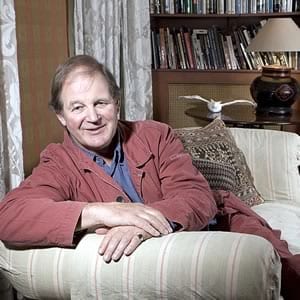
“War Horse” author Michael Morpurgo OBE
Salar the Salmon is a story I am not alone in recommending. Another Devon based author and poet, Michael Morpurgo OBE, best known for his acclaimed work, War Horse, speaks very fondly of Williamson and the novel in a dedication he prepared for a recent reprint of it:
“It is a rare gift indeed for a storyteller to be poet as much as a storyteller, to tell a tale so deeply engaging that the reader wants to know what will happen and never want it to end, and yet at the same time tells it in such a way as to leave a reader wide-eyed with amazement at the sheer intensity of feeling that can be induced by the word-magic of a poet. Henry Williamson is just such a story-maker poet.”
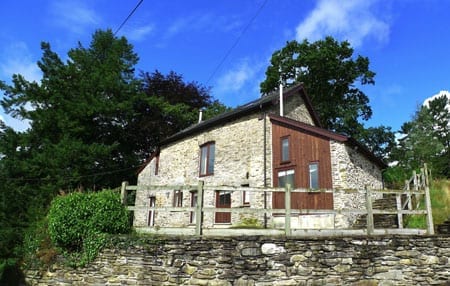
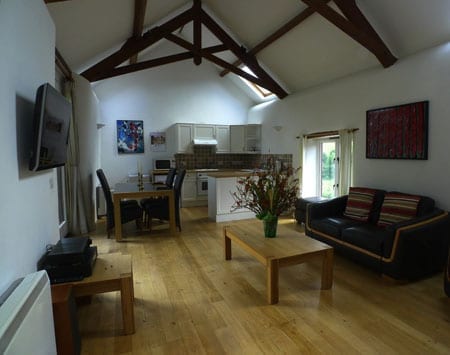
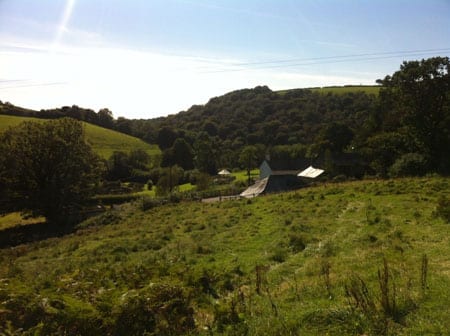
Where I am staying, I have a view of the very river on which Salar made his journey and here also a detached barn conversion is currently available to rent at a price of £1,150 per month. Malle’s Barn is a 2-bedroom stone-built property that includes a 25ft by 12ft open plan sitting room with a fully fitted kitchen and a dining area, as well as a study and shower room.
The exterior of Malle’s Barn, Brayford, Near Barnstaple, Devon, EX32 7QBA large open plan reception room includes sitting, dining and kitchen areasThe setting of Malle’s Barn overlooking the valley of the River Bray
Tenants of the house will have access to the owner’s 60-acre estate which includes a mile of salmon and brown trout fishing on both the Rivers Bray and Holewater, ancient woodland and a lake in addition to a private garden and adequate parking for several vehicles.
Malle’s Barn would make a perfect retreat for any author or artist and is just 10 minutes from South Molton, Barnstaple is 9 miles away and Exeter 40 miles. The location is 30 minutes from J27 of the M5 and Tiverton Parkway Station, which provides mainline links to London Paddington within 2 hours.
Close to Malle’s Barn are the prettiest sections of a footpath named the Tarka Trail. Consisting of over 180 miles of footpaths and cycle tracks that take in the Dartmoor and Exmoor National Parks and the North Devon Coast Area of Outstanding Natural Beauty. The trail takes in many of the locations described in Williamson’s most famous novel but this area of North Devon also galvanized the pens of a number of other authors.
Richard Doddridge Blackmore (1825 – 1900)Professor Charles Kingsley (1819 – 1875)
Richard Doddridge Blackmore (1825 – 1900) set Lorna Doone: A Romance on Exmoor in the locality in 1869 and Professor Charles Kingsley (1819 – 1875) put pen to paper here when he wrote Westward Ho! in 1855. A village of the same name was subsequently established near Bideford in the 1860s by entrepreneurs, led by Lord Portsmouth, who saw an opportunity to capitalise on the novel’s success. Westward Ho! is the only place in the United Kingdom with an exclamation mark in its name. The only other place in the world that shares such is Saint-Louis-du-Ha! Ha! in Quebec, Canada.
Aside from literary connections, the locality is famous for its excellent fieldsports. The Earl and Countess of Arran’s Castle Hill and the Molland shoot are considered amongst two of England’s finest high bird pheasant shoots and both the Devon and Somerset Staghounds and Devon and Somerset Foxhounds hunt on Exmoor.
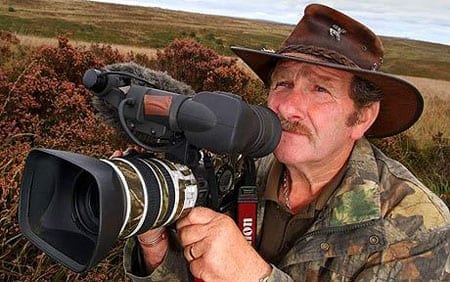
Johnny Kingdom
Johnny Kingdom, who describes himself as having been “a farmer, quarryman, forestry worker, gravedigger and, if truth be told, a poacher” in his youth, also lives in the locality and is well known as a wildlife photographer, filmmaker and television presenter. He sets many of his series on Exmoor because of the vast array of wildlife he comes across here and is, like Williamson before him, often to be found exploring the valley of the River Bray.
In a 1965 BBC interview Henry Williamson was asked: “What influence has this [the Devon] countryside had on you?”:
“Everything, I should say. I came down here as a youth, aged just 18 in 1914, spent a fortnight’s holiday here in the beginning of May, beginning of June. I walked 20 to 25 miles every day. Everything I saw was radiant and beautiful.”
This idyllic part of Devon that Williamson loved so much remains unspoilt to this day. If you haven’t visited yet, it really should be added to your bucketlist.