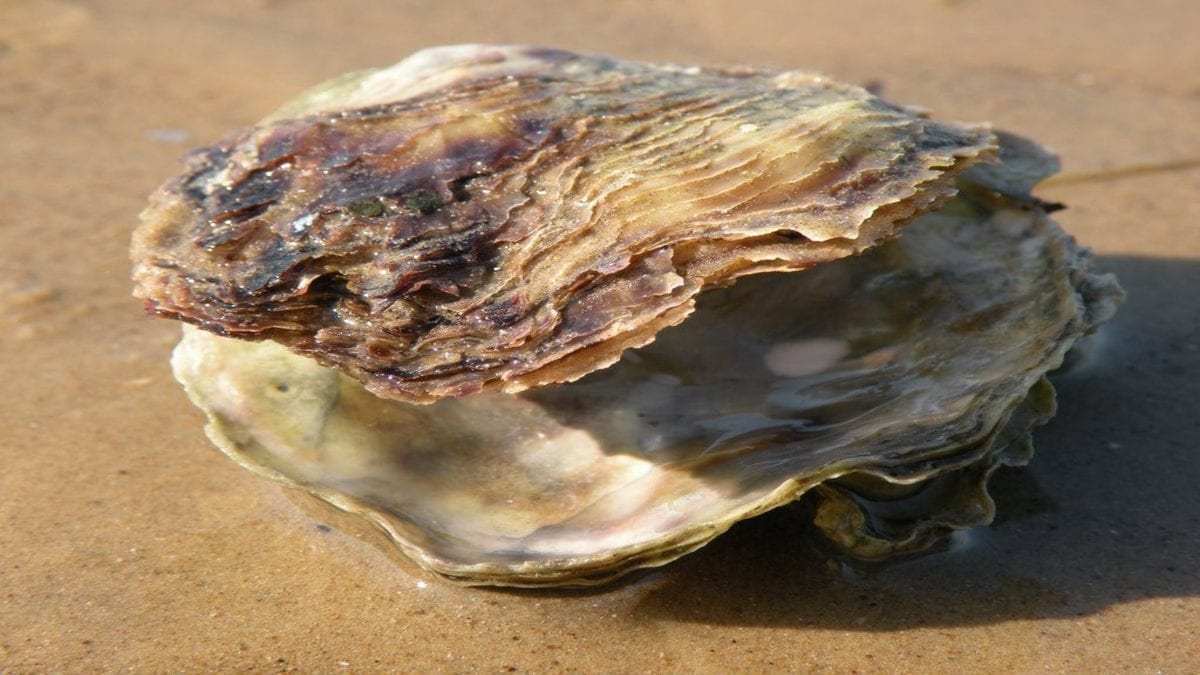
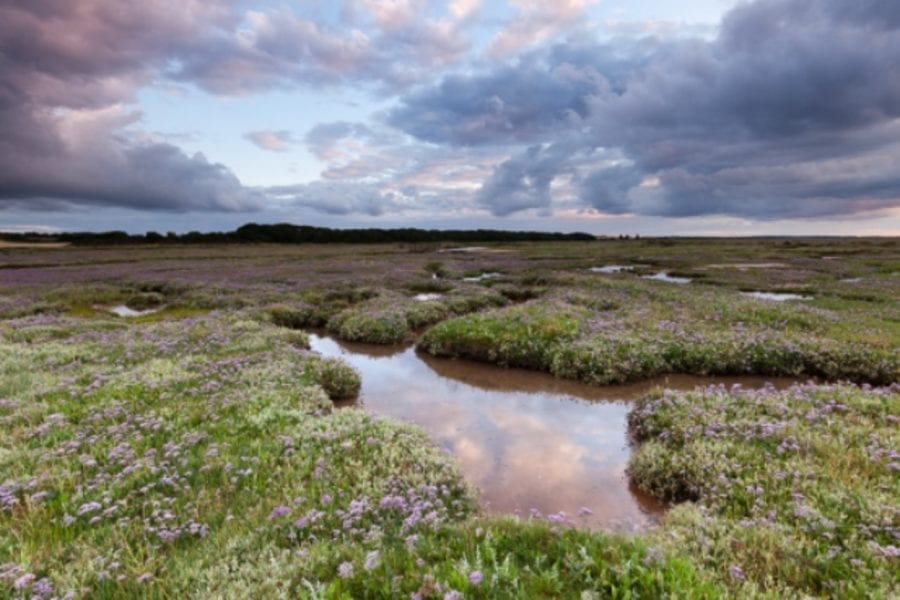
Native oysters bizarrely reappear in Belfast Lough after 100 years of absence without any human intervention
In March, as the world locked down due to coronavirus, one note of positivity came in the form of reports of Venetians reporting that their canals were clearer and cleaner.
Now, this morning, the Guardian, followed up with similarly good news from Northern Ireland in sharing that “native oysters have unexpectedly returned to the shores of Belfast Lough after more than 100 years” absent.
“Fished to oblivion” from the 1800s, a systematic survey in May and June found 41 live ostrea edulis European flats along the coast and of the news, Joanne Preston of the University of Portsmouth told the paper: “I think it’s really interesting. The take-home message is, if you create the environmental conditions… then the species will be able to establish again.”
Obviously a “boost to biodiversity in the lough, since [they] filter seawater and their shells provide a habitat for many other sea creatures including tiny worms, snails, algae and anemones,” David Smyth of Bangor University in Wales commented: “The big question is, how did they get there?”
Citing that “the lough could one day be home to a future oyster fishery right near Northern Ireland’s capital,” here indeed could be one light of hope for the fishing industry as we career into Brexit Britain 2021.
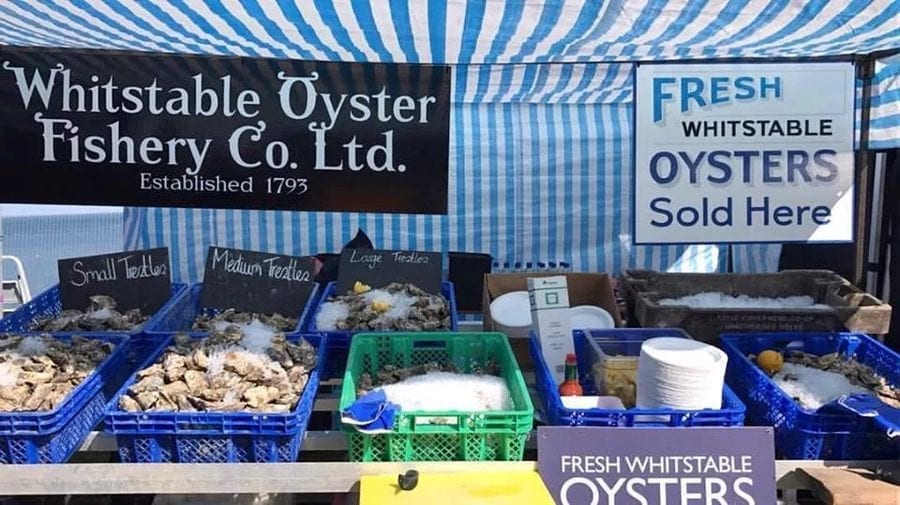
When Covid-19 restrictions allow, we urge readers to head to Britain’s oyster capital, Whitstable, and visit the restaurant we reviewed in March 2016, the Whitstable Oyster Fishery Company (first established as a cooperative in 1793). Here, we suggest, you’ll find the finest seafood that will utterly delight you.
Credited with reviving interest in oysters, the current owners of the Whitstable Oyster Fishery Company, the Green family, have very much led the transformation of Kent’s answer to Burnham Market in Norfolk or Salcombe in Devon into a fashionable destination for foodies and art lovers. Could the same eventually happen in Northern Ireland at Belfast Lough?
Ghislaine Maxwell was involved in the charity Carrie Symonds works for; Dominic Cummings’ nemesis also has an ex-lover with links to Russia and the far right, racist Traditional Britain Group
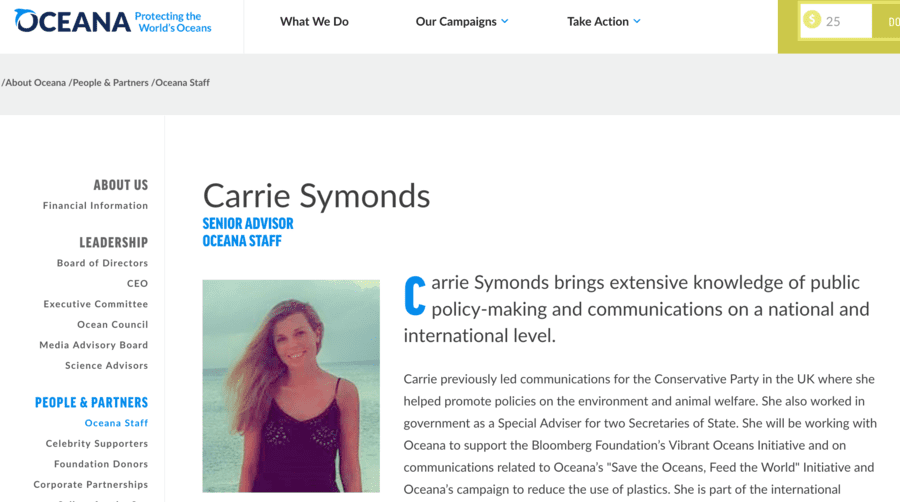
When she’s not furiously texting 25 missives per hour to her lapdog on-off lover Boris Johnson or forcing him to get rid of his puppet master Dominic Cummings, Carrie Symonds finds time to be a senior advisor and member of staff at Oceana – a curiously funded operation that describes itself as “the largest international advocacy organisation focused solely on ocean conservation.”
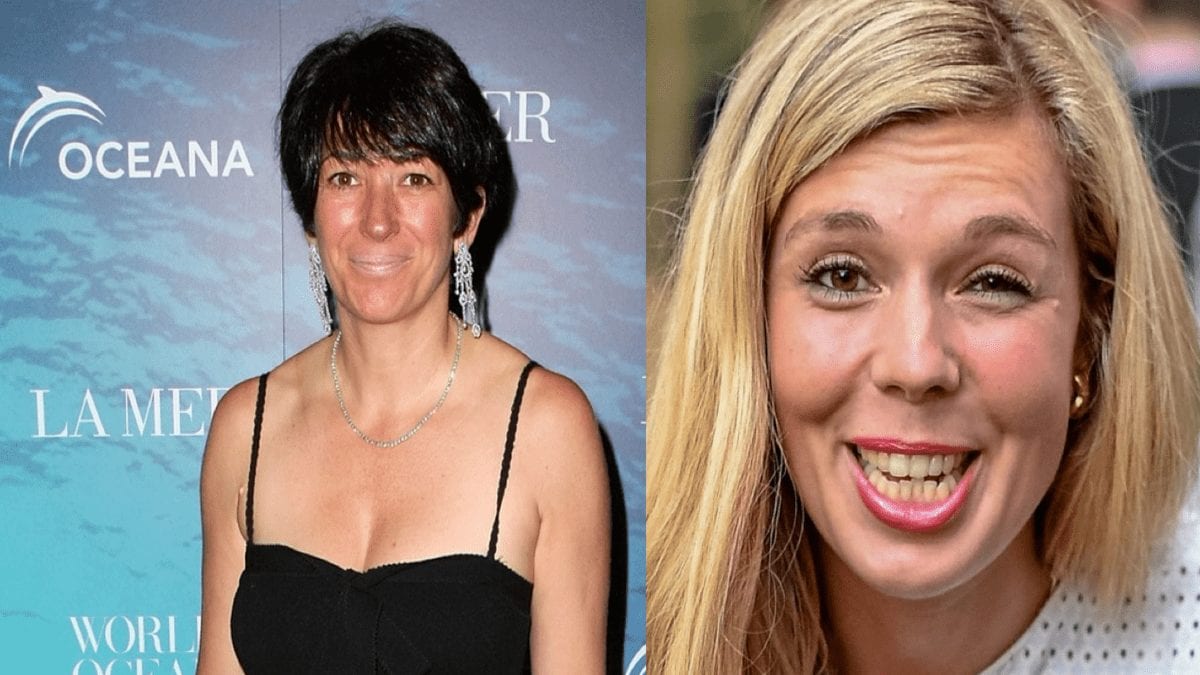
Fascinatingly, mucky madam Ghislaine Maxwell also has links to Oceana and hosted a cocktail party for their benefit at her East 65th Street residence in 2008 according to The Cut even.
Jailbird paedo procurer Maxwell’s interest in the oceans is well-known via her now defunct TerraMar Project – which operated with the motto: “Sea Hope. Sea Change. Sea Future” and is now being accused of allegedly being part of her and Epstein’s trafficking activities – but, today, we remind readers that the British Prime Minister’s wine chucking latest baby mama has other curious connections.
In October 2019, The Steeple Times followed up on The Sun’s story of Symonds’ “emotionally charged” and “tumultuous” previous relationship with a character named Oliver Haiste and revealed his connections to a curious Russian hoax news operation and association with members of the extremely bigoted, far-right Traditional Britain Group.
‘The Lady Macbeth of Downing Street’ may well think she won against Cummings as he marched out of Downing Street Street with his box last night, but here was just the first skirmish of a battle. The true war is yet to come and whether ‘Conniving Carrie’ and her cretinous clown will still be in residence by Christmas remains to be seen. One thing’s for sure next: Red wine on the sofa at the ready, The Carrie On Show is most certainly going to most unpleasantly kick off very, very soon.
Pictured top: Ghislaine Maxwell supporting Oceana in 2008; Carrie Symonds – the very same organisation’s employee in 2020.
The Calamities Carrie On – The Prime Minister’s on-off spouse Carrie Symonds’ biography on the Oceana website.The Calamities Carrie On – The Traditional Britain Group, of which the preposterously named convicted thief Gregory Lauder-Frost is vice president, itself is opposed to feminism. It also believes in “the heterosexual family” but is against “immigration and multiculturalism” as well as “internationalism… globalisation… communism… socialism… liberalism… anarchism… political correctness… the purely materialist conception of life… [and] all the great heresies of our age.” Repugnant Lauder-Frost once disgustingly referred to Baroness Lawrence, mother of the murdered teenager Stephen Lawrence, as “a complete nobody” and once demanded “people not of ‘European stock’ should be offered ‘assisted voluntary repatriation’ to their ‘natural’ homeland.”
The Calamities Carrie On – Henry Hopwood-Phillips, when not attempting but failing to create hoax Russian news sites with Carrie Symonds’ ex Oliver Haiste (sometimes spelt ‘Haste’), spends time getting involved with the bigoted Traditional Britain Group and making bizarre music videos on YouTube. He charmingly also stands accused of flashing his “tumescent member” by a blogger named Claire Khaw.
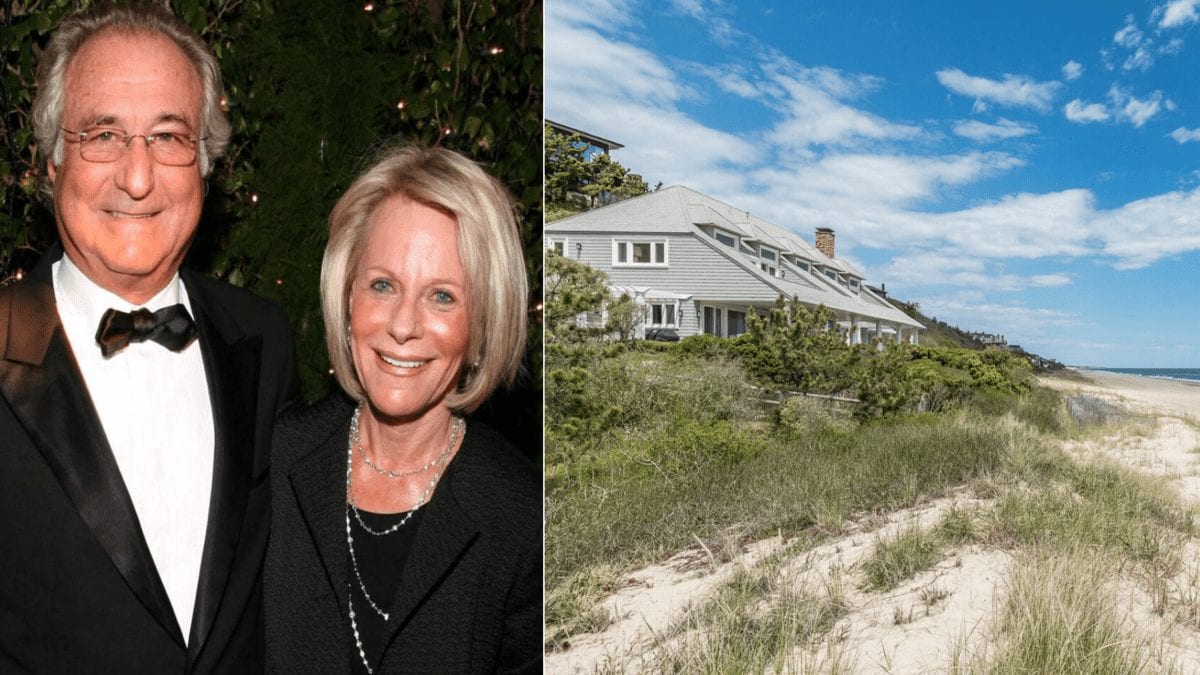
Montauk beach house built for Ponzi schemer Bernie Madoff resurfaces for sale for double what U.S. Marshalls got for it in 2009; its asking price seems crazy given it could be washed away by erosion
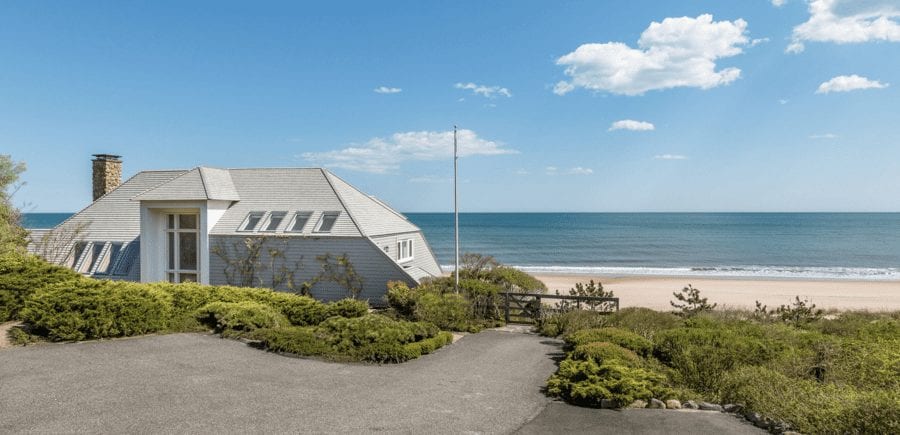
Built to the designs of the architect Gene Futterman on what Forbes disparagingly termed a “wind-swept, isolated” plot “on the easternmost edge of New York State, [where] the next stop is Portugal, about 4,500 miles across the Atlantic,” a beach house originally owned by Bernie and Ruth Madoff is once again for sale.
Described once by a Hamptons broker as “a 1980s dump set in a fabulous location,” 216 Old Montauk Highway in Montauk at the tip of New York was sold in 2009 by U.S. Marshalls Services after the sentencing of the orchestrator of the largest ever Ponzi scheme in world history.
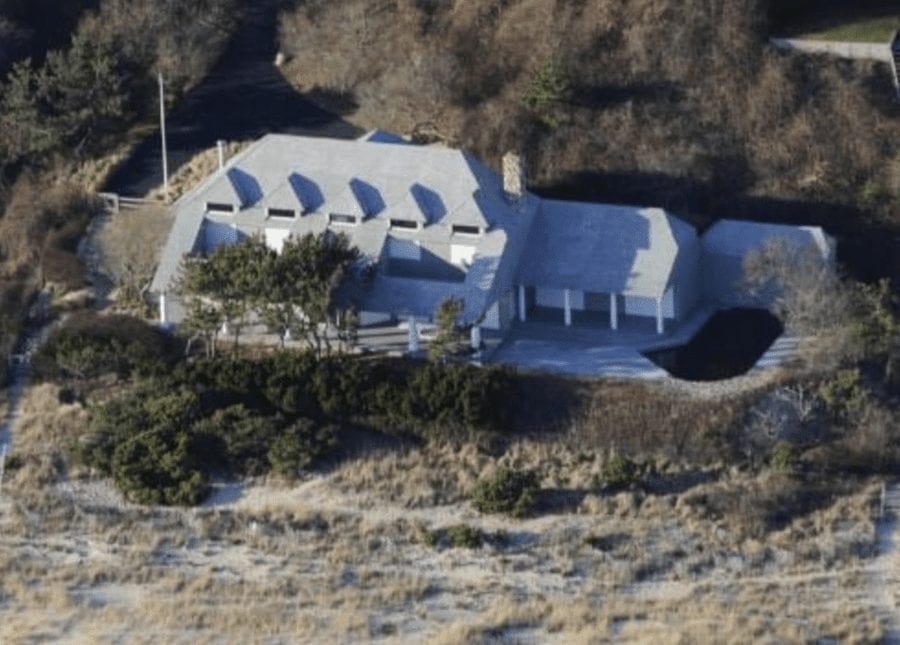
A Highway Ponzi House – As it was in 2009 when the U.S. Marshalls Services seized the Ponzi schemer’s house: 216 Old Montauk Highway, Montauk, The Hamptons, New York State, NY 11954, United States of America.
A Highway Ponzi House – The house in its current form.A Highway Ponzi House – The house’s former owner Bernie Madoff and its current owner Steven Roth (pictured with all-round wrong ‘un Jared Kushner).A Highway Ponzi House – Current owner Daryl Roth bears a remarkable resemblance to Ruth Madoff. You could easily mistake one for the other.
Whilst Bernie Madoff rots on a 150-year prison term and his wife exists in relative poverty, his 3,000 square foot former getaway was bought by Broadway producer Daryl Roth and her billionaire real estate investor husband Steven, a man described as a “close confidant of Donald Trump.”
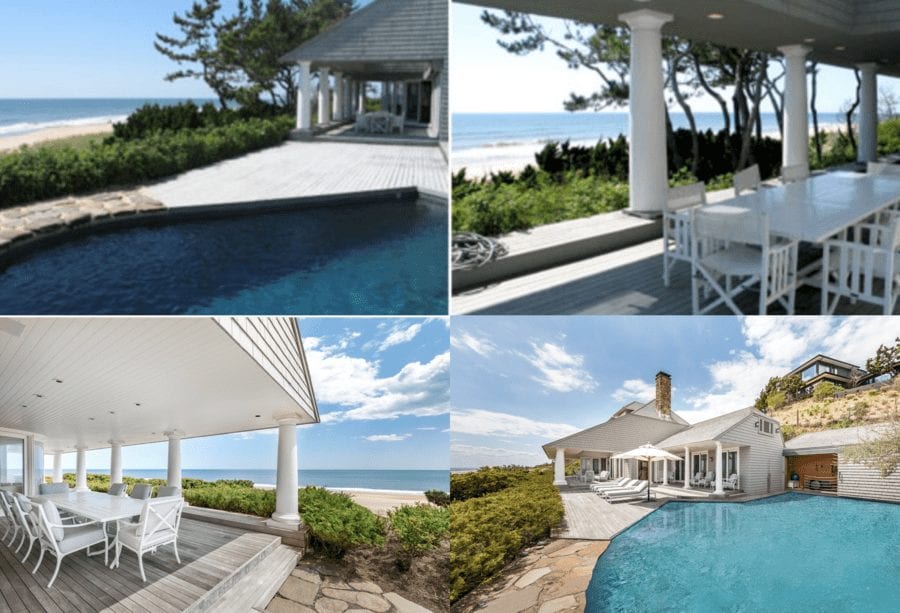
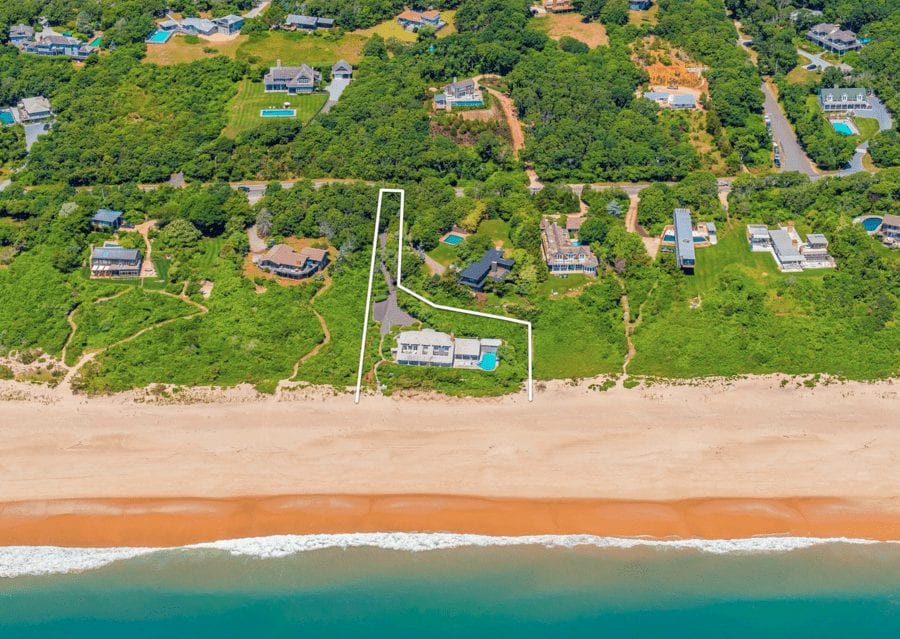
The Roths hired “world renowned architect” Thierry Despont to rid all traces of the Madoffs in 2011 and the resulting creation is a 3,000 square foot home with a two-storey ‘great room,’ 3 bedrooms and 3 bathrooms. It has a free form gunite pool, cabana and 180-foot of direct frontage to the Atlantic ocean.
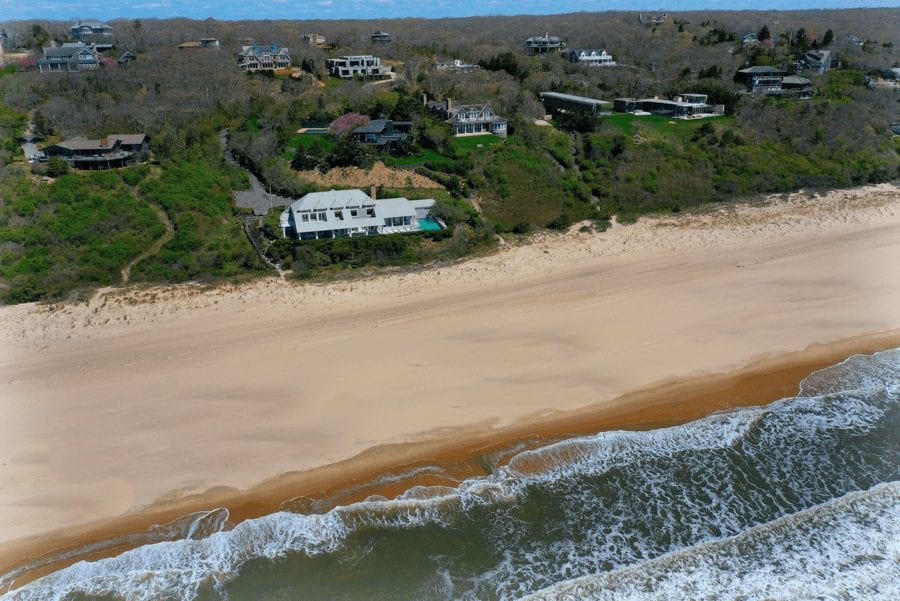
Offered for sale again in 2018 for the ludicrous figure of £16.5 million, realtors Out East now seek just £14.1 million, but reaction to the listing has been less than enthusiastic. Dealbreaker described the bedrooms as “still prison-sized” whilst Guest of a Guest added: “You can’t get more on the beach than this… But with beach erosion escalating all over Long Island, and Dune Road basically about to fall into the sea, you’d better be okay with the big possibility of losing all your money on this short-term investment.”
The Names & Numbers – 216 Old Montauk Highway, Montauk, The Hamptons, New York State, NY 11954, United States of America
September 2020 – For sale at a reduced price of £14.1 million ($17.9 million, €15.3 million or درهم65.7 million) through Out East.
May 2019 – Reduced in price to £15.6 million ($19.9 million, €17 million or درهم73.1 million).
April 2018 – Listed for sale for £16.5 million ($21 million, €17.9 million or درهم77.1 million) through the Corcoran Group, a sum 140% higher than the 2009 sale price.
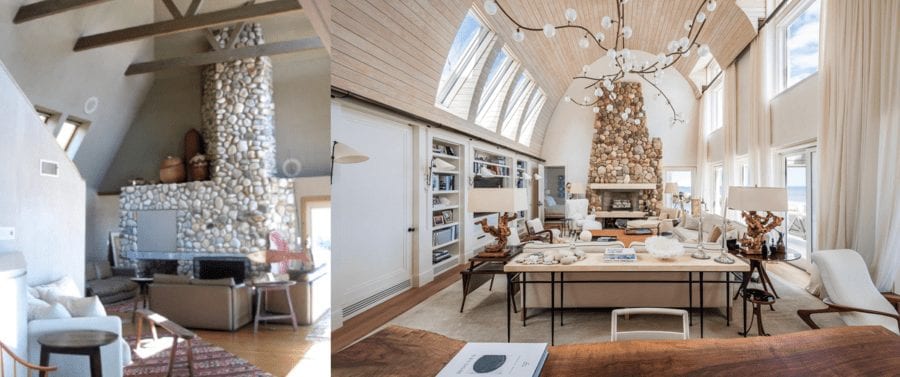
2011 – Renovated by “Manhattan’s most in-demand architect,” Thierry Despont. Of his work, Forbes remarked: “The Frenchman whose clients include Bill Gates, Oscar de la Renta, Calvin Klein and Ralph Lauren, ripped out everything – right down to the studs – to turn the floor plan of the 1982 house upside down. He moved the front entry from the second floor to the first by tearing out a catwalk from the driveway and replacing it with mahogany steps sloping down to the home’s first level. He moved the master bedroom to the second floor. The living room was more of a challenge. The house was built with a vaulted ceiling in the main room that in those big-shouldered, big-haired 1980s years would have been called the ‘great room.’ Despont turned the sharp angles of a cathedral ceiling into a giant curve by creating a barrel vault covered in oak planks that look a bit like a weathered boat hull. The exterior he left much as he found it – contemporary lines, but with a traditional cladding of cedar shingles.”
November 2009 – Sold for 7% above asking price at £7.4 million ($9.4 million, €8 million or درهم34.5 million) to Vorando Realty Trust founder and chairman Steve Roth and his award-winning theatre producer wife Daryl Roth.
September 2009 – Listed for sale for £6.87 million ($8.75 million, €7.47 million or درهم32.13 million), a punchy sum 192% higher than the appraisal figure.
September 2009 – U.S. Marshalls Services appraised the house at £2.4million ($3 million, €2.6 million or درهم11 million) leading to a mocking New York Post article suggesting: “Those who see Bernard Madoff as an evil purveyor of excess might be disappointed by his beach house: It’s not that palatial. At 3,014 square feet, the home is cottage-size by superrich standards. Its faded furnishings look as old as Madoff’s epic fraud. There’s no garage. Not even a walk-in closet.”
1979 – 1.5-acre site purchased by Bernie and Ruth Madoff for circa $250,000 or the equivalent of £703,000 ($895,000, €764,000 or درهم3.3 million) today.
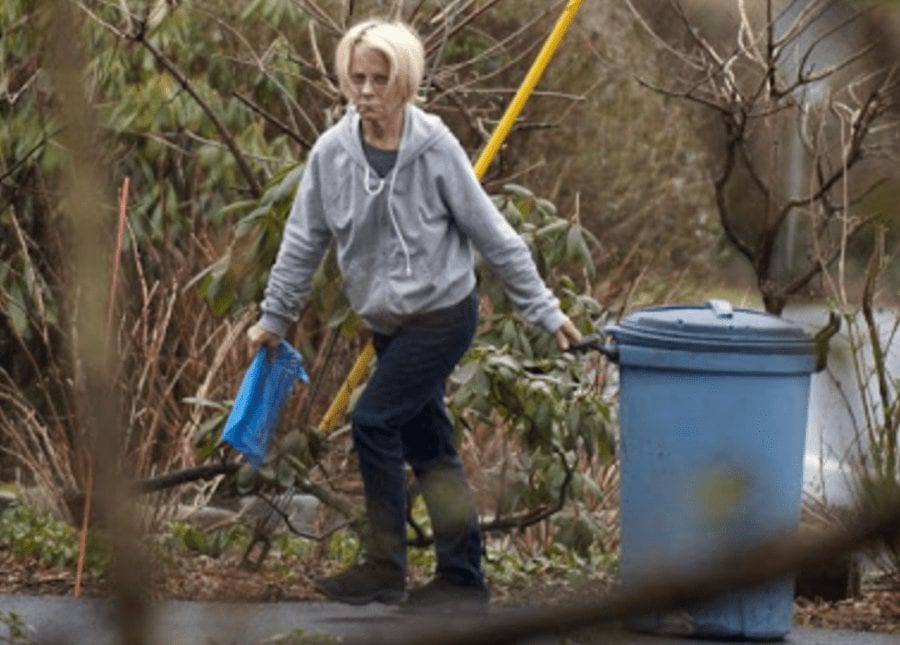
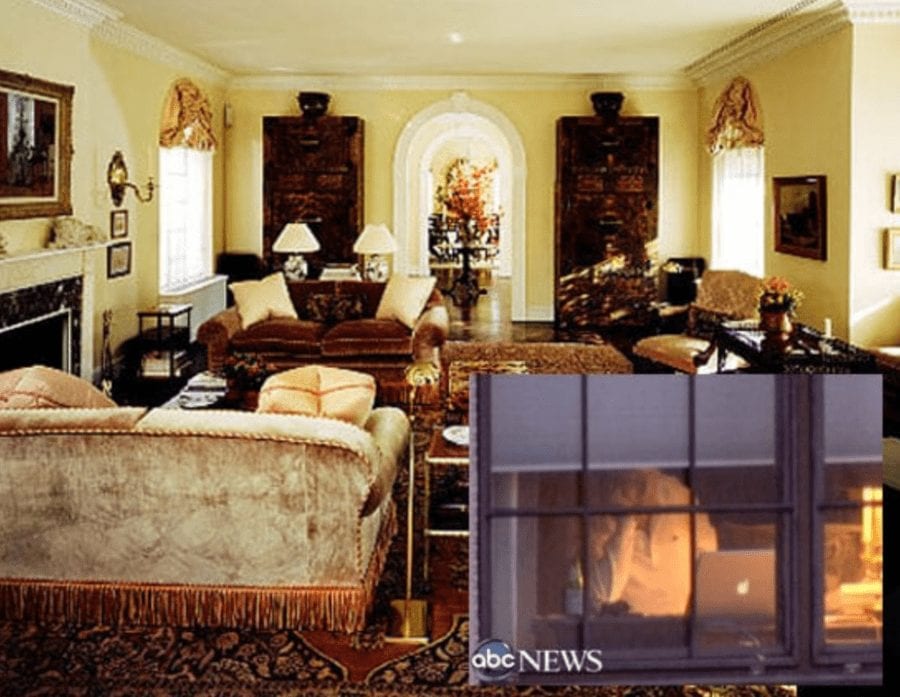
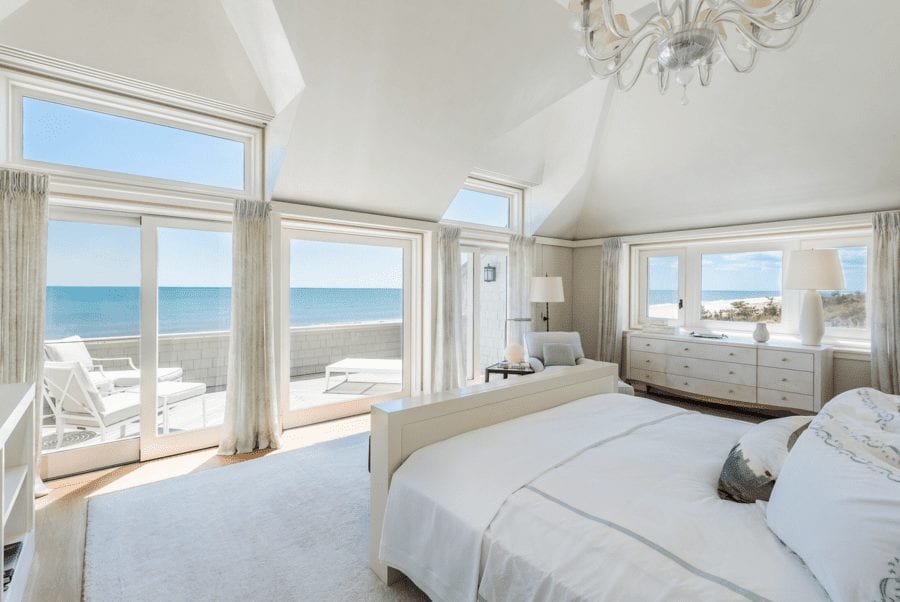
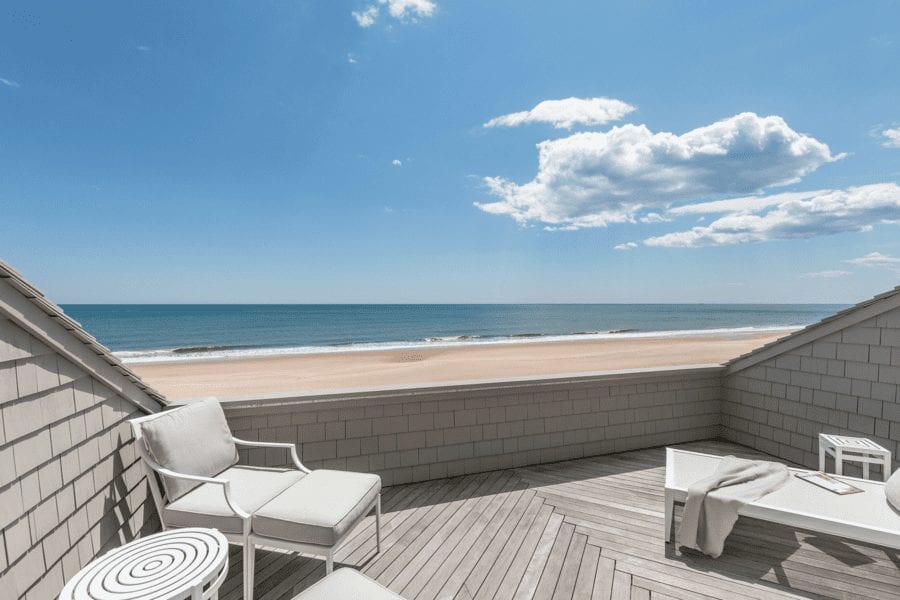
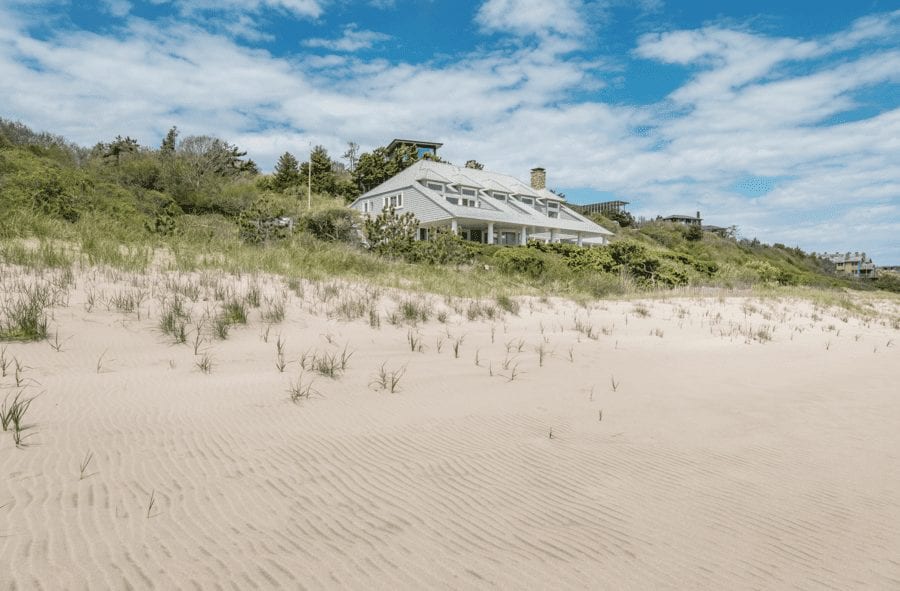
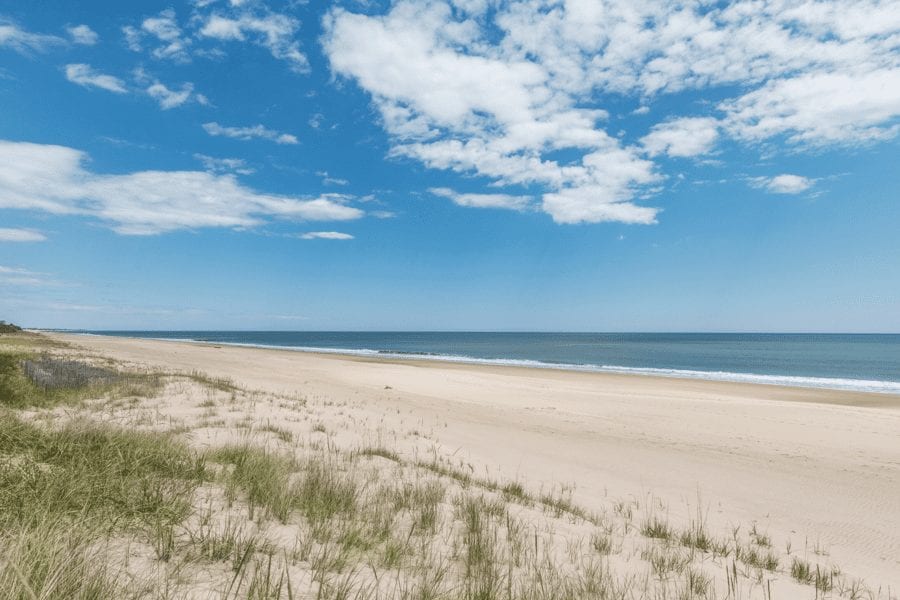
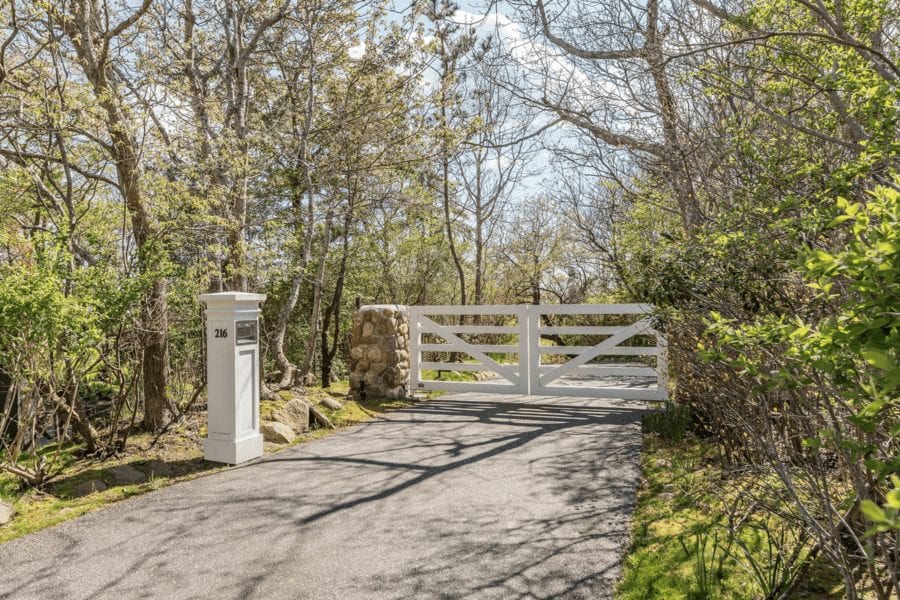
Steven and Daryl Roth with their close chum President Donald Trump.Mrs Madoff now lives in much reduced circumstances and was spotted hauling out her own trash in 2012. One of her sons committed suicide, the other died of cancer and her moronic daughter-in-law, Stephanie Madoff Mack, wrote a ridiculous book titled: ‘The End of Normal.’Also seized – The Madoffs New York penthouse was sold to the creator of Cabbage Patch Kids and Pokémon Alfred A. Khan in 2010 for £6.3 million, but the “curse of Madoff” struck when it subsequently went up in flames. It was placed for sale again in 2013 when Khan split from his wife.Then and Now – Bernie and Ruth Madoff built a quite hideous fireplace in their pompously described ‘Great Room’ using stones gathered on the beaches of Montauk (according to Hamptons.com); it has been kept by the current owners in a somewhat reduced state and the ceiling has been dramatically altered also.Now – The somewhat plain kitchen of the house also serves as a dining space.Now – One of three bedrooms in the property. The views do make up for them not being especially large, but if you were paying £14.1 million, wouldn’t you want more closet space?Now – One of three deck spaces overlooking the Atlantic ocean.Then and Now – The pool and cabana remain quite unaltered.Now – The entrance to the house is not especially impressive.Now – A view of 216 Montauk Old Highway from the beach.Now – An aerial shot from the ocean illustrating how close to the sea the building truly is.Now – A general shot of the beach.Now – The somewhat modest entrance gates to the property give no clue to its current or previous occupant’s financial statuses.Now – An aerial shot illustrating the boundaries of the 1.5-acre plot; it’s certainly a lot more expansive than Bernie Madoff’s cell.
Matthew Steeples visits Aldeburgh in Suffolk to learn the story of a business finding success in lockdown – he discovers Fishers Gin
Aldeburgh in Suffolk is famous for fish and chips. Two of its chippies are supposedly “amongst the best in the UK,” but now this seaside town is producing something just as quintessentially British – gin.
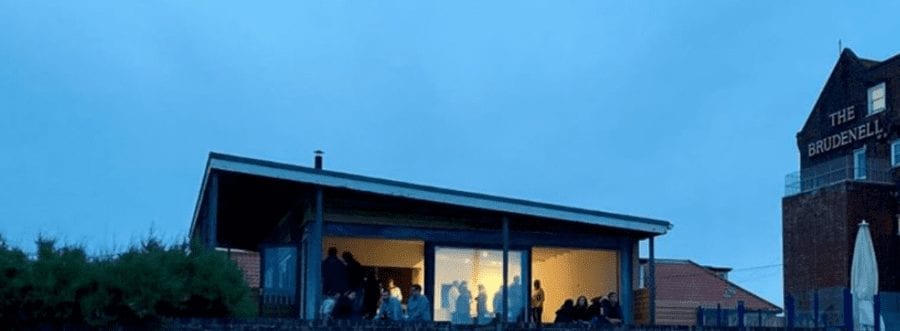
In a building, modestly described by Andrew Heald, the founder of Fishers Gin, as a ‘beach house’ – in the way that the Pritzkers and Vanderbilts referred to their colossal ‘summer mansions’ in the Hamptons as plain old ‘cottages’ – right on the seafront, is now a distillery and boy is it a smart one.
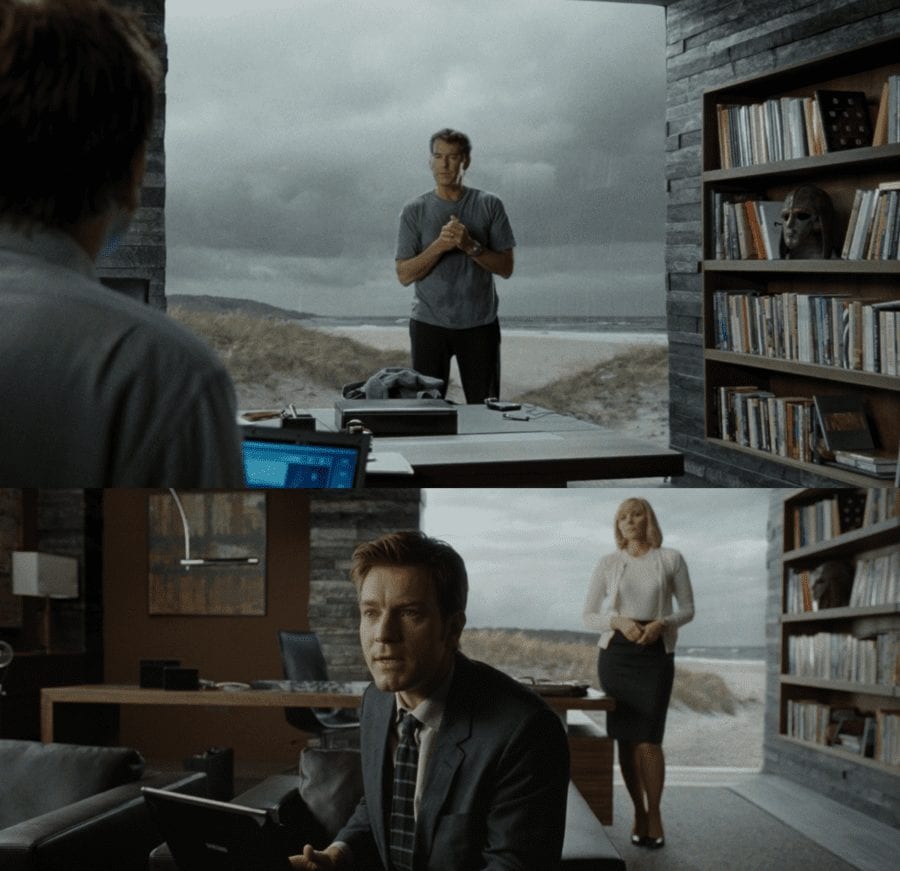
Unlike most distilleries I’ve visited and unsurprisingly to those that know me, I’ve been to many – normally quite unappealing places stuck in the middle of grim industrial estates in places like Warrington, a town sadly known for having Kerry Katona as its “finest export” – the Fisher’s Gin team work in an office that reminded me of the hideout of Pierce Brosnan as fictional Prime Minister Adam Lang in Martha’s Vineyard, Massachusetts in the 2010 film The Ghost Writer.
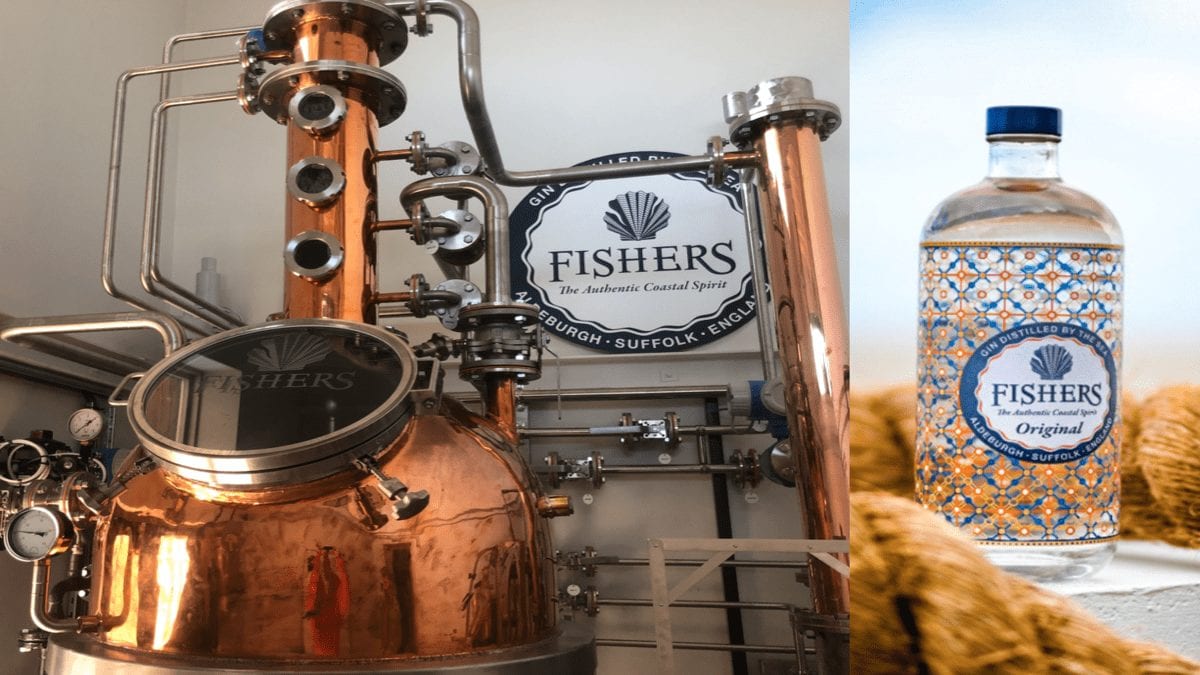
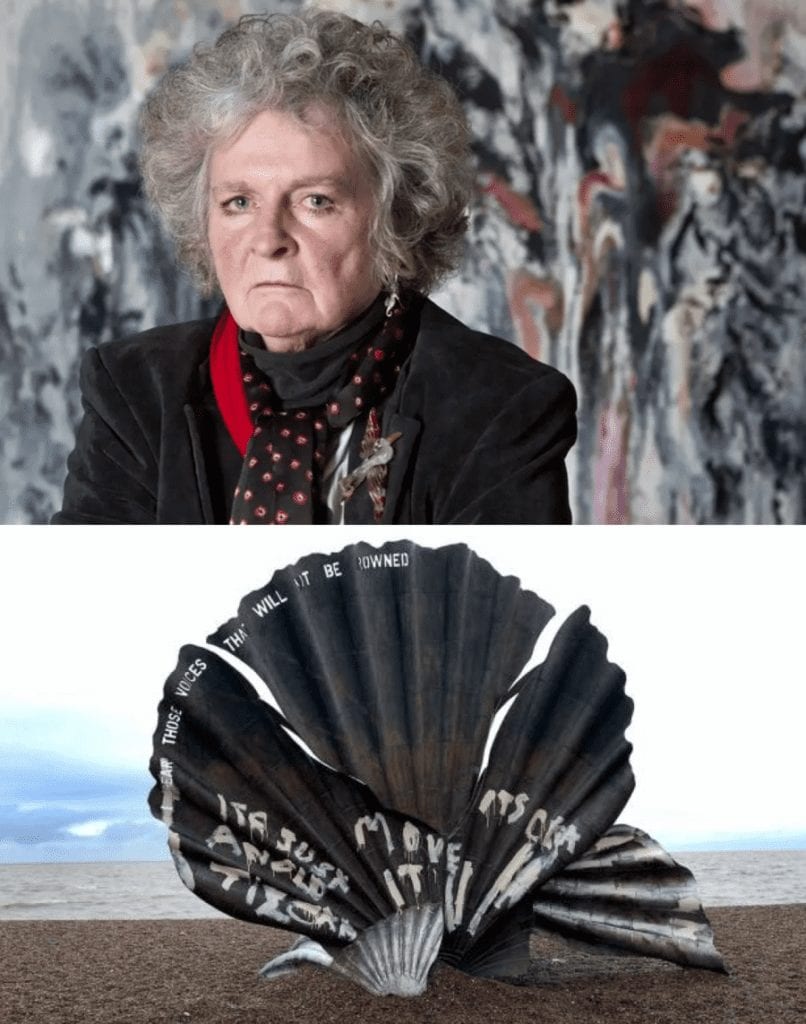
Though Fishers Gin was originally presented in colourful packaging that featured an anchor, the design now incorporates “a scallop shell in celebration of Maggi Hambling’s sculpture” – a famed 13-foot high landmark in the town. Named to reflect the history of the fishing village where it is produced, the bottle’s bright colours are said to reflect fishing nets whilst the gin itself has a taste dominated by coastal botanicals.
Stronger than your typical 40% ABV gin at 44%, here is a gin with notes of samphire and bog myrtle and one where hints of salt shine through. A slightly unusual taste follows, but it is refreshingly uplifting and with a team behind it who’ve moved over to selling directly on their own website, here is a business that has adapted to doing things differently due to the COVID-19 lockdown.
Fishers Gin is a gin of maritime origins and it’s a gin to be celebrated like one’s first catch; once you’ve tried it, you’ll be hooked.
To purchase a bottle of Fishers Gin for £39.95 direct from its producers, click here. A Fishers Gin Navy coloured enamel mug can also be bought for £7.95.
The Founder and his Brace of Beagles – Andrew Heald, his hounds (one of which gave its name to the Fishers Gin still, ‘Watson’) and a Fishers Gin Navy enamel mug.The Botanicals of the Sea – The distinct taste of Fishers Gin comes from the locally sourced plants of the Suffolk coast that it is made with. These include spignel, wood avens, rock samphire flower and bog myrtle. These are sustainably foraged.
The Fishers Gin Distillery – Situated next to The Brudenell Hotel, a building used as a home for children evacuated from Belgium during the Second World War, this beachside building is due to open to visitors once lockdown is over. The view out to sea takes in a series of wind turbines – a topic of conversation best not raised with disapproving locals.‘The Ghost Writer’ – The actual filming location used in the 2010 Franco-German-British political thriller was not in Massachusetts, but in Germany. This was due to Roman Polanski being unable to enter Britain or America due to his evasion of justice since 1978. Pictured are the film’s stars Pierce Brosnan, Ewan McGregor and Kim Cattrall in a setting reminiscent to that where Fishers Gin is produced.‘Rebel With A Cause’ – Controversial British artist Maggi Hambling CBE (top) and her scallop sculpture at Aldeburgh (below). It was conceived as a celebration of Aldeburgh’s most famous resident, composer Benjamin Britten, and though opposed and covered in graffiti even by some in the locality, Andrew Heald chose to feature it on the label of his gin.
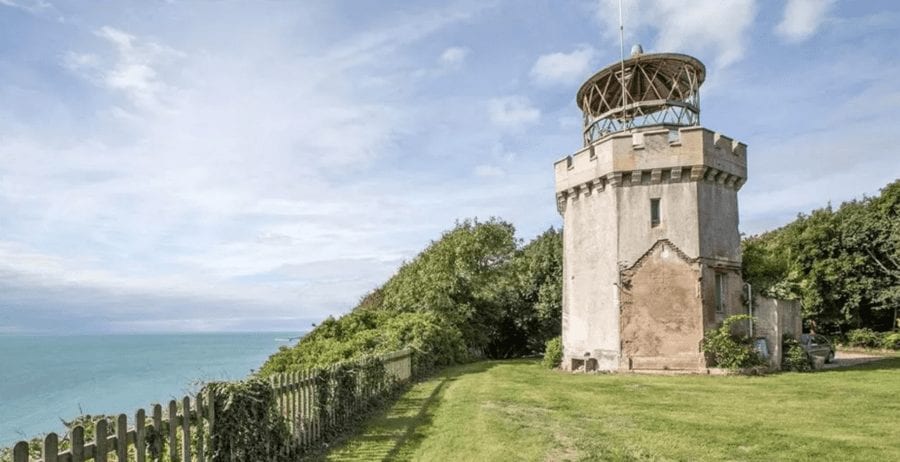
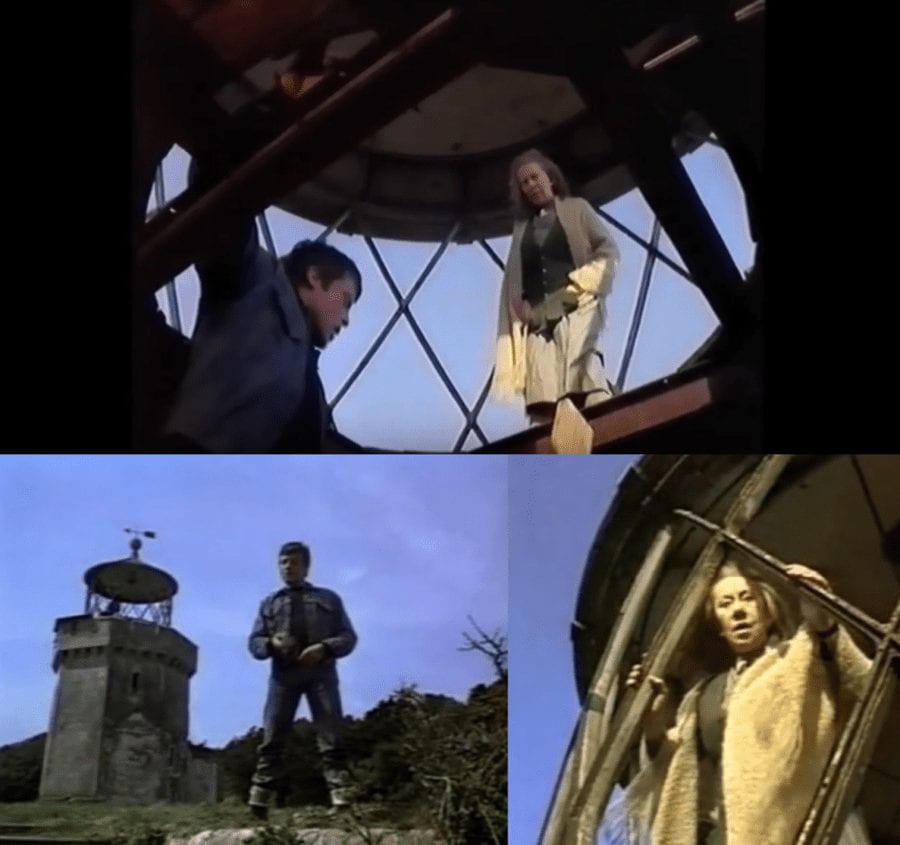
Coastal ‘estate’ with its own lighthouse perched on The Front above the White Cliffs of Dover for sale; it was used in scenes featuring Oliver Reed in ‘The Shuttered Room’
In November 2013, The Steeple Times featured the sale of ‘The South Foreland Estate’ for £4 million. Its price bizarrely had been increased by £500,000 from when it was on the market earlier that year and now it is again being promoted – this time for an even more punchy sum of £5 million.
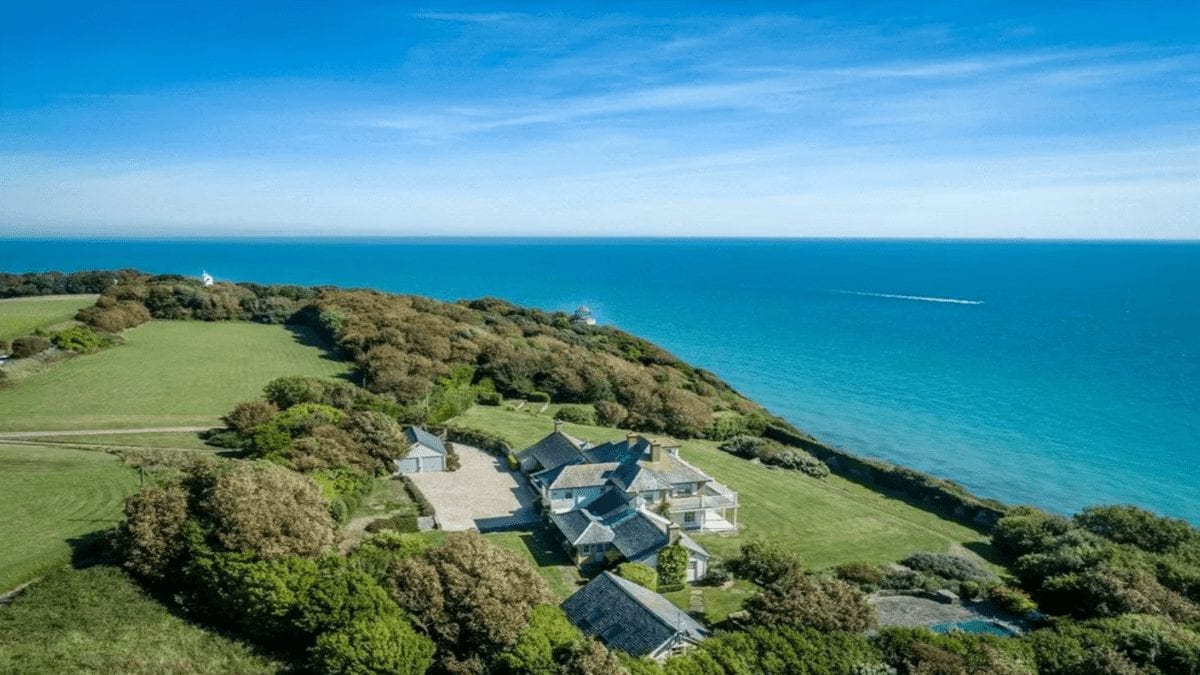
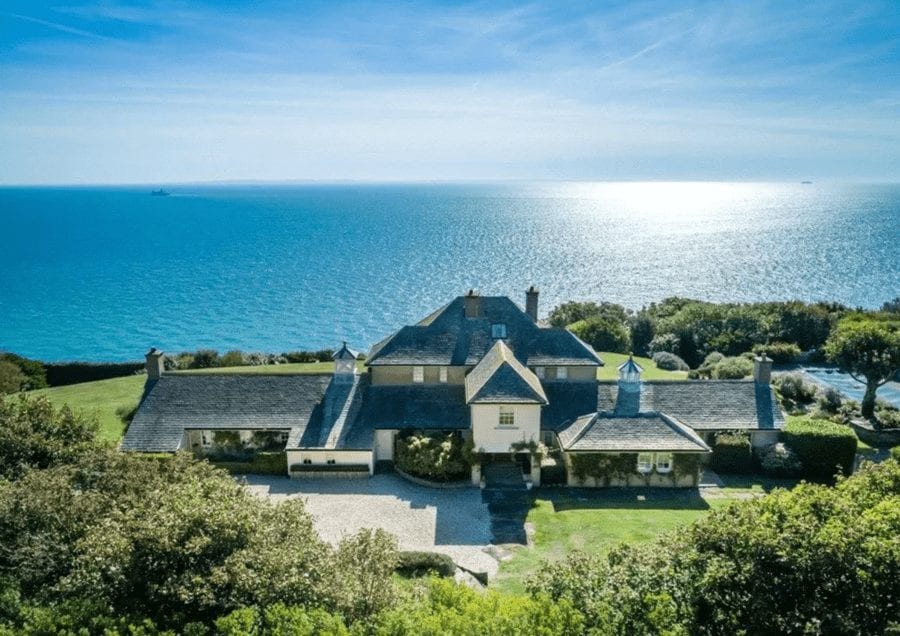
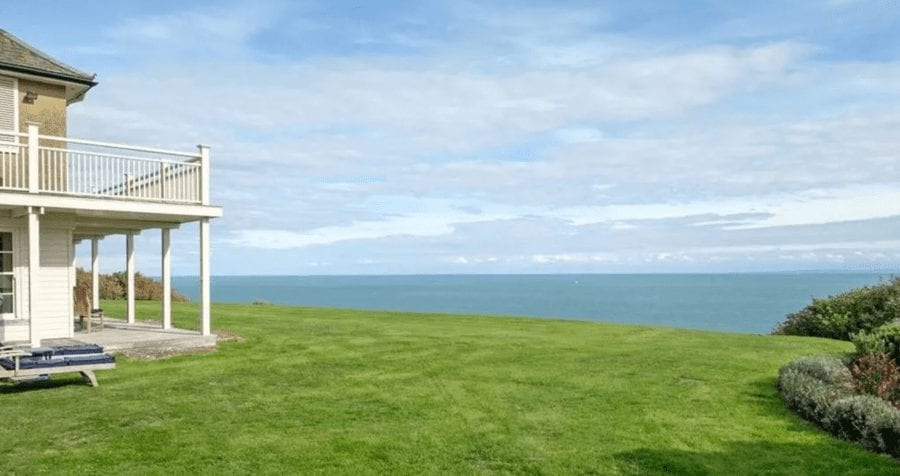
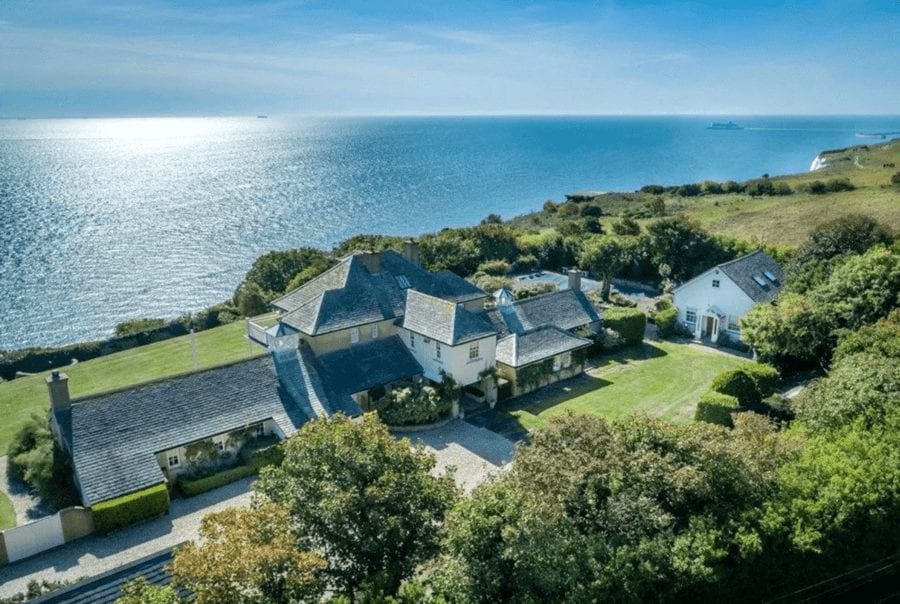
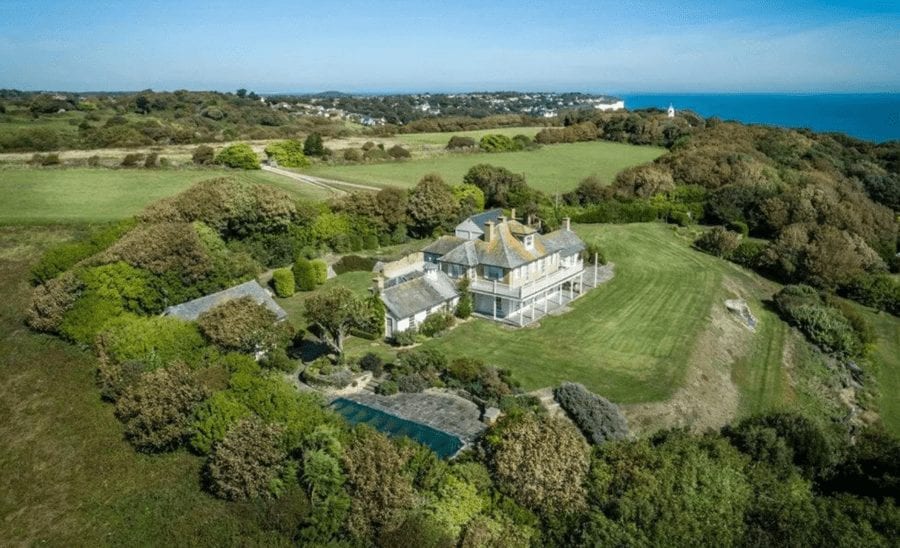
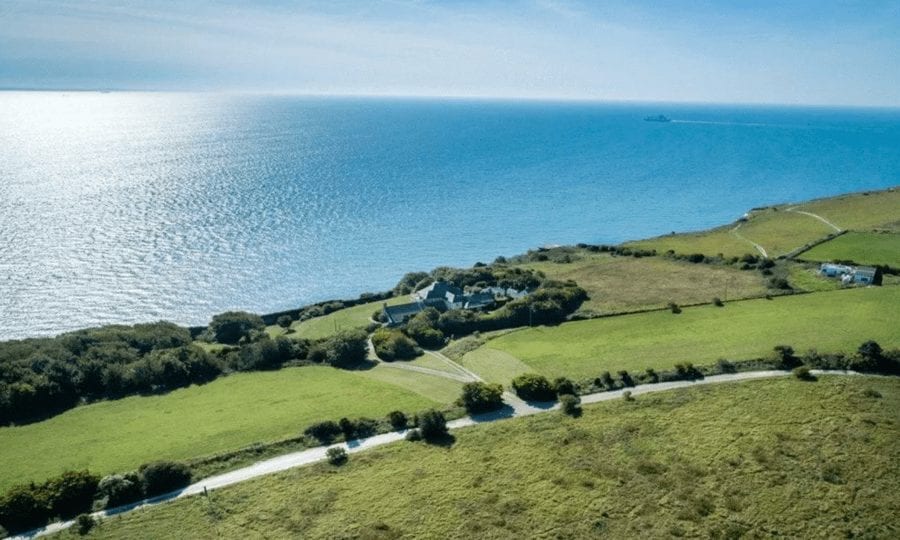
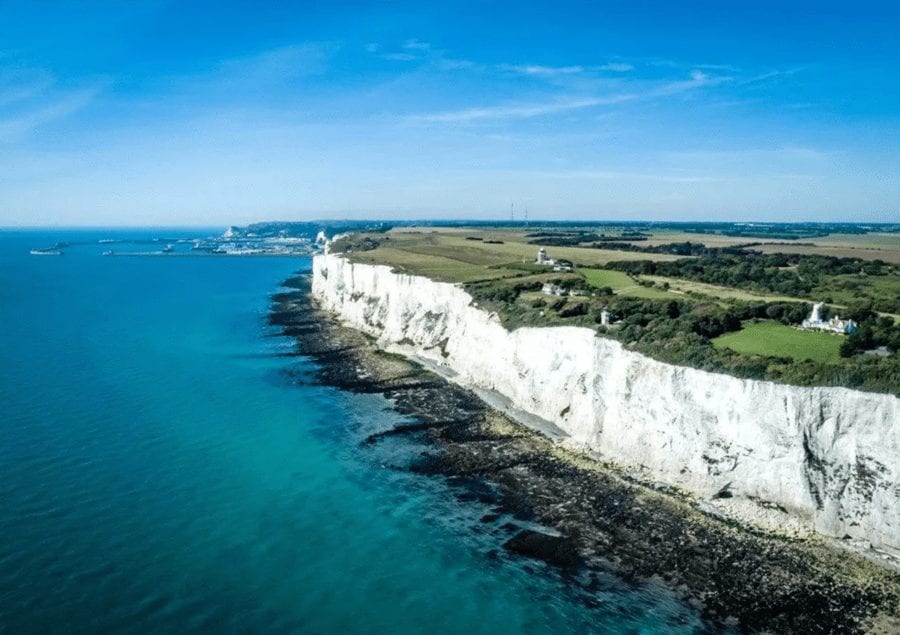
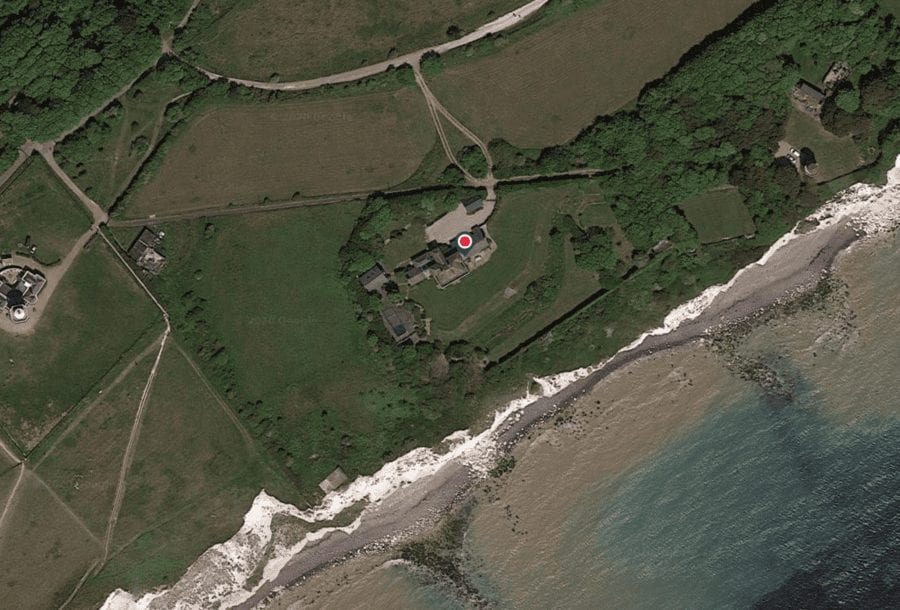
Standing in 11.5 acres of land on the edge of the White Cliffs of Dover in “the most remarkable location on the Kent coast” according to Knight Frank, the freehold property is now known more simply as ‘The Cliff House.’ It is described as having “been renovated by the past two proprietors” and of it, they add: “The current owners have carried out extensive redecoration during their occupation.”
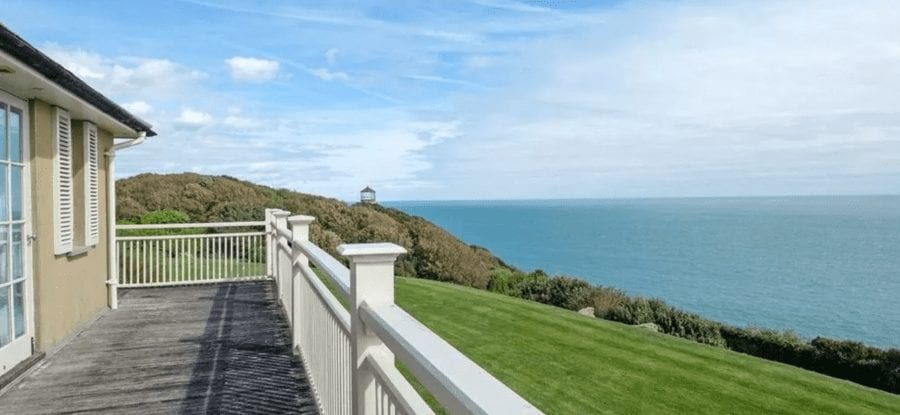
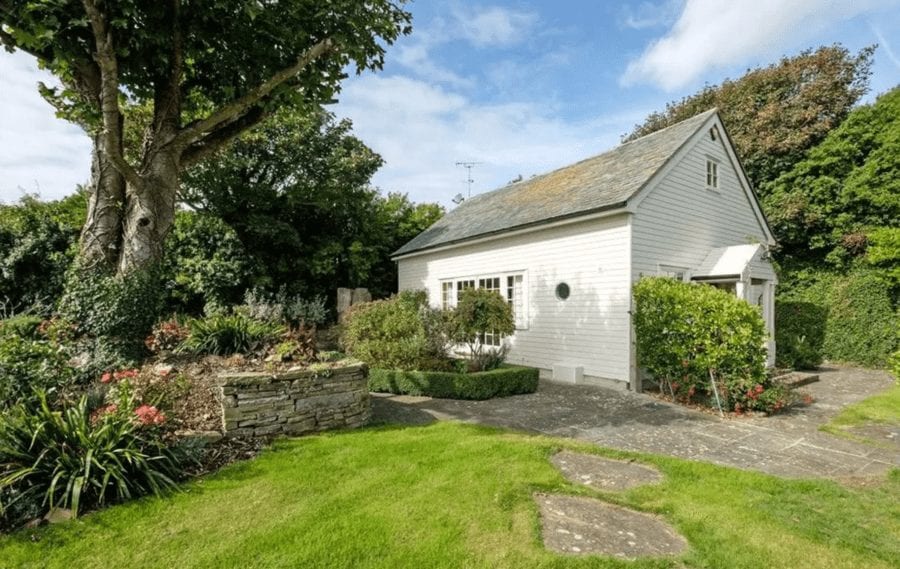
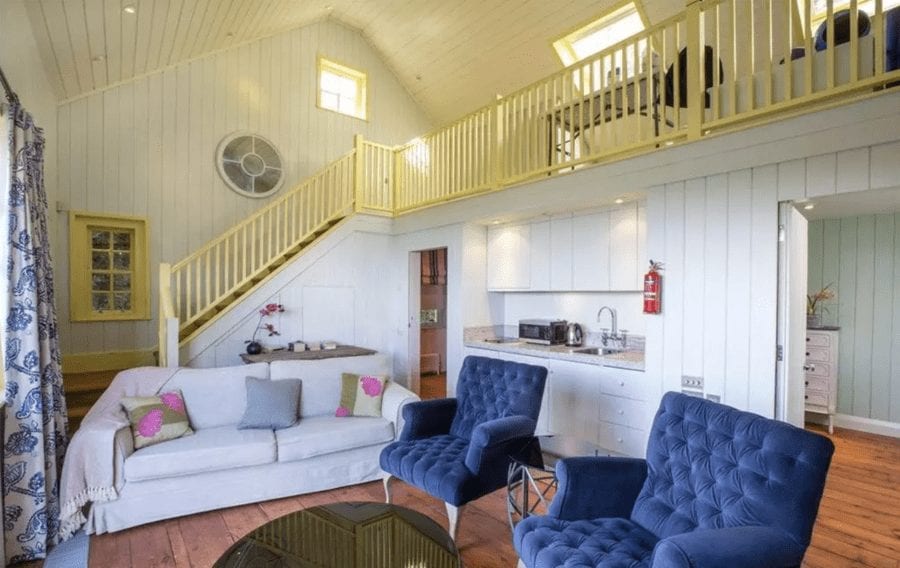
Aside from the main house with 3 reception rooms and 5 bedroom suites, there is a 2 bedroom annexe, a 3 bedroom cottage and a 2 bedroom cottage. Also included is an unused lighthouse, a large garage, a swimming pool, lawned gardens and some “light woodland.”
The agents don’t, however, mention if the owners will be making Dame Vera Lynn available to sing about bluebirds at post lockdown viewings.
The lighthouse, originally known as the Lower South Foreland Lighthouse, itself was built in 1843 on the site of an earlier building. It was decommissioned in 1904 after the sands shifted and is Grade II listed. Agents Knight Frank simply remark of it: “Not use.”Oliver Reed as ‘Ethan’ at South Foreland Lighthouse in ‘The Shuttered Room’ with Flora Robson as ‘Aunt Agatha’ looking down. The 1967 British horror film was directed by David Greene and starred Gig Young and Carol Lynley.
The Numbers – The Cliff House, The South Foreland Estate, The Front, St Margaret’s Bay, Dover, Kent, CT15 6HP, United Kingdom
June 2020 – For sale for £5 million ($6.3 million, €5.6 million or درهم22.3 million) through Knight Frank.
November 2018 – For sale for £5 million ($6.3 million, €5.6 million or درهم22.3 million) through Knight Frank.
November 2013 – For sale for £4 million ($5.1 million, €4.5 million or درهم18.6 million) through Strutt & Parker.
July 2013 – For sale for £3.5 million ($4.4 million, €3.9 million or درهم16.3 million) through Strutt & Parker.
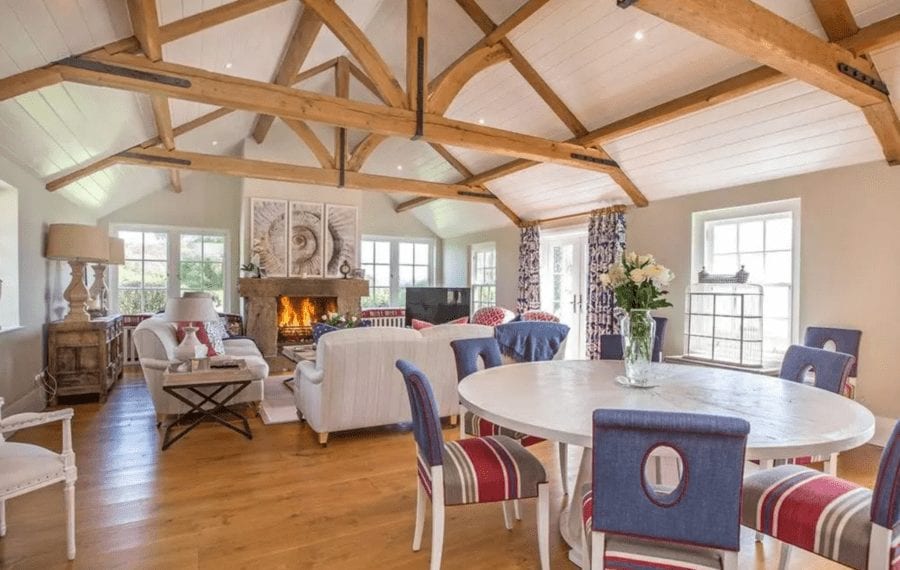
Out on The Front – The main entrance to The Cliff House.The main entertaining space is a large 27-foot by 17-foot drawing room. There is also a sitting room.The kitchen has been redecorated by the current owners.One of five bedroom suites.The largest of the bathrooms in the house.Out on The Front – Views out to sea.A balcony overlooking the Strait of Dover.Thrree ancillary properties are included in the sale price.The interior of one of these spaces.Looking out to sea.Looking inland.The property is surrounded by land owned by the National Trust.The White Cliffs.Out on The Front – An aerial shot of the property.
1978 Piaggio Ape ‘limousine’ used by the controversial Countess Agusta – a woman who either fell or was pushed to her death from her home above Portofino in 2001 – to be auctioned
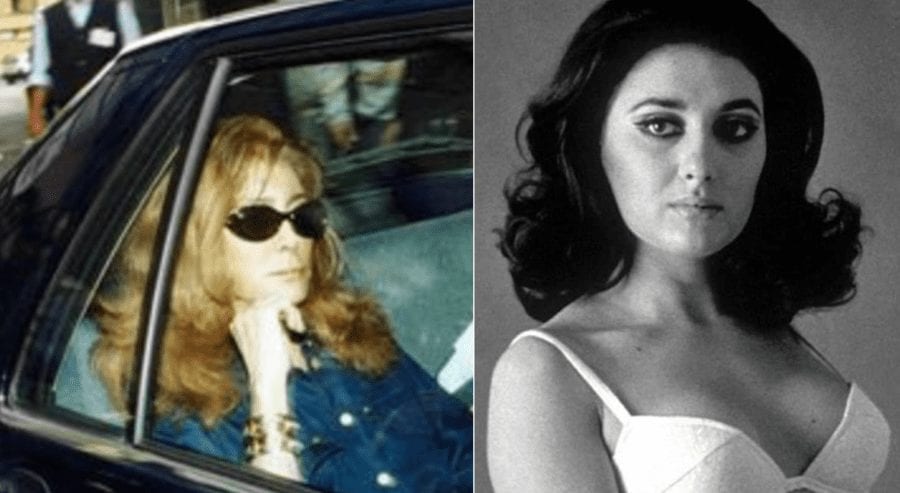
On 8th January 2001, “shop assistant turned model turned multi-millionairess many times over turned fugitive” (via a stretch in what American’s so pleasantly term ‘pokey’) Countess Francesca Vacca Agusta “disappeared” from the terrace of her Ligurian seaside home. The series of events that preceded and followed could have featured in an Agatha Christie novel or a Sherlock Holmes story.
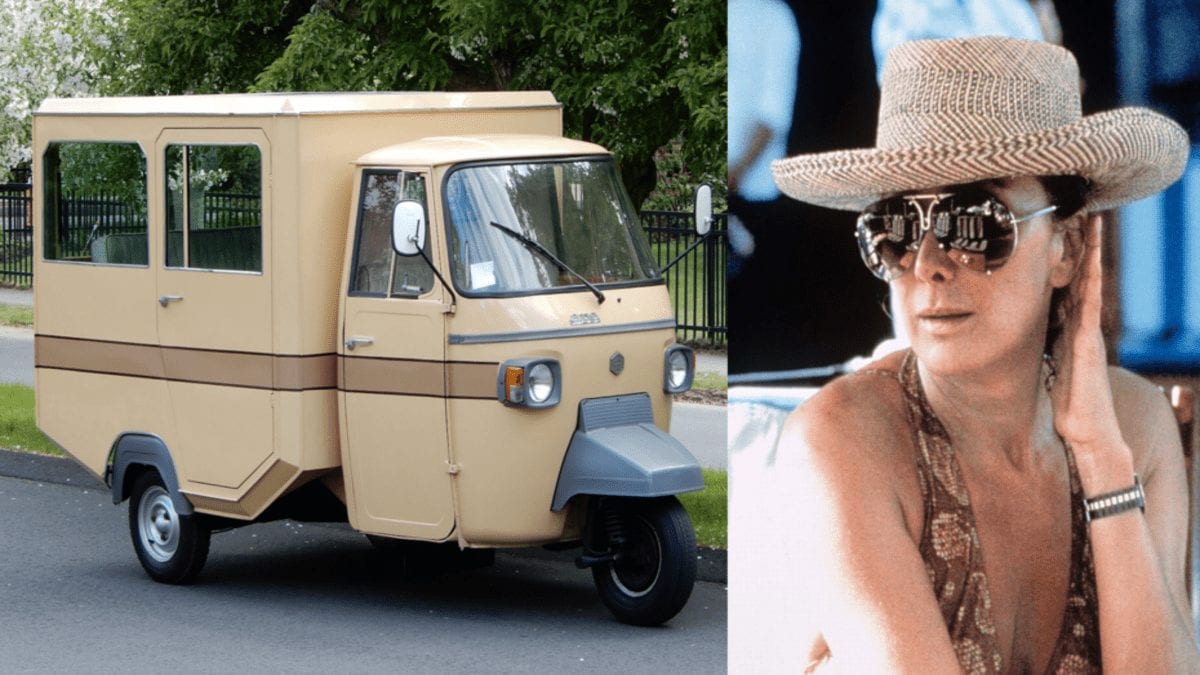
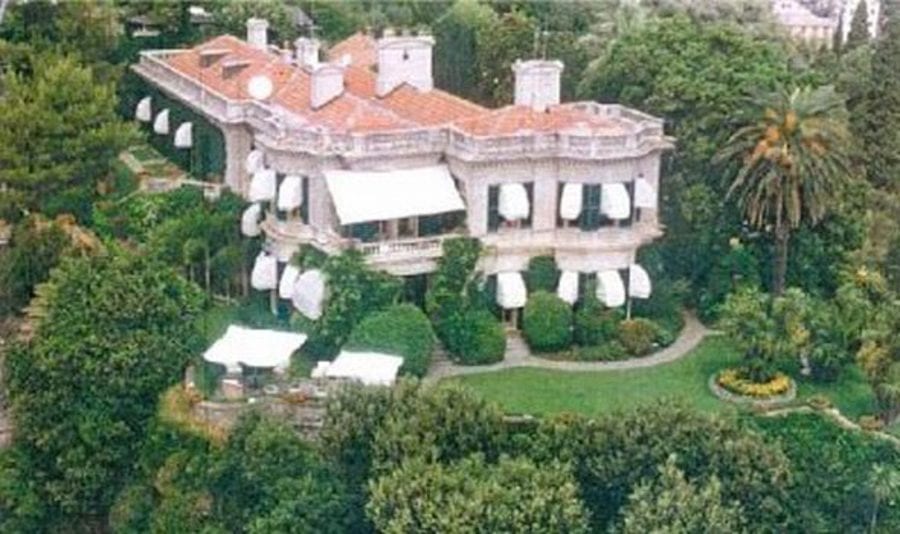
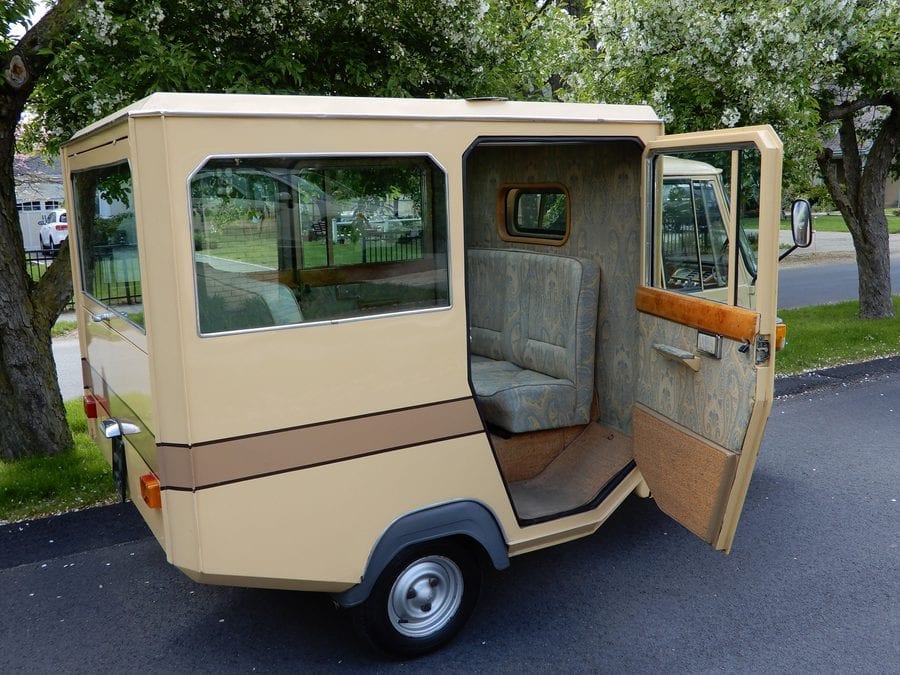
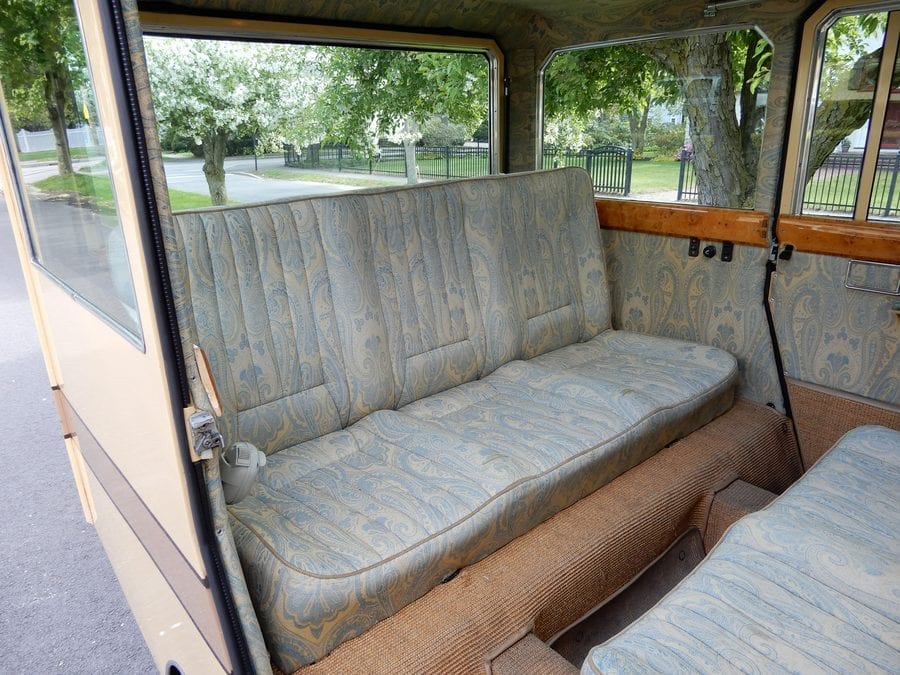
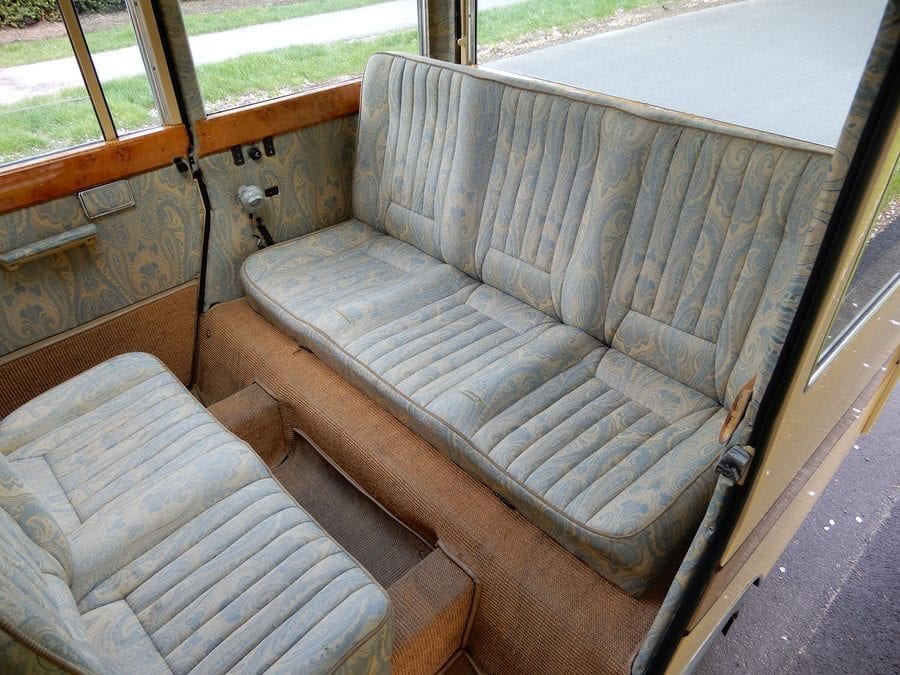
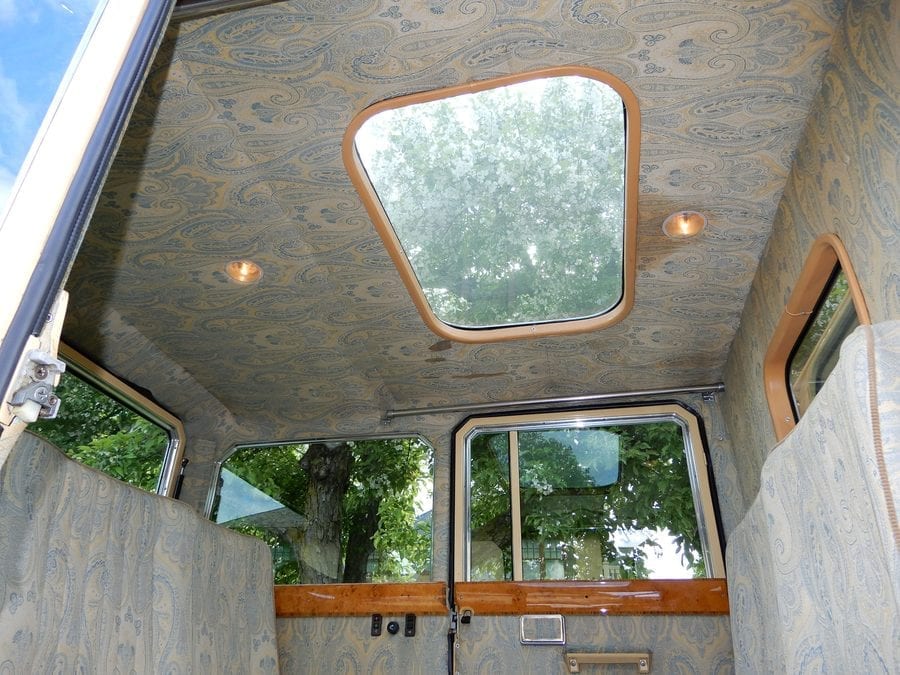
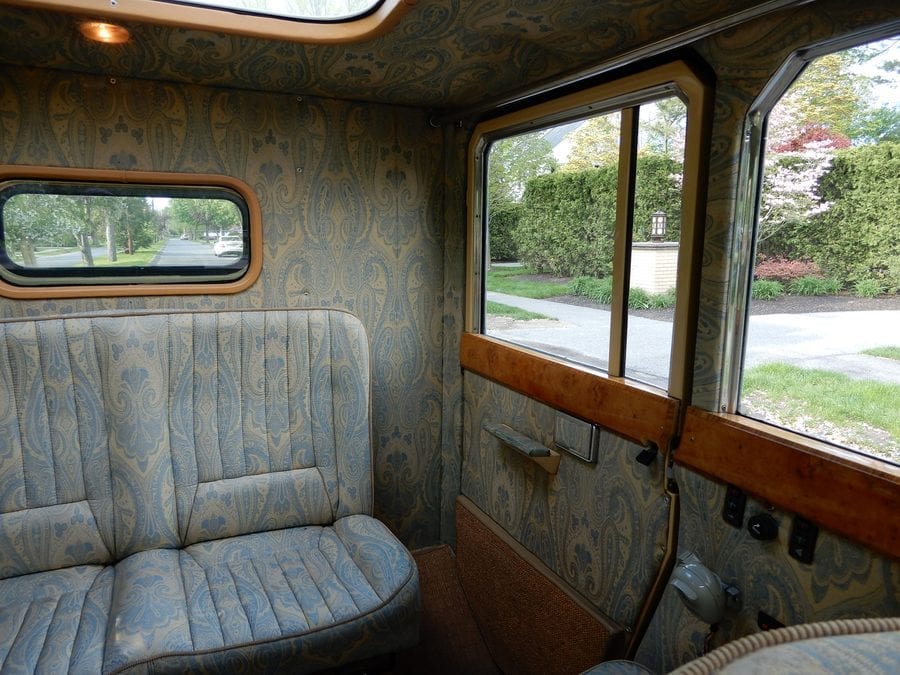
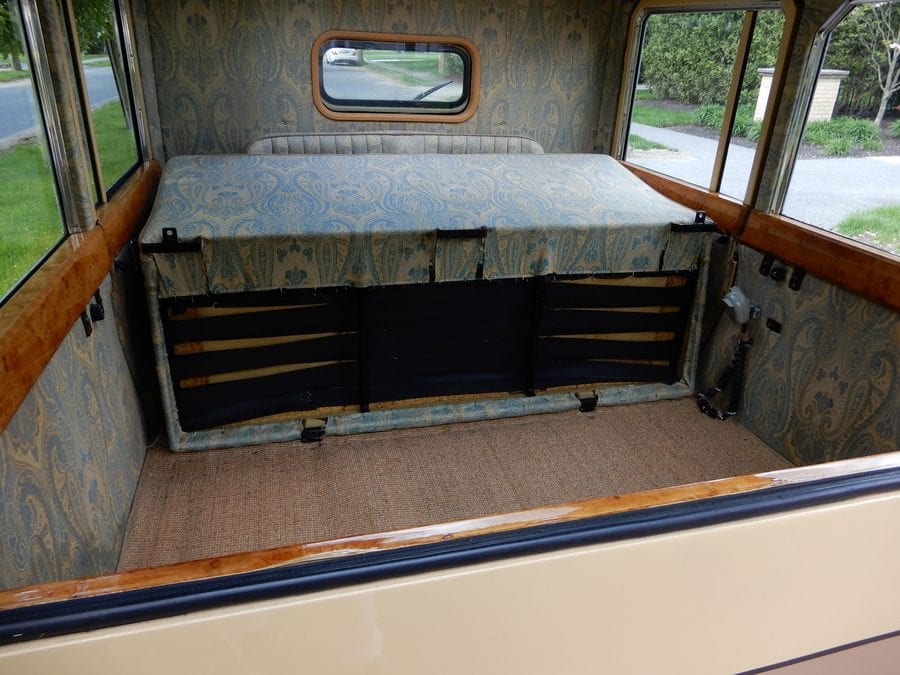
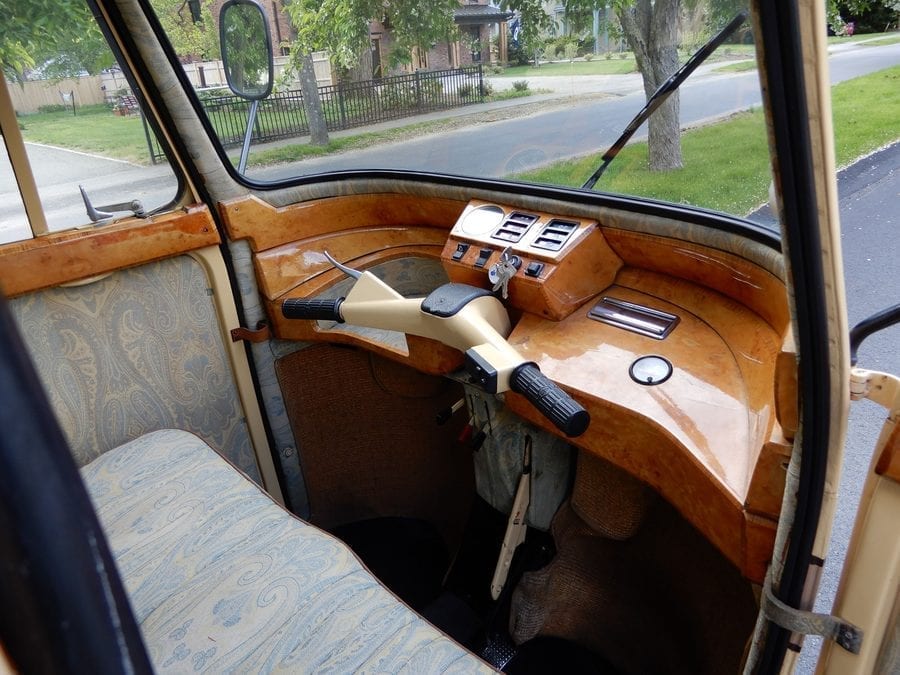
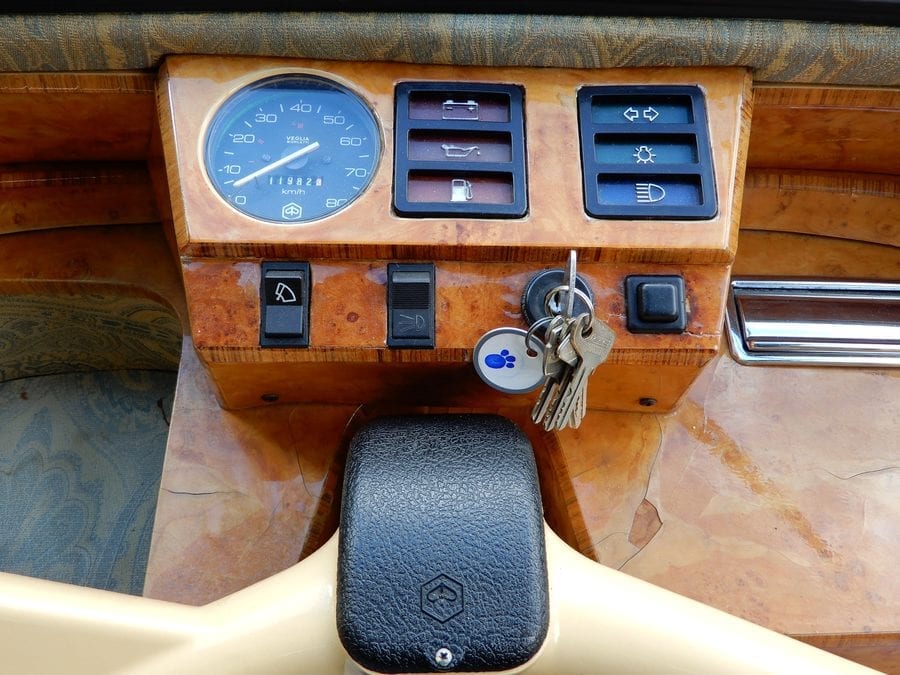
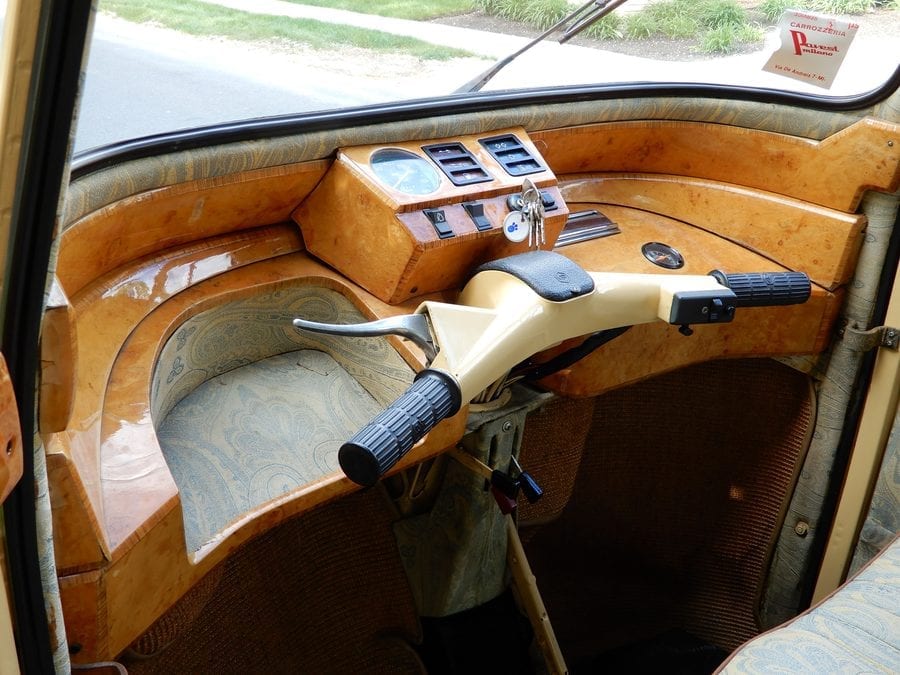
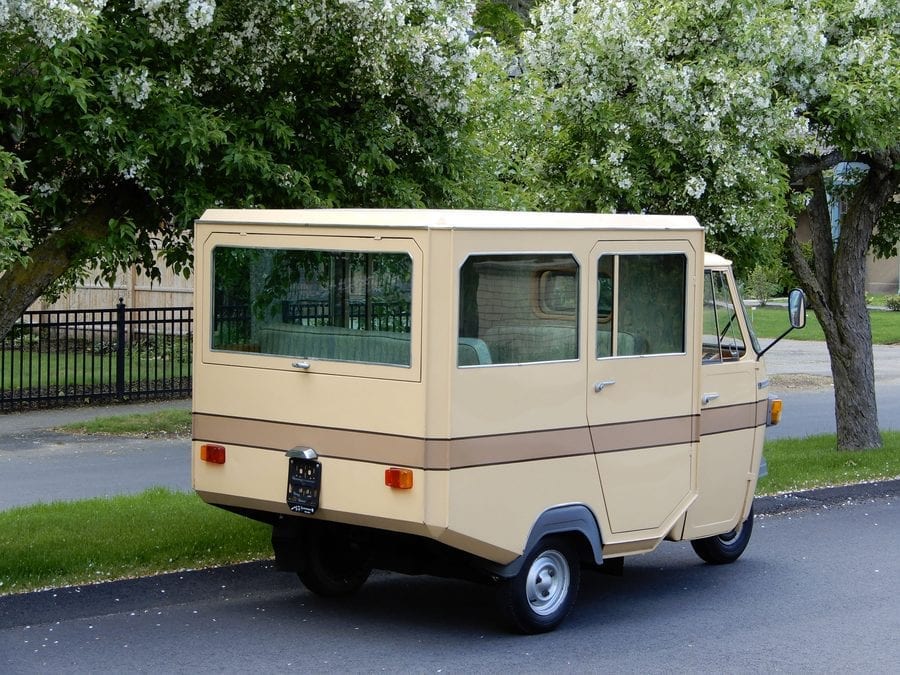
Graffagni saw off the business tycoon’s first wife, Pupetta Maresca, after a torrid affair and following their marriage in 1974, amongst other things, became chatelaine of a 40-room property complete with a helipad. It had been built in 1870 by George Herbert, 4th Earl of Carnarvon – whose death was attributed by amongst others Sir Arthur Conan Doyle to the “curse of King Tut” – as his holiday home and during the 1970s and 1980s guests to “jet-set parties” given at the house by the socialite Countess were ferried back and forth from their dock in Portofino harbour in a custom built 1978 Piaggio Ape coachbuilt ‘limousine.’ This vehicle, described as a “perfect yacht tender” with its opulently patterned interior and passenger-driver intercom, is now for sale.
Countess Francesca Agusta (née Francesca Vacca Graffagni, 29th October 1942 – 8th January 2001). It is most surprising that the late Dominick Dunne did not make a television programme about her life and demise.Villa Altachiara (alternatively known as ‘Villa Alta Chiara’ or ‘Villa Carnarvon’) was one of Countess Agusta’s homes from the 1960s until her death in 2001; it was originally built as a holiday home for Lord Carnarvon (26th June 1866 – 5th April 1923) – the financier of Howard Carter’s explorations of Egypt’s Valley of the Kings that led to the discovery of Tutankhamen’s tomb. The Carnarvon family hosted many guests during their ownership, amongst them Brooke Astor and Evelyn Waugh.
Count Agusta died in 1989 without divorcing his second wife in spite of separating from her in 1985. At that time, in addition to Villa Altachiara, he had given her four apartments in Milan, an estate in Cuernavaca, Mexico, family jewellery and an undisclosed cash sum. With his demise, she came into yet further fortune.
This by-then “very wealthy woman” hit the headlines again in 1994 when she and her new lover, a “former Portofino playboy politician [named] Maurizio Raggio,” were discovered to have been part of a corruption scandal involving Bettino Craxi, the Prime Minister of Italy from 1983 to 1987. Before police could apprehend them to charge them with amongst other things money laundering, the pair fled to Mexico and lived on her estate until 1997 as fugitives. During this period, the Countess reportedly attempted suicide at least once.
Upon her return to Italy, the Countess plea-bargained and spent just three months in Milan’s Opera prison for her crimes in spite of receiving a two-year jail sentence. After “some further time under house arrest” in the Villa Altachiara, the “retired” gadabout then took up with a Mexican, Tirso ‘Tito’ Chazaro (also known as ‘Tirso Di Ricardo’ and ‘Rafael Tirso Roncado Gonzales’), and lived in the style of Miss Havisham. She was rarely seen in public and having become dependent on drink and drugs, was known for her erratic behaviour and temper.
“Considerably the worse for wear and muttering she would not be coming back” on the night of 8th January 2001, the Countess supposedly told her lover and two others present that she was going for a swim, but either slipped on wet leaves or was pushed off a veranda into the sea. A search followed, but after the only traces found were the Countess’s dressing gown on the seabed close to the Villa Altachiara and her slippers on nearby rocks, press reports suggested she had either committed suicide or, given her past form, staged an “elaborate disappearing act.”
Countess Agusta’s badly decomposed body washed up three weeks later on a beach at Toulon on the French Riviera. Her feet had been gnawed off by fish, her skull was smashed and her face was disfigured. She could only be identified by two rings she was wearing and her exact cause of death could thus not be determined.
As an autopsy found no trace of water in her lungs, she plainly did not die by drowning, but in in 2004 the Countess’s brother, Domenico Vacca Graffagni, was quoted in the Independent as stating: “The [original] inquiry was closed in a hasty fashion because of absence of proof, relying too readily on ‘reasonable doubt’ … It was manslaughter. He [Chazaro] was always beating her. He didn’t mean to kill her. But that evening things didn’t go the way the Carabinieri said, my sister was not drunk and she did not slip on wet leaves on the veranda.”
Adding further to speculation, much earlier, the Countess’s step-son, racing driver and team owner Rocky Agusta (1950 – 2018), told Corriere della Sera in 2001: “Francesca was a beautiful woman, simpatica, very rich… People have written that she inherited 500bn lire, but if it had been only 50 or 25, who commits suicide with 25bn lire set aside? … The people who were around her certainly did not help her… It’s not up to me to formulate accusations, but Francesca was not alone that night. She was very upset. She should have been put to bed. Instead, they let her go out into a dark, wet, cold night, not even dressed.”
In due course, the last of many wills left by Countess Agusta revealed Tirso Chazaro to be her sole beneficiary, but after this was challenged in court by her former lover, Maurizio Raggio, the pair split the legacy – reported to be worth as much as £165 million ($201 million, €186 million or درهم738 million) according to the Guardian in 2001 – sixty-forty between them.
In 2009, the Villa Altachiara was offered for sale initially for £44 million ($54 million, €50 million or درهم198 million) and then for £30 million ($37 million, €34 million or درهم135 million) in 2014. It supposedly eventually sold for less than half that sum to a Russian billionaire a number of years later in spite of an estate agent remarking: “Some say the spirit of Countess Francesca Vacca Agusta still walks the estate looking for her husband and you can hear her shouting for him on the wind.”
An estimate of £37,000 to £49,000 ($45,000 to $60,000, €42,000 to €55,000 or درهم165,000 to درهم220,000) for the Countess’s Piaggio Ape. Described as “sweet” and “[anything but] an Italian tuk-tuk” by RideApart, the one-off private taxi will be auctioned as part of the forthcoming RM Sotheby’s ‘Driving Into Summer’ 21st to 29th May 2020 online sale. One can only hope it finds a happier home than it encountered at that of its former mistress.
Scottish castle on sale for just £130,000; it comes without a roof and is located near the Trump International Golf Links in Aberdeenshire
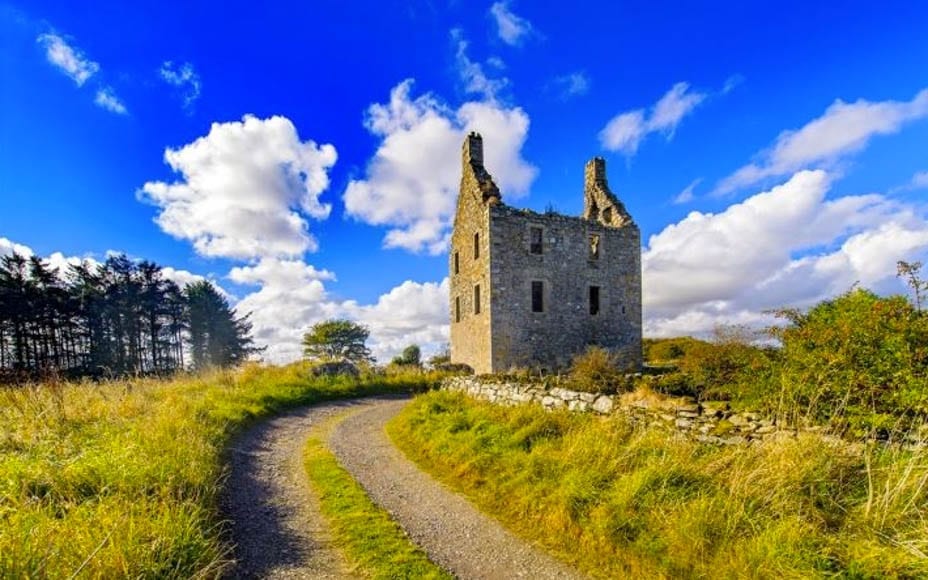
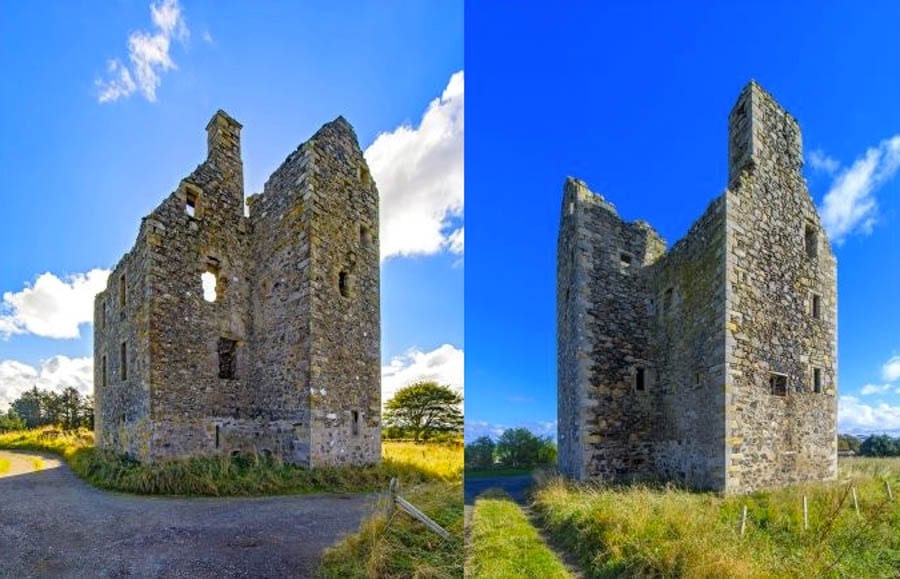
A castle in Aberdeenshire, Scotland is for sale for £130,000 ($168,000, €143,000 or درهم616,000) in spite of being nothing other than a roofless shell.
Reduced in price from £150,000 ($193,000, €165,000 or درهم710,000) and dating to 1565, Knockhall Castle in the coastal village of Newburgh, near Aberdeen is described as “having been in the current owner’s family for hundreds of years” and was accidentally burnt to the ground by Jamie Fleming, “a servant fool” of then owners the Udny of that Ilk family, in 1734.
Presented in “stabilised” condition, the B-listed building stands on a small plot accessed by a private road. It is close to the Trump International Golf Links course at Balmedie and Forvie Sands, a designated nature conservation area populated by seals.
Savills have the listing and market the structure as “a blank canvas for someone to develop the building’s full potential as a spectacular family home or business.”
Of this fixer-upper, in which James VI is reported to have stayed in July 1589, Historic Scotland add:
“Knockhall Castle, in the parish of Foveran, is situated near the mouth of the river Ythan and was probably built in 1565 as an L plan towerhouse of three stories and an attic with a projecting staircase tower on its northside. The tower does not have a parapet and the gables have skews rather than crowsteps. To the south of the castle there was an enclosed courtyard, but all that now remains of this is a fragmentary round tower at the south east angle of the enclosure which incorporated a dovecot on its upper level. The tower has undergone significant alteration, probably in the second quarter of the 17th century.”
“The tower is lit by large rectangular windows in the south and east walls. These are arranged more or less symmetrically and their raised margins suggest they are insertions dating to the mid 17th century. The earlier windows which have survived have a typical roll moulding of mid 16th century type, and some appear to have had gunloops in their sills. The basement is pierced by a number of wide-mouthed gunloops but also has some fairly large windows which have the raised margins of the 17th century windows.”
“The entrance is in the re-entrant angle and the lintel of the door is inscribed with the date 1565. Above this are two empty heraldic panels and at eaves level there is a projecting stone shelf which appears to have been intended to shed water away from the entrance doorway. The doorway gives access to a corridor running the length of the building and leads to the main stair. Entered off the corridor, on the left, is the kitchen, complete with fireplace, sink and drain. The main block contains a large cellar also with a sink and drain. Both spaces are vaulted although that over the kitchen has collapsed.”
“The circular stair is wide and provides access both to the principal upper floors in the main block and to those in the wing. The tower is externally complete and in there is often sufficient evidence for a tower to be restored for modern occupation without detracting from its historic significance.”
“The planning of this tower, with a large stair serving the two wings, and with ample light through the large rectangular windows, would also make its adaptive re-use possible.”
“It should be noted that there is significant potential for associated archaeology surrounding the tower. In schemes of adaptive re-use, archaeology is an important issue to be addressed.”
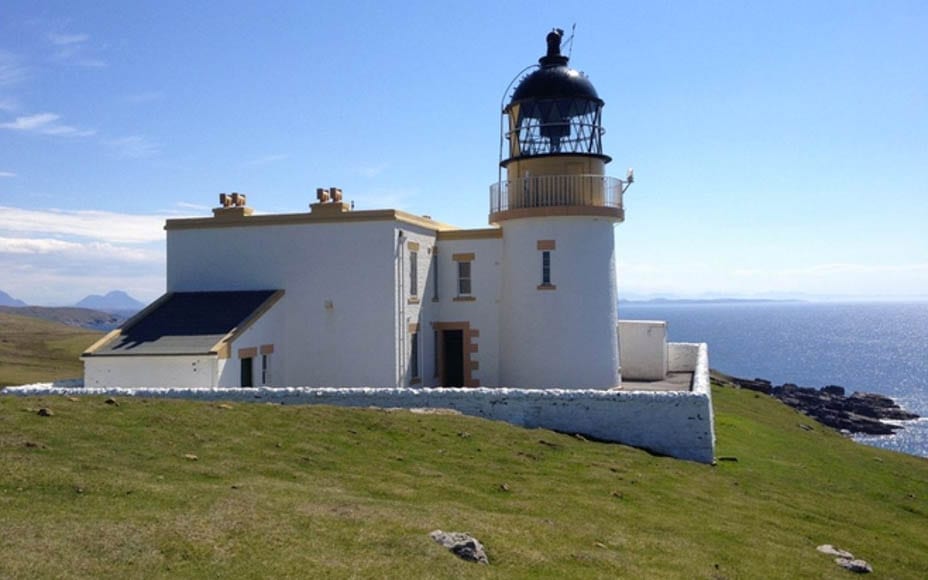
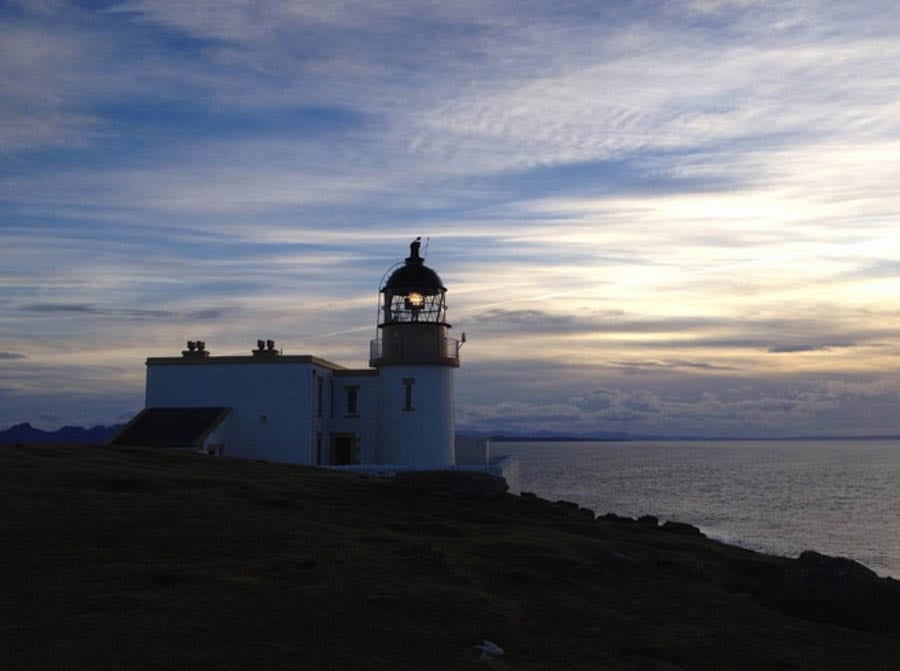
Stoer Lighthouse on Stoer Head in Sutherland, Scotland was built in 1870 and whilst the lighthouse itself is just 45-foot tall it sits at a height of 177-foot above sea level. It flashes four white ever fifteen seconds and because of the height of the cliffs on which it sits can be seen 24 miles out at sea. Automated since 1978, it is reportedly visited by 10,000 people each year in spite of its remoteness.
Whilst the lighthouse itself is operated and maintained by the Northern Lighthouse Board, the property offered consists of 1,506 square foot of renovated accommodation that includes a ground floor 2-bedroom flat, a first floor 2-bedroom flat and a bothy. Car parking is provided within a walled area and all three units are currently operated as holiday lets.
Bell Ingram have the listing and seek £371,500 ($478,000, €407,000 or درهم1.8 million) for the whole. They remark: “This is a rare opportunity… [The sale of] Stoer Lighthouse offers the potential purchaser the opportunity to continue the holiday letting business or to convert into a larger home in a stunning and unique location.”
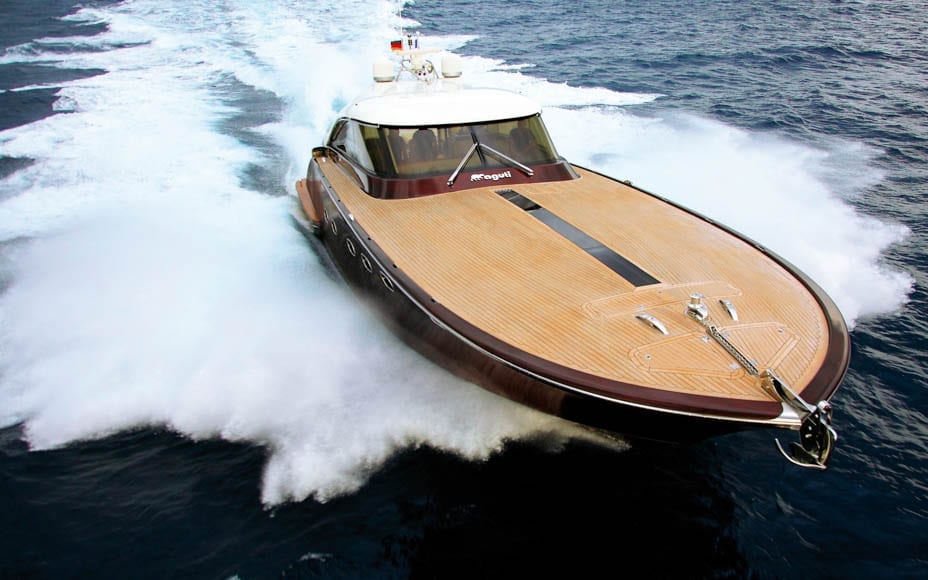
Edward Kay reports on the sale of a truly striking 1-of-1 Aguti 20-metre wooden motor yacht that cost £6.4 million to build; it is offered for just £1.4 million
As most of Germany is relatively landlocked, with just the borders of the far northern cities meeting the Atlantic Ocean, it’s no surprise that some of the world’s best performance cars have come out of Deutschland. But, for a yacht building business, one generally might assume that the lack of water access would be quite a difficult hurdle to overcome. Luckily for a firm named Aguti, it set up shop on the coast of Lake Constance – one of the largest lakes in Germany – and here the company’s founder and designer Andreas Grieger has brought what truly must be considered nautical masterpieces to life.
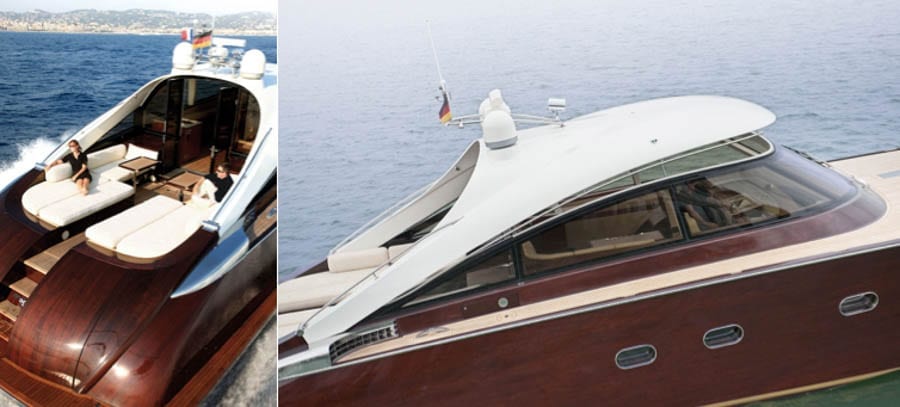
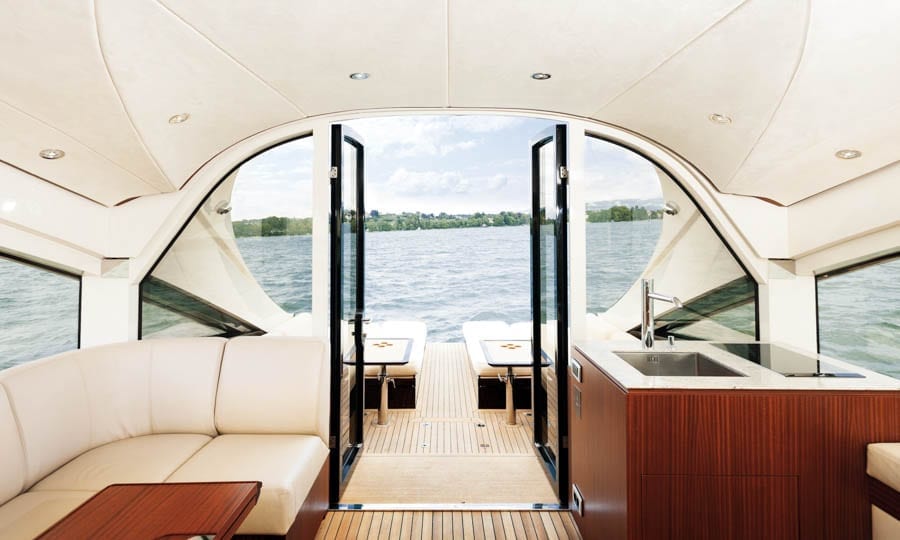
Grieger had a desire to create a yacht with all the grand old opulence of time’s past, yet also with all the benefits of modern fittings and building technologies. He began designing such a vessel in 2003, and over the next 40 months, a fabulous wooden motor yacht slowly came to life at a build cost of some £6.4 million ($8.2 million, €7 million or درهم30.1 million). Where old and new design technologies came together most were in the hull. Here, the traditional yacht construction of utilising precious woods – in this case, mahogany – was upgraded with the integration of carbon fibre and epoxy resin. This process took 50,000 hours of craftsmanship, 40 cubic metres of mahogany, 50 cubic metres of cedar, 650 square metres of carbon fibre, and two tonnes of epoxy to complete, but the end result – a ship that had the visual appeal of a traditional wooden boat with the advantages of a modern composite yacht – was most definitely worth the effort.
This 20-metre, Riva-style owner’s driver yacht is, in my view, a design dream. Not only is it clean, crisp, and curvaceous, while also being angular, it cuts through the waves off the south of France like a hot knife through butter. It has twin 10-cylinder MAN engines – which each develop 1,100hp and together produce a maximum speed of 32 knots. All that power is hidden beneath a beautifully fitted heat-treated teak deck, spreading from bow to stern, including the extendable bathing platform. Elsewhere, the modern nautical technology of the cockpit is complemented by beautifully hand-stitched leather seats and a hydraulic ‘hard top’ roof, offering shade as well as airflow.
The openness of the cabin below allows direct passage from the cockpit and provides the captain with a view of the opulence underneath. The saloon and kitchen lead to three spacious bedrooms (larger in size than those of most London flats) which feature red mahogany furnishings, King-sized beds, and bathrooms finished in natural stone. For those looking for an escape this summer — a private oasis for you and your eleven closest friends — you’re sure to find it on this Aguti yacht.
£1.4 million ($1.8 million, €1.5 million or درهم6.5 million) is sought for the craft – a 78% discount on the cost when new.
Stoer Lighthouse on Stoer Head in Sutherland, Scotland was built in 1870 and whilst the lighthouse itself is just 45-foot tall it sits at a height of 177-foot above sea level. It flashes four white ever fifteen seconds and because of the height of the cliffs on which it sits can be seen 24 miles out at sea. Automated since 1978, it is reportedly visited by 10,000 people each year in spite of its remoteness.
Whilst the lighthouse itself is operated and maintained by the Northern Lighthouse Board, the property offered consists of 1,506 square foot of renovated accommodation that includes a ground floor 2-bedroom flat, a first floor 2-bedroom flat and a bothy. Car parking is provided within a walled area and all three units are currently operated as holiday lets.
Bell Ingram have the listing and seek £371,500 ($478,000, €407,000 or درهم1.8 million) for the whole. They remark: “This is a rare opportunity… [The sale of] Stoer Lighthouse offers the potential purchaser the opportunity to continue the holiday letting business or to convert into a larger home in a stunning and unique location.”