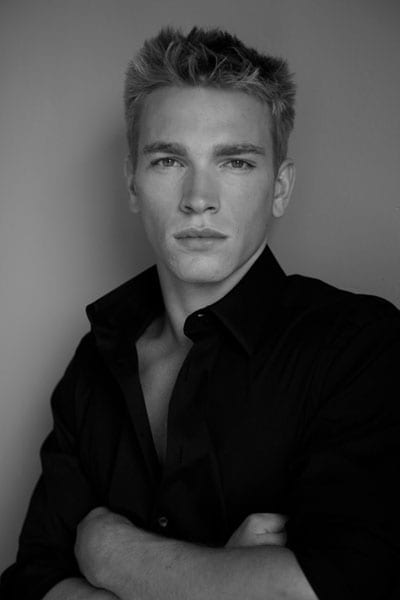
The Steeple Times asks model and personality Nicholas Gruber: “What’s on your mantelpiece?”
The Steeple Times shares “wit and wisdom.” What’s your guiding force?
I try to learn something from everyone I meet.
“Don’t get even, get medieval” is, in our humble opinion, a great motto. What’s yours?
Life is short so enjoy a part of every day, even the shitty ones.
Kerry Katona was considered unacceptable in 2007. Who or what is unacceptable in 2012?
Picking on anyone less fortunate than you. That’s why the Republicans lost the election in the US.
Tony Blair misses being Prime Minister. What do you miss most in your life?
My grandmother, Judy Bolduc. She was the first lesbian in California to adopt a child, my dad.
What might you swap all your wealth for?
Honey, pick up a paper: I did that already for some freedom.
Donald Trump was once a case of: “If you owe the bank a thousand, they close you down; but if you owe the bank a billion, you own the bank.” What’s your view on the banking crisis?
Greed is never good in any way, shape or form.
What phrase or word do you most loathe?
“Thank you so much.” It seems insincere whereas just “thank you” seems genuine.
In the UK, some people consider charity to “begin at home.” What’s your view and what causes do you personally support?
Toys for Tots because I know first hand what it feels like to be a kid with nothing under the tree.
The judge in “Law Abiding Citizen” states: “I can pretty do whatever I want” before being blown up whilst answering her mobile phone. What’s your view on the appropriate use of such devices?
It is only appropriate to blow up terrorists.
If you could fill a carriage on The Orient Express, who would be your fellow passengers?
My new boyfriend, John Luciano, and my former one, Calvin Klein. Now, that would be one hell of a ride.
Nicholas Gruber
If you were unfortunate enough to end up on death row, what would be your last meal and where would you eat it?
Pasta from Bar Pitti. Two helpings. Plus a slice of German chocolate cake.
What time is it acceptable to consume the first drink of the day?
I’m sober so for me that would be noon. Joking. I don’t drink but I also don’t judge.
A Negroni, a martini or a cup of tea?
None of the above. I will take a coconut water please.
Whose parties do you enjoy the most and why?
Calvin Klein. He might be three times my age but he can party like a rock star.
Who is the most positive person you know?
A tie between Calvin and John. They both believed in me when I didn’t believe in myself.
What’s your most guilty pleasure?
Having a mob related boyfriend who allows me to have girlfriends.
If a tattoo were to sum you up, what would it be of?
A glass that was half full because that’s how I roll.
If you were a car, what marque would you be?
A smiley face.
Cilla Black presented “Surprise, Surprise.” Tell us the most surprising thing about you.
Of Italian-Jewish descent, Caring is of the “supermarket-sweep” school of empire building. This billionaire started out in the rag trade but now controls the majority of the top restaurants and clubs in Central London. He survived the 2004 Indian Ocean tsunami and viewed that to be a wakeup call. Since then he’s donated millions to charity and focused on his two passions: golf and shooting. This buccaneering businessman generally passes on breakfast and lunch and lives between a converted stable block set in 500 acres near Dulverton and a mansion on The Bishops Avenue. What will he buy next?
If one spent $2,000,000 on cosmetic surgery, one would expect to end up looking fantastic. It didn’t quite work out in the case of the billionairess “Bride of Wildenstein,” though, as instead she discovered the husband she thought she’d please in bed with a 19-year old Russian. Feline like in appearance, the purr of this New York socialite is said to be just as bad as her bite. She’s known to be a skilled hunter and pilot and once boasted her telephone bills were at least $60,000 a year. Surprisingly far from camera shy, what on earth will she look like at ninety?
Andreas Kirchberger captures the atmosphere at a private view of the works of Robert Fry
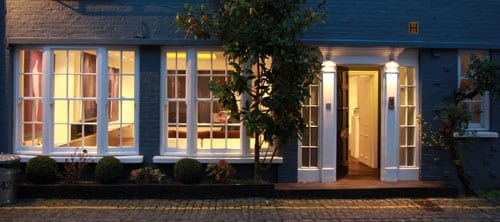
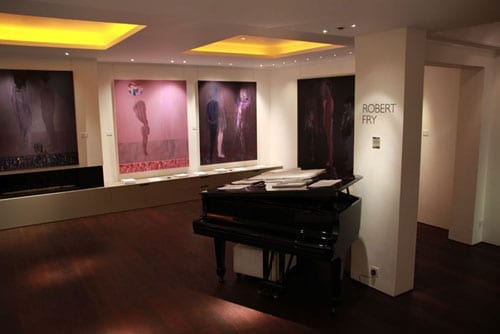
On Thursday 25th October, Ilona Pacia and Jesper Thomsen of Mews42 Gallery hosted a private view of the works of Robert Fry in Princes Gate, South Kensington.
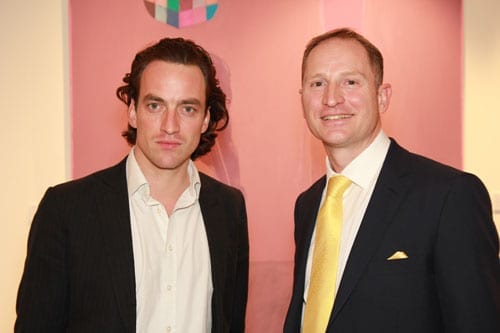
Artist Robert Fry pictured with exhibition sponsor Andrew Harding of Qube Property ManagementThe exterior of Mews 42 Gallery, 42 Princes Gate Mews, London, SW7 2PRRobert Fry’s works on display at Mews42 Gallery
Andreas Kirchberger was on hand on behalf of The Steeple Times and captured an exotic array of guests who numbered Bianca Boscu Brandinelli, Esther Osorio, Ivan Rosenschein, Alexander Batchvarov, David Stoddart, Marco Calmisani Calzorali, Zuqiang Lin, Oonagh Shanley-Toffolo, Aurelia Bonito, Wendy Coumantaros, Klas Nilsson, Georgina Budge and Robin Dutt.
For those yet to discover his works, Robert Fry is a London based painter with an impressive CV. Born in 1980, he has already exhibited at the Saatchi Gallery and Alexia Goethe Arts & Co. in his home city, Moscow’s Atelier 2 and Los Angeles’s François Ghebaly Gallery.
Fry is described as having an “obsession with the concepts of form and norm, symmetry and deformation and that of mutation and maturity.” Martin Coomer of Time Out suggests he leads us “back to Picasso via the spatial experiments and fine line of David Hockney” and adds that he has: “Found a fruitful way of using the traditional skills shunned by most artists of his age.”
Robert Fry’s works are on show at Mews42 Gallery, 42 Princes Gate Mews, London, SW7 2PR until 2nd December 2012.
Viewing is by appointment and can be arranged by telephoning +44 (0) 798 000 0264 or emailing Ilona Pacia at [email protected]. Website:http://www.mews42.com
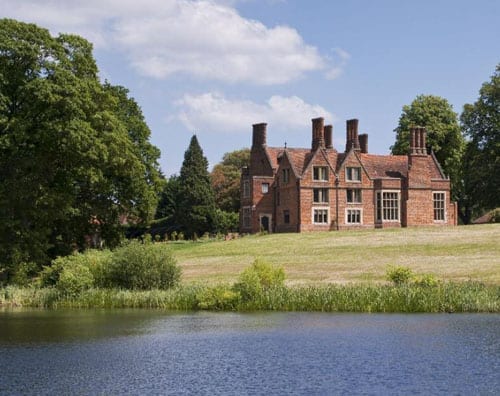
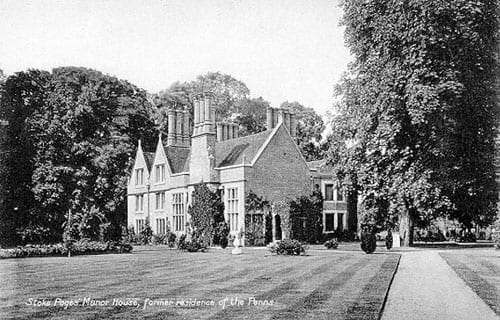
In the blog that preceded “The Steeple Times,” Matthew Steeples took a look at The Manor House at Stoke Poges in March 2012. It’s still on the market at £13,500,000 and though the price has yet to be cut, there has been uproar about revelations that the former owners, South Buckinghamshire District Council, sold the freehold and a sculpture by John Deare for just £300,000. A link to the May 2012 “Bucks Free Press” article about this is included at the end of this article. What a Carry On!
The Manor House, Park Road, Stoke Poges, Slough, Buckinghamshire, SL2 4PGAn image of The Manor House sometime between 1910 and 1929
Estate agents particulars are funny things. Normally gushing with nonsense such as “prestigious,” “luxurious” and “architect designed,” property agents rarely miss a trick when it comes to selling historical and personality related peculiarities.
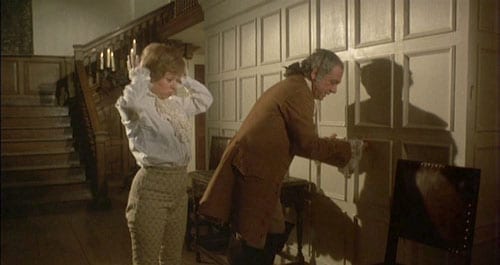
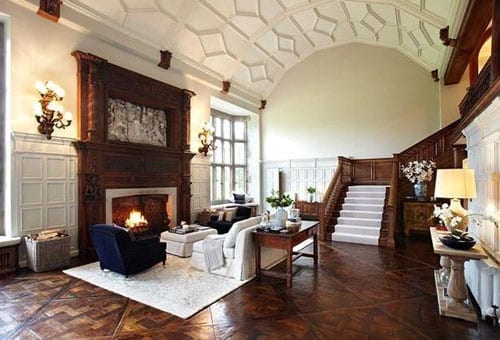
Sidney James as The Reverend Flasher AKA “Big Dick” Turpin with Barbara Windsor as Harriett in a scene filmed in The Great Hall at The Manor House, Stoke Poges for the film Carry on DickThe Great Hall at The Manor House today
I was therefore somewhat perplexed that the brochure for The Manor House at Stoke Poges in Buckinghamshire didn’t contain reference to its appearance in the 1974 classic Carry on Dick.
Agents Savills instead opted to gush about the house’s previous owners, who numbered Francis Hastings, second Earl of Huntingdon, Sir Edward Coke and Thomas Penn, son of William Penn, founder of Pennsylvania. The brochure also goes to the lengths of describing visitors who have included Queen Elizabeth I, Charles I and Sir Thomas Gray and points out that Sir Edwin Landseer used The Manor House as a studio whilst painting his most famous work, The Monarch of the Glen, in 1851. The filming of For Your Eyes Only and Bridget Jones’ Diary in the adjoining Stoke Park also get mention but Savills utterly neglect the starring role of the building as the home of the Reverend Flasher, played by Sid James, in Carry on Dick. Plainly “Big Dick” is not someone they wish this £13,500,000 house to be associated with.
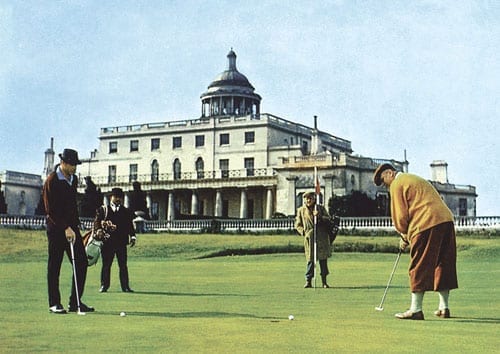
The Manor House is now a quarter of its original size as, on his return from America, Thomas Penn decided the house too dilapidated for his own occupation. He commissioned James Wyatt to build him the new mansion that is now Stoke Park Club in the 1790s and demolished the majority of The Manor House.
Stoke Park as the backdrop to a golf match between James Bond (Sean Connery) and Auric Goldfinger (Gert Froebe) in For Your Eyes Only (1981). Oddjob (Toshiyuki Harold Sakata) caddies.
In 1911, shortly after the Stoke Park golf course was laid out, further refurbishments were carried out that included the creation of the current Great Hall from the former kitchen, the introduction of bay windows and a new grand staircase.
In 2010, Comer Homes acquired The Manor House and brought it into the 21st century. The 11,227 square foot main house and 7,966 square foot of guest and leisure accommodation were completely renovated and such things as multi-zoned, multi-sourced entertainment systems, CAT5 cabling and underfloor heating installed.
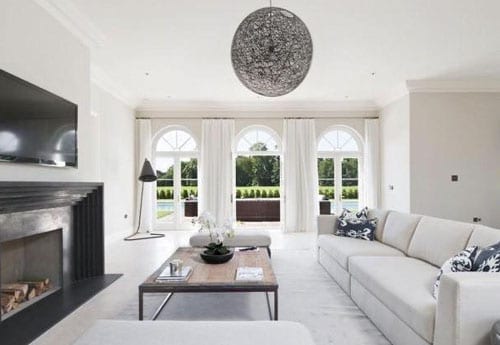
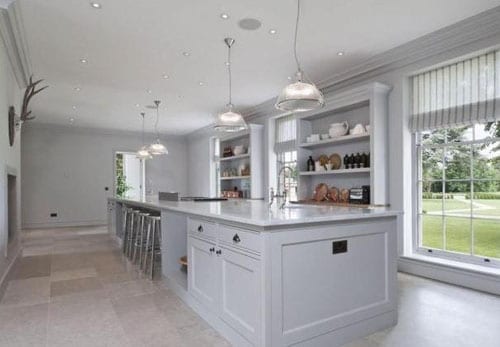
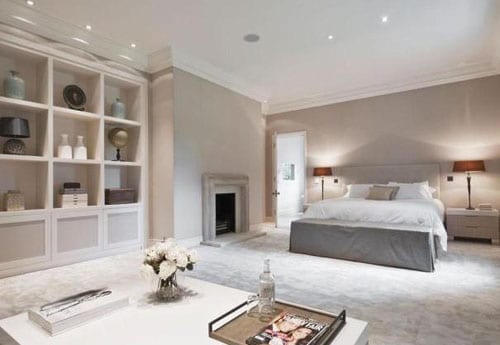
The extremely neutral style of decoration is perhaps a reason that a buyer has yet to biteThe uninspired theme continues in the kitchenWhilst this bedroom could be located, well, erm, just about anywhere
Just 35 minutes drive from Mayfair and now looking somewhat like a hotel out of the Mr & Mrs Smith guide, The Manor House is an extremely manageable country home as it stands in just 10 acres of grounds. It will no doubt have huge appeal to a popstar, Euromillions winner or Russian oligarch. When viewing, however, they just better not mention “Big Dick” as no doubt soon the agent will have had “enough of it!”
For more information on The Manor House, Park Road, Stoke Poges, Slough, Buckinghamshire, SL2 4PG contact Nick Ingle of Savills Beaconsfield on +44 (0) 1494 73152 or download a PDF brochure from:http://residentialsearch.savills.co.uk/property-detail/311852
Matthew Steeples explores the story of an empty Kensington mansion
A multi-million pound 8-bedroomed house in Kensington isn’t anything unusual. In fact, rather, they’re ten a penny. In this, one of the wealthiest boroughs in the land, large, expensive homes are just the norm.
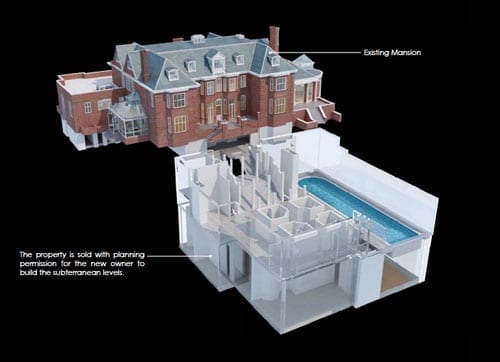
An image of the existing exterior of No. 1 Campden Hill, London, W8 7ADA rendered image of how the exterior of the renovated property might lookThe plans show a vast subterranean development that will vastly increase the size of No. 1 Campden Hill
No. 1 Campden Hill, which is being marketed for an undisclosed eight-figure sum, is in a quite different league. Here is a detached Edwardian house in an acre of grounds just to the north of Kensington High Street. It’s an unrenovated property but it attracted much press attention in October 2011 because it was place on the market in October 2011 at a price of £75,000,000. Yes, you heard it right: £75 million for a fixer-upper. Last week, Radio 4 made a hell of a fuss about a derelict semi-detached house in Newcastle selling for just £14,000 so this truly must be something special.
Architect Edward P. Warren (1856 – 1937), far right, in the offices of Bodley & Garner, 14 South Square, Gray’s Inn, London
The architect of the house Edward Prioleau Warren (1856 – 1937), a Bristol born architect and archaeologist, was best known for “Oxford colleges and minor country houses” but also designed the War Cemetery at Basra. He was a friend and adviser to the American novelist Henry James and in addition to building No. 1 Campden Hill in 1915, he also designed a house at 5 Palace Green in 1906 and another, Estcort House in Kensington Palace Gardens, in 1904. Warren’s guiding style is described as having been to recreate an “understated revival of English late 17th century” architecture and at No. 1 Campden Hill he created just that.
Colonel Edmond Grove-Hills (1864 – 1922), born Edmond Hills, and his wife, Juliet Spencer-Bell, were the architect’s clients. A plaque on the building bares their names and the following dedication:
This House I built for Me & Mine
May it be of Peace A Shrine
And no Enmity or Sin
Ever find its way therein
AD 1915
Sadly for the Grove-Hills, the following year, their son, Second Lieutenant Charles Herbert-Hills (1895 – 1916) was killed on the Somme aged just 21. His father, meanwhile, was awarded a CBE in 1918 after having served as the Assistant Chief Engineer of Eastern Command during the war.
Aside from his military exploits, Edmond Grove-Hills is best known for his role as president of the Royal Astronomical Society. He took part in observations of eclipse of the sun in Japan in 1896, India in 1898 and Russia in 1914 and contributed papers analysing both this and the causes of the irregular movements of the earth’s axis of rotation.
In 1951, No. 1 Campden Hill was purchased by the government of Uruguay and it became the residence of their ambassador to the United Kingdom. For the next fifty years the building was barely altered but when the lease from the Phillimore Kensington Estate came to an end, there were legal problems as the 1951 transfer had never been stamped. Of this, Sharon Mulroney of Forsters, the legal representatives of Phillimore, commented:
“It is highly unusual to be faced with complications of this kind when dealing with a registered London title, but this made the transaction all the more fascinating. Even the decision to allow ambassadorial staff to return to the property for security purposes after completion was fraught with potential problems about security of tenure, employment and tax.”
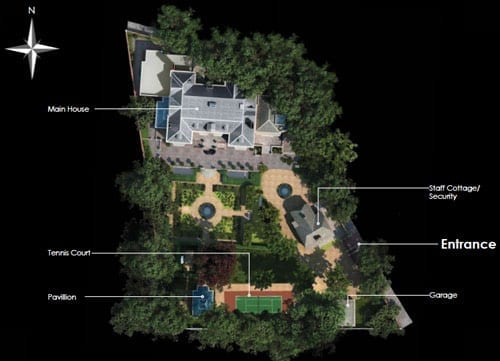
The proposed site plan shows the addition of a garden pavilion, staff/security cottage and a tennis court
Eventually, without issue, the Phillimore Estate sold on the house in 2001 for a price of approximately £17,000,000. In the years since, the property was effectively mothballed as all the purchasers have done is to have obtained planning permission to redevelop the building into a mammoth mansion of epic proportions.
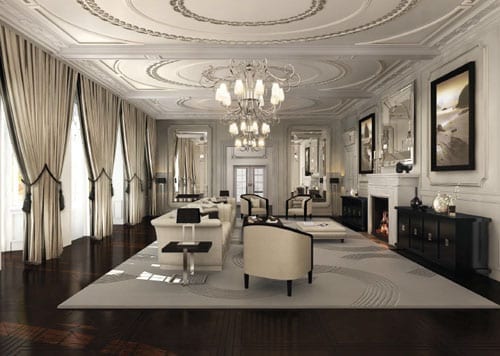
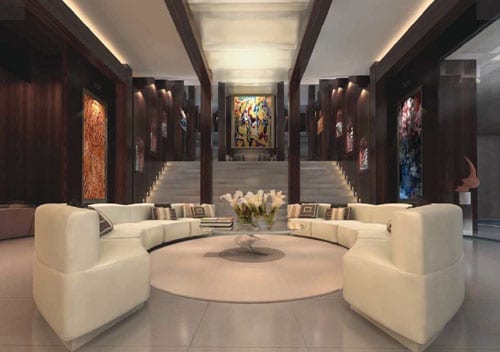
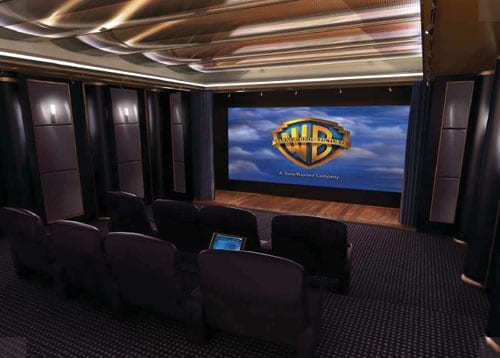
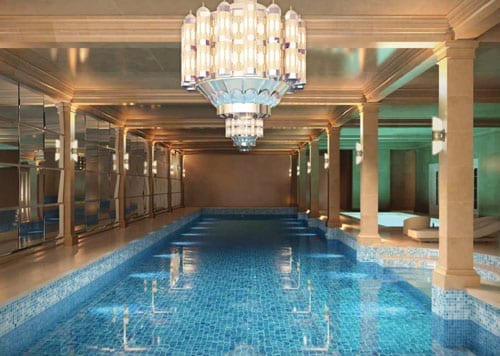
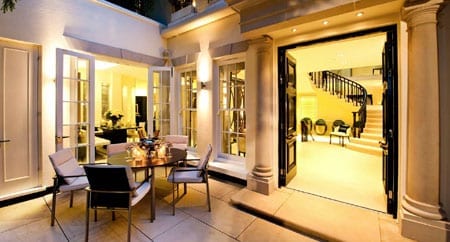
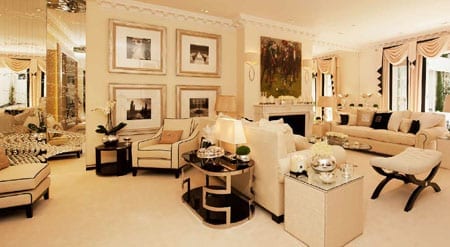
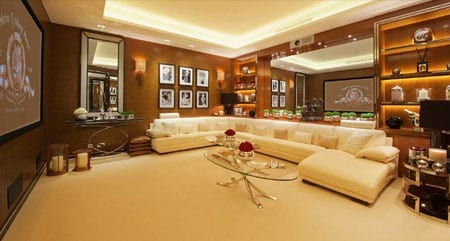
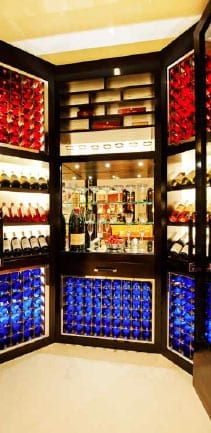
A computer rendered image of how the drawing room might lookThe “leisure area” is reminiscent of the entrance to The Mandarin Oriental Hyde Park HotelThe private home cinema would be the envy of any movie buffThe swimming poolThe wine cellar is rather like a contemporary take on Berry Bros. & Rudd’s flagship store in St. James’s StreetAnd to complete it all… The plans include your own version of Boujis in the basement
The approved plans show designs for something quite remarkable. Warren’s “understated” residence will be replaced with 8 vast bedroom suites, grand entertaining spaces, a lift and even bedrooms for 5 staff. In addition to a full-scale renovation of the original freehold house, there is scope to provide a total of 30,000 square feet of accommodation by adding a huge subterranean complex that will include a 25-metre swimming pool, court, squash court, gym, sauna, steam room, function room, entertainment room, home cinema, wine tasting room and even a nightclub to rival any of Kensington’s trendiest haunts.
On that basis alone, No. 1 Campden Hill is surely the ideal residence for Prince Harry: “Who needs Boujis?” we hear him cry.
No. 1 Campden Hill, London, W8 7AD is for sale through Knight Frank. For more details contact Roddy Craggs on +44 (0) 20 7938 4311 or go to:http://search.knightfrank.com/ken100161to download a brochure.
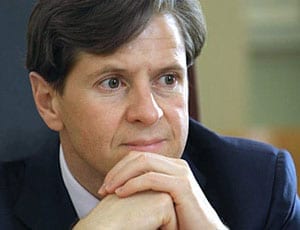
This billionaire former president of the Bank of Moscow lives in exile in London and is on the Interpol Red Notices wanted list as a suspect in a £136 million (13 billion rouble) fraud. (more…)
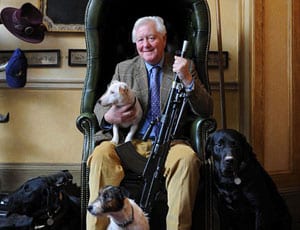
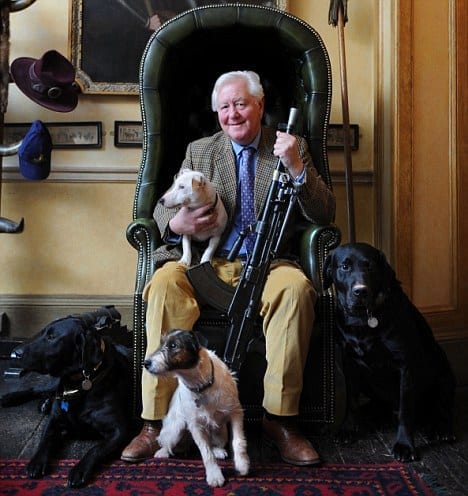
The Steeple Times asks the right-wing businessman and owner of Maunsel House and Woodlands Castle, Sir Benjamin Slade: “What’s on your mantelpiece?”
The Steeple Times shares “wit and wisdom.” What’s your guiding force?
Money, power, sex, success, land, trees, books and fine wine.
“Don’t get even, get medieval” is, in our humble opinion, a great motto. What’s yours?
“If it f**ks, floats or flies: Rent it, don’t buy it and don’t marry it!”
Kerry Katona was considered unacceptable in 2007. Who or what is unacceptable in 2012?
David Cameron and Sir Mervyn King.
Tony Blair misses being Prime Minister. What do you miss most in your life?
Being in London full-time.
What might you swap all your wealth for?
Good health and two healthy sons.
Donald Trump was once a case of: “If you owe the bank a thousand, they close you down; but if you owe the bank a billion, you own the bank.” What’s your view on the banking crisis?
It’s like putting bartenders on commission and allowing them to give credit to alcoholics who die and go bankrupt.
In the UK, some people consider charity to “begin at home.” What’s your view and what causes do you personally support?
UKIP and Help for Heroes.
The judge in “Law Abiding Citizen” states: “I can pretty do whatever I want” before being blown up whilst answering her mobile phone. What’s your view on the appropriate use of such devices?
They are useful for ringing up if late, doing deals and arranging dinners with girls.
If you could fill a carriage on The Orient Express, who would be your fellow passengers?
Warren Buffett, Bobby Faber, Philip Gibbs, Bettany Hughes, Brian Kingham, Lady Kitchener-Fellowes, Francis Fulford, Robert Lyle, Sir John Madejski, David Ord, General Sir Michael Rose, Roger Seelig, Alexander Stockton, Jonathan Sumption PC, Norman Tebbit, Lord Westbury, the Duke of Westminster and Mrs William Worsley. Adrian de Ferranti can sit in the luggage car and serve wine.
Sir Benjamin Slade Bt.
If you were unfortunate enough to end up on death row, what would be your last meal and where would you eat it?
It’d have to be at La Tour d’Argent in Paris.
What time is it acceptable to consume the first drink of the day?
1pm and 6pm.
A Negroni, a martini or a cup of tea?
Green tea.
Whose parties do you enjoy the most and why?
Sotheby’s and Christie’s and those hosted by Liz Floyd and Philip Gibbs.
Who is the most positive person you know?
My friend Bobby Faber.
What’s your most guilty pleasure?
Drinking claret at £100 per bottle.
If a tattoo were to sum you up, what would it be of?
A big castle with lots of walnut trees, good books and bottles of wine. And girls’ hips.
If you were a car, what marque would you be?
A Ford Fiesta.
Cilla Black presented “Surprise, Surprise.” Tell us the most surprising thing about you.
I’m self-made, have a great knowledge of history and am a seriously good doctor with over 120 patients. And, you’ll be surprised to learn that I was a spy in the Middle East for Britain.
What’s currently sitting on your mantelpiece?
Tankards, invites, various Mouser and Walther pistols, cows horns, Roman artifacts, decanters, pewter cups, silver, an 18th century bottle of port and a Russian machine gun.
Maunsel House, North Newton, Near Taunton, Somerset, TA7 0BU. Telephone: +44 (0) 1278 661076. Website:http://www.maunselhouse.co.uk
I first visited 32a Ovington Square in September 2009. At the time, this “hidden house” was the home of Lord Carrington and it had just come on the market at a price, if I recall correctly, of circa £3,000,000.
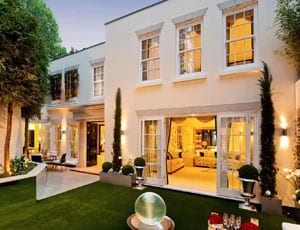
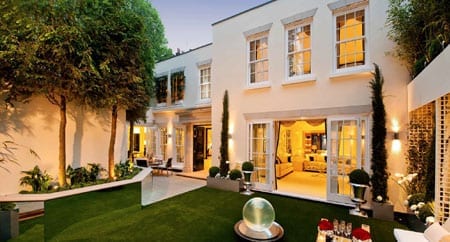
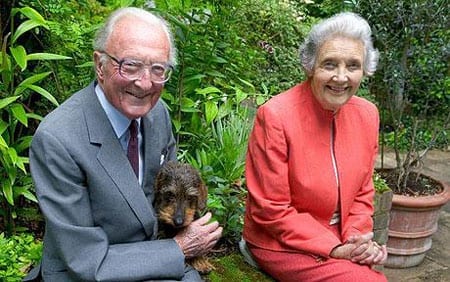
The newly redeveloped Carrington House, 32a Ovington Square, London, SW3 1LRThe Rt. Hon. The Lord Carrington KG, GCMG, CH, MC, PC, DL (born 6th June 1919) with his wife Lady Carrington (1920 – 2009) and their dog Edward
A friend was looking for somewhere to buy in London and I’d somehow come across the aforementioned property in a magazine. A detached house in Knightsbridge at this price seemed like a bargain and as he was keen to take a look and I lived round the corner, we arranged to see it together.
During this period, I had unfortunately made the mistake of making the acquaintance of a former ambassador’s wife who thought herself rather grand. Said woman somehow found out about my friend going to what Americans might term an “open house” at 32a Ovington Square and somehow muscled in. This individual happened to be selling her own home nearby and I reckon she, like my friend, thought she’d be onto a bargain. She’d previously unsuccessfully tried to persuade my friend to buy her individually styled, Ralph Lauren wallpapered home but as it actually rattled every time an underground train went underneath and as it was far from a bargain, he’d sensibly declined.
We arrived at the 2,240 square foot 32a Ovington Square to be told by a rather unhelpful estate agent that we’d have to just wander round by ourselves and that there was no brochure or floor plan. As a merry throng trailed through the house, Lord Carrington stood in the garden looking bemused and his secretary fussed around him. The pair plainly weren’t comfortable with all the interlopers and all in all, who could blame them.
The ex-ambassador’s wife, whose carelessness Rupert Everett most amusingly made reference to in his recent memoirs, spent the entire visit whingeing about the house being dark and stinking of damp. I had to agree with her as the neighbouring buildings towered over it and there was mould on the walls. My friend simply said: “It needs a fortune spending on it.” We left and later I heard that it sold for well above the asking price. The wife of the ex-ambassador thankfully departed from our lives soon after.
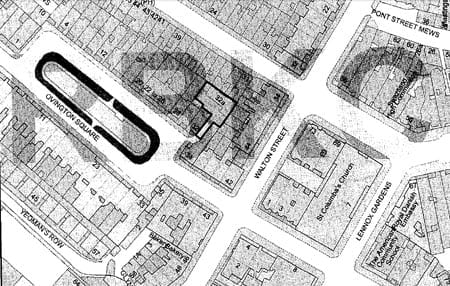
A site plan shows how hidden away 32a Ovington Square truly is – ideal for a government minister or indeed a wayward celebrity
About a year and a half later, I saw 32a Ovington Square for sale with planning permission to construct a far larger residence with a basement and sub-basement pool complex. The price was in the order of £14,000,000. I thought that somewhat ludicrous but now that the very same property is on the market at a price of £23,00,000, it seems that the world has just gone mad.
The brochure for the new residence, which has been renamed, Carrington House, reveals a three-storey low-built freehold building with 5,300 square foot of accommodation. Though 32a Ovington Square has been more than doubled in size by a developer named London City Developments, the sub-basement leisure complex has not been constructed. Could this have been because of planning problems or simply because such construction wasn’t deemed to add value?
In August 2002, Lord Carrington, whom The Mirror described as being “doddery” in a Scurra diary piece, was said to have objected to a bar named Townhouse behind his former home being given a 1am licence. That bar has since closed but as seven of the residents of Ovington Square and Beauchamp Place also took a dislike to the prospect of subterranean developments at his former home, only proposals for a single basement level were included in the January 2010 plans submitted by a Mr & Mrs R. Garner.
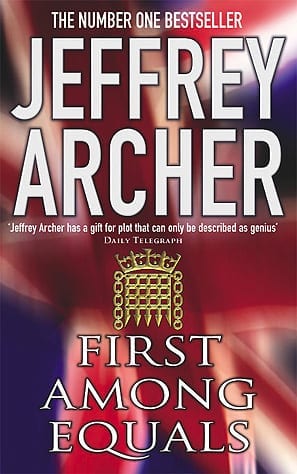
Jeffrey Archer’s 1984 novel “First Among Equals” (published in the UK by Hodder & Stoughton, ISBN: 0-340-35266-3)
Aside from controversy with residents and planning officials, this “heavily overlooked,” “dark” house gets a brief credit in Jeffrey Archer’s 1984 novel, First Among Equals:
“Charles would not have normally accepted the invitation. Lately he found cocktail parties to consist of nothing but silly little bits of food, never being able to get the right drink and rarely enjoying the trivial conversation. But when he glanced on his mantelpiece and saw an ‘At Home’ from Lady Carrington he felt it might be an amusing break from the routine he had fallen into since Fiona left. He was keen to discover more about the rumoured squabbles in Cabinet over expenditure cuts. He checked his tie in the mirror, removed an umbrella from the hat stand and left Eaton Square for Ovington Square… He arrived at Lord Carrington’s front door a little after six forty-five. A maid answered his knock, and he walked straight through to a drawing room that could have held fifty guests and very nearly did. He even managed to be served with the right blend of whiskey before joining his colleagues from both the Upper and Lower Houses.”
Turning to the real Lord Carrington, here is a man who has led a remarkable life. He served as Foreign Secretary in Margaret Thatcher’s cabinet between 1979 and 1982 and as Secretary General of NATO from 1984 to 1988. The last surviving member of the Cabinets of both Harold Macmillan and Sir Alec Douglas-Home was British High Commissioner in Australia between 1956 and 1959 and also chaired the 1979 Lancaster House conference that brought Zimbabwe’s revolutionary war to an end. In 1991, Carrington presided over diplomatic talks in the former Yugoslavia and commented:
“When I first talked to Presidents Milošević and Tudjman, it was quite clear that both of them had a solution which was mutually satisfactory – which was that they were going to carve up Bosnia between them.”
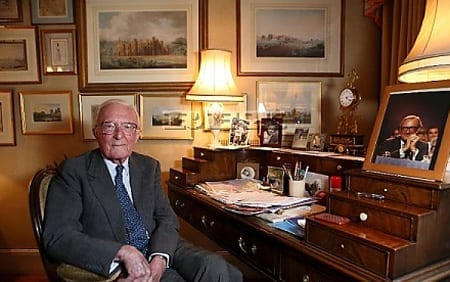
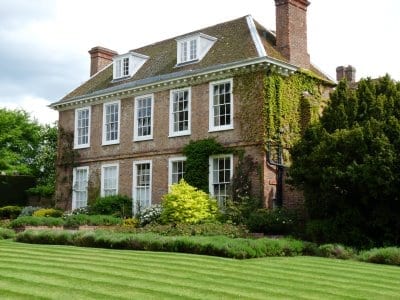
Lord Carrington at his desk in 32a Ovington Square, KnightsbridgeThe Manor House, Bledlow, Buckinghamshire, HP27 9PB is the country home of Lord Carrington
Milošević was found dead in his cell in 2006 but it is quite possible that Lord Carrington’s name will be mentioned in the trial of Goran Hadzic at the International Criminal Tribunal for the Former Yugoslavia that has just commenced at The Hague. It is amazing to think that matters involving this 93-year old politician are still current but Carrington’s stamina is shown in his roles as the longest serving member of the House of Lords and the second longest serving member of the Privy Council after HRH The Duke of Edinburgh.
Aside from politics, there is much on the internet, a considerable amount of it written by wildcards and fantasists whose number includes David Icke, about Carrington’s involvement with Henry Kissinger, the Illuminati, the Bilderberg Group and the Committee of 300. The consensus of these conspiracy theorists generally borders on the ludicrous, but it is without doubt that Lord Carrington had and continues to have influence in many high places. He was chairman of Christie’s International PLC from 1988 to 1993 and has held directorships on the boards of companies that have included Barclays Banks PLC, Hambros PLC, Cadbury Schweppes PLC, Amalgamated Metal Corporation PLC, British Metal Corpoation PLC, Rio Tinto PLC, Kissinger Associates Inc. and Hollinger Inc.
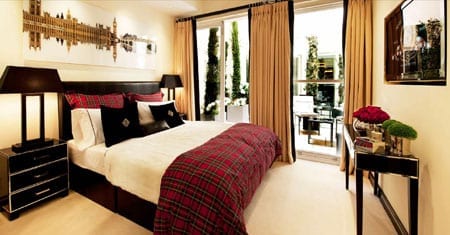
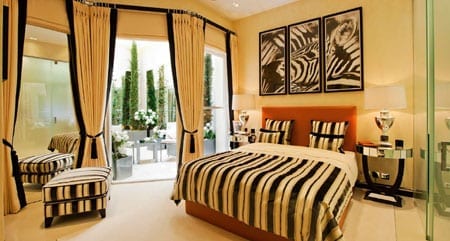
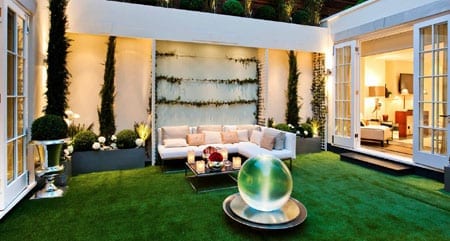
The main entrance to Carrington HouseThe main reception room of the house is decorated in a contemporary style and a far cry from the traditional decoration favoured by Lord and Lady CarringtonAn essential feature in any house priced over £10 million is a media roomCarrington House now boasts a bar that any dignitary would envyThe newly added basement level features an entertaining hall, dining room, bar, gym, media room and two bedroom suitesThe staircase is now lit by a glazed cupolaThe master bedroomThe master bathroomAnother bedroom, located at basement level, is decorated with a Scottish theme and has access to a shared courtyardThe other suite that shares the courtyard is decorated with an “Out of Africa” theme complete with an image of a zebra and matching linen and upholsteryWould the purchaser of a £23,000,000 home truly want an AstroTurf lawn?
Following on from this rather over the top redevelopment, a new chapter has certainly begun at 32a Ovington Square. Whether it is bought by a popstar or a Russian oligarch, they’ll definitely not be anywhere nearly as equal to Lord Carrington in terms of their league of influence.
Carrington House, 32a Ovington Square, London, SW3 1LR is for sale through Knight Frank. For further information contact Nick Vestey on +44 (0) 20 7591 8600. Full details of the house can be viewed at:http://search.knightfrank.com/sla100211
A £26 million residence with connections to rock, royalty and rectors
Built in the early 1500s, The Old Rectory is Wimbledon’s oldest house. Standing in grounds of 2.5 acres, this 16,200 square foot property was once described by a biographer of Sir Henry Cecil as being “not luxurious, but adequate” but now once again it finds itself in an entirely different league.
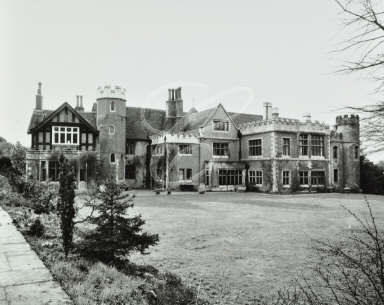
An image of The Old Rectory, 82 Church Road, Wimbledon, London, SW19 5AA in 1978. Present day imagery has been removed at the request of agents acting for the current owners.
Priced at £26,000,000, it is almost certainly one of the most expensive homes to ever come to the market in Wimbledon and whoever moves there next will undoubtedly be either an oligarch, an A-list personality or a top achieving business person.
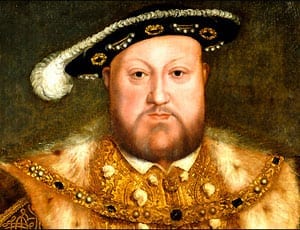
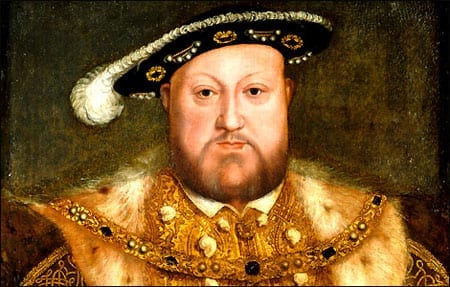
The purchaser will follow in the footsteps of a fascinating array of historically important residents, the first of whom was Henry VIII (1491 – 1547). The King took up residence in 1547 in the months prior to his death and is said, as he was so bloated, to have been unable to climb the stairs to his sleeping chambers. His bed was relocated to the great hall of the house and here he slept next to the fire. Historical research recounts that, with a brewhouse, beer and wine cellars, a coal cellar, meat room, buttery and two dairy rooms, this was a “house fit for a king.”
Henry VIII (1491 – 1547)Catherine Parr (1512 – 1548)
Henry VIII gave The Old Rectory, which was originally called The Parsonage House, to his sixth and final wife, Catherine Parr (1512 – 1548). Preferring a residence in Chelsea, Parr left and the Dean and Chapter of Worcester Cathedral took possession. A lease was sold to Sir William Cecil (1520 – 1598), later Lord Burgley, and the manor then passed to his son Thomas Cecil (1542 – 1623), the 1st Earl of Exeter.
In 1639, Charles I (1600 – 1649) bought the entire manor and gave it to Queen Henrietta Maria (1609 – 1669) but with the era of Comwell, The Old Rectory found itself occupied by General John Lambert (1619 – 1684). Shortly after, when a grander house was built next door, the property became first a laundry house and then servant accommodation and gradually fell into decline.
The Old Rectory passed next to Sir Theodore Janssen (1658 – 1748) in 1720. This French-born English financier, who was said to be worth the staggering sum of £250,000 at the time of his purchase of the house, was a founder member of the Bank of English but later disgraced for his part in the South Sea Bubble. He was expelled from the House of Commons and with his ruination, The Old Rectory saw yet another chapter of abandonment.
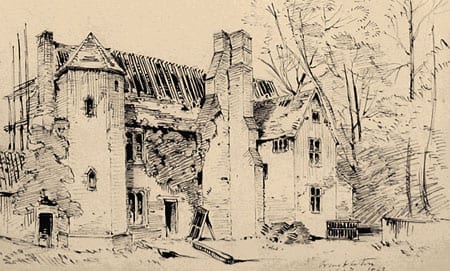
The garden front of The Old Rectory by Charles Henry Money Mileham (1837 – 1917)
By 1802, the house was described as an “uninhabited” ruin. A speculator credited with developing “modern Wimbledon” named John Augustus Beaumont bought it and restored and extended it but when it was sold to a Samuel Wilson in 1882 for £6,000, an era of truly comprehensive upgrades was to begin. Wilson added a pebble-dashed two-storey drawing room wing, carved oak doors and installed English, Flemish and Italian chimneypieces.
The next owner was a marine engineer named Matthias Jacobs who had been responsible for the construction of tunnels in Paris and New York. After having purchased The Old Rectory in 1909, he commissioned his brother to add a new single storey billiards room, a service wing and a study extension to mask the medieval chapel of the house. Jacobs sold up in 1923 to a Thomas Lethaby, who fitted oak paneling from Chantry House in Newark and a plaster ceiling based on the one at Knole House, Kent.
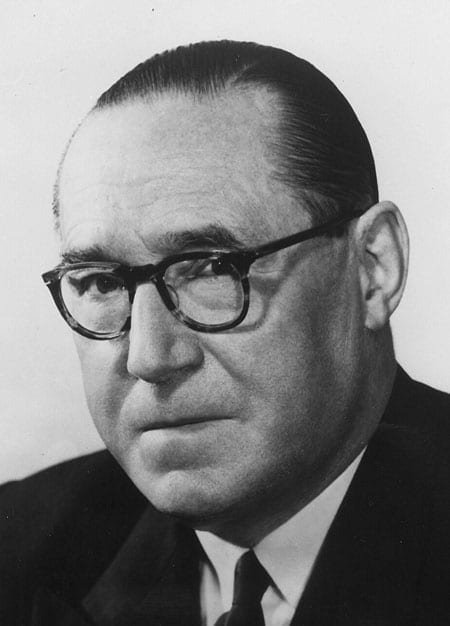
Lord Brock FRCS, FRCP (1903 – 1980)
In 1953, the eminent London surgeon and cardiologist, Lord Brock FRCS, FRCP (1903 – 1980), took possession of The Old Rectory after having paid £13,750 for it. Brock is credited as on of the pioneers of modern open heart surgery and also founded the Lord Brock Memorial Trust that to this day funds the museum he founded, The Old Operating Theatre Museum and Herb Garret in Southwark, SE1.
Following the death of his first wife Germaine Louise Ladavèze, Brock sold to an Iraqi entrepreneur and philanthropist named Basil Faidhi in 1978. Faidhi had fled Iraq for Britain and though he spent vast sums restoring the house with assistance from English Heritage, he also created a basement discotheque for his daughter, Nina, and a bar. Aside from bringing the house into the “yuppie era,” Faidhi also commissioned a historian named Richard Milward MA to write a history of the building in 1992 entitled: The Rectory – Wimbledon’s Oldest House.
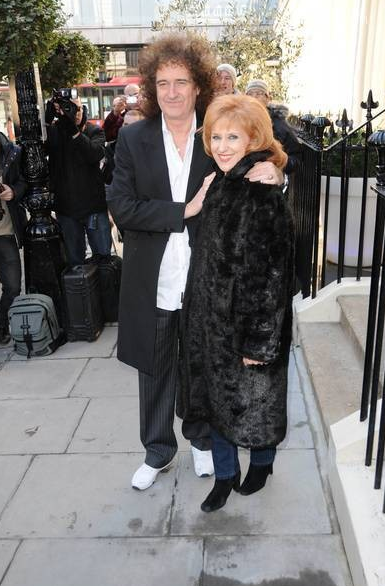
The Queen lead vocalist and anti-badger cull campaigner Brian May CBE purchased The Old Rectory in 1994 for £4,000,000 with the intention of living there with the Eastenders actress Anita Dobson.
Brian May CBE with his second wife Anita Dobson
Dobson, who didn’t marry May until 2008, had other ideas and refused to move in. It was suggested that she preferred a smaller house the pair occupied in Kensington and, at the time, a friend commented:
“[May] begged her to move into the new house so they can make a fresh start. Nobody can believe that Anita doesn’t want to be the lady of this fabulous house. But Brian says he can’t get through to her.”
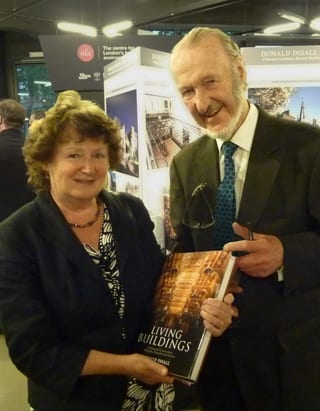
Sir Donald Insall CBE
As a result, May never properly moved into The Old Rectory and eventually decided to sell. In 2006, it achieved a record price of £16,000,000 and in the ensuing years, an Italian architect-owner named Antonella Carminati and her husband have lavished time and money on further restorations with the help of Sir Donald Insall CBE’s Insall Associates firm of architects.
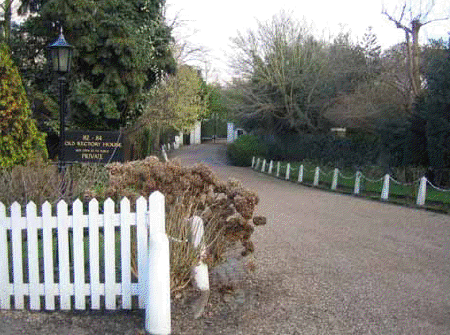
The driveway that leads to The Old Rectory from Church Road gives plenty of privacy
New fittings have been installed throughout and substantial extensions to the house have included a new kitchen and breakfast room with garaging beneath. The couple have demolished an early 20th century porch and an “unsightly” oak conservatory, remodeled the billiards room as a drawing room and removed a “bilious” blue swimming pool from the east lawn.
Now featuring 12,882 square foot of accommodation in the main house and 3,320 square foot of additional accommodation, The Old Rectory has been planned to include 8 reception rooms; a vast kitchen with La Cornue appliances and an adjoining breakfast room; master bedroom suite with two dressing rooms, his and her bathrooms and a sitting room and 7 further bedrooms.
Outside, the gardens feature an original medieval fig tree trail, shaded paths, lawns and a large pond as well as garaging for six cars. Planning permission for an indoor swimming pool complex has also been granted and ample staff accommodation is provided above one of the garages and in the gate lodge.
Given the now limited financial resources of the traditional religious houses of Britain, will it be rock, royalty or new money that next takes possession of The Old Rectory? The historians of Wimbledon will undoubtedly be watching.
The Old Rectory, 82 Church Road, Wimbledon, London, SW19 5AA is for sale through the Wimbledon office of Knight Frank. For more information call: +44 (0) 20 8946 0026.