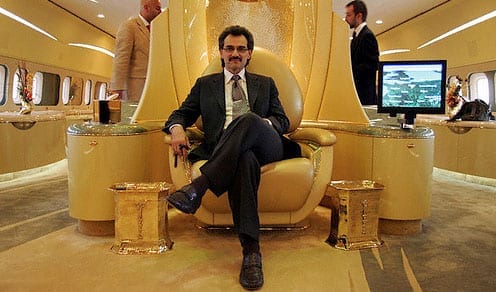
 Ranked as “the most influential Arab in the world”, Al-Waleed has at various times held investments in News Corp, AOL, Apple Inc., Motorola, Fox News, Eastman Kodak, TWA, Twitter, The Savoy, the Four Seasons hotel chain and Euro Disney SCA. Not afraid to back his beliefs financially, the “Buffett of Arabia” gave £18.5 million to the families of Palestinian “martyrs” in 2002 and sent a cheque for $10 million to New York City Mayor Rudy Giuliani after the 9/11 attacks. In exchange he requested “a more balanced stance toward the Palestinian cause”. The cheque was returned. When Forbes magazine listed him as being worth £13 billion in March 2013 he was irate at the use of “incorrect data” that “seemed designed to disadvantage Middle Eastern investors”. Al-Waleed, whom rival publication Bloomberg list as being worth £18.5 billion, indignantly told Steve Forbes to remove him from his list and announced through his office that would he would “sever ties” with it. Surely, this dispute could be easily solved as, after all, what’s a billion or two between friends?
Tag: royalty
-
Prince Al-Waleed bin Talal
-
Bang, Bang, Snap, Snap
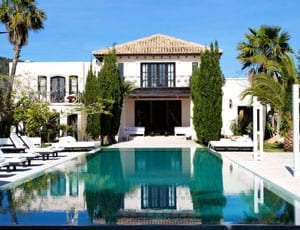
The sale of The Duchess of Cambridge’s uncle’s holiday villa, La Maison de Bang Bang
Just as it is reported that the pregnant Duchess of Cambridge is said to be furious about photographers having managed to capture her in a bikini on a beach on the private island of Mustique, another of her previous holiday destinations has come to the market.
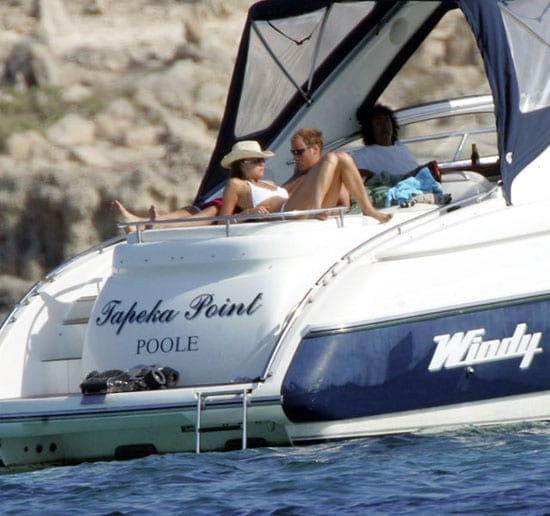
Kate Middleton and Prince William aboard Tapeka Point during their 2006 holiday in Ibiza. 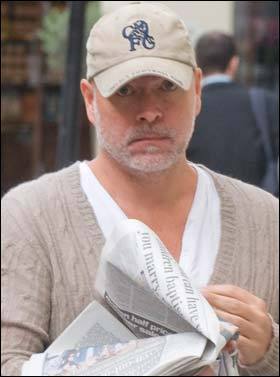
Carole Middleton’s brother businessman Gary Goldsmith. 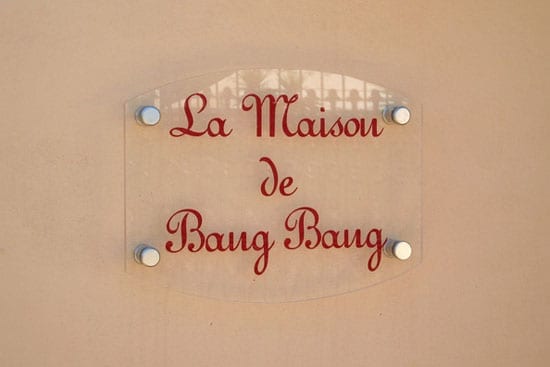
La Maison de Bang Bang’s sign. The Duchess, as Kate Middleton, stayed with Prince William at the holiday home of her uncle, Gary Goldsmith’s in Ibiza in 2006. During the break at the exotically named La Maison de Bang Bang, the Prince and Miss Middleton were photographed on a motor launch, Tapeka Point, that was subsequently put up for auction in April 2012 for £120,000.
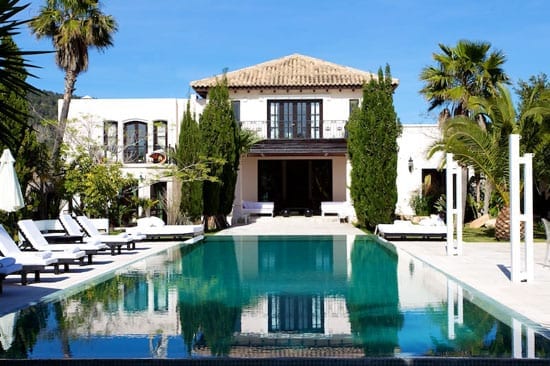
La Maison de Bang Bang 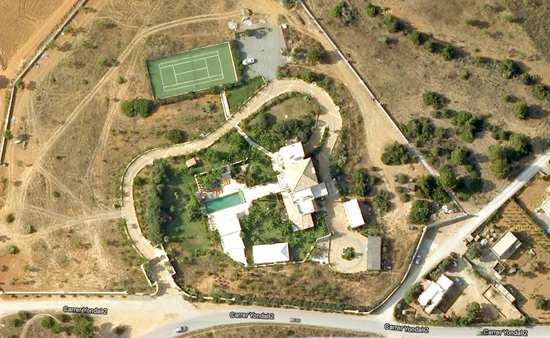
An aerial shot of the property The 4 double bedroom villa, named according to its official website, after “Ibiza’s famous banging house music”, is just five minutes from the Cala Jondal beach and the “hip” Blue Marlin beach bar. The house stands on a plot of 23,850 square metres and includes a large reception room, 4 dining areas and a fully equipped gym. In addition there is a staff bungalow, swimming pool and tennis court.
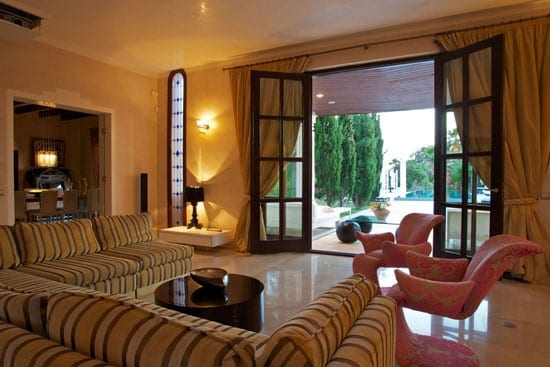
The main reception area in the house. 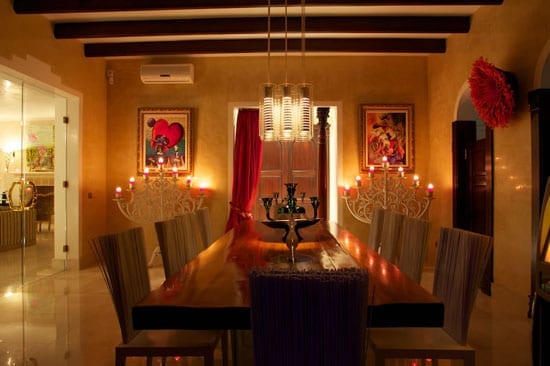
One of four dining areas. 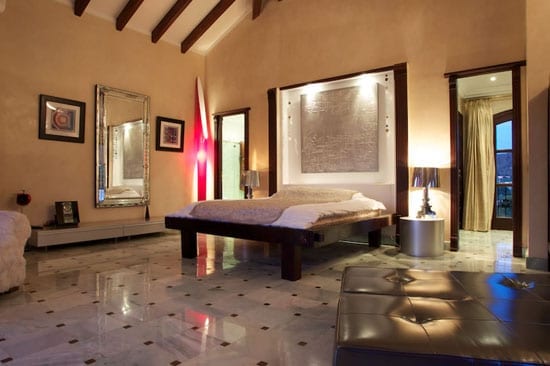
One of four double en-suite bedrooms. 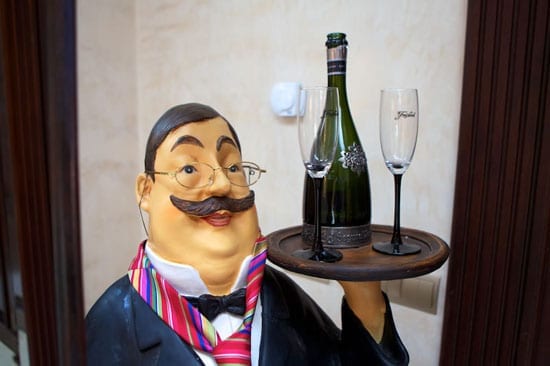
An example of Mr Goldsmith’s humour. 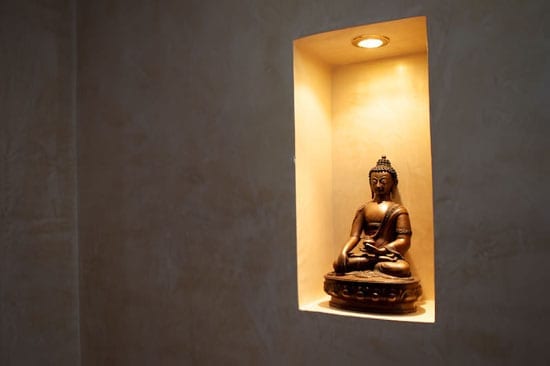
Buddhas can be found throughout the villa. 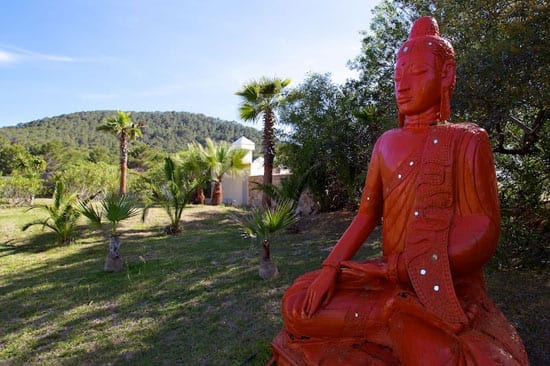
And also in the garden. 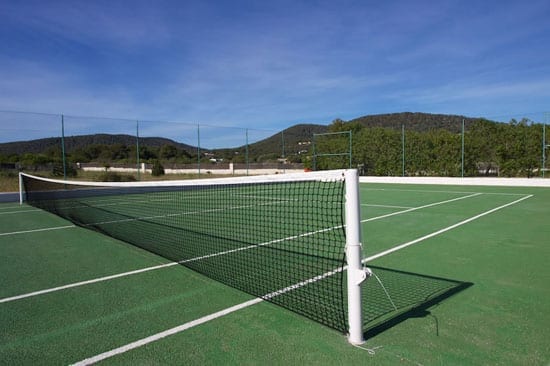
As well as an outdoor swimming pool, there is a full sized tennis court. In a statement to the Daily Telegraph’s “Mandrake”, Goldsmith, who was subject to a News of the World sting at La Maison de Bang Bang in 2009, commented:
“I’m looking to buy a bigger house in London, given that I have only been there myself once in the last two year… After what seems like a million years of fun, fun, fun, I’m selling Bang Bang, folks”.
Of the house itself, Mr Goldsmith told the Daily Mail’s Richard Kay:
“It’s on for 6.5 million Euro. Despite the Spanish economy, it’s a good time to sell because the Euro is very strong at the moment, plus Ibiza isn’t like mainland Spain. It has a micro-economy all of its own”.
Knight Frank’s particulars for La Maison de Bang Bang were prepared last September and though Mr Goldsmith, who made £275 million selling his recruitment business in 2005, may be a canny businessman, it seems as if he may have to wait some time before someone else decides to put their bucks into the Bang Bang.
For more information on La Maison de Bang Bang, contact Knight Frank on +44 (0) 203 641 5161.
To view particulars on the house, go to: http://content.zoopla.co.uk/a6420c8137a5d9f4e81b6c108c398e4bf467c6ed.pdf
To view the official website for the house, go to: http://www.rentibizavilla.com
-
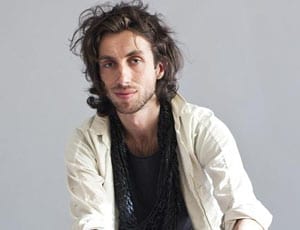
Topes Calland: “What’s on your mantelpiece?”
The Steeple Times asks “super-tutor” Topes Calland: “What’s on your mantelpiece?”
The Steeple Times shares “wit and wisdom.” What’s your guiding force?
The mantra I use with my students is: “clarity, confidence, creativity”.
“Don’t get even, get medieval” is, in our humble opinion, a great motto. What’s yours?
“Neither here nor there”, because I’m generally not.
Kerry Katona was considered unacceptable in 2007. Who or what is unacceptable in 2013?
Kerry Katona.
Tony Blair misses being Prime Minister. What do you miss most in your life?
The freedom to stay in one place for any length of time.
What might you swap all your wealth for?
I’d be lucky if I could convince someone to swap my wealth for a family-sized packet of Revels.
Donald Trump was once a case of: “If you owe the bank a thousand, they close you down; but if you owe the bank a billion, you own the bank.” What’s your view on the banking crisis?
Cash is King.
What phrase or word do you most loathe?
Crampon.
In the UK, some people consider charity to “begin at home.” What’s your view and what causes do you personally support?
Charity should, and inevitably does, begin at home. I’m a keen supporter of educational charities, or any charity that involves giving people a second chance.
The judge in Law Abiding Citizen states: “I can pretty much do whatever I want” before being blown up whilst answering her mobile phone. What’s your view on the appropriate use of such devices?
My ‘phone is one step up from two cups and a piece of string. I like to be able to call, and be called, in an emergency. Everything else can wait.

Topes Calland If you could fill a carriage on The Orient Express, who would be your fellow passengers?
A random sample of people from the Argos on High Street Ken. I went there a few weeks ago looking for multi-coloured Christmas lights and it really does contain the most disparate cross-section of society.
If you were unfortunate enough to end up on death row, what would be your last meal and where would you eat it?
Anything based around egg-fried rice. I bloody love it. So long as I have my rice, I don’t much mind where I eat it.
What time is it acceptable to consume the first drink of the day?
It rarely occurs to me to drink anything much stronger than Um Bongo, so I’m tickled pink any time have a craving for a tipple; it makes me feel like a real grown-up.
A Negroni, a martini or a cup of tea?
See above.
Whose parties do you enjoy the most and why?
Any party that doesn’t involve fancy dress. I don’t care if I sound miserable; I get slight acid reflux on my back molars just thinking about it.
Who is the most positive person you know?
I try to avoid people who are too inanely positive. I prefer ‘quietly optimistic’.
What’s your most guilty pleasure?
Channel 4’s Coach Trip. In fact, I’m not even particularly guilty about it. Scrap my answer to the ‘Orient Express’ question; I’d much rather go with the contestants from any given season of Coach Trip.
If a tattoo were to sum you up, what would it be of?
I’m a bit of a baby when it comes to needles, so something small and essential… preferably on somebody else.
If you were a car, what marque would you be?
Probably a Ford Mondeo, or something equally unintimidating.
Cilla Black presented “Surprise, Surprise.” Tell us the most surprising thing about you.
I hate surprises. I was a much bigger fan of Blind Date which is why I’m enjoying this interview so much.
What’s currently sitting on your mantelpiece?
I don’t have a mantelpiece but if I did, I’d sit on it, just because I could.
Topes Calland is an Oxford graduate and the co-founder of Howard Calland Education Consultants. He has become well known for tutoring the children of rock stars and royalty.
For more information, go to: http://www.howardcalland.com
-
A prank too far
Matthew Steeples shares his views on the untimely death of a hospital receptionist
Suicide is sadly something that is at the forefront of my mind this week. My friend Andrew Embiricos sadly died exactly a year ago but when I read that a hotel receptionist who had been the victim of a prank had committed suicide, I was truly saddened.
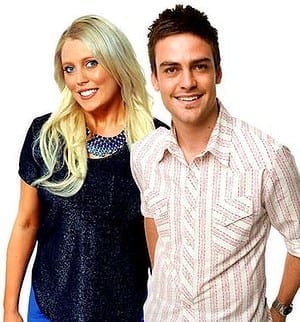
Radio presenters Mel Greig and Michael Christian A hoax call by two foolish Australian radio presenters to the private hospital which treated the Duchess of Cambridge is said to have been the trigger for the suicide and frankly the two morons who caused this should hold their heads in shame. 2Day FM is already serving two five-year probations for breaching the code’s radio stations have to adhere to and presenters Michael Christian and Mel Greig ought to be sent to The Tower. Their’s was a prank too far. Off with their heads.
-
The Woman Who’ll Make Politicians Jealous
Jilly Cooper’s state of the nation style summary strikes chords with Matthew Steeples
Best-selling bonkbuster author Jilly Cooper might be best known for novels such as Riders and Jump! but in the 1980s and 90s she was equally lauded as “one of the Conservative Party’s most ardent supporters.”
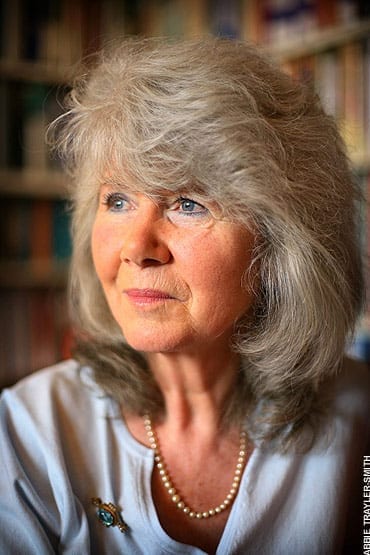
Jilly Cooper Cooper, born in 1937, showed she still has a grip on the nation’s pulse yesterday when she declared that the Conservative Party is “full of terrible people now” to The Spectator’s “Steerpike.”
Separately, in a comment to The Telegraph’s “Mandrake,” Mrs Cooper shared her thoughts on Pippa Middleton’s first book, Celebrate:
“[It] wasn’t a good idea. I don’t blame her – I think that she was ill-advised… All I can say is that I hope the British don’t demonise her because of it. She seems a lovely girl and her sister is wonderful.”
Ever the diplomat, Jilly Cooper, in these comments, shows herself as a truly brilliant wordsmith. She has tact and decency but at the same time doesn’t hold back when it comes to honesty.
Nigel Farage should put in a call. Mrs Cooper could be just the asset UKIP needs to transform them from a “bunch of loons” to electability.
-
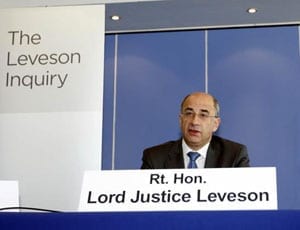
The Media: Friend or foe?
Sarah Tucker shares her experiences on a panel discussing the outcomes of Leveson
Journalist and author Sarah Tucker was one of the panelists at a talk at the Richmond Literary Festival on Thursday evening. By chance, since it coincided with the publication of the Leveson Report, the panel’s discussion naturally focused on that. Here Tucker share her thought in an article first published on her own blog:
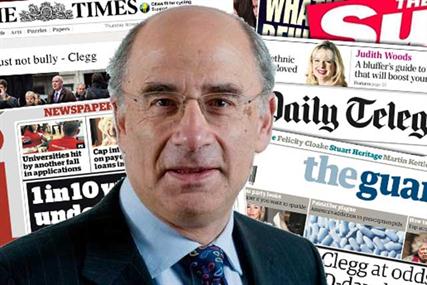
Will the outcome of Leveson change the media? I was in excellent company last night as part of a panel at the Richmond Literary Festival that felt almost weirdly timed to coincide with the day of the Leveson announcement.
I appeared on a panel with Sir Trevor MacDonald (who needs no introduction, but got one any way), the editor of the Sheengate Titles, Richard Nye; Claire Fox, the director of the wonderfully named Institute of Ideas (which I thought sounded like something out of Hogwarts) and Matthew Syed, illustrious columnist, Times writer and former Commonwealth table tennis champion (I wanted to ask him about table tennis but felt it oddly irrelevant in context of the debate). We discussed if the media were ‘friend or foe’ (though it wasn’t specified ‘to whom’) this of course had been perfectly timed to coincide with the Leveson findings. It was pure fluke but that’s timing for you.
Sir Trevor felt Leveson would change nothing. Everything, he suggested, would be bogged down in committees and sub committees and nothing would be done. Ever. Fox and Syed felt if statute was put in place, it would potentially be very dangerous especially if you had the likes of Blair or Thatcher in charge again or some lesser megalomaniac.
As for my view, I think the politicians are playing a game. They are losers all of them, we are the biggest ones (the punter, the voter, the onlooker), but to think they could come out and out say one way or another would be a nonsense and would take a great deal of courage, which they don’t have.
When I look at politicians now I think of them as actors upon a stage, not meaning anything they are saying, not even understanding most of it, just reciting it. I don’t feel contempt because it takes courage to get up on that stage. And Sir Trevor noted that many journalists and reporters now treat politicians with barely restrained contempt when they interview them. As he noted, at least politicians enter the process to do something of good for their community (although I think some do enter it for ego), something you can never say about those who work in the city.
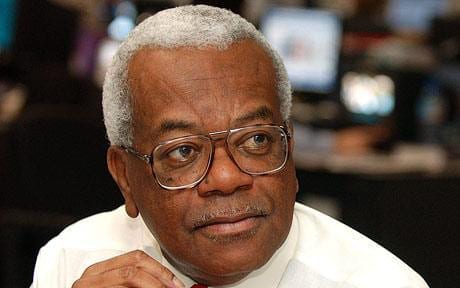
Sir Trevor McDonald OBE And who will be in this ‘organisation’ that will monitor the press? Who on earth, on this earth, is so honourable, so without fault, so incorruptible to be considered for this position? A politician? No. A banker? You’re joking. A policeman. Perhaps.
I think you need a ‘common man’, or woman who has a sense, a common sense and an ability to see through the emperor with no clothes phenomenon of what is bullshit and what isn’t, what is in the public interest and what isn’t. It isn’t someone who has risen to the top. If this year has proved anything the shit rises to the top more regularly than the cream does. Although I must say I do like Eddie George. I think his contempt for the city mirrors that of my own, but then he deals with them on a daily basis so that’s understandable.
In many ways the media has been it’s own worst enemy. Editors allowing for lazy journalism – the recent article about Canada in The Telegraph being an example. I met the head of PR for Canada in the UK for lunch this week and she despaired that they usual cliché about Canadians came up without anything relevant or up to date on a country that had a government which managed to manage their bankers – something our politicians have not. As she commented: “It’s harmless but it’s pathetic.”
Then there’s the phone hacking which hacked into ‘common man’ rather than celebrity, who I am afraid I have absolutely no sympathy with. That includes the royals, both the young and old. They are sold to us as though we know them. We don’t have a clue who they are. We just think we do.
Editors encourage journalists to get stories, to hit the negative angles because they are told ‘it makes better news’ and people are more interested in bad news than good. I think it’s been proven somewhere, with stats or something, but then so have a lot of other things which also turn out to be rubbish. And all media are businesses so their bottom line is more important than anything else. Associated Papers are making money, The Times is running on a subsidy, the rest of the papers I think are losing money. The BBC may have been dented but they are respected around the world and like the NHS should not be tampered with. They should not be interested in profit and should aim in their production values at all times and at all cost. Every panelist agreed on that point.
The weave between the institutions of the police, the law, the church, the city, the media, the royals, the politicians has become so entwined. This is like a lover’s tiff that will pass over because the end game is more important. There is too much money, too much power and far far too much ego invested in these institutions for morality and integrity to get in the way of profit.
This has been a year of revelation but not revolution. And if it were it would be the wrong heads that would roll.
Sarah Tucker is an award winning travel journalist, novelist, producer and broadcaster. She has edited, produced and presented her own radio and TV series as well as presenting reports for BBC Holiday Programme and anchored I Want That House on ITV. She is the author of best selling novels The Playground Mafia (short listed for the Good Housekeeping book of the year 2007) The Battle for Big School, The Last Year of Being Single, and The Control Freak Chronicles.
For more information about Sarah Tucker, go to: http://www.sarahtucker.info
Buy The Playground Mafia on Amazon at: http://www.amazon.co.uk/Playground-Mafia-Sarah-Tucker/dp/0099498456/ref=sr_1_7/202-9265101-5575054?ie=UTF8&s=books&qid=1193856472&sr=1-7
Follow Sarah Tucker on Twitter at: http://www.twitter.com/madasatucker
-
Blessed Beckham
Victoria Beckham tours Brian Blessed’s former home
In April, the blog that preceded The Steeple Times featured an article on Clarence House in Richmond.
At the time this former school and home of actor Brian Blessed was priced at £22,500,000 but after languishing on the market, the price has been slashed by £4,500,000 to £18,000,000.
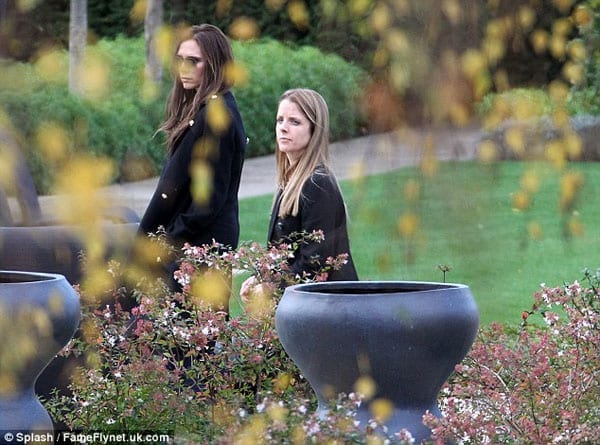
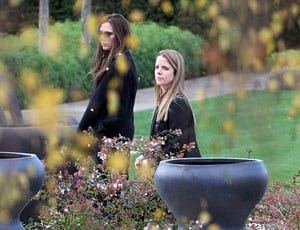
Victoria Beckham pictured in the garden of Clarence House, 2 The Vineyard, Richmond Hill, Surrey, TW10 6AQ 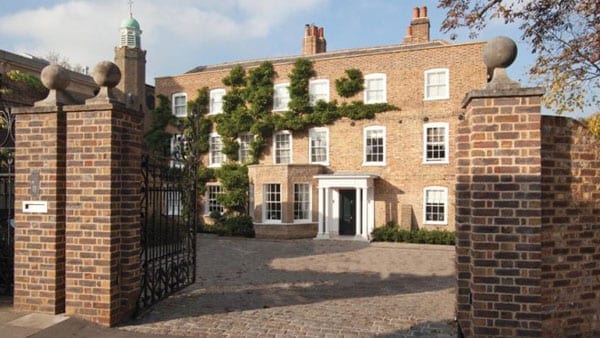
The front of Clarence House would no doubt need “pap proofing” to suit the privacy requirements of David and Victoria Beckham and their family In recent days Victoria Beckham has been pictured touring this and other properties in south-west London. No stranger to securing a bargain and worth some £160 million, Mrs Beckham could no doubt slice a little extra off if she decided to proceed. She and her husband are allegedly set to return to the UK and an unnamed source is quoted as revealing:
“David has been really missing London and the UK recently. The royal wedding, the Olympics and now Christmas coming up have all made him long for the UK. He talks about being in London a lot and he misses his family, so it would make perfect sense for the family to all move back to Britain. For the Beckhams, Eton [as a school for their sons] would be the ultimate arrival.”
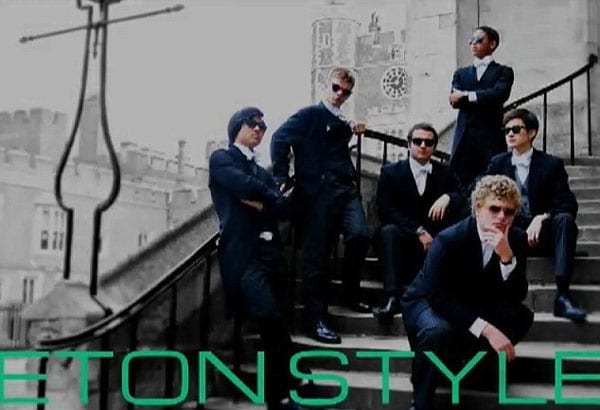
Since the pupils of Eton College recently parodied the ‘Gangnam Style’ high-energy Korean disco music, maybe they’ll also embrace the Beckham boys Perhaps if the couple don’t manage to get their sons to “go Eton Style,” they could reopen Clarence House as a school. The most famous pupil to pass through the doors was Bernardo O’Higgins (1778 – 1842), the liberator and founding father of Chile.
To read the original feature on Clarence House, 2 The Vineyard, Richmond Hill, Surrey, TW10 6AQ go to: http://thesteepletimes.com/opulence-splendour/blessed-clarence/
Watch the Eton Style Gangam parody at: http://www.youtube.com/watch?v=9FtZkVRkusQ
-
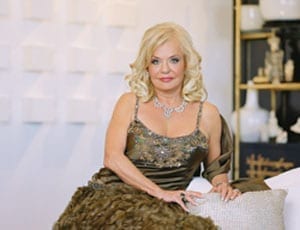
Beverly Cohen
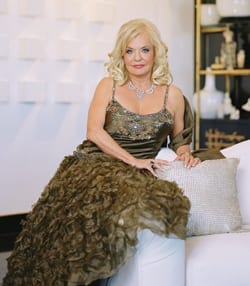 Co-owner of the Four Seasons in Beverly Hills with her husband R. J., Cohen is of surprisingly humble origins. She grew up on a chicken farm in Cleveland, Ohio but moved to LA with her divorced mother aged 13 when she opened a Kosher chicken killing plant on Santa Monica Boulevard. This hardworking lady now instead hosts the likes of Rod Stewart, John Tavolta, Quentin Tarrantino, Mel Gibson, Britney Spears and Ryan Seacrest. On an occasion Matthew McConaughey has even been known to park his Airstream on the front lot to barbeque steak for passersby.
 -
The badgers of Albany
Matthew Steeples delves into the history of Albany, Piccadilly and discovers an affordable way of living there
Albany, off Piccadilly in Mayfair, was most probably London’s first apartment block and it’s certainly the city’s most exclusive. It may be next to the Royal Academy and opposite Fortnum & Mason but surprisingly few have even heard of it.
Considering its location, Albany, which some make the mistake of referring to as “The Albany,” is an amazingly quiet oasis of peace and tranquility but, equally, it is a place of intrigue and drama. Residents, or “proprietors,” as they prefer to be known, of the 69 “sets” are particular about the “the” part of the name as they’d rather their residence not be confused with a public house and they are even more protective of their privacy. A porters’ lodge guards the entrance to the building and it is staffed mostly by ex-servicemen, who, until the early 2000s, had to wear top hats and tailcoats. Those allowed to pass enter a rarefied world frequented by what the Irish novelist Marmion Savage (1803 – 1872) identified as “incurable oddities” and “superannuated fops” in The Bachelor of Albany.
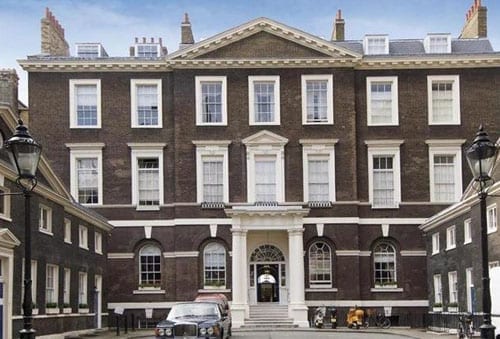
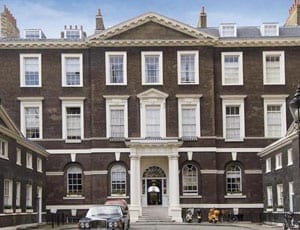
The front courtyard and façade of Albany, Piccadilly, Mayfair, London, W1J 0AL 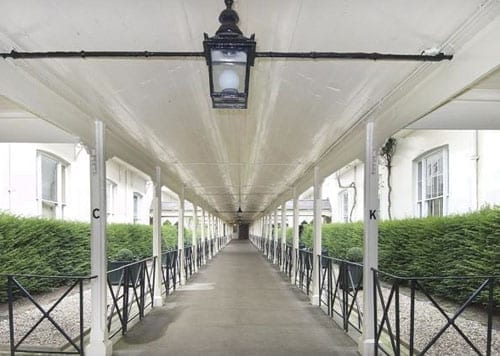
The rope-walk connecting the various sets of Albany has been traversed by some of the greatest names in history Built by Sir William Chambers (1723 – 1796), who also designed Somerset House and the pagoda at Kew, between 1770 and 1774 for 1st Viscount Melbourne (1745 – 1828), Albany was originally known as Melbourne House and conceived as a three-storey mansion, seven bays wide with a pair of service wings flanking a front courtyard. From 1791 to 1802, the property was occupied by George III’s son, Prince Frederick, Duke of York and Albany (1763 – 1827), but after he left, the renowned architect Henry Holland (1745 – 1806) sub-divided the existing house and added two parallel sets of buildings running the length of the garden to create 69 “bachelor apartments” which he named “sets.”
The “roll call” of residents since could easily fill our very own pages thrice over. They number royalty, politicians, artists, playwrights, academics and philosophers and here is a brief selection:
– Anthony Armstong-Jones, later 1st Earl of Snowdon
– Sir Thomas Beecham
– Sir Isaiah Berlin
– Lord Byron
– George Canning
– Sir Kenneth Clark
– Baroness Pauline de Rothschild
– William Ewart Gladstone
– Sir Edward Heath
– David Hicks
– Aldous Huxley
– Sir Simon Jenkins
– Rupert Lycett Green
– Malcolm Muggeridge
– Sir Harold Nicholson
– J. B. Priestley
– Sir Terence Rattigan
– Roger Scruton
– Baroness Sharples
– W. Somerset Maugham
– Terence Stamp
– Sir Denis and Lady Thatcher
– Sir Herbert Beerbohm Tree
Each had to pass the vetting of a committee of trustees of this Grade I listed building. That committee forbids children under 14, pets, musical instruments and commercial activities and each approved resident has undoubtedly added to the history of this den dominated by a central walkway named the “rope-walk.” Incidentally, an example of a curious quirk at Albany is that no resident is allowed to speak to another on this walkway. If they do, a fine is incurred. Albany, indeed, is rather like a college in its systems of rules, regulations, order and hierarchy.
For several centuries, women were not even allowed to cross the threshold and one legendary tale tells of Lady Caroline Lamb (1785 – 1828), disguised as a page boy, stealing into Lord Byron’s (1788 – 1824) set in 1815 to leave a note: “Remember me, Byron.” He replied with a simple verse:
Remember thee, aye, doubt it not:
Thy husband too shall think of thee.
By neither shalt thou be forgot —
Thou false to him, thou fiend to me.
The strict and formal structure that controls Albany and ensured its maintenance has succeeded in the main because 34 of the 69 sets are owned by Peterhouse College, Cambridge. They and the other owners are highly particular in whom they lease to and on one occasion on hearing of an “unsuitable tenant,” the secretary of the trustees is reported to have shouted:
“He’s a foreigner. Don’t like him. Don’t trust him.”
Needless to say, that application didn’t progress and nor did one from a physiotherapist who planned to operate from the building. Bone bashing in Albany just wouldn’t do.
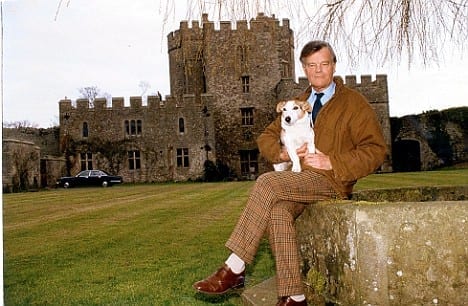
The Rt. Hon. Alan Clark MP (1928 – 1999) in the grounds of his main home, Saltwood Castle, near Hythe in Kent in 1993 A horsewhip, however, nearly crossed the threshold of set B5 in 1994, as it was here that the late Alan Clark MP (1928 – 1999) lived. The affable philanderer seduced the wife and both daughters of a certain South African named Judge Harkess and the wronged man stated he would “have horse-whipped Clark if he had known how comprehensively he had violated his honour.” B5, itself, was described as having the feel of “the straitened quarter of an Edwardian bachelor on his uppers” and the dotty, English attitude of the residents is best summed up by the reaction of Clark’s neighbour when he accidentally flooded their basement. When asked what he could do to make amends, their answer was quite simple: “Go and lie down in Piccadilly and wait for a double-decker bus.”
The dandy and journalist John Morgan (1959 – 2000) typified social change at Albany in the 20th century just as much as he himself redefined etiquette and manners at Debrett’s and The Times. Of “humble origins,” Morgan was brought up in a “modest” bungalow in St Madoes, Perth, Scotland but is credited with persuading William Hague to remove his baseball cap whilst Conservative leader and offering advice ranging from “how to eat a banana” to “how best to tell friends that the partner you would like to bring to their wedding will be of the same sex as you.”
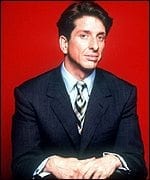
Dandy and etiquette expert John Morgan (1959 – 2000) For the bachelor and GQ style director, living in Albany was symbolic of his own personal social elevation but he did not disown his past. This modern day Beau Brummell was a man of social contradictions who cashed his cheques at Claridge’s but was a member of the National Union of Journalists. He was a Tory but still regularly attended chapel meetings as he had done in his youth. Here was a man of paradoxes who seemed unable to come to terms with the fact that he was a homosexual.
Morgan, an asthma sufferer, fell to his death from a fourth floor window on 9th July 2000. He was found in just a white shirt in a basement below a window whose sill was strangely undisturbed. The coroner left an open verdict with a suspicion of suicide and it was widely reported that police found 60 made-to-measure Savile row suits, 300 monogrammed shirts and 90 pairs of shoes in the etiquette expert’s small set. Mystery shrouds the story of his tragic demise to this day but Johnny Morgan will forever be remembered as an arbiter of both good taste and behaviour.
Whilst Morgan represented continuation of the trend of bachelors living in Albany, change also came in the 20th century when the building’s committee removed the restriction that allowed only bachelors to be resident. With that females were allowed in and amongst them Fleur Fenton Cowles (1908 – 2009) was one of the most fascinating.
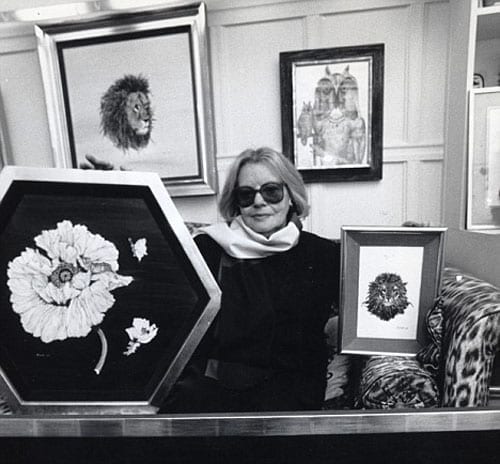
Fleur Fenton Cowles (1908 – 2009) in her set at Albany with some of her paintings and one by Salvador Dali This writer and artist occupied five sets knocked into one with her fourth husband, timber merchant Tom Montague Meyer, and according to the Daily Mail’s Geoffrey Levy, hosted “elite soirees of the powerful and famous.” Levy recounts them at length but here is a flavour:
“On a Wednesday evening, a typical dinner party… would include Foreign Secretary Selwyn Lloyd, Labour leader Hugh Gaitskell, entertainer Danny Kaye and film star Douglas Fairbanks Jr. The Queen Mother regularly came to tea and was once joined by Pavarotti who sang Happy Birthday for the royal guest. ‘I don’t want her to die,’ said Fleur. ‘I couldn’t bear to think she doesn’t live just down the street.’ ”
Fenton Cowles, founder of the ill-fated Flair magazine and a “woman who knew everyone,” loved Albany and an exact replica of her “windowless, milk-yellow” study there has even been recreated at the University of Texas.
Another known for hosting extravagant bashes in Albany was my late friend, the Russian icon dealer John Gaze (1947 – 2011). Gaze had, as a boy, asked his father about the building when he passed it as a child and immediately declared he would live there one day. He took F2, the former set of Edward Heath that overlooked Savile Row to the rear, in the mid 1990s as he craved the safety that the building offered after having been kidnapped at gunpoint by an Oxford graduate conman named Sacheverell de Houghton in April 1991 from his then home in Fournier Street, E1. He made the most of his tenancy.
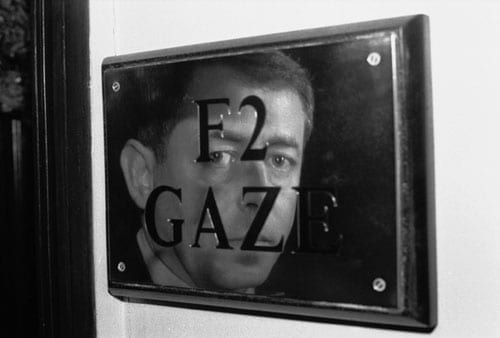
Russian icon dealer John Gaze (1947 – 2011) reflected in the brass plaque outside his Albany set, F2. It was formerly occupied by Sir Edward Heath. Gaze’s parties included a fundraiser for people with AIDS hosted by a drag queen. This sparked fury with certain other residents and coverage in the Daily Telegraph and another incident there involved him encountering Alan Clark on the ropewalk carrying a portrait of Lenin. “Where the fuck are you taking that?” Clark supposedly bellowed but was “reassured” when he was told it was “destined for a less salubrious address in Whitechapel.” John Gaze remained at Albany for several years but, like a number of others I know, was forced out by ever rising rents and moved first to Chelsea and then Ennismore Gardens, Knightsbridge. He always remembered his time at Albany fondly and as a bon vivant, he truly belonged there.
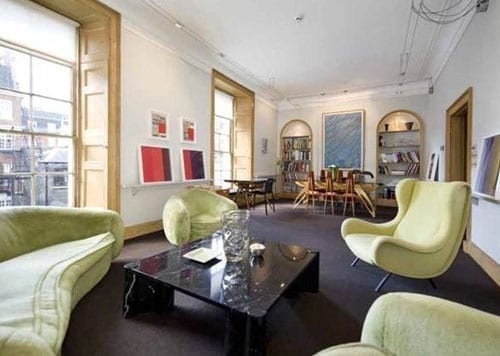
The main reception room in a £1,400 a week set currently available in Albany 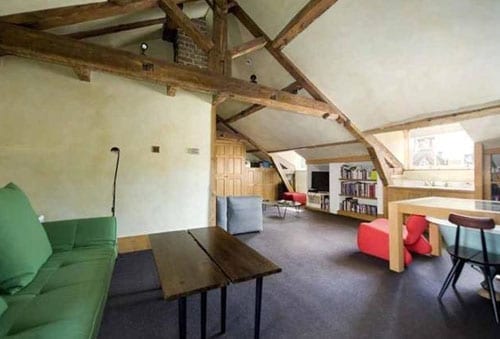
An attic room in the set that could be used as a second reception room or second bedroom 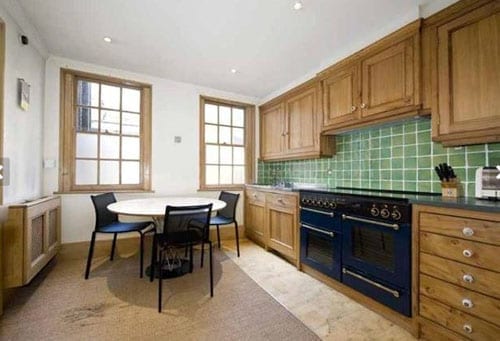
The kitchen is lacking in character but offers ample space for informal dining Contrary to what you’d expect, living in Albany is not quite as expensive as one might think. A 2-bedroomed 1,970 square foot set is currently available through Knight Frank for £1,400 a week: a figure that seems quite reasonable given the location, history and size of this property. Available on a minimum 8-year rental term, it includes a formal reception room, a dining kitchen, 2 bedrooms and 2 bathrooms.
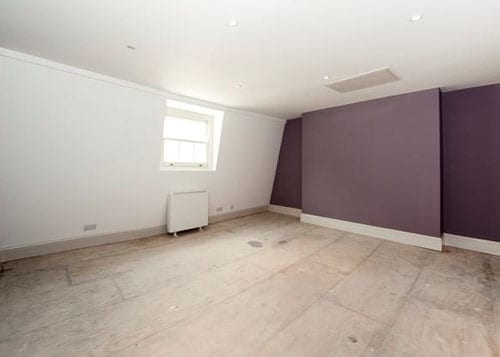
This £300 per week set, D2, consists of just one room 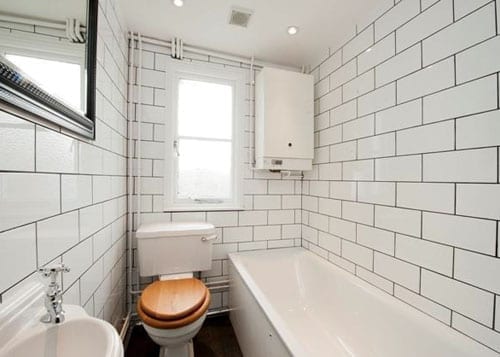
The communal bathroom D2 shares with other sets is basic but clean For those looking for something cheaper, Savills offer D2 Albany at £300 per week. This set consists of a 221 square foot third floor attic room with access to a communal bathroom and the agents suggest that it: “would make an ideal reading or writing room or an occasional bedroom for a pied-a-terre.” It’s effectively a posh form of tenement but what a way to impress your peers and subordinates.

Damon and Sandra de László in their “duplex” in Albany Those renting either of these sets would find the likes of the industrialist Damon de László, a descendant of the Hungarian painter Philip Alexius de László (1869 – 1937), as their neighbour. The couple occupy Lord Byron’s former set, A2, and have, on occasions, opened it for a charity dinner with Matthew Parris at £1,000 a ticket as well and for members of The Portrait Institute to view their collection of de László’s works.
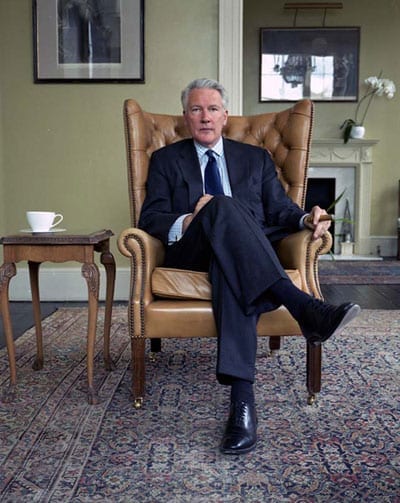
Professor Philip C. Bobbitt in his grand freehold set Another present day resident is a man Henry Kissinger calls “the outstanding philosopher of our times,” Professor Philip C. Bobbitt. This Texan lawyer is a nephew of Lyndon B. Johnson and the author of Terror and Consent, which Tony Blair describes as “required reading for political leaders.” Bobbitt owns an impressive flying freehold set that is described as having a masculine style of décor and a “kitchen he has designed to look like a bar.” In an interview for The Independent he states that he finds Albany: “a propitious place to work.”
Though governments and bankers come and go, behind this quintessentially English façade, order and disorder have always been maintained. The wildcards of this hidden haven have a knack for living by the doctrine “to live at Albany is to live in history” and indeed they make the most of that. Those who are lucky enough to be let in, do, indeed, truly find themselves in the “Paradise of Piccadilly.”
For more information about the £1,400 per week 2-bedroomed set in Albany, contact Knight Frank on +44 (0) 20 3641 2489 or go to: http://www.primelocation.com/to-rent/details/21089526?search_identifier=561863685a1a55b5da85141e12cfeec7
For more information about the £300 per week attic room in Albany, contact Savills on +44 (0) 20 3641 2584 or go to: http://www.primelocation.com/to-rent/details/26791351?search_identifier=561863685a1a55b5da85141e12cfeec7
-
Patricia Kluge (née Rose)
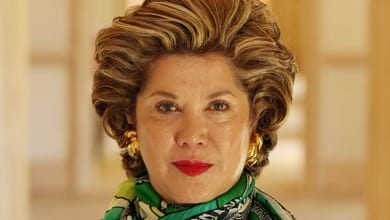 The rise and fall of the “wealthiest divorcee in history” has been extraordinary. A former nude model for her first husband’s Knave magazine and star of adult films such as “The Nine Acres of Nakedness,” Patricia Kluge is the daughter of an Englishman and a Scots-Iraqi. She married her second husband, the late John Kluge, chairman of Metromedia and once the richest man in America, in 1981 after belly dancing for him at a dinner party in New York. As part of her plan to dovetail herself into the top drawer of American society, the couple built a 24,000 square foot mock 18th century English-style mansion, Albermarle, in Virginia and stuffed it full of Chippendale furniture. She got this as part of her $100 million divorce settlement in 1990 and wisely invested part of the payoff in a highly successful business trading football cards but then vanity struck. The Kluge Estate Winery project that she started with her third husband, William Moses, bankrupted the pair in June 2011 and the Bank of America foreclosed on her properties. A lifeline came from “longtime friend” Donald Trump who purchased the vineyard and employed her, but even he’s now uttered the words: “You’re fired!” and sent her packing. Of her newfound predicament Kluge commented: “What did we lose? Material things, nothing too important. When something like this happens you really see who your friends are, those you can rely on, and we have many friends.” Here is a lady with fortitude that can only be described as admirable. It’s probably best, however, to keep her away from the cash register.