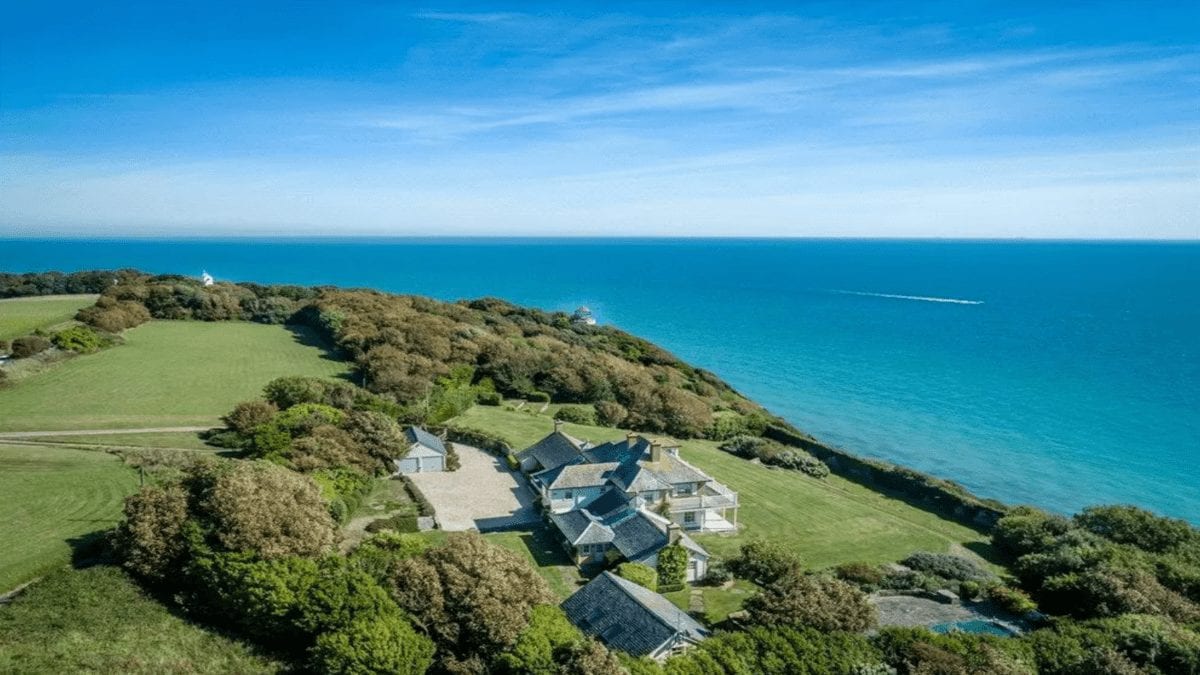
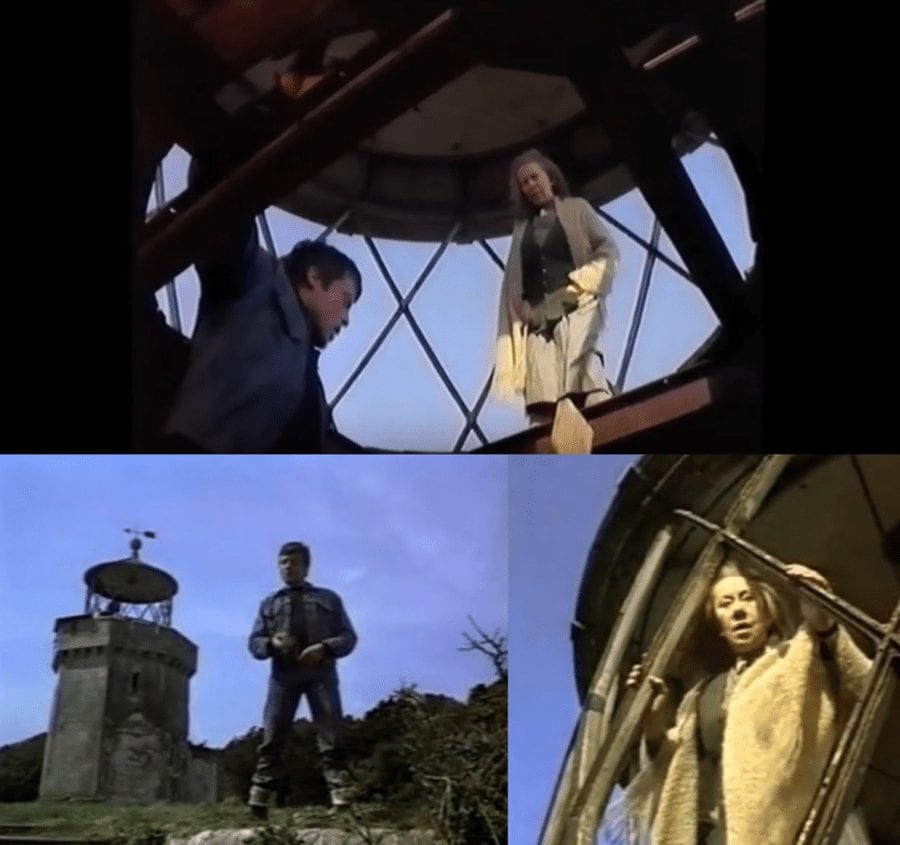
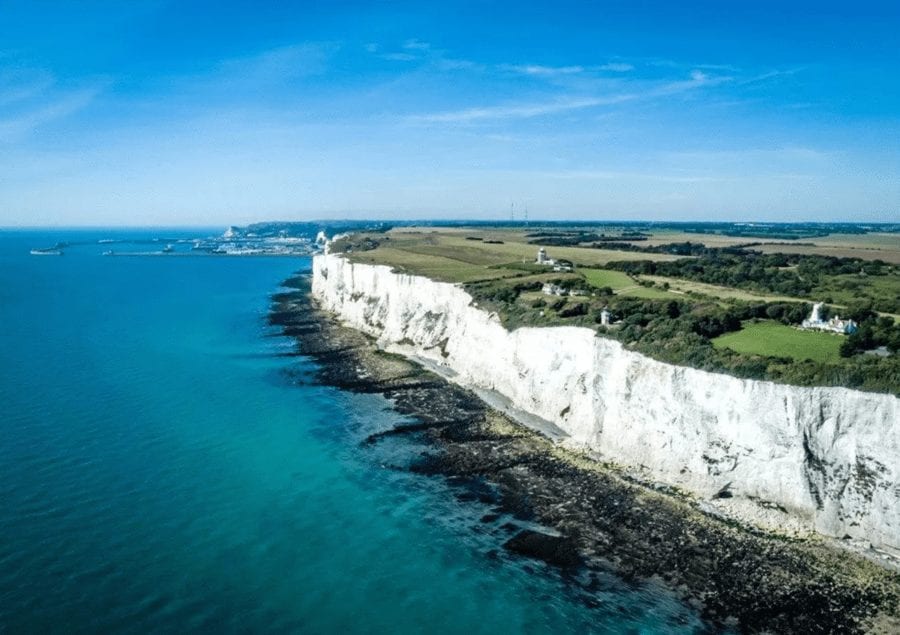
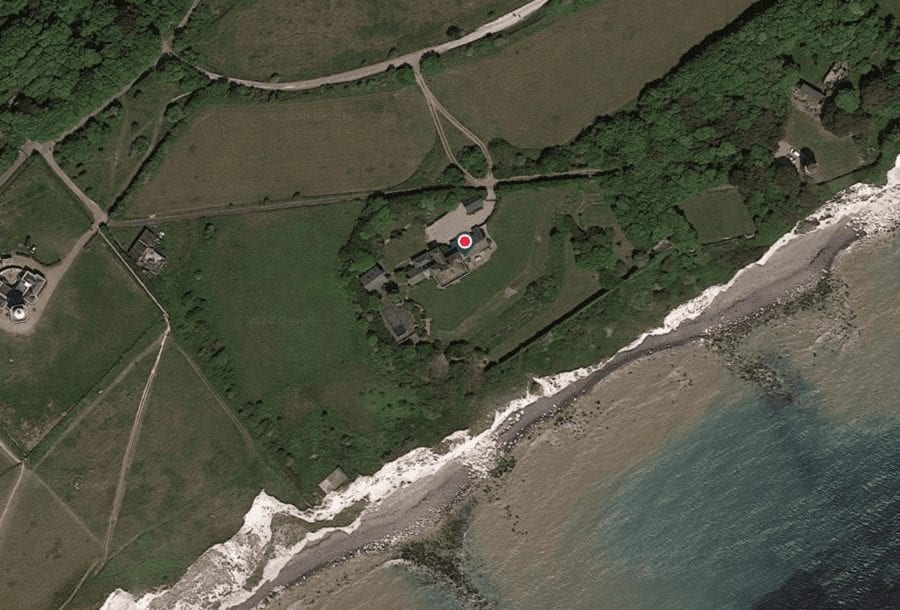
Coastal ‘estate’ with its own lighthouse perched on The Front above the White Cliffs of Dover for sale; it was used in scenes featuring Oliver Reed in ‘The Shuttered Room’
In November 2013, The Steeple Times featured the sale of ‘The South Foreland Estate’ for £4 million. Its price bizarrely had been increased by £500,000 from when it was on the market earlier that year and now it is again being promoted – this time for an even more punchy sum of £5 million.
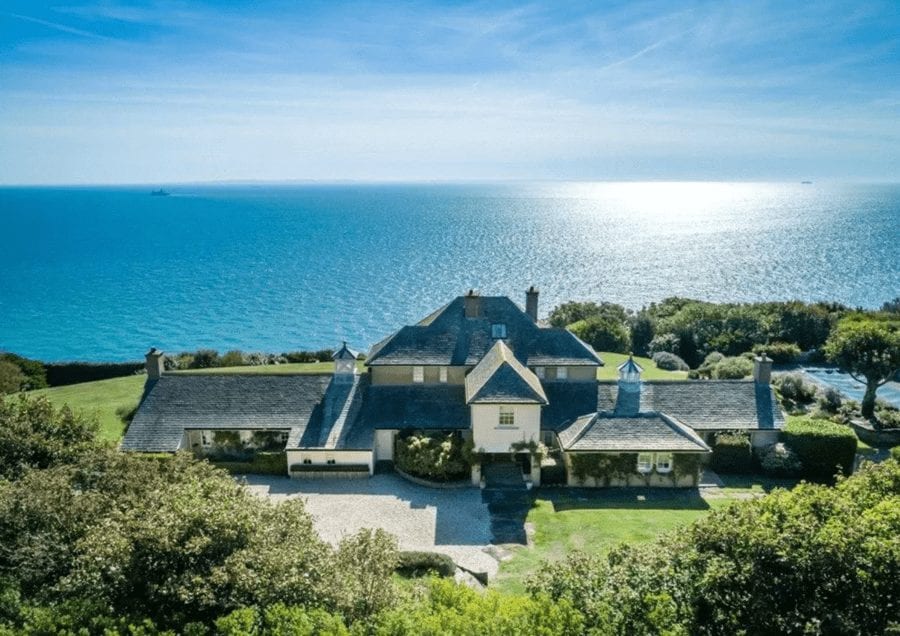
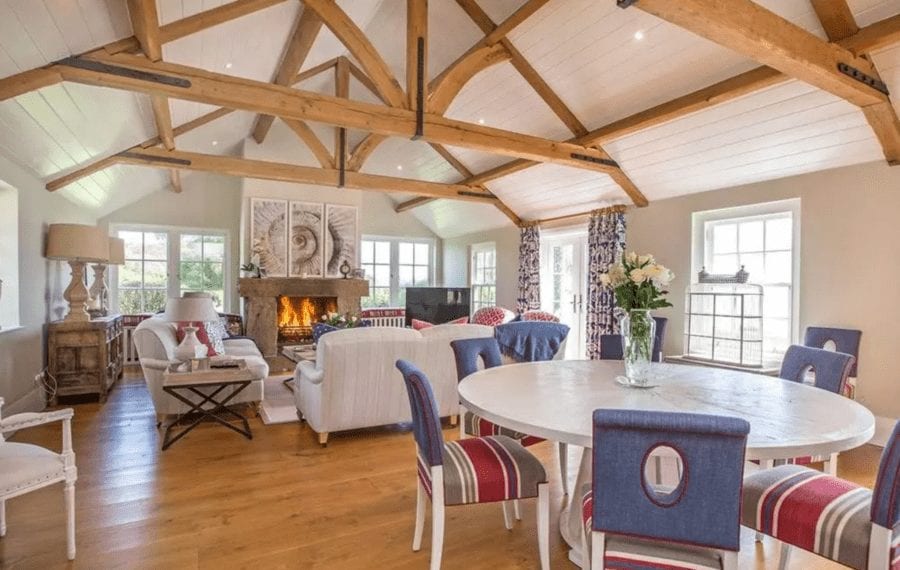
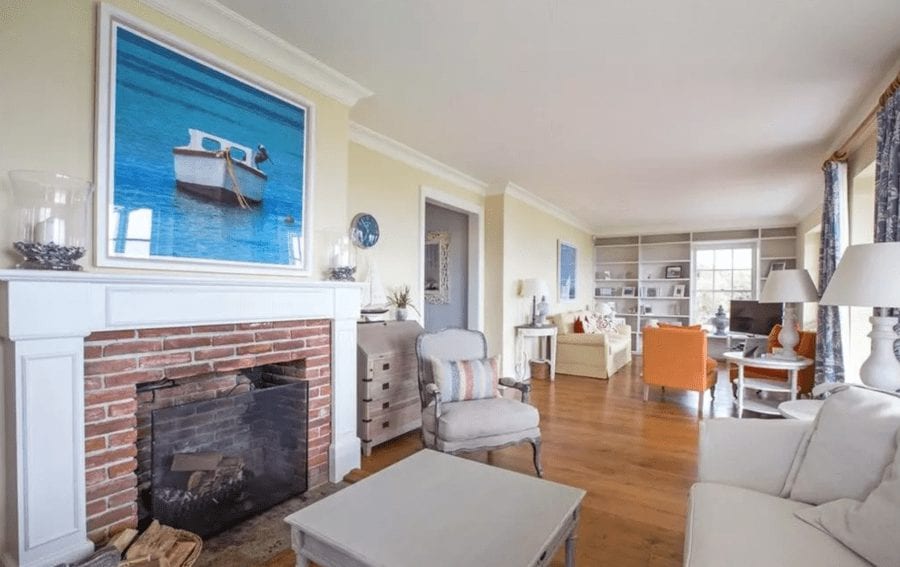
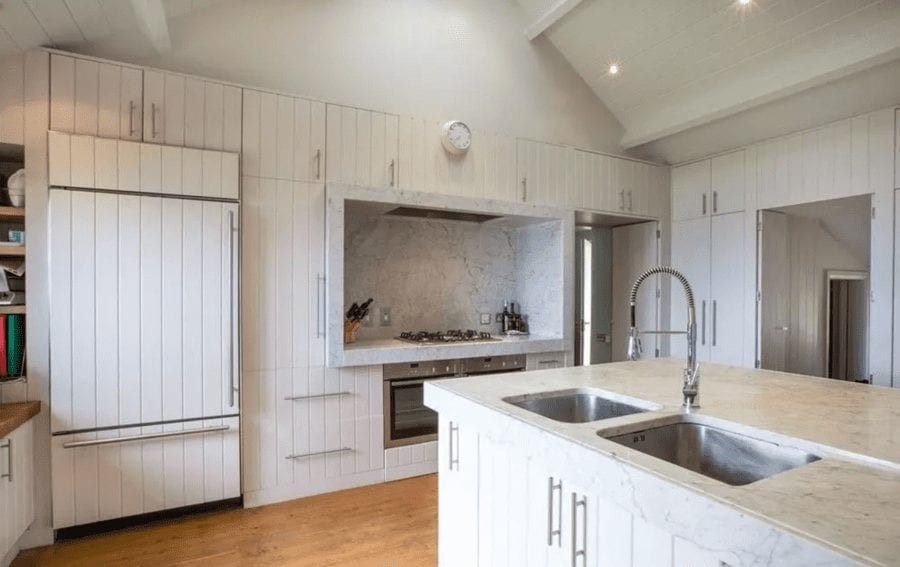
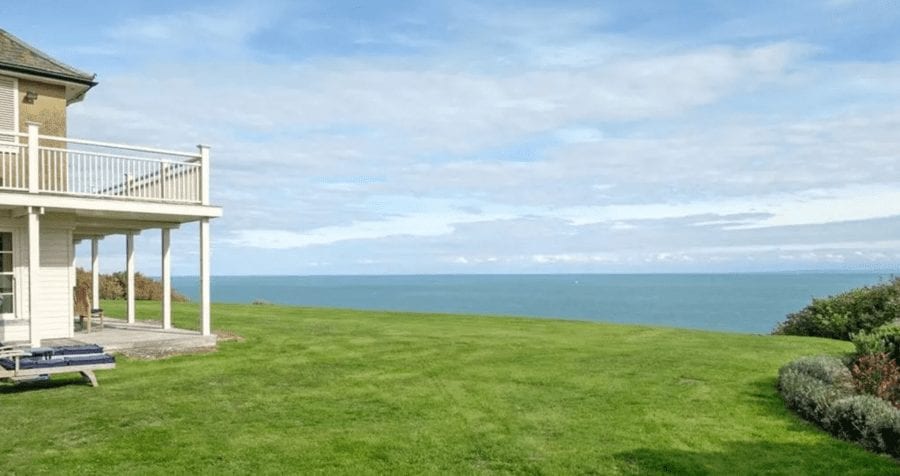
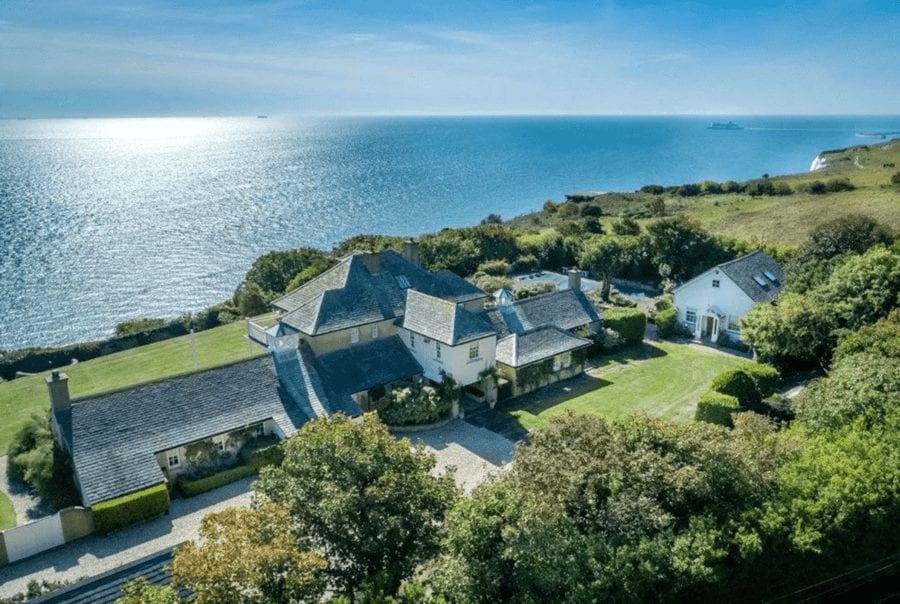
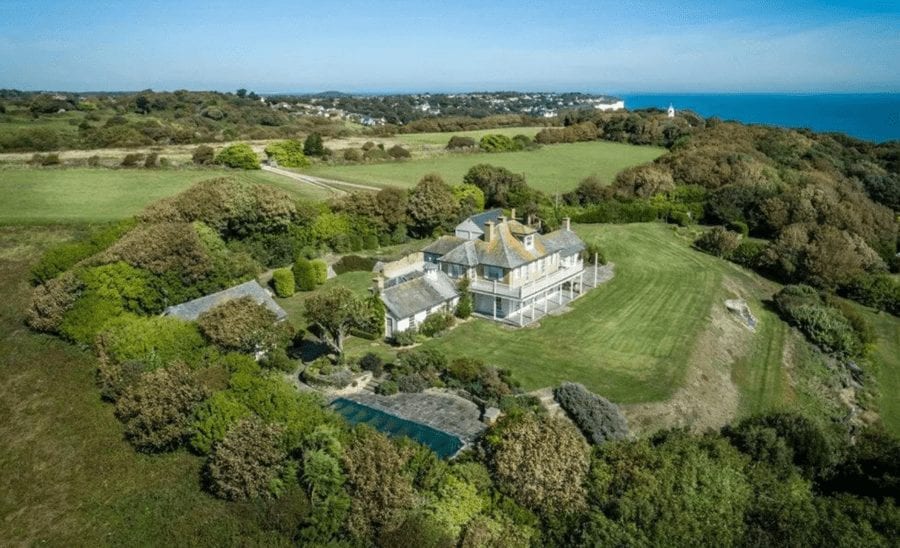
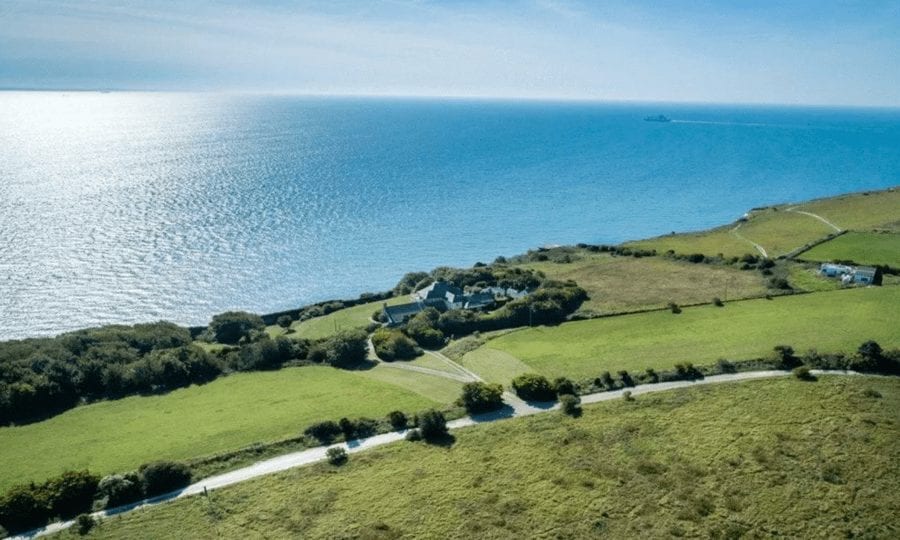
Standing in 11.5 acres of land on the edge of the White Cliffs of Dover in “the most remarkable location on the Kent coast” according to Knight Frank, the freehold property is now known more simply as ‘The Cliff House.’ It is described as having “been renovated by the past two proprietors” and of it, they add: “The current owners have carried out extensive redecoration during their occupation.”
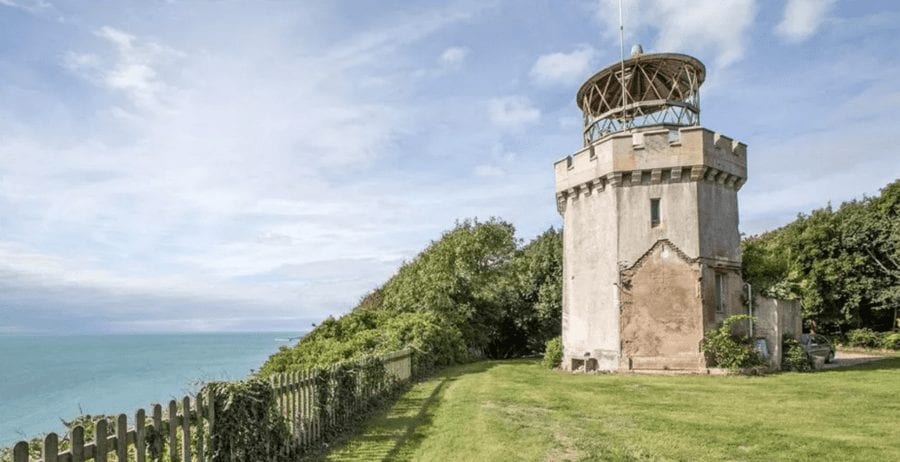
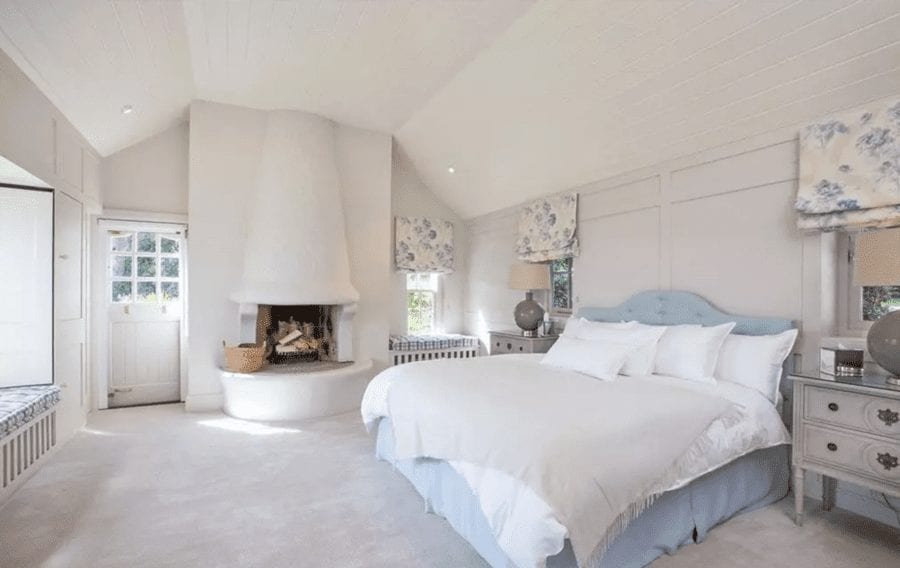
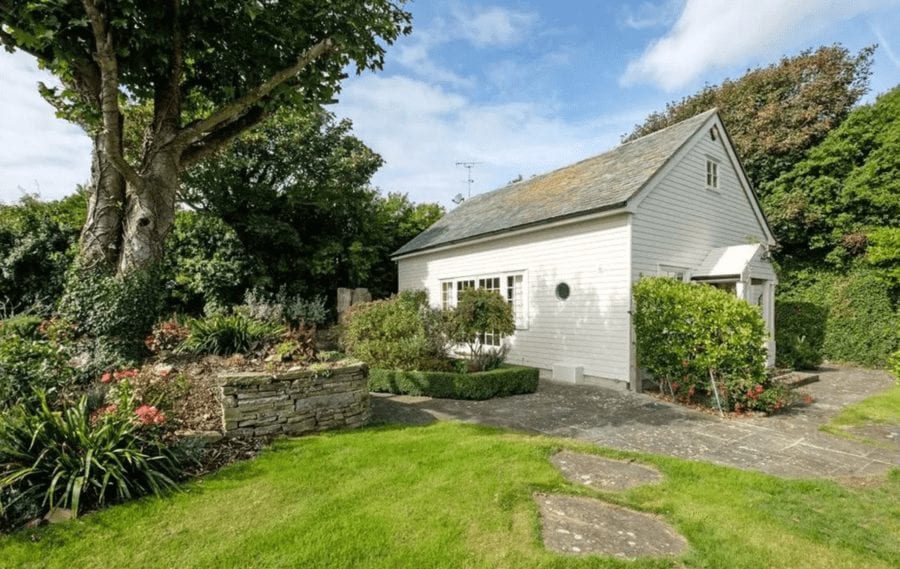
Aside from the main house with 3 reception rooms and 5 bedroom suites, there is a 2 bedroom annexe, a 3 bedroom cottage and a 2 bedroom cottage. Also included is an unused lighthouse, a large garage, a swimming pool, lawned gardens and some “light woodland.”
The agents don’t, however, mention if the owners will be making Dame Vera Lynn available to sing about bluebirds at post lockdown viewings.
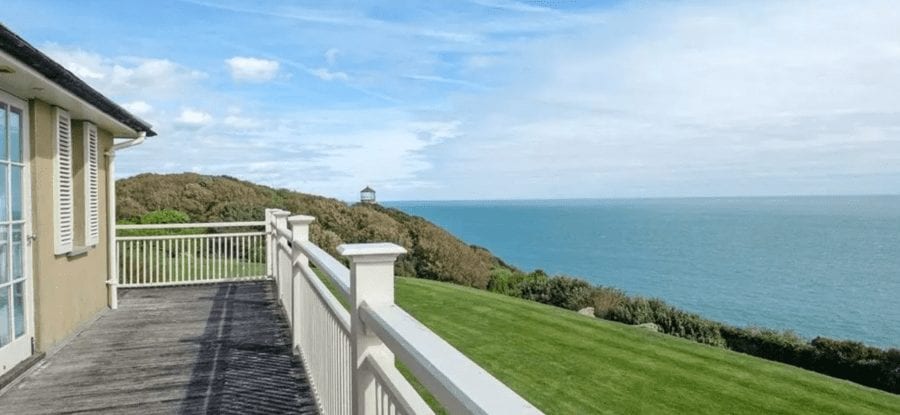
The lighthouse, originally known as the Lower South Foreland Lighthouse, itself was built in 1843 on the site of an earlier building. It was decommissioned in 1904 after the sands shifted and is Grade II listed. Agents Knight Frank simply remark of it: “Not use.”Oliver Reed as ‘Ethan’ at South Foreland Lighthouse in ‘The Shuttered Room’ with Flora Robson as ‘Aunt Agatha’ looking down. The 1967 British horror film was directed by David Greene and starred Gig Young and Carol Lynley.
The Numbers – The Cliff House, The South Foreland Estate, The Front, St Margaret’s Bay, Dover, Kent, CT15 6HP, United Kingdom
June 2020 – For sale for £5 million ($6.3 million, €5.6 million or درهم22.3 million) through Knight Frank.
November 2018 – For sale for £5 million ($6.3 million, €5.6 million or درهم22.3 million) through Knight Frank.
November 2013 – For sale for £4 million ($5.1 million, €4.5 million or درهم18.6 million) through Strutt & Parker.
July 2013 – For sale for £3.5 million ($4.4 million, €3.9 million or درهم16.3 million) through Strutt & Parker.
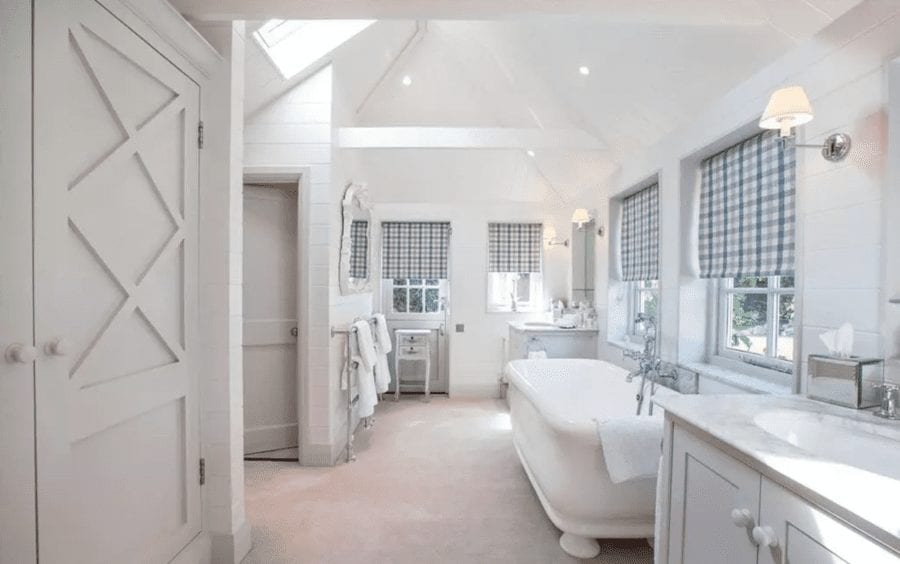
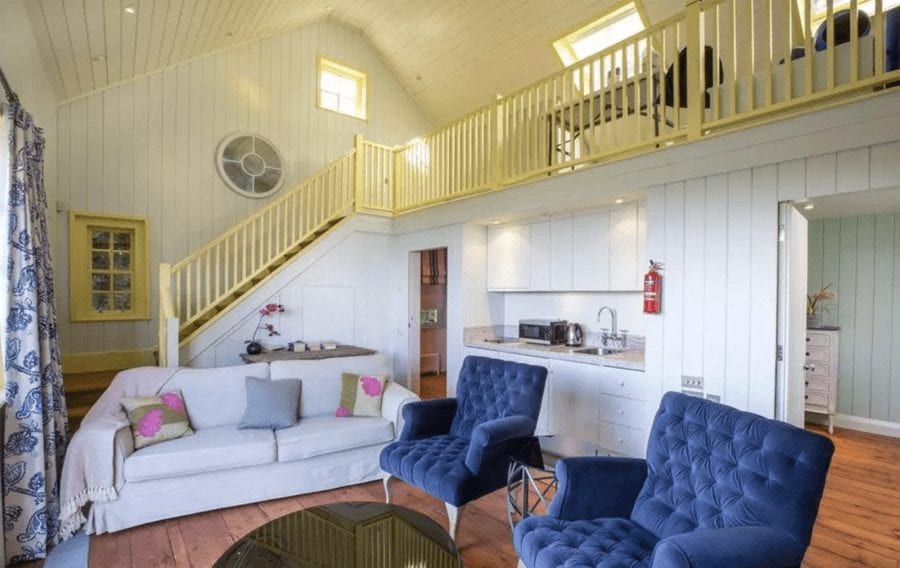
Out on The Front – The main entrance to The Cliff House.The main entertaining space is a large 27-foot by 17-foot drawing room. There is also a sitting room.The kitchen has been redecorated by the current owners.One of five bedroom suites.The largest of the bathrooms in the house.Out on The Front – Views out to sea.A balcony overlooking the Strait of Dover.Thrree ancillary properties are included in the sale price.The interior of one of these spaces.Looking out to sea.Looking inland.The property is surrounded by land owned by the National Trust.The White Cliffs.Out on The Front – An aerial shot of the property.
Eaton Square apartment for sale for £22.5 million in spite of needing complete renovation; it is listed at a price 25% cheaper than it was five years earlier in identical condition
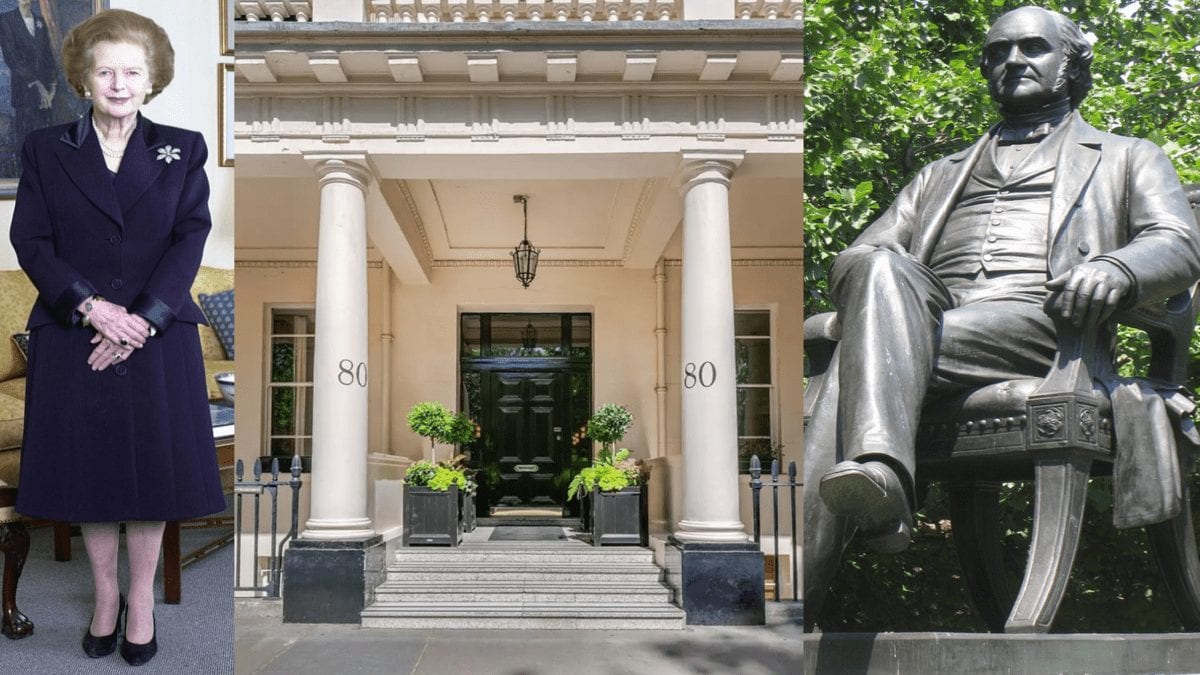
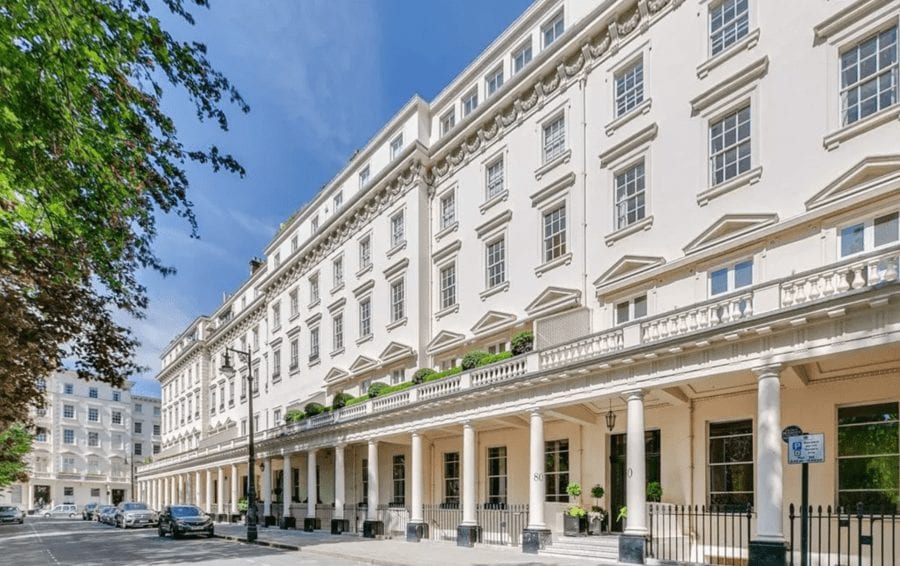
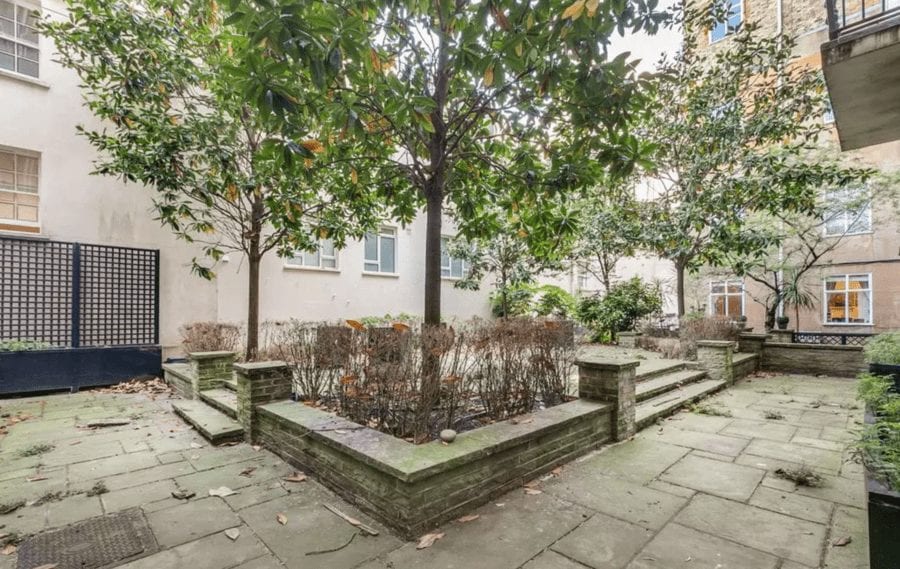
80 Eaton Square in Belgravia is an address where two well-known names have both lived (albeit it very briefly). Ex-Prime Minister Margaret Thatcher (1925 – 2013) “temporarily” resided in a “Greek shipowner’s flat” there after leaving office whilst the American financier and philanthropist George Peabody (1795 – 1869) stayed and died in the home of the Anglo-American fur merchant Sir Curtis Lampson (1806 – 1885).
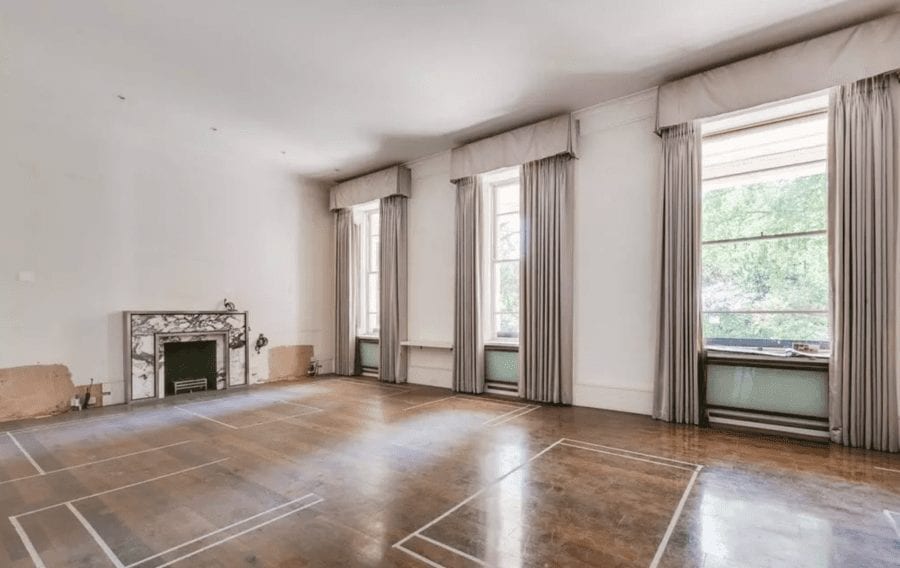
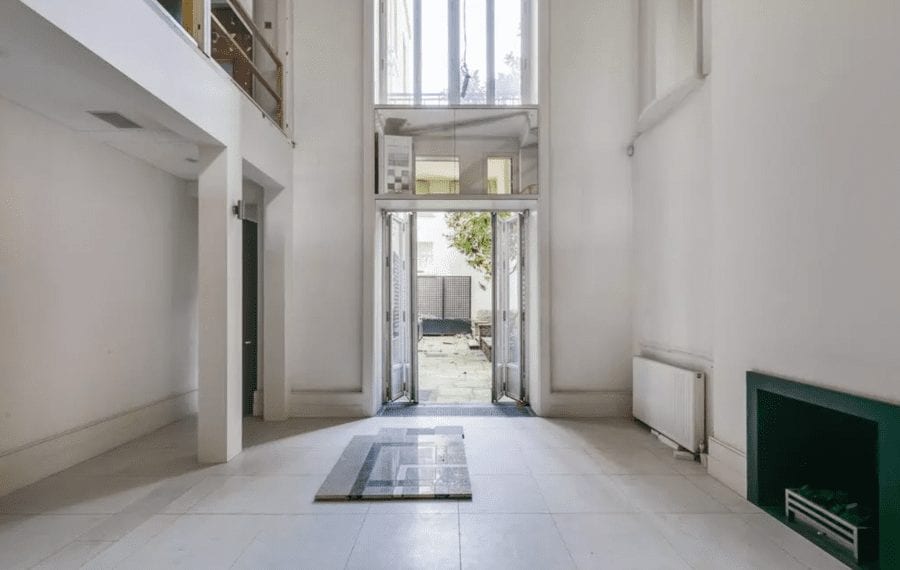
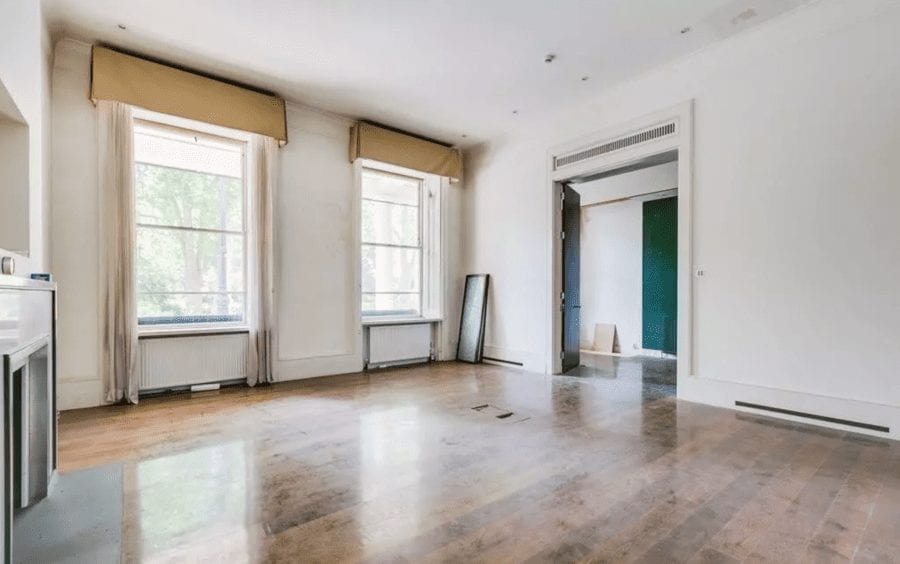
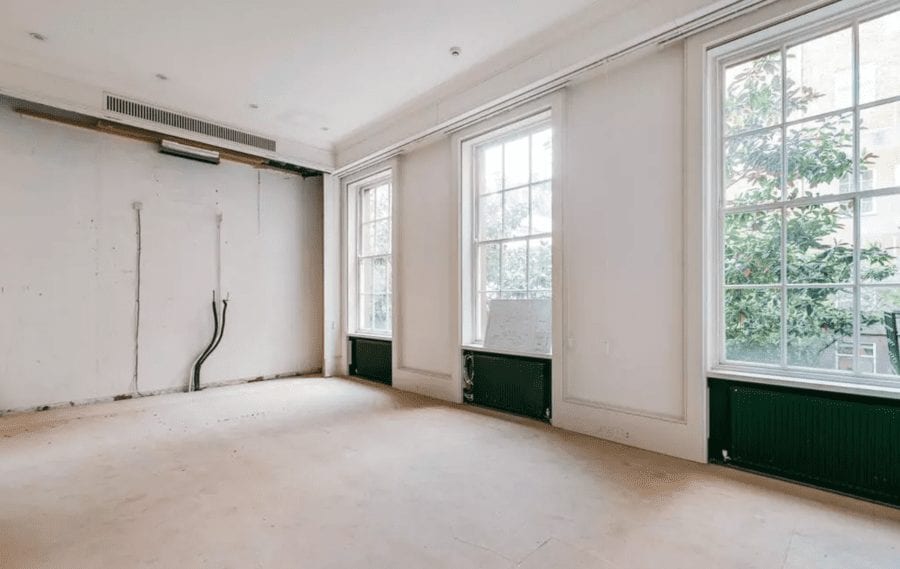
Grade II* listed and featuring a Greater London Council blue plaque commemorating Peabody, the stucco fronted building on the square’s northern terrace featured in The Steeple Times in September 2015. At that time, part of its ground and basement floors were placed for sale for the not too shabby sum of £30 million ($37 million, €33.4 million or درهم135.9 million) in spite of being a “complete wreck.”
Now, five years later and most surprisingly in no better condition, the very same apartment has been relisted for just £22.5 million ($27.8 million, €25 million or درهم102 million) through agents Chestertons.
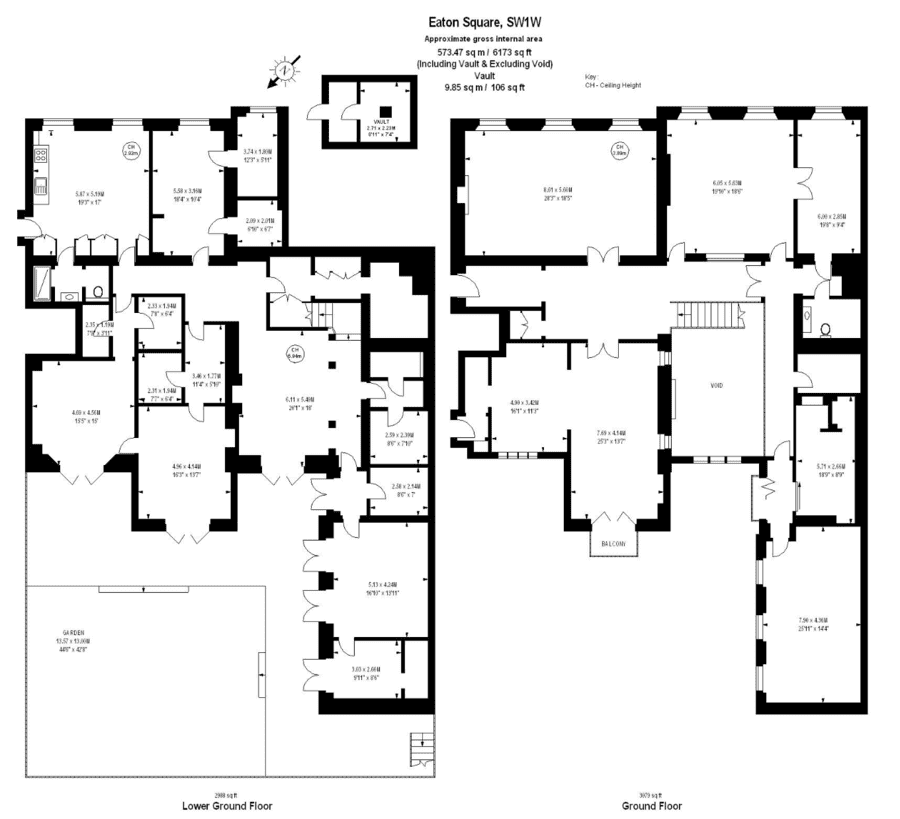
Extending in total to 6,173 square foot, the duplex was previously promoted with a fancy design scheme by David Collins Studio but now is simply listed as a “5 bedroom maisonette” with “potential to create one of the finest homes in Eaton Square.” It comes with a private garden to the rear and access to the communal spaces of the square also.
Pictured top: Baroness Thatcher, the entrance to 80 Eaton Square and a statue of George Peabody.
Eaton Square’s ‘Famous Faces’
Considered one of the best addresses in London and built for and still mostly owned by the Grosvenor family, Eaton Square features six adjoining, tree-planted gardens dissected by a four lane highway between Victoria and Sloane Square.
Amongst the well-known people who have variously lived in the square are:
1978 Piaggio Ape ‘limousine’ used by the controversial Countess Agusta – a woman who either fell or was pushed to her death from her home above Portofino in 2001 – to be auctioned
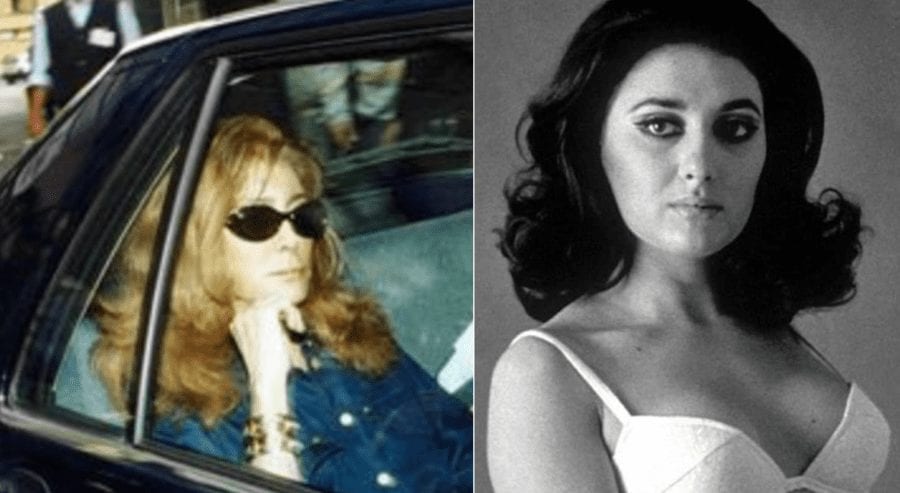
On 8th January 2001, “shop assistant turned model turned multi-millionairess many times over turned fugitive” (via a stretch in what American’s so pleasantly term ‘pokey’) Countess Francesca Vacca Agusta “disappeared” from the terrace of her Ligurian seaside home. The series of events that preceded and followed could have featured in an Agatha Christie novel or a Sherlock Holmes story.
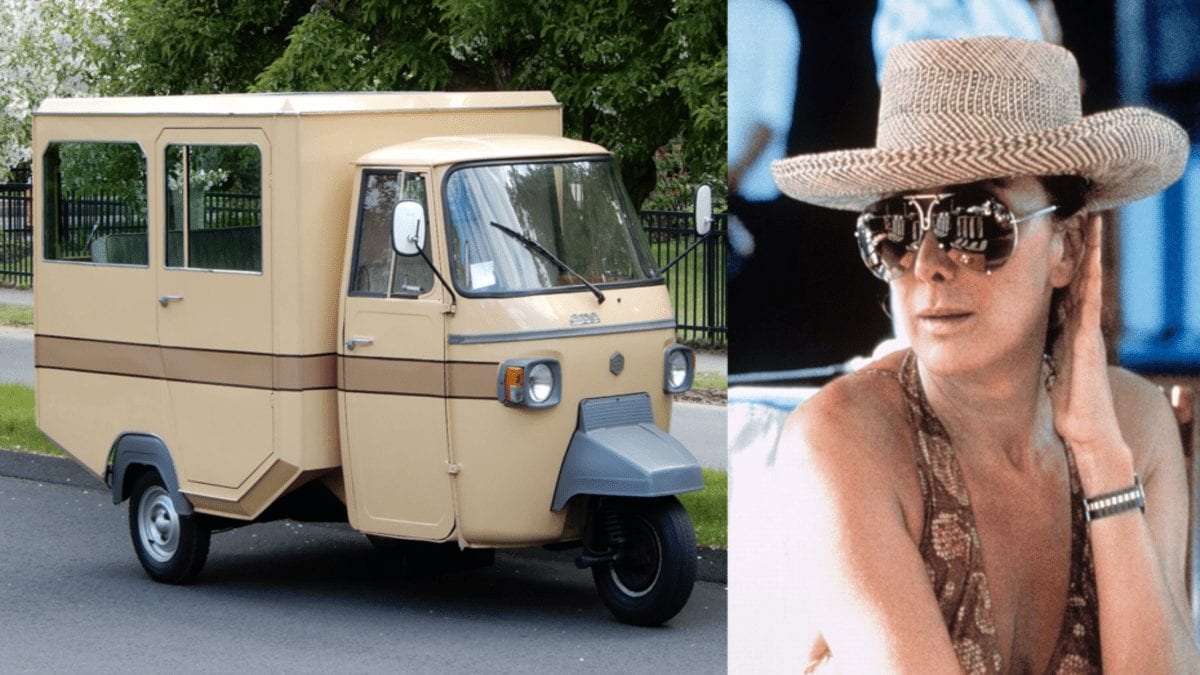
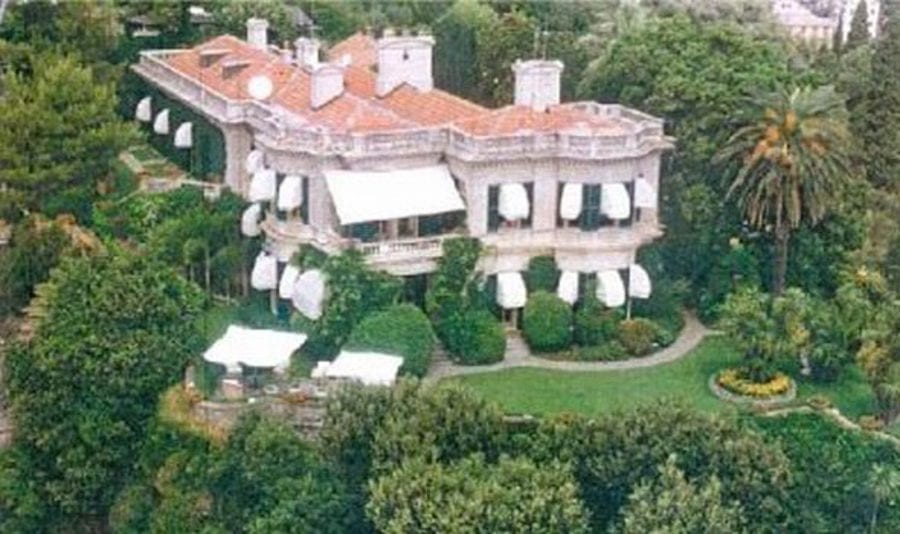
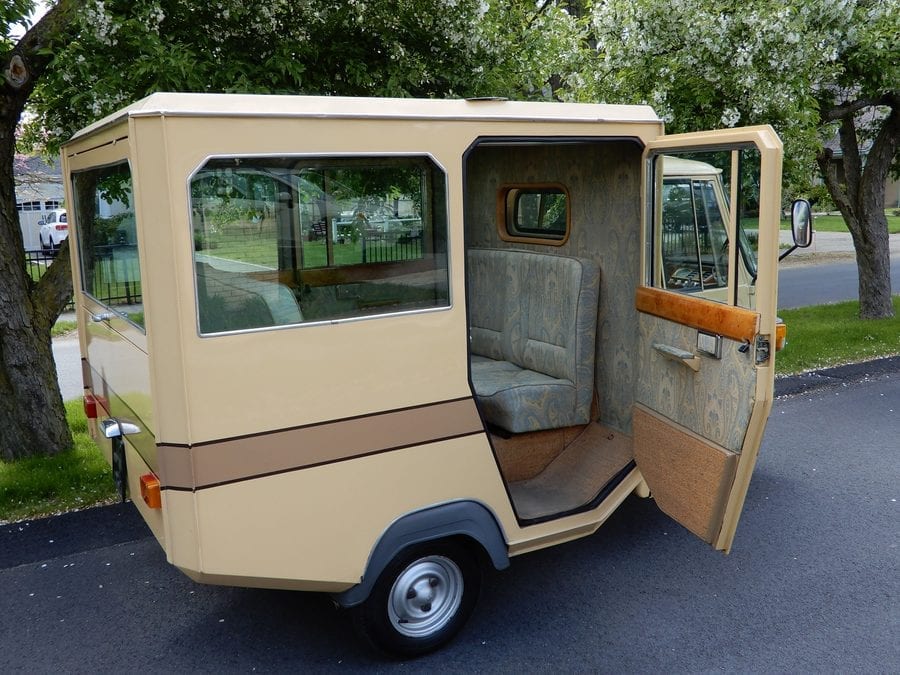
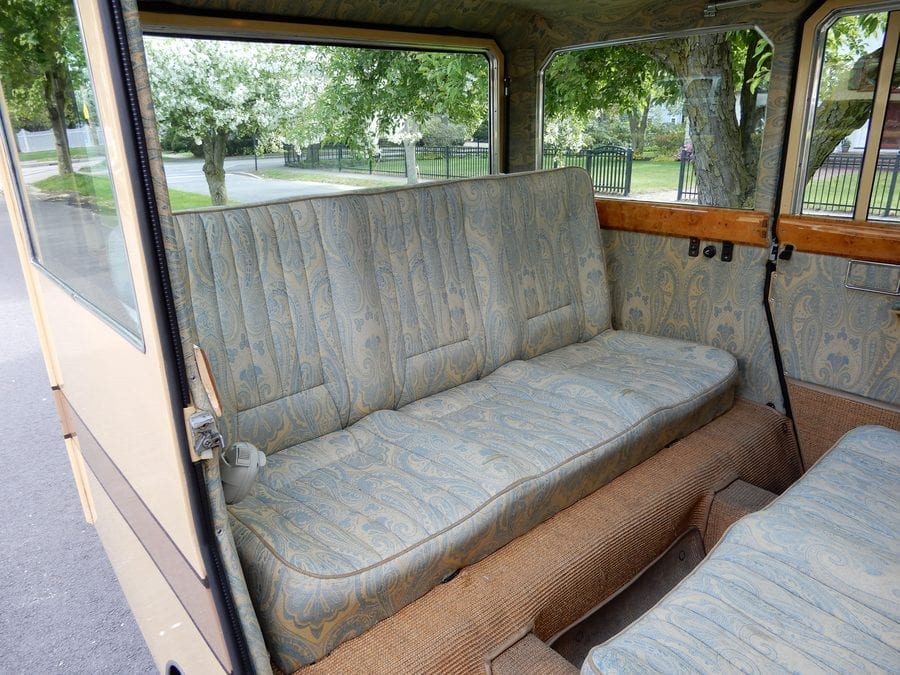
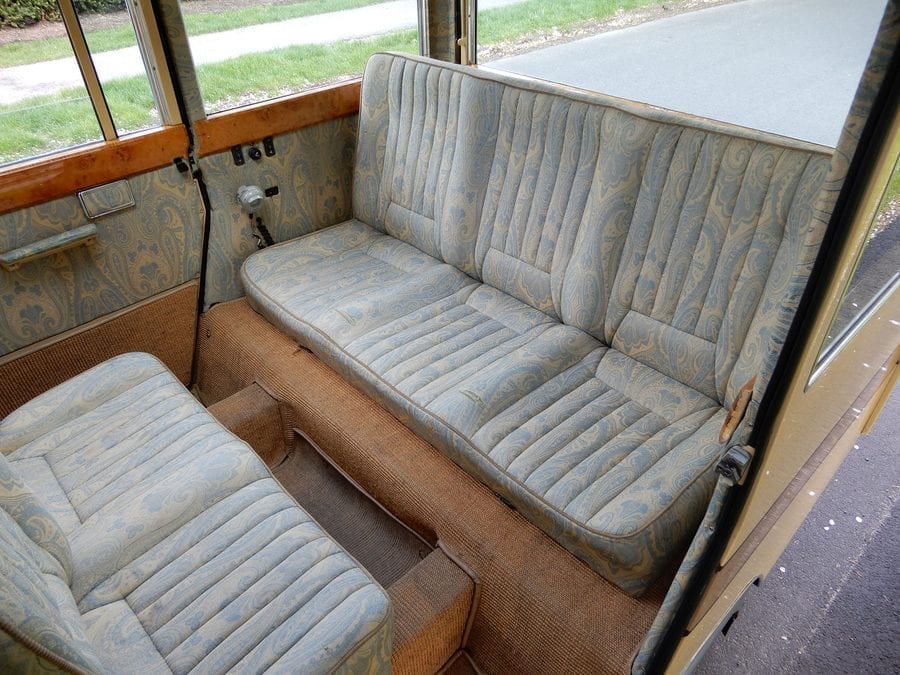
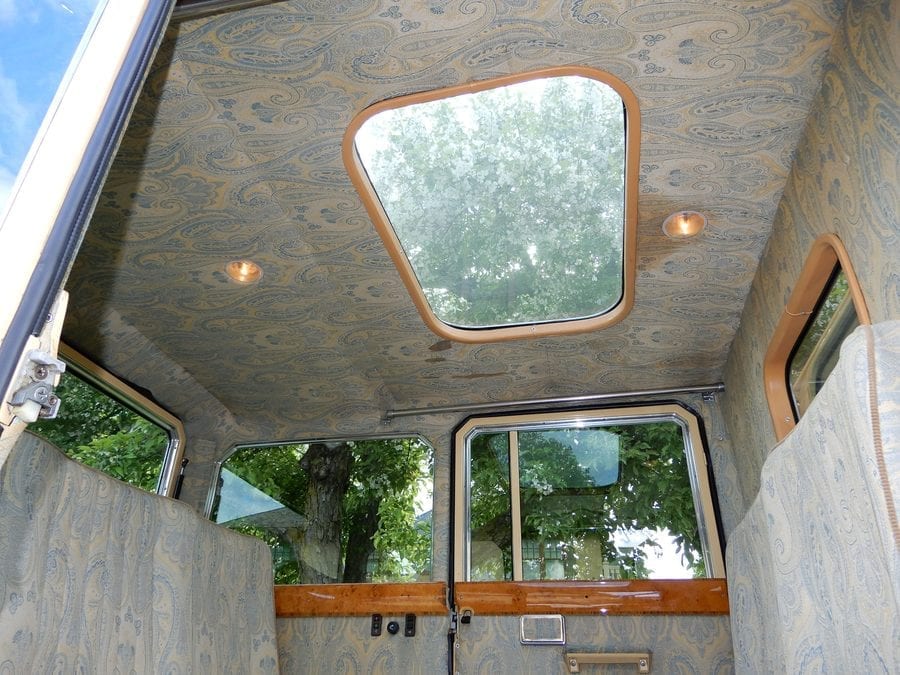
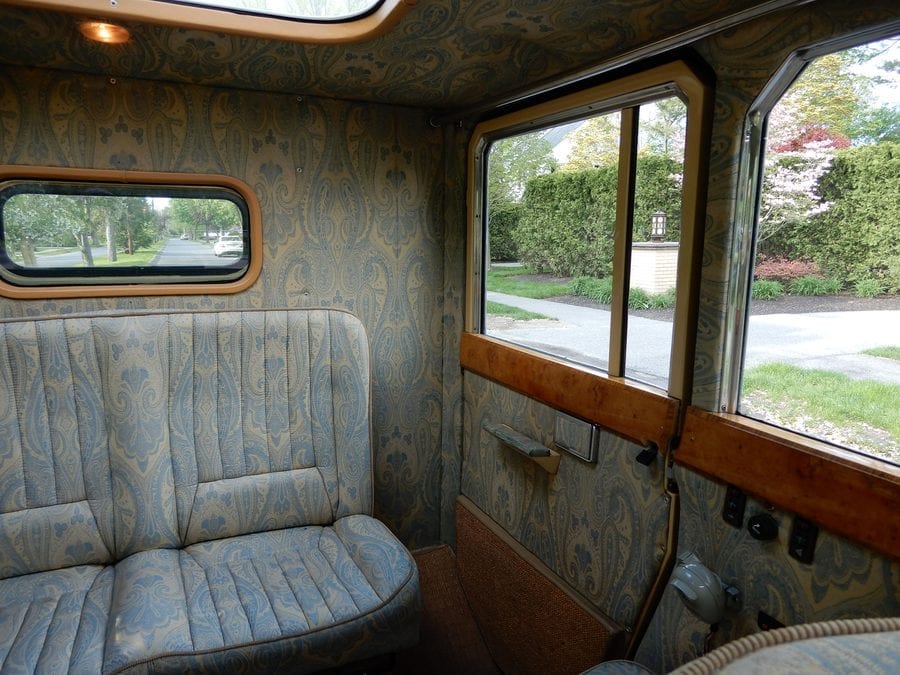
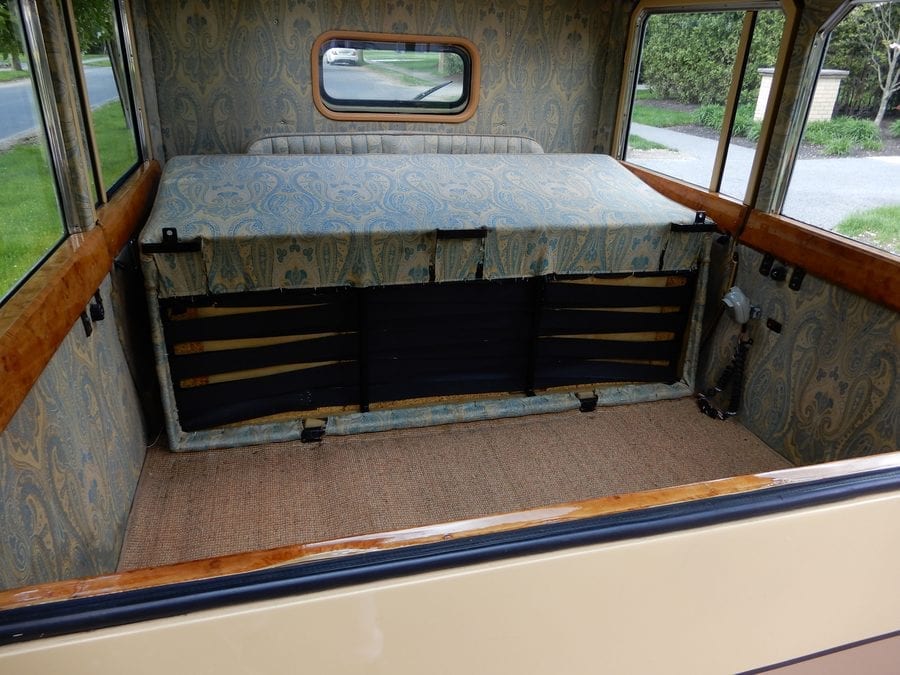
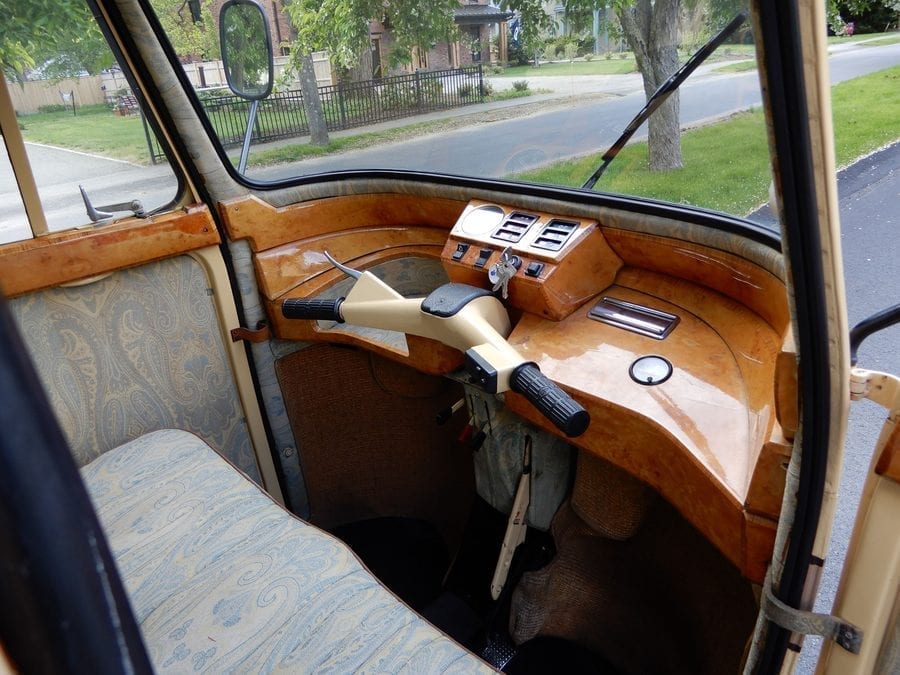
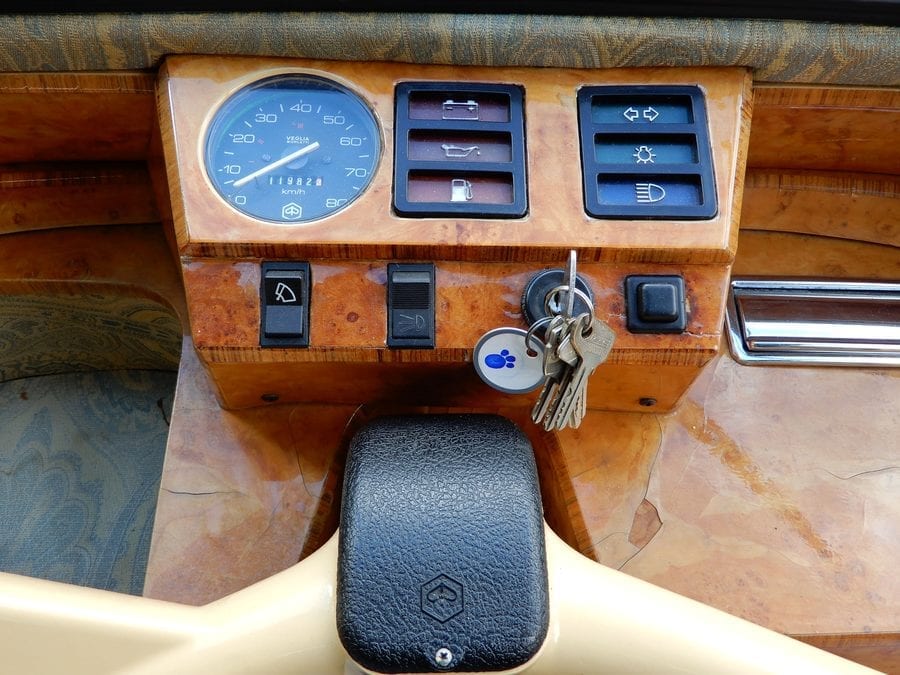
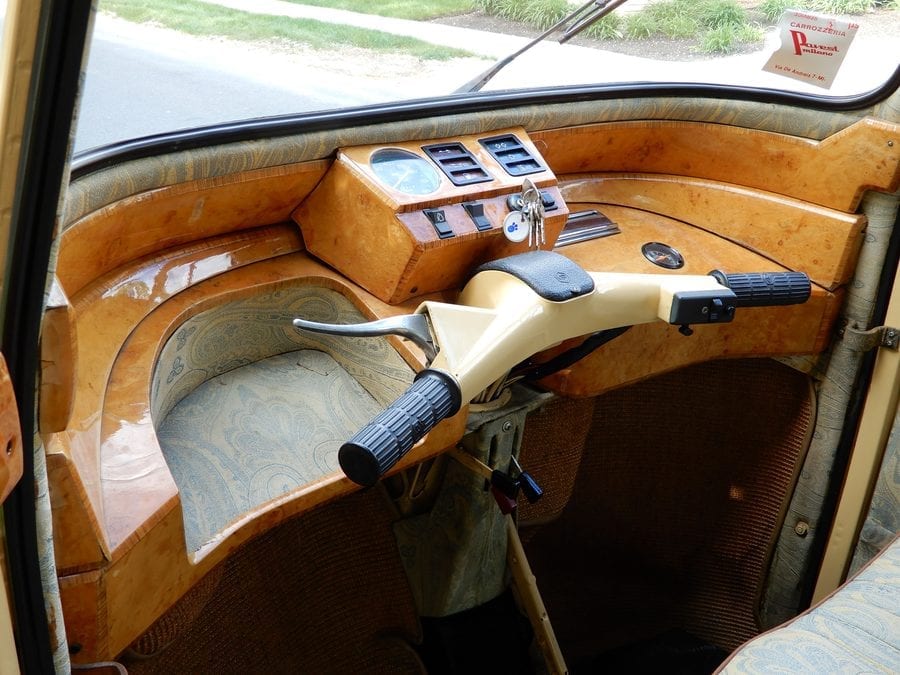
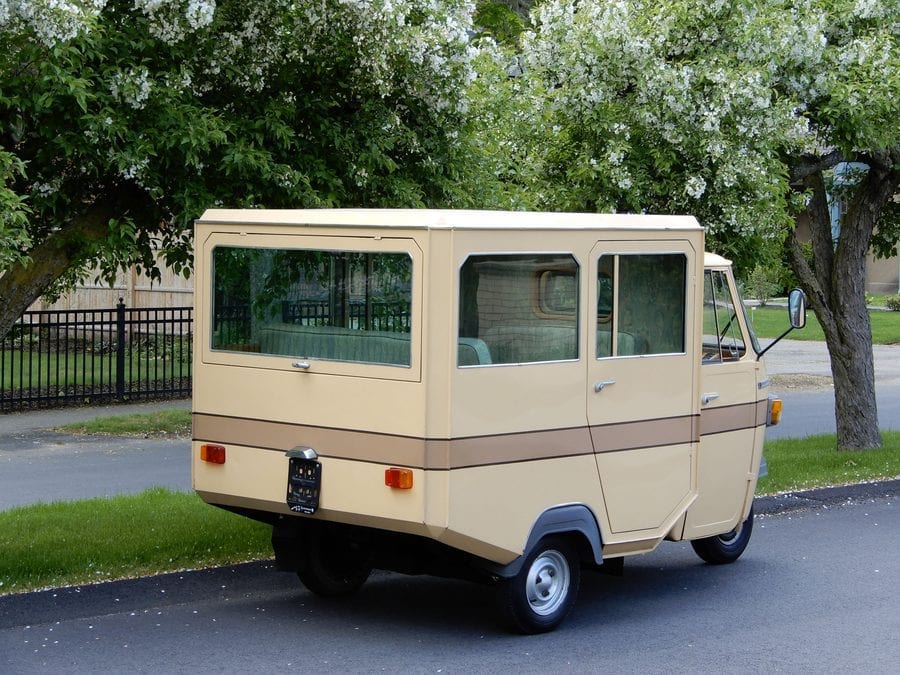
Graffagni saw off the business tycoon’s first wife, Pupetta Maresca, after a torrid affair and following their marriage in 1974, amongst other things, became chatelaine of a 40-room property complete with a helipad. It had been built in 1870 by George Herbert, 4th Earl of Carnarvon – whose death was attributed by amongst others Sir Arthur Conan Doyle to the “curse of King Tut” – as his holiday home and during the 1970s and 1980s guests to “jet-set parties” given at the house by the socialite Countess were ferried back and forth from their dock in Portofino harbour in a custom built 1978 Piaggio Ape coachbuilt ‘limousine.’ This vehicle, described as a “perfect yacht tender” with its opulently patterned interior and passenger-driver intercom, is now for sale.
Countess Francesca Agusta (née Francesca Vacca Graffagni, 29th October 1942 – 8th January 2001). It is most surprising that the late Dominick Dunne did not make a television programme about her life and demise.Villa Altachiara (alternatively known as ‘Villa Alta Chiara’ or ‘Villa Carnarvon’) was one of Countess Agusta’s homes from the 1960s until her death in 2001; it was originally built as a holiday home for Lord Carnarvon (26th June 1866 – 5th April 1923) – the financier of Howard Carter’s explorations of Egypt’s Valley of the Kings that led to the discovery of Tutankhamen’s tomb. The Carnarvon family hosted many guests during their ownership, amongst them Brooke Astor and Evelyn Waugh.
Count Agusta died in 1989 without divorcing his second wife in spite of separating from her in 1985. At that time, in addition to Villa Altachiara, he had given her four apartments in Milan, an estate in Cuernavaca, Mexico, family jewellery and an undisclosed cash sum. With his demise, she came into yet further fortune.
This by-then “very wealthy woman” hit the headlines again in 1994 when she and her new lover, a “former Portofino playboy politician [named] Maurizio Raggio,” were discovered to have been part of a corruption scandal involving Bettino Craxi, the Prime Minister of Italy from 1983 to 1987. Before police could apprehend them to charge them with amongst other things money laundering, the pair fled to Mexico and lived on her estate until 1997 as fugitives. During this period, the Countess reportedly attempted suicide at least once.
Upon her return to Italy, the Countess plea-bargained and spent just three months in Milan’s Opera prison for her crimes in spite of receiving a two-year jail sentence. After “some further time under house arrest” in the Villa Altachiara, the “retired” gadabout then took up with a Mexican, Tirso ‘Tito’ Chazaro (also known as ‘Tirso Di Ricardo’ and ‘Rafael Tirso Roncado Gonzales’), and lived in the style of Miss Havisham. She was rarely seen in public and having become dependent on drink and drugs, was known for her erratic behaviour and temper.
“Considerably the worse for wear and muttering she would not be coming back” on the night of 8th January 2001, the Countess supposedly told her lover and two others present that she was going for a swim, but either slipped on wet leaves or was pushed off a veranda into the sea. A search followed, but after the only traces found were the Countess’s dressing gown on the seabed close to the Villa Altachiara and her slippers on nearby rocks, press reports suggested she had either committed suicide or, given her past form, staged an “elaborate disappearing act.”
Countess Agusta’s badly decomposed body washed up three weeks later on a beach at Toulon on the French Riviera. Her feet had been gnawed off by fish, her skull was smashed and her face was disfigured. She could only be identified by two rings she was wearing and her exact cause of death could thus not be determined.
As an autopsy found no trace of water in her lungs, she plainly did not die by drowning, but in in 2004 the Countess’s brother, Domenico Vacca Graffagni, was quoted in the Independent as stating: “The [original] inquiry was closed in a hasty fashion because of absence of proof, relying too readily on ‘reasonable doubt’ … It was manslaughter. He [Chazaro] was always beating her. He didn’t mean to kill her. But that evening things didn’t go the way the Carabinieri said, my sister was not drunk and she did not slip on wet leaves on the veranda.”
Adding further to speculation, much earlier, the Countess’s step-son, racing driver and team owner Rocky Agusta (1950 – 2018), told Corriere della Sera in 2001: “Francesca was a beautiful woman, simpatica, very rich… People have written that she inherited 500bn lire, but if it had been only 50 or 25, who commits suicide with 25bn lire set aside? … The people who were around her certainly did not help her… It’s not up to me to formulate accusations, but Francesca was not alone that night. She was very upset. She should have been put to bed. Instead, they let her go out into a dark, wet, cold night, not even dressed.”
In due course, the last of many wills left by Countess Agusta revealed Tirso Chazaro to be her sole beneficiary, but after this was challenged in court by her former lover, Maurizio Raggio, the pair split the legacy – reported to be worth as much as £165 million ($201 million, €186 million or درهم738 million) according to the Guardian in 2001 – sixty-forty between them.
In 2009, the Villa Altachiara was offered for sale initially for £44 million ($54 million, €50 million or درهم198 million) and then for £30 million ($37 million, €34 million or درهم135 million) in 2014. It supposedly eventually sold for less than half that sum to a Russian billionaire a number of years later in spite of an estate agent remarking: “Some say the spirit of Countess Francesca Vacca Agusta still walks the estate looking for her husband and you can hear her shouting for him on the wind.”
An estimate of £37,000 to £49,000 ($45,000 to $60,000, €42,000 to €55,000 or درهم165,000 to درهم220,000) for the Countess’s Piaggio Ape. Described as “sweet” and “[anything but] an Italian tuk-tuk” by RideApart, the one-off private taxi will be auctioned as part of the forthcoming RM Sotheby’s ‘Driving Into Summer’ 21st to 29th May 2020 online sale. One can only hope it finds a happier home than it encountered at that of its former mistress.
Private island just 75 miles from New York for sale for just £650,000; it could make an ideal downsize from Necker for Sir Richard Branson
Created from pink granite bedrock that once formed hilltops prior to the last ice age, the 365 islands that form The Thimbles in Connecticut are mostly uninhabited rest stops for migrating seals.
With 81 houses across the 23 inhabited islands, 14 of those isles have only a single residence on them and now someone with £652,000 to spare can join past residents who’ve counted President William H. Taft and purchase one named Jepson Island.
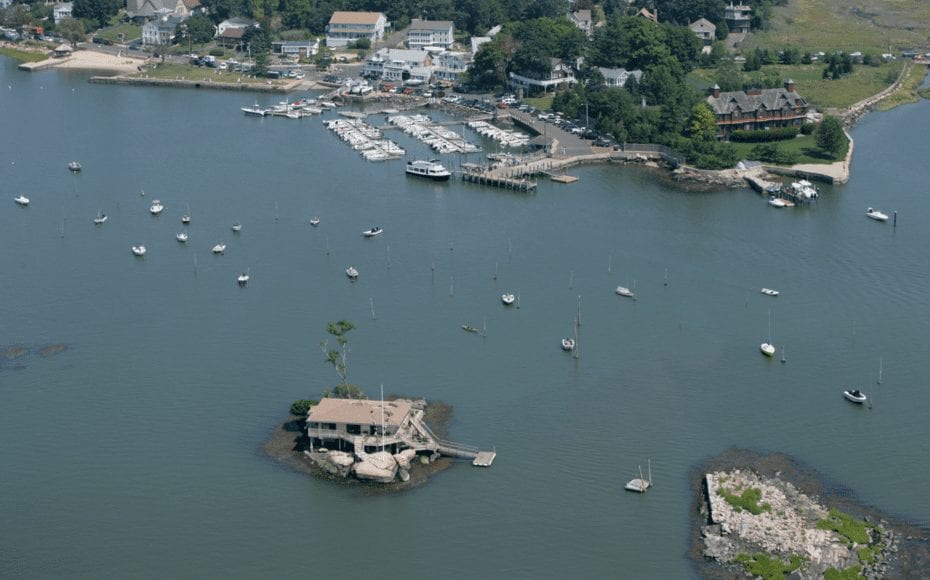
An aerial shot of Jepson Island.
Only accessible by boat from the nearby village of Stony Creek, Branford the tiny 0.77-acre island is dominated by a 962 square foot “contemporary vacation” bungalow with two bedrooms and a bathroom. It has power from a generator and passive solar power, mains ‘city’ water and is offered for sale fully furnished.
Situated just 75 miles from New York City, Jepson Island is described by agents William Pitt Sotheby’s International Realty as “the ultimate easy, nearby escape.”
The Names & Numbers – Jepson Island, Branford, Connecticut, CT 06405, United States of America
May 2020 – Jepson Island is offered for sale for £652,000 ($800,000, €737,000 or درهم1.2 million) through William Pitt Sotheby’s International Realty. Two other islands available include 0.77-acre Wheelers Island at £2.4 million ($3 million, €2.8 million or درهم11 million) and the 1.04-acre Belden Island at £1.2 million ($1.5 million, €1.4 million or درهم5.5 million).
2016 – Offered for sale as part of an “eight island deal” for £63.5 million ($78 million, €71.9 million or درهم286.5 million) by owners Edmund and Christine Stoecklein.
Late 1990s to early 2000s – Christine Stoecklein, widow of John Svenningsen (president of the party goods manufacturer Amscan Holdings Inc), bought a number of the Thimble Islands for a total of £24.4 million ($30 million, €27.7 million or درهم110.2 million).
Manhattan mansion listed for 77% less than in 2014 as part of a “bankruptcy sale;” it is situated on a street featured in Billy Joel’s ‘Close to the Borderline’ that was once termed: “Bloody, Bloody Beekman Place: Where the Wealthy Wind Up Dead”
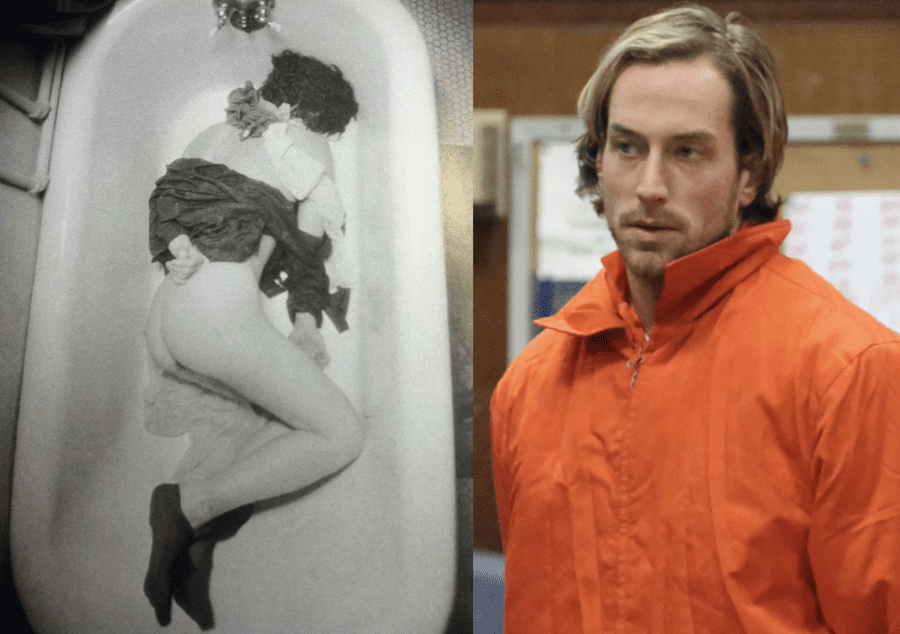
On 10th April 1936, Good Friday, a writer named Nancy Titterton was found dead in her bathtub at the home she shared with her husband at 22 Beekman Place in Manhattan. She had been raped and strangled by an upholsterer’s assistant, John Fiorenza, who had ironically repaired a loveseat for the couple. The case of the ‘Beauty in the Bathtub’ ended with Fiorenza’s conviction and execution at Sing Sing on 22nd January 1937, but for Beekman Place this was not the first nor last murder.
Aside from the killing of Dr Fritz Gebhardt, an industrialist and associate of Hermann Göring, by his lover Vera Stretz in a hotel in the street on 12th November 1935, on 4th January 2015, a Princeton graduate named Tommy Gilbert, Jr. shot his financier father in the head at his apartment at 20 Beekman Place. Prior to committing the murder, after a row about his monthly allowance, the 30-year old had sent his mother out to buy him a can of Coca Cola and a sandwich. As a result of these series of slayings, in January 2015, the Daily Beast ran an article about the street with the headline: “Bloody, Bloody Beekman Place: Where the Wealthy Wind Up Dead.”
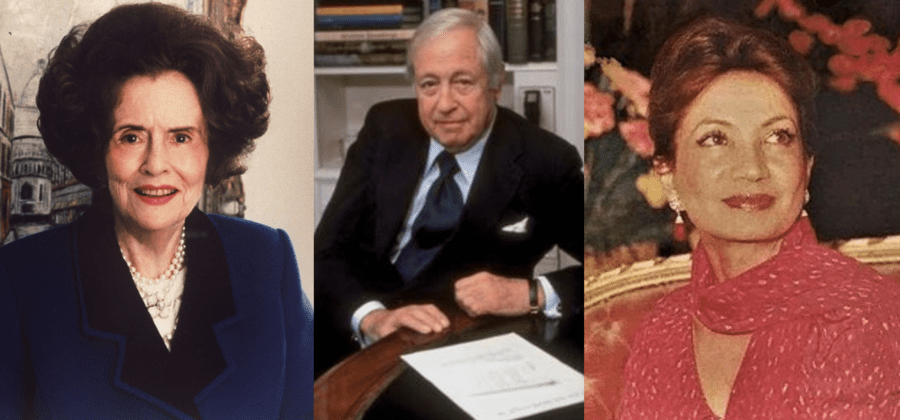
The naked body of 33-year-old Nancy Titterton was discovered in her bathtub at 22 Beekman Place on 10th April 1936; “Pampered Ivy-leaguer” Tommy Gilbert, Jr. was sentenced to 30 years to life in jail in September 2019 for murdering his father, Thomas Gilbert, Sr. in his apartment at 20 Beekman Place in January 2015.Owners of 29 Beekman Place – Mary Lasker, William S. Paley and Princess Ashraf Pahlavi.
Now, for altogether different reasons, the street – whose more ‘happy’ residents have included variously not just the Second Lady of the United States, Happy Rockefeller, but also Prince Aly Khan and A&P supermarket heir Huntington Hartford – Beekman Place is making headlines once again.
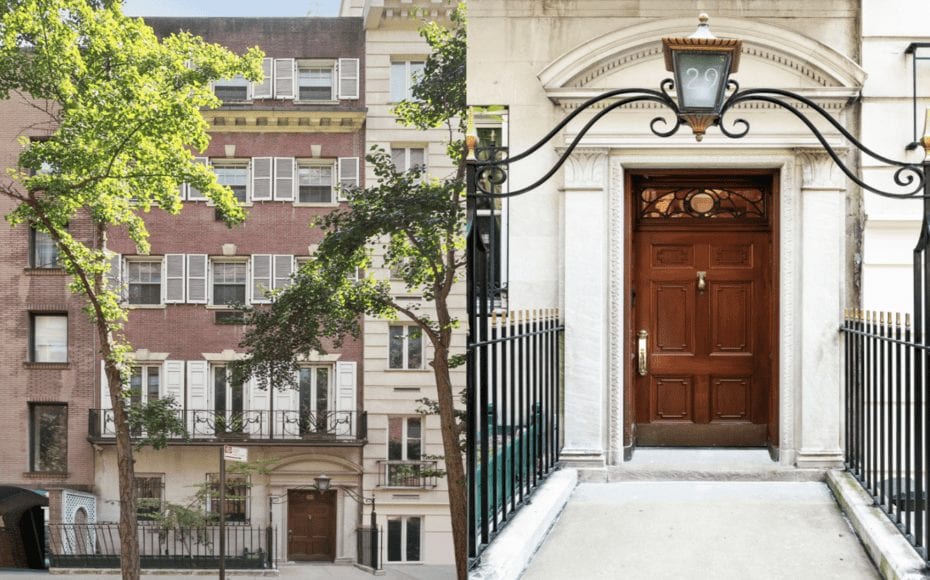
Whilst the asking prices of properties are often reduced, the case of 22 Beekman Place is an extreme one. Built in 1934 for William S. Paley, the man who “turned CBS from a small radio network into the foremost radio and television network in the United States,” and owned subsequently by a philanthropist and then the twin sister of the Shah of Iran, the house was placed for sale for the plainly extremely over-ambitious sum of £40.2 million in February 2014.
In the period since, the nine floor, 12,260 square foot “trophy mansion| has yo-yoed on and off the market and now after being listed as a “BANKRUPTCY SALE!! Excellent Value – Price Reduced to Sell!!” has just reappeared for ‘just’ £9.2 million.
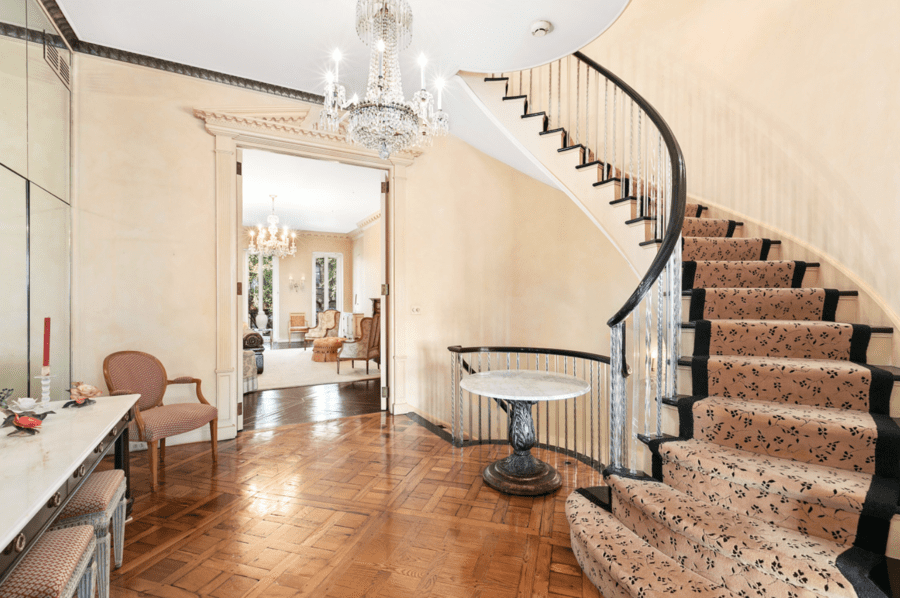
Described by Curbed New York as having “truly lovely architectural details” and an oval-shaped dining room that has been frequented by “heads of states and foreign dignitaries from all over the world,” the red brick and limestone property has 10 bedrooms and 9 bathrooms. Additionally, it includes 1,500 square foot of outdoor space in the form of two private terraces, a chef’s kitchen, a wine cellar, a lift and a banquet hall.
Agents Compass laud 29 Beekman Place as being “designed with grand scale entertaining in mind” and suggest it “appropriate for a private mansion, live/work, a foundation, or an ideal consulate or diplomat residence.” They add: “Do not miss this opportunity to purchase a piece of New York history,” (but unsurprisingly don’t mention any of the infamous murders in the neighbouring buildings).
The Names & Numbers – 29 Beekman Place, Midtown East, Manhattan, New York, NY 10022, United States of America
April 2020 – Relisted for £9.22 million ($11.45 million, €10.58 million or درهم42.05 million) through Compass as a “bankruptcy sale.”
September 2019 – Relisted for £11.7 million ($14.5 million, €13.4 million or درهم53.3 million) through Compass.
October 2017 – Relisted for £22.5 million ($28 million, €25.9 million or درهم102.8 million) through Sotheby’s International Realty.
January 2016 – Relisted for £27.4 million ($34 million, €31.4 million or درهم124.9 million).
May 2015 – Relisted for £30.2 million ($37.5 million, €34.7 million or درهم137.7 million) through Douglas Elliman.
February 2014 – Listed for £40.2 million ($49.9 million, €46.2 million or درهم183.3 million) through Brown Harris Stevens.
Mid 1970s – Sold to Princess Ashraf Pahlavi (1919 – 2016), the twin sister of the Shah of Iran.
1940s – After Mr and Mrs Paley divorced, the house was first rented to and then bought by the philanthropist Mary Woodward Lasker (1900 – 1994). She lived there with her second husband, advertising executive Albert Lasker (1940 – 1952), and remained there after his death until circa 1975.
1934 – Built for the “notorious womaniser” and first CEO of Columbia Broadcasting System (CBS), William S. Paley (1901 – 1990) and his first wife Dorothy Hart Hearst (ex-wife of John Randolph Hearst).
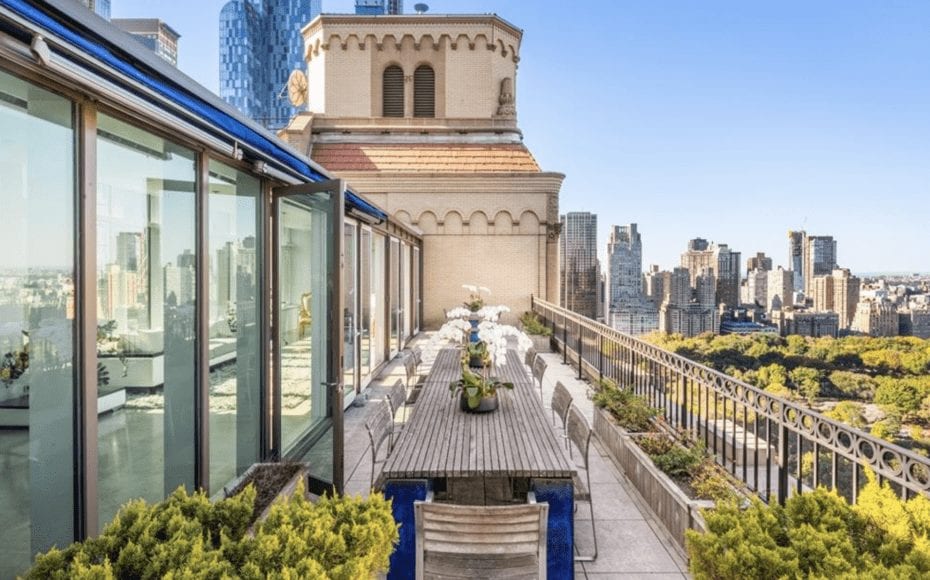
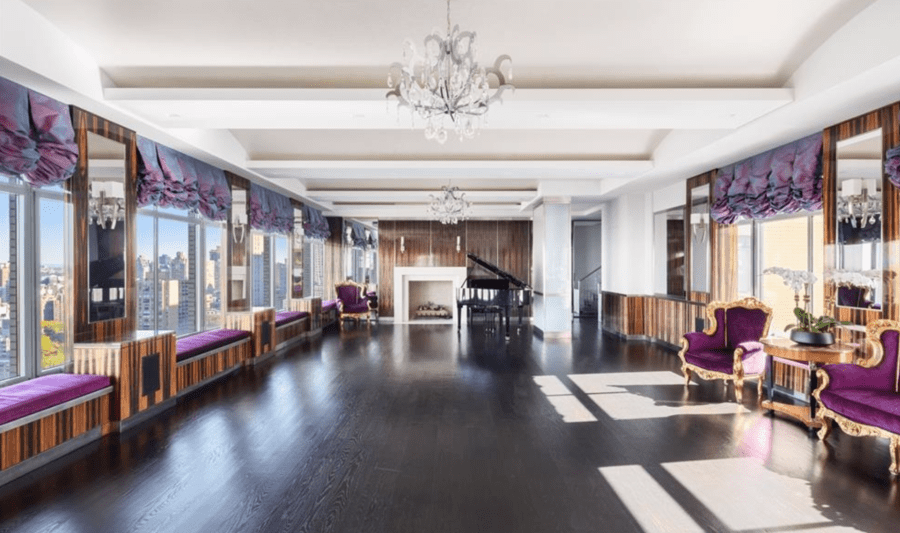
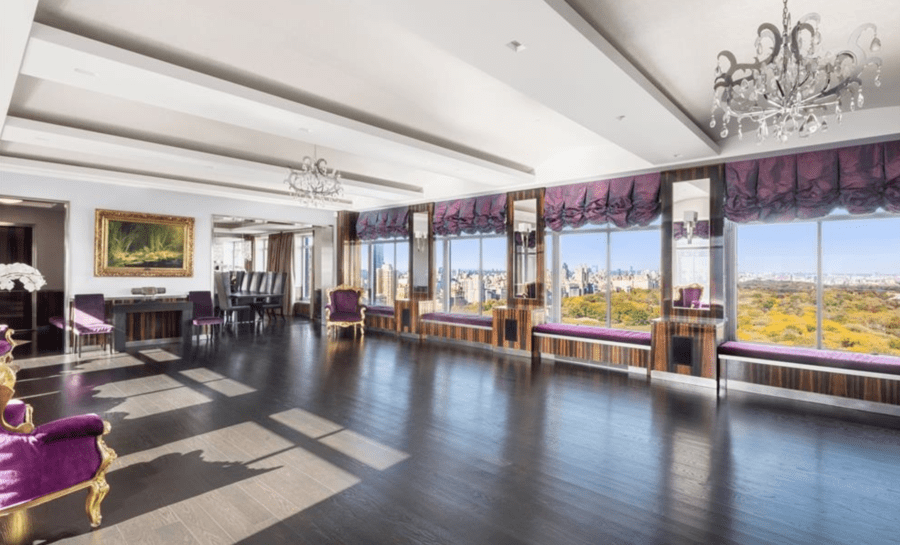
Duplex penthouse in The Ritz-Carlton New York Central Park for sale for £39.7 million or a sum 48% lower than in 2012; it’s currently home to an Argentine tango dancer whom moonlights as a financier and has a ‘ballroom’ in a colour scheme that would make Katie Price blush
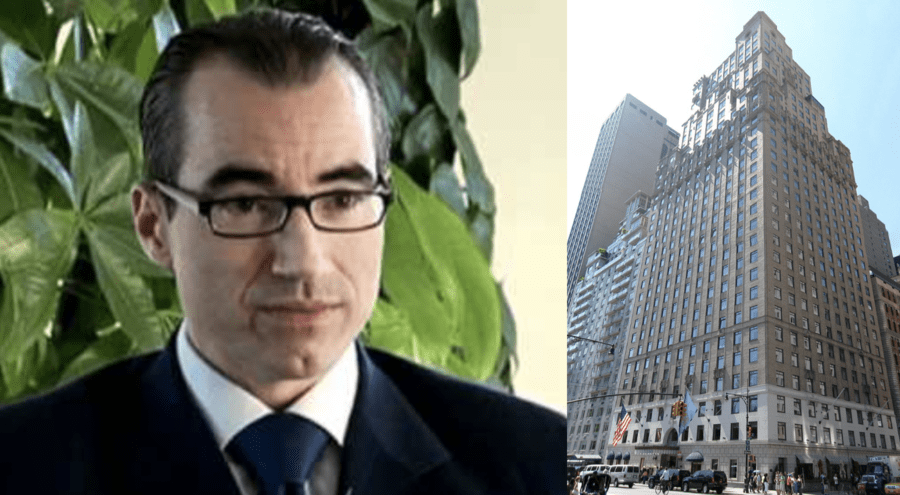
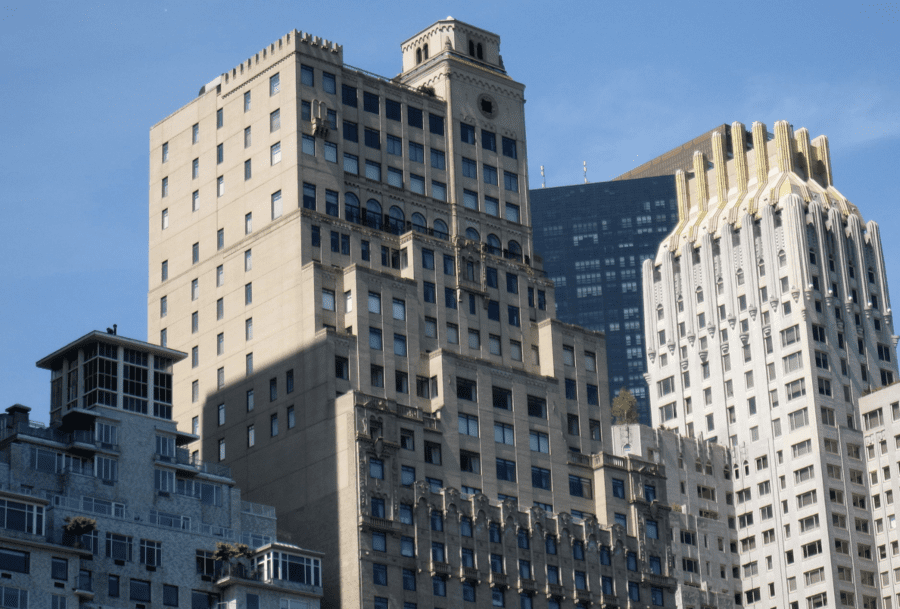
Built in 1930 to 1931 to the designs of the Hungarian-Jewish architect Emery Roth (1871 – 1948), 50 Central Park South – a building formerly known as the St. Moritz Hotel – has been variously owned by Harry Helmsley, Donald Trump, Alan Bond and Ian Schrager. In 2002, as part of a remodelling, the building reopened as The Ritz Carlton New York, Central Park and now one of the ten apartments that subsequently were created in the upper part of the building is again for sale.
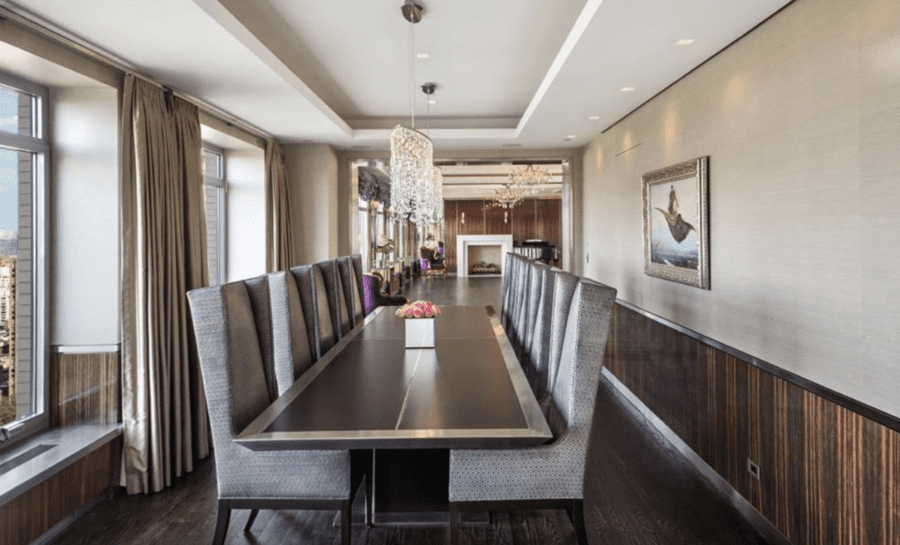
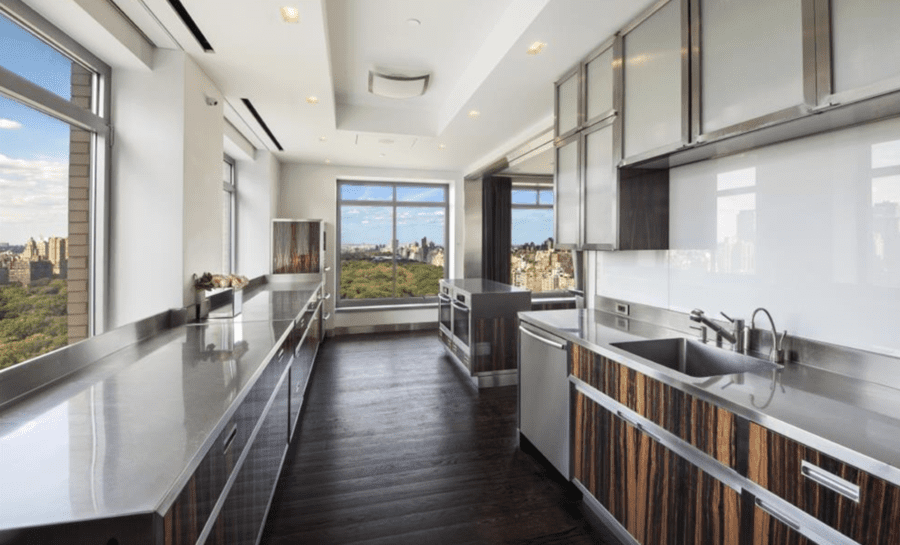
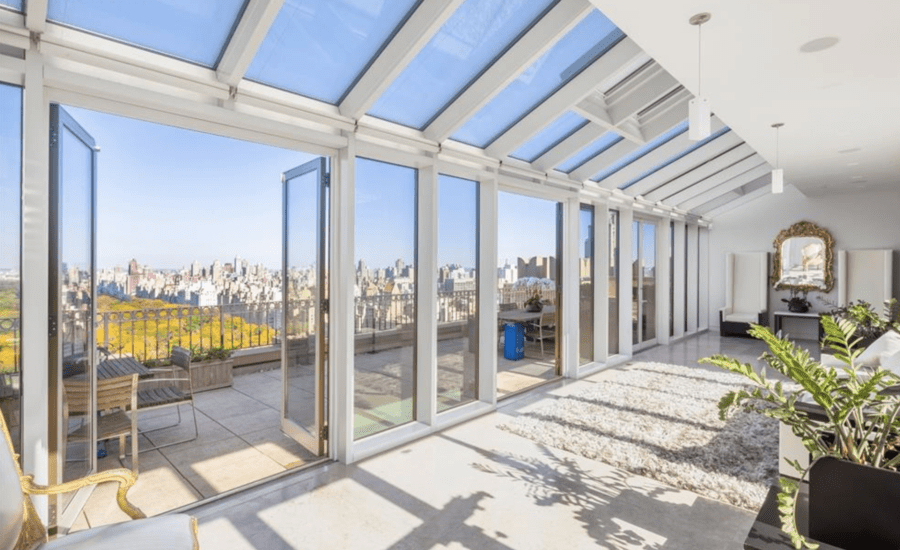
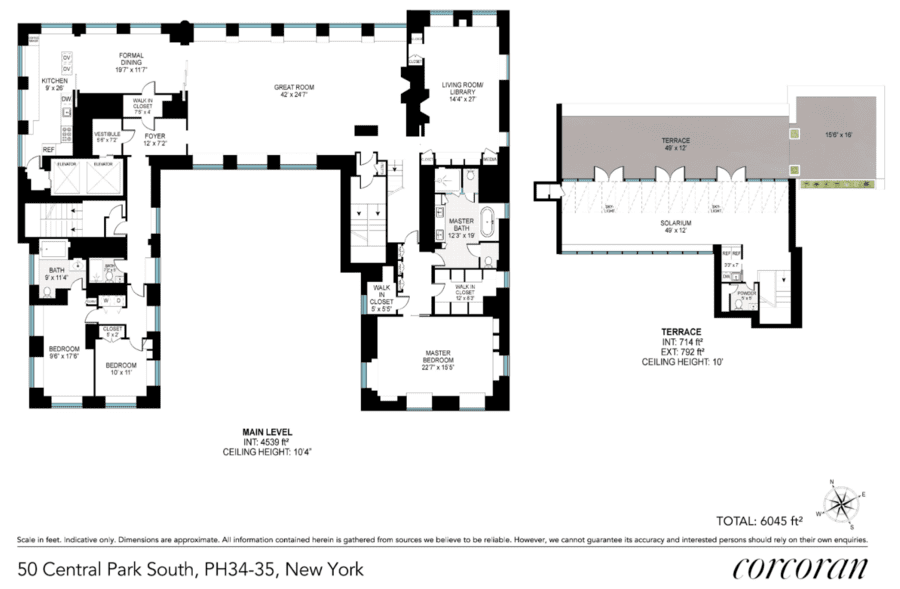
Occupying the 34th and 35th floors, a “horseshoe-shaped” unit described as ‘Penthouse 34/35’ totals 6,405 square foot including roof terraces. It was first configured as a 4 bedroom and 4.5-bathroom unit, but was reconfigured after being purchased by the Harvard educated founder of Gamechange Solar and CEO of Barron Group Holdings, Andrew Barron Worden, in 2006 into a 3 bedroom, 3.5 bathroom property with a 40-foot long ‘great room’ that has been used for “very, very frequent entertaining” and a 49-foot ‘solarium’ above.
Andrew Barron Worden and the exterior of The Ritz-Carlton New York Central Park, 50 Central Park South at the south-east corner of Sixth Avenue, Midtown West, New York, NY 10019.The main reception room of Mr. Worden’s apartment is lauded as a “grand ballroom” and measures 42” in length and 24’7” in width. If it were a person it’d be a “cross between Katie Price and Laurence Llewelyn-Bowen” and is adjoined by a library.Guests at parties in the space are said to have included Russell Simmons – the businessman and music executive now in exile in Bali (after being accused of multiple sexual assaults).
Worden, described as “a ballroom dancer – Argentine tango, to be precise” in an article in The New York Times in August 2012, supposedly spent £5.7 million transforming the space and then tried to sell it for the very ambitious sum of £77 million that year. He did not succeed and again placed it on the market for £39.7 million last August.
Other owners of the ‘residences’ at 50 Central Park South have variously included the hedge fund tycoon Scott Bommer, the financier Howard Marks and the casino mogul Steve Wynn.
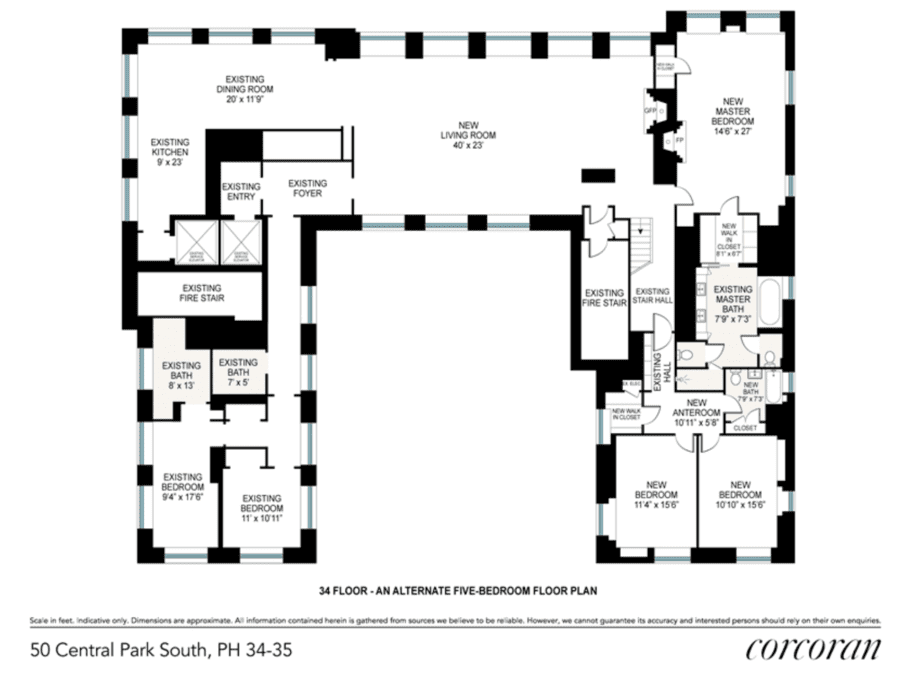
Agents Christie’s International Real Estate are currently marketing the “fully soundproofed” penthouse and describe it as an “heirloom unit” that could be “easily converted back as per the approved architectural plans.”
The Numbers – Penthouse 34/35, The Ritz-Carlton Residences, 50 Central Park South, New York, NY 10019, United States of America
August 2012 – Listed for sale for £77 million ($95 million, €88.1 million or درهم349 million) by Dianne Weston of Halstead Property. At the time, she claimed the owner “understands the metrics of the market.”
“Late 2000s” – Supposedly underwent a “renovation” costing £5.7 million ($7 million, €6.5 million or درهم25.7 million). Of this, The New York Times remarked: “[The apartment was subject to a] complete renovation, designed by the architectural firm Gustavson/Dundes, which gave the space a very contemporary look, including a sleek steel and glass staircase with treads that can be lighted from below.”
2006 – Sold to Andrew Barron Worden for £16.2 million ($19.95 million, €18.5 million or درهم73.4 million).
The dining room is said to have “magnificent views.”There is a chef’s kitchen also.The 35th floor ‘solarium’ leads onto a vast 700-square-foot terrace beyond.A view of the ‘residences’ at 50 Central Park South from Central Park.The floor plan “as is.”The floor plan of the 34th floor “as could be.”
Unmodernised ‘set’ in “rule-ridden” Albany, Piccadilly that was the London home of eccentric antiques dealer and ‘King of Chelsea’ Christopher Gibbs for sale; tour the home of the man who got Princess Margaret high on hash
Expelled from Eton “for being generally totally impossible,” antiques dealer Christopher Gibbs (1938 – 2018) was not a man one would have imagined would have liked the idea of living in a place with archaic rules. This “peacock pied piper to society in the Swinging Sixties” whose “drug consumption awed even Keith Richards,” however, surprisingly chose as his London base Albany in Mayfair and now his former residence is for sale.
“A hermitage; quiet as a lagoon, secluded from the roar of Piccadilly” according to the author Sheila, Countess of Birkenhead in her 1958 tome Peace in Piccadilly, Albany – which is only ever referred to as ‘The Albany’ by the extremely ill-advised – quintessential dandy Gibbs lived in the building for “more than half [his] life.” Whilst also owning properties including Davington Priory in Kent – which he later sold to Bob Geldoff – and a “mystic hangover” home in Tangier, it was here that this ‘King’ of “distressed bohemian” style found a place that offered him: “Perfection for a singleton, an oasis of serenity in the frenetic heart of West London.”
This curious “cloistered world” has numbered Sir Isaiah Berlin, Alan Clark, Lord Byron, William Gladstone, J. B. Priestley, W. Somerset Maugham and Terence Stamp amongst those who have passed its vetting committee of trustees and Gibbs – a man who legendarily got Princess Margaret so high on marijuana that she had to go to hospital – even embraced its “no pets, no children, no whistling, no noise and absolutely no publicity” policy.
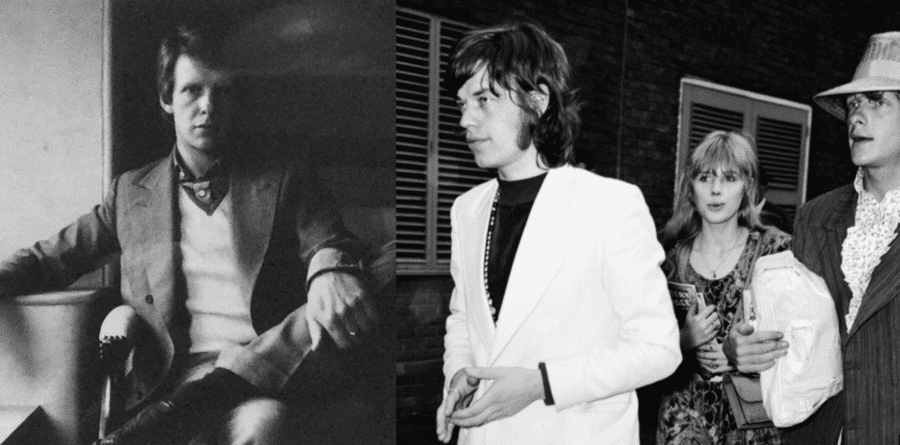
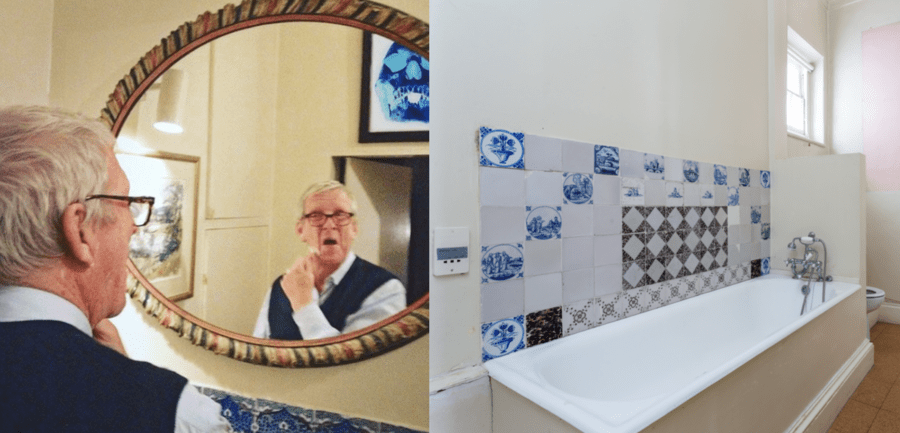
Antiques dealer Christopher Henry Gibbs, (29th July 1938 to 28th July 2018), son of The Hon. Sir Geoffrey Gibbs KCMG and Lady (Helen) Gibbs CBE, was called the ‘King of Chelsea’ due to his ability as the ultimate connector. He put the Rolling Stones together with Prince Rupert Loewenstein (whom became their business manager) and he persuaded his friend John Paul Getty, Jr. to donate £50 million to the British National Gallery in 1985.Christopher Gibbs by Robert Mapplethorpe and with Mick Jagger and Marianne Faithfull.Christopher Gibbs pictured in his bathroom at L6 Albany, Albany Courtyard, Piccadilly, Mayfair, London, W1J 0AZ; the bathroom as it is today is in need of “some updating” according to agents GreenHunt.‘Set L6’ circa 2013, as furnished then by Christopher Gibbs.
Photographed there by the curmudgeonly Victor Watts on a daybed that allegedly belonged to Lord Tennyson, described the home he created in an article for The New York Times’ ‘Style Magazine’ in April 2013:
“I had the place to myself and proceeded to make it my own in the accustomed style: sober mahogany, Oriental rugs, family pictures. I’ve continually reordered these rooms, distilling, paring, pruning, as chaste as my voluptuous nature allows.”
“So enraptured with my Albany life did I become that, reason deserting me (not for the first or last time) I gave up a spacious Bond Street gallery where I had my antiques shop and took one at the back of Albany, a small if elegant space with an entrance into the building, another onto the street and best of all a door into the underground passage – a quiet, invisible stroll home.”
“I love returning from Morocco, where I now spend much of my time, seeing the friendly porters at the door, hearing the clip-clop of feet on the Rope Walk, seeing the old-timers sitting in the little ivy-lined garden, sunning themselves by the little bronze statue of Antinous and the fountain, regularly invaded by the ducks from St. James’s Park – and enjoying sudden glimpses into other people’s lives through uncurtained windows, the hours marked only by the clock chimes of St. James’s Church, accompanied by the more uptempo tinkling of the clock at Fortnum & Mason, our local grocers.”
“At this point, when I am in London, I can’t imagine staying anywhere but Albany – all the more reason, perhaps, to clam up, maintain the longstanding omertà (or I should say discretion) that has held sway for centuries now, and count my blessings.”
Gibbs’ former home, ‘Set L6,’ is situated on the second floor in Albany’s Courtyard. It extends to some 1,178 square foot and includes a hall, reception room, kitchen, bedroom and bathroom. On the third floor, a separately accessed studio space has a shower room and kitchenette and of the property, the selling agents remark: “Whilst capable of immediate occupation, [it] does require the bathrooms being upgraded.”
Sold for just £60,000 ($75,000, €69,000 or درهم275,000) leasehold in March 2019 (presumably the term must have been very much towards its end), agents GreenHunt listed ‘Set L6 Albany’ on Zoopla first in May that year. Now, in April 2020, it remains for sale, but is instead listed on Primelocation. They seek £925,000 ($1.2 million, €1.1 million or درهم4.2 million) and offer it on a new 20-year leasehold with an upfront premium and a peppercorn ground rent.
Living in the building is not just the preserve of those with deep pockets. Peviously, in 2014, we featured ‘Set A5 Attic Albany’ – which was just £395 per week ($494, €454 or درهم1,800 per week) – whilst for those looking for something grander currently, a second and third floor freehold set is currently available through Sotheby’s International Realty for £4.95 million ($6.19 million, €5.69 million or درهم22.73 million). It extends to 1,890 square feet, is described as “meticulously refurbished” and includes an especially impressive drawing room.
Christopher Gibbs quoted:
“[I’ve always attracted] the grand and the raffish and the fast and the chic.”
“[I am] monumentally narcissistic.”
“I am a bit snooty… I do make exceptions, but very few.”
“We are here to learn, and my goodness I have a lot to learn.”
“[I was expelled from Eton for] Rabelaisian antics – illicit drinking, pantry raids of other boys’ rooms – that sort of thing.”
“Taste is something you catch – like measles or religion.”
“I like things in their natural state – people especially. As life goes by, that’s what I admire: objects and people that are unmonkeyed with, that are themselves, not trying to be something else.”
“I’m not interested in creating a dazzling impression of richness. We can make do with surprisingly little in life. It is best to have a few things which are really nice. I don’t approve of the mean look, but I do approve of the spare look, where every little bit is telling.”
“Being a shopkeeper, I used to sell things, sometimes.”
“I definitely suffer from the blown-mind syndrome… The only thing I’ll say in my favour, is that I was practically the only person I knew who actually went to work at nine o’clock in the morning, whether I’d been up to eight o’clock or not, because I had a job, my own business, and I realised that, if I didn’t, I wouldn’t have any of those things.”
“[I] help people make nice cosy homes where they are going to live happy, beautiful lives.”
“[I] encourage friends to dig into their heirlooms, to wear old clothes, to turn their backs on ugliness and conformism.”
“Collectors today want a good car, a good sound system, and a huge pink heart painted by Damien Hirst with dying butterflies on it which costs £400,000. Yet for much less you could buy something completely fascinating made 300 years ago.”
Quotes about Christopher Gibbs:
“Taste is difficult to define, but his is absolute perfection” – Min Hogg, founding editor of World of Interiors.
“[He was] like an 18th century English parson who knew more about Etruscan vases than anyone at the British Museum” – Sir John Richardson, July 2018.
“I’m here to learn how to be a gentleman” – Mick Jagger of his then neighbour Christopher Gibbs whilst at a dinner party at his house.
“He was very flash… Sometimes he just wore tight jeans or fancy dress, like the others; but mostly his tastes were elaborate; suits with double-breasted waistcoats and cloth-covered buttons, and velvet ties, and striped Turkish shirts with stiff white collars, and cravats. Above all, he had a passion for carnations and was forever buying new strains, pink-and-yellow, or green-ink, or purple with red flecks” – Nik Cohn, author of Today There Are No Gentlemen, January 1971.
“Part Montesquieu, part Beau Brummel, and part Baudelaire… [Christopher Gibbs was a] well-born Renaissance man with an unmatched eye for aesthetics and a talent for friendship and the mot juste” – Hamish Bowles, international editor at large for Vogue, July 2018.
“Christopher was almost single-handedly responsible for making English antiques, and English heritage, look ‘cool’ again” – James Reginato of Vanity Fair, July 2018.
“A connoisseur of the weird and the wonderful” – Christopher Mason of The New York Times, September 2000.
“[He was an] acid-tripping ex-roué once known as the King of Chelsea” – Bitter words from the ex-Daily Mail ‘journalist’ and poison pen James Delingpole, executive editor of Breitbart.
“[The] avatar of Swinging London” – A more kind description from Sam Roberts of The New York Times.
“Christopher Gibbs: the man who brokered £50 million Getty grant to the National Gallery – and fed Princess Margaret hash brownies” – Huon Mallalieu of The Art Newspaper, July 2018.
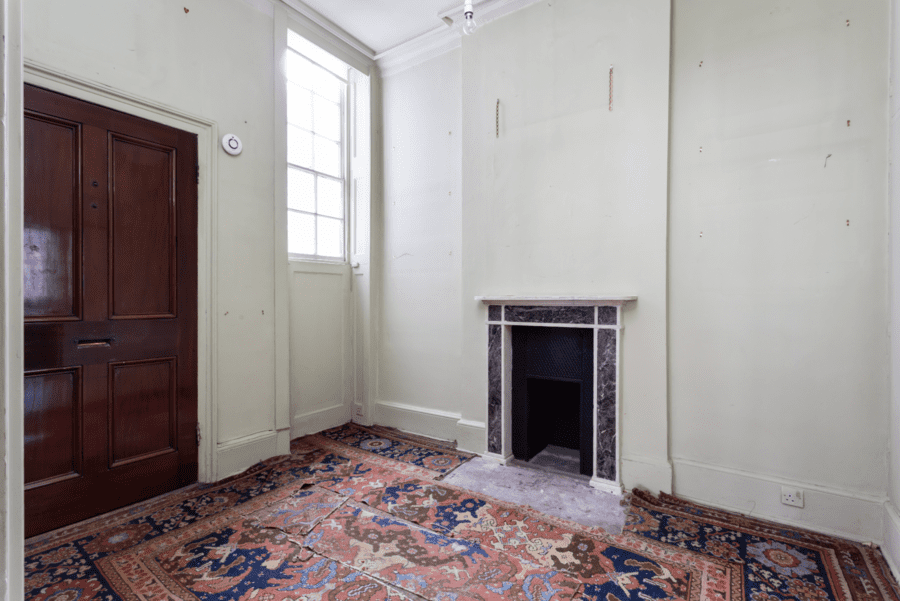
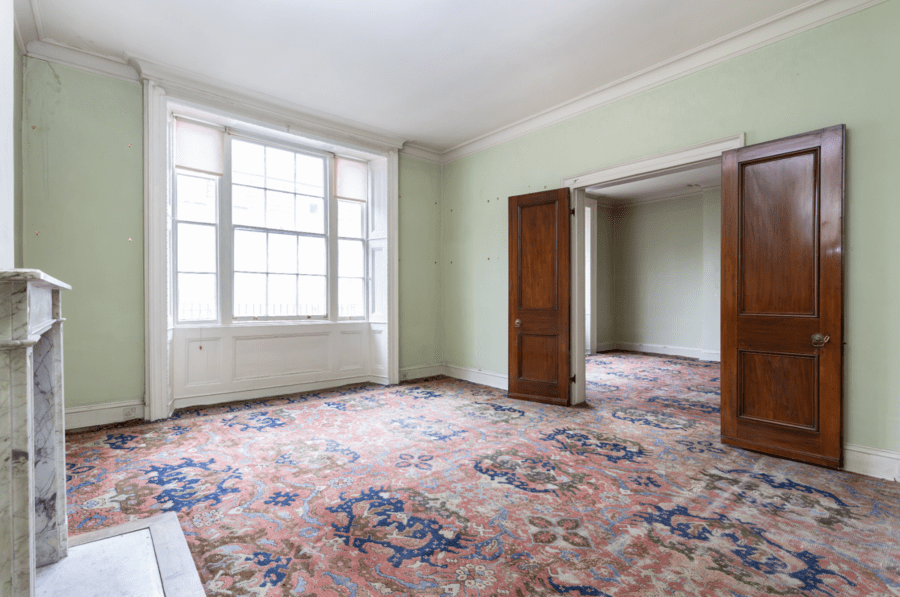
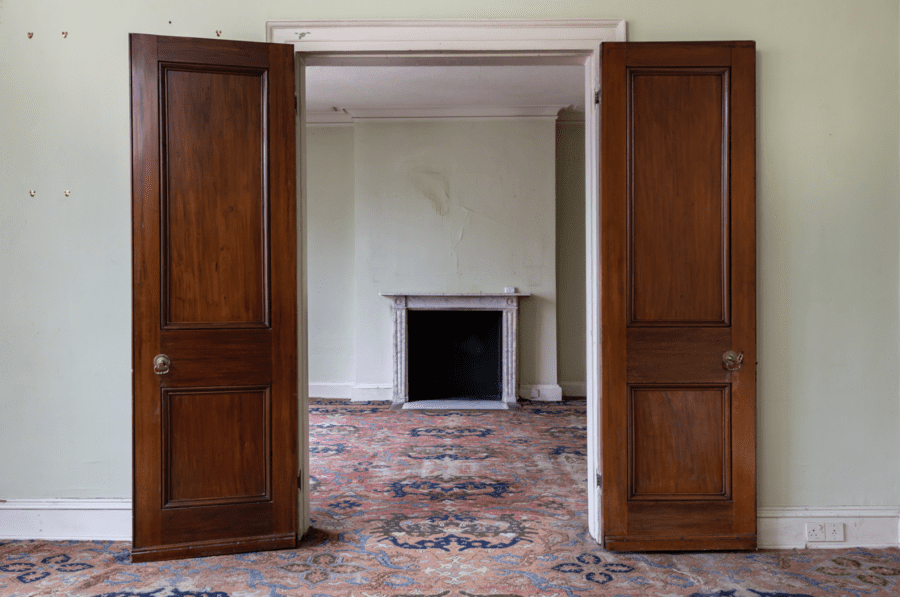
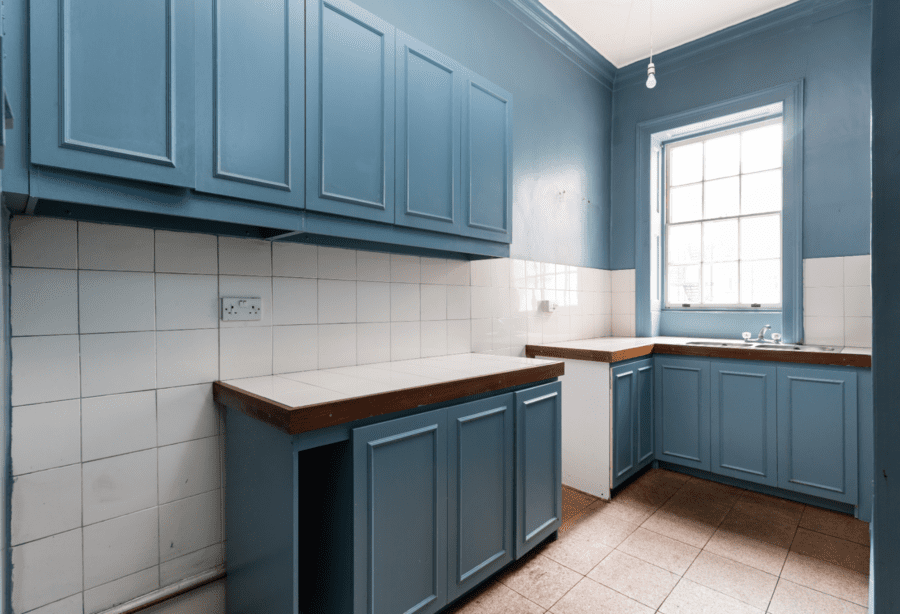
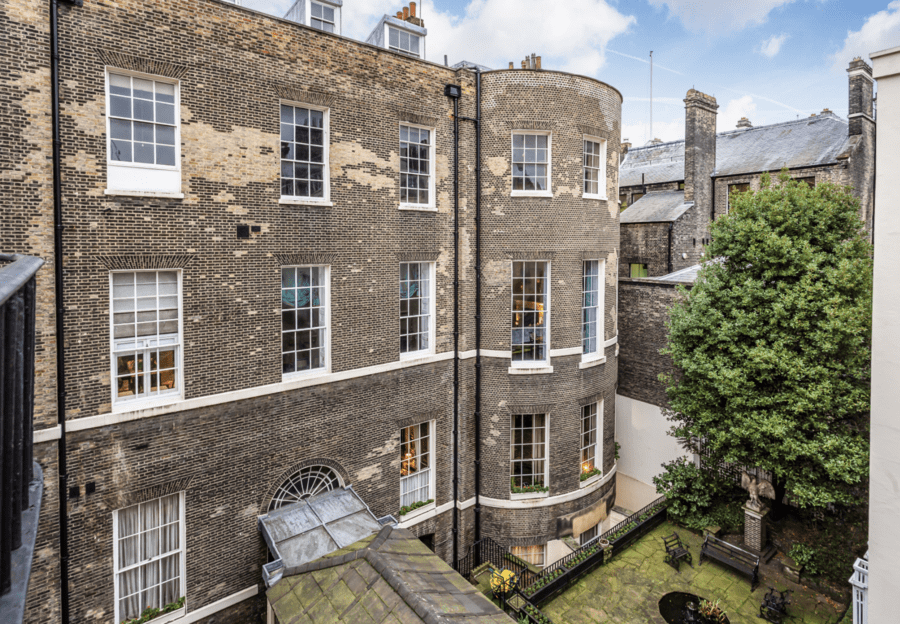
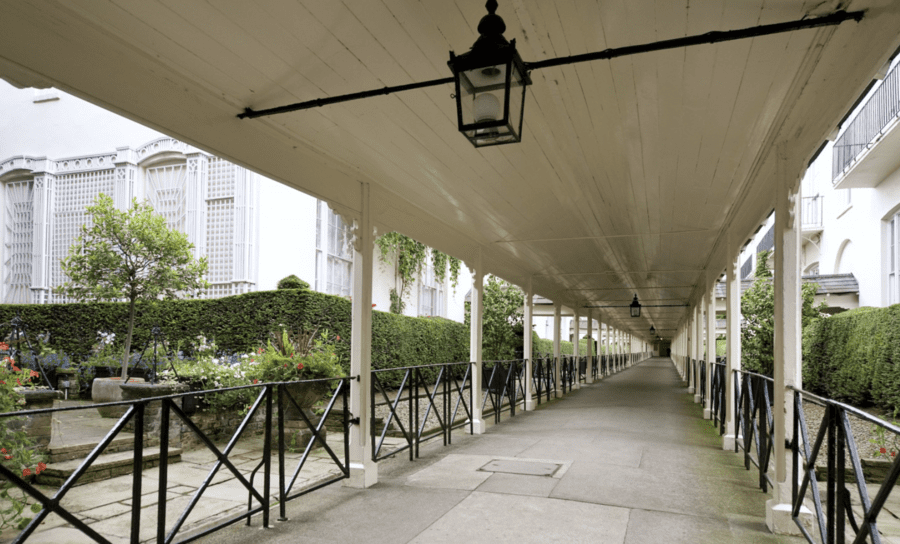
The entrance hallway of ‘Set L6’ has a fireplace.The master bedroom of ‘Looking into the reception room.The somewhat basic kitchen is definitely in need of an upgrade.The view from the set.Albany’s famous ‘Rope Walk’ – Of it, Gibbs commented: “So ingrained is the sense of decorum that even to utter a friendly hello to a neighbor as we pass on the stone stairs or the covered outdoor canopy, known as the Rope Walk, might be violating a taboo, as if a few words of small talk could break the spell of privacy we Albanians prize so deeply. (A nod suffices, a hat raised to a lady.)”Residents have access to the most peaceful outside spaces.The third floor space included in the sale is arranged as a long, thin studio room.It has a small kitchenette.And a somewhat dated shower room.A plan indicating how ‘Set L6’ is currently arranged.A plan of the third floor studio space.
Converted church in Knightsbridge has its asking price cut by £11 million during the coronavirus lockdown; its price is still 340% higher than it sold for in 2003
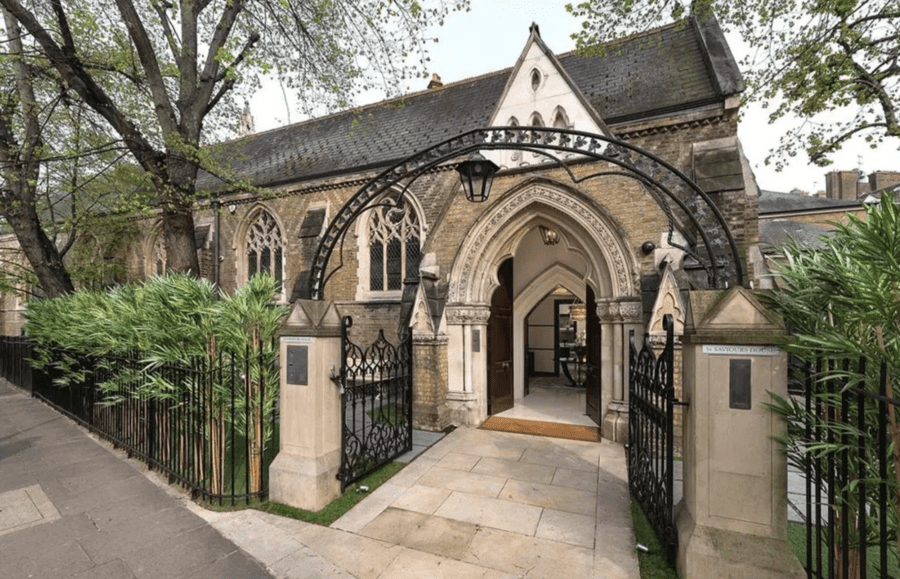
Yours for £11 million less than in December 2019 – St Saviour’s House, Walton Street, Knightsbridge, London, SW3 1SA.
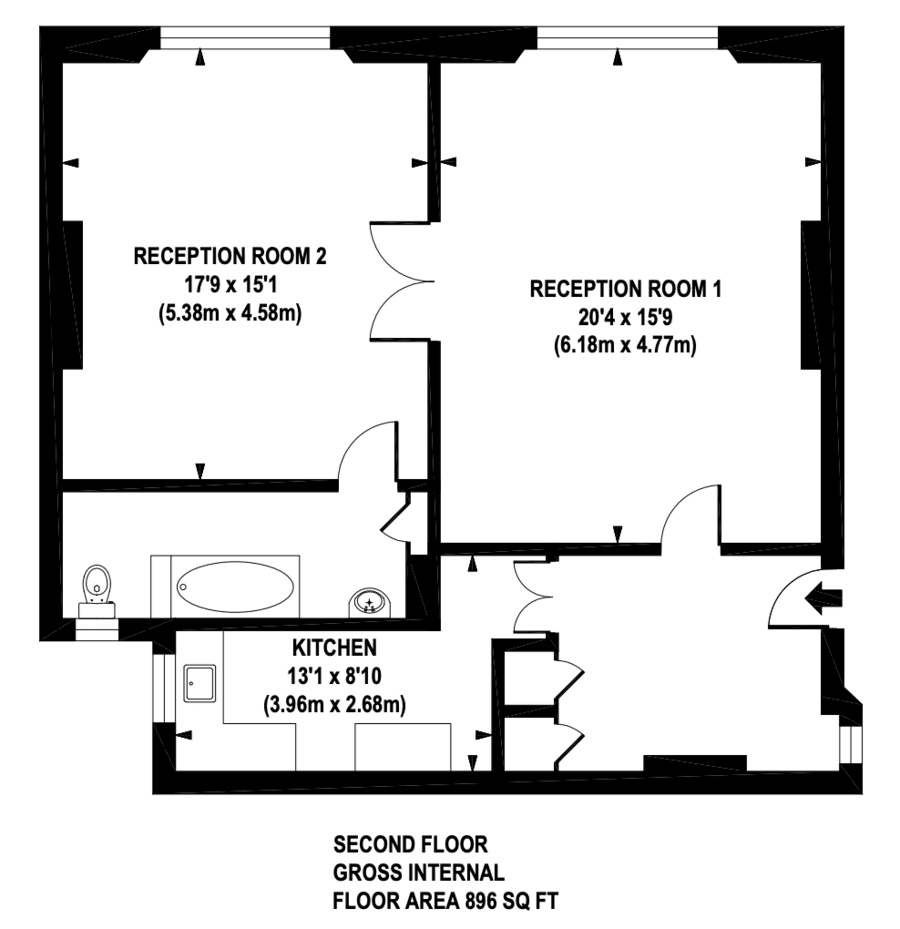
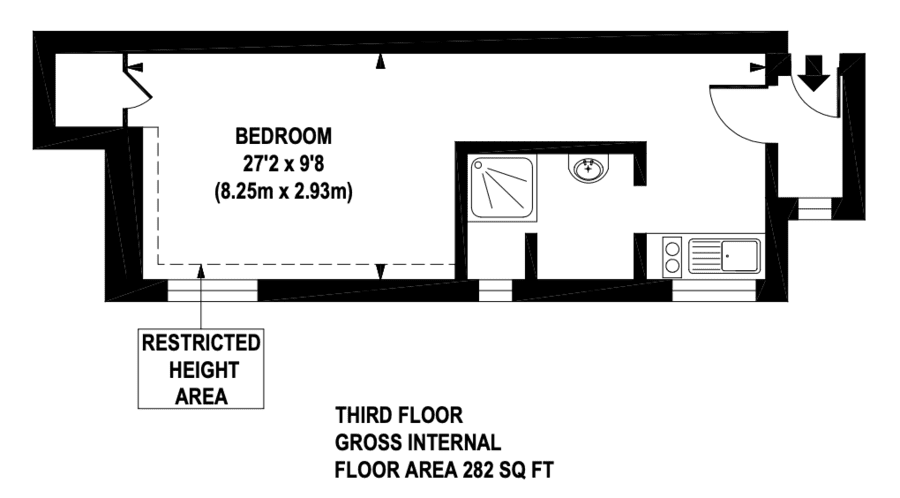
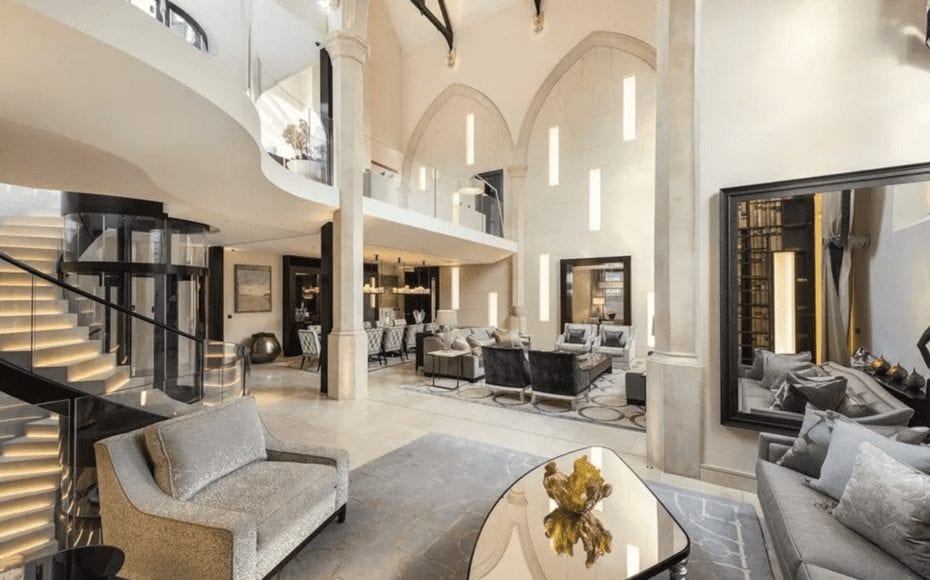
St Saviour’s House, as it is now known, forms one thirds of a church and its conversion to a 12,102 square foot house did not delight everyone. Of it, back in 2001, The Telegraph’s Anne Atkins went as far to say: “[It is a] ghastly temple to Mammon… It is so awful I hardly know where to begin… Not my idea of a cosy home… Hideous and tacky… I tried to imagine living with this… The monstrosity of it… Vile.”
Knight Frank, who remain the selling agents, plainly still think otherwise and now market what they describe as an “extraordinary seven bedroom home” for £44 million. Referencing the pandemic directly, they add: “Owing to our commitment to keep both our colleagues and clients safe during this period of recommended isolation, we have many self-serve viewing options available to you. These include video walkthroughs, 360 virtual reality viewings and enhanced comprehensive photography.”
To see more pictures of this most curious conversion, click here.
The Numbers – St Saviour’s House, Walton Street, Knightsbridge, London, SW3 1SA
April 2020 – Reduced in price to £44 million ($54 million, €50 million or درهم198 million).
December 2019 – For sale for £55 million ($73 million, €66 million or درهم269 million).
April 2014 – Sold to a Saudi businessman for £41 million ($55 million, €49 million or درهم201 million).
2009 – Sold to a Thai businessman for £13.5 million ($18 million, €16 million or درهم66 million). An additional £10 million ($13.3 million, €12 million or درهم49 million) was spent on redevelopment.
2003 – Bought by lyricist Alain Boublil for £10 million ($13.3 million, €12 million or درهم49 million).
1998 – Half the church and the church hall sold by the Diocese of London for about £1.2 million ($1.6 million, €1.4 million or درهم5.9 million) for conversion into two dwellings. The central portion of the building retained as a place of worship.
1837 – Plot on which entirety of St Saviour’s Church now sits sold for £300 or the equivalent of £33,000 today ($44,000, €40,000 or درهم162,000 today) to the Metropolitan Church Fund.
For those looking to self-isolate in luxury in London, taking a ‘residence’ at The Milestone Hotel in Kensington could be the perfect option (if you’ve got £7,700 per week to spare)
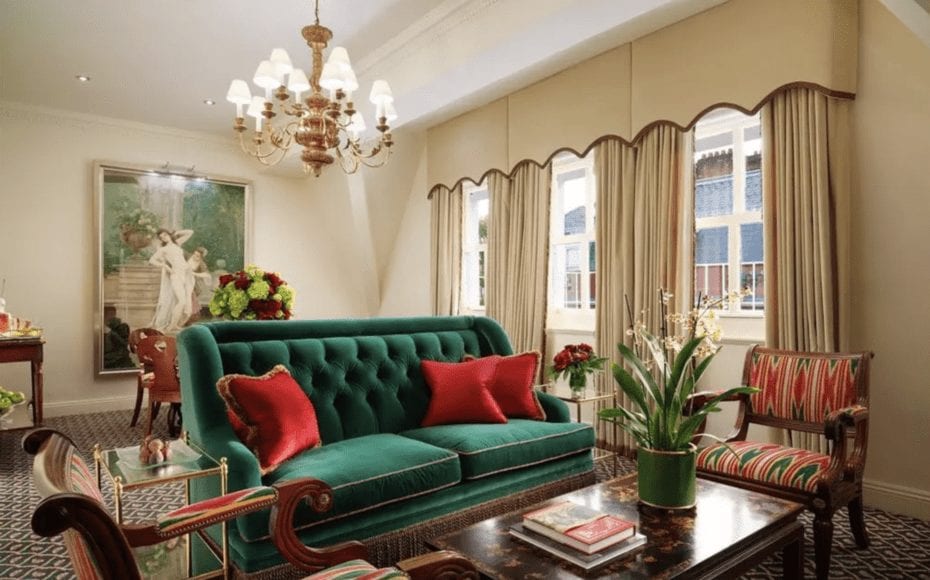
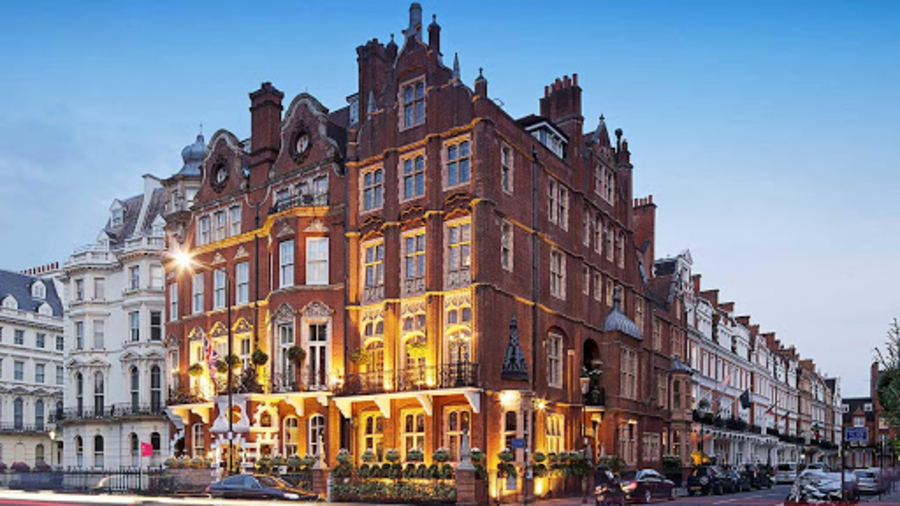
If you’re rich, want to self-isolate during the coronavirus outbreak in London and don’t even want to go out to do shopping, you could do worse than move into a ‘residence’ within The Milestone Hotel overlooking Kensington Gardens and Kensington Palace in W8.
Though the Red Carnation Collection hotel, on its own website, is described as “temporarily closed due to current travel restrictions,” serviced apartments within the property are still being advertised online as available.
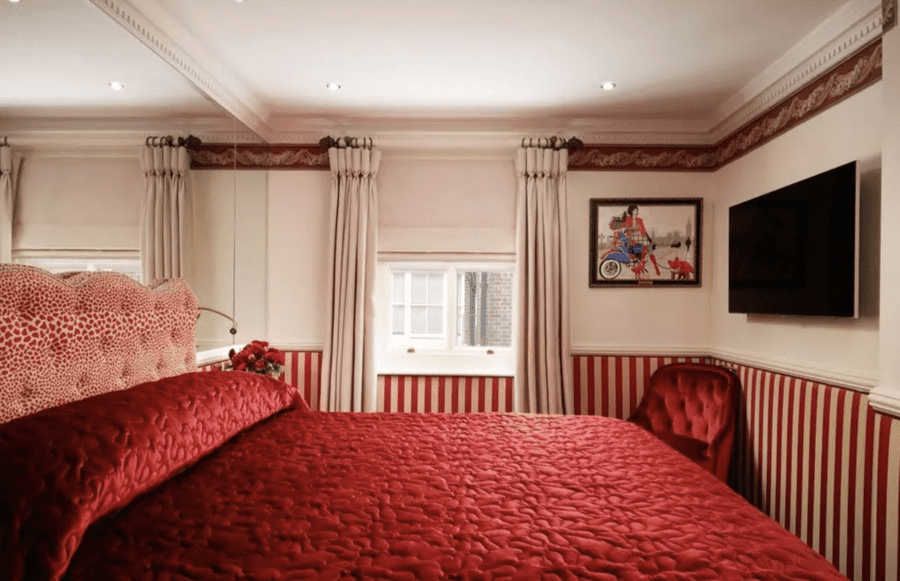
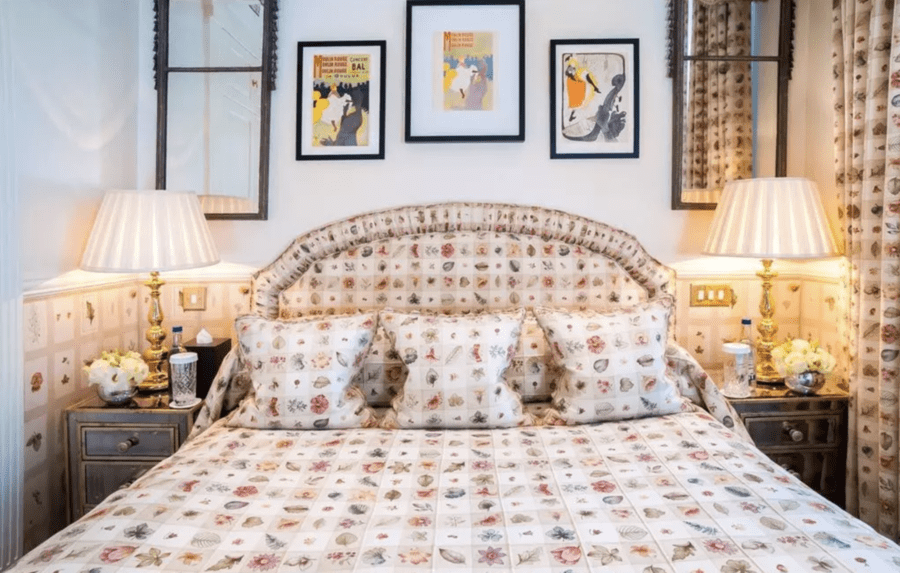
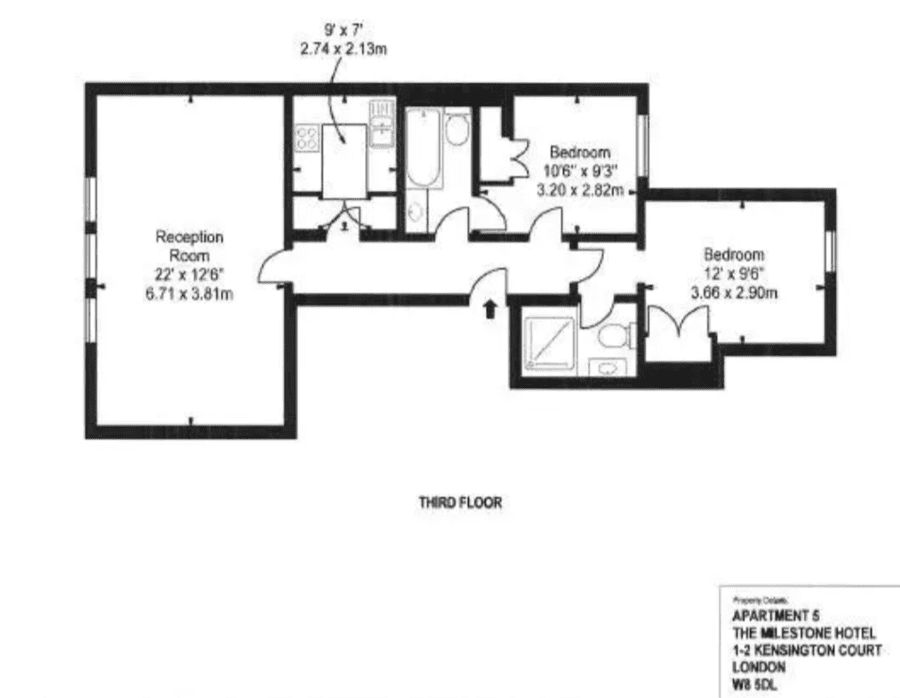
Listed on OnTheMarket.com for £7,700 per week ($9,600, €8,600 or درهم35,200 per week) or the equivalent of £550 per room per night ($685, €615 or درهم2,515 per room per night), a 743 square foot single-level, third floor apartment includes a reception room, two bedroom suites and a kitchen.
It is described by Harrods Estates as “beautiful” and “sumptuous” and having the “warm sense of being in your own private home.” Featuring a “vibrant and sophisticated” decoration scheme designed by Bea Tollman, the hotel’s founder, the agents laud the “contemporary polish that so cleverly blends with balancing the traditional features.”
‘Characteristics’ available to those taking the space include full 24-hour hotel service, access to the hotel’s health club, daily housekeeping services, 24-hour butler and room service and a full grocery shopping service.
The neo-Gothic former private home in which this ‘residence’ is situated became a hotel in 1922 and has been known as The Milestone since 1986. It has 43 guest bedrooms, 13 suites and 6 long-stay apartments and in 2019 unveiled a leopard print carpeted suite in honour of the Duchess of Sussex named the ‘Meghan Suite.’ A blessing or a bonus, depending on your view of the wayward on-off royal, is that the likelihood of the former Miss Markle popping in for tea at this time of lockdown is as likely as the Queen riding by on Shergar the racehorse.
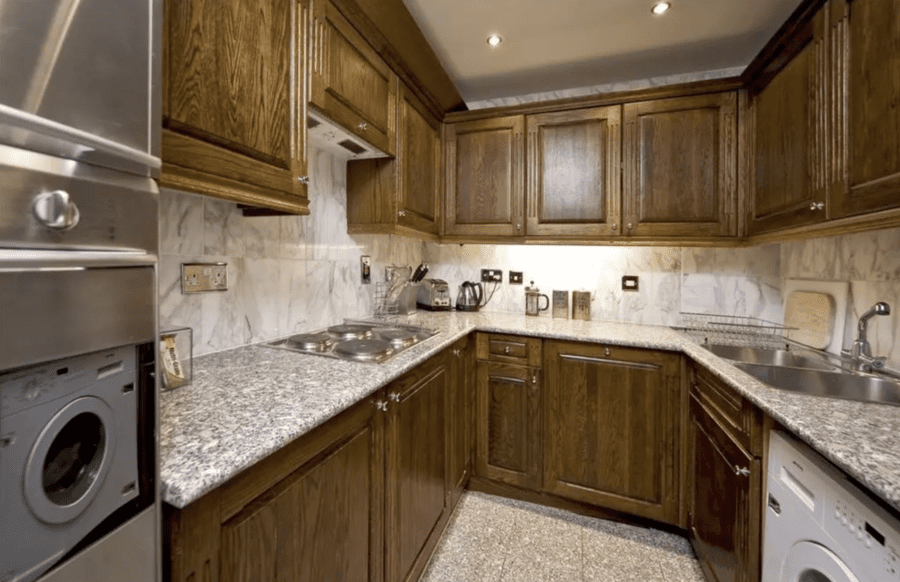
The exterior of The Milestone Hotel, 1 Kensington Court, Kensington, London, W8 5DL, United Kingdom.The main bedroom.The second of the bedrooms.The kitchen of the apartment has a look of something from the 1990s, but is perfectly functional.A floor plan of Apartment 6, the ‘residence’ offered.
Second apartment in South Kensington’s famous ‘Thin House’ comes to the market after another has languished for sale for four years; the two could potentially be merged to make a truly spectacular artist’s studio in the sky
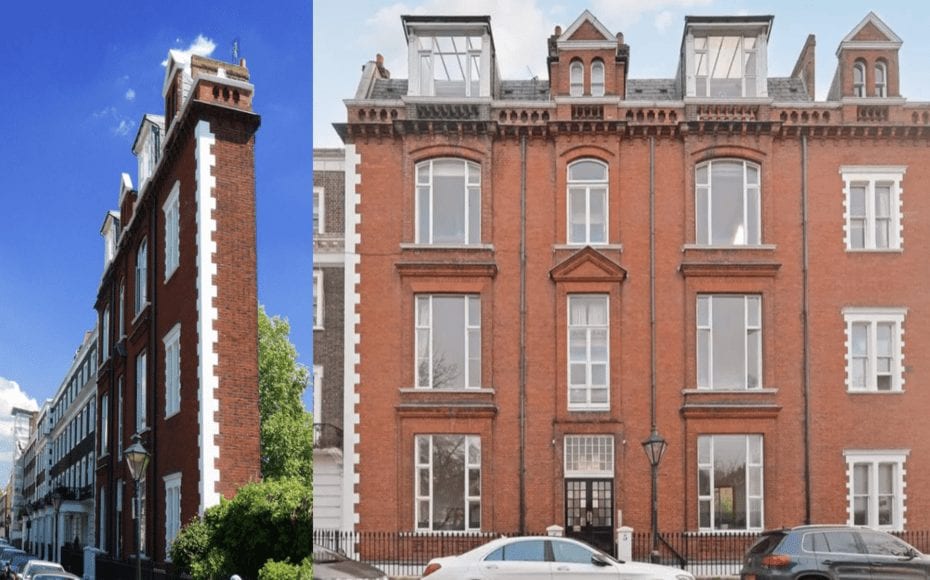
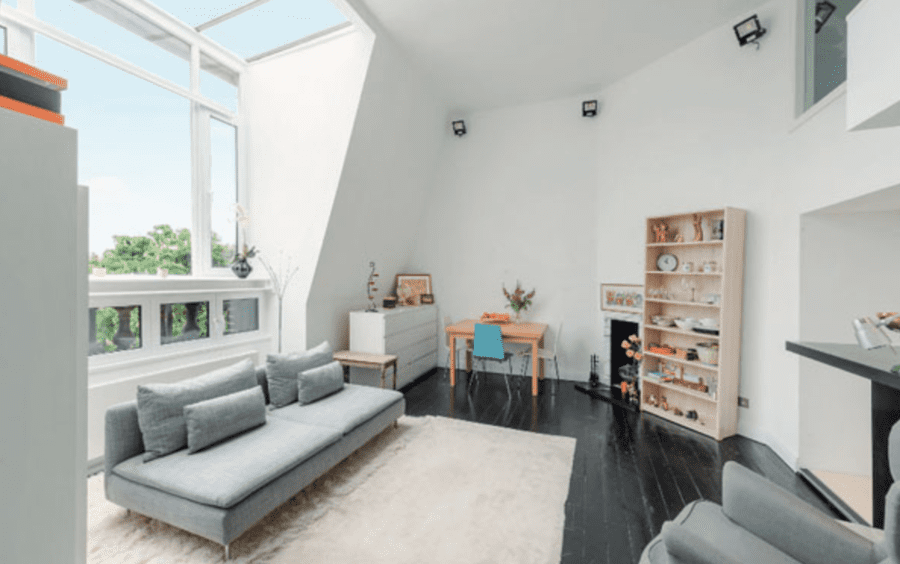
In May 2016, The Steeple Times featured a 603 square foot third floor artist’s studio flat in a building known as ‘The Thin House’ (or ‘The Skinny House’) in Thurloe Square, South Kensington. Priced then at £895,000 ($1.1 million, €1 million or درهم4.1 million), this apartment is surprisingly still for sale for the same sum and complete with the same furniture four years later. Now, however, it is no longer offered by the defunct agents W. A. Ellis and is instead available through agents Rokstone.
The third floor space for sale through Rokstone for £895,000 has been on the market since 2016, yet has never been reduced in price.
A reason this flat may not have ‘moved’ in the period is not only that the building in which it is situated is not only of an “architecturally weird shape,” but also because it directly backs onto the District and Circle line. With trains running from around 5.30am to 12.30am each day, it is undoubtedly noise affected.
Constructed on the remaining land of five neo-classical houses demolished to make way for the underground in the 1860s, red brick 5 Thurloe Square – just six foot wide at its narrowest point – was the brainchild of a local builder named William Douglas. Fitting into a “meagre” triangle, he designed and built seven artists’ studios between 1885 and 1887 and some of them are still in use by creatives to this day.
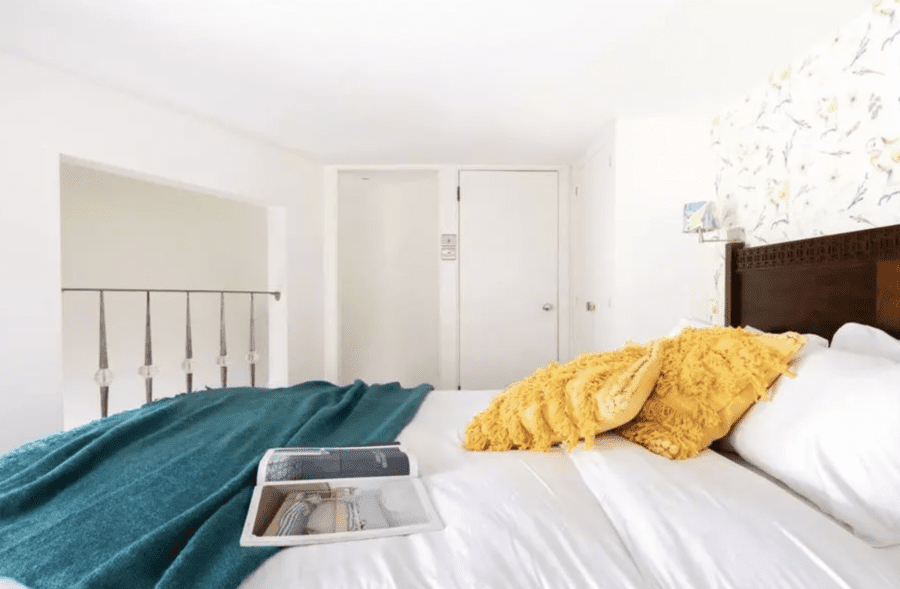
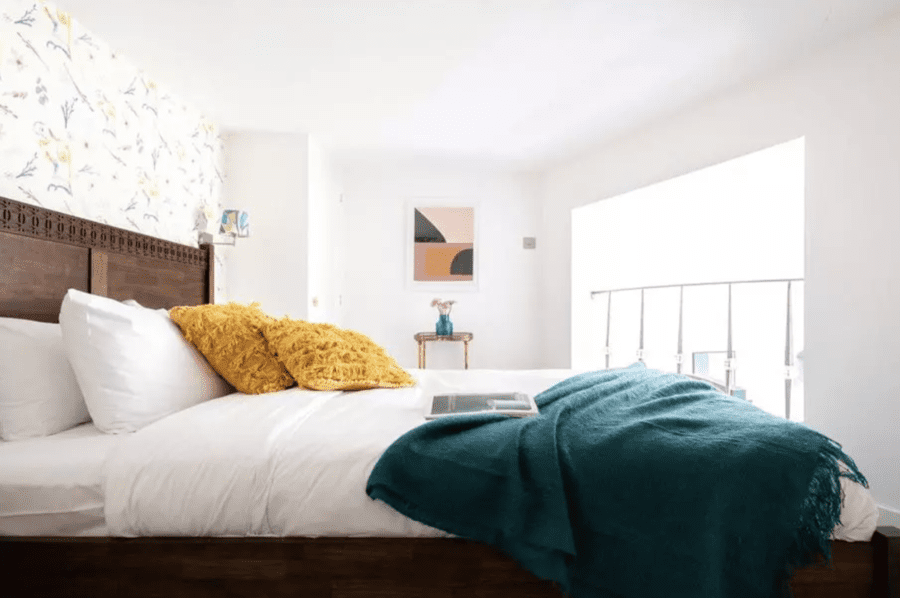
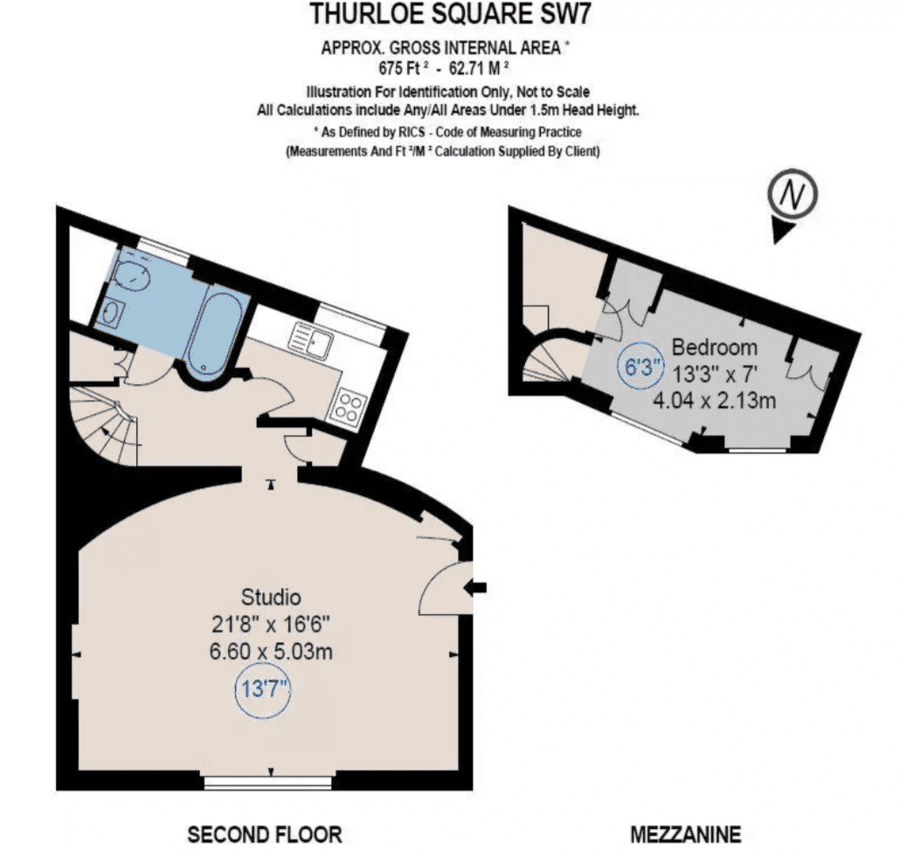
As well as the aforementioned share of freehold third floor property, a studio on the second floor of the building is also on the market. Offered by Winkworth for £875,000 ($1.1 million, €980,000 or درهم4 million), the 676 square foot space features a 21-foot by 16-foot studio with a small kitchen and bathroom off and a 13-foot by 7-foot mezzanine bedroom over. The agents describe the property as offering “exceptional space” and “the most magnificent view over the treetops of Thurloe Square towards the Victoria and Albert Museum.”
Subject to planning, imagination and deep pockets, an inspired individual could perhaps purchase and merge both apartments into one. The resulting 1,279 square foot creation would not only be thin, it could potentially be spectacular.
Images and floor plans of the third floor artist’s studio follow.