The sale of the £20 million Bletchingdon Park, Oxfordshire
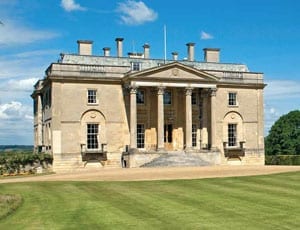
Bletchingdon Park House in Oxfordshire is one of those classic Palladian villas that would make the perfect setting for a period drama. Unlike vast Jacobean mansions like Highclere Castle, better known as Julian Fellowes’ Downton Abbey, however, Bletchingdon is of a far more manageable size.
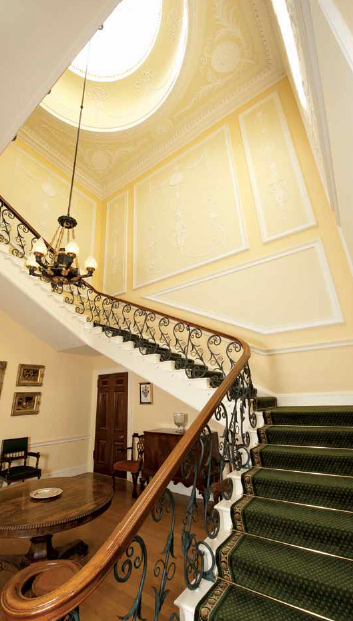
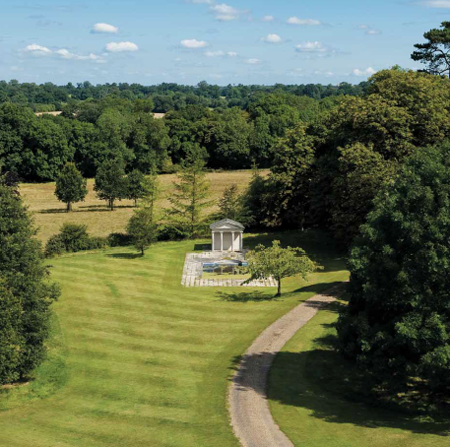
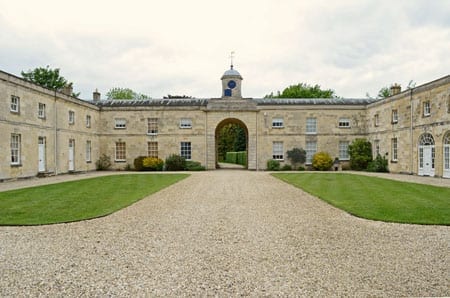
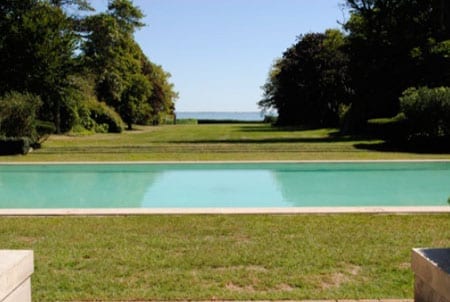
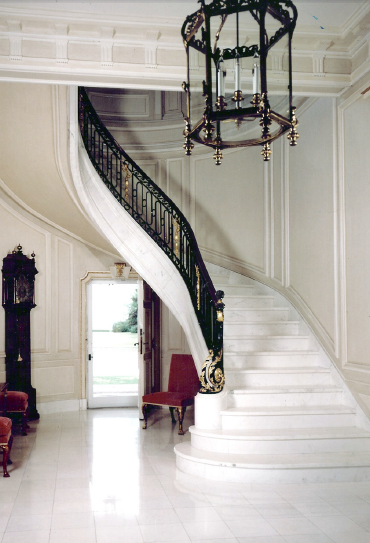
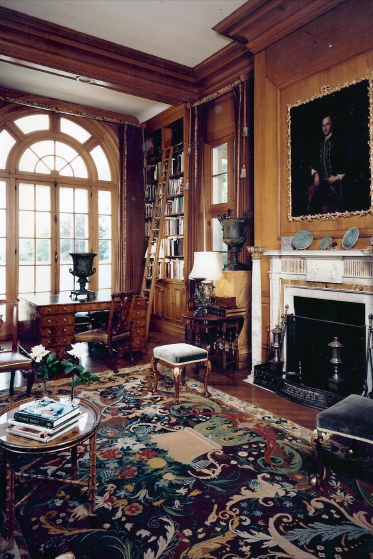
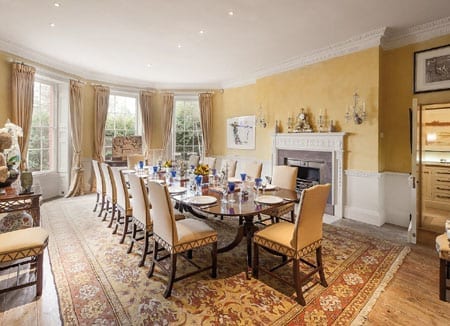
The facade of Bletchingdon Park, Bletchingdon, Kidlington, Oxfordshire, OX5 3DWThe staircase hallA formal reception roomThe grounds of Bletchingdon Park
This Grade II* listed Georgian house, built for Lord Valentina in 1782, may be some 24,600 square foot in size, but it has a layout that makes it both practical for living and suitable for entertaining on a grand scale. The accommodation, which has been renovated by the renowned building company Symm, includes 9 bedrooms and suites, well-proportioned formal reception rooms and a garden floor with further reception rooms, a billiards room and a fitness room with spa.
Whilst the original stable block has been sold off and converted to residential accommodation, Bletchingdon Park includes 2 staff flats, a 2-bedroomed lodge cottage and a further 3-bedroomed cottage. With parkland and grounds extending to 127 acres, maintaining Bletchingdon’s plot is large, but easily maintained.
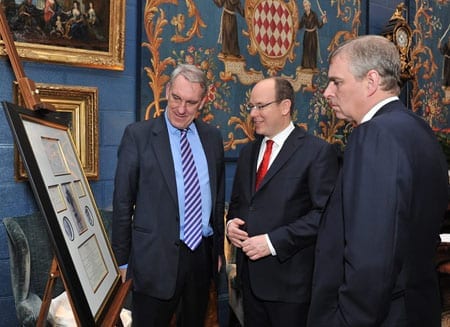
Dr Michael Peagram with Albert II, Prince of Monaco and Prince Andrew, The Duke of YorkThe former stables of Bletchingdon Park were sold off some years ago and have been converted into a number of homes
In the 20th century Bletchingdon was owned by Lord Astor and then Lord Rotherwick. The current owner, Dr Michael Peagram, purchased the estate in 1993. Peagram made his fortune in the chemicals industry after having led a management buyout of Huddersfield based Holliday Chemicals Holdings (HCH) in 1987. He revitalised the business, expanded into new markets and floated the company in 1993. The business was ultimately sold to Yule Catto for £225 million in 1997 and in 2001 Peagram sold another company for a reported £44 million.
At this point, this scientist turned tycoon moved to Monaco and saved himself, according to a 2009 Daily Mail article by Piers Morgan, some £13 million in capital gains tax. A wise businessman and a supporter of David Cameron, Peagram’s modus operandi is:
“Winning with honour and playing by the rules… And not cheating.”
In an interview with Monaco’s NeXt Generation Entrepreneur Forum, he states that he “did lots of work” to achieve his success but admits to “being a romantic at heart.” He has used much of his fortune to fund the philanthropic activities of Outward Bound Monaco with Prince Andrew, The Duke of York and Albert II, Prince of Moanco.
Peagram placed Bletchingdon Park on the market in May 2012 at a price of £20 million. Of why it hasn’t sold, one blogger commented that a footpath runs close to the house and that there is a lack of leisure facilities and outbuildings. Somehow neither seem insurmountable and whoever purchases this fine residence will be a very lucky man. If I were Dr Peagram, though, I’d keep it.
Bletchingdon Park, Bletchingdon, Kidlington, Oxfordshire, OX5 3DW is for sale through Knight Frank. For further details contact Damian Gray on +44 (0) 20 7629 8171 and to download a brochure go to: http://search.knightfrank.com/cho090098
A £26 million residence with connections to rock, royalty and rectors
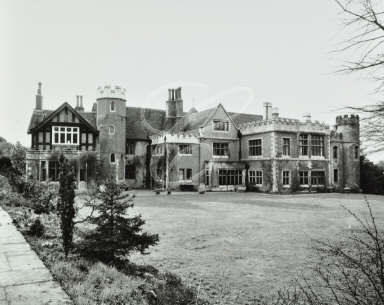
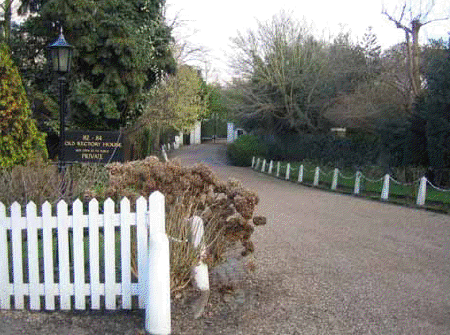
Built in the early 1500s, The Old Rectory is Wimbledon’s oldest house. Standing in grounds of 2.5 acres, this 16,200 square foot property was once described by a biographer of Sir Henry Cecil as being “not luxurious, but adequate” but now once again it finds itself in an entirely different league.
An image of The Old Rectory, 82 Church Road, Wimbledon, London, SW19 5AA in 1978. Present day imagery has been removed at the request of agents acting for the current owners.
Priced at £26,000,000, it is almost certainly one of the most expensive homes to ever come to the market in Wimbledon and whoever moves there next will undoubtedly be either an oligarch, an A-list personality or a top achieving business person.
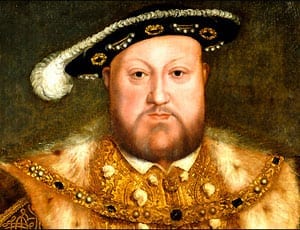
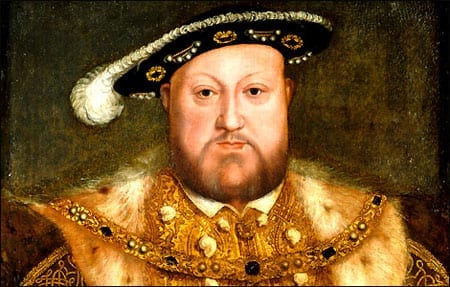
The purchaser will follow in the footsteps of a fascinating array of historically important residents, the first of whom was Henry VIII (1491 – 1547). The King took up residence in 1547 in the months prior to his death and is said, as he was so bloated, to have been unable to climb the stairs to his sleeping chambers. His bed was relocated to the great hall of the house and here he slept next to the fire. Historical research recounts that, with a brewhouse, beer and wine cellars, a coal cellar, meat room, buttery and two dairy rooms, this was a “house fit for a king.”
Henry VIII (1491 – 1547)Catherine Parr (1512 – 1548)
Henry VIII gave The Old Rectory, which was originally called The Parsonage House, to his sixth and final wife, Catherine Parr (1512 – 1548). Preferring a residence in Chelsea, Parr left and the Dean and Chapter of Worcester Cathedral took possession. A lease was sold to Sir William Cecil (1520 – 1598), later Lord Burgley, and the manor then passed to his son Thomas Cecil (1542 – 1623), the 1st Earl of Exeter.
In 1639, Charles I (1600 – 1649) bought the entire manor and gave it to Queen Henrietta Maria (1609 – 1669) but with the era of Comwell, The Old Rectory found itself occupied by General John Lambert (1619 – 1684). Shortly after, when a grander house was built next door, the property became first a laundry house and then servant accommodation and gradually fell into decline.
The Old Rectory passed next to Sir Theodore Janssen (1658 – 1748) in 1720. This French-born English financier, who was said to be worth the staggering sum of £250,000 at the time of his purchase of the house, was a founder member of the Bank of English but later disgraced for his part in the South Sea Bubble. He was expelled from the House of Commons and with his ruination, The Old Rectory saw yet another chapter of abandonment.
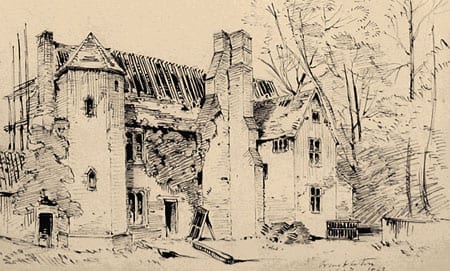
The garden front of The Old Rectory by Charles Henry Money Mileham (1837 – 1917)
By 1802, the house was described as an “uninhabited” ruin. A speculator credited with developing “modern Wimbledon” named John Augustus Beaumont bought it and restored and extended it but when it was sold to a Samuel Wilson in 1882 for £6,000, an era of truly comprehensive upgrades was to begin. Wilson added a pebble-dashed two-storey drawing room wing, carved oak doors and installed English, Flemish and Italian chimneypieces.
The next owner was a marine engineer named Matthias Jacobs who had been responsible for the construction of tunnels in Paris and New York. After having purchased The Old Rectory in 1909, he commissioned his brother to add a new single storey billiards room, a service wing and a study extension to mask the medieval chapel of the house. Jacobs sold up in 1923 to a Thomas Lethaby, who fitted oak paneling from Chantry House in Newark and a plaster ceiling based on the one at Knole House, Kent.
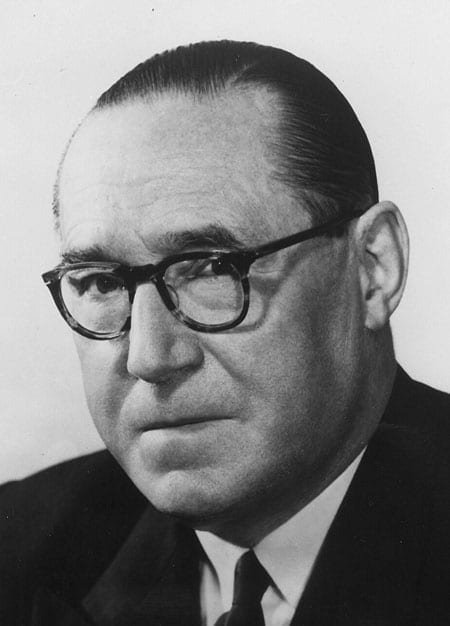
Lord Brock FRCS, FRCP (1903 – 1980)
In 1953, the eminent London surgeon and cardiologist, Lord Brock FRCS, FRCP (1903 – 1980), took possession of The Old Rectory after having paid £13,750 for it. Brock is credited as on of the pioneers of modern open heart surgery and also founded the Lord Brock Memorial Trust that to this day funds the museum he founded, The Old Operating Theatre Museum and Herb Garret in Southwark, SE1.
Following the death of his first wife Germaine Louise Ladavèze, Brock sold to an Iraqi entrepreneur and philanthropist named Basil Faidhi in 1978. Faidhi had fled Iraq for Britain and though he spent vast sums restoring the house with assistance from English Heritage, he also created a basement discotheque for his daughter, Nina, and a bar. Aside from bringing the house into the “yuppie era,” Faidhi also commissioned a historian named Richard Milward MA to write a history of the building in 1992 entitled: The Rectory – Wimbledon’s Oldest House.
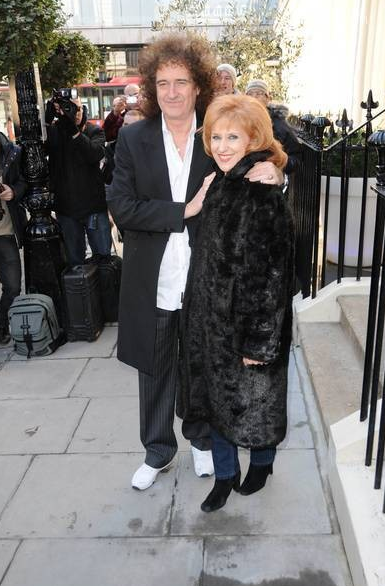
The Queen lead vocalist and anti-badger cull campaigner Brian May CBE purchased The Old Rectory in 1994 for £4,000,000 with the intention of living there with the Eastenders actress Anita Dobson.
Brian May CBE with his second wife Anita Dobson
Dobson, who didn’t marry May until 2008, had other ideas and refused to move in. It was suggested that she preferred a smaller house the pair occupied in Kensington and, at the time, a friend commented:
“[May] begged her to move into the new house so they can make a fresh start. Nobody can believe that Anita doesn’t want to be the lady of this fabulous house. But Brian says he can’t get through to her.”
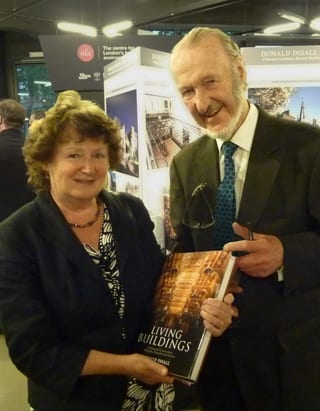
Sir Donald Insall CBE
As a result, May never properly moved into The Old Rectory and eventually decided to sell. In 2006, it achieved a record price of £16,000,000 and in the ensuing years, an Italian architect-owner named Antonella Carminati and her husband have lavished time and money on further restorations with the help of Sir Donald Insall CBE’s Insall Associates firm of architects.
The driveway that leads to The Old Rectory from Church Road gives plenty of privacy
New fittings have been installed throughout and substantial extensions to the house have included a new kitchen and breakfast room with garaging beneath. The couple have demolished an early 20th century porch and an “unsightly” oak conservatory, remodeled the billiards room as a drawing room and removed a “bilious” blue swimming pool from the east lawn.
Now featuring 12,882 square foot of accommodation in the main house and 3,320 square foot of additional accommodation, The Old Rectory has been planned to include 8 reception rooms; a vast kitchen with La Cornue appliances and an adjoining breakfast room; master bedroom suite with two dressing rooms, his and her bathrooms and a sitting room and 7 further bedrooms.
Outside, the gardens feature an original medieval fig tree trail, shaded paths, lawns and a large pond as well as garaging for six cars. Planning permission for an indoor swimming pool complex has also been granted and ample staff accommodation is provided above one of the garages and in the gate lodge.
Given the now limited financial resources of the traditional religious houses of Britain, will it be rock, royalty or new money that next takes possession of The Old Rectory? The historians of Wimbledon will undoubtedly be watching.
The Old Rectory, 82 Church Road, Wimbledon, London, SW19 5AA is for sale through the Wimbledon office of Knight Frank. For more information call: +44 (0) 20 8946 0026.
A most curious tale of playboys, socialites, lawyers and real estate moguls
This week the mystery buyer of Clarendon Court, the former marital home of Claus and Martha “Sunny” Von Bülow (1932 – 2008), was revealed as a restaurateur and real estate mogul named Paul Roiff. Separately, the New York Post reported that Mr Von Bülow’s former lawyer, Alan Dershowitz, had purchased an apartment in Sutton Place, New York at the same time as a postal worker was on trial for killing his sister. The lives of the rich and famous are never anything other than dramatic.
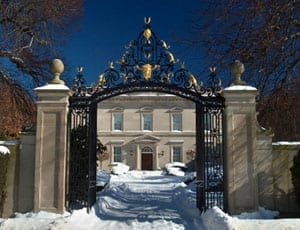
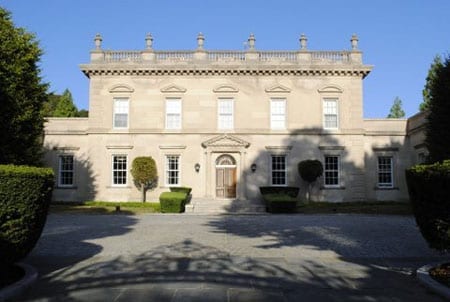
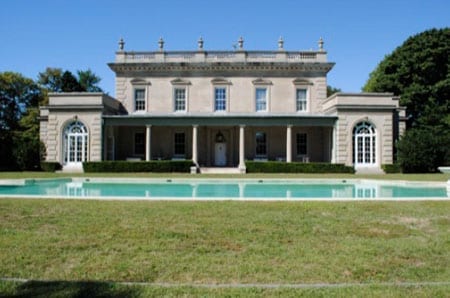
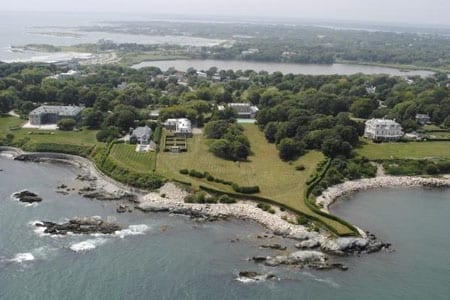
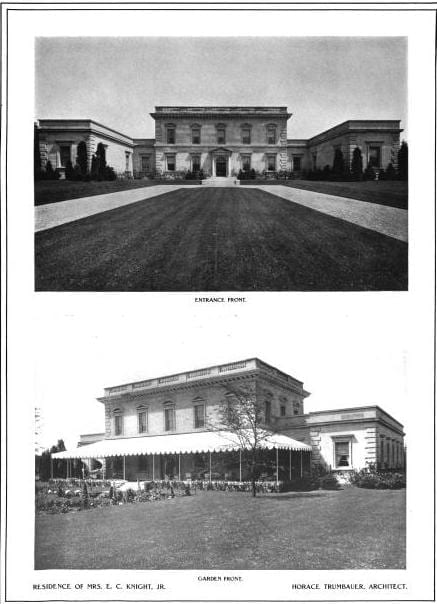
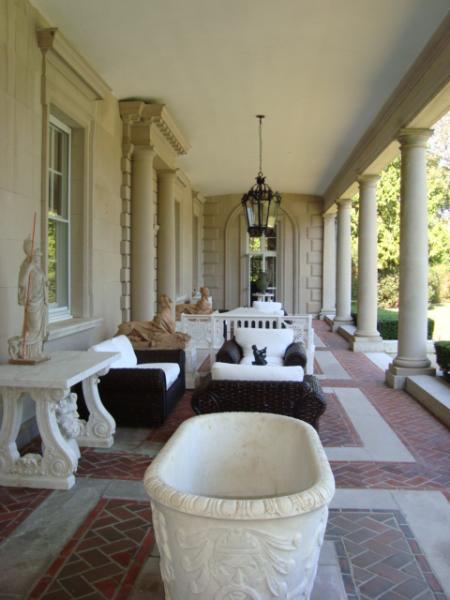
The front elevation of the former residence of Claus von Bulow: Clarendon Court, 626 Bellvue Avenue, Newport, Rhode Island, RI 02840The rear elevation of Clarendon Court, 626 Bellvue Avenue, Newport, RI 02840An aerial shot of Clarendon Court from the Atlantic Ocean
8-bedroomed Clarendon Court on Bellvue Avenue in Newport, Rhode Island is best known for the events surrounding the utilities heiress Martha Crawford Von Bülow falling into a 28-year coma there and her husband subsequently being tried, convicted and then acquitted for her attempted murder, but this fine residence has much else in its past as well.
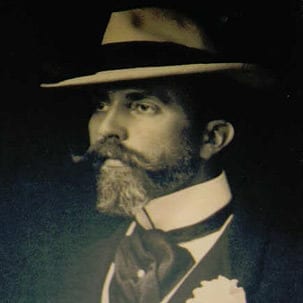
Edward Collings Knight, Jr. (1863 – 1936)
Designed by the most prominent Ameircan architect of the “Gilded Age,” Horace Trumbauer (1868 – 1938), this Palladian style villa was commissioned in 1903 by Edward Collings Knight, Jr. (1863 – 1936), a sugar-refiner and railroad executive, and his wife, Clara. It was built on an acre plot with views of the Narragansett Bay and is most curiously termed “one of Newport’s finest cottages.” The mansion that was constructed for the couple is an almost exact replica of a proposed house by Colin Campbell at Chester-le-Street in County Durham, England and features Doric columns, quoins and an urn-embellished balustrade. It provided a suitable illustration of Mr and Mrs Knight’s wealth and status.
Claradon Court in the early 1900s
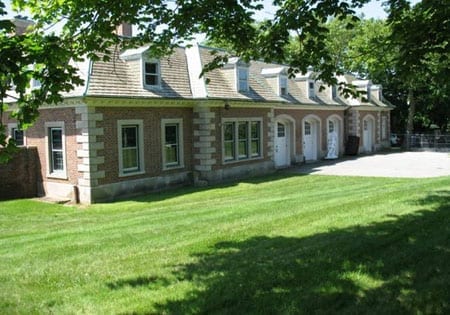
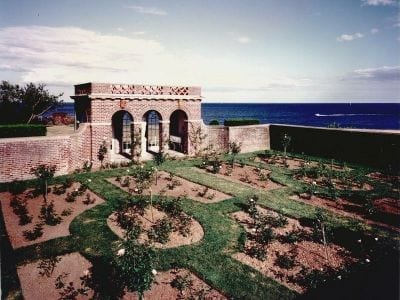
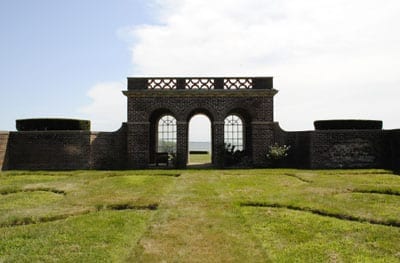
Edward Knight, who was once described as exhibiting “more talent at spending money than making it,” named the house Claradon Court in honour of his wife and shortly before it was completed in 1904, he acquired an additional six acres of land behind the plot with direct frontage to the Atlantic. Here, he had Trumbauer design a vast carriage house in an early Georgian vernacular as well as a series of high brick walls to protect the gardens from the ocean winds.
The coach house at Clarendon Court todayThe rear loggia was added by Mr & Mrs Knight at a later dateThis arch and walling was added to provide protection against the force of the AtlanticA more recent shot illustrates that the flower beds have been laid to lawn
The Knights engaged a Parisian decorator named Jules Allard to decorate Claradon Court in the English Georgian manner and after several seasons in residence added two wings onto the back of the house. Following Clara Knight’s death in 1928, her husband sold the estate, moved to a more modest Trumbauer designed house in neighbouring Middleton and remarried. His second wife, Marie Louise LeBel, is remembered as a “foul-mouthed, hard-drinking [woman], who thought nothing of killing a neighbour’s dog with a shot from her pearl-handled pistol.” Together they went on to spend the vast sum of constructing a $383,000 mansion in North Carolina as a hunting lodge. It is now the home of the Whalehead Club.
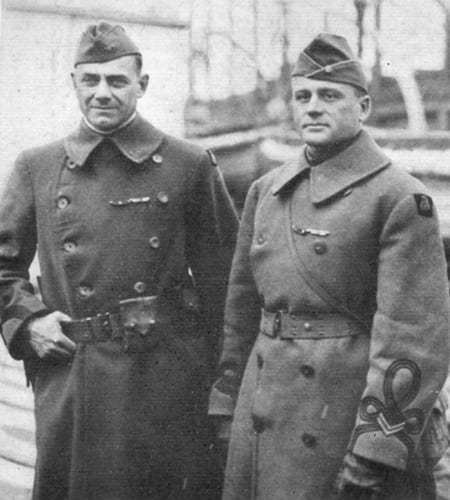
Colonel William Hayward with Major Arthur W. Little
The purchaser of Claradon Court was a First World War hero named Colonel William Hayward (1877 – 1944) and his wife, Mae (1880 – 1956). Whilst the colonel is remembered as the commander of the “Harlem Hellfighters,” a regiment that “never lost a man captured, a trench, or a foot of ground,” his wife was truly a character.
Born in Connecticut, Mae Cadwell had divorced her first husband Selden B. Manwaring of Hartford in 1914 to marry the older and richer Morton F. Plant of New York and New London, Connecticut. Morton Plant adopted her son by her first marriage, Philip “Paul” Morgan Manwaring Plant (1901 – 1941), and when he married the well-known actress Constance Bennett (1904 – 1965) in 1925 more controversy followed. The millionaire socialite Plant’s life is well documented not only as it was for him that the term “playboy” was originally created but also because of his bitter divorce from Bennett in 1929.
Following their purchase, Colonel and Mrs Hayward decided to have the name of Claradon Court changed to Clarendon Court to distance any lingering associations with Clara Knight and she is said to have filled the building with fine and decorative art. The colonel died in 1944 and his widow married for the fourth time, this time taking the president of the American Car & Foundry Company, John E. Rovensky, as her husband. After her death in 1956, Rovensky continued to use Clarendon Court until his own death in 1970 and even allowed it to be used as the set of the 1956 American musical comedy film High Society that starred Bing Crosby, Grace Kelly and Frank Sinatra.
Martha “Sunny” Von Bülow (1932 – 2008)Claus Von Bülow during one of his trials
In 1970, Clarendon Court’s most notorious chapter commenced when the utilities heiress Sunny Von Bülow and her husband Claus purchased the house as it was here in December 1980 that Mrs Von Bülow fell into the irreversible coma that she was to remain in until her death in December 2008. The story of Claus Von Bülow’s trials for the attempted murder of his wife is well known and the 1990 film Reversal of Fortune, starring Jeremy Irons, Glenn Close and Ron Silver, is most definitely a true masterpiece.
Considered a couple of “exceptional taste,” the Von Bülows were described as having filled Clarendon Court with exceptional 18th and 19th century English furniture. They also significantly improved the grounds by hiring the landscapers Innocenti & Webel to create an elegant allée to the sea by removing a hillock that had always deprived the ground floor rooms of an ocean view.
The Von Bülow landcaped the grounds to create a better view from Clarendon Court towards the Atlantic Ocean
In 1974, Claus Von Bülow wrote of Clarendon Court in an article for the Bulletin of the Newport Historical Society:
“The author of this article has lived happily at ‘Clarendon’ for the past four years. As a European he has found much to admire in Newport, with its sense of history and its preservation of a unique architectural heritage. He hopes some future writer will cover the occupancy of his family at ‘Clarendon’ with as much wistful charity as he has endeavored to extend to its previous owners.”
Von Bülow, at that time, plainly could not have imagined the tragic event that was to follow in December 1980 and for what the house would indeed become best known.
The main staircase at Clarendon CourtA study at Clarendon Court
A committee managing Sunny Von Bülow’s affairs sold Clarendon Court in 1988 to a fine art and antique dealer named Glenn C. Randall and his wife Patricia for $4,300,000. The couple converted the service wing into a gallery for their collection and lived there until Mrs Randall died after a battle with cervical cancer in May 2010. The 12,800 square foot house and it’s 10,000 square foot coach house were placed on the market for $17,800,000 in October 2010 and whilst the price was subsequently was brought down to $15,800,000, it languished until being sold in July 2012.
The new master of Clarendon Court, Paul G. Roiff, is a graduate of Boston University and Suffolk Law School. He is the president of a real estate company named Heath Properties and also co-owns a number of restaurants in Boston including Mistral, Mooo, Teatro and Sorellina as well as a 63-bedroom hotel named XV Beacon.
Paul G. Roiff
Plainly publicity shy, Roiff, who also owns homes in Florida and Michigan, used one of his employees, Keith Beardsley, to purchase Clarendon Court on his behalf. He paid $13,126,000 for the estate.
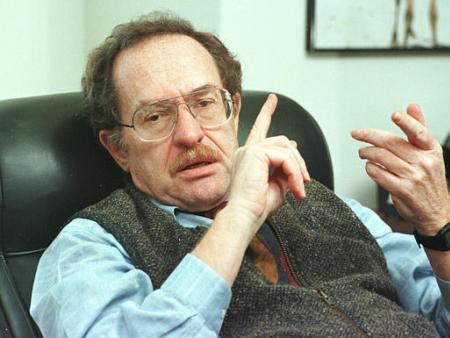
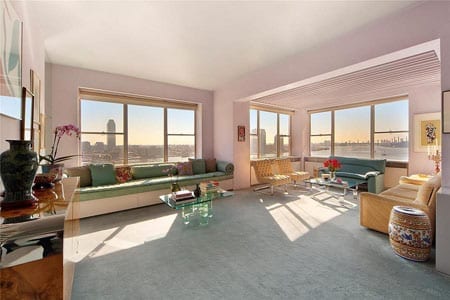
Celebrity lawyer Alan DershowitzAlan Dershowitz’s new pied-à-terre at 45 Sutton Place, New York, NY 10022, USA
In another development, on the 25th September The New York Observer reported that the lawyer who became famous representing Claus Von Bülow, Alan M. Dershowitz, had bought a 3-bedroomed apartment in the “stronghold of old money,” 45 Sutton Place, for $1,680,000. Plainly Mr Dershowitz, who subsequently represented O. J. Simpson, has done well and is plainly now richer than his first “celebrity” client. He also owns a 6-bedroom residence in Cambridge, Massachusetts and was able to use his verbal talent to persuade the sellers of the Sutton Place co-op downwards from their original $2,290,000 asking price.
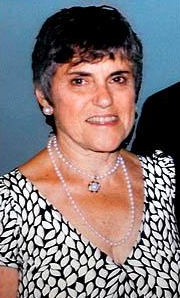
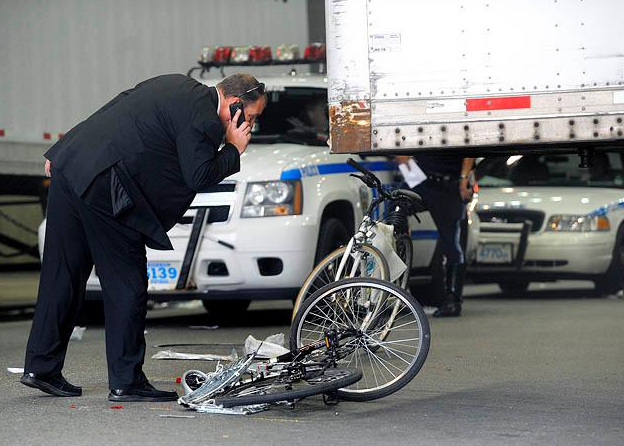
Separately, late last month, Dershowitz and his family were in court for the trial of a postal worker named Ian Clement. A 7-tonne truck driven by Clement had crushed and killed Marilyn, the 68-year old sister-in-law of Alan Dershowitz, in New York in July 2011. Dershowitz, a retired special referee for the New York court system, had been out for a bicycle ride with her husband, Nathan, a partner at Dershowitz, Eiger & Anderson.
Marilyn DershowitzThe scene of the fatal accident that killed Marilyn Dershowitz
Surprisingly and much to the distaste of the Dershowitz family, Clement, who had been charged with leaving the scene of a fatal accident, was acquitted by a jury on the 20th September. Of this, Alan Dershowitz commented:
“The facts clearly justified a guilty verdict… I think a stronger presentation might have brought about justice. Instead, we have an injustice.”
Both the Von Bülows and the Dershowitz family have endured loss and a huge amount of media attention since the events of the early 1980s. Perhaps these most recent moves will bring with them a new chapter for both Clarendon Court and Mr Dershowitz himself. Meanwhile, Claus Von Bülow, though not quite as wealthy as he was in his days at Clarendon, prospers in London and is considered one of the city’s “finest wits.” How fortunes do indeed revolve.
Contact Alan M. Dershowitz at: Hauser Hall 520, 1575 Massachusetts Avenue, Cambridge, Massachusetts, MA 02138. Telephone: +1 (617) 495-4617. View his official website at: http://www.alandershowitz.com/or follow him on Twitter at: http://www.twitter.com/alandersh
The agent for Glenn C. Randall in the sale of Clarendon Court was Paul Leys of Gustave White who can be contacted on +1 (401) 848-6706 or by email at:[email protected]
The sale of a $25 million mansion modeled on Marie Antoinette’s favourite retreat that has connections to Levi Strauss & Co., Yehudi Menuhin, the Zodiac Killer and a controversial dot-com tycoon
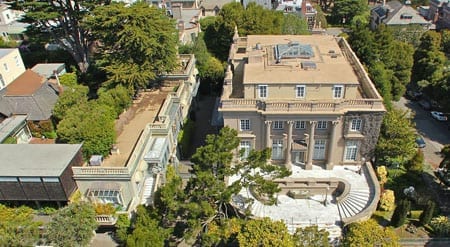
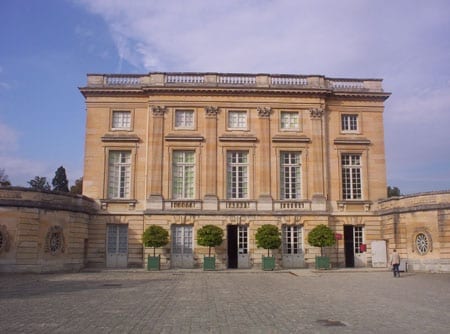
Modeled on the Petit Trianon, a small château in the grounds of Versailles that was favoured by Louis XVI’s wife Marie Antoinette, the Koshland Mansion at 3800 Washington Street in Presidio Heights, San Francisco, California was built between 1902 and 1904 for a pioneer wool, hide and fur merchant named Marcus S. Koshland and his wife, Corrine.
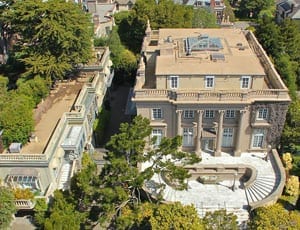
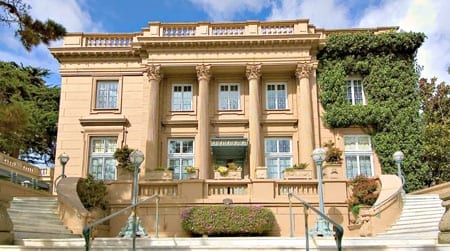
The Washington Street elevation of the former Koshland Mansion at 3800 Washington Street, San Francisco, California, CA 94118An aerial view of the 18,000 square foot property and the 2,600 square foot guest accommodationThe inspiration for the Koshland Mansion: The Petit Trianon, Château de Versailles, Place d’Armes – 78000 Versailles, France
The Koshlands, whose son Daniel (1920 – 2007) was to become a president of Levi Strauss & Co., commissioned an architect named Frank S. Van Tree to design a replica of the Petit Trianon after having admired it whilst on holiday in France. The front of the building, facing onto Washington Street, is considered such a faithful representation of the neoclassical building the Koshlands copied and as a result the house is now designated a San Francisco Designated Landmark.
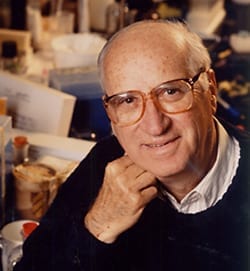
Daniel E. Koshland, Jr.
Some 20,000 square foot in size and set on a 2/3rd acre plot, the completion of this sandstone faced “single family residence” was celebrated by the Koshland family with a Marie Antoinette themed ball in 1904. The invitations to this legendary event were purchased and printed in Paris and hand delivered to the guests.
The Koshland Mansion survived San Francisco’s 1906 earthquake with only a little damage to the front elevation
The 1906 San Francisco earthquake, just two years after they’d completed the building, somewhat interrupted the Koshlands hectic party schedule at 3800 Washington Street. Though the disaster caused the front columns and roof balustrade to collapse, the couple generously opened the otherwise undamaged property to some 60 to 80 displaced family and friends. With no mains water, the guests had to fetch water from Fort Mason but they were no doubt happy to have had somewhere to take refuge.
During subsequent renovations, as well as restoring the façade, a 5-car garage was added in 1909 and a greenhouse and extension in 1912. In the ensuing years, until her death in 1953, Corrine Koshland, better known as Cora, opened up 3800 Washington Street as a venue for concerts. A founder of the San Francisco Symphony Association and one of the first directors of the San Francisco Opera Company, Koshland invited music critics to review the performances and gave both Yehudi Menuhin and Isaac Stern their musical debuts at the house as child prodigies. Amongst the other big names to play in the masnion were Igor Stravinsky, Jascha Heifitz and Leonard Bernstein.
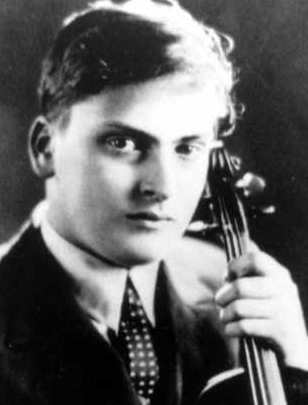
Sir Yehudi Menuhin KBE (1916 – 1999) pictured in his youth
In 1953, the Koshland Mansion was sold for $100,000 by the estate of Cora Koshland. The purchaser was Walter E. Buck (1884 – 1966), president of the American Distilling Company. Buck and his wife Emily, who were well known for “Gatsby-esque parties” at their 1,300 acre estate, Woodside, redecorated 3800 Washington Street by “painting the mahogany library white, removing the dark green, gold-tooled leather from the dining room and developing small card rooms in the basement.” It seems likely that the era of parties at 3800 Washington Street continued during their occupancy.
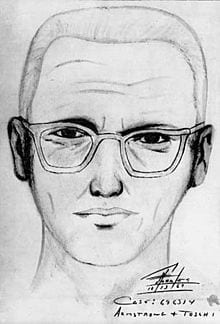
On 11th October 1969, a murder occurred on the block where 3800 Washington Street stands when the Zodiac Killer, a to this day unidentified serial killer who operated in Northern California in the 1960s and 1970s, shot and killed a cab driver named Paul Stine. Stine had collected his passenger one block west of Union Square and had, as requested, driven him to the intersection of Washington and Maple Streets in Presidio Heights. Once there, the cab driver was shot once in the head with a 9mm before the killer, observed by three teenagers across the street, took his wallet and car keys. The Zodiac Killer tore off a section of Stine’s bloodstained shirt, wiped the cab clean and walked off into the night before the police could arrive.
A sketch of the Zodiac Killer
Subsequently, on the 14th October 1969, the San Francisco Chronicle were mailed a swatch of Stine’s shirt to prove he was the killer and then on 9th November 1969, a 7-page letter followed. Excerpts from it were published from it in the newspaper on 12th November which revealed that a police officer, Don Fouke, who had responded to the teenager’s call, had actually encountered the killer for 5 to 10 seconds on a stairway of a house close to the murder scene. Fouke had been told to look for a black suspect and on seeing a white man going into the yard of a house, had discounted the individual and drove on. The Zodiac Killer, in his letter, detailed the encounter but claimed that two policemen had actually spoken with him 3-minutes after he’d shot Stine.
In 1975, a neighbour, Paul Renne purchased 3800 Washington Street for $675,000, supposedly to prevent it being acquired by property developers, but having been used as the 1982 San Francisco Decorator Showcase house, it was placed on the market and sold to a gallery owner named Heidi Betz and her business partner, an art collector named Charles Pankow. They paid $1.5 million for the house but failed in their bid to turn it into an art gallery due to objections from neighbouring residents.
Halsey Minor
In the two decades that followed 3800 Washington Street was sold several more times but finally it’s glory days looked set to return in 2007 when it was purchased by an “internet titan” named Halsey Minor and his second wife, Shannon. Having paid approximately $22 million for what essentially was going to be a very expensive renovation project, Minor supposedly assigned a further $15 million towards renovations and hired Michelle Obama’s favourite designer, Michael S. Smith, to oversee the project.
Minor founded CNET, a tech media website that published news, articles, blogs and podcasts on technology and consumer electronics, in 1992 after leaving Merrill Lynch and built it into one of the first internet companies to achieve profitability. CNET was sold for $1.8 billion in 2008 and is now CBS Interactive. Another of the companies he co-founded in 2000, salesforce.com, was “one of the most successful companies of the decade” and achieved a market capitalisation of in excess of $15 billion.
Having made a small fortune from his dot-com success, Minor diversified into investments that brought with them a lifestyle that would later be described as “a multi-millionaire who lived life as a billionaire.” In 2007, he began construction of a hotel in his hometown of Charlottesville, Virginia and announced this would be part of a series he’d open as part of the Minor Family Hotel group he planned. The hotel has never been completed.
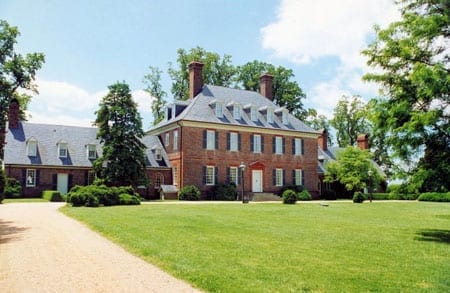
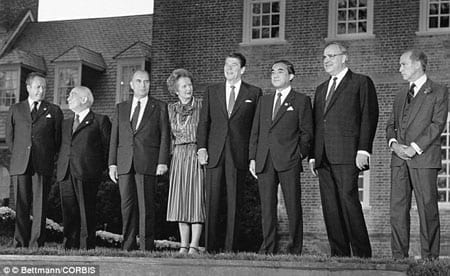
Carter’s Grove, 8797 Pocahontas Trail, Colonial Williamsburg, Virginia, VA 23187: considered to be one of America’s finest and most historic residences. It was bought by Halsey Minor in 2007 and has fallen into significant decline in the years since.The 1983 Group of Seven (G7) meeting at Carter’s Grove. Pictured outside the house are: Pierre Trudeau, Prime Minister, Canada; François Mitterrand, President, France; Helmut Kohl, Chancellor, West Germany; Amintore Fanfani, Prime Minister, Italy; Yasuhiro Nakasone, Prime Minister, Japan; Margaret Thatcher, Prime Minister, United Kingdom; Ronald Reagan, President, United States of America and Gaston Thorn, President, European Commission
In the same year, he also bought the Koshland Mansion and purchased 400 acres of land and a residence on the James River, the Carter’s Grove Plantation, for $15.3 million. Here, he planned a centre for thoroughbred horse breeding and at around the same time he attempted to buy both the Hialeah Park Race Track in Hialeah, Florida and the Pimlico Track in Baltimore. Both bids failed.
Minor’s investments were not just limited to property and the equine sector. In 2006, he placed a $3 million deposit on a $59 million Gulfstream G650 and at Sotheby’s in 2008, he was the winning bidder on a painting by Edward Hicks, The Peaceable Kingdom, at a hammer price of $9.6 million and also bought paintings by Andy Warhol and Childe Hassam.
Around this point, however, this dot-com tycoon’s fortune began to unravel when Merrill Lynch called in a $25 million loan and various legal suits connected to his art collection, investments and properties commenced. Several of his homes were repossessed and at a court hearing in August 2011, he claimed to have just $112,643 in cash and owned no publicly traded securities. Minor claimed to be majorly broke but the declaration did not cover illiquid assets such as art, real estate and shares in non-public companies. To this day, Minor remains listed in first place on the State of California’s Franchise Tax Board’s top 500 delinquent taxpayers owing some $10,455,580.69.
In response to his supposed progression from riches to rags, Minor wrote an article for The Huffington Post in July 2012 entitled “Why I Fight”:
“I often wonder what Thomas Jefferson would think of today’s America, a nation that is rapidly but silently abandoning the individual in favour of faceless corporations, rapacious banks and a collusive, unresponsive government… The simple answer is that someone must [fight] or we will emerge from this recession with wealth and power concentrated in a few tiny financial institutions representing a new ruling elite, not unlike the one that inspired Thomas Jefferson’s generation to revolution.”
Somehow, in spite of his changed circumstances, Minor has managed to hold on to 3800 Washington Street. Though, during his tenure, the house has fallen into decline and is now half covered in ivy, it is still one of San Francisco’s finest properties and it is still situated in one of the city’s best neighbourhoods. It is still an asset of considerable value and Minor’s decision to sell may well help him rake back some of what he has lost.
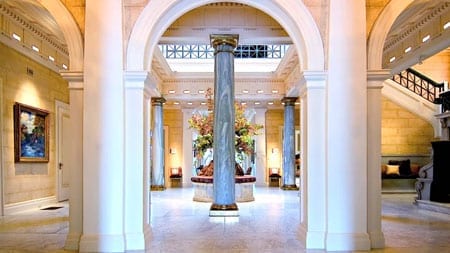
The hallway at 3800 Washington StreetA drawing room at 3800 Washington StreetOne of the property’s dining roomsThe opulent ballroom at 3800 Washington Street
Steven Mavromihalis of Pacific Union International launched 3800 Washington Street onto the market in May 2012 for $25,000,000. This move came just after two Abandoned Building Notices had been issued on the property by the City and County of San Francisco Department of Building Inspection. On offer is the 18,000 square foot main house at 3800 Washington Street, a 2,600 square foot 3-bedroom house at 3810 Washington Street and a vacant lot at 125 Maple Street. Though the agents don’t give much more in the way of details, they do refer to the house having a double marble Palladian staircase, 22 rooms, a “spectacular ballroom,” 8 bedrooms, 7 bathrooms, 9 fireplaces, 3 kitchens, an elevator and three original stained glass windows by the San Francisco poet, writer sculptor and artist Bruce Porter (1865 – 1964).
According to the agents, 3800 Washington Street is second only to Danielle Steele’s 55-room residence, The Spreckels Mansion, at 2080 Washington Street in the rankings of the largest homes in San Francisco. This is most certainly a mansion with a fair few tales to tell but whoever buys it will need both Steele’s wealth and imagination to get it back into good order. Dot-com tycoons and serial killers need not apply.
All enquiries about 3800 Washington Street, Presidio Heights, San Francisco, California, CA 94118 should be directed to Steven Mavromihalis of Pacific Union International on +1 (415) 345 3030 or email him at: [email protected].
More details are available at: http://www.pacunion.com/homes/CA/San_Francisco/94118/3800__Washington_St/AGT-107397278-685992/ whilst a video tour of the property can be viewed at: http://vimeo.com/42775765
The sale of Goldie Hawn and Kurt Russell’s Malibu beach house
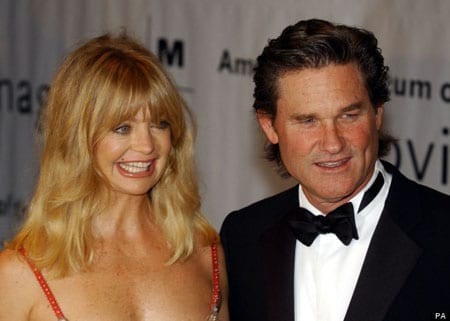
Goldie Hawn and Kurt Russell
Goldie Hawn’s performance in the 1992 romantic comedy Housesitter with Steve Martin was described by the noted film critic Roger Ebert as “one of her best performances.” In the film, Martin’s character builds a dream home for himself and his girlfriend but is unable to bring himself to live in it after she refuses to marry him. Hawn’s character moves in to housesit the empty love nest and in turn the pair fall for one another.
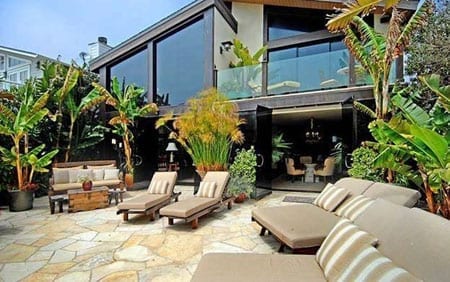
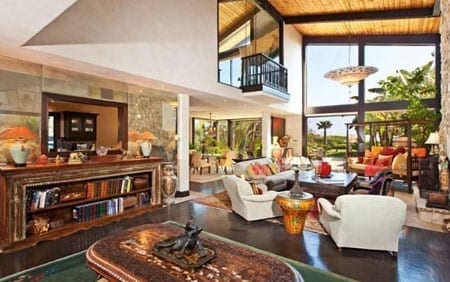
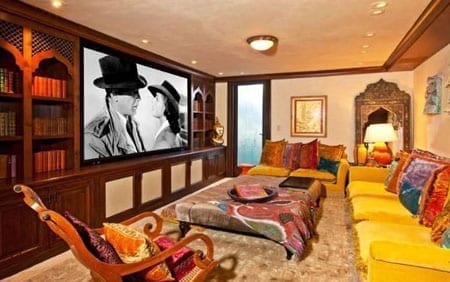
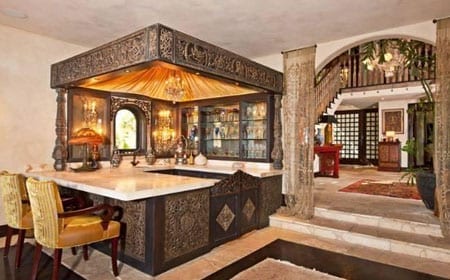
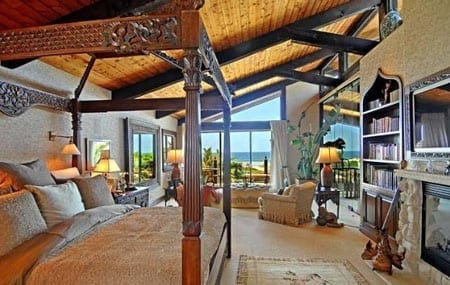
The glass wall of the rear of Hawn and Russell’s beachfront home at 30802 Broad Beach Road, Malibu, California, CA 90265The vast living area of the propertyThe cinema room of the houseThe perfect bar for entertaining after a day on the beachOne of the property’s four bedroom suites
In the late 1980s, Hawn and her partner of some 30 years, fellow actor Kurt Russell, bought themselves a dream beach house at 30802 Broad Beach Road in Malibu, California. With direct frontage onto Broad Beach, which the Los Angeles Times describes as a “confusing mosaic of public and private sands” that “has shrunk into a narrow sliver of its former self” due to coastal erosion, the pair created a residence that has been decorated in a style described by some as “exotic” and “Buddhist themed” and by others as “late-1970s contemporary.”
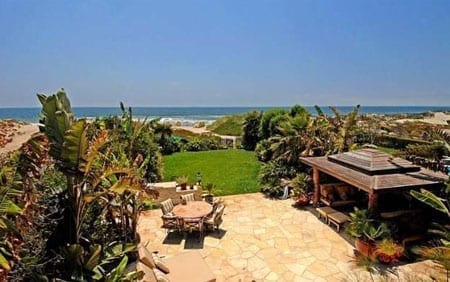
Here, alongside neighbours including Pierce Brosnan, Steven Spielberg, Danny DeVito and Dustin Hoffman, Hawn and Russell were able to enjoy summer vacations in a 4,195 square foot two-storey home that includes 4 bedrooms and “4.5 baths.” The property also includes vast open plan living areas, a wet bar, a number of balconies and a media room kitted out with a Crestron home entertainment system. In addition there is separate guest accommodation and a 3-car garage, as well as landscaped garden areas with direct beach access via a path through the adjoining sand dunes.
Hawn and Russell, whose main residence is in Los Angeles, first put 30802 Broad Beach Road on the market in 2007 but it failed to sell. They subsequently sought $95,000 a month for it on the rental market and then $80,000 a month in 2010. In July 2011, the house was again put up for sale at $14,749,000 and now, after having failed to sell yet again, some $5,000,000 has been sliced from the price and it is available for $9,950,000.
The garden of 30802 Broad Beach Road, MalibuThe property enjoys direct access onto Broad Beach
Hawn was once quoted as saying:
“I noted that people are happy here in India. When I went back home, people had everything in the materialistic sense and were surrounded with abundance, but they were not happy.”
I am sure she and her husband will be a hell of a lot happier when they finally manage to offload this white elephant. For a start, they’ll no longer need a housesitter to mind it.
30802 Broad Beach Road, Malibu, California, CA 90265 is available through Kimberley Pfeiffer of Coldwell Banker. She can be contacted on +1 (310) 867 0033 or +1 (310) 383 3664.
Living on a private island would, to many, seem like a dream. The prospect of being able to do what you want, when you want and without having to pander to rules and regulations indeed does sound appealing. Swapping the rat race and daily commute for white sandy beaches, crystal-clear waters and peace and tranquility would undoubtedly tempt huge numbers of us. Taking up the mantle of Robinson Crusoe certainly has it’s merits, but what are the perils of owning an island and what is currently available?
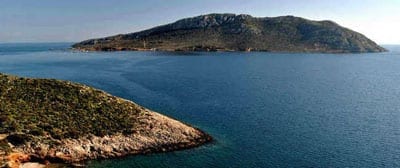
The Greek island of Patroklos
On the leading website for the sale of islands, Private Islands Online, the most expensive undeveloped island on offer is the island of Patroklos in Greece. This relatively flat 643-acre undeveloped island boasts a “mild and pleasant” climate and 275-acres of cultivable land. It has about 150 goats and 5,050 olive trees and the agent suggests now is the perfect opportunity to exploit and develop tourism there. A price of £120 million is sought. So much for Greek austerity as whoever buys it will still have to shell out further to construct at least one residence.
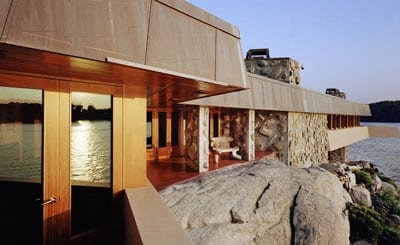
The Frank Lloyd Wright inspired Massaro House on Petra Island
An especially spectacular option, also available through Private Islands Online, is Petra Island, just 15 minutes by helicopter from New York City on Lake Mahopac. The island itself, which is said to have been for sale for a number of years, is 11 acres in size and is currently owned by Joseph Massaro, a sheet metal tycoon. The highlight here is a 1,200 square foot cottage designed by Frank Lloyd Wright and a 5,000 square foot residence, Massaro House, built to the same architect’s designs in 2008. Though the Frank Lloyd Wright Foundation state of the latter: ““It’s not a Frank Lloyd Wright house, because it hasn’t been certified by the foundation,” this is a home that would certainly suit any James Bond villain. The agent declines to share the asking price, but it certainly at the higher end of the scale.
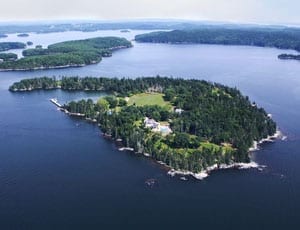
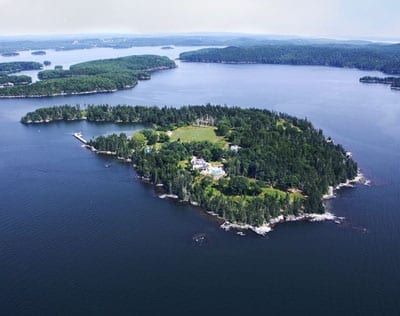
At a more modest price is Nautilus Island, off Brooksville in Maine. This 37-acre island was in the ownership of the same family for 130 years until 2004 and is named after the British war sloop “Nautilus,” that engaged the American vessel “Hazard” in battle in it’s waters during the American Revolutionary War.
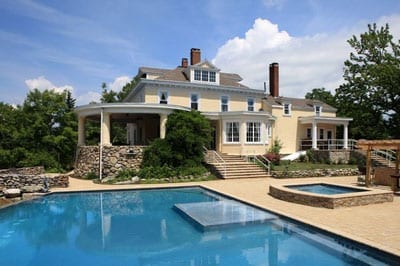
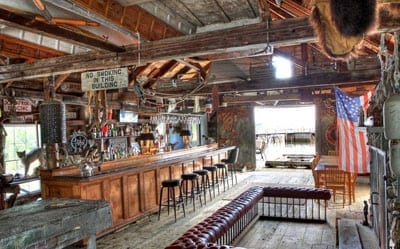
An aerial view of the island of NautilusThe main residence on Nautilus IslandThe island of Nautilus’s boathouse now serves as a stylish private bar
The island includes a renovated 6-bedroomed main house, a farmhouse and a guest cottage. It also boasts open fields, perennial and kitchen gardens and a seaside vineyard for wine production. There is a protected harbour with a pier and moorings and over one mile of rocky coastline with gravel and shell beaches. A price of approximately £4.9 million is sought prior to auction on the 18th October through John Saint-Amour of LandVest.
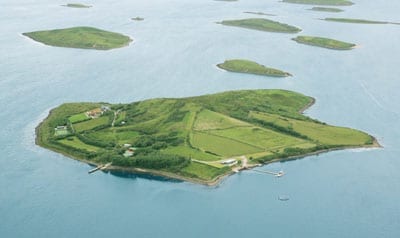
Returning to Europe, Knight Frank offer a 65-acre island off Ireland’s west coast named Inishturk Beg at a price of £2.85 million. Sitting in Clew Bay, County Mayo alongside 364 other islands, receivers of an Egyptian-Irish businessman named Nadim Sadek are trying to find a buyer for a property that includes a main 7-bedroom house, 4 smaller properties, various outbuildings and an AstroTurf sports pitch.
An aerial view of Inishturk Beg IslandThe main residence on Inishturk Beg, The Island House, comes complete with extensive leisure facilities
Singing the praises of Insishturk Beg, Harriet Grant of Knight Frank comments:
“It is an easily accessible island and although it’s in the Atlantic it is very sheltered. And the island itself has plenty of natural shelter. It is an extraordinary development in which no expense has been spared. The electricity and water come straight from the mainland and it also has broadband access.”
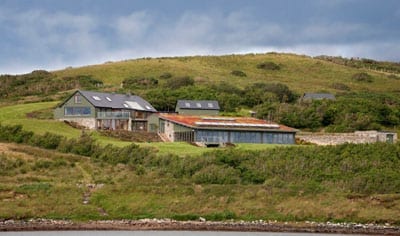
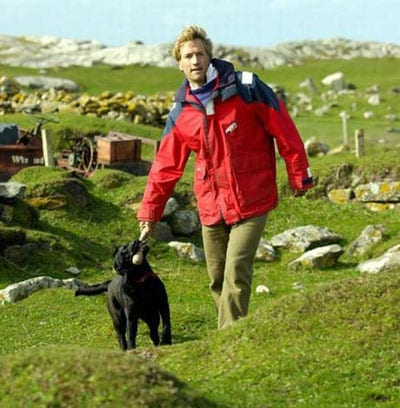
British TV presenter Ben Fogle, who starred in the BBC reality show Castaway 2000, set on the Scottish island of Taransay, warned of the dangers of island ownership in an article in The Times recently when he commented: “A lot of people get seduced by the island dream without thinking of the realities.” Taransay came up for sale in 2011 and though Fogle put together a consortium that raised £1.5 million, he was beaten off by a landowner from the neighbouring island of Harris.
Television presenter Ben Fogle pictured on Taransay during the filming of the BBC’s “Castaway 2000” reality show
The Barclay brothers, owners of amongst other things The Ritz and The Telegraph Group, have had their fair share of trouble since purchasing the sister island of Sark, Brecqhou, in 1993. They have rowed with Sark’s government over everything from inheritance law to property taxes and whether they should or should not be allowed to use motor vehicles. Their case illustrates the perils of upsetting the locals.
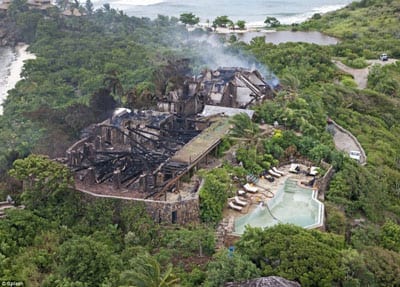
Issues such as electricity provision, sanitation, the delivery of food supplies and how one would cope with an emergency may seem more mundane but also must be considered by those purchasing an island. Sir Richard Branson found this to his cost when the 8-bedroomed Great House on his £60 million Necker Island in the Caribbean burnt to the ground in August 2011. If he’d been on the mainland, his residence would most probably have been saved.
The remains of The Great House on Sir Richard Branson’s Necker Island
On this morning’s Desert Island Discs, Hollywood actress Goldie Hawn requested that the luxury she would like to take would be lip-gloss. Presenter Kirsty Young said she could have two tonnes of the stuff. Frankly, in reality though, anyone buying into island life would have to have a lot more practical things higher up their lists.