 Well-known for their numberplates “2 BE” and “NOT 2B,” this power couple live on Cheyne Walk and are a little bit like Marmite. In Chelsea, Bourne has aroused controversy by attempting to gain planning permission to turn George Best’s favourite boozer, The Phene, into a house and in Soho, Greene’s makeover of Ronnie Scott’s caused apoplectic outbursts amongst traditionalists. Labour supporting Bourne is described as a “property and leisure entrepreneur” whilst his wife just happens to control the luvvies favourite theatre, The Old Vic in Waterloo. Bourne and Greene are a duo who should not be underestimated.
Tag: renovated
-
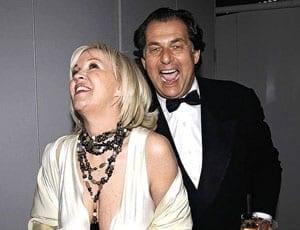
Robert Bourne and Sally Greene OBE
-
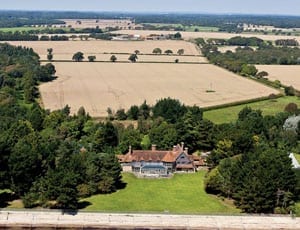
Ecstasy and Babycham
A marine residence with a history tied to the Rolls-Royce Spirit of Ecstasy, the Special Operations Executive and Babycham
The House on the Shore on Thorns Beach at Beaulieu in Hampshire is a home that wouldn’t look out of place in the Hamptons or Rhode Island. Dramatically situated next to the Solent waters to the north of the Isle of Wight, this suitably named building wouldn’t have been out of place in the 1980s BBC series Howards’ Way. It could. Indeed, have been an ideal home for Gerald and Polly Urquhart. (more…)
-
A Monarch Carries On
The sale of the The Manor House, Stoke Poges
In the blog that preceded “The Steeple Times,” Matthew Steeples took a look at The Manor House at Stoke Poges in March 2012. It’s still on the market at £13,500,000 and though the price has yet to be cut, there has been uproar about revelations that the former owners, South Buckinghamshire District Council, sold the freehold and a sculpture by John Deare for just £300,000. A link to the May 2012 “Bucks Free Press” article about this is included at the end of this article. What a Carry On!
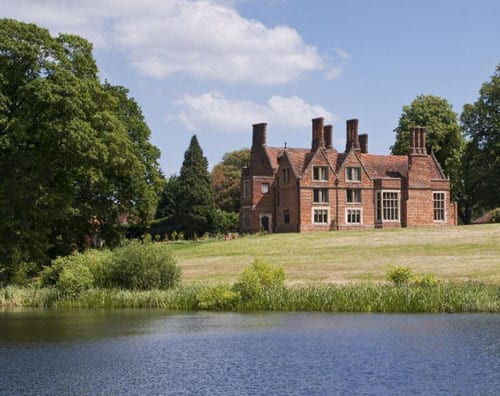
The Manor House, Park Road, Stoke Poges, Slough, Buckinghamshire, SL2 4PG 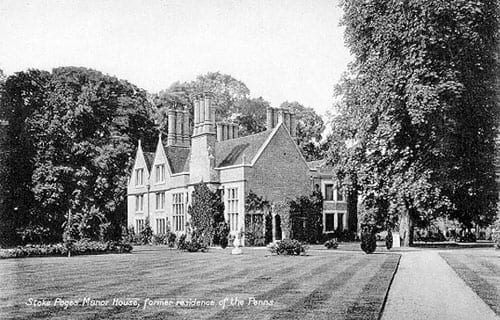
An image of The Manor House sometime between 1910 and 1929 Estate agents particulars are funny things. Normally gushing with nonsense such as “prestigious,” “luxurious” and “architect designed,” property agents rarely miss a trick when it comes to selling historical and personality related peculiarities.
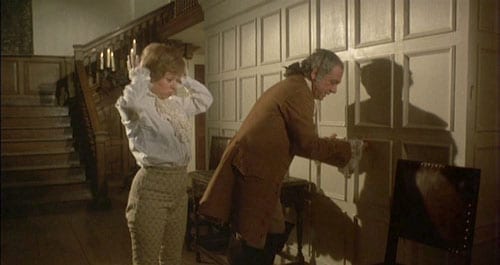
Sidney James as The Reverend Flasher AKA “Big Dick” Turpin with Barbara Windsor as Harriett in a scene filmed in The Great Hall at The Manor House, Stoke Poges for the film Carry on Dick 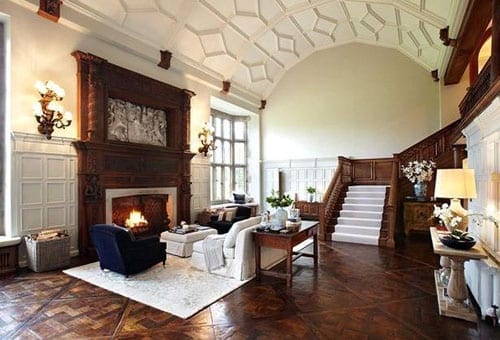
The Great Hall at The Manor House today I was therefore somewhat perplexed that the brochure for The Manor House at Stoke Poges in Buckinghamshire didn’t contain reference to its appearance in the 1974 classic Carry on Dick.
Agents Savills instead opted to gush about the house’s previous owners, who numbered Francis Hastings, second Earl of Huntingdon, Sir Edward Coke and Thomas Penn, son of William Penn, founder of Pennsylvania. The brochure also goes to the lengths of describing visitors who have included Queen Elizabeth I, Charles I and Sir Thomas Gray and points out that Sir Edwin Landseer used The Manor House as a studio whilst painting his most famous work, The Monarch of the Glen, in 1851. The filming of For Your Eyes Only and Bridget Jones’ Diary in the adjoining Stoke Park also get mention but Savills utterly neglect the starring role of the building as the home of the Reverend Flasher, played by Sid James, in Carry on Dick. Plainly “Big Dick” is not someone they wish this £13,500,000 house to be associated with.
The Manor House is now a quarter of its original size as, on his return from America, Thomas Penn decided the house too dilapidated for his own occupation. He commissioned James Wyatt to build him the new mansion that is now Stoke Park Club in the 1790s and demolished the majority of The Manor House.
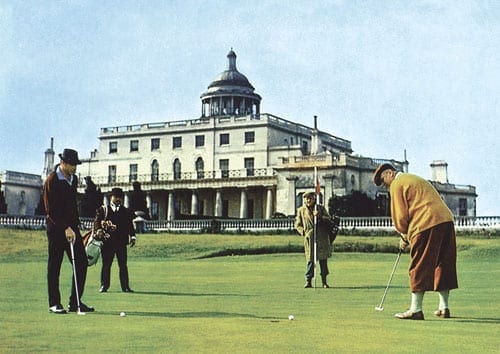
Stoke Park as the backdrop to a golf match between James Bond (Sean Connery) and Auric Goldfinger (Gert Froebe) in For Your Eyes Only (1981). Oddjob (Toshiyuki Harold Sakata) caddies. In 1911, shortly after the Stoke Park golf course was laid out, further refurbishments were carried out that included the creation of the current Great Hall from the former kitchen, the introduction of bay windows and a new grand staircase.
In 2010, Comer Homes acquired The Manor House and brought it into the 21st century. The 11,227 square foot main house and 7,966 square foot of guest and leisure accommodation were completely renovated and such things as multi-zoned, multi-sourced entertainment systems, CAT5 cabling and underfloor heating installed.
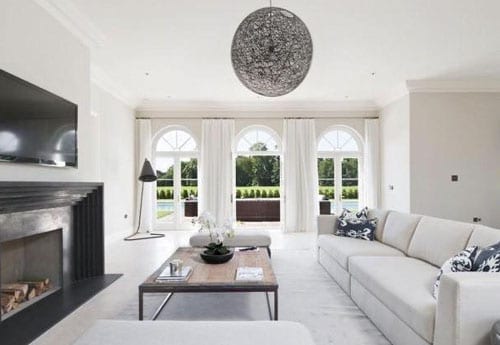
The extremely neutral style of decoration is perhaps a reason that a buyer has yet to bite 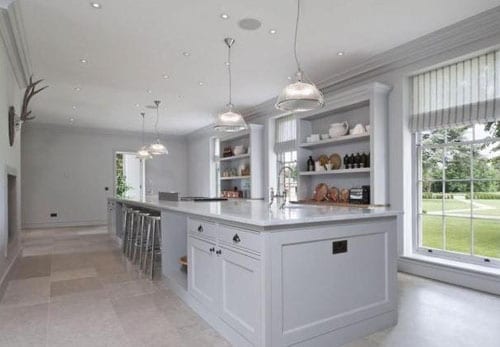
The uninspired theme continues in the kitchen 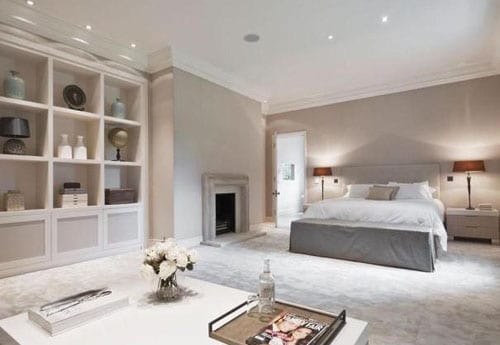
Whilst this bedroom could be located, well, erm, just about anywhere Just 35 minutes drive from Mayfair and now looking somewhat like a hotel out of the Mr & Mrs Smith guide, The Manor House is an extremely manageable country home as it stands in just 10 acres of grounds. It will no doubt have huge appeal to a popstar, Euromillions winner or Russian oligarch. When viewing, however, they just better not mention “Big Dick” as no doubt soon the agent will have had “enough of it!”
For more information on The Manor House, Park Road, Stoke Poges, Slough, Buckinghamshire, SL2 4PG contact Nick Ingle of Savills Beaconsfield on +44 (0) 1494 73152 or download a PDF brochure from: http://residentialsearch.savills.co.uk/property-detail/311852
To see more images of The Manor House, Stoke Poges from when it was in Carry on Dick, go to: http://www.thewhippitinn.com/carry_on_film_locations/carry_on_dick
View the trailer for Carry on Dick at: http://www.youtube.com/watch?v=8lk0NaWsbko
To read the Bucks Free Press article about The Manor House and the £300,000 freehold sale, go to: http://www.bucksfreepress.co.uk/news/9701227._Why_was_historic_home_sold_for_so_little__/
-
Windows on the WAGs
A £15 million mansion fit for a self-made tycoon or an upwardly mobile WAG
While the youth of the Kings Road and Loughton have featured in the reality shows Made in Chelsea and The Only Way is Essex, their counterparts in Cheshire have yet to undergo the same social experiment. Having come across a fair few of their number though, I can only imagine their antics would result in television of comparable car crash proportions.
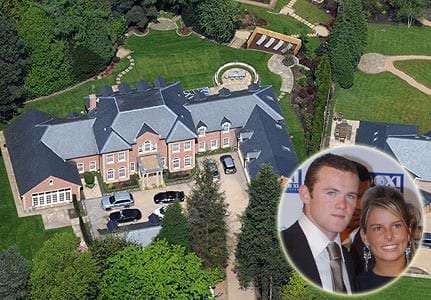
Wayne and Coleen Rooney and their home on Collar House Drive in Prestbury, East Cheshire 
Warrington born Kerry Katona isn’t considered one of the “Cheshire set’s” finest exports Cheshire itself is a county of contrasts: there’s the farming and hunting set and then there’s the new money. From the 1950s onwards an invasion of nouveau riche footballers and self-made business people came to Alderley Edge and Wilmslow and it is said that there are more Rolls-Royces per square mile here than anywhere else in the UK.
Though today’s Coronation Street actresses and Man United players generally favour brand new homes in Prestbury, the new wealth have not just consigned themselves to such. The likes of Take That’s Gary Barlow, for a time, owned Delamere Manor at Cuddington but sold it in 2005 due to his ever-growing commitments elsewhere. Equally, Neil Hamilton, whilst MP for Tatton, lived at The Old Rectory at Nether Alderley with his formidable wife Christine but when their days in politics came to an end, they too moved on. For a time, David and Victoria Beckham were the undoubted glitterati of this manor, but of those footballers still resident Wayne and Coleen Rooney are definitely now the best known.
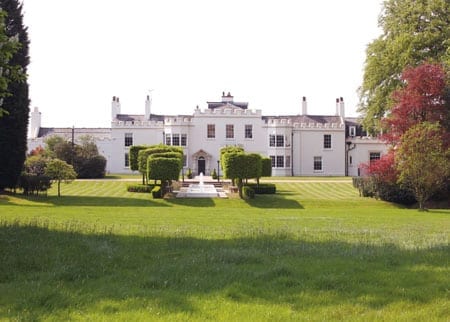
Swettenham Hall, Swettenham, Congleton, Cheshire, CW12 2JZ 
Double glazing tycoon Brian Kennedy In a “grey area between old and new” sits Swettenham Hall at Swettenham near Congleton. This 12,590 square foot Georgian mansion dates to 1795 but since it was acquired by Brian Kennedy, a double glazing, home improvements and mobile telephone entrepreneur, the house has been given a total makeover. The colourful style he’s given the house can best be described as being akin to: “Laurence Llewelyn-Bowen meets Austin Powers.”
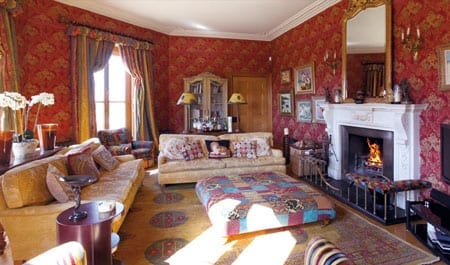
Swettenham Hall’s drawing room is decorated and furnished in a cacophony of colours 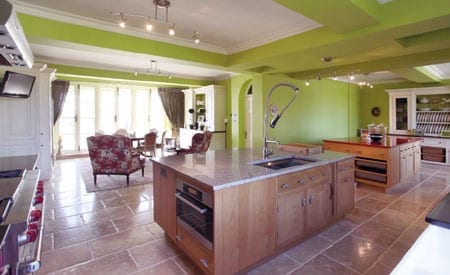
The kitchen is painted in an equally vivid shade of lime green 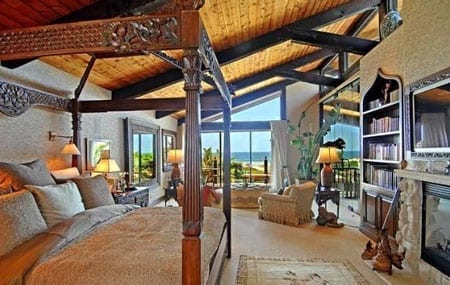
A bedroom boasts a carpet that would make Austin Powers shout: “Yeah, baby, yeah!” 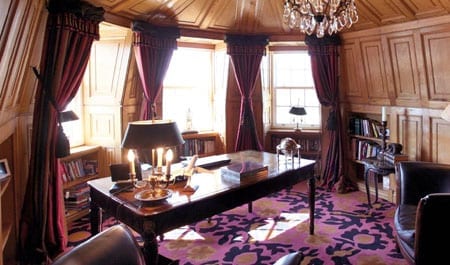
The same carpeting continues into the wood paneled “gentleman’s study” 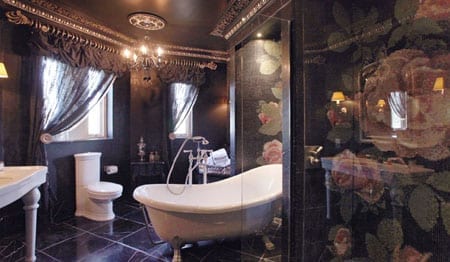
At Swettenham Hall, bathrooms, equally, are far from neutral in their styling 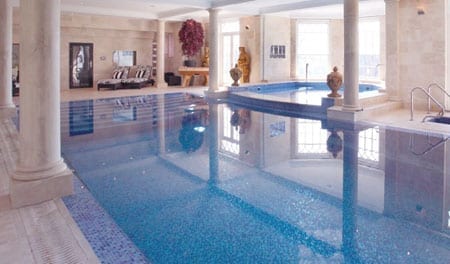
Mr Kennedy and his wife Christine employed Julian Bicknell Associates to design an impressive leisure wing in 2004 Swettenham Hall is most definitely a party palace and along with the addition of a leisure wing consisting of a swimming pool, Jacuzzi®, plunge pool, steam room and gymnasium in 2004, Kennedy has also constructed a 47ft by 44ft helicopter hangar complete with a retractable helicopter pad.
Standing in 100 acres of grounds, the house does seem a tad expensive at £15 million especially since that the adjoining former farm buildings were sold off and converted into eight homes in 1999. The driveway is partly shared with these homes and for those seeking the ultimate in privacy, this could indeed be an issue. It is perhaps why Swettenham Hall has yet to sell.
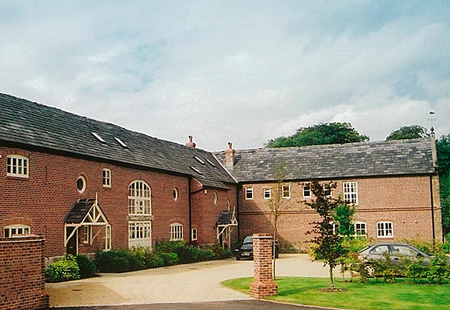
The former farm buildings next to Swettenham Hall were sold off and converted into eight homes by Egerton Estates and Watts Developments in 1999 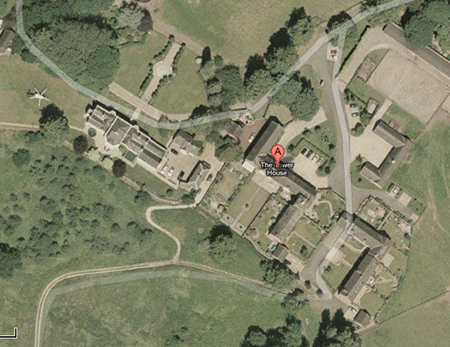
The proximity of Swettenham Hall to the neighbouring barn conversions is illustrated in this Google Earth map Brian Kennedy is someone I hadn’t heard of until I came across Swettenham Hall but here is a fascinating man whose meteoric rise is frankly very clearly linked to windows. The son of a window cleaner from Edinburgh, this self-made tycoon started his career as a trainee manager at the Royal Bank of Scotland. He subsequently briefly worked as a trainee accountant but left when offered the chance to become youngest branch manager of Moben Kitchens at the age of 20.
At around this time, Kennedy acquired a stake in Farouche Kitchens and with a Rochdale born property entrepreneur named David Russell, he was transformed from a door-to-door salesman to a pioneer in direct sales. In 1988, when Farouche was sold, Kennedy netted circa £1 million. From here, this entrepreneur returned to his family’s roots by venturing into double glazing with Weatherseal Windows and then home improvements with Space Kitchens & Bedrooms.
In 1999, with the help of funds raised by private equity investors 3i, Kennedy paid £42 million for the well known brand Everest but sold part of his stake to the management for £63 million in 2003. In due course he added to his shareholding and then sold 21.5% of the company to Hutton Collins in a deal which valued the company at £150 million in 2007.
Ever the empire builder, Kennedy paid £29 million for a conservatory manufacturer named Ultrafame in 2006 and then also added another double glazing brand, Zenith Staybrite, to his portfolio in 2008. Many other business ventures followed but not being afraid to diversify, Kennedy formed Patrick Properties, whose portfolio is now valued in excess of £100 million, in 2002 and Kennedy Renewables, which specialises in wind energy, in 2009.
In the technology sector, a chance conversation in a Knutsford wine bar in 1995 led to him venturing into the mobile telephone market with a company named Genesis Communications. The business was sold to Dixons in 2002 for £31 million.
In January 2012, Kennedy merged his main Latium Holdings business with Jim Rawson’s Epwin Group to form Epwin Holdings. The merger resulted in a company with more than 2,500 employees and brands numbering Spectus, Swish, CET and Kestrel.
Of his success, Kennedy states:
“Business is common sense [and] dealing with people is common sense. I don’t think I have any particular flair. I think it is about common sense, taking the opportunity when it comes and hard work.”
Brian Kennedy’s wealth has allowed him to indulge many of his passions. A period of semi-retirement “drove [him] and [his] kids nuts,” but this Scotsman’s love of rugby resulted in him acquiring the Sale Sharks Rugby Club in 1999. He is said to have set the “club on a sound financial footing” and turned it into “one of the leading rugby clubs in Britain.”
Philanthropy is something that Kennedy, a Jehovah’s Witness, has also dedicated his wealth to. Through his Brian Kennedy Trust, he has supported a number of charities and organisations but it is for his role as the main backer of Find Madeleine Fund that he has come to public attention. Of his reasoning for backing the missing child’s parents financially, he stated:
“In light of the quite literally incredible accusations against Gerry and Kate McCann, which are clearly exacerbating their emotional torture, I felt compelled to offer, along with other like-minded businessmen, financial support and the full logistical support of the Latium team. That support is principally our in-house lawyer Ed Smethurst and [official spokesman] Clarence Mitchell.”
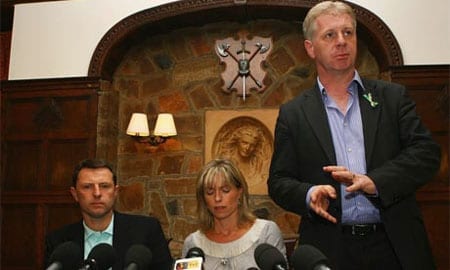
Brian Kennedy was involved in the funding of a team that included Clarence Mitchell for the Find Madeleine Fund until 2009. Here Mitchell (standing) is pictured with Gerry and Kate McCann. 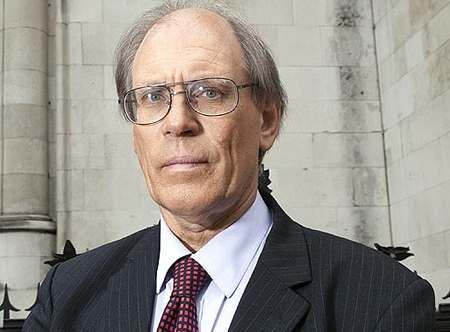
An ex-lawyer and campaigner Anthony “Tony” Bennett is the former secretary of The Madeleine Foundation who has been involved in various legal disputes with Brian Kennedy and Gerry and Kate McCann Kennedy’s donation attracted much press attention in 2007 in the weeks following Madeleine McCann’s disappearance and he continues to support them to this day. A very public spat involving him, Gerry and Kate McCann and a campaigner named Tony Bennett, who also was involved in The Madeleine Foundation, has been the subject of various legal actions. In October 2011, Mr Bennett was forced to publicly apologise to Mr Kennedy and separately an August 2009 Evening Standard article by Mark Hollingsworth “investigat[ing] the investigators,” was pulled because for “legal and editorial reasons.” In it, “someone who worked closely with [Kennedy]” was quoted as saying:
“He was appalled by the Portuguese police, but he also had visions of flying in by helicopter to rescue Madeleine.”
Angelina Jolie, another avid aviator, once commented: “Wherever I am I find myself looking out of the window wishing I was somewhere else.” We do not know why Brian Kennedy is selling Swettenham Hall, but Jolie is indeed one of the few with the resources to take these particular windows off his hands.
For more information about Swettenham Hall, Swettenham, Congleton, Cheshire, CW12 2JZ, contact Edward Welton of Knight Frank on +44 (0) 20 7861 1114.For more details about Brian Kennedy, go to: http://www.brian-kennedy.co.uk
For more details about the Find Madeleine Fund go to: http://www.findmadeleine.com and for information on The Madeleine Foundation: http://www.madeleinefoundation.org.uk/
-
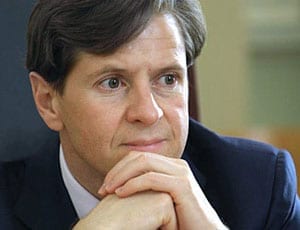
Andrey Borodin
 This billionaire former president of the Bank of Moscow lives in exile in London and is on the Interpol Red Notices wanted list as a suspect in a £136 million (13 billion rouble) fraud. (more…)
 -
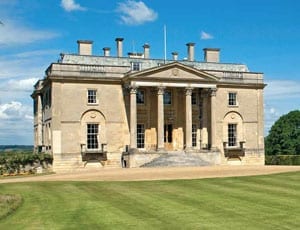
A manageable mansion
The sale of the £20 million Bletchingdon Park, Oxfordshire
Bletchingdon Park House in Oxfordshire is one of those classic Palladian villas that would make the perfect setting for a period drama. Unlike vast Jacobean mansions like Highclere Castle, better known as Julian Fellowes’ Downton Abbey, however, Bletchingdon is of a far more manageable size.

The facade of Bletchingdon Park, Bletchingdon, Kidlington, Oxfordshire, OX5 3DW 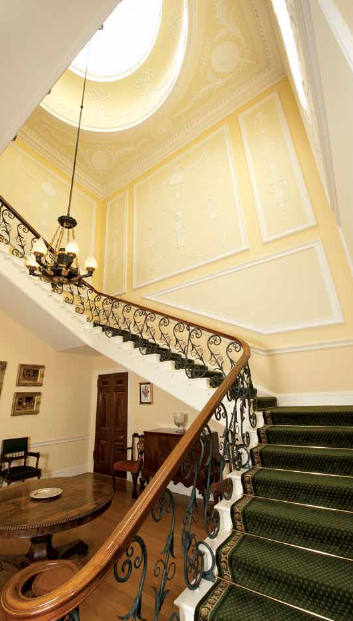
The staircase hall 
A formal reception room 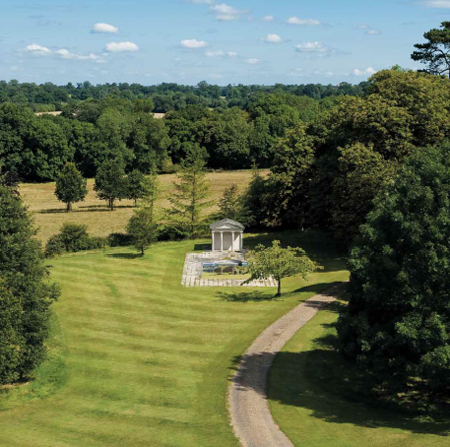
The grounds of Bletchingdon Park This Grade II* listed Georgian house, built for Lord Valentina in 1782, may be some 24,600 square foot in size, but it has a layout that makes it both practical for living and suitable for entertaining on a grand scale. The accommodation, which has been renovated by the renowned building company Symm, includes 9 bedrooms and suites, well-proportioned formal reception rooms and a garden floor with further reception rooms, a billiards room and a fitness room with spa.
Whilst the original stable block has been sold off and converted to residential accommodation, Bletchingdon Park includes 2 staff flats, a 2-bedroomed lodge cottage and a further 3-bedroomed cottage. With parkland and grounds extending to 127 acres, maintaining Bletchingdon’s plot is large, but easily maintained.
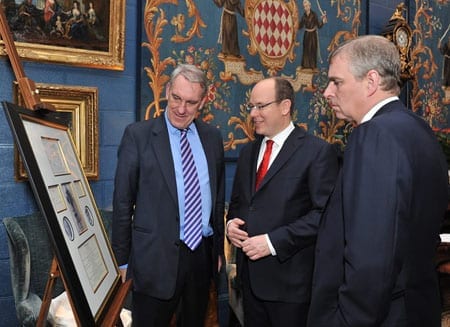
Dr Michael Peagram with Albert II, Prince of Monaco and Prince Andrew, The Duke of York 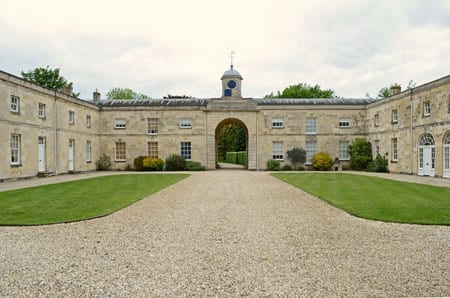
The former stables of Bletchingdon Park were sold off some years ago and have been converted into a number of homes In the 20th century Bletchingdon was owned by Lord Astor and then Lord Rotherwick. The current owner, Dr Michael Peagram, purchased the estate in 1993. Peagram made his fortune in the chemicals industry after having led a management buyout of Huddersfield based Holliday Chemicals Holdings (HCH) in 1987. He revitalised the business, expanded into new markets and floated the company in 1993. The business was ultimately sold to Yule Catto for £225 million in 1997 and in 2001 Peagram sold another company for a reported £44 million.
At this point, this scientist turned tycoon moved to Monaco and saved himself, according to a 2009 Daily Mail article by Piers Morgan, some £13 million in capital gains tax. A wise businessman and a supporter of David Cameron, Peagram’s modus operandi is:
“Winning with honour and playing by the rules… And not cheating.”
In an interview with Monaco’s NeXt Generation Entrepreneur Forum, he states that he “did lots of work” to achieve his success but admits to “being a romantic at heart.” He has used much of his fortune to fund the philanthropic activities of Outward Bound Monaco with Prince Andrew, The Duke of York and Albert II, Prince of Moanco.
Peagram placed Bletchingdon Park on the market in May 2012 at a price of £20 million. Of why it hasn’t sold, one blogger commented that a footpath runs close to the house and that there is a lack of leisure facilities and outbuildings. Somehow neither seem insurmountable and whoever purchases this fine residence will be a very lucky man. If I were Dr Peagram, though, I’d keep it.
Bletchingdon Park, Bletchingdon, Kidlington, Oxfordshire, OX5 3DW is for sale through Knight Frank. For further details contact Damian Gray on +44 (0) 20 7629 8171 and to download a brochure go to: http://search.knightfrank.com/cho090098
-
First Among (Not So) Equals
The latest sale of 32a Ovington Square
I first visited 32a Ovington Square in September 2009. At the time, this “hidden house” was the home of Lord Carrington and it had just come on the market at a price, if I recall correctly, of circa £3,000,000.
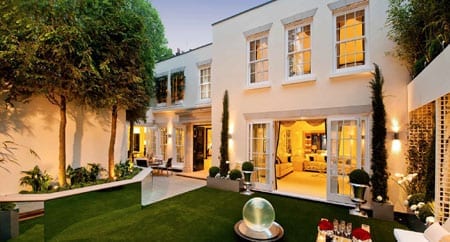
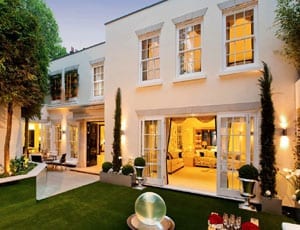
The newly redeveloped Carrington House, 32a Ovington Square, London, SW3 1LR 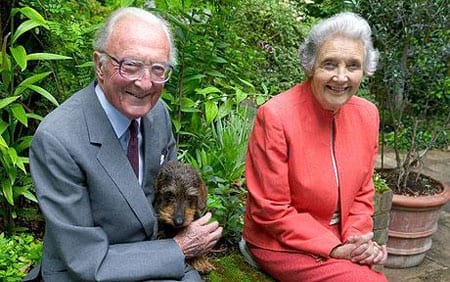
The Rt. Hon. The Lord Carrington KG, GCMG, CH, MC, PC, DL (born 6th June 1919) with his wife Lady Carrington (1920 – 2009) and their dog Edward A friend was looking for somewhere to buy in London and I’d somehow come across the aforementioned property in a magazine. A detached house in Knightsbridge at this price seemed like a bargain and as he was keen to take a look and I lived round the corner, we arranged to see it together.
During this period, I had unfortunately made the mistake of making the acquaintance of a former ambassador’s wife who thought herself rather grand. Said woman somehow found out about my friend going to what Americans might term an “open house” at 32a Ovington Square and somehow muscled in. This individual happened to be selling her own home nearby and I reckon she, like my friend, thought she’d be onto a bargain. She’d previously unsuccessfully tried to persuade my friend to buy her individually styled, Ralph Lauren wallpapered home but as it actually rattled every time an underground train went underneath and as it was far from a bargain, he’d sensibly declined.
We arrived at the 2,240 square foot 32a Ovington Square to be told by a rather unhelpful estate agent that we’d have to just wander round by ourselves and that there was no brochure or floor plan. As a merry throng trailed through the house, Lord Carrington stood in the garden looking bemused and his secretary fussed around him. The pair plainly weren’t comfortable with all the interlopers and all in all, who could blame them.
The ex-ambassador’s wife, whose carelessness Rupert Everett most amusingly made reference to in his recent memoirs, spent the entire visit whingeing about the house being dark and stinking of damp. I had to agree with her as the neighbouring buildings towered over it and there was mould on the walls. My friend simply said: “It needs a fortune spending on it.” We left and later I heard that it sold for well above the asking price. The wife of the ex-ambassador thankfully departed from our lives soon after.
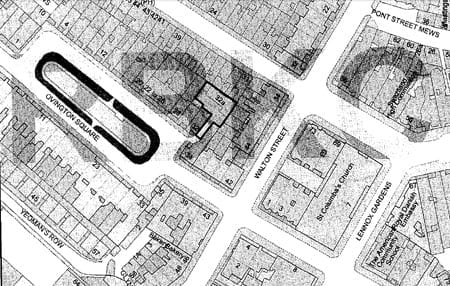
A site plan shows how hidden away 32a Ovington Square truly is – ideal for a government minister or indeed a wayward celebrity About a year and a half later, I saw 32a Ovington Square for sale with planning permission to construct a far larger residence with a basement and sub-basement pool complex. The price was in the order of £14,000,000. I thought that somewhat ludicrous but now that the very same property is on the market at a price of £23,00,000, it seems that the world has just gone mad.
The brochure for the new residence, which has been renamed, Carrington House, reveals a three-storey low-built freehold building with 5,300 square foot of accommodation. Though 32a Ovington Square has been more than doubled in size by a developer named London City Developments, the sub-basement leisure complex has not been constructed. Could this have been because of planning problems or simply because such construction wasn’t deemed to add value?
In August 2002, Lord Carrington, whom The Mirror described as being “doddery” in a Scurra diary piece, was said to have objected to a bar named Townhouse behind his former home being given a 1am licence. That bar has since closed but as seven of the residents of Ovington Square and Beauchamp Place also took a dislike to the prospect of subterranean developments at his former home, only proposals for a single basement level were included in the January 2010 plans submitted by a Mr & Mrs R. Garner.
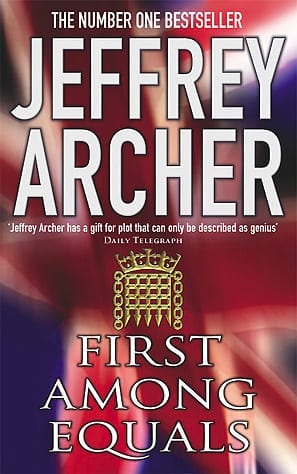
Jeffrey Archer’s 1984 novel “First Among Equals” (published in the UK by Hodder & Stoughton, ISBN: 0-340-35266-3) Aside from controversy with residents and planning officials, this “heavily overlooked,” “dark” house gets a brief credit in Jeffrey Archer’s 1984 novel, First Among Equals:
“Charles would not have normally accepted the invitation. Lately he found cocktail parties to consist of nothing but silly little bits of food, never being able to get the right drink and rarely enjoying the trivial conversation. But when he glanced on his mantelpiece and saw an ‘At Home’ from Lady Carrington he felt it might be an amusing break from the routine he had fallen into since Fiona left. He was keen to discover more about the rumoured squabbles in Cabinet over expenditure cuts. He checked his tie in the mirror, removed an umbrella from the hat stand and left Eaton Square for Ovington Square… He arrived at Lord Carrington’s front door a little after six forty-five. A maid answered his knock, and he walked straight through to a drawing room that could have held fifty guests and very nearly did. He even managed to be served with the right blend of whiskey before joining his colleagues from both the Upper and Lower Houses.”
Turning to the real Lord Carrington, here is a man who has led a remarkable life. He served as Foreign Secretary in Margaret Thatcher’s cabinet between 1979 and 1982 and as Secretary General of NATO from 1984 to 1988. The last surviving member of the Cabinets of both Harold Macmillan and Sir Alec Douglas-Home was British High Commissioner in Australia between 1956 and 1959 and also chaired the 1979 Lancaster House conference that brought Zimbabwe’s revolutionary war to an end. In 1991, Carrington presided over diplomatic talks in the former Yugoslavia and commented:
“When I first talked to Presidents Milošević and Tudjman, it was quite clear that both of them had a solution which was mutually satisfactory – which was that they were going to carve up Bosnia between them.”
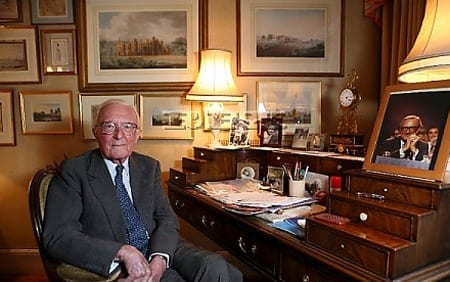
Lord Carrington at his desk in 32a Ovington Square, Knightsbridge 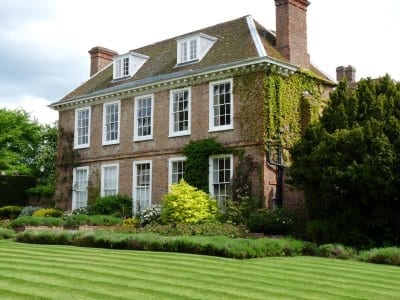
The Manor House, Bledlow, Buckinghamshire, HP27 9PB is the country home of Lord Carrington Milošević was found dead in his cell in 2006 but it is quite possible that Lord Carrington’s name will be mentioned in the trial of Goran Hadzic at the International Criminal Tribunal for the Former Yugoslavia that has just commenced at The Hague. It is amazing to think that matters involving this 93-year old politician are still current but Carrington’s stamina is shown in his roles as the longest serving member of the House of Lords and the second longest serving member of the Privy Council after HRH The Duke of Edinburgh.
Aside from politics, there is much on the internet, a considerable amount of it written by wildcards and fantasists whose number includes David Icke, about Carrington’s involvement with Henry Kissinger, the Illuminati, the Bilderberg Group and the Committee of 300. The consensus of these conspiracy theorists generally borders on the ludicrous, but it is without doubt that Lord Carrington had and continues to have influence in many high places. He was chairman of Christie’s International PLC from 1988 to 1993 and has held directorships on the boards of companies that have included Barclays Banks PLC, Hambros PLC, Cadbury Schweppes PLC, Amalgamated Metal Corporation PLC, British Metal Corpoation PLC, Rio Tinto PLC, Kissinger Associates Inc. and Hollinger Inc.
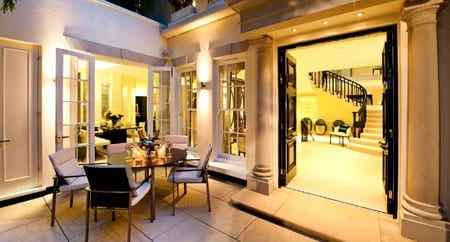
The main entrance to Carrington House 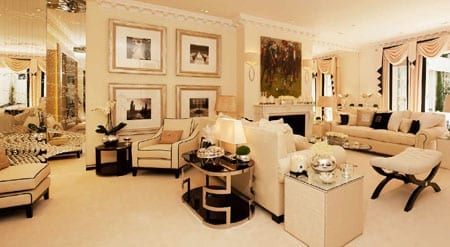
The main reception room of the house is decorated in a contemporary style and a far cry from the traditional decoration favoured by Lord and Lady Carrington 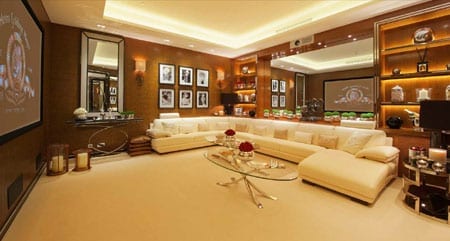
An essential feature in any house priced over £10 million is a media room 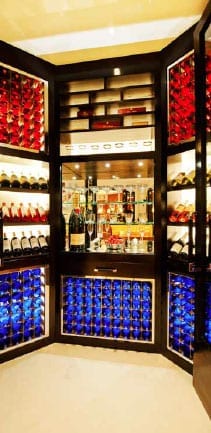
Carrington House now boasts a bar that any dignitary would envy 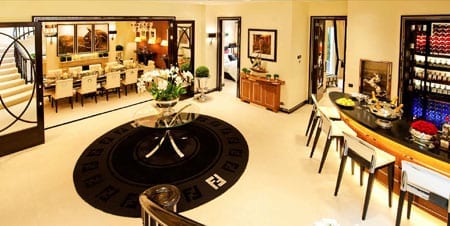
The newly added basement level features an entertaining hall, dining room, bar, gym, media room and two bedroom suites 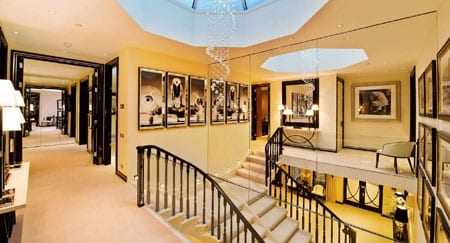
The staircase is now lit by a glazed cupola 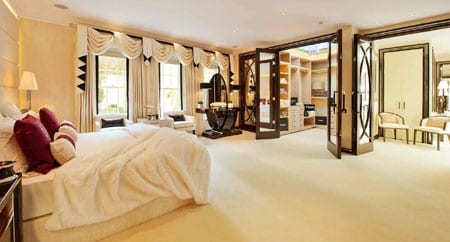
The master bedroom 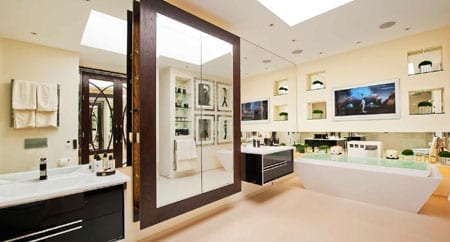
The master bathroom 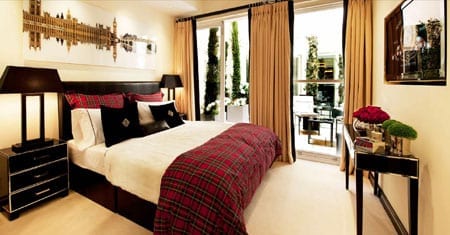
Another bedroom, located at basement level, is decorated with a Scottish theme and has access to a shared courtyard 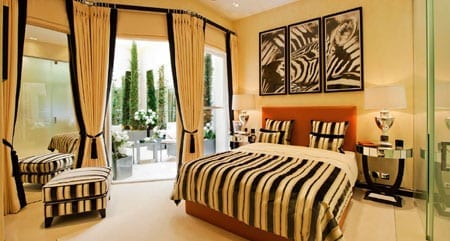
The other suite that shares the courtyard is decorated with an “Out of Africa” theme complete with an image of a zebra and matching linen and upholstery 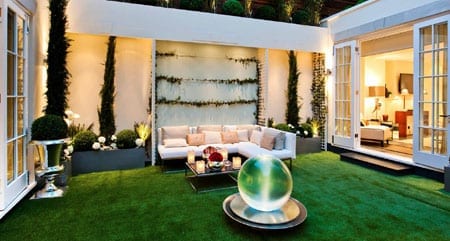
Would the purchaser of a £23,000,000 home truly want an AstroTurf lawn? Following on from this rather over the top redevelopment, a new chapter has certainly begun at 32a Ovington Square. Whether it is bought by a popstar or a Russian oligarch, they’ll definitely not be anywhere nearly as equal to Lord Carrington in terms of their league of influence.
Carrington House, 32a Ovington Square, London, SW3 1LR is for sale through Knight Frank. For further information contact Nick Vestey on +44 (0) 20 7591 8600. Full details of the house can be viewed at: http://search.knightfrank.com/sla100211
For more details about the Carrington family’s Carrington Estates Ltd., go to: http://www.carington.co.uk/
-
Rocking with royalty
A £26 million residence with connections to rock, royalty and rectors
Built in the early 1500s, The Old Rectory is Wimbledon’s oldest house. Standing in grounds of 2.5 acres, this 16,200 square foot property was once described by a biographer of Sir Henry Cecil as being “not luxurious, but adequate” but now once again it finds itself in an entirely different league.
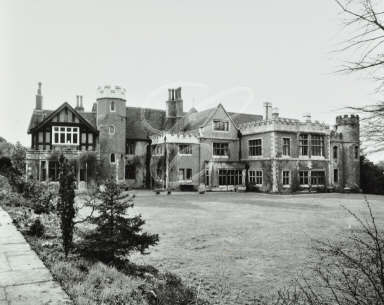
An image of The Old Rectory, 82 Church Road, Wimbledon, London, SW19 5AA in 1978. Present day imagery has been removed at the request of agents acting for the current owners. Priced at £26,000,000, it is almost certainly one of the most expensive homes to ever come to the market in Wimbledon and whoever moves there next will undoubtedly be either an oligarch, an A-list personality or a top achieving business person.
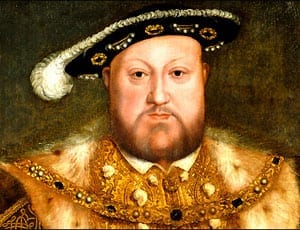
The purchaser will follow in the footsteps of a fascinating array of historically important residents, the first of whom was Henry VIII (1491 – 1547). The King took up residence in 1547 in the months prior to his death and is said, as he was so bloated, to have been unable to climb the stairs to his sleeping chambers. His bed was relocated to the great hall of the house and here he slept next to the fire. Historical research recounts that, with a brewhouse, beer and wine cellars, a coal cellar, meat room, buttery and two dairy rooms, this was a “house fit for a king.”
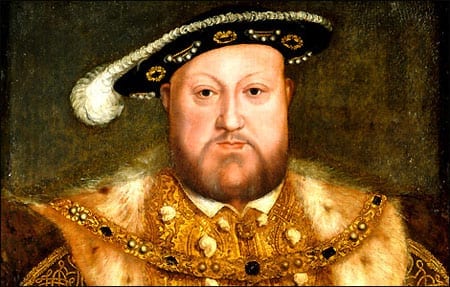
Henry VIII (1491 – 1547) 
Catherine Parr (1512 – 1548) Henry VIII gave The Old Rectory, which was originally called The Parsonage House, to his sixth and final wife, Catherine Parr (1512 – 1548). Preferring a residence in Chelsea, Parr left and the Dean and Chapter of Worcester Cathedral took possession. A lease was sold to Sir William Cecil (1520 – 1598), later Lord Burgley, and the manor then passed to his son Thomas Cecil (1542 – 1623), the 1st Earl of Exeter.
In 1639, Charles I (1600 – 1649) bought the entire manor and gave it to Queen Henrietta Maria (1609 – 1669) but with the era of Comwell, The Old Rectory found itself occupied by General John Lambert (1619 – 1684). Shortly after, when a grander house was built next door, the property became first a laundry house and then servant accommodation and gradually fell into decline.
The Old Rectory passed next to Sir Theodore Janssen (1658 – 1748) in 1720. This French-born English financier, who was said to be worth the staggering sum of £250,000 at the time of his purchase of the house, was a founder member of the Bank of English but later disgraced for his part in the South Sea Bubble. He was expelled from the House of Commons and with his ruination, The Old Rectory saw yet another chapter of abandonment.
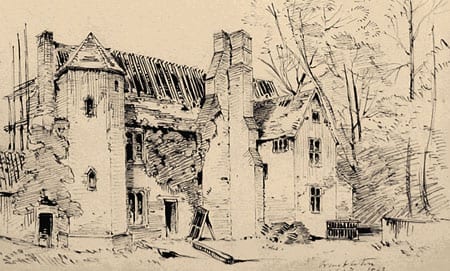
The garden front of The Old Rectory by Charles Henry Money Mileham (1837 – 1917) By 1802, the house was described as an “uninhabited” ruin. A speculator credited with developing “modern Wimbledon” named John Augustus Beaumont bought it and restored and extended it but when it was sold to a Samuel Wilson in 1882 for £6,000, an era of truly comprehensive upgrades was to begin. Wilson added a pebble-dashed two-storey drawing room wing, carved oak doors and installed English, Flemish and Italian chimneypieces.
The next owner was a marine engineer named Matthias Jacobs who had been responsible for the construction of tunnels in Paris and New York. After having purchased The Old Rectory in 1909, he commissioned his brother to add a new single storey billiards room, a service wing and a study extension to mask the medieval chapel of the house. Jacobs sold up in 1923 to a Thomas Lethaby, who fitted oak paneling from Chantry House in Newark and a plaster ceiling based on the one at Knole House, Kent.
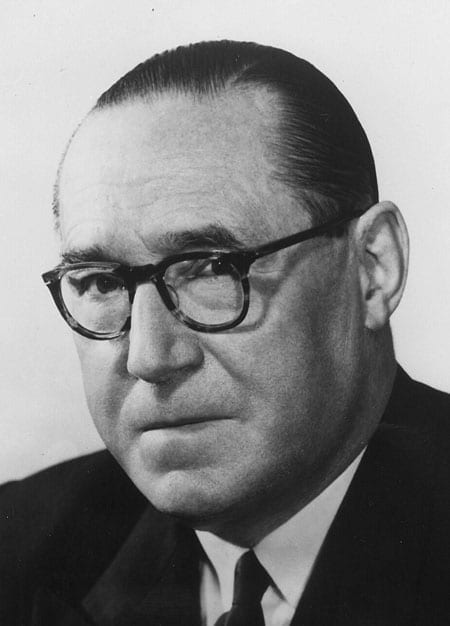
Lord Brock FRCS, FRCP (1903 – 1980) In 1953, the eminent London surgeon and cardiologist, Lord Brock FRCS, FRCP (1903 – 1980), took possession of The Old Rectory after having paid £13,750 for it. Brock is credited as on of the pioneers of modern open heart surgery and also founded the Lord Brock Memorial Trust that to this day funds the museum he founded, The Old Operating Theatre Museum and Herb Garret in Southwark, SE1.
Following the death of his first wife Germaine Louise Ladavèze, Brock sold to an Iraqi entrepreneur and philanthropist named Basil Faidhi in 1978. Faidhi had fled Iraq for Britain and though he spent vast sums restoring the house with assistance from English Heritage, he also created a basement discotheque for his daughter, Nina, and a bar. Aside from bringing the house into the “yuppie era,” Faidhi also commissioned a historian named Richard Milward MA to write a history of the building in 1992 entitled: The Rectory – Wimbledon’s Oldest House.
The Queen lead vocalist and anti-badger cull campaigner Brian May CBE purchased The Old Rectory in 1994 for £4,000,000 with the intention of living there with the Eastenders actress Anita Dobson.
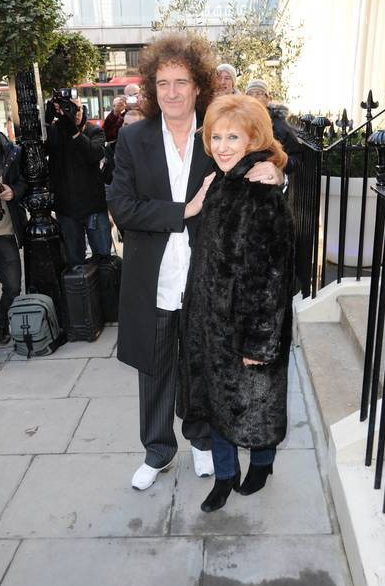
Brian May CBE with his second wife Anita Dobson Dobson, who didn’t marry May until 2008, had other ideas and refused to move in. It was suggested that she preferred a smaller house the pair occupied in Kensington and, at the time, a friend commented:
“[May] begged her to move into the new house so they can make a fresh start. Nobody can believe that Anita doesn’t want to be the lady of this fabulous house. But Brian says he can’t get through to her.”
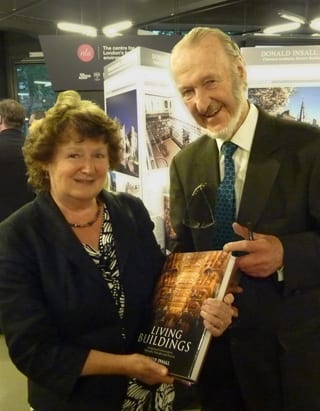
Sir Donald Insall CBE As a result, May never properly moved into The Old Rectory and eventually decided to sell. In 2006, it achieved a record price of £16,000,000 and in the ensuing years, an Italian architect-owner named Antonella Carminati and her husband have lavished time and money on further restorations with the help of Sir Donald Insall CBE’s Insall Associates firm of architects.
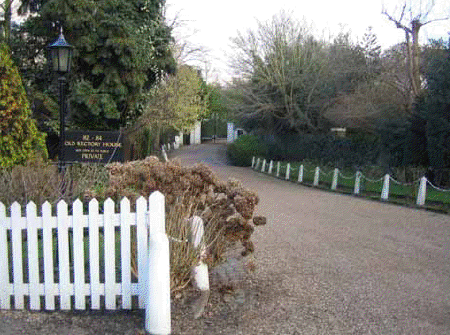
The driveway that leads to The Old Rectory from Church Road gives plenty of privacy New fittings have been installed throughout and substantial extensions to the house have included a new kitchen and breakfast room with garaging beneath. The couple have demolished an early 20th century porch and an “unsightly” oak conservatory, remodeled the billiards room as a drawing room and removed a “bilious” blue swimming pool from the east lawn.
Now featuring 12,882 square foot of accommodation in the main house and 3,320 square foot of additional accommodation, The Old Rectory has been planned to include 8 reception rooms; a vast kitchen with La Cornue appliances and an adjoining breakfast room; master bedroom suite with two dressing rooms, his and her bathrooms and a sitting room and 7 further bedrooms.
Outside, the gardens feature an original medieval fig tree trail, shaded paths, lawns and a large pond as well as garaging for six cars. Planning permission for an indoor swimming pool complex has also been granted and ample staff accommodation is provided above one of the garages and in the gate lodge.
Given the now limited financial resources of the traditional religious houses of Britain, will it be rock, royalty or new money that next takes possession of The Old Rectory? The historians of Wimbledon will undoubtedly be watching.
The Old Rectory, 82 Church Road, Wimbledon, London, SW19 5AA is for sale through the Wimbledon office of Knight Frank. For more information call: +44 (0) 20 8946 0026.
-
No man is an island
The joys and pitfalls of island life
Living on a private island would, to many, seem like a dream. The prospect of being able to do what you want, when you want and without having to pander to rules and regulations indeed does sound appealing. Swapping the rat race and daily commute for white sandy beaches, crystal-clear waters and peace and tranquility would undoubtedly tempt huge numbers of us. Taking up the mantle of Robinson Crusoe certainly has it’s merits, but what are the perils of owning an island and what is currently available?
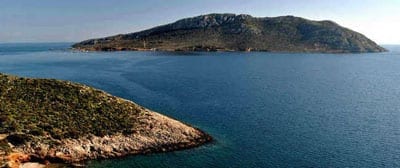
The Greek island of Patroklos On the leading website for the sale of islands, Private Islands Online, the most expensive undeveloped island on offer is the island of Patroklos in Greece. This relatively flat 643-acre undeveloped island boasts a “mild and pleasant” climate and 275-acres of cultivable land. It has about 150 goats and 5,050 olive trees and the agent suggests now is the perfect opportunity to exploit and develop tourism there. A price of £120 million is sought. So much for Greek austerity as whoever buys it will still have to shell out further to construct at least one residence.
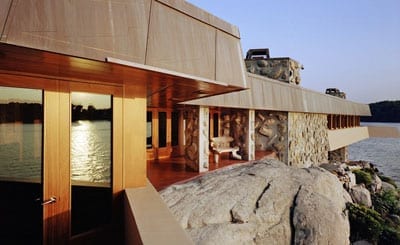
The Frank Lloyd Wright inspired Massaro House on Petra Island An especially spectacular option, also available through Private Islands Online, is Petra Island, just 15 minutes by helicopter from New York City on Lake Mahopac. The island itself, which is said to have been for sale for a number of years, is 11 acres in size and is currently owned by Joseph Massaro, a sheet metal tycoon. The highlight here is a 1,200 square foot cottage designed by Frank Lloyd Wright and a 5,000 square foot residence, Massaro House, built to the same architect’s designs in 2008. Though the Frank Lloyd Wright Foundation state of the latter: ““It’s not a Frank Lloyd Wright house, because it hasn’t been certified by the foundation,” this is a home that would certainly suit any James Bond villain. The agent declines to share the asking price, but it certainly at the higher end of the scale.
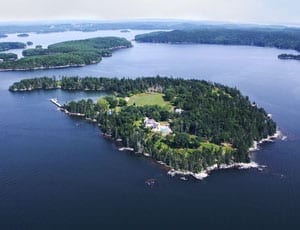
At a more modest price is Nautilus Island, off Brooksville in Maine. This 37-acre island was in the ownership of the same family for 130 years until 2004 and is named after the British war sloop “Nautilus,” that engaged the American vessel “Hazard” in battle in it’s waters during the American Revolutionary War.
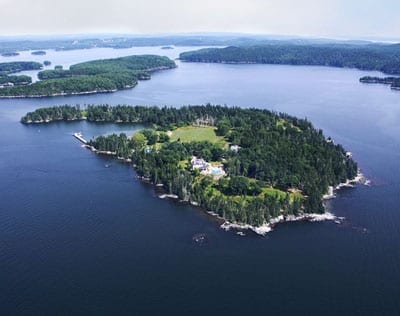
An aerial view of the island of Nautilus 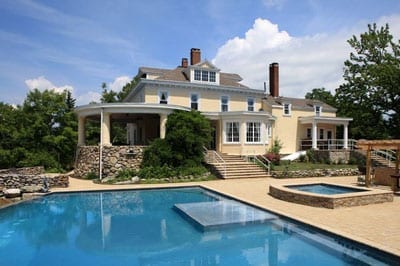
The main residence on Nautilus Island 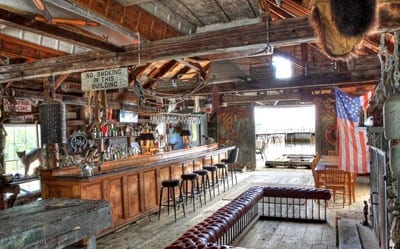
The island of Nautilus’s boathouse now serves as a stylish private bar The island includes a renovated 6-bedroomed main house, a farmhouse and a guest cottage. It also boasts open fields, perennial and kitchen gardens and a seaside vineyard for wine production. There is a protected harbour with a pier and moorings and over one mile of rocky coastline with gravel and shell beaches. A price of approximately £4.9 million is sought prior to auction on the 18th October through John Saint-Amour of LandVest.
Returning to Europe, Knight Frank offer a 65-acre island off Ireland’s west coast named Inishturk Beg at a price of £2.85 million. Sitting in Clew Bay, County Mayo alongside 364 other islands, receivers of an Egyptian-Irish businessman named Nadim Sadek are trying to find a buyer for a property that includes a main 7-bedroom house, 4 smaller properties, various outbuildings and an AstroTurf sports pitch.
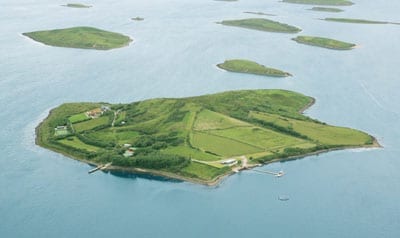
An aerial view of Inishturk Beg Island 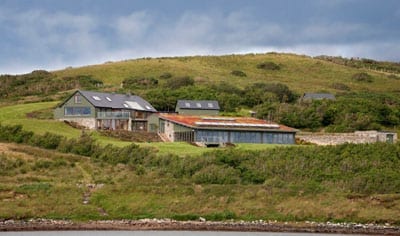
The main residence on Inishturk Beg, The Island House, comes complete with extensive leisure facilities Singing the praises of Insishturk Beg, Harriet Grant of Knight Frank comments:
“It is an easily accessible island and although it’s in the Atlantic it is very sheltered. And the island itself has plenty of natural shelter. It is an extraordinary development in which no expense has been spared. The electricity and water come straight from the mainland and it also has broadband access.”
British TV presenter Ben Fogle, who starred in the BBC reality show Castaway 2000, set on the Scottish island of Taransay, warned of the dangers of island ownership in an article in The Times recently when he commented: “A lot of people get seduced by the island dream without thinking of the realities.” Taransay came up for sale in 2011 and though Fogle put together a consortium that raised £1.5 million, he was beaten off by a landowner from the neighbouring island of Harris.
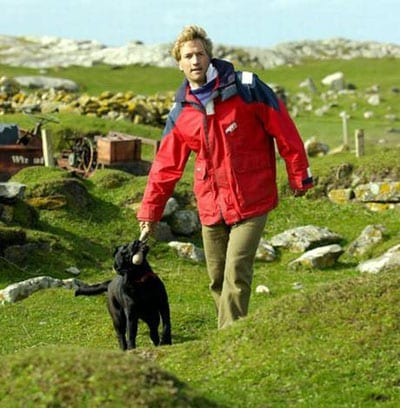
Television presenter Ben Fogle pictured on Taransay during the filming of the BBC’s “Castaway 2000” reality show The Barclay brothers, owners of amongst other things The Ritz and The Telegraph Group, have had their fair share of trouble since purchasing the sister island of Sark, Brecqhou, in 1993. They have rowed with Sark’s government over everything from inheritance law to property taxes and whether they should or should not be allowed to use motor vehicles. Their case illustrates the perils of upsetting the locals.
Issues such as electricity provision, sanitation, the delivery of food supplies and how one would cope with an emergency may seem more mundane but also must be considered by those purchasing an island. Sir Richard Branson found this to his cost when the 8-bedroomed Great House on his £60 million Necker Island in the Caribbean burnt to the ground in August 2011. If he’d been on the mainland, his residence would most probably have been saved.
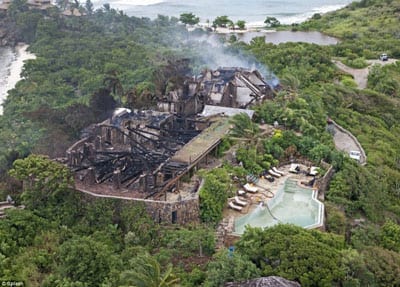
The remains of The Great House on Sir Richard Branson’s Necker Island On this morning’s Desert Island Discs, Hollywood actress Goldie Hawn requested that the luxury she would like to take would be lip-gloss. Presenter Kirsty Young said she could have two tonnes of the stuff. Frankly, in reality though, anyone buying into island life would have to have a lot more practical things higher up their lists.
For more information on Inishturk Beg Island, Westport, County Mayo, Ireland, go to: http://search.knightfrank.com/gwr120043
For more information on the islands of Patroklos, Greece and Petra, New York, go to: http://www.privateislandsonline.com
For more information on Nautilus Island, Brooksville, Maine, go to: http://nautilusisland.landvest.com