Westminster is one of the most intriguing parts of London but it can also be one of the most soulless. It’s an area that is inhabited by politicians and civil servants and it is the haunt of tourists. It’s a place of regal pageantry and ceremony but equally, it’s not a place that true Londoners flock to for food or drinks. Yes, of course, the tourists head to see the Houses of Parliament, Westminster Abbey and 10 Downing Street, but locals don’t venture to these historical landmarks all that readily apart from if summoned by Her Majesty, the Archbishop of Westminster or David Cameron.
With the opening of the Intercontinental London Westminster next to Scotland Yard, city centre residents truly have good reason to reconsider their reluctance to consider the culinary offerings of this area. The restaurant and bar at this new hotel, the Blue Boar Smokehouse, is, I would suggest, a great addition to the London restaurant scene and head chef Jon Ingram’s “testosterone-fuelled menu” of meaty delights is most definitely innovative, unusual and spectacular.
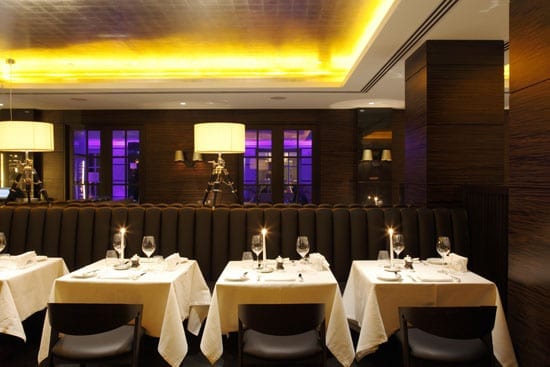
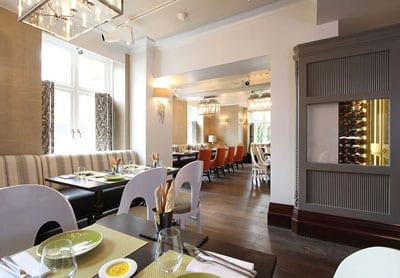
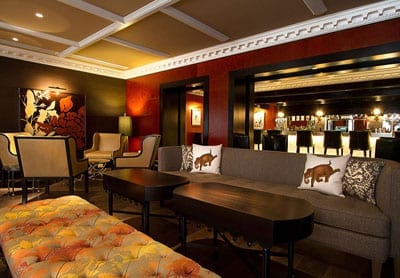
The dining room at the Blue Bar Smokehouse & BarThe bar area is typical of those found in most hotels other than it boasts an amazing collection of gins
I dined at the Blue Boar on a quiet Monday lunchtime with their vivacious PR Jennifer-Anne Sutcliffe. I had sadly missed the launch party Sutcliffe had organised earlier in the month and it was fascinating to learn from her that The Steeple Times roll call and party loving stalwart David Pun had turned up with Mick Jagger’s ex, Jerry Hall. We did laugh about how such an odd union could have come to being. Perhaps one of our readers will be able to conjure up a suitable explanation.
The restaurant itself is named after the 14th century Blue Boar’s Head Inn that stood on the site until it was demolished in 1899 but apart from its name, it bares little resemblance to a public house. The decoration is simple yet elegant and one could just imagine Francis Urquhart of House of Cards legend plotting the downfall of his contemporaries here. No doubt budding future Cameronites and Millibands will indeed be spotted whispering over pulled lamb shoulders and perhaps, even, a Blair-Brown style Granita pact could even happen at a table at the Blue Boar.
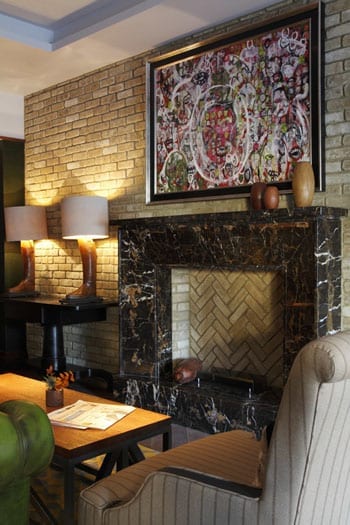
Artwork depicts many political subjects including the eras of Blair and Major
Mayor of London Boris Johnson even makes an appearance
The art collection of the Intercontinental London Westminster has been sourced by a specialist curator named Peter Millard. It is described as capturing “the essence of British political life” and is themed around being “knowing about the way the world works”. Alongside Gerald Scarfe and Martin Rowson cartoons are two works by Agamaria Pasternak. These contain the faces of every current Member of Parliament and in addition montages of the eras of Tony Blair and John Major before him illustrate memories of recent political history. Much thought has plainly gone into this collection and it is indeed appropriate given the setting.
The restaurant’s menu cleverly combines the use of the best quality British produce with the American pit style cooking of Tennessee and the Deep South. Slow cooked meats and wood-grilled steaks are the order of the day and Ingrams’ 12 spice rub is certainly his signature.
To start, we began with sautéed wild mushrooms served with a crispy duck egg on toast (£8). This simple dish was well executed but the true highlight were the Blue Boar ribs that followed (£8/£15). Spicy and not too sweet, these were as far away from what you’d traditionally expect of ribs as Ken Livingstone is from ever owning a Rolls-Royce. The tender, fleshy meat, which is smoked for some 24 hours, was exceptional and I can genuinely state that I’ve never had ribs as good before.
Though the option of a “carpetbag” Hereford fillet steak stuffed with oysters sounded tempting (£27), I opted for a Yorkshire rose T-bone veal steak. I very much enjoyed it and other dishes such as glazed pork belly served with Coleman’s English mustard and honey (£14.50) sounded equally tempting. To accompany the steak, I tried a portion of the smoky bacon baked beans recommended by Miss Sutcliffe and the restaurant manager. The flavor was perfectly balanced and these are well worth trying.
To conclude, the offering includes options very much suited to the political classes. With dishes similar to what might be found in the dining rooms of the Houses of Parliament, diners can try Cambridge cream (£7), vanilla baked pineapple (£7) or sticky toffee pudding (£5). I plumped for a bread and butter pudding served with marmalade ice cream (£5) and found it most satisfactory. All in all, I’d conclude that this was a meal deserving of a mention in anyone’s edition of political dispatches. Jon Ingram is a chef worthy of great accolade and a plot will no doubt ensue to ensure that this restaurant receives the accolades that it truly deserves.
An old bottle of Booth’s Gin is on display in the bar along with a number of other more unusual examples of this spirit
The wine list at the Blue Boar offers a mix suitable for both wealthy lobbyists and those suffering as a result of George Osborne’s latest budget. Wines start at around £26 a bottle but what truly impressed me – and what I shall certainly return for – is the collection of vintage gins. This is a paradise for any gin lover and with Booth’s Gin topping the list, it is plain that much research has gone into this element of the bar’s conception.
Additionally, for those looking for a new place to brunch on a Sunday, the Blue Boar has a “feasting table” each week. Available from 12.30pm to 3pm each week and priced at £45 per adult and £15 per child, the deal includes unlimited Bloody Mary’s and Buck’s Fizz. In addition to what the Blue Boar call a “butcher’s board” featuring ham hocks, venison and smoked chicken, the offering also includes a seafood bar with oysters, prawns and herrings and a whole selection of salads.
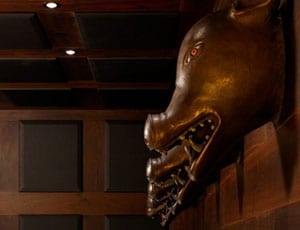
A scary looking boar’s head looks over the political plotting at the Blue Boar
If you are passionate about fine meats, make a beeline for the Blue Boar. Just be sure also to keep an eye out for Bo-Jo under a hog’s head in a hidden corner. It’s probably not as surreal as it sounds.
I first visited the St. Ermin’s Hotel close to Scotland Yard in St James’s in June 2012 for the first Intelligence Book of the Year Awards. Today, I will return there to attend a reception to announce the second winner of this annual prize by judges Andrew Lownie, Dan Mulvenna, Glenmore Trenear-Harvey, Michael Smith and Nigel West.
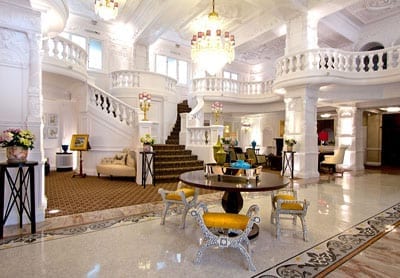
The courtyard entrance to the St. Ermin’s Hotel, 2 Caxton St, London, SW1H 0QWThe grand entrance lobby of the hotel
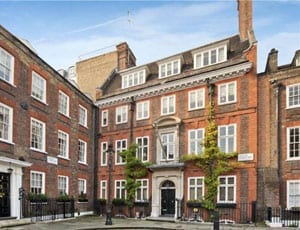
As I reported in my last article on this Victorian property, the St. Ermin’s Hotel’s links with the worlds of politics and espionage are indeed strong. Built in the Queen Anne revival style to the designs of Edwin T. Hall (1851 – 1923) in 1887 and completed in 1889, the horse-shoe shaped building was originally a mansion block prior to being converted to a hotel that opened in 1899 after a major refurbishment by the theatre architect J. P. Briggs (1869 – 1944). Briggs remodeled the public areas and created a spectacular neo-Baroque entrance with balconies, ornate plasterwork and a double staircase.
Due to the building’s proximity to the powerhouses of government, the St. Ermin’s Hotel became a meeting point for officers of the Secret Intelligence Service and, as a result, various traitors and spies. Some worked from offices in the building and amongst them were Kim Philby, Guy Burgess, Laurence Grand and Eric Maschwitz. Others came there to be interviewed and the hotel’s bar, The Caxton Bar, is renowned as having been a noted meeting place for secret intelligence officers.
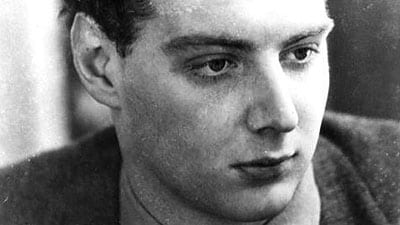
Intelligence officer turned Cambridge Five spy ring member Guy Francis de Moncy Burgess (1911 – 1963)
One of the most notable meetings at the St. Ermin’s Hotel was held in 1940 when Winston Churchill brought together a group to join him in “Setting Europe Ablaze”. These founding members of what was to become the Special Operations Executive (SOE) took over an entire floor of the hotel and carried out covert operations from there throughout the Second World War. MI6 were stationed two floors above and then in the 1950s, the hotel’s bar was the meeting point of Guy Burgess and his Soviet counterpoint when he passed intelligence to the USSR.
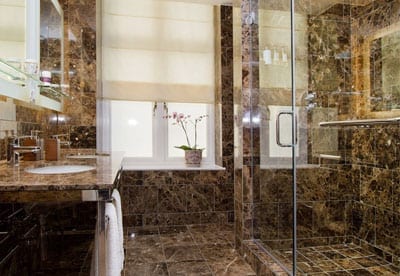
A typical bedroomA luxuriously appointed shower room
Following on from a £30 million refurbishment to designs by Dayna Lee of Los Angeles-based Powerstrip Studio, the 331 rooms and suites at the St. Ermin’s Hotel are now comfortable, well appointed and decorated in a contemporary style. The two that I inspected, whilst perhaps lacking the charm of a boutique hotel such as Blakes, are absolutely ideal for a business traveller or tourist given the location close to the Houses of Parliament and Westminster Abbey. They are well worthy of their four star rating and I slept well given how centrally located the hotel is.
The Caxton GrillThe Caxton Bar
The Caxton Grill, the hotel’s restaurant, continues the traditions of the St. Ermin’s in that it plainly is the haunt of politicians and policeman. Whilst dining there, I met an officer from Scotland Yard who was involved with Operation Yewtree. I can report that, though I had a most fascinating conversation with him about Savile, Davidson and Clifford, I did not leave with any state secrets that I could share here. The restaurant also featured on a recent episode of the BBC One’s MasterChef with Gregg Wallace and John Torode and frankly one could also imagine Hercule Poirot having taken rather a liking to it also. It is modern in style and features wooden flooring, bright décor and snazzy seating.
The restaurant features a menu that focuses on a Josper grill. This £17,000 hybrid barbeque–oven, which I saw so cleverly used by Chris Golding at Beauchamp Place’s Galoupet, allows a chef to cook, barbeque and roast at the same time over charcoal embers at temperatures of upto 600 degrees. Filled with Kentish hardwood every morning, the Josper recirculates smoke via adjustable draughts and, for example, as a result, it takes only about a minute to char infuse lamb and thick-cut beef sirloins. The real thrill of it, though, is that the Josper process ensures that none of the flavor or natural moistness of whatever is cooked in it is lost.
I began with a salad of soured plums, gorgonzola and blackberries (£8) that was colourful and most welcome on a grim winter’s day. My companion tried a roast celeriac and truffle veloute (£7) that though perfectly adequate, did not truly excite.
I continued with a half Temple Farm chicken (£20) that was cooked on the Josper Grill. Well presented and served with a green peppercorn sauce and some garlic and parsley French fries (£4), the cooking process was clearly illustrated. The meat was tender and I must say it was one of the best pieces of chicken I have eaten in years. My companion, an Icelandic financial titan, maxed out on a 300g vintage dry aged sirloin steak (£30) served with béarnaise sauce. Again, cooked to perfection, he was impressed.
Though more than amply fed, we finished by sharing a chocolate fondant (£7). This simple dish melted in the mouth and the accompanying ice cream was just superb.
Wines in the restaurant start at a very reasonable £19.95 for the house white and rise upwards to the £300 a bottle range. A Chablis is priced at £41 and a Gavi di Gavi at £33. The restaurant’s bar, the Caxton Bar, offers a huge array of cocktails but I must say I was rather sad that none of them were spy themed.
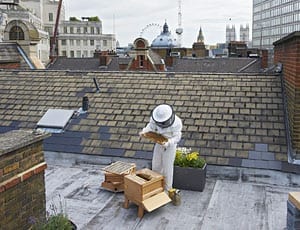
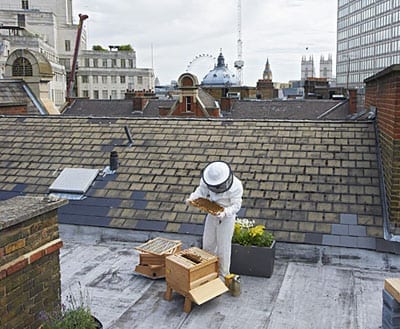
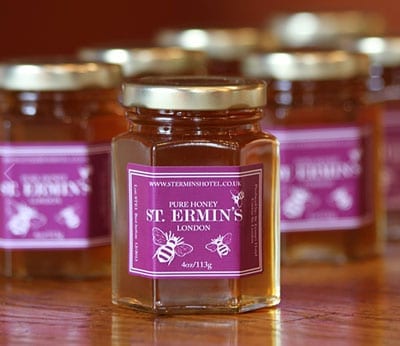
The hotel’s rooftop is home to 200,000 Buckfast beesThe honey they produce is truly delicious
The most quirky thing about the St. Ermin’s Hotel is that it has its own colony of bees. “Bees… In Wesminster?”, I hear you cry. Yes, indeed, 200,000 of them prosper on the roof of the hotel and produce the most delicious honey that is available to guests. From three hives, the Buckfast bees, described as being “good tempered”, have fantastic access to London’s parks and travel within a three mile radius collecting pollen and nectar. “London”, states the hotel’s website, is “a perfect environment for bees as… cities actually trap heat, which means they can start foraging earlier in the year than rural bees and continue later into the autumn”. Who’d have thought it? Where once lived spies, now prospers a colony of bees.
The story of “fallen tycoon” Brian O’Donnell, the differences between bankruptcy in the UK and Ireland and an £11 million mansion
In these straightened times, the media in general and the Daily Mail in particular quickly latch on to stories about benefit scroungers living in luxury homes. They’re less quick, however, with the exception of the case of Grant Bovey (“Mr Anthea Turner”), to make reference to stories of bankrupt individuals remaining in multi-million pound mansions.
Brian O’Donnell with his wife Dr Mary “Pat” Patricia O’Donnell
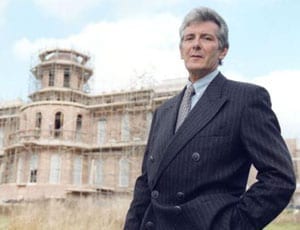
A most newsworthy example, though, has to be that of Irish property investor Brian O’Donnell and his psychiatrist wife Dr Mary Patricia “Pat” O’Donnell. Mr O’Donnell, who bought the Sanctuary Buildings in London for £170 million and paid $172.5 million for a 199,000 square foot property on Pennsylvania Avenue in Washington in 2008, started his career as a solicitor and eventually founded his own firm, Brian O’Donnell & Partners, in 1999. In time, he and his wife diversified into property investment and at the height of his success, Mr O’Donnell was described as “the Celtic Tiger poster child”. With the recession, however, came problems and by 2011, they owed Morgan Stanley €457 million, Aareal €235 million, and the Bank of Ireland circa €75 million.
Matthew Steeples delves into the history of Albany, Piccadilly and discovers an affordable way of living there
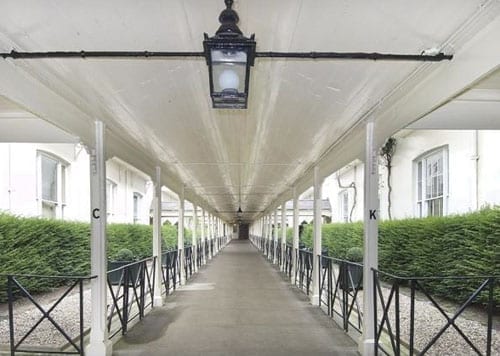
Albany, off Piccadilly in Mayfair, was most probably London’s first apartment block and it’s certainly the city’s most exclusive. It may be next to the Royal Academy and opposite Fortnum & Mason but surprisingly few have even heard of it.
Considering its location, Albany, which some make the mistake of referring to as “The Albany,” is an amazingly quiet oasis of peace and tranquility but, equally, it is a place of intrigue and drama. Residents, or “proprietors,” as they prefer to be known, of the 69 “sets” are particular about the “the” part of the name as they’d rather their residence not be confused with a public house and they are even more protective of their privacy. A porters’ lodge guards the entrance to the building and it is staffed mostly by ex-servicemen, who, until the early 2000s, had to wear top hats and tailcoats. Those allowed to pass enter a rarefied world frequented by what the Irish novelist Marmion Savage (1803 – 1872) identified as “incurable oddities” and “superannuated fops” in The Bachelor of Albany.
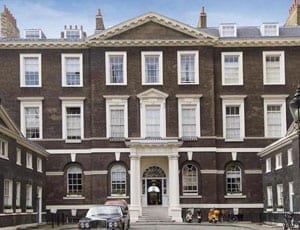
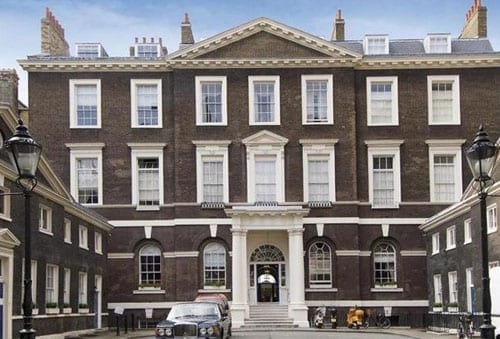
The front courtyard and façade of Albany, Piccadilly, Mayfair, London, W1J 0ALThe rope-walk connecting the various sets of Albany has been traversed by some of the greatest names in history
Built by Sir William Chambers (1723 – 1796), who also designed Somerset House and the pagoda at Kew, between 1770 and 1774 for 1st Viscount Melbourne (1745 – 1828), Albany was originally known as Melbourne House and conceived as a three-storey mansion, seven bays wide with a pair of service wings flanking a front courtyard. From 1791 to 1802, the property was occupied by George III’s son, Prince Frederick, Duke of York and Albany (1763 – 1827), but after he left, the renowned architect Henry Holland (1745 – 1806) sub-divided the existing house and added two parallel sets of buildings running the length of the garden to create 69 “bachelor apartments” which he named “sets.”
The “roll call” of residents since could easily fill our very own pages thrice over. They number royalty, politicians, artists, playwrights, academics and philosophers and here is a brief selection:
– Anthony Armstong-Jones, later 1st Earl of Snowdon
– Sir Thomas Beecham
– Sir Isaiah Berlin
– Lord Byron
– George Canning
– Sir Kenneth Clark
– Baroness Pauline de Rothschild
– William Ewart Gladstone
– Sir Edward Heath
– David Hicks
– Aldous Huxley
– Sir Simon Jenkins
– Rupert Lycett Green
– Malcolm Muggeridge
– Sir Harold Nicholson
– J. B. Priestley
– Sir Terence Rattigan
– Roger Scruton
– Baroness Sharples
– W. Somerset Maugham
– Terence Stamp
– Sir Denis and Lady Thatcher
– Sir Herbert Beerbohm Tree
Each had to pass the vetting of a committee of trustees of this Grade I listed building. That committee forbids children under 14, pets, musical instruments and commercial activities and each approved resident has undoubtedly added to the history of this den dominated by a central walkway named the “rope-walk.” Incidentally, an example of a curious quirk at Albany is that no resident is allowed to speak to another on this walkway. If they do, a fine is incurred. Albany, indeed, is rather like a college in its systems of rules, regulations, order and hierarchy.
For several centuries, women were not even allowed to cross the threshold and one legendary tale tells of Lady Caroline Lamb (1785 – 1828), disguised as a page boy, stealing into Lord Byron’s (1788 – 1824) set in 1815 to leave a note: “Remember me, Byron.” He replied with a simple verse:
Remember thee, aye, doubt it not:
Thy husband too shall think of thee.
By neither shalt thou be forgot —
Thou false to him, thou fiend to me.
The strict and formal structure that controls Albany and ensured its maintenance has succeeded in the main because 34 of the 69 sets are owned by Peterhouse College, Cambridge. They and the other owners are highly particular in whom they lease to and on one occasion on hearing of an “unsuitable tenant,” the secretary of the trustees is reported to have shouted:
“He’s a foreigner. Don’t like him. Don’t trust him.”
Needless to say, that application didn’t progress and nor did one from a physiotherapist who planned to operate from the building. Bone bashing in Albany just wouldn’t do.
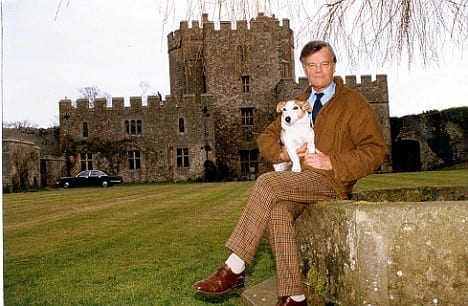
The Rt. Hon. Alan Clark MP (1928 – 1999) in the grounds of his main home, Saltwood Castle, near Hythe in Kent in 1993
A horsewhip, however, nearly crossed the threshold of set B5 in 1994, as it was here that the late Alan Clark MP (1928 – 1999) lived. The affable philanderer seduced the wife and both daughters of a certain South African named Judge Harkess and the wronged man stated he would “have horse-whipped Clark if he had known how comprehensively he had violated his honour.” B5, itself, was described as having the feel of “the straitened quarter of an Edwardian bachelor on his uppers” and the dotty, English attitude of the residents is best summed up by the reaction of Clark’s neighbour when he accidentally flooded their basement. When asked what he could do to make amends, their answer was quite simple: “Go and lie down in Piccadilly and wait for a double-decker bus.”
The dandy and journalist John Morgan (1959 – 2000) typified social change at Albany in the 20th century just as much as he himself redefined etiquette and manners at Debrett’s and The Times. Of “humble origins,” Morgan was brought up in a “modest” bungalow in St Madoes, Perth, Scotland but is credited with persuading William Hague to remove his baseball cap whilst Conservative leader and offering advice ranging from “how to eat a banana” to “how best to tell friends that the partner you would like to bring to their wedding will be of the same sex as you.”
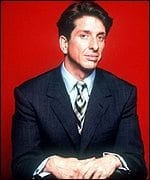
Dandy and etiquette expert John Morgan (1959 – 2000)
For the bachelor and GQ style director, living in Albany was symbolic of his own personal social elevation but he did not disown his past. This modern day Beau Brummell was a man of social contradictions who cashed his cheques at Claridge’s but was a member of the National Union of Journalists. He was a Tory but still regularly attended chapel meetings as he had done in his youth. Here was a man of paradoxes who seemed unable to come to terms with the fact that he was a homosexual.
Morgan, an asthma sufferer, fell to his death from a fourth floor window on 9th July 2000. He was found in just a white shirt in a basement below a window whose sill was strangely undisturbed. The coroner left an open verdict with a suspicion of suicide and it was widely reported that police found 60 made-to-measure Savile row suits, 300 monogrammed shirts and 90 pairs of shoes in the etiquette expert’s small set. Mystery shrouds the story of his tragic demise to this day but Johnny Morgan will forever be remembered as an arbiter of both good taste and behaviour.
Whilst Morgan represented continuation of the trend of bachelors living in Albany, change also came in the 20th century when the building’s committee removed the restriction that allowed only bachelors to be resident. With that females were allowed in and amongst them Fleur Fenton Cowles (1908 – 2009) was one of the most fascinating.
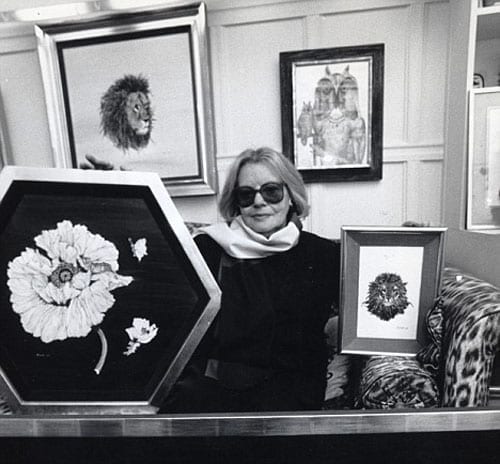
Fleur Fenton Cowles (1908 – 2009) in her set at Albany with some of her paintings and one by Salvador Dali
This writer and artist occupied five sets knocked into one with her fourth husband, timber merchant Tom Montague Meyer, and according to the Daily Mail’s Geoffrey Levy, hosted “elite soirees of the powerful and famous.” Levy recounts them at length but here is a flavour:
“On a Wednesday evening, a typical dinner party… would include Foreign Secretary Selwyn Lloyd, Labour leader Hugh Gaitskell, entertainer Danny Kaye and film star Douglas Fairbanks Jr. The Queen Mother regularly came to tea and was once joined by Pavarotti who sang Happy Birthday for the royal guest. ‘I don’t want her to die,’ said Fleur. ‘I couldn’t bear to think she doesn’t live just down the street.’ ”
Fenton Cowles, founder of the ill-fated Flair magazine and a “woman who knew everyone,” loved Albany and an exact replica of her “windowless, milk-yellow” study there has even been recreated at the University of Texas.
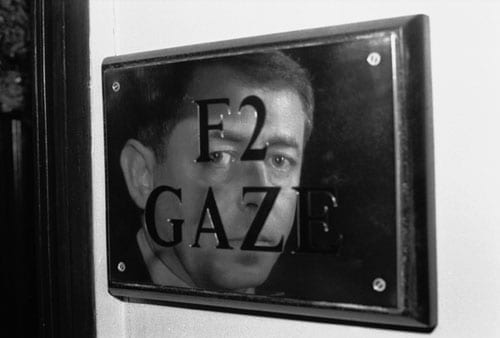
Another known for hosting extravagant bashes in Albany was my late friend, the Russian icon dealer John Gaze (1947 – 2011). Gaze had, as a boy, asked his father about the building when he passed it as a child and immediately declared he would live there one day. He took F2, the former set of Edward Heath that overlooked Savile Row to the rear, in the mid 1990s as he craved the safety that the building offered after having been kidnapped at gunpoint by an Oxford graduate conman named Sacheverell de Houghton in April 1991 from his then home in Fournier Street, E1. He made the most of his tenancy.
Russian icon dealer John Gaze (1947 – 2011) reflected in the brass plaque outside his Albany set, F2. It was formerly occupied by Sir Edward Heath.
Gaze’s parties included a fundraiser for people with AIDS hosted by a drag queen. This sparked fury with certain other residents and coverage in the Daily Telegraph and another incident there involved him encountering Alan Clark on the ropewalk carrying a portrait of Lenin. “Where the fuck are you taking that?” Clark supposedly bellowed but was “reassured” when he was told it was “destined for a less salubrious address in Whitechapel.” John Gaze remained at Albany for several years but, like a number of others I know, was forced out by ever rising rents and moved first to Chelsea and then Ennismore Gardens, Knightsbridge. He always remembered his time at Albany fondly and as a bon vivant, he truly belonged there.
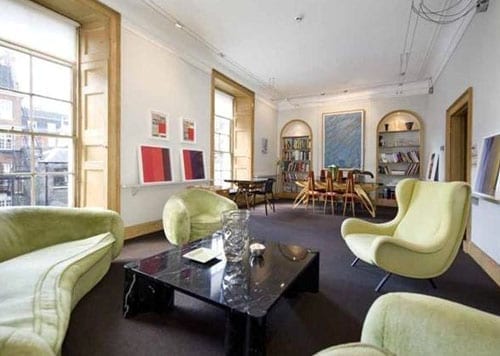
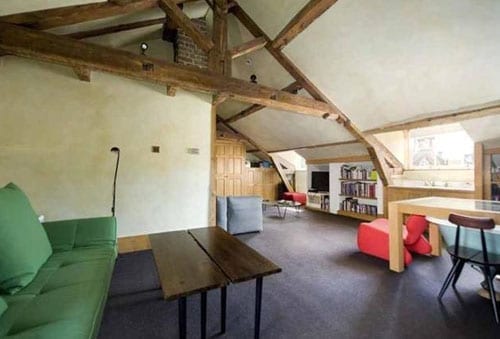
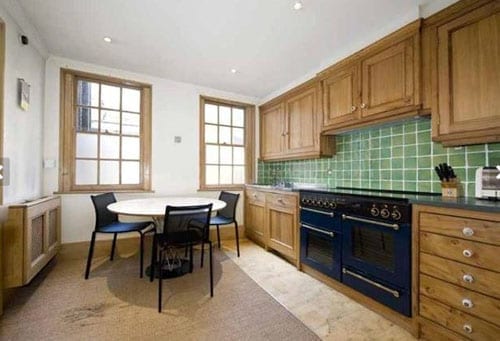
The main reception room in a £1,400 a week set currently available in AlbanyAn attic room in the set that could be used as a second reception room or second bedroomThe kitchen is lacking in character but offers ample space for informal dining
Contrary to what you’d expect, living in Albany is not quite as expensive as one might think. A 2-bedroomed 1,970 square foot set is currently available through Knight Frank for £1,400 a week: a figure that seems quite reasonable given the location, history and size of this property. Available on a minimum 8-year rental term, it includes a formal reception room, a dining kitchen, 2 bedrooms and 2 bathrooms.
This £300 per week set, D2, consists of just one roomThe communal bathroom D2 shares with other sets is basic but clean
For those looking for something cheaper, Savills offer D2 Albany at £300 per week. This set consists of a 221 square foot third floor attic room with access to a communal bathroom and the agents suggest that it: “would make an ideal reading or writing room or an occasional bedroom for a pied-a-terre.” It’s effectively a posh form of tenement but what a way to impress your peers and subordinates.
Damon and Sandra de László in their “duplex” in Albany
Those renting either of these sets would find the likes of the industrialist Damon de László, a descendant of the Hungarian painter Philip Alexius de László (1869 – 1937), as their neighbour. The couple occupy Lord Byron’s former set, A2, and have, on occasions, opened it for a charity dinner with Matthew Parris at £1,000 a ticket as well and for members of The Portrait Institute to view their collection of de László’s works.
Professor Philip C. Bobbitt in his grand freehold set
Another present day resident is a man Henry Kissinger calls “the outstanding philosopher of our times,” Professor Philip C. Bobbitt. This Texan lawyer is a nephew of Lyndon B. Johnson and the author of Terror and Consent, which Tony Blair describes as “required reading for political leaders.” Bobbitt owns an impressive flying freehold set that is described as having a masculine style of décor and a “kitchen he has designed to look like a bar.” In an interview for TheIndependent he states that he finds Albany: “a propitious place to work.”
Though governments and bankers come and go, behind this quintessentially English façade, order and disorder have always been maintained. The wildcards of this hidden haven have a knack for living by the doctrine “to live at Albany is to live in history” and indeed they make the most of that. Those who are lucky enough to be let in, do, indeed, truly find themselves in the “Paradise of Piccadilly.”
Matthew Steeples suggests that Nadine Dorries is perhaps right to head for the jungle
Don’t get me wrong: I think Nadine Dorries is an utter loon. For those who haven’t heard of her, she’s the MP for Mid-Bedfordshire and a bit of a mouthpiece. Her entry on our roll call attracted over 8,000 hits yesterday and that alone is clear indication that she, unlike the majority of dimwits that occupy the Houses of Parliament, is an MP who gets noticed.
Nadine Dorries heads for the jungle
“Gets noticed,” I hear you splutter. Yes, she’s someone who loves the limelight and doesn’t care whom she offends. She’s best known for having described David Cameron and George Osborne as a pair of “arrogant posh boys” who “don’t know the price of milk” and is regularly derided for her “maverick” ways. Here is a woman who gets compared to Ann Widdecombe and Edwina Currie and one that hasn’t let her party tell her what to do.
In the House of Commons she’s achieved little apart from becoming a figure of fun. She’s commonly known as “Mad Nad” and the media reel her out whenever they fancy a bit of sport. Dorries can be relied upon to produce lines such as: “[I’m] not an MP for any other reason other than because God wants me to be” and these indeed are classic examples of her idiocy.
On Tuesday, it was announced that Ms. Dorries, on full parliamentary pay, has headed off to Australia to participate in the ITV1 television series I’m a Celebrity… Get Me Out of Here! For this, she’s pocketing a fee of circa £40,000 and will, without doubt, rake in a lot more in appearance fees and for interviews on her return. MPs and the media derided this move but I congratulate her.
Martha Payne
I cannot disagree with those who state that she’d be fired if she were in a normal job and just disappeared for a month, but “Mad Nad” has realised that the Conservative Party is not the place for her. She has plainly come to the conclusion that the House of Commons is nothing other than a chamber full of hot air and that to get things changed, you follow the example of the schoolgirl Martha Payne and use technology and the media to the max. With NeverSeconds, this fearless 9-year old took on the might of a council and improved school dinners. In the meantime, MPs haven’t even been able to come up with an appropriate solution to restore the Houses of Parliament, let alone solve a nation in the midst of economic meltdown.
Frankly, we have too many MPs in this country and they don’t work hard enough. In total, there are 650 and this corresponds to one for every 68,000 parliamentary electors. It would be better to halve this number and double the pay of the remainder. We’d get better quality people applying to be our representatives and people like “Mad Nad” would be a thing of the past. Nadine Dorries isn’t an A-list “celebrity” but she should most certainly stick to the jungle.
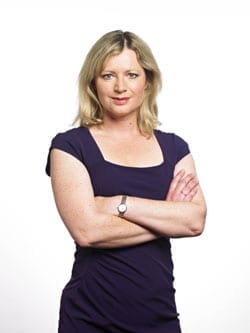
We’ve got nothing against this respected journalist and writer, but when we heard that the fashion mag Grazia had a “Political Editor at Large” we thought it was April Fool’s Day. Hinsliff also blogs at usedtobesomebody.blogspot.com and states that she resigned as political editor of The Observer to go “in search of a life.” She’s based in Oxfordshire and published her first book, Half A Wife, in 2012. In it, she advises on “how to balance a happy, healthy family life with the demands and rewards of work.” There are plenty out there who ought to pay attention.
Charles Mitford Cust asks: “Do the clocks really need to go back?”
Yesterday, once again, the clocks went back and now we are officially in winter. As is always the case on this sad annual occasion, I am left asking myself why we have do something so apparently illogical and what are the origins of this extraordinary ritual.
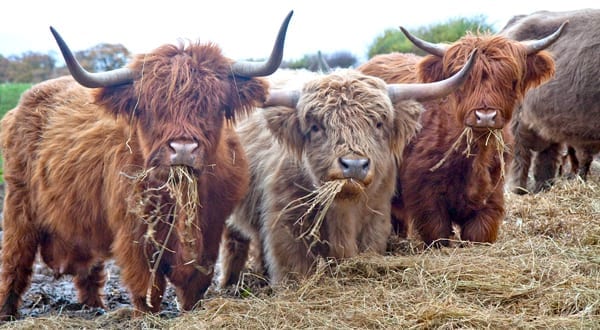
These “hairy beasties” definitely govern the clock rather than being governed by it
I used to think it all started in World War Two but, in fact, having done some research, it transpires that we very sensibly did the exact opposite during the war years. Between 1940 and 1945 and also in 1947, we actually switched to “British Double Summer Time” (BDST). Why? We did so to save precious fuel as it was in limited supply. That should strike a chord today, don’t you think?
You bet it should. Supporters of BDST point out that 500,000 tonnes of CO2 would be saved this year if instead of putting the clocks back yesterday, we’d left them alone and then put them forward one further hour in the spring, thereby achieving British Double Summer Time (BDST). Half a million tonnes of CO2… Wow! That is the equivalent of permanently removing 185,000 cars from the road. Hang on, aren’t we meant to be concerned about the environment these days or am I missing something?
Where are the eco-warriors? Surely they should be screaming from the rooftops about CO2 savings like this. This makes all their bleating about wind turbines and solar panels seem stupid. Unlike these alternative energy sources, which we all know are only viable thanks to taxpayer subsidies, putting the clocks forward is free, and you can’t get anything greener than a free CO2 reduction. Yet strangely there is barely a whisper from the normally most vocal section of the green orchestra. Now, I am no conspiracy theorist, but I cannot help but feel that this is highly odd if not darn right suspicious.
There have always been myths concerning BDST, including strong if vague references to the requirements of farming being the reason for us being plunged into darkness earlier than necessary. This is something that, as a countryman, I have always found puzzling.
Farmers do not rely on the time indicated on their watches to go about their business. They do what their ancestors have done for thousands of years: they operate from first light to last light. The time that happens to be recorded on a watch face is all but irrelevant to them because unlike 90 per cent of the population, they do not have to catch trains or commute to work. What’s more, cows don’t wear watches, they just know when they want to be milked and they don’t care what Mr Rolex has to say about it.
Interestingly though, even this well used excuse seems to have been run off the road. In March 2010, in a survey of their membership, the National Farmers Union found that most respondent farmers were neutral about BDST and actually the only strong representation was from members supporting longer daylight in winter.
Another long-term excuse is that children in the north of Britain would be in more danger walking to school in the mornings if it were dark. “Walking to school?” When was the last time a kid walked to school in this country? 1951? Seriously though, with traffic density as it is today, no responsible parent would let their child walk to school even if they could do so. As Lord Archer has pointed out, this is outdated nonsense and therefore not a viable excuse for rejecting BDST.
The Royal Society for the Prevention of Accidents (RoSPA), the RAC and the AA have campaigned for years to reintroduce BDST as they argue that police accident records clearly indicate that more accidents occur in the dark evenings during rush hour when tired commuters are returning from work than when they are fresh in the mornings. According to their research, they estimate 600 lives per year could be saved. 600 lives: that’s the equivalent of a bloody massacre. The government moved heaven and earth to ban competitive handgun target shooting when 30 people were killed but have routinely ignored 600 lives per yearfor decades? What are these politicians doing?
A Conservative Member of Parliament, Rebecca Harris, put forward the Daylight Saving Bill 2010-12. It was debated in November 2011 and January 2012, but despite being supported by “Call Me Dave” himself, it was filibustered out of Parliament by largely Scottish based members who argued it would disadvantage Scotland.
These politicians used this argument despite a 2010 survey of 3,000 Scots indicating that they were actually in favour of BDST. I guess Scots like to save money on their heating bills too: oh, there’s a surprise. Anyway, the efforts of these objectors were enough to ensure that the bill’s time was used up and it will now proceed no further.
What? That’s it? 500,000 tonnes of CO2 and 600 lives a year swept under the carpet because a couple of whingeing Scottish MPs are out of touch with their the views of their own constituents? Does that sound right to you? Even if they didn’t vote for BDST, which with fuel prices the way they are, being canny Scots, they almost certainly would, why can’t Scotland have it’s own time zone? Many of them want independence, so here’s a good start. As an aside, evidence also shows that if Scots did adopt BDST, their suicide rate would drop dramatically as the statistics show this is clearly linked to long dark winter nights.
Either way, we have reached a point where political correctness simply has to be outweighed by common sense. You cannot let 85 per cent of the UK population suffer for the sake of the other 15 per cent. What of the adverse affect this is having on GNP at a time when the economy is struggling so much?
The thing about this clock moving business is that the more you search for answers, the more questions you are left asking. One is forced to conclude that it is either a deeply sinister conspiracy involving multi-billion pound energy companies who would rather we carried on paying for an extra half a million tonnes of unnecessary smog, or simply an old fashioned British farce of monstrous proportions.
All in all, I’m left rather perplexed. What’s your view? Isn’t it time that something changed?
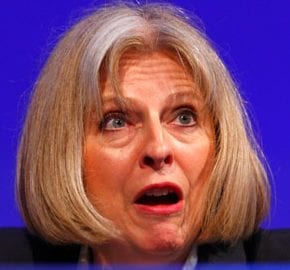
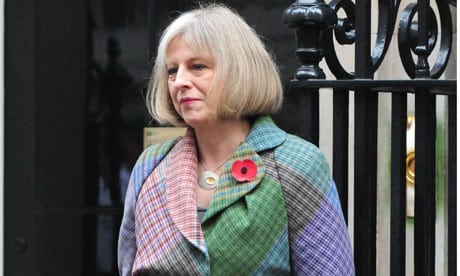
She called the Conservative Party the “Nasty Party” in a speech in 2002 and now Theresa May makes for a pretty nasty Prime Minister herself. Gaffe prone May failed to appeal to the police in May 2012 when they heckled her at the Police Federation conference and was too busy hosting a party with Lady Meyer later that month to deal with problems at Britain’s borders. Ken Clarke once described her as “childlike”, Joan Collins has made a fool of her on Twitter and it is for dressing like Worzel Gummidge that this hectoring vicar’s daughter is known best. Please, someone, just shoe her out.
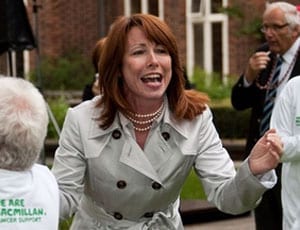
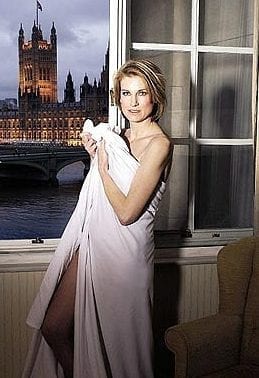
Opinionated Tweeter who happens to be married to the Speaker of the Commons. She’s hung out with gypsies and camped in the Celebrity Big Brother house. She particularly loves baiting Tories and being photographed wrapped in nothing other than a towel. Most people, thankfully, just ignore her.