 The tattooed daughter of Senator John McCain once suggested that “Republicans are scared shitless about the future” and voted for John Kerry. (more…)
Tag: GQ
-

Meghan McCain
-

Tim Tebow
 This “virtuous” homeschooled American football player has played for both the New York Jets and the Denver Broncos. As well known for his Christian faith and kneeling on one knee in prayer during games, Tebow is widely tipped for a career in television. After a lengthy legal battle, the quarterback even managed to trademark the term “Tebowing” in October 2012 and his philanthropic efforts continue to earn him great respect. Certain British footballers ought to pay heed.
 -

Justin Timberlake
 This child star has morphed via a stint on the Disney Channel and in boy band ‘N Sync into an internationally known singer-songwriter, actor, record producer, dancer and businessman. (more…)
 -
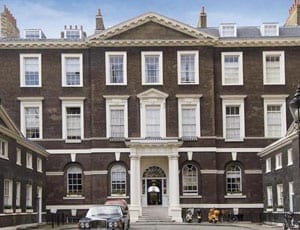
The badgers of Albany
Matthew Steeples delves into the history of Albany, Piccadilly and discovers an affordable way of living there
Albany, off Piccadilly in Mayfair, was most probably London’s first apartment block and it’s certainly the city’s most exclusive. It may be next to the Royal Academy and opposite Fortnum & Mason but surprisingly few have even heard of it.
Considering its location, Albany, which some make the mistake of referring to as “The Albany,” is an amazingly quiet oasis of peace and tranquility but, equally, it is a place of intrigue and drama. Residents, or “proprietors,” as they prefer to be known, of the 69 “sets” are particular about the “the” part of the name as they’d rather their residence not be confused with a public house and they are even more protective of their privacy. A porters’ lodge guards the entrance to the building and it is staffed mostly by ex-servicemen, who, until the early 2000s, had to wear top hats and tailcoats. Those allowed to pass enter a rarefied world frequented by what the Irish novelist Marmion Savage (1803 – 1872) identified as “incurable oddities” and “superannuated fops” in The Bachelor of Albany.
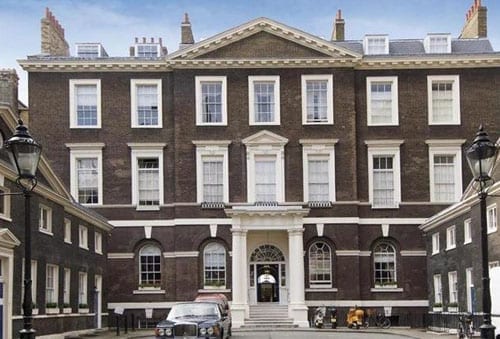
The front courtyard and façade of Albany, Piccadilly, Mayfair, London, W1J 0AL 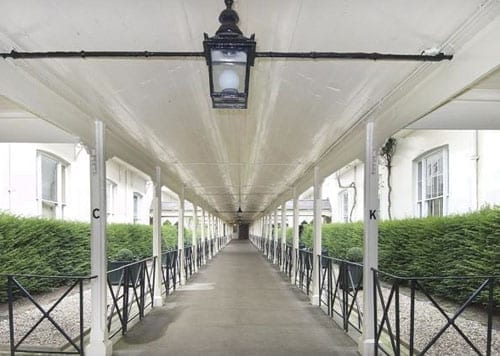
The rope-walk connecting the various sets of Albany has been traversed by some of the greatest names in history Built by Sir William Chambers (1723 – 1796), who also designed Somerset House and the pagoda at Kew, between 1770 and 1774 for 1st Viscount Melbourne (1745 – 1828), Albany was originally known as Melbourne House and conceived as a three-storey mansion, seven bays wide with a pair of service wings flanking a front courtyard. From 1791 to 1802, the property was occupied by George III’s son, Prince Frederick, Duke of York and Albany (1763 – 1827), but after he left, the renowned architect Henry Holland (1745 – 1806) sub-divided the existing house and added two parallel sets of buildings running the length of the garden to create 69 “bachelor apartments” which he named “sets.”
The “roll call” of residents since could easily fill our very own pages thrice over. They number royalty, politicians, artists, playwrights, academics and philosophers and here is a brief selection:
– Anthony Armstong-Jones, later 1st Earl of Snowdon
– Sir Thomas Beecham
– Sir Isaiah Berlin
– Lord Byron
– George Canning
– Sir Kenneth Clark
– Baroness Pauline de Rothschild
– William Ewart Gladstone
– Sir Edward Heath
– David Hicks
– Aldous Huxley
– Sir Simon Jenkins
– Rupert Lycett Green
– Malcolm Muggeridge
– Sir Harold Nicholson
– J. B. Priestley
– Sir Terence Rattigan
– Roger Scruton
– Baroness Sharples
– W. Somerset Maugham
– Terence Stamp
– Sir Denis and Lady Thatcher
– Sir Herbert Beerbohm Tree
Each had to pass the vetting of a committee of trustees of this Grade I listed building. That committee forbids children under 14, pets, musical instruments and commercial activities and each approved resident has undoubtedly added to the history of this den dominated by a central walkway named the “rope-walk.” Incidentally, an example of a curious quirk at Albany is that no resident is allowed to speak to another on this walkway. If they do, a fine is incurred. Albany, indeed, is rather like a college in its systems of rules, regulations, order and hierarchy.
For several centuries, women were not even allowed to cross the threshold and one legendary tale tells of Lady Caroline Lamb (1785 – 1828), disguised as a page boy, stealing into Lord Byron’s (1788 – 1824) set in 1815 to leave a note: “Remember me, Byron.” He replied with a simple verse:
Remember thee, aye, doubt it not:
Thy husband too shall think of thee.
By neither shalt thou be forgot —
Thou false to him, thou fiend to me.
The strict and formal structure that controls Albany and ensured its maintenance has succeeded in the main because 34 of the 69 sets are owned by Peterhouse College, Cambridge. They and the other owners are highly particular in whom they lease to and on one occasion on hearing of an “unsuitable tenant,” the secretary of the trustees is reported to have shouted:
“He’s a foreigner. Don’t like him. Don’t trust him.”
Needless to say, that application didn’t progress and nor did one from a physiotherapist who planned to operate from the building. Bone bashing in Albany just wouldn’t do.
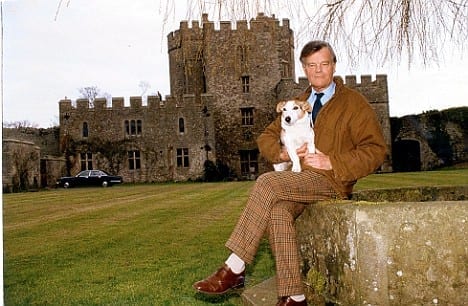
The Rt. Hon. Alan Clark MP (1928 – 1999) in the grounds of his main home, Saltwood Castle, near Hythe in Kent in 1993 A horsewhip, however, nearly crossed the threshold of set B5 in 1994, as it was here that the late Alan Clark MP (1928 – 1999) lived. The affable philanderer seduced the wife and both daughters of a certain South African named Judge Harkess and the wronged man stated he would “have horse-whipped Clark if he had known how comprehensively he had violated his honour.” B5, itself, was described as having the feel of “the straitened quarter of an Edwardian bachelor on his uppers” and the dotty, English attitude of the residents is best summed up by the reaction of Clark’s neighbour when he accidentally flooded their basement. When asked what he could do to make amends, their answer was quite simple: “Go and lie down in Piccadilly and wait for a double-decker bus.”
The dandy and journalist John Morgan (1959 – 2000) typified social change at Albany in the 20th century just as much as he himself redefined etiquette and manners at Debrett’s and The Times. Of “humble origins,” Morgan was brought up in a “modest” bungalow in St Madoes, Perth, Scotland but is credited with persuading William Hague to remove his baseball cap whilst Conservative leader and offering advice ranging from “how to eat a banana” to “how best to tell friends that the partner you would like to bring to their wedding will be of the same sex as you.”
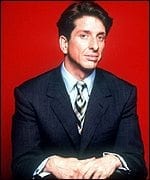
Dandy and etiquette expert John Morgan (1959 – 2000) For the bachelor and GQ style director, living in Albany was symbolic of his own personal social elevation but he did not disown his past. This modern day Beau Brummell was a man of social contradictions who cashed his cheques at Claridge’s but was a member of the National Union of Journalists. He was a Tory but still regularly attended chapel meetings as he had done in his youth. Here was a man of paradoxes who seemed unable to come to terms with the fact that he was a homosexual.
Morgan, an asthma sufferer, fell to his death from a fourth floor window on 9th July 2000. He was found in just a white shirt in a basement below a window whose sill was strangely undisturbed. The coroner left an open verdict with a suspicion of suicide and it was widely reported that police found 60 made-to-measure Savile row suits, 300 monogrammed shirts and 90 pairs of shoes in the etiquette expert’s small set. Mystery shrouds the story of his tragic demise to this day but Johnny Morgan will forever be remembered as an arbiter of both good taste and behaviour.
Whilst Morgan represented continuation of the trend of bachelors living in Albany, change also came in the 20th century when the building’s committee removed the restriction that allowed only bachelors to be resident. With that females were allowed in and amongst them Fleur Fenton Cowles (1908 – 2009) was one of the most fascinating.
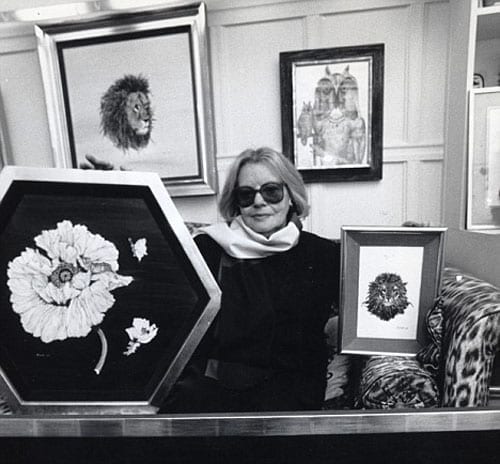
Fleur Fenton Cowles (1908 – 2009) in her set at Albany with some of her paintings and one by Salvador Dali This writer and artist occupied five sets knocked into one with her fourth husband, timber merchant Tom Montague Meyer, and according to the Daily Mail’s Geoffrey Levy, hosted “elite soirees of the powerful and famous.” Levy recounts them at length but here is a flavour:
“On a Wednesday evening, a typical dinner party… would include Foreign Secretary Selwyn Lloyd, Labour leader Hugh Gaitskell, entertainer Danny Kaye and film star Douglas Fairbanks Jr. The Queen Mother regularly came to tea and was once joined by Pavarotti who sang Happy Birthday for the royal guest. ‘I don’t want her to die,’ said Fleur. ‘I couldn’t bear to think she doesn’t live just down the street.’ ”
Fenton Cowles, founder of the ill-fated Flair magazine and a “woman who knew everyone,” loved Albany and an exact replica of her “windowless, milk-yellow” study there has even been recreated at the University of Texas.
Another known for hosting extravagant bashes in Albany was my late friend, the Russian icon dealer John Gaze (1947 – 2011). Gaze had, as a boy, asked his father about the building when he passed it as a child and immediately declared he would live there one day. He took F2, the former set of Edward Heath that overlooked Savile Row to the rear, in the mid 1990s as he craved the safety that the building offered after having been kidnapped at gunpoint by an Oxford graduate conman named Sacheverell de Houghton in April 1991 from his then home in Fournier Street, E1. He made the most of his tenancy.
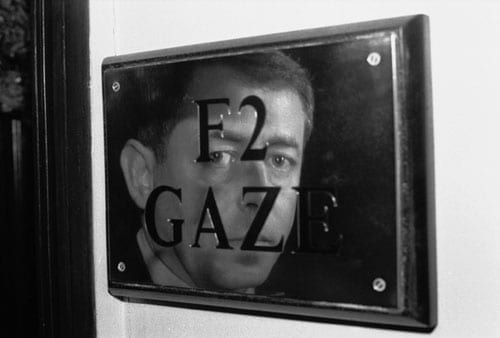
Russian icon dealer John Gaze (1947 – 2011) reflected in the brass plaque outside his Albany set, F2. It was formerly occupied by Sir Edward Heath. Gaze’s parties included a fundraiser for people with AIDS hosted by a drag queen. This sparked fury with certain other residents and coverage in the Daily Telegraph and another incident there involved him encountering Alan Clark on the ropewalk carrying a portrait of Lenin. “Where the fuck are you taking that?” Clark supposedly bellowed but was “reassured” when he was told it was “destined for a less salubrious address in Whitechapel.” John Gaze remained at Albany for several years but, like a number of others I know, was forced out by ever rising rents and moved first to Chelsea and then Ennismore Gardens, Knightsbridge. He always remembered his time at Albany fondly and as a bon vivant, he truly belonged there.
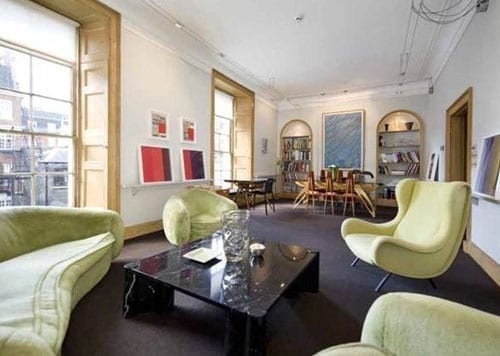
The main reception room in a £1,400 a week set currently available in Albany 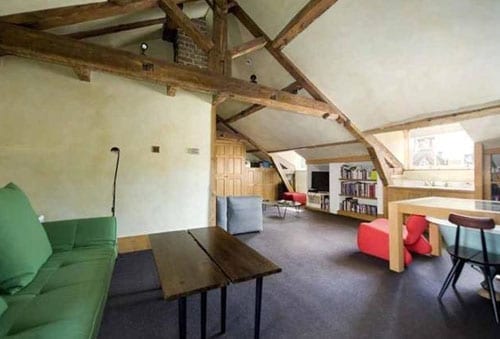
An attic room in the set that could be used as a second reception room or second bedroom 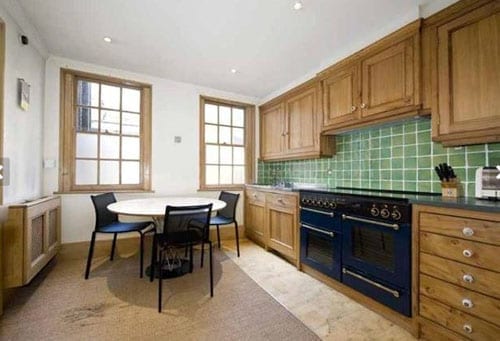
The kitchen is lacking in character but offers ample space for informal dining Contrary to what you’d expect, living in Albany is not quite as expensive as one might think. A 2-bedroomed 1,970 square foot set is currently available through Knight Frank for £1,400 a week: a figure that seems quite reasonable given the location, history and size of this property. Available on a minimum 8-year rental term, it includes a formal reception room, a dining kitchen, 2 bedrooms and 2 bathrooms.
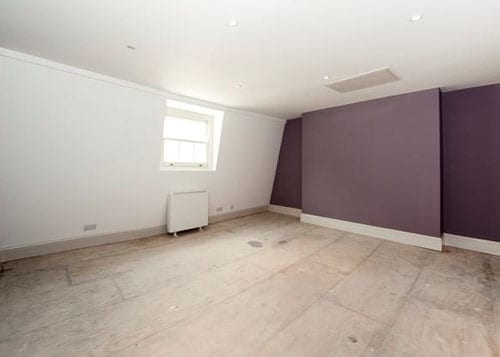
This £300 per week set, D2, consists of just one room 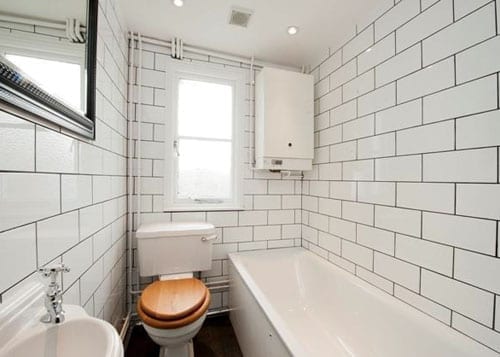
The communal bathroom D2 shares with other sets is basic but clean For those looking for something cheaper, Savills offer D2 Albany at £300 per week. This set consists of a 221 square foot third floor attic room with access to a communal bathroom and the agents suggest that it: “would make an ideal reading or writing room or an occasional bedroom for a pied-a-terre.” It’s effectively a posh form of tenement but what a way to impress your peers and subordinates.

Damon and Sandra de László in their “duplex” in Albany Those renting either of these sets would find the likes of the industrialist Damon de László, a descendant of the Hungarian painter Philip Alexius de László (1869 – 1937), as their neighbour. The couple occupy Lord Byron’s former set, A2, and have, on occasions, opened it for a charity dinner with Matthew Parris at £1,000 a ticket as well and for members of The Portrait Institute to view their collection of de László’s works.
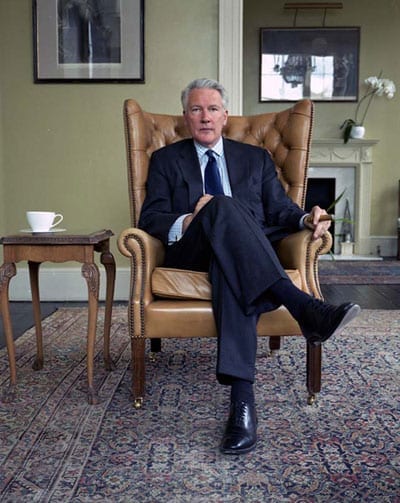
Professor Philip C. Bobbitt in his grand freehold set Another present day resident is a man Henry Kissinger calls “the outstanding philosopher of our times,” Professor Philip C. Bobbitt. This Texan lawyer is a nephew of Lyndon B. Johnson and the author of Terror and Consent, which Tony Blair describes as “required reading for political leaders.” Bobbitt owns an impressive flying freehold set that is described as having a masculine style of décor and a “kitchen he has designed to look like a bar.” In an interview for The Independent he states that he finds Albany: “a propitious place to work.”
Though governments and bankers come and go, behind this quintessentially English façade, order and disorder have always been maintained. The wildcards of this hidden haven have a knack for living by the doctrine “to live at Albany is to live in history” and indeed they make the most of that. Those who are lucky enough to be let in, do, indeed, truly find themselves in the “Paradise of Piccadilly.”
For more information about the £1,400 per week 2-bedroomed set in Albany, contact Knight Frank on +44 (0) 20 3641 2489 or go to: http://www.primelocation.com/to-rent/details/21089526?search_identifier=561863685a1a55b5da85141e12cfeec7
For more information about the £300 per week attic room in Albany, contact Savills on +44 (0) 20 3641 2584 or go to: http://www.primelocation.com/to-rent/details/26791351?search_identifier=561863685a1a55b5da85141e12cfeec7
-
Tom Ford
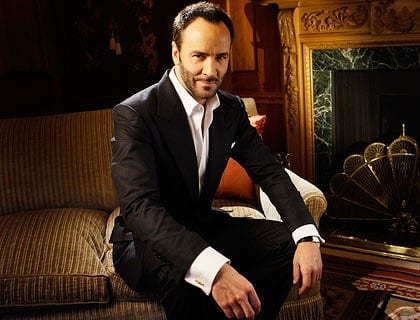 This Texan born designer and film director turned around the fortunes of Gucci and YSL and had a huge success with A Single Man. A fixture at New York’s Studio 54, his designs are hugely influenced by the club’s disco-era glamour and his love of all things black and square. Ford met his journalist partner, Richard Buckley, at a fashion show in 1986. They share a love for smooth fox terriers and announced the birth of their son, Alexander Buckley Ford, in September 2012. Of being “gay,” he comments: “I hate that word” but declares that he’ll marry when same-sex marriage is legalised in California. Of Ford, his partner, Buckley, adds: “There’s only one Tom for me.”
 -
Post-Fordism
The flexible £12.75 million former home of Tom Ford
Number 26 Gilston Road in London’s SW10 is a property that has been on and off the market repeatedly in recent years. On each and every occasion it has been promoted as the “former home of the fashion icon Tom Ford” and though he hasn’t lived there in years, it is still just as he left it.
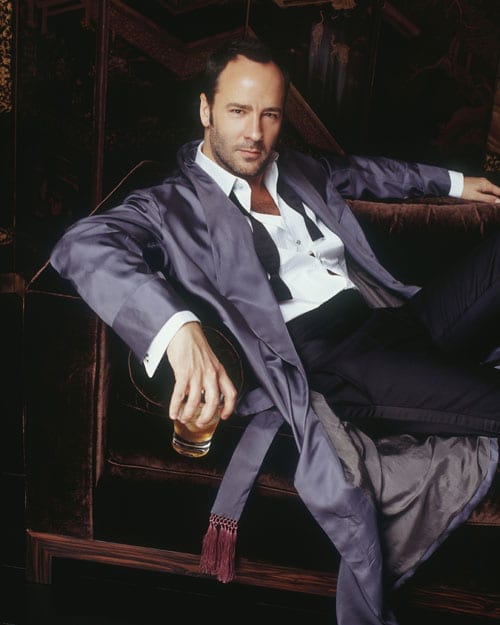
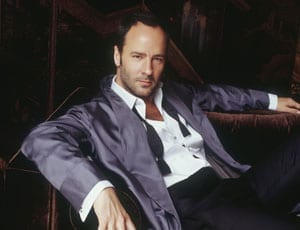
Designer and film producer Tom Ford 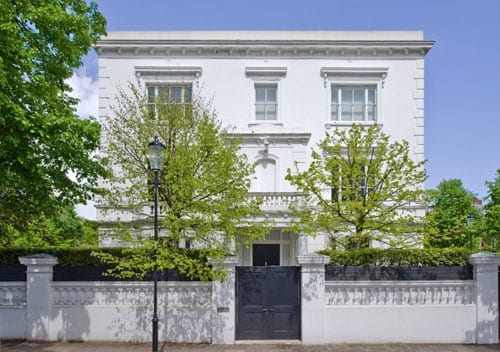
“The former home of design icon Tom Ford”: 26 Gilston Road, London, SW10 9SS Situated at the end of a terrace on the corner of Priory Walk, one can see why the house appealed to the Texan born designer credited with turning around the fortunes of Gucci and Yves Saint Laurent. Hidden behind a high wall and hedging, 26 Gilston Road is private yet minutes from the restaurants of Old Brompton and Fulham Roads.
This 4-storey townhouse was sold in June 1997 for £2,250,000 and again marketed in 2009 for £8,500,000 through Aylesford. In the time since, it has been available to let at prices ranging from £5,500 to £7,500 per week, but is now back for sale at the extraordinary figure of £12,750,00 through Russell Simpson.
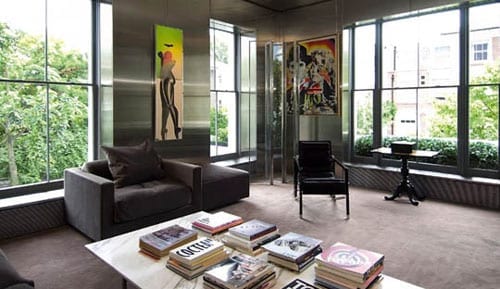
One of the reception rooms, just as Tom Ford left it 
Another of the Tom Ford styled rooms 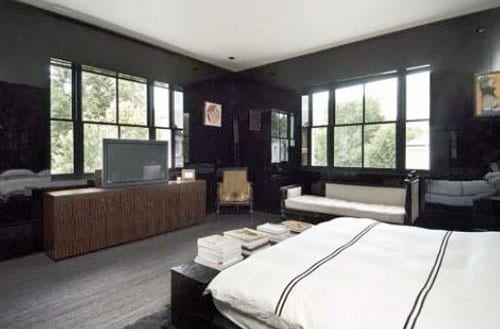
A Tom Ford designed bedroom 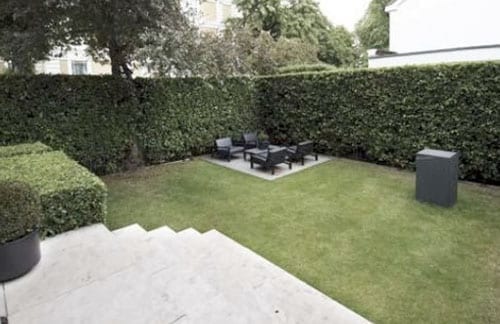
The garden of the property is extremely private What explains such a rise during a period of economic downturn? Well, it’s because developers Equilibrium have gained permission to “de-Ford” the house. As is now the trend in London, they have planned a total redesign. Their illustrations incorporate a new sub-basement and as a result the gross internal area will increase from just over 3,700 square feet to just under 5,300 square feet.
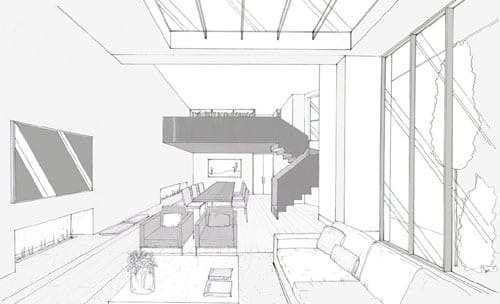
Equilibrium’s plans include a vast living-dining-kitchen with a study in the void over. The space is lit by a skylight. 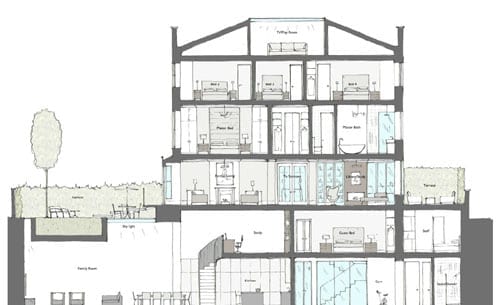
A cutaway shows the extent of the redevelopment planned 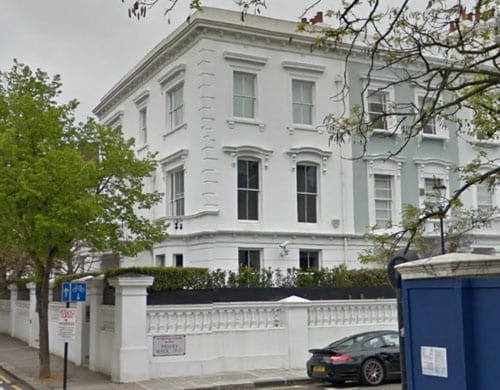
A view of 26 Gilston Road from the corner of Priory Walk Whilst the layout Tom Ford, himself a graduate in architecture from Parsons The New School of Design, created at 26 Gilston Road was ideal for A Single Man; the new floor plan with 4 bedrooms is much better suited to a family. Ford and his partner, Richard Buckley, announced the birth of their son, Alexander, in September. Perhaps they should put in a bid.
For more information about 26 Gilston Road, London, SW10 9SS, contact Russell Simpson, 5 Anderson Street, London, SW3 3LU. Telephone: +44 (0) 20 7225 0277. View a brochure for the property at: http://www.russellsimpson.co.uk/assets/12/06/15/5081/pdf_archive-1.pdf
View Equilibrium’s website at: http://www.equilibriumlondon.com
View Tom Ford’s website at: http://www.tomford.com
-
Mccreedy's blues
Thomas “T.J.” James peruses the works of artist Conor Mccreedy
Conor Mccreedy is an internationally known artist, art collector and entrepreneur who lives between New York City, South Africa and Paris.
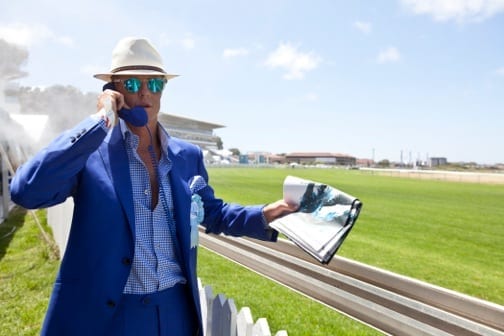
Conor Mccreedy wearing his synonymous “Mcreedy Blue” Originally from Johannesburg, Mccreedy was intrinsically drawn to painting in his youth. He attended St. David’s Marist Inanda where he excelled at soccer and went on to represent South Africa in the Gothia Cup junior world soccer tournament in Sweden.
Next came a stint at Hilton College. Here Mccreedy was awarded the Kennith Beghin memorial prize for art and also a first prize in the annual university arts competition. At the time, Mccreedy’s art professor stated in a letter of recommendation:
“Conor is one of the most outstanding pupils to come through the department of art in the last decade. He is undoubtedly one of the most naturally talented individuals I have ever seen in my lifetime.”
Obtaining an IEB Matric pass with Distinction in Art gave Mccreedy admission to the University of South Africa but instead he attended university in North Carolina on a golf scholarship. Later, he decided to change paths again and transferred to the Pratt Institute in New York.
By happenstance he met the American comedian Chris Rock’s uncle and through him gained an introduction to the president of the National Arts Club. This brought a significant break and Mccreedy became the youngest artist to be invited to hold a solo exhibition entitled, Outliers, at the National Arts Club in Gramercy Park, New York in 2010.
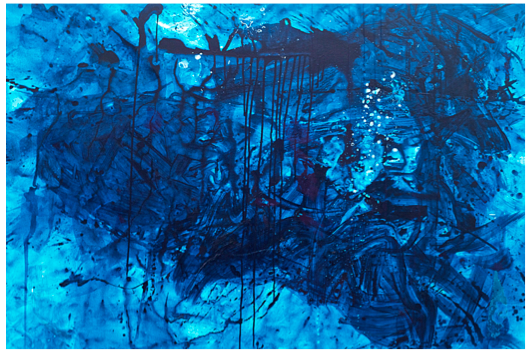
“Where to Begin” by Conor Mccreedy 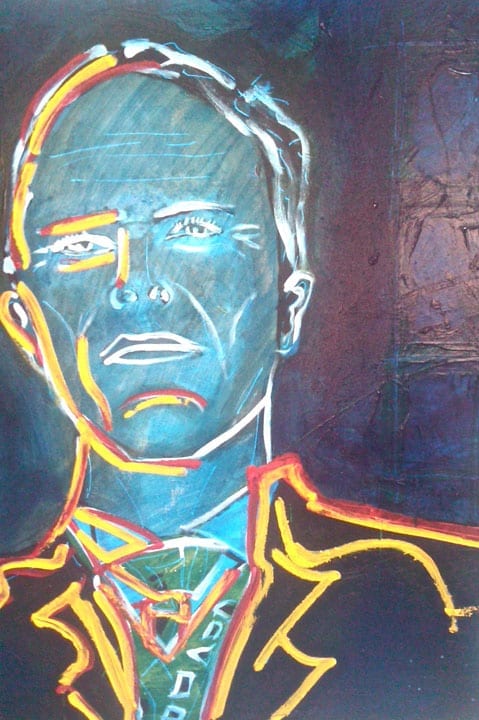
“Portrait of Mentor” by Conor Mccreedy, 2009 Mccreedy’s artistic style has developed significantly over the years. His masterful strokes of the brush and lines are now considered unsurpassed. Mccreedy’s paintings are dabbled with ambiguity, which causes one to develop a new understanding and outlook. His paintings truly evoke truth and the sublime. In them also, he uses his figures as a tool to question modern views of sexual, racial and social identity.
As an example of his style, Mccreedy’s Indigo Blue Series provide the viewer with a lugubrious surface but, as the eye becomes entranced by his work, the somber veil is lifted and an array of expressions and emotions are revealed.
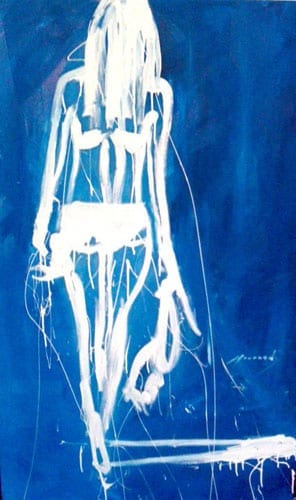
“Her Stride” by Conor Mccreedy, 2010 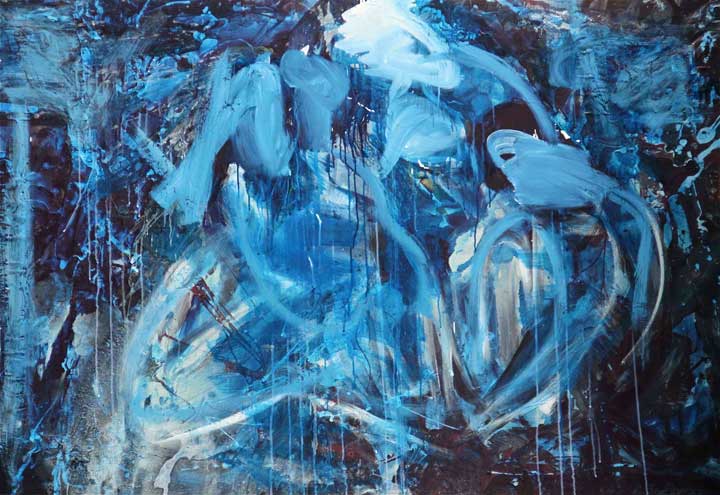
“Five Female Nudes” by Conor Mccreedy, 2011 Mccreedy uses a specific type of blue for his paintings. He named it “Mccreedy Blue” and it now transcends from his art into his unique style. The implementation of this colour in both his dress and art create a unifying theme of distinction and also are representative of the brand that he has become. Resultingly, GQ Magazine listed Conor Mccreedy as South Africa’s best dressed man for 2012 which is surprising given that he detests shopping.
Mccreedy is also heavily involved in social media also and highly influential in this domain. He is the most followed South African on twitter with just under 300,000 followers and tweets to them regularly. He uses his fame for good as well and chooses to support the Faces of Hope Foundation that provides funding to support children and adults with leukemia and lymphoma.
When home in South Africa Mccreedy becomes inspired by the euphoric scents of the African bush. He has a love for animals, especially lions, and is intrinsically connected to the raw nature and beauty of Africa.
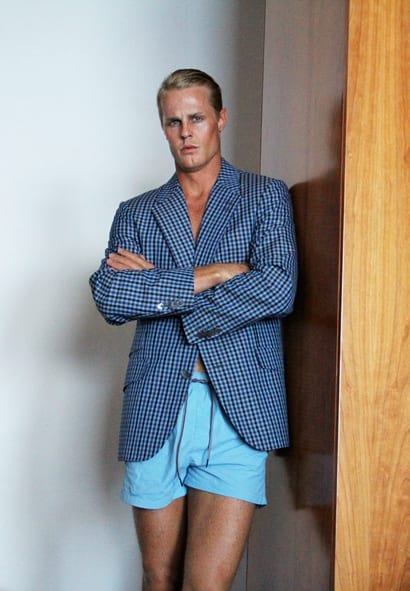
Conor Mccreedy Mccreedy will be spending this summer in The Hamptons and Manhattan this year. Here he’ll continue to create and be inspired by the world around him.
View more examples of Conor Mccreedy’s works at: http://www.conormccreedy.com
Follow Conor Mccreedy on Twitter at: http://www.twitter.com/CONORMCCREEDY
Follow Thomas James on Twitter at: http://www.twitter.com/thomasjames124
-
Jack O'Shea
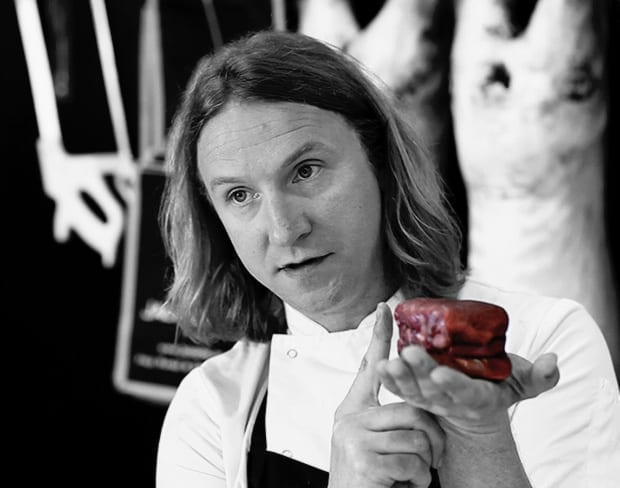 A gentleman butcher. He’s deservedly been named Butcher of the Year by The Independent and his shops in Brussels and Knightsbridge are a mecca for foodies. He took on the might of Sir Roger Moore and his campaign against foie gras by selling it from his Selfridges counter in 2011. He was ejected from the store on Christmas Eve but rightly responded to his critics with a simple one liner: “I couldn’t give a damn.”
 -
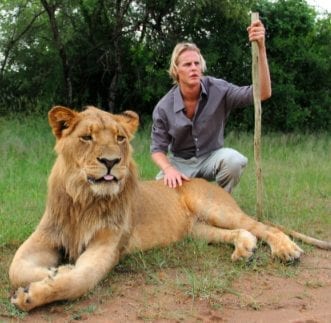
Conor Mccreedy
 Internationally renowned South African conceptual artist, Conor Mccreedy has exhibited at the National Arts Club in New York and the David Brown Fine Art Gallery in Johannesburg. (more…)