Is it time for “Keep Calm And…” to “Sod Off And Get Lost”?
Since 2001, whatever the situation and whatever the context, three words, “Keep Calm And…”, can and often have been applied. The rediscovery of what was originally a British wartime propaganda poster in a secondhand bookshop in Alnwick, Northumberland set about this trend and it has continued unabated.
The bookshop’s owners, Stuart and Mary Manley, seized upon their customer’s enthusiasm for “Keep Calm And…” and they, then others, printed it onto clothing, doormats, postcards, mugs and other merchandise. Millions of items featuring the distinctive font and “Tudor” crown have been sold worldwide and a trademark dispute about it commenced in 2011 and continues to this day.
On the Barter Books website is a link to a video giving the story of how such a simple phrase has become so popular. On it the narrator states:
“It’s perhaps the words on the poster that people find most enchanting. Like a voice out of history, it offers a very simple warmhearted message to inspire confidence in others in difficult times and it is something that should never fade from fashion”.
Adaptations naturally followed and amongst the many thousands created, some of the more tolerable ones include:
– Keep Calm Or Drink Wine
– Keep Calm You’re Not On The Titanic
– Keep Calm And Smoke Weed
– Keep Korma And Curry On
– Keep Calm And Get Over Yourself
– Keep Calm And Chillax (for David Cameron)
– Keep Calm And Kill Justin Bieber
– Keep Calm And Get Certified
– Keep Calm And F**k Off
– Now Panic And Freak Out
– Change Words And Be Hilarious
Increasingly, though, the overuse of “Keep Calm And…” has resulted in even Stuart Manley stating: “You almost get sick of it… Very few are genuinely funny”. There are hundreds of them and some are more bizarre than others. A selection numbers:
– Keep Calm And Have A Cupcake
– Keep Calm And Farm On
– Keep Quiet And Continue Working
– Keep Calm And Rule Britannia
– Keep Calm And Pass Me The Ball
– Keep Calm And Watch Skins
– Keep Calm And Go Watch The Hunger Games
– Keep Calm And Fake A British Accent
– Keep Calm And Hack On
– Keep Calm And Go Gangnam Style
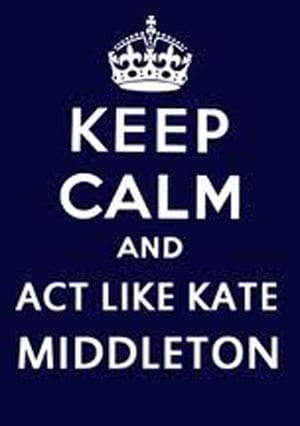
– Keep Calm And Act Like Kate Middleton
– Calm You Shall Keep
Frankly, the majority of us are now bored. The time has come for reasonable souls to adopt the tone of Victor Meldrew. On sight of another piece of “Keep Calm And…” merchandise, the cry should ring out: “Sod Off And Get Lost”.
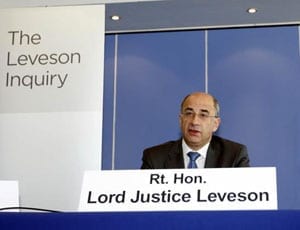
Sarah Tucker shares her experiences on a panel discussing the outcomes of Leveson
Journalist and author Sarah Tucker was one of the panelists at a talk at the Richmond Literary Festival on Thursday evening. By chance, since it coincided with the publication of the Leveson Report, the panel’s discussion naturally focused on that. Here Tucker share her thought in an article first published on her own blog:
Will the outcome of Leveson change the media?
I was in excellent company last night as part of a panel at the Richmond Literary Festival that felt almost weirdly timed to coincide with the day of the Leveson announcement.
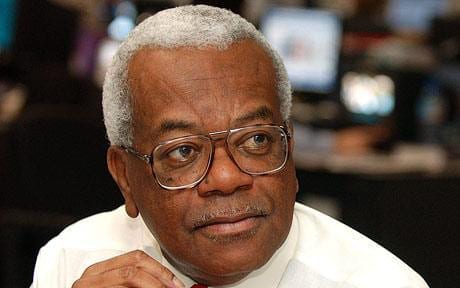
I appeared on a panel with Sir Trevor MacDonald (who needs no introduction, but got one any way), the editor of the Sheengate Titles, Richard Nye; Claire Fox, the director of the wonderfully named Institute of Ideas (which I thought sounded like something out of Hogwarts) and Matthew Syed, illustrious columnist, Times writer and former Commonwealth table tennis champion (I wanted to ask him about table tennis but felt it oddly irrelevant in context of the debate). We discussed if the media were ‘friend or foe’ (though it wasn’t specified ‘to whom’) this of course had been perfectly timed to coincide with the Leveson findings. It was pure fluke but that’s timing for you.
Sir Trevor felt Leveson would change nothing. Everything, he suggested, would be bogged down in committees and sub committees and nothing would be done. Ever. Fox and Syed felt if statute was put in place, it would potentially be very dangerous especially if you had the likes of Blair or Thatcher in charge again or some lesser megalomaniac.
As for my view, I think the politicians are playing a game. They are losers all of them, we are the biggest ones (the punter, the voter, the onlooker), but to think they could come out and out say one way or another would be a nonsense and would take a great deal of courage, which they don’t have.
When I look at politicians now I think of them as actors upon a stage, not meaning anything they are saying, not even understanding most of it, just reciting it. I don’t feel contempt because it takes courage to get up on that stage. And Sir Trevor noted that many journalists and reporters now treat politicians with barely restrained contempt when they interview them. As he noted, at least politicians enter the process to do something of good for their community (although I think some do enter it for ego), something you can never say about those who work in the city.
Sir Trevor McDonald OBE
And who will be in this ‘organisation’ that will monitor the press? Who on earth, on this earth, is so honourable, so without fault, so incorruptible to be considered for this position? A politician? No. A banker? You’re joking. A policeman. Perhaps.
I think you need a ‘common man’, or woman who has a sense, a common sense and an ability to see through the emperor with no clothes phenomenon of what is bullshit and what isn’t, what is in the public interest and what isn’t. It isn’t someone who has risen to the top. If this year has proved anything the shit rises to the top more regularly than the cream does. Although I must say I do like Eddie George. I think his contempt for the city mirrors that of my own, but then he deals with them on a daily basis so that’s understandable.
In many ways the media has been it’s own worst enemy. Editors allowing for lazy journalism – the recent article about Canada in The Telegraph being an example. I met the head of PR for Canada in the UK for lunch this week and she despaired that they usual cliché about Canadians came up without anything relevant or up to date on a country that had a government which managed to manage their bankers – something our politicians have not. As she commented: “It’s harmless but it’s pathetic.”
Then there’s the phone hacking which hacked into ‘common man’ rather than celebrity, who I am afraid I have absolutely no sympathy with. That includes the royals, both the young and old. They are sold to us as though we know them. We don’t have a clue who they are. We just think we do.
Editors encourage journalists to get stories, to hit the negative angles because they are told ‘it makes better news’ and people are more interested in bad news than good. I think it’s been proven somewhere, with stats or something, but then so have a lot of other things which also turn out to be rubbish. And all media are businesses so their bottom line is more important than anything else. Associated Papers are making money, The Times is running on a subsidy, the rest of the papers I think are losing money. The BBC may have been dented but they are respected around the world and like the NHS should not be tampered with. They should not be interested in profit and should aim in their production values at all times and at all cost. Every panelist agreed on that point.
The weave between the institutions of the police, the law, the church, the city, the media, the royals, the politicians has become so entwined. This is like a lover’s tiff that will pass over because the end game is more important. There is too much money, too much power and far far too much ego invested in these institutions for morality and integrity to get in the way of profit.
This has been a year of revelation but not revolution. And if it were it would be the wrong heads that would roll.
Sarah Tucker is an award winning travel journalist, novelist, producer and broadcaster. She has edited, produced and presented her own radio and TV series as well as presenting reports for BBC Holiday Programme and anchored I Want That House on ITV. She is the author of best selling novels The Playground Mafia (short listed for the Good Housekeeping book of the year 2007) The Battle for Big School, The Last Year of Being Single, and The Control Freak Chronicles.
Thomas James on the playground of the rich and famous that is The Hamptons
A typical beach scene in the Hamptons
One of the most popular guest features on the blog that preceded The Steeple Times was this article by Thomas James. The summer may well have passed along with Sandy and her might but as the article continues to attract vast numbers of hits, we thought we’d share it with you again this autumn day.
The Hamptons is a beautiful coastal retreat with sandy beaches and vineyards, is home to premier pieces of real estate, and is known as the playground of the rich and famous.
Generally speaking, it is an area of concentrated Manhattan wealth, as many New Yorkers have second and third homes there that are most commonly occupied during the summer months. The differing hamlets that create this wondrous land of lush gardens and luxury real estate possess a distinct atmosphere and attract different types of individuals.
Sunset in the Hamptons
East Hampton is the most coveted hamlet as it is dotted with world-class restaurants, well-known art galleries, and boutiques such as Blue and Cream. It is also home to the Hamptons International Film Festival.
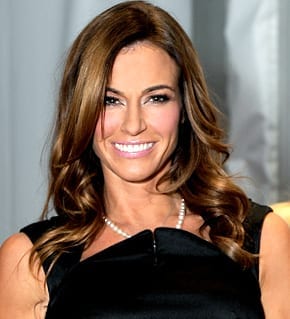
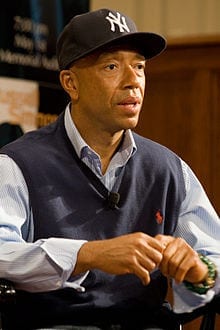
The residents of East Hampton are a culmination of celebrities, fashionable, and chic individuals such as Kelly Bensimon and Russell Simmons as well as those who are more traditional or preppy in nature – who tend to belong to the Maidstone Club. Models, celebrities, and socialites from Linday Lohan to Lauren Conrad flock to Lily Pond, a trendy nightclub in East Hampton featuring French crystal chandeliers and it becomes a massive VIP lounge for today’s youth to celebrate.
Kelly Killoren Bensimon: a lady who terms herself an “author, jewelry designer, model, former editor of Elle Accessories and star of The Real Housewives of New York City”
Art For Life is an annual benefit held at the home of Russell Simmons. The proceeds of Art For Life support art programs for New York City students. This soiree is a grand event as Russell Simmons has no limitations to his imagination and often amazing performance artists entertain guests. The event attracts celebrities, philanthropists and lovers of art.
Hip-hop star Russell Simmons: co-founder of Def Jam and creator of Phat Farm, Argyleculture and American Classics
As one strolls down Main Street after enjoying a memorable cup of coffee at Sant Ambroeus, one may bump into Ina Garten purchasing fresh vegetables at Citarella or a socialite shopping at Hermes.
Southampton is similar to that of East Hampton as it is home to many chic restaurants and boutiques such as Stubbs and Wootton. Southampton has many social events throughout the year and is very Waspy in nature.
The hamlet of Bridgehampton is known for the Hampton Classic, which is a highly anticipated equestrian riding event held annually. One may find solace venturing through Bridgehampton’s world-renowned vineyards in the early morning and later soaking up the fruity wines of Bridgehampton’s famed wineries.
Hamptonites often flock to Pierre’s with friends in Bridgehampton for ideal French cuisine. “The atmosphere is cozy and intimate, elegant but relaxed, a place to see and to be seen.”
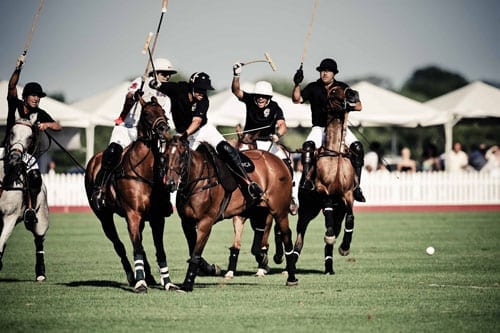
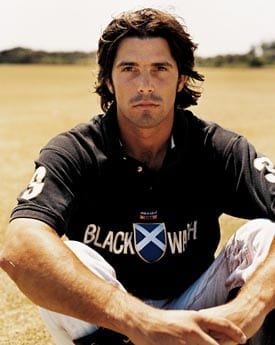
Polo in the HamptonsNacho Figueras: this top polo player is the face of Ralph Lauren’s Black line and often described as the “David Beckham of polo.” He’s a regular on the Hamptons social scene and married to photographer Deflina Blaquier.
Many artists, writers, and actors are drawn to the hamlet of Watermill. Watermill has many riding stables, golf courses, and a polo team. The Watermill Center is a haven for artists who are free to explore, experiment, and express their ideas. The glamorous Watermill Gala is an end of summer fundraiser where eccentric performance artists are on display as partygoers are sipping their champagne.
If one truly desires to step into the untouched beauty of the Hampton’s one usually ventures to Montauk. This hamlet is the farthest hamlet on the east end. The estates of prominent individuals line the shores of the Atlantic.
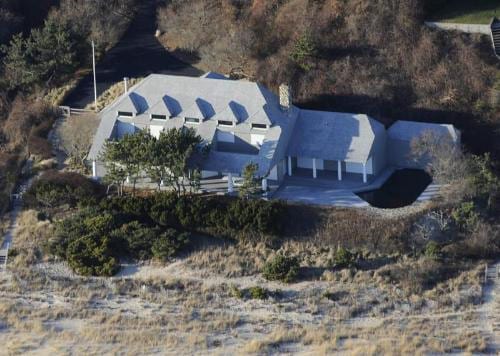
Bernie and Ruth Madoff’s former holiday home in Montauk: 216 Old Montauk Highway, Montauk, NY 11954
In 2009, Bernard and Ruth Madoff’s Montauk beach house was sold to an unidentified buyer. He and his former home penetrate one’s mind with an image of vulgar decadence. Surprisingly, the 4 bedroom, 3,014 square foot house, which sits on 1.2 acres, is a mere cottage amongst the typical mansions and estates. This classic beach house sits closer to the ocean than the neighboring homes of Ralph Lauren and Robert DeNiro, which was it’s major selling point as well as the unsurpassed views of Montauk’s untouched beauty. Bernie Madoff purchased the land and then built the home in 1979 for approximately $3 million but due to the exposure of his scam, the house was taken by the government in July 2009. Proceeds of the sale benefited victims of Bernie Madoff’s Ponzi scheme. It is now estimated to now be worth around $8 million.
From Alec Baldwin, preserving the raw beauty found here, to local artists trying to capture the indescribable beauty of the east end, the Hamptons is a truly special place where lavish individuals harmonise beautifully with the lush nature found there.
Matthew Steeples delves into the history of Albany, Piccadilly and discovers an affordable way of living there
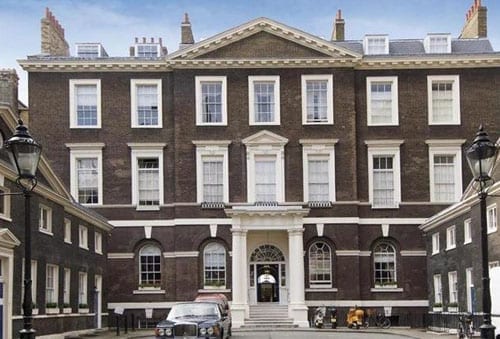
Albany, off Piccadilly in Mayfair, was most probably London’s first apartment block and it’s certainly the city’s most exclusive. It may be next to the Royal Academy and opposite Fortnum & Mason but surprisingly few have even heard of it.
Considering its location, Albany, which some make the mistake of referring to as “The Albany,” is an amazingly quiet oasis of peace and tranquility but, equally, it is a place of intrigue and drama. Residents, or “proprietors,” as they prefer to be known, of the 69 “sets” are particular about the “the” part of the name as they’d rather their residence not be confused with a public house and they are even more protective of their privacy. A porters’ lodge guards the entrance to the building and it is staffed mostly by ex-servicemen, who, until the early 2000s, had to wear top hats and tailcoats. Those allowed to pass enter a rarefied world frequented by what the Irish novelist Marmion Savage (1803 – 1872) identified as “incurable oddities” and “superannuated fops” in The Bachelor of Albany.
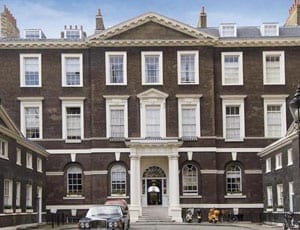
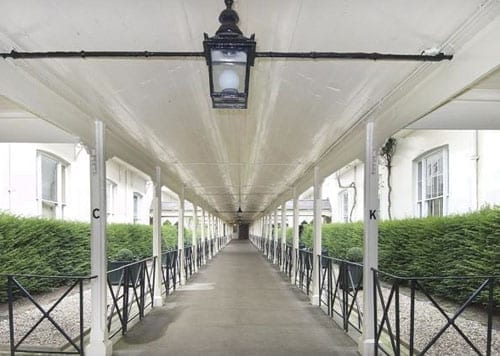
The front courtyard and façade of Albany, Piccadilly, Mayfair, London, W1J 0ALThe rope-walk connecting the various sets of Albany has been traversed by some of the greatest names in history
Built by Sir William Chambers (1723 – 1796), who also designed Somerset House and the pagoda at Kew, between 1770 and 1774 for 1st Viscount Melbourne (1745 – 1828), Albany was originally known as Melbourne House and conceived as a three-storey mansion, seven bays wide with a pair of service wings flanking a front courtyard. From 1791 to 1802, the property was occupied by George III’s son, Prince Frederick, Duke of York and Albany (1763 – 1827), but after he left, the renowned architect Henry Holland (1745 – 1806) sub-divided the existing house and added two parallel sets of buildings running the length of the garden to create 69 “bachelor apartments” which he named “sets.”
The “roll call” of residents since could easily fill our very own pages thrice over. They number royalty, politicians, artists, playwrights, academics and philosophers and here is a brief selection:
– Anthony Armstong-Jones, later 1st Earl of Snowdon
– Sir Thomas Beecham
– Sir Isaiah Berlin
– Lord Byron
– George Canning
– Sir Kenneth Clark
– Baroness Pauline de Rothschild
– William Ewart Gladstone
– Sir Edward Heath
– David Hicks
– Aldous Huxley
– Sir Simon Jenkins
– Rupert Lycett Green
– Malcolm Muggeridge
– Sir Harold Nicholson
– J. B. Priestley
– Sir Terence Rattigan
– Roger Scruton
– Baroness Sharples
– W. Somerset Maugham
– Terence Stamp
– Sir Denis and Lady Thatcher
– Sir Herbert Beerbohm Tree
Each had to pass the vetting of a committee of trustees of this Grade I listed building. That committee forbids children under 14, pets, musical instruments and commercial activities and each approved resident has undoubtedly added to the history of this den dominated by a central walkway named the “rope-walk.” Incidentally, an example of a curious quirk at Albany is that no resident is allowed to speak to another on this walkway. If they do, a fine is incurred. Albany, indeed, is rather like a college in its systems of rules, regulations, order and hierarchy.
For several centuries, women were not even allowed to cross the threshold and one legendary tale tells of Lady Caroline Lamb (1785 – 1828), disguised as a page boy, stealing into Lord Byron’s (1788 – 1824) set in 1815 to leave a note: “Remember me, Byron.” He replied with a simple verse:
Remember thee, aye, doubt it not:
Thy husband too shall think of thee.
By neither shalt thou be forgot —
Thou false to him, thou fiend to me.
The strict and formal structure that controls Albany and ensured its maintenance has succeeded in the main because 34 of the 69 sets are owned by Peterhouse College, Cambridge. They and the other owners are highly particular in whom they lease to and on one occasion on hearing of an “unsuitable tenant,” the secretary of the trustees is reported to have shouted:
“He’s a foreigner. Don’t like him. Don’t trust him.”
Needless to say, that application didn’t progress and nor did one from a physiotherapist who planned to operate from the building. Bone bashing in Albany just wouldn’t do.
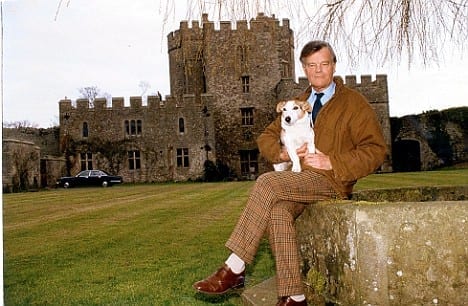
The Rt. Hon. Alan Clark MP (1928 – 1999) in the grounds of his main home, Saltwood Castle, near Hythe in Kent in 1993
A horsewhip, however, nearly crossed the threshold of set B5 in 1994, as it was here that the late Alan Clark MP (1928 – 1999) lived. The affable philanderer seduced the wife and both daughters of a certain South African named Judge Harkess and the wronged man stated he would “have horse-whipped Clark if he had known how comprehensively he had violated his honour.” B5, itself, was described as having the feel of “the straitened quarter of an Edwardian bachelor on his uppers” and the dotty, English attitude of the residents is best summed up by the reaction of Clark’s neighbour when he accidentally flooded their basement. When asked what he could do to make amends, their answer was quite simple: “Go and lie down in Piccadilly and wait for a double-decker bus.”
The dandy and journalist John Morgan (1959 – 2000) typified social change at Albany in the 20th century just as much as he himself redefined etiquette and manners at Debrett’s and The Times. Of “humble origins,” Morgan was brought up in a “modest” bungalow in St Madoes, Perth, Scotland but is credited with persuading William Hague to remove his baseball cap whilst Conservative leader and offering advice ranging from “how to eat a banana” to “how best to tell friends that the partner you would like to bring to their wedding will be of the same sex as you.”
Dandy and etiquette expert John Morgan (1959 – 2000)
For the bachelor and GQ style director, living in Albany was symbolic of his own personal social elevation but he did not disown his past. This modern day Beau Brummell was a man of social contradictions who cashed his cheques at Claridge’s but was a member of the National Union of Journalists. He was a Tory but still regularly attended chapel meetings as he had done in his youth. Here was a man of paradoxes who seemed unable to come to terms with the fact that he was a homosexual.
Morgan, an asthma sufferer, fell to his death from a fourth floor window on 9th July 2000. He was found in just a white shirt in a basement below a window whose sill was strangely undisturbed. The coroner left an open verdict with a suspicion of suicide and it was widely reported that police found 60 made-to-measure Savile row suits, 300 monogrammed shirts and 90 pairs of shoes in the etiquette expert’s small set. Mystery shrouds the story of his tragic demise to this day but Johnny Morgan will forever be remembered as an arbiter of both good taste and behaviour.
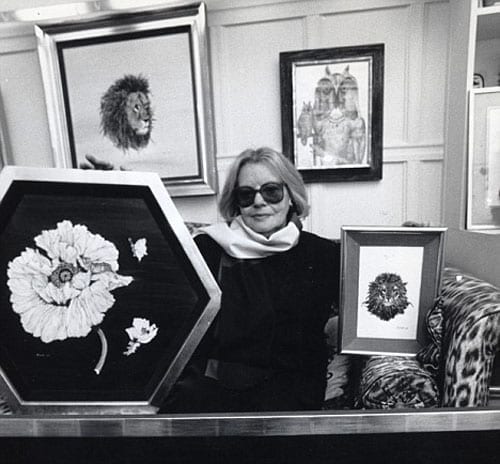
Whilst Morgan represented continuation of the trend of bachelors living in Albany, change also came in the 20th century when the building’s committee removed the restriction that allowed only bachelors to be resident. With that females were allowed in and amongst them Fleur Fenton Cowles (1908 – 2009) was one of the most fascinating.
Fleur Fenton Cowles (1908 – 2009) in her set at Albany with some of her paintings and one by Salvador Dali
This writer and artist occupied five sets knocked into one with her fourth husband, timber merchant Tom Montague Meyer, and according to the Daily Mail’s Geoffrey Levy, hosted “elite soirees of the powerful and famous.” Levy recounts them at length but here is a flavour:
“On a Wednesday evening, a typical dinner party… would include Foreign Secretary Selwyn Lloyd, Labour leader Hugh Gaitskell, entertainer Danny Kaye and film star Douglas Fairbanks Jr. The Queen Mother regularly came to tea and was once joined by Pavarotti who sang Happy Birthday for the royal guest. ‘I don’t want her to die,’ said Fleur. ‘I couldn’t bear to think she doesn’t live just down the street.’ ”
Fenton Cowles, founder of the ill-fated Flair magazine and a “woman who knew everyone,” loved Albany and an exact replica of her “windowless, milk-yellow” study there has even been recreated at the University of Texas.
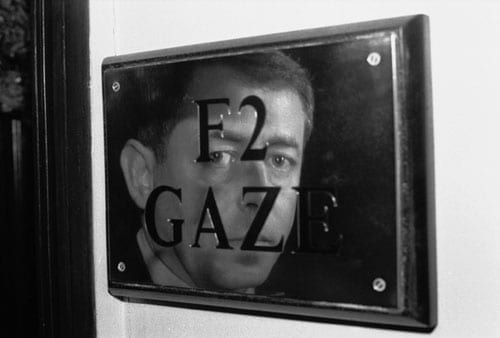
Another known for hosting extravagant bashes in Albany was my late friend, the Russian icon dealer John Gaze (1947 – 2011). Gaze had, as a boy, asked his father about the building when he passed it as a child and immediately declared he would live there one day. He took F2, the former set of Edward Heath that overlooked Savile Row to the rear, in the mid 1990s as he craved the safety that the building offered after having been kidnapped at gunpoint by an Oxford graduate conman named Sacheverell de Houghton in April 1991 from his then home in Fournier Street, E1. He made the most of his tenancy.
Russian icon dealer John Gaze (1947 – 2011) reflected in the brass plaque outside his Albany set, F2. It was formerly occupied by Sir Edward Heath.
Gaze’s parties included a fundraiser for people with AIDS hosted by a drag queen. This sparked fury with certain other residents and coverage in the Daily Telegraph and another incident there involved him encountering Alan Clark on the ropewalk carrying a portrait of Lenin. “Where the fuck are you taking that?” Clark supposedly bellowed but was “reassured” when he was told it was “destined for a less salubrious address in Whitechapel.” John Gaze remained at Albany for several years but, like a number of others I know, was forced out by ever rising rents and moved first to Chelsea and then Ennismore Gardens, Knightsbridge. He always remembered his time at Albany fondly and as a bon vivant, he truly belonged there.
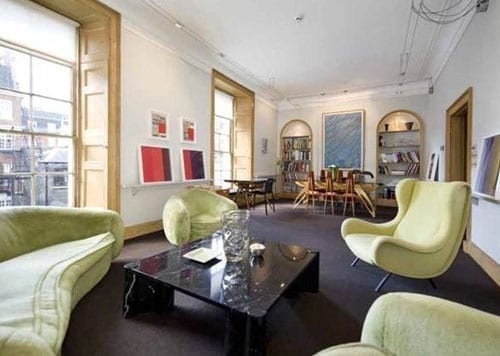
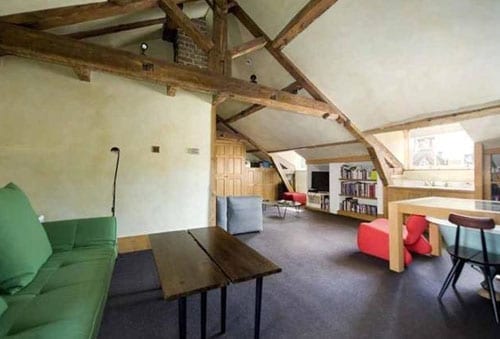
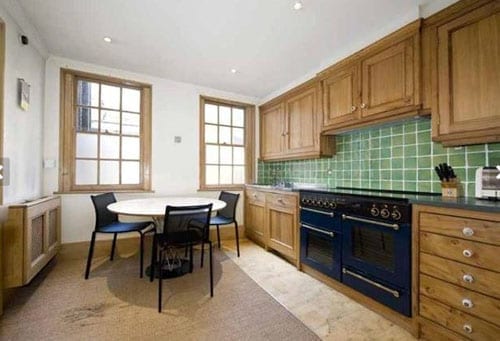
The main reception room in a £1,400 a week set currently available in AlbanyAn attic room in the set that could be used as a second reception room or second bedroomThe kitchen is lacking in character but offers ample space for informal dining
Contrary to what you’d expect, living in Albany is not quite as expensive as one might think. A 2-bedroomed 1,970 square foot set is currently available through Knight Frank for £1,400 a week: a figure that seems quite reasonable given the location, history and size of this property. Available on a minimum 8-year rental term, it includes a formal reception room, a dining kitchen, 2 bedrooms and 2 bathrooms.
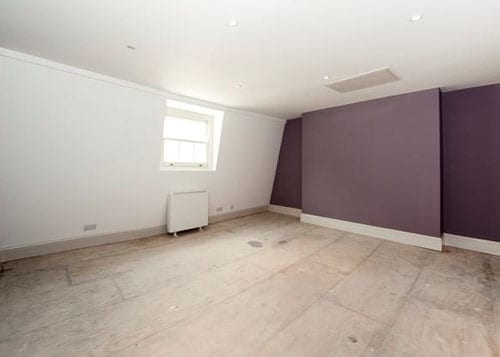
This £300 per week set, D2, consists of just one roomThe communal bathroom D2 shares with other sets is basic but clean
For those looking for something cheaper, Savills offer D2 Albany at £300 per week. This set consists of a 221 square foot third floor attic room with access to a communal bathroom and the agents suggest that it: “would make an ideal reading or writing room or an occasional bedroom for a pied-a-terre.” It’s effectively a posh form of tenement but what a way to impress your peers and subordinates.
Damon and Sandra de László in their “duplex” in Albany
Those renting either of these sets would find the likes of the industrialist Damon de László, a descendant of the Hungarian painter Philip Alexius de László (1869 – 1937), as their neighbour. The couple occupy Lord Byron’s former set, A2, and have, on occasions, opened it for a charity dinner with Matthew Parris at £1,000 a ticket as well and for members of The Portrait Institute to view their collection of de László’s works.
Professor Philip C. Bobbitt in his grand freehold set
Another present day resident is a man Henry Kissinger calls “the outstanding philosopher of our times,” Professor Philip C. Bobbitt. This Texan lawyer is a nephew of Lyndon B. Johnson and the author of Terror and Consent, which Tony Blair describes as “required reading for political leaders.” Bobbitt owns an impressive flying freehold set that is described as having a masculine style of décor and a “kitchen he has designed to look like a bar.” In an interview for TheIndependent he states that he finds Albany: “a propitious place to work.”
Though governments and bankers come and go, behind this quintessentially English façade, order and disorder have always been maintained. The wildcards of this hidden haven have a knack for living by the doctrine “to live at Albany is to live in history” and indeed they make the most of that. Those who are lucky enough to be let in, do, indeed, truly find themselves in the “Paradise of Piccadilly.”
A £15 million mansion fit for a self-made tycoon or an upwardly mobile WAG
While the youth of the Kings Road and Loughton have featured in the reality shows Made in Chelsea and The Only Way is Essex, their counterparts in Cheshire have yet to undergo the same social experiment. Having come across a fair few of their number though, I can only imagine their antics would result in television of comparable car crash proportions.
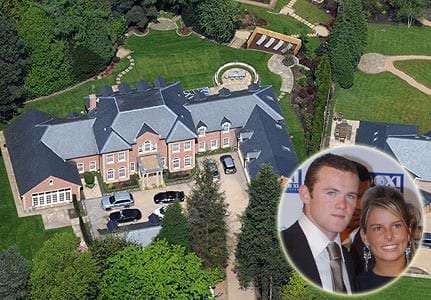
Wayne and Coleen Rooney and their home on Collar House Drive in Prestbury, East CheshireWarrington born Kerry Katona isn’t considered one of the “Cheshire set’s” finest exports
Cheshire itself is a county of contrasts: there’s the farming and hunting set and then there’s the new money. From the 1950s onwards an invasion of nouveau riche footballers and self-made business people came to Alderley Edge and Wilmslow and it is said that there are more Rolls-Royces per square mile here than anywhere else in the UK.
Though today’s Coronation Street actresses and Man United players generally favour brand new homes in Prestbury, the new wealth have not just consigned themselves to such. The likes of Take That’s Gary Barlow, for a time, owned Delamere Manor at Cuddington but sold it in 2005 due to his ever-growing commitments elsewhere. Equally, Neil Hamilton, whilst MP for Tatton, lived at The Old Rectory at Nether Alderley with his formidable wife Christine but when their days in politics came to an end, they too moved on. For a time, David and Victoria Beckham were the undoubted glitterati of this manor, but of those footballers still resident Wayne and Coleen Rooney are definitely now the best known.
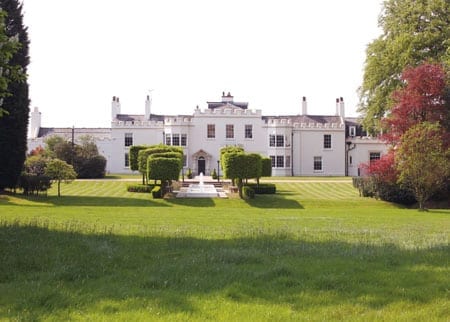
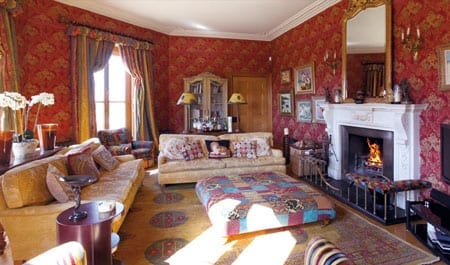
In a “grey area between old and new” sits Swettenham Hall at Swettenham near Congleton. This 12,590 square foot Georgian mansion dates to 1795 but since it was acquired by Brian Kennedy, a double glazing, home improvements and mobile telephone entrepreneur, the house has been given a total makeover. The colourful style he’s given the house can best be described as being akin to: “Laurence Llewelyn-Bowen meets Austin Powers.”
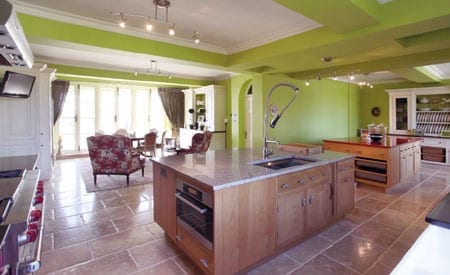
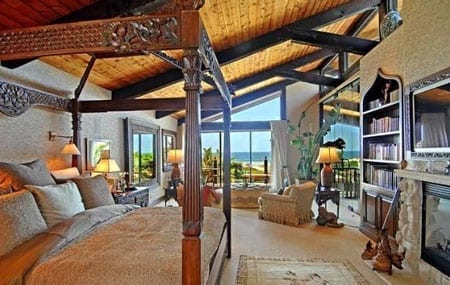
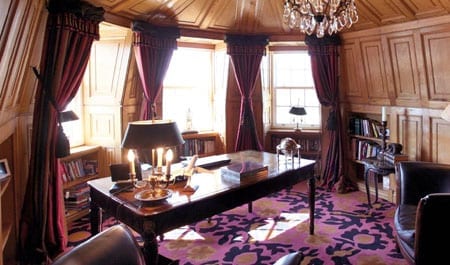
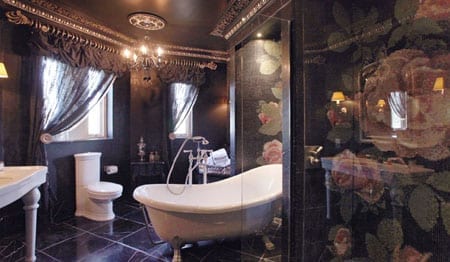
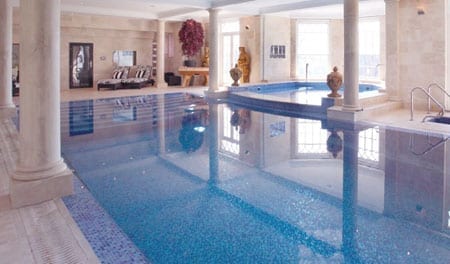
Swettenham Hall’s drawing room is decorated and furnished in a cacophony of coloursThe kitchen is painted in an equally vivid shade of lime greenA bedroom boasts a carpet that would make Austin Powers shout: “Yeah, baby, yeah!”The same carpeting continues into the wood paneled “gentleman’s study”At Swettenham Hall, bathrooms, equally, are far from neutral in their stylingMr Kennedy and his wife Christine employed Julian Bicknell Associates to design an impressive leisure wing in 2004
Swettenham Hall is most definitely a party palace and along with the addition of a leisure wing consisting of a swimming pool, Jacuzzi®, plunge pool, steam room and gymnasium in 2004, Kennedy has also constructed a 47ft by 44ft helicopter hangar complete with a retractable helicopter pad.
Standing in 100 acres of grounds, the house does seem a tad expensive at £15 million especially since that the adjoining former farm buildings were sold off and converted into eight homes in 1999. The driveway is partly shared with these homes and for those seeking the ultimate in privacy, this could indeed be an issue. It is perhaps why Swettenham Hall has yet to sell.
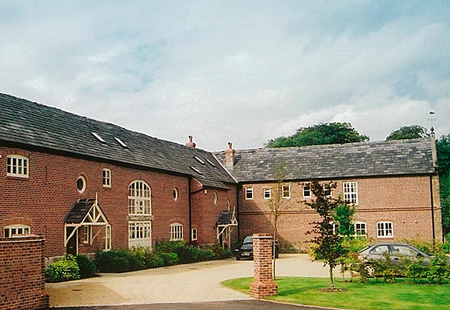
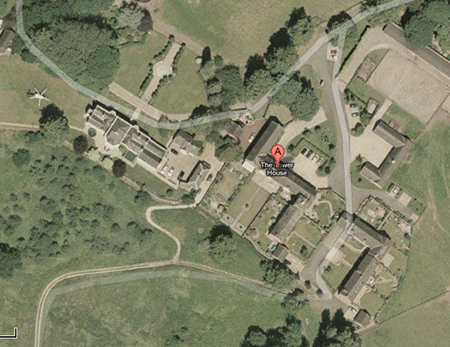
The former farm buildings next to Swettenham Hall were sold off and converted into eight homes by Egerton Estates and Watts Developments in 1999The proximity of Swettenham Hall to the neighbouring barn conversions is illustrated in this Google Earth map
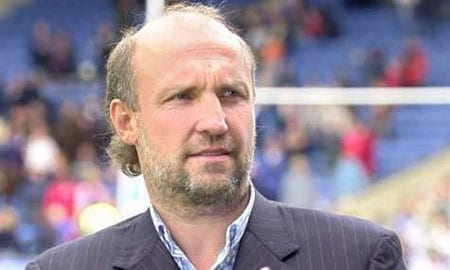
Brian Kennedy is someone I hadn’t heard of until I came across Swettenham Hall but here is a fascinating man whose meteoric rise is frankly very clearly linked to windows. The son of a window cleaner from Edinburgh, this self-made tycoon started his career as a trainee manager at the Royal Bank of Scotland. He subsequently briefly worked as a trainee accountant but left when offered the chance to become youngest branch manager of Moben Kitchens at the age of 20.
At around this time, Kennedy acquired a stake in Farouche Kitchens and with a Rochdale born property entrepreneur named David Russell, he was transformed from a door-to-door salesman to a pioneer in direct sales. In 1988, when Farouche was sold, Kennedy netted circa £1 million. From here, this entrepreneur returned to his family’s roots by venturing into double glazing with Weatherseal Windows and then home improvements with Space Kitchens & Bedrooms.
In 1999, with the help of funds raised by private equity investors 3i, Kennedy paid £42 million for the well known brand Everest but sold part of his stake to the management for £63 million in 2003. In due course he added to his shareholding and then sold 21.5% of the company to Hutton Collins in a deal which valued the company at £150 million in 2007.
Ever the empire builder, Kennedy paid £29 million for a conservatory manufacturer named Ultrafame in 2006 and then also added another double glazing brand, Zenith Staybrite, to his portfolio in 2008. Many other business ventures followed but not being afraid to diversify, Kennedy formed Patrick Properties, whose portfolio is now valued in excess of £100 million, in 2002 and Kennedy Renewables, which specialises in wind energy, in 2009.
In the technology sector, a chance conversation in a Knutsford wine bar in 1995 led to him venturing into the mobile telephone market with a company named Genesis Communications. The business was sold to Dixons in 2002 for £31 million.
In January 2012, Kennedy merged his main Latium Holdings business with Jim Rawson’s Epwin Group to form Epwin Holdings. The merger resulted in a company with more than 2,500 employees and brands numbering Spectus, Swish, CET and Kestrel.
Of his success, Kennedy states:
“Business is common sense [and] dealing with people is common sense. I don’t think I have any particular flair. I think it is about common sense, taking the opportunity when it comes and hard work.”
Brian Kennedy’s wealth has allowed him to indulge many of his passions. A period of semi-retirement “drove [him] and [his] kids nuts,” but this Scotsman’s love of rugby resulted in him acquiring the Sale Sharks Rugby Club in 1999. He is said to have set the “club on a sound financial footing” and turned it into “one of the leading rugby clubs in Britain.”
Philanthropy is something that Kennedy, a Jehovah’s Witness, has also dedicated his wealth to. Through his Brian Kennedy Trust, he has supported a number of charities and organisations but it is for his role as the main backer of Find Madeleine Fund that he has come to public attention. Of his reasoning for backing the missing child’s parents financially, he stated:
“In light of the quite literally incredible accusations against Gerry and Kate McCann, which are clearly exacerbating their emotional torture, I felt compelled to offer, along with other like-minded businessmen, financial support and the full logistical support of the Latium team. That support is principally our in-house lawyer Ed Smethurst and [official spokesman] Clarence Mitchell.”
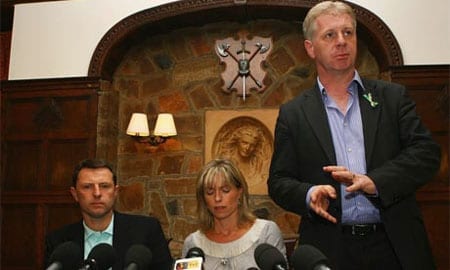
Brian Kennedy was involved in the funding of a team that included Clarence Mitchell for the Find Madeleine Fund until 2009. Here Mitchell (standing) is pictured with Gerry and Kate McCann.An ex-lawyer and campaigner Anthony “Tony” Bennett is the former secretary of The Madeleine Foundation who has been involved in various legal disputes with Brian Kennedy and Gerry and Kate McCann
Kennedy’s donation attracted much press attention in 2007 in the weeks following Madeleine McCann’s disappearance and he continues to support them to this day. A very public spat involving him, Gerry and Kate McCann and a campaigner named Tony Bennett, who also was involved in The Madeleine Foundation, has been the subject of various legal actions. In October 2011, Mr Bennett was forced to publicly apologise to Mr Kennedy and separately an August 2009 Evening Standard article by Mark Hollingsworth “investigat[ing] the investigators,” was pulled because for “legal and editorial reasons.” In it, “someone who worked closely with [Kennedy]” was quoted as saying:
“He was appalled by the Portuguese police, but he also had visions of flying in by helicopter to rescue Madeleine.”
Angelina Jolie, another avid aviator, once commented: “Wherever I am I find myself looking out of the window wishing I was somewhere else.” We do not know why Brian Kennedy is selling Swettenham Hall, but Jolie is indeed one of the few with the resources to take these particular windows off his hands.
For more information about Swettenham Hall, Swettenham, Congleton, Cheshire, CW12 2JZ, contact Edward Welton of Knight Frank on +44 (0) 20 7861 1114.
For more details about Brian Kennedy, go to: http://www.brian-kennedy.co.uk
For more details about the Find Madeleine Fund go to: http://www.findmadeleine.com and for information on The Madeleine Foundation: http://www.madeleinefoundation.org.uk/
Whenever the name Rachman is mentioned, the first things that come to mind are greed, extortion and intimidation. The word is so engrained in such that “Rachmanism” now features in the dictionary, defined as:
“The exploitation of tenants of slum properties by unscrupulous landlords.”
“Notorious slum landlord” Peter Rachman (1920 – 1962)
Perec “Peter” Rachman (1920 – 1962) was born in Poland and the son of a Jewish dentist. He is best known for having built up a property empire of over 100 mansion blocks in London’s Westbourne Grove and Notting Hill areas in the 1950s where he evicted longstanding sitting tenants and replaced them with prostitutes and immigrants from the West Indies. Due to the relaxation of rent controls by the Conservative government in 1957 and as no other landlord was prepared to take them, he was able to charge these unfortunates whatever he wished.
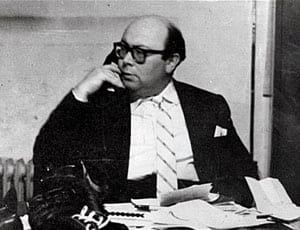
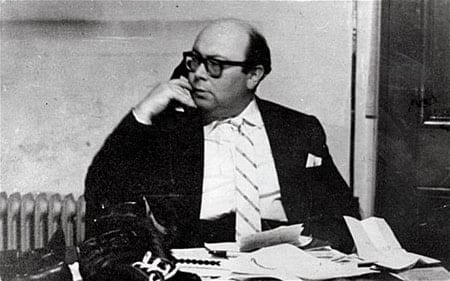
Rachman came to public attention after the Labour MP for Paddington North, Ben Parkin (1906 – 1969), became vocal about the poor housing conditions of his tenants. Parkin coined the phrase “Rachnamism” in his quest to put a stop to the activities of “rent racketeers” and highlighted him as someone who used violence to maintain control of “his manor.” The MP even went as far as to suggest that Peter Rachman’s death was merely a ploy to distract from his activities and the result was to leave the public engrained with a belief that this landlord was a “manipulative, grasping Jew” who symbolised the moral decay of Great Britain.
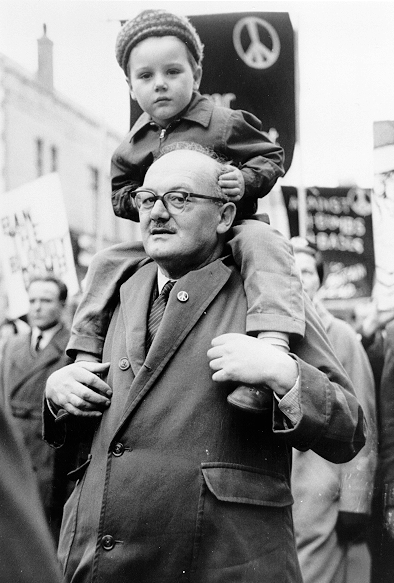
Ben Parkin MP (1906 – 1969) on a CND march
A Radio 4 programme this week, however, highlighted an entirely different side to Rachman. In The Real Rachman – Lord of the Slums, a “barrister turned investigative reporter” named Joshua Levine suggested that those who believe Peter Rachman just to be a sordid intimidator fail to see the true persona of the man.
Levine’s witnesses, who number former tenants and Rachman’s biographer Shirley Green, do describe him as a “chancer” who was prepared to use the system to make money, but they also portray another side of this supposed “figure of evil’s” character.
Nicholas van Hoogstraten (born 1945)
One immigrant tenant stated: “He was the only one who ever did anything for us” whilst others added that Rachman was “well-liked” and “too soft to be a landlord.” He was a “benefactor” and “jolly” commented others who’d rented from him and a truly notorious modern-day landlord, Nicholas van Hoogstraten, failed to see the opportunist in Rachman at all: “It’s laughable. He had no wealth. It’s an invented moral [mission].” Rachman, equally, was defined as a man “affected” by his imprisonment in a Soviet labour camp in the Second World War by his former lover Mandy Rice-Davis and as someone who suffered true sorrow over the deaths of his family there.
Levine’s examination recounts how Rachman, who drove a navy blue Rolls-Royce with a white interior, was built into a symbol of corruption and moral decay. Rachman, like so many other mythical scapegoats, it turns out only died with only one conviction: parking without lights. The truth, indeed, is often stranger than fiction.
The Chief Whip erases mention of Jimmy Savile from his website
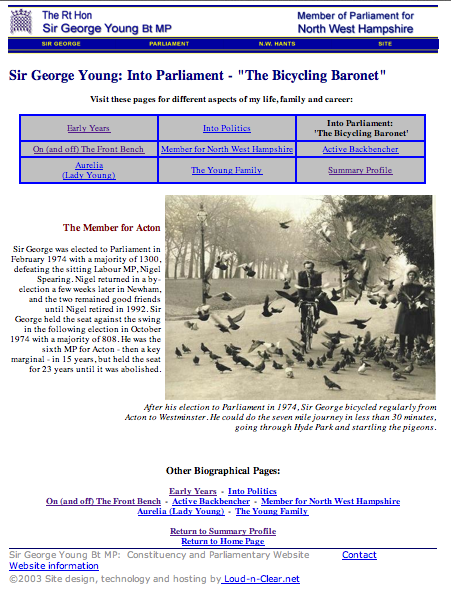
Yesterday, segments of the media shared an image of a poster taken from the website of the new Chief Whip of the House of Commons, Sir George Young.
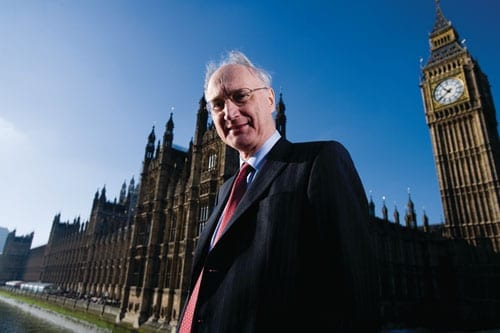
The Right Honourable Sir George Young Bt, CH, MP (born 1941)A 1982 British Rail advert featuring Sir George Young and his family and Sir Jimmy Savile
The text on the website read as follows:
The Youngs promote cycling by rail
On 1982, along with Jimmy Saville [sic], the Youngs featured on a British Rail poster promoting the transport of bicycles by rail.
Sir George had made a critical speech in the House, having found British Rail restrictive and at times unhelpful to cyclists.
Putting his bicycle in the guards van felt like invading someone’s private space. When they responded with some improvements, BR invited Sir George to help with their publicity.
(Some of these posters were still up at stations in Ealing during the 1983 General Election campaign. Ingeniously, Sir George’s opponents argued that British Rail’s publicity programme should be added to Sir George’s election expenses. They didn’t get very far, as Sir George’s name was not on the poster.)
The text about the advert featuring Sir George Young and Sir Jimmy Savile was shown alongside the advertisement on http://www.sirgeorgeyoung.org.uk/pages/biog3.htm (removed 20th October)The updated page on the 21st October 2012 minus the advertisement and reference to Savile
Sir George, who takes over from Andrew Mitchell, isn’t typical of David Cameron’s PR obsessed colleagues but plainly one of them has been at work. This morning it’s gone.
“The Bicycling Baronet,” like many others, may no longer wish to be associated with the vile paedophile Jimmy Savile but here we preserve it for posterity.
Visit The Rt. Hon. Sir George Young Bt MP’s now amended website at: http://www.sirgeorgeyoung.org.uk
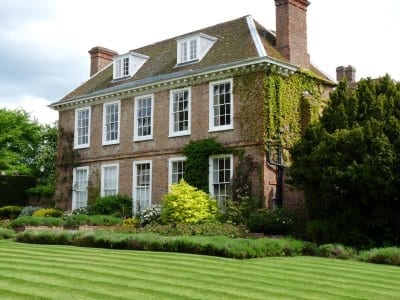
I first visited 32a Ovington Square in September 2009. At the time, this “hidden house” was the home of Lord Carrington and it had just come on the market at a price, if I recall correctly, of circa £3,000,000.
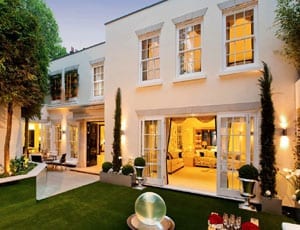
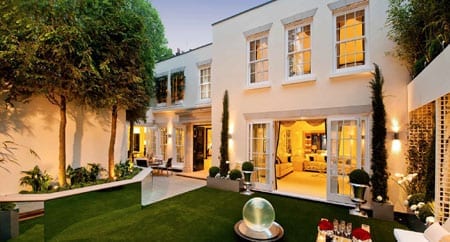
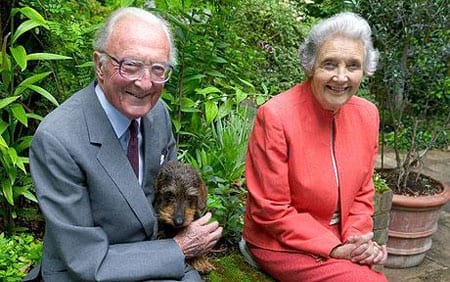
The newly redeveloped Carrington House, 32a Ovington Square, London, SW3 1LRThe Rt. Hon. The Lord Carrington KG, GCMG, CH, MC, PC, DL (born 6th June 1919) with his wife Lady Carrington (1920 – 2009) and their dog Edward
A friend was looking for somewhere to buy in London and I’d somehow come across the aforementioned property in a magazine. A detached house in Knightsbridge at this price seemed like a bargain and as he was keen to take a look and I lived round the corner, we arranged to see it together.
During this period, I had unfortunately made the mistake of making the acquaintance of a former ambassador’s wife who thought herself rather grand. Said woman somehow found out about my friend going to what Americans might term an “open house” at 32a Ovington Square and somehow muscled in. This individual happened to be selling her own home nearby and I reckon she, like my friend, thought she’d be onto a bargain. She’d previously unsuccessfully tried to persuade my friend to buy her individually styled, Ralph Lauren wallpapered home but as it actually rattled every time an underground train went underneath and as it was far from a bargain, he’d sensibly declined.
We arrived at the 2,240 square foot 32a Ovington Square to be told by a rather unhelpful estate agent that we’d have to just wander round by ourselves and that there was no brochure or floor plan. As a merry throng trailed through the house, Lord Carrington stood in the garden looking bemused and his secretary fussed around him. The pair plainly weren’t comfortable with all the interlopers and all in all, who could blame them.
The ex-ambassador’s wife, whose carelessness Rupert Everett most amusingly made reference to in his recent memoirs, spent the entire visit whingeing about the house being dark and stinking of damp. I had to agree with her as the neighbouring buildings towered over it and there was mould on the walls. My friend simply said: “It needs a fortune spending on it.” We left and later I heard that it sold for well above the asking price. The wife of the ex-ambassador thankfully departed from our lives soon after.
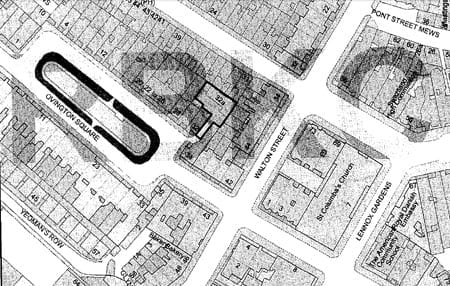
A site plan shows how hidden away 32a Ovington Square truly is – ideal for a government minister or indeed a wayward celebrity
About a year and a half later, I saw 32a Ovington Square for sale with planning permission to construct a far larger residence with a basement and sub-basement pool complex. The price was in the order of £14,000,000. I thought that somewhat ludicrous but now that the very same property is on the market at a price of £23,00,000, it seems that the world has just gone mad.
The brochure for the new residence, which has been renamed, Carrington House, reveals a three-storey low-built freehold building with 5,300 square foot of accommodation. Though 32a Ovington Square has been more than doubled in size by a developer named London City Developments, the sub-basement leisure complex has not been constructed. Could this have been because of planning problems or simply because such construction wasn’t deemed to add value?
In August 2002, Lord Carrington, whom The Mirror described as being “doddery” in a Scurra diary piece, was said to have objected to a bar named Townhouse behind his former home being given a 1am licence. That bar has since closed but as seven of the residents of Ovington Square and Beauchamp Place also took a dislike to the prospect of subterranean developments at his former home, only proposals for a single basement level were included in the January 2010 plans submitted by a Mr & Mrs R. Garner.
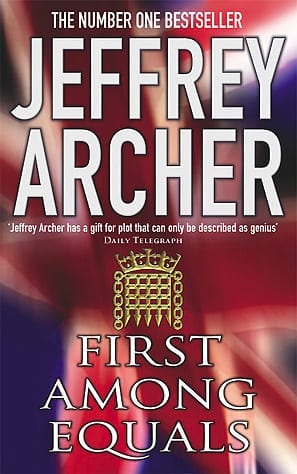
Jeffrey Archer’s 1984 novel “First Among Equals” (published in the UK by Hodder & Stoughton, ISBN: 0-340-35266-3)
Aside from controversy with residents and planning officials, this “heavily overlooked,” “dark” house gets a brief credit in Jeffrey Archer’s 1984 novel, First Among Equals:
“Charles would not have normally accepted the invitation. Lately he found cocktail parties to consist of nothing but silly little bits of food, never being able to get the right drink and rarely enjoying the trivial conversation. But when he glanced on his mantelpiece and saw an ‘At Home’ from Lady Carrington he felt it might be an amusing break from the routine he had fallen into since Fiona left. He was keen to discover more about the rumoured squabbles in Cabinet over expenditure cuts. He checked his tie in the mirror, removed an umbrella from the hat stand and left Eaton Square for Ovington Square… He arrived at Lord Carrington’s front door a little after six forty-five. A maid answered his knock, and he walked straight through to a drawing room that could have held fifty guests and very nearly did. He even managed to be served with the right blend of whiskey before joining his colleagues from both the Upper and Lower Houses.”
Turning to the real Lord Carrington, here is a man who has led a remarkable life. He served as Foreign Secretary in Margaret Thatcher’s cabinet between 1979 and 1982 and as Secretary General of NATO from 1984 to 1988. The last surviving member of the Cabinets of both Harold Macmillan and Sir Alec Douglas-Home was British High Commissioner in Australia between 1956 and 1959 and also chaired the 1979 Lancaster House conference that brought Zimbabwe’s revolutionary war to an end. In 1991, Carrington presided over diplomatic talks in the former Yugoslavia and commented:
“When I first talked to Presidents Milošević and Tudjman, it was quite clear that both of them had a solution which was mutually satisfactory – which was that they were going to carve up Bosnia between them.”
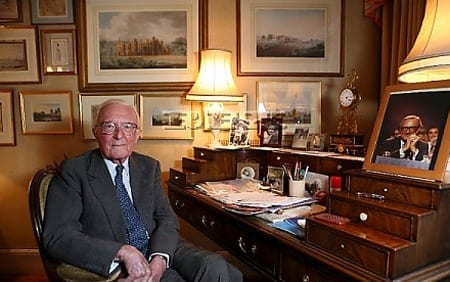
Lord Carrington at his desk in 32a Ovington Square, KnightsbridgeThe Manor House, Bledlow, Buckinghamshire, HP27 9PB is the country home of Lord Carrington
Milošević was found dead in his cell in 2006 but it is quite possible that Lord Carrington’s name will be mentioned in the trial of Goran Hadzic at the International Criminal Tribunal for the Former Yugoslavia that has just commenced at The Hague. It is amazing to think that matters involving this 93-year old politician are still current but Carrington’s stamina is shown in his roles as the longest serving member of the House of Lords and the second longest serving member of the Privy Council after HRH The Duke of Edinburgh.
Aside from politics, there is much on the internet, a considerable amount of it written by wildcards and fantasists whose number includes David Icke, about Carrington’s involvement with Henry Kissinger, the Illuminati, the Bilderberg Group and the Committee of 300. The consensus of these conspiracy theorists generally borders on the ludicrous, but it is without doubt that Lord Carrington had and continues to have influence in many high places. He was chairman of Christie’s International PLC from 1988 to 1993 and has held directorships on the boards of companies that have included Barclays Banks PLC, Hambros PLC, Cadbury Schweppes PLC, Amalgamated Metal Corporation PLC, British Metal Corpoation PLC, Rio Tinto PLC, Kissinger Associates Inc. and Hollinger Inc.
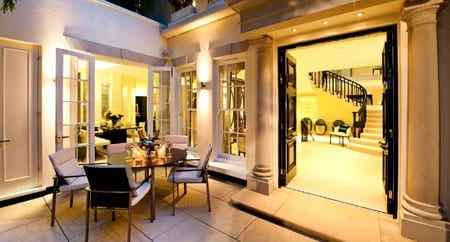
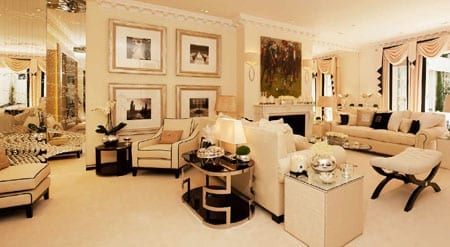
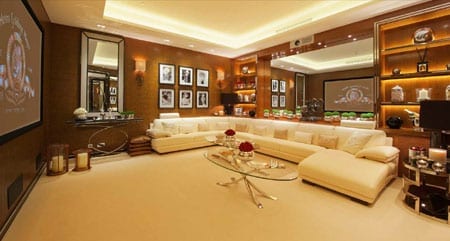
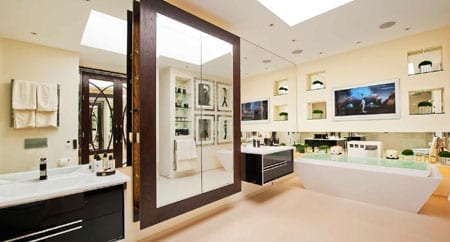
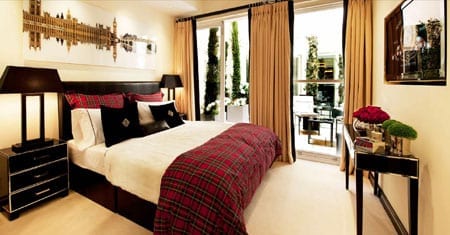
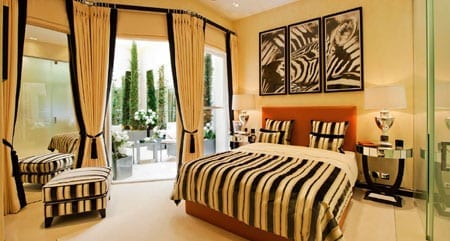
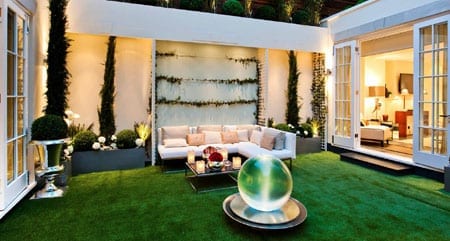
The main entrance to Carrington HouseThe main reception room of the house is decorated in a contemporary style and a far cry from the traditional decoration favoured by Lord and Lady CarringtonAn essential feature in any house priced over £10 million is a media roomCarrington House now boasts a bar that any dignitary would envyThe newly added basement level features an entertaining hall, dining room, bar, gym, media room and two bedroom suitesThe staircase is now lit by a glazed cupolaThe master bedroomThe master bathroomAnother bedroom, located at basement level, is decorated with a Scottish theme and has access to a shared courtyardThe other suite that shares the courtyard is decorated with an “Out of Africa” theme complete with an image of a zebra and matching linen and upholsteryWould the purchaser of a £23,000,000 home truly want an AstroTurf lawn?
Following on from this rather over the top redevelopment, a new chapter has certainly begun at 32a Ovington Square. Whether it is bought by a popstar or a Russian oligarch, they’ll definitely not be anywhere nearly as equal to Lord Carrington in terms of their league of influence.
Carrington House, 32a Ovington Square, London, SW3 1LR is for sale through Knight Frank. For further information contact Nick Vestey on +44 (0) 20 7591 8600. Full details of the house can be viewed at:http://search.knightfrank.com/sla100211
An event to support the unsung heroes in our community
On the 8th November, The Steeple Times will be the media partner for a fundraising event jointly hosted by Gina and Alan Miller and The Rt. Hon Iain Duncan Smith MP at The Hurlingham Club in London, SW6. 100% of the funds raised by the “Celebrating Champions in the Community” evening will aid charities supported by Miller Philanthropy and The Centre for Social Justice.
Gina Miller of Miller Philanthropy comments:
“We increasingly hear and read in the media examples of how our society is breaking down. Yet there are unsung heroes battling every day, on all our behalves, trying to reverse these trends. We invite you to celebrate and support these individuals so please join us for an evening of entertainment, celebration and inspiration. 100% of your attendance donation will be going to these community heroes.”
Gina Miller
The Rt. Hon Iain Duncan Smith MP
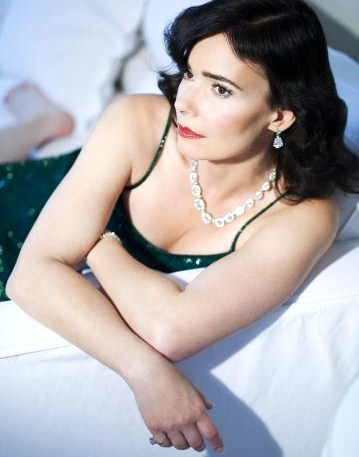
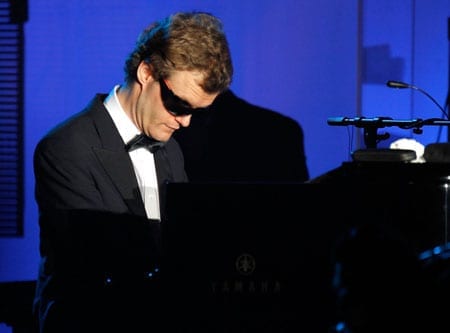
This black tie event, whose principal sponsor is the luxury couture house Ralph & Russo, will include a drinks reception, dinner and auction as well as entertainment from the BRIT-Award winning singer Beverley Craven; Antony Costa, a former member of the pop boy band sensation Blue; the Magpie Dance company and Derek Paravicini, one of the great musical entertainers of his generation.
Beverley CravenAntony CostaMagpie Dance
Derek Paravicini
A donation of £150 per person comes as the condition of attending, 100% of which goes to charities being supported.
Miller Philanthropy
Miller Philanthropy is a family foundation founded on passion and integrity with 100% transparency and 100% of funds raised going to charities and causes.
The foundation focuses on small community charities – the unsung heroes who undertake vital work at the coal face of the negative trends in our society; primarily, but not exclusively in the UK. Miller Philanthropy’s premise is based upon a strong belief that charity begins at home.
The foundation acts as a philanthropic incubator for chosen charities and projects who undertake transformational work but face a growing number of challenges and lack of resources. We mentor and partner these extraordinary individuals and organisations until they become sustainable.
Beneficiary Charities
The AMBER Trust
Best Beginnings
Chernobyl Children’s Project
Crossway Pregnancy Crisis Centre
Hebridean Whale & Dolphin Trust
HELP Counselling Centre
Magpie Dance
Pond Conservation
Street Kids International
Target Ovarian Cancer
The Centre for Social Justice
The Centre for Social Justice is an independent think-tank, established to put social justice at the heart of British politics. Moved by shocking levels of disadvantage across the nation, it studies the root causes of Britain’s acute social problems in partnership with its Alliance of over 350 grassroots charities and people whose lives have been affected by poverty.
This enables the CSJ to find and promote evidence-based, experience-led solutions to change lives and transform communities.
The CSJ believes that the surest way to reverse social breakdown – and the poverty it creates – is to build resilience within individuals, families and the innovative organisations able to help them.
Breakthrough Britain
In 2007, the CSJ published its landmark report Breakthrough Britain. This publication has had a significant impact on the previous and present government and has led to the current welfare reforms being implemented across the UK. In Autumn 2012, the CSJ is set to produce Breakthrough Britain II which will update its policy recommendations, with the aim of creating a cross-party consensus on some of the most important policy issues facing Britain today.
To book tickets to the Celebrating Champions in the Community event, contact Rachael Dove of Miller Philanthropy on +44 (0) 20 7838 8650 or email [email protected]
“Why pay less when you can pay more?” is a mantra that some strangely choose to live by. In my time, I have encountered a couple with a different Ferrari for each day of the week, someone who proudly declared their home had a window for each day of the year and an heiress who insists upon the local baker feeding her dog daily with a freshly baked caviar pie.
When I discovered a house in California priced at $78,000,000, I didn’t expect to subsequently find out that the same vendor is also selling another of his homes in Montana at the very same price. Having done a little research into Donald G. Abbey, the commercial real estate tycoon who owns both The Bradbury Estate and Shelter Island, I discovered that here indeed is another personality whose excess knows no bounds.
I suppose when people sell homes of this worth, the asking price they set is quite irrelevant. “What,” I’m sure they ask, “is $5 million between friends?” Equally, when it comes to developing such properties, characters of this nature do not show any reserve. Bling is most definitely the order of the day and the larger and flashier one can build, I guess, the better.
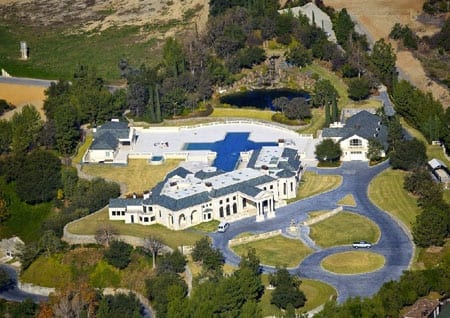
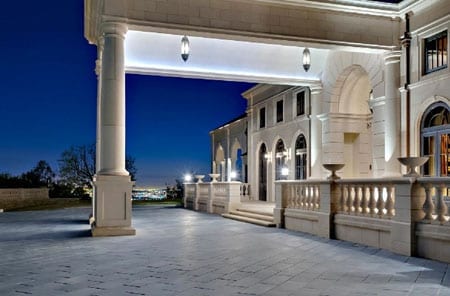
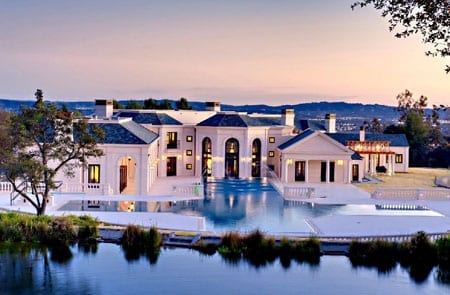
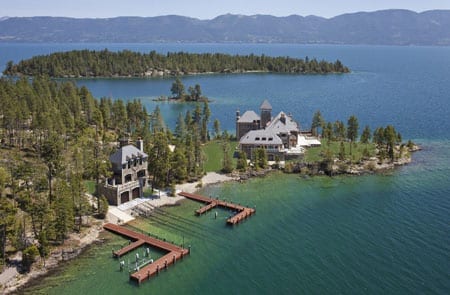
An aerial shot of The Bradbury Estate, 172 Bliss Canyon Road, Bradbury, California, CA 91008, USAThe front elevation of the main houseThe owner and his guests need not get wet on arrival in their limousines
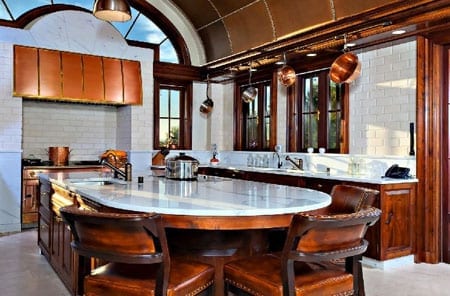
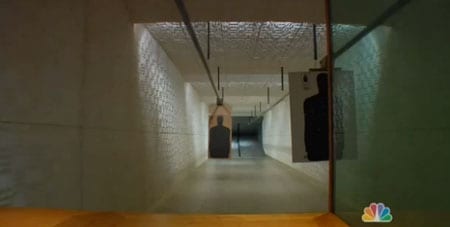
Abbey’s Bradbury Estate is a case in point. This vast property consists of a 33,000 square foot main house with 7 bedrooms and 10 bathrooms. It is almost entirely made of French limestone and includes a chef’s kitchen with a pizza oven, a 2,000 bottle wine cellar, an oak paneled elevator and a leather paneled poker room. Bedrooms include domes with hand painted frescos and in addition there is a detached 6,700 square foot guest house above a 10 car garage and a 5,700 square foot pool house with a catering kitchen, gym, massage room and a subterranean EPA certified 25 yard rifle shooting range complete with a gun storage room and 2 large safes.
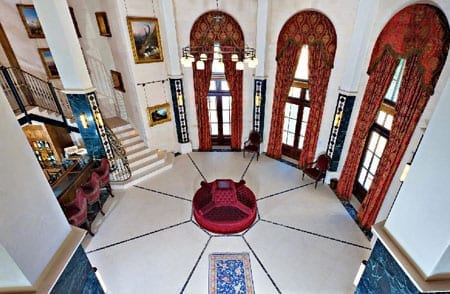
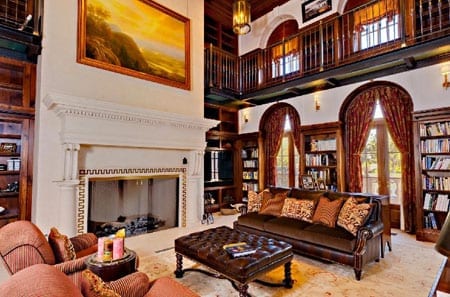
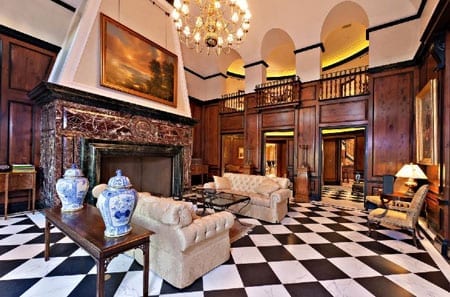
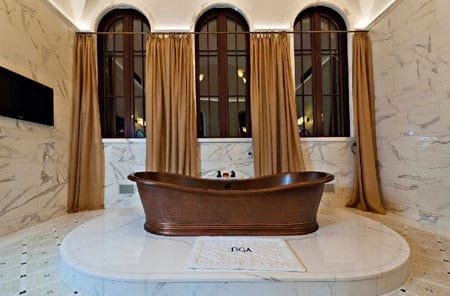
The hall of the main residence comes complete with a gallery and barA vast library provides the perfect space to enjoy a good bookThe library’s glazed ceilingAnother palatial reception roomThe house features a rather impressive kitchenMr Abbey’s copper bath tub comes complete with a mat displaying his initials in front of it
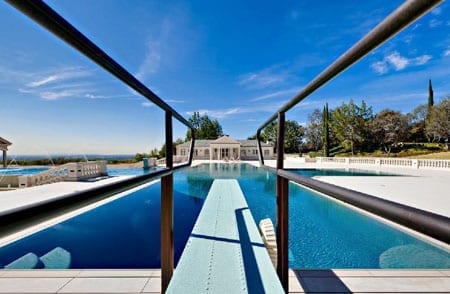
Within the 8 acre grounds there is a cross shaped infinity-edged pool – perhaps Mr Abbey is religious – that is “just a few feet short of Olympic length.” It requires 350,000 gallons of water if it is to be filled to capacity. Adjoining this is something even more ludicrous: a 1,000,000 gallon, temperature-controlled rainbow trout pond that cost some $8,000,000 to construct. The pond is said to be “adorned with perennials,” is heated by a custom gravity separator with UV filters and is “chilled for the trout by a 300-tonne central cooling plant.” At Bradbury, thoughts of water crisis in Sudan and Ethiopia come way behind the needs of Abbey’s rainbows.
The rear of the house viewed from above The Bradbury Estate’s $8,000,000 trout pondThe estate’s 350,000 gallon near Olympic length cross shaped infinity edged swimming poolThe property’s EPA certified 25 yard rifle range
For those wanting to avoid California’s UV rays, Bradbury also boasts an acre of porches, decks, loggia and walkways. A 600ft blue stone driveway completes this “once in a lifetime trophy property” that “belongs in the portfolio of the most astute collector” and it has space for “60 foot truck access or multiple limousines.”
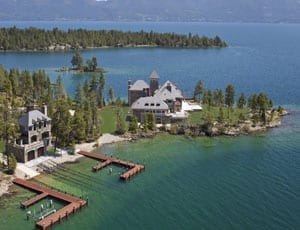
When Mr Abbey has tired of California, he is able to retreat to his own island in Montana. The 24 acre Shelter Island on Flathead Lake includes 7,000 feet of frontage to the water, a world class sporting clay course and 3 computer controlled tracks and docking systems that allow boats to be landed in the dry dock without riders ever leaving the craft or handling a line. The island is powered via an underground armoured utility cable that carry 12,000 amps to it along with CAT-5 computer cable and phonelines and the main entertaining space features a mammoth television of some 120-inches in size.
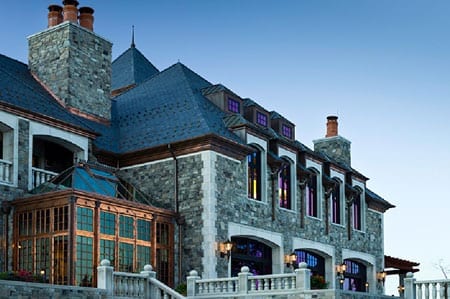
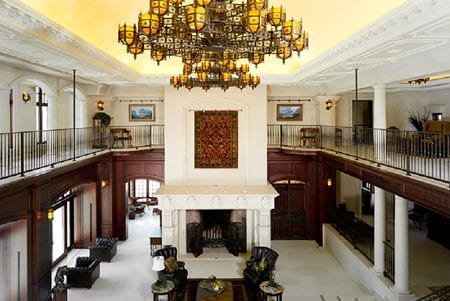
An aerial view of Donald G. Abbey’s Shelter IslandMr Abbey’s passion for copper continues with a conservatory made out of the metal on the lakeside elevation of the main residence on Shelter IslandThe Great Room of the main residence on Shelter IslandMr Abbey’s passion for fine wines is displayed in a bar and tasting room in the propertyThe owner and his guests can access their boats without having to go anywhere near the water
Abbey has built over 44,000 square foot of accommodation on his island. The main house has 5 bedrooms and 8 bathrooms. His “Great Room” features ceilings of some 45 foot in height and in addition to yet another indoor shooting range, there is a kitchen that woudn’t look out of place in The Savoy hotel.
In the UK, the property most similar to anything Abbey has built has to be Updown Court at Windlesham in Surrey. Developed by a former bricklayer named Leslie Allen-Vercoe, the house was described by him as being: “The most important residence to be built in England since the 19th century.” Architectural critics did not agree and some went as far as to say that it looked like: “A cross between a Tesco superstore and Center Parcs.”
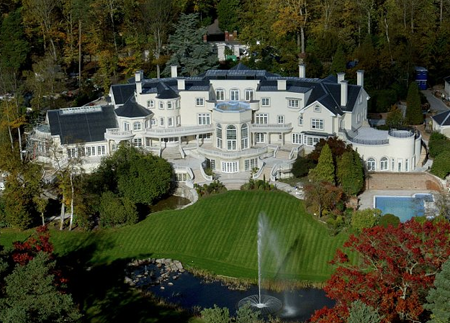
Allen-Vercoe’s behemoth of a house is gargantuan in size. With 103 rooms it includes 24 bedrooms, 5 swimming pools, a 2-lane bowling alley, a squash court, a floodlit tennis court, a 50-seat cinema and a panic room. The heated driveway that led to the house is entirely made of marble and cost some £2.5 million to construct but plainly none of this appealed to the market as it languished for sale at a price of £70,000,000 from 2006 to 2011 before being repossessed by the Irish National Asset Management Agency (NAMA). Updown Court was sold for half the original asking price to a foreign buyer in October 2011 and is, I believe, due to undergo extensive remodeling.
Updown Court, Chertsey Road, Windlesham, Surrey, GU20 6HY, UK
Allen Vercoe once stated: “If Elton John were a house, he’d be Updown Court.” Equally, I imagine if Mr Abbey’s residences were to be compared to any celebrities they’d be the vulgar car crash that is Donatella Versace and the ludicrous money obsessed singer with a dollar sign in her name, Ke$ha.
Updown Court, Shelter Island and The Bradbury Estate all illustrate that money cannot buy you good taste. I suppose, though, that those who ultimately come to live in them will have plenty of space to choose how and where to enjoy their own form of misery.
For information on both The Bradbury Estate and Shelter Island, contact Bob Hurwitz of the Hurwitz James Company on +1 310-477-8865. Website: http://www.hurwitzjamesco.com