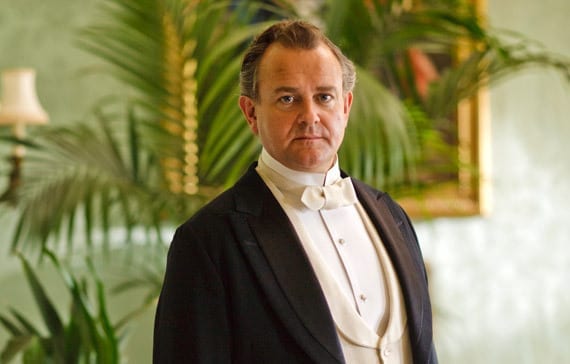
 In his role as Downton Abbey’s Lord Grantham, this actor warned that “scandals” always have a habit of coming out. He graduated in Theology at Cambridge but, according to Adam Helliker of the Daily Express, Bonneville wasn’t especially keen to show Christian compassion towards Lord Archer at a party at The Cadogan Hotel when it was requested that the pair be photographed together.
Tag: farmer
-
Hugh Bonneville
-
Cows don't wear Rolexes
Charles Mitford Cust asks: “Do the clocks really need to go back?”
Yesterday, once again, the clocks went back and now we are officially in winter. As is always the case on this sad annual occasion, I am left asking myself why we have do something so apparently illogical and what are the origins of this extraordinary ritual.
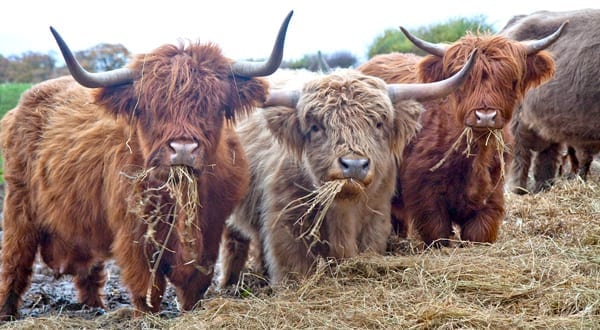
These “hairy beasties” definitely govern the clock rather than being governed by it I used to think it all started in World War Two but, in fact, having done some research, it transpires that we very sensibly did the exact opposite during the war years. Between 1940 and 1945 and also in 1947, we actually switched to “British Double Summer Time” (BDST). Why? We did so to save precious fuel as it was in limited supply. That should strike a chord today, don’t you think?
You bet it should. Supporters of BDST point out that 500,000 tonnes of CO2 would be saved this year if instead of putting the clocks back yesterday, we’d left them alone and then put them forward one further hour in the spring, thereby achieving British Double Summer Time (BDST). Half a million tonnes of CO2… Wow! That is the equivalent of permanently removing 185,000 cars from the road. Hang on, aren’t we meant to be concerned about the environment these days or am I missing something?
Where are the eco-warriors? Surely they should be screaming from the rooftops about CO2 savings like this. This makes all their bleating about wind turbines and solar panels seem stupid. Unlike these alternative energy sources, which we all know are only viable thanks to taxpayer subsidies, putting the clocks forward is free, and you can’t get anything greener than a free CO2 reduction. Yet strangely there is barely a whisper from the normally most vocal section of the green orchestra. Now, I am no conspiracy theorist, but I cannot help but feel that this is highly odd if not darn right suspicious.
There have always been myths concerning BDST, including strong if vague references to the requirements of farming being the reason for us being plunged into darkness earlier than necessary. This is something that, as a countryman, I have always found puzzling.
Farmers do not rely on the time indicated on their watches to go about their business. They do what their ancestors have done for thousands of years: they operate from first light to last light. The time that happens to be recorded on a watch face is all but irrelevant to them because unlike 90 per cent of the population, they do not have to catch trains or commute to work. What’s more, cows don’t wear watches, they just know when they want to be milked and they don’t care what Mr Rolex has to say about it.
Interestingly though, even this well used excuse seems to have been run off the road. In March 2010, in a survey of their membership, the National Farmers Union found that most respondent farmers were neutral about BDST and actually the only strong representation was from members supporting longer daylight in winter.
Another long-term excuse is that children in the north of Britain would be in more danger walking to school in the mornings if it were dark. “Walking to school?” When was the last time a kid walked to school in this country? 1951? Seriously though, with traffic density as it is today, no responsible parent would let their child walk to school even if they could do so. As Lord Archer has pointed out, this is outdated nonsense and therefore not a viable excuse for rejecting BDST.
The Royal Society for the Prevention of Accidents (RoSPA), the RAC and the AA have campaigned for years to reintroduce BDST as they argue that police accident records clearly indicate that more accidents occur in the dark evenings during rush hour when tired commuters are returning from work than when they are fresh in the mornings. According to their research, they estimate 600 lives per year could be saved. 600 lives: that’s the equivalent of a bloody massacre. The government moved heaven and earth to ban competitive handgun target shooting when 30 people were killed but have routinely ignored 600 lives per year for decades? What are these politicians doing?
A Conservative Member of Parliament, Rebecca Harris, put forward the Daylight Saving Bill 2010-12. It was debated in November 2011 and January 2012, but despite being supported by “Call Me Dave” himself, it was filibustered out of Parliament by largely Scottish based members who argued it would disadvantage Scotland.
These politicians used this argument despite a 2010 survey of 3,000 Scots indicating that they were actually in favour of BDST. I guess Scots like to save money on their heating bills too: oh, there’s a surprise. Anyway, the efforts of these objectors were enough to ensure that the bill’s time was used up and it will now proceed no further.
What? That’s it? 500,000 tonnes of CO2 and 600 lives a year swept under the carpet because a couple of whingeing Scottish MPs are out of touch with their the views of their own constituents? Does that sound right to you? Even if they didn’t vote for BDST, which with fuel prices the way they are, being canny Scots, they almost certainly would, why can’t Scotland have it’s own time zone? Many of them want independence, so here’s a good start. As an aside, evidence also shows that if Scots did adopt BDST, their suicide rate would drop dramatically as the statistics show this is clearly linked to long dark winter nights.
Either way, we have reached a point where political correctness simply has to be outweighed by common sense. You cannot let 85 per cent of the UK population suffer for the sake of the other 15 per cent. What of the adverse affect this is having on GNP at a time when the economy is struggling so much?
The thing about this clock moving business is that the more you search for answers, the more questions you are left asking. One is forced to conclude that it is either a deeply sinister conspiracy involving multi-billion pound energy companies who would rather we carried on paying for an extra half a million tonnes of unnecessary smog, or simply an old fashioned British farce of monstrous proportions.
All in all, I’m left rather perplexed. What’s your view? Isn’t it time that something changed?
-
Celebrating Champions in the Community
An event to support the unsung heroes in our community
On the 8th November, The Steeple Times will be the media partner for a fundraising event jointly hosted by Gina and Alan Miller and The Rt. Hon Iain Duncan Smith MP at The Hurlingham Club in London, SW6. 100% of the funds raised by the “Celebrating Champions in the Community” evening will aid charities supported by Miller Philanthropy and The Centre for Social Justice.
Gina Miller of Miller Philanthropy comments:
“We increasingly hear and read in the media examples of how our society is breaking down. Yet there are unsung heroes battling every day, on all our behalves, trying to reverse these trends. We invite you to celebrate and support these individuals so please join us for an evening of entertainment, celebration and inspiration. 100% of your attendance donation will be going to these community heroes.”

Gina Miller 
The Rt. Hon Iain Duncan Smith MP
This black tie event, whose principal sponsor is the luxury couture house Ralph & Russo, will include a drinks reception, dinner and auction as well as entertainment from the BRIT-Award winning singer Beverley Craven; Antony Costa, a former member of the pop boy band sensation Blue; the Magpie Dance company and Derek Paravicini, one of the great musical entertainers of his generation.
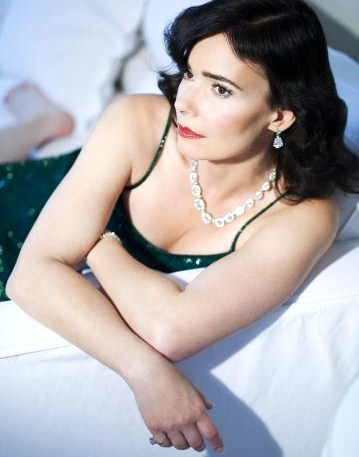
Beverley Craven 
Antony Costa 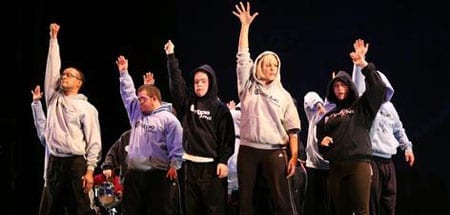
Magpie Dance 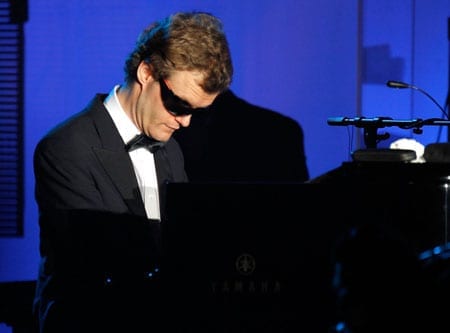
Derek Paravicini
A donation of £150 per person comes as the condition of attending, 100% of which goes to charities being supported.
Miller Philanthropy
Miller Philanthropy is a family foundation founded on passion and integrity with 100% transparency and 100% of funds raised going to charities and causes.
The foundation focuses on small community charities – the unsung heroes who undertake vital work at the coal face of the negative trends in our society; primarily, but not exclusively in the UK. Miller Philanthropy’s premise is based upon a strong belief that charity begins at home.
The foundation acts as a philanthropic incubator for chosen charities and projects who undertake transformational work but face a growing number of challenges and lack of resources. We mentor and partner these extraordinary individuals and organisations until they become sustainable.
Beneficiary Charities
- The AMBER Trust
- Best Beginnings
- Chernobyl Children’s Project
- Crossway Pregnancy Crisis Centre
- Hebridean Whale & Dolphin Trust
- HELP Counselling Centre
- Magpie Dance
- Pond Conservation
- Street Kids International
- Target Ovarian Cancer
The Centre for Social Justice
The Centre for Social Justice is an independent think-tank, established to put social justice at the heart of British politics. Moved by shocking levels of disadvantage across the nation, it studies the root causes of Britain’s acute social problems in partnership with its Alliance of over 350 grassroots charities and people whose lives have been affected by poverty.
This enables the CSJ to find and promote evidence-based, experience-led solutions to change lives and transform communities.
The CSJ believes that the surest way to reverse social breakdown – and the poverty it creates – is to build resilience within individuals, families and the innovative organisations able to help them.
Breakthrough Britain
In 2007, the CSJ published its landmark report Breakthrough Britain. This publication has had a significant impact on the previous and present government and has led to the current welfare reforms being implemented across the UK. In Autumn 2012, the CSJ is set to produce Breakthrough Britain II which will update its policy recommendations, with the aim of creating a cross-party consensus on some of the most important policy issues facing Britain today.
For more details about The Centre for Social Justice, go to: http://www.centreforsocialjustice.org.uk
For more details about Miller Philanthropy, go to: http://www.millerphilanthropy.comTo book tickets to the Celebrating Champions in the Community event, contact Rachael Dove of Miller Philanthropy on +44 (0) 20 7838 8650 or email [email protected]
-
The land of Tarka and Salar
The North Devon countryside that inspired Henry Williamson, R. D. Blackmore and Charles Kingsley
Much of my childhood was spent reading the works of superb authors and amongst the best of them were Arthur Ransome (1884 – 1967), Denys Watkins-Pitchford (1905 – 1990), who wrote many of his works under the pseudonym “B.B.”, and Henry Williamson (1895 – 1977). As a youngster, I was lucky enough to be read to by Ransome’s nephew, a most captivating professional storyteller, and was given first editions of many of the works of all three of these early to mid twentieth century authors.
I had my first sailing lessons on Windermere, where Ransome set many of his works, and went shooting in the Forest of Bowland, a place dear to B.B. Though I also fished in many wonderful locations, until now I’d never been to the land of Henry Williamson and his most famous creation, Tarka the Otter. I currently find myself here enjoying a break from London and yesterday I randomly discovered, I am staying next to the setting of one of Williamson’s lesser known stories, Salar the Salmon, on the River Bray close to Exmoor.

“Salar the Salmon” by Henry Williamson (1935) 
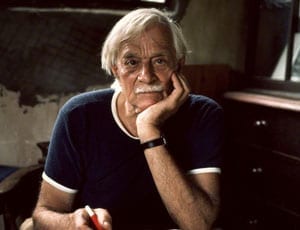
Henry Williamson (1895 – 1977) photographed by Mark Gerson, cibachrome print from original transparency, August 1970 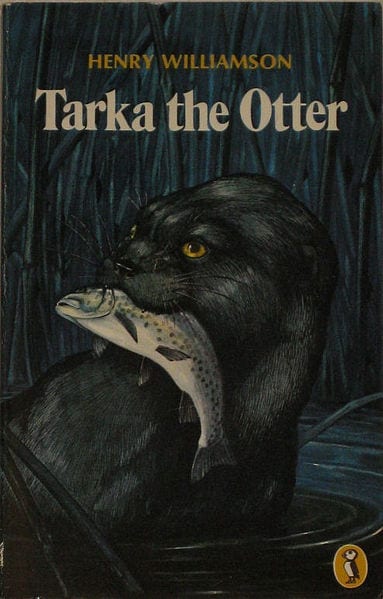
“Tarka the Otter” by Henry Williamson (1927) Originally published in 1935, Salar the Salmon combines Henry Williamson’s great talent as a writer with his insight as a naturalist. The story tells the tale of a five-year old salmon named Salar, whose name means the “leaper,” and his return to the stream of his birth. Salar’s migration through the riverways of Devon involve him surviving porpoises, seals, nets, fishermen, otters, poachers and weirs and Williamson’s account truly gives the reader an insight into one of nature’s great journeys.
Henry Williamson wrote both Salar the Salmon and The Children of Shallowford (1939) whilst living beside the River Bray in a hamlet named Shallowford, near Lynton in Devon. The river plainly inspired him and whilst he lived there on the Fortescue Estate he also sired four children, joined Oswald Moseley’s British Union of Fascists, was briefly imprisoned for his views and conducted several extra-marital affairs.
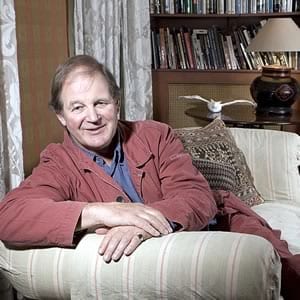
“War Horse” author Michael Morpurgo OBE Salar the Salmon is a story I am not alone in recommending. Another Devon based author and poet, Michael Morpurgo OBE, best known for his acclaimed work, War Horse, speaks very fondly of Williamson and the novel in a dedication he prepared for a recent reprint of it:
“It is a rare gift indeed for a storyteller to be poet as much as a storyteller, to tell a tale so deeply engaging that the reader wants to know what will happen and never want it to end, and yet at the same time tells it in such a way as to leave a reader wide-eyed with amazement at the sheer intensity of feeling that can be induced by the word-magic of a poet. Henry Williamson is just such a story-maker poet.”
Where I am staying, I have a view of the very river on which Salar made his journey and here also a detached barn conversion is currently available to rent at a price of £1,150 per month. Malle’s Barn is a 2-bedroom stone-built property that includes a 25ft by 12ft open plan sitting room with a fully fitted kitchen and a dining area, as well as a study and shower room.
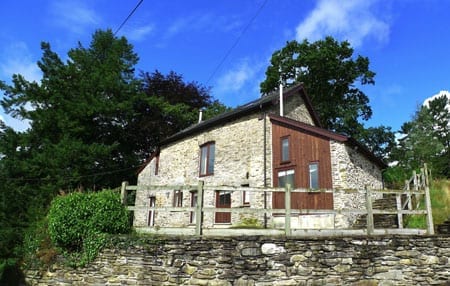
The exterior of Malle’s Barn, Brayford, Near Barnstaple, Devon, EX32 7QB 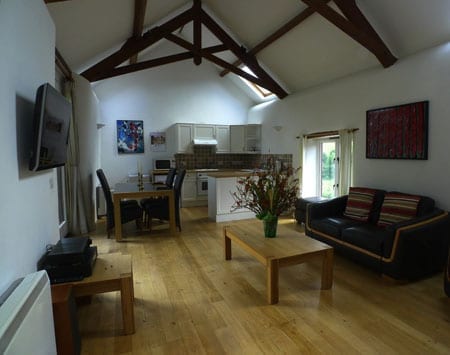
A large open plan reception room includes sitting, dining and kitchen areas 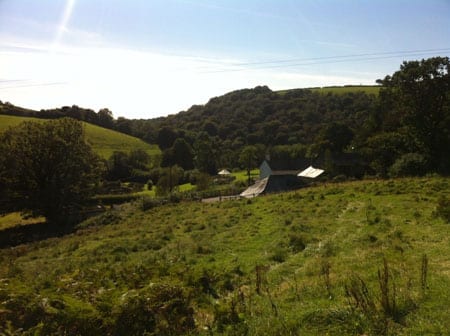
The setting of Malle’s Barn overlooking the valley of the River Bray Tenants of the house will have access to the owner’s 60-acre estate which includes a mile of salmon and brown trout fishing on both the Rivers Bray and Holewater, ancient woodland and a lake in addition to a private garden and adequate parking for several vehicles.
Malle’s Barn would make a perfect retreat for any author or artist and is just 10 minutes from South Molton, Barnstaple is 9 miles away and Exeter 40 miles. The location is 30 minutes from J27 of the M5 and Tiverton Parkway Station, which provides mainline links to London Paddington within 2 hours.
Close to Malle’s Barn are the prettiest sections of a footpath named the Tarka Trail. Consisting of over 180 miles of footpaths and cycle tracks that take in the Dartmoor and Exmoor National Parks and the North Devon Coast Area of Outstanding Natural Beauty. The trail takes in many of the locations described in Williamson’s most famous novel but this area of North Devon also galvanized the pens of a number of other authors.
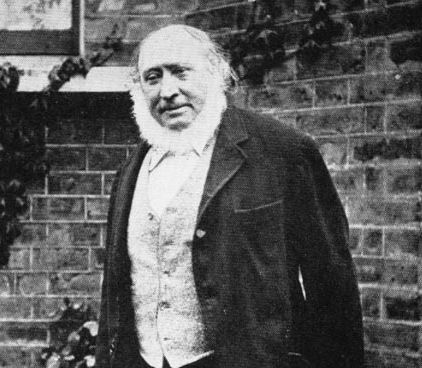
Richard Doddridge Blackmore (1825 – 1900) 
Professor Charles Kingsley (1819 – 1875) Richard Doddridge Blackmore (1825 – 1900) set Lorna Doone: A Romance on Exmoor in the locality in 1869 and Professor Charles Kingsley (1819 – 1875) put pen to paper here when he wrote Westward Ho! in 1855. A village of the same name was subsequently established near Bideford in the 1860s by entrepreneurs, led by Lord Portsmouth, who saw an opportunity to capitalise on the novel’s success. Westward Ho! is the only place in the United Kingdom with an exclamation mark in its name. The only other place in the world that shares such is Saint-Louis-du-Ha! Ha! in Quebec, Canada.
Aside from literary connections, the locality is famous for its excellent fieldsports. The Earl and Countess of Arran’s Castle Hill and the Molland shoot are considered amongst two of England’s finest high bird pheasant shoots and both the Devon and Somerset Staghounds and Devon and Somerset Foxhounds hunt on Exmoor.
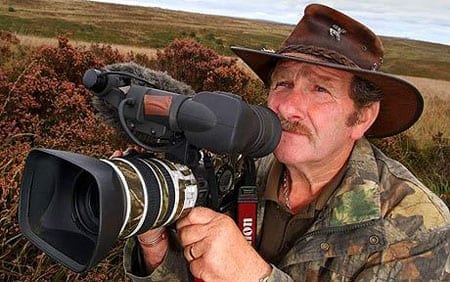
Johnny Kingdom Johnny Kingdom, who describes himself as having been “a farmer, quarryman, forestry worker, gravedigger and, if truth be told, a poacher” in his youth, also lives in the locality and is well known as a wildlife photographer, filmmaker and television presenter. He sets many of his series on Exmoor because of the vast array of wildlife he comes across here and is, like Williamson before him, often to be found exploring the valley of the River Bray.
In a 1965 BBC interview Henry Williamson was asked: “What influence has this [the Devon] countryside had on you?”:
“Everything, I should say. I came down here as a youth, aged just 18 in 1914, spent a fortnight’s holiday here in the beginning of May, beginning of June. I walked 20 to 25 miles every day. Everything I saw was radiant and beautiful.”
This idyllic part of Devon that Williamson loved so much remains unspoilt to this day. If you haven’t visited yet, it really should be added to your bucketlist.
For more information about Henry Williamson, go to The Henry Williamson Society’s webpage: http://www.henrywilliamson.co.uk
Watch the 1965 BBC interview with Williamson at: http://news.bbc.co.uk/local/devon/hi/people_and_places/history/newsid_8475000/8475989.stm
For details and a map of the Tarka Trail, go to: http://www.devon.gov.uk/tarkatrail and http://www.devon.gov.uk/tarka-trail-circular-routes.pdf
For information on the Molland shoot, go to: http://www.bettwshall.com/molland.htm
For more information about the Devon and Somerset Staghounds, go to: http://www.devonandsomersetstaghounds.net
For more information on the Devon and Somerset Foxhounds, go to: http://www.exmoorfoxhounds.co.uk
View the official website of the author and poet Michael Morpurgo at: http://www.michaelmorpurgo.com
View the official website of Johnny Kingdom at: http://www.johnnykingdom.co.uk/
For more information about Malle’s Barn, contact Charles Mitford Cust at: [email protected]
-
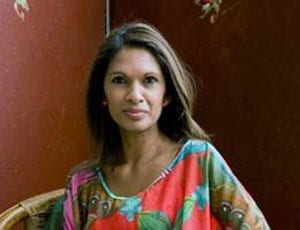
Gina Miller: What’s on your mantelpiece?
“The Steeple Times” quizzes leading philanthropist Gina Miller about what’s on her mantelpiece
The Steeple Times shares “wit and wisdom.” What’s your guiding force?
Life is short, so don’t live in regret.
“Never regret, never explain, never apologise” is, in our humble opinion, a great motto. What’s yours?
The three C’s – compassion, common sense and confidence are far more valuable than three A’s.
Kerry Katona was unacceptable in 2007. Who is unacceptable in 2012?
Human traffickers.
Tony Blair misses being Prime Minister. What do you miss most in your life?
Sleep.
What might you swap all your wealth for?Knowing my children will be happy.
What phrase or word do you most loathe?
“Honestly, I really mean it”: Implies they are lying the rest of the time.
In the UK, some people consider charity to “begin at home.” What’s your view and what causes do you personally support?
Charity begins at home and should be a fundamental value in all our families and societies. It is about the small actions, consideration and kindnesses we undertake every day, not the big gestures we make once in a while. If we all did this, the ripple effect would be enormous and would heal many of society’s ills.
Have you ever been arrested and if so, for what?
Yes, I was mistakenly identified as a local in Egypt and arrested for being improperly attired.
If you could fill a carriage on The Orient Express, who would be your fellow passengers?
My children, my husband, Oscar Wilde and the archaeologist Howard Carter.

Gina Miller If you were unfortunate enough to end up on death row, what would be your last meal and where would you eat it?
A tin of caviar and a teaspoon; in a garden full of scented roses and wild flowers (maybe I could use the teaspoon to tunnel my way out!).
What time is it acceptable to consume the first drink of the day?
Whatever time you fancy, as it’s always the ‘right time’ somewhere on the globe.
A Negroni, a martini or a cup of tea?
A martini.
Whose parties do you enjoy the most and why?
Those with great drink, great food, great music and lovely people – on a balmy beach. Idyllic.
Who is the most positive person you know?
My daughter who has special needs – she is not socialised or limited by academic thinking. She is a true free thinker with genuine EQ.
What’s your most guilty pleasure?
Caviar.
What was the first bone that you broke?
Knee.
If a tattoo were to sum you up, what would it be of?Women don’t smoke cigars!
If you were a car, what marquee would you be?
Morgan.
Cilla Black presented “Surprise, Surprise.” Tell us the most surprising thing about you.I was a free climber before I destroyed my thumbs which are very arthritic – the higher and more testing the better. All started when I was a tomboy and thought I was a superhero. I have climbed on all 6 continents and still think I can fly.
What’s currently sitting on your mantelpiece?
An invite to a gorgeous girl’s wedding and a sculpture of a lady welded together from car nuts and bolts produced by some supposed lost youths who were engaged in car theft but who are now successful engaged in a mechanic apprenticeship scheme we set up in Redditch.
Gina Miller is a founding partner of SCM Private and also runs the True and Fair campaign. More information can be viewed at http://www.scmprivate.com and http://trueandfaircampaign.com
-

Gina Miller
 This modern day suffragette is a philanthropist and founding partner of SCM Private, a Belgravia based firm of wealth managers. Gina Miller has three degrees, is originally from Guyana, South America and is leading a fight against the conflicts of interest and lack of transparency in the city and charities. With her husband, Alan, she was a major contributor to the Lady Thatcher Infirmary at the Royal Hospital. Her Miller Philanthropy foundation and Goodwill Exchange volunteer exchange are just two examples of the achievements of this truly powerful and driven giver.
 -
Alan Miller
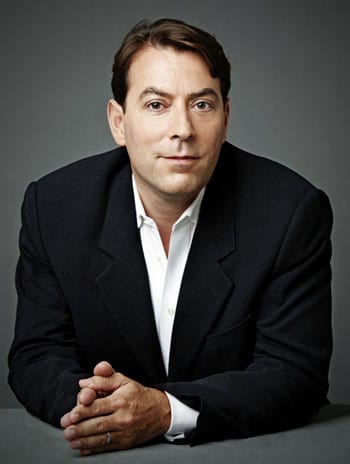 The nephew of That’s Life!’s Esther Rantzen is a financial titan and philanthropist. Miller is a founding partner and CIO of SCM Private, a Sloane Street based wealth management firm, but he’s best known for his successes at New Star Asset Management, Jupiter Asset Management and Gartmore Invetment Management. Here is a man of principle who has also run the London Marathon twice and the New York Marathon thrice.