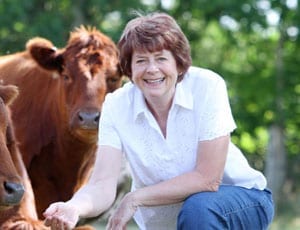
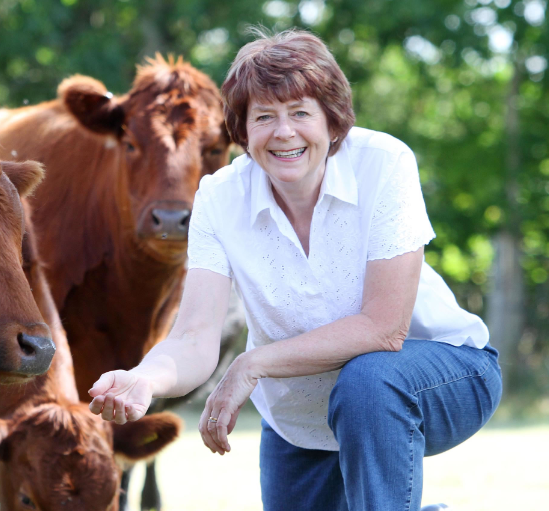
Yesterday, I found myself listening to a self-proclaimed “writer, broadcaster and entertainer” named Pam Ayres on BBC Radio 4.
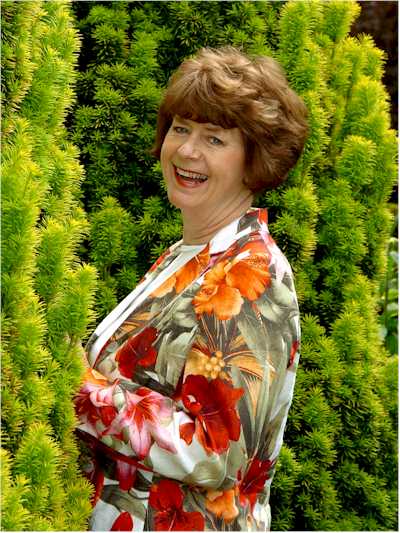
Pam Ayres
An example of her style numbers:
“I am sittin’ on the sofa. By the fire and stayin’ in. Me head is free of comfort. And me nose is free of skin. Me friends have run for cover, They have left me pale and sick. With me pockets full of tissues. And me nostrils full of Vick.”
I recall having first encountered the supposed “humour “of Ms Ayres, whom the Daily Telegraph once described as “the doyenne of doggerel,” at a dinner hosted by The Lady Taverners at The Savoy some years ago. As Ayres droned on, an American lady at my table tapped me on the shoulder and said: “What the hell is this strange woman on about?” Having never heard of this “poet,” I shrugged and simply responded: “I haven’t got a clue.” When, in desperation, it was suggested we vacate to the bar, I embraced the idea with gusto. Sat there with an extremely strong martini, I felt well again.
That, I assumed, would be the last my poor ears heard from Ayres but sadly it was not to be. Radio 4, which I listen to throughout the day, have chosen to give her airtime and yesterday, when she came on, the first comment from my friend Charles was: “Oh God, not her, she terrified me even when I was a kid.” The unwelcome ghostly voice of an evening past had returned to my life.
Having had my fill, I thought I’d share my thoughts with my Twitter followers and posted the following:
“I have to say @PamAyres is quite possibly the most tedious person on @BBCRadio4. Her attempt at “humour” is cringeworthy and annoying.”
Within minutes, I’d been bombarded with hatemail from furious fans of Ayres. Most curiously amongst them were missives from the former game show panelist Annabel Giles (@Annabel_Giles) and “Britain’s premiere [sic] Nazi hunter” Alan Stoob (@nazihunteralan). Plainly Ayres is “much loved” in all manner of circles.
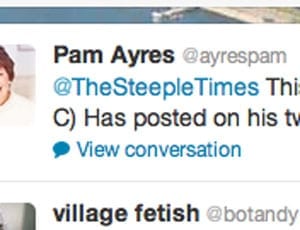
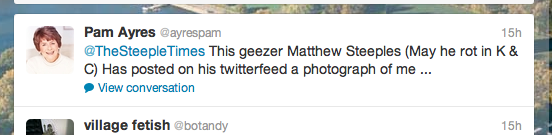
Later, a poem came from the woman herself. It reads as follows:
This geezer Matthew Steeples (May he rot in K & C)
Has posted on his twitterfeed a photograph of me
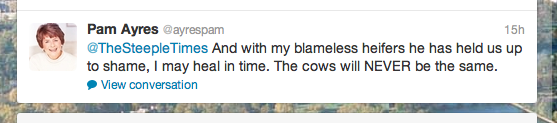
And with my blameless heifers he has held us up to shame,
I may heal in time. The cows will NEVER be the same.
“Blummin’ ‘ell:” I didn’t know whether to laugh or cry. Never could I have imagined that I’d find myself immortalised in a poem by Pam Ayres.
Learn more about Pam Ayres at: http://www.pamayres.com or follow her on Twitter:http://www.twitter.com/ayrespamShe might even pen a verse in your honour if you’re, erm, lucky.
This supposed “First Lady of Comedy” spouts lines like: “He had a bull name Floyd, but he was unemployed.” How long did it take her to come up with that? Her appearances on Radio 4 and elsewhere are peppered with references to “blummin’ people” and how she’s “stuck all [she] can stick.” Could someone please put her out to pasture before all our eardrums burst?
This Kentuckian buccaneer founded Sea Containers in 1965. He is best known though buying the Hotel Cipriani in Venice for less than £1 million “on a whim” and reviving the Venice-Simplon-Orient-Express. A true perfectionist with an attention to detail unlike any other, Sherwood was victorious in 2010 in a battle with the Cipriani family over their using his hotel’s name in London and also founded Harry’s Bar in Mayfair with Mark Birley. He is married to the leading expert on botanical art, Dr Shirley Sherwood OBE, and was once stranded at 16,000 feet in the Andes with Princess Michael of Kent after his helicopter had to make an emergency landing.
Matthew Steeples discovers Michael Winner’s links to descriptions of unwelcome “out of towners”
My last linguistic rambling explored two words, “plebs” and “ladettes,” that, like Andrew Mitchell MP, truly need to be eliminated from our culture. The next two in this series, “grockles” and “emmets,” have far more amusing origins and truly sum up the eccentricities of those living in the South of England.
I was led to believe that the word “grockle” was an ancient description of “those not from round here,” but having done a little research I now discover that it actually emanates from the 20th century TheDandy’s comic strip, “Danny and the Grockle.”
“Grockles” and caravans commonly go together“The Girl-Getters” (AKA “The System”) starred Oliver Reed, Jane Merrow, Barbara Ferris, Harry Andrews and Julia Foster and was directed by Michael Winner
The Dandy’s “grockle” was nothing other than a dragon like creature. There wasn’t anything more to the beast and it wasn’t until 1964 that the term became popularised when it was used in a film set in the Devon resort of Torquay. In The System (renamed The Girl-Getters for the US market), starring Oliver Reed and directed by Michael Winner, one of the characters states:
“Bloody grockles and their caravans, always jamming up the Devon lanes!”
Henceforth, the word became forevermore linked to tourists and thus we can hold Michael Winner responsible for bringing it to the world’s attention. Winner, who describes, himself as: “A totally insane film director, writer, producer, silk shirt cleaner, bad tempered, totally ridiculous example of humanity in deep shit” really should proudly add a reference to this to his Twitter handle.
Other definitions of the “grockle” are more specific and an especially amusing one separates these interlopers very clearly:
“It’s used as an insult towards ignorant and usually posh tourists; those with caravans; those with five kids, a dog, a grandad tagging along and those that have been coming to town for twenty years and think they know and own the place.”
The same commentator on this term continues:
“Someone holidaying in Christchurch who’s from Southampton isn’t a grockle… Foreign tourists aren’t [grockles] either as these generally tend to be considerate people when traveling and don’t make a nuisance of themselves… However, when I went to Puerto Banus near Marbella, I’d heard it was very exclusive but it was full of grockles still.”
The word is now so recognised that it was used in an a 2010 article in The Sunday Times about the sale of Lord Cowdray’s £25 million home in West Sussex:
“Bar a few open-garden events, the Cowdrays have never allowed visitor access to the property, so the eventual buyer won’t have to endure grockles coming up the drive.”
Whilst we have discovered that a “grockle” is a pretty general term, in Cornwall they have a more specific variation. The Cornish use the pejorative nickname “emmet” for tourists.
Derived from the Cornish language word for “ant,” the “emmet” is an analogy for the way in which both tourists and ants are often red in colour and appear to mill around. “Emmets,” it seems, are nuisances who get in the way and whom the locals would rather weren’t there.
Michael Winner wearing a T-shirt complete with his trademark phrase: “Calm down dear”… In this case he states: “It’s only a recession” but we do think he ought to also get one stating: “Calm down dear, they’re only grockles, they’re not from round ‘ere”
Be they a “grockle” or an “emmet,” tourists may well generate millions in revenue for the people of the South West but still, as many a local will say: “They’re not welcome round ‘ere.” I’m sure many a restaurateur feels similarly when Mr Michael Winner lands on his doorstep.
A £26 million residence with connections to rock, royalty and rectors
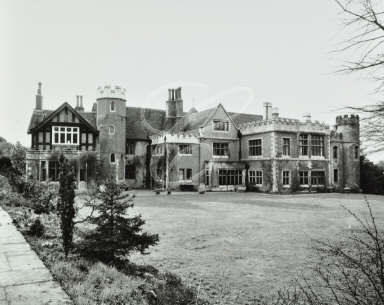
Built in the early 1500s, The Old Rectory is Wimbledon’s oldest house. Standing in grounds of 2.5 acres, this 16,200 square foot property was once described by a biographer of Sir Henry Cecil as being “not luxurious, but adequate” but now once again it finds itself in an entirely different league.
An image of The Old Rectory, 82 Church Road, Wimbledon, London, SW19 5AA in 1978. Present day imagery has been removed at the request of agents acting for the current owners.
Priced at £26,000,000, it is almost certainly one of the most expensive homes to ever come to the market in Wimbledon and whoever moves there next will undoubtedly be either an oligarch, an A-list personality or a top achieving business person.
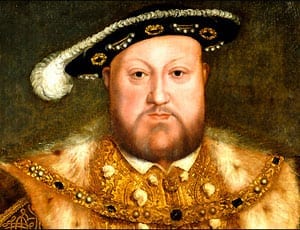
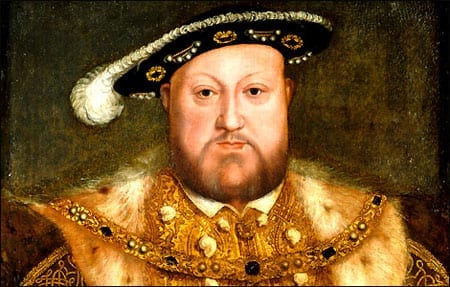
The purchaser will follow in the footsteps of a fascinating array of historically important residents, the first of whom was Henry VIII (1491 – 1547). The King took up residence in 1547 in the months prior to his death and is said, as he was so bloated, to have been unable to climb the stairs to his sleeping chambers. His bed was relocated to the great hall of the house and here he slept next to the fire. Historical research recounts that, with a brewhouse, beer and wine cellars, a coal cellar, meat room, buttery and two dairy rooms, this was a “house fit for a king.”
Henry VIII (1491 – 1547)Catherine Parr (1512 – 1548)
Henry VIII gave The Old Rectory, which was originally called The Parsonage House, to his sixth and final wife, Catherine Parr (1512 – 1548). Preferring a residence in Chelsea, Parr left and the Dean and Chapter of Worcester Cathedral took possession. A lease was sold to Sir William Cecil (1520 – 1598), later Lord Burgley, and the manor then passed to his son Thomas Cecil (1542 – 1623), the 1st Earl of Exeter.
In 1639, Charles I (1600 – 1649) bought the entire manor and gave it to Queen Henrietta Maria (1609 – 1669) but with the era of Comwell, The Old Rectory found itself occupied by General John Lambert (1619 – 1684). Shortly after, when a grander house was built next door, the property became first a laundry house and then servant accommodation and gradually fell into decline.
The Old Rectory passed next to Sir Theodore Janssen (1658 – 1748) in 1720. This French-born English financier, who was said to be worth the staggering sum of £250,000 at the time of his purchase of the house, was a founder member of the Bank of English but later disgraced for his part in the South Sea Bubble. He was expelled from the House of Commons and with his ruination, The Old Rectory saw yet another chapter of abandonment.
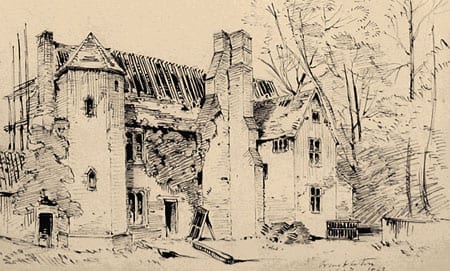
The garden front of The Old Rectory by Charles Henry Money Mileham (1837 – 1917)
By 1802, the house was described as an “uninhabited” ruin. A speculator credited with developing “modern Wimbledon” named John Augustus Beaumont bought it and restored and extended it but when it was sold to a Samuel Wilson in 1882 for £6,000, an era of truly comprehensive upgrades was to begin. Wilson added a pebble-dashed two-storey drawing room wing, carved oak doors and installed English, Flemish and Italian chimneypieces.
The next owner was a marine engineer named Matthias Jacobs who had been responsible for the construction of tunnels in Paris and New York. After having purchased The Old Rectory in 1909, he commissioned his brother to add a new single storey billiards room, a service wing and a study extension to mask the medieval chapel of the house. Jacobs sold up in 1923 to a Thomas Lethaby, who fitted oak paneling from Chantry House in Newark and a plaster ceiling based on the one at Knole House, Kent.
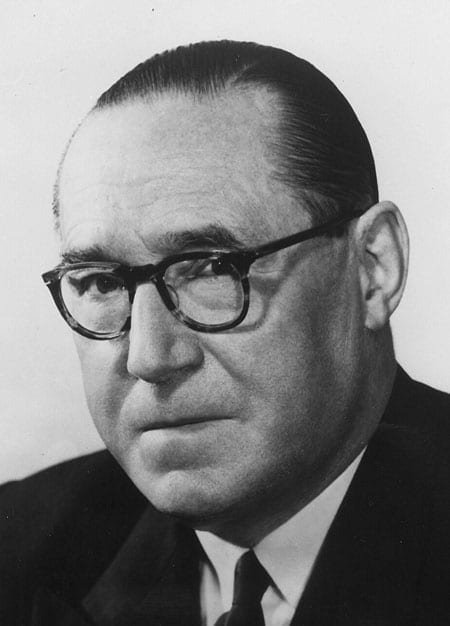
Lord Brock FRCS, FRCP (1903 – 1980)
In 1953, the eminent London surgeon and cardiologist, Lord Brock FRCS, FRCP (1903 – 1980), took possession of The Old Rectory after having paid £13,750 for it. Brock is credited as on of the pioneers of modern open heart surgery and also founded the Lord Brock Memorial Trust that to this day funds the museum he founded, The Old Operating Theatre Museum and Herb Garret in Southwark, SE1.
Following the death of his first wife Germaine Louise Ladavèze, Brock sold to an Iraqi entrepreneur and philanthropist named Basil Faidhi in 1978. Faidhi had fled Iraq for Britain and though he spent vast sums restoring the house with assistance from English Heritage, he also created a basement discotheque for his daughter, Nina, and a bar. Aside from bringing the house into the “yuppie era,” Faidhi also commissioned a historian named Richard Milward MA to write a history of the building in 1992 entitled: The Rectory – Wimbledon’s Oldest House.
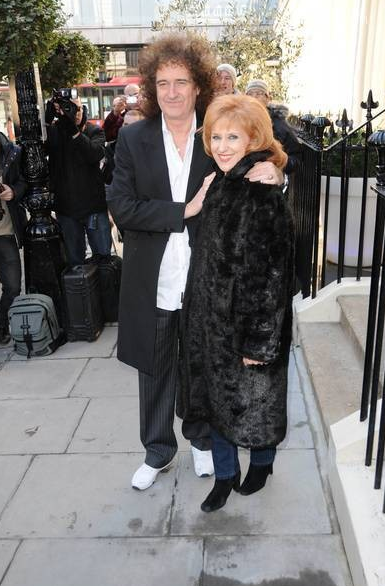
The Queen lead vocalist and anti-badger cull campaigner Brian May CBE purchased The Old Rectory in 1994 for £4,000,000 with the intention of living there with the Eastenders actress Anita Dobson.
Brian May CBE with his second wife Anita Dobson
Dobson, who didn’t marry May until 2008, had other ideas and refused to move in. It was suggested that she preferred a smaller house the pair occupied in Kensington and, at the time, a friend commented:
“[May] begged her to move into the new house so they can make a fresh start. Nobody can believe that Anita doesn’t want to be the lady of this fabulous house. But Brian says he can’t get through to her.”
Sir Donald Insall CBE
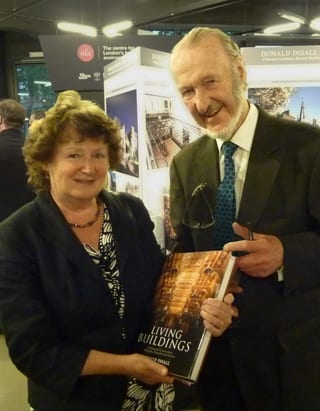
As a result, May never properly moved into The Old Rectory and eventually decided to sell. In 2006, it achieved a record price of £16,000,000 and in the ensuing years, an Italian architect-owner named Antonella Carminati and her husband have lavished time and money on further restorations with the help of Sir Donald Insall CBE’s Insall Associates firm of architects.
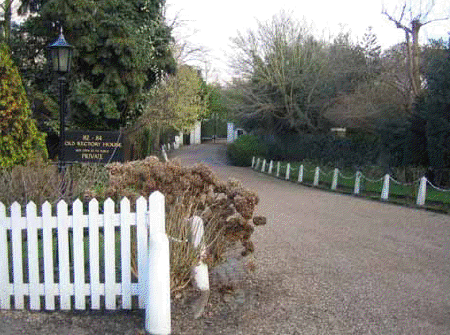
The driveway that leads to The Old Rectory from Church Road gives plenty of privacy
New fittings have been installed throughout and substantial extensions to the house have included a new kitchen and breakfast room with garaging beneath. The couple have demolished an early 20th century porch and an “unsightly” oak conservatory, remodeled the billiards room as a drawing room and removed a “bilious” blue swimming pool from the east lawn.
Now featuring 12,882 square foot of accommodation in the main house and 3,320 square foot of additional accommodation, The Old Rectory has been planned to include 8 reception rooms; a vast kitchen with La Cornue appliances and an adjoining breakfast room; master bedroom suite with two dressing rooms, his and her bathrooms and a sitting room and 7 further bedrooms.
Outside, the gardens feature an original medieval fig tree trail, shaded paths, lawns and a large pond as well as garaging for six cars. Planning permission for an indoor swimming pool complex has also been granted and ample staff accommodation is provided above one of the garages and in the gate lodge.
Given the now limited financial resources of the traditional religious houses of Britain, will it be rock, royalty or new money that next takes possession of The Old Rectory? The historians of Wimbledon will undoubtedly be watching.
The Old Rectory, 82 Church Road, Wimbledon, London, SW19 5AA is for sale through the Wimbledon office of Knight Frank. For more information call: +44 (0) 20 8946 0026.
Christian Huhnt recounts an evening at the launch of La Suite West
I have a personal connection to Inverness Terrace as twice in my life I’ve had to crash at my friend’s place there. It’s less than a minute from the new Anouska Hempel-designed hotel, La Suite West, and runs parallel to Queensway.
Bursting with cheap Chinese, Arabic and Mediterranean restaurants, this is an area that has great transport links to Oxford Street and the city centre that is also a very short walk from Hyde Park. As a result it’s full of tourists. Here, they arrive and depart every day, wandering around with heavy luggage trying to find their way. Most of them look like they’re hopelessly lost and in need of a good scrub. The tourist density here is almost equal to that of Victoria Station’s Gatwick Express exit or the Piazza San Marco in Venice.
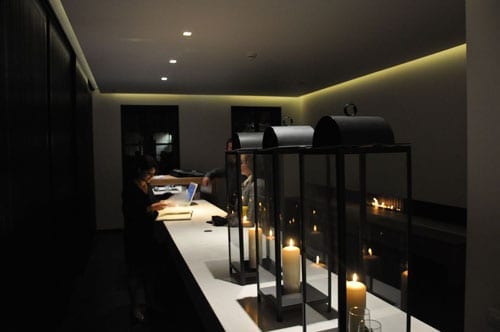
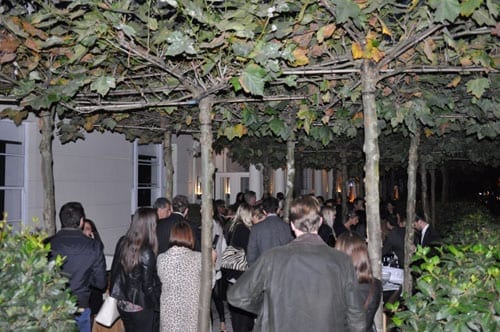
The lobby of La Suite West, 41 – 51 Inverness Terrace, London, W2 3JNParty guests at the launch of La Suite West
Please don’t get me wrong though. I have always felt that this place, the heart of Bayswater, has been totally underestimated. It is charming with lots of London Plane trees and a very cosmopolitan feel. Lady Weinberg, better known as the visionary designer and sometime actress Anouska Hempel, plainly agreed as she integrated all that was good about this atmosphere into the hotel that she has cleverly designed.
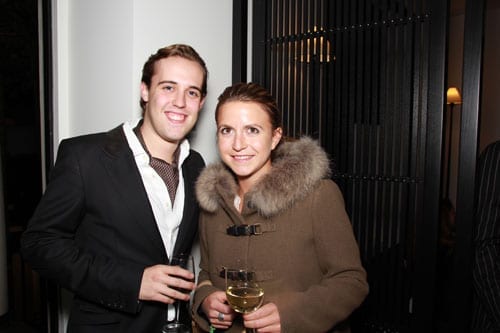
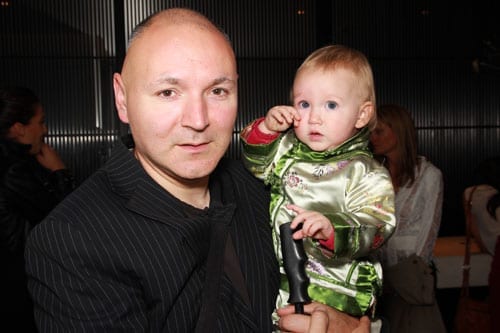
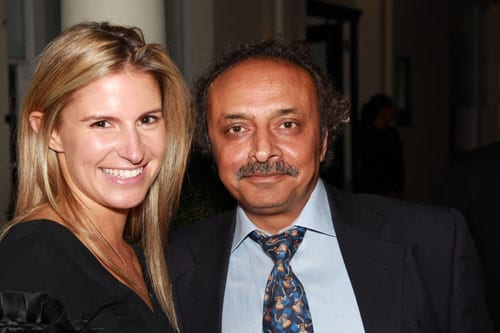
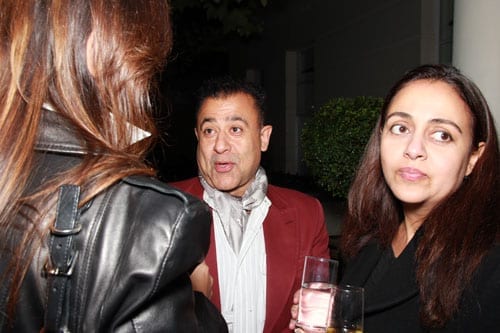
“Let’s celebrate with a little champagne”Guests at the party included the British supermodel and VogueTV presenter Jade Parfitt and Duncan McDonald of Propeller CommunicationsOur party correspondent Christian Huhnt and Inga Buschke enjoying the launch of La Suite WestAngelo Valentino also represented “The Steeple Times” with his daughterGuests at the launch of La Suite WestSusan Ansary, a regular on the party circuit, even put in an appearance
Arriving at the hotel entrance, you get a feel of how important it was for Hempel to grasp this outside space and use it as a communal environment for the guests. I was invited to visit on the evening of the hotel’s launch and this was the area where guests congregated. Here, along with the champagne, they served molecular bites including Nutella ice cream that had been shock frozen using liquid nitrogen. This, they told me, had been done to avoid ice crystals appearing and the result was a very smooth and creamy texture. I’d put money on this having left the menu now though as just days later I read news reports of a girl in Lancaster losing her stomach after drinking a cocktail made in a similar manner. With hindsight, I must say that my stomach is very glad that they got the measure just right.
When you enter the hotel, which first opened to guests three months ago, you feel as if you are visiting a Scientology church or traversing the ramp of a Star Wars space shuttle. Coming “onboard,” you enter a reception hall, in which a friendly concierge welcomes you. The whole interior is very minimalistic and has been reduced to hues of only black and white. A long fireplace leads you deeper into this shuttle, onto a main corridor, past the dining rooms and connects into to labyrinthian walkways that transport guests to their appointed suites.
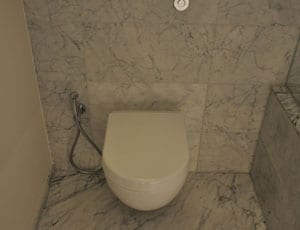
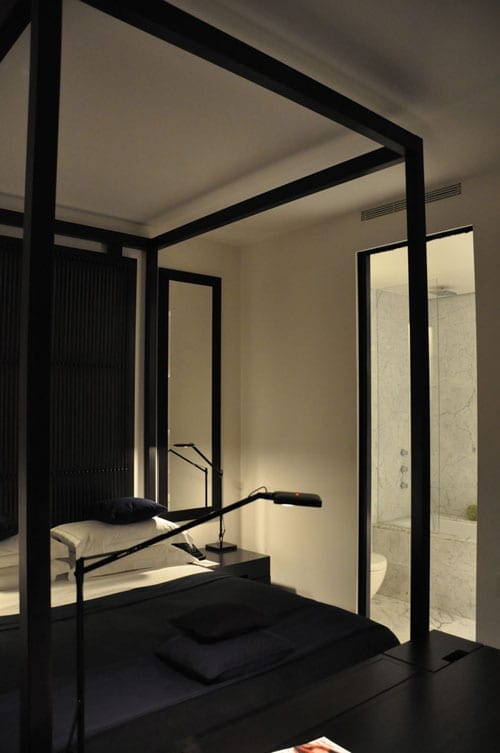
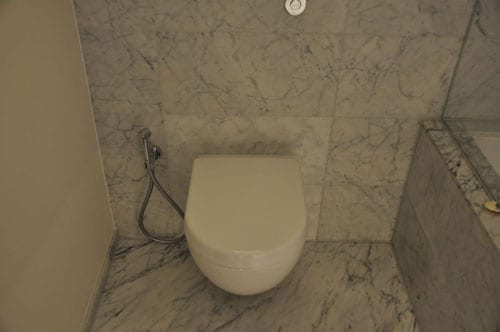
I was told that the hotel rooms are all decorated in the same style and have similar layouts. They differ only slightly in size. On the evening of the launch, the largest could be admired and all of them had a very independent feel as they benefited from their own access to the street. Essentially, the rooms are quite small but all offer the contemporary luxury that any jetsetter would expect. The bathrooms have a particularly sophisticated feel and are clad in marble throughout. The extendable televisions hidden in the bed frames perfectly fitted with the minimalist design, but where this became bizarrely rigorous was the flexible water hose in the bathrooms that dispensed with the need for good old European toilet paper.
One of the hotel’s bedroomsA toilet at La Suite West – complete with hose attachment but minus loo roll
La Suite West is a great step forward. In fact, it is a very audacious move towards upgrading a whole area that clearly has potential for more and which, at the time of writing, does not offer anything better than shabby hostels and seedy bed and breakfasts. The hotel is a well-arranged concept and evidently Hempel put a lot of thought into the execution of it. The design is well composed, but being German I did notice some of the carpets and minor details could have been a little better.
One last piece of advice: the management might want to ship in some bog roll. Some ageing Brit might decide to show up and I’m sure nobody would want a scene from Fawlty Towers to be played out in that rather smart lobby.
La Suite West, 41 – 51 Inverness Terrace, London, W2 3JN. Telephone: +44 (0) 20 3642 3928. Website:http://lasuitewest-px.rtrk.co.uk
Images by Andreas Kirchberger and Christian Huhnt.
Matthew Steeples discovers the truth about the origins of the Gressingham duck
I grew up in North Lancashire and spent much time in the Lune Valley. Here, I was regularly told, in the 12th century village of Gressingham, a staple of the menus many English restaurants and the most common farmed duck had originated: the Gressingham duck.
Recently, whilst chatting to a restaurateur, the subject of Gressingham duck came up for some bizarre reason. When I told him of the bird’s Lancastrian origins, he firmly disputed this and told me that they were actually of East Anglian extraction.
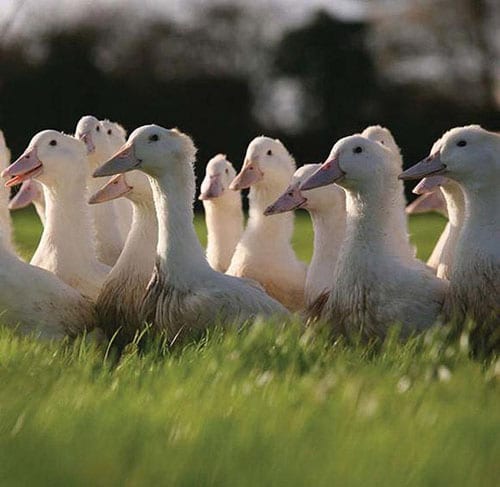
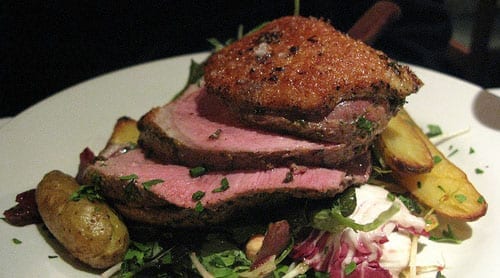
Gressingham ducksThe Loyn Bridge crosses the River Lune close to Gressingham, near LancasterGressingham duck features on many restaurant menus
Having chatted with several other foodies, they, equally, were of his opinion. After then having spotted it on yet another restaurant menu last week, I decided I simply had to establish the true origin of this bird before I went, excuse the pun, quackers.
A Google search didn’t come up with a great deal but it did produce the required evidence. As I believed, he Gressingham duck was first bred in Gressingham, Lancashire in 1980 by crossing a Pekin duck with a wild mallard.
The result was a succulent, tender bird with a high breast meat yield and a gamey flavour. Of it Delia Smith comments: “It’s the very best type of duck available… Because of it’s smaller frame, [it gives] more meat.”
A Suffolk based couple named Maurice and Miriam Buchanan began rearing and processing Gressingham ducks in 1989 and then bought the exclusive rights to breed them in 1996. Their company, Green Label Foods, now Gressingham Foods, are now the only firm licensed to produce the “Gressingham Duck®” and now employ over 500 people on their farms in East Anglia.
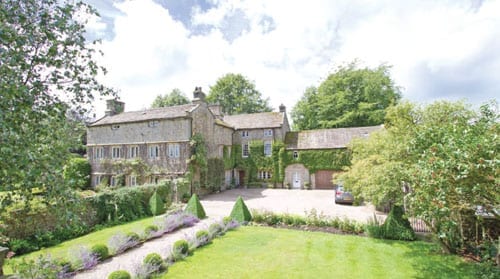
Gressingham Hall, Gressingham, Lancaster, LA2 8LPA view of Gressingham Hall from the road
Separately in my Google search I also discovered that the main house in the village of Gressingham has recently come to the market through agents Fine & Country. 7-bedroomed Gressingham Hall, a Grade II* listed 17th century former farmhouse comes complete with 3 reception rooms, a Jacobean staircase and 10 acres of grounds.
A price of £1,350,000 is sought for Gressingham Hall whilst a separate cottage across the drive, Garden Cottage, has a guide price of £350,000. Whoever purchases it had better had get a Gressingham Duck® in the oven for their first night in residence.
Nicky Haslam is a man of many parts. He’s best known as an interior designer and author but over the years, in chameleon like fashion, he’s variously styled himself as Liam Gallagher, bought a house in Transylvania on the net and once told Vanity Fair he’d rather meet Kim Jong Il than Nelson Mandela. Whether he’s partying with Paris Hilton or working with a Russian oligarch, Haslam’s character and charm always shine through and for good reason he tops the list of the most invited in the land.
Nicky Haslam’s “Total Control”
Nicky Haslam’s life has been well documented in many a column but his latest move, recording a debut album entitled Midnight Matinée, can certainly be described as a bold departure. Yes, he did cabaret at Bellamy’s in 2009 and The Savoy in 2010 but having heard the first song, this truly does represent something akin to Kevin Spacey’s Beyond the Sea. I must admit that I thought it vastly superior.
Produced by David Ogilvy, who wrote the music for a BBC film about the interior designer, Total Control is the first in the series of songs to be released. It is accompanied by a video by a Canadian filmmaker named Douglas Arrowsmith.
We at The Steeple Times very much like Haslam’s “highly individual” foray into the “contemporary music scene” and for that reason make it our video of the week.
“Why pay less when you can pay more?” is a mantra that some strangely choose to live by. In my time, I have encountered a couple with a different Ferrari for each day of the week, someone who proudly declared their home had a window for each day of the year and an heiress who insists upon the local baker feeding her dog daily with a freshly baked caviar pie.
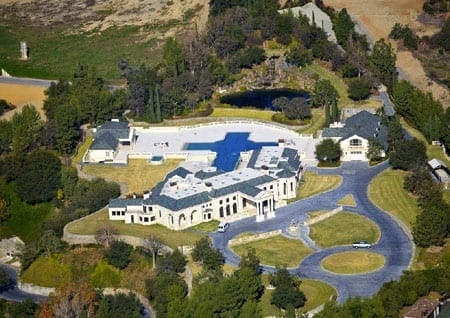
When I discovered a house in California priced at $78,000,000, I didn’t expect to subsequently find out that the same vendor is also selling another of his homes in Montana at the very same price. Having done a little research into Donald G. Abbey, the commercial real estate tycoon who owns both The Bradbury Estate and Shelter Island, I discovered that here indeed is another personality whose excess knows no bounds.
I suppose when people sell homes of this worth, the asking price they set is quite irrelevant. “What,” I’m sure they ask, “is $5 million between friends?” Equally, when it comes to developing such properties, characters of this nature do not show any reserve. Bling is most definitely the order of the day and the larger and flashier one can build, I guess, the better.
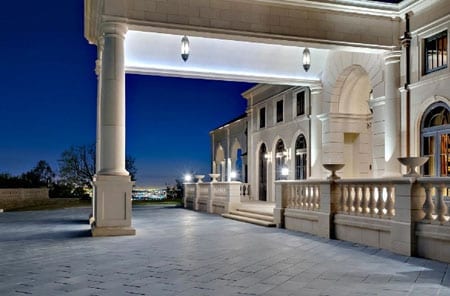
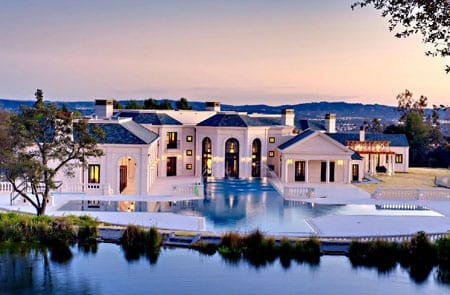
An aerial shot of The Bradbury Estate, 172 Bliss Canyon Road, Bradbury, California, CA 91008, USAThe front elevation of the main houseThe owner and his guests need not get wet on arrival in their limousines
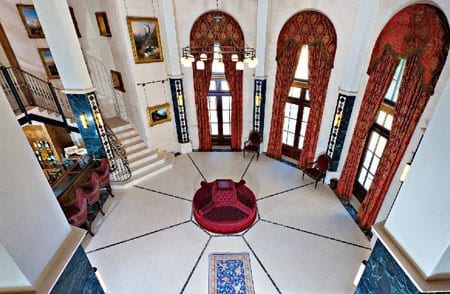
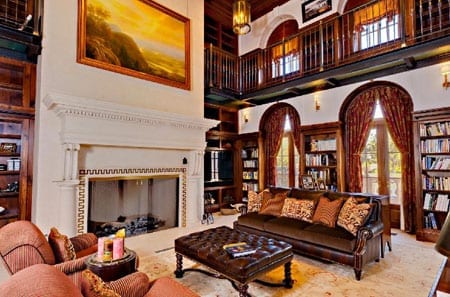
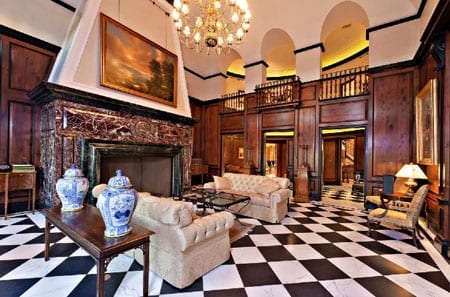
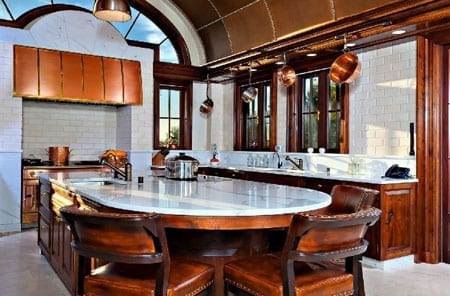
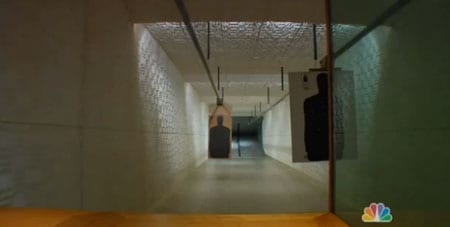
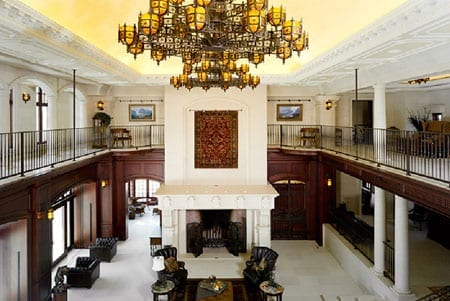
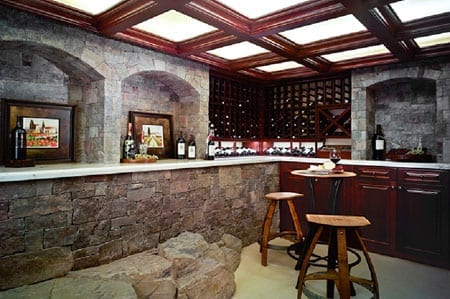
Abbey’s Bradbury Estate is a case in point. This vast property consists of a 33,000 square foot main house with 7 bedrooms and 10 bathrooms. It is almost entirely made of French limestone and includes a chef’s kitchen with a pizza oven, a 2,000 bottle wine cellar, an oak paneled elevator and a leather paneled poker room. Bedrooms include domes with hand painted frescos and in addition there is a detached 6,700 square foot guest house above a 10 car garage and a 5,700 square foot pool house with a catering kitchen, gym, massage room and a subterranean EPA certified 25 yard rifle shooting range complete with a gun storage room and 2 large safes.
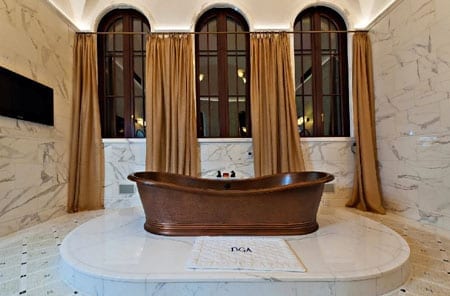
The hall of the main residence comes complete with a gallery and barA vast library provides the perfect space to enjoy a good bookThe library’s glazed ceilingAnother palatial reception roomThe house features a rather impressive kitchenMr Abbey’s copper bath tub comes complete with a mat displaying his initials in front of it
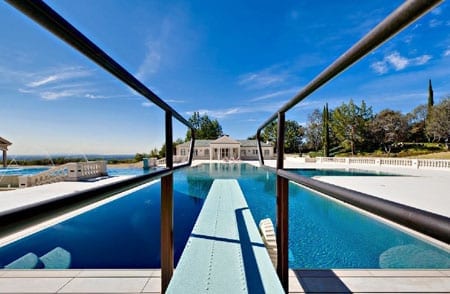
Within the 8 acre grounds there is a cross shaped infinity-edged pool – perhaps Mr Abbey is religious – that is “just a few feet short of Olympic length.” It requires 350,000 gallons of water if it is to be filled to capacity. Adjoining this is something even more ludicrous: a 1,000,000 gallon, temperature-controlled rainbow trout pond that cost some $8,000,000 to construct. The pond is said to be “adorned with perennials,” is heated by a custom gravity separator with UV filters and is “chilled for the trout by a 300-tonne central cooling plant.” At Bradbury, thoughts of water crisis in Sudan and Ethiopia come way behind the needs of Abbey’s rainbows.
The rear of the house viewed from above The Bradbury Estate’s $8,000,000 trout pondThe estate’s 350,000 gallon near Olympic length cross shaped infinity edged swimming poolThe property’s EPA certified 25 yard rifle range
For those wanting to avoid California’s UV rays, Bradbury also boasts an acre of porches, decks, loggia and walkways. A 600ft blue stone driveway completes this “once in a lifetime trophy property” that “belongs in the portfolio of the most astute collector” and it has space for “60 foot truck access or multiple limousines.”
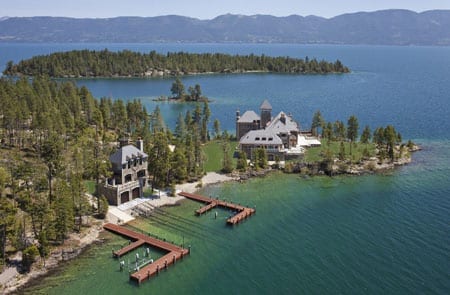
When Mr Abbey has tired of California, he is able to retreat to his own island in Montana. The 24 acre Shelter Island on Flathead Lake includes 7,000 feet of frontage to the water, a world class sporting clay course and 3 computer controlled tracks and docking systems that allow boats to be landed in the dry dock without riders ever leaving the craft or handling a line. The island is powered via an underground armoured utility cable that carry 12,000 amps to it along with CAT-5 computer cable and phonelines and the main entertaining space features a mammoth television of some 120-inches in size.
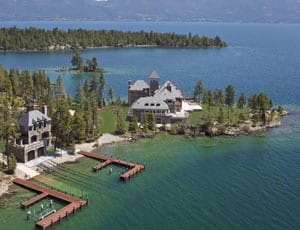
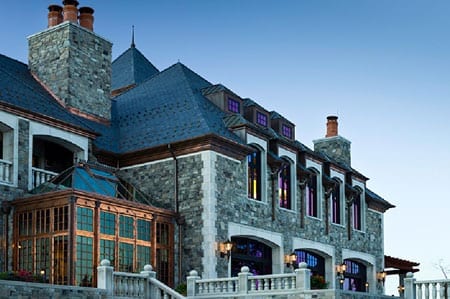
An aerial view of Donald G. Abbey’s Shelter IslandMr Abbey’s passion for copper continues with a conservatory made out of the metal on the lakeside elevation of the main residence on Shelter IslandThe Great Room of the main residence on Shelter IslandMr Abbey’s passion for fine wines is displayed in a bar and tasting room in the propertyThe owner and his guests can access their boats without having to go anywhere near the water
Abbey has built over 44,000 square foot of accommodation on his island. The main house has 5 bedrooms and 8 bathrooms. His “Great Room” features ceilings of some 45 foot in height and in addition to yet another indoor shooting range, there is a kitchen that woudn’t look out of place in The Savoy hotel.
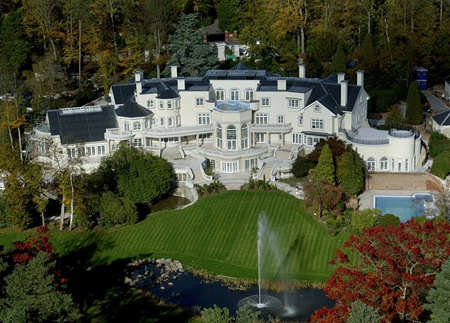
In the UK, the property most similar to anything Abbey has built has to be Updown Court at Windlesham in Surrey. Developed by a former bricklayer named Leslie Allen-Vercoe, the house was described by him as being: “The most important residence to be built in England since the 19th century.” Architectural critics did not agree and some went as far as to say that it looked like: “A cross between a Tesco superstore and Center Parcs.”
Allen-Vercoe’s behemoth of a house is gargantuan in size. With 103 rooms it includes 24 bedrooms, 5 swimming pools, a 2-lane bowling alley, a squash court, a floodlit tennis court, a 50-seat cinema and a panic room. The heated driveway that led to the house is entirely made of marble and cost some £2.5 million to construct but plainly none of this appealed to the market as it languished for sale at a price of £70,000,000 from 2006 to 2011 before being repossessed by the Irish National Asset Management Agency (NAMA). Updown Court was sold for half the original asking price to a foreign buyer in October 2011 and is, I believe, due to undergo extensive remodeling.
Updown Court, Chertsey Road, Windlesham, Surrey, GU20 6HY, UK
Allen Vercoe once stated: “If Elton John were a house, he’d be Updown Court.” Equally, I imagine if Mr Abbey’s residences were to be compared to any celebrities they’d be the vulgar car crash that is Donatella Versace and the ludicrous money obsessed singer with a dollar sign in her name, Ke$ha.
Updown Court, Shelter Island and The Bradbury Estate all illustrate that money cannot buy you good taste. I suppose, though, that those who ultimately come to live in them will have plenty of space to choose how and where to enjoy their own form of misery.
For information on both The Bradbury Estate and Shelter Island, contact Bob Hurwitz of the Hurwitz James Company on +1 310-477-8865. Website: http://www.hurwitzjamesco.com
The North Devon countryside that inspired Henry Williamson, R. D. Blackmore and Charles Kingsley
Much of my childhood was spent reading the works of superb authors and amongst the best of them were Arthur Ransome (1884 – 1967), Denys Watkins-Pitchford (1905 – 1990), who wrote many of his works under the pseudonym “B.B.”, and Henry Williamson (1895 – 1977). As a youngster, I was lucky enough to be read to by Ransome’s nephew, a most captivating professional storyteller, and was given first editions of many of the works of all three of these early to mid twentieth century authors.
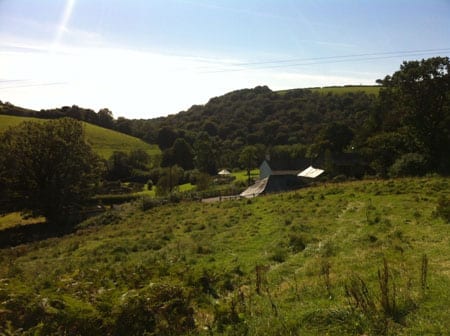
I had my first sailing lessons on Windermere, where Ransome set many of his works, and went shooting in the Forest of Bowland, a place dear to B.B. Though I also fished in many wonderful locations, until now I’d never been to the land of Henry Williamson and his most famous creation, Tarka the Otter. I currently find myself here enjoying a break from London and yesterday I randomly discovered, I am staying next to the setting of one of Williamson’s lesser known stories, Salar the Salmon, on the River Bray close to Exmoor.
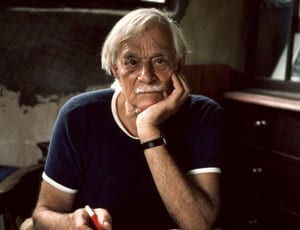
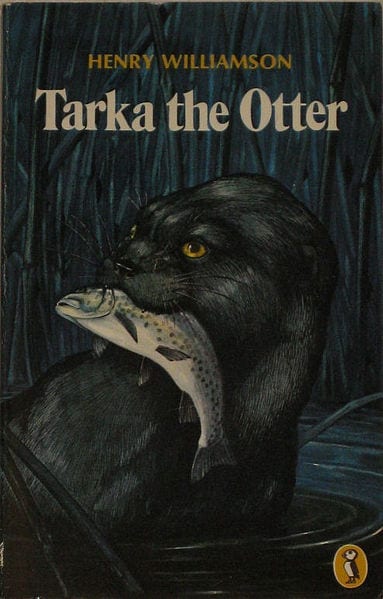
“Salar the Salmon” by Henry Williamson (1935)Henry Williamson (1895 – 1977) photographed by Mark Gerson, cibachrome print from original transparency, August 1970“Tarka the Otter” by Henry Williamson (1927)
Originally published in 1935, Salar the Salmon combines Henry Williamson’s great talent as a writer with his insight as a naturalist. The story tells the tale of a five-year old salmon named Salar, whose name means the “leaper,” and his return to the stream of his birth. Salar’s migration through the riverways of Devon involve him surviving porpoises, seals, nets, fishermen, otters, poachers and weirs and Williamson’s account truly gives the reader an insight into one of nature’s great journeys.
Henry Williamson wrote both Salar the Salmon and The Children of Shallowford (1939) whilst living beside the River Bray in a hamlet named Shallowford, near Lynton in Devon. The river plainly inspired him and whilst he lived there on the Fortescue Estate he also sired four children, joined Oswald Moseley’s British Union of Fascists, was briefly imprisoned for his views and conducted several extra-marital affairs.
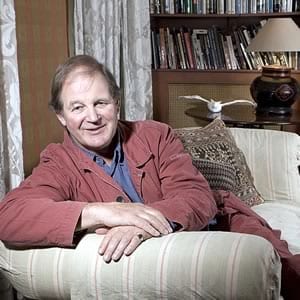
“War Horse” author Michael Morpurgo OBE
Salar the Salmon is a story I am not alone in recommending. Another Devon based author and poet, Michael Morpurgo OBE, best known for his acclaimed work, War Horse, speaks very fondly of Williamson and the novel in a dedication he prepared for a recent reprint of it:
“It is a rare gift indeed for a storyteller to be poet as much as a storyteller, to tell a tale so deeply engaging that the reader wants to know what will happen and never want it to end, and yet at the same time tells it in such a way as to leave a reader wide-eyed with amazement at the sheer intensity of feeling that can be induced by the word-magic of a poet. Henry Williamson is just such a story-maker poet.”
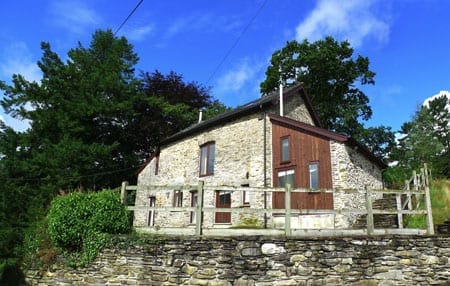
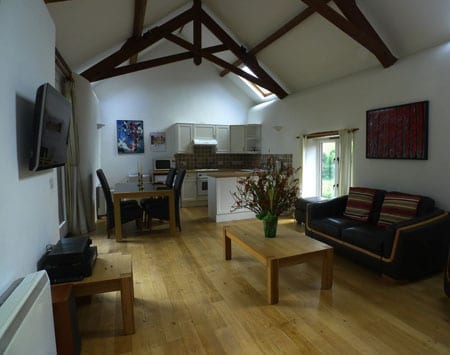
Where I am staying, I have a view of the very river on which Salar made his journey and here also a detached barn conversion is currently available to rent at a price of £1,150 per month. Malle’s Barn is a 2-bedroom stone-built property that includes a 25ft by 12ft open plan sitting room with a fully fitted kitchen and a dining area, as well as a study and shower room.
The exterior of Malle’s Barn, Brayford, Near Barnstaple, Devon, EX32 7QBA large open plan reception room includes sitting, dining and kitchen areasThe setting of Malle’s Barn overlooking the valley of the River Bray
Tenants of the house will have access to the owner’s 60-acre estate which includes a mile of salmon and brown trout fishing on both the Rivers Bray and Holewater, ancient woodland and a lake in addition to a private garden and adequate parking for several vehicles.
Malle’s Barn would make a perfect retreat for any author or artist and is just 10 minutes from South Molton, Barnstaple is 9 miles away and Exeter 40 miles. The location is 30 minutes from J27 of the M5 and Tiverton Parkway Station, which provides mainline links to London Paddington within 2 hours.
Close to Malle’s Barn are the prettiest sections of a footpath named the Tarka Trail. Consisting of over 180 miles of footpaths and cycle tracks that take in the Dartmoor and Exmoor National Parks and the North Devon Coast Area of Outstanding Natural Beauty. The trail takes in many of the locations described in Williamson’s most famous novel but this area of North Devon also galvanized the pens of a number of other authors.
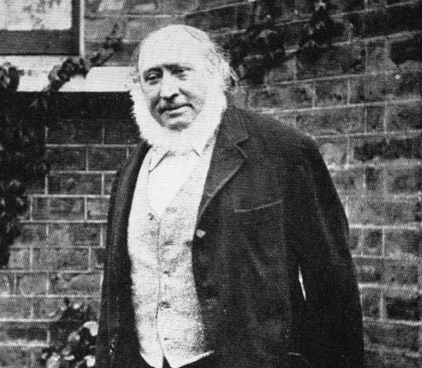
Richard Doddridge Blackmore (1825 – 1900)Professor Charles Kingsley (1819 – 1875)
Richard Doddridge Blackmore (1825 – 1900) set Lorna Doone: A Romance on Exmoor in the locality in 1869 and Professor Charles Kingsley (1819 – 1875) put pen to paper here when he wrote Westward Ho! in 1855. A village of the same name was subsequently established near Bideford in the 1860s by entrepreneurs, led by Lord Portsmouth, who saw an opportunity to capitalise on the novel’s success. Westward Ho! is the only place in the United Kingdom with an exclamation mark in its name. The only other place in the world that shares such is Saint-Louis-du-Ha! Ha! in Quebec, Canada.
Aside from literary connections, the locality is famous for its excellent fieldsports. The Earl and Countess of Arran’s Castle Hill and the Molland shoot are considered amongst two of England’s finest high bird pheasant shoots and both the Devon and Somerset Staghounds and Devon and Somerset Foxhounds hunt on Exmoor.
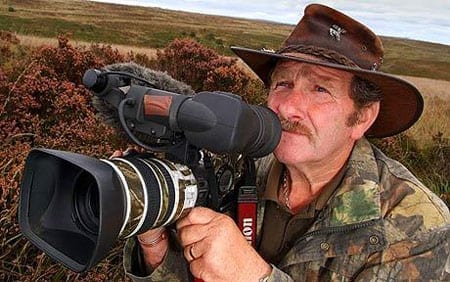
Johnny Kingdom
Johnny Kingdom, who describes himself as having been “a farmer, quarryman, forestry worker, gravedigger and, if truth be told, a poacher” in his youth, also lives in the locality and is well known as a wildlife photographer, filmmaker and television presenter. He sets many of his series on Exmoor because of the vast array of wildlife he comes across here and is, like Williamson before him, often to be found exploring the valley of the River Bray.
In a 1965 BBC interview Henry Williamson was asked: “What influence has this [the Devon] countryside had on you?”:
“Everything, I should say. I came down here as a youth, aged just 18 in 1914, spent a fortnight’s holiday here in the beginning of May, beginning of June. I walked 20 to 25 miles every day. Everything I saw was radiant and beautiful.”
This idyllic part of Devon that Williamson loved so much remains unspoilt to this day. If you haven’t visited yet, it really should be added to your bucketlist.