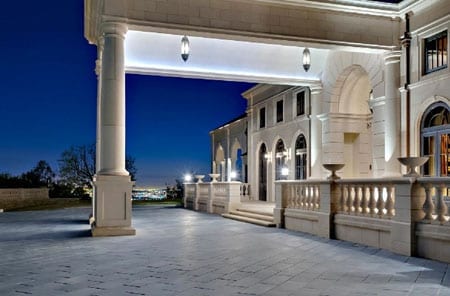
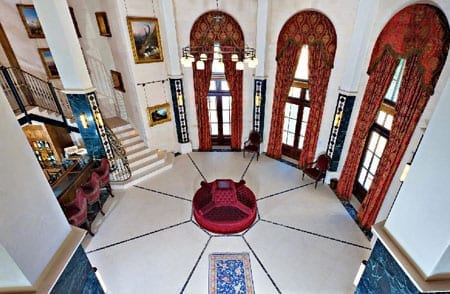
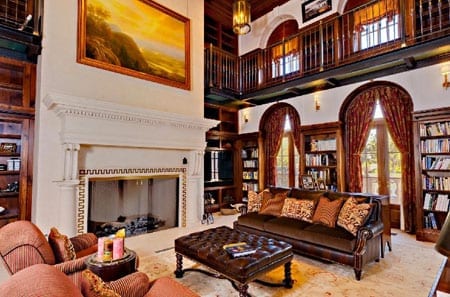
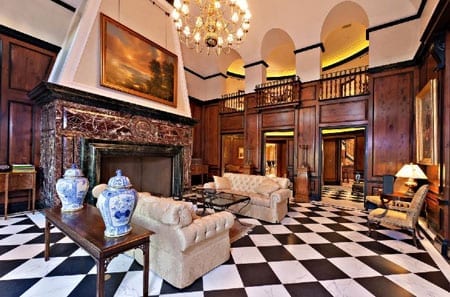
A £26 million residence with connections to rock, royalty and rectors
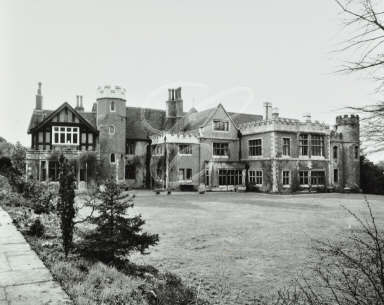
Built in the early 1500s, The Old Rectory is Wimbledon’s oldest house. Standing in grounds of 2.5 acres, this 16,200 square foot property was once described by a biographer of Sir Henry Cecil as being “not luxurious, but adequate” but now once again it finds itself in an entirely different league.
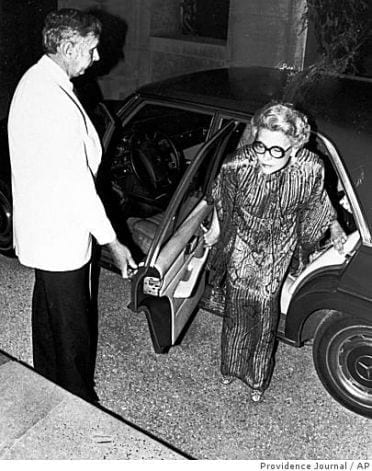
An image of The Old Rectory, 82 Church Road, Wimbledon, London, SW19 5AA in 1978. Present day imagery has been removed at the request of agents acting for the current owners.
Priced at £26,000,000, it is almost certainly one of the most expensive homes to ever come to the market in Wimbledon and whoever moves there next will undoubtedly be either an oligarch, an A-list personality or a top achieving business person.
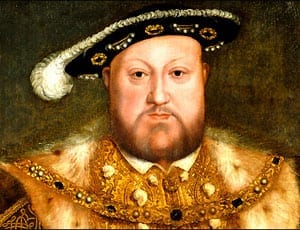
The purchaser will follow in the footsteps of a fascinating array of historically important residents, the first of whom was Henry VIII (1491 – 1547). The King took up residence in 1547 in the months prior to his death and is said, as he was so bloated, to have been unable to climb the stairs to his sleeping chambers. His bed was relocated to the great hall of the house and here he slept next to the fire. Historical research recounts that, with a brewhouse, beer and wine cellars, a coal cellar, meat room, buttery and two dairy rooms, this was a “house fit for a king.”
Henry VIII (1491 – 1547)Catherine Parr (1512 – 1548)
Henry VIII gave The Old Rectory, which was originally called The Parsonage House, to his sixth and final wife, Catherine Parr (1512 – 1548). Preferring a residence in Chelsea, Parr left and the Dean and Chapter of Worcester Cathedral took possession. A lease was sold to Sir William Cecil (1520 – 1598), later Lord Burgley, and the manor then passed to his son Thomas Cecil (1542 – 1623), the 1st Earl of Exeter.
In 1639, Charles I (1600 – 1649) bought the entire manor and gave it to Queen Henrietta Maria (1609 – 1669) but with the era of Comwell, The Old Rectory found itself occupied by General John Lambert (1619 – 1684). Shortly after, when a grander house was built next door, the property became first a laundry house and then servant accommodation and gradually fell into decline.
The Old Rectory passed next to Sir Theodore Janssen (1658 – 1748) in 1720. This French-born English financier, who was said to be worth the staggering sum of £250,000 at the time of his purchase of the house, was a founder member of the Bank of English but later disgraced for his part in the South Sea Bubble. He was expelled from the House of Commons and with his ruination, The Old Rectory saw yet another chapter of abandonment.
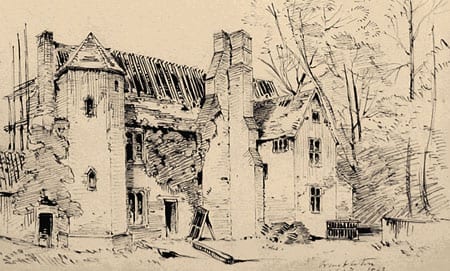
The garden front of The Old Rectory by Charles Henry Money Mileham (1837 – 1917)
By 1802, the house was described as an “uninhabited” ruin. A speculator credited with developing “modern Wimbledon” named John Augustus Beaumont bought it and restored and extended it but when it was sold to a Samuel Wilson in 1882 for £6,000, an era of truly comprehensive upgrades was to begin. Wilson added a pebble-dashed two-storey drawing room wing, carved oak doors and installed English, Flemish and Italian chimneypieces.
The next owner was a marine engineer named Matthias Jacobs who had been responsible for the construction of tunnels in Paris and New York. After having purchased The Old Rectory in 1909, he commissioned his brother to add a new single storey billiards room, a service wing and a study extension to mask the medieval chapel of the house. Jacobs sold up in 1923 to a Thomas Lethaby, who fitted oak paneling from Chantry House in Newark and a plaster ceiling based on the one at Knole House, Kent.
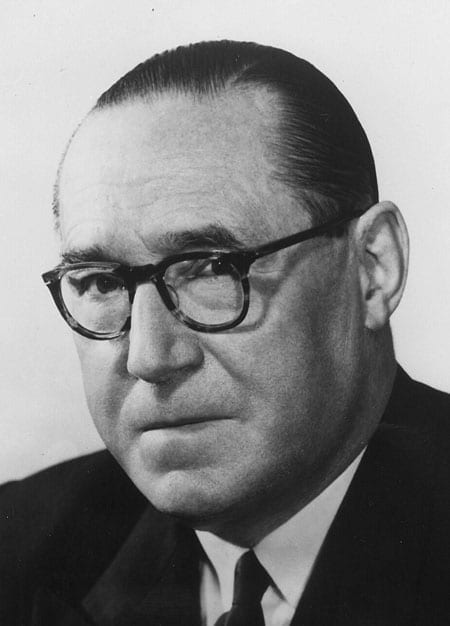
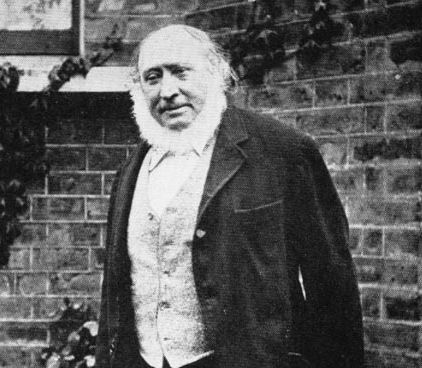
Lord Brock FRCS, FRCP (1903 – 1980)
In 1953, the eminent London surgeon and cardiologist, Lord Brock FRCS, FRCP (1903 – 1980), took possession of The Old Rectory after having paid £13,750 for it. Brock is credited as on of the pioneers of modern open heart surgery and also founded the Lord Brock Memorial Trust that to this day funds the museum he founded, The Old Operating Theatre Museum and Herb Garret in Southwark, SE1.
Following the death of his first wife Germaine Louise Ladavèze, Brock sold to an Iraqi entrepreneur and philanthropist named Basil Faidhi in 1978. Faidhi had fled Iraq for Britain and though he spent vast sums restoring the house with assistance from English Heritage, he also created a basement discotheque for his daughter, Nina, and a bar. Aside from bringing the house into the “yuppie era,” Faidhi also commissioned a historian named Richard Milward MA to write a history of the building in 1992 entitled: The Rectory – Wimbledon’s Oldest House.
The Queen lead vocalist and anti-badger cull campaigner Brian May CBE purchased The Old Rectory in 1994 for £4,000,000 with the intention of living there with the Eastenders actress Anita Dobson.
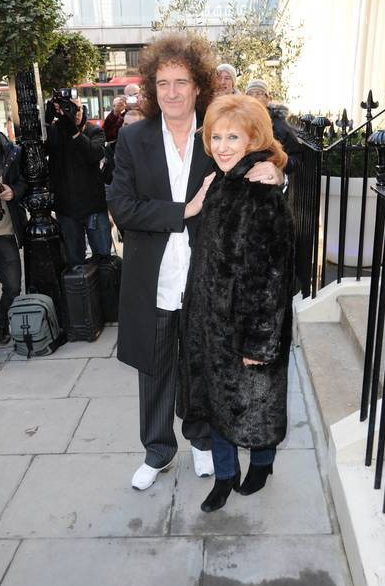
Brian May CBE with his second wife Anita Dobson
Dobson, who didn’t marry May until 2008, had other ideas and refused to move in. It was suggested that she preferred a smaller house the pair occupied in Kensington and, at the time, a friend commented:
“[May] begged her to move into the new house so they can make a fresh start. Nobody can believe that Anita doesn’t want to be the lady of this fabulous house. But Brian says he can’t get through to her.”
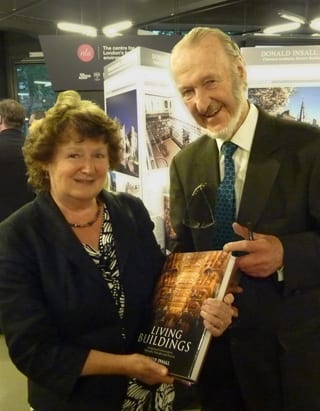
Sir Donald Insall CBE
As a result, May never properly moved into The Old Rectory and eventually decided to sell. In 2006, it achieved a record price of £16,000,000 and in the ensuing years, an Italian architect-owner named Antonella Carminati and her husband have lavished time and money on further restorations with the help of Sir Donald Insall CBE’s Insall Associates firm of architects.
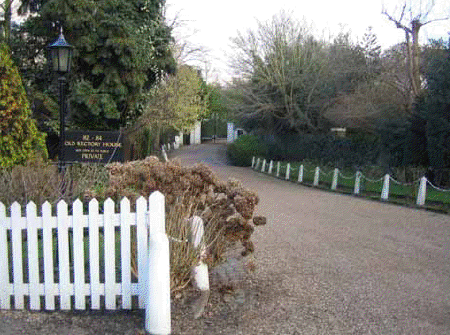
The driveway that leads to The Old Rectory from Church Road gives plenty of privacy
New fittings have been installed throughout and substantial extensions to the house have included a new kitchen and breakfast room with garaging beneath. The couple have demolished an early 20th century porch and an “unsightly” oak conservatory, remodeled the billiards room as a drawing room and removed a “bilious” blue swimming pool from the east lawn.
Now featuring 12,882 square foot of accommodation in the main house and 3,320 square foot of additional accommodation, The Old Rectory has been planned to include 8 reception rooms; a vast kitchen with La Cornue appliances and an adjoining breakfast room; master bedroom suite with two dressing rooms, his and her bathrooms and a sitting room and 7 further bedrooms.
Outside, the gardens feature an original medieval fig tree trail, shaded paths, lawns and a large pond as well as garaging for six cars. Planning permission for an indoor swimming pool complex has also been granted and ample staff accommodation is provided above one of the garages and in the gate lodge.
Given the now limited financial resources of the traditional religious houses of Britain, will it be rock, royalty or new money that next takes possession of The Old Rectory? The historians of Wimbledon will undoubtedly be watching.
The Old Rectory, 82 Church Road, Wimbledon, London, SW19 5AA is for sale through the Wimbledon office of Knight Frank. For more information call: +44 (0) 20 8946 0026.
Christian Huhnt recounts an evening at the launch of La Suite West
I have a personal connection to Inverness Terrace as twice in my life I’ve had to crash at my friend’s place there. It’s less than a minute from the new Anouska Hempel-designed hotel, La Suite West, and runs parallel to Queensway.
Bursting with cheap Chinese, Arabic and Mediterranean restaurants, this is an area that has great transport links to Oxford Street and the city centre that is also a very short walk from Hyde Park. As a result it’s full of tourists. Here, they arrive and depart every day, wandering around with heavy luggage trying to find their way. Most of them look like they’re hopelessly lost and in need of a good scrub. The tourist density here is almost equal to that of Victoria Station’s Gatwick Express exit or the Piazza San Marco in Venice.
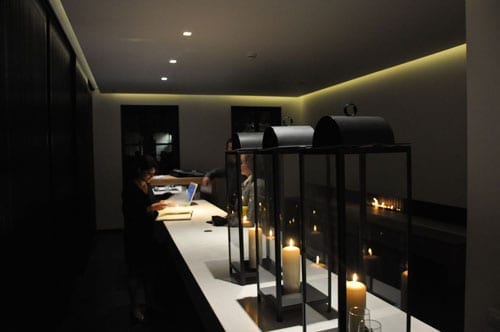
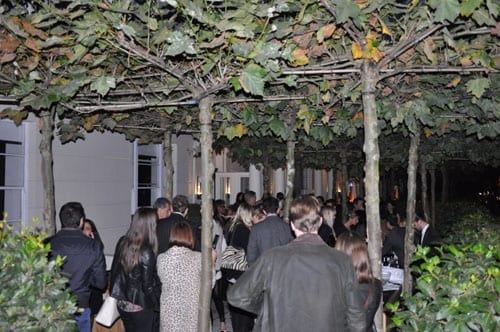
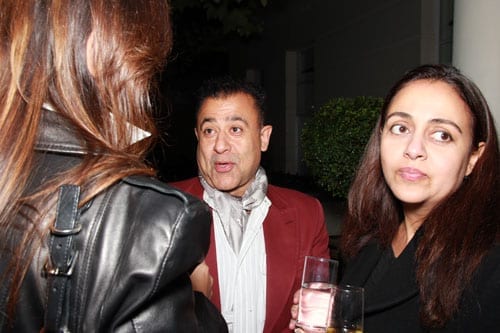
The lobby of La Suite West, 41 – 51 Inverness Terrace, London, W2 3JNParty guests at the launch of La Suite West
Please don’t get me wrong though. I have always felt that this place, the heart of Bayswater, has been totally underestimated. It is charming with lots of London Plane trees and a very cosmopolitan feel. Lady Weinberg, better known as the visionary designer and sometime actress Anouska Hempel, plainly agreed as she integrated all that was good about this atmosphere into the hotel that she has cleverly designed.
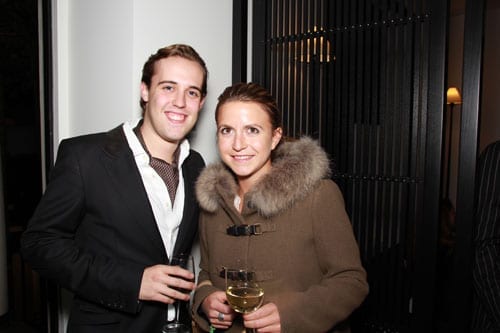
“Let’s celebrate with a little champagne”Guests at the party included the British supermodel and VogueTV presenter Jade Parfitt and Duncan McDonald of Propeller CommunicationsOur party correspondent Christian Huhnt and Inga Buschke enjoying the launch of La Suite WestAngelo Valentino also represented “The Steeple Times” with his daughterGuests at the launch of La Suite WestSusan Ansary, a regular on the party circuit, even put in an appearance
Arriving at the hotel entrance, you get a feel of how important it was for Hempel to grasp this outside space and use it as a communal environment for the guests. I was invited to visit on the evening of the hotel’s launch and this was the area where guests congregated. Here, along with the champagne, they served molecular bites including Nutella ice cream that had been shock frozen using liquid nitrogen. This, they told me, had been done to avoid ice crystals appearing and the result was a very smooth and creamy texture. I’d put money on this having left the menu now though as just days later I read news reports of a girl in Lancaster losing her stomach after drinking a cocktail made in a similar manner. With hindsight, I must say that my stomach is very glad that they got the measure just right.
When you enter the hotel, which first opened to guests three months ago, you feel as if you are visiting a Scientology church or traversing the ramp of a Star Wars space shuttle. Coming “onboard,” you enter a reception hall, in which a friendly concierge welcomes you. The whole interior is very minimalistic and has been reduced to hues of only black and white. A long fireplace leads you deeper into this shuttle, onto a main corridor, past the dining rooms and connects into to labyrinthian walkways that transport guests to their appointed suites.
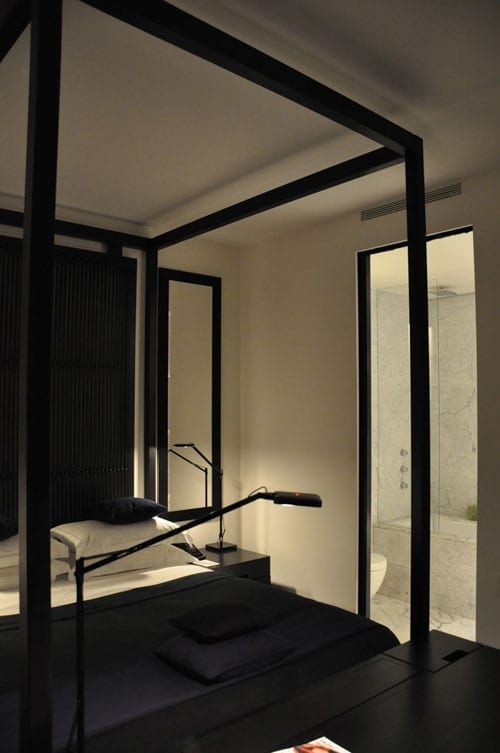
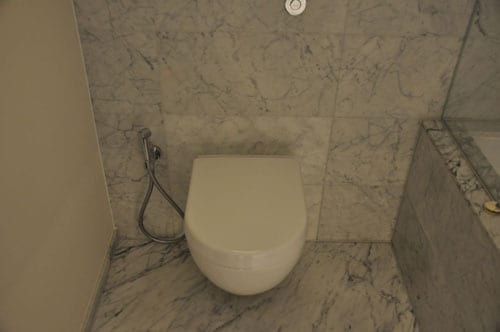
I was told that the hotel rooms are all decorated in the same style and have similar layouts. They differ only slightly in size. On the evening of the launch, the largest could be admired and all of them had a very independent feel as they benefited from their own access to the street. Essentially, the rooms are quite small but all offer the contemporary luxury that any jetsetter would expect. The bathrooms have a particularly sophisticated feel and are clad in marble throughout. The extendable televisions hidden in the bed frames perfectly fitted with the minimalist design, but where this became bizarrely rigorous was the flexible water hose in the bathrooms that dispensed with the need for good old European toilet paper.
One of the hotel’s bedroomsA toilet at La Suite West – complete with hose attachment but minus loo roll
La Suite West is a great step forward. In fact, it is a very audacious move towards upgrading a whole area that clearly has potential for more and which, at the time of writing, does not offer anything better than shabby hostels and seedy bed and breakfasts. The hotel is a well-arranged concept and evidently Hempel put a lot of thought into the execution of it. The design is well composed, but being German I did notice some of the carpets and minor details could have been a little better.
One last piece of advice: the management might want to ship in some bog roll. Some ageing Brit might decide to show up and I’m sure nobody would want a scene from Fawlty Towers to be played out in that rather smart lobby.
La Suite West, 41 – 51 Inverness Terrace, London, W2 3JN. Telephone: +44 (0) 20 3642 3928. Website:http://lasuitewest-px.rtrk.co.uk
Images by Andreas Kirchberger and Christian Huhnt.
The Tout lays into Britain’s biggest pests: mobile phone operators
The Tout would normally only comment on matters of a sporting nature and interest but apart from Abu Hamza’s wife and family continuing to live at our expense in this country there is one other issue that we could all rise up over collectively and do something about. For the past twenty years that we’ve all been consumers we have been abused by phone pests and those nuisances are the very companies that are supposed to provide us with the service that we pay so much for.
Just how The Tout feels when his mobile cuts out
There are two areas of sustained abuse and the first of those is the sketchiness of the reception for the service. In Switzerland, I can drive through their longest tunnels with two phones going, a plethora of email and sight of my BetFair interactive screen and at times the reception is even better than normal. In England, in order to make one call it can take 4 or 5 attempts with T “Bloody” Mobile and I am not talking in the middle of nowhere. Unbelievably the three main regular trouble spots that I encounter are by The Lanesborough Hotel on Hyde Park Corner, just south of Guilford on the A3 and in the middle of Reading. It would be hard to describe any of those locations as especially rural. I urge readers to let me know where their regular cold spots are.
We pay for calls in units of minutes so on this basis what should be a one minute call (if you are male and three if you are female!) could be costing four or five times more. We all seem to accept this so the drones at the mobile companies can only hold a very low opinion of us.
The second stage of the robbery and I believe they must wear stockings over their heads in their offices when they commit this crime is whenever any of us venture abroad. Then they really start to have a laugh. Recently European charges have dropped but when The Tout was forced to go to Corfu for a holiday (too hot) and was informed by text, as I waited for the my luggage not to arrive, that in Greece it would cost 25 pence per minute to make a call and in Albania it would cost £1.50 per minute.
No problem I thought as I’m in Greece it seemed quite reasonable and a visit to Albania was not on the cards quite understandably. So, when I got back to the over taxed slum that we call home the first thing I got was a bill for £600 from T “Bloody” Mobile. No problem, I thought, as I called them about my Albanian minutes as I did not go to Albania. The problem, they said, was: “You were near enough to go on the Albanian signal.” I replied: “That is b……s as we only hired a tiny motor boat that I did not dare take more than 100 yards offshore so I was well within Greek waters and the Greek fishermen.” I did confess that Albania was very close and we had been warned not to leave washing on the line overnight as they swim across from Albania and nick your smalls while you are asleep.
Finally, after much ranting, they believed me, gave in and agreed to reduce the bill by £200. That was all very well but guess who is really wearing the trousers? The answer: the mobile operators. The fact of the matter is that they just don’t care that they are providing bad service for too much money. They are utter pests and con artists.
I urge you all to drop them a line with your next bill logging all of the calls that did not work correctly and demand a refund. We can all do this and if we don’t they will have our trousers around our ankles forever.
An event to support the unsung heroes in our community
On the 8th November, The Steeple Times will be the media partner for a fundraising event jointly hosted by Gina and Alan Miller and The Rt. Hon Iain Duncan Smith MP at The Hurlingham Club in London, SW6. 100% of the funds raised by the “Celebrating Champions in the Community” evening will aid charities supported by Miller Philanthropy and The Centre for Social Justice.
Gina Miller of Miller Philanthropy comments:
“We increasingly hear and read in the media examples of how our society is breaking down. Yet there are unsung heroes battling every day, on all our behalves, trying to reverse these trends. We invite you to celebrate and support these individuals so please join us for an evening of entertainment, celebration and inspiration. 100% of your attendance donation will be going to these community heroes.”
Gina Miller
The Rt. Hon Iain Duncan Smith MP
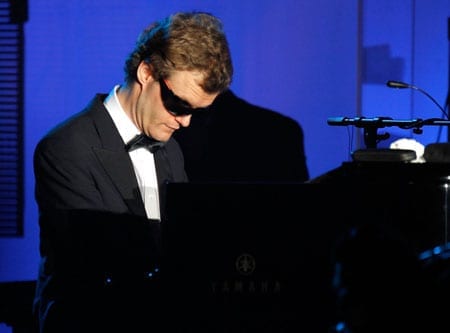
This black tie event, whose principal sponsor is the luxury couture house Ralph & Russo, will include a drinks reception, dinner and auction as well as entertainment from the BRIT-Award winning singer Beverley Craven; Antony Costa, a former member of the pop boy band sensation Blue; the Magpie Dance company and Derek Paravicini, one of the great musical entertainers of his generation.
Beverley CravenAntony CostaMagpie Dance
Derek Paravicini
A donation of £150 per person comes as the condition of attending, 100% of which goes to charities being supported.
Miller Philanthropy
Miller Philanthropy is a family foundation founded on passion and integrity with 100% transparency and 100% of funds raised going to charities and causes.
The foundation focuses on small community charities – the unsung heroes who undertake vital work at the coal face of the negative trends in our society; primarily, but not exclusively in the UK. Miller Philanthropy’s premise is based upon a strong belief that charity begins at home.
The foundation acts as a philanthropic incubator for chosen charities and projects who undertake transformational work but face a growing number of challenges and lack of resources. We mentor and partner these extraordinary individuals and organisations until they become sustainable.
Beneficiary Charities
The AMBER Trust
Best Beginnings
Chernobyl Children’s Project
Crossway Pregnancy Crisis Centre
Hebridean Whale & Dolphin Trust
HELP Counselling Centre
Magpie Dance
Pond Conservation
Street Kids International
Target Ovarian Cancer
The Centre for Social Justice
The Centre for Social Justice is an independent think-tank, established to put social justice at the heart of British politics. Moved by shocking levels of disadvantage across the nation, it studies the root causes of Britain’s acute social problems in partnership with its Alliance of over 350 grassroots charities and people whose lives have been affected by poverty.
This enables the CSJ to find and promote evidence-based, experience-led solutions to change lives and transform communities.
The CSJ believes that the surest way to reverse social breakdown – and the poverty it creates – is to build resilience within individuals, families and the innovative organisations able to help them.
Breakthrough Britain
In 2007, the CSJ published its landmark report Breakthrough Britain. This publication has had a significant impact on the previous and present government and has led to the current welfare reforms being implemented across the UK. In Autumn 2012, the CSJ is set to produce Breakthrough Britain II which will update its policy recommendations, with the aim of creating a cross-party consensus on some of the most important policy issues facing Britain today.
To book tickets to the Celebrating Champions in the Community event, contact Rachael Dove of Miller Philanthropy on +44 (0) 20 7838 8650 or email [email protected]
Matthew Steeples discovers the truth about the origins of the Gressingham duck
I grew up in North Lancashire and spent much time in the Lune Valley. Here, I was regularly told, in the 12th century village of Gressingham, a staple of the menus many English restaurants and the most common farmed duck had originated: the Gressingham duck.
Recently, whilst chatting to a restaurateur, the subject of Gressingham duck came up for some bizarre reason. When I told him of the bird’s Lancastrian origins, he firmly disputed this and told me that they were actually of East Anglian extraction.
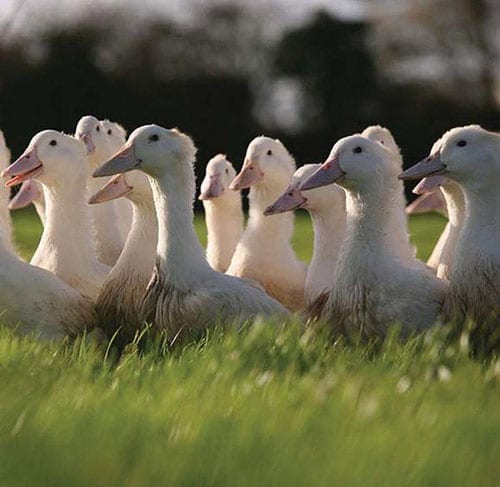
Gressingham ducksThe Loyn Bridge crosses the River Lune close to Gressingham, near LancasterGressingham duck features on many restaurant menus
Having chatted with several other foodies, they, equally, were of his opinion. After then having spotted it on yet another restaurant menu last week, I decided I simply had to establish the true origin of this bird before I went, excuse the pun, quackers.
A Google search didn’t come up with a great deal but it did produce the required evidence. As I believed, he Gressingham duck was first bred in Gressingham, Lancashire in 1980 by crossing a Pekin duck with a wild mallard.
The result was a succulent, tender bird with a high breast meat yield and a gamey flavour. Of it Delia Smith comments: “It’s the very best type of duck available… Because of it’s smaller frame, [it gives] more meat.”
A Suffolk based couple named Maurice and Miriam Buchanan began rearing and processing Gressingham ducks in 1989 and then bought the exclusive rights to breed them in 1996. Their company, Green Label Foods, now Gressingham Foods, are now the only firm licensed to produce the “Gressingham Duck®” and now employ over 500 people on their farms in East Anglia.
Gressingham Hall, Gressingham, Lancaster, LA2 8LPA view of Gressingham Hall from the road
Separately in my Google search I also discovered that the main house in the village of Gressingham has recently come to the market through agents Fine & Country. 7-bedroomed Gressingham Hall, a Grade II* listed 17th century former farmhouse comes complete with 3 reception rooms, a Jacobean staircase and 10 acres of grounds.
A price of £1,350,000 is sought for Gressingham Hall whilst a separate cottage across the drive, Garden Cottage, has a guide price of £350,000. Whoever purchases it had better had get a Gressingham Duck® in the oven for their first night in residence.
A most curious tale of playboys, socialites, lawyers and real estate moguls
This week the mystery buyer of Clarendon Court, the former marital home of Claus and Martha “Sunny” Von Bülow (1932 – 2008), was revealed as a restaurateur and real estate mogul named Paul Roiff. Separately, the New York Post reported that Mr Von Bülow’s former lawyer, Alan Dershowitz, had purchased an apartment in Sutton Place, New York at the same time as a postal worker was on trial for killing his sister. The lives of the rich and famous are never anything other than dramatic.
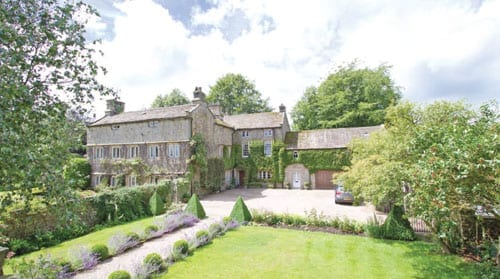
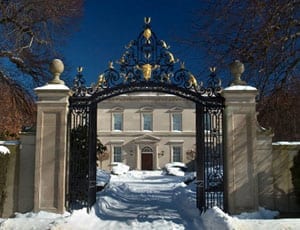
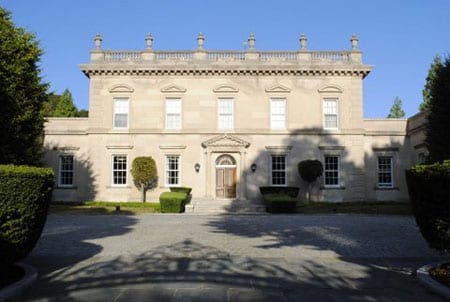
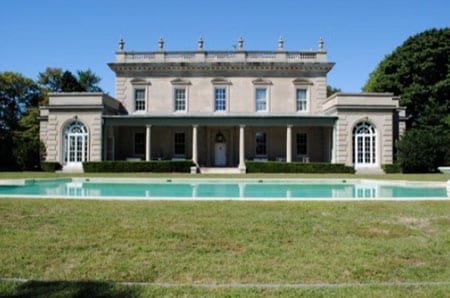
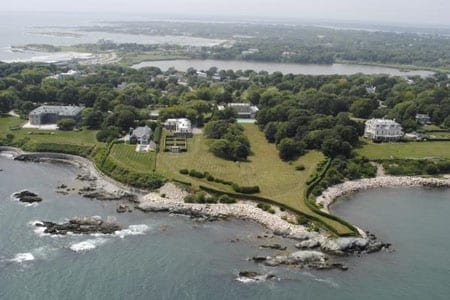
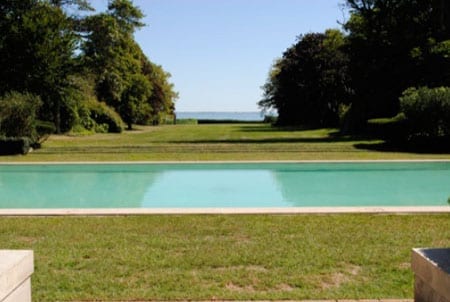
The front elevation of the former residence of Claus von Bulow: Clarendon Court, 626 Bellvue Avenue, Newport, Rhode Island, RI 02840The rear elevation of Clarendon Court, 626 Bellvue Avenue, Newport, RI 02840An aerial shot of Clarendon Court from the Atlantic Ocean
8-bedroomed Clarendon Court on Bellvue Avenue in Newport, Rhode Island is best known for the events surrounding the utilities heiress Martha Crawford Von Bülow falling into a 28-year coma there and her husband subsequently being tried, convicted and then acquitted for her attempted murder, but this fine residence has much else in its past as well.
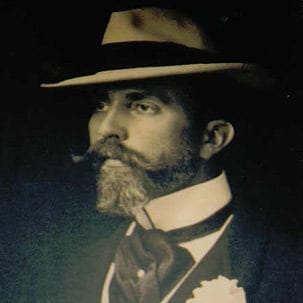
Edward Collings Knight, Jr. (1863 – 1936)
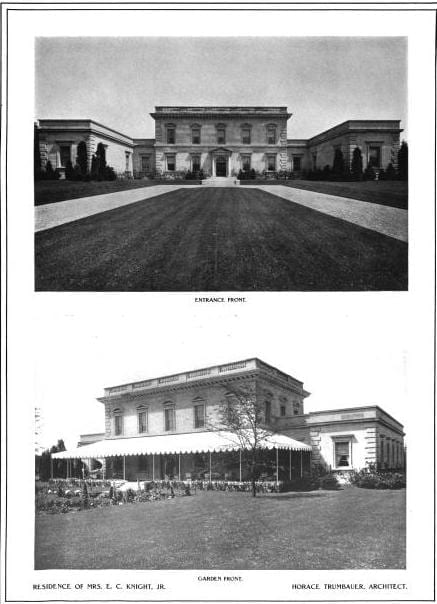
Designed by the most prominent Ameircan architect of the “Gilded Age,” Horace Trumbauer (1868 – 1938), this Palladian style villa was commissioned in 1903 by Edward Collings Knight, Jr. (1863 – 1936), a sugar-refiner and railroad executive, and his wife, Clara. It was built on an acre plot with views of the Narragansett Bay and is most curiously termed “one of Newport’s finest cottages.” The mansion that was constructed for the couple is an almost exact replica of a proposed house by Colin Campbell at Chester-le-Street in County Durham, England and features Doric columns, quoins and an urn-embellished balustrade. It provided a suitable illustration of Mr and Mrs Knight’s wealth and status.
Claradon Court in the early 1900s
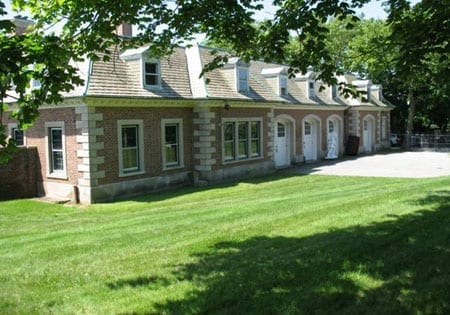
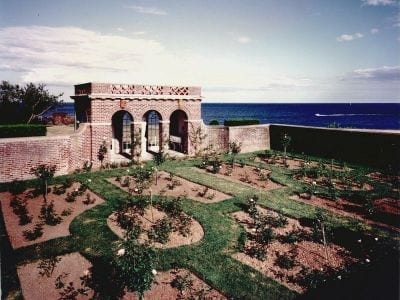
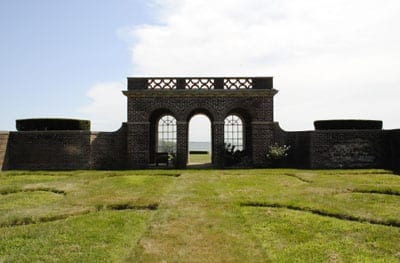
Edward Knight, who was once described as exhibiting “more talent at spending money than making it,” named the house Claradon Court in honour of his wife and shortly before it was completed in 1904, he acquired an additional six acres of land behind the plot with direct frontage to the Atlantic. Here, he had Trumbauer design a vast carriage house in an early Georgian vernacular as well as a series of high brick walls to protect the gardens from the ocean winds.
The coach house at Clarendon Court todayThe rear loggia was added by Mr & Mrs Knight at a later dateThis arch and walling was added to provide protection against the force of the AtlanticA more recent shot illustrates that the flower beds have been laid to lawn
The Knights engaged a Parisian decorator named Jules Allard to decorate Claradon Court in the English Georgian manner and after several seasons in residence added two wings onto the back of the house. Following Clara Knight’s death in 1928, her husband sold the estate, moved to a more modest Trumbauer designed house in neighbouring Middleton and remarried. His second wife, Marie Louise LeBel, is remembered as a “foul-mouthed, hard-drinking [woman], who thought nothing of killing a neighbour’s dog with a shot from her pearl-handled pistol.” Together they went on to spend the vast sum of constructing a $383,000 mansion in North Carolina as a hunting lodge. It is now the home of the Whalehead Club.
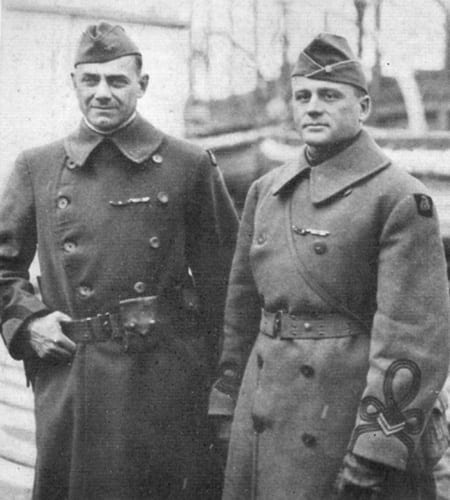
Colonel William Hayward with Major Arthur W. Little
The purchaser of Claradon Court was a First World War hero named Colonel William Hayward (1877 – 1944) and his wife, Mae (1880 – 1956). Whilst the colonel is remembered as the commander of the “Harlem Hellfighters,” a regiment that “never lost a man captured, a trench, or a foot of ground,” his wife was truly a character.
Born in Connecticut, Mae Cadwell had divorced her first husband Selden B. Manwaring of Hartford in 1914 to marry the older and richer Morton F. Plant of New York and New London, Connecticut. Morton Plant adopted her son by her first marriage, Philip “Paul” Morgan Manwaring Plant (1901 – 1941), and when he married the well-known actress Constance Bennett (1904 – 1965) in 1925 more controversy followed. The millionaire socialite Plant’s life is well documented not only as it was for him that the term “playboy” was originally created but also because of his bitter divorce from Bennett in 1929.
Following their purchase, Colonel and Mrs Hayward decided to have the name of Claradon Court changed to Clarendon Court to distance any lingering associations with Clara Knight and she is said to have filled the building with fine and decorative art. The colonel died in 1944 and his widow married for the fourth time, this time taking the president of the American Car & Foundry Company, John E. Rovensky, as her husband. After her death in 1956, Rovensky continued to use Clarendon Court until his own death in 1970 and even allowed it to be used as the set of the 1956 American musical comedy film High Society that starred Bing Crosby, Grace Kelly and Frank Sinatra.
Martha “Sunny” Von Bülow (1932 – 2008)Claus Von Bülow during one of his trials
In 1970, Clarendon Court’s most notorious chapter commenced when the utilities heiress Sunny Von Bülow and her husband Claus purchased the house as it was here in December 1980 that Mrs Von Bülow fell into the irreversible coma that she was to remain in until her death in December 2008. The story of Claus Von Bülow’s trials for the attempted murder of his wife is well known and the 1990 film Reversal of Fortune, starring Jeremy Irons, Glenn Close and Ron Silver, is most definitely a true masterpiece.
Considered a couple of “exceptional taste,” the Von Bülows were described as having filled Clarendon Court with exceptional 18th and 19th century English furniture. They also significantly improved the grounds by hiring the landscapers Innocenti & Webel to create an elegant allée to the sea by removing a hillock that had always deprived the ground floor rooms of an ocean view.
The Von Bülow landcaped the grounds to create a better view from Clarendon Court towards the Atlantic Ocean
In 1974, Claus Von Bülow wrote of Clarendon Court in an article for the Bulletin of the Newport Historical Society:
“The author of this article has lived happily at ‘Clarendon’ for the past four years. As a European he has found much to admire in Newport, with its sense of history and its preservation of a unique architectural heritage. He hopes some future writer will cover the occupancy of his family at ‘Clarendon’ with as much wistful charity as he has endeavored to extend to its previous owners.”
Von Bülow, at that time, plainly could not have imagined the tragic event that was to follow in December 1980 and for what the house would indeed become best known.
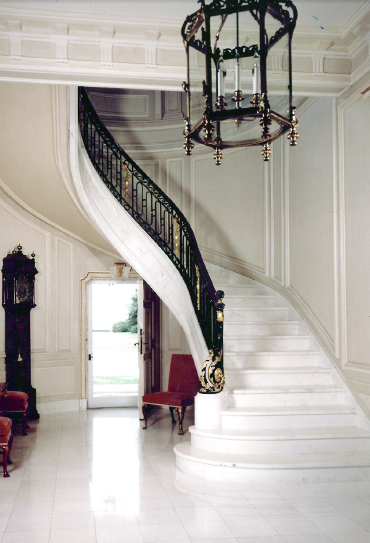
The main staircase at Clarendon CourtA study at Clarendon Court
A committee managing Sunny Von Bülow’s affairs sold Clarendon Court in 1988 to a fine art and antique dealer named Glenn C. Randall and his wife Patricia for $4,300,000. The couple converted the service wing into a gallery for their collection and lived there until Mrs Randall died after a battle with cervical cancer in May 2010. The 12,800 square foot house and it’s 10,000 square foot coach house were placed on the market for $17,800,000 in October 2010 and whilst the price was subsequently was brought down to $15,800,000, it languished until being sold in July 2012.
The new master of Clarendon Court, Paul G. Roiff, is a graduate of Boston University and Suffolk Law School. He is the president of a real estate company named Heath Properties and also co-owns a number of restaurants in Boston including Mistral, Mooo, Teatro and Sorellina as well as a 63-bedroom hotel named XV Beacon.
Paul G. Roiff
Plainly publicity shy, Roiff, who also owns homes in Florida and Michigan, used one of his employees, Keith Beardsley, to purchase Clarendon Court on his behalf. He paid $13,126,000 for the estate.
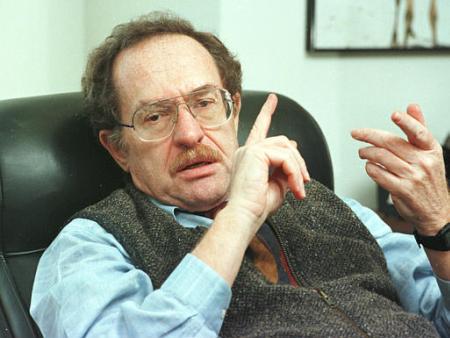
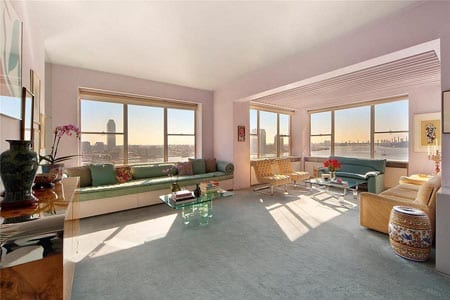
Celebrity lawyer Alan DershowitzAlan Dershowitz’s new pied-à-terre at 45 Sutton Place, New York, NY 10022, USA
In another development, on the 25th September The New York Observer reported that the lawyer who became famous representing Claus Von Bülow, Alan M. Dershowitz, had bought a 3-bedroomed apartment in the “stronghold of old money,” 45 Sutton Place, for $1,680,000. Plainly Mr Dershowitz, who subsequently represented O. J. Simpson, has done well and is plainly now richer than his first “celebrity” client. He also owns a 6-bedroom residence in Cambridge, Massachusetts and was able to use his verbal talent to persuade the sellers of the Sutton Place co-op downwards from their original $2,290,000 asking price.
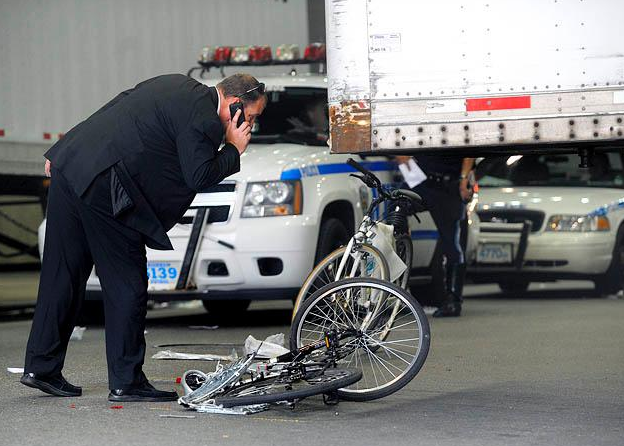
Separately, late last month, Dershowitz and his family were in court for the trial of a postal worker named Ian Clement. A 7-tonne truck driven by Clement had crushed and killed Marilyn, the 68-year old sister-in-law of Alan Dershowitz, in New York in July 2011. Dershowitz, a retired special referee for the New York court system, had been out for a bicycle ride with her husband, Nathan, a partner at Dershowitz, Eiger & Anderson.
Marilyn DershowitzThe scene of the fatal accident that killed Marilyn Dershowitz
Surprisingly and much to the distaste of the Dershowitz family, Clement, who had been charged with leaving the scene of a fatal accident, was acquitted by a jury on the 20th September. Of this, Alan Dershowitz commented:
“The facts clearly justified a guilty verdict… I think a stronger presentation might have brought about justice. Instead, we have an injustice.”
Both the Von Bülows and the Dershowitz family have endured loss and a huge amount of media attention since the events of the early 1980s. Perhaps these most recent moves will bring with them a new chapter for both Clarendon Court and Mr Dershowitz himself. Meanwhile, Claus Von Bülow, though not quite as wealthy as he was in his days at Clarendon, prospers in London and is considered one of the city’s “finest wits.” How fortunes do indeed revolve.
Contact Alan M. Dershowitz at: Hauser Hall 520, 1575 Massachusetts Avenue, Cambridge, Massachusetts, MA 02138. Telephone: +1 (617) 495-4617. View his official website at: http://www.alandershowitz.com/or follow him on Twitter at: http://www.twitter.com/alandersh
The agent for Glenn C. Randall in the sale of Clarendon Court was Paul Leys of Gustave White who can be contacted on +1 (401) 848-6706 or by email at:[email protected]
“Why pay less when you can pay more?” is a mantra that some strangely choose to live by. In my time, I have encountered a couple with a different Ferrari for each day of the week, someone who proudly declared their home had a window for each day of the year and an heiress who insists upon the local baker feeding her dog daily with a freshly baked caviar pie.
When I discovered a house in California priced at $78,000,000, I didn’t expect to subsequently find out that the same vendor is also selling another of his homes in Montana at the very same price. Having done a little research into Donald G. Abbey, the commercial real estate tycoon who owns both The Bradbury Estate and Shelter Island, I discovered that here indeed is another personality whose excess knows no bounds.
I suppose when people sell homes of this worth, the asking price they set is quite irrelevant. “What,” I’m sure they ask, “is $5 million between friends?” Equally, when it comes to developing such properties, characters of this nature do not show any reserve. Bling is most definitely the order of the day and the larger and flashier one can build, I guess, the better.
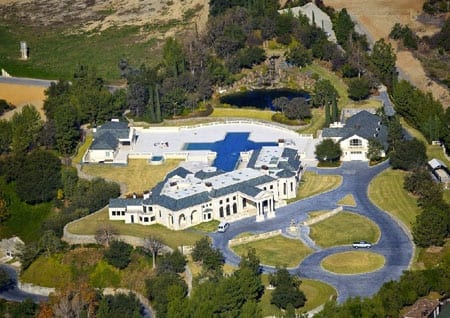
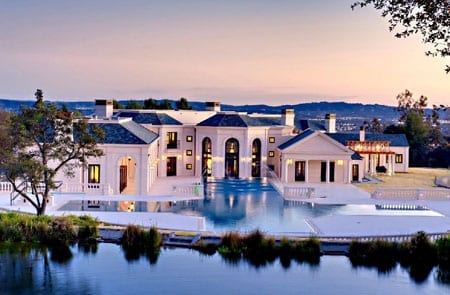
An aerial shot of The Bradbury Estate, 172 Bliss Canyon Road, Bradbury, California, CA 91008, USAThe front elevation of the main houseThe owner and his guests need not get wet on arrival in their limousines
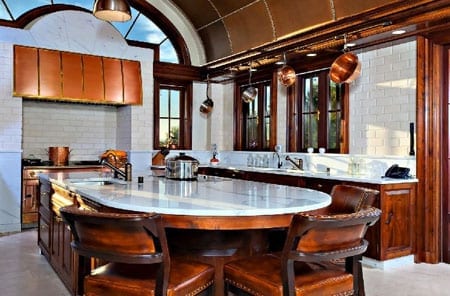
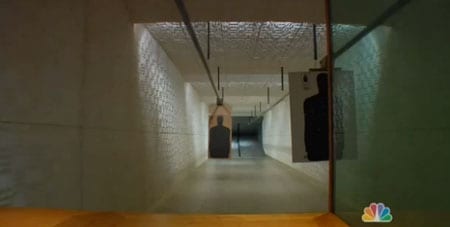
Abbey’s Bradbury Estate is a case in point. This vast property consists of a 33,000 square foot main house with 7 bedrooms and 10 bathrooms. It is almost entirely made of French limestone and includes a chef’s kitchen with a pizza oven, a 2,000 bottle wine cellar, an oak paneled elevator and a leather paneled poker room. Bedrooms include domes with hand painted frescos and in addition there is a detached 6,700 square foot guest house above a 10 car garage and a 5,700 square foot pool house with a catering kitchen, gym, massage room and a subterranean EPA certified 25 yard rifle shooting range complete with a gun storage room and 2 large safes.
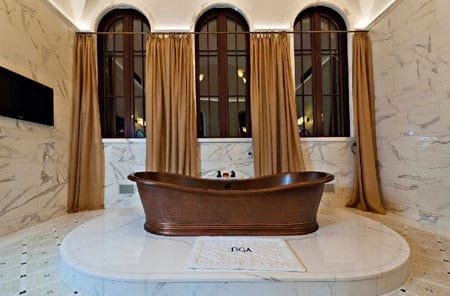
The hall of the main residence comes complete with a gallery and barA vast library provides the perfect space to enjoy a good bookThe library’s glazed ceilingAnother palatial reception roomThe house features a rather impressive kitchenMr Abbey’s copper bath tub comes complete with a mat displaying his initials in front of it
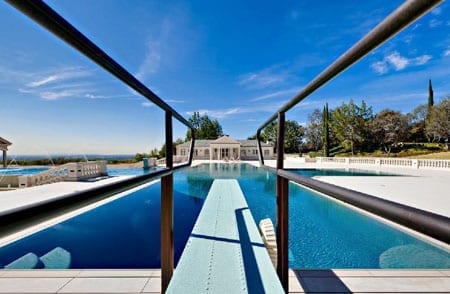
Within the 8 acre grounds there is a cross shaped infinity-edged pool – perhaps Mr Abbey is religious – that is “just a few feet short of Olympic length.” It requires 350,000 gallons of water if it is to be filled to capacity. Adjoining this is something even more ludicrous: a 1,000,000 gallon, temperature-controlled rainbow trout pond that cost some $8,000,000 to construct. The pond is said to be “adorned with perennials,” is heated by a custom gravity separator with UV filters and is “chilled for the trout by a 300-tonne central cooling plant.” At Bradbury, thoughts of water crisis in Sudan and Ethiopia come way behind the needs of Abbey’s rainbows.
The rear of the house viewed from above The Bradbury Estate’s $8,000,000 trout pondThe estate’s 350,000 gallon near Olympic length cross shaped infinity edged swimming poolThe property’s EPA certified 25 yard rifle range
For those wanting to avoid California’s UV rays, Bradbury also boasts an acre of porches, decks, loggia and walkways. A 600ft blue stone driveway completes this “once in a lifetime trophy property” that “belongs in the portfolio of the most astute collector” and it has space for “60 foot truck access or multiple limousines.”
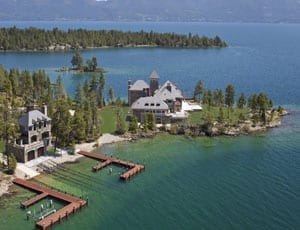
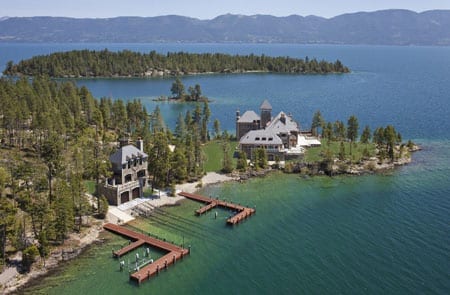
When Mr Abbey has tired of California, he is able to retreat to his own island in Montana. The 24 acre Shelter Island on Flathead Lake includes 7,000 feet of frontage to the water, a world class sporting clay course and 3 computer controlled tracks and docking systems that allow boats to be landed in the dry dock without riders ever leaving the craft or handling a line. The island is powered via an underground armoured utility cable that carry 12,000 amps to it along with CAT-5 computer cable and phonelines and the main entertaining space features a mammoth television of some 120-inches in size.
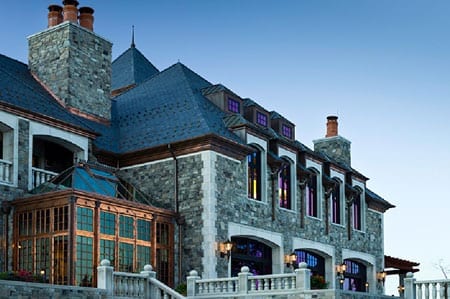
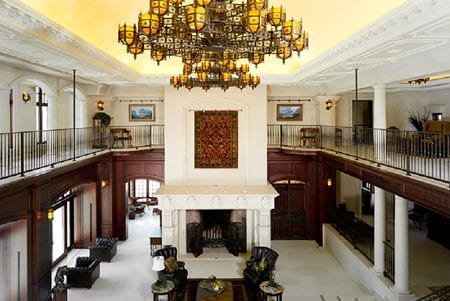
An aerial view of Donald G. Abbey’s Shelter IslandMr Abbey’s passion for copper continues with a conservatory made out of the metal on the lakeside elevation of the main residence on Shelter IslandThe Great Room of the main residence on Shelter IslandMr Abbey’s passion for fine wines is displayed in a bar and tasting room in the propertyThe owner and his guests can access their boats without having to go anywhere near the water
Abbey has built over 44,000 square foot of accommodation on his island. The main house has 5 bedrooms and 8 bathrooms. His “Great Room” features ceilings of some 45 foot in height and in addition to yet another indoor shooting range, there is a kitchen that woudn’t look out of place in The Savoy hotel.
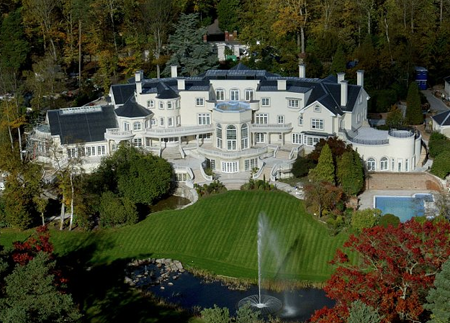
In the UK, the property most similar to anything Abbey has built has to be Updown Court at Windlesham in Surrey. Developed by a former bricklayer named Leslie Allen-Vercoe, the house was described by him as being: “The most important residence to be built in England since the 19th century.” Architectural critics did not agree and some went as far as to say that it looked like: “A cross between a Tesco superstore and Center Parcs.”
Allen-Vercoe’s behemoth of a house is gargantuan in size. With 103 rooms it includes 24 bedrooms, 5 swimming pools, a 2-lane bowling alley, a squash court, a floodlit tennis court, a 50-seat cinema and a panic room. The heated driveway that led to the house is entirely made of marble and cost some £2.5 million to construct but plainly none of this appealed to the market as it languished for sale at a price of £70,000,000 from 2006 to 2011 before being repossessed by the Irish National Asset Management Agency (NAMA). Updown Court was sold for half the original asking price to a foreign buyer in October 2011 and is, I believe, due to undergo extensive remodeling.
Updown Court, Chertsey Road, Windlesham, Surrey, GU20 6HY, UK
Allen Vercoe once stated: “If Elton John were a house, he’d be Updown Court.” Equally, I imagine if Mr Abbey’s residences were to be compared to any celebrities they’d be the vulgar car crash that is Donatella Versace and the ludicrous money obsessed singer with a dollar sign in her name, Ke$ha.
Updown Court, Shelter Island and The Bradbury Estate all illustrate that money cannot buy you good taste. I suppose, though, that those who ultimately come to live in them will have plenty of space to choose how and where to enjoy their own form of misery.
For information on both The Bradbury Estate and Shelter Island, contact Bob Hurwitz of the Hurwitz James Company on +1 310-477-8865. Website: http://www.hurwitzjamesco.com
The North Devon countryside that inspired Henry Williamson, R. D. Blackmore and Charles Kingsley
Much of my childhood was spent reading the works of superb authors and amongst the best of them were Arthur Ransome (1884 – 1967), Denys Watkins-Pitchford (1905 – 1990), who wrote many of his works under the pseudonym “B.B.”, and Henry Williamson (1895 – 1977). As a youngster, I was lucky enough to be read to by Ransome’s nephew, a most captivating professional storyteller, and was given first editions of many of the works of all three of these early to mid twentieth century authors.
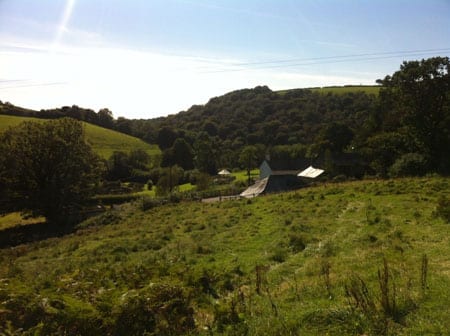
I had my first sailing lessons on Windermere, where Ransome set many of his works, and went shooting in the Forest of Bowland, a place dear to B.B. Though I also fished in many wonderful locations, until now I’d never been to the land of Henry Williamson and his most famous creation, Tarka the Otter. I currently find myself here enjoying a break from London and yesterday I randomly discovered, I am staying next to the setting of one of Williamson’s lesser known stories, Salar the Salmon, on the River Bray close to Exmoor.
“Salar the Salmon” by Henry Williamson (1935)Henry Williamson (1895 – 1977) photographed by Mark Gerson, cibachrome print from original transparency, August 1970“Tarka the Otter” by Henry Williamson (1927)
Originally published in 1935, Salar the Salmon combines Henry Williamson’s great talent as a writer with his insight as a naturalist. The story tells the tale of a five-year old salmon named Salar, whose name means the “leaper,” and his return to the stream of his birth. Salar’s migration through the riverways of Devon involve him surviving porpoises, seals, nets, fishermen, otters, poachers and weirs and Williamson’s account truly gives the reader an insight into one of nature’s great journeys.
Henry Williamson wrote both Salar the Salmon and The Children of Shallowford (1939) whilst living beside the River Bray in a hamlet named Shallowford, near Lynton in Devon. The river plainly inspired him and whilst he lived there on the Fortescue Estate he also sired four children, joined Oswald Moseley’s British Union of Fascists, was briefly imprisoned for his views and conducted several extra-marital affairs.
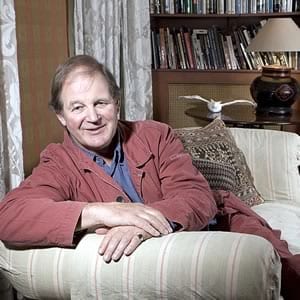
“War Horse” author Michael Morpurgo OBE
Salar the Salmon is a story I am not alone in recommending. Another Devon based author and poet, Michael Morpurgo OBE, best known for his acclaimed work, War Horse, speaks very fondly of Williamson and the novel in a dedication he prepared for a recent reprint of it:
“It is a rare gift indeed for a storyteller to be poet as much as a storyteller, to tell a tale so deeply engaging that the reader wants to know what will happen and never want it to end, and yet at the same time tells it in such a way as to leave a reader wide-eyed with amazement at the sheer intensity of feeling that can be induced by the word-magic of a poet. Henry Williamson is just such a story-maker poet.”
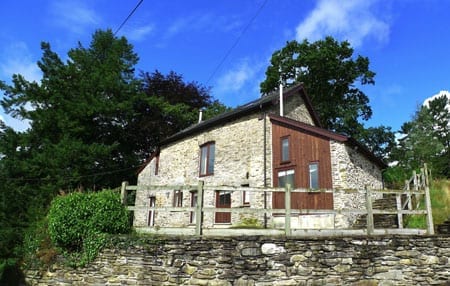
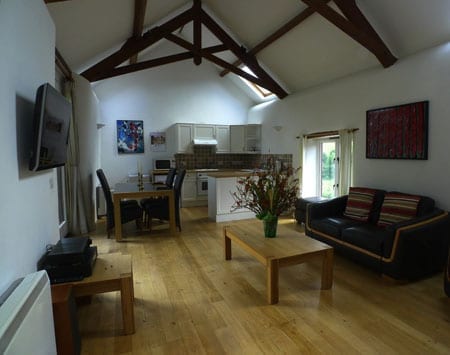
Where I am staying, I have a view of the very river on which Salar made his journey and here also a detached barn conversion is currently available to rent at a price of £1,150 per month. Malle’s Barn is a 2-bedroom stone-built property that includes a 25ft by 12ft open plan sitting room with a fully fitted kitchen and a dining area, as well as a study and shower room.
The exterior of Malle’s Barn, Brayford, Near Barnstaple, Devon, EX32 7QBA large open plan reception room includes sitting, dining and kitchen areasThe setting of Malle’s Barn overlooking the valley of the River Bray
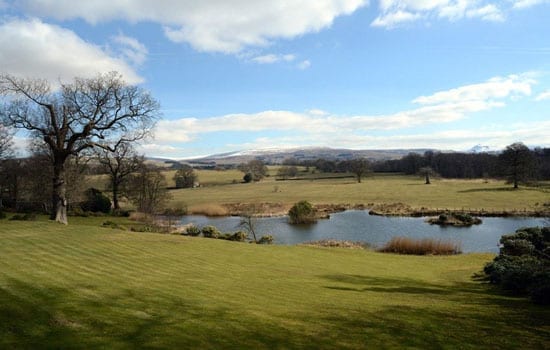
Tenants of the house will have access to the owner’s 60-acre estate which includes a mile of salmon and brown trout fishing on both the Rivers Bray and Holewater, ancient woodland and a lake in addition to a private garden and adequate parking for several vehicles.
Malle’s Barn would make a perfect retreat for any author or artist and is just 10 minutes from South Molton, Barnstaple is 9 miles away and Exeter 40 miles. The location is 30 minutes from J27 of the M5 and Tiverton Parkway Station, which provides mainline links to London Paddington within 2 hours.
Close to Malle’s Barn are the prettiest sections of a footpath named the Tarka Trail. Consisting of over 180 miles of footpaths and cycle tracks that take in the Dartmoor and Exmoor National Parks and the North Devon Coast Area of Outstanding Natural Beauty. The trail takes in many of the locations described in Williamson’s most famous novel but this area of North Devon also galvanized the pens of a number of other authors.
Richard Doddridge Blackmore (1825 – 1900)Professor Charles Kingsley (1819 – 1875)
Richard Doddridge Blackmore (1825 – 1900) set Lorna Doone: A Romance on Exmoor in the locality in 1869 and Professor Charles Kingsley (1819 – 1875) put pen to paper here when he wrote Westward Ho! in 1855. A village of the same name was subsequently established near Bideford in the 1860s by entrepreneurs, led by Lord Portsmouth, who saw an opportunity to capitalise on the novel’s success. Westward Ho! is the only place in the United Kingdom with an exclamation mark in its name. The only other place in the world that shares such is Saint-Louis-du-Ha! Ha! in Quebec, Canada.
Aside from literary connections, the locality is famous for its excellent fieldsports. The Earl and Countess of Arran’s Castle Hill and the Molland shoot are considered amongst two of England’s finest high bird pheasant shoots and both the Devon and Somerset Staghounds and Devon and Somerset Foxhounds hunt on Exmoor.
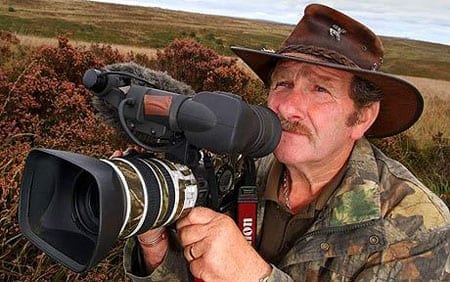
Johnny Kingdom
Johnny Kingdom, who describes himself as having been “a farmer, quarryman, forestry worker, gravedigger and, if truth be told, a poacher” in his youth, also lives in the locality and is well known as a wildlife photographer, filmmaker and television presenter. He sets many of his series on Exmoor because of the vast array of wildlife he comes across here and is, like Williamson before him, often to be found exploring the valley of the River Bray.
In a 1965 BBC interview Henry Williamson was asked: “What influence has this [the Devon] countryside had on you?”:
“Everything, I should say. I came down here as a youth, aged just 18 in 1914, spent a fortnight’s holiday here in the beginning of May, beginning of June. I walked 20 to 25 miles every day. Everything I saw was radiant and beautiful.”
This idyllic part of Devon that Williamson loved so much remains unspoilt to this day. If you haven’t visited yet, it really should be added to your bucketlist.
The case of a Ferrari FF driver with more money than sense
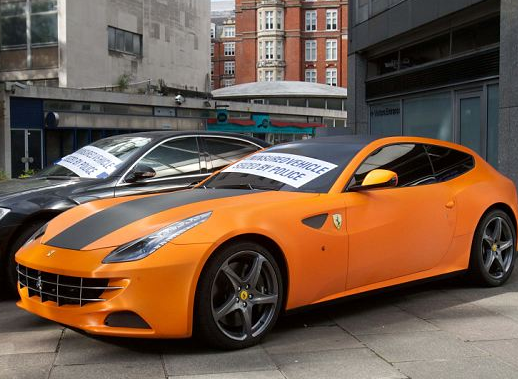
Last November, on my way to a lunch at The Stafford Hotel with The Steeple Times restaurant critic, Anthony Brown, I took a photograph of one of my favourite vehicles, a Ferrari FF, in Curzon Street, W1.
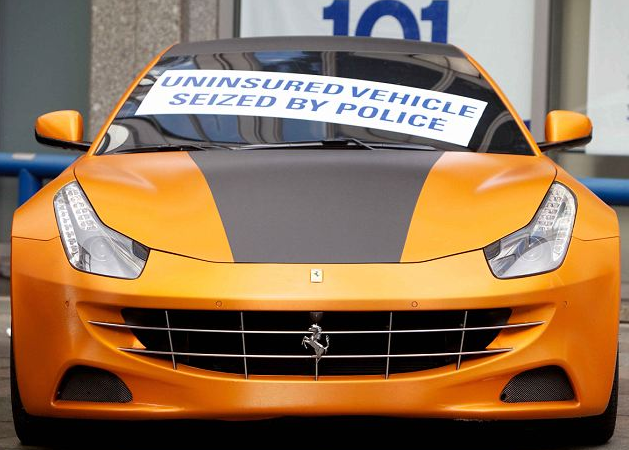
Emblazoned with a Westminster City Council parking ticket, this particular FF, baring an Arabic registration “66 C,” was especially noticeable as it was “wrapped” in orange and black and I took a photograph of it.
My photograph of the orange-black “wrapped” Ferrari FF in Curzon Street, Mayfair, London, W1 in November 2011
After sharing the image on Facebook, I received, in Margaret Thatcher style fashion, the following reply from the renowned designer, Bruce Oldfield: “No, no, no!” Another friend, Anne Marie Legault added: “It doesn’t fit with the neighborhood.” Karen Ashworth, a Mercedes SL 500 driver and friend from my school days, summed up the thoughts of the majority though when she stated of the car: “I’m not a fan to be honest!”
I subsequently saw the car a few times in the months that followed but never imagined that I’d see it on the Mail Online website and would certainly never have predicted that it would have ended up as an advert against uninsured drivers outside New Scotland Yard.
The very same Ferrari FF outside New Scotland Yard todayInstead of a parking ticket, this Ferrari FF now has a police notice glued to it’s windscreen28-year old His Highness Sheikh Rashid Bin Humaid Al Nuaimi. His nickname is “RRR,” which supposedly stands for “rich in real estate resources.”
The Steeple Times picture of the week, following on from this morning’s coverage of it, therefore, has to be of this particular FF. It turns out that it is owned by His Highness Sheikh Rashid Bin Humaid Al Nuaimi, the 28-year old son of His Highness Sheikh Humaid bin Rashid Al Nuaimi, the ruler of Ajman, and was recently impounded in South Kensington, London after he hadn’t bothered to insure it. Having paid £227,000 for such a magnificent vehicle, one would have thought he’d have the brains and finances to have done such. Plainly the age of excess and stupidity is still with us.
Georgea Blakey shares her experiences of Miss World 2012
“Welcome to the holly [sic] land of Genghis Khan. The city of green and pleasant cool.”
These are the words written on the side of the car collecting me from Ordos airport. The light summer breeze blowing through this wealthy oil and mineral rich town in the middle of the verdant grasslands of Inner Mongolia is indeed known as the coolest place in China. It now has another reason for the accolade: it is hosting Miss World 2012.
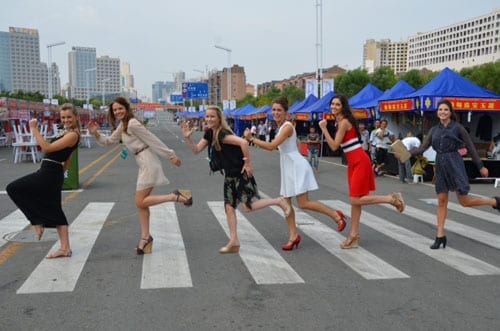
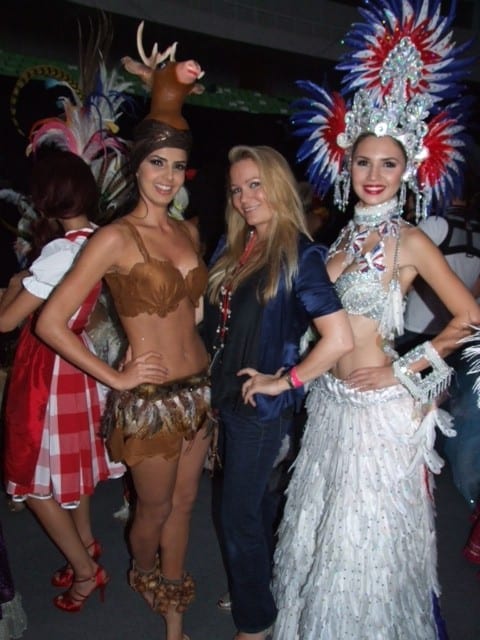
Recreating Abbey Road with Misses Northern Ireland, Scotland, UK, Wales and USAGeorgia Blakey does the Miss World pose with Misses Mexico and Panama
I’m going to be sharing the same itinerary as the contestants during the last week of this month long competition. We are being spoilt rotten at The Crowne Plaza Hotel, a huge swanky palace of a building that wouldn’t be out of place in Dubai. Normally reserved for visiting heads of state and presidents, there is marble everywhere.
The enormous glass dome above the lobby floods sun light onto a throng of beauty contestants. Their chaperones, friends and family are all tapping onto their mobile devices. It is the only place to get the odd burst of WiFi.
The Chinese government has banned Facebook for political reasons, much to the chagrin of these young ladies. Miss Scotland knows that she has 54 messages awaiting her and she can’t wait to open them as soon as she touches down at Gatwick.
The song, Puff the Magic Dragon springs to mind as the air reeks of nicotine, the Chinese are smoking enthusiastically as though it was England pre-2007. Amidst this chaos, I’m trying to have a coffee and a chat with another glamorous brunette, Julia Morley, the irreducible core of Miss World.
In the UK, the media perceived political correctness resulted in the show being yanked off our screens around the same time that the Benny Hill show was pulled. Showing too many scantily clad girls plainly didn’t go down well with the UK’s liberal elite.
In fact, the opposition to the wearing of bikinis led to their replacement with more modest swimwear after only the first contest. In 1959, the BBC started broadcasting Miss World. The pageant’s popularity grew during the 1960s and 1970s and the competition would normally be the highest rated programme of the year, regularly pulling in around 30 million viewers.
I ask Morley how she feels about being exiled from the mainstream channels in her home country: “It does bother me,” she says, “because Britain has a load of old trash on TV nowadays and…. I’m British!”
I nod in agreement, having long been stunned by the hypocrisy. I think of the hapless victims that are lined up in front of Julien MacDonald and Elle Macpherson to be told they can’t get ahead because they are: “Too boring, ordinary, nothing special, cross eyed, have no personality and look average.” This is just some of the charming critique heard on the current series of Britain’s Next Top Model. That is pure and simple exploitation for TV ratings.
Morley goes on to say: “I think the public would like to see it back. We’ve evolved so much. We even have a series of new and interesting features including special awards for talent, charitable projects, media and sporting skills.”
“If it was just girls gyrating on stage in bikinis I wouldn’t be here,” says Morley. “It really is the most fascinating job you can have.’”
“We have such a mixture of entrants; teachers, architects and even a trainee nuclear physicist. It wouldn’t matter if we had a check out assistant from Tesco’s. All are welcome.”
I personally don’t think Julia Morley need worry about Britain’s lack of interest as there is more than enough coverage elsewhere around the globe. Google and Sina (the vast Chinese internet network) are partners and over 100 countries will be broadcasting it live to over a billion. It will be shown on the popular American satellite channel E! entertainment, which also airs in the UK and Ireland. Because of their success, they are engaged for at least the next five years.
Bready, steady, go!
It’s lunchtime and I’m curious to find out what a modern day beauty queen eats.
The girls have been rehearsing in the impressive newly built Dongsheng stadium, a sort of Mongolian O2. This “glossy posse” have been on their feet since 7.30am and are so ravenous that like gazelles in stilettos they leap off the fleet of buses used to ferry them about and then do a Usain like bolt to the hotel restaurant.
Shock horror. Miss England eats carbs. They all do. Chips, pastries, pasta and anything starchy are the favourites. They are all desperate to avoid getting a dodgy stomach so like to stick to plain and filling food and steer well clear of the crispy chicken claws and pig’s willows.
It’s survival of the fittest at the buffet bar. Sporty Charlotte Holmes, representing the UK as Samantha Brick was otherwise engaged in the Celebrity Big Brother house, advises me to use my elbows otherwise I won’t get a look in. They eat like soldiers about to go on manoeuvres.
Miss Paraguay and Miss Israel practice their winning faces
Spontaneous choruses of happy birthday ring out in Cantonese, Chinese, Spanish and English as Miss Colombia is celebrating turning 21. She is presented with a chocolate cake, a Miss World tradition. She is delighted and trills: “It’s not often you get to spend your birthday with 115 other girls and get sung to in four different languages.”
I take a seat next to Sophie Moulds, the jaw-droppingly beautiful Miss Wales. She may be studying for a degree in business management but tells me she has a thing about jam. She likes it on everything: crackers, croissants and even noodles. She’s not fussy. She went as far as to ask for some on her toast this morning. With her very strong lilt it’s no easy task for a Mongolian waitress to understand her. Hardly any of the locals speak English, so an awful lot gets lost in translation.
She had to resort to miming the action of spreading jam onto a slice of bread. She thought she’d had a break through when the perplexed attendant at last nodded vociferously and shot back into the kitchen. Thirty minutes later (it takes a long time to get anything done here), to her chagrin, Miss Wales was presented with a tube of wasabi paste.
I am happy to report that these girls eat well. No stick insects here, just healthy and curvy women. Sorry to disappoint, but there is no artifice, no fake tan, not even a nail or hair extension. Natural is key but there is a more practical reason. Any of these beauty aids would be impossible to maintain over five weeks on the road without access to professional salons.
Yakkety Yak
There are 116 contestants staying here along with their 16 chaperones. Each chaperone has 6-8 girls to look after. There are also the Miss World crew, technicians, cameramen, judges, presenters, production staff, security, translators and volunteers. All in all there are about 500 of us.
When you imagine Mongolia, you think of yaks and yurts but it’s not like that at all. That might be the case in the countryside, but Ordos is a thriving city. The wide tree-lined boulevards, studded with modern apartment blocks look like anything you may see in a big American city. The only yakking going on around here comes from the girls. It’s obvious they all adore one another and chat and gossip happily. I notice no bitchiness. They have genuinely become friends after so long on the road with each other.
We are all at the stadium for another rehearsal. The floor manager, Stickie, has just finished directing a cast of 16,000 at the Olympic opening ceremony and is now directing an equally mesmerising cast of 116 here. The circular stage is shaped like a traditional yurt, the amphitheatre is filled with the sound of Mongolian drums beating like the hooves of galloping horses. It feels like the start of an epic opening music sequence from a Hollywood film or a Mongolian River Dance. A crash of symbols and then a rainbow of girls appear, quickly followed by excited toddlers in traditional embroidered outfits, and balletic warriors pirouette with swords. It is a kaleidoscope of colour. This is Mollywood!
Various international guests have been booked to perform, one of them a renowned black opera star, Rodrick Dixon, fresh from a stint at the New York Met, appears in jeans and a khaki shirt and practices “Somewhere” from West Side Story. It is sung so powerfully that we are all in tears, cheering. He gets a standing ovation and it’s only half past two.
Even though it isn’t even a dress rehearsal these Amazonian young women look like they just stepped out of the pages of Vogue. All the participants agree that Miss Venezuela definitely has the best wardrobe. She arrived with eight suitcases brimming with designer garb and kindly leant some of it to the unfortunate few whose suitcases were lost in transit.
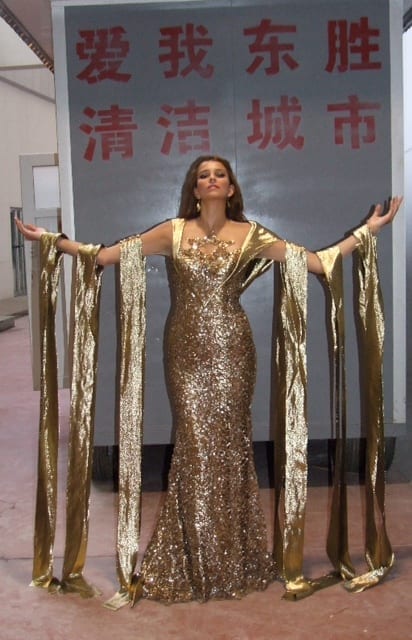
Donna, the choreographer, helps 116 drained damsels learn their steps. She makes sure that when they walk onto the stage they are comfortable and confident. The contest is a 5-week “festival of beauty” that has toured China and Mongolia, visiting all the top attractions. This is a contest where there are photo shoots at sunrise in the singing dunes of the Gobi Desert for which they had to start hair and make up at 3.30am.
A particular highlight was recounted by Miss England, Charlotte Holmes, who if she had won would have been the first ever IVF Miss World. She recalls visiting a nomadic tribe in the midst of a traditional wedding ceremony:
“Basically they got the bride drunk, saddled her with a massive head dress that effectively blinded her, put her on a horse, led her round a field for a bit and then came back to the yurt and drank some more. It was my kind of wedding,” she chirps.
She and her comrades also formed a camel train across the desert, catwalked the silk route, churned yoghurt in a local ger (yurt) and were treated to a front row seat at the archery, wrestling and horse riding competitions that form the basis of the centuries old Nadaam Festival that formally commemorates the 1921 revolution when Mongolia declared itself a free country. Without exception, everyone of these young lovelies has learnt so much from their Mongolian adventure.
The girls always rehearse in their vertiginous pumps as it is paramount to get the correct ambulatory timings from exits left to right. Flats would give a false reading. Agglutinant Cola is liberally spattered across the stage to stop the girls slipping.
Though the girls do have every opportunity to change into trainers when they have finished, that would be unthinkable. Morley states that unless you tell them that they are going to be walking through mud and slush they won’t be separated from their sparkly platforms: “You know young girls love their heels but as far as I’m concerned they can wear what they bloody well like!”
“One world, one dream, let us share our hearts together in a place where we all belong”
The bearded musical director, Mike Dixon, is conducting the candidates as they sing The Miss World song. More usually found working with such acclaimed artists as Dame Shirley Bassey and the team of We Will Rock You, he loves toiling on this: “You have to remember that these women are all essentially amateurs, I enjoy getting the best I can out of them.”
“Hey Brazil, you dropped your phone.”
“Oh thank you Iceland!” The girls all call each other by country names as they’re easier to remember.
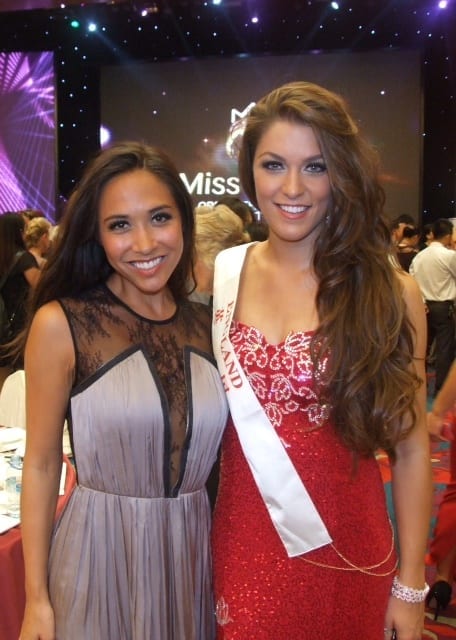
Mylene Klass and Miss England
I’m wondering if things could get any more surreal when I bump into a sequin clad, Myleene Klass emerging from her dressing room. Klass has been called upon not only for her mixed race appeal but for her extremely competent presenting skills. Svelte, graceful and smart, she is the epitome of the Miss World philosophy. She has been paired up with an American soap star, Days of Our Lives heartthrob, Jason Cook. The two of them are practicing reading from the autocue machine. There is a lot of jokey banter and Cook is quite the comedian:
“Myleene, I hear you are an internationally famous presenter, or is that just Hear’Say?” Myleene groans and retorts: “Gosh, an American with a British sense of humour.”
Suddenly there is the sound of rapid gunfire. Jason quips: “Are we under attack?!” Thankfully, it’s just some wedding fireworks going off outside. There are certainly no protestors or feminist flour bombers here. The local populace is thrilled to bits to have us and think any mention of sexism or exploitation is a load of old pigs’s willows.
Myleene is wowed by the calibre of the entrants this year. For every girl that enjoys movies, fashion and baking there are another three who are studying economics, medicine and psychology. “These are my kind of ladies,” she states.
Miss Northern Ireland, a sailing champion and budding presenter, approaches her for some advice and Myleene helpfully allows her to listen to her in her earpiece.
Bird Flu
Having been sequestered in the auditorium for four days I get the rare opportunity to take some of the girls out for a much needed break from the Ground Hog Day like slog of rehearsals. We are window (or rather stall) shopping in a busy local market. Rows of little blue tents are adorned with their wares; dangling dead ducks and insects, a myriad of crystals and PVC handbags. I find it rather reminiscent of Portobello Market.
We had intended to visit Genghis Khan’s mausoleum but our head security guard, a very debonair ex-military man, whom the ladies call James Bond, said the schedule was far too tight to risk the 2-hour round trip in case of traffic. “00 Heaven” is accompanying us to stop us getting mobbed. Wherever this “caravan of contestants” travels, it attracts a lot of attention.
Like the Beatles hitting America, everyone goes wild behind their little white facemasks. I presume they wear them as they are worried about catching avian flu. With so many birds around, it’s not an unreasonable precaution. They’re also constantly hacking up what could be fur balls of phlegm and lift up their masks to spit them onto the pavement.
Crouching Lady, Hidden Toilet
I ask someone where the loo is: “Over there, Good Luck!” Why the words of encouragement? It all became horrifyingly clear. I opened the door and climbed tentatively up some wooden steps to the portaloo from hell. There was no actual toilet to speak of. I thought: “Has it been nicked?” I looked down and saw that it was just a shallow hole in an aluminium floor. In the reeking recess was a large stool neatly coiled into the shape of a cinnamon twirl. There was a 3 cm high curved metal edge on one side of the perimeter. Perhaps this was a helpful bum rest should one unwisely decide to actually sit down or perhaps it was a splashguard in case you squatted. There wasn’t any loo paper or a washbasin but there was a handy mirror.
Miss Israel outside the rather lovely portaloos
The camera guys find it a fairly unpleasant experience so imagine how ghastly it is for the girls. It’s rather tricky gathering up their flowing dresses and crouching down in their Jimmy Choo’s. They have taken to crossing their long thoroughbred legs and holding it for as long as they can. They are drinking so much water to avoid getting dehydrated under the heat of the stadium lights, that when they do finally go they pee like racehorses.
Beauty with a Purpose
You cannot talk about Miss World without mentioning the aspect of it that separates it from every other international beauty pageant. The contestants have to be passionate about charitable causes and they work hard to prove themselves.
The premise of this award is simple: Use your talents to help those less fortunate. Comediennes utilise their funny bones to raise money for Comic Relief, well think of this as Beauty Relief.
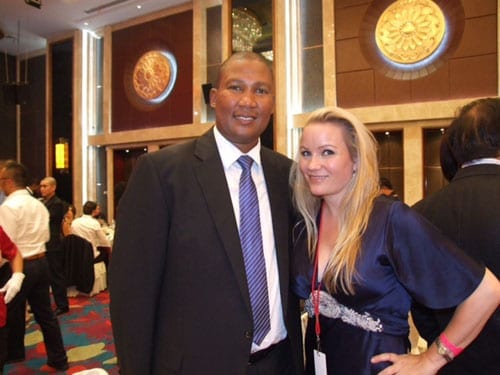
Chief Mandela and Georgea Blakey
I have been invited to Morley’s hotel suite and am sitting on a sofa between a former Asian Miss World and all 6’4″ of Chief Mandela, here representing his grandfather, Nelson, who is himself a strong supporter of The Miss World Organisation. The Chinese word “Junzi” would describe him well: “A man of noble character or status who is upright and benevolent.”
We are shown gut wrenching videos of each contestant’s chosen cause. There is harrowing footage of disadvantaged children from around the planet. There is a lot more to the modern day beauty queen than meets the eye. I’m astounded as I see Miss Kazakstan, a qualified paediatrician, hold a stethoscope to sick children’s chests. In hers, Miss India campaigns for the education of not only the slum children of Mumbai but also their mothers too. Miss Portugal is shown visiting an old people’s home in a protest against the abandonment of the elderly and Miss Canada is trying to highlight the atrocities of human trafficking.
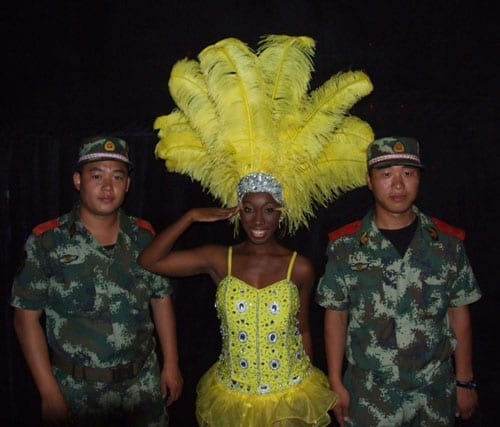
Miss US Virgin Islands, a reserve in the US army, salutes
Miss US Virgin Islands is a reserve in the US army and is only recently back from a year in Afghanistan where she narrowly missed a shell attack which destroyed the shower block. Miss France is a beauty that helps the beasts. She supports the Gallic version of the Battersea Dogs & Cats Home.
Misses aren’t afraid to get their hands dirty and I watch Nigeria and Kenya mucking in with the inhabitants of rural villages, crusading for clean water and waste disposal systems. The sanitation is so poor that I will never complain about a Mongolian loo again.
These videos are humbling, they put everything in perspective. I hear Chief Mandela sigh heavily, as upset as I am at man’s inhumanity to man.
That’s the emotional factor I have found about Miss World. One minute you are laughing hysterically, the next crying uncontrollably and we haven’t even got to the final yet.
The genuine dedication of these ladies to their causes fills me with awe and shame at my own lack of sisterly love. So often a Beauty Queen is mocked for the moniker: “I want to help heal the world and save the little children.”
I don’t see much difference between the Misses and Bob Geldof. He said he wanted to feed the world and he got knighted for his efforts.
This is Miss World goddammit. What the hell do you think they should look like?! Why are we opposed to beauty? How would Hollywood work if it went all PC on us? Do you think that Halle Berry (a former Miss USA) gets cast for her acting talent alone?
Life is inherently a beauty contest. Good looks open doors, but if they can also open a treasure chest and the spoils be divided amongst the poor, why not?
The Miss World Effect
I am chatting to the financial director, Michael Macario, about some of the other attractive figures involved. Miss World to date has raised over £250 million for charity.
Governments and tourist boards invite Miss World to their countries to promote tourism. When the show was broadcast from Sanya in China, the massive rise in visitors to the area was put down to the Miss World effect. The organisation was credited with changing the face of the industry. Ordos are hoping the same will happen here. Pretty girls make good marketing sense.
Let’s not forget though that the Morley family, (Julia’s son Stephen and grandson Ben are by her side) have run an incredibly successful business with a multi-million pound turnover for 62 years now. The brand is jealously guarded but has never been tarnished. Macario says there could have been loads more opportunities to make money but that is not their primary concern, BWAP is.
An auction held at a charity dinner last night raised enough money to send 30 local students to university. The contestants bring any item of cultural interest with them and supportive local businessmen bid furiously. It got quite competitive with many of the objects fetching over £10,000 each. Even Miss Seychelles’ s coconut shell achieved several hundred Yen. She told me she needed a permit to get it through customs. Craftily she removed the nut so it was lighter. It’s demanding enough lugging your suitcases half way across the world without the weight of a oversized nut adding to your excess baggage.
Dress rehearsal
I’m having a natter in the foyer with Miss Lebanon. In vest, shorts and flip flops with her hair in rollers she tells me how much she will miss her new friends.
Happy that their big day is finally upon them but devastated to be leaving one another the girls do at least have one bonus. Never again will any of them have to pay for a hotel room again, they can now travel the world staying with various members of their recently acquired family.
A very old and obviously myopic old man approaches and asks to have his picture taken with us. He points at my chest quizzically, alluding to my lack of a name badge.
“Wish Miss, Wish Miss?” Hurrah: I’ve just been mistaken for a contestant. I knew slapping on the war paint today was a good idea. “Miss Stake,” I jovially reply.
We board the buses for the stadium. I’m on number one bus, AKA “the party bus,” as the girls are most raucous, containing as it does, Miss England and the other Celts.
Today is the penultimate day of the competition and the girls are pre-recording the “Dances of the World” section in their national costumes.
Miss Equatorial Guinea’s grass skirt and boob tube combo are from a real tribal leader, so she apologises that it whiffs a bit. Her dance is rather vigorous to say the least so she needs tit tape to secure the top half.
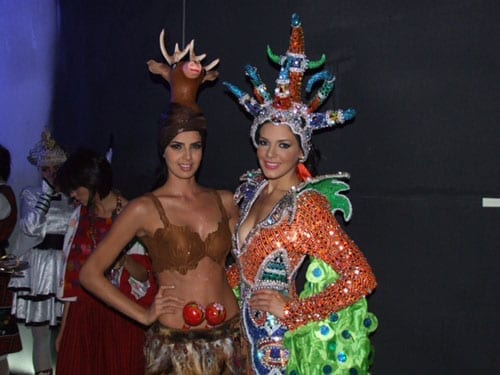
Some of the costumes are utterly bizarre. Poor Miss Mexico has a replica of a deer head strapped onto her barnet. Miss Fiji, dressed as an eagle is sweating in her head to toe feather combo and Miss Bermuda could be mistaken for a traffic cop. Only Miss USA bucks the trend and skips out in cowboy boots and a T-shirt.
Miss Mexico and Miss Puerto Rico in national costumesMiss America with local children
It’s now time for the dress rehearsal and the girls can’t wait to rip off their costumes and slither into their more flattering final dresses. I zip up Miss Vietnam and lend Miss Bolivia some lip-gloss.
I shall announce the results in reverse order
It’s the day of the final. The hotel lounge is more packed than usual as a Chinese wedding is taking place. Bemused guests don’t know whether to take photos of the bride or the contestants. If I were the bride, I’d be a bit miffed! Aptly a Chinese cover version of Joe Jackson’s Stepping Out is being piped through the speakers.
It’s the last lunch and the girls aren’t holding back. Locust-like they descend on the feast before them ignoring any concerns about bloating. Perhaps they’ve packed some back up spanx so they can squeeze into their finery?
Andrew, the hair and make up guy, is late for lunch as he’s been bubbling over with adrenaline and nerves. He swears he can’t eat a thing. Just as well as there’s bugger all left.
I’m having some tea in the bar with Roderick and his graceful wife Alfreda, also an operatic name in her own right. We are nervously approached by a local student volunteer and her mother who timidly ask if they could tempt us with some home made noodles and dumplings that they’ve specially made for the singing superstars.
So, already full but not wanting to offend such a sweet gesture we sample some of their delicious offering. With the chances of me wearing my slinky party dress tonight diminishing with each bite I’m going to ask Miss Equatorial Guinea if I can borrow her grass skirt.
On every floor of every corridor hair and make up stations have been set up to process the competitors as they get ready for their big night. Imagine 116 brides fretting before their big day and you have some idea. It’s a flurry of eye shadow, powder and paint. Andrew is in charge of a team of Chinese beauticians wielding brushes and straighteners. Translators are on hand to prevent any jam-wasabi like mix ups. When Miss Israel asks for pink eye shadow, it wouldn’t do to start applying green.
The excited gaggle of girls alight the buses for the last time and toddle into the bowels of the stadium in a phalanx Genghis Khan would have been proud of. Tonight, we are an intimate audience of 6,000 in contrast to the opening ceremony, where there was an image of a jumbo jet projected onto an illuminated backdrop. It was so realistic that an audience of 40,000 ducked.
Apart from a slight mishap when Miss Malawi trod on Miss New Zealand’s dress, the show went smoothly and was a smash hit with the audience. I particularly liked some of the entertainment in particular a performance by an army of Mongolian horse cellists who could make their instruments whinny rhythmically.
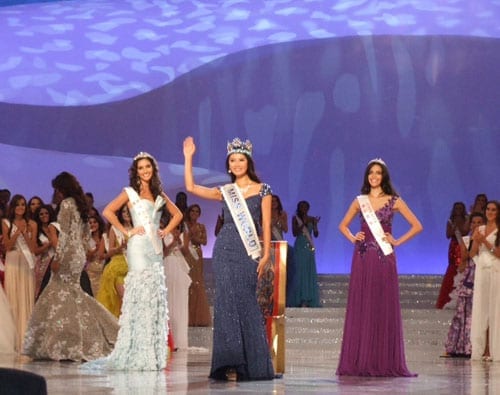
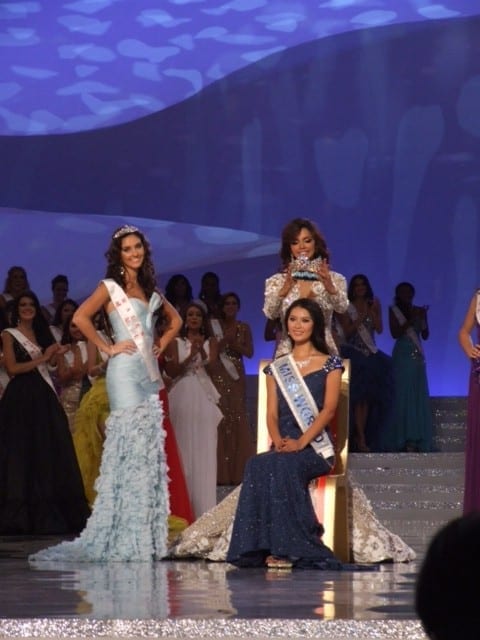
The top threeMiss China get crowned Miss World 2012 by Miss World 2011 as Miss Wales looks on
“I shall announce the results, as is customary, in reverse order,” announces the lady in red, a resplendent Mrs Morley. The climax of a 3-hour extravaganza is upon us.
“Miss Australia, Miss Wales and Miss World 2012 is…,” drum roll…, “Miss… China!”
The flag waving home crowd are on their feet, sobbing and cheering. Though not everyone is as thrilled. Some of the foreign contingent are grumbling that the crowning of 23-year old music student, Wenxia Yu, was a political move. I’m not so sure as it’s undeniable that she was a worthy winner. Not only did she raise huge amounts for charity, but in the talent section of the contest, she sang so unbelievably beautifully that she made Katherine Jenkins sound like a strangled cat.
My conclusions
What have I learned from my week at Miss World?
– Never have your picture taken next to a beauty queen unless they’re in bare feet.
Georgea Blakey is a portrait artist, specialising in equestrian and wildlife subjects. Her commissions have taken her from the polo farms of Argentina and Palm Beach to the game reserves of South Africa. She was the art scholar at St Paul’s Girls School in London and went on to study at the prestigious Chelsea College of Art. She is equally at home painting humans and her subjects have included a portrait of His Royal Highness Prince Charles with his polo pony. She has produced numerous commissions, and some of her notable clients include Viscount and Viscountess Cowdray, the Sultan of Pahang, Sir Tim Rice, David Soul, Teddy Sherringham and Miss World.