Tag: designer

  • The badgers of Albany

    The badgers of Albany

    Matthew Steeples delves into the history of Albany, Piccadilly and discovers an affordable way of living there


    Albany, off Piccadilly in Mayfair, was most probably London’s first apartment block and it’s certainly the city’s most exclusive. It may be next to the Royal Academy and opposite Fortnum & Mason but surprisingly few have even heard of it.


    Considering its location, Albany, which some make the mistake of referring to as “The Albany,” is an amazingly quiet oasis of peace and tranquility but, equally, it is a place of intrigue and drama. Residents, or “proprietors,” as they prefer to be known, of the 69 “sets” are particular about the “the” part of the name as they’d rather their residence not be confused with a public house and they are even more protective of their privacy. A porters’ lodge guards the entrance to the building and it is staffed mostly by ex-servicemen, who, until the early 2000s, had to wear top hats and tailcoats. Those allowed to pass enter a rarefied world frequented by what the Irish novelist Marmion Savage (1803 – 1872) identified as “incurable oddities” and “superannuated fops” in The Bachelor of Albany.
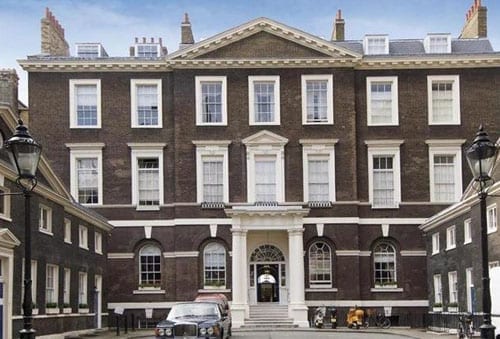
     

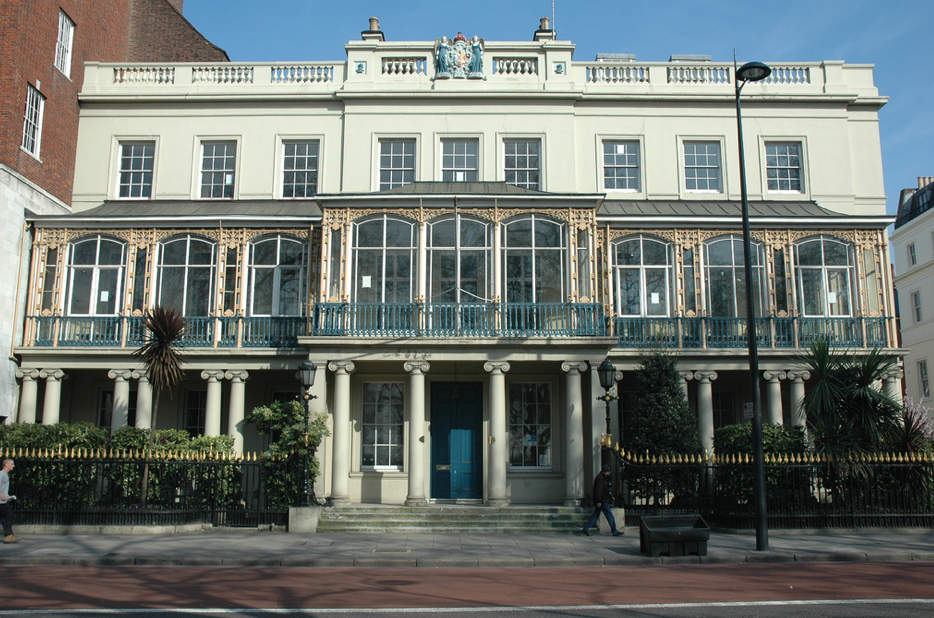
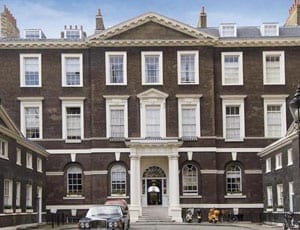
    The front courtyard and façade of Albany, Piccadilly, Mayfair, London, W1J 0AL
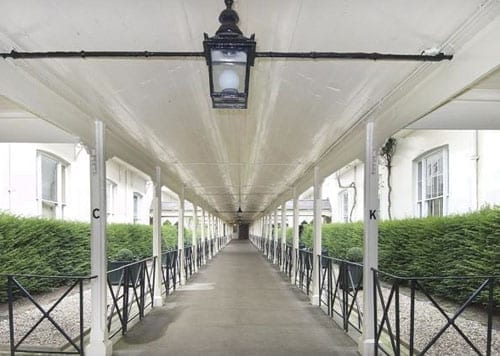
    The rope-walk connecting the various sets of Albany has been traversed by some of the greatest names in history

    Built by Sir William Chambers (1723 – 1796), who also designed Somerset House and the pagoda at Kew, between 1770 and 1774 for 1st Viscount Melbourne (1745 – 1828), Albany was originally known as Melbourne House and conceived as a three-storey mansion, seven bays wide with a pair of service wings flanking a front courtyard. From 1791 to 1802, the property was occupied by George III’s son, Prince Frederick, Duke of York and Albany (1763 – 1827), but after he left, the renowned architect Henry Holland (1745 – 1806) sub-divided the existing house and added two parallel sets of buildings running the length of the garden to create 69 “bachelor apartments” which he named “sets.”


    The “roll call” of residents since could easily fill our very own pages thrice over. They number royalty, politicians, artists, playwrights, academics and philosophers and here is a brief selection:


    –       Anthony Armstong-Jones, later 1st Earl of Snowdon

    –       Sir Thomas Beecham

    –       Sir Isaiah Berlin

    –       Lord Byron

    –       George Canning

    –       Sir Kenneth Clark

    –       Baroness Pauline de Rothschild

    –       William Ewart Gladstone

    –       Sir Edward Heath

    –       David Hicks

    –       Aldous Huxley

    –       Sir Simon Jenkins

    –       Rupert Lycett Green

    –       Malcolm Muggeridge

    –       Sir Harold Nicholson

    –       J. B. Priestley

    –       Sir Terence Rattigan

    –       Roger Scruton

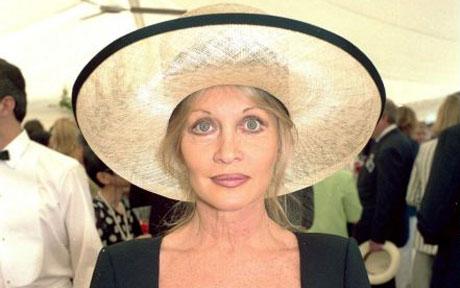
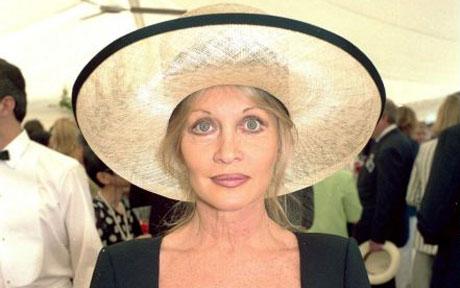
    –       Baroness Sharples

    –       W. Somerset Maugham

    –       Terence Stamp

    –       Sir Denis and Lady Thatcher

    –       Sir Herbert Beerbohm Tree


    Each had to pass the vetting of a committee of trustees of this Grade I listed building. That committee forbids children under 14, pets, musical instruments and commercial activities and each approved resident has undoubtedly added to the history of this den dominated by a central walkway named the “rope-walk.” Incidentally, an example of a curious quirk at Albany is that no resident is allowed to speak to another on this walkway. If they do, a fine is incurred. Albany, indeed, is rather like a college in its systems of rules, regulations, order and hierarchy.


    For several centuries, women were not even allowed to cross the threshold and one legendary tale tells of Lady Caroline Lamb (1785 – 1828), disguised as a page boy, stealing into Lord Byron’s (1788 – 1824) set in 1815 to leave a note: “Remember me, Byron.” He replied with a simple verse:


    Remember thee, aye, doubt it not:

    Thy husband too shall think of thee.

    By neither shalt thou be forgot —

    Thou false to him, thou fiend to me.


    The strict and formal structure that controls Albany and ensured its maintenance has succeeded in the main because 34 of the 69 sets are owned by Peterhouse College, Cambridge. They and the other owners are highly particular in whom they lease to and on one occasion on hearing of an “unsuitable tenant,” the secretary of the trustees is reported to have shouted:


    “He’s a foreigner. Don’t like him. Don’t trust him.”


    Needless to say, that application didn’t progress and nor did one from a physiotherapist who planned to operate from the building. Bone bashing in Albany just wouldn’t do.
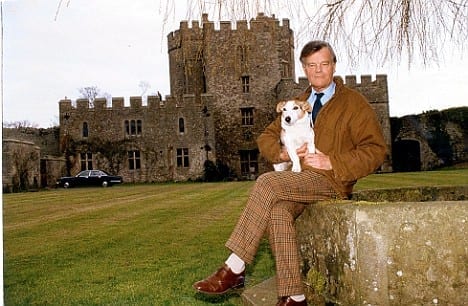
     

    The Rt. Hon. Alan Clark MP (1928 – 1999) in the grounds of his main home, Saltwood Castle, near Hythe in Kent in 1993

    A horsewhip, however, nearly crossed the threshold of set B5 in 1994, as it was here that the late Alan Clark MP (1928 – 1999) lived. The affable philanderer seduced the wife and both daughters of a certain South African named Judge Harkess and the wronged man stated he would “have horse-whipped Clark if he had known how comprehensively he had violated his honour.” B5, itself, was described as having the feel of “the straitened quarter of an Edwardian bachelor on his uppers” and the dotty, English attitude of the residents is best summed up by the reaction of Clark’s neighbour when he accidentally flooded their basement. When asked what he could do to make amends, their answer was quite simple: “Go and lie down in Piccadilly and wait for a double-decker bus.”


    The dandy and journalist John Morgan (1959 – 2000) typified social change at Albany in the 20th century just as much as he himself redefined etiquette and manners at Debrett’s and The Times. Of “humble origins,” Morgan was brought up in a “modest” bungalow in St Madoes, Perth, Scotland but is credited with persuading William Hague to remove his baseball cap whilst Conservative leader and offering advice ranging from “how to eat a banana” to “how best to tell friends that the partner you would like to bring to their wedding will be of the same sex as you.”

     

    Dandy and etiquette expert John Morgan (1959 – 2000)

    For the bachelor and GQ style director, living in Albany was symbolic of his own personal social elevation but he did not disown his past. This modern day Beau Brummell was a man of social contradictions who cashed his cheques at Claridge’s but was a member of the National Union of Journalists. He was a Tory but still regularly attended chapel meetings as he had done in his youth. Here was a man of paradoxes who seemed unable to come to terms with the fact that he was a homosexual.


    Morgan, an asthma sufferer, fell to his death from a fourth floor window on 9th July 2000. He was found in just a white shirt in a basement below a window whose sill was strangely undisturbed. The coroner left an open verdict with a suspicion of suicide and it was widely reported that police found 60 made-to-measure Savile row suits, 300 monogrammed shirts and 90 pairs of shoes in the etiquette expert’s small set. Mystery shrouds the story of his tragic demise to this day but Johnny Morgan will forever be remembered as an arbiter of both good taste and behaviour.


    Whilst Morgan represented continuation of the trend of bachelors living in Albany, change also came in the 20th century when the building’s committee removed the restriction that allowed only bachelors to be resident. With that females were allowed in and amongst them Fleur Fenton Cowles (1908 – 2009) was one of the most fascinating.
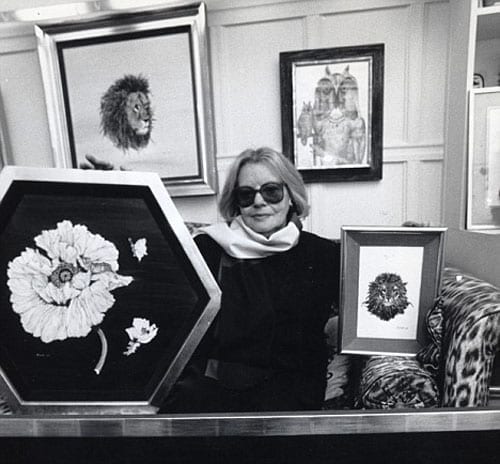
     

    Fleur Fenton Cowles (1908 – 2009) in her set at Albany with some of her paintings and one by Salvador Dali

    This writer and artist occupied five sets knocked into one with her fourth husband, timber merchant Tom Montague Meyer, and according to the Daily Mail’s Geoffrey Levy, hosted “elite soirees of the powerful and famous.” Levy recounts them at length but here is a flavour:


    “On a Wednesday evening, a typical dinner party… would include Foreign Secretary Selwyn Lloyd, Labour leader Hugh Gaitskell, entertainer Danny Kaye and film star Douglas Fairbanks Jr. The Queen Mother regularly came to tea and was once joined by Pavarotti who sang Happy Birthday for the royal guest. ‘I don’t want her to die,’ said Fleur. ‘I couldn’t bear to think she doesn’t live just down the street.’ ”


    Fenton Cowles, founder of the ill-fated Flair magazine and a “woman who knew everyone,” loved Albany and an exact replica of her “windowless, milk-yellow” study there has even been recreated at the University of Texas.


    Another known for hosting extravagant bashes in Albany was my late friend, the Russian icon dealer John Gaze (1947 – 2011). Gaze had, as a boy, asked his father about the building when he passed it as a child and immediately declared he would live there one day. He took F2, the former set of Edward Heath that overlooked Savile Row to the rear, in the mid 1990s as he craved the safety that the building offered after having been kidnapped at gunpoint by an Oxford graduate conman named Sacheverell de Houghton in April 1991 from his then home in Fournier Street, E1. He made the most of his tenancy.
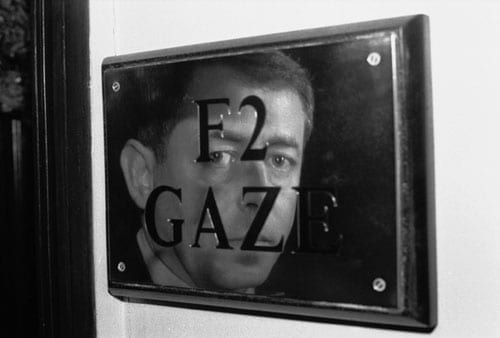
     

    Russian icon dealer John Gaze (1947 – 2011) reflected in the brass plaque outside his Albany set, F2. It was formerly occupied by Sir Edward Heath.

    Gaze’s parties included a fundraiser for people with AIDS hosted by a drag queen. This sparked fury with certain other residents and coverage in the Daily Telegraph and another incident there involved him encountering Alan Clark on the ropewalk carrying a portrait of Lenin. “Where the fuck are you taking that?” Clark supposedly bellowed but was “reassured” when he was told it was “destined for a less salubrious address in Whitechapel.” John Gaze remained at Albany for several years but, like a number of others I know, was forced out by ever rising rents and moved first to Chelsea and then Ennismore Gardens, Knightsbridge. He always remembered his time at Albany fondly and as a bon vivant, he truly belonged there.
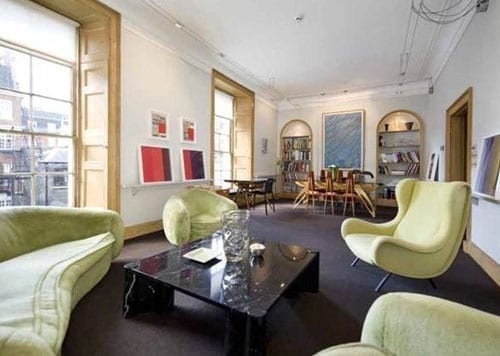
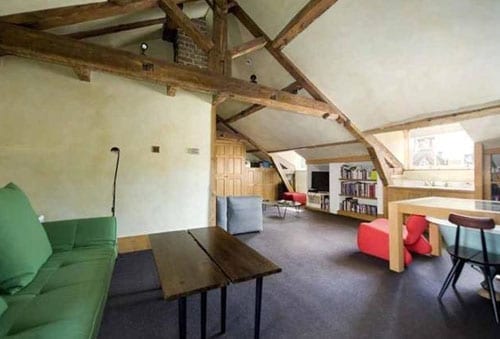
     

    The main reception room in a £1,400 a week set currently available in Albany
    An attic room in the set that could be used as a second reception room or second bedroom
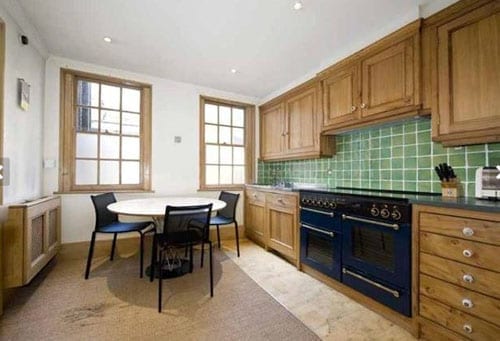
    The kitchen is lacking in character but offers ample space for informal dining

    Contrary to what you’d expect, living in Albany is not quite as expensive as one might think. A 2-bedroomed 1,970 square foot set is currently available through Knight Frank for £1,400 a week: a figure that seems quite reasonable given the location, history and size of this property. Available on a minimum 8-year rental term, it includes a formal reception room, a dining kitchen, 2 bedrooms and 2 bathrooms.
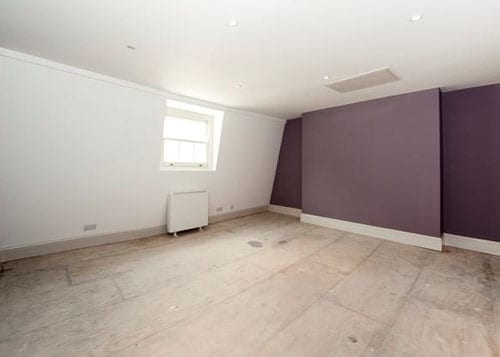
     

    This £300 per week set, D2, consists of just one room
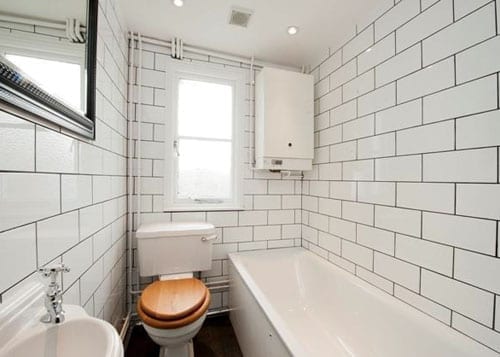
    The communal bathroom D2 shares with other sets is basic but clean

    For those looking for something cheaper, Savills offer D2 Albany at £300 per week. This set consists of a 221 square foot third floor attic room with access to a communal bathroom and the agents suggest that it: “would make an ideal reading or writing room or an occasional bedroom for a pied-a-terre.” It’s effectively a posh form of tenement but what a way to impress your peers and subordinates.


    Damon and Sandra de László in their “duplex” in Albany

    Those renting either of these sets would find the likes of the industrialist Damon de László, a descendant of the Hungarian painter Philip Alexius de László (1869 – 1937), as their neighbour. The couple occupy Lord Byron’s former set, A2, and have, on occasions, opened it for a charity dinner with Matthew Parris at £1,000 a ticket as well and for members of The Portrait Institute to view their collection of de László’s works.
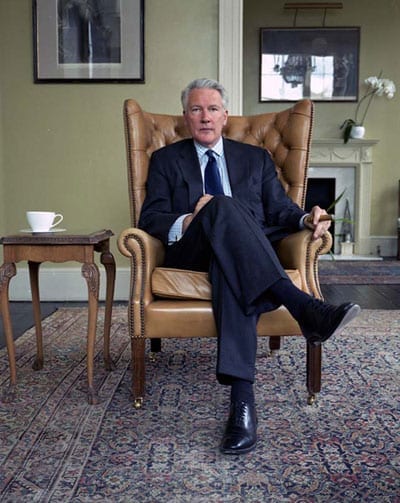
     

    Professor Philip C. Bobbitt in his grand freehold set


    Another present day resident is a man Henry Kissinger calls “the outstanding philosopher of our times,” Professor Philip C. Bobbitt. This Texan lawyer is a nephew of Lyndon B. Johnson and the author of Terror and Consent, which Tony Blair describes as “required reading for political leaders.” Bobbitt owns an impressive flying freehold set that is described as having a masculine style of décor and a “kitchen he has designed to look like a bar.” In an interview for The Independent he states that he finds Albany: “a propitious place to work.”


    Though governments and bankers come and go, behind this quintessentially English façade, order and disorder have always been maintained. The wildcards of this hidden haven have a knack for living by the doctrine “to live at Albany is to live in history” and indeed they make the most of that. Those who are lucky enough to be let in, do, indeed, truly find themselves in the “Paradise of Piccadilly.”


    For more information about the £1,400 per week 2-bedroomed set in Albany, contact Knight Frank on +44 (0) 20 3641 2489 or go to: http://www.primelocation.com/to-rent/details/21089526?search_identifier=561863685a1a55b5da85141e12cfeec7


    For more information about the £300 per week attic room in Albany, contact Savills on +44 (0) 20 3641 2584 or go to: http://www.primelocation.com/to-rent/details/26791351?search_identifier=561863685a1a55b5da85141e12cfeec7
     

  • More Purdey than Posh

    More Purdey than Posh

    Charles Mitford Cust test drives the Range Rover Evoque


    When I saw my first Range Rover Evoque coupé in the flesh I decided right then that it was time to emigrate. The actual remark I made is too rude to put in print, but the jist is that it’s ‘slammed’ rear styling reminded me of a baboon whose derriere had just suffered the unwanted amorous attentions of a short-sighted elephant.


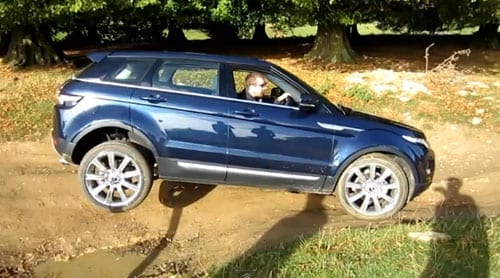
    The Evoque has a lot more off-road capability than you might expect


    It was my indignation that such a macho and traditional brand as Land Rover had built the thing at all, which led to me to cast unwarranted aspersions about the kind of car designers now working at the Land Rover HQ and the much-published fact that Victoria Beckham had designed the interior only added to my incandescent rage. As far I was concerned this was the ultimate example of design over function, and the last word in brand exploitation and betrayal, and to me this proved Land Rover as a British institution was dead.


    You see, my family has owned every model of Land Rover since the Series One was launched in the 1948. My father even took delivery of the second privately owned Range Rover sold, just a few days after Her Majesty had taken delivery of hers. I have Land Rover in my DNA, so to me the fact that they had built something like the Evoque coupe was like Purdey deciding to give up building guns in order to make designer curtains.


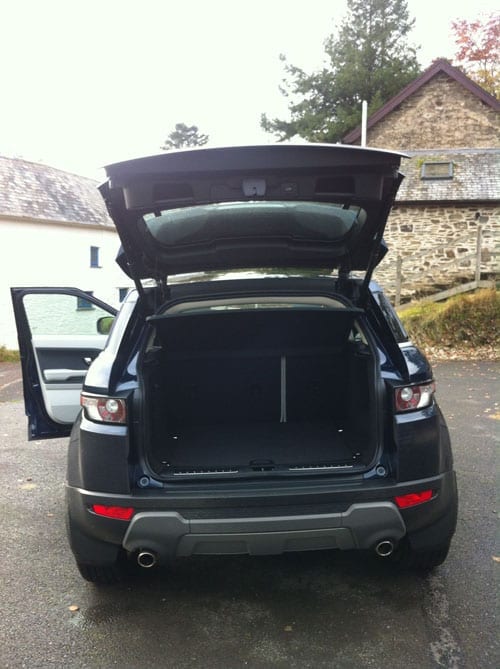
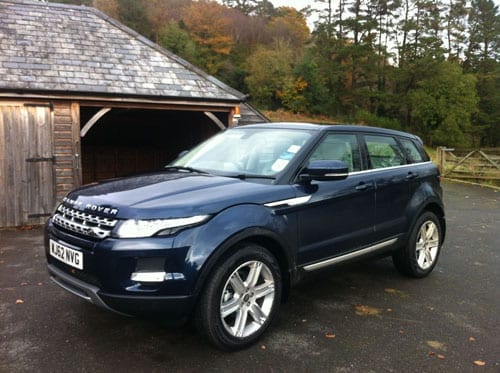
    Then one day, about a month ago, out shooting, I came across an example of the 2011 5-door version of the Evoque, the roofline of which has subtly been raised some 2-inches to accommodate the rear doors without compromising the original radical design. It was finished in dark Aintree green rather than the normal footballer pearlescent white, and standing there covered in mud on the top of a rain swept hill, it looked quite at home in it’s surroundings. I looked inside fully expecting to see the usual multi coloured blinged up interior, but instead I saw a muddy Labrador panting contentedly on plain black leather seats, which were strewn with cartridge boxes and general shooting detritus.


    I stepped back a couple of paces and looked at the vehicle in a new light, not as in the context of a Rangy, Disco or any full size 4×4, but as a compact SUV, or shooting break in old parlance, which is what the Evoque actually is, and do you know what? I reluctantly began to appreciate that I was looking at a work of genius, in fact quite simply the best looking SUV vehicle ever designed… in the entire world.


    It was with some considerable trepidation therefore that I decided to check out the performance reviews of the machine that was now causing me some consternation. I felt sure that my brief change of heart would be proved totally unjustified by reports of laughably pathetic off-road capability and a reinforcement of my original scepticism.


    Well I was to be disappointed; every test I read praised the quite unexpected off-road capability. Oh, obviously, with it’s sexy aerodynamic curves it was never destined to be a Defender, but it was more than holding it’s own against the best Jerry could build, and for that reason alone, it is a bit of a hero. Especially as whilst the efforts of BMW, Mercedes and Porsche were all incredibly ugly, in comparison, our homegrown SUV was as handsome as James Bond standing in a room full of bald, fat Blofeld clones.


    My research led me to a great YouTube clip of Top Gear’s James May driving an Evoque across the Mojave Desert. I noted that he was able to talk quite normally as he traversed the rock strewn desert floor at 70 mph, praising the amazing ride. Now I have considerable respect for deserts, I have nearly died in three: in the Nullabor from sun stroke, in the Nevada from hyperthermia and in the Sahara from riding a Paris Dakar bike at 60 mph into a dry river bed hidden from view by a the dust of riders ahead of me. So, I know only too well to my cost that deserts are places without mercy but May’s Evoque was making one of the toughest of the lot look like the M4 on a sunny midweek afternoon.


    It was not the high-speed desert floor performance, impressive although it was, that convinced me to look more closely at the Evoque. No, rather it was watching May climb up a horrific 40-degree rock strewn dry watercourse like the one that nearly accounted for the last of the Mitford Custs that caught my attention. I have been up these nightmares many times and take it from me, although ultimately the Evoque’s low profile road orientated tyres finally failed it about 90% of the way up, the fact it even made it that far was enough to make me pick up the phone to my local Land Rover dealer and request an immediate test drive.


    I really hadn’t bothered to bone up on the different specs in which the car is built before going there but it really came down to the fact I would be testing two versions: A 2-litre 240 bhp petrol Dynamic spec model with the optional Adaptive Dynamics suspension fitted, and a 2.2-litre 190 bhp diesel version in the Prestige configuration with standard suspension.


    So let’s see, one will go well and will corner like a sports car and the other will cough along like a drunk camel on roller skates. Pretty obvious which the Ferrari and Ducati loving Charlie boy is going to like best eh?


    Well that’s exactly what I thought, but once again, I could not have been more wrong.


    More handsome than it’s German rivals, but also tougher in the rough stuff, the Evoque is the James Bond of the SUV world


    Handling and ride

    What I am about to say is so extraordinary that it is essential that I establish my credibility first. As a teenager, I cut my teeth thrashing the wheel nuts off hairy arsed rear wheel drive rally cars like the 1800 BDA Mexico and RS 2000’s that only knew one way to corner, and that was completely sideways leaving a streak of molten rubber. By dealing in cars like this as a student I earned enough money to buy my first Ferrari, a black 308 GTS just in time for my 25th birthday.


    That is when my real driving career started. There have been many occasions during the next two decades and a quarter of a million Ferrari miles in which I have found it necessary to prove to some upstart in a Evo or Imprezza that contrary to what he obviously read in a car magazine, his slant eyed rice burner was not in fact able to overtake Italy’s finest on a tight twisting back-road. You get the picture.


    So if I say a car’s handling is crap please trust me, it truly is. If on the other hand I say that it’s cornering capability is utterly, and quite unexpectedly astonishing, well, you can take my word for it. I really do know what I am talking about.


    Such was the case when I picked up the “Prestige Pack” Evoque, the cooking pot version which drinks the fuel of the Devil, I fully expected it to roll about hopelessly on the tight switchback North Devon back-roads like most top heavy tractor-fuel guzzling four wheel drives do. I was so glad when they said that I could drive this model first, because this would make driving the petrol version so much more fun afterwards. Oh boy, was I was in for a shock.


    Once I turned off the main North Devon Link Road in the SD4 and on to one of the finest drivers ‘B’ roads in Devon, I found myself at the wheel of a car with truly astonishing poise. I simply could not find fault with it. The electrically powered steering was perfectly balanced, weighted and geared. It ‘turned in’ with absolute precision, no oversteer, no understeer, just right. The body control was astonishing for a vehicle of this type with no almost no roll or weave in mid corner. There was no discernable lateral pitch either under hard breaking. Believe me, I tried very hard to upset it by deliberately chucking it into corners using the wrong line or by making clumsy mid corner steering inputs, but it always kept its cool, very impressive indeed.


    In fact I can honestly say that much to my absolute amazement, the Evoque SD4 prestige proved to have one of the best combinations of ride and handling of any 5-door car I have ever driven, let alone an SUV with a relatively high centre of gravity.


    That said, here comes the next surprise: The petrol version, even this one which was fitted with the Adaptive Dynamics option with MagneRide dampers (which supposedly react to the road inputs 1000 times per second by employing magnetically reactive damper fluid and clever electronics), was a total disappointment. In ‘normal’ or ‘comfort’ setting it rolled around in all directions horribly, pitching and weaving like a tramp steamer in a rough sea. Unlike the SD4, the turn-in was woolly and the wheel twitched nervously whilst under-steering horribly, totally lacking the precision of the diesel.


    Bizarrely, engaging ’Adaptive Dynamics’ mode did very little to cure any of this, it just seemed to make the ride harder whilst still doing the same thing. It was horrible. I simply cannot understand how two versions of the same vehicle could be so different, one utterly brilliant, the other totally crap. Clearly as even the Adaptive Dynamics option did little to improve matters the problem has to be fundamental.


    All I can assume is that Land Rover must have spent the whole suspension budget perfecting the spring and damper rates for the most common model, the turbo diesel, and then just didn’t have any time resources or cash left over for the lighter engined petrol version.


    Performance and economy

    Other differences in the driving experience between the two models would seem to support this hypothesis. Both cars have the excellent steering wheel mounted flapper changes allowing manual override of the 6-speed auto boxes. However, whilst on the diesel the operation was seamlessly faultless, the petrol’s was jerky and rough. Presumably they haven’t bothered to re-tune the torque convertor for the higher revving petrol engine.


    I would say that the diesel lacked a bit of mid-range grunt, but at least its torque was usually in the right place. The same could not be said of the petrol’s, which was simply hard work to row along if you were trying to make ‘good progress’ as my ex-Police Class 1 driving instructors, whose services I have engaged over the years would say. Again, another first for me was that whilst the diesel was quiet and refined, the petrol engine was actually intrusively noisy. Not in a good or exciting way as it is in a Ferrari, just annoyingly so.


    The only good thing I can think to say about the petrol was that in a straight line, you could certainly feel the benefit of the extra 50 bhp in terms of overtaking acceleration. However, in real terms all the other drawbacks would outweigh this. On the average B-road, the diesel would win hands down with a real driver at the wheel. Plus a diesel is easy to re-programme these days. With the right engine management remap, you can claw that 50 bhp back in a few minutes.


    Economy was surprisingly similar between the two models. Zeroing the average mpg on the trip computer before the back road thrash, the diesel achieved 21 mpg and the petrol 19.6 mpg. Zeroing it again just as I rejoined the North Devon Link Road and then driving very sedately at a steady 60 mph average for 25 miles, achieved almost identical mpg of 30.5 for the diesel and 30.2 for the petrol. However, undoubtedly the diesel would prove more economical around town and also would creep up nearer to mid or late 30’s mpg over a longer distance on a motorway. Although I would bet my socks that cruising at motorway speeds it would not crack 40 mpg, no matter what Land Rover claims.


    An interesting insight as to why the diesel returned such poor economy could be identified when I followed up the test of these two Evoques with a test of the Discovery 4 by way of comparison. Doing exactly the same back road thrash and sedate run on the main road returned an average of 3 mpg better despite the fact that the Disco weighs nearly a tonne more than a Evoque. This can only be down to a better engine/weight ratio. This is why the 2011 Range Rover is even more economical again than the Disco. The combination of its larger 4.4 V8 engine and lighter alloy body win the day. You cannot escape the fact that big heavy cars need an appropriate engine capacity.


    It seems Land Rover has missed a trick here. Had they installed the Disco’s larger 3-litre diesel engine in the Evoque it would have had a world class winner. Not only would this drop the already respectable if not exactly tarmac melting 0-60 from 8 seconds to around 6.5 seconds by my guess, whilst adding mind blowing mid range grunt to boot, but it would also achieve at least 10 mpg better economy, probably 15 mpg.


    This is all down to the crazy way the green brigade force car manufacturers to create vehicles which produce fewer emissions at the exhaust pipe, whilst ignoring the reality of the fact that putting too small an engine in a vehicle will actually cause it to use far more fuel and therefore produce far more emissions over its lifetime. Just like catalytic convertors, yes they cut emissions, but fitting them causes all vehicles to use 5-10% more fuel, so the net result is far more global emissions, duh.


    The only advantage of the 2.2-litre diesel is the fact that it saves you £185 per year road tax, which is only a saving if you are not doing large mileages. If you were, then this would soon be negated by the extra economy from an Evoque fitted with the larger Disco engine.


    Off-road performance

    I had only a limited opportunity to try the SD4 off-road, but the little I did looked promising. A muddy field can sometimes stop even the most seriously modified off-roader in it’s tracks but despite it’s low profile road tyres the SD4 had no trouble pulling itself up a 25 degree slope of muddy wet grass. When I tried to get it to break traction by flooring the accelerator it’s traction control cut in smoothly and it refused to even step out of line.


    Next, I then tried it on a short stretch of green lane, which is used not only by serious offroading enthusiasts, but also several motor clubs for trials. Known locally as ‘Hell Hill’ its broken surface consists of mud covered slick rock. Very few contestants, either car drivers or dirt bikers clear the section in one attempt in a trial. The SD4 made light work of both going down and up the short section I attempted and surprisingly the road-orientated suspension did not cause it to bang or crash over the rough ground. It just absorbed it all smoothly and without drama. That’s all you could ask for on a compromise SUV like this, it does not pretend to be a Defender. I doubt any of the German competitors would have performed anywhere near as competently.


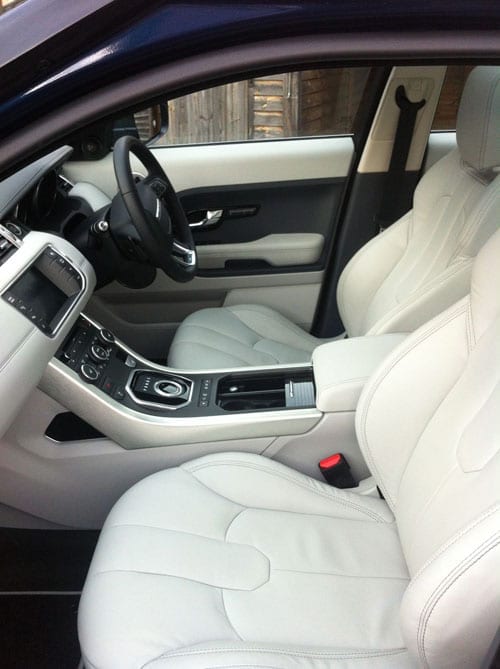
    The interior of the Evoque (I’d personally ditch the WAG look and get it in black)
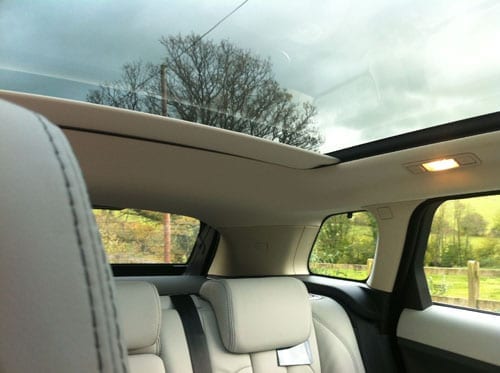
    The Evoque’s glass ceiling
    Ample room for a Labrador and a pair of Purdeys


    Build quality and interior

    The Evoque has a high quality feel about it both inside and out. Fit and finish is excellent and both examples were rattle free. I have to confess I really struggle to believe Posh had much input in the interior’s design as it appears to me to be an identical clone of the Rangy and Disco’s but more compact. Even the instruments and switchgear are identical. Sounds like PR BS to me, and you know what that stands for.


    Frankly the seats could have been more comfortable, a little more front thigh support would have done wonders for long journey comfort. The sports seats in the ‘Dynamic’ package are worse than the ‘Prestige’. Why can’t car manufacturers get this simple aspect of seat design right? They only have to consult the top motor sport seat manufacturers.


    I loved the full-length transparent tinted roof, which gave the interior an airy feel it might have otherwise lacked, plus more headroom. The surround camera system was a nice gimmick, which could come in handy off-road sometimes although they would need to be frequently cleaned in muddy environments. The sat nav was clear and even works off-road. The upgrade 825w sound system with 16 speakers was first class and frankly I found it like sitting in my own Albert Hall.


    In conclusion

    The 5-door Evoque is actually a really brilliant SUV, which in its unique way is a credit to the Land Rover brand. I started off hating it but now I am a bit in love with it. If you are going to get one, take my advice and buy the diesel Prestige in a decent colour like dark green or the very nice dark blue like the SD4 tested. Avoid the petrol version like the plague. If you want to get the Adaptive Dynamics option make sure you test it back to back with the standard suspension first. There wasn’t a diesel available with this option for me to compare. Stick to black leather and everyone will applaud your good taste. The tinted transparent roof is a must and don’t, whatever you do, dare mess up the ride and handling by fitting the optional 20-inch wheels.


    What else? Oh yes, but you did not hear this from me right? Get the diesel re-programmed on the quiet to give it about 240 bhp, tons more torque and better economy. Make sure it is done by a reputable firm whose work cannot be detected so it doesn’t invalidate the warranty. Believe me, the chassis will easily handle the extra performance and it will be a lot cheaper to run. Then, I can assure you, the Evoque SD4 will become the best all round 5-door country car you ever owned.


    The Range Rover Evoque is priced from £28,695. For more details, go to: http://www.landrover.com/gb/en/lr/range-rover-evoque/


    Watch the Range Rover Evqoue in action: https://www.youtube.com/watch?v=6miuU8G7ufw

  • Video of the Week: Total Control

    Video of the Week: Total Control

    Nicky Haslam adds another string to his bow


    Nicky Haslam is a man of many parts. He’s best known as an interior designer and author but over the years, in chameleon like fashion, he’s variously styled himself as Liam Gallagher, bought a house in Transylvania on the net and once told Vanity Fair he’d rather meet Kim Jong Il than Nelson Mandela. Whether he’s partying with Paris Hilton or working with a Russian oligarch, Haslam’s character and charm always shine through and for good reason he tops the list of the most invited in the land.


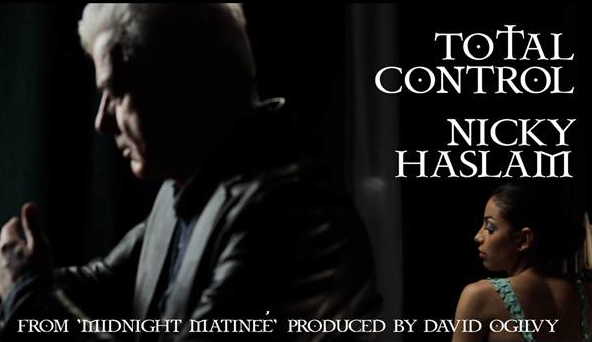
    Nicky Haslam’s “Total Control”


    Nicky Haslam’s life has been well documented in many a column but his latest move, recording a debut album entitled Midnight Matinée, can certainly be described as a bold departure. Yes, he did cabaret at Bellamy’s in 2009 and The Savoy in 2010 but having heard the first song, this truly does represent something akin to Kevin Spacey’s Beyond the Sea. I must admit that I thought it vastly superior.


    Produced by David Ogilvy, who wrote the music for a BBC film about the interior designer, Total Control is the first in the series of songs to be released. It is accompanied by a video by a Canadian filmmaker named Douglas Arrowsmith.


    We at The Steeple Times very much like Haslam’s “highly individual” foray into the “contemporary music scene” and for that reason make it our video of the week.


    For more on Nicky Haslam and his interior design business, go to: http://www.nh-design.co.uk


    Listen to Total Control and watch the accompanying video at: http://www.youtube.com/watch?v=gyvmrswykXM

  • Ferrari's 'F'lipping 'F'ool

    Ferrari's 'F'lipping 'F'ool

    The case of a Ferrari FF driver with more money than sense


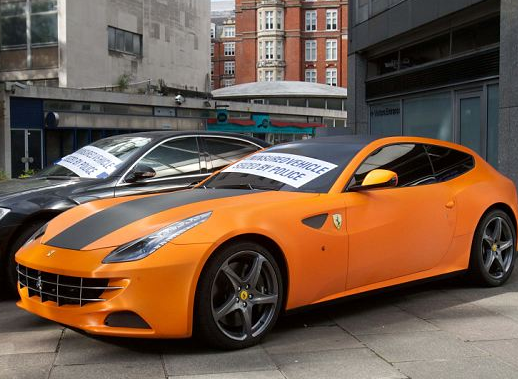
    Last November, on my way to a lunch at The Stafford Hotel with The Steeple Times restaurant critic, Anthony Brown, I took a photograph of one of my favourite vehicles, a Ferrari FF, in Curzon Street, W1.


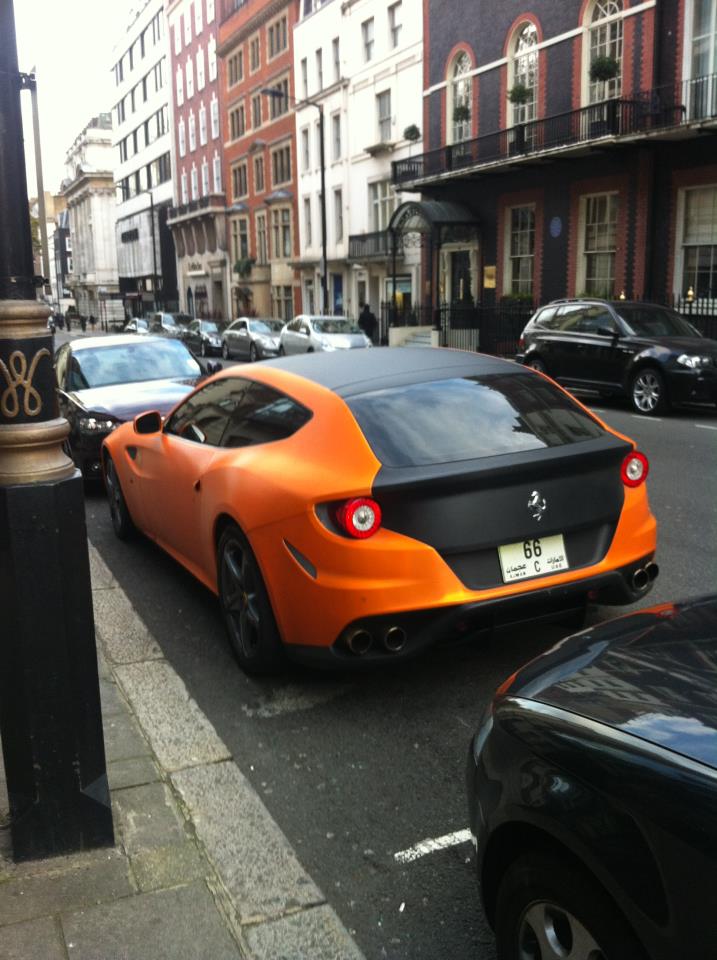
    Emblazoned with a Westminster City Council parking ticket, this particular FF, baring an Arabic registration “66 C,” was especially noticeable as it was “wrapped” in orange and black and I took a photograph of it.


    My photograph of the orange-black “wrapped” Ferrari FF in Curzon Street, Mayfair, London, W1 in November 2011

    After sharing the image on Facebook, I received, in Margaret Thatcher style fashion, the following reply from the renowned designer, Bruce Oldfield: “No, no, no!” Another friend, Anne Marie Legault added: “It doesn’t fit with the neighborhood.” Karen Ashworth, a Mercedes SL 500 driver and friend from my school days, summed up the thoughts of the majority though when she stated of the car: “I’m not a fan to be honest!”


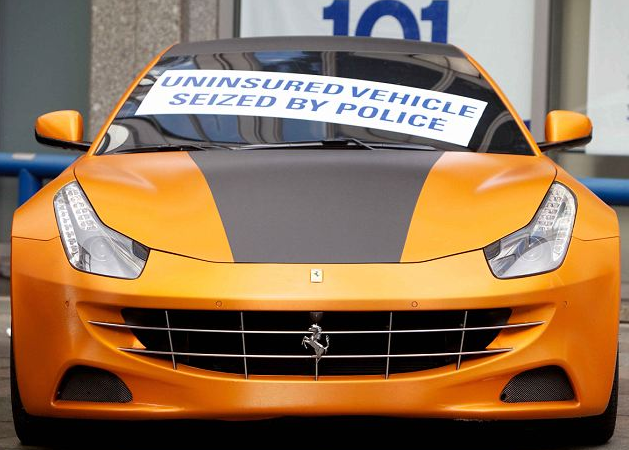
    I subsequently saw the car a few times in the months that followed but never imagined that I’d see it on the Mail Online website and would certainly never have predicted that it would have ended up as an advert against uninsured drivers outside New Scotland Yard.


    The very same Ferrari FF outside New Scotland Yard today
    Instead of a parking ticket, this Ferrari FF now has a police notice glued to it’s windscreen
    28-year old His Highness Sheikh Rashid Bin Humaid Al Nuaimi. His nickname is “RRR,” which supposedly stands for “rich in real estate resources.”

    The Steeple Times picture of the week, following on from this morning’s coverage of it, therefore, has to be of this particular FF. It turns out that it is owned by His Highness Sheikh Rashid Bin Humaid Al Nuaimi, the 28-year old son of His Highness Sheikh Humaid bin Rashid Al Nuaimi, the ruler of Ajman, and was recently impounded in South Kensington, London after he hadn’t bothered to insure it. Having paid £227,000 for such a magnificent vehicle, one would have thought he’d have the brains and finances to have done such. Plainly the age of excess and stupidity is still with us.


    Read the Mail Online’s coverage of the story at: http://www.dailymail.co.uk/news/article-2209551/Going-fast–Ferrari-proudly-display-outside-police-headquarters-deter-uninsured-drivers.html

  • Adam Caldwell

    Adam Caldwell

    A rising star in the interiors industry. Caldwell, who hails from Gastonia, North Carolina, has just completed a stint as a freelance designer at NH Design by Nicky Haslam and is now based in New York. He has a penchant for colourful trousers and American-style cookies.

  • Luca Del Bono

    Luca Del Bono

    This stylish Anglo-Italian entrepreneur was one of the founders of Quintessentially. Charm personified, Del Bono now assists wealthy foreigners invest in London’s finest homes and businesses. His most talked about venture is a £100 million project that will turn 50 St James’s Street into a member’s club, spa and hotel. In the residential sector, he represented a Ukranian who purchased Hanover Lodge in Regent’s Park for £120 million: Britain’s most expensive single family residence. His is a Rolodex that is second to none.

  • Jeweltastic

    Jeweltastic

    A private view of handcrafted pieces by Arianna Cerrito

    By Claire Rubinstein


    Tomorrow, Wednesday 4th July, sees the leading-edge jewellery and fashion designer Arianna Cerrito host an exclusive private sale event at her beautiful London home.


    Readers of The Steeples Times are invited to attend and offered a sneak peek at some of Arianna’s pieces on sale at very special prices. The event will also feature some of Cerrito’s latest pieces for spring/summer 2013 and her autumn/winter collections.


    Arianna Cerrito’s invitation

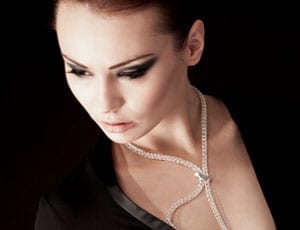
    The touch of voluptuous, silky fabrics on the skin and the embrace of dramatic jewellery are the essence of Arianna Cerrito’s designs. JEWELWEAR is a unique concept that is developed around creating luxury dresses and jewellery alongside each other as one statement. No longer does one have to search for the right jewellery to accessorise that Little Black Dress, the two are created and designed to complement each other with perfect Italian flair. The result is a sophisticated and extremely versatile look for the modern woman.


    Cerrito has recently exhibited at Paris Fashion Week 2012 and was also selected to showcase her designs at Treasure London at Somerset House where she was celebrated along with other up-and-coming designers.


    Come and meet the lady herself at this unmissable event from 10am until 7pm tomorrow and get ahead of the trend for next season’s parties.


    Arianna Cerrito JEWELWEAR, 45 Moore Park Road, London, SW6 2HP. RSVP to [email protected]. Examples of Cerrito’s works can be viewed at http://www.ariannacerrito.com

  • Bruce's best

    Bruce's best

    Profile: Designer to the stars Bruce Oldfield OBE


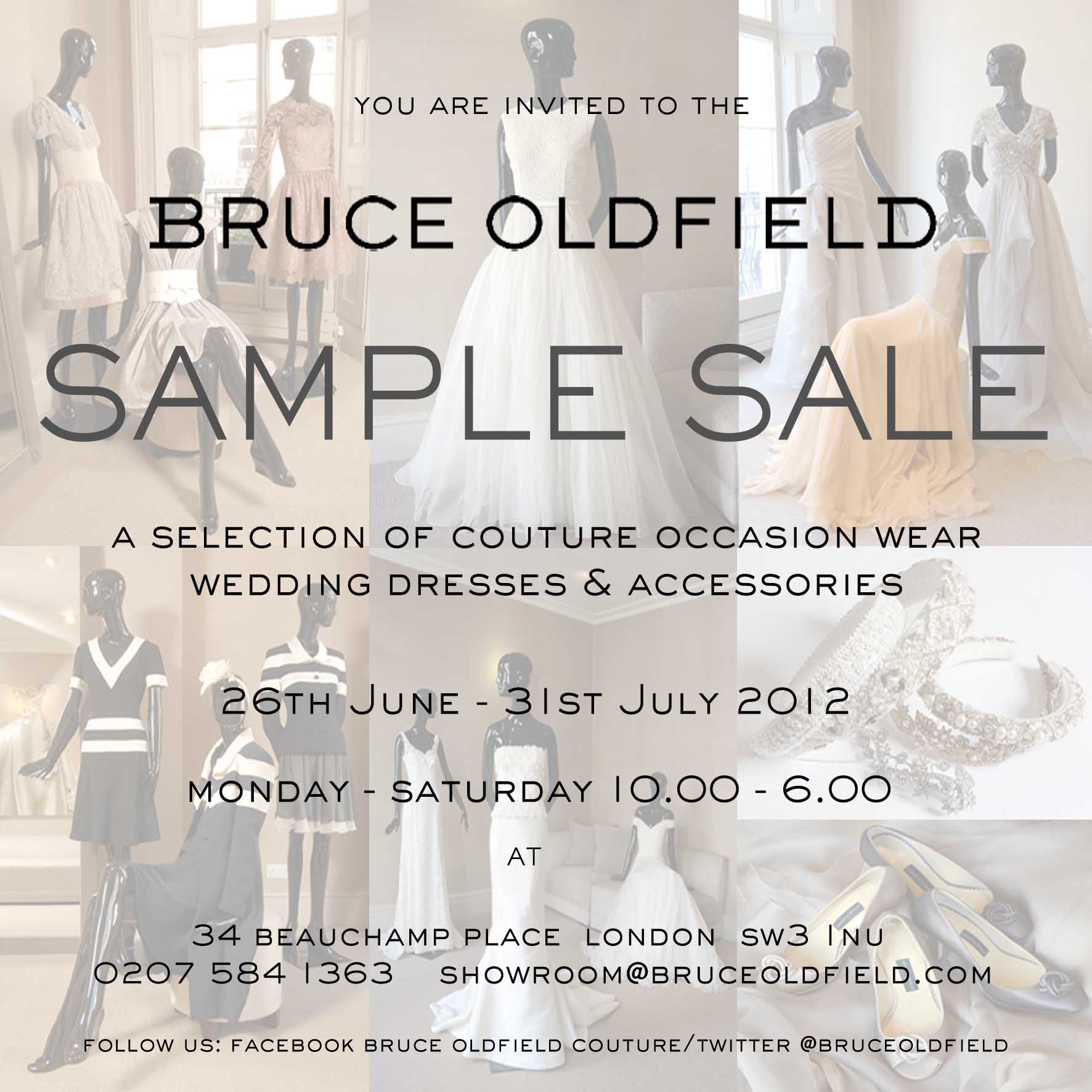
    Between the 26th June and 31st July, Bruce Oldfield is holding a sample sale at his Beauchamp Place showroom where he will offer a selection of couture occasion wear, wedding dresses and accessories.


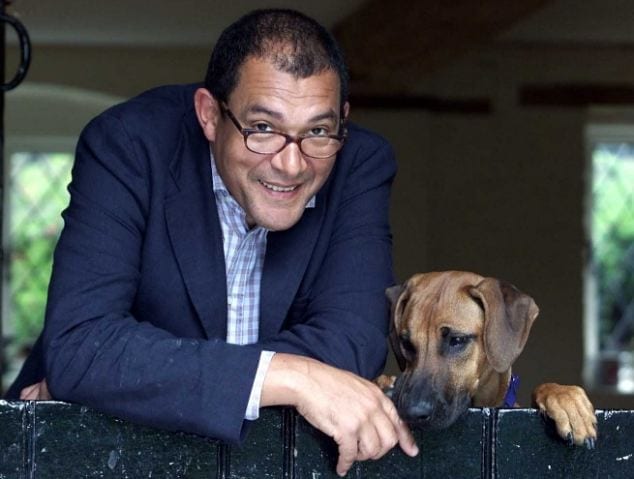
    Bruce Oldfield OBE with his Rhodesian Ridgeback
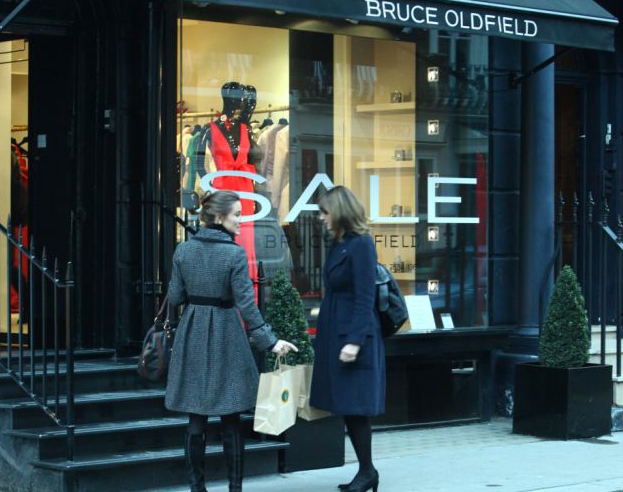
    Pippa and Carole Middleton pictured outside the Beauchamp Place showroom of Bruce Oldfield
    Diana, Princess of Wales pictured in a gown by Bruce Oldfield
    Information about the Bruce Oldfield sample sale

    Oldfield, who was brought up in the care of the children’s charity Barnardo’s, is deservedly one of Britain’s top fashion designers. He is renowned for his couture occasion wear and Samantha Cameron, Jemima Goldsmith, Joan Collins, Rhianna, Queen Rania of Jordan, Jerry Hall and Barbara Streisand number amongst his clients. Undoubtedly, however, his best-known customer was the late Diana, Princess of Wales.


    Mr. Oldfield is a regular sight in the street where I live. Always accompanied by his two dogs, he is a man of exemplary charm and it is for this reason plainly that so many women put their faith in him. The talents of this graduate of St. Martin’s College of Art’s are recognised globally and though couture is his main arena, he even redesigned the staff uniform for McDonald’s in 2008.


    Rest assured, ladies, this is a sample sale you most definitely should not miss.


    Bruce Oldfield, 34 Beauchamp Place, London, SW3 1NU. Telephone: +44 (0) 20 7584 1363. Website: http://www.bruceoldfield.com


    Follow Bruce Oldfield on Twitter at: http://www.twitter.com/bruceoldfield

  • A Monopolistic mansion

    A Monopolistic mansion

    Could 100 Park Lane become the property that achieves the accolade of being Britain’s highest priced private residence?


    Occupied by property giants Hammerson since 1969 as their corporate headquarters, the 44,000 square foot Grade II* listed Dudley House is one of Park Lane’s finest landmark properties. It is supposedly about to come to the market as a single-family residence and a price of up to £250,000,000 could be achieved.


    The Park Lane façade of Dudley House, 100 Park Lane, Mayfair, London, W1Y 4AR


    Dudley House, the only remaining example of an early Park Lane mansion, is named after the Dudley Ward family and built on the site of an earlier house with stabling. The site was acquired by John, 6th Baron Ward, in 1742 but it wasn’t until 1759 that the 3rd Viscount Dudley and Ward began “judicious alterations” to the house. Having paid £6,510 at auction for his late half-brother’s interests in Dudley House, he added an entrance portico and stained glass windows whilst his successor, an ”eccentric intellectual and politician,” set about turning the building into “the most pleasing object in the vicinity.”


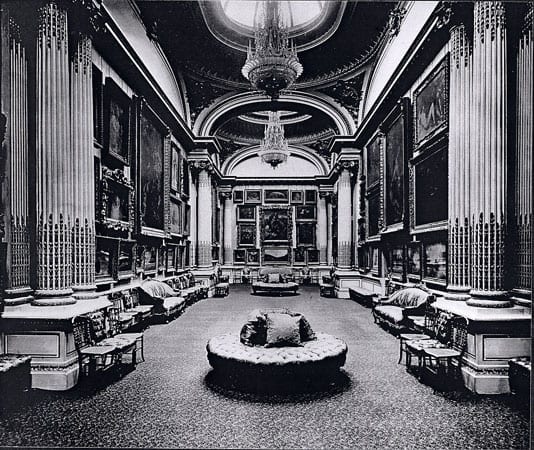
    Works by the architect William Atkinson, carried out between 1827 and 1829, included a screen of Ionic columns, fine ceilings and gilded plasterwork. They remain to this day but it is the 1855 alterations of Samuel Whitfield Daukes that are truly impressive. Carried out on the instructions of the 1st Earl of Dudley, these included a magnificent 80ft picture gallery designed to showcase a collection of Italian and Flemish paintings and a vast 50ft ballroom.


    The picture gallery at Dudley House


    In 1895, Dudley House, which is situated at 100 Park Lane, briefly passed out of the Dudley Ward family and into the ownership of a “hard-headed South African mining magnate” named Sir Joseph Benjamin Robinson. Sir John Hubert Ward bought the building back in 1912 for £10,000 and remained there until his death in 1938.


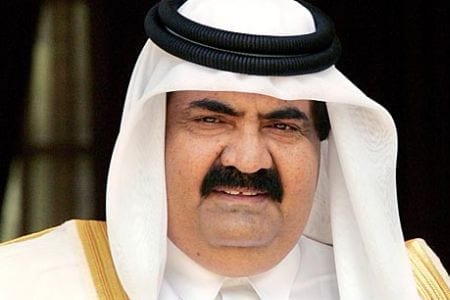
    Wartime bombing caused significant damage and this was not repaired until Hammerson took over Dudley House. Having hired Sir Robert McAlpine and Sons as contractors, designs by Sir Basil Spence and Anthony Blee were executed to restore the building.  Hammerson remained there until 2006 when they jointly sold the leasehold interest on the house with freeholders Grosvenor for £37.4 million to Bristol Isles Ltd., a private investment company controlled by Sheikh Hamad bin Khalifa Al Thana, the emir of Qatar.


    His Highness Sheikh Hamad bin Khalifa Al Thani (1952 – )


    The ensuing renovation, directed by the designer Alberto Pinto, has been described as “tasteful” and is said to have cost some £75 million. The resulting air-conditioned home features some 17 bedrooms and 14 reception rooms.


    It’ll be fascinating to see who “Doesn’t pass go!” and purchases this mammoth mansion (if indeed His Highness Sheikh Hamad bin Khalifa Al Thani decides not to move in himself).


    For more details on Alberto Pinto, go to: http://www.albertopinto.com


    For more information about His Highness Sheikh Hamad bin Khalifa Al Thani: http://www.qatarembassy.net/emir.asp

  • Anouska Hempel (Lady Weinberg)

    Anouska Hempel (Lady Weinberg)

    The founder of the world’s first boutique hotel moved to London in 1962 with just £10 to her name. She’s acted with Anton Rodgers in Zodiac and was in the 1969 James Bond film On Her Majesty’s Secret Service but it as a designer of global repute that she is best known. Married to Sir Mark Weinberg, the founder of St. James’s Place Wealth Management, Hempel was born on a boat sailing from Papua New Guinea to New Zealand. This society figure’s first hotel, Blakes, created in 1978, is the favourite of personalities such as Sharon Stone and Seal and still sets the barometer for style today.