Our view on the Christmas episode of Downton Abbey
Christmas Day is meant to be a time for celebration and joy. After feasting likes kings, many of us sat down to a cheery cartoon or drama. With that in mind, watching Downton Abbey seemed like a good option.
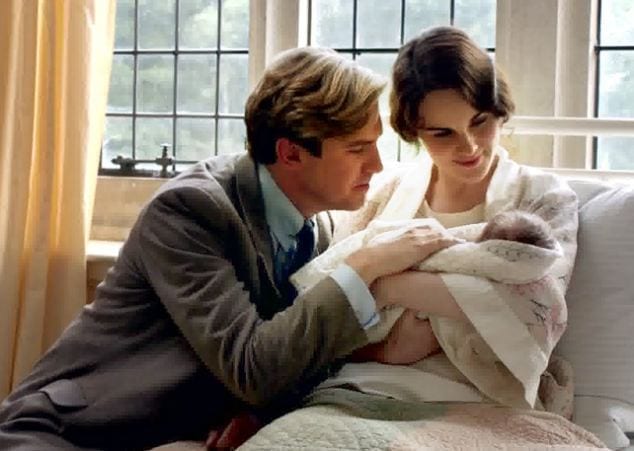
Joy and celebration for Matthew Crawley and his family was what viewers wanted to seeBut this was a step too far
8.1 million Brits viewed the ITV1 show this time last year and though the audience was down to 6.8 million, there was utterly no need for the ending created by Julian Fellowes.
During the two-hour programme, we found the majority of it tolerable despite the countless social inaccuracies but the way in which the main character, Matthew Crawley, played by Dan Stevens, was killed off was tasteless in the extreme.
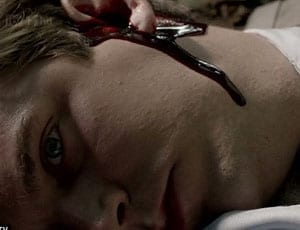
After celebrating the arrival of an heir, Fellowes had the pivotal character crash an open top roadster. Blood poured from his head as he died and then they cut to Maggie Smith as The Dowager Countess of Grantham who stated: “We don’t always get our just deserts”.
This truly was a lowbrow piece of melodrama and we were disappointed that Fellowes didn’t use his dramatic licence a little better. It was, in fact, lazy writing and viewers have rightly reacted with horror in the hours since. Many have complained on Twitter that if they wanted this kind of action they’d be watching Eastenders or Coronation Street and one went as far as to say Downton Abbey is now “a Robin Reliant of a drama”.
Downton has been dumbed down enough. We imagine many of our readers will join us in pressing the off button when it returns in the New Year.
Jilly Cooper’s state of the nation style summary strikes chords with Matthew Steeples
Best-selling bonkbuster author Jilly Cooper might be best known for novels such as Riders and Jump! but in the 1980s and 90s she was equally lauded as “one of the Conservative Party’s most ardent supporters.”
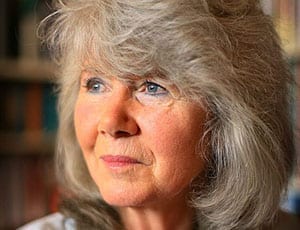
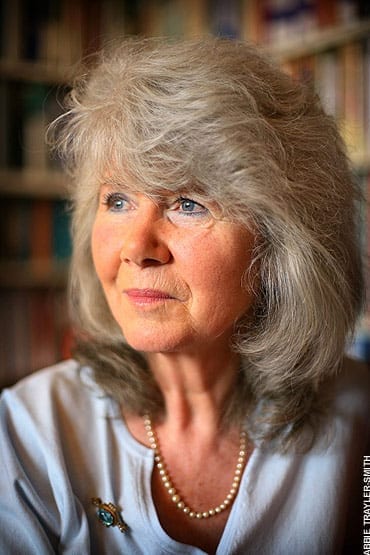
Jilly Cooper
Cooper, born in 1937, showed she still has a grip on the nation’s pulse yesterday when she declared that the Conservative Party is “full of terrible people now” to The Spectator’s “Steerpike.”
Separately, in a comment to The Telegraph’s “Mandrake,” Mrs Cooper shared her thoughts on Pippa Middleton’s first book, Celebrate:
“[It] wasn’t a good idea. I don’t blame her – I think that she was ill-advised… All I can say is that I hope the British don’t demonise her because of it. She seems a lovely girl and her sister is wonderful.”
Ever the diplomat, Jilly Cooper, in these comments, shows herself as a truly brilliant wordsmith. She has tact and decency but at the same time doesn’t hold back when it comes to honesty.
Nigel Farage should put in a call. Mrs Cooper could be just the asset UKIP needs to transform them from a “bunch of loons” to electability.
Andreas Kirchberger captures guests and performers at the Champions in the Community fundraising dinner
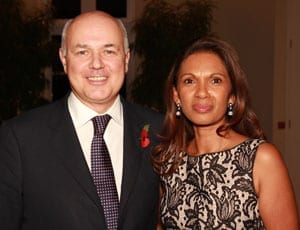
On Thursday 10th November 2012, Gina and Alan Miller and The Rt. Hon. Iain Duncan Smith MP hosted a dinner at London’s Hurlingham Club to raise funds for the charities supported by Miller Philanthropy and The Centre for Social Justice.
Guests at the event numbered Aliona Adrianova, Carlos Bey Fisher, Jackie Branston, Bridget Convey, Karen Cummings Palmer, Diane Henry Lepart, Katie Gerrard, Hannah Gerrard, Iain Gibbs, Mariana Haseldine, Christian Huhnt, Francesca Mathieu, Ferdinand Miller, Georgina Moffat, Charles Mitford Cust, Claire Rubinstein, June Sarpong, Angelo Valentino, Timo Weber and Haydn Williams.
The Rt. Hon. Iain Duncan Smith and Gina Miller
Performances by Antony Costa, Beverley Craven, the Magpie Dance group and Derek Paravacini were interspersed with speeches from Gina Miller and The Rt. Hon. Iain Duncan Smith MP and items sold in the auction numbered a couture dress by Ralph & Russo, a long weekend on a country estate in Devon and a Rolls-Royce experience.
Of the success of the night, Gina Miller commented:
“The Champions in the Community dinner acknowledged the underappreciated individuals involved in charity in the UK. The evening was a great success in terms of raising funds and awareness for these unsung heroes and we thank all who attended and supported our efforts for those working at the coalface of the negative trends in our society.”
Sarah Tucker shares her experiences on a panel discussing the outcomes of Leveson
Journalist and author Sarah Tucker was one of the panelists at a talk at the Richmond Literary Festival on Thursday evening. By chance, since it coincided with the publication of the Leveson Report, the panel’s discussion naturally focused on that. Here Tucker share her thought in an article first published on her own blog:
Will the outcome of Leveson change the media?
I was in excellent company last night as part of a panel at the Richmond Literary Festival that felt almost weirdly timed to coincide with the day of the Leveson announcement.
I appeared on a panel with Sir Trevor MacDonald (who needs no introduction, but got one any way), the editor of the Sheengate Titles, Richard Nye; Claire Fox, the director of the wonderfully named Institute of Ideas (which I thought sounded like something out of Hogwarts) and Matthew Syed, illustrious columnist, Times writer and former Commonwealth table tennis champion (I wanted to ask him about table tennis but felt it oddly irrelevant in context of the debate). We discussed if the media were ‘friend or foe’ (though it wasn’t specified ‘to whom’) this of course had been perfectly timed to coincide with the Leveson findings. It was pure fluke but that’s timing for you.
Sir Trevor felt Leveson would change nothing. Everything, he suggested, would be bogged down in committees and sub committees and nothing would be done. Ever. Fox and Syed felt if statute was put in place, it would potentially be very dangerous especially if you had the likes of Blair or Thatcher in charge again or some lesser megalomaniac.
As for my view, I think the politicians are playing a game. They are losers all of them, we are the biggest ones (the punter, the voter, the onlooker), but to think they could come out and out say one way or another would be a nonsense and would take a great deal of courage, which they don’t have.
When I look at politicians now I think of them as actors upon a stage, not meaning anything they are saying, not even understanding most of it, just reciting it. I don’t feel contempt because it takes courage to get up on that stage. And Sir Trevor noted that many journalists and reporters now treat politicians with barely restrained contempt when they interview them. As he noted, at least politicians enter the process to do something of good for their community (although I think some do enter it for ego), something you can never say about those who work in the city.
Sir Trevor McDonald OBE
And who will be in this ‘organisation’ that will monitor the press? Who on earth, on this earth, is so honourable, so without fault, so incorruptible to be considered for this position? A politician? No. A banker? You’re joking. A policeman. Perhaps.
I think you need a ‘common man’, or woman who has a sense, a common sense and an ability to see through the emperor with no clothes phenomenon of what is bullshit and what isn’t, what is in the public interest and what isn’t. It isn’t someone who has risen to the top. If this year has proved anything the shit rises to the top more regularly than the cream does. Although I must say I do like Eddie George. I think his contempt for the city mirrors that of my own, but then he deals with them on a daily basis so that’s understandable.
In many ways the media has been it’s own worst enemy. Editors allowing for lazy journalism – the recent article about Canada in The Telegraph being an example. I met the head of PR for Canada in the UK for lunch this week and she despaired that they usual cliché about Canadians came up without anything relevant or up to date on a country that had a government which managed to manage their bankers – something our politicians have not. As she commented: “It’s harmless but it’s pathetic.”
Then there’s the phone hacking which hacked into ‘common man’ rather than celebrity, who I am afraid I have absolutely no sympathy with. That includes the royals, both the young and old. They are sold to us as though we know them. We don’t have a clue who they are. We just think we do.
Editors encourage journalists to get stories, to hit the negative angles because they are told ‘it makes better news’ and people are more interested in bad news than good. I think it’s been proven somewhere, with stats or something, but then so have a lot of other things which also turn out to be rubbish. And all media are businesses so their bottom line is more important than anything else. Associated Papers are making money, The Times is running on a subsidy, the rest of the papers I think are losing money. The BBC may have been dented but they are respected around the world and like the NHS should not be tampered with. They should not be interested in profit and should aim in their production values at all times and at all cost. Every panelist agreed on that point.
The weave between the institutions of the police, the law, the church, the city, the media, the royals, the politicians has become so entwined. This is like a lover’s tiff that will pass over because the end game is more important. There is too much money, too much power and far far too much ego invested in these institutions for morality and integrity to get in the way of profit.
This has been a year of revelation but not revolution. And if it were it would be the wrong heads that would roll.
Sarah Tucker is an award winning travel journalist, novelist, producer and broadcaster. She has edited, produced and presented her own radio and TV series as well as presenting reports for BBC Holiday Programme and anchored I Want That House on ITV. She is the author of best selling novels The Playground Mafia (short listed for the Good Housekeeping book of the year 2007) The Battle for Big School, The Last Year of Being Single, and The Control Freak Chronicles.
Matthew Steeples takes a view on the story of David Cameron, UKIP, racism and foster homes
First David Cameron described UKIP supporters as “mostly racist” and then a pair of ex-Labour supporting foster parents from Rotherham had three children taken from their care due to their support for that party. Sane people are rightly asking: “What is going on?” and also wondering: “What on earth is ‘Call Me Dave’ playing at?”
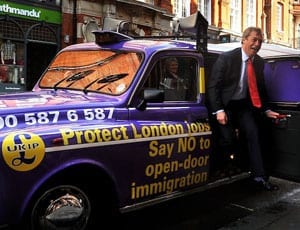
The UK Independence Party is an organisation that reflects the views of many in this country and a significant segment of our readership back them too. Equally, many do not and UKIP rightly accepts that. Of course, by their very existence they are a party whose stances polarize opinion and their naff logo and the proclamations of some of their odder members do make rational individuals cringe from time to time.
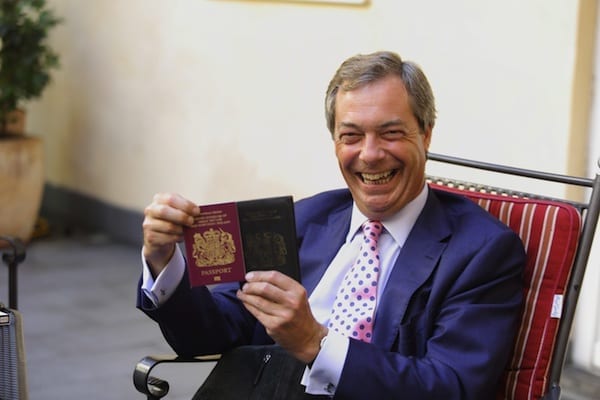
Nigel Farage
Nigel Farage, the party’s best asset, is a man guided by sense. He has pointed out many of the significant failings of the European Union and he does it boldly and with a belief bolstered by a dedication to improving Great Britain’s lot. Like or loathe him, here is a politician with passion and one whose influence is growing.
A site that proclaims itself as: “Britain’s most-read political blog,” PoliticalBetting.com, takes a different view and backs Cameron’s statement in suggesting: “There is an Islamophobic element to UKIP that mirrors many parties in Europe.” They refer to “golliwog supporters” and even add:
“David Cameron is right to stand his ground and not apologise for his earlier remarks about UKIP. What should worry him more is the growing number of people in his own party who seem quite relaxed with working with them. They are either blissfully unaware of what lies underneath the party’s anti-European statements or worse are prepared to tolerate them for electoral gain.”
All a decent couple did was to attempt to care for unfortunate children and their political alliegances are an irrelevance. PoliticalBetting.com and David Cameron’s generalisations about UKIP are also wrong and Rotherham council’s actions are utterly abhorrent. Have none of these people learnt anything from how the media firestorm of the Jimmy Savile saga was fueled? Isn’t it about time that they woke up and got their own houses in order instead of ranting about racism and foster parenting?
A marine residence with a history tied to the Rolls-Royce Spirit of Ecstasy, the Special Operations Executive and Babycham
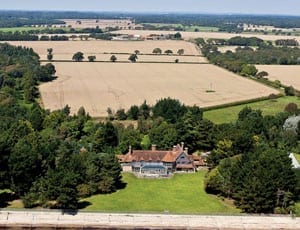
The House on the Shore on Thorns Beach at Beaulieu in Hampshire is a home that wouldn’t look out of place in the Hamptons or Rhode Island. Dramatically situated next to the Solent waters to the north of the Isle of Wight, this suitably named building wouldn’t have been out of place in the 1980s BBC series Howards’ Way. It could. Indeed, have been an ideal home for Gerald and Polly Urquhart. (more…)
Matthew Steeples takes a look at the farcical results of the PCC elections
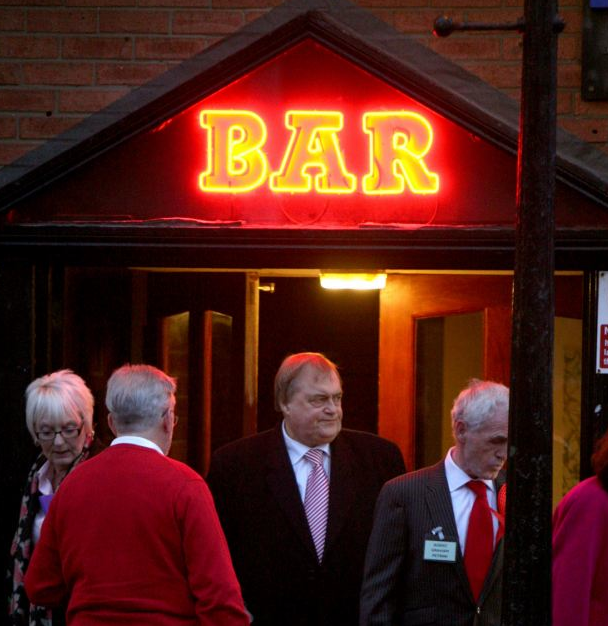
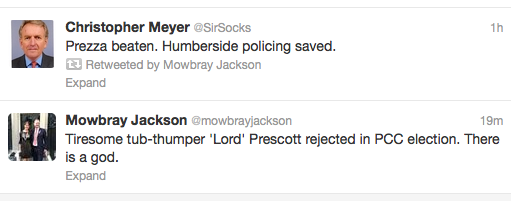
A former ambassador to the US undiplomatically Tweeted the following an hour or two ago: “Prezza beaten. Humberside policing saved.” His dovetailed stooge, one Mowbray Jackson, added: “Tiresome tub thumper ‘Lord’ Prescott rejected in PCC election. There is a god.”
Lord Prescott faces defeat in the PCC elections like all great men: He proudly holds his head up and heads straight to the bar.Sir Christopher Meyer and his sidekick Mowbray Jackson share their somewhat predictable views about Lord Prescott’s defeat.
The first of this pair of social elevators loves a good old Ralph Lauren sofa and the second is often to be found lizard-like with a carafe swilling partner at the bars of London’s Hollywood Road. One stood accused by Prescott of doing “nothing” over phone-hacking whilst chair of the PCC, which probably explains his bitterness, but the other has little connections to the former Deputy Prime Minister other than a picture of himself posing outside 10 Downing Street on his Twitter handle. This image was taken at an event that a certain Lady Meyer hosted with “she so enthusiastic for PCC’s,” our “esteemed” Home Secretary, Theresa May. Dogs, fleas and all that.
From the start, I was very vocal in my view that the PCC elections were a waste of time. I personally couldn’t see the point of them but the one person I thought deserved to win was John Prescott. The right-wing columnist Peter Oborne agreed and summed up my views perfectly in a Daily Telegraph column on Wednesday:
“Most members of the Labour Cabinet [Prescott] served in are now off doing rather grubby jobs in the private sector and feathering their nest, whereas John Prescott, well into his 70s, is still filled with the desire to serve. Good luck to him tomorrow. It would be a magnificent thing for British politics if he wins.”
A Conservative government, though, should not have advocated this additional layer of bureaucracy and all the Police and Crime Commissioners will be is just such. Conservatives are meant to be about “less” rather than “more” government and that one polling station in Wales had a ballot box that, when opened, contained zero papers speaks volumes. It’s been a dismal day for democracy and frankly the government should “sock” the lot of these bureauprats before they have chance to do an iota of damage.
Matthew Steeples delves into the history of Albany, Piccadilly and discovers an affordable way of living there
Albany, off Piccadilly in Mayfair, was most probably London’s first apartment block and it’s certainly the city’s most exclusive. It may be next to the Royal Academy and opposite Fortnum & Mason but surprisingly few have even heard of it.
Considering its location, Albany, which some make the mistake of referring to as “The Albany,” is an amazingly quiet oasis of peace and tranquility but, equally, it is a place of intrigue and drama. Residents, or “proprietors,” as they prefer to be known, of the 69 “sets” are particular about the “the” part of the name as they’d rather their residence not be confused with a public house and they are even more protective of their privacy. A porters’ lodge guards the entrance to the building and it is staffed mostly by ex-servicemen, who, until the early 2000s, had to wear top hats and tailcoats. Those allowed to pass enter a rarefied world frequented by what the Irish novelist Marmion Savage (1803 – 1872) identified as “incurable oddities” and “superannuated fops” in The Bachelor of Albany.
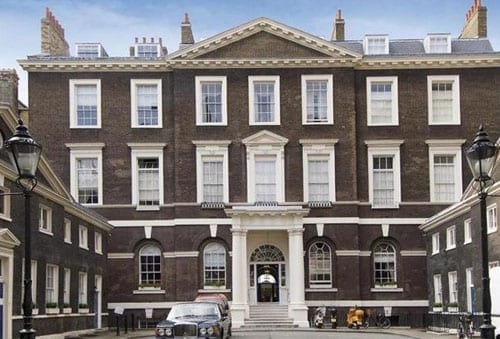
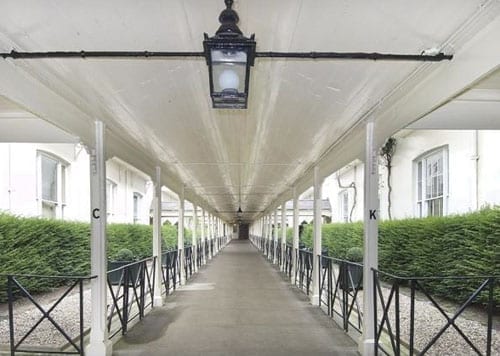
The front courtyard and façade of Albany, Piccadilly, Mayfair, London, W1J 0ALThe rope-walk connecting the various sets of Albany has been traversed by some of the greatest names in history
Built by Sir William Chambers (1723 – 1796), who also designed Somerset House and the pagoda at Kew, between 1770 and 1774 for 1st Viscount Melbourne (1745 – 1828), Albany was originally known as Melbourne House and conceived as a three-storey mansion, seven bays wide with a pair of service wings flanking a front courtyard. From 1791 to 1802, the property was occupied by George III’s son, Prince Frederick, Duke of York and Albany (1763 – 1827), but after he left, the renowned architect Henry Holland (1745 – 1806) sub-divided the existing house and added two parallel sets of buildings running the length of the garden to create 69 “bachelor apartments” which he named “sets.”
The “roll call” of residents since could easily fill our very own pages thrice over. They number royalty, politicians, artists, playwrights, academics and philosophers and here is a brief selection:
– Anthony Armstong-Jones, later 1st Earl of Snowdon
– Sir Thomas Beecham
– Sir Isaiah Berlin
– Lord Byron
– George Canning
– Sir Kenneth Clark
– Baroness Pauline de Rothschild
– William Ewart Gladstone
– Sir Edward Heath
– David Hicks
– Aldous Huxley
– Sir Simon Jenkins
– Rupert Lycett Green
– Malcolm Muggeridge
– Sir Harold Nicholson
– J. B. Priestley
– Sir Terence Rattigan
– Roger Scruton
– Baroness Sharples
– W. Somerset Maugham
– Terence Stamp
– Sir Denis and Lady Thatcher
– Sir Herbert Beerbohm Tree
Each had to pass the vetting of a committee of trustees of this Grade I listed building. That committee forbids children under 14, pets, musical instruments and commercial activities and each approved resident has undoubtedly added to the history of this den dominated by a central walkway named the “rope-walk.” Incidentally, an example of a curious quirk at Albany is that no resident is allowed to speak to another on this walkway. If they do, a fine is incurred. Albany, indeed, is rather like a college in its systems of rules, regulations, order and hierarchy.
For several centuries, women were not even allowed to cross the threshold and one legendary tale tells of Lady Caroline Lamb (1785 – 1828), disguised as a page boy, stealing into Lord Byron’s (1788 – 1824) set in 1815 to leave a note: “Remember me, Byron.” He replied with a simple verse:
Remember thee, aye, doubt it not:
Thy husband too shall think of thee.
By neither shalt thou be forgot —
Thou false to him, thou fiend to me.
The strict and formal structure that controls Albany and ensured its maintenance has succeeded in the main because 34 of the 69 sets are owned by Peterhouse College, Cambridge. They and the other owners are highly particular in whom they lease to and on one occasion on hearing of an “unsuitable tenant,” the secretary of the trustees is reported to have shouted:
“He’s a foreigner. Don’t like him. Don’t trust him.”
Needless to say, that application didn’t progress and nor did one from a physiotherapist who planned to operate from the building. Bone bashing in Albany just wouldn’t do.
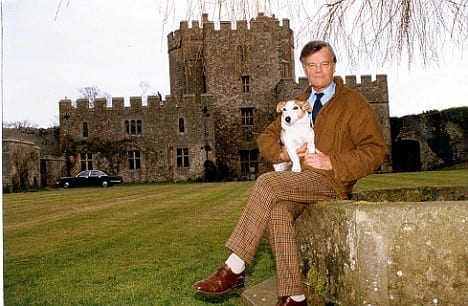
The Rt. Hon. Alan Clark MP (1928 – 1999) in the grounds of his main home, Saltwood Castle, near Hythe in Kent in 1993
A horsewhip, however, nearly crossed the threshold of set B5 in 1994, as it was here that the late Alan Clark MP (1928 – 1999) lived. The affable philanderer seduced the wife and both daughters of a certain South African named Judge Harkess and the wronged man stated he would “have horse-whipped Clark if he had known how comprehensively he had violated his honour.” B5, itself, was described as having the feel of “the straitened quarter of an Edwardian bachelor on his uppers” and the dotty, English attitude of the residents is best summed up by the reaction of Clark’s neighbour when he accidentally flooded their basement. When asked what he could do to make amends, their answer was quite simple: “Go and lie down in Piccadilly and wait for a double-decker bus.”
The dandy and journalist John Morgan (1959 – 2000) typified social change at Albany in the 20th century just as much as he himself redefined etiquette and manners at Debrett’s and The Times. Of “humble origins,” Morgan was brought up in a “modest” bungalow in St Madoes, Perth, Scotland but is credited with persuading William Hague to remove his baseball cap whilst Conservative leader and offering advice ranging from “how to eat a banana” to “how best to tell friends that the partner you would like to bring to their wedding will be of the same sex as you.”
Dandy and etiquette expert John Morgan (1959 – 2000)
For the bachelor and GQ style director, living in Albany was symbolic of his own personal social elevation but he did not disown his past. This modern day Beau Brummell was a man of social contradictions who cashed his cheques at Claridge’s but was a member of the National Union of Journalists. He was a Tory but still regularly attended chapel meetings as he had done in his youth. Here was a man of paradoxes who seemed unable to come to terms with the fact that he was a homosexual.
Morgan, an asthma sufferer, fell to his death from a fourth floor window on 9th July 2000. He was found in just a white shirt in a basement below a window whose sill was strangely undisturbed. The coroner left an open verdict with a suspicion of suicide and it was widely reported that police found 60 made-to-measure Savile row suits, 300 monogrammed shirts and 90 pairs of shoes in the etiquette expert’s small set. Mystery shrouds the story of his tragic demise to this day but Johnny Morgan will forever be remembered as an arbiter of both good taste and behaviour.
Whilst Morgan represented continuation of the trend of bachelors living in Albany, change also came in the 20th century when the building’s committee removed the restriction that allowed only bachelors to be resident. With that females were allowed in and amongst them Fleur Fenton Cowles (1908 – 2009) was one of the most fascinating.
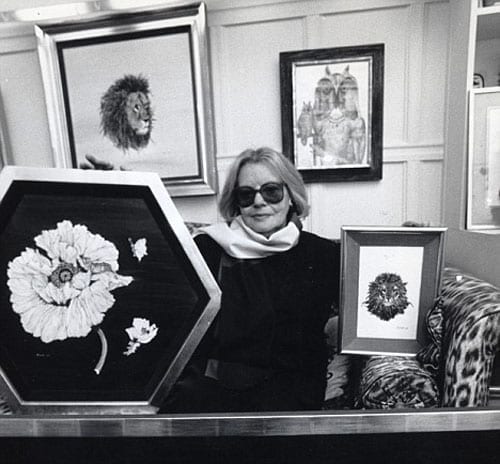
Fleur Fenton Cowles (1908 – 2009) in her set at Albany with some of her paintings and one by Salvador Dali
This writer and artist occupied five sets knocked into one with her fourth husband, timber merchant Tom Montague Meyer, and according to the Daily Mail’s Geoffrey Levy, hosted “elite soirees of the powerful and famous.” Levy recounts them at length but here is a flavour:
“On a Wednesday evening, a typical dinner party… would include Foreign Secretary Selwyn Lloyd, Labour leader Hugh Gaitskell, entertainer Danny Kaye and film star Douglas Fairbanks Jr. The Queen Mother regularly came to tea and was once joined by Pavarotti who sang Happy Birthday for the royal guest. ‘I don’t want her to die,’ said Fleur. ‘I couldn’t bear to think she doesn’t live just down the street.’ ”
Fenton Cowles, founder of the ill-fated Flair magazine and a “woman who knew everyone,” loved Albany and an exact replica of her “windowless, milk-yellow” study there has even been recreated at the University of Texas.
Another known for hosting extravagant bashes in Albany was my late friend, the Russian icon dealer John Gaze (1947 – 2011). Gaze had, as a boy, asked his father about the building when he passed it as a child and immediately declared he would live there one day. He took F2, the former set of Edward Heath that overlooked Savile Row to the rear, in the mid 1990s as he craved the safety that the building offered after having been kidnapped at gunpoint by an Oxford graduate conman named Sacheverell de Houghton in April 1991 from his then home in Fournier Street, E1. He made the most of his tenancy.
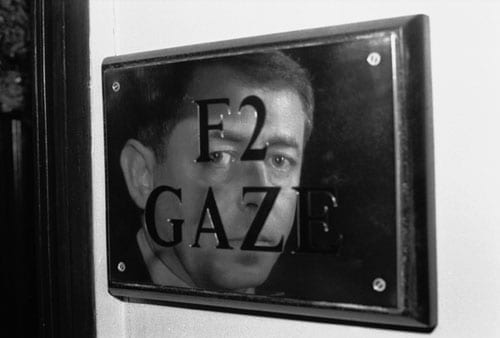
Russian icon dealer John Gaze (1947 – 2011) reflected in the brass plaque outside his Albany set, F2. It was formerly occupied by Sir Edward Heath.
Gaze’s parties included a fundraiser for people with AIDS hosted by a drag queen. This sparked fury with certain other residents and coverage in the Daily Telegraph and another incident there involved him encountering Alan Clark on the ropewalk carrying a portrait of Lenin. “Where the fuck are you taking that?” Clark supposedly bellowed but was “reassured” when he was told it was “destined for a less salubrious address in Whitechapel.” John Gaze remained at Albany for several years but, like a number of others I know, was forced out by ever rising rents and moved first to Chelsea and then Ennismore Gardens, Knightsbridge. He always remembered his time at Albany fondly and as a bon vivant, he truly belonged there.
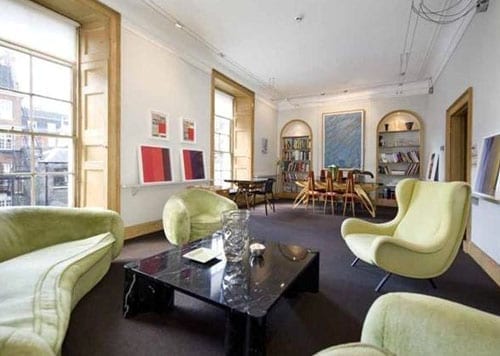
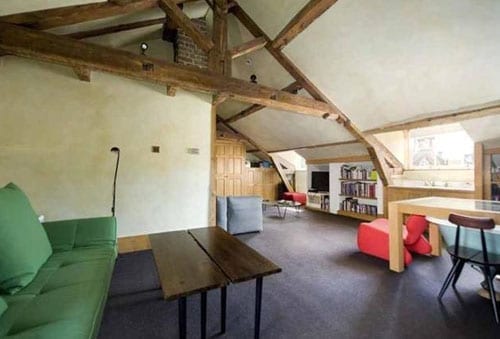
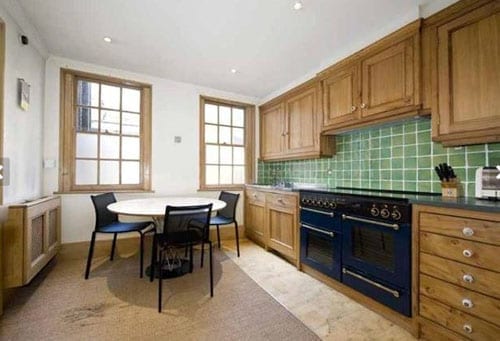
The main reception room in a £1,400 a week set currently available in AlbanyAn attic room in the set that could be used as a second reception room or second bedroomThe kitchen is lacking in character but offers ample space for informal dining
Contrary to what you’d expect, living in Albany is not quite as expensive as one might think. A 2-bedroomed 1,970 square foot set is currently available through Knight Frank for £1,400 a week: a figure that seems quite reasonable given the location, history and size of this property. Available on a minimum 8-year rental term, it includes a formal reception room, a dining kitchen, 2 bedrooms and 2 bathrooms.
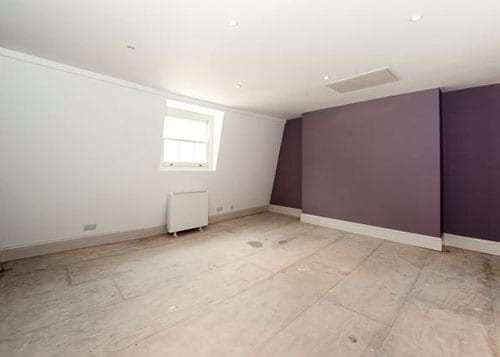
This £300 per week set, D2, consists of just one roomThe communal bathroom D2 shares with other sets is basic but clean
For those looking for something cheaper, Savills offer D2 Albany at £300 per week. This set consists of a 221 square foot third floor attic room with access to a communal bathroom and the agents suggest that it: “would make an ideal reading or writing room or an occasional bedroom for a pied-a-terre.” It’s effectively a posh form of tenement but what a way to impress your peers and subordinates.
Damon and Sandra de László in their “duplex” in Albany
Those renting either of these sets would find the likes of the industrialist Damon de László, a descendant of the Hungarian painter Philip Alexius de László (1869 – 1937), as their neighbour. The couple occupy Lord Byron’s former set, A2, and have, on occasions, opened it for a charity dinner with Matthew Parris at £1,000 a ticket as well and for members of The Portrait Institute to view their collection of de László’s works.
Professor Philip C. Bobbitt in his grand freehold set
Another present day resident is a man Henry Kissinger calls “the outstanding philosopher of our times,” Professor Philip C. Bobbitt. This Texan lawyer is a nephew of Lyndon B. Johnson and the author of Terror and Consent, which Tony Blair describes as “required reading for political leaders.” Bobbitt owns an impressive flying freehold set that is described as having a masculine style of décor and a “kitchen he has designed to look like a bar.” In an interview for TheIndependent he states that he finds Albany: “a propitious place to work.”
Though governments and bankers come and go, behind this quintessentially English façade, order and disorder have always been maintained. The wildcards of this hidden haven have a knack for living by the doctrine “to live at Albany is to live in history” and indeed they make the most of that. Those who are lucky enough to be let in, do, indeed, truly find themselves in the “Paradise of Piccadilly.”
This mouthpiece was born in Rettendon, Essex in 1958 and vents bile on all manner of subjects. Articles such as: “Why don’t more women moan like me?” and “Liz Jones’ baby craving drove her to steal husband’s sperm in ultimate deception” are frankly illustrative of why she’s so unpopular. After she got banned from the majority of fashion shows and her husband left her, she quit London for Somerset in 2007 to feed organic muesli to the rats in the barns of a 47-acre farm she purchased as her “rural idyll.” That misadventure came to a sticky end in November 2012 after she’d alienated the whole county by calling them, amongst other things, “smelly” and “faintly Amish.” Goodness knows whom she’ll choose to offend next. Phillip Schofield sums her up best: “She is inconsistent, bitter, nasty and unhinged.” Our advice: Just steer well clear of this acid tongued poison pen.
Matthew Steeples examines the truth behind Liz Jones giving up on her “rural idyll”
The Mail’s Liz Jones is a waspish woman who knows the price of everything and the value of nothing. Those who’ve paid even a moment’s attention to her bleating, will be familiar with lines such as: “Last week, my brand new £1,300 MacBook Pro broke” and “Phil Spencer wanted his £46,000 and he wanted it now!” She never stops talking about money and the size of what she both owns and owes.
Liz Jones
In today’s Femail, Jones bores on about about how she feels “like a cross-dresser” trying out the Kardashian Kollection of clothing in a pointed attack on Kim Kardashian, but it was for her diatribe yesterday that she truly got the goat of the nation in “[bidding] a ferocious farewell” to life in the country in an article entitled “Goodbye… and good riddance!” 2,151 people have commented so far and most of them have been far from sympathetic.
When Upcott Farm at Brushford, near Dulverton in Somerset came up for sale in 2007 at a price of £1.6 million, it featured in an article by The Telegraph’s Caroline McGhie. The 5-bedroomed farmhouse came with a 2-bedroom annexe, a courtyard of barns and stables and 47 acres of land. McGhie waxed lyrical about the merits of moving to this location: “People come here for the peace and quiet, the night skies, the dramatic coastline, and they work from home,” she stated before adding: “You can find everything here, including butchers, bakers, afternoon tea and cake, fish and chips, an art gallery and a shop selling fishing tackle.” Of Upcott Farm itself, she concluded:
“This would suit a member of the new wave of buyers dubbed Droppies (Disillusioned Relatively Ordinary Professionals Preferring Independent Employment Situations).”
McGhie got it half right: Upcott Farm sold to someone who considers herself far from “relatively ordinary” and someone who is far from “professional.” The purchaser, however, was certainly someone who’d become “disillusioned” with what she’d bought and someone whose desire to be “independent” and create a “situation” just alienated all she encountered. The buyer, you’ve guessed it, was none other than Elizabeth Ann Jones.
Jones was born in Brentwood, Essex in 1958 and studied journalism at the London College of Printing. She became editor of Marie Claire in 1999 but was sacked, she herself suggests, for “listing in the magazine the freebies she had been offered in the previous month.” Here, it seems, began Jones’s obsession with all things material and here she also met an Indian BBC radio journalist named Nirpal Dhaliwal in 2000.
Jones married Dhaliwal but the union was to prove an “utter disaster” as he had affairs with women she terms “younger, dimmer [and] slimmer.” “I’m no racist” Jones was divorced in 2007 and said goodbye to her “3,000 square foot of Islington real estate” and “easy, if super-busy, London life” in favour of the green, green grass of Somerset.
Whoever’s side you see it from, five years of hell followed. Jones baited the locals and they grew to loathe her. She wrote columns and a book, The Exmoor Files, where she attacked them as “faintly Amish… feral, old and smelly” and another hack and neighbour, Jane Alexander of The Telegraph, responded: “Dulverton [was] positively fizzing with fury” after each and every publication.
Of the local restaurants, Jones stated:
“I have given up trying to eat out in restaurants here on Exmoor… It is still stuck in the Seventies, with only things in baskets and rum babas on the menu… If you tell the waiter you are vegetarian, you are stared at, incredulously, as if you are black.”
She whinged about her inability to find love:
”I will never, ever meet a man here in the middle of a moor, where even to be in possession of your own teeth is a bonus.”
And whined about fieldsports:
“I didn’t increase my popularity by being unable to pass a party of men and often children with guns, shooting rabbits and deer, without getting out of my BMW and saying: ‘Do you really have nothing better to do with your Saturday morning?’ The look of shock on their faces that I had the cheek to challenge them was priceless. I would stop, too, and shout at huntsmen on horses, galloping on tarmaced roads, one hand on the reins, the other clamping a mobile phone to their heads. ‘You will ruin your horses’ tendons!’ I would wail.”
Whilst Jones found little to like in her new community, they found nothing positive in her arrival either. Her dog was blamed for worrying lambs, and Jones’s inability to control it, locals say, was an indicator of the chasm between her life and theirs. In 2009, one neighbour went as far as to tell Danny Brierley of The Independent:
“We have got nothing in common with her, really. I think she may find it difficult to make any kind of life here now. She is not a very friendly person and we are all sick to death of talking about Liz Jones. A hatred has been building up for months. She is actually having a go at people and they are not going to tolerate that. She has feelings like all people, of course she has. But everyone wants her to leave and leave now. No one can make her, but we think she will go. I don’t see how you can live in such a small community with people who think that way about you.”
Matters came to a head when Jones’s precious black BMW convertible, “bought in 2005 for £26,000,” was pelted with eggs and teenagers fired shots at her letterbox with an air rifle. A local councilor even dressed up as her in the local carnival and yesterday Jones took revenge on those she blames for her “five-year prison sentence” and deprivation from Space NK, Cath Kidston and Illy coffee.
Instead, the article just shows the true reality of this bombastic harpy. The lines Jones penned speak for themselves. Country people don’t welcome someone who planned to “hack for miles across the open moorland in my Prada jodhpurs” anymore than the folk of Knightsbridge welcome Arabs treating their roads like racetracks. The gardener who had to endure Jones yelling “walk faster!” at him didn’t deserve such anymore than a bus driver in SW11 deserves abuse from his passengers. Jones concludes:
“I’m now a different person. I became so lonely. I would often get in my car, not just for the warmth, but for the kind voice of the satnav lady. I’ve learned that an amazing view and a pair of nesting grey herons are not enough to make me happy.”
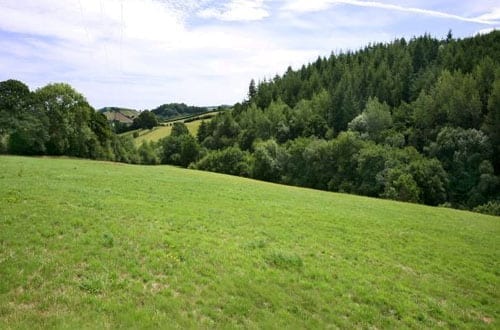
27 acres of land including paddocks and a fishing lake remain on the market through Savills and Strutt & Parker at a price of £200,000 at Upcott Farm
Miss Jones bleats that she’s taken a £500,000 loss on Upcott Farm, which languished on the market at first at £1,900,000 and then £1,750,000 for three years. The “unexpected” sale of the property has given her the ability to “flee back to the city” but the locals and even the “Droopies” should be warned: there’s still 27 acres of the farm unsold and on the market at a price of £200,000. Halloween may have passed but the battleaxe in the Beemer could still call again.